
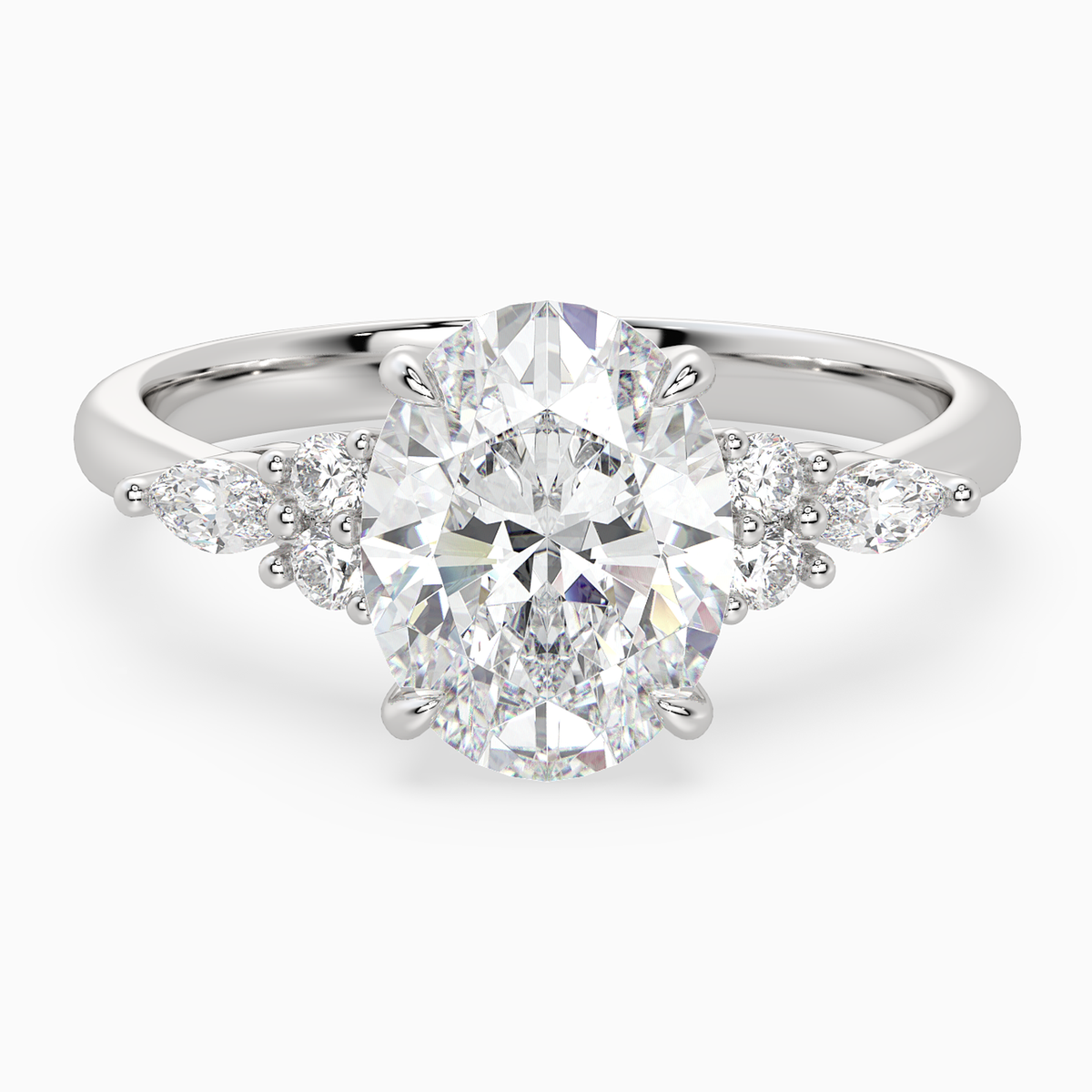


Pear Diamond Engagement Rings in 14K Yellow Gold
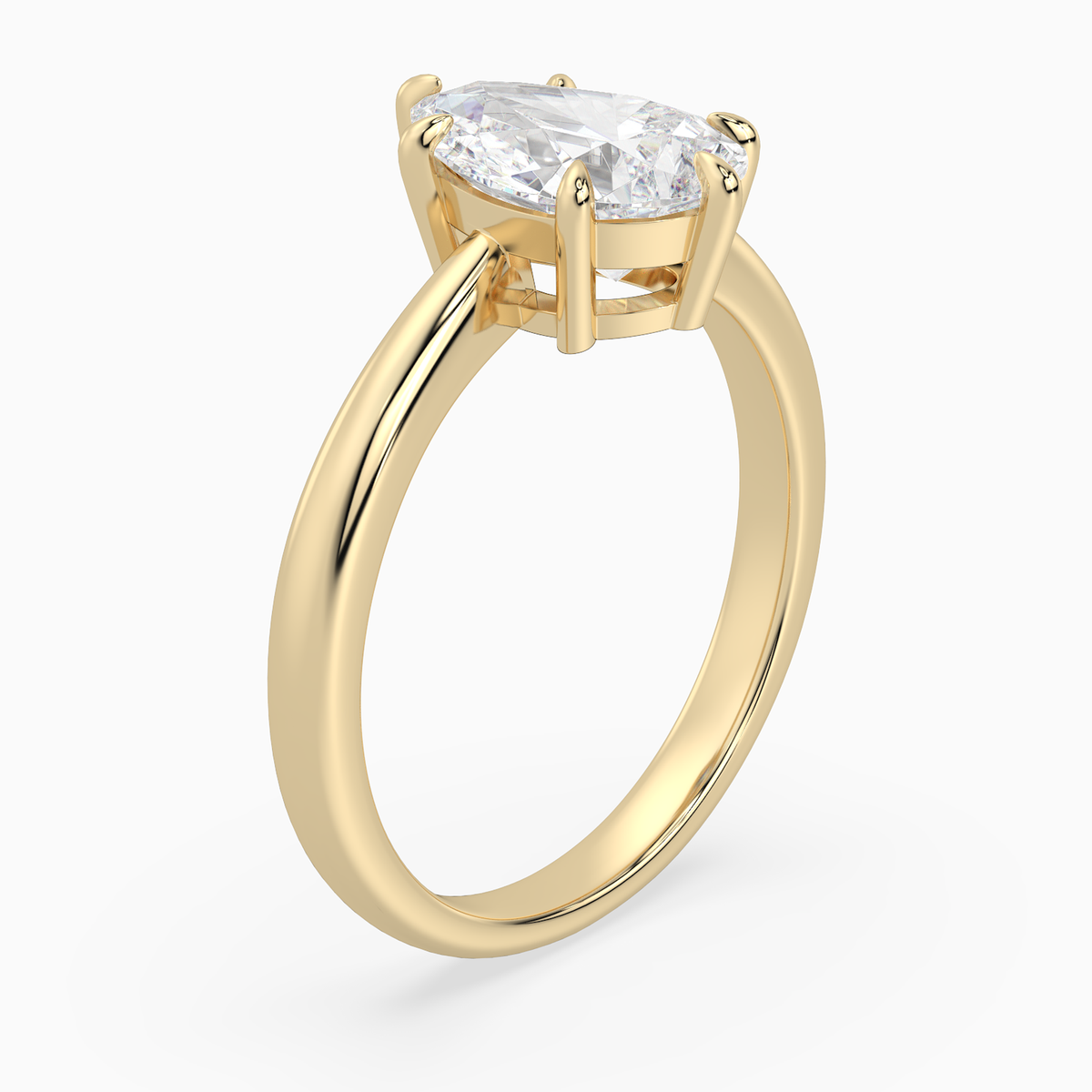
A directional curve defined in gold. 14K yellow gold traces the pear from rounded head to point while keeping its asymmetry distinct.


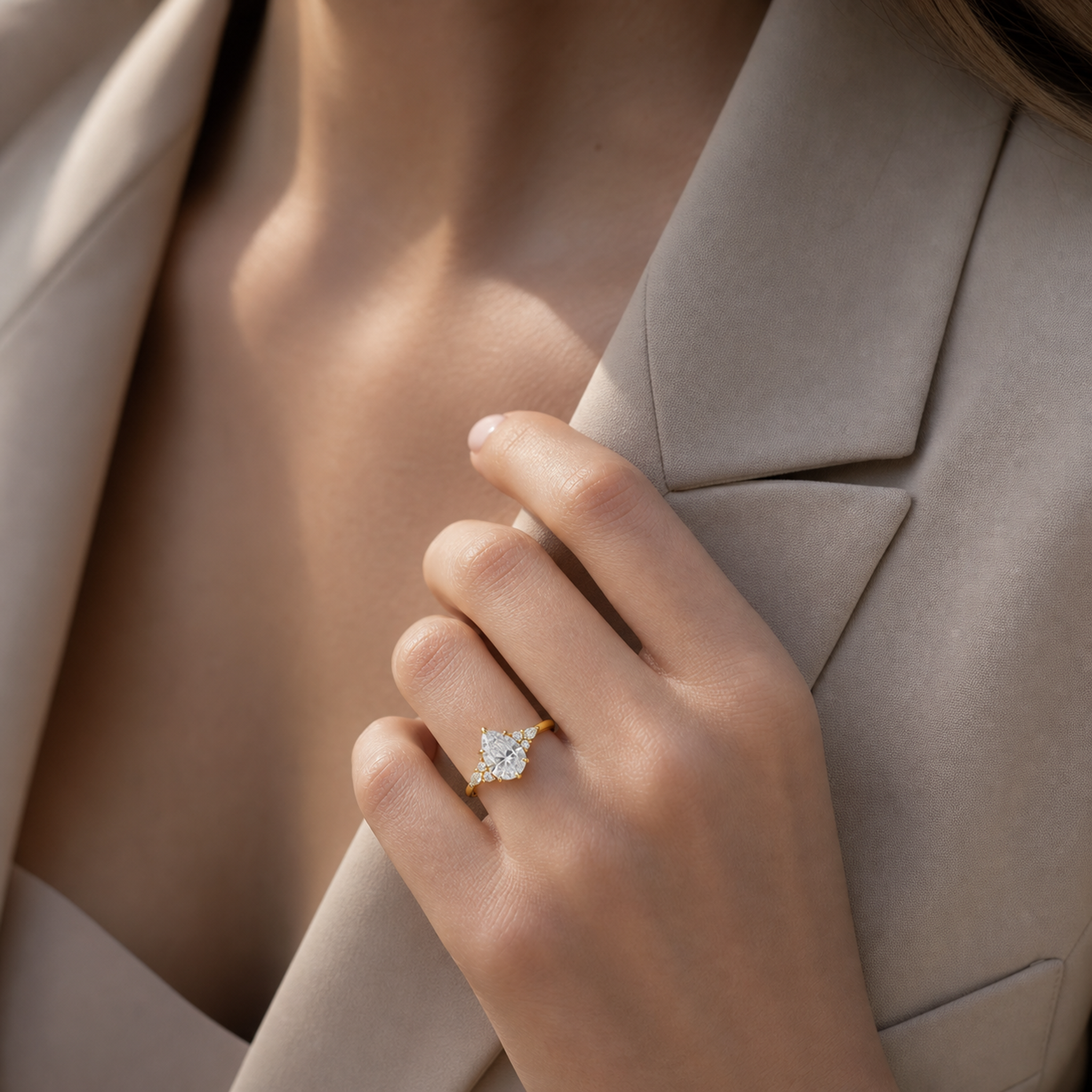


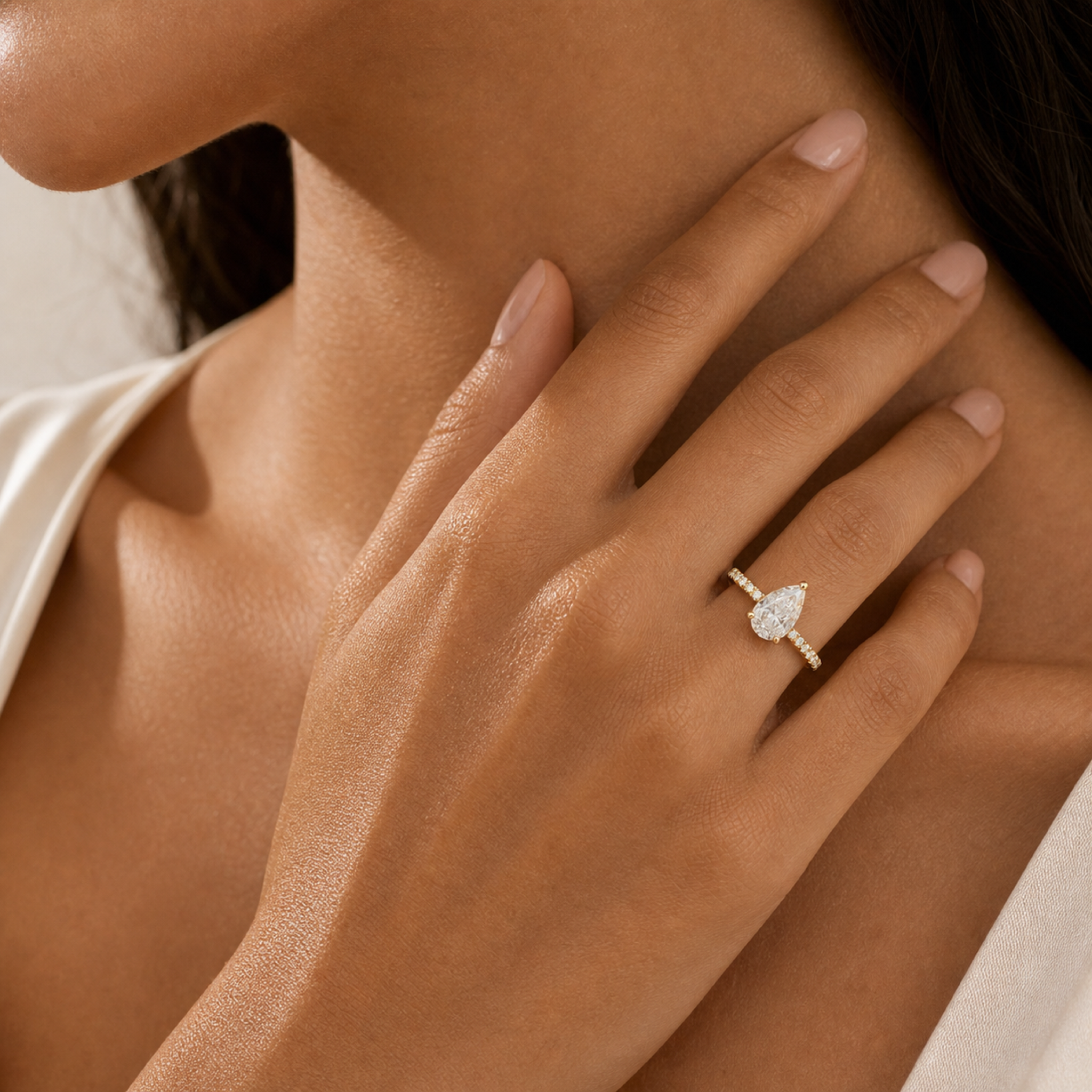



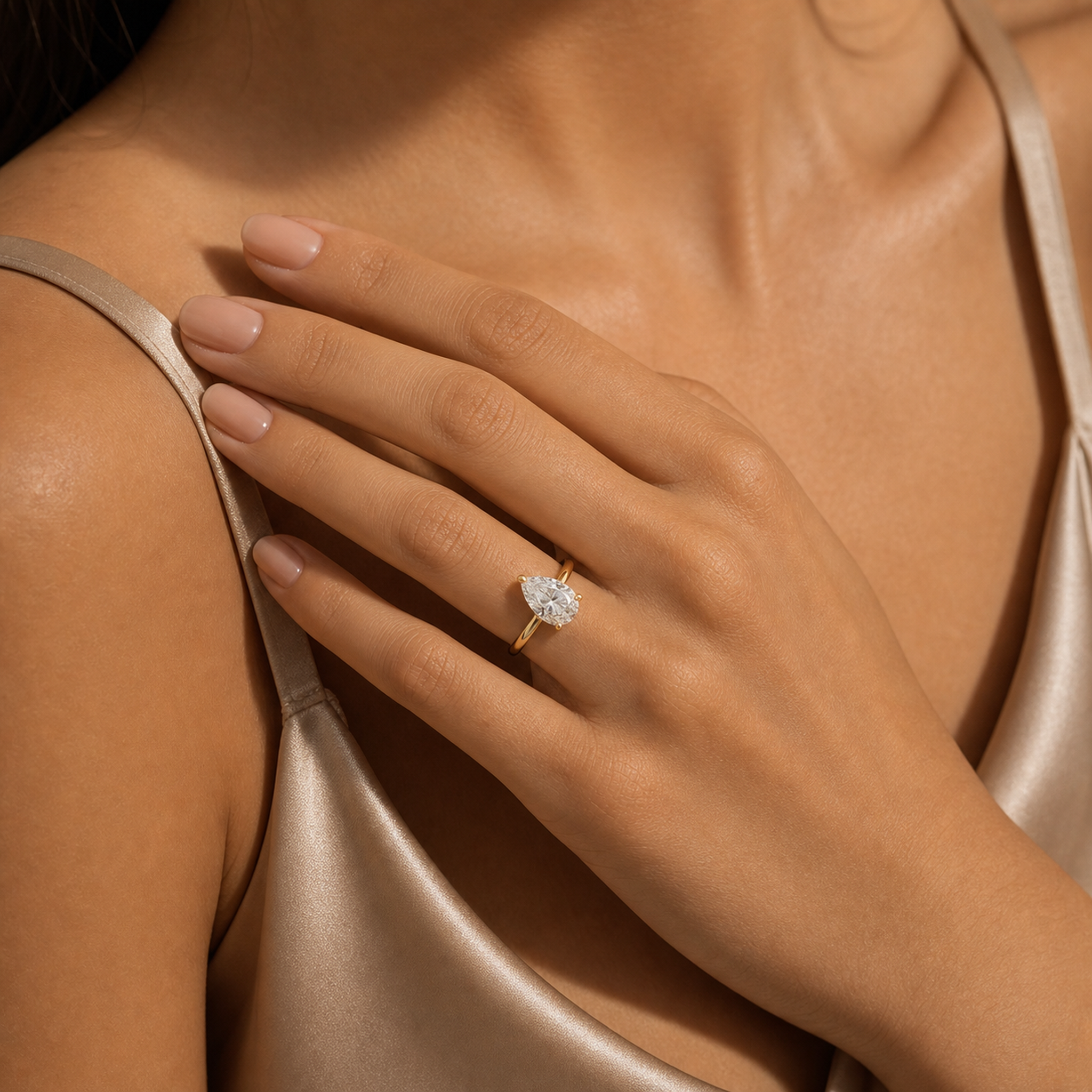


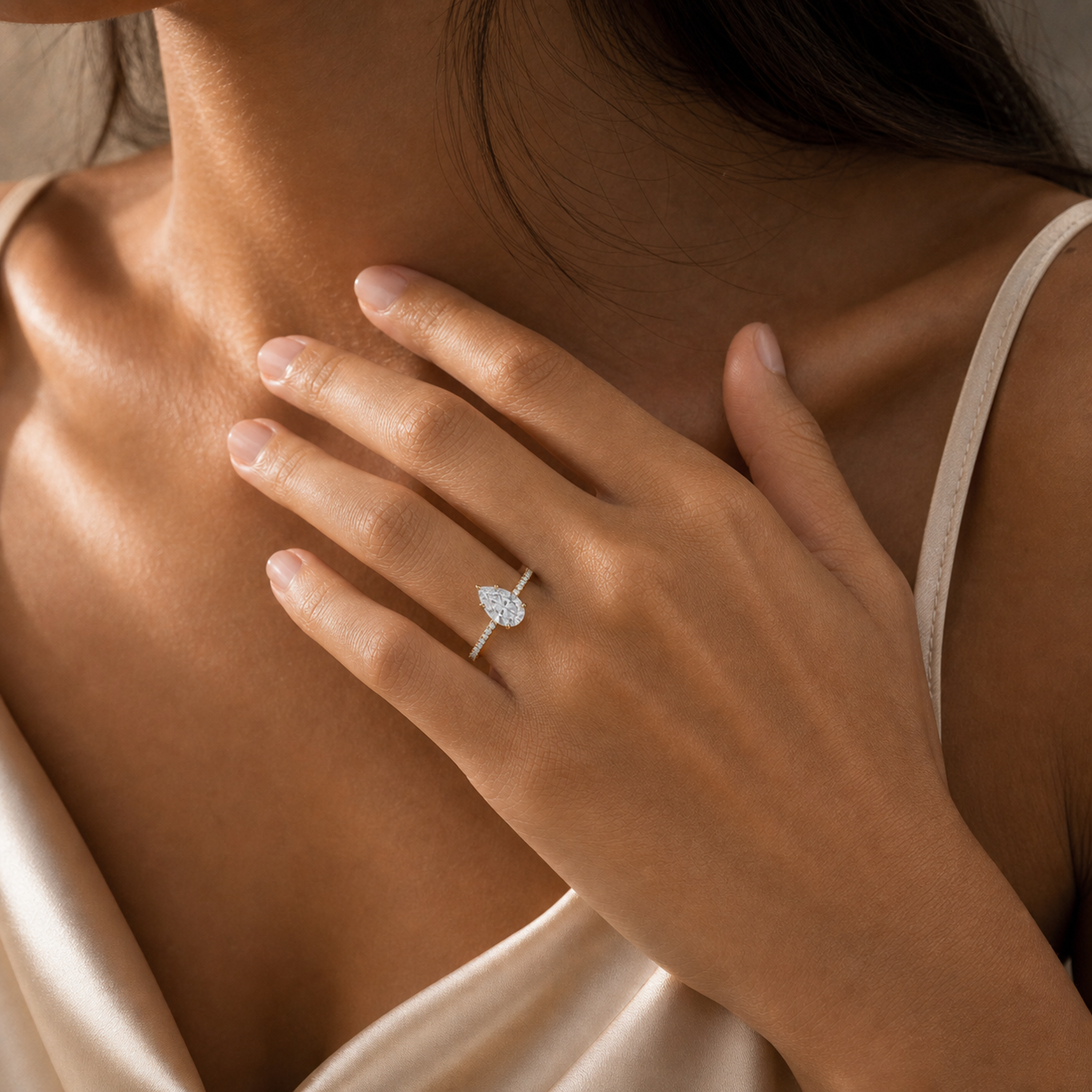


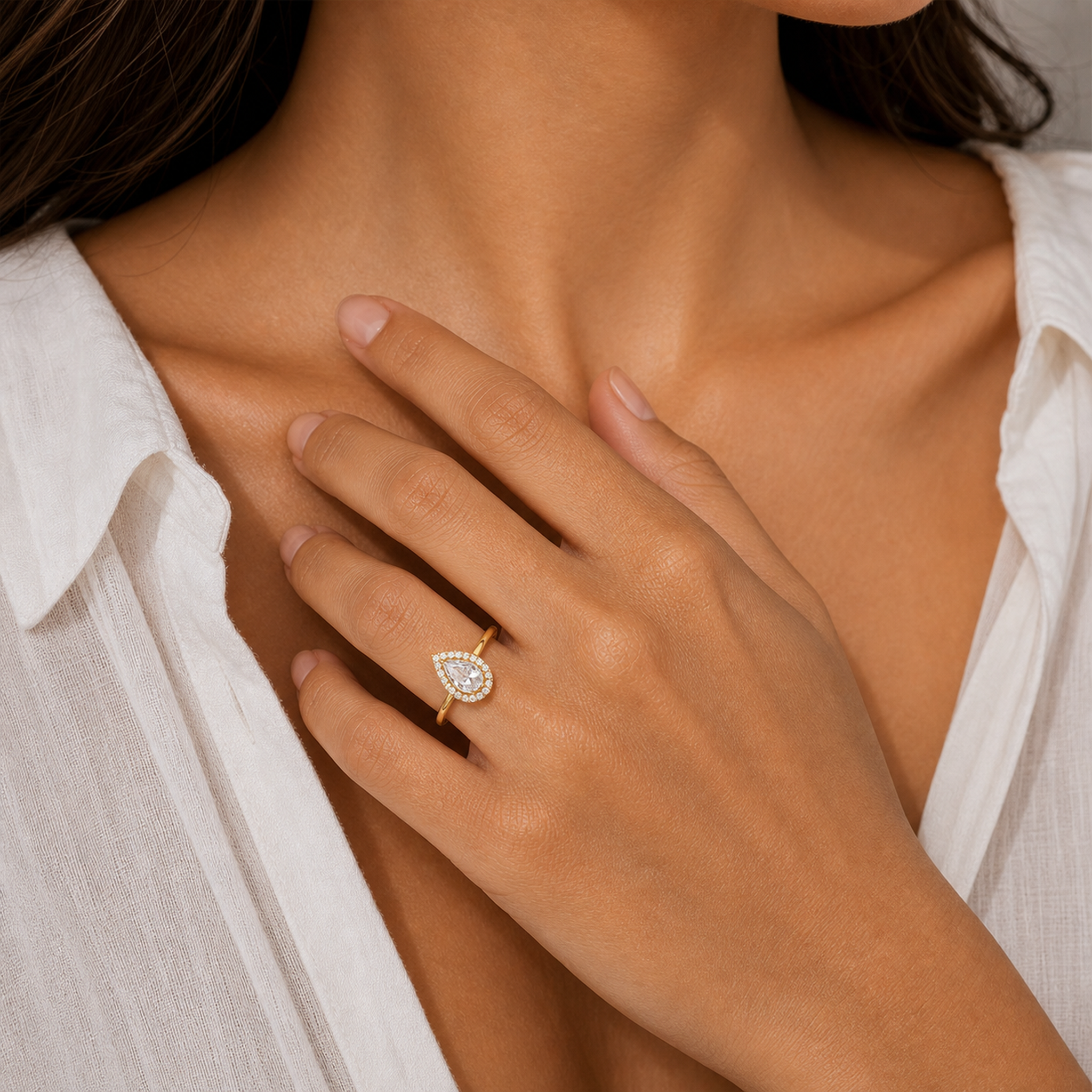


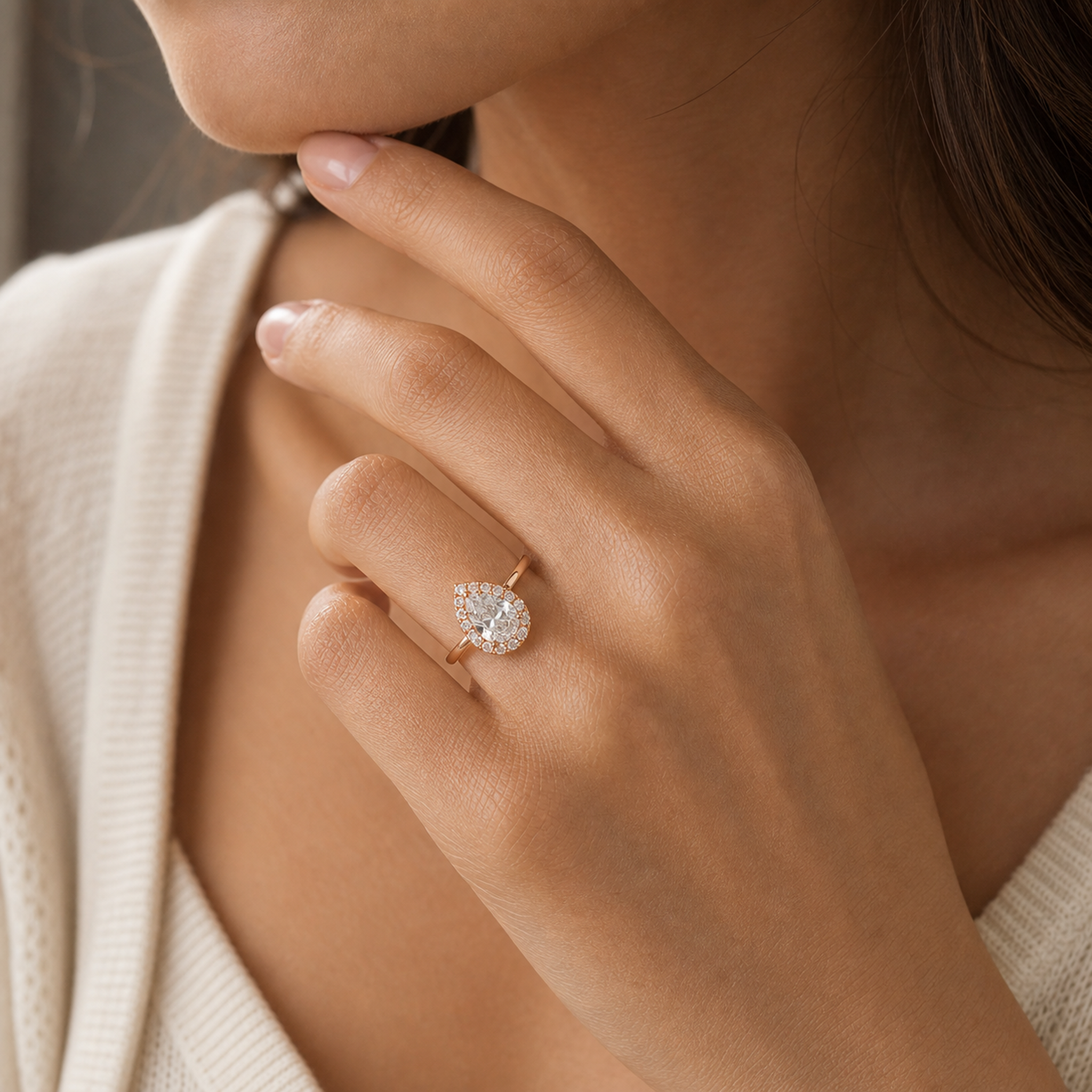


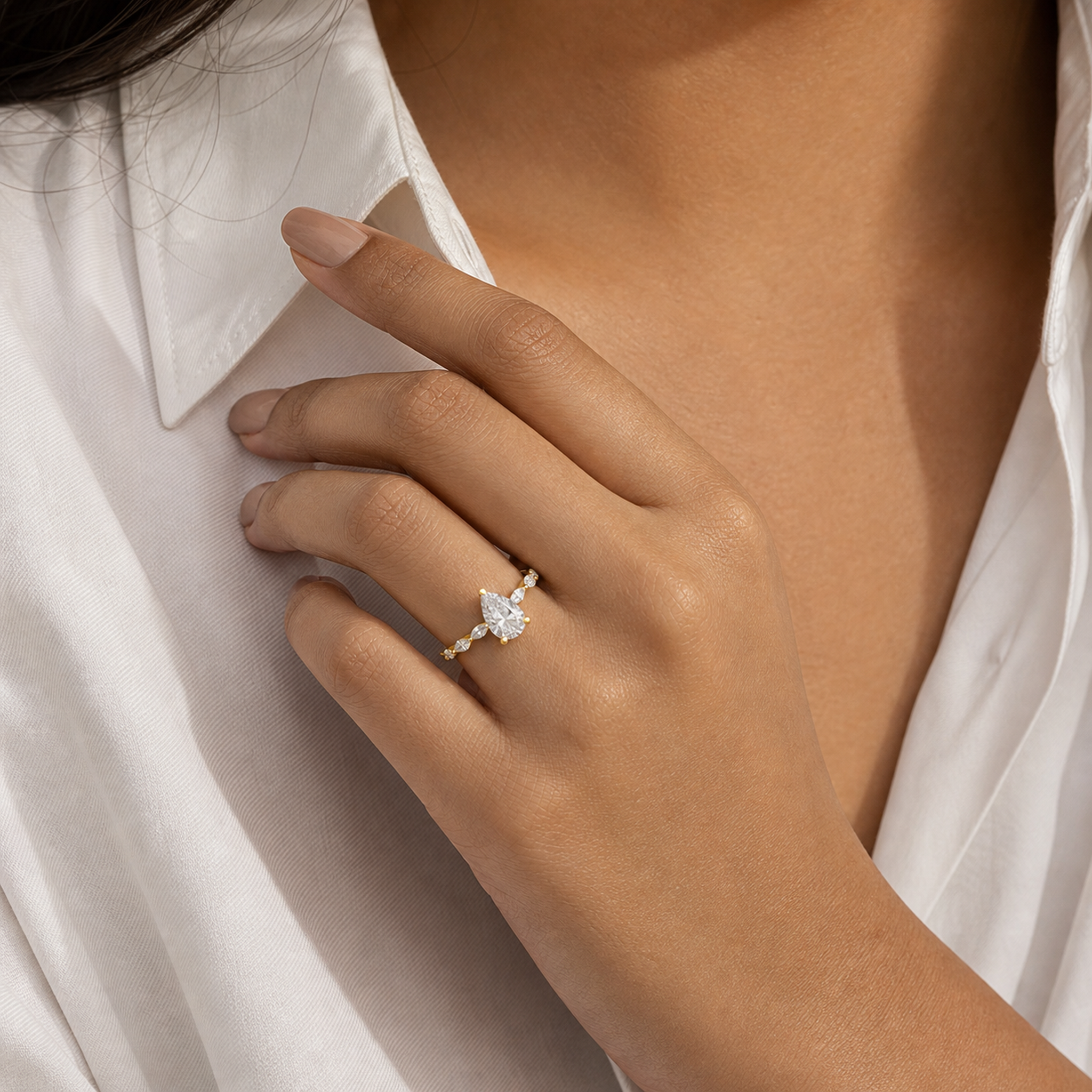


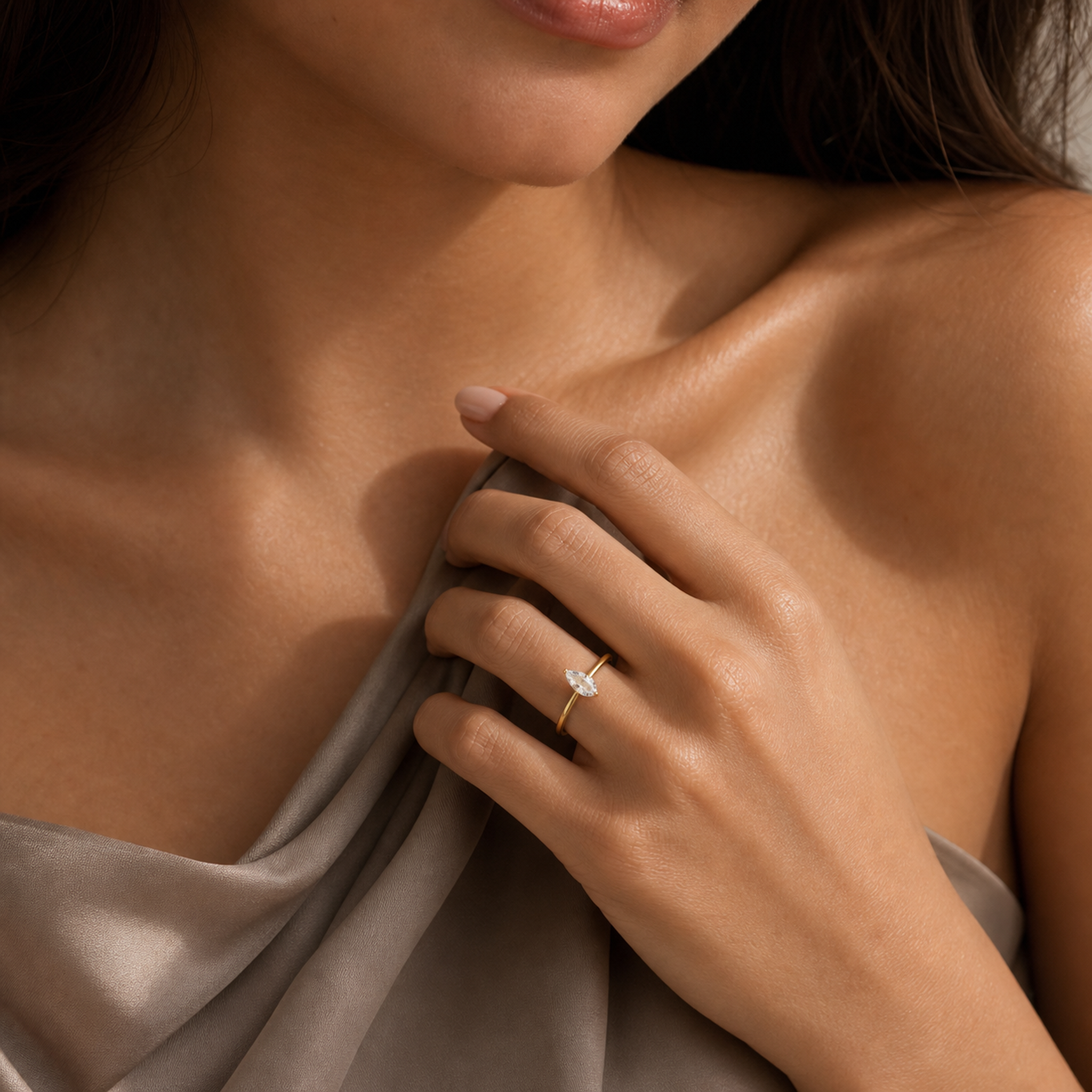


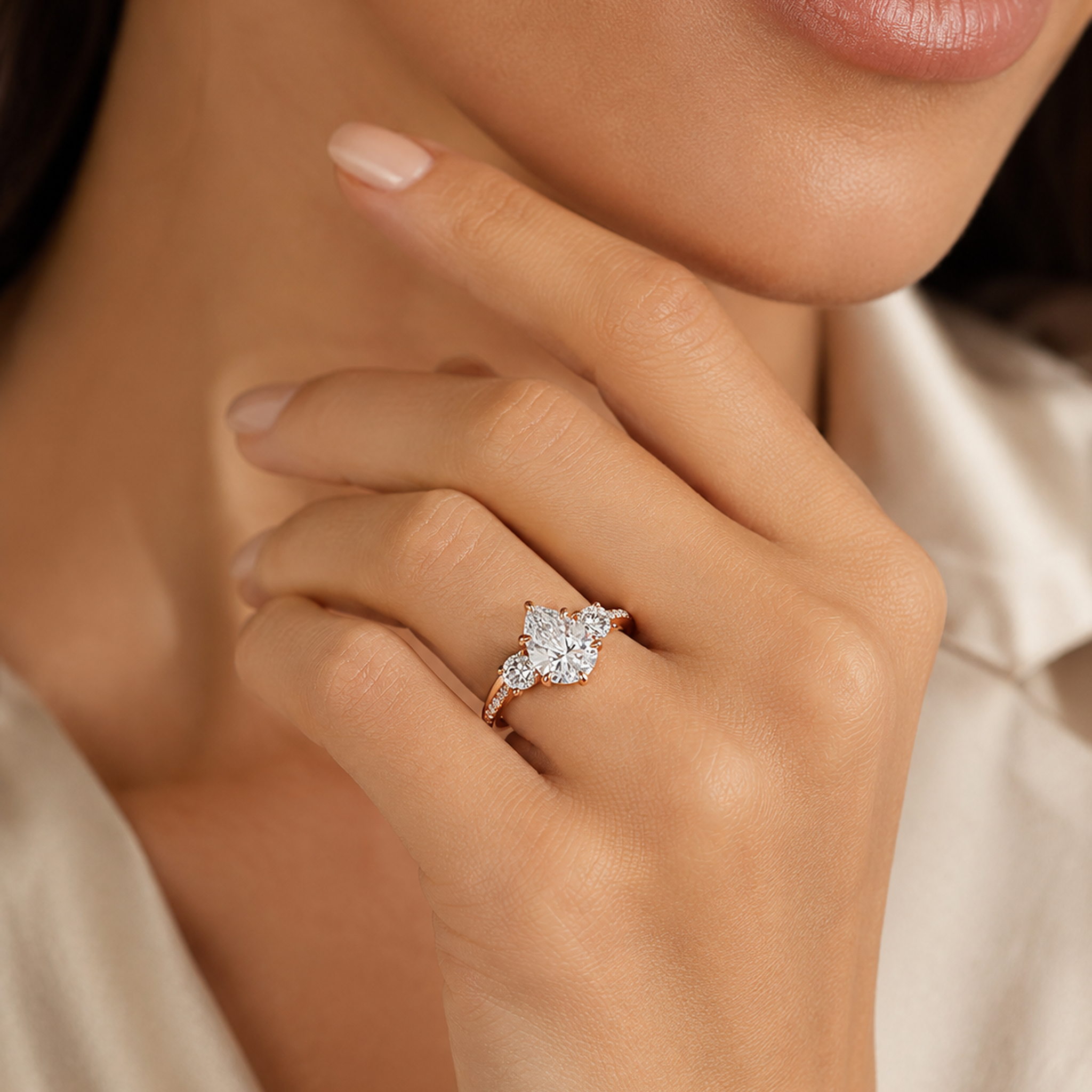


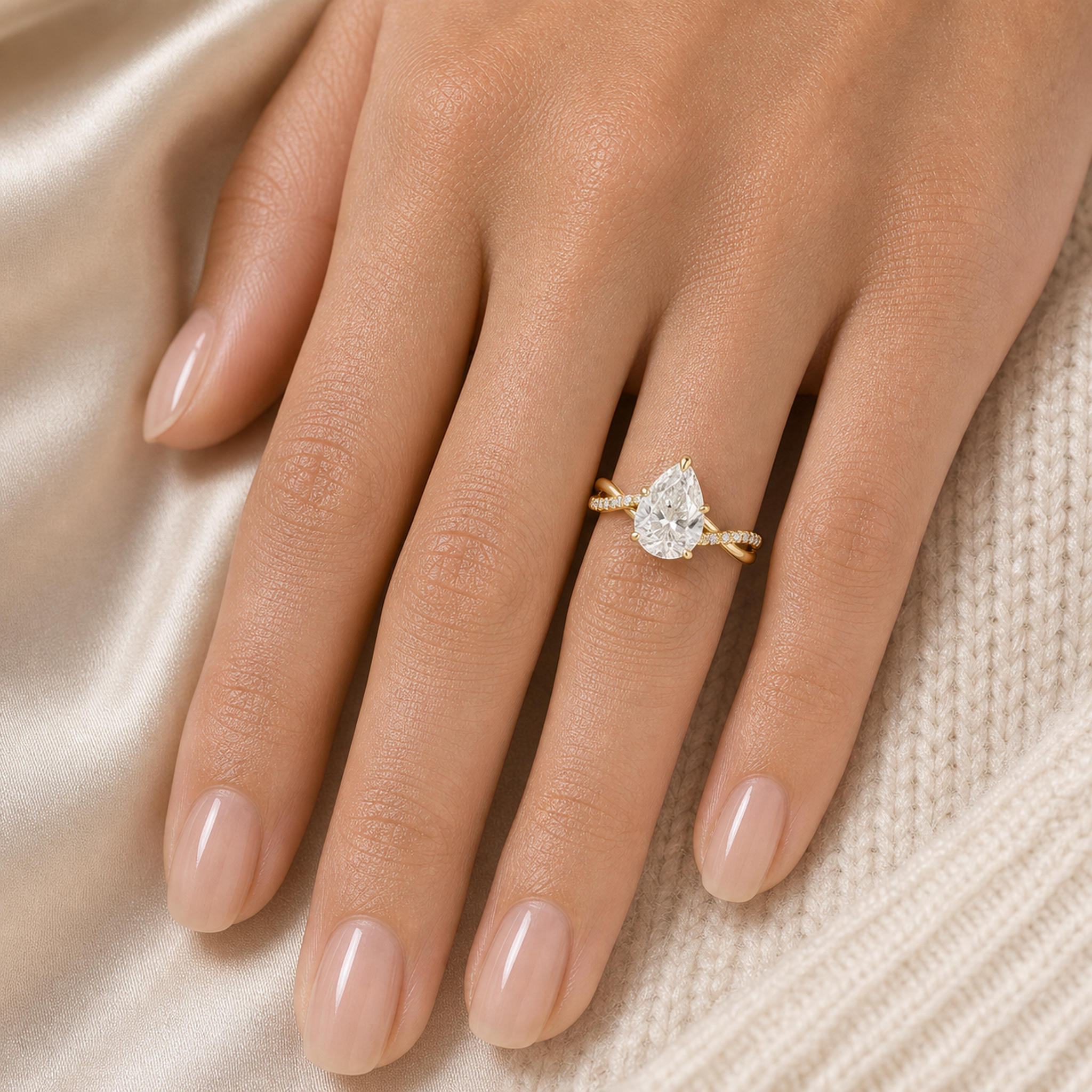


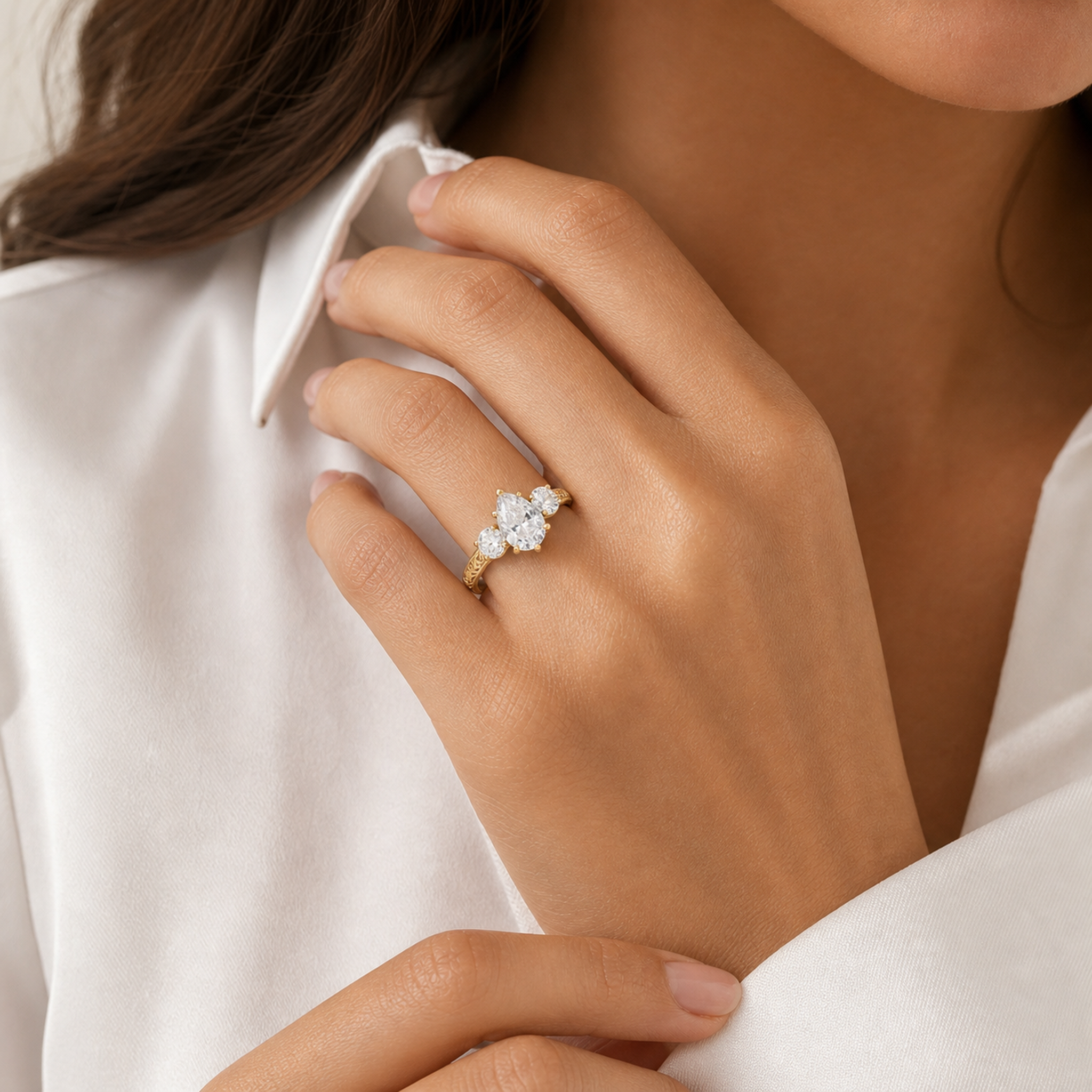


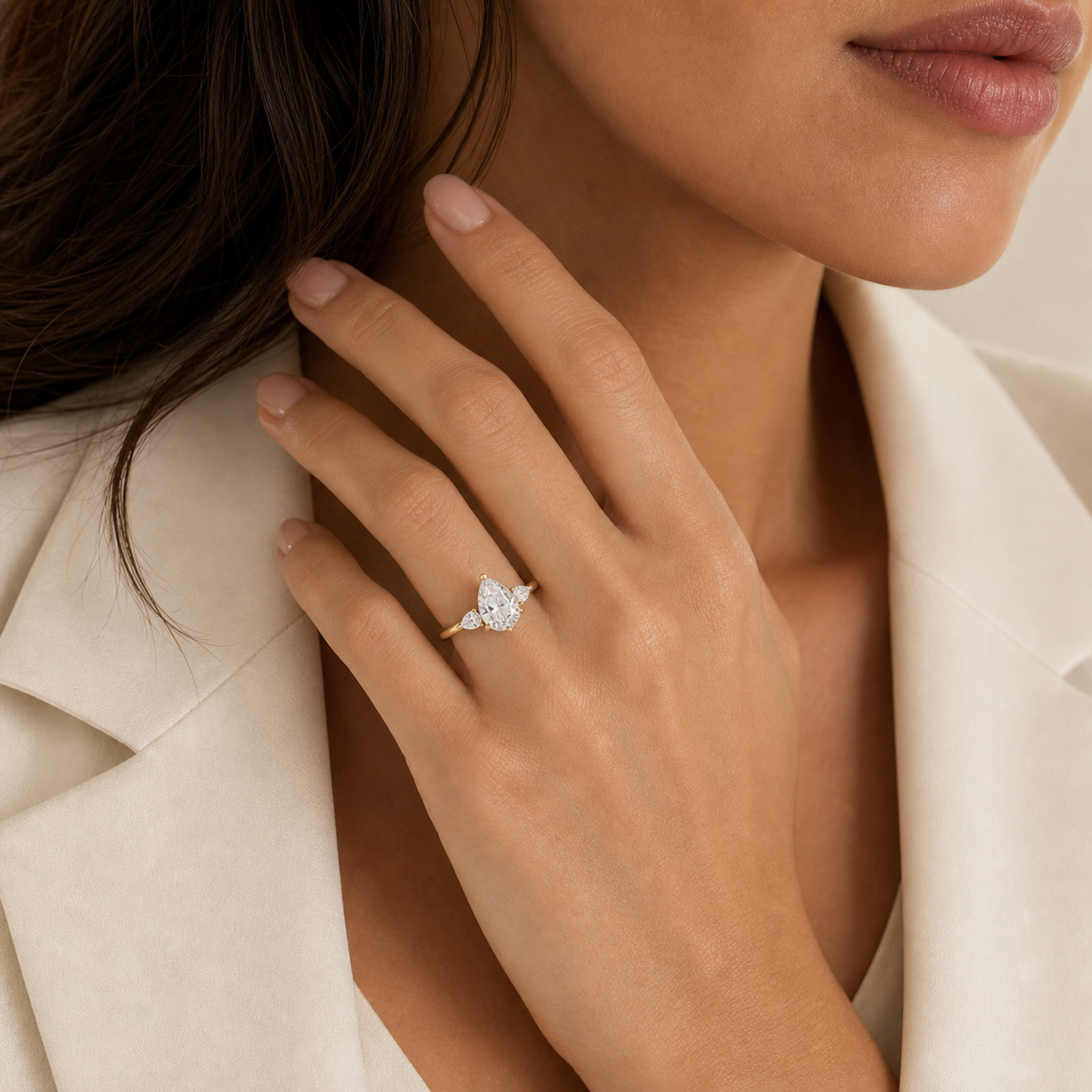
14K Yellow Gold Pear Diamond Engagement Rings: A Golden Line from Curve to Point
Yellow Gold makes the perimeter of a pear center explicit. The metal can punctuate the rounded head with fine prongs, follow the wings through a basket, or establish a visible junction where the center meets the shoulders and side stones. Its warmth defines direction without changing the diamond itself.
Burvonti's 13 current designs span five Solitaires, two Halos, three Side Stone, and three Three Stone settings. Open and pavé baskets, hidden halos, cathedral and vine structures, crown motifs, and marquise or pear accents distribute gold differently around the same asymmetric shape family.
Use Gold to Read the Transition
A 14K alloy contains approximately 58.3% gold. The remaining alloy, finish, lighting, photography, and visible surface influence the observed shade. Karat does not guarantee one yellow tone, hardness level, sensitivity outcome, or care schedule.
A fine-prong Solitaire shows gold as measured punctuation. A fuller basket or halo produces a continuous border, while accent settings extend the golden line outward. Compare settings with similar metal exposure: the amount and position of gold may shape perception more than the material name alone.
The Outline Must Hold Without the Frame
A pear is more than a teardrop shorthand. Head fullness, shoulders, wings, point, symmetry, and length-to-width ratio determine how smoothly the outline resolves. Yellow Gold can reveal those transitions but cannot make one set of proportions objectively ideal.
Central contrast or bow-tie behavior belongs to the diamond's facets and viewing conditions. A golden surround may change edge contrast; it cannot improve brilliance, remove obstruction, or change polish, symmetry, color, clarity, dimensions, or any report fact.
Direction Across Thirteen Compositions
In a Solitaire, the pear's axis leads the composition. A halo creates a second directional perimeter. Side Stone and Three Stone structures either echo that motion with marquise or pear accents or balance it through spacing and scale. The setting should support the center without flattening its asymmetry into decoration.
The point deserves product-specific review. A V-shaped prong, bezel segment, or another solution may be used, but no metal color or generic prong count guarantees security. Construction, workmanship, condition, impact, and wear all matter.
A Visible Material, Calibrated as One Ring
Review length, width, depth, and face-up dimensions alongside carat weight. Then consider total span, band width, profile, and the relationship to a wedding band. A matching gold color does not ensure flush spacing or identical surface evolution.
Burvonti pairs responsibly sourced, independently graded lab-grown diamonds with settings calibrated through proportion and human judgment. Custom possibilities may refine center specifications, orientation, tip support, basket, band, accents, metal, or engraving where feasible. Gold should articulate the pear's direction, not substitute for it.
Frequently Asked Questions
How is this page different from the Pear parent?
It focuses on the visible 14K Yellow Gold boundary and setting transitions. The parent owns complete pear outline, ratio, bow-tie, orientation, and dimension education.
How much gold is in 14K Yellow Gold?
Approximately 58.3%. Alloying metals influence final color and working behavior.
Are all 14K yellow gold rings the same shade?
No. Alloy formula, finish, lighting, photography, and visible metal area affect appearance.
Does Yellow Gold make the pear outline more visible?
A contrasting boundary can clarify the edge, but the result depends on prongs, basket, accents, and the individual outline.
Does Yellow Gold improve pear brilliance?
No. It changes the surrounding field, not the diamond's faceting or light performance.
Which settings are represented?
The current collection includes five Solitaire, two Halo, three Side Stone, and three Three Stone settings.
Can Yellow Gold change a pear's proportions?
It may influence edge perception, but the center's length, width, head, wings, point, and ratio remain unchanged.
What causes a bow-tie in a pear diamond?
It arises from facet relationships, obstruction, viewing angle, and light. Metal cannot remove it.
Which direction should the point face?
Either direction may work. Orientation is a personal and design-specific choice, not a quality grade.
Does a pear point need a V-prong?
The point needs appropriate product-specific support, but one named construction should not be assumed for every design.
Does Yellow Gold tarnish?
Surface appearance and care depend on the complete alloy, finish, wear, and environment; confirm product guidance.
Will a wedding band fit flush?
Not necessarily. Profile, basket, shoulders, side stones, height, and contact points determine spacing.
Can Burvonti personalize a Yellow Gold Pear ring?
Custom possibilities may include center, orientation, point support, basket, band line, accents, metal, or engraving, subject to feasibility.