
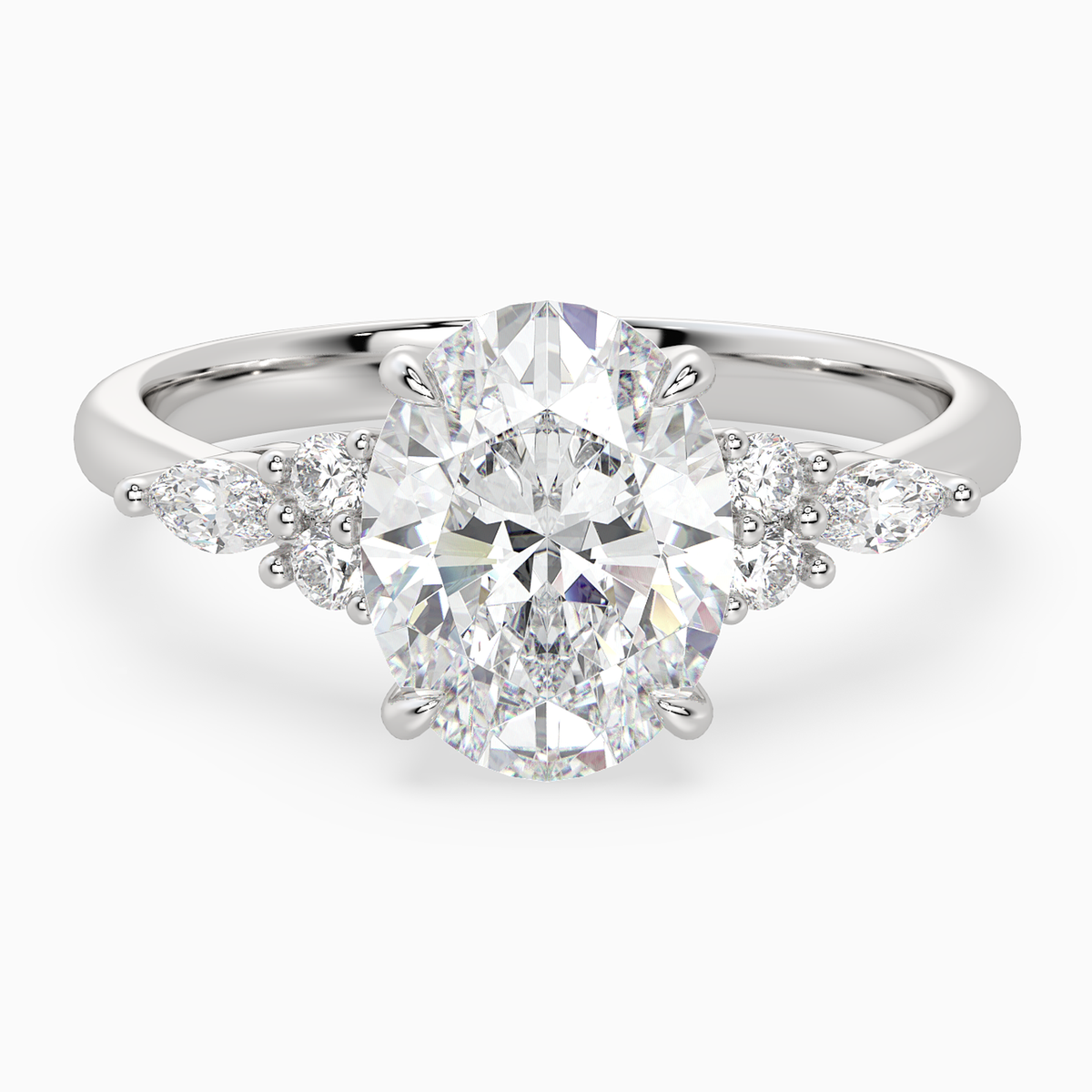


Solitaire Engagement Rings in Platinum
A natural white frame with quiet presence. Platinum brings weight, tonal continuity, and evolving surface character to one center stone.


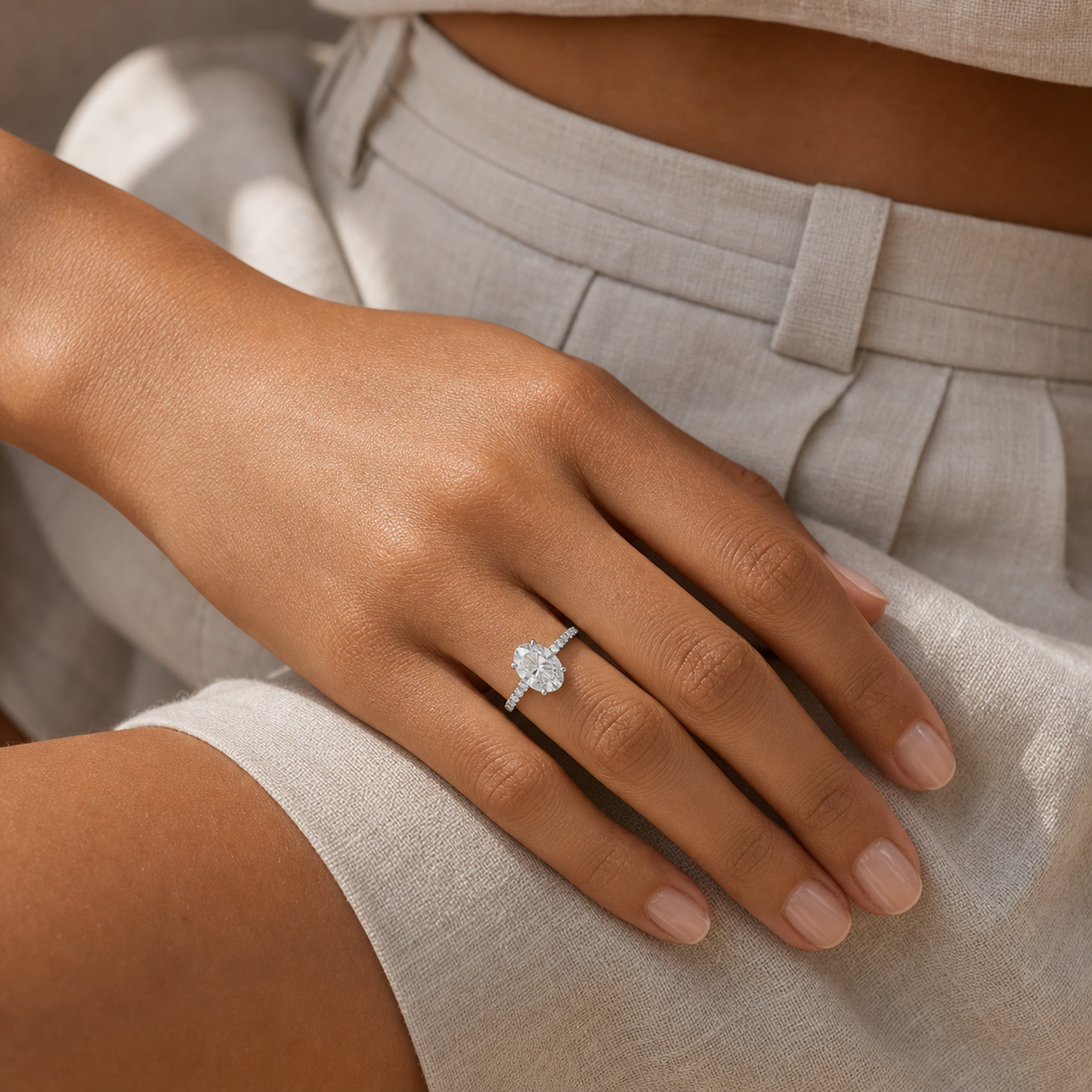


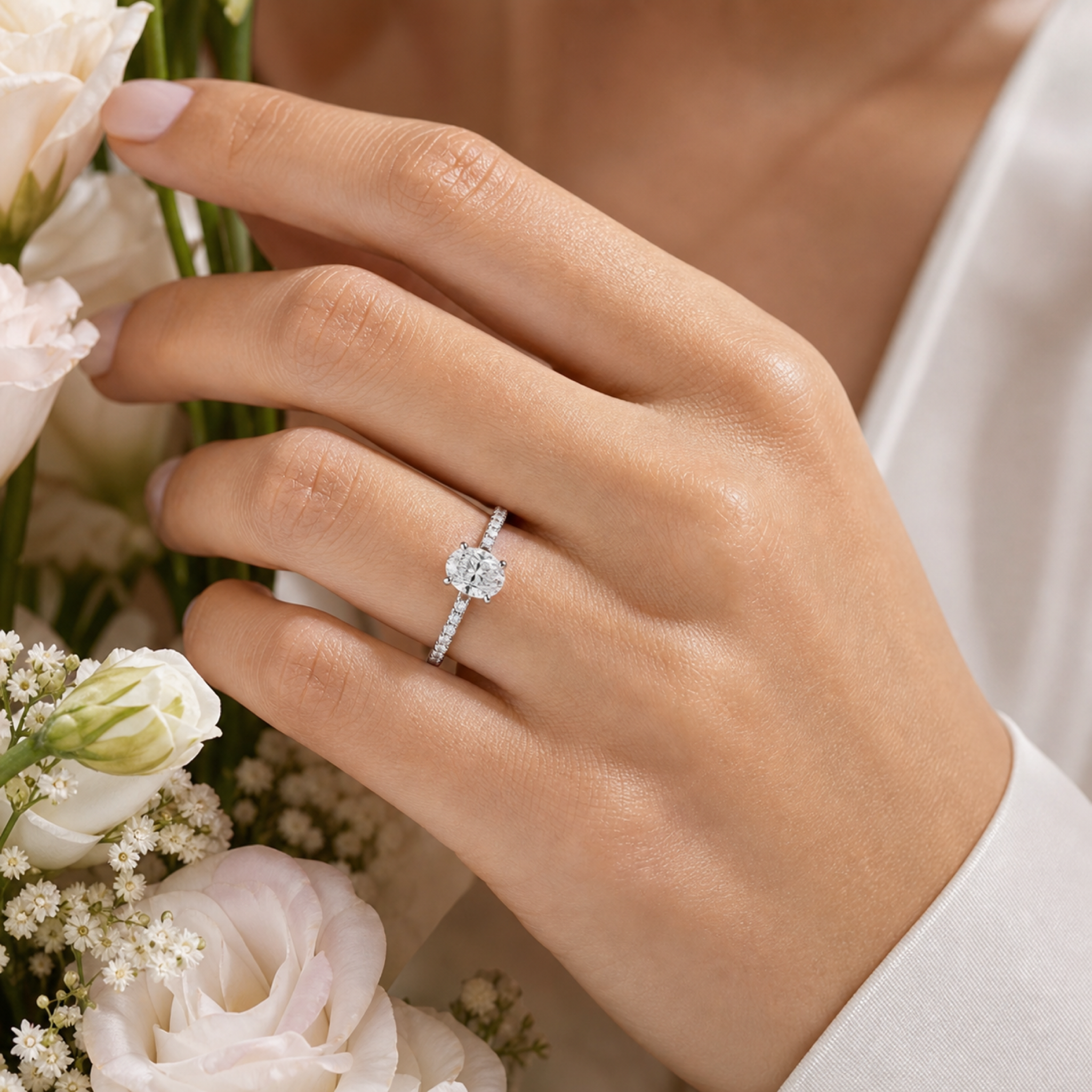


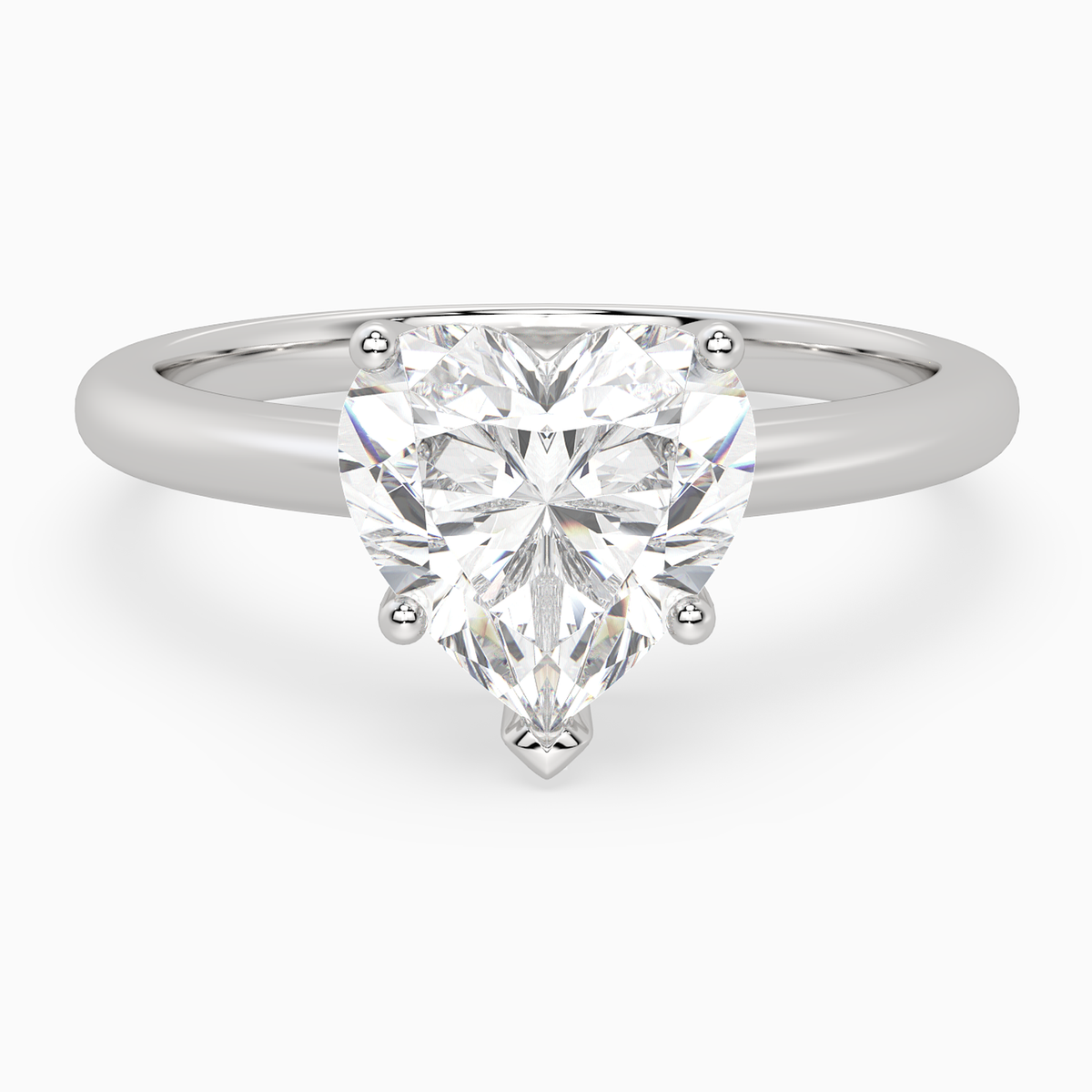








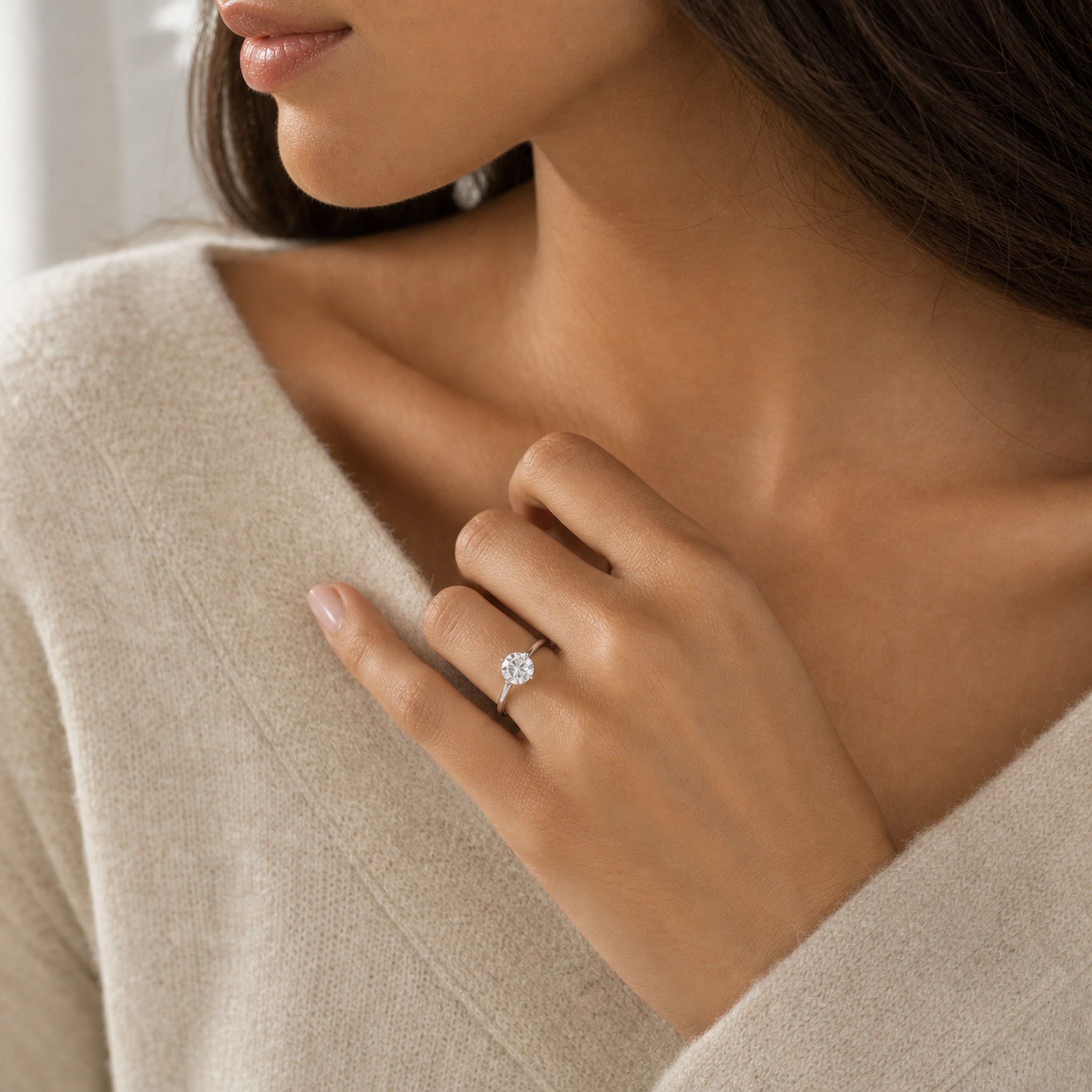


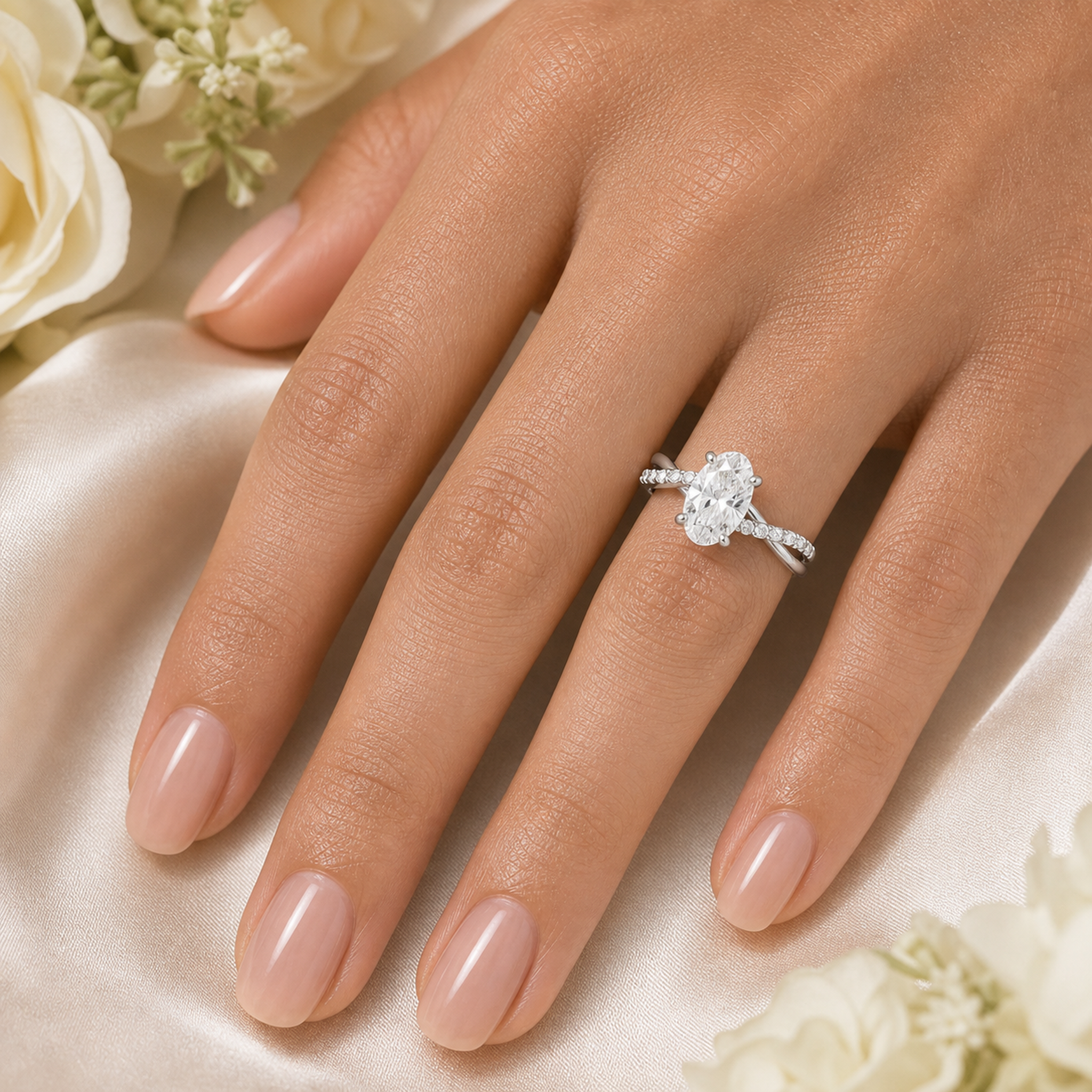


Platinum Solitaire Engagement Rings: Material Presence Around One Stone
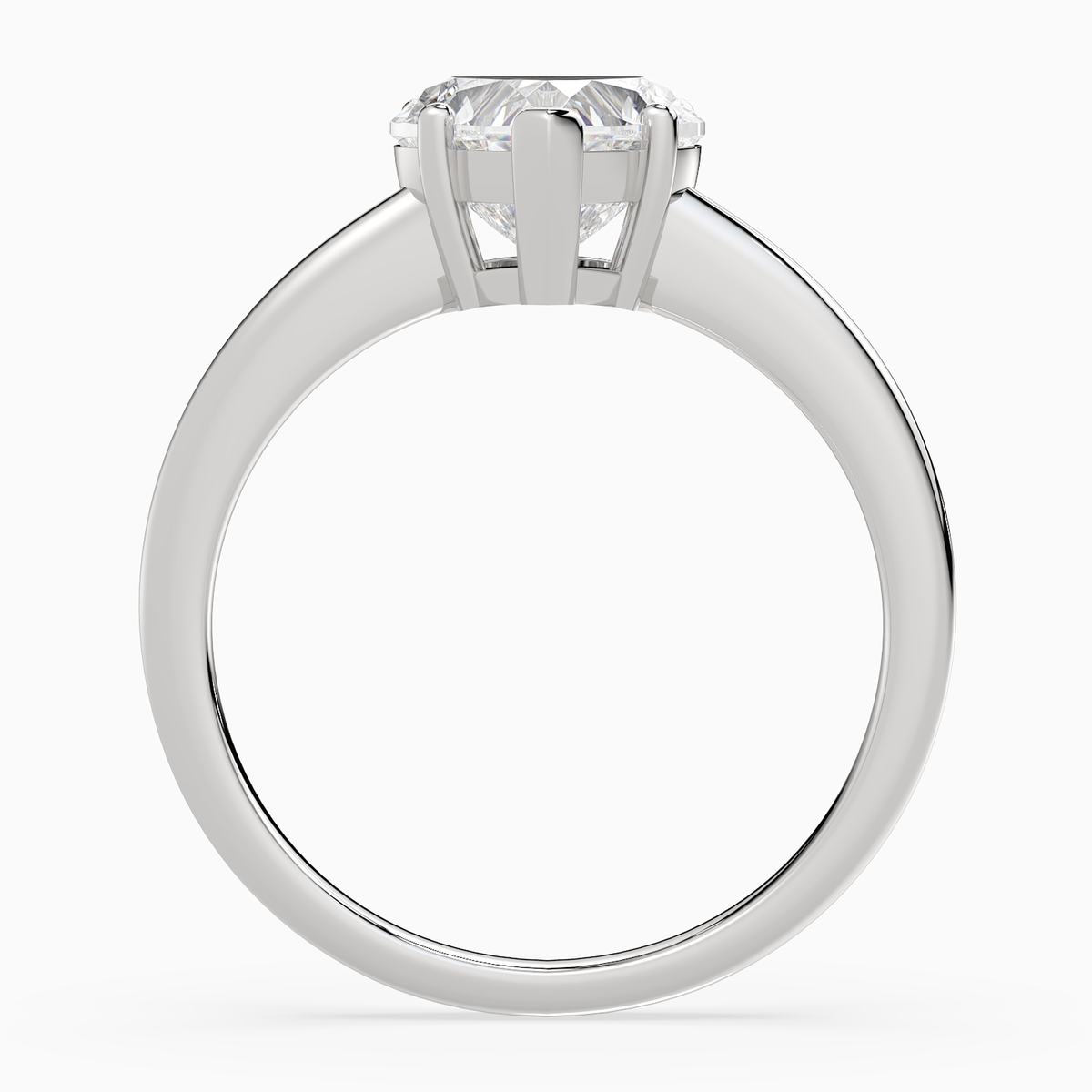
Platinum can look visually quiet beside a bright center diamond, yet it is not physically anonymous. Its natural white color creates tonal continuity across prongs and band, while its density gives even a restrained solitaire a distinct material presence. The combination makes close decisions—prong scale, basket depth, shoulder rise, and band proportion—particularly important.
Burvonti's public collection contains 19 verified Platinum solitaires. Open and pavé baskets, hidden halos, cathedral settings, knife edges, milgrain bezels, bypass bands, and vine-like lines all keep one center stone primary while changing how the metal is seen and felt. The page's purpose is therefore not to call Platinum the ultimate metal; it is to make its specific relationship with solitaire architecture understandable.
Natural White Is a Material Fact, Not a Brilliance Promise
Platinum is naturally white rather than a gold alloy selected for a white appearance. That can create a close tonal relationship between setting and diamond, especially through fine prongs. It does not change the diamond's cut, color grade, clarity, size, or light performance, and it should not be converted into a promise that every center will appear whiter or more brilliant.
The amount of visible metal changes the effect. Separate prongs may recede at a glance, while a bezel establishes a continuous white border. Cathedral shoulders carry the metal upward; an open basket traces the center from the side. Tonal continuity makes these structures calm, not absent.
Density Changes Physical Presence
Platinum is notably dense, so comparable rings can feel more substantial than rings made in many gold alloys. Finished weight still depends on dimensions and construction, making the individual product specification essential. Density should not be confused with a guarantee that a ring is indestructible, perfectly secure, or free from maintenance.
In a solitaire, physical presence can be concentrated in a narrow band and compact head or distributed through a broader bezel and sculpted shoulders. The useful comparison is between completed designs, not isolated metal labels. Balance on the hand, band width, center scale, and profile all contribute to the final feel.
Shape Makes Prong and Corner Decisions Visible
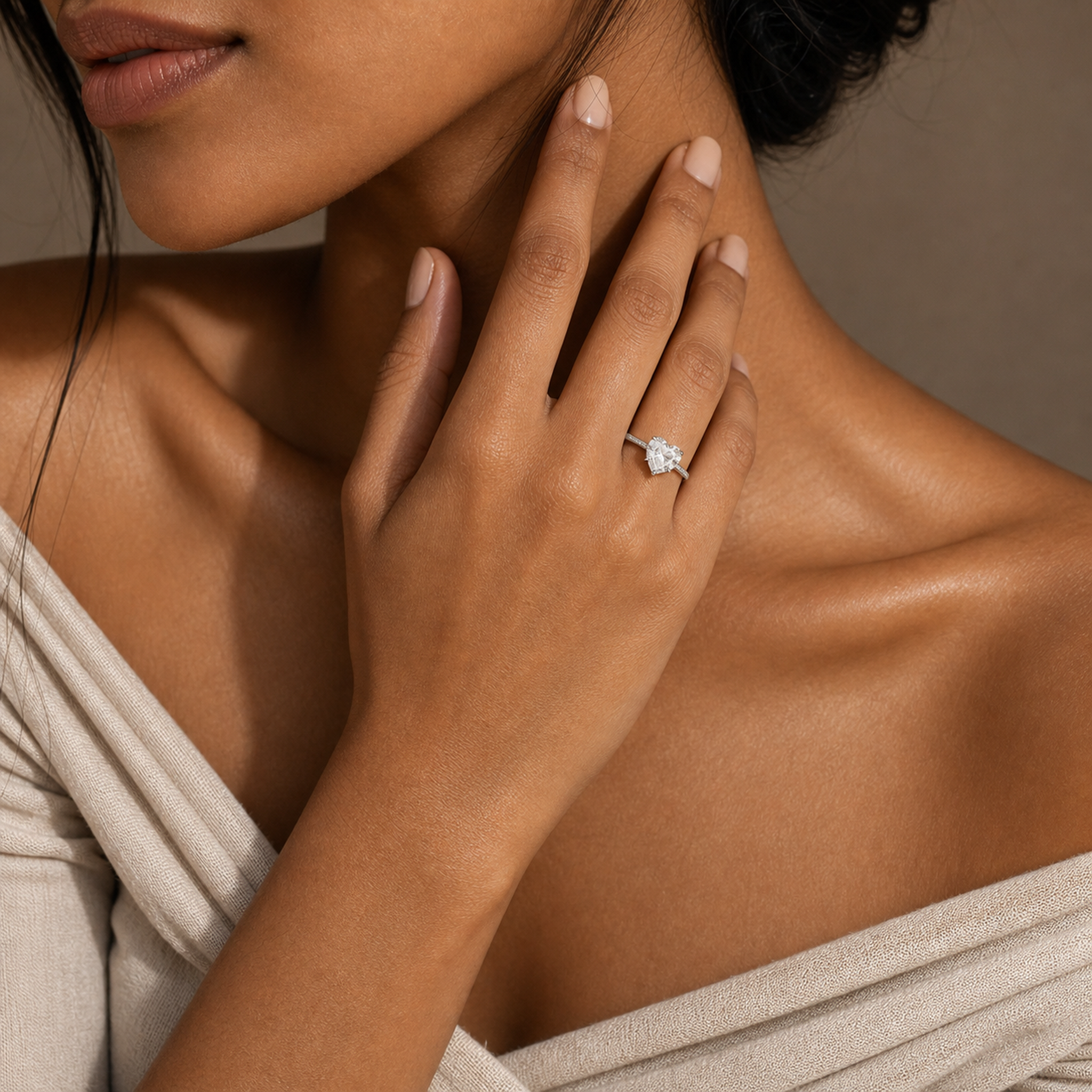
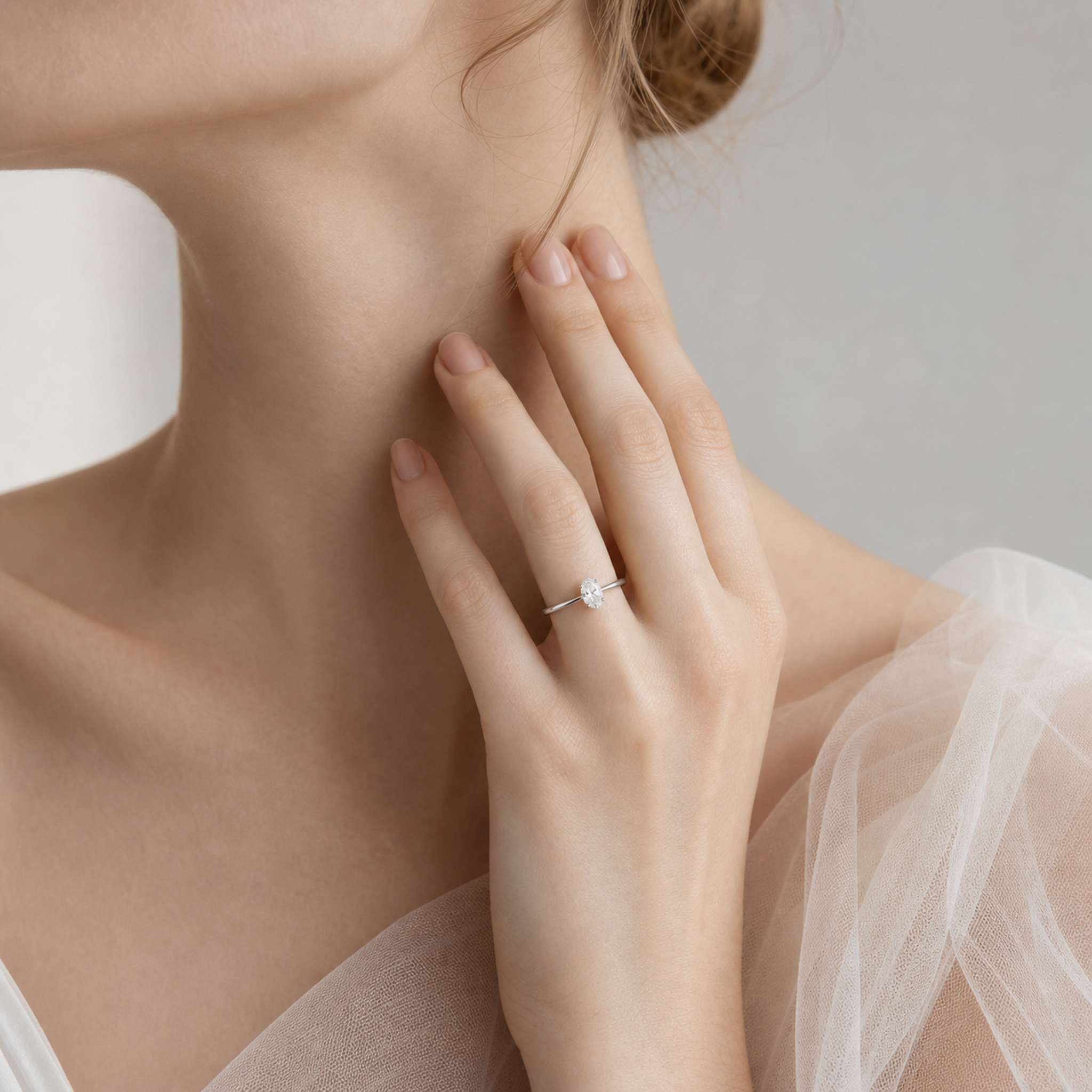
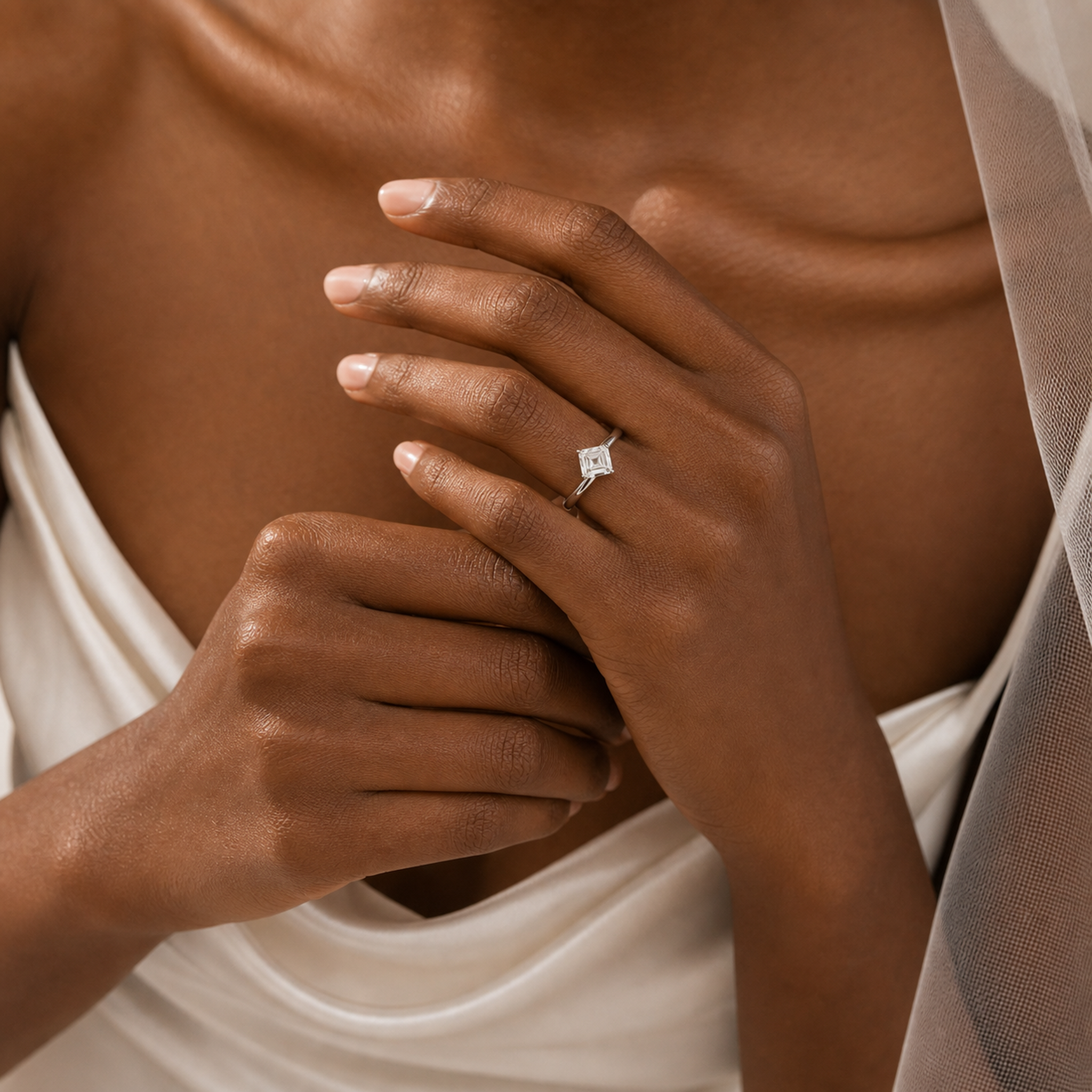
The current assortment includes round, oval, cushion, pear, emerald, princess, Asscher, and heart centers. Round and cushion shapes allow an even rhythm around curved outlines. Oval and pear forms lengthen the composition. Emerald and Asscher cuts expose ordered corner relationships, while princess and heart shapes require the head to resolve points or clefts carefully.
A customer can be drawn to one setting and compare the shapes available within it, or begin with a preferred outline and consider the structures that support its visual character. This is an act of comparison, not a prescribed digital sequence. Shape, prongs, basket, band, and side profile should be read as one object.
Patina Is Evolution, Not Failure
With wear, Platinum develops fine surface marks that are often described collectively as patina. Some wearers value that quieter, lived-in surface; others prefer periodic professional refinishing. Neither preference is inherently more correct, and no universal polishing schedule applies to every ring or wearer.
Platinum and White Gold should also be compared on their own terms. Platinum is naturally white and dense, with its characteristic surface evolution. White Gold is a gold alloy whose final appearance may include a bright surface finish. The choice involves color, feel, care, design, and budget rather than a simple hierarchy of durability or prestige.
Pair the Profiles, Not Just the Metal Names
A Platinum wedding band can extend the natural white field, while another metal can introduce deliberate contrast. Matching metal does not ensure a flush fit. Basket width, cathedral height, hidden-halo placement, bezel edge, band thickness, stones, and contact points determine the relationship between the rings.
Burvonti pairs responsibly sourced, independently graded lab-grown diamonds with settings considered through proportion and human judgment. Custom possibilities may refine shape, orientation, band dimension, engraving, metal, or selected structural details where feasible. A Platinum solitaire succeeds when material presence, center outline, and profile have been calibrated together.
Frequently Asked Questions
How is this page different from the main Platinum Engagement Rings Collection?
The main Platinum page covers the metal across engagement-ring styles. This page focuses on rings led by one center diamond and examines Platinum through prongs, baskets, bezels, bands, profiles, and solitaire shape relationships.
Is Platinum naturally white?
Yes. Platinum is naturally white rather than a gold alloy selected for a white appearance. Its finished look still depends on polish, texture, lighting, wear, and design.
Does Platinum make a diamond look more brilliant?
It does not change the diamond's cut or light performance. A close tonal relationship between metal and diamond can change the visual boundary, but brilliance depends principally on the diamond and viewing conditions.
Is a Platinum solitaire heavier than a White Gold solitaire?
Platinum is denser, so comparable designs can feel more substantial. Actual finished weight depends on band dimensions, head construction, stone size, and the complete product specification.
Is Platinum indestructible?
No. Platinum can mark, deform, or require maintenance depending on design, wear, and impact. Material choice does not replace appropriate construction, inspection, and care.
What is Platinum patina?
Patina describes the fine surface changes that accumulate with wear. Some people prefer this quieter finish; others choose professional refinishing. The decision is aesthetic and product-specific.
Which diamond shapes appear in this collection?
The current public assortment includes round, oval, cushion, pear, emerald, princess, Asscher, and heart shapes. Each should be judged within its complete head, band, and profile.
Why can Platinum prongs look visually quiet?
The natural white tone can create less color contrast beside a bright center than Yellow or Rose Gold. Prong number, position, scale, and finish still affect the diamond's visible outline.
Can a Platinum solitaire include a bezel or hidden halo?
Yes. A bezel makes Platinum more visible around the center, while a hidden halo adds detail below it. One center diamond can remain visually primary in both structures.
Is Platinum hypoallergenic?
A universal personal outcome should not be promised. If sensitivity is a concern, confirm the complete product-specific metal composition and discuss individual needs with an appropriate professional.
Does a Platinum solitaire need frequent polishing?
There is no universal schedule. Some wearers keep the evolving patina; others refinish periodically. Care should respond to the ring's condition, structure, and desired appearance.
Must the wedding band also be Platinum?
No. Matching creates tonal continuity, while another metal can create contrast. Consider profile, contact points, stones, finish, and product-specific wear as well as color.
Can Burvonti personalize a Platinum solitaire?
Custom possibilities may include shape, orientation, band proportion, engraving, metal, or selected setting details. The selected design must be reviewed for availability and structural feasibility.