
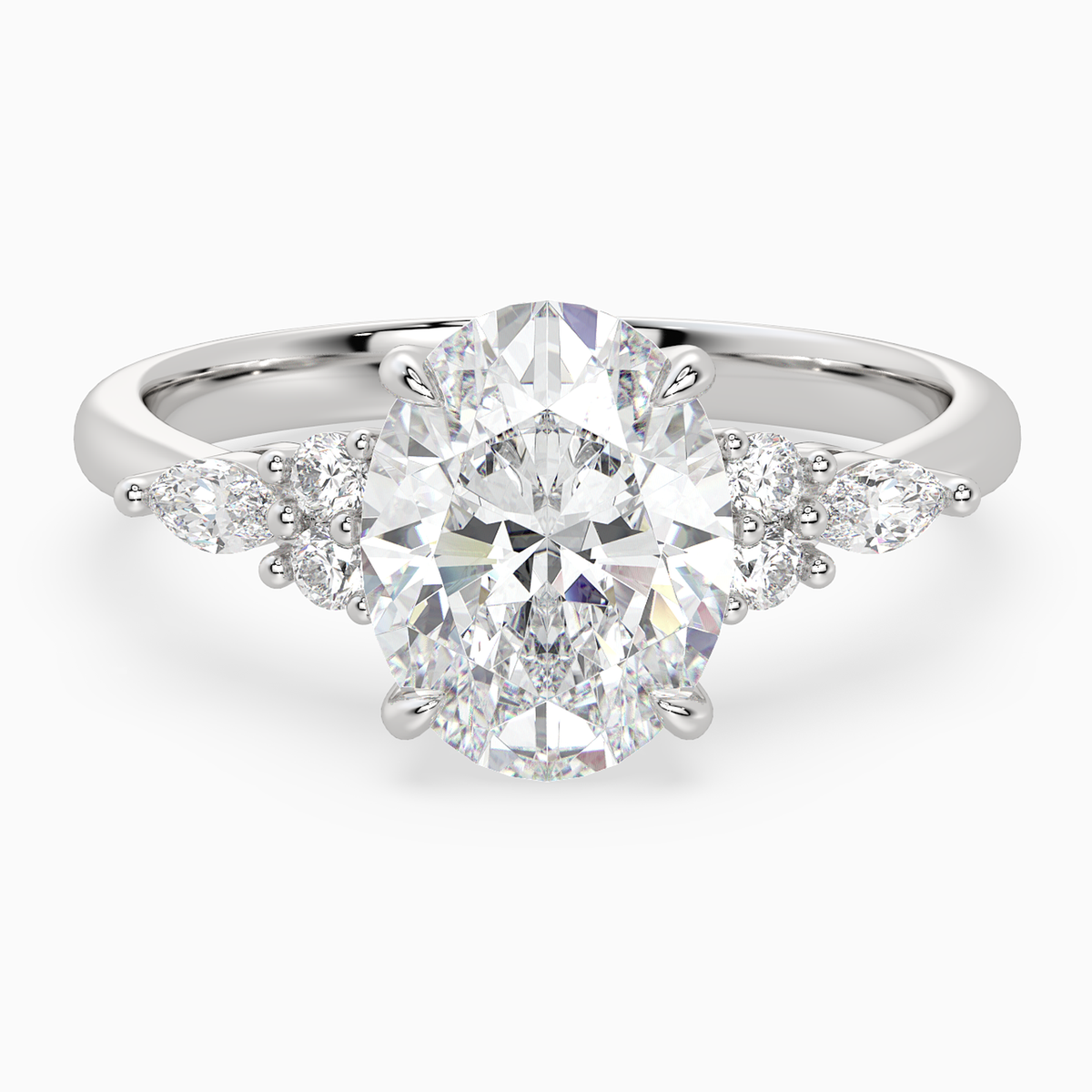


Solitaire Engagement Rings in 14K Rose Gold
A measured blush, drawn around one stone. 14K rose gold lets prong, band, and center diamond meet through warm, deliberate contrast.


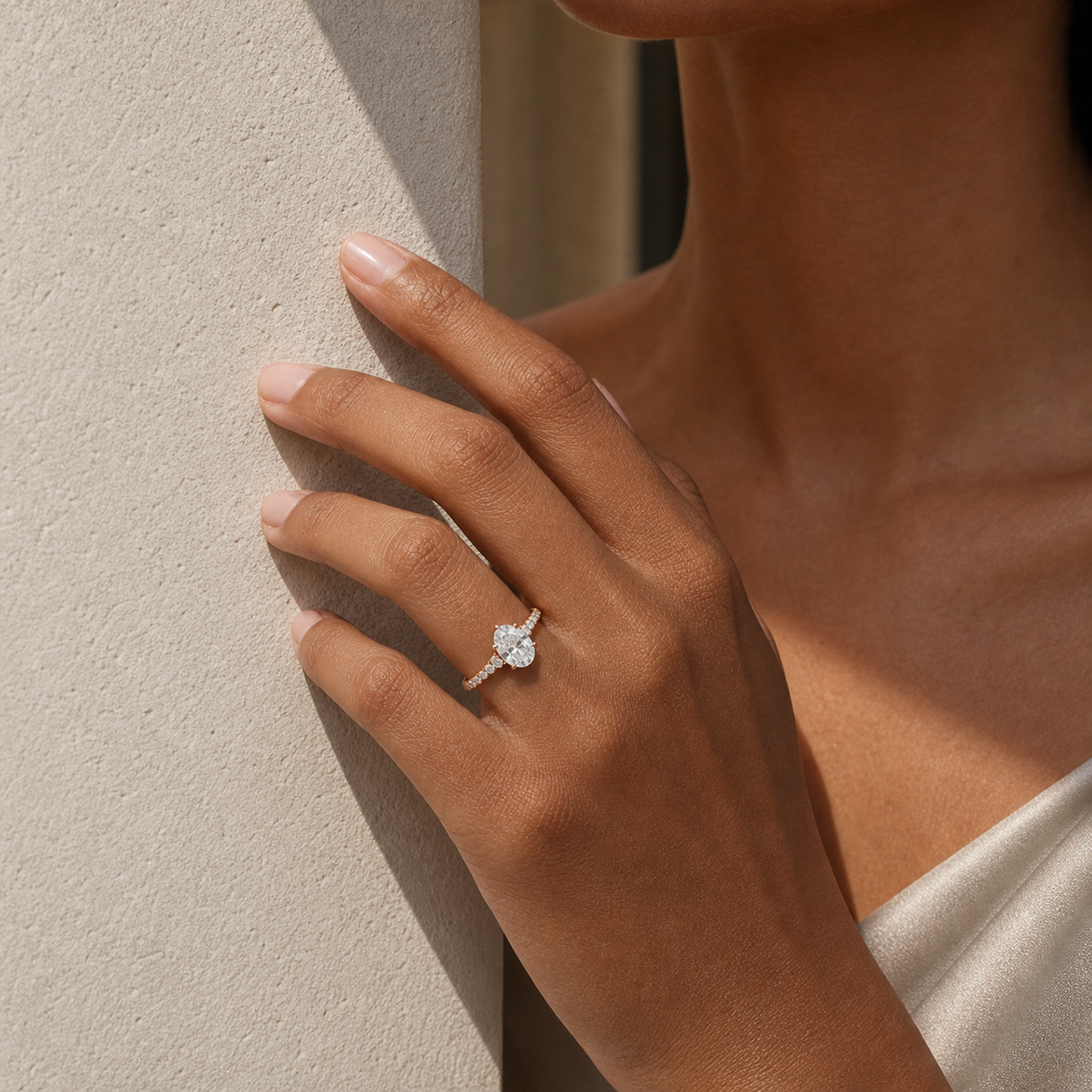


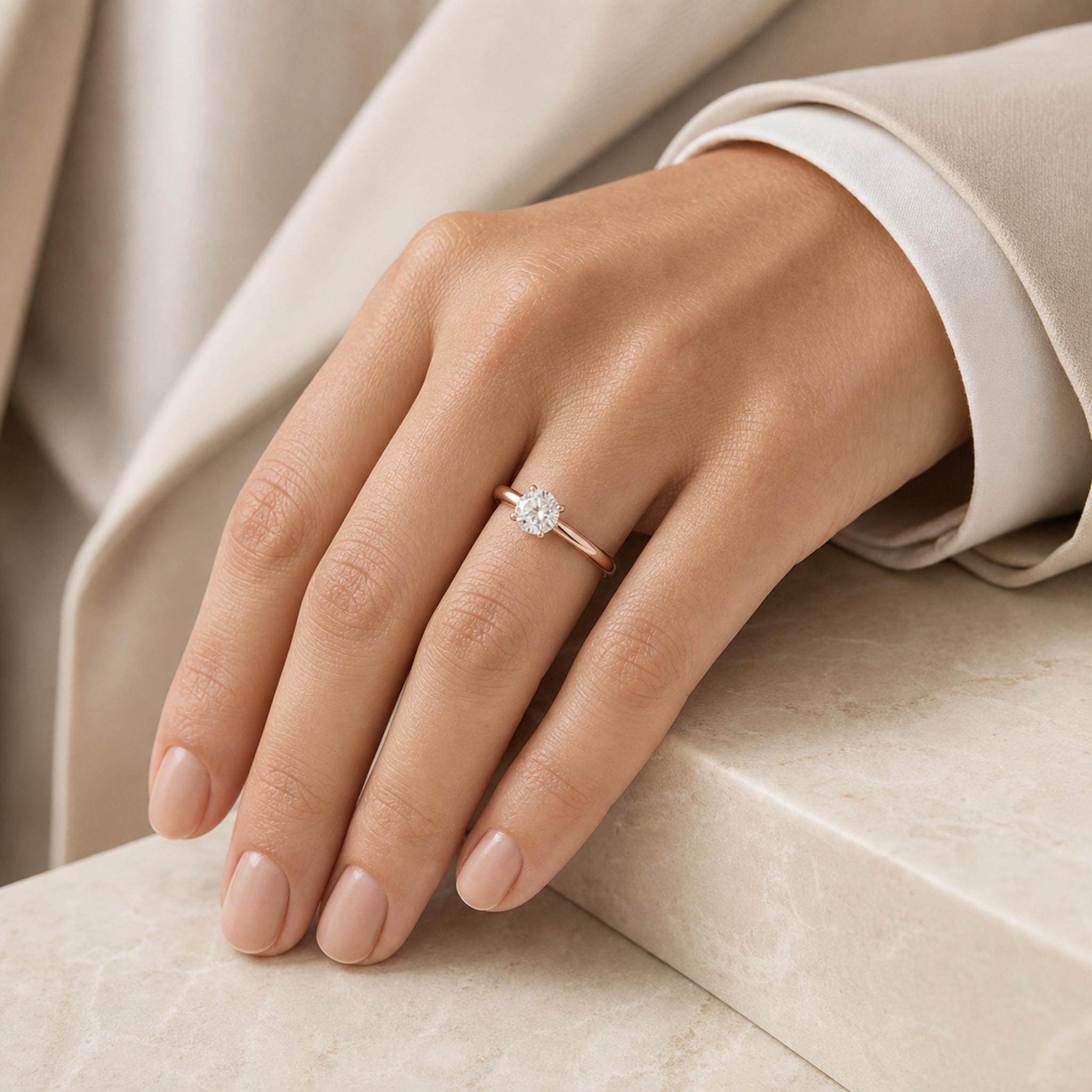


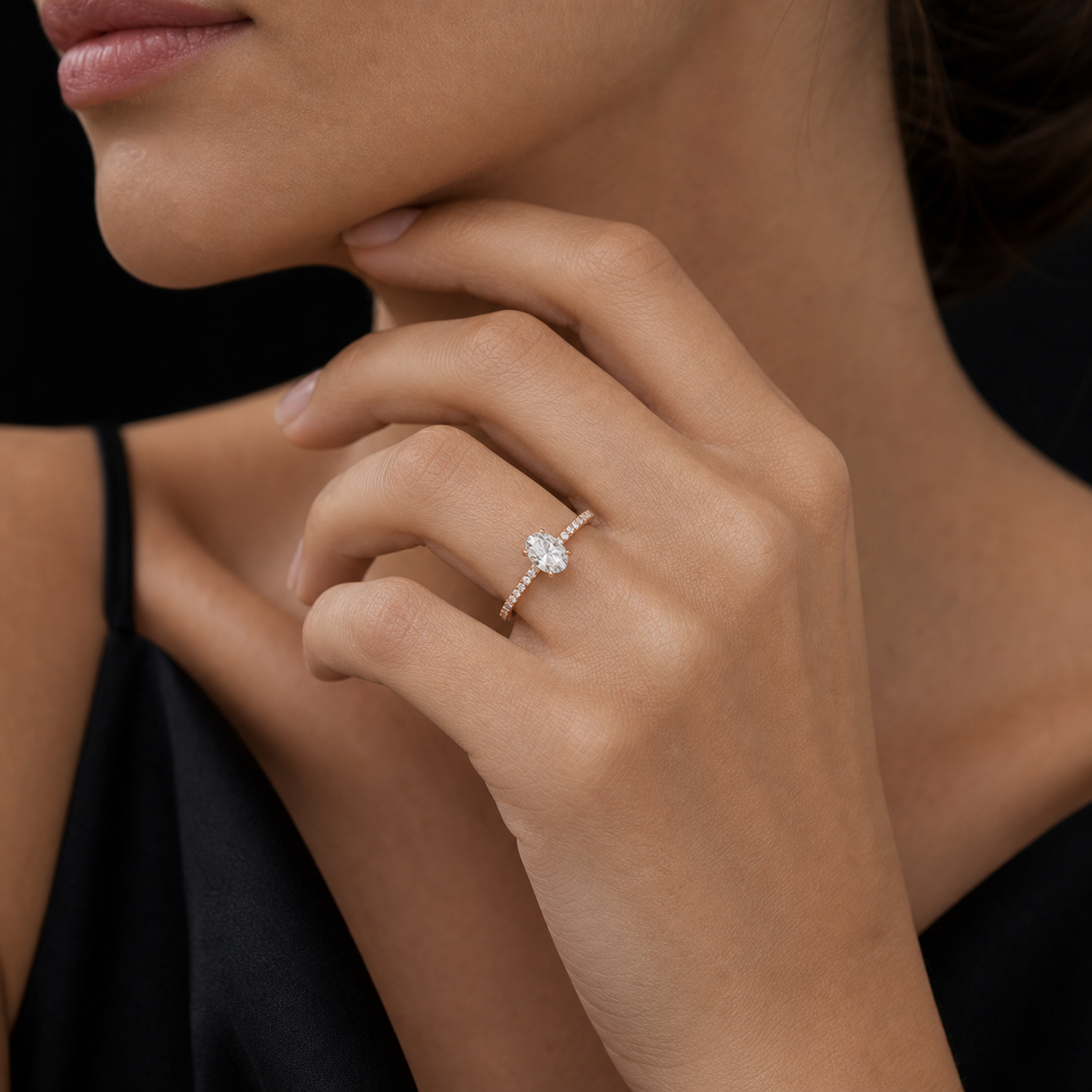


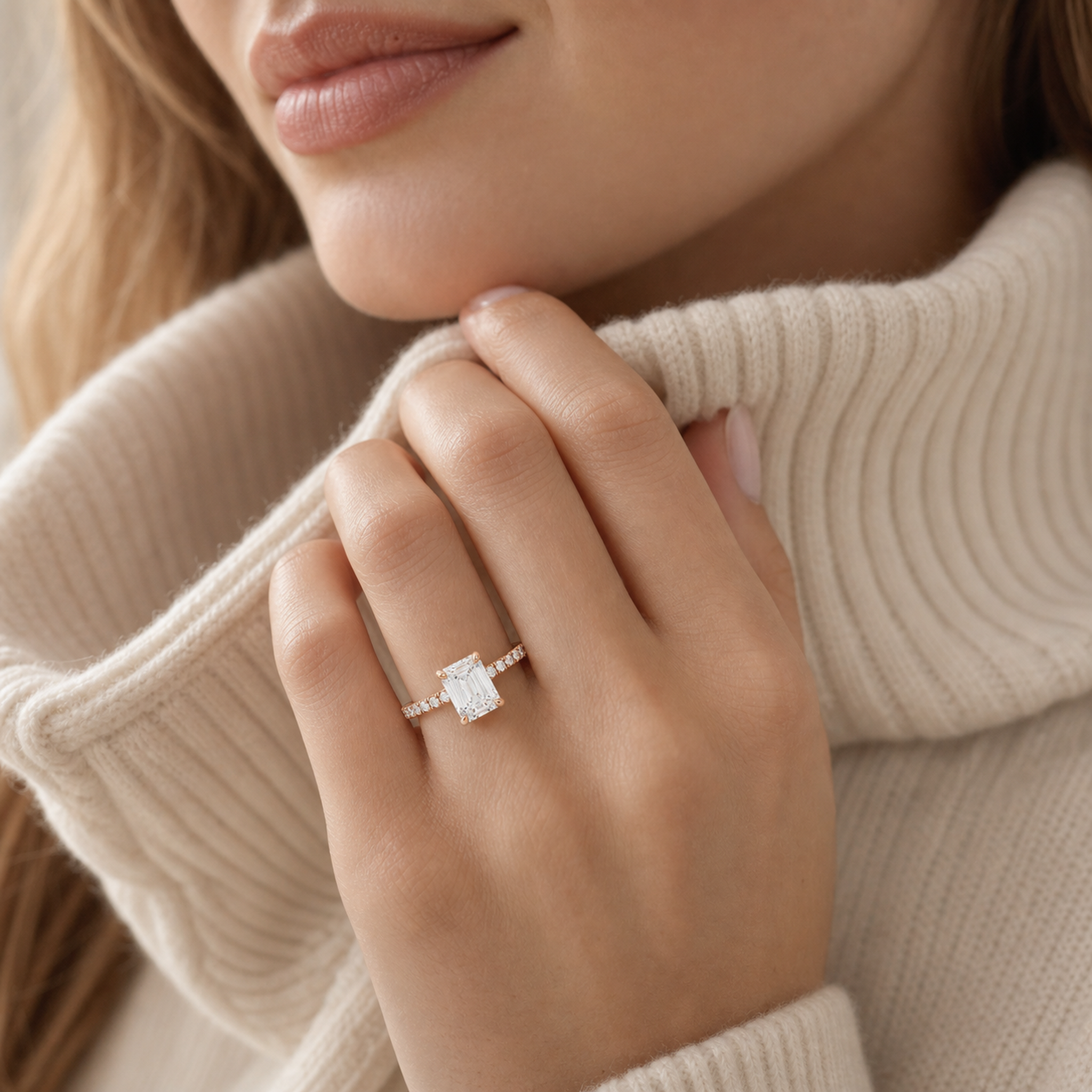


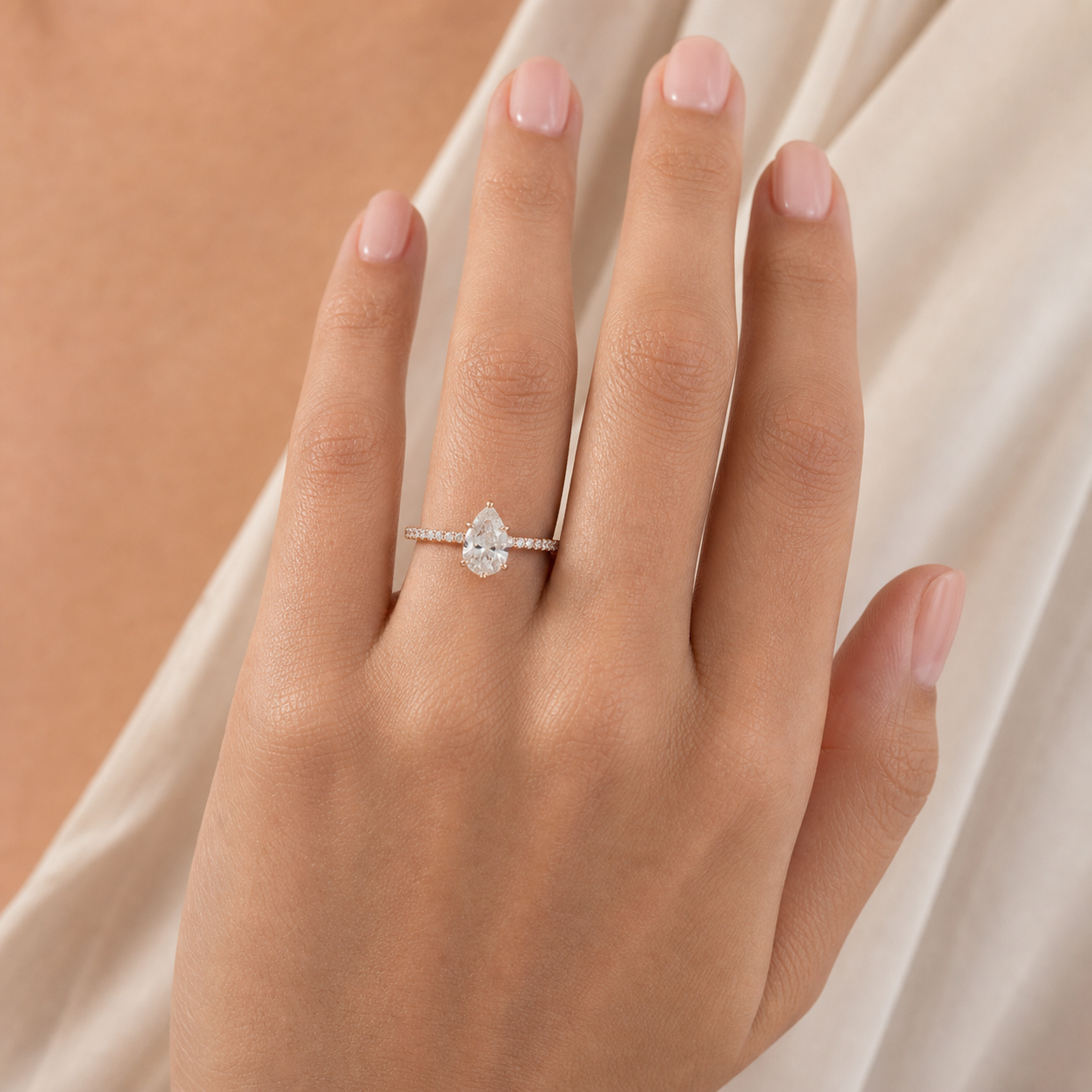


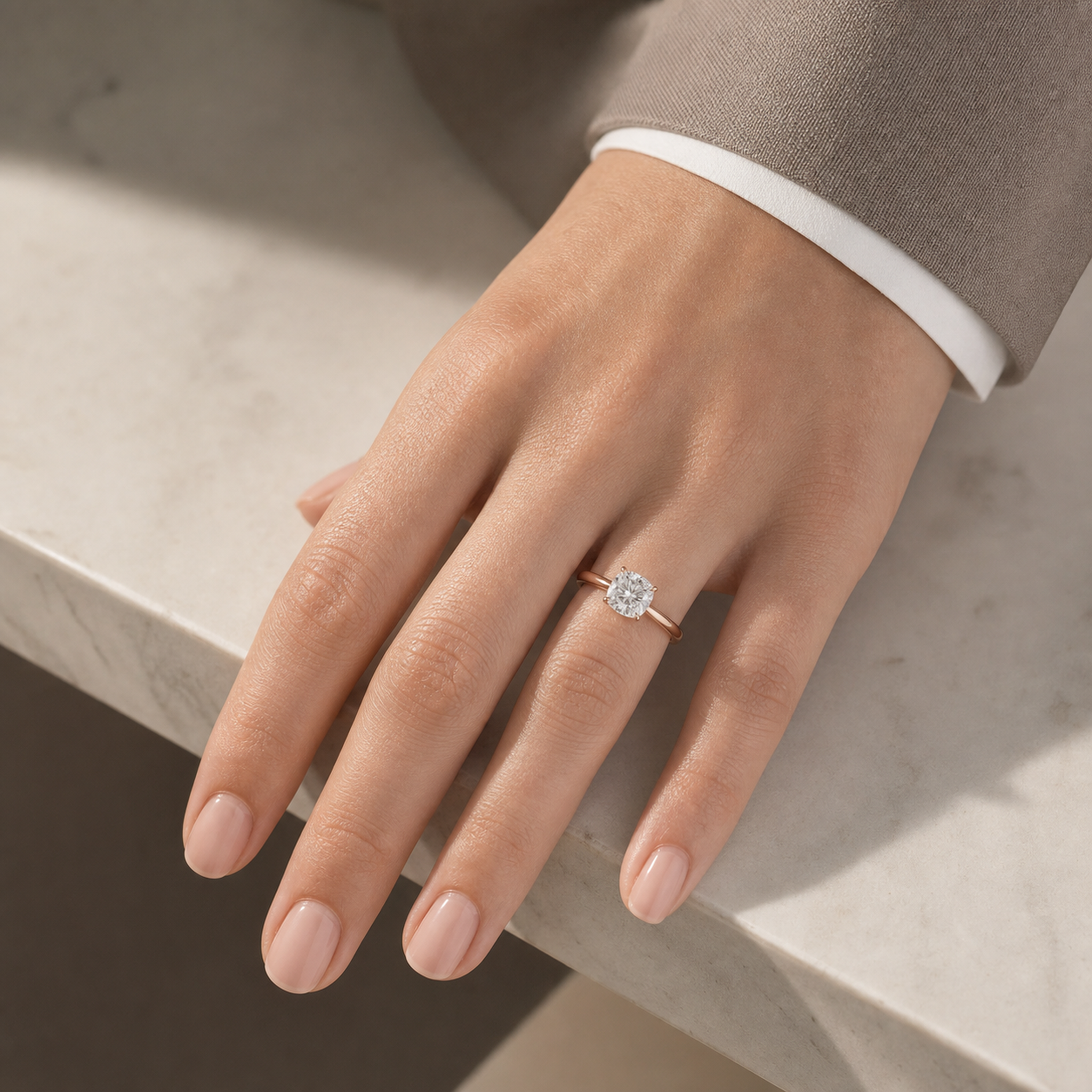


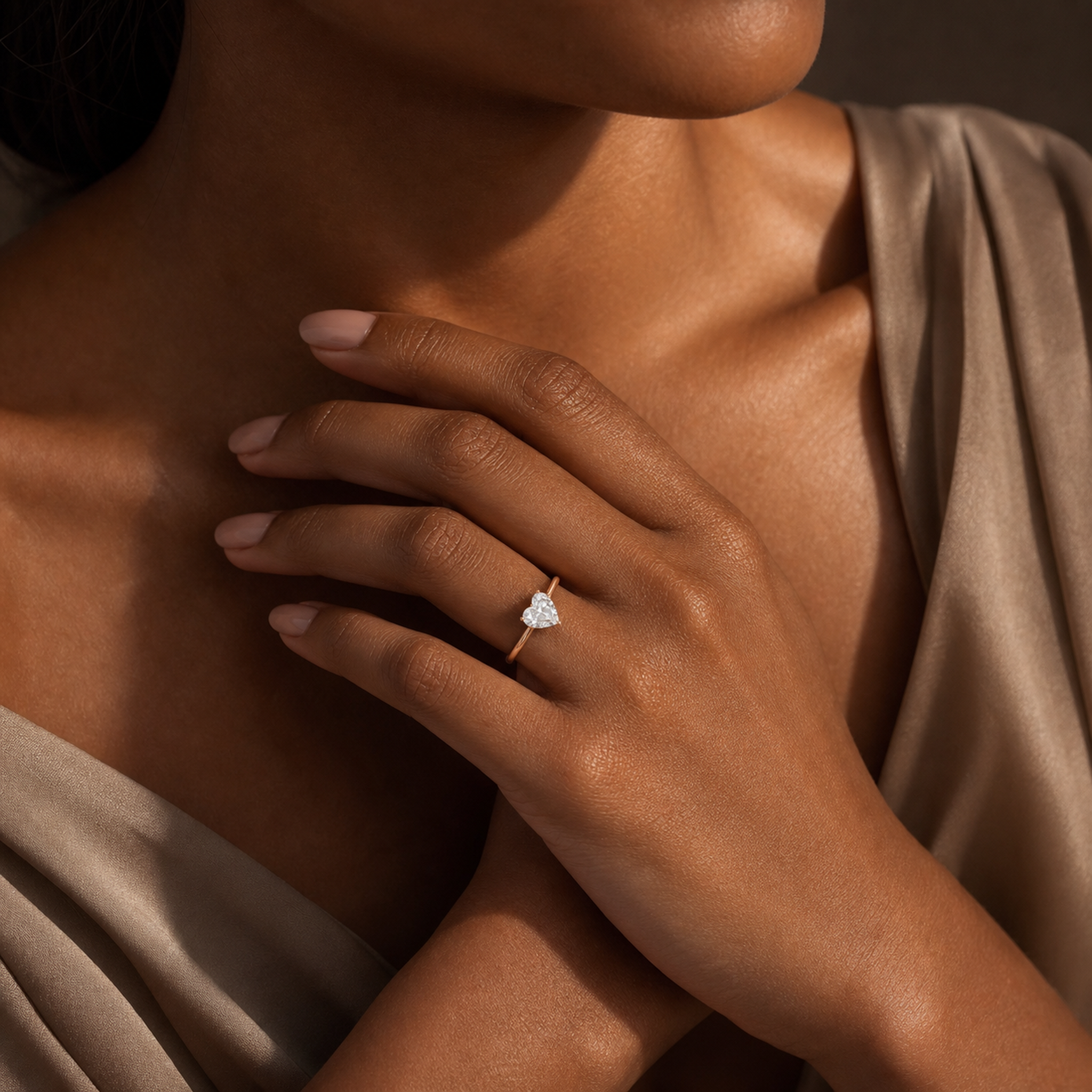


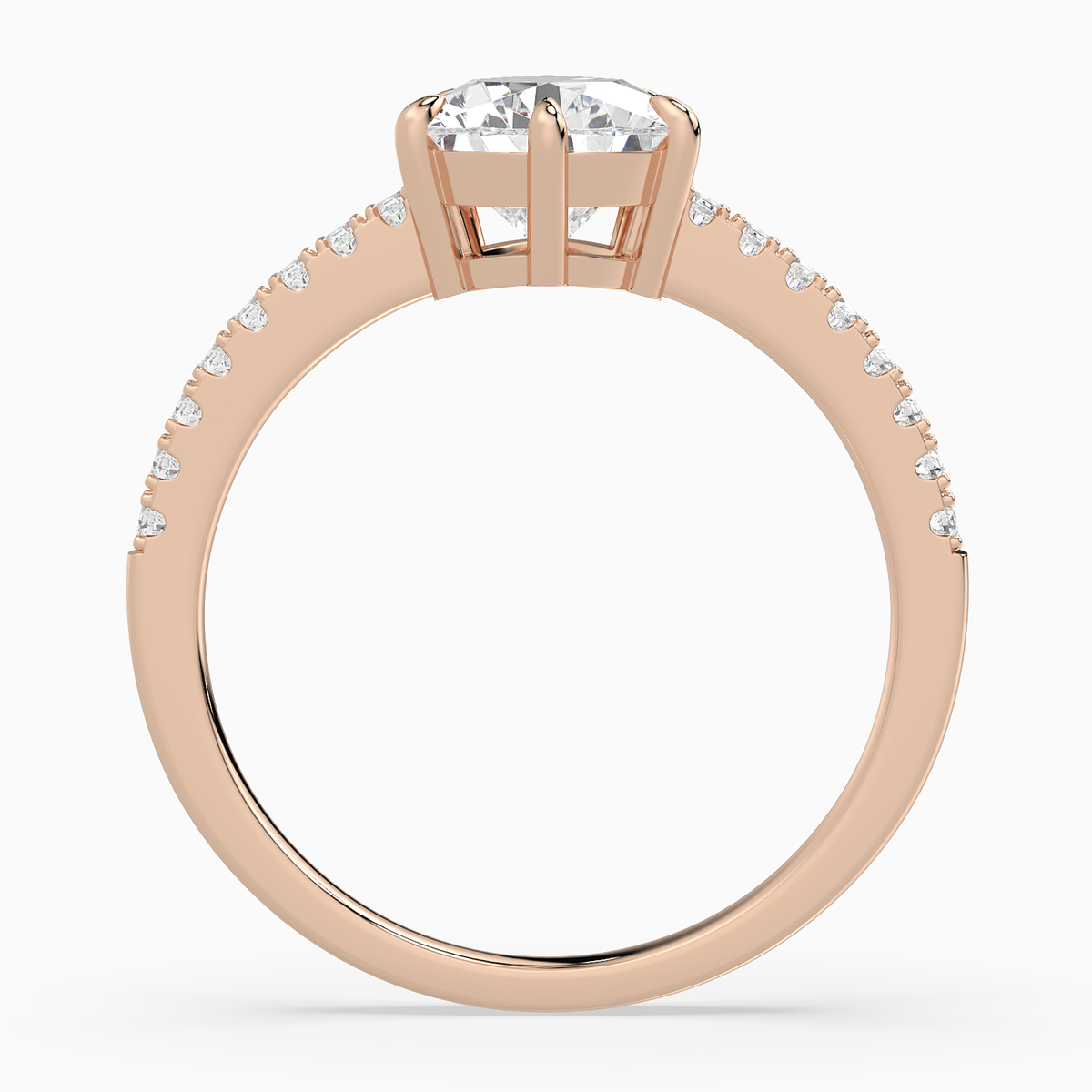
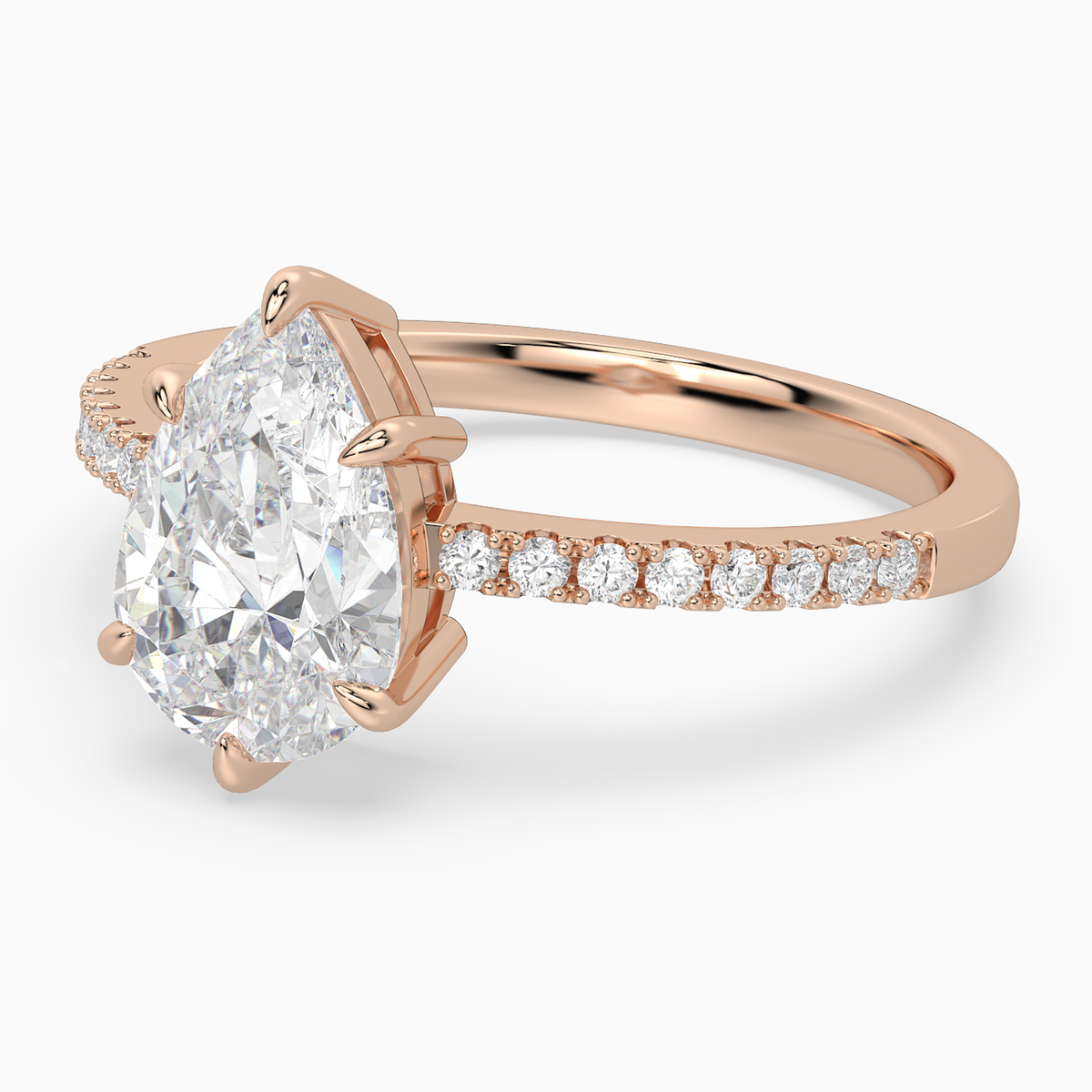
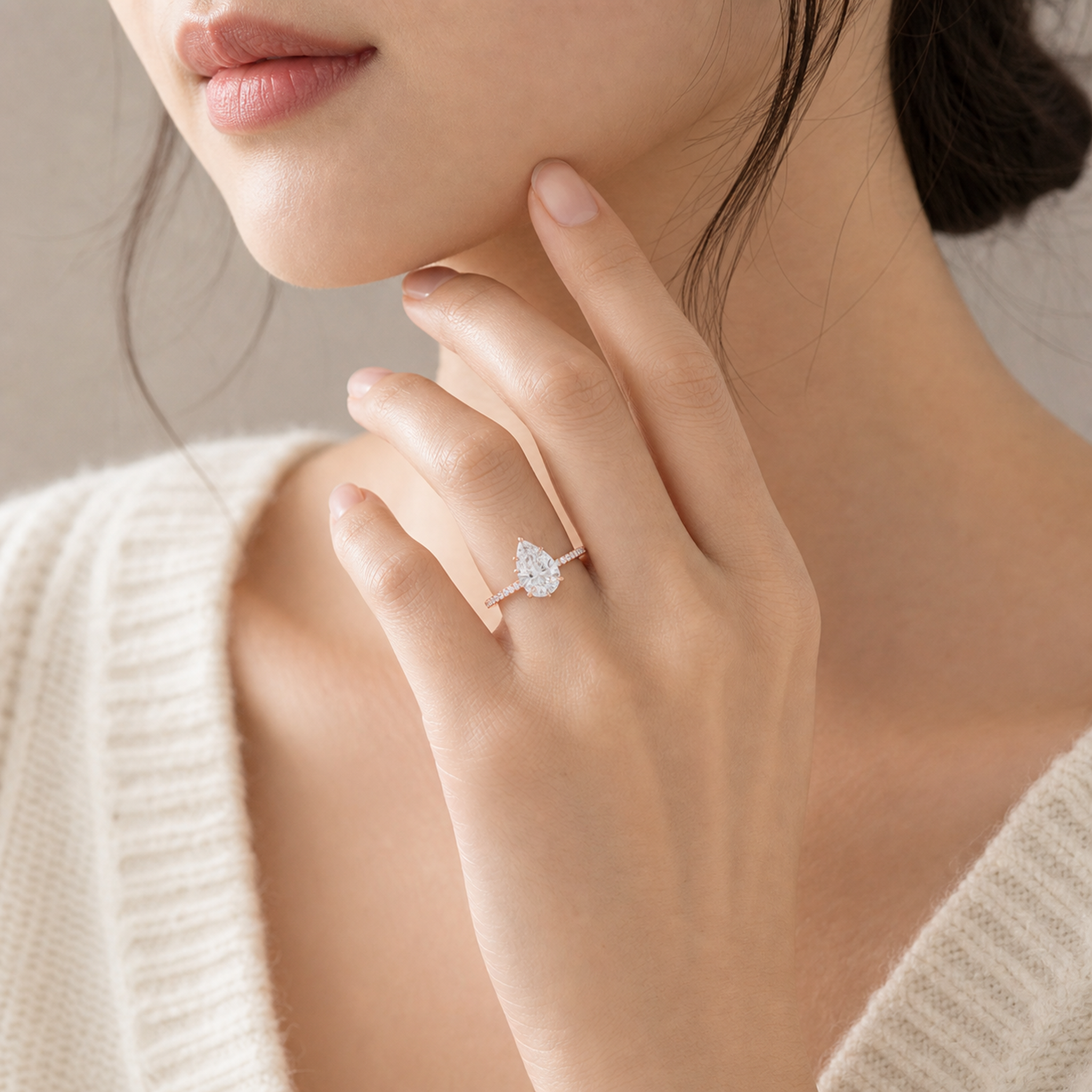

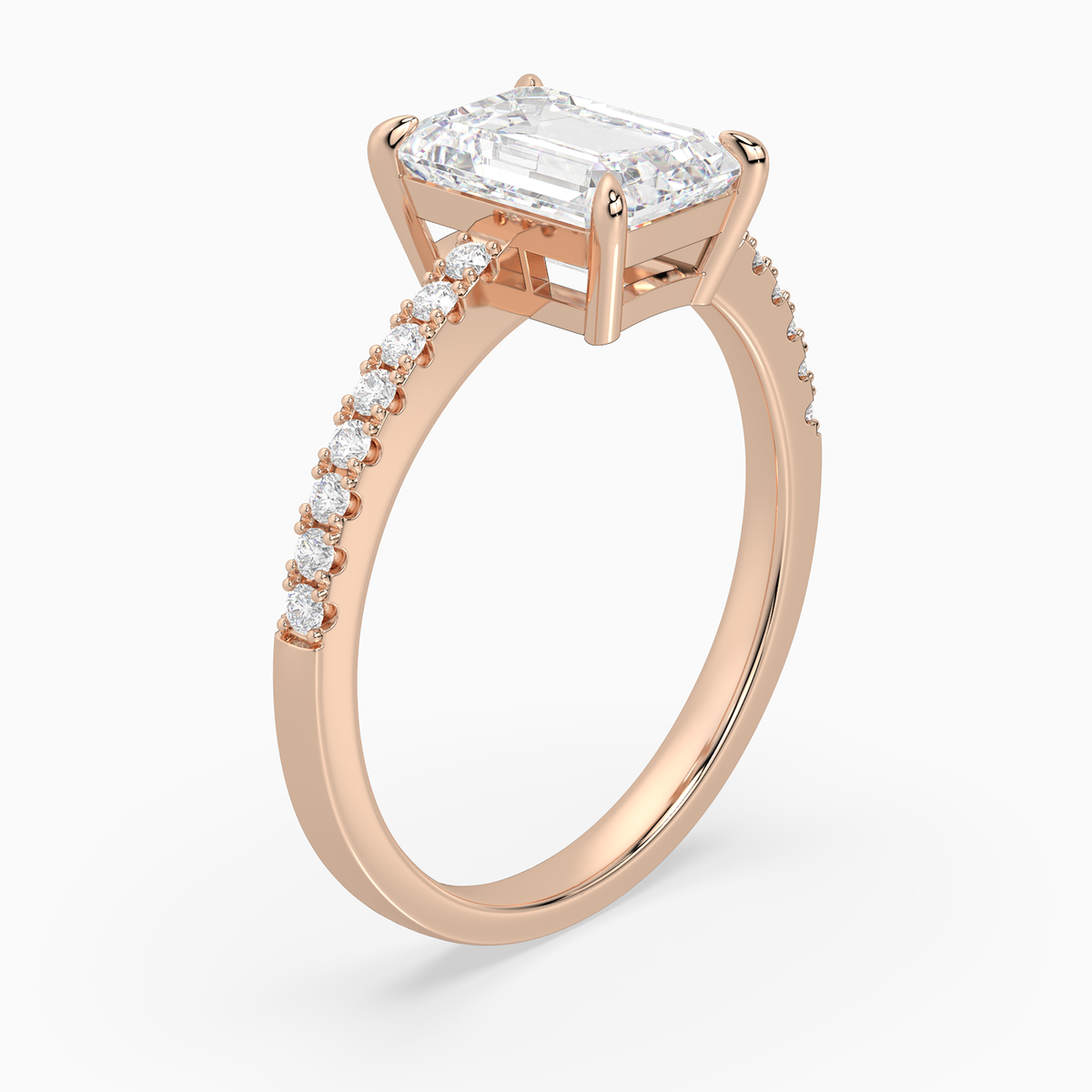


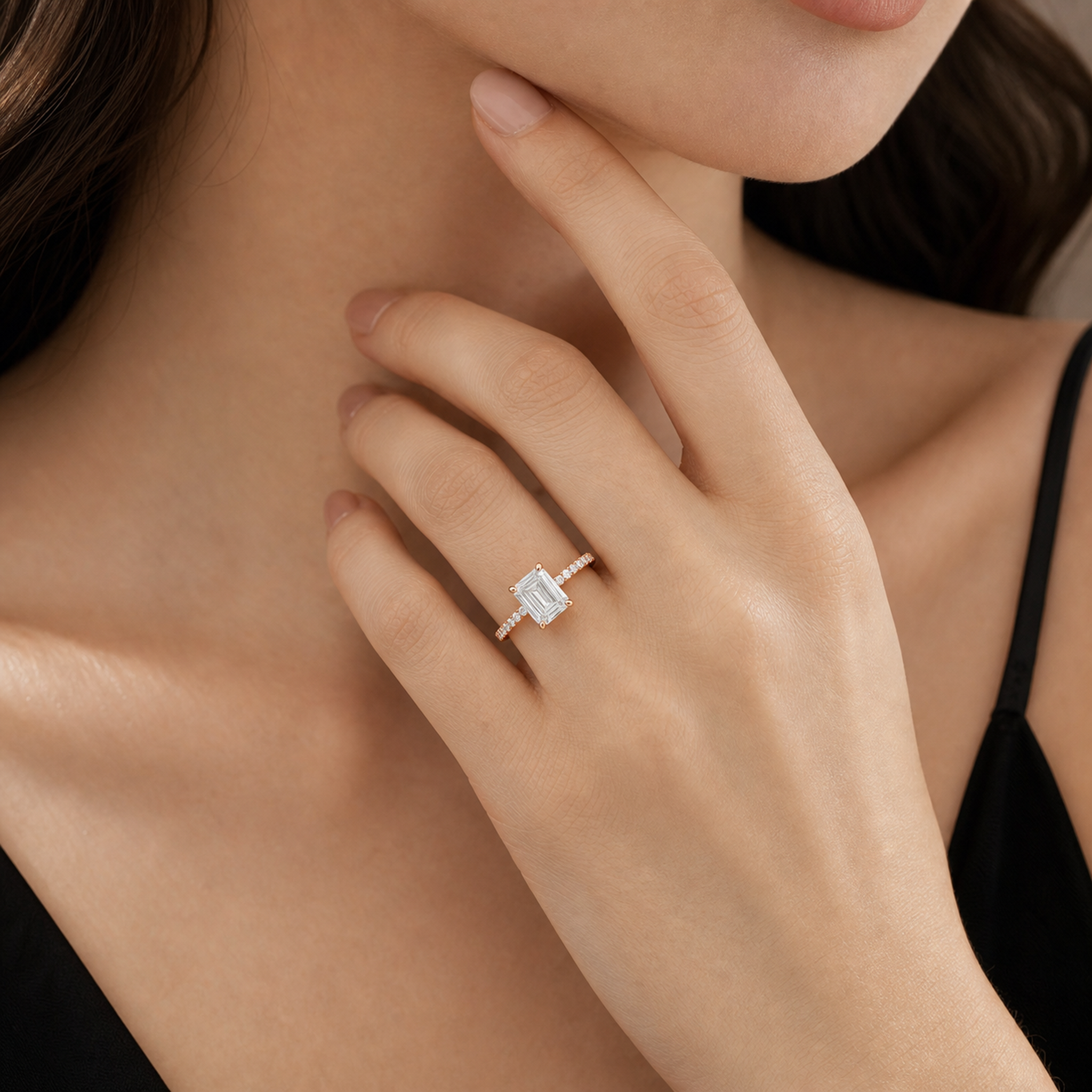


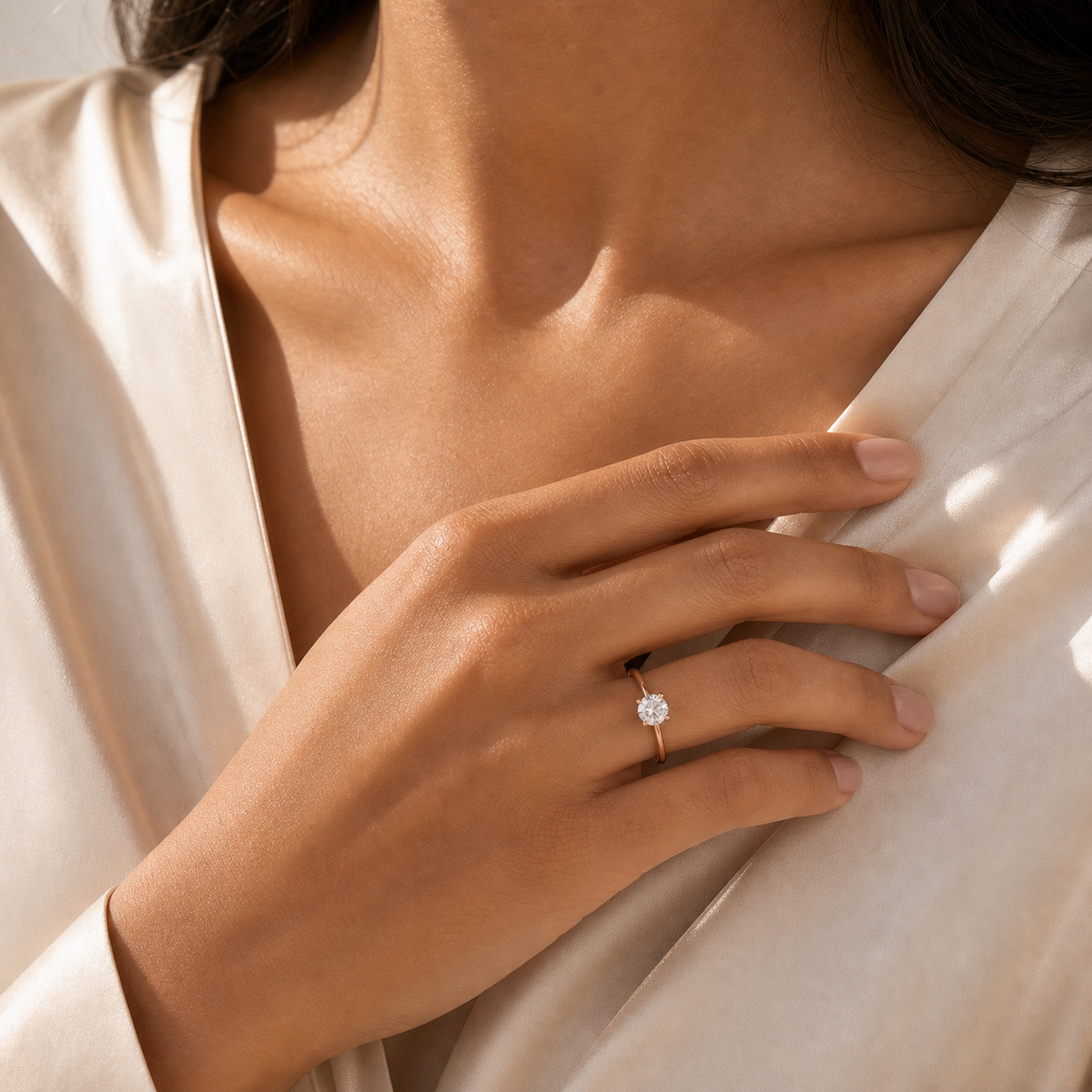


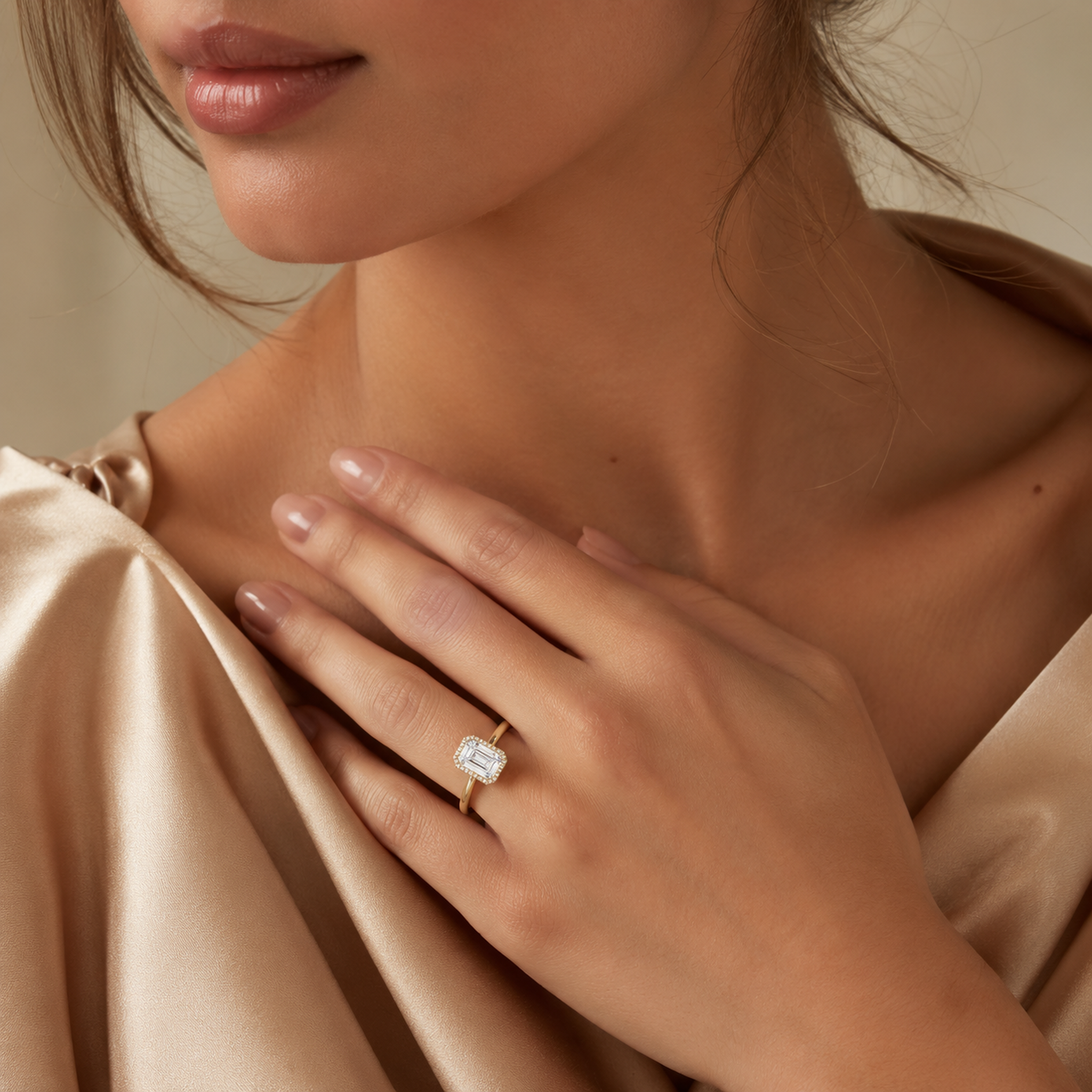


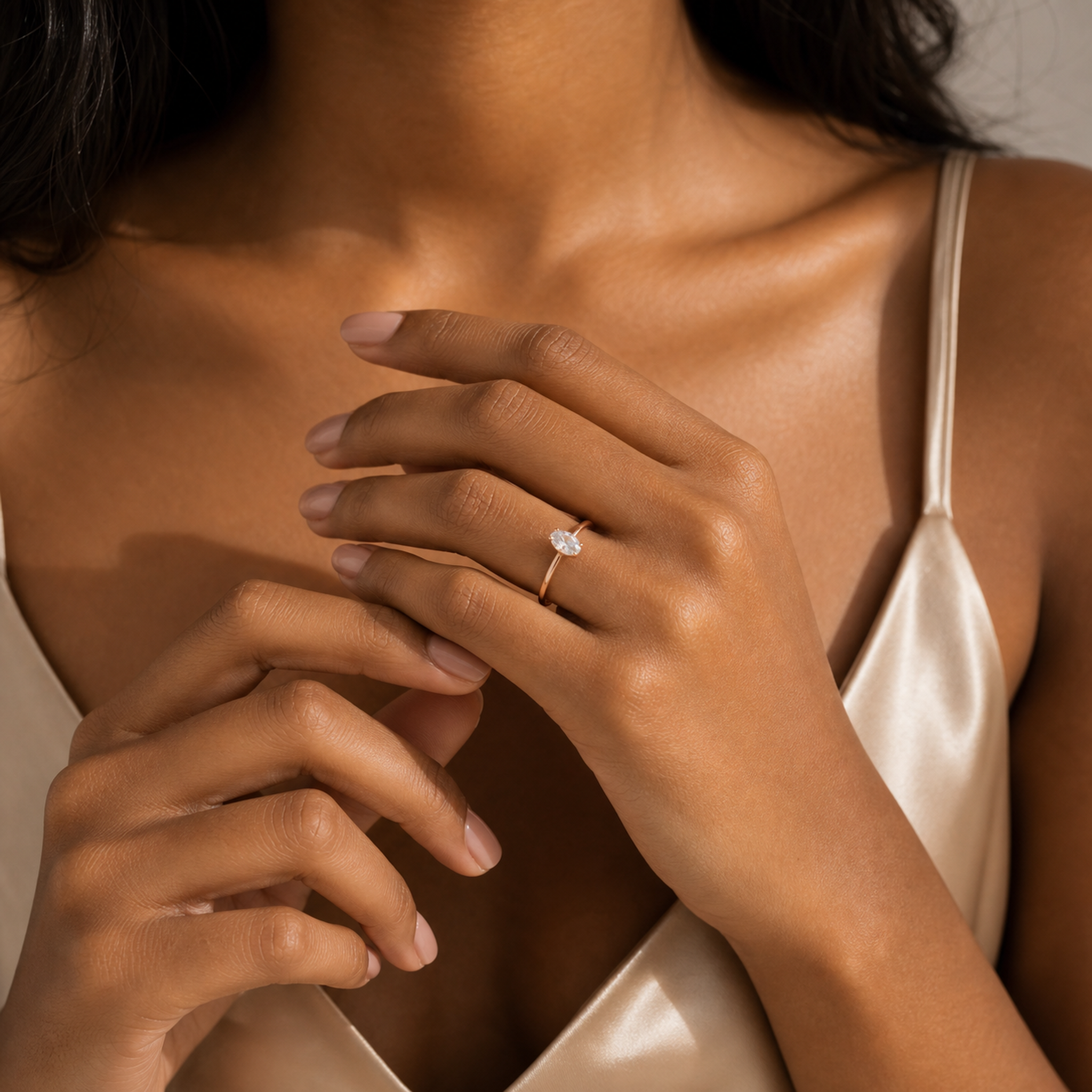


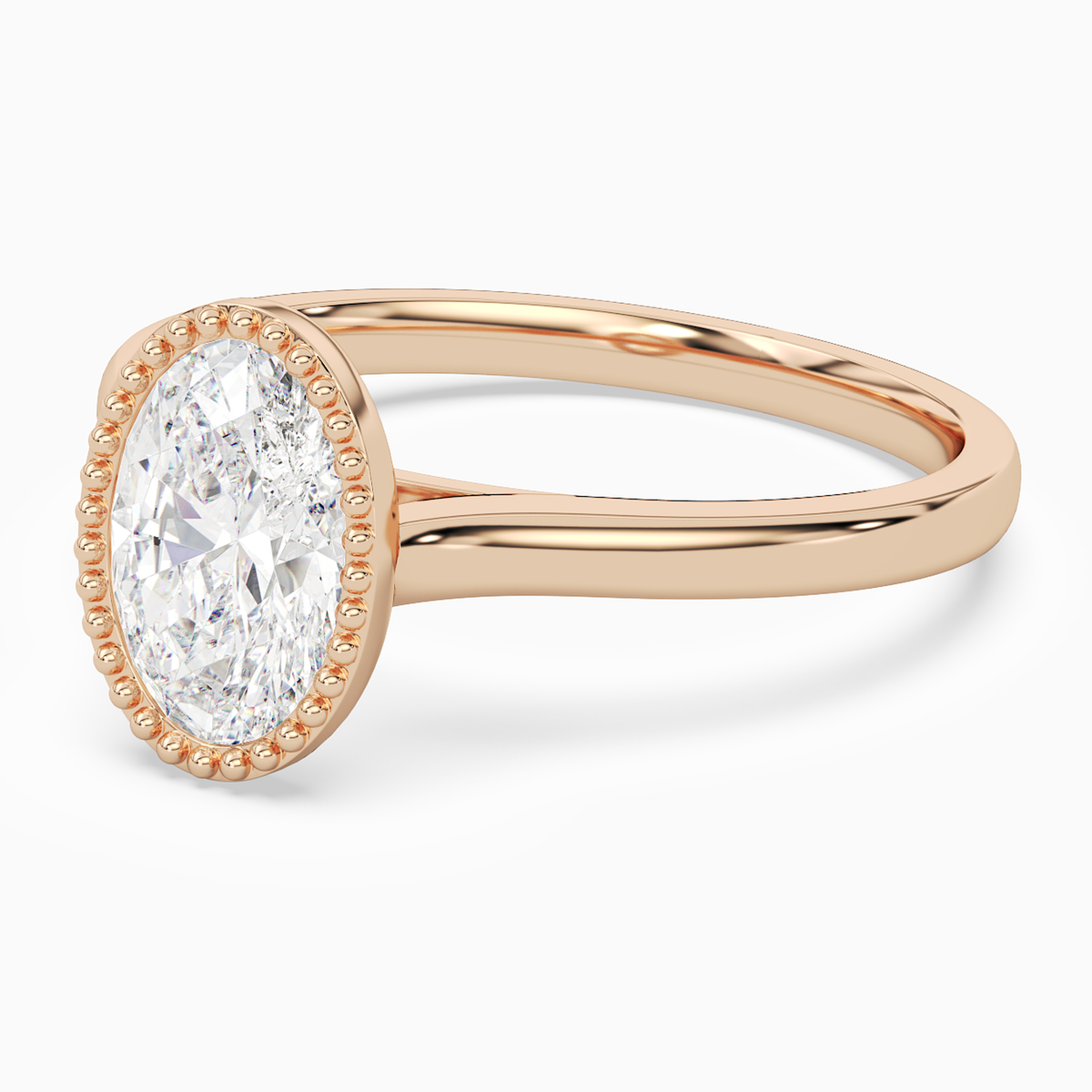
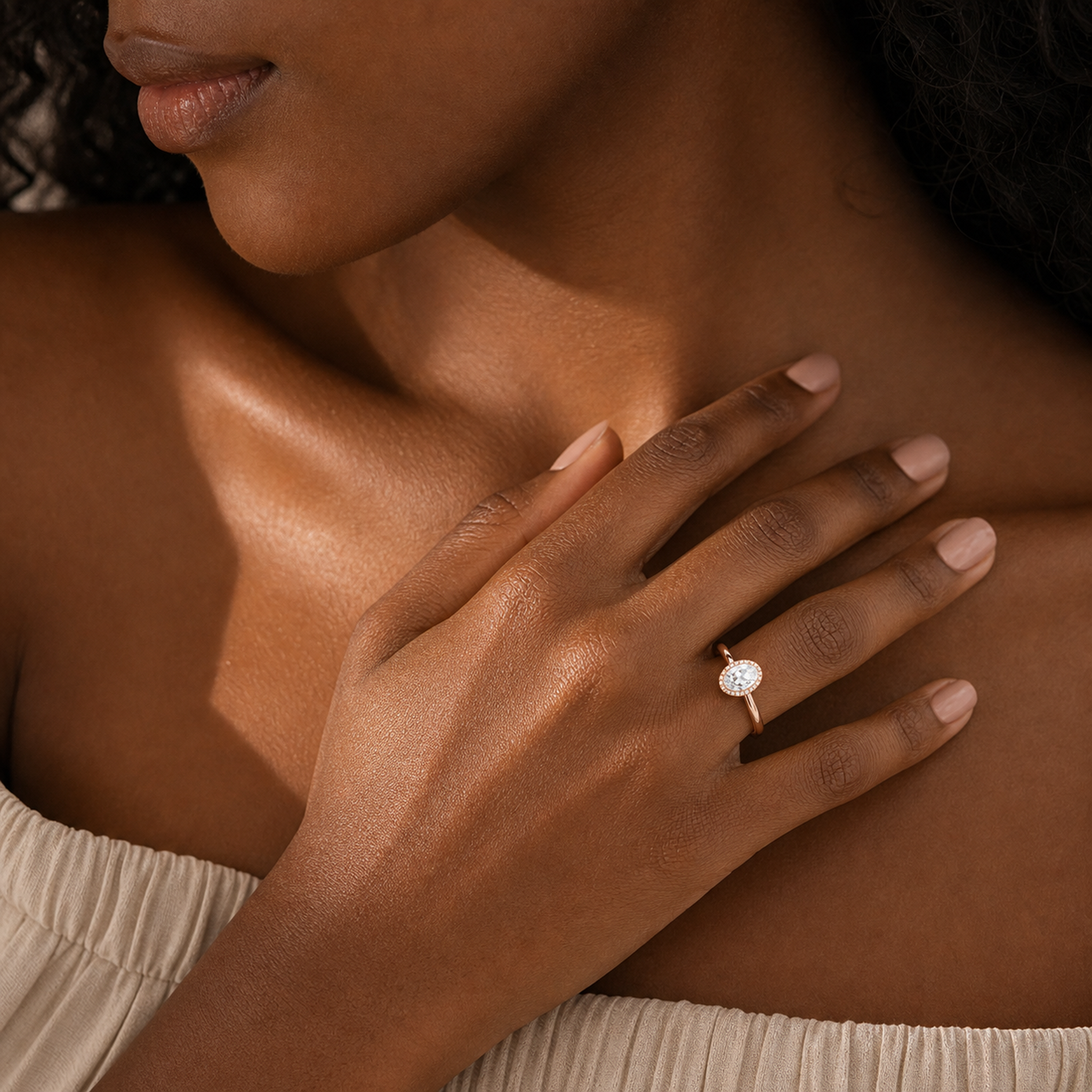


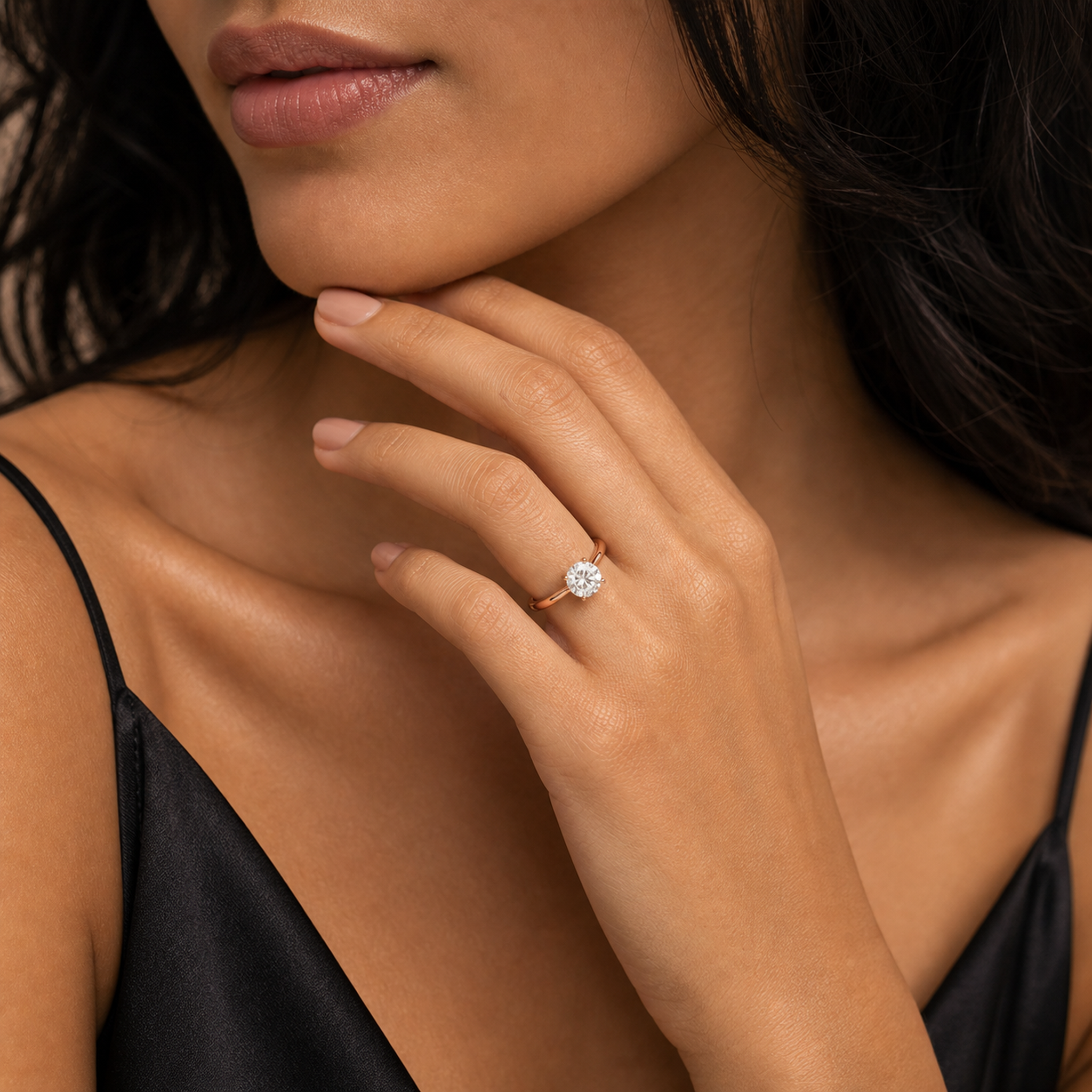


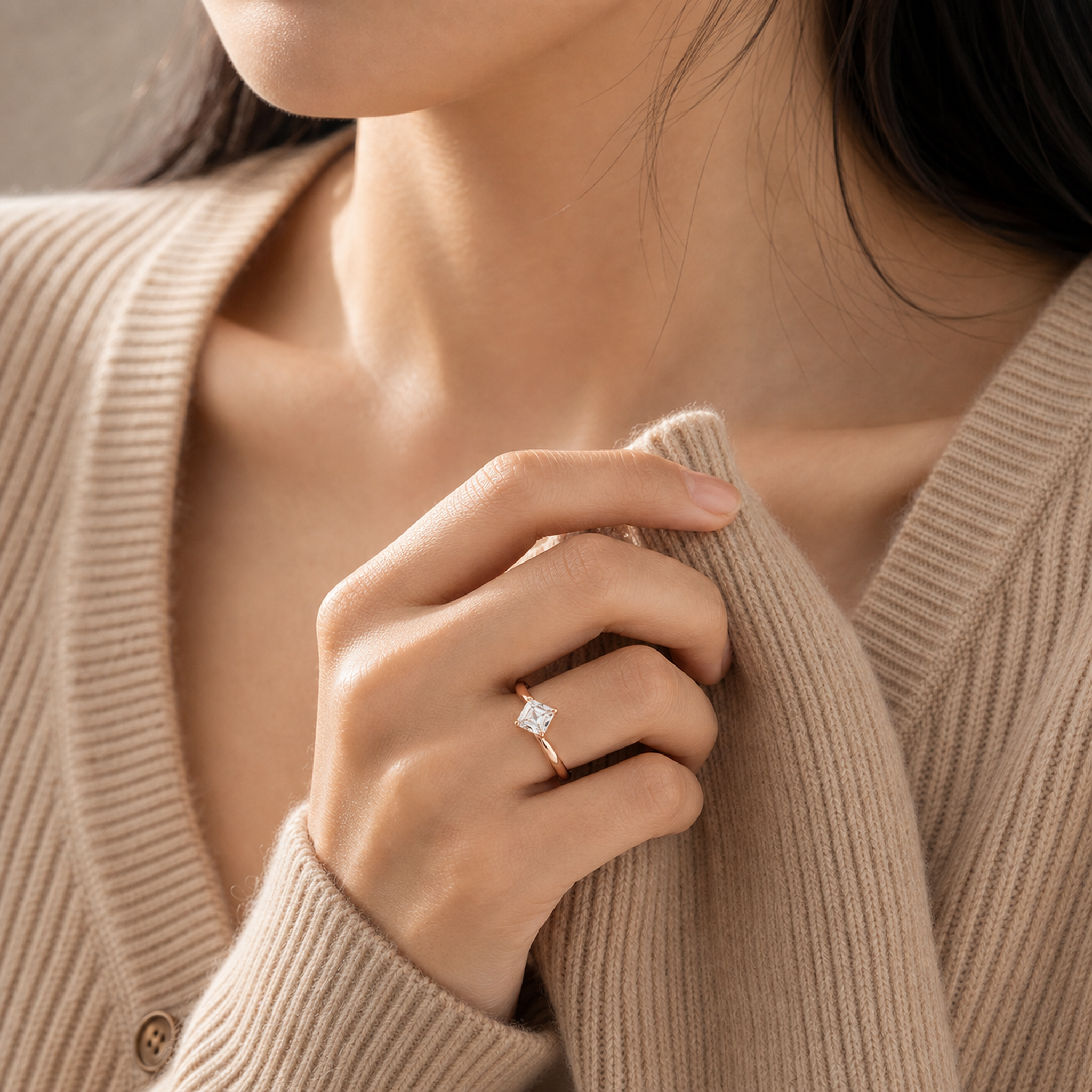


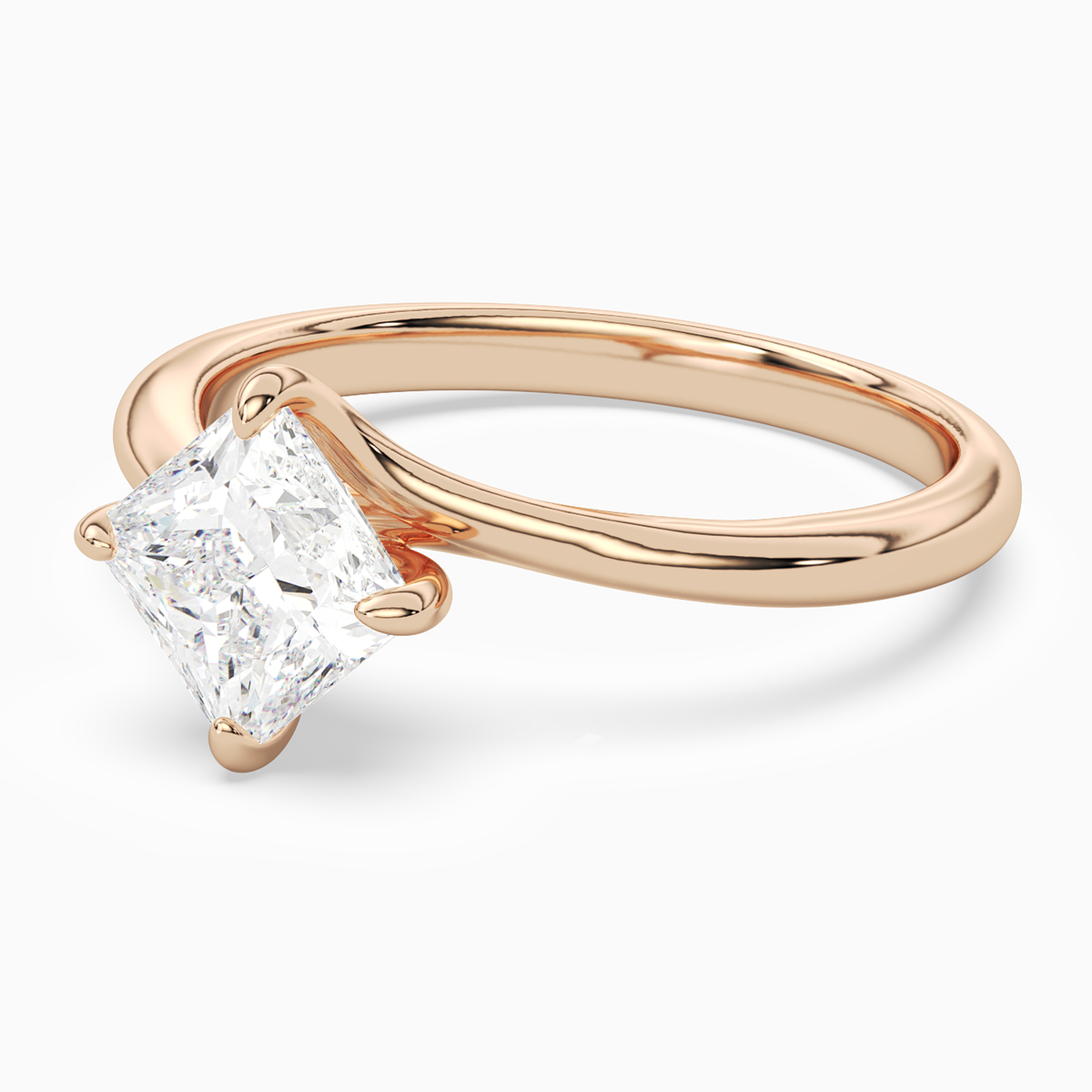


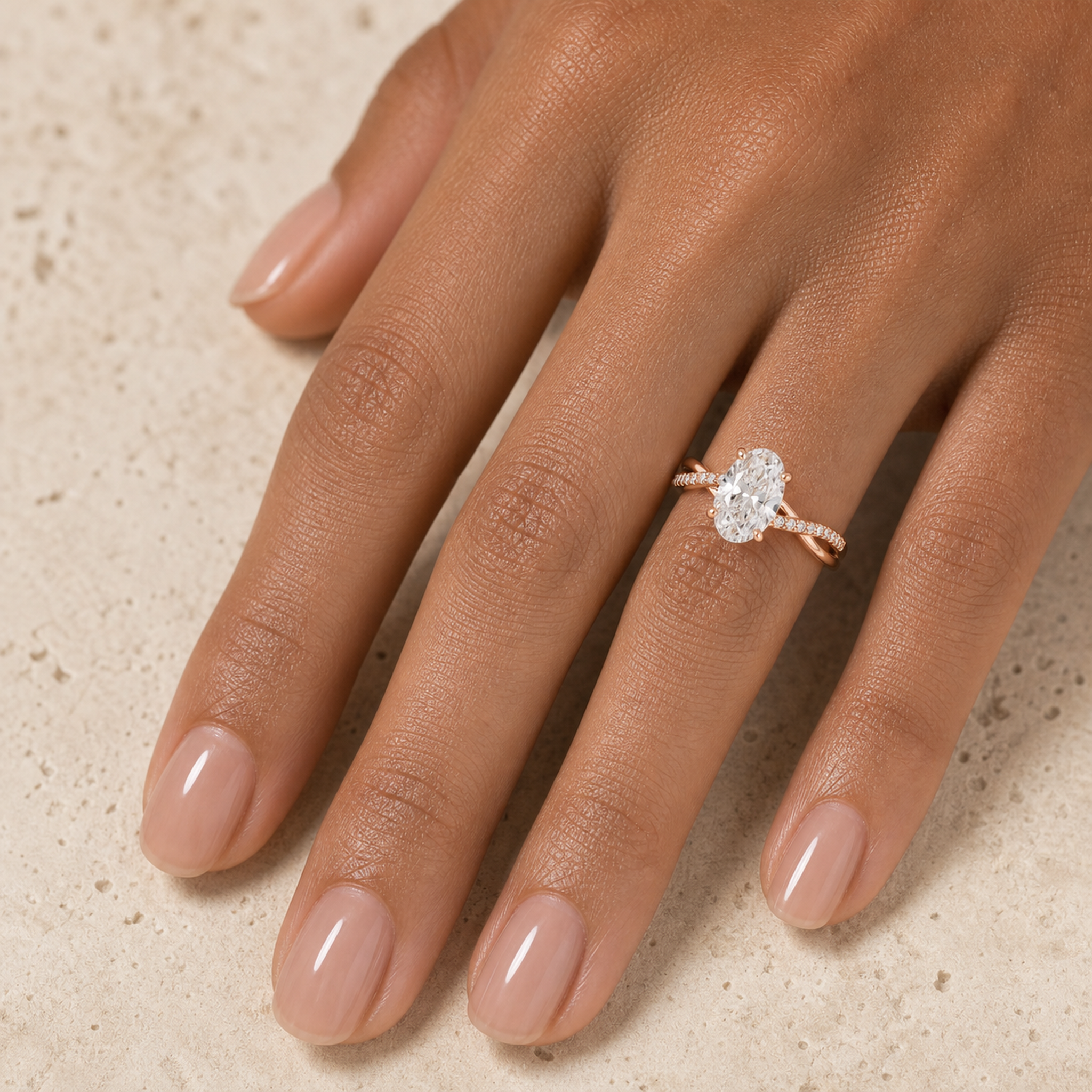


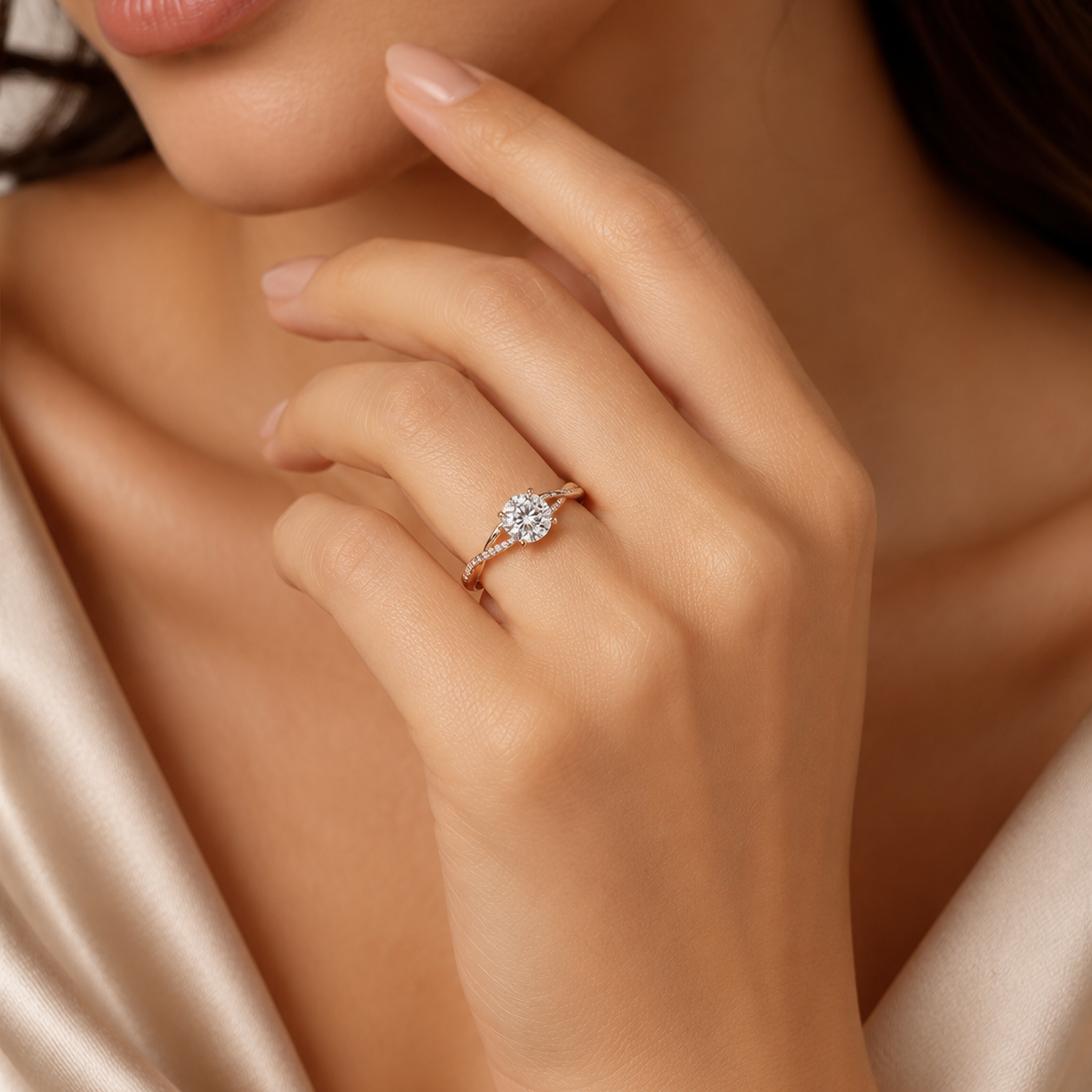
14K Rose Gold Solitaire Engagement Rings: Warmth Held in a Single Frame
A solitaire may be defined by one visually dominant center diamond, but it is not defined by the absence of design. In 14K Rose Gold, the setting becomes a warm outline: prongs mark the stone's edge, the basket determines how the center meets the band, and the band carries a restrained blush across the hand. The color gives these structural decisions enough contrast to be read without competing with the diamond.
Burvonti's current public assortment contains 19 rings in this intersection. Hidden halos, open and pavé baskets, cathedral shoulders, knife-edge bands, milgrain bezels, bypass lines, and vine-like details all appear while one center stone retains the hierarchy. The page therefore offers more than a color variation; it shows how warmth can be edited through different amounts and placements of visible metal.
When Color Becomes Part of the Structure
Rose Gold is a gold alloy whose blush character comes from its alloy composition. A 14K alloy contains approximately 58.3% gold, while the remaining material influences color and working behavior. Exact recipes vary, so this page does not assign one universal copper percentage, pinkness, hardness, or sensitivity profile to every ring. The individual specification remains the source for those details.
In a solitaire, even a small amount of rose-colored metal can be visually active. Fine prongs create points of warmth around the center. A bezel forms a continuous colored perimeter. A cathedral setting carries the tone upward along the shoulders, while an open basket concentrates it beneath the diamond. Deciding how much color should be seen is often more useful than asking whether Rose Gold is simply romantic or vintage.
Shape Determines Where the Contrast Collects
The current collection spans round, oval, cushion, pear, emerald, princess, Asscher, and heart shapes. Round and cushion centers create a compact relationship between blush-toned prongs and curved outlines. Oval and pear shapes extend the composition along the finger. Emerald and Asscher cuts introduce straighter geometry, making corner treatment and basket proportion more apparent. Princess and heart shapes ask the setting to resolve distinctive points or clefts with care.
There is no required sequence for reaching the right combination. A customer may be drawn to the architecture of a setting and then compare the shapes available within it, or begin with a diamond outline and study the rings designed around that form. The useful question is whether center, prongs, profile, and band create one resolved composition.
Rose, Yellow, and White Are Different Kinds of Contrast
Compared with Yellow Gold, Rose Gold usually reads with a redder blush rather than a golden cast. Compared with White Gold, it creates a more visible color boundary around a bright center. Neither relationship makes the diamond objectively brighter, whiter, larger, or more brilliant; metal color changes the visual context, not the diamond's graded properties.
Color in photographs also shifts with lighting, finish, screen rendering, and the amount of metal visible in the design. A fine-prong ring and a bezel ring in the same alloy will not present Rose Gold with equal intensity. Compare the complete ring and confirm the selected product's actual metal specification instead of treating one swatch as a promise for every design.
The Wedding Band Changes the Reading
A matching Rose Gold wedding band can extend the blush tone, while White or Yellow Gold can create deliberate contrast. Color alone does not determine the pairing. Basket width, cathedral height, hidden-halo position, bezel edge, band thickness, and stone placement decide whether two rings sit close, meet at selected points, or leave a considered interval.
Surface marks will also become part of the ring over time. Care should follow the actual alloy, finish, diamond, and setting rather than a universal schedule. If metal sensitivity is a concern, request the product-specific composition; the words 14K Rose Gold do not establish a hypoallergenic outcome.
Warmth With Precision
Burvonti brings responsibly sourced, independently graded lab-grown diamonds into settings considered through proportion and human judgment. Custom possibilities may refine diamond shape, orientation, band width, engraving, metal, or selected structural details where the design allows. Availability and feasibility belong to the final ring specification.
A successful 14K Rose Gold solitaire does not use warmth as decoration applied after the fact. The tone is integrated through the places that hold, frame, and connect the center stone, giving a minimal hierarchy a distinct material voice.
Frequently Asked Questions
How is this page different from the main 14K Rose Gold Engagement Rings Collection?
The main metal page covers 14K Rose Gold across many engagement-ring styles. This page is limited to designs led by one center diamond, allowing closer comparison of prongs, baskets, bezels, bands, profiles, and shape within a solitaire hierarchy.
What gives 14K Rose Gold its blush color?
Rose Gold combines gold with alloying metals that create its blush character. A 14K alloy contains approximately 58.3% gold, but exact formulas vary, so the precise color and composition should be confirmed for the selected ring.
Is every 14K rose gold ring the same shade of pink?
No. Alloy recipe, finish, lighting, photography, and the amount of visible metal all affect how the color reads. Compare the actual design and specification rather than relying on a universal shade.
Does Rose Gold make a diamond look whiter?
Not as a guaranteed result. Rose Gold can create warmer contrast around the center, but it does not change the diamond's color grade or light performance. Shape, setting, lighting, and personal perception also affect the complete view.
Which diamond shapes are represented in this collection?
The current public assortment includes round, oval, cushion, pear, emerald, princess, Asscher, and heart shapes. Each should be evaluated within the prong or bezel pattern and profile built around it.
Can a rose gold solitaire have a hidden halo or pavé details?
Yes. A hidden halo, pavé basket, or accented band can add secondary detail while one center diamond remains visually dominant. Solitaire describes the hierarchy, not a requirement that every other surface be undecorated.
Does a bezel show more Rose Gold than prongs?
Usually, a continuous bezel creates a more visible metal perimeter than separate prongs, but the exact effect depends on bezel width, center shape, finish, and the rest of the ring.
Is 14K Rose Gold more durable than 18K Rose Gold?
Karat changes gold content, but it is not a complete durability rule. Exact alloy, dimensions, construction, finish, and wear conditions also matter. No gold surface is immune to marks.
Can Rose Gold cause metal sensitivity?
Sensitivity depends on the exact alloy and the wearer. Karat and color alone cannot establish a hypoallergenic result, so request the product-specific composition if sensitivity is a concern.
Will Rose Gold change color with wear?
Its surface can collect fine marks and its appearance can evolve with wear, finish, and care. Any refinishing decision should be based on the actual ring rather than a fixed universal schedule.
Should the wedding band also be 14K Rose Gold?
It can be, but it does not have to be. Matching metal creates continuity; another metal creates contrast. Profile, contact points, finish, and product-specific wear should be considered alongside color.
Can Burvonti personalize a 14K rose gold solitaire?
Custom possibilities may include diamond shape, orientation, band proportion, engraving, metal, or selected setting details. The chosen design must be reviewed for availability and structural feasibility.