
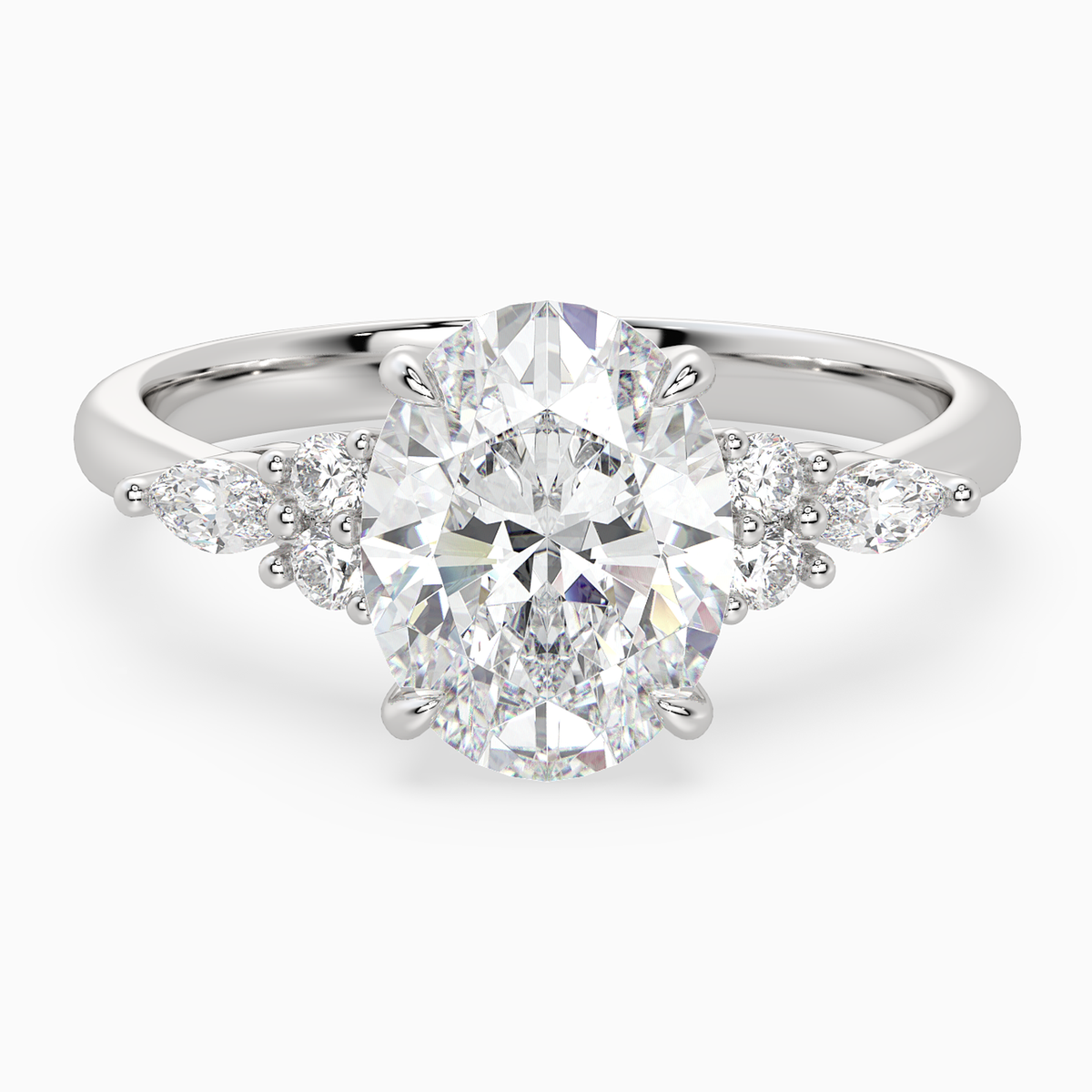


Solitaire Engagement Rings in 18K Yellow Gold
Gold color, fully present. With 75% gold, 18K yellow gold gives a solitaire center a richer field and a deliberate structural outline.


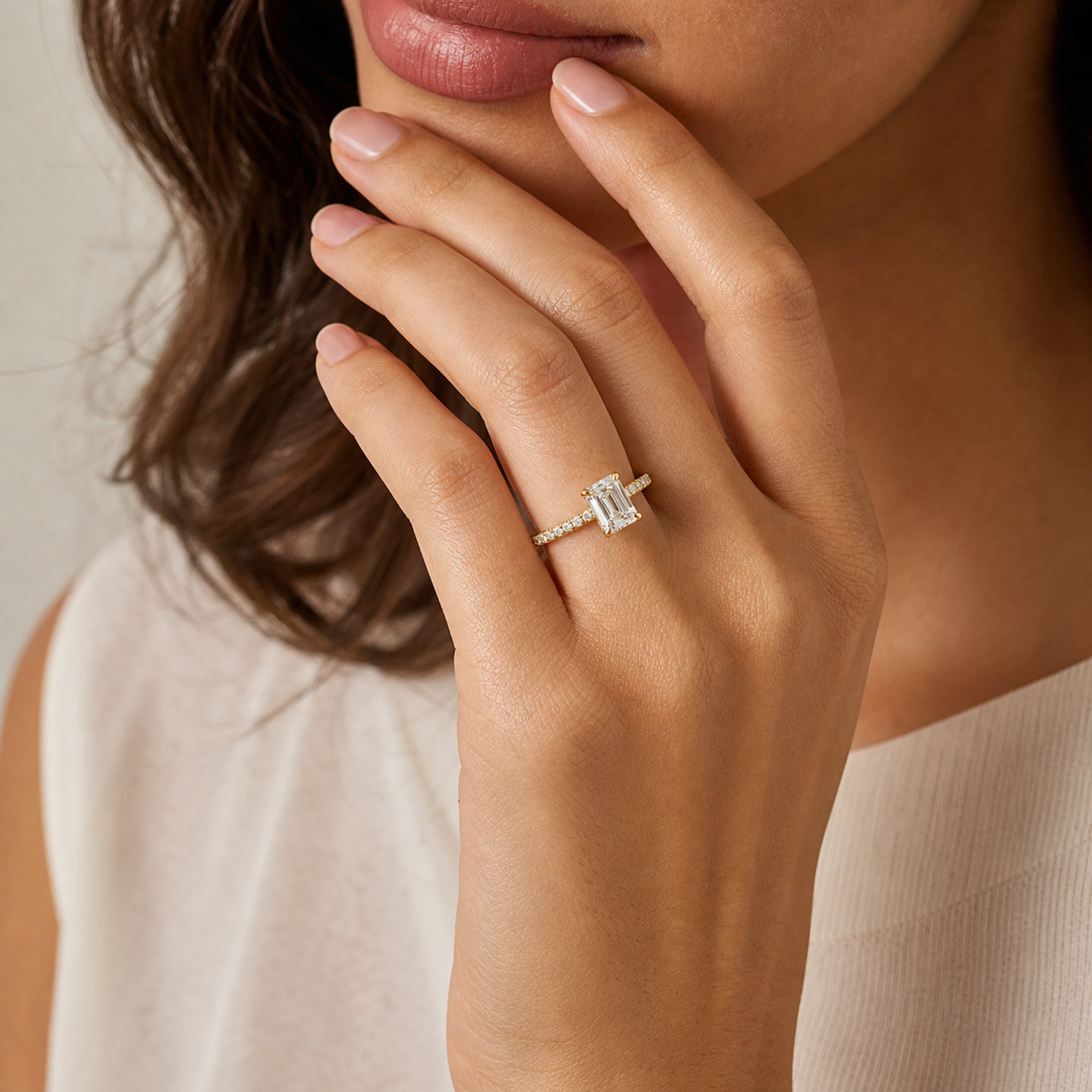


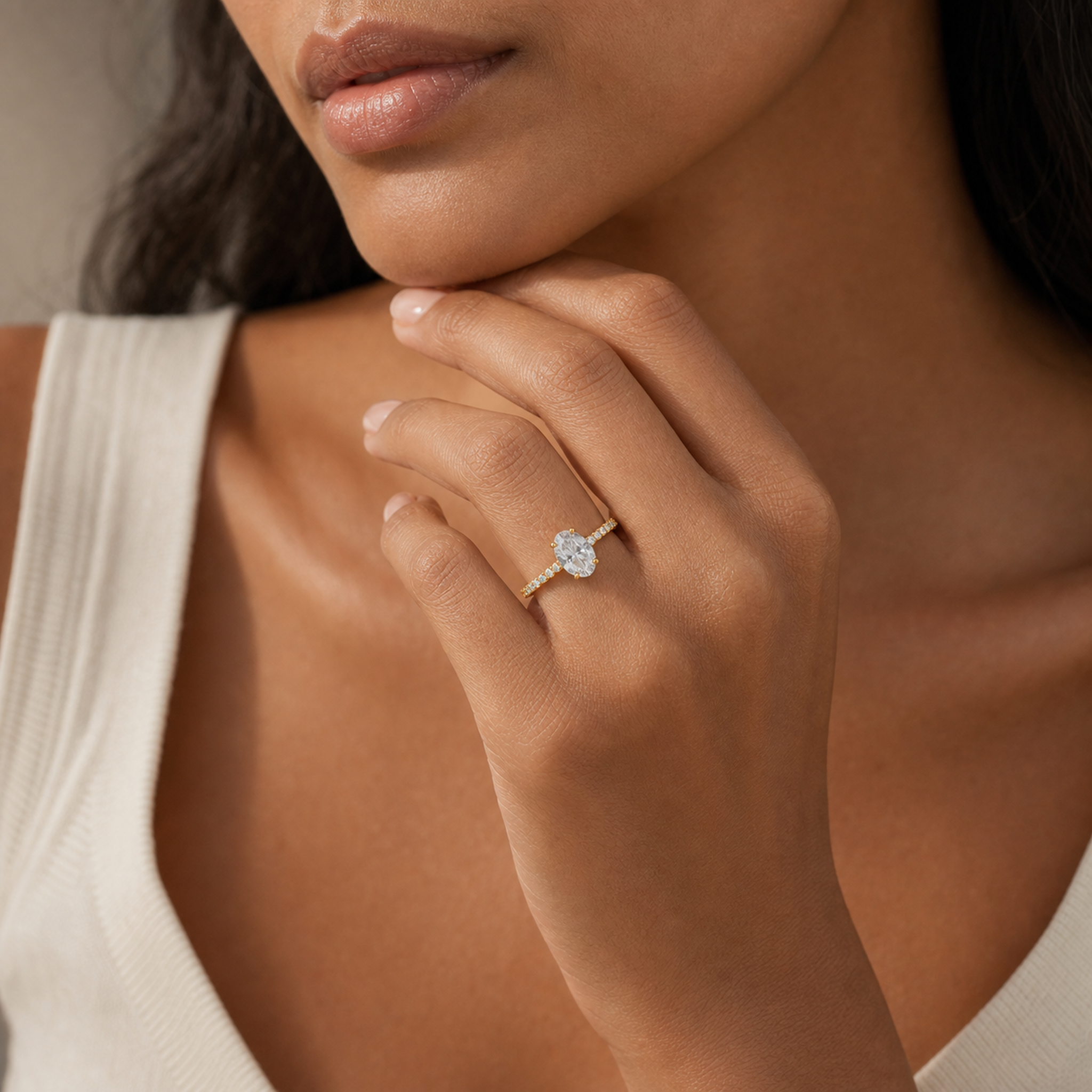


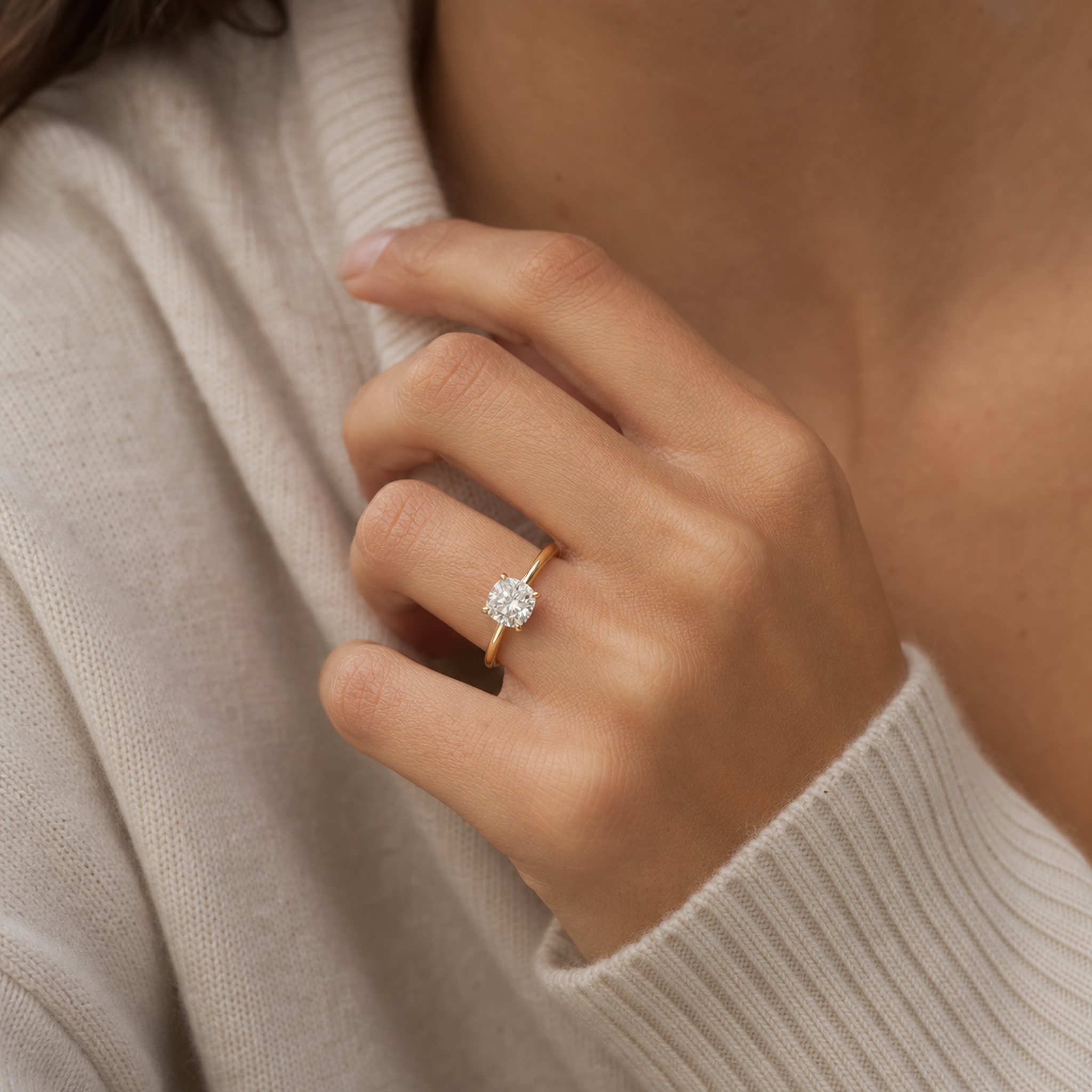


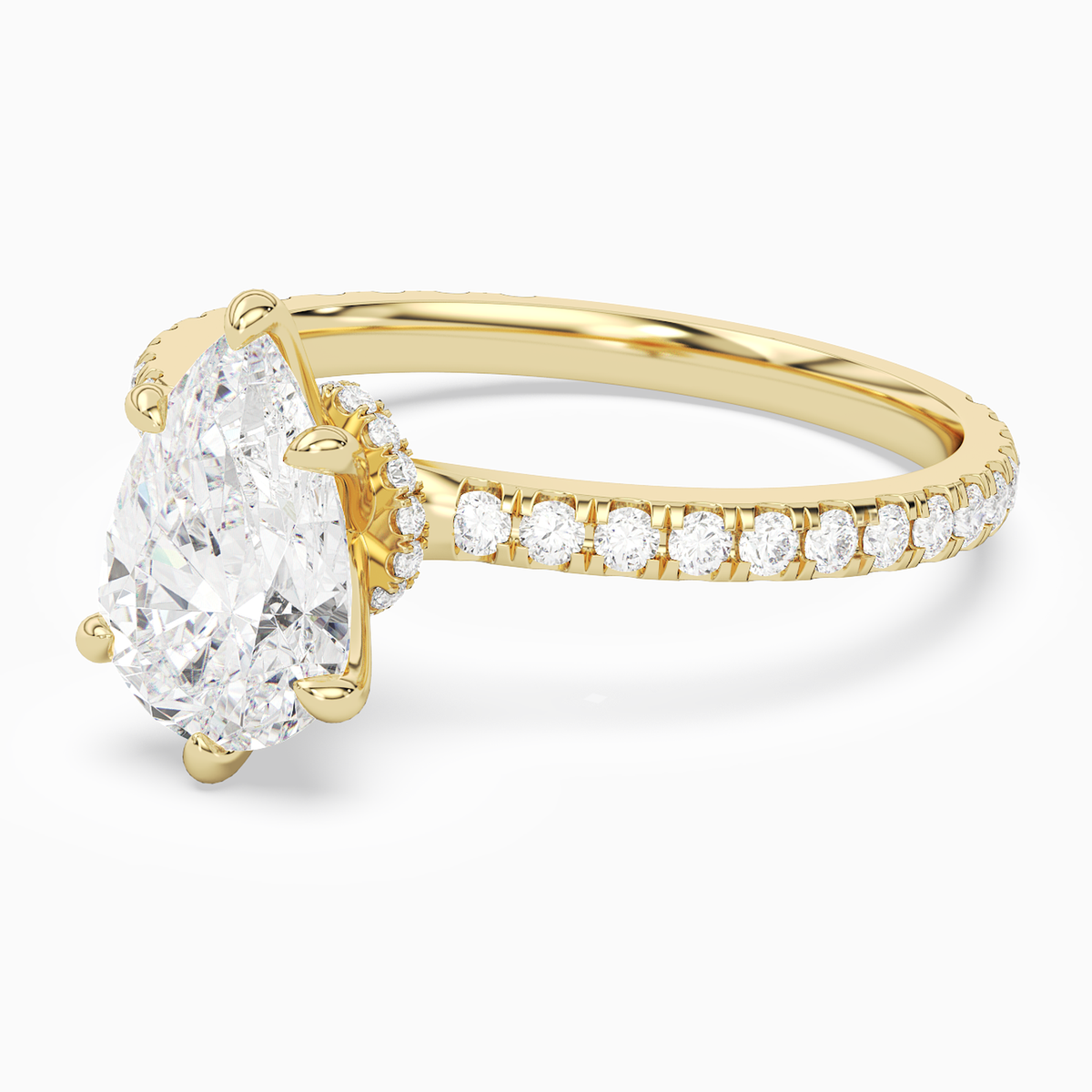
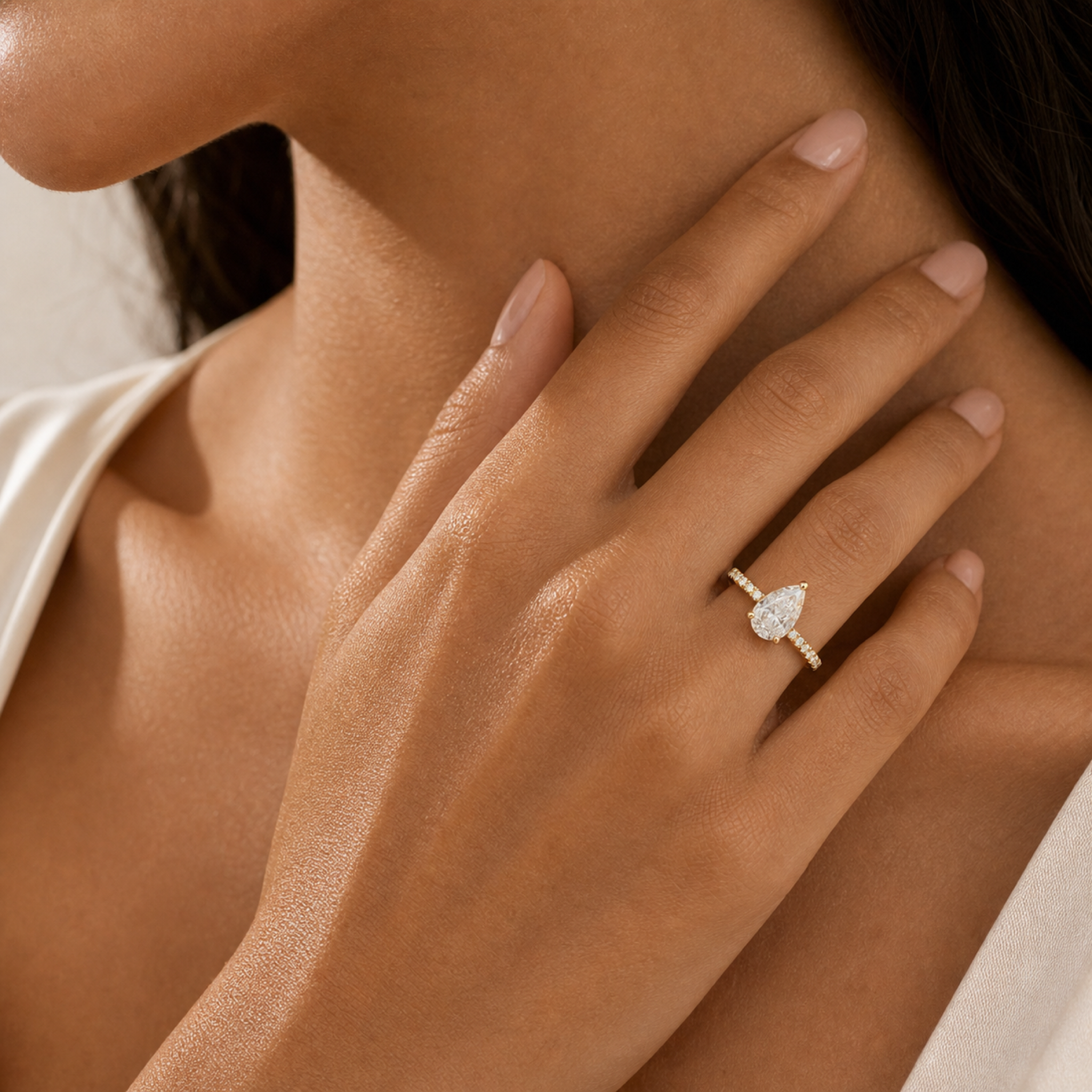


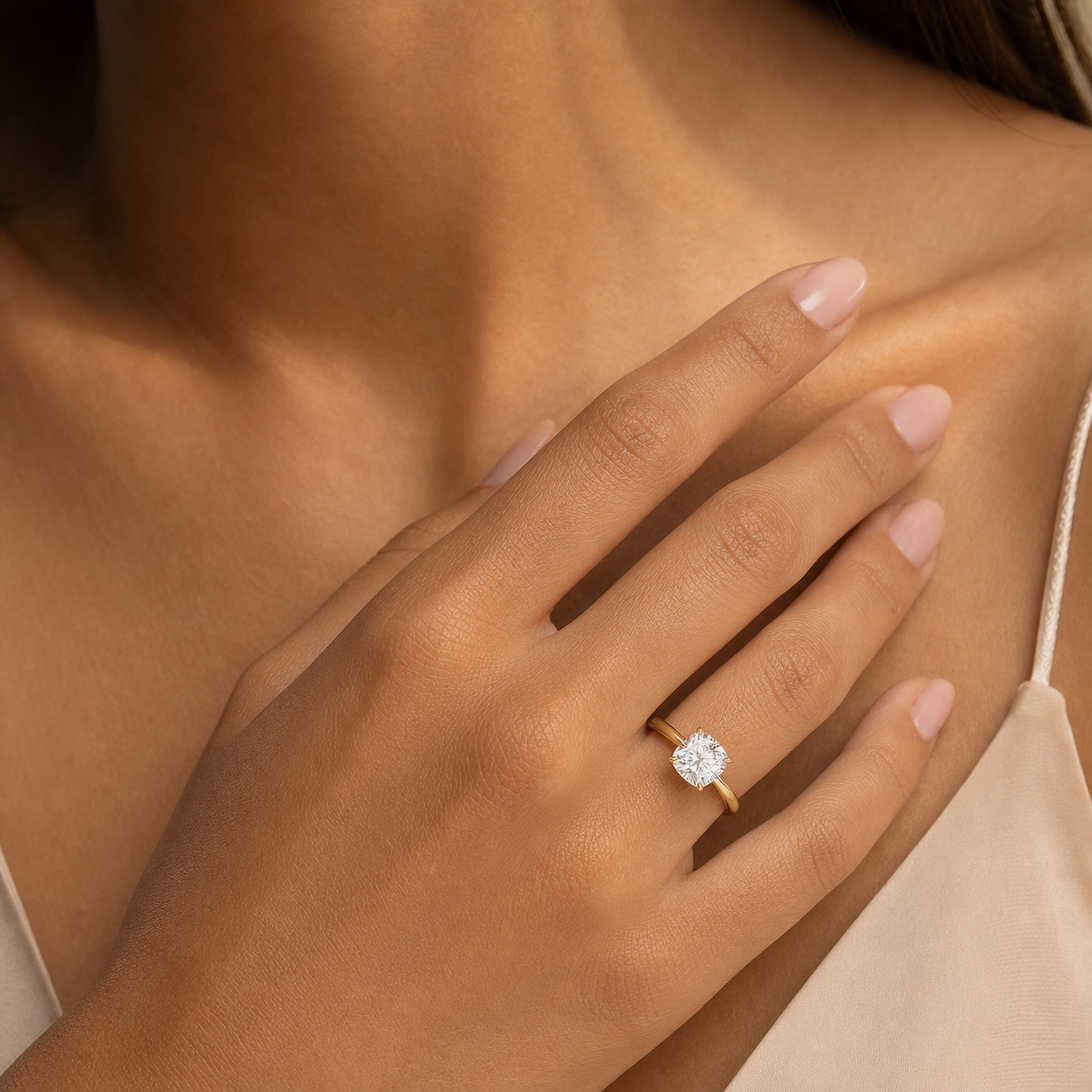


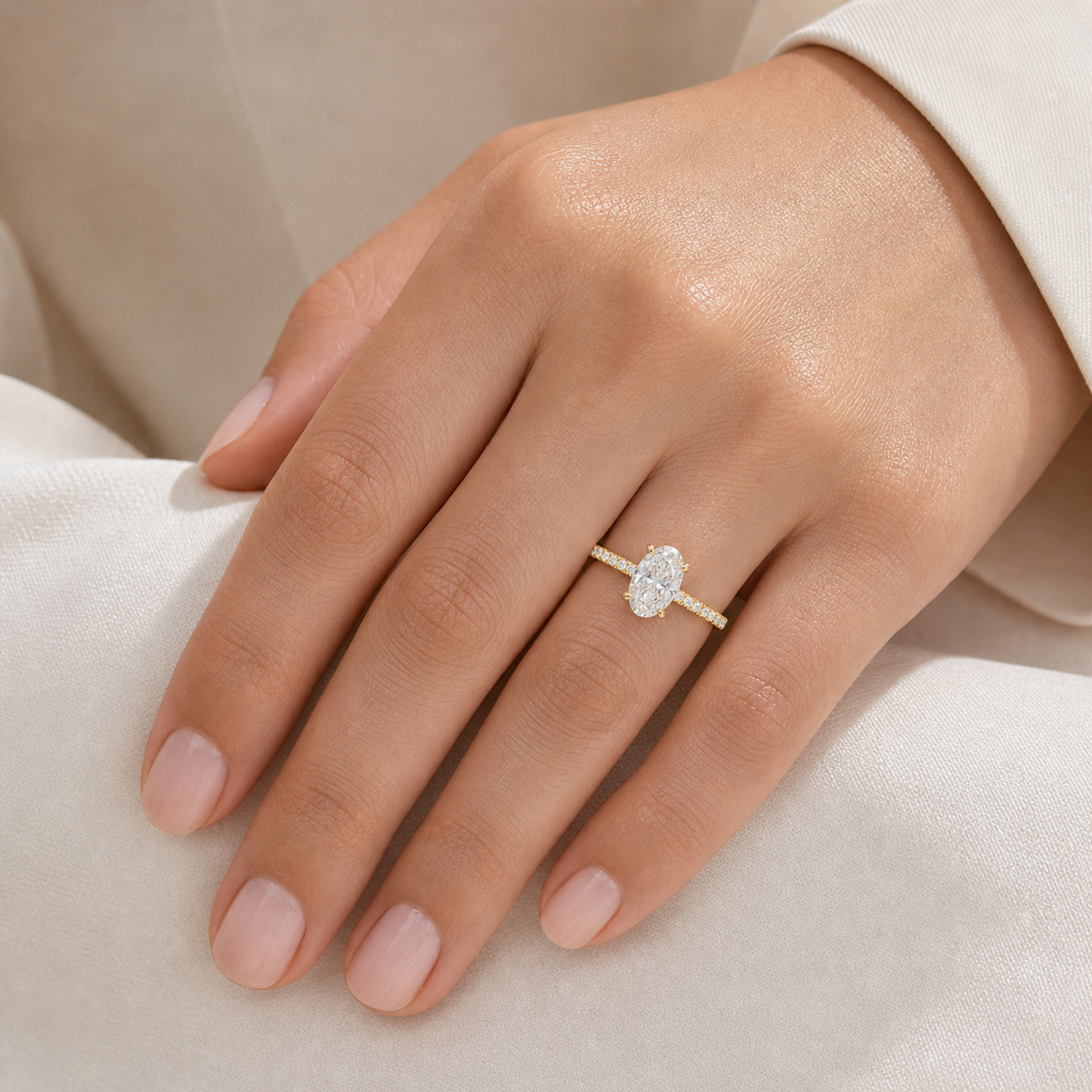


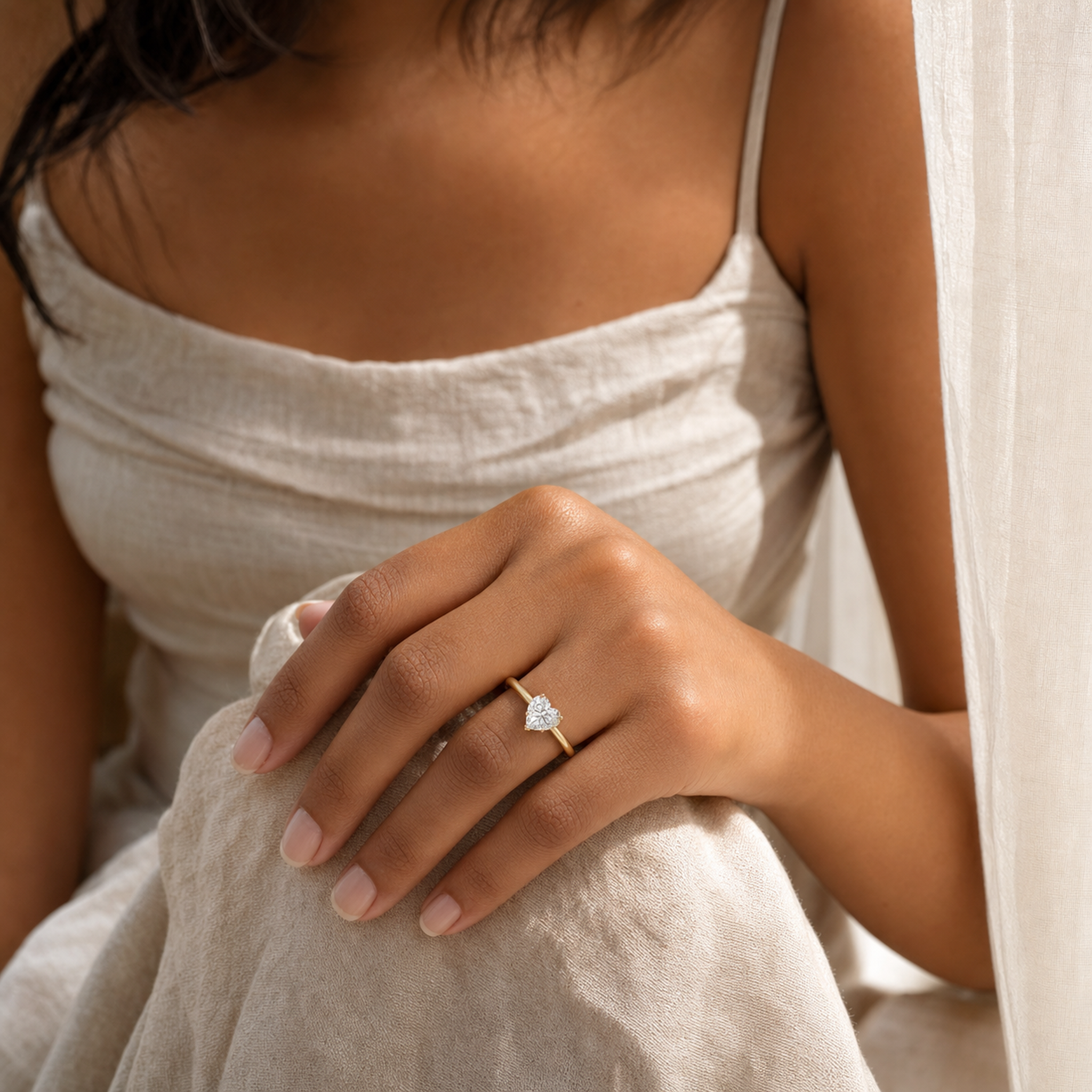


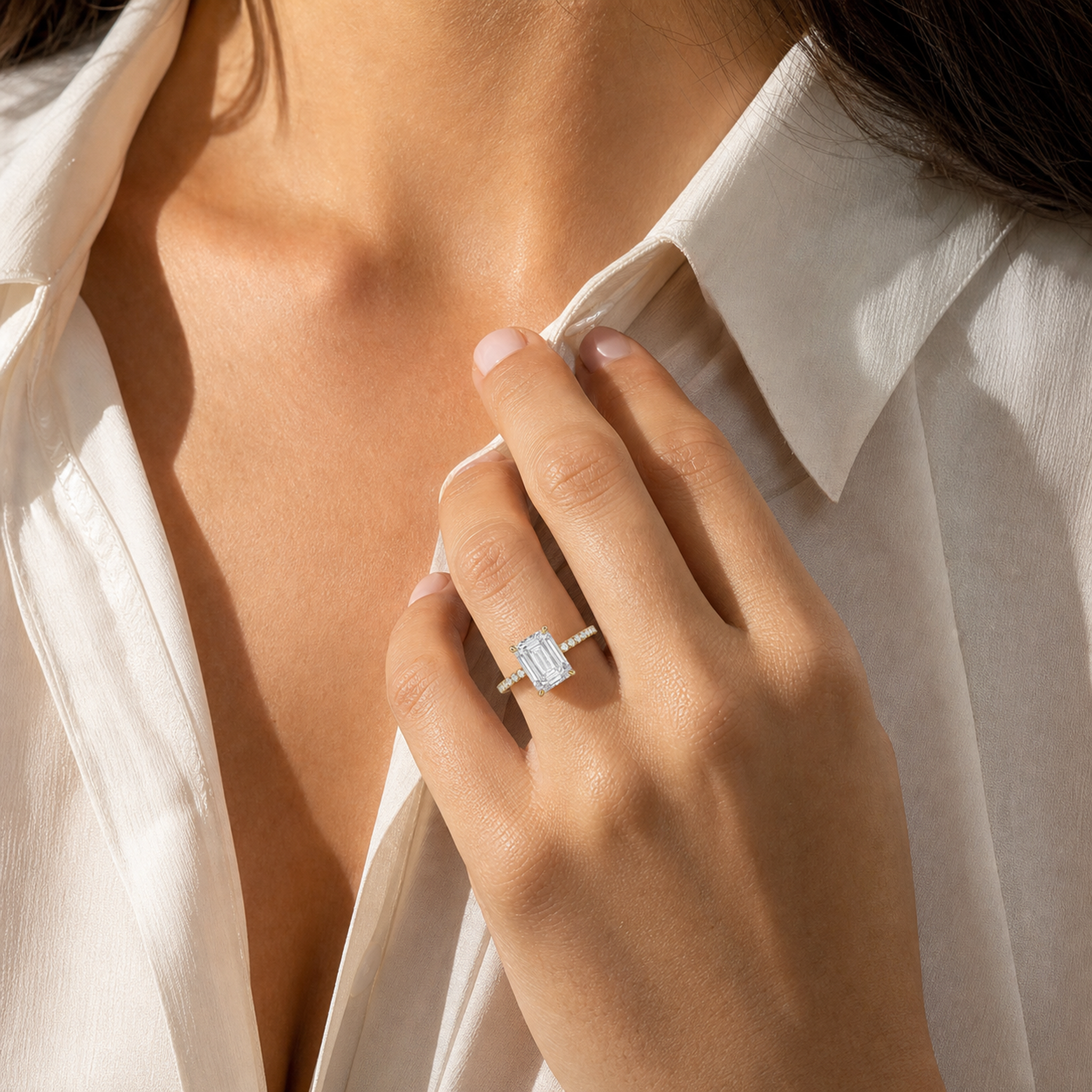

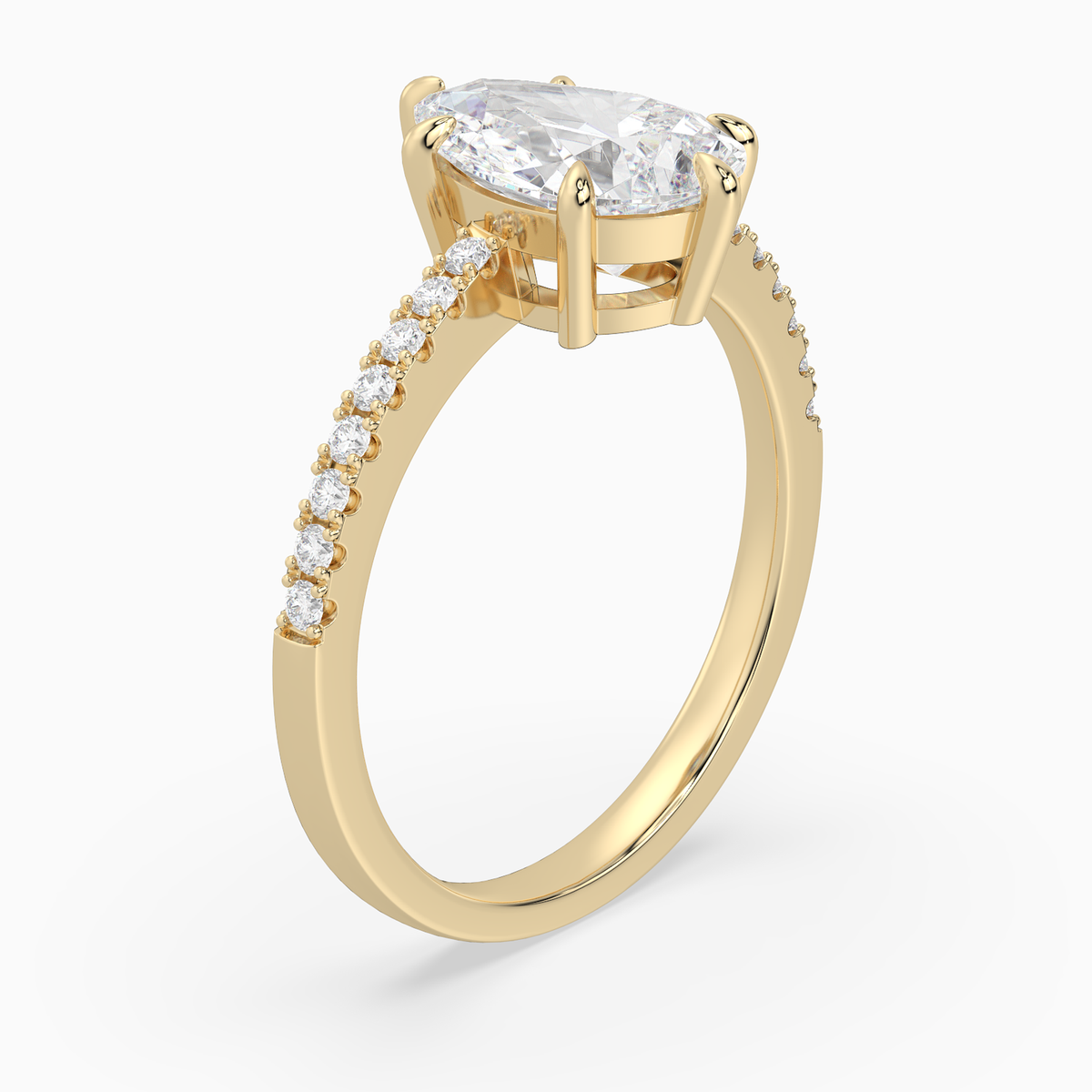


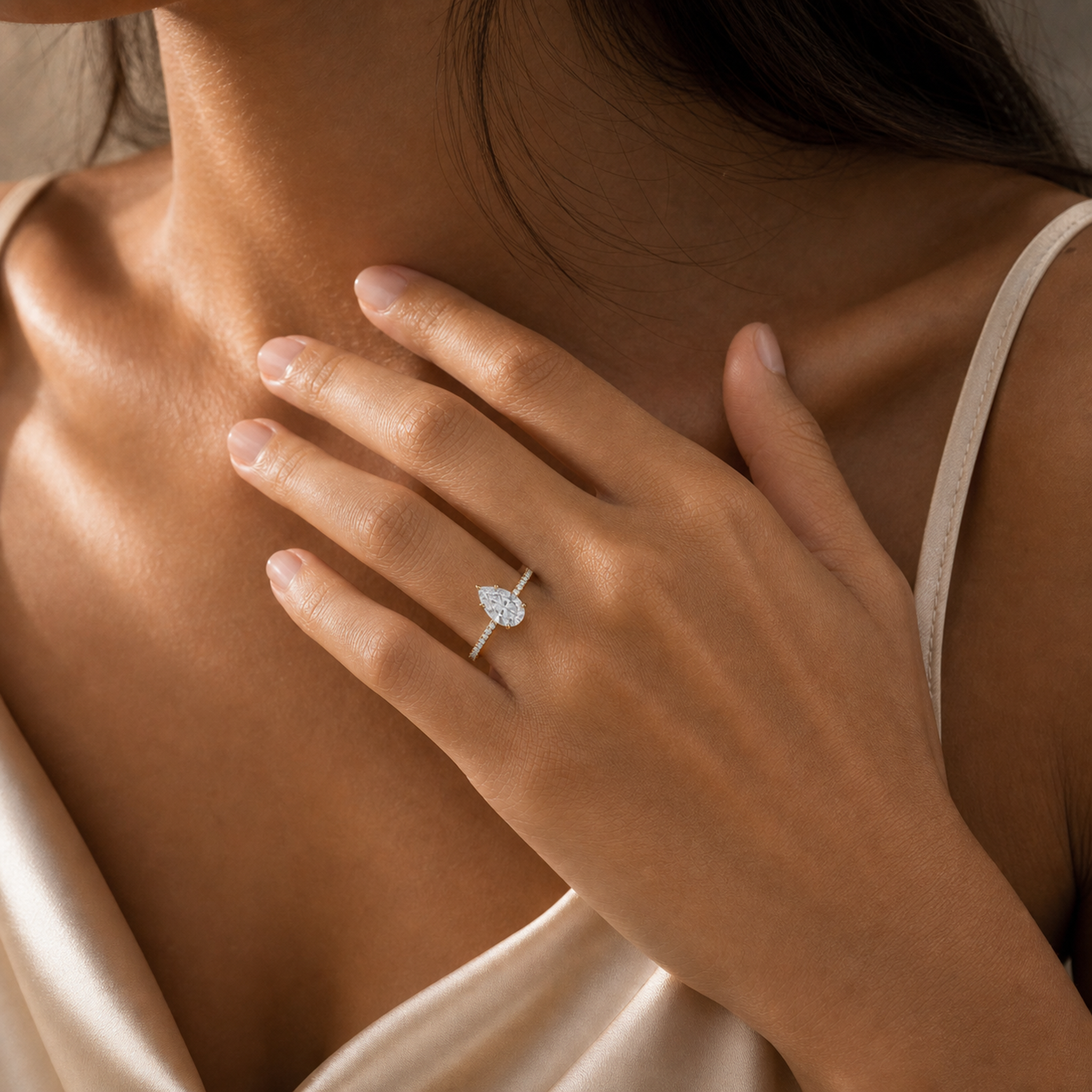


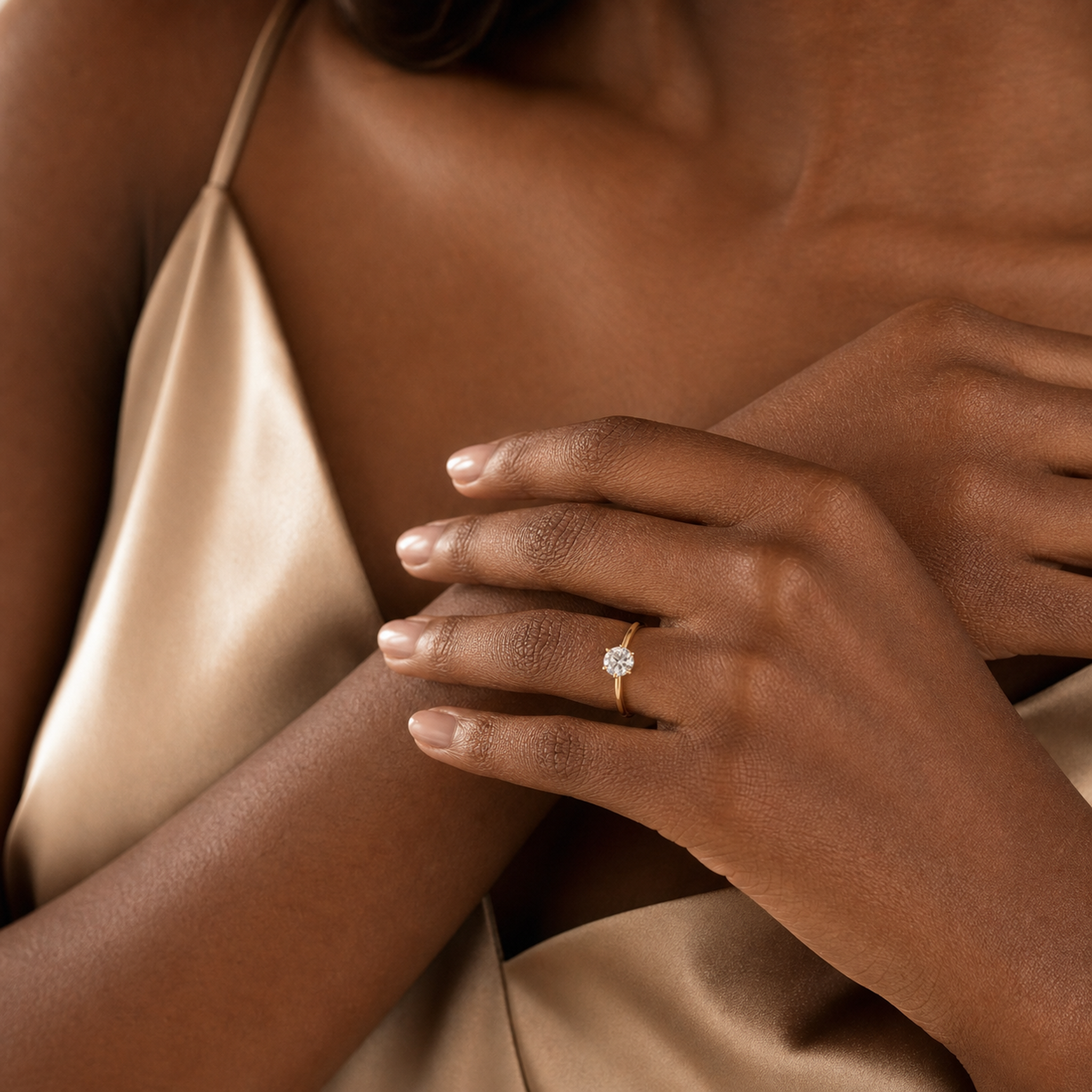

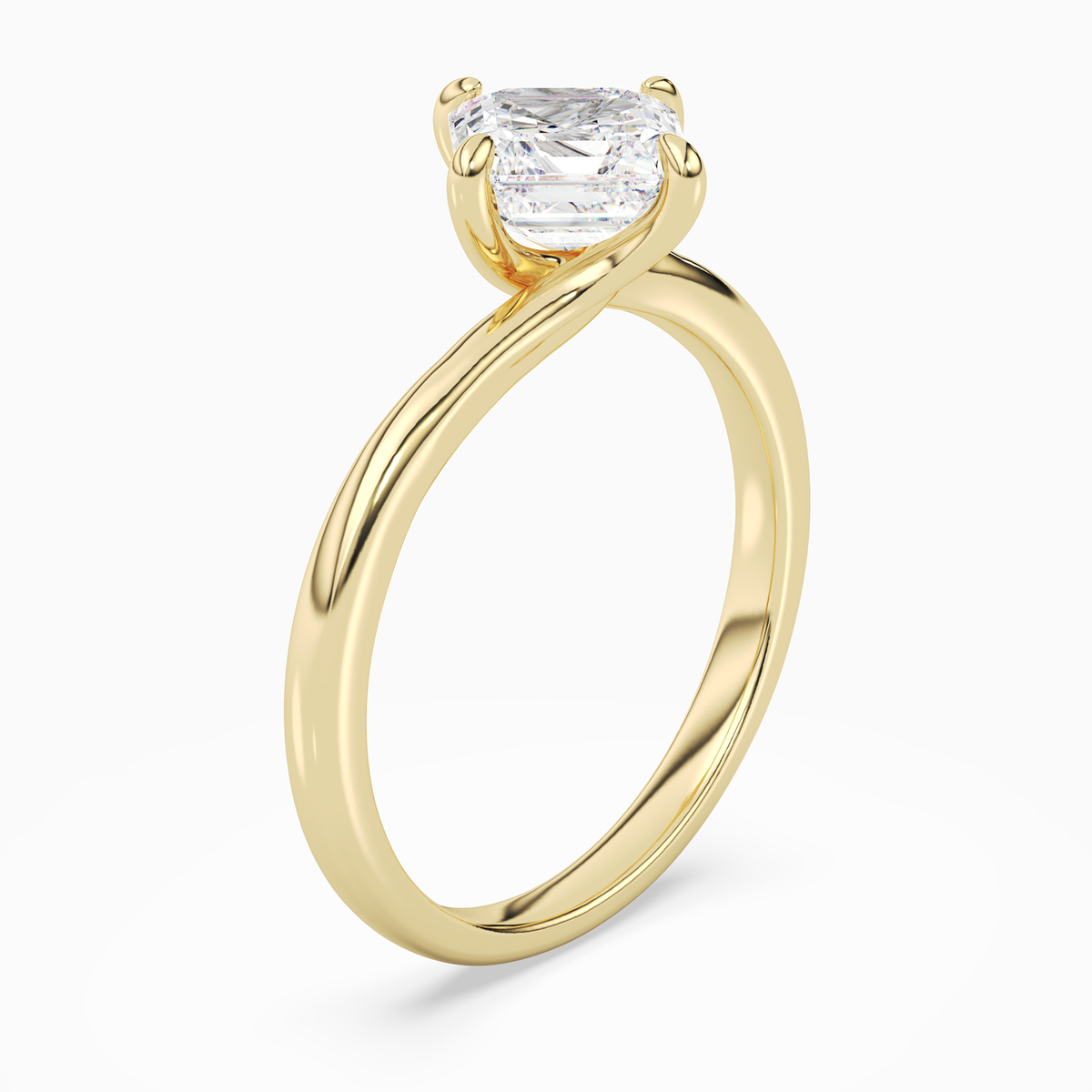


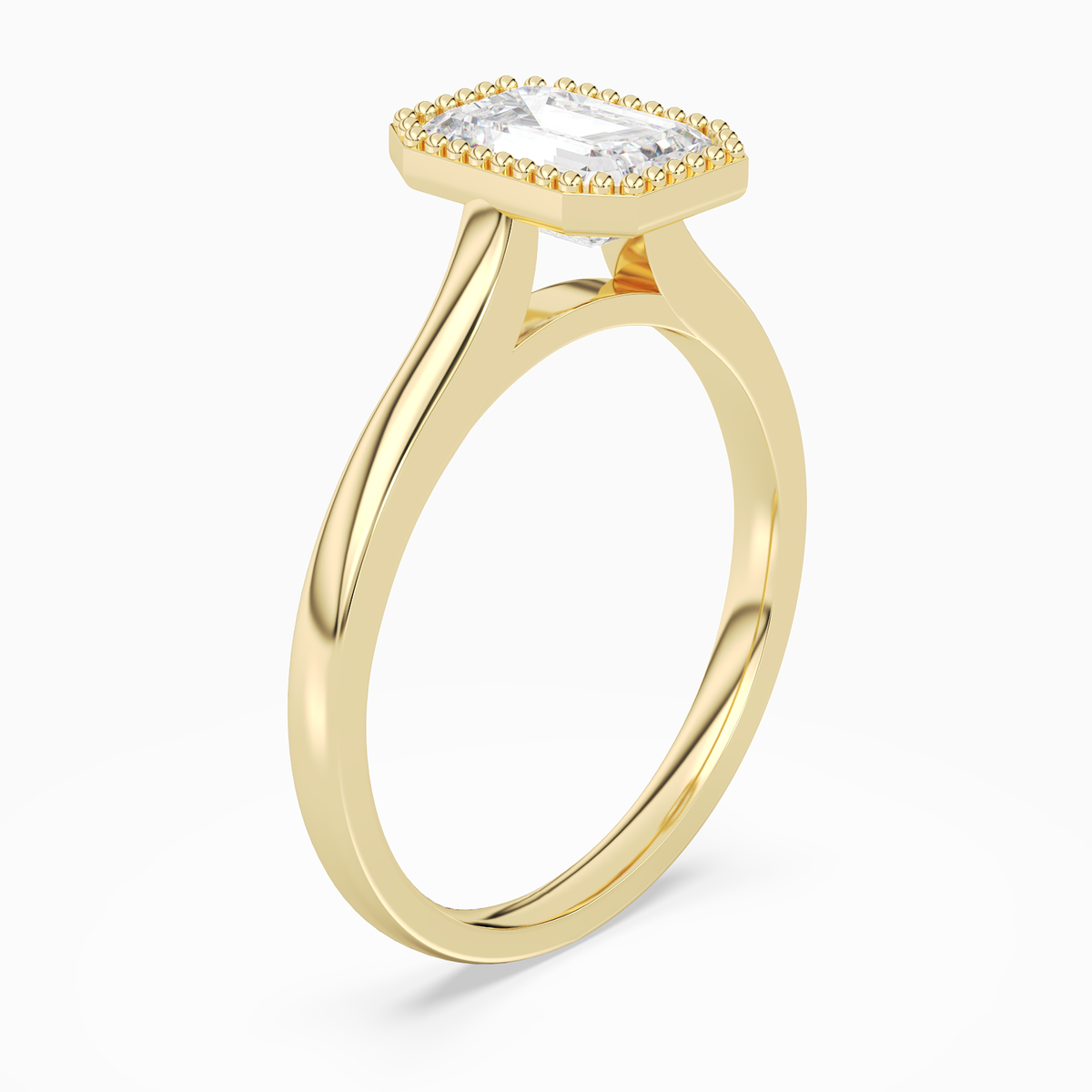


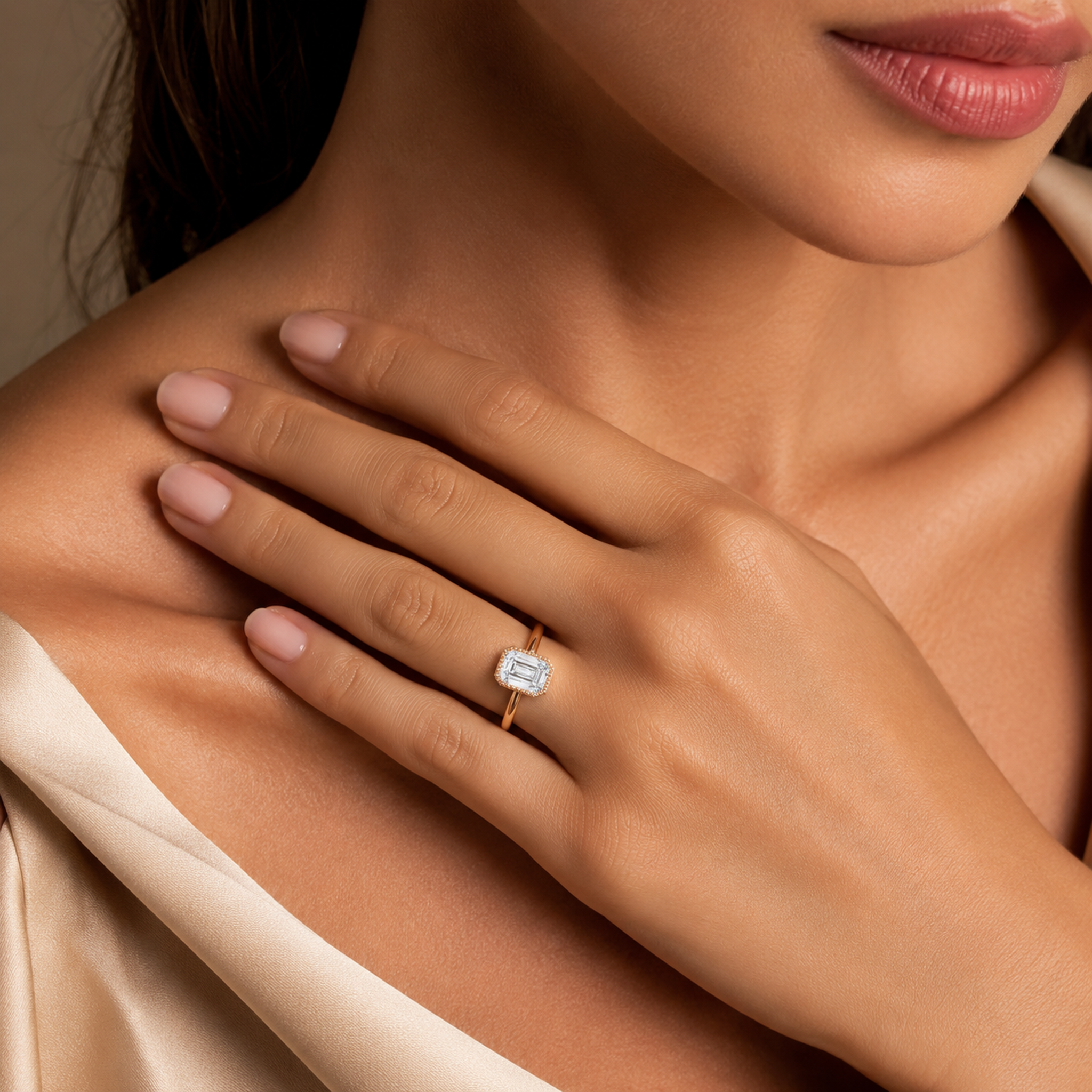


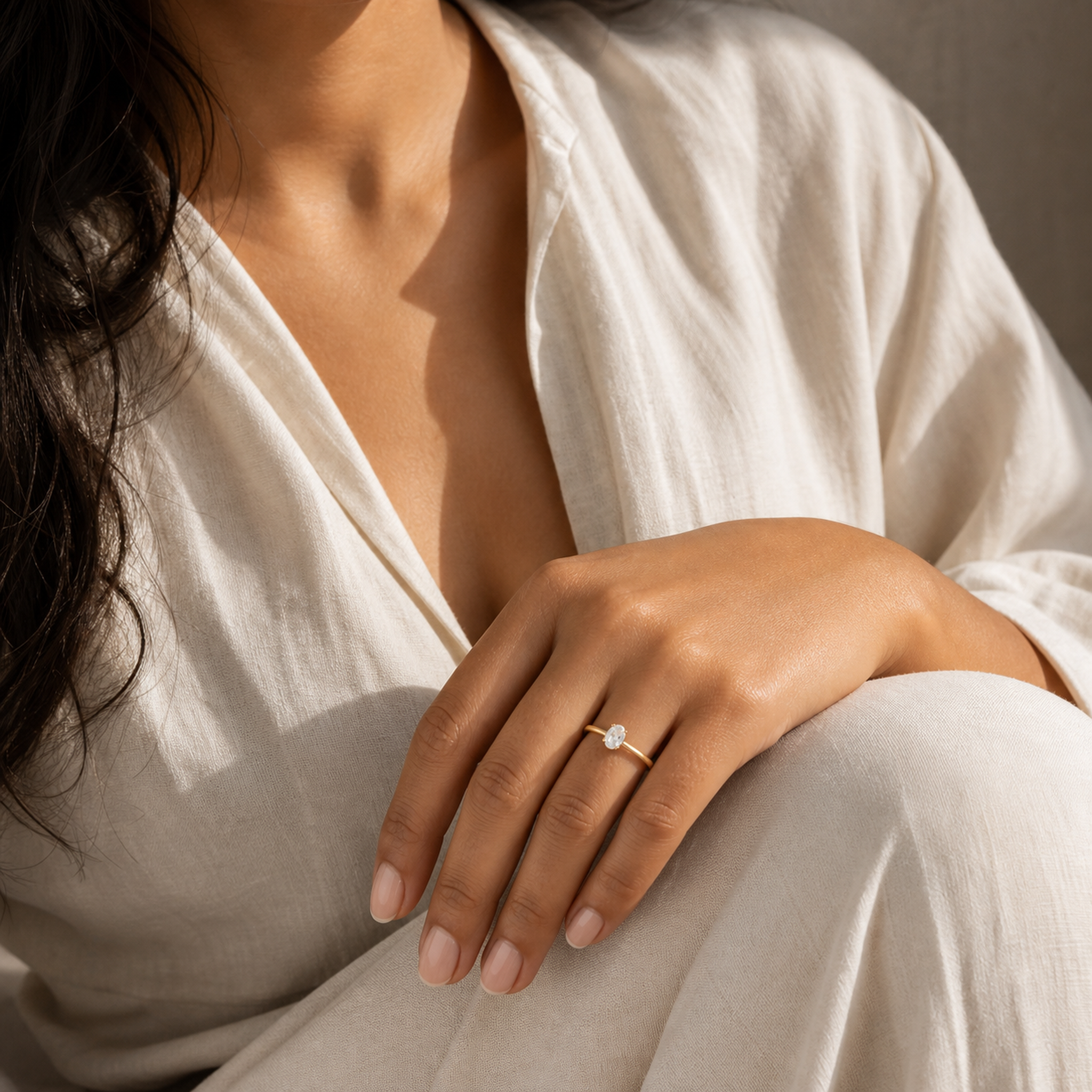


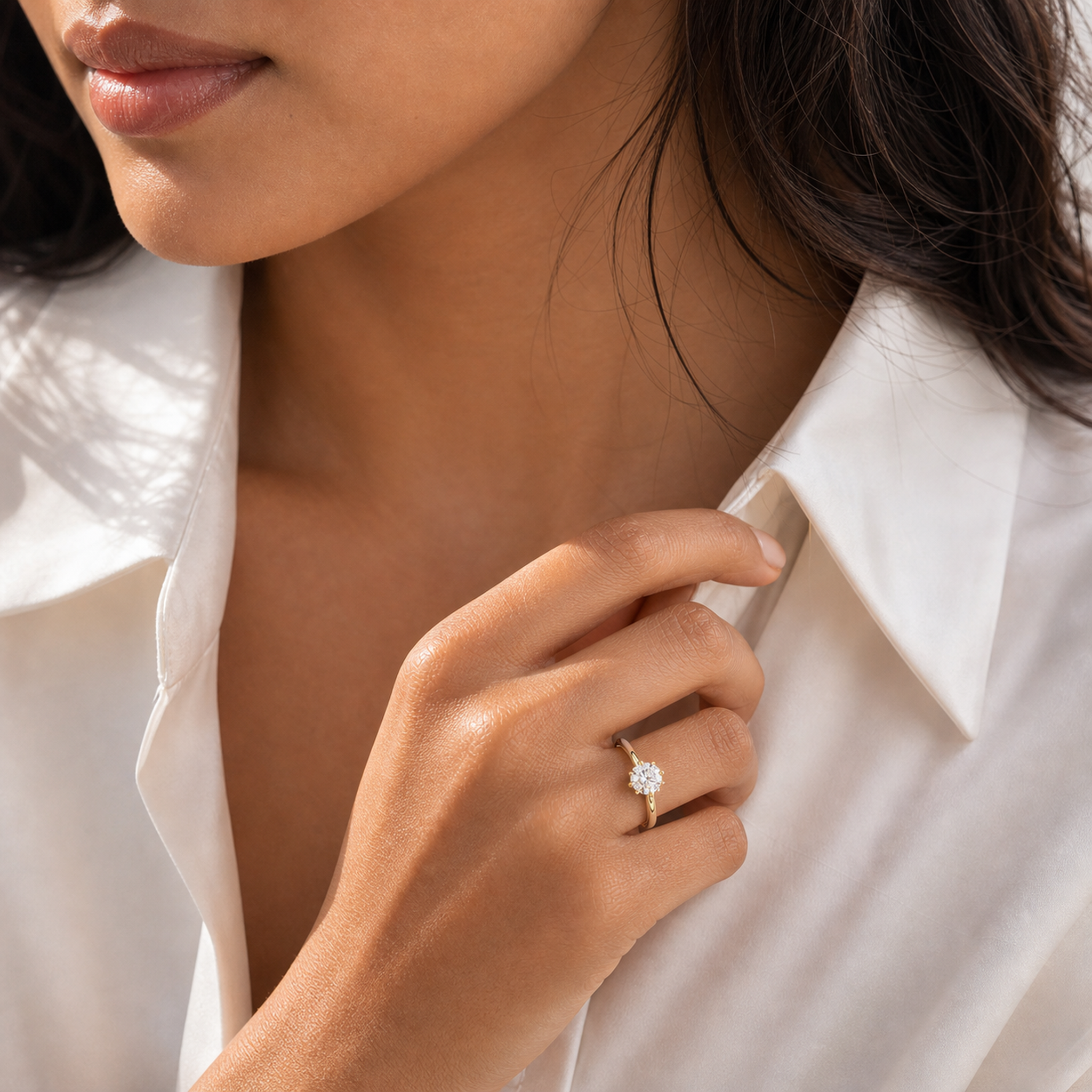


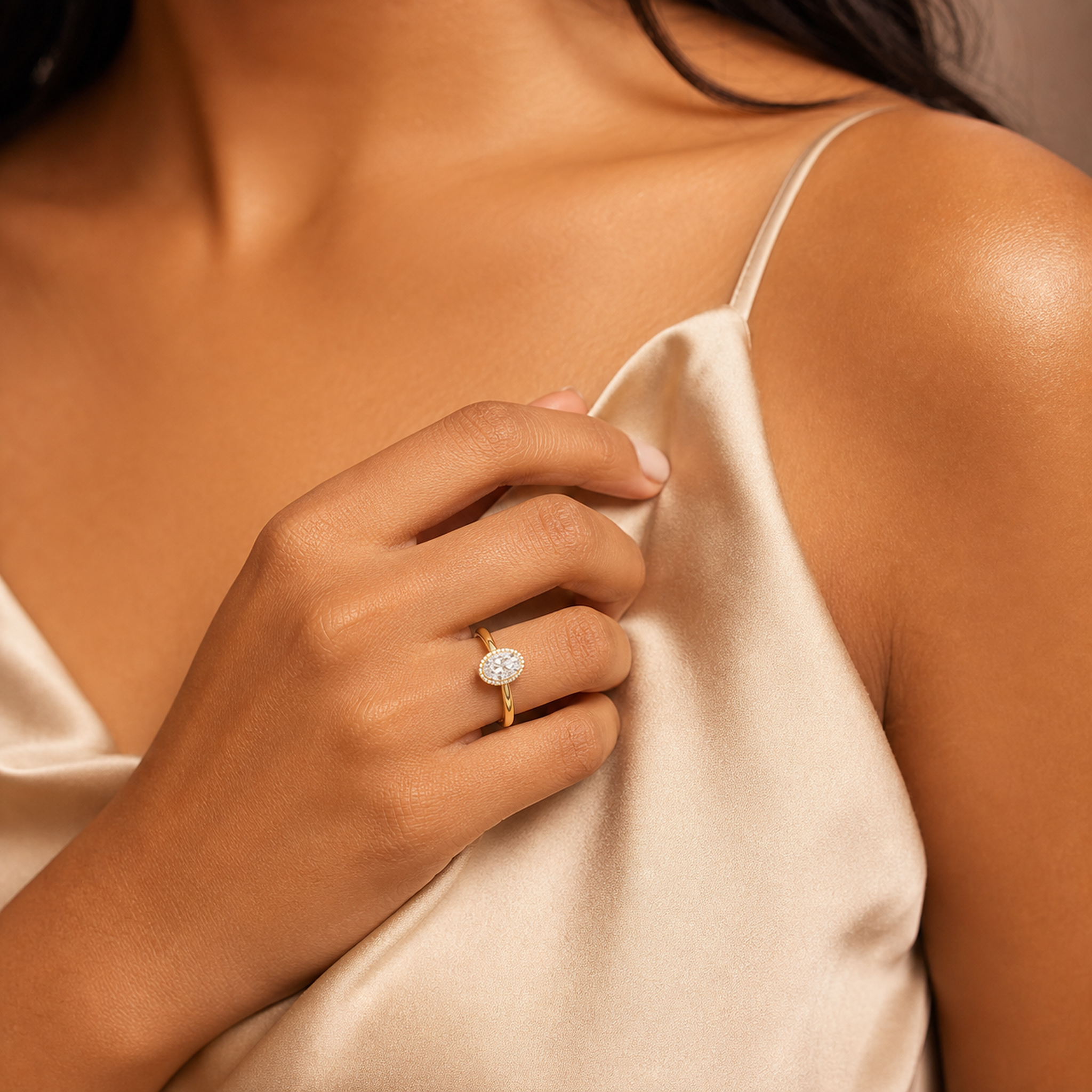


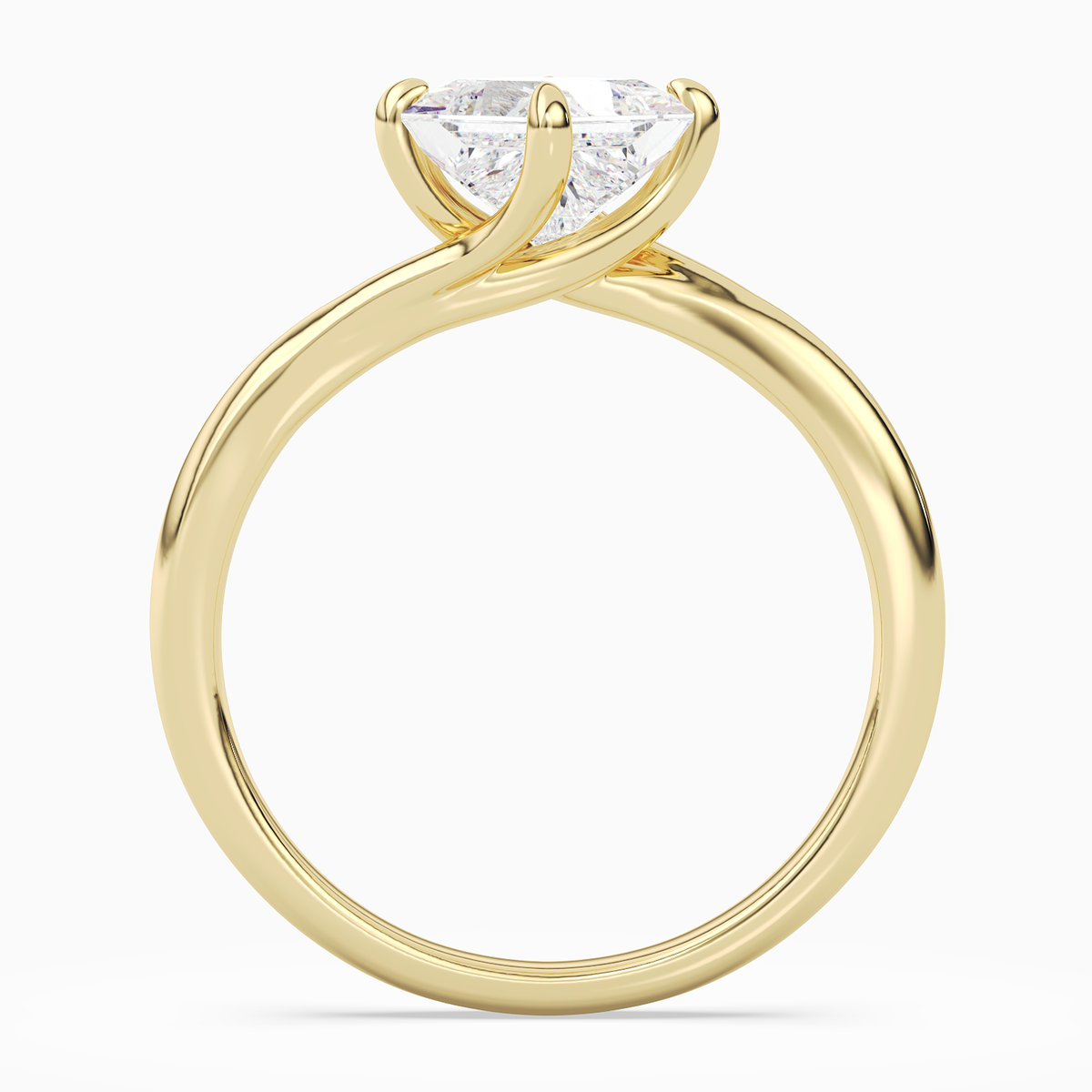


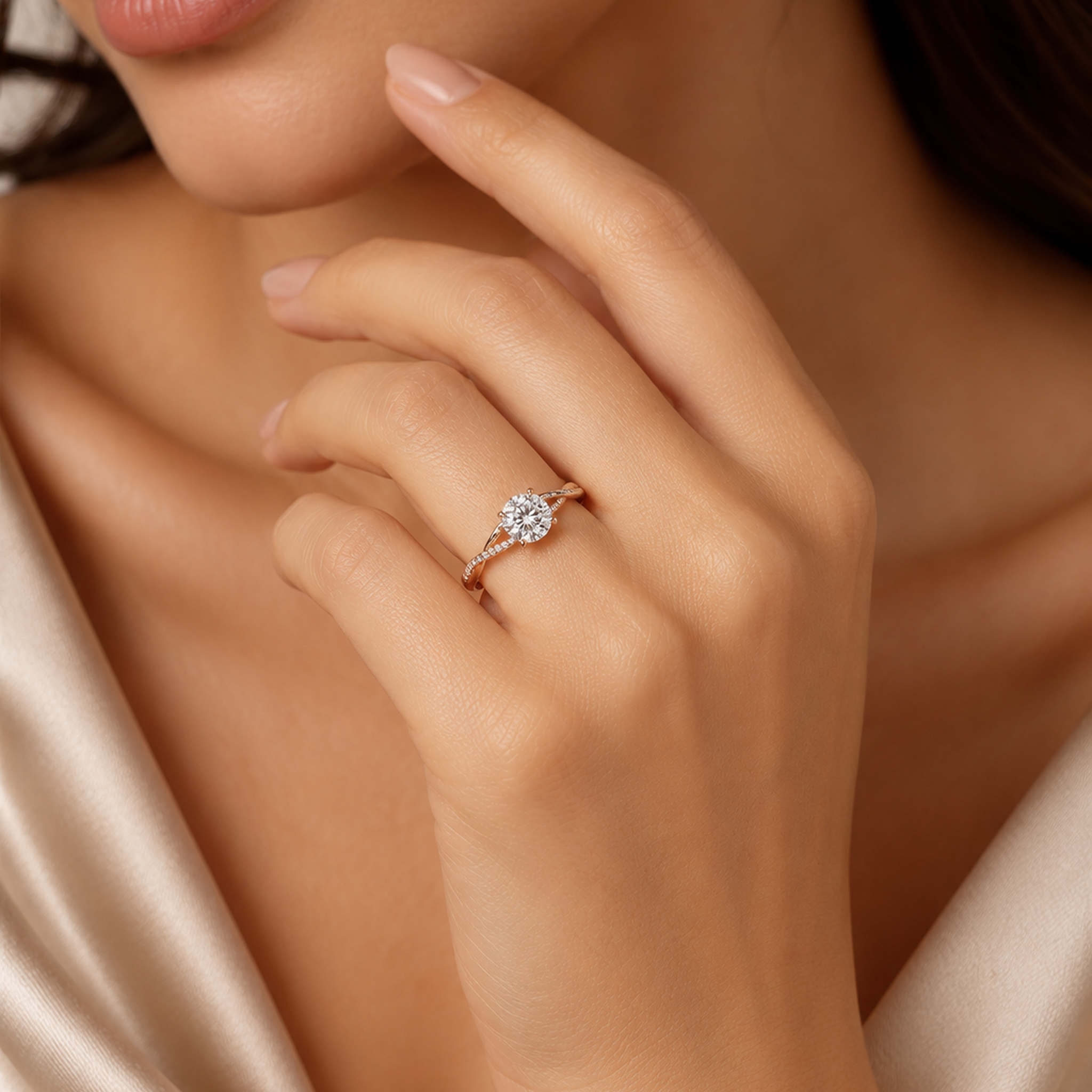


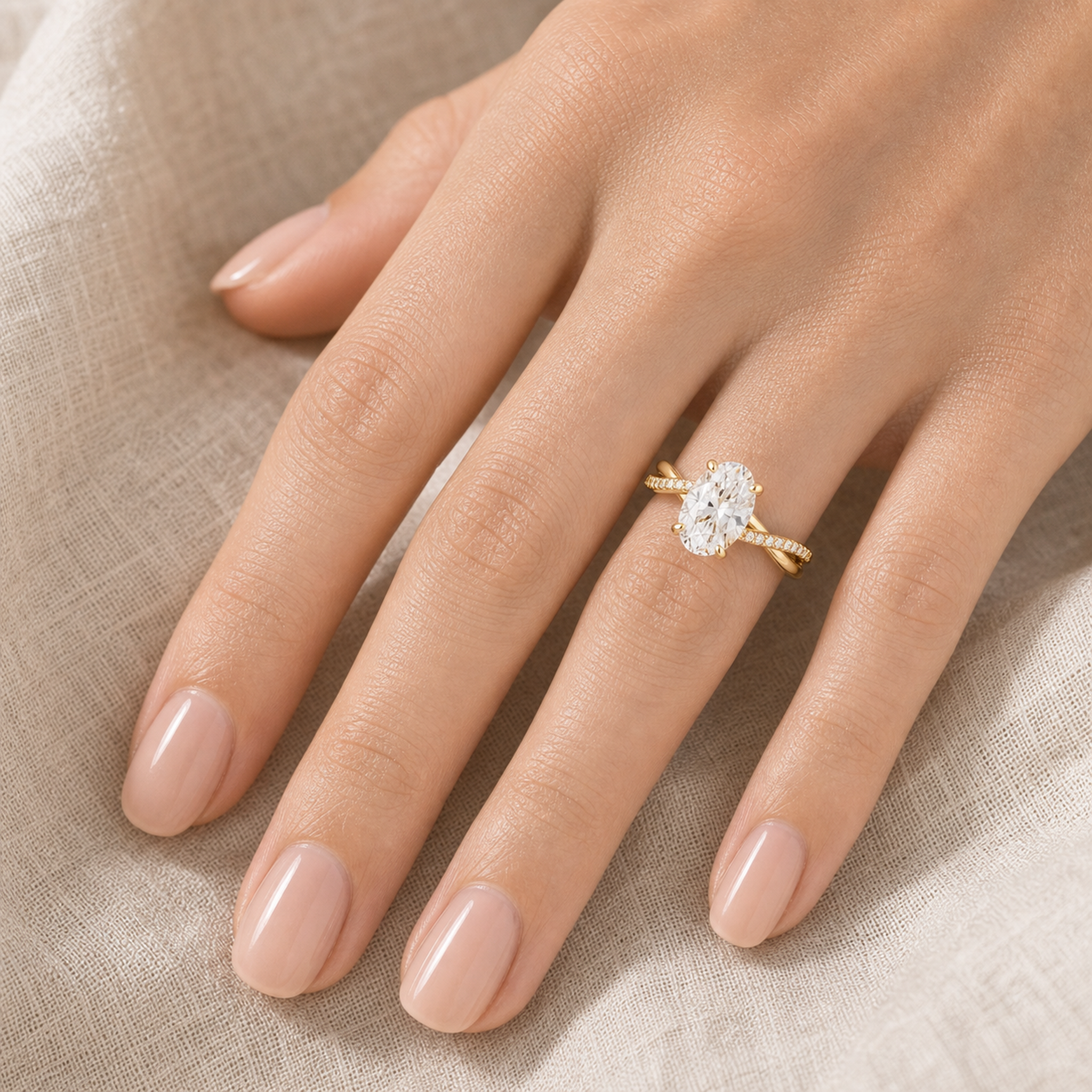


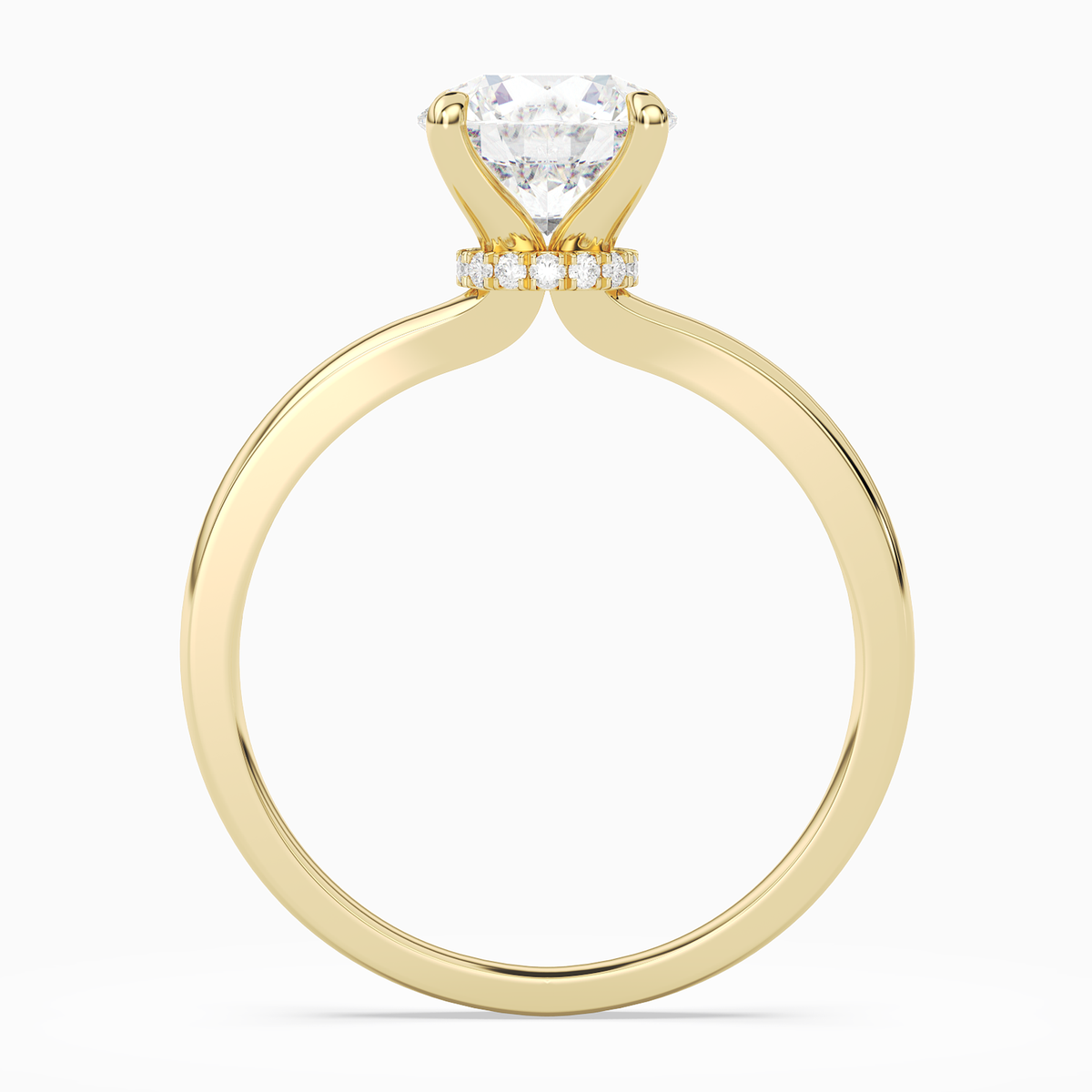

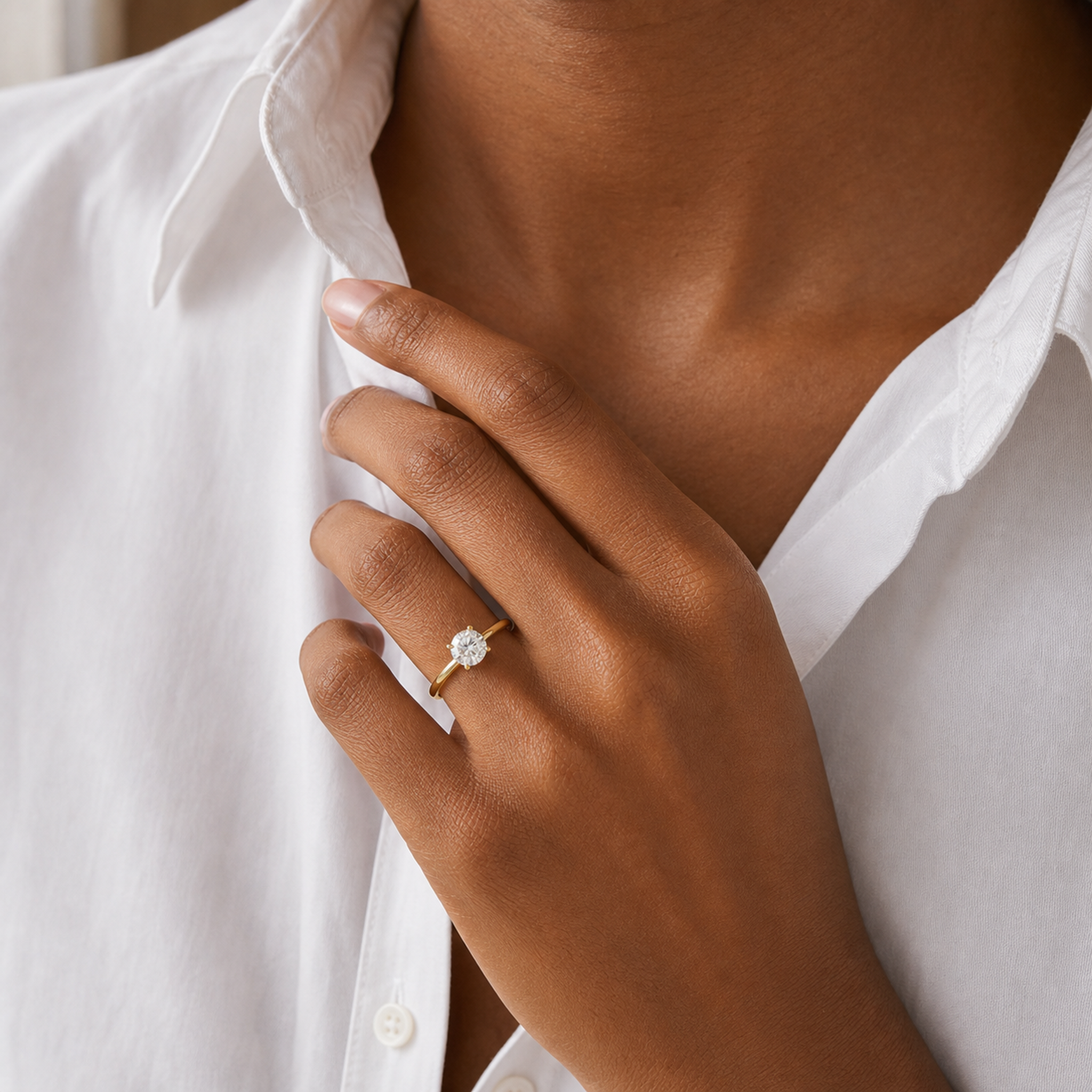
18K Yellow Gold Solitaire Engagement Rings: Color Given Architectural Weight
An 18K Yellow Gold solitaire places two strong ideas in balance: one center diamond and a material that does not disappear around it. The gold defines the band, punctuates the stone through its prongs, and becomes especially present in bezels, cathedral shoulders, or sculpted baskets. Minimal hierarchy remains, but the setting carries its own visual weight.
Burvonti's public collection currently presents 19 designs in this intersection. The same center-led principle moves through open baskets, hidden halos, pavé structures, knife edges, milgrain bezels, bypass lines, and vine-like details. The range makes it possible to choose not only Yellow Gold, but also how much of that gold should participate in the face-up and profile views.
What 75% Gold Does—and Does Not—Explain
An 18K alloy contains 18 parts gold out of 24, equal to 75%. This establishes gold content. It does not specify the complete alloy recipe, guarantee one shade of yellow, or determine hardness, sensitivity, surface wear, security, or maintenance by itself. Those outcomes depend on the final composition and construction.
Higher gold content can give 18K Yellow Gold a richer material context than 14K, but finish and alloy still matter. A polished narrow band reflects light differently from a textured or broader surface. A fine-prong ring exposes less gold near the center than a bezel. The page therefore treats karat as one design fact within the whole ring, not as shorthand for universal luxury or quality.
Negative Space Decides How the Gold Is Seen
An open basket leaves space beneath the diamond, allowing the gold to trace rather than fill the profile. Cathedral shoulders create a more continuous rise toward the center. A hidden halo adds a lower ring of detail; a pavé basket catches light beneath the face-up view. A bezel replaces separate points with a continuous border, making material and center outline read together.
The choice is not simply between minimal and ornate. It is between different distributions of metal, light, and open space. In an 18K Yellow Gold solitaire, a small structural change can move the ring from a fine golden accent to a strongly framed composition while one diamond remains primary.
Shape Sets the Geometry of the Gold Boundary
The assortment includes round, oval, cushion, pear, emerald, princess, Asscher, and heart shapes. Curved outlines let prongs appear as measured punctuation. Step-cut geometry makes corner treatment and alignment more prominent. Pear, princess, and heart shapes introduce points or clefts that influence how the gold is positioned around the center.
You may notice the setting's architecture and then consider which available shape gives it the intended balance, or begin with a preferred outline and compare the structures built around it. Burvonti supports both ways of looking without presenting a configurator sequence that the storefront does not actually use.
Compare 18K and 14K Through the Complete Ring
The factual karat difference is 75% gold in 18K versus approximately 58.3% in 14K. Depending on alloy and finish, 18K Yellow Gold may read as fuller or richer in color. It is not automatically more durable, more secure, more brilliant, or more appropriate for every wearer. Band dimensions, setting architecture, physical feel, care preferences, and budget remain part of the decision.
The amount of visible metal matters too. The distinction may feel subtle in fine prongs and more pronounced in a bezel or broader band. Compare equivalent structures where possible. That makes the karat decision about an observable material relationship rather than an abstract ranking.
Let the Wedding Band Complete the Material Field
A matching 18K Yellow Gold band can extend the color across the hand, while another karat or color may create a deliberate break. Fit is governed by the two profiles: basket width, cathedral rise, bezel edge, hidden-halo placement, stone setting, thickness, and contact points. Matching labels cannot guarantee a flush result.
Burvonti pairs responsibly sourced, independently graded lab-grown diamonds with settings considered through proportion and human judgment. Custom possibilities may refine shape, orientation, band dimension, engraving, metal, or selected architecture where feasible. In this collection, 18K Yellow Gold is most compelling when its color has been given a precise structural role around one center.
Frequently Asked Questions
How is this page different from the main 18K Yellow Gold Engagement Rings Collection?
The main metal page compares 18K Yellow Gold across engagement-ring styles. This page focuses only on designs led by one center diamond, so it can examine the metal's role in prongs, bezels, baskets, bands, and profiles.
How much gold is in 18K Yellow Gold?
18K contains 18 parts gold out of 24, or 75%. The remaining quarter consists of alloying metals whose identity and proportion vary by product.
Is 18K Yellow Gold always a deeper yellow than 14K?
Not always. Higher gold content may create a richer yellow context, but exact alloy, finish, lighting, photography, and visible metal area affect the result. Compare the actual rings.
Is 18K Yellow Gold better than 14K Yellow Gold?
Neither is universally better. 18K has higher gold content; 14K has a greater proportion of alloying metals. Design, finish, feel, wear, care, budget, and color preference should guide the choice.
Does 18K Yellow Gold change a diamond's color grade?
No. The gold can change the visual context at the diamond's edge, but it does not alter the diamond's graded color or light performance.
Which diamond shapes appear in this collection?
The current public assortment includes round, oval, cushion, pear, emerald, princess, Asscher, and heart shapes, each presented within a complete solitaire setting.
Why does a bezel show more 18K Yellow Gold?
A bezel creates a continuous perimeter around the center, while prongs appear as separate points. Bezel width, finish, and center shape determine how strongly the gold reads.
Can an 18K Yellow Gold solitaire include pavé?
Yes. Pavé on a band, basket, or hidden halo can add secondary detail while one center diamond remains visually primary.
Is 18K Yellow Gold too soft for a solitaire?
That cannot be answered from karat alone. Exact alloy, prong and band dimensions, construction, finish, wear conditions, and maintenance all affect performance. Review the selected design rather than relying on a universal rule.
Will 18K Yellow Gold scratch?
Its surface can collect marks with wear, as other jewelry metals do. No gold finish is scratch-proof. Care or refinishing should respond to the actual ring and desired appearance.
Can 18K Yellow Gold cause sensitivity?
Sensitivity depends on the exact alloy and the wearer. The 18K mark does not establish a hypoallergenic outcome, so request product-specific composition if needed.
Must the wedding band also be 18K Yellow Gold?
No. Matching can create continuity, while another metal or karat can create considered contrast. Also assess profile, contact, finish, and product-specific wear.
Can Burvonti personalize an 18K yellow gold solitaire?
Custom possibilities may include shape, orientation, band proportion, engraving, metal, or selected setting details. Availability and structural feasibility must be confirmed for the chosen ring.