
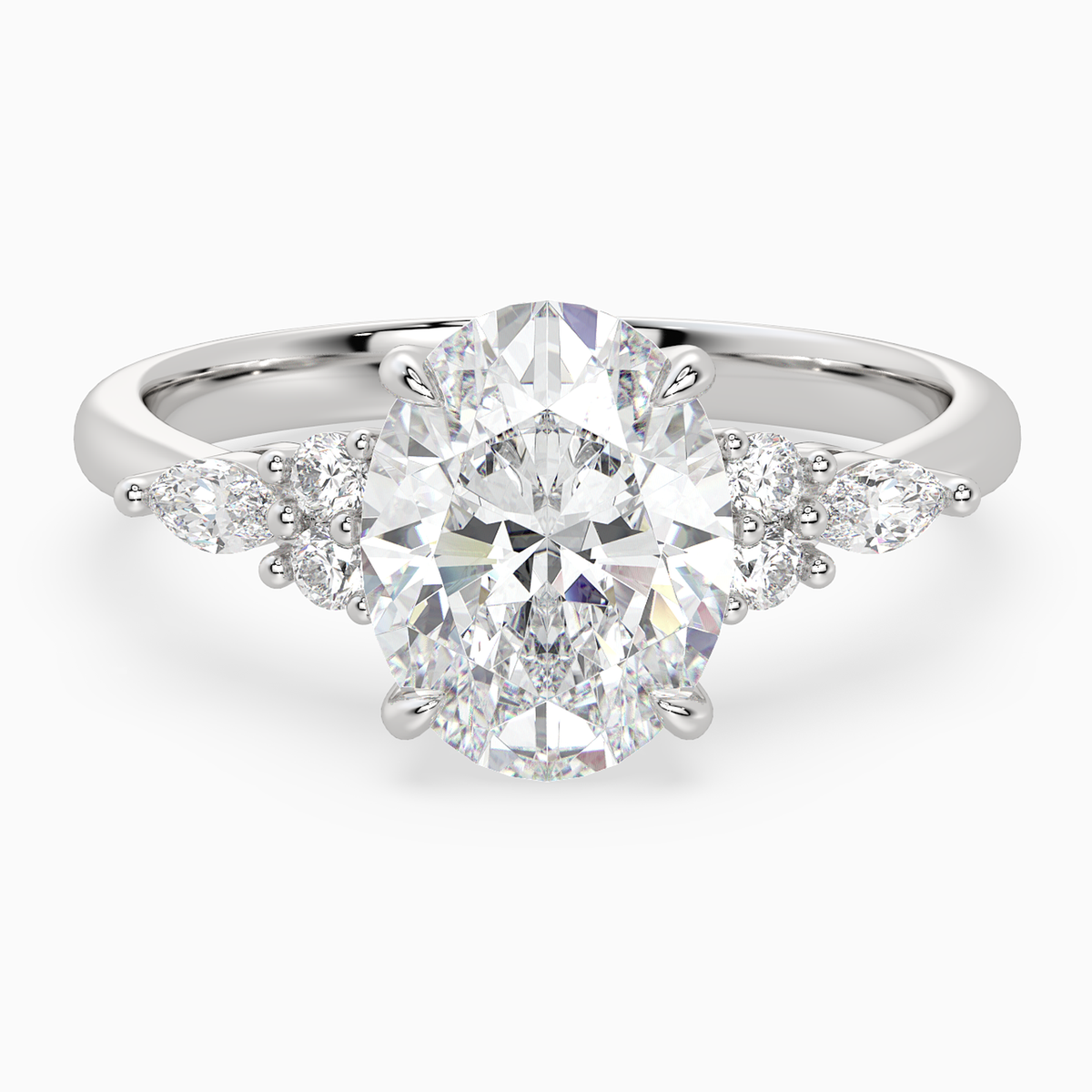


Solitaire Engagement Rings in 14K Yellow Gold
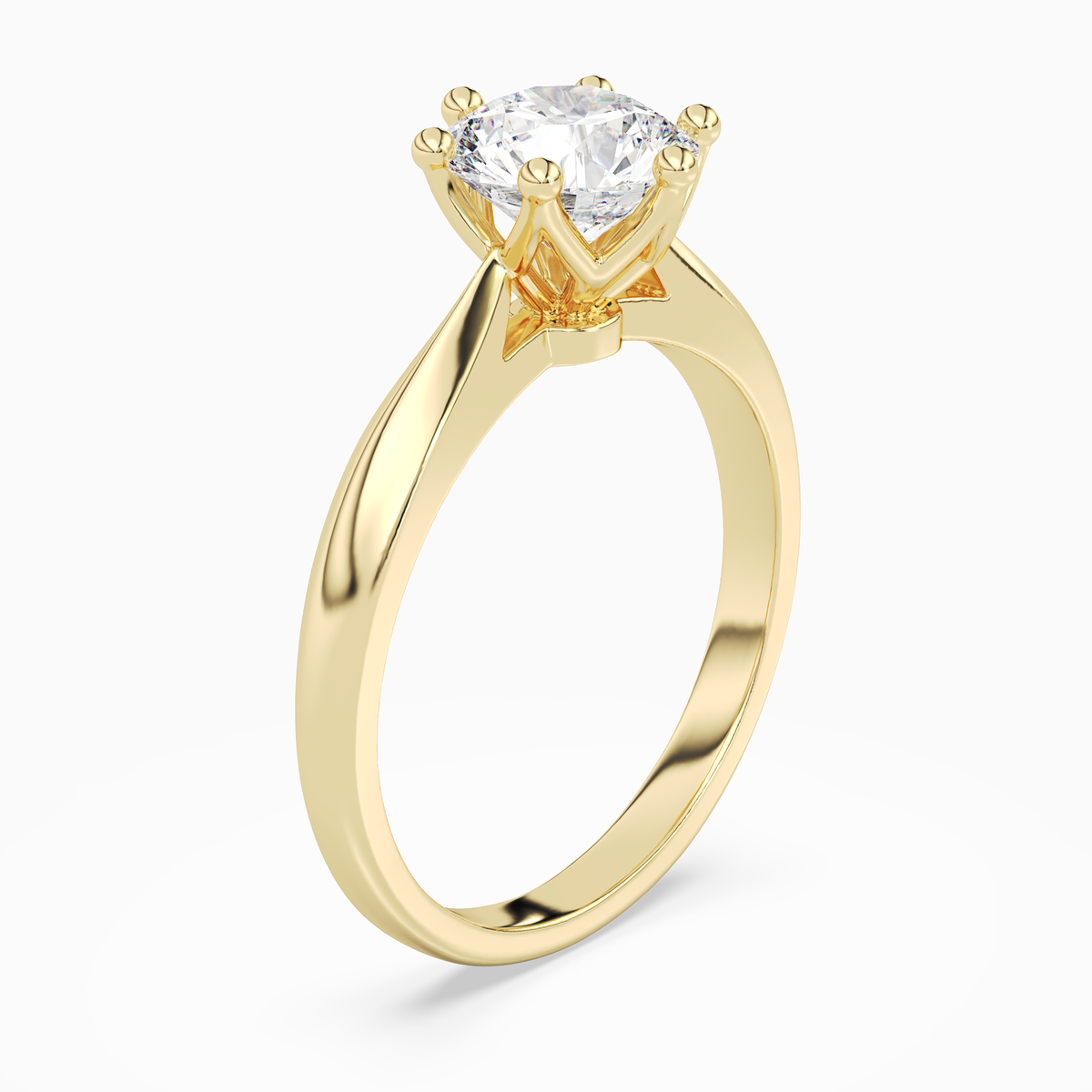
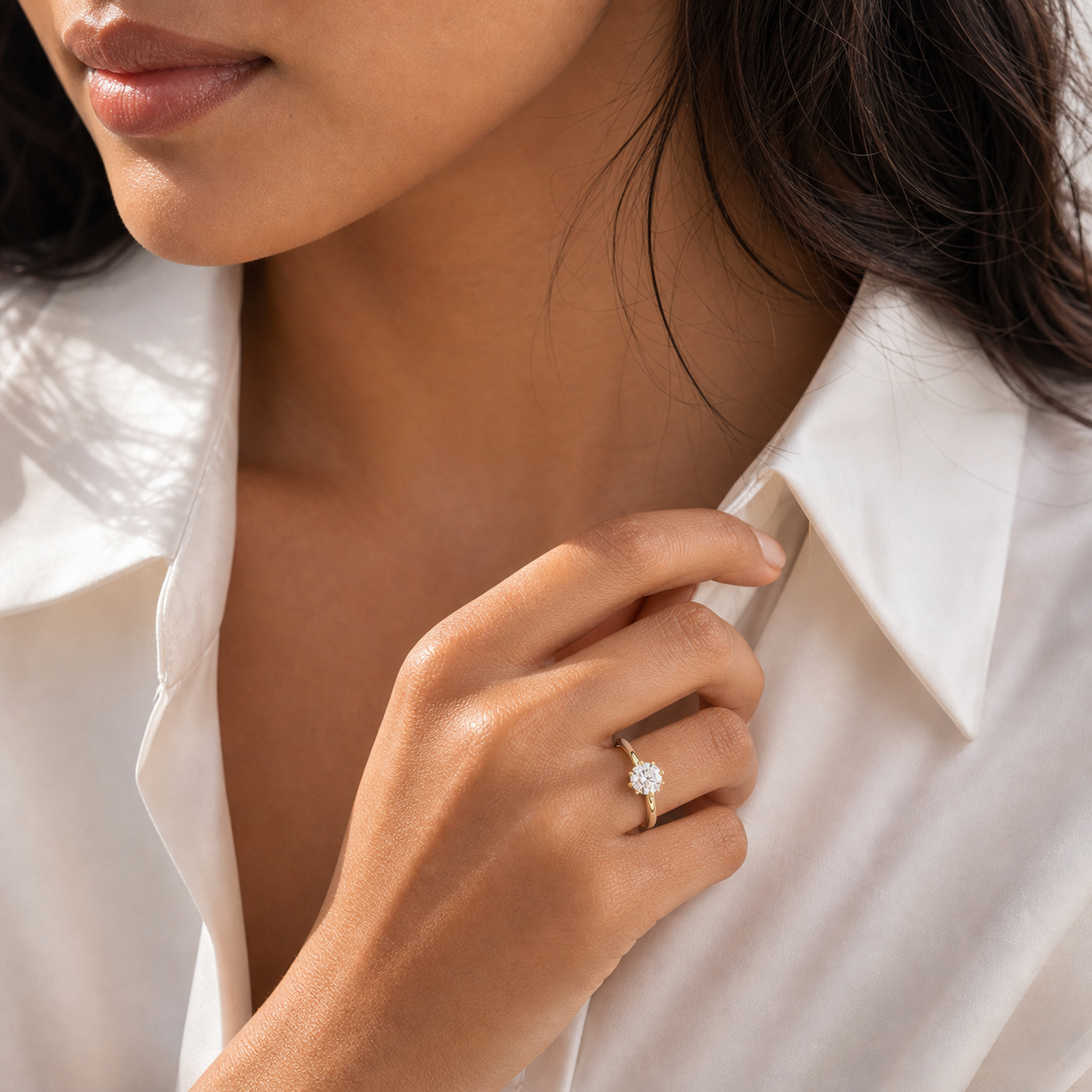
Warmth with a clear edge. 14K yellow gold gives the solitaire's band and prongs a distinct frame around one center diamond.


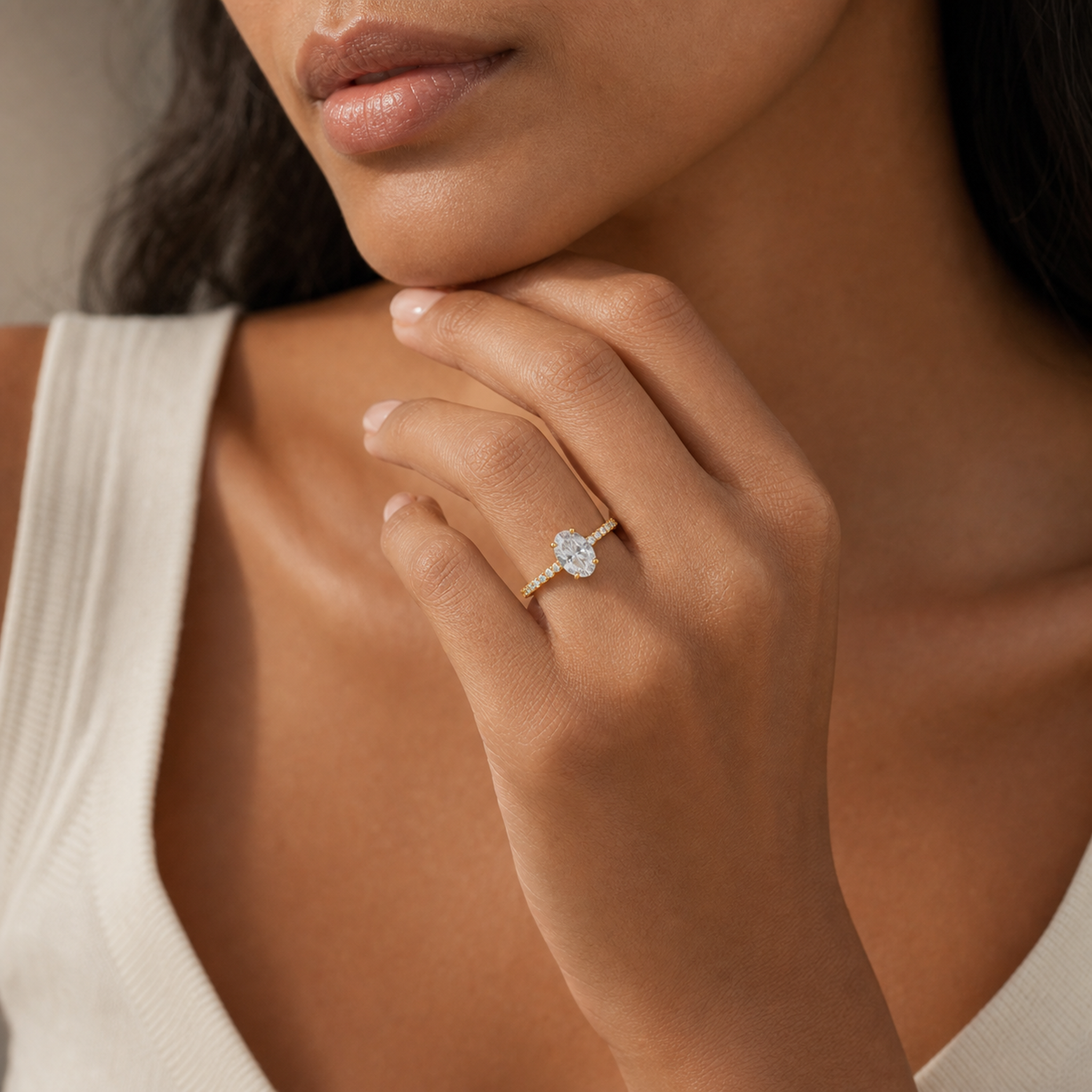


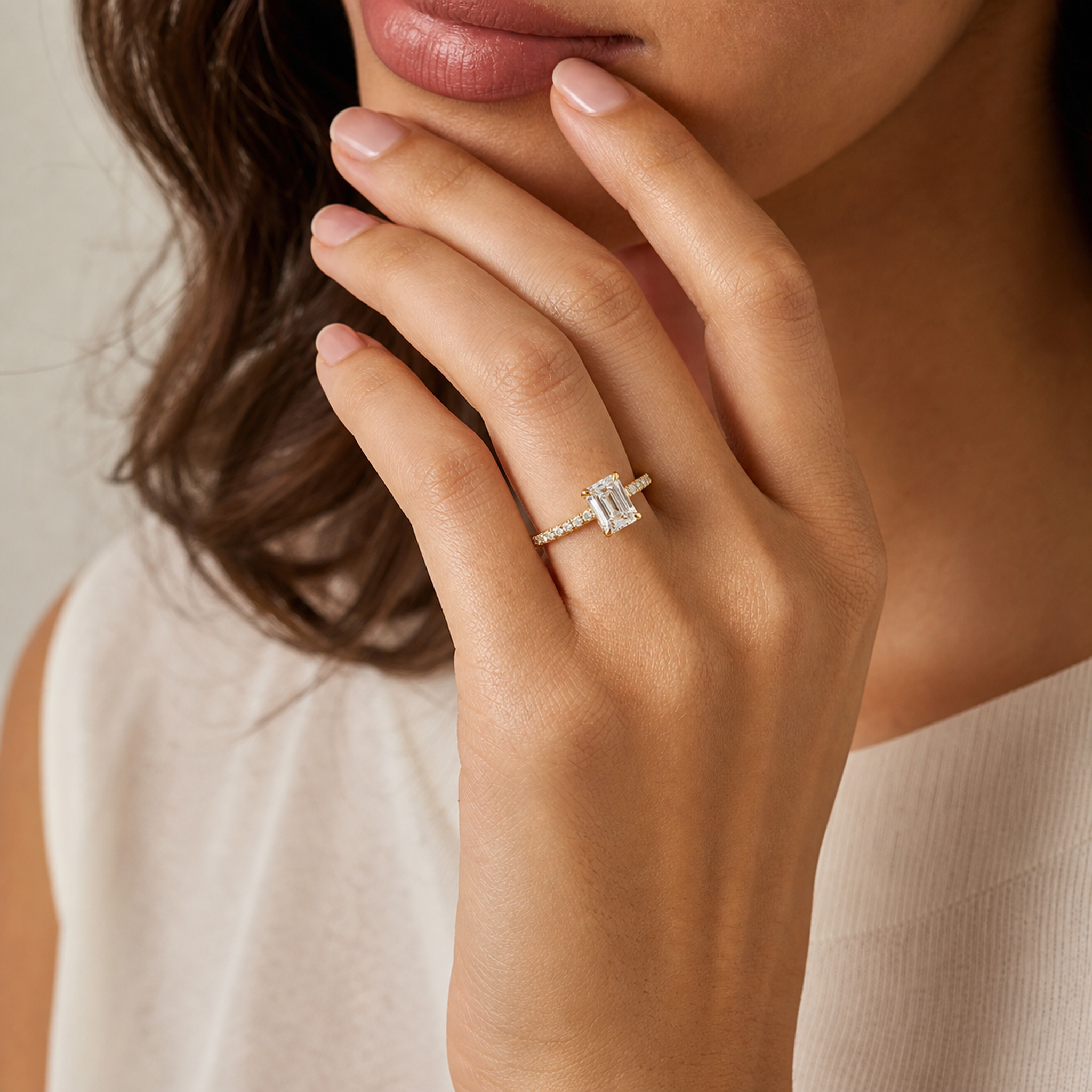


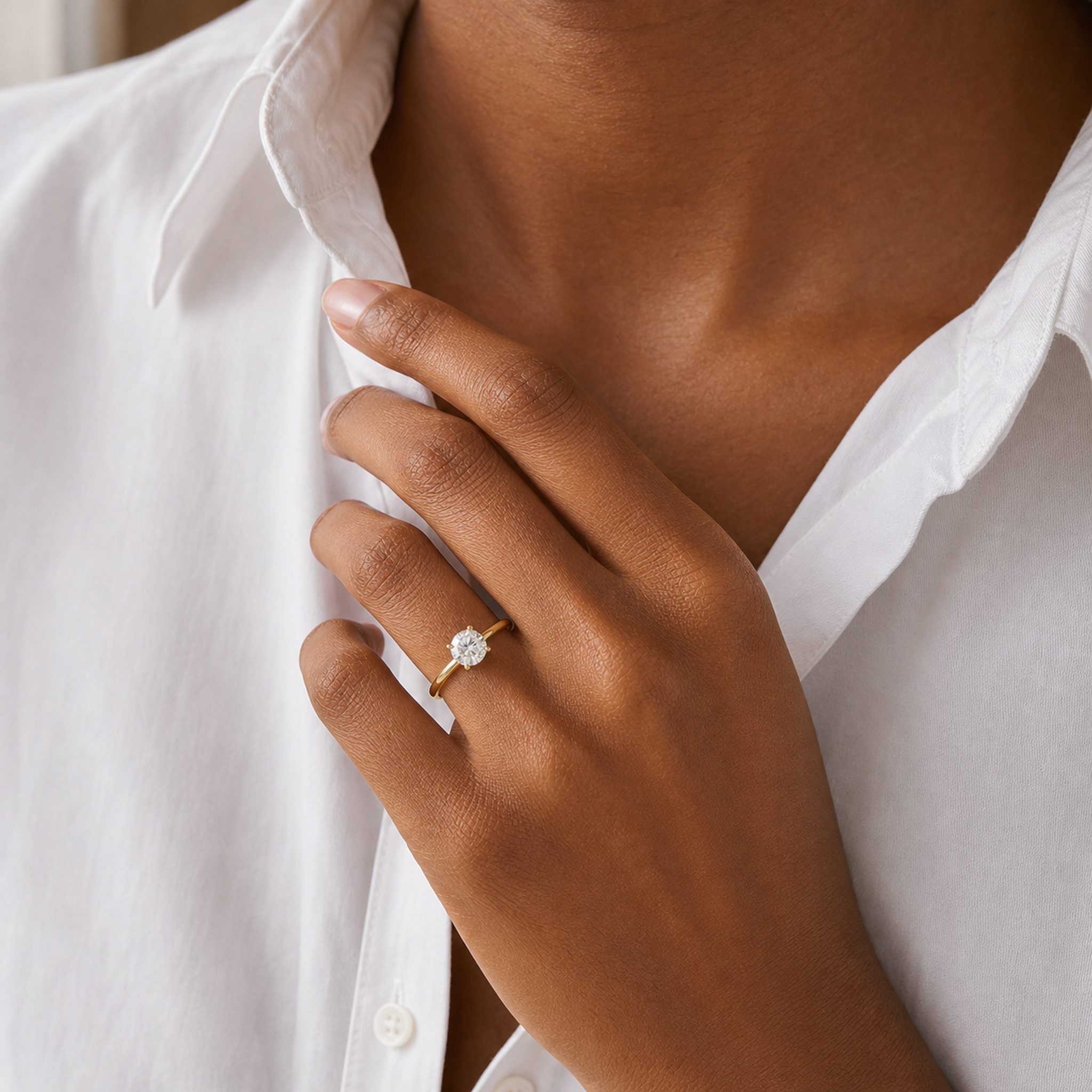


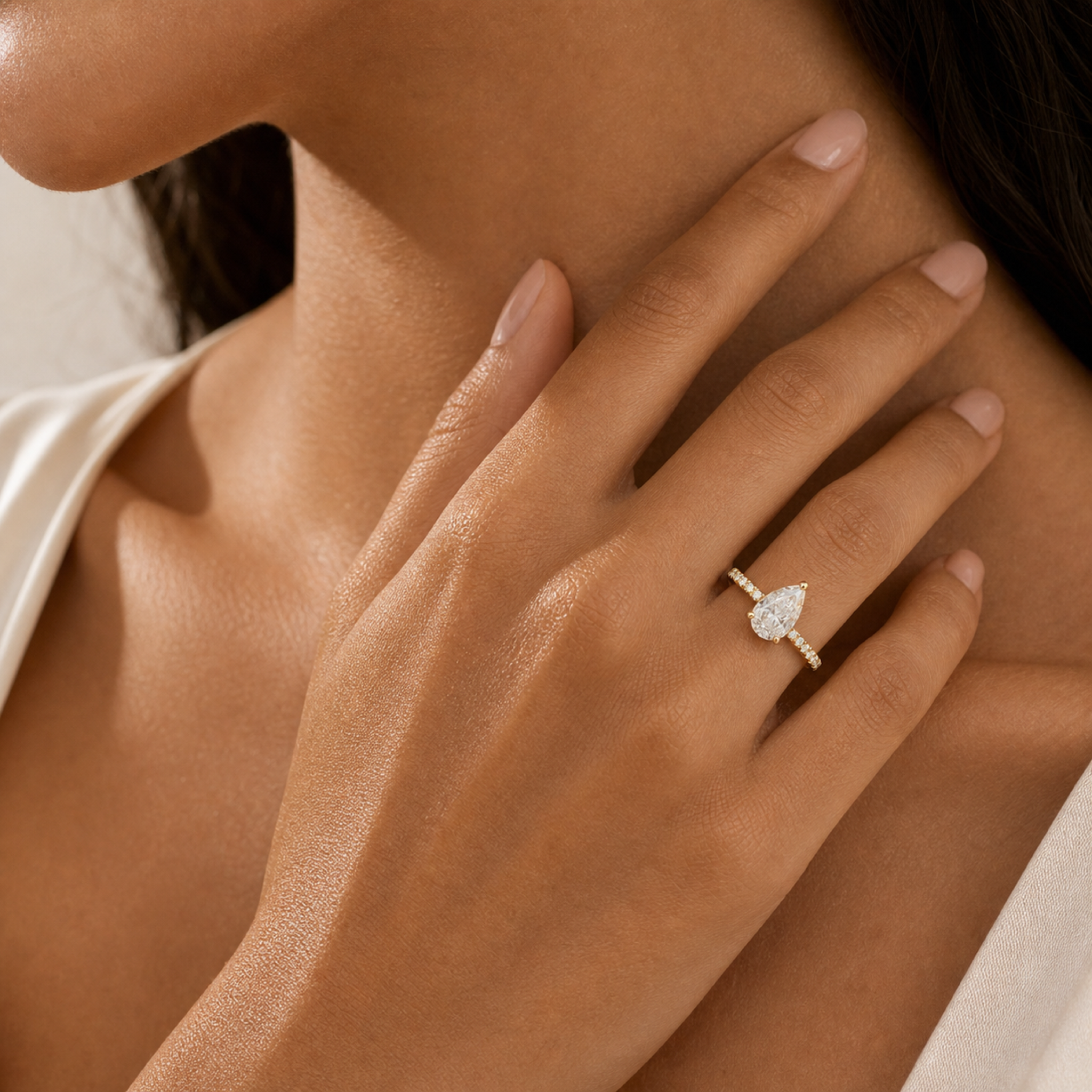


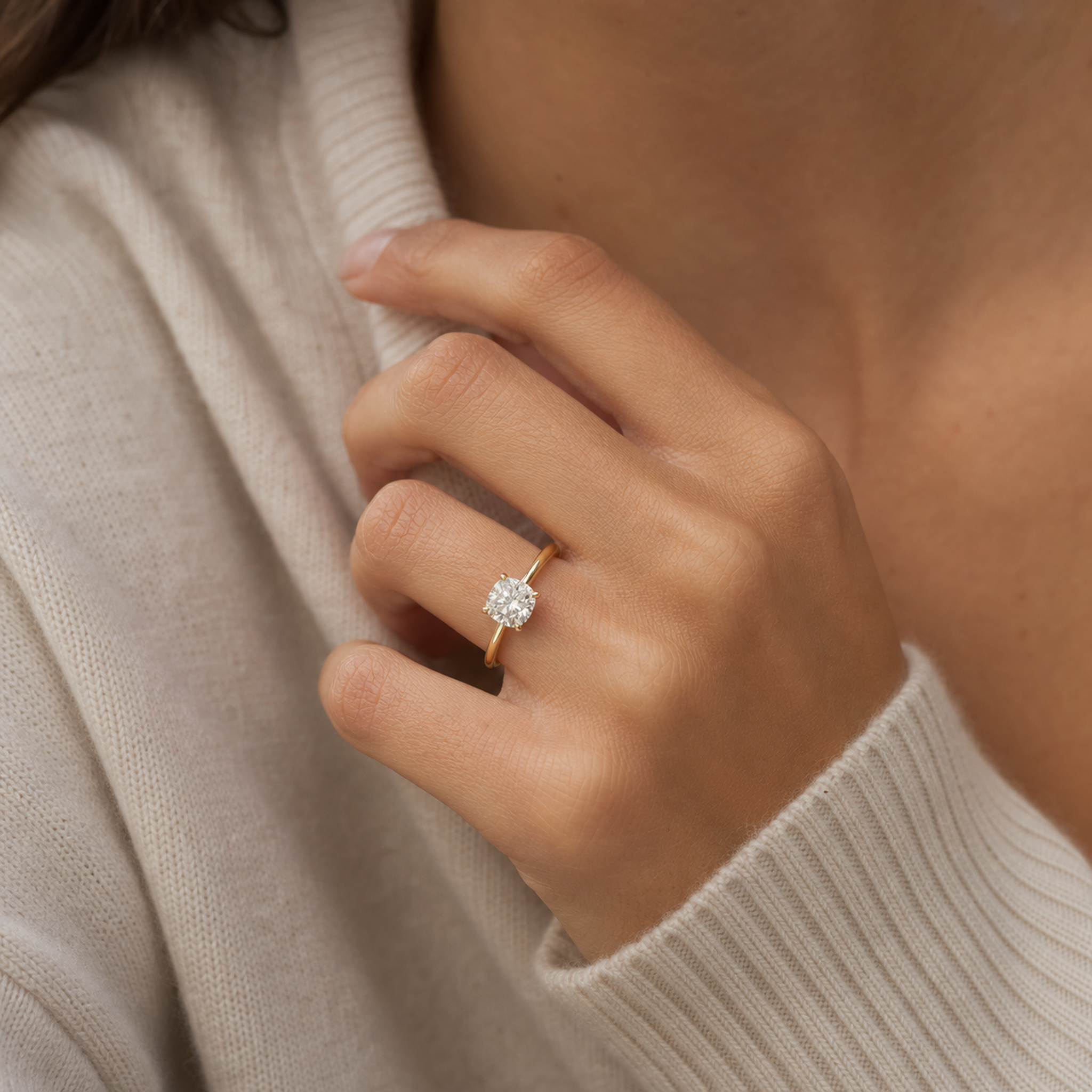


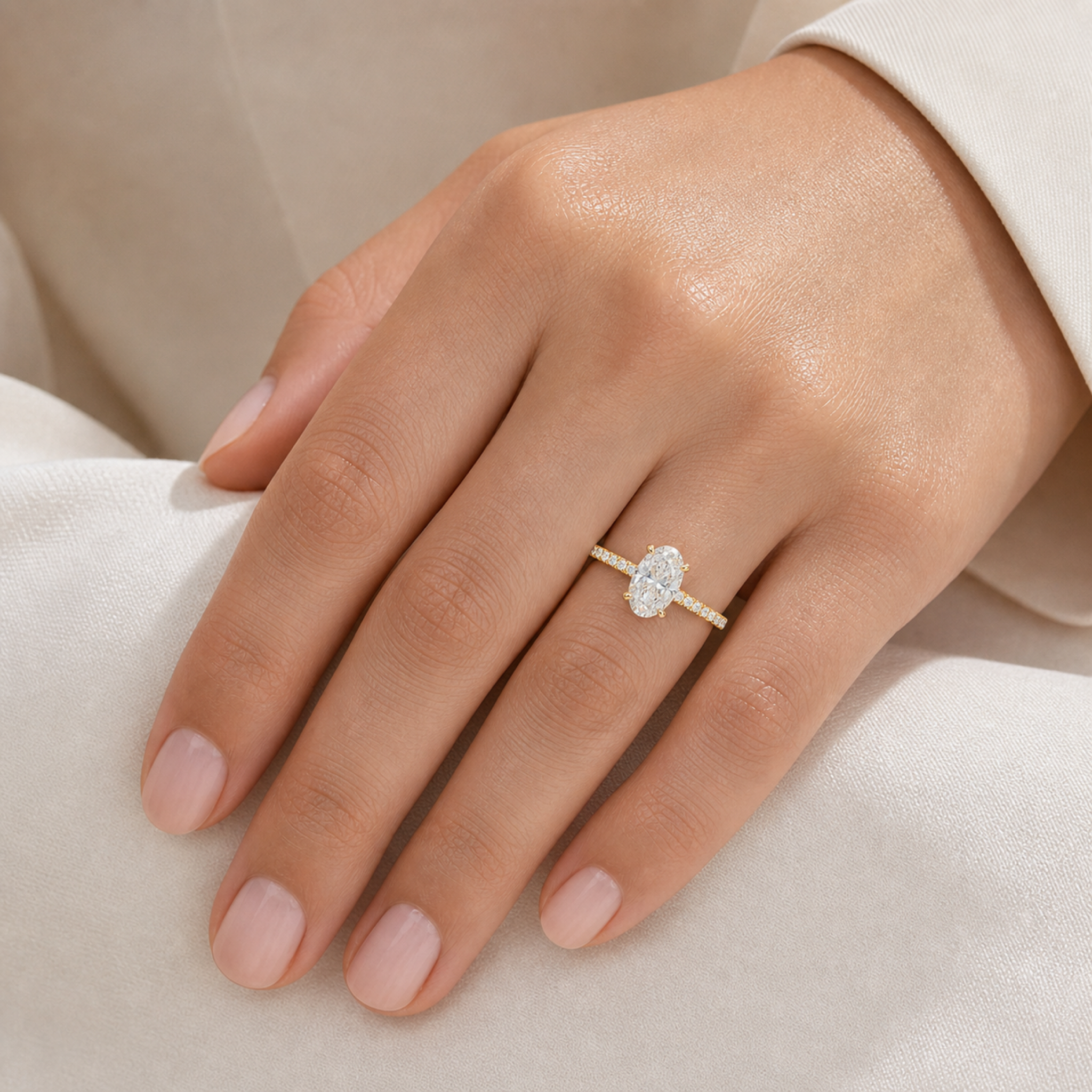


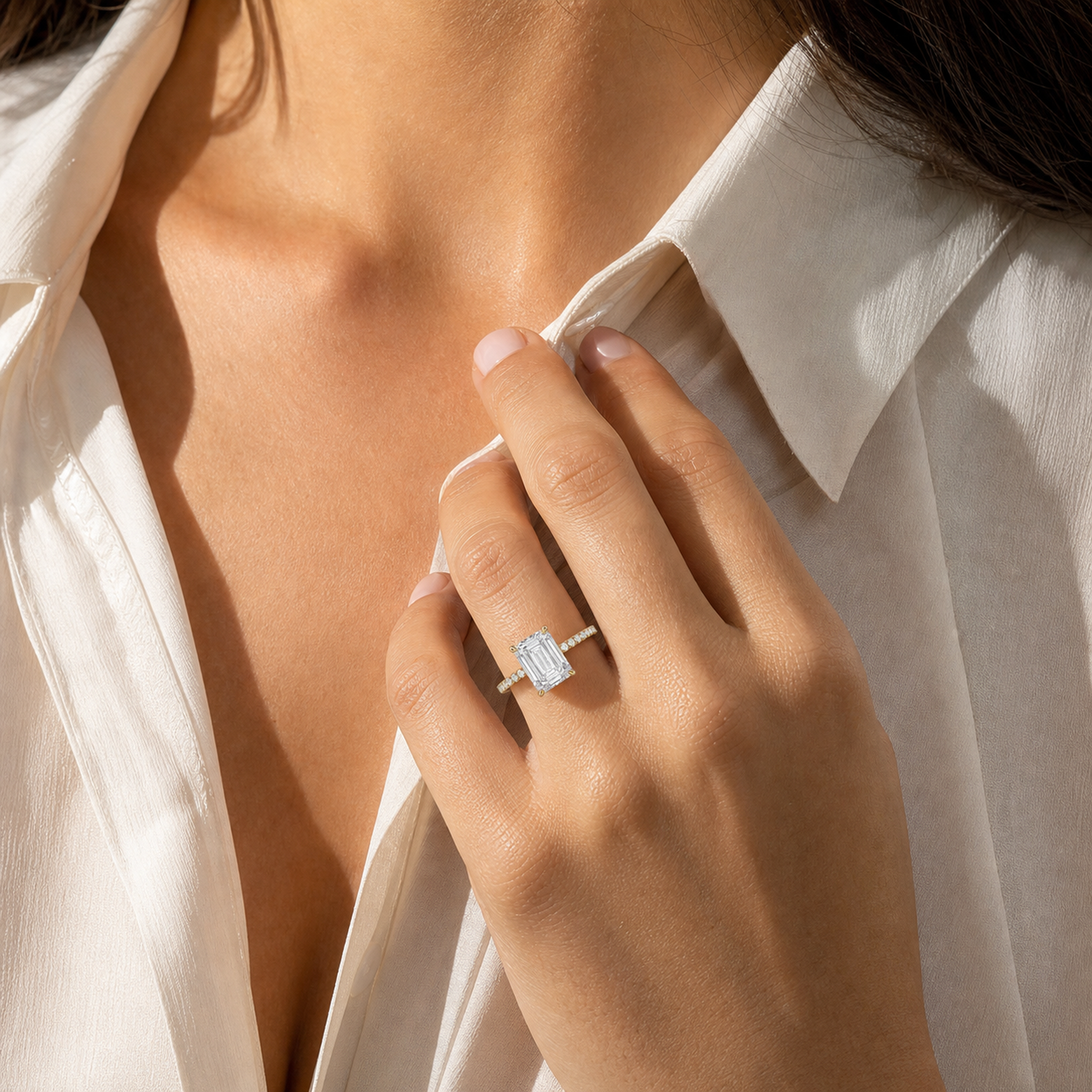


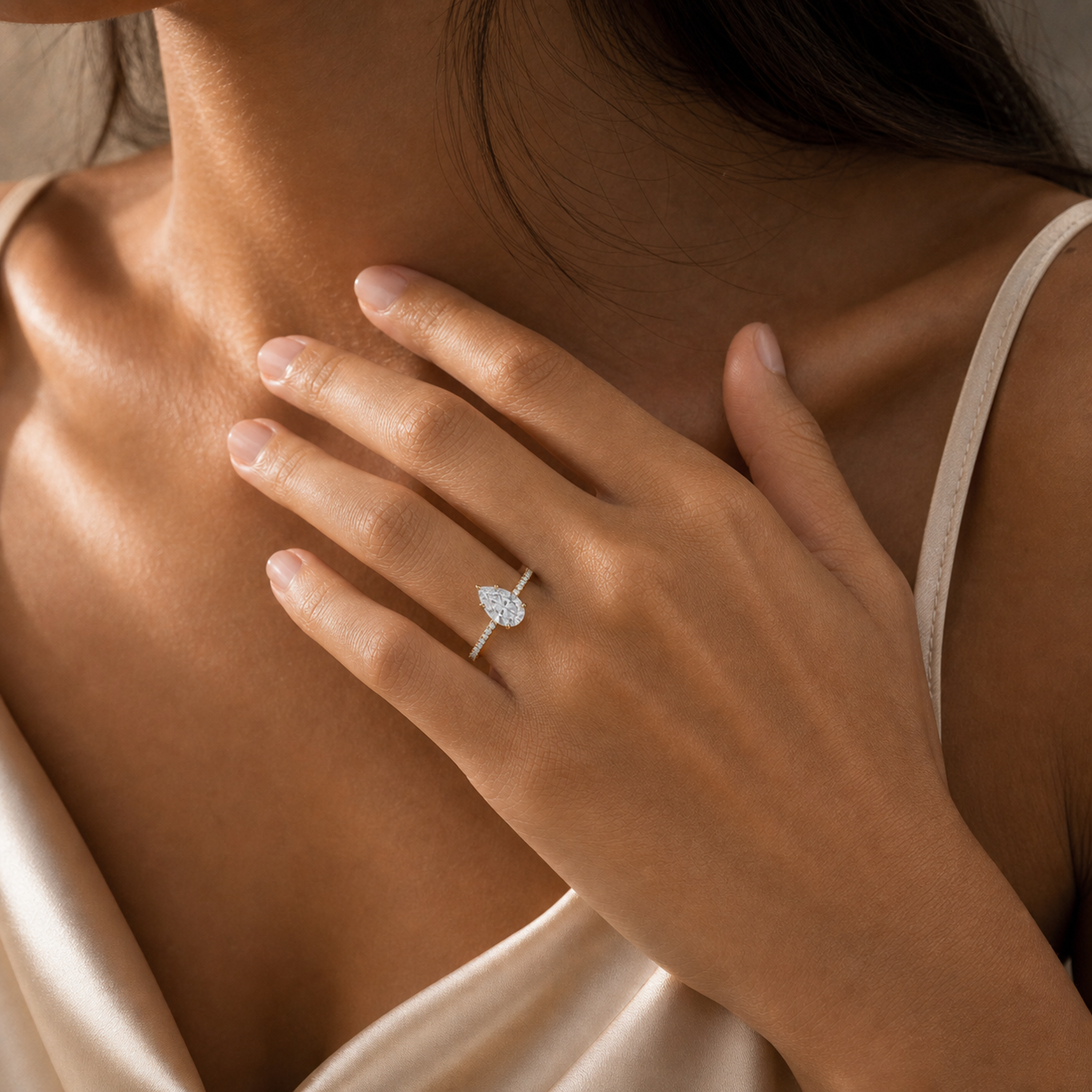


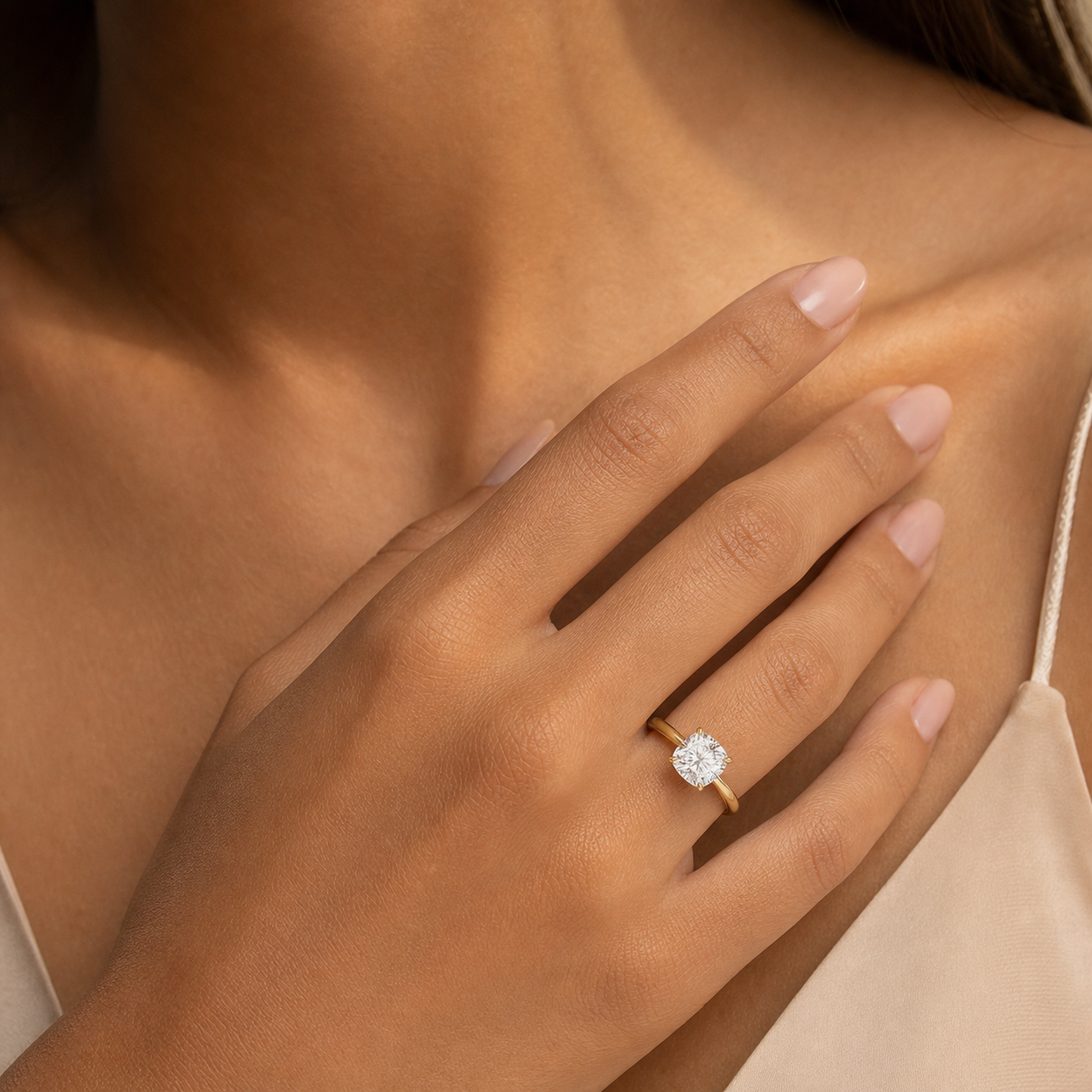

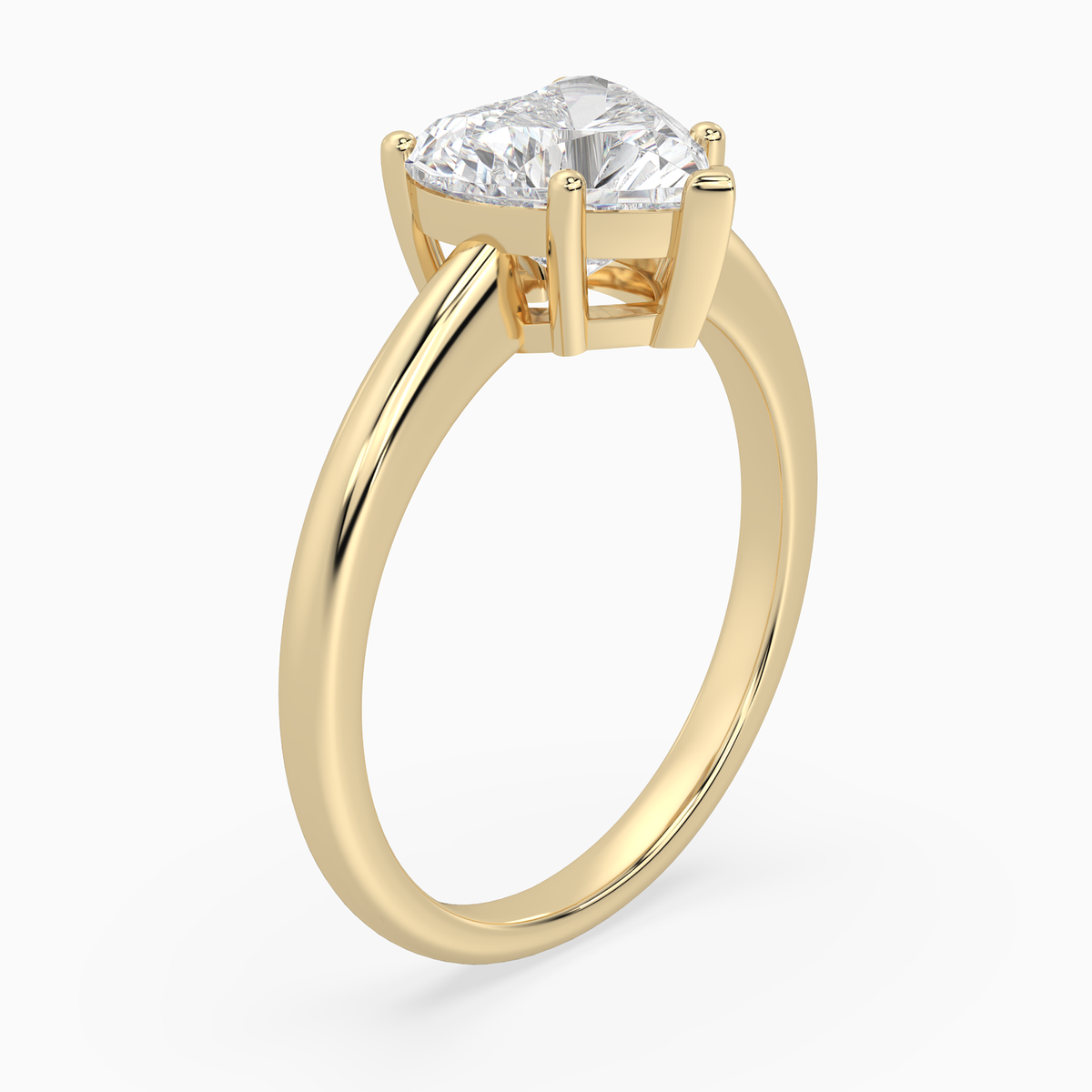


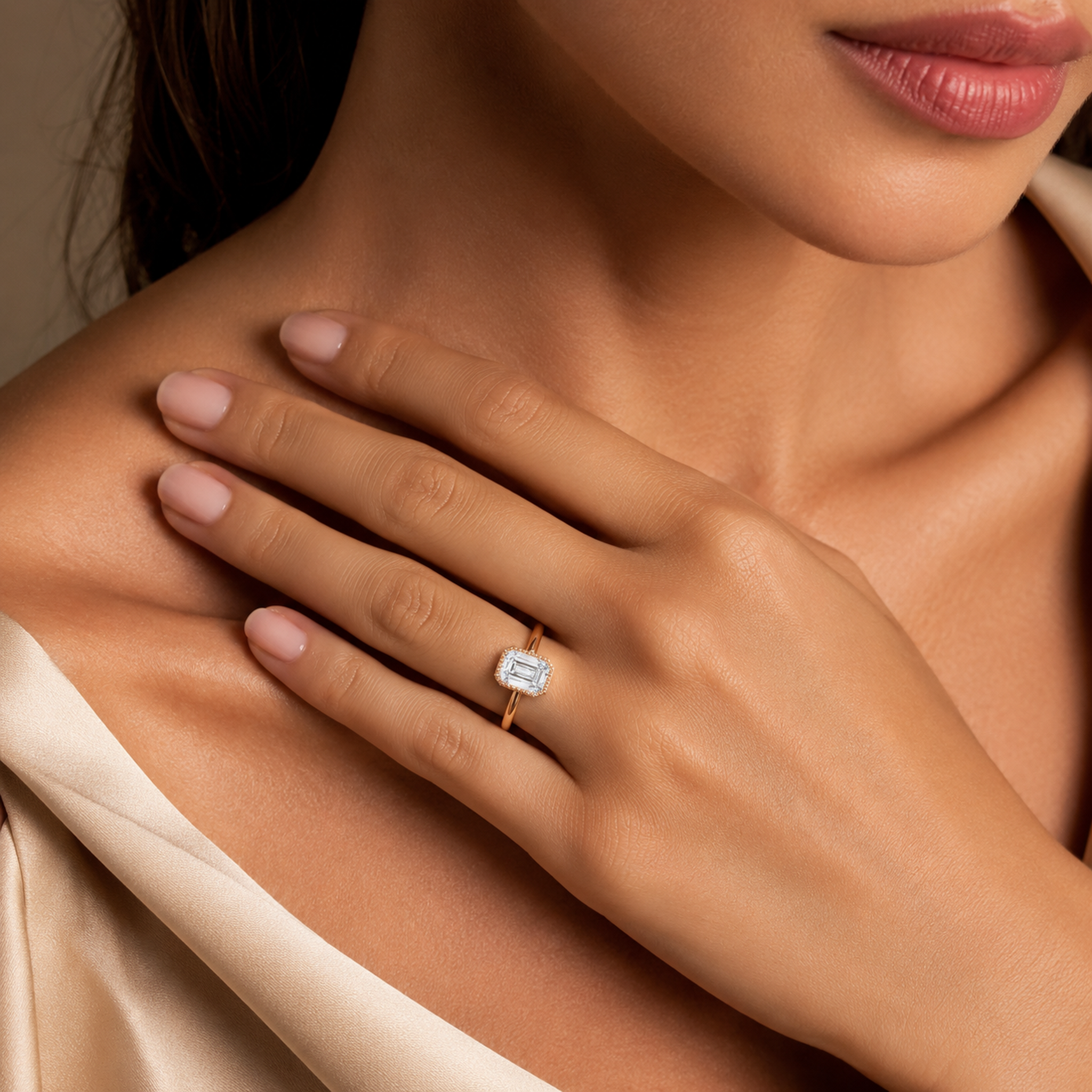


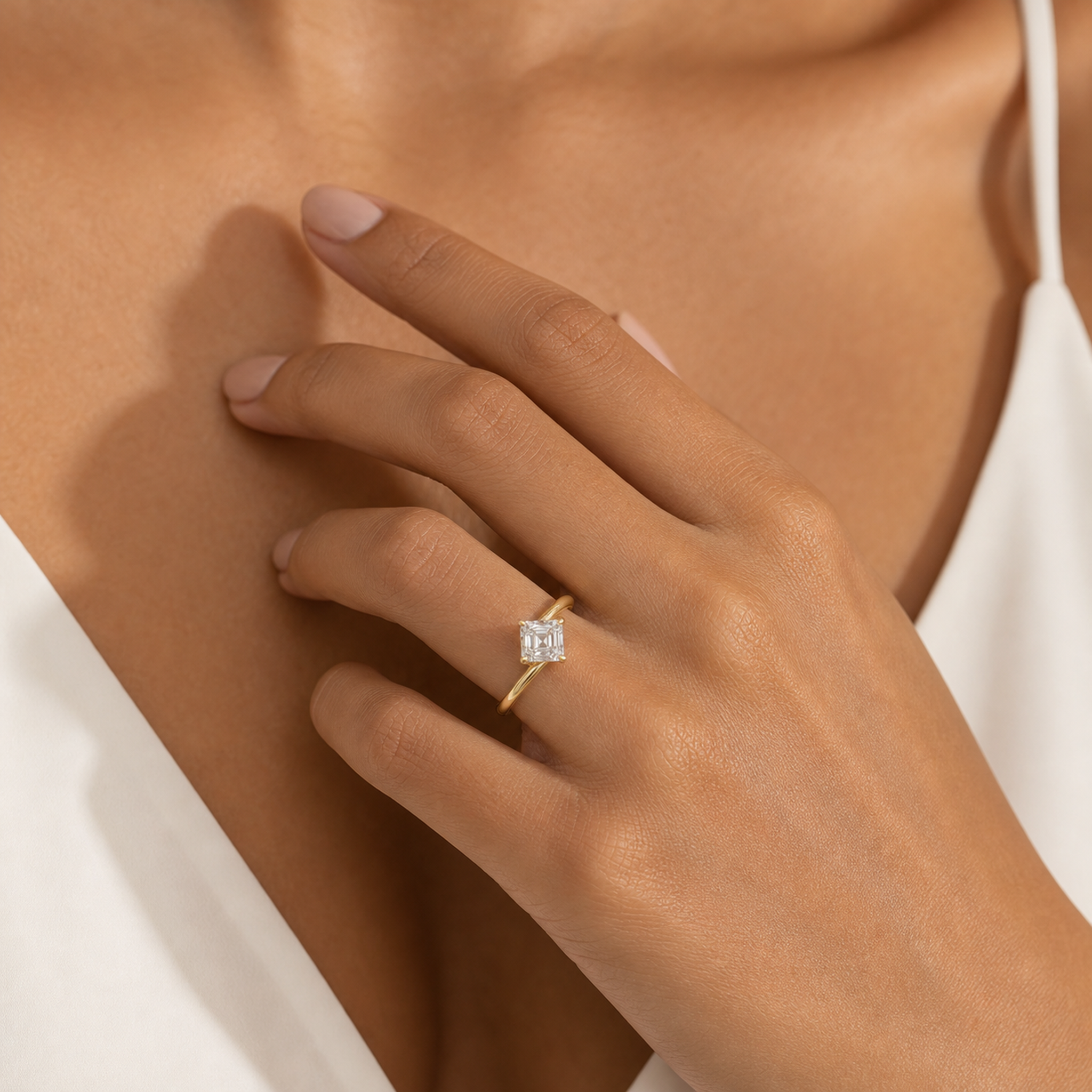


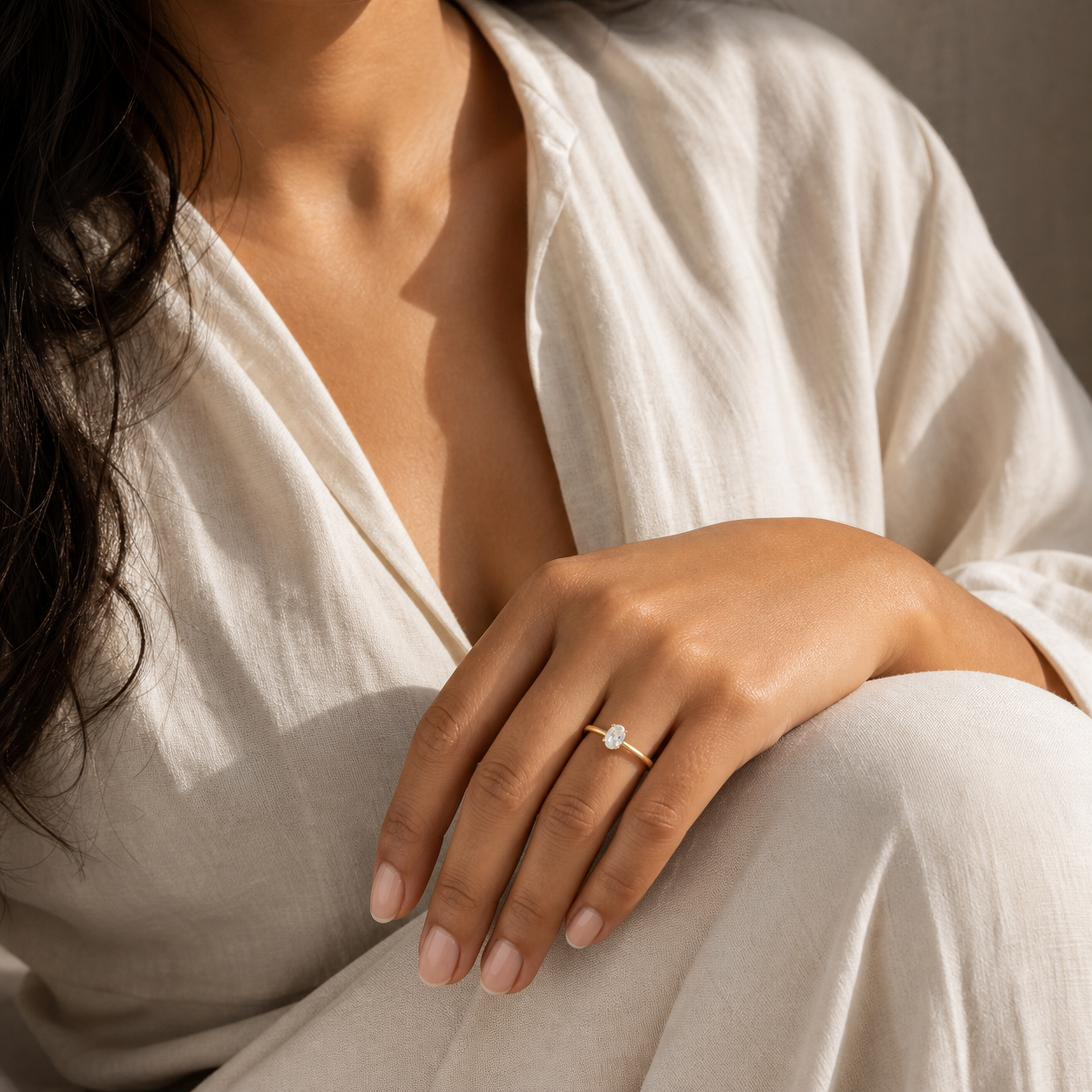


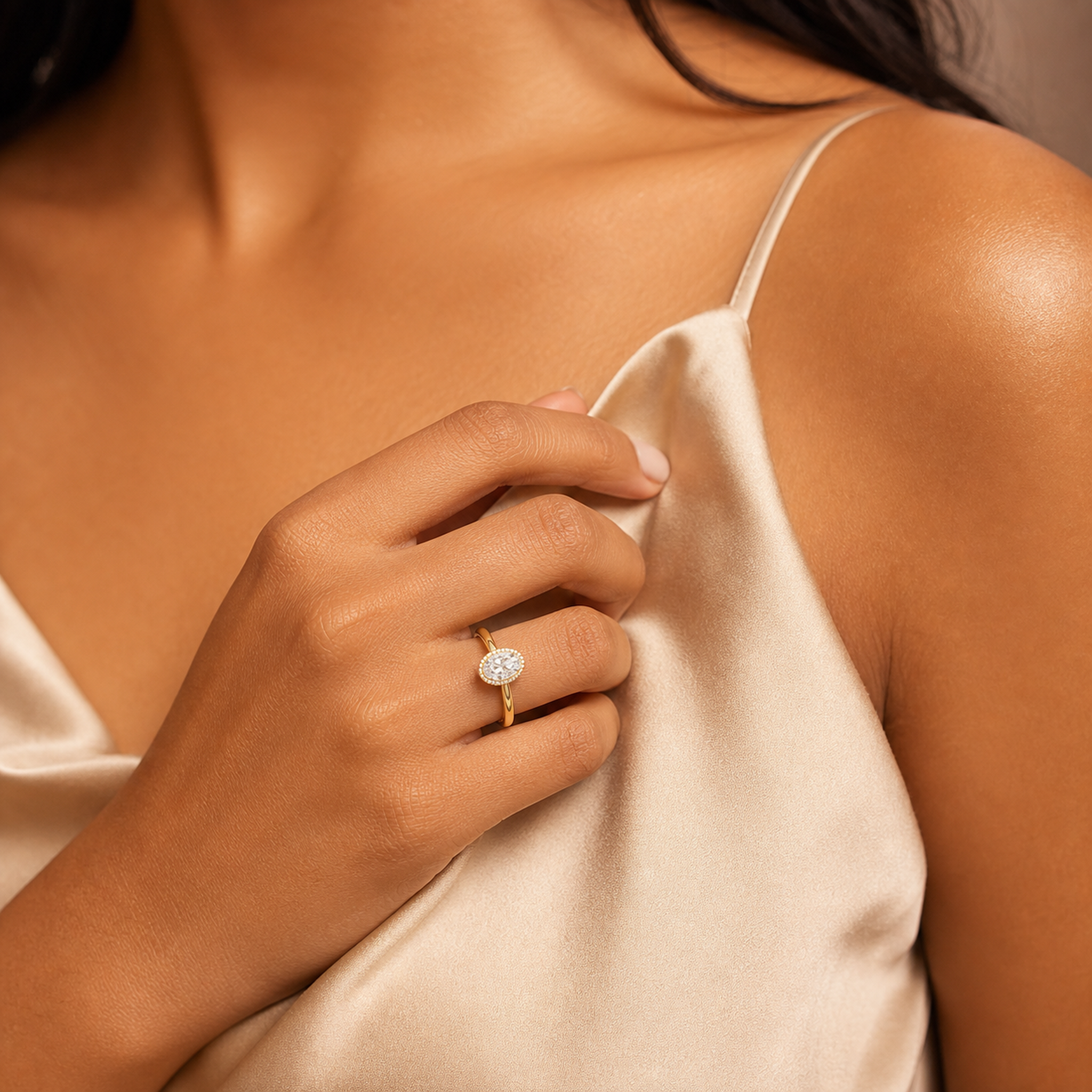


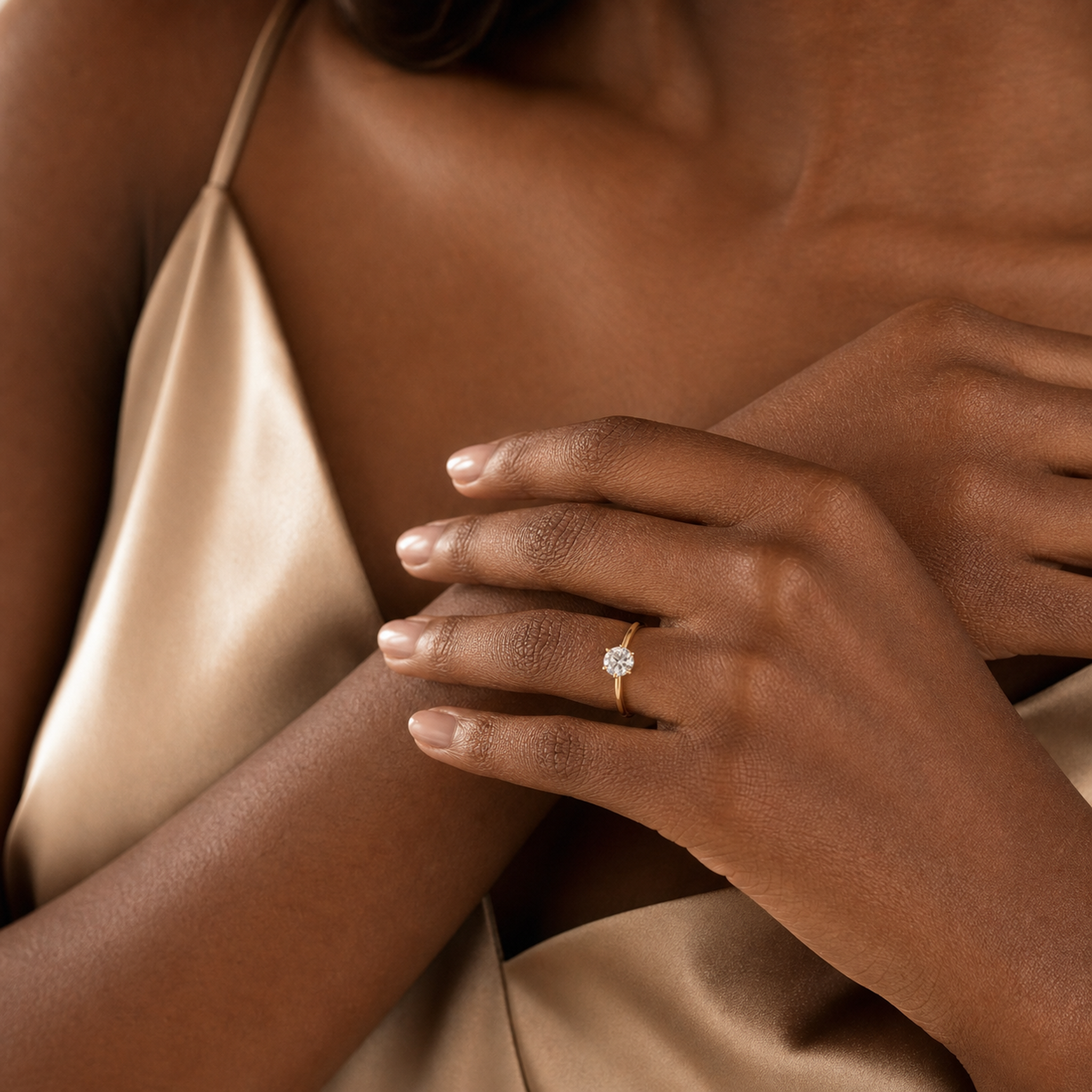







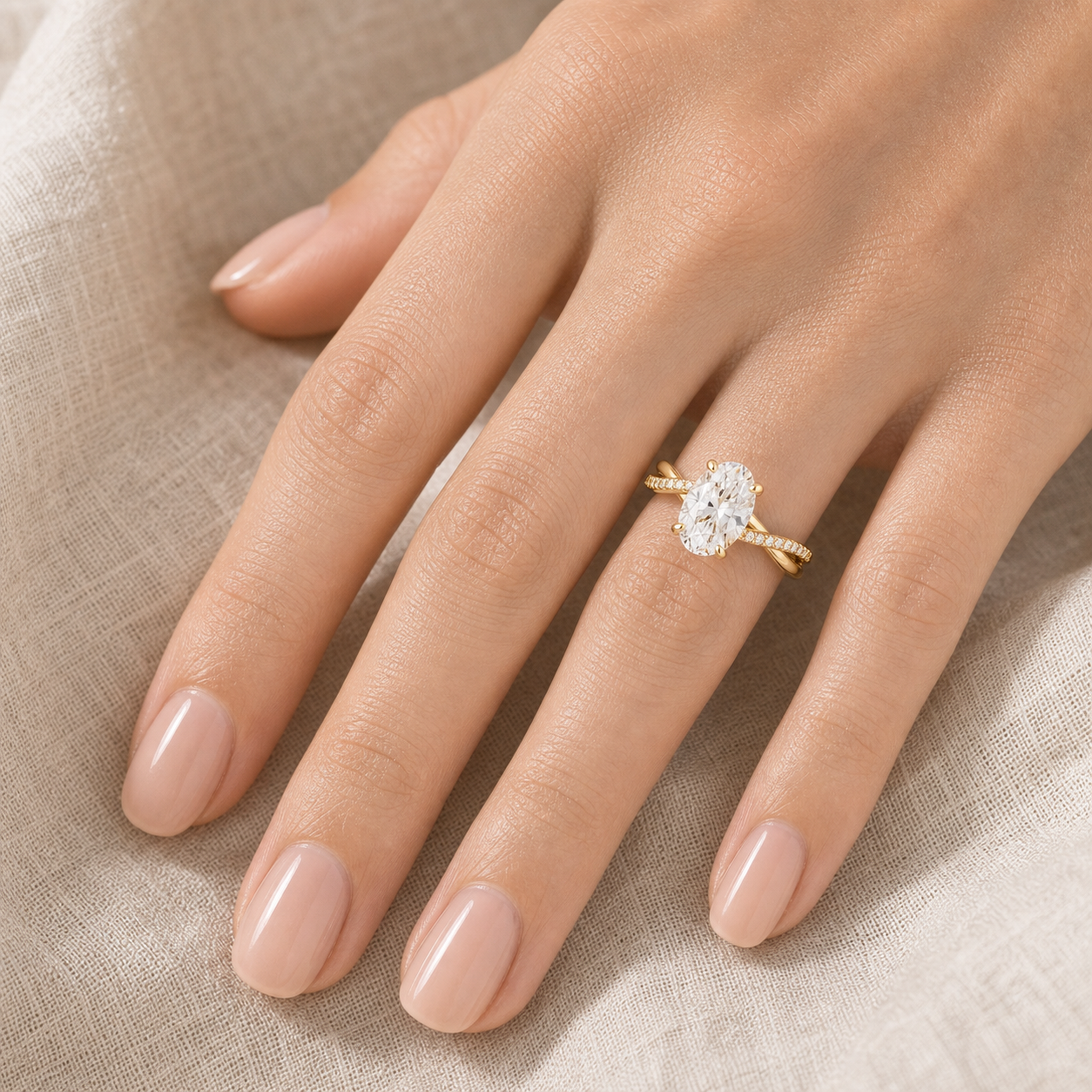


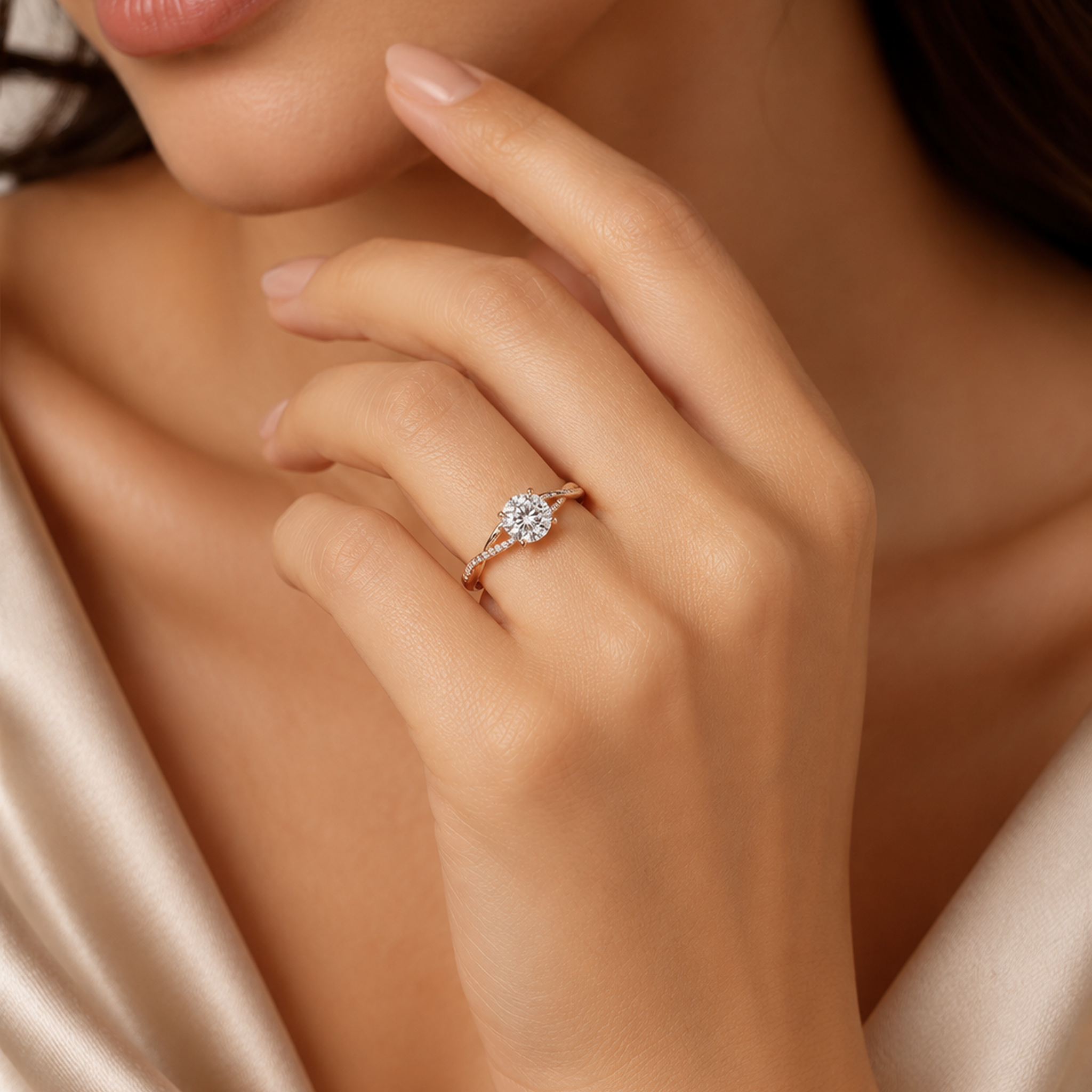
14K Yellow Gold Solitaire Engagement Rings: Warmth With a Clear Edge
Yellow Gold gives a solitaire an immediately legible boundary. One center diamond leads, while the band, prongs, basket, or bezel draw a warm line around it. The result can be restrained without becoming visually neutral: the metal remains present, and its placement changes how the center is read from above and from the side.
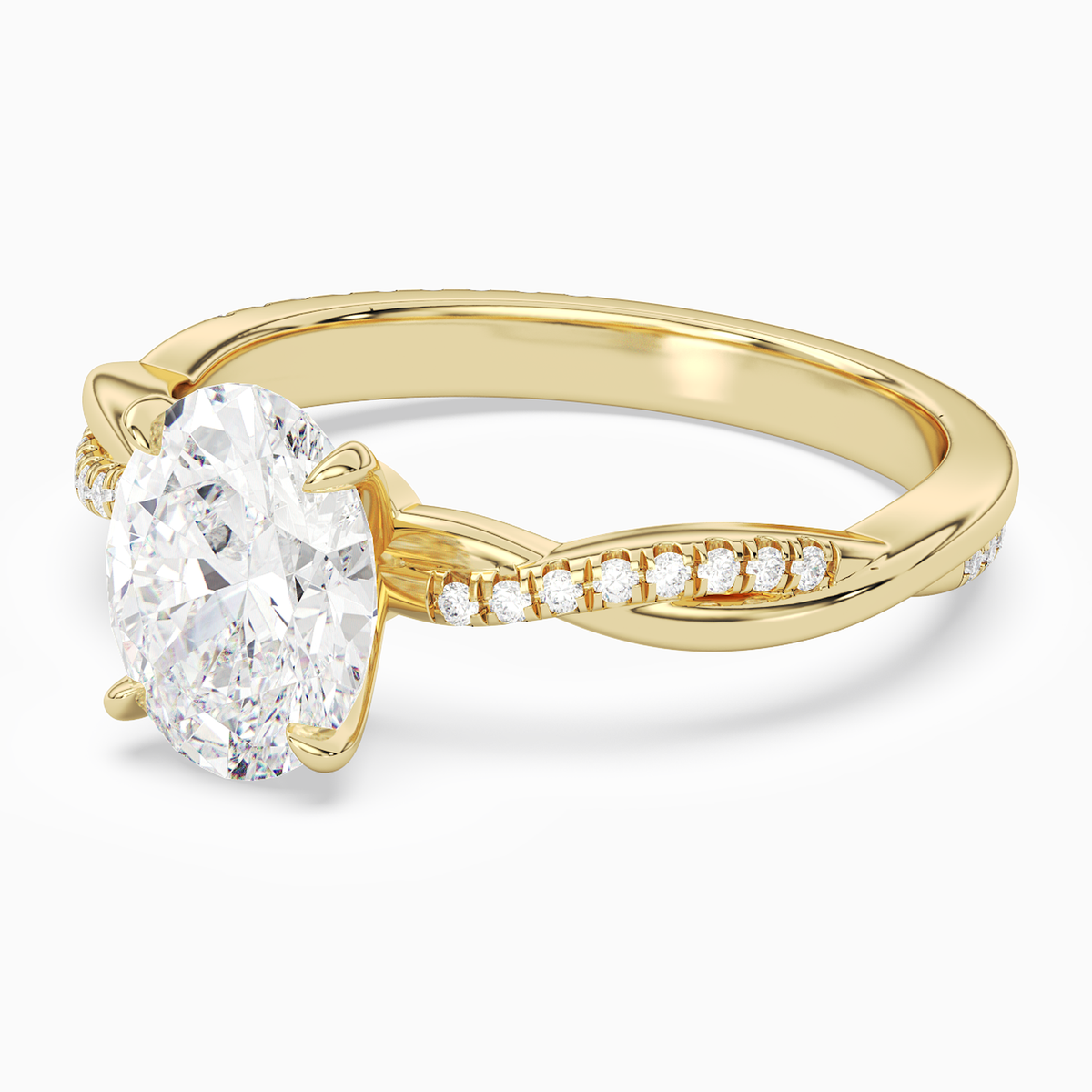
The current Burvonti collection contains 19 verified 14K Yellow Gold rings. Open baskets, hidden halos, pavé structures, cathedral shoulders, knife-edge bands, milgrain bezels, bypass compositions, and vine-like lines create different degrees of golden visibility. The shared principle is not plainness; it is a clear hierarchy in which the setting has character without displacing the center stone.
A Gold Context, Not a Quality Shortcut
A 14K gold alloy contains approximately 58.3% gold. The remaining alloying metals influence color, working behavior, and the final material specification. That composition fact is useful, but it does not guarantee one exact shade, hardness, scratch resistance, sensitivity outcome, or maintenance pattern across every ring.
Yellow Gold can appear richer where more metal is visible and quieter where only fine prongs meet the diamond. Polish, texture, lighting, and photography also change its apparent saturation. Compare the ring as a complete object: a narrow polished band and a broader milgrain bezel may share a karat while presenting the material very differently.
Prong, Bezel, and Basket Set the Amount of Gold
Fine prongs punctuate the center outline rather than enclosing it. A bezel gives Yellow Gold a continuous perimeter and makes the metal part of the face-up geometry. Cathedral shoulders extend the warm line toward the center; an open basket leaves more visual air below it. A hidden halo or pavé basket adds detail chiefly in profile, preserving a calmer view from above.
These structures also change practical questions such as height, contact with a wedding band, exposed edges, and cleaning access. None should be reduced to a universal promise of security, comfort, or low maintenance. The selected design and its specifications must carry those answers.
Shape Gives the Warm Frame Its Rhythm
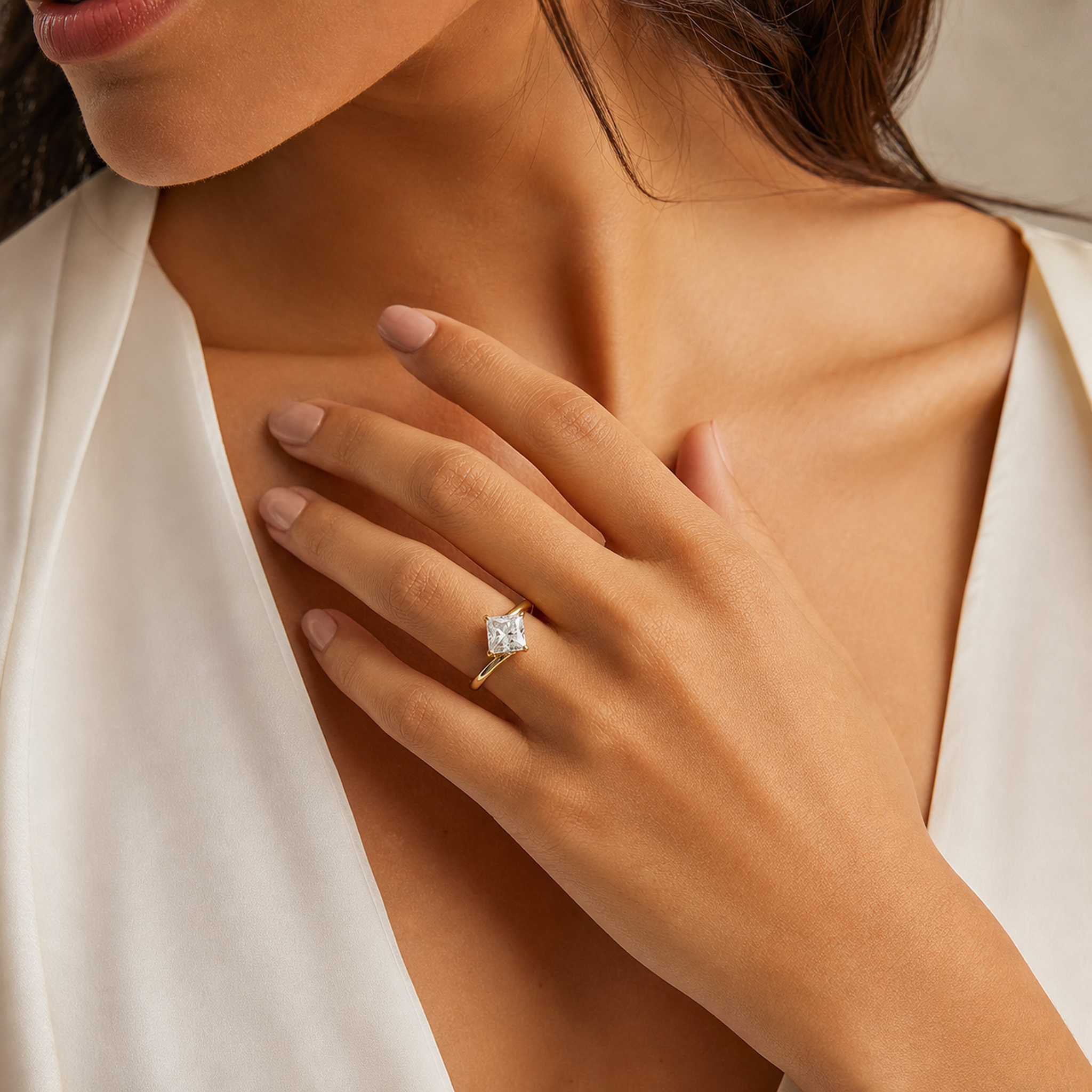
Round and cushion centers build a compact focal point. Oval and pear shapes extend the eye along the hand, while emerald and Asscher cuts place more emphasis on ordered geometry and corner treatment. Princess and heart shapes bring points or clefts that make prong position especially visible. The collection represents all of these outlines.
A setting may attract attention first, followed by a comparison of the shapes offered within it; a favored shape may equally lead to several compatible architectures. Burvonti does not need a fixed setting-then-diamond purchasing sequence to support either path. The useful decision is whether shape, head, band, and profile feel resolved together.
14K and 18K Yellow Gold Should Not Become a Ranking
The reliable distinction is gold content: approximately 58.3% in 14K and 75% in 18K. Depending on alloy and finish, 18K may present a richer yellow field, while 14K may read slightly more tempered. That is a comparison to make on the actual products, not a universal visual law and not evidence that one karat is automatically better.
White Gold reduces the color boundary around a bright center; Rose Gold shifts that boundary toward blush. None changes the diamond's grade or light performance. Metal choice is about the relationship among color, visible structure, physical feel, care, design, and budget—not a claim that one setting makes every diamond more brilliant.
Build the Pairing Around the Whole Profile
A Yellow Gold wedding band can continue the warm line, while another color can create contrast. Karat matching alone does not determine whether two rings belong together. Look at basket width, cathedral rise, bezel edge, hidden-halo position, band thickness, stone placement, and the points at which the rings meet.
Burvonti pairs responsibly sourced, independently graded lab-grown diamonds with settings considered through proportion and human judgment. Custom possibilities may refine shape, orientation, engraving, band dimension, metal, or selected setting details when structurally feasible. The goal is a solitaire in which the warmth has a precise role, not simply a familiar label.
Frequently Asked Questions
How is this page different from the main 14K Yellow Gold Engagement Rings Collection?
The main metal page covers 14K Yellow Gold across many engagement-ring styles. This child page is limited to rings led by one center diamond and examines how golden prongs, baskets, bezels, bands, and profiles shape a solitaire.
How much gold is in 14K Yellow Gold?
A 14K alloy contains 14 parts gold out of 24, approximately 58.3%. The remaining material consists of alloying metals whose exact recipe varies by product.
Does all 14K Yellow Gold have the same color?
No. Alloy formula, polish or texture, lighting, photography, and the amount of visible metal can change how the yellow tone reads. Confirm the selected ring rather than assuming a universal shade.
Does Yellow Gold make a lab-grown diamond look warmer?
It can create a warm visual boundary, especially where the metal is close to the stone, but it does not alter the diamond's color grade. The effect also depends on setting, shape, lighting, and perception.
Which center shapes appear in the current collection?
The public assortment includes round, oval, cushion, pear, emerald, princess, Asscher, and heart shapes. Compare each within its complete prong, bezel, basket, band, and profile.
Can a Yellow Gold solitaire include a hidden halo?
Yes. A hidden halo or pavé basket can add secondary detail beneath the center while one diamond still governs the face-up composition.
What is the difference between a prong and bezel solitaire in Yellow Gold?
Prongs create separate points of metal around the center. A bezel creates a more continuous perimeter, so Yellow Gold becomes more visually prominent. Exact height, edge exposure, and care depend on the design.
Is 14K Yellow Gold better for daily wear than 18K?
There is no universal better choice. Karat changes gold content, while exact alloy, dimensions, construction, finish, habits, and the forces a ring encounters all affect wear.
Will 14K Yellow Gold scratch?
Yes, its surface can collect marks with wear. No gold finish is scratch-proof. Cleaning, inspection, polishing, or refinishing should follow the actual ring and the appearance its wearer prefers.
Can 14K Yellow Gold cause metal sensitivity?
Sensitivity depends on the exact alloy and the individual. Karat and color alone cannot establish a hypoallergenic outcome, so request product-specific composition when needed.
Should I pair it with a 14K Yellow Gold wedding band?
A matching band creates color continuity, but another metal can work deliberately. Profile, contact points, stone placement, finish, and product-specific wear matter as much as color.
Can Burvonti customize a 14K yellow gold solitaire?
Custom possibilities may include shape, orientation, band proportion, engraving, metal, or selected setting details. Availability and structural feasibility must be confirmed for the chosen design.