
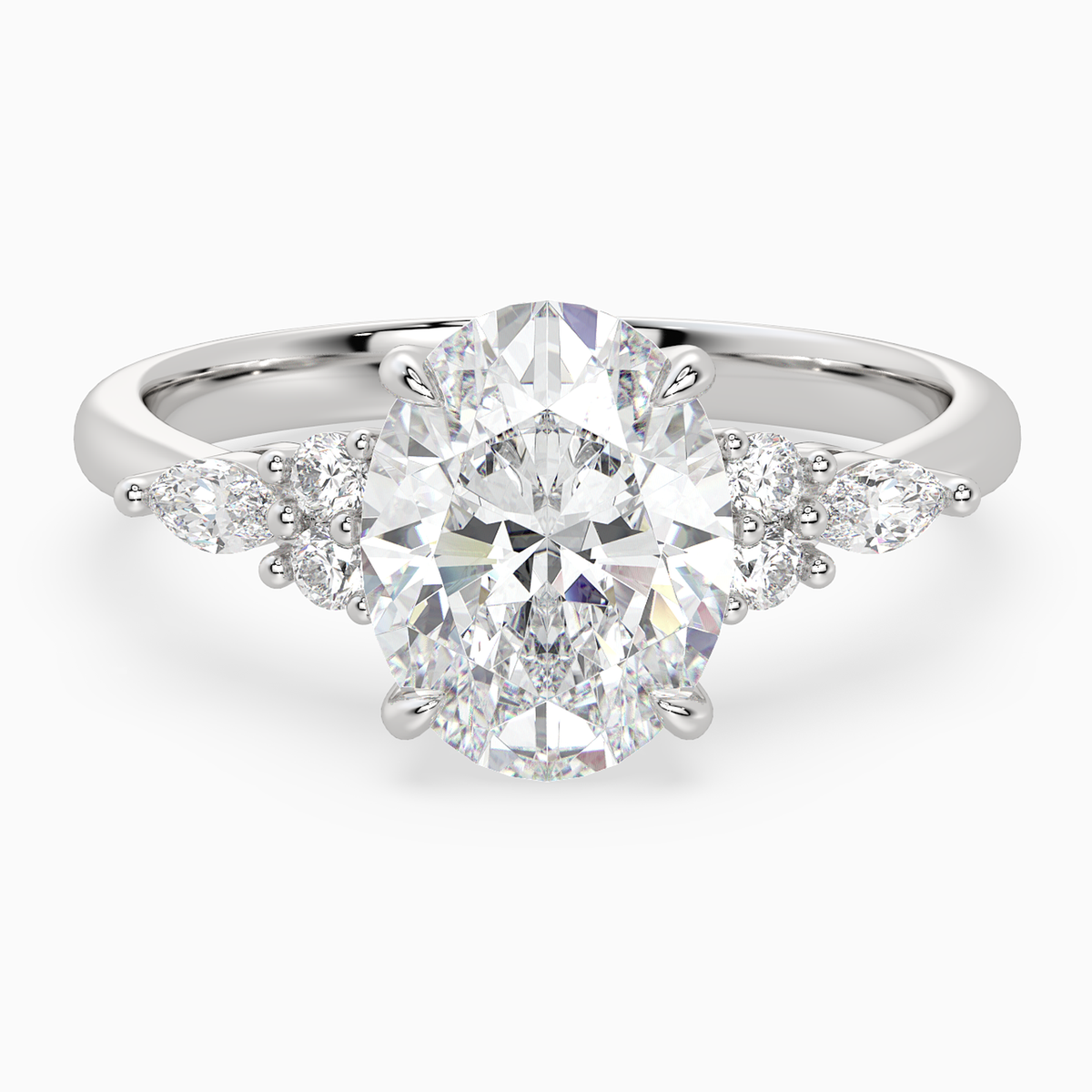


Solitaire Engagement Rings in 18K White Gold
Quiet in color, exact in proportion. With 75% gold, 18K white gold gives prong and band a measured presence around one center stone.


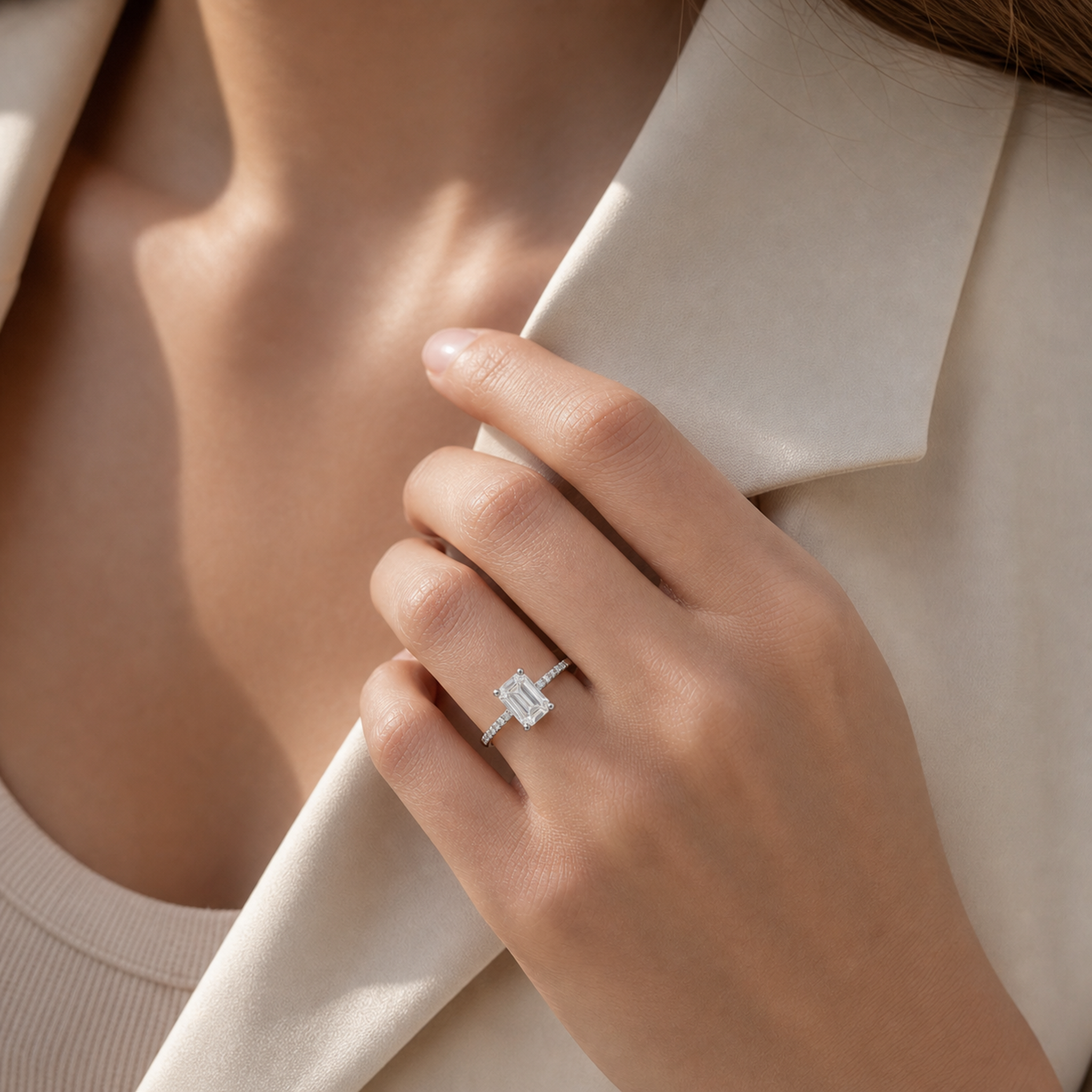


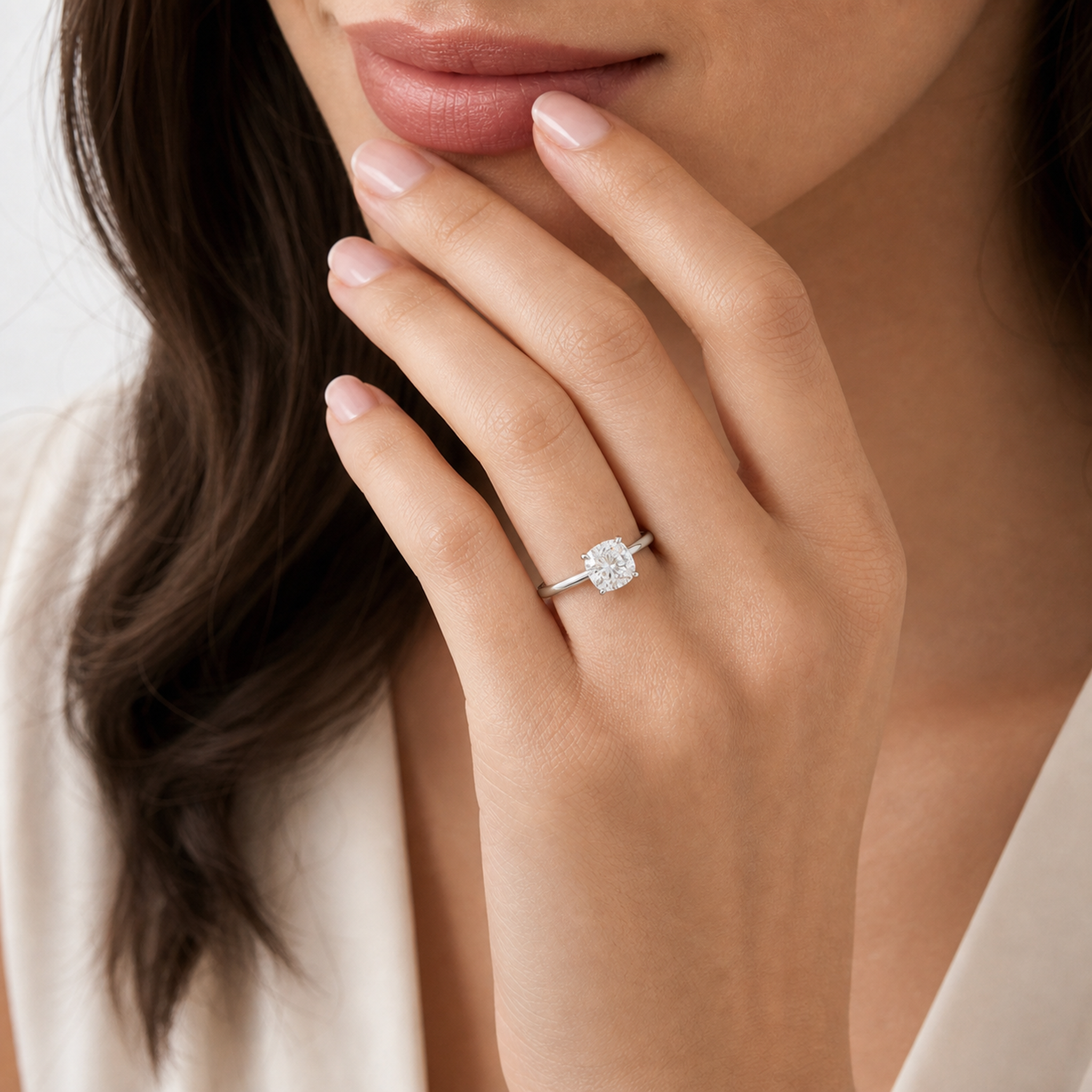


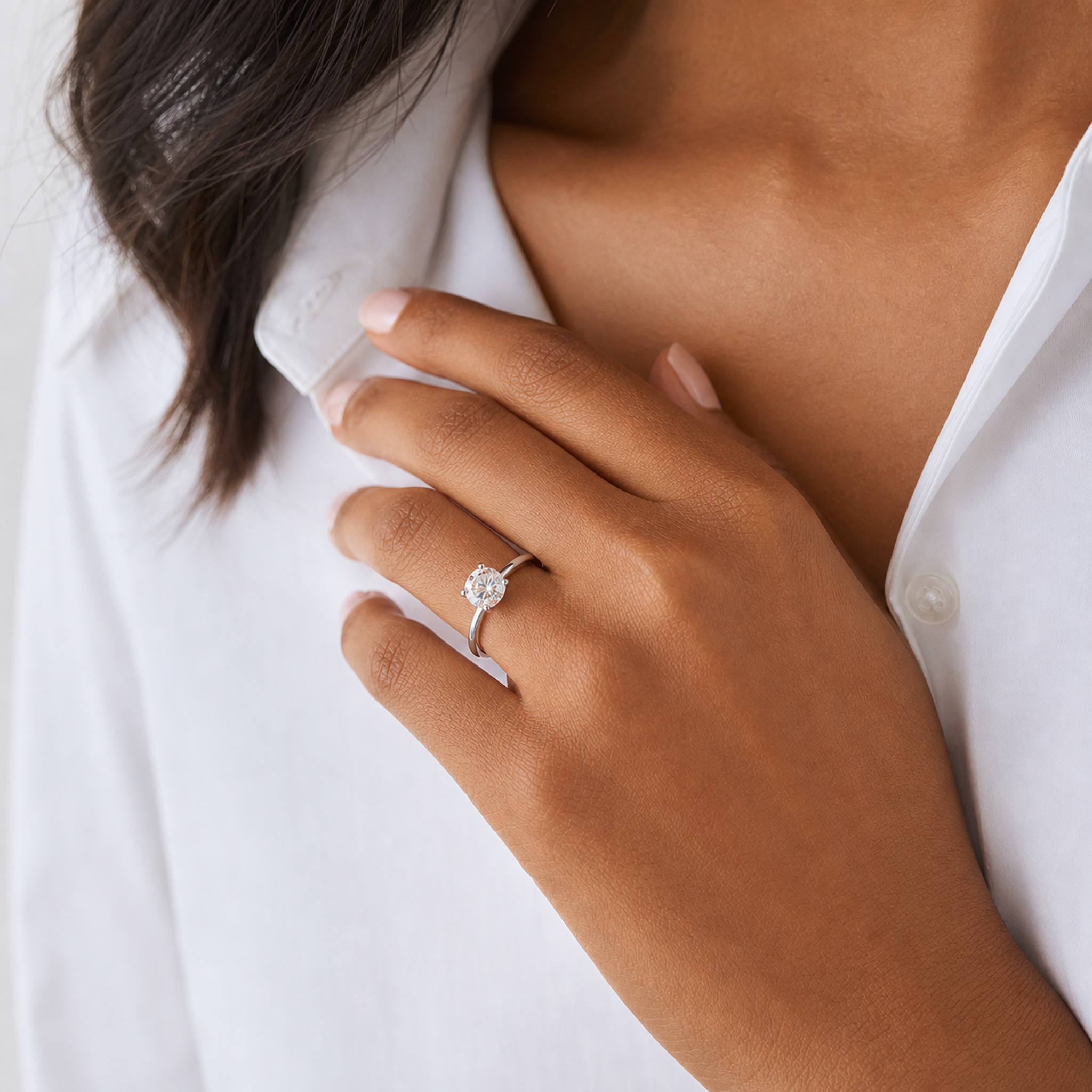


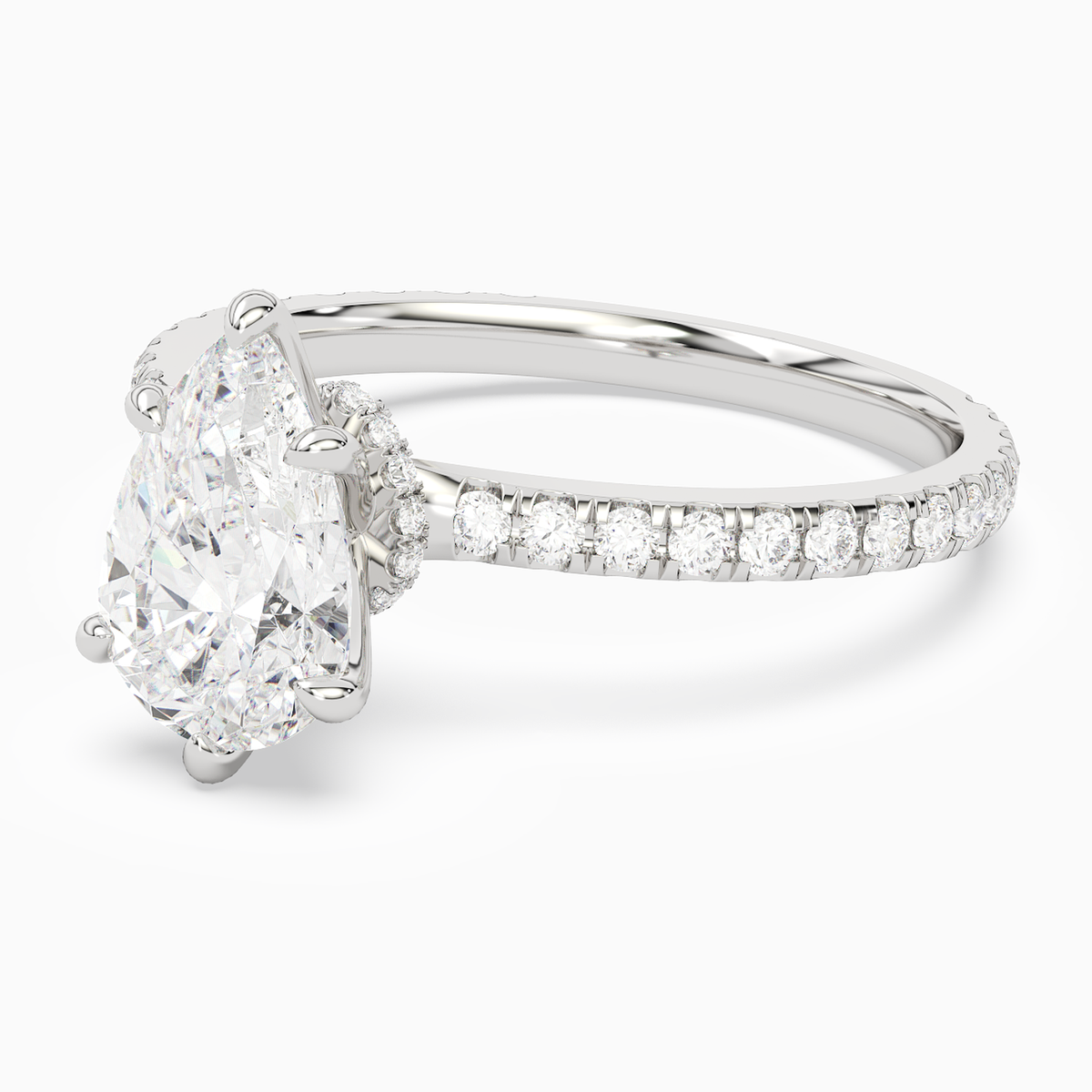
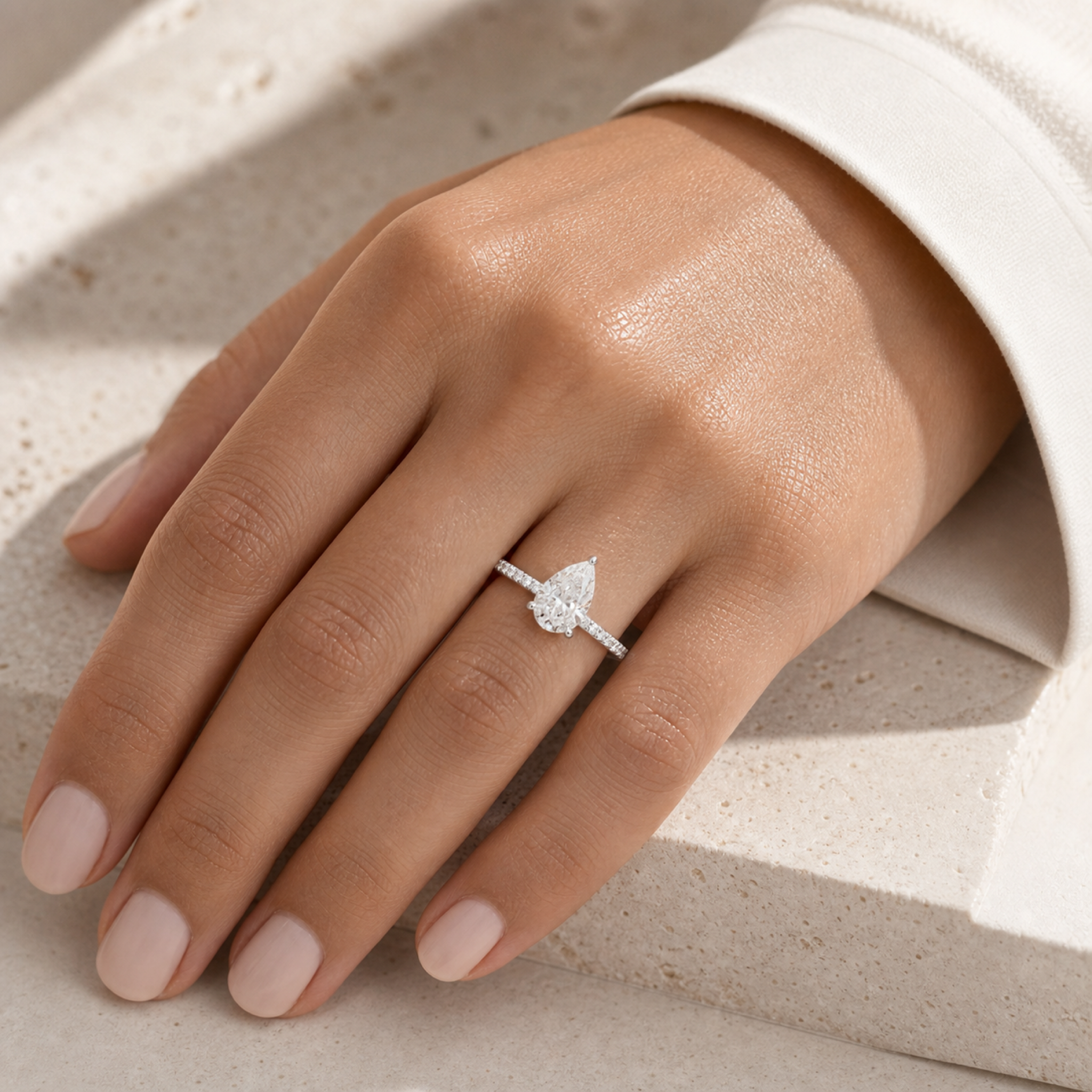


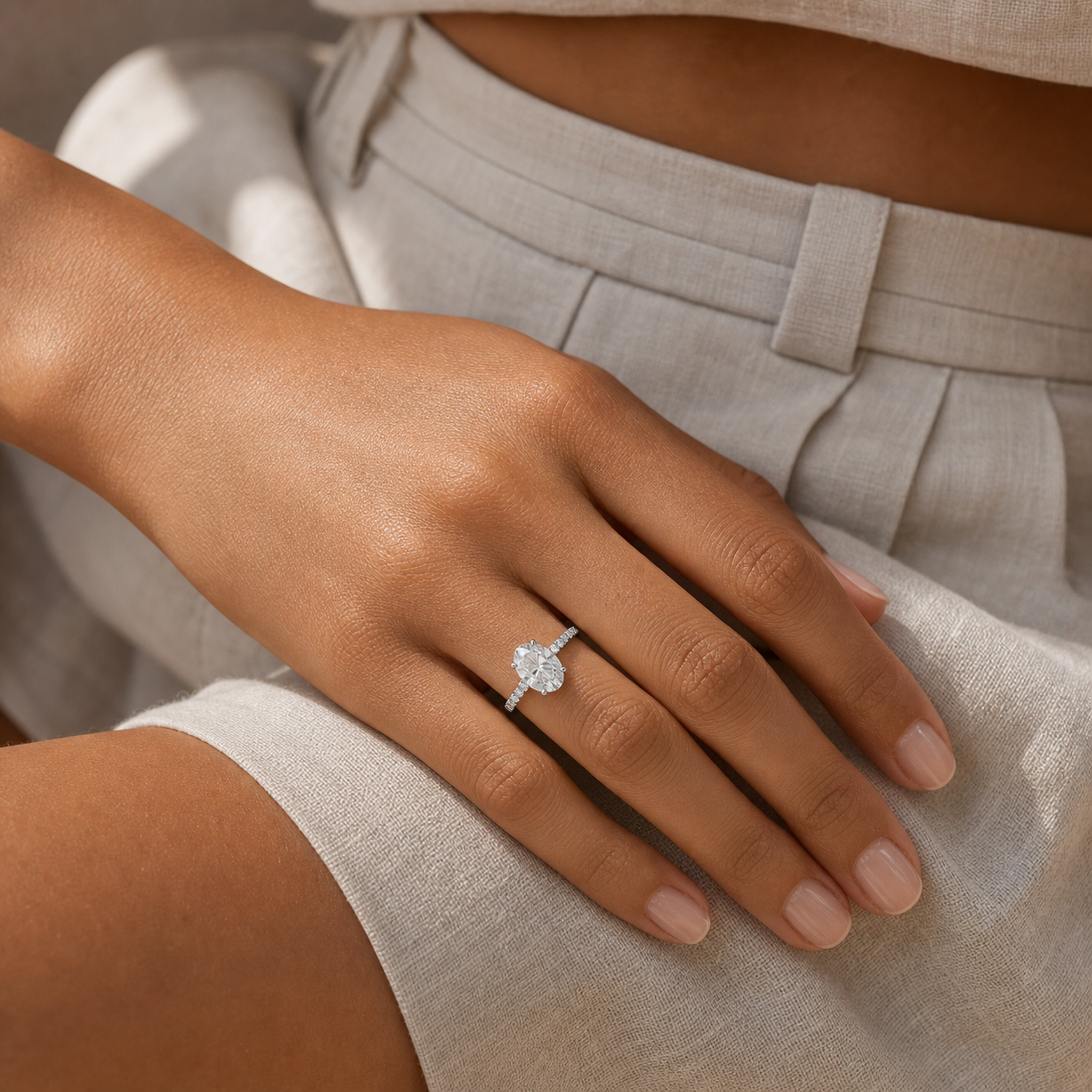


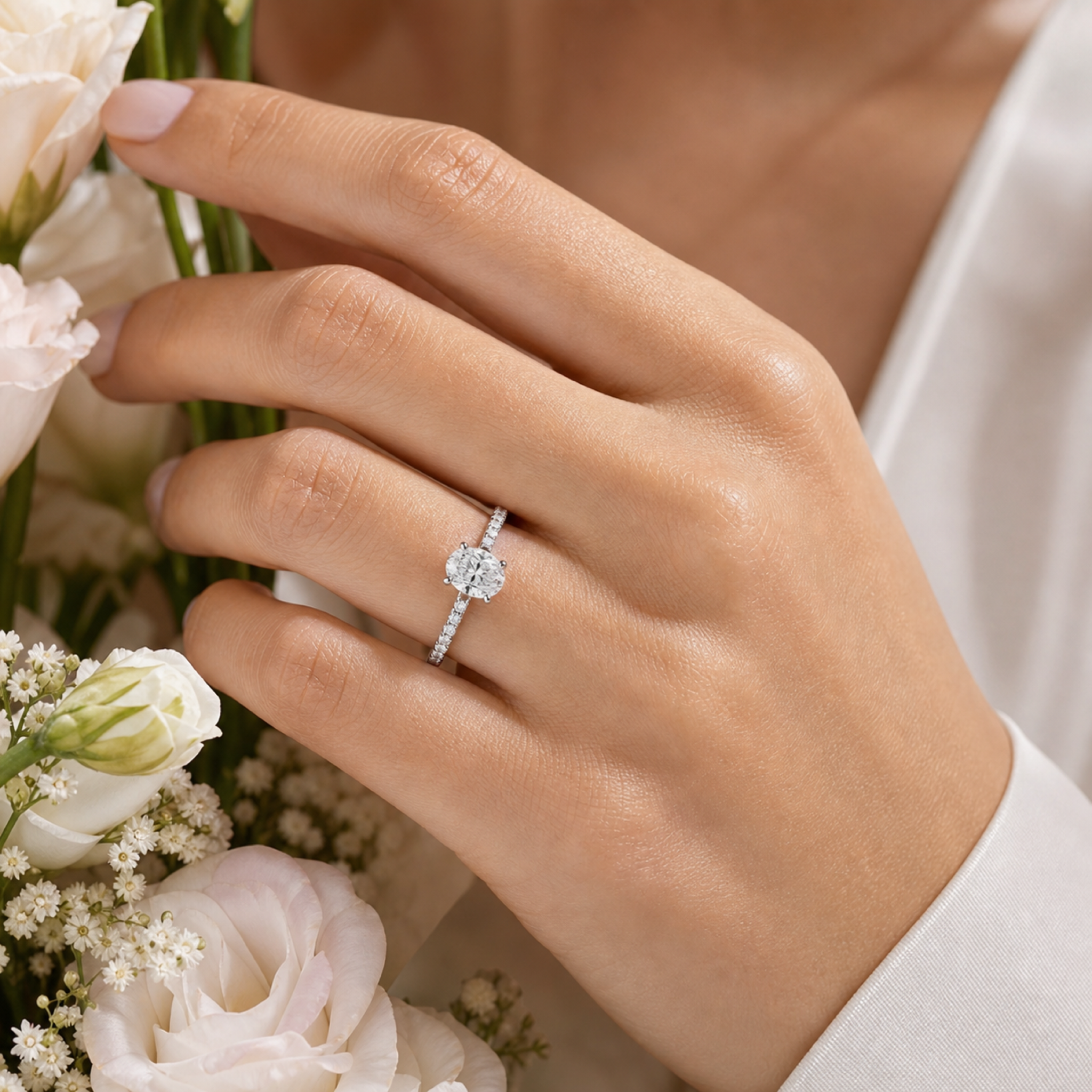


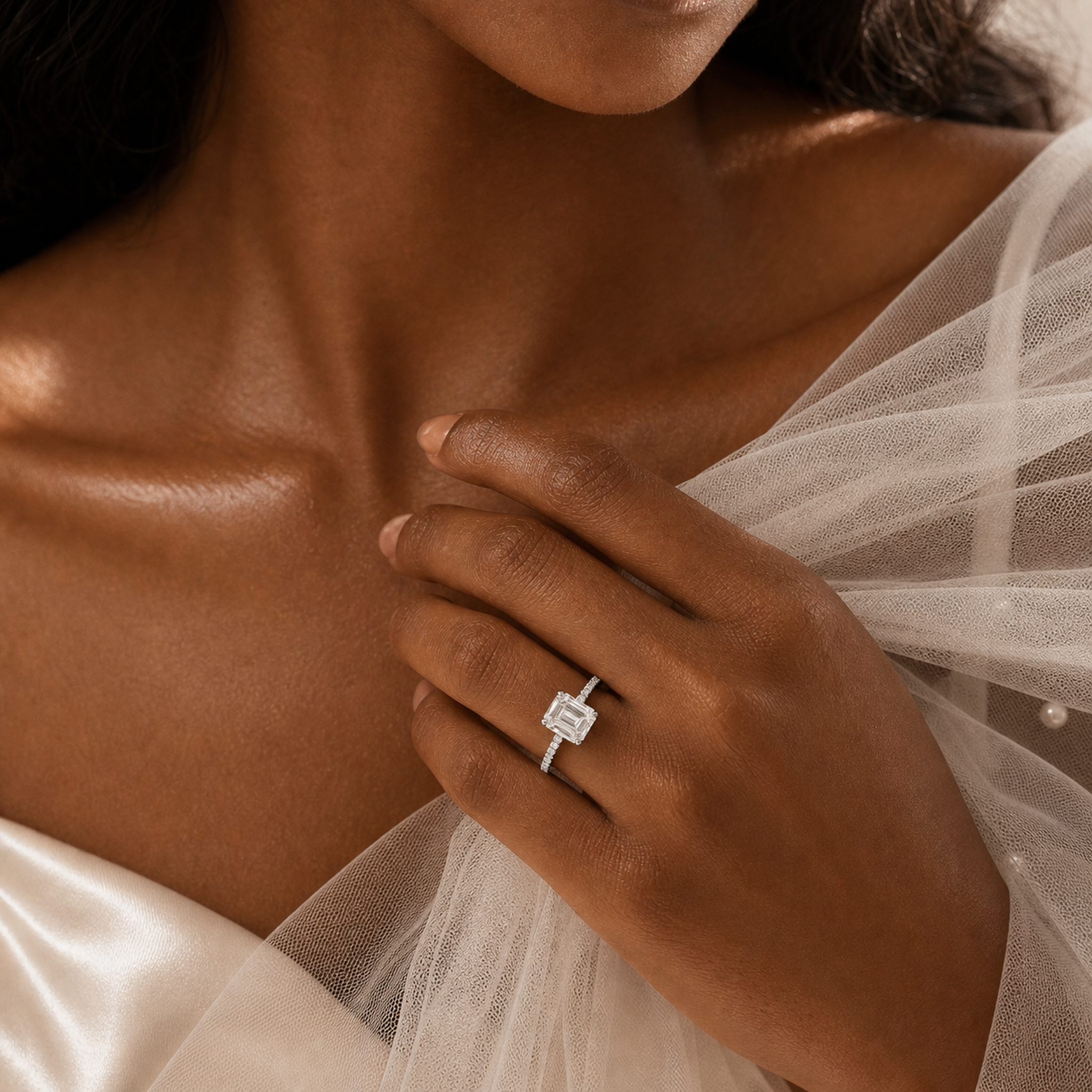


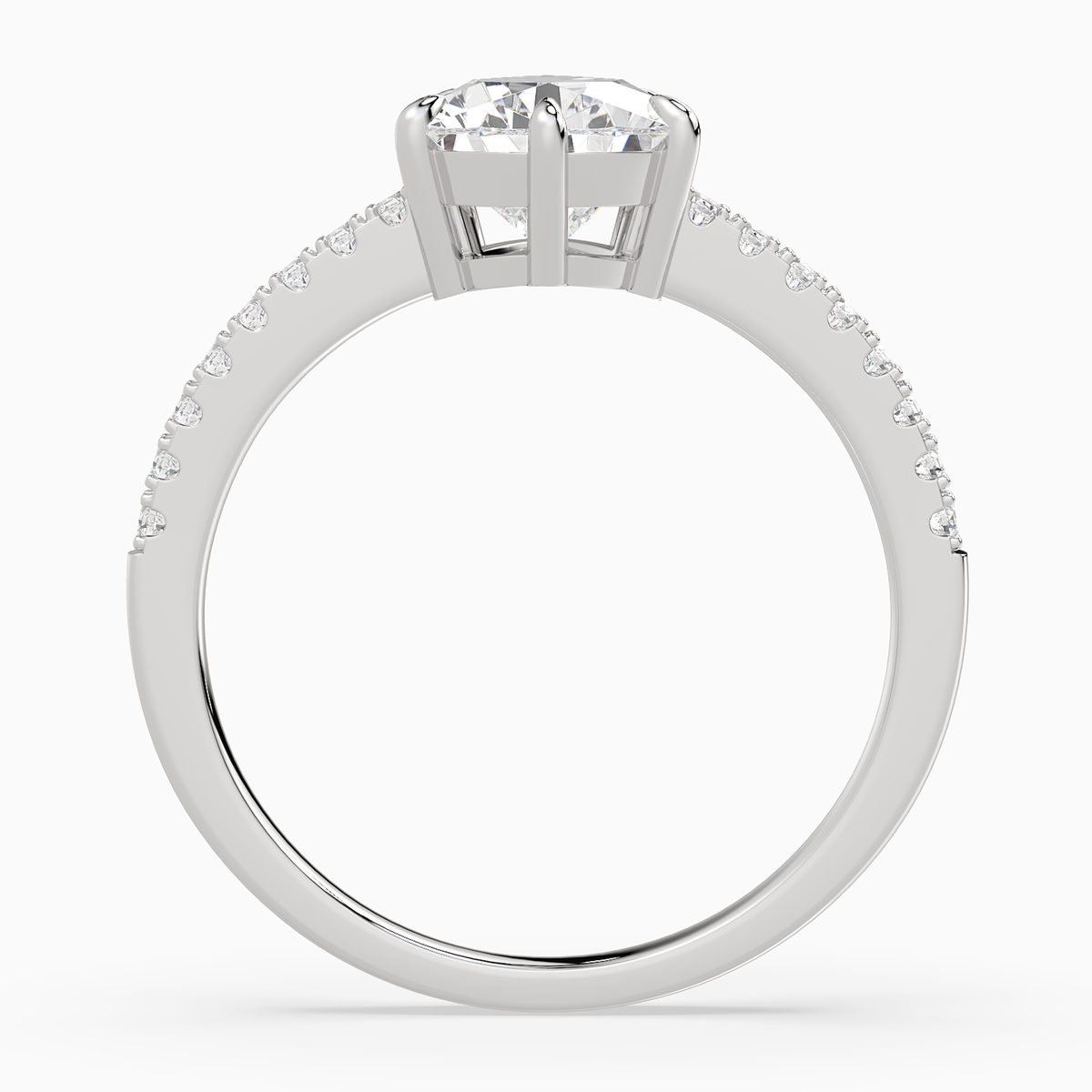

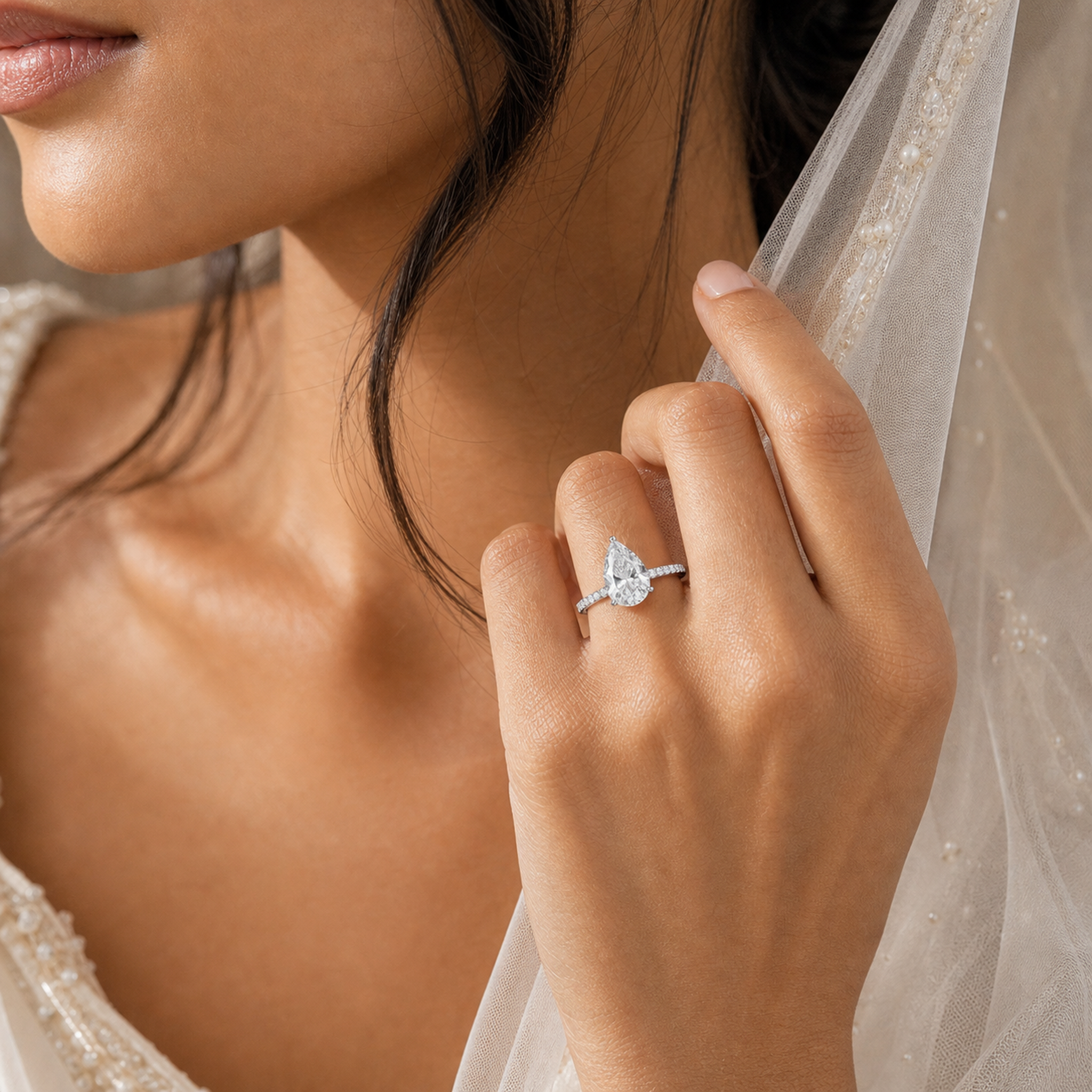


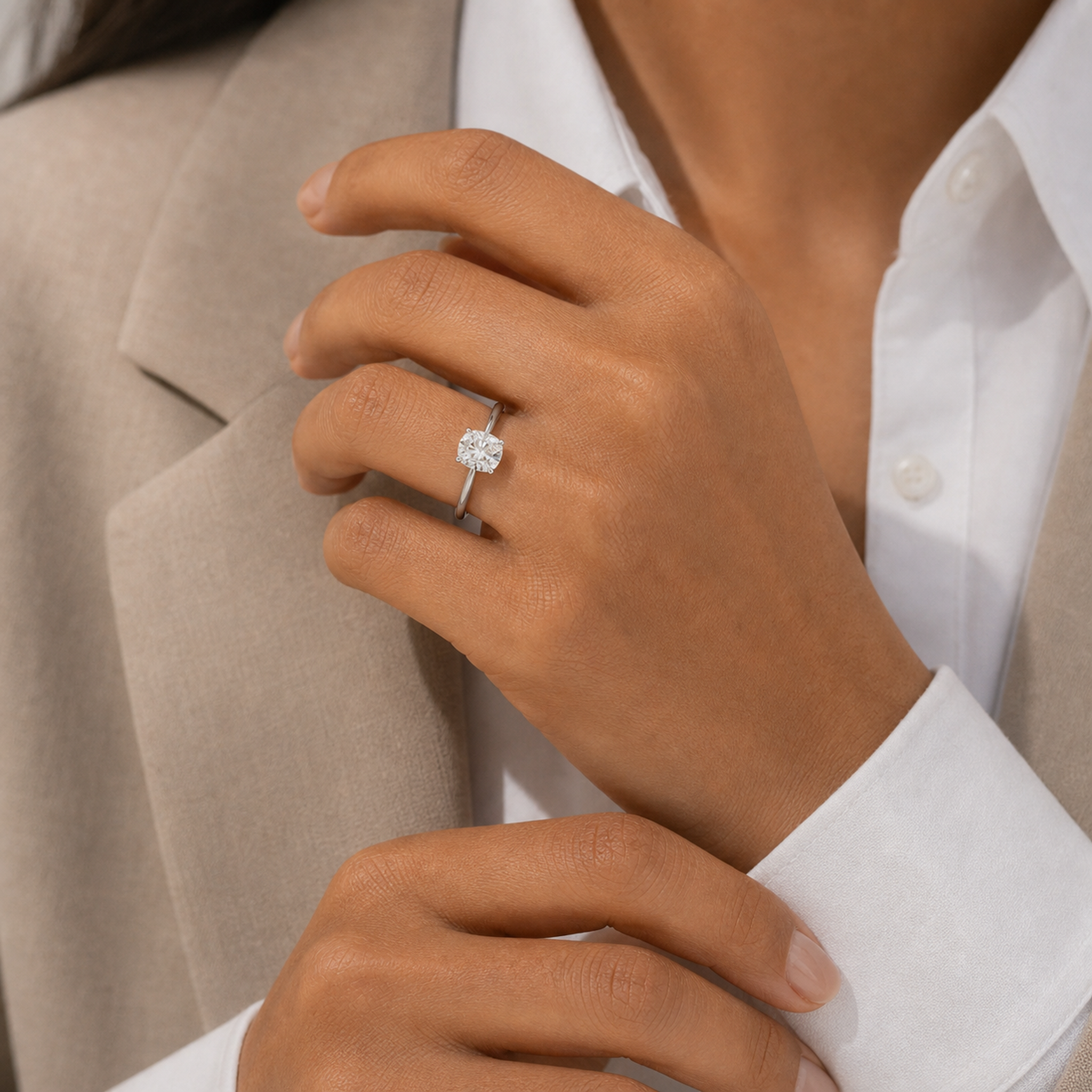


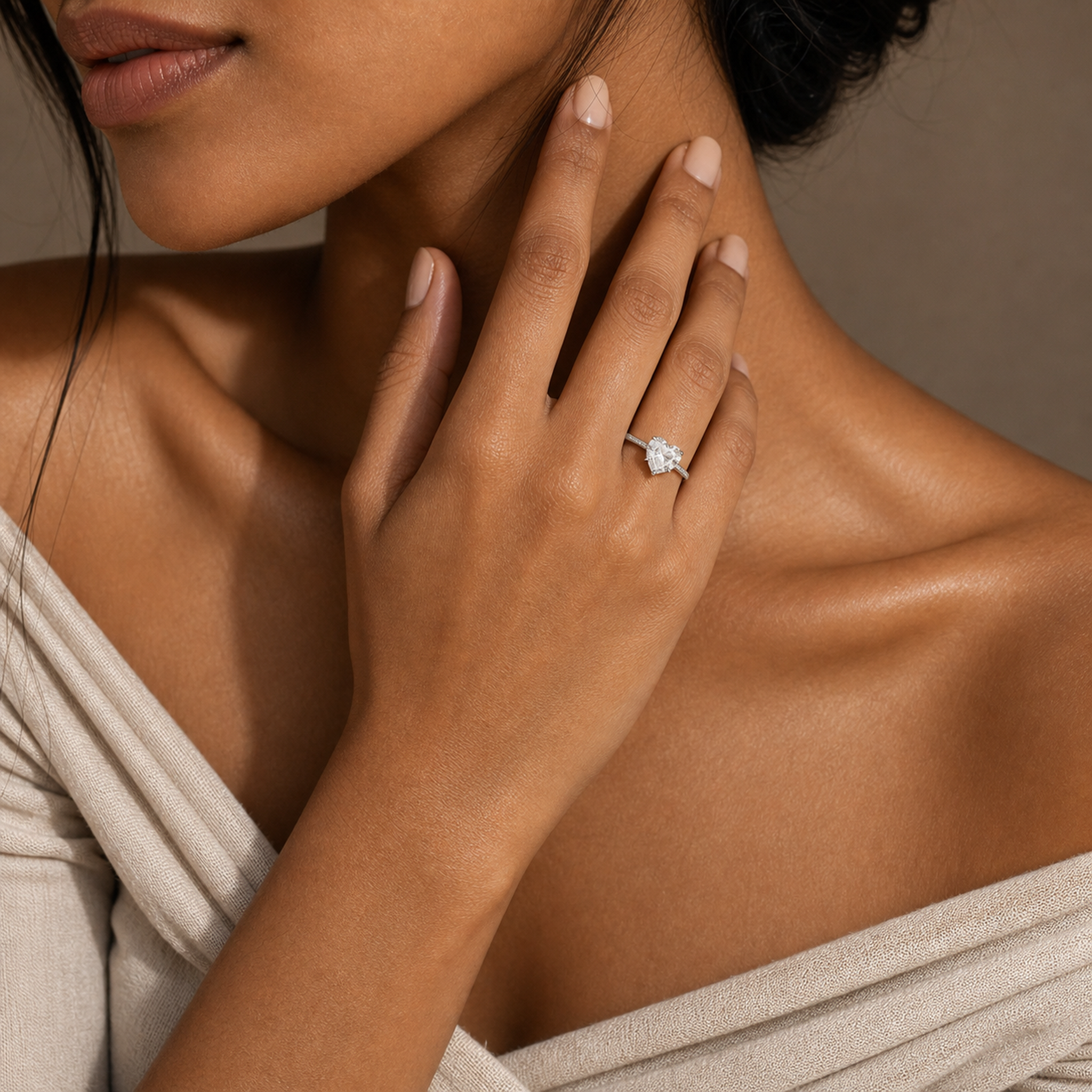


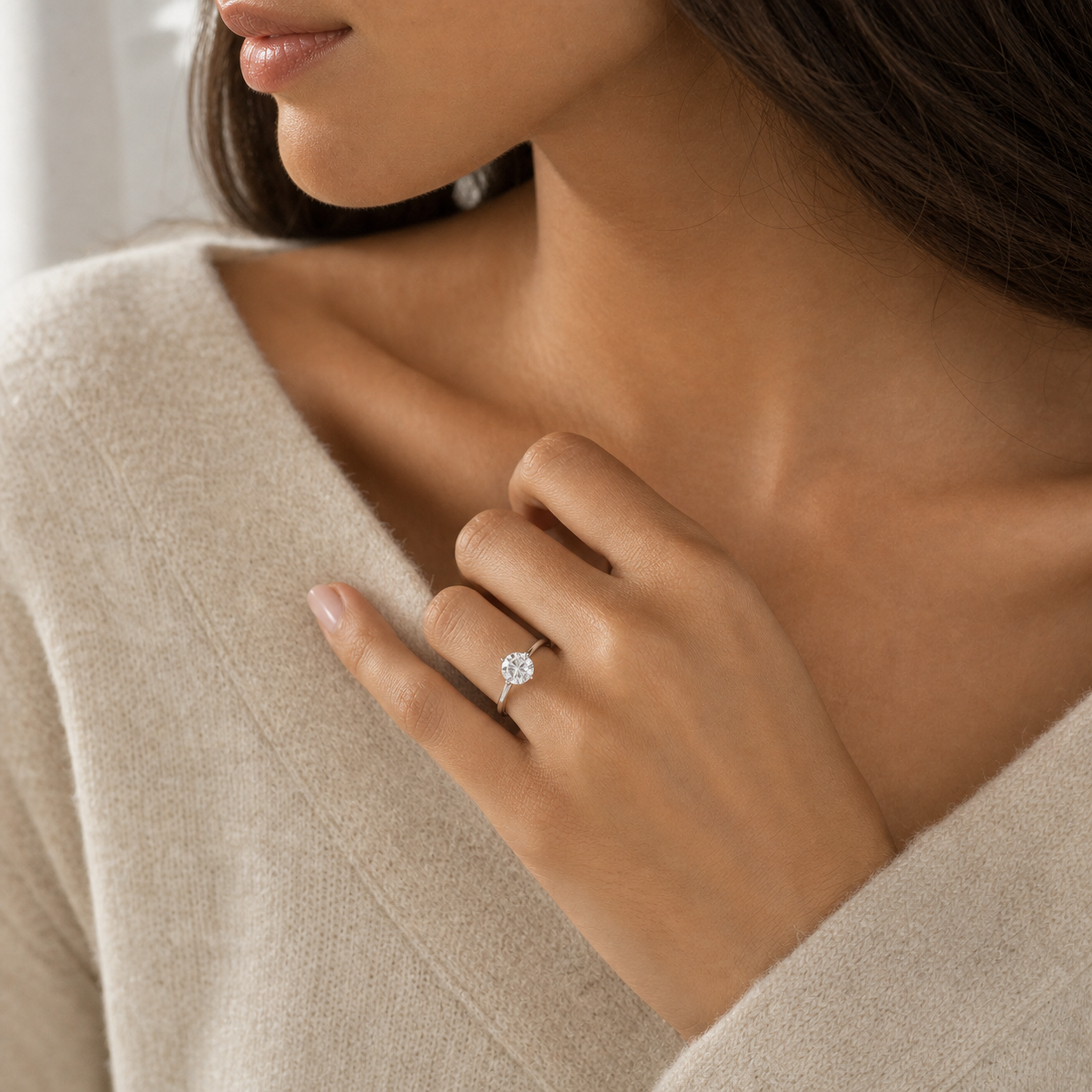


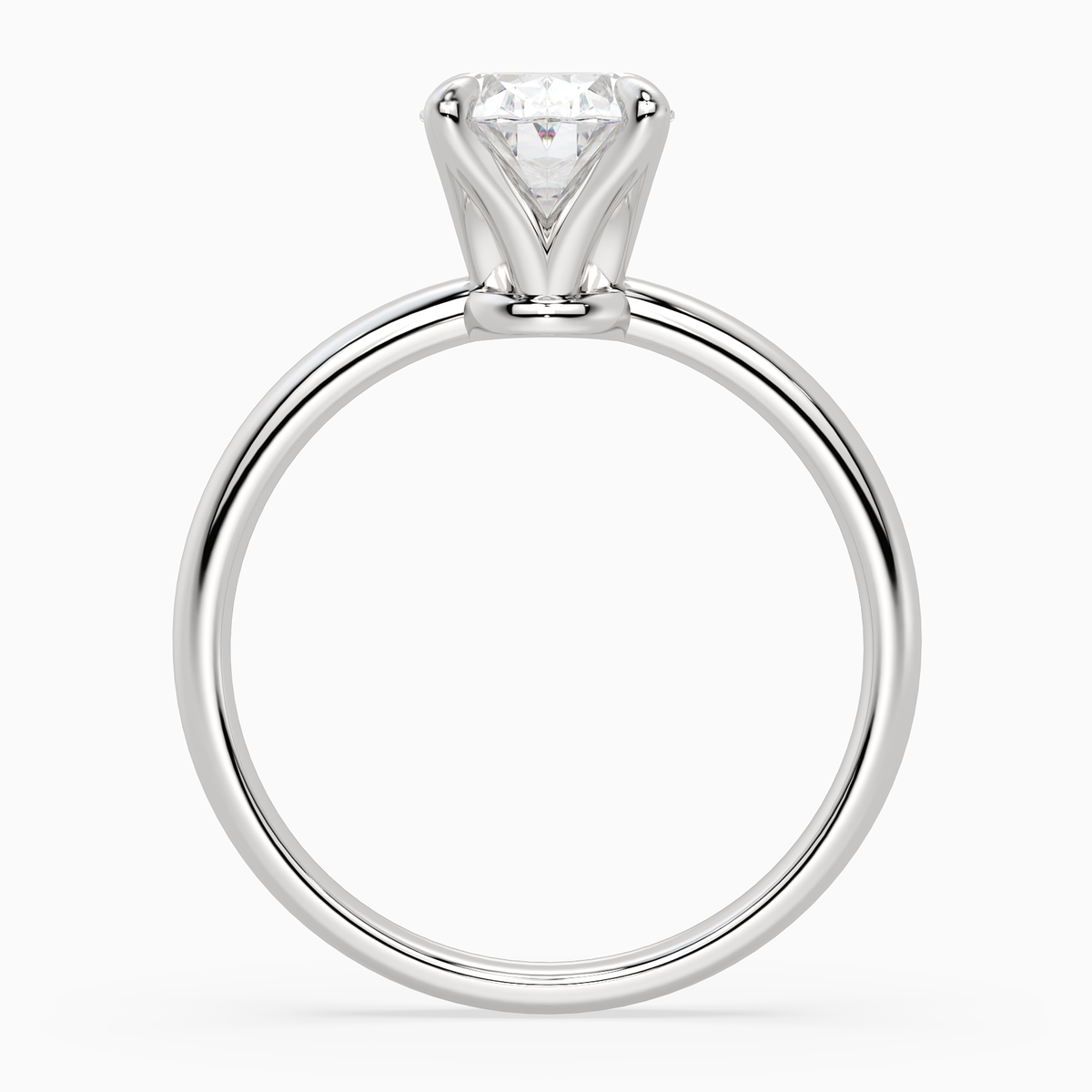
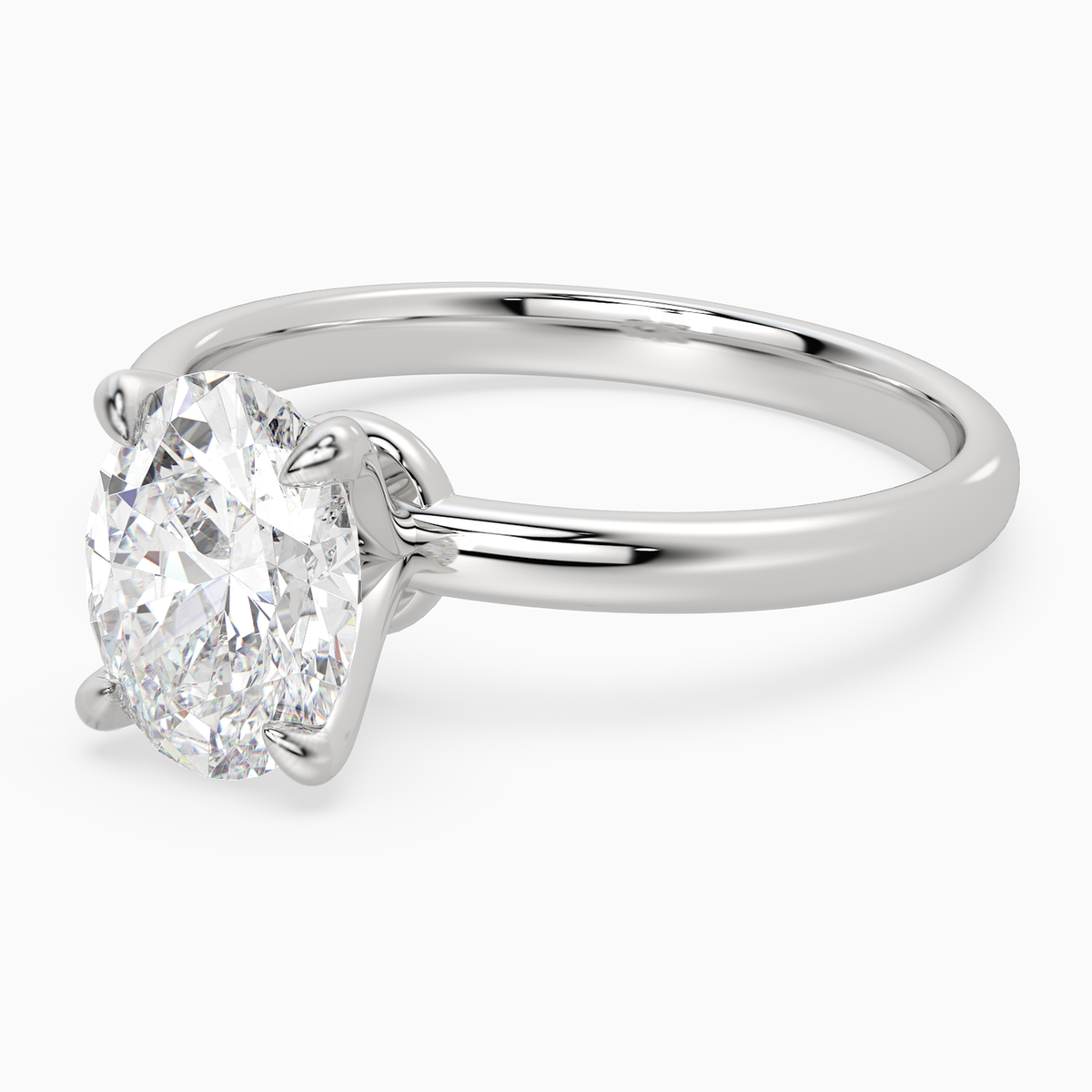



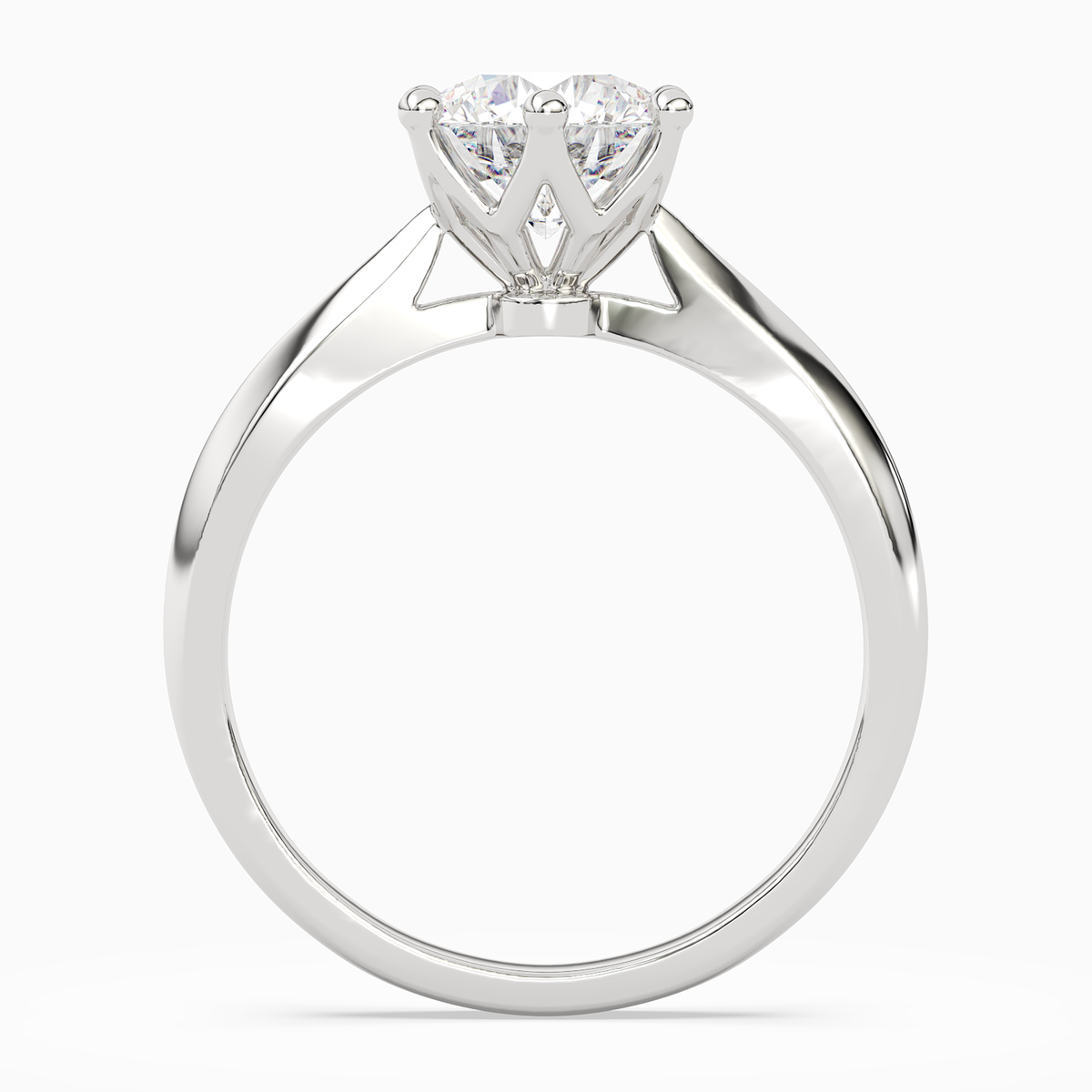

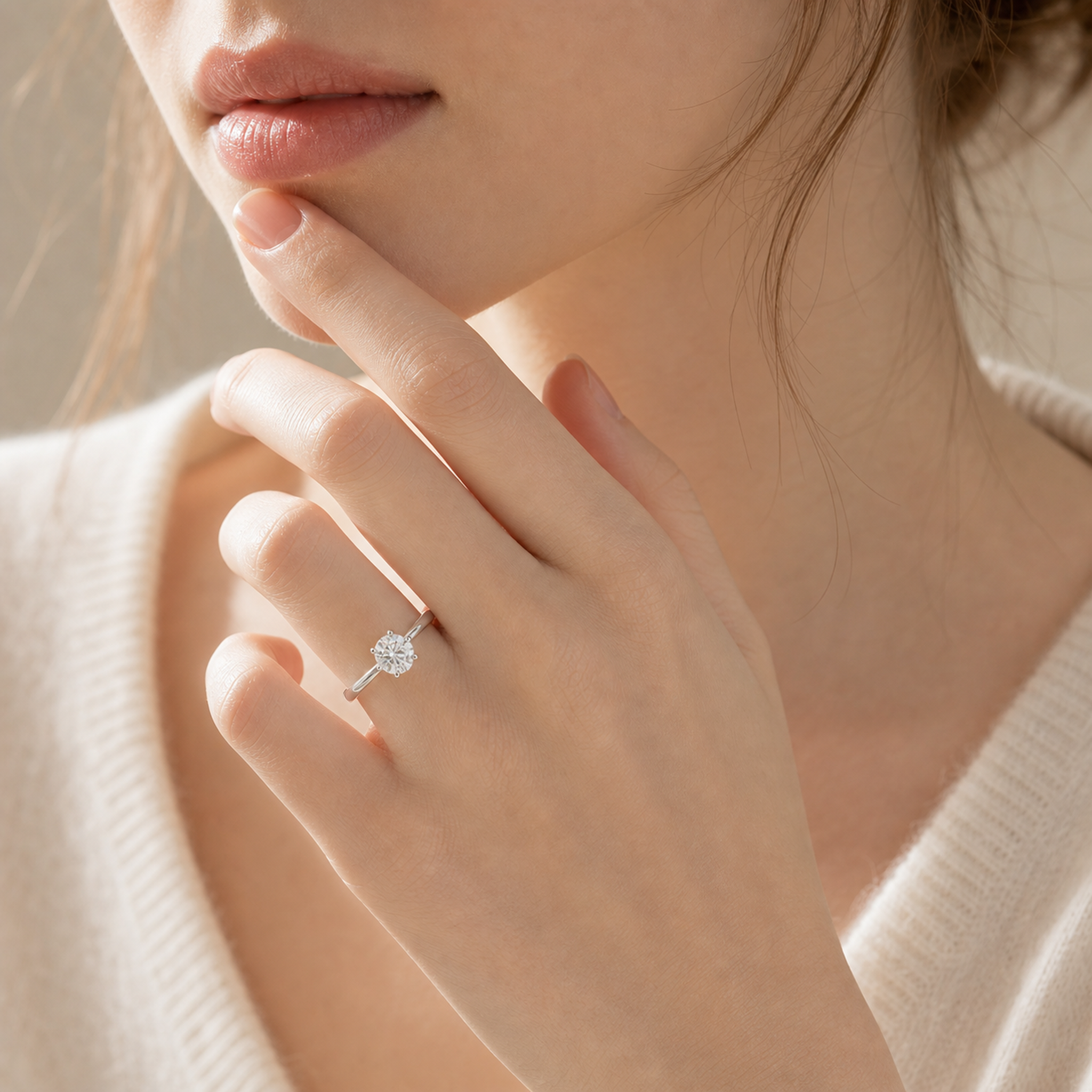


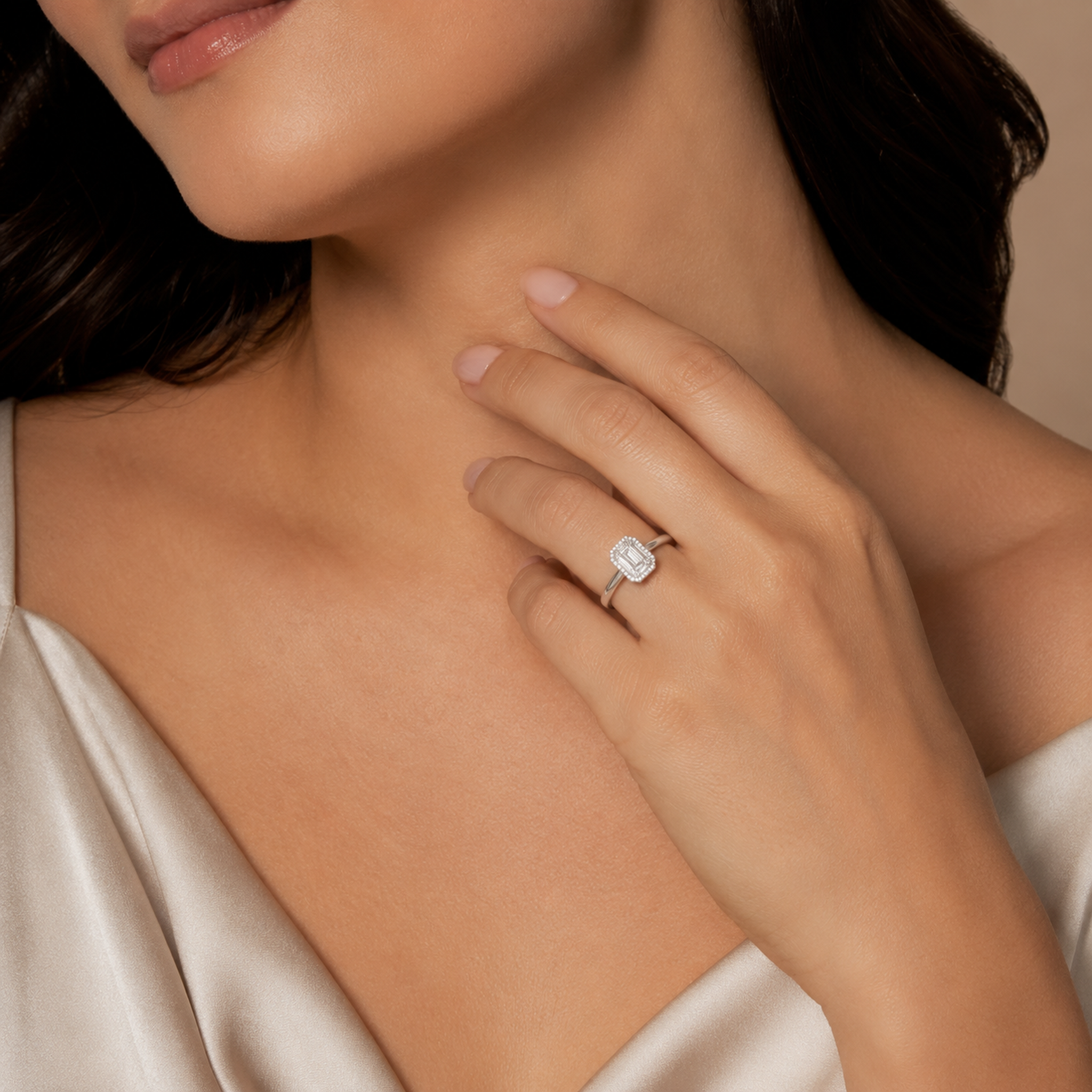


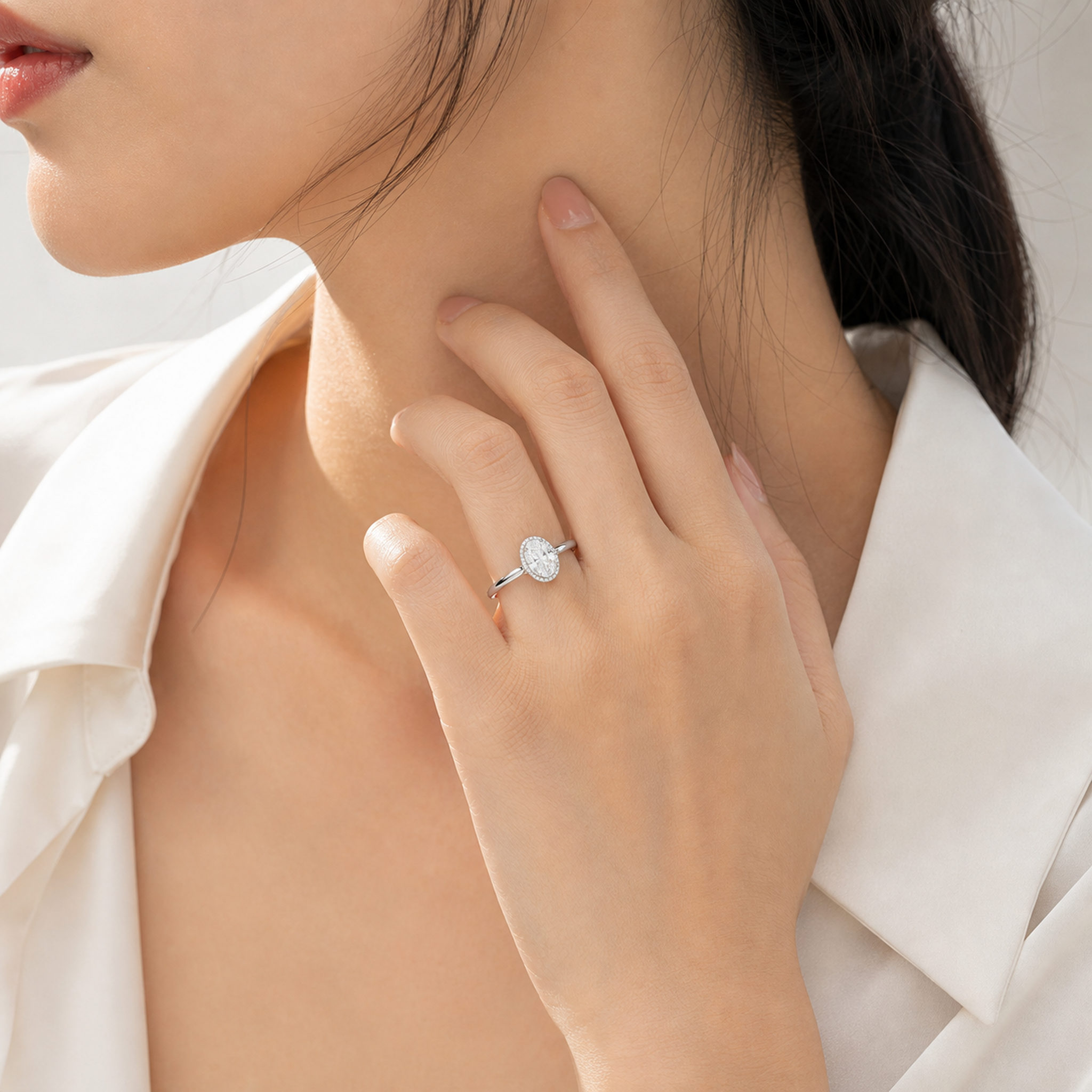

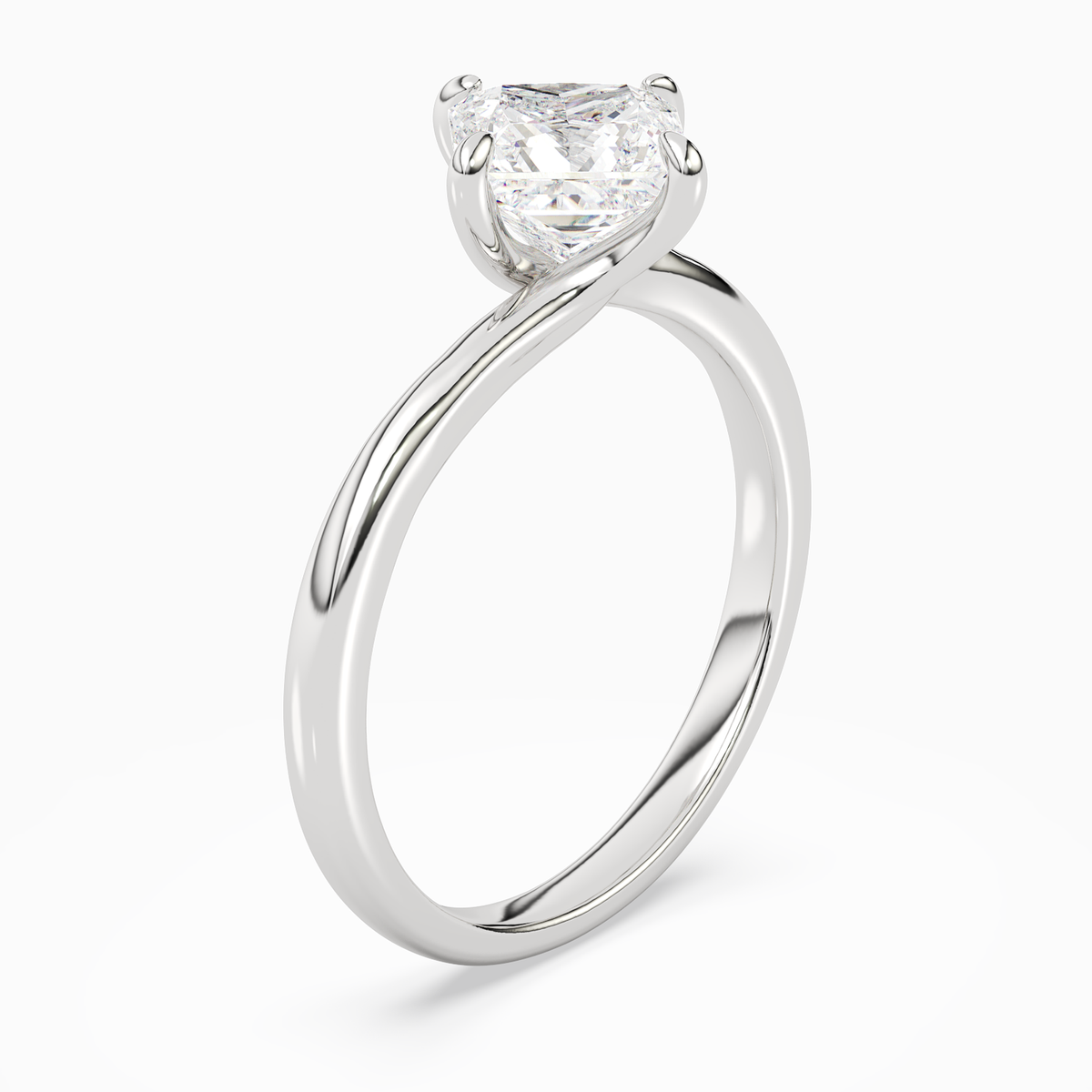

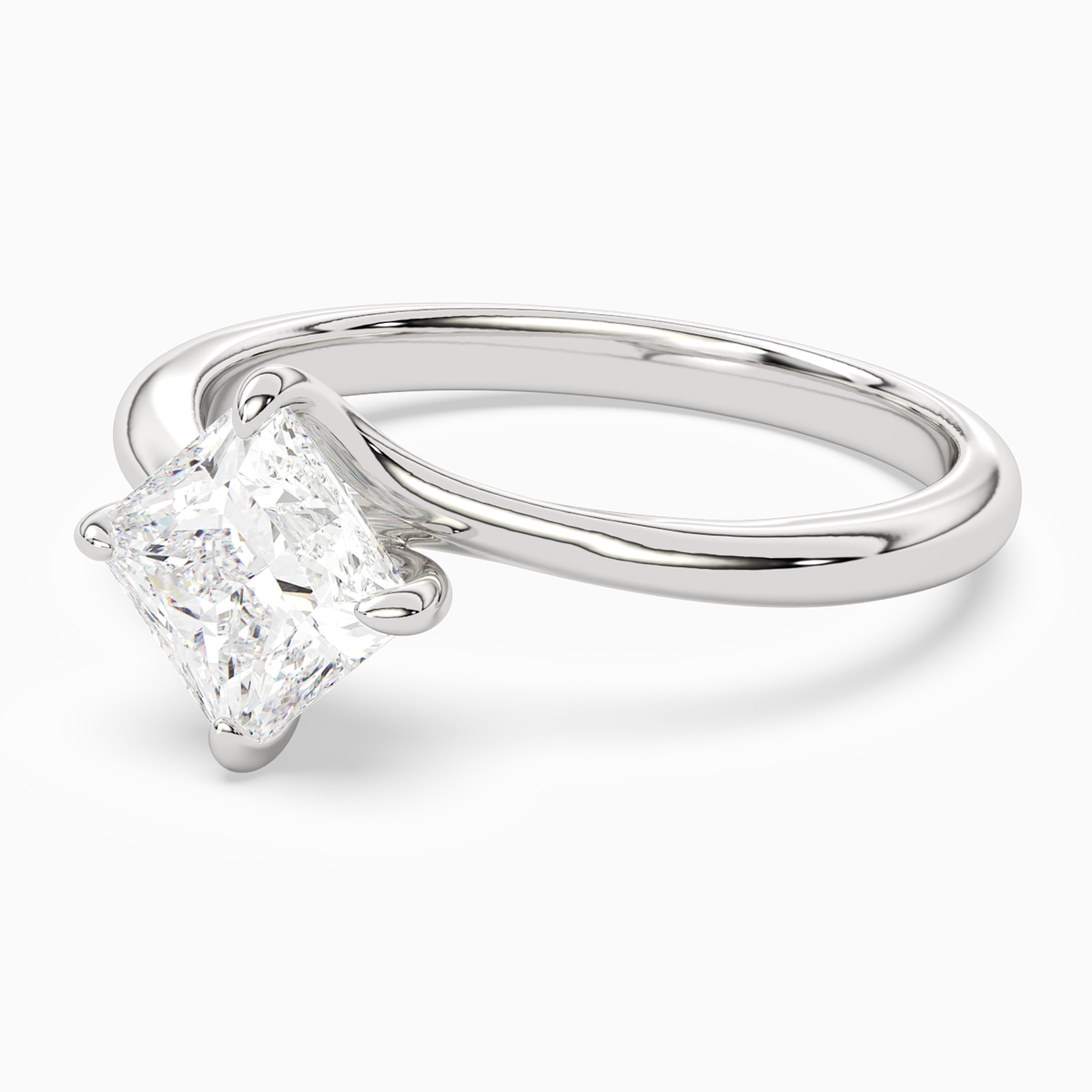
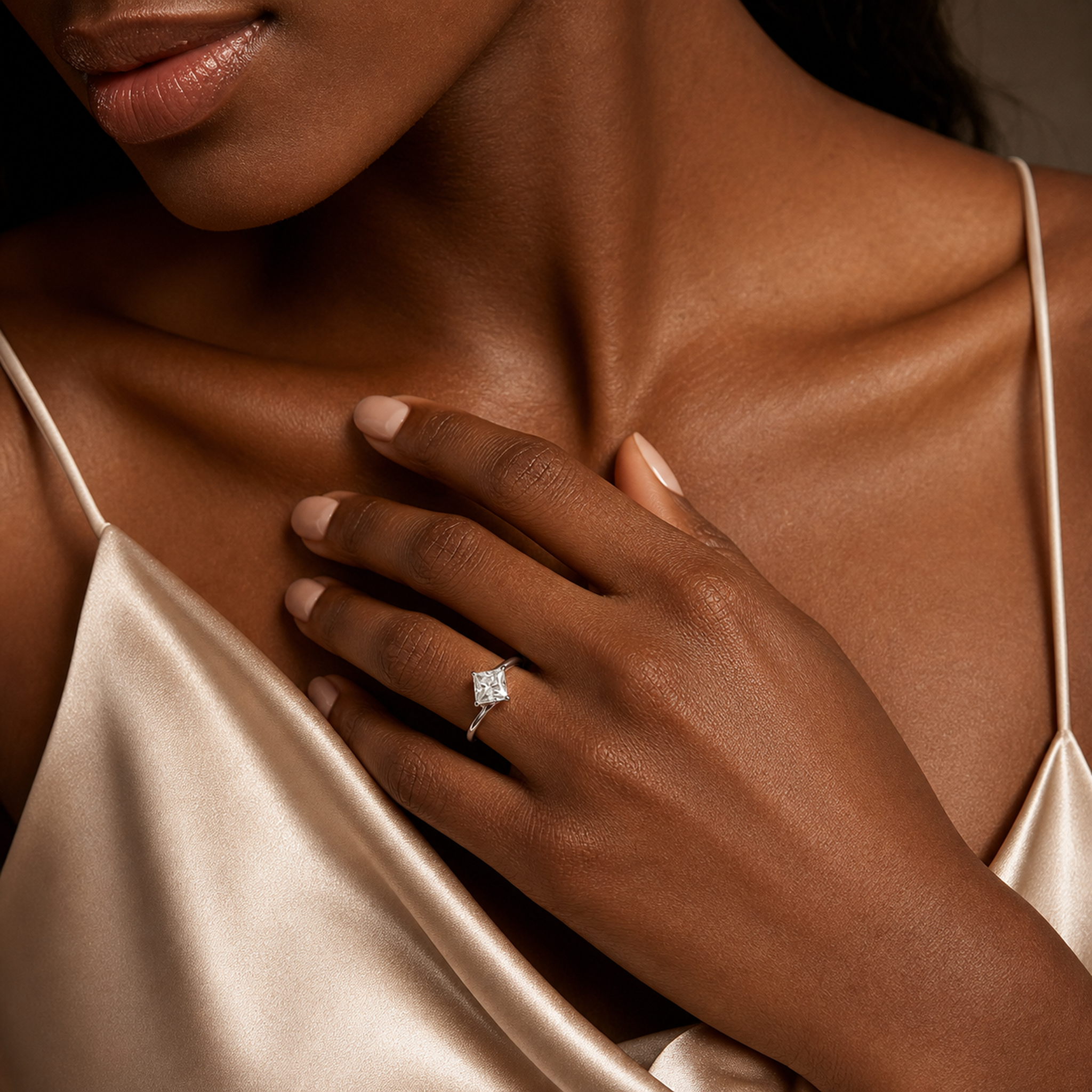

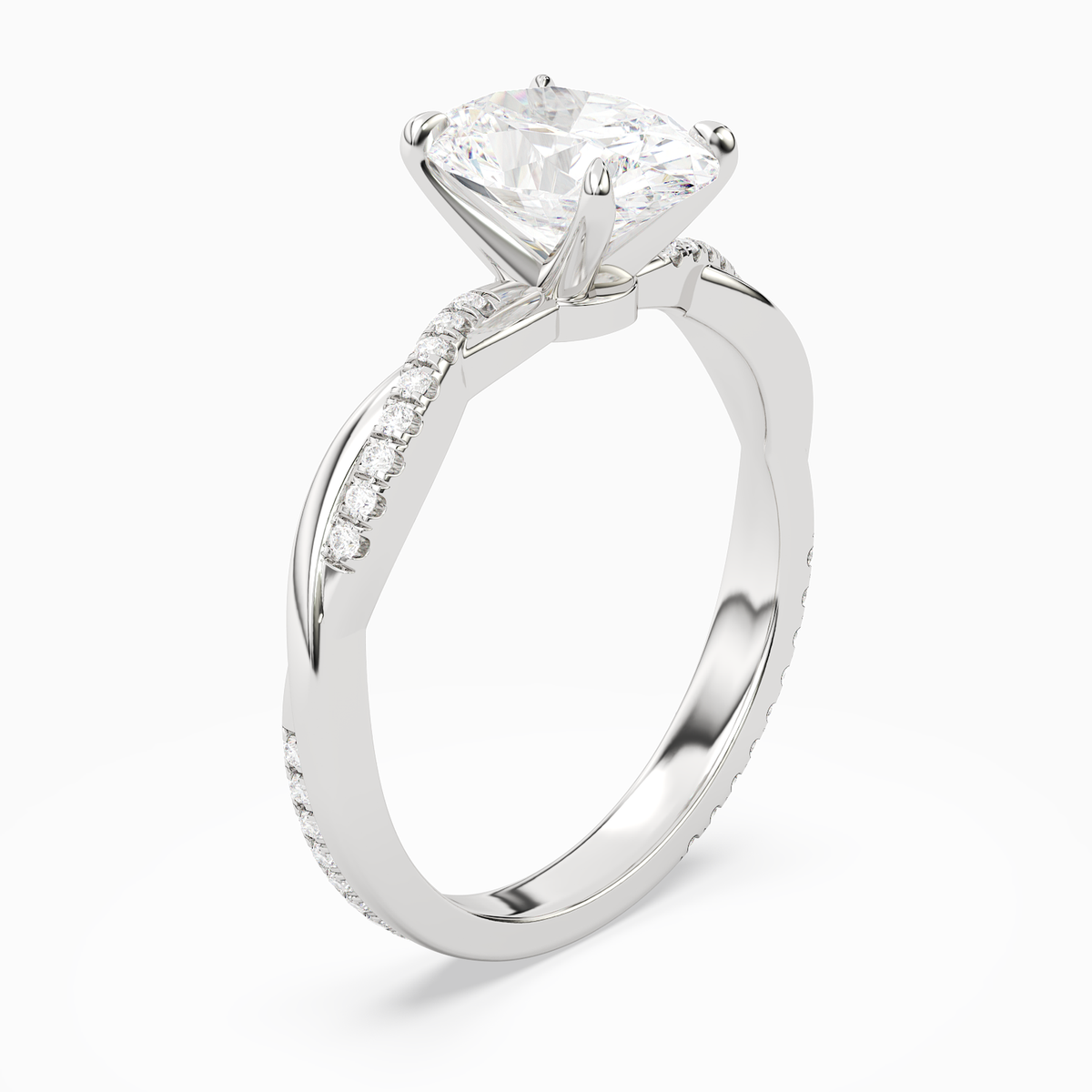


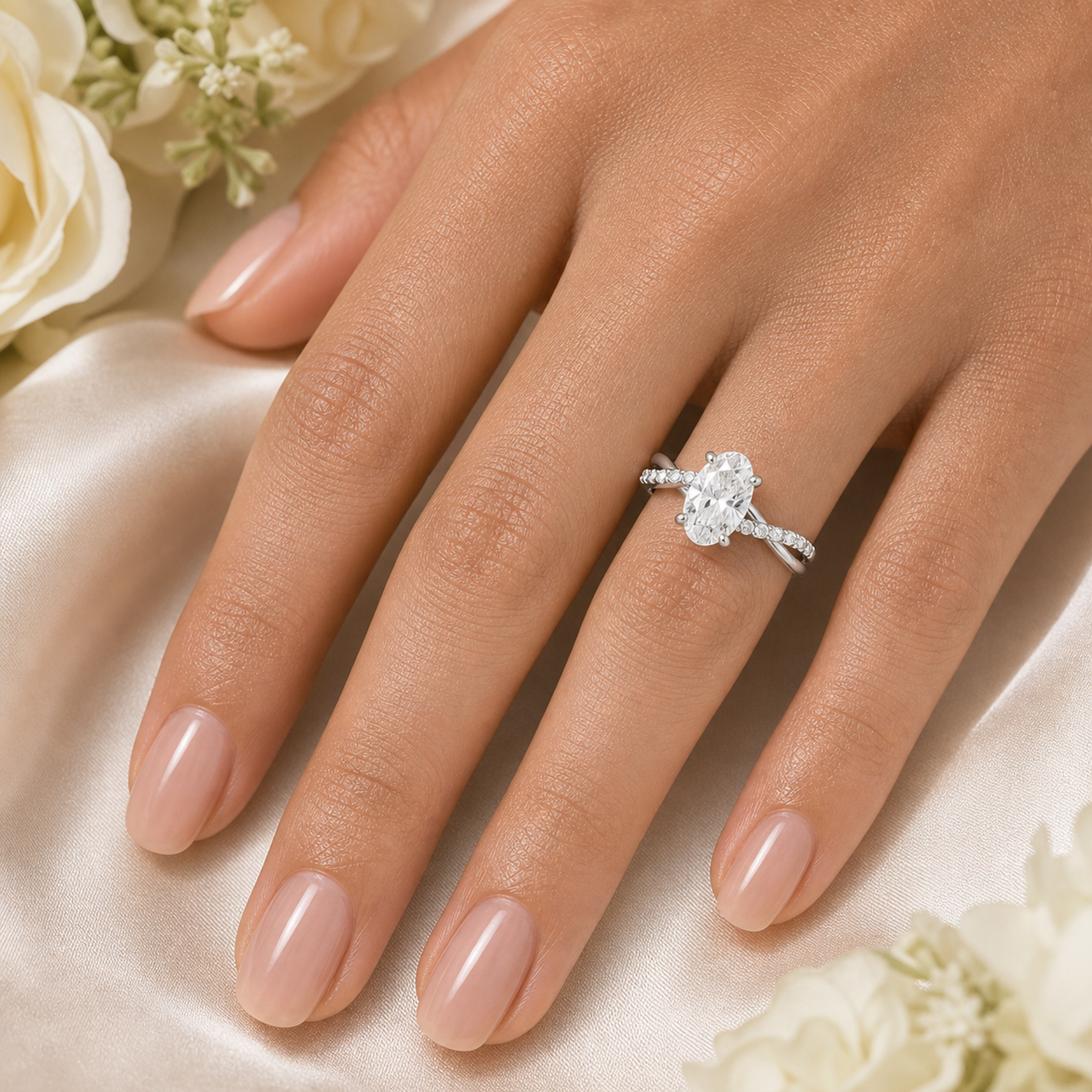


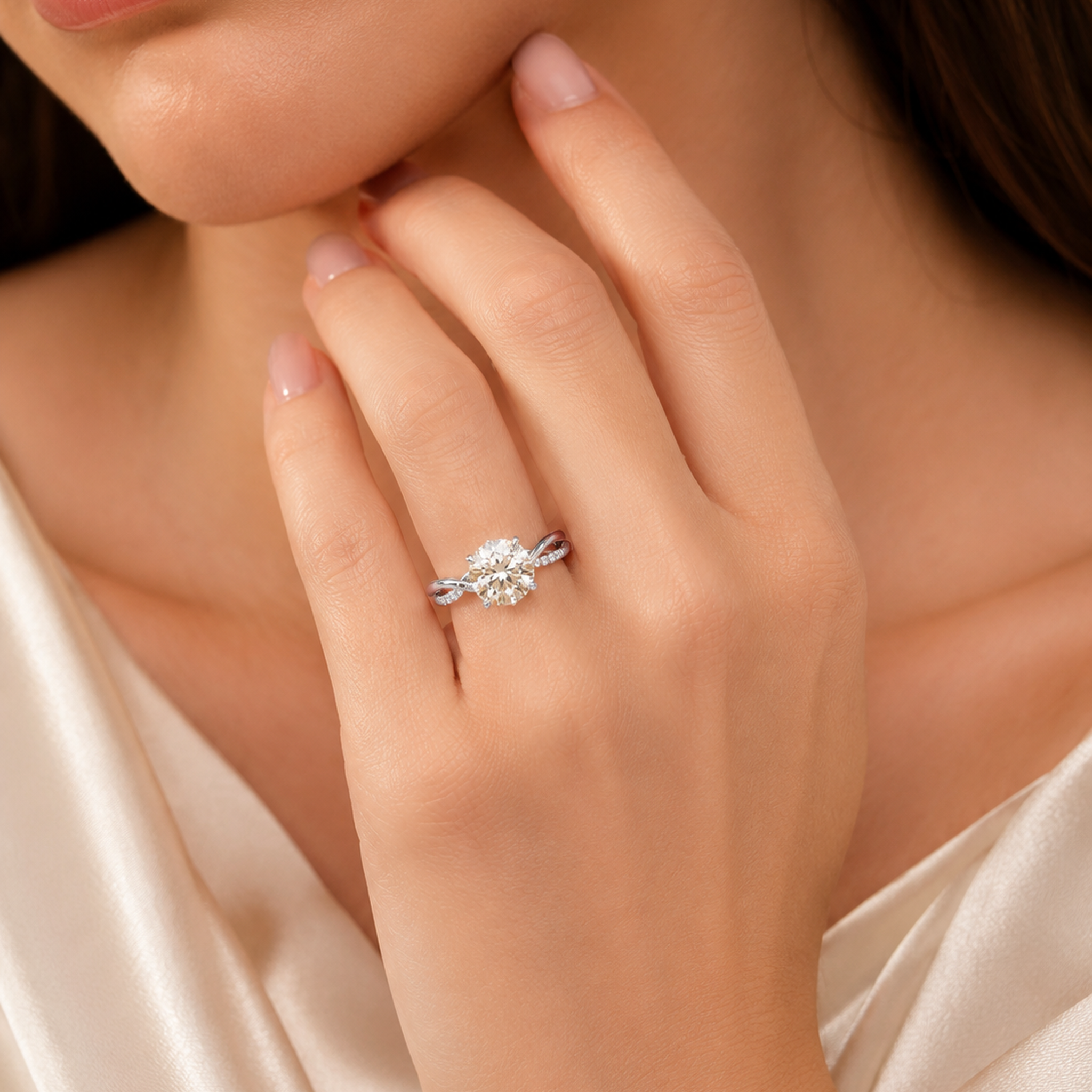
18K White Gold Solitaire Engagement Rings: A Nuanced White, Drawn Around One Stone
When one diamond carries the composition, material becomes part of the editing. An 18K White Gold solitaire can appear quiet from a distance, yet the ring is never without structure: prongs interrupt the outline, the basket establishes depth, and the band decides how the center meets the hand. A close tonal relationship between diamond and metal lets those decisions emerge without a strong color border.
Burvonti’s public collection currently presents 19 designs in this material. The assortment moves from open and pavé baskets to hidden halos, cathedral shoulders, knife edges, milgrain bezels, bypass bands, and vine-like lines. These are not 19 arguments for minimalism. They are 19 ways to keep one center stone visually primary while allowing the setting to carry distinct character.
The Material Decision Inside a Minimal Form
An 18K gold alloy contains 18 parts gold out of 24, equal to 75%. The remaining quarter consists of alloying metals that influence color and working behavior. That percentage is a reliable composition fact; it does not reveal the exact recipe, surface treatment, hardness, sensitivity profile, or finished color of a particular ring. Those details belong to the individual specification.
This distinction is especially useful in White Gold. The polished surface may read as cool and bright, while the underlying alloy remains a higher-gold-content material. Many white-gold rings use rhodium to create a brighter finish, but not every product should be presumed plated. The 18K mark explains gold content. It should not be asked to explain everything else about the finished ring.
Small Structures Carry More Weight
A solitaire concentrates attention around the head. Fine prongs may visually recede beside a bright center, but their placement still changes the diamond’s outline. A basket controls how much pavilion is visible from the side. Cathedral shoulders create an upward transition from band to center, while an open basket leaves more air beneath the stone. In a quiet metal palette, slight differences in spacing and proportion become easier to notice.
Bezel and bypass designs use the metal more assertively. A milgrain bezel draws a deliberate perimeter around the diamond; a bypass band redirects the eye as its two lines approach the center. Pavé baskets and hidden halos introduce detail below the face-up view. None of these additions removes the ring from the Solitaire family when one center diamond still governs the composition.
Shape Changes the Rhythm of the White Frame
The current 18K White Gold assortment includes round, oval, cushion, pear, emerald, princess, Asscher, and heart shapes. Elongated outlines such as oval and pear pull the composition along the finger. Emerald and Asscher cuts make ordered geometry and corner treatment more apparent. Round and cushion shapes create a more contained center, while princess and heart shapes bring distinctive points or clefts into the relationship between diamond and prong.
The complete design should remain the decision surface. You can notice a setting first and compare which available shape gives it the intended tension or calm; you can also begin with a shape and examine the structures built around it. Neither route requires Burvonti to imitate a fixed setting-then-diamond configurator. What matters is whether outline, head, band, and side profile resolve together.
Compare 18K White Gold Without Turning Karat Into Rank
The clearest difference between 18K and 14K White Gold is gold content: 75% compared with approximately 58.3%. Their visible color may be close when the finish is similar, and a product image may not disclose the distinction reliably. Higher karat does not automatically mean a brighter white, a more secure setting, greater scratch resistance, or a better ring. Alloy, dimensions, construction, finish, and use all remain relevant.
Platinum offers a third white-metal context. It is naturally white rather than a gold alloy, is notably dense, and develops its own surface character with wear. An 18K White Gold solitaire may appeal for its gold identity and selected finish; Platinum may appeal for natural color, weight, and patina. The comparison should stay physical and specific, not become a hierarchy of luxury labels.
Surface, Sensitivity, and the Ring Beside It
White Gold will collect fine marks, and a rhodium-finished surface may change as it is worn. There is no responsible universal schedule for refinishing: the answer depends on the finish actually used, the amount of wear, and the appearance the wearer prefers. Alloy sensitivity is similarly product- and person-specific. Confirm composition when it matters rather than inferring a hypoallergenic outcome from karat alone.
A wedding band adds another material and another profile. Matching 18K White Gold can create continuity, but karat and color do not determine fit. Basket width, cathedral rise, hidden-halo position, bezel edge, and band thickness decide whether the pair sits close, meets at selected points, or leaves an intentional interval. A different metal can also work when the contrast and contact have been considered deliberately.
Clarity at the Scale of the Whole Ring
Burvonti pairs responsibly sourced, independently graded lab-grown diamonds with settings considered through proportion and human judgment. Custom possibilities can refine shape, orientation, band width, engraving, metal, or selected setting details where the structure allows. The final specification—not a general Collection statement—must establish what is available for the chosen ring.
An 18K White Gold solitaire earns its distinction through this complete reading. Gold content gives the material context; prong, basket, band, diamond, and the ring beside it give that context form. The result should feel precise enough to examine closely and quiet enough to live with naturally.
Frequently Asked Questions
How is this page different from the main 18K White Gold Engagement Rings Collection?
The main metal page compares 18K White Gold across many engagement-ring styles. This page is limited to designs in which one center diamond remains visually primary, so it can focus on prongs, baskets, bezels, bands, profiles, and shape within a solitaire composition.
How much gold is in 18K White Gold?
18K contains 18 parts gold out of 24, or 75%. The remaining 25% consists of alloying metals. Their exact identity and proportion vary, so the karat mark does not disclose the complete alloy formula.
Does 18K White Gold always look warmer than 14K White Gold?
Not necessarily. Underlying alloy and surface finish both affect appearance, and rhodium-finished 14K and 18K rings can look very close. Compare the actual rings and specifications rather than relying on a universal color rule.
Should I assume an 18K white gold solitaire is rhodium plated?
No. Rhodium is common on white-gold jewelry, but it is not a safe assumption for every product. Confirm whether the selected Burvonti ring uses that finish and what future care may apply.
Is 18K White Gold better than 14K White Gold for a solitaire?
Neither is universally better. 18K has higher gold content; 14K contains a greater proportion of alloying metals. Finished color, surface treatment, construction, feel, maintenance, budget, and the amount of visible metal should guide the choice.
Is 14K White Gold always more durable than 18K White Gold?
That should not be treated as a complete product rule. Karat influences composition, but wear behavior also depends on the exact alloy, band dimensions, setting construction, finish, and the forces the ring encounters. No gold finish is scratch-proof.
What is the practical difference between 18K White Gold and Platinum in a solitaire?
18K White Gold is a 75% gold alloy selected for a white appearance and may use a bright surface finish. Platinum is a naturally white, denser metal with a different wearing character and patina. Compare color, physical presence, finish care, design, and budget.
Does 75% gold change how the center diamond performs?
No. Gold content does not change the diamond’s cut, color grade, clarity, or light performance. The white-metal context can change the visual boundary between diamond and setting, but it does not alter the diamond’s graded properties.
Which center shapes appear in the current 18K White Gold Solitaire Collection?
The current public assortment includes round, oval, cushion, pear, emerald, princess, Asscher, and heart shapes. Each should be judged within the prong, bezel, basket, band, and profile designed around it.
Why can prongs look quieter in a white-metal solitaire?
A close tonal relationship between bright diamond and white metal can reduce visible contrast at the edge. The prongs are still structurally and visually important; their number, position, scale, and finish continue to shape the center outline.
Can an 18K white gold solitaire include pavé or a hidden halo?
Yes. Pavé on the band or basket and a hidden halo below the center can add secondary light and profile detail. The ring remains a solitaire when one center diamond still leads the face-up composition.
Can 18K White Gold cause metal sensitivity?
Sensitivity depends on the exact alloy and the individual wearer. Karat alone cannot establish a hypoallergenic outcome. If sensitivity is a concern, request the product-specific metal composition before finalizing the ring.
Does a wedding band need to match the 18K karat of the engagement ring?
Not as a visual rule. Matching karat and metal can create continuity, while another metal can create intentional contrast. Also consider hardness interaction, profile, contact points, finish, and product-specific care when pairing two rings.
How should the finish of an 18K white gold solitaire be maintained?
Clean gently with a method appropriate to the diamond, alloy, and setting, and avoid abrasive products or harsh chemicals. If the ring is rhodium finished, assess the surface as it changes rather than following a universal replating schedule.
Can an 18K white gold solitaire be personalized through Burvonti?
Custom possibilities may include diamond shape, orientation, band proportion, engraving, metal, or selected setting details. The chosen design must be reviewed for availability and structural feasibility before the final specification.