
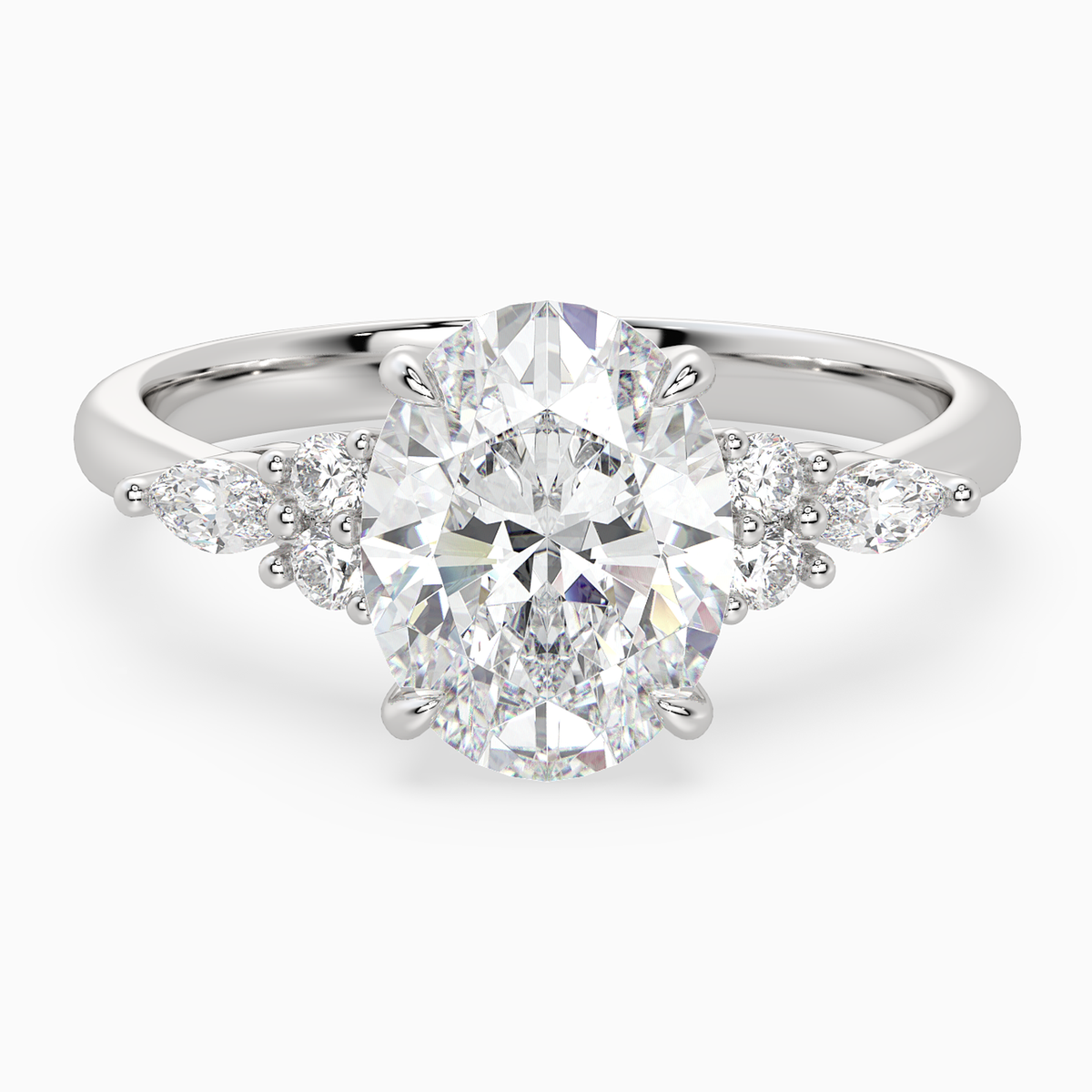


Round Diamond Engagement Rings in 18K White Gold
A quiet frame with considered substance. In 18K white gold, the round brilliant keeps its ordered light within a more material presence.


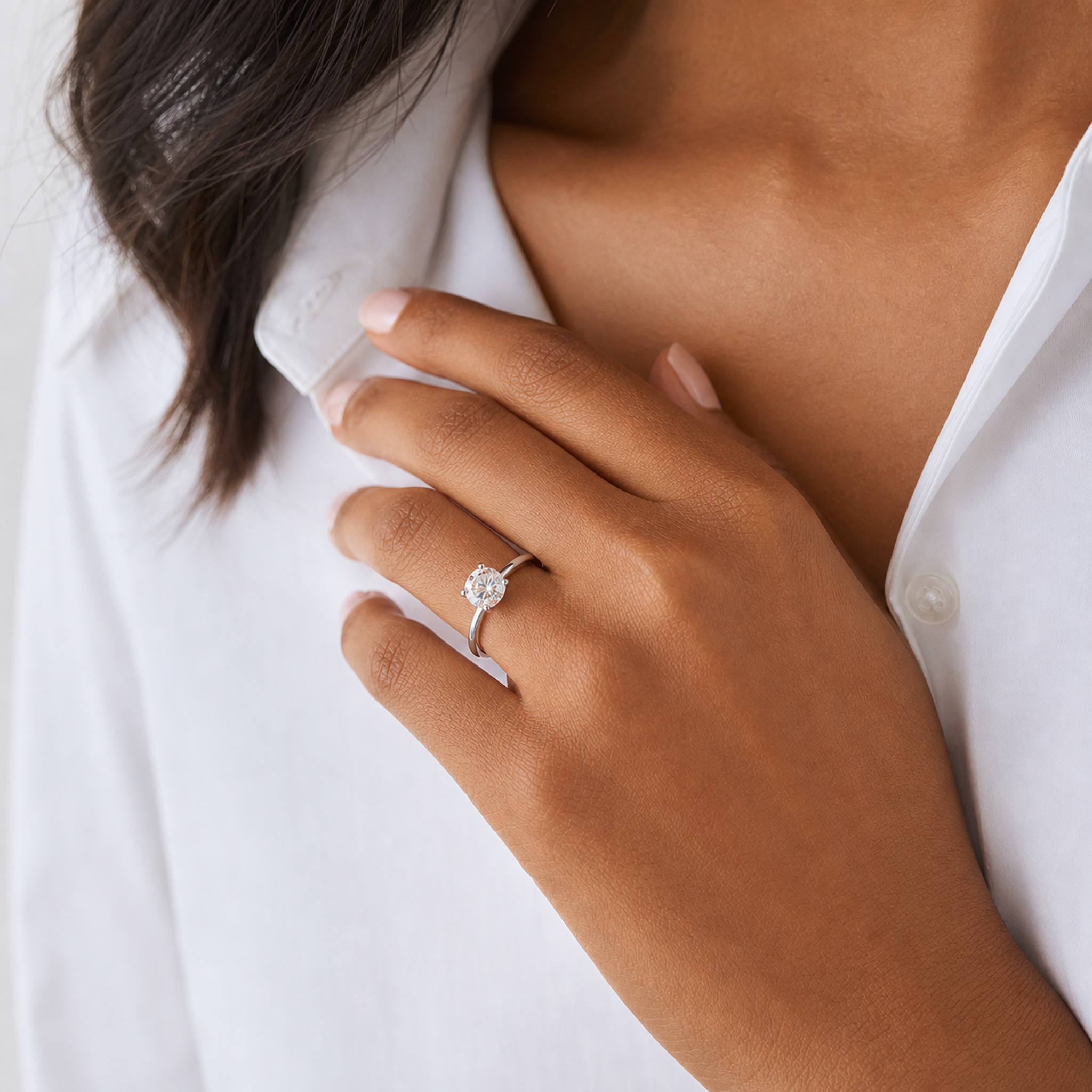


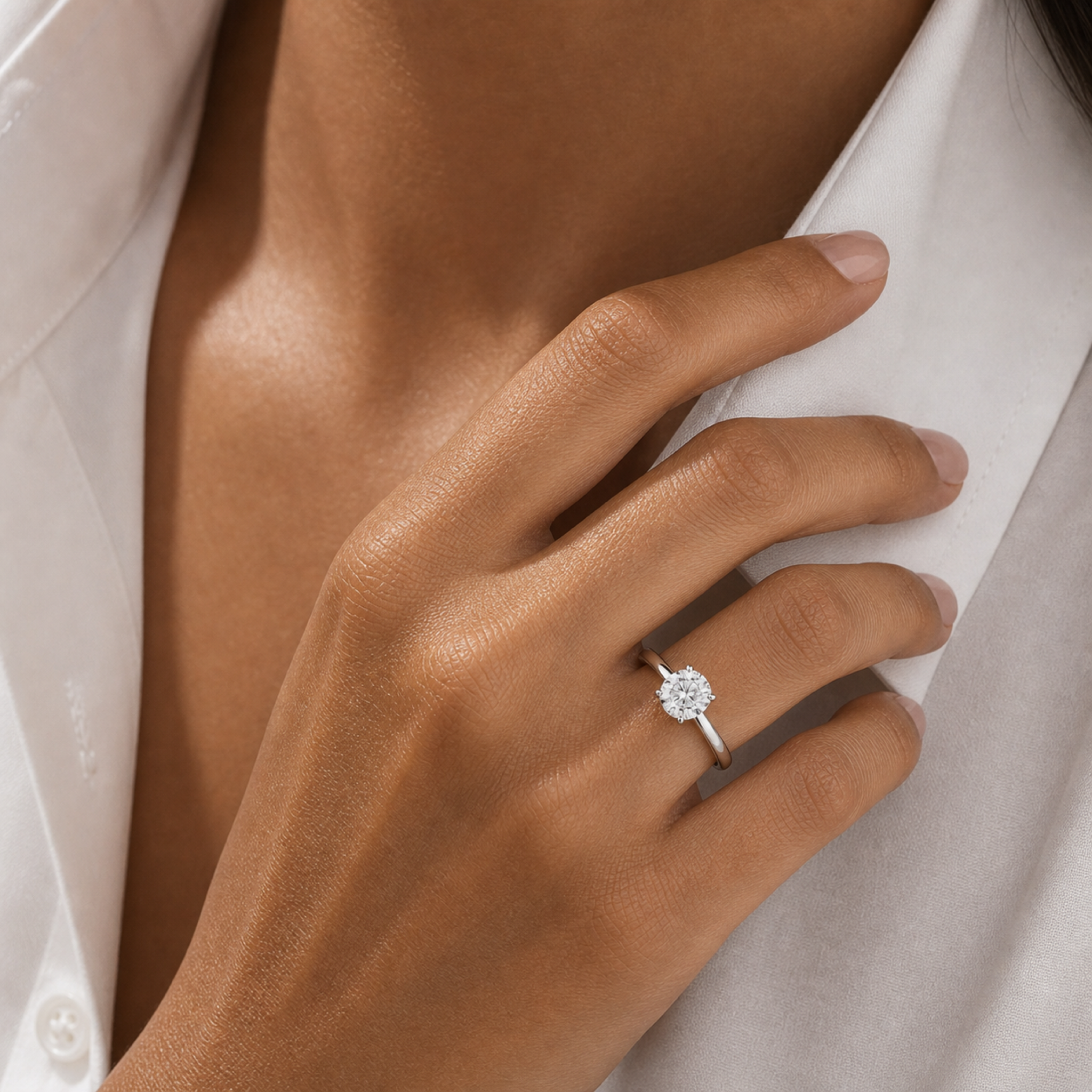


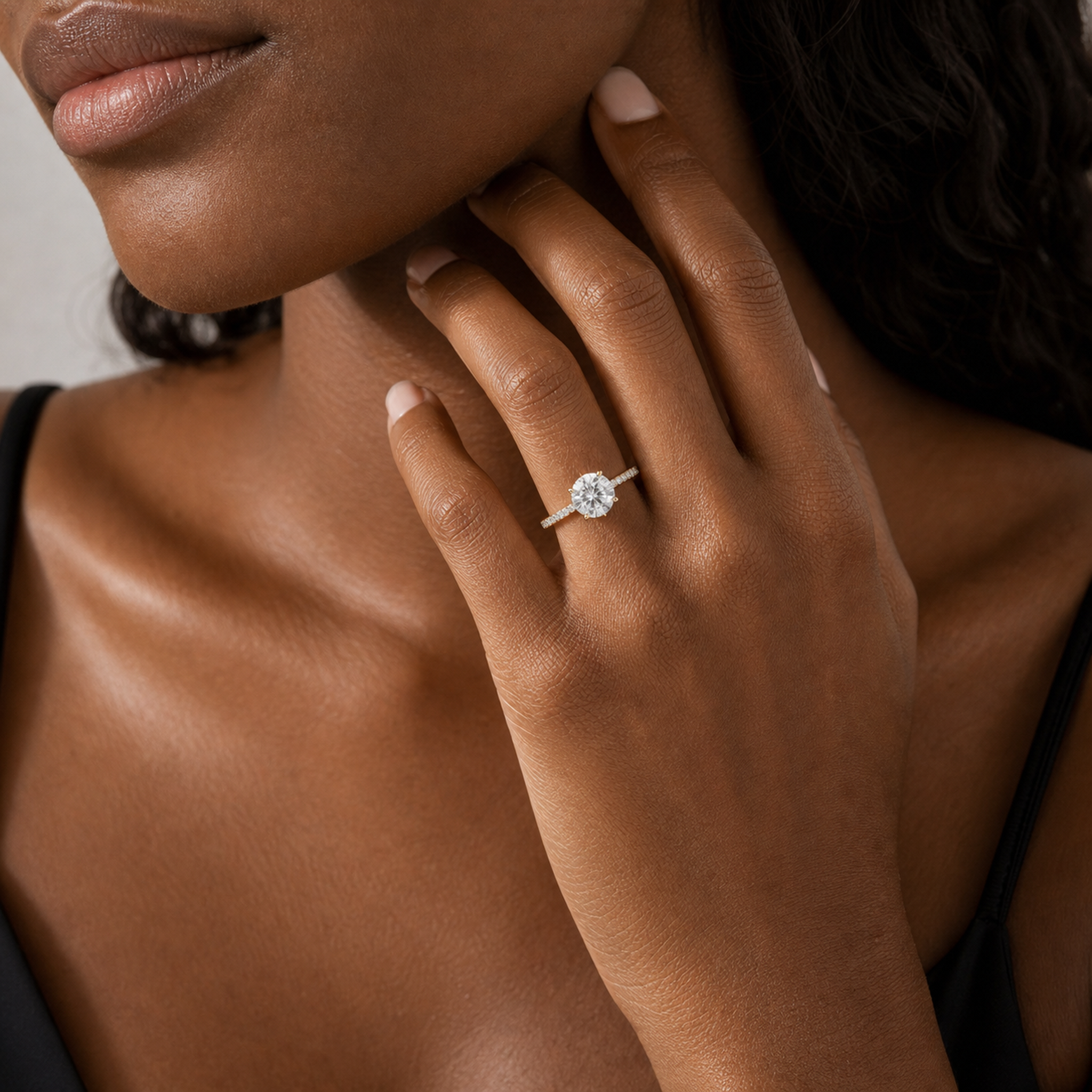

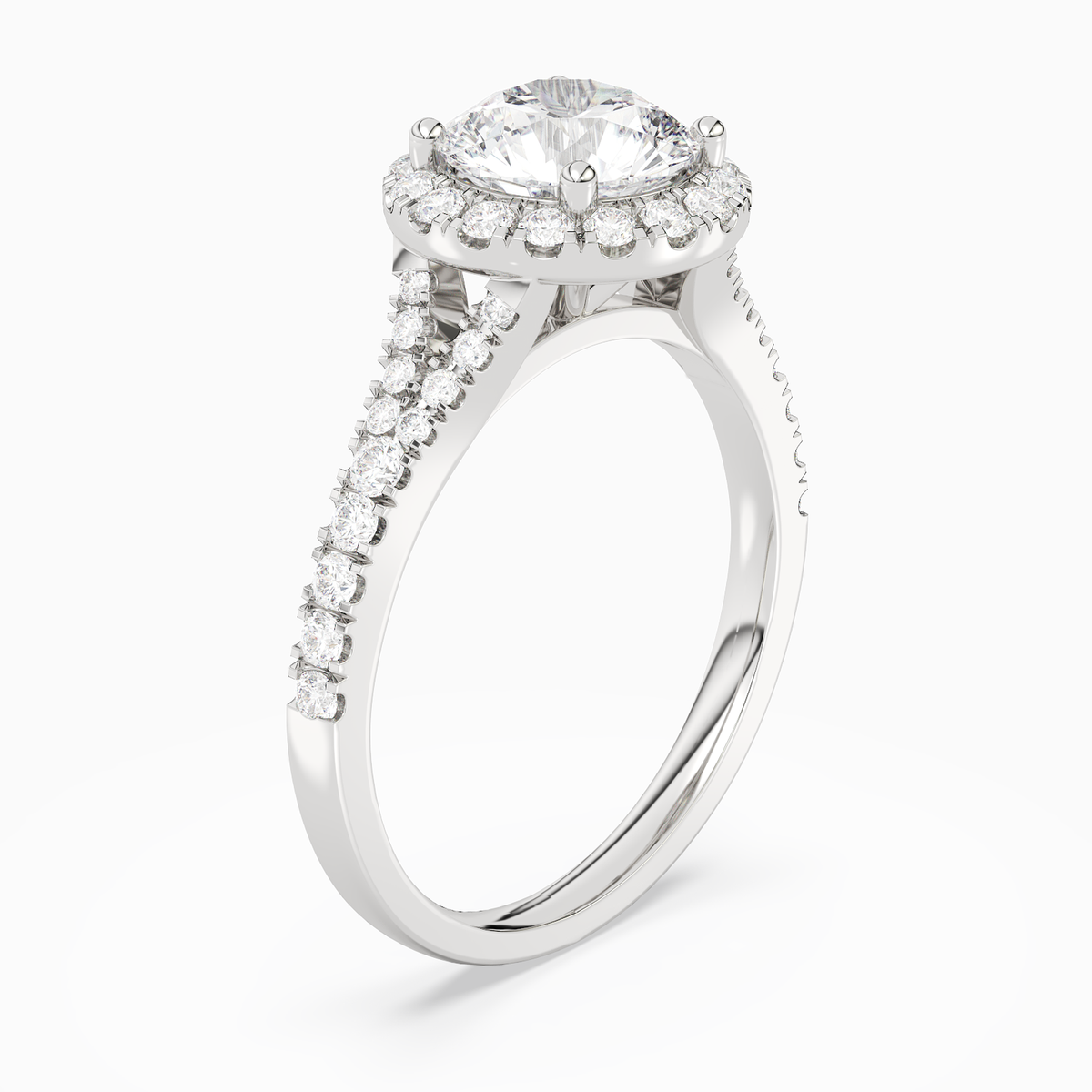


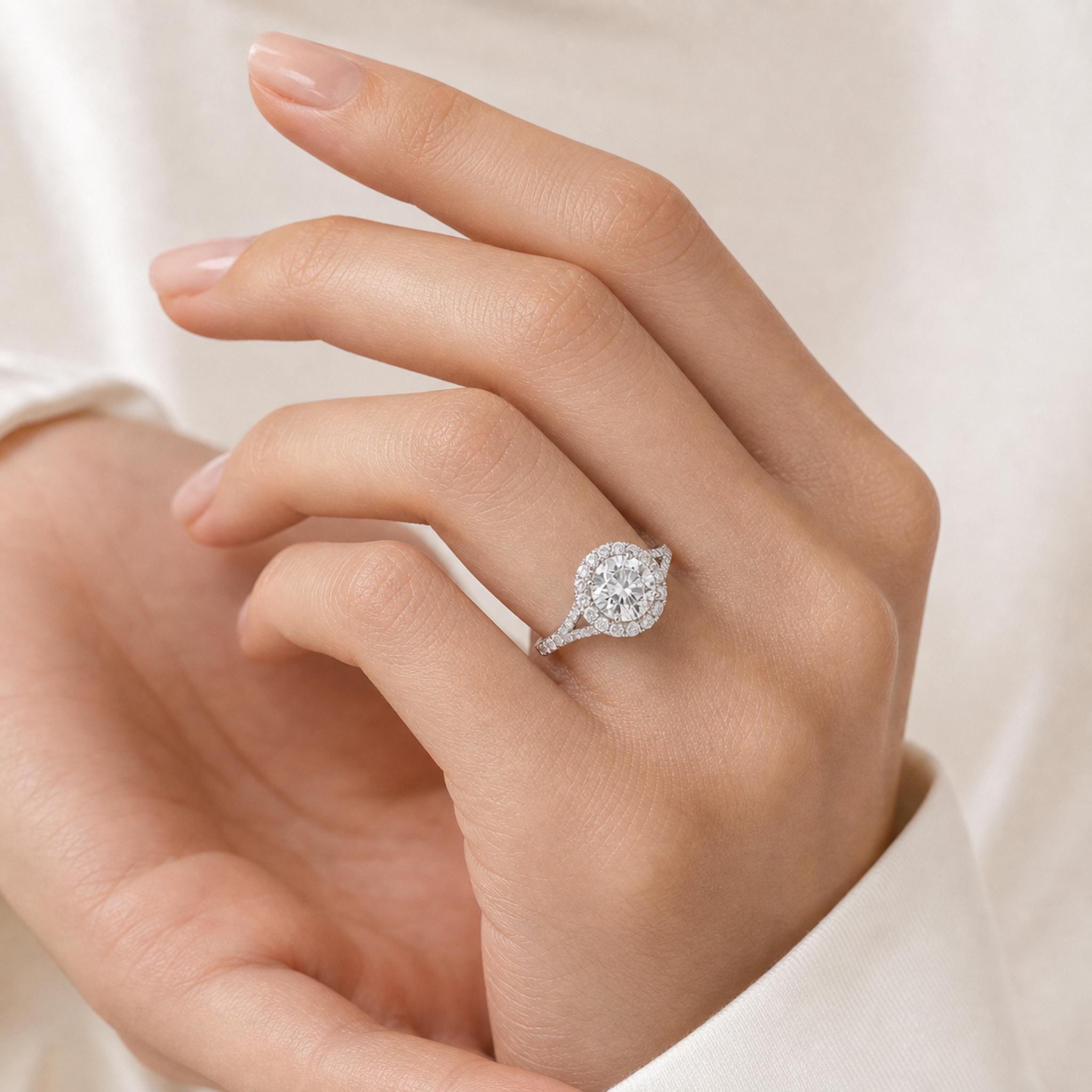

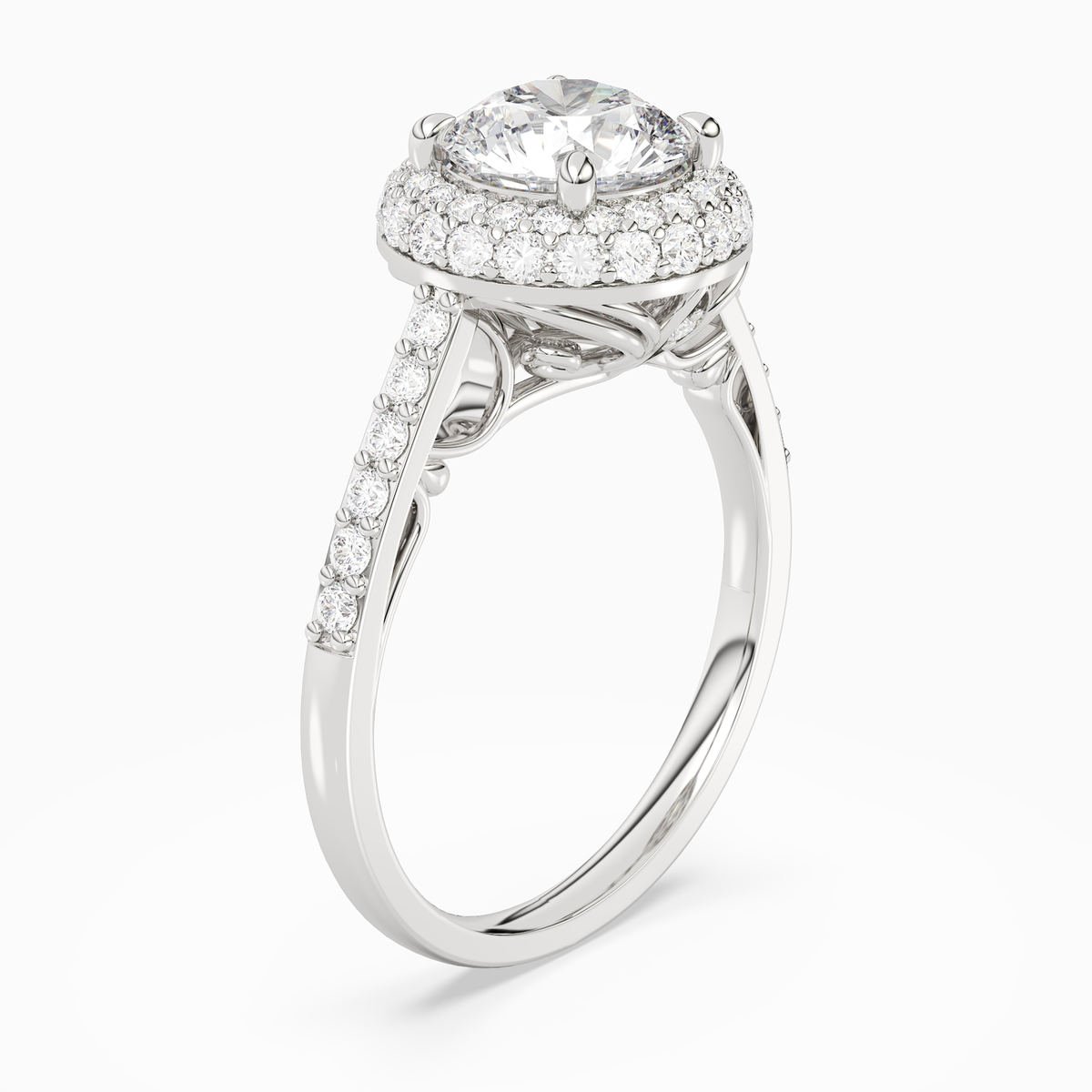

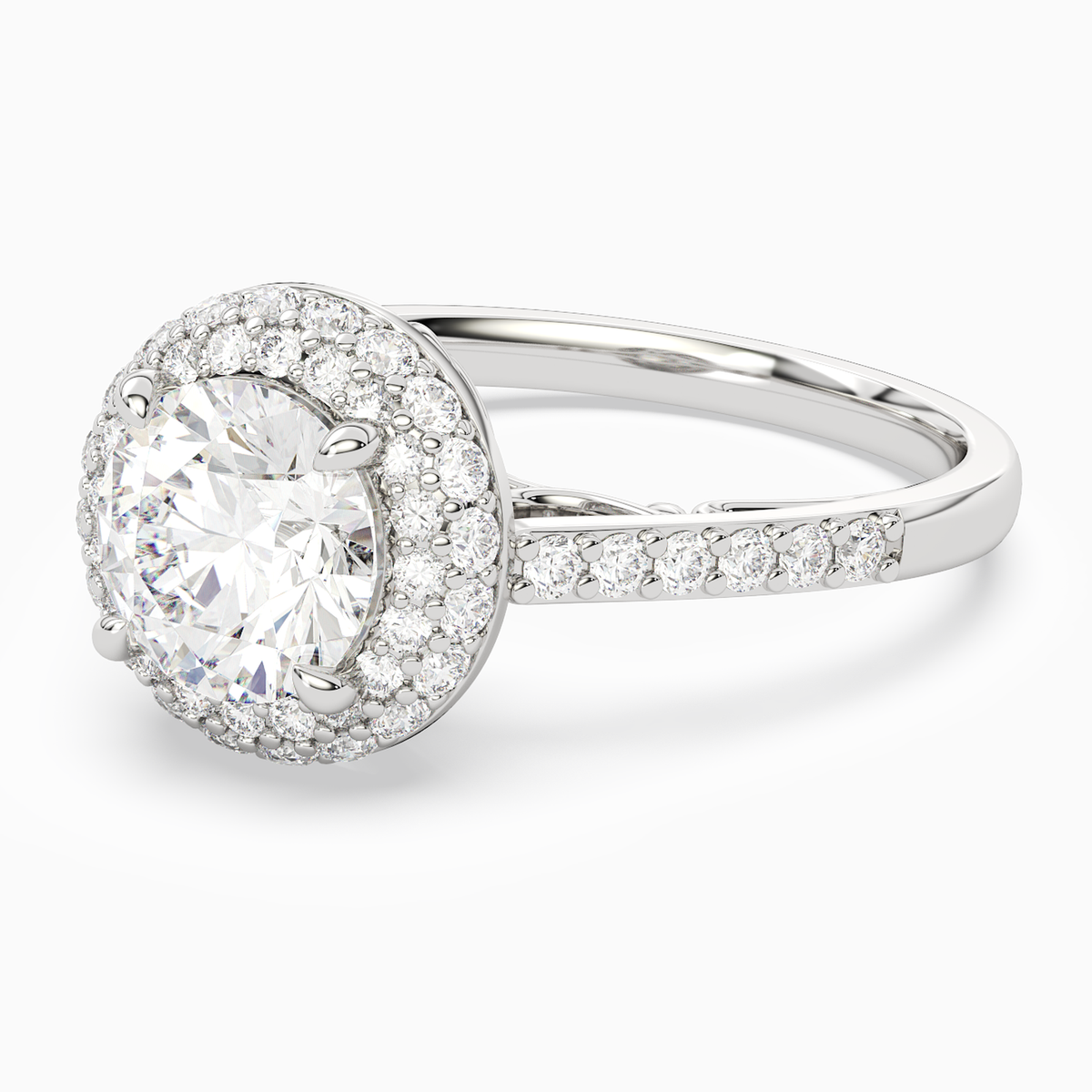
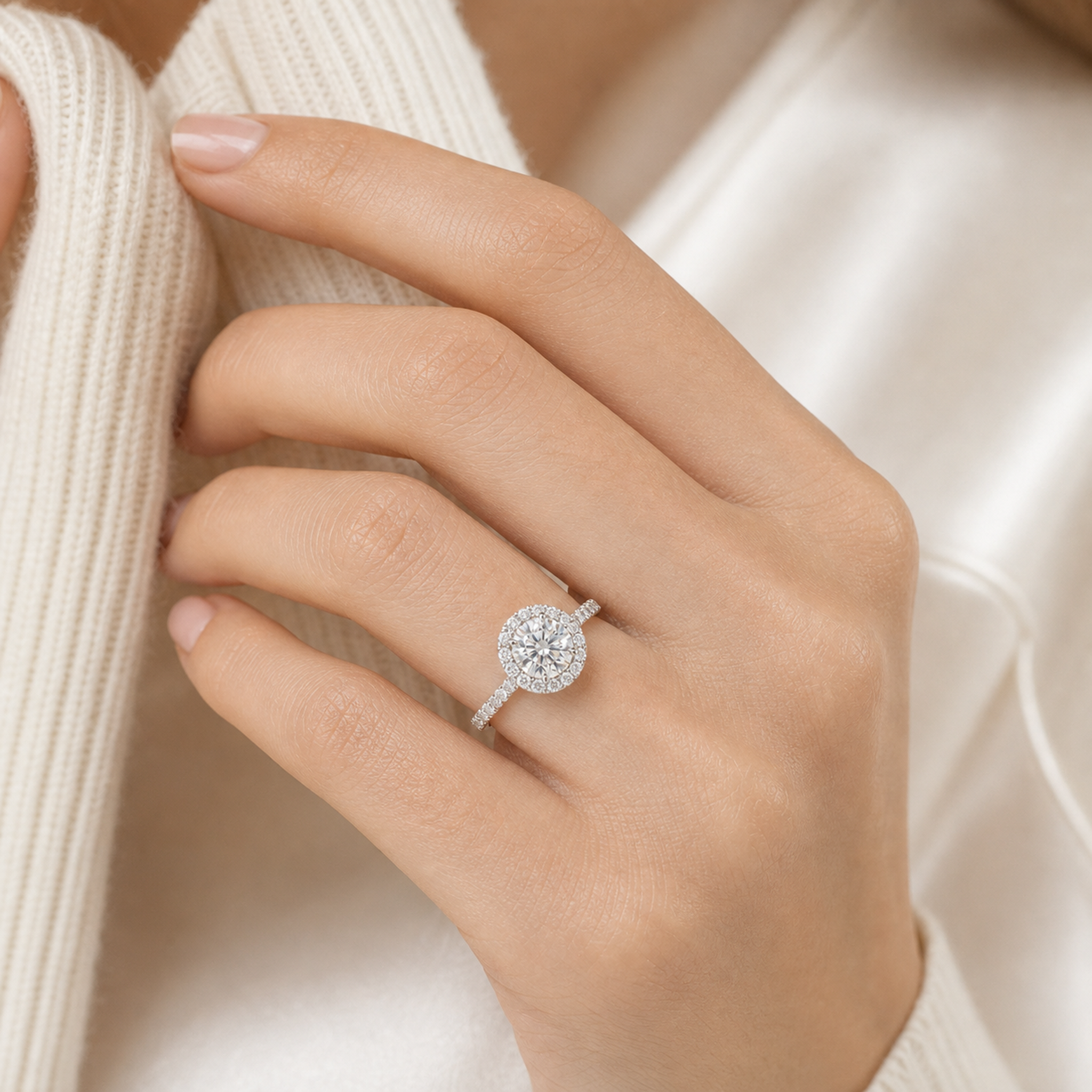

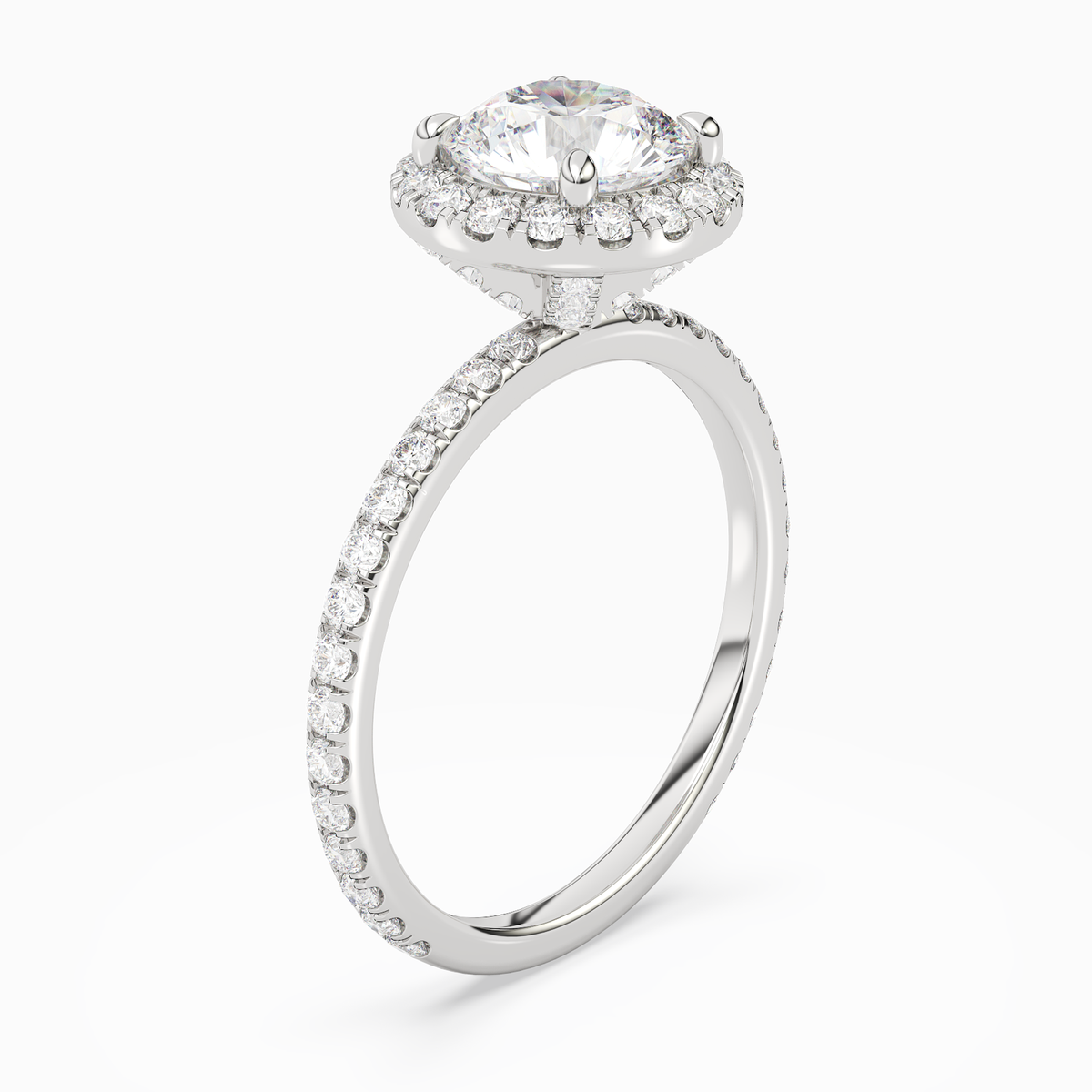


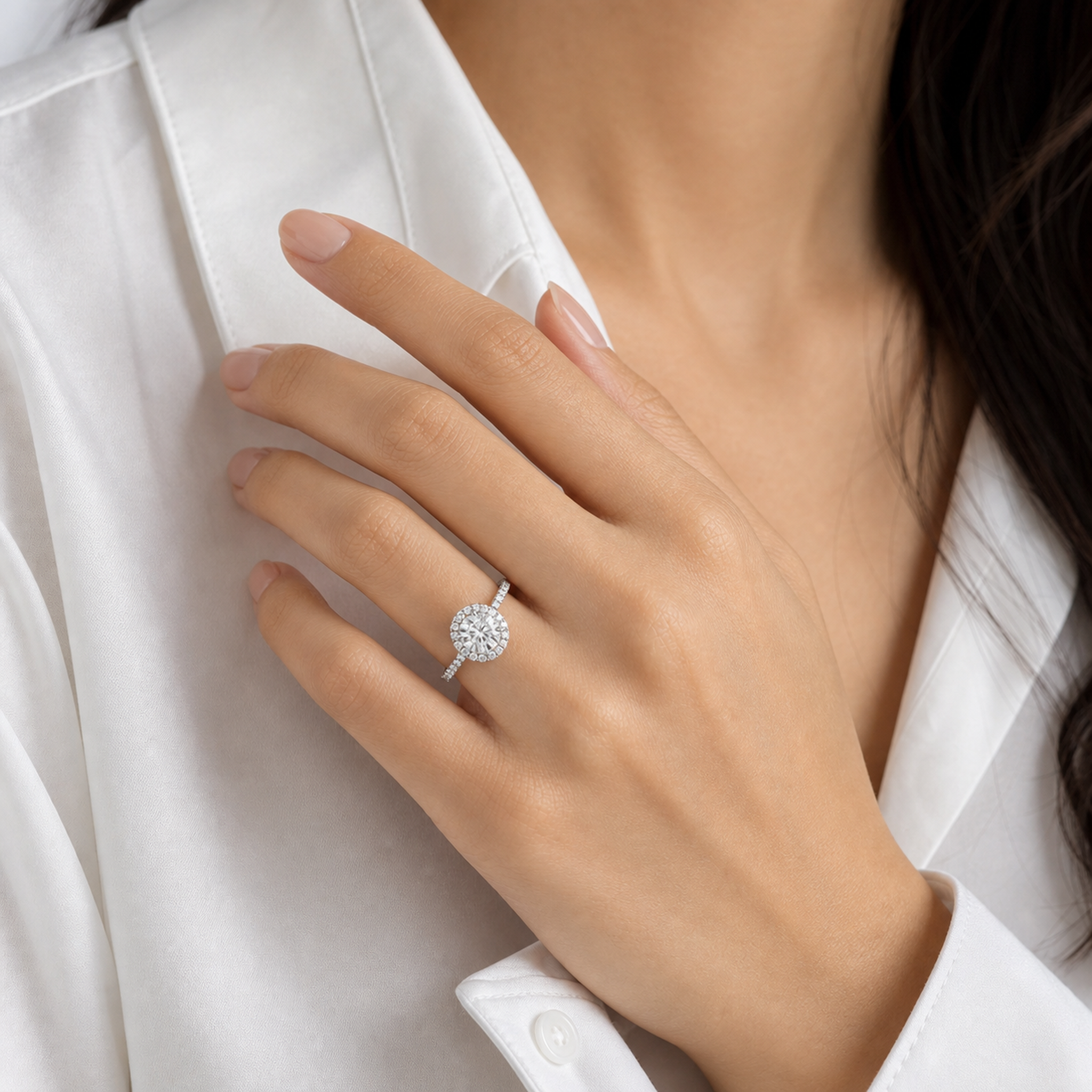


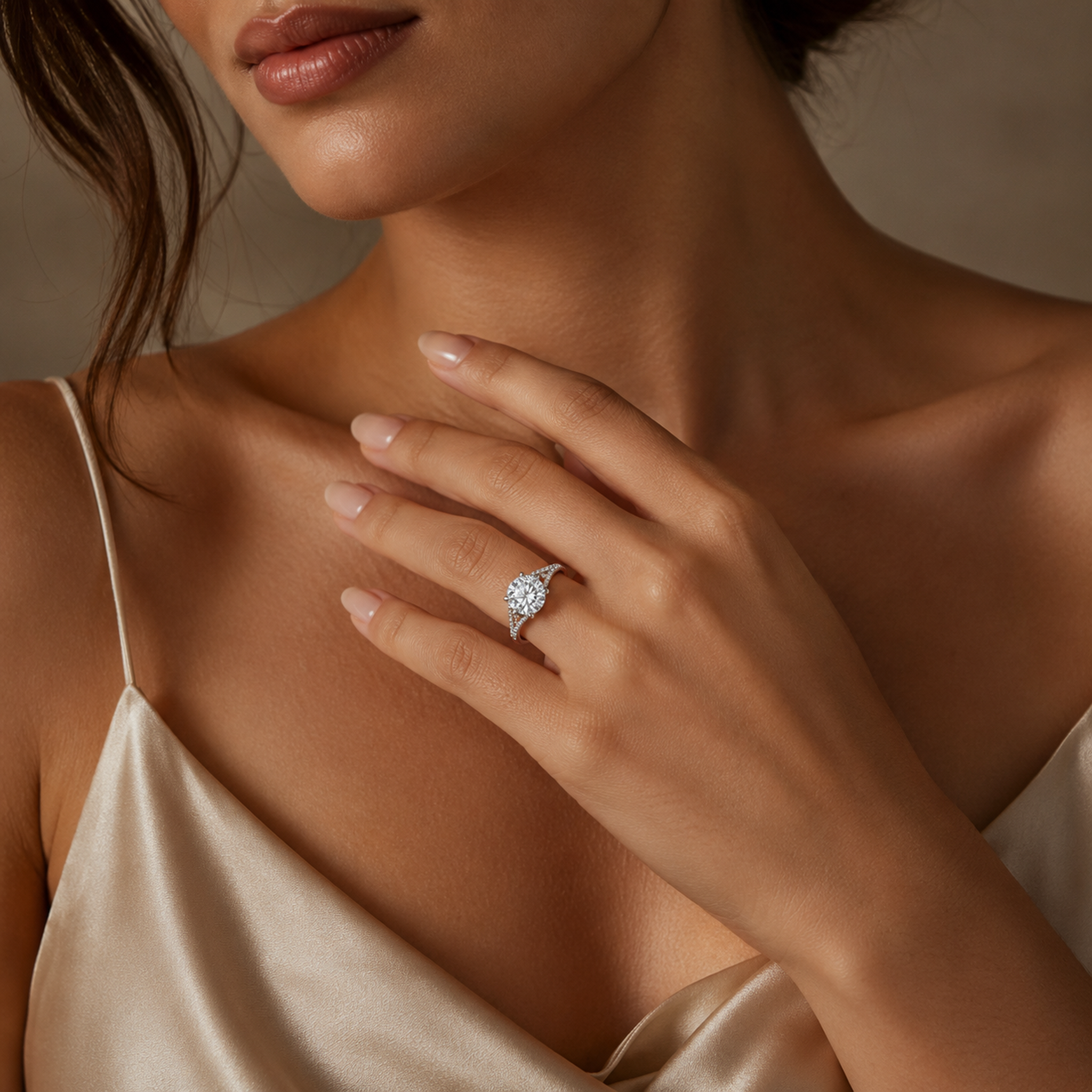


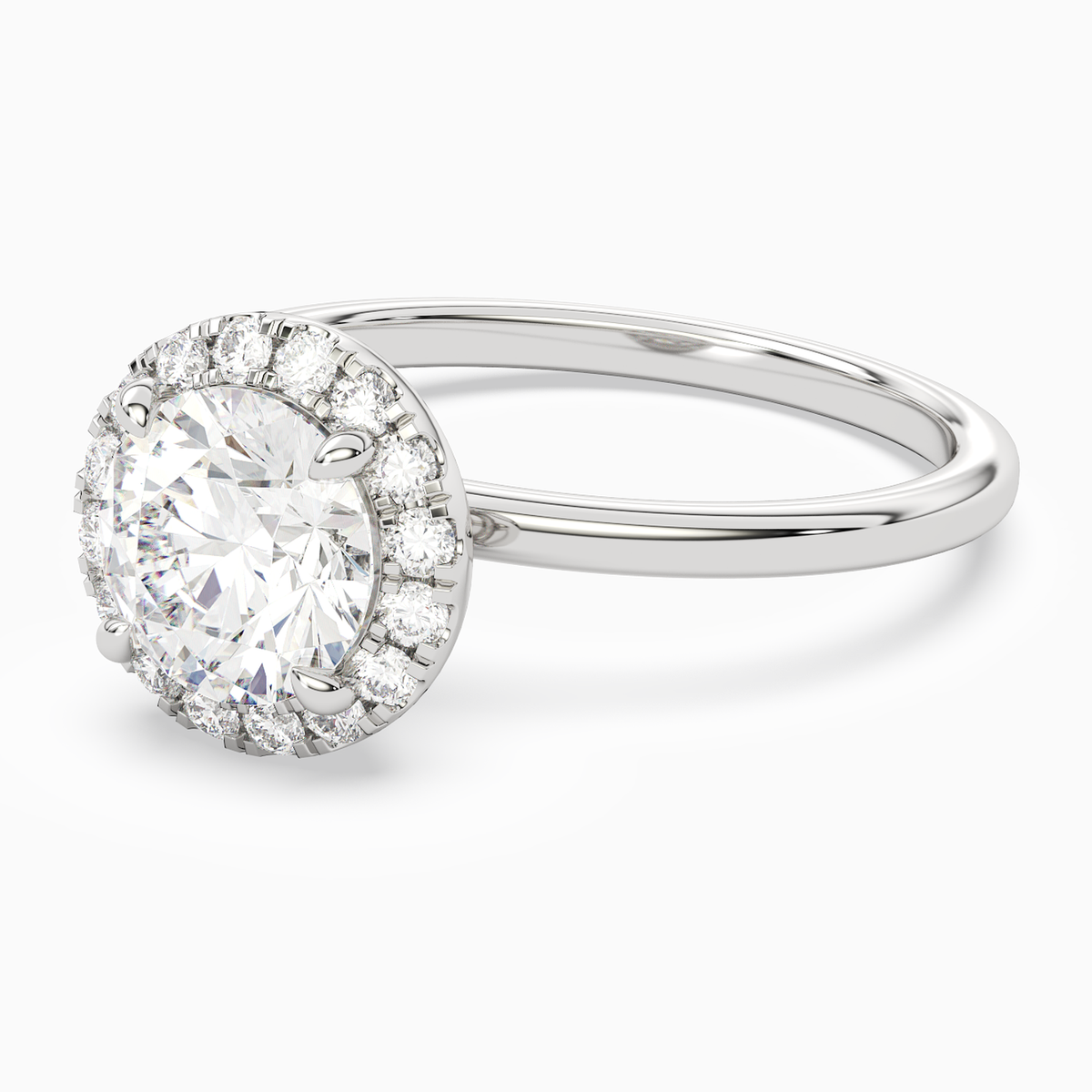
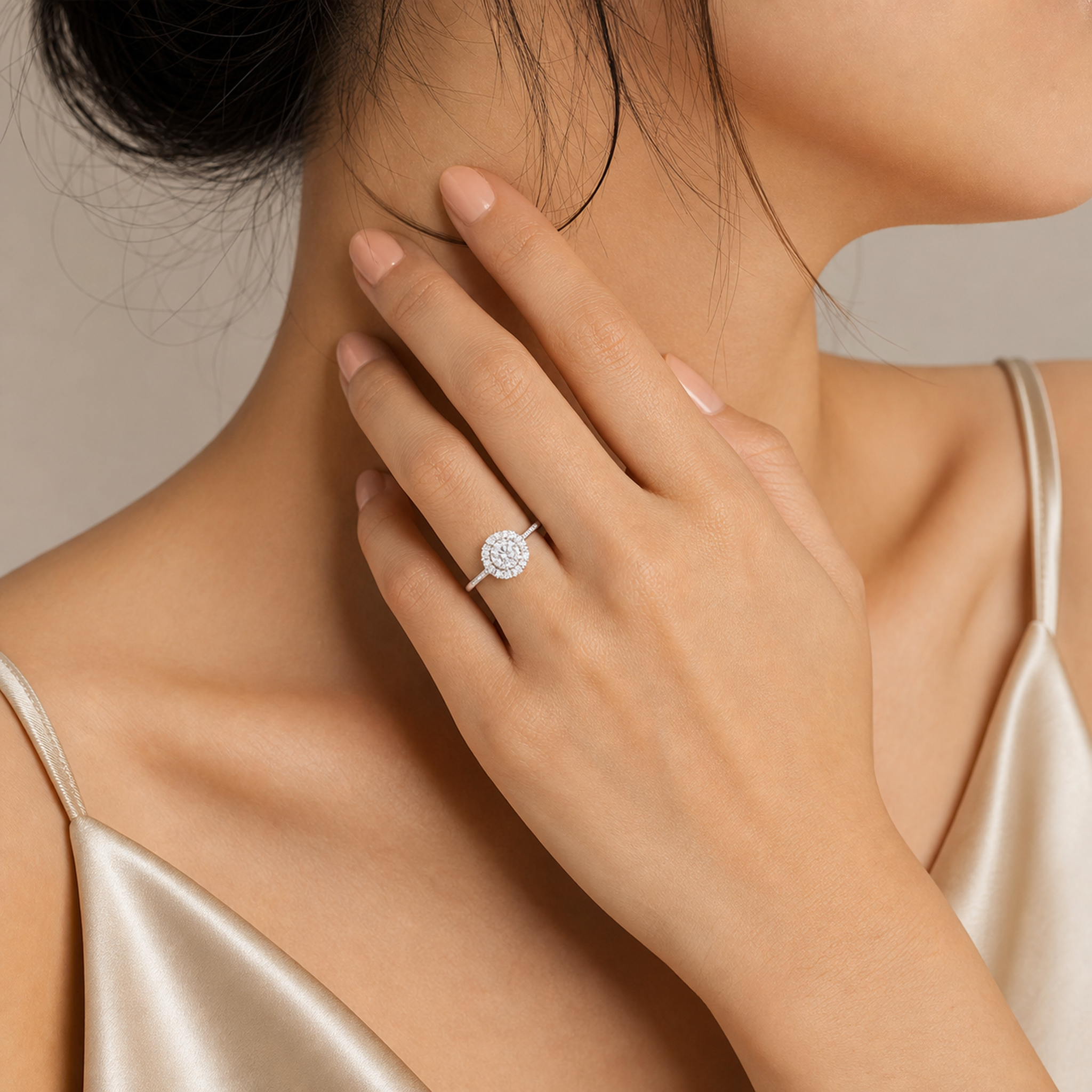


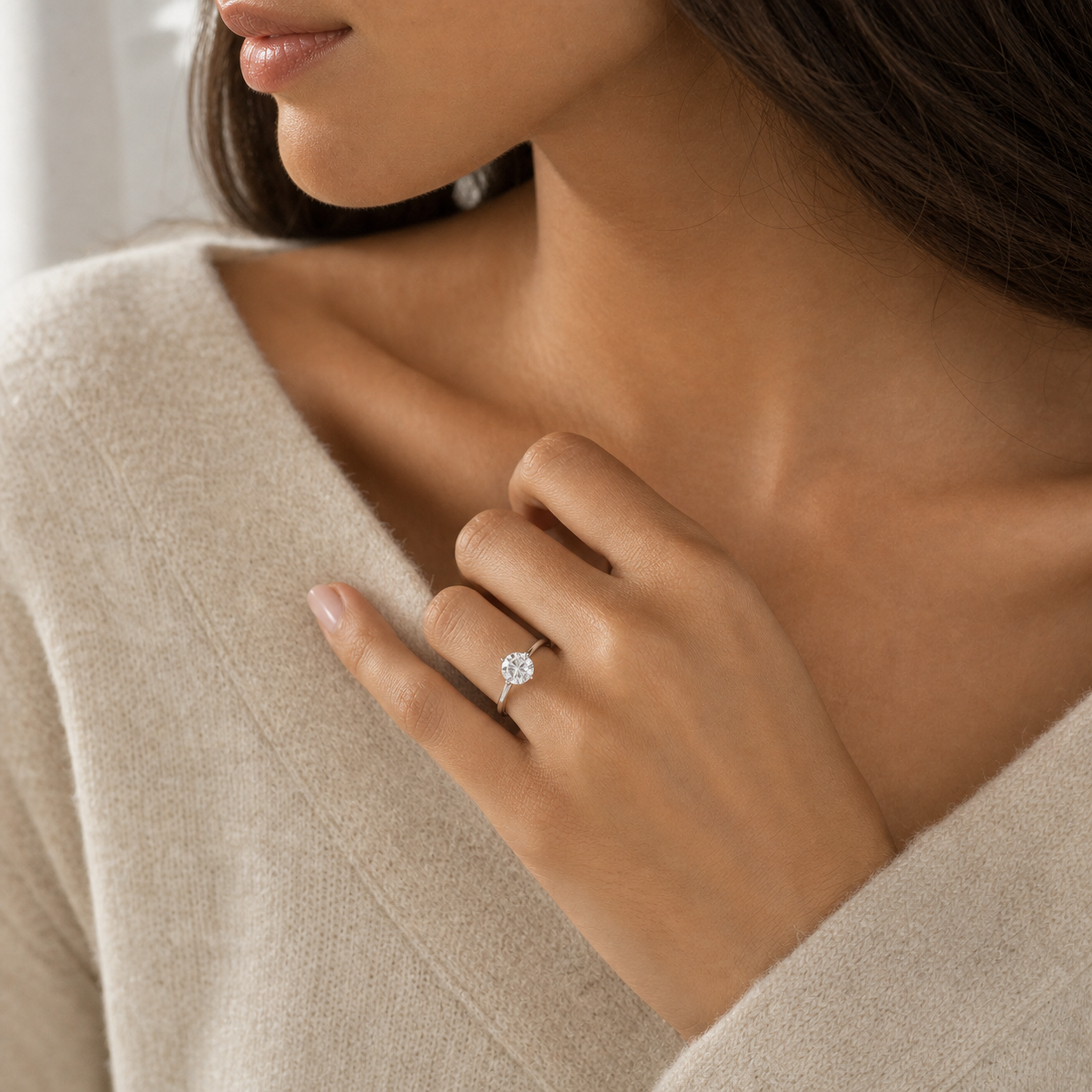


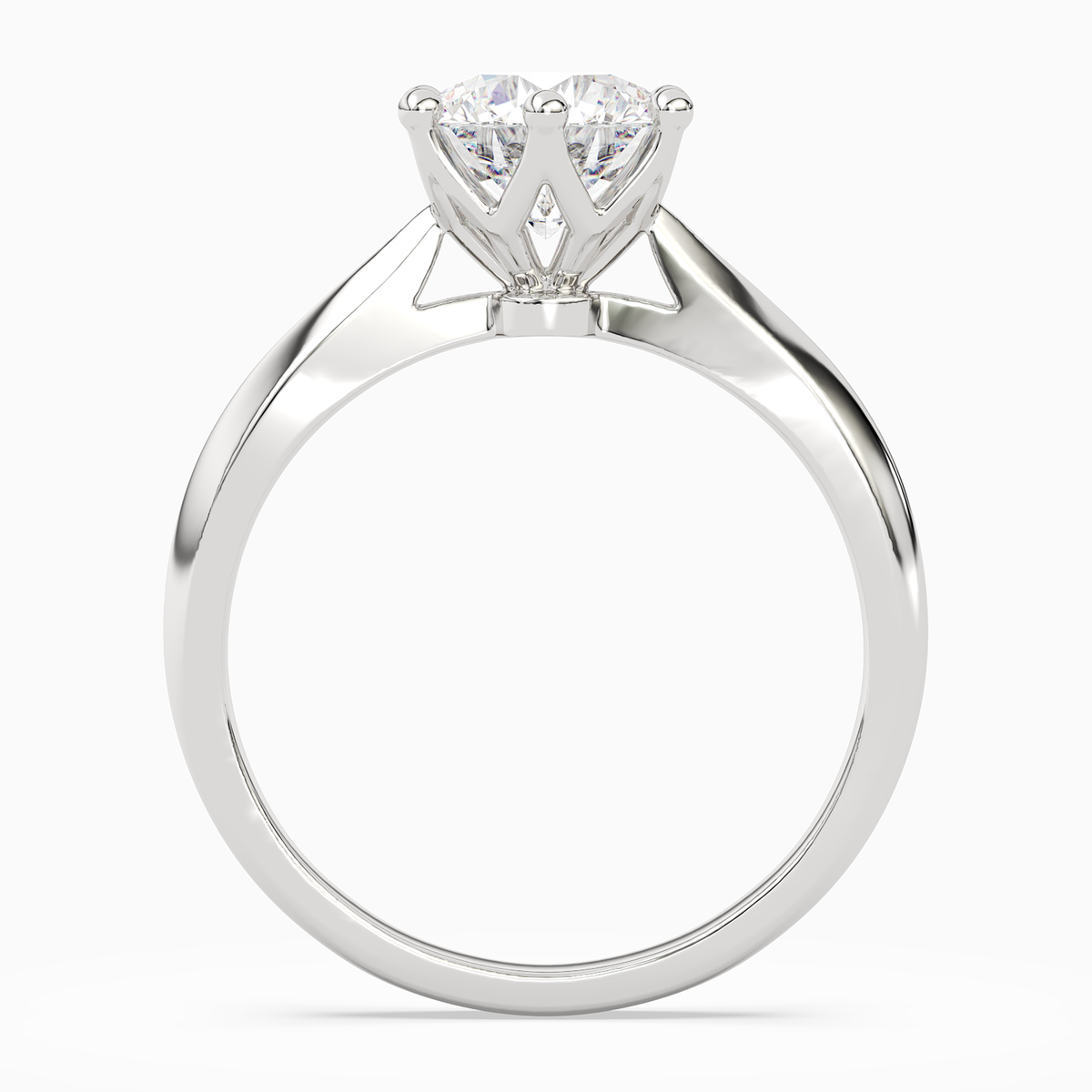

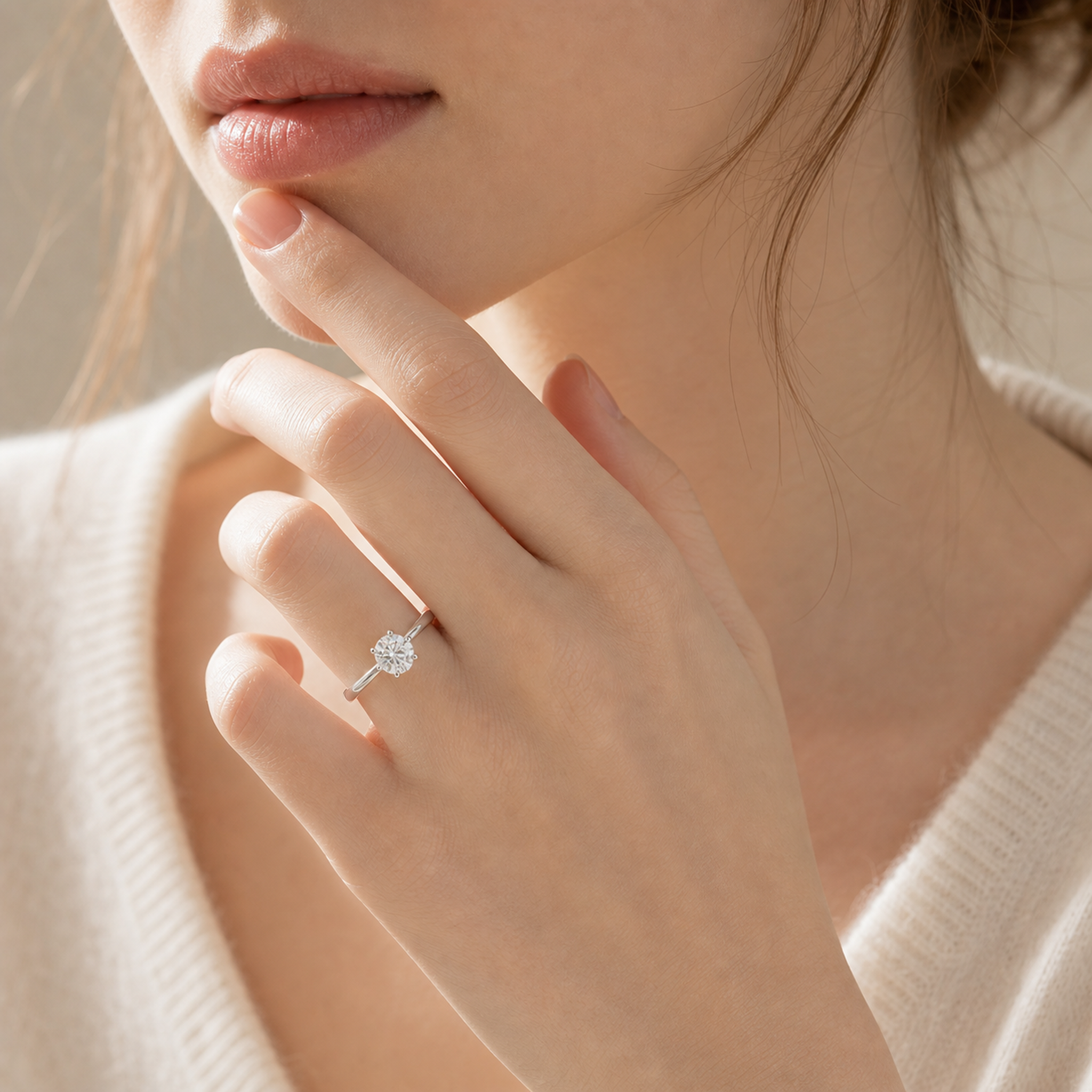


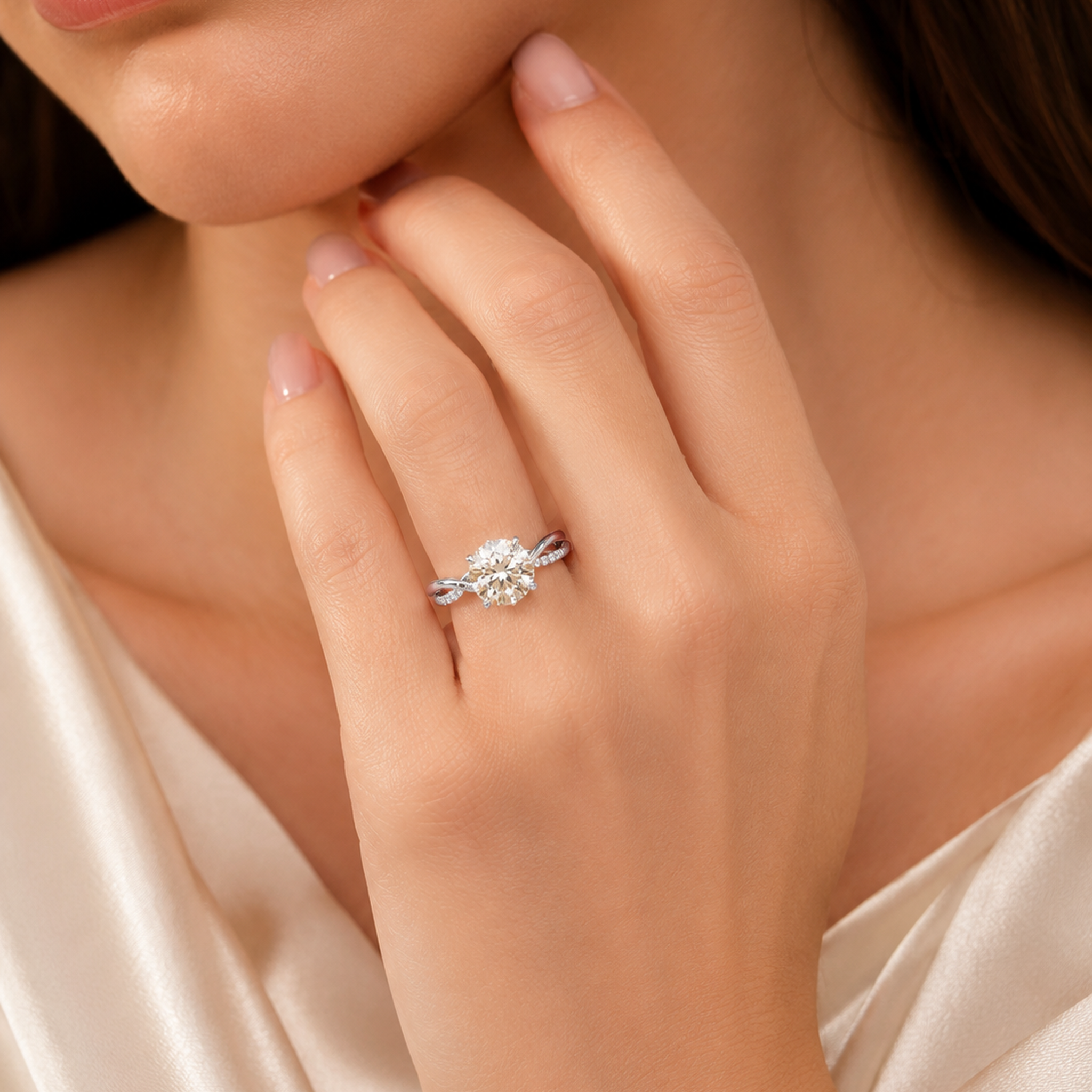


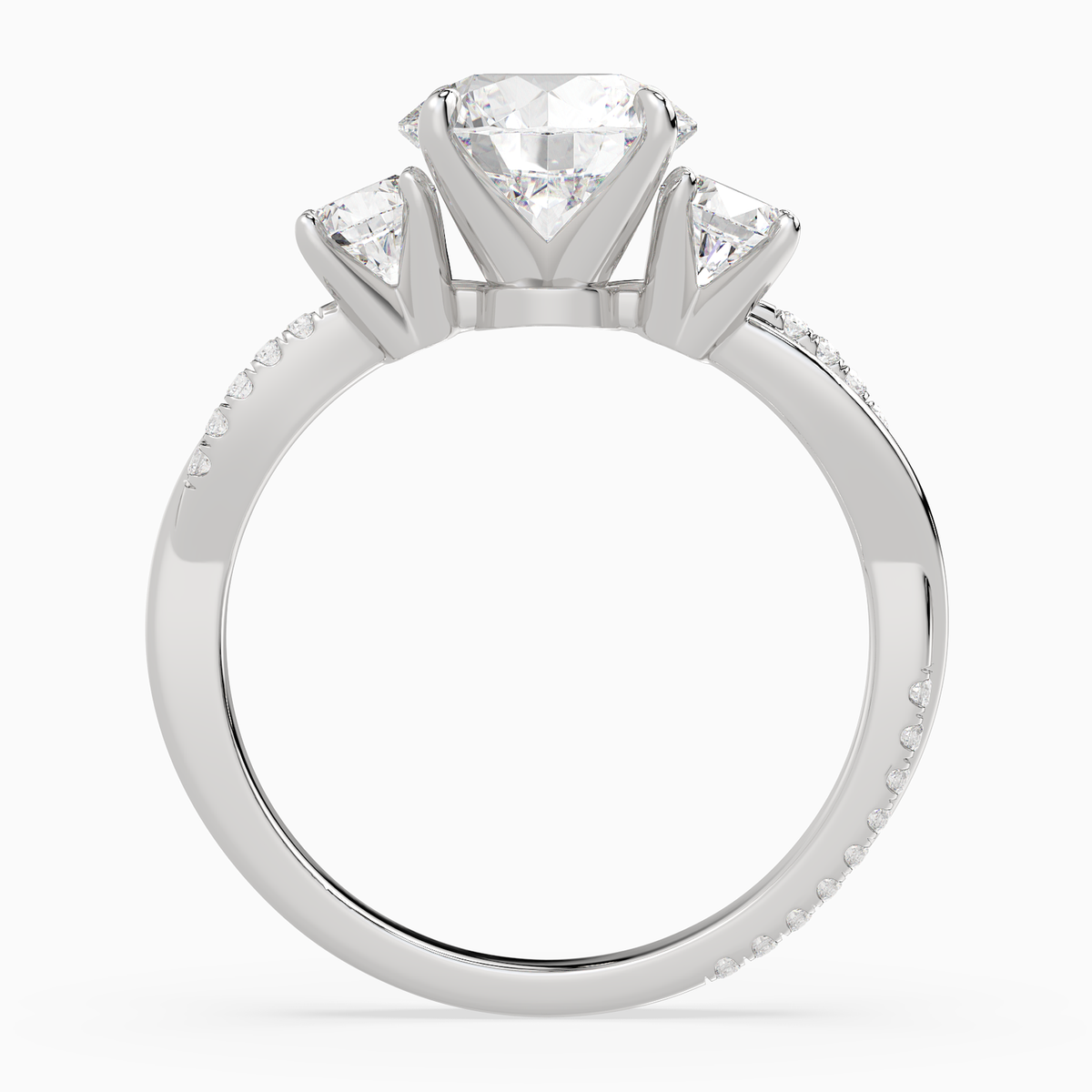

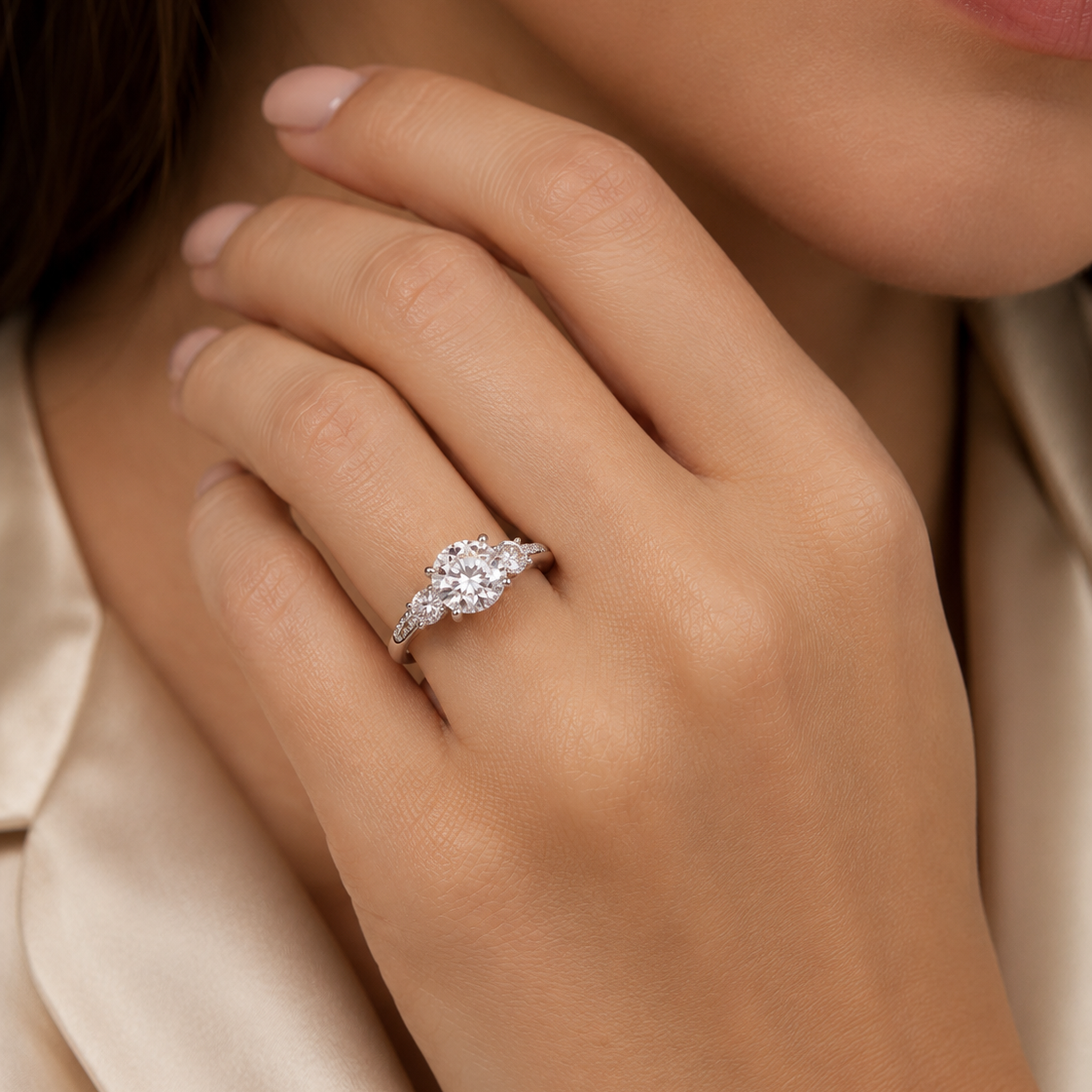


18K White Gold Round Diamond Engagement Rings: Quiet Color, Considered Substance
A round brilliant center brings a standardized facet arrangement into a complete circular outline. 18K White Gold surrounds that order with comparatively quiet color and a 75% gold composition. The setting may appear tonally continuous with the diamond, yet its prongs, basket, shoulders, and band retain physical and visual presence.
Fourteen current designs span seven Solitaires, four Halos, one Side Stone ring, and two Three Stone compositions. Because the same normalized designs exist across the six metals, this page is not a separate claim of exclusivity; it is the complete 18K White Gold view of those architectures.
Seventy-Five Percent Gold, Without a Prestige Script
An 18K gold alloy contains 75% gold. Its exact alloy, white tone, finish, rhodium use, hardness, sensitivity profile, and care remain product-specific. Higher gold content is a compositional fact, not proof that every 18K ring is more beautiful, durable, secure, or suitable than 14K White Gold or Platinum.
The material difference is easiest to judge in comparable structures. Look at the width of the band, amount of basket metal, prong scale, and surface area around a halo or side stones. A fine setting may show little visual difference, while broader or more articulated elements can make material presence clearer.
The Round Pattern Still Leads
Brightness, fire, and scintillation describe the diamond's face-up interaction with light. A white setting can provide a low-color background, but it cannot maximize sparkle or improve the independently graded center. The ordered contrast pattern should be judged in the diamond itself, under more than one ordinary lighting condition when possible.
Eligible standard round brilliants may receive an overall cut grade based on appearance, design, and craftsmanship. That shared language remains more precise than describing every round center as iconic or unmatched. The report narrows the field; diameter, pattern, and observation resolve the selected center within the ring.
Tonal Continuity Must Still Reveal Hierarchy
A Solitaire isolates the circle, making prongs and basket proportion prominent. A Halo repeats or expands its perimeter. Side Stone and Three Stone structures broaden the composition. White metal can connect these elements visually, but scale and spacing must still show which stone or boundary carries priority.
The band's approach also matters. Cathedral shoulders rise toward the center, knife edges narrow the visual line, bypass forms introduce motion, and vines or split shanks create intervals. Tonal continuity is successful when these transitions remain intelligible rather than dissolving into one bright field.
Compare 18K White Gold on Its Own Terms
Compared with 14K White Gold, the reliable distinction is gold content: 75% rather than approximately 58.3%. Shade, finish, surface behavior, and maintenance require product-level confirmation. Compared with Platinum, 18K White Gold remains a gold alloy; Platinum is naturally white and notably denser.
None of these materials changes carat weight, diameter, color grade, or cut grade. Use those diamond facts alongside the finished ring's mass, profile, band width, accent layout, and contact line. A material comparison is useful only when it does not replace configuration-level judgment.
The Complete Ring Is the Decision Surface
Wedding-band fit depends on the lowest parts of the basket, halo, shoulders, and side structures. A shared white appearance does not guarantee identical finish or a flush stack. Care should respond to the exact alloy, finish, diamonds, and construction rather than a fixed schedule.
Burvonti pairs responsibly sourced, independently graded lab-grown diamonds with settings calibrated through proportion and human judgment. Custom possibilities may refine center specifications, prongs, basket, band, accents, metal, or engraving where feasible. In 18K White Gold, restraint comes from resolving material presence rather than pretending it is absent.
Frequently Asked Questions
What is the purpose of this 18K White Gold child page?
It explains how a 75% gold white-metal setting frames the round brilliant's ordered light and complete circle across 14 verified designs.
How much gold is in 18K White Gold?
It contains 75% gold.
Is 18K White Gold always rhodium plated?
Do not assume one finish. Confirm the selected product's construction and surface treatment.
Is 18K White Gold better than 14K White Gold?
Neither is universally better. Gold content differs, while alloy, finish, structure, feel, care, and budget remain relevant.
Does it make a round diamond sparkle more?
No. The setting supplies visual context; the diamond's cut and viewing conditions determine light performance.
What designs are included?
The current page contains seven Solitaire, four Halo, one Side Stone, and two Three Stone structures.
Why compare the light-dark pattern?
Scintillation depends on a changing pattern of bright and dark areas. Uniform whiteness is not the goal.
Does an Excellent cut grade settle the choice?
It is a strong research-based signal, but diamonds within the grade can differ in pattern, dimensions, and visual balance.
How is face-up size assessed?
Compare carat weight with minimum and maximum diameter, depth, girdle, and the scale of the complete setting.
How does this differ from Platinum?
Platinum is naturally white and denser. 18K White Gold is a 75% gold alloy with product-specific finish and care.
Is it hypoallergenic?
A universal result should not be promised. Confirm the complete alloy if sensitivity is a concern.
Will a wedding band fit flush?
Not automatically. Basket, halo, shoulders, side stones, height, and contact points determine fit.
Can Burvonti customize the configuration?
Custom possibilities may include center specifications, prongs, basket, accents, band, metal, or engraving, subject to feasibility.