
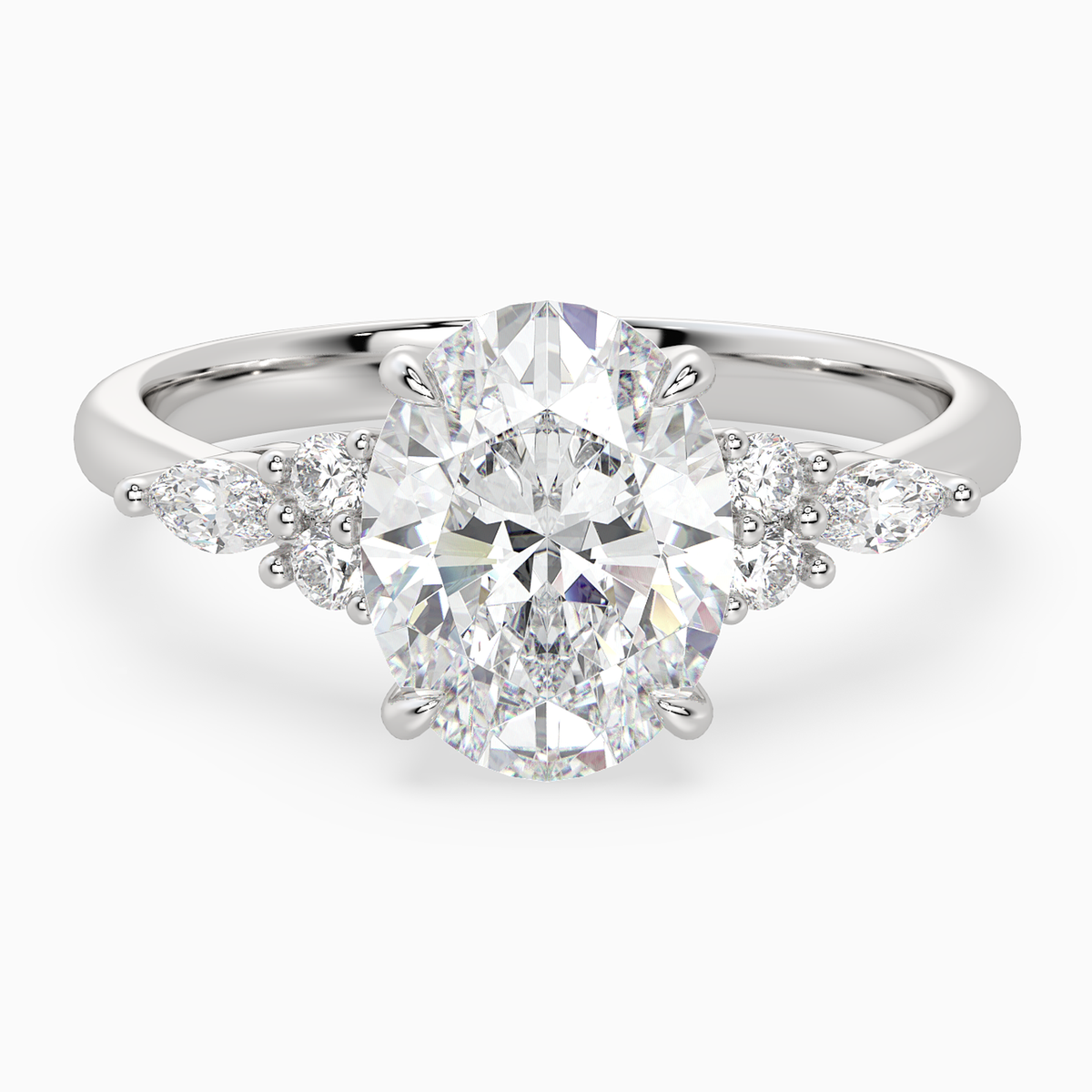


Round Diamond Engagement Rings in 14K Rose Gold
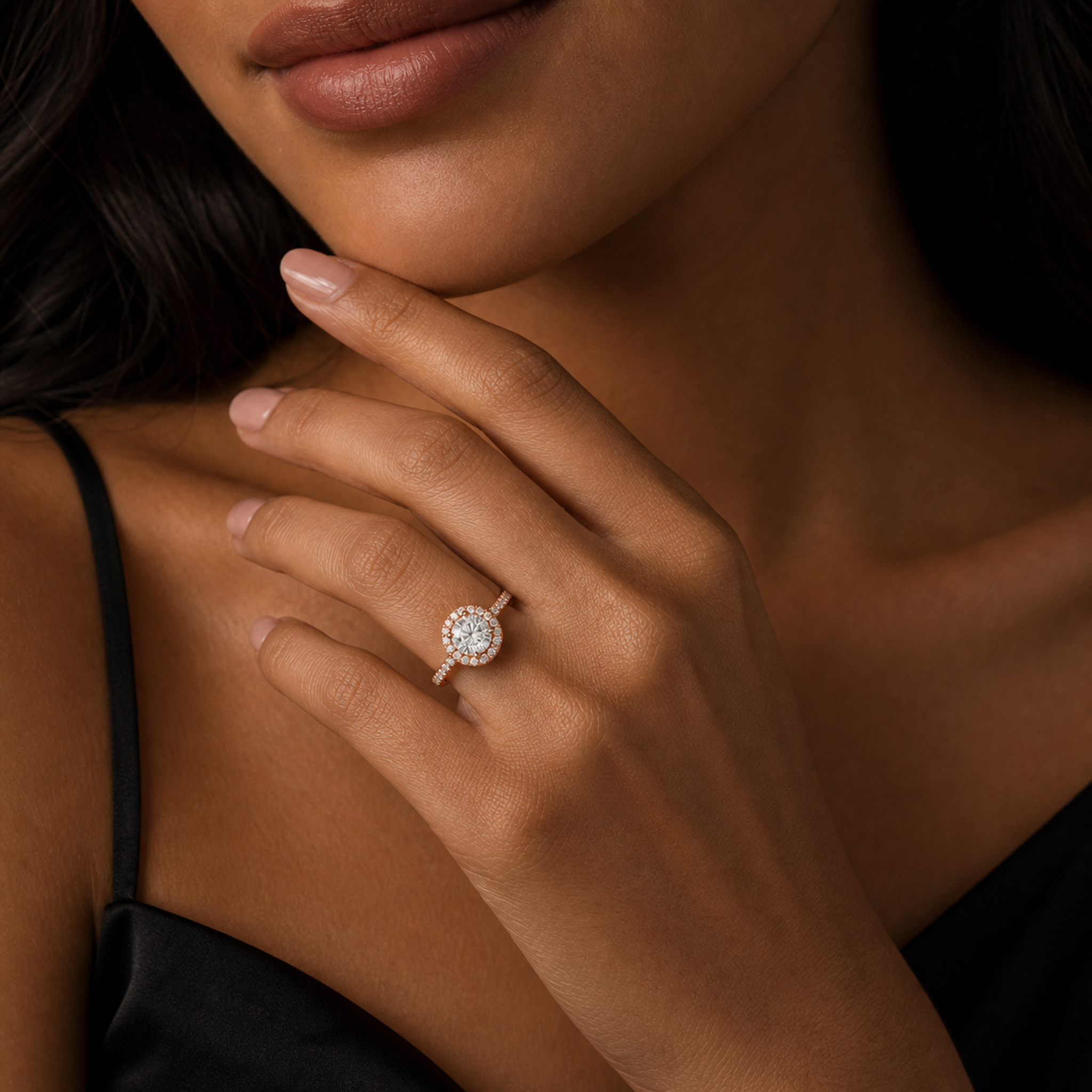
A complete circle, warmed at the edge. 14K rose gold gives round brilliant centers a blush boundary while preserving measured symmetry.


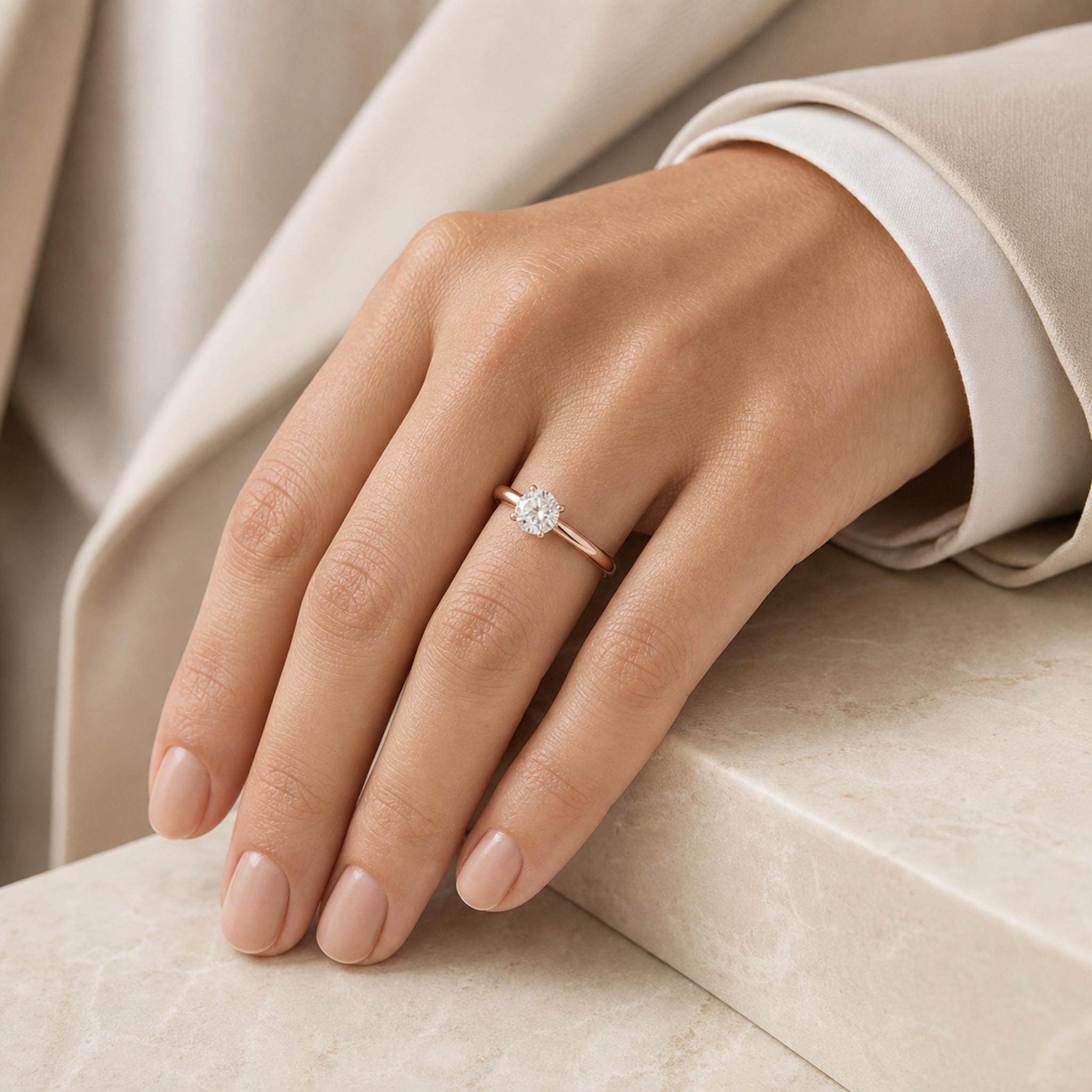


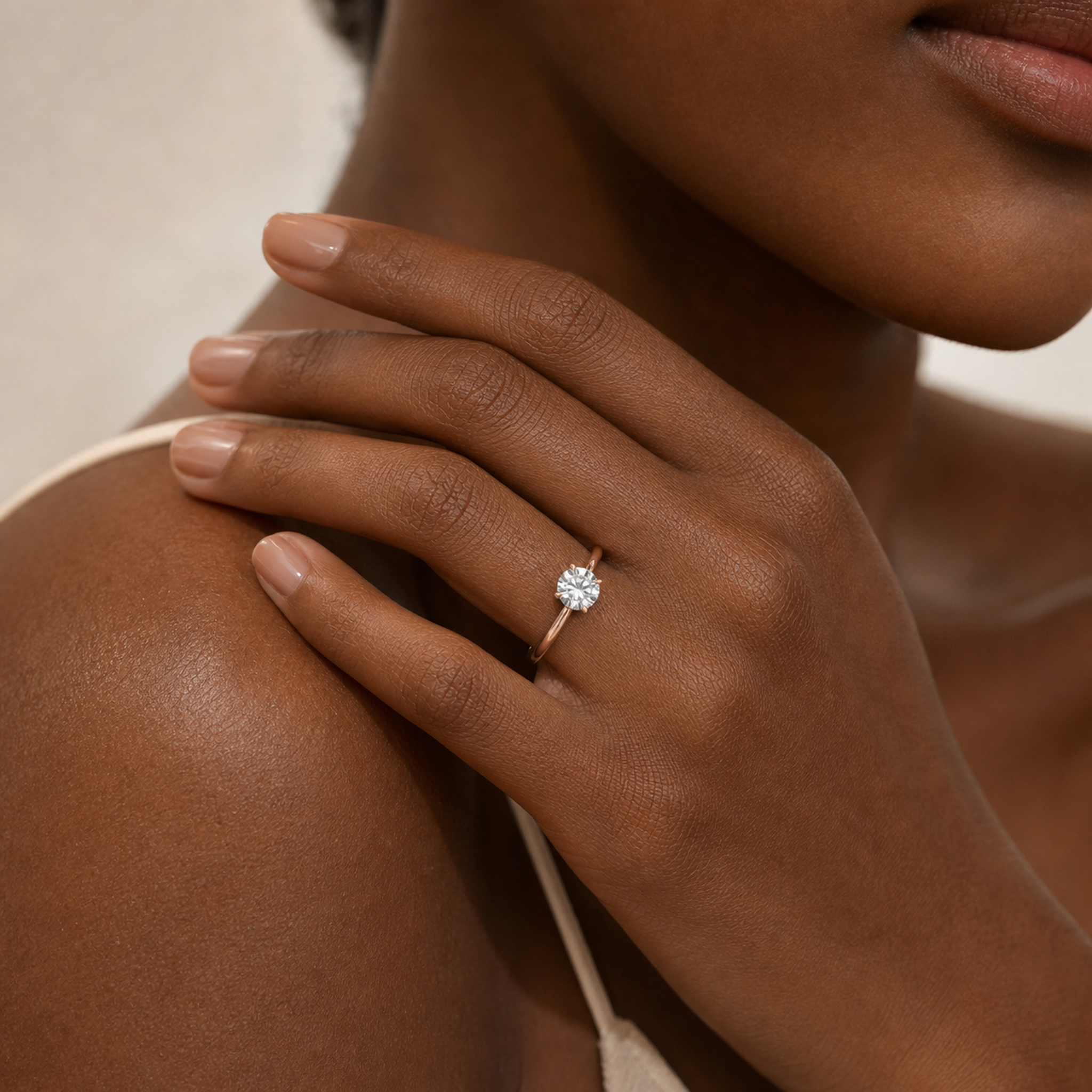


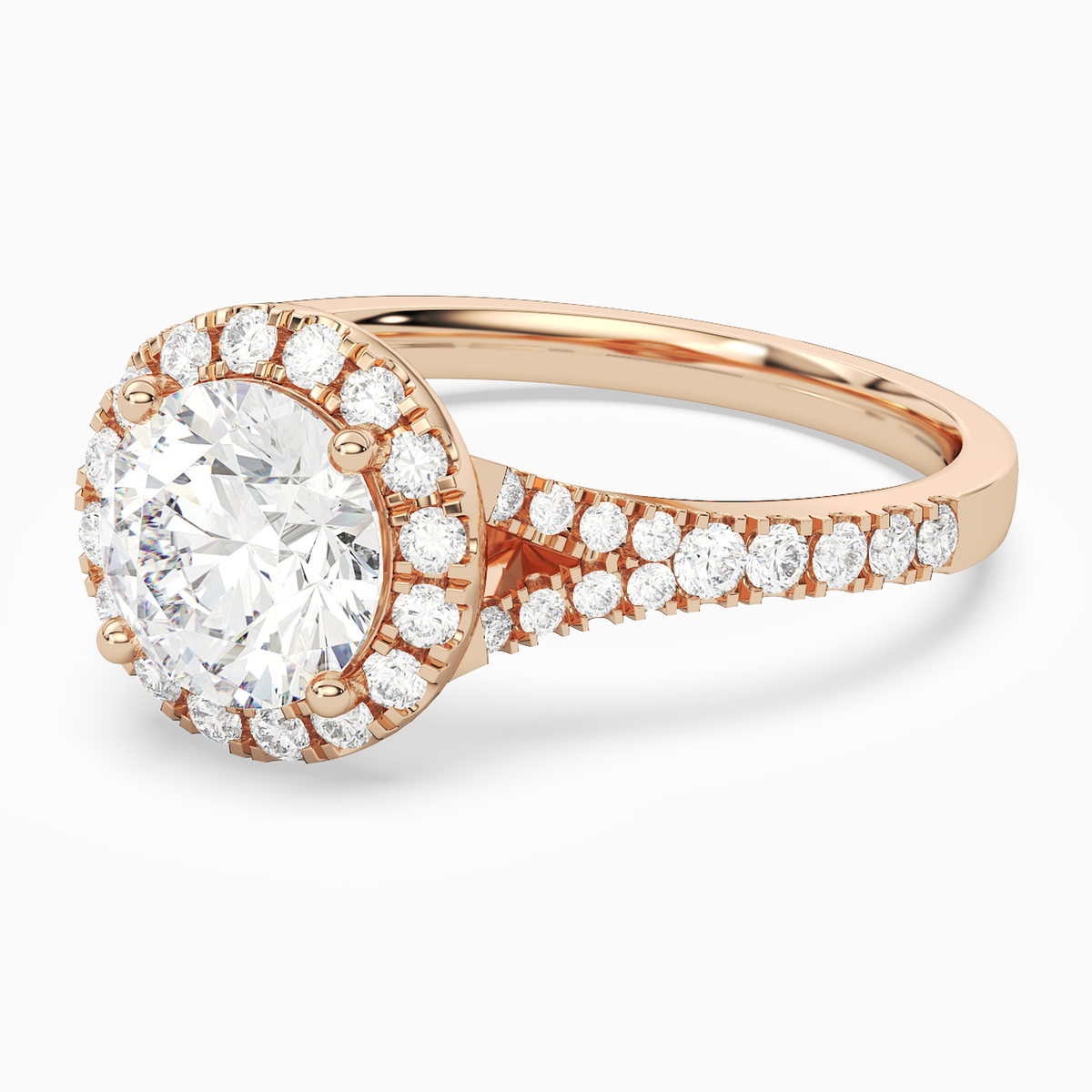
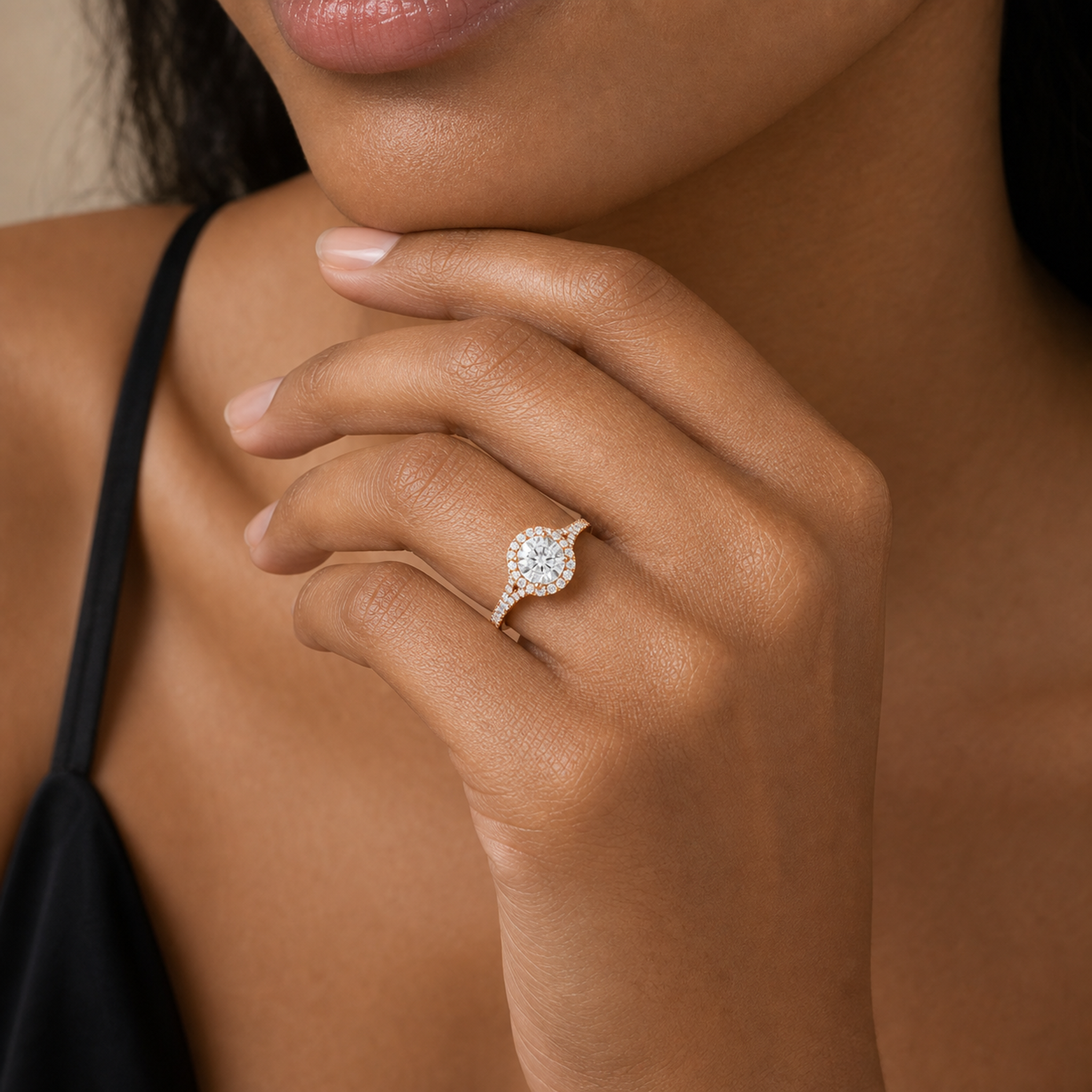


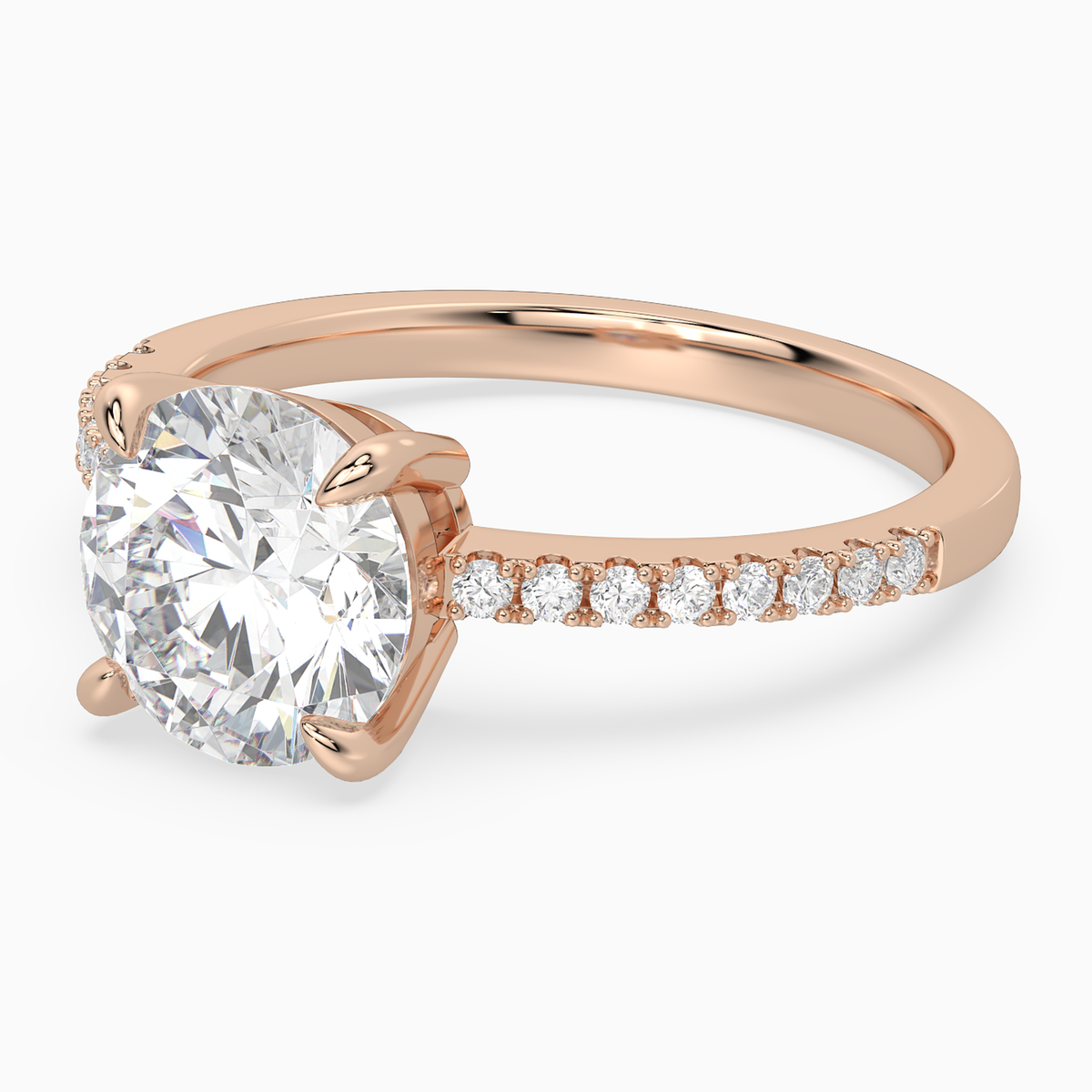
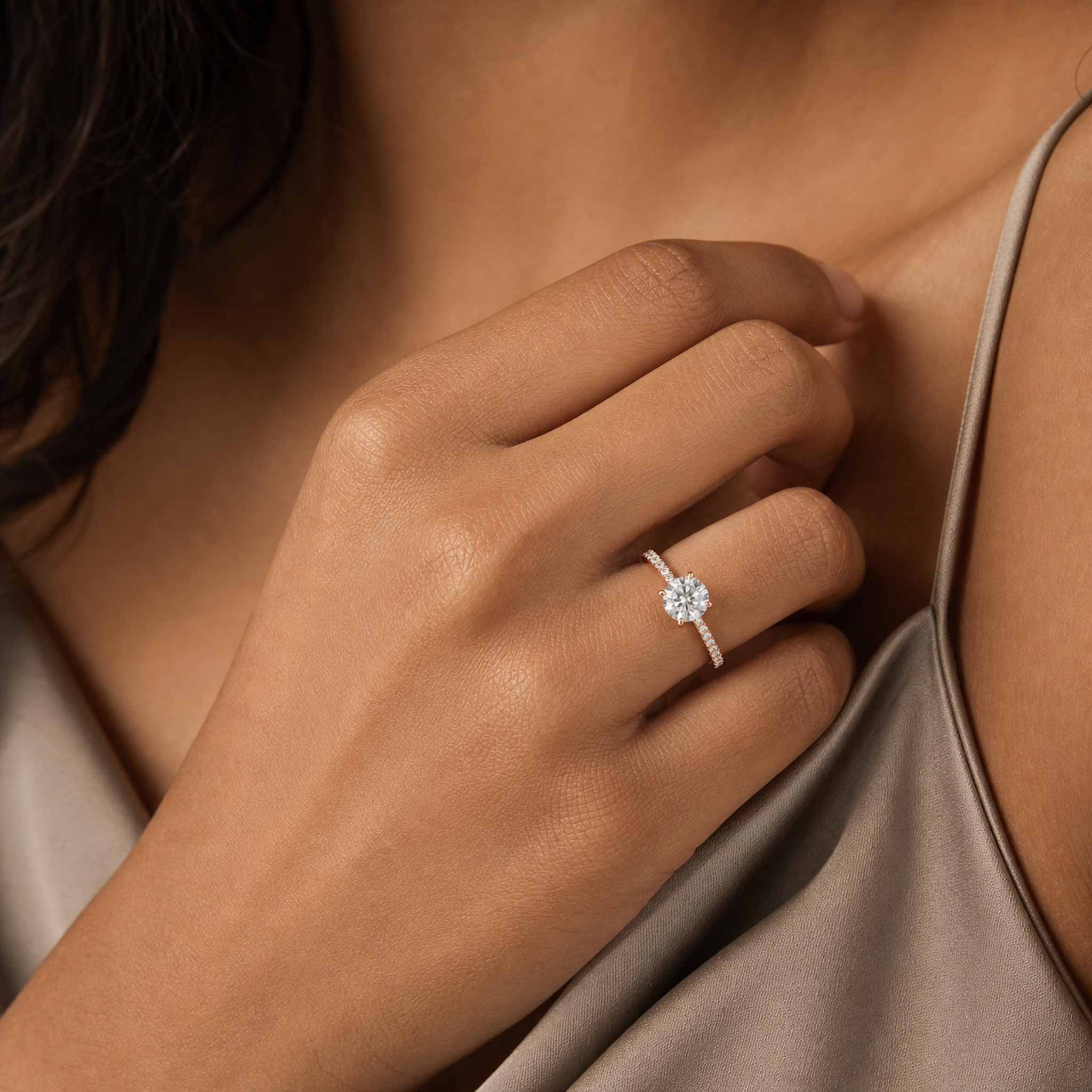


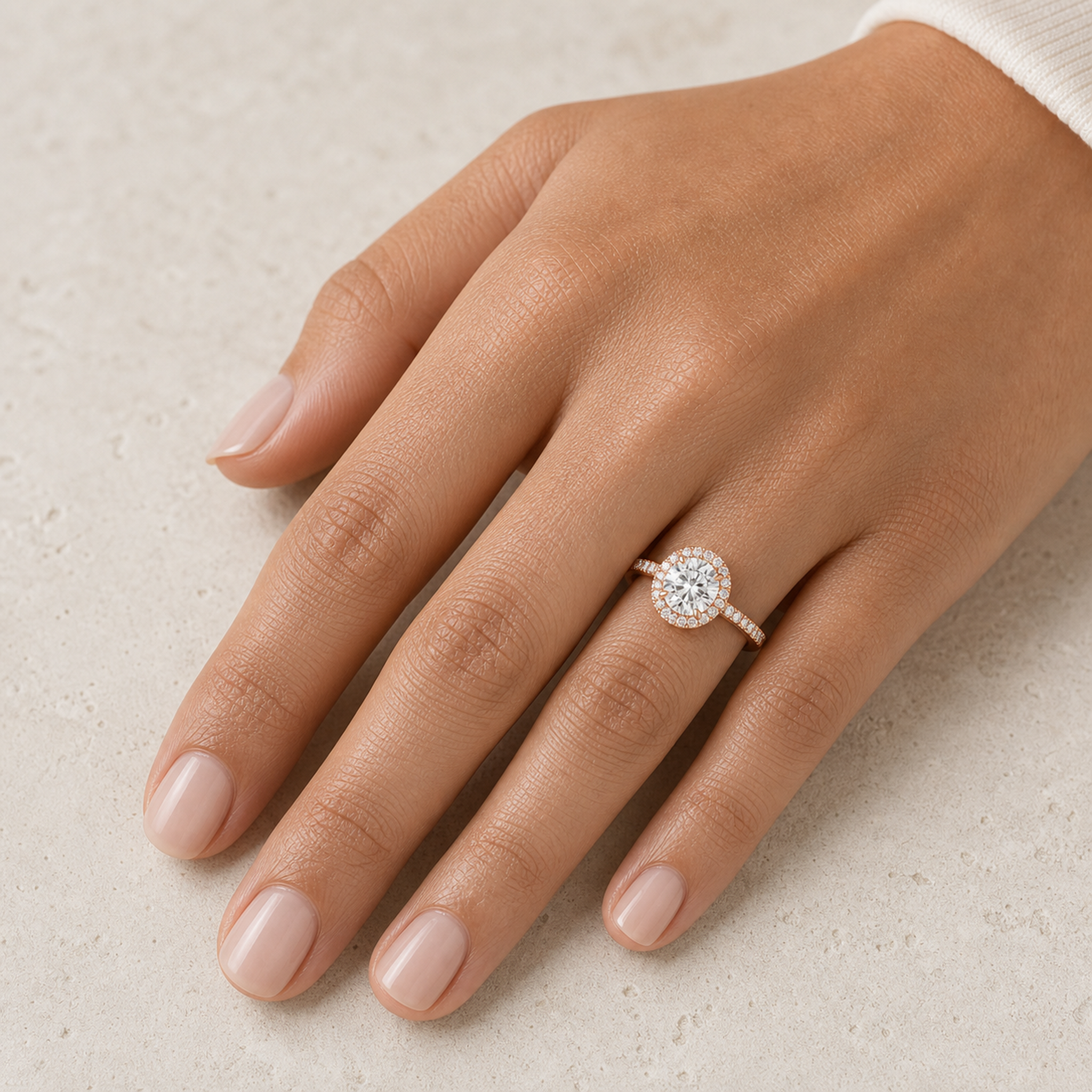













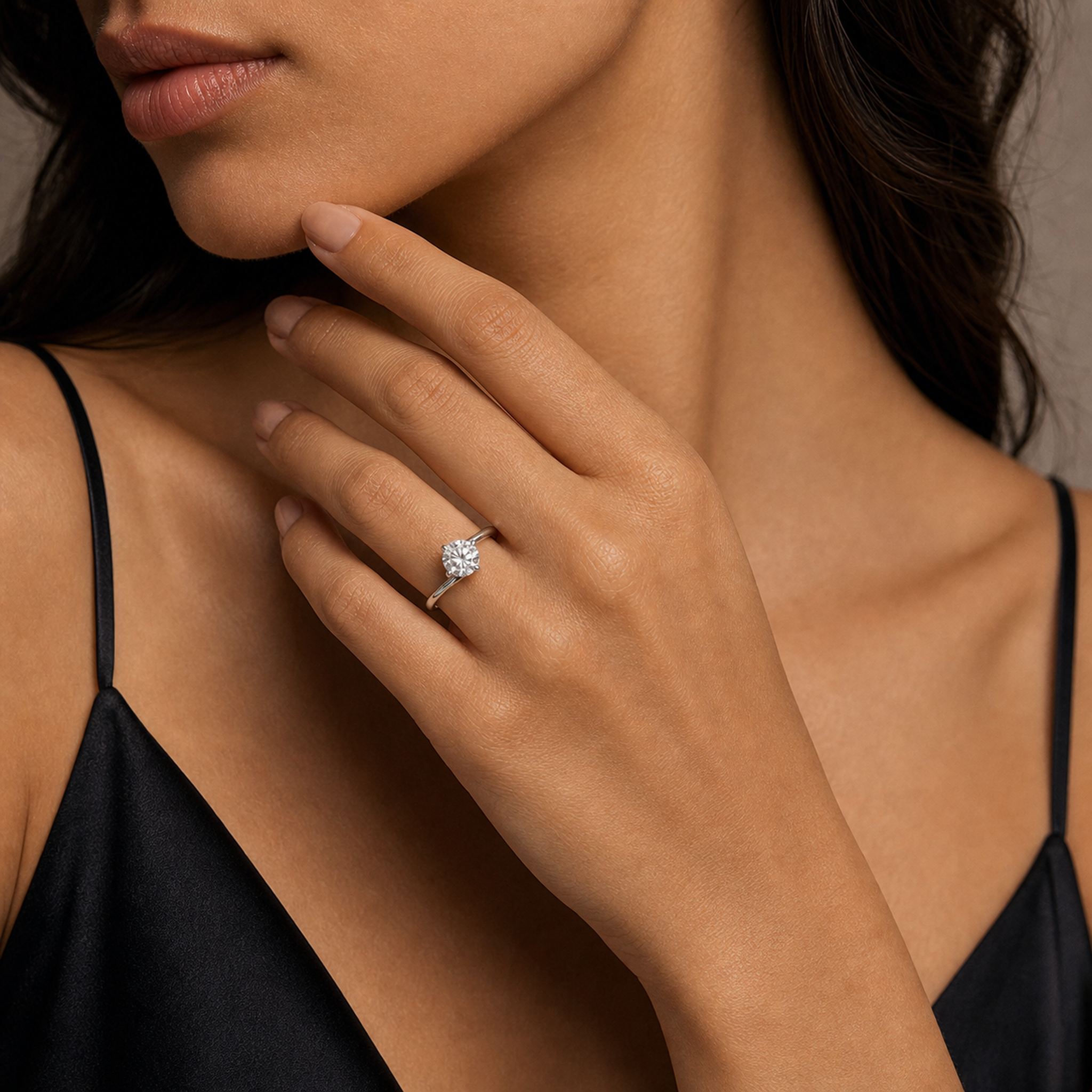
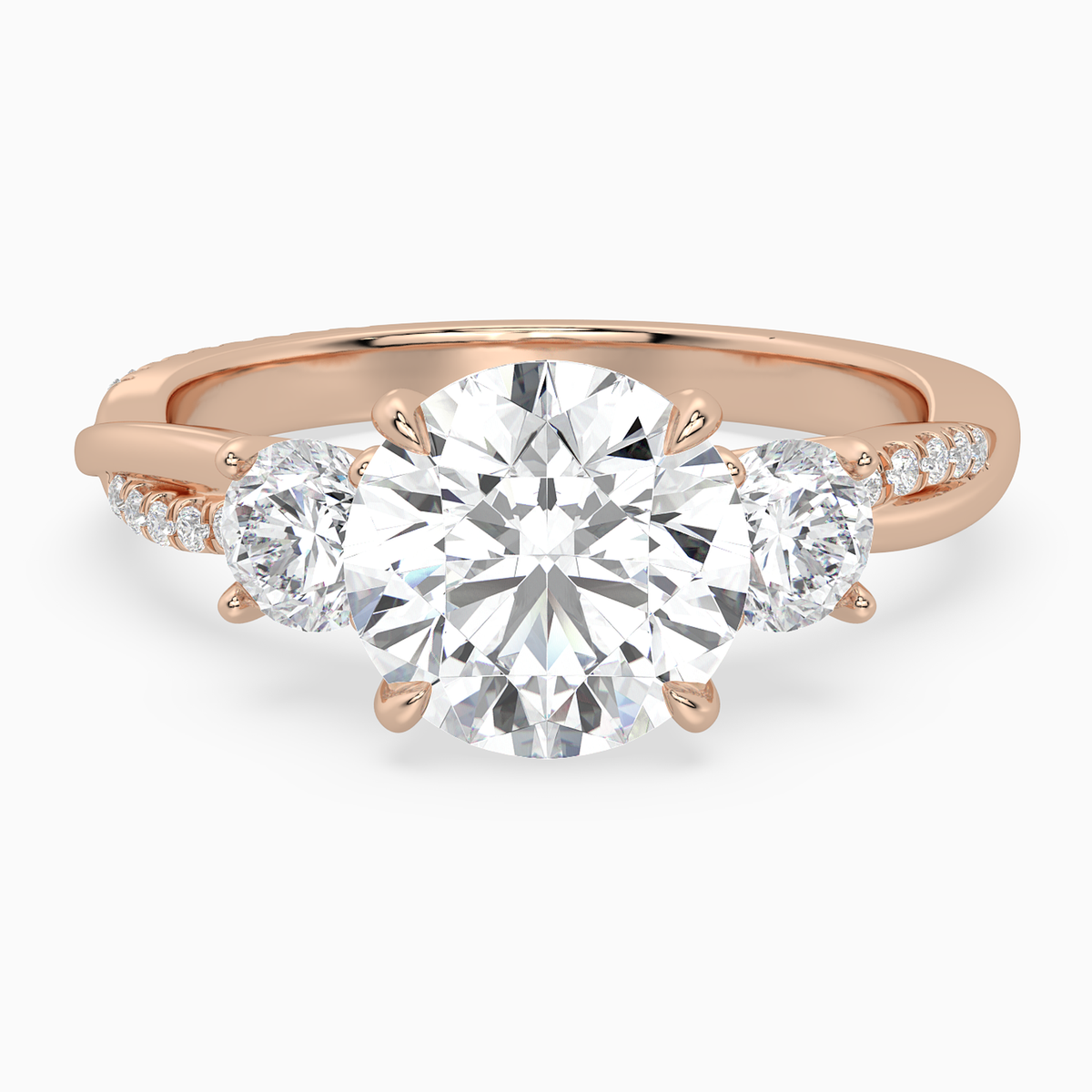


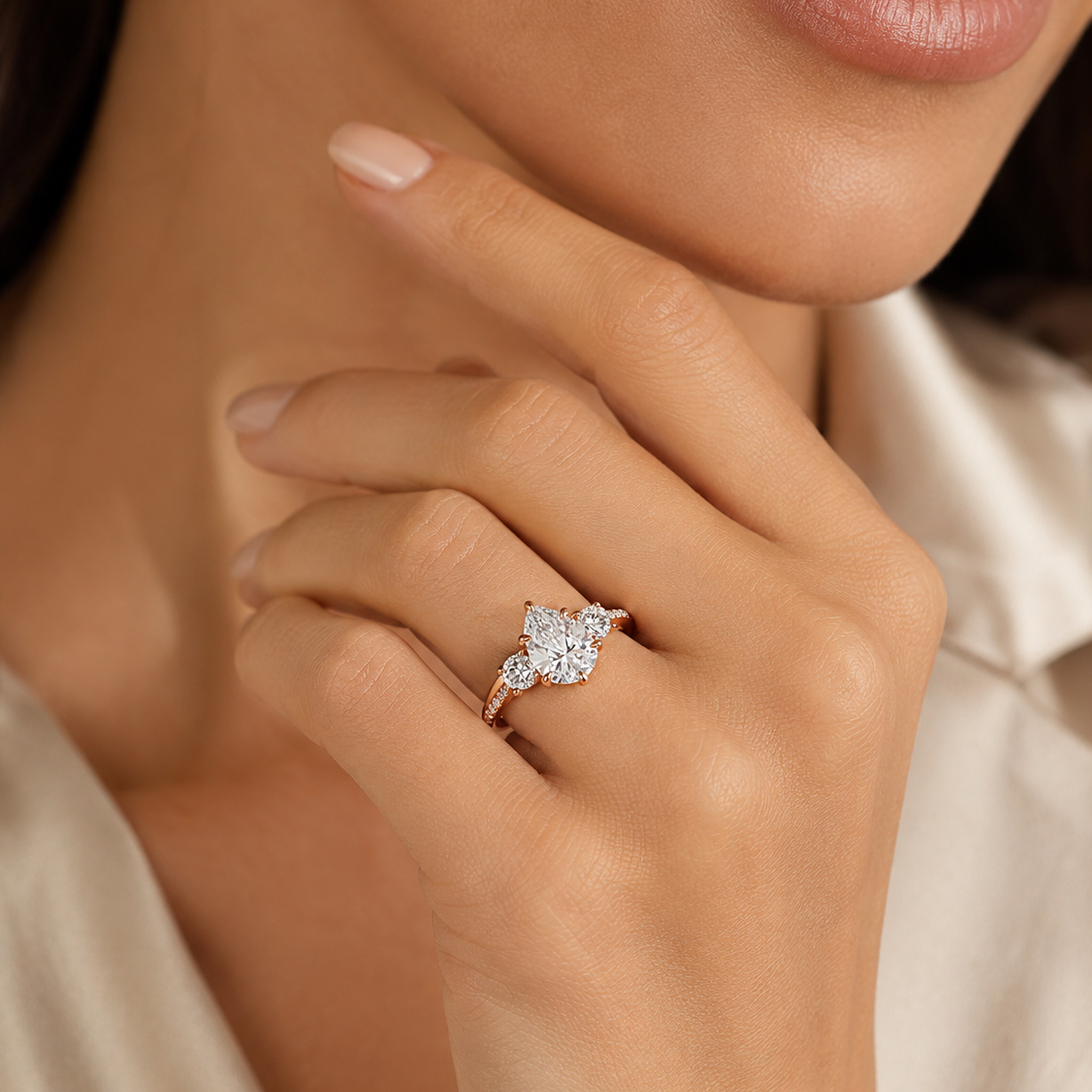


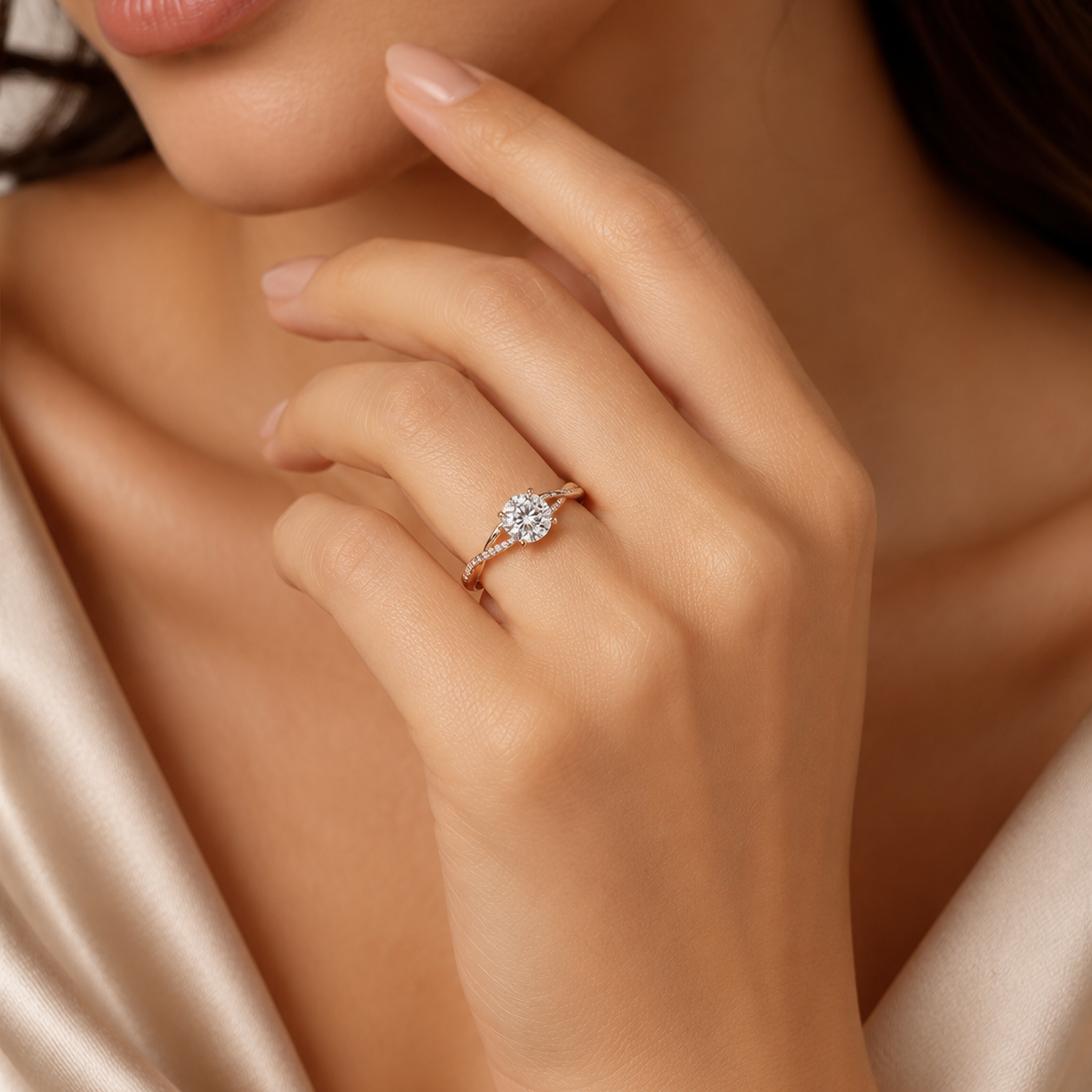


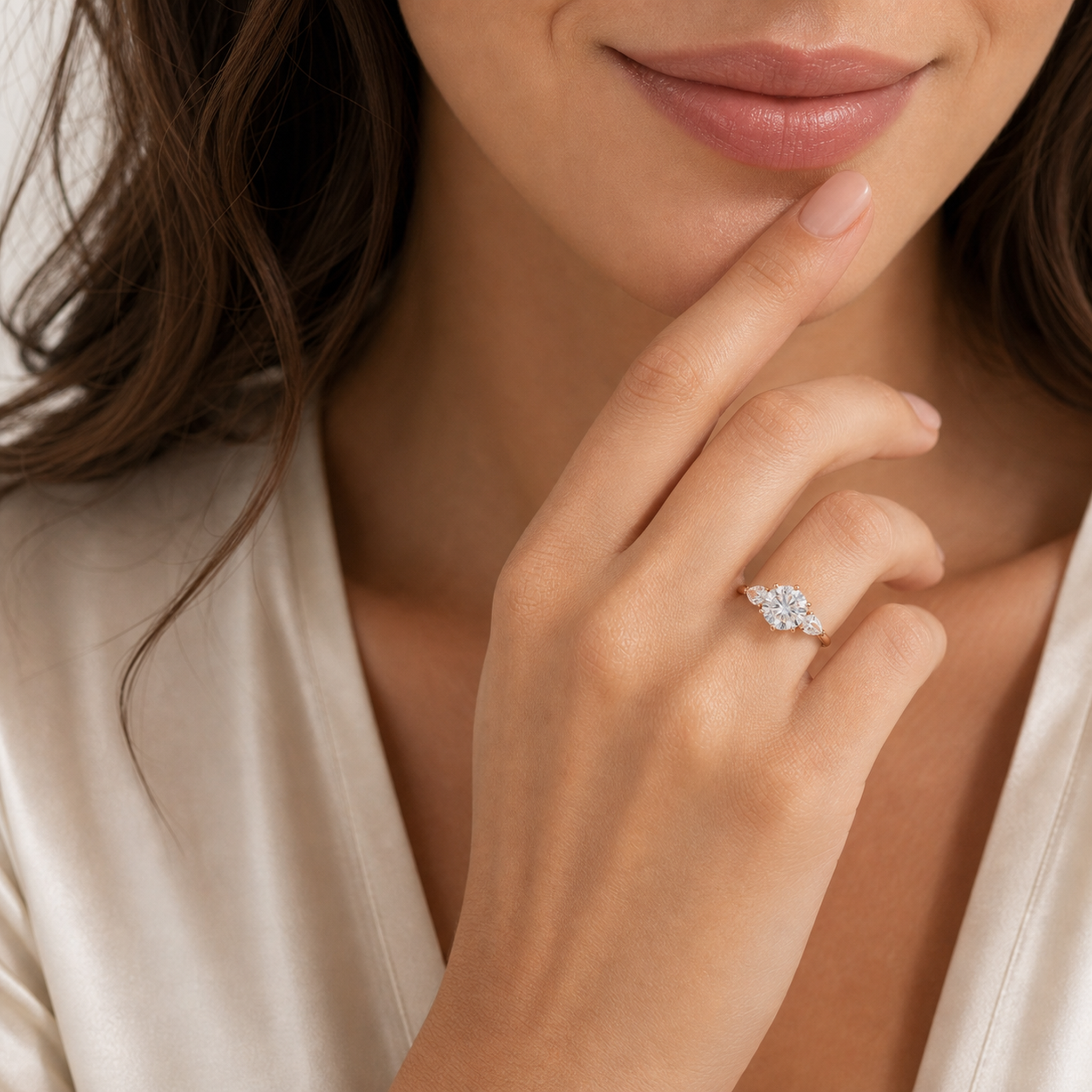
14K Rose Gold Round Diamond Engagement Rings: Warmth at the Edge of Light
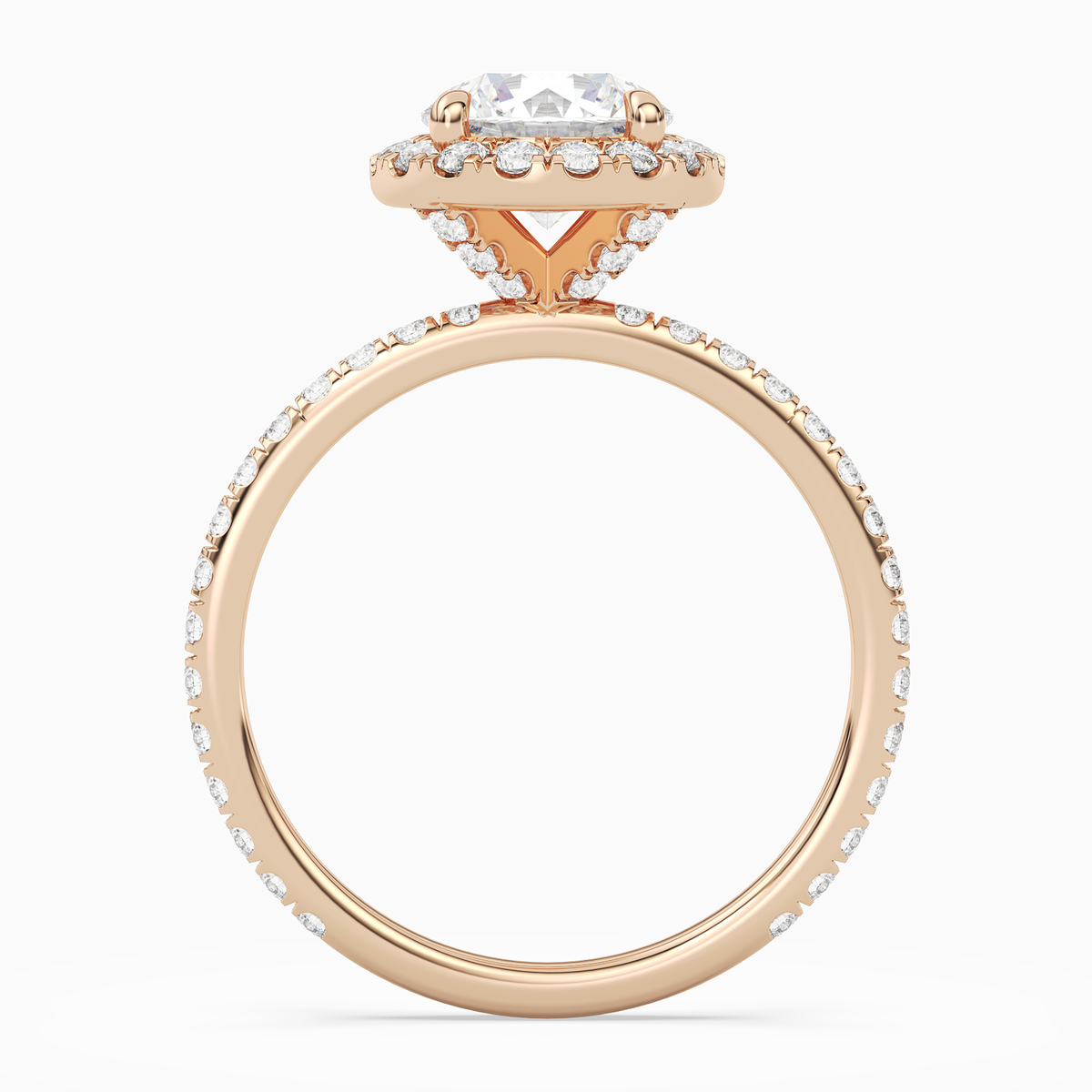
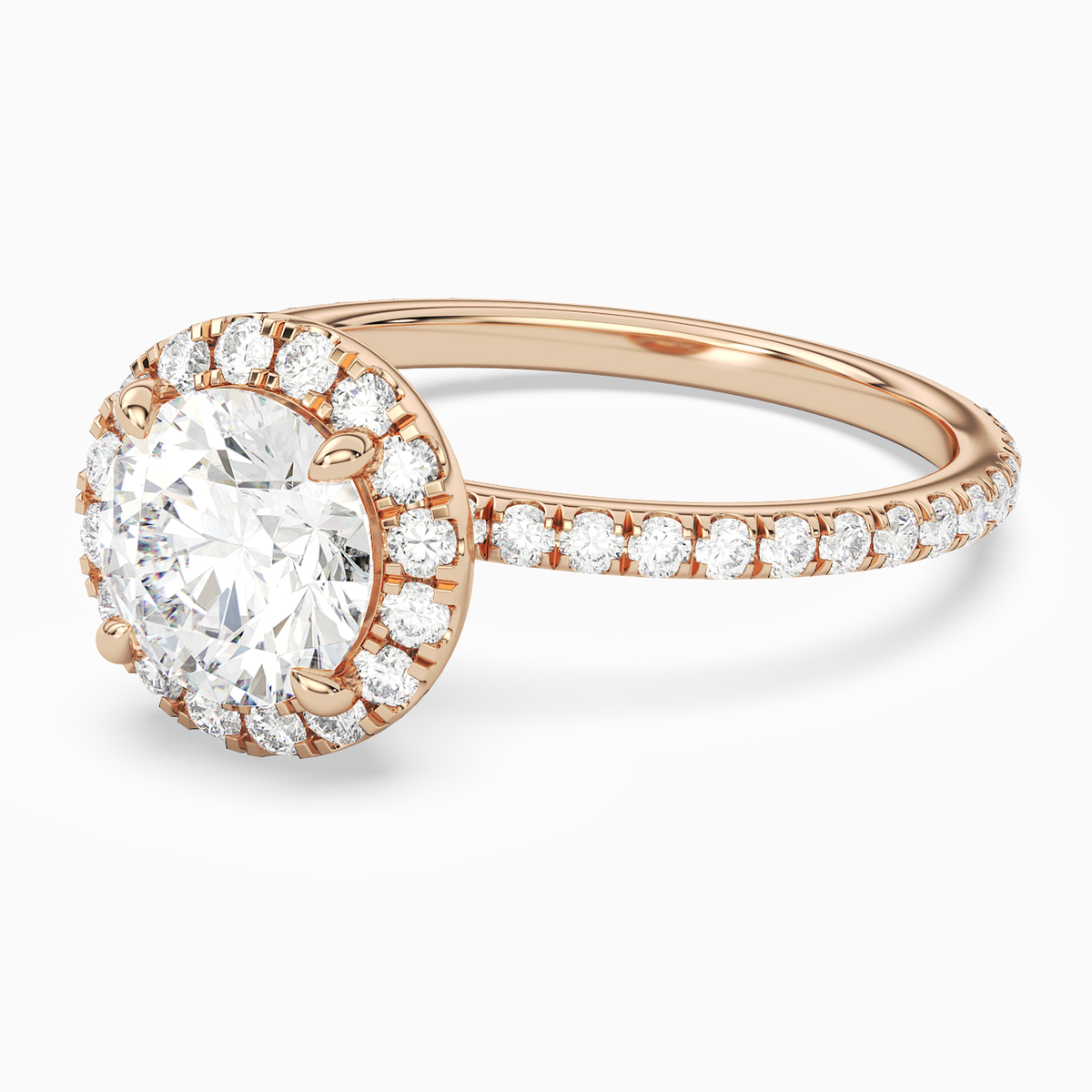
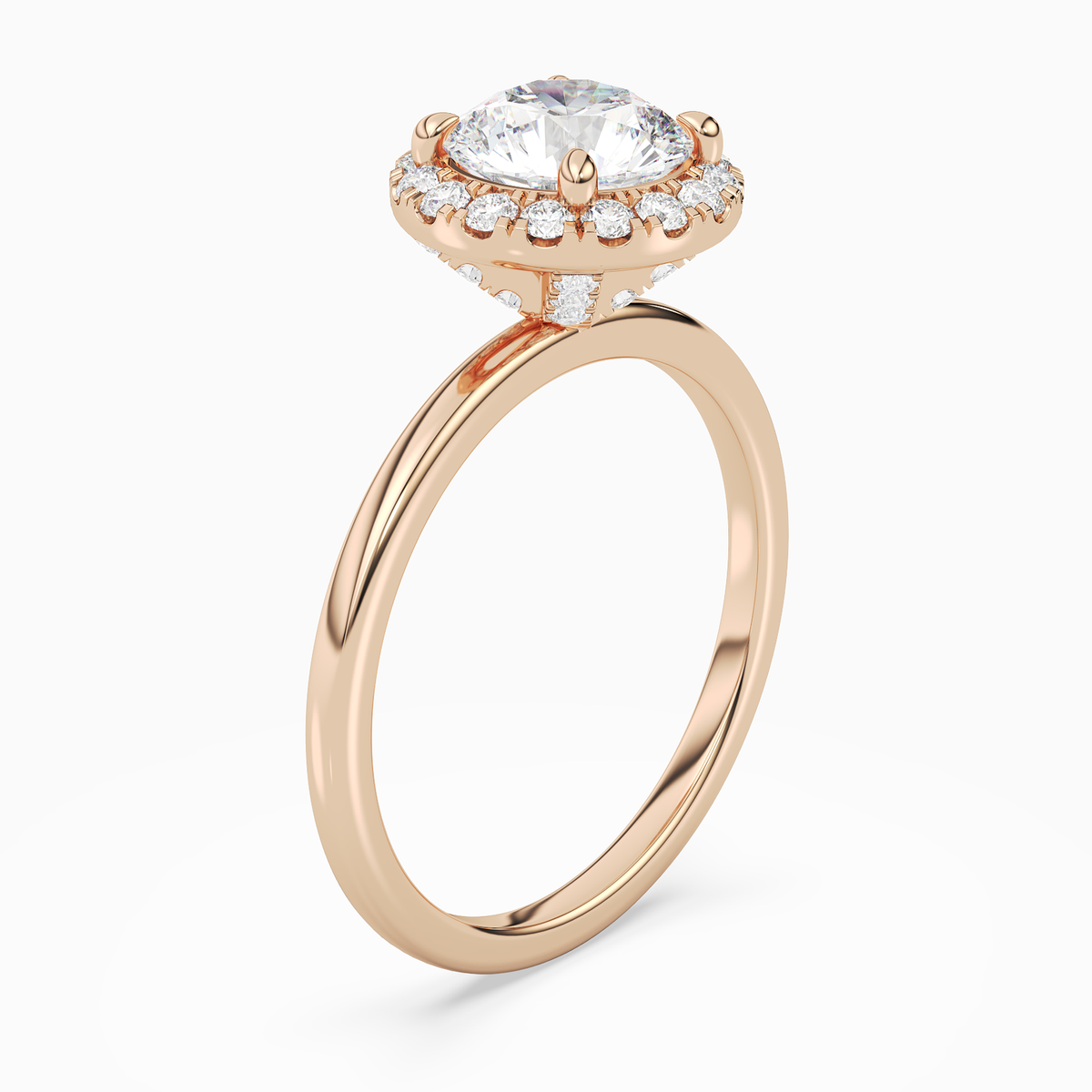
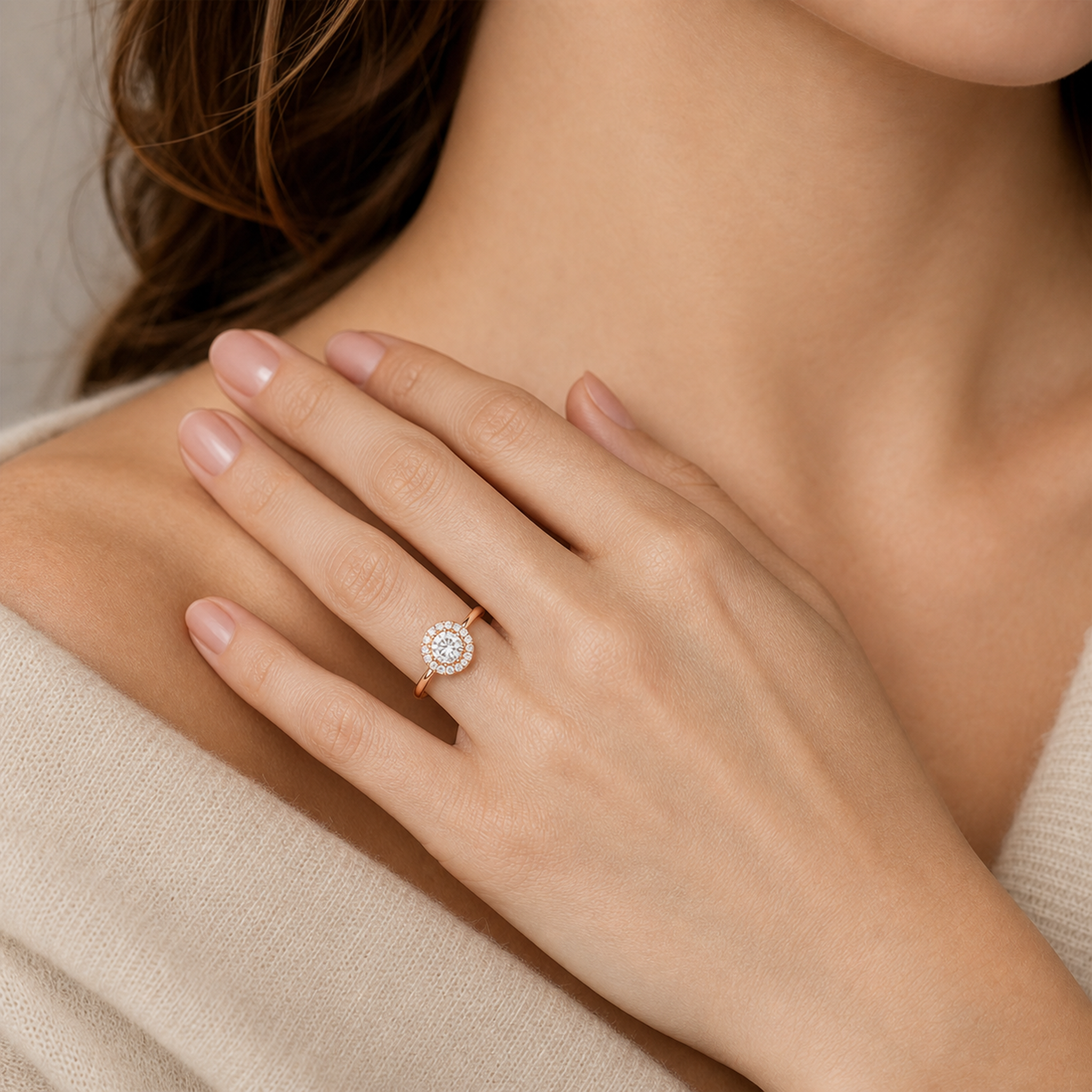
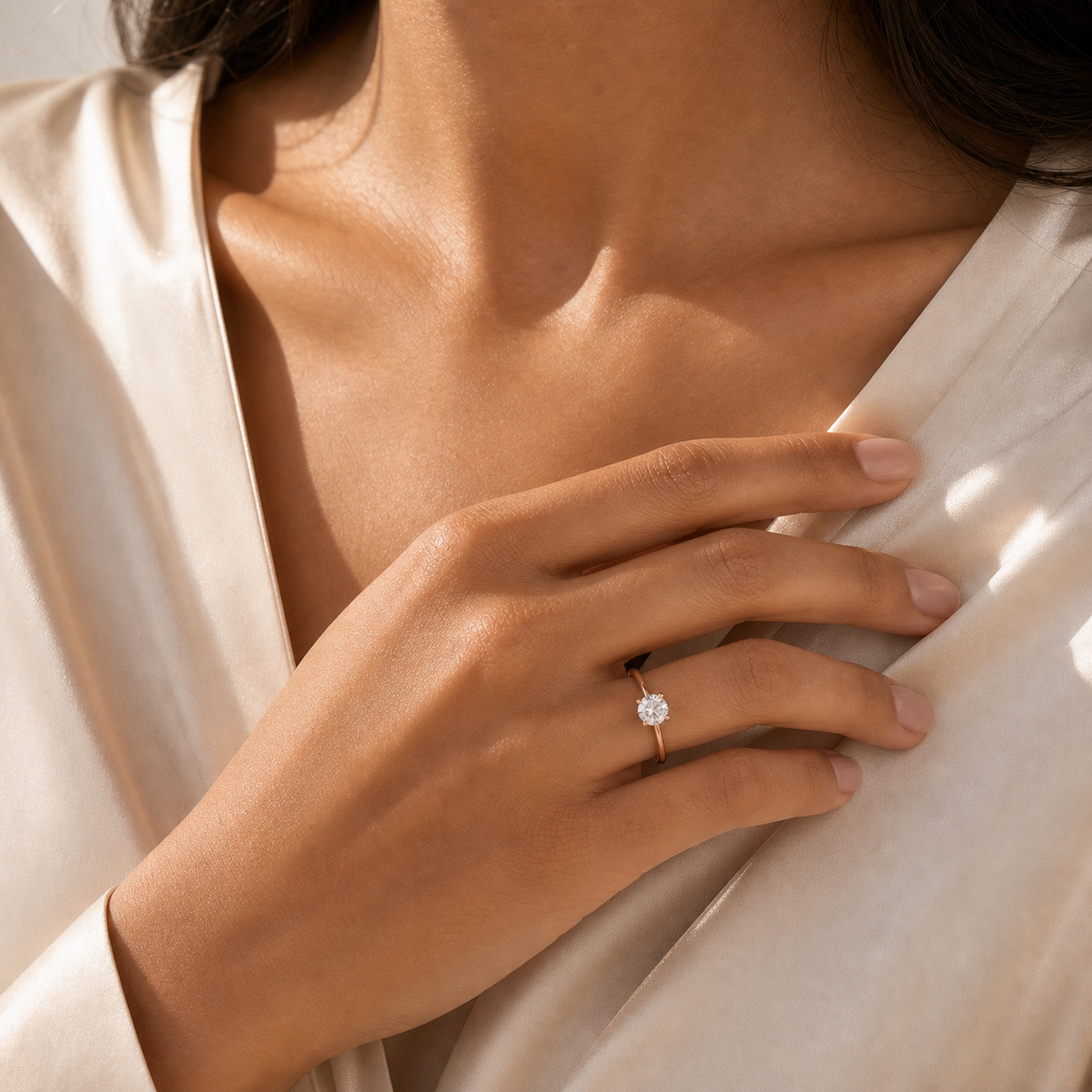
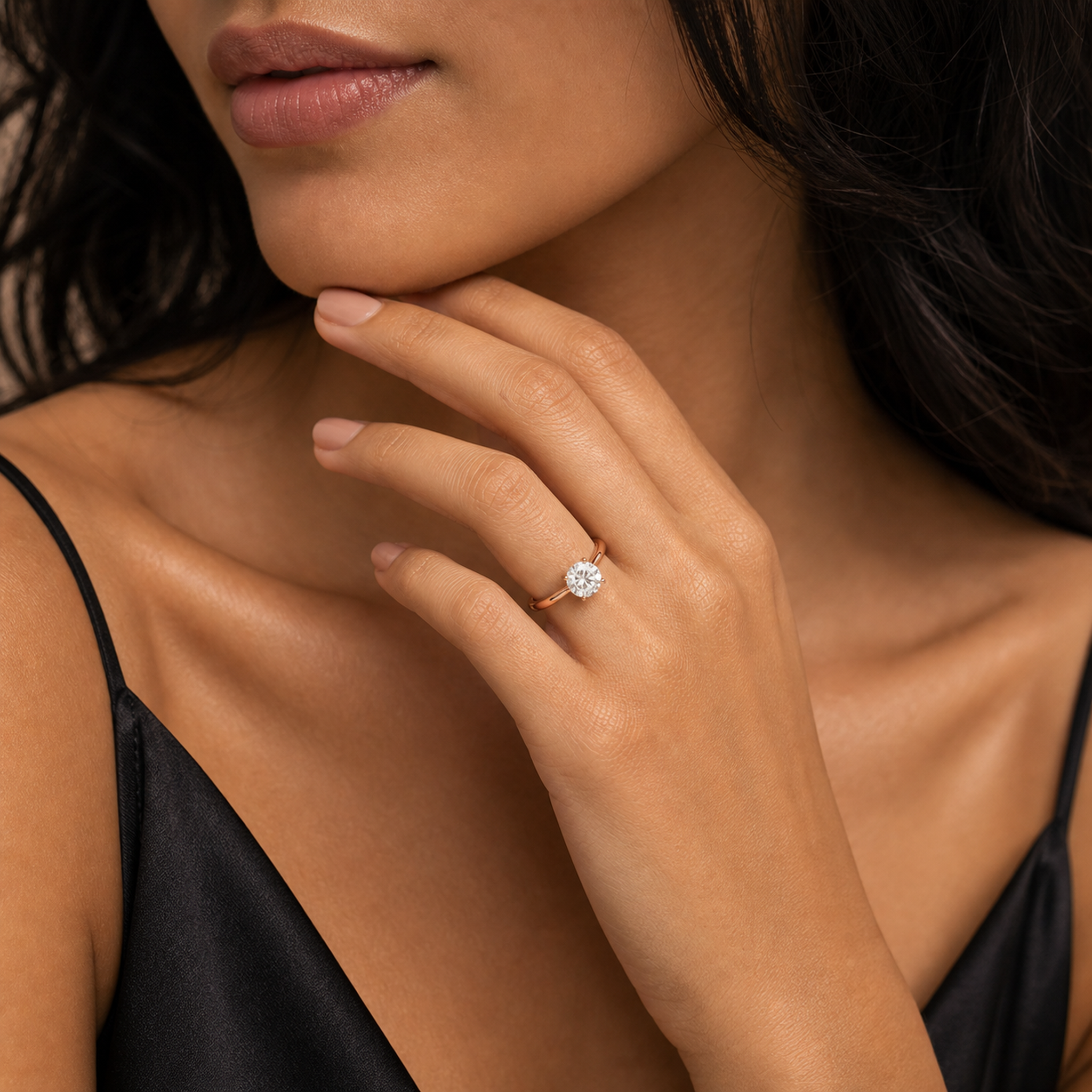
A round brilliant center is defined by a continuous outline and an ordered facet pattern. In 14K Rose Gold, that order meets a warmer perimeter. Prongs can punctuate the circle in blush metal, a basket can carry color beneath the face-up view, and a band can bring warmth toward the center without changing the diamond itself.
Burvonti's current public page contains 14 designs: seven Solitaire expressions, four Halo settings, one Side Stone ring, and two Three Stone compositions. Hidden halos, open and pavé baskets, cathedral shoulders, knife edges, bypass lines, vines, split shanks, and pear-shaped side stones make the metal visible in different places.
Let the Blush Define, Not Blur, the Circle
A 14K alloy contains approximately 58.3% gold. Its remaining alloying metals influence the Rose Gold color and working behavior, but the karat mark does not reveal one copper percentage, exact shade, hardness, sensitivity result, or maintenance schedule. Finish, lighting, prong size, and exposed metal area all affect the warmth a wearer sees.
Around a round center, a fine warm prong creates small points of contrast; a more visible rim, basket, or shoulder produces a stronger boundary. The most resolved result keeps the circular outline legible. Rose Gold provides context for the light pattern rather than becoming a claim that the diamond looks whiter, larger, or more brilliant.
Read Light and Metal as Separate Decisions
Brightness, fire, and scintillation describe different parts of a round brilliant's interaction with light. An eligible standard round brilliant may also receive an overall cut grade that considers appearance, design, and craftsmanship. Those properties belong to the diamond. Rose Gold changes the visual field around it, not the grade or optical performance recorded for the center.
View the complete ring from above and in profile. From above, notice whether the prongs interrupt or rhythmically divide the circle. From the side, look at how much blush appears in the basket, hidden halo, cathedral, or crossover. A quieter face-up frame can still reveal considerable metal in motion.
Fourteen Designs, Four Ways to Hold the Center
A Solitaire gives the round outline the most independent space, while the band and basket determine whether the warmth feels minimal or architectural. A Halo repeats the perimeter in diamonds and may make Rose Gold most visible between the center and surrounding light. A Side Stone setting extends the composition laterally; a Three Stone design asks the warm framework to organize more than one principal shape.
The collection also includes structural contrasts within each family. A knife edge directs the band toward the center. A bypass changes the approach from symmetrical to directional. Vine and split-shank lines create open intervals. These differences are more useful than treating every Rose Gold round ring as one romantic style.
Diameter, Color, and Setting Scale Remain Individual
Carat is a measure of weight, not a complete statement of face-up size. Compare the round center's minimum and maximum diameter, total depth, girdle, and documented cut information. Two diamonds of equal weight can occupy slightly different visible areas, and a halo, fine band, or substantial shoulder can change perceived scale again.
The warm setting may make color contrast more noticeable, but it does not alter the diamond's graded color. Prong color, accent diamonds, and visible basket metal also shape the result. Confirm the selected center and finished configuration rather than applying one universal color or clarity recommendation to every Rose Gold ring.
A Warm Structure, Calibrated as a Complete Ring
Wedding-band fit depends on basket width, setting height, halo, shoulders, side stones, and contact points. A straight band may sit close, meet one part of the engagement ring first, or leave an intentional interval. Metal color alone cannot establish a flush stack, universal comfort, or resize range.
Burvonti pairs responsibly sourced, independently graded lab-grown diamonds with settings resolved through proportion and human judgment. Custom possibilities may refine center specifications, prongs, basket, metal, band line, accents, or engraving where feasible. The aim is not warmth for its own sake, but a precise boundary that lets the circle remain complete.
Frequently Asked Questions
How is this page different from the main Round Diamond Engagement Rings Collection?
The parent explains round brilliant cut, light pattern, diameter, and setting response across metals. This page focuses on how 14K Rose Gold frames that circular structure with a visible blush boundary.
How much gold is in 14K Rose Gold?
Approximately 58.3%. The remaining alloying metals influence color and behavior, and exact recipes vary.
Are all 14K rose gold rings the same shade?
No. Alloy, finish, lighting, photography, and the amount of exposed metal can change how the blush appears.
Does Rose Gold make a round diamond look whiter?
It may create warm contrast, but it does not change the diamond's graded color and cannot guarantee a whiter appearance.
Does the metal increase a Round Brilliant's sparkle?
No. The setting changes visual context; brightness, fire, and scintillation depend on the individual diamond and viewing conditions.
Which setting structures are represented?
The current 14-design page contains seven Solitaire, four Halo, one Side Stone, and two Three Stone structures.
How do prongs affect the circular outline?
Their number, size, position, and color divide or reveal the perimeter differently. Security and appearance depend on the complete construction, not count alone.
Should I compare carat weight or diameter?
Use both. Carat measures weight; diameter and depth help explain face-up scale, while the setting changes perceived size.
Will a halo make the center look larger?
A halo expands the total field around the center, but it does not change the center diamond's dimensions or weight.
Can Rose Gold cause sensitivity?
Sensitivity depends on the complete alloy and wearer. Karat and color alone cannot establish a hypoallergenic outcome.
Will a wedding band sit flush?
Not automatically. Basket, halo, shoulders, height, side stones, and contact points determine the relationship.
How should I care for the setting?
Use gentle methods appropriate to the diamond, alloy, finish, and structure, and arrange inspection if a prong catches or a stone moves.
Can Burvonti personalize a Rose Gold Round ring?
Custom possibilities may include center specifications, prongs, basket, band line, accents, metal, or engraving, subject to availability and structural feasibility.