
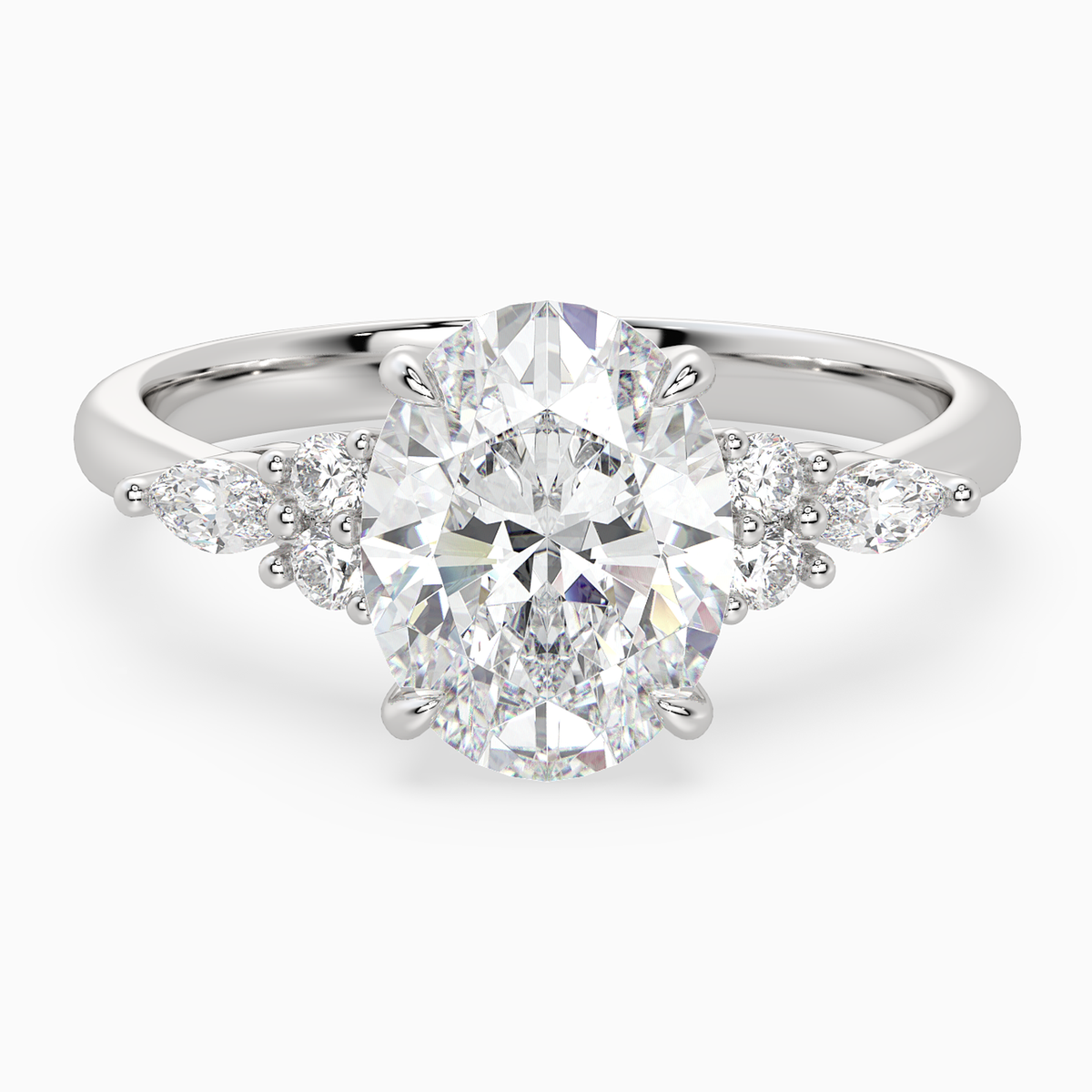


Round Diamond Engagement Rings in 14K White Gold
Light held in a quieter frame. 14K white gold lets the round brilliant's circle, facet contrast, and setting transitions stay clear.








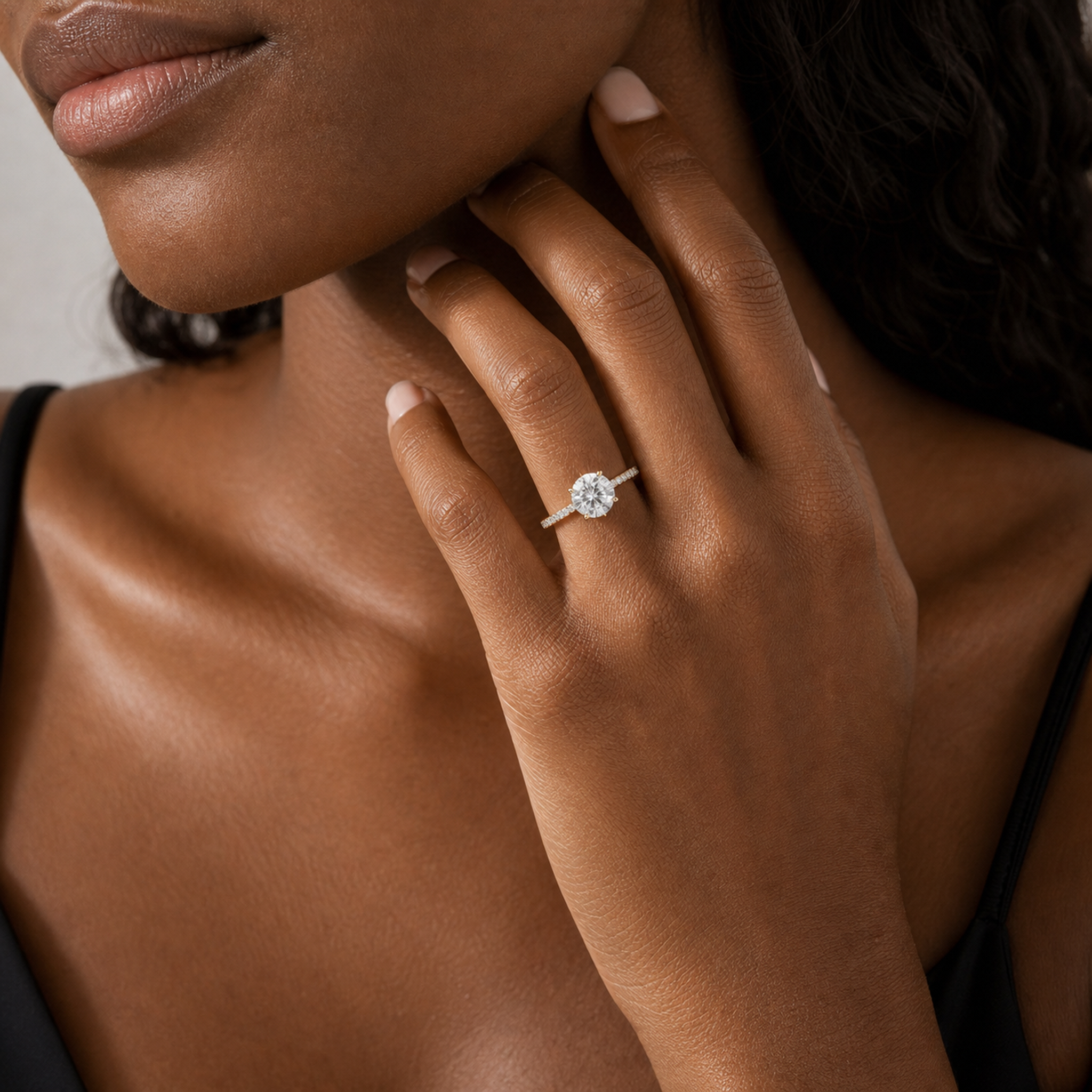


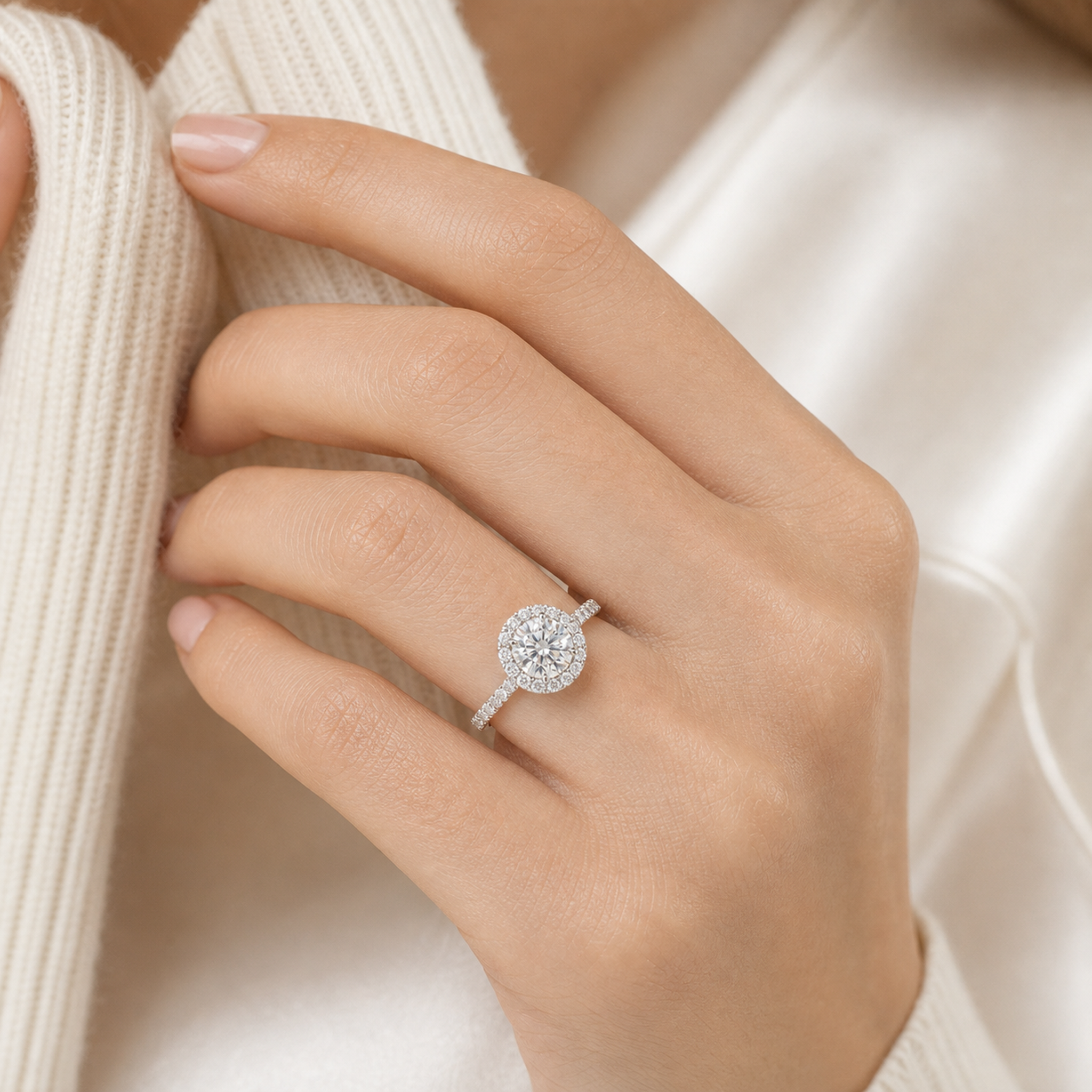


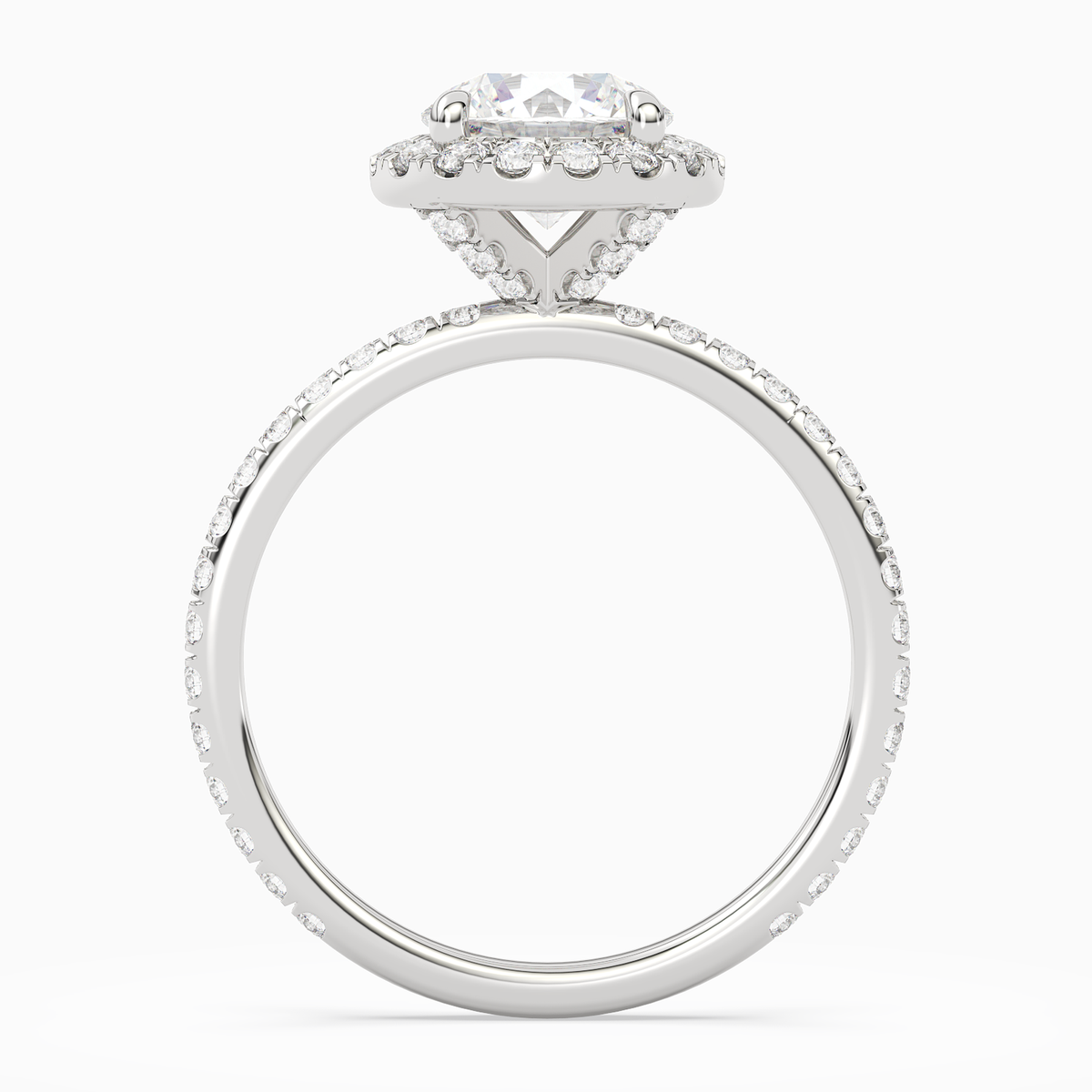
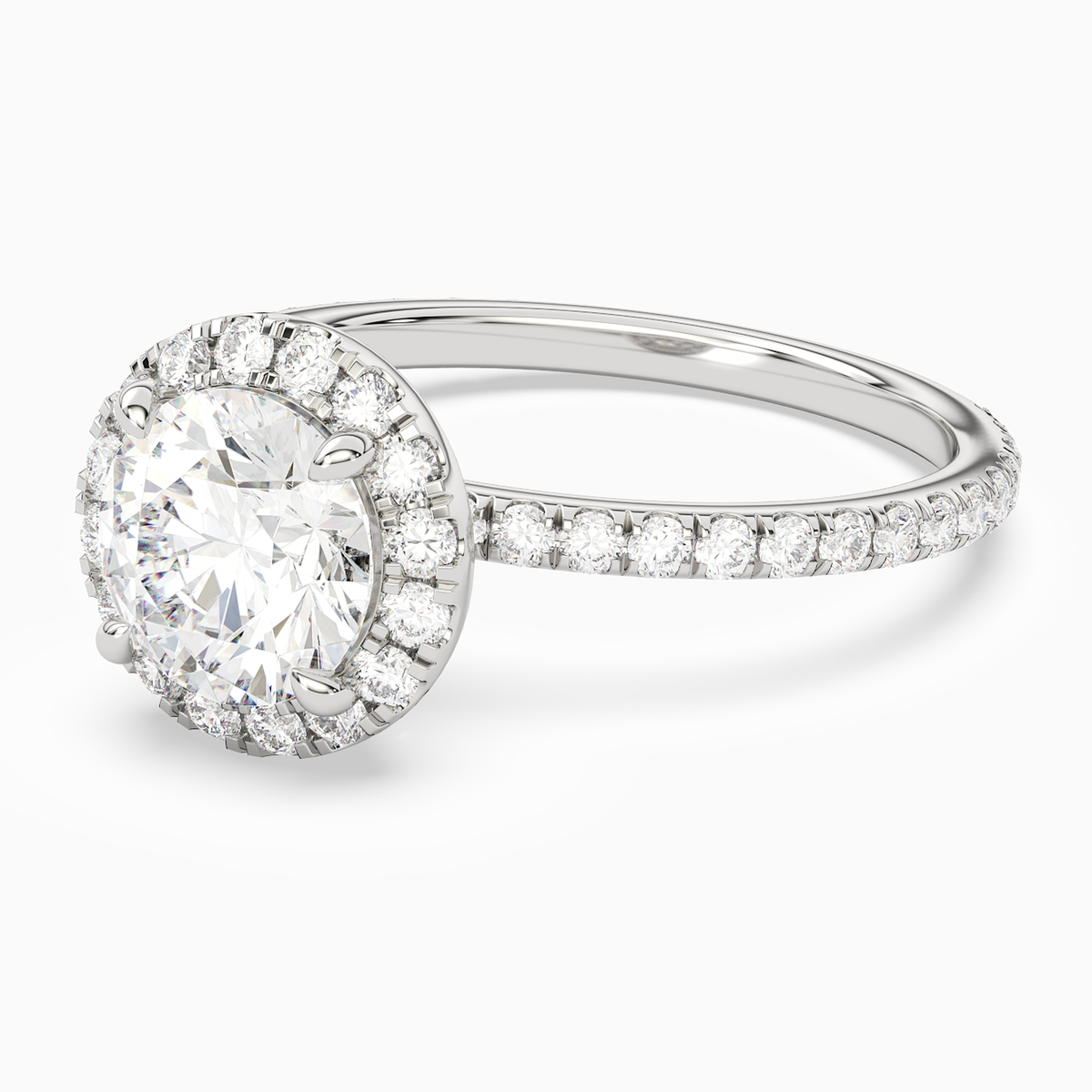
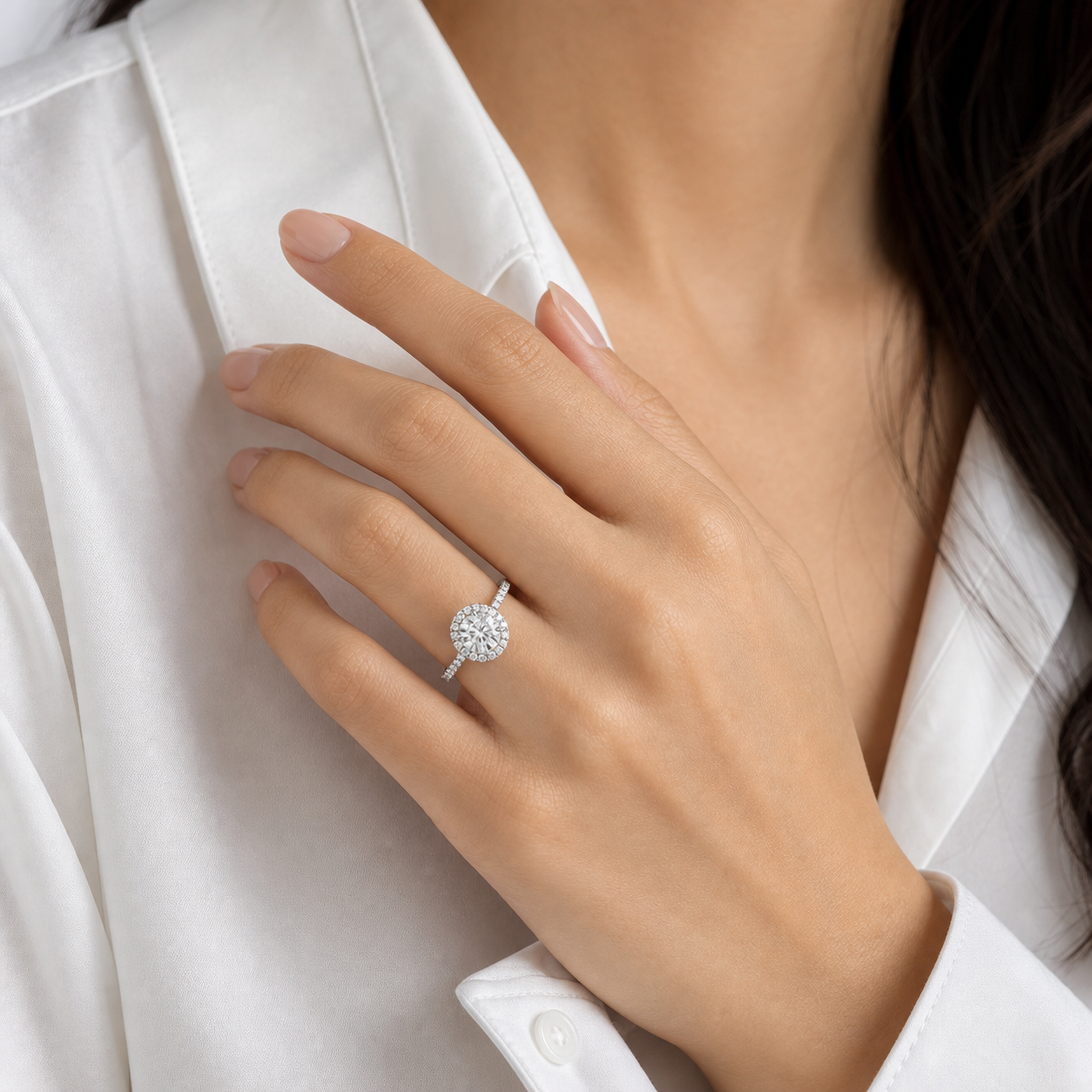


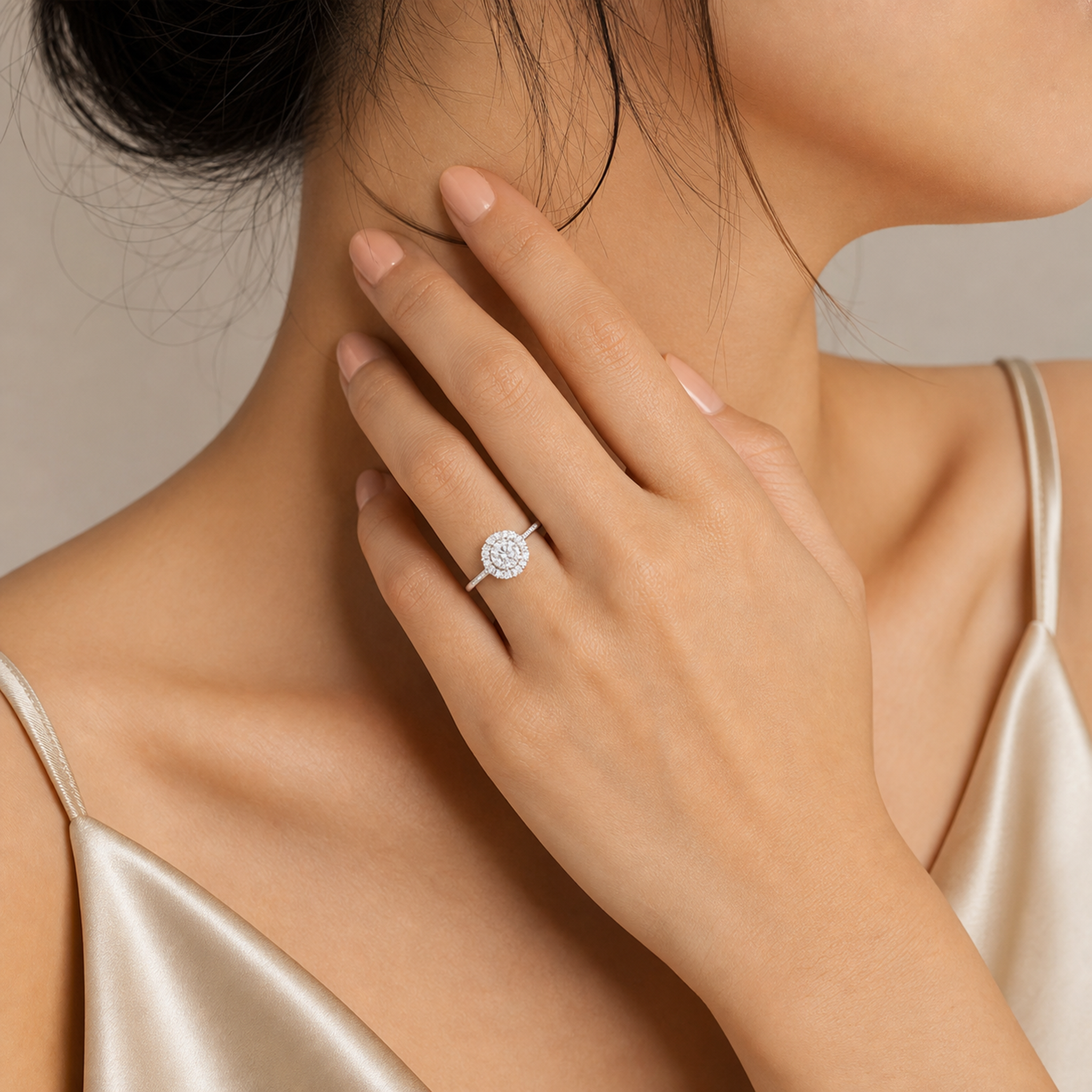


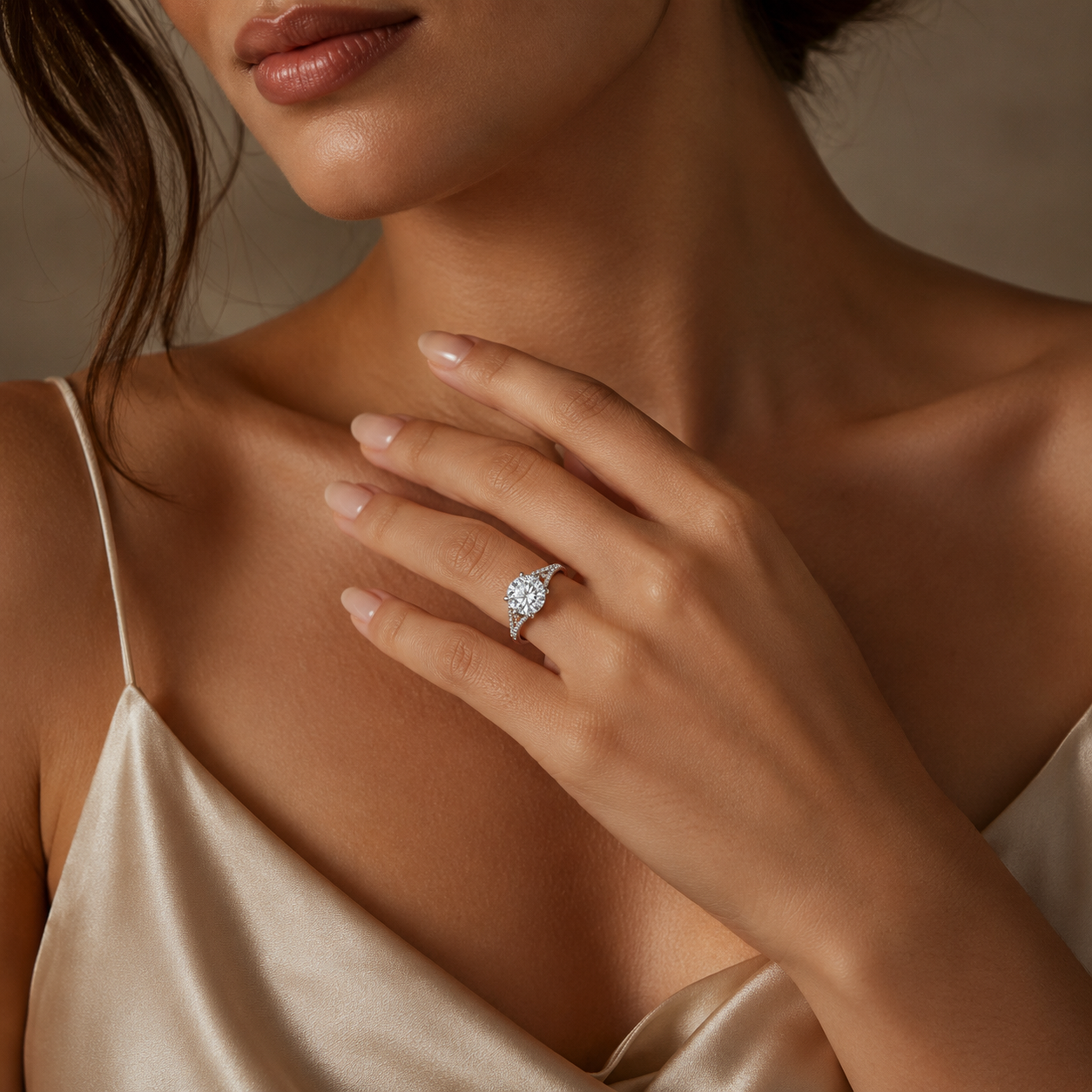


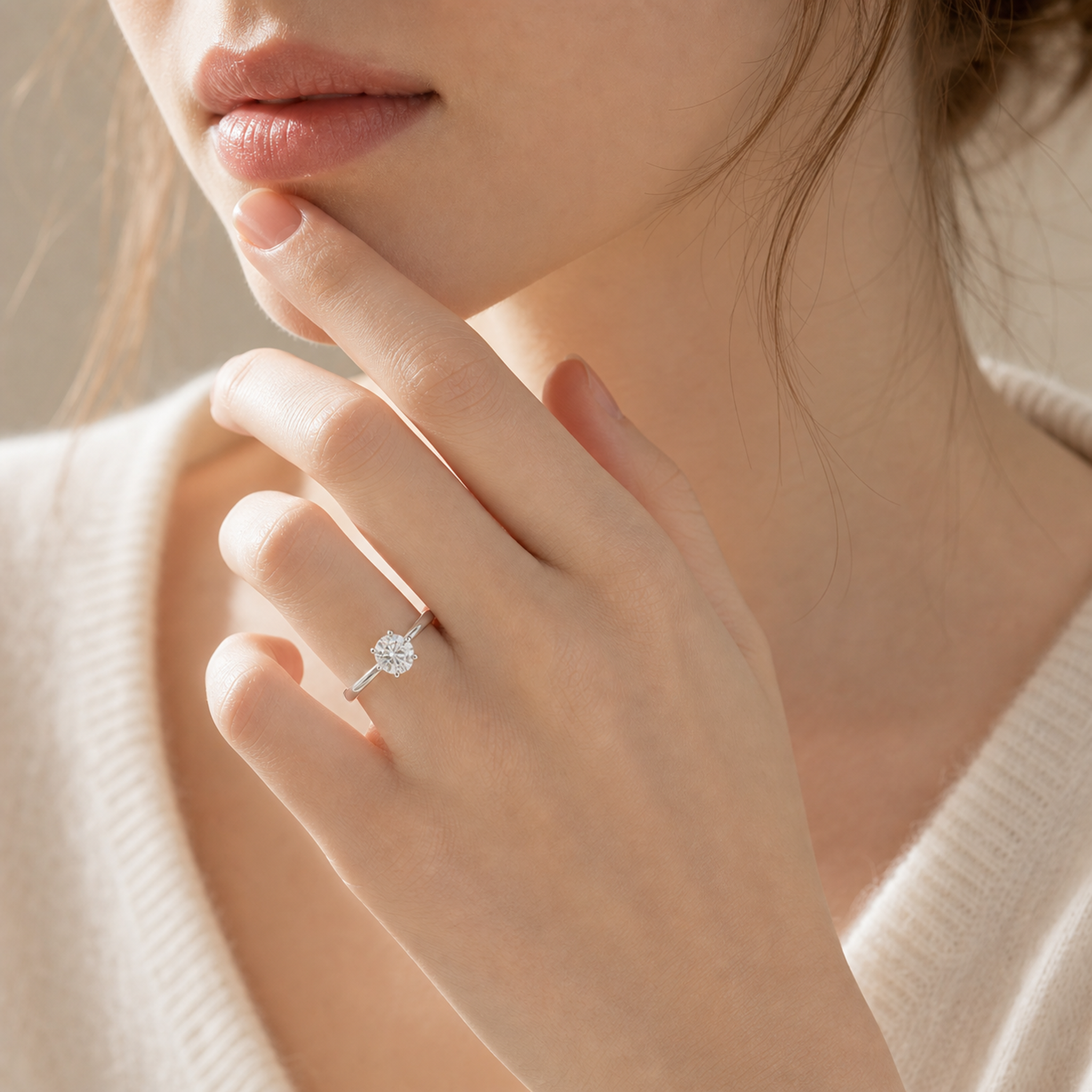


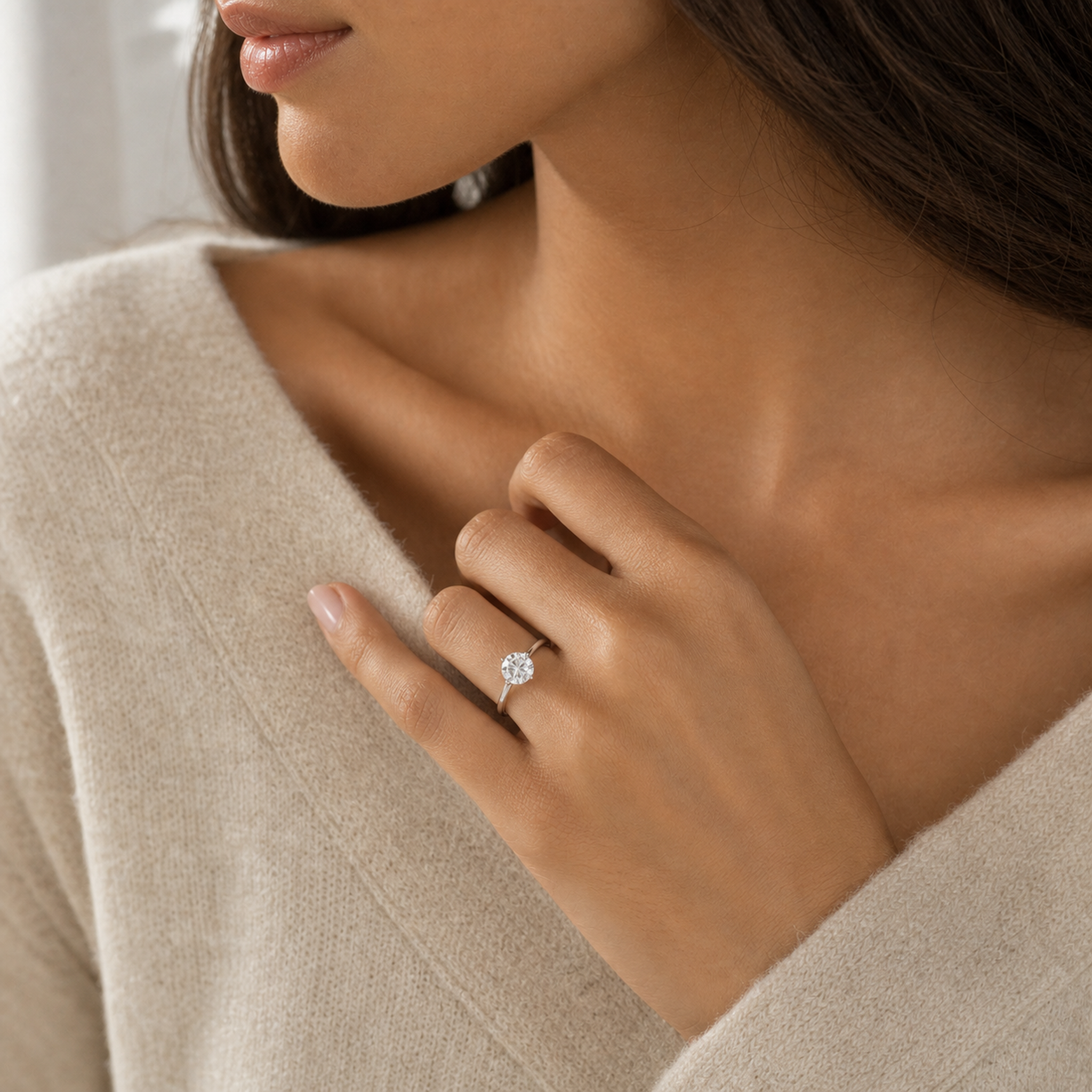
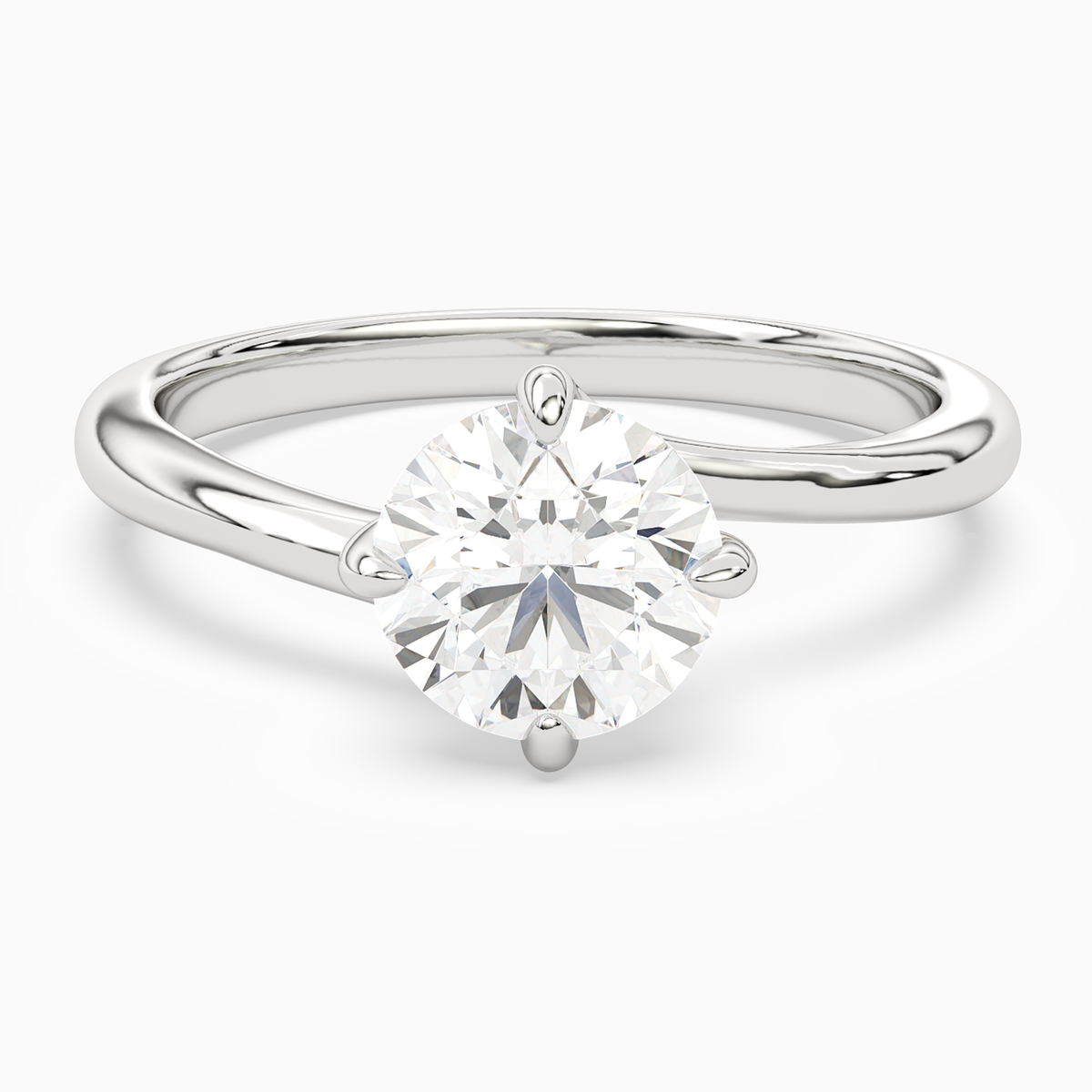


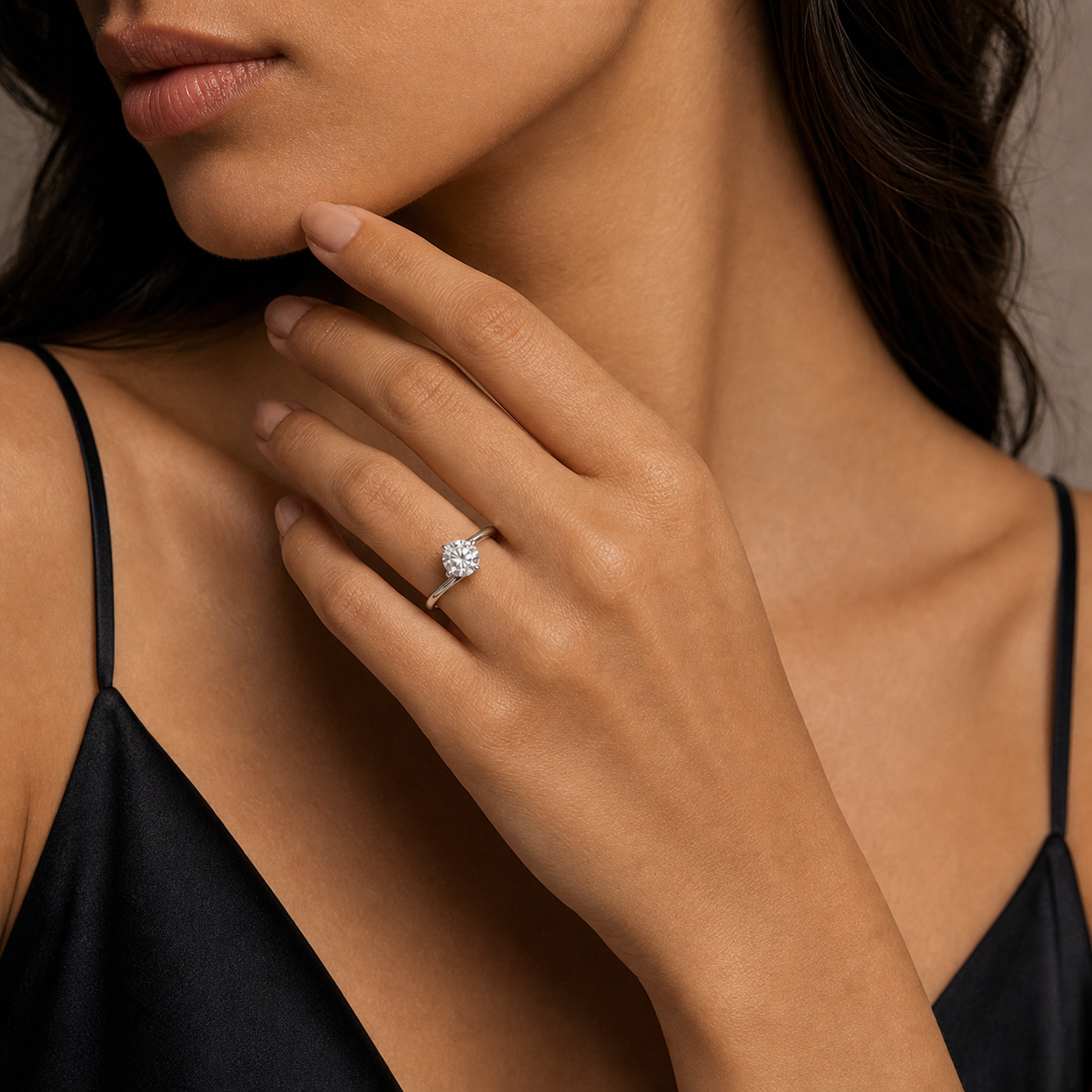


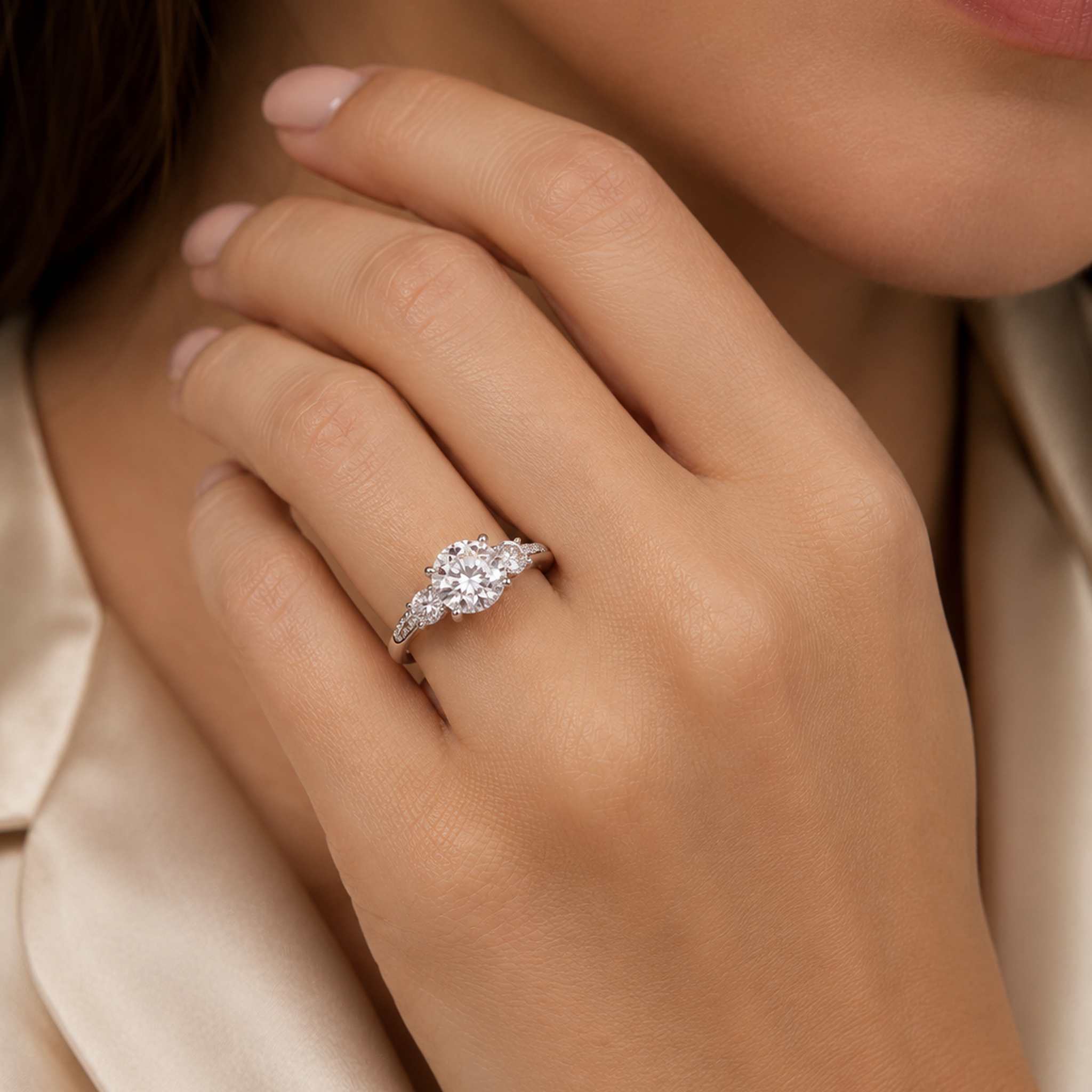

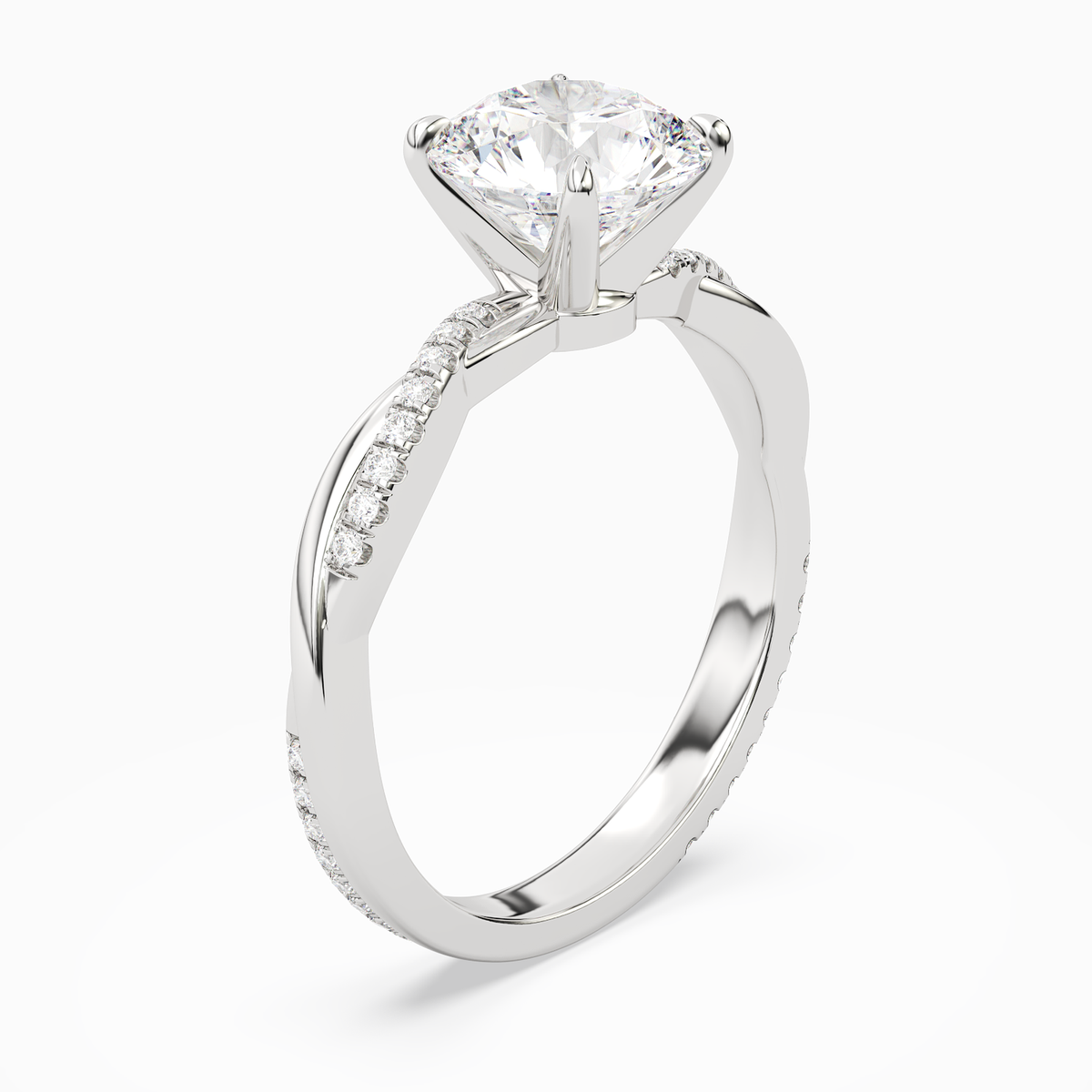


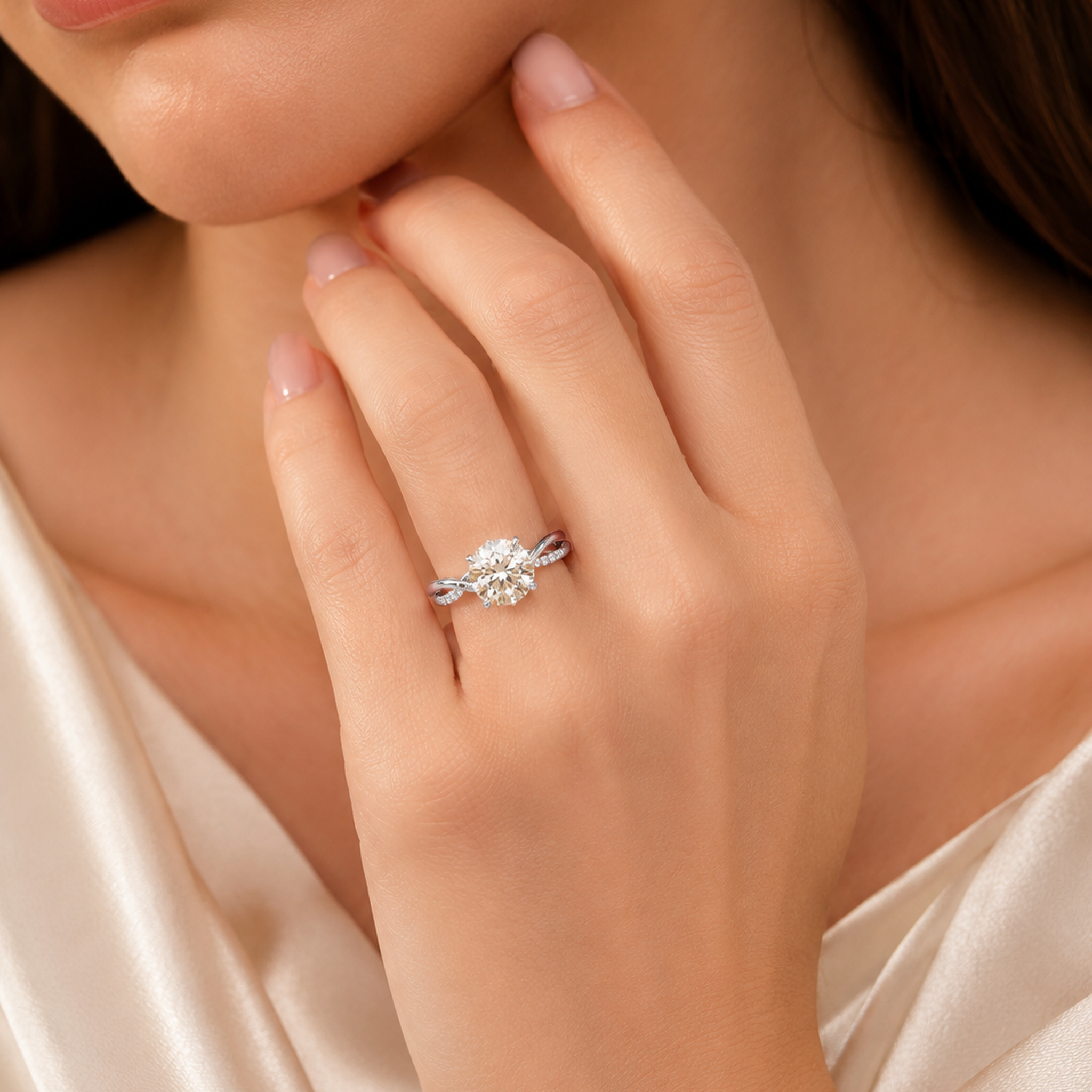


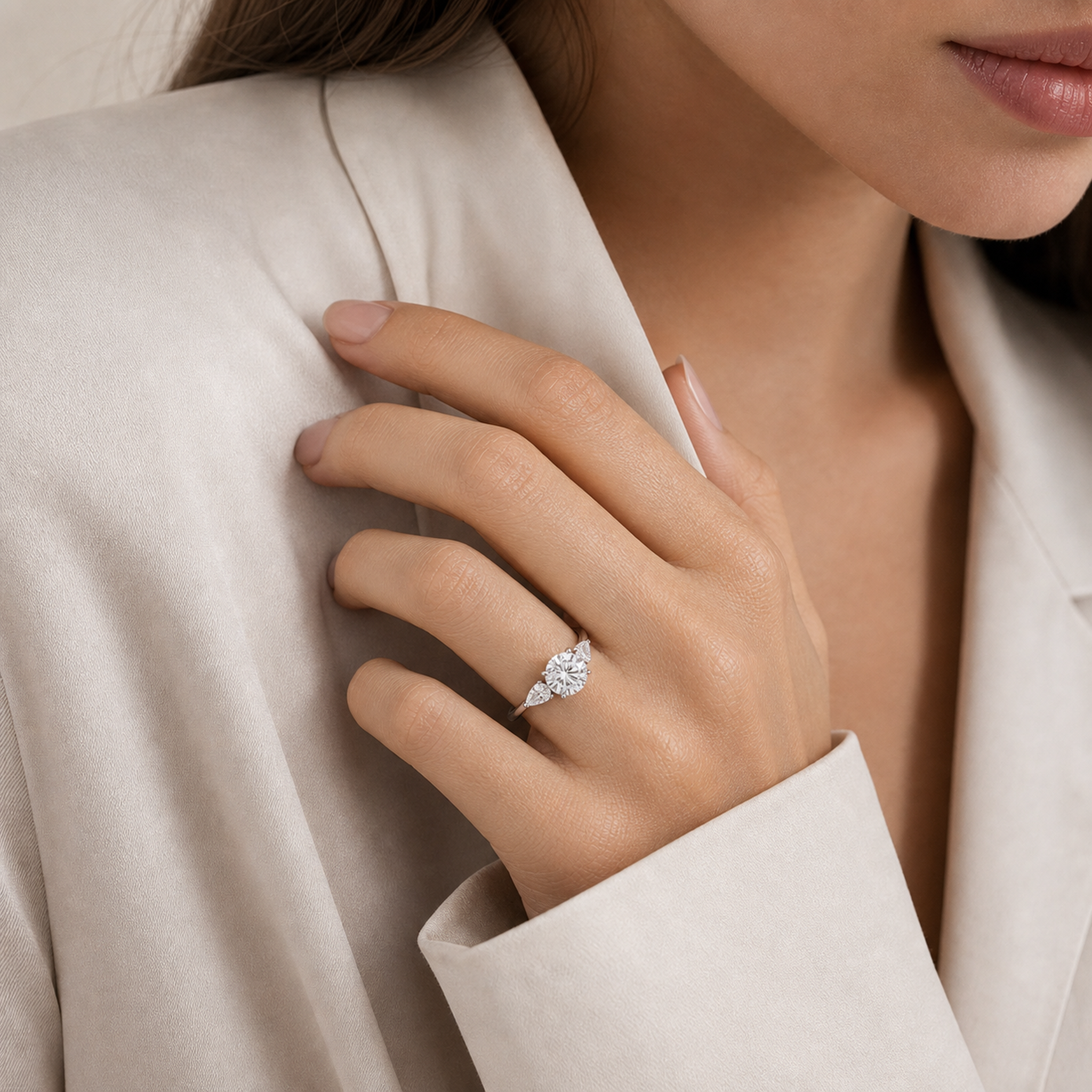
14K White Gold Round Diamond Engagement Rings: A Quiet Frame for an Ordered Circle
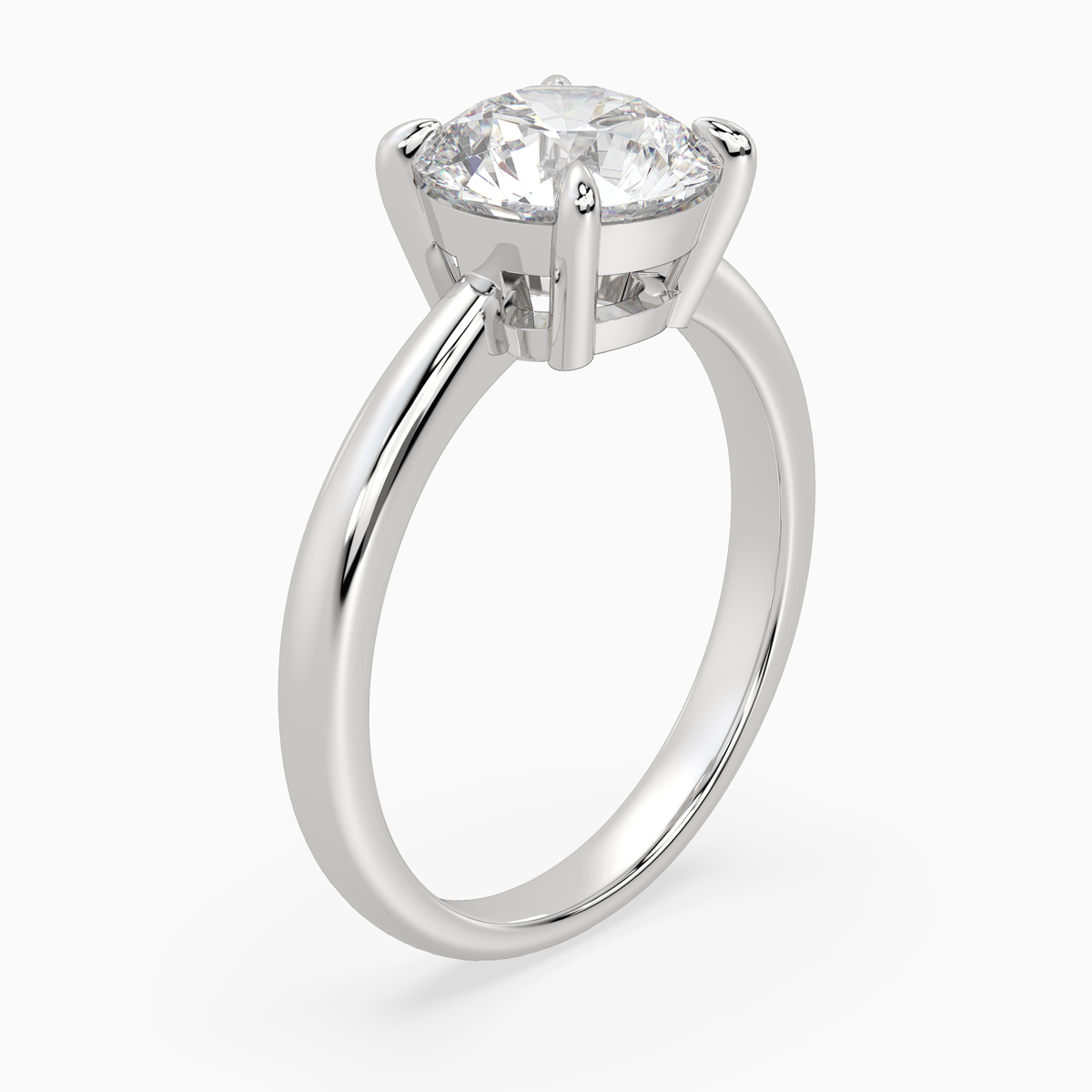
A round brilliant center already contains a precise visual order: circular outline, radial facet arrangement, and a changing pattern of bright and dark. 14K White Gold creates a comparatively quiet frame around that order. Prongs may recede tonally, yet their position, thickness, and relation to the basket remain part of the ring's architecture.
Fourteen current designs carry the round center through seven Solitaire, four Halo, one Side Stone, and two Three Stone compositions. Open and pavé baskets, hidden halos, cathedral shoulders, knife edges, bypass bands, vines, split shanks, and pear-shaped side stones show that tonal continuity is not the same as structural sameness.
White Metal Should Clarify the Construction
A 14K gold alloy contains approximately 58.3% gold. The remaining metals influence its color and working behavior. The karat mark does not disclose an exact formula, rhodium finish, hardness, sensitivity outcome, or care interval. Confirm the selected product rather than assuming every white-gold ring has the same surface treatment.
A close color relationship between diamond, prongs, and band can make transitions feel quieter, but it does not make the setting invisible. Look for the boundary at the girdle, the rhythm of the prongs, and the way the basket meets the shoulders. A resolved white-metal ring remains clear when its structure is read at hand scale.
Facet Contrast Belongs to the Diamond
Brightness is returned white light, fire is spectral color, and scintillation is the changing light-dark pattern visible with movement. White Gold can reduce color contrast around the center, but it cannot create a higher cut grade, more brilliance, or a larger diameter. Those judgments belong to the individual diamond and its documented proportions.
For eligible standard round brilliants, an overall cut grade provides a research-based summary of face-up appearance, design, and craftsmanship. Diamonds within one grade can still show different patterns. Compare the actual center in motion, then judge whether the quiet setting supports rather than masks its specific character.
The Perimeter Changes With the Setting
In a Solitaire, the circle is most exposed and small differences in prong position or basket height become prominent. A Halo repeats the center's boundary and adds another ring of light. The Side Stone design introduces lateral detail, while Three Stone structures place the round center in a wider relationship with supporting forms.
White Gold can connect these elements tonally, but hierarchy still depends on scale and spacing. A split shank opens the approach to the center; a knife edge narrows it; a bypass introduces direction; a vine gives the band an organic line. The material unifies color while construction determines movement.
Compare Diameter Within the Complete Ring
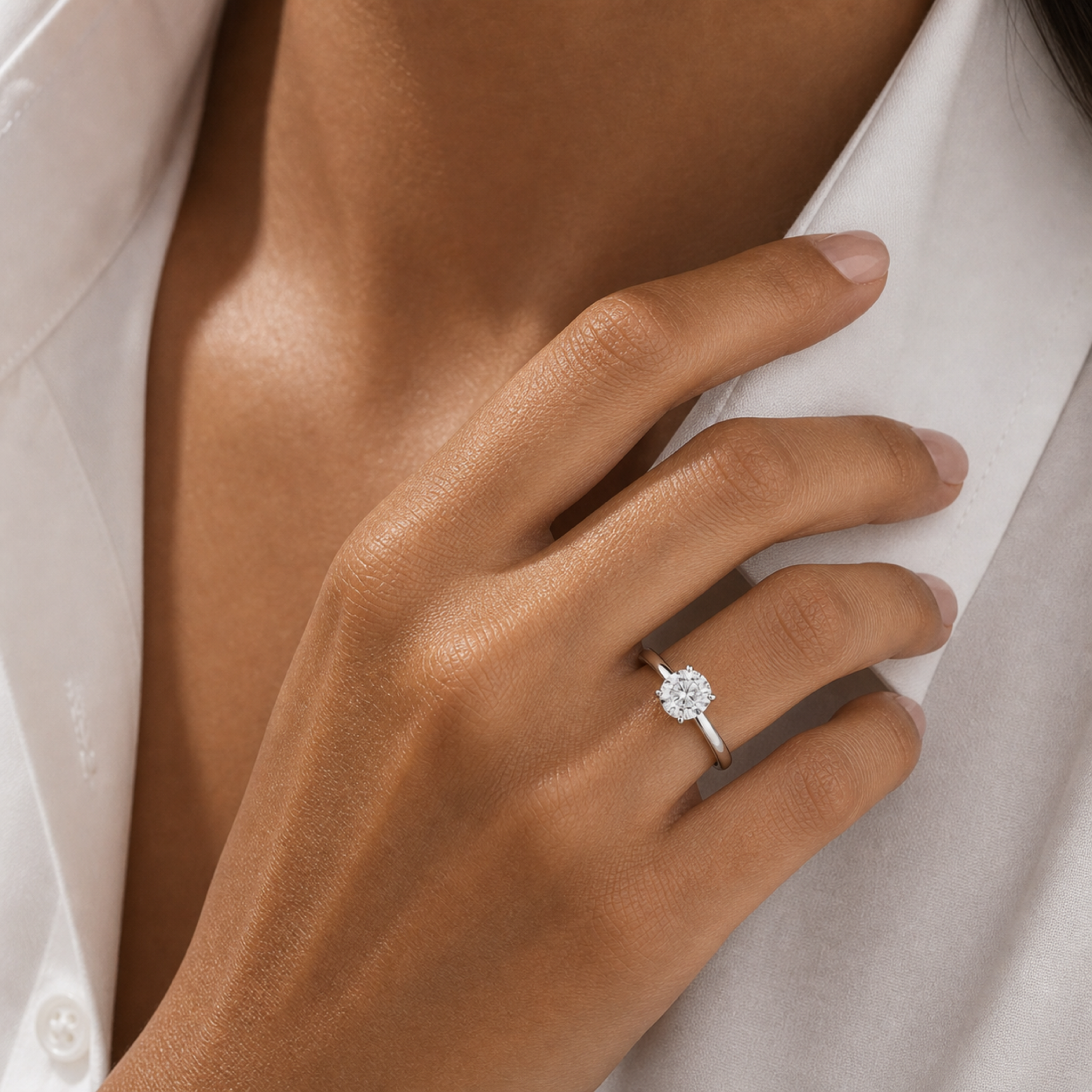
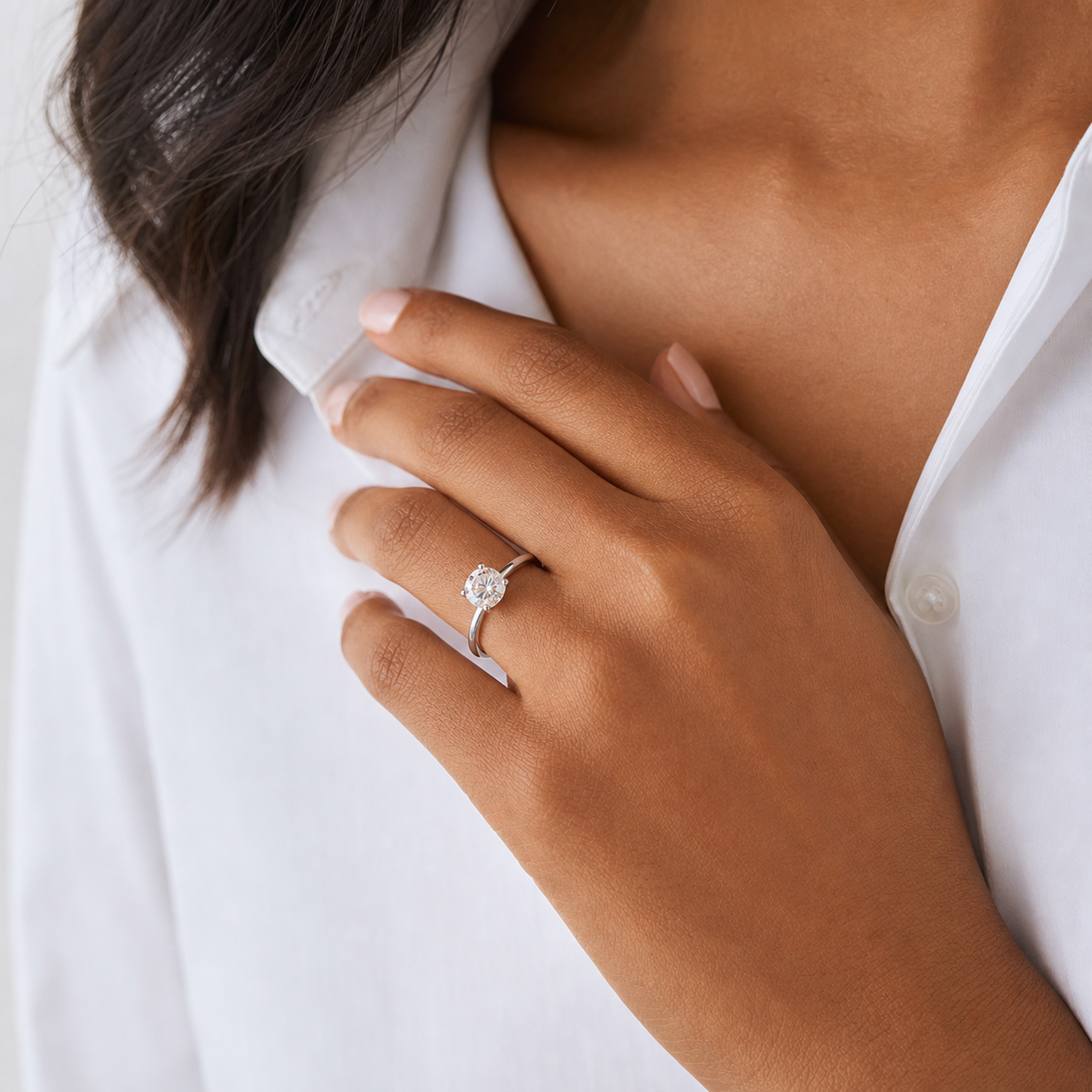
Carat weight alone does not describe how large a round diamond appears face-up. Review diameter, depth, girdle, and cut information alongside the band and surrounding setting. A halo enlarges the overall field, while a fine Solitaire band can leave more negative space around the center. Neither changes the diamond's recorded measurements.
The color grade also remains independent of the metal. White prongs may create visual continuity around some centers, but they do not change the grade or guarantee a colorless appearance. Accent diamonds, finish, and lighting contribute to the final comparison and should be read in the actual configuration.
Quiet Color, Exact Readback
A wedding band may sit close to a higher open basket and encounter a lower halo, side stone, or projecting shoulder sooner. A matching white metal name does not guarantee flush fit, identical finish, or the same care needs. Judge both ring profiles and contact points together.
Burvonti pairs responsibly sourced, independently graded lab-grown diamonds with settings calibrated through proportion and human judgment. Custom possibilities may refine center specifications, prongs, basket, band, accents, metal, or engraving where feasible. White Gold is most useful here as a quiet field in which every structural decision remains accountable.
Frequently Asked Questions
What does this child page add beyond the Round parent?
It focuses on how 14K White Gold creates tonal continuity around a round brilliant while leaving prong, basket, and setting transitions legible.
How much gold is in 14K White Gold?
Approximately 58.3%. Other alloying metals influence color and working behavior.
Is every 14K white gold ring rhodium plated?
That should not be assumed. Confirm the finish for the selected Burvonti product.
Does White Gold make a round diamond brighter?
No. It changes the surrounding color field but not the center's cut or light performance.
Why does facet contrast matter?
A crisp pattern needs both bright and dark areas. Their movement helps define scintillation rather than indicating that the diamond should appear uniformly white.
Which designs appear on this page?
There are seven Solitaire, four Halo, one Side Stone, and two Three Stone designs in the current 14-product assortment.
Do all Excellent-cut round diamonds look identical?
No. Several proportion combinations can share a grade while producing different patterns, fire, brightness, and face-up scale.
Does carat weight equal visible diameter?
No. Carat is weight; diameter, depth, girdle, and setting context help explain face-up size.
Will white prongs make the diamond look colorless?
They may reduce surrounding color contrast, but they do not change the graded color or guarantee a colorless appearance.
Is White Gold hypoallergenic?
No universal personal outcome should be promised. Confirm the product-specific alloy if sensitivity is a concern.
Will the finish remain unchanged?
Surface appearance evolves with wear. Alloy, finish, care, and use determine what maintenance may be appropriate.
Can a straight wedding band sit flush?
It depends on basket, halo, side-stone, shoulder, and height geometry; a matching metal does not establish fit.
Can Burvonti adjust the design?
Custom possibilities may include center specifications, prongs, basket, accents, band line, metal, or engraving, subject to structural feasibility.