
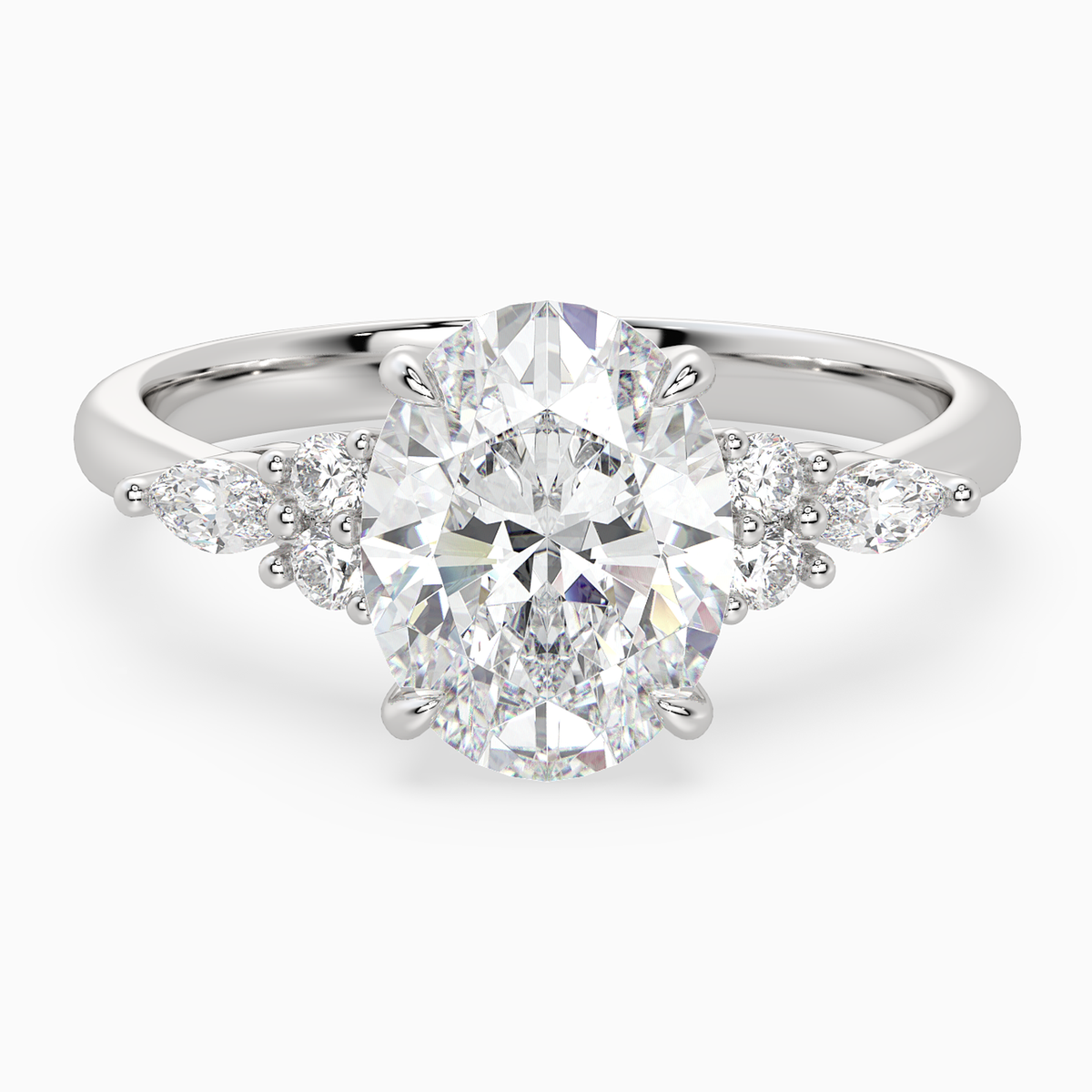


Pear Diamond Engagement Rings in 18K Yellow Gold
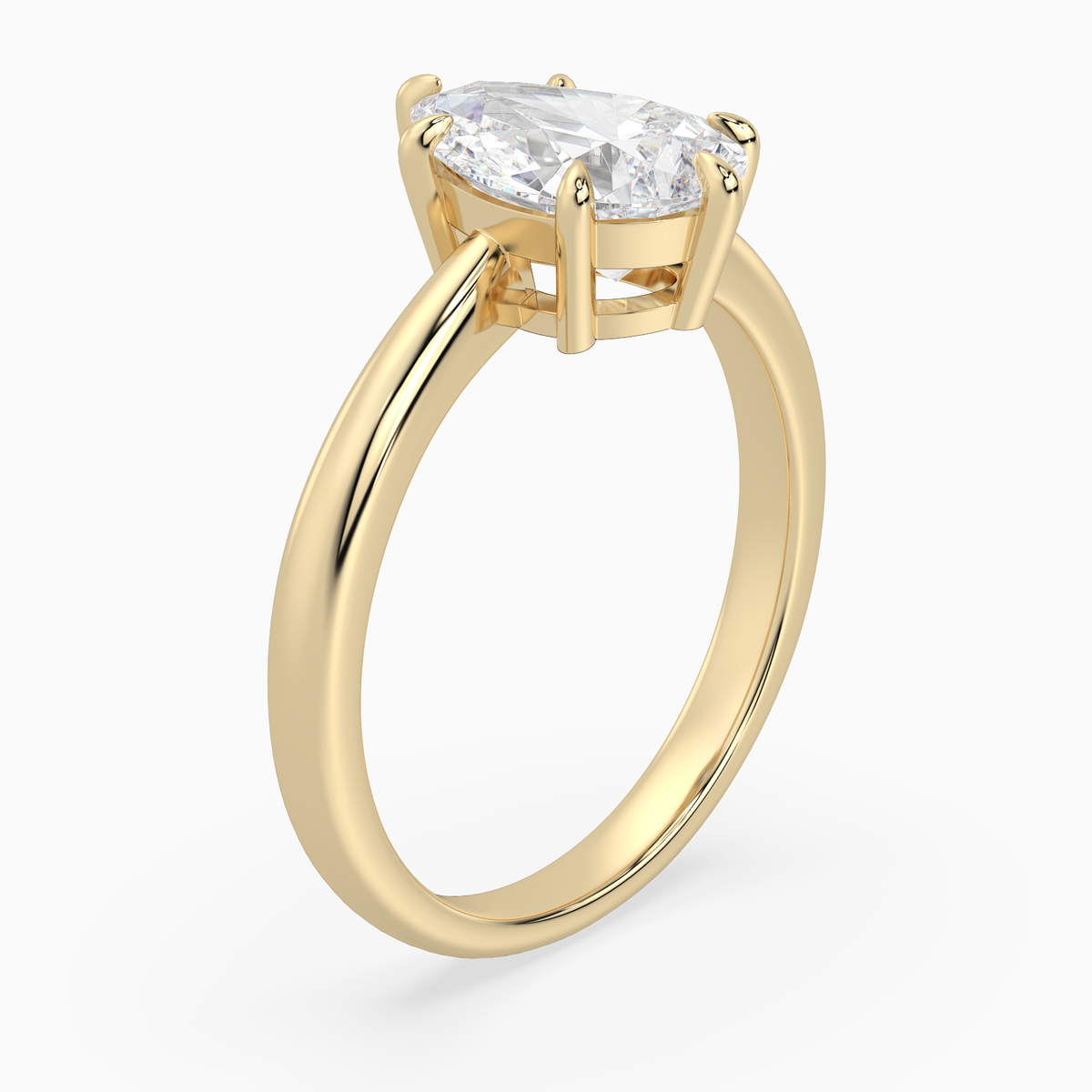
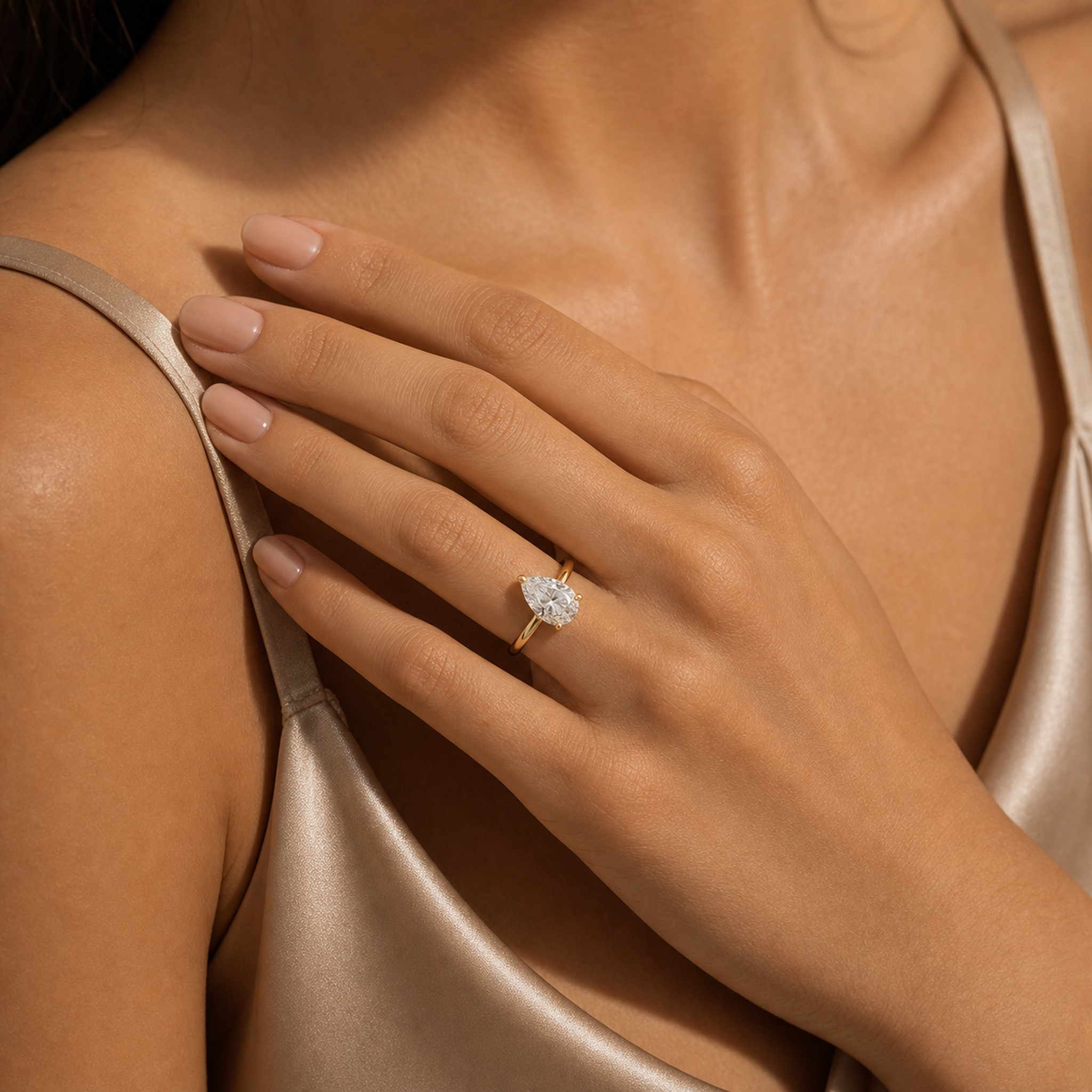
A rounded head resolving into one point. 18K yellow gold gives the pear’s directional outline warmth and measured material presence.


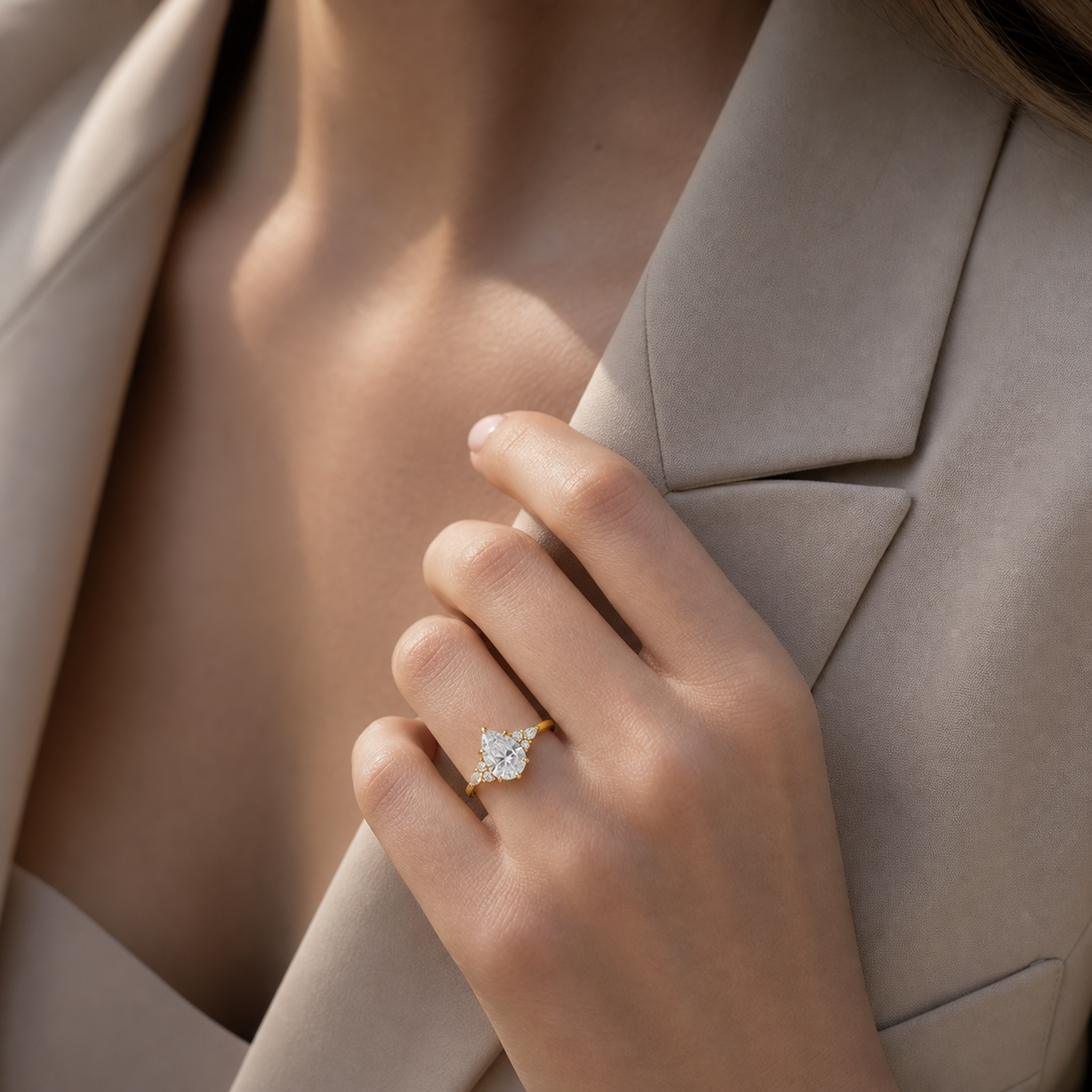


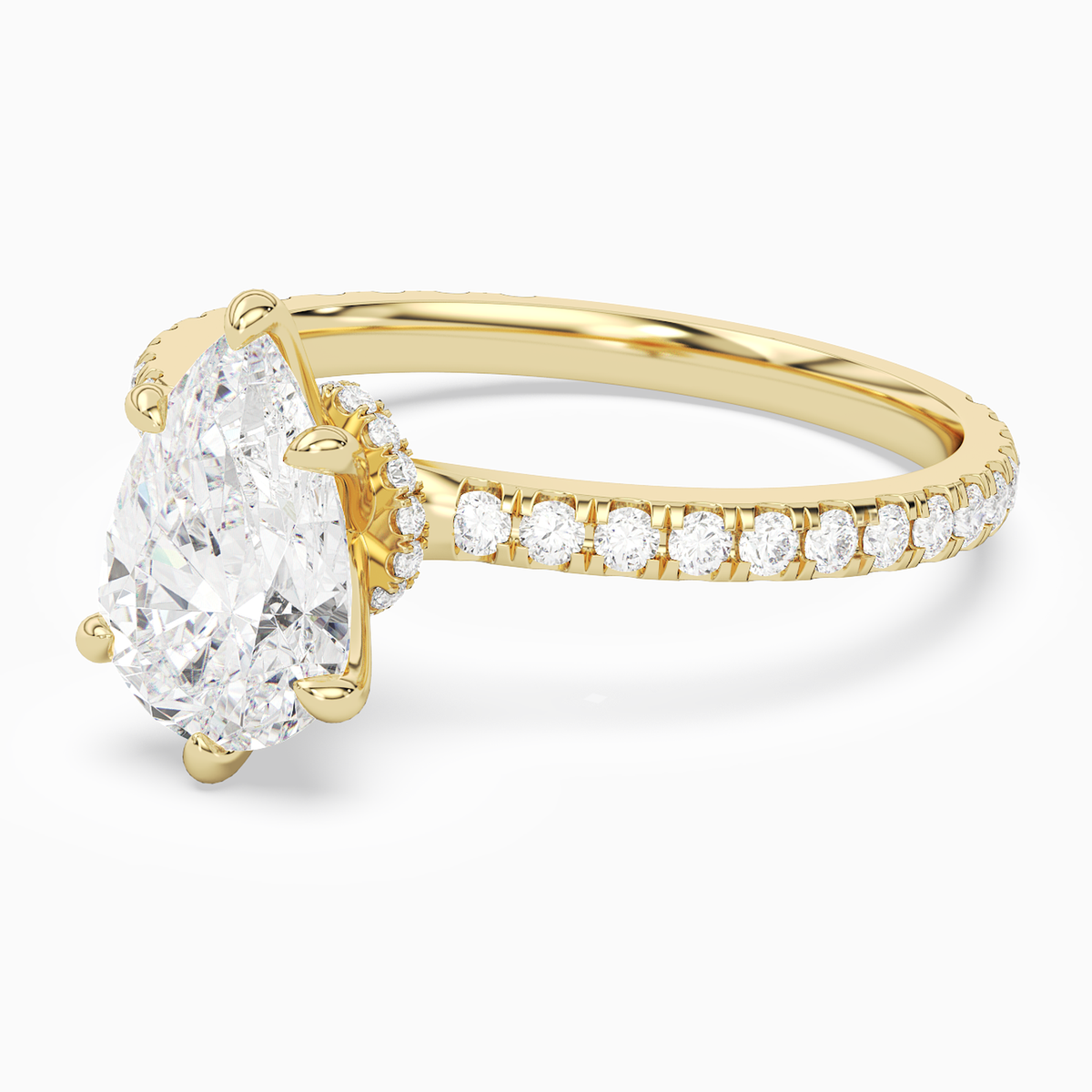
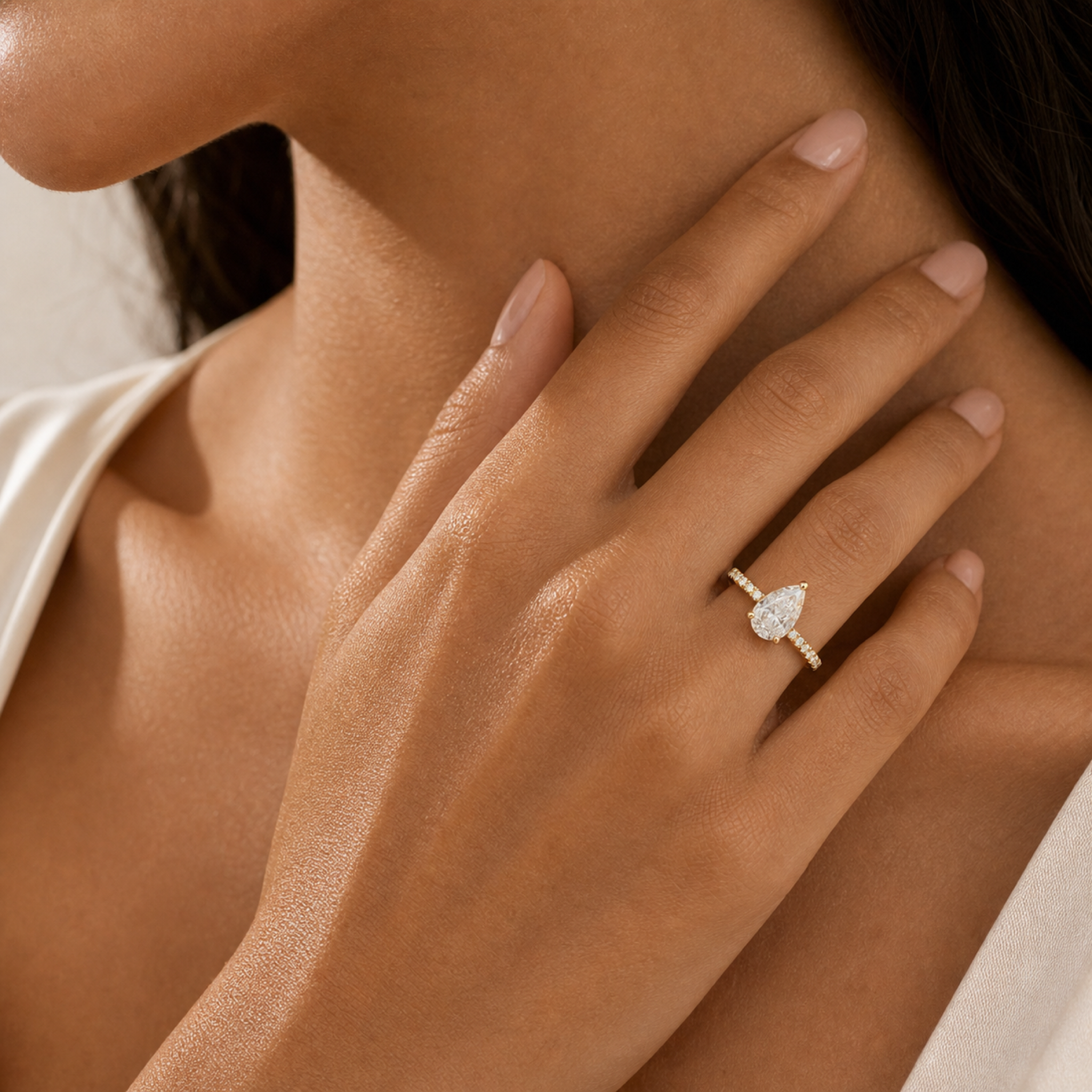








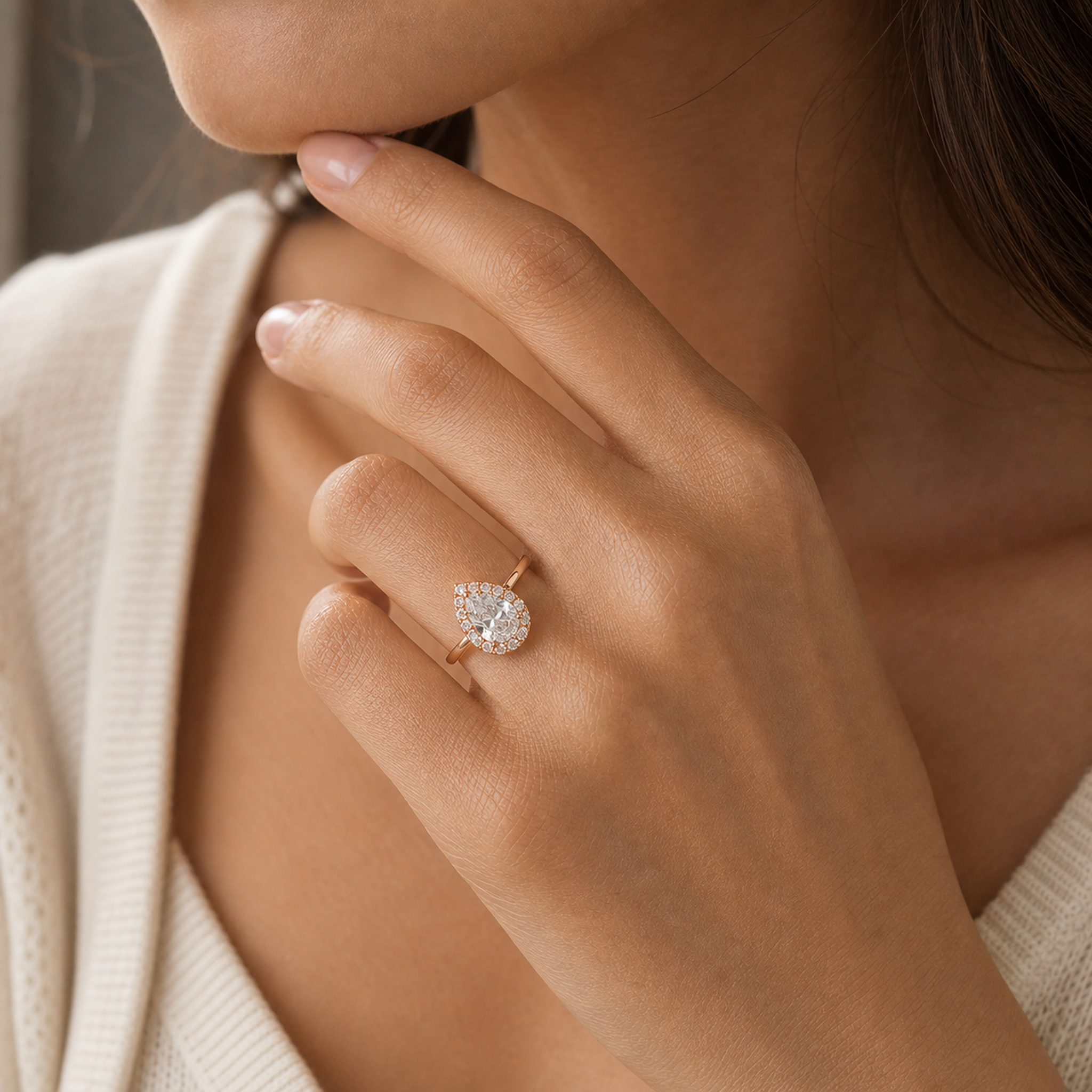

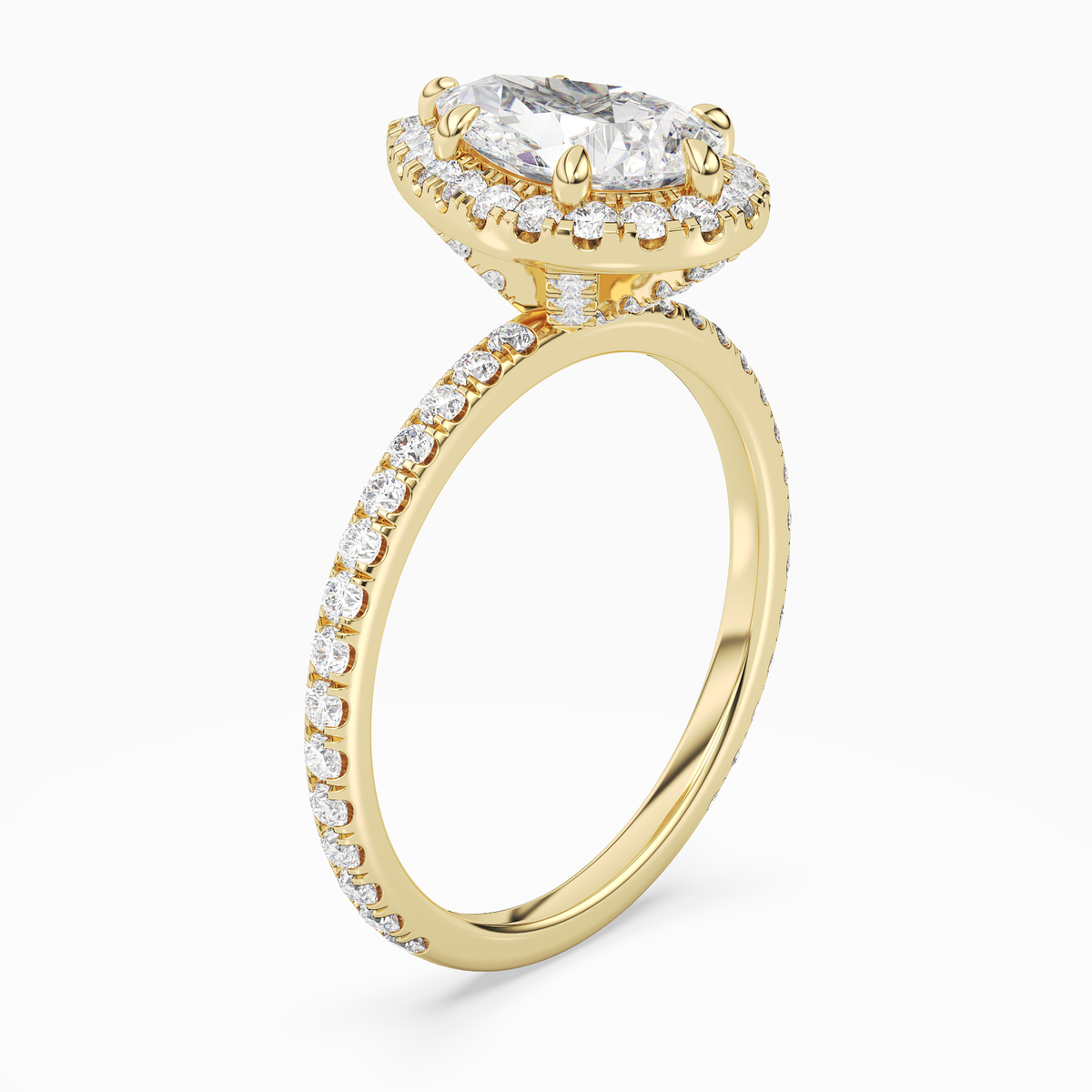


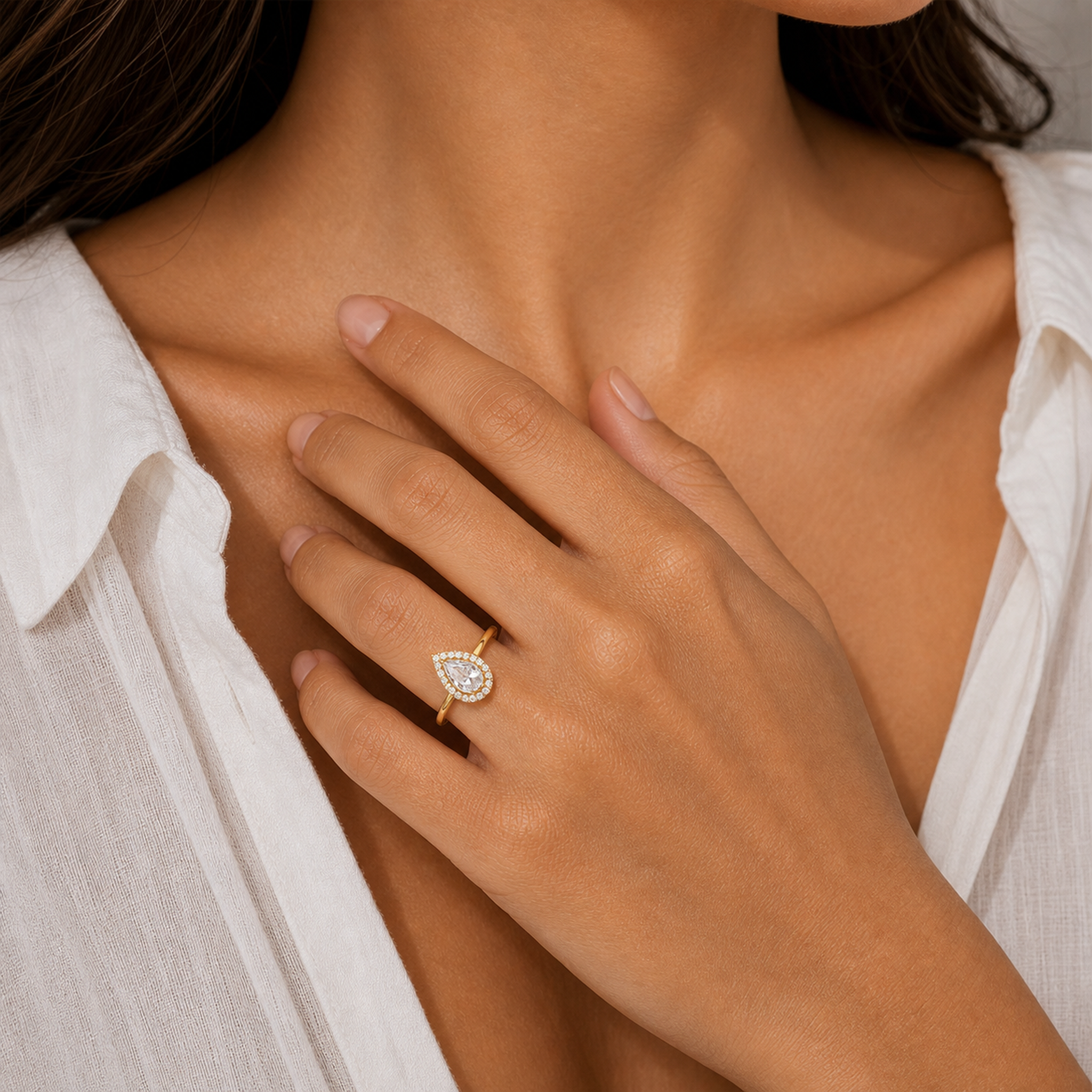


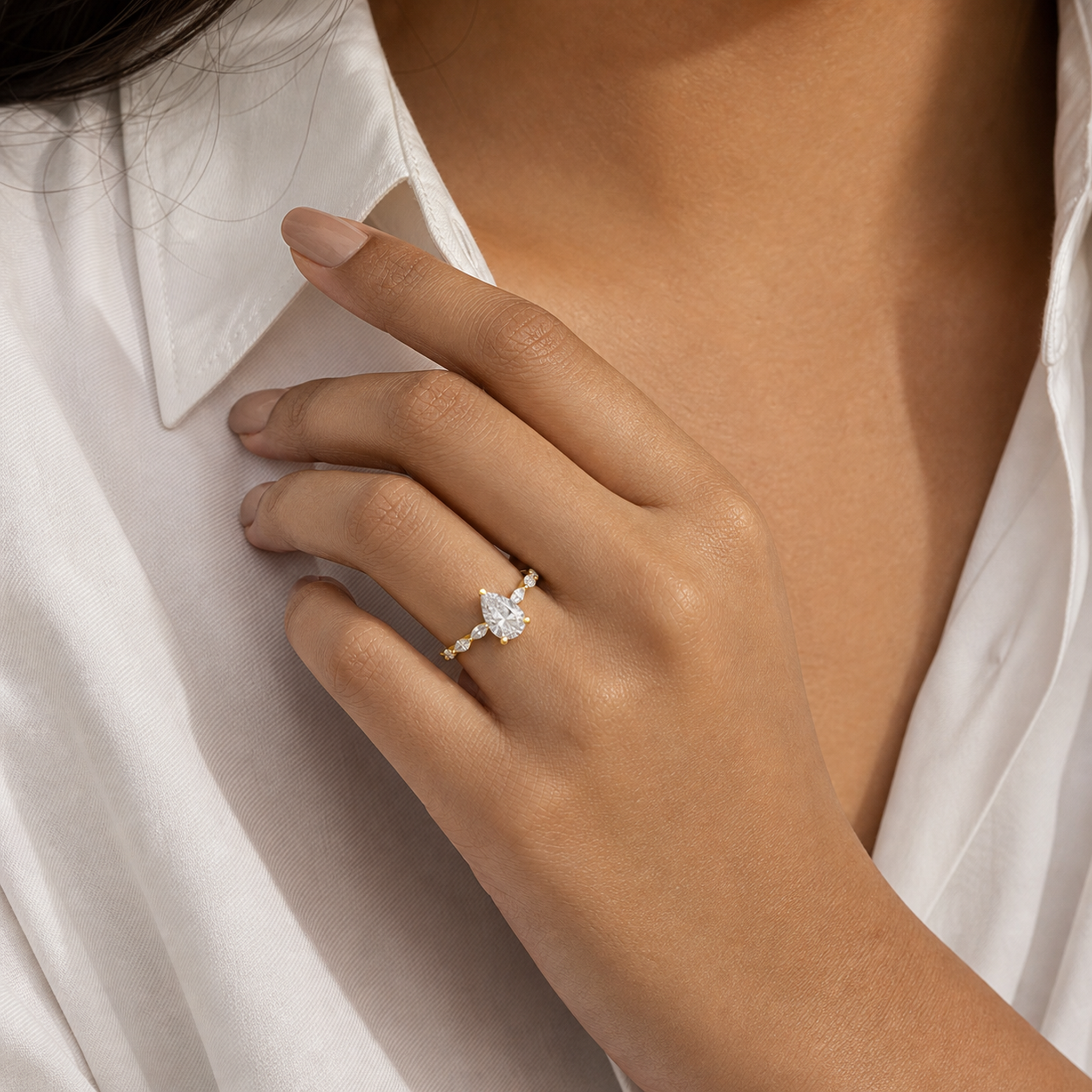


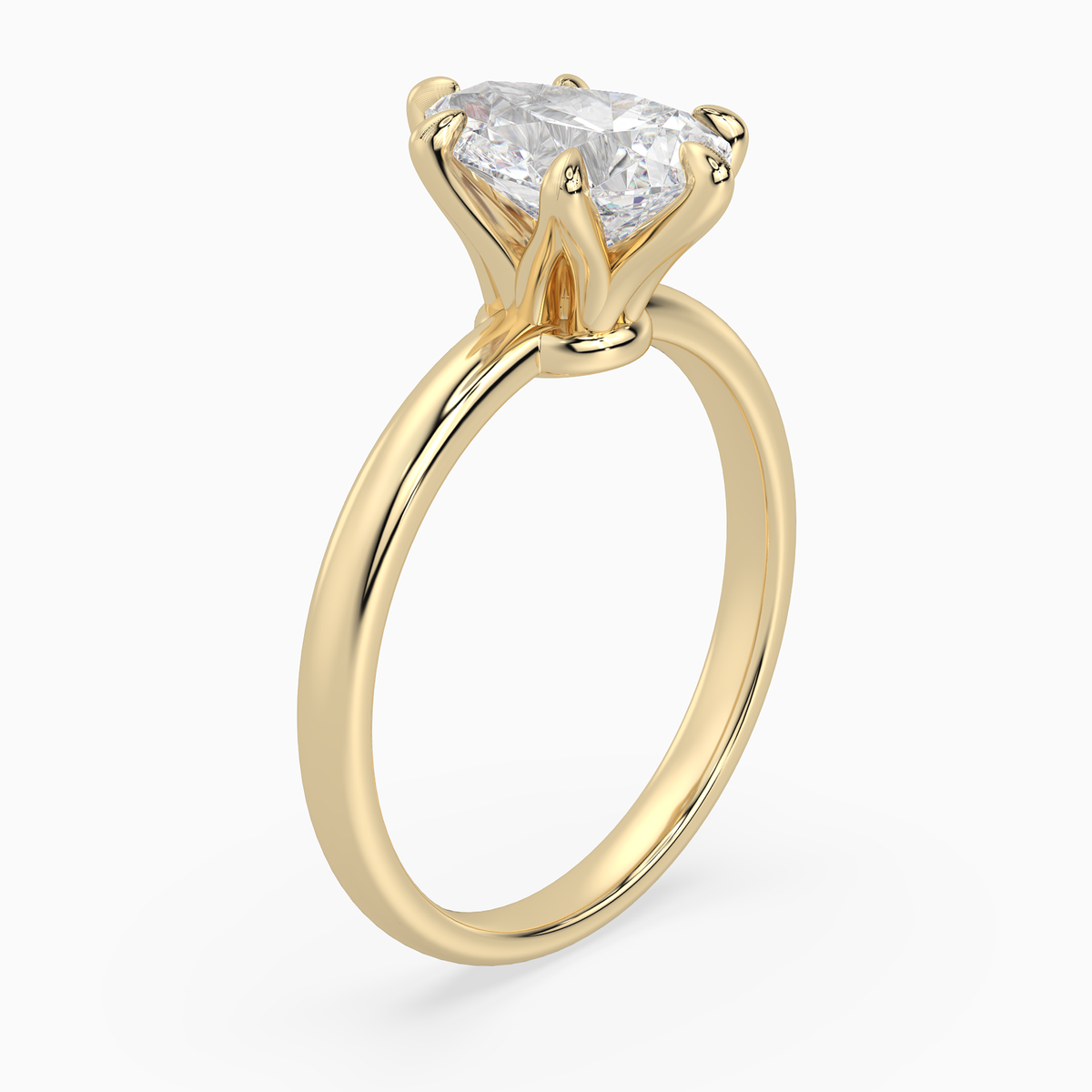
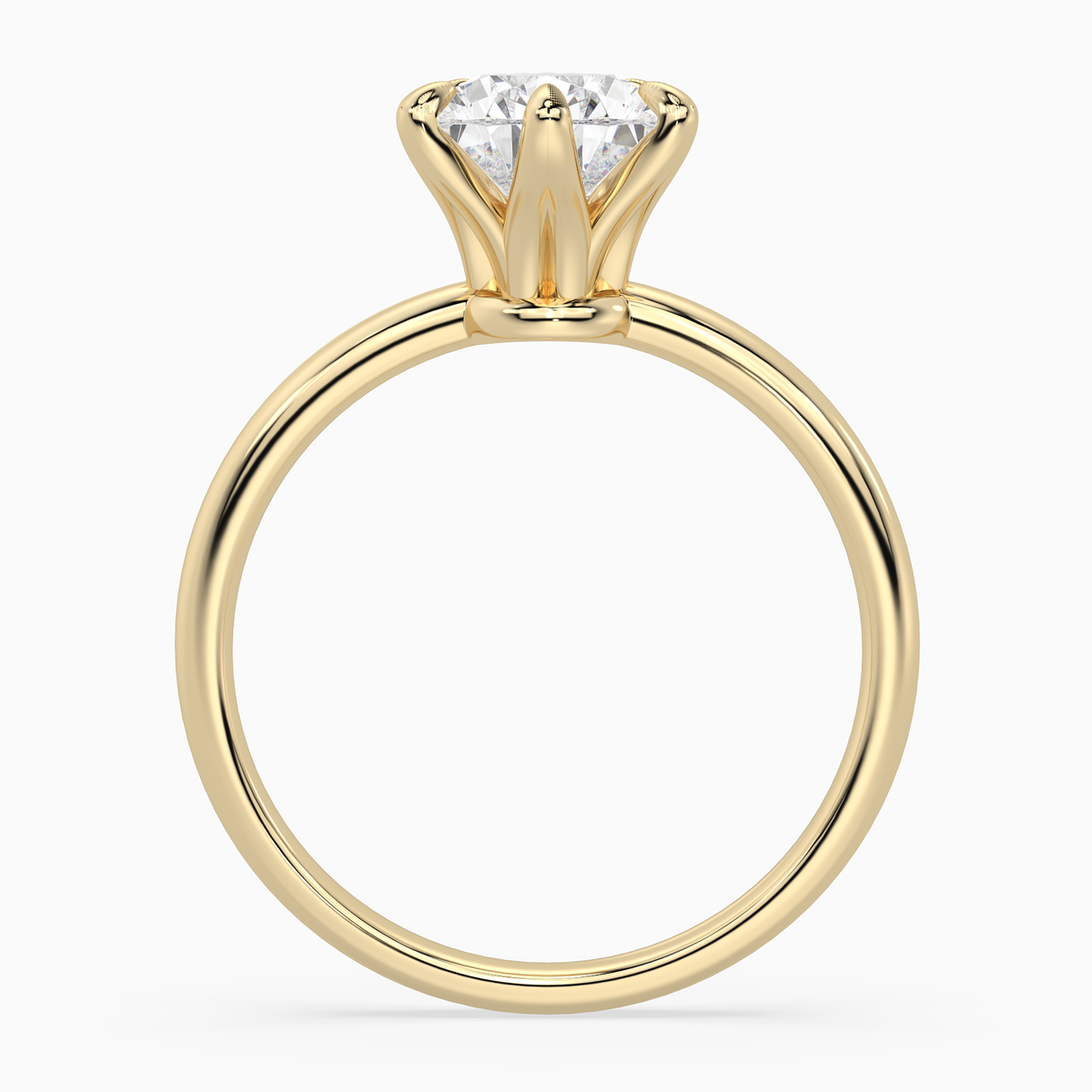
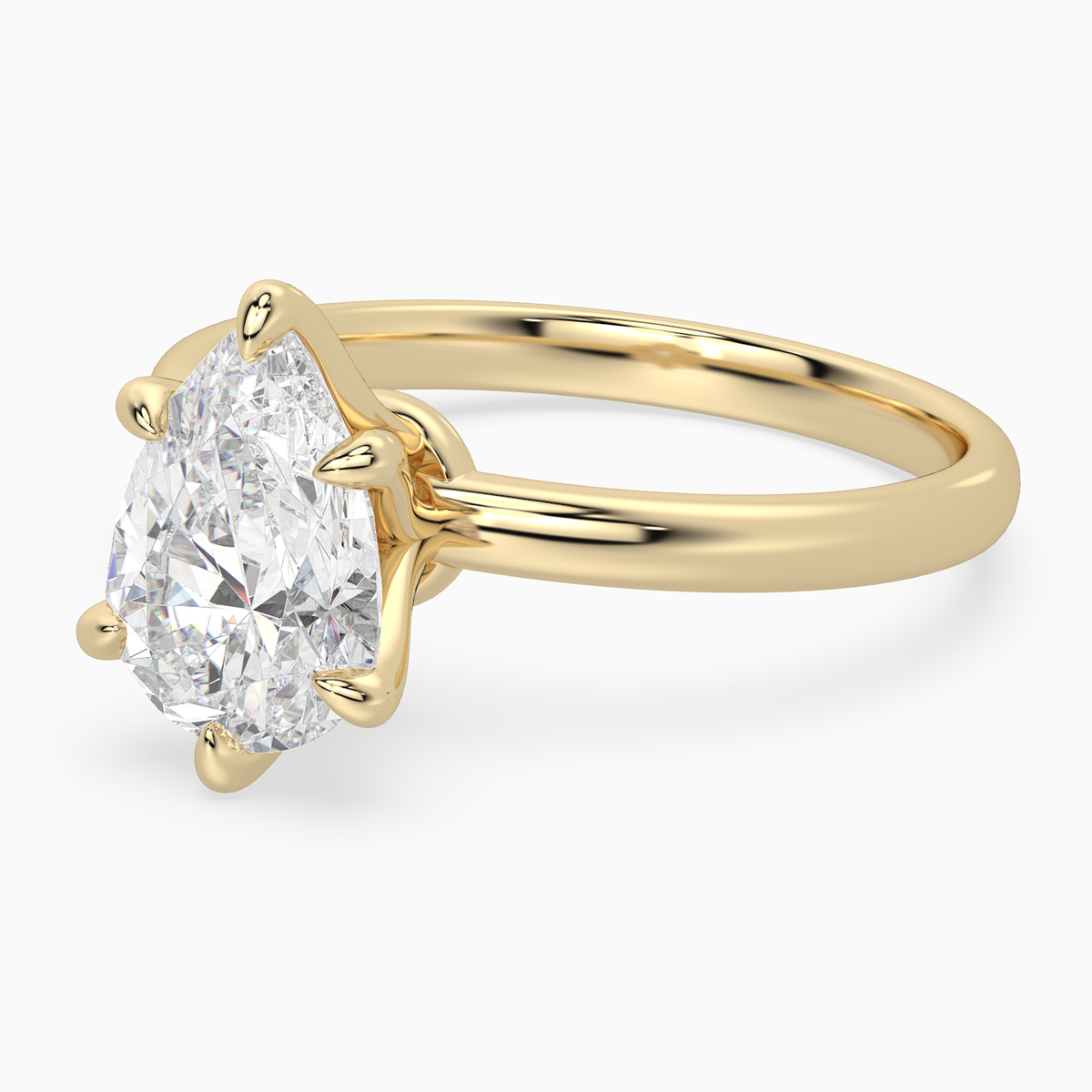
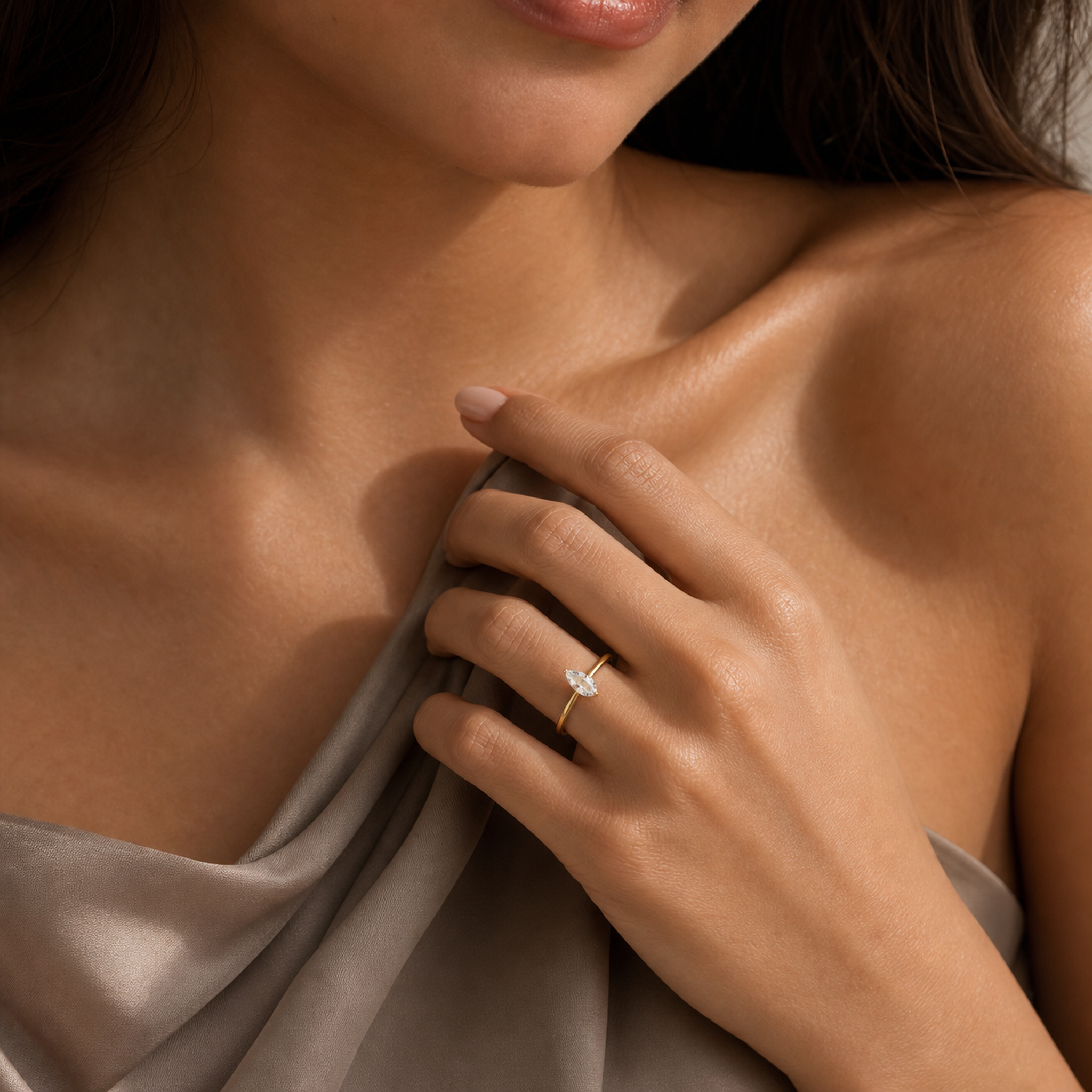

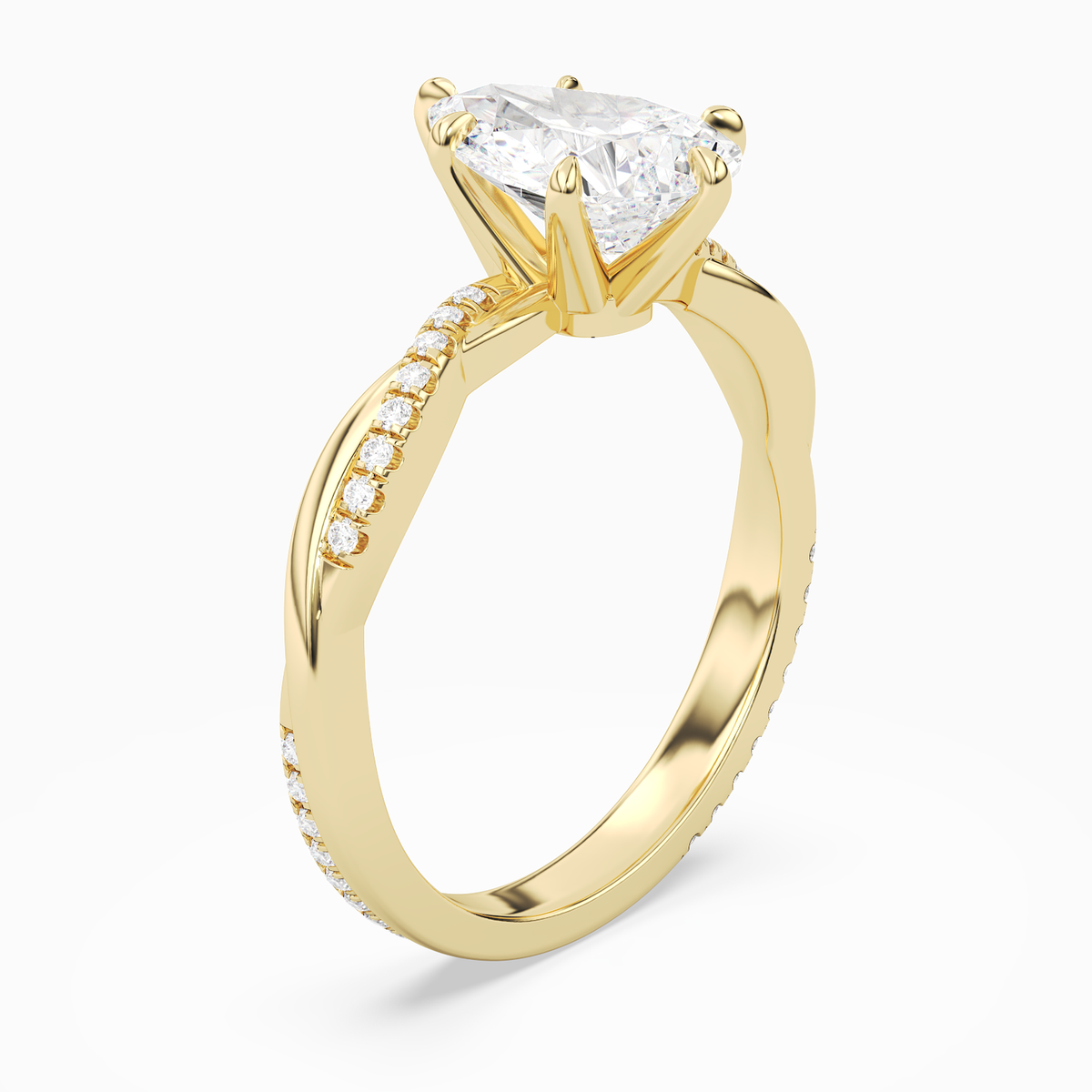


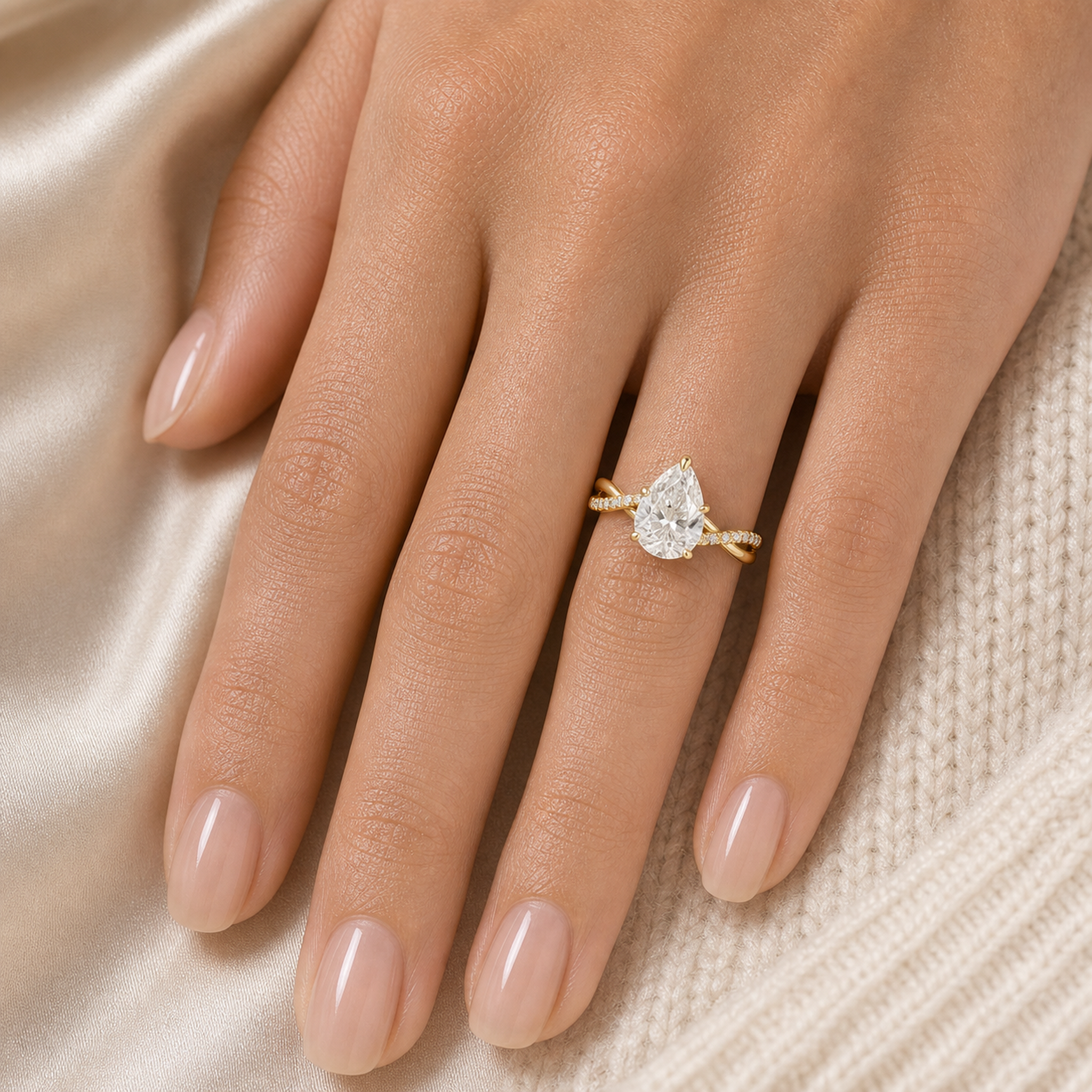

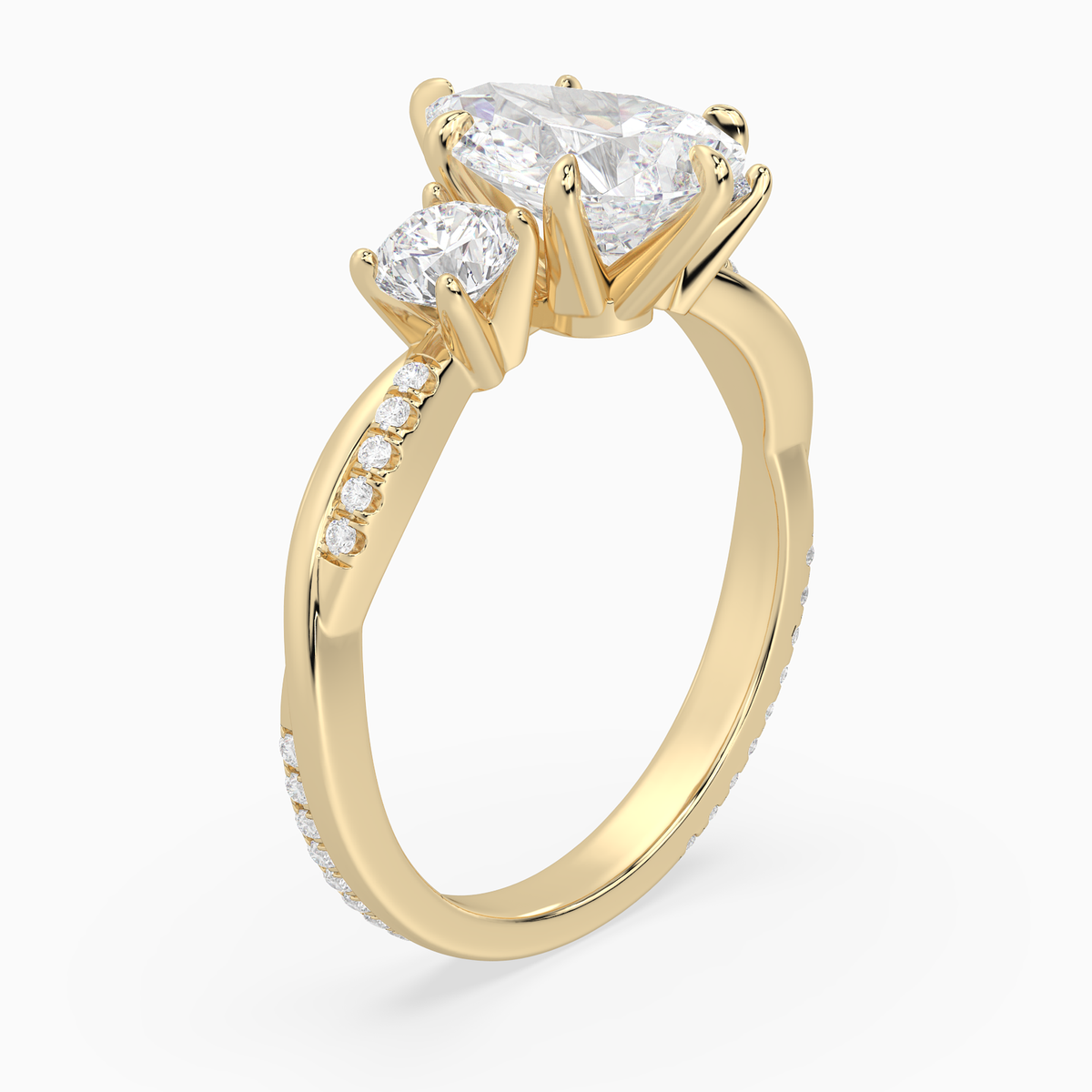
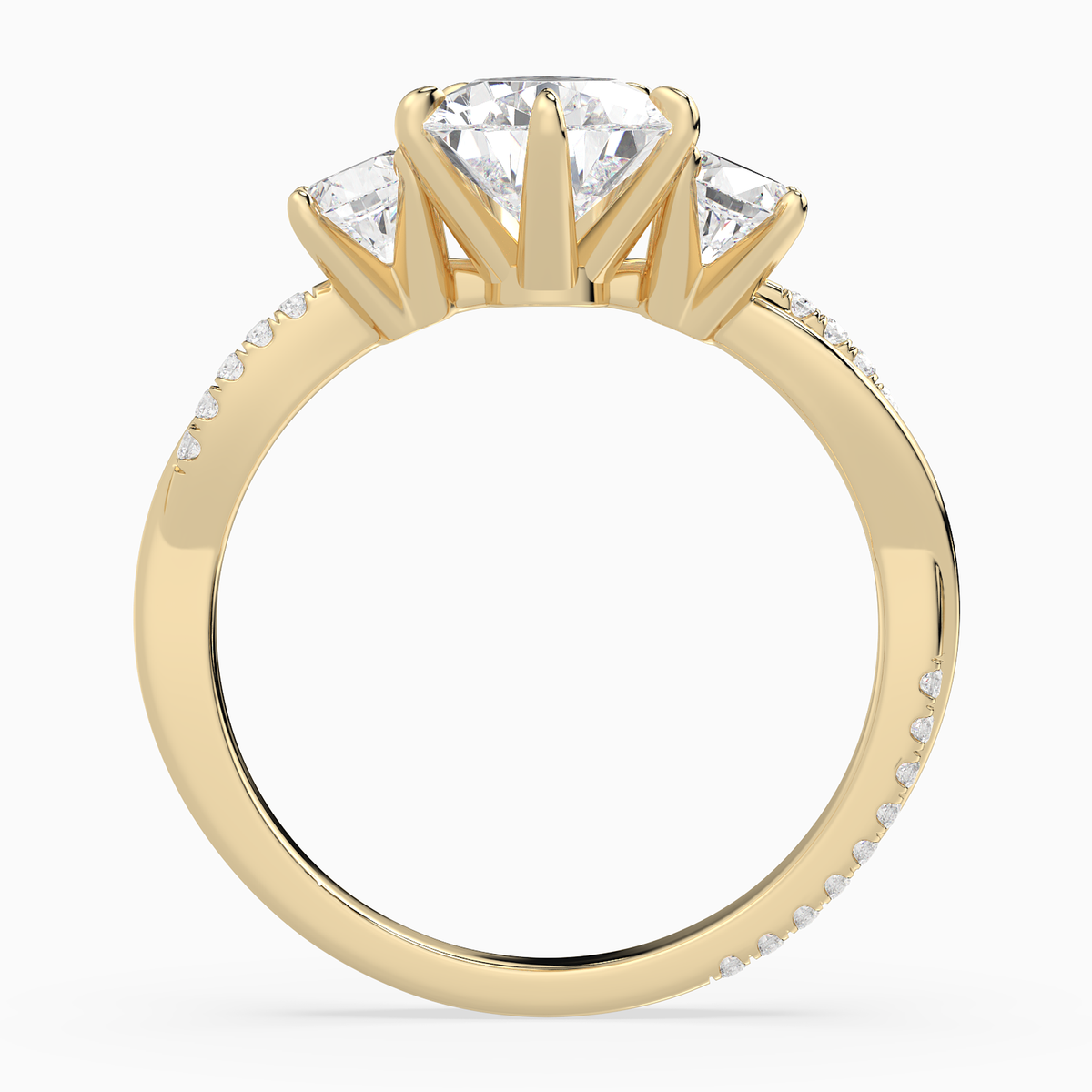

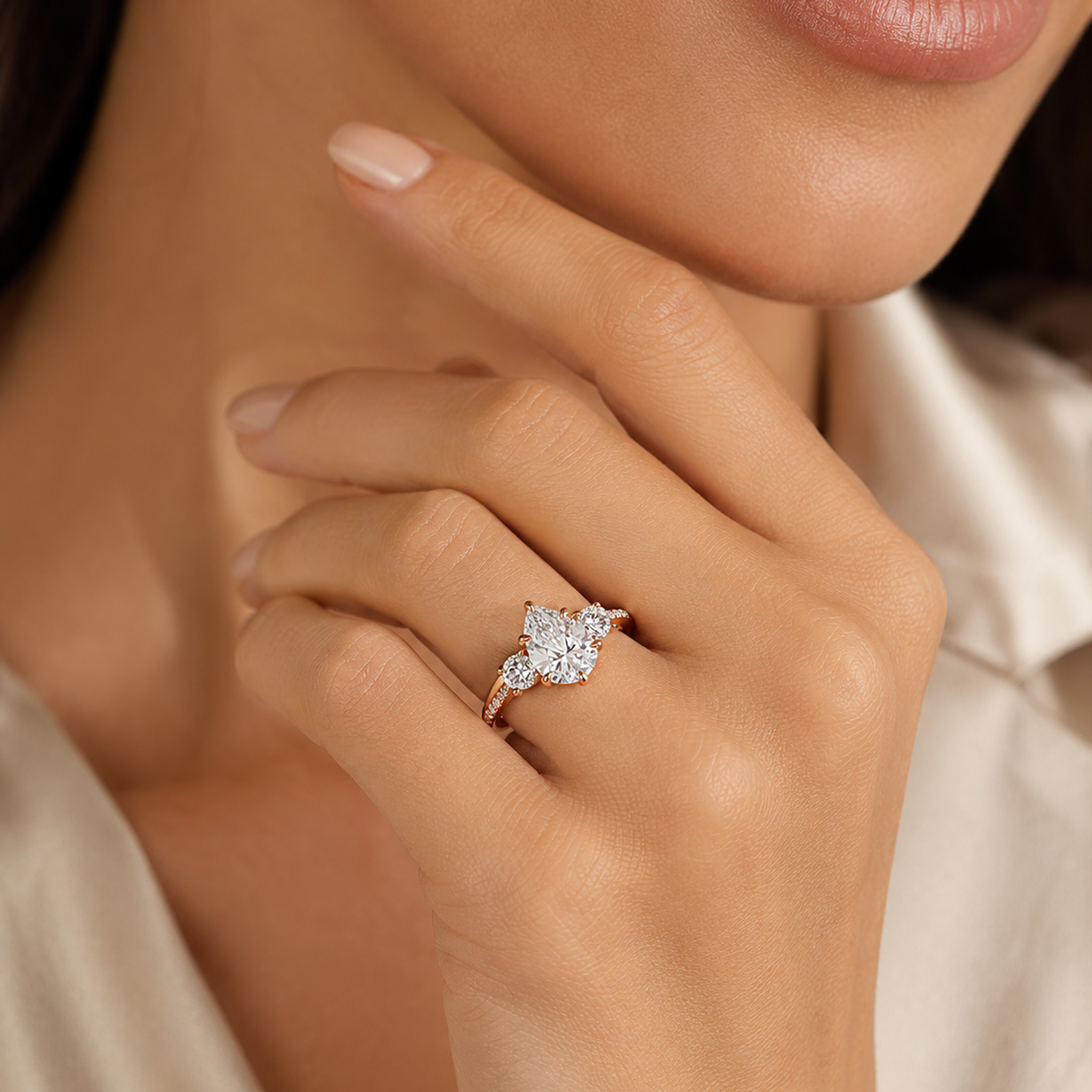


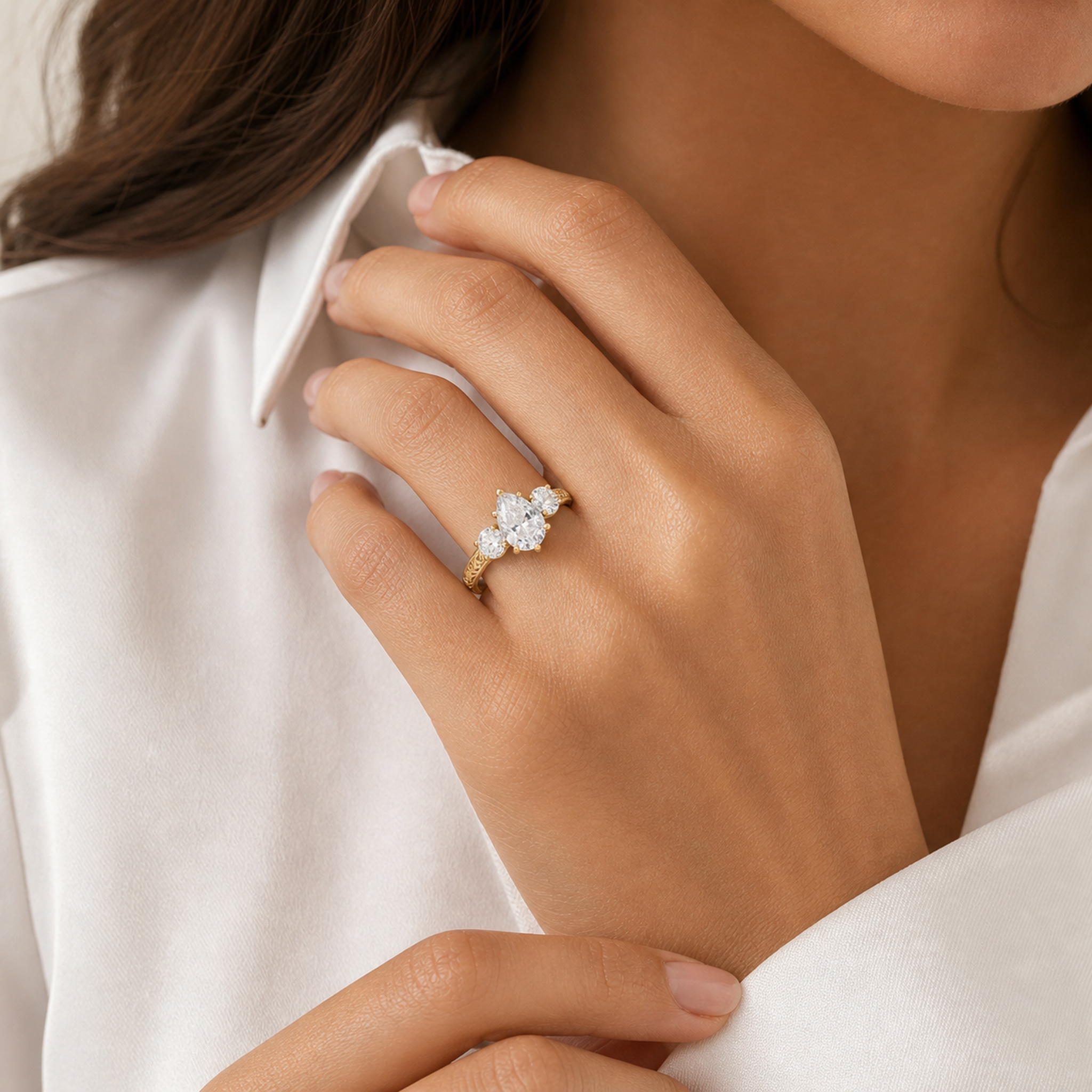
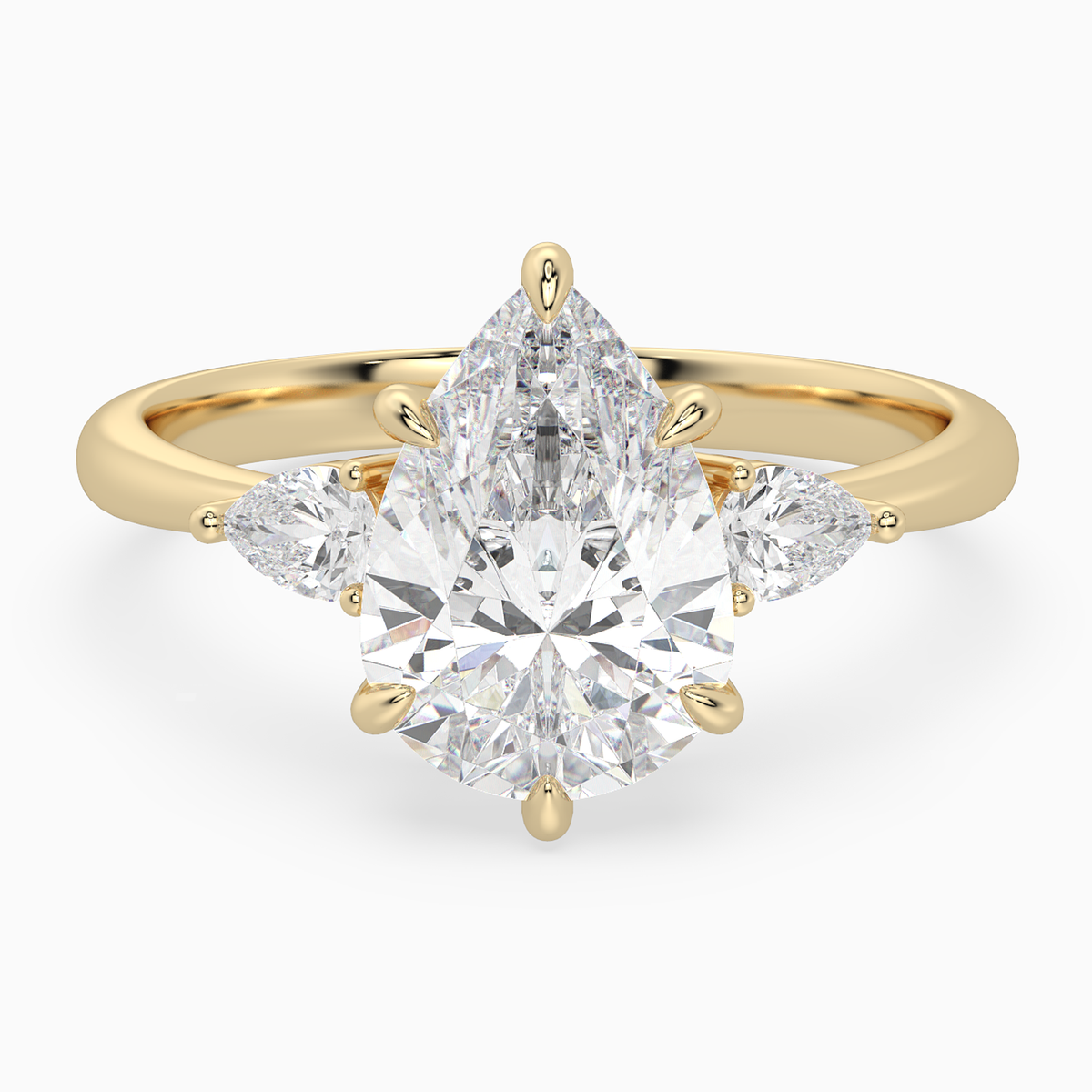
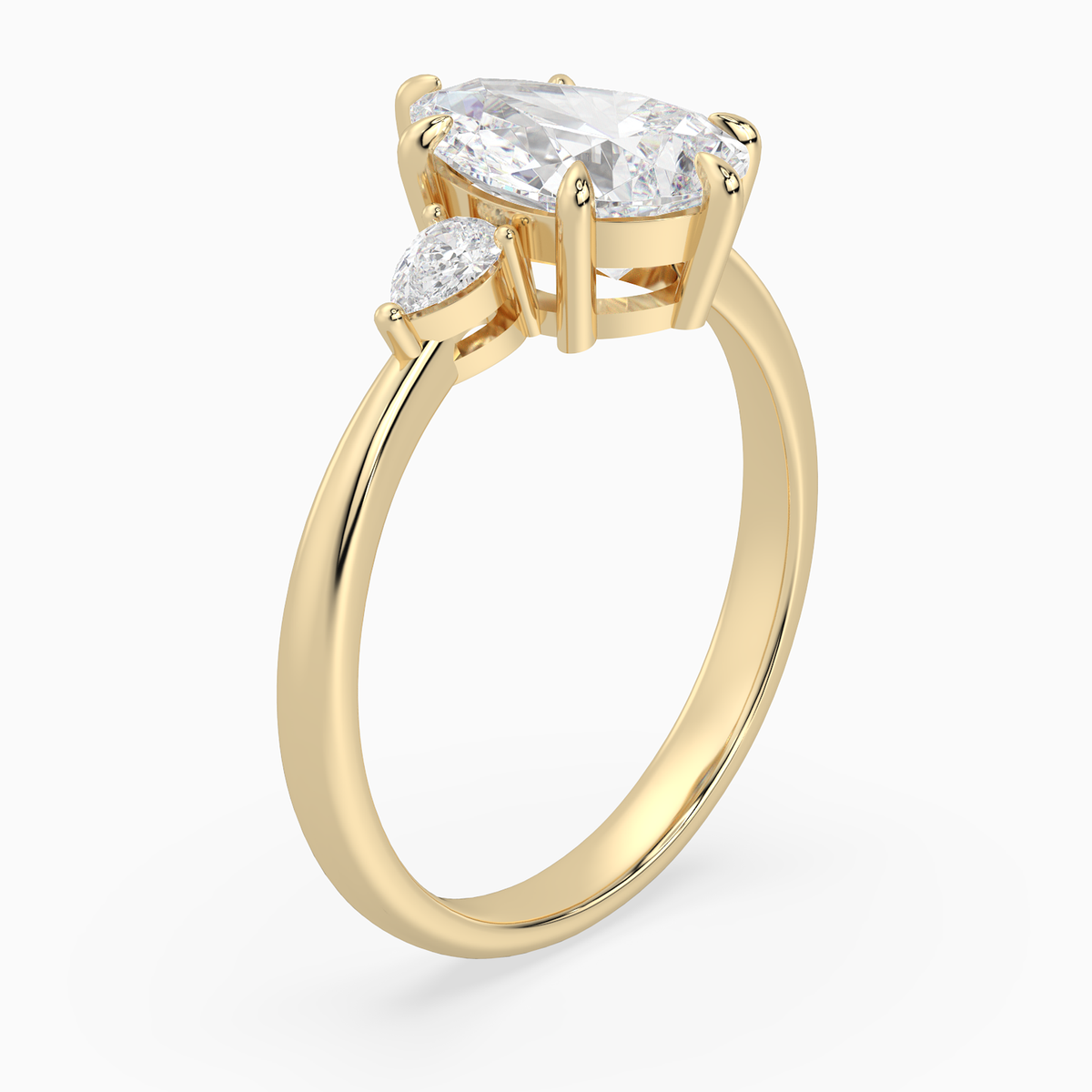


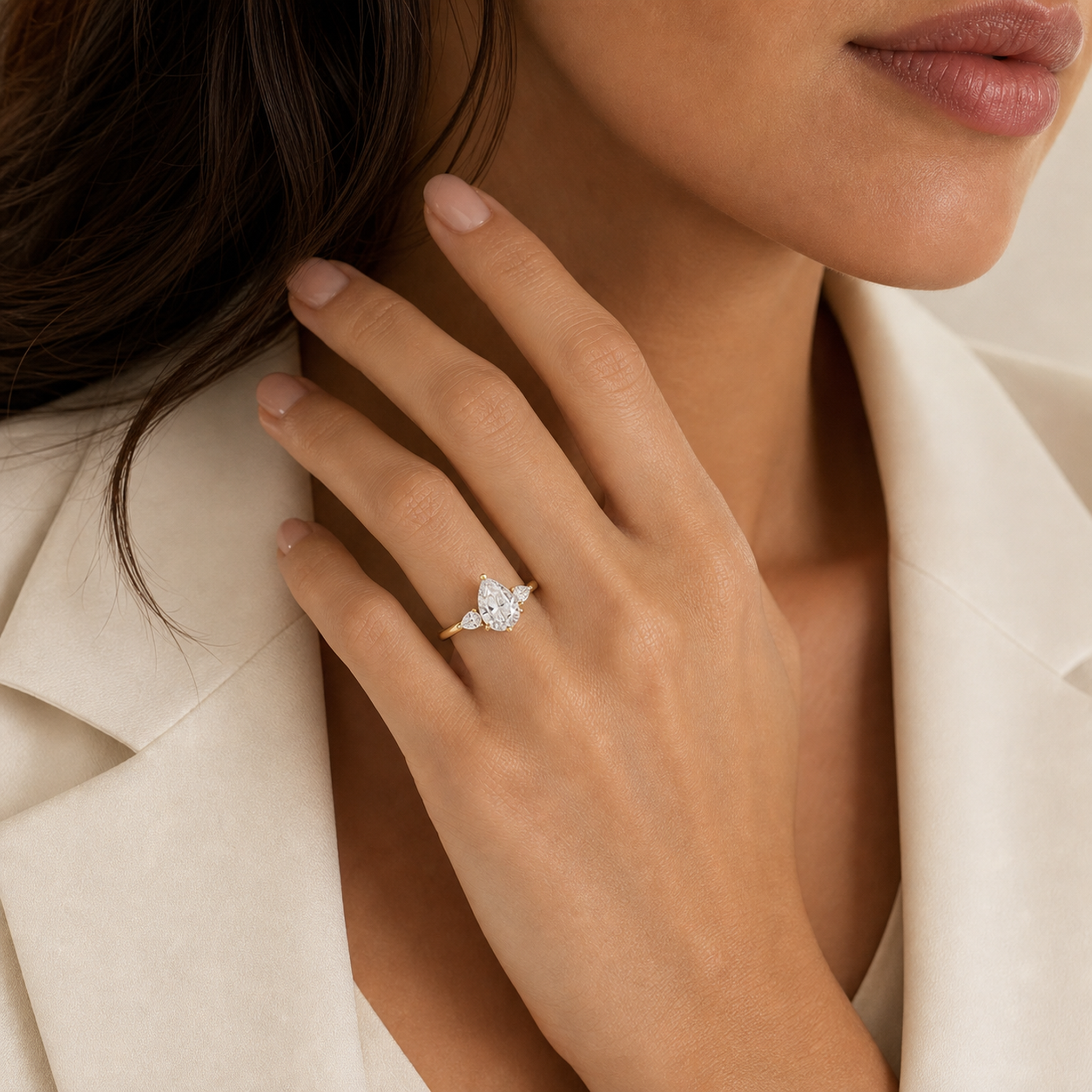
18K Yellow Gold Pear Diamond Engagement Rings: Direction Within a Fuller Gold Field
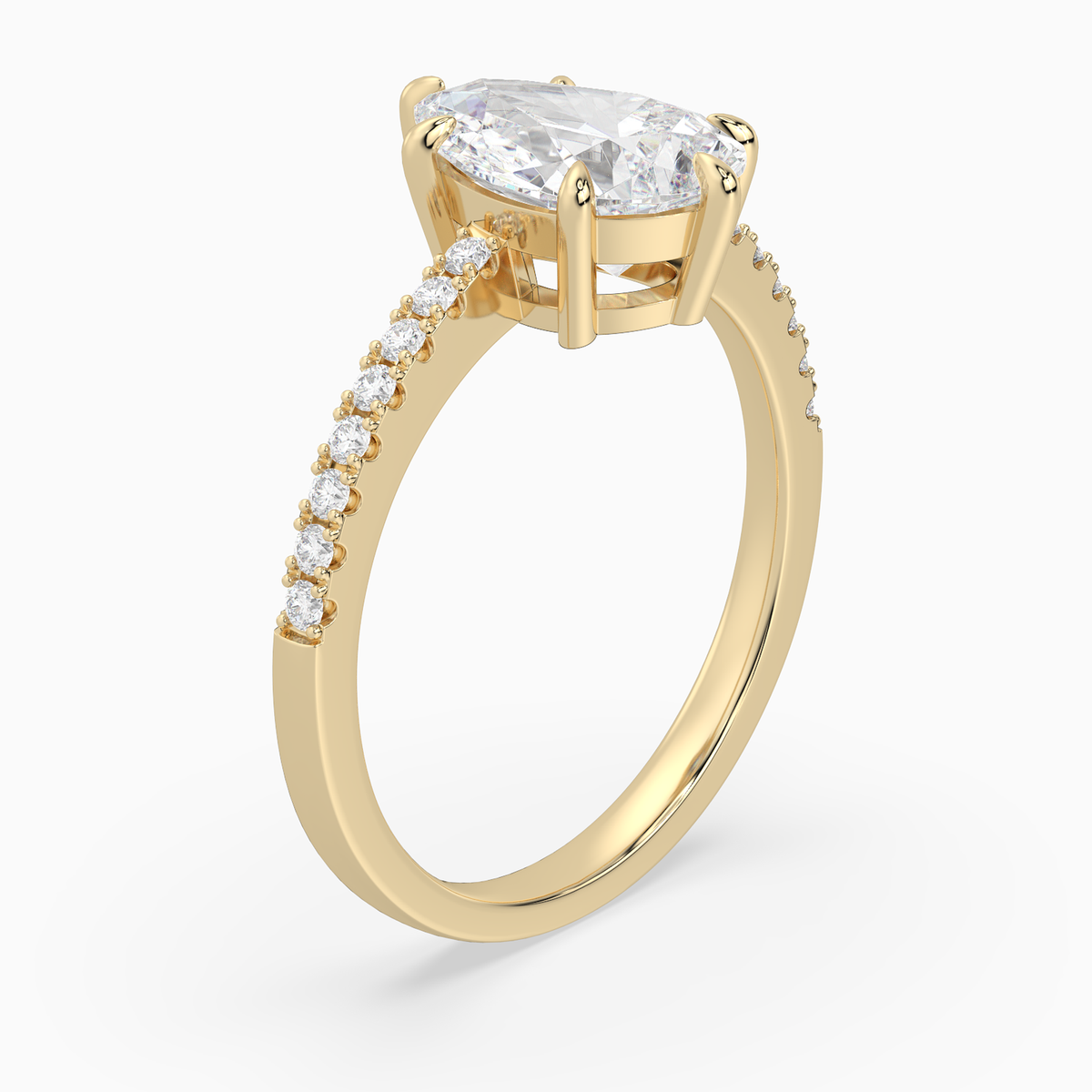
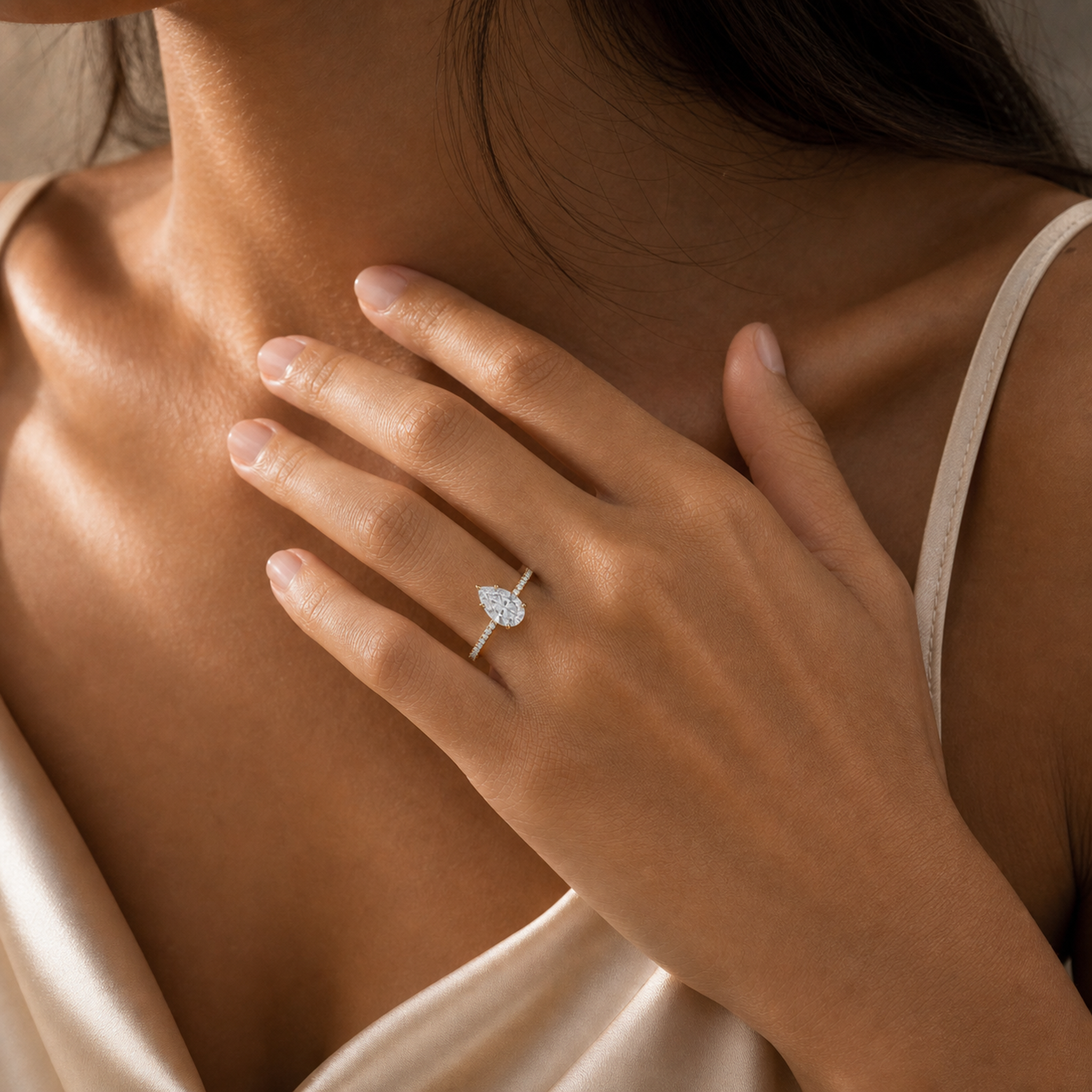
The pear silhouette moves from breadth to concentration. In 18K Yellow Gold, that transition is held within a visibly warm material field: small at the prongs, deeper at the basket, and broader where shoulders, vines, halos, or side stones carry the ring away from the center.
Burvonti's 13-design assortment includes five Solitaires, two Halos, three Side Stone, and three Three Stone settings. The shared center shape does not make these settings interchangeable; each establishes a different rhythm of gold, negative space, and directional accents.
Composition Before Color Shorthand
An 18K alloy contains 75% gold. The other alloying metals, finish, lighting, photography, and exposed surface influence the observed shade and behavior. Higher gold content is a composition fact, not an automatic promise of better durability, comfort, prestige, or care.
Compared with a fine-prong design, a cathedral, vine, or accent-rich setting shows longer intervals of material. Judge whether the gold supports the pear's axis and creates calm transitions, rather than choosing only by an isolated color sample.
Proportion Remains an Individual Judgment
Length-to-width ratio cannot describe the full pear. Rounded-head fullness, shoulders, wings, point, symmetry, and facet arrangement shape the result. A fuller gold surround may emphasize the perimeter, but it does not make a broad or elongated outline universally better.
The bow-tie may range from subtle to prominent as the diamond moves through different light. Yellow Gold does not create or remove that pattern. It also cannot change carat, dimensions, polish, symmetry, color, clarity, or other grading facts.
Gold Organizes the Lateral Composition
Solitaires keep attention on the center's directional curve. Halos create a second silhouette. Side Stone and Three Stone designs spread the composition across the finger through marquise or pear accents, making the visible gold between forms part of the design rather than a background.
At the point, construction should be reviewed in the actual configuration. A named prong style can be useful, but security depends on geometry, workmanship, condition, impact, and wear. Gold content alone does not guarantee protection.
Balance Warmth, Span, and Profile
Face-up dimensions and total ring span should be read together. A side-stone design may feel wider than a Solitaire with the same center, while profile and basket determine wedding-band spacing. Matching 18K Yellow Gold does not guarantee flush fit or identical finish over time.
Burvonti pairs responsibly sourced, independently graded lab-grown diamonds with settings calibrated through proportion and human judgment. Custom possibilities may refine the center, orientation, point support, basket, band, accents, metal, or engraving where feasible. Warmth should be carried through the entire composition with restraint.
Frequently Asked Questions
What does this page add beyond the Pear parent?
It focuses on 18K Yellow Gold composition, visible material intervals, and lateral setting rhythm. The parent owns complete pear shape and optical education.
How much gold is in 18K Yellow Gold?
75% by mass. Other alloying metals influence the final shade and working behavior.
How is 18K Yellow Gold different from 14K?
18K contains 75% gold while 14K contains approximately 58.3%. Exact shade, hardness, finish, and care remain product-specific.
Are all 18K yellow gold rings the same color?
No. Alloy formula, finish, lighting, photography, and visible metal area affect appearance.
Does 18K Yellow Gold make a pear look warmer?
It creates a warm setting context, but the observed result depends on visible metal, lighting, and the selected center.
Which setting styles appear here?
The current collection includes five Solitaire, two Halo, three Side Stone, and three Three Stone settings.
Does Yellow Gold improve a pear's light performance?
No. It does not alter facet relationships, bow-tie, or brilliance.
Is an elongated pear better for 18K Yellow Gold?
No universal proportion is best. Review ratio with the full outline and setting scale.
Which way should the pear point face?
Orientation is personal and design-specific; either direction may be appropriate.
Does higher gold content secure the point better?
No. Point security depends on the selected geometry, workmanship, condition, impact, and wear.
Will 18K Yellow Gold keep the same surface forever?
No fixed surface outcome should be promised. Wear, alloy, finish, environment, and care all matter.
Can a straight wedding band sit flush?
It depends on profile, basket, side stones, shoulders, center height, and contact points.
Can Burvonti personalize an 18K Yellow Gold Pear ring?
Custom possibilities may include center, direction, point support, basket, band, accents, metal, or engraving, subject to feasibility.