
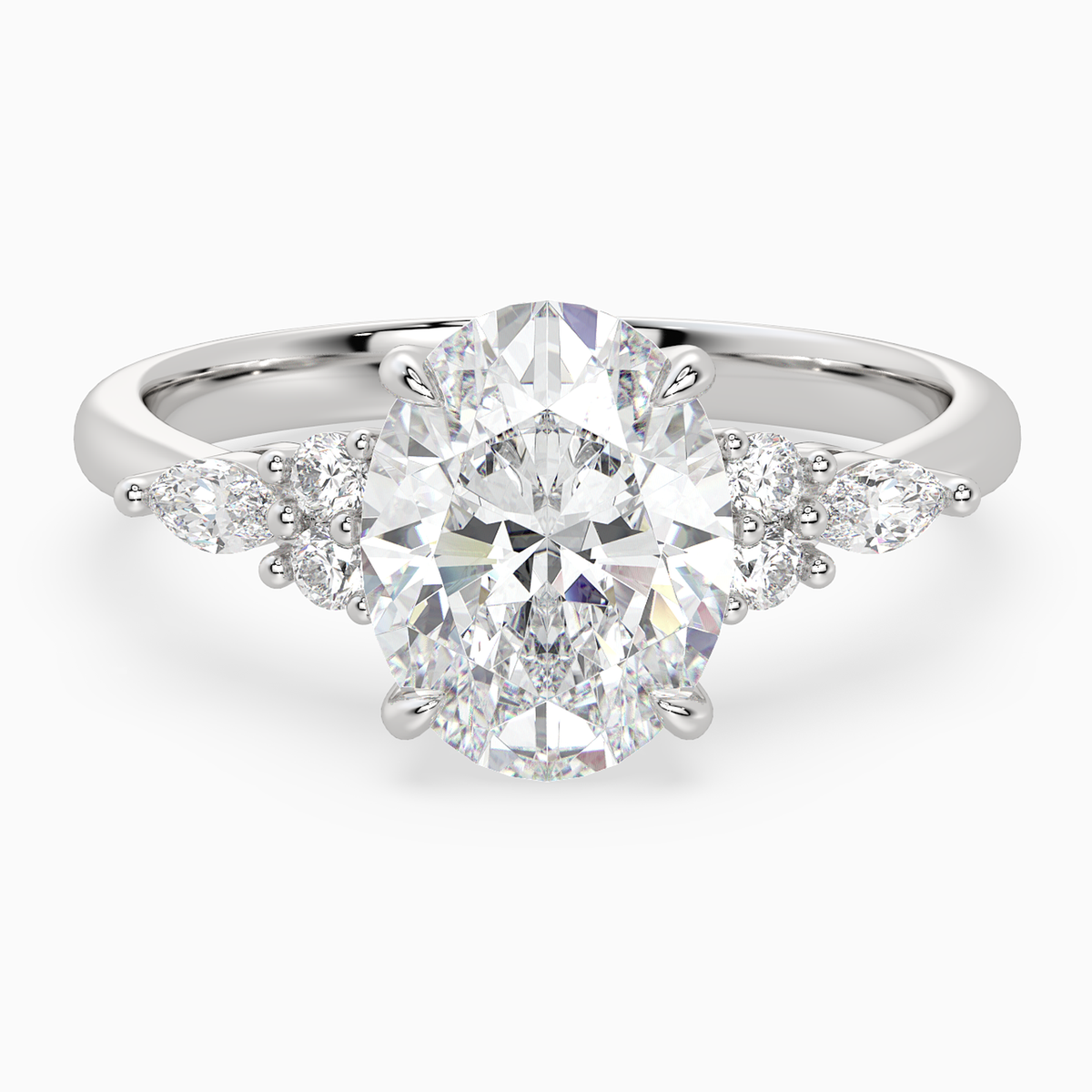


Pear Diamond Engagement Rings in 14K White Gold
One rounded end, one precise point. 14K white gold keeps the pear’s outline, central contrast, and setting support clearly legible.


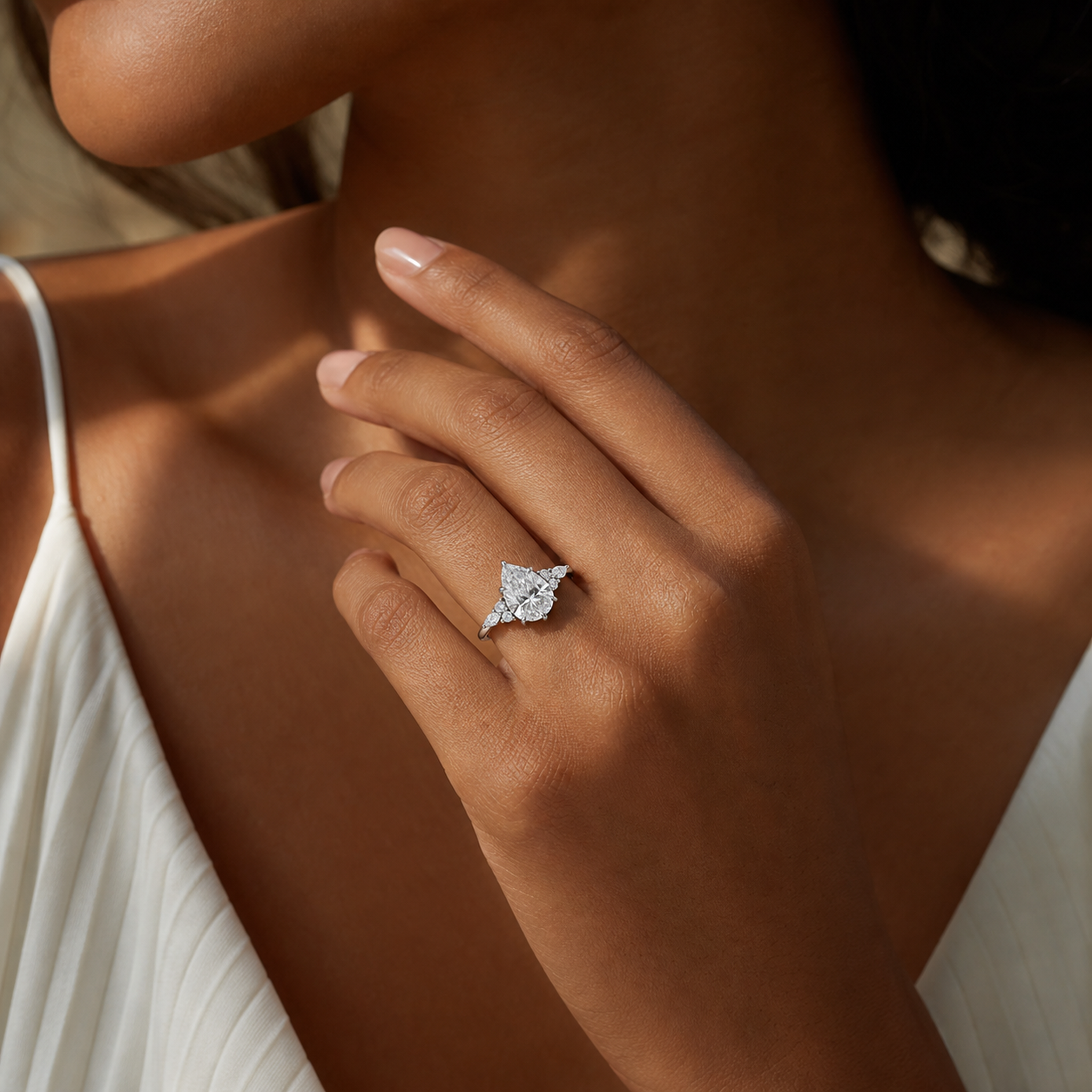


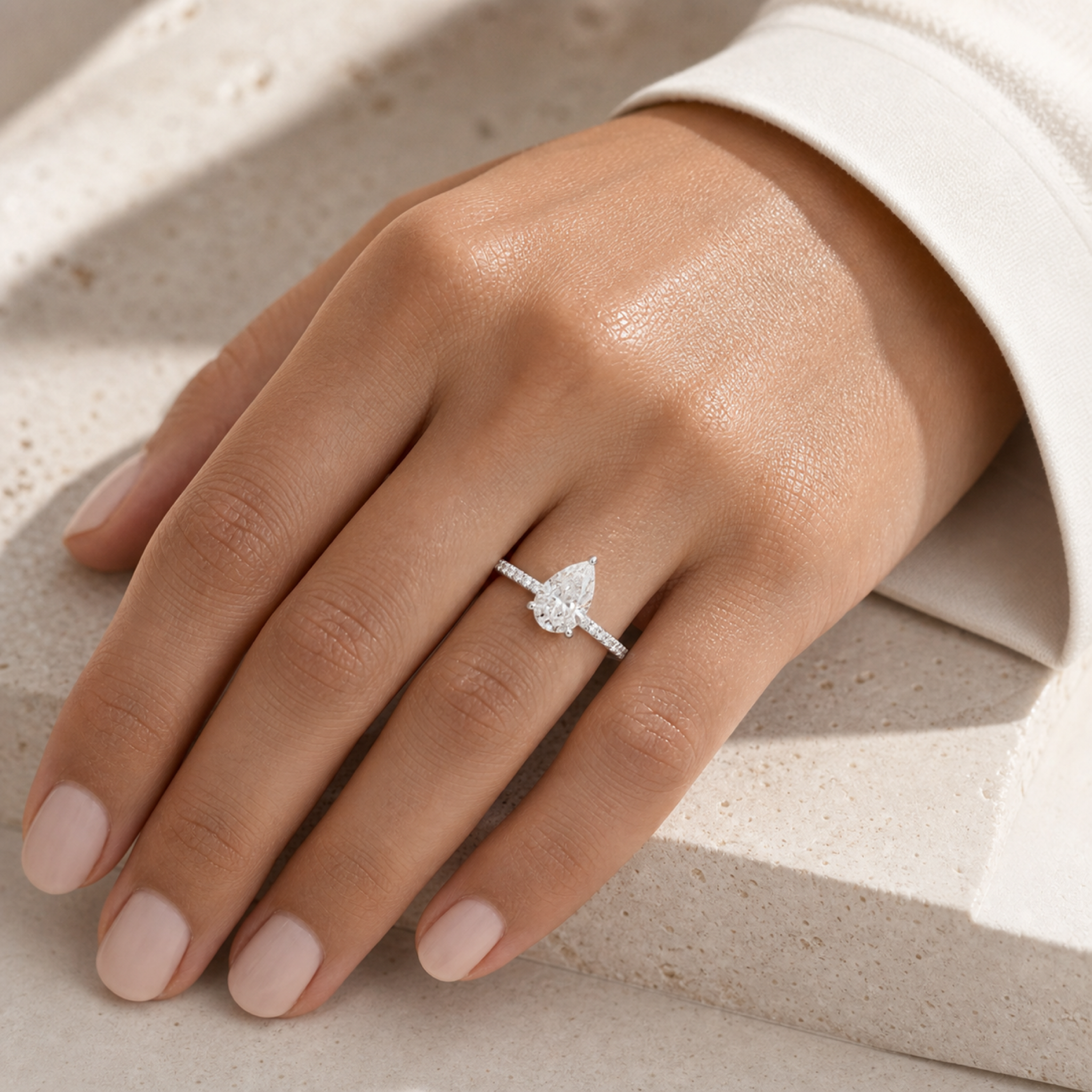


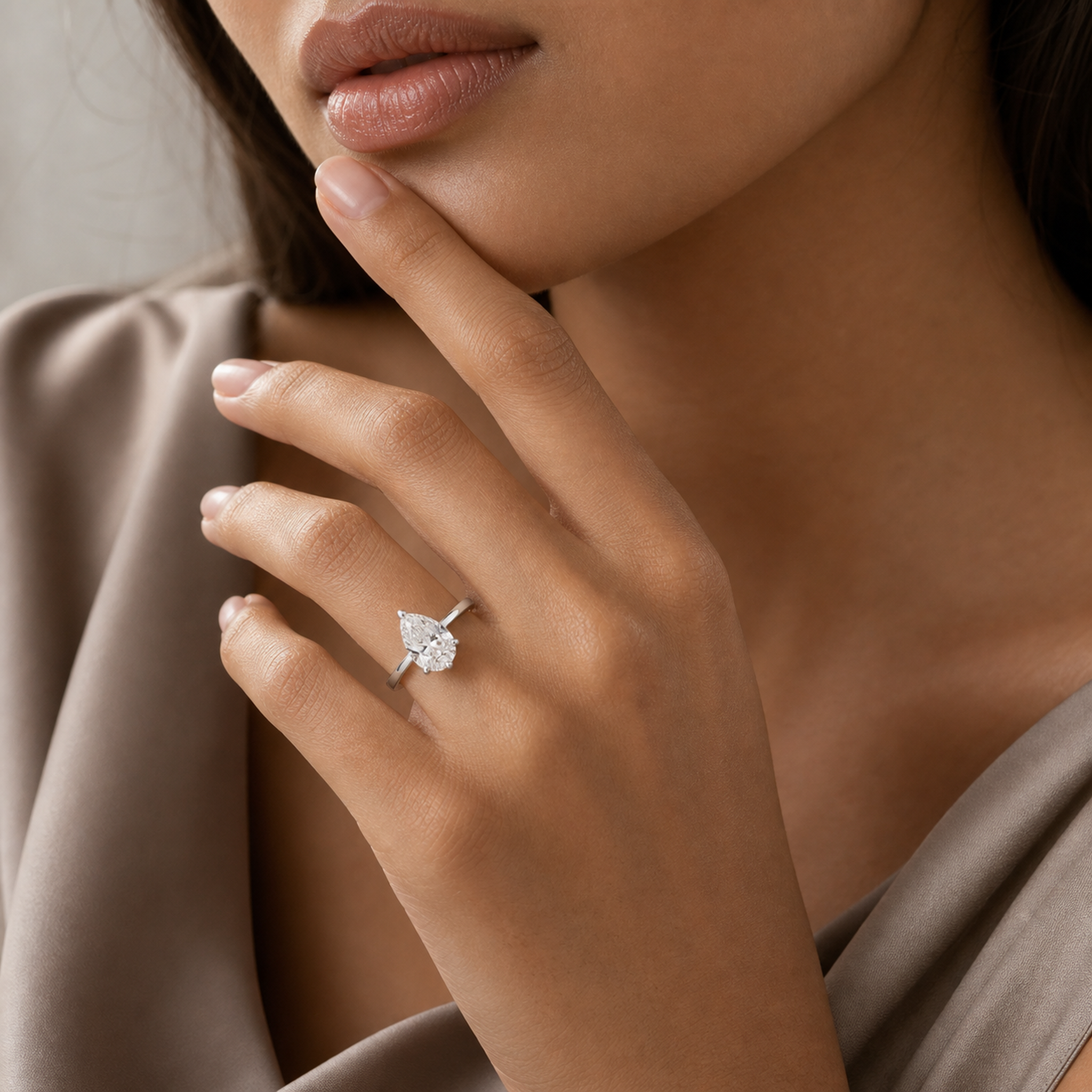


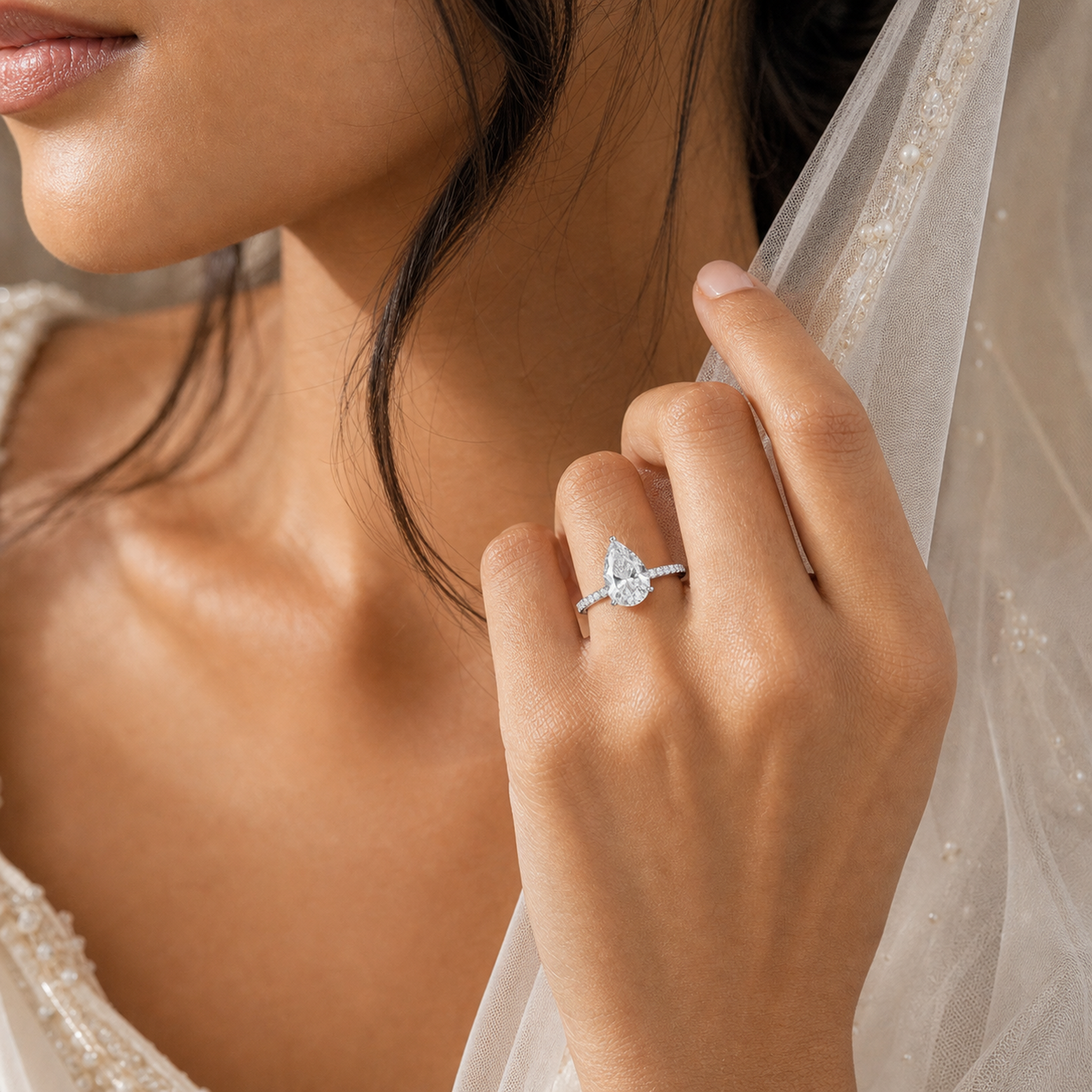


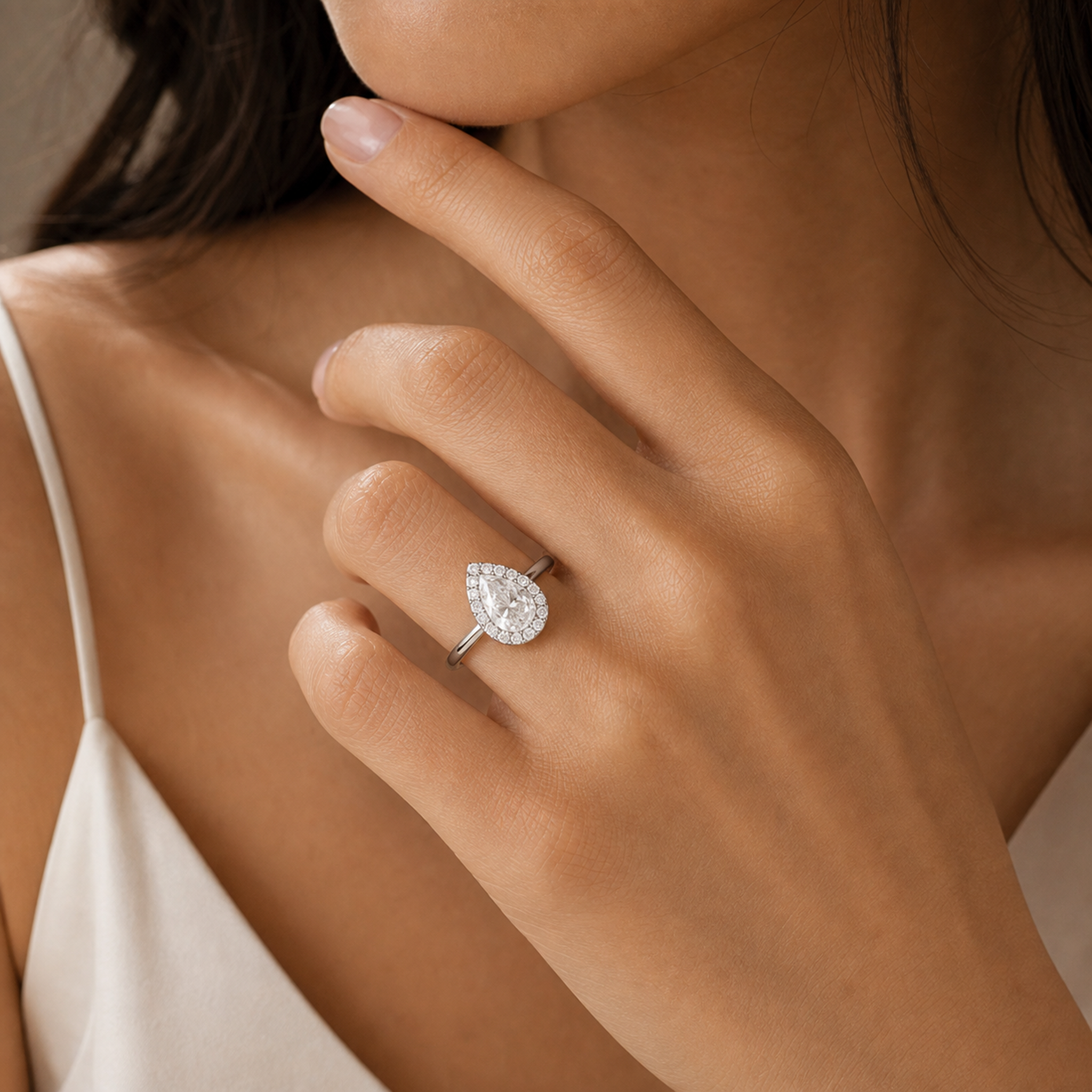


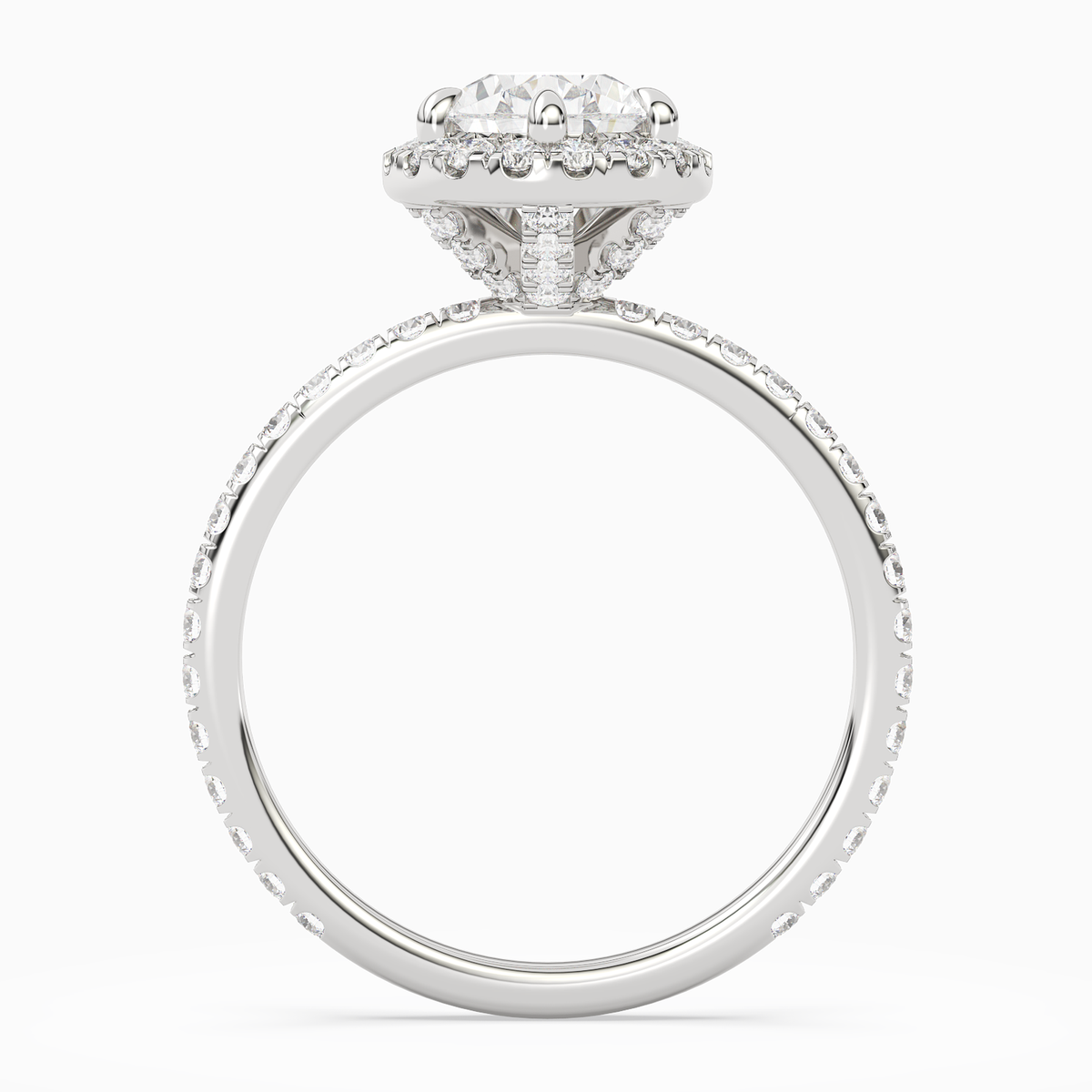

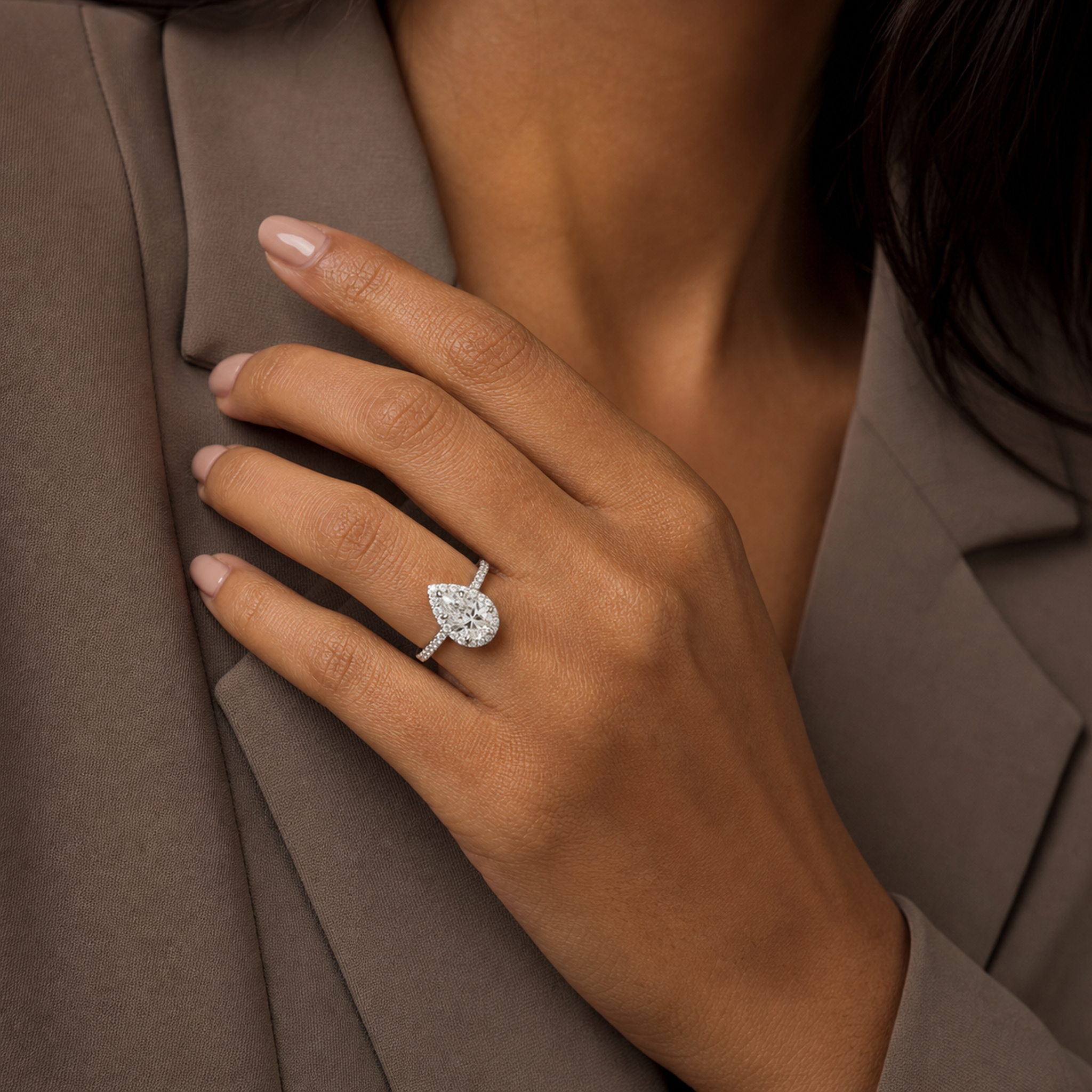


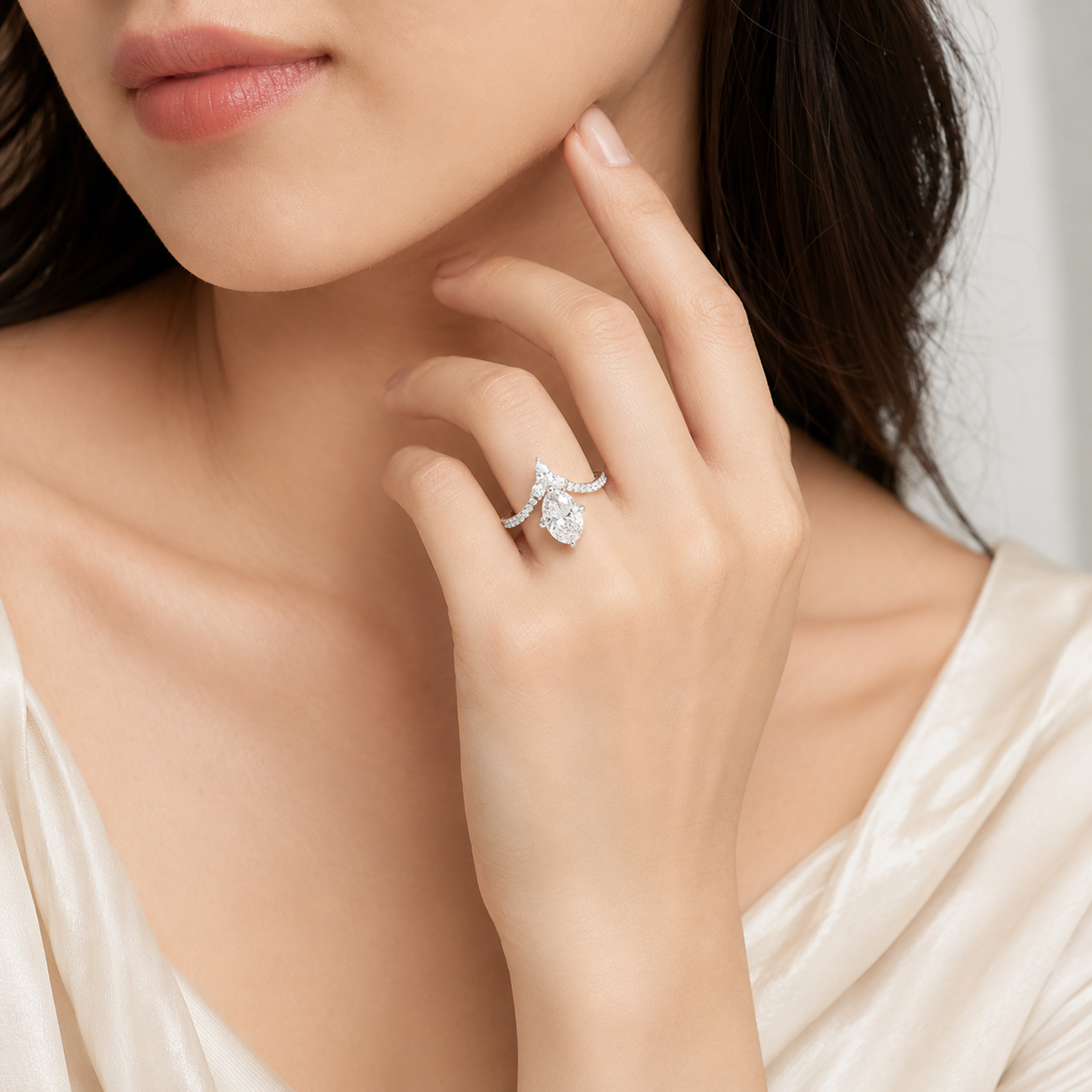


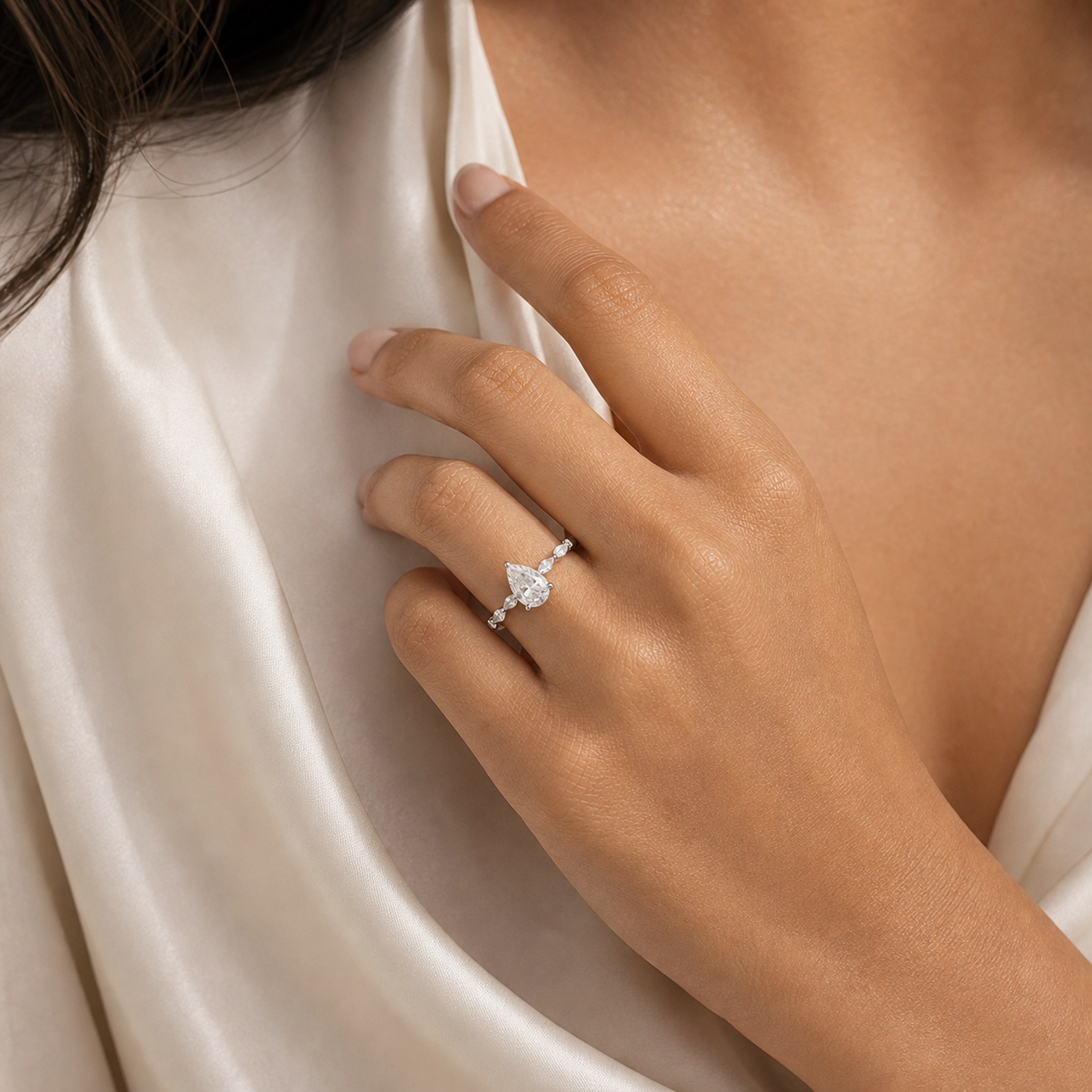


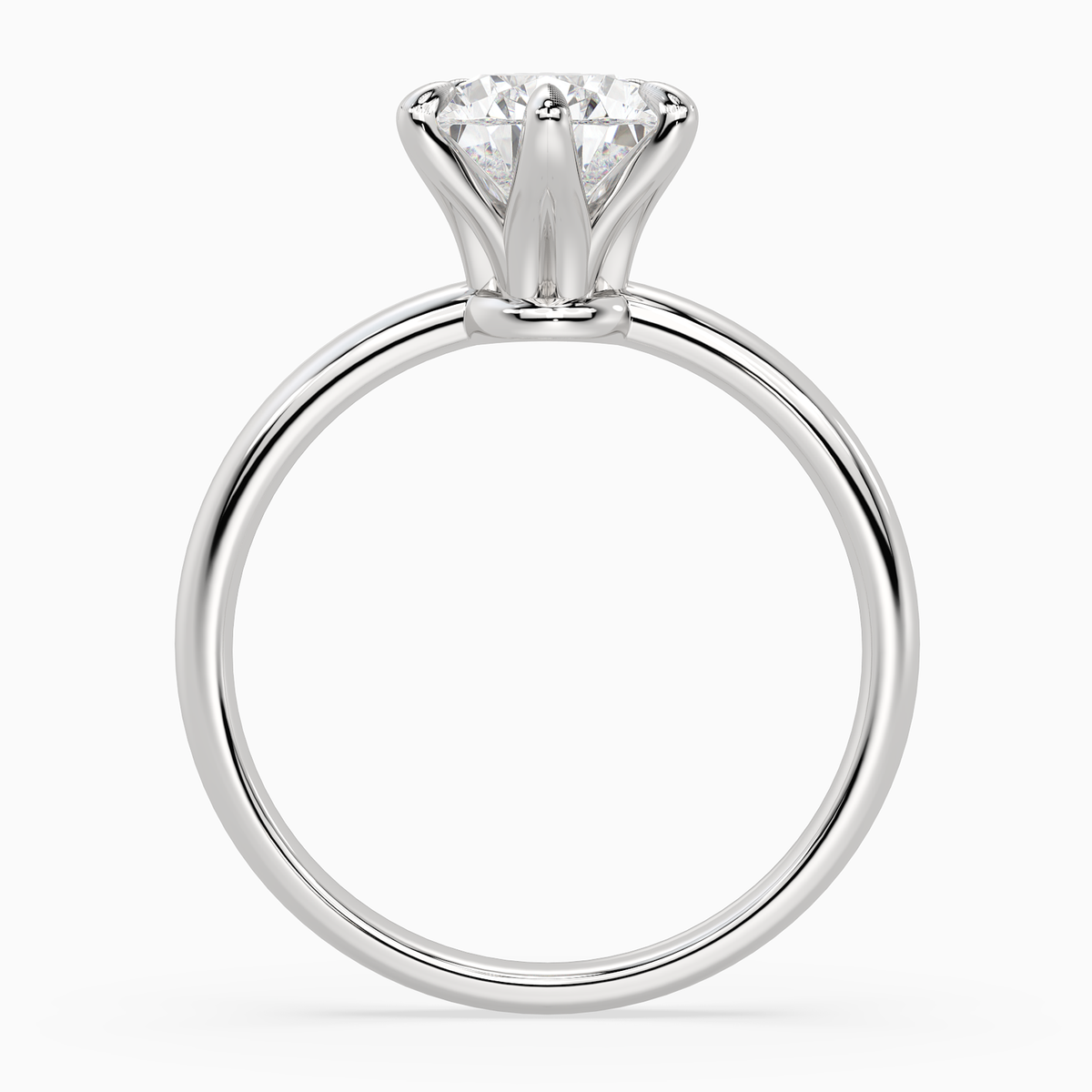

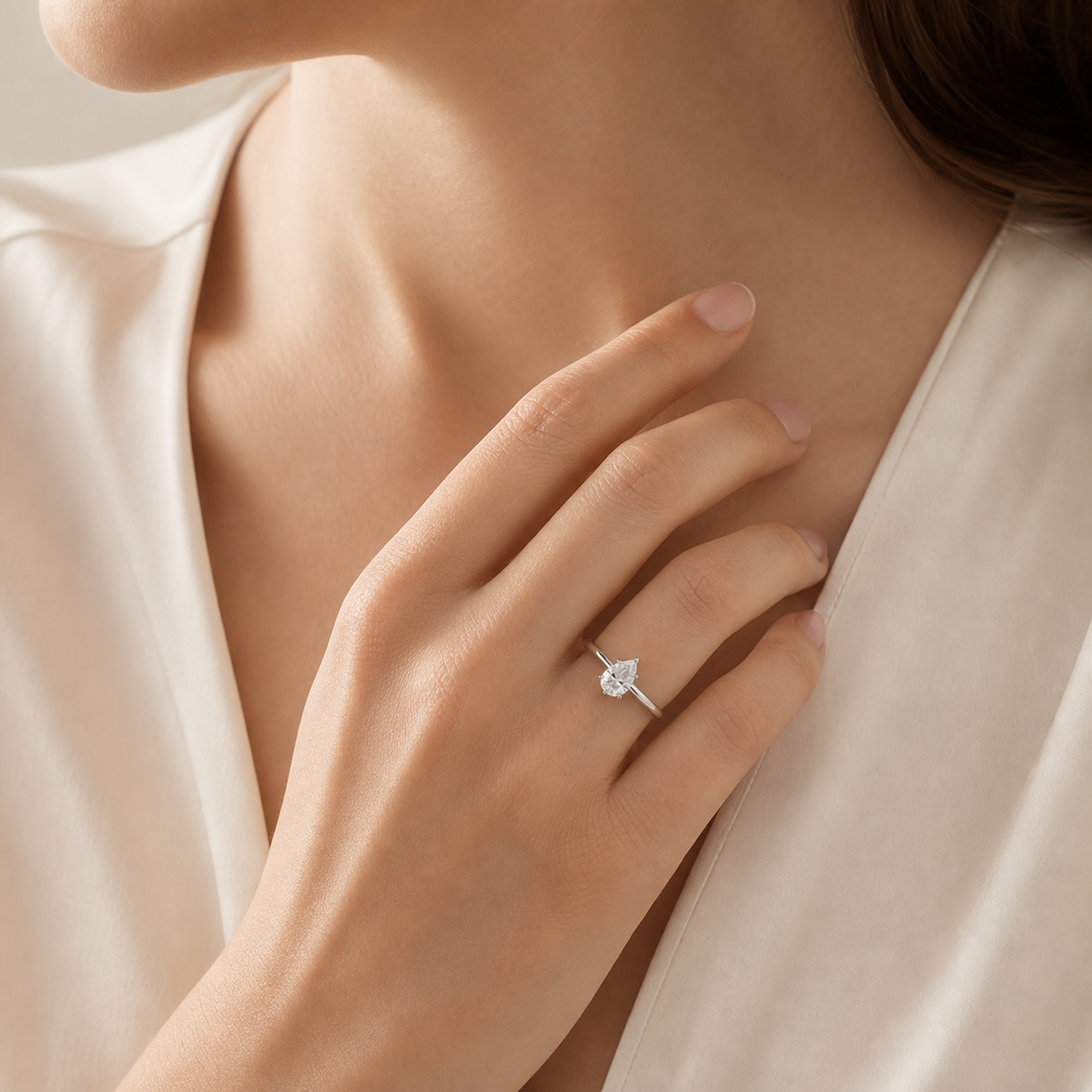


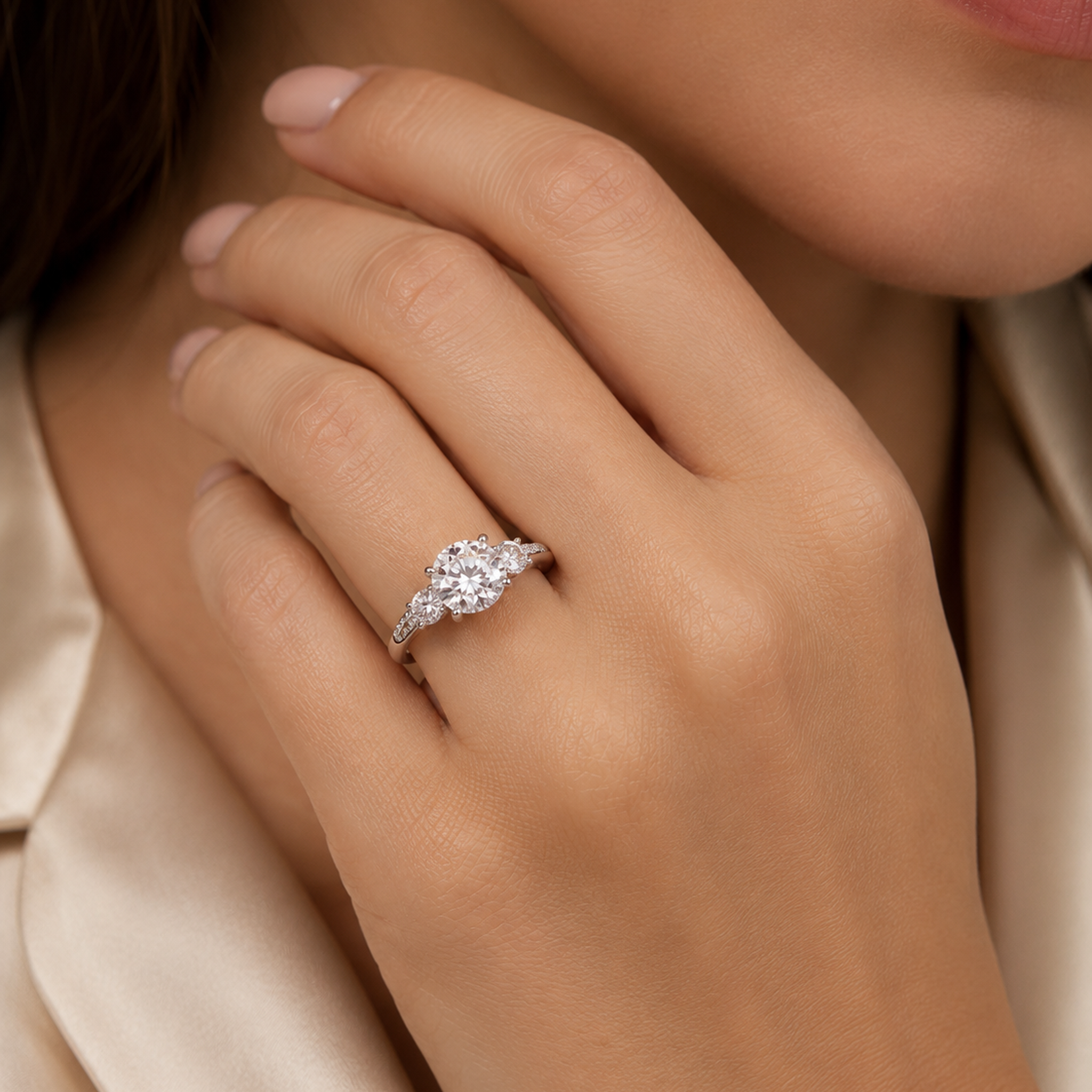


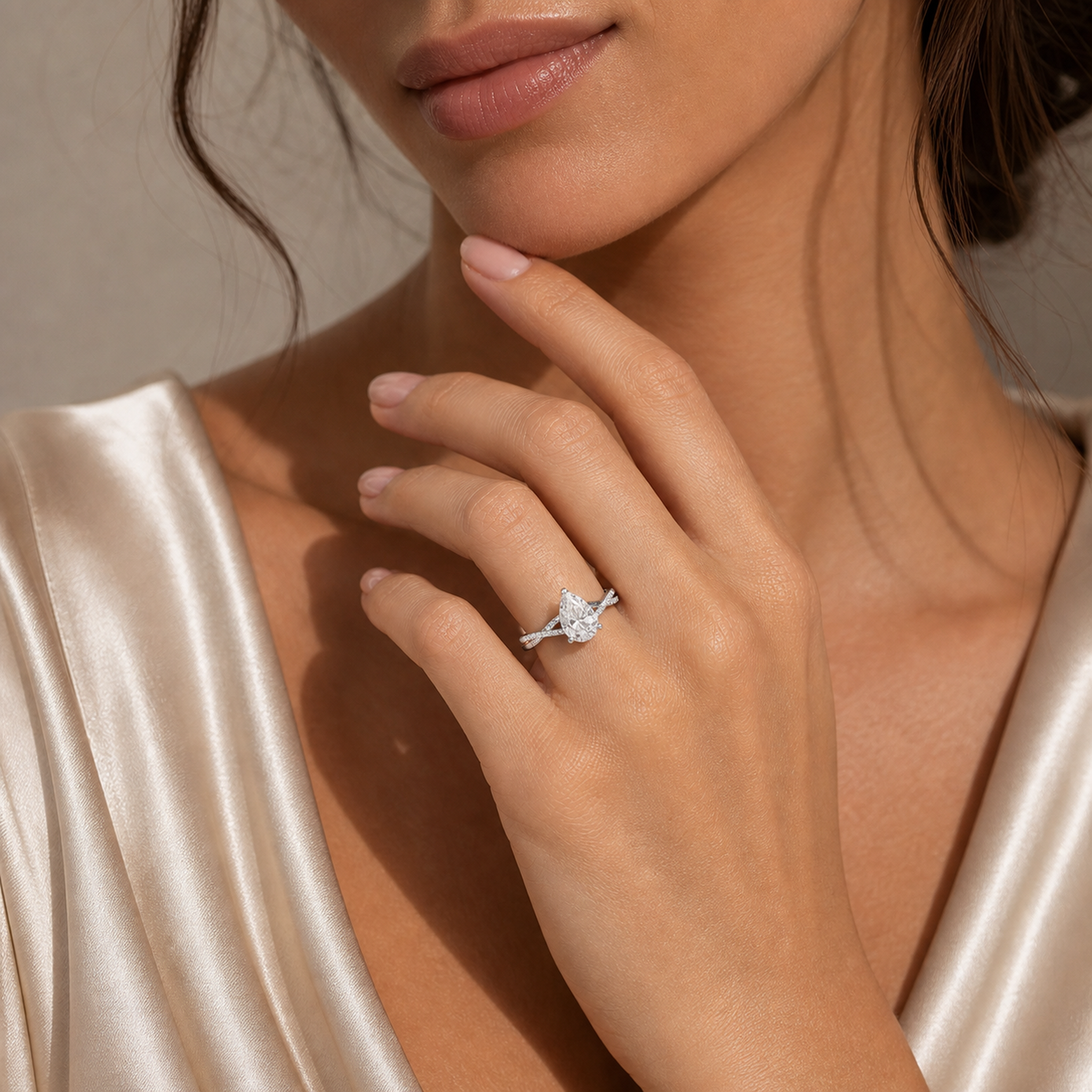


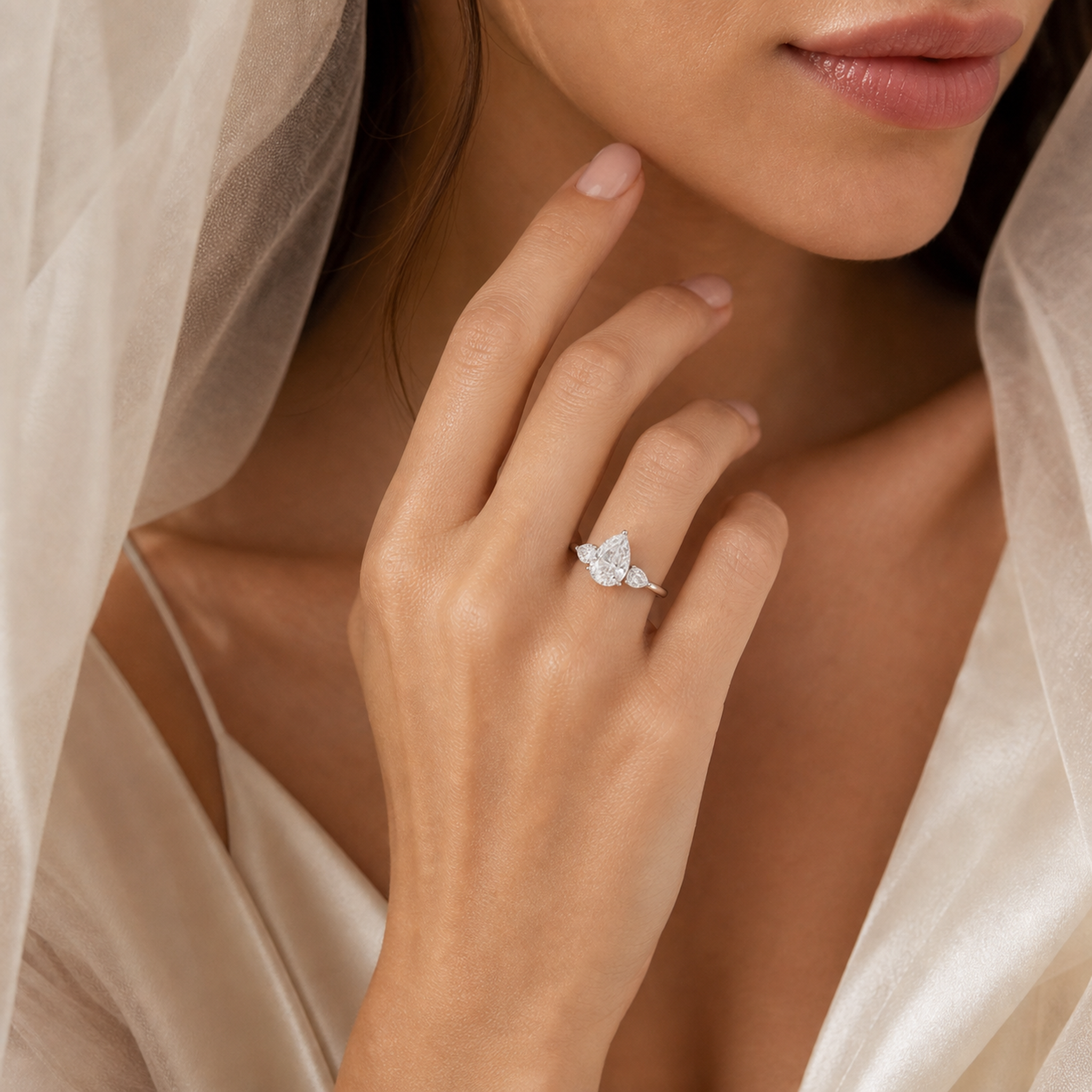
14K White Gold Pear Diamond Engagement Rings: A Quiet Frame for Direction
The character of a pear center comes from asymmetry: a rounded head transitions through two wings into one point. 14K White Gold places this outline inside a close tonal frame, allowing prongs to recede visually while the basket, shoulders, and side-stone relationships remain structurally readable.
The current 13-design assortment includes five Solitaires, two Halos, three Side Stone, and three Three Stone settings. Hidden halos, open baskets, cathedral and vine bands, crown details, and directional accents show how much construction can remain visible even when metal and diamond occupy a similar color field.
Quiet Color Is Not Invisible Construction
A 14K alloy contains approximately 58.3% gold. Other metals and any finishing treatment influence its appearance and behavior. Karat alone does not confirm one alloy formula, rhodium finish, hardness, sensitivity outcome, or maintenance interval.
White prongs may reduce edge contrast, but their number, placement, scale, and tip support still matter. Examine the transition around the point and the metal between center and accents. Tonal continuity should help the pear read as a whole without concealing how the ring is built.
Separate Outline from Light Pattern
Length-to-width ratio helps describe broad or elongated proportions, while head fullness, shoulders, wings, point, and symmetry complete the outline. A white-metal frame cannot make one ratio universally preferable or correct an unresolved transition.
The bow-tie is a pattern of contrast that varies among individual pears and across lighting and movement. White Gold cannot eliminate it, increase brilliance, or change the grading report. Direct visual assessment remains essential because fancy pear shapes do not receive the same overall cut grade as eligible standard round brilliants.
Use the Setting to Read Support and Rhythm
Solitaires leave the point and curved perimeter comparatively open. A halo repeats the outline and introduces another edge. Side Stone and Three Stone rings create lateral rhythm through marquise or pear accents, asking the white-metal junctions to remain precise rather than visually busy.
No metal label guarantees point security. Tip geometry, prong or bezel construction, workmanship, condition, impact, and wear all contribute. Confirm the selected product rather than assuming that a certain number of prongs is automatically best.
Measure the Complete Composition
Carat is weight. Face-up presence depends on length, width, depth, outline, and weight distribution, then changes again when halo, side stones, and band width enter the composition. Wedding-band fit depends on profile and contact points, not on matching metal color.
Burvonti pairs responsibly sourced, independently graded lab-grown diamonds with settings calibrated through proportion and human judgment. Custom possibilities may refine the center, orientation, point support, basket, band, accents, metal, or engraving where feasible. The intended result is quiet in color, exact at every directional transition.
Frequently Asked Questions
What does this page add beyond the Pear parent?
It focuses on 14K White Gold's tonal frame, support, and construction around the pear. The parent owns full shape, ratio, bow-tie, orientation, and dimension education.
How much gold is in 14K White Gold?
Approximately 58.3%. Other alloying metals influence color and working behavior.
Is every 14K white gold ring rhodium plated?
That should not be assumed. Confirm the finish for the selected Burvonti product.
Does White Gold make a pear diamond brighter?
No. It changes the surrounding color field, not the center's facet relationships.
Can White Gold remove a bow-tie?
No. Bow-tie appearance belongs to the individual diamond and must be judged in motion and varied light.
Which setting styles are represented?
The current collection includes five Solitaire, two Halo, three Side Stone, and three Three Stone settings.
Do white prongs disappear?
They may recede tonally, but their scale, placement, construction, and support remain visible and important.
Is there an ideal pear orientation?
No universal orientation is required. Direction is a personal and design-specific decision.
How should I assess the pear point?
Review tip support, prong or bezel construction, workmanship, profile, condition, and product-specific care.
Does White Gold hide diamond color?
It may change surrounding contrast, but it does not alter the independently graded color or guarantee a colorless appearance.
Is White Gold hypoallergenic?
No universal outcome should be promised. Confirm the product-specific alloy if sensitivity is a concern.
Will a wedding band sit flush?
It depends on basket, shoulders, center height, side stones, and contact points.
Can Burvonti adjust a White Gold Pear design?
Custom possibilities may include center, orientation, point support, basket, accents, band line, metal, or engraving, subject to feasibility.