
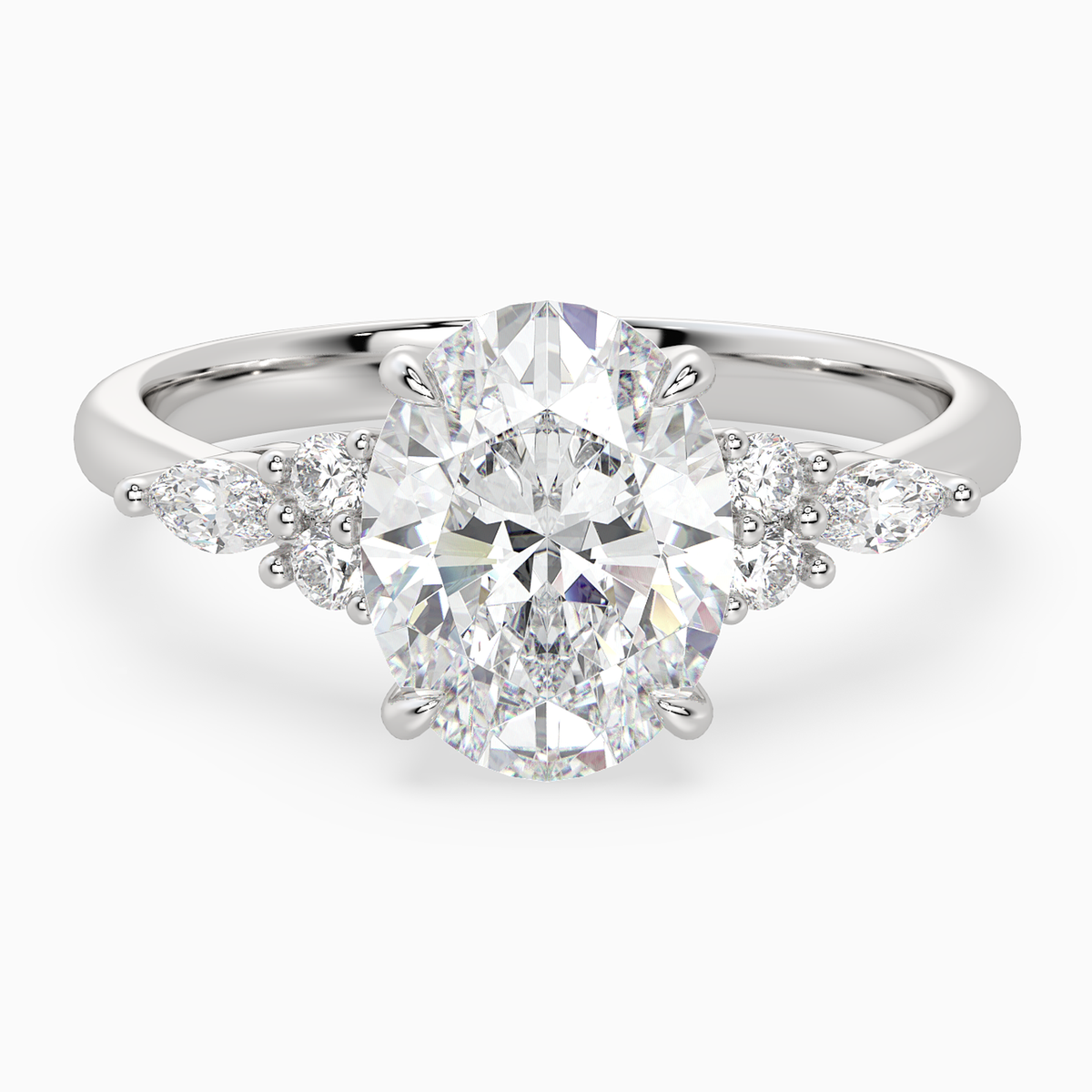


Pear Diamond Engagement Rings in 18K White Gold
Quiet in color, deliberate in direction. 18K white gold carries the pear’s asymmetrical axis through a quiet setting with clear structure.


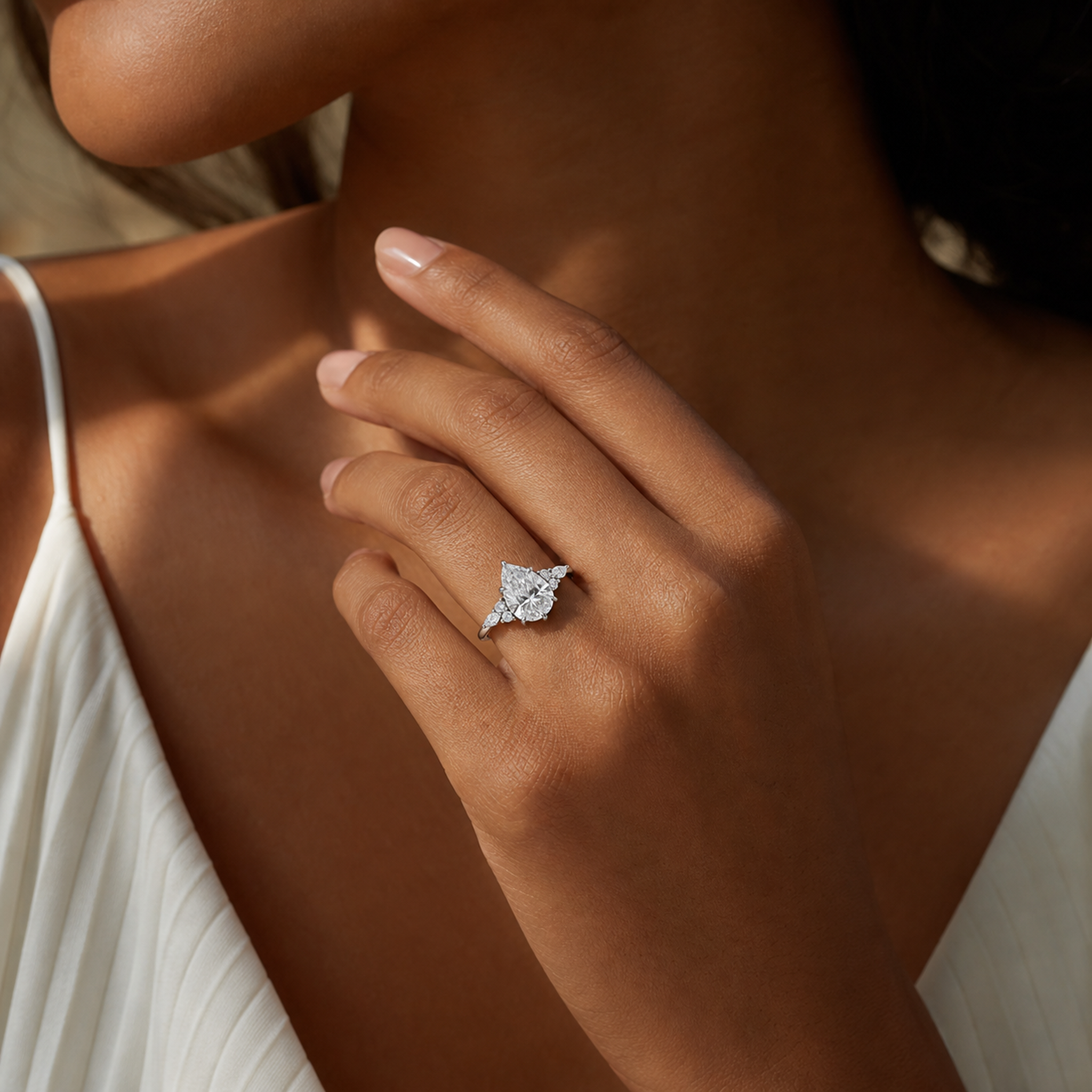


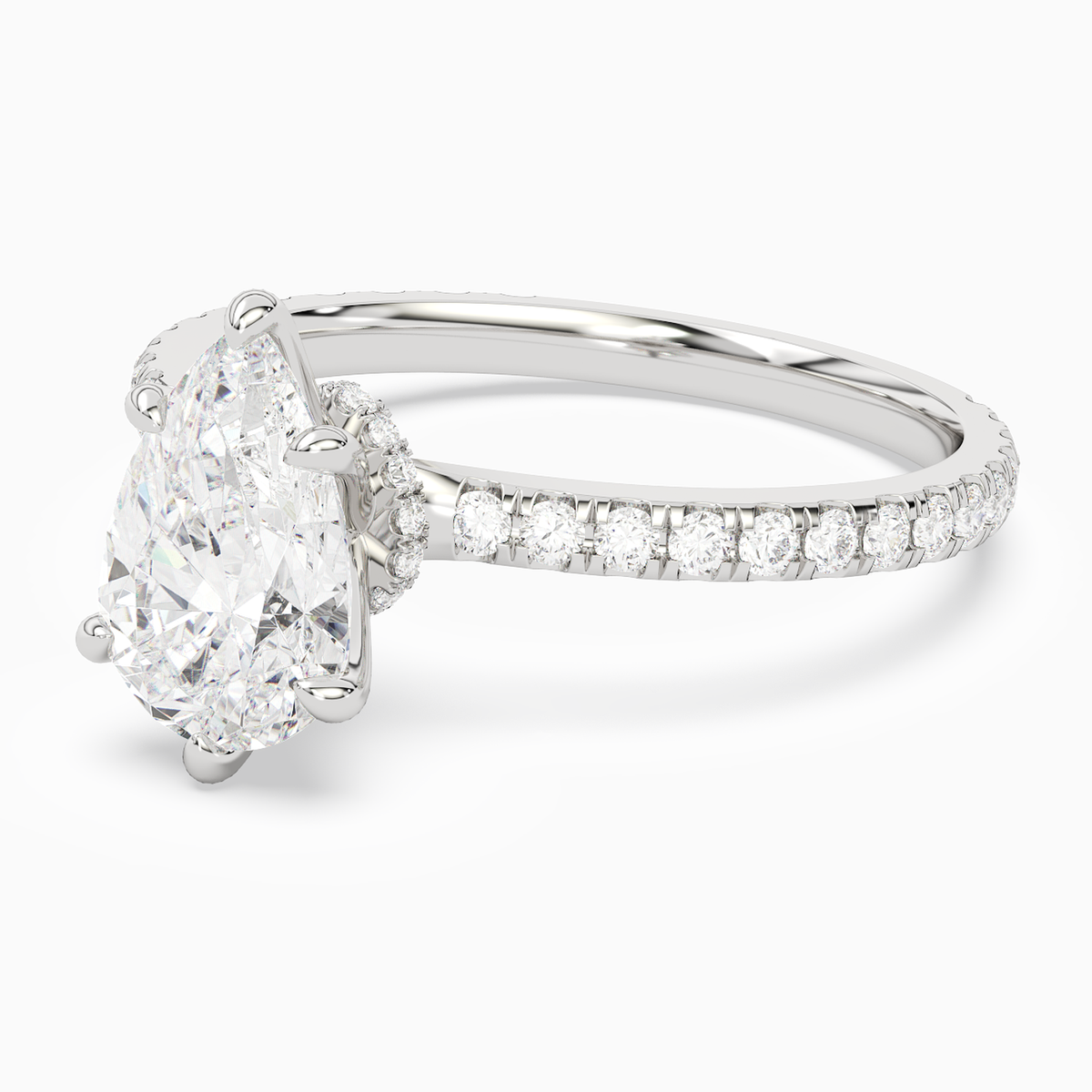
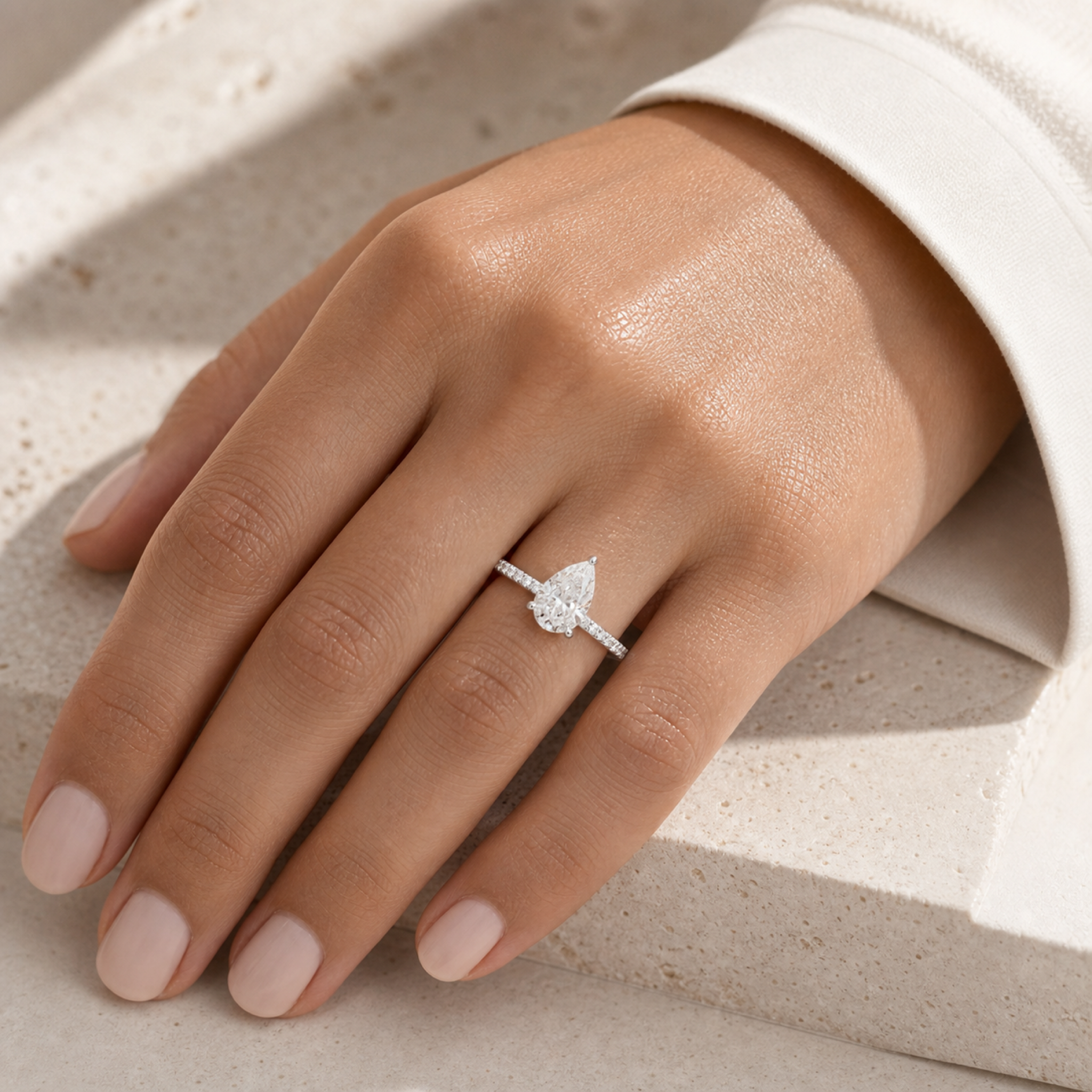


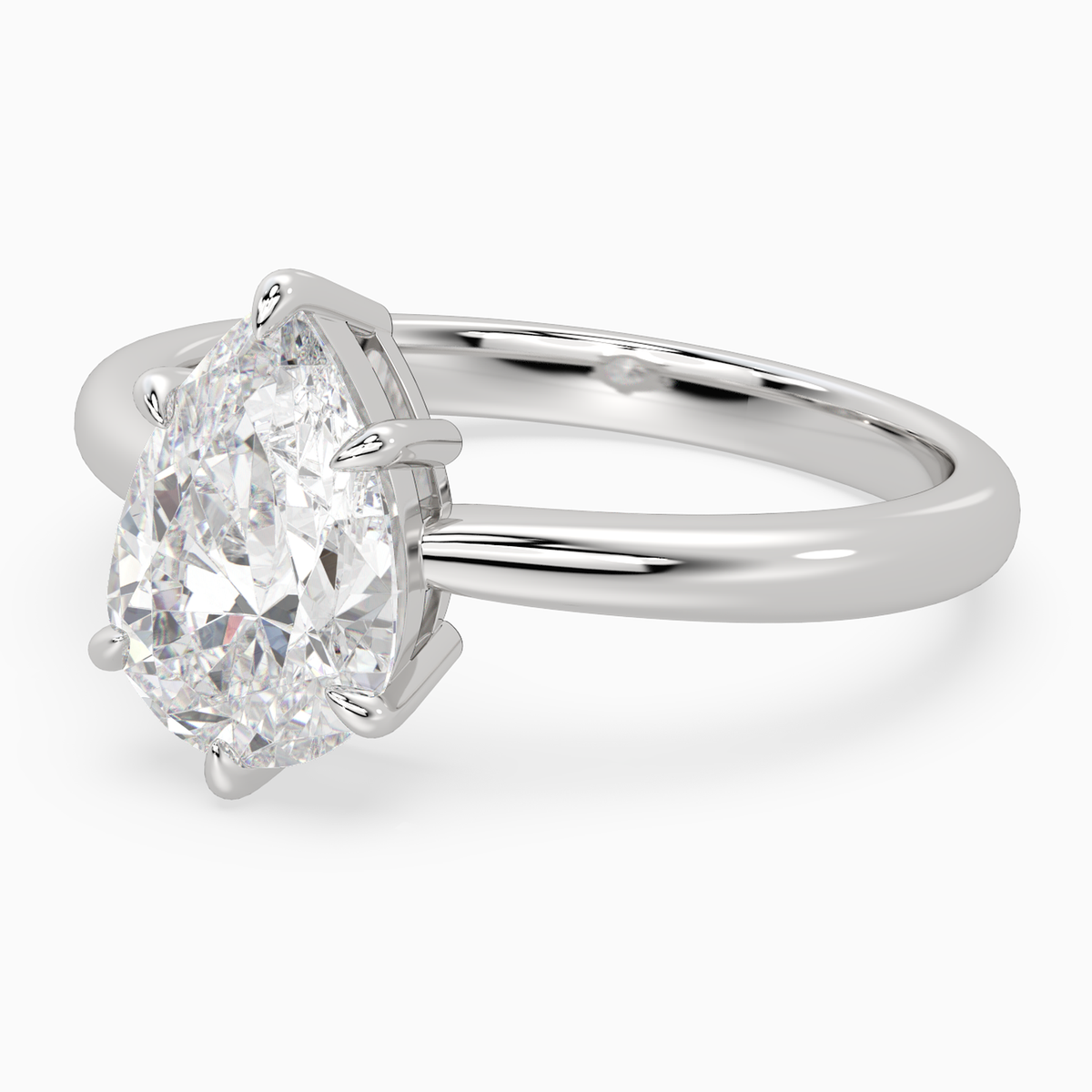
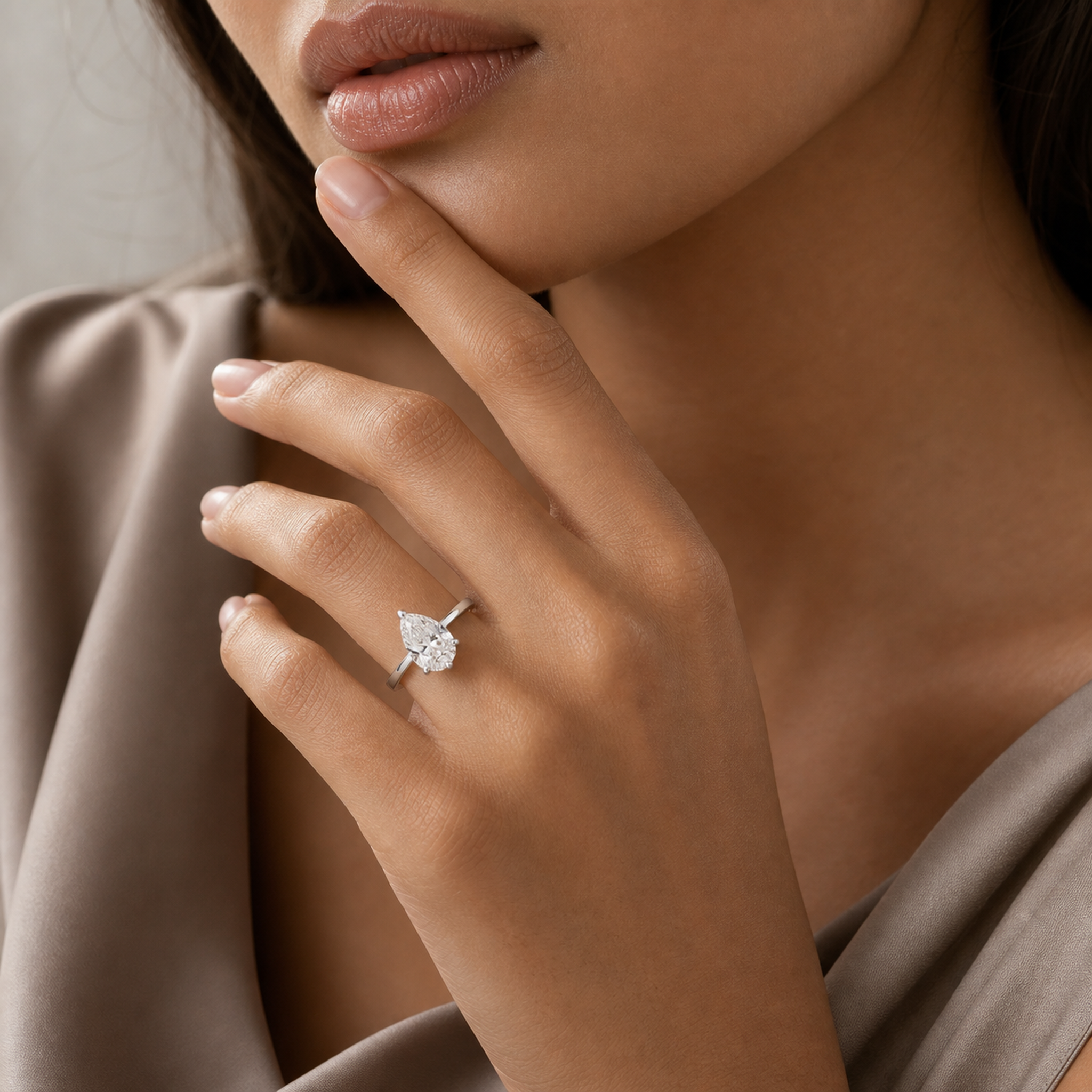


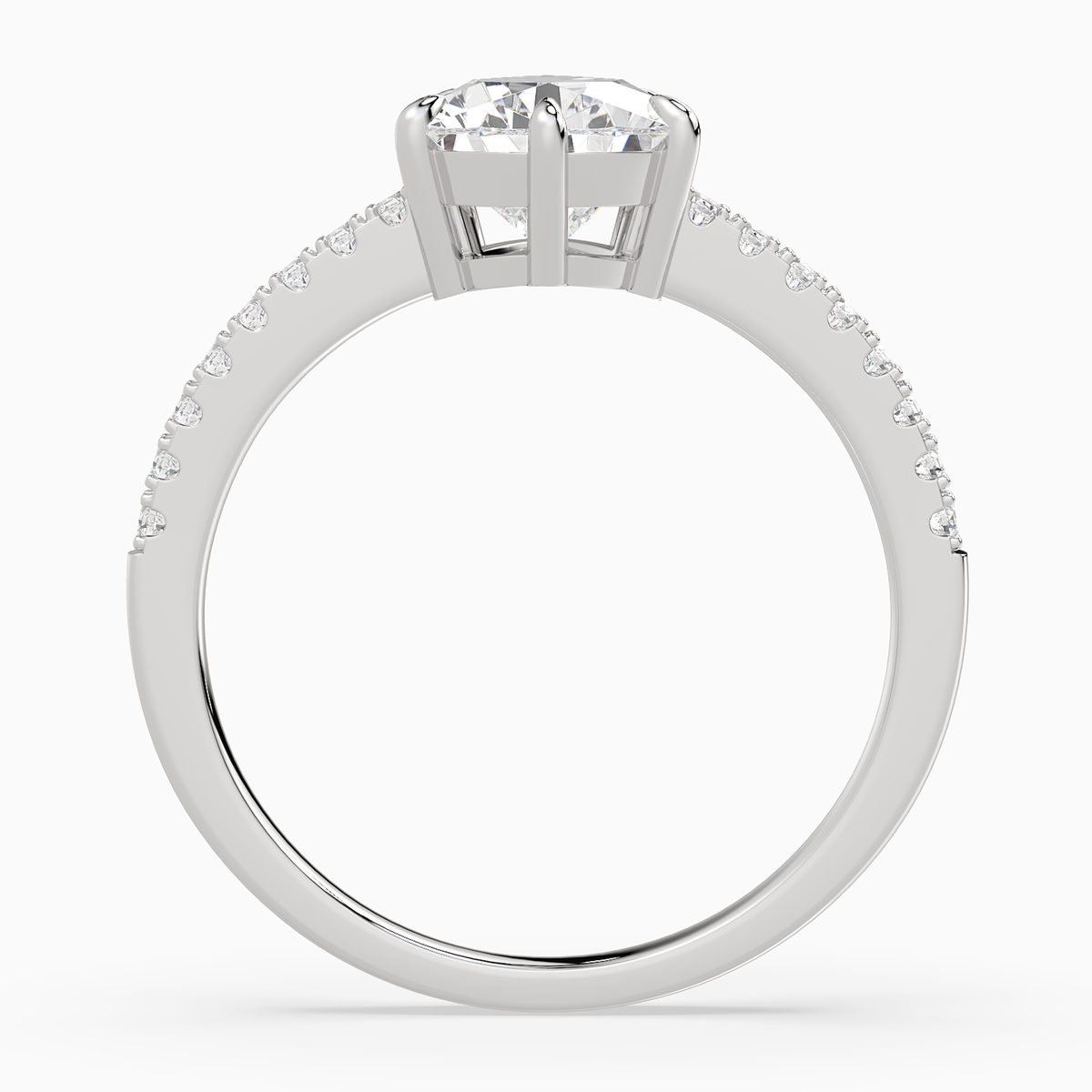

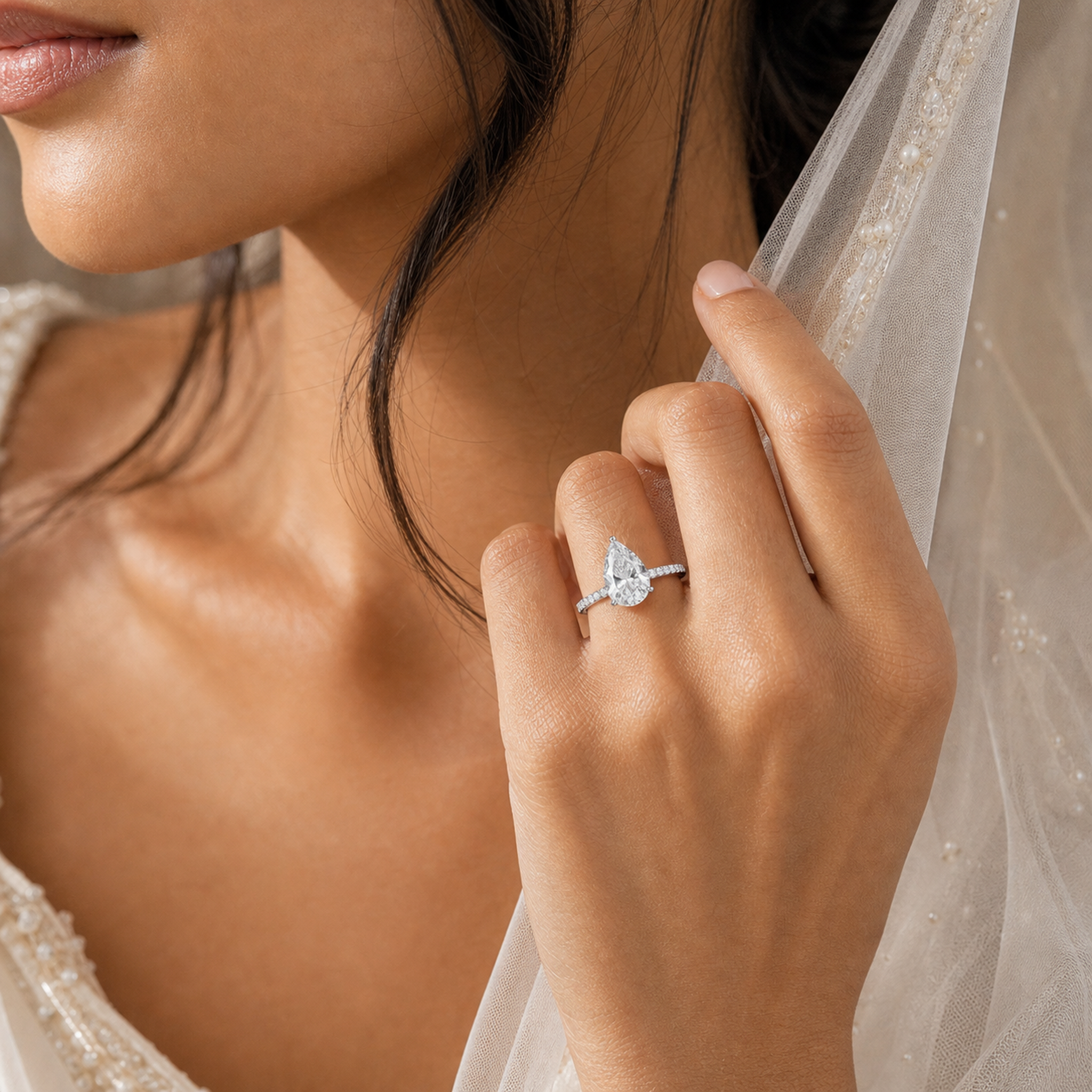
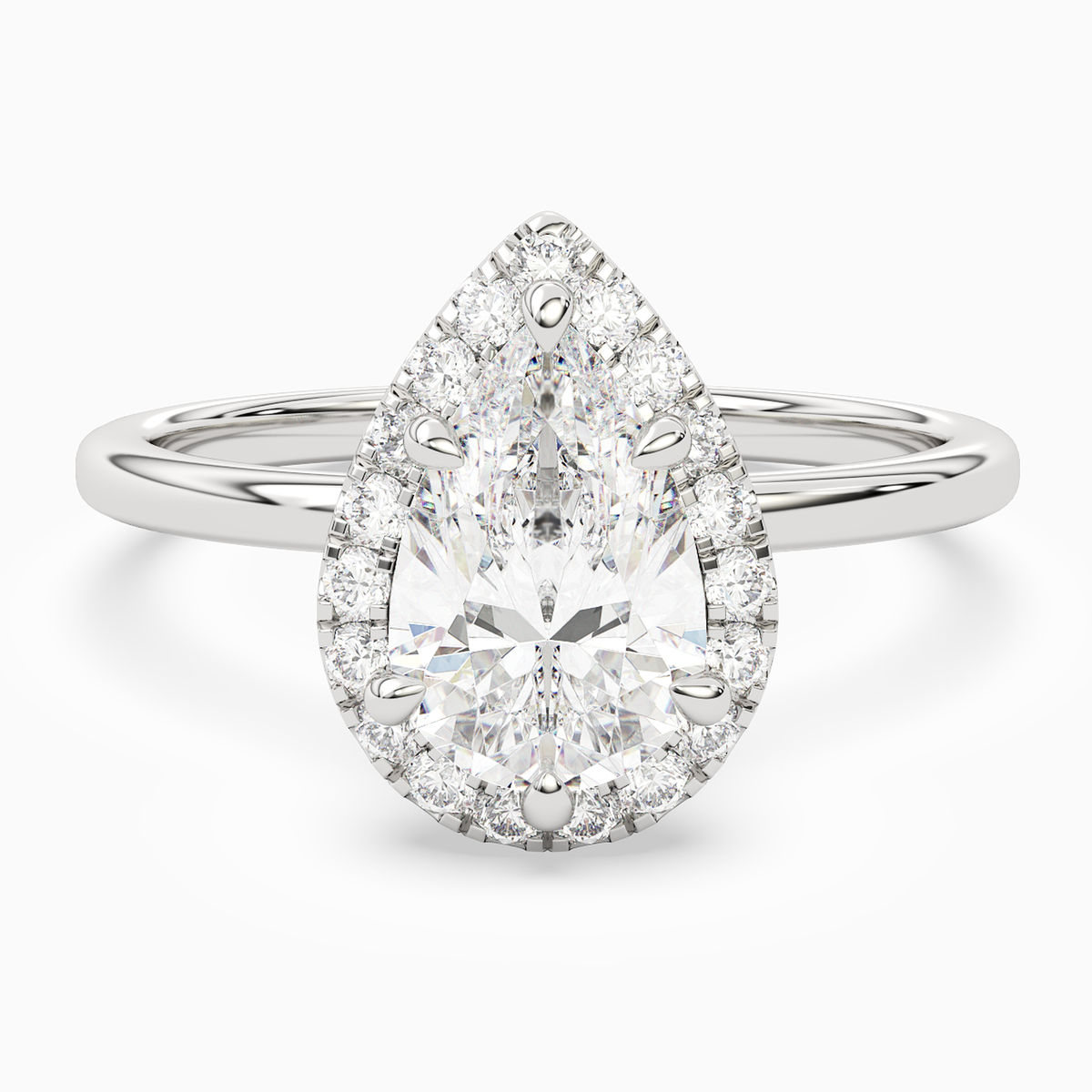
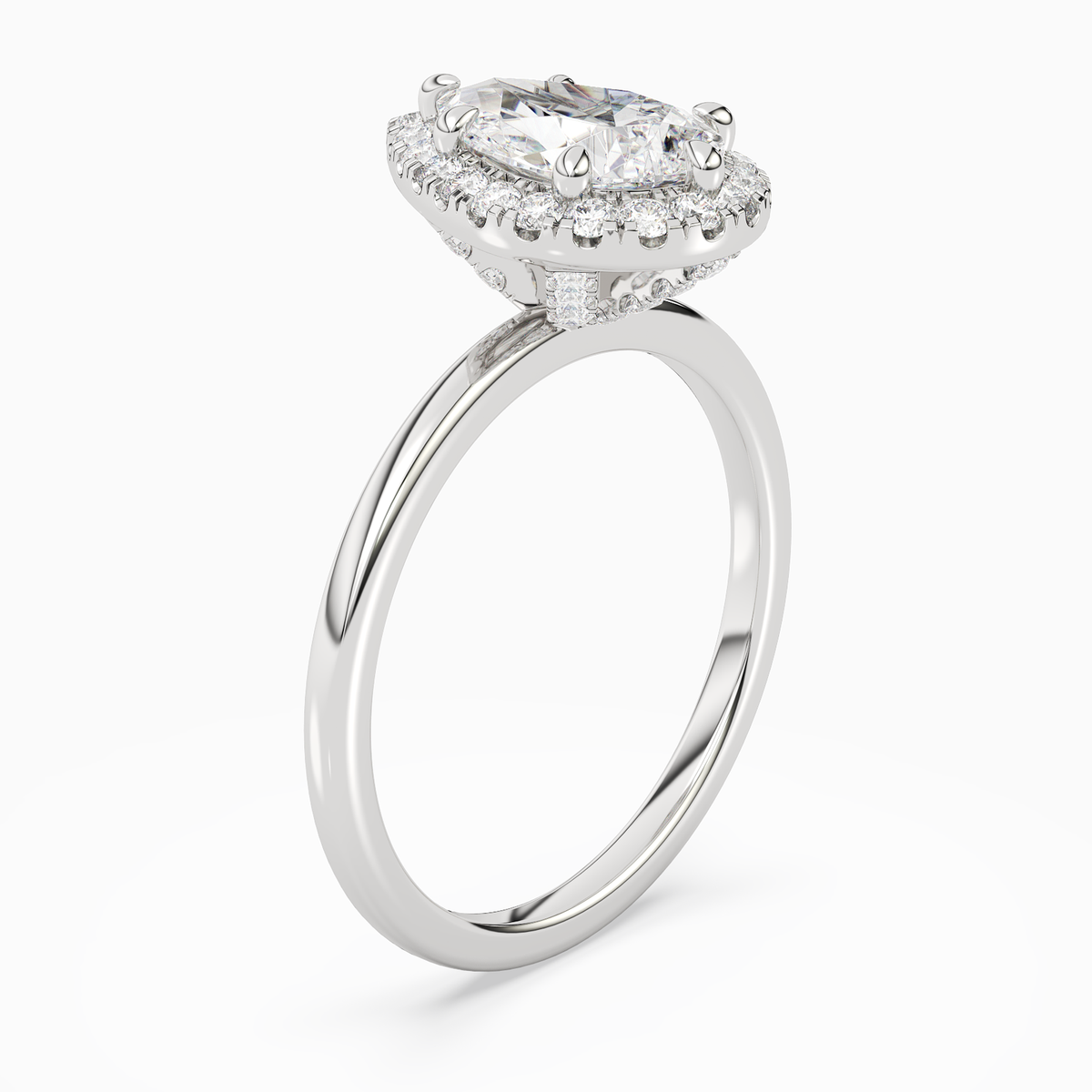
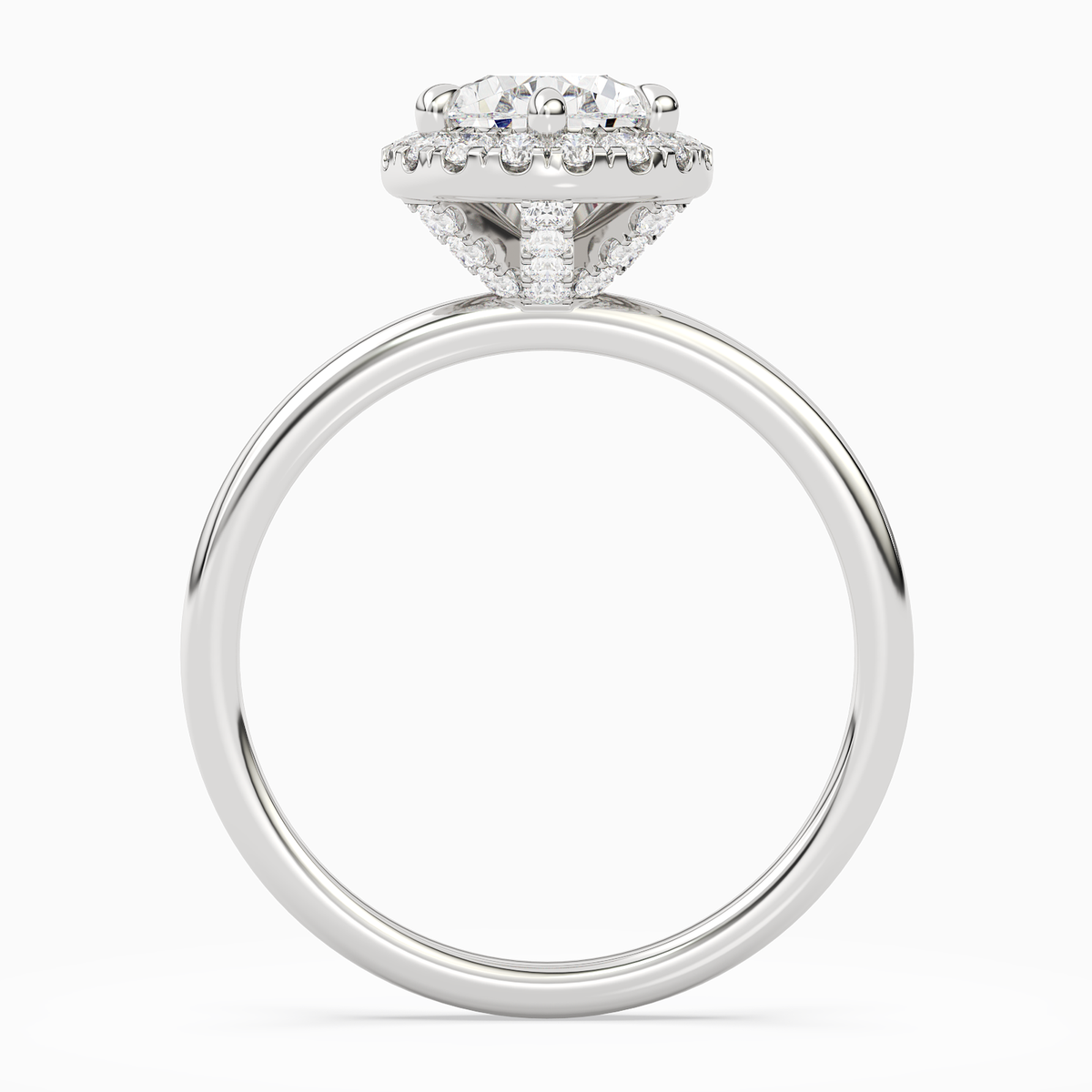
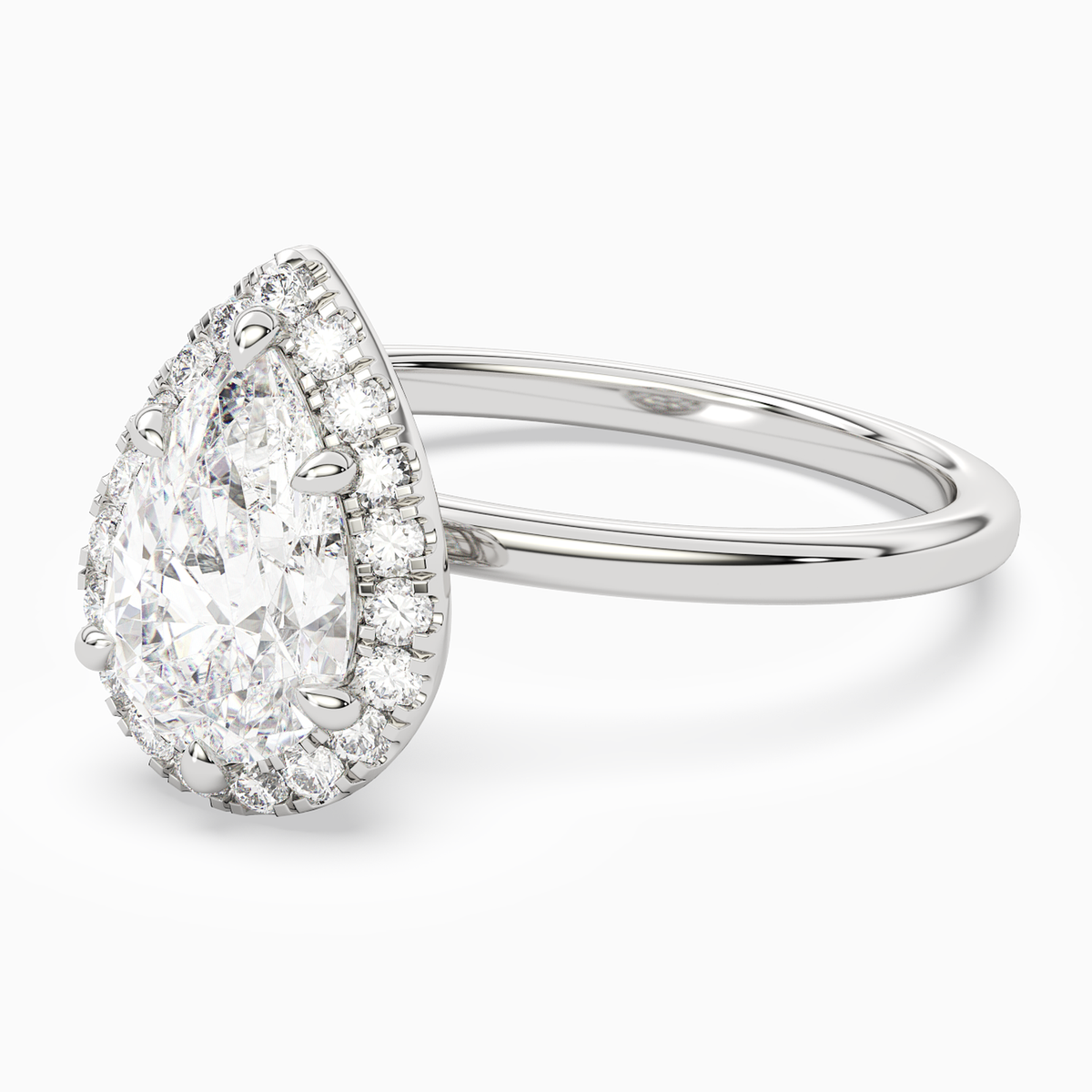
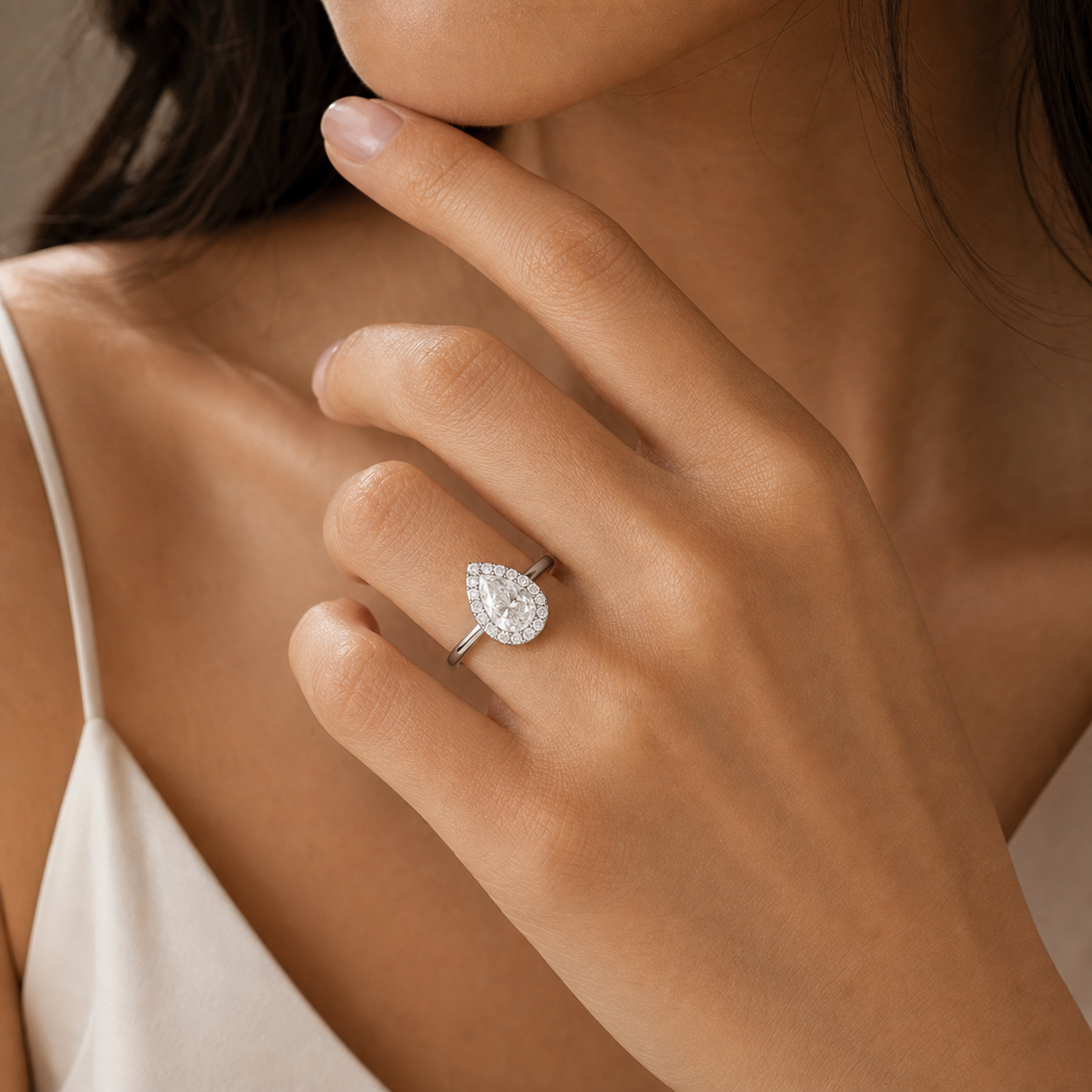
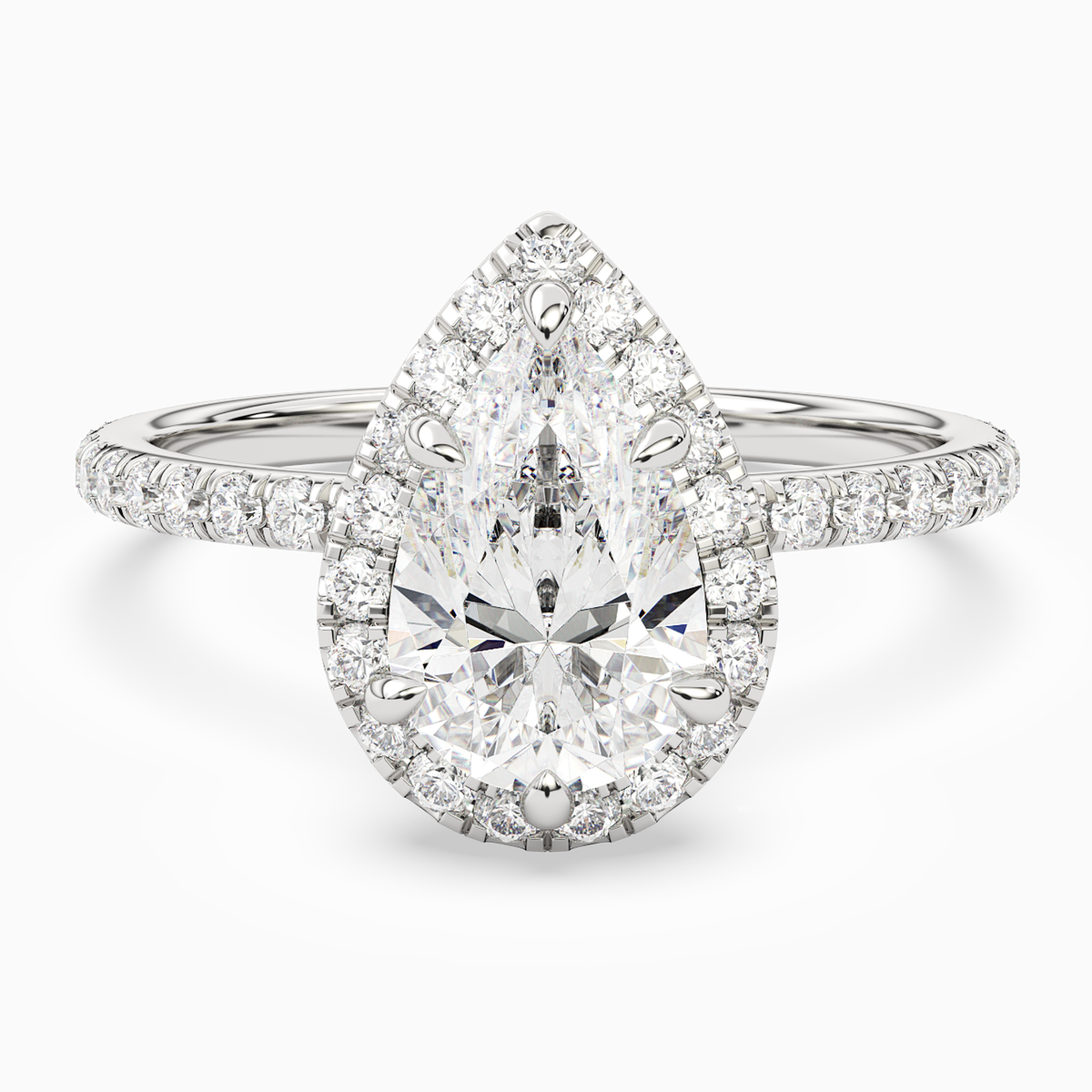
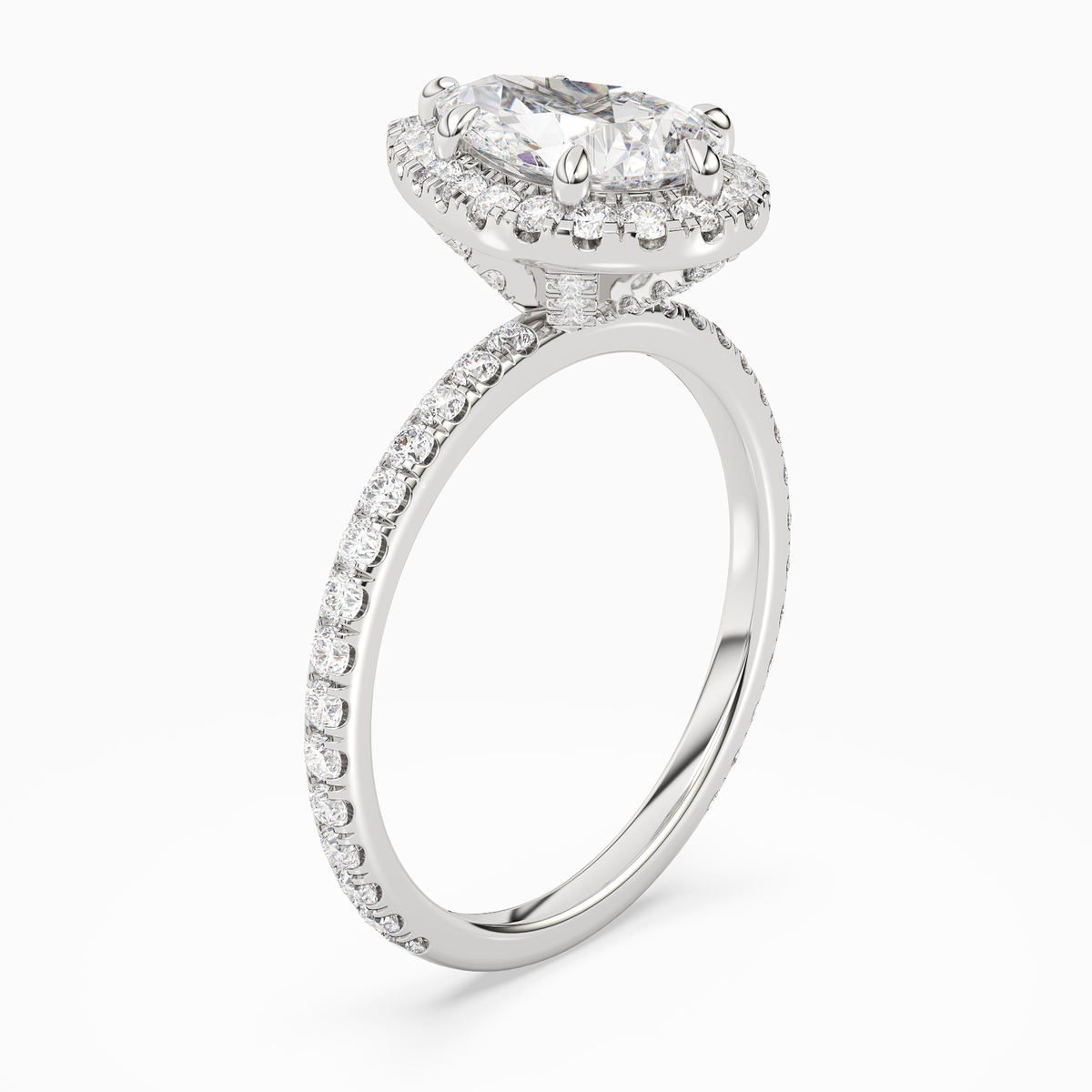

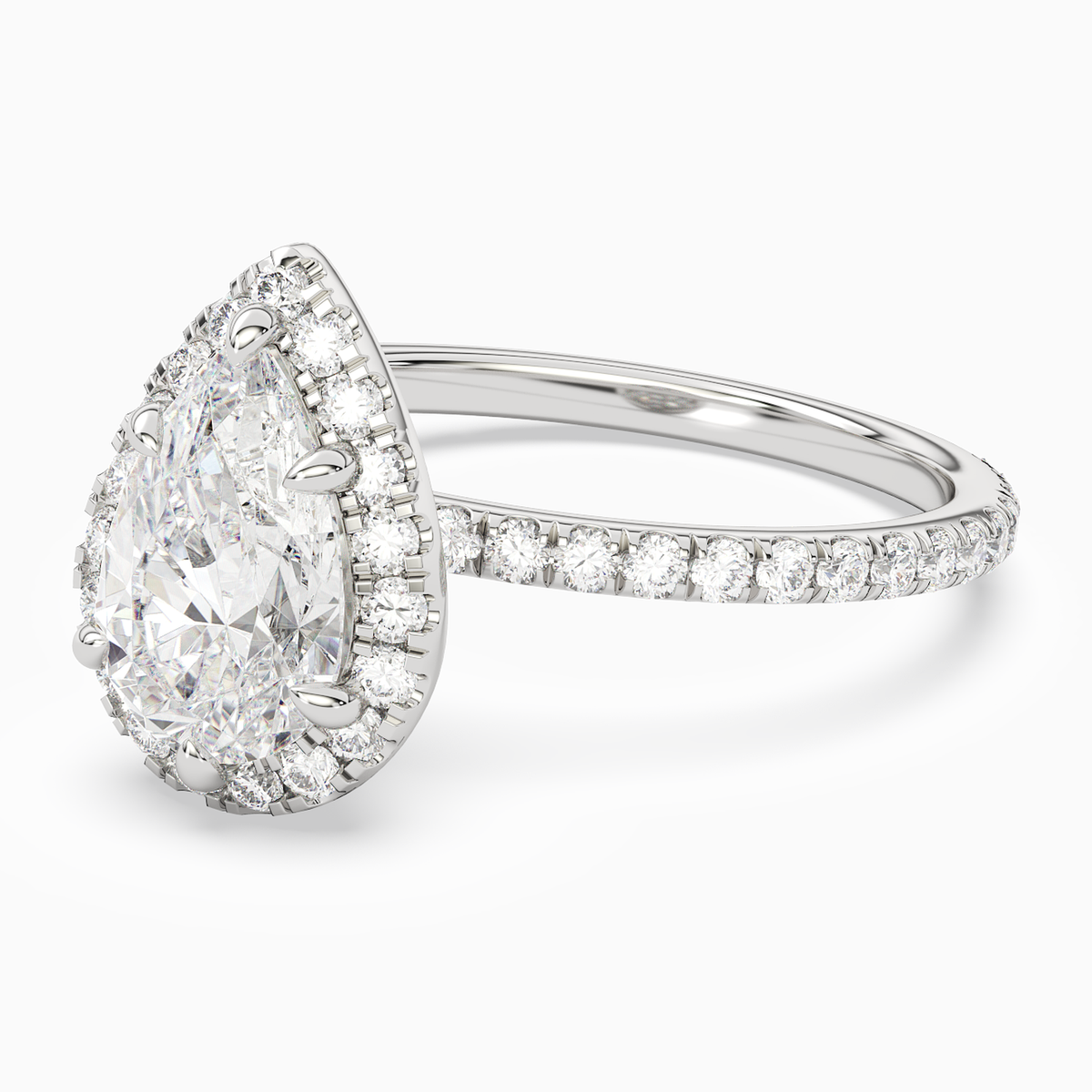
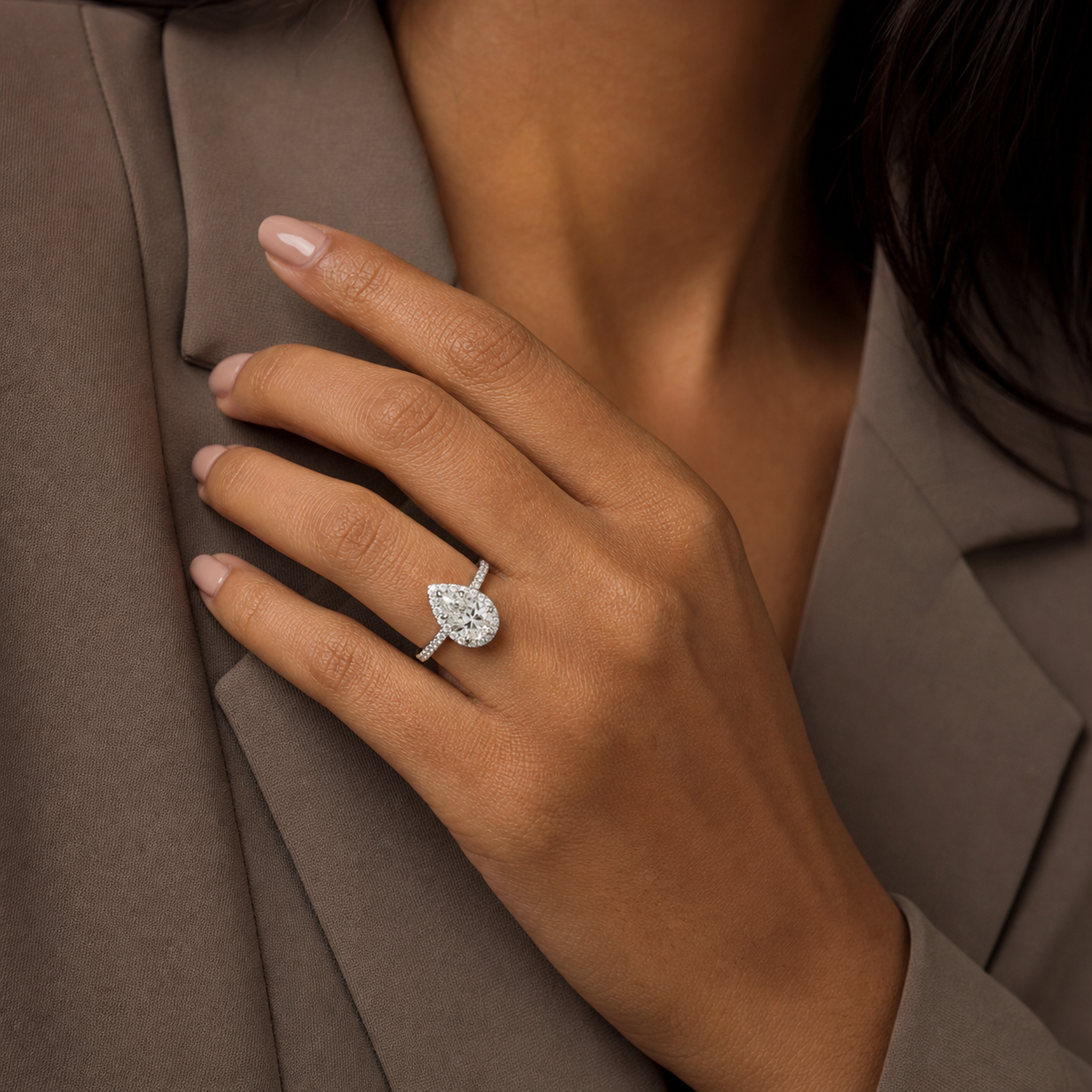


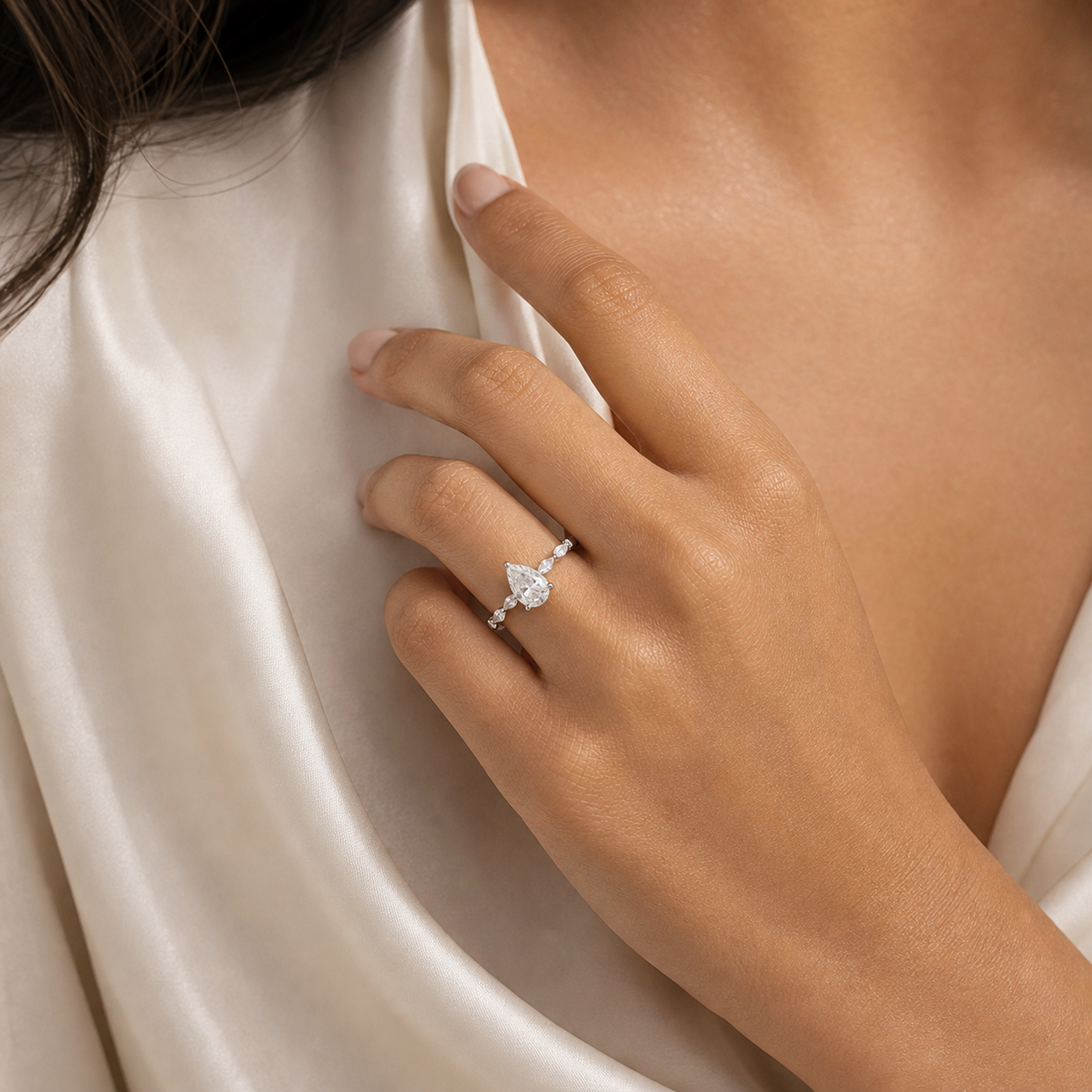


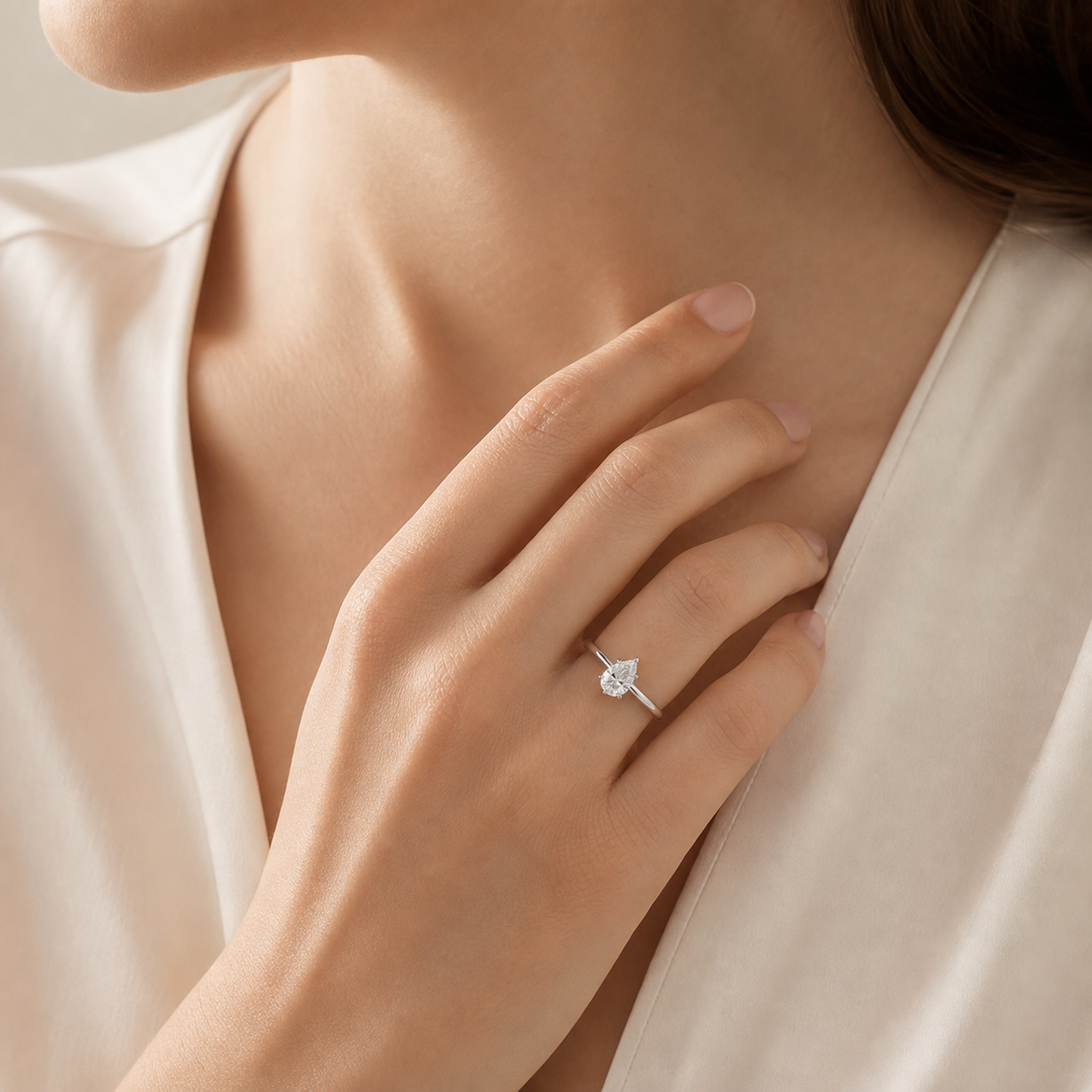


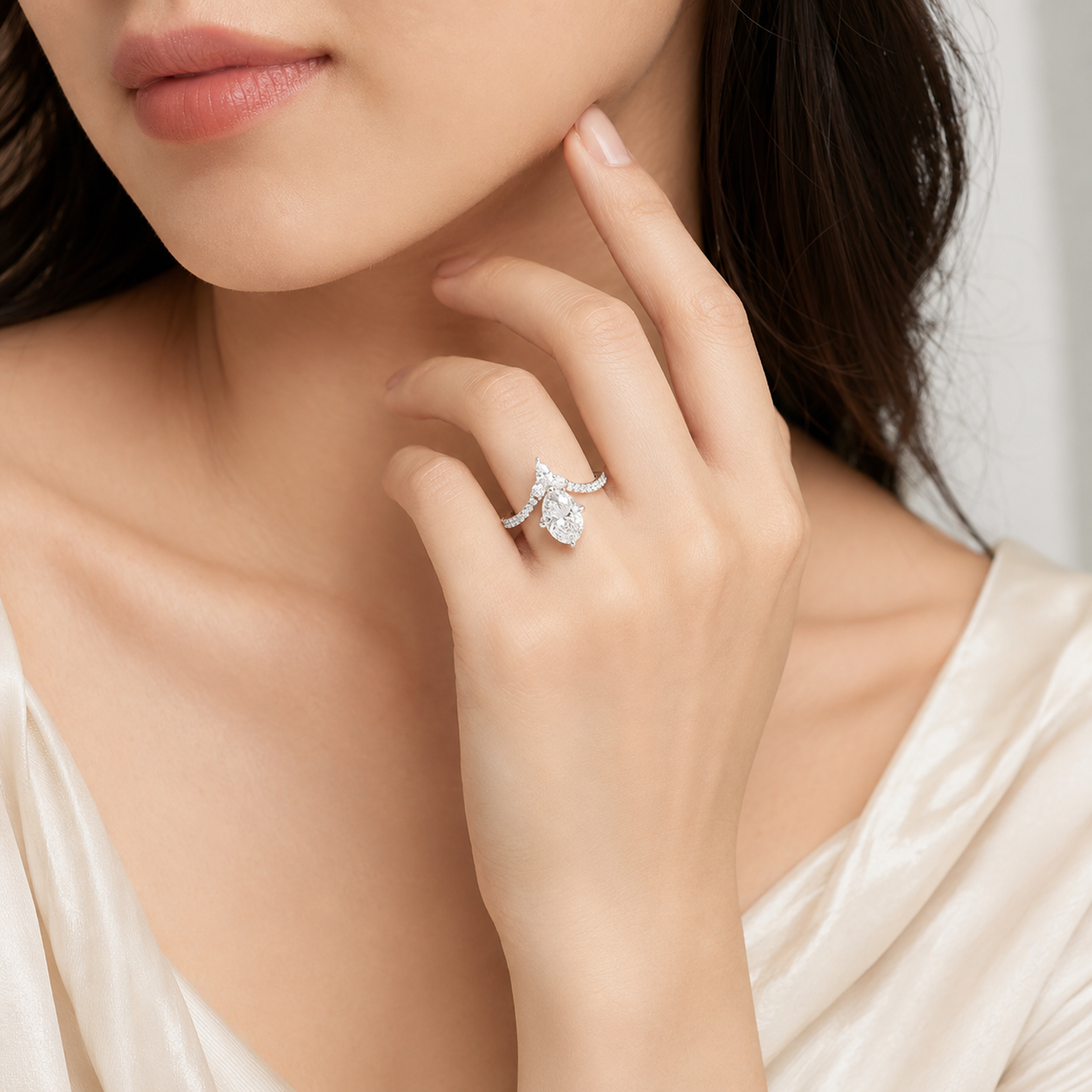


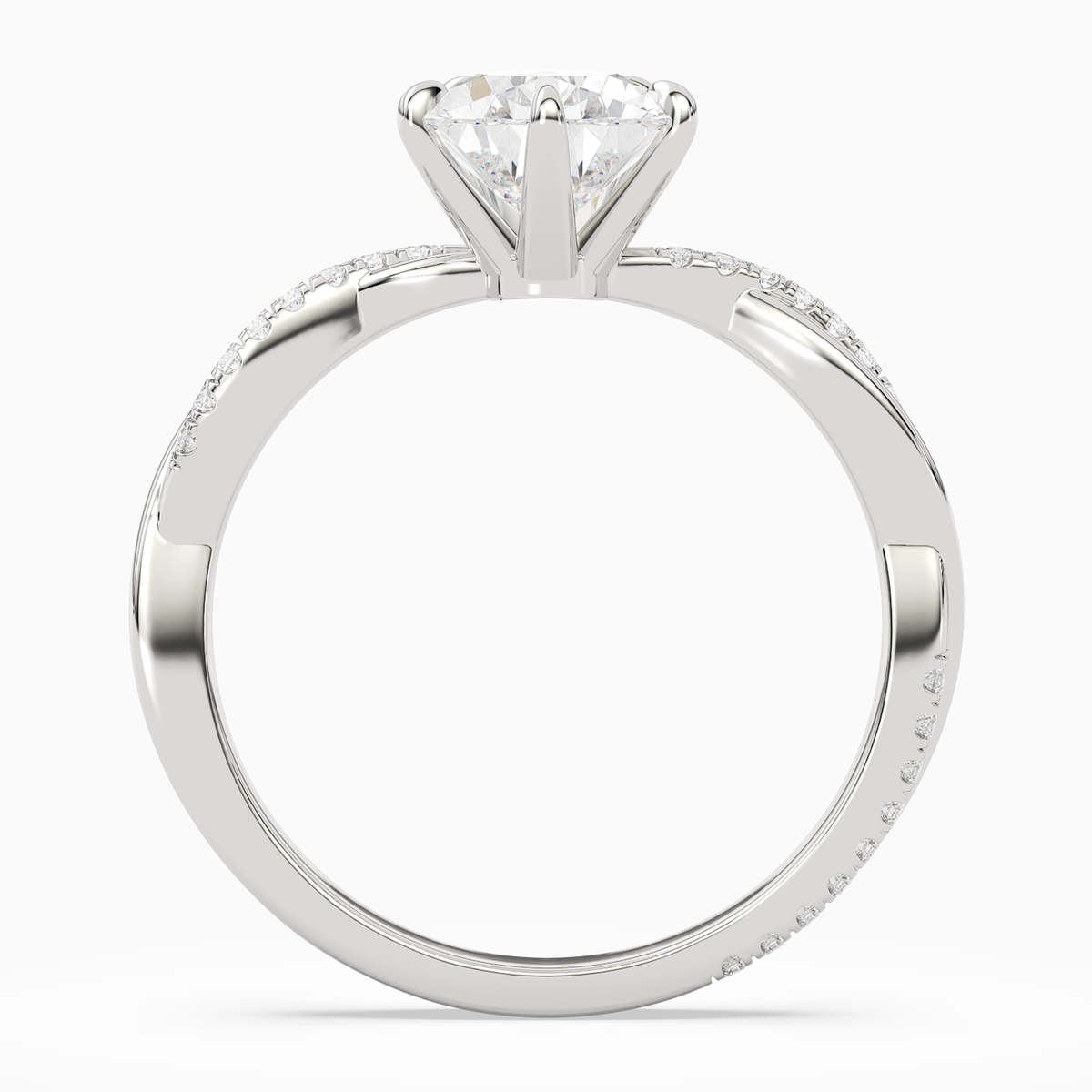

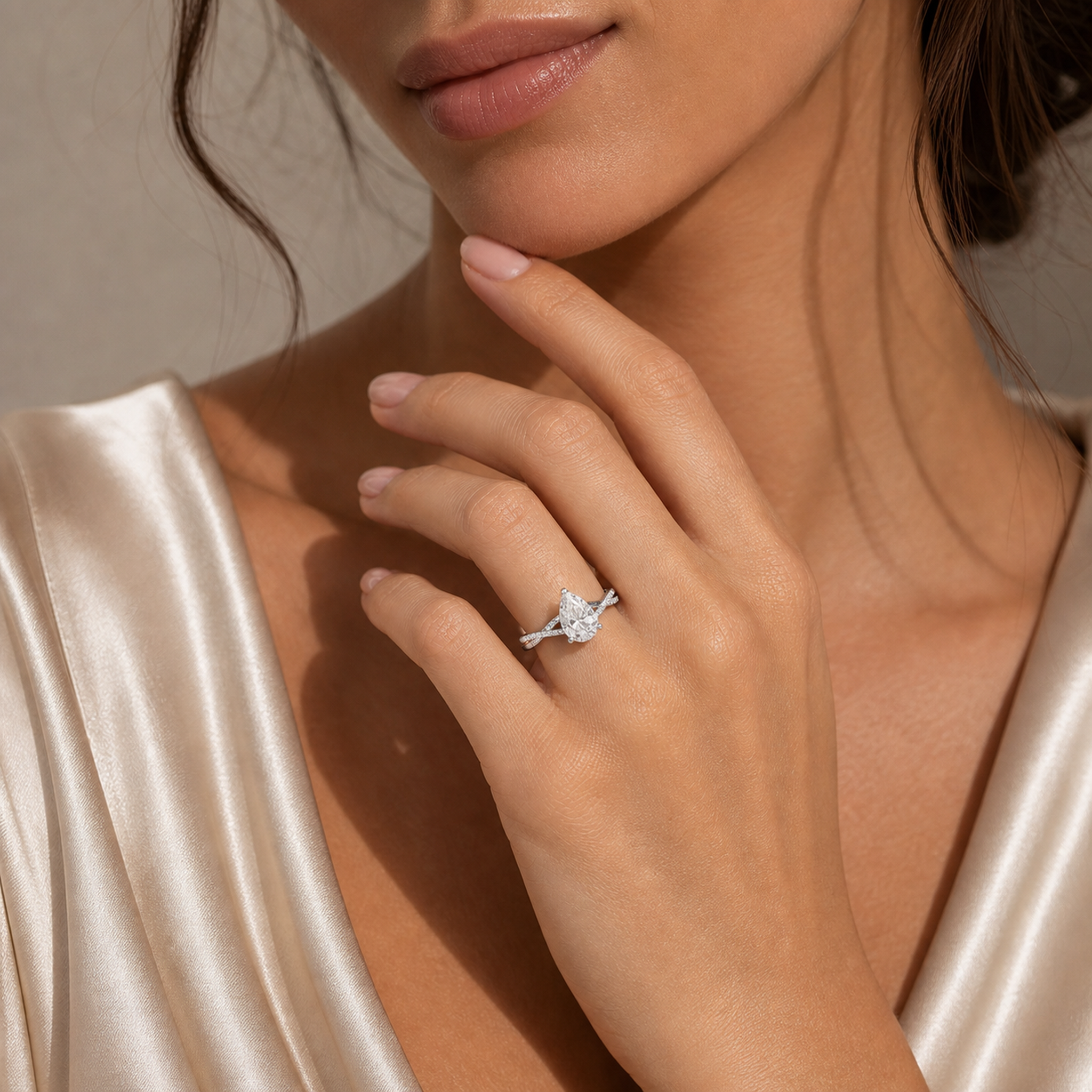

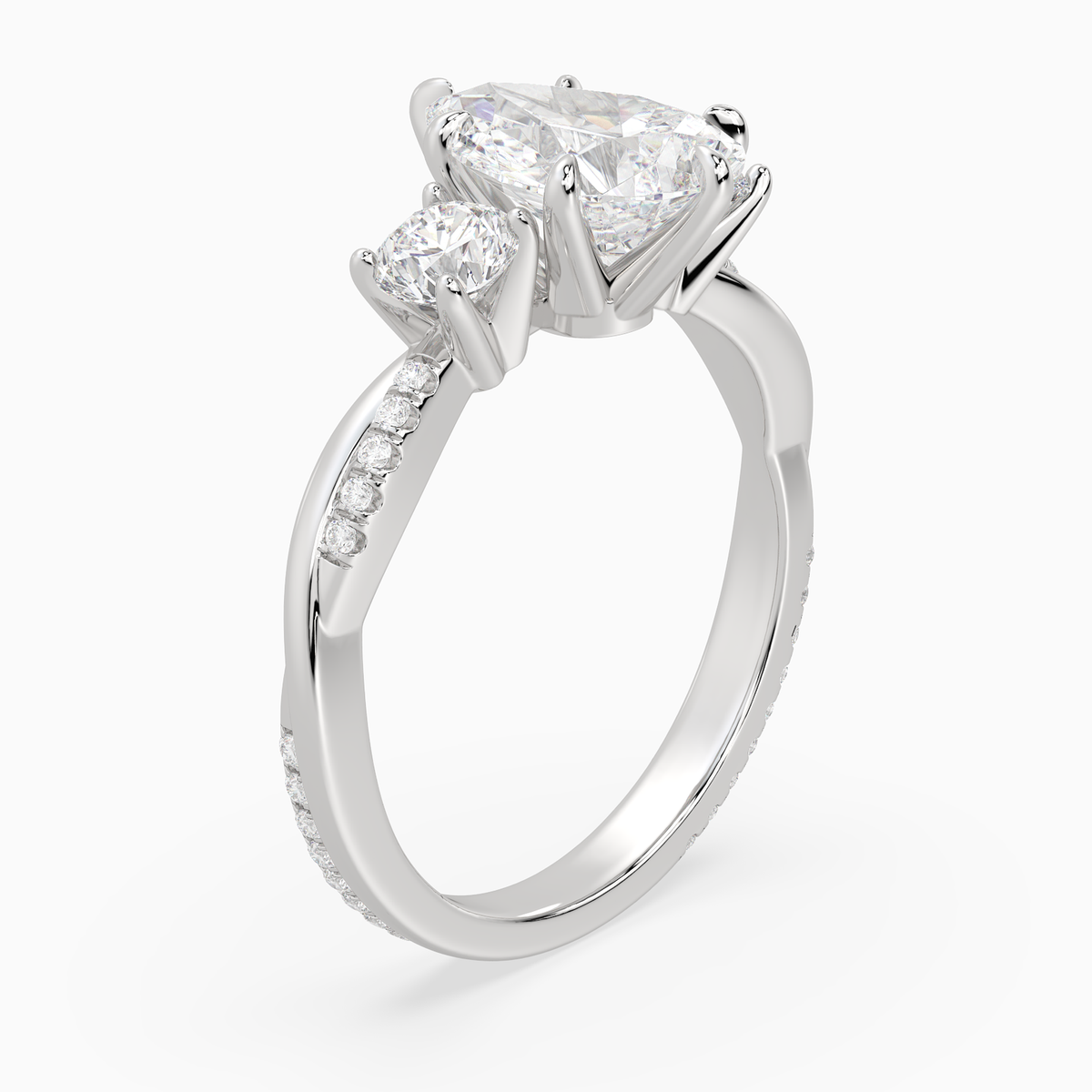


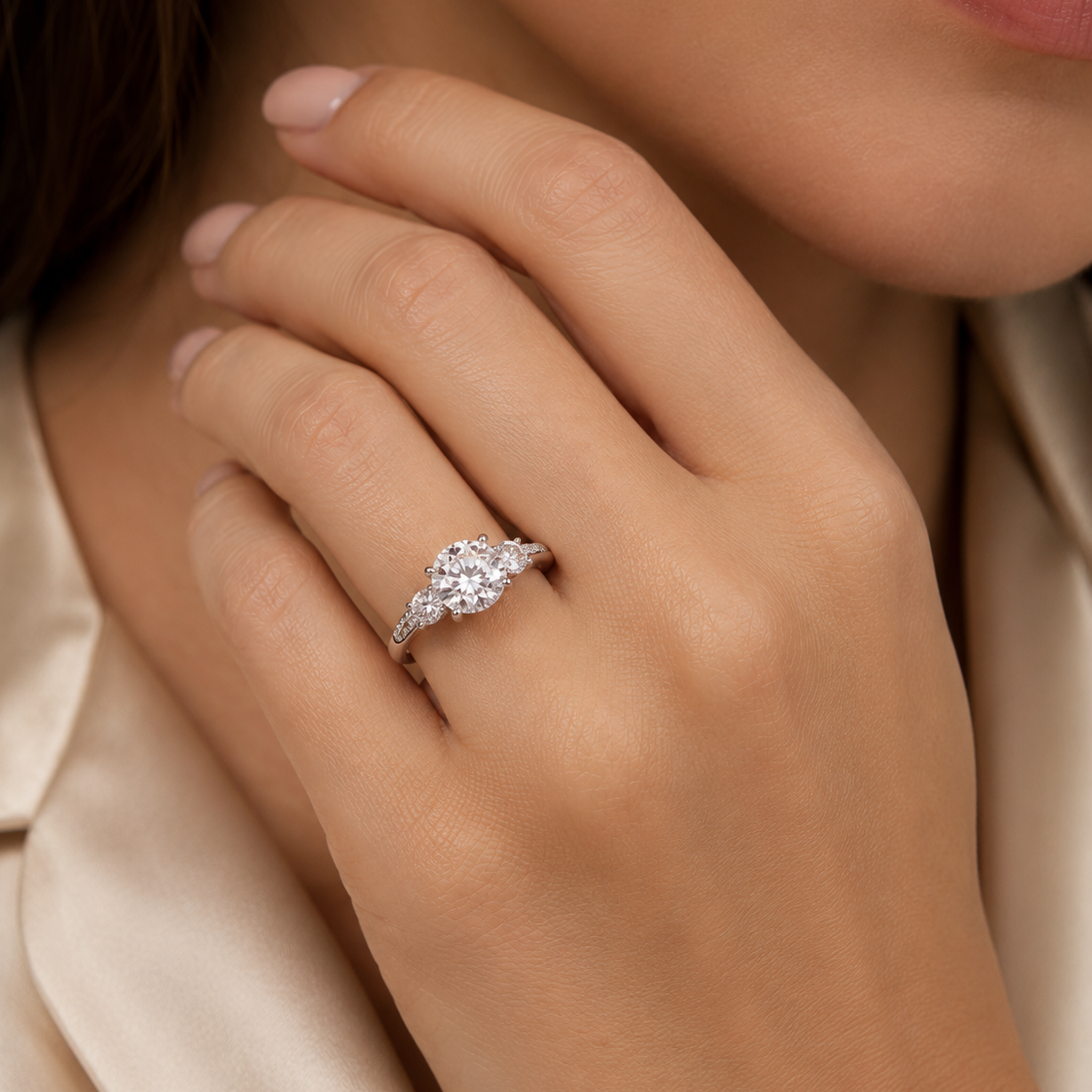


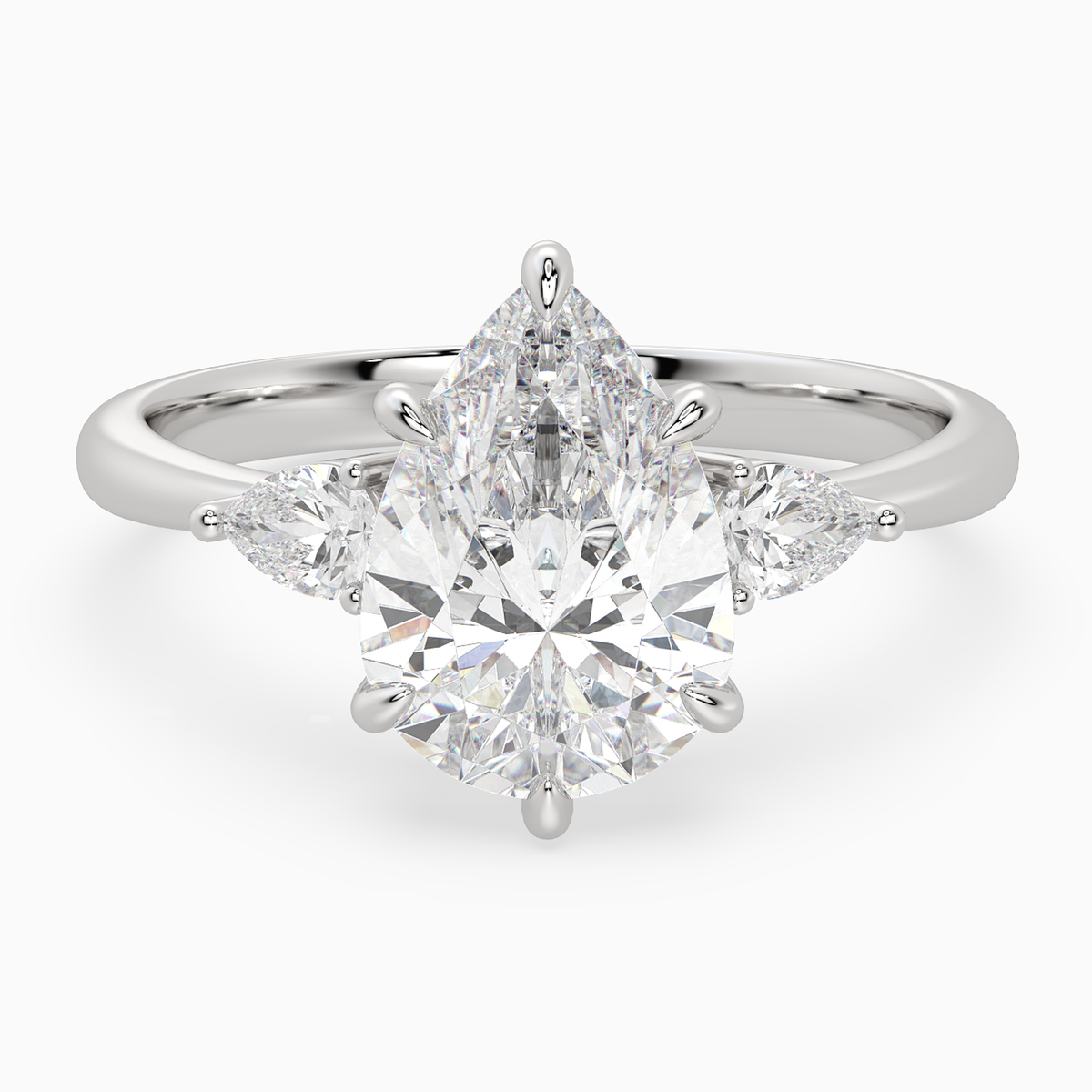
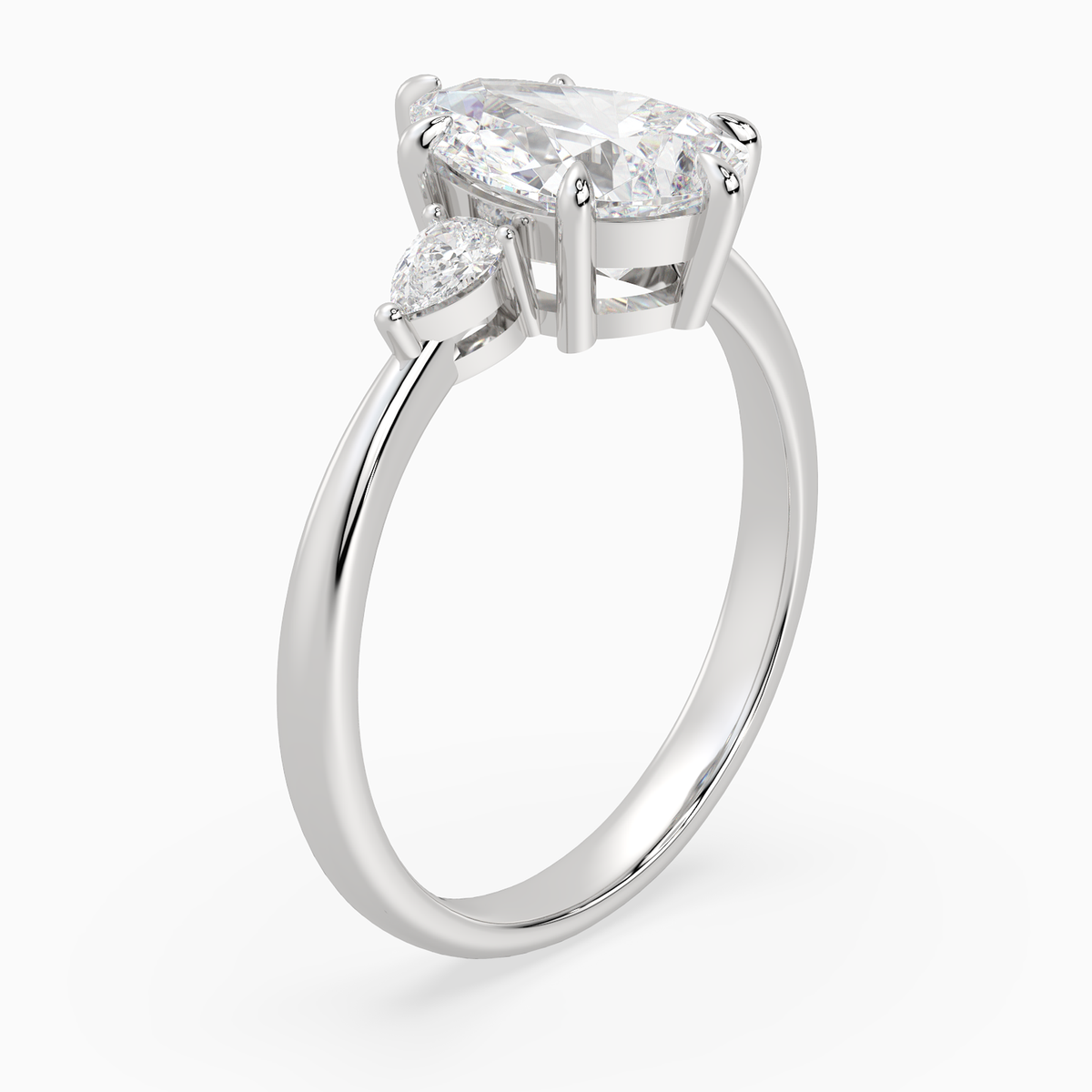


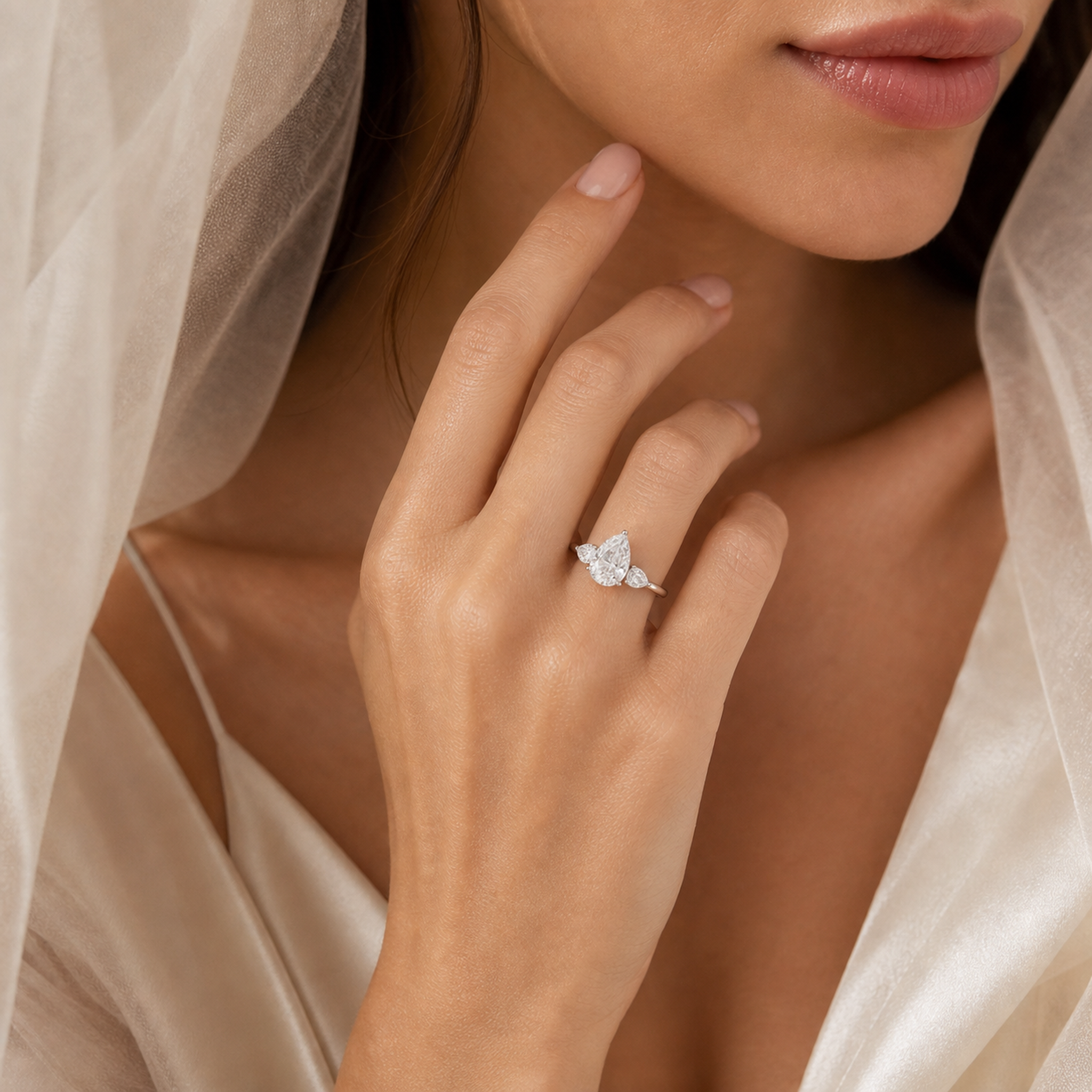
18K White Gold Pear Diamond Engagement Rings: Quiet Color, Deliberate Direction
A pear center asks the setting to accommodate two different ends: a full curve and a concentrated point. 18K White Gold provides a quiet-toned material around that transition. The color may sit close to the diamond, but the construction still needs a clear axis, measured support, and an intentional relationship to the band.
The current 13-design collection includes five Solitaires, two Halos, three Side Stone, and three Three Stone settings. Open baskets, hidden halos, cathedral shoulders, vines, crown details, and marquise or pear accents place white gold at different depths and junctions.
Greater Gold Content, Product-Specific Finish
An 18K alloy contains 75% gold. That fact distinguishes composition from 14K, but it does not establish one color, hardness, weight, rhodium treatment, sensitivity outcome, or maintenance interval. The complete alloy and finish must be confirmed for the selected ring.
Because color is restrained, proportion and surface quality carry more of the material expression. The width of a prong, the wall of a basket, and the transition into a cathedral or vine shoulder should look intentional rather than merely minimal.
Do Not Ask Metal to Resolve the Diamond
Head shape, shoulder fullness, wing curvature, point, symmetry, and ratio determine the pear outline. Facet relationships and viewing conditions influence central contrast. 18K White Gold supplies context; it cannot improve cut, remove a bow-tie, alter dimensions, or raise a color or clarity grade.
Pear shapes do not receive the same overall GIA cut grade used for eligible standard round brilliants. Review measurements, report facts, images or video, and the finished configuration instead of relying on a metal label or one ratio.
Read the Axis Through the Whole Setting
A Solitaire concentrates attention on center and point support. A halo restates the pear perimeter. Side Stone and Three Stone settings broaden the visual axis through marquise or pear accents, making spacing and metal junctions part of the composition.
Point security remains construction-specific. A quiet white surround does not mean the tip is unsupported, nor does 18K content guarantee one security result. Examine the selected prong or bezel geometry, workmanship, condition, and care requirements.
Material Presence Without Visual Noise
Face-up presence depends on length, width, depth, and weight distribution, not carat alone. Ring balance and wedding-band spacing depend on the complete profile, side stones, basket, shoulders, and contact points. Matching white metals do not guarantee the same finish or fit.
Burvonti pairs responsibly sourced, independently graded lab-grown diamonds with settings calibrated through proportion and human judgment. Custom possibilities may refine center specifications, direction, support, basket, band, accents, metal, or engraving where feasible. The goal is a quiet material presence aligned to the pear's asymmetrical logic.
Frequently Asked Questions
How is 18K White Gold Pear different from the parent Pear page?
This page owns 18K white-gold composition, finish, material presence, and setting junctions. The parent owns full pear outline, ratio, bow-tie, orientation, and dimension education.
How much gold is in 18K White Gold?
75% by mass. Other alloying metals and any finish influence the final appearance and behavior.
How does 18K White Gold differ from 14K White Gold?
18K contains 75% gold while 14K contains approximately 58.3%. Color, hardness, finish, and care still depend on the complete product.
Is 18K White Gold always rhodium plated?
That should not be assumed. Confirm the selected Burvonti product's finish.
Does 18K White Gold improve brilliance or color?
No. It changes the setting context, not the independently graded diamond.
Which settings appear here?
The current assortment includes five Solitaire, two Halo, three Side Stone, and three Three Stone settings.
Can the setting remove a pear bow-tie?
No. Bow-tie appearance varies by diamond, movement, lighting, and viewing angle.
Is one pear ratio best for white gold?
No. Ratio should be considered with head, shoulders, wings, point, symmetry, and setting proportions.
Does 18K White Gold guarantee better point protection?
No. Security depends on product-specific geometry, workmanship, condition, impact, and wear.
Is 18K White Gold hypoallergenic?
No universal outcome should be promised. Confirm the complete alloy when sensitivity is a concern.
Will the white finish remain unchanged?
Surface appearance evolves with wear. Alloy, finish, use, and care determine maintenance.
Will a wedding band sit close?
That depends on basket, center height, shoulders, accents, and contact points.
Can Burvonti customize an 18K White Gold Pear ring?
Custom possibilities may include center, orientation, support, basket, band line, accents, metal, or engraving, subject to feasibility.