
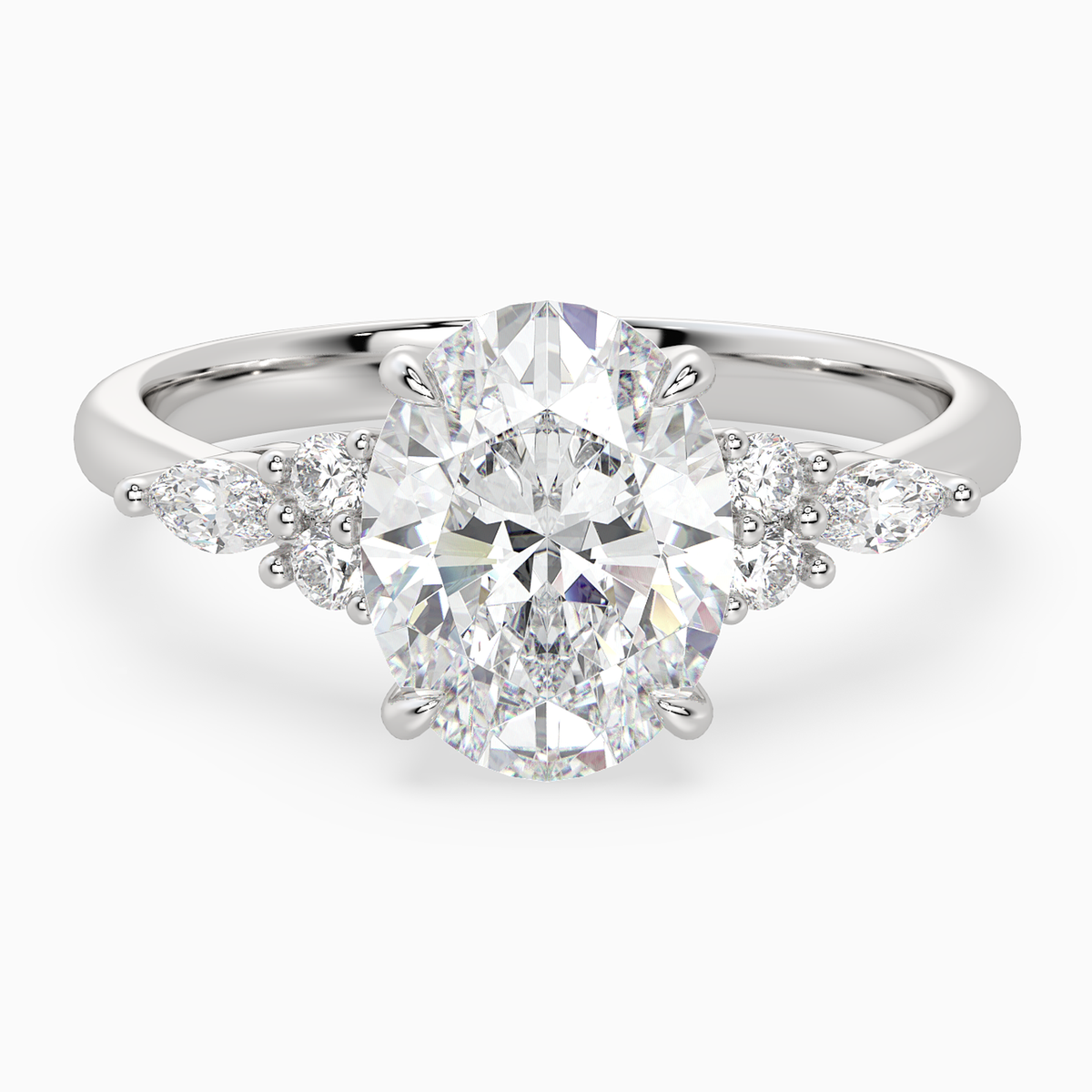


Pear Diamond Engagement Rings in 14K Rose Gold
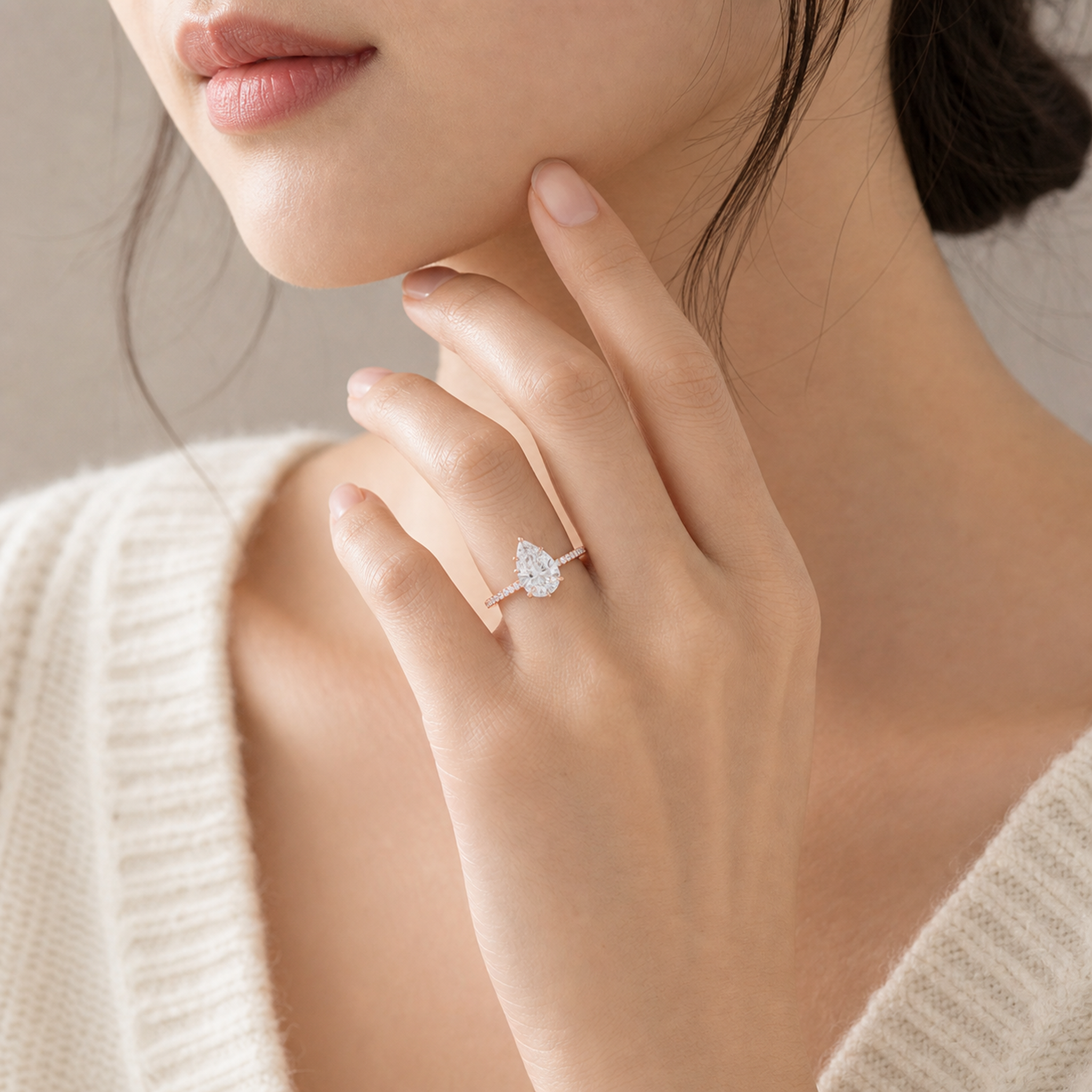
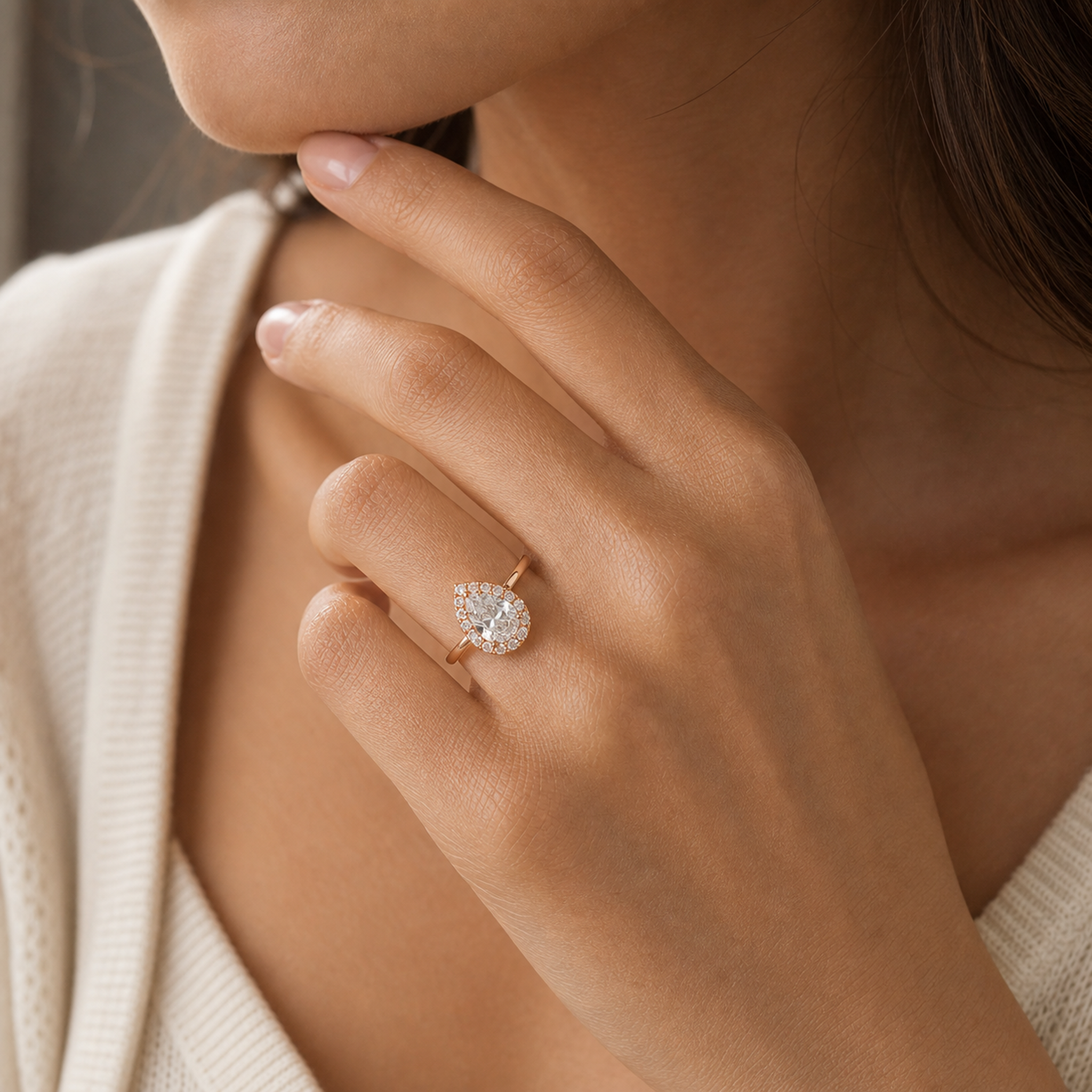
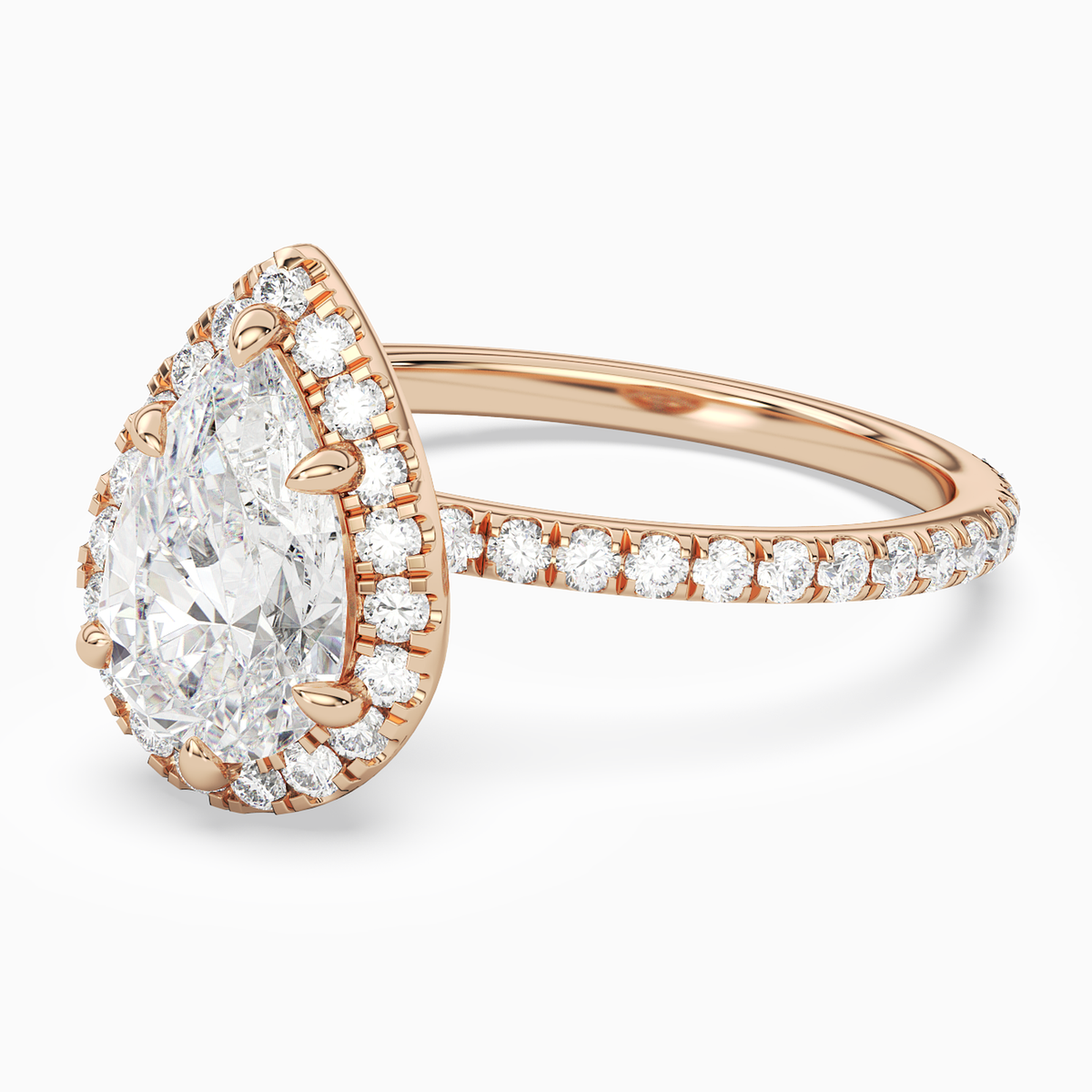
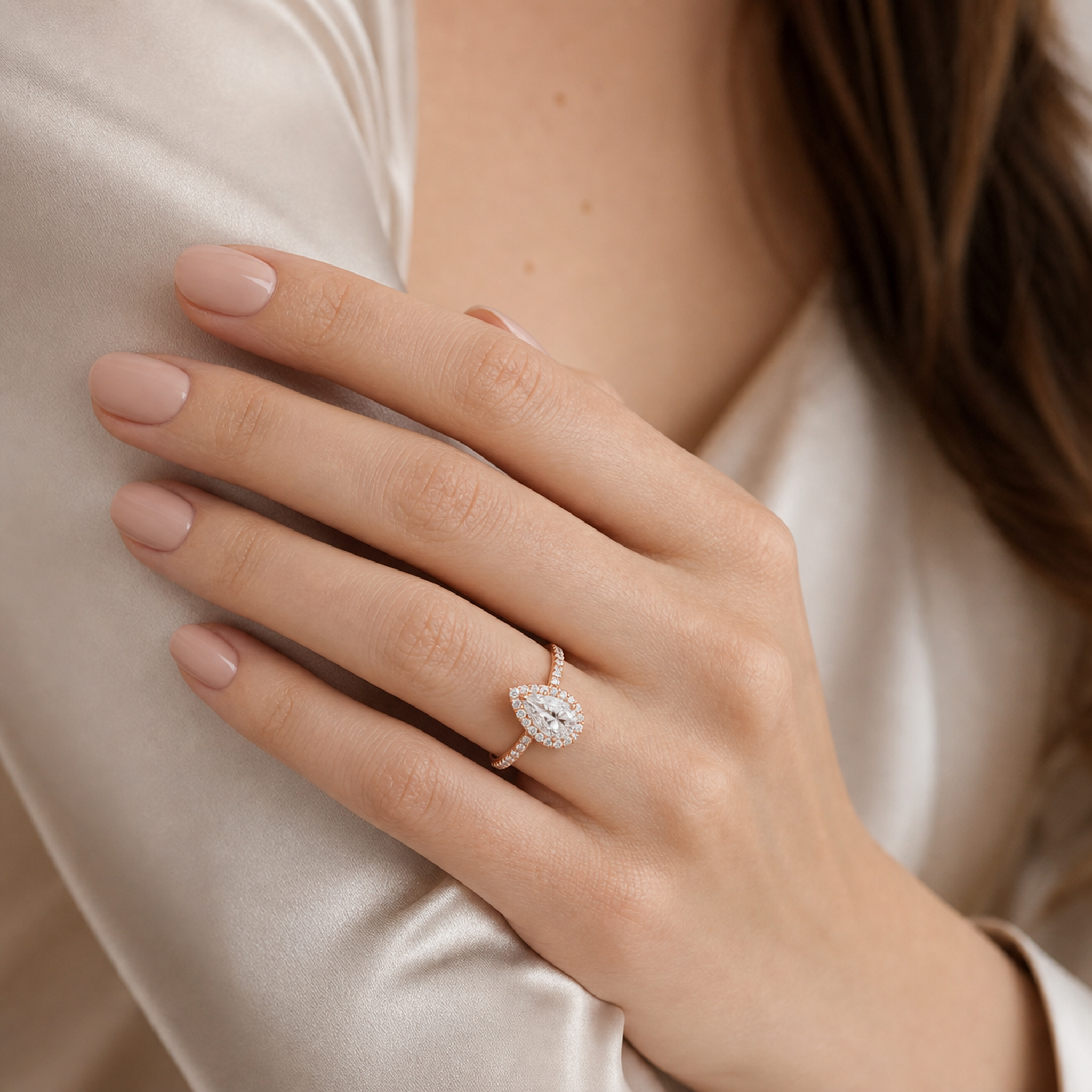
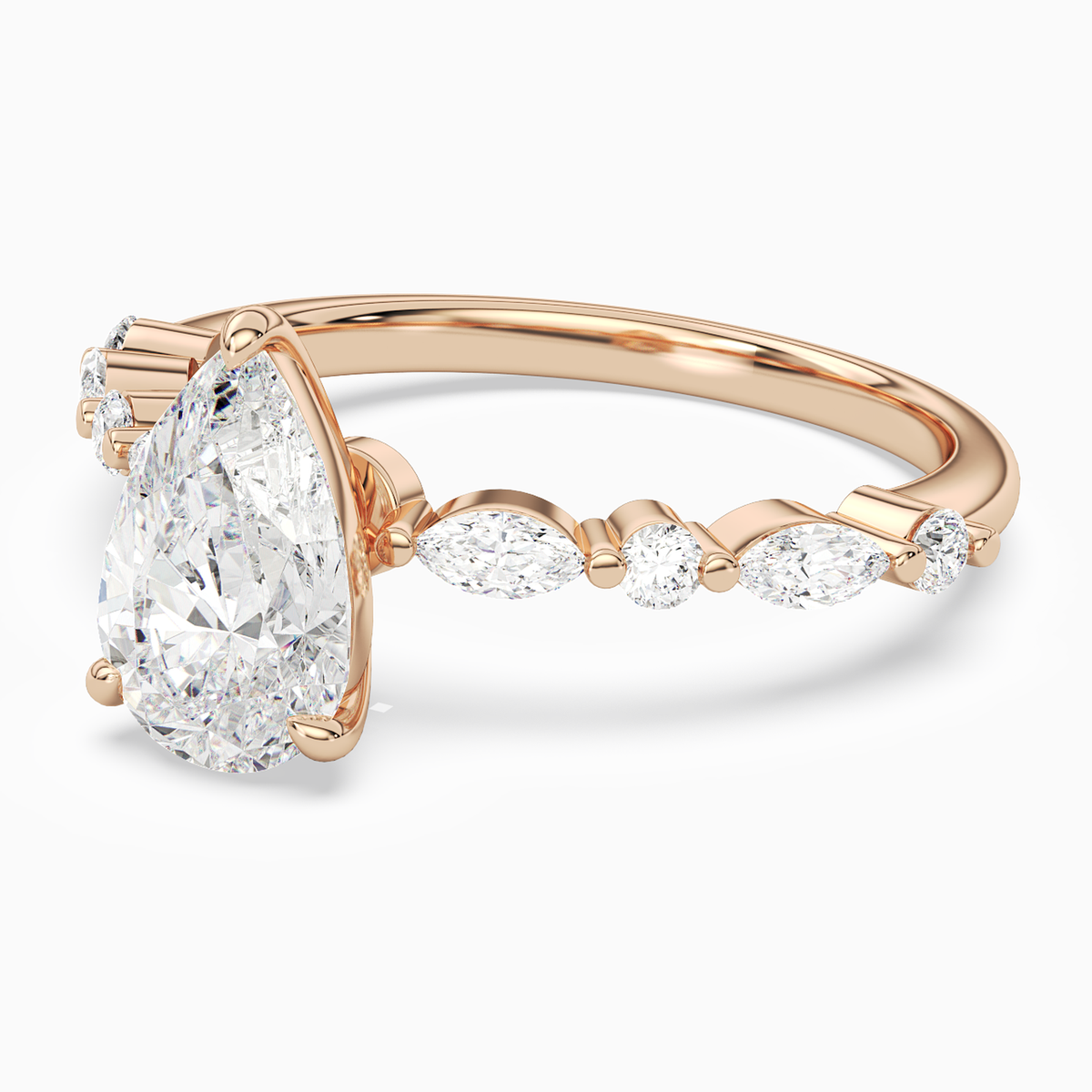
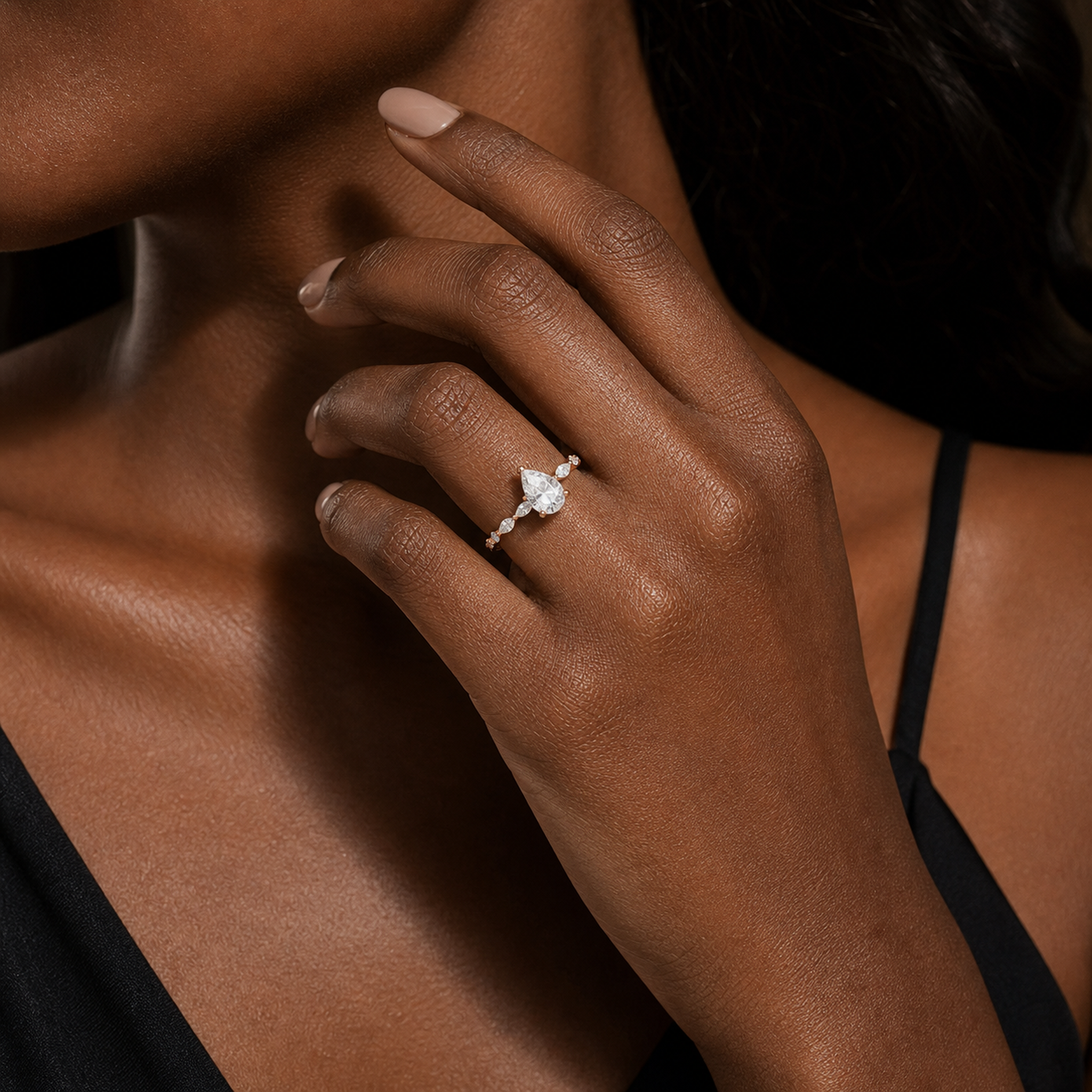
A continuous curve, warmed toward the point. 14K rose gold gives the pear center a blush boundary while preserving its direction and light.


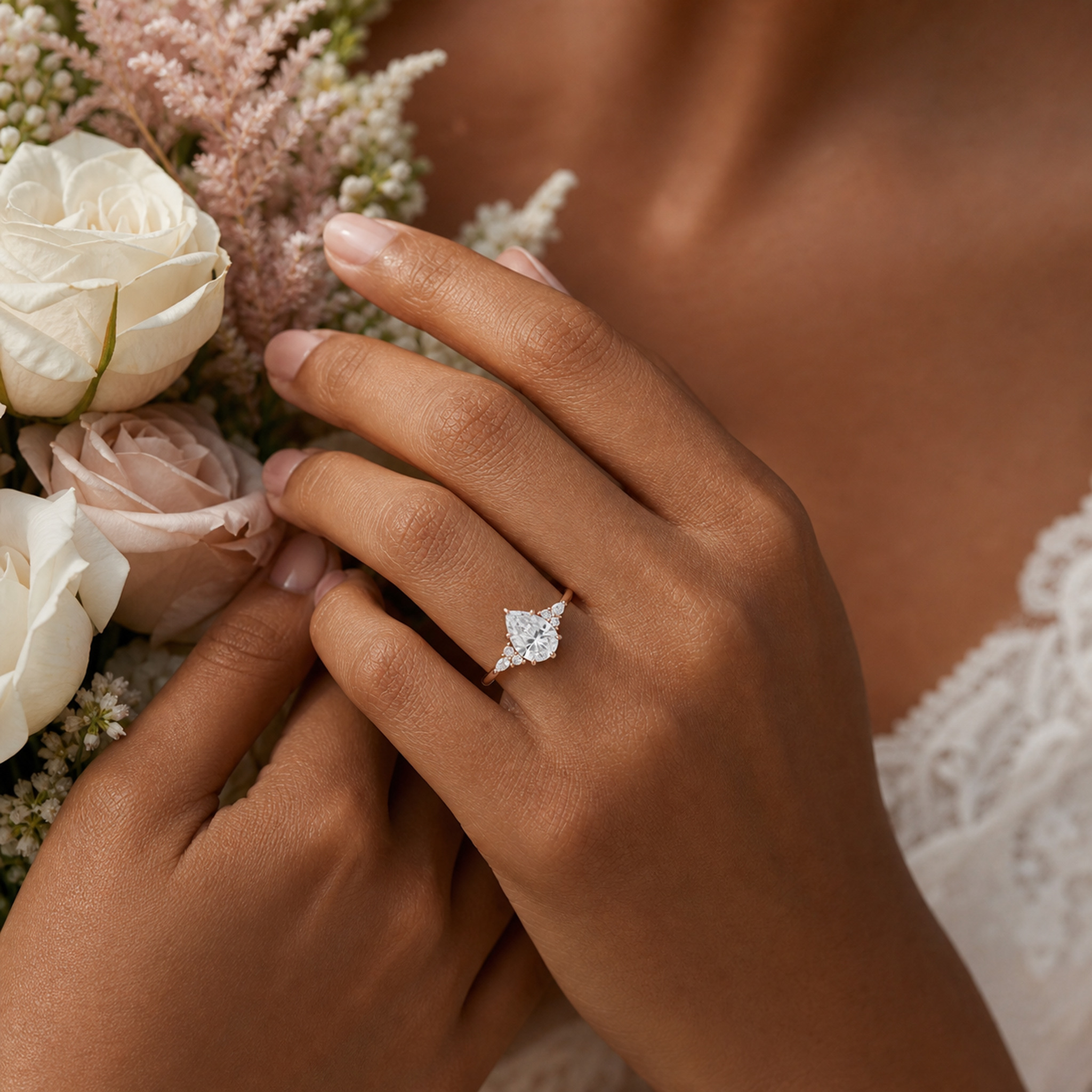


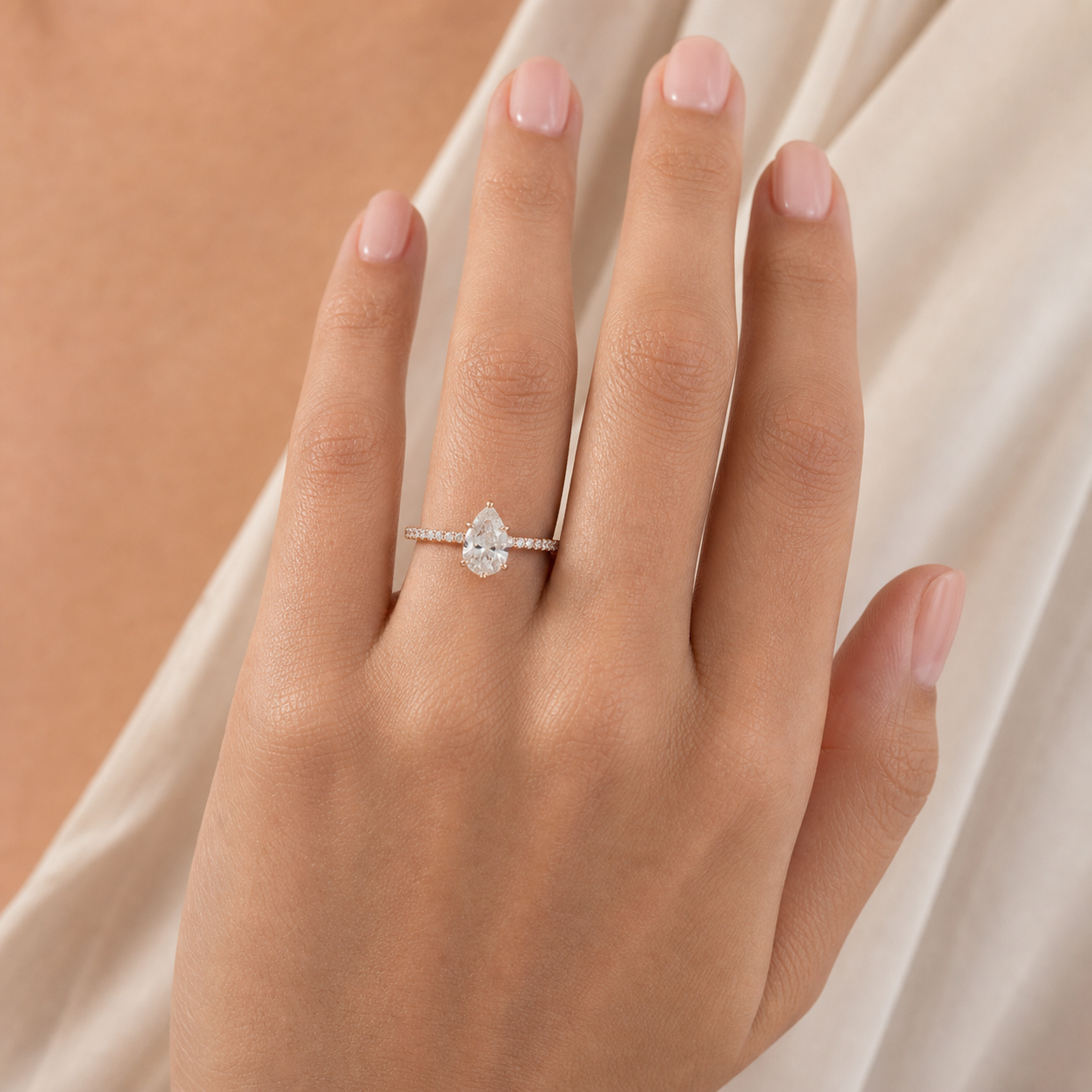

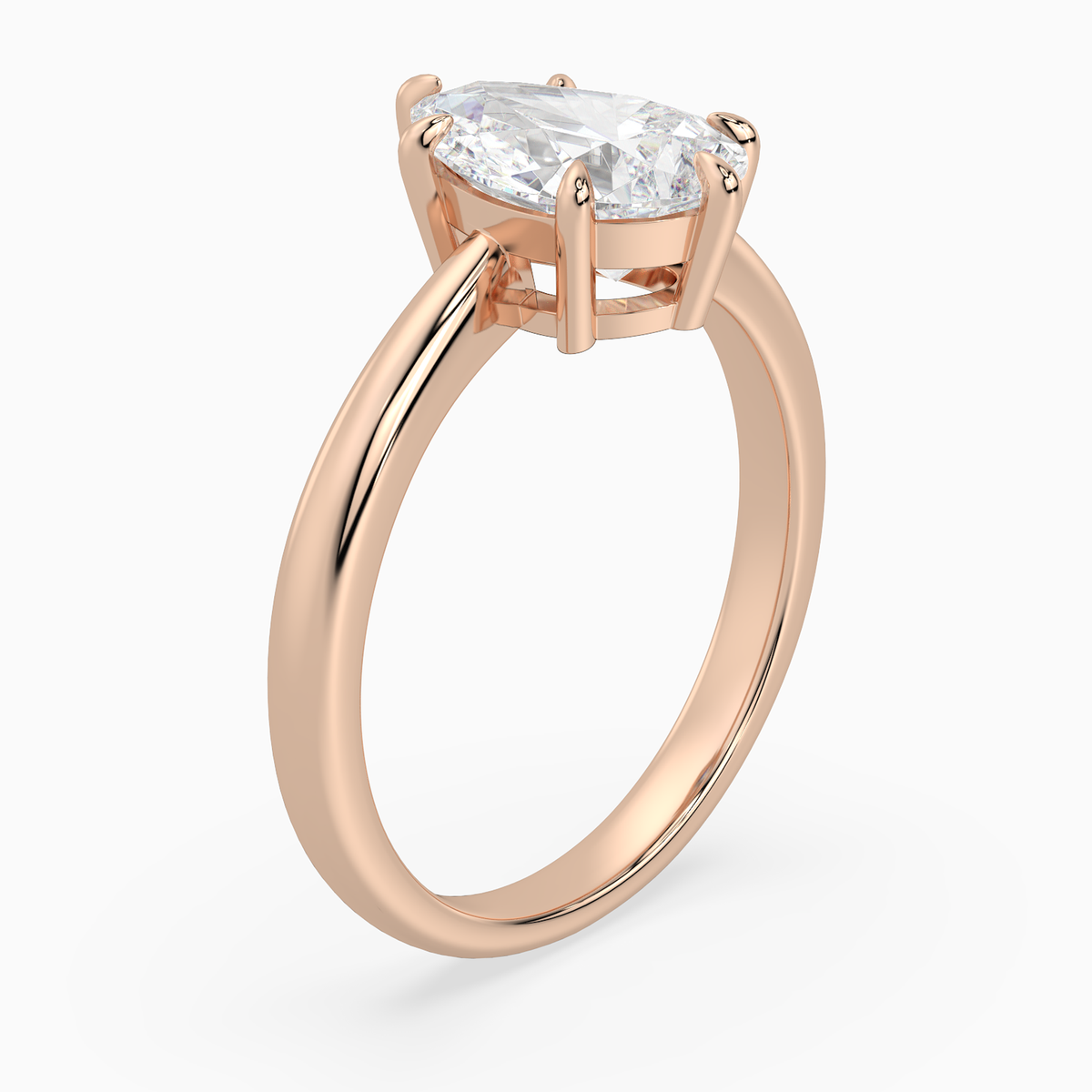

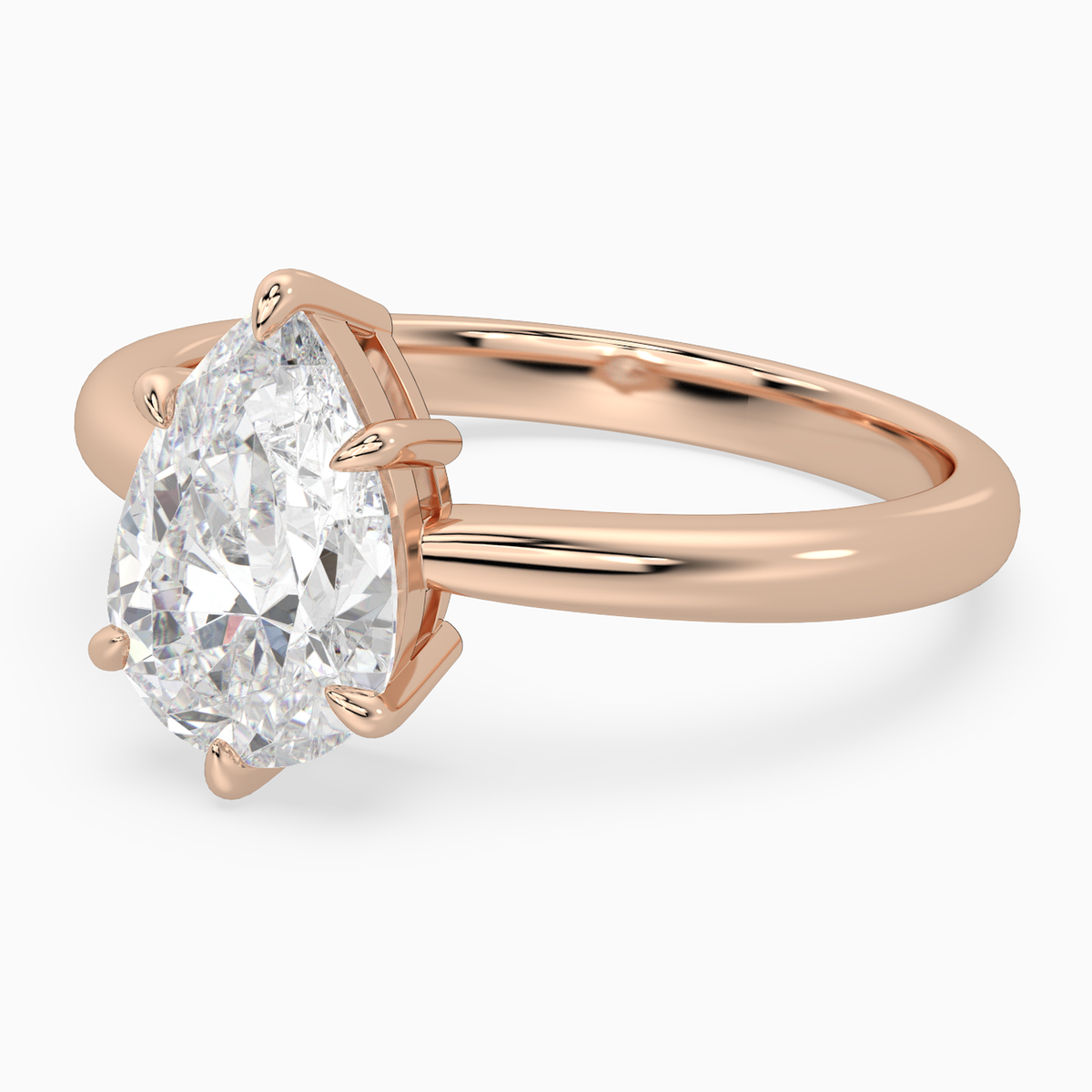
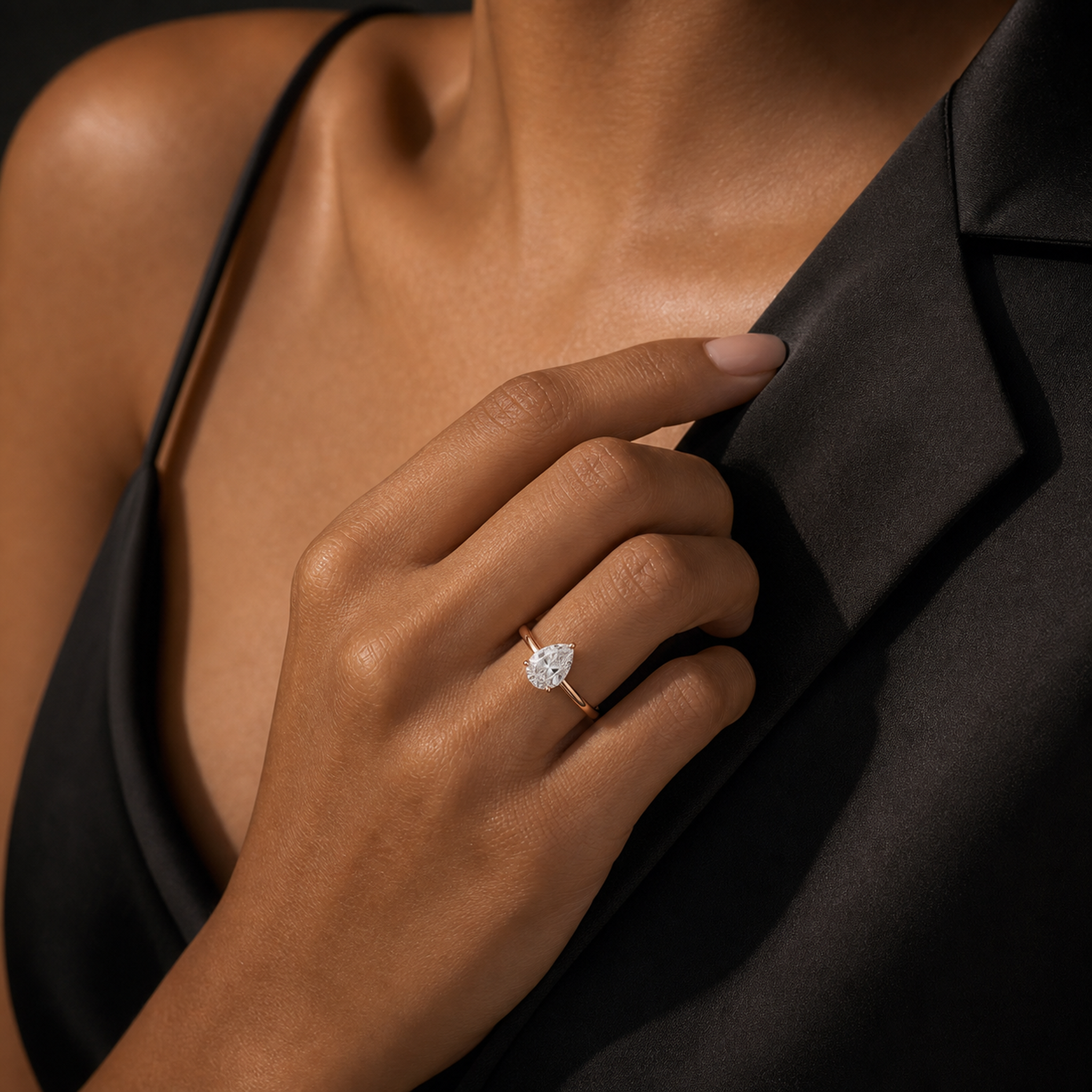


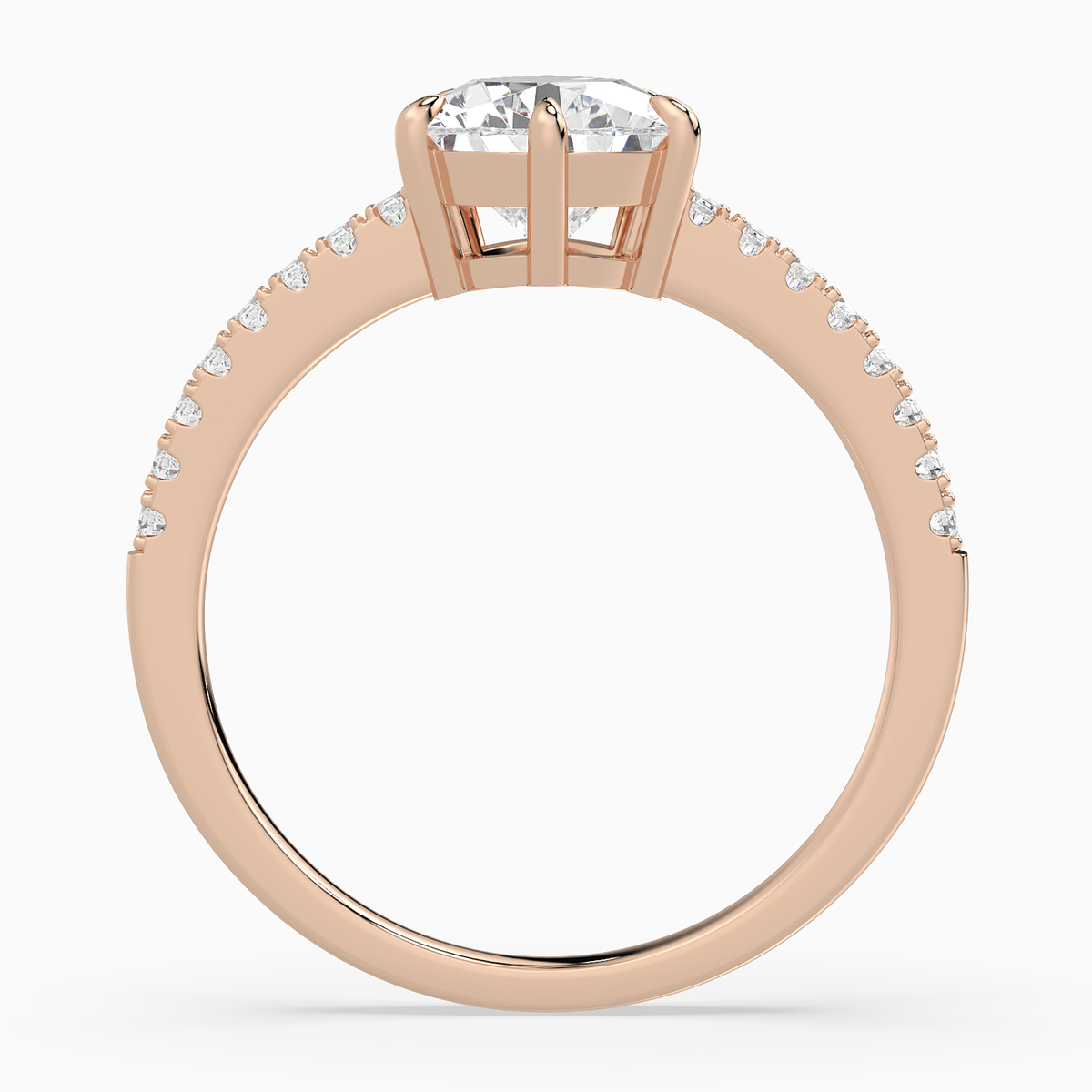
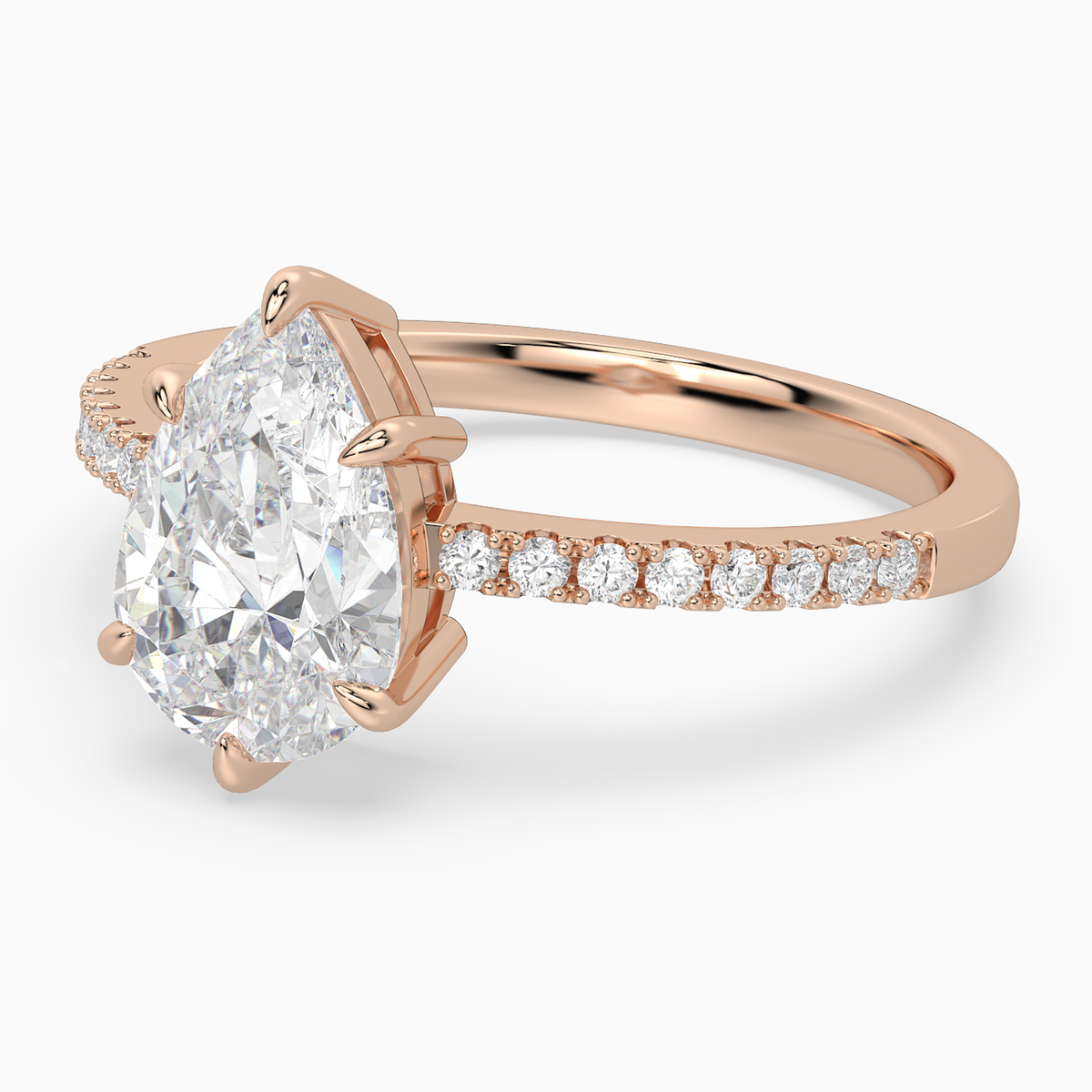








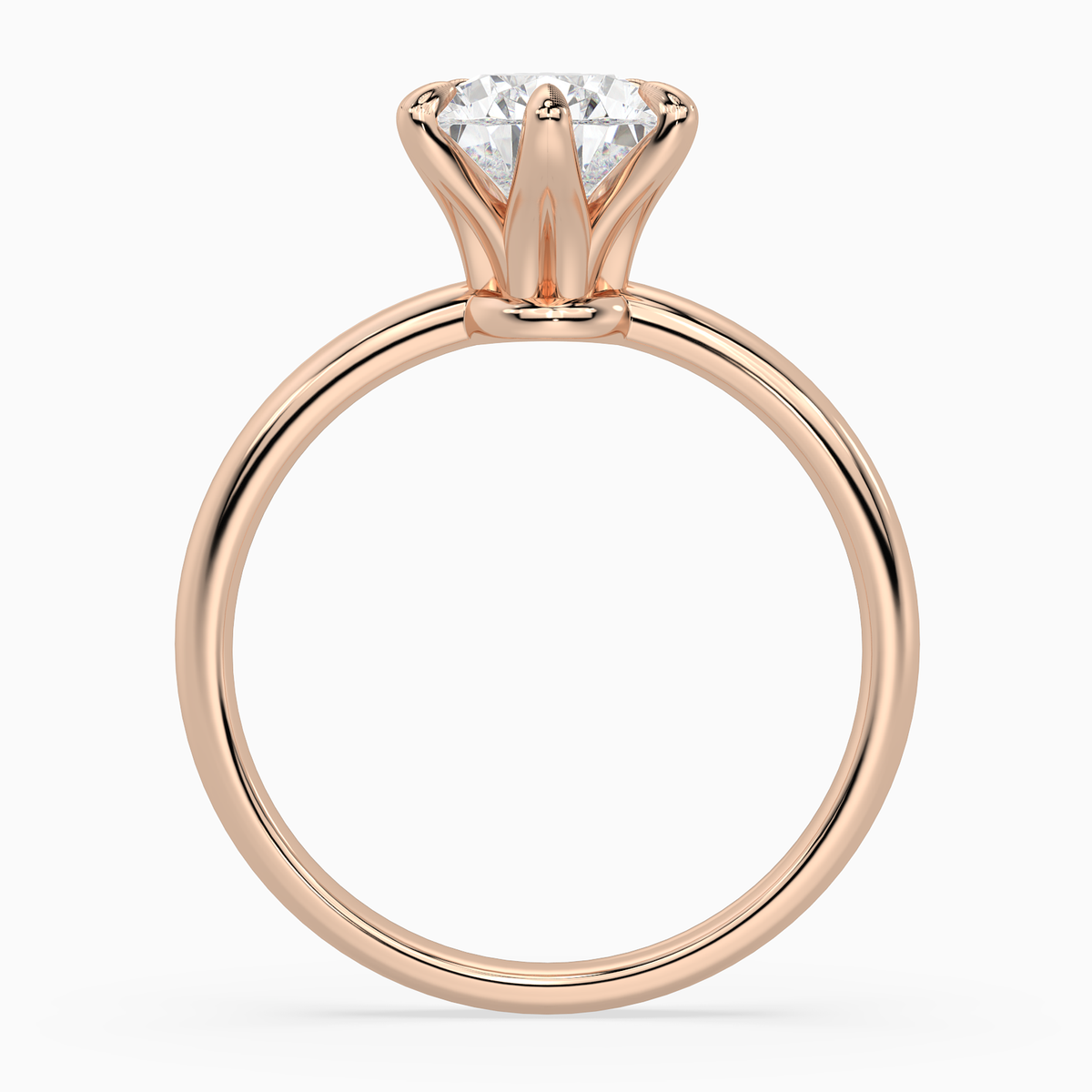

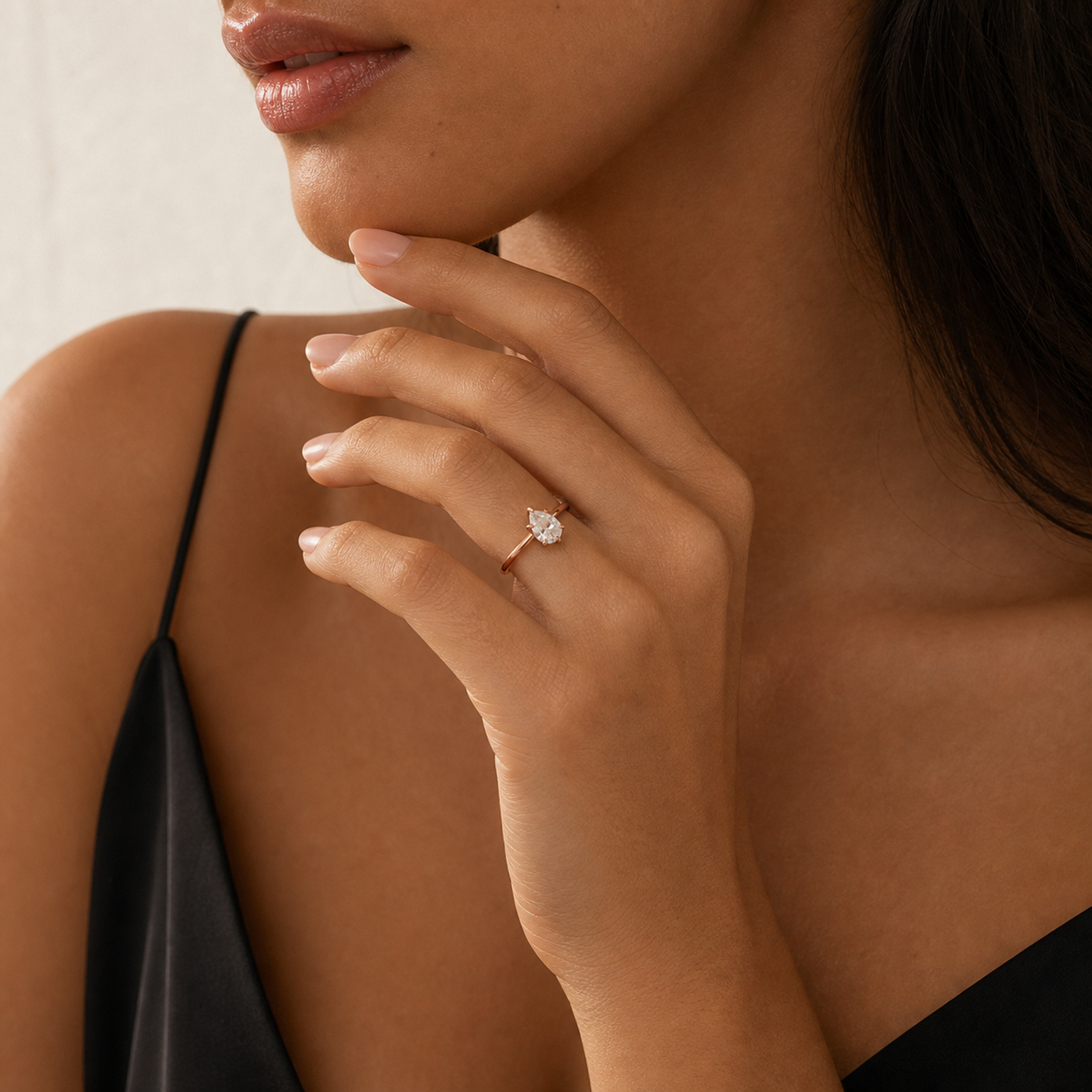


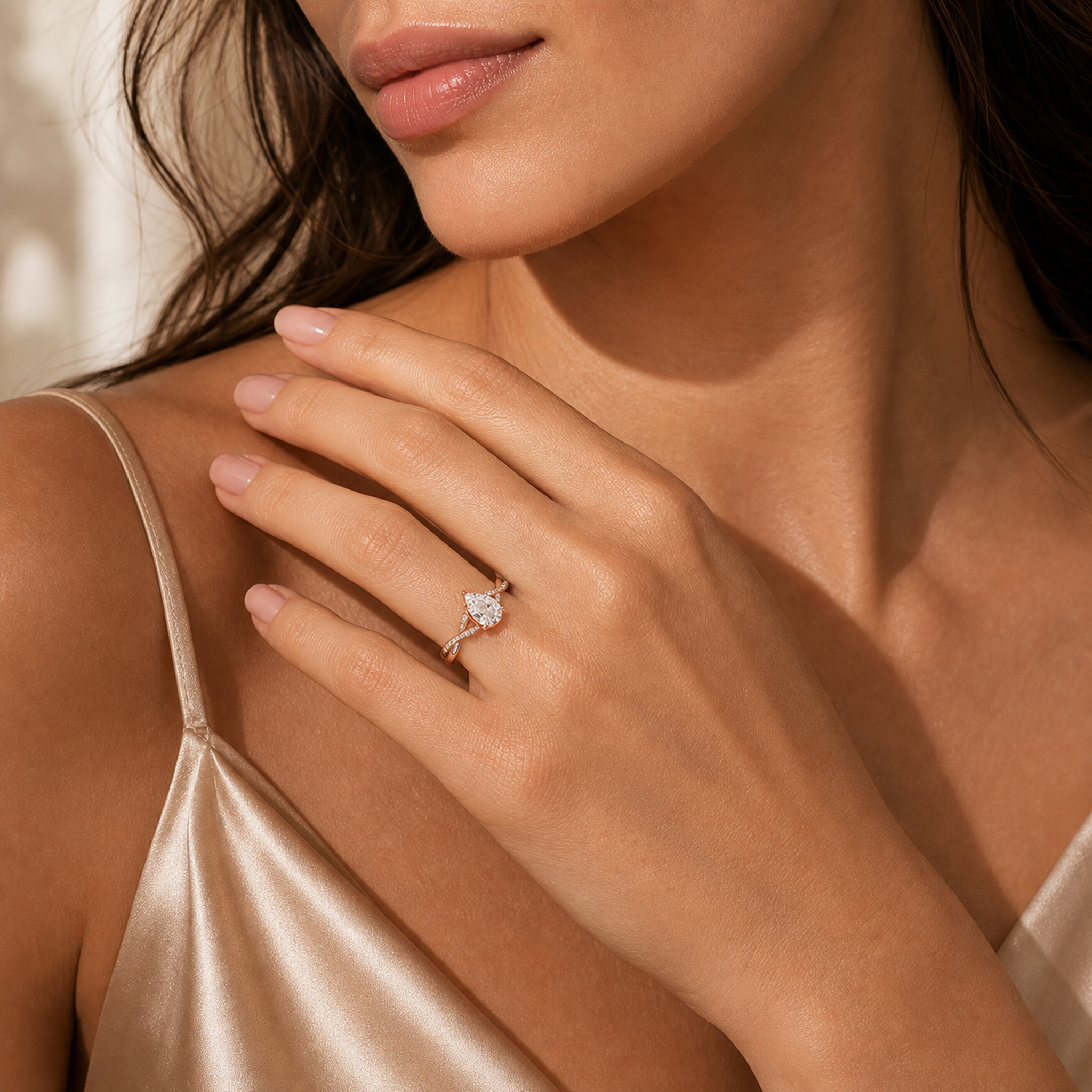


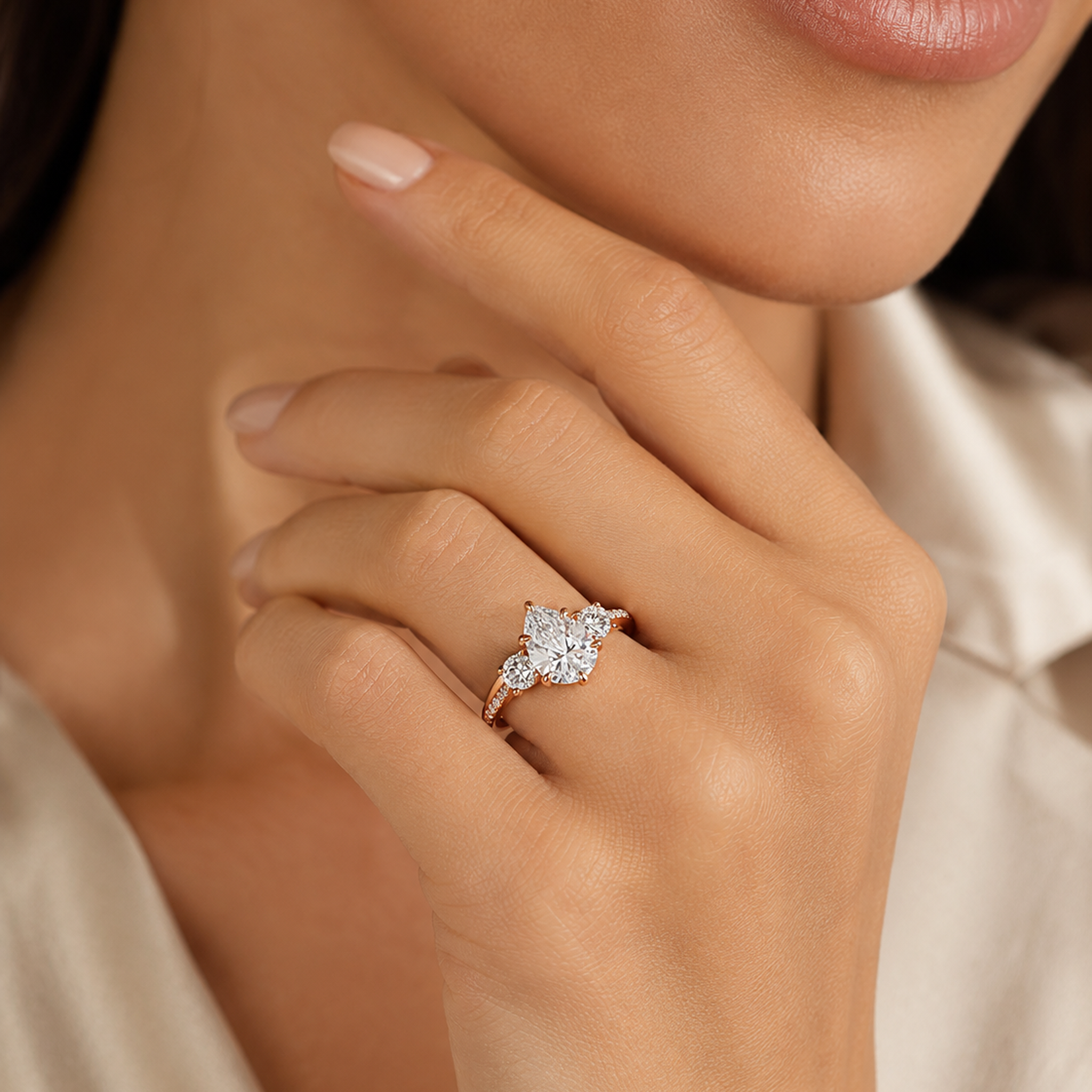


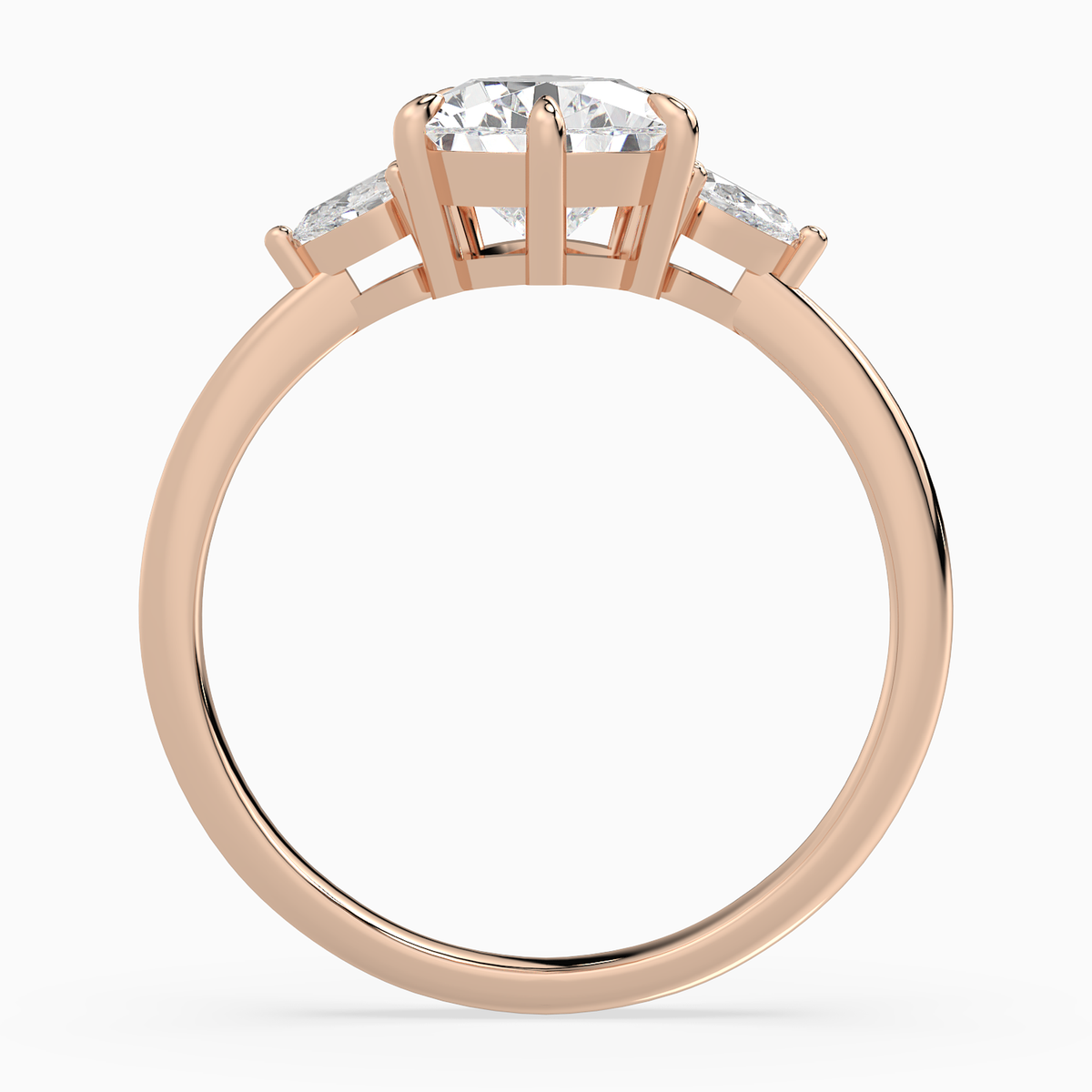

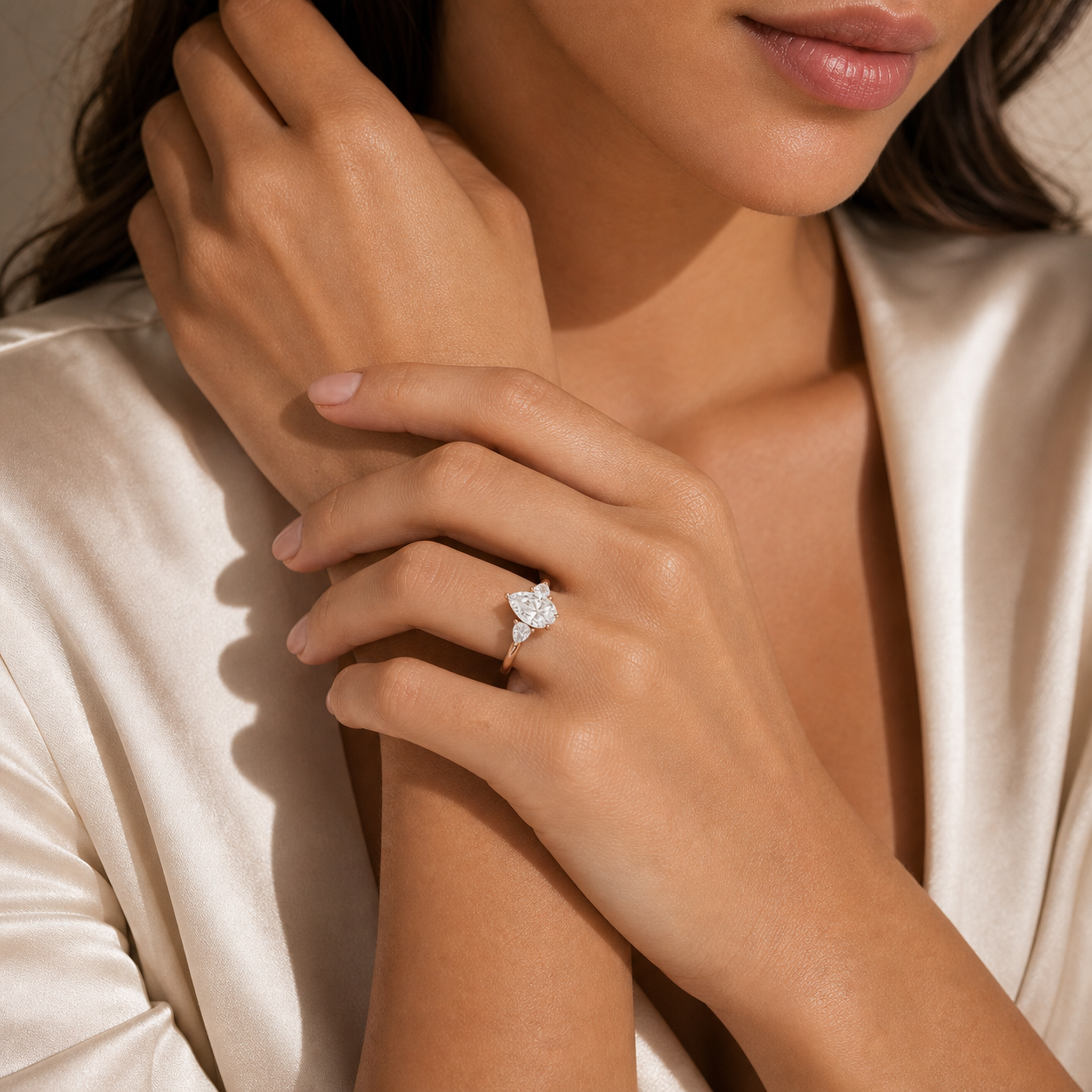


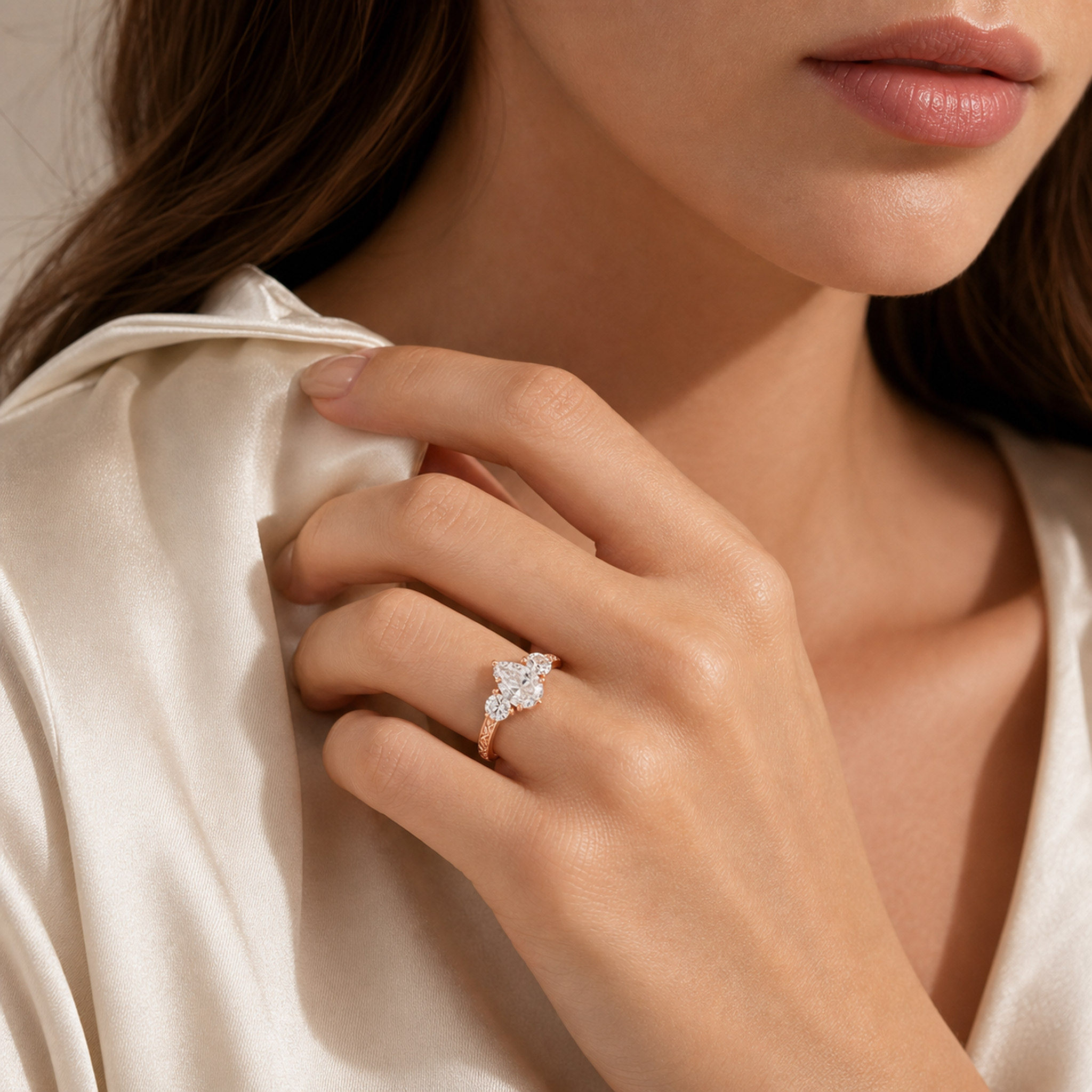
14K Rose Gold Pear Diamond Engagement Rings: Warmth Along a Directional Curve
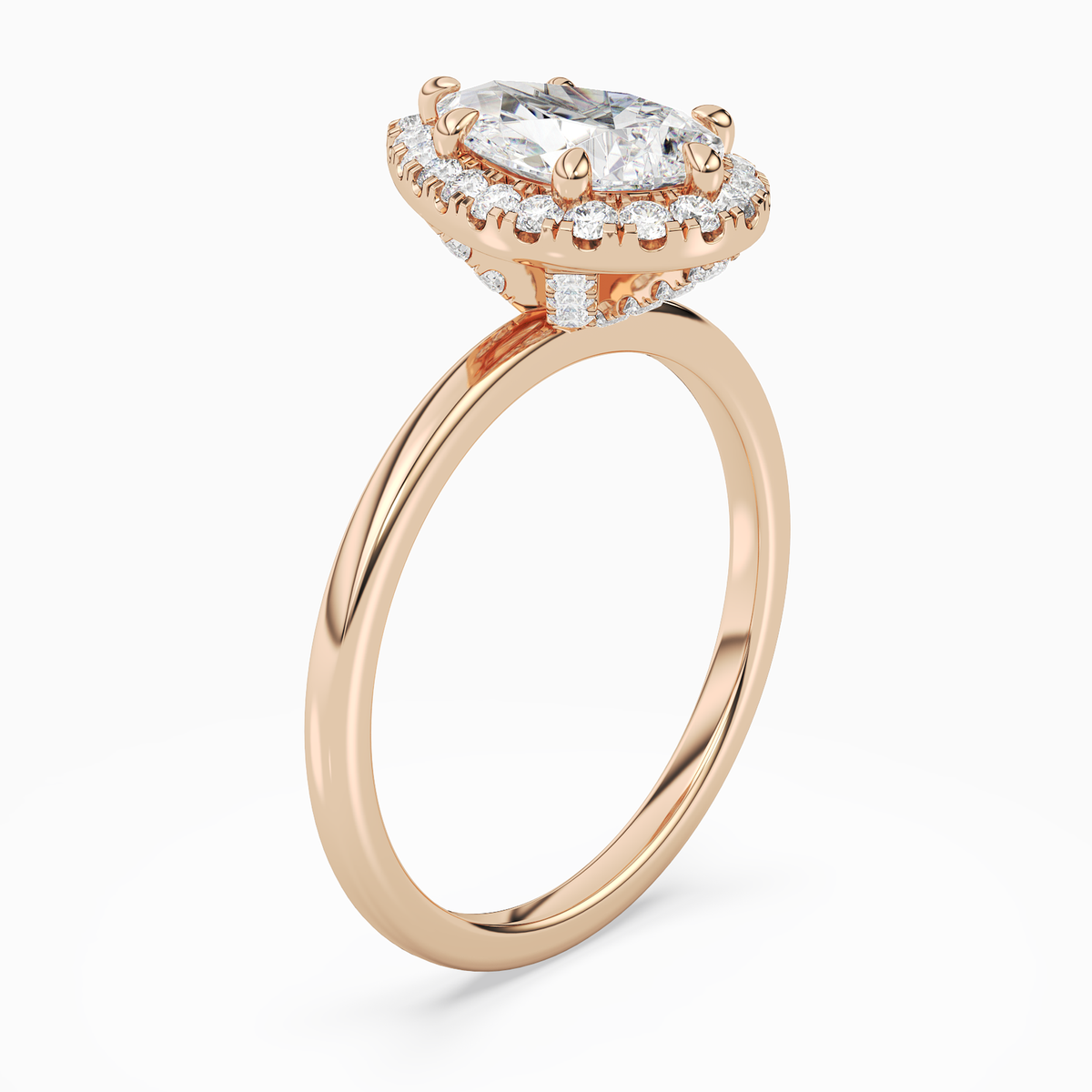
A pear center is read in one continuous movement: a rounded head, two curved wings, and a point that establishes direction. In 14K Rose Gold, the setting adds a blush-toned boundary at the prongs, basket, shoulders, or side-stone junctions without changing the center's underlying outline.
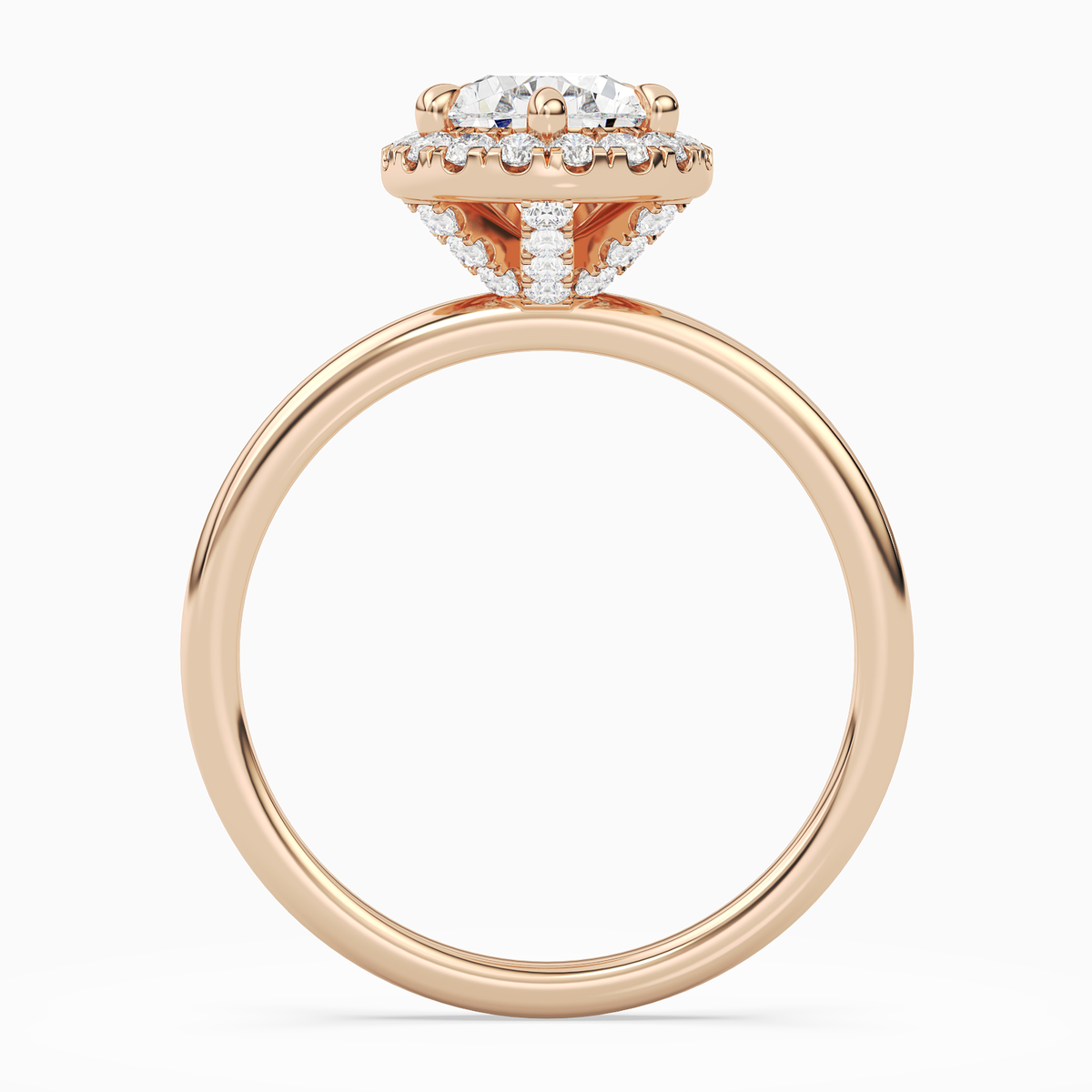
Burvonti's current 13-design collection contains five Solitaires, two Halos, three Side Stone, and three Three Stone compositions. Open and pavé baskets, hidden halos, cathedral and vine shoulders, crown details, and marquise or pear accents reveal rose color in distinctly different intervals.
Let Warmth Follow the Asymmetry
A 14K alloy contains approximately 58.3% gold. Its exact alloy formula, shade, finish, sensitivity profile, and care requirements remain product-specific. Photography, lighting, and the amount of exposed metal also influence how strongly the blush color appears.
Fine prongs place small warm points around the perimeter. A basket or halo creates a longer color boundary, while side stones carry the metal laterally beyond the center. Rose Gold can make the direction of the silhouette more visible; it does not make the diamond brighter, larger, or inherently more romantic.
Judge the Curve Before the Color
Length-to-width ratio describes one relationship, not the entire pear. The fullness of the head, shoulders, wings, point, symmetry, and facet pattern determine whether an individual outline feels balanced. There is no single ratio that is universally most refined.
A bow-tie can appear as contrast across the center and varies by diamond, viewing angle, and lighting. Rose Gold changes the surrounding color field but cannot remove a bow-tie, improve cut, or replace direct review of images, video, dimensions, and the grading report.
Thirteen Settings Use the Point Differently
A Solitaire gives the asymmetric outline the most negative space. Halo designs create a second perimeter, while Side Stone and Three Stone settings extend the composition across the finger. Marquise accents echo direction; pear side stones repeat it at a smaller scale; crown and vine details introduce a more articulated transition.
Point protection depends on the selected construction, workmanship, condition, and wear—not on rose color or prong count alone. Review the actual tip support, basket, profile, and contact points of the chosen design.
Resolve the Ring at Hand Scale
Carat measures weight, not face-up area. Length, width, depth, outline, and weight distribution explain visible presence more accurately. Wedding-band spacing likewise depends on center height, basket, shoulders, side stones, and contact points; matching metal does not guarantee a flush fit.
Burvonti pairs responsibly sourced, independently graded lab-grown diamonds with settings calibrated through proportion and human judgment. Custom possibilities may refine the center, orientation, tip support, basket, band, accents, metal, or engraving where feasible. The aim is a warm boundary that preserves the pear's individual direction.
Frequently Asked Questions
How is this page different from the main Pear Collection?
The parent owns broad education on pear outline, ratio, bow-tie, orientation, dimensions, and point protection. This page focuses on how 14K Rose Gold frames that directional shape.
How much gold is in 14K Rose Gold?
Approximately 58.3%. Other alloying metals influence color and working behavior.
Are all 14K rose gold rings the same shade?
No. Alloy formula, finish, lighting, photography, and visible metal area can change the blush appearance.
Does Rose Gold make a pear diamond brighter?
No. It changes the surrounding color field, not the diamond's facet relationships or light performance.
Does Rose Gold change the bow-tie?
No. Bow-tie appearance belongs to the individual diamond and viewing conditions, though setting contrast can affect perception.
Which setting styles appear in this collection?
The current 13-design collection includes five Solitaire, two Halo, three Side Stone, and three Three Stone settings.
Is there one ideal pear ratio?
No. Ratio should be judged with head fullness, shoulders, wings, point, symmetry, and the selected setting.
Should a pear diamond point toward or away from the hand?
Orientation is a personal and design-specific choice. The ring construction must support the selected direction.
Does the pear point require special protection?
The point is a concentrated area. Review product-specific tip support, workmanship, condition, and wear guidance.
Can Rose Gold make a pear look larger?
Contrast may influence perception, but metal does not change the diamond's dimensions or carat weight.
Can Rose Gold cause sensitivity?
Sensitivity depends on the complete alloy and wearer. Karat and color alone cannot establish a universal outcome.
Will a straight wedding band sit flush?
Not automatically. Basket, shoulders, side stones, center height, and contact points determine spacing.
Can Burvonti personalize a Rose Gold Pear ring?
Custom possibilities may include center specifications, orientation, tip support, basket, band, accents, metal, or engraving, subject to feasibility.