
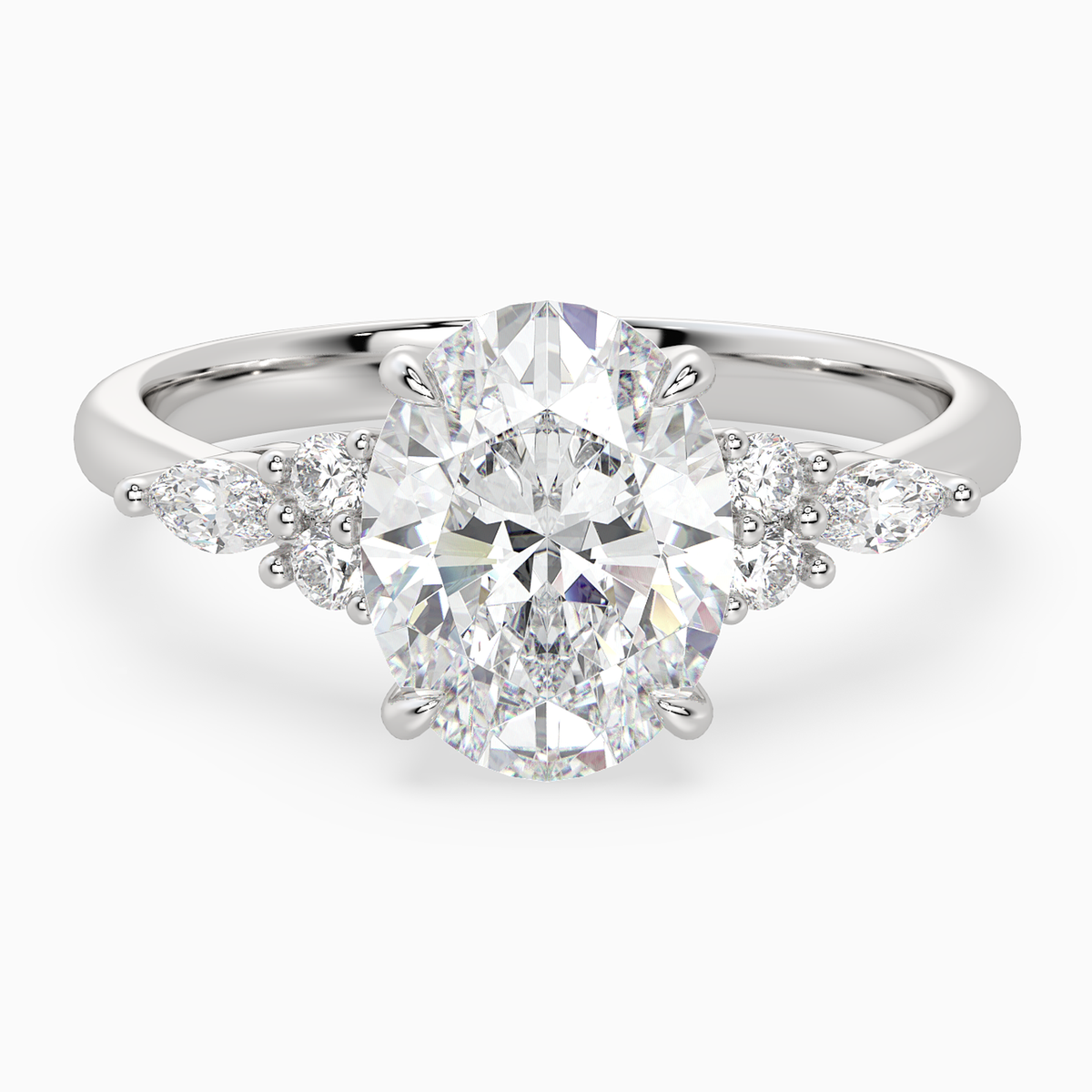


Lab Grown Diamond Anniversary Rings in 14K Yellow Gold
Yellow gold can continue a set or interrupt it deliberately. Compare 69 rings by line, coverage, edge, width, and intended placement.


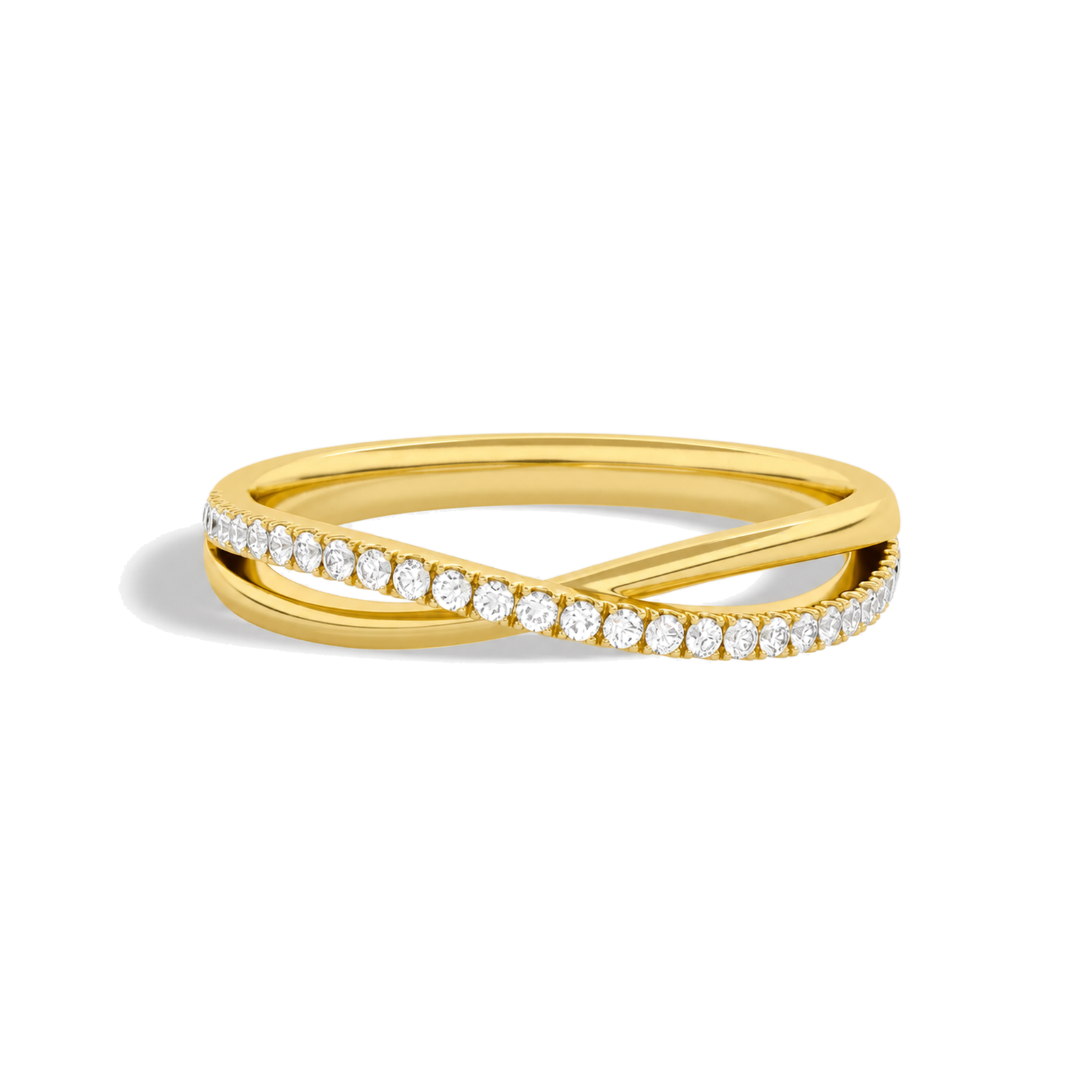
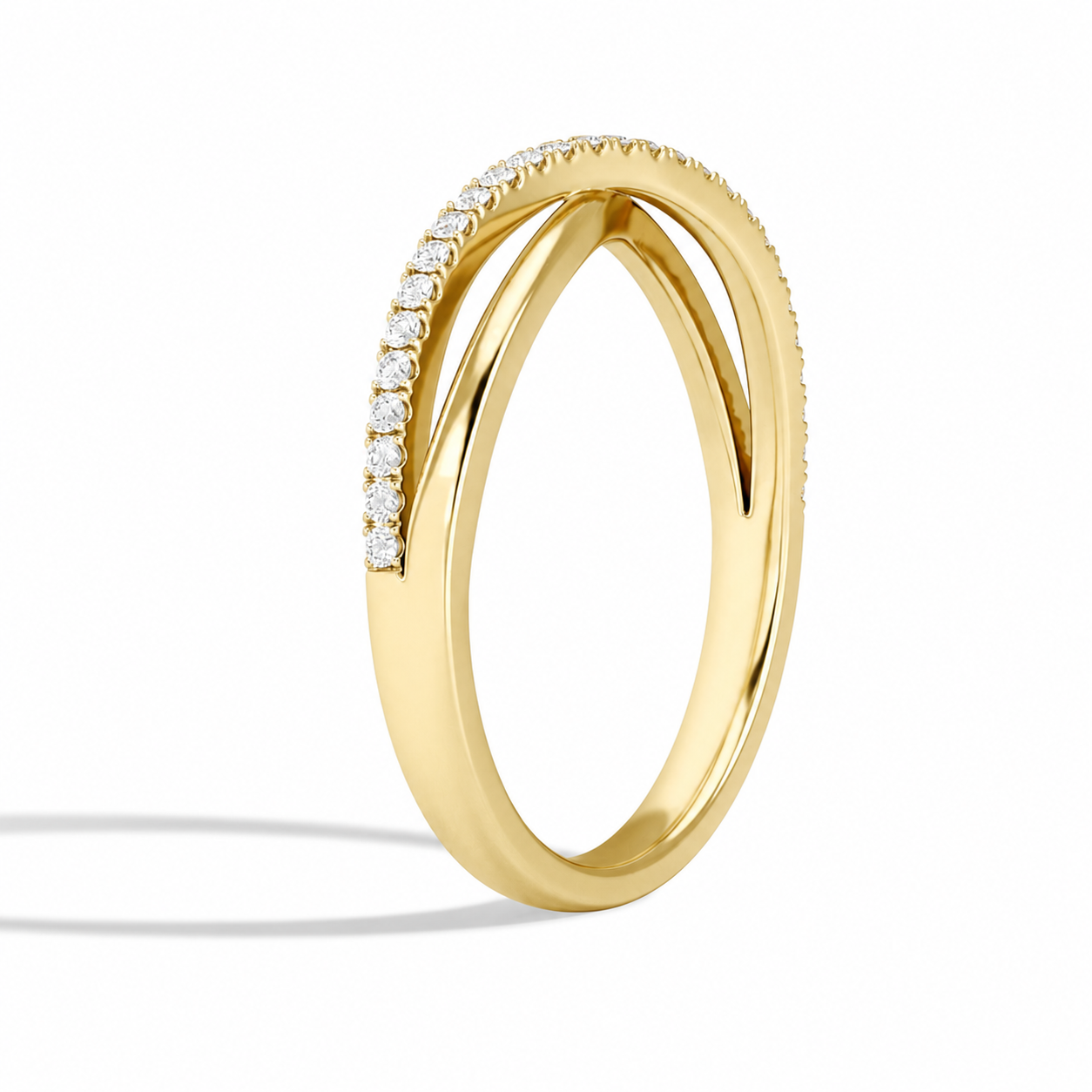
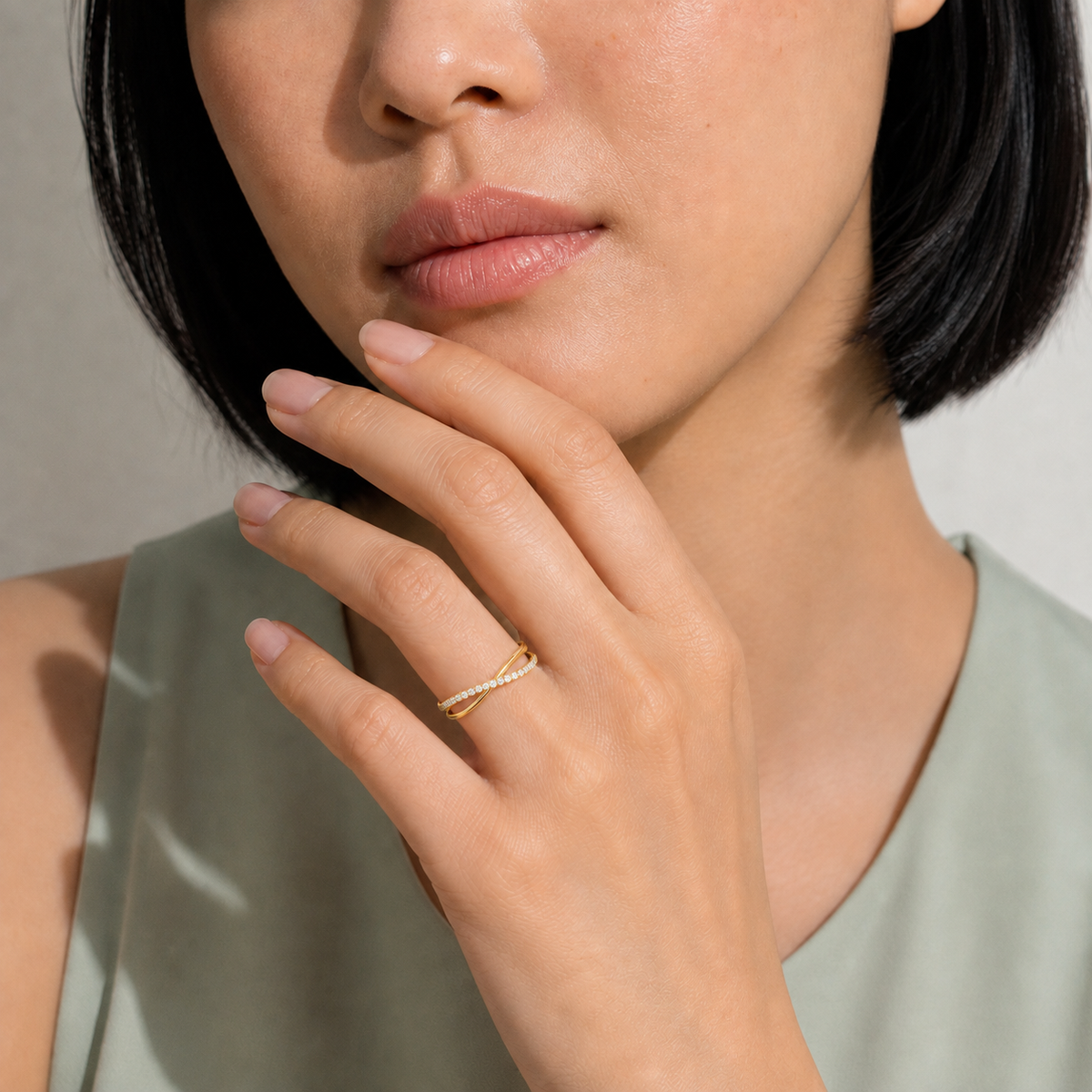
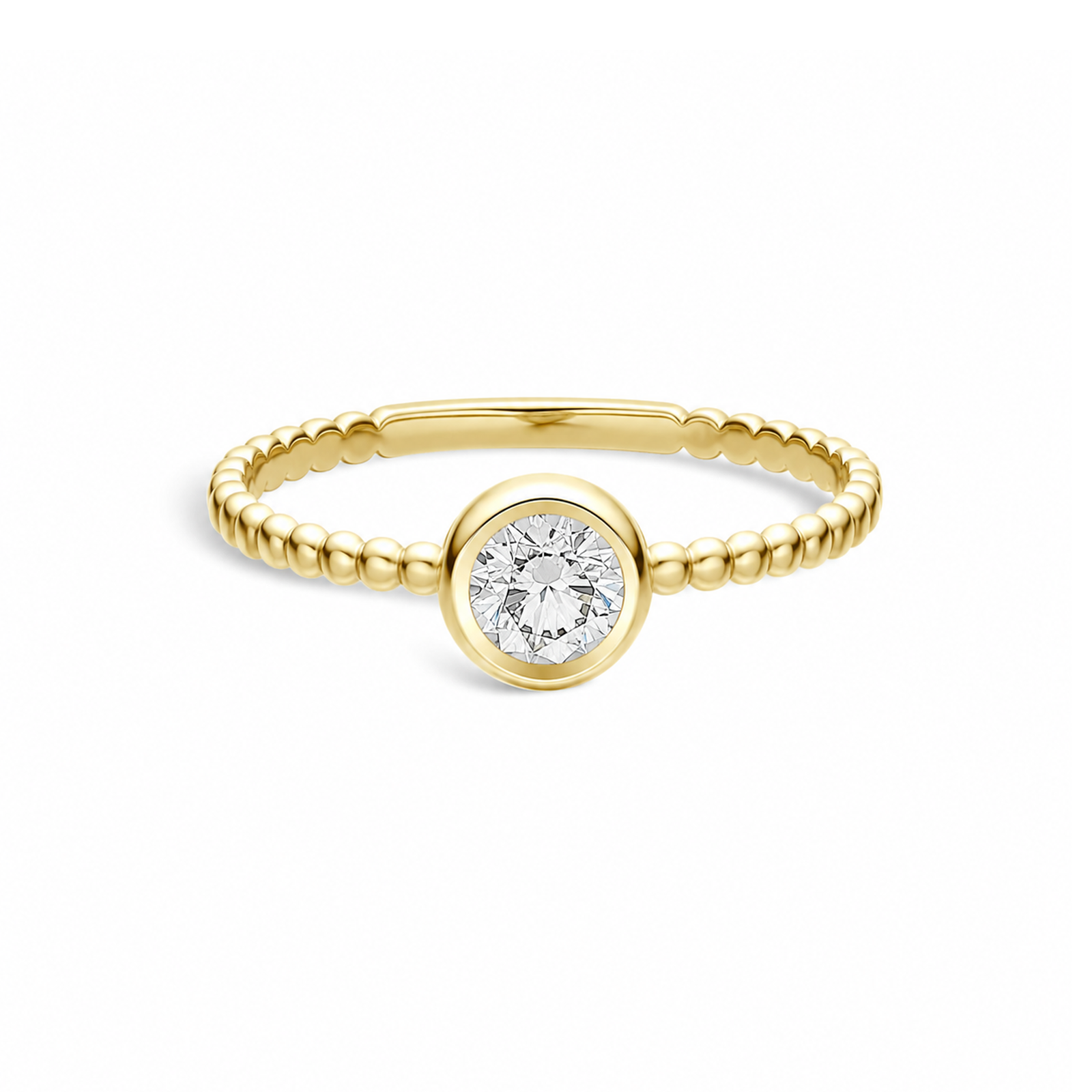


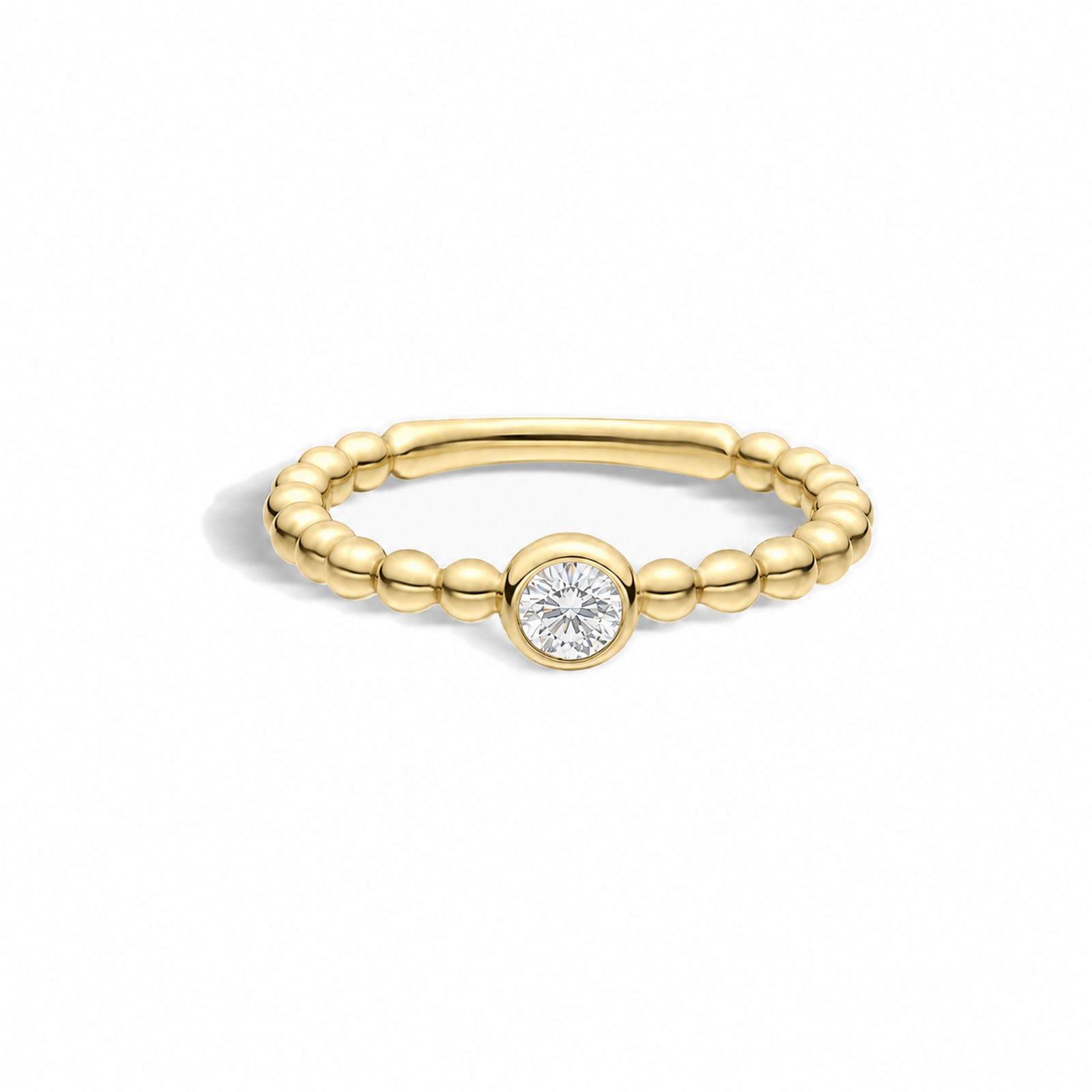


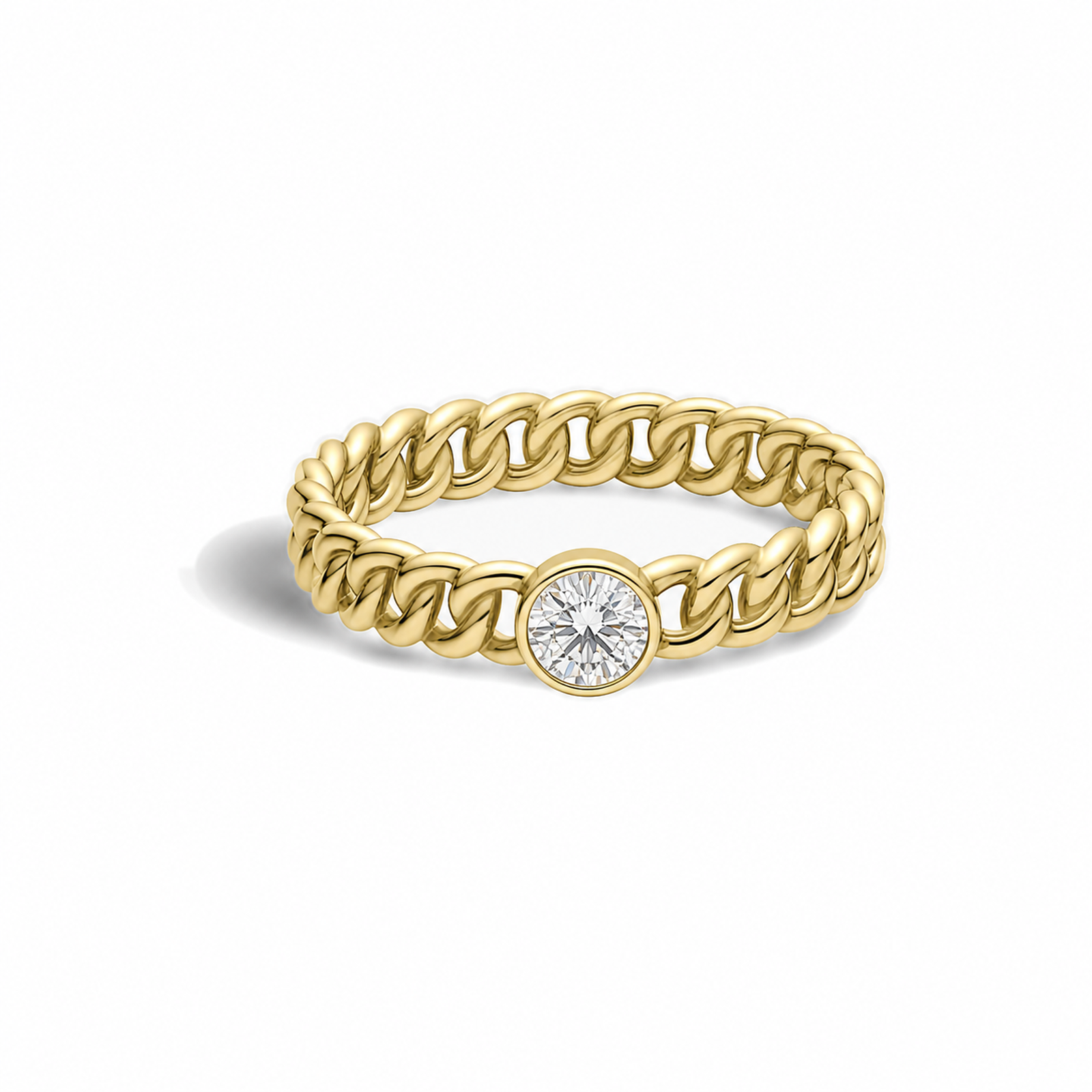
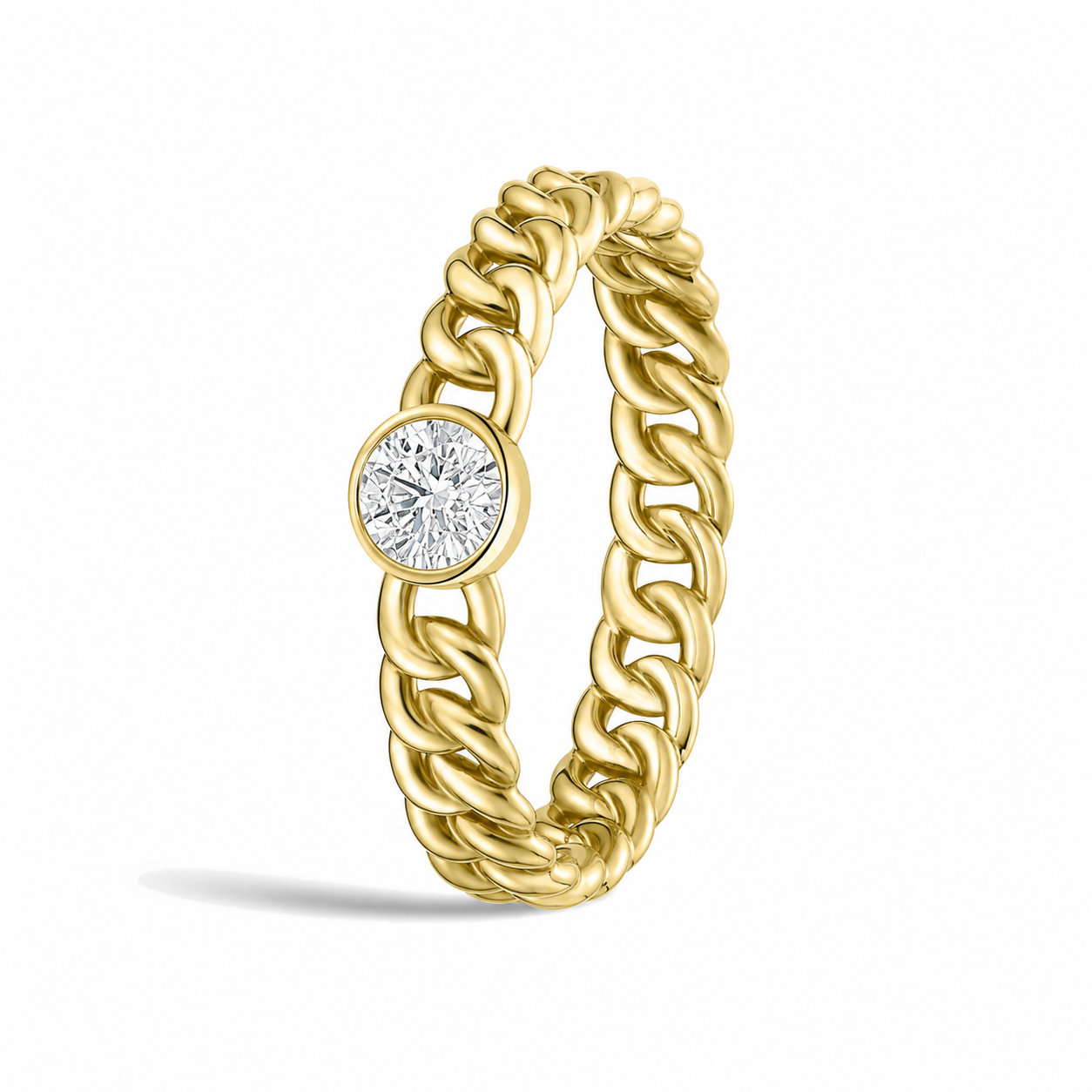


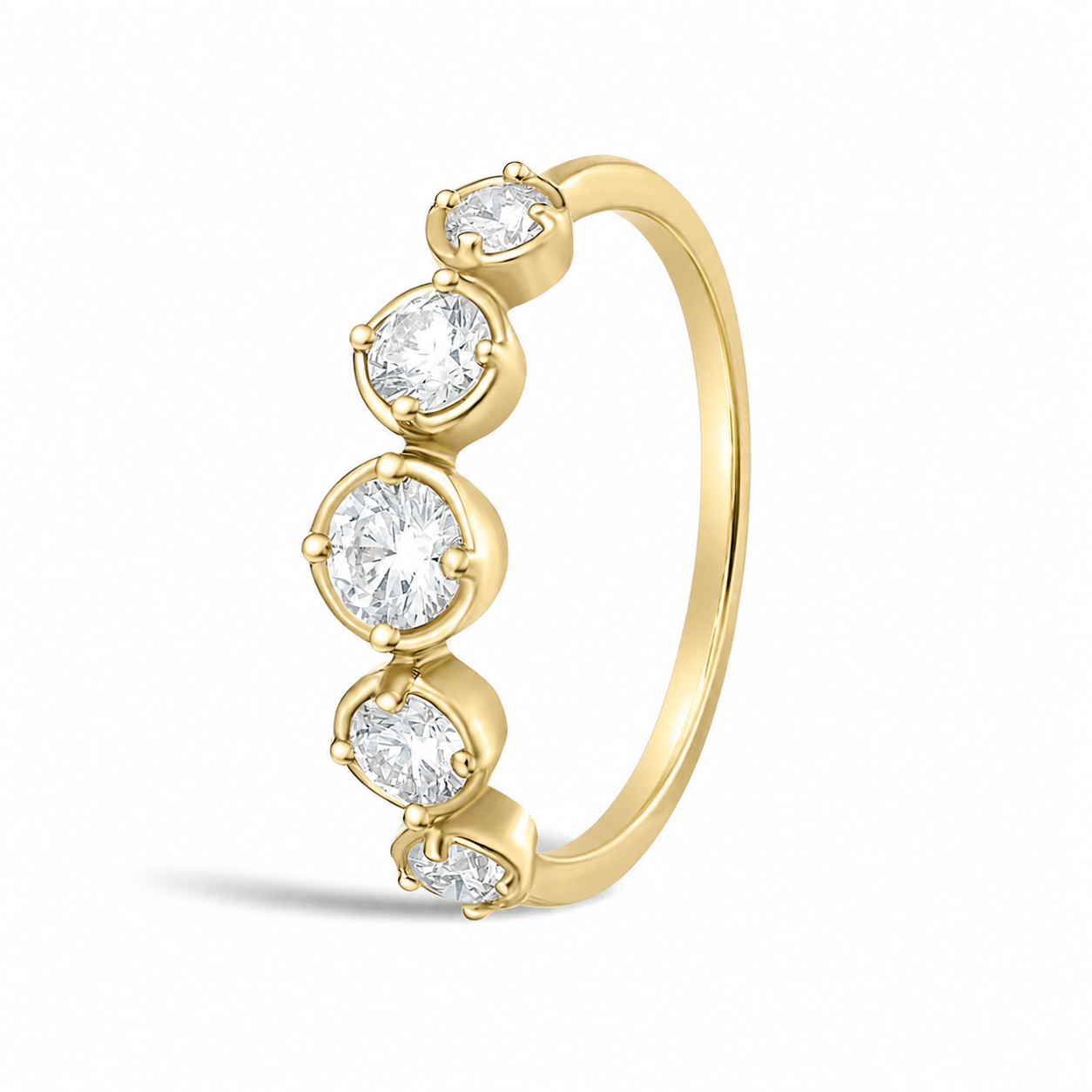

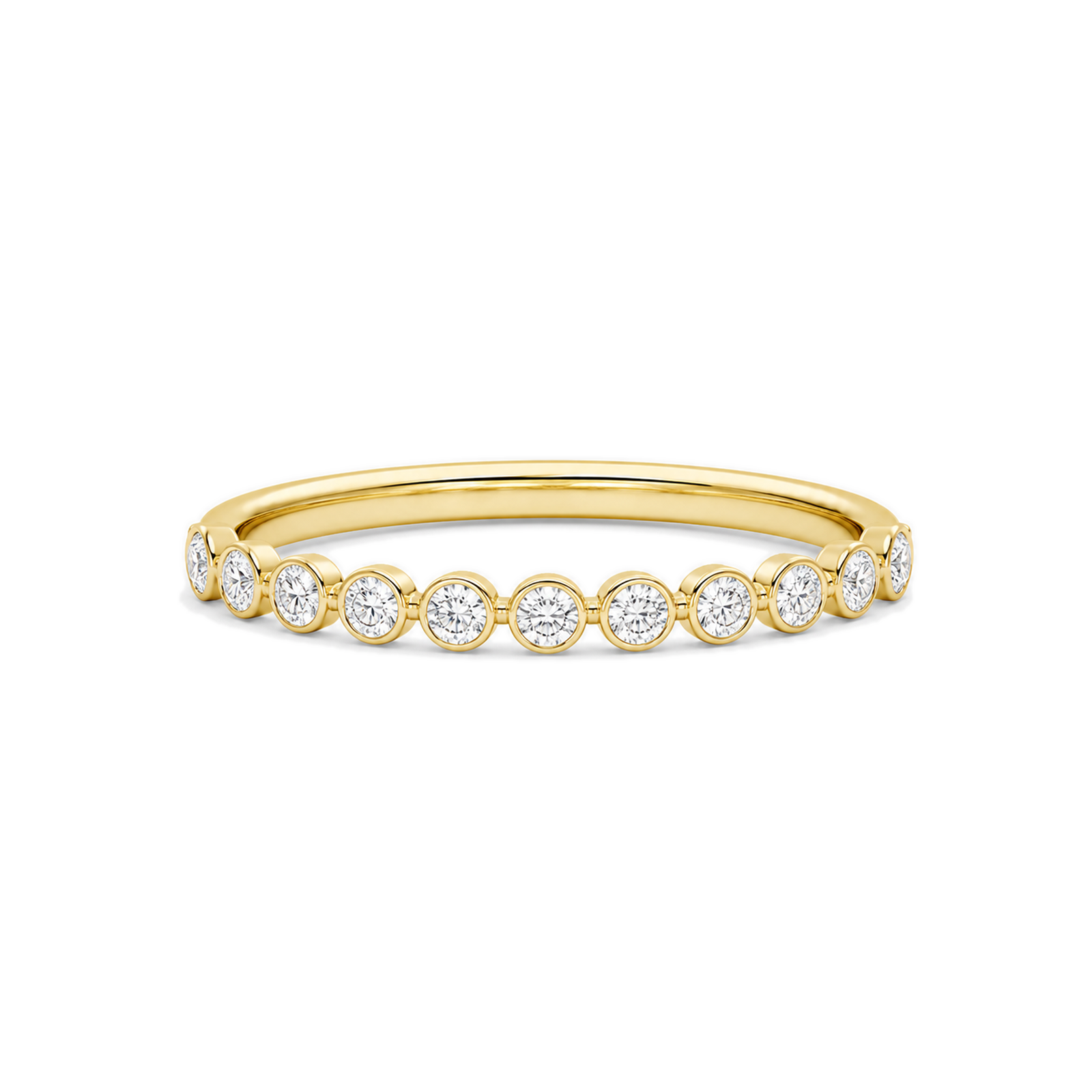


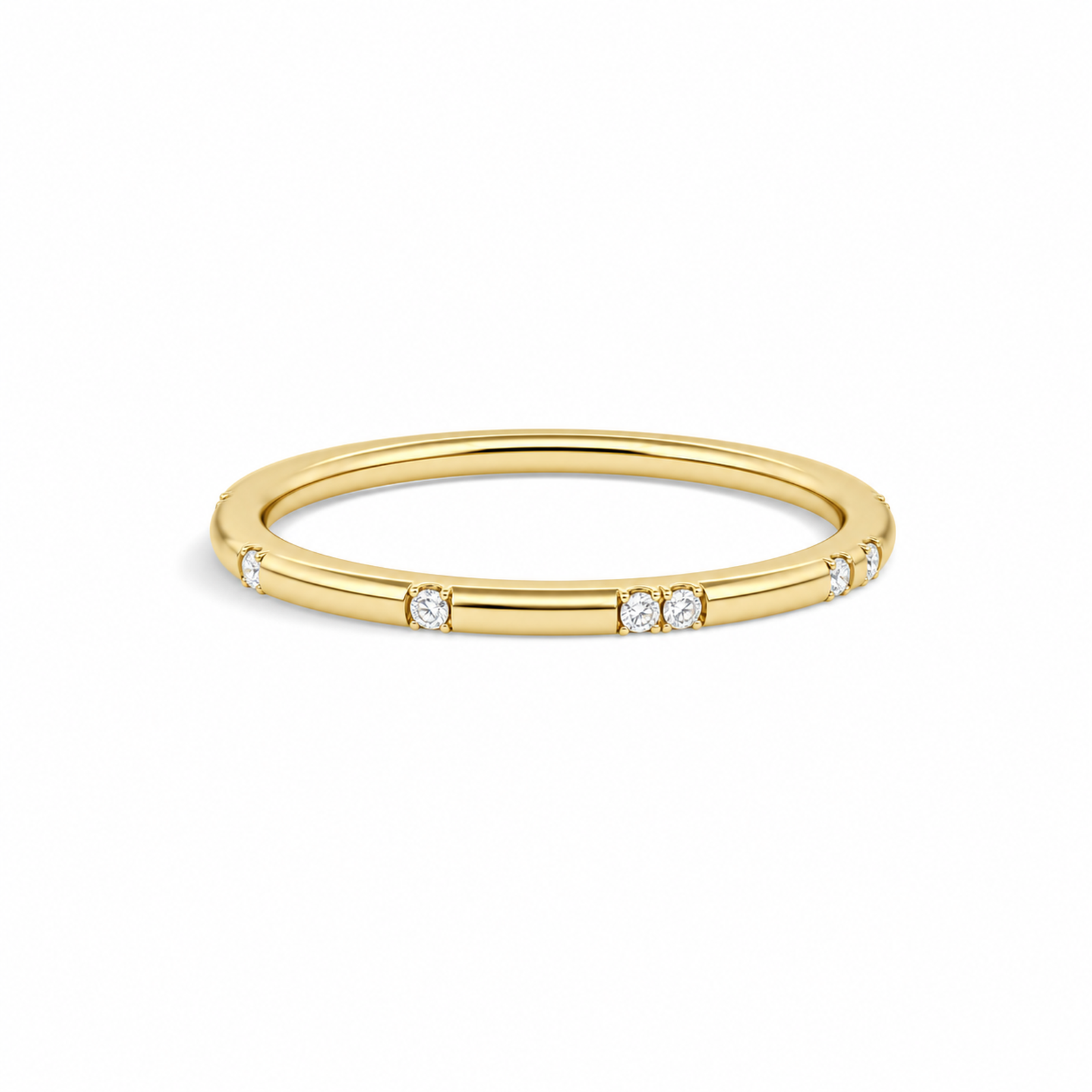


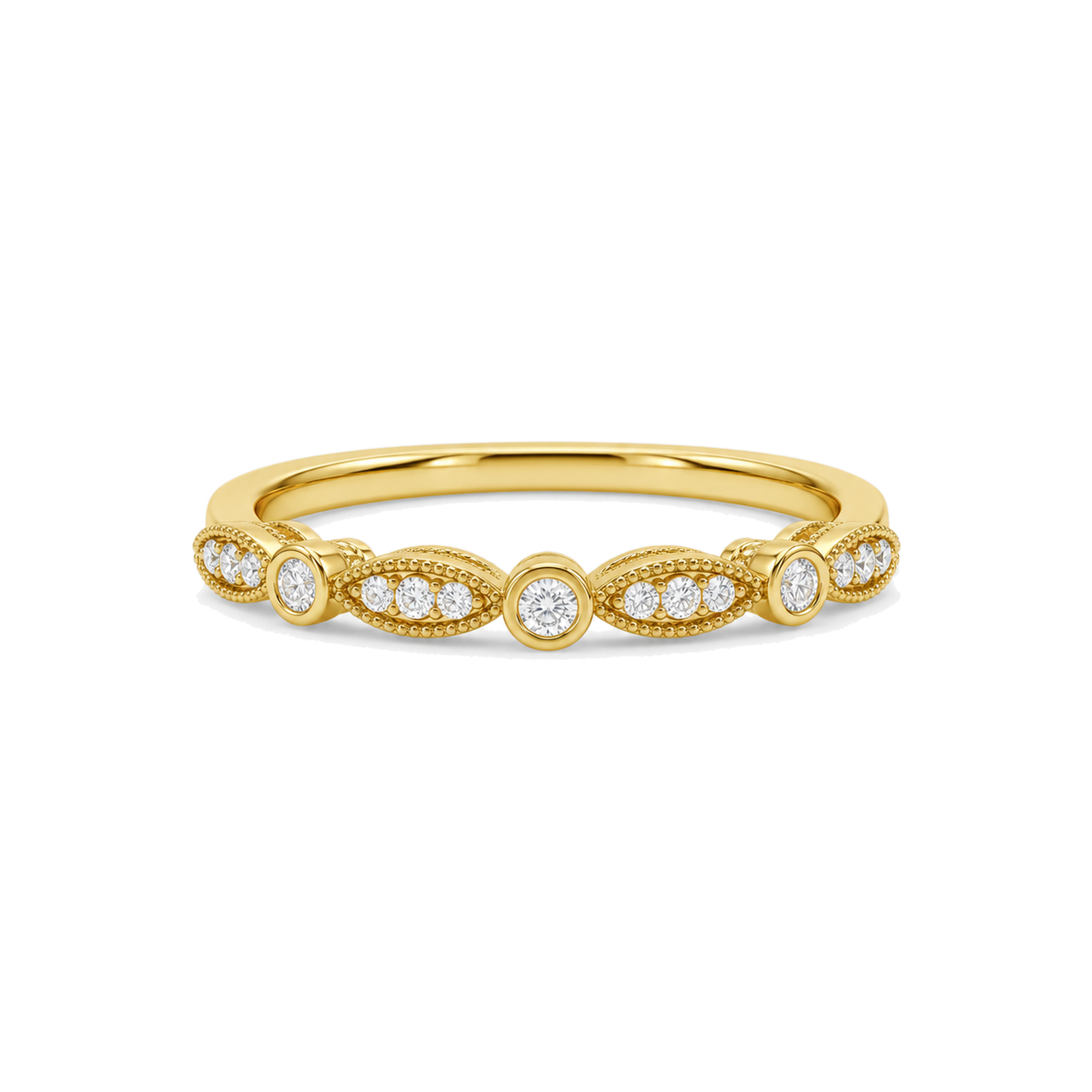


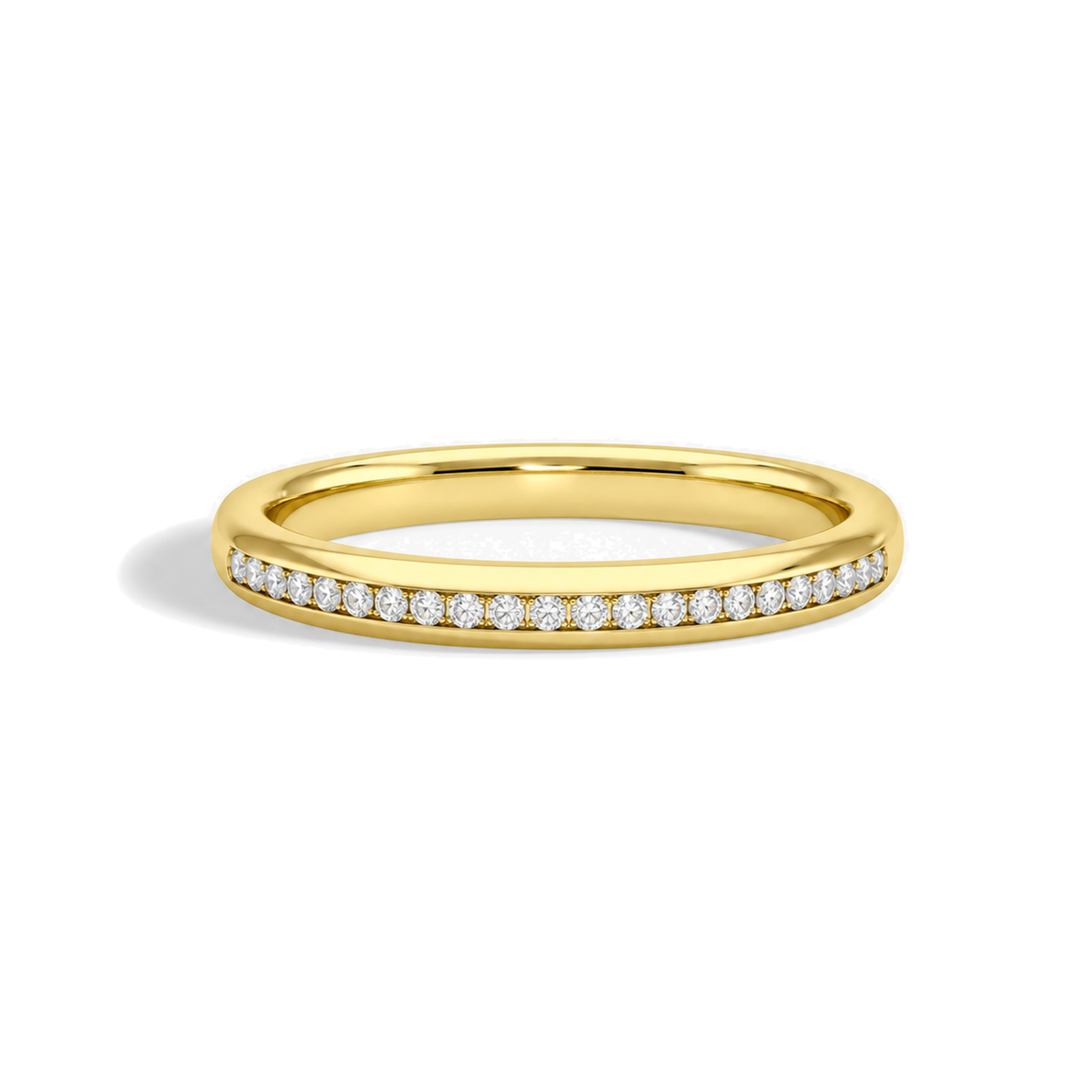
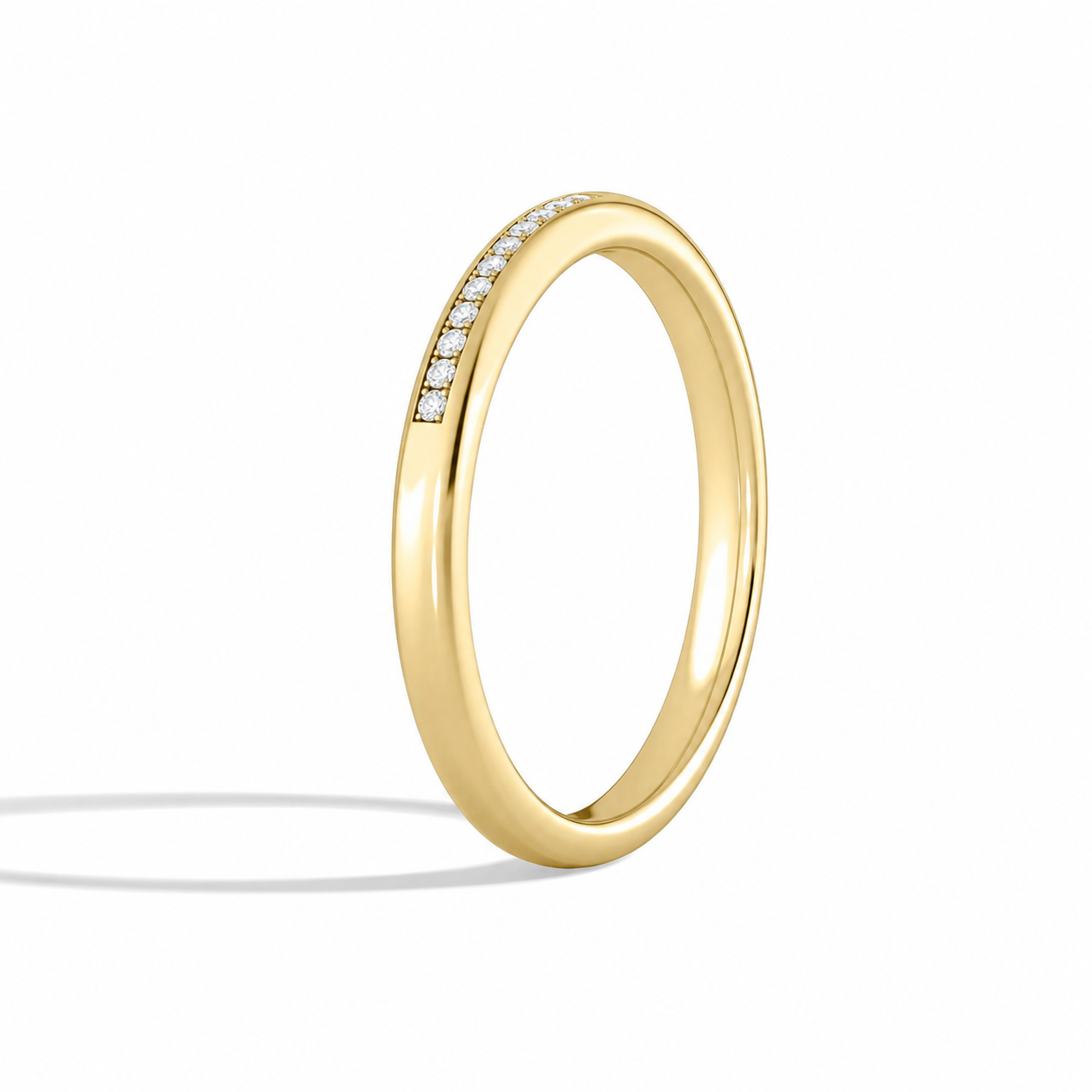

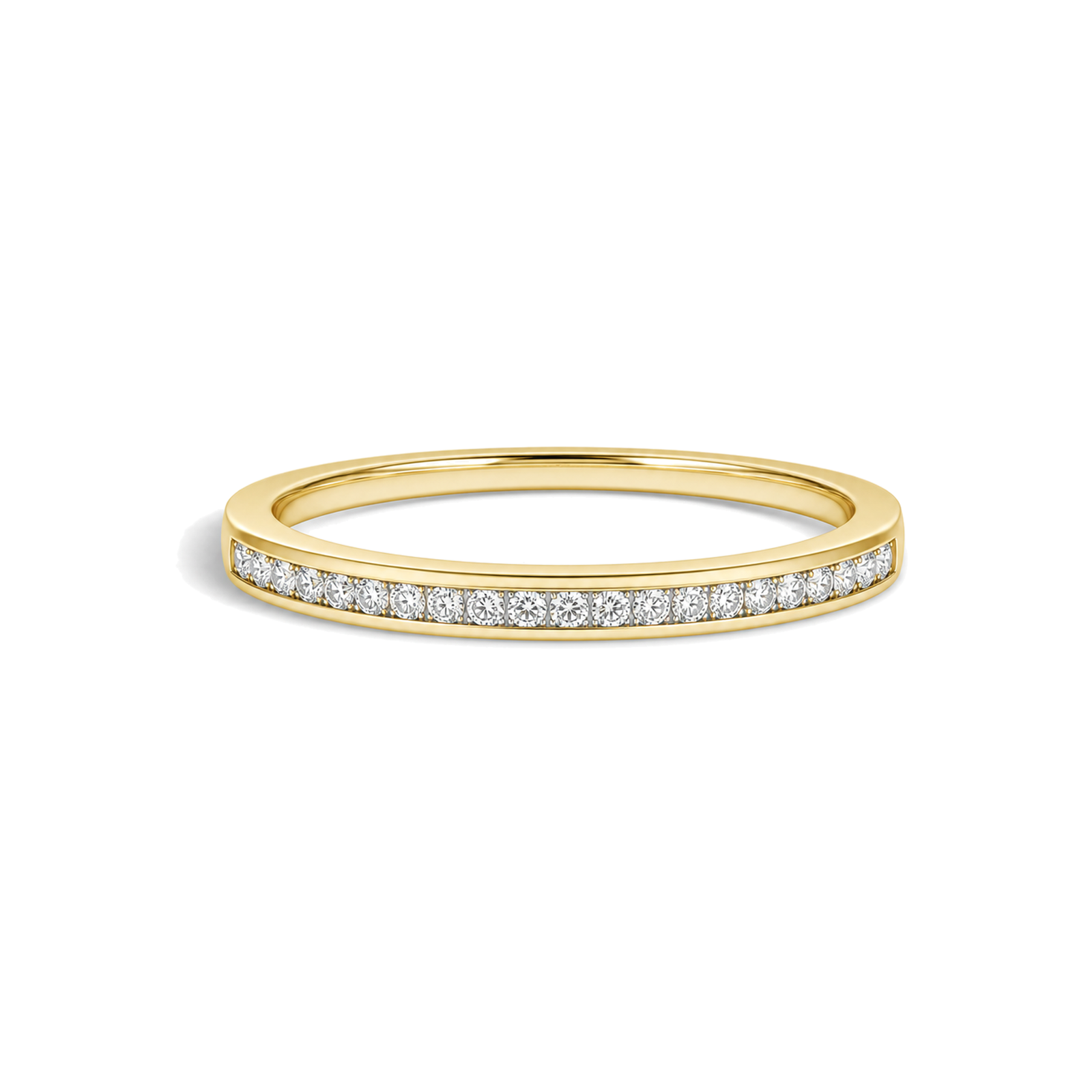
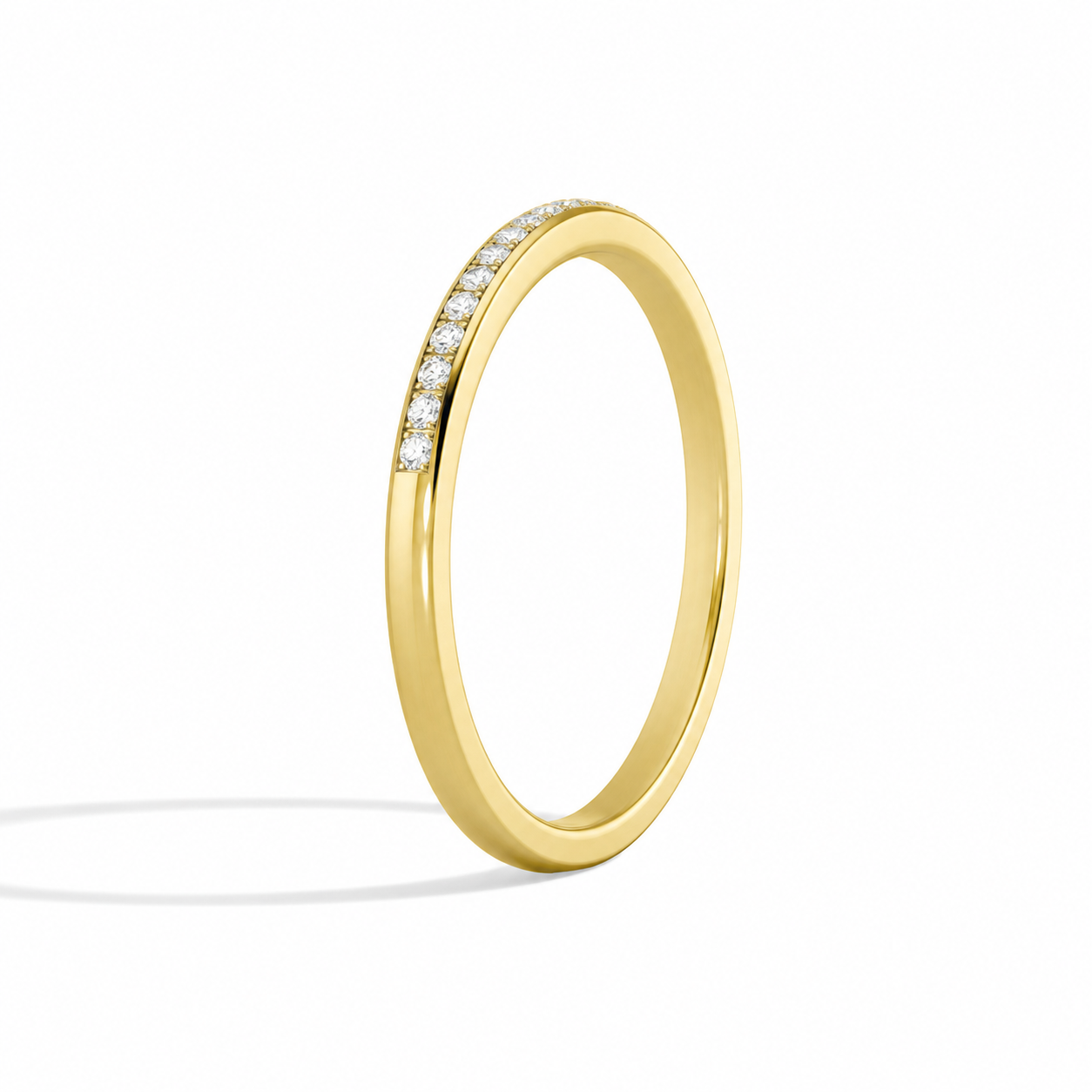
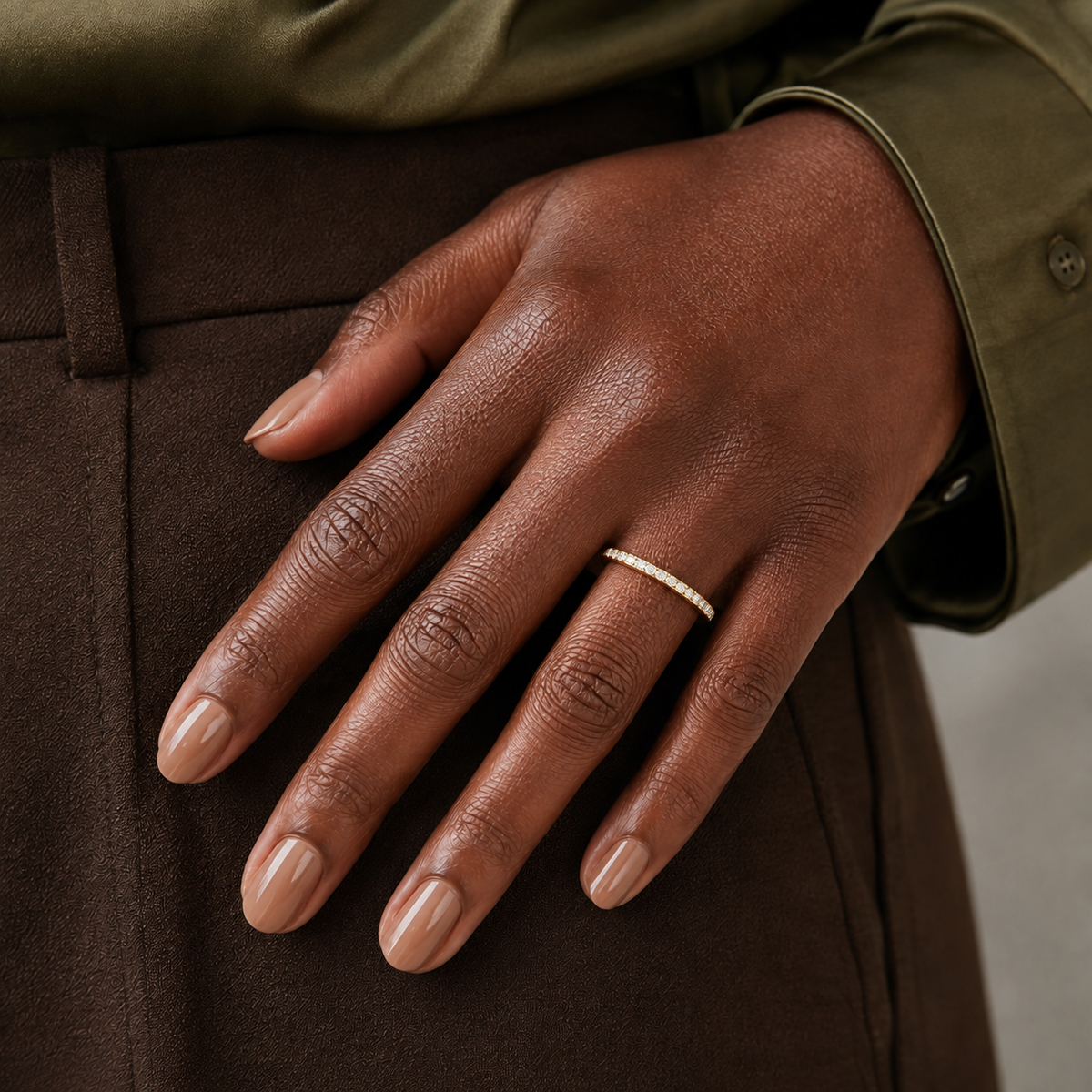

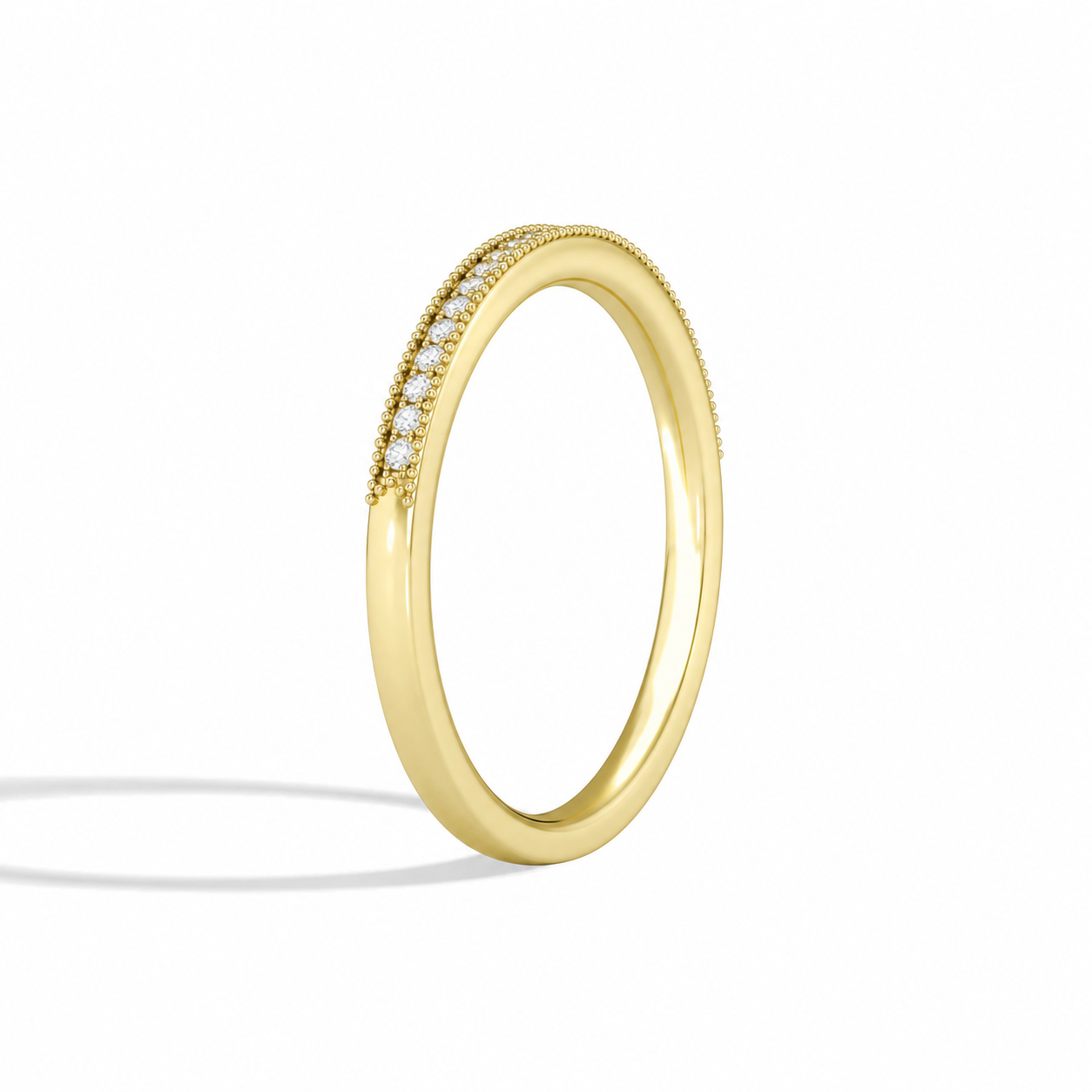

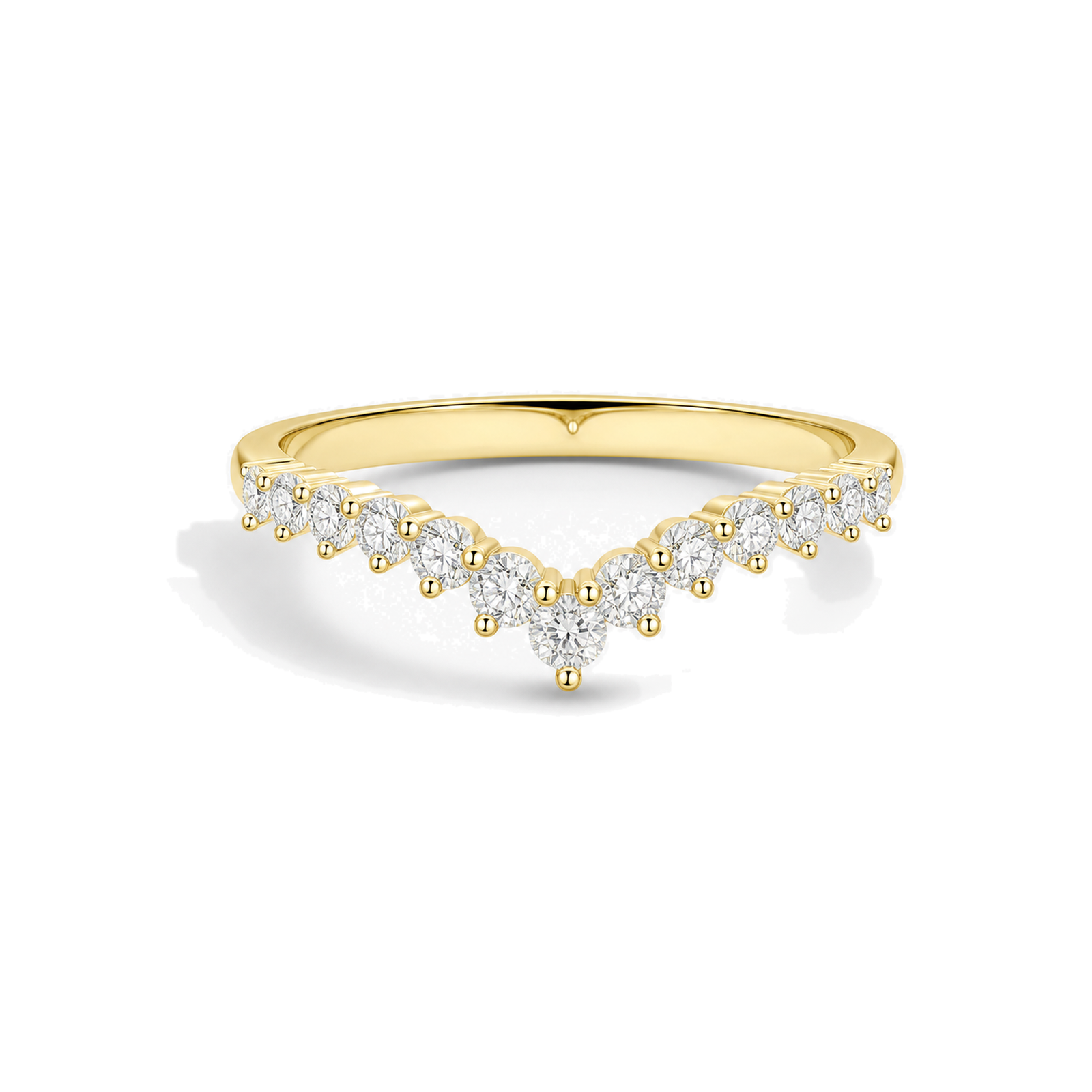
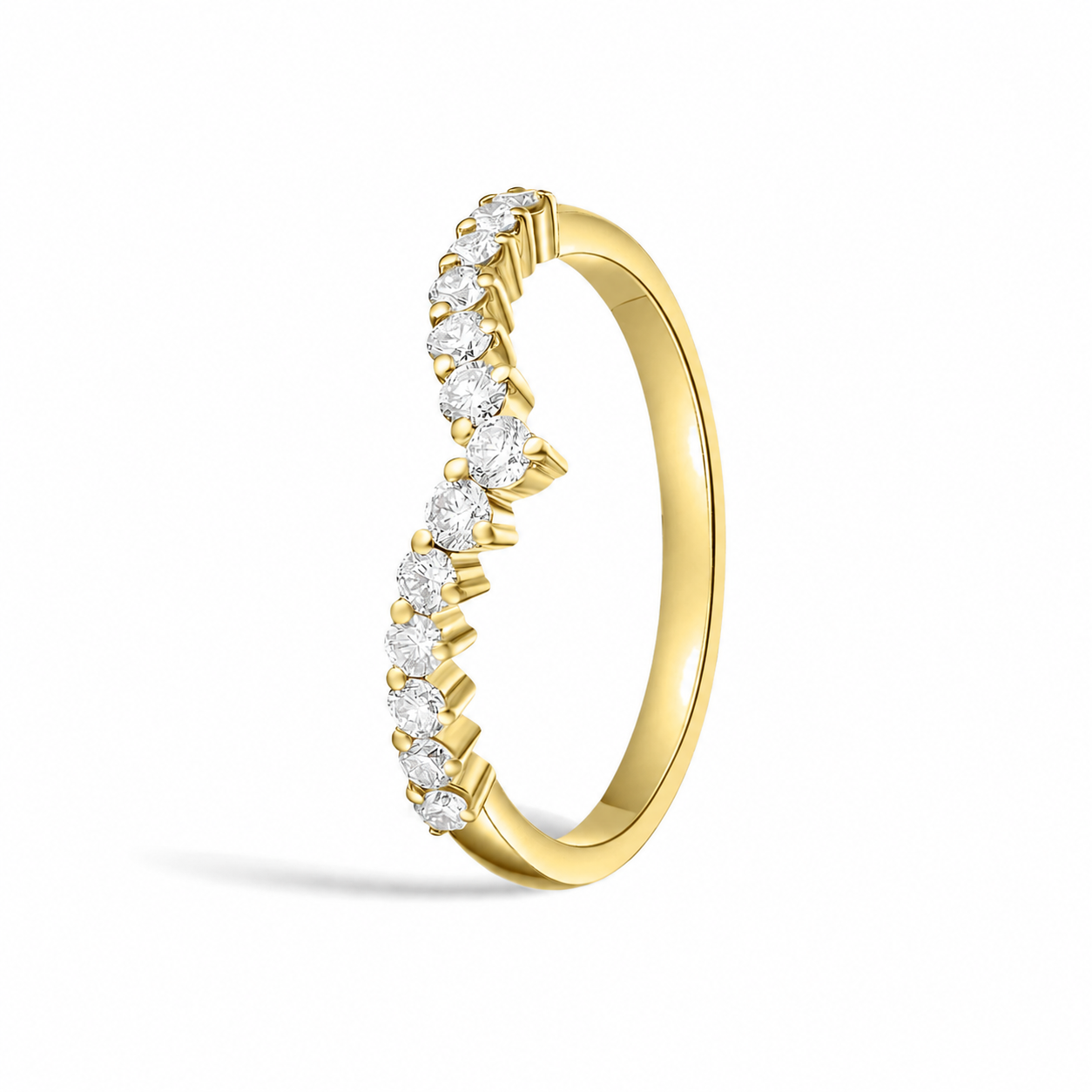

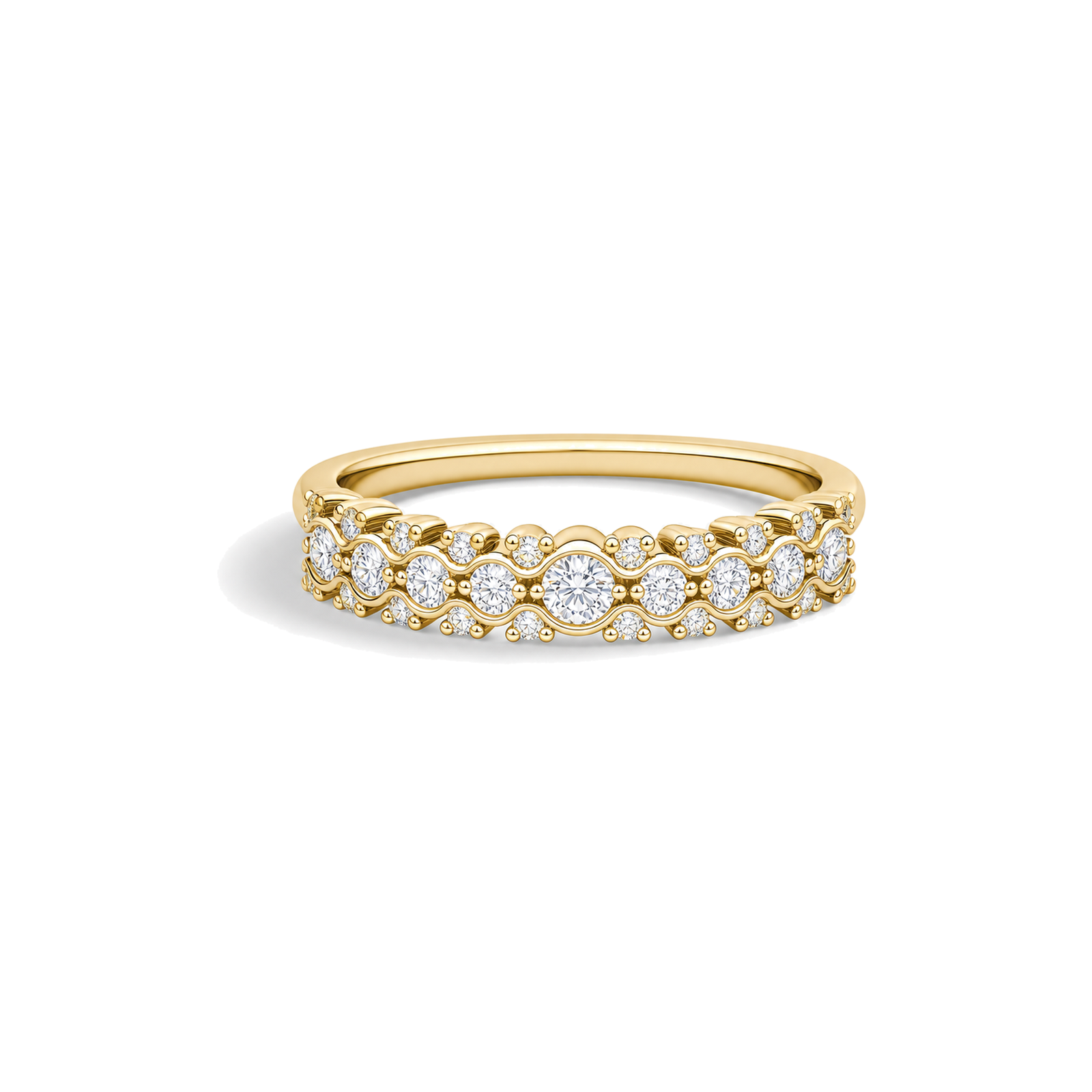


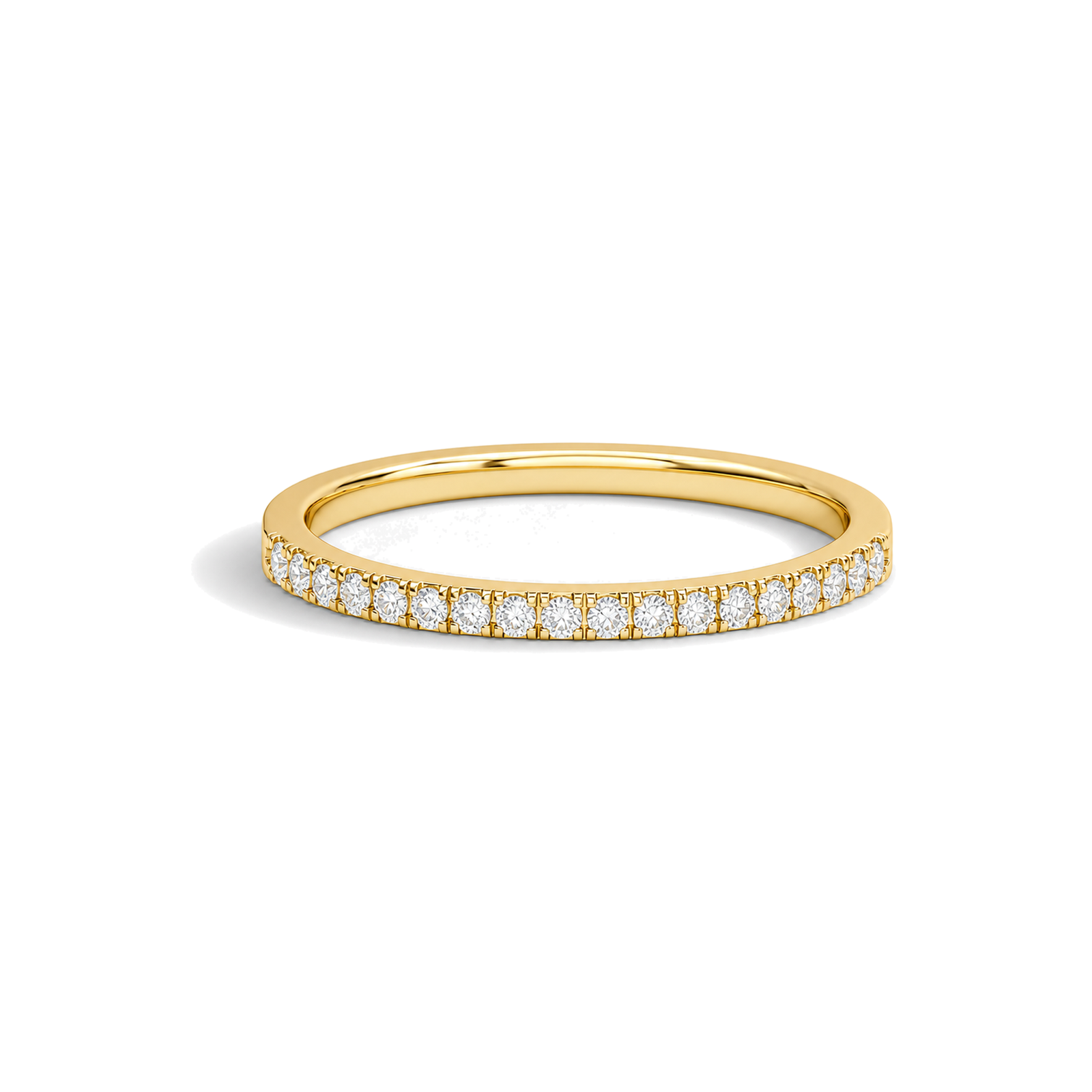


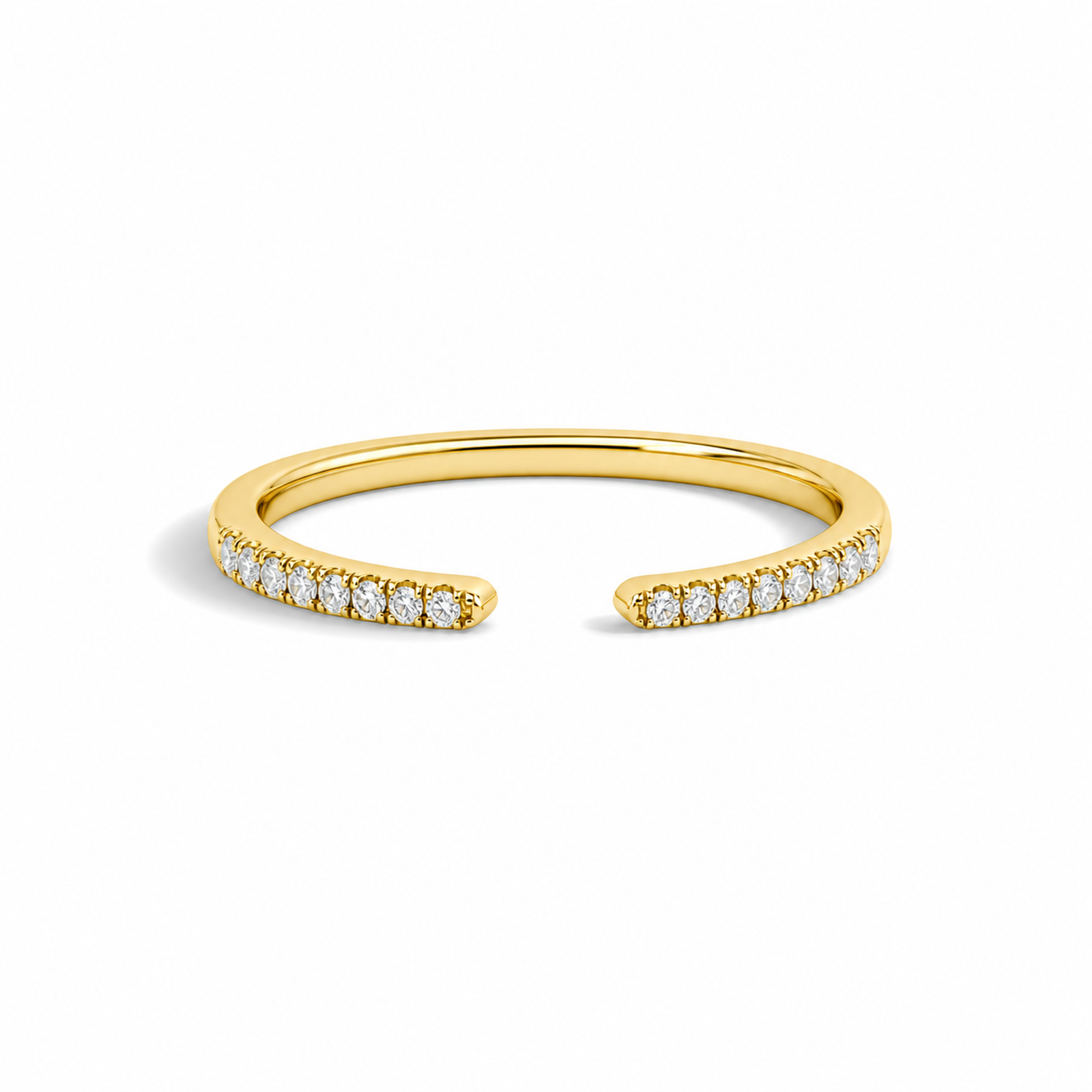


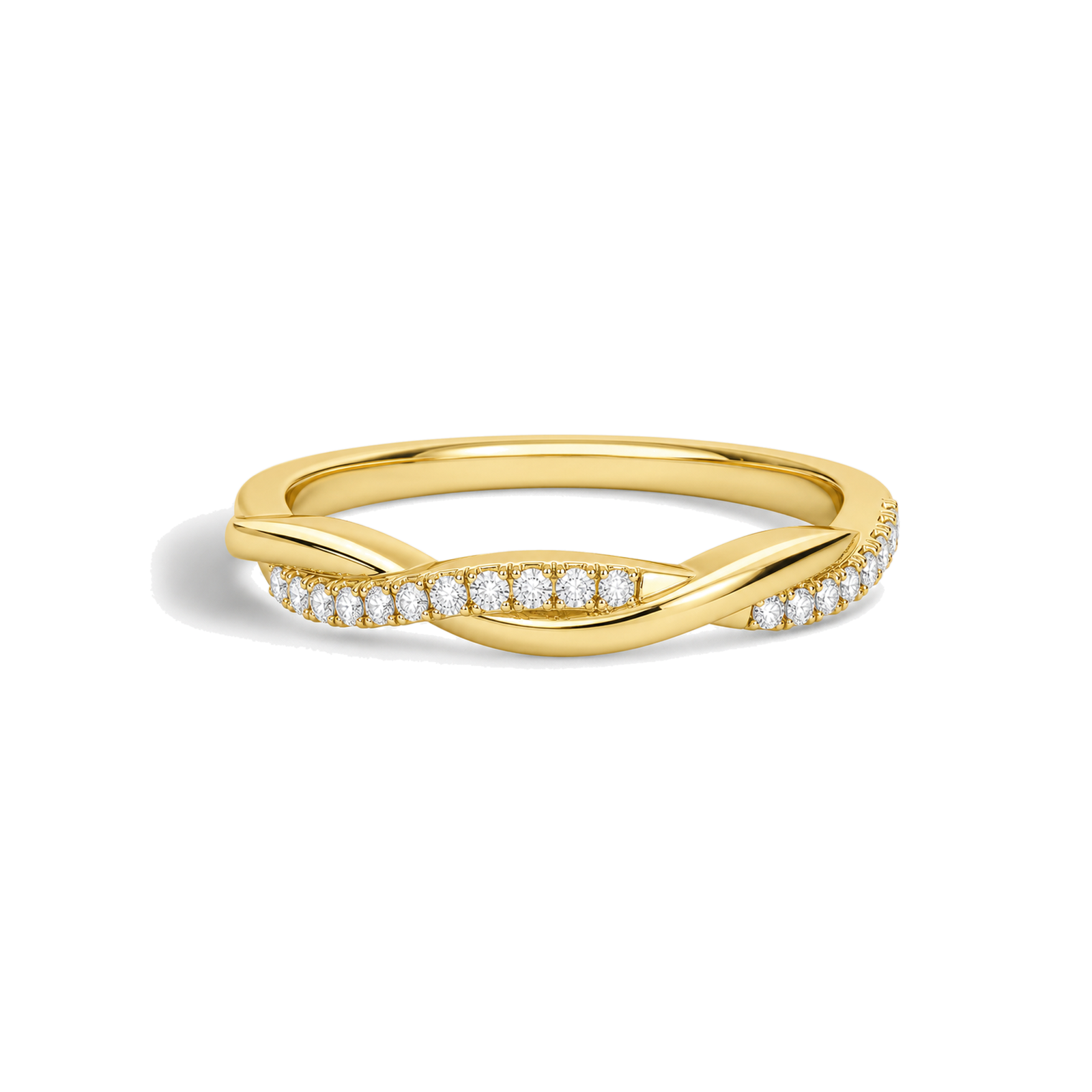
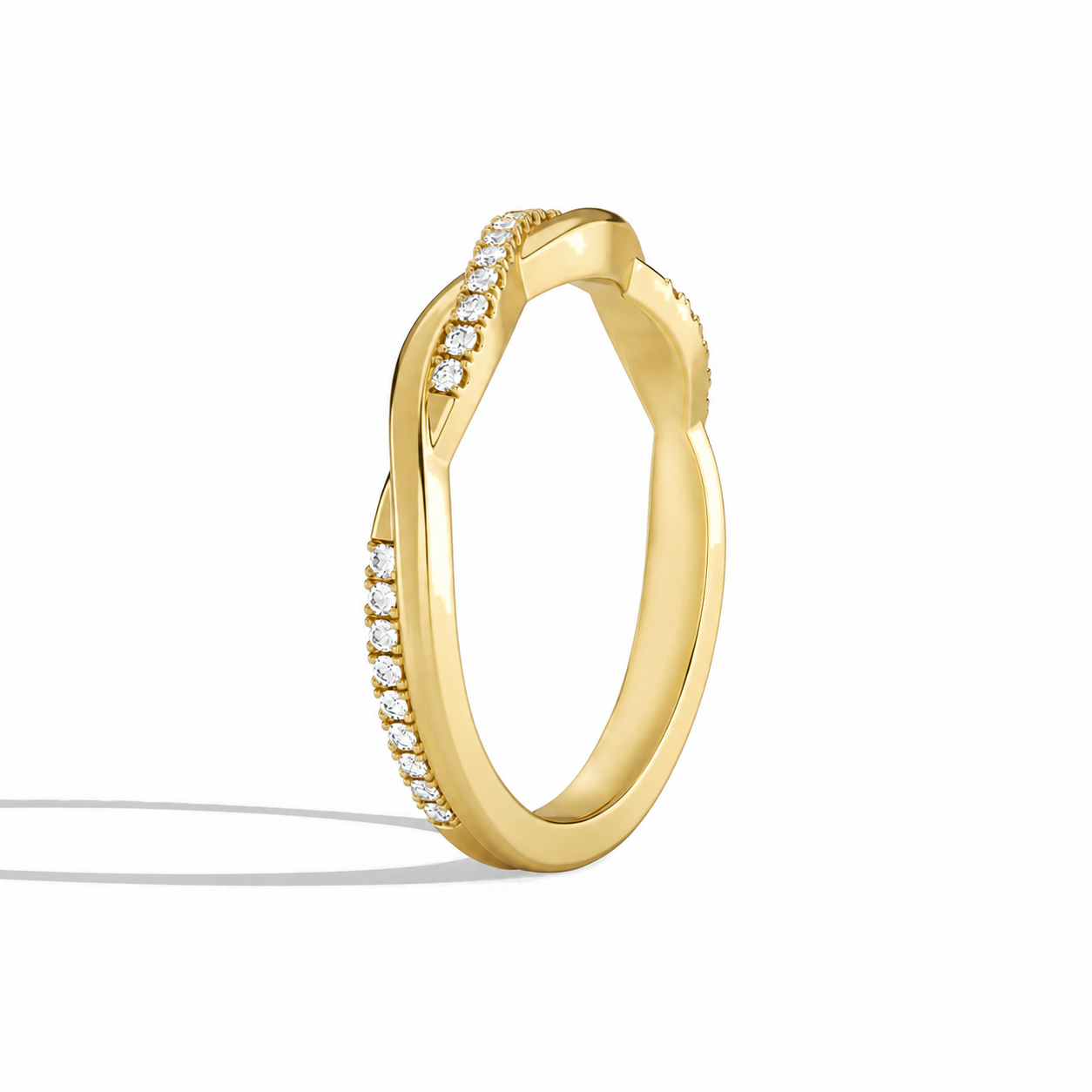

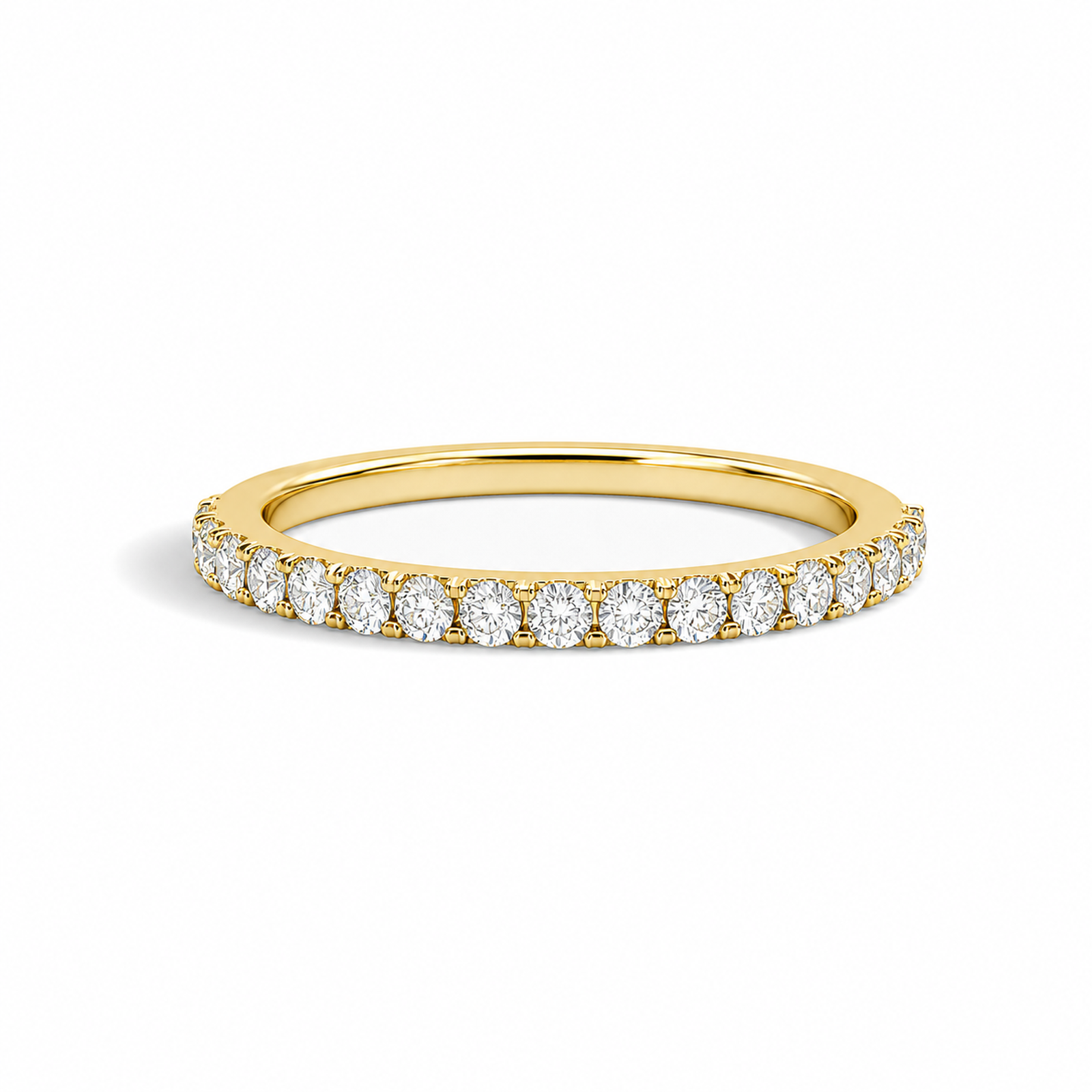
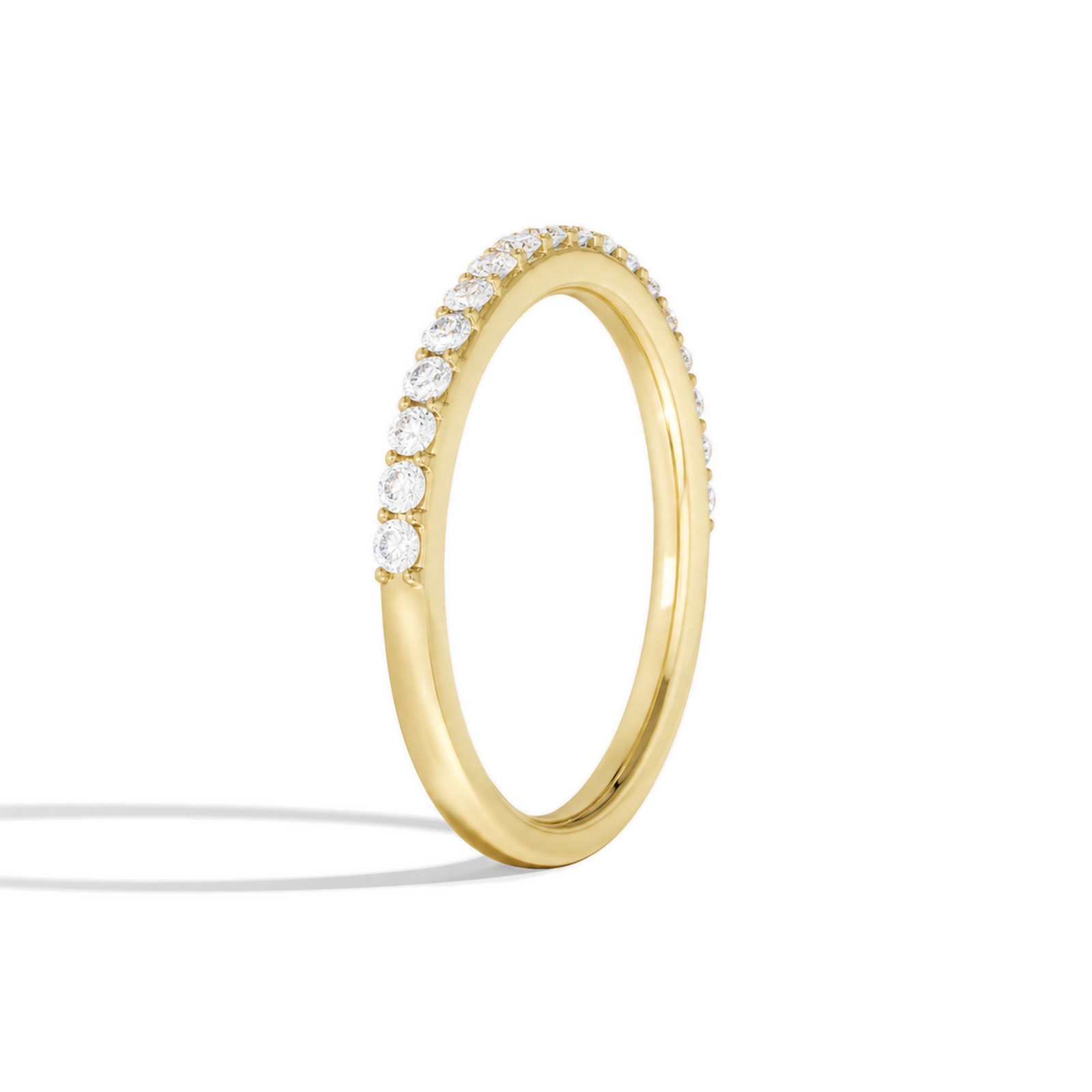

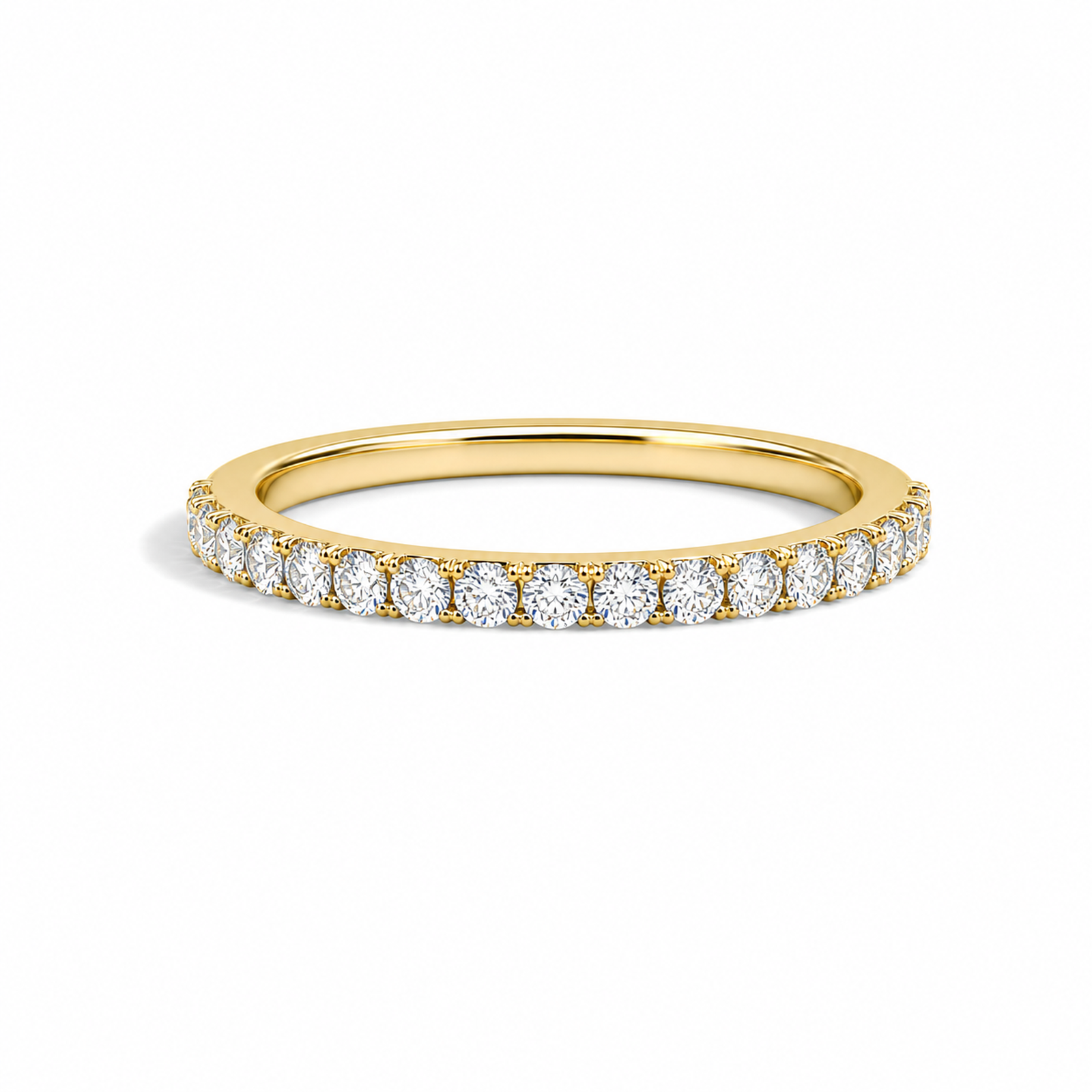


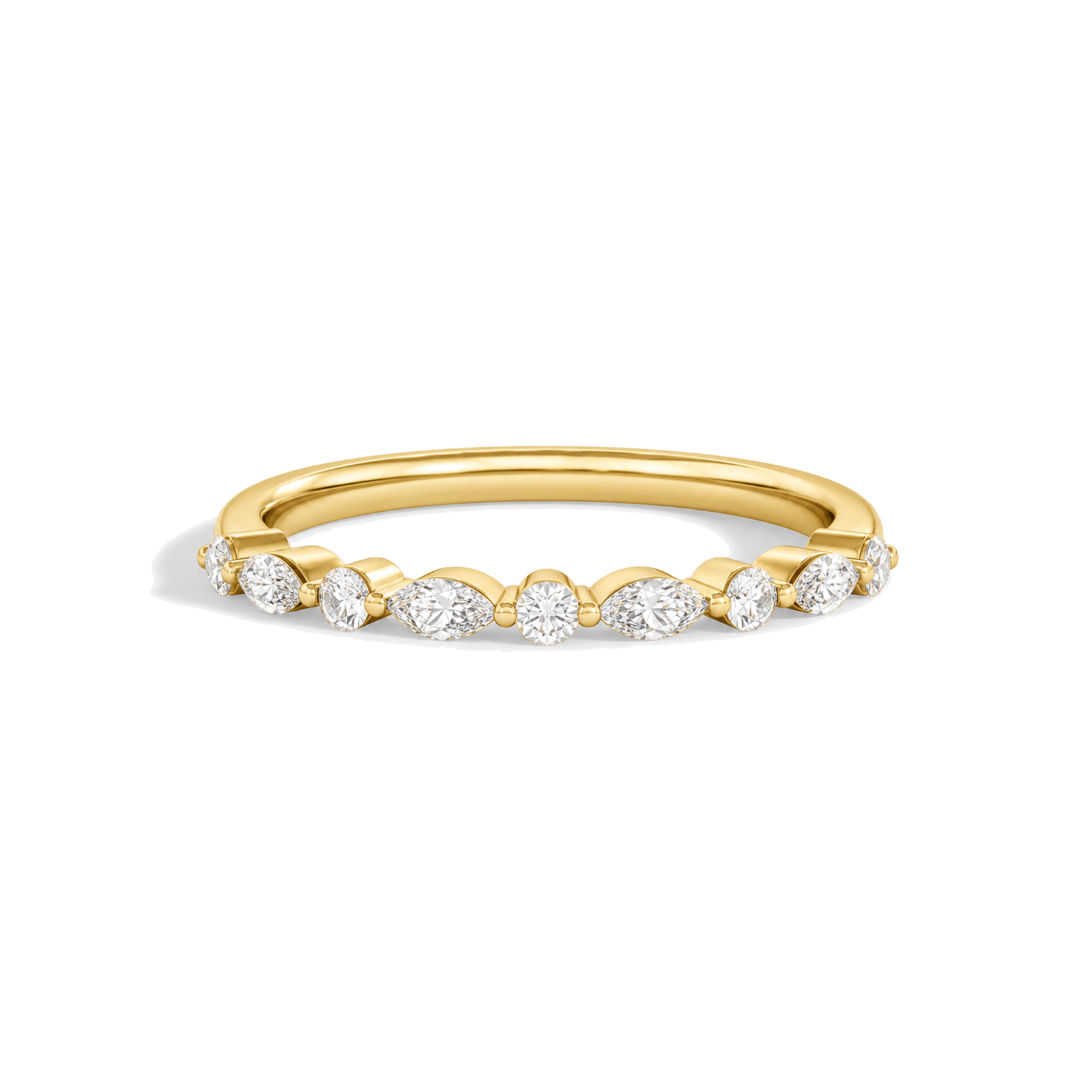


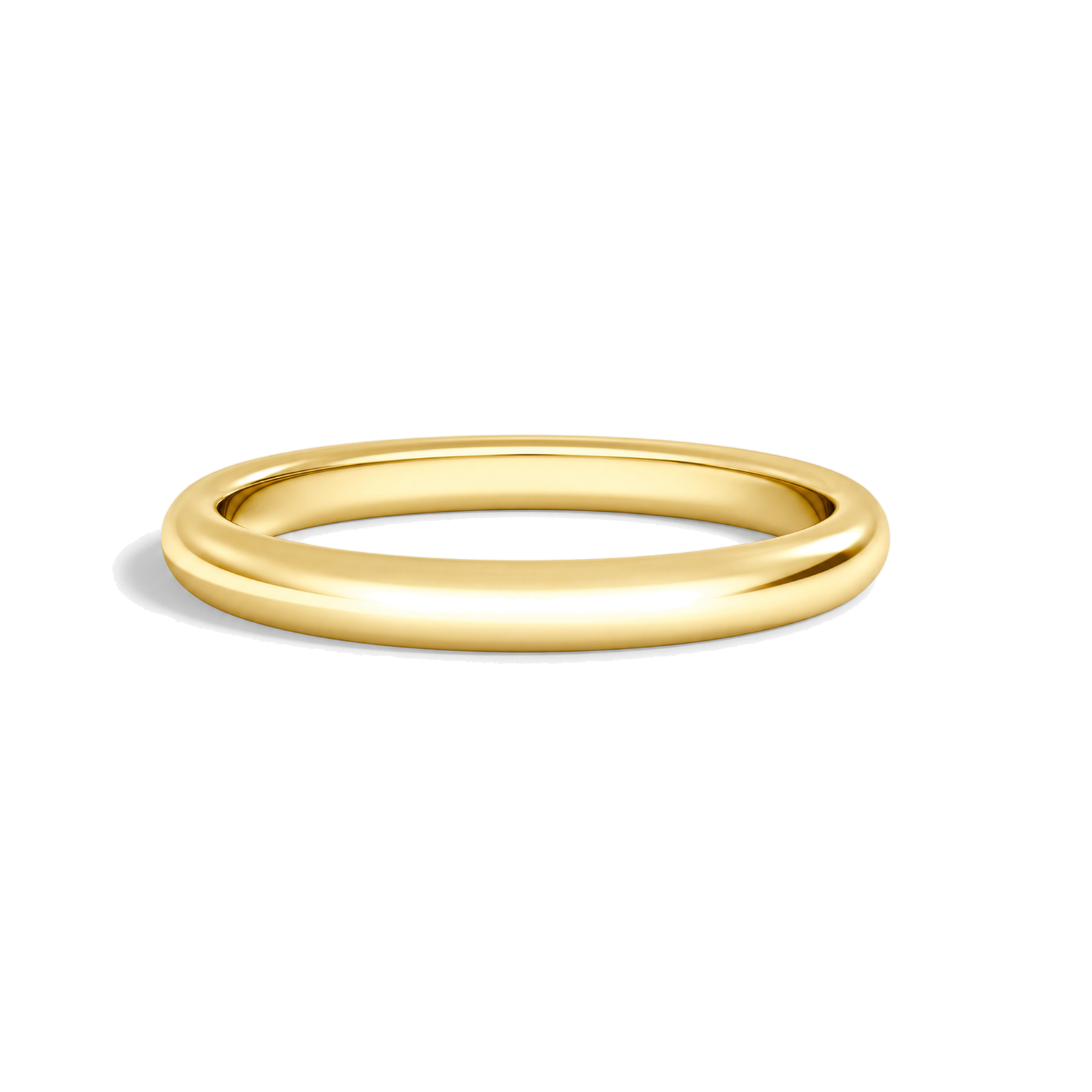
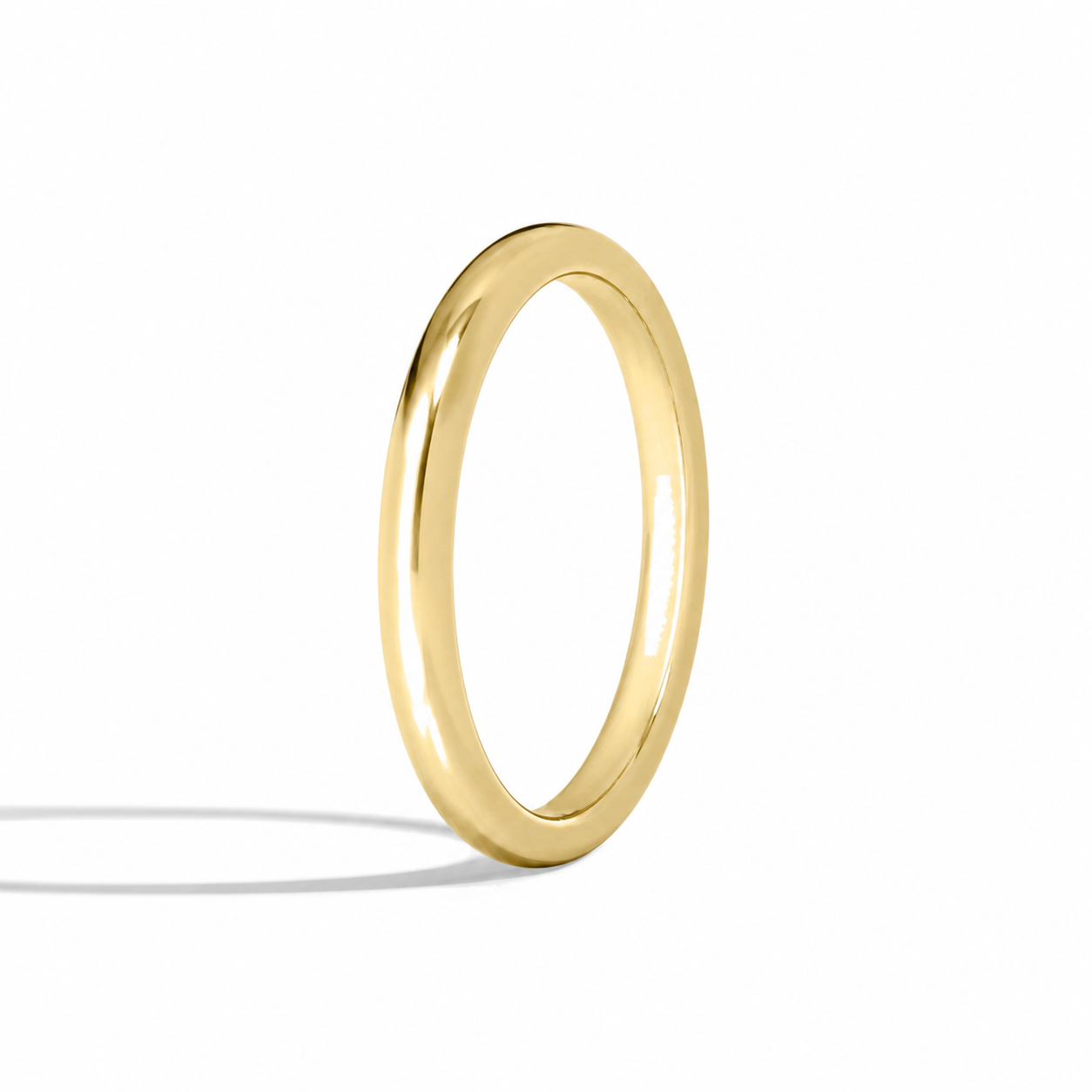

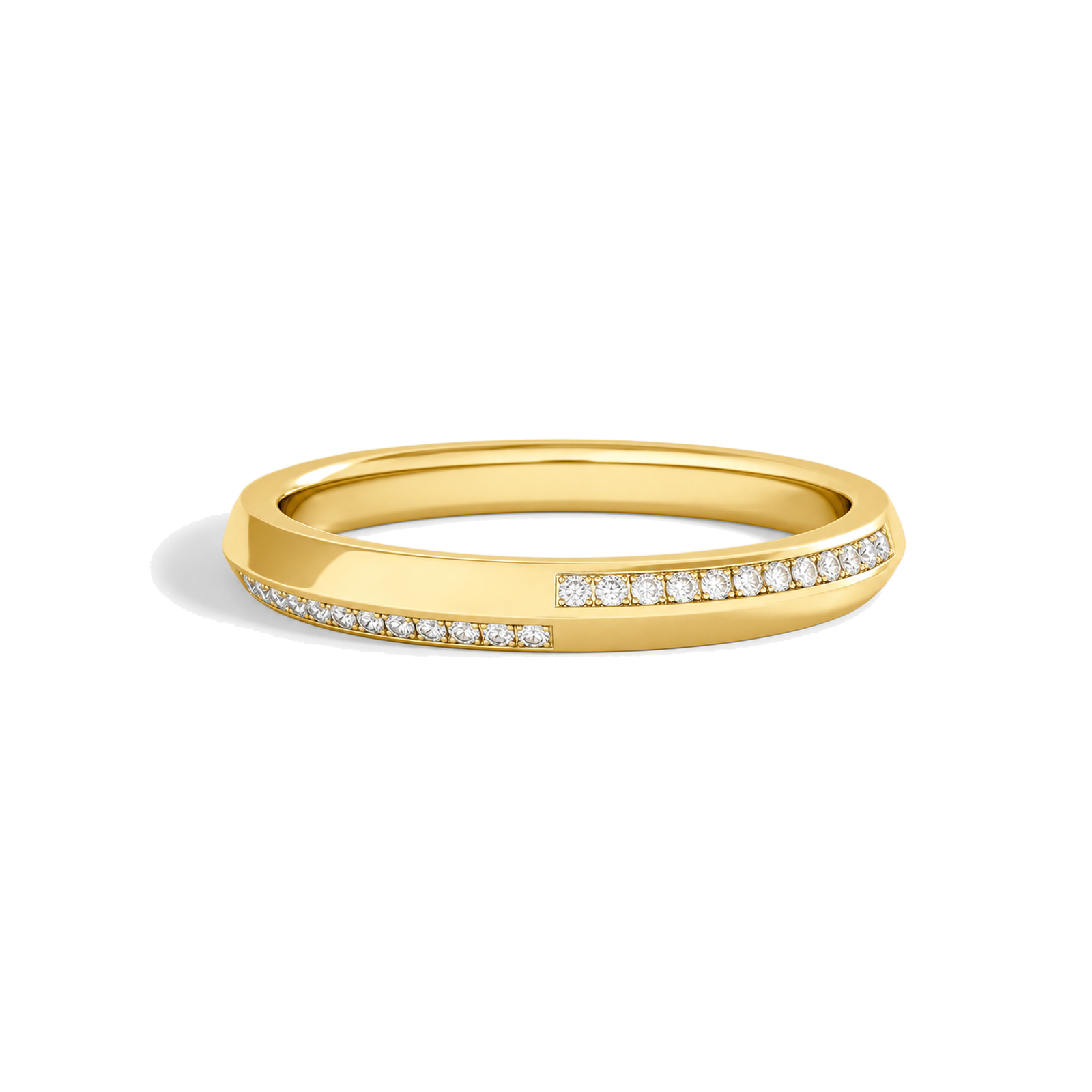
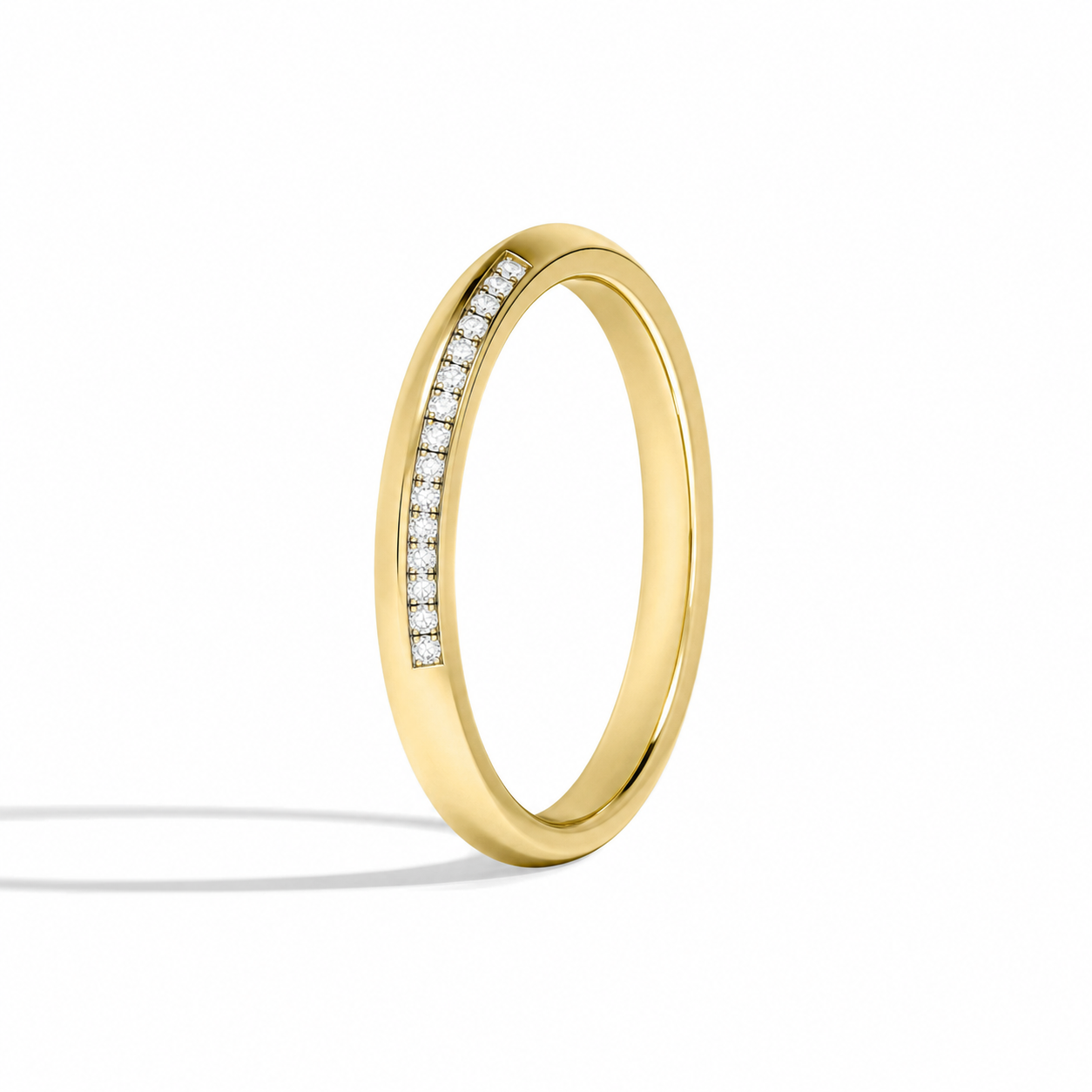

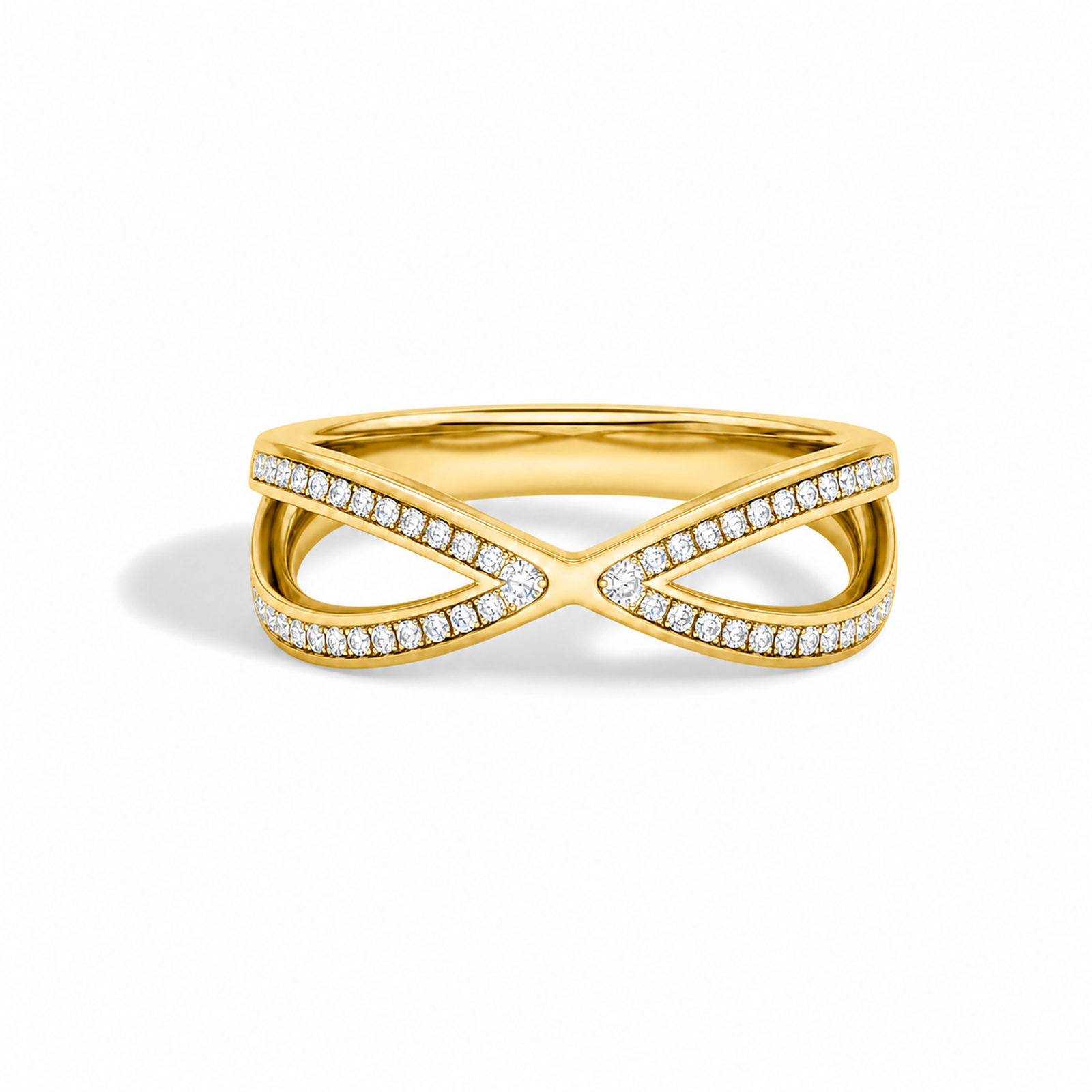


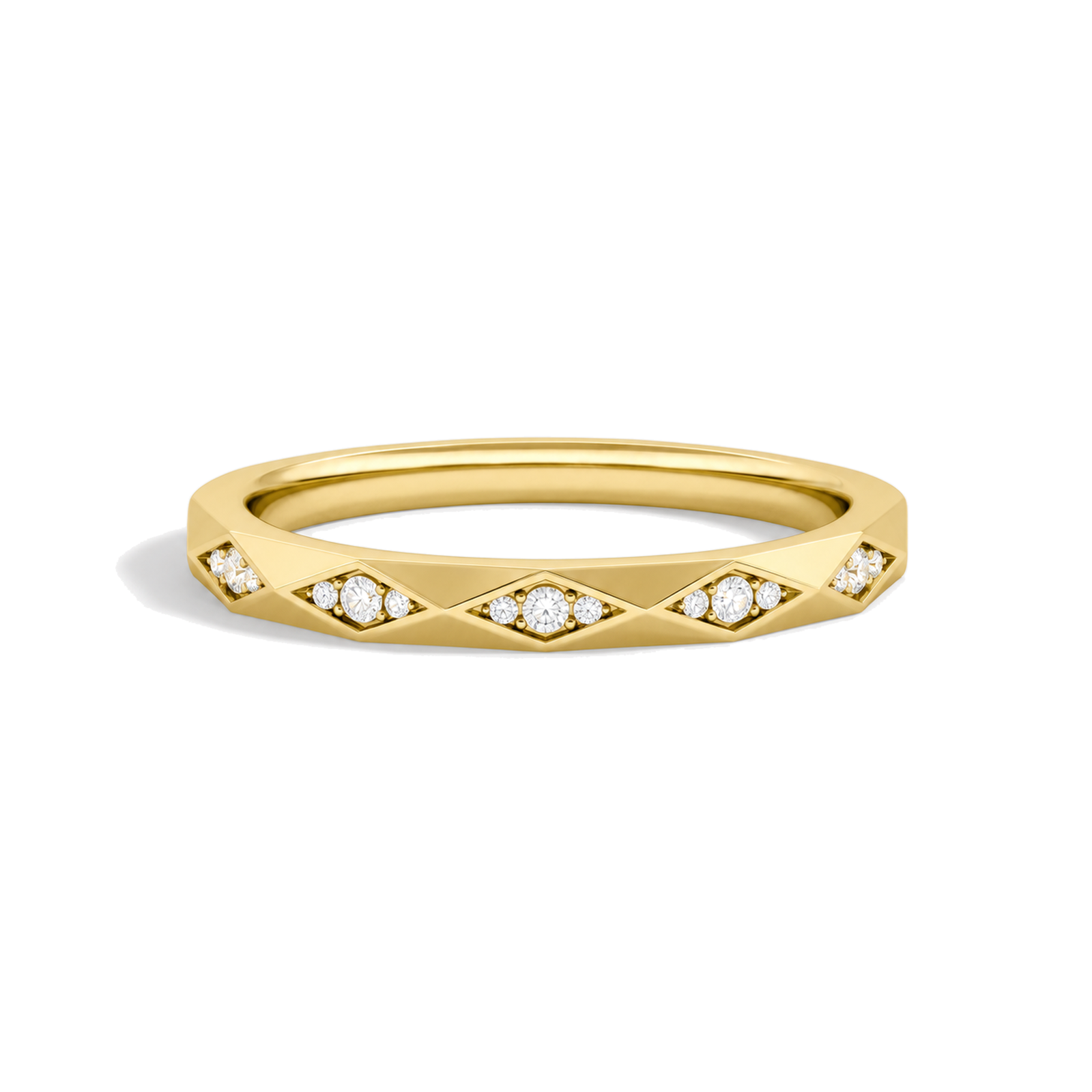


14K Yellow Gold Anniversary Rings: Continuity or Chosen Interruption
Yellow Gold makes the ring's boundary legible. That line can echo an existing wedding set, create a clear interval beside white metal or hold a milestone independently. The occasion supplies context; it does not require a particular anniversary number, diamond pattern or finger.
The page contains sixty-nine normalized designs, all duplicated in same-metal Rings, Fashion Rings and Wedding Bands. Stacking Rings shares forty-five and Curved Rings shares eleven. The useful page job is how the ring enters a life and a composition, not where else its product card appears.
Choose Echo, Contrast, or Independence
A new ring can repeat one detail already present—metal color, edge, diamond rhythm or width—without matching the full set. It can also introduce a deliberate difference. Neither relationship is inherently more meaningful.
For adjacent wear, inspect setting height, shoulders, prongs and band edges. Straight, curved and open lines organize space differently, yet none promises exact nesting, fixed alignment or freedom from contact.
Read the Design as a Sequence
Three eternity-titled, ten half-eternity or half-coverage and three three-quarter-coverage structures sit within the approved parent evidence; fifty-three other forms include channels, contours, crossings, openings and quiet metal-led bands. Coverage describes arrangement, not emotional value.
Published widths span 1.4–5.0 mm. A fine edge may preserve negative space; a broader surface may make gold more visible. Width alone cannot define presence, fit or alteration potential.
Use Fineness without a Performance Story
14K gold is approximately 58.3% gold. Exact tone, surface and behavior depend on the complete alloy, finish and construction. Yellow color does not prove identical material or future wear across two rings.
If personalization matters, verify engraving area and the effect of settings or coverage on resizing. Meaning can be precise even when the technically suitable intervention is restrained.
Frequently Asked Questions
Why choose an anniversary lens rather than the Rings page?
This route asks how a design marks a milestone and relates to jewelry already in the wearer’s life.
What is the current design count?
Sixty-nine 14K yellow gold normalized designs are public.
Where else do all sixty-nine appear?
The same-metal Rings, Fashion Rings and Wedding Bands pages contain the complete set.
Does the page follow traditional anniversary-year gifts?
No. A year list may inspire, but it does not govern the selection.
Can yellow gold be paired with white metal?
Yes as an aesthetic contrast, with geometry and contact still reviewed specifically.
Must the new ring match an existing band?
No; echo, contrast and independence are all valid compositional roles.
What does a straight edge contribute?
It keeps a continuous line and may preserve deliberate space beside another setting.
How should open designs be evaluated?
Compare the opening, end positions, neighboring setting and movement in the intended sizes.
How many coverage-led structures are documented?
Three eternity-titled, ten half or half-coverage and three three-quarter-coverage designs.
Are the other fifty-three designs all alike?
No. They include varied channel, contour, crossover, open and metal-led organizations.
What average widths occur?
Published evidence extends from 1.4 through 5.0 mm.
Does greater width make the milestone more important?
No. Scale and emotional meaning are separate judgments.
What is the gold fineness of 14K?
It is approximately 58.3% gold.
Can matching yellow-gold labels prove identical color?
No. Alloy, finish, age and surface condition can affect appearance.
Can the ring move between hands?
Yes, provided size and the intended finger are assessed.
Can every design receive an inscription?
No. Available surface, settings and technical review control engraving feasibility.
What can restrict resizing?
Extended diamond coverage, channels, symmetry, open construction and the requested change.