
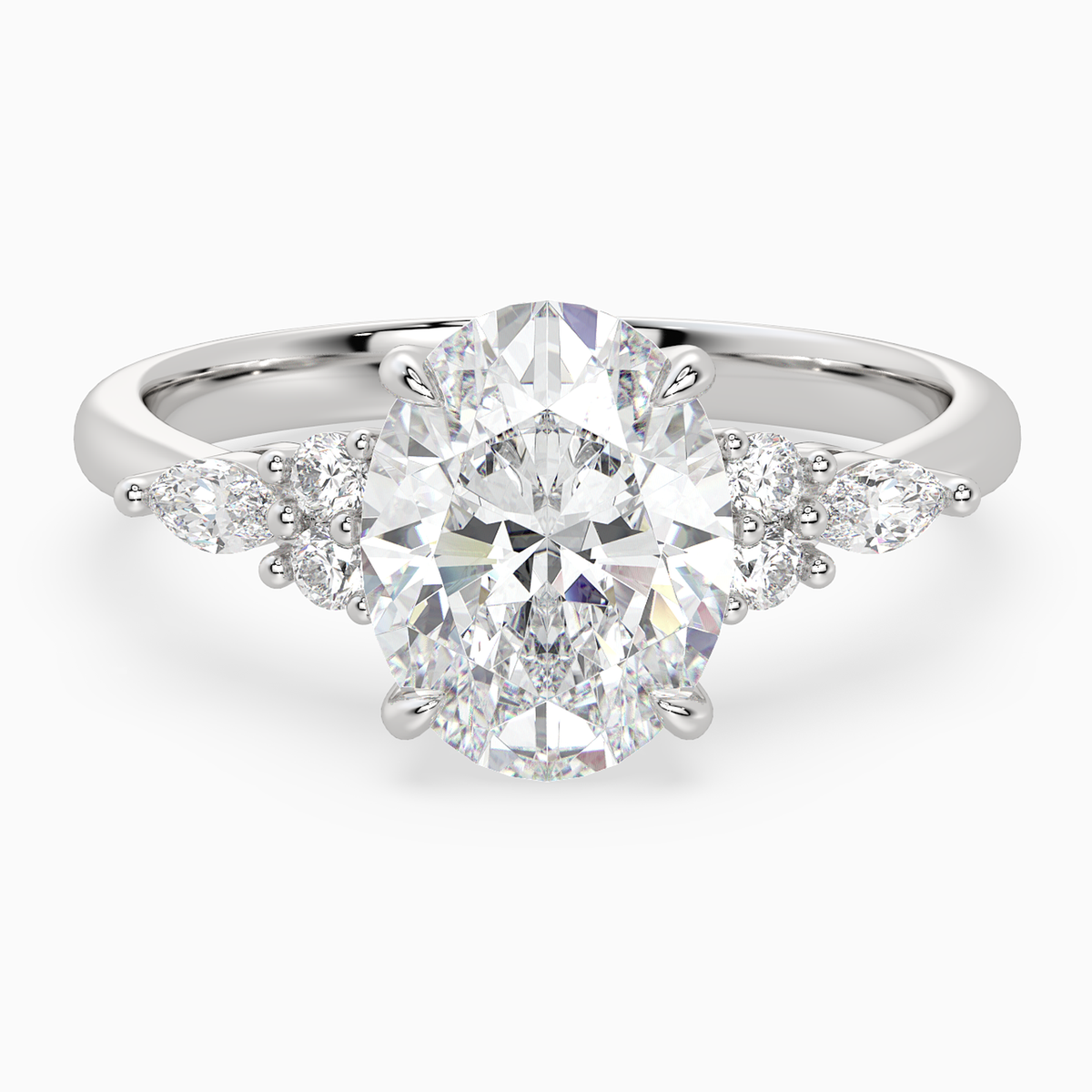


Lab Grown Diamond Rings in 14K Yellow Gold
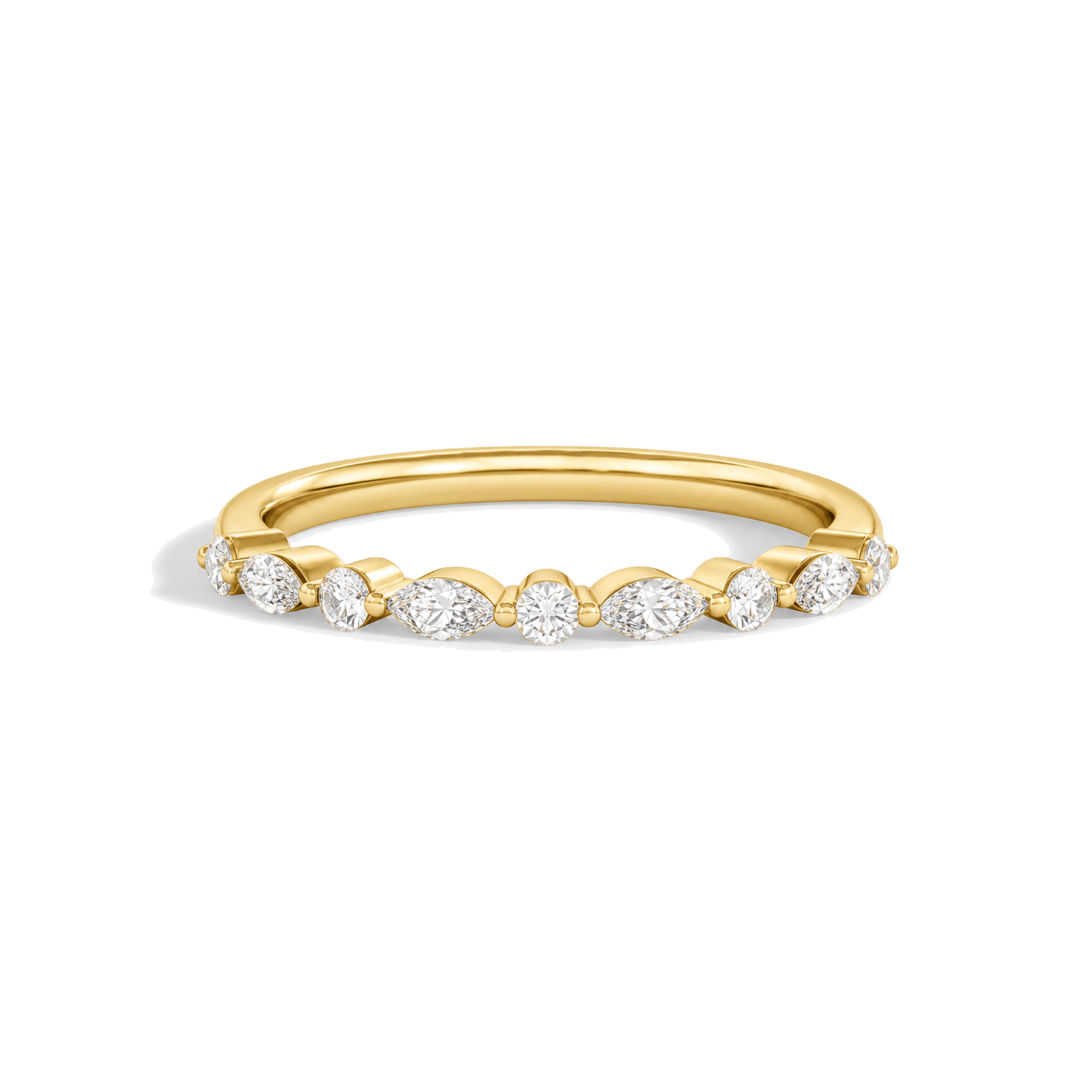
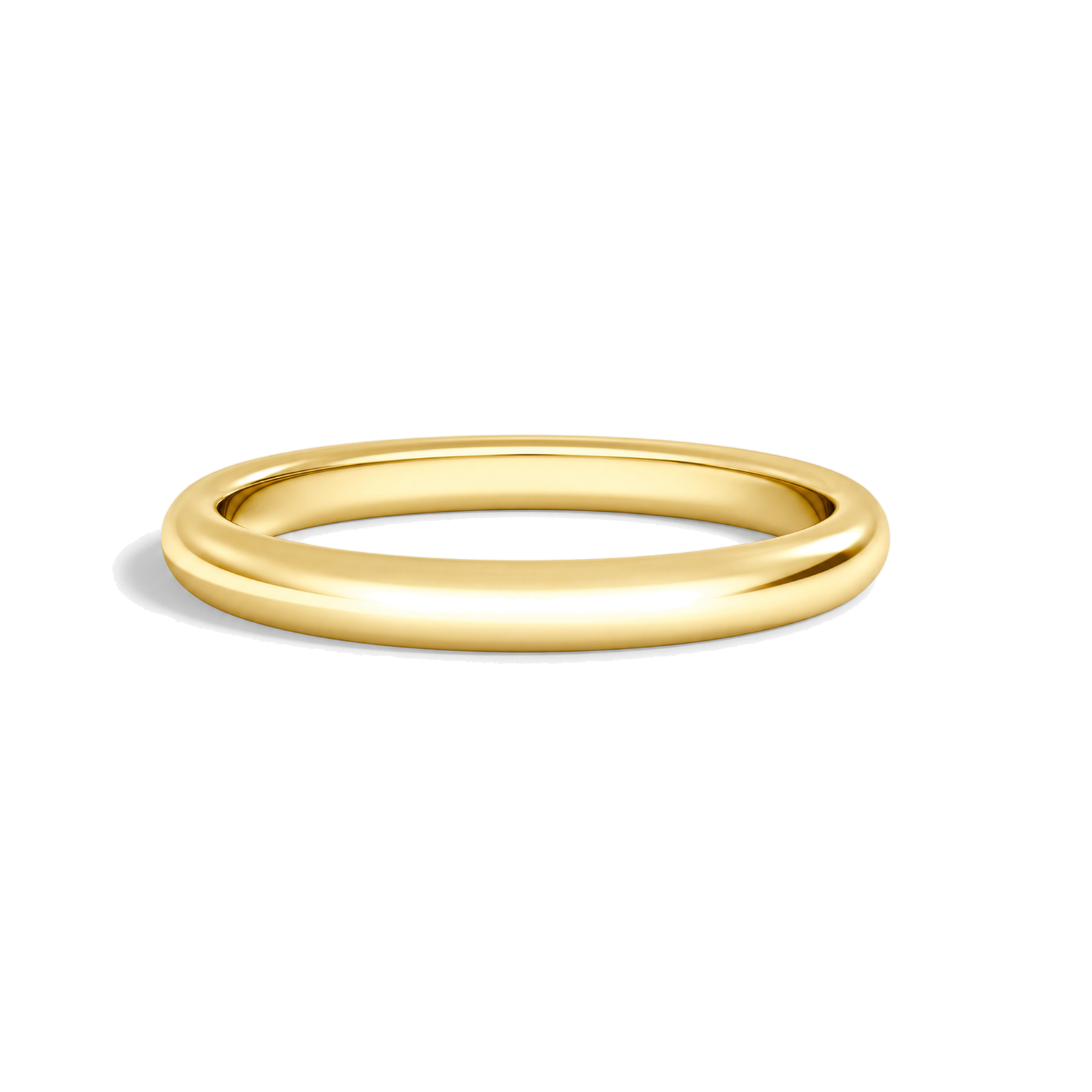
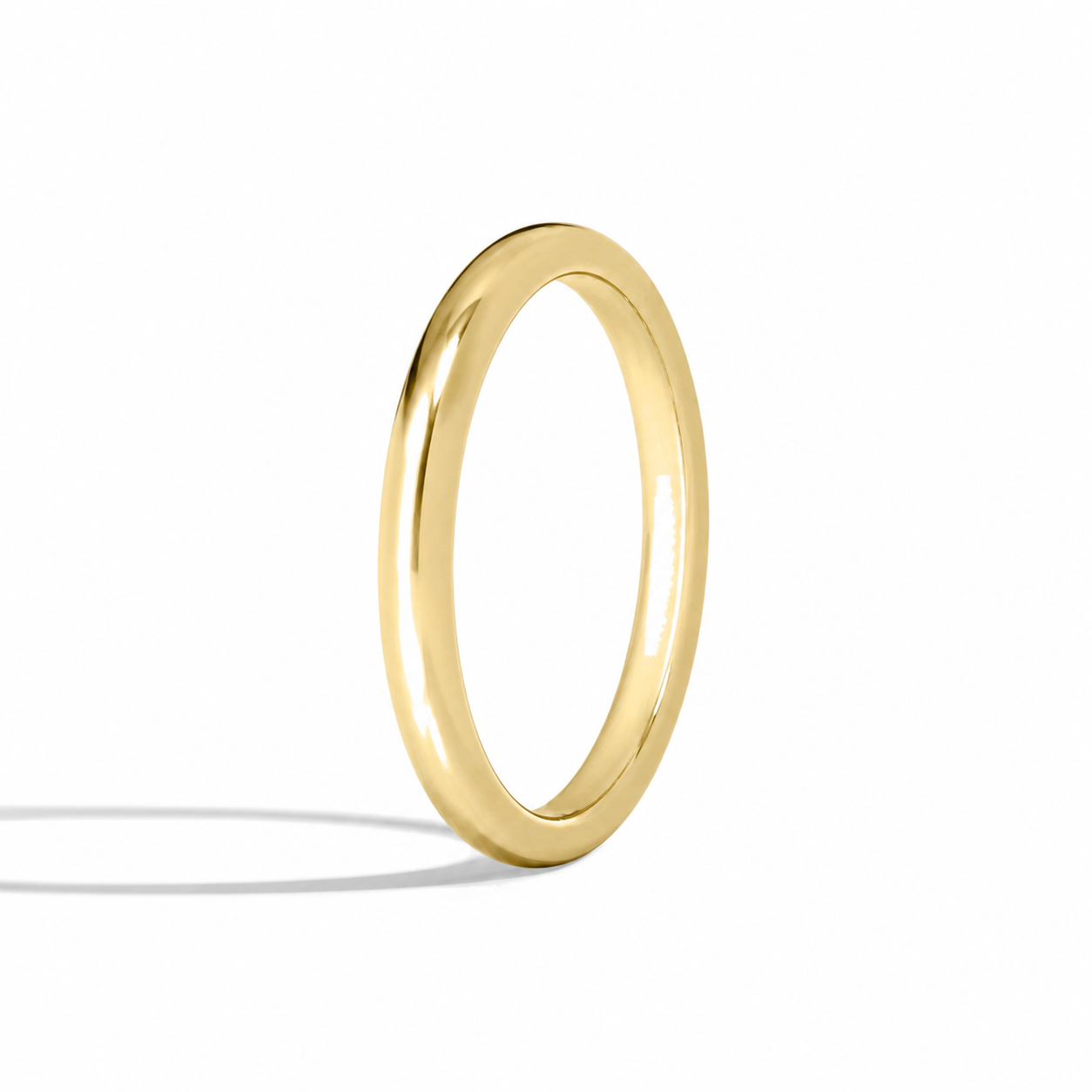
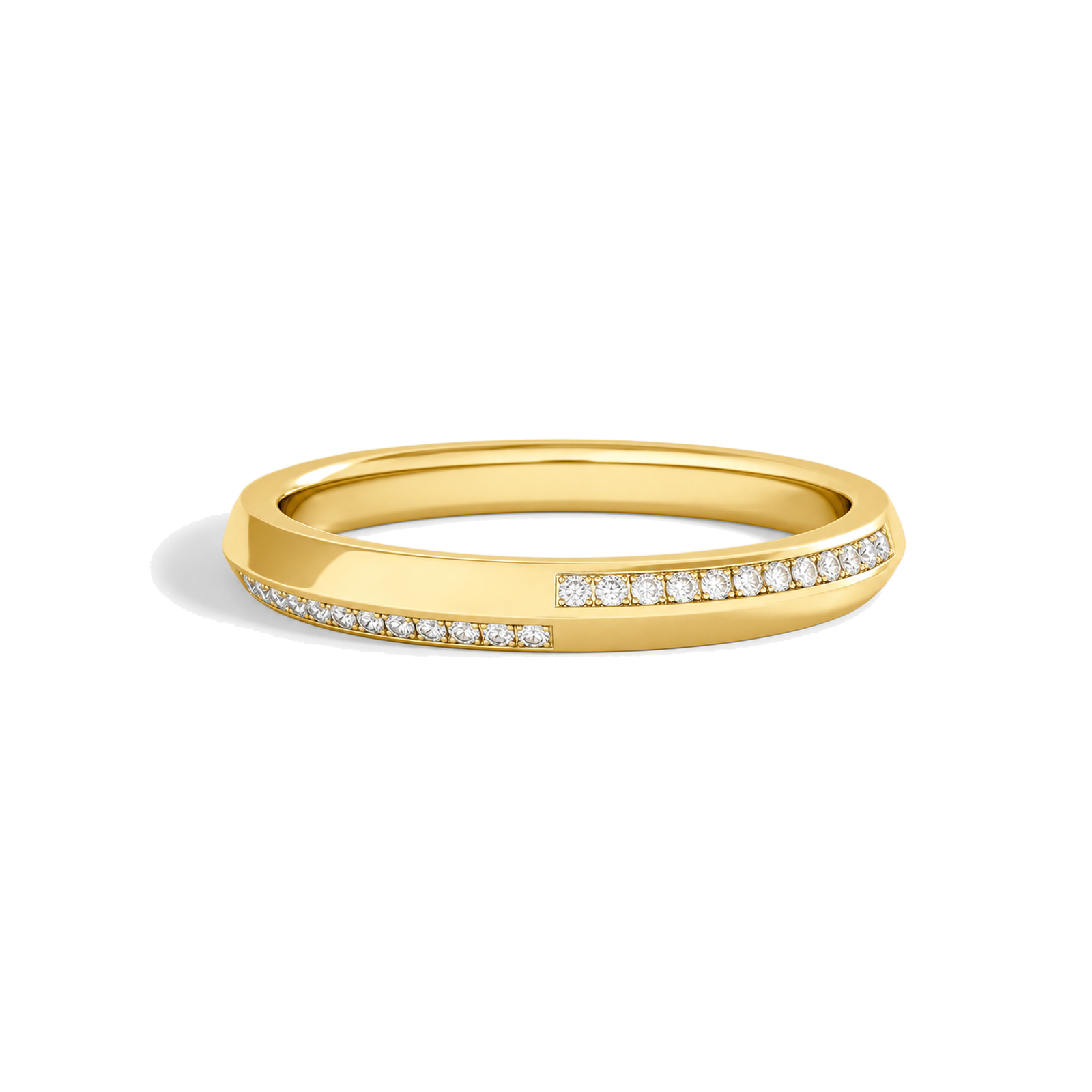
Gold makes each edge and interval visible. 14K yellow gold draws eternity rhythms, open silhouettes, and sculptural bands across the hand.


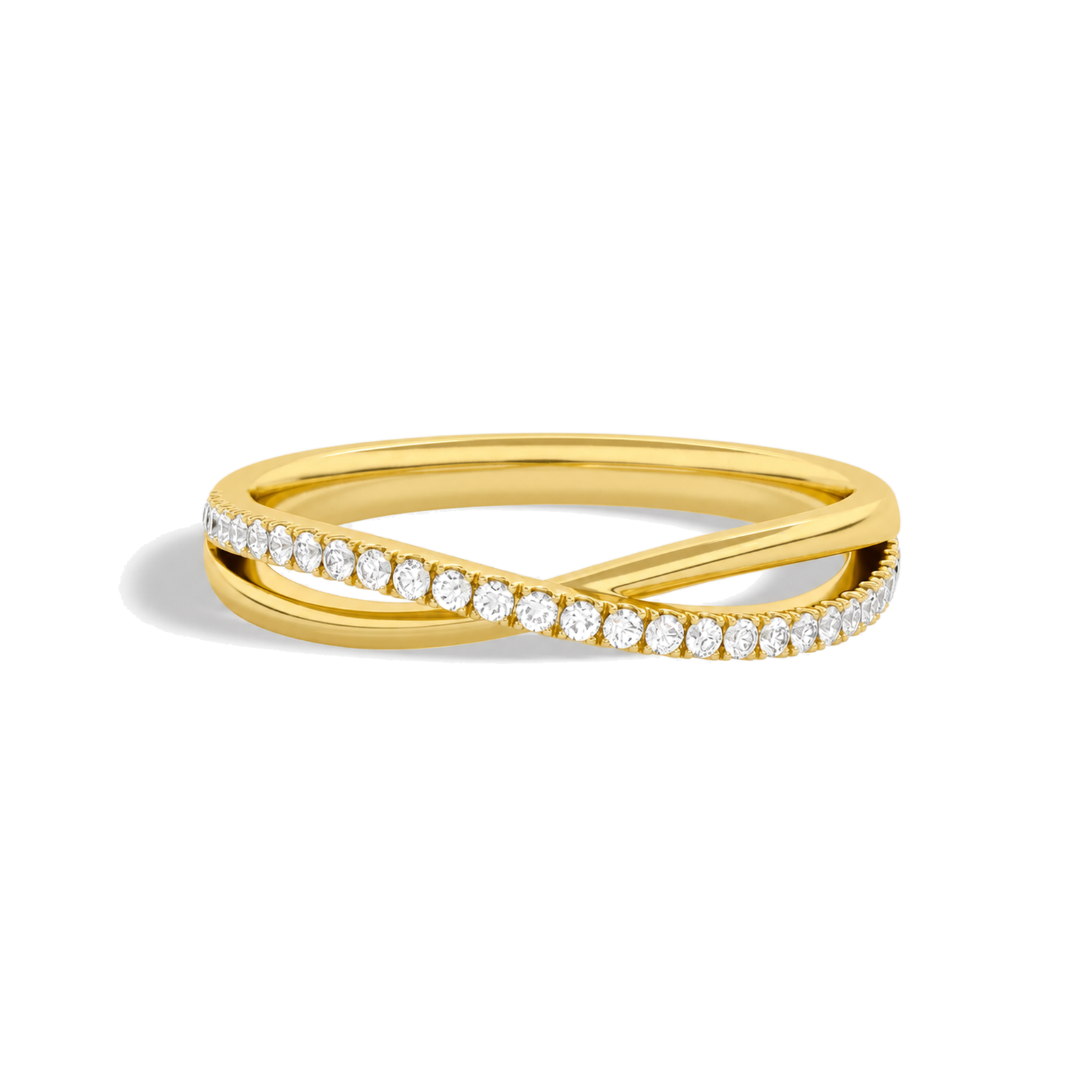
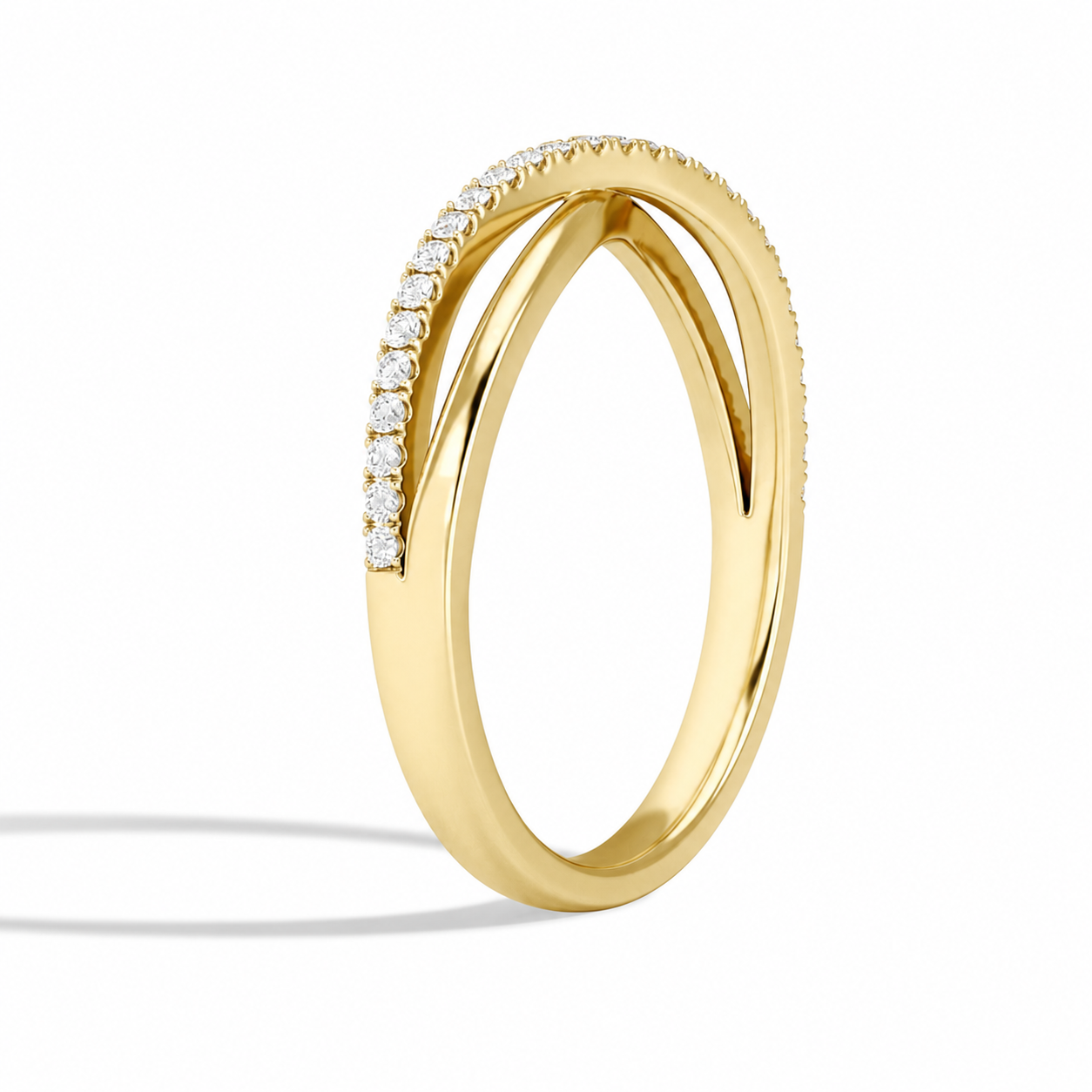
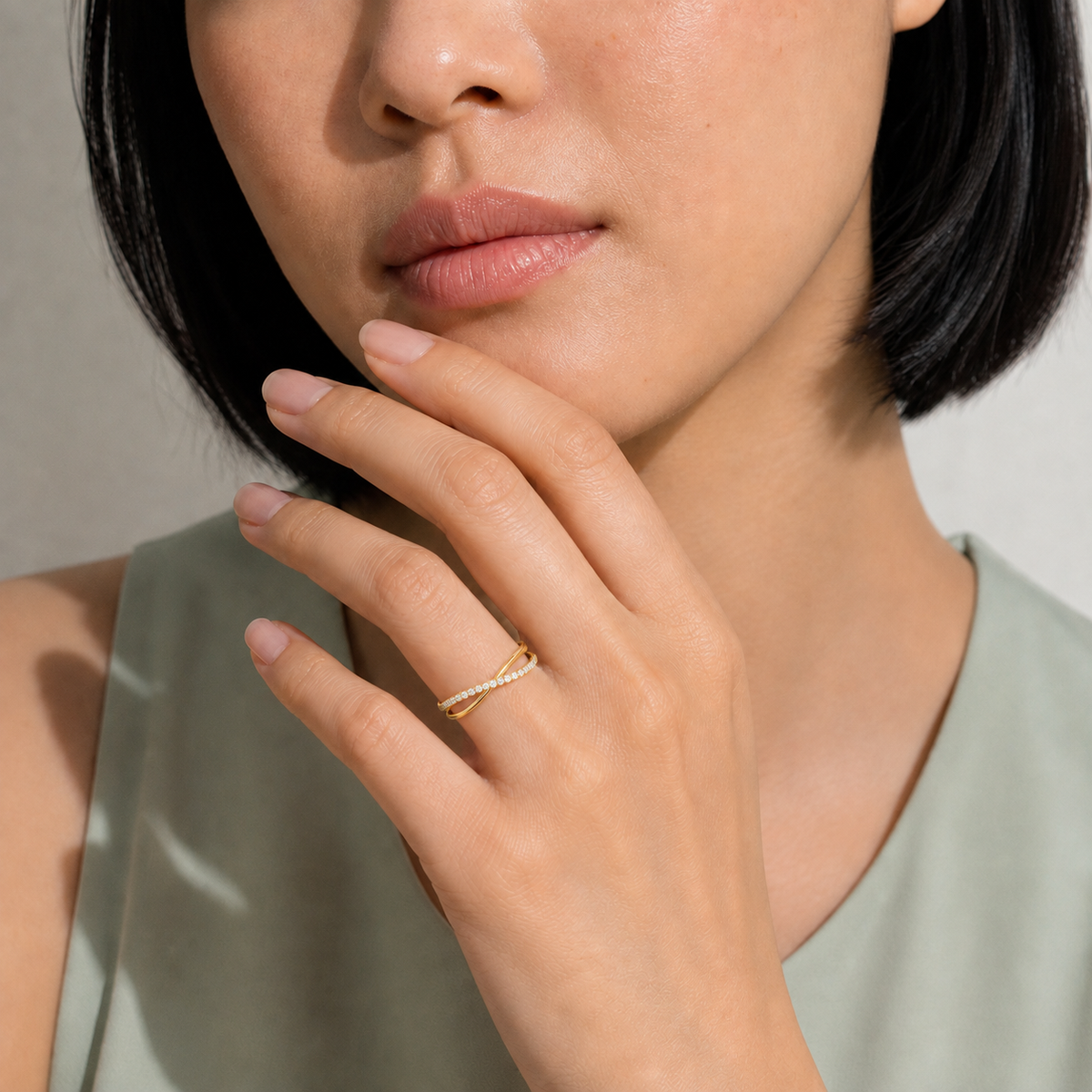
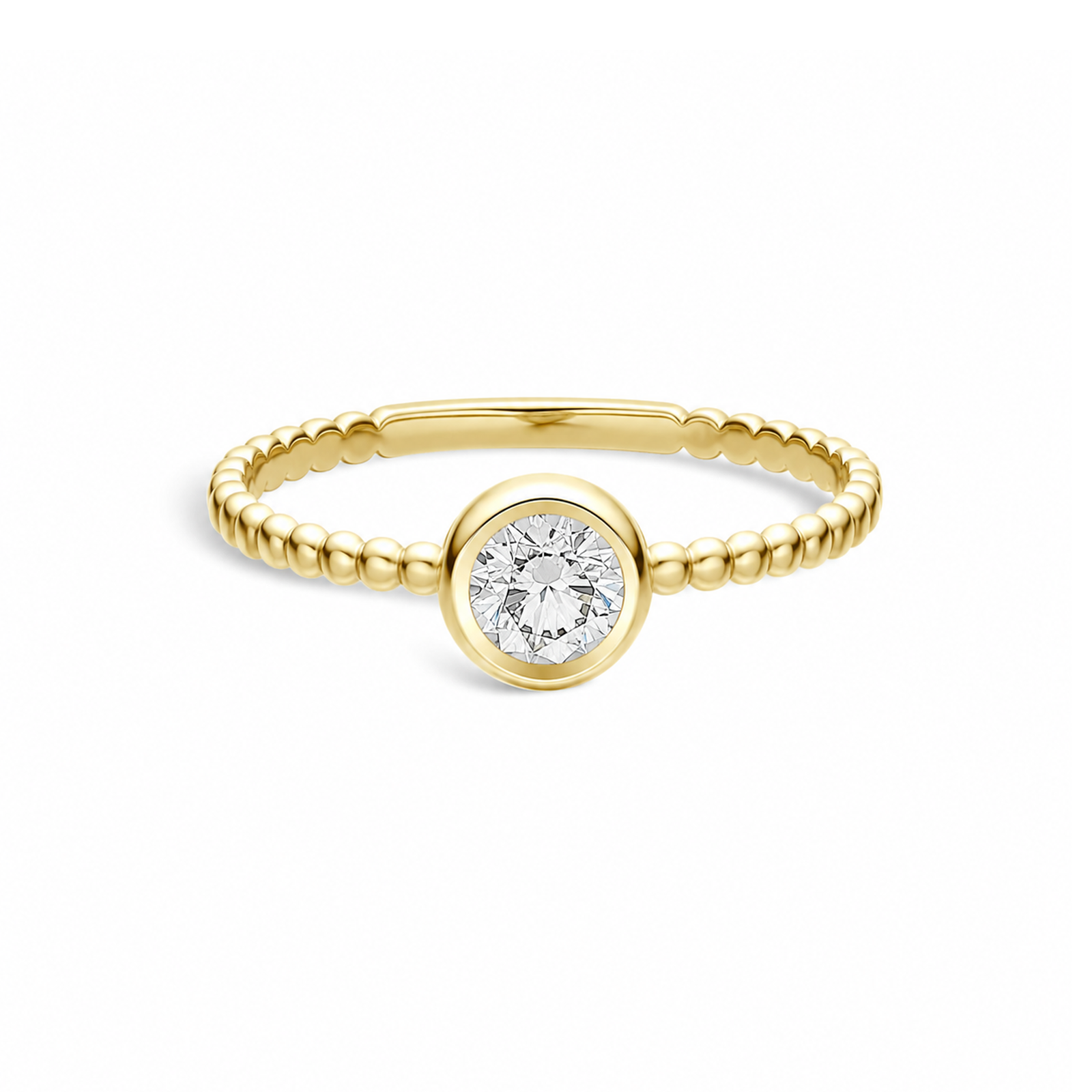


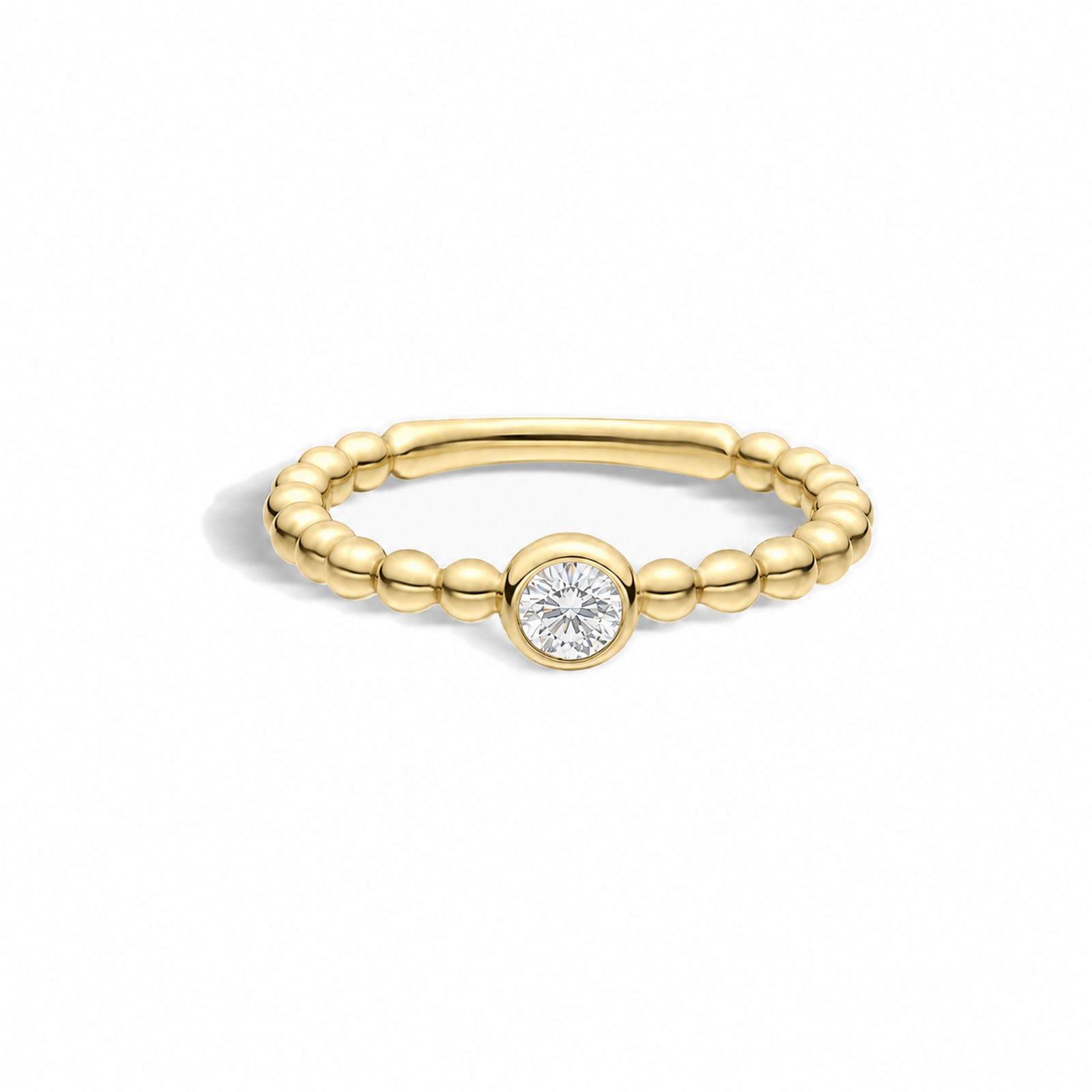


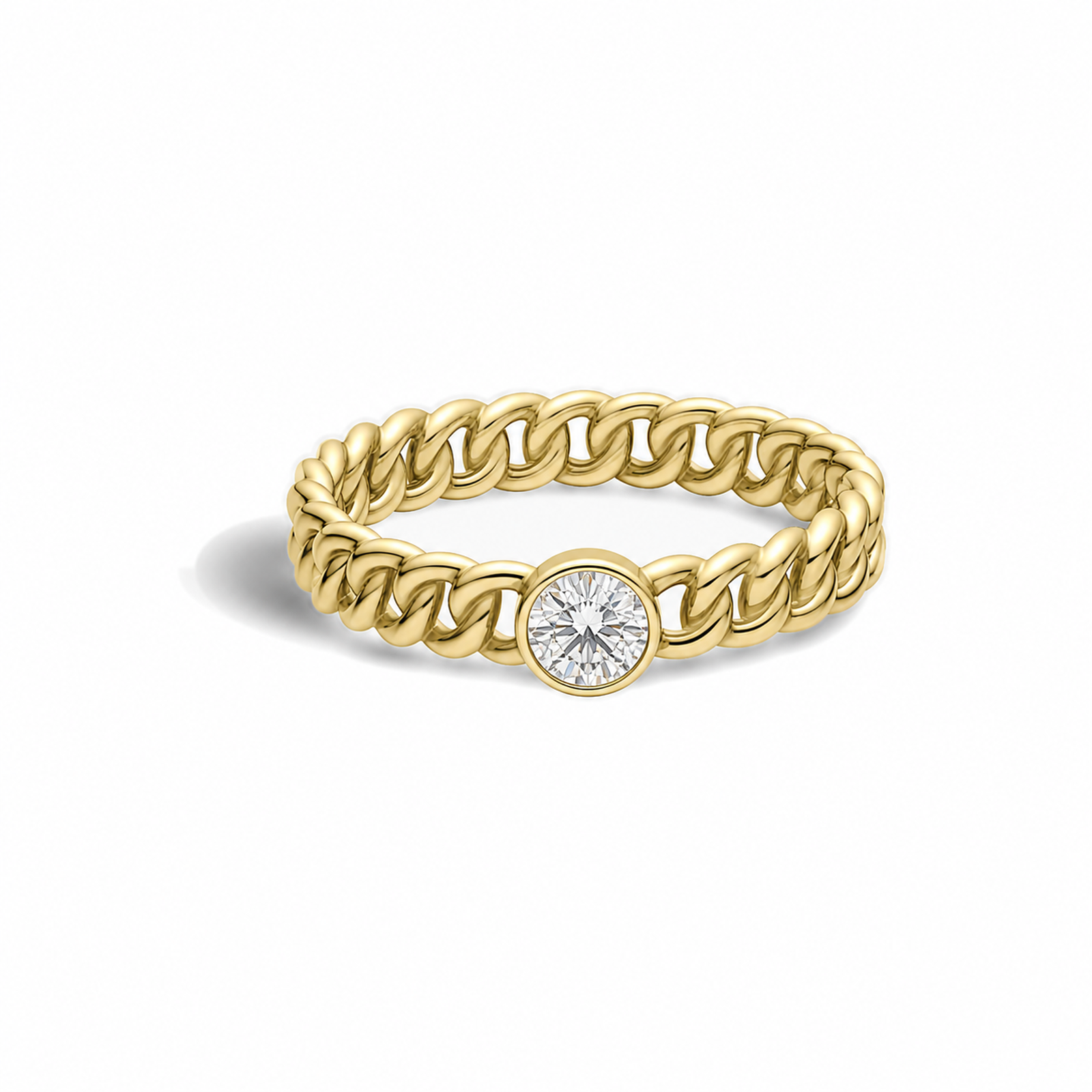
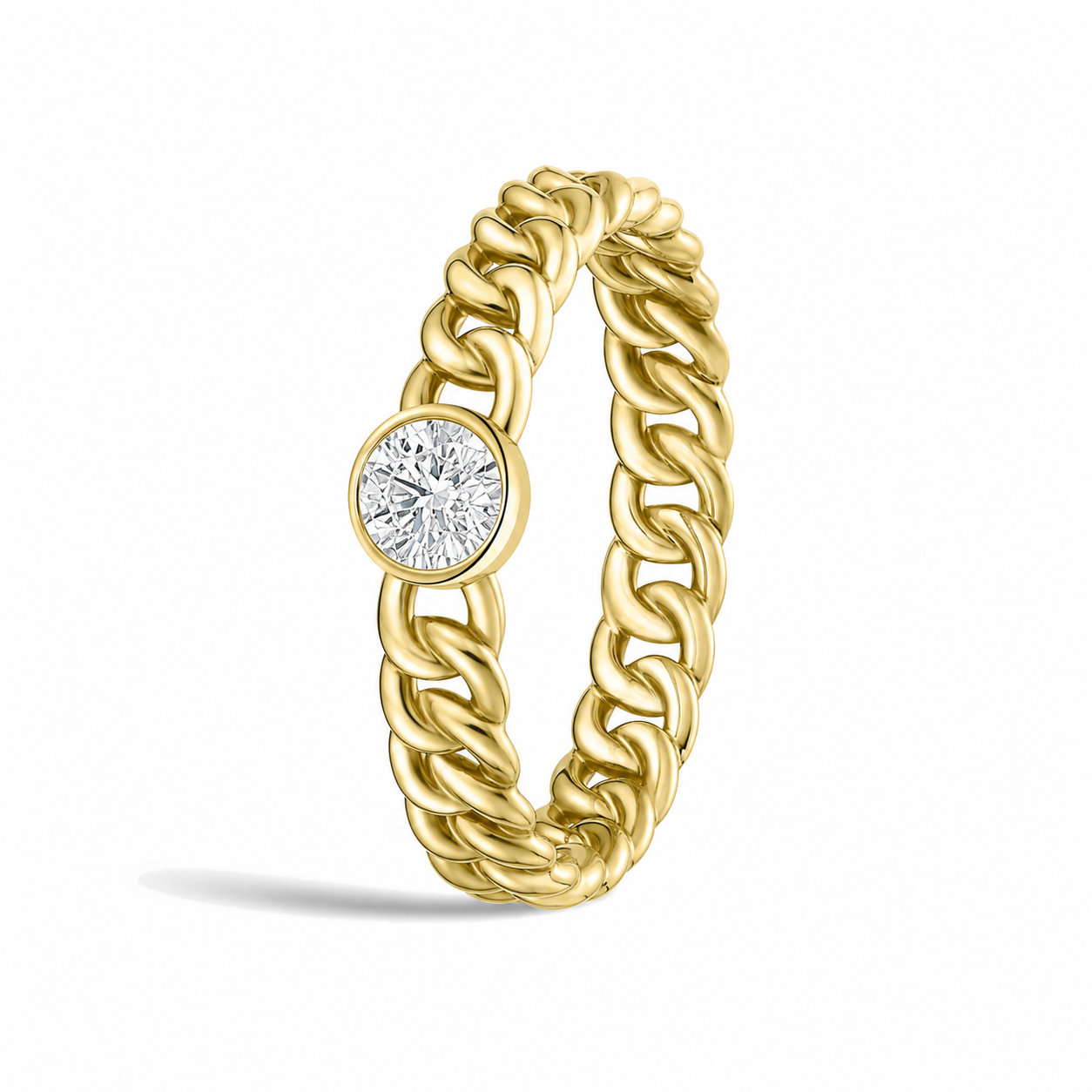


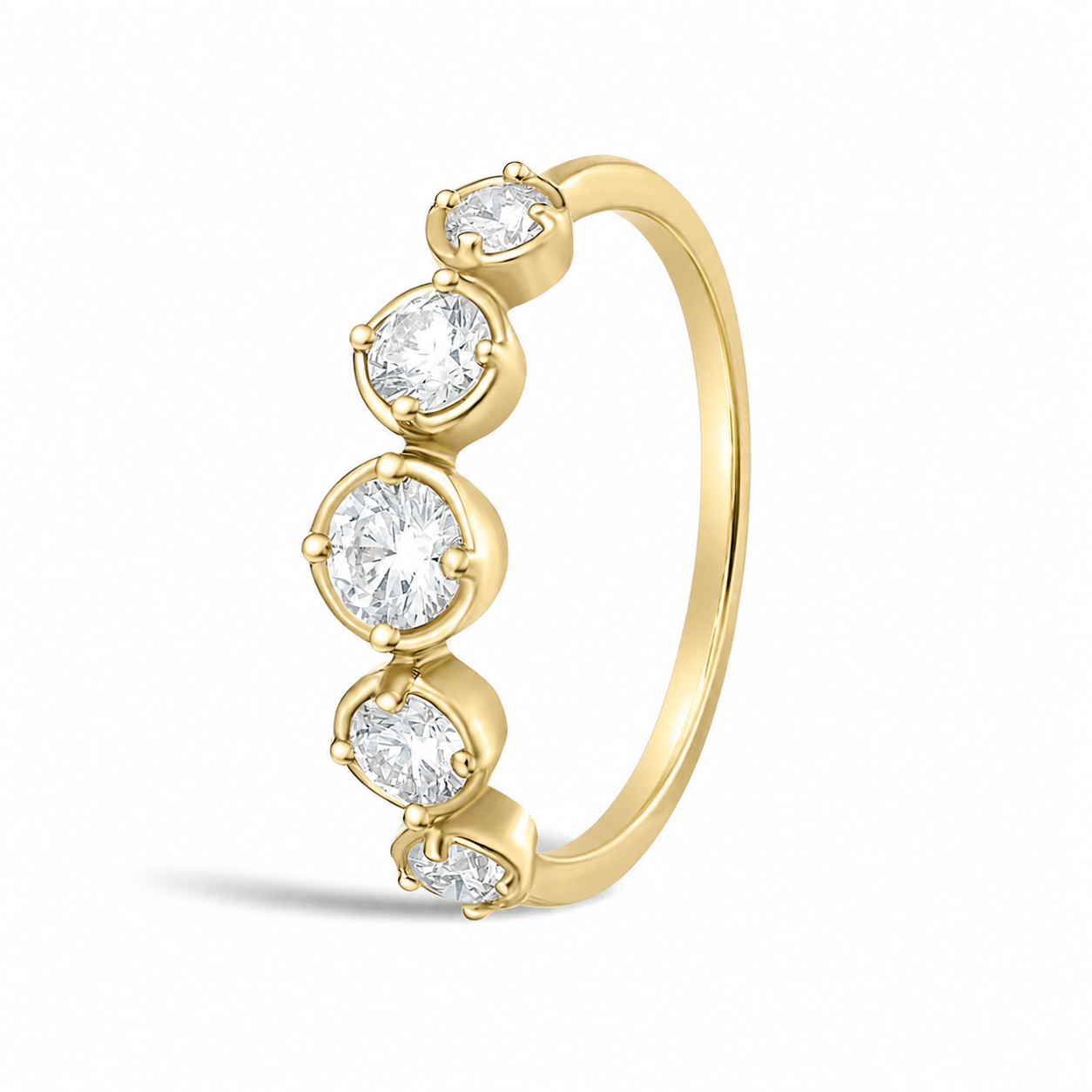

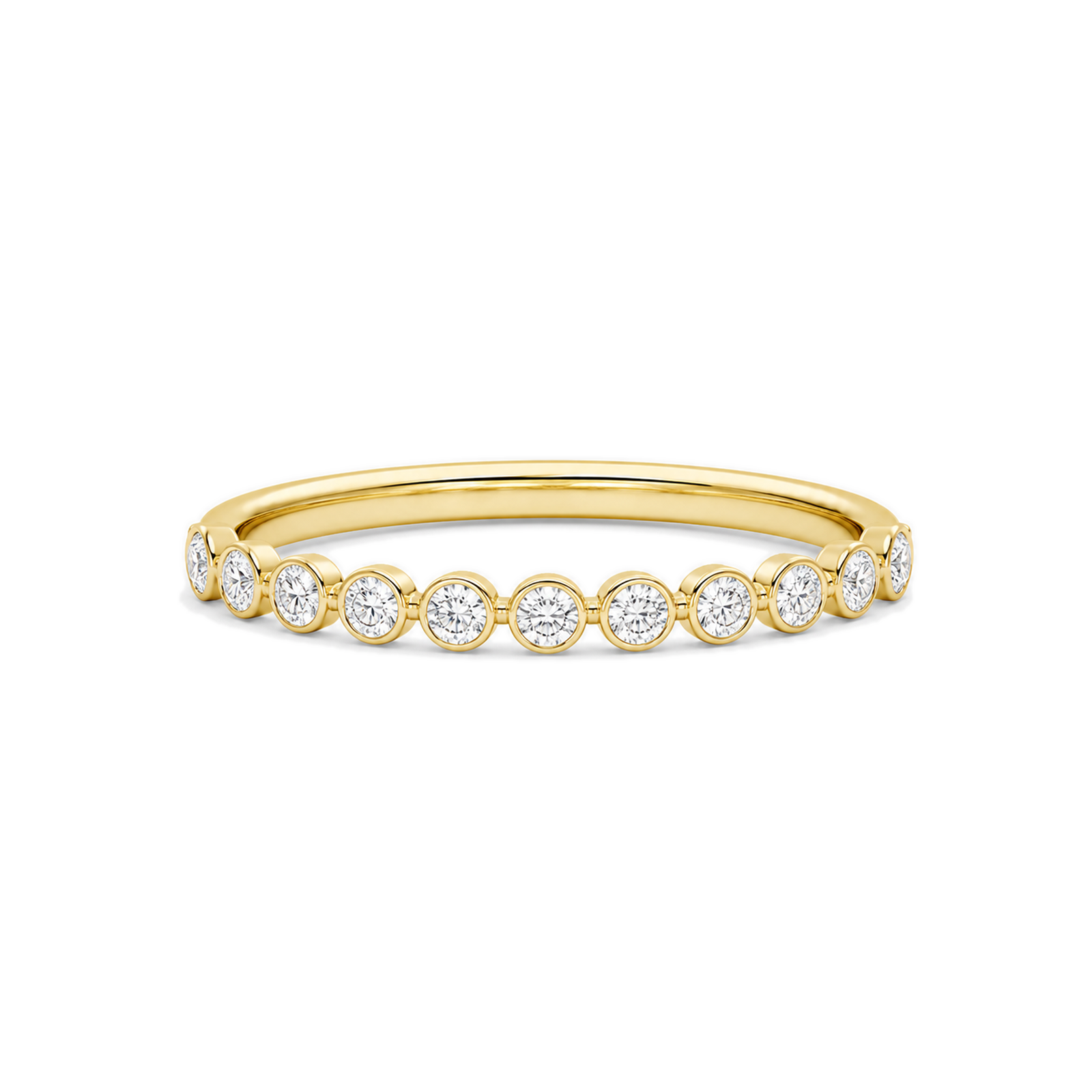


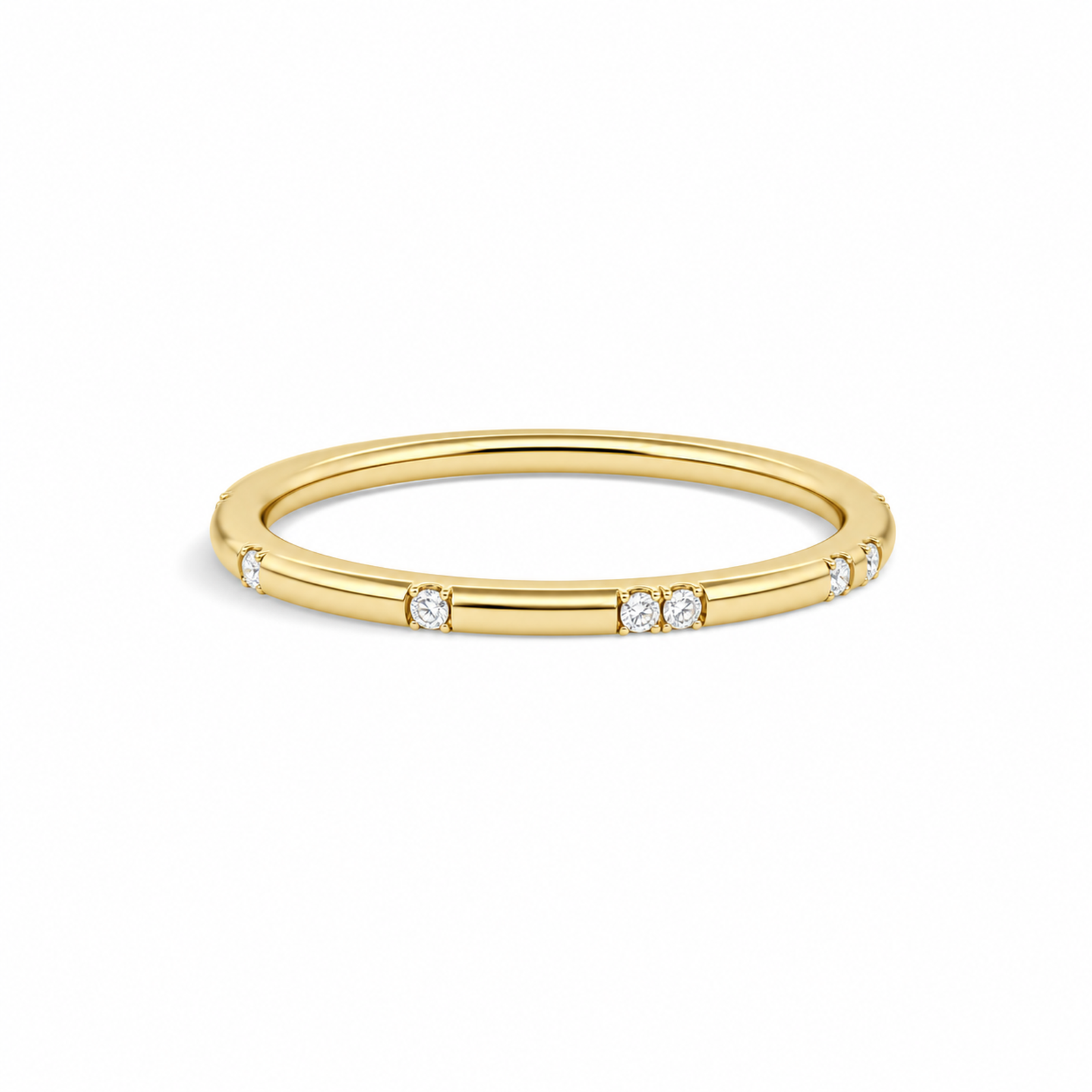


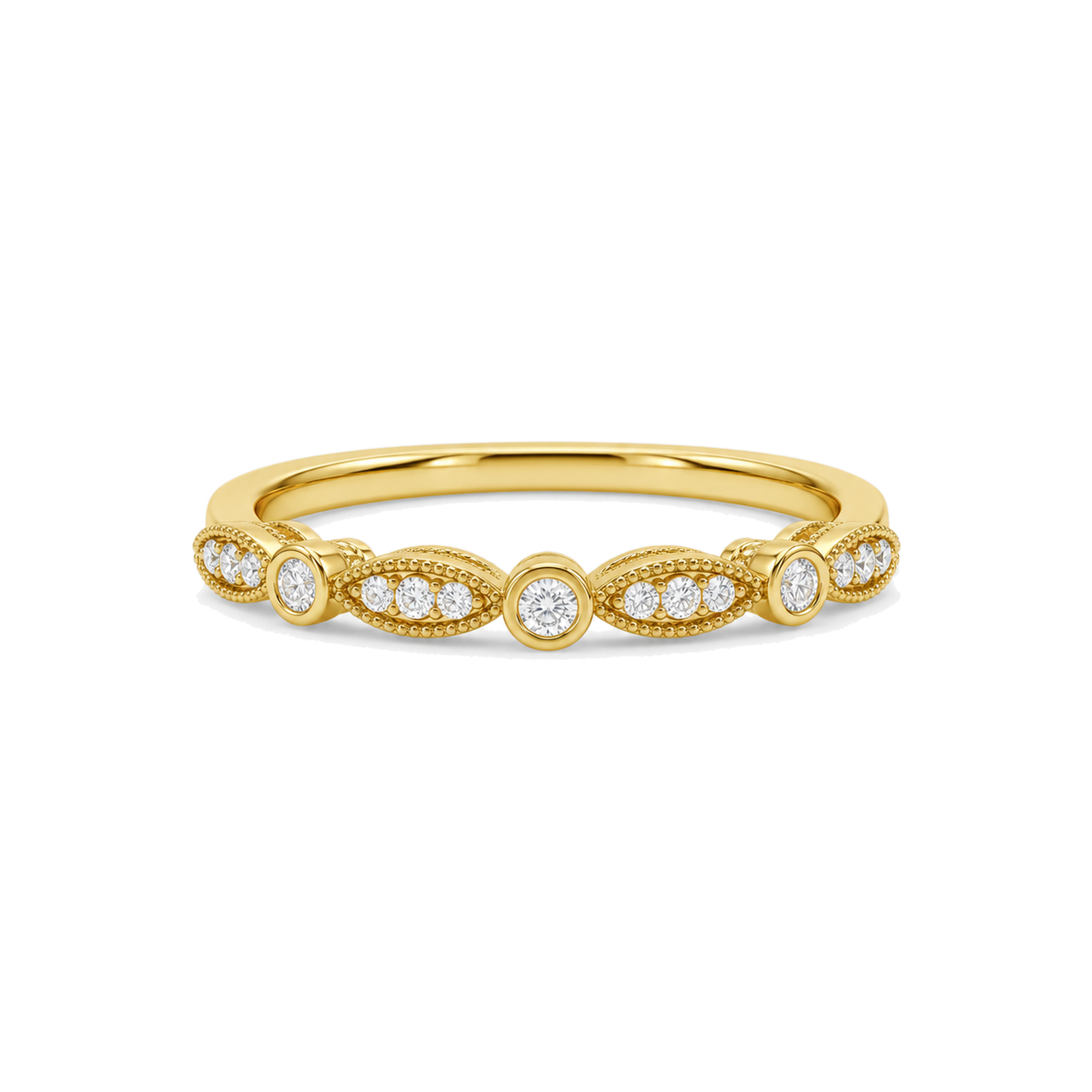


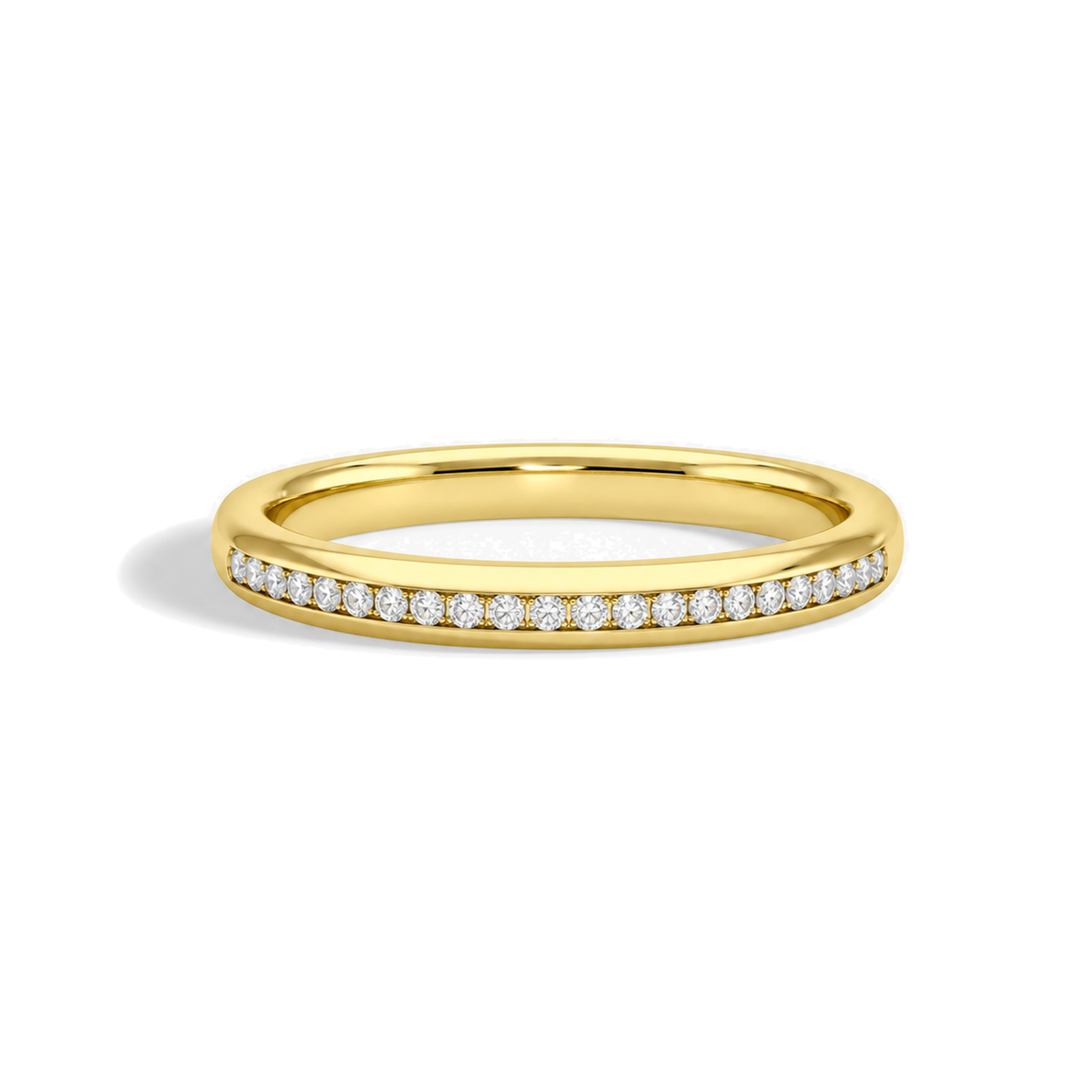
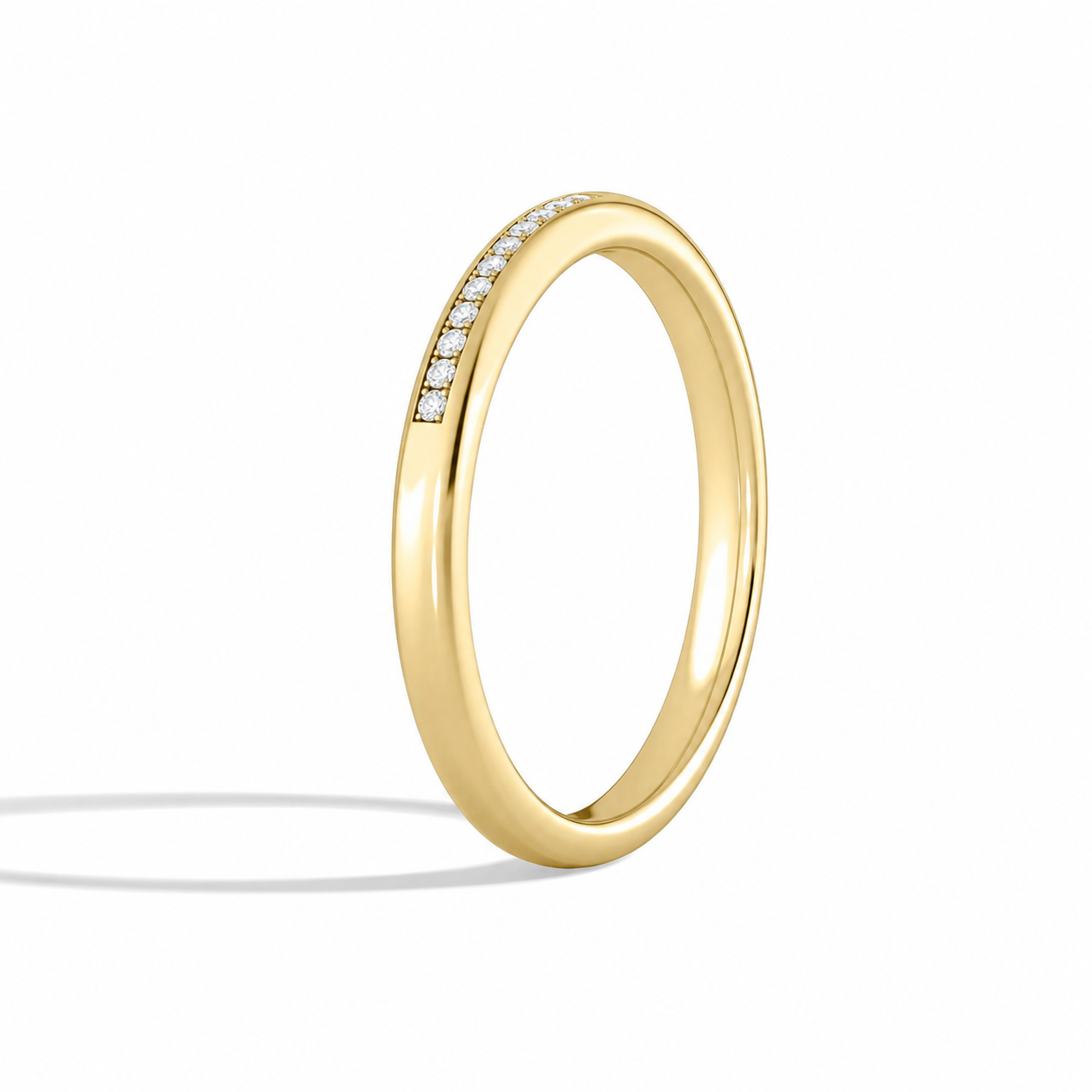

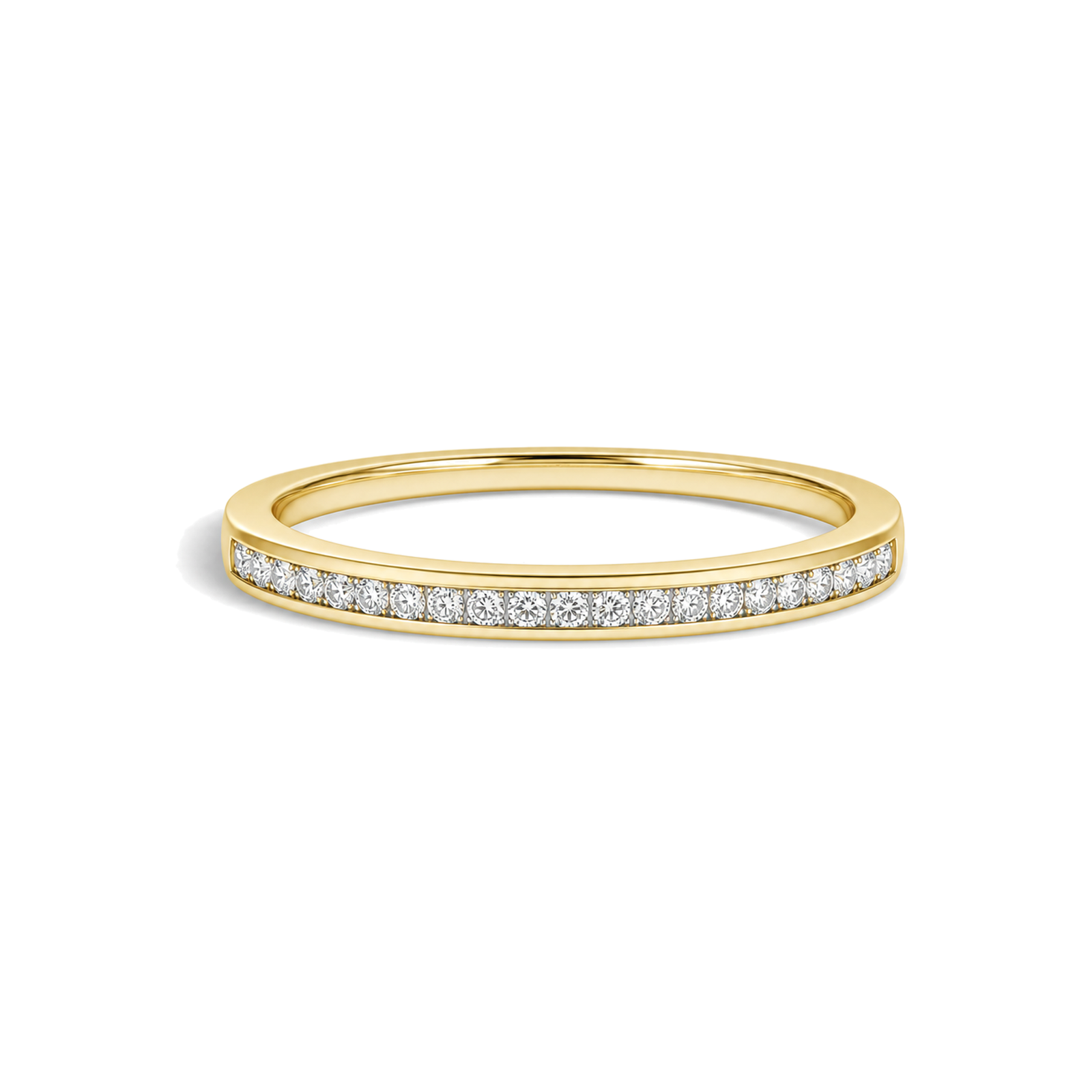
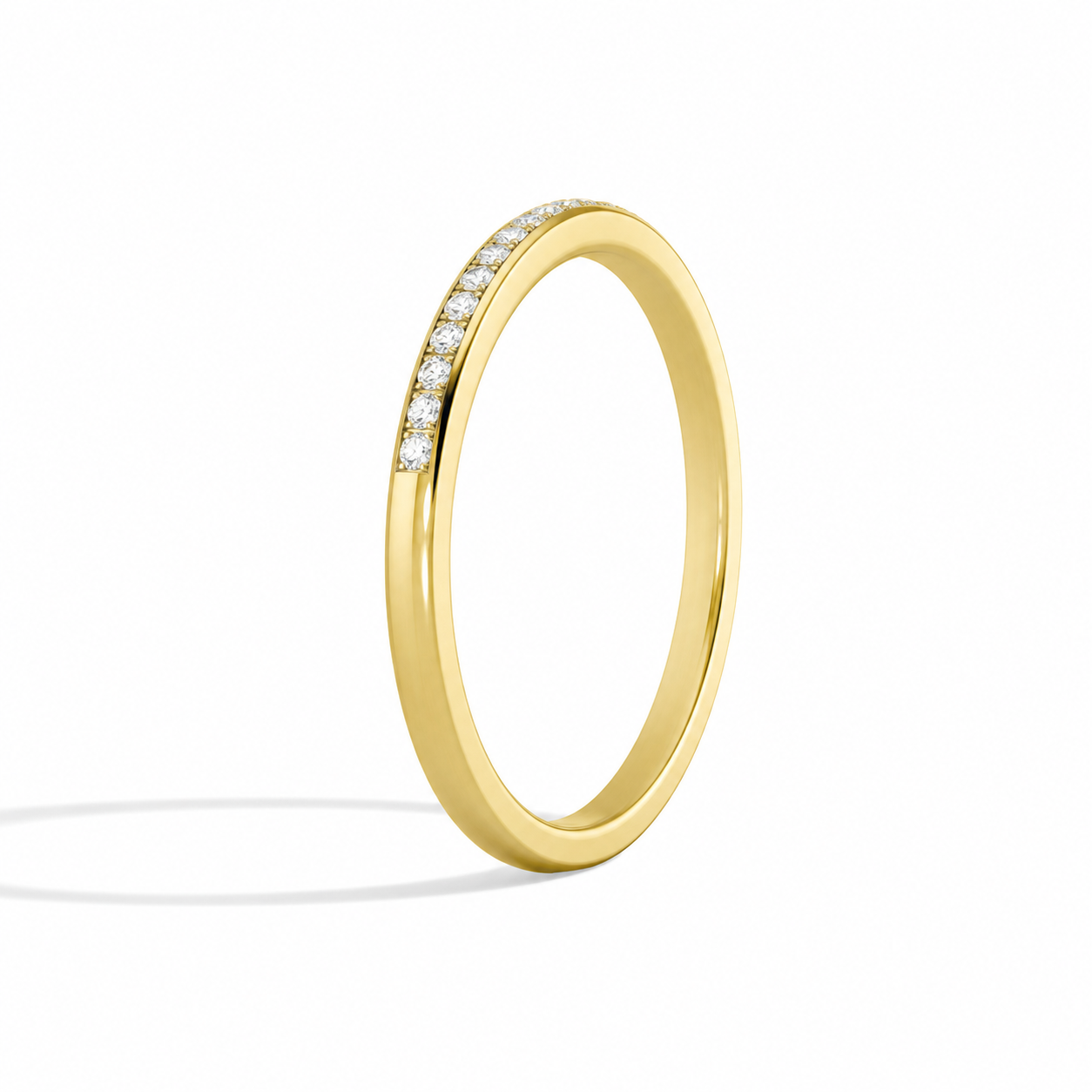
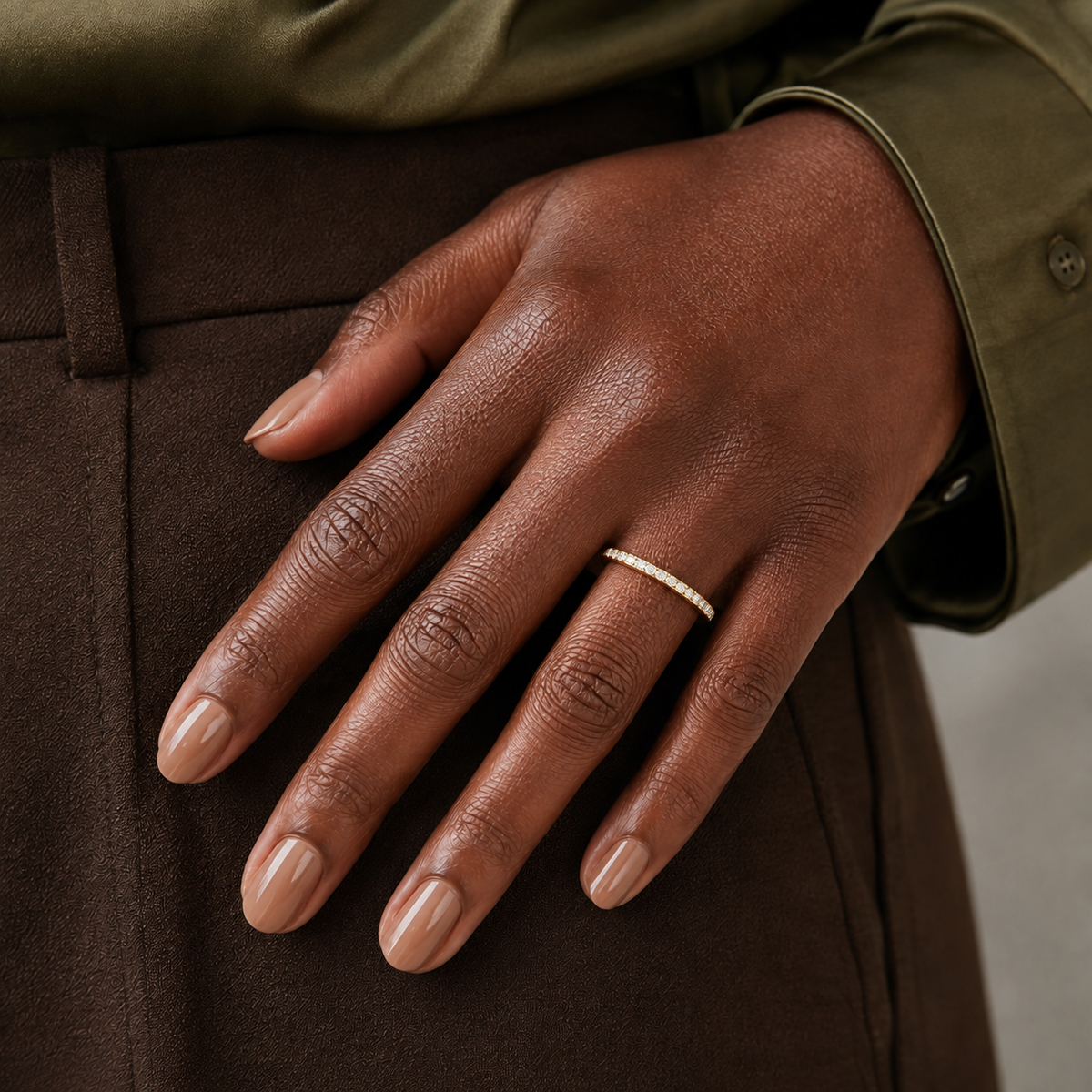

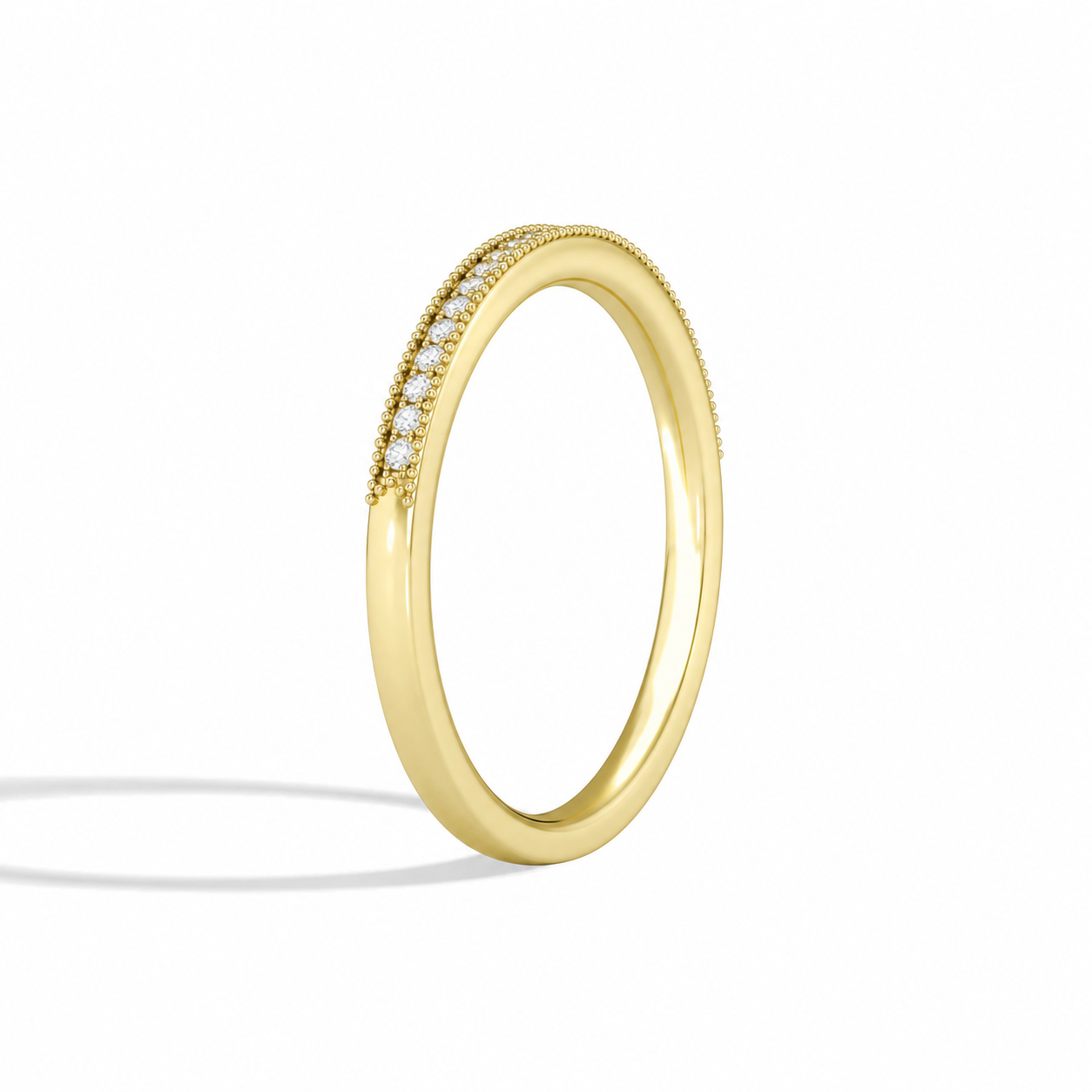

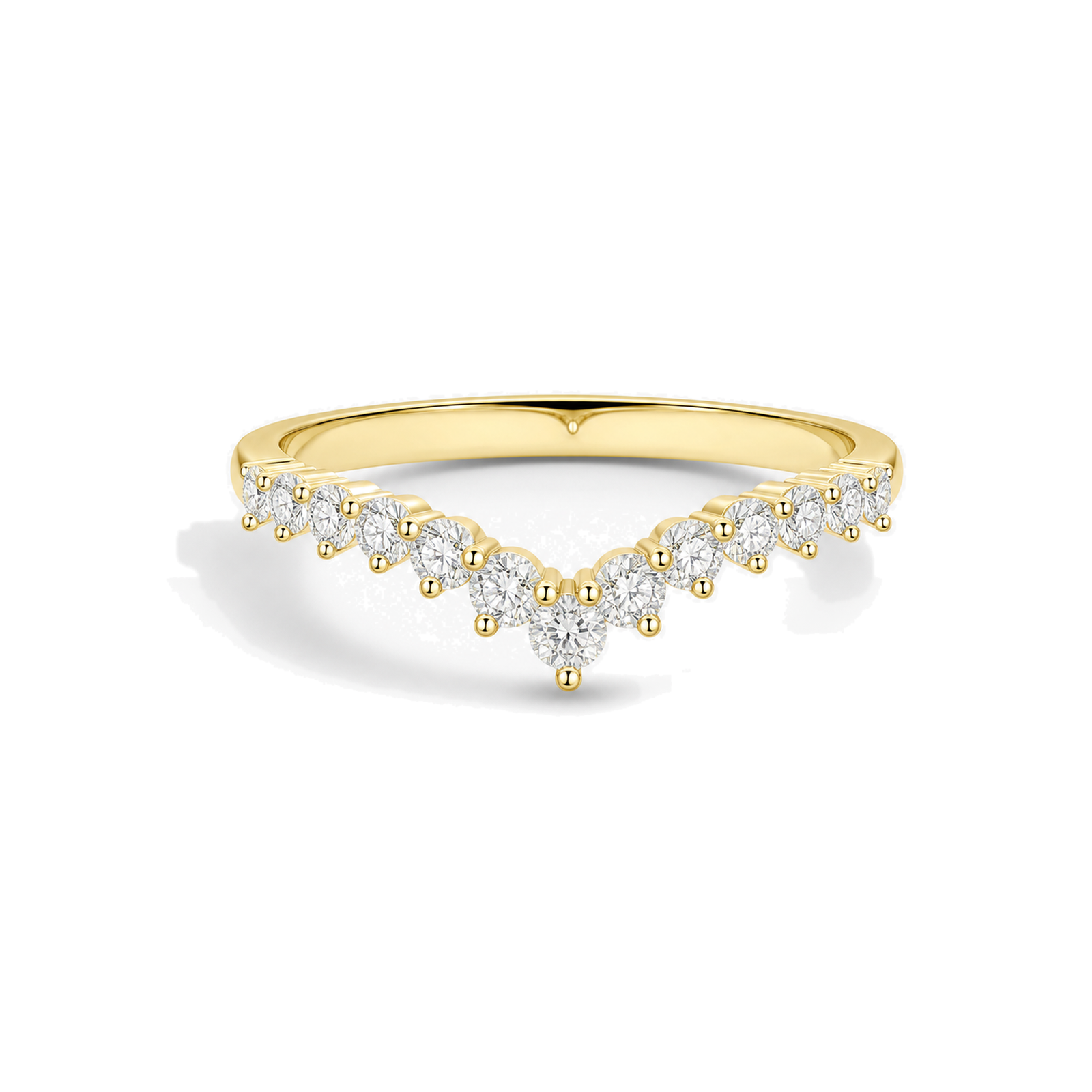
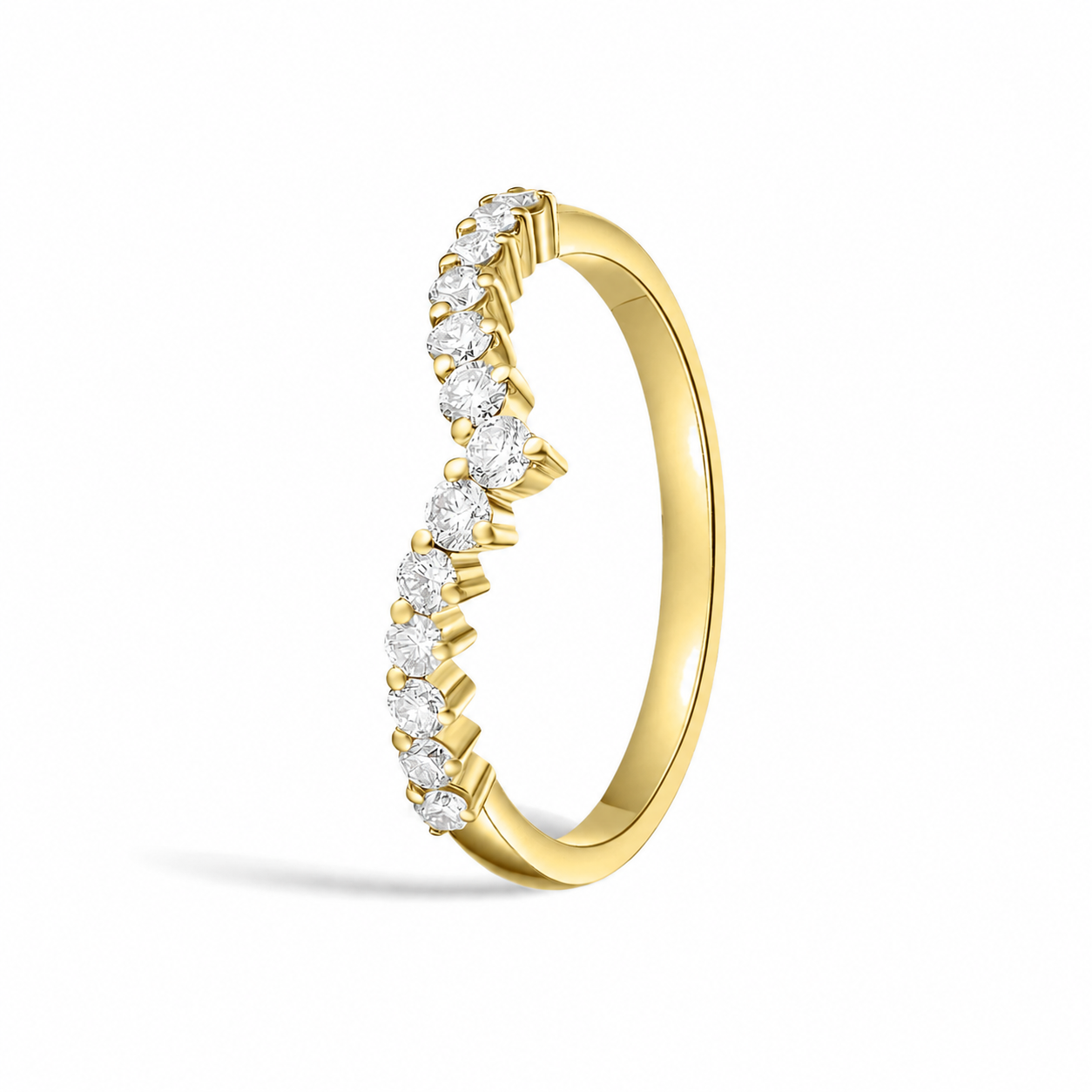

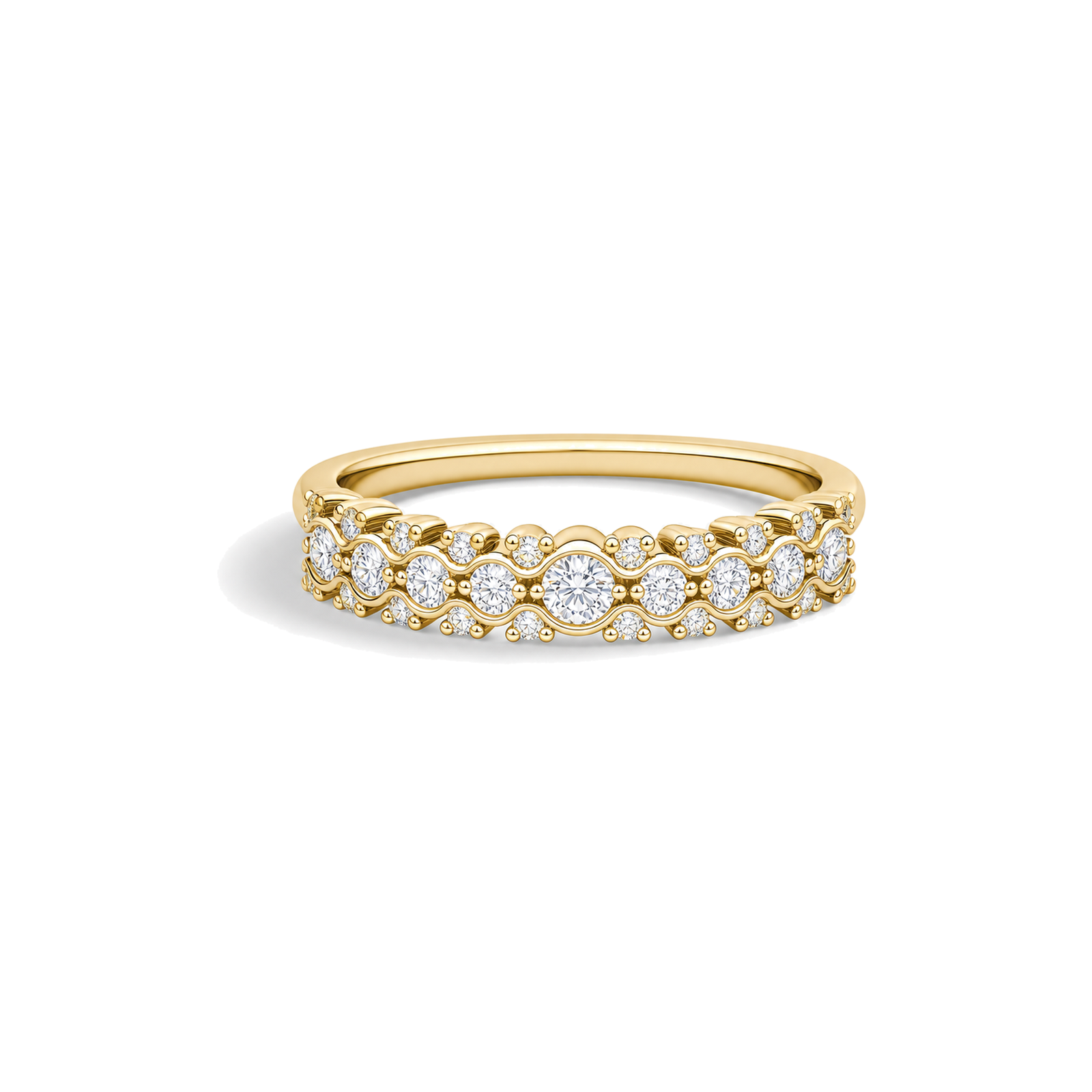


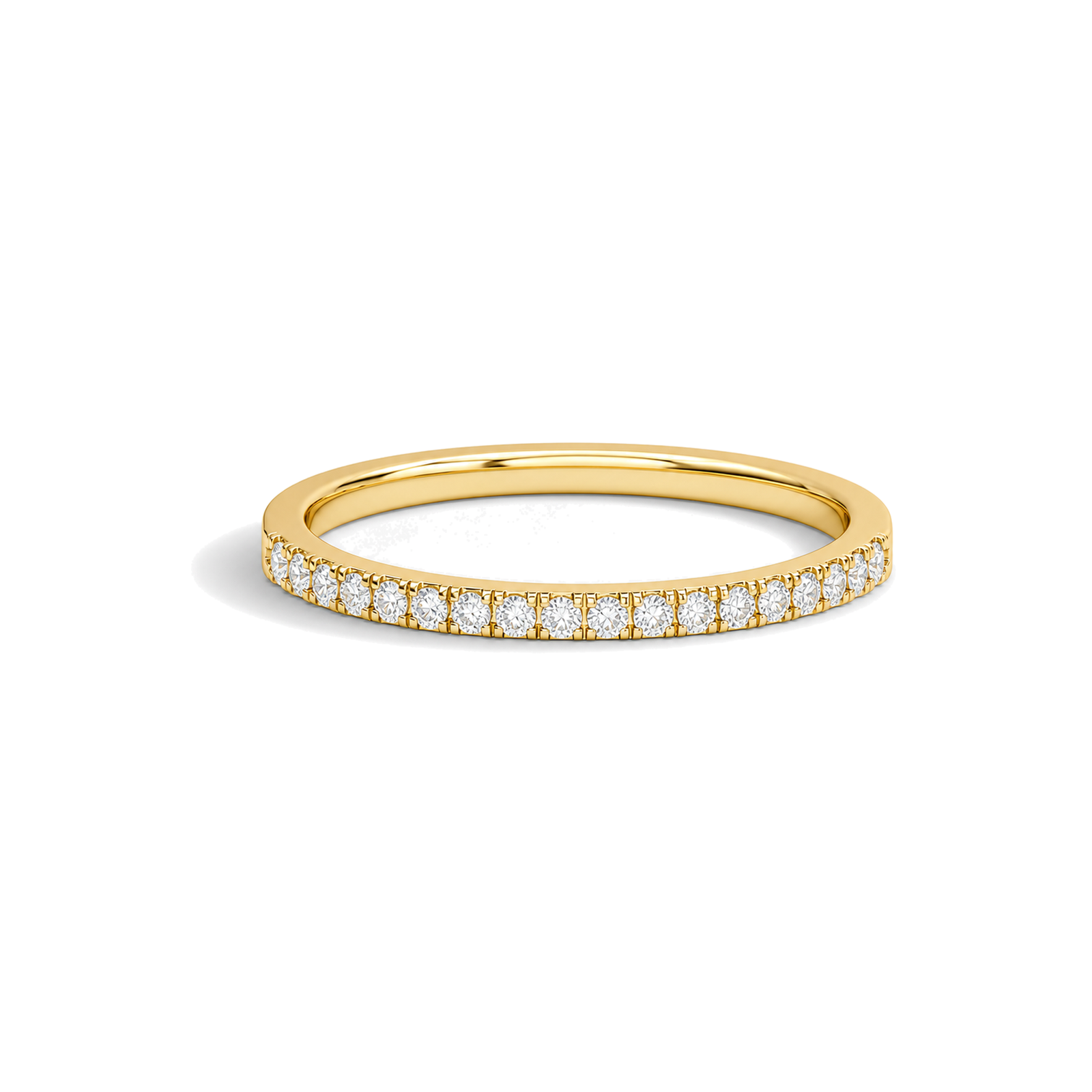


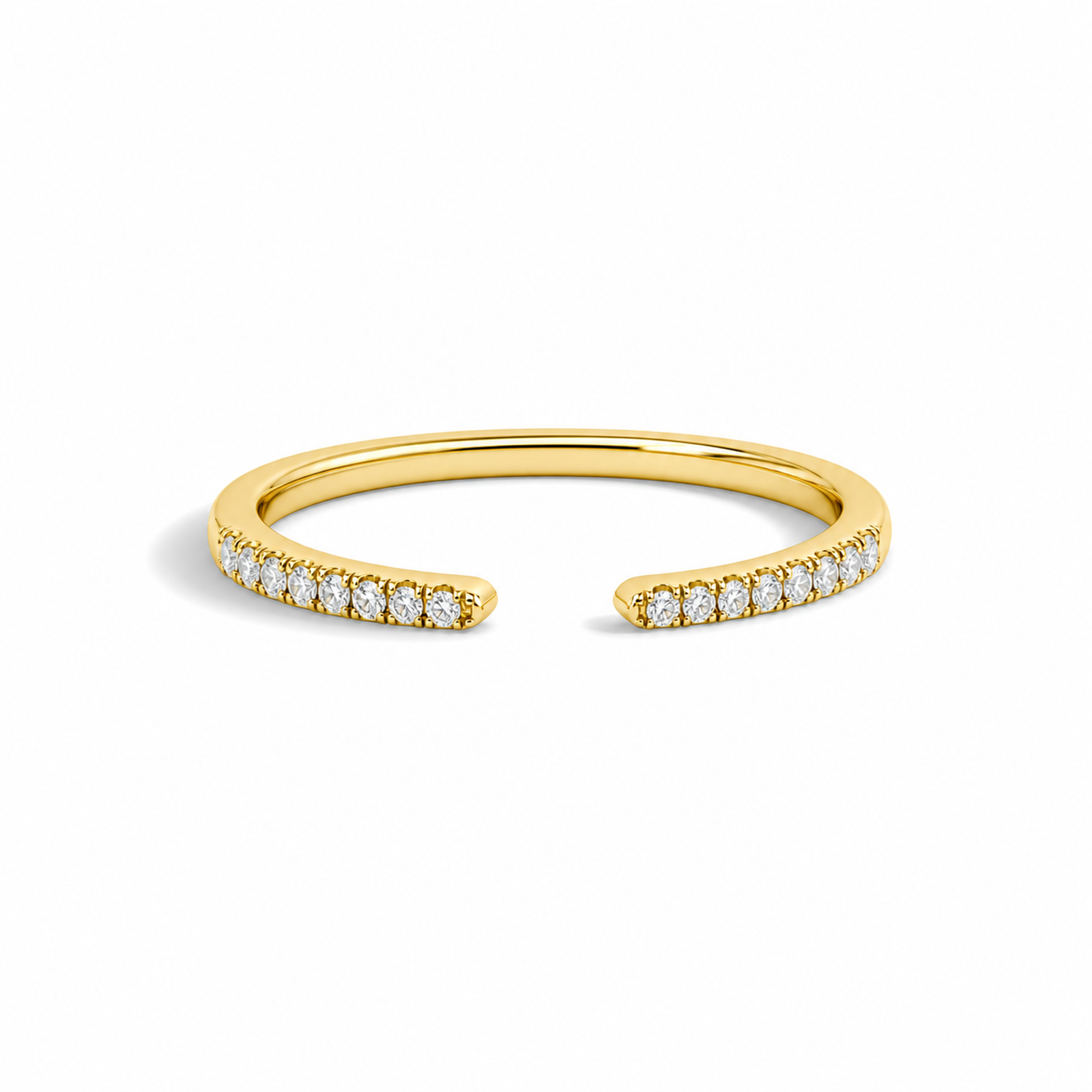


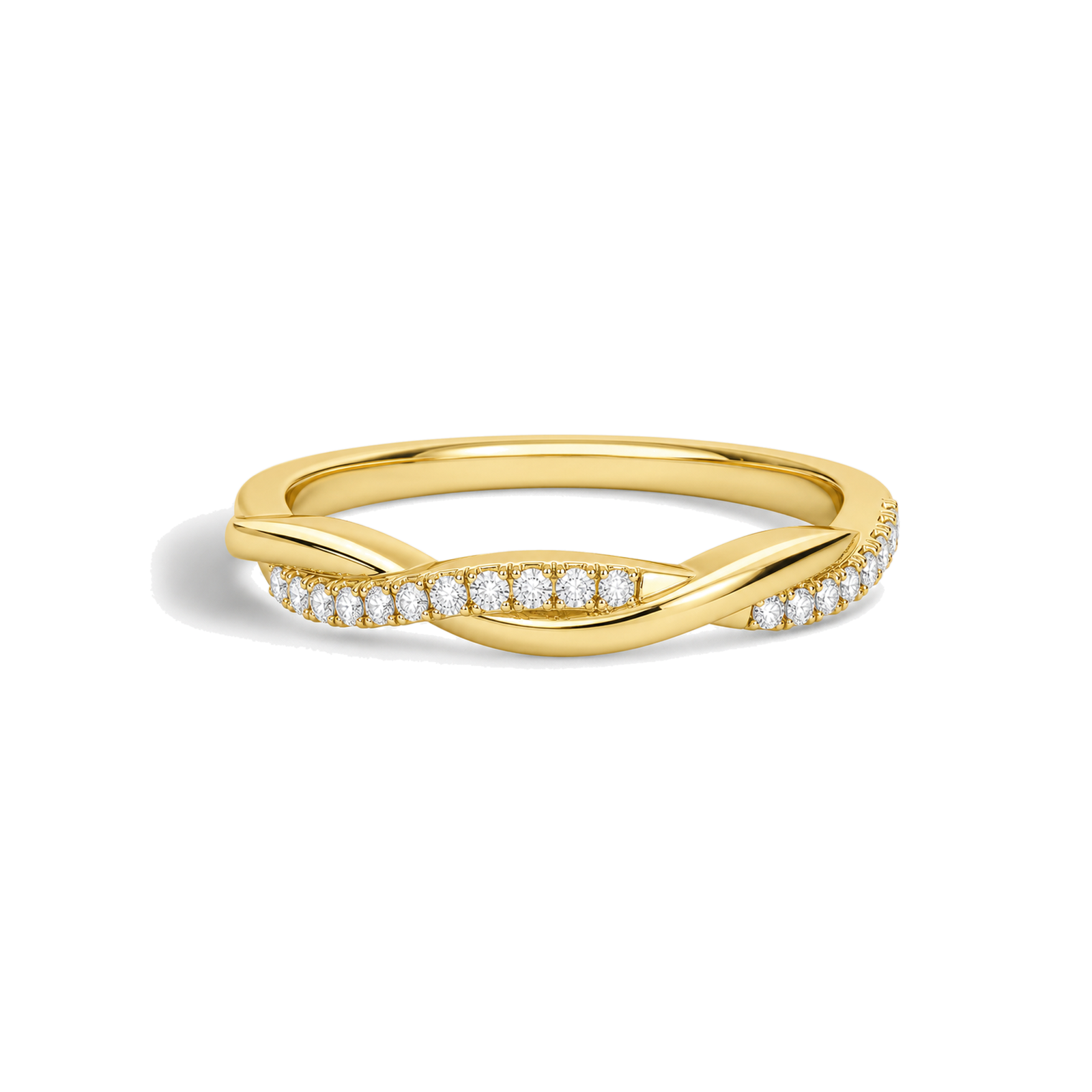
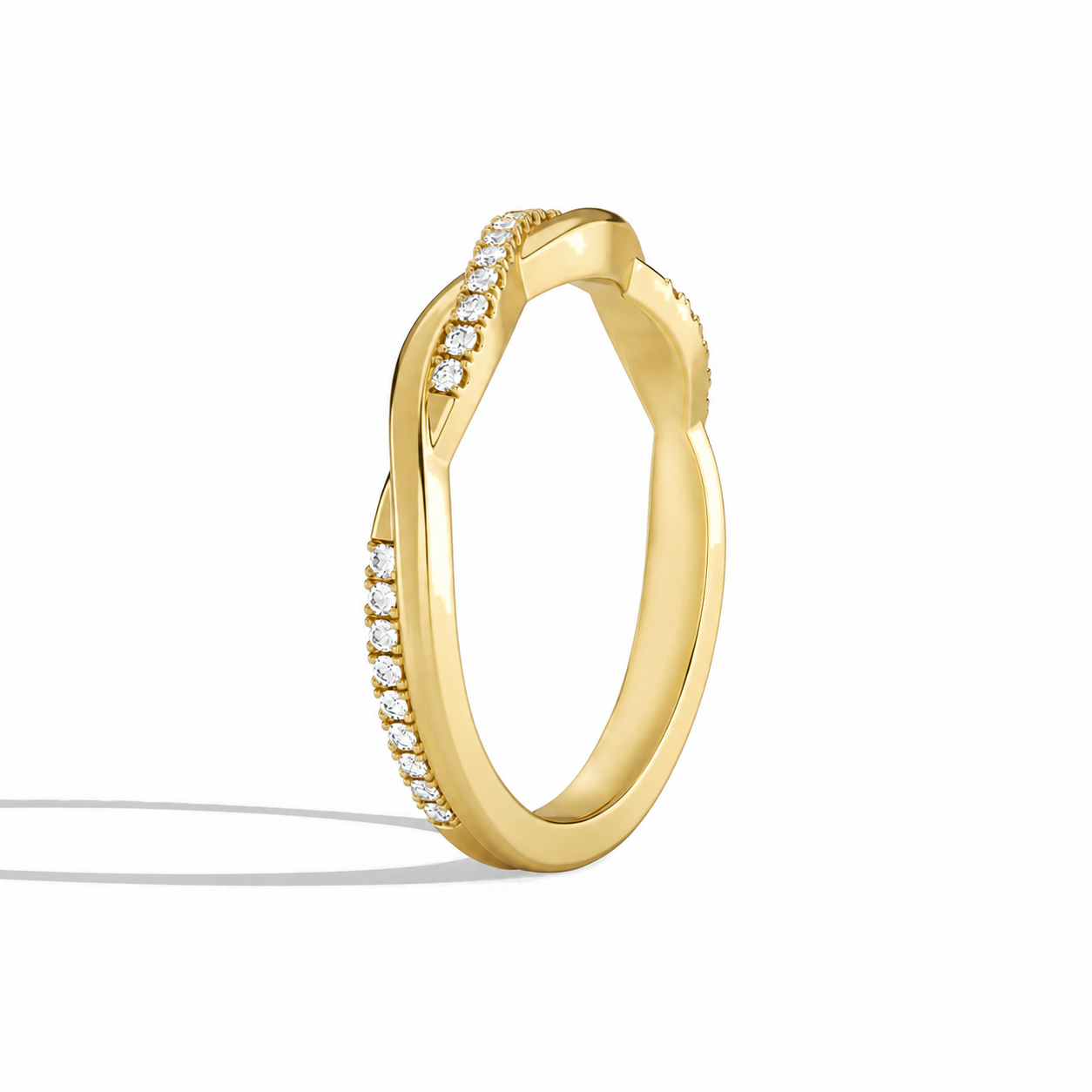

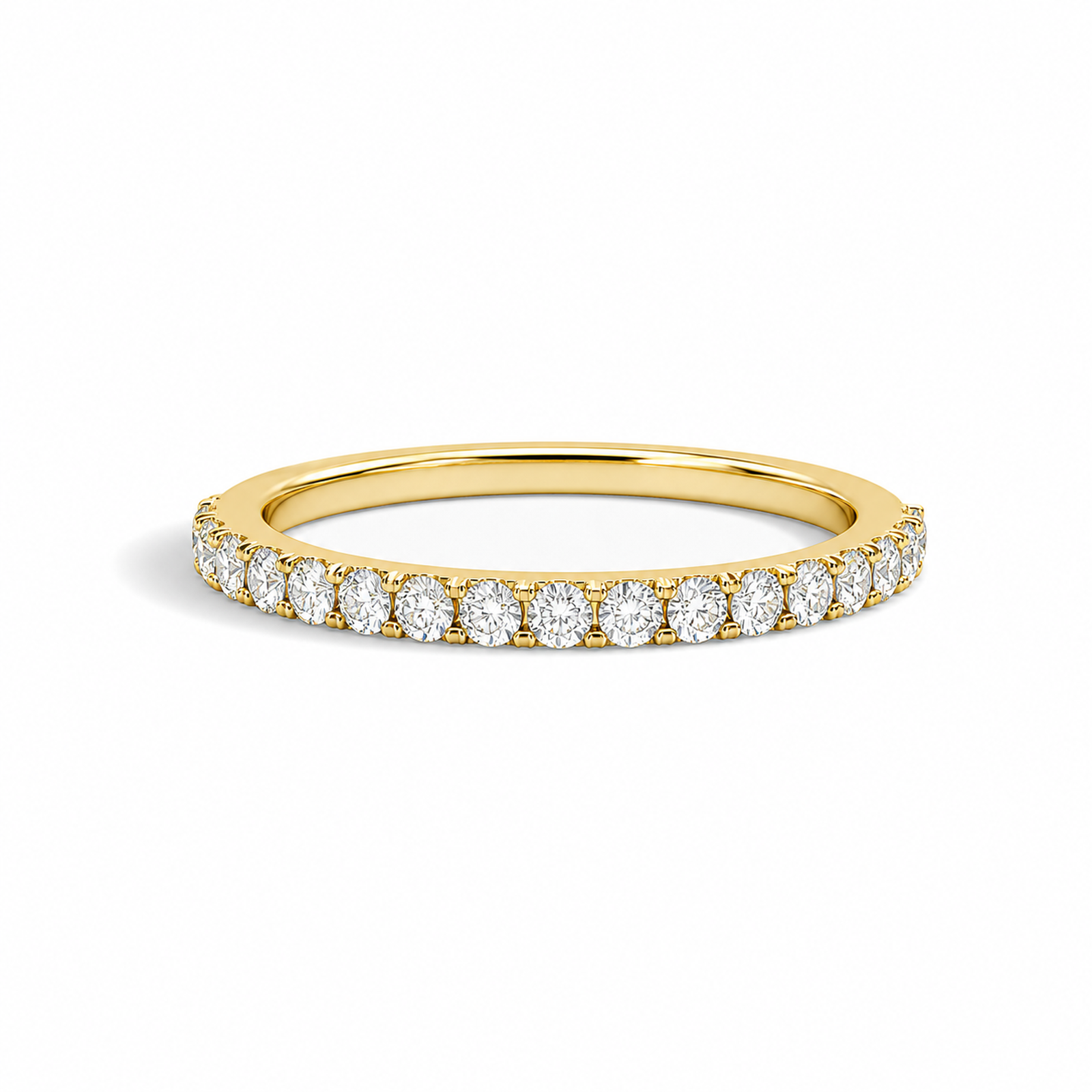
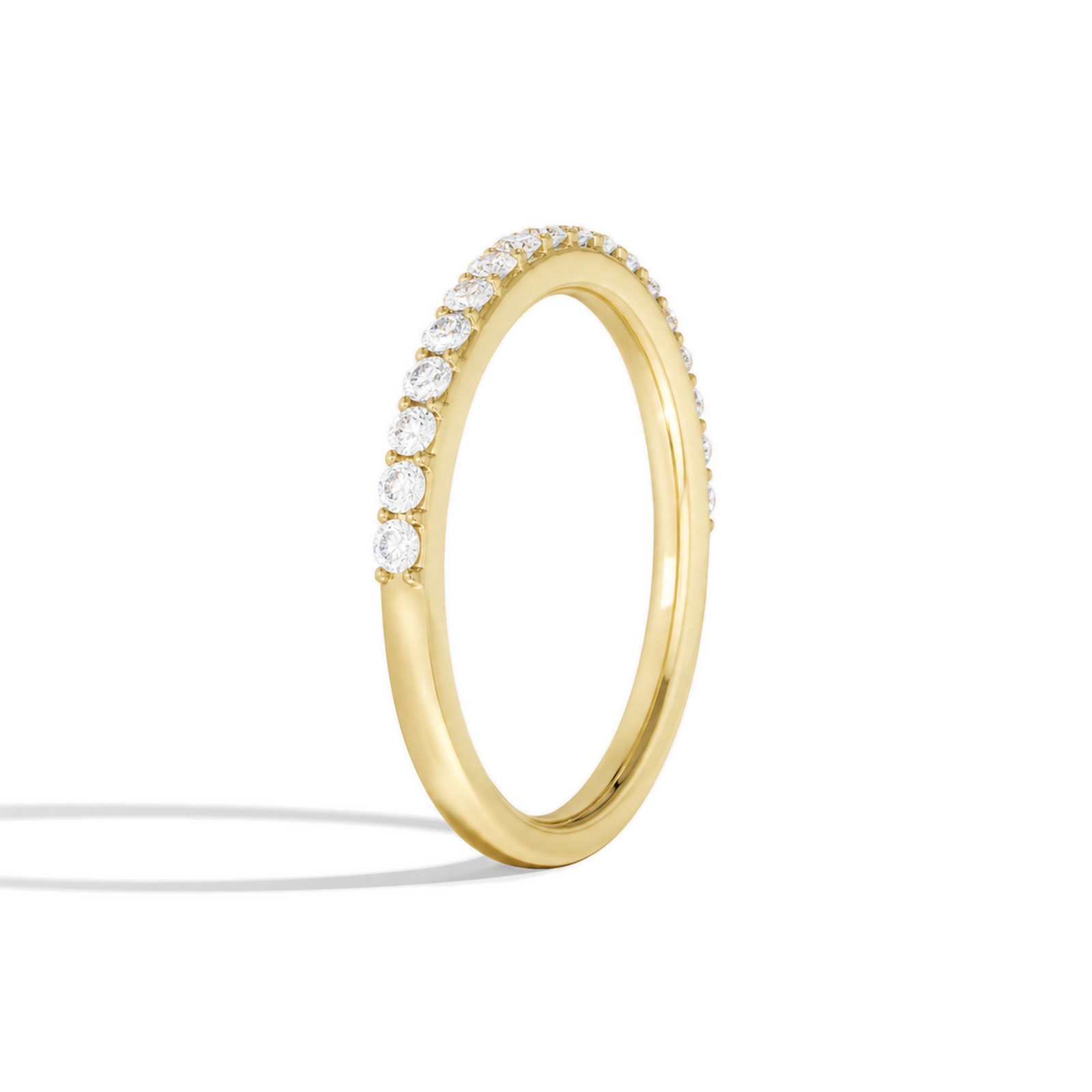

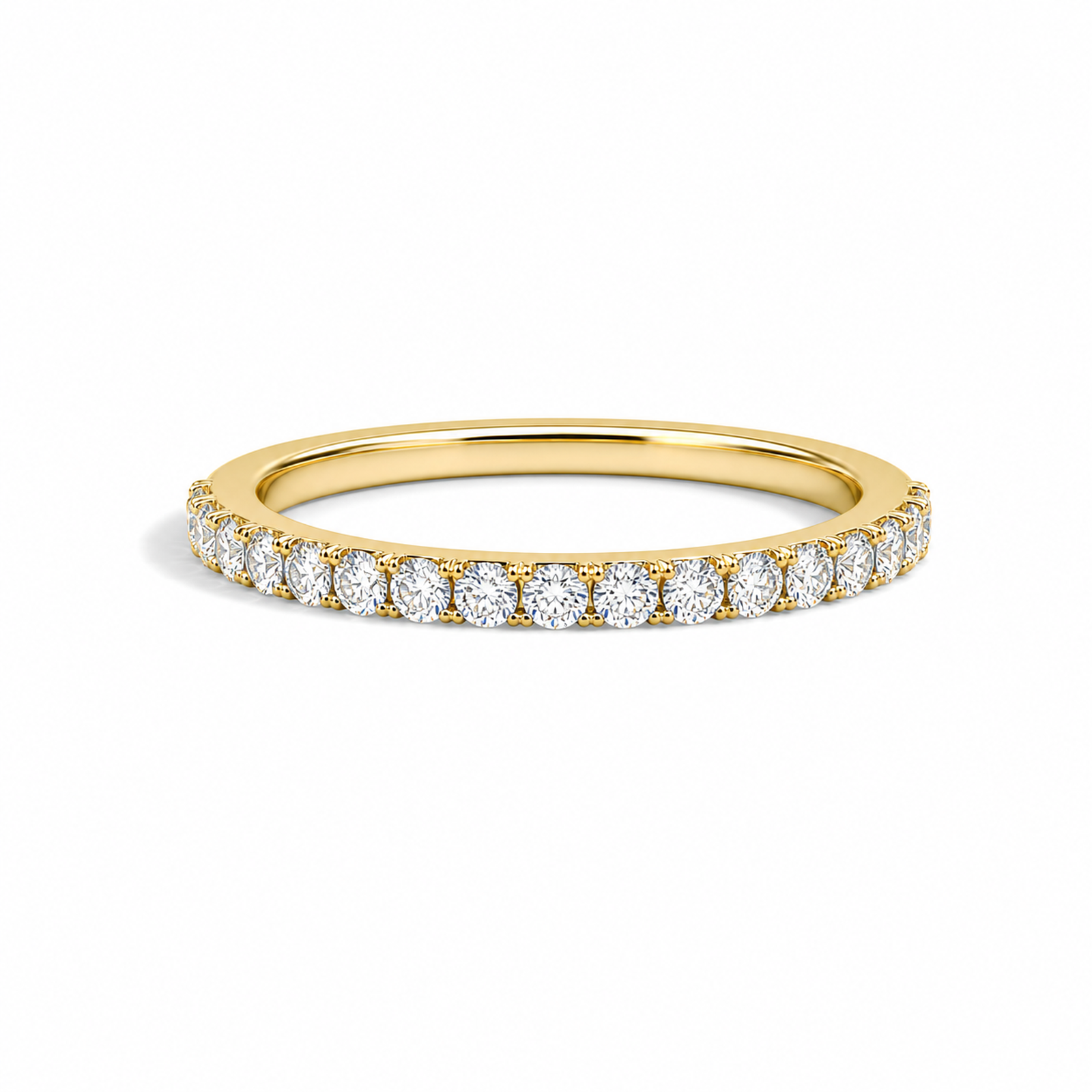





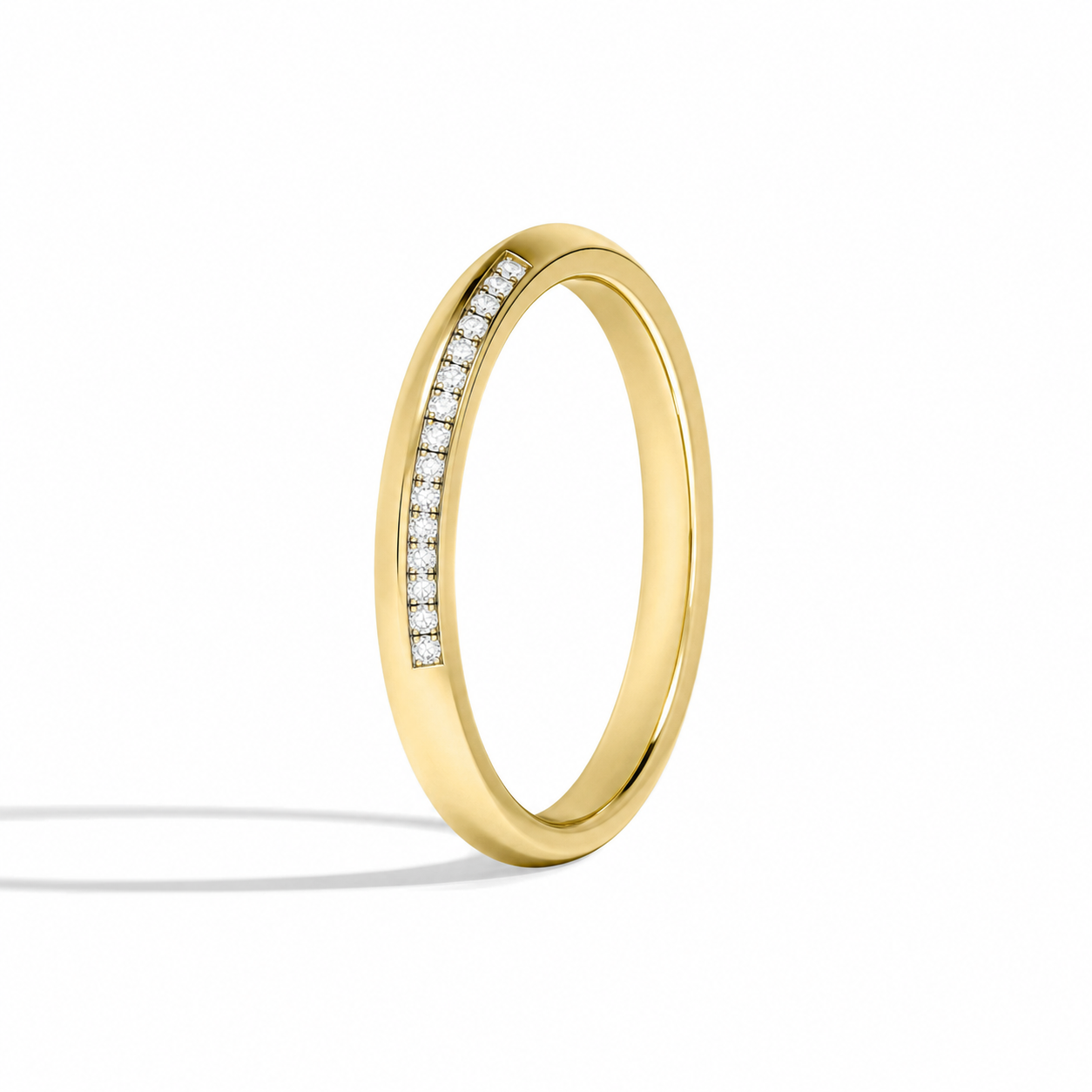

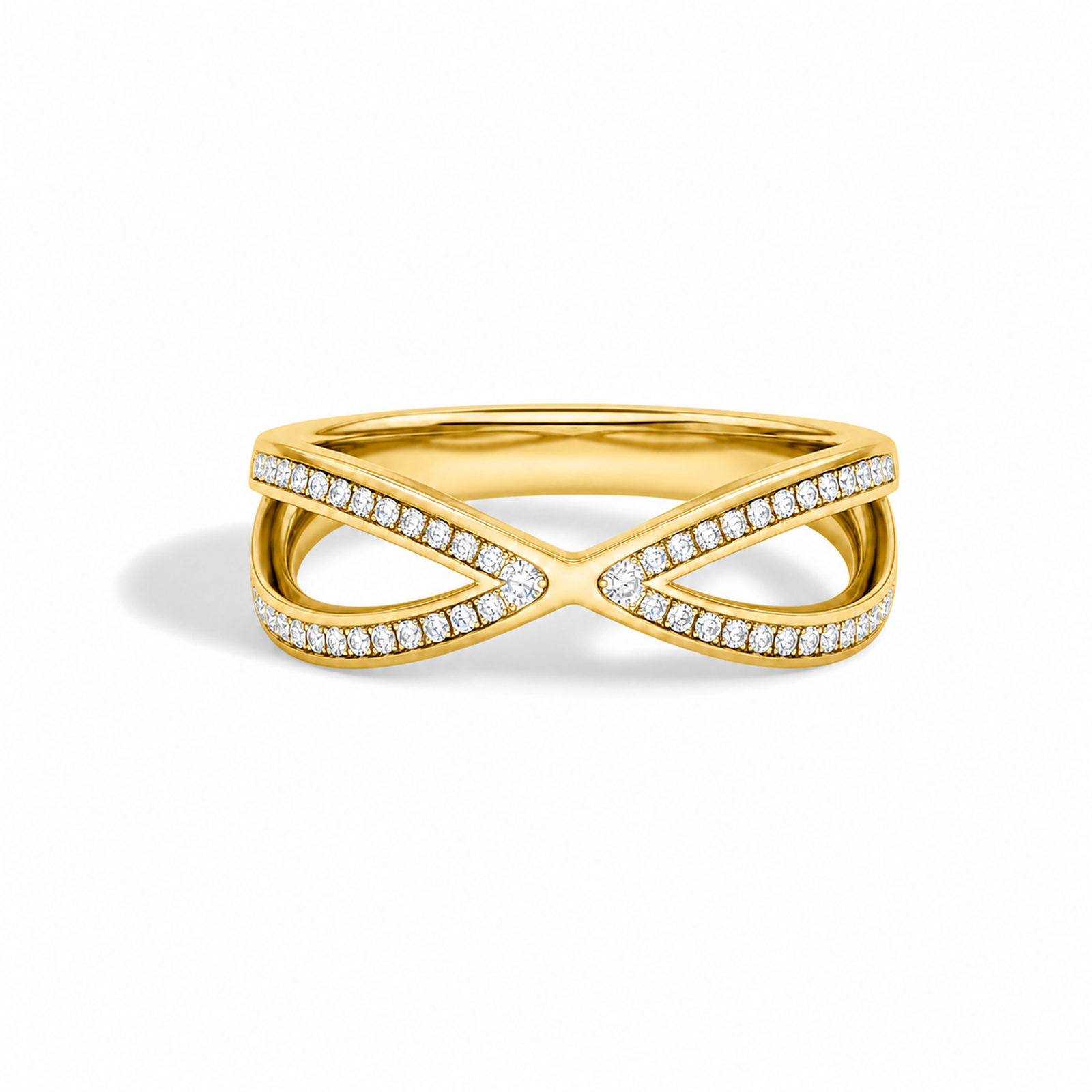


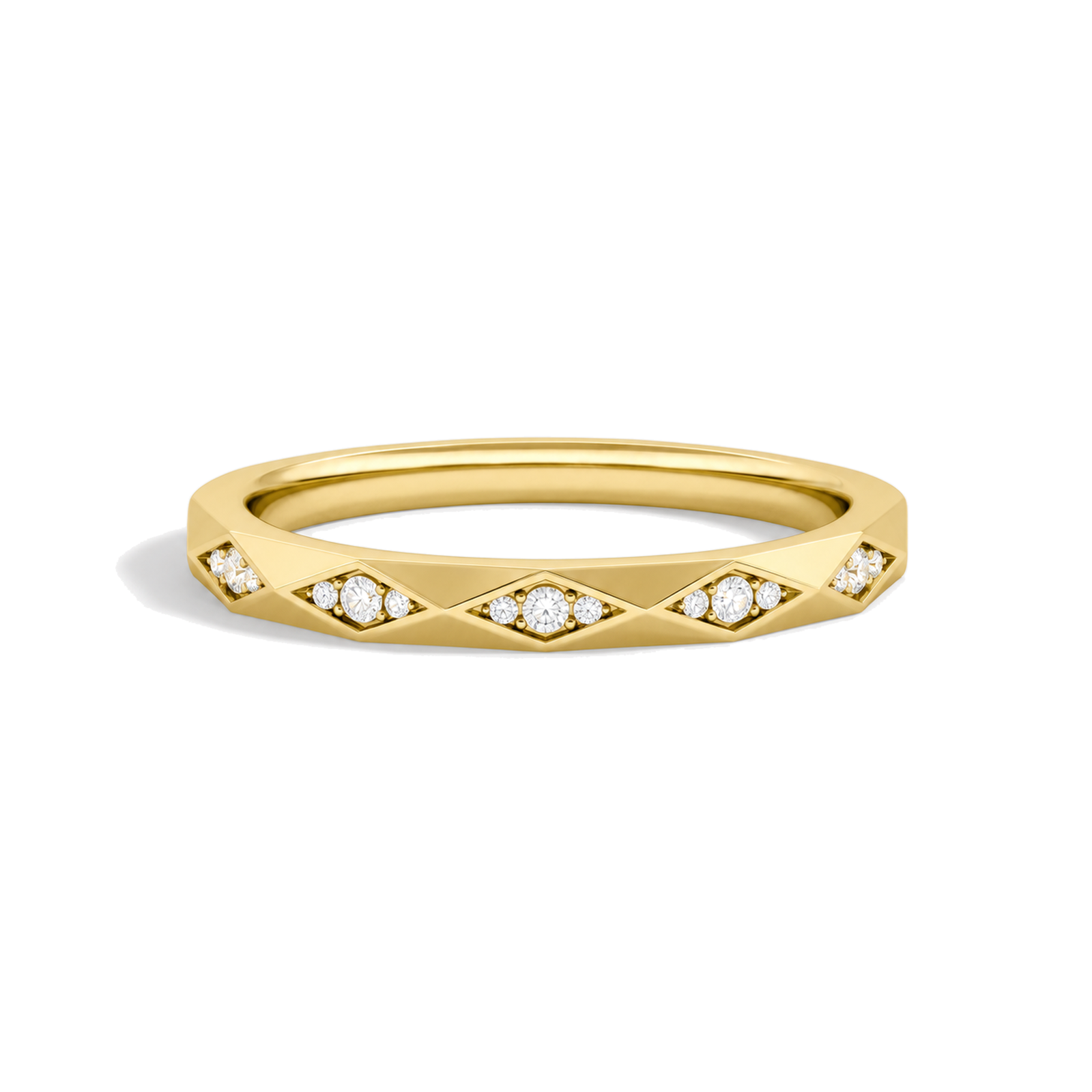


14K Yellow Gold Lab-Grown Diamond Rings: A Visible Line across the Hand
Yellow Gold makes the ring’s material path explicit. It appears between diamonds in an eternity sequence, around a bezel, beside a channel, across an open interval, and through the shoulders and underside that complete the form. The eye can follow where the gold supports, separates, and redirects the line.
The current 69-design universe includes partial and extended coverage, bezel and channel systems, open and curved silhouettes, stacking and crossed forms, milgrain, comfort-fit bands, and sculptural compositions. Each design has a normalized parent counterpart, making this a material-specific selection page rather than a claim of separate exclusivity.
Use Gold to Read the Boundary
A 14K alloy contains approximately 58.3% gold. Other alloying metals, finish, lighting, photography, and exposed area influence its observed yellow tone. Karat does not determine one shade, hardness hierarchy, sensitivity outcome, or maintenance schedule.
Prongs create small golden interruptions; bezels draw complete outlines; channels establish parallel tracks; a broad band gives the surface more visual weight. Yellow Gold can make boundaries more conspicuous, but it cannot improve diamond brilliance, dimensions, or grade.
From Repetition to Open Gesture
Eternity, Half Eternity, and Three-Quarter Coverage titles organize diamonds through repeated cadence. Open, curved, bypass, crossed, and split forms redirect the line or create negative space. Bezel, channel, pavé, prong, milgrain, and engraved details determine how much gold remains visible.
Compare count, spacing, individual dimensions, ring width, profile, and Total Carat Weight scope. A fuller golden edge may make the structure more apparent, while a fine shared-prong line may let diamonds lead. Neither outcome is automatically more refined or meaningful.
Layer by Rhythm, Then Check Contact
A Yellow Gold stack may repeat one material field while varying width, curve, diamond scale, or setting. Mixed metals can also work when a shared edge, profile, or cadence holds the group together. No prescribed ratio or ring count is required.
Examine the stack from above and from the side. Curves, open ends, raised bezels, channels, and knife edges can meet neighboring rings differently. Flush appearance does not guarantee mechanical compatibility, and no arrangement prevents all movement, abrasion, pressure, or impact.
Fit Is Part of the Composition
Nominal size is only one input. Width, interior profile, knuckle, finger base, temperature, swelling, and combined stack width shape the result. Comfort-fit and open labels do not guarantee comfort, adjustability, or one standard size change.
Resizing and personalization require product review. Coverage, channels, open terminals, engraving, symmetry, and settings may limit alteration. Custom possibilities may refine width, contour, diamond arrangement, setting, metal, or detail where feasible.
A Material Page, Not an Occasion Script
The parent Ring Collection owns complete cross-metal education. Engagement Rings own center-led commitment intent; Wedding Bands own ceremonial pairing; Eternity, Curved, Stacking, and Fashion pages own narrower physical forms. This page owns Yellow Gold’s visible path through that broader universe.
Surface should also be read with edge and profile. Polish creates a broader reflected field, while milgrain, engraving, channels, and faceted transitions divide the gold into smaller intervals. No finish is scratch-proof, and refinishing feasibility depends on the exact geometry, diamonds, and details.
Burvonti uses responsibly sourced lab-grown diamonds and supports independent grading or certification within document scope. Clean the complete ring gently and inspect settings, edges, channels, open terminals, and contact points when condition changes. Gold should clarify the construction without assigning it a fixed occasion or identity.
Frequently Asked Questions
How is this page different from the parent Ring Collection?
It focuses on 14K Yellow Gold’s visible edges, intervals, profile, and layered relationships; the parent owns the cross-metal framework.
How much gold is in 14K Yellow Gold?
Approximately 58.3%. Other alloying metals influence final shade and working behavior.
Are all 14K yellow gold rings the same color?
No. Alloy formula, finish, lighting, photography, and visible metal area affect appearance.
Which ring designs are currently represented?
The 69-design set includes eternity, partial coverage, bezel, channel, curved, open, stacking, crossed, milgrain, comfort-fit, and sculptural forms.
Are these rings only for weddings or anniversaries?
No. The page is a broad material route. Specific Engagement, Wedding, and Anniversary pages own those narrower intents.
How does Yellow Gold change setting visibility?
It can make prongs, bezel edges, channel walls, and metal intervals more explicit; the effect depends on exposed area and structure.
Does Yellow Gold enhance diamond brilliance?
No. It changes surrounding color and boundary, not facet relationships, dimensions, or grading facts.
How should Total Carat Weight be compared?
Read it with diamond count, individual dimensions, coverage, setting, width, and profile rather than as a face-up size guarantee.
Can Yellow Gold rings be stacked together?
Yes when widths, heights, curves, edges, settings, movement, and contact are considered.
Can Yellow Gold be mixed with other metals?
Yes as an aesthetic choice. A shared width, edge, surface, or diamond rhythm can keep the group coherent.
Do curved rings fit every neighboring ring?
No. A contour responds to specific dimensions and may leave different spaces beside another design.
Are open Yellow Gold rings adjustable?
Not automatically. Exact construction, tension, settings, dimensions, and alloy require technical review.
Can all 14K Yellow Gold rings be resized?
No. Coverage, channels, open forms, engraving, symmetry, and requested change affect feasibility.
Can Yellow Gold cause sensitivity?
Sensitivity depends on the complete alloy and wearer; the color name alone cannot establish a universal result.
Can Burvonti personalize a Yellow Gold ring?
Custom possibilities may include width, contour, diamond arrangement, setting, metal, or detail, subject to feasibility.
How should a Yellow Gold diamond ring be cared for?
Clean gently, limit abrasive contact, and inspect settings, edges, open ends, channels, and stack contact points when condition changes.