
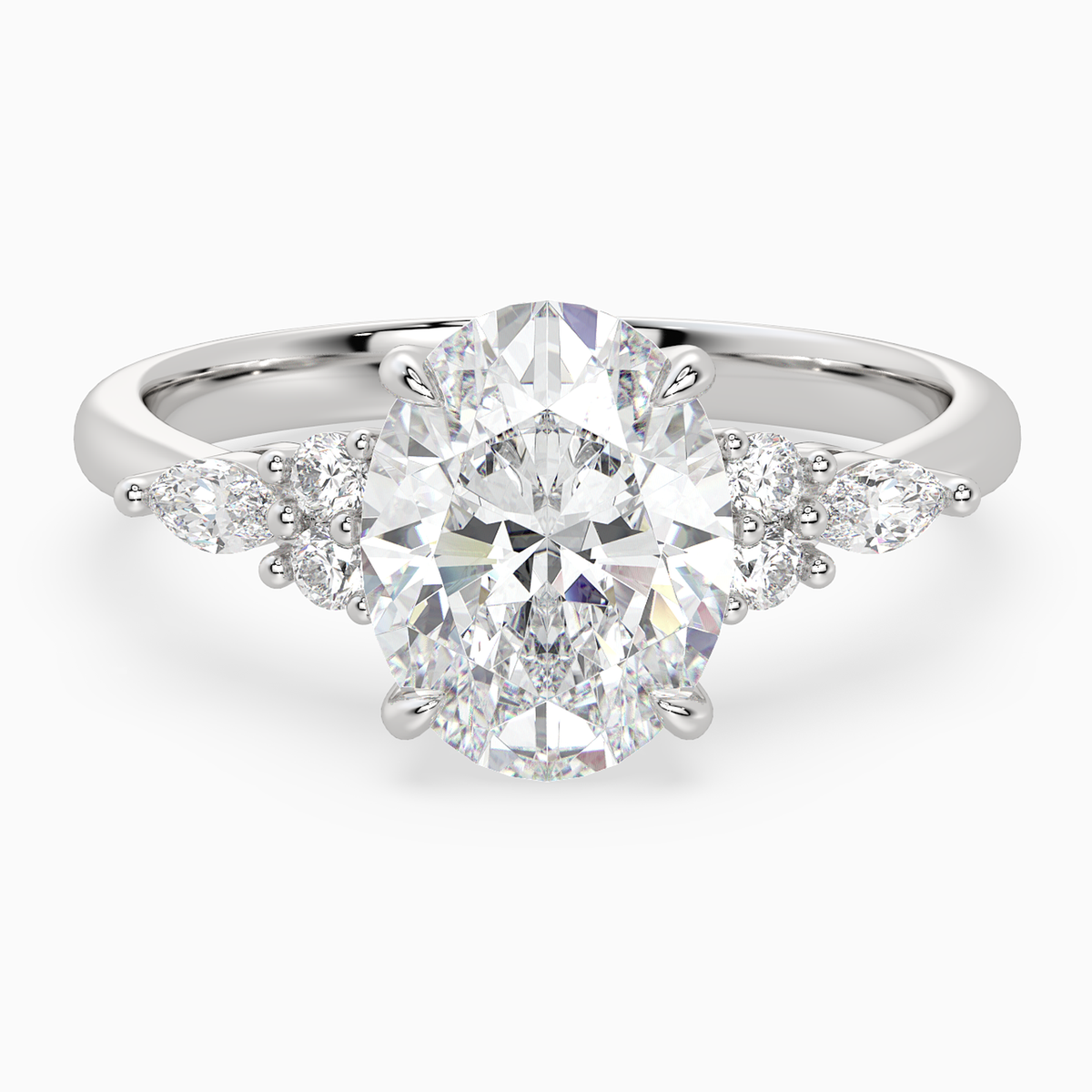


Cushion Diamond Engagement Rings in 18K Yellow Gold
A soft outline held within a fuller gold field. 18K yellow gold gives cushion centers warmth, boundary, and measured material presence.


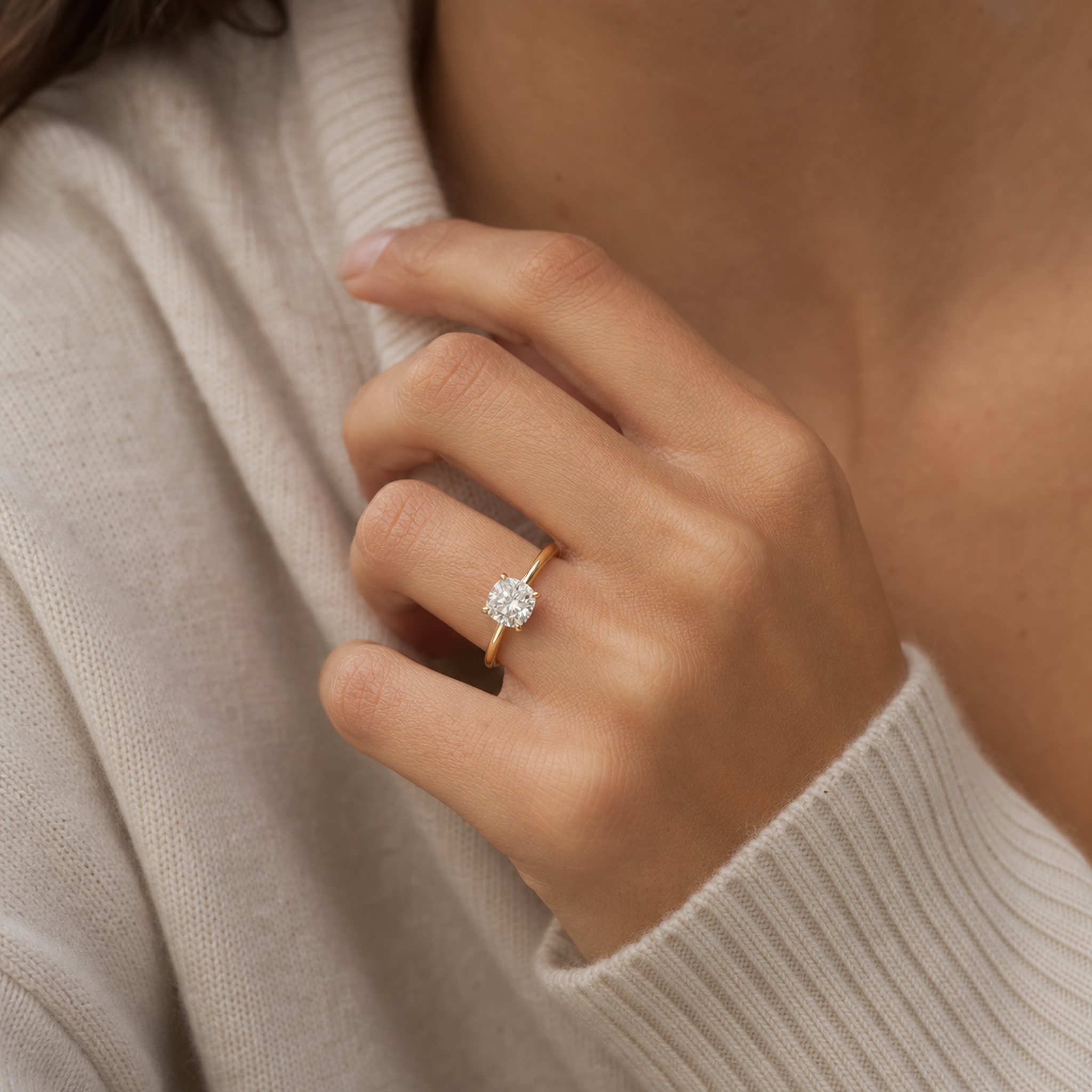


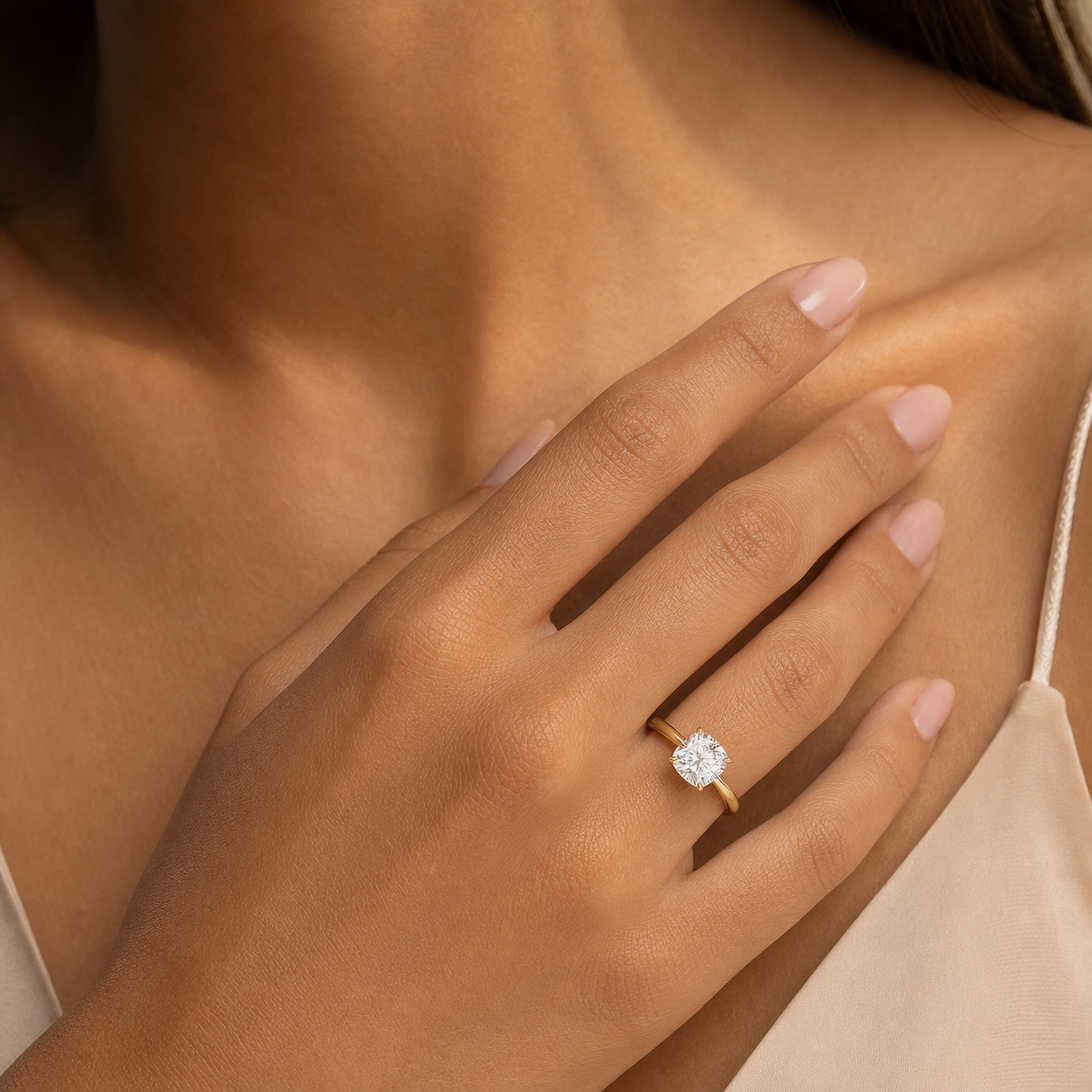
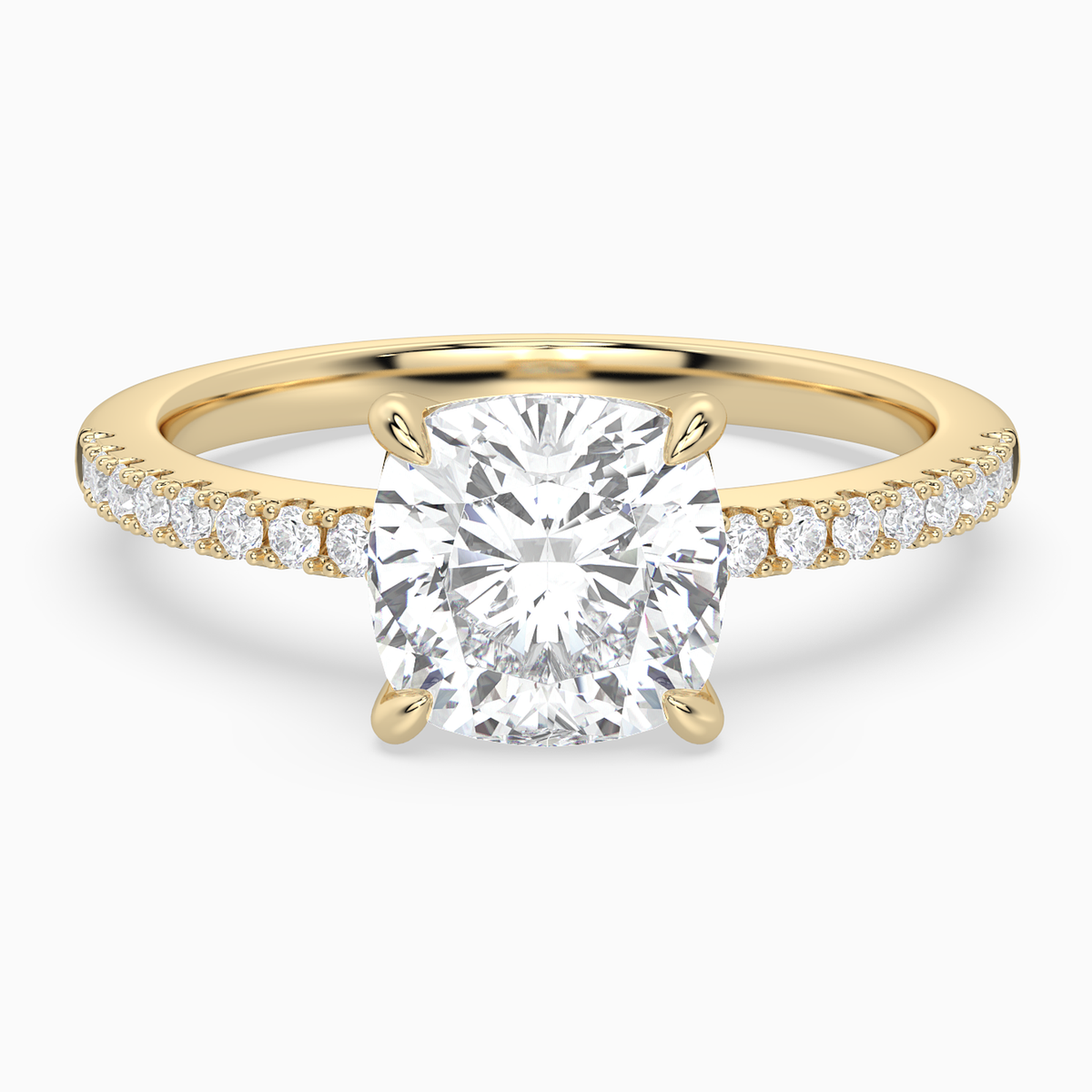
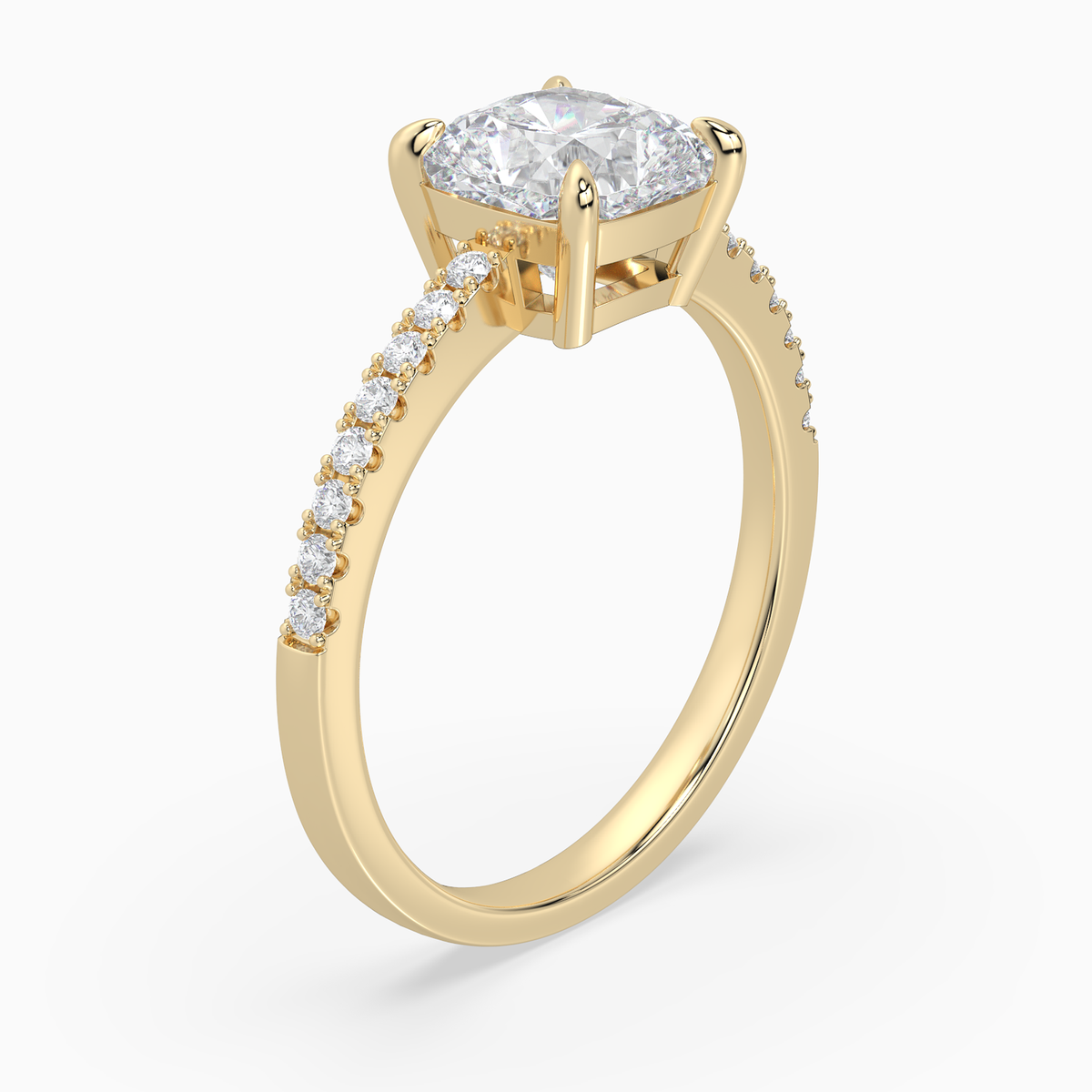
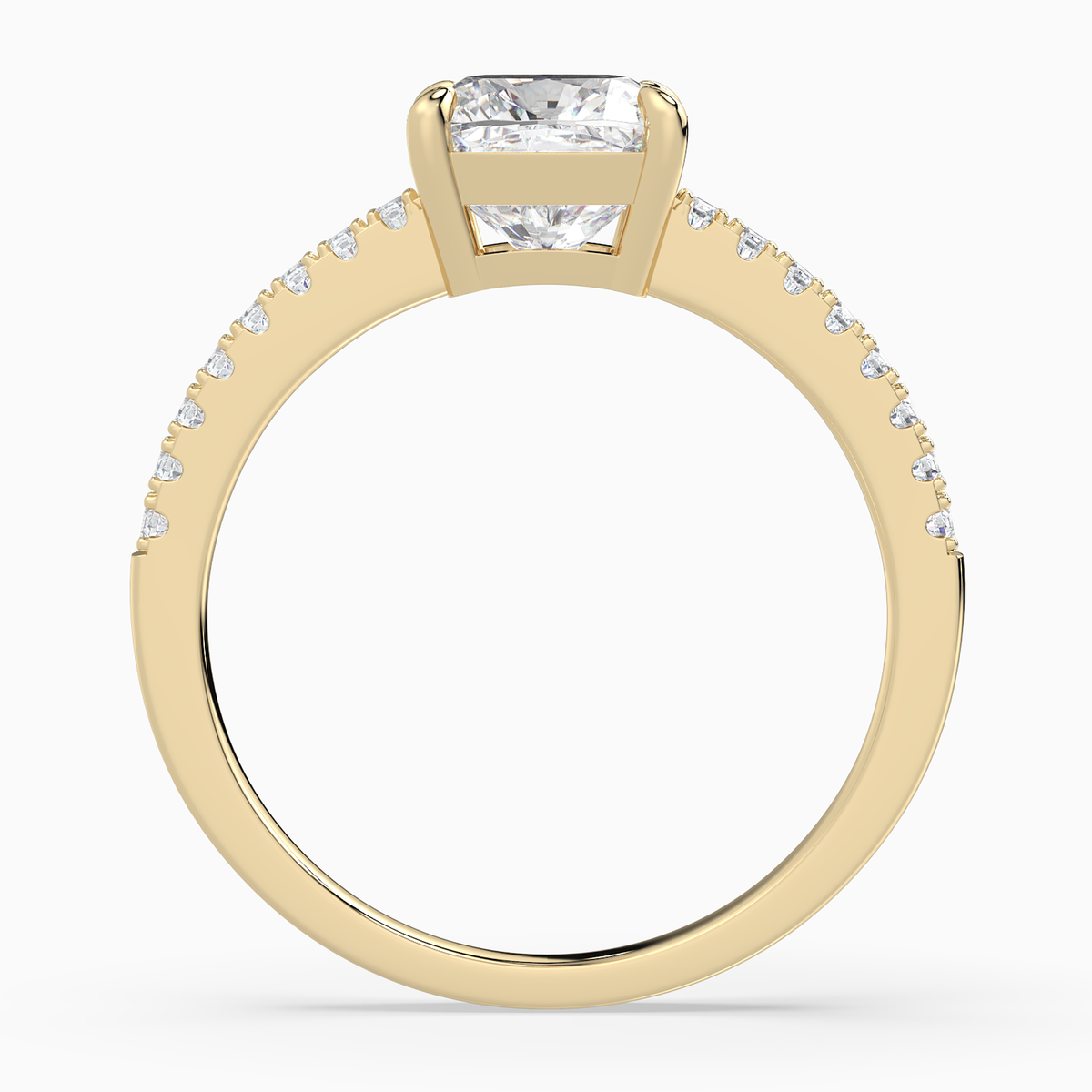
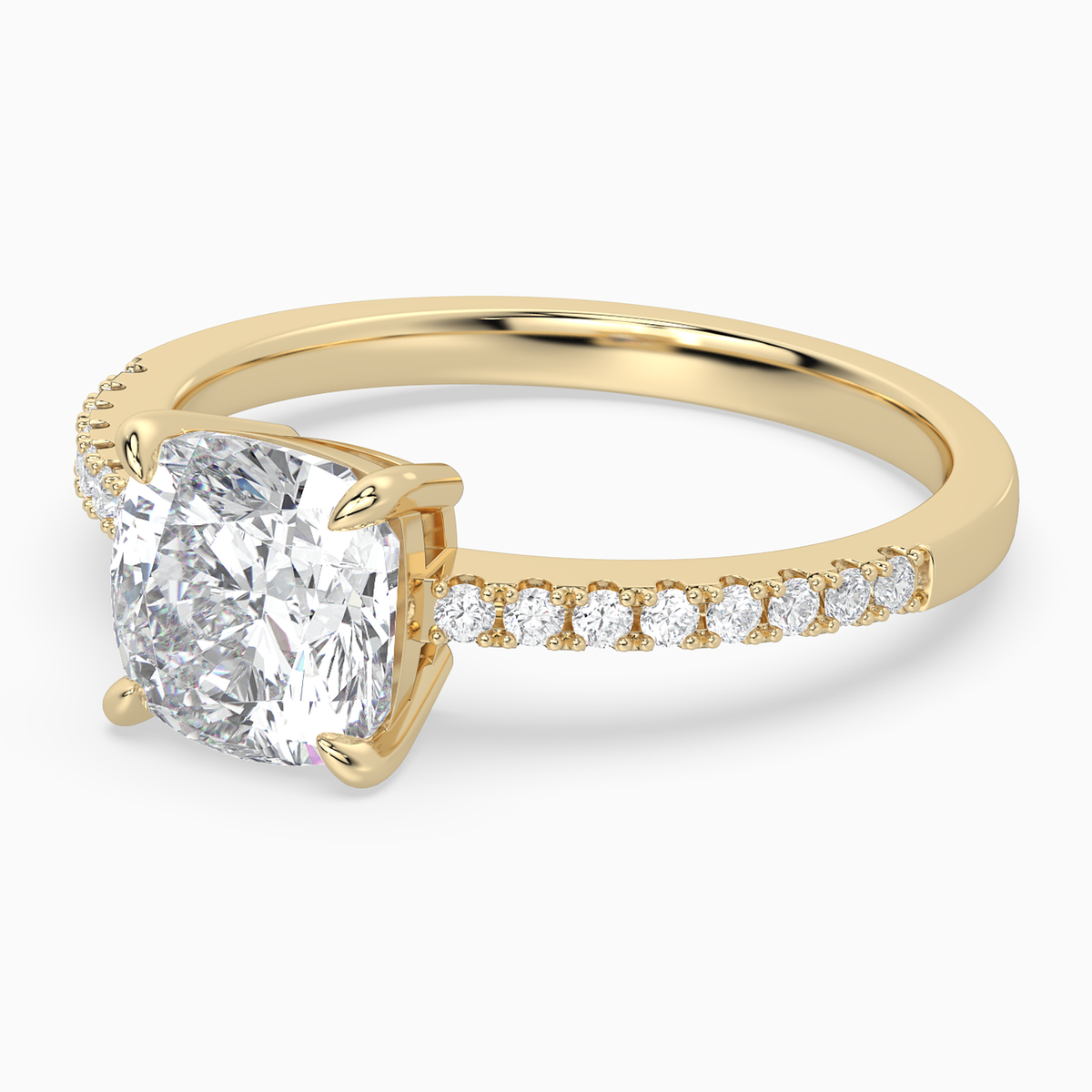


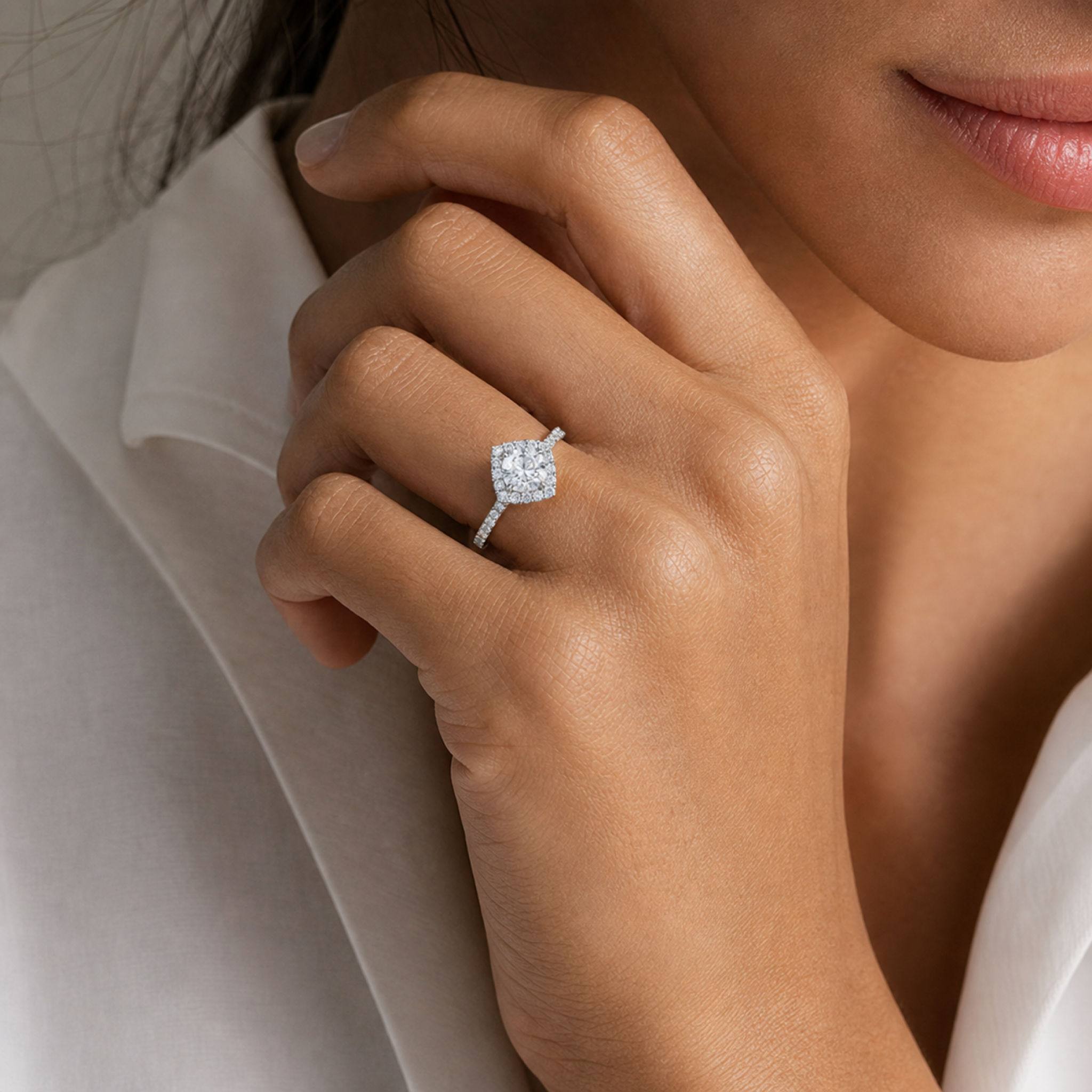
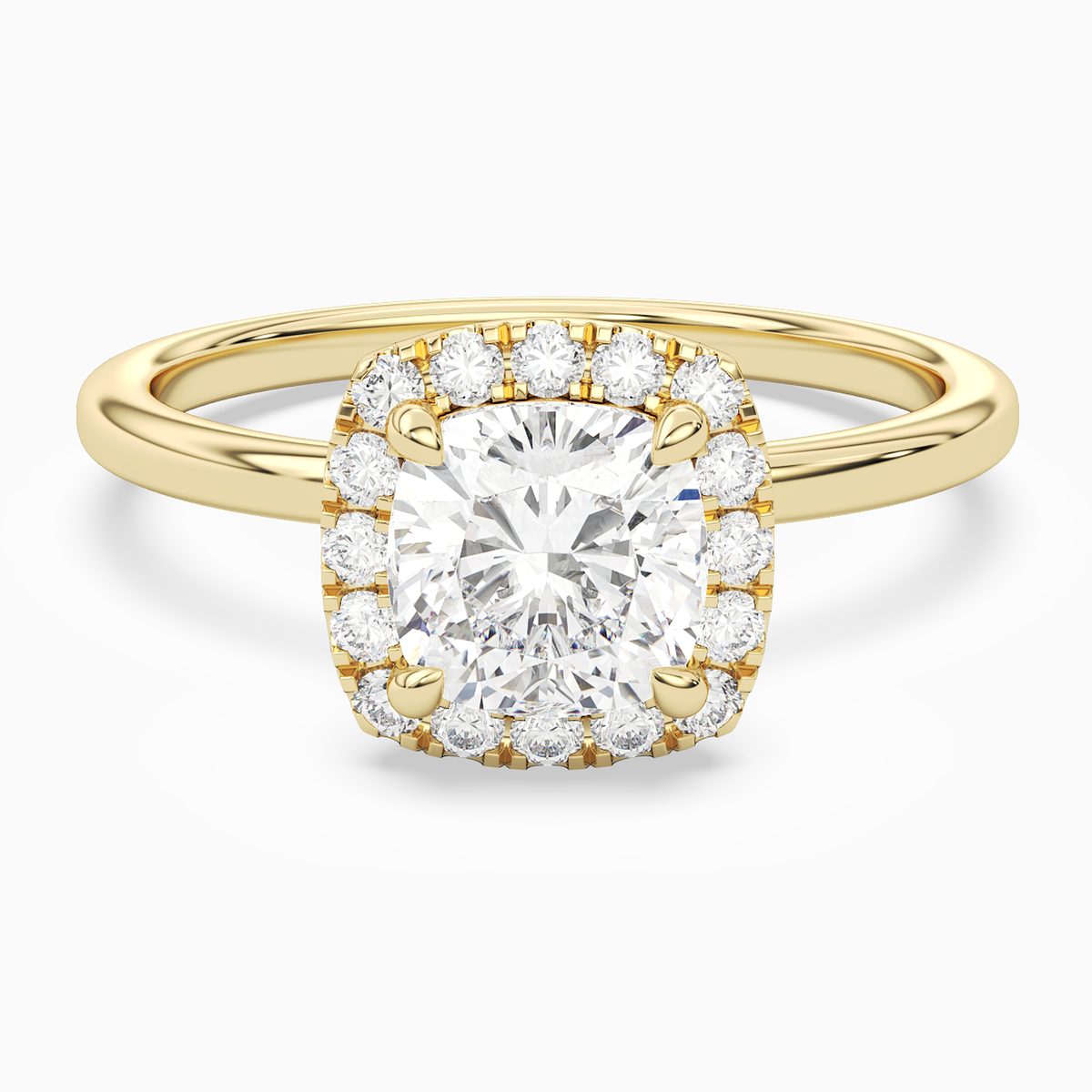
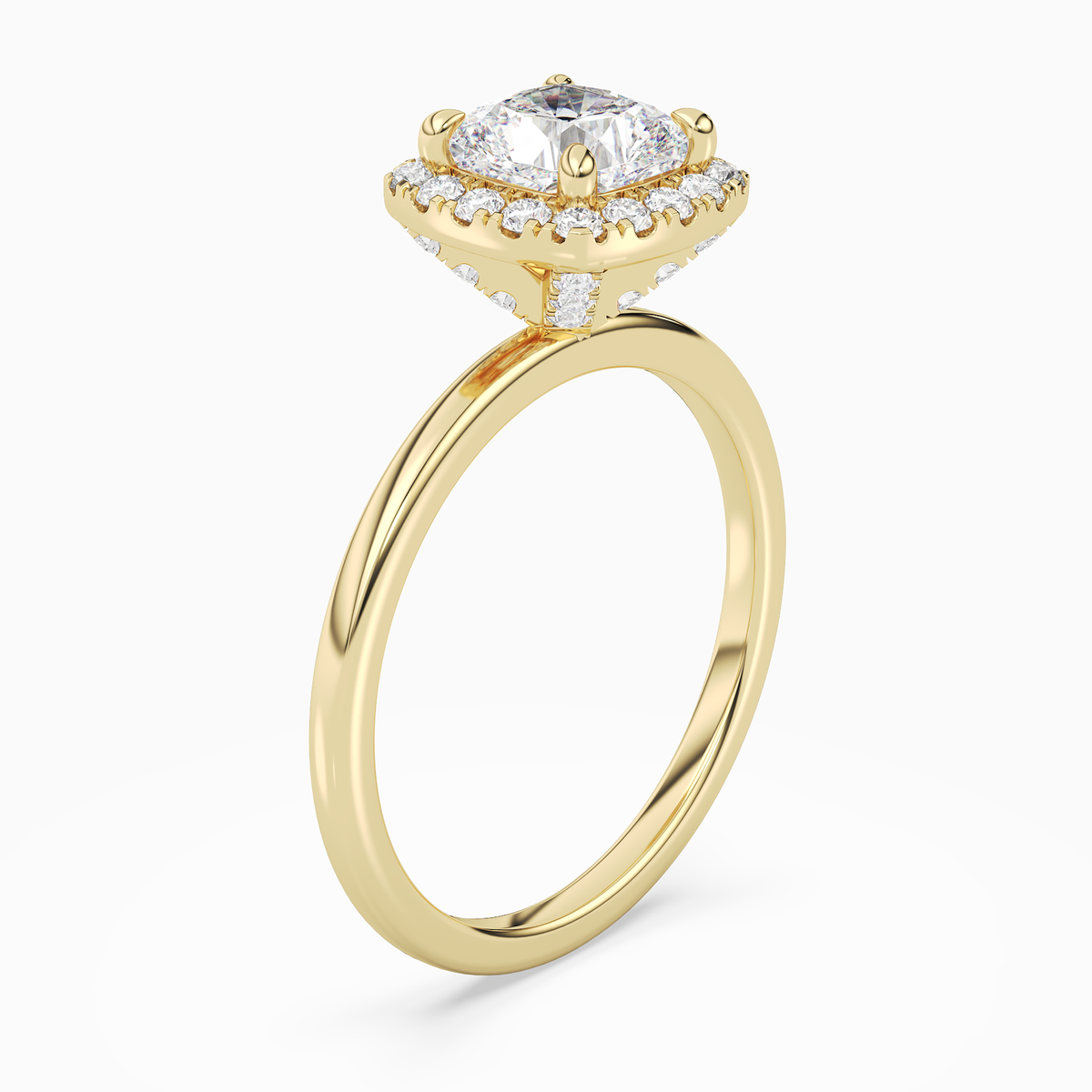
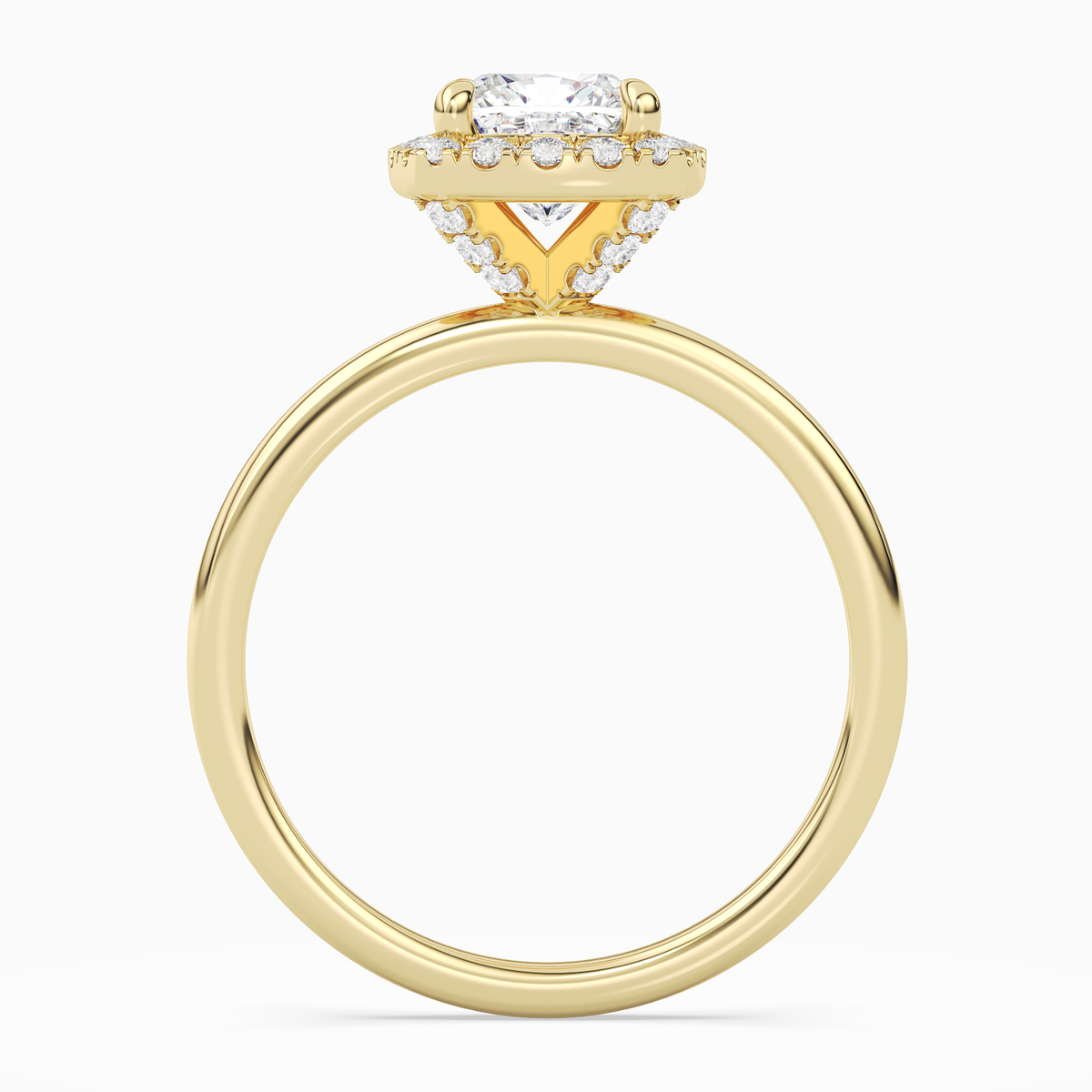
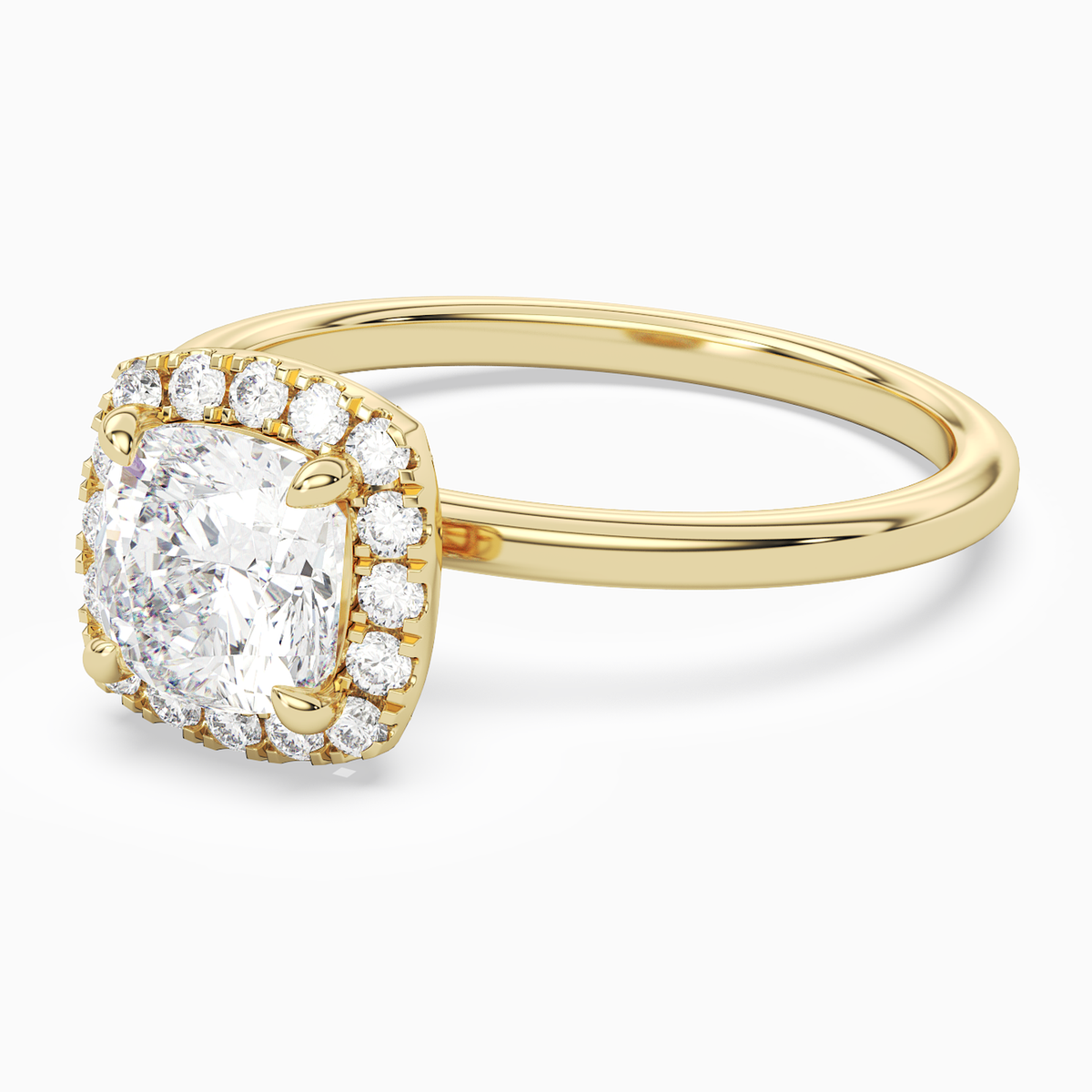
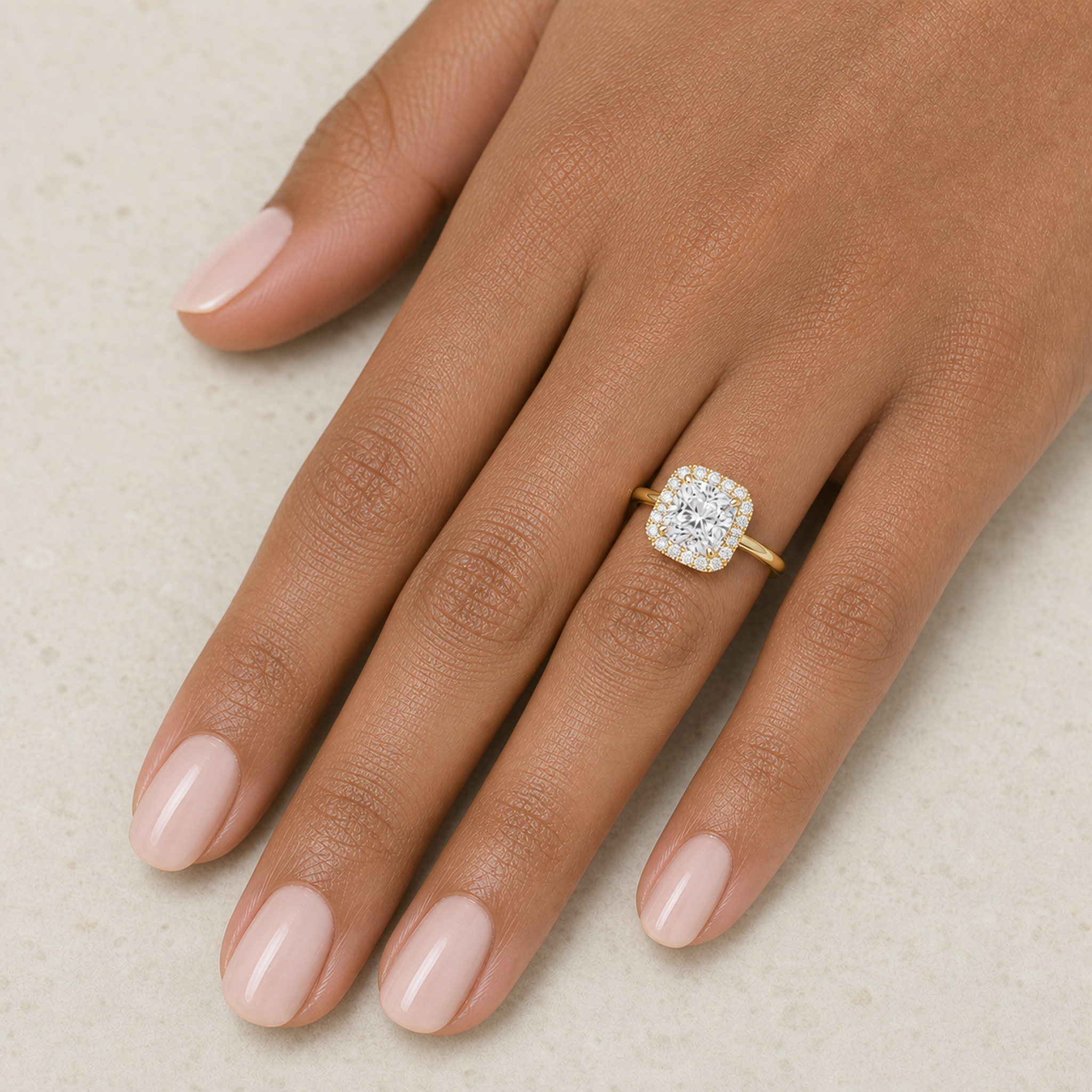


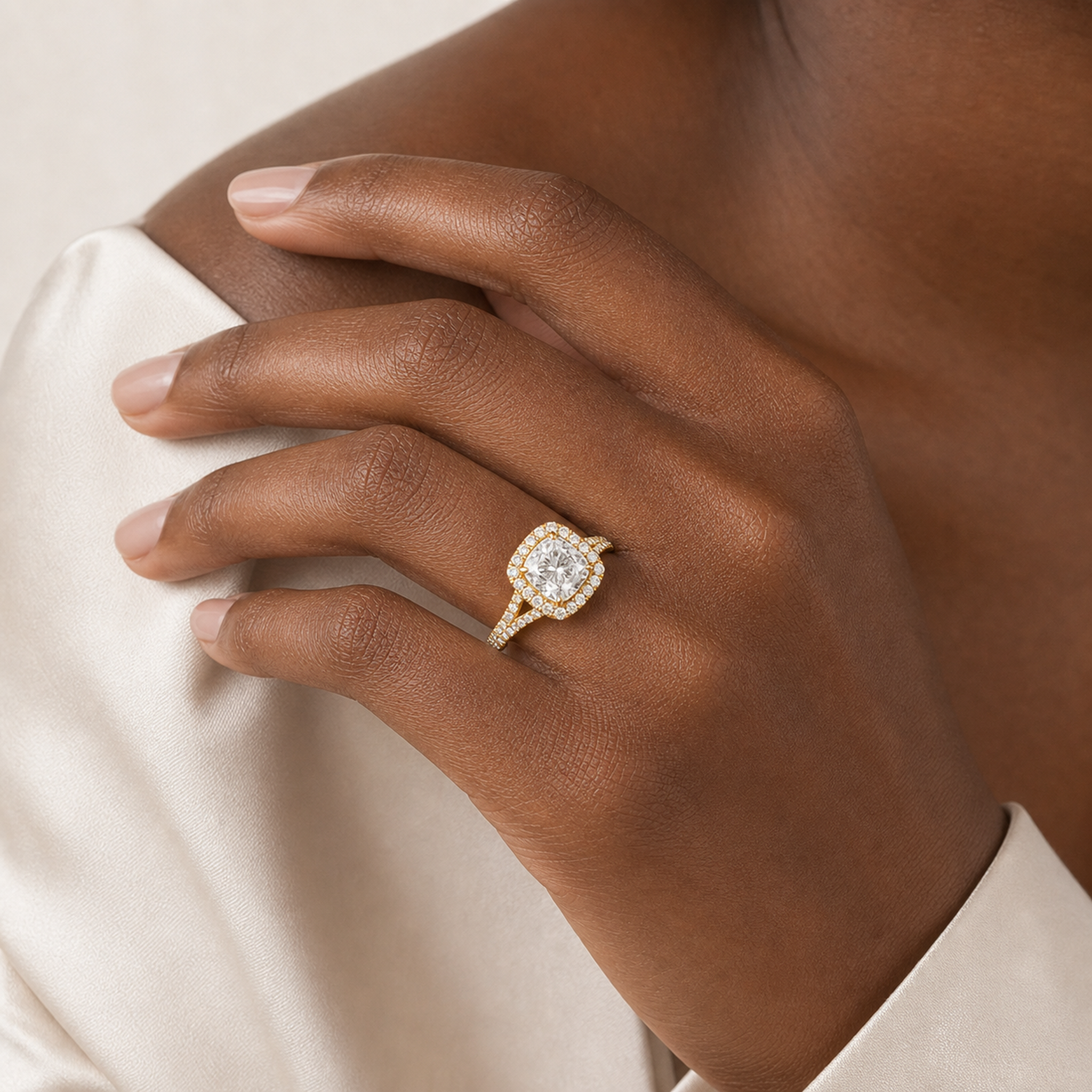


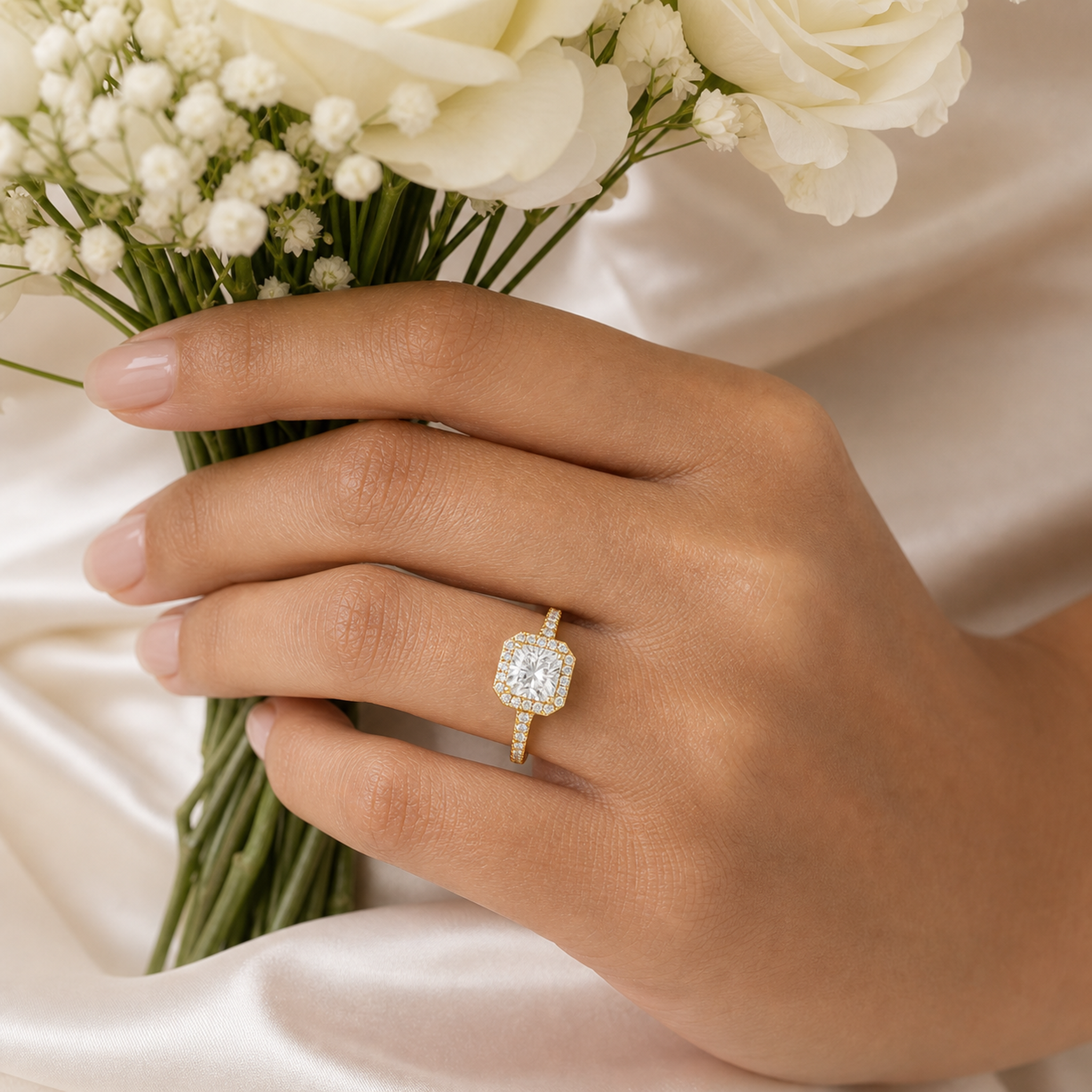


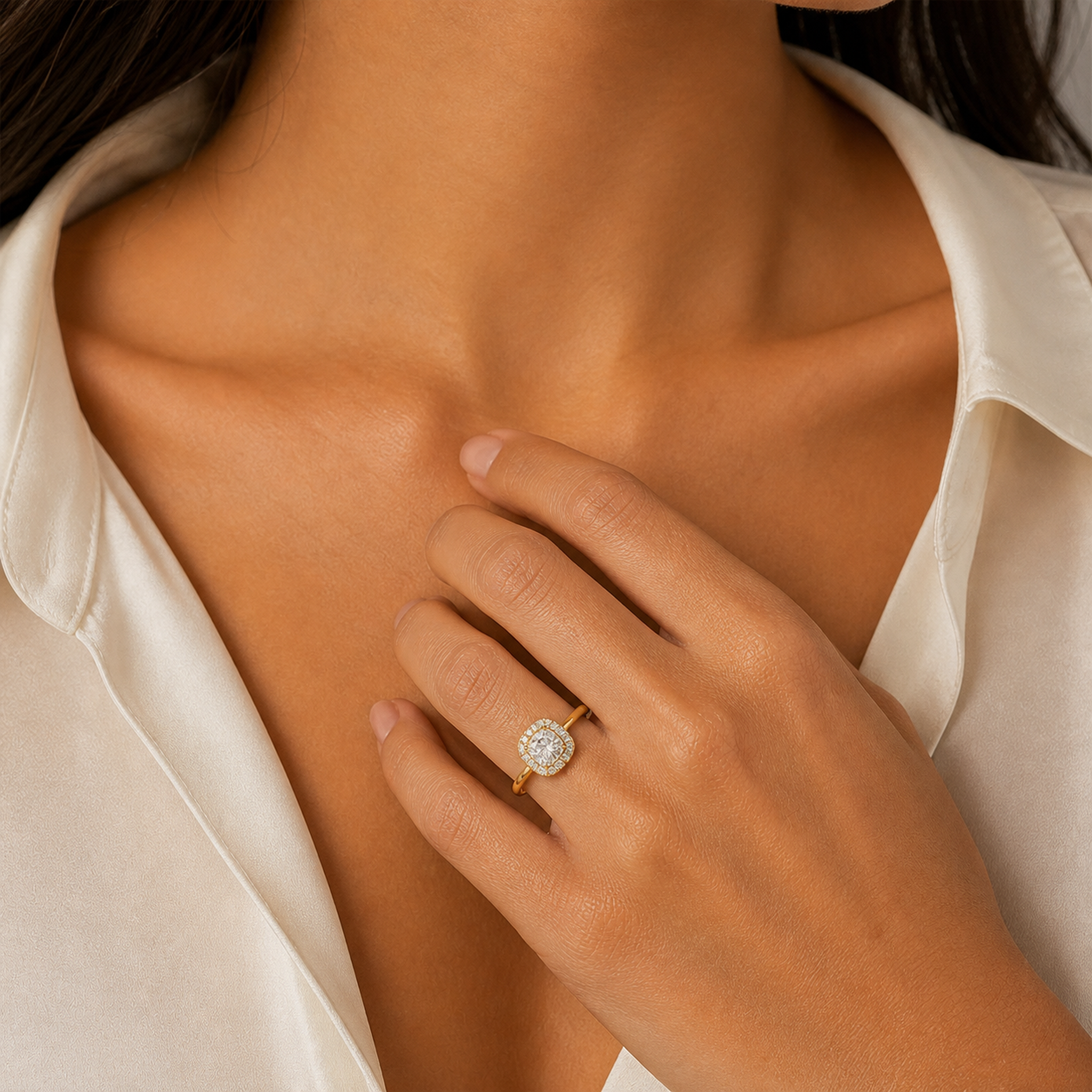
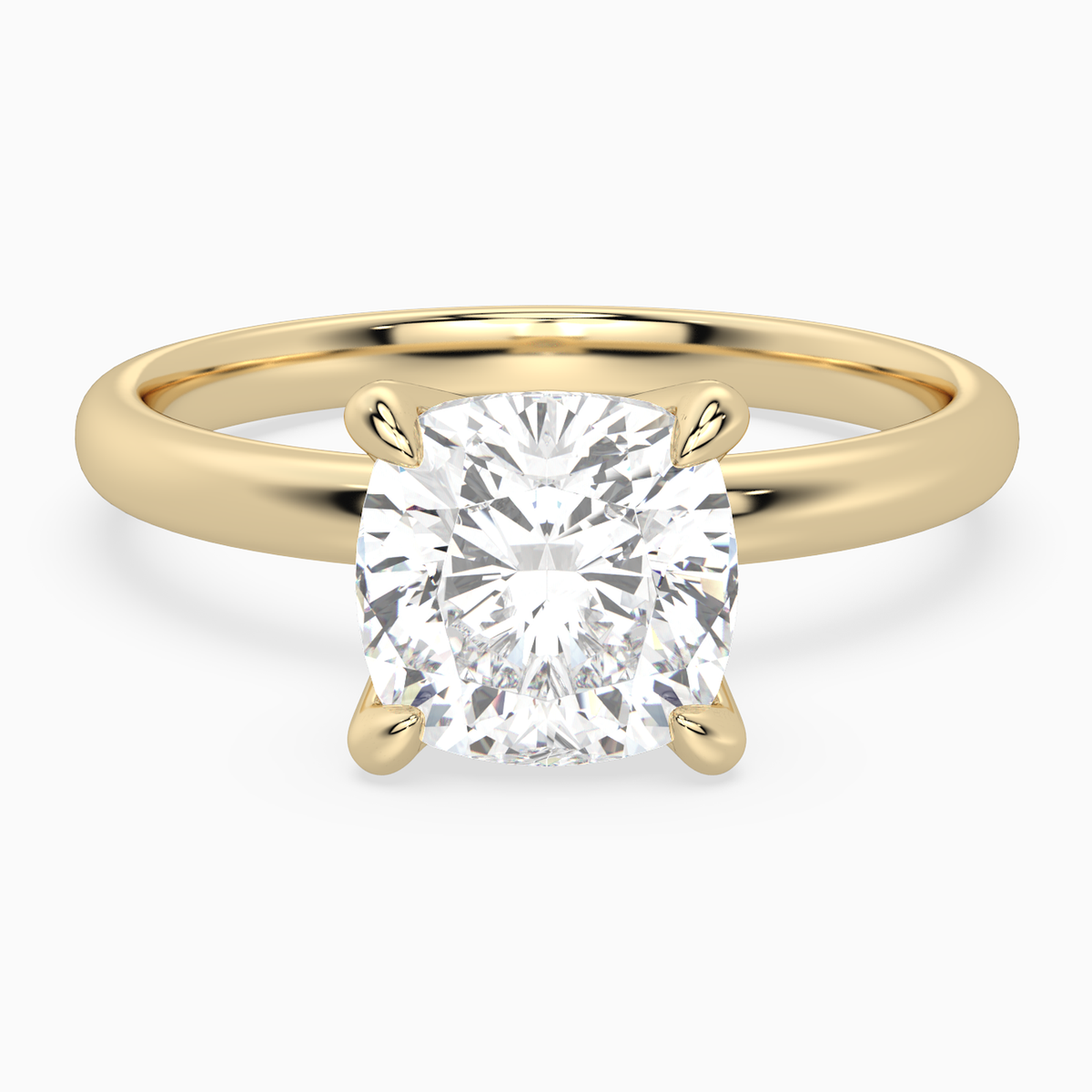
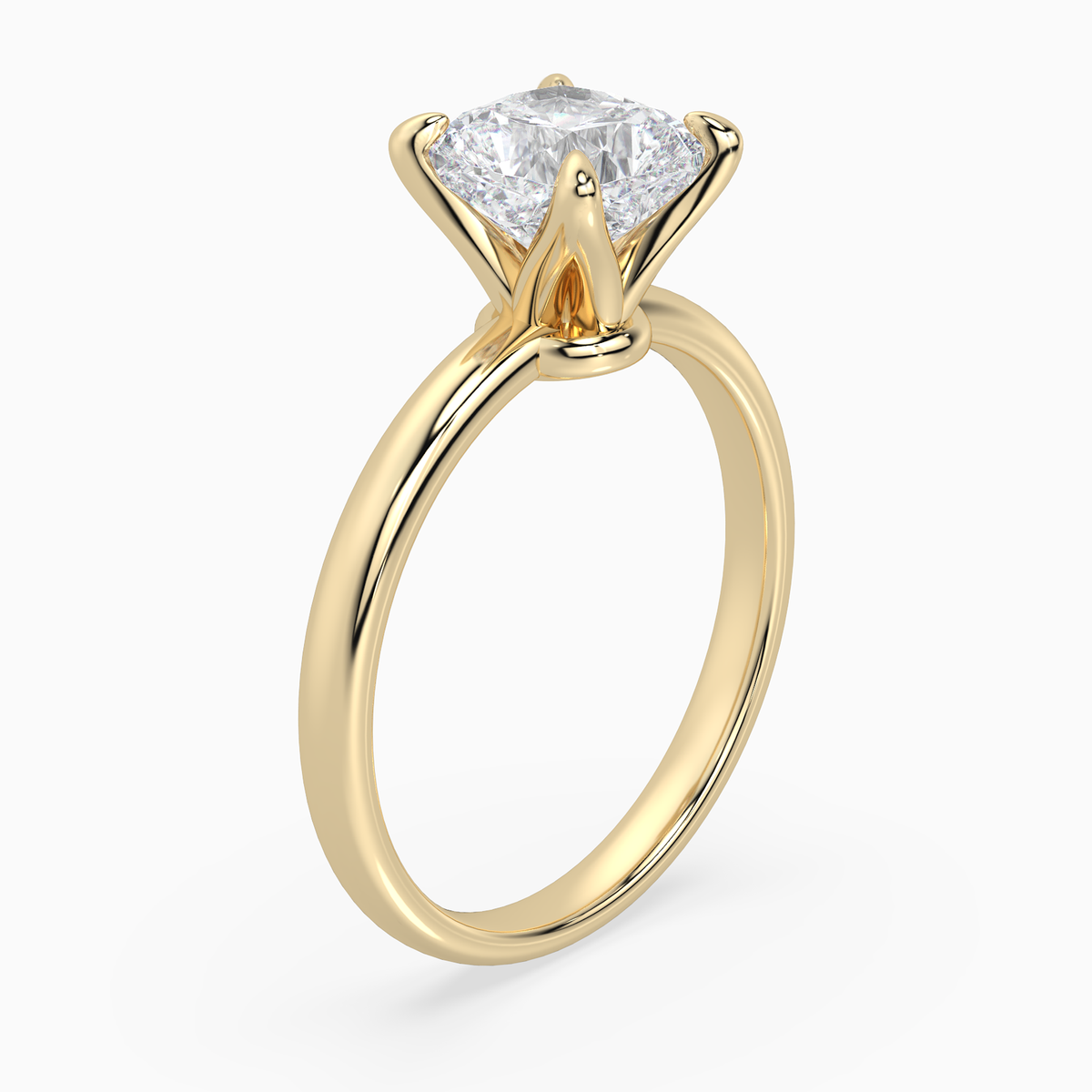
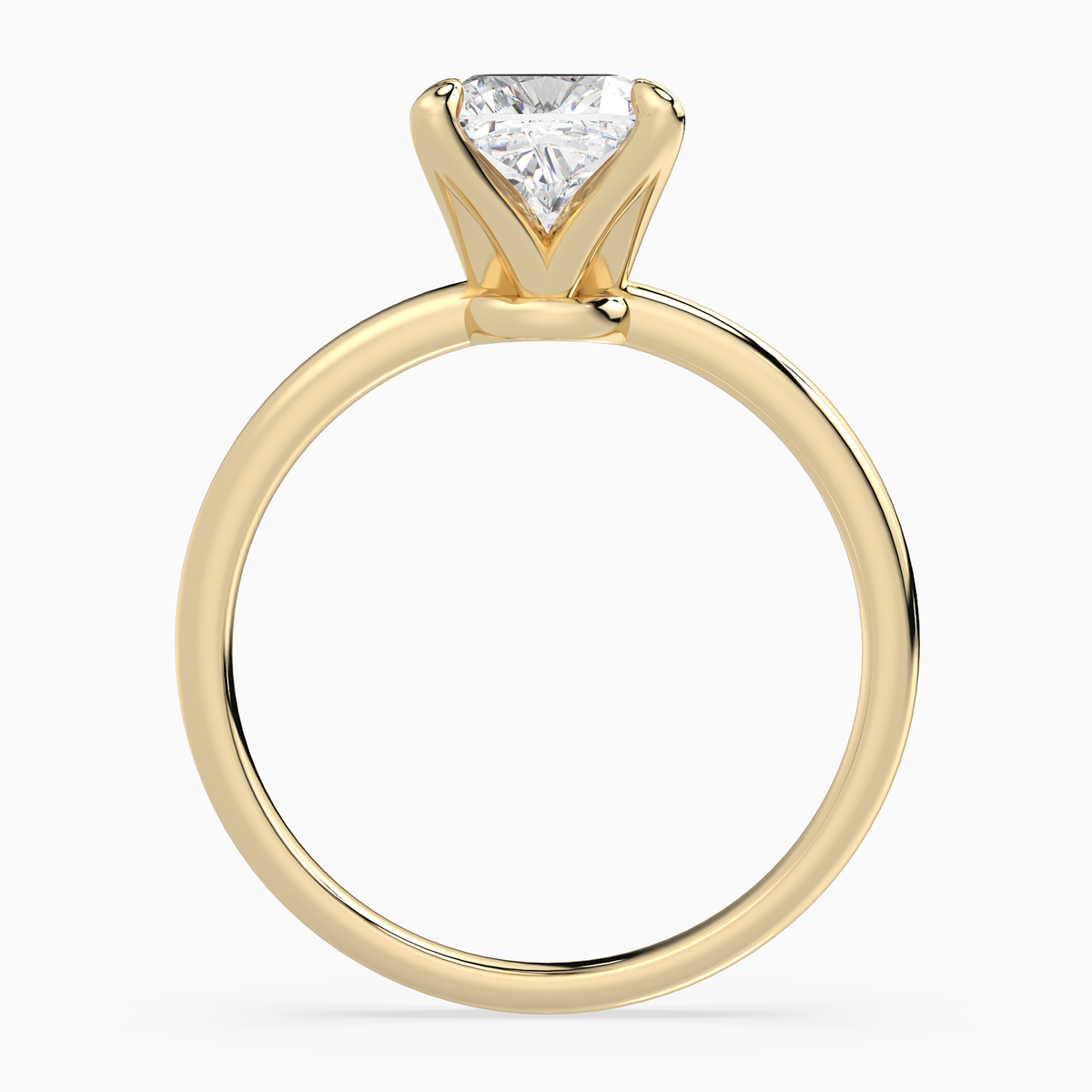
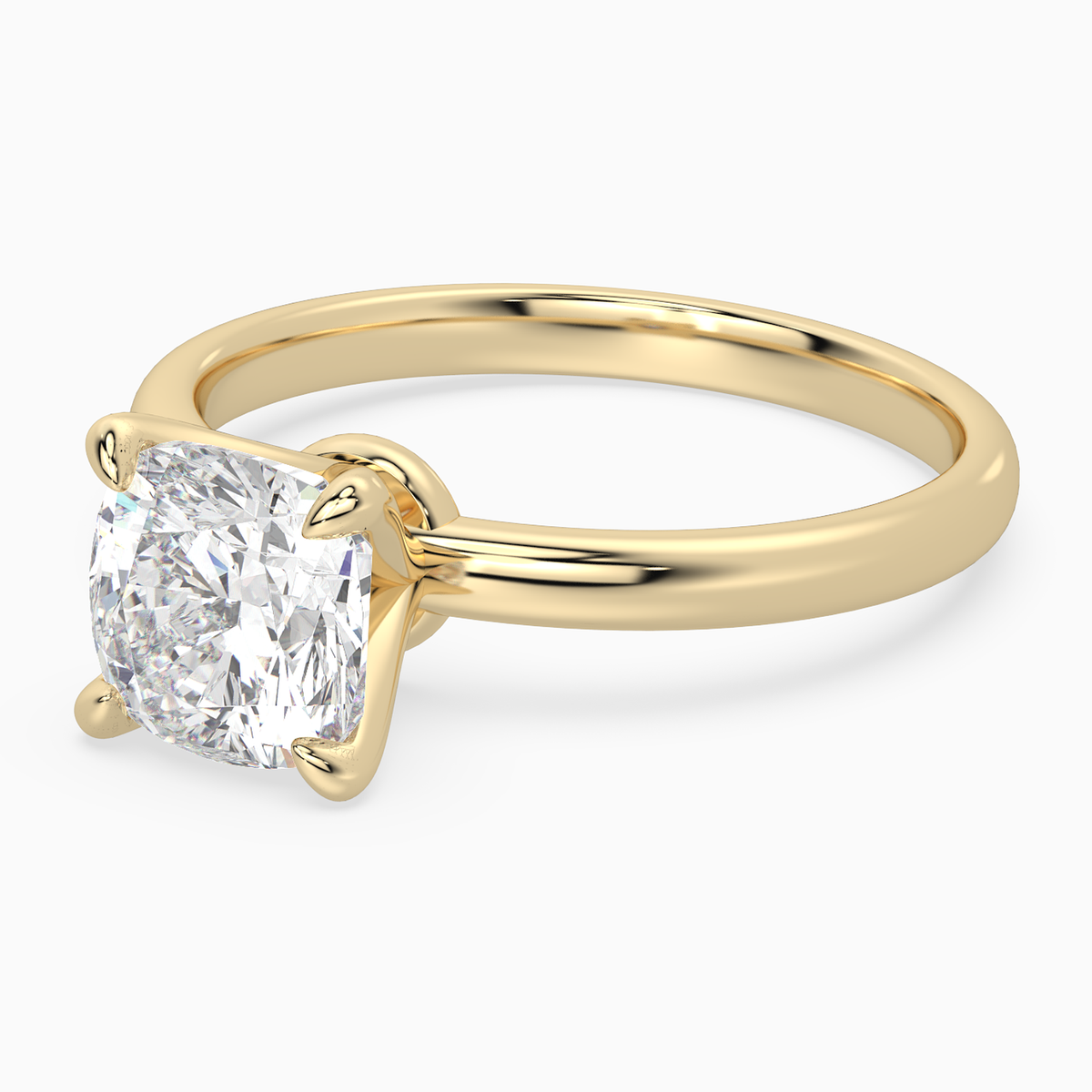
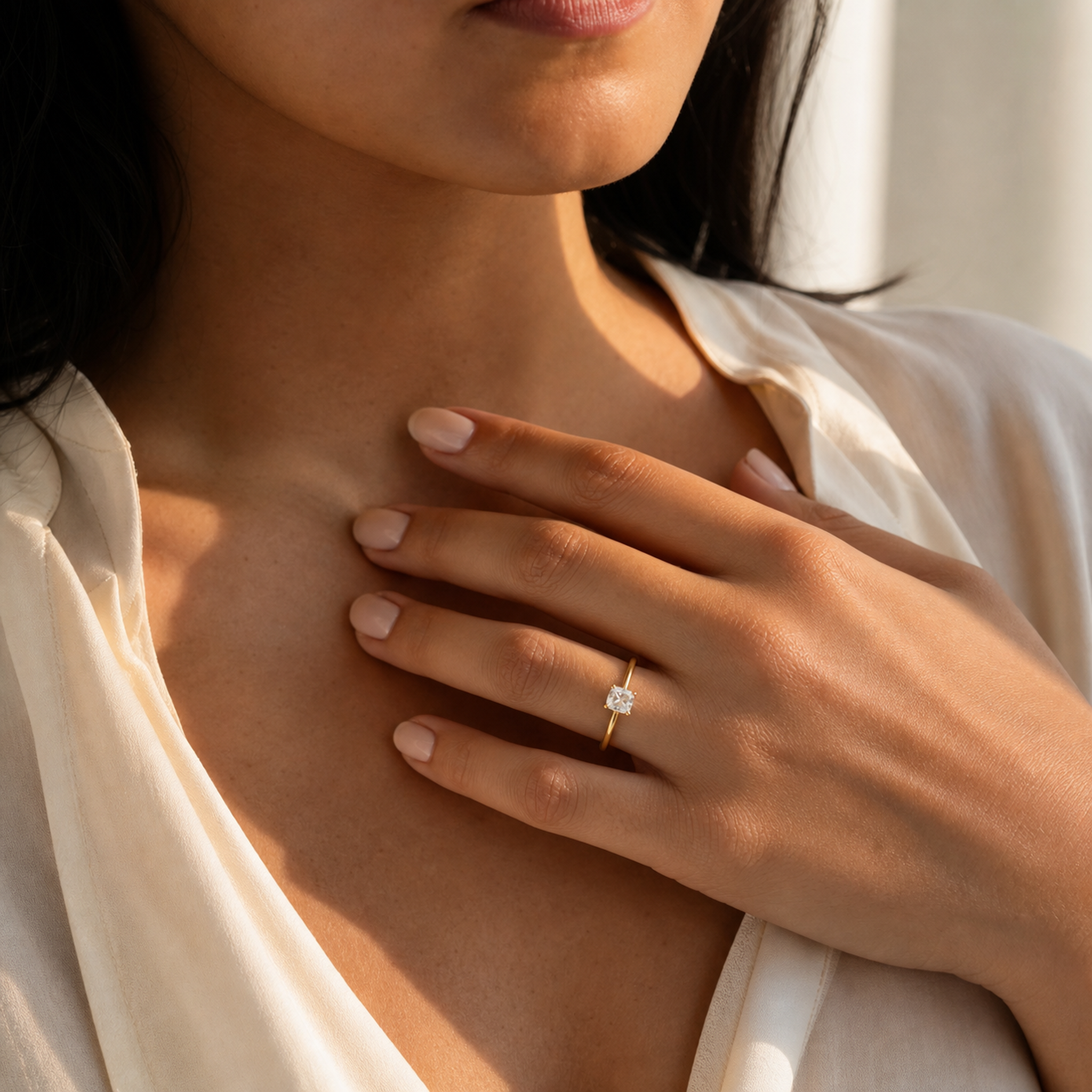
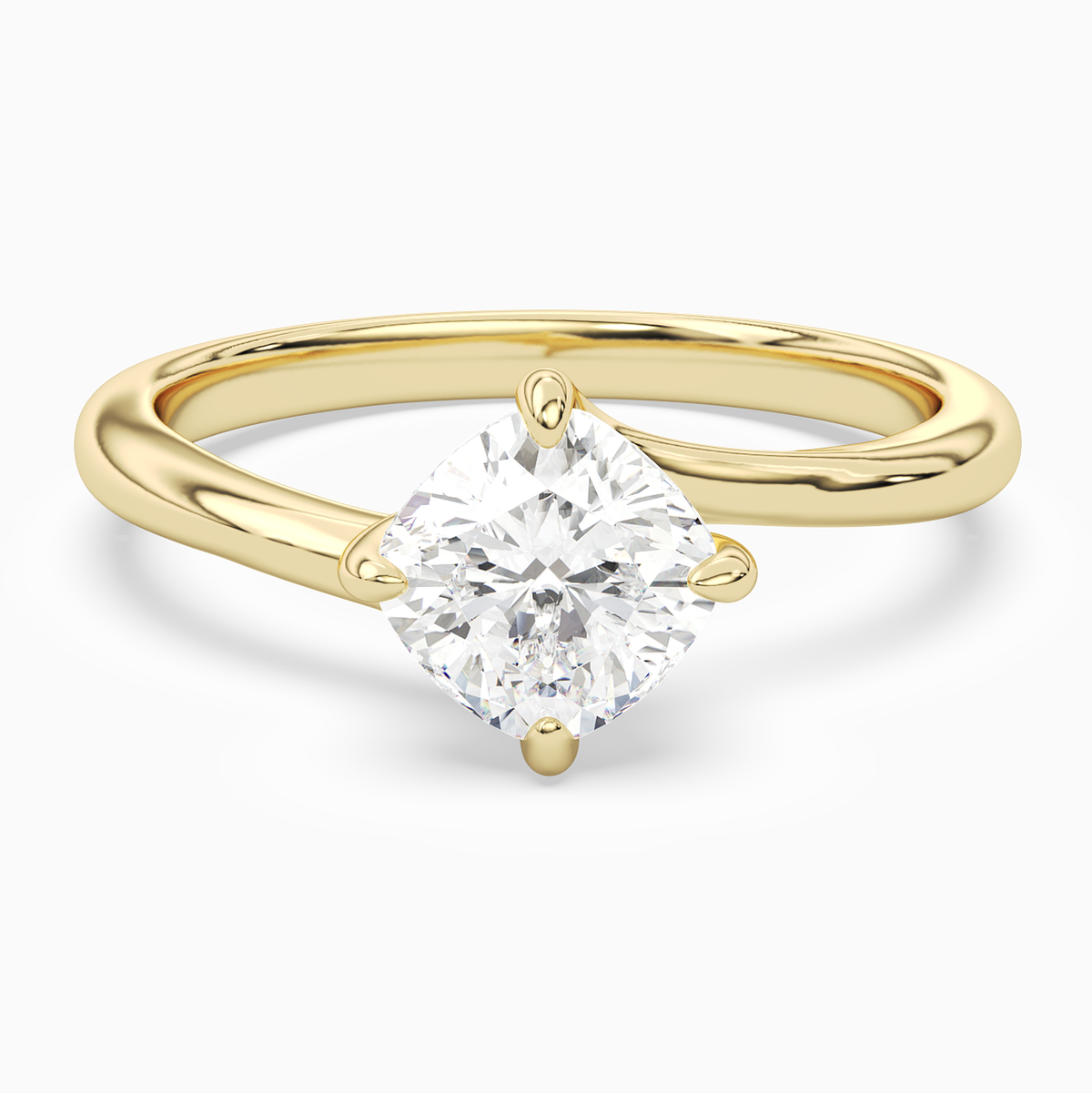
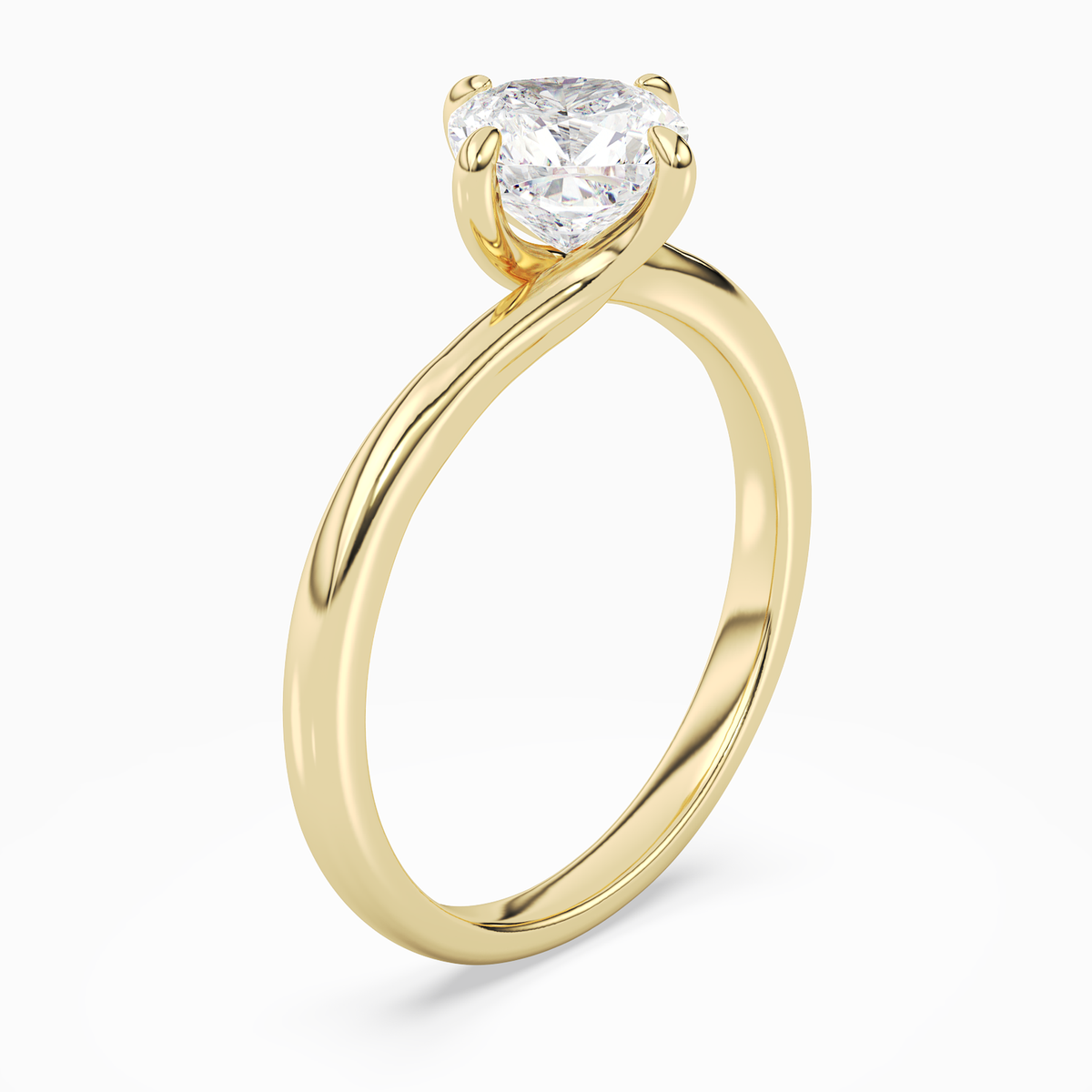
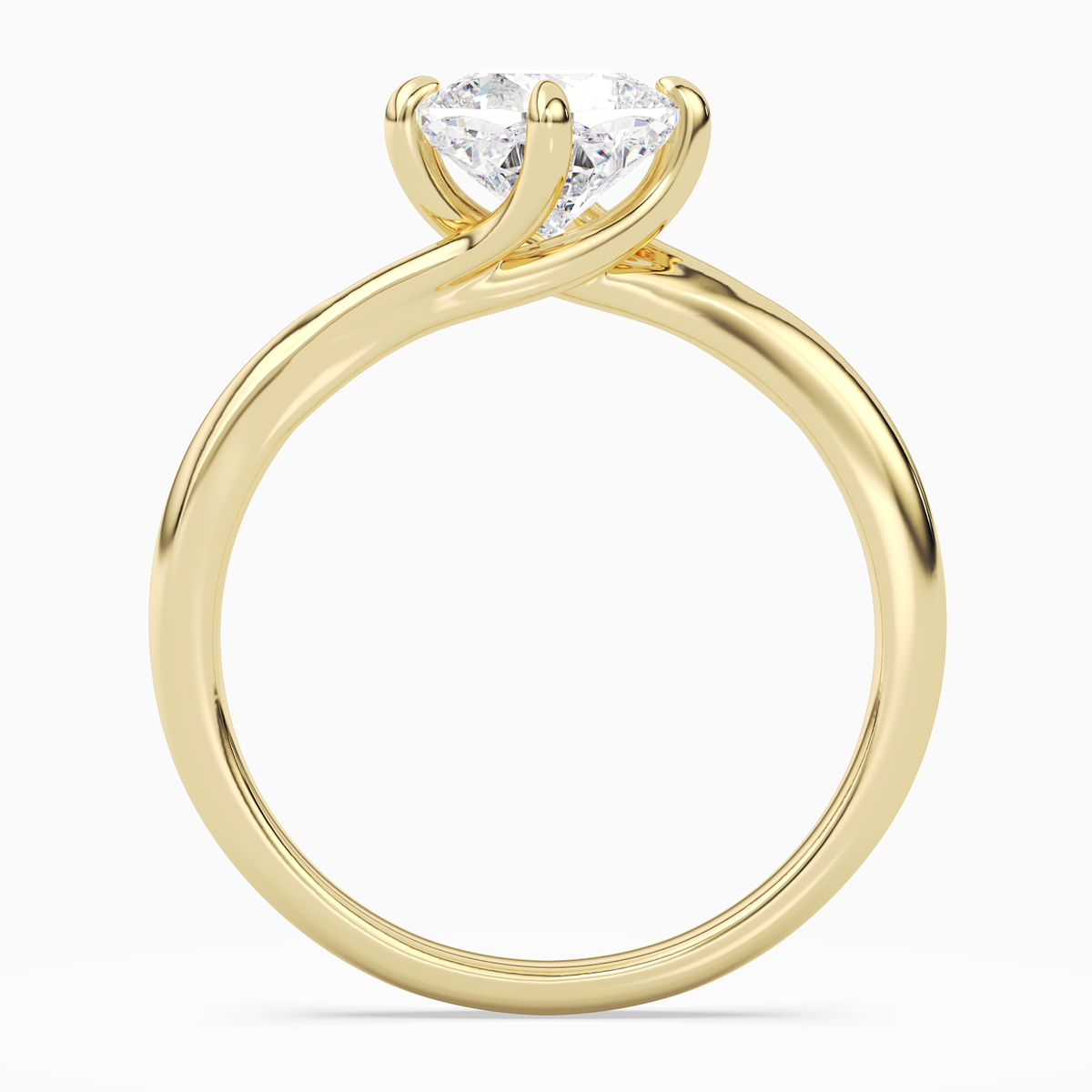
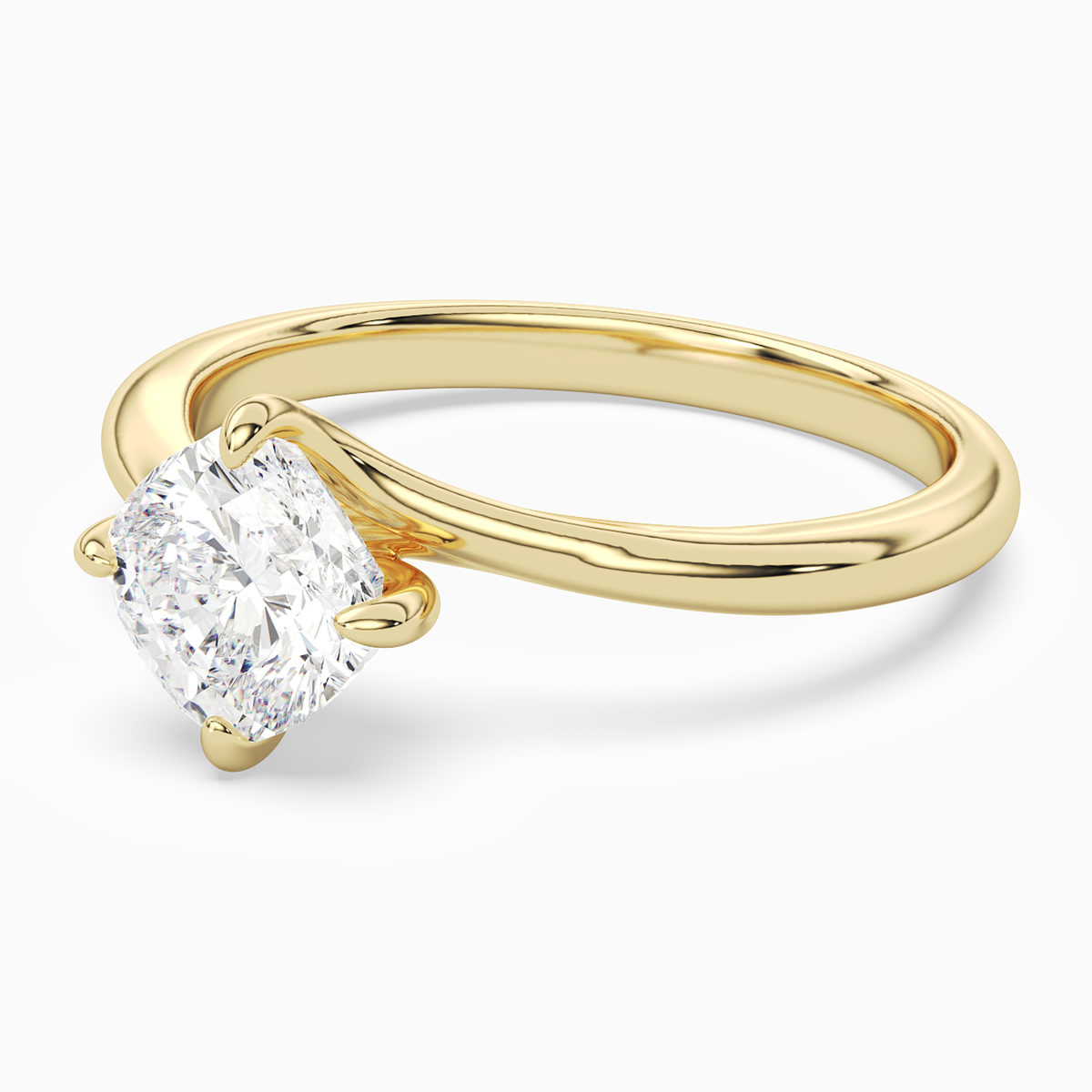
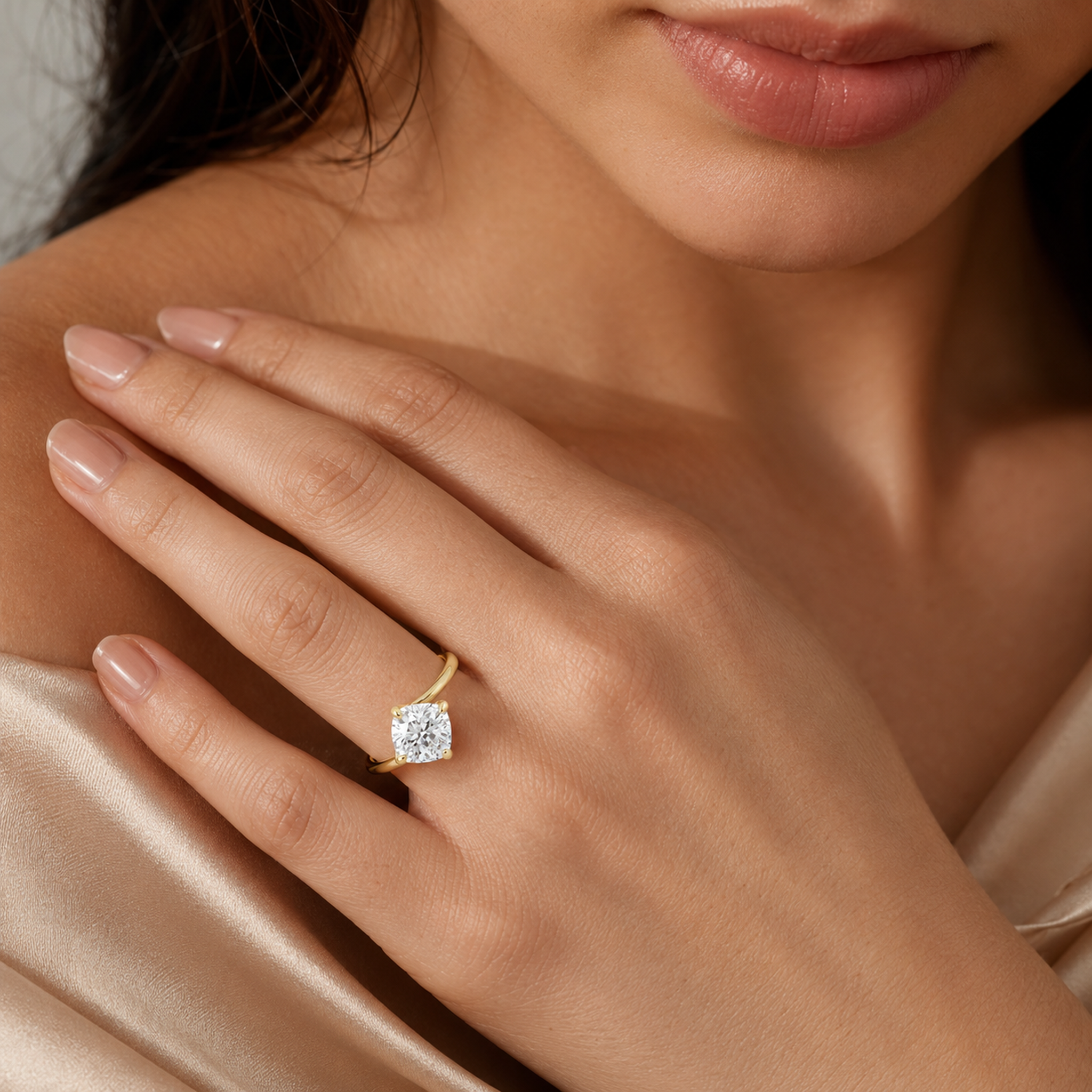
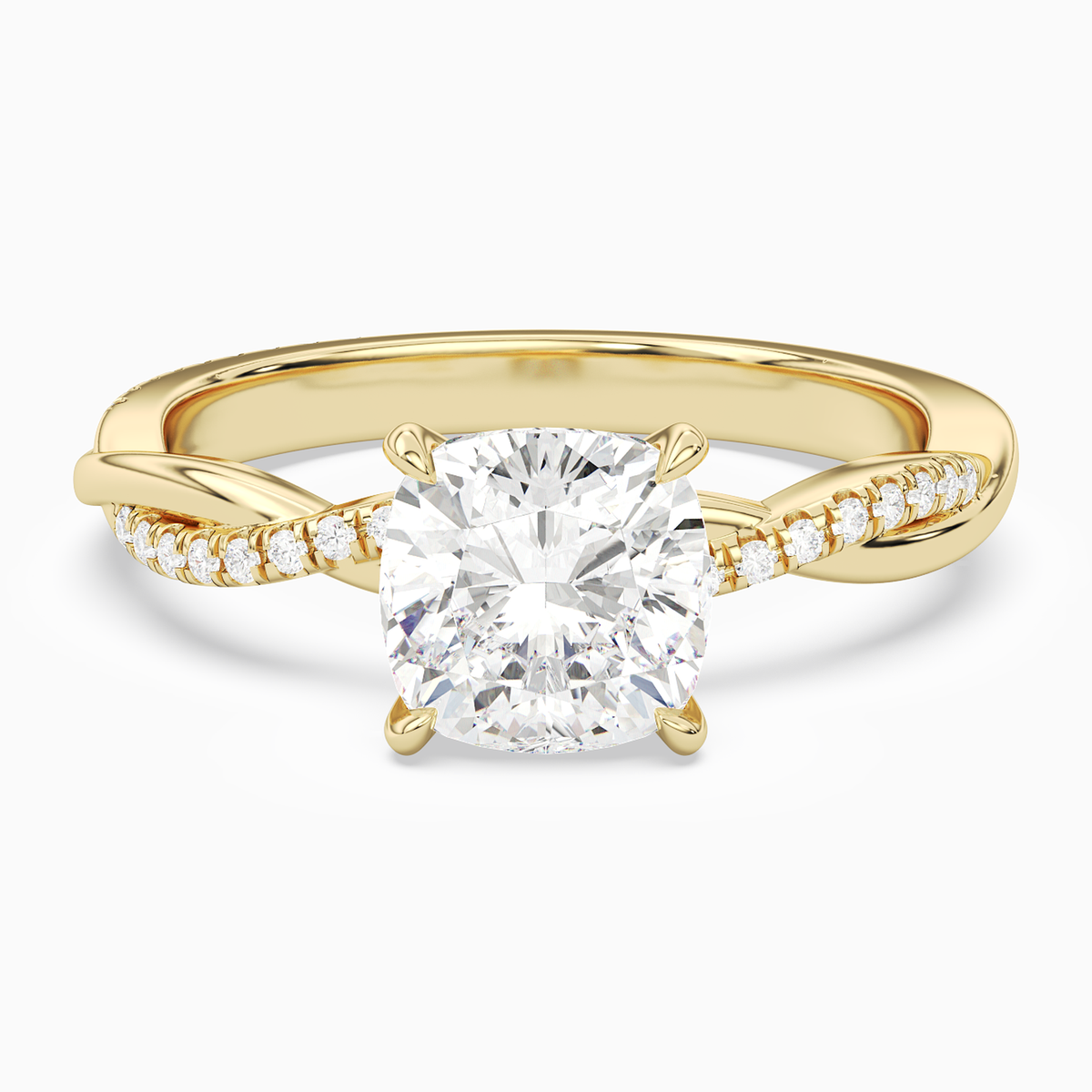
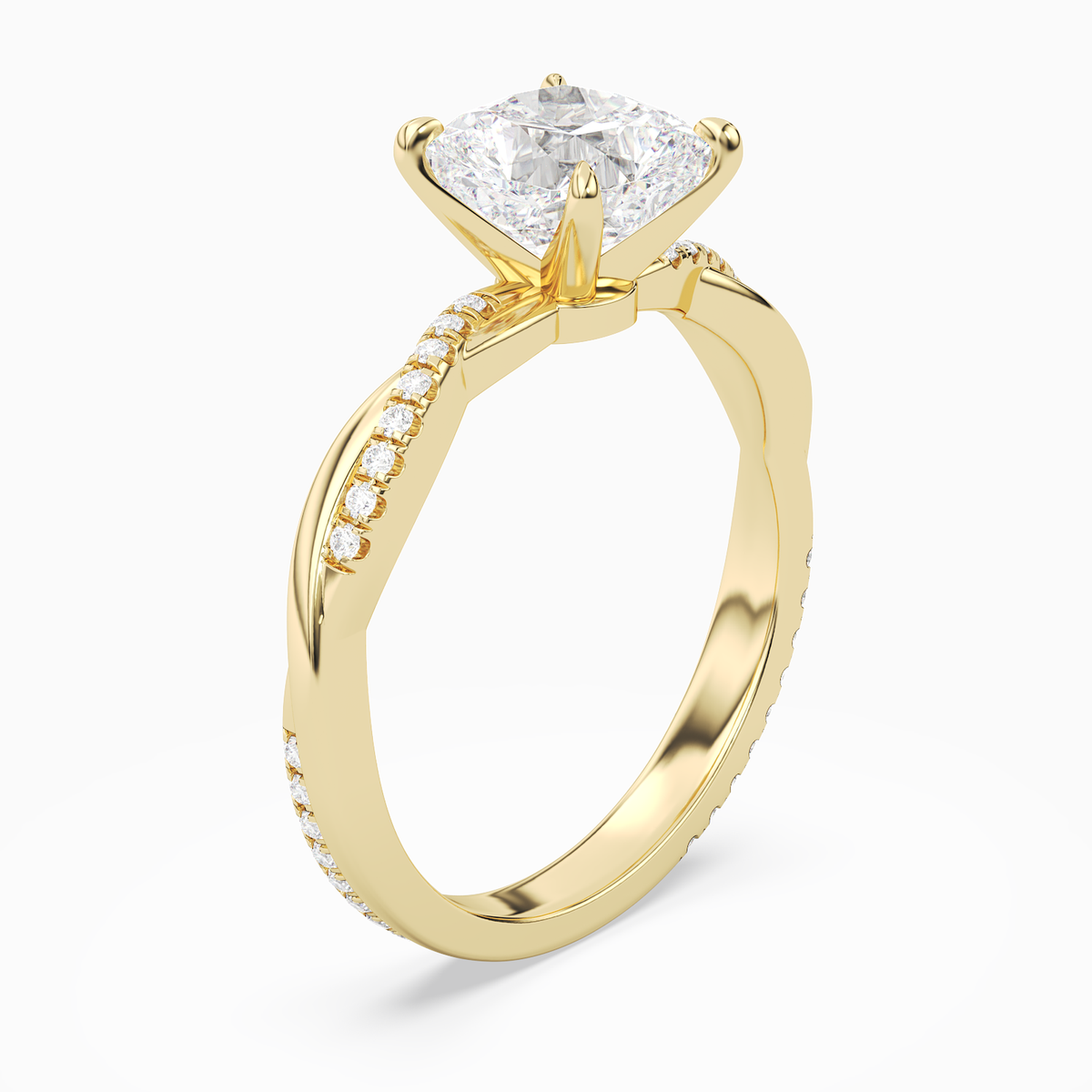
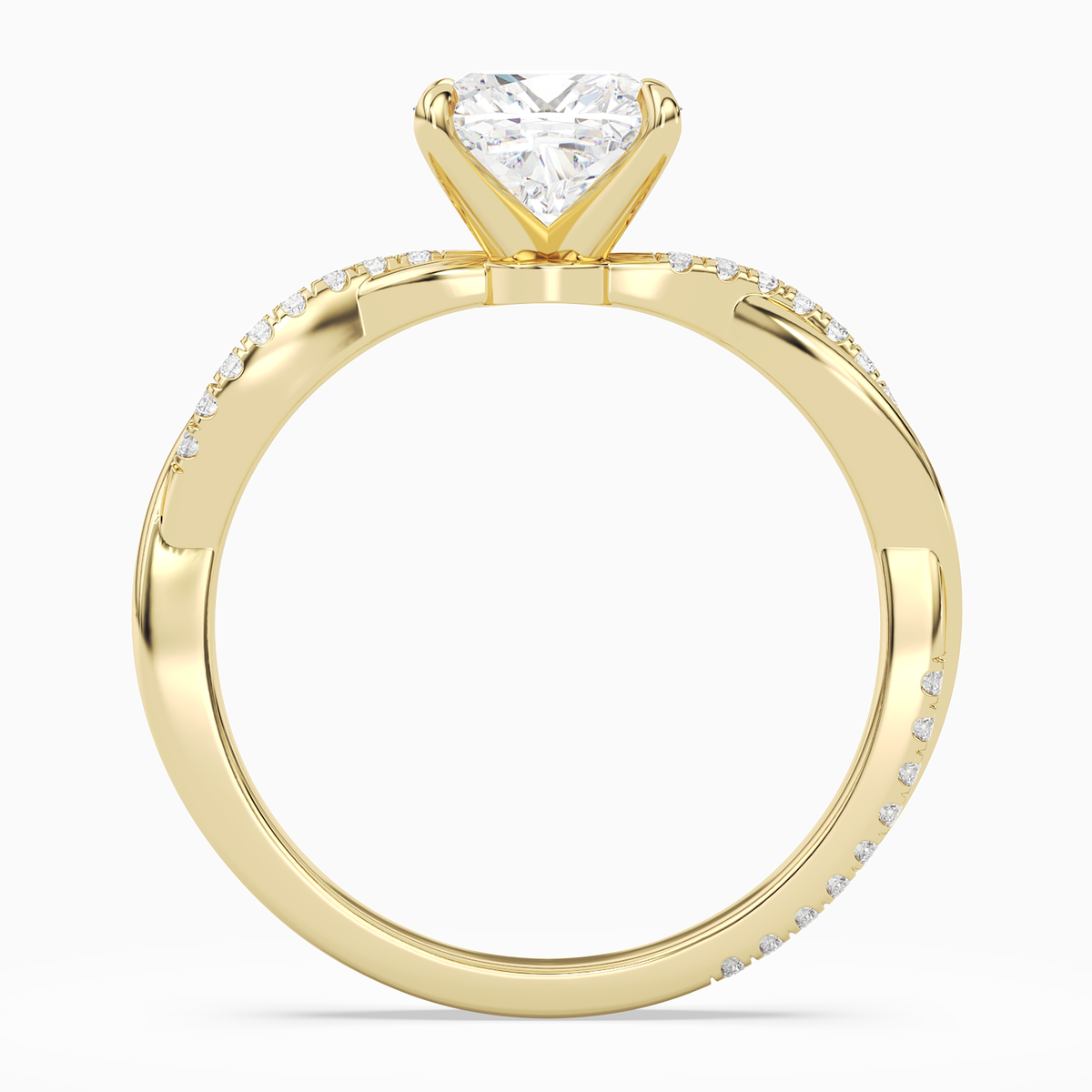
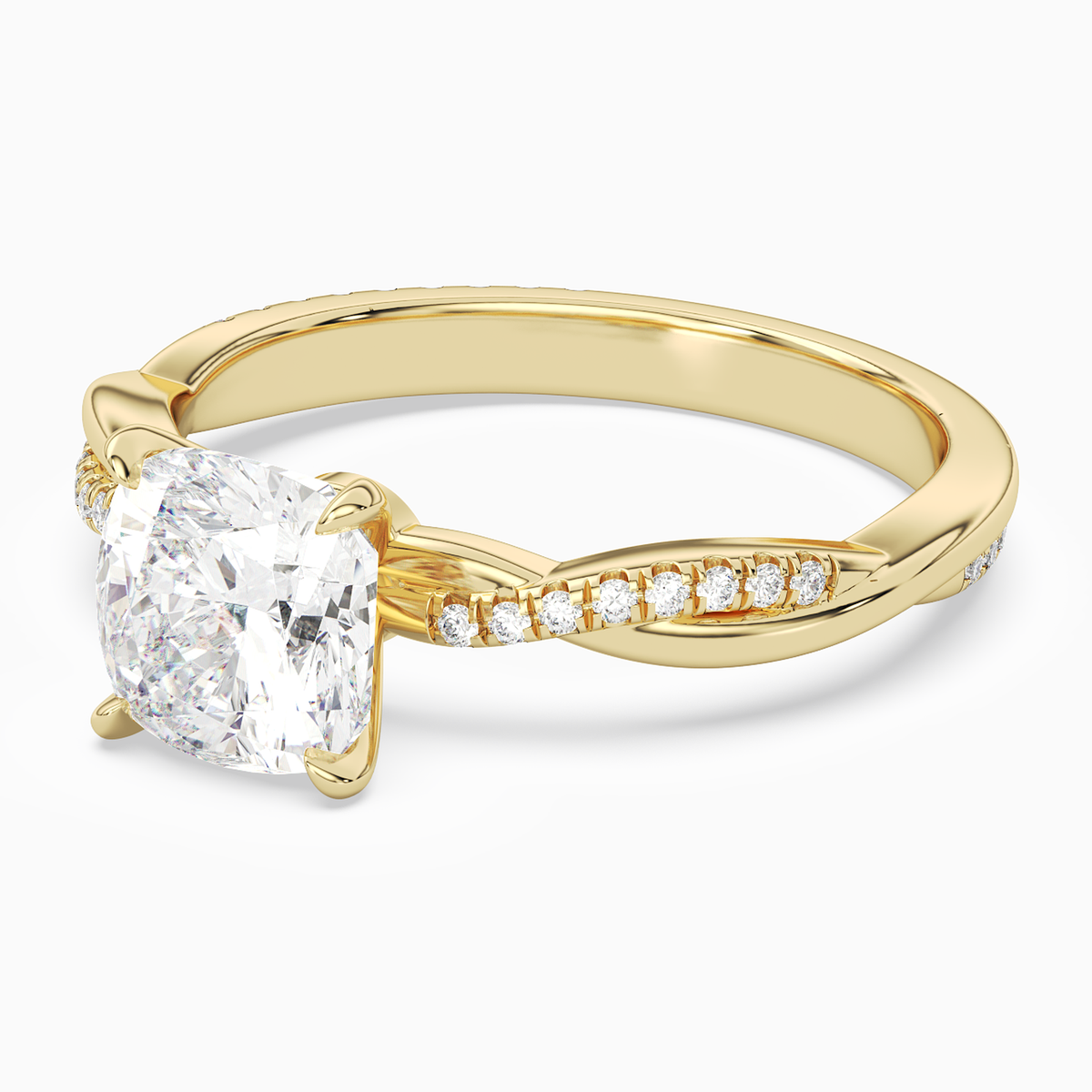

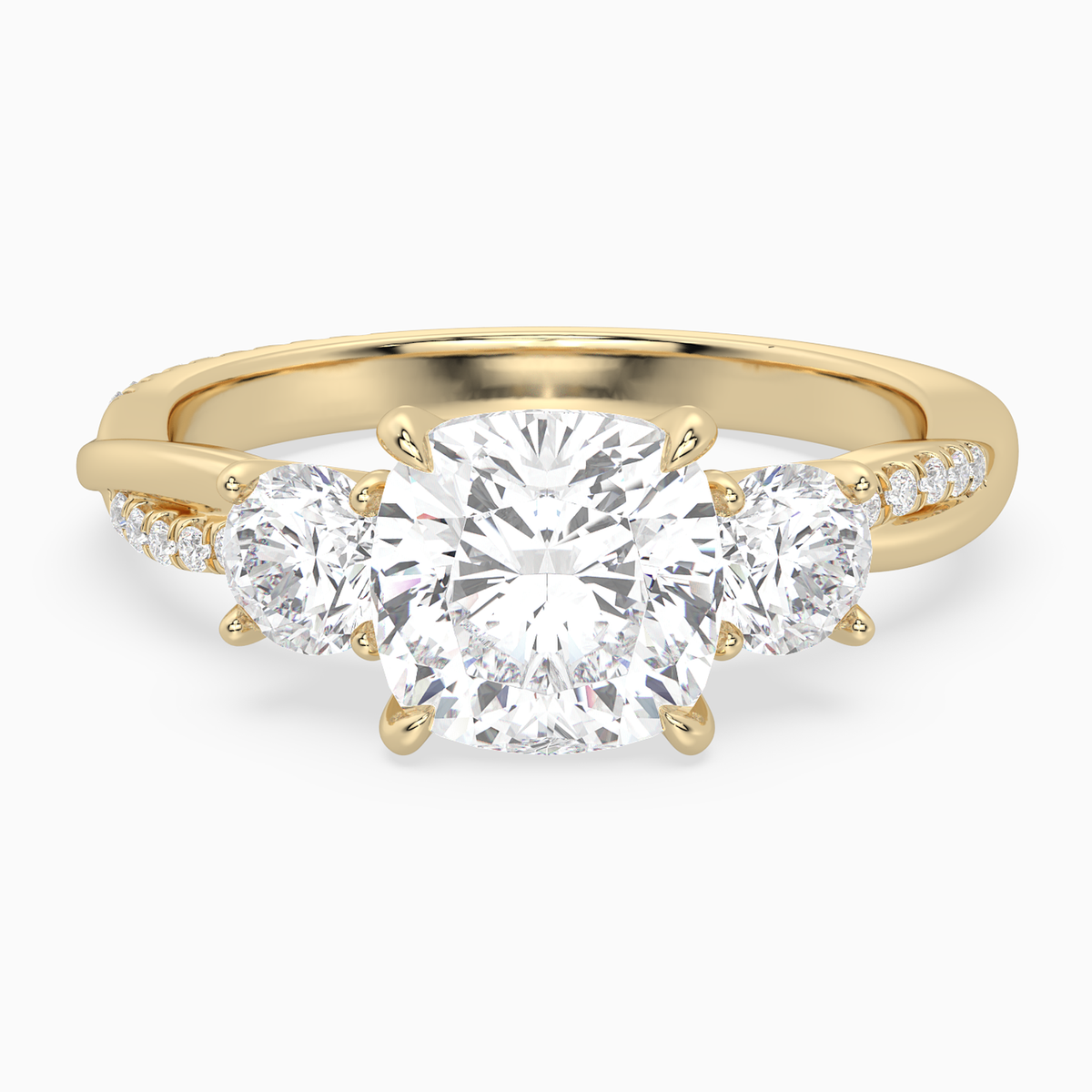
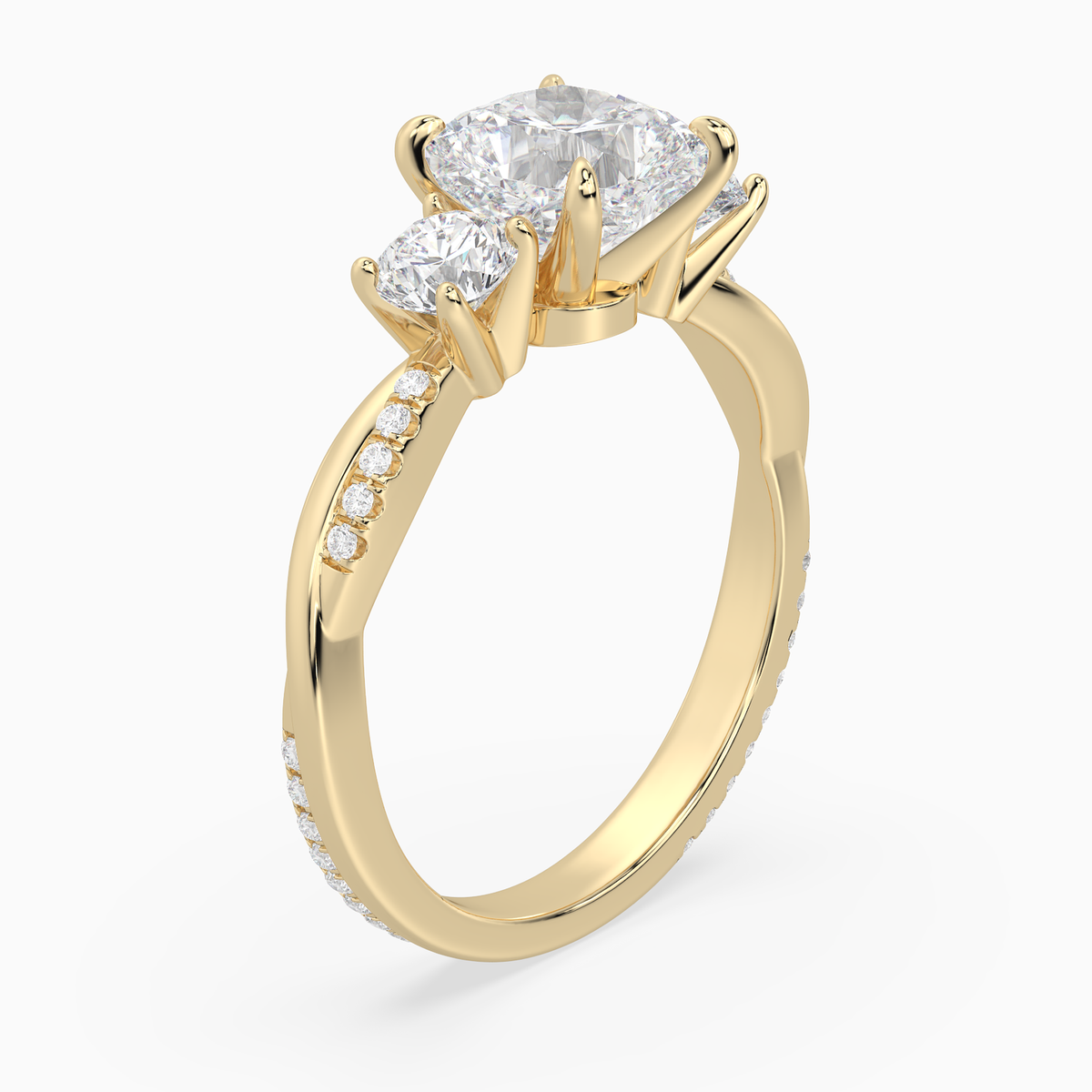
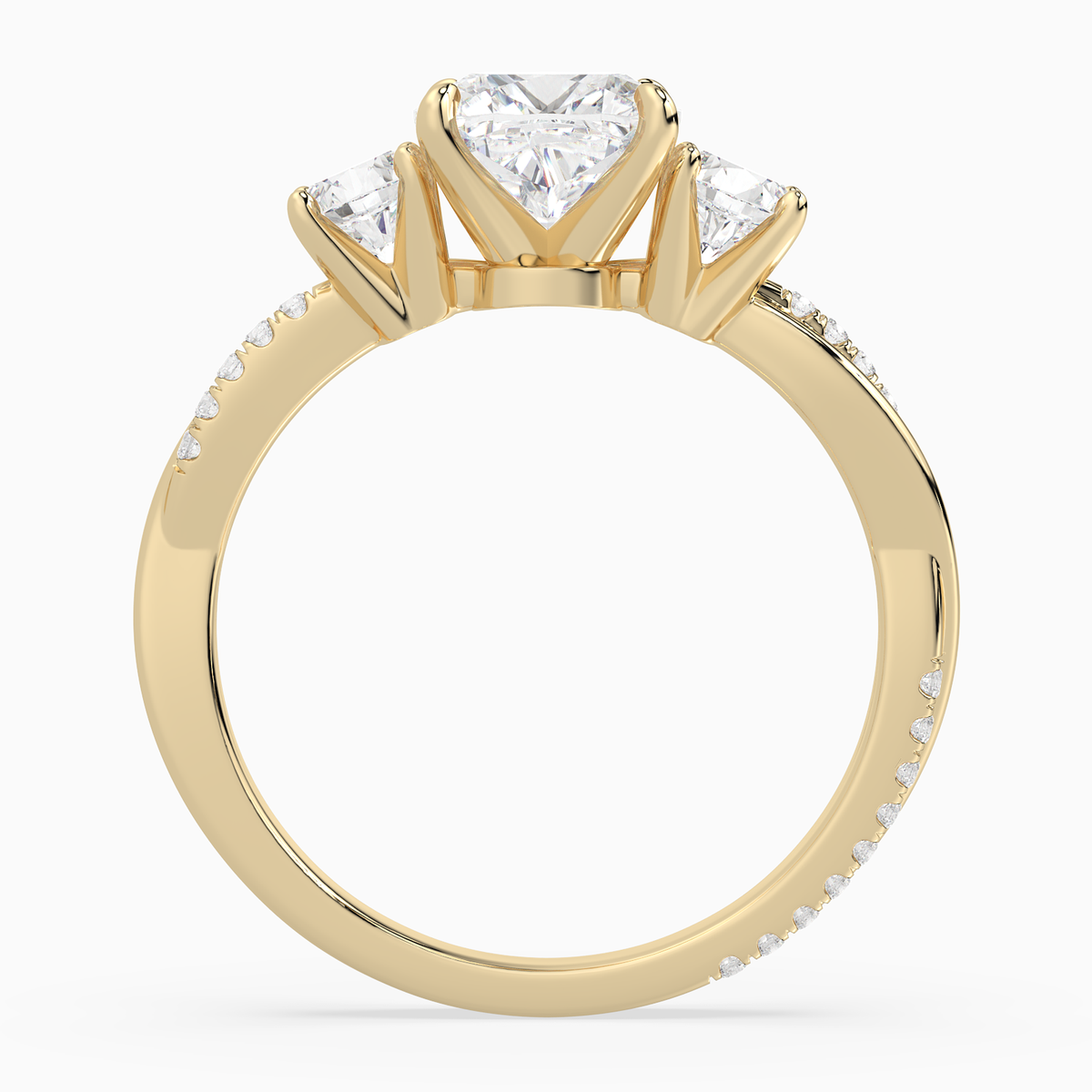
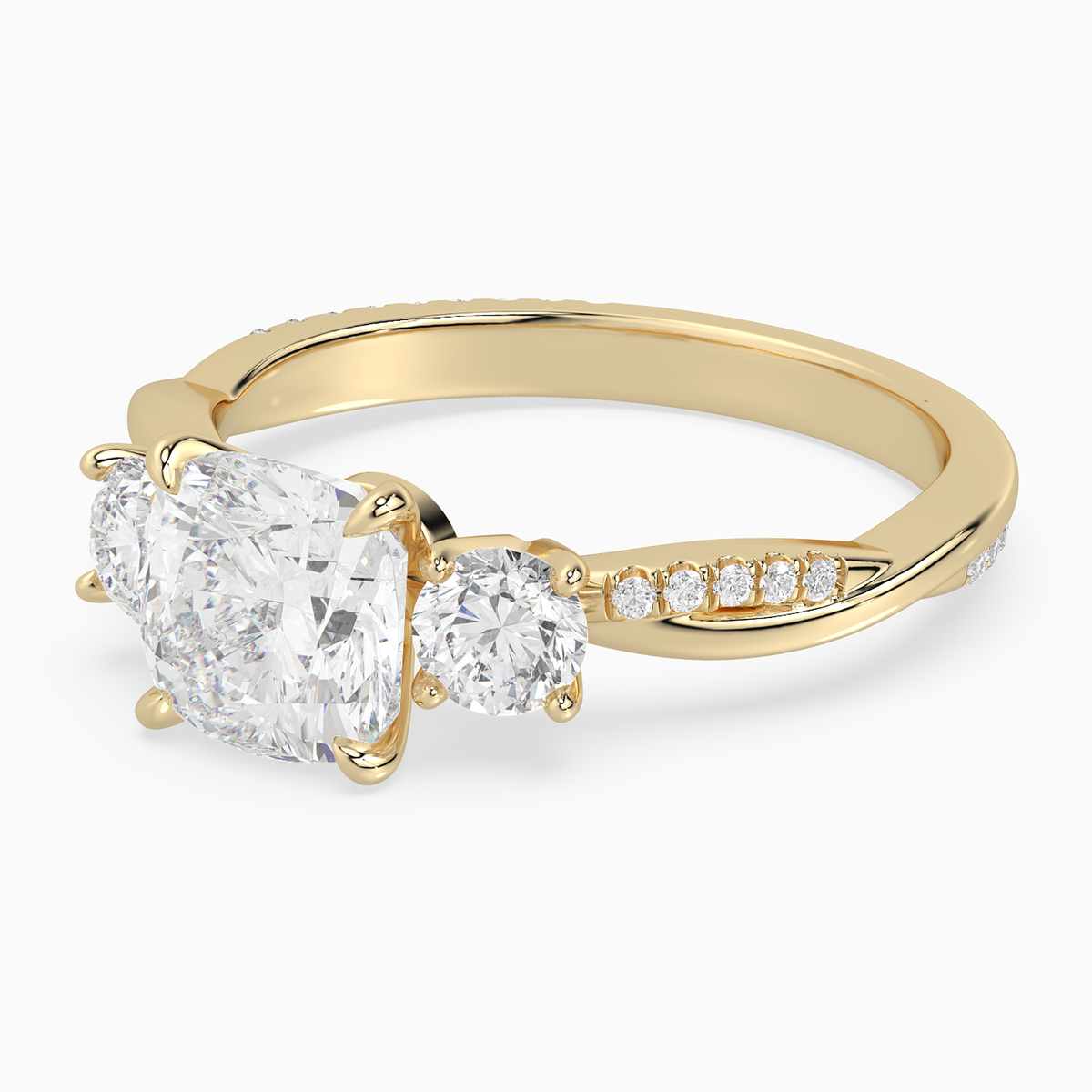
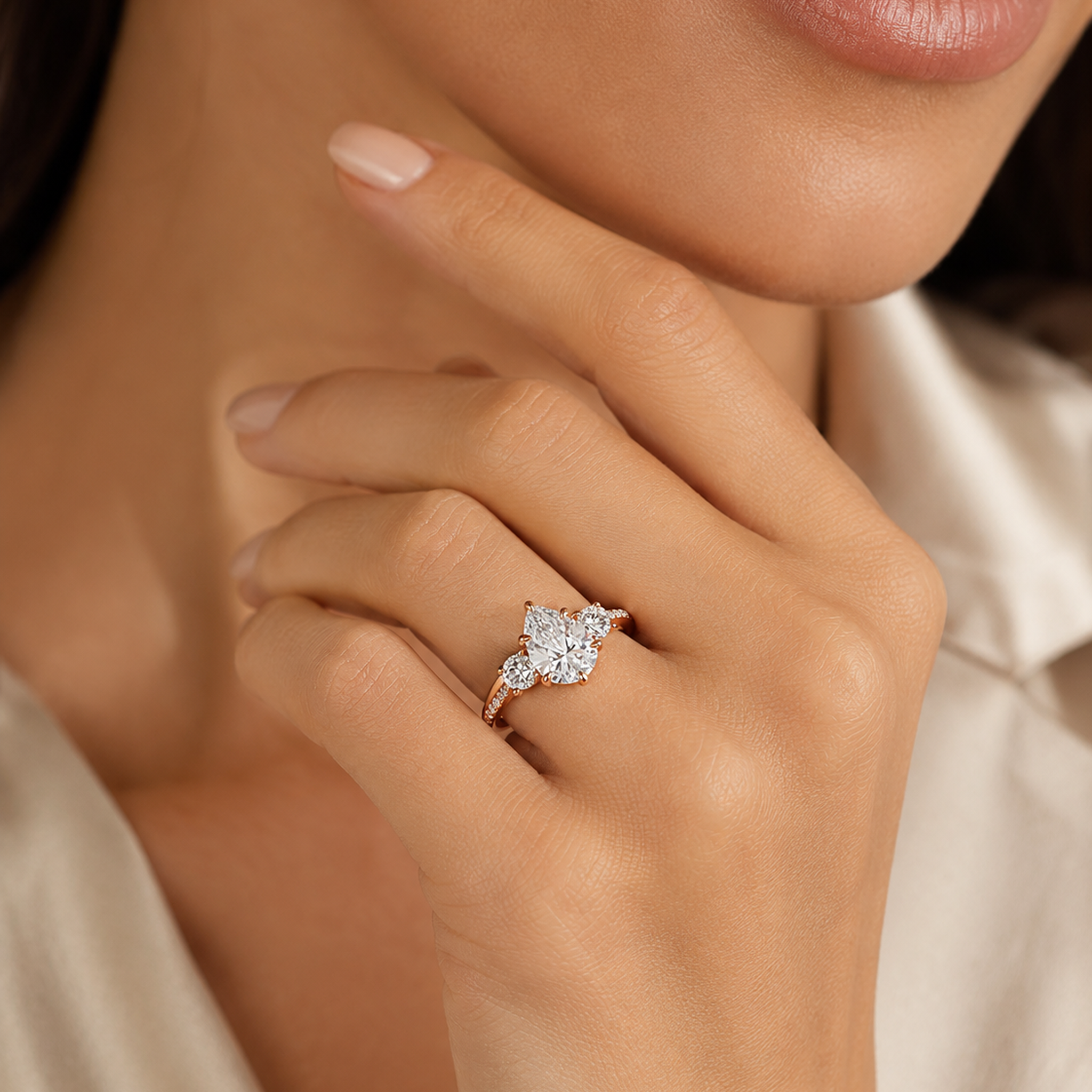
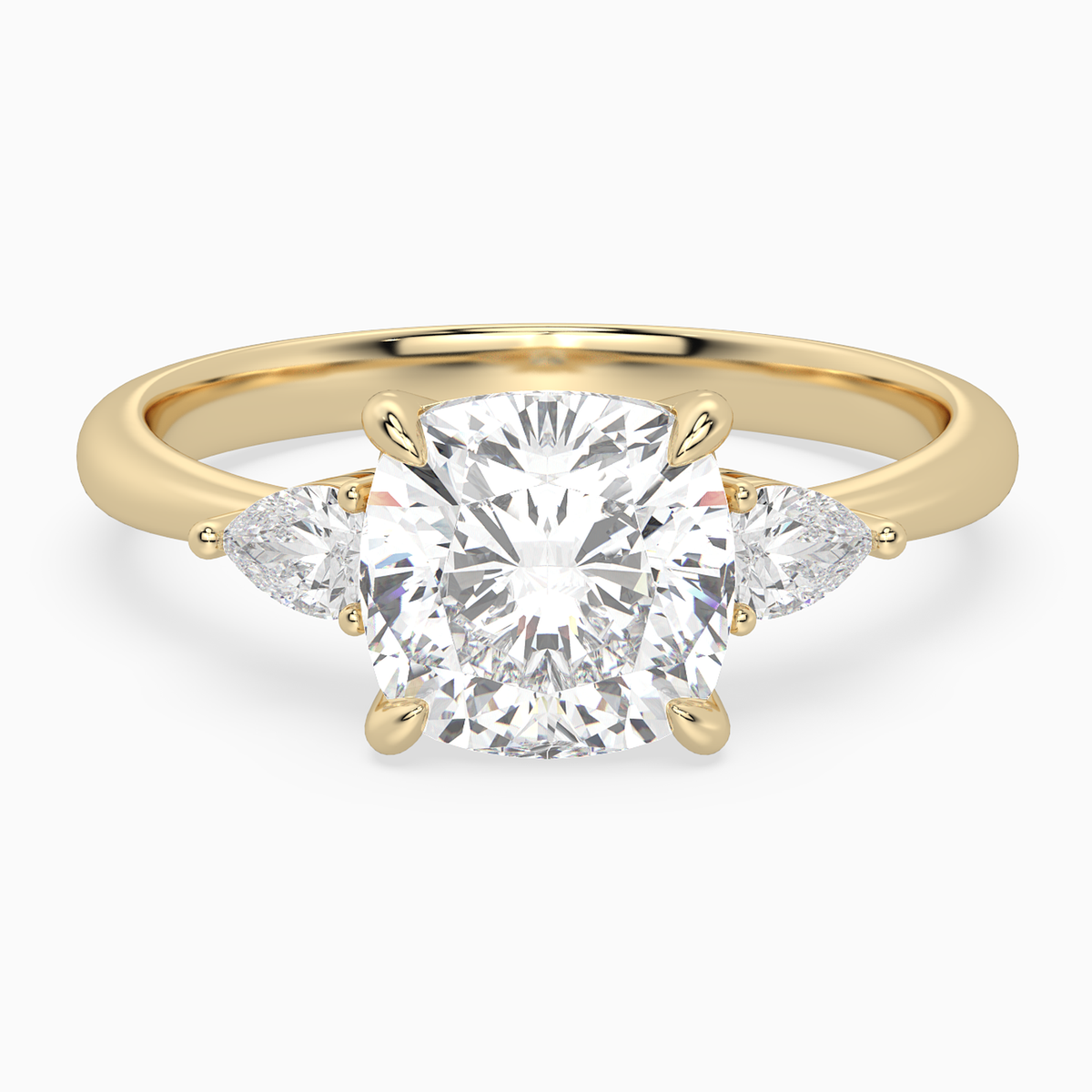
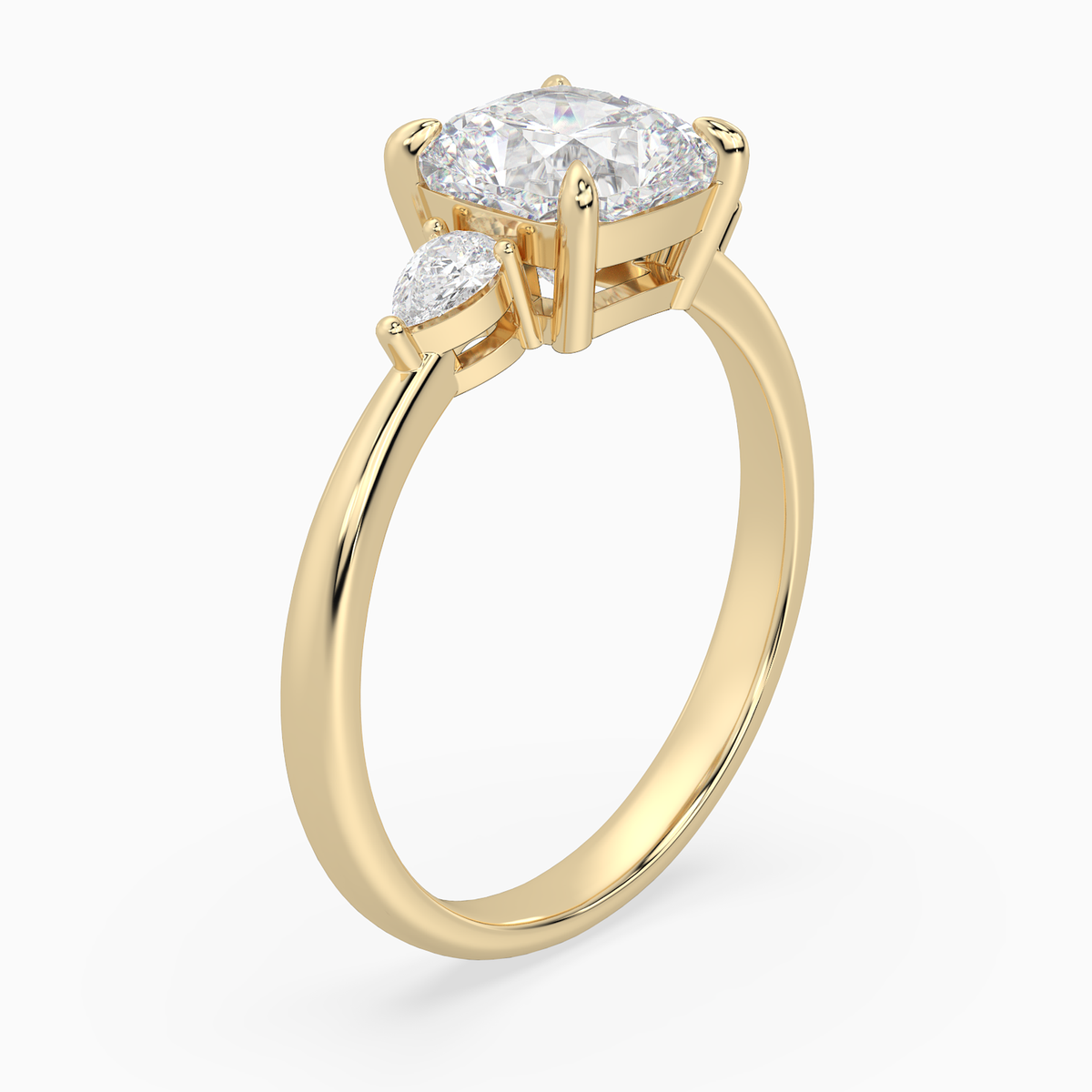
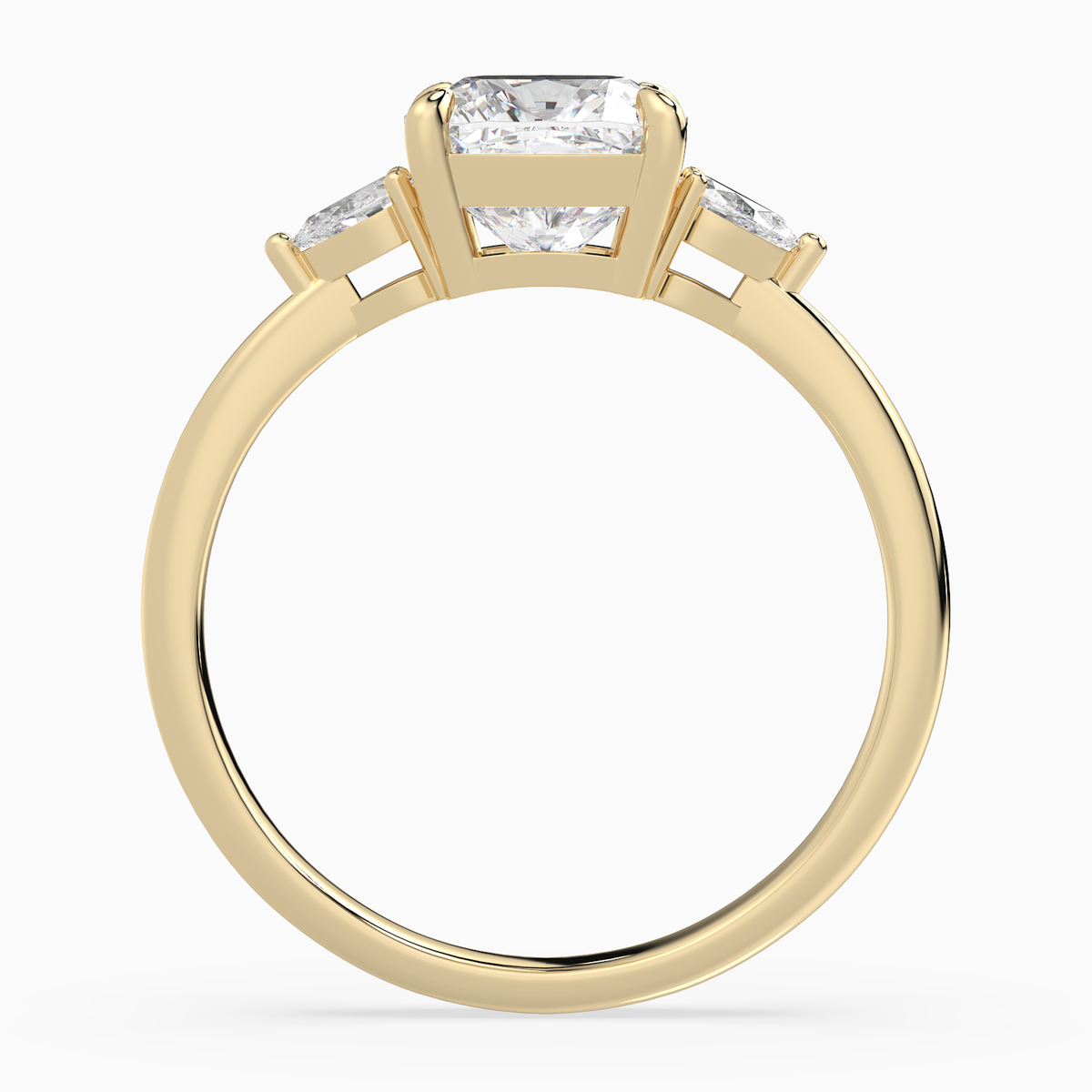
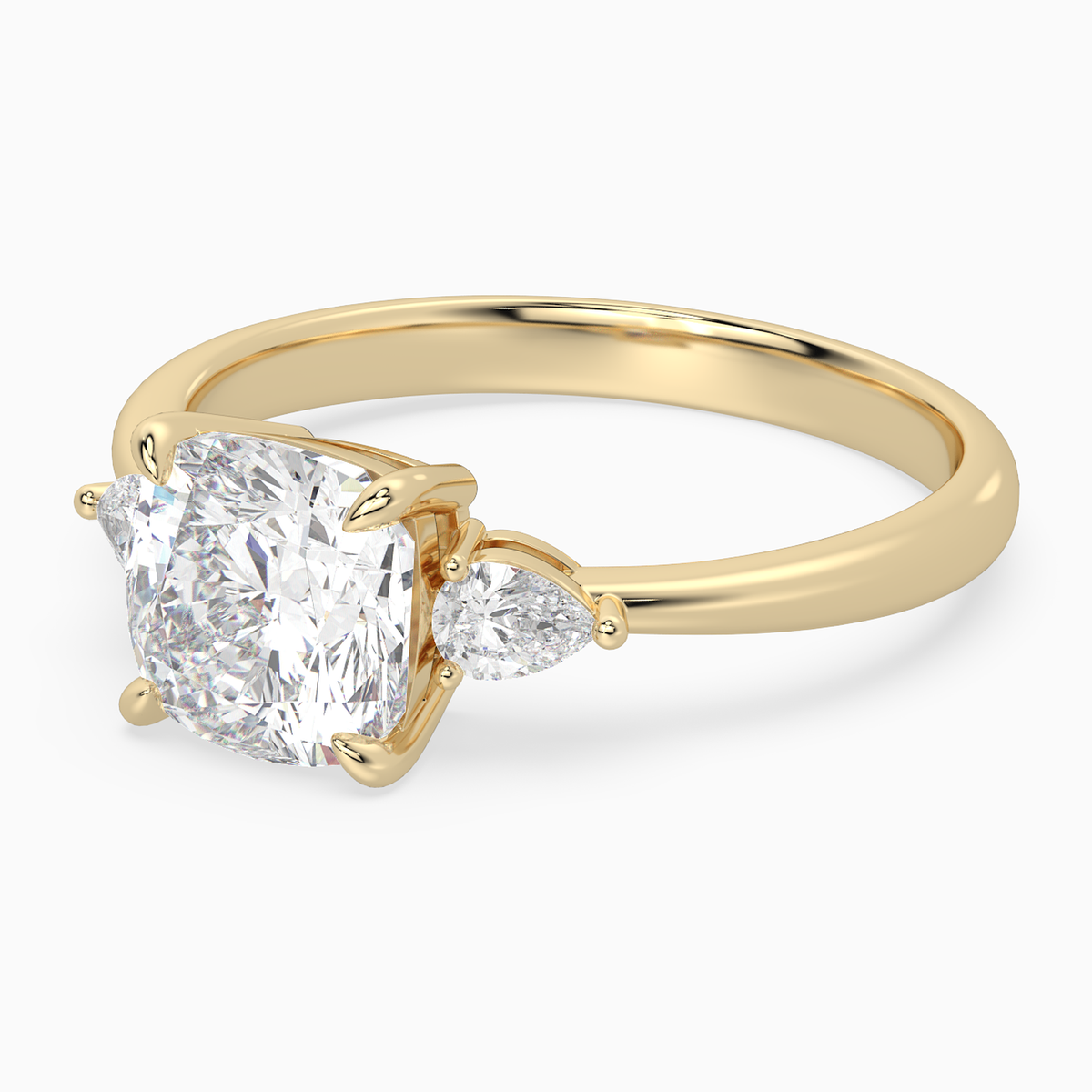

18K Yellow Gold Cushion Diamond Engagement Rings: A Fuller Gold Field Around Soft Geometry
A cushion center moves between square structure and rounded transition. 18K Yellow Gold places that geometry inside an alloy containing approximately 75% gold. The visible material field may be limited to fine prongs or extend through a basket, halo, split shank, cathedral, or multi-stone setting.
The current collection contains 13 designs: six Solitaires, five Halos, and two Three Stone compositions. Kite, octagonal, round, pavé, and hidden frames make the relation between soft corners and gold especially visible, while bypass, vine, and pear-accented structures change its direction.
Read Karat as Composition
18K gold contains approximately 75% gold. Alloying metals influence exact shade and working behavior. Karat does not promise one color, hardness, durability outcome, sensitivity result, or service schedule, and it should not be used as a simple quality hierarchy over 14K.
When comparing karats, hold architecture as constant as possible. A broad halo or substantial shoulder may show more metal than a fine-prong 18K Solitaire. Judge composition together with visible amount, finish, dimensions, wear, and care.
A Fuller Field Should Preserve the Cushion
Yellow Gold can draw a continuous border around rounded corners. That boundary should preserve corner balance, shoulder shape, and the square or elongated character of the center. Prong position, halo spacing, and transition into the band determine whether the outline remains coherent.
The material cannot improve polish, symmetry, color grade, or facet performance. Broad flashes and fine-grained textures belong to the individual diamond. Review its report, dimensions, images, and motion instead of using a warm setting to predict brilliance.
Gold Moves Through the Frames
A Solitaire concentrates gold at the prongs, basket, and band. A Halo exposes material between center and surrounding diamonds or along the outside edge. Kite and octagonal frames introduce firmer lines; round and pavé halos create a softer cadence around the cushion.
Three Stone settings distribute material across cushion and pear forms. Cathedral shoulders lift the gold, bypass lines bend it around the center, vines divide it into open paths, and split shanks create a wider field. These are distinct page values beyond calling 18K Yellow Gold rich or timeless.
Proportion Extends Beyond the Center
Length-to-width ratio describes the center outline, not the scale of the whole ring. Compare actual length, width, depth, corners, and shoulders with halo dimensions, accents, band width, and profile. Carat alone cannot establish face-up presence.
Center dimensions, basket, setting height, band width, ring size, and fit influence balance. A wedding band may sit close or leave an interval depending on projecting structures and contact points. Matching gold color does not guarantee flush fit or prevent rotation.
Material Presence With Restraint
Surface character evolves with wear, and maintenance depends on the specific alloy, finish, construction, and use. Confirm product details rather than assuming a universal polish, resizing, inspection, or service outcome for all 18K Yellow Gold rings.
Burvonti pairs responsibly sourced, independently graded lab-grown diamonds with settings calibrated through proportion and human judgment. Custom possibilities may refine outline, facet character, center specifications, prongs, basket, band, accents, metal, or engraving where feasible. The fuller field should support the cushion's geometry with clarity.
Frequently Asked Questions
How is this page different from 14K Yellow Gold Cushion rings?
It focuses on 18K's approximately 75% gold composition and how a fuller material field is distributed around cushion geometry.
How much gold is in 18K Yellow Gold?
Approximately 75%. Other alloying metals influence shade and working behavior.
Is 18K Yellow Gold automatically better than 14K?
No. Karat is one composition fact; alloy, construction, finish, wear, care, and preference also matter.
Are all 18K yellow gold rings the same shade?
No. Alloy formula, finish, lighting, photography, and exposed metal area affect appearance.
Does 18K Yellow Gold enhance cushion sparkle?
No. The metal changes the surrounding field, not the diamond's facet relationships.
Which structures are represented?
The collection contains six Solitaire, five Halo, and two Three Stone designs.
How does an octagonal halo affect a cushion?
It adds a firmer outer geometry around the rounded center without changing the center's measurements.
Does the metal change a crushed-ice pattern?
No. Facet texture belongs to the individual diamond and viewing conditions.
What should I compare between 14K and 18K Yellow Gold?
Compare composition, exact color, visible metal, construction, care, budget, and the complete ring.
Will higher karat make the cushion look larger?
No. Face-up scale comes from dimensions, outline, and setting context.
Will the ring rotate?
Center scale, basket, band, ring size, fit, and complete weight distribution influence rotation.
Can a matching band sit flush?
Only the profiles and contact points can establish that; matching metal is not enough.
Can Burvonti personalize an 18K Yellow Gold Cushion ring?
Custom possibilities may include center, outline, prongs, basket, accents, band line, metal, or engraving, subject to feasibility.