


Cushion Diamond Engagement Rings in 14K Yellow Gold
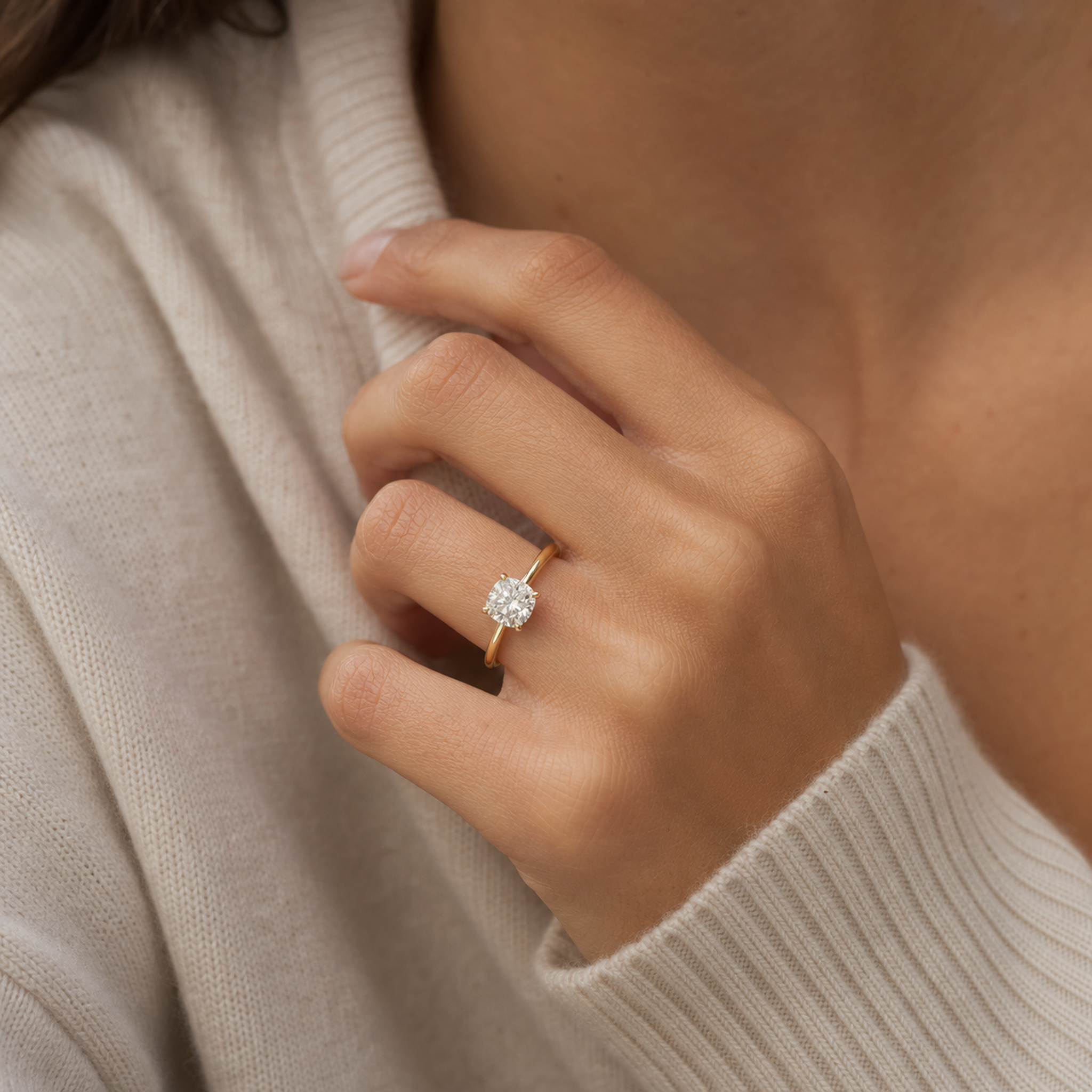
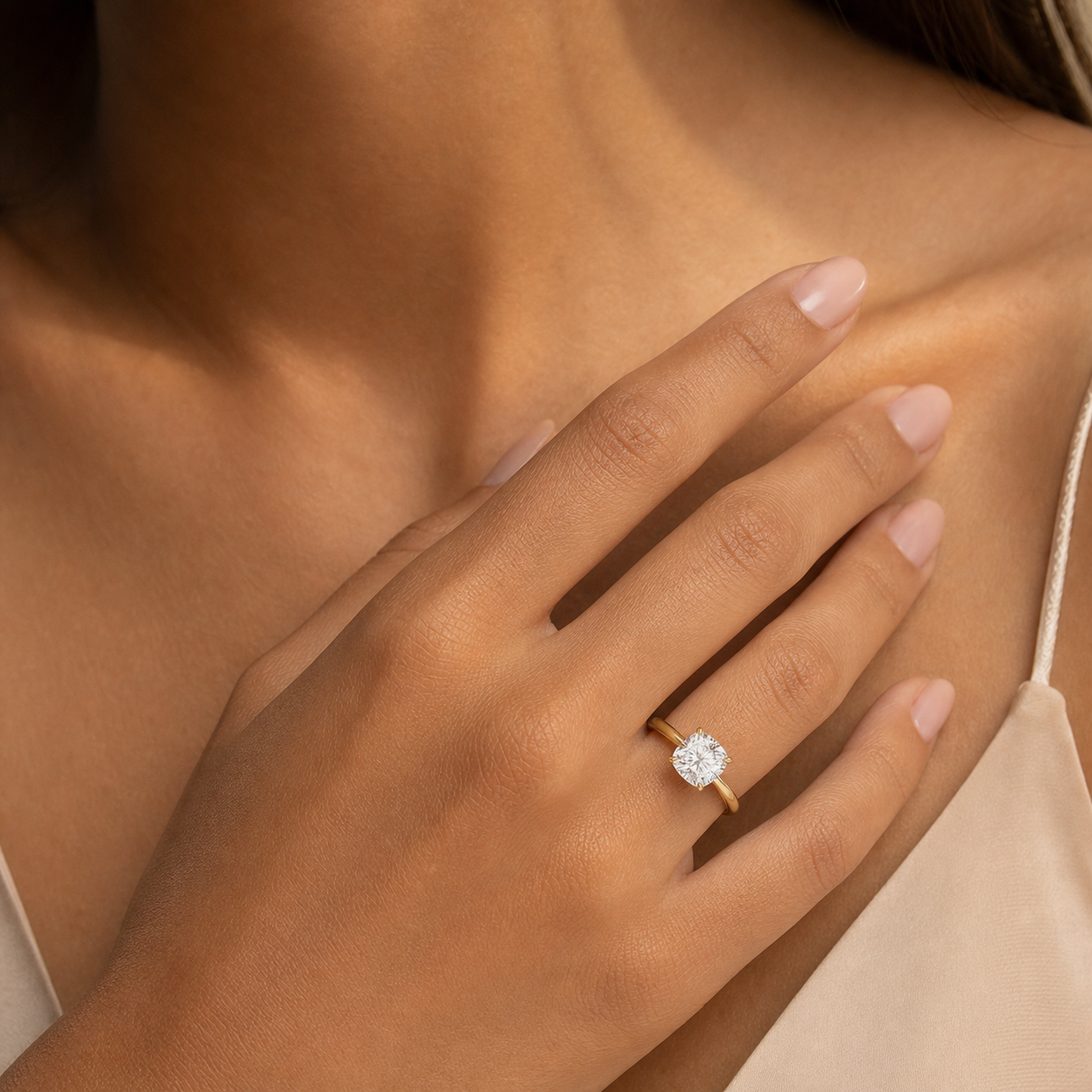
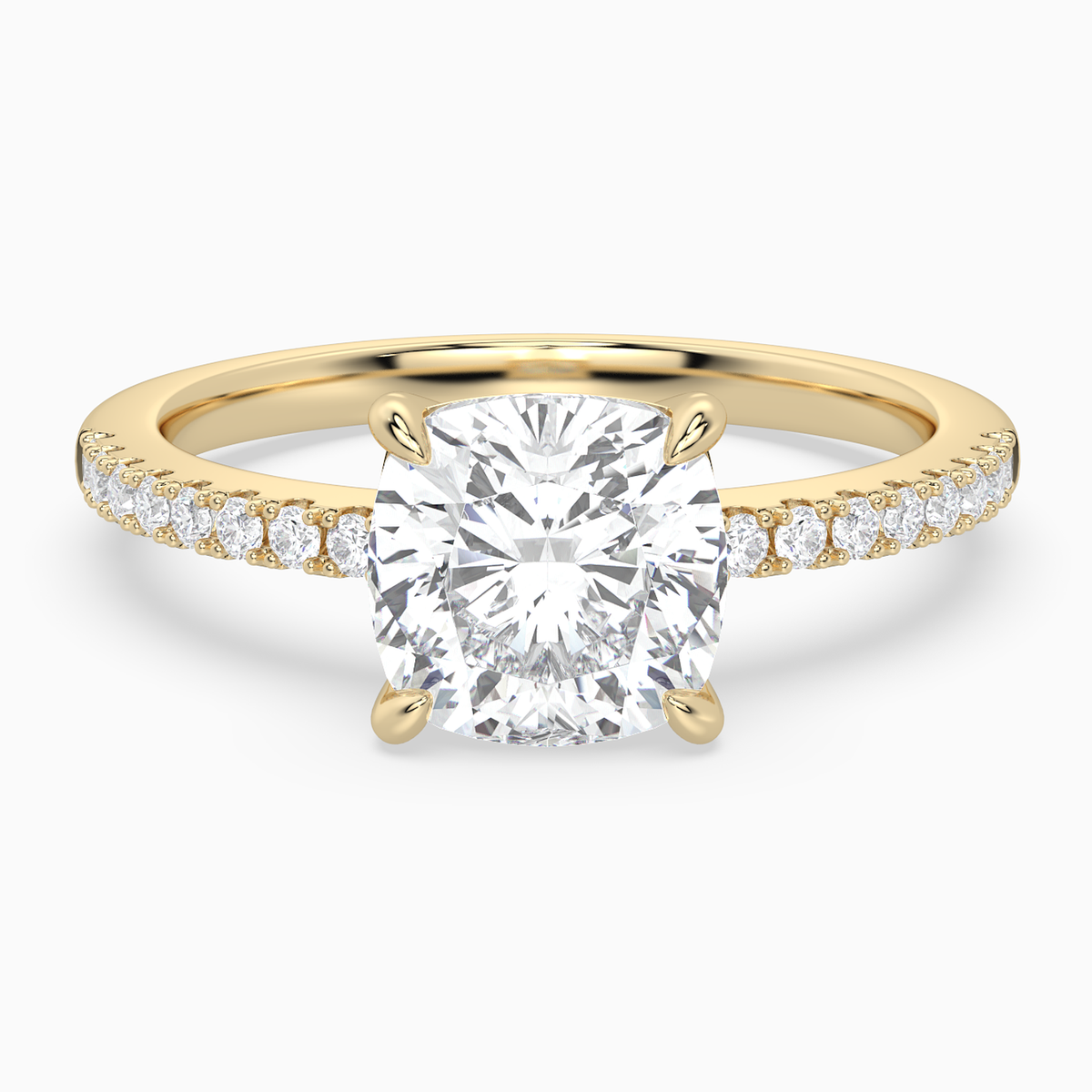
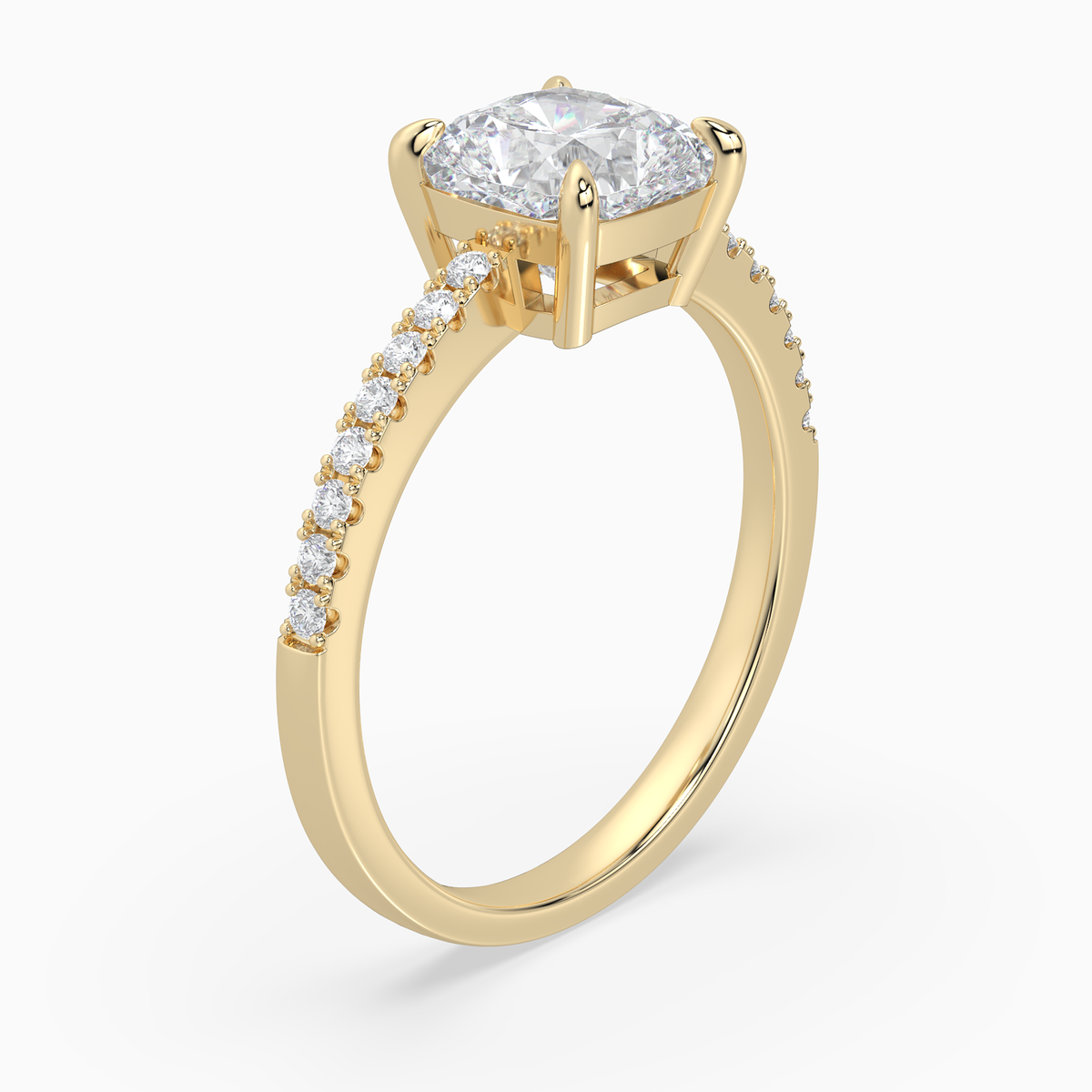
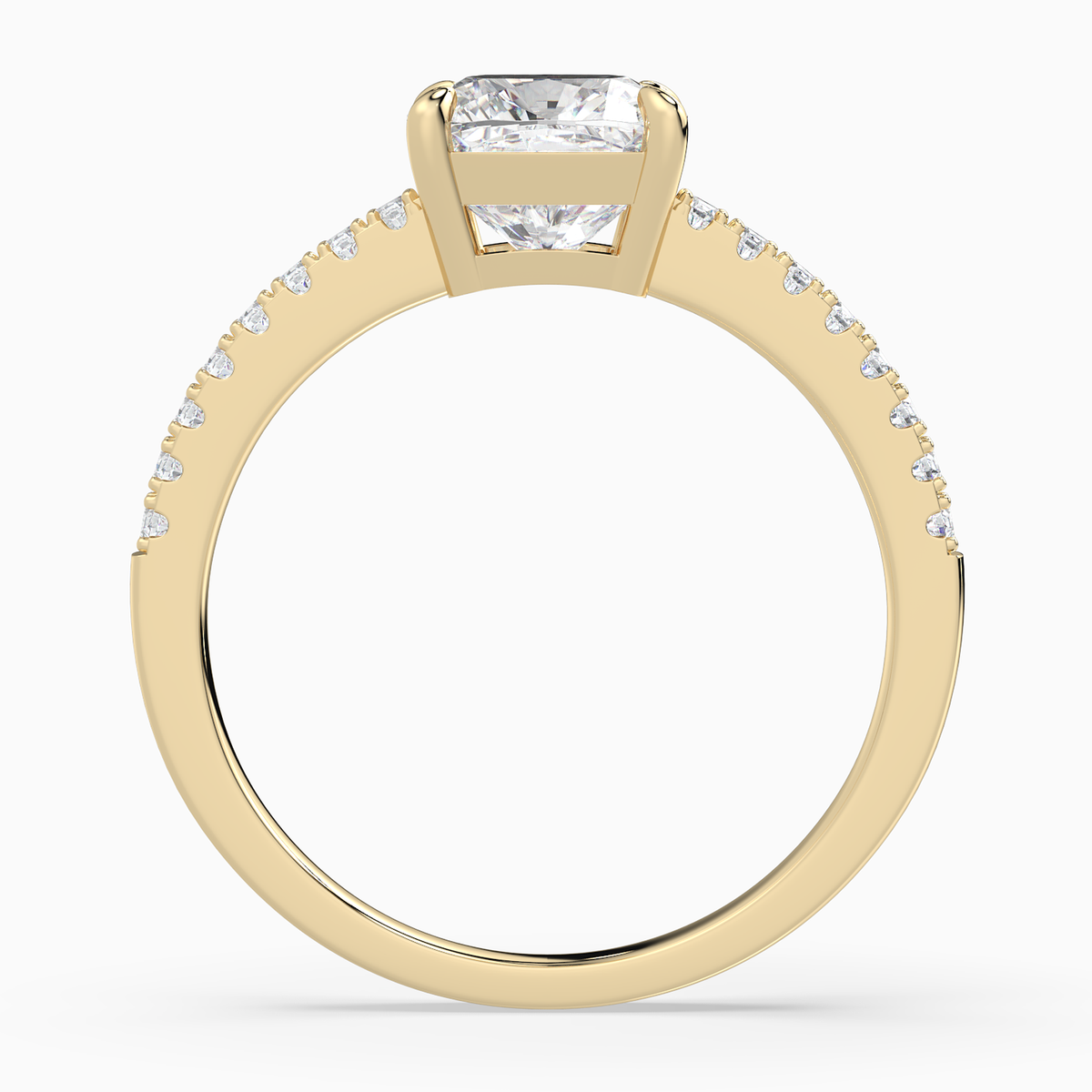
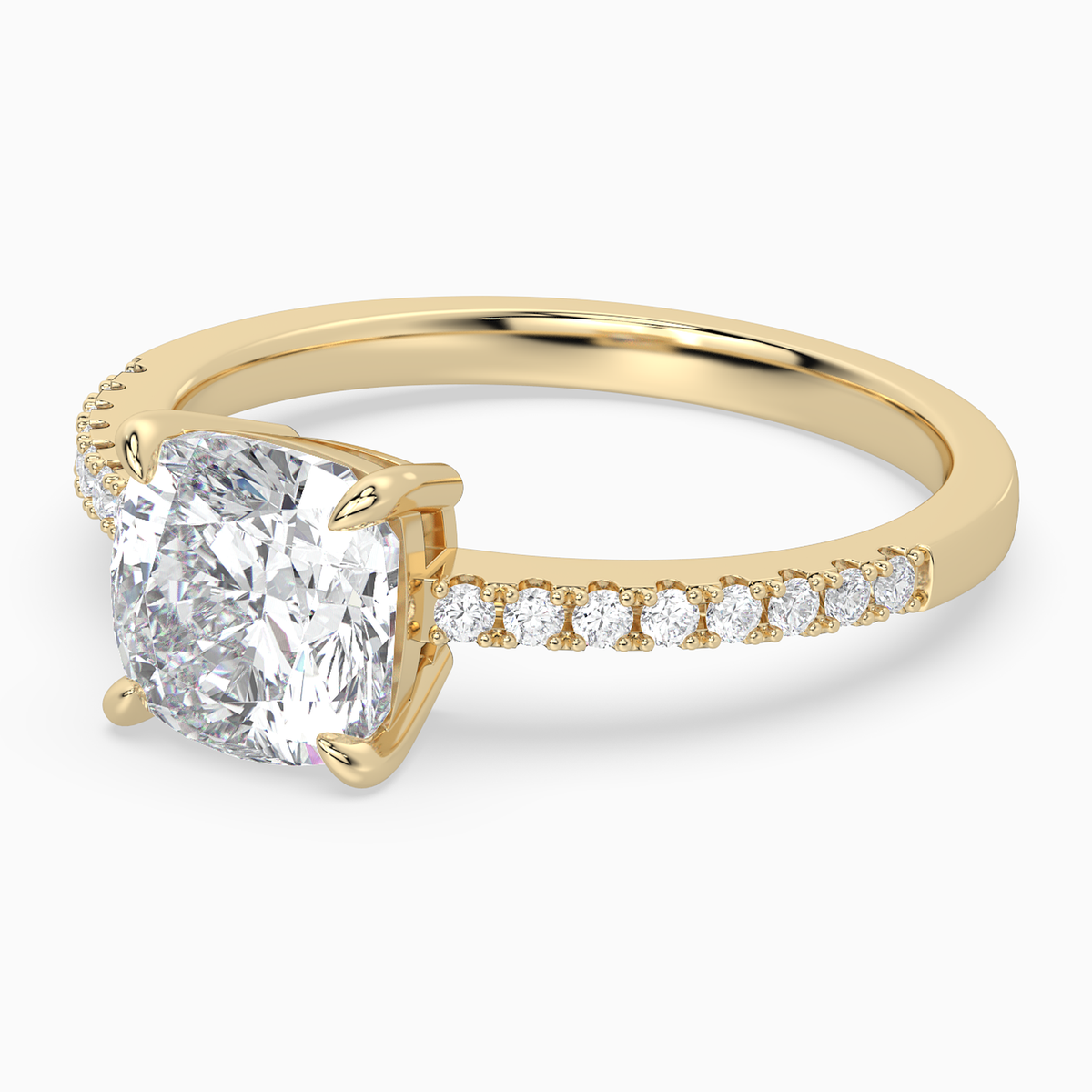
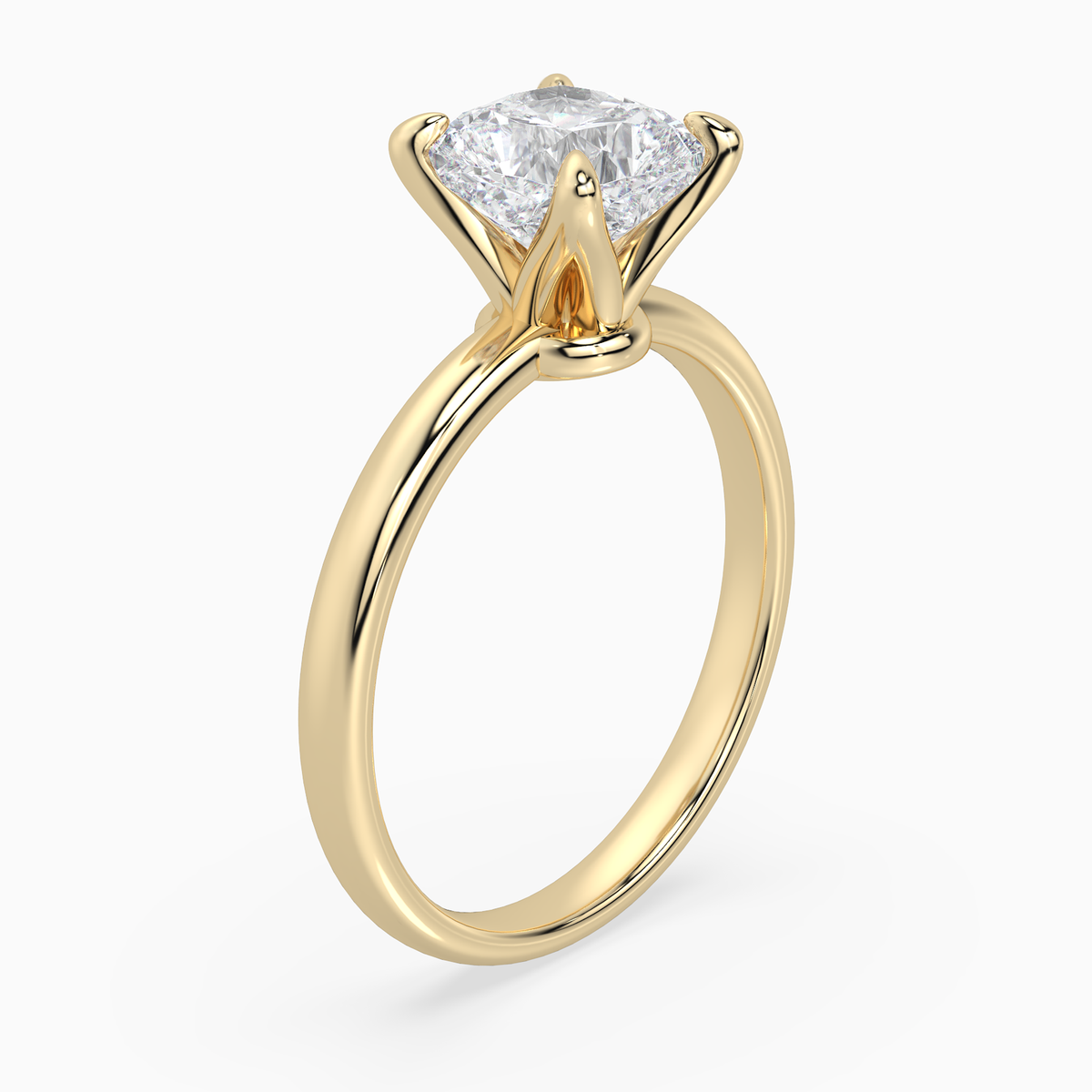
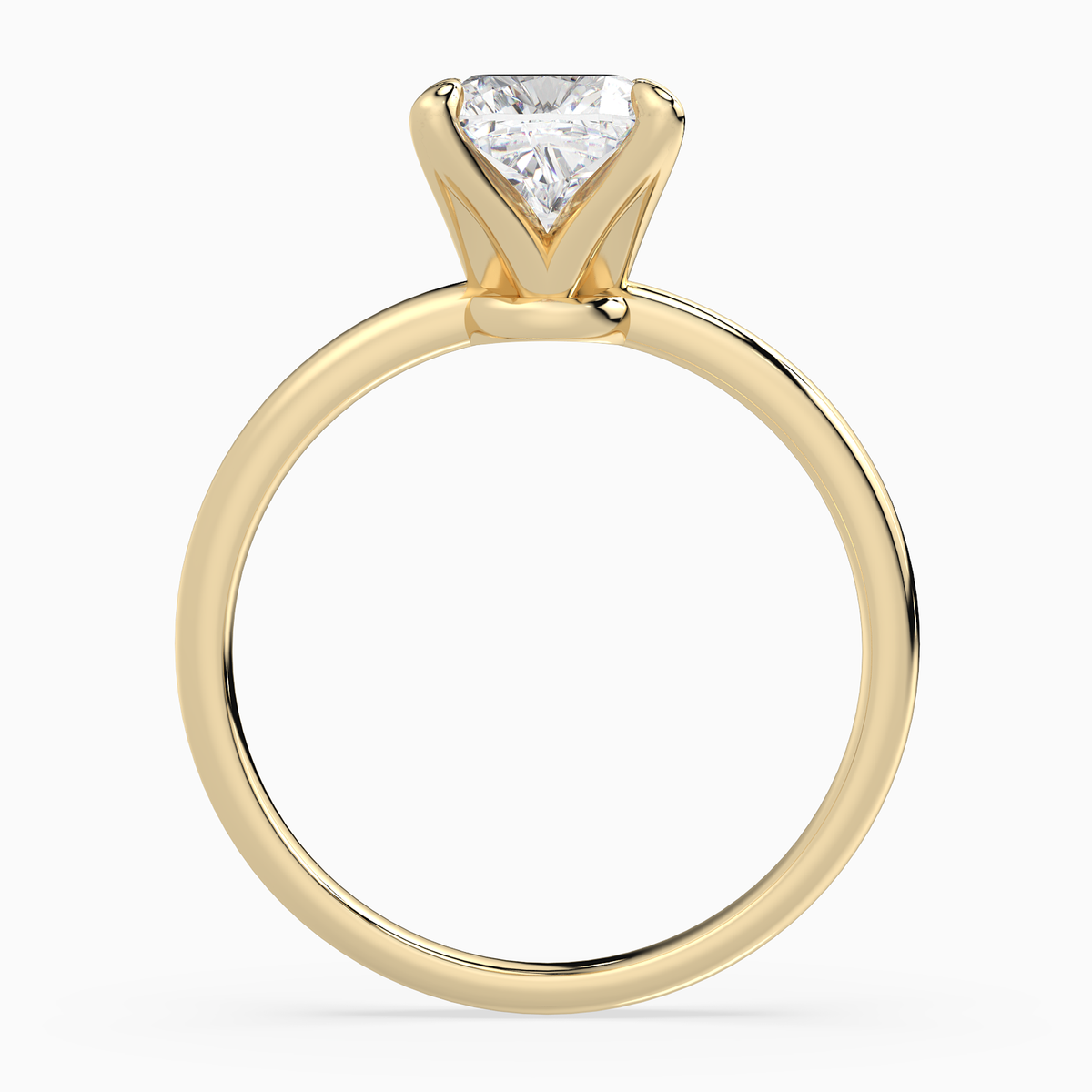
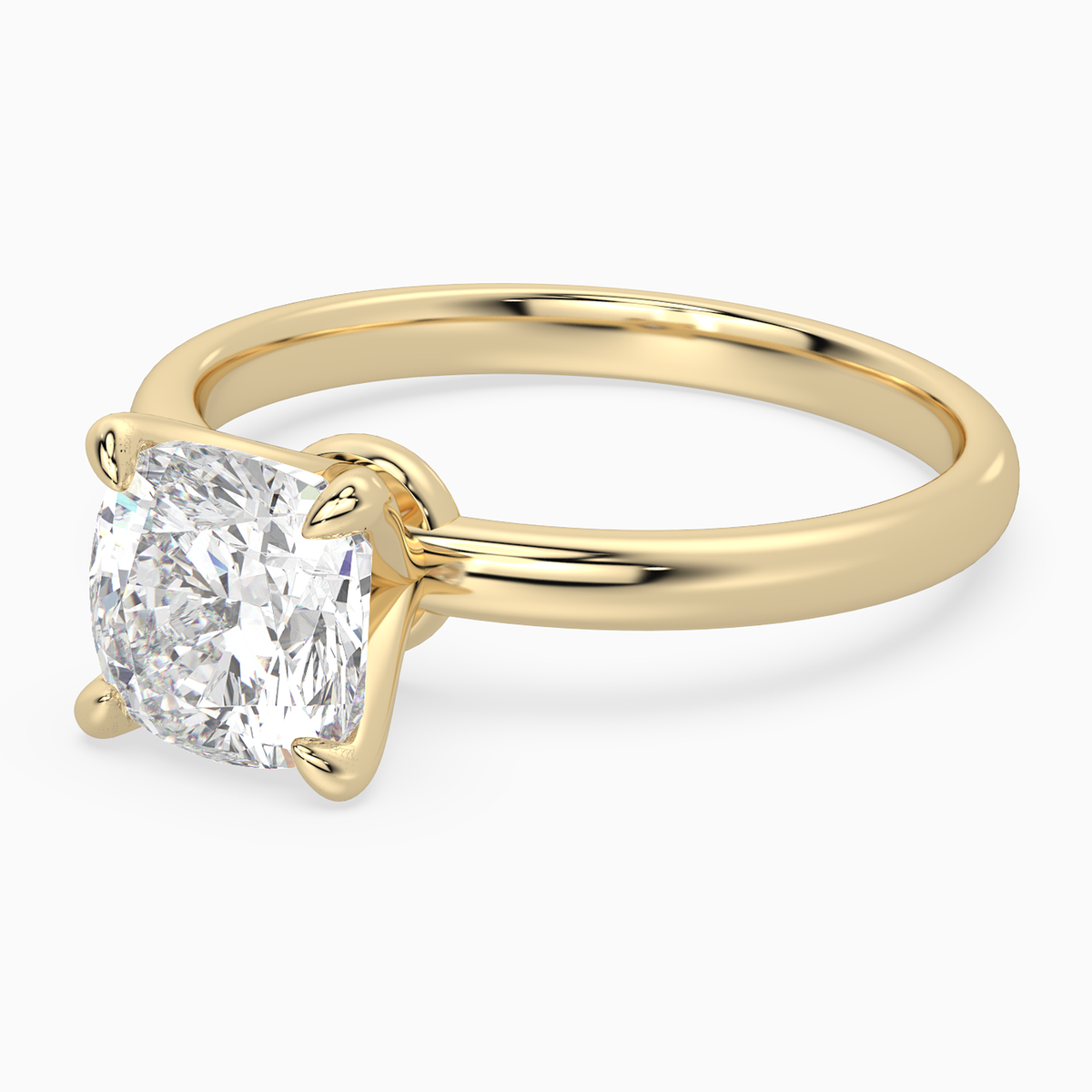
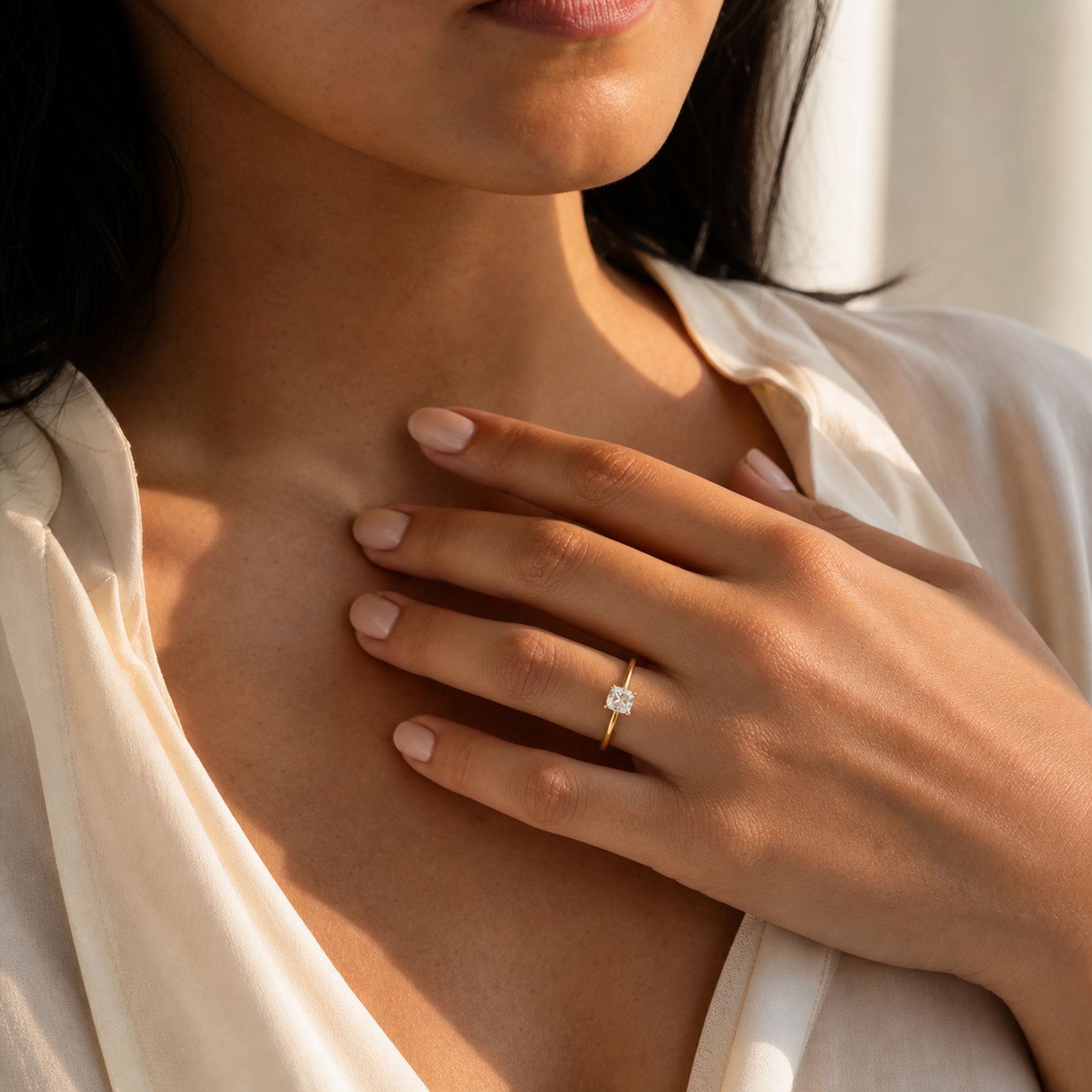
Rounded corners, drawn in gold. 14K yellow gold gives the cushion a visible perimeter while preserving its square or elongated character.








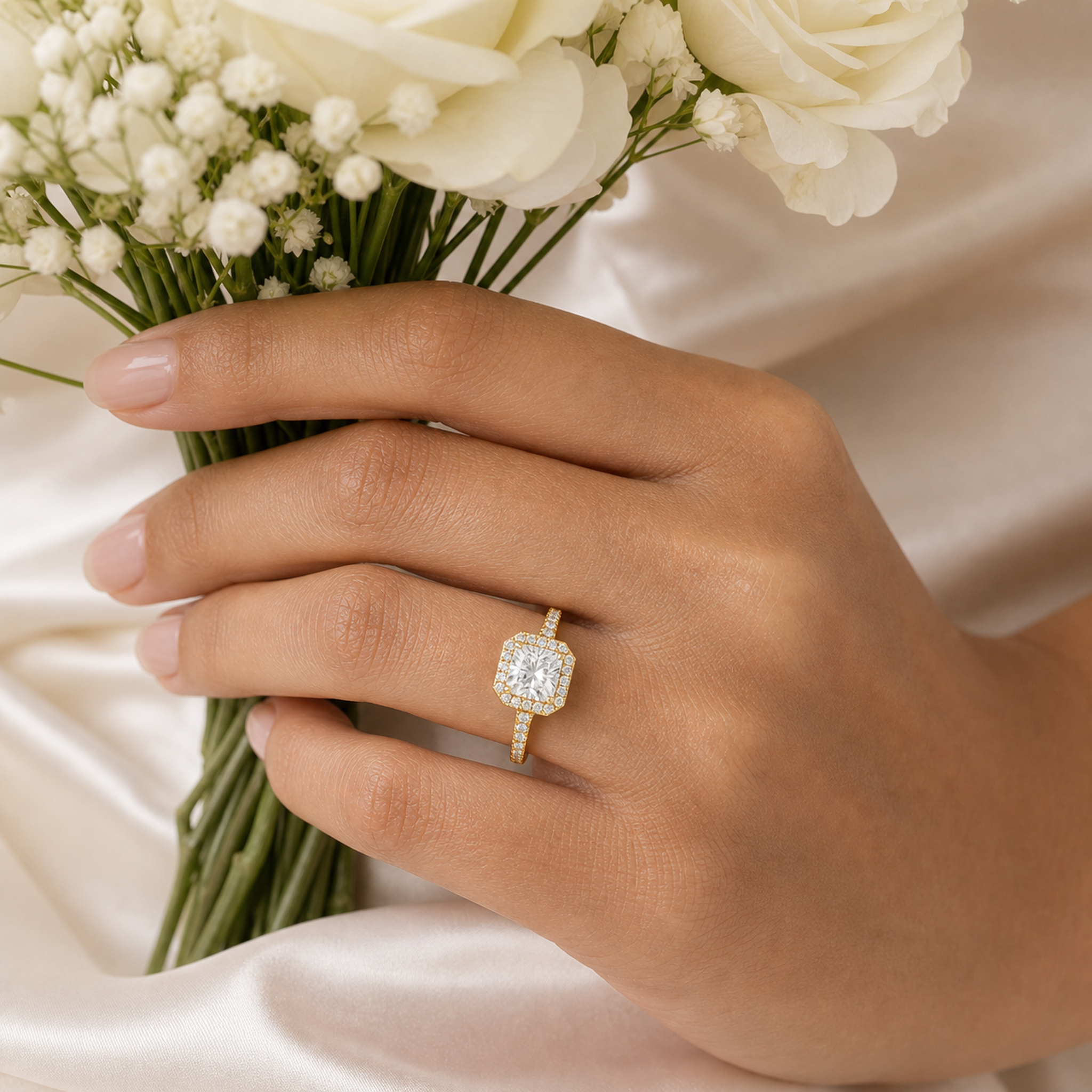



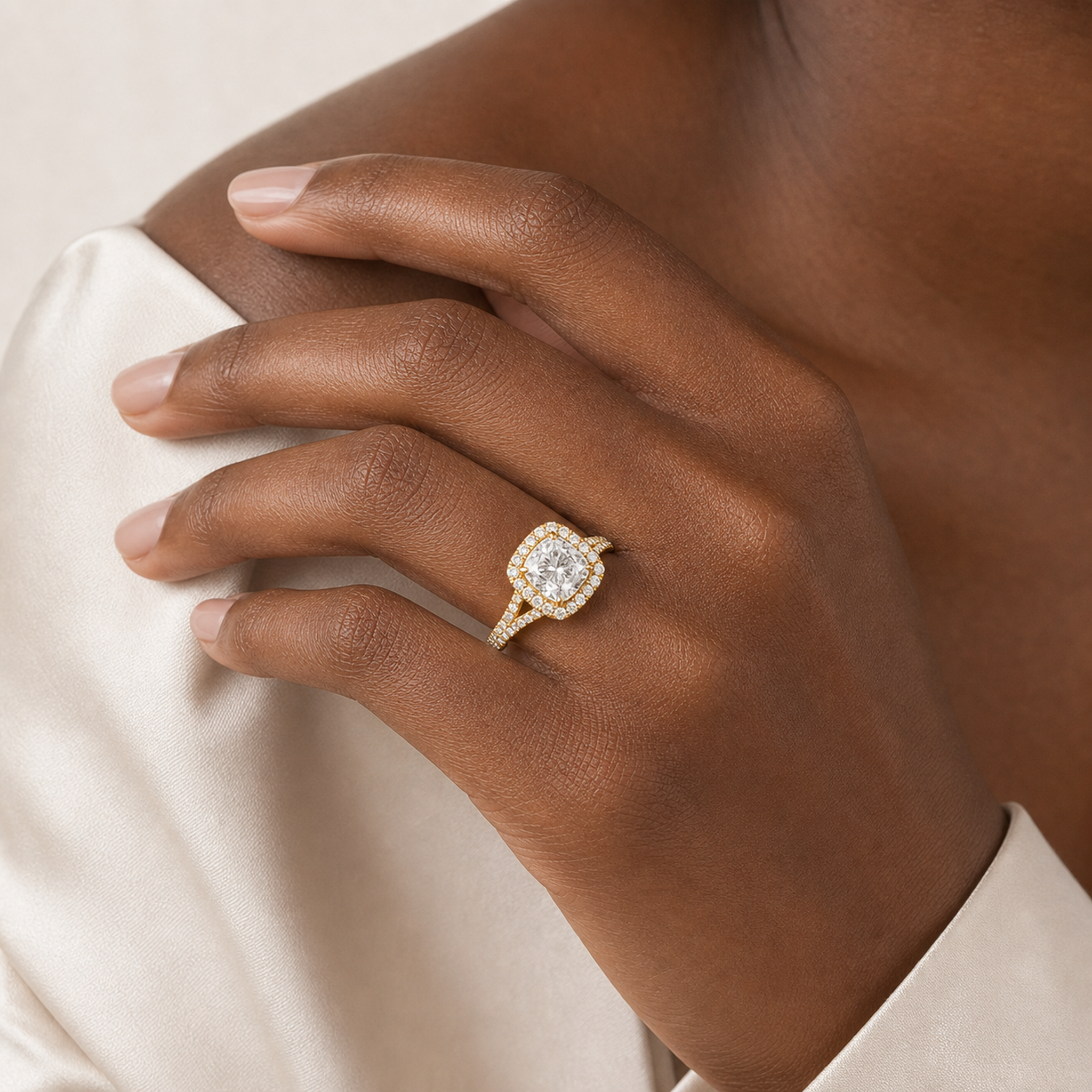



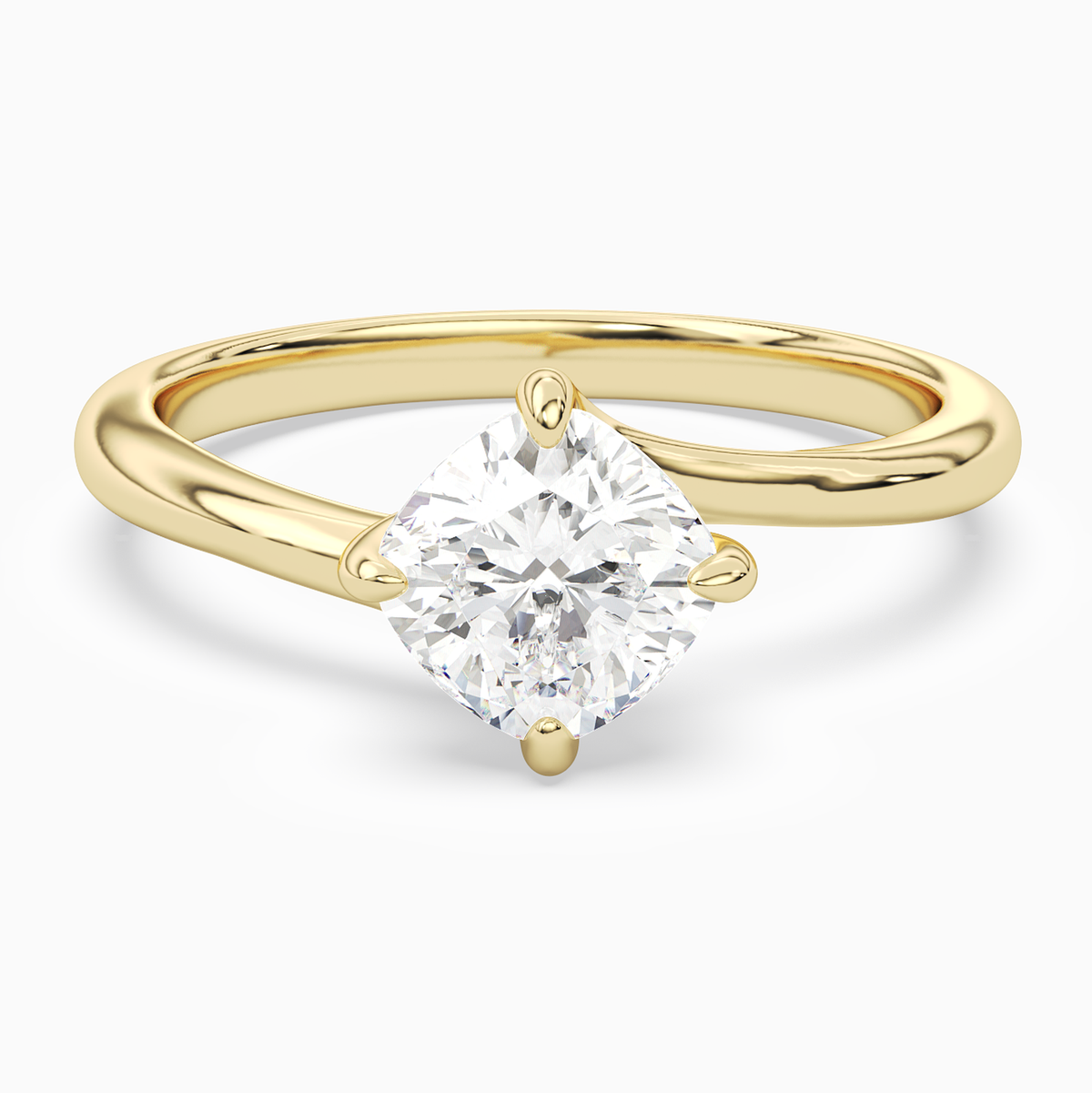
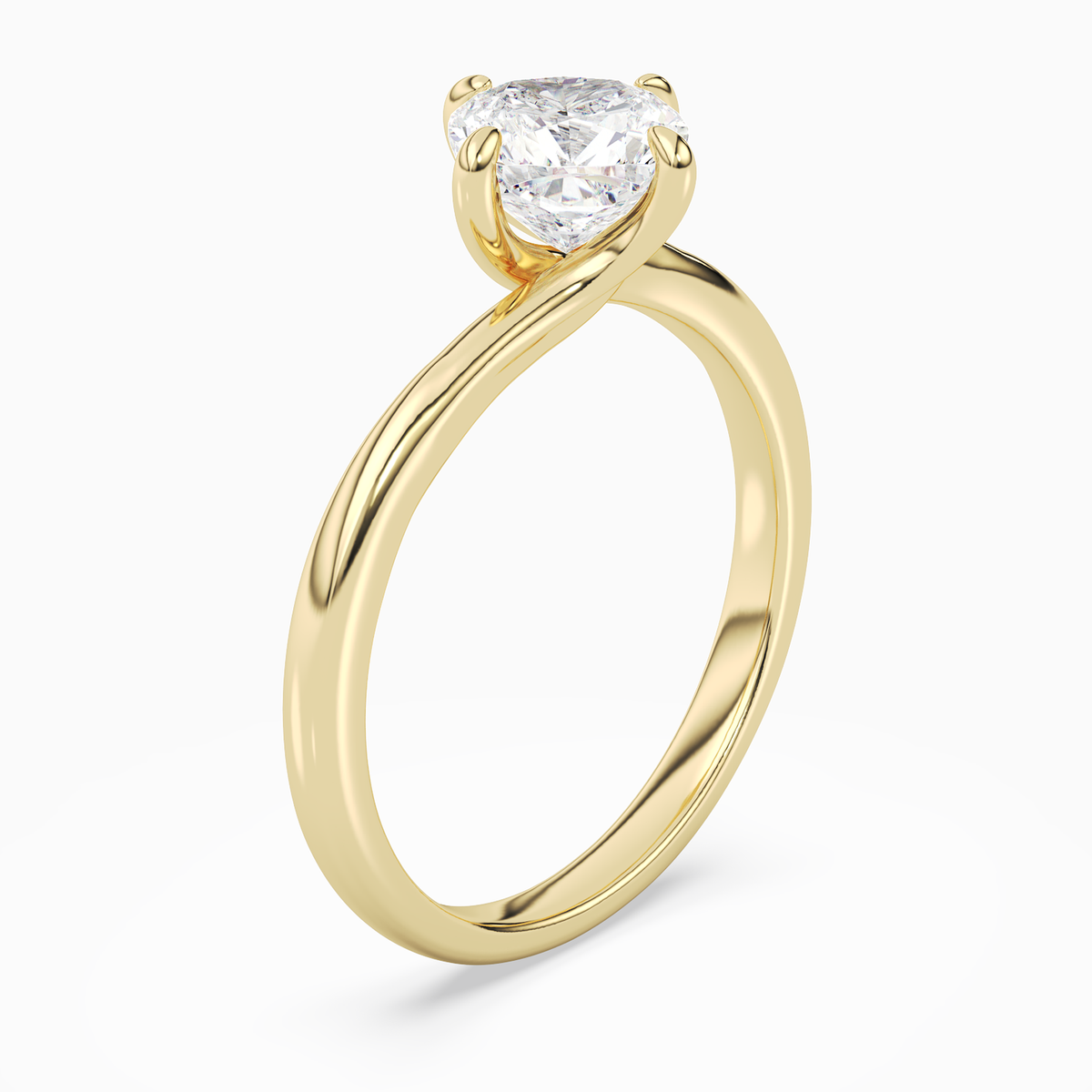
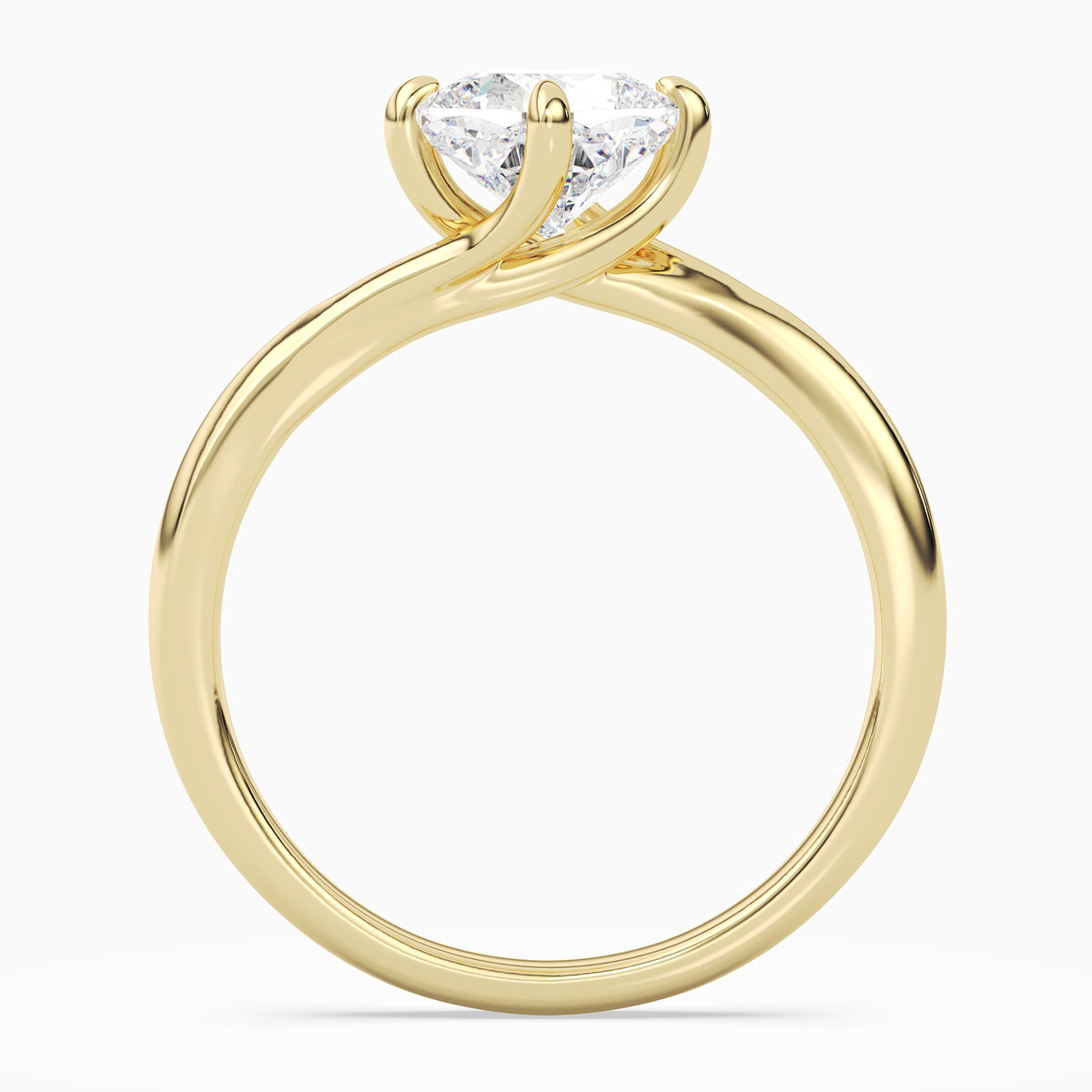
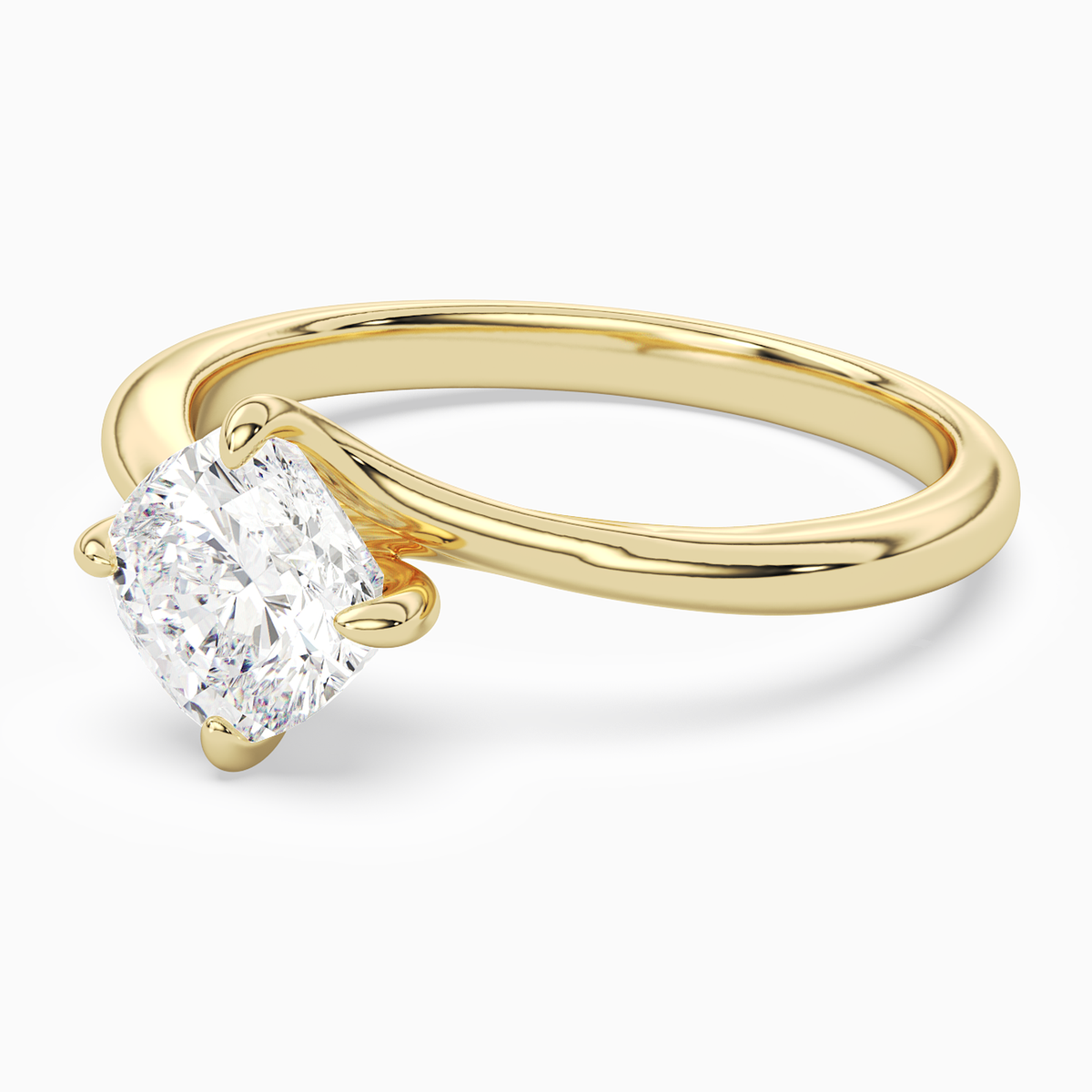
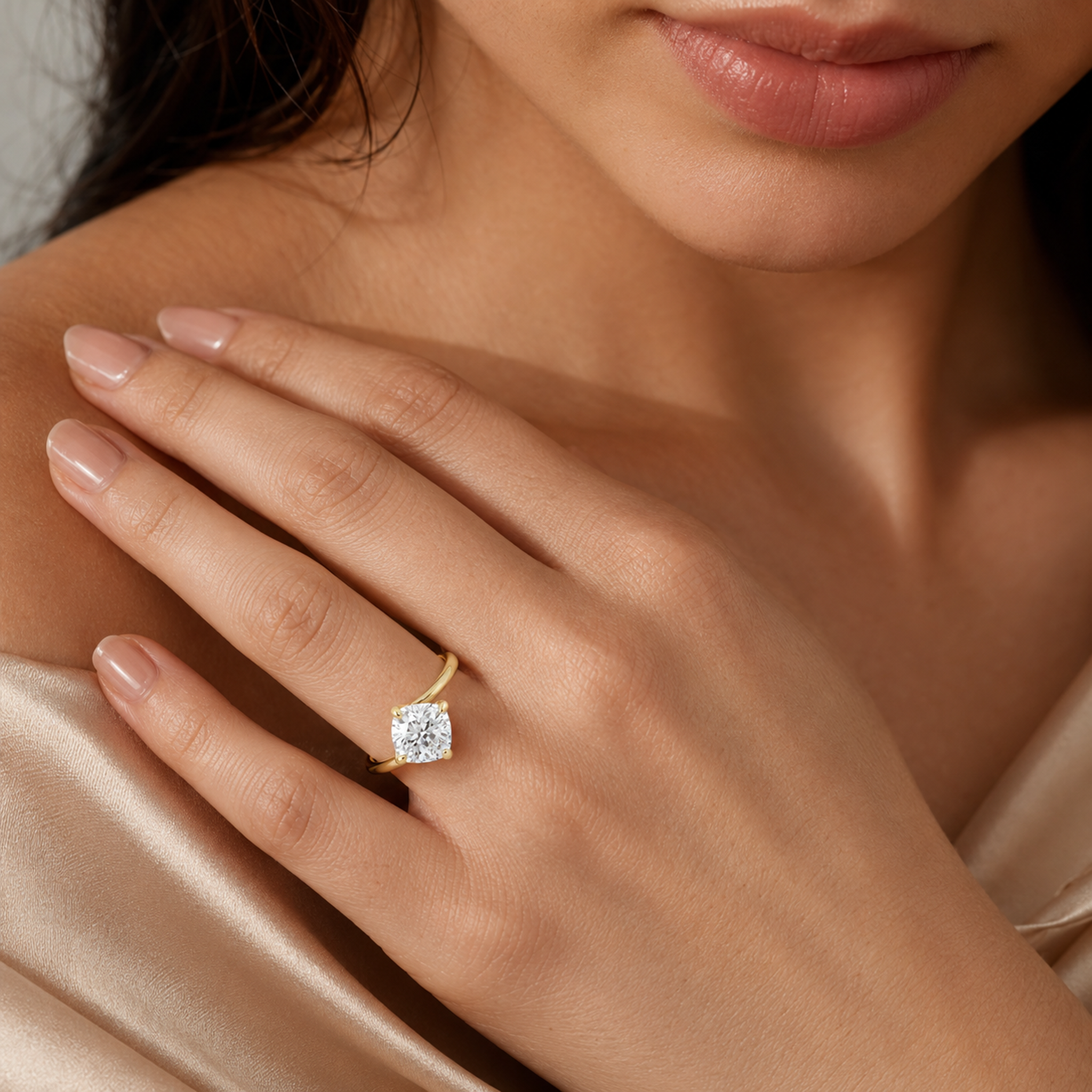
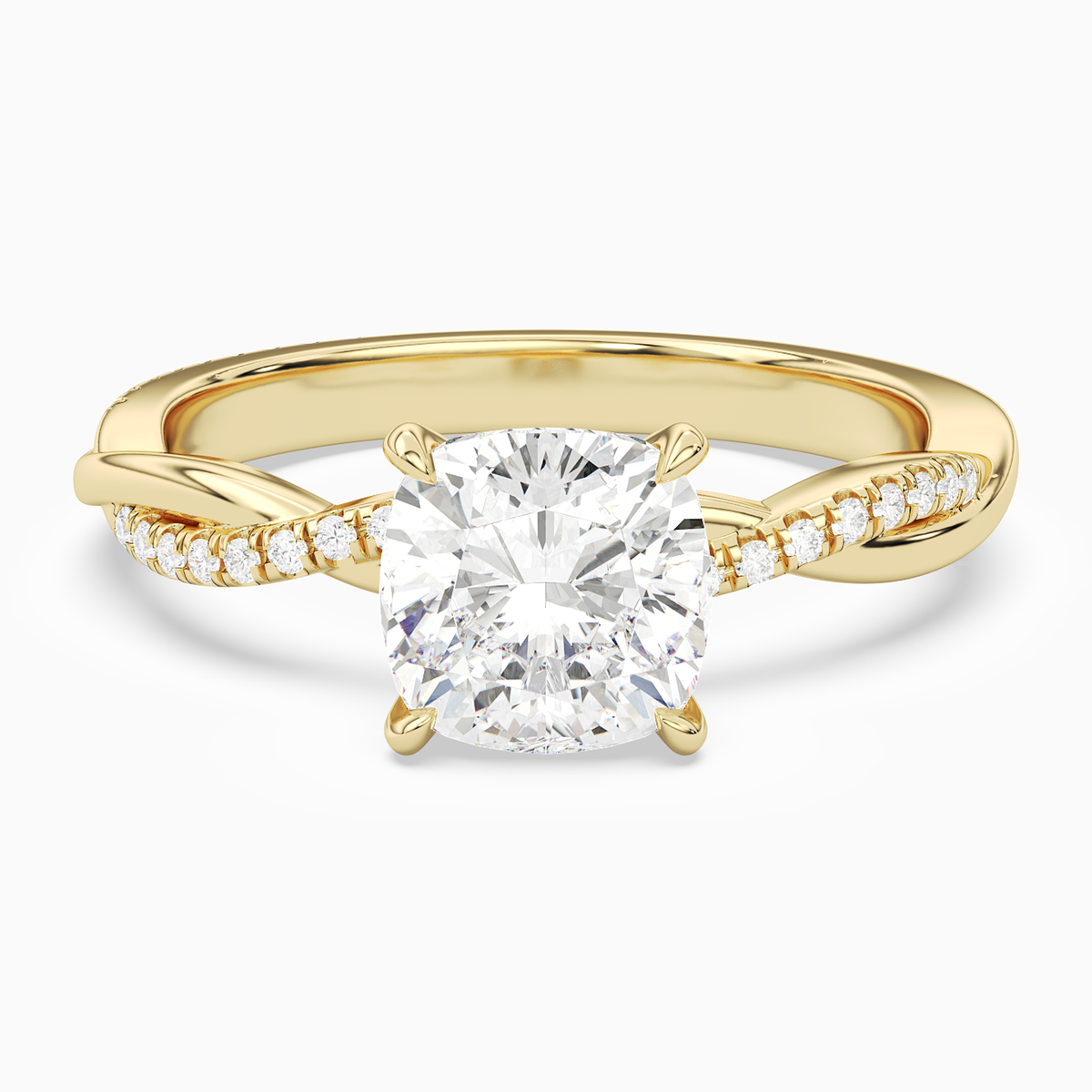
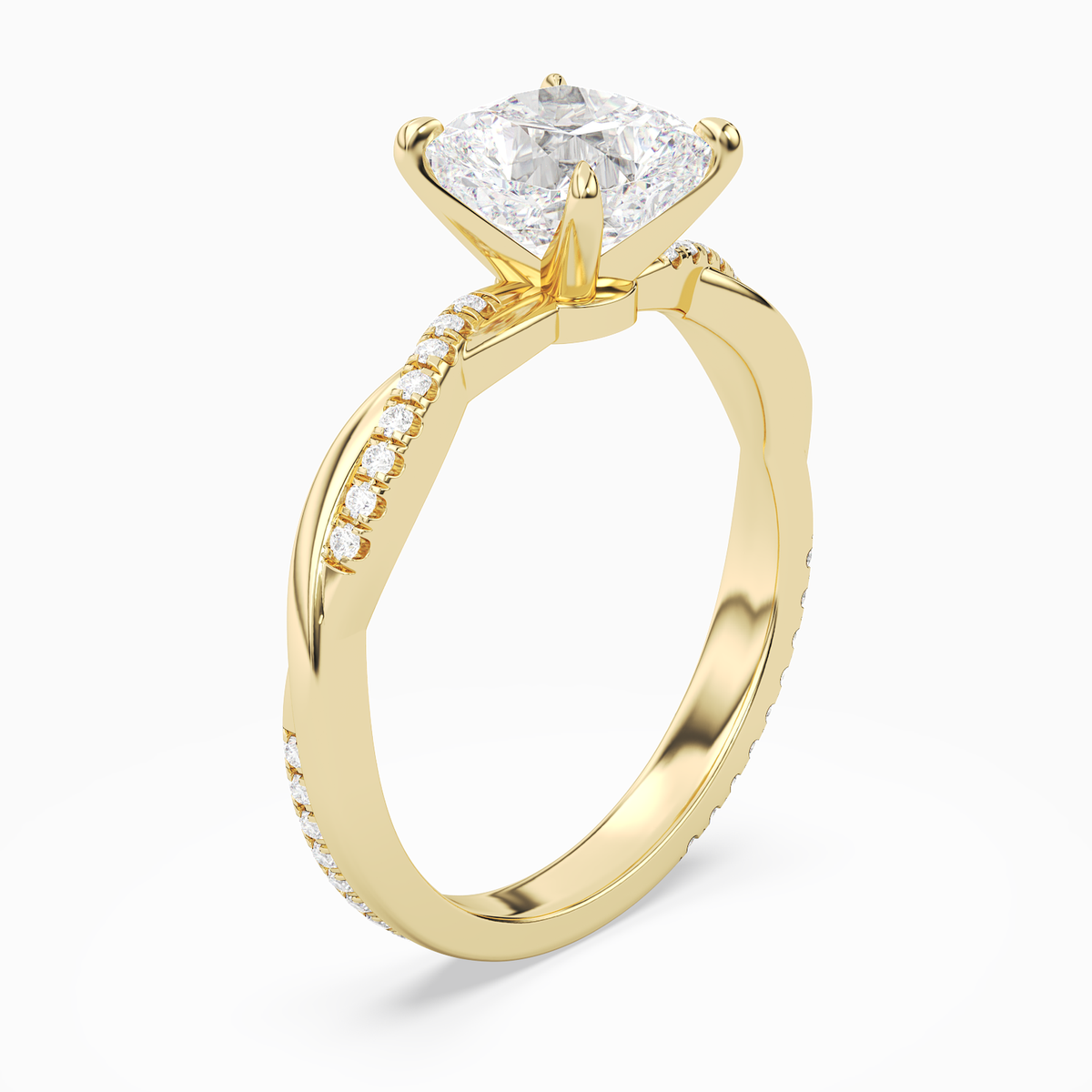
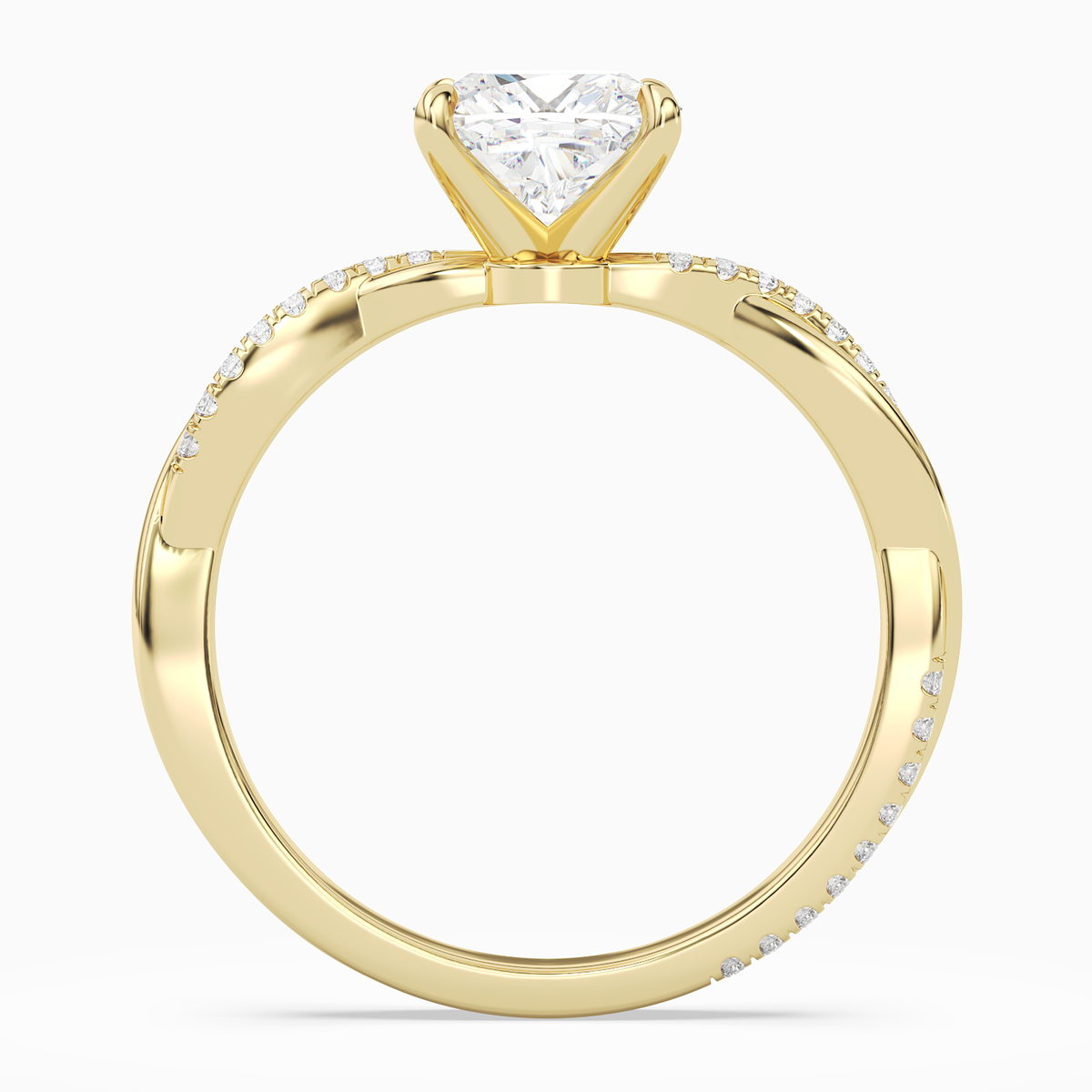
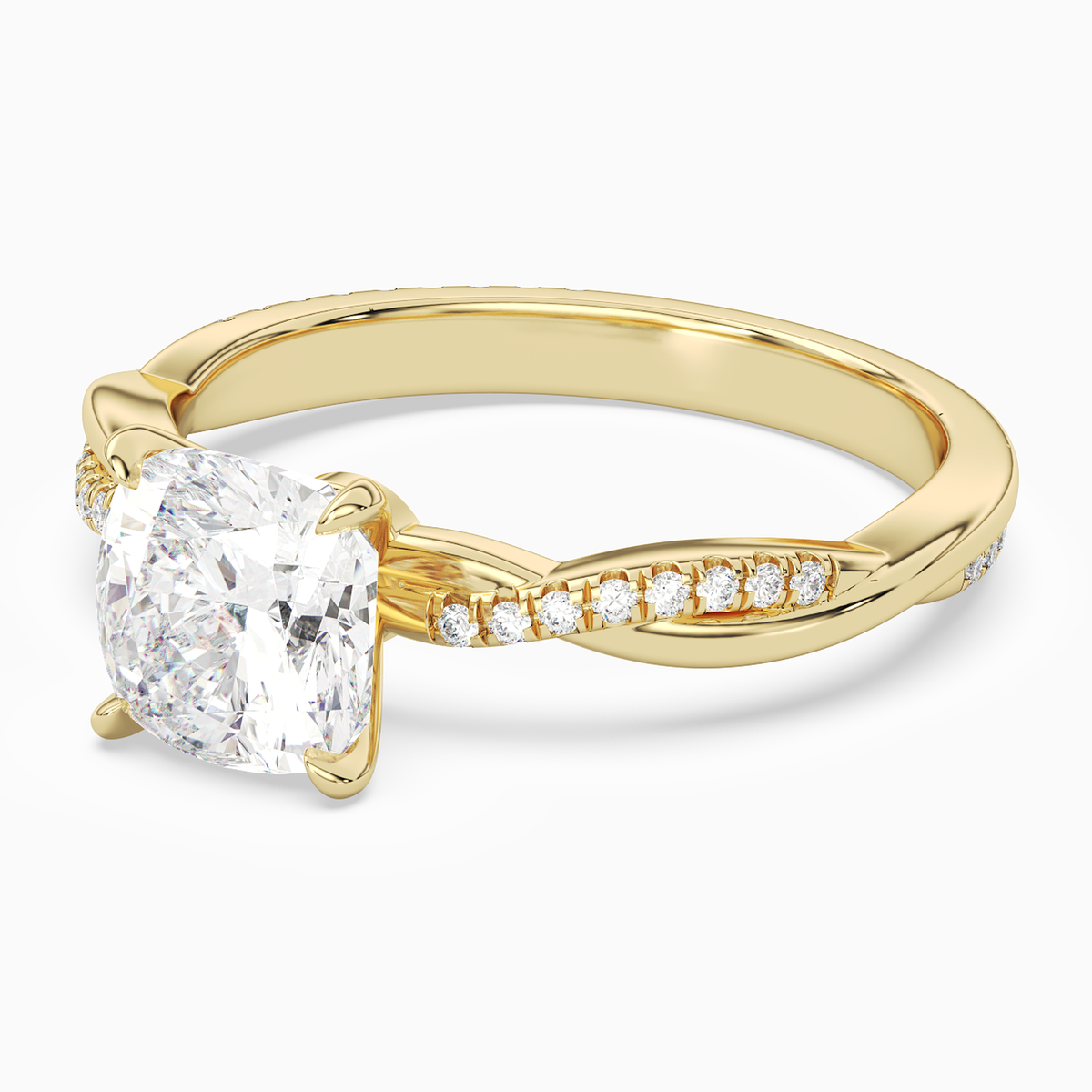
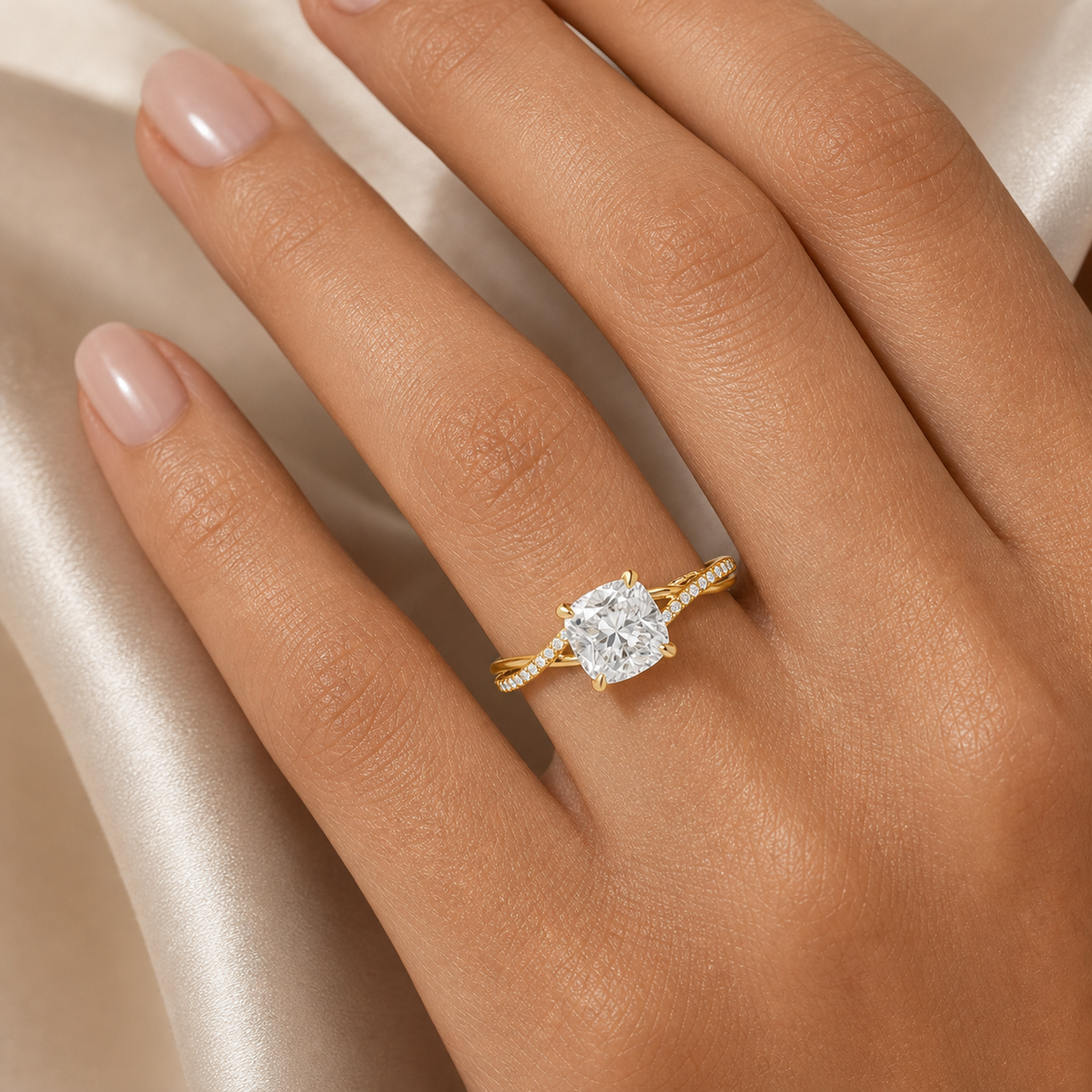
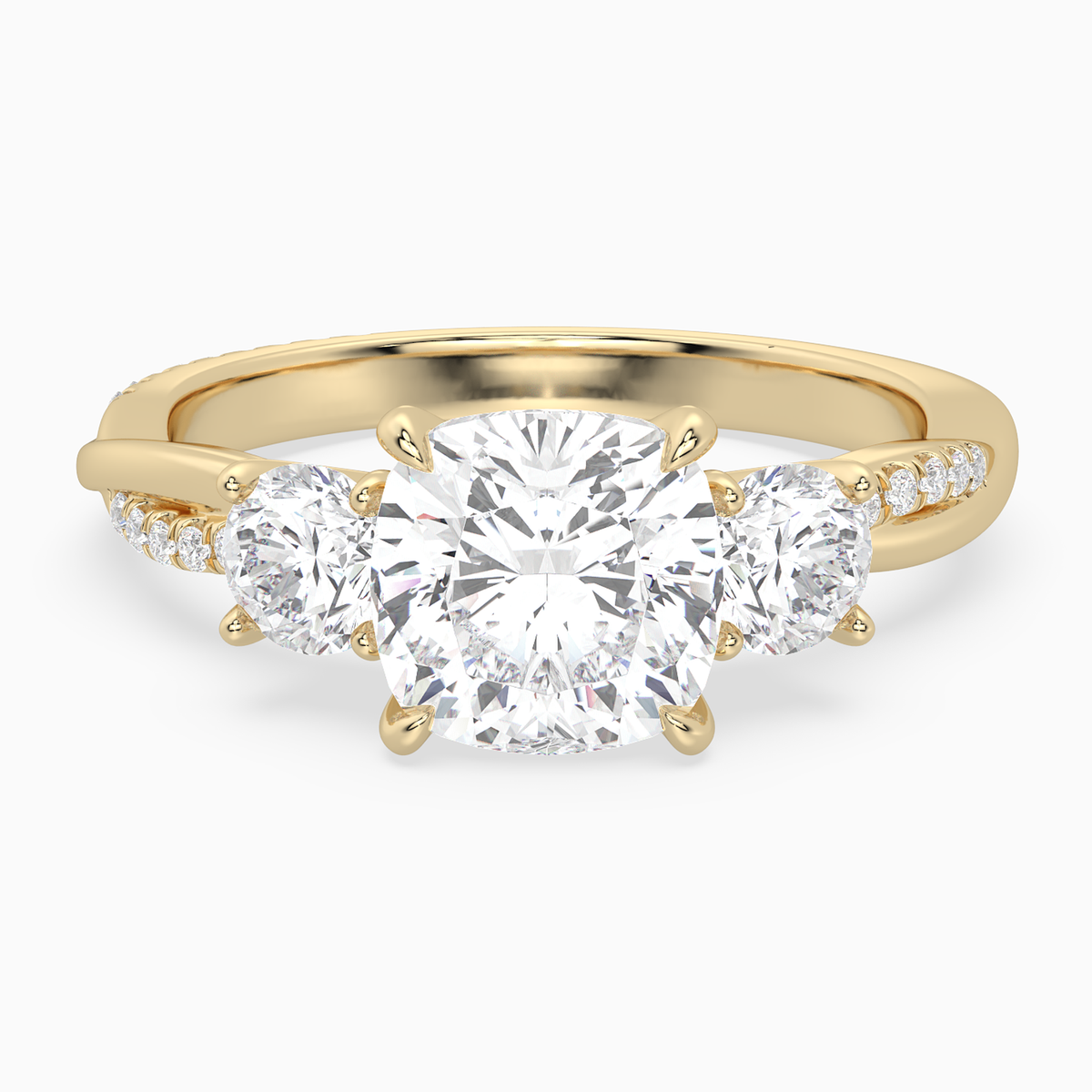
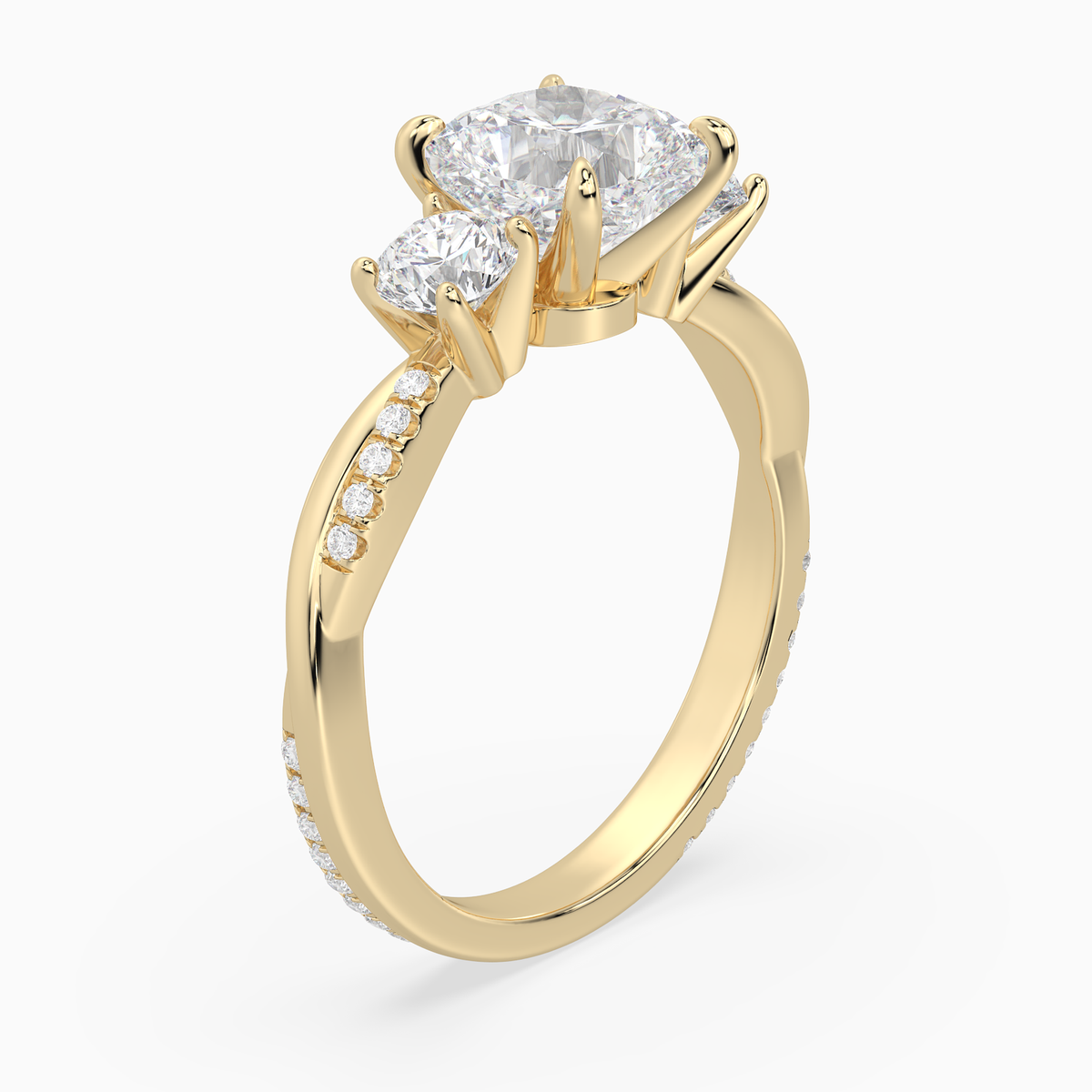

14K Yellow Gold Cushion Diamond Engagement Rings: A Golden Perimeter Around Soft Corners
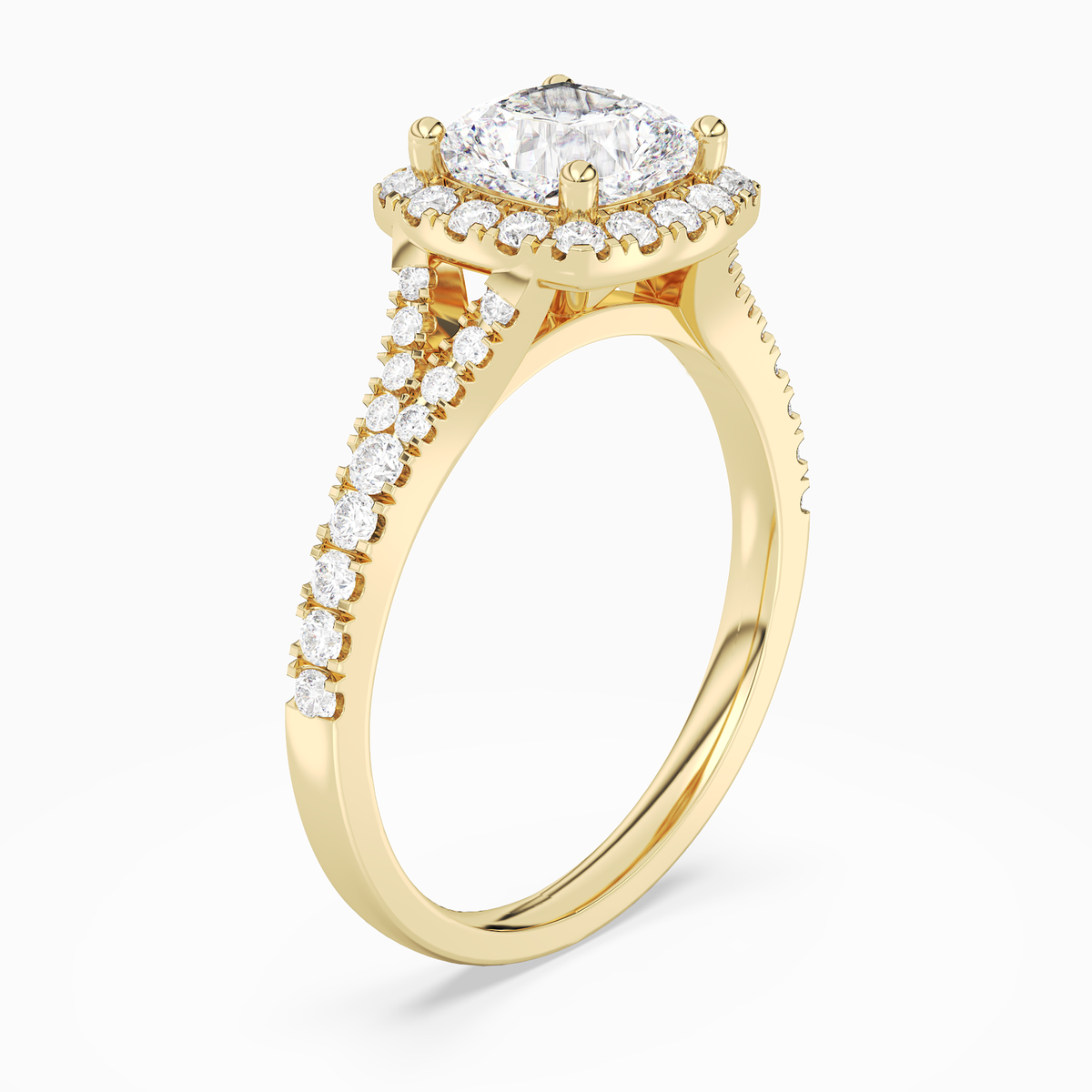
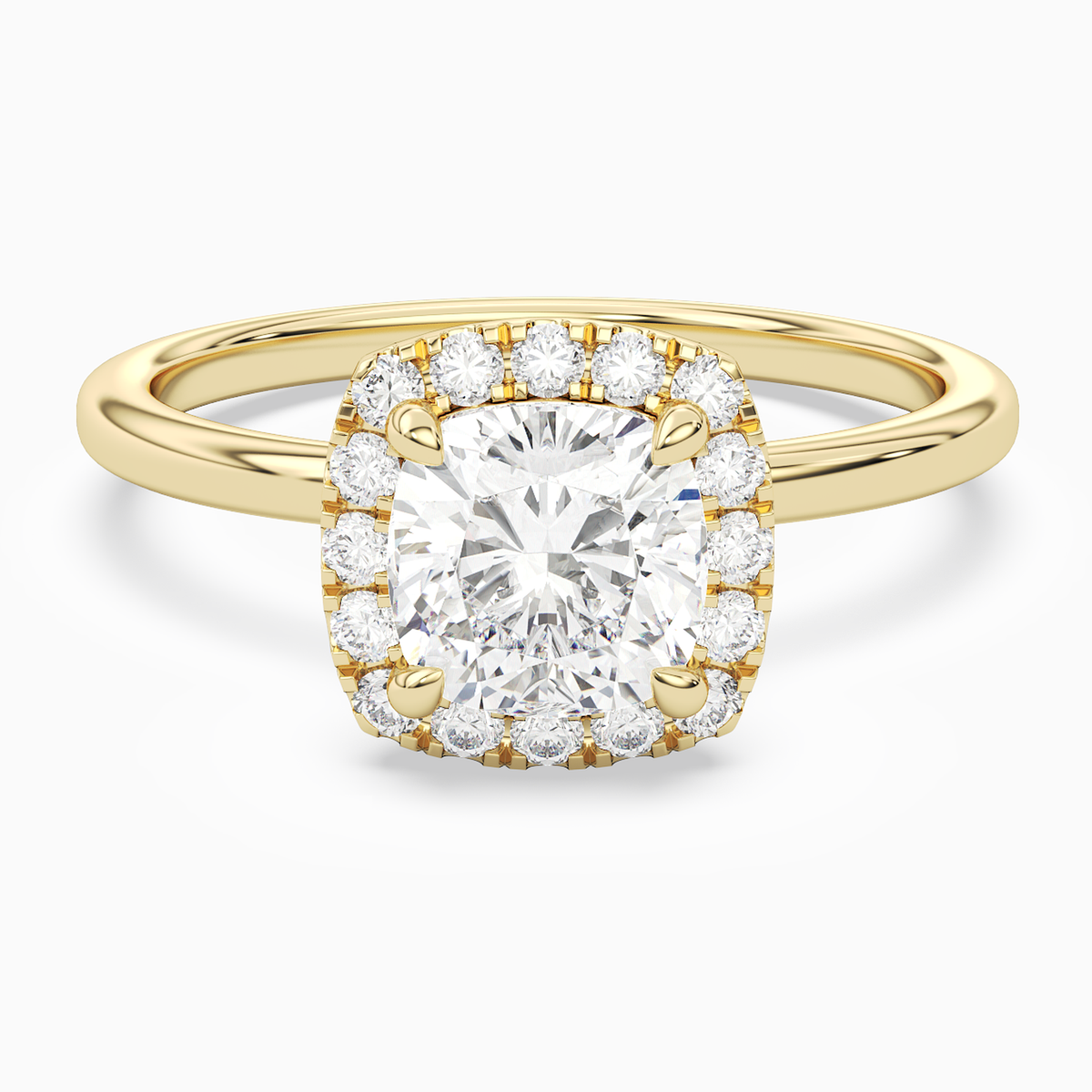
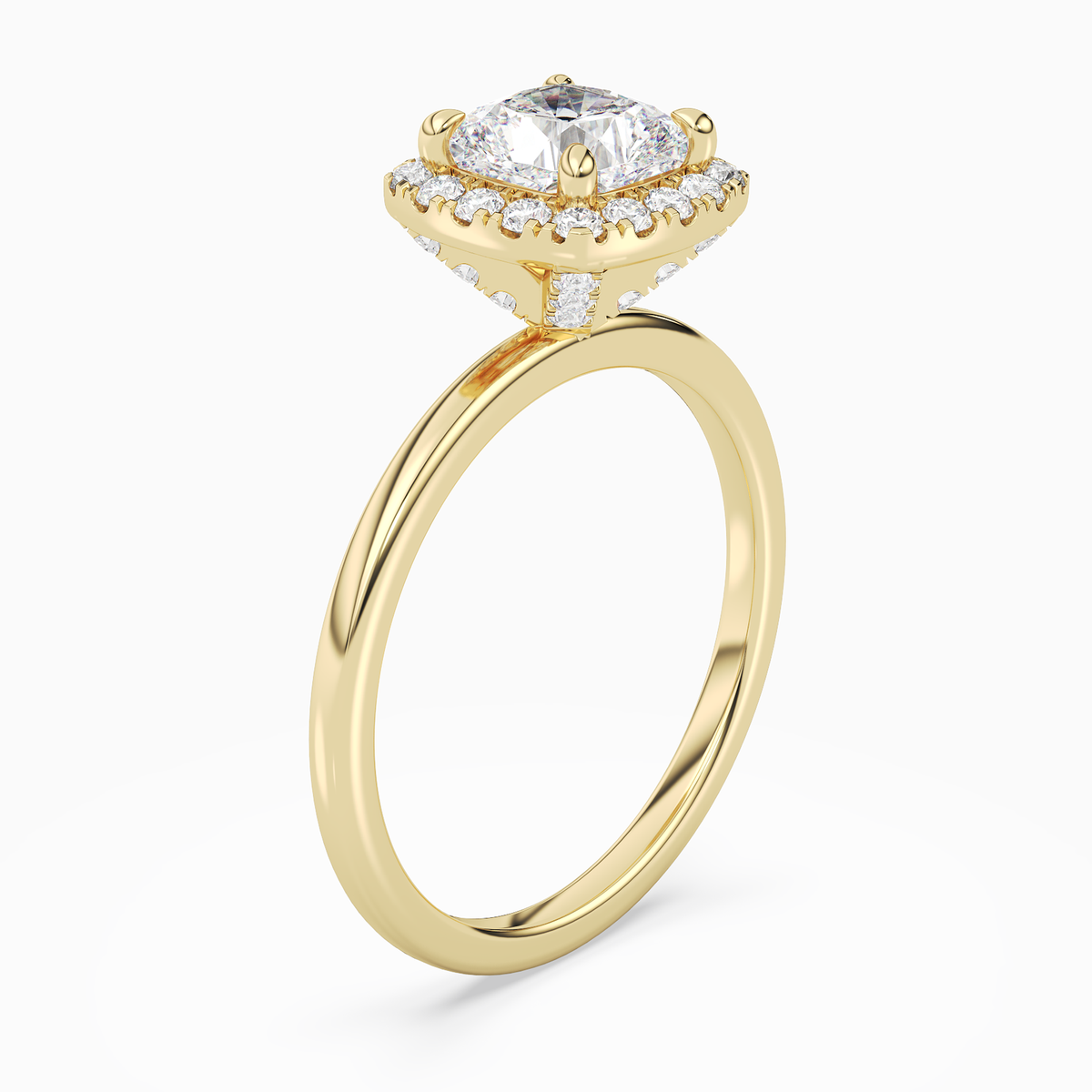
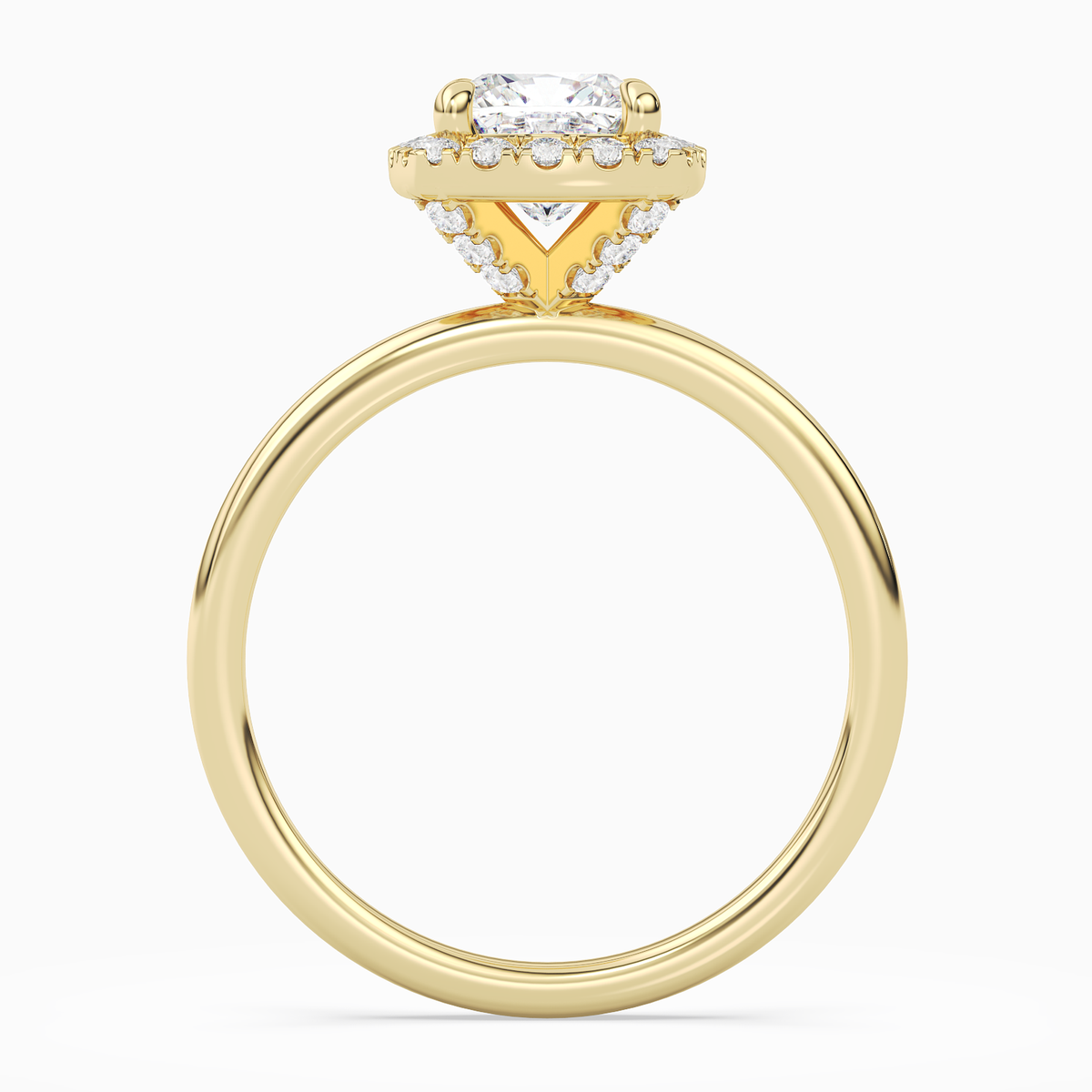
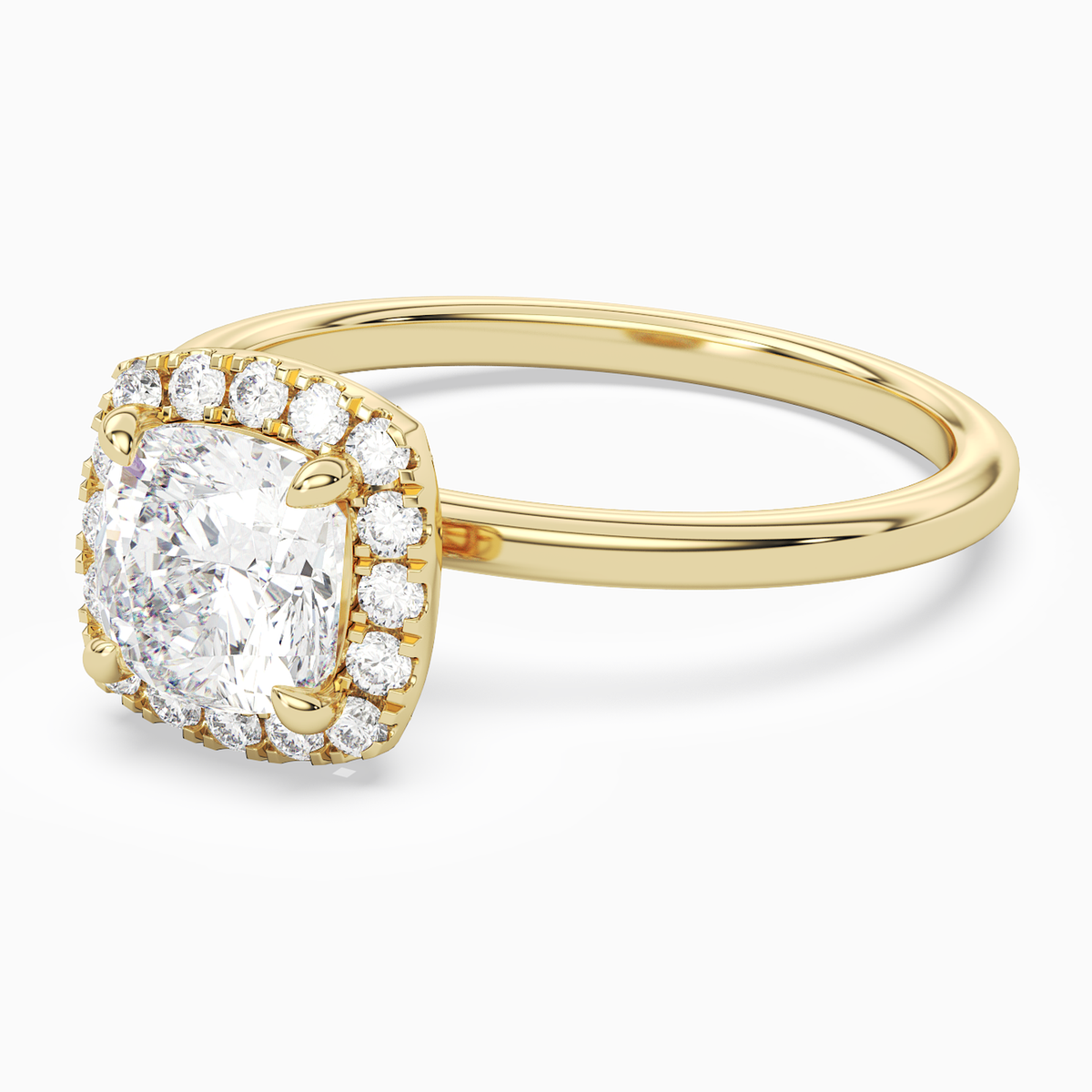
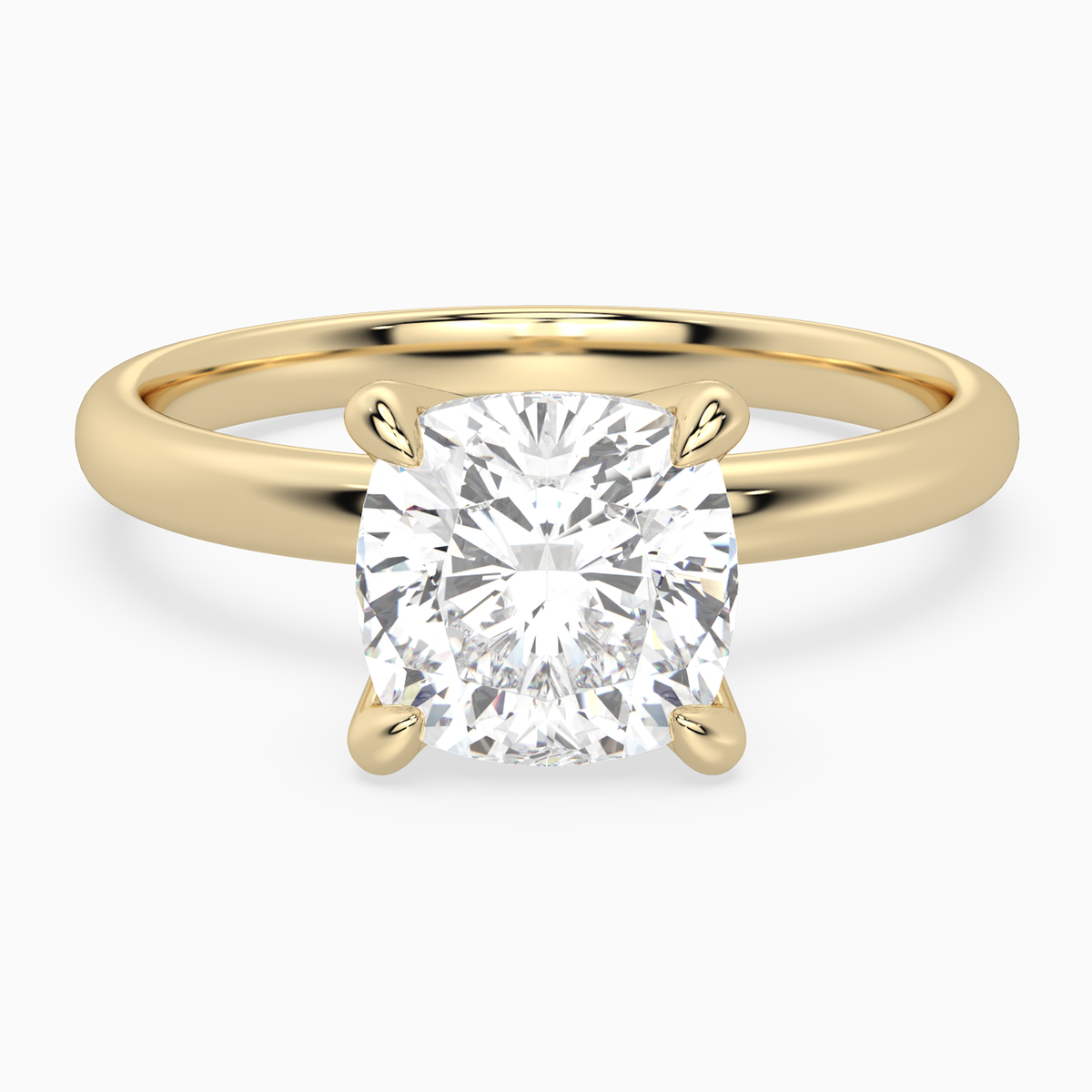
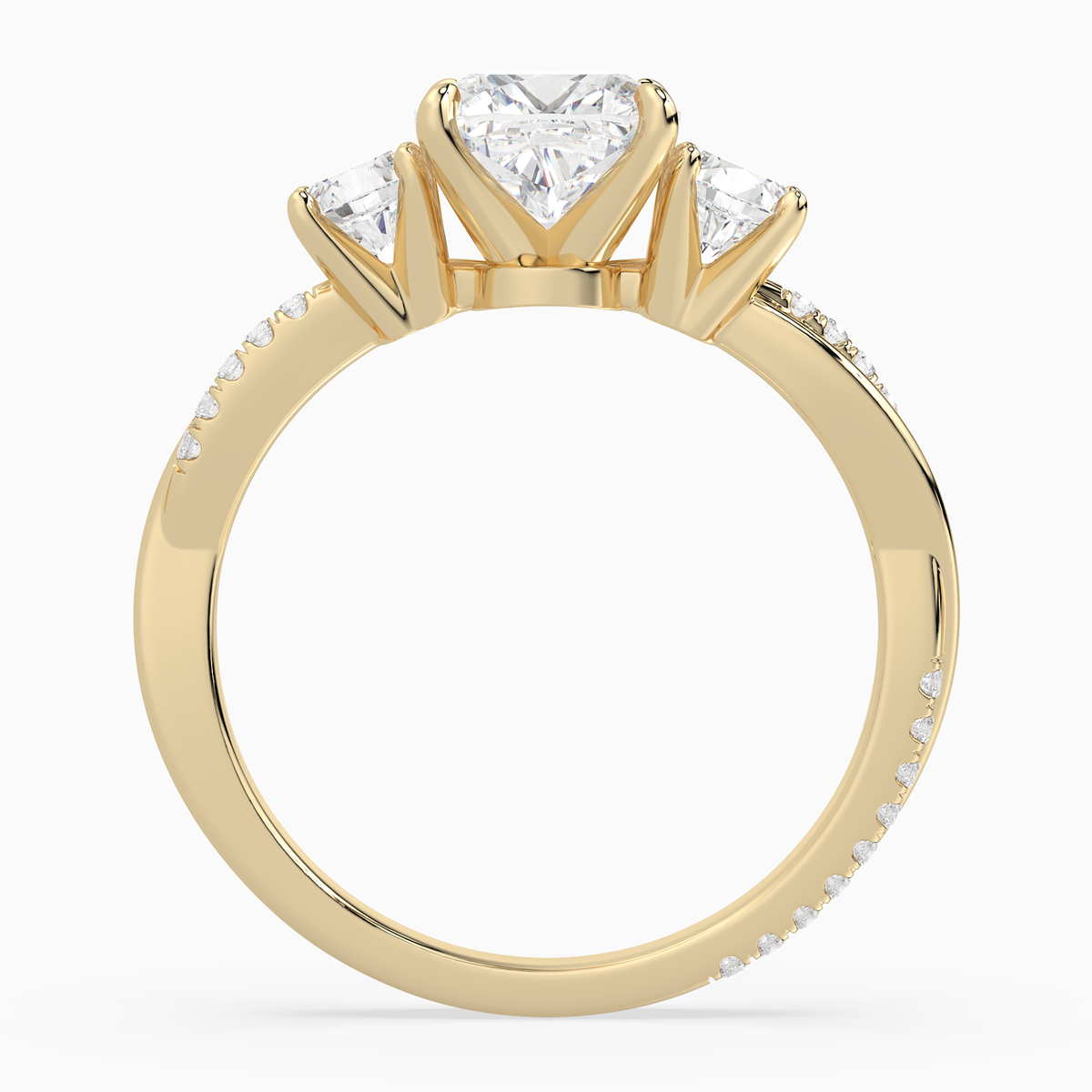
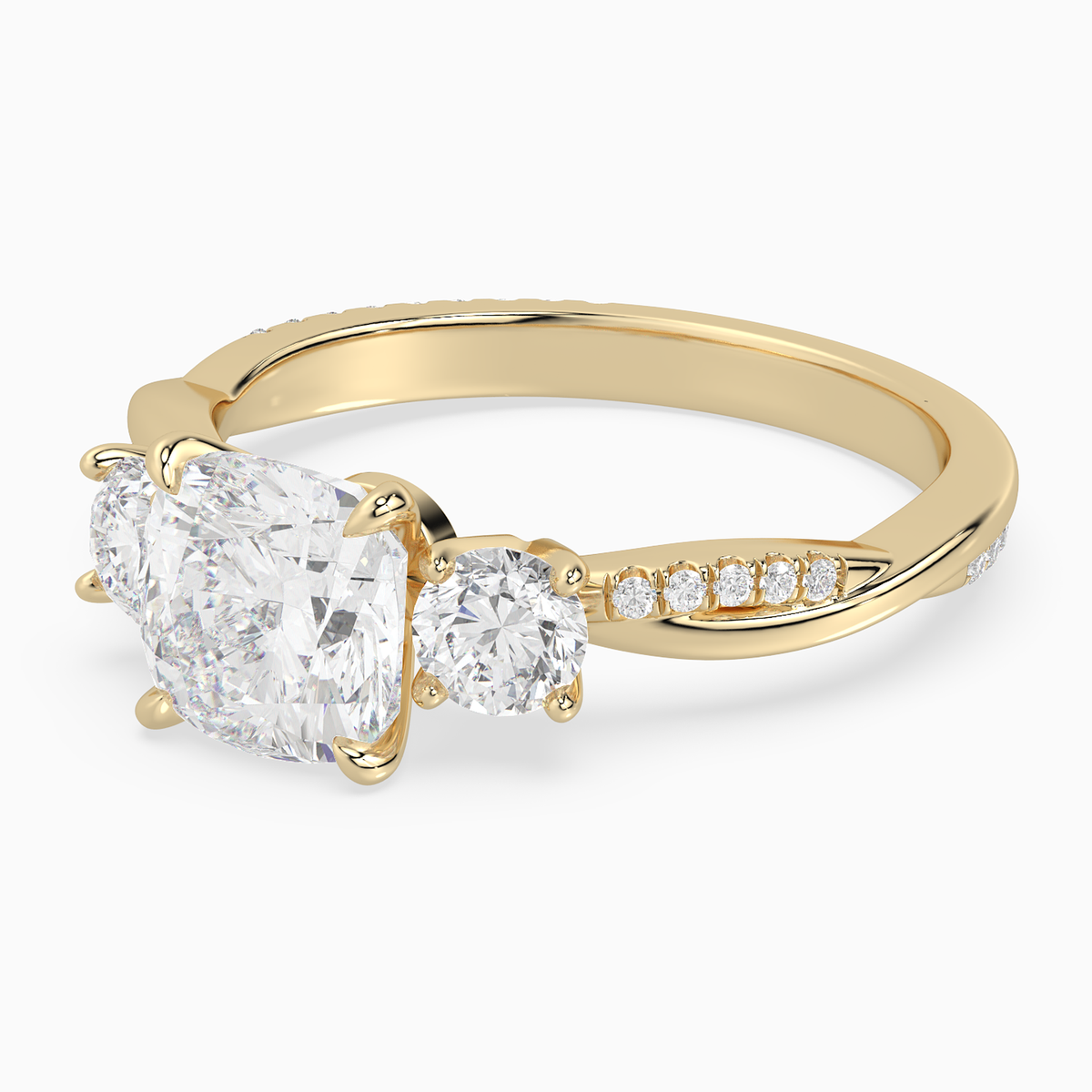
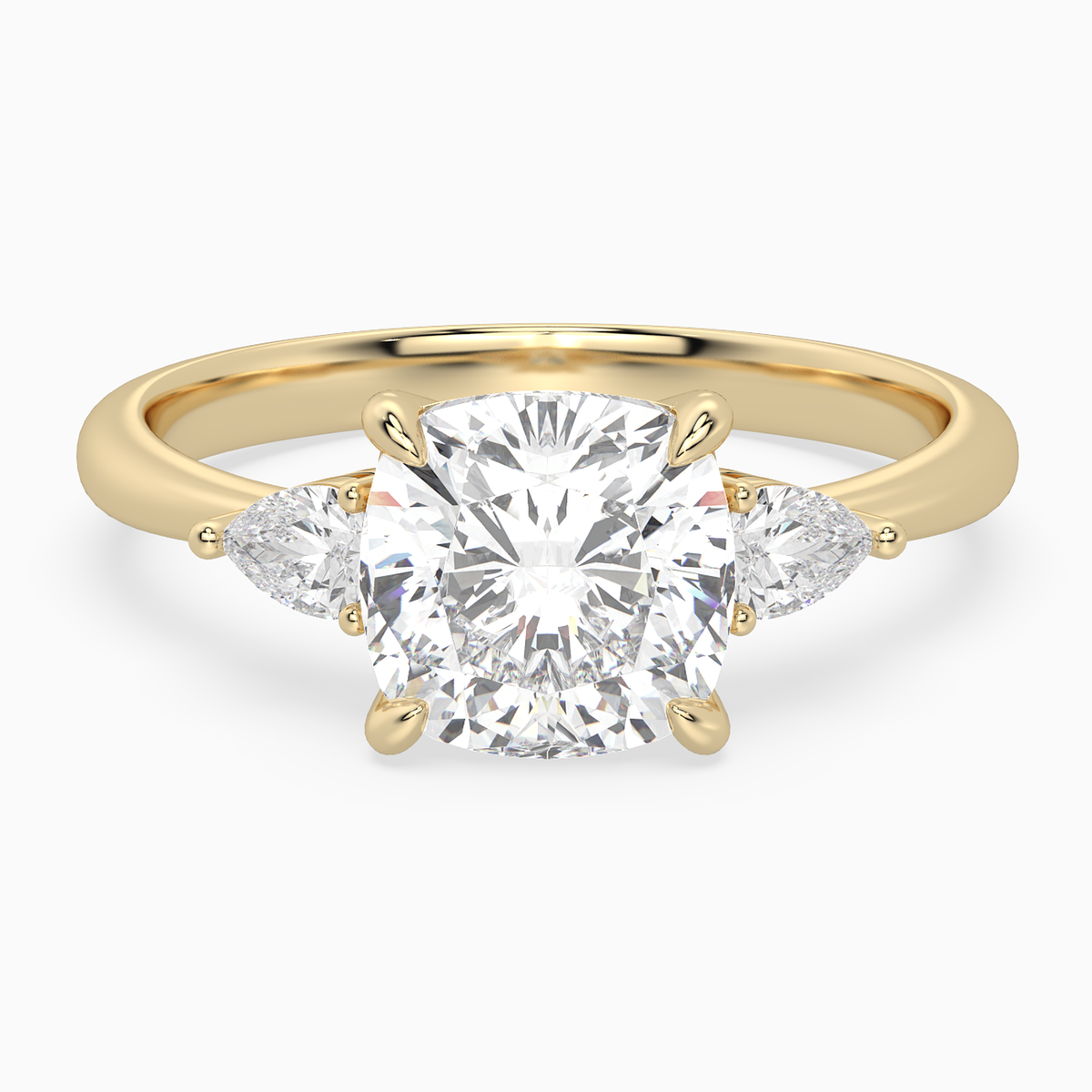
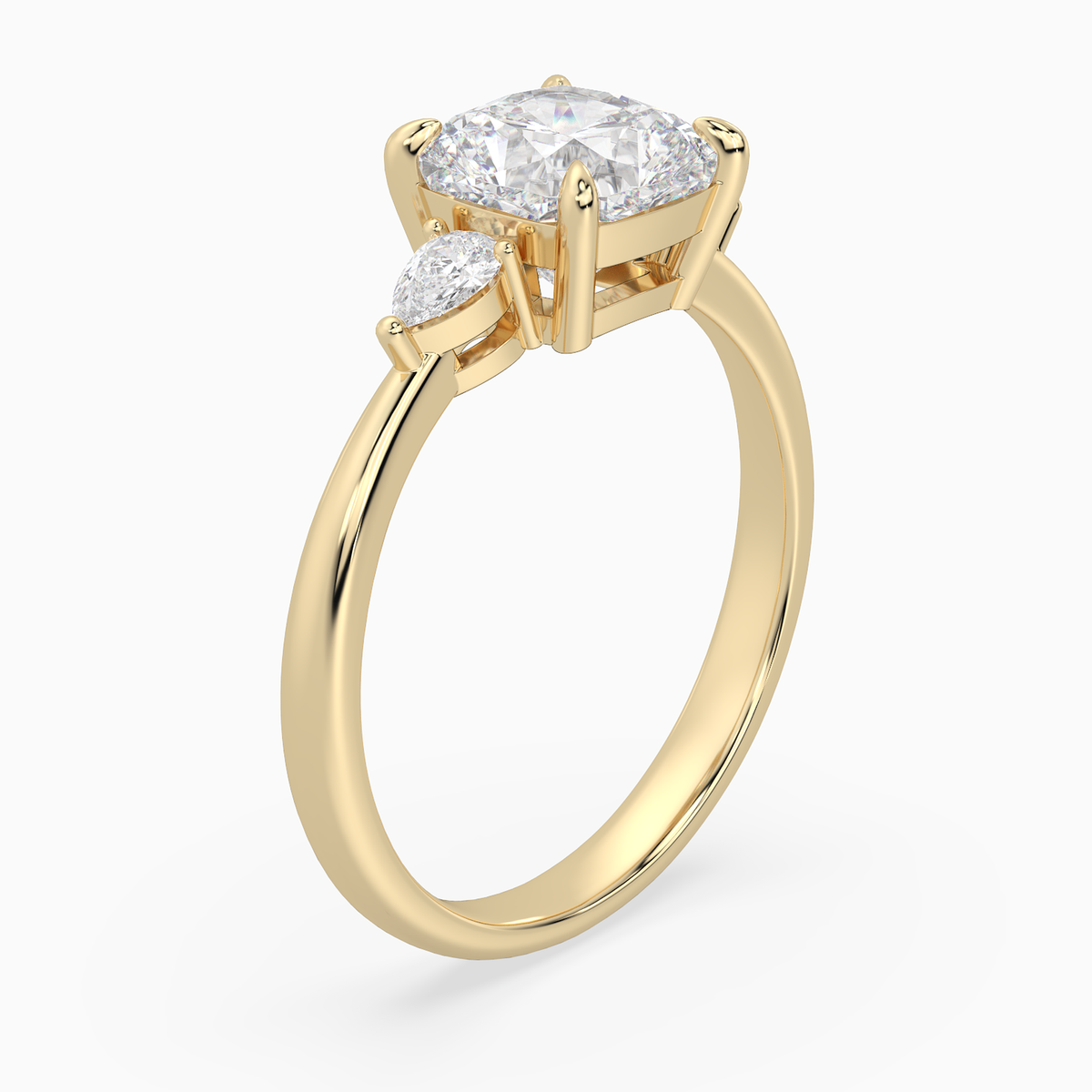
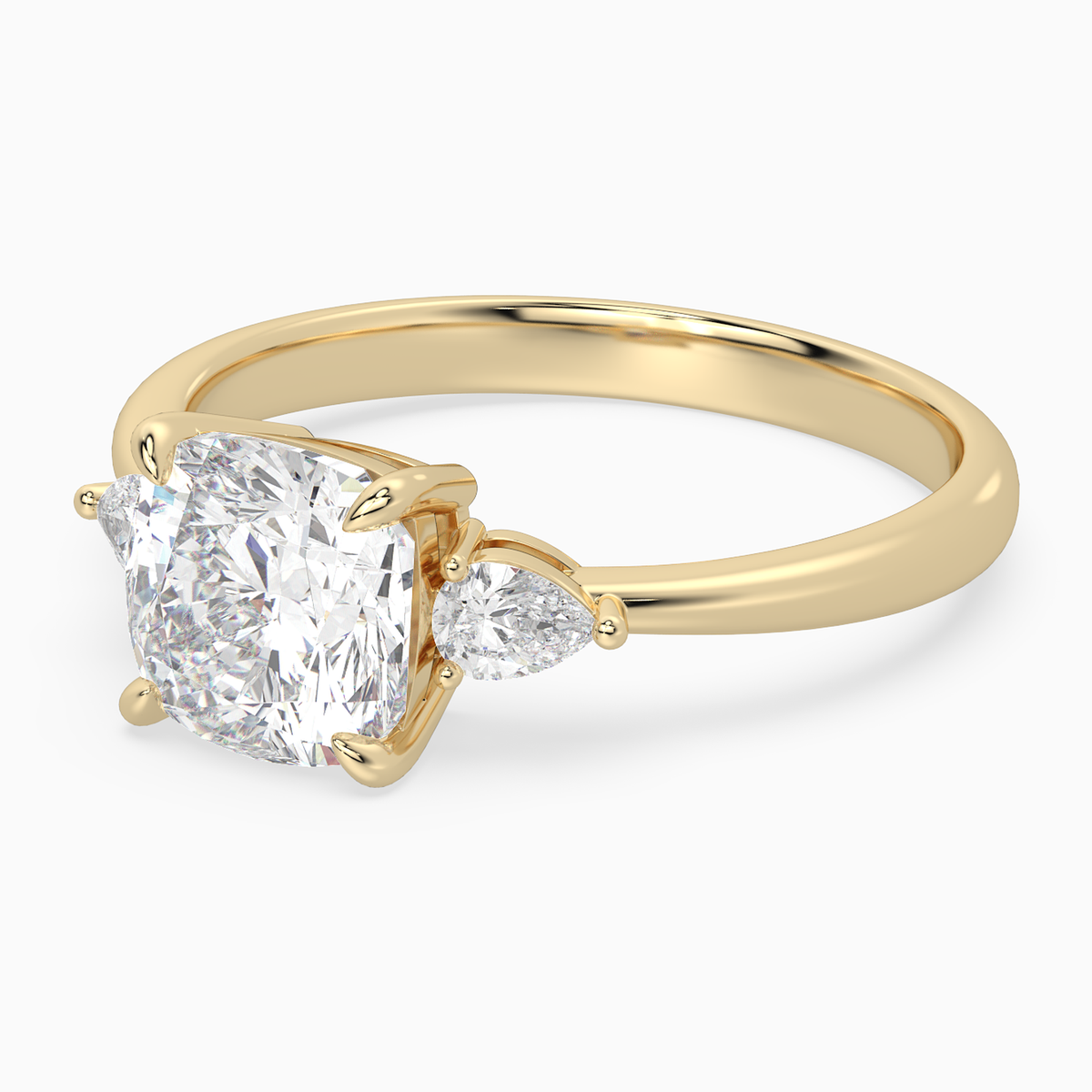
Yellow Gold makes the boundary around a cushion center explicit. It can trace rounded corners through fine prongs, appear beneath the diamond in an open basket, or form a second geometric field within a halo. The warm line gives square and elongated cushions material definition without changing their proportions.
The current collection contains 13 designs: six Solitaires, five Halos, and two Three Stone compositions. Kite, octagonal, round, pavé, and split-shank halos sit beside open baskets, cathedral, bypass, vine, and pear-accented structures, revealing gold in different scales.
Use Gold to Read the Outline
A 14K alloy contains approximately 58.3% gold. Exact shade, alloy formula, finish, hardness, sensitivity profile, and care remain product-specific. Karat provides composition context; it does not promise one yellow tone, superior durability, or a maintenance-free surface.
Fine prongs punctuate each corner and side. A halo or wider basket creates longer golden intervals, while cathedral shoulders carry color toward the center. Compare like-for-like setting structures when deciding between metals, because visible amount can matter more than the label alone.
Soft Corners Do Not Mean One Cushion
Cushions range from near-square to elongated, with different corner radii, shoulder fullness, and side curvature. Length-to-width ratio summarizes one relationship but not the entire outline. Yellow Gold can emphasize the edge, yet it cannot make one ratio universally flattering or correct asymmetry.
Facet arrangements also vary. Broad flashes and finer-grained virtual-facet textures belong to the center. Gold supplies contrast around them; it does not improve brilliance, change polish or symmetry, or turn a trade term such as crushed ice into a quality grade.
The Frames Reinterpret the Cushion
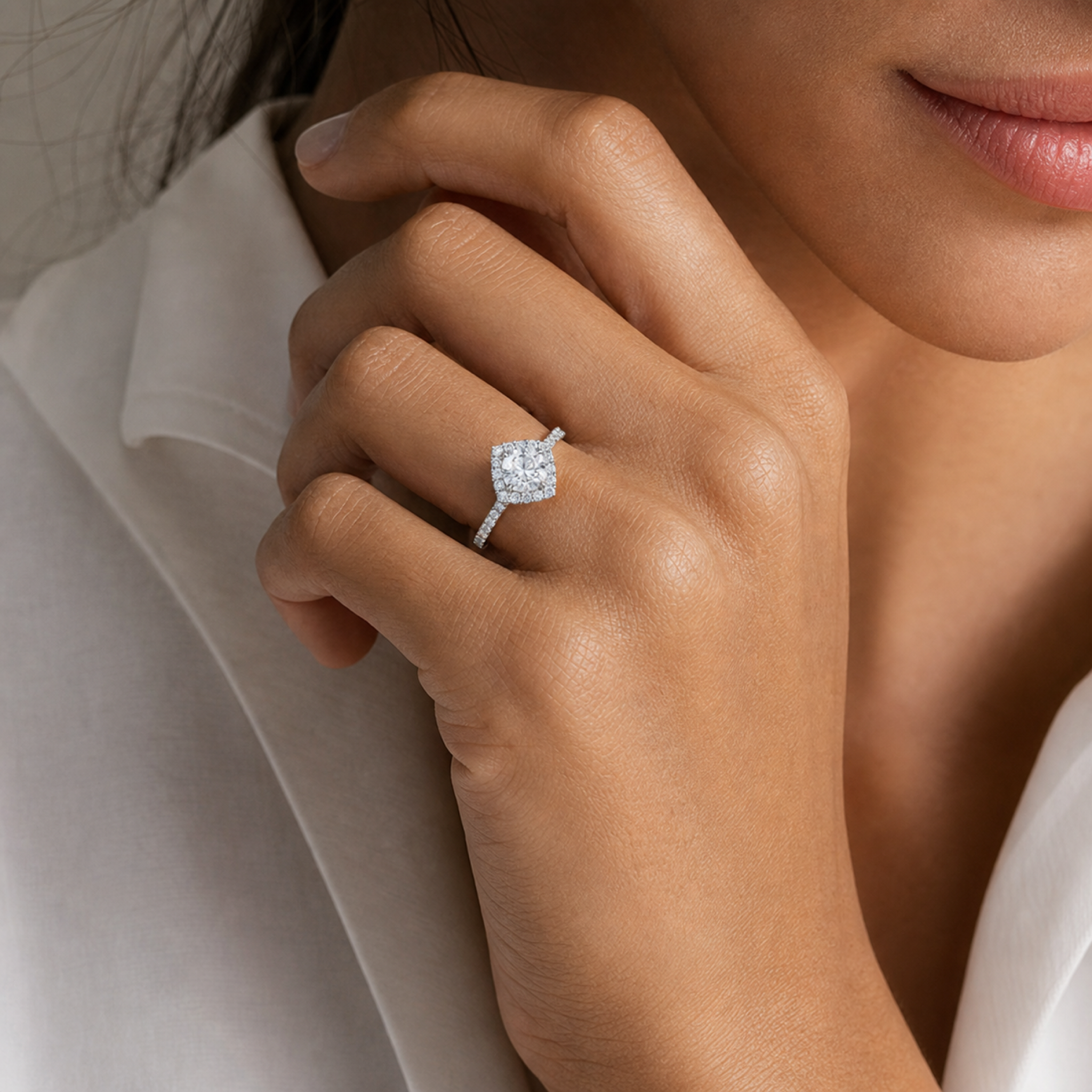
A Solitaire leaves the center's outline most independent. A round halo can soften the total field; an octagonal or kite halo introduces firmer geometry; pavé and split-shank designs distribute light and gold outward. The second perimeter may repeat the cushion or deliberately contrast it.
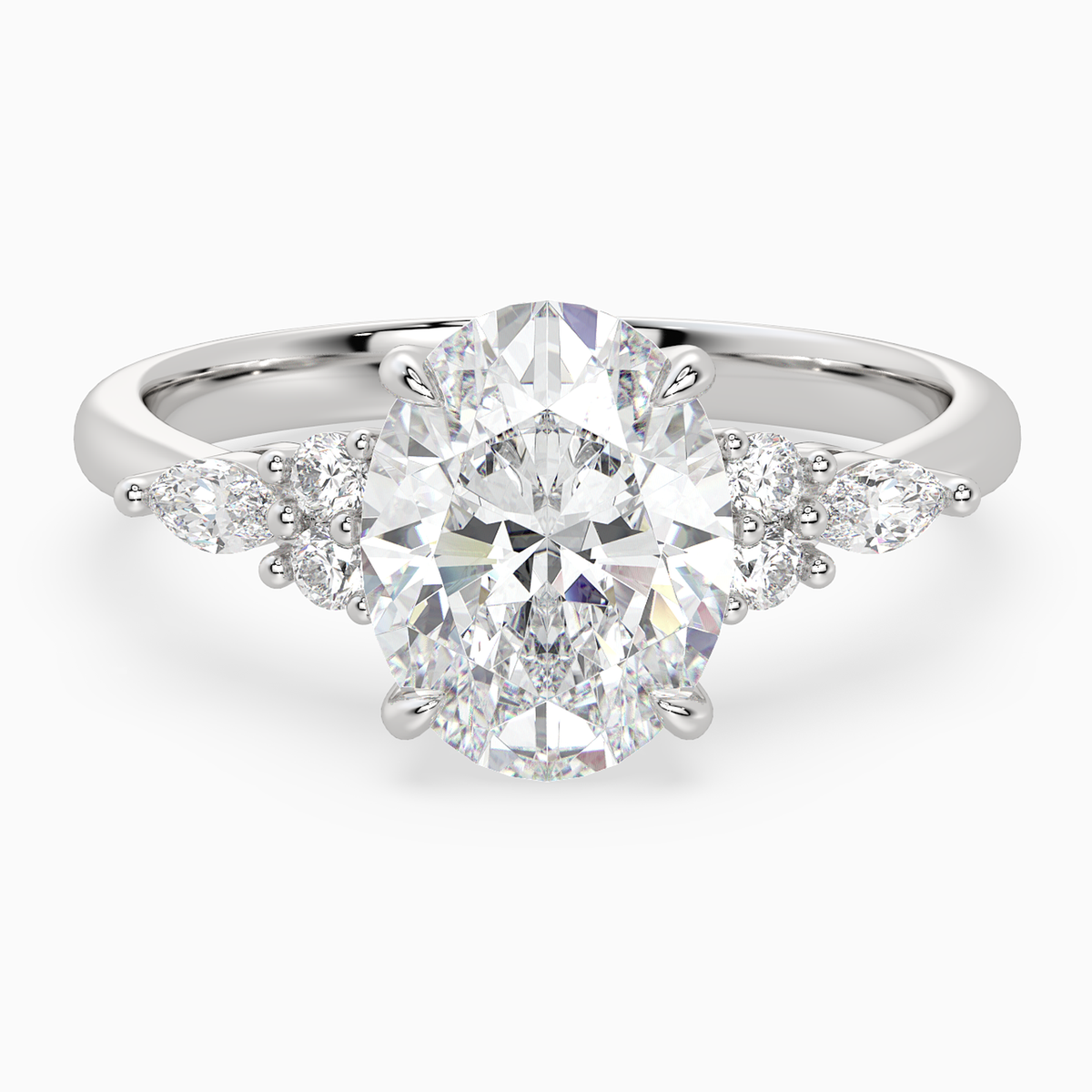
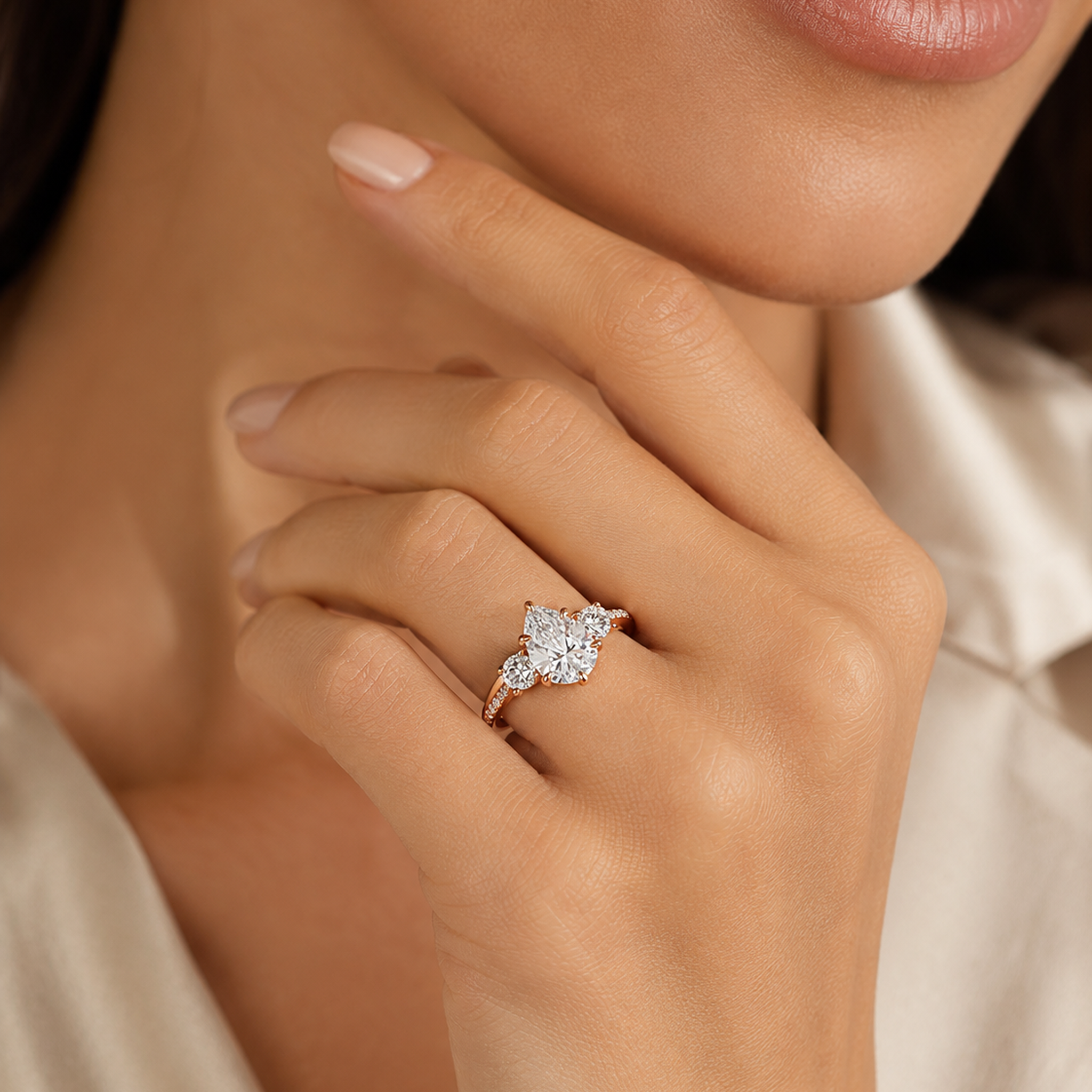
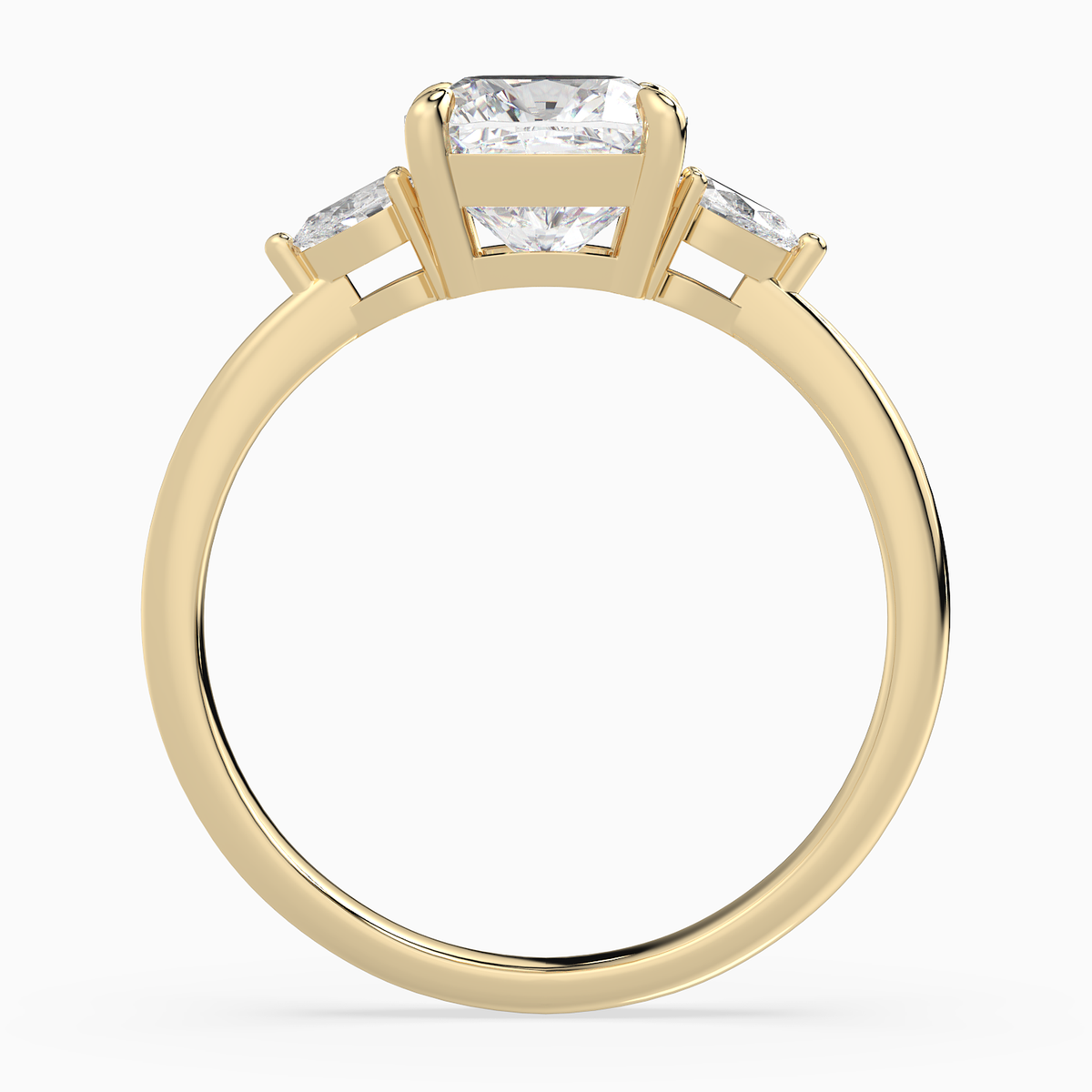
Three Stone rings extend the cushion laterally with pear-shaped accents. Spacing, scale, and visible gold between shapes establish hierarchy. The useful question is not whether Yellow Gold is classic, but whether its boundary makes these transitions coherent at hand scale.
Keep Weight, Dimensions, and Color Separate
Carat is weight, not a face-up measurement. Compare length, width, depth, outline, and setting dimensions. A halo increases the overall field, while a fine band leaves more negative space; neither changes the center's recorded dimensions.
Yellow Gold may create a warmer context or stronger contrast, but it does not alter the diamond's color grade. Accent diamonds, prong color, finish, and lighting contribute to perception. Review the complete selected ring rather than applying one mandatory color or clarity range.
A Visible Material Choice
Wedding-band fit depends on basket, halo, side stones, shoulders, height, and contact points. Matching Yellow Gold does not guarantee flush spacing, identical finish, comfort, or resizing. Care likewise depends on the complete alloy and construction.
Burvonti pairs responsibly sourced, independently graded lab-grown diamonds with settings calibrated through proportion and human judgment. Custom possibilities may refine outline, facet character, center specifications, prongs, basket, band, accents, metal, or engraving where feasible. Gold should articulate the cushion, not reduce it to a color label.
Frequently Asked Questions
How is this page different from the Cushion parent?
It focuses on the visible 14K Yellow Gold perimeter around cushion geometry; the parent owns broad outline, ratio, and facet-pattern education.
How much gold is in 14K Yellow Gold?
Approximately 58.3%. Alloying metals influence final color and working behavior.
Are all 14K yellow gold rings the same shade?
No. Alloy formula, finish, lighting, photography, and exposed metal area affect appearance.
Does Yellow Gold make rounded corners more visible?
A contrasting boundary can make the edge easier to read, but the result depends on prongs, basket, halo, and outline.
Does Yellow Gold enhance cushion brilliance?
No. It changes the surrounding field, not the diamond's faceting or light performance.
Which settings are represented?
The current collection includes six Solitaire, five Halo, and two Three Stone designs.
Can Yellow Gold make a cushion look squarer?
A visible frame may influence perception, but the center's measurements, corners, shoulders, and ratio determine its actual outline.
Is crushed ice a GIA grade?
No. It is a trade description for a fine-grained facet texture.
Will a halo make the center larger?
It expands the total visual field but does not change the center diamond's dimensions or carat weight.
Does Yellow Gold tarnish?
Surface appearance and care depend on the complete alloy, finish, wear, and environment; confirm product-specific guidance.
Do rounded corners guarantee secure setting?
No. Prong geometry, support, workmanship, condition, impact, and wear all matter.
Will a wedding band sit flush?
Not necessarily. The complete profile and contact points determine spacing.
Can Burvonti personalize a Yellow Gold Cushion ring?
Custom possibilities may include center, outline, prongs, basket, band line, accents, metal, or engraving, subject to feasibility.