
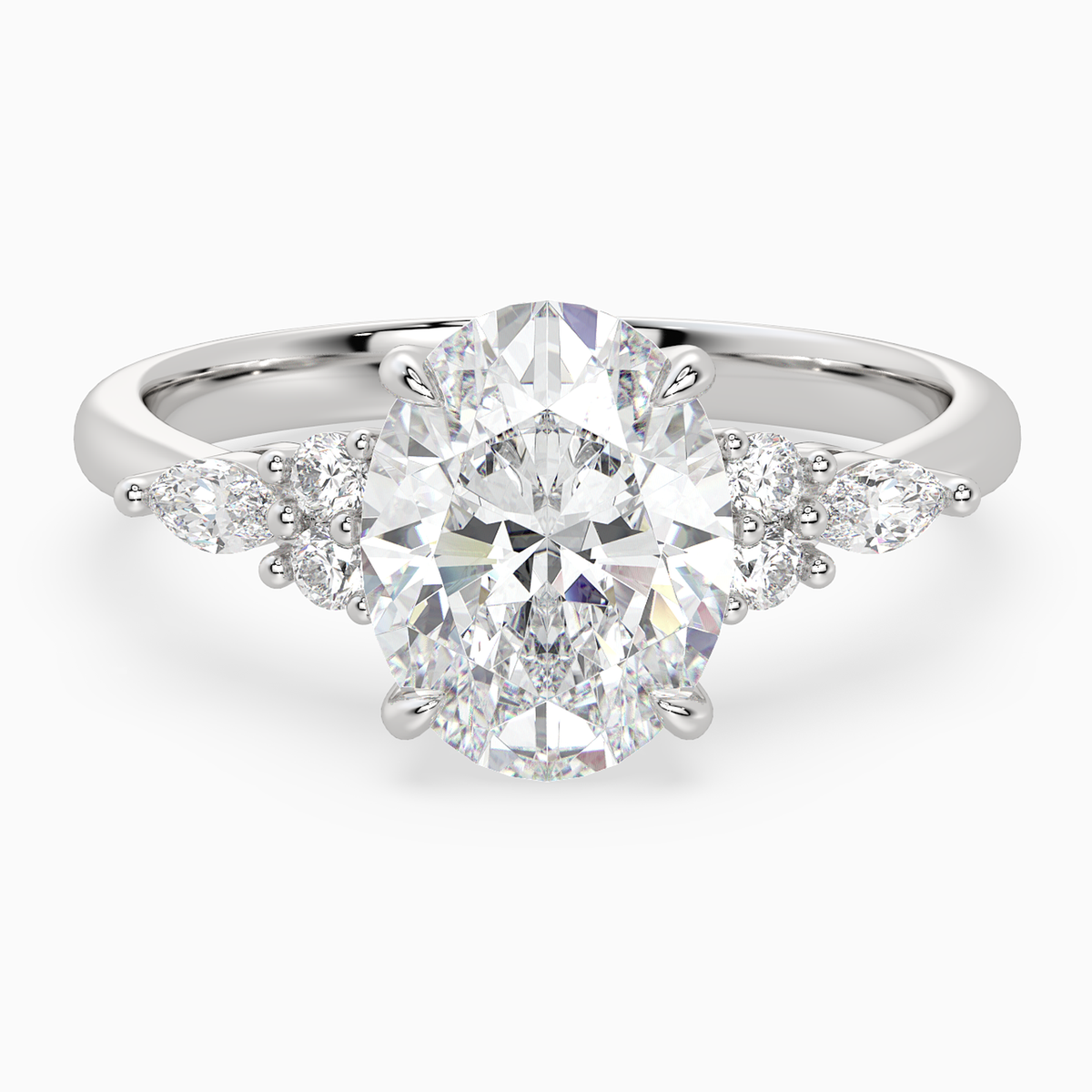


Cushion Diamond Engagement Rings in 14K White Gold
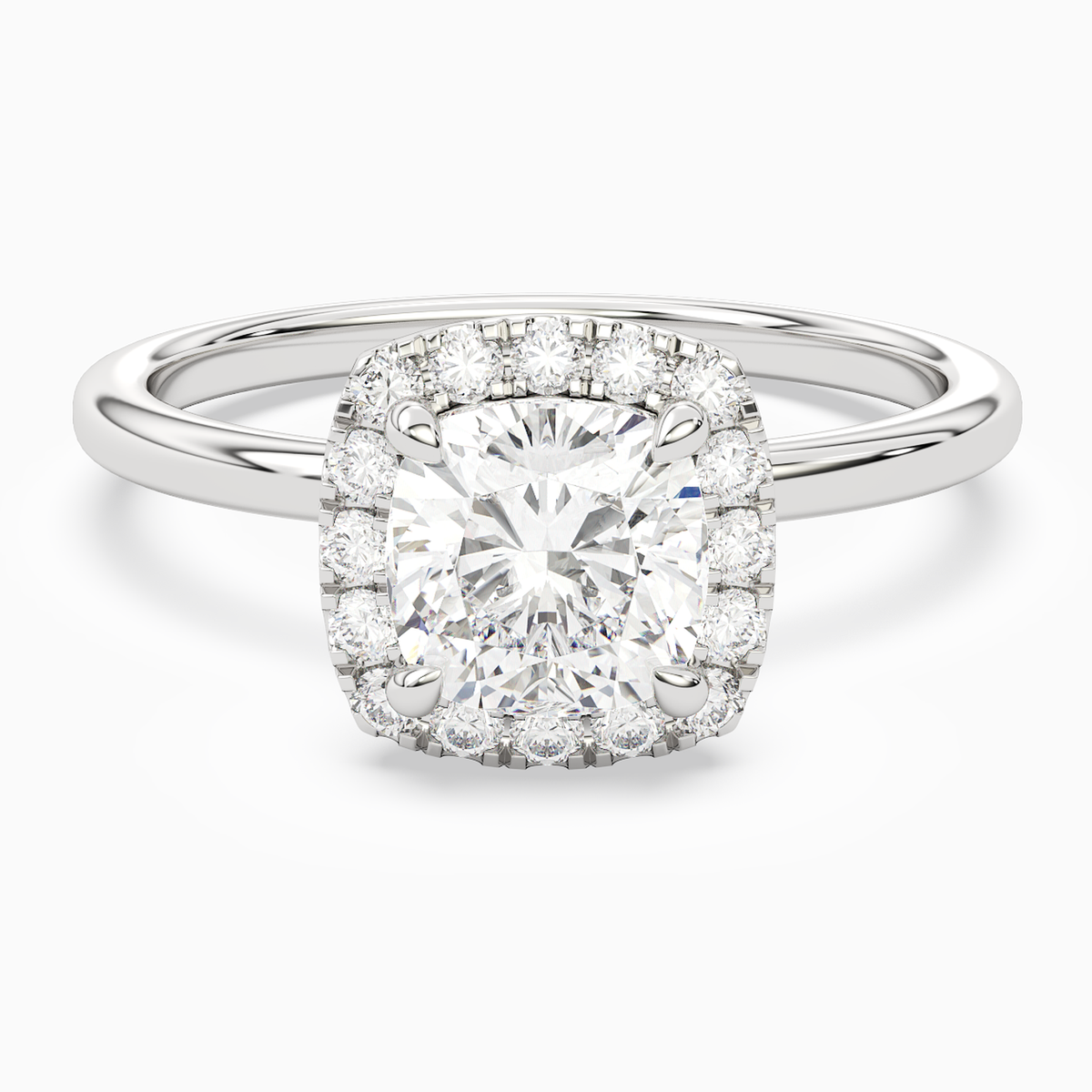
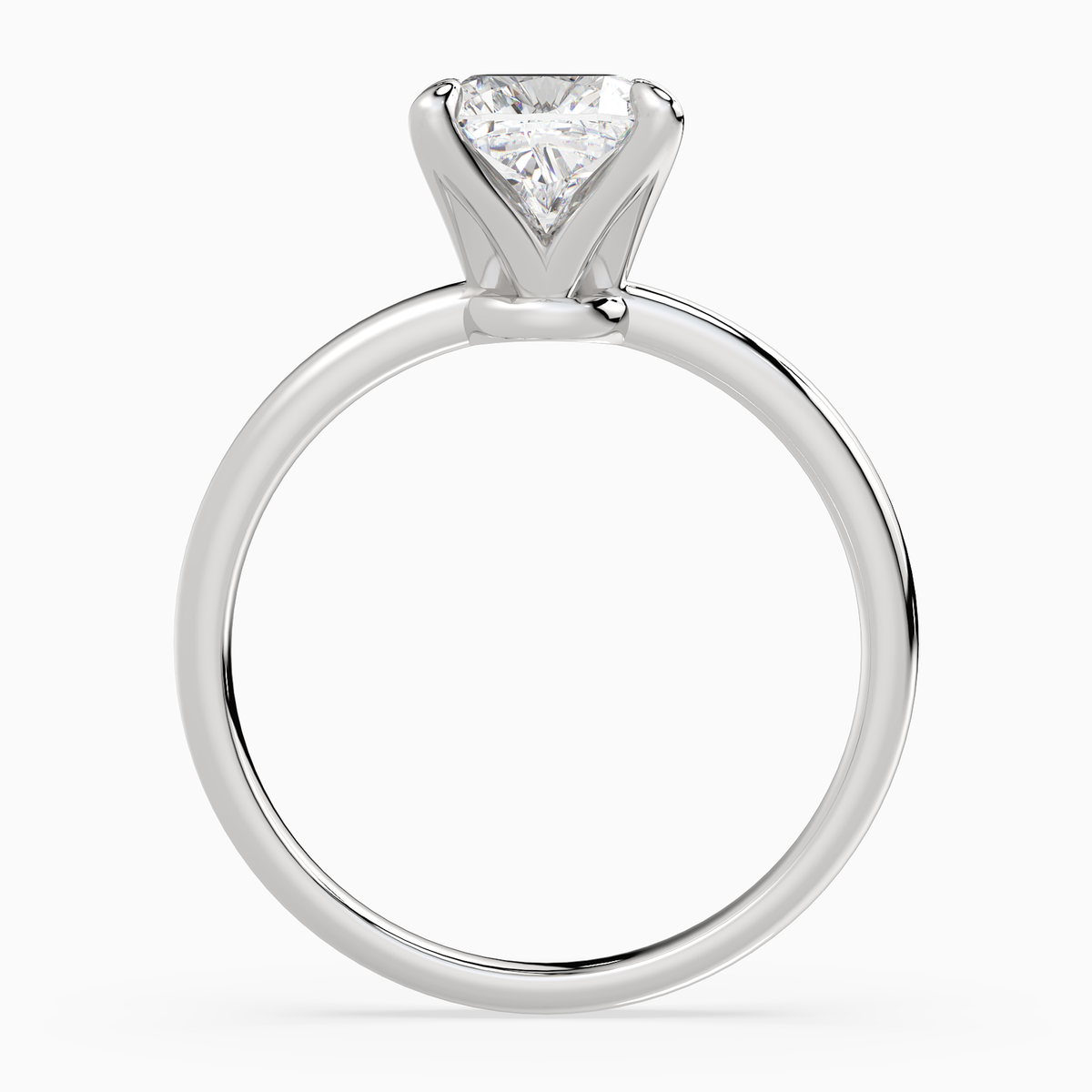
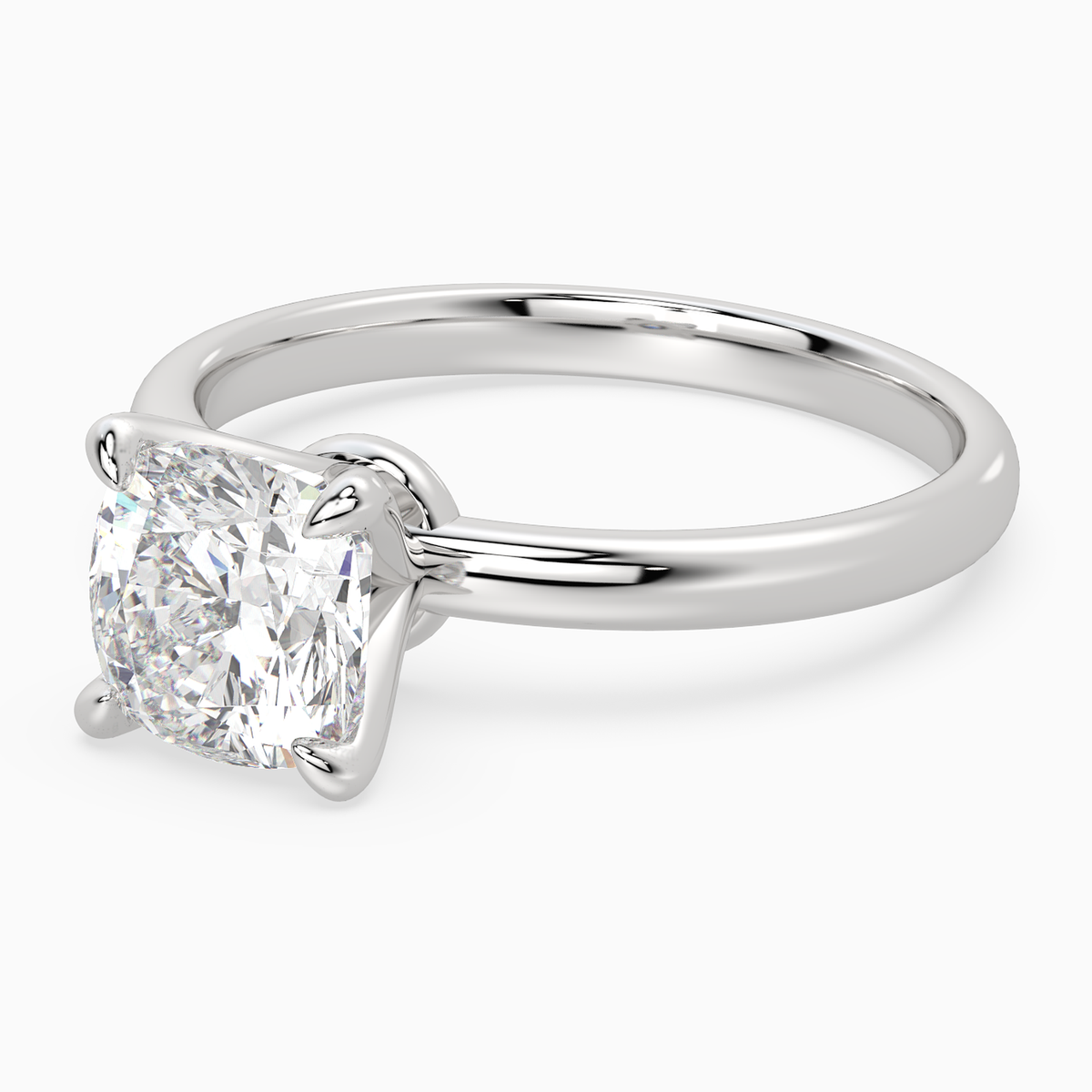
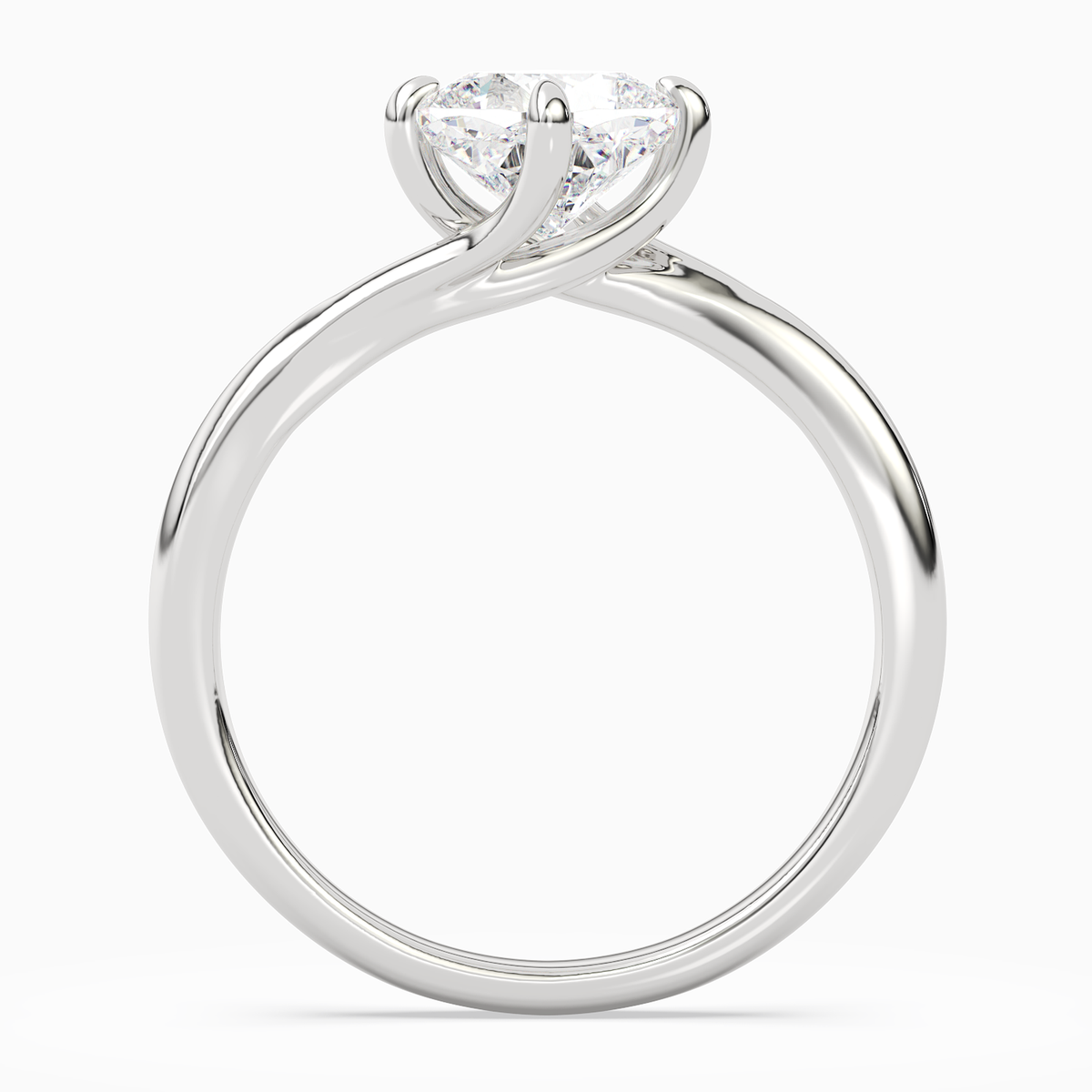
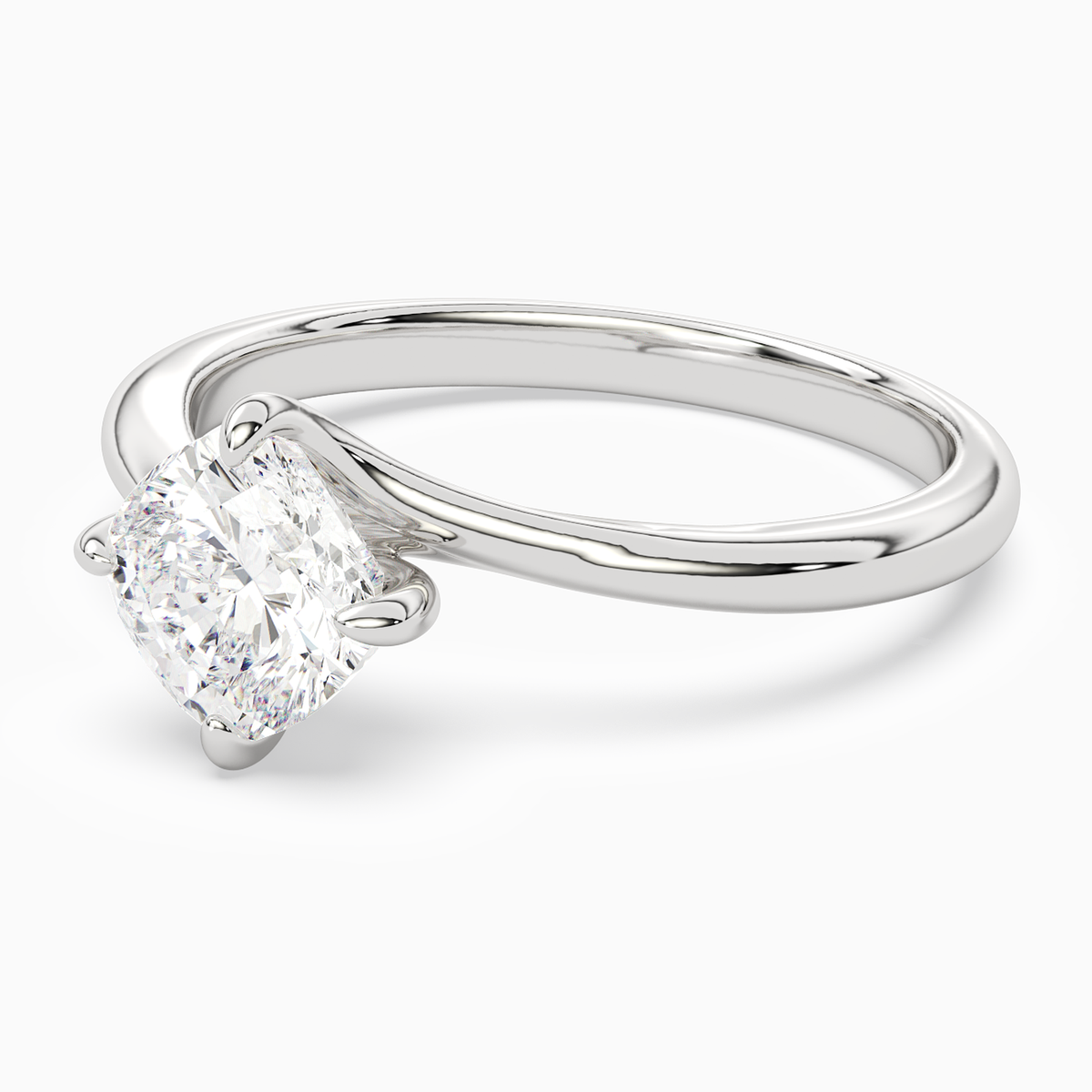
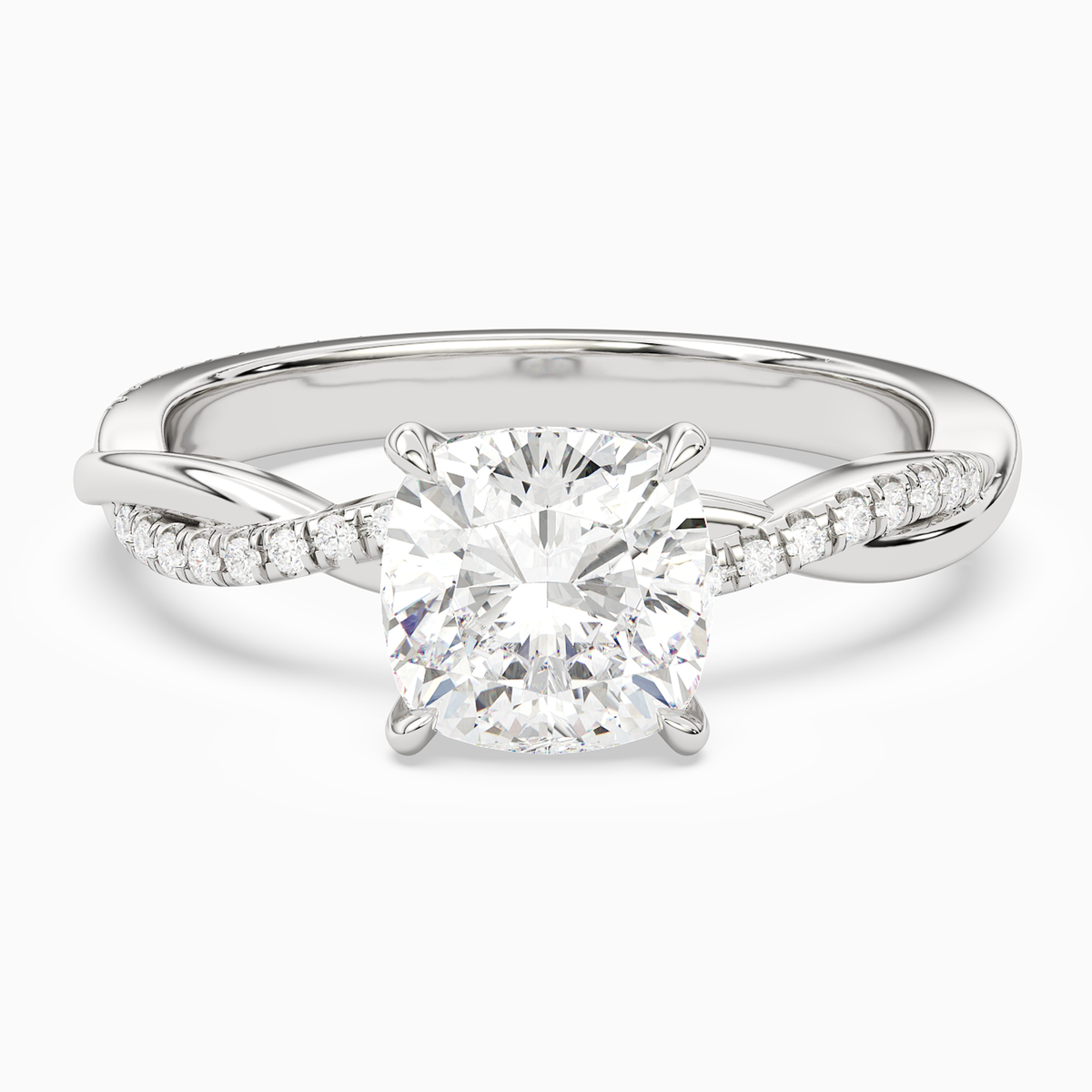
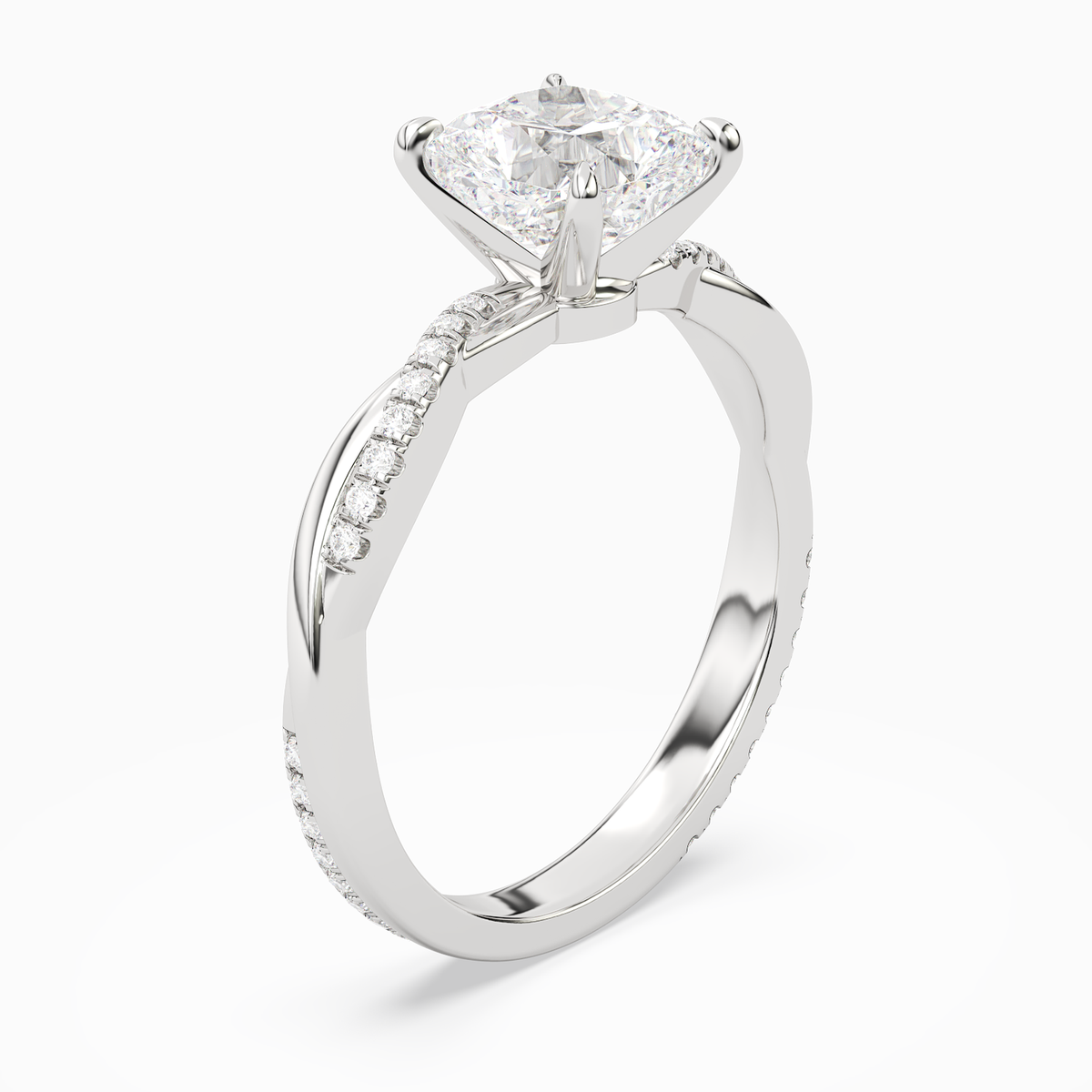
A soft-cornered outline in a quiet frame. 14K white gold keeps cushion proportions, facet texture, and setting transitions clearly legible.


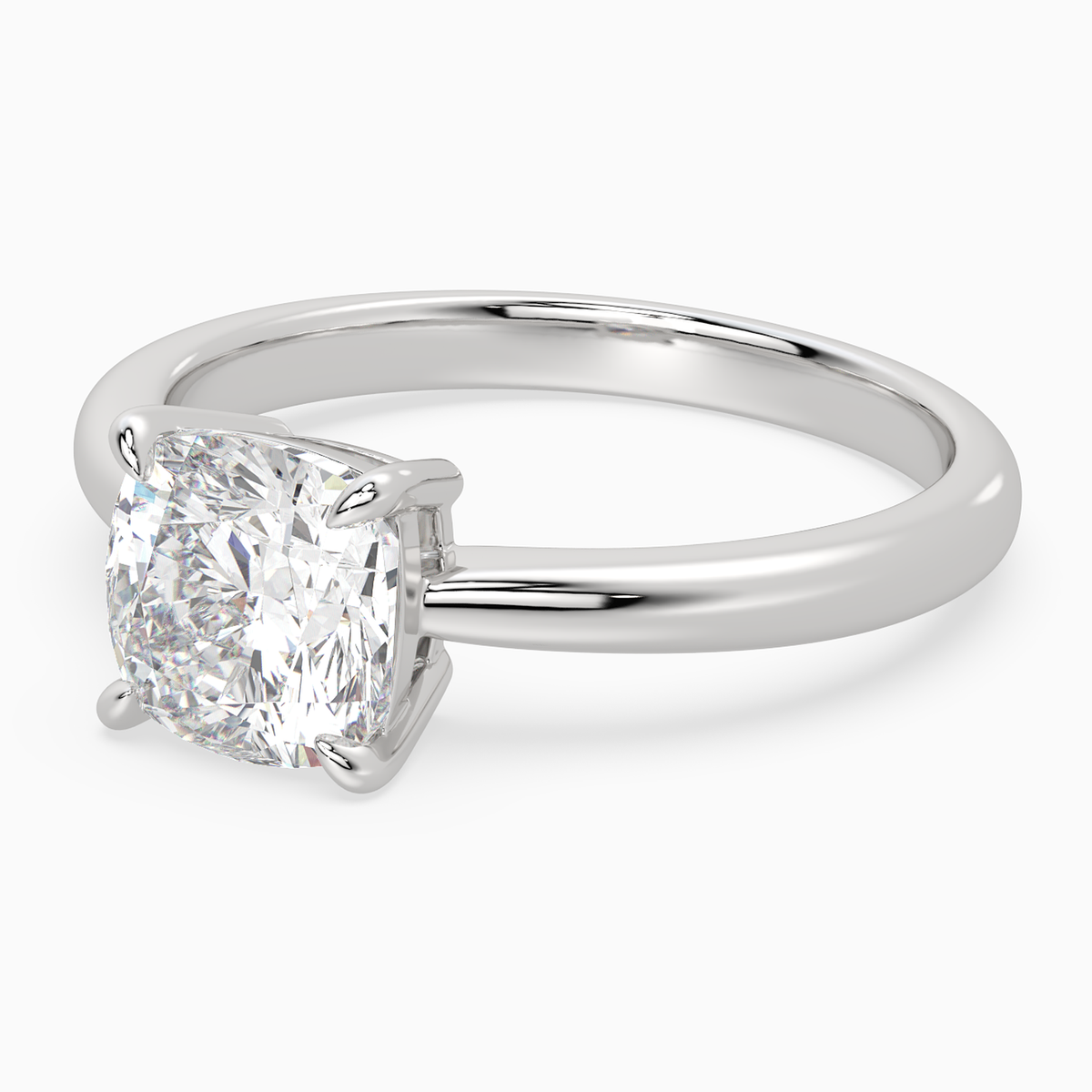

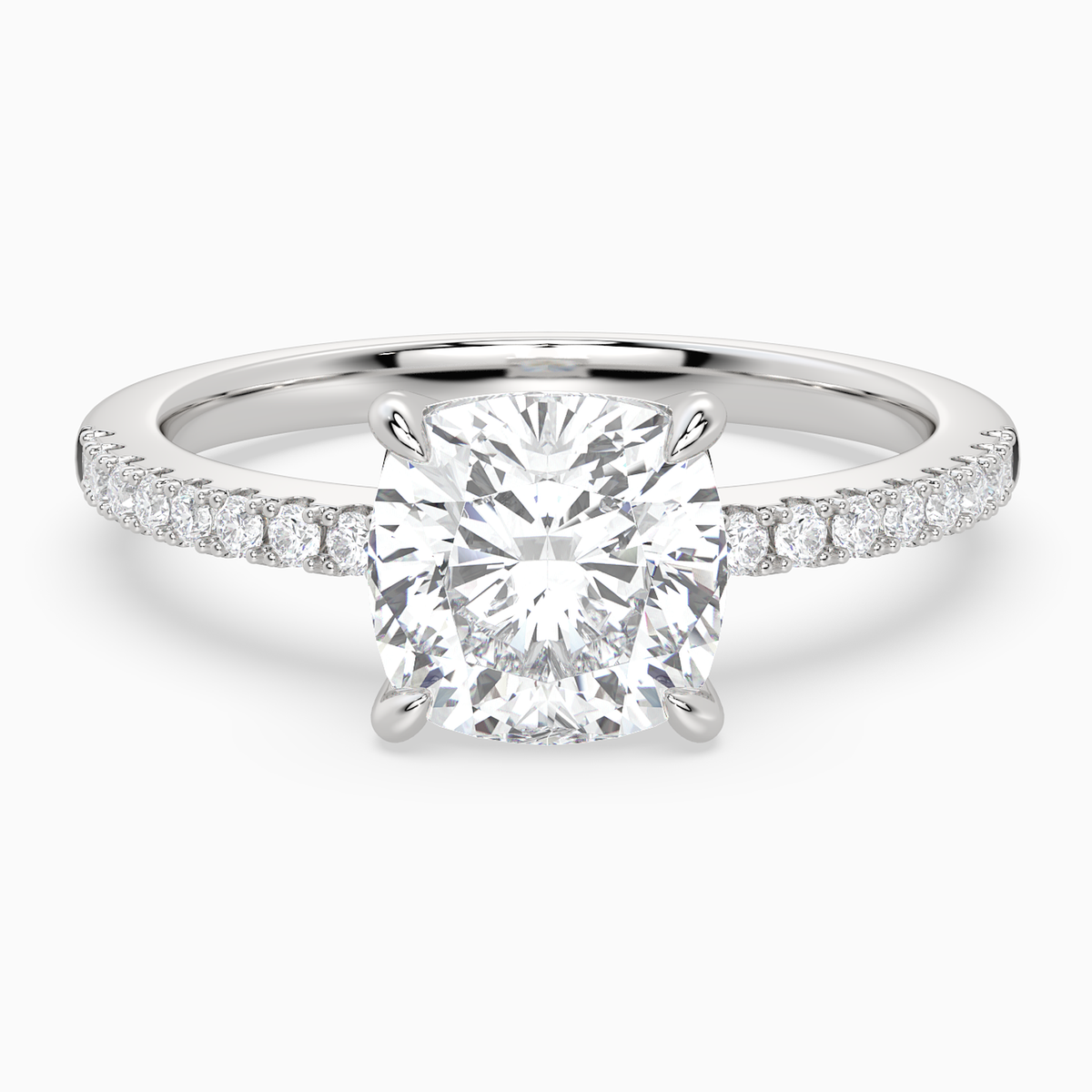
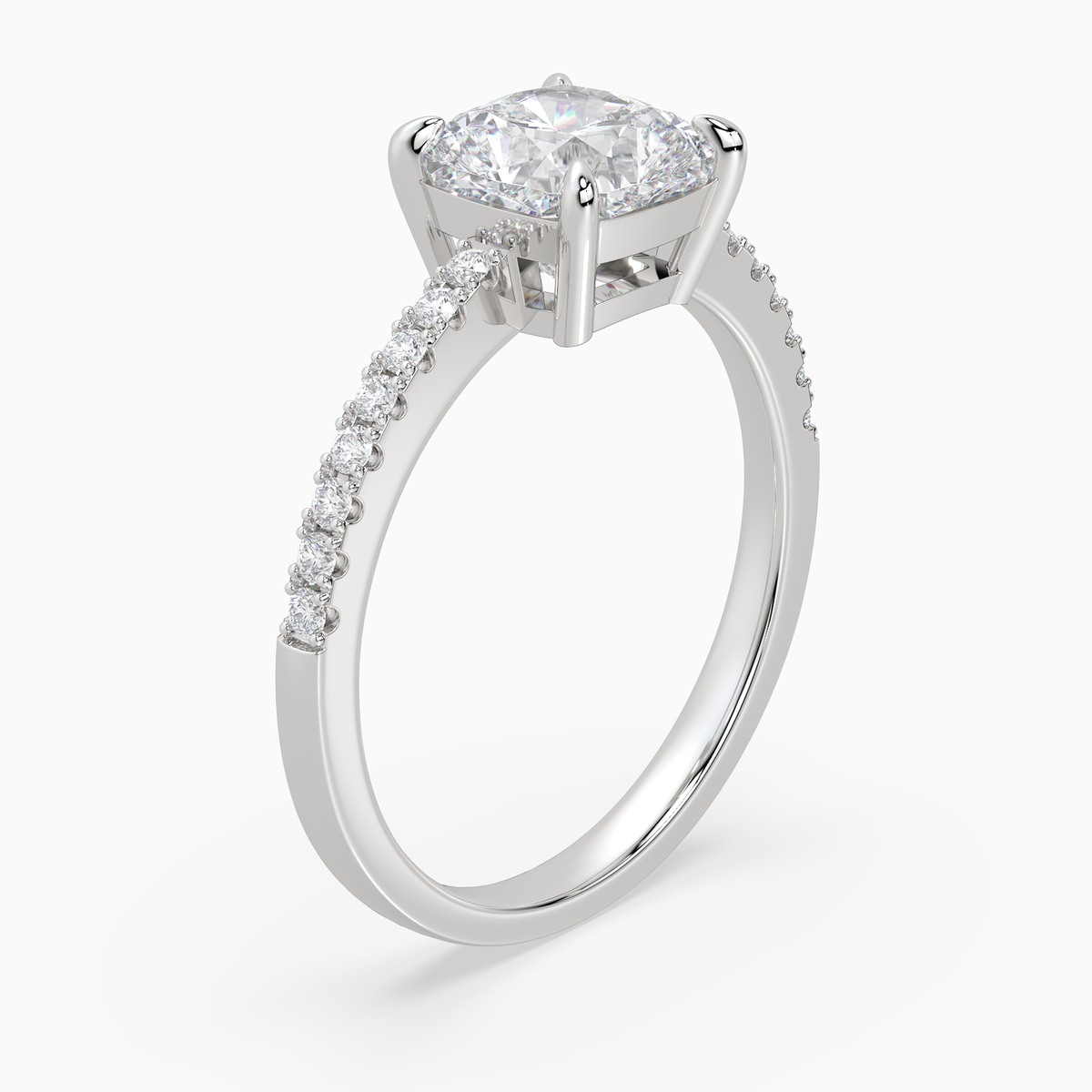




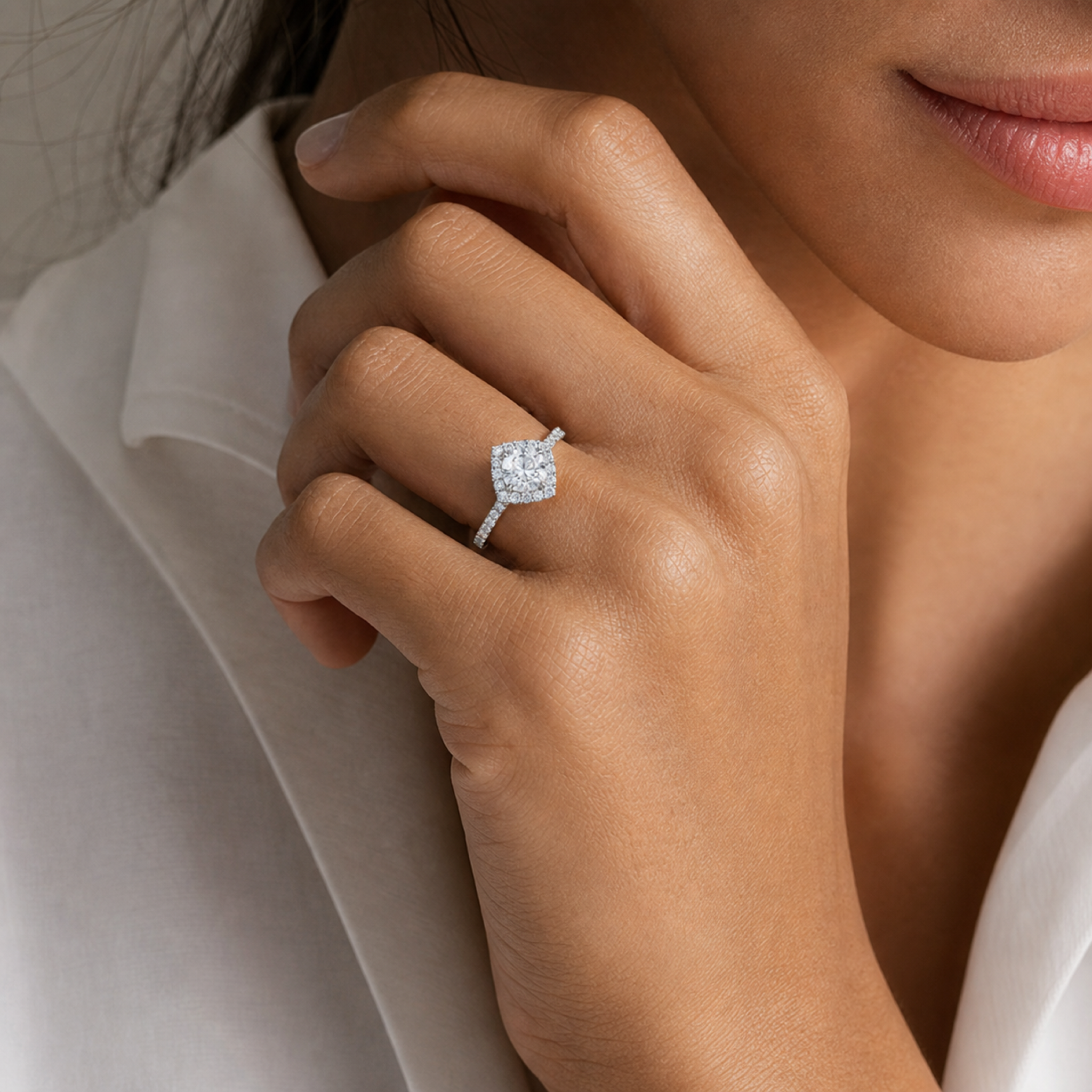


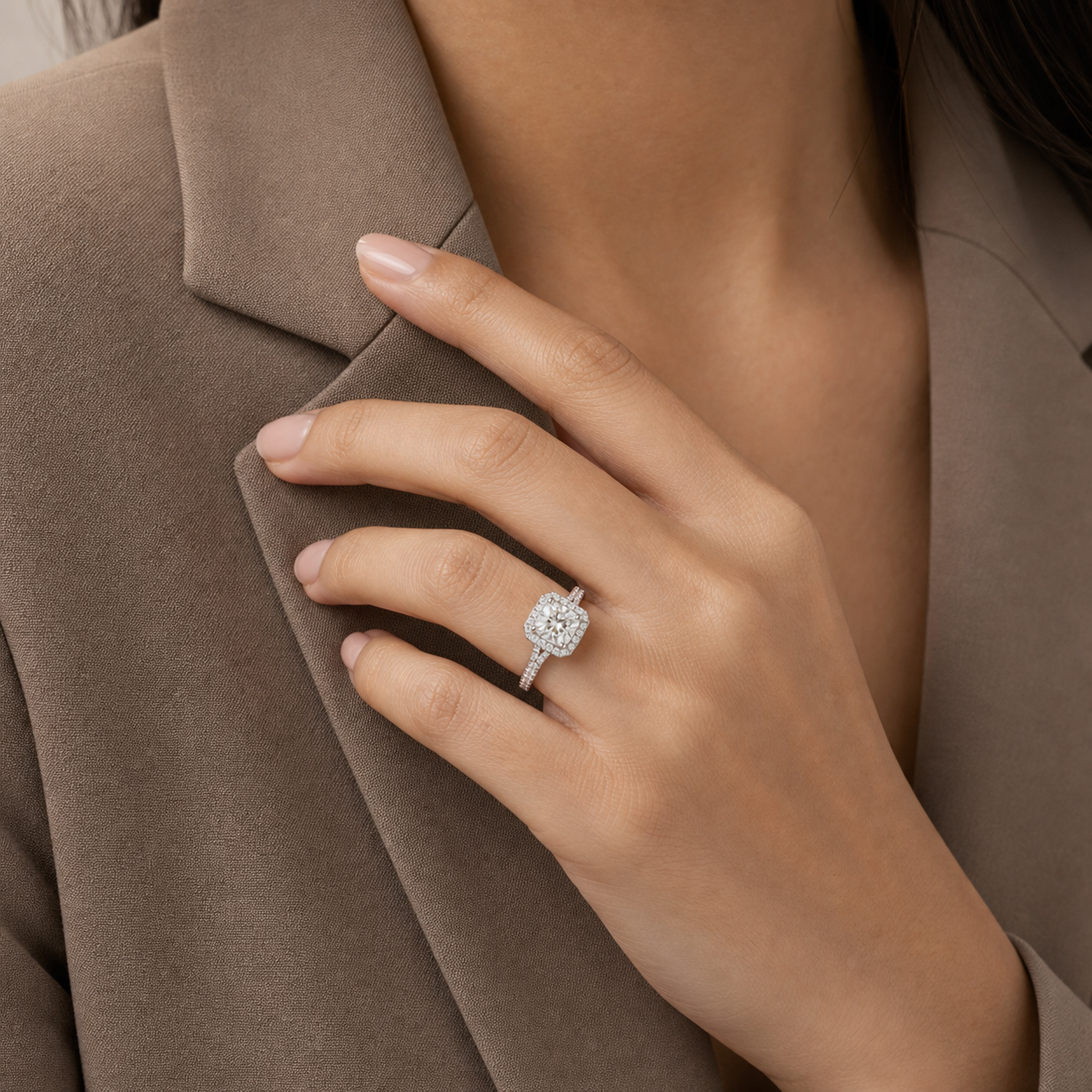




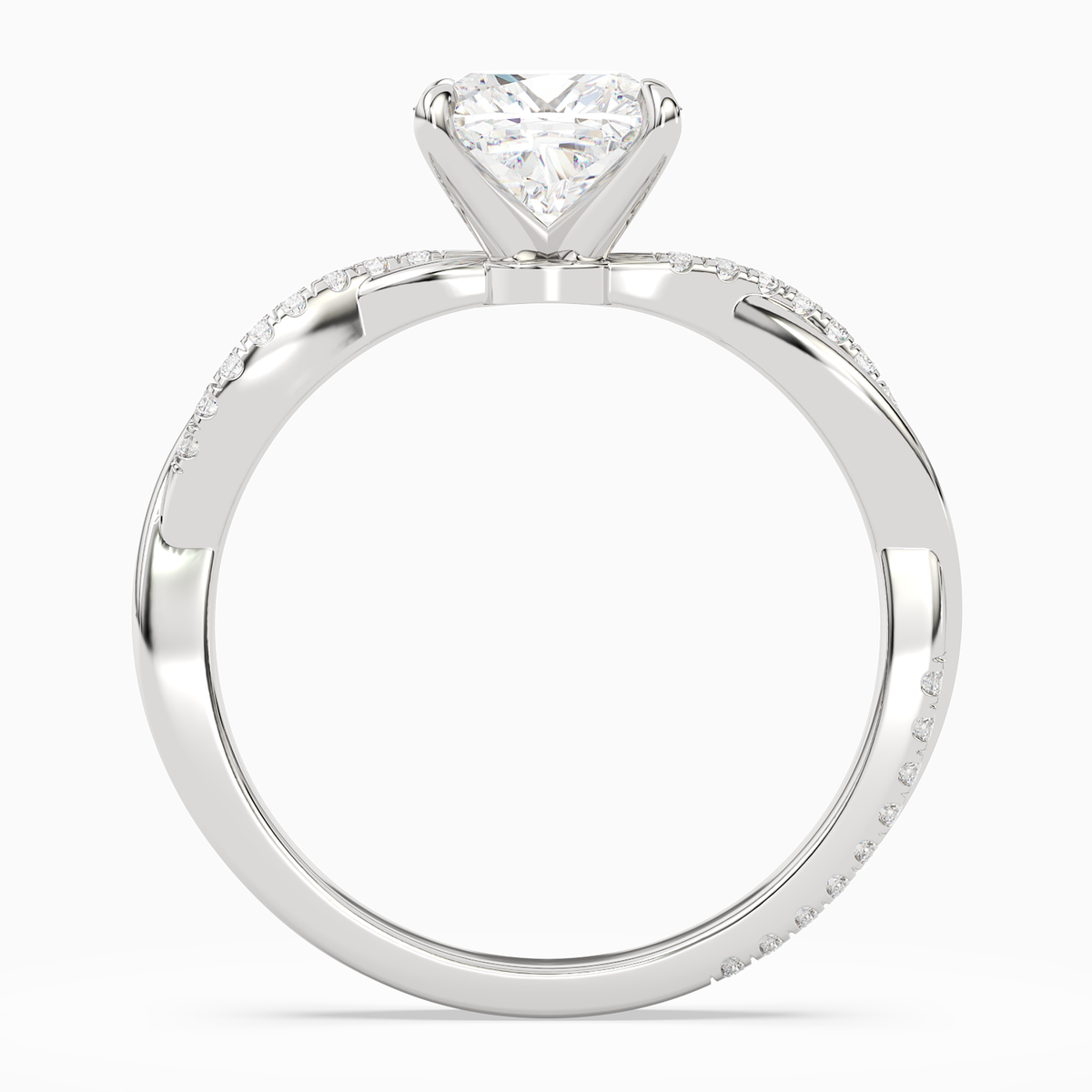
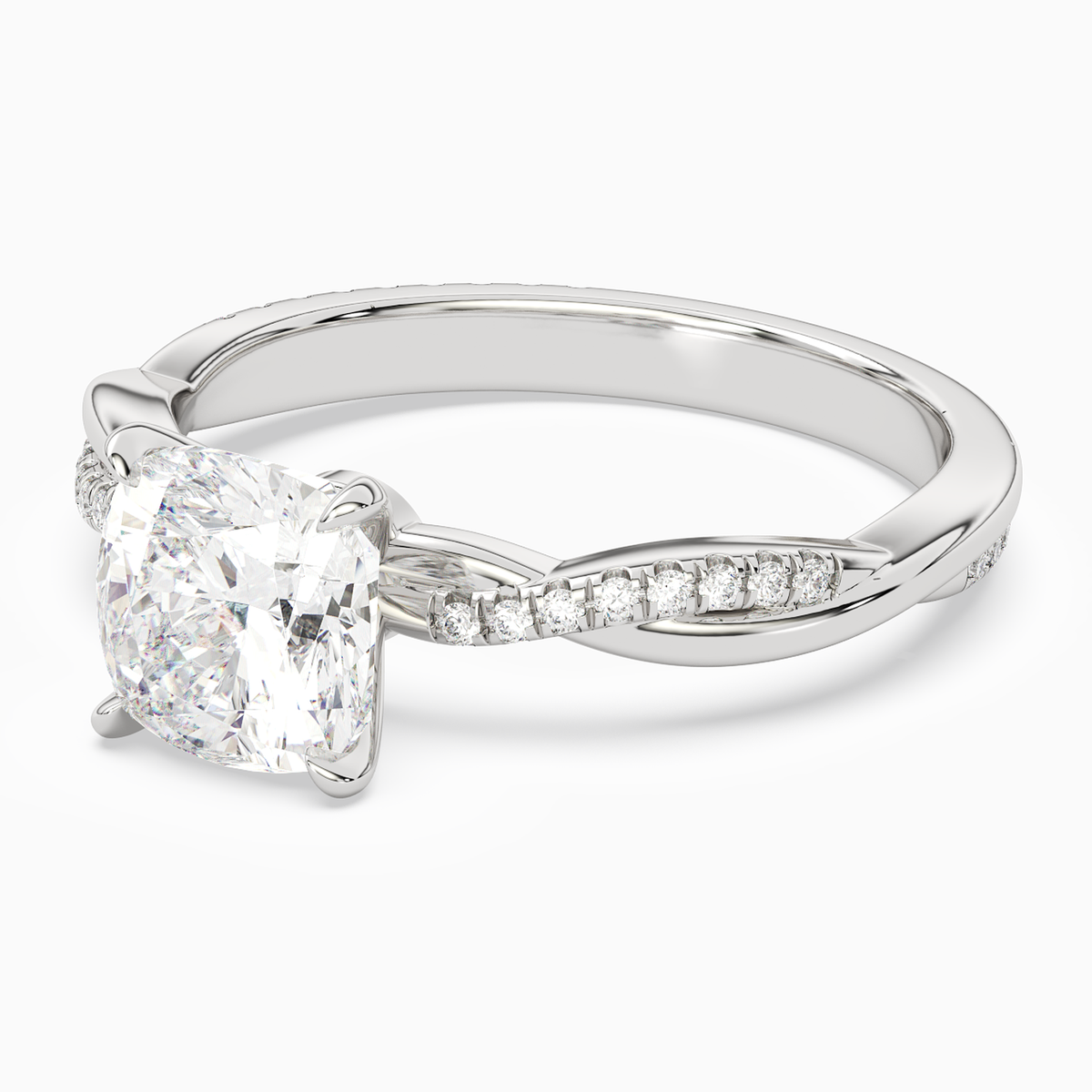
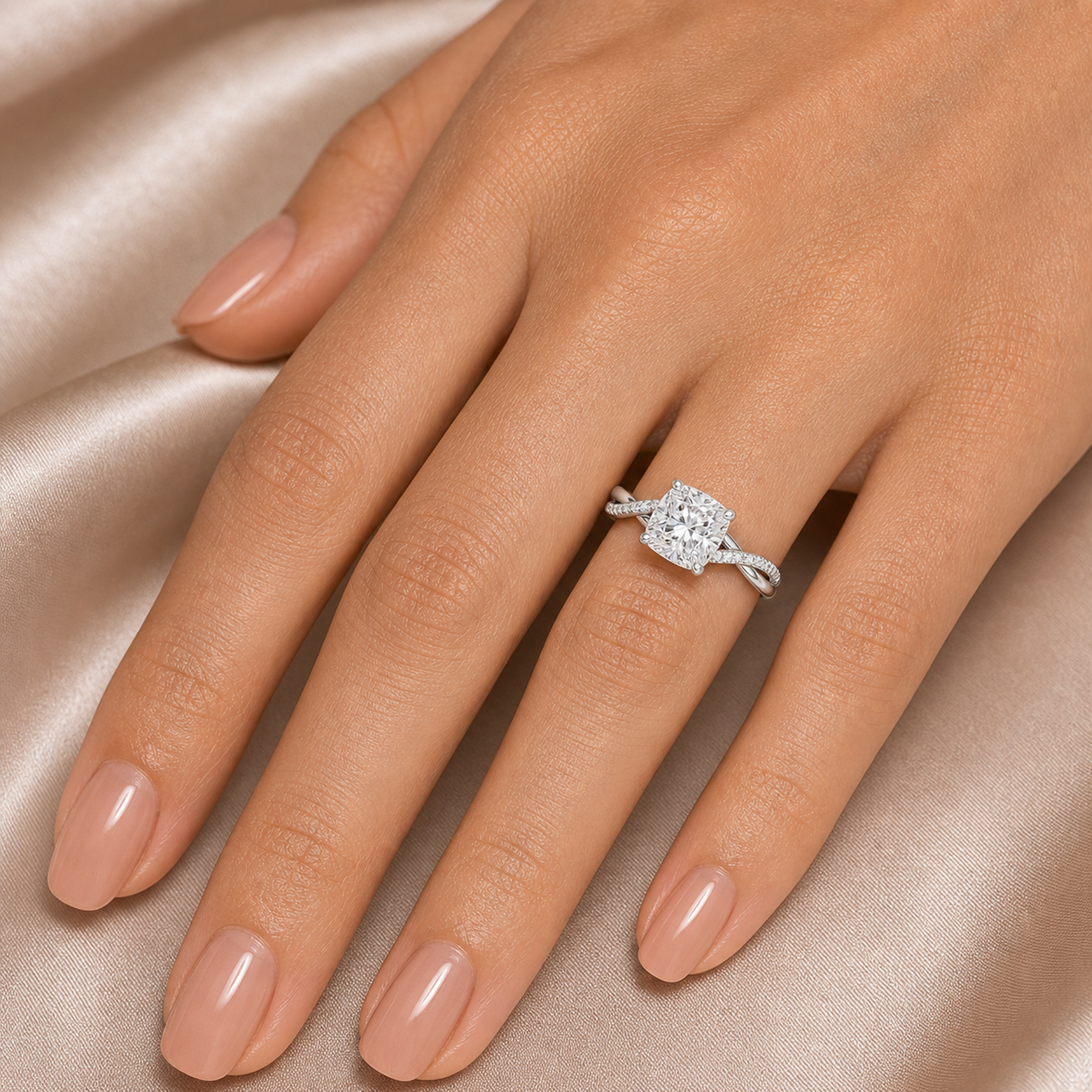
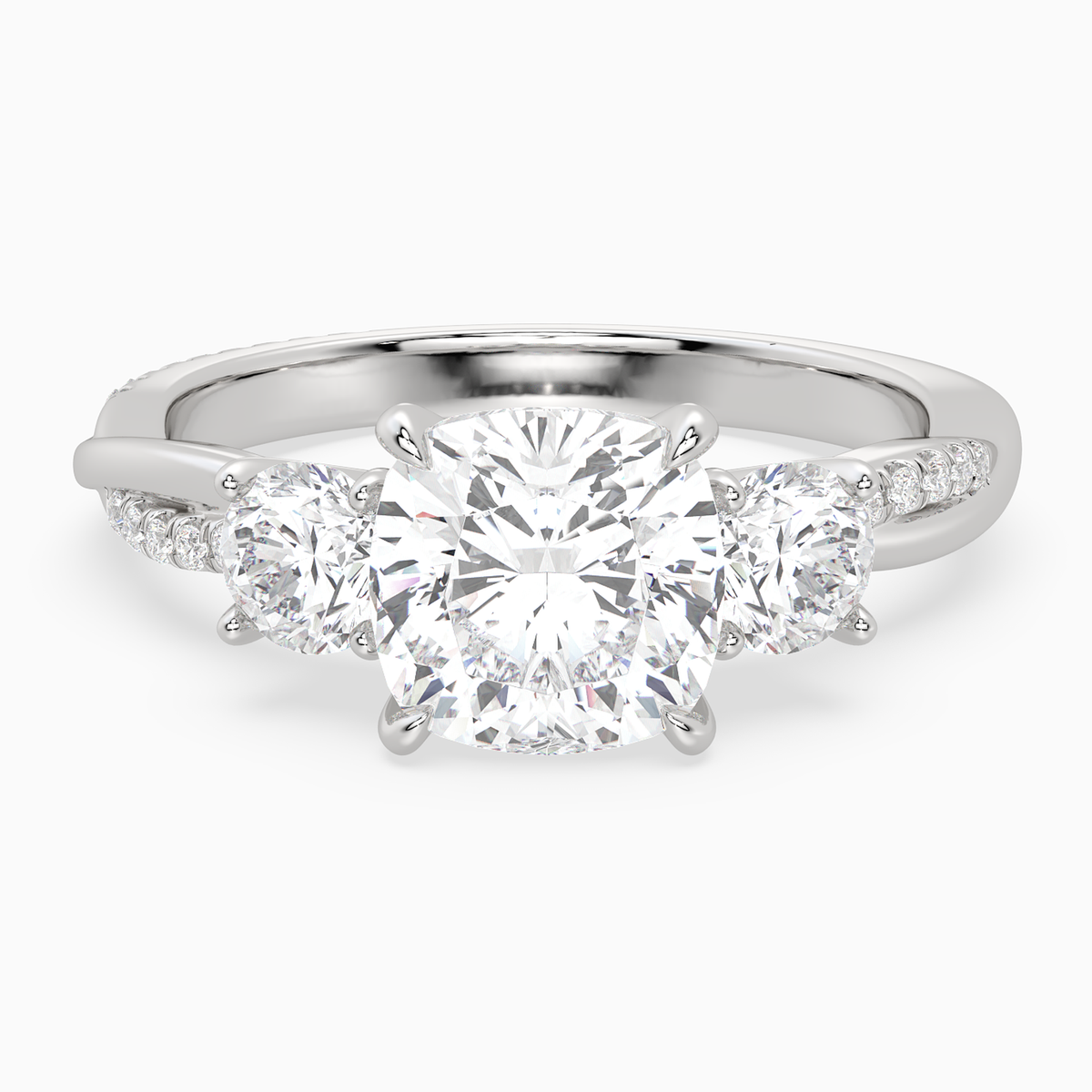

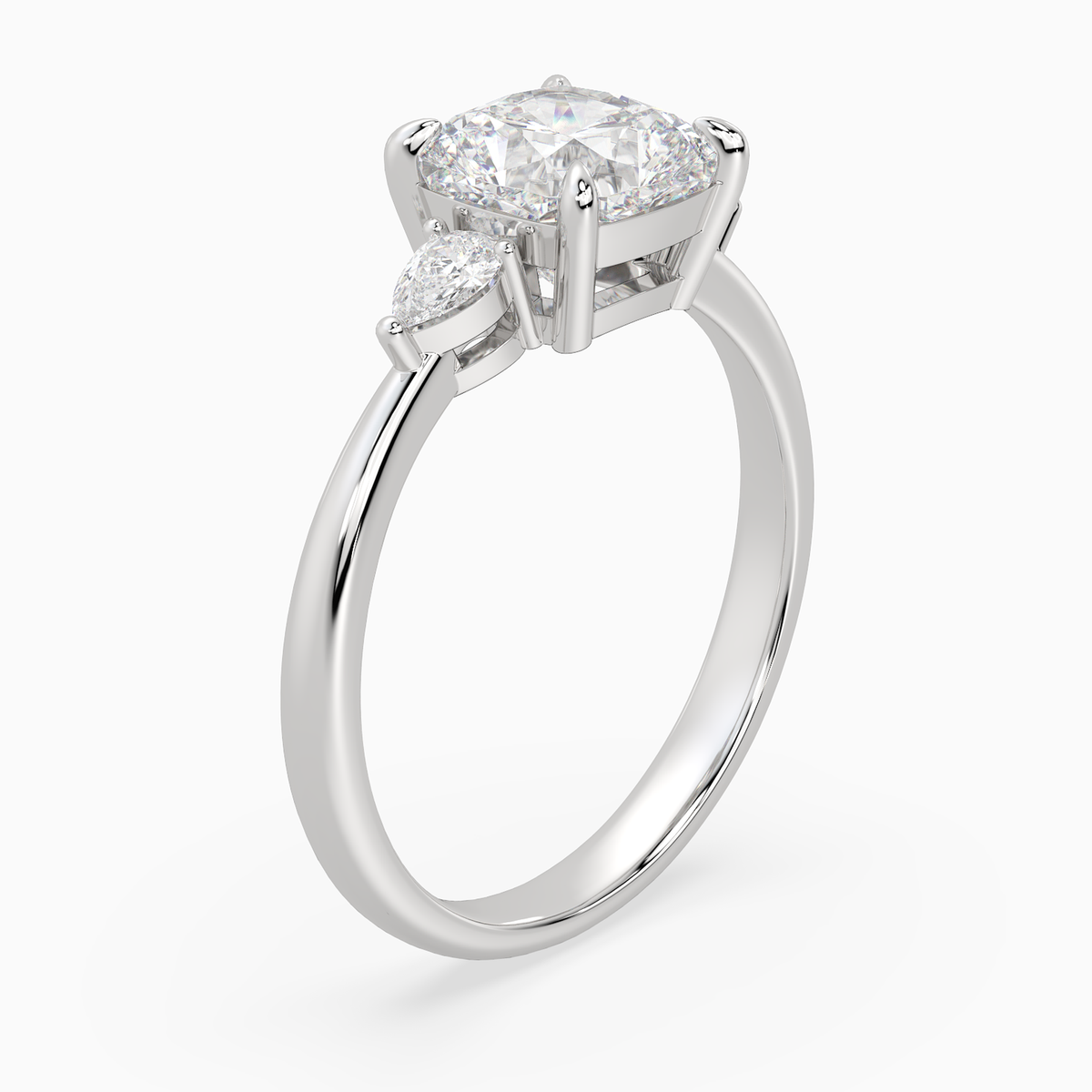
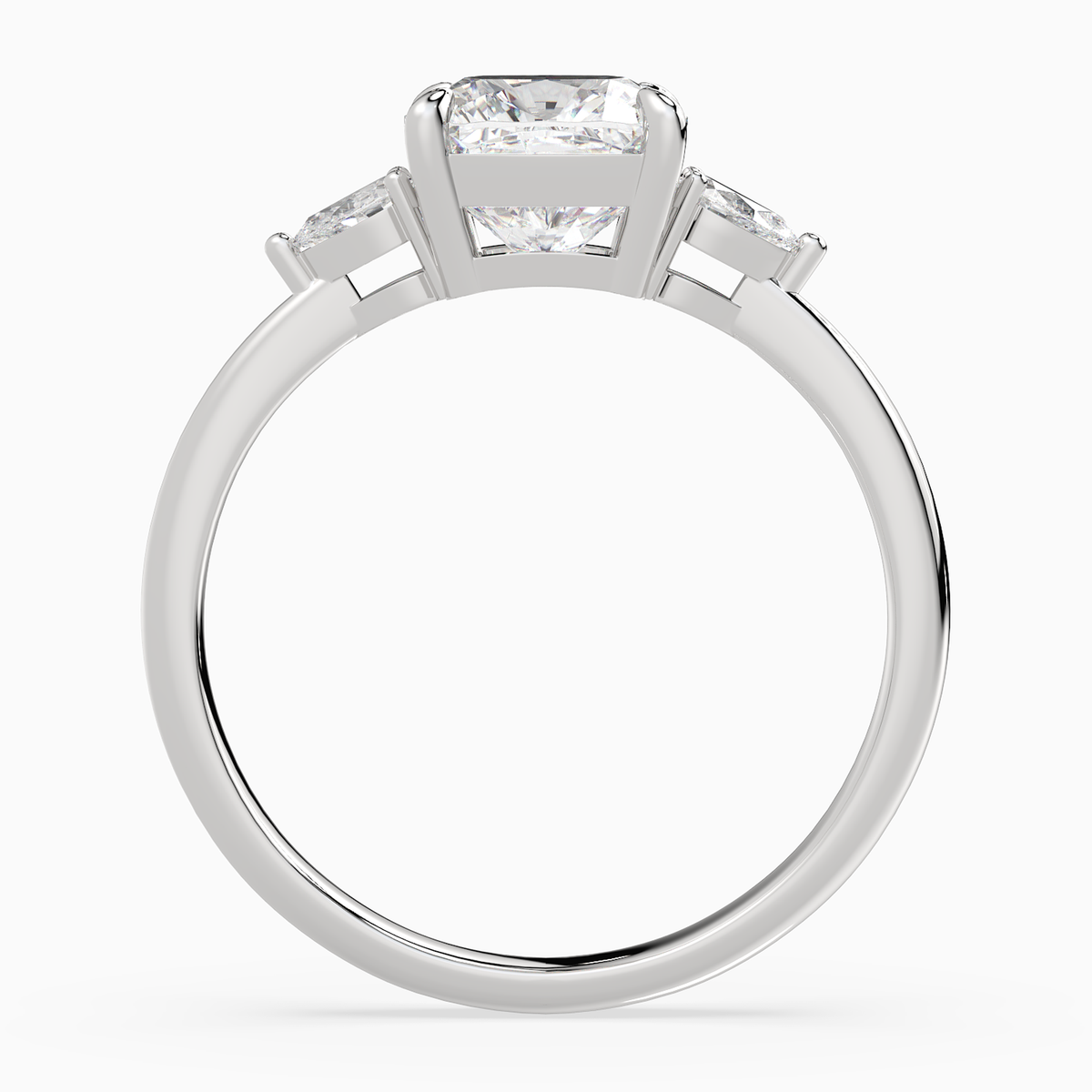
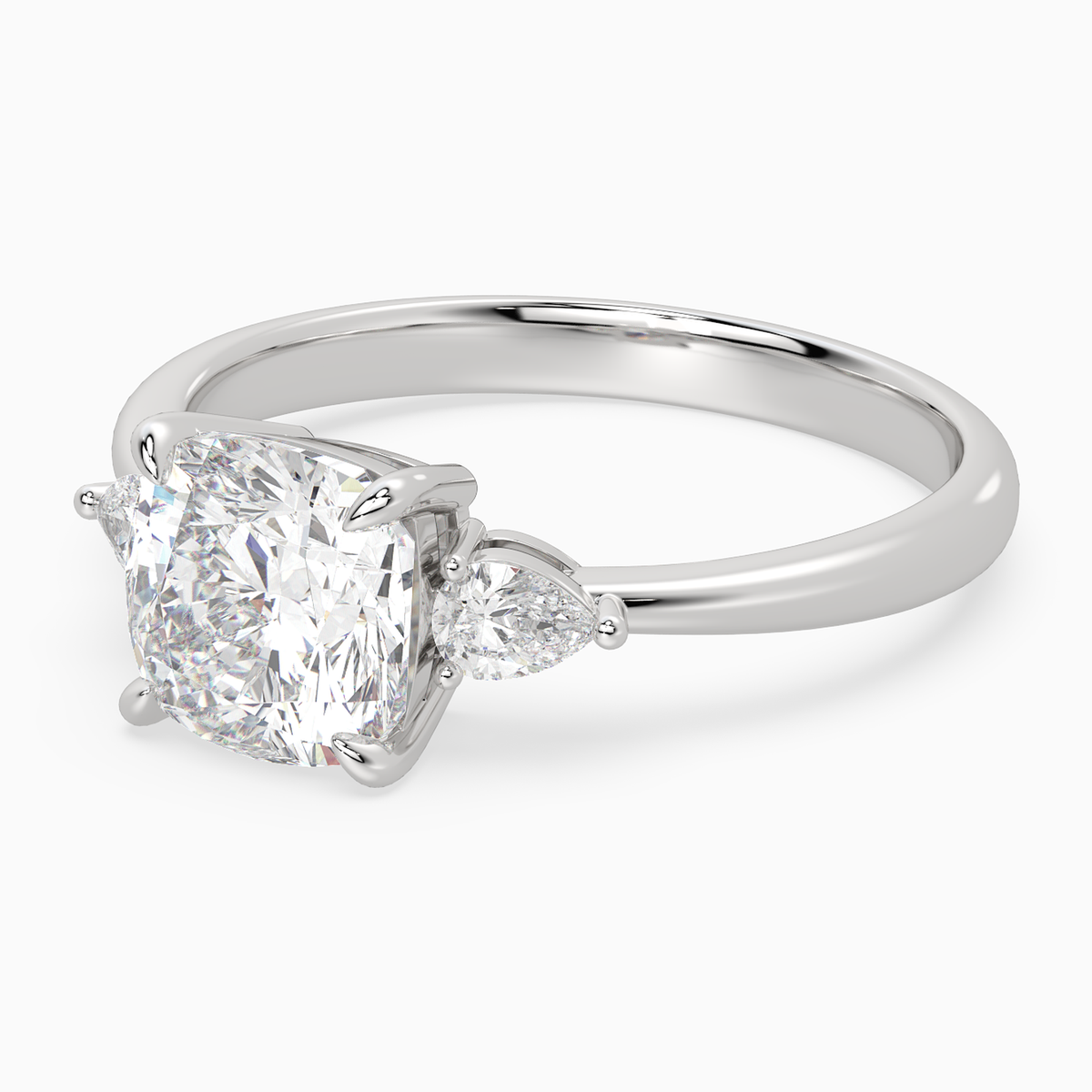

14K White Gold Cushion Diamond Engagement Rings: A Quiet Frame for Soft Geometry
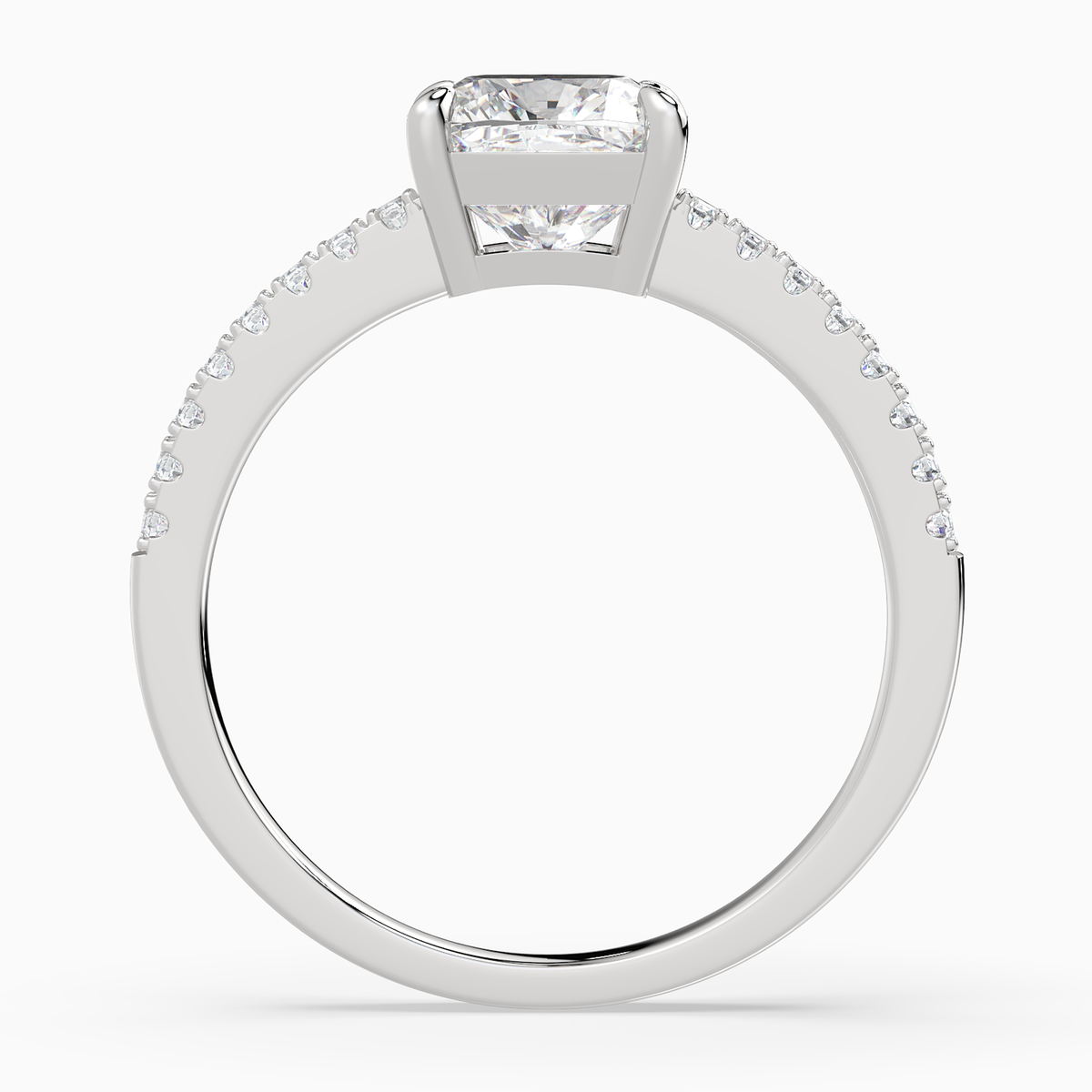
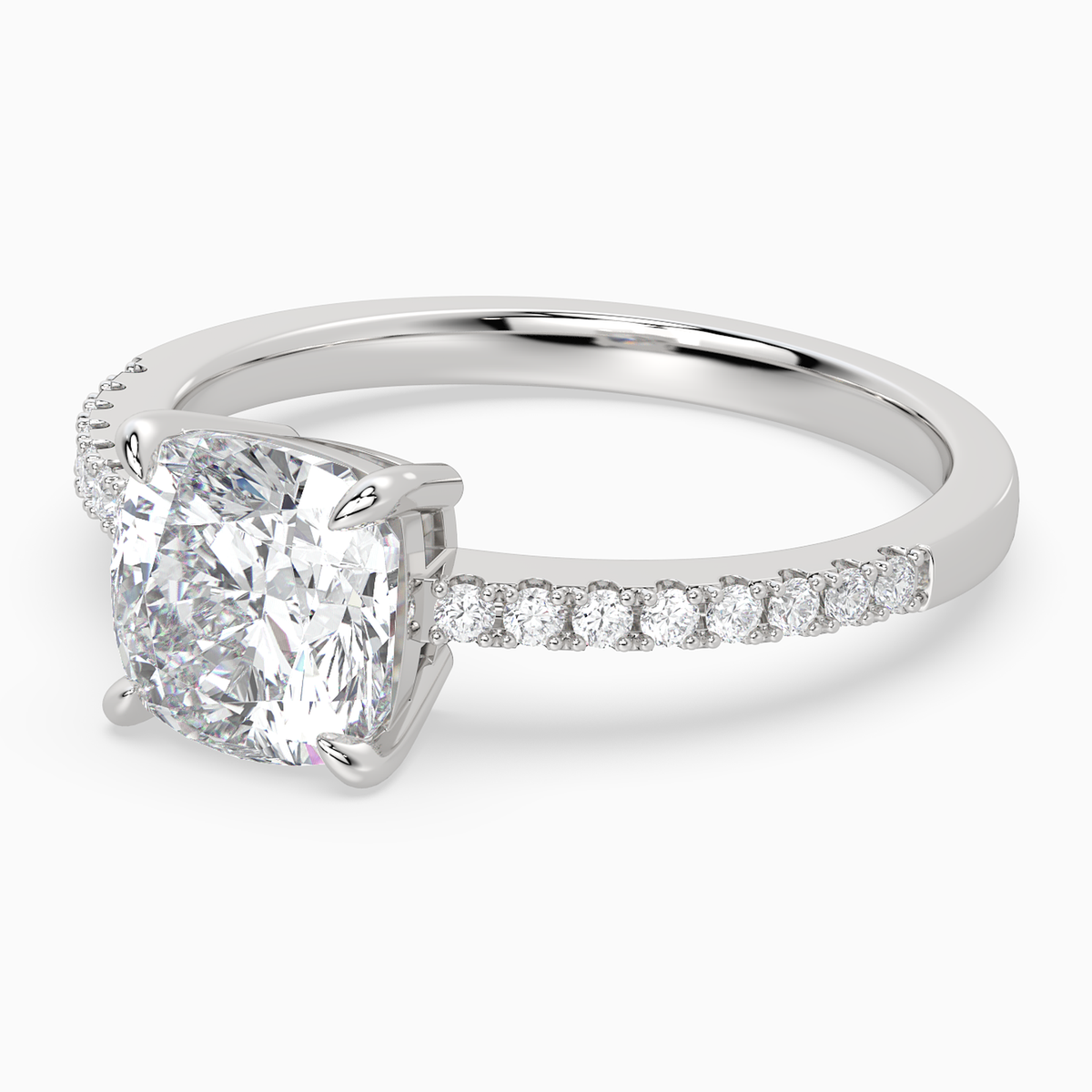
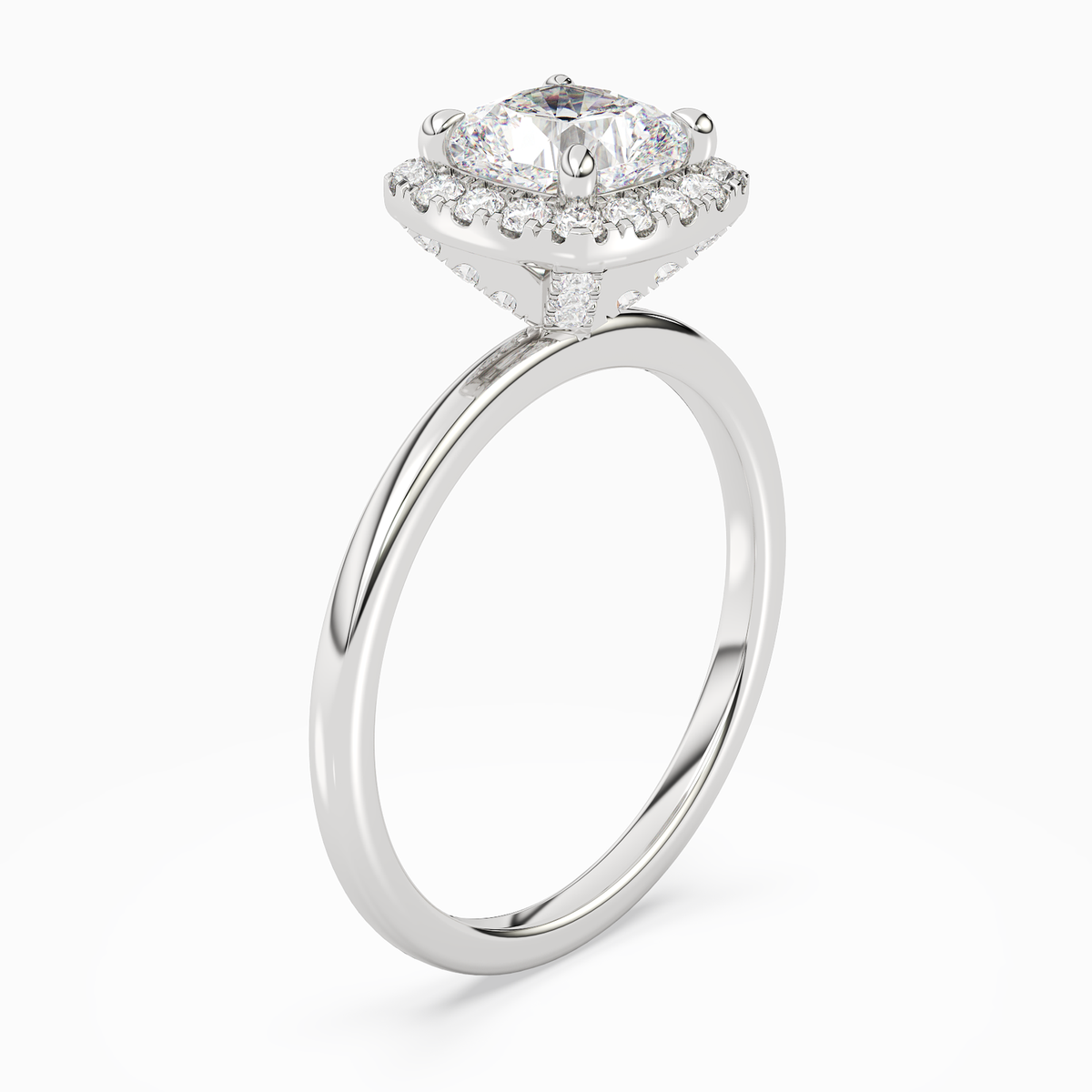
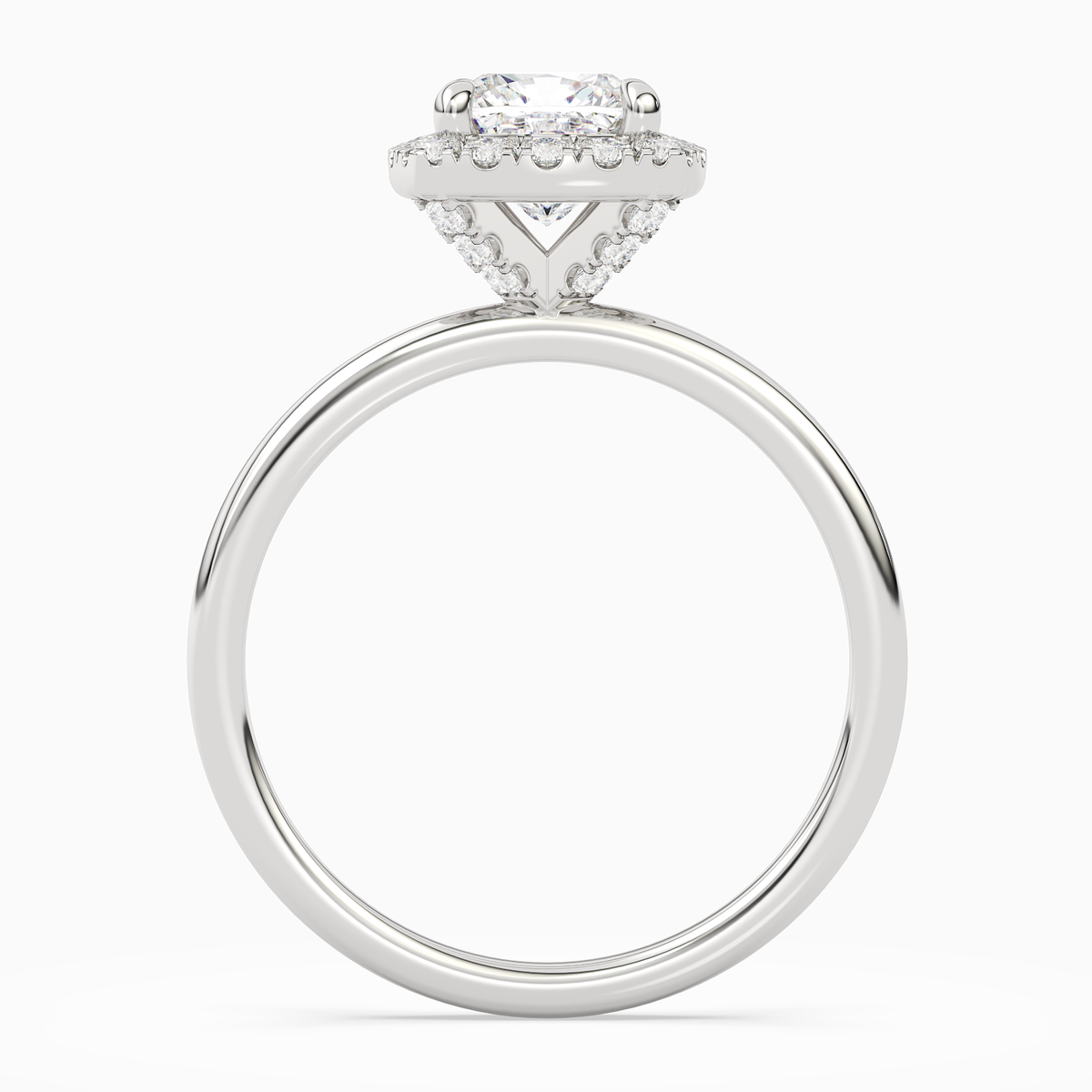
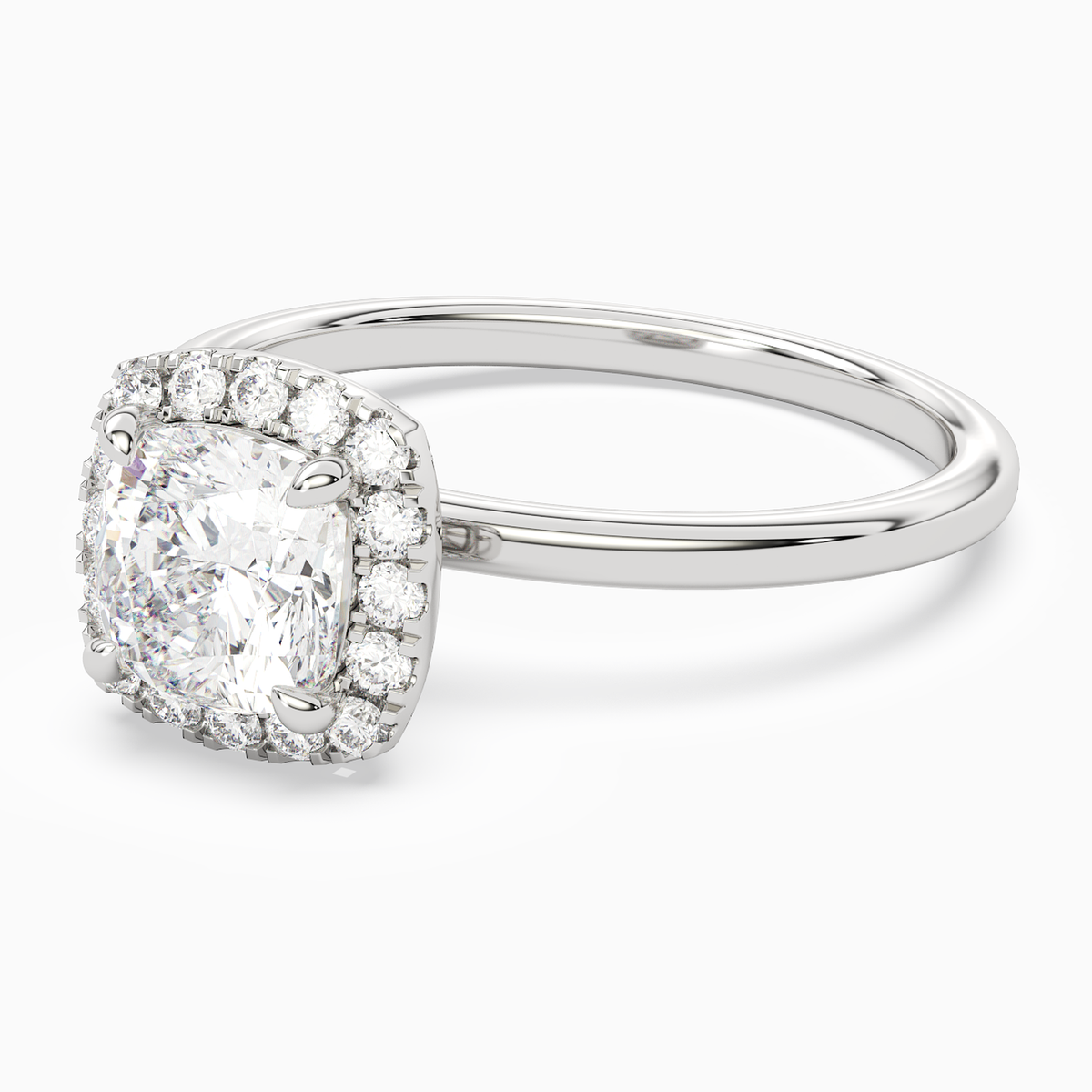
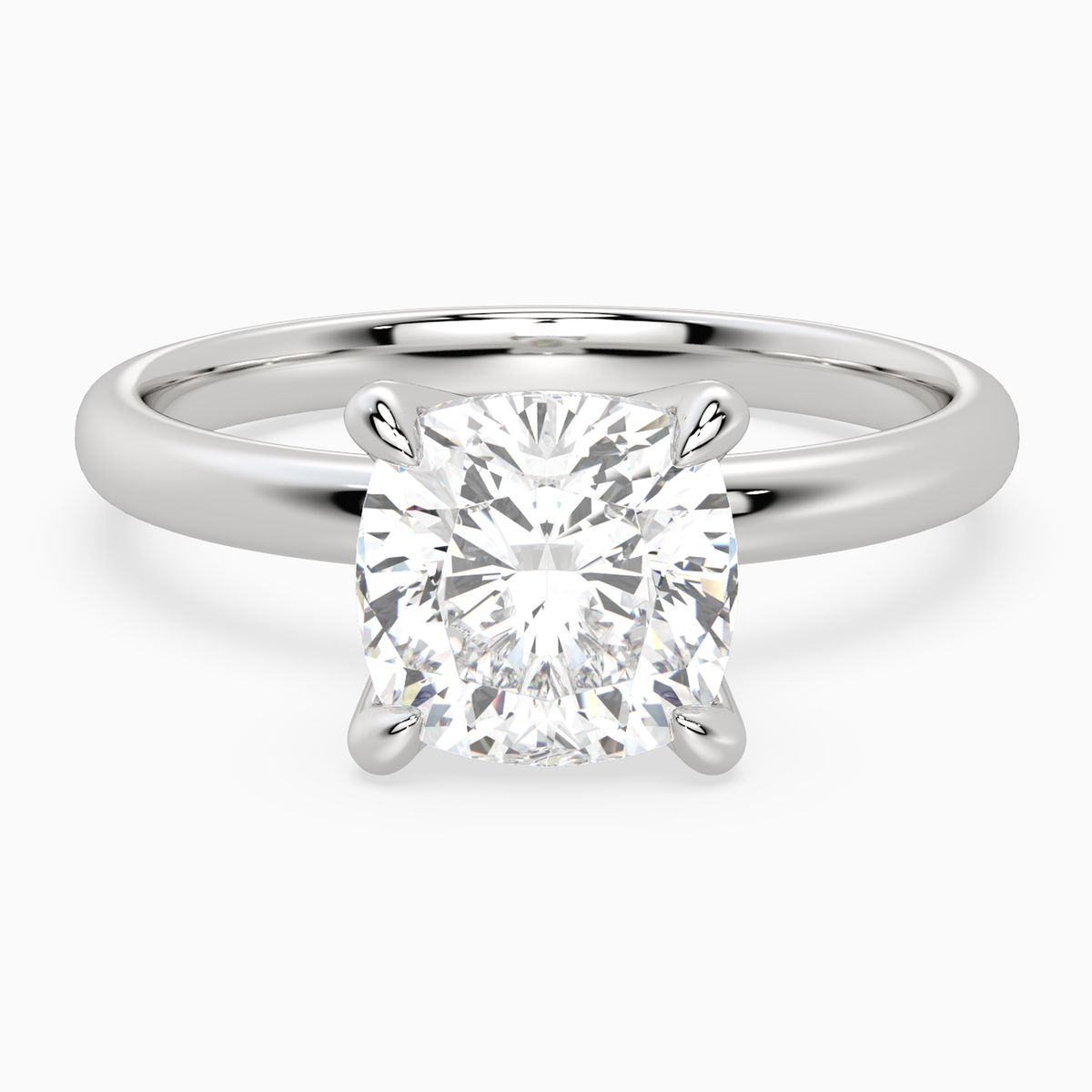
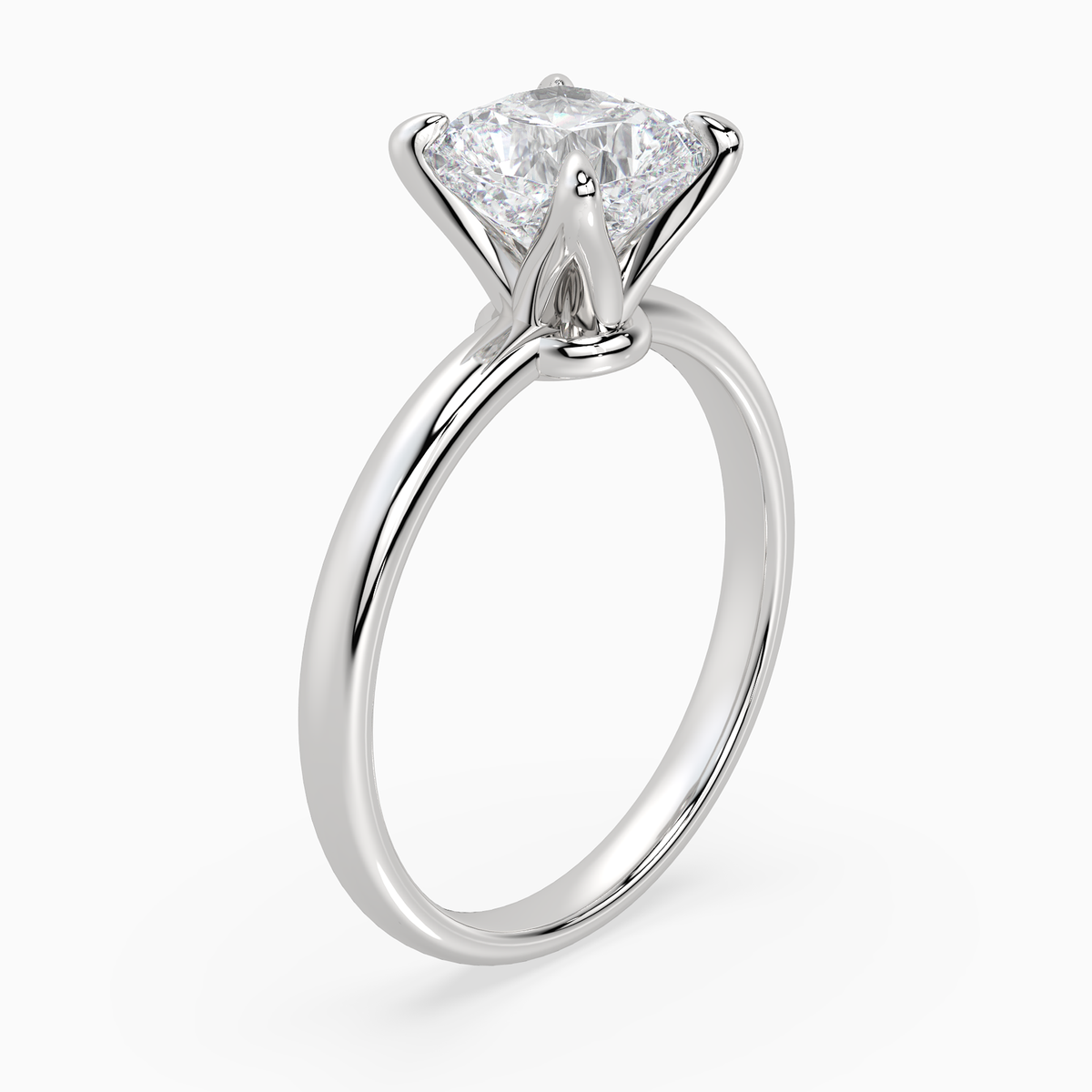
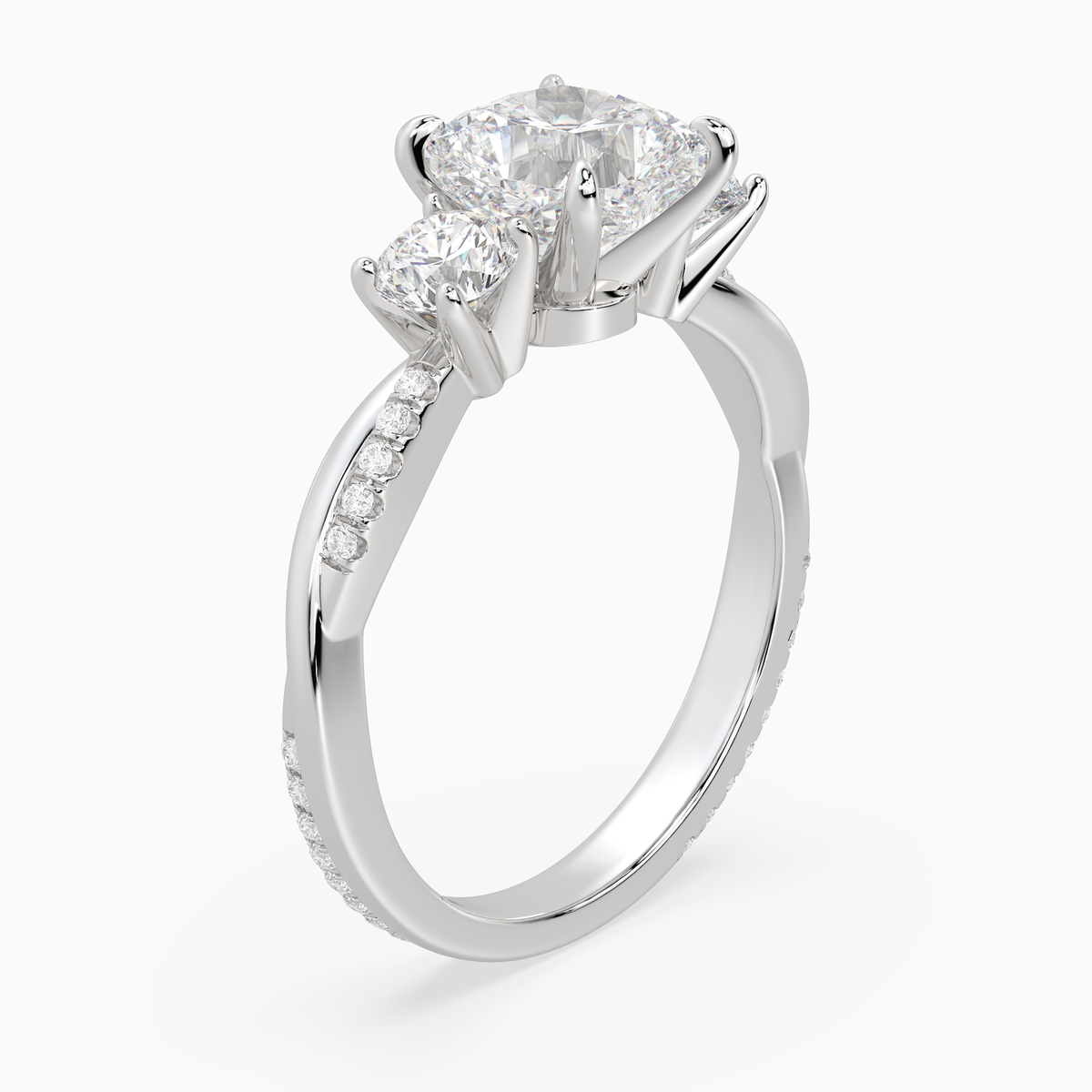
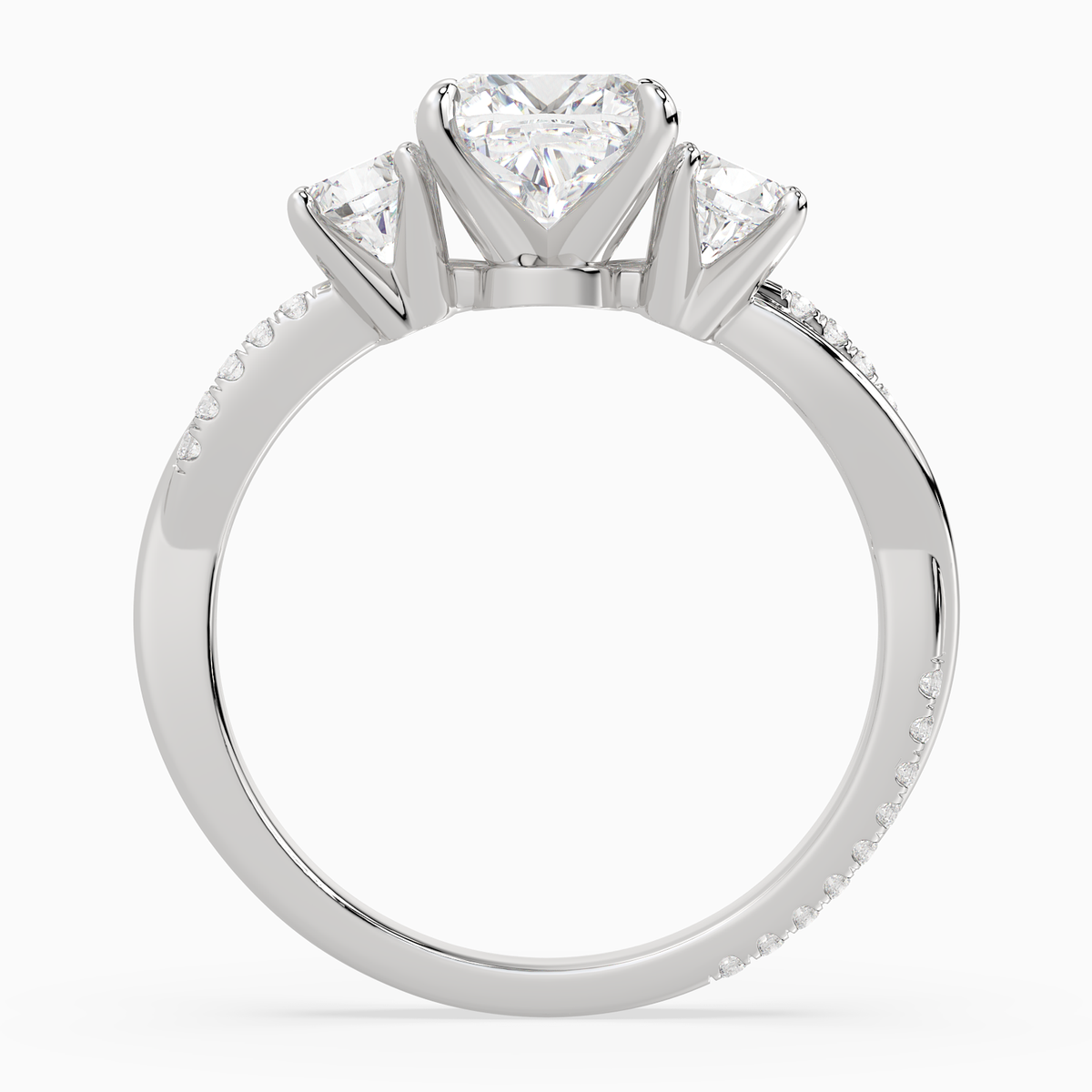
A cushion center may be square, rectangular, or elongated, but its rounded corners keep the outline continuous. 14K White Gold creates a comparatively quiet boundary around that geometry. Prongs may recede tonally, while basket, halo, shoulder, and band construction remain visible in profile and motion.
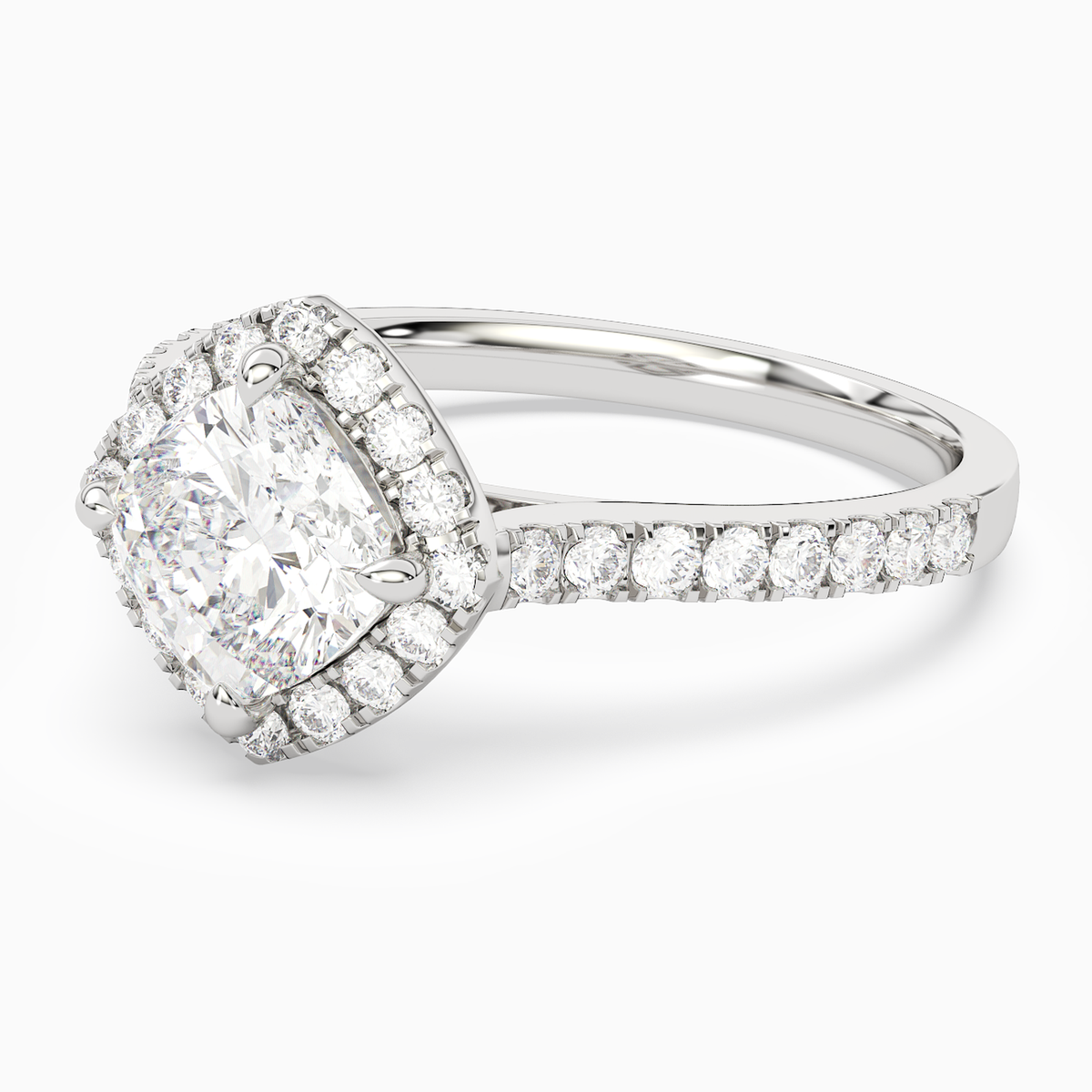
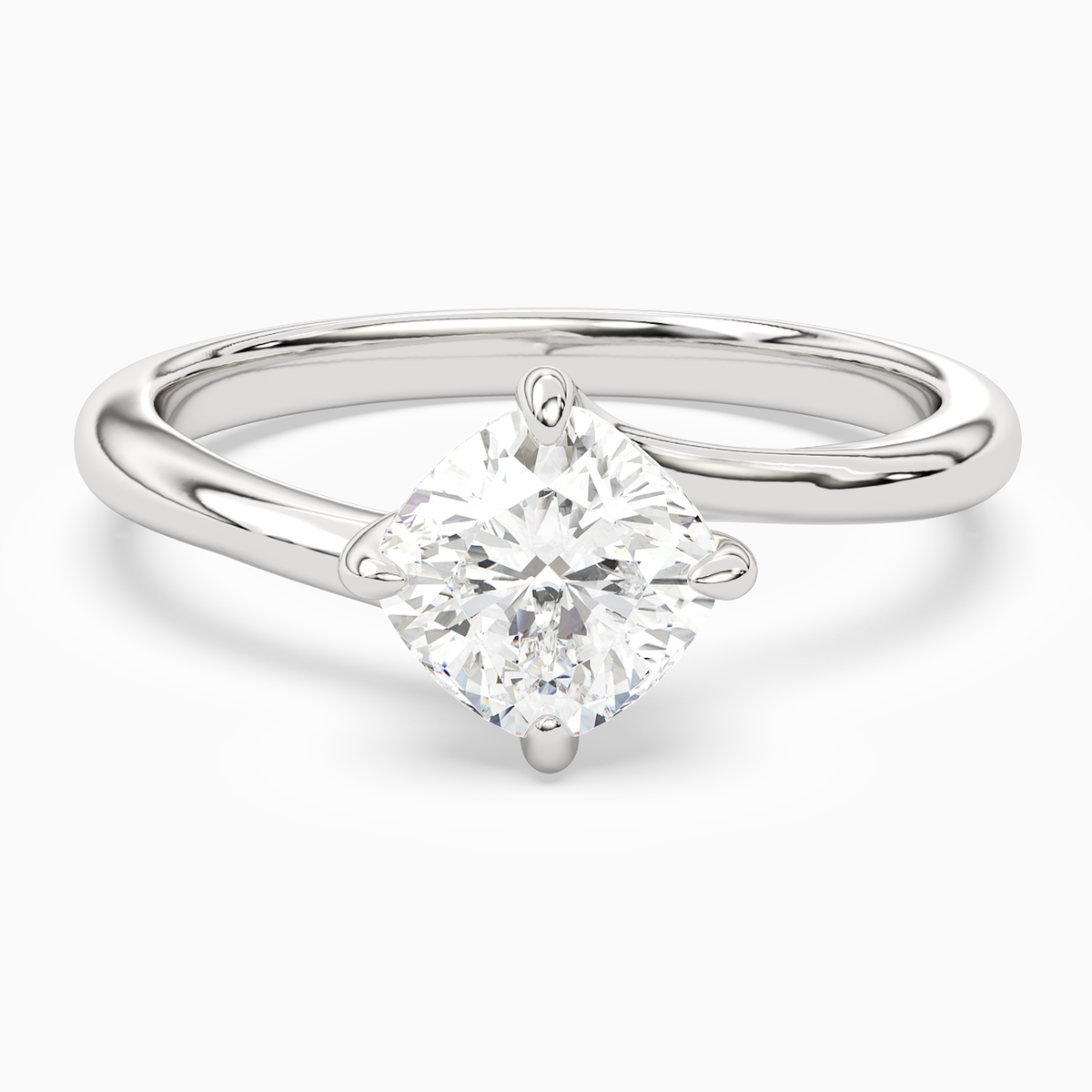
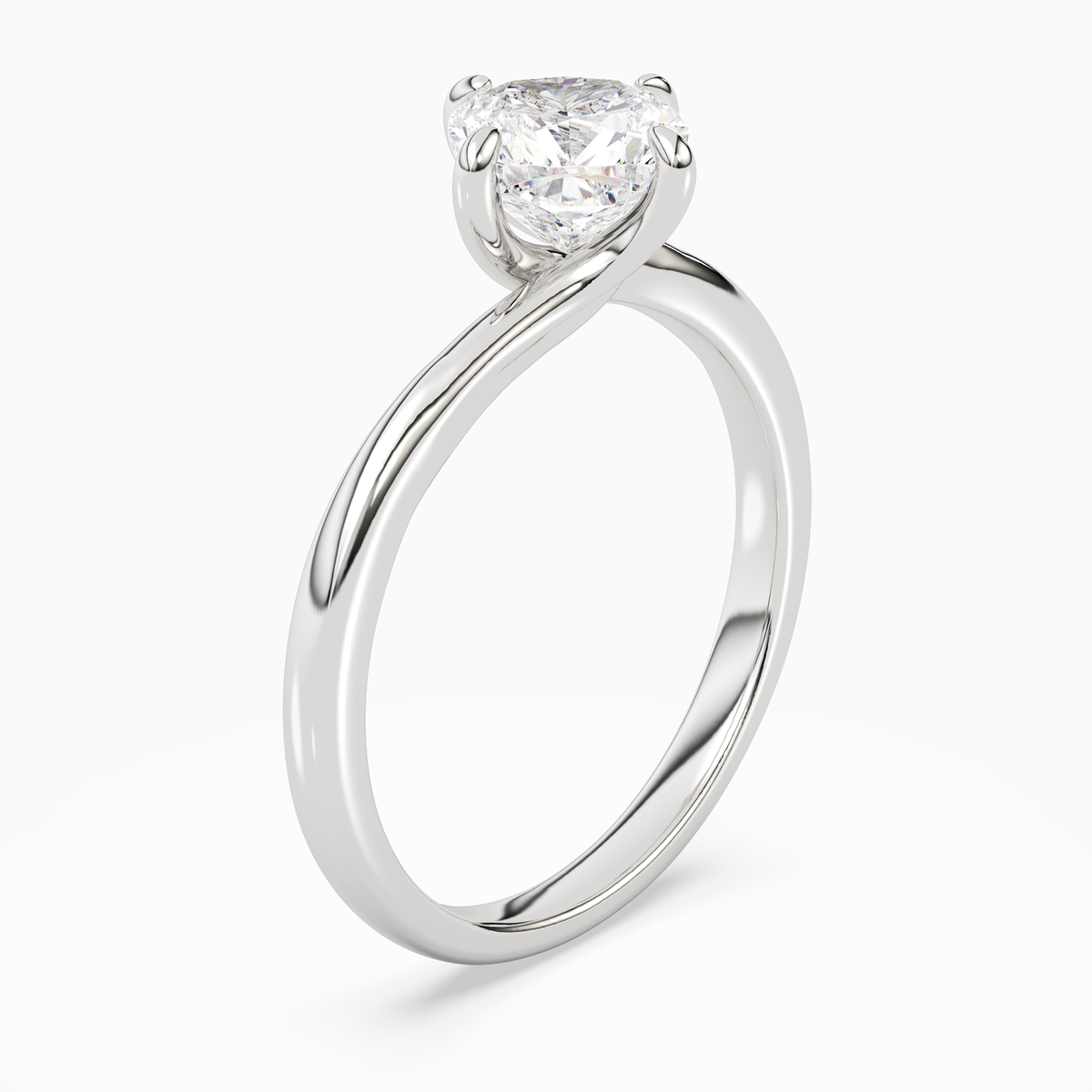
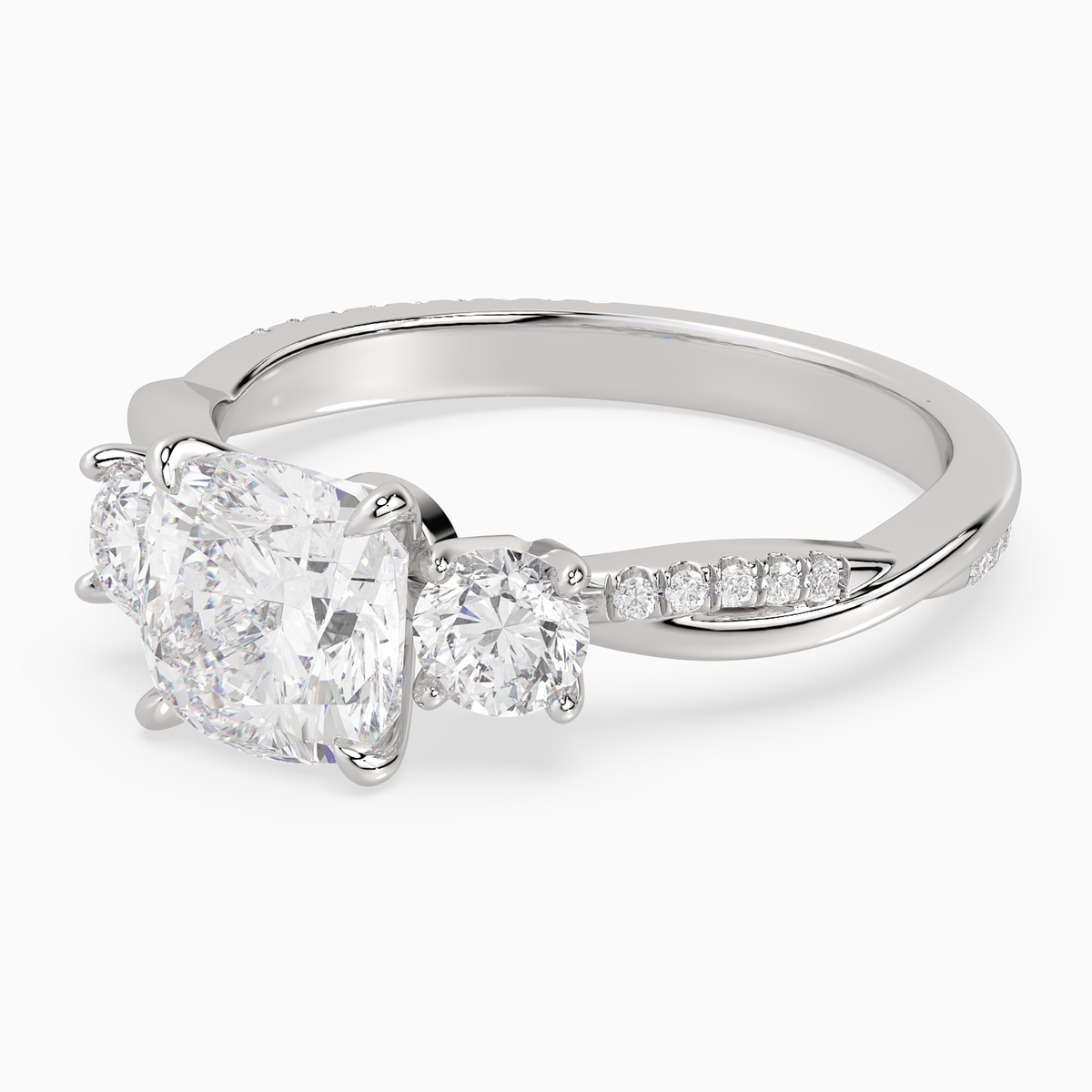
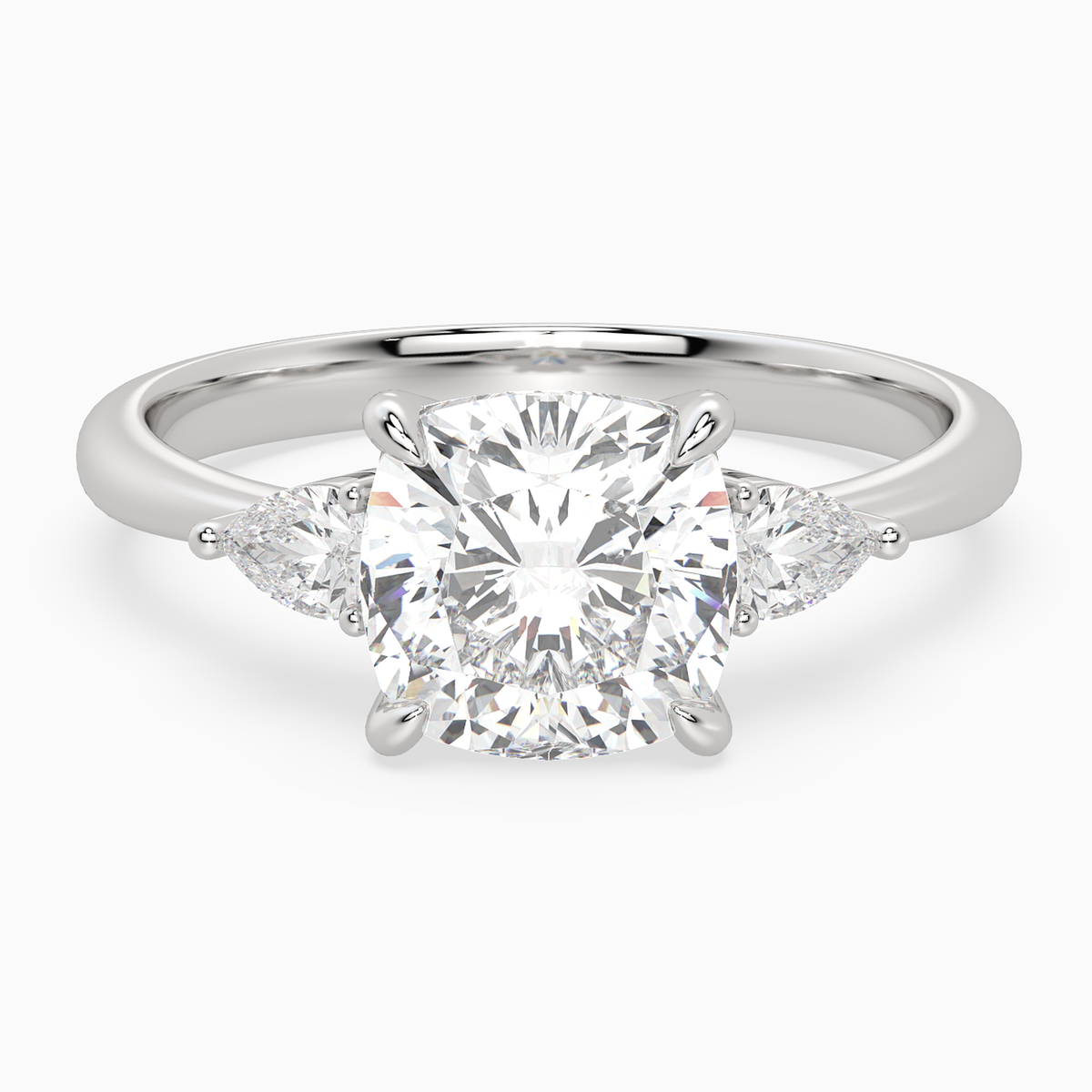
The current 13-design assortment includes six Solitaires, five Halos, and two Three Stone compositions. Open and pavé baskets, hidden and geometric halos, split shanks, cathedral shoulders, bypass and vine bands, and pear accents show that tonal continuity does not make the settings structurally identical.
Quiet Color Should Preserve the Edge
A 14K gold alloy contains approximately 58.3% gold. Other metals influence color and working behavior. Karat alone does not disclose the exact alloy, rhodium finish, hardness, sensitivity outcome, or care interval, so the selected product and finish require confirmation.
White prongs can create a close tonal relationship with the center, but they still divide and support the perimeter. Look at the rounded corners, the transition into the basket, and the amount of metal visible between center and halo. A quiet frame should clarify construction rather than pretend to disappear.
Facet Texture Belongs to the Center
Cushion Brilliant and Modified Brilliant describe facet arrangements, not one guaranteed appearance. Some centers show broad, legible flashes; others show a finer, splintered texture. Fancy-shape reports document polish, symmetry, dimensions, and other facts but do not provide the same overall cut grade used for eligible standard round brilliants.
White Gold cannot increase brilliance, remove gray areas, or make a crushed-ice pattern superior. Compare the actual center in images or video and under more than one light. The setting supplies visual context; the individual diamond supplies the pattern.
The Setting Changes the Perimeter
A Solitaire gives the outline more independent space and makes corner support easy to read. A Halo introduces a second boundary; kite, octagonal, round, and pavé frames reinterpret the cushion differently. Three Stone settings expand the composition and require clear hierarchy between center and pear-shaped sides.
Cathedral shoulders rise toward the basket, a bypass introduces direction, vines create open intervals, and a split shank adds width. White Gold can unify their color, but scale, spacing, and profile determine whether the soft geometry remains distinct.
Compare Dimensions Within the Ring
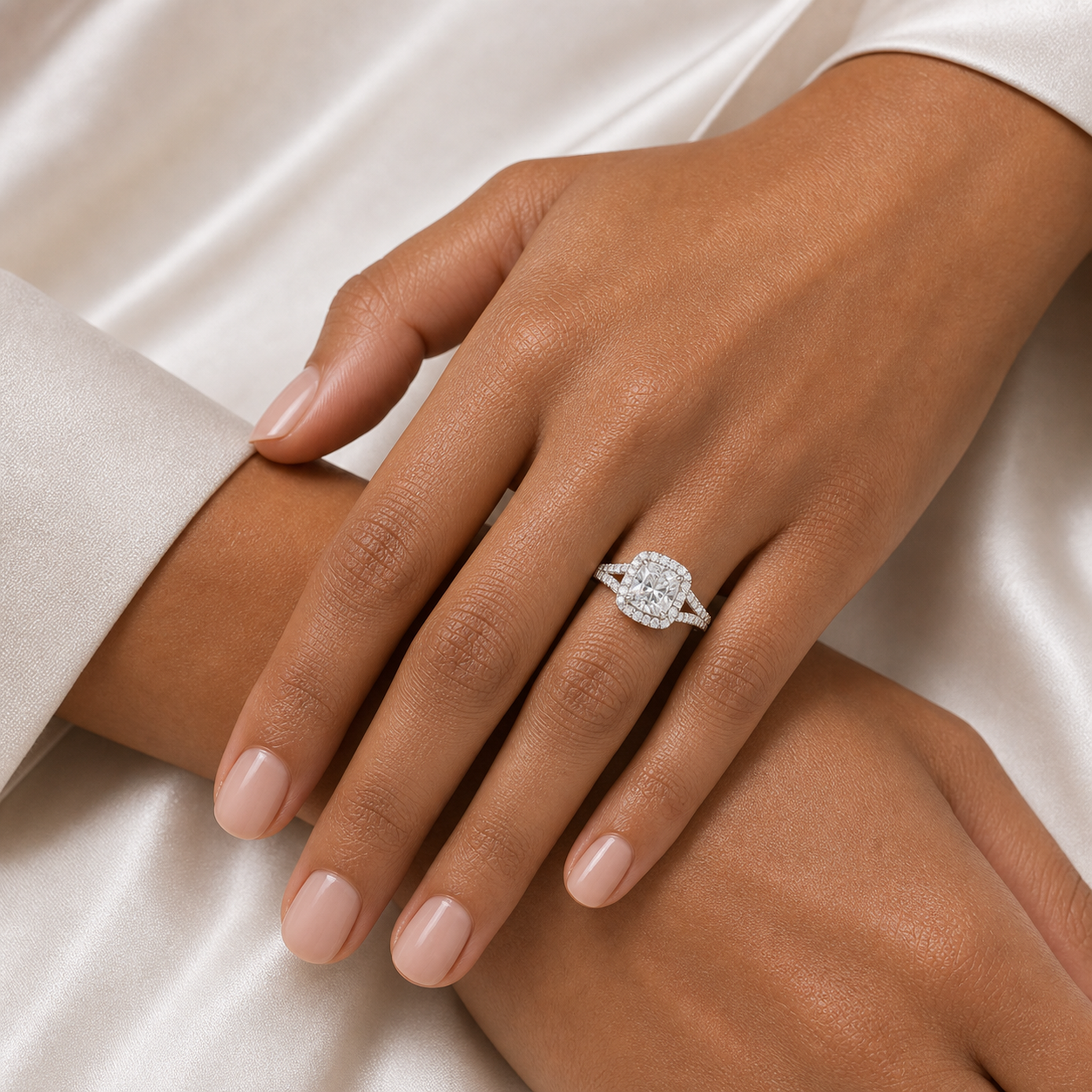
Carat weight does not fix face-up size. Review length, width, depth, outline, and weight distribution. Two cushions with equal carat can occupy different visible areas, while halo dimensions and band width alter the complete ring's scale again.
The white-metal context does not change the diamond's graded color or clarity. Prong color, accent diamonds, finish, and lighting can affect perception. Confirm the selected configuration instead of applying one universal color, clarity, ratio, or eye-clean threshold.
Clarity at Hand Scale
Wedding-band spacing depends on basket width, halo, shoulders, side stones, center height, and contact points. A matching white metal does not guarantee flush fit, identical finish, universal comfort, or the same care requirement.
Burvonti pairs responsibly sourced, independently graded lab-grown diamonds with settings calibrated through proportion and human judgment. Custom possibilities may refine outline, facet character, center specifications, prongs, basket, band, accents, metal, or engraving where feasible. The result should stay quiet in color and exact in construction.
Frequently Asked Questions
What does this page add beyond the Cushion parent?
It focuses on 14K White Gold's quiet tonal frame around a cushion while the parent owns broad outline, ratio, facet-pattern, and light education.
How much gold is in 14K White Gold?
Approximately 58.3%. Other alloying metals influence color and working behavior.
Is every 14K white gold ring rhodium plated?
That should not be assumed. Confirm the finish for the selected Burvonti product.
Does White Gold make a cushion brighter?
No. It changes the surrounding color field, not the center's facet relationships.
Does White Gold hide body color?
It may change surrounding contrast, but it does not change the independently graded color or guarantee a colorless appearance.
Which settings appear here?
The current assortment includes six Solitaire, five Halo, and two Three Stone designs.
Is Cushion Modified Brilliant a quality grade?
No. It describes facet arrangement; visual results still require review of the individual diamond.
Does White Gold improve a crushed-ice pattern?
No. The setting cannot make one facet texture inherently better or change its light behavior.
Do white prongs disappear?
They may recede tonally, but their number, size, position, and construction remain visible and important.
Is White Gold hypoallergenic?
No universal outcome should be promised. Confirm the product-specific alloy if sensitivity is a concern.
Will the finish stay unchanged?
Surface appearance evolves with wear. Alloy, finish, care, and use determine appropriate maintenance.
Can a straight wedding band sit flush?
It depends on basket, halo, side stones, shoulders, height, and contact points.
Can Burvonti adjust a White Gold Cushion design?
Custom possibilities may include center, outline, prongs, basket, accents, band line, metal, or engraving, subject to feasibility.