
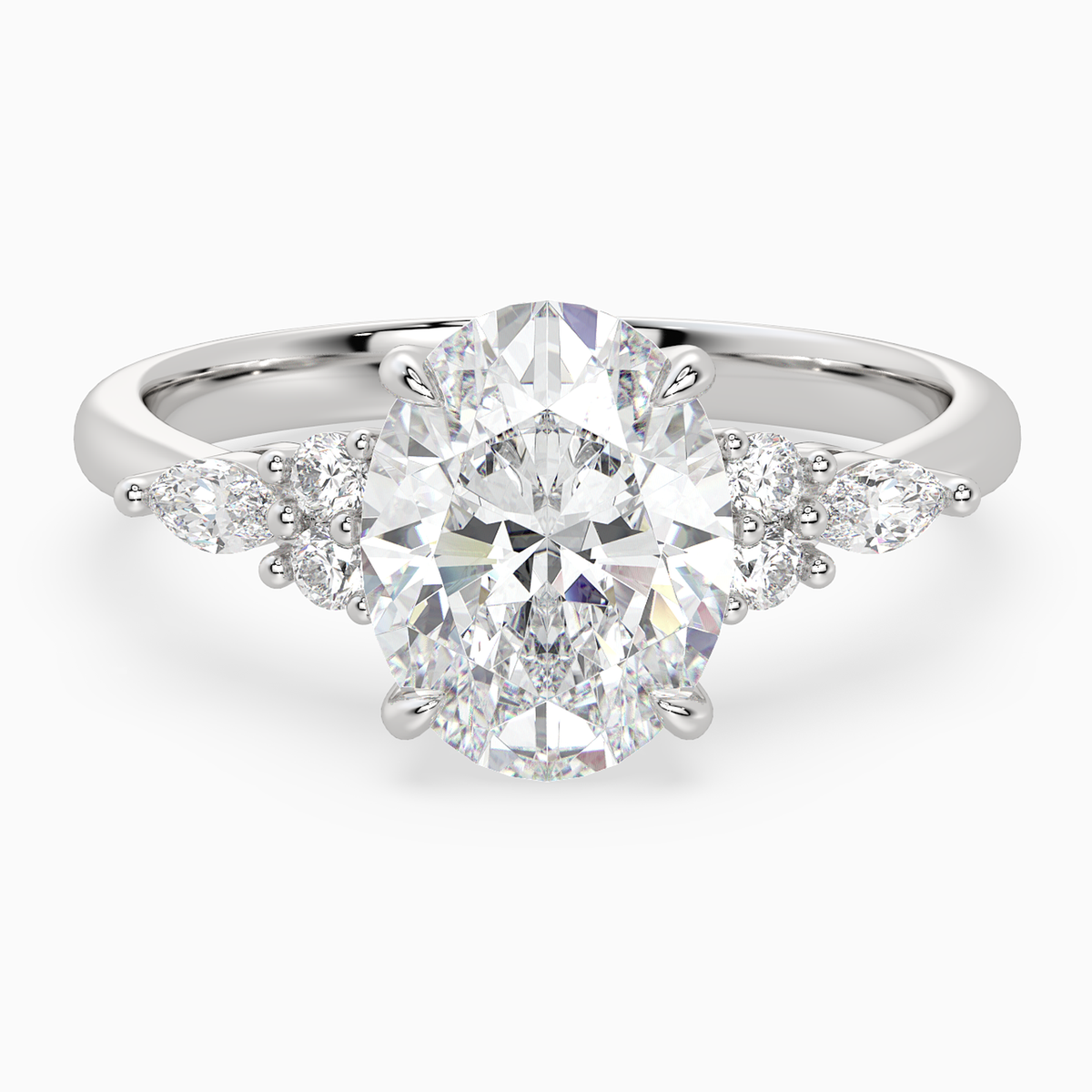


Cushion Diamond Engagement Rings in 18K White Gold
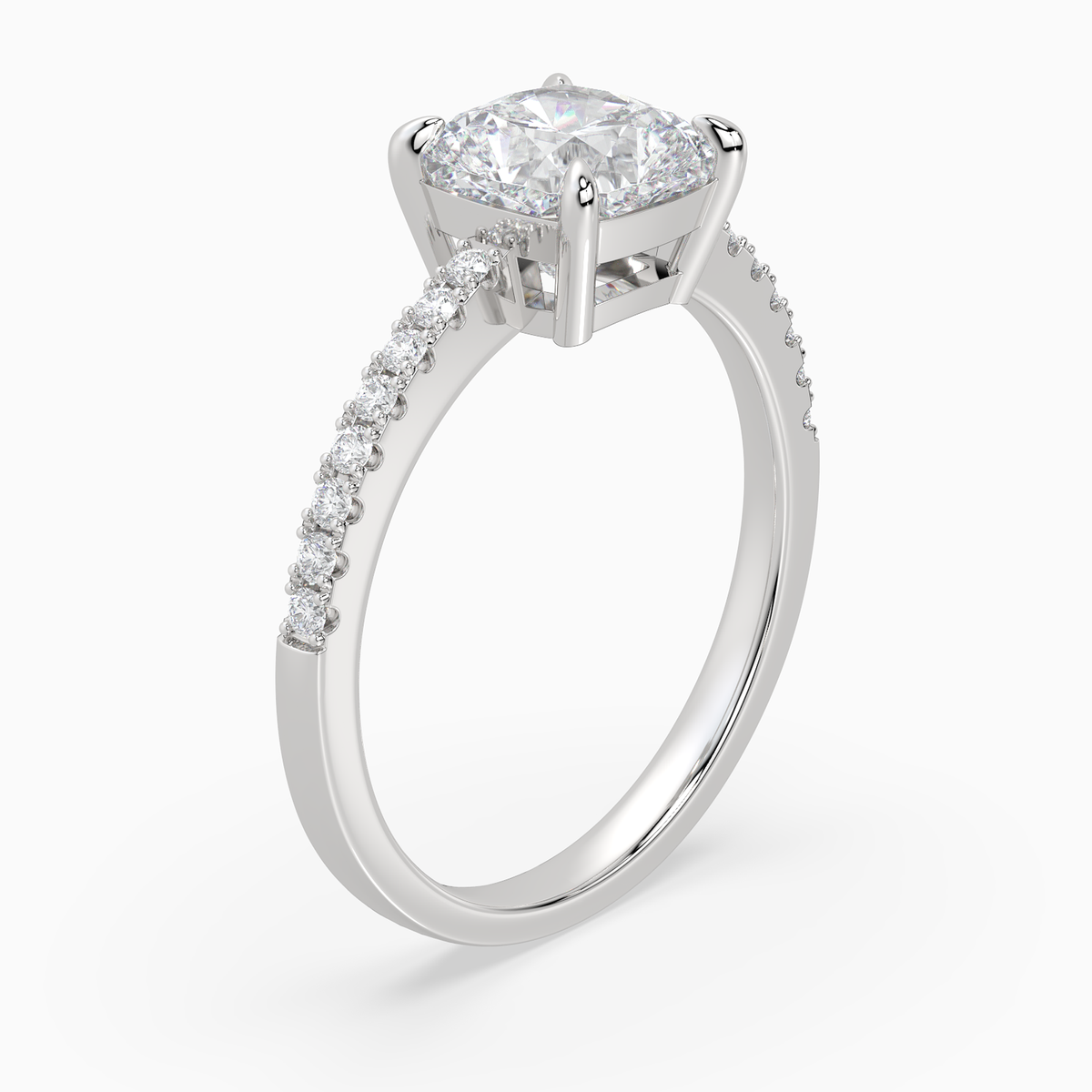
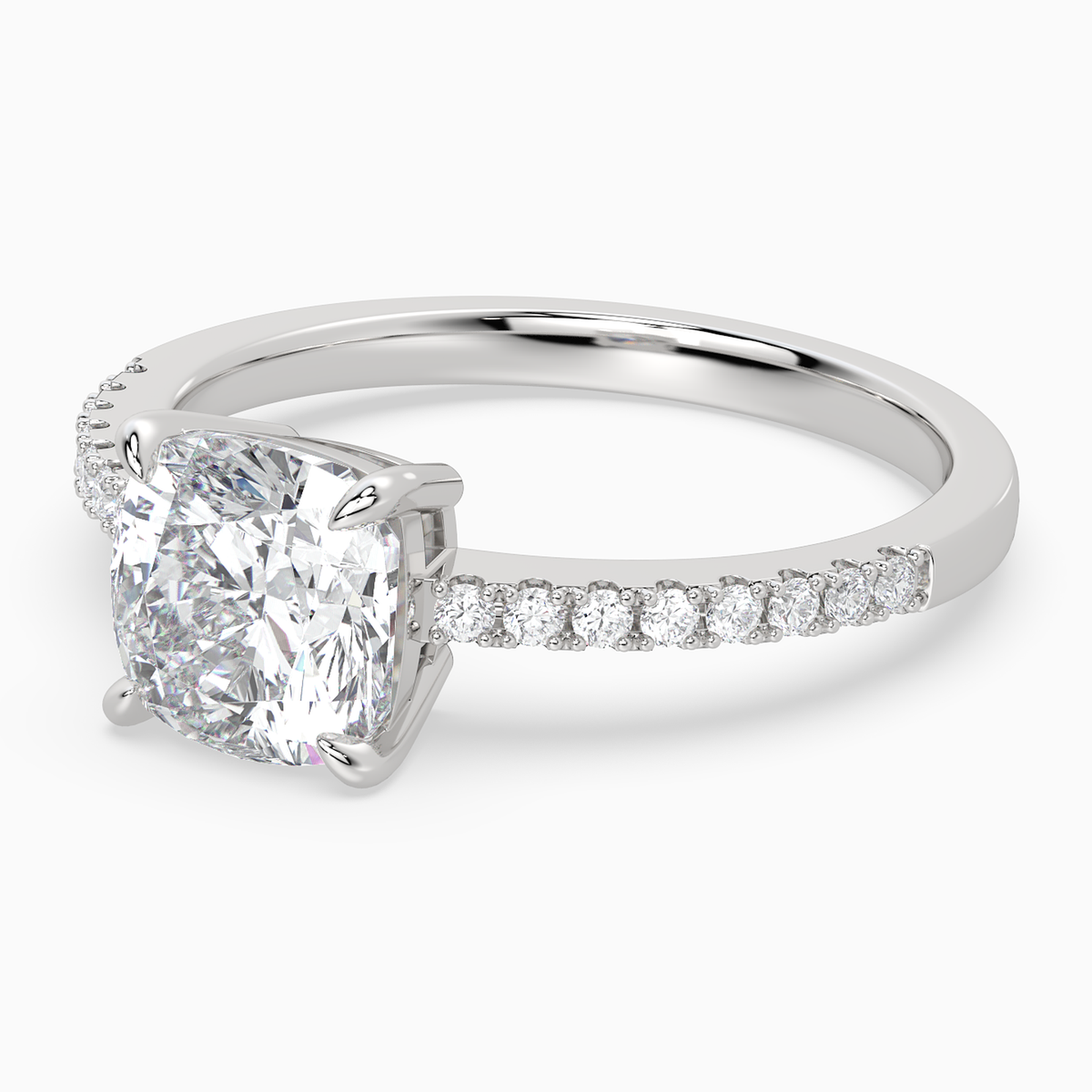
Quiet in color, considered in substance. 18K white gold supports the cushion’s soft geometry without overtaking its own pattern of light.


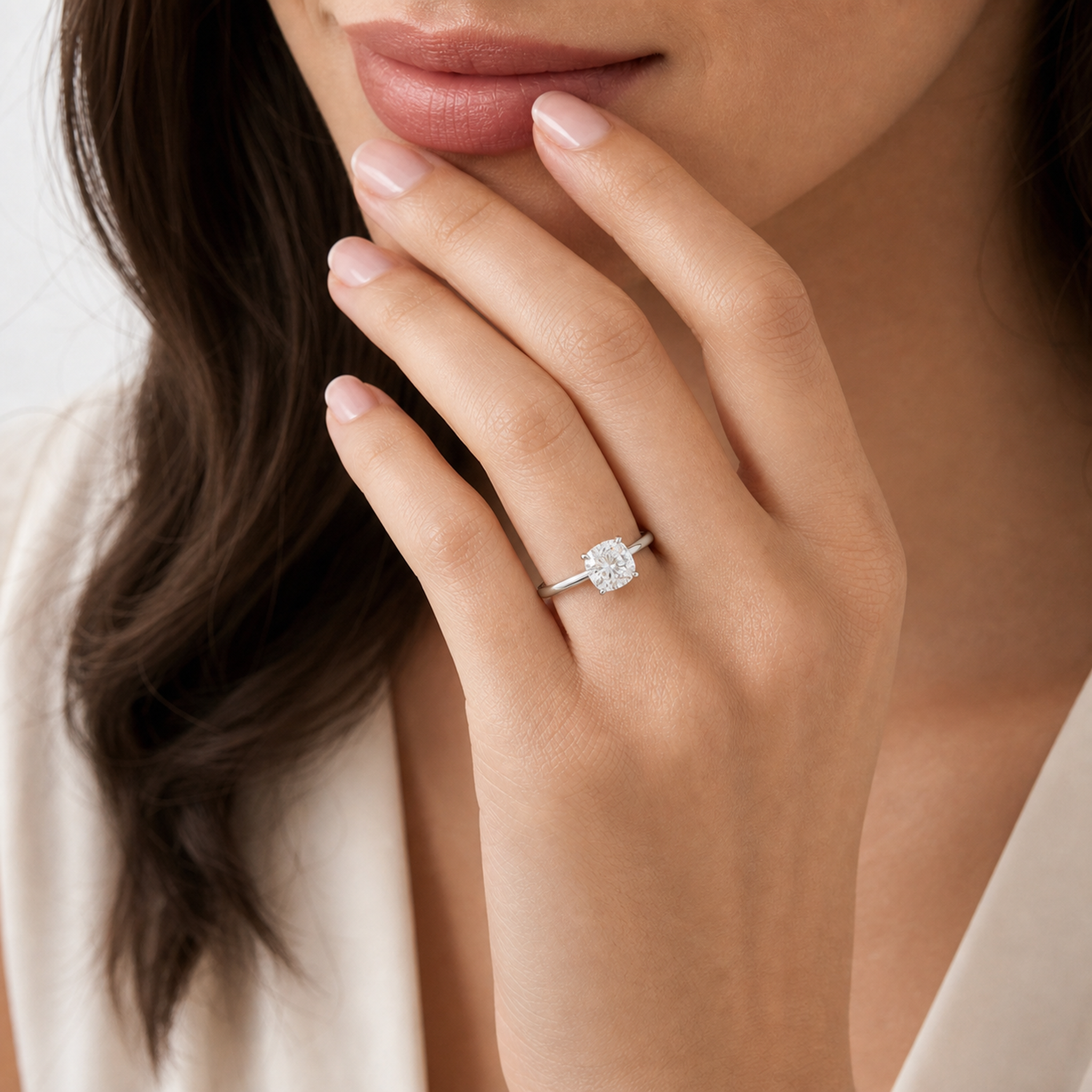


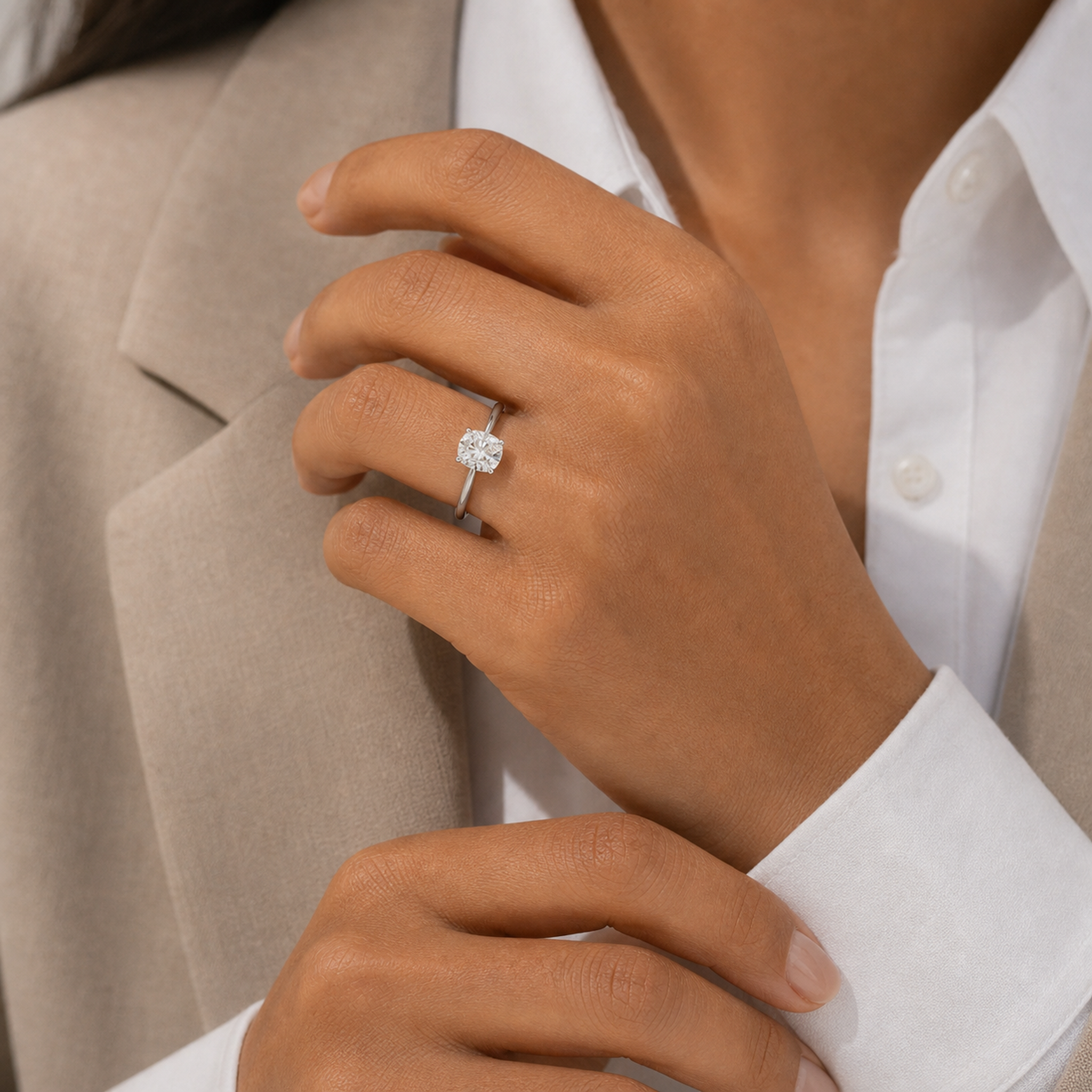
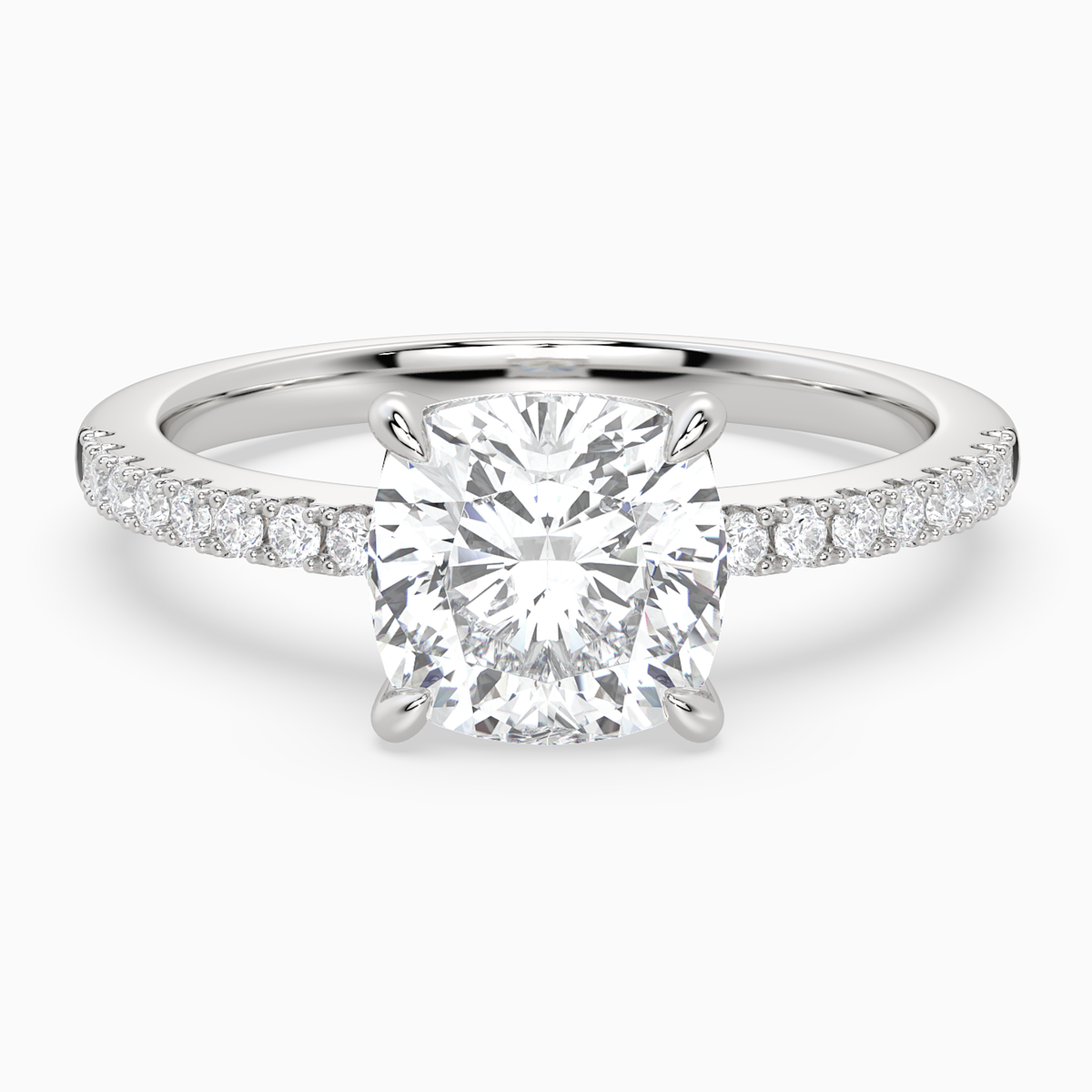


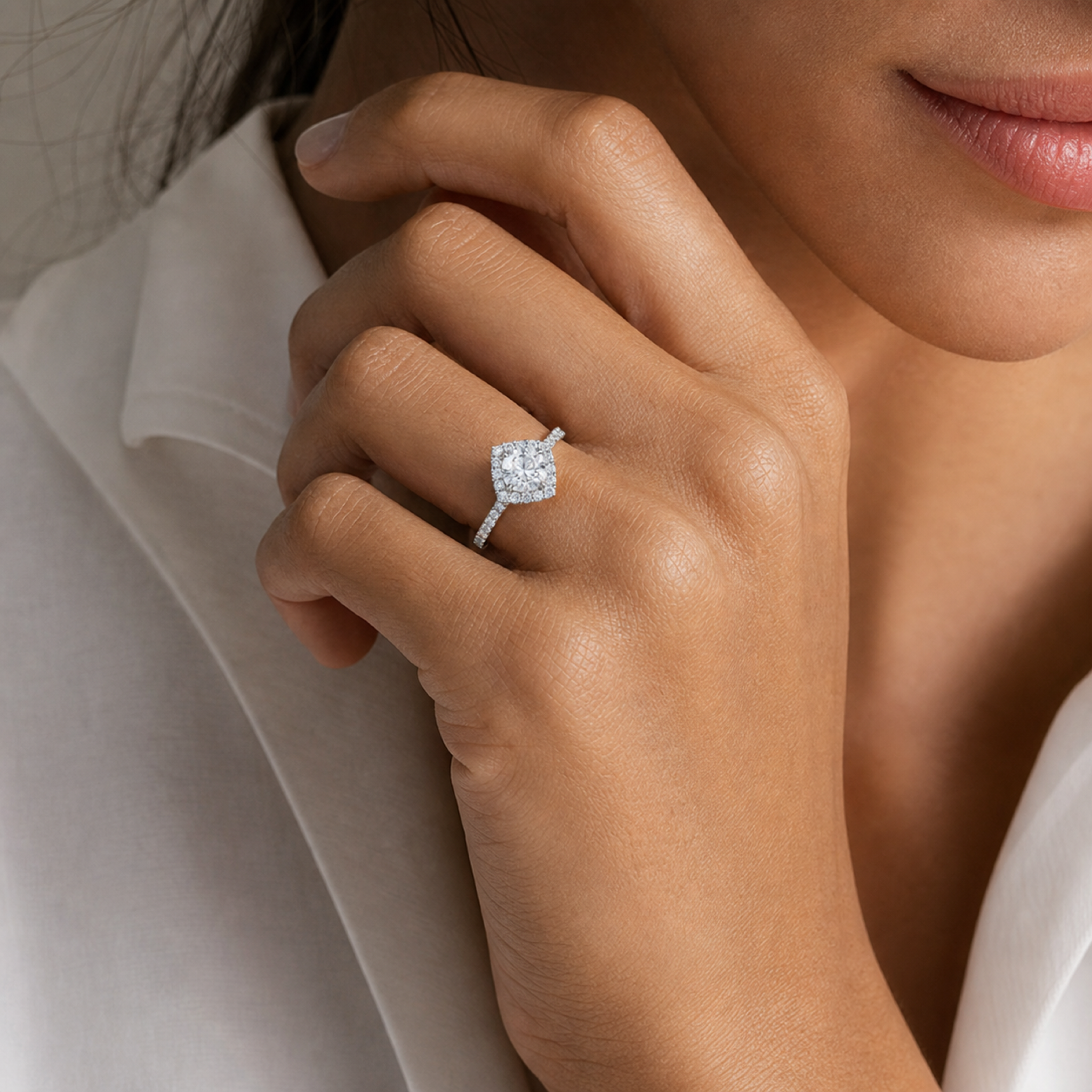


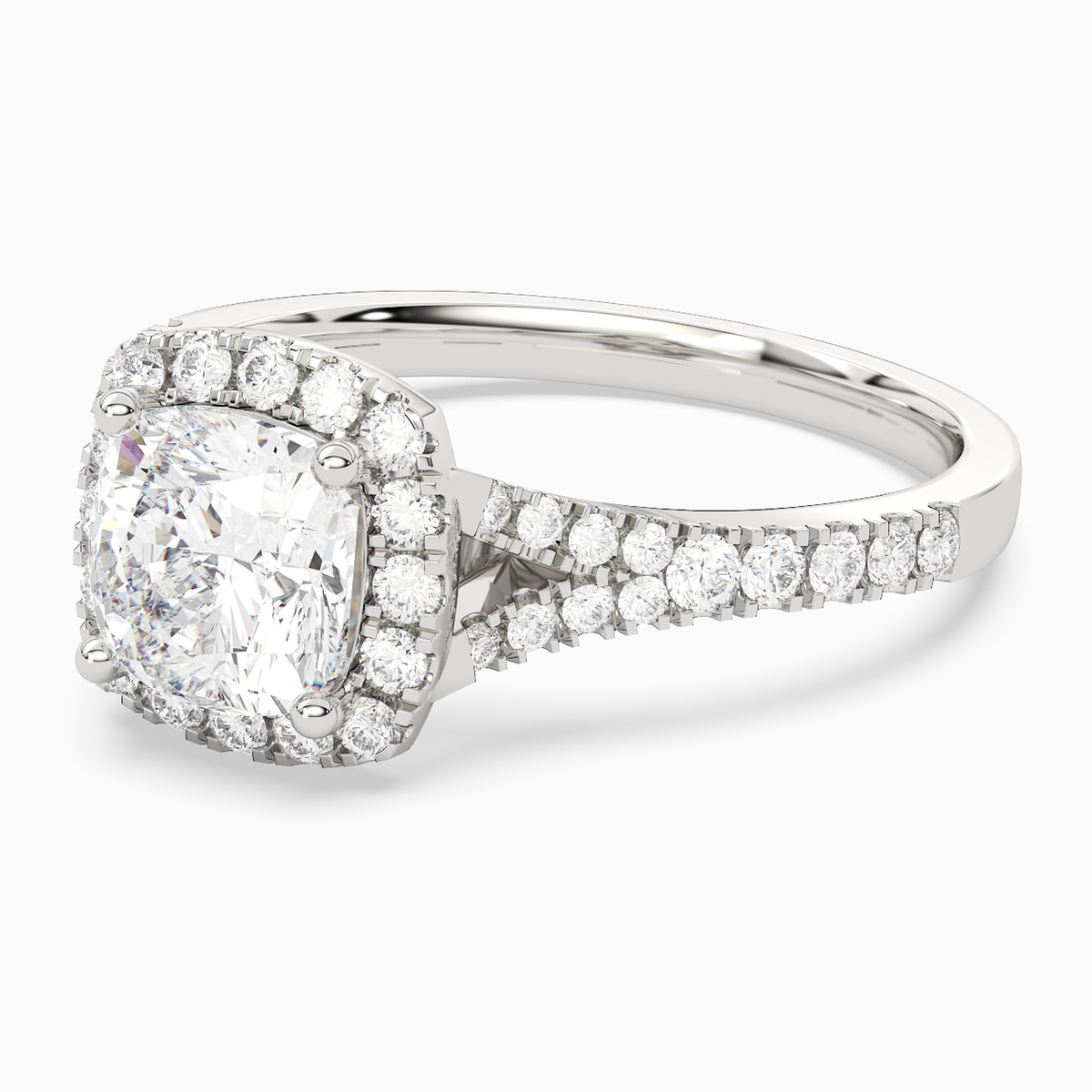
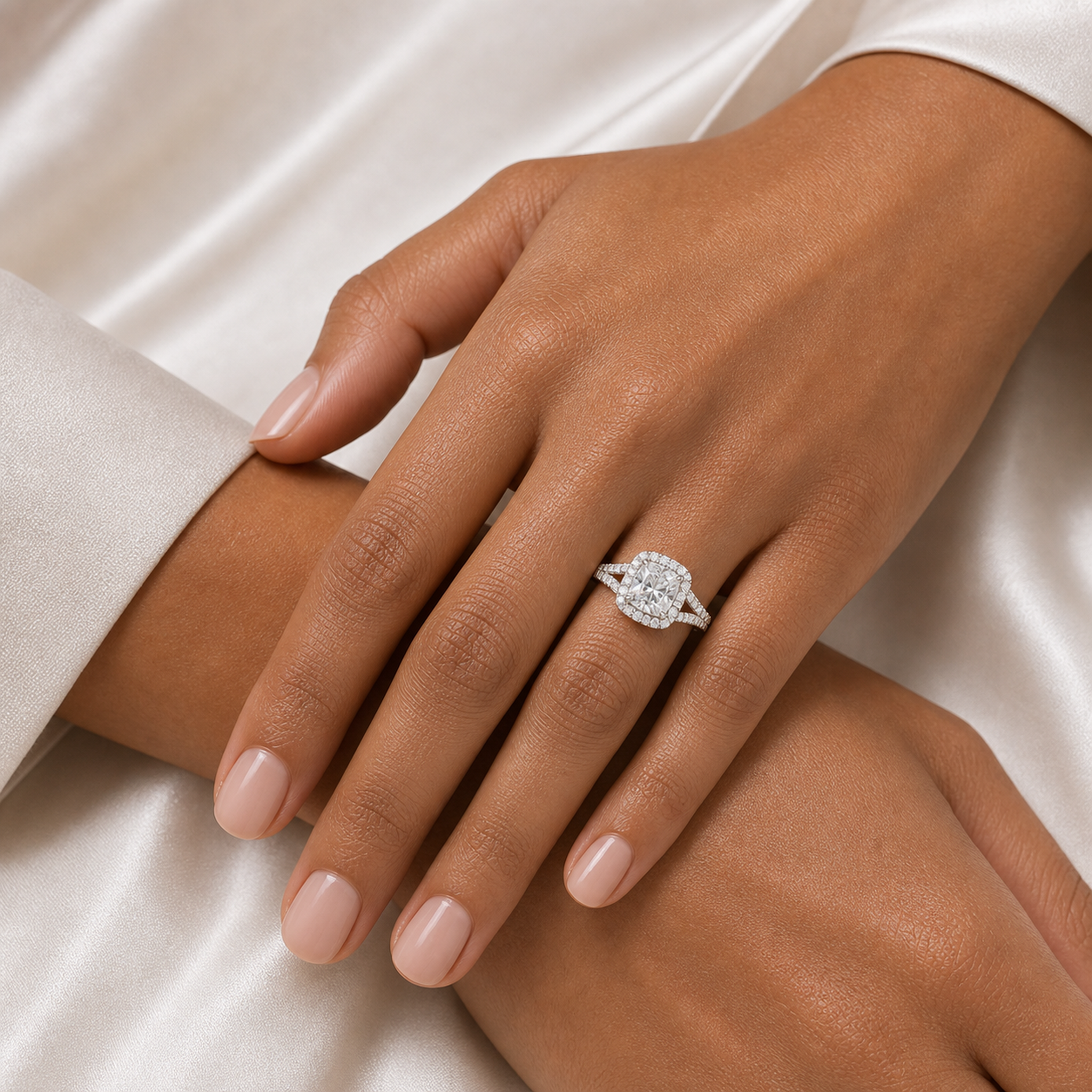
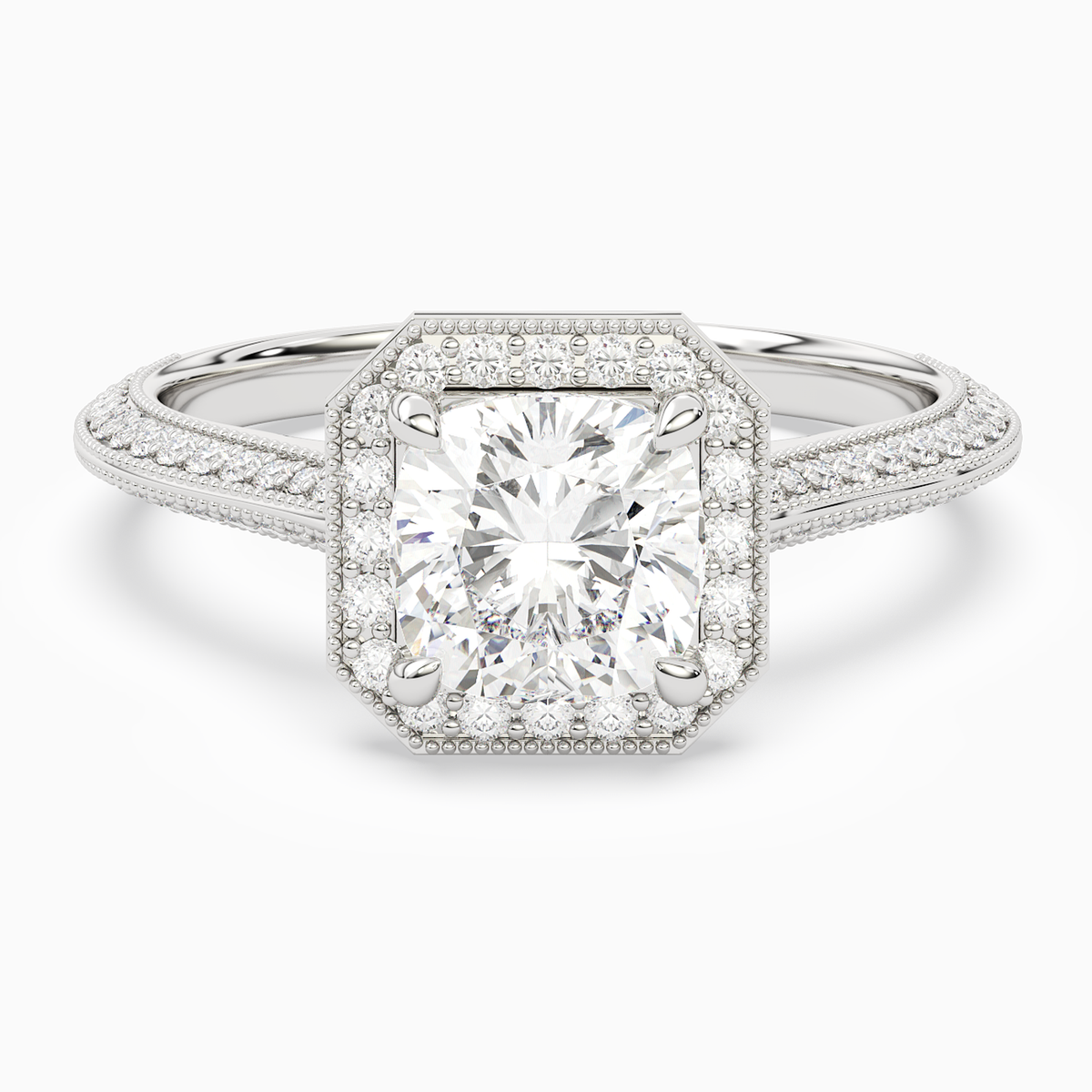
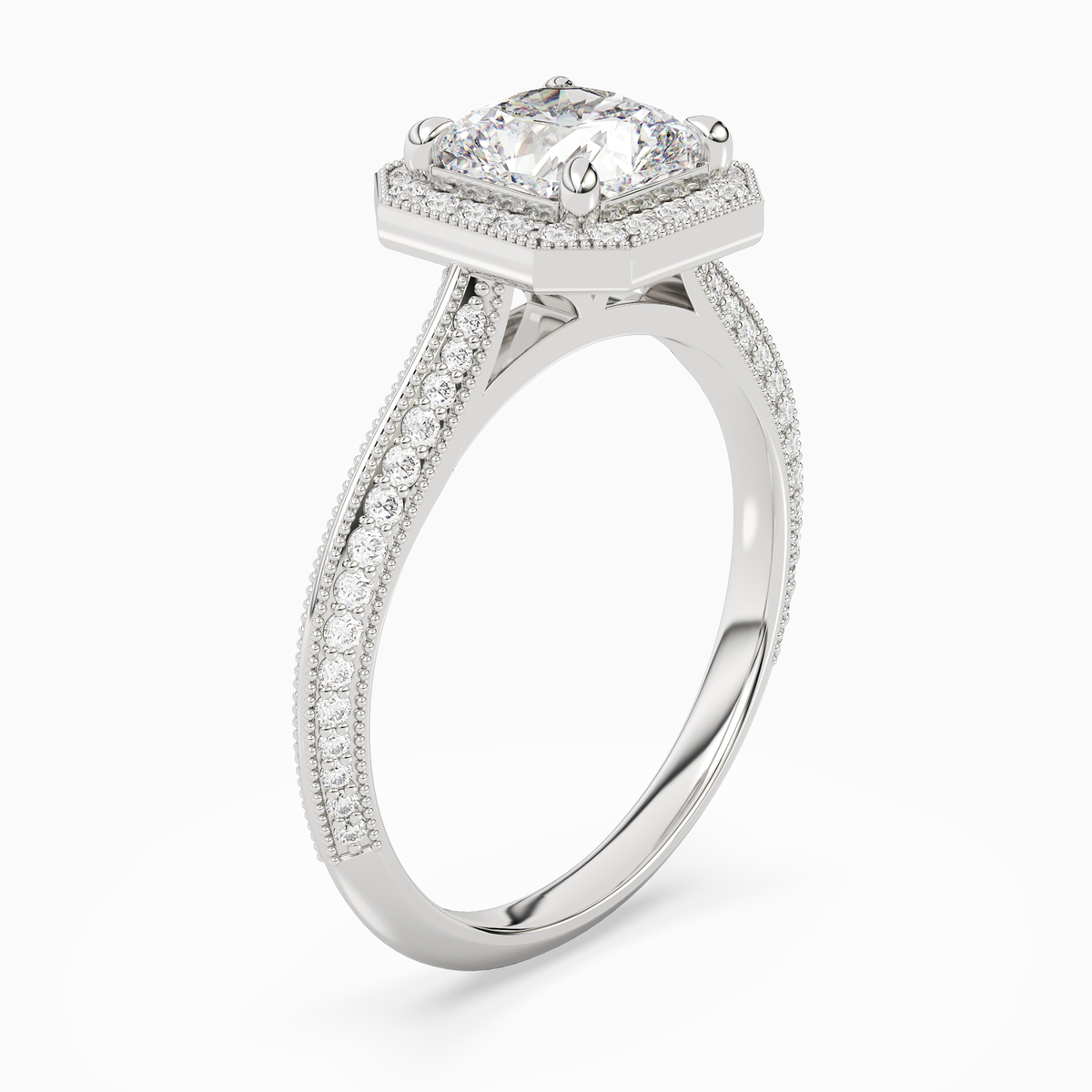

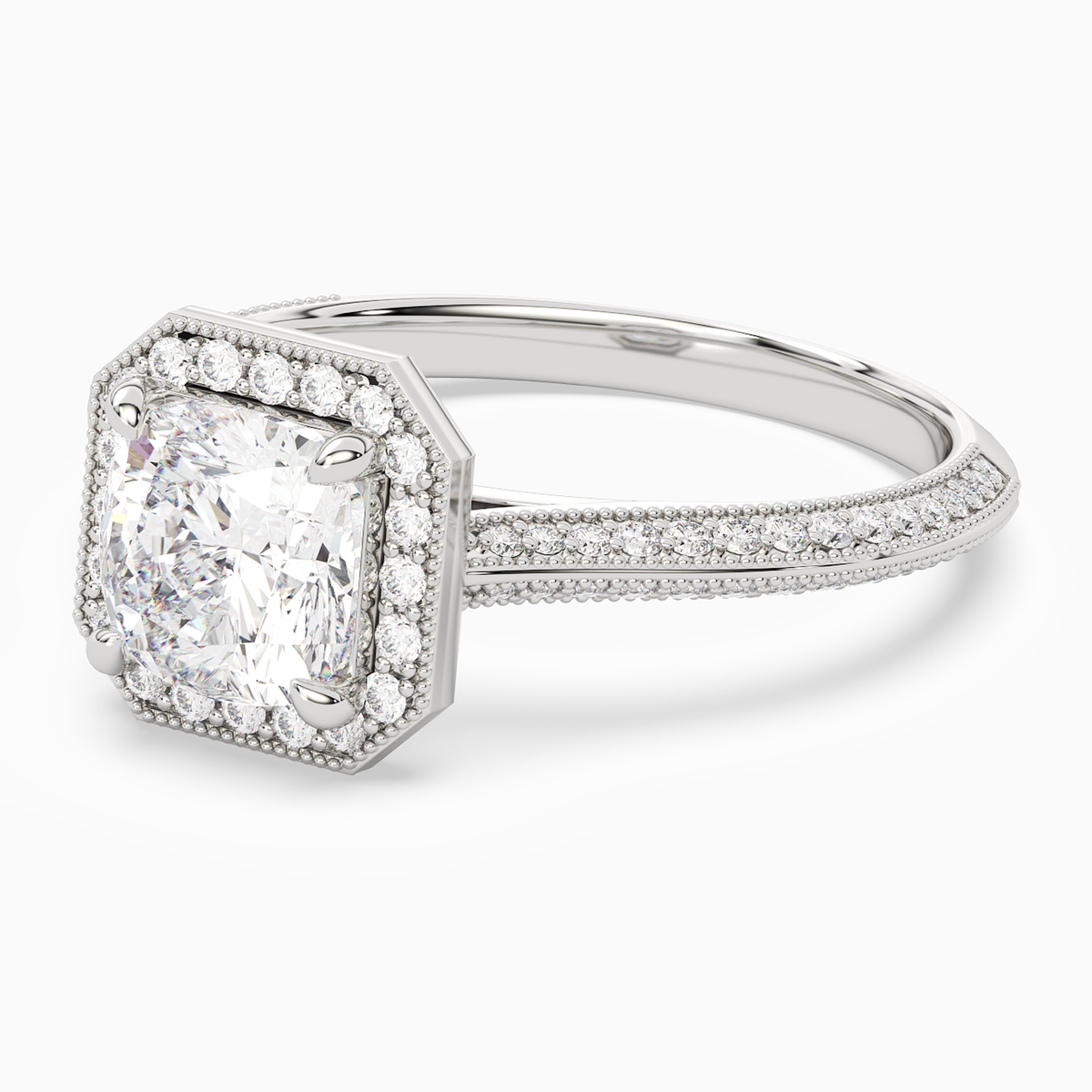
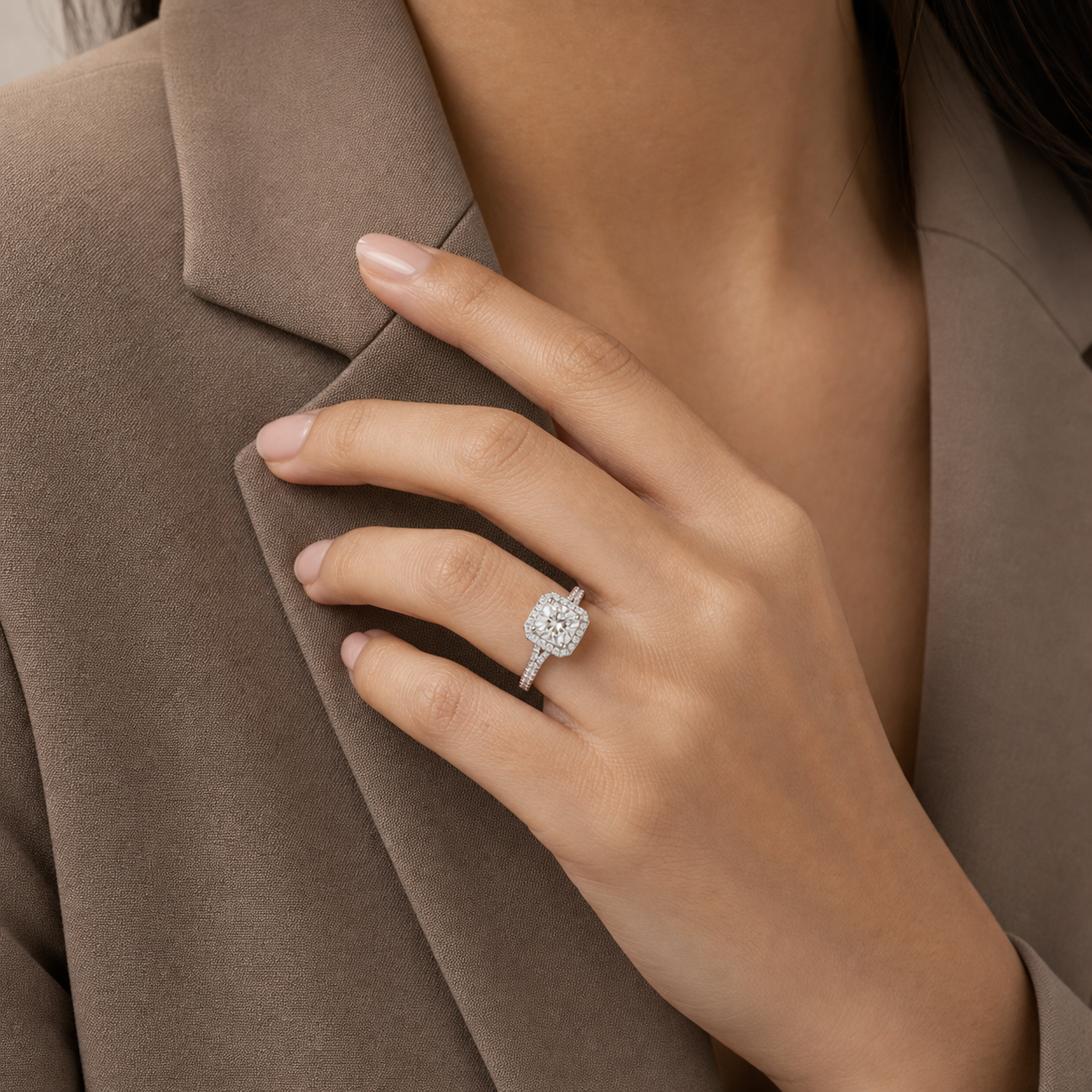
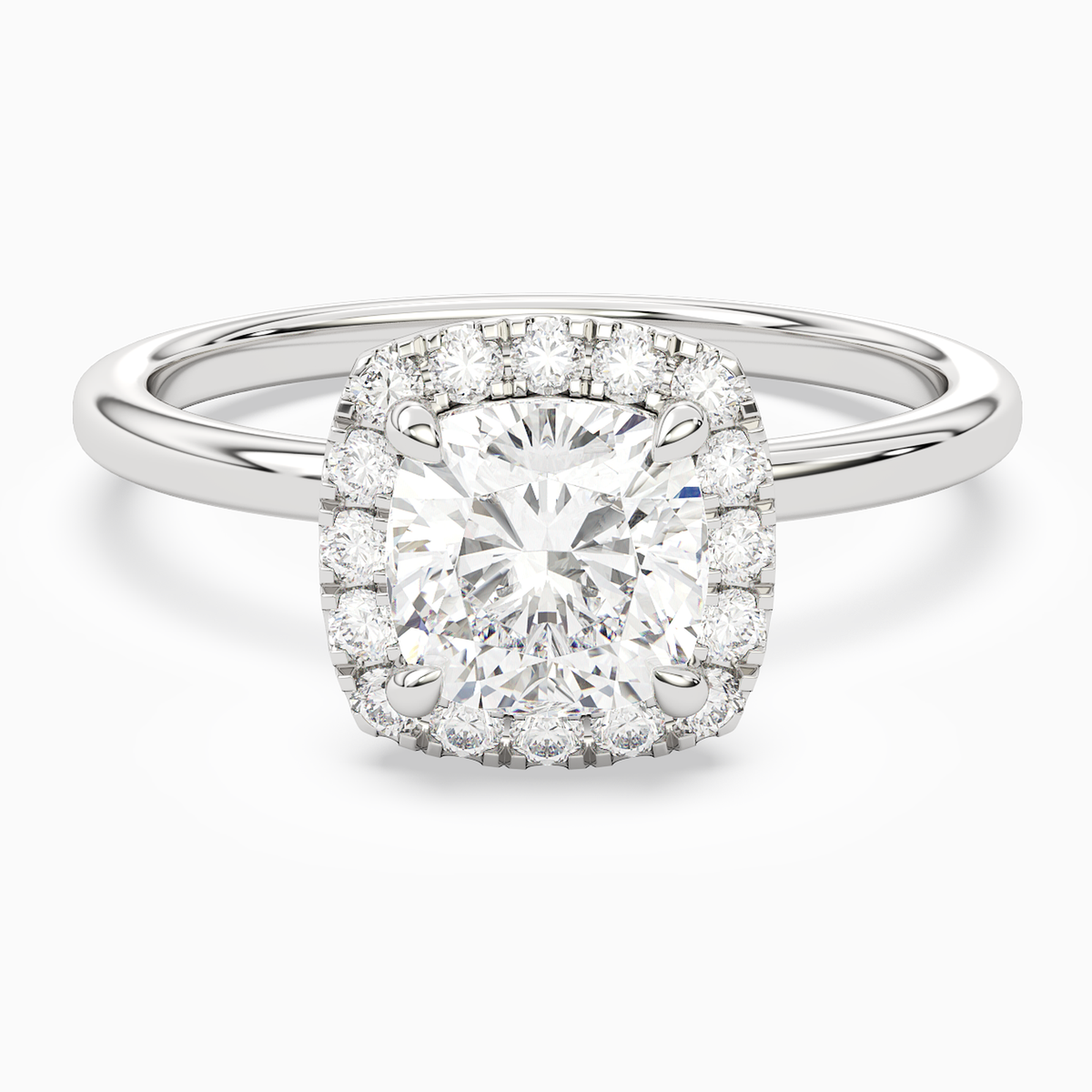
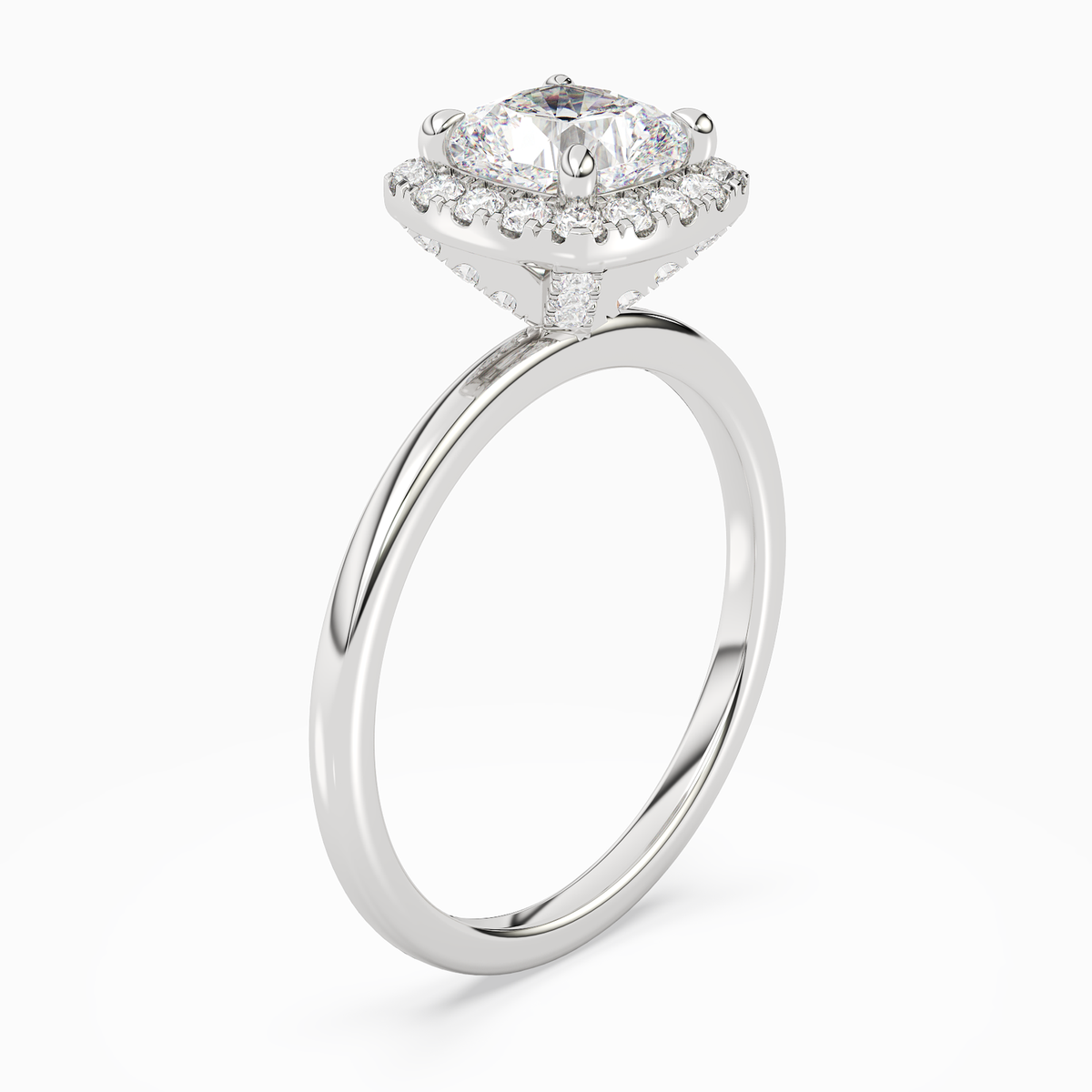
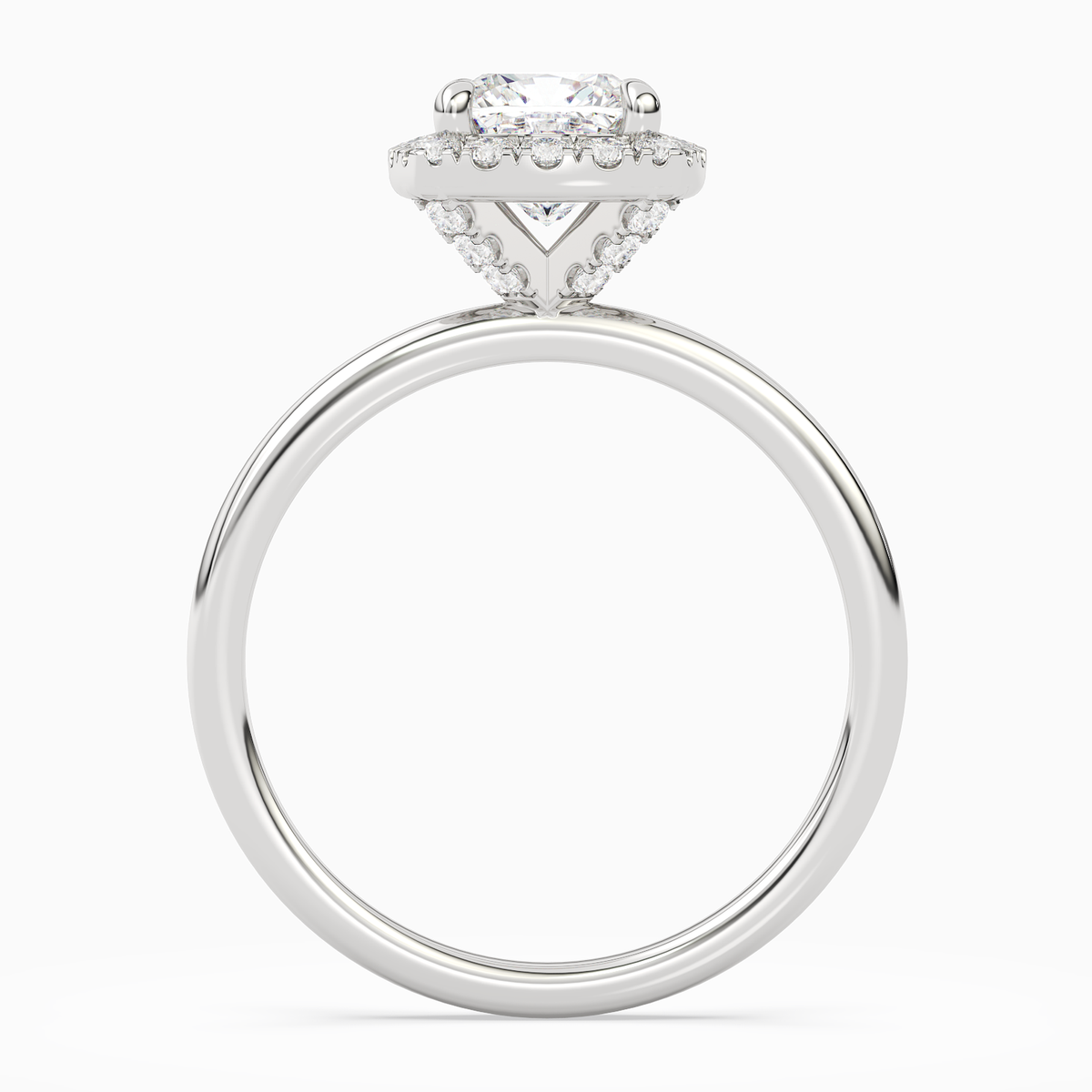
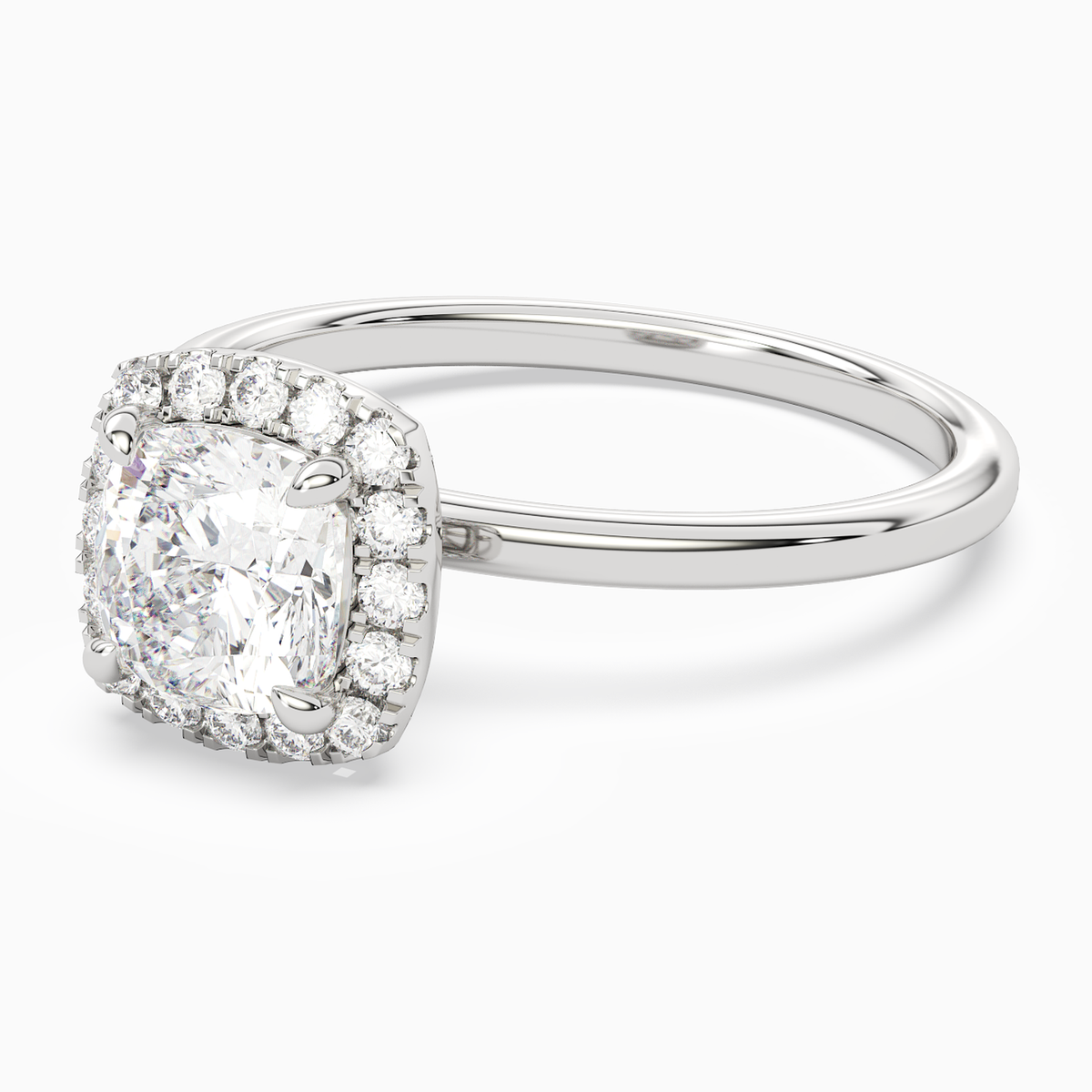


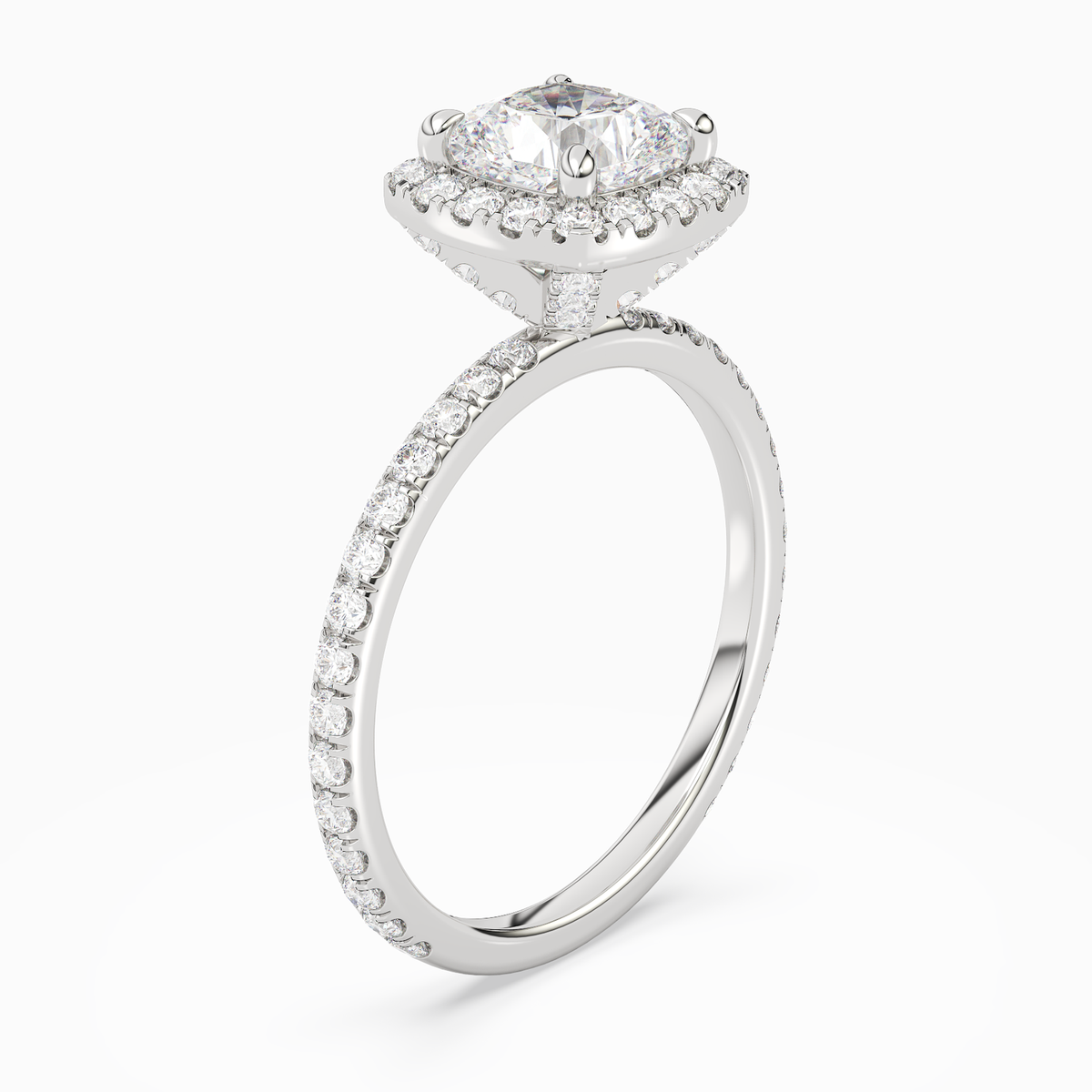
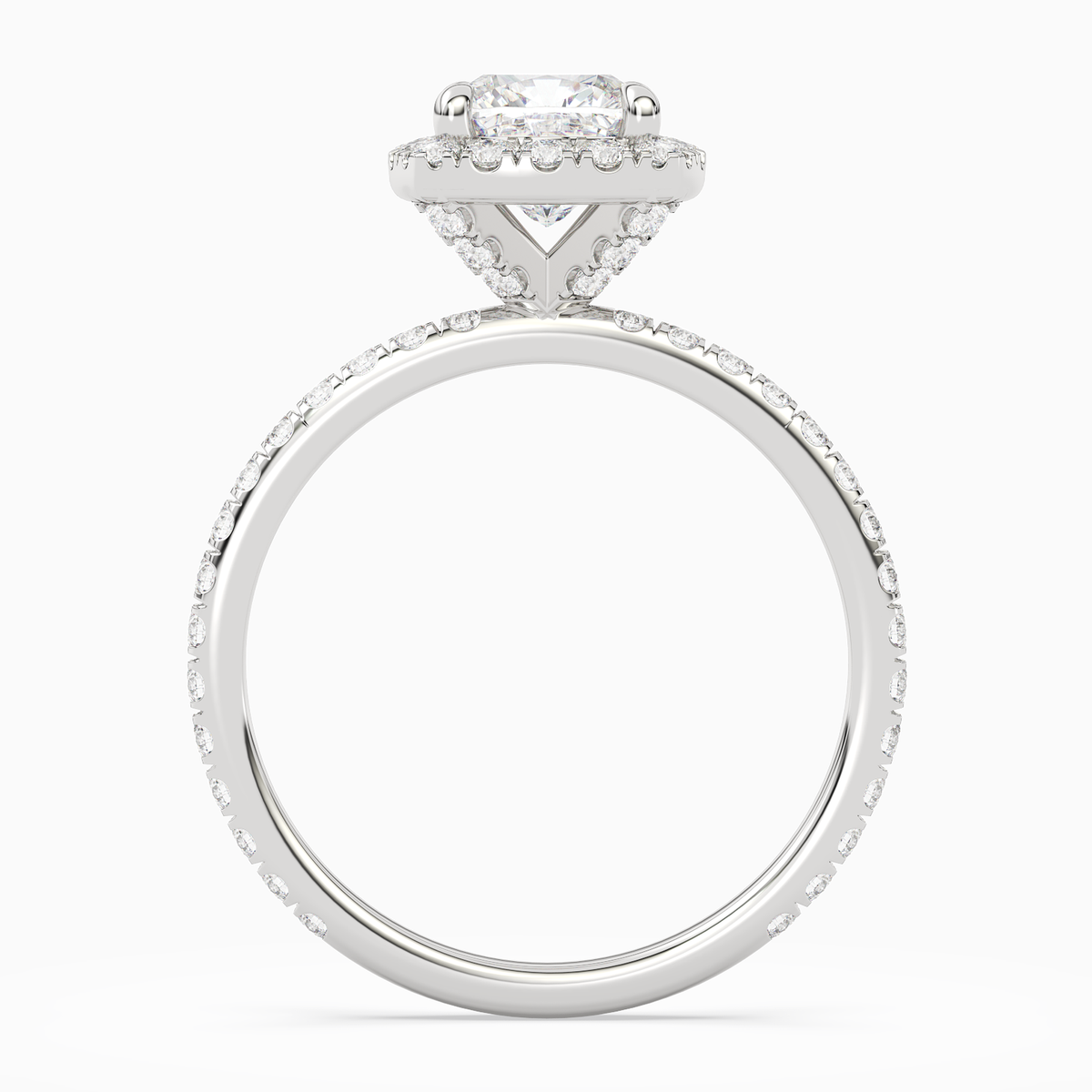

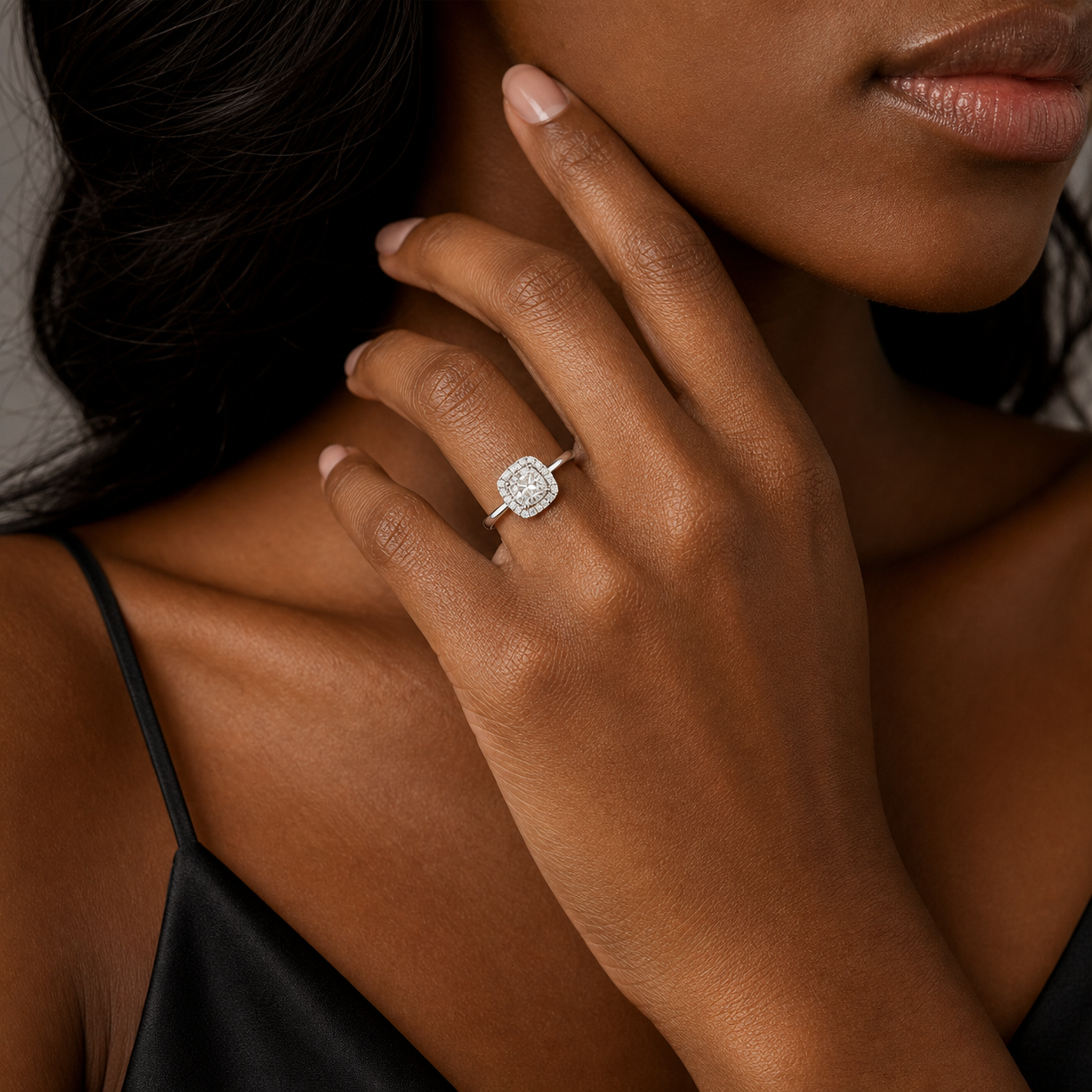
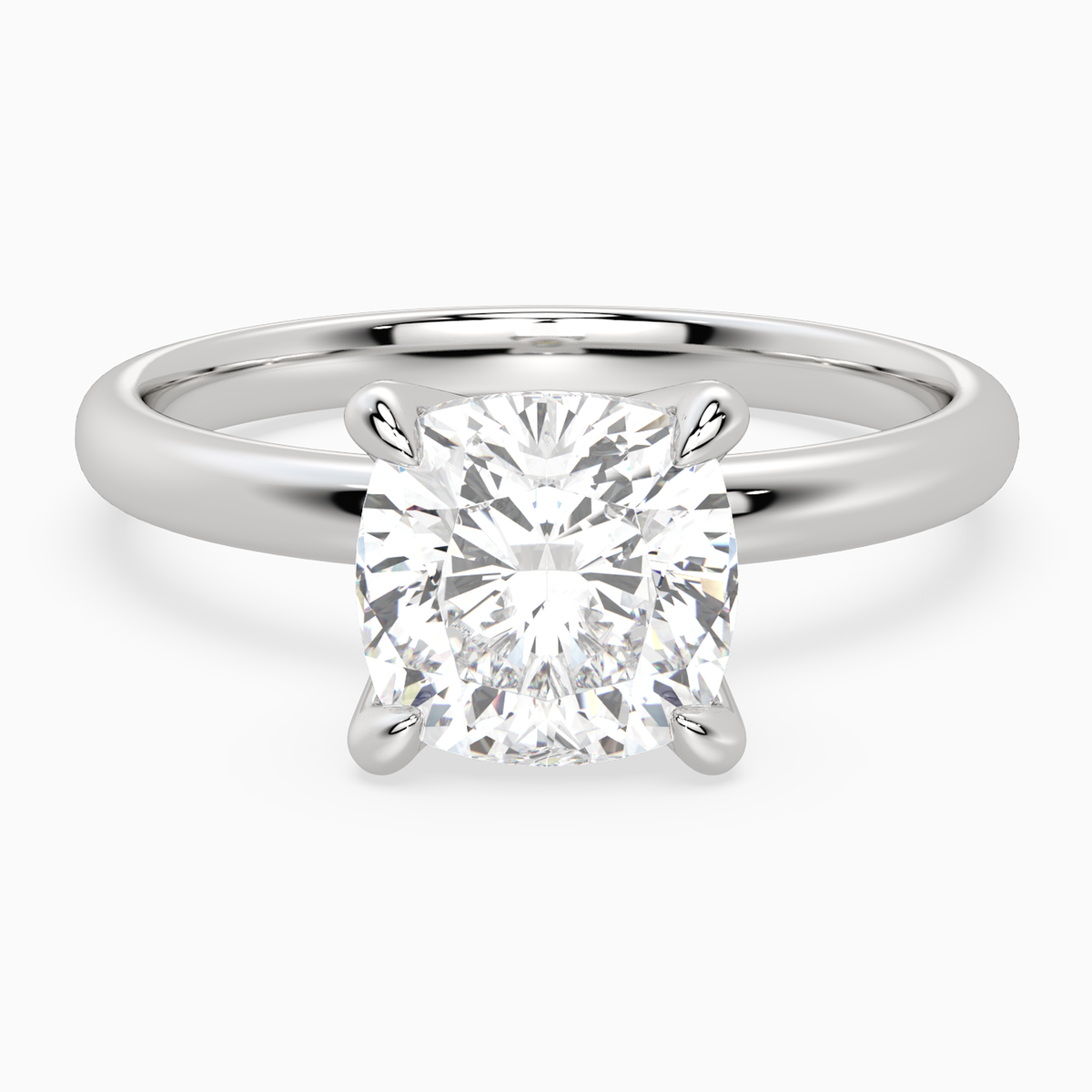
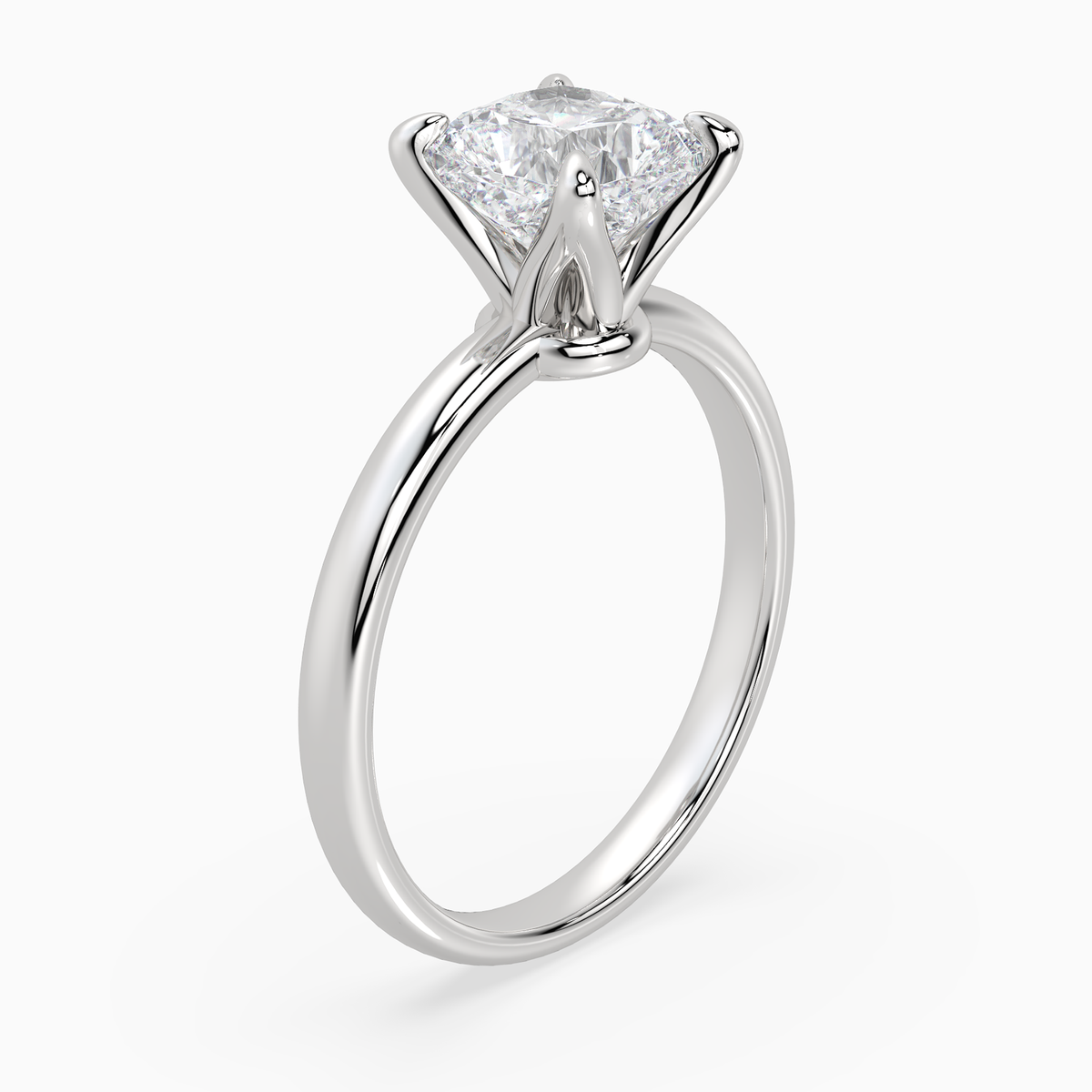
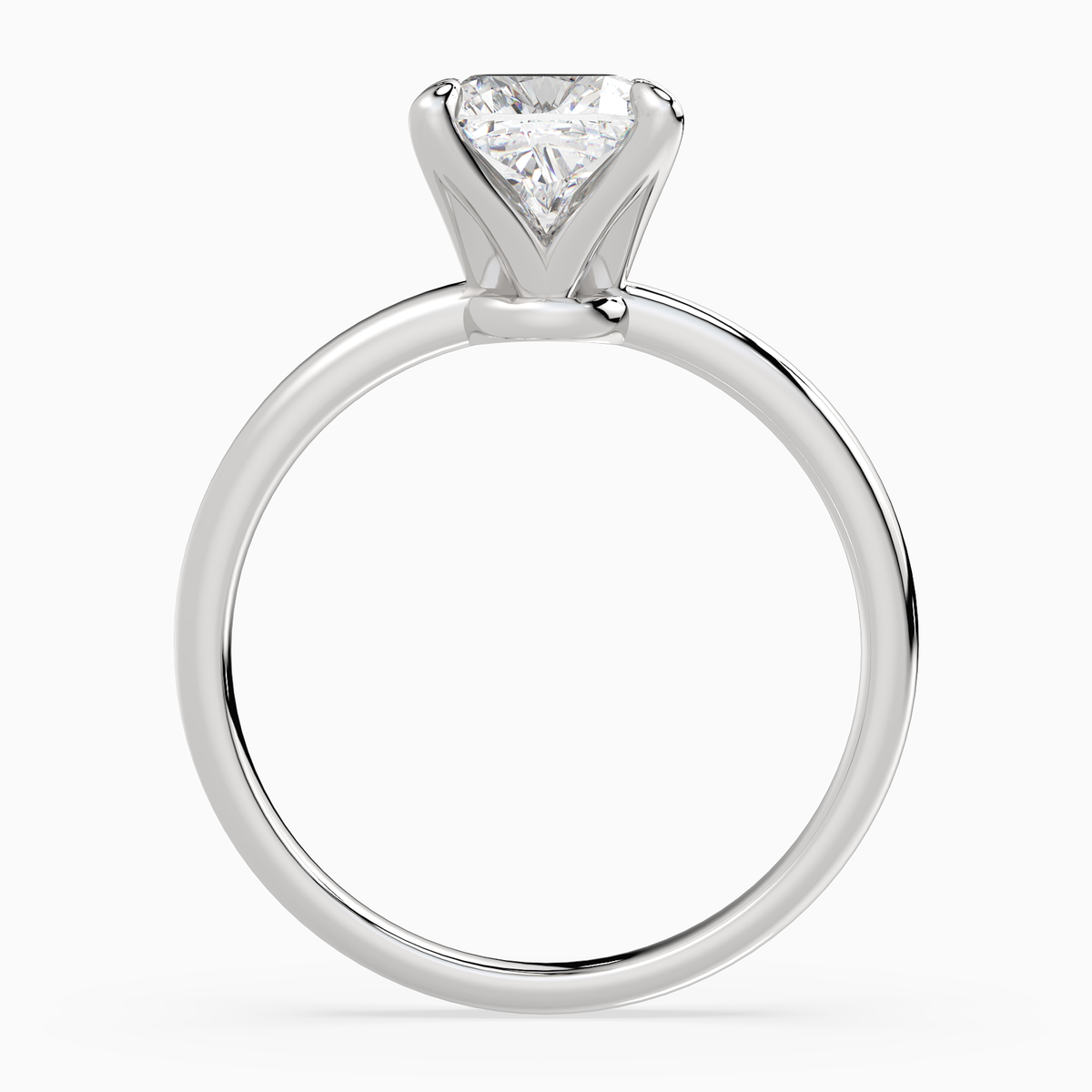
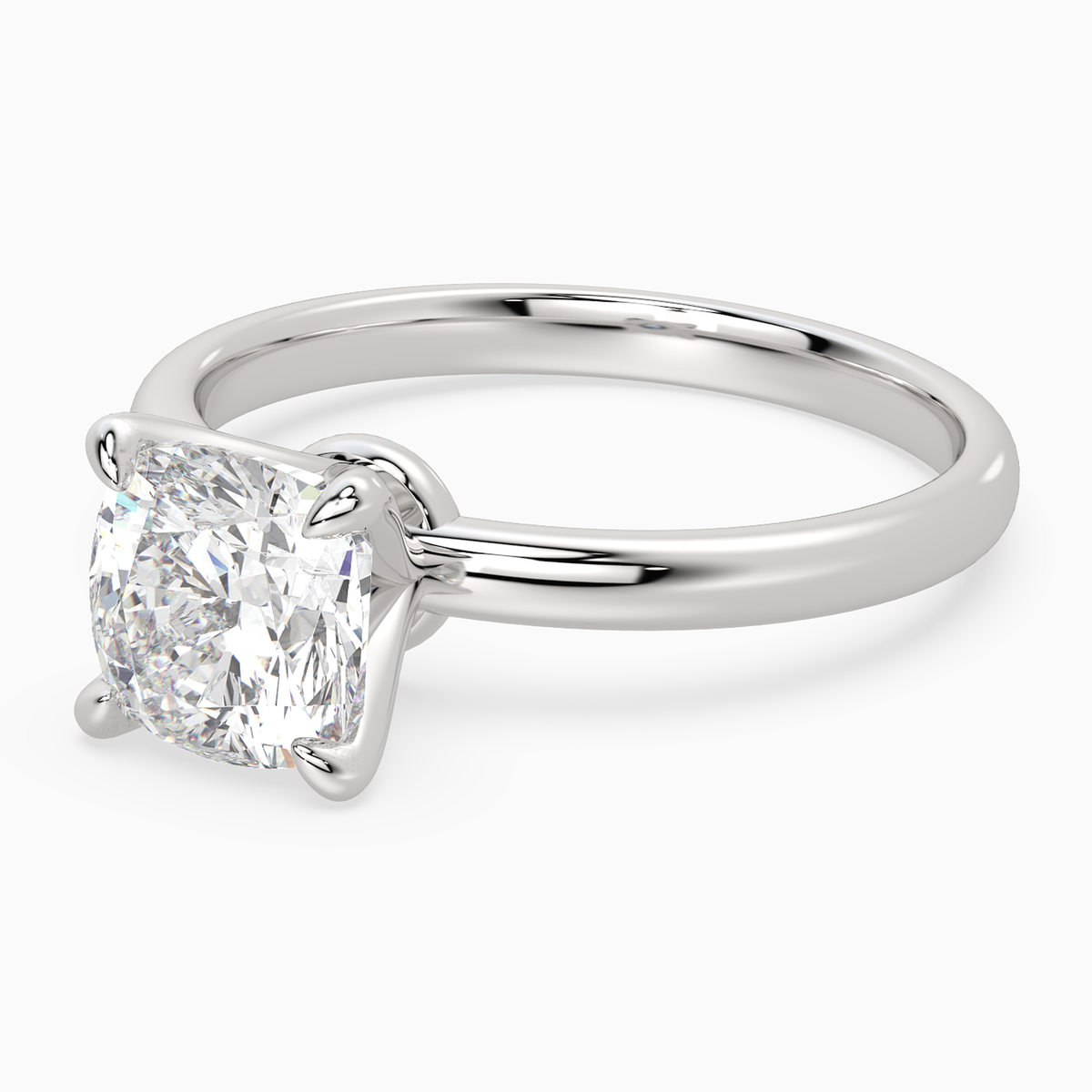
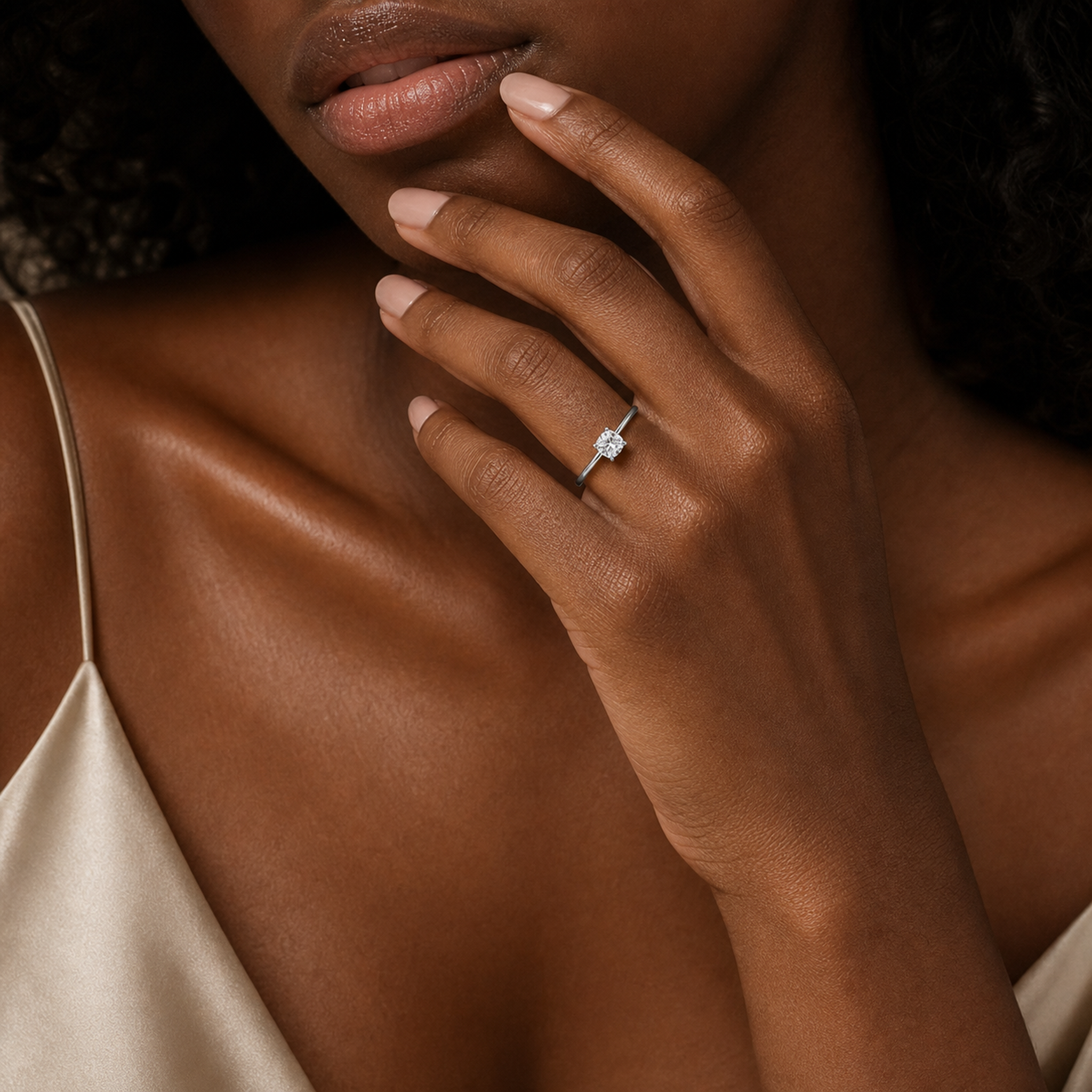
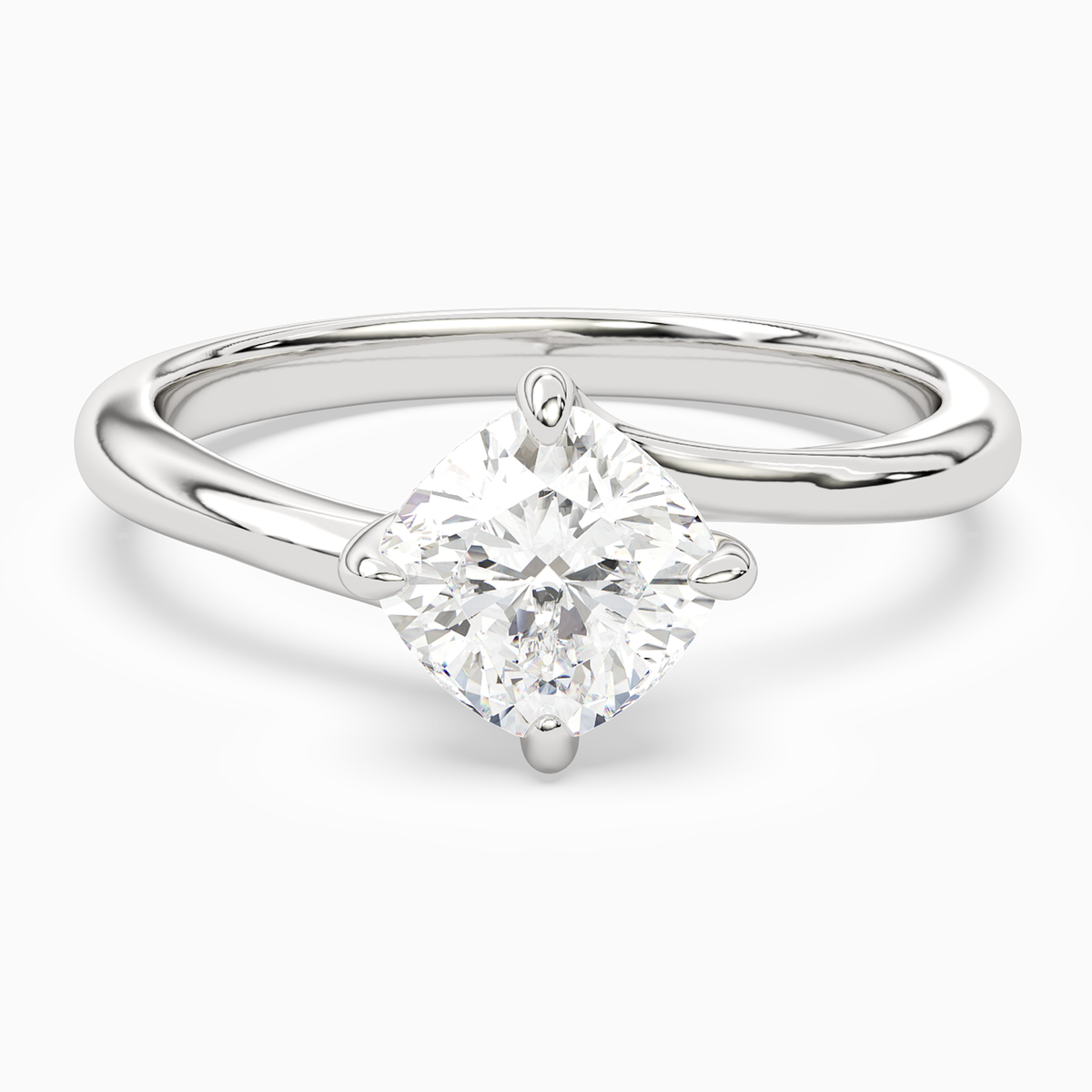
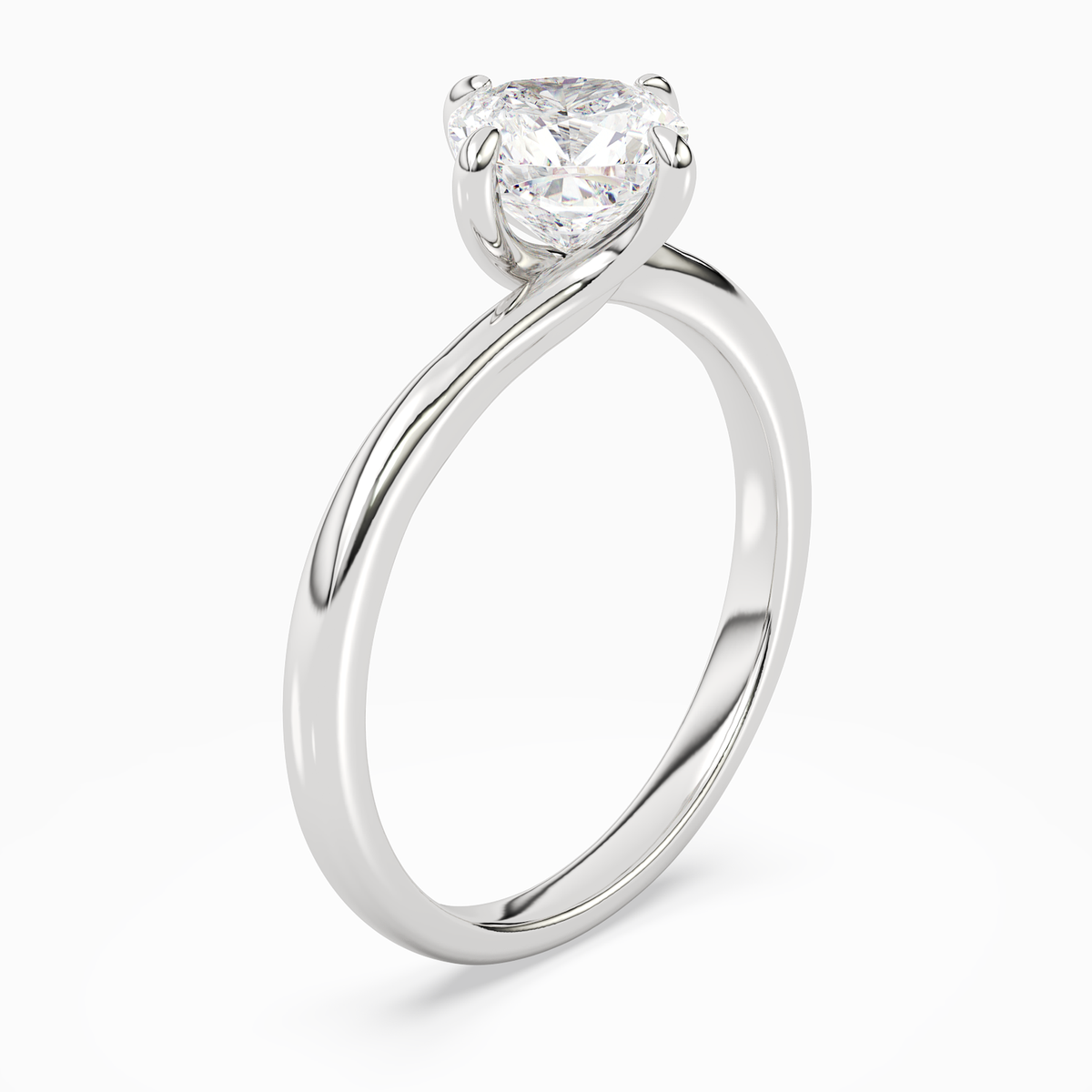
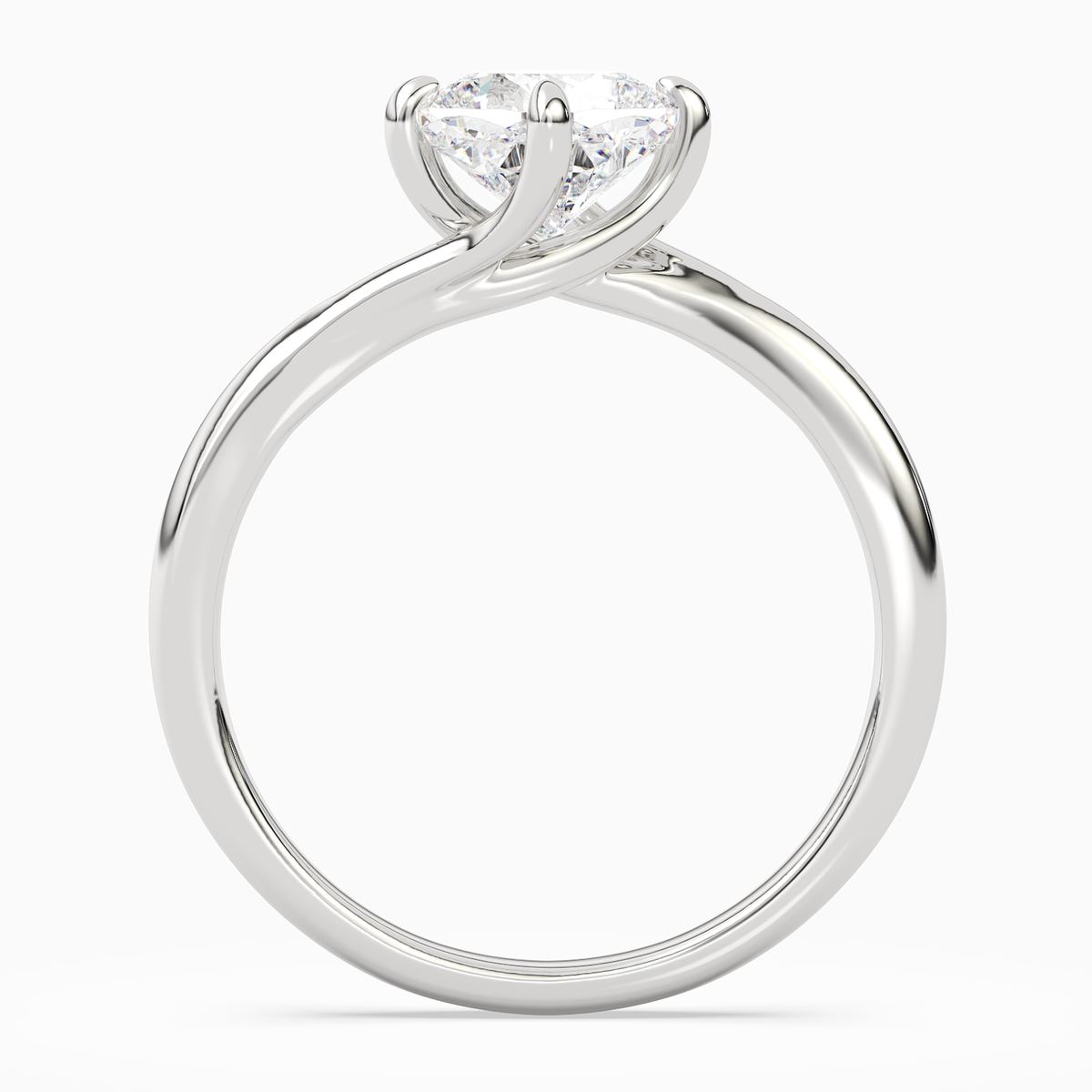
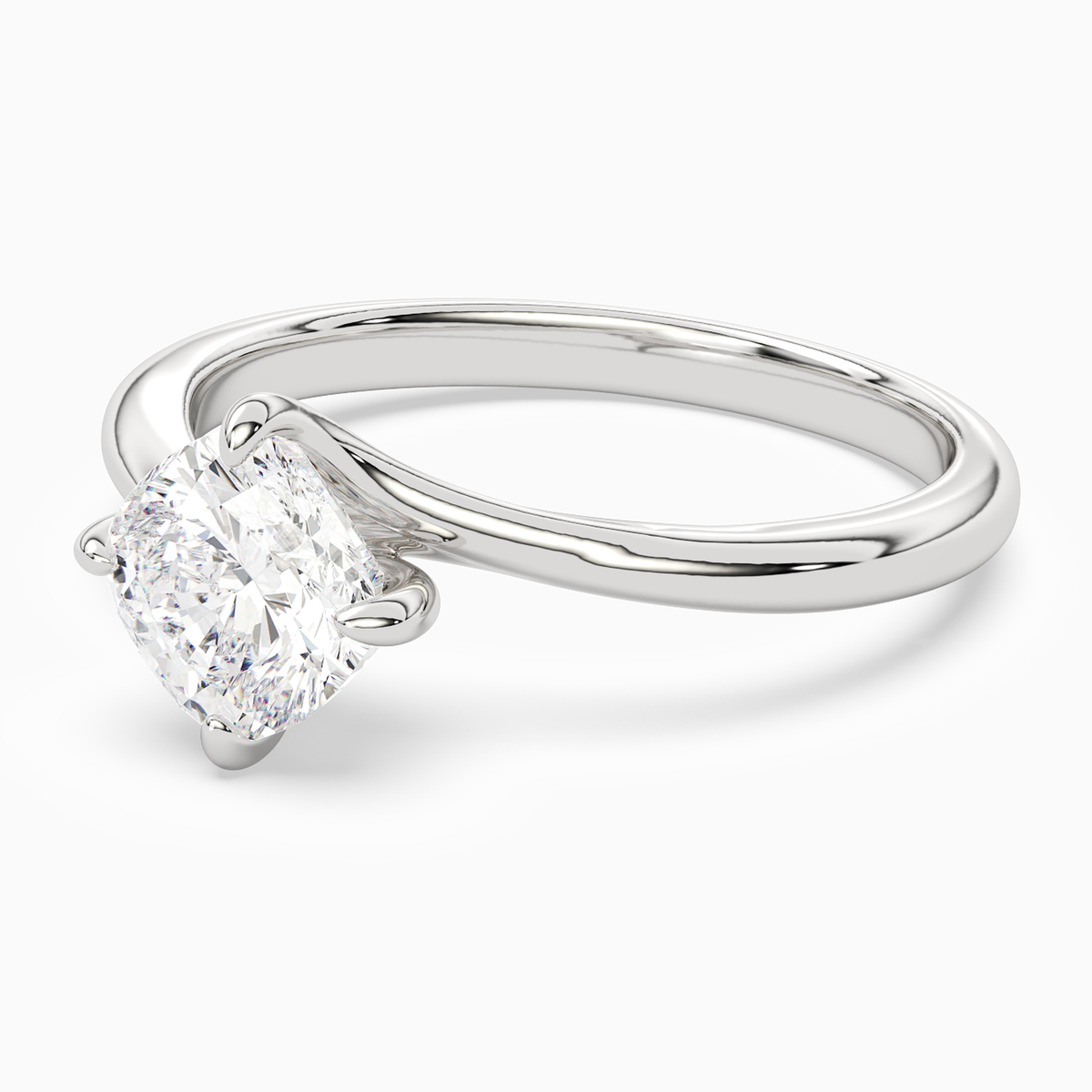
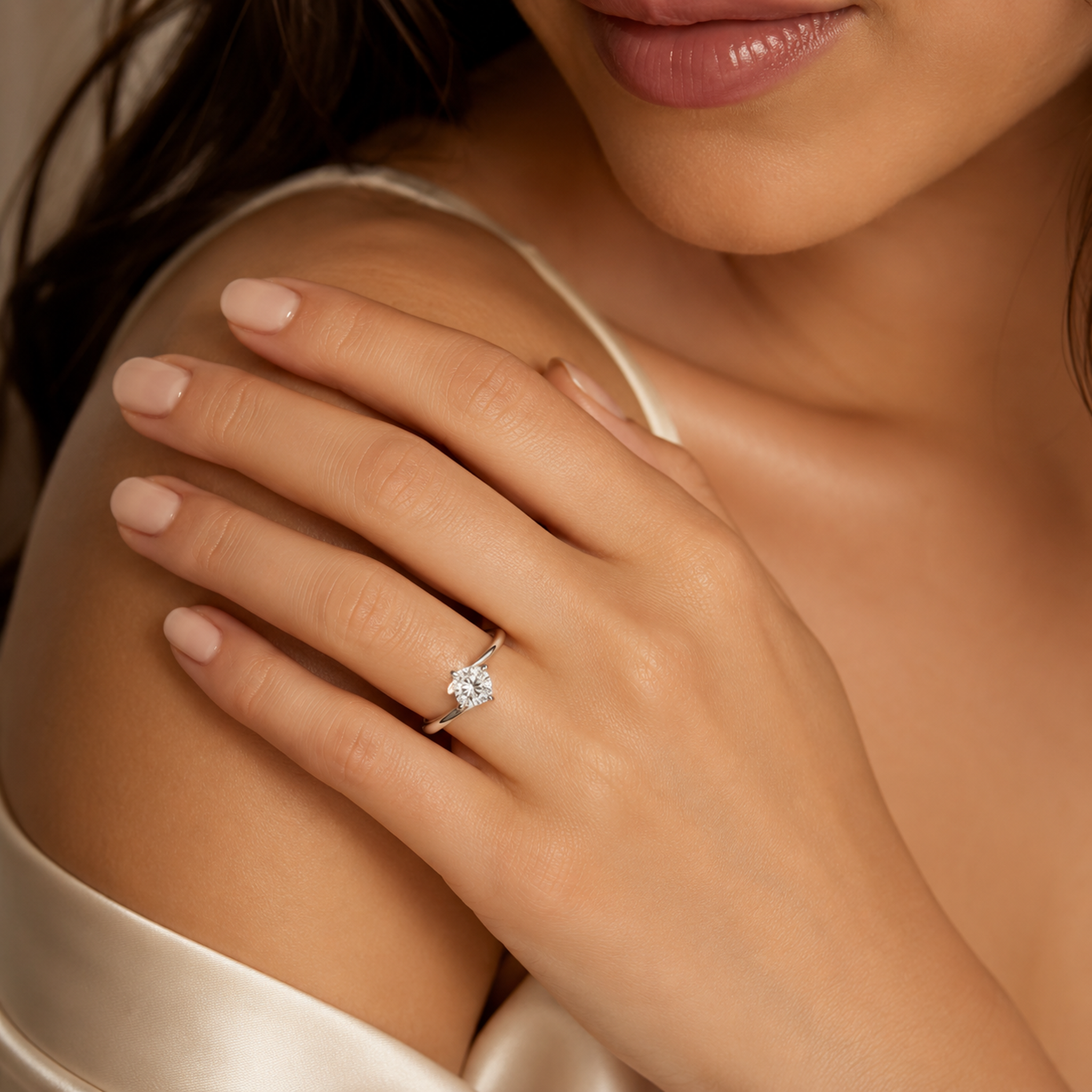
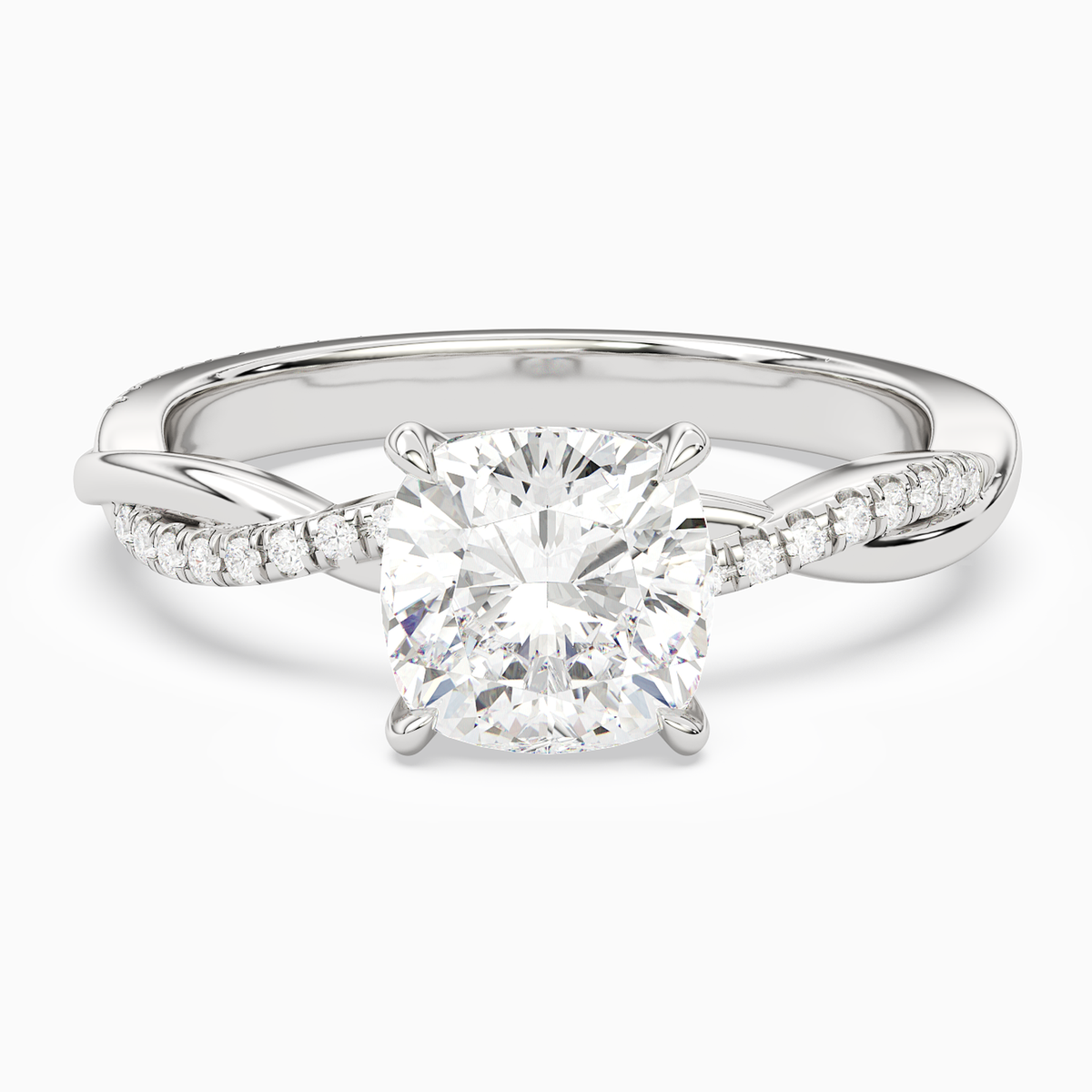
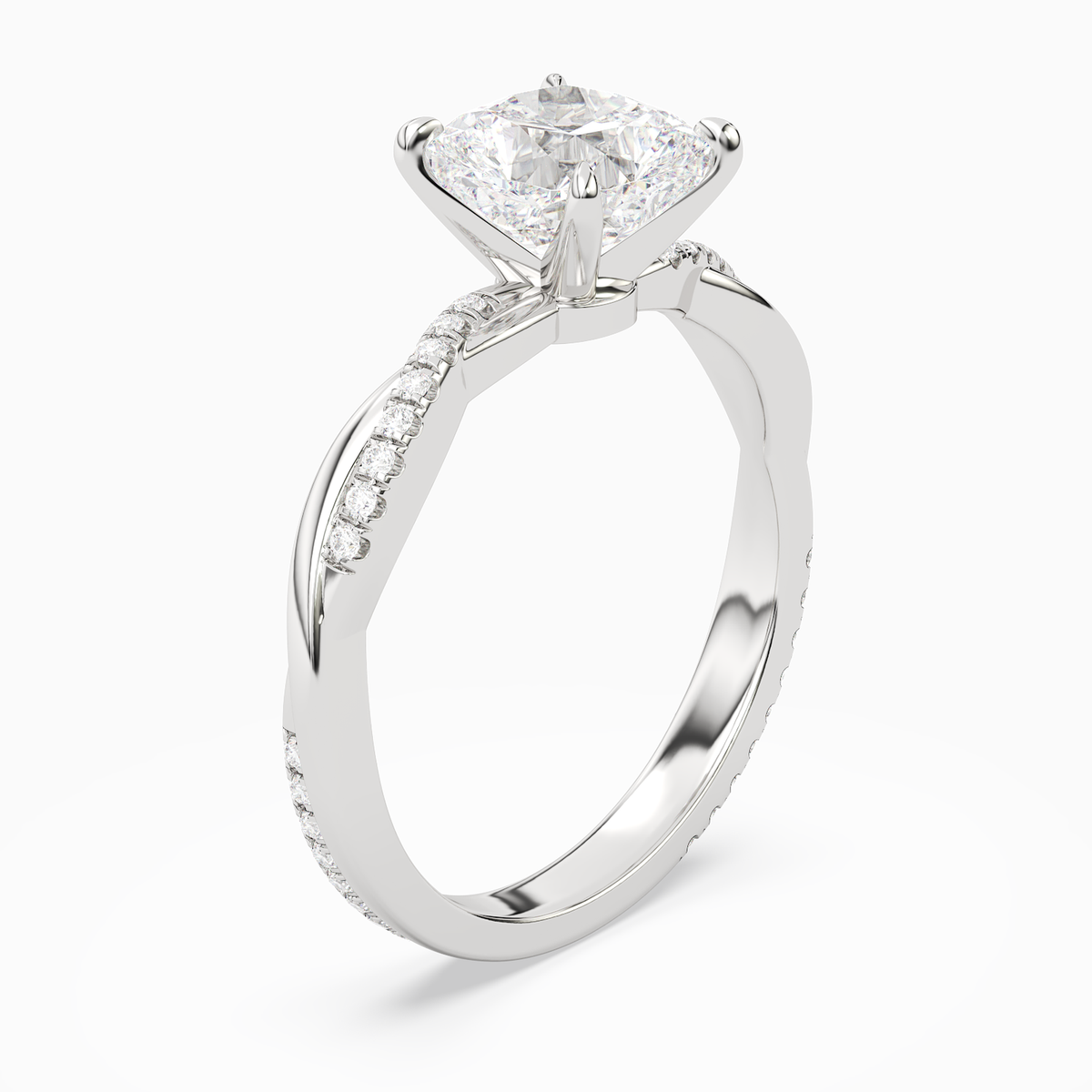
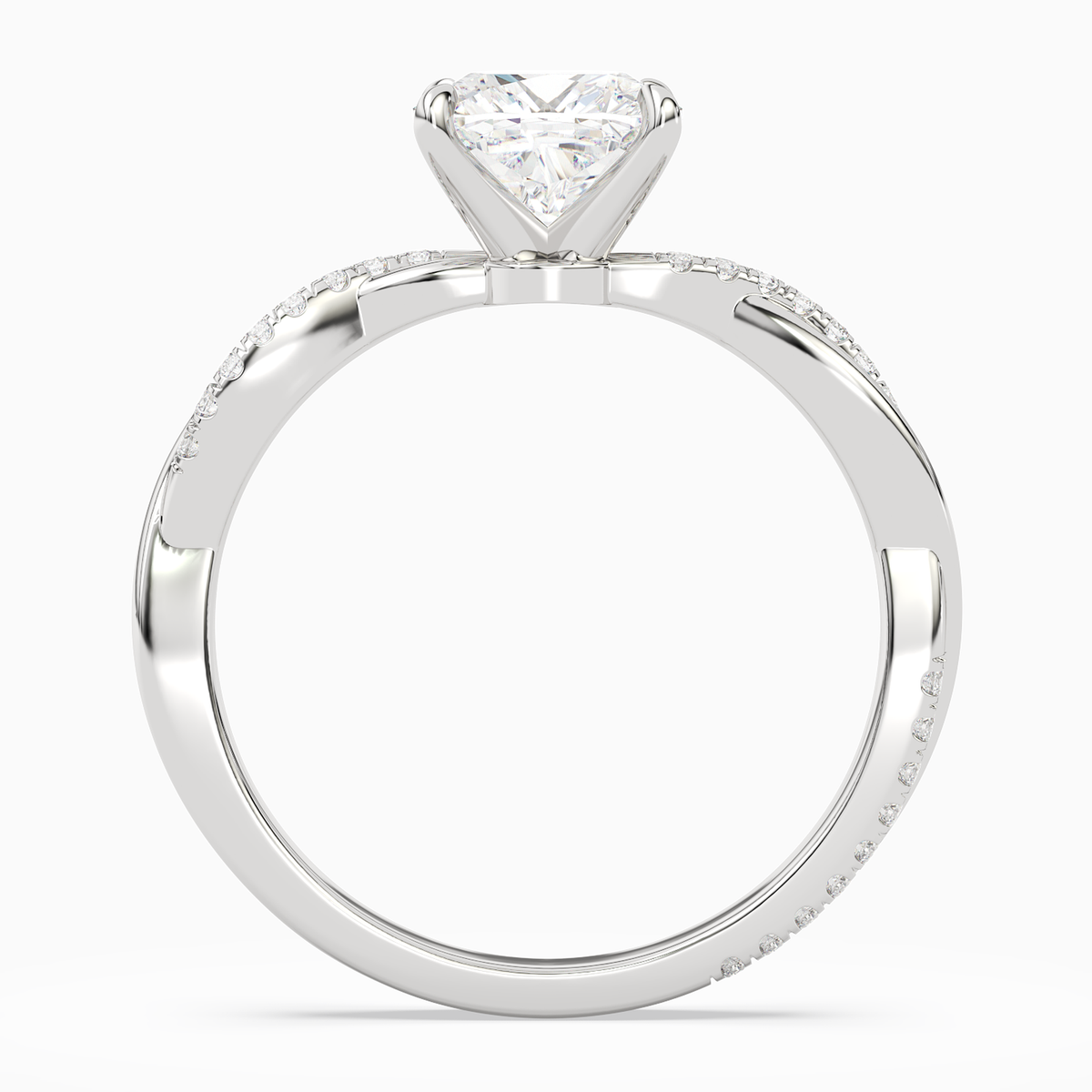
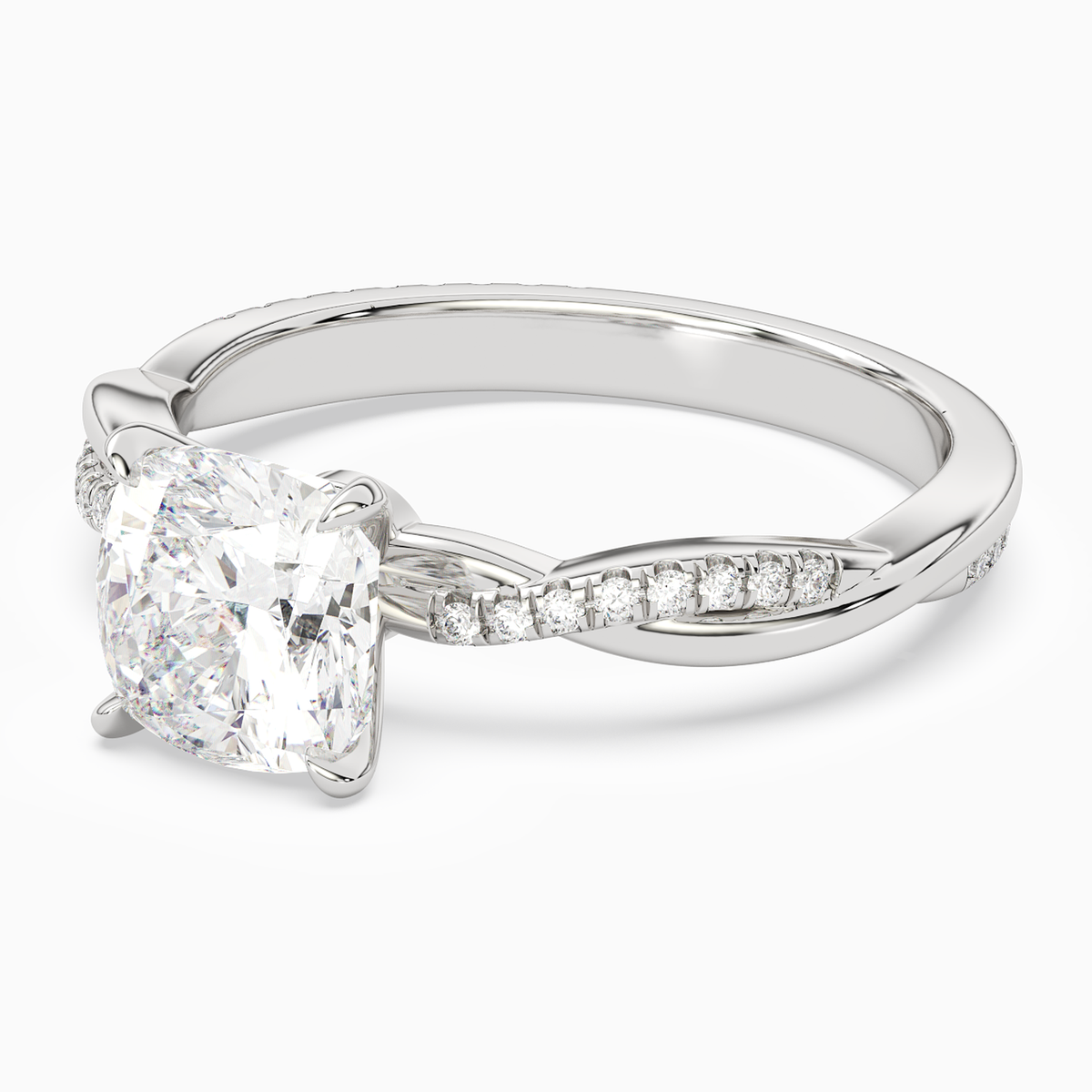

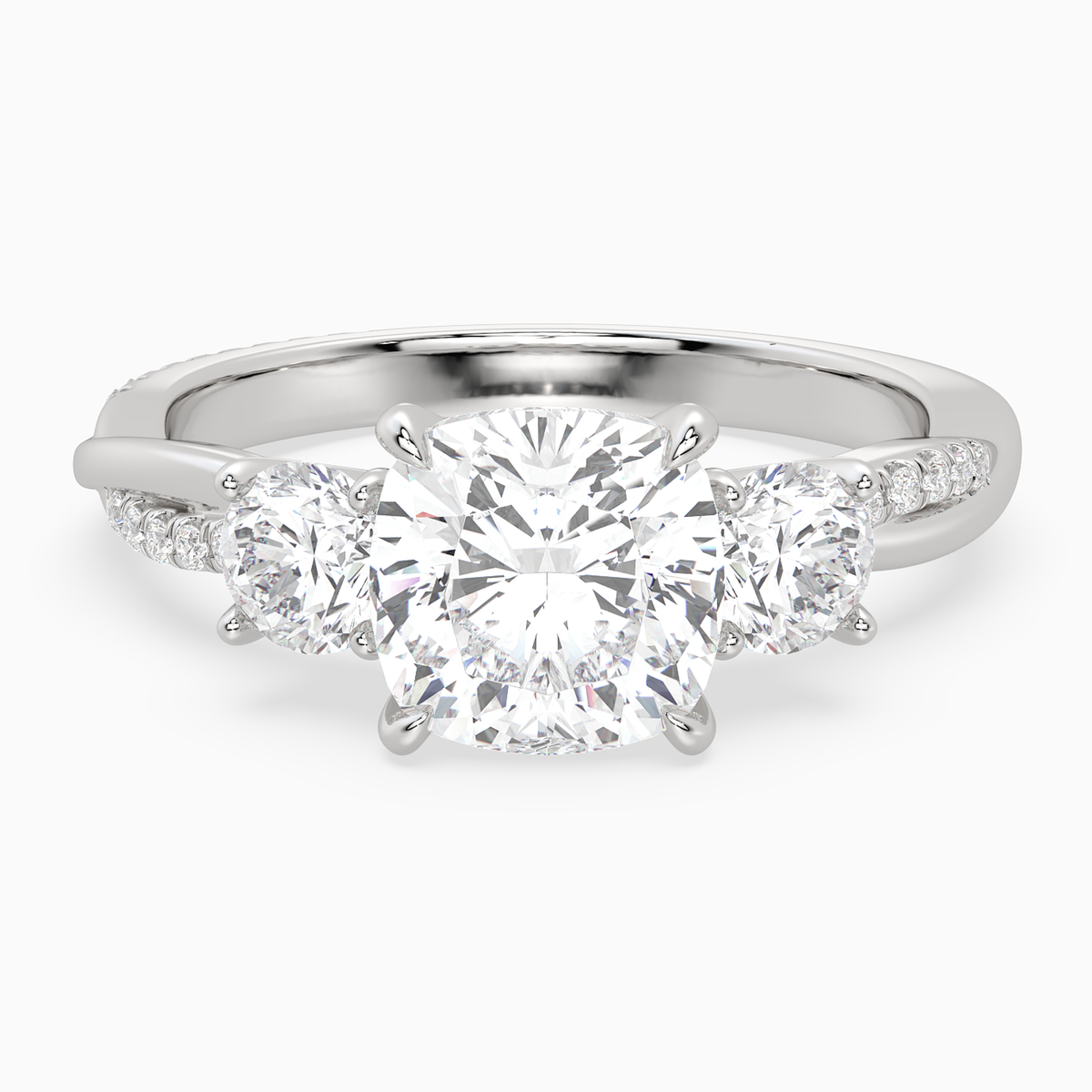
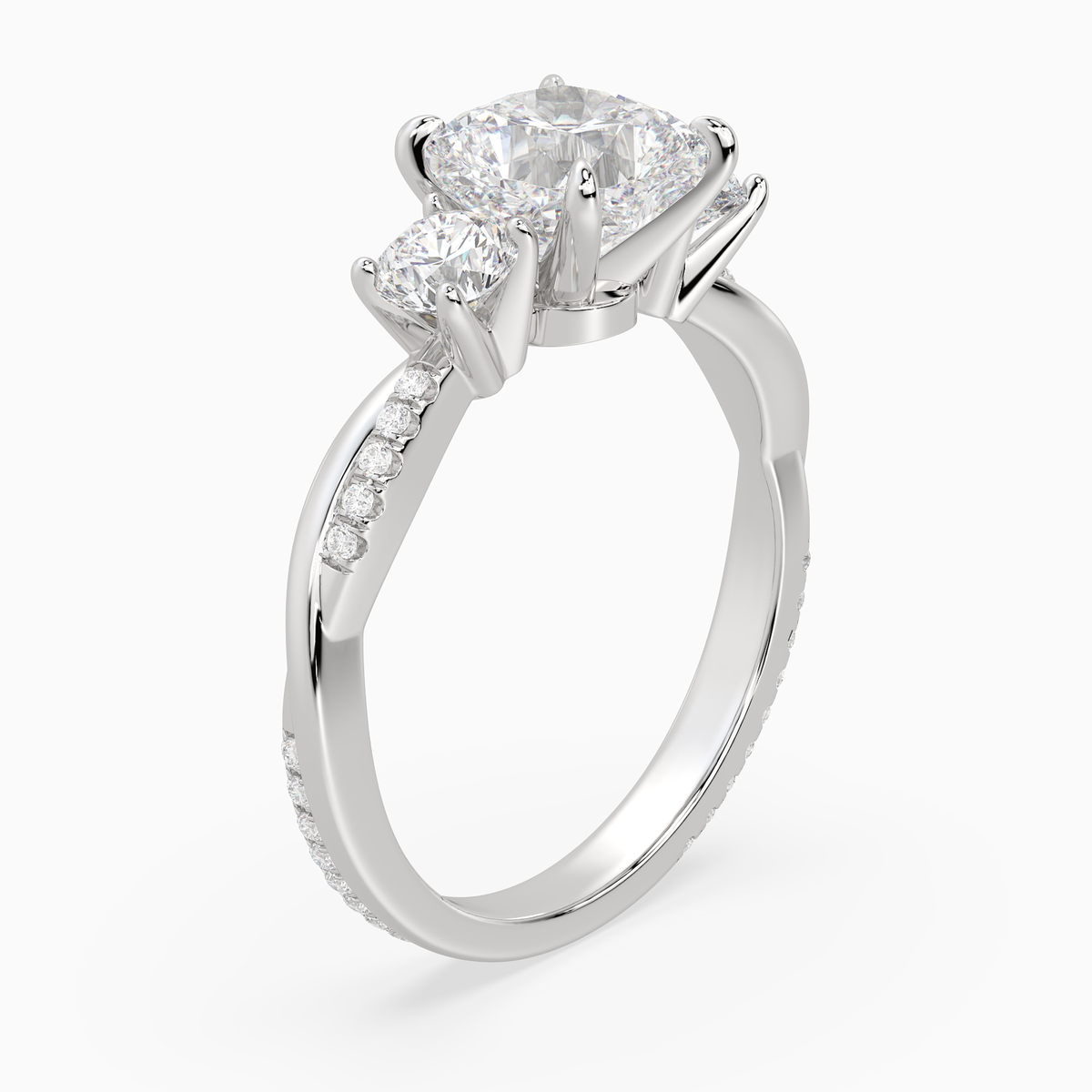
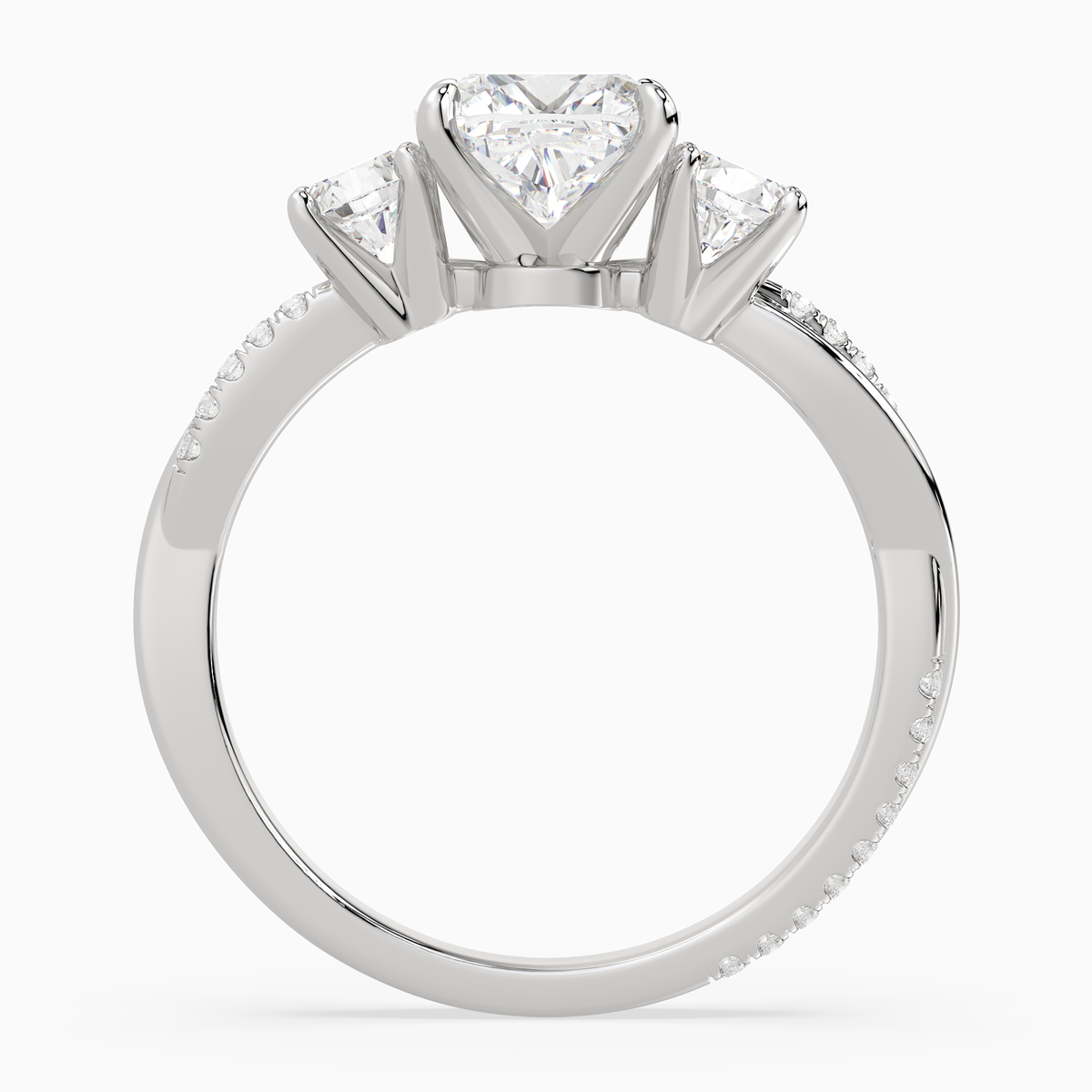
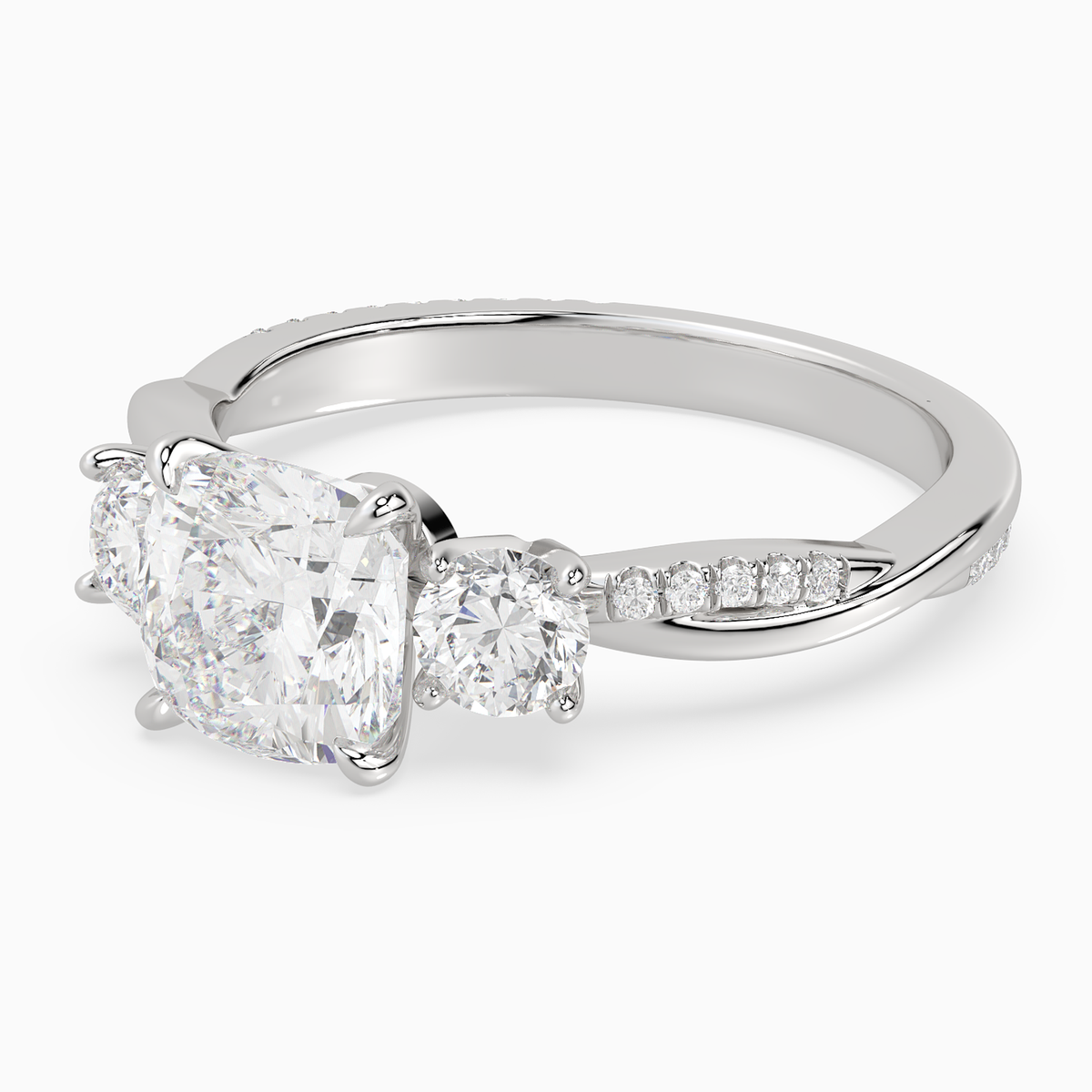

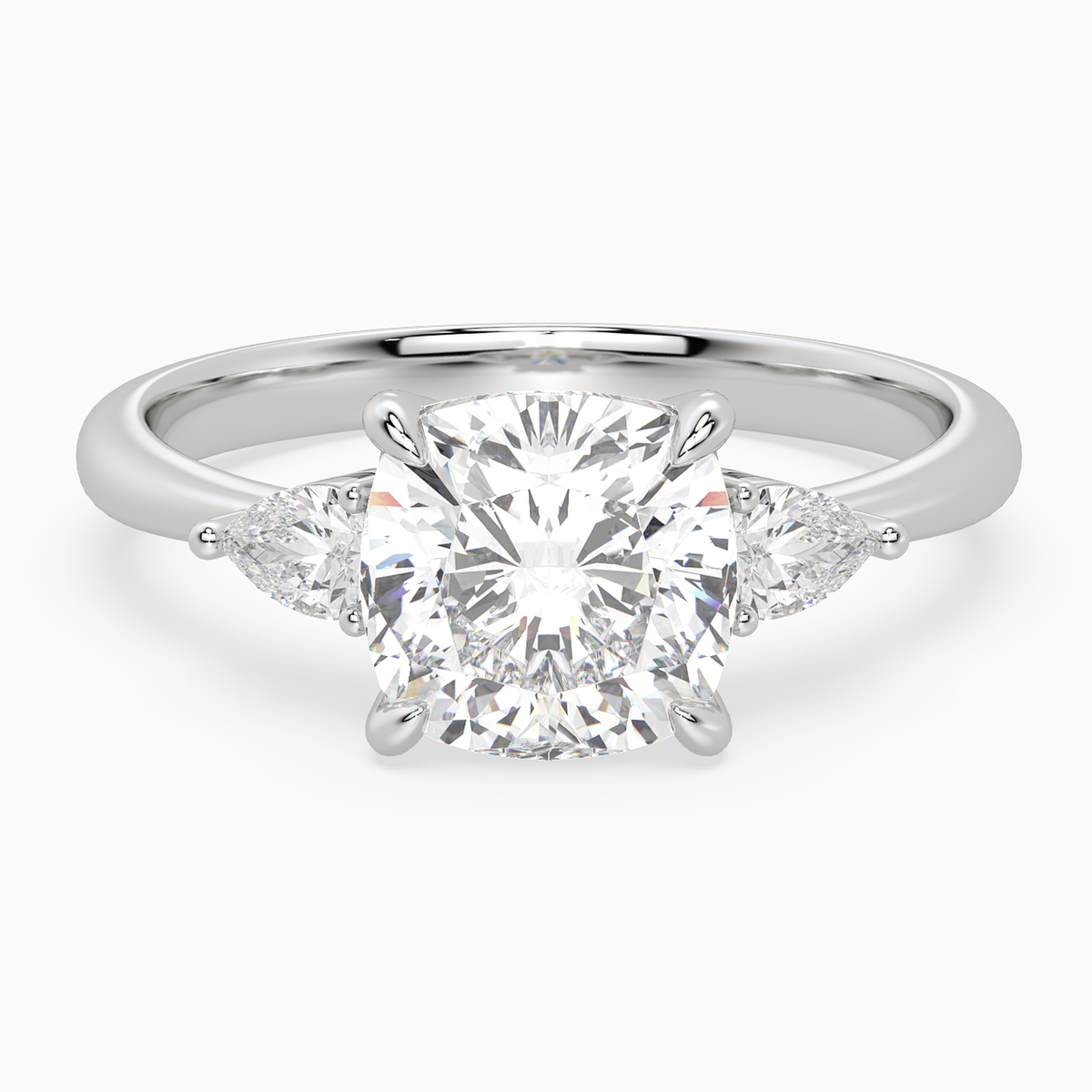
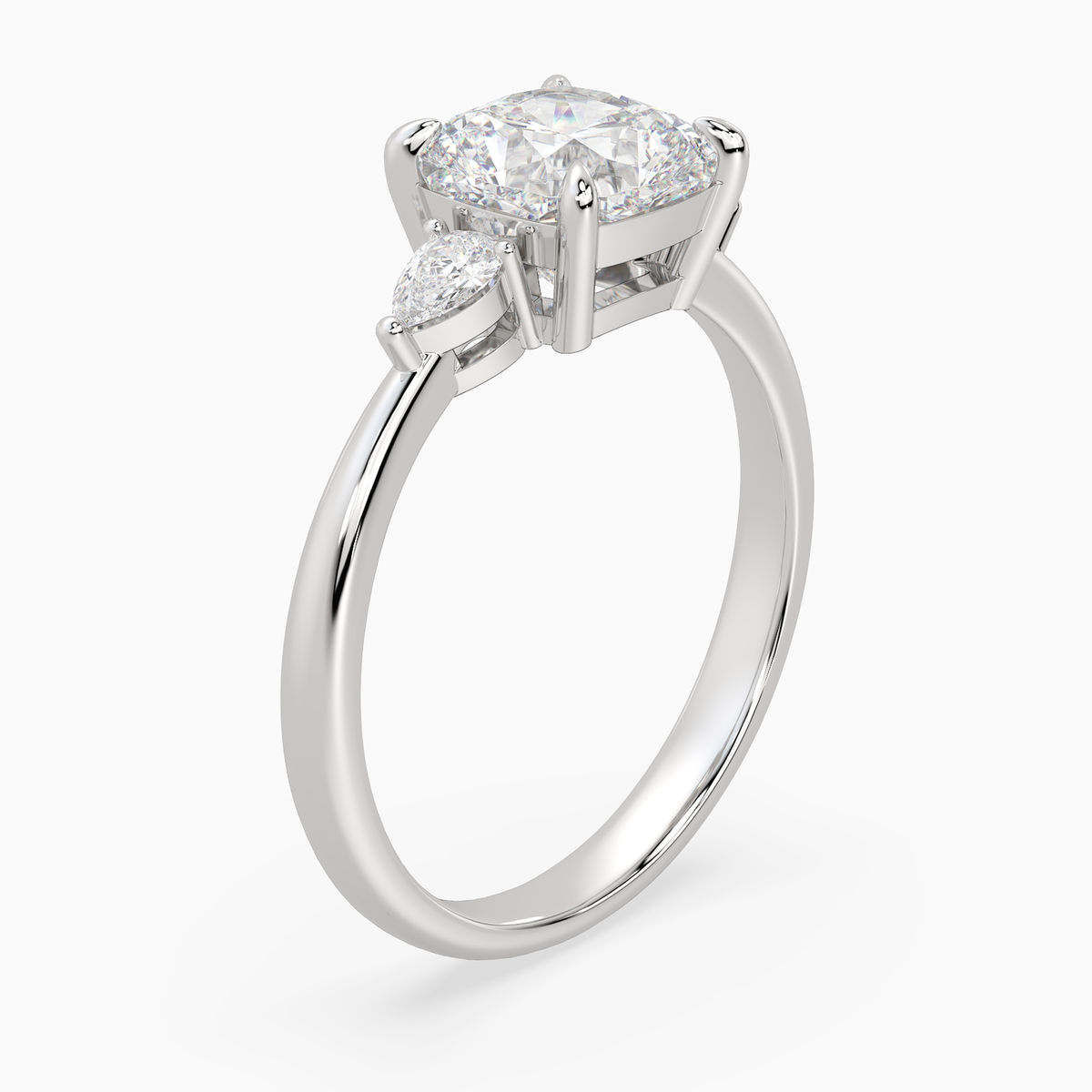
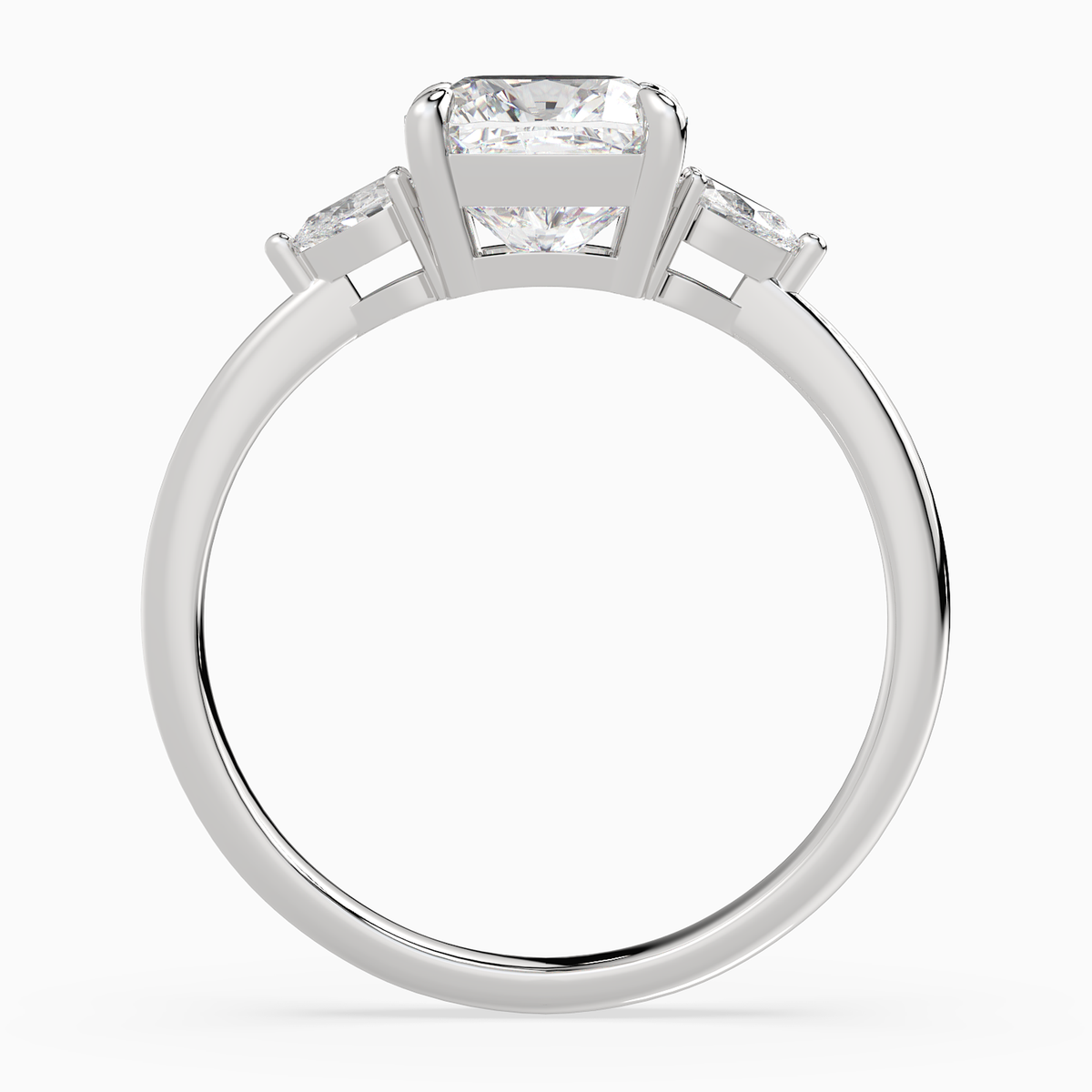
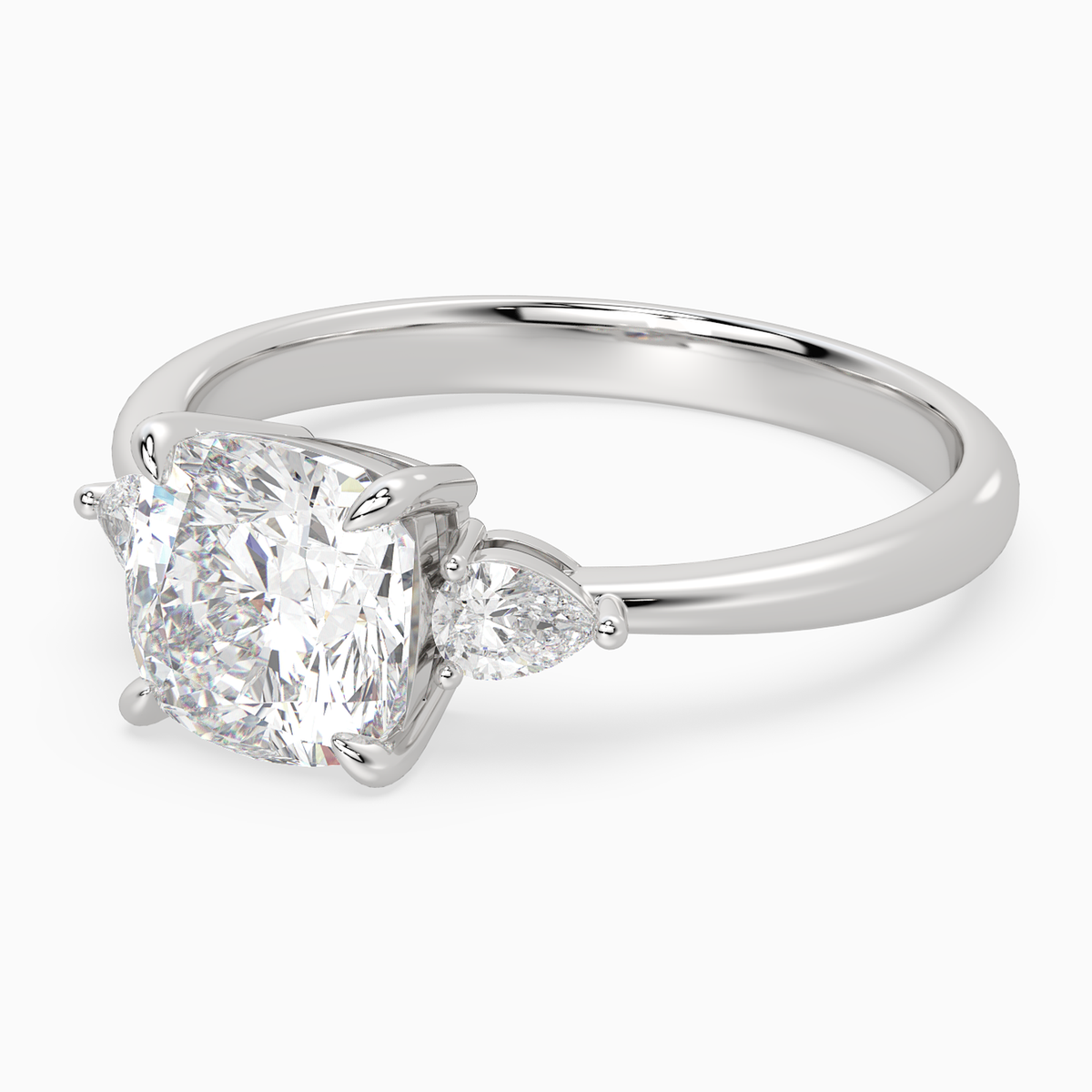
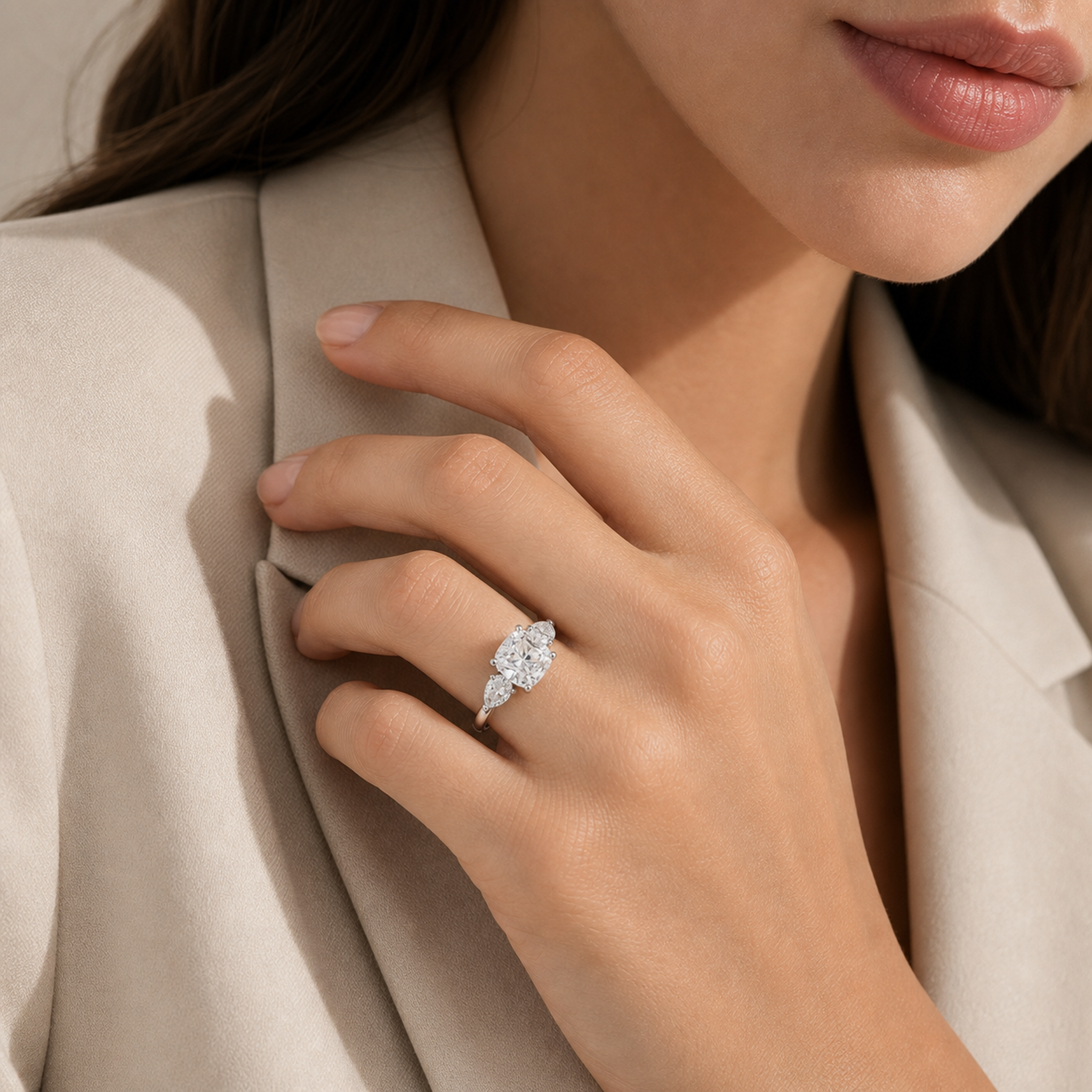
18K White Gold Cushion Diamond Engagement Rings: Quiet Color, Considered Substance
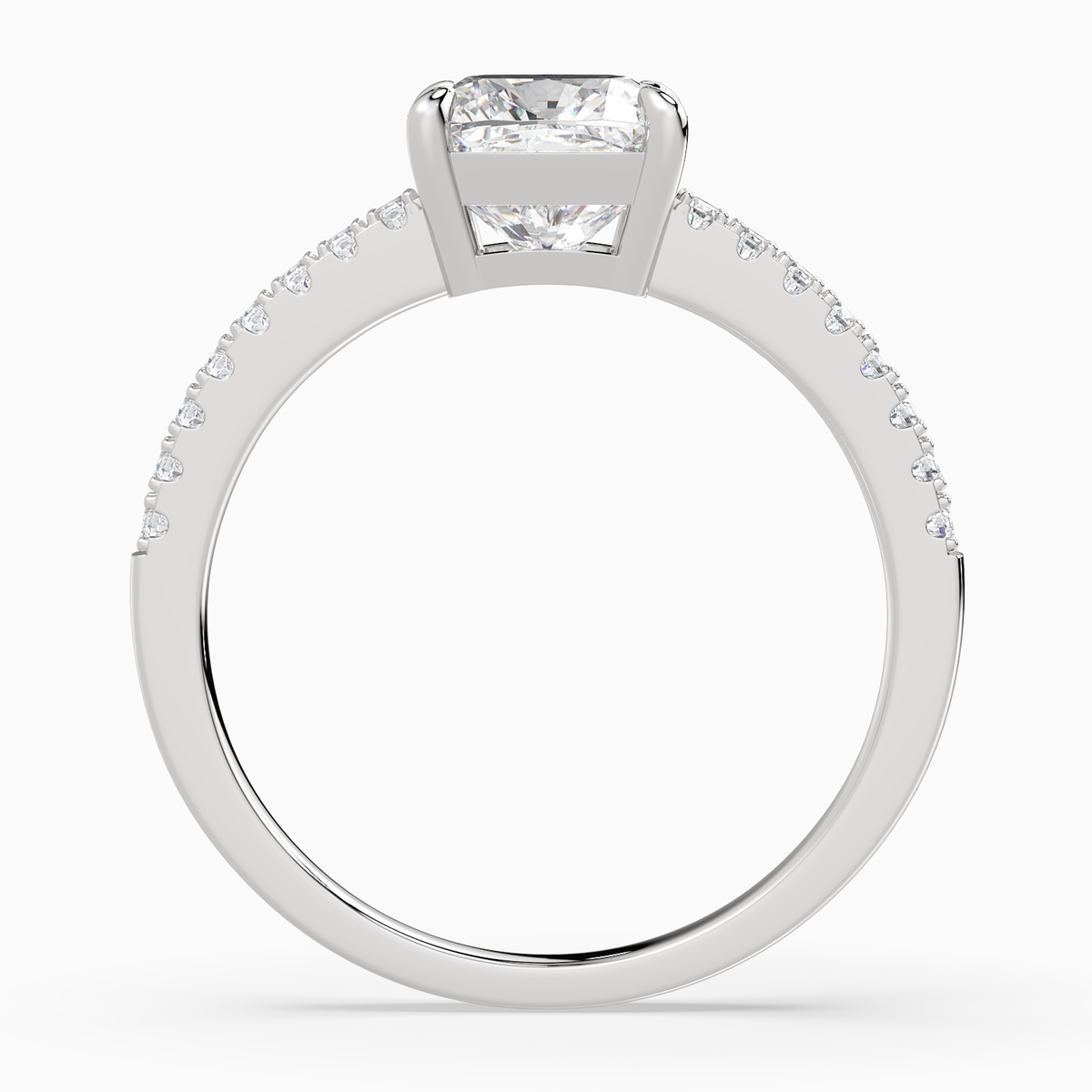
Cushion centers combine rounded corners with outlines that range from square to elongated. In 18K White Gold, this geometry sits within a quiet-toned alloy containing approximately 75% gold. The material can remain restrained in color while registering through prongs, baskets, shoulders, halos, and band line.
The 13-design collection includes six Solitaires, five Halos, and two Three Stone compositions. Open and pavé baskets, hidden and geometric frames, cathedral shoulders, bypass and vine lines, split shanks, and pear accents provide enough structural range to compare material presence rather than color alone.
Higher Gold Content Is Context, Not Rank
18K gold contains approximately 75% gold. Other alloying metals influence color and working behavior. This fact does not guarantee one hardness, shade, rhodium finish, sensitivity result, wear outcome, or care interval, and it does not make every 18K construction superior to 14K.
Compare exact alloy and finish, visible metal, prong scale, band dimensions, and intended wear. A substantial 14K structure may present more material than a fine 18K design. Karat only becomes useful when read alongside the complete ring.
Quiet Metal, Individual Facet Character
A cushion's cutting-style description may be Brilliant or Modified Brilliant, yet centers within either category vary. Some present broad flashes; others show a finer virtual-facet texture. Fancy shapes do not receive the same overall GIA cut grade as eligible standard round brilliants.
White Gold cannot create maximum brilliance, remove a gray region, or improve a crushed-ice pattern. Review polish, symmetry, dimensions, grading information, and the actual center in motion. Quiet metal should give the pattern room, not become its explanation.
Material Presence Changes With the Frame
A Solitaire concentrates material around one center. A Halo creates a second perimeter, where White Gold may appear between the cushion and surrounding diamonds. Kite, octagonal, round, pavé, and split-shank frames each establish a different relation between soft corners and firmer geometry.
Three Stone designs extend the setting across pear-shaped accents. Cathedral, bypass, and vine lines determine how the band reaches the center. The useful distinction is how much 18K material is visible and where, not whether the ring can be labeled more luxurious.
Assess Scale and Balance in Three Dimensions
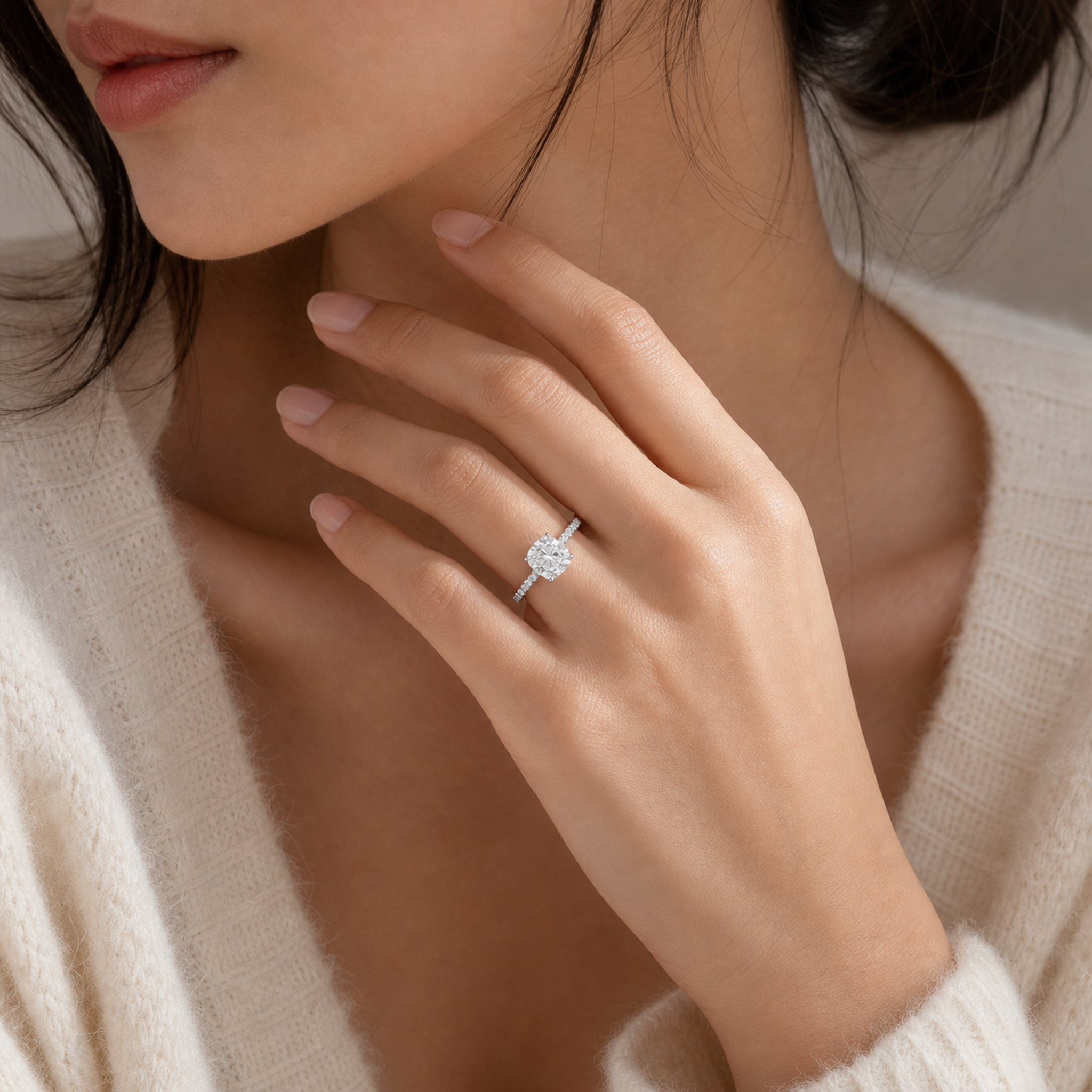
Length-to-width ratio describes outline; carat records weight. Actual length, width, depth, corners, shoulders, and facet pattern explain more of the face-up result. Halo scale, band width, and side accents then change the complete composition.
Center dimensions, basket, setting height, band width, ring size, and fit influence balance and movement. Wedding-band spacing depends on profile and contact points rather than the shared label of 18K White Gold. No karat establishes universal comfort or prevents rotation.
A Quiet Field With Accountable Detail
Surface appearance evolves with wear. Appropriate care follows the selected alloy, finish, diamond, and construction. Confirm whether refinishing or other maintenance may be needed rather than adopting a universal schedule from a competitor page.
Burvonti pairs responsibly sourced, independently graded lab-grown diamonds with settings calibrated through proportion and human judgment. Custom possibilities may refine outline, facet character, center specifications, prongs, basket, band, accents, metal, or engraving where feasible. Quiet color is paired with material decisions that remain visible and precise.
Frequently Asked Questions
How is this page different from 14K White Gold Cushion rings?
It focuses on 18K's approximately 75% gold composition and how material presence is distributed around the same cushion-centered decisions.
How much gold is in 18K White Gold?
Approximately 75%. Other alloying metals influence color and working behavior.
Is 18K White Gold always softer than 14K?
Do not infer a universal result from karat alone. Alloy, construction, dimensions, finish, and use all matter.
Is every 18K white gold ring rhodium plated?
That requires product-specific confirmation; karat and color name do not establish the finish.
Does 18K White Gold improve cushion sparkle?
No. The metal frames the diamond but does not change its faceting or optical performance.
Which structures appear on this page?
There are six Solitaire, five Halo, and two Three Stone designs.
Does White Gold make crushed ice brighter?
No. Crushed ice describes facet texture, and its appearance belongs to the individual diamond.
Does a higher karat make the cushion look larger?
No. Face-up scale depends on the diamond's measurements, outline, and setting context.
What should I compare between 14K and 18K White Gold?
Compare composition, exact alloy and finish, visible metal, construction, care, budget, and the complete ring.
Is 18K White Gold hypoallergenic?
No universal outcome can be promised. Confirm the selected alloy if sensitivity is a concern.
Will the setting prevent rotation?
Balance depends on center, basket, band, fit, and complete weight distribution, not metal alone.
Will a wedding band sit flush?
Profile, halo, basket, side stones, shoulders, and contact points determine fit.
Can Burvonti customize an 18K White Gold Cushion ring?
Custom possibilities may include center, outline, prongs, basket, accents, band line, metal, or engraving, subject to feasibility.