
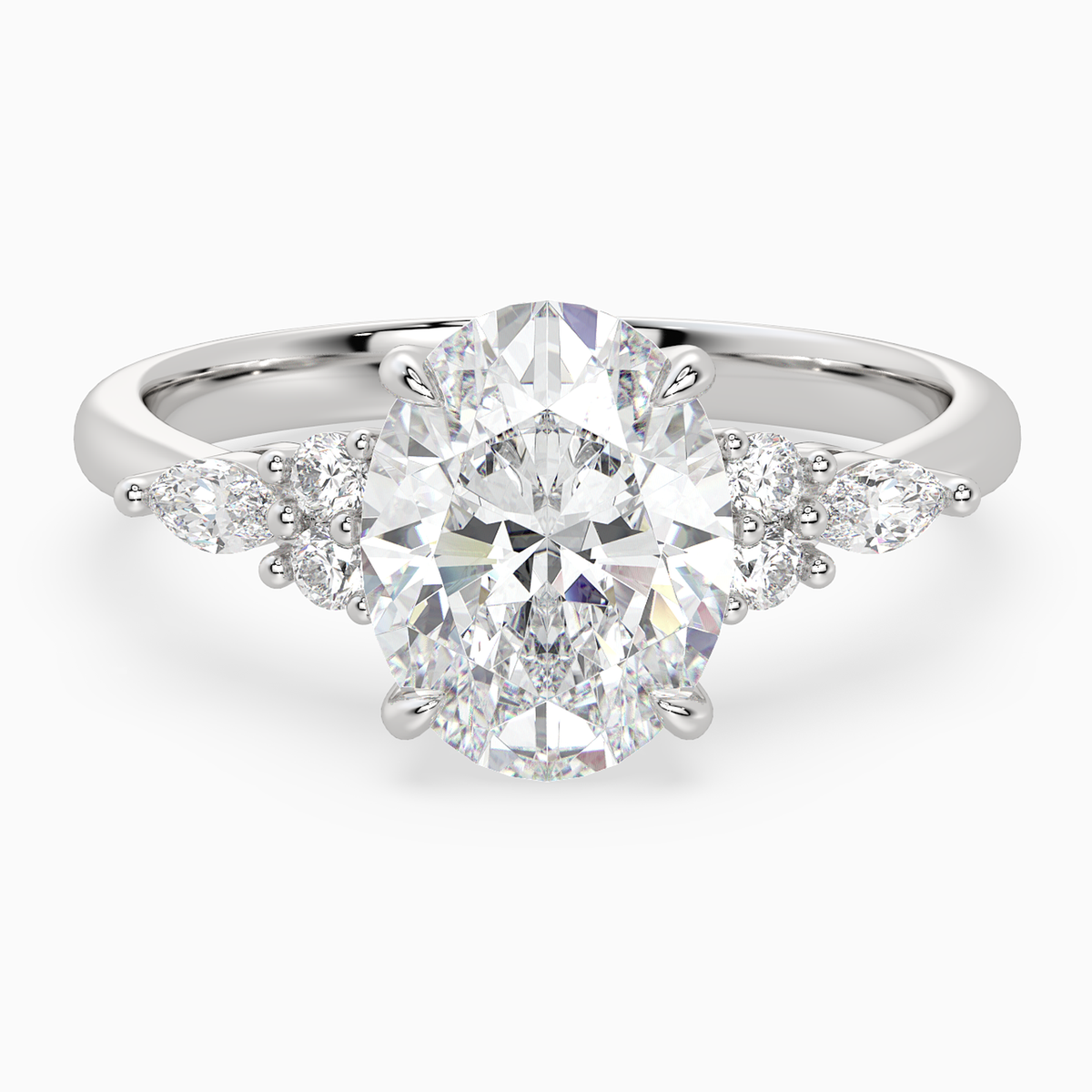


Cushion Diamond Engagement Rings in 14K Rose Gold
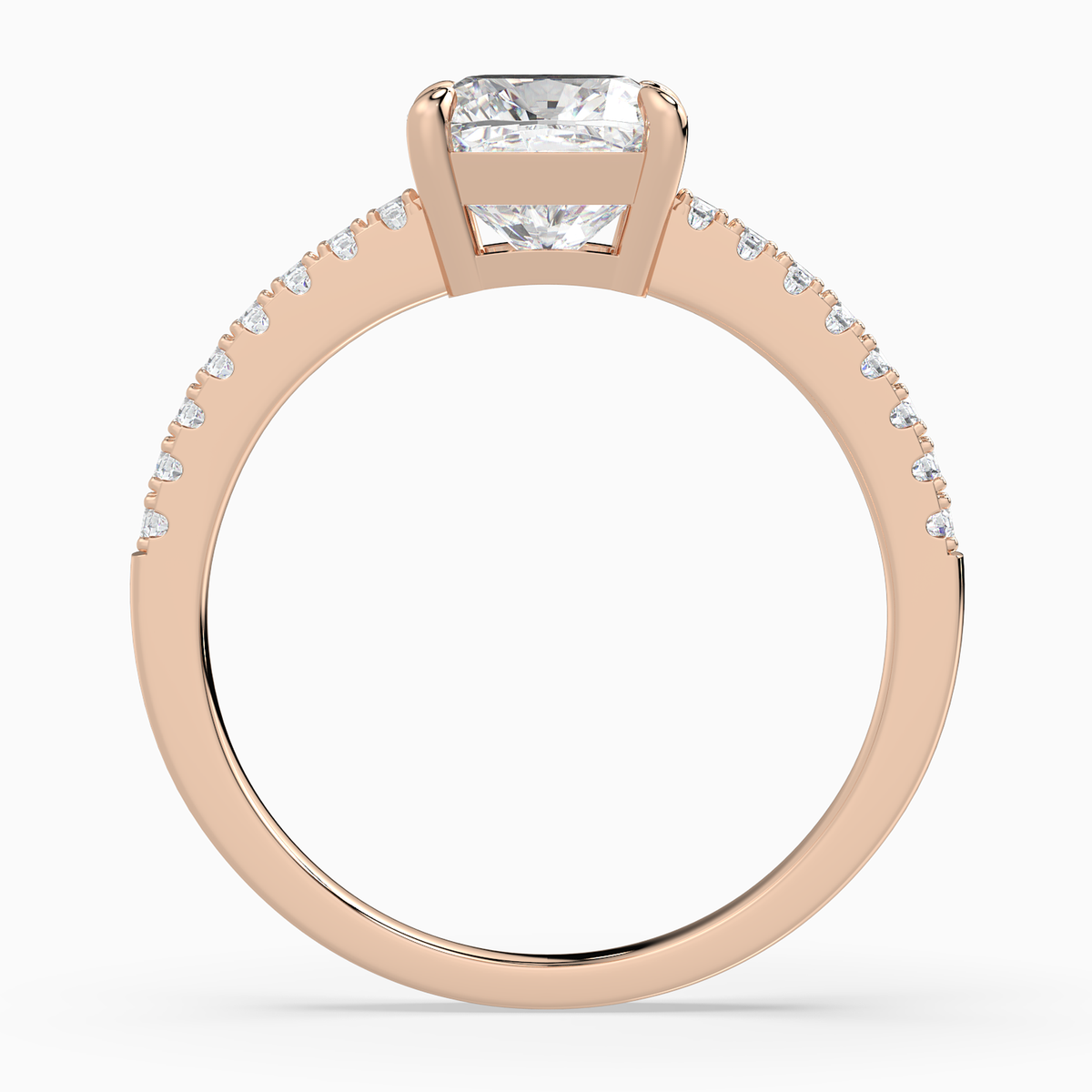
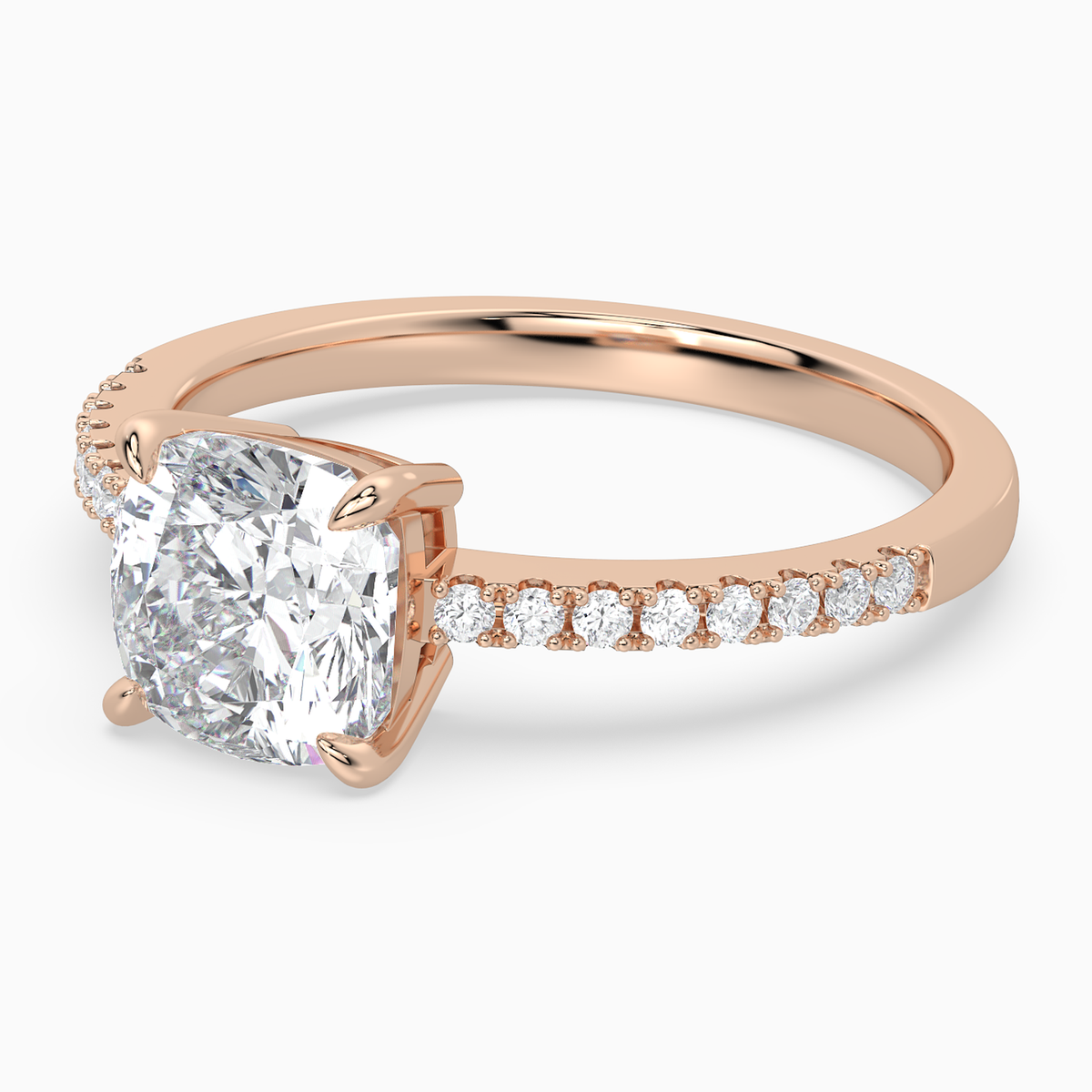
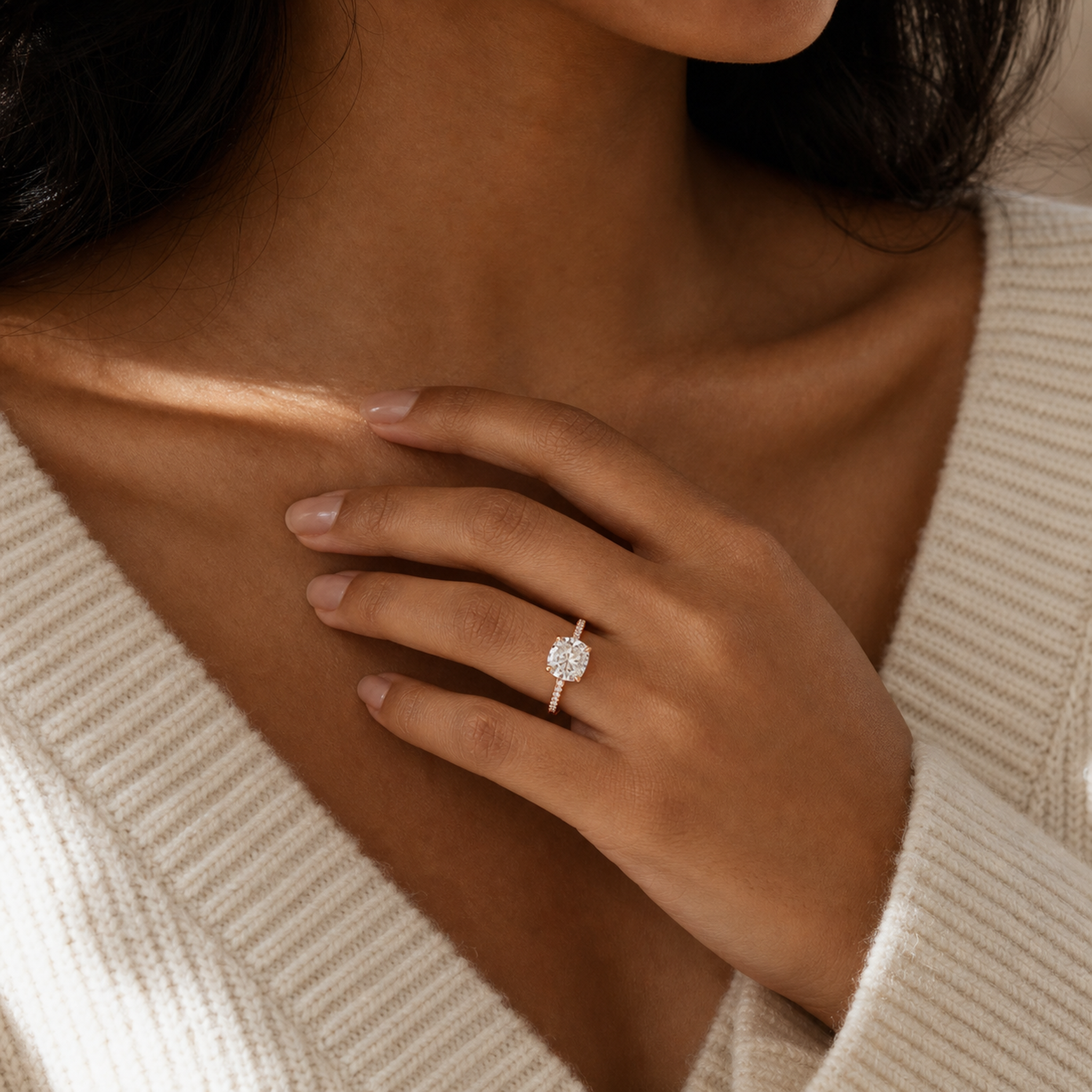
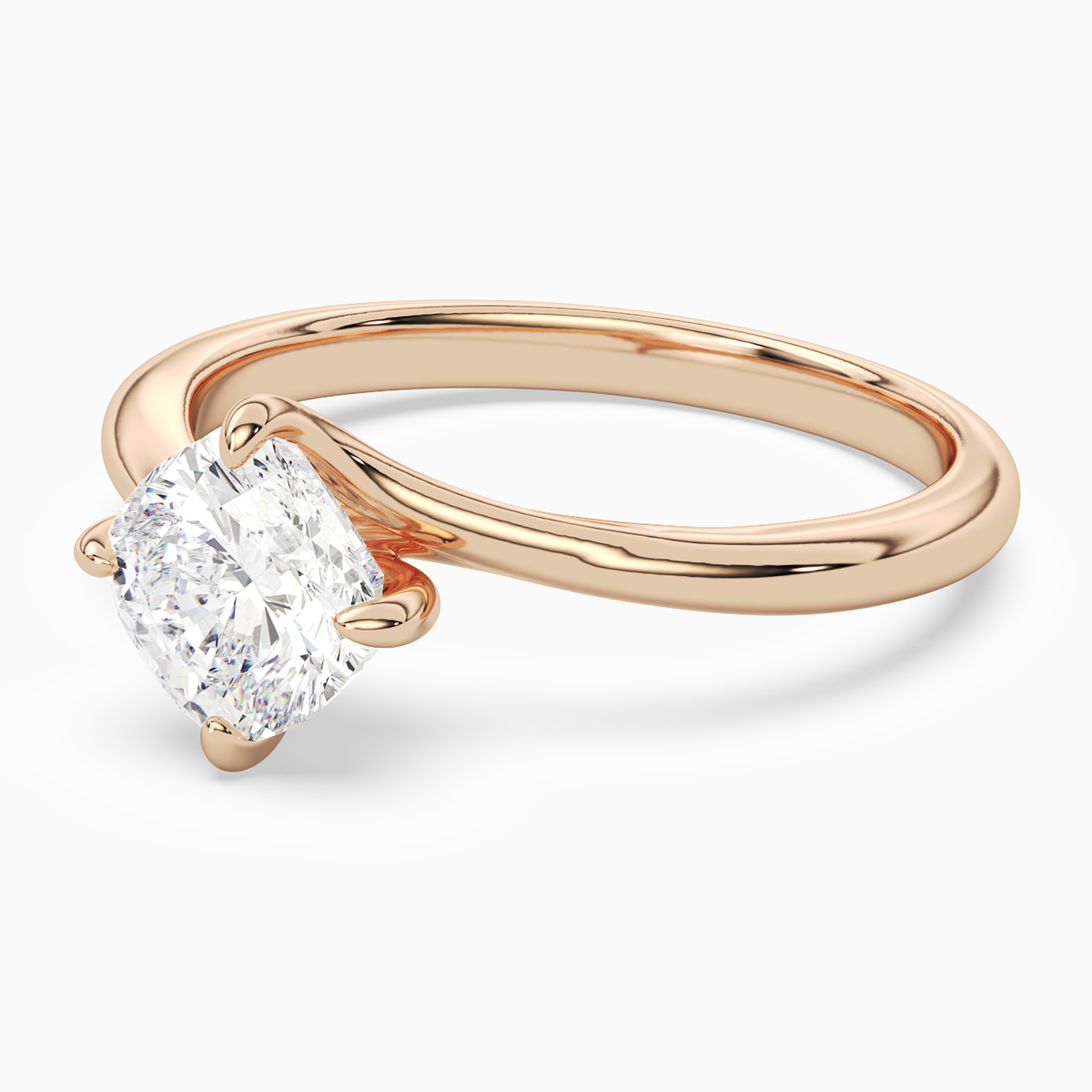
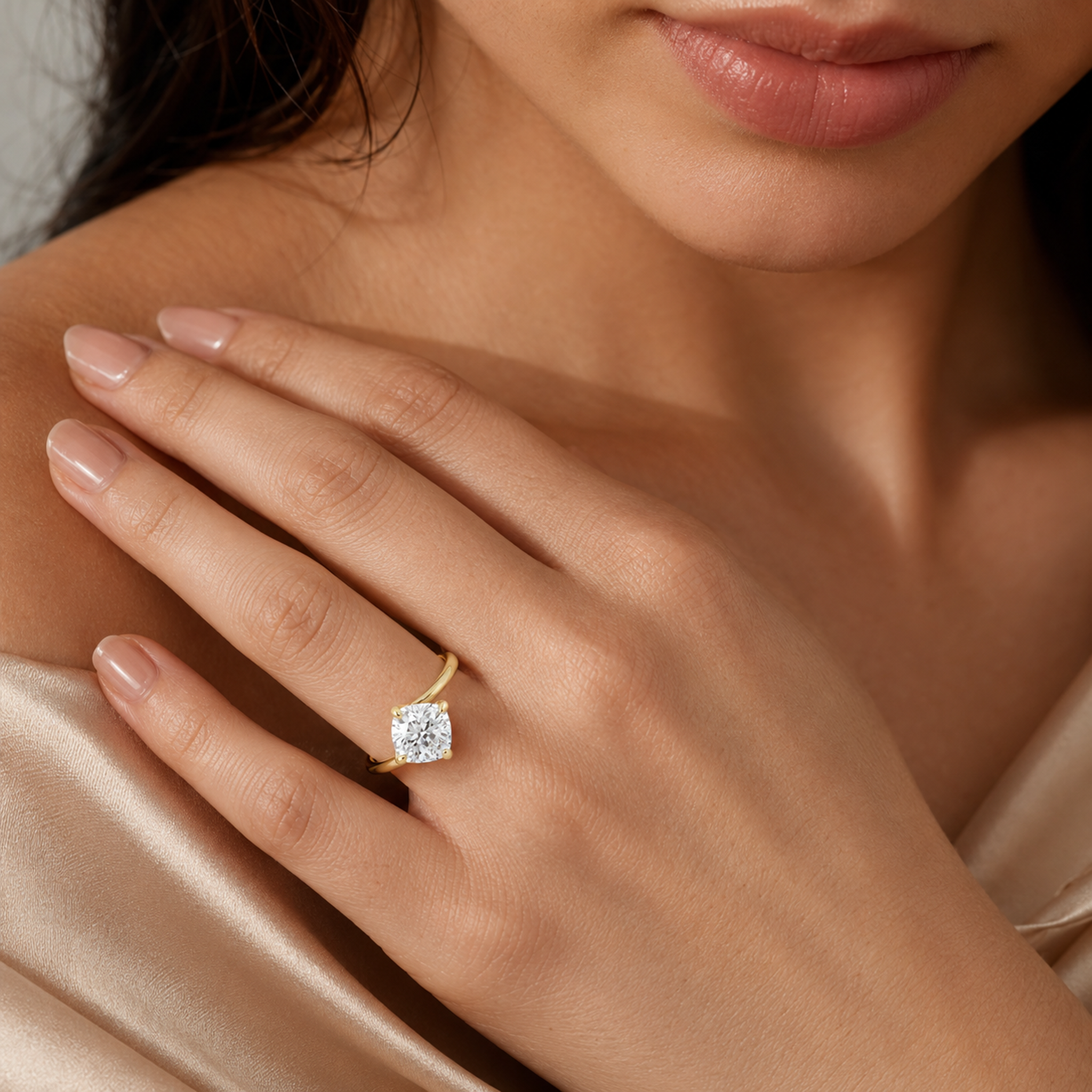
Soft geometry, warmed at the edge. 14K rose gold follows the cushion’s rounded corners while keeping its outline and light pattern distinct.


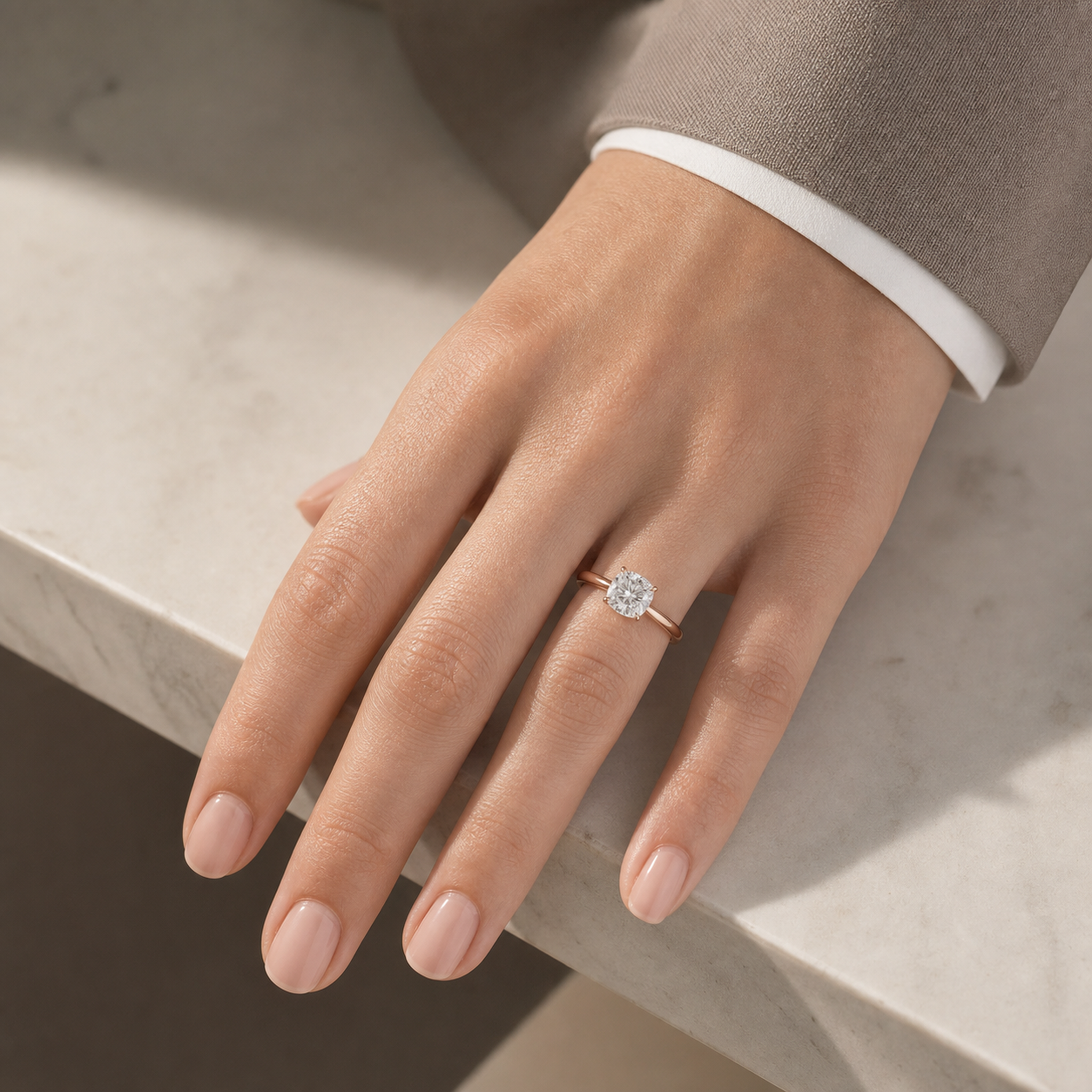
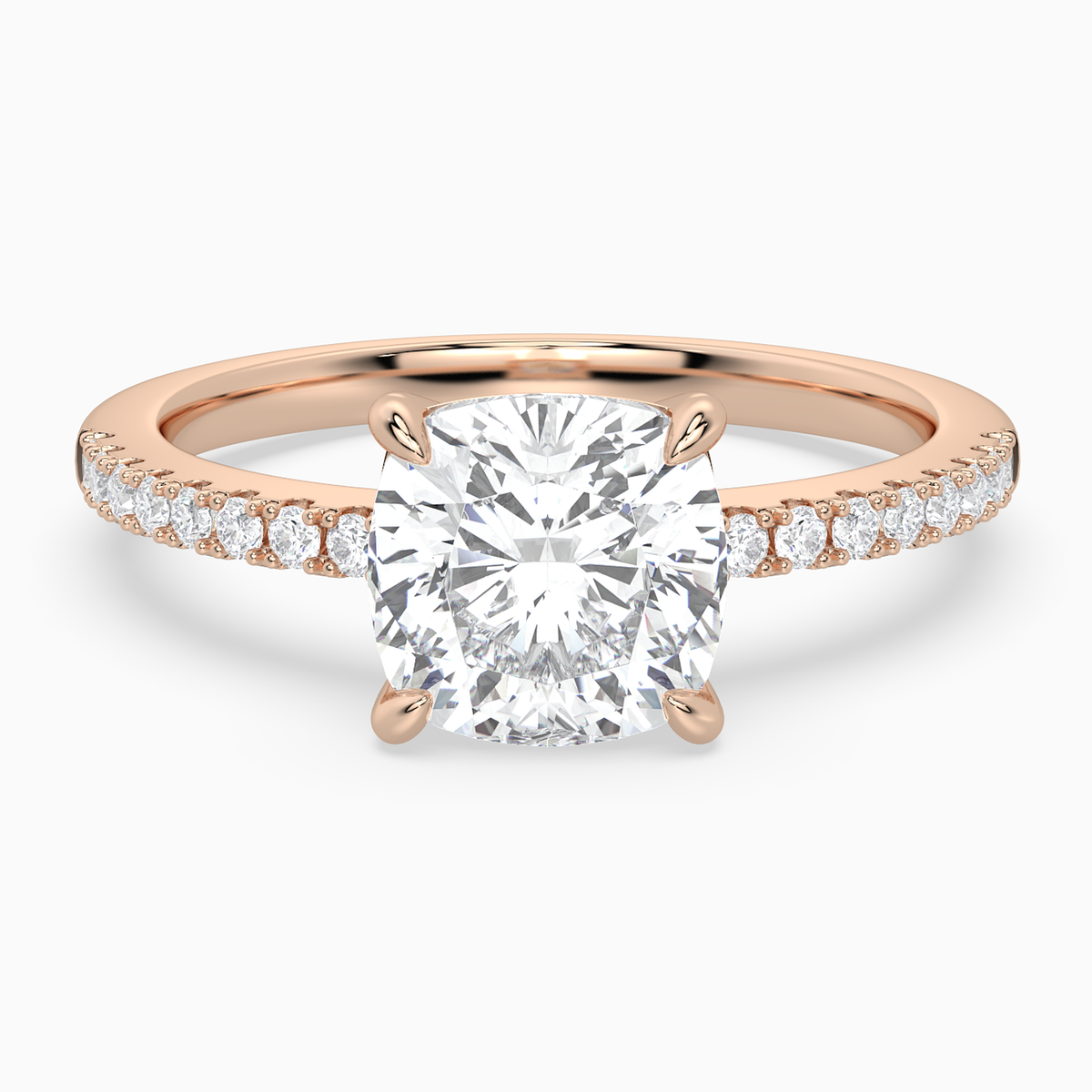
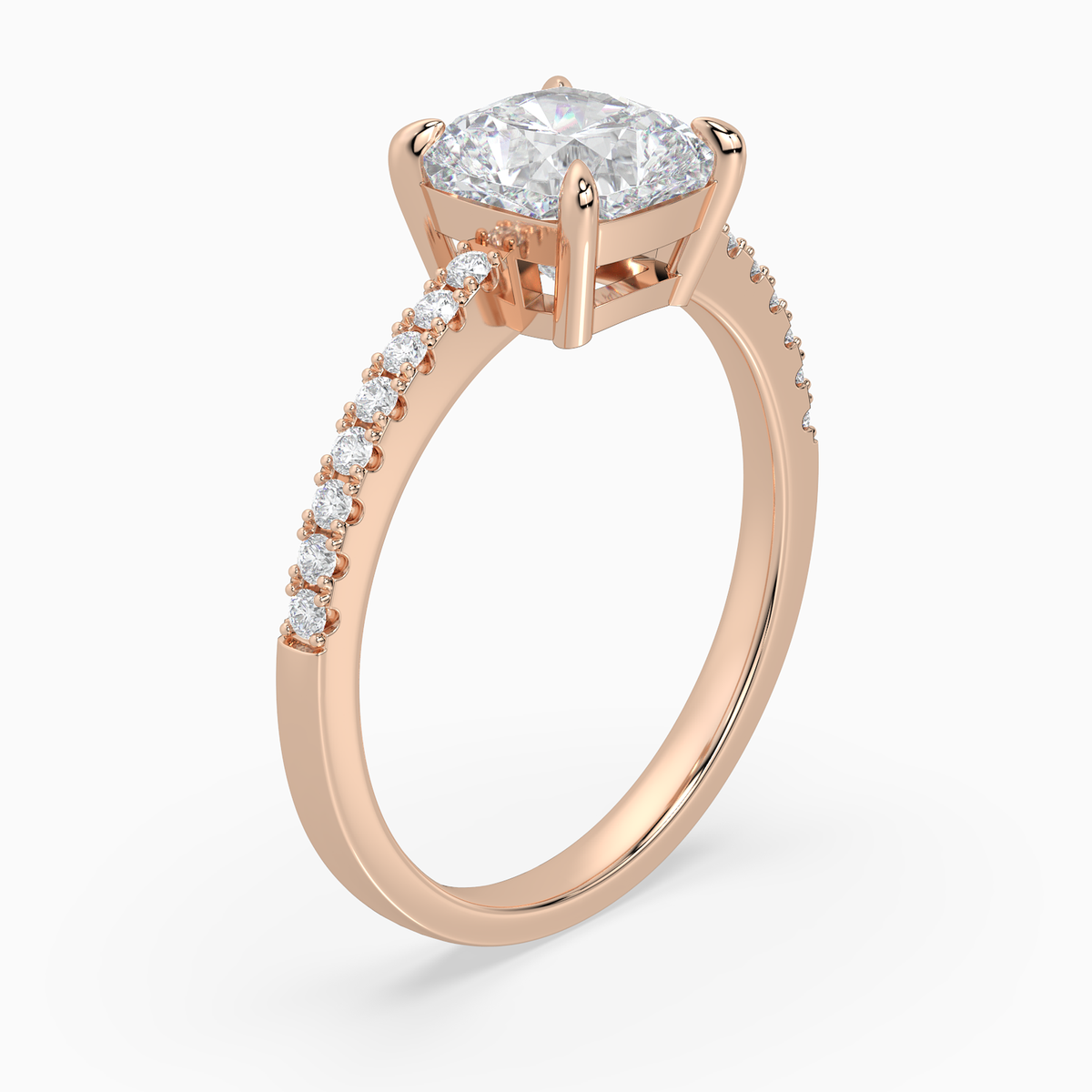



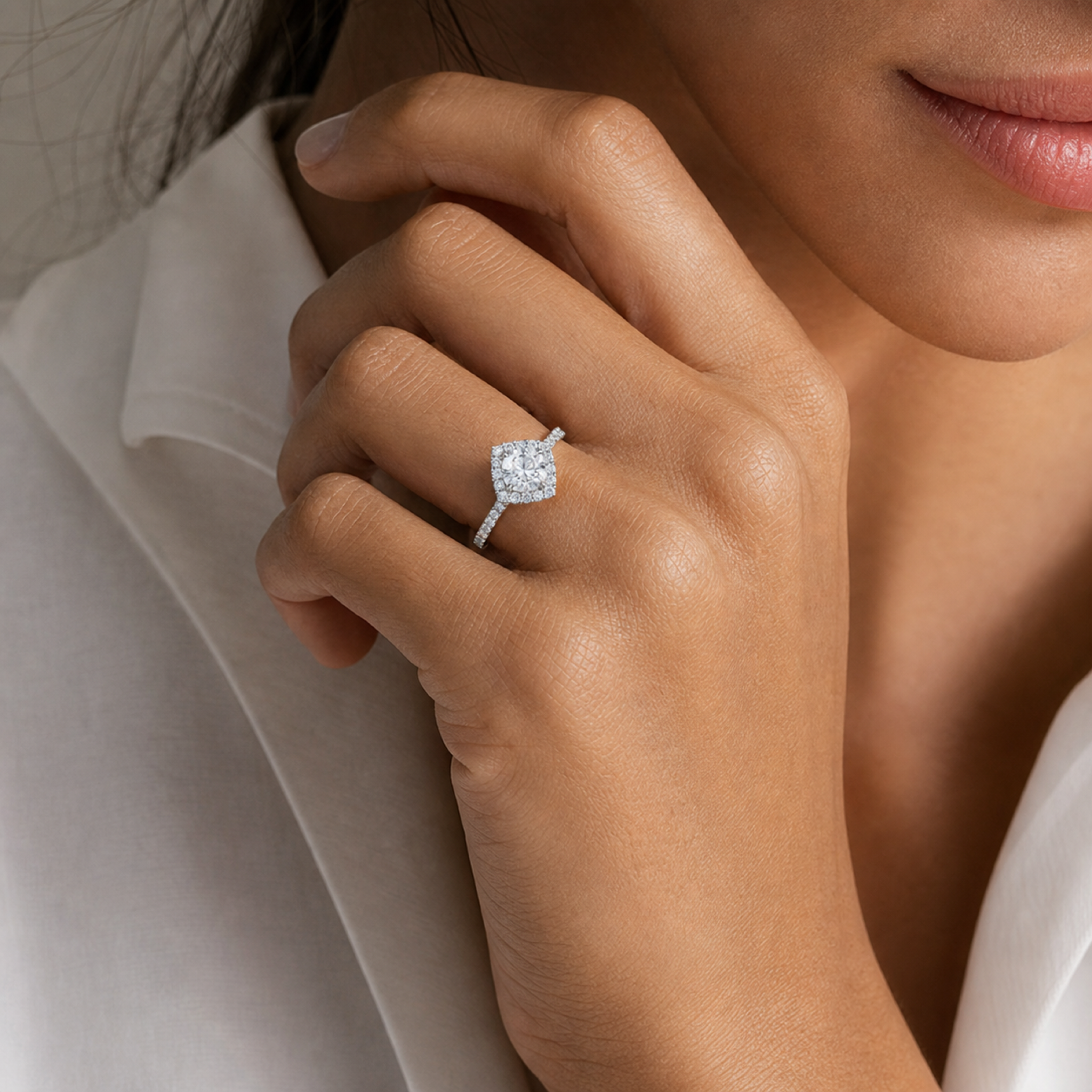


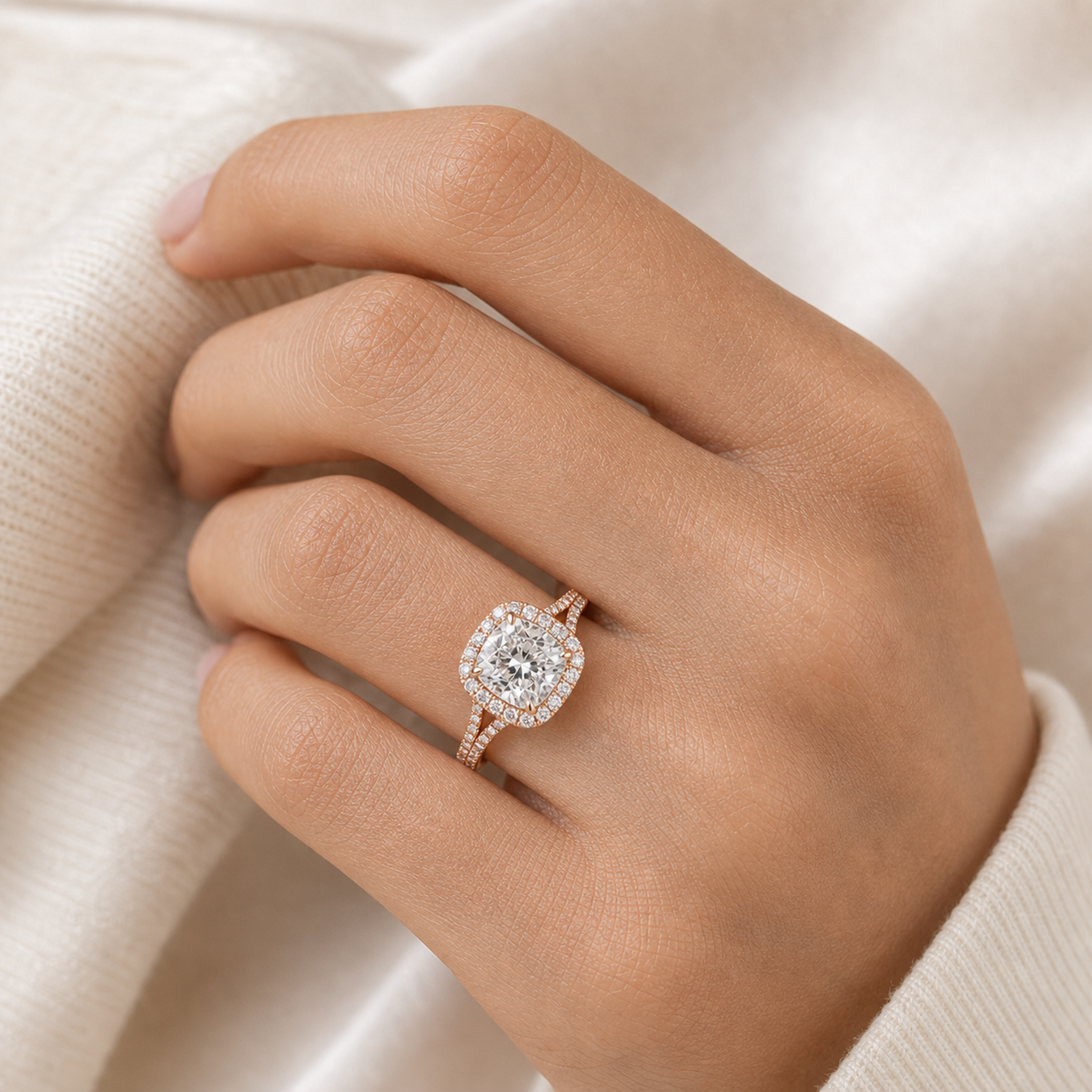


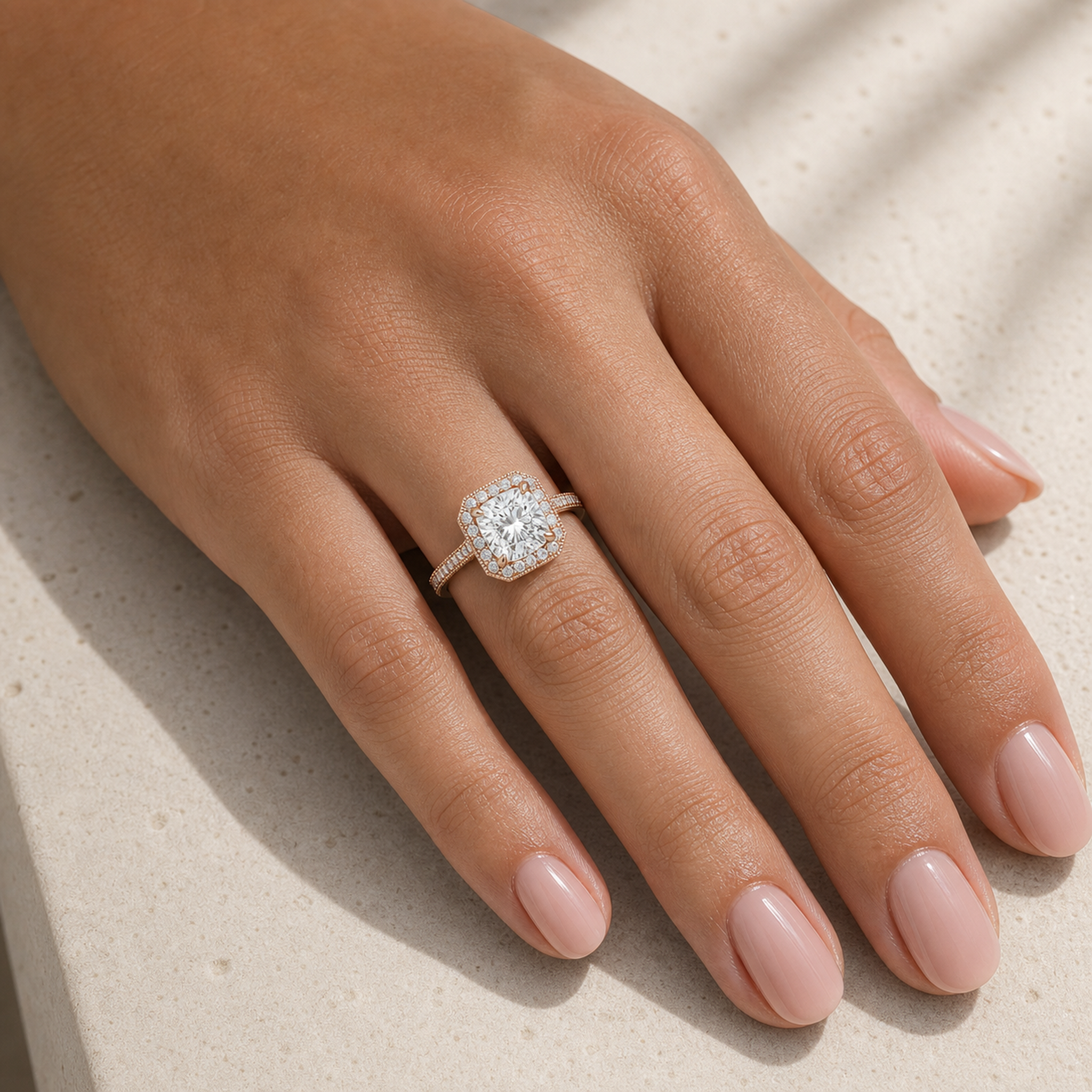
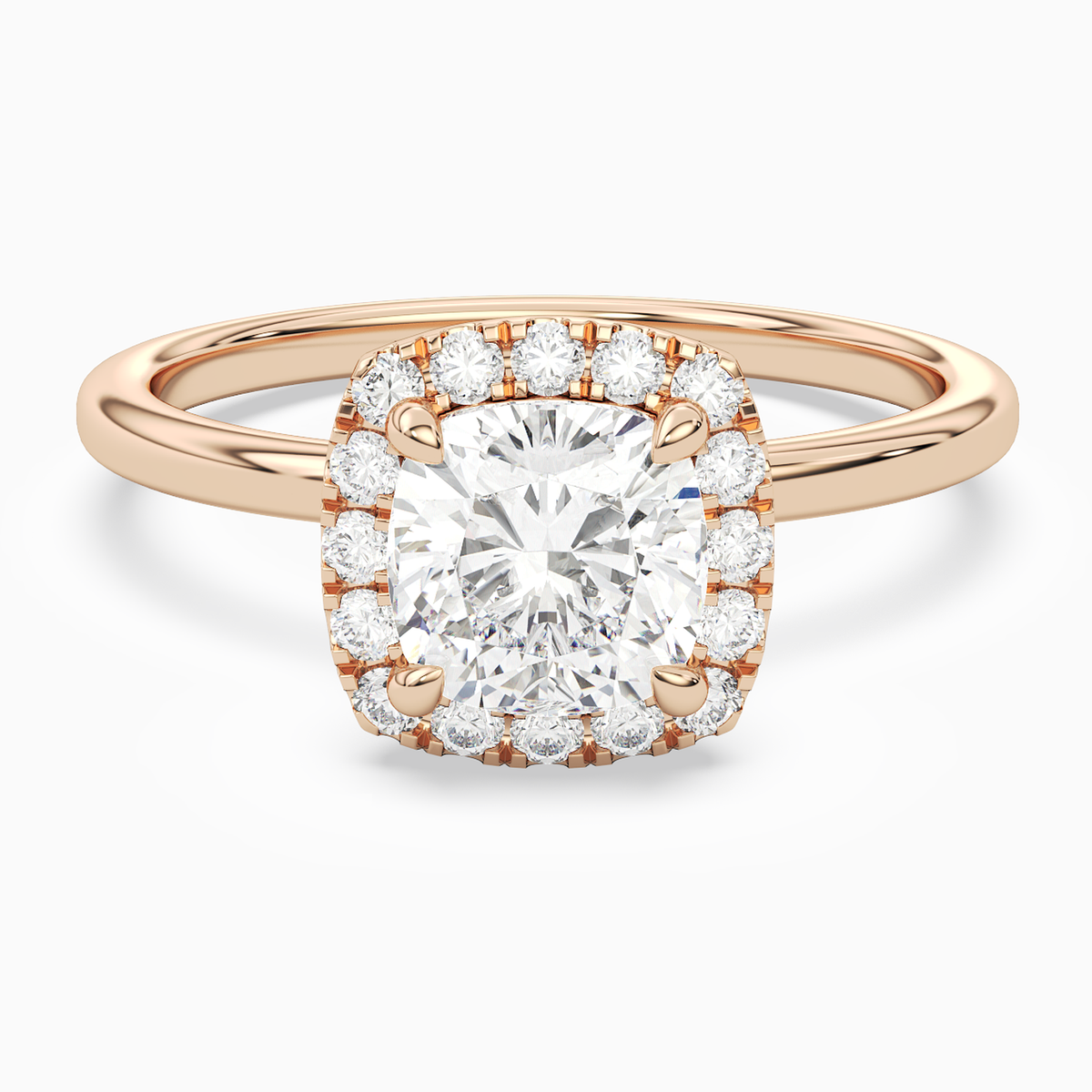
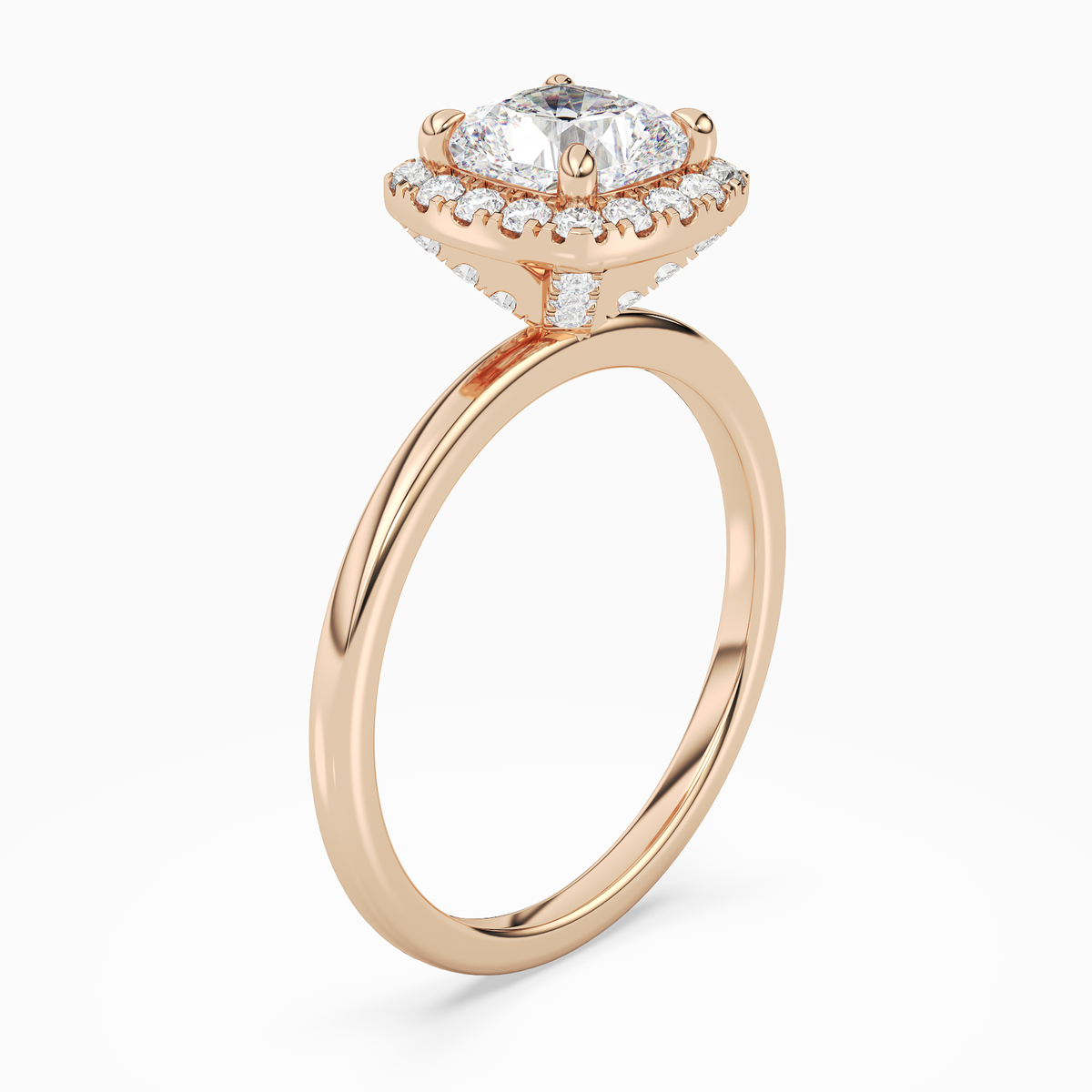
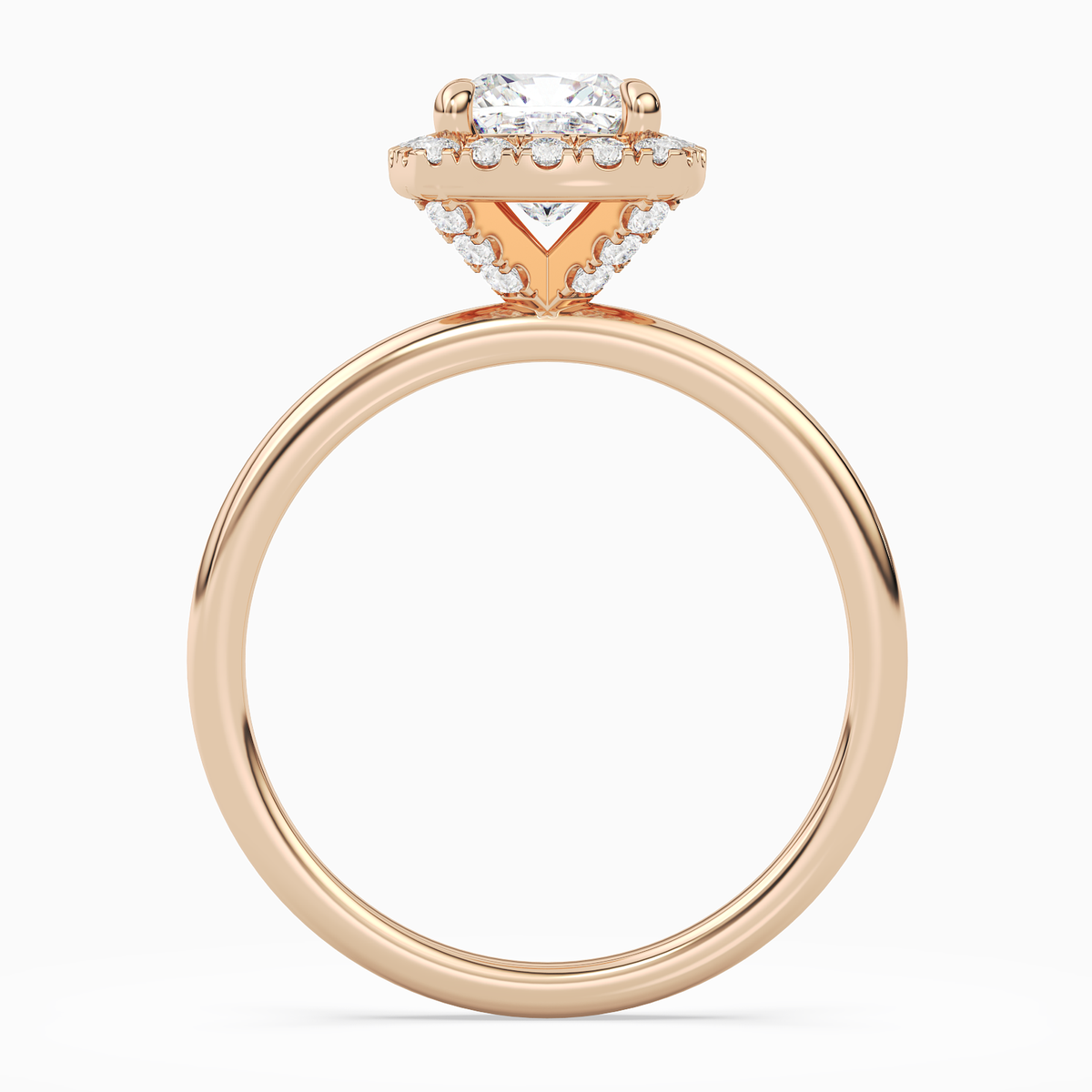
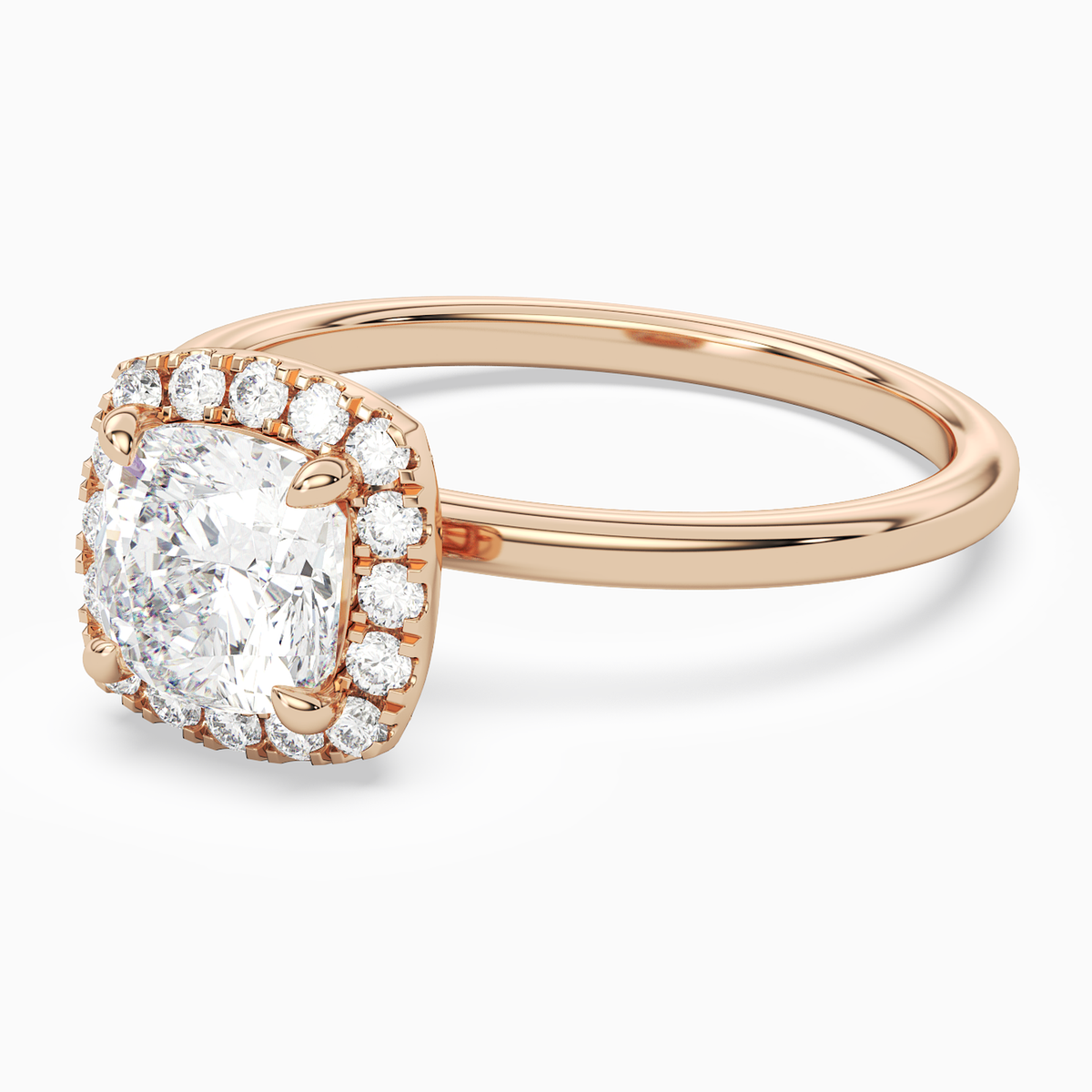
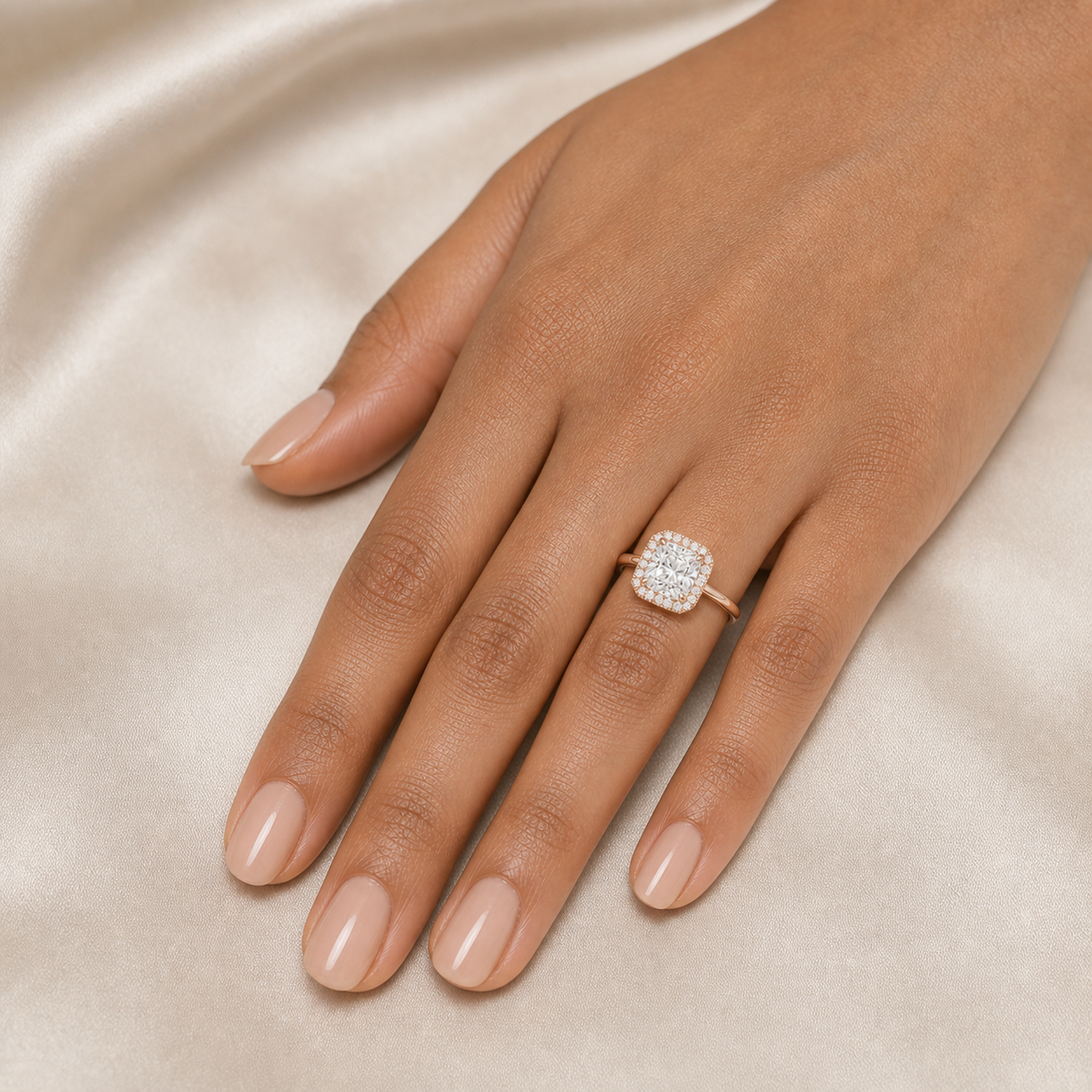


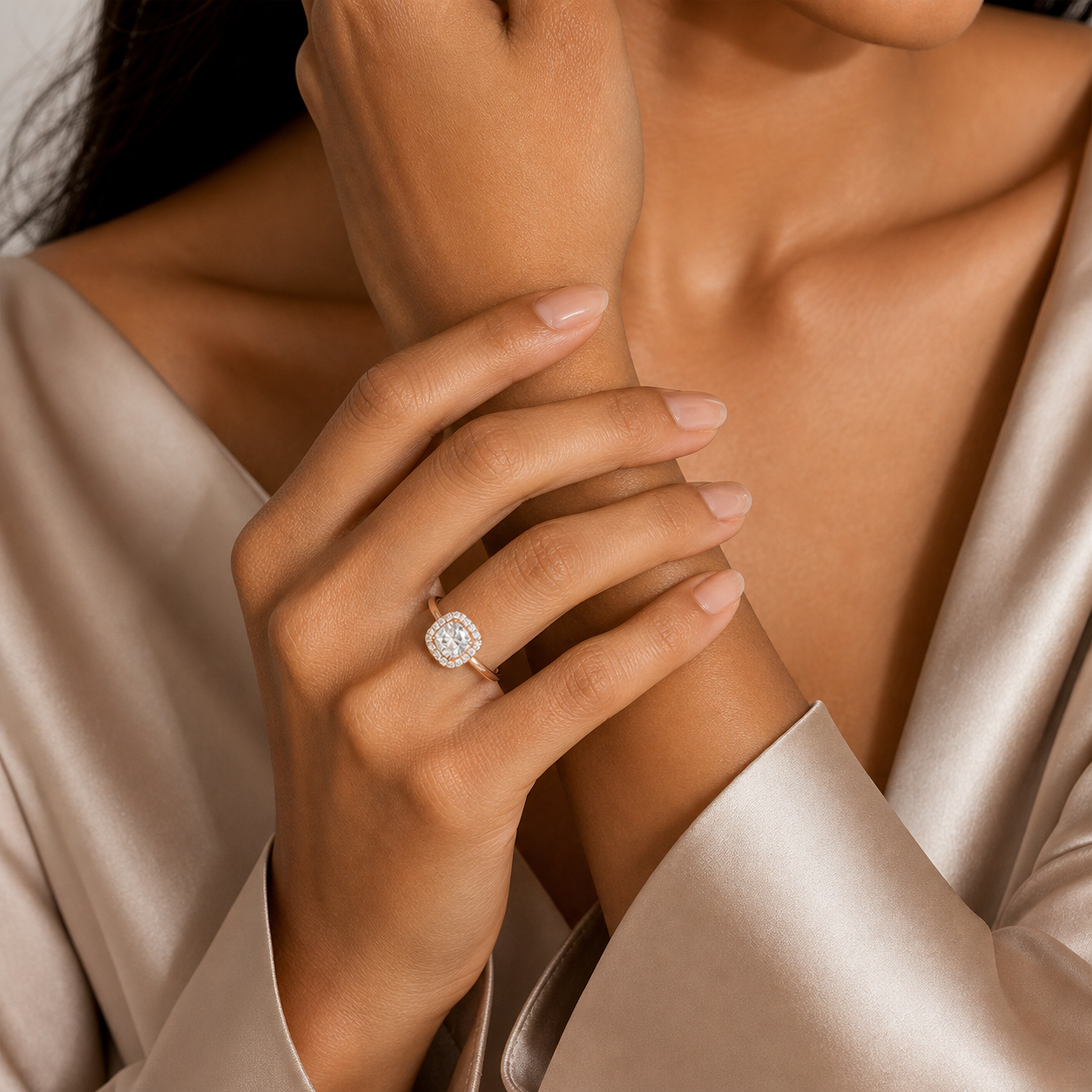
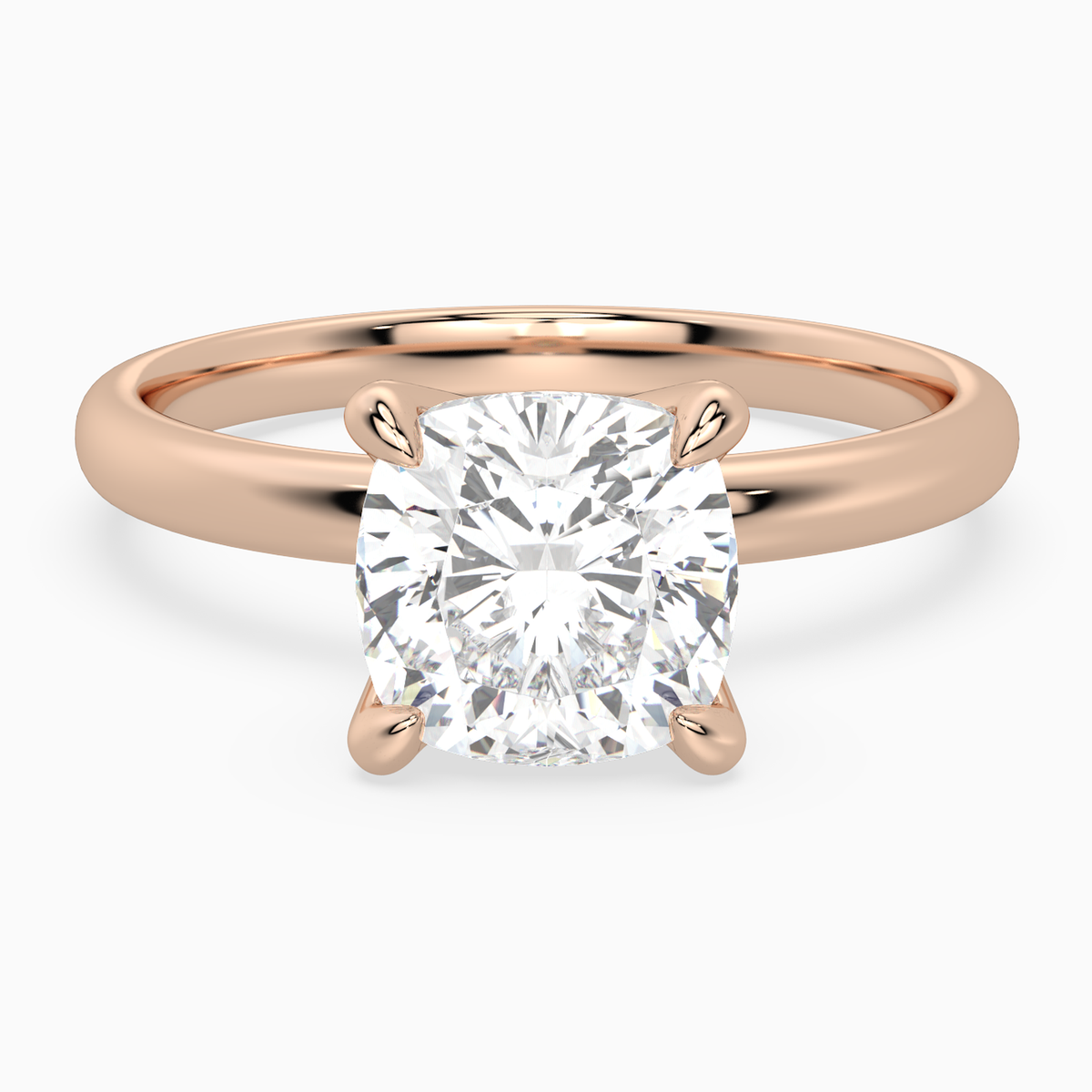

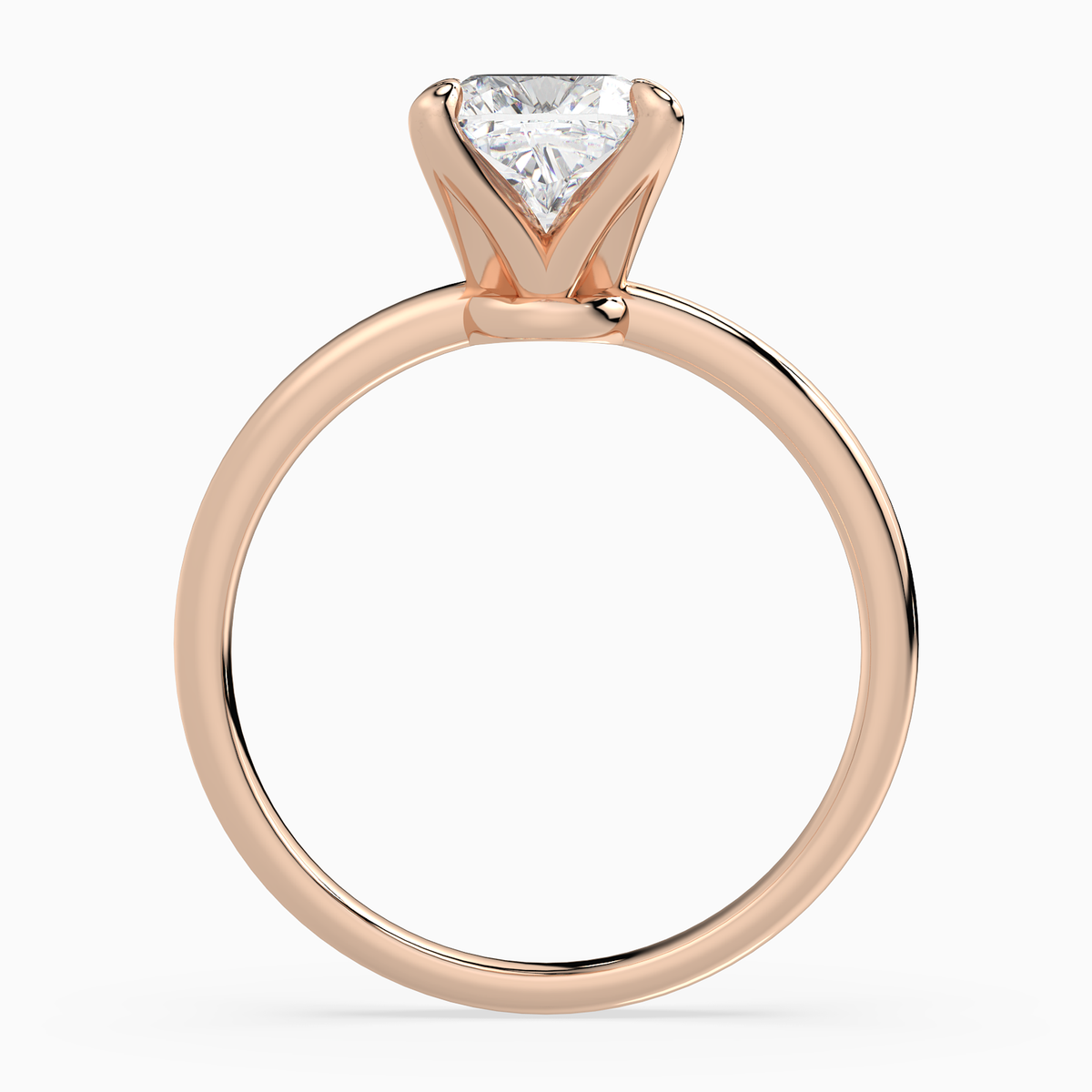
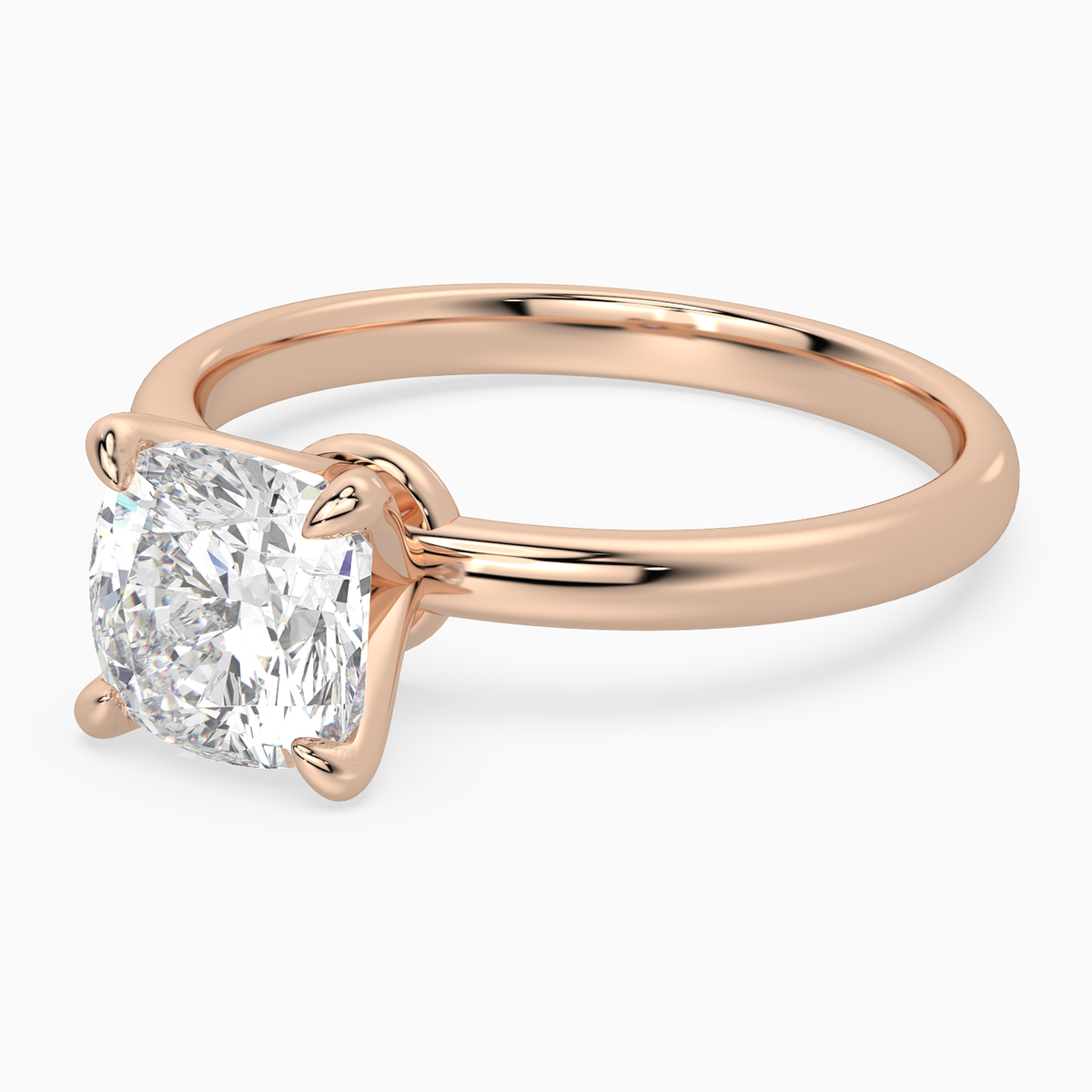
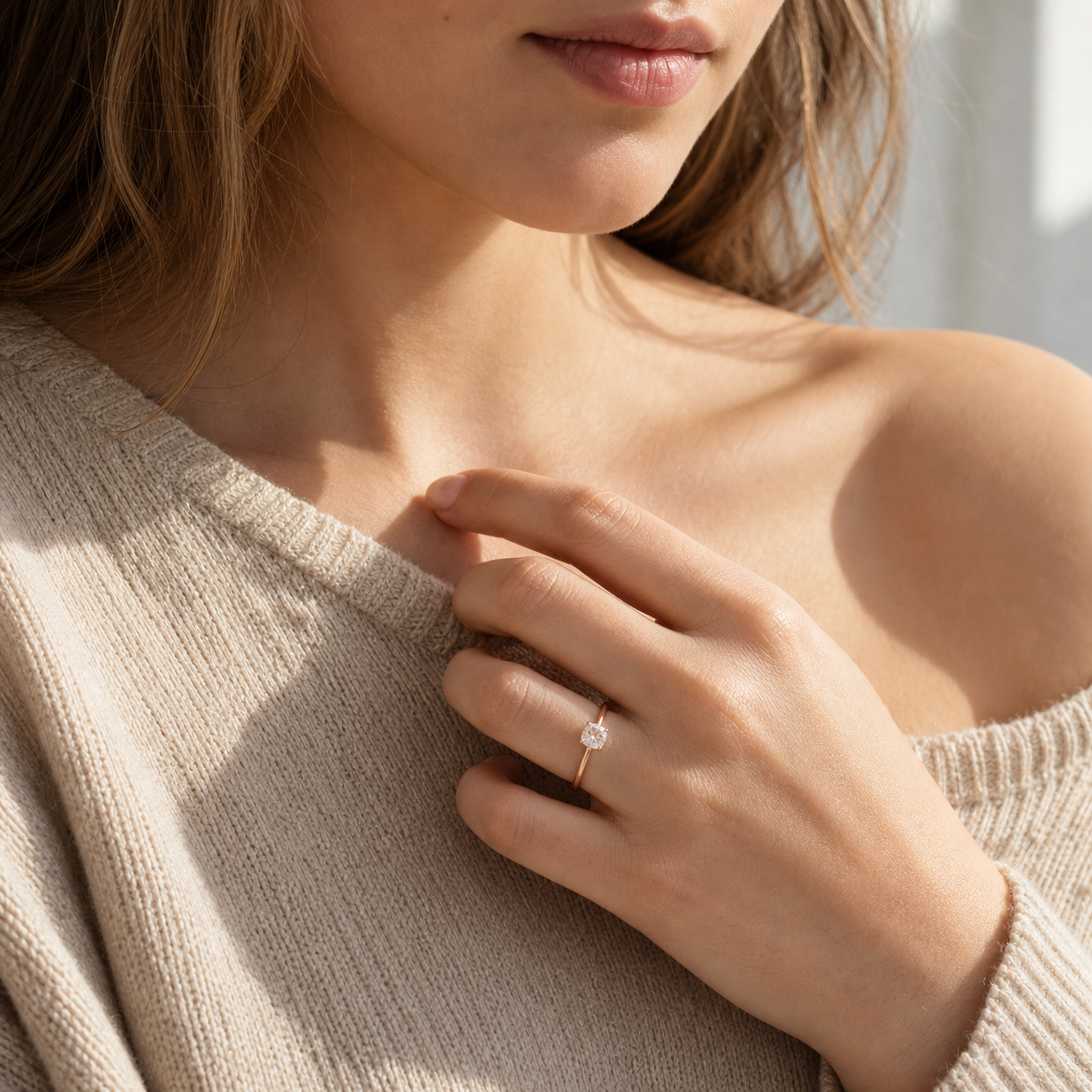
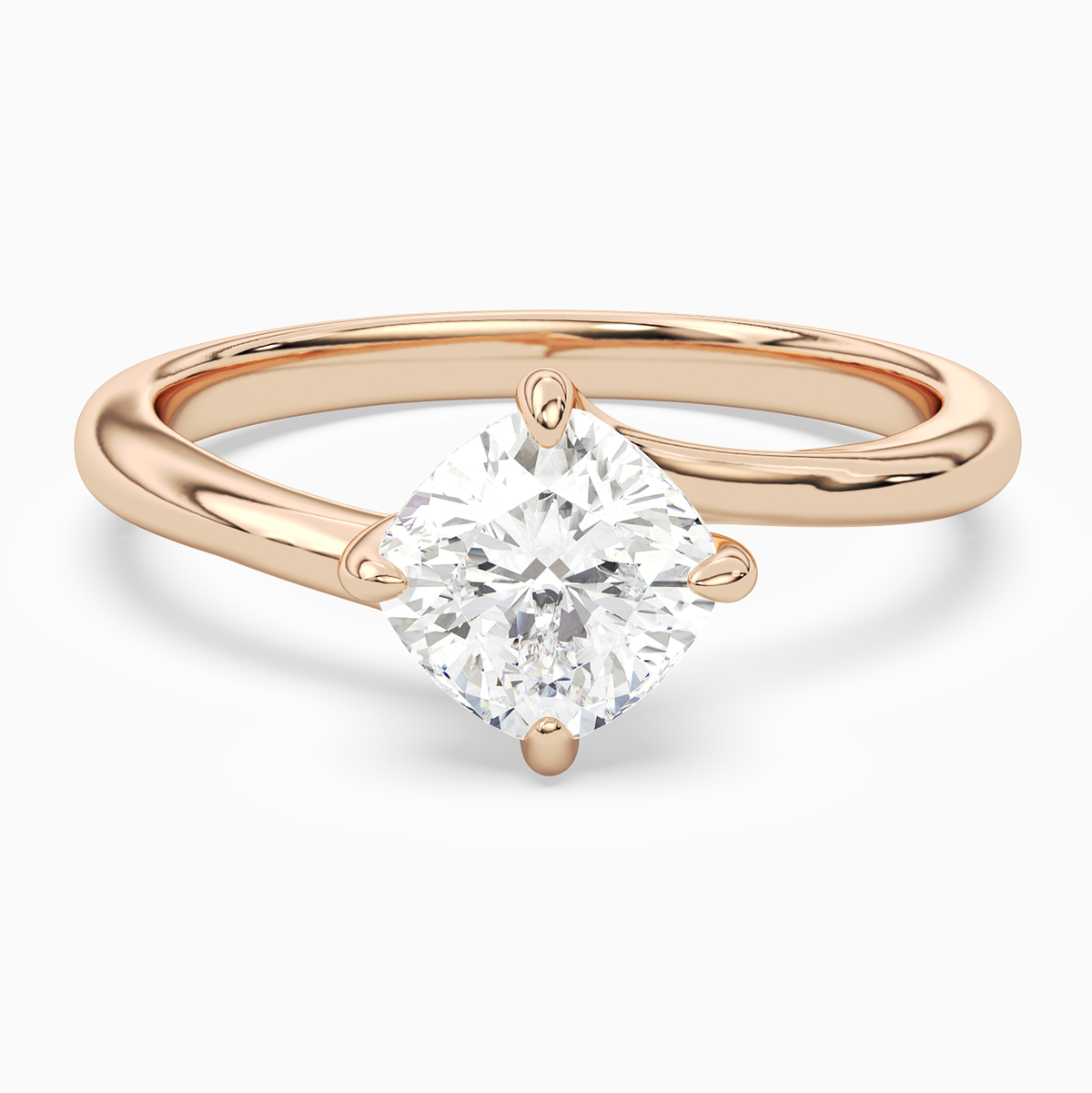
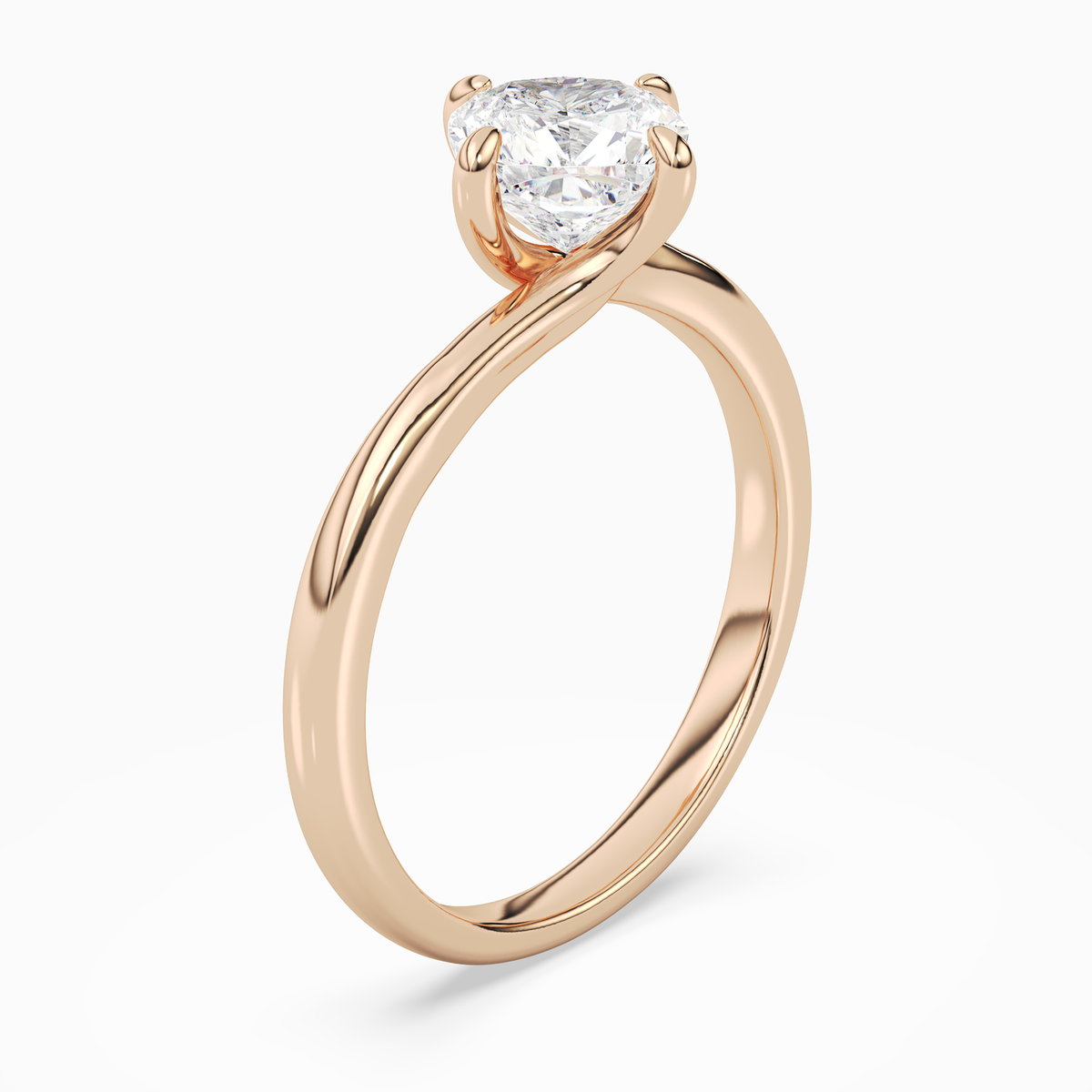
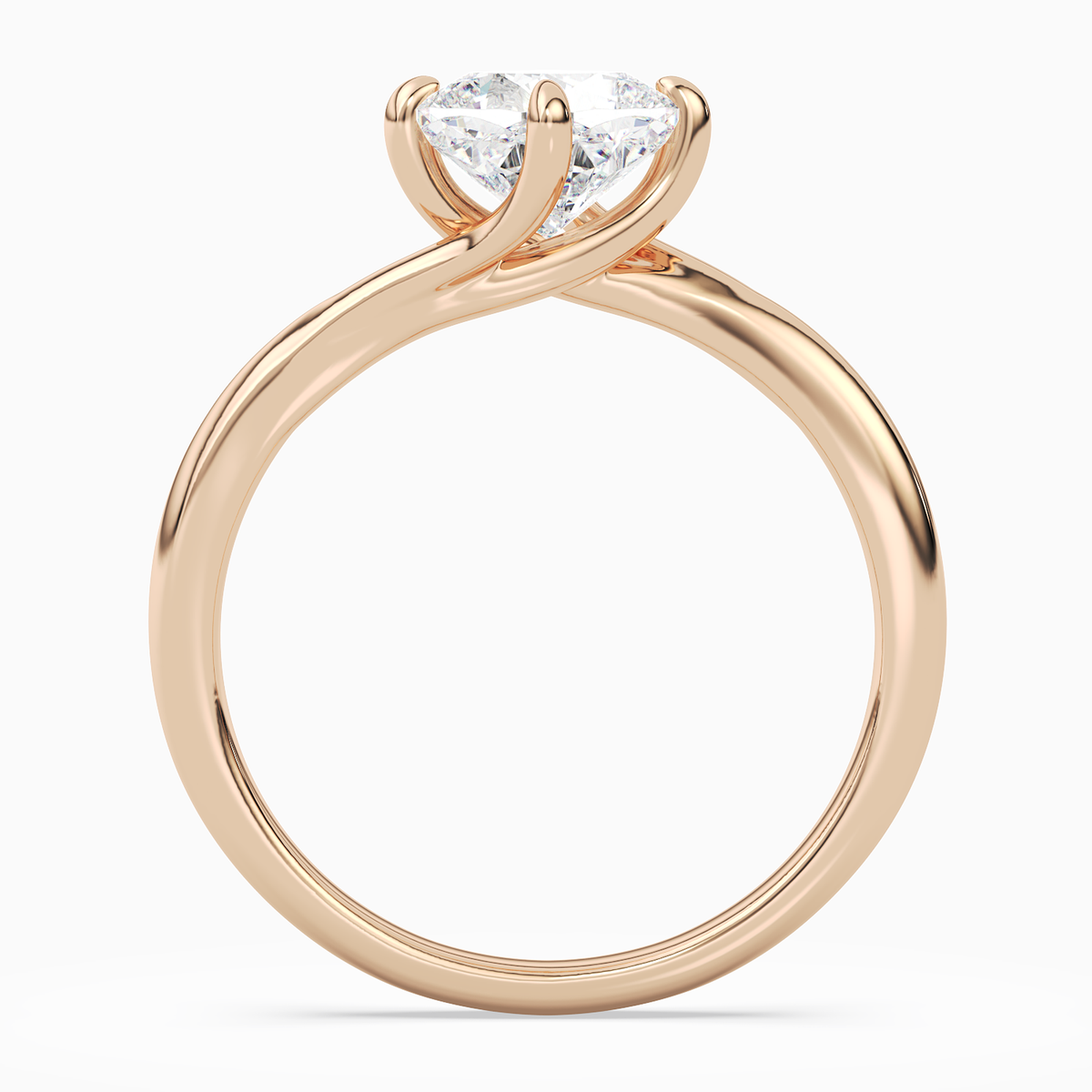


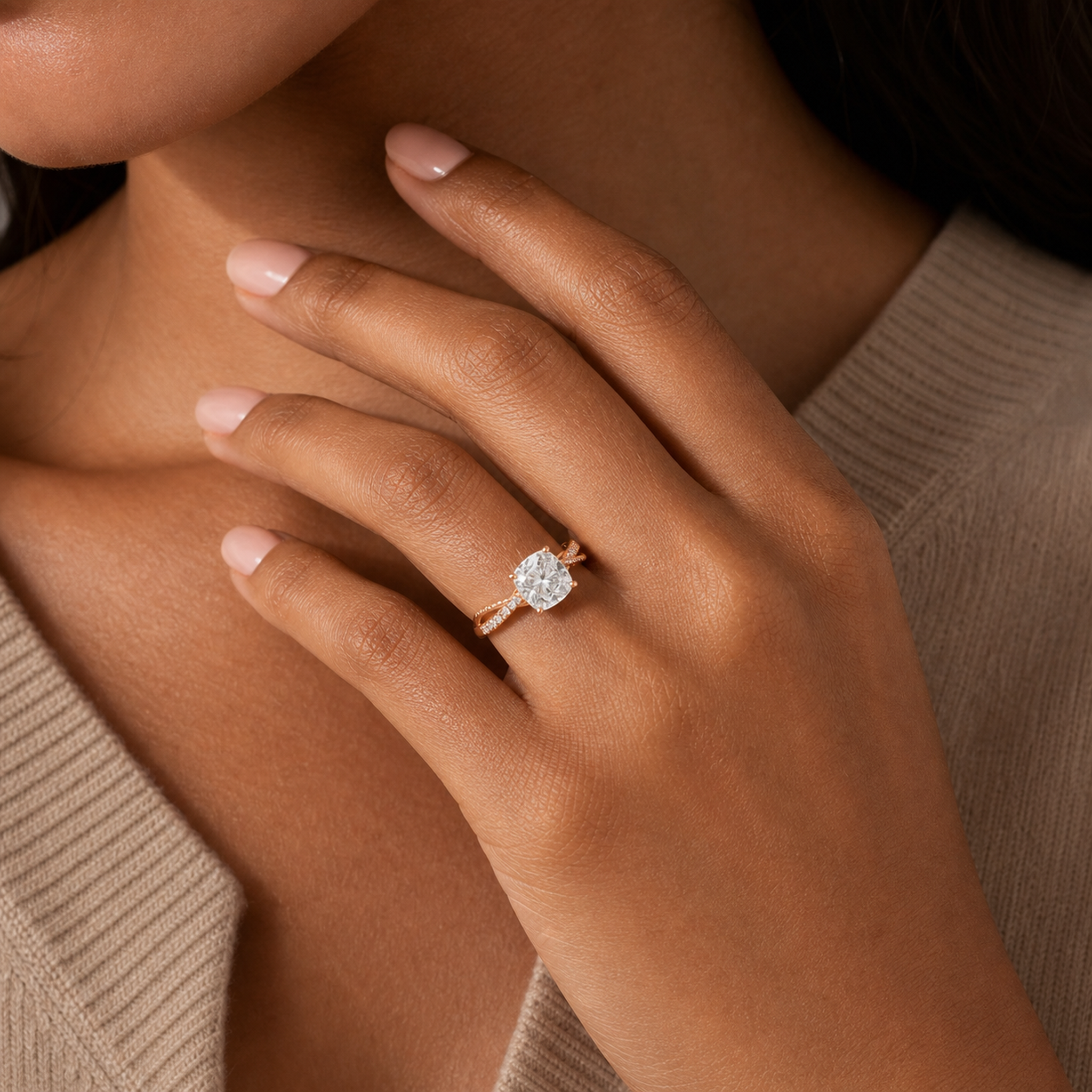
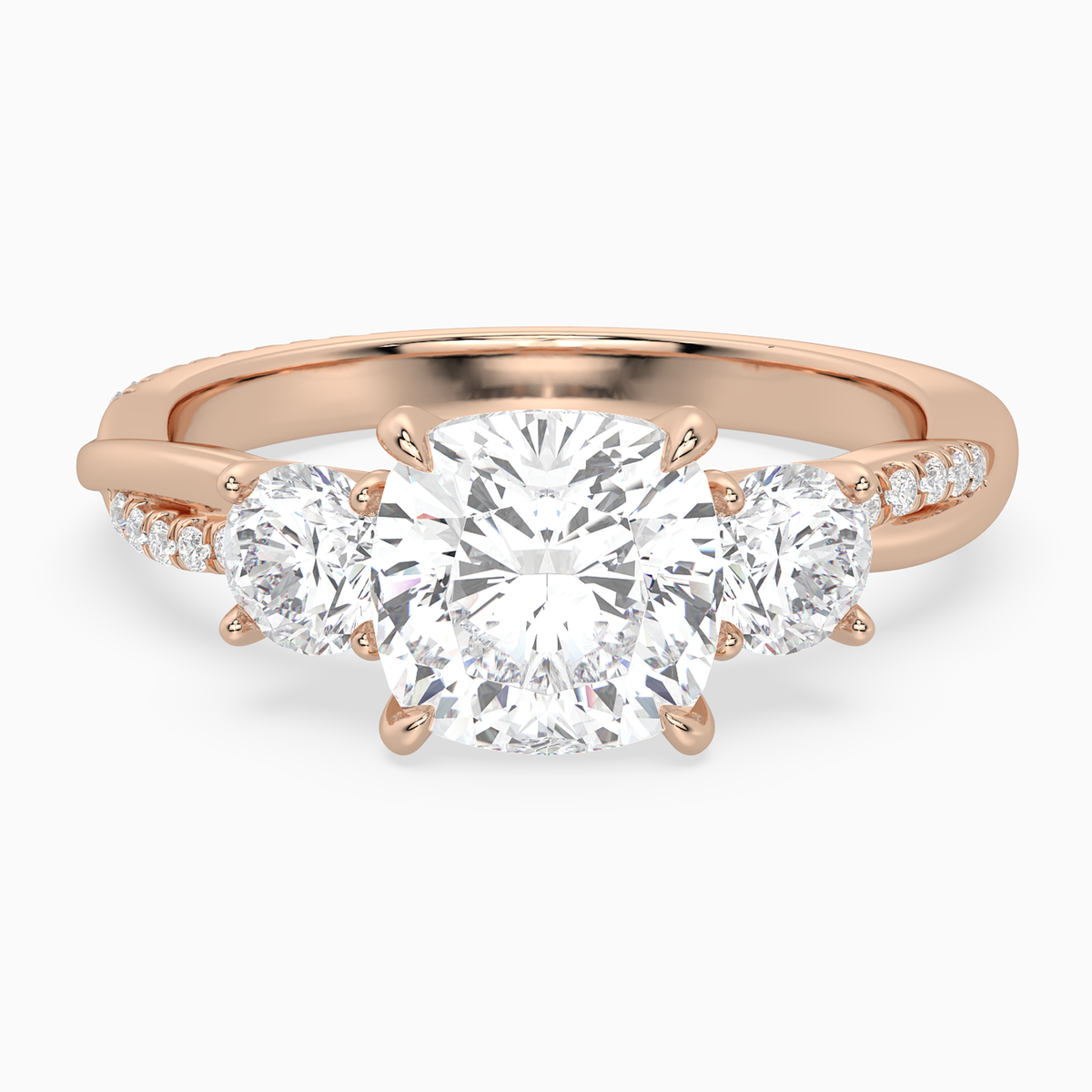
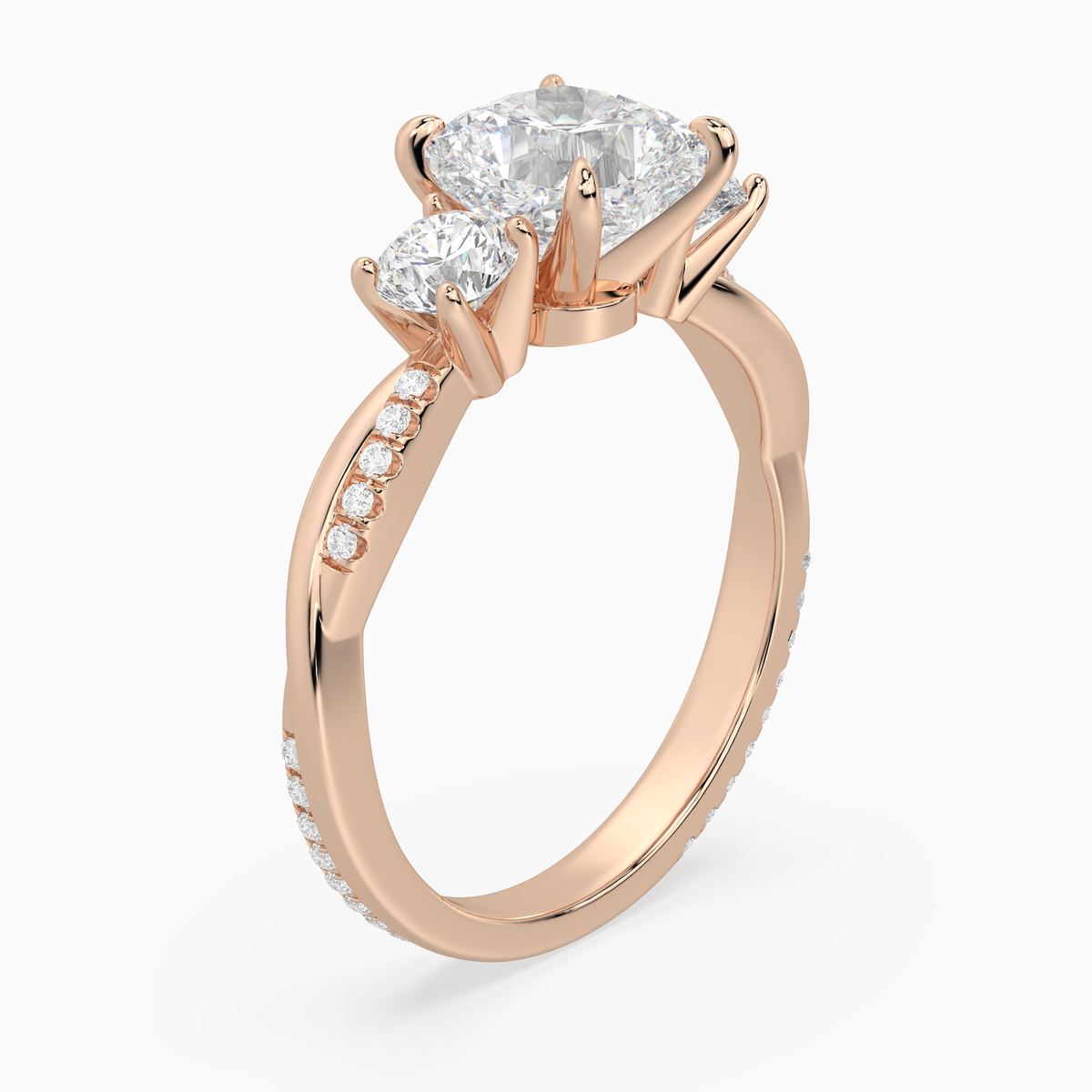

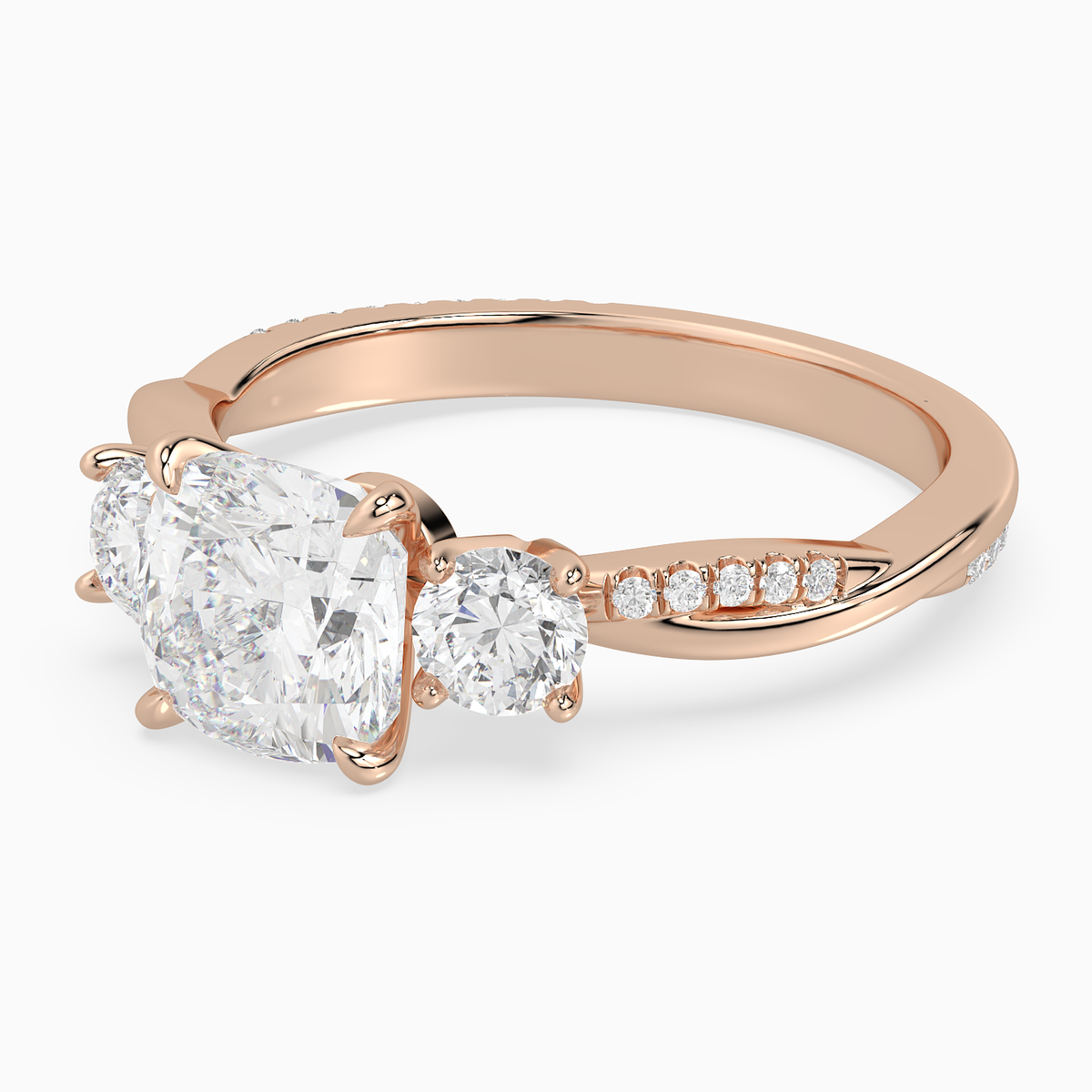
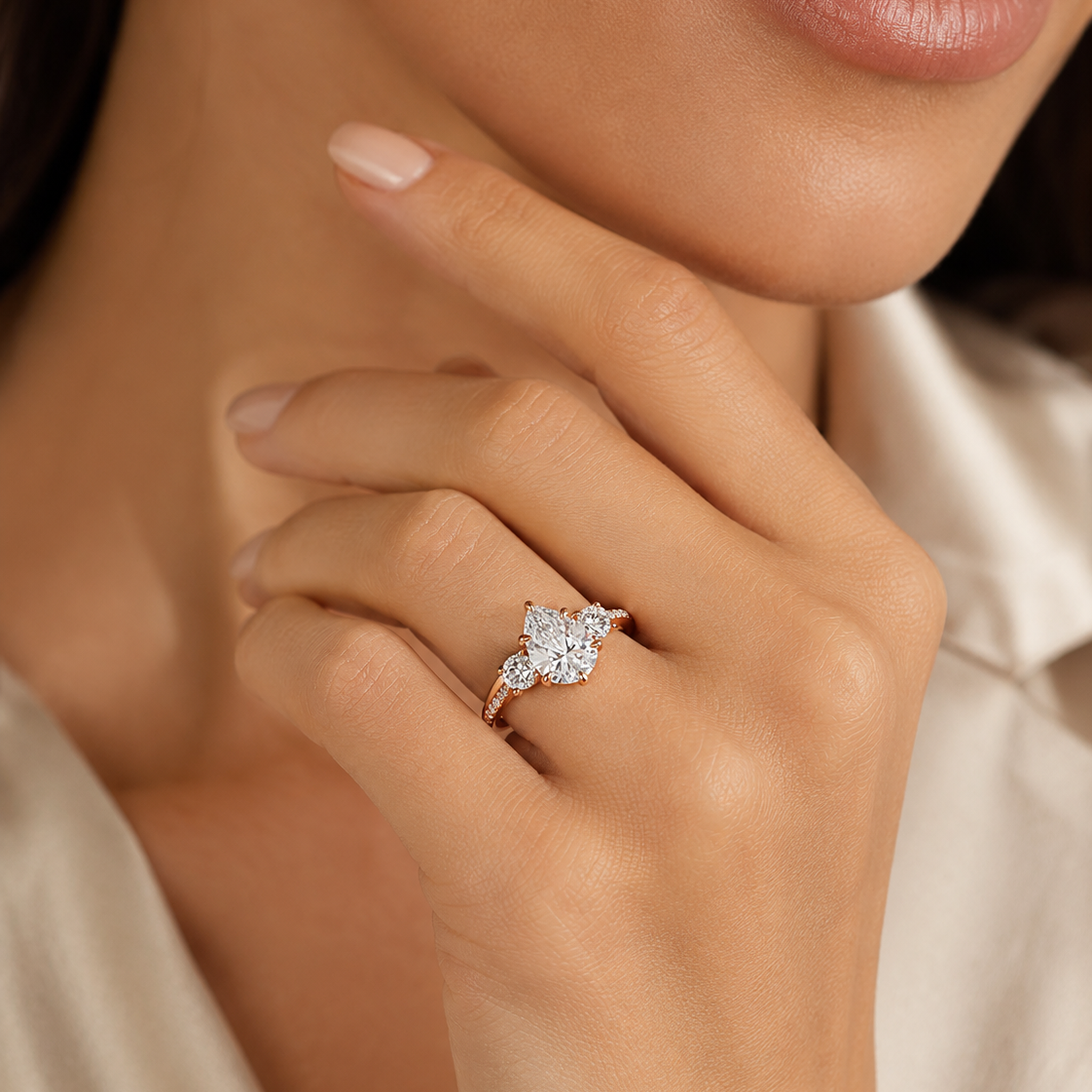
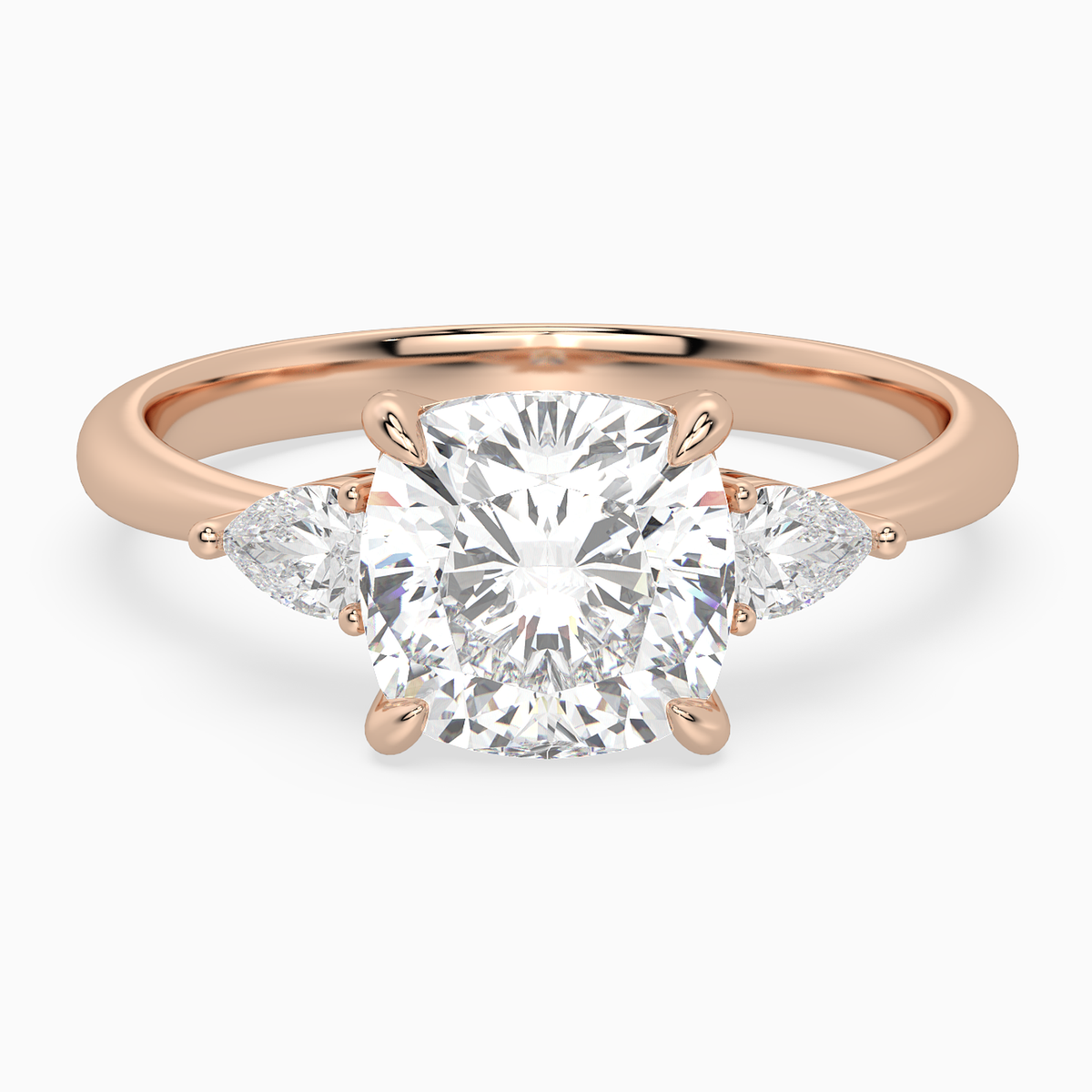

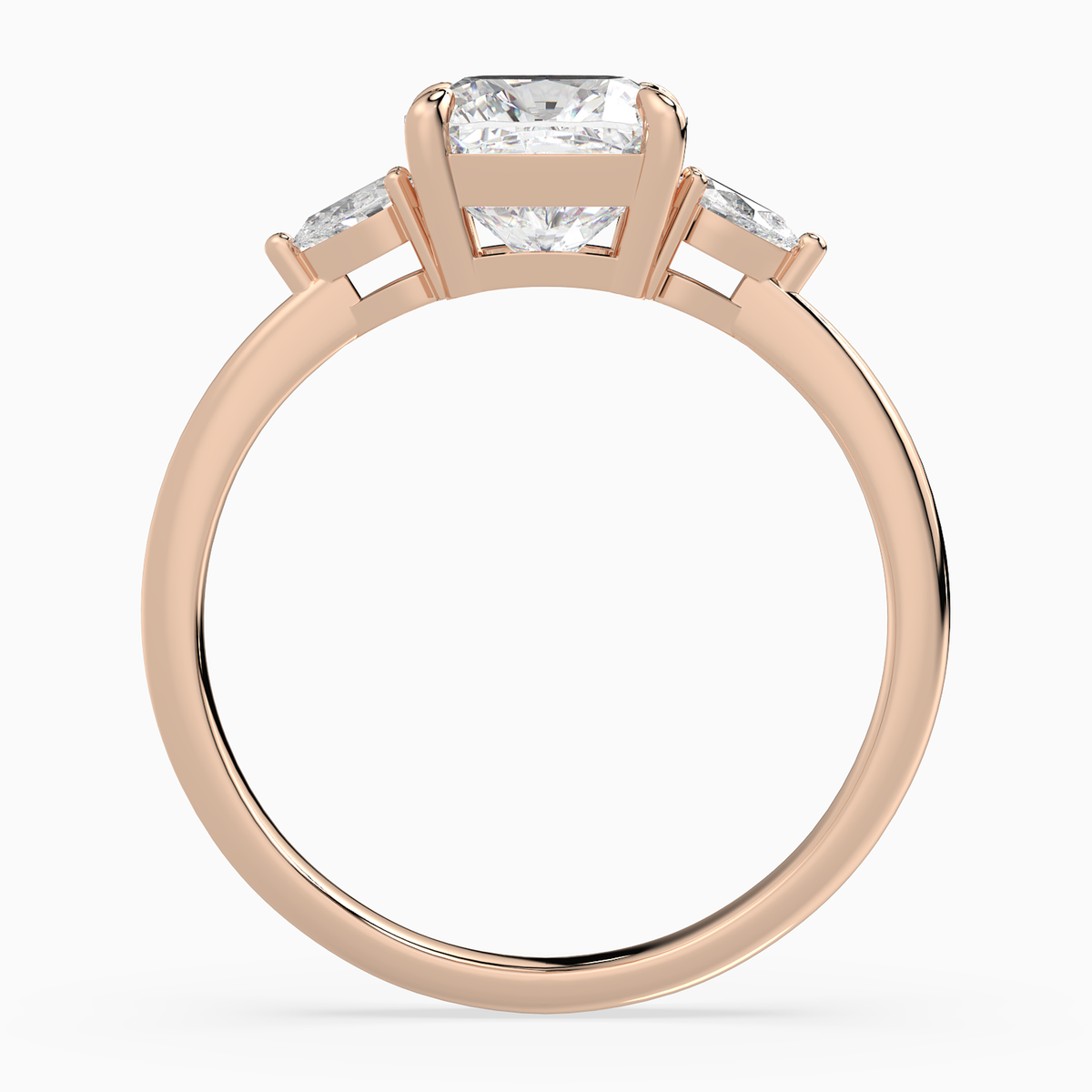
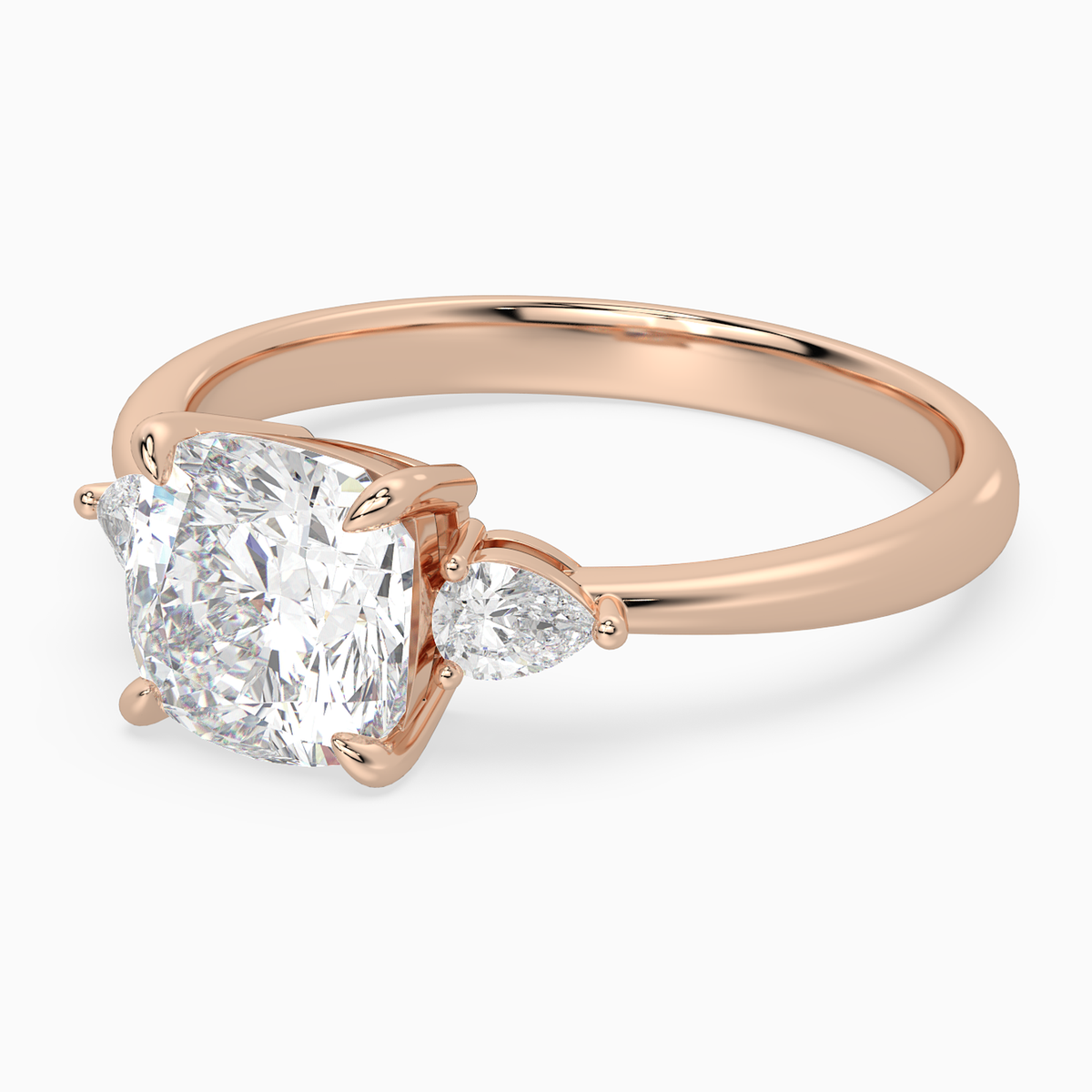

14K Rose Gold Cushion Diamond Engagement Rings: Warmth Around Soft Geometry
A cushion center holds tension between structure and softness. Its perimeter may read square, gently rectangular, or distinctly elongated, while rounded corners keep the transition continuous. In 14K Rose Gold, that geometry meets a blush-toned edge at the prongs, basket, shoulders, or surrounding frame.
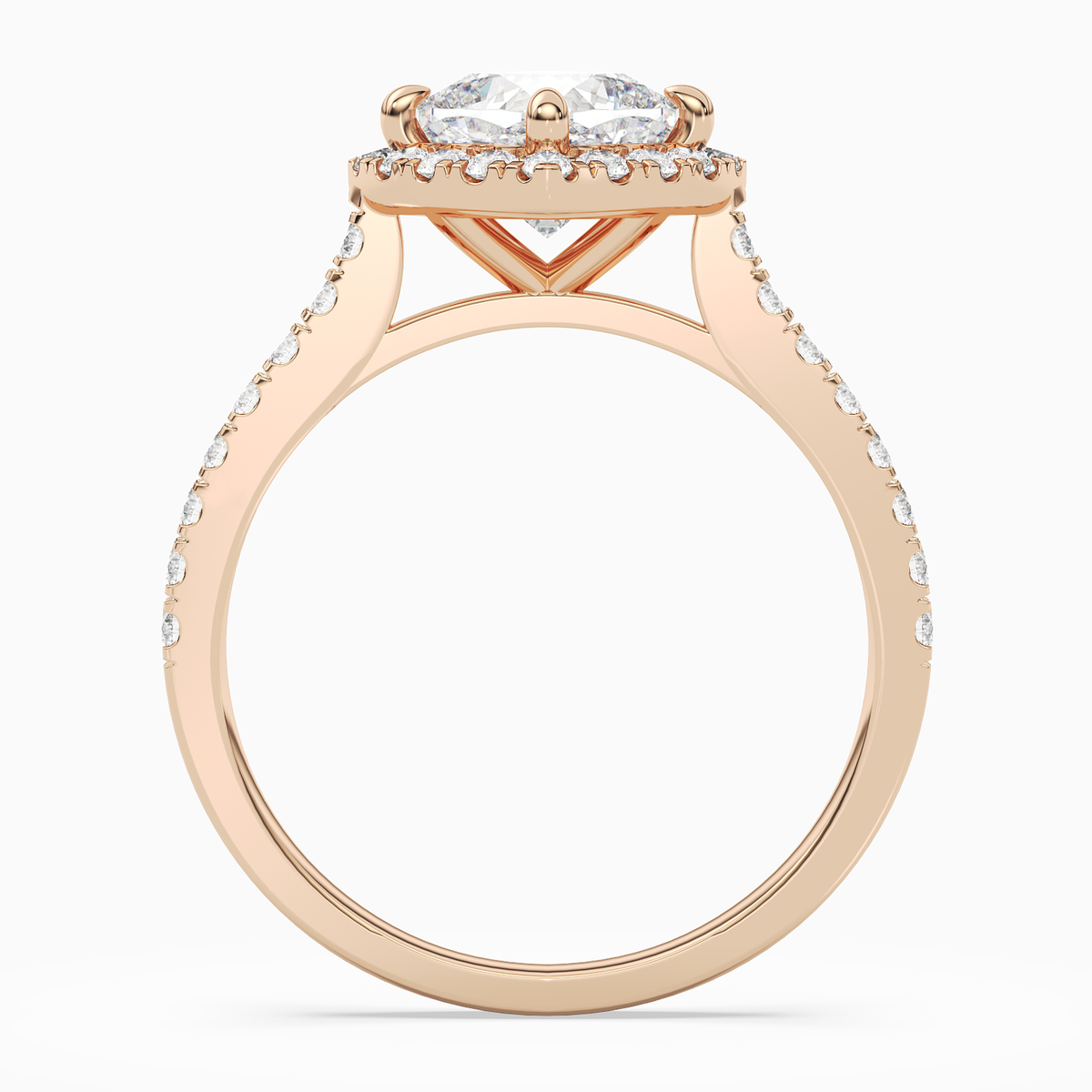
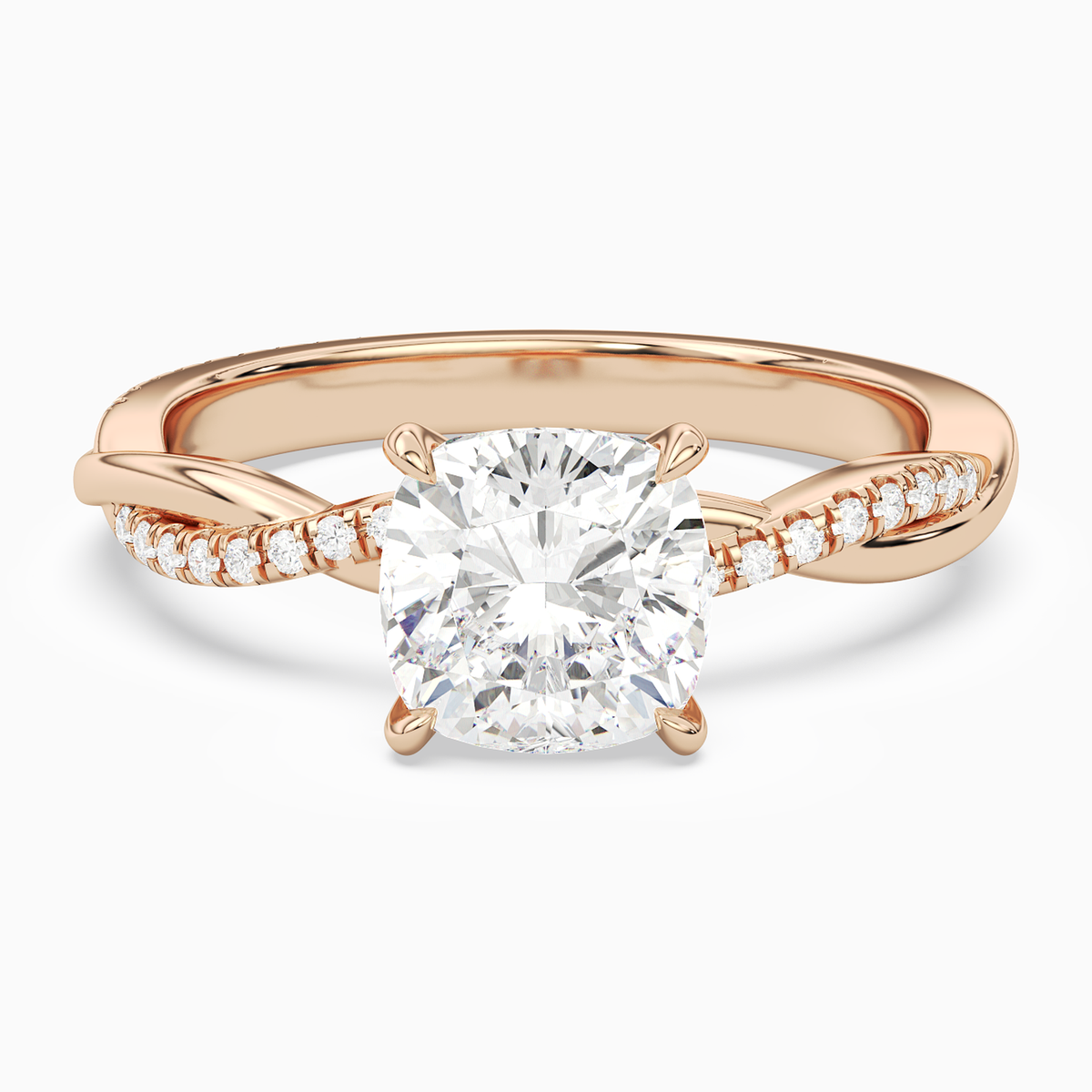
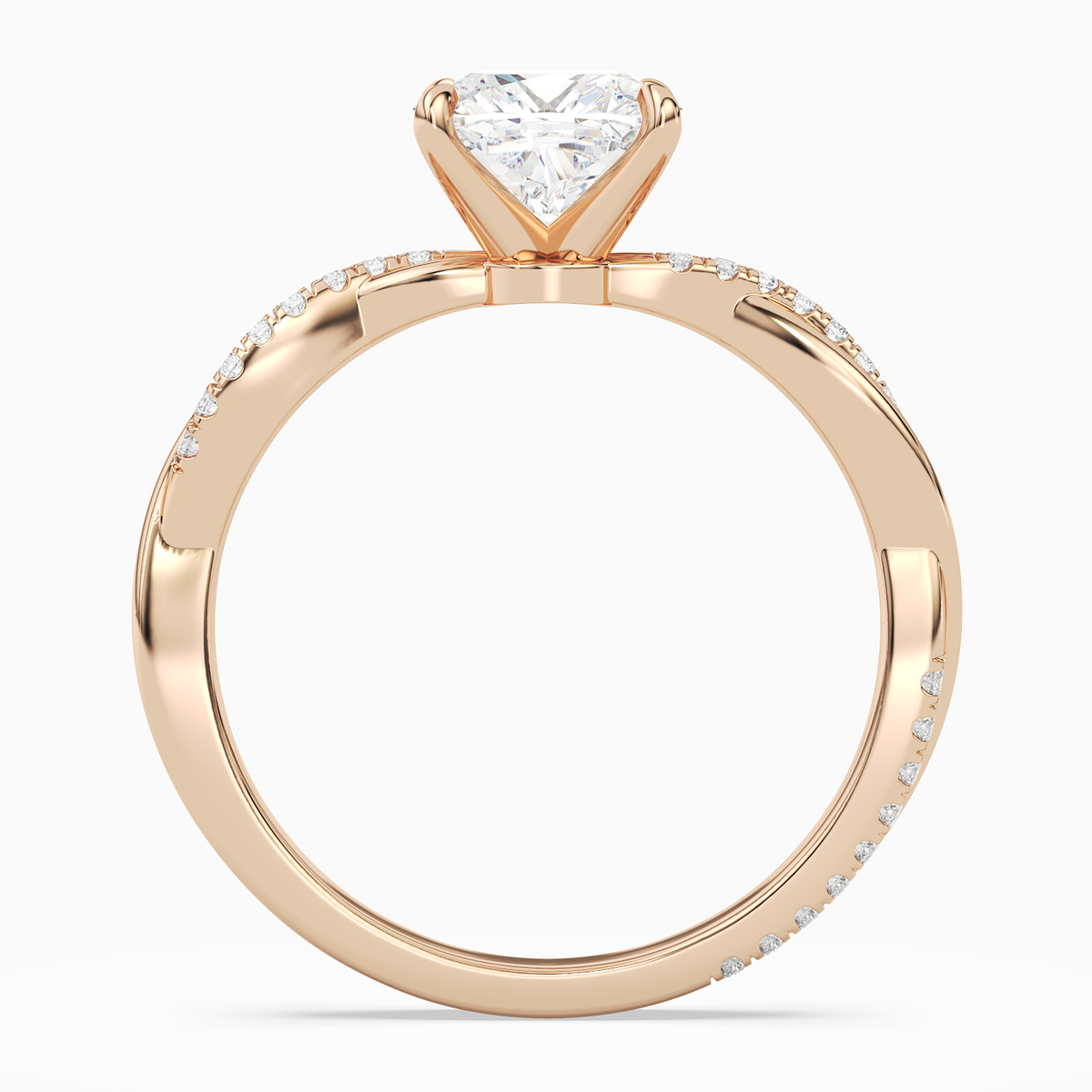
Burvonti's current collection contains 13 designs: six Solitaires, five Halos, and two Three Stone compositions. Open and pavé baskets, hidden halos, a kite halo, octagonal and round frames, split shanks, cathedral shoulders, bypass and vine lines, and pear-shaped side accents expose Rose Gold in different intervals.
Let the Blush Trace the Corners
A 14K alloy contains approximately 58.3% gold. Other alloying metals influence color and working behavior, but the karat mark does not establish one copper percentage, shade, hardness, sensitivity outcome, or maintenance schedule. Finish, lighting, photography, and visible metal area also affect appearance.
Fine prongs create small warm points around the cushion. A basket or halo reveals more color between center and accents, while a broader shoulder extends warmth toward the hand. Rose Gold should clarify the soft-cornered boundary, not become a promise that the diamond looks brighter, larger, or more romantic.
Keep Outline and Light as Separate Decisions
Length-to-width ratio helps describe whether a cushion appears squarer or more elongated. Corner radius, shoulder fullness, side curvature, symmetry, and facet arrangement still shape the result. No single ratio defines the most refined cushion, and metal color cannot correct an unresolved outline.
Cushion Brilliant and Cushion Modified Brilliant are cutting-style descriptions, not guaranteed visual outcomes. Broad flashes and finer-grained patterns can both appear within the family. Rose Gold changes their surrounding color field but not polish, symmetry, dimensions, graded color, or the individual pattern seen in motion.
Thirteen Designs Place Warmth Differently
A Solitaire leaves more negative space around the center and makes prong rhythm, basket, and band approach prominent. A Halo adds a second perimeter and may show Rose Gold between two fields of light. Three Stone designs extend the composition, asking the metal to organize cushion and pear forms across a wider span.
The kite and octagonal halos introduce angular counterpoints to rounded corners; round and pavé halos repeat light more continuously. Cathedral, bypass, vine, and split-shank lines determine whether the blush approaches the center symmetrically, directionally, or through open intervals.
Face-Up Presence Requires Measurements
Carat measures weight. Length, width, depth, outline, and weight distribution help explain visible scale. A cushion may carry depth differently from another cushion of equal weight, while a halo, fine band, or split shank changes the scale of the complete ring again.
Color and clarity also remain individual. A warm setting may alter perceived contrast, but it does not change the report. Review dimensions, report details, images or video, and the finished configuration instead of applying one universal color, clarity, ratio, or crushed-ice rule.
A Warm Boundary, Resolved as One Ring
Wedding-band fit depends on basket width, halo, center height, shoulders, side stones, and contact points. A straight band may sit close or leave an intentional interval. Metal color cannot guarantee flush fit, low rotation, universal comfort, or one resize outcome.
Burvonti pairs responsibly sourced, independently graded lab-grown diamonds with settings calibrated through proportion and human judgment. Custom possibilities may refine outline, facet character, center specifications, prongs, basket, band, accents, metal, or engraving where feasible. The aim is warmth at the edge without losing the cushion's individual structure.
Frequently Asked Questions
How is this page different from the main Cushion Collection?
The parent owns outline, ratio, facet pattern, light, and setting response across metals. This child page focuses on how 14K Rose Gold frames the soft-cornered geometry.
How much gold is in 14K Rose Gold?
Approximately 58.3%. The remaining alloying metals influence color and working behavior.
Are all 14K rose gold rings the same shade?
No. Alloy formula, finish, lighting, photography, and exposed metal area can change the blush appearance.
Does Rose Gold make a cushion diamond look brighter?
No. It changes the surrounding color field, not the diamond's facet relationships or light performance.
Does Rose Gold work differently with square and elongated cushions?
The metal can trace either outline, but corner shape, ratio, setting scale, and visible metal determine the result.
Which structures are represented?
The current 13-design collection includes six Solitaire, five Halo, and two Three Stone structures.
Is there one ideal cushion ratio?
No. Ratio describes square-to-elongated outline and should be judged with corners, shoulders, faceting, and setting.
What does crushed ice mean?
It is a trade description for a fine-grained virtual-facet texture, not a GIA quality grade or universal result.
Will warm prongs make the center look larger?
They may change edge contrast, but they do not change the diamond's dimensions or carat weight.
Can Rose Gold cause sensitivity?
Sensitivity depends on the complete alloy and wearer. Karat and color alone cannot establish a universal outcome.
Does a halo change the cushion's shape?
It adds a second perimeter that can change how the total silhouette reads, without changing the center's measurements.
Will a straight wedding band sit flush?
Not automatically. Basket, halo, shoulders, height, side stones, and contact points determine the relationship.
Can Burvonti personalize a Rose Gold Cushion ring?
Custom possibilities may include center specifications, outline, prongs, basket, band line, accents, metal, or engraving, subject to feasibility.