
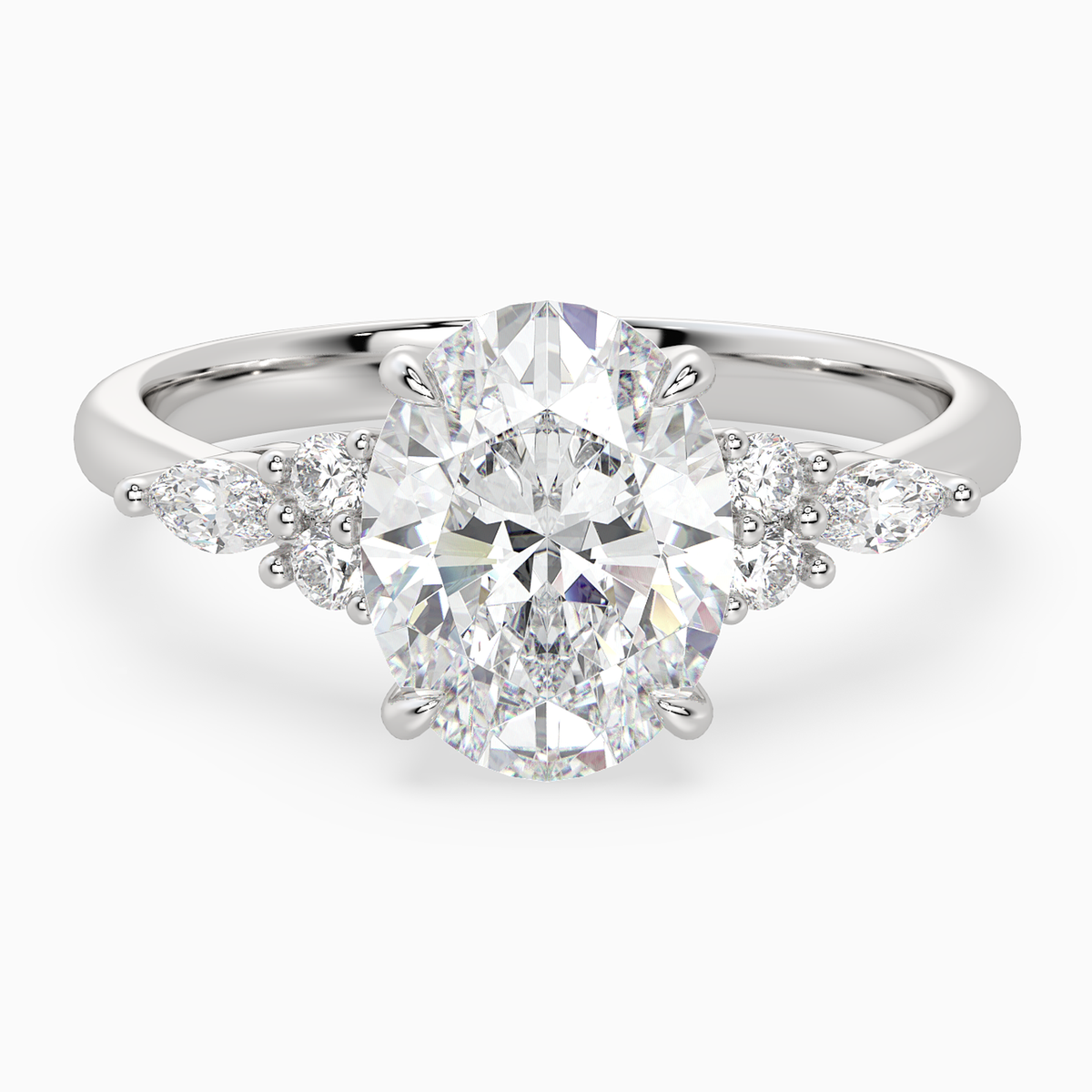


Toi Et Moi Engagement Rings in 18K White Gold
A quieter field with considered substance. In 18K white gold, two centers share tone while retaining separate shape and direction.


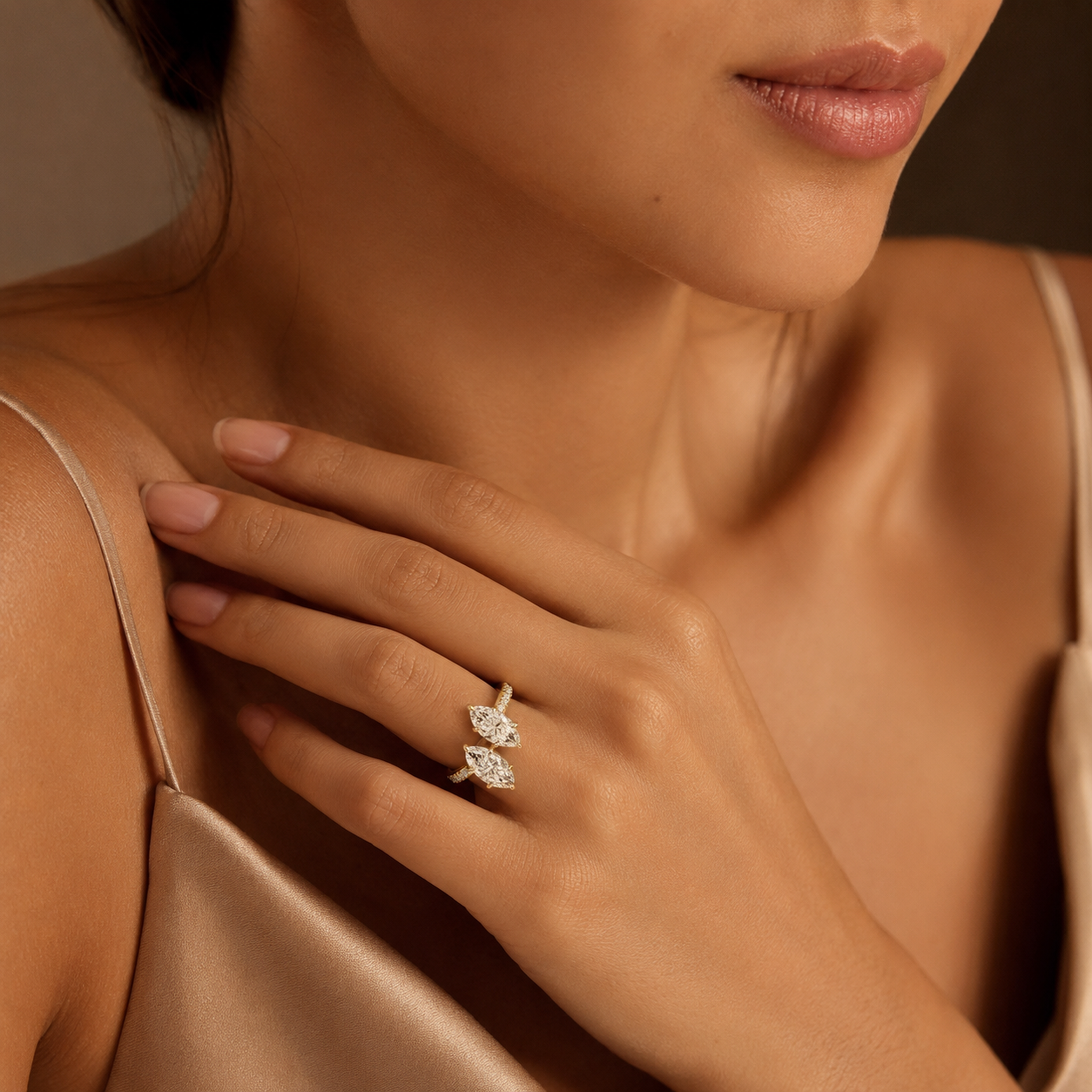


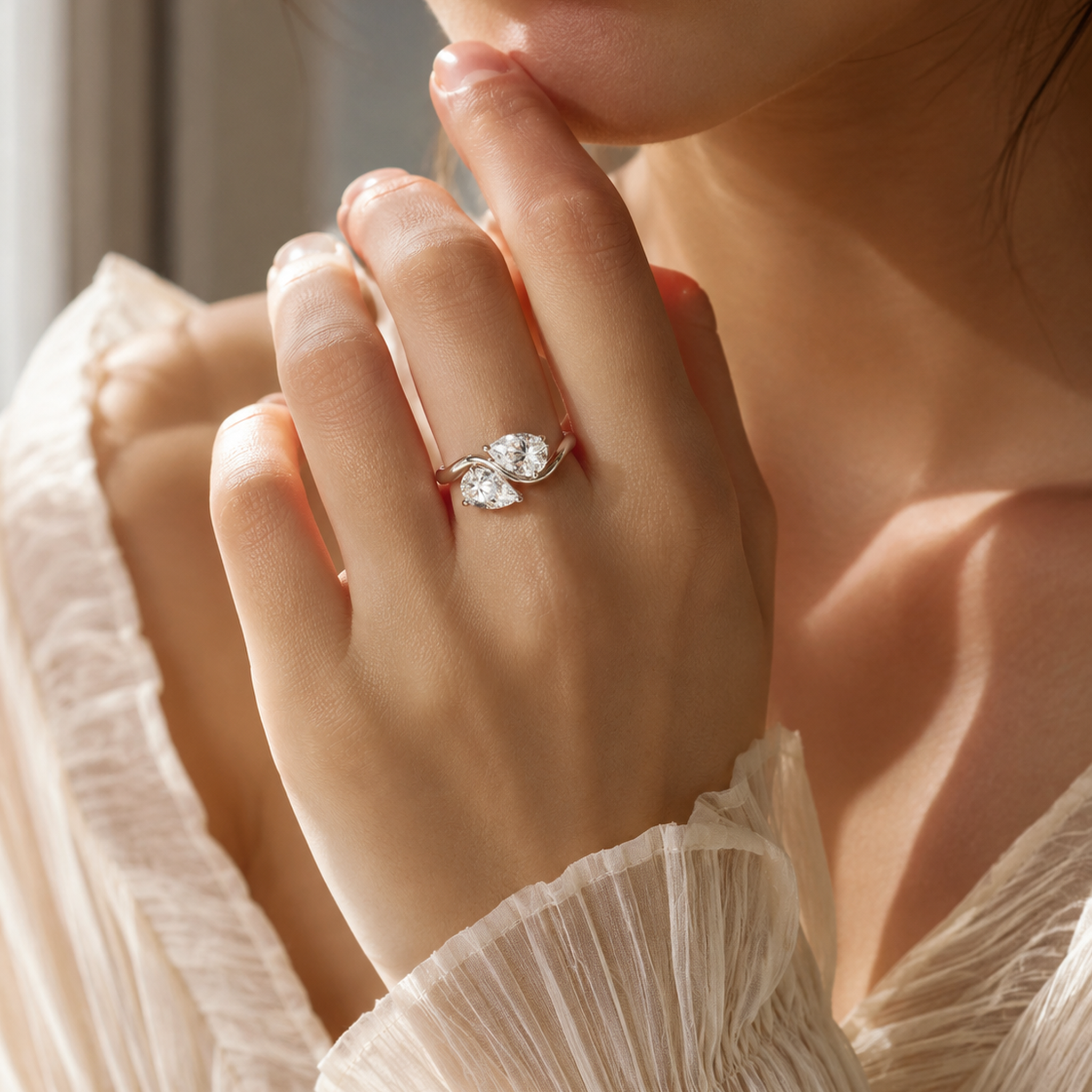


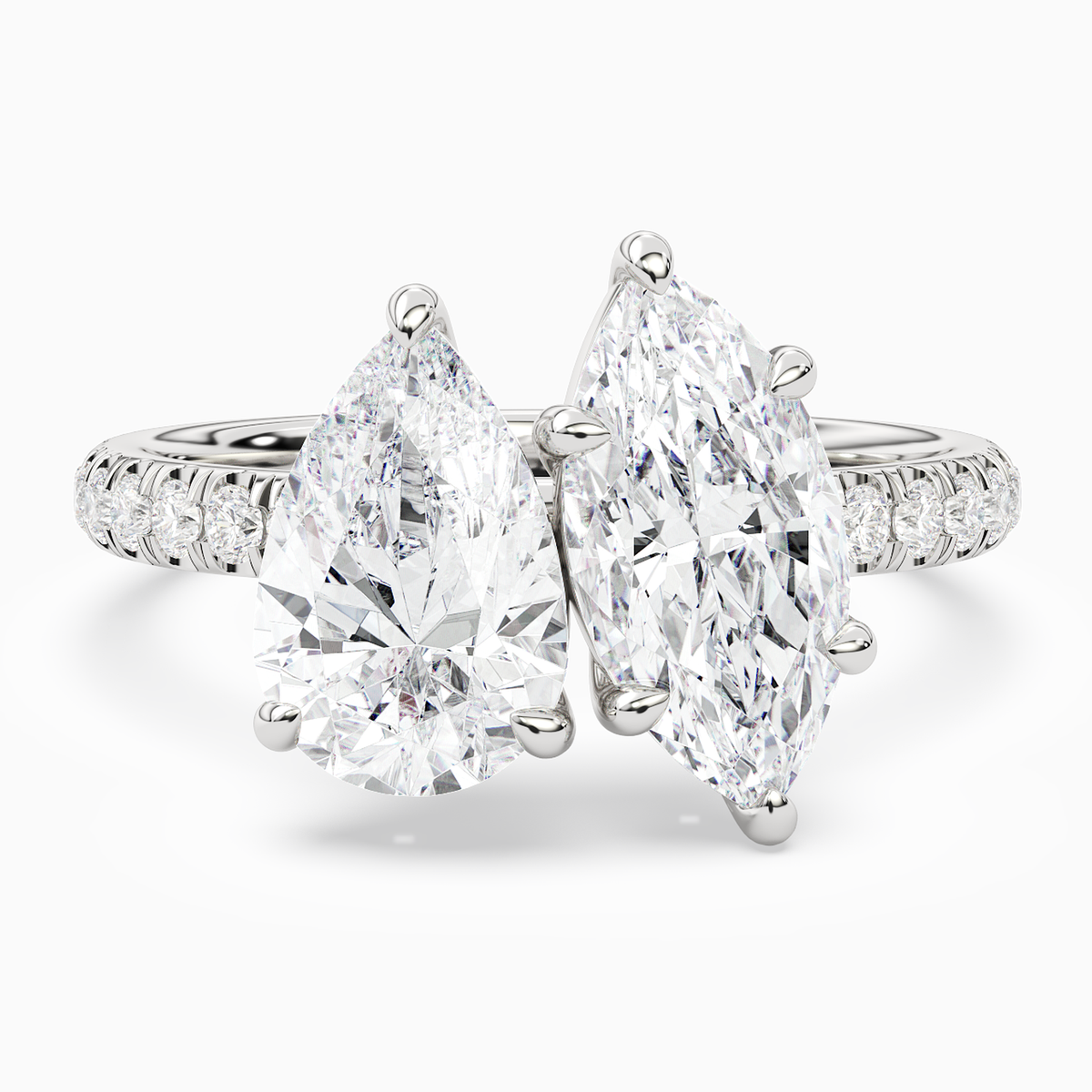

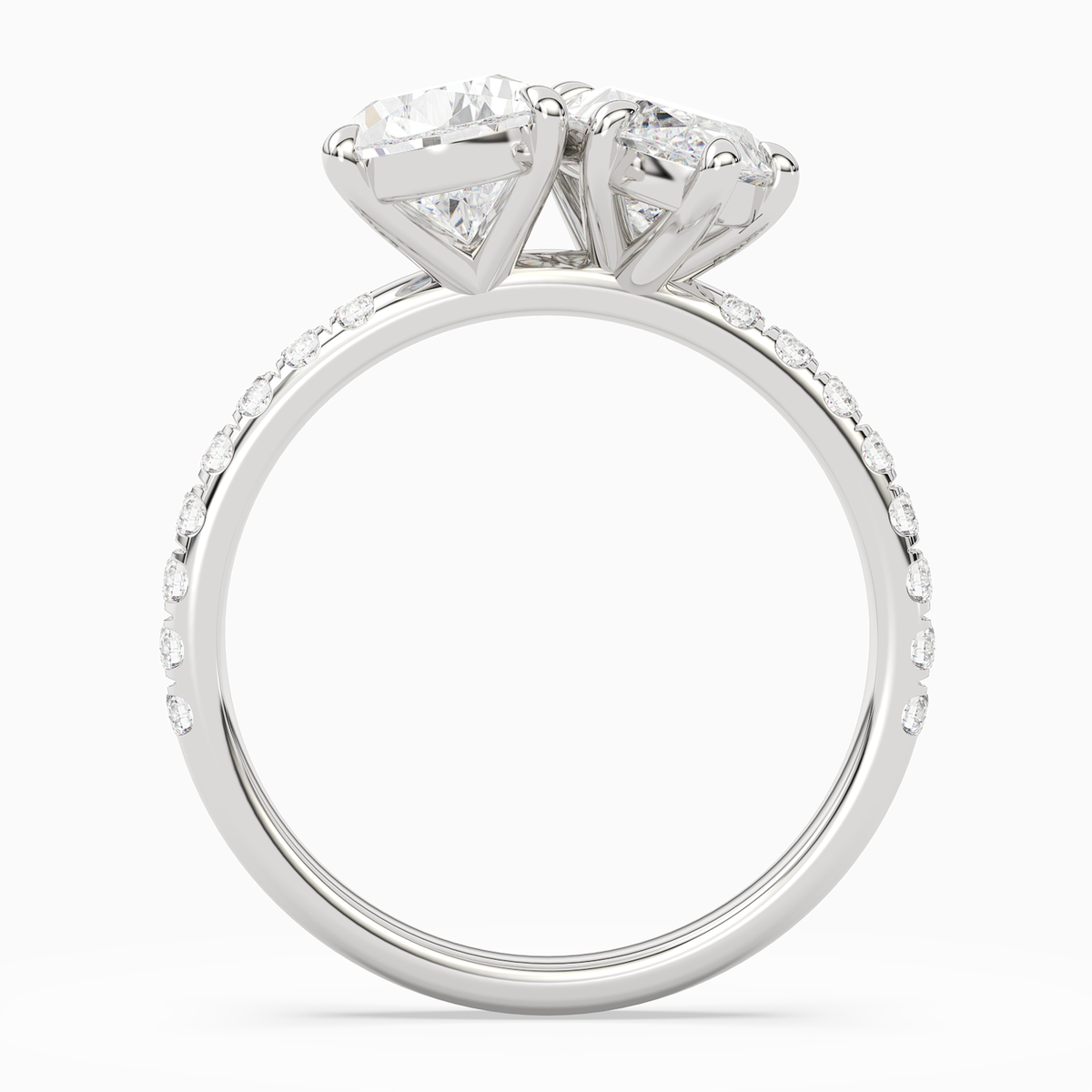

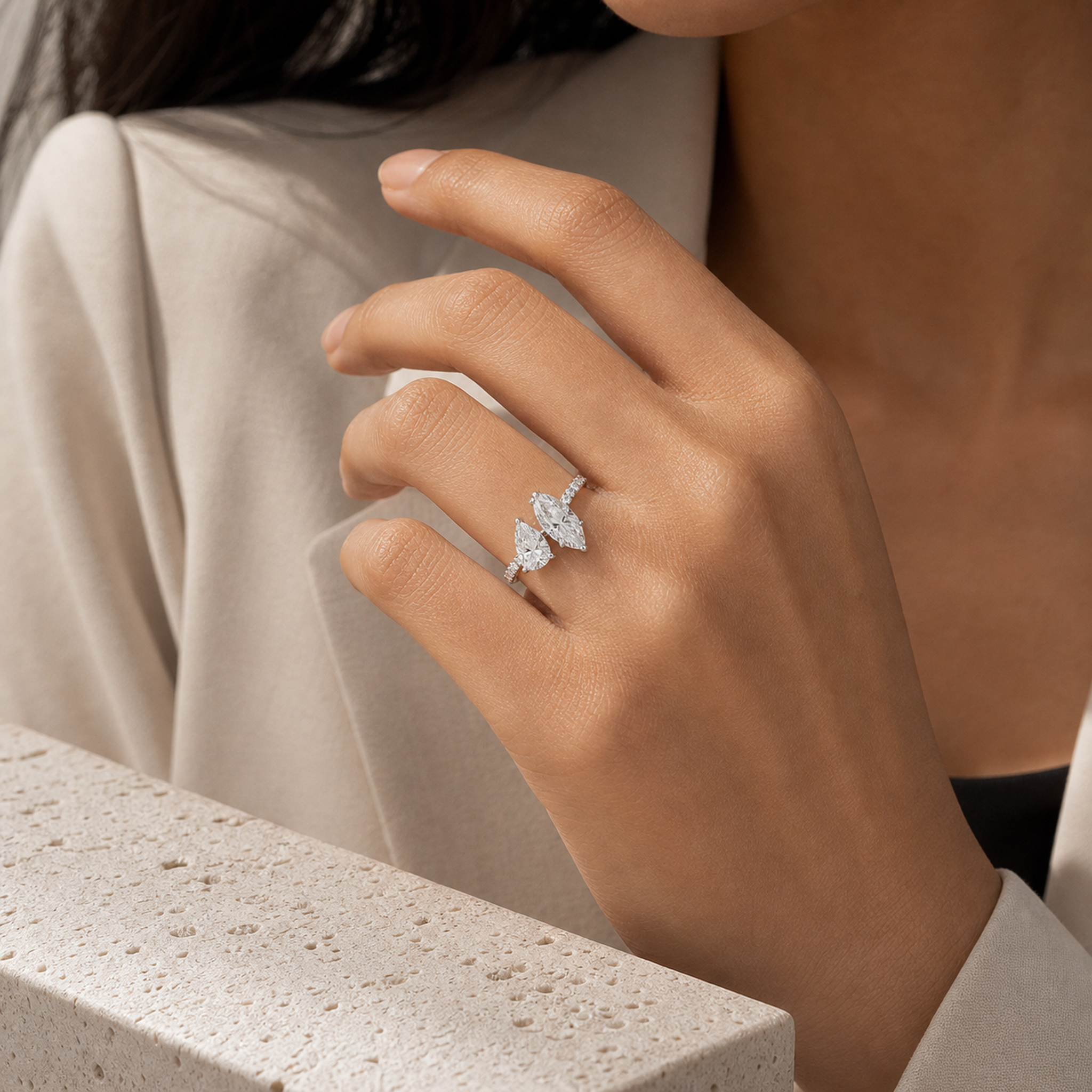


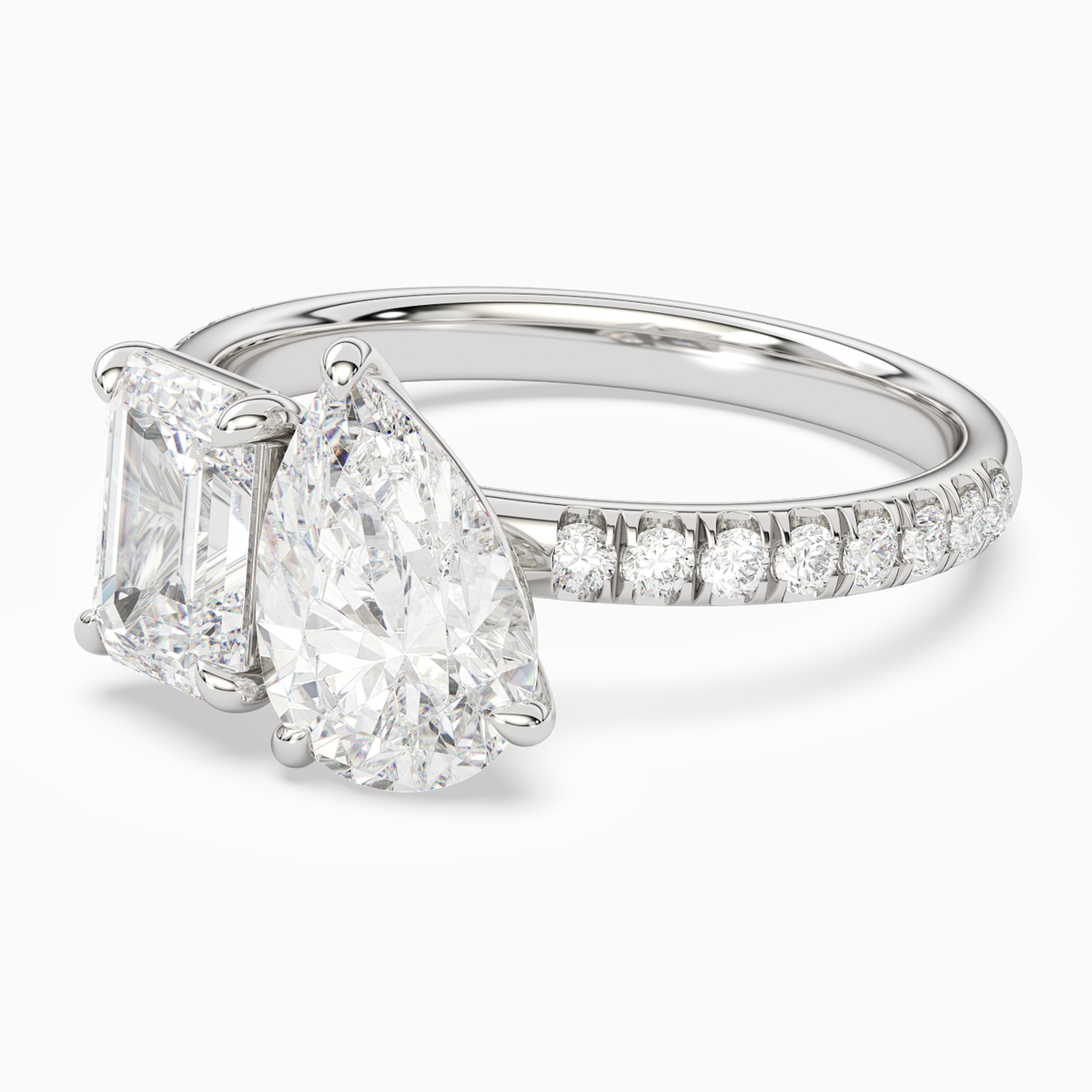
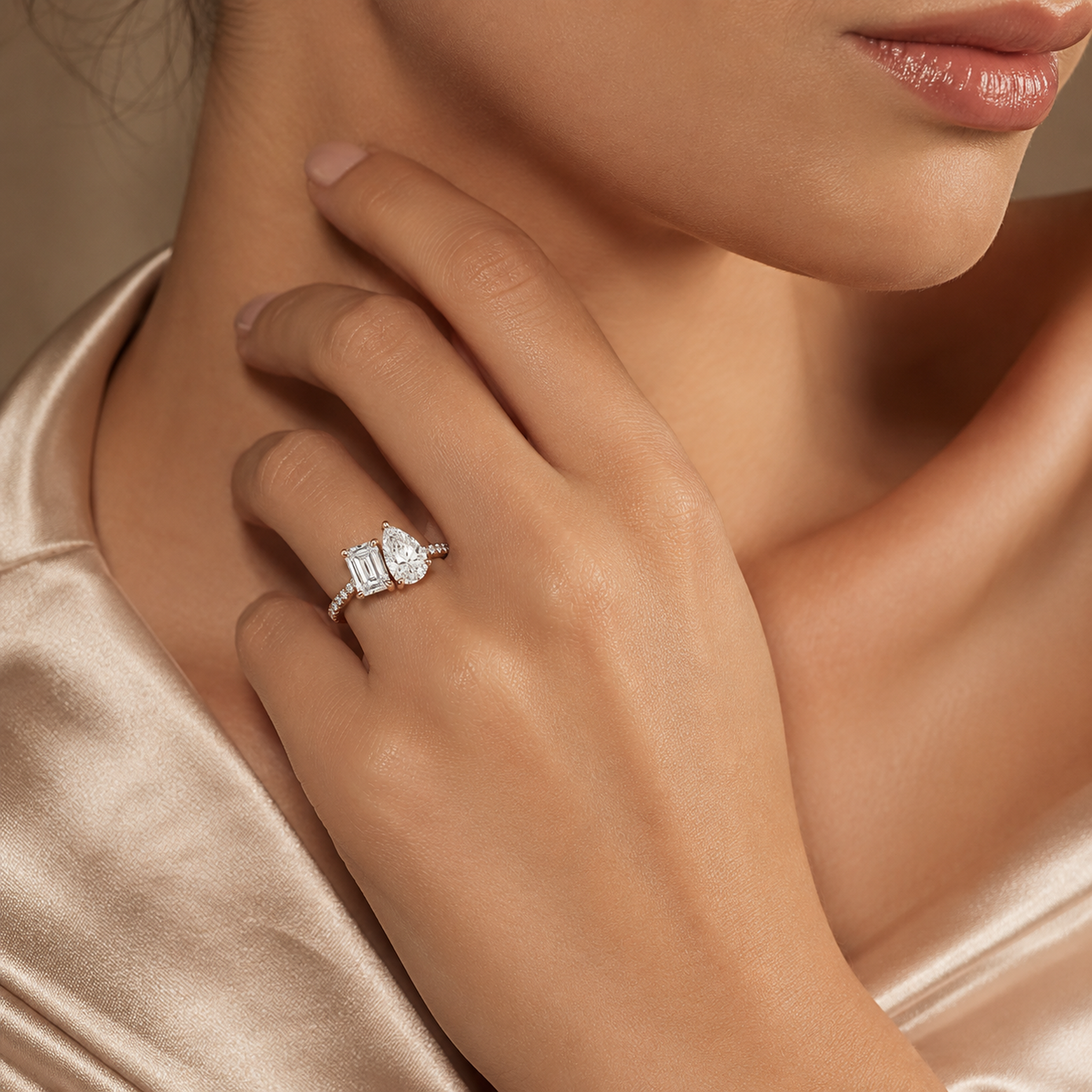


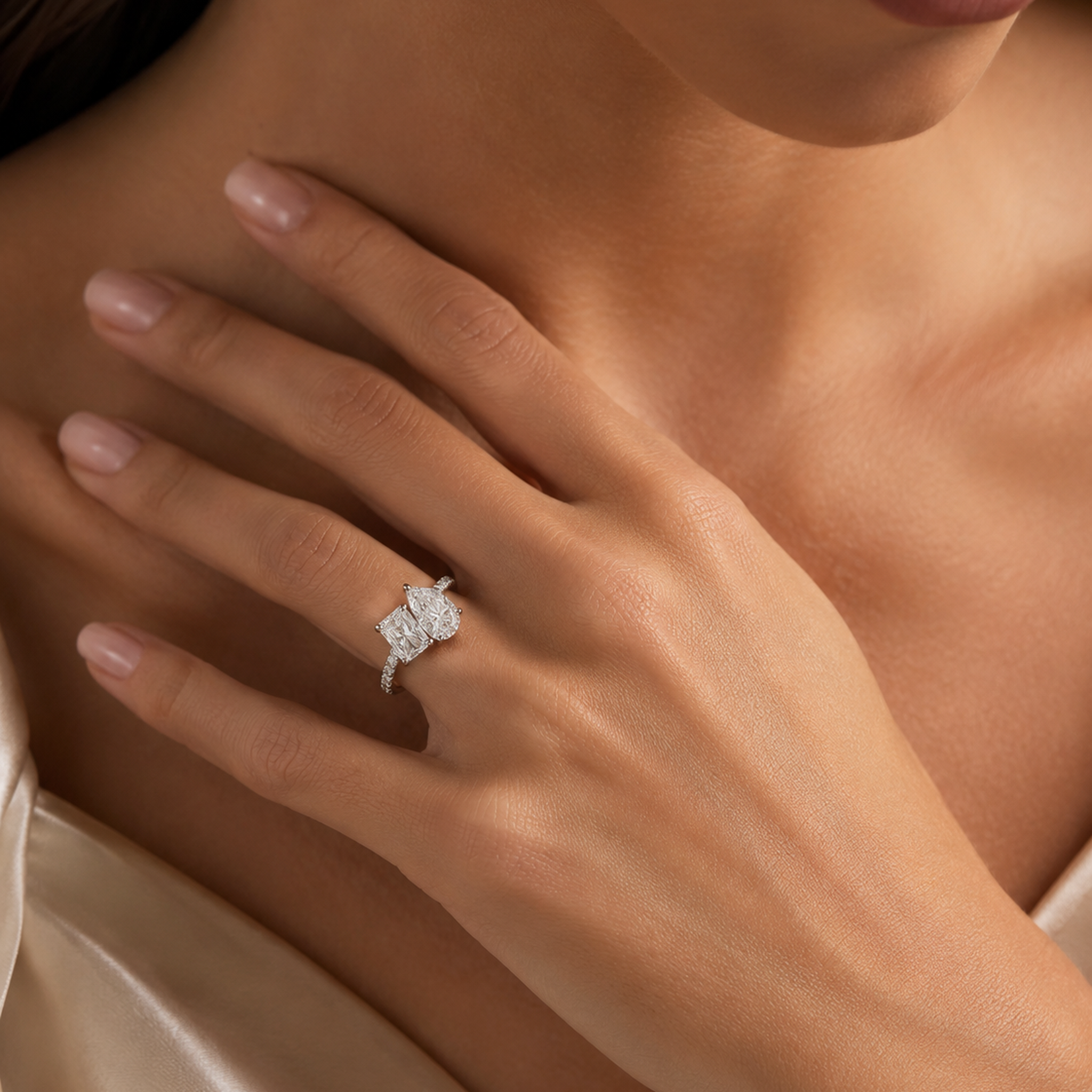


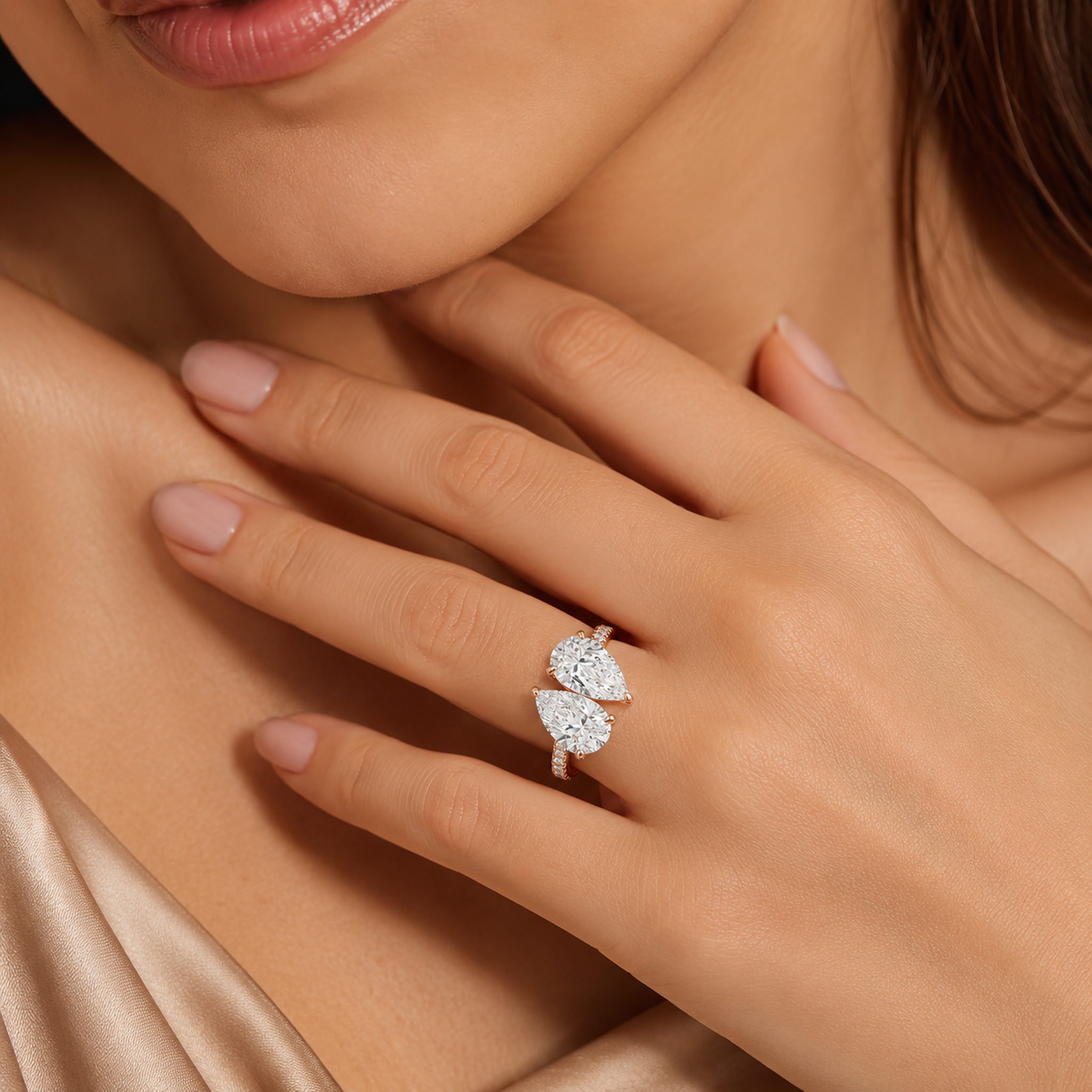


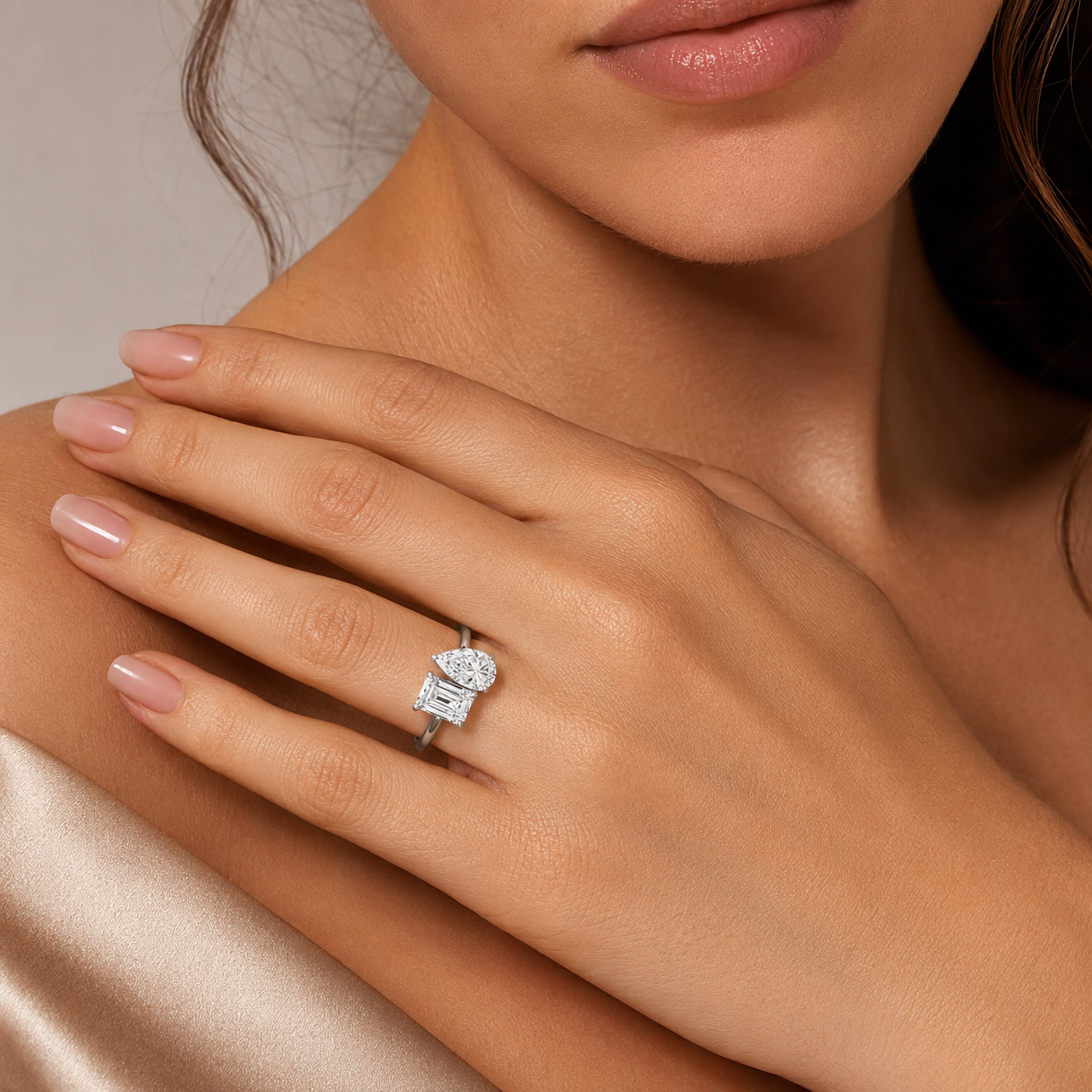


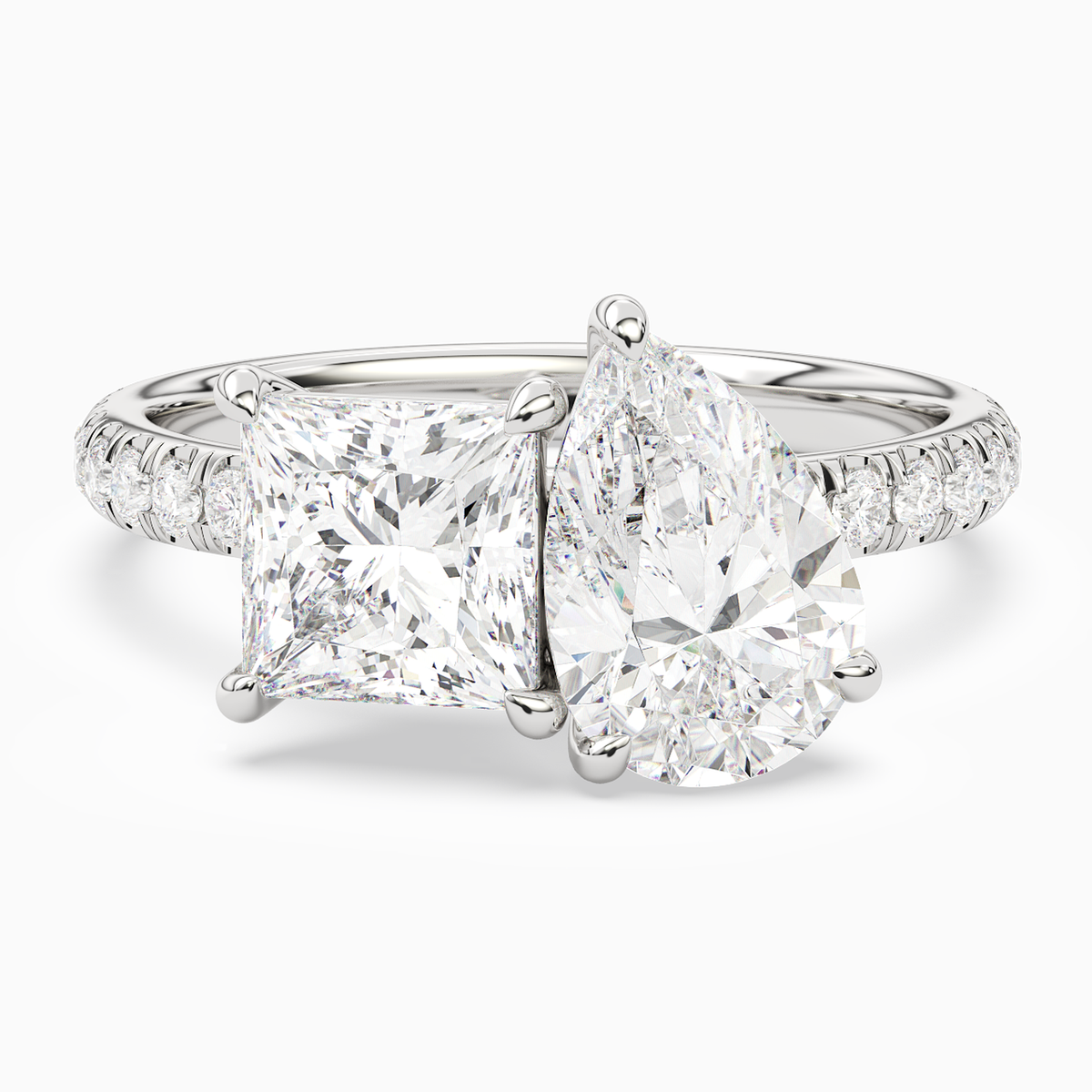

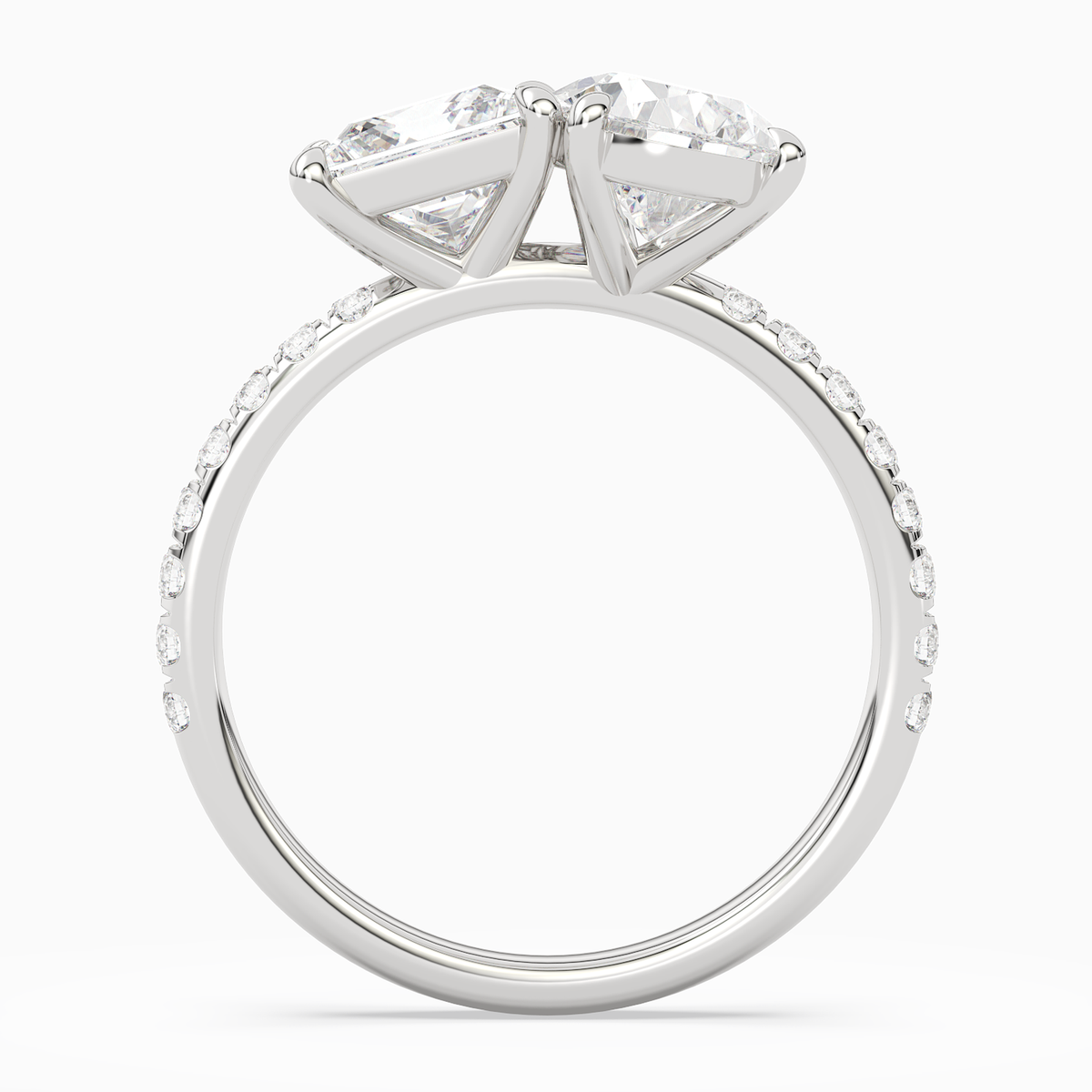
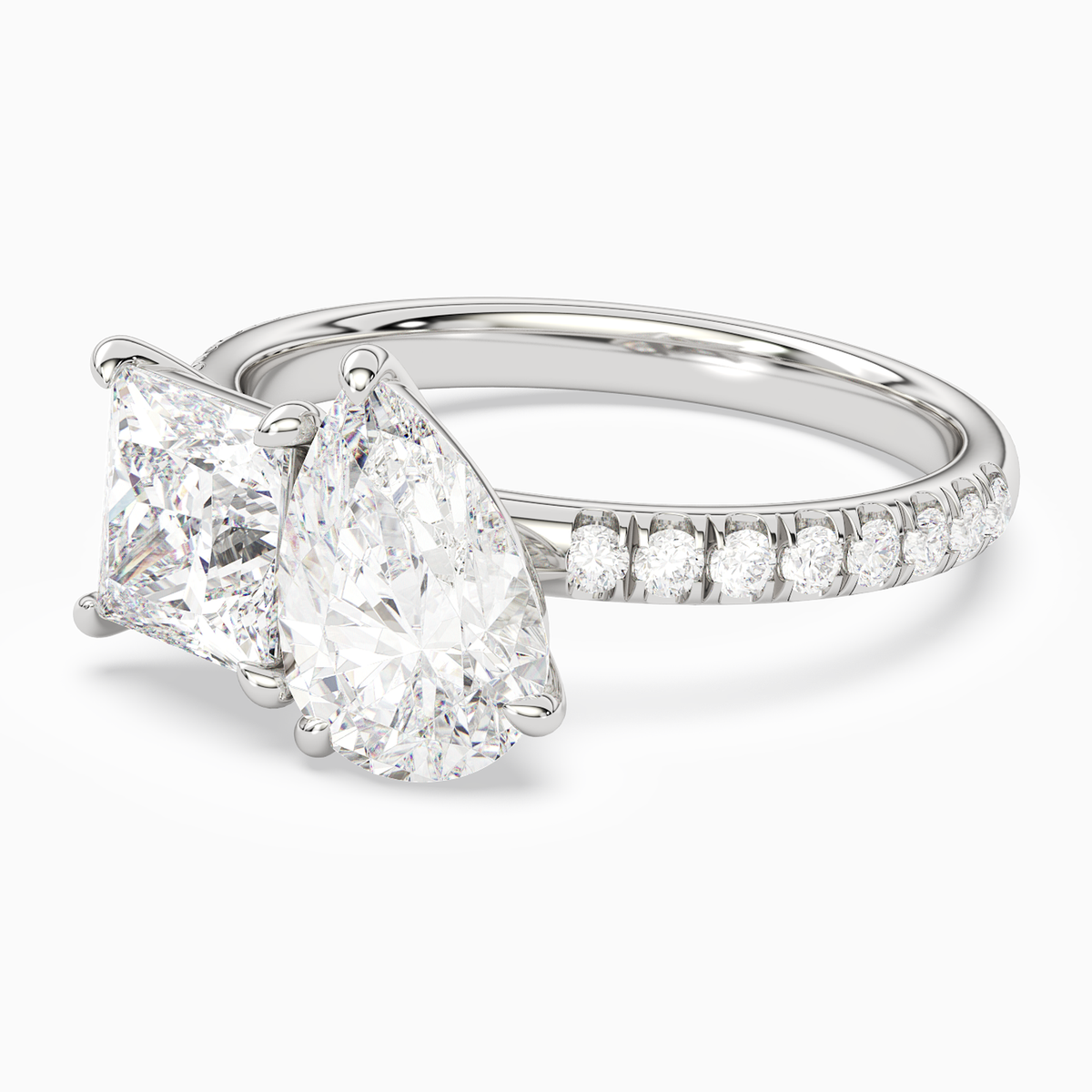
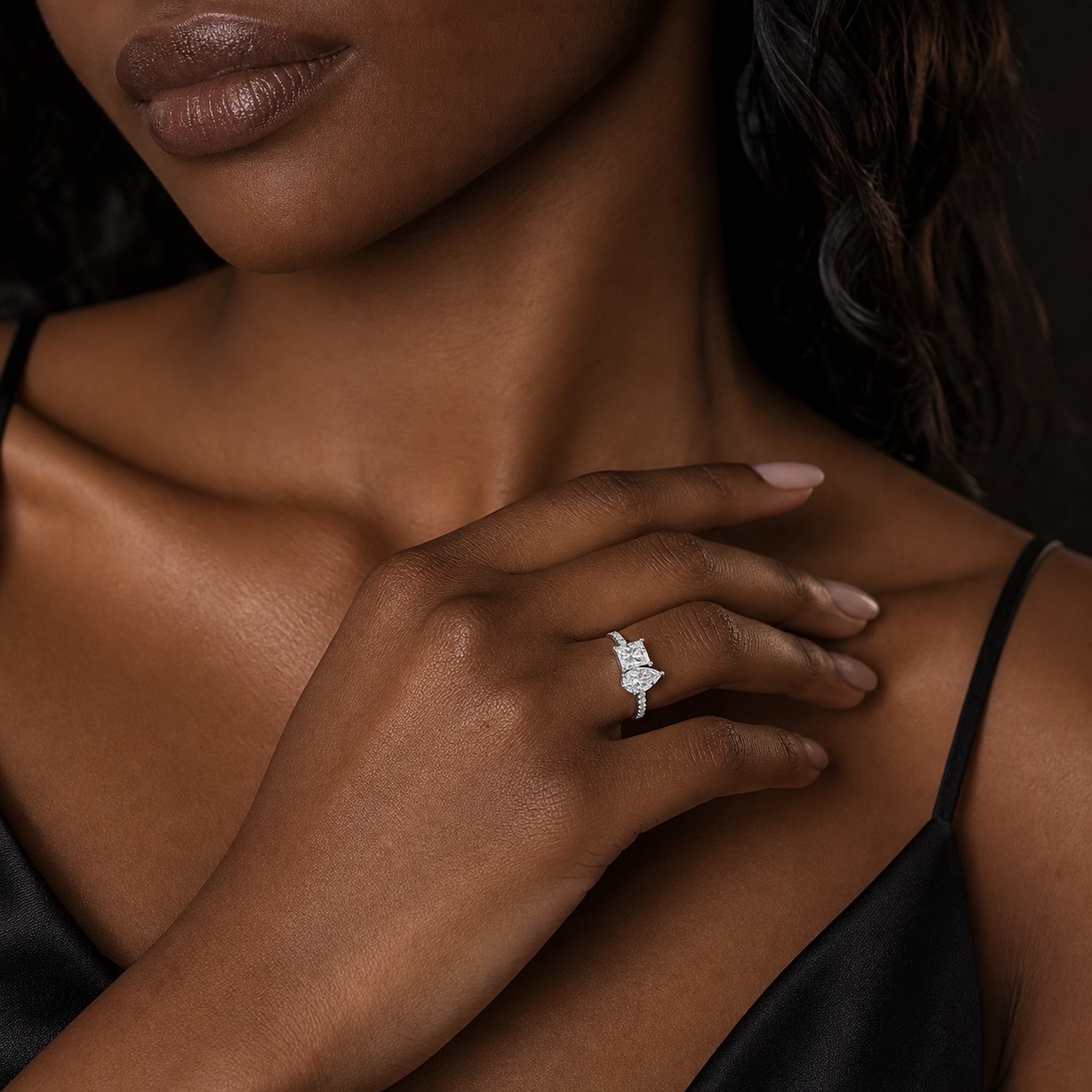
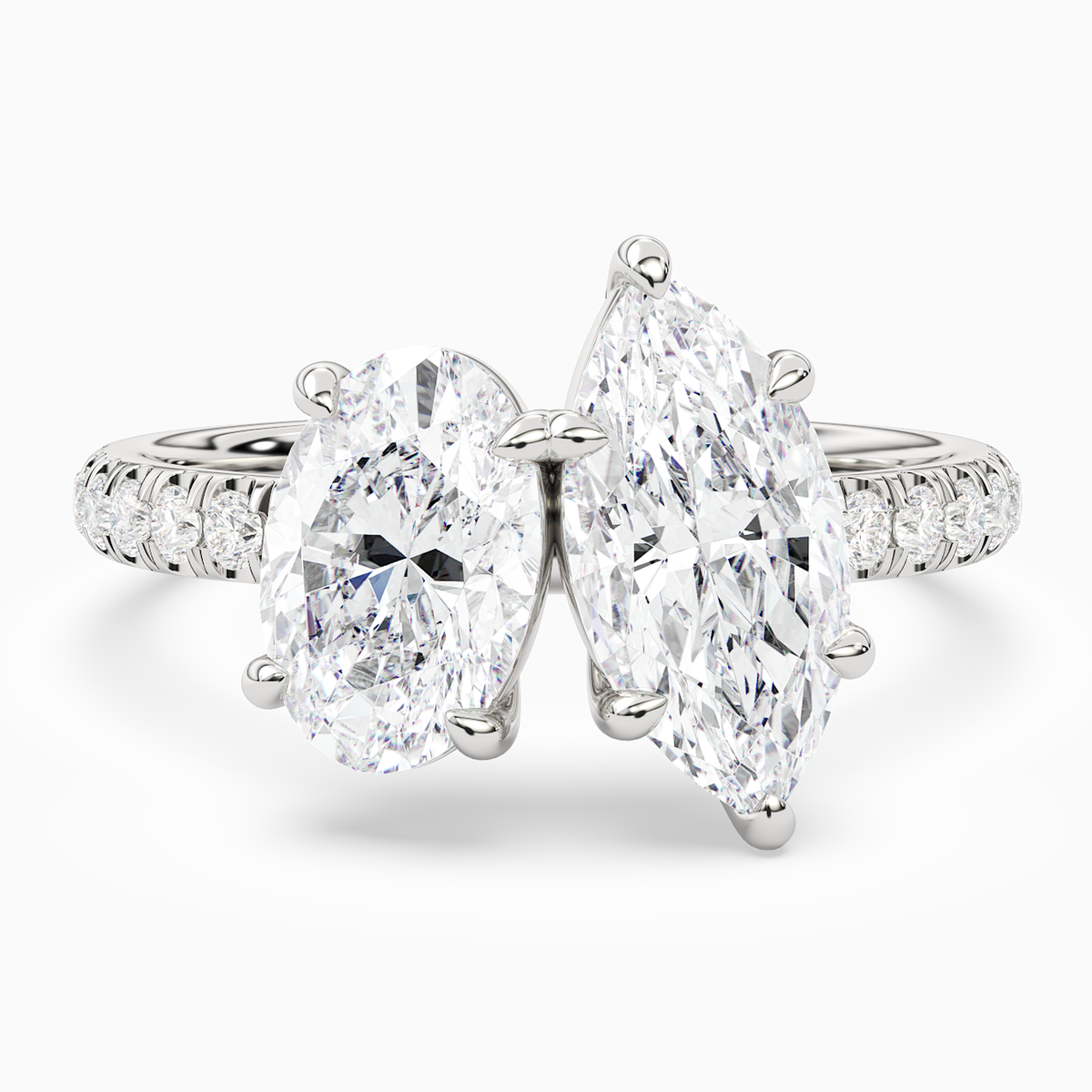
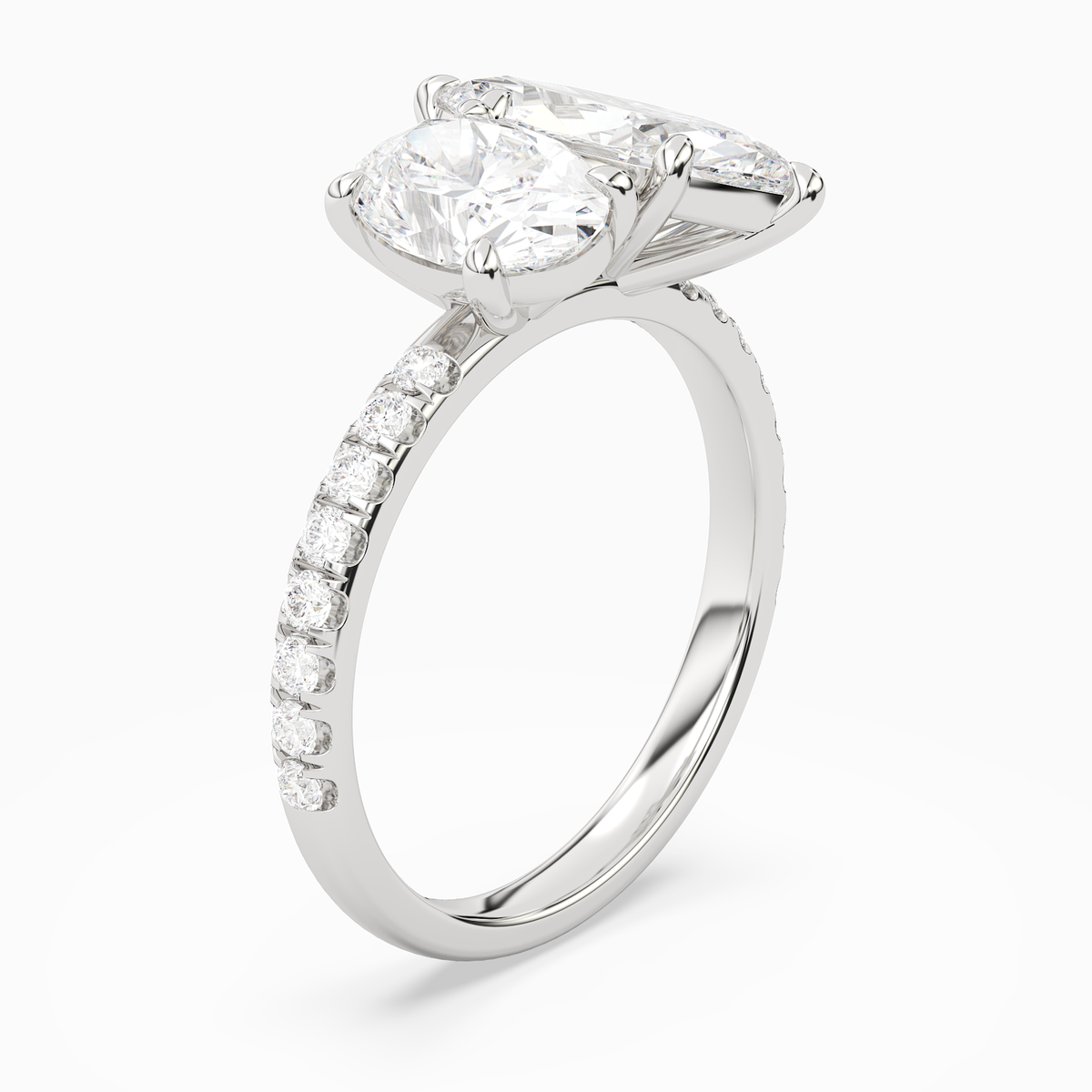
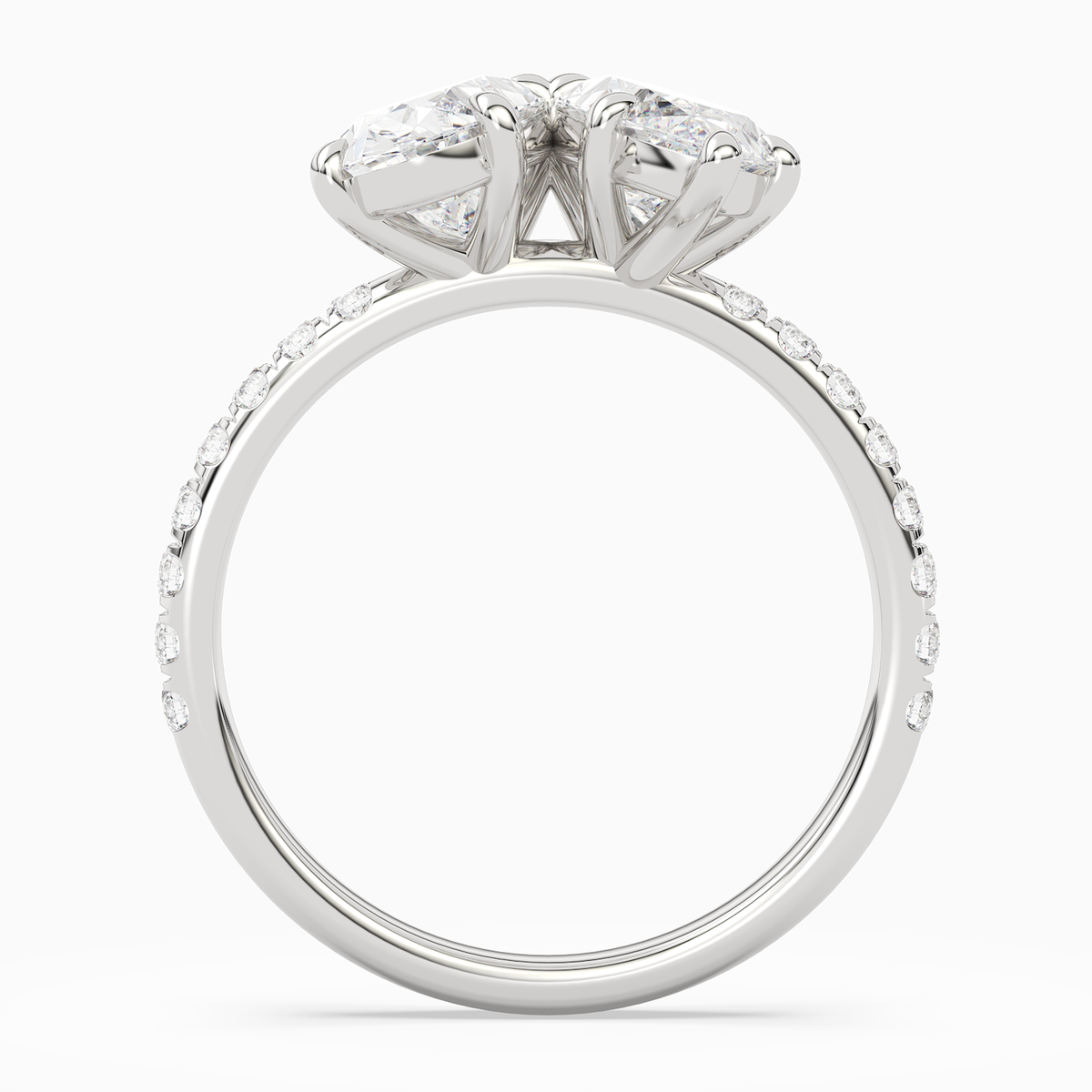
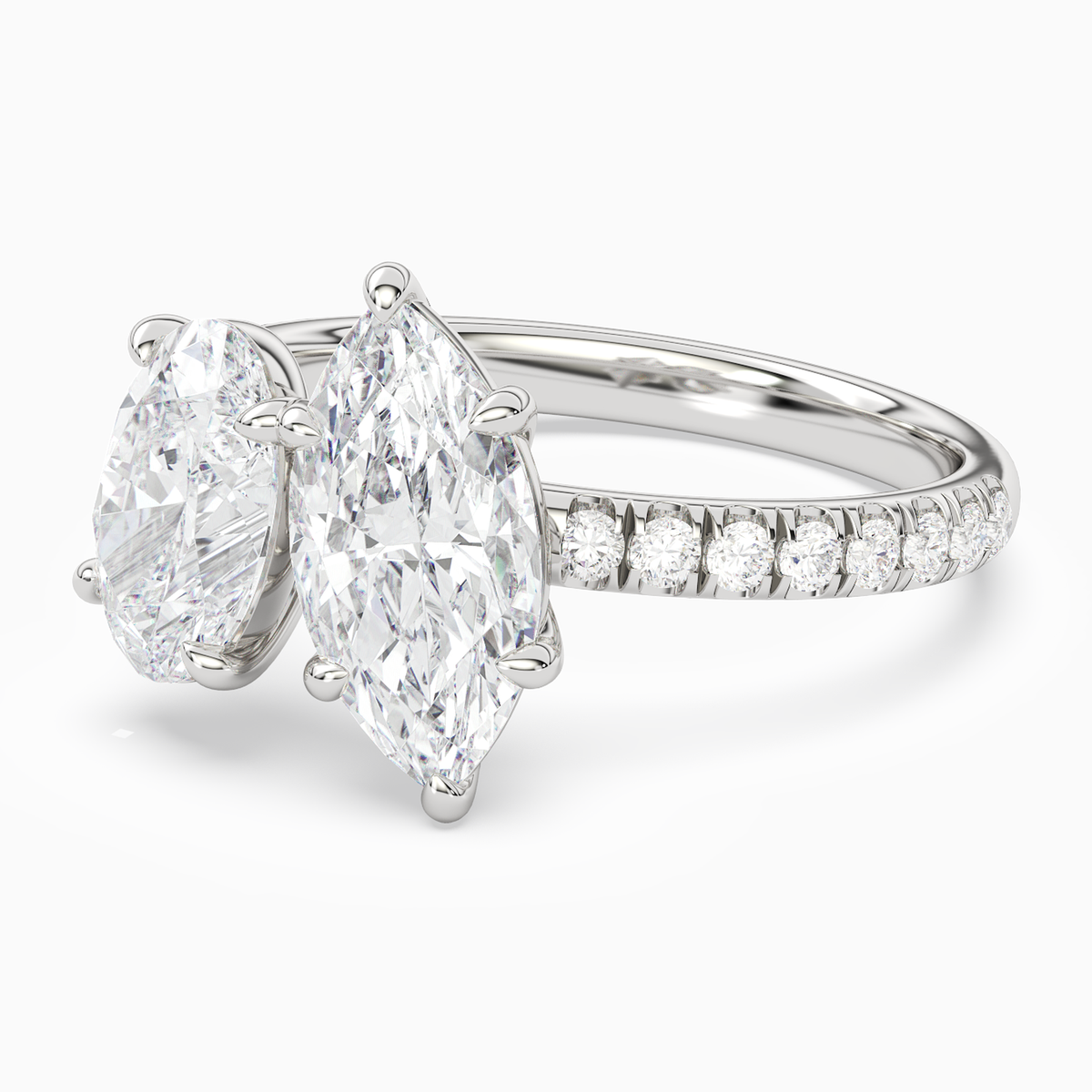
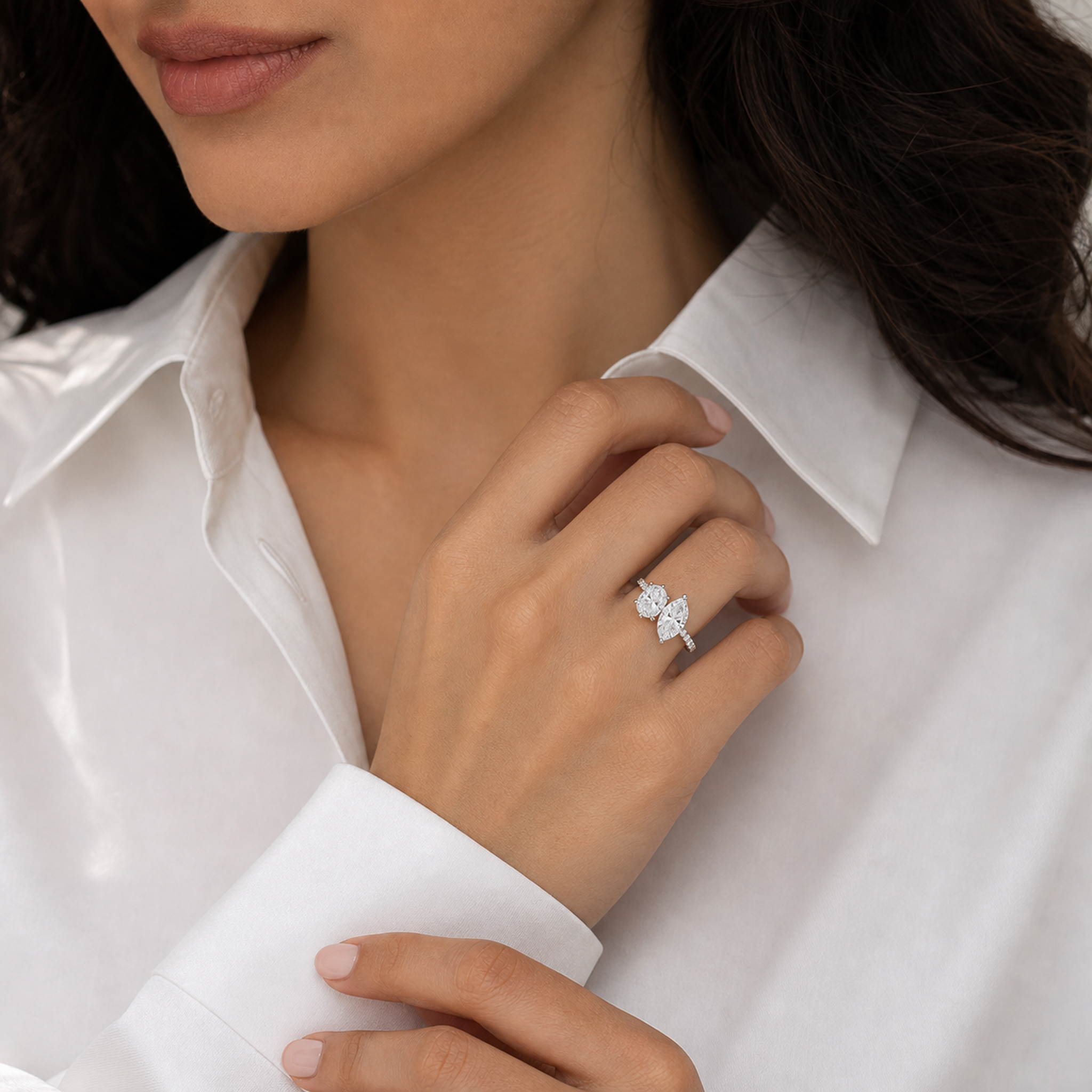


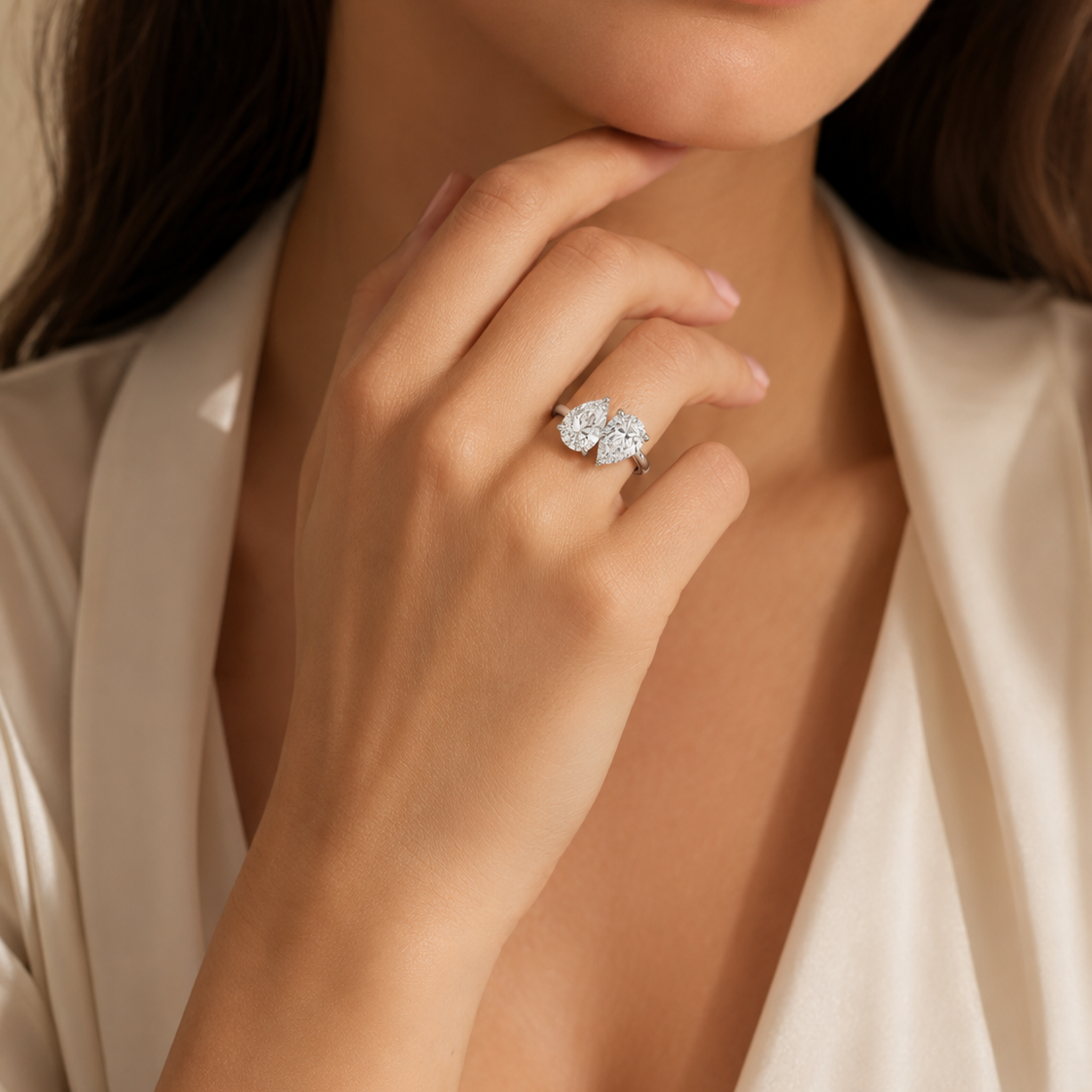
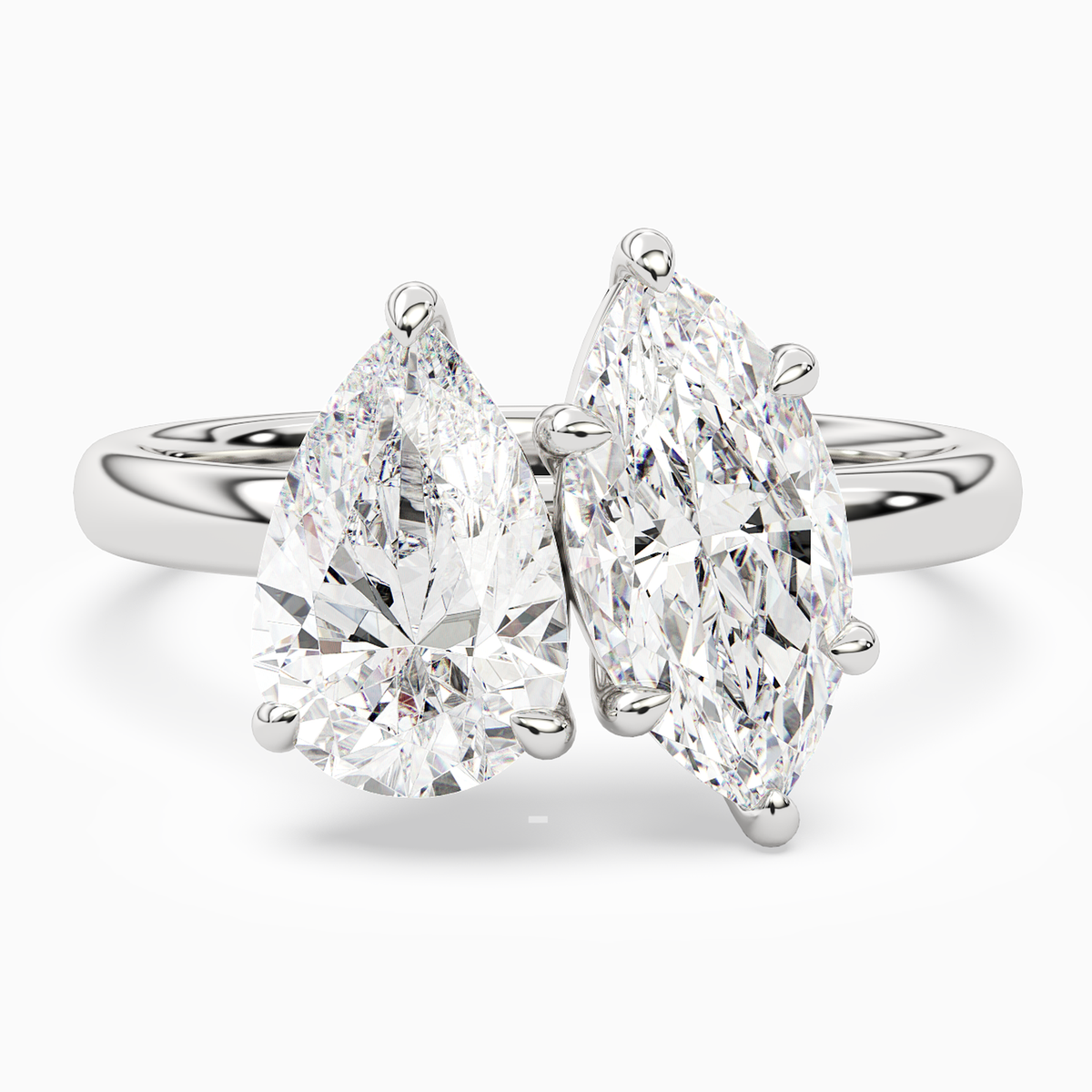


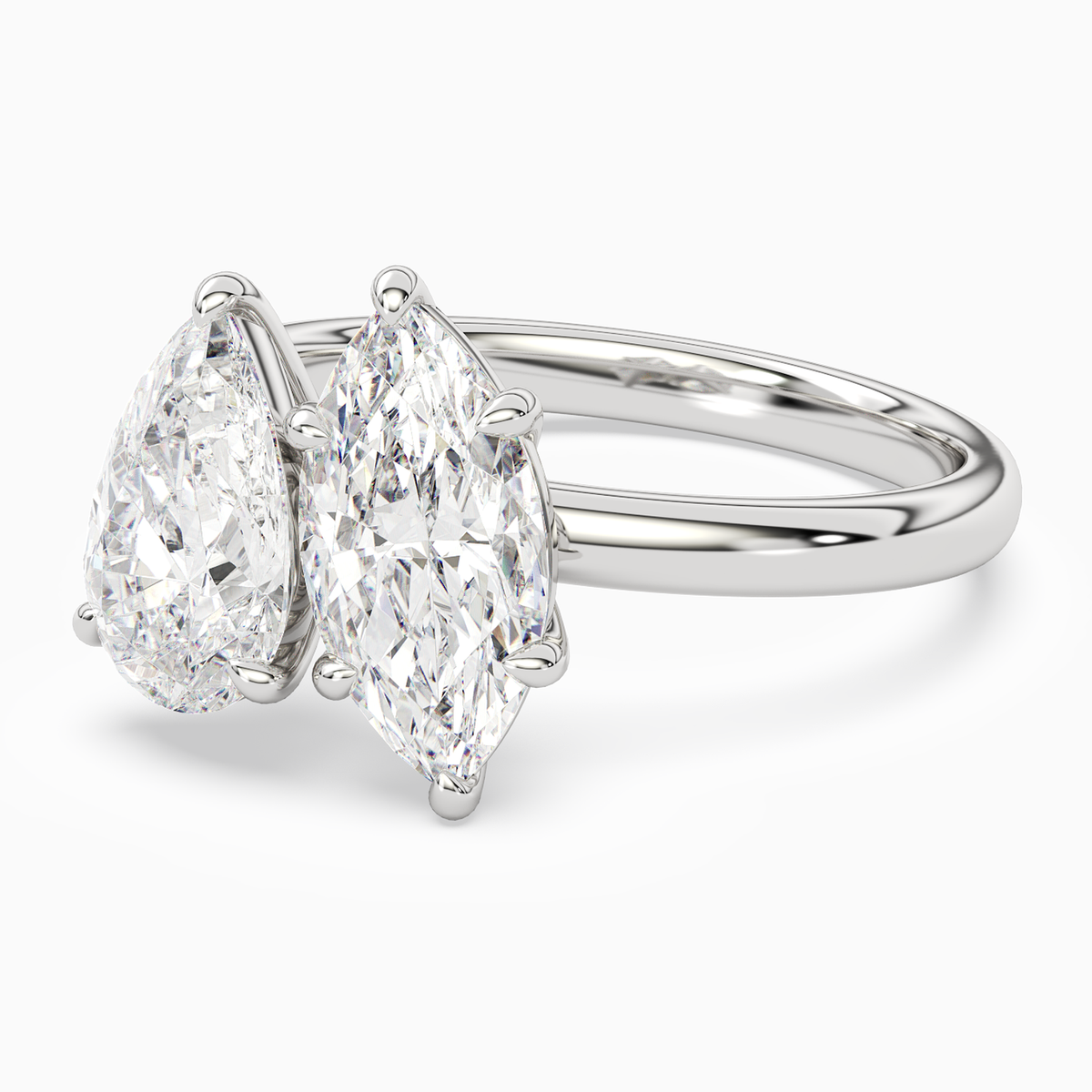
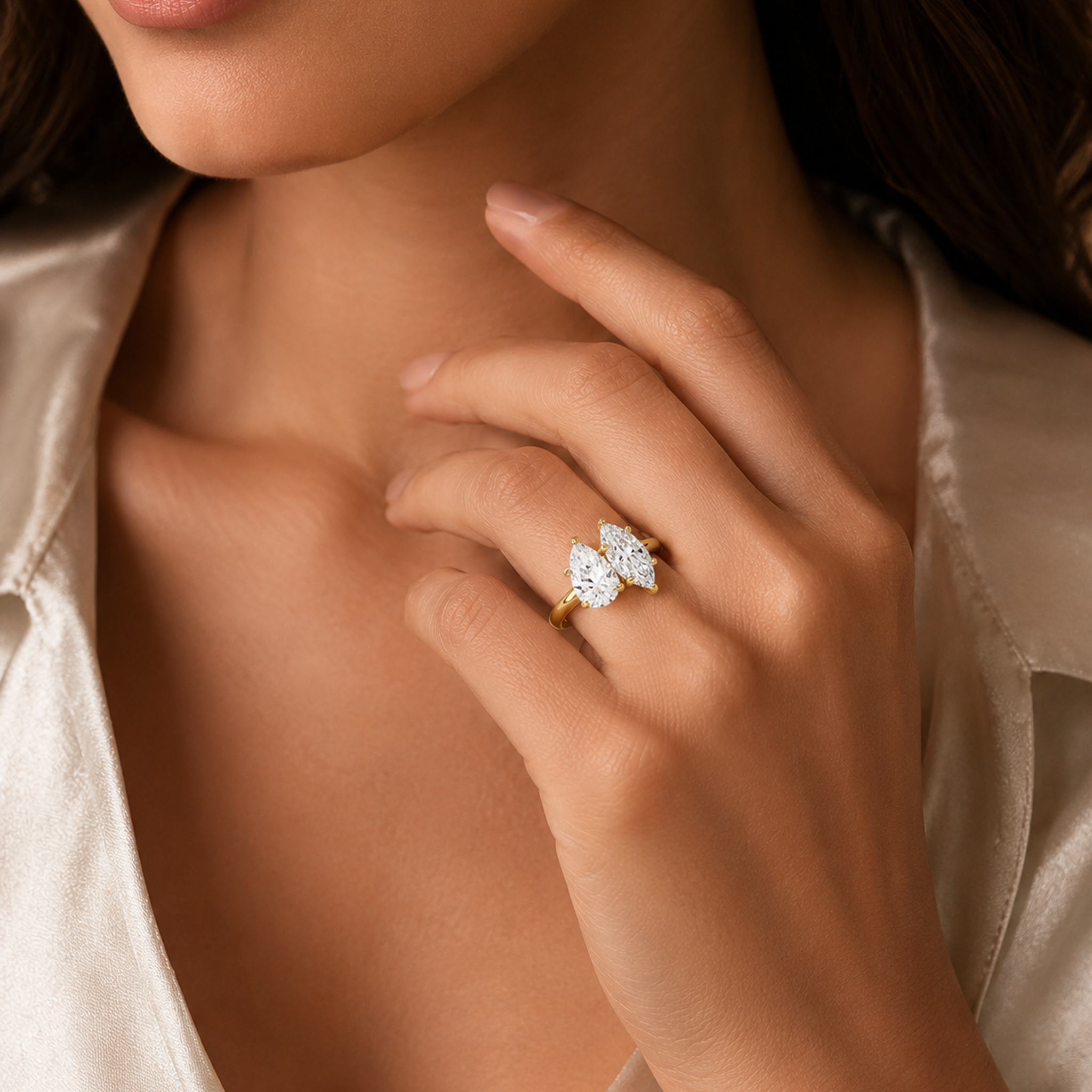


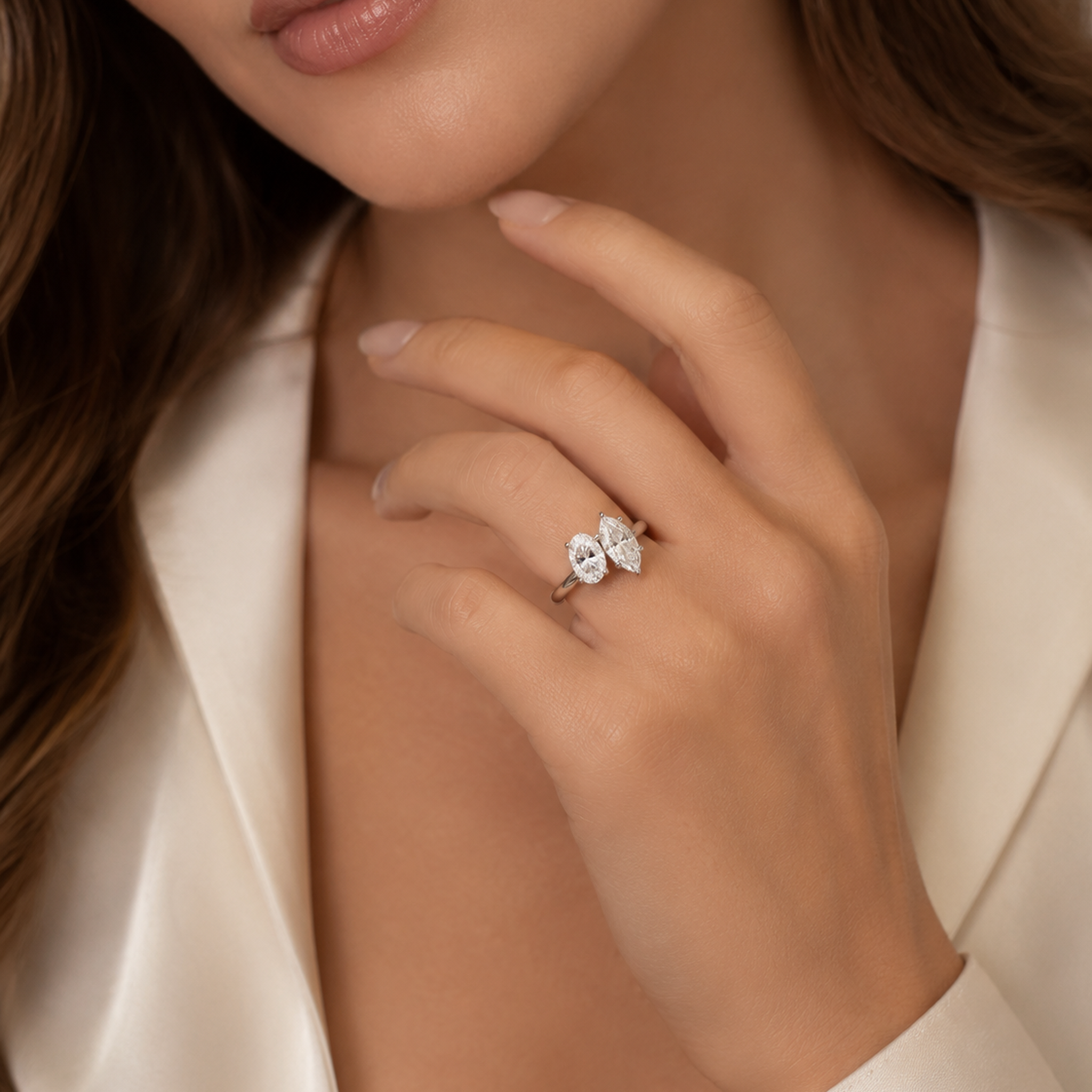


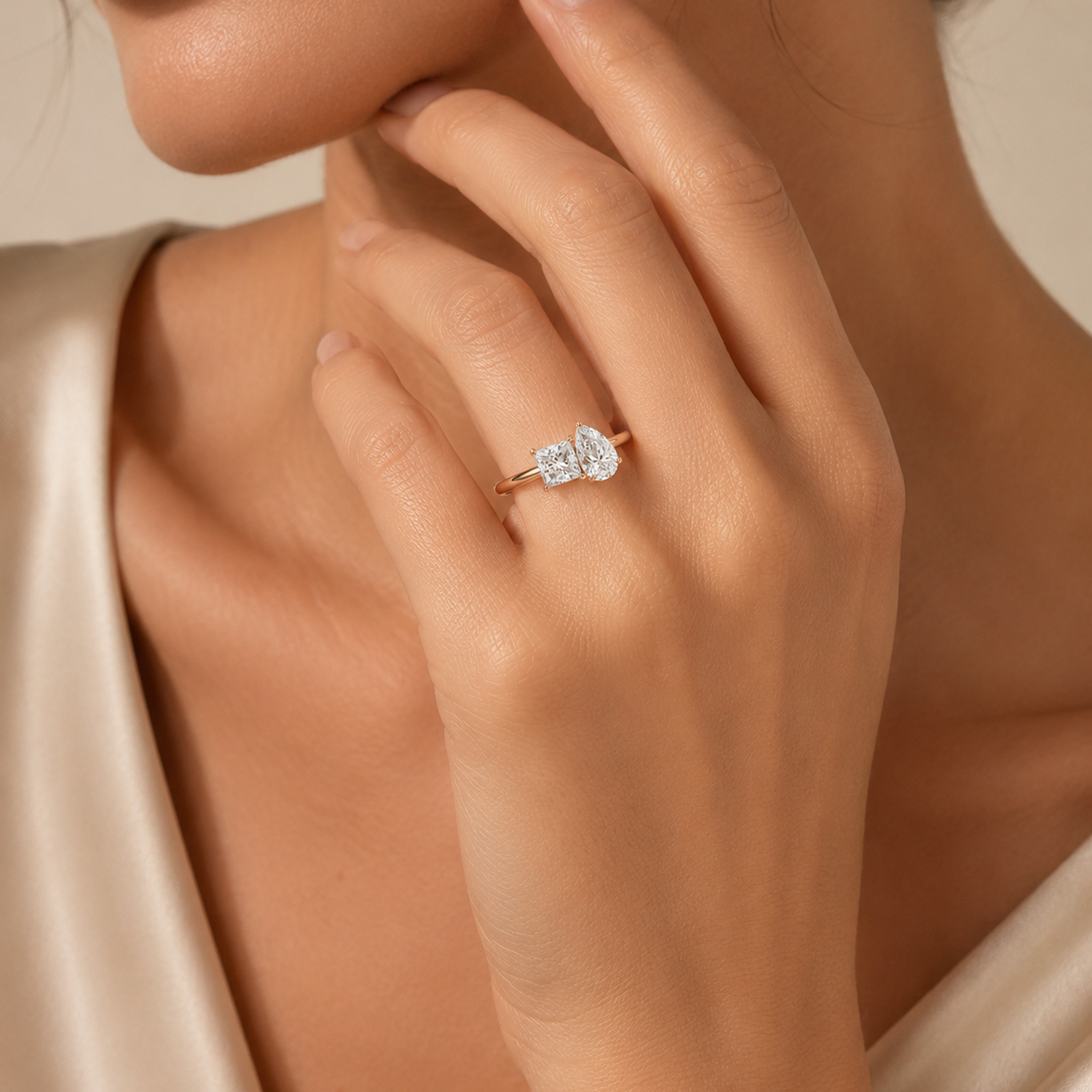
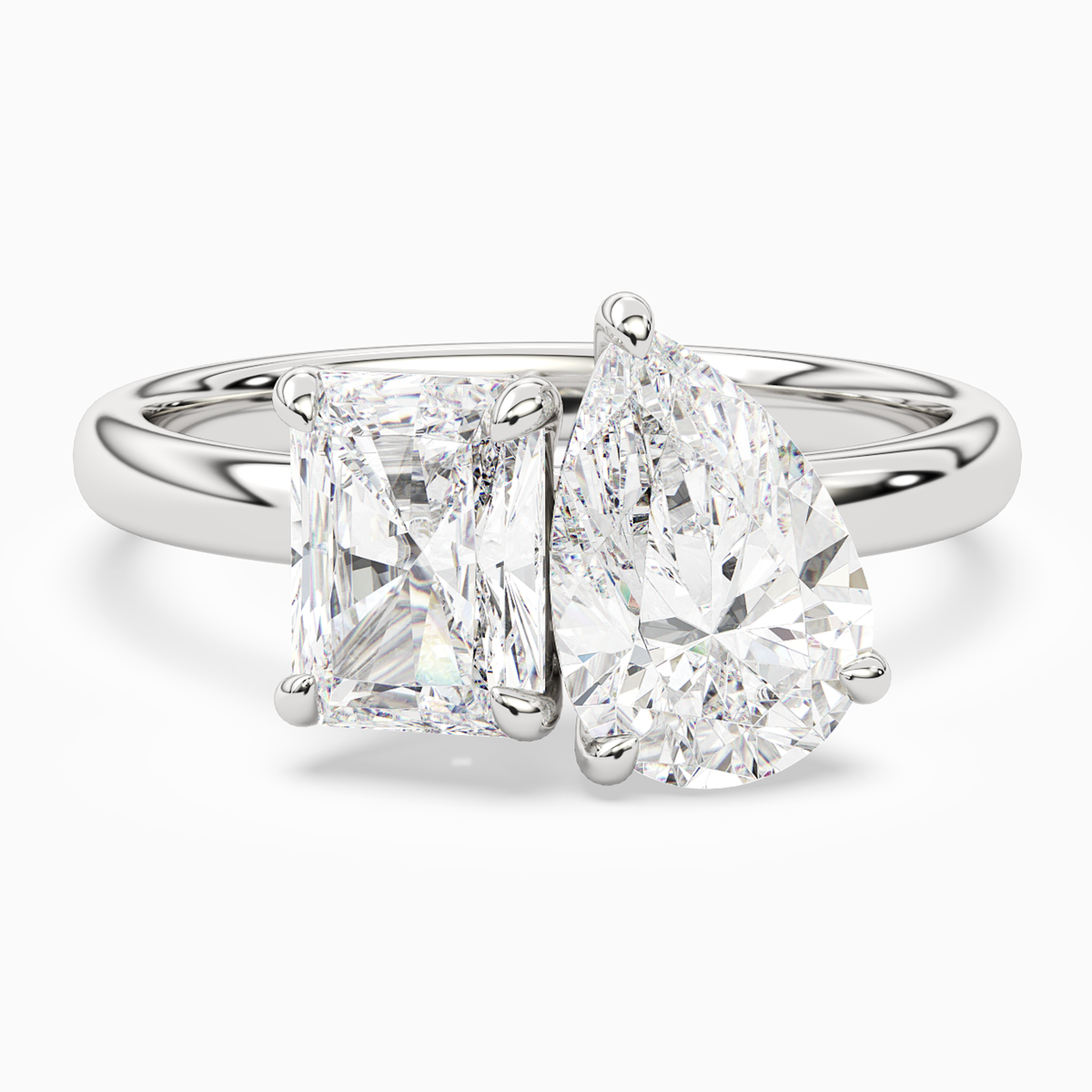

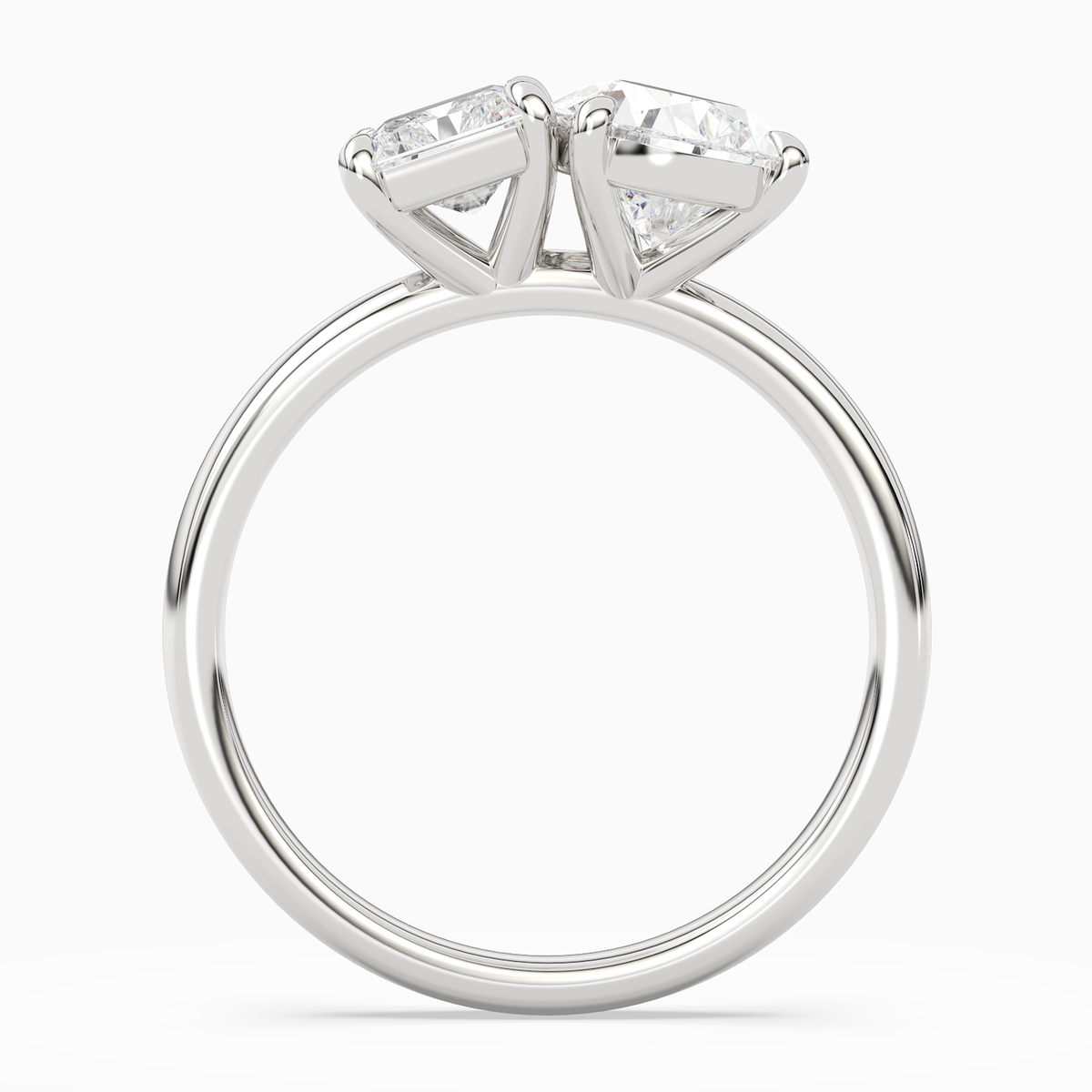

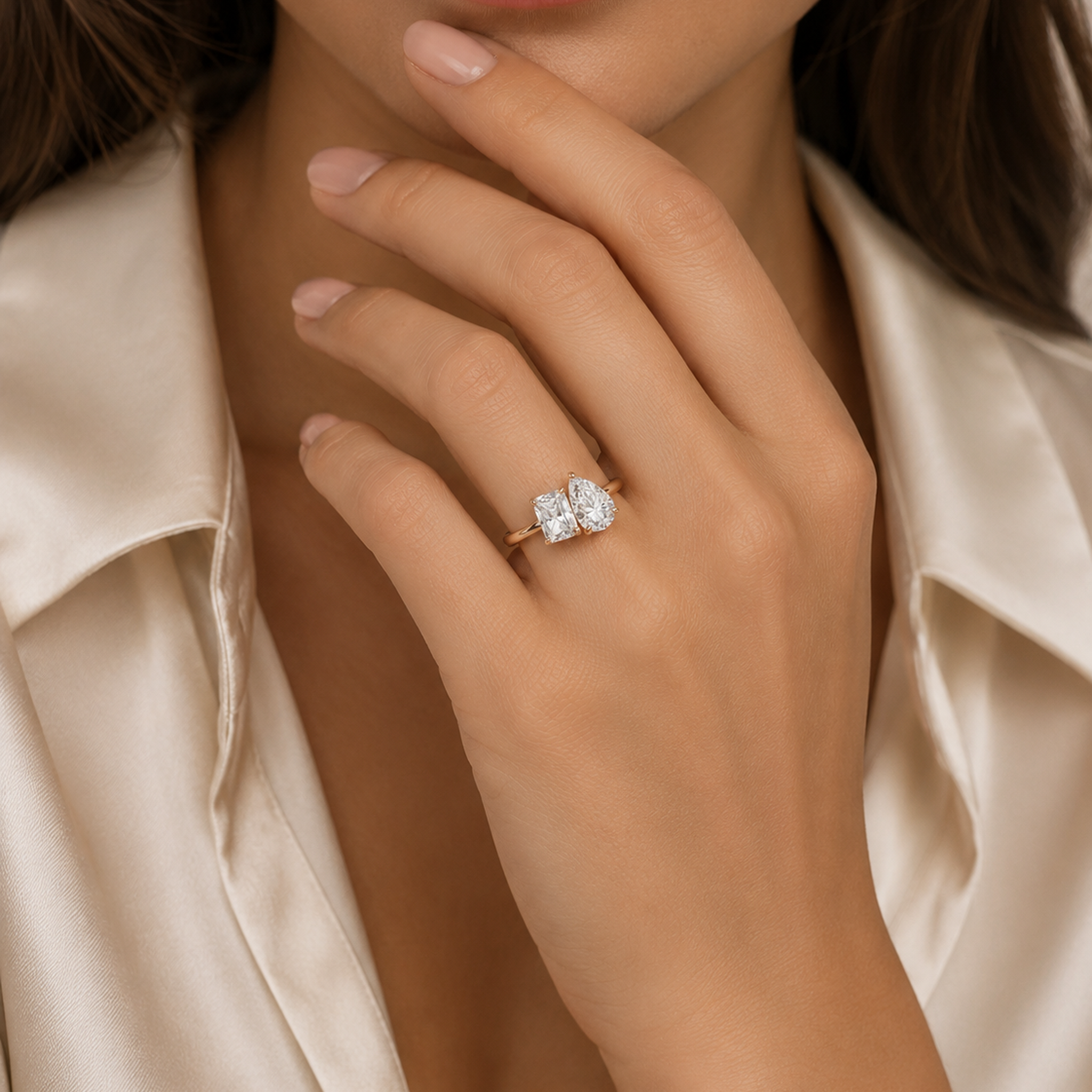
18K White Gold Toi Et Moi Engagement Rings: Two Forms in a Nuanced Field
An 18K White Gold Toi Et Moi ring brings two kinds of nuance together: a material with 75% gold and a composition led by two distinct centers. The metal can create tonal continuity across prongs, baskets, and band, while shape, orientation, and negative space preserve the identity of each diamond.
Burvonti's 16 current designs cover eight observed pair types and three structural expressions. Clean baskets keep the field quieter, pavé baskets add secondary light, and crossover bands make direction explicit. Each design asks the white-metal line to connect rather than visually merge the centers.
Seventy-Five Percent Gold Has a Defined Limit
An 18K alloy contains 75% gold. Its remaining metals affect color and behavior. This does not establish the exact alloy, rhodium finish, hardness, sensitivity, scratch resistance, security, or maintenance needs. The product specification must answer those questions.
A close tonal relationship may make fine prongs less conspicuous, but it cannot make a setting seamless or guarantee greater brilliance. Bezels, baskets, points, and corners remain visible structures. Finish and the amount of exposed metal decide how quiet the field actually appears.
Compare the Relationship in Three Dimensions
Face-up balance begins with outline and dimensions. Profile balance adds depth, setting height, basket position, and how the shoulders reach each stone. Two centers can appear aligned from above yet sit at different heights; a crossover line can look fluid while distributing weight unevenly. The complete ring must be judged from both views.
Matched and mixed shapes use space differently. Repeated Pear or Marquise forms can create rhythm; Emerald/Pear or Princess/Pear combinations make edge contrast explicit. Oval/Marquise and Pear/Marquise extend the composition along different axes. There is no prescribed shape narrative or one ideal allocation of carat weight.
White Gold and Platinum Are Separate Decisions
18K White Gold is a 75% gold alloy selected for a white appearance and may use a bright finish. Platinum is naturally white and denser, with different surface evolution. One is not automatically more secure, durable, or appropriate. Compare finish, physical presence, care, design, sensitivity questions, and budget.
A wedding band adds another material and profile. Tonal continuity may be preserved with matching metal, but the two baskets, crossover shoulder, pavé, height, and contact points still decide fit. An intentional gap can be more resolved than forced contact.
Document the Two Centers Clearly
Each diamond has its own weight, dimensions, grade, and facet behavior. A combined option or generic center label does not disclose allocation. Confirm individual specifications and what documentation is supplied for both centers before treating the pair as fully defined.
Burvonti pairs responsibly sourced, independently graded lab-grown diamonds through proportion and human judgment. Custom possibilities may refine shapes, relative scale, orientation, spacing, metal, band, engraving, or selected setting details where feasible. Material nuance matters only when the two-center relationship remains clear.
Frequently Asked Questions
What is unique about this 18K White Gold child page?
It focuses on 75% gold, tonal continuity, finish questions, and the three-dimensional relationship between two centers.
How much gold is present?
18K contains 75% gold.
Is every ring rhodium plated?
No safe universal assumption should be made. Confirm the finish for the selected product.
Does 18K White Gold make the diamonds more brilliant?
No. It changes the visual context but not either diamond's cut or light performance.
How should I compare two shapes?
Compare outline, dimensions, widest points, orientation, height, spacing, facet pattern, and setting structure.
Do equal carat weights create equal visual size?
Not necessarily. Shape depth and dimensions affect face-up area.
What does the center-carat selector mean?
It does not necessarily disclose the allocation between two diamonds. Confirm individual weights and dimensions.
Does each diamond receive a report?
Documentation is configuration-specific. Confirm what is supplied for both selected centers.
How does this differ from 14K White Gold?
The reliable difference is gold content: 75% in 18K versus approximately 58.3% in 14K. Finish and design remain relevant.
How does it differ from Platinum?
Platinum is naturally white and denser; 18K White Gold is a gold alloy with its own finish and care context.
Will a band sit flush?
Not automatically. Both settings, shoulders, height, pavé, and contact points determine fit.
Can Burvonti personalize both centers?
Custom possibilities may include shape, scale, orientation, spacing, metal, or selected setting details, subject to feasibility.