
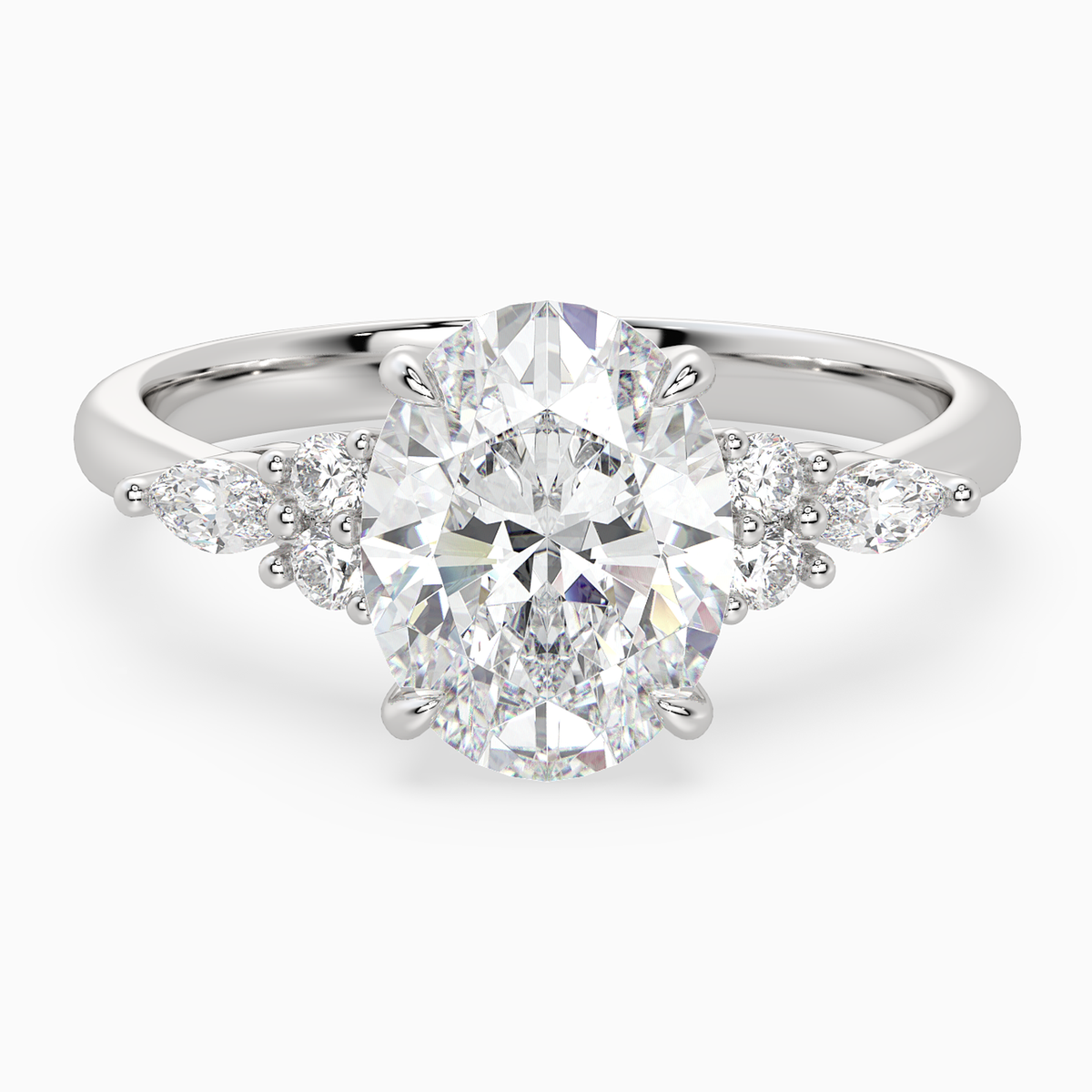


Toi Et Moi Engagement Rings in 14K White Gold
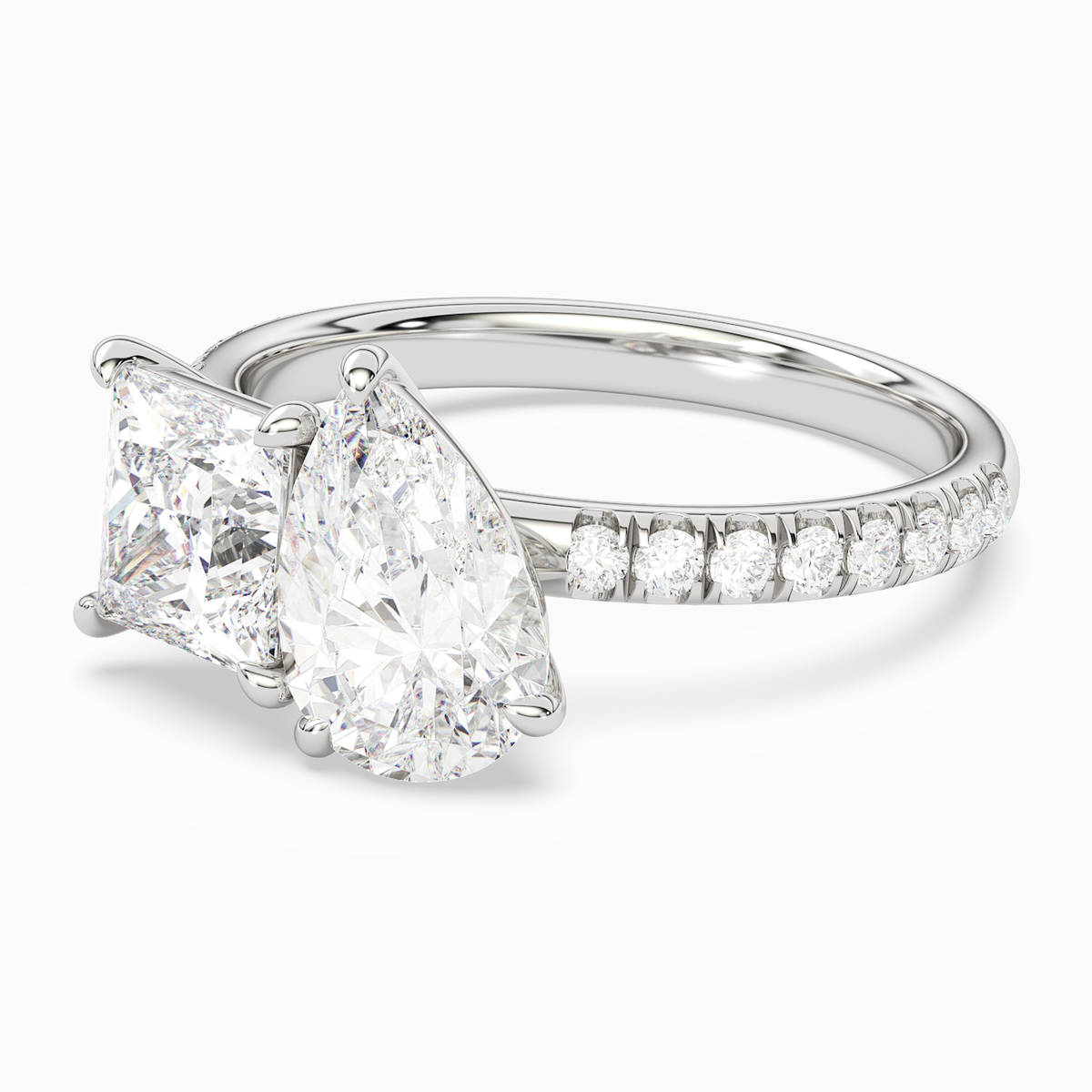
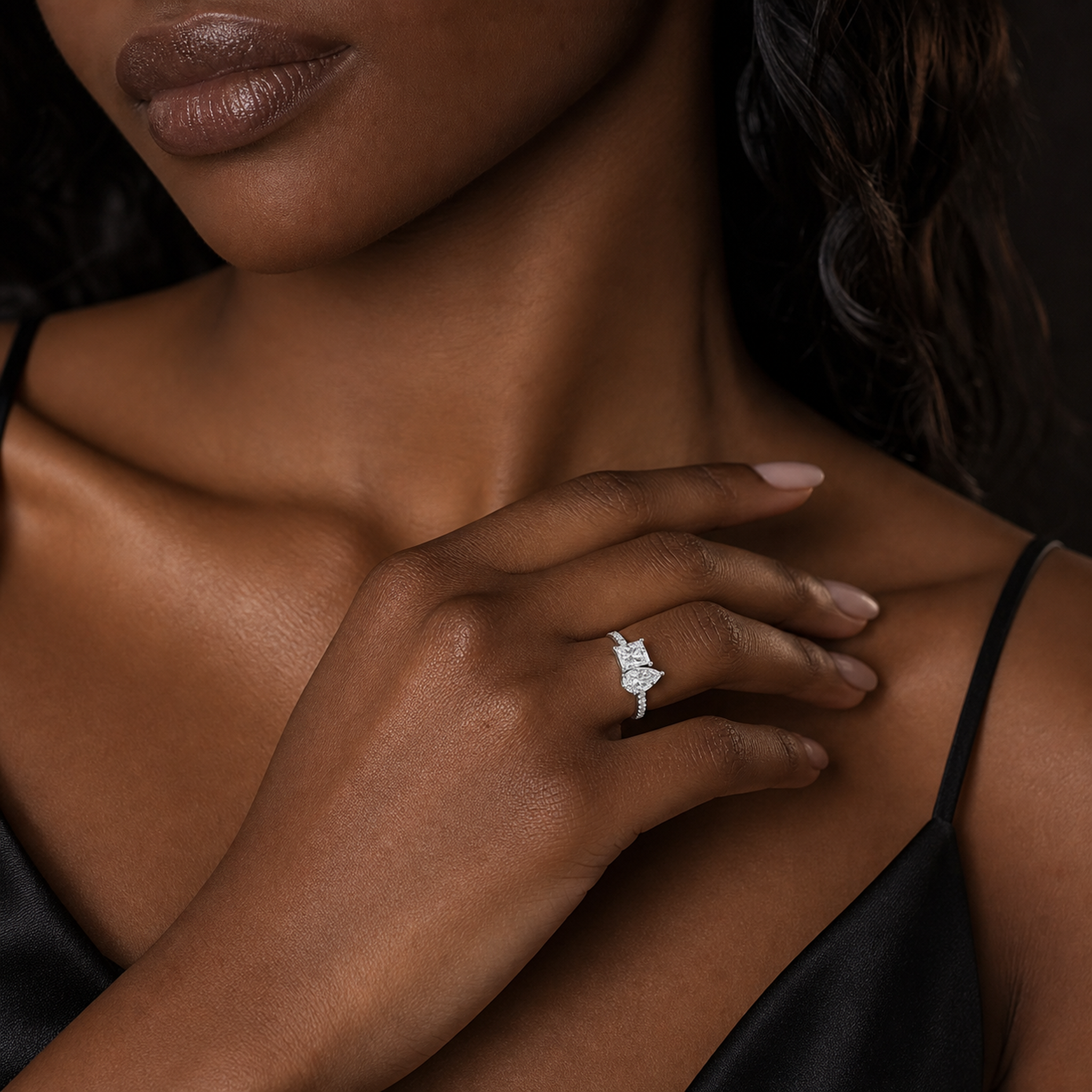
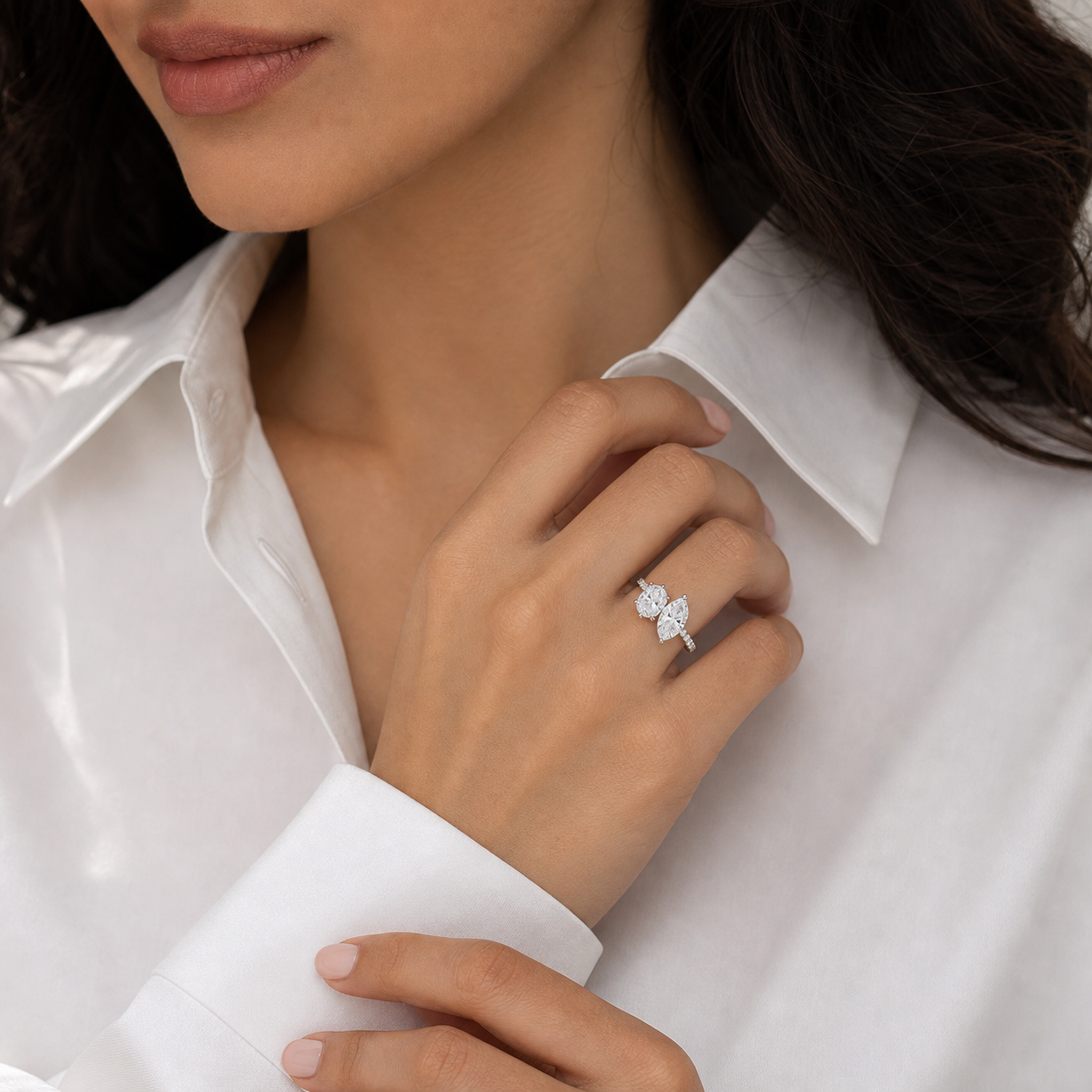
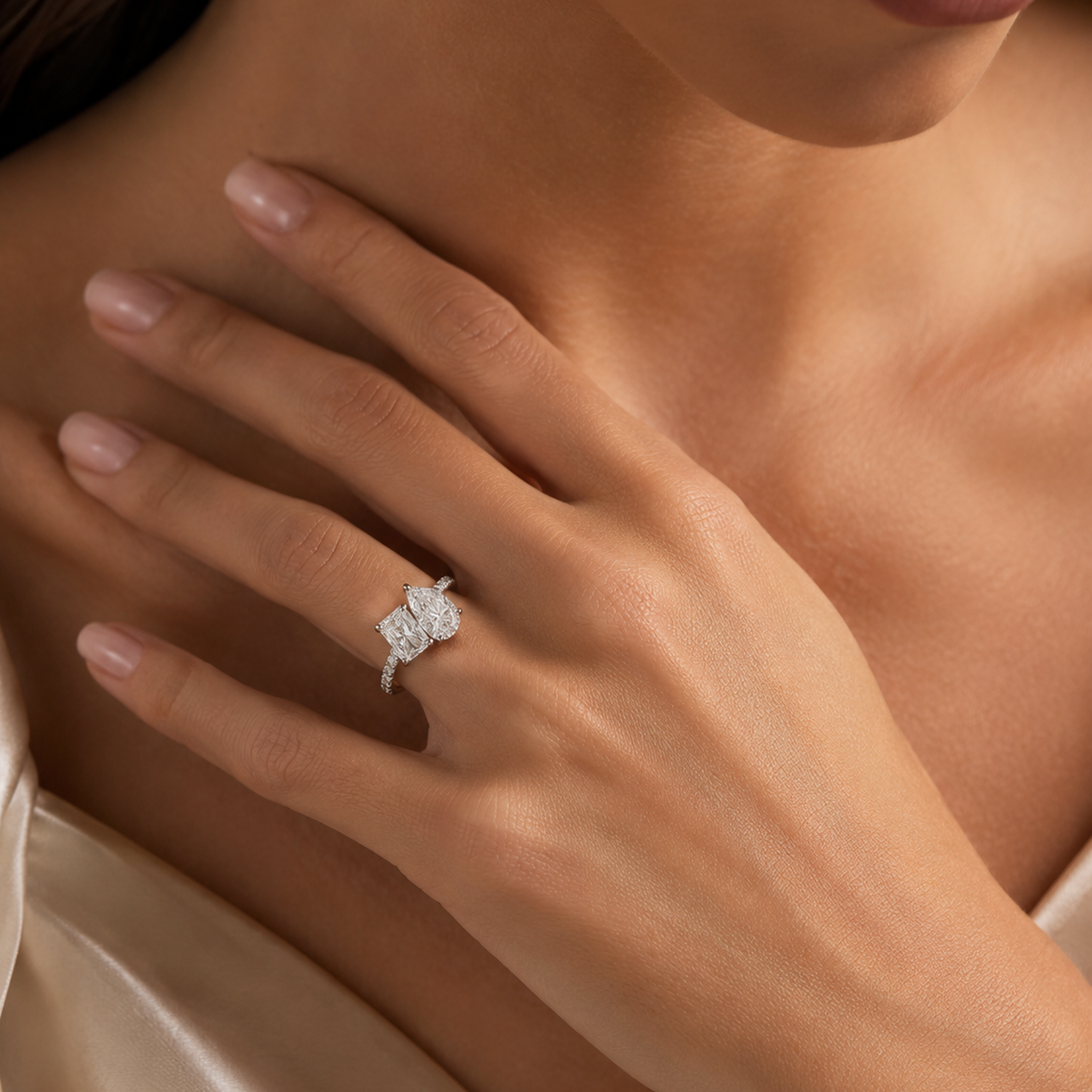
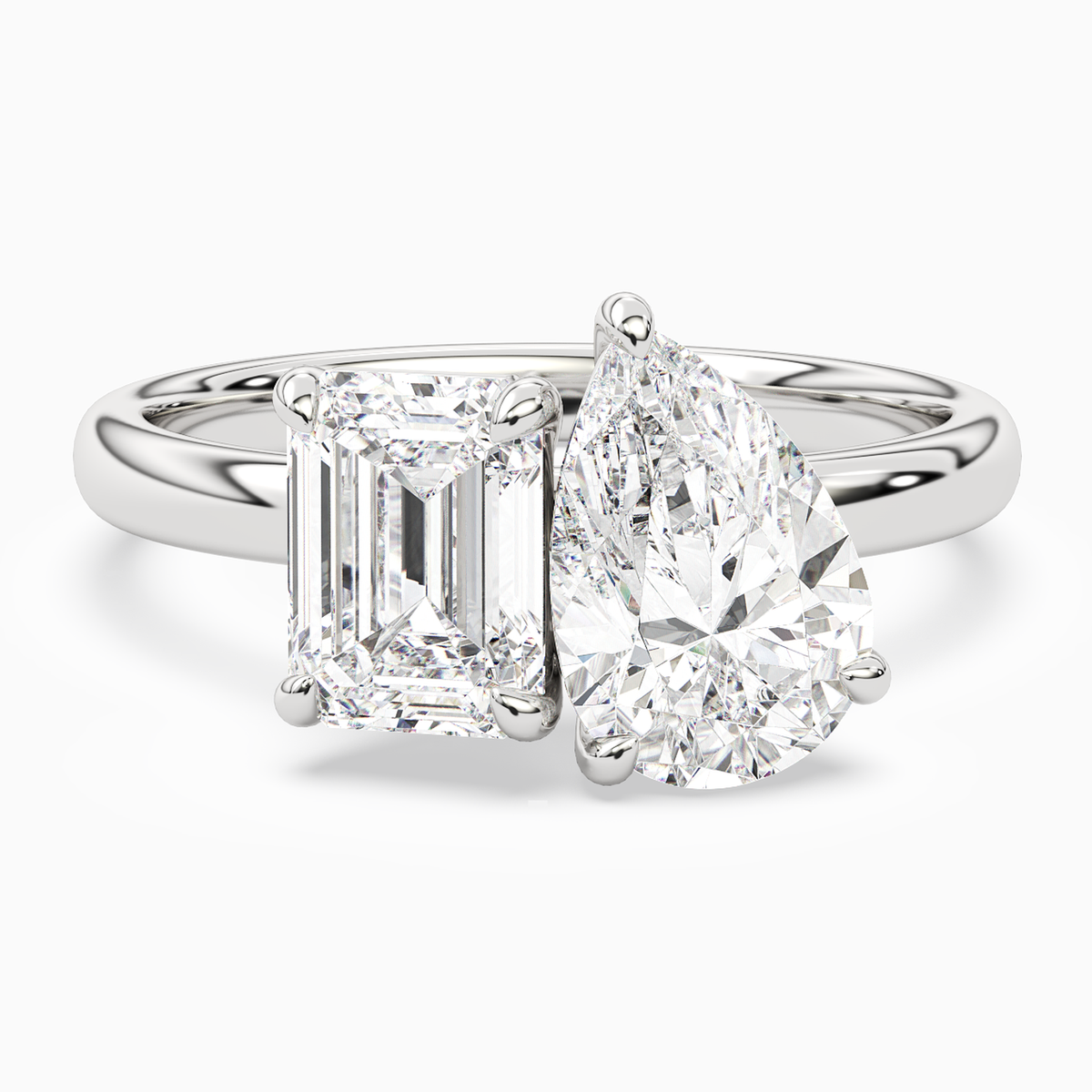
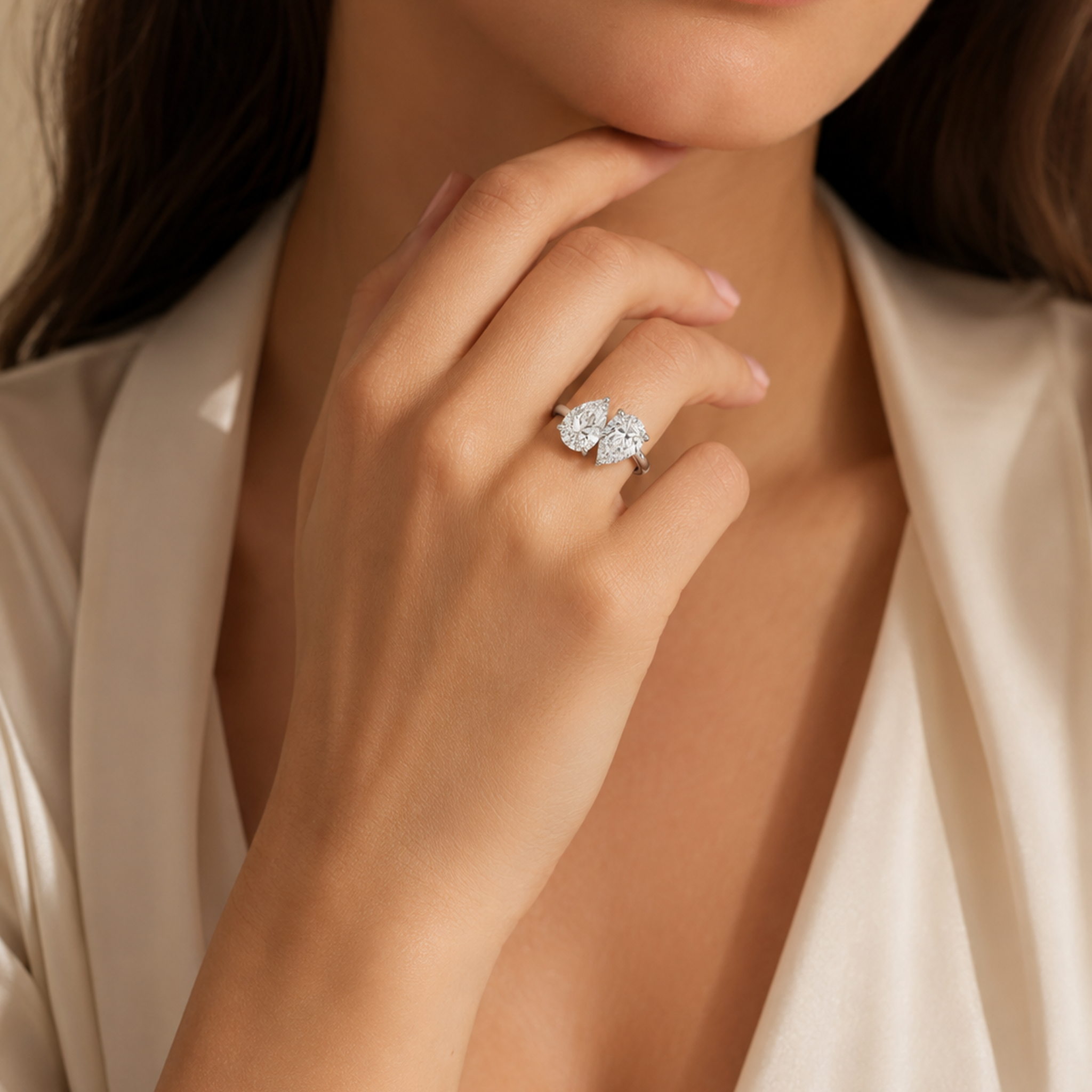
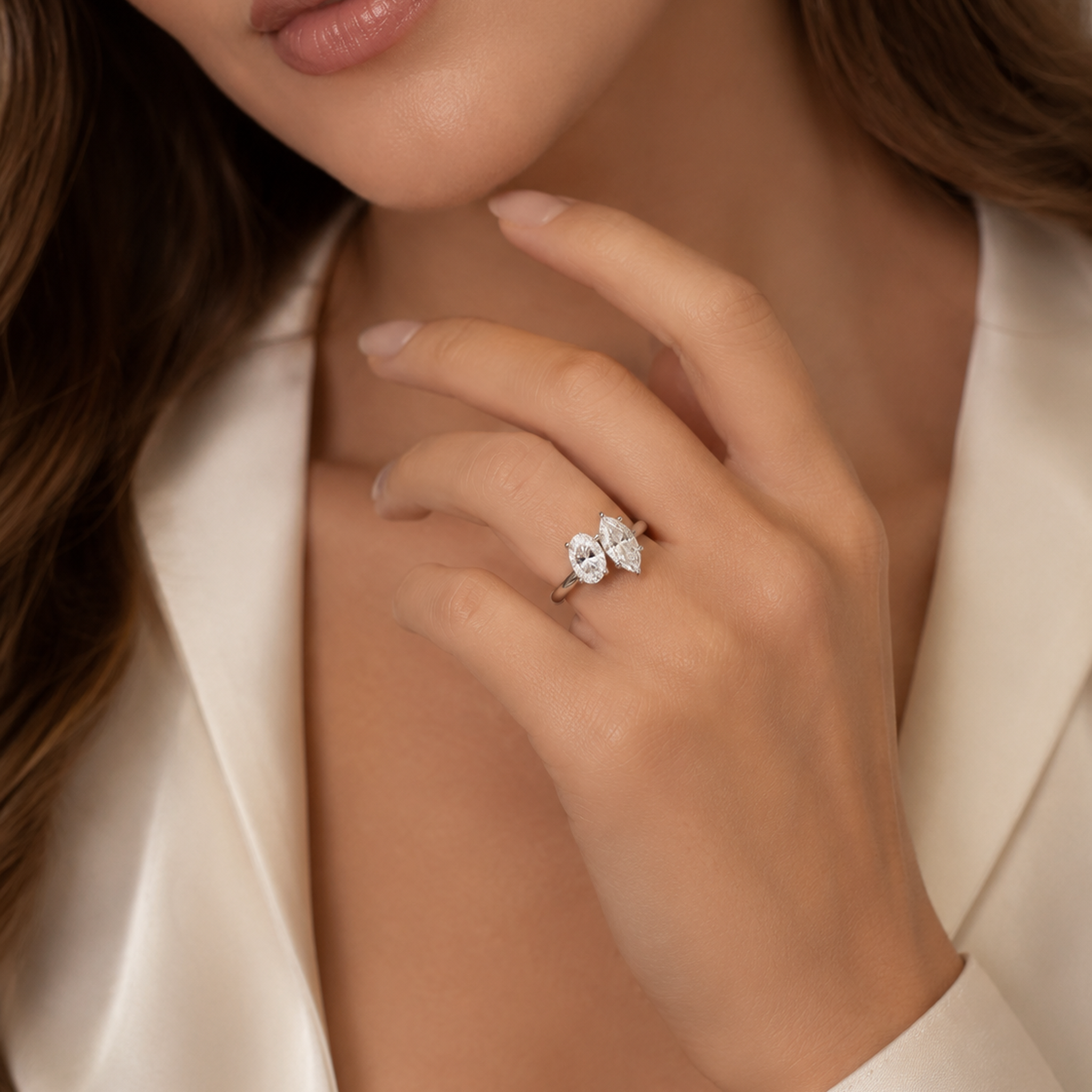
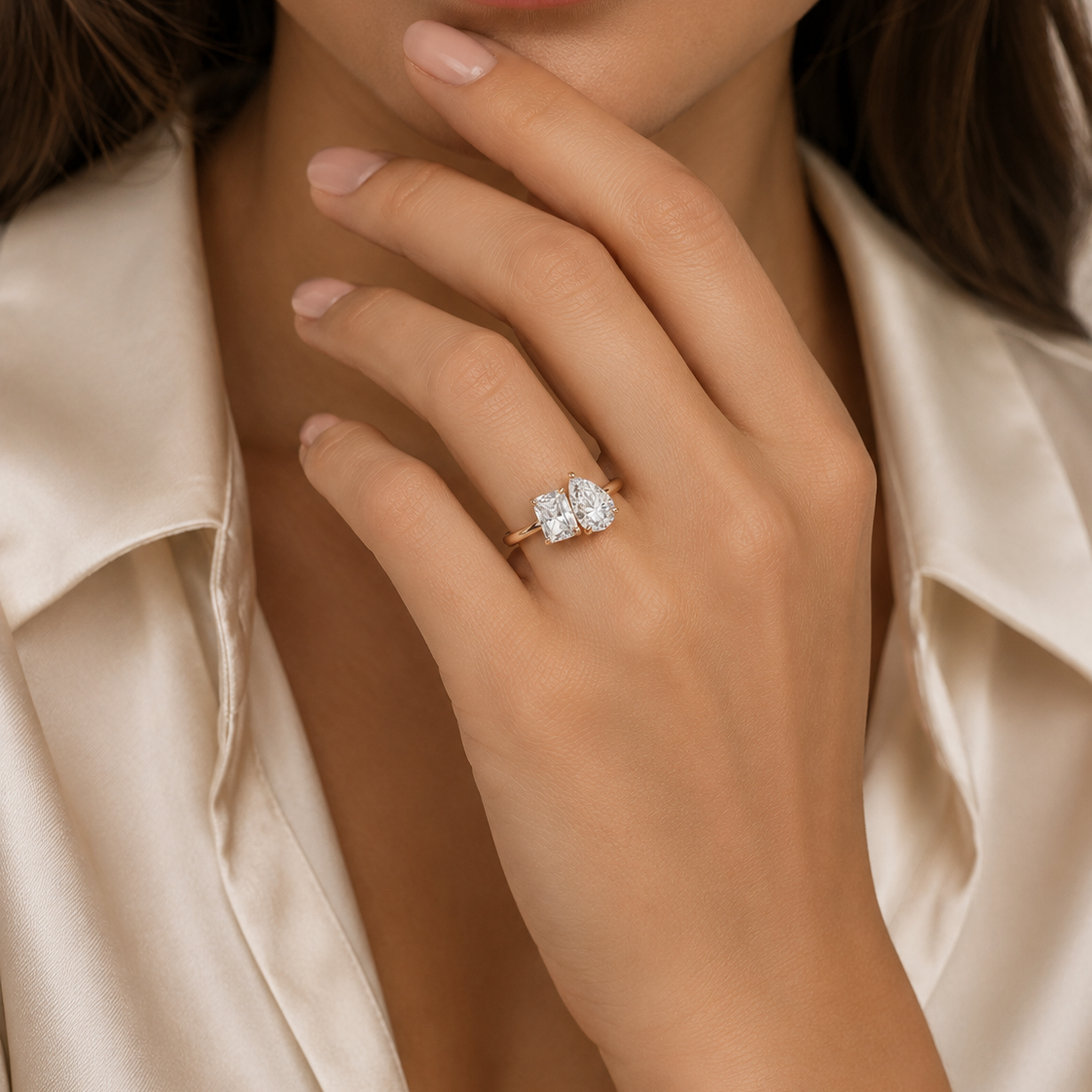
Two centers, held in a quiet field. 14K white gold reduces color contrast so shape, scale, and spacing lead the composition.


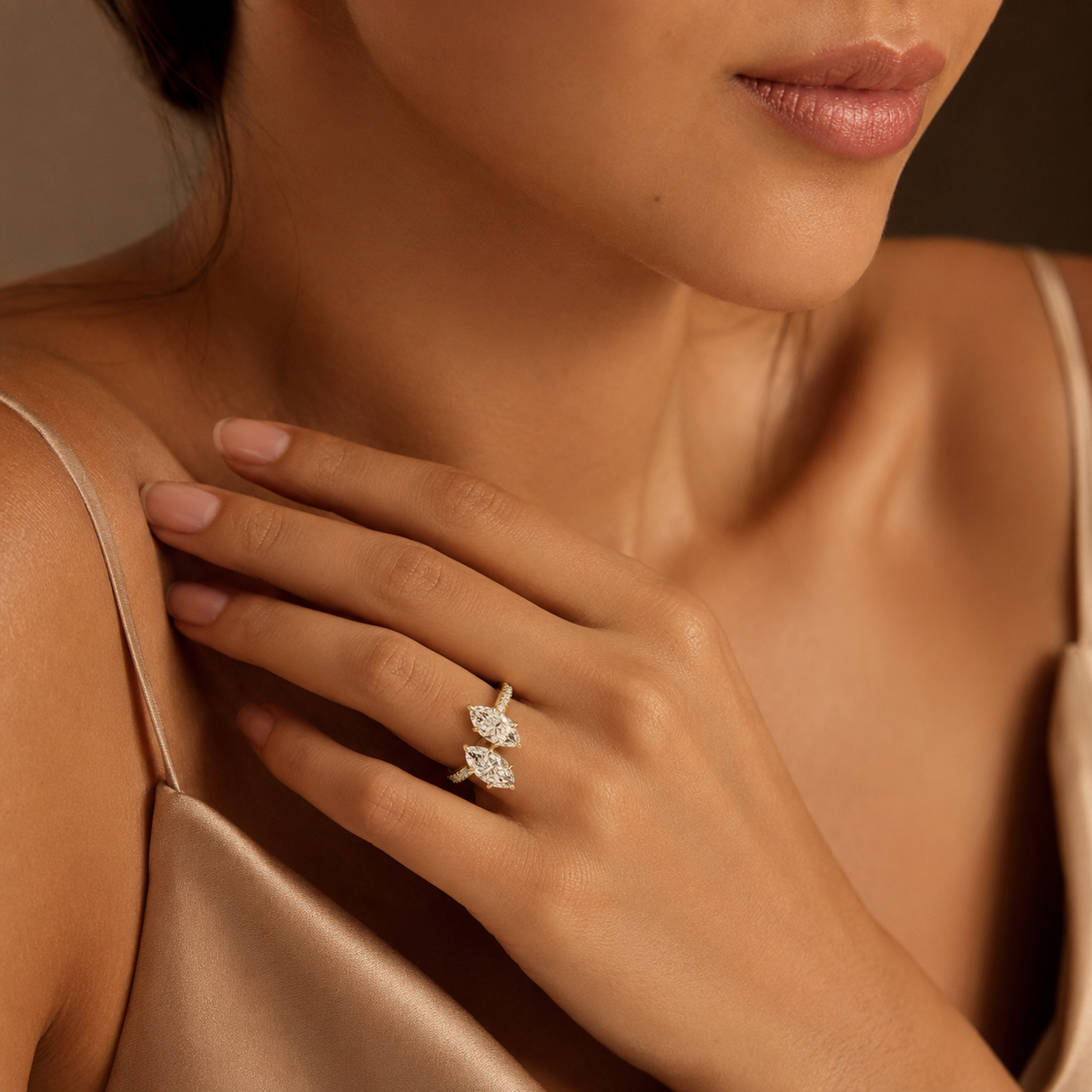


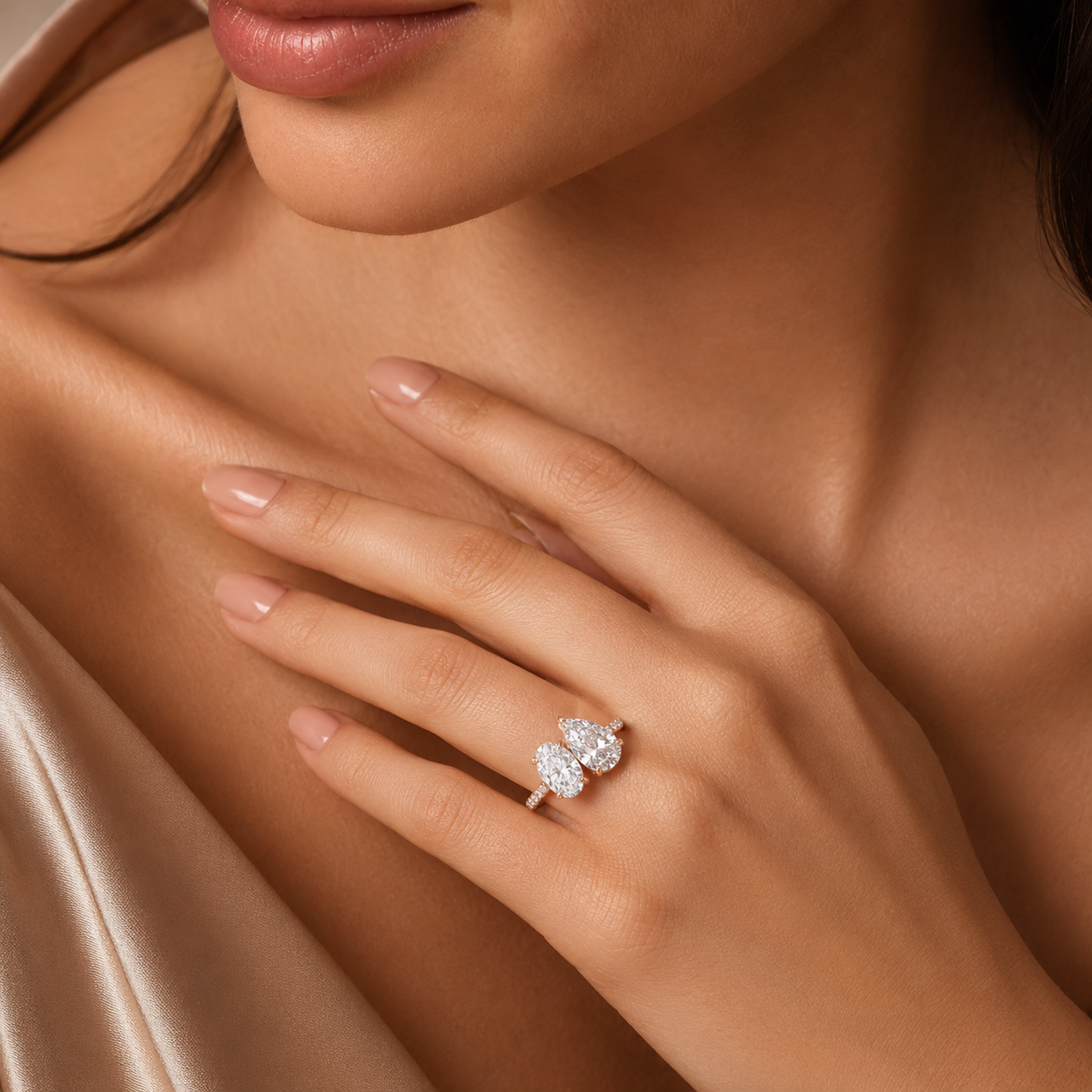


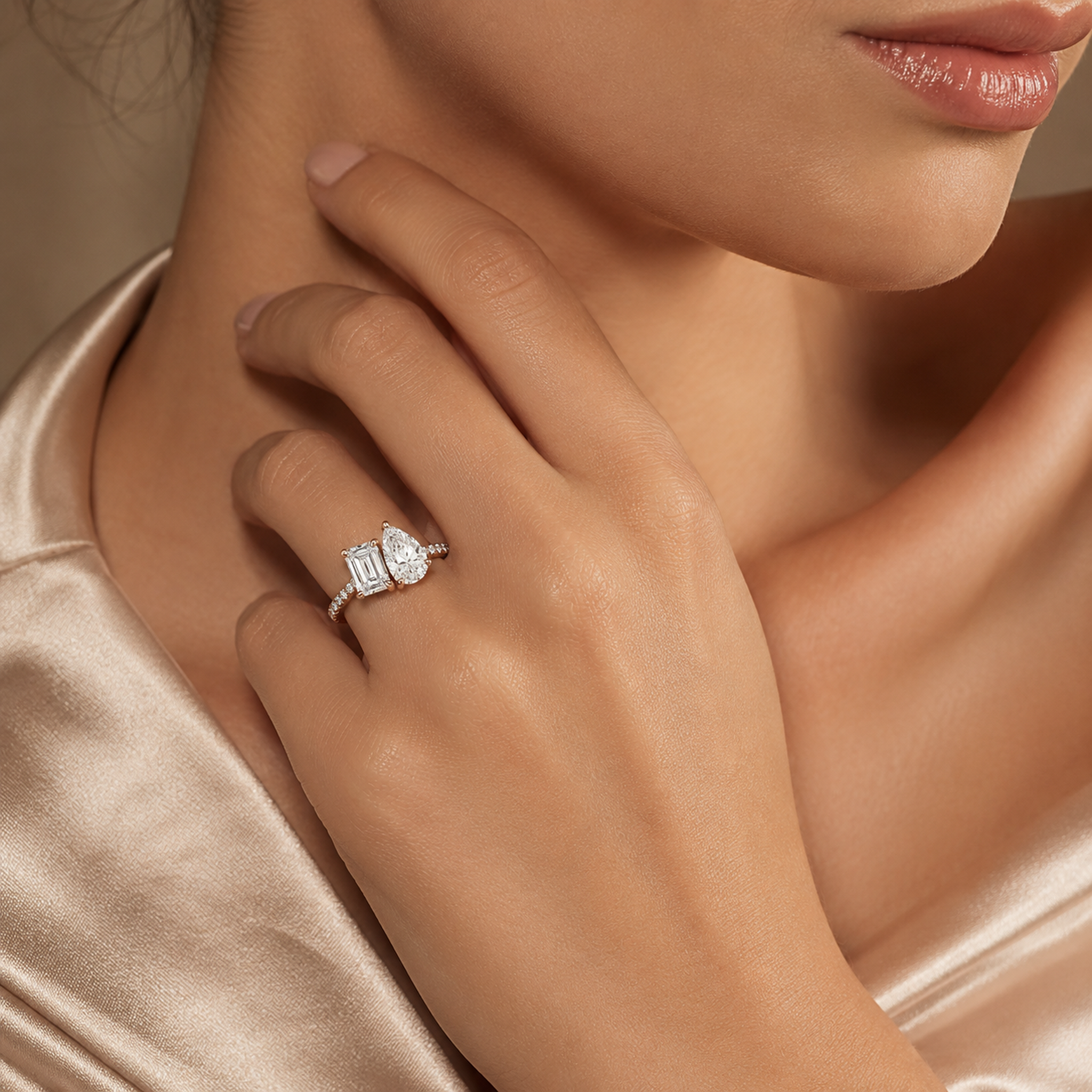






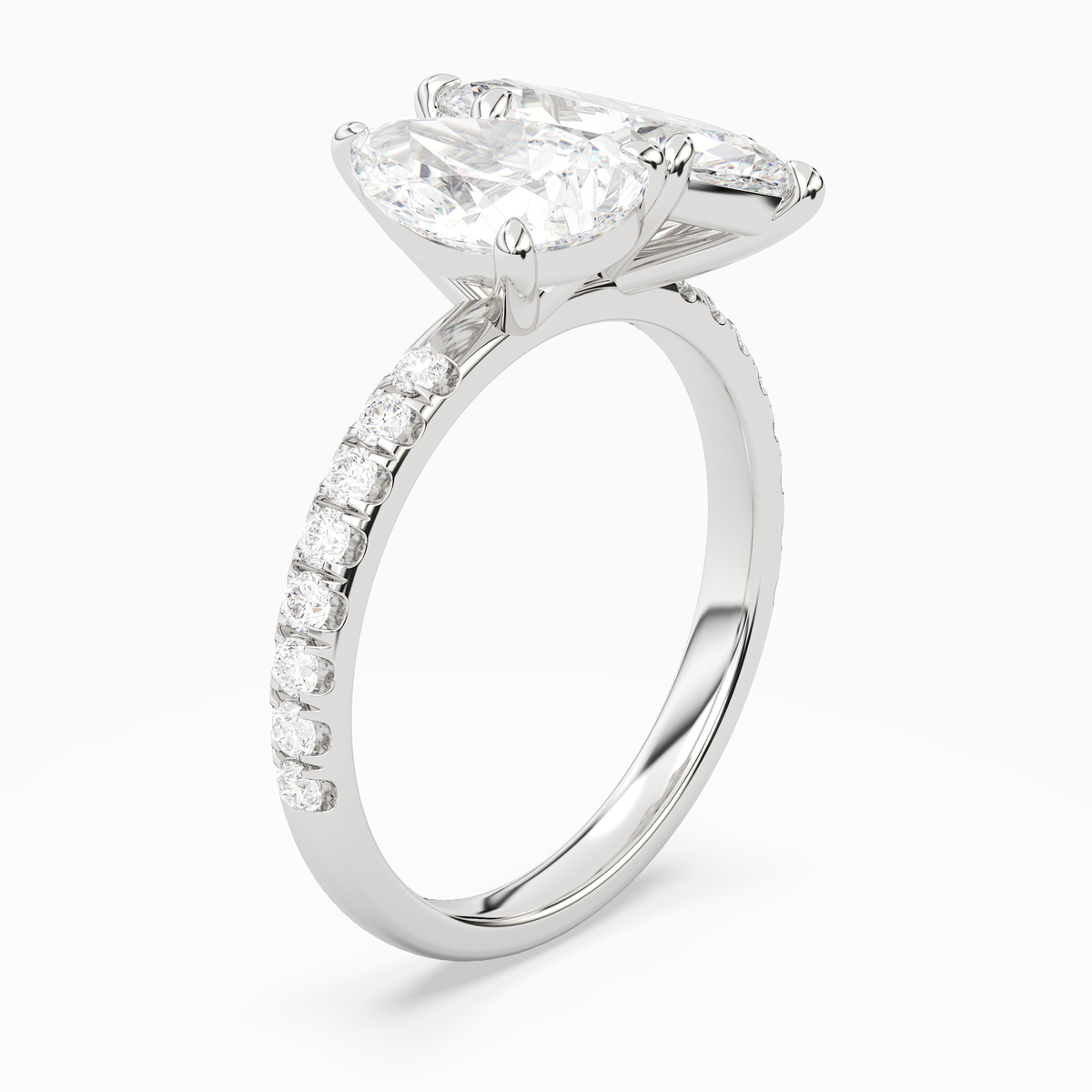
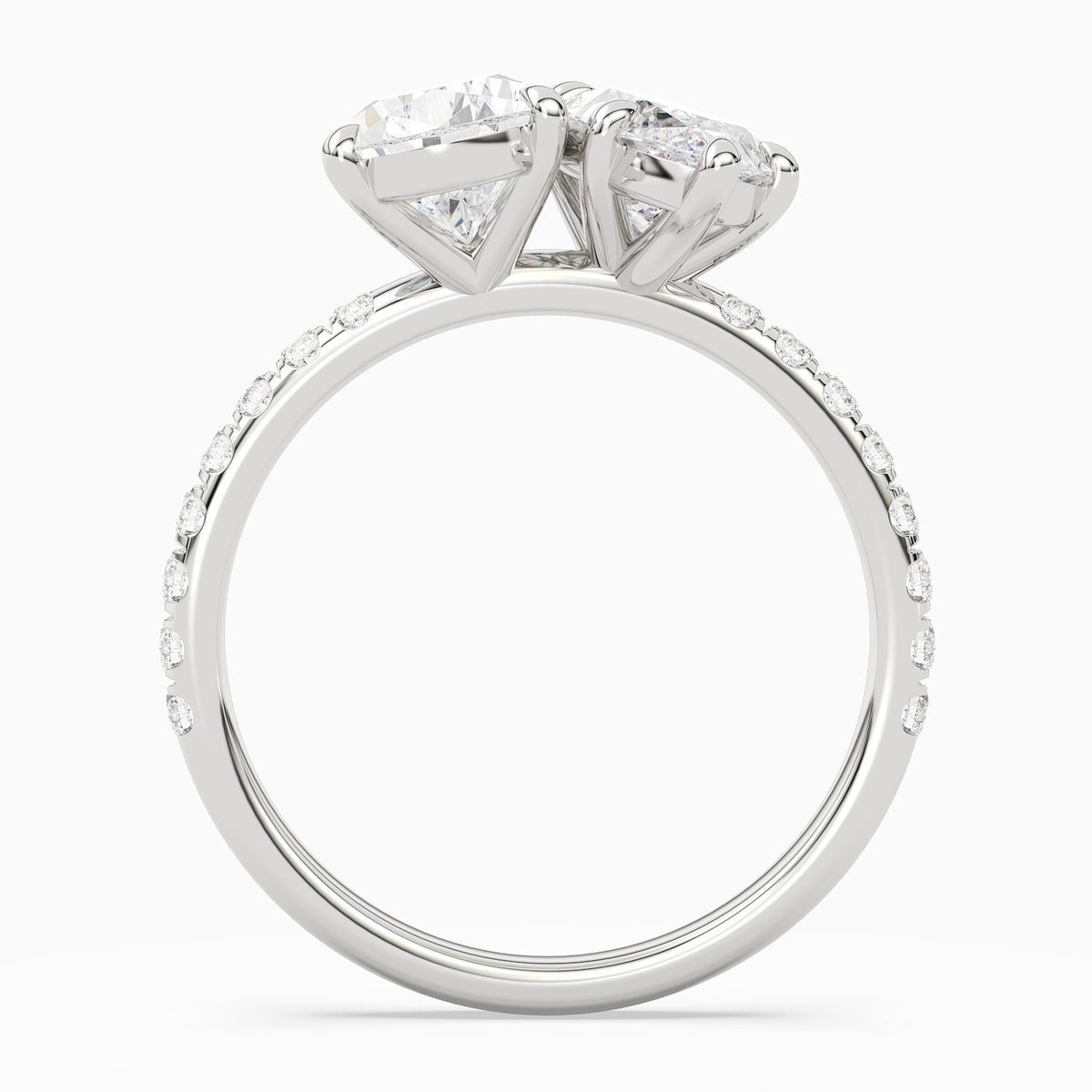
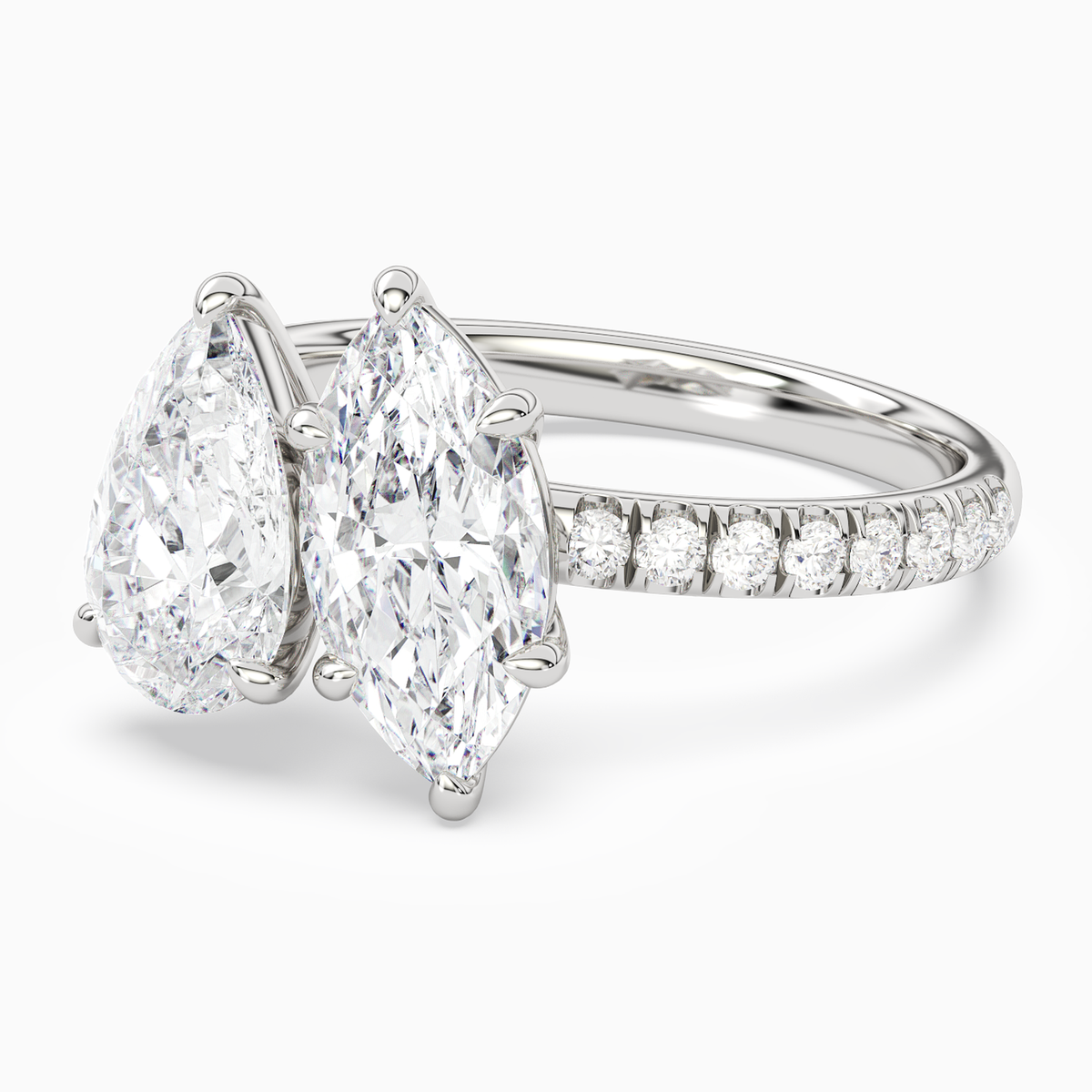
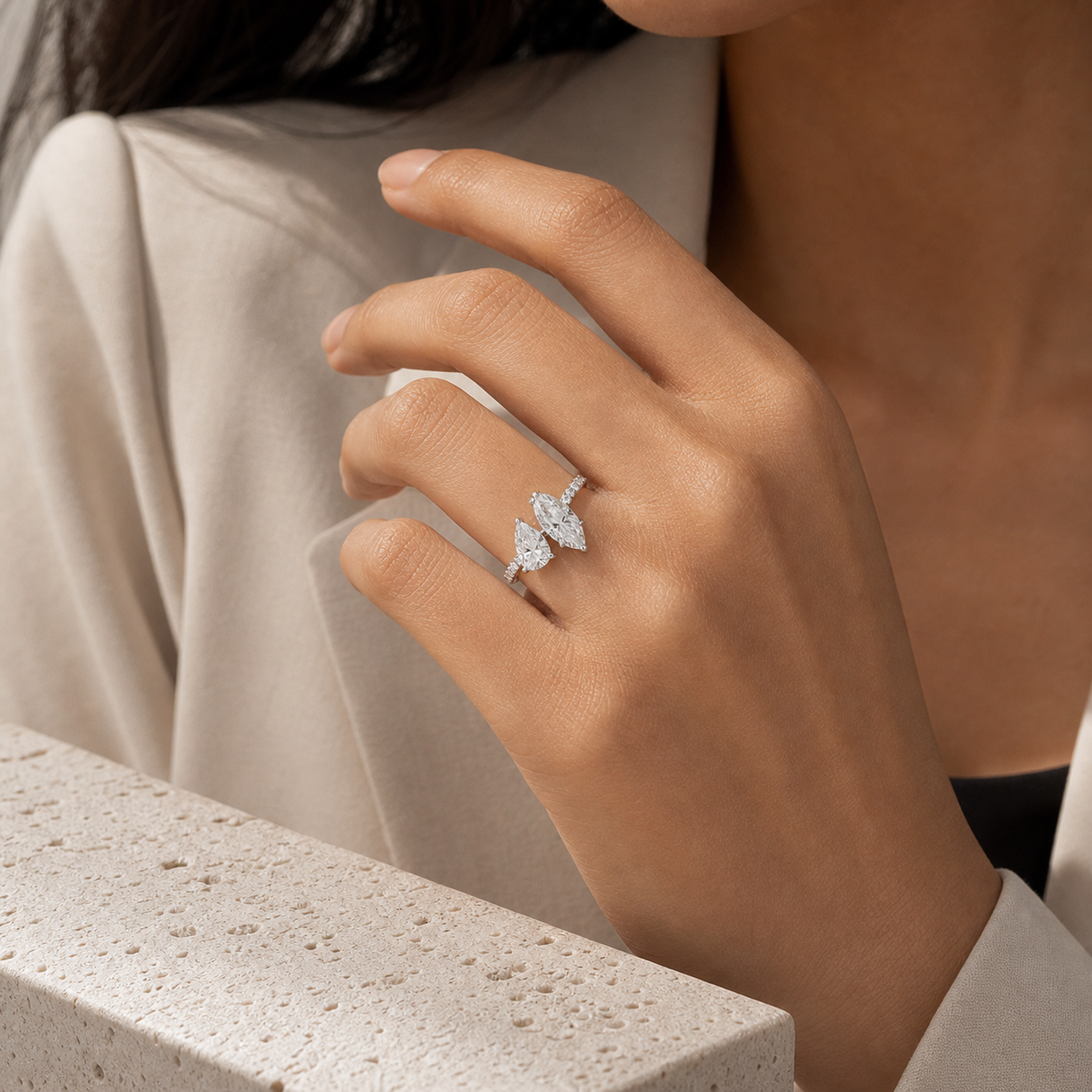

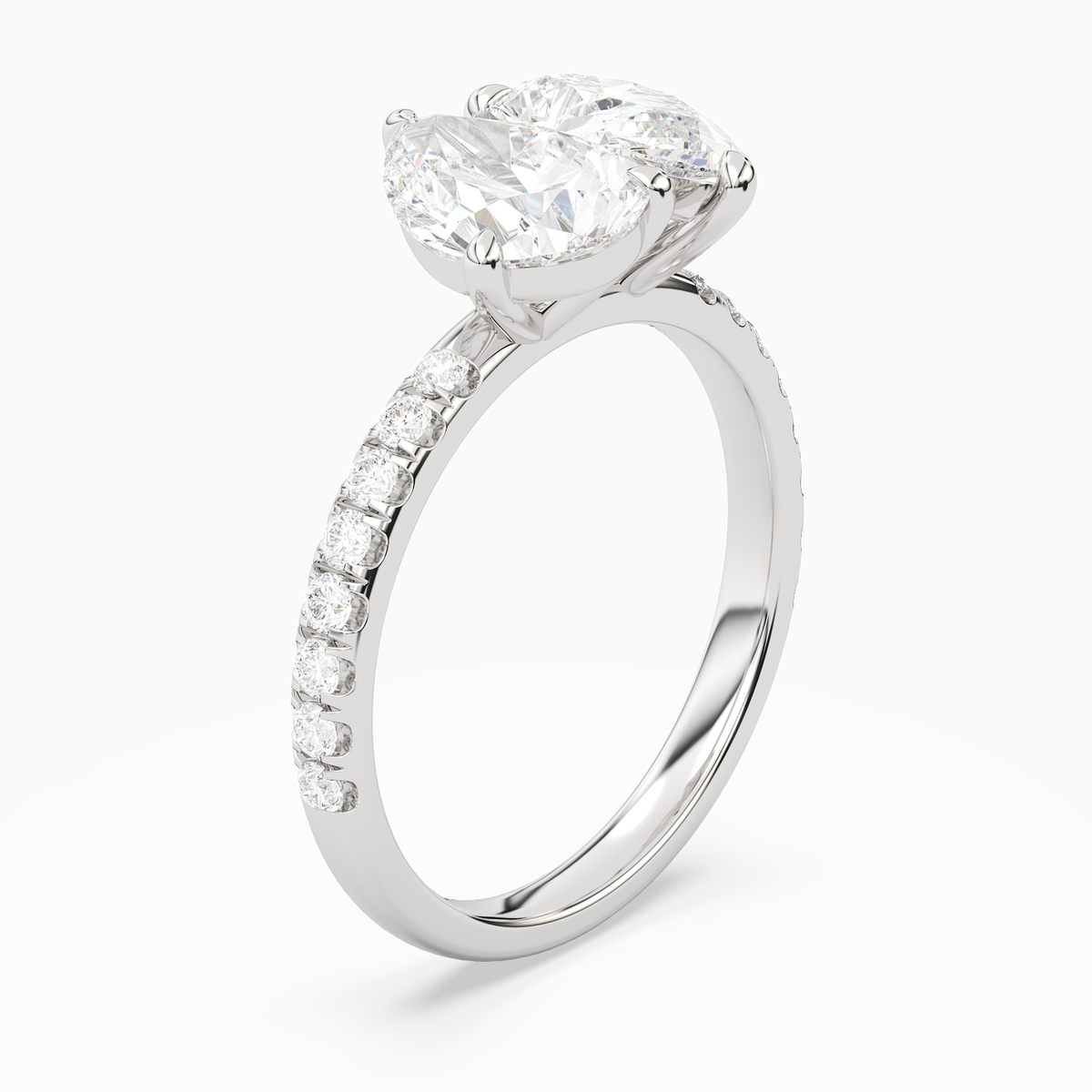


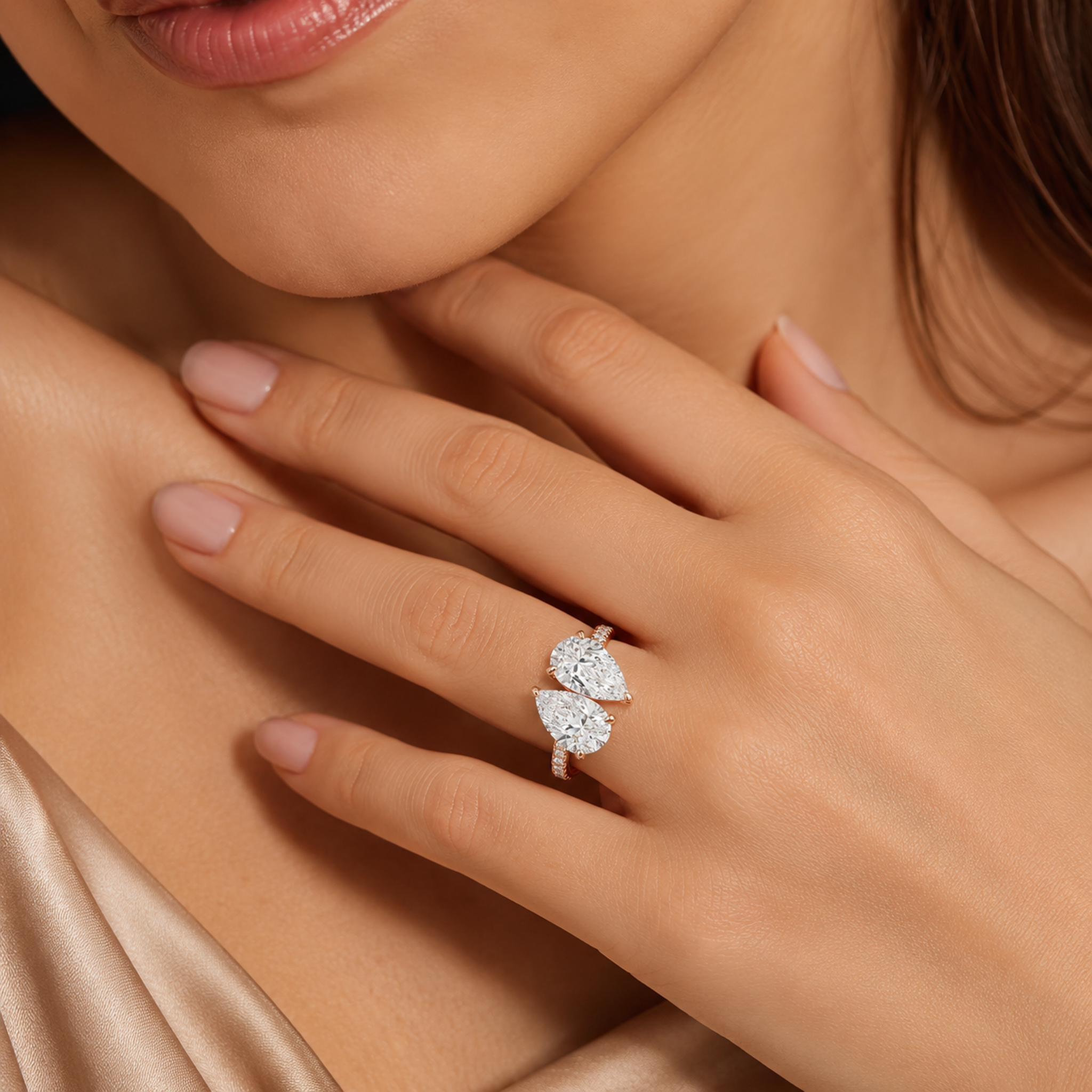


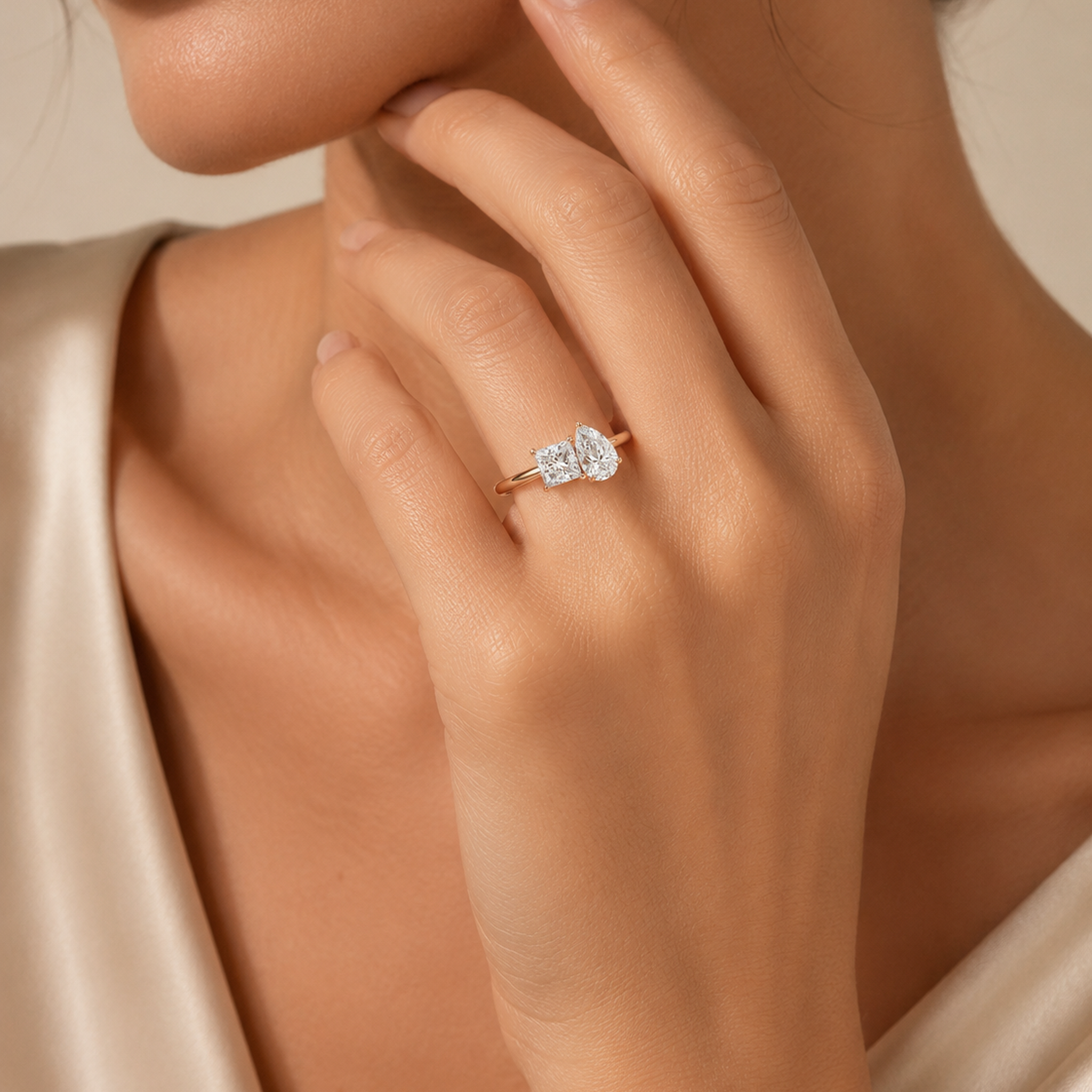


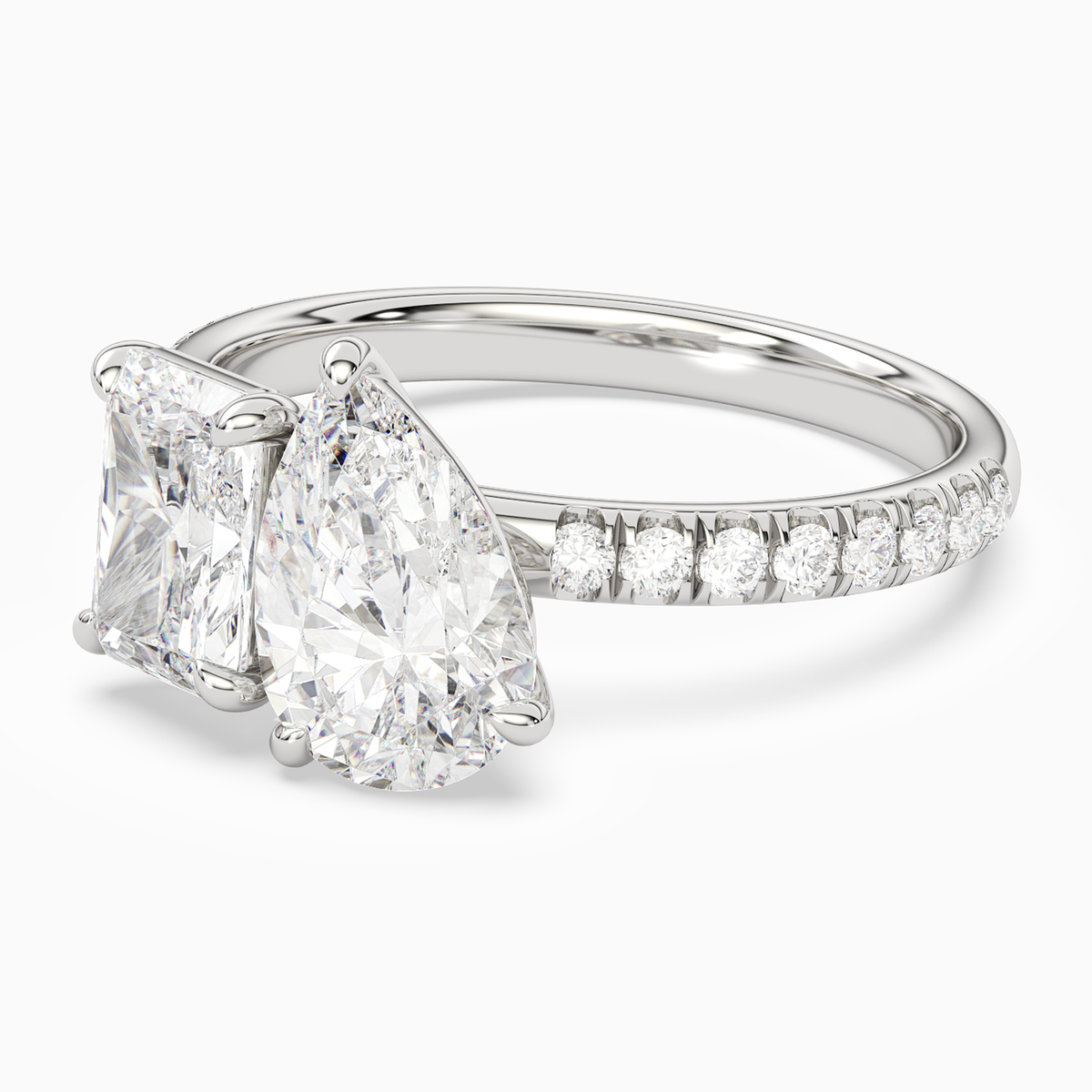
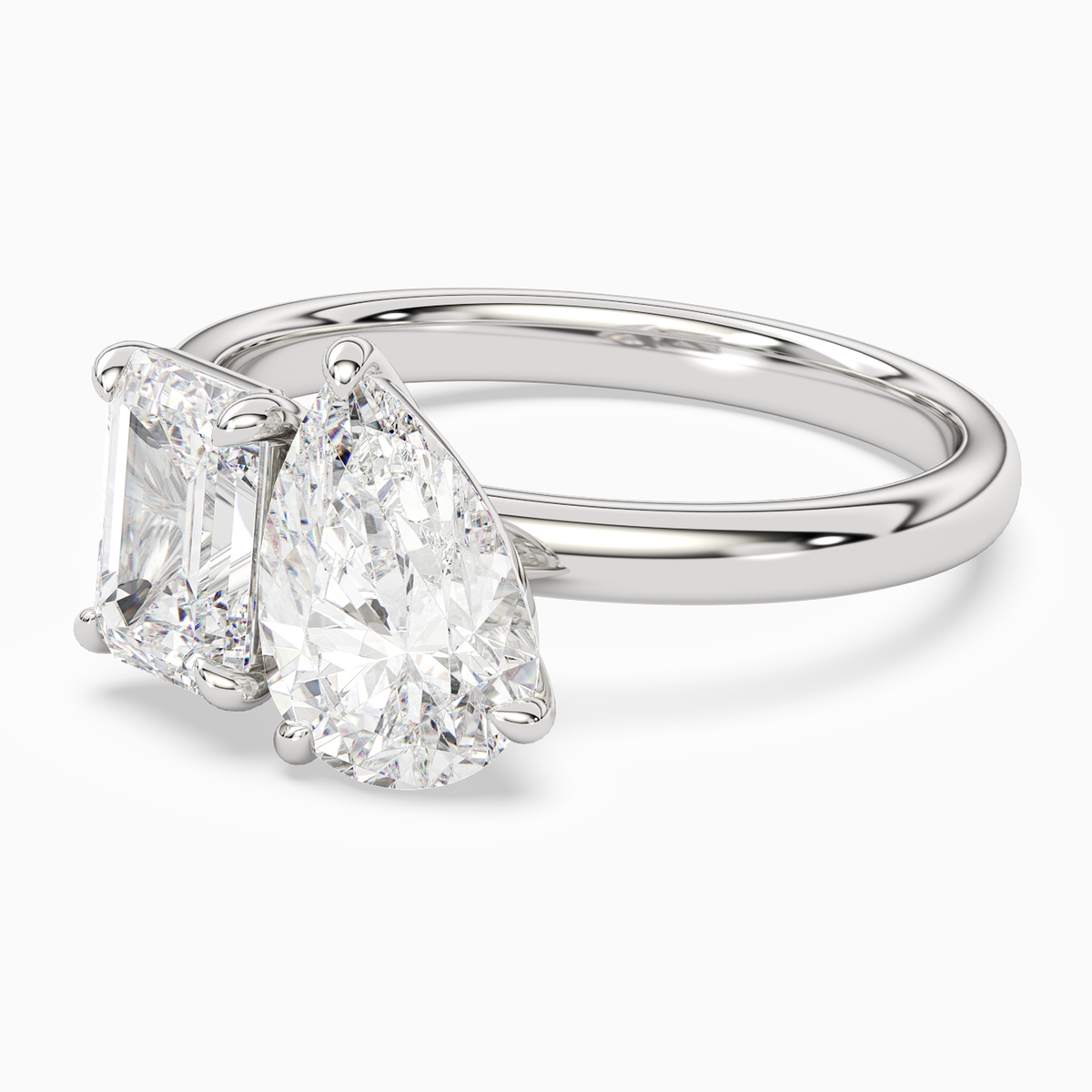
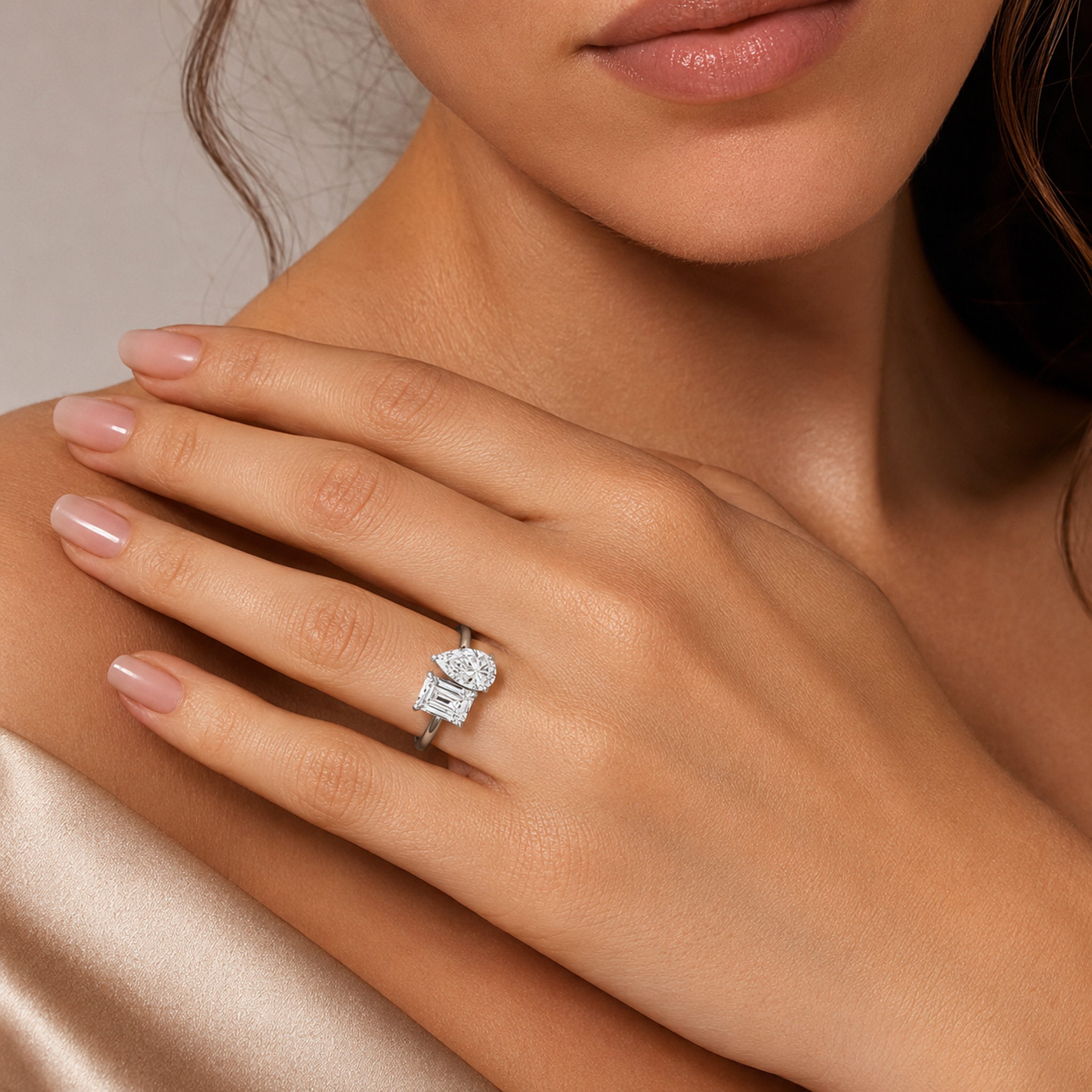
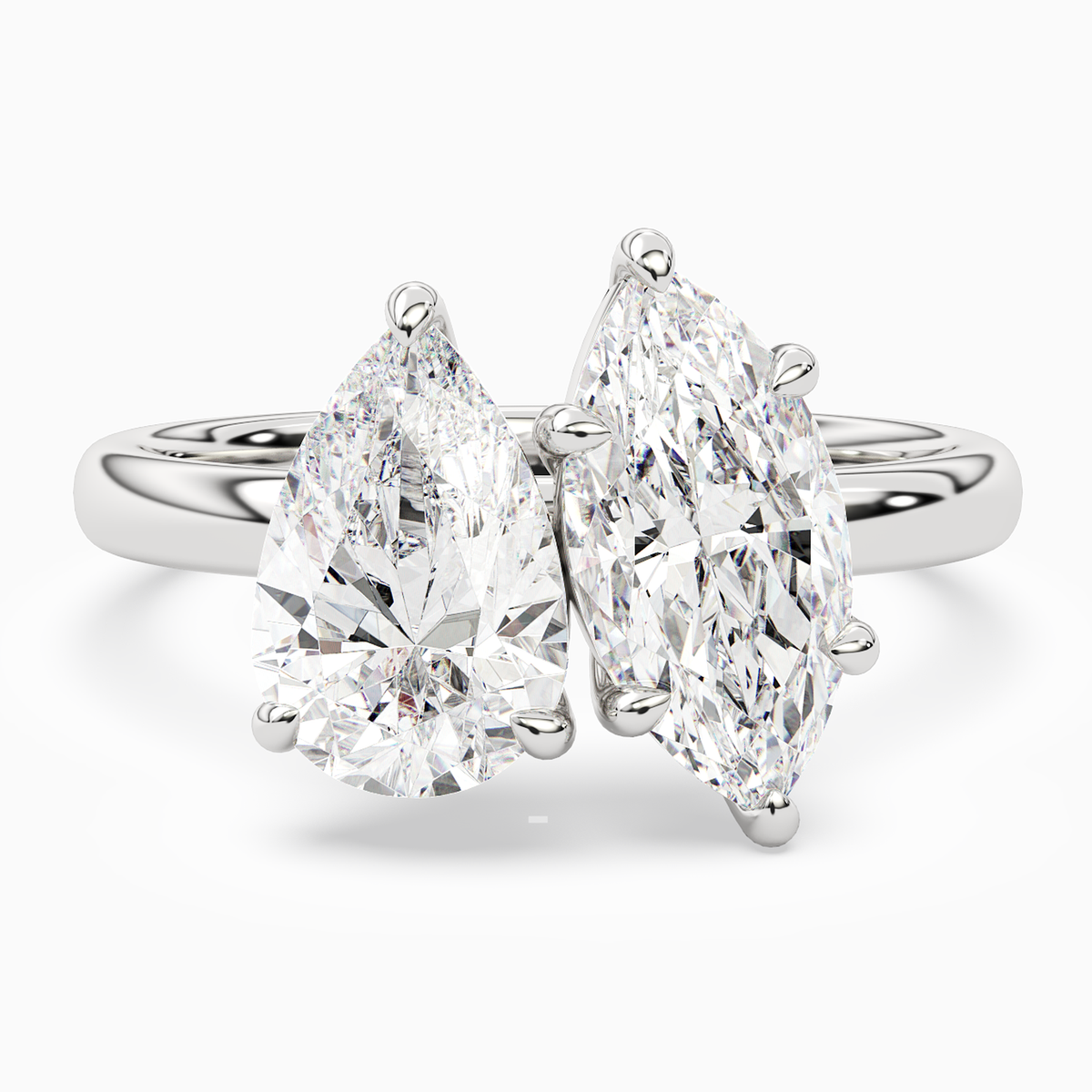


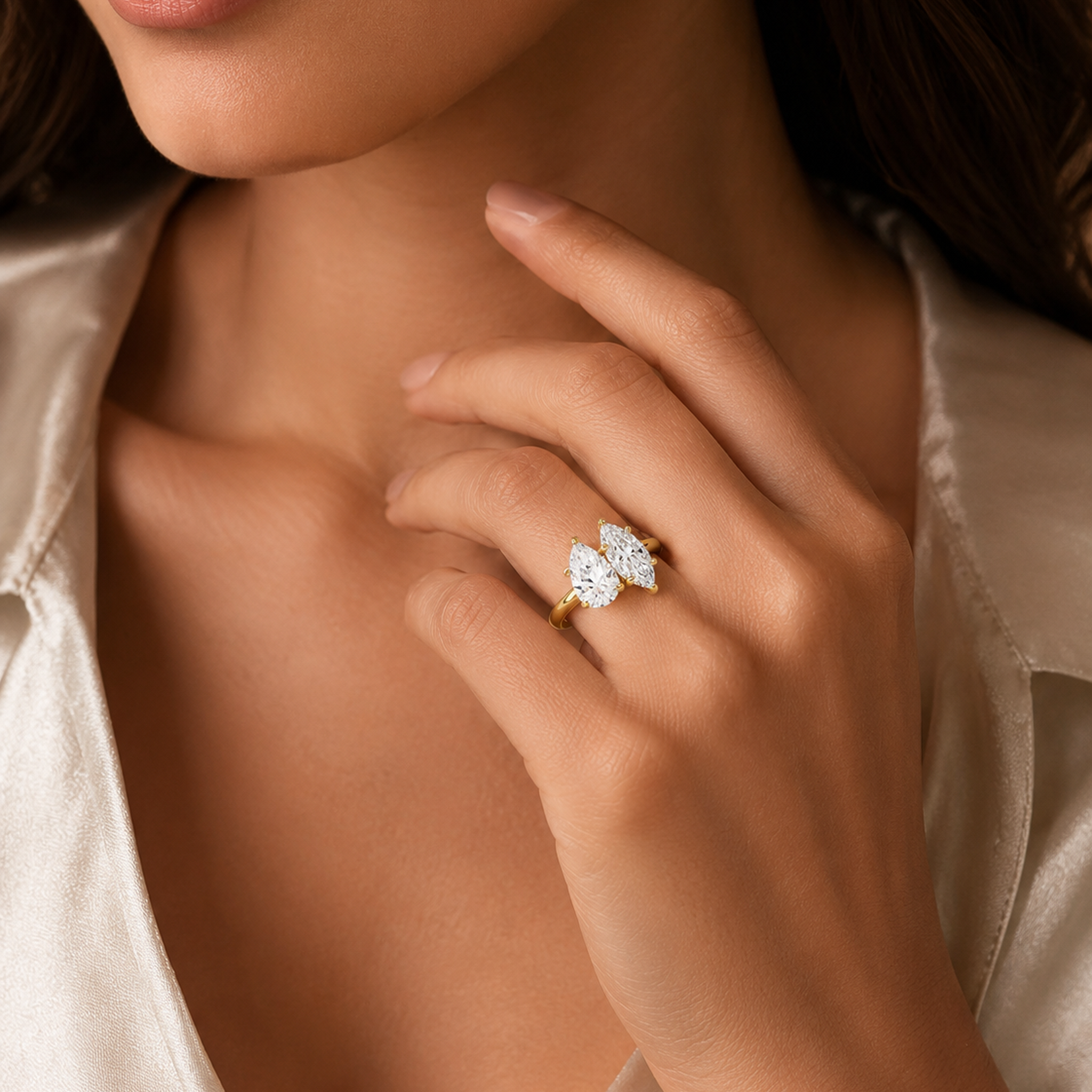






14K White Gold Toi Et Moi Engagement Rings: Space Takes the Lead
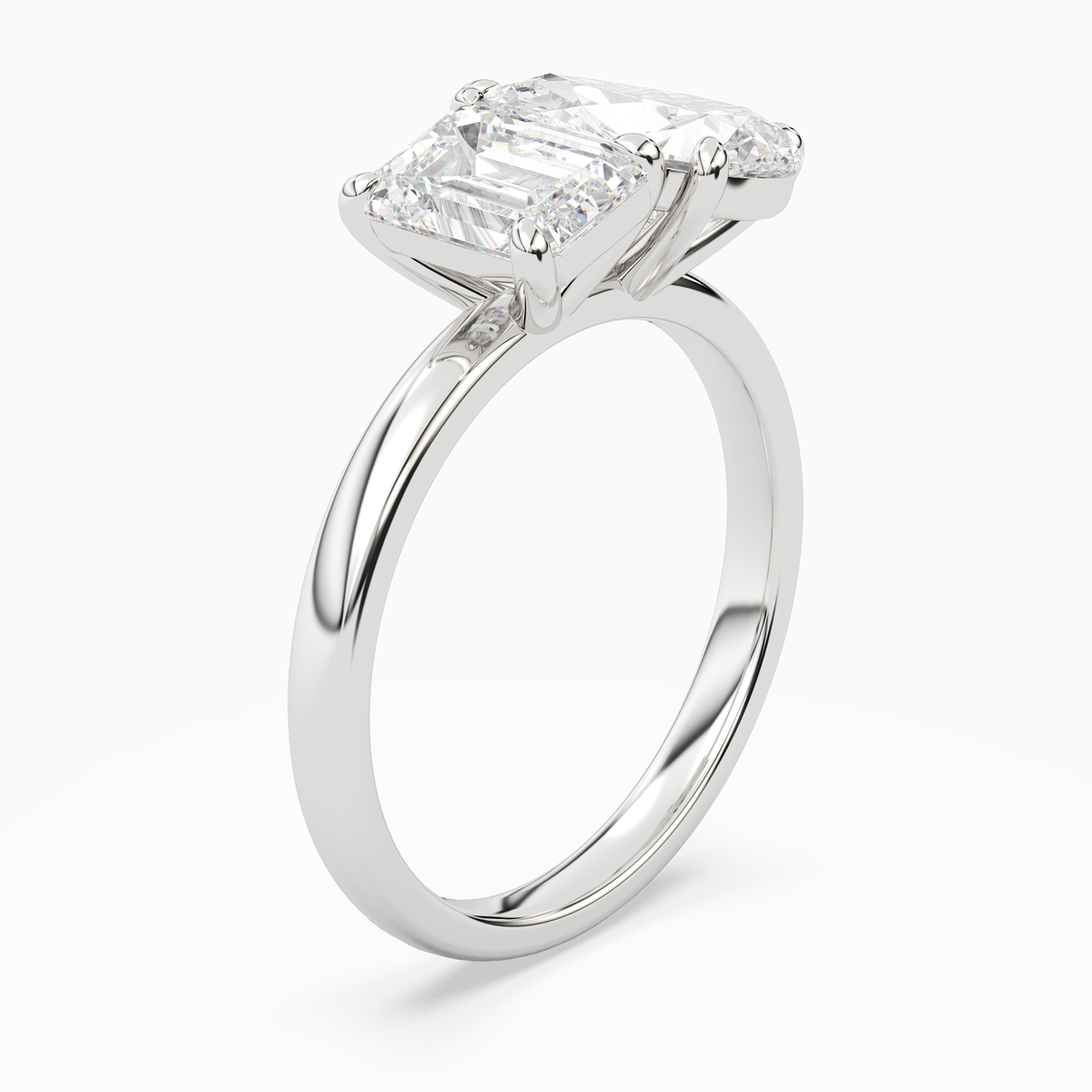
When two diamonds share the principal field, their relationship is carried by edges and intervals. 14K White Gold creates a quiet material background: prongs can visually recede, the band can connect two settings without a strong color break, and negative space becomes easier to read. The metal does not erase structure; it places more responsibility on proportion.
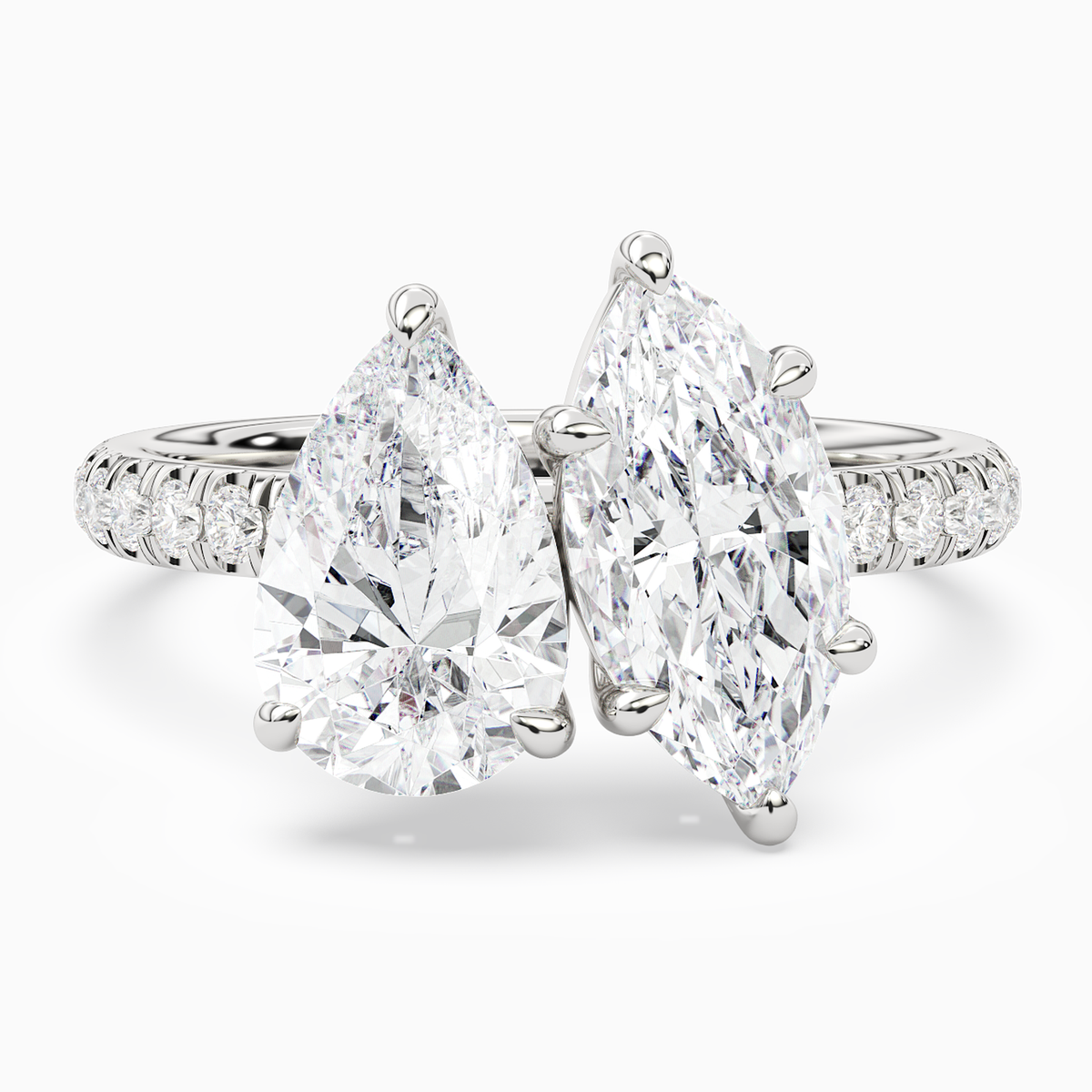
Sixteen current designs combine eight observed shape pairings through pavé-basket, clean-basket, and crossover forms. Matched Pear and Marquise pairs use repetition. Emerald/Pear, Oval/Pear, Princess/Pear, Radiant/Pear, Oval/Marquise, and Pear/Marquise combinations use contrast. Each asks the setting to resolve a different meeting of curves, corners, points, and axes.
A White Alloy With Product-Specific Finish
A 14K alloy contains approximately 58.3% gold. Its remaining metals influence color and working behavior. Karat does not disclose the exact alloy, rhodium use, hardness, sensitivity profile, or care needs. Many white-gold rings use a bright surface finish, but that must be confirmed rather than assumed.
This matters around two centers because prongs, baskets, and crossover shoulders repeat. A close tonal relationship can make metal interruptions quieter, but it cannot guarantee that the diamonds look larger, whiter, or more brilliant. Each outline and its setting remain physically present, especially at points and corners.
Let Difference Remain Visible
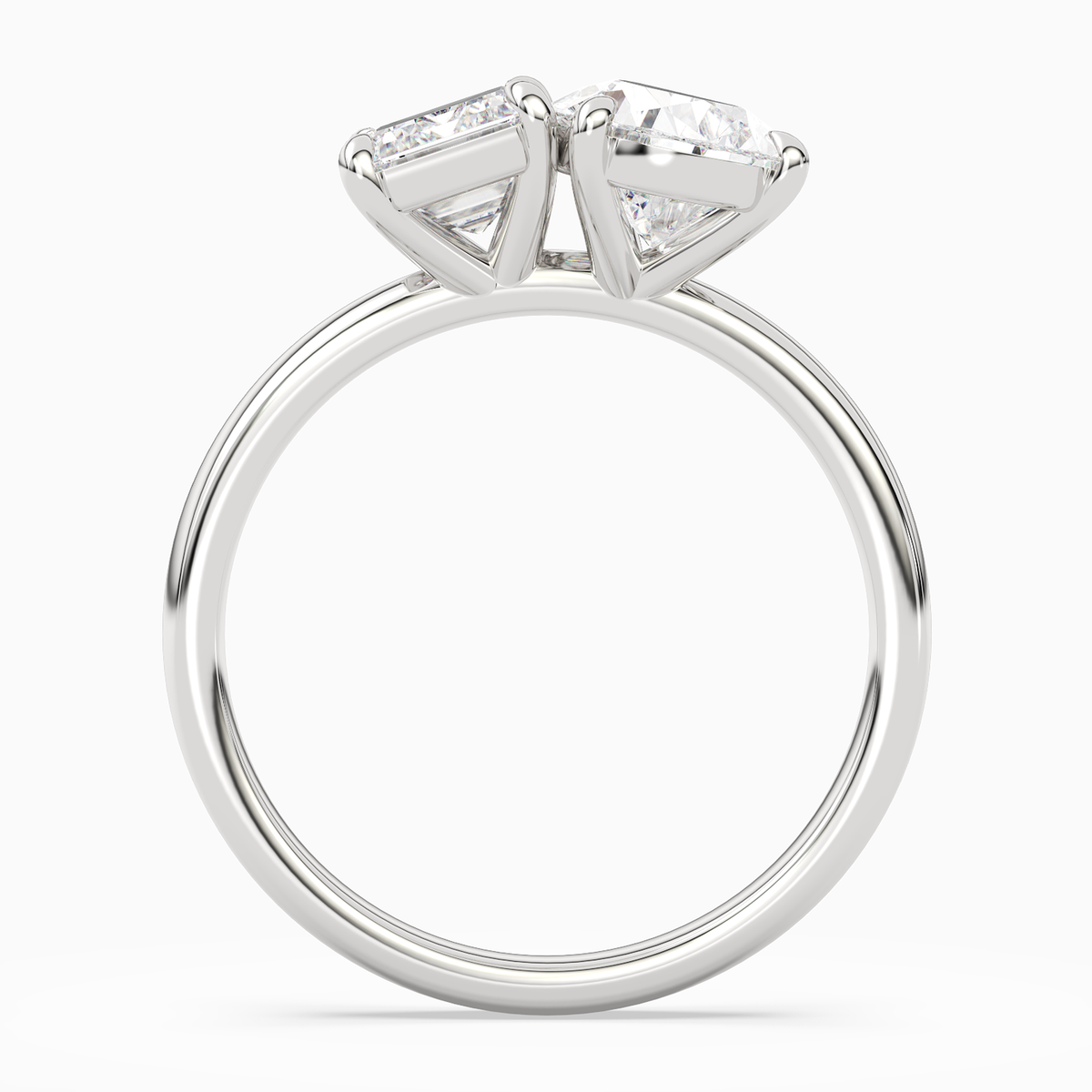
A successful pair does not need identical shapes or equal carat weights. Emerald/Pear creates contrast between ordered steps and a directional curve. Oval/Marquise relates two elongated forms with different edge tension. Matched pairs can still vary through orientation or scale. The goal is not symmetry by default; it is a relationship that looks deliberate from above and in profile.
Compare individual dimensions, not only weight. Two diamonds of equal carat can occupy different face-up areas because their depths and outlines differ. Setting height and spacing also change visual authority. Confirm each diamond's specification and any combined total rather than treating one selector label as a complete allocation statement.
White Space Is Also Physical Space
The interval between centers influences cleaning access, prong visibility, and the apparent direction of the ring. Too little visible space may merge outlines; more space can emphasize duality. There is no universal ideal gap because shape, scale, point protection, basket geometry, and the band all interact.
A wedding band adds another line beneath or beside that interval. Matching White Gold may preserve tonal continuity, while another metal may expose the boundary. Flush fit is not guaranteed: both settings, pavé contact, crossover shoulders, and height must be evaluated on the exact pair.
Clarity for Both Centers
Each diamond must be read separately as well as together. Color and clarity need not match numerically to look considered, but their relationship should be understood. Facet patterns may return light differently, and that contrast is not evidence that one center is inferior. Documentation remains specific to the selected configuration.
Burvonti brings responsibly sourced, independently graded lab-grown diamonds into pairings calibrated through human judgment. Custom possibilities may refine shapes, relative scale, orientation, spacing, metal, band, engraving, or selected setting details where feasible. White Gold gives the dialogue a quiet field; the two forms still do the speaking.
Frequently Asked Questions
What does this page own beyond the parent Toi Et Moi page?
It focuses on the quiet white-metal field and how reduced color contrast changes outline, spacing, and prong visibility.
How much gold is in 14K White Gold?
Approximately 58.3%, with alloying metals influencing its white appearance and behavior.
Is every ring rhodium plated?
No universal assumption should be made. Confirm the selected product's finish and care needs.
Which pairs are represented?
Emerald/Pear, Oval/Pear, Princess/Pear, Radiant/Pear, Oval/Marquise, Pear/Marquise, matched Pear, and matched Marquise.
Does White Gold make both diamonds look larger?
No. It may reduce color contrast, but dimensions, shape, spacing, and setting determine the visual footprint.
Do the two diamonds need equal carat weight?
No. Dimensions, face-up area, orientation, and height can create balance without equal weight.
How much space should sit between the centers?
There is no universal gap. Shape edges, point protection, scale, basket geometry, and design intent determine it.
Are both grading reports included?
Documentation is configuration-specific. Confirm the report and specifications supplied for each center.
How does 14K White Gold compare with 18K?
14K contains approximately 58.3% gold; 18K contains 75%. Finish and complete construction remain relevant.
Can White Gold cause sensitivity?
Sensitivity depends on exact alloy and wearer. Request product-specific composition when needed.
Will the ring rotate?
A broad or uneven head may rotate if sizing, band proportion, and weight distribution are unresolved; evaluate the finished ring.
Can Burvonti adjust the two shapes?
Custom possibilities may refine shapes, scale, orientation, spacing, metal, or selected setting details, subject to availability and feasibility.