
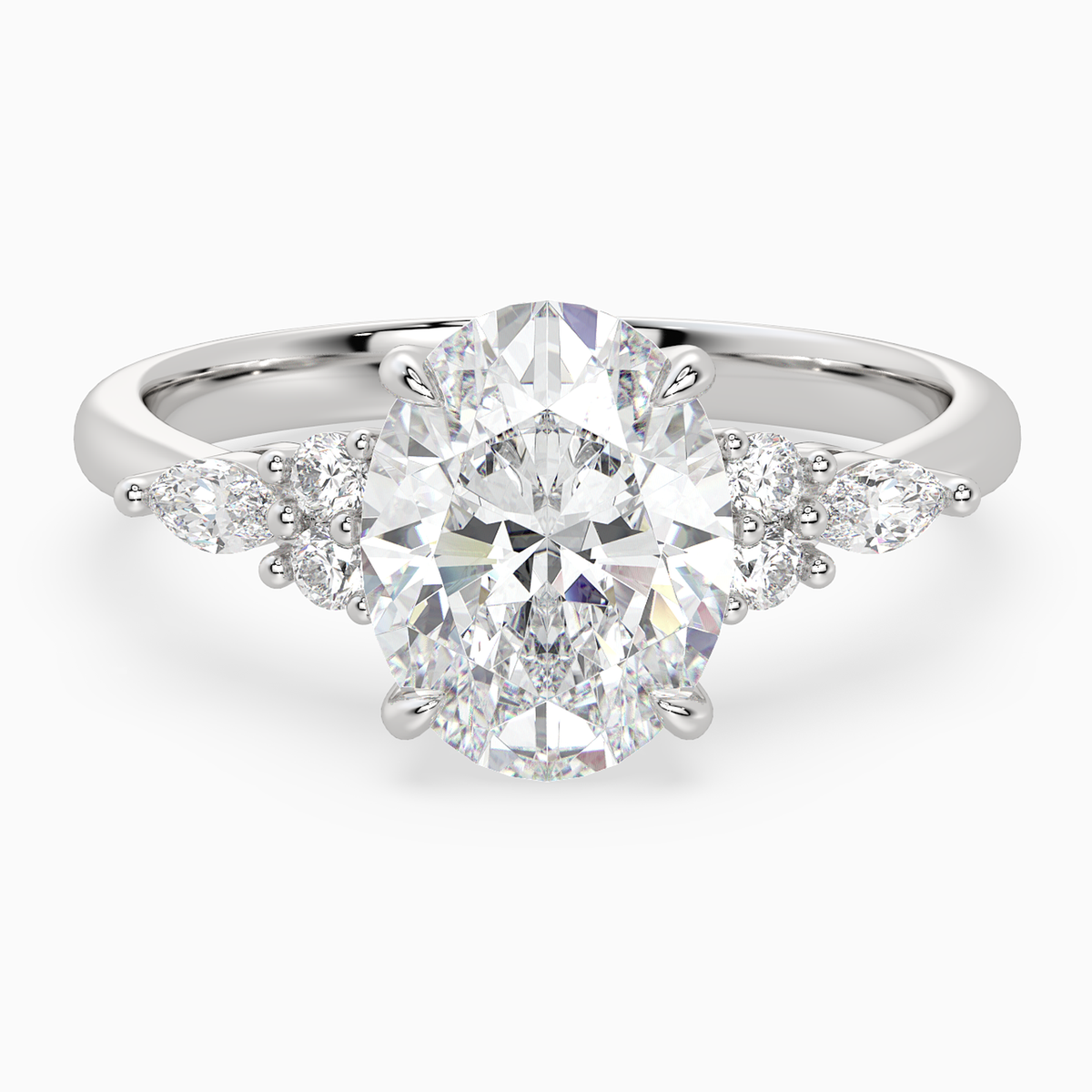


Toi Et Moi Engagement Rings in 14K Rose Gold
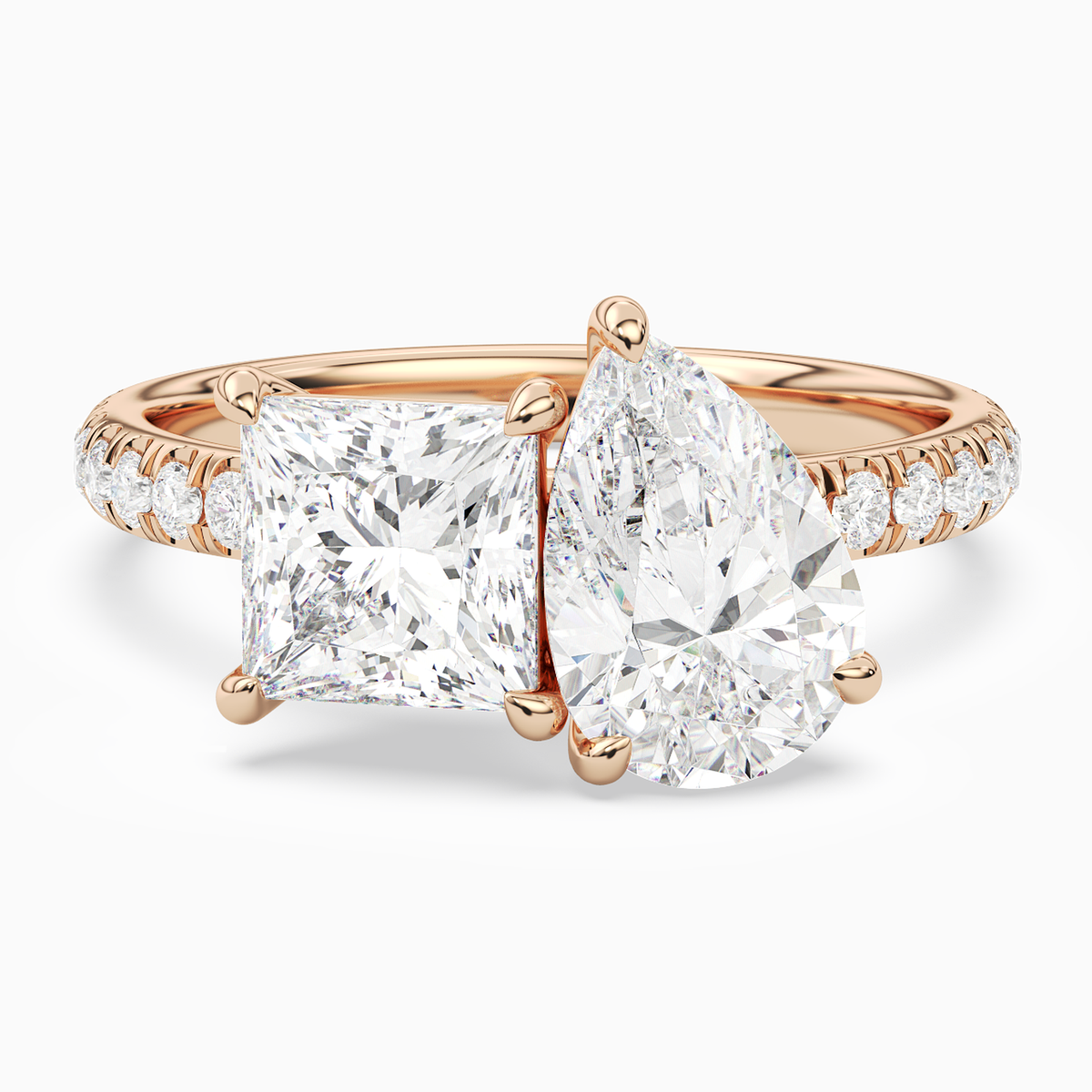
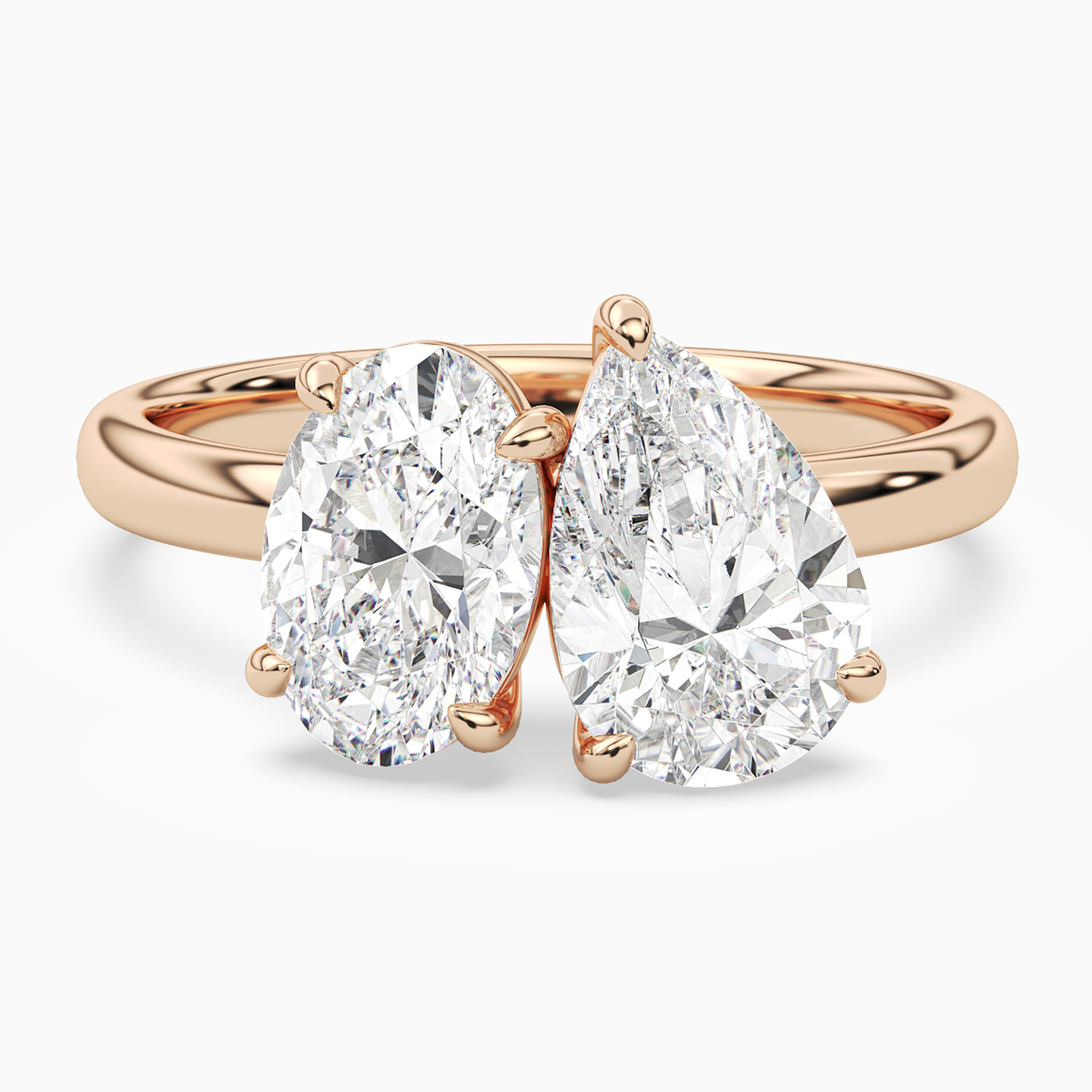
Two shapes, joined by a measured blush. 14K rose gold gives each center a warm boundary while preserving the space between them.


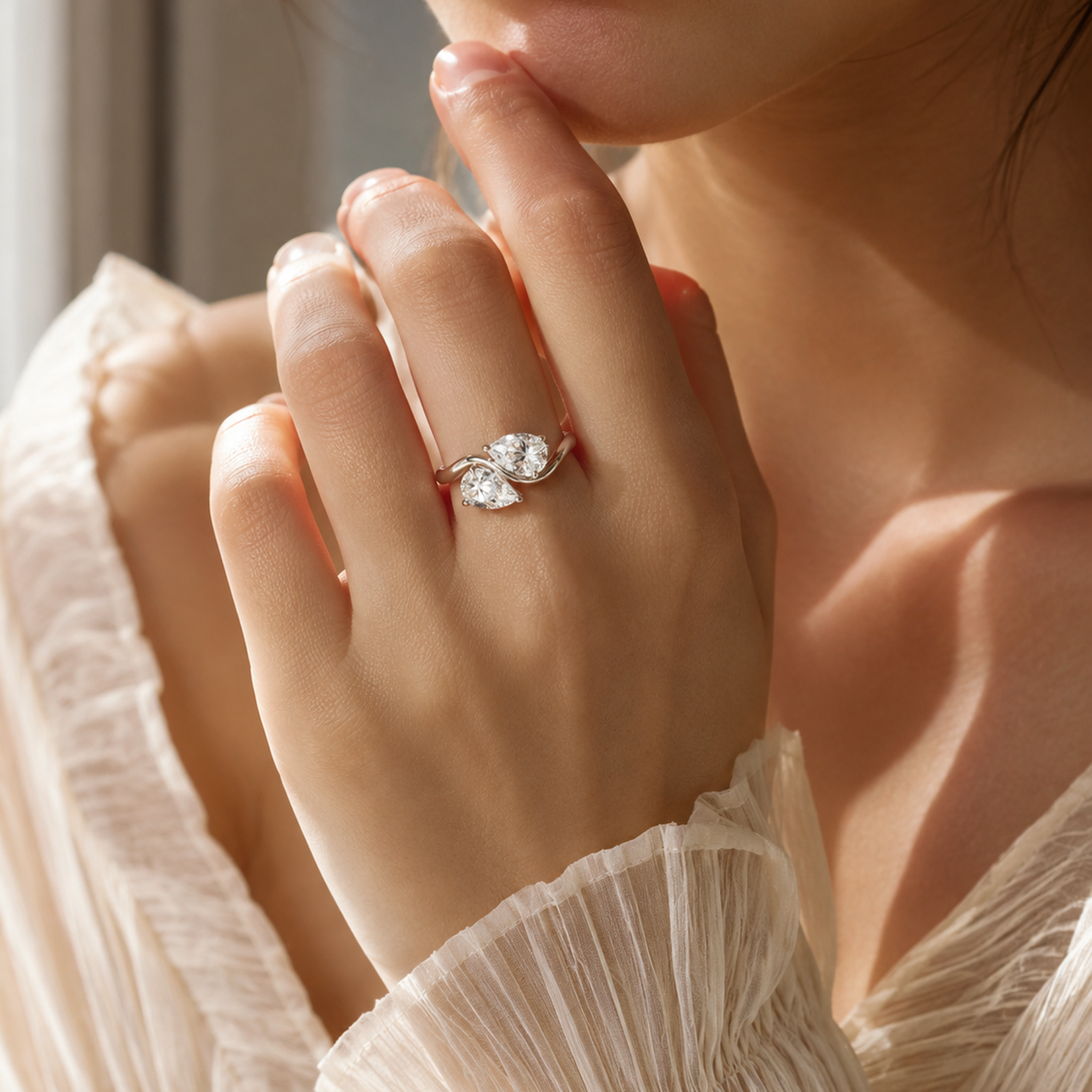


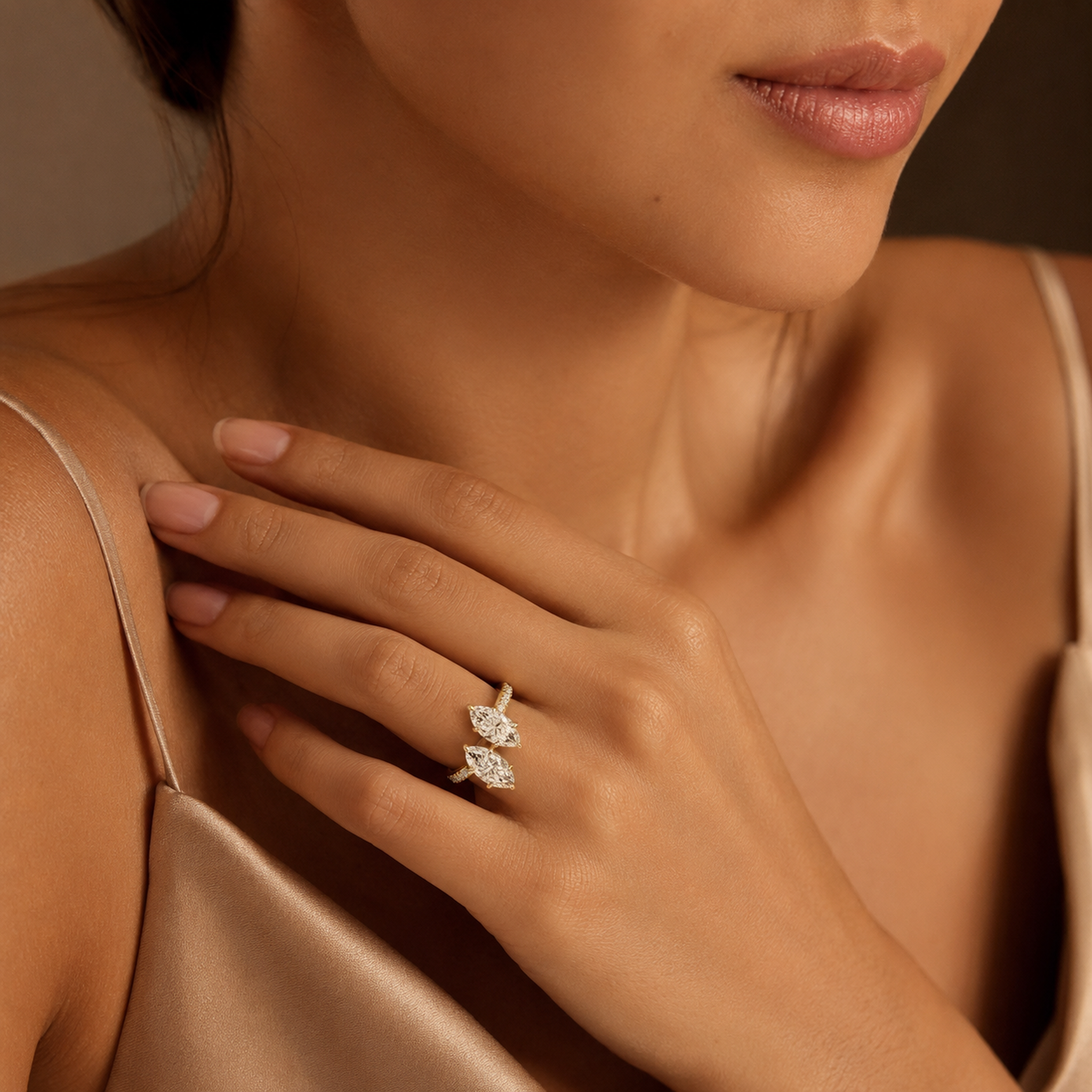


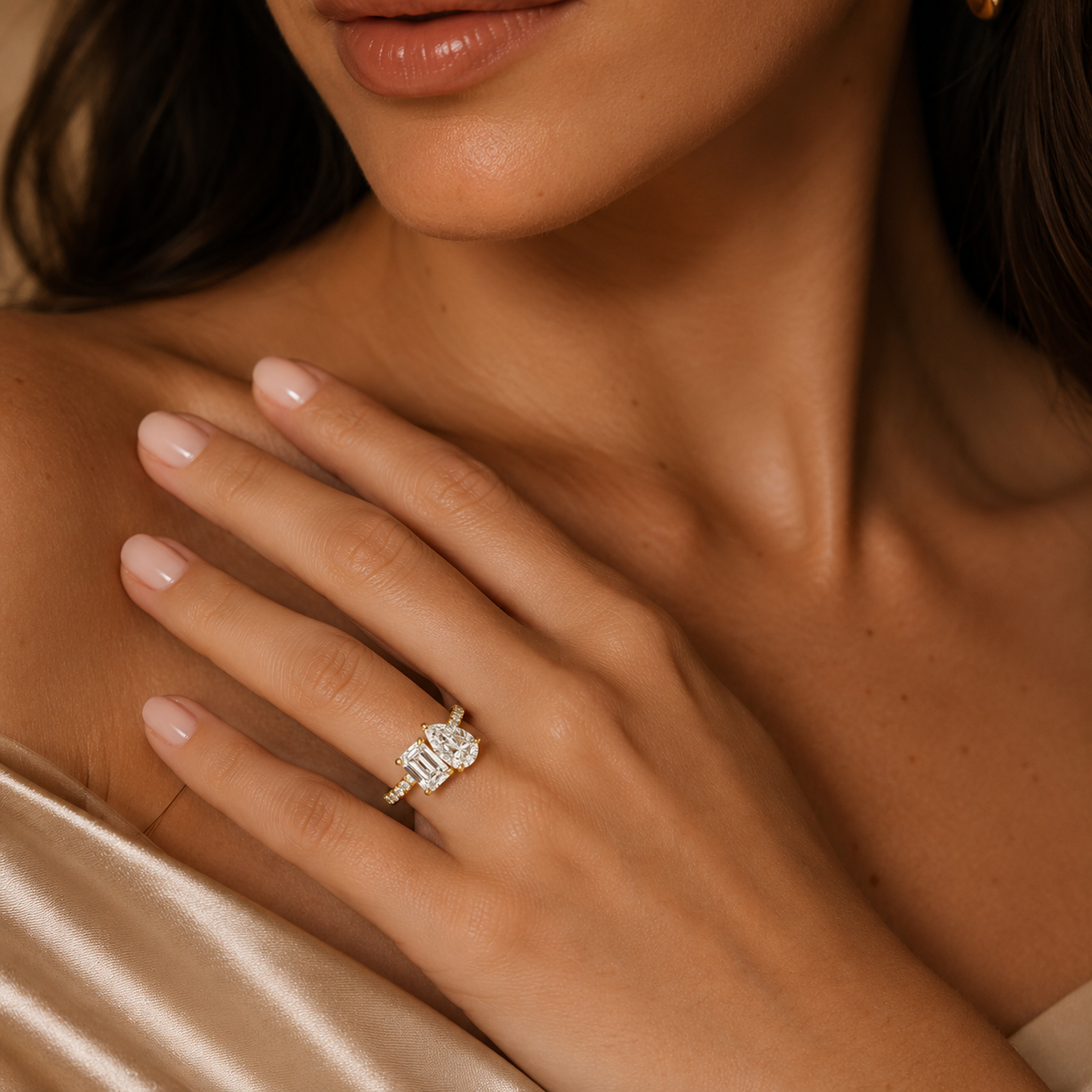
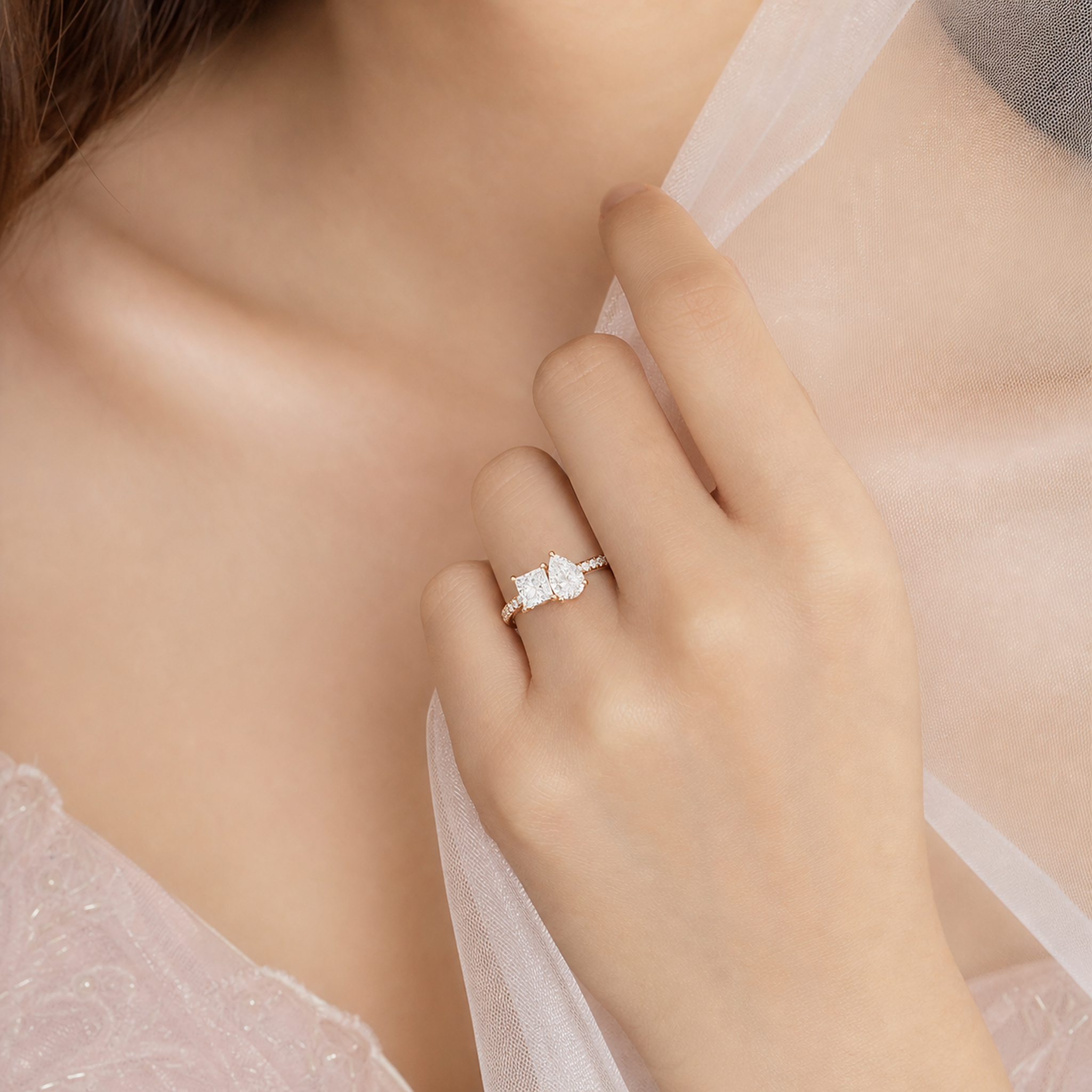


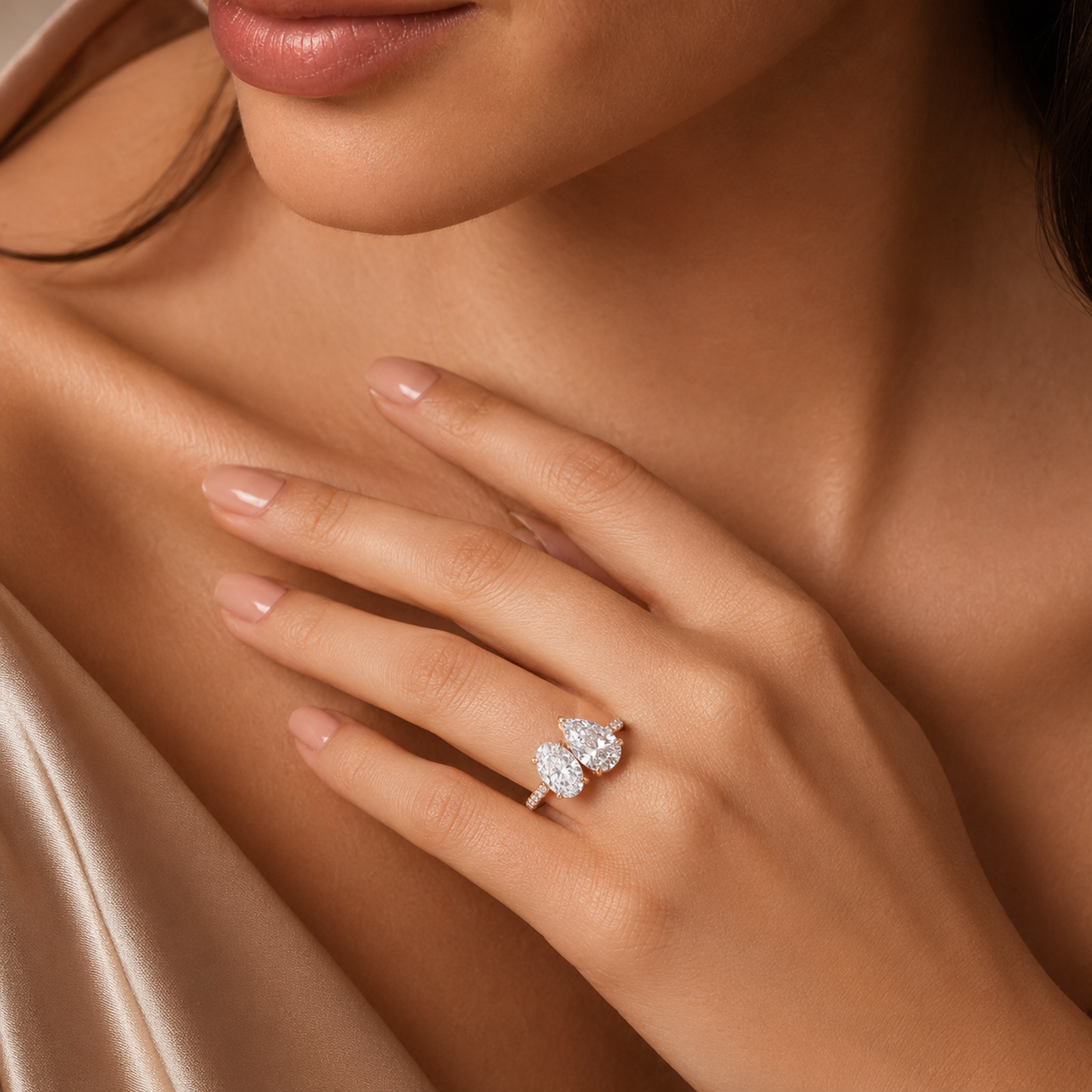
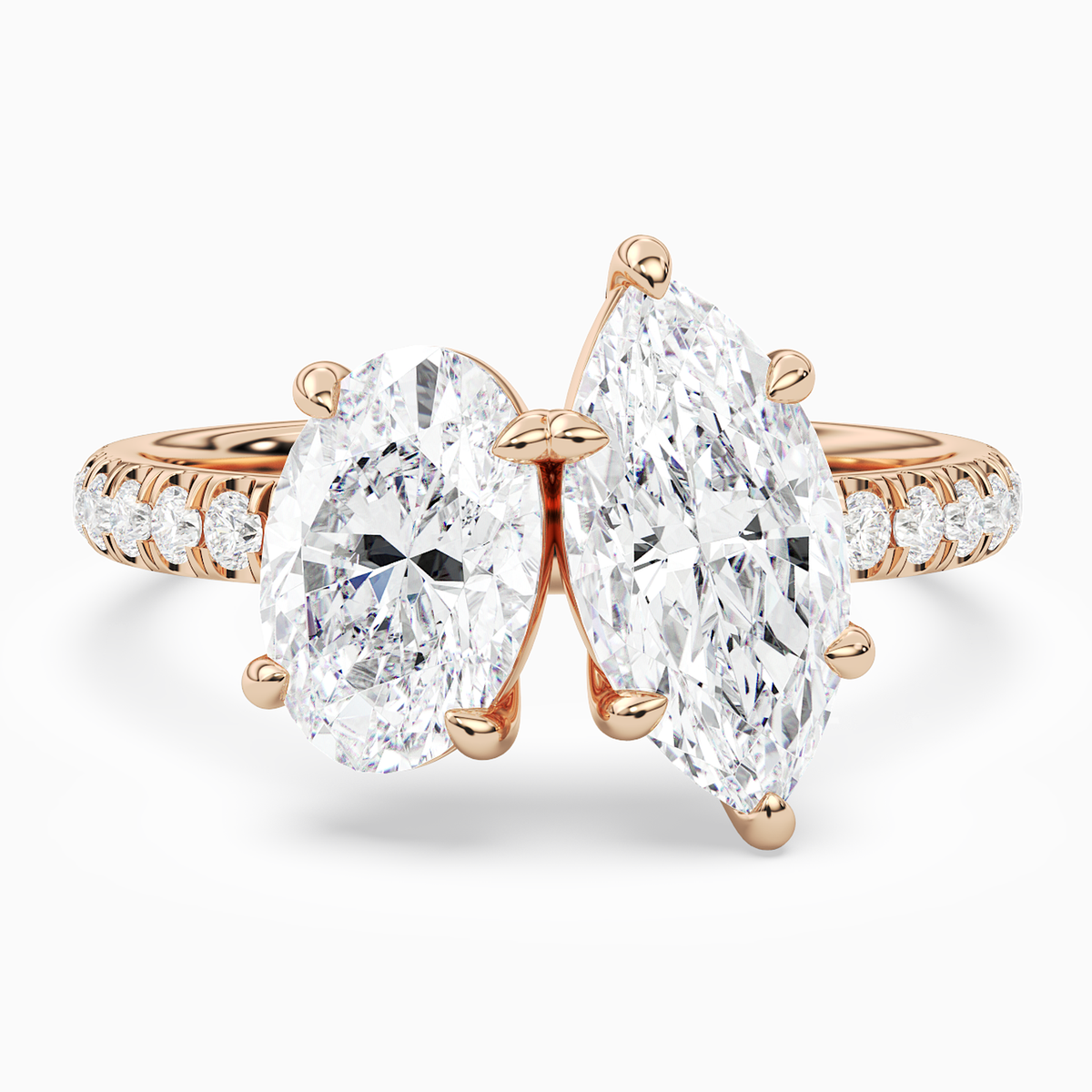
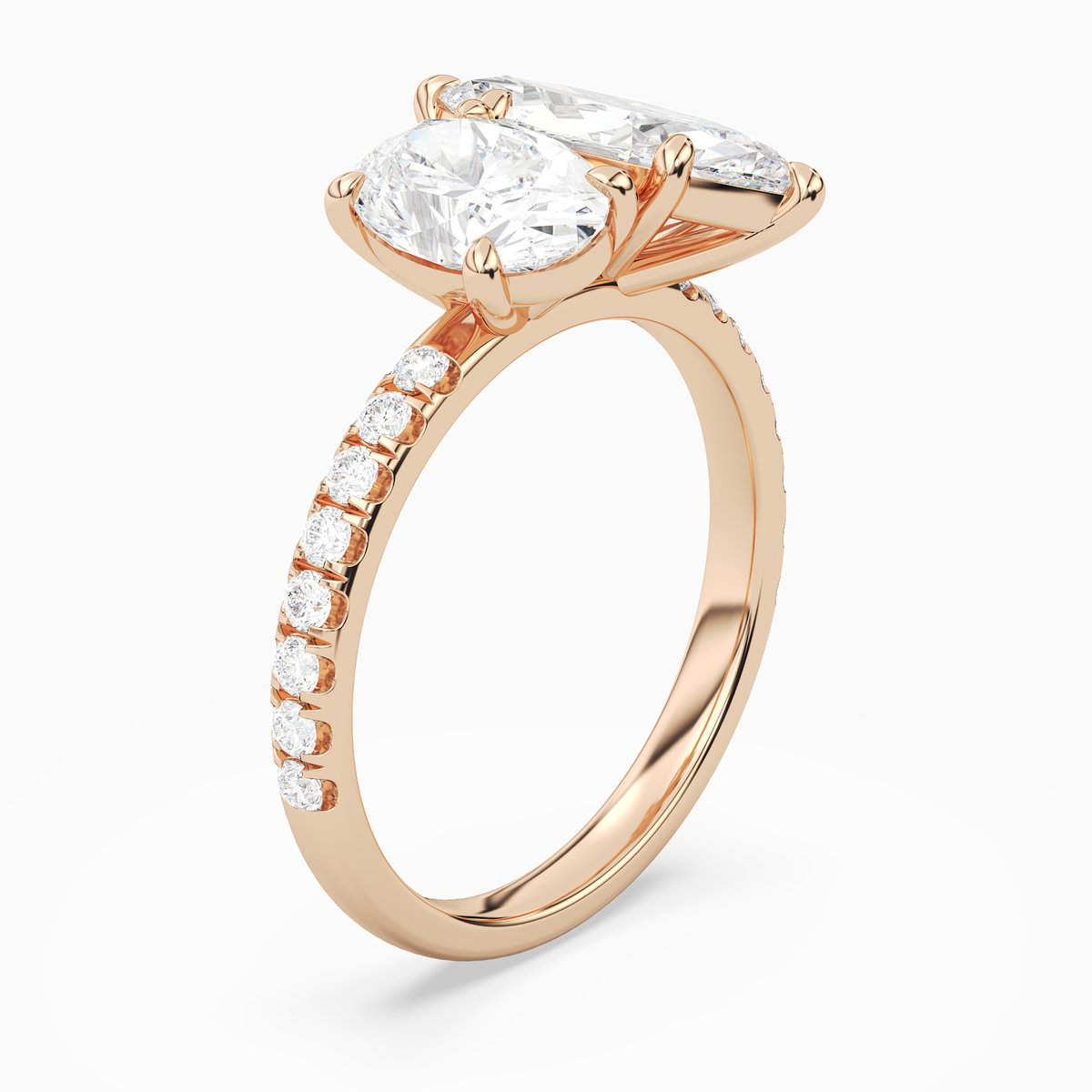
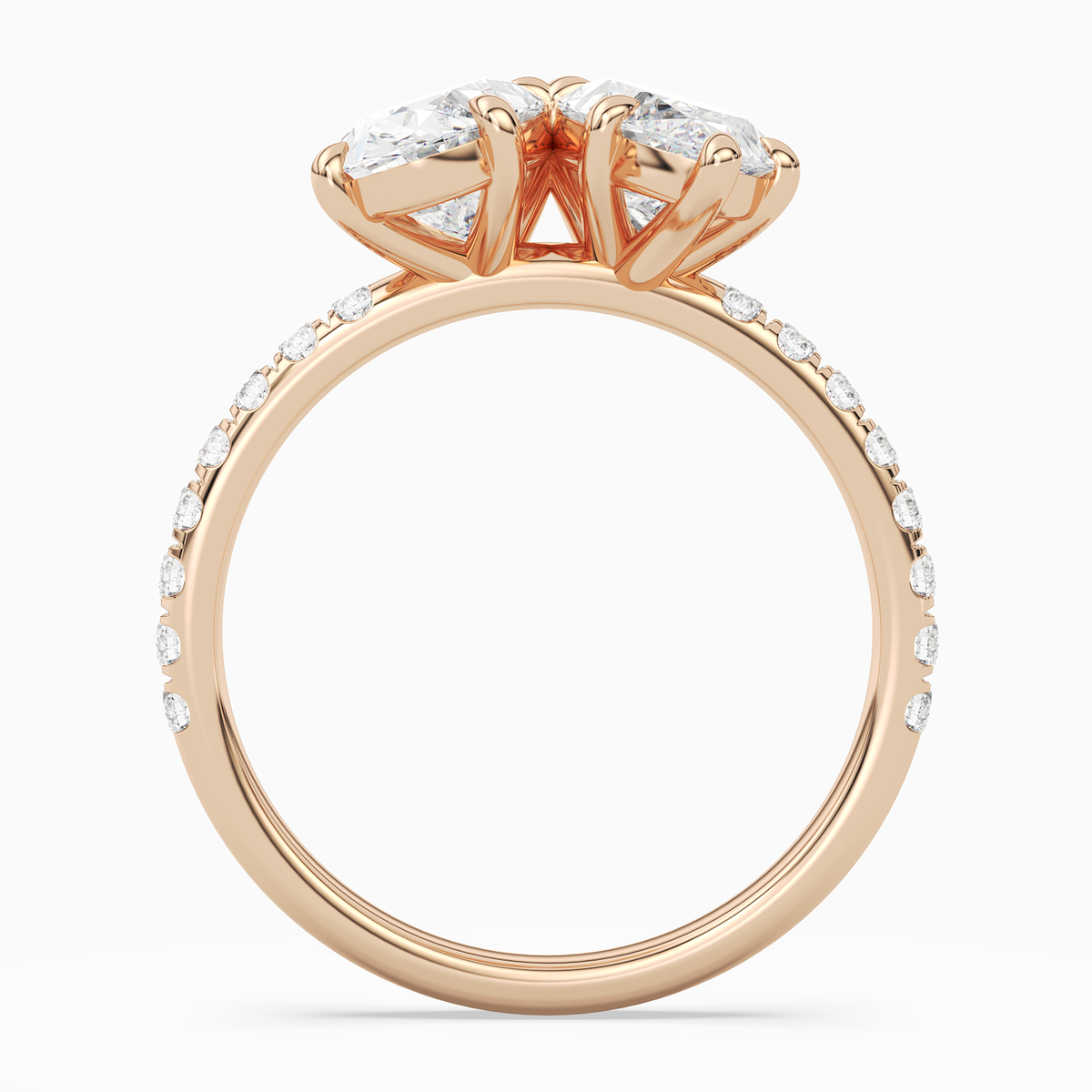
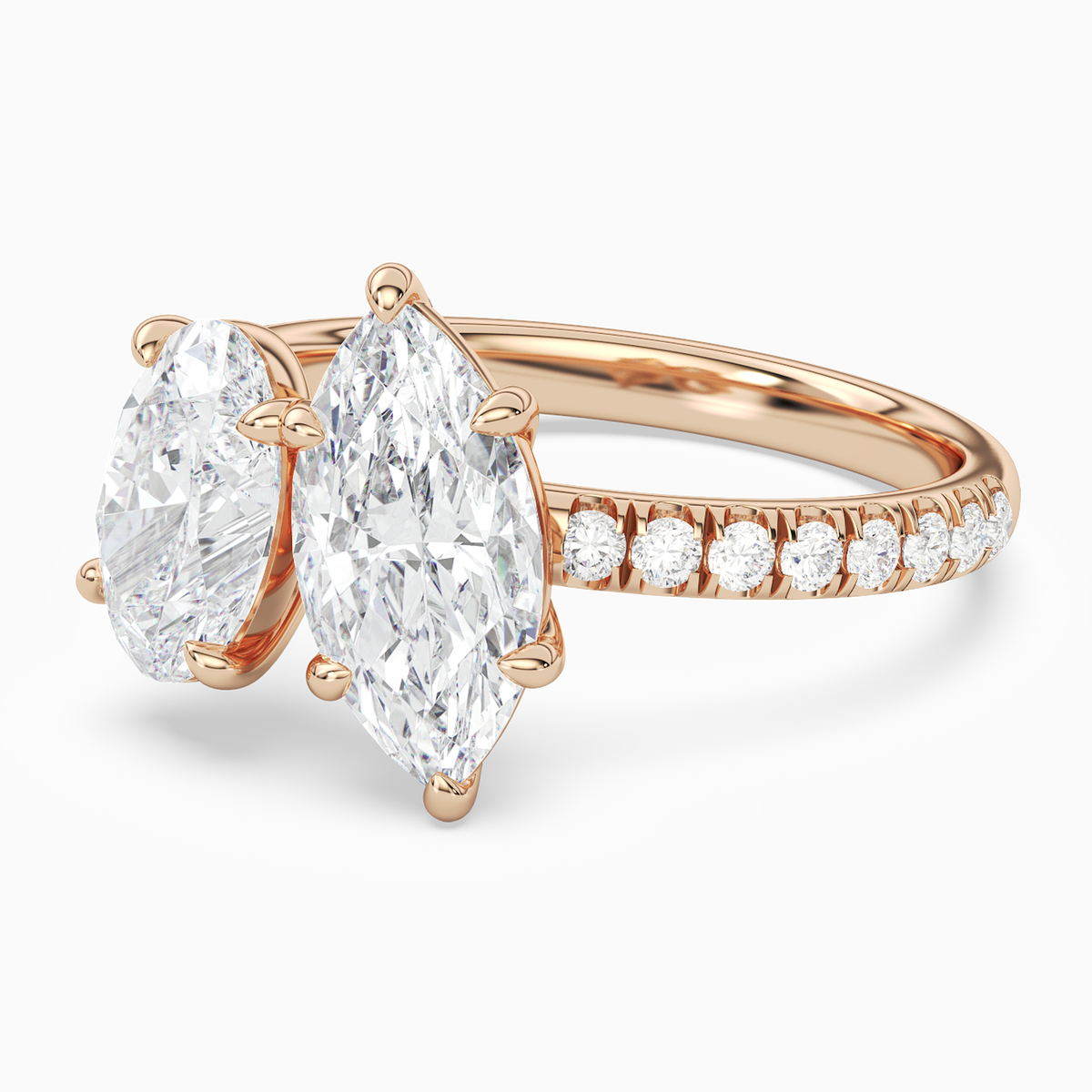
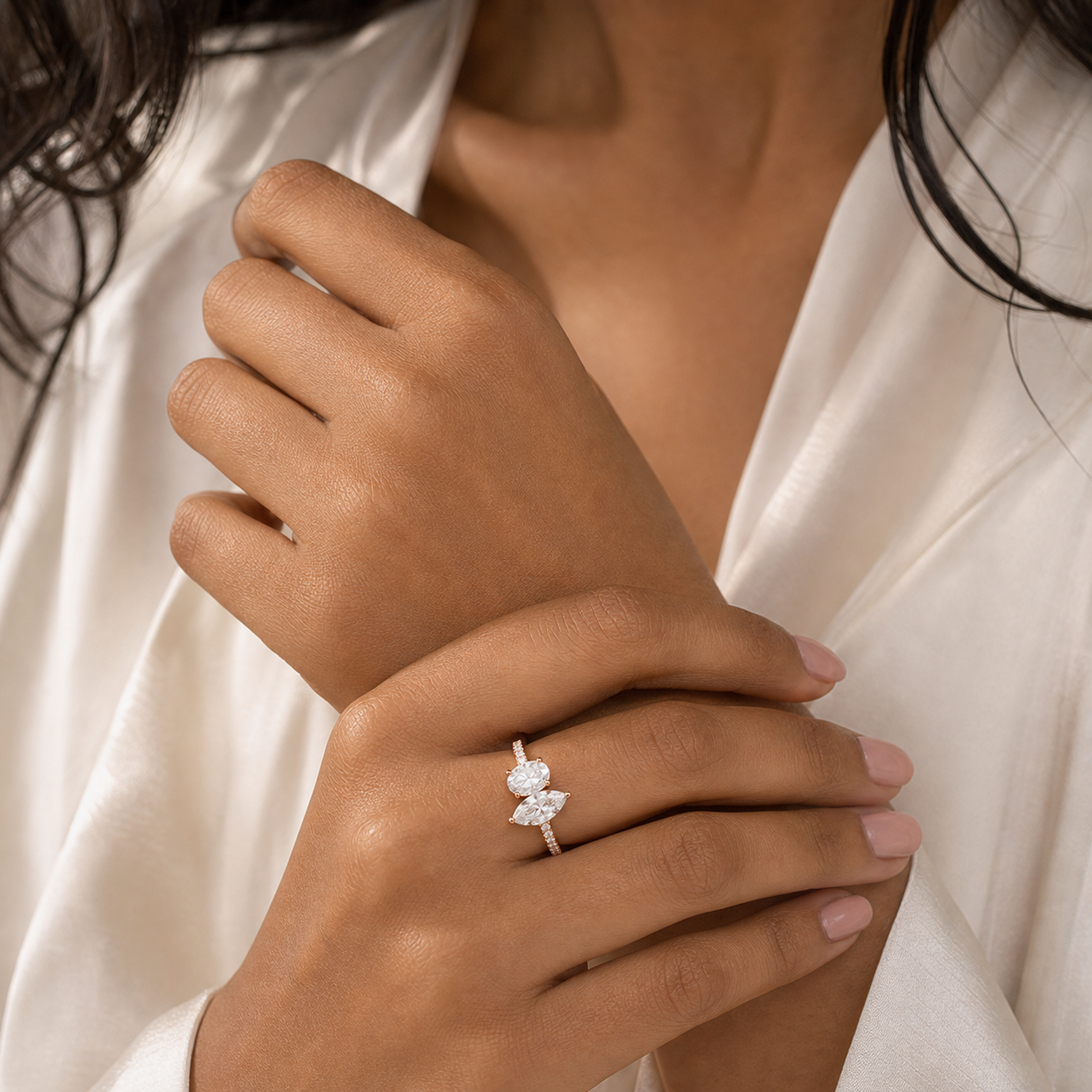


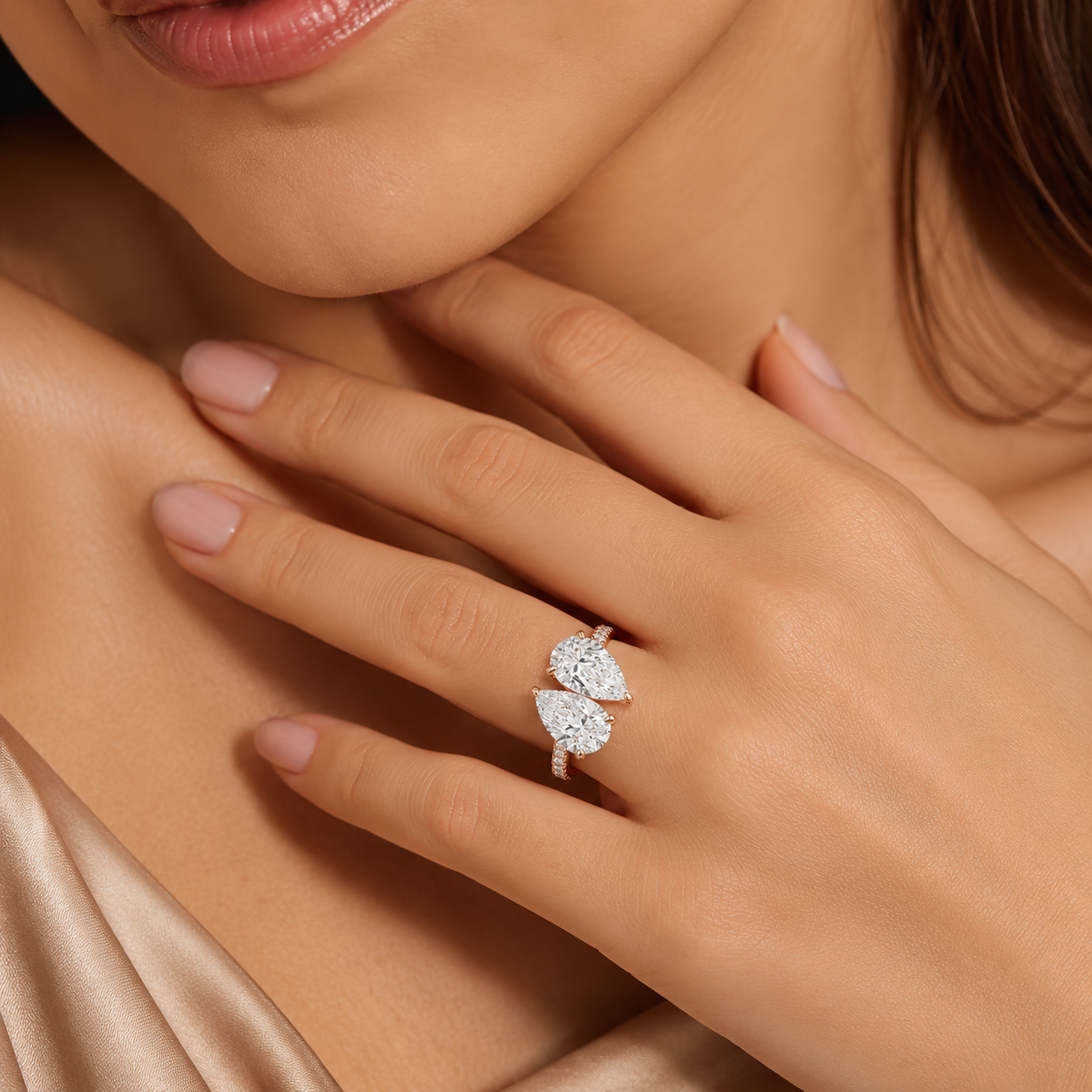


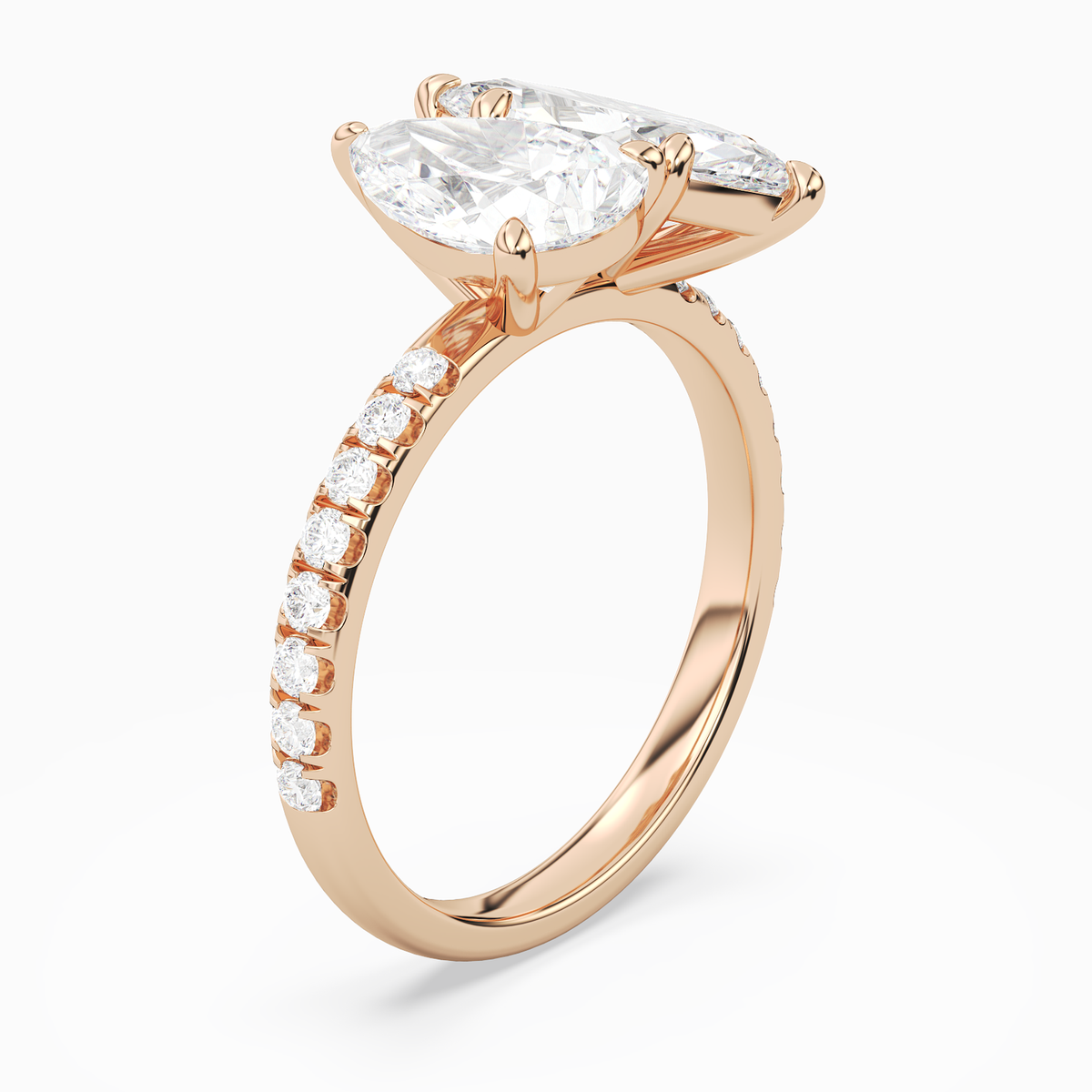
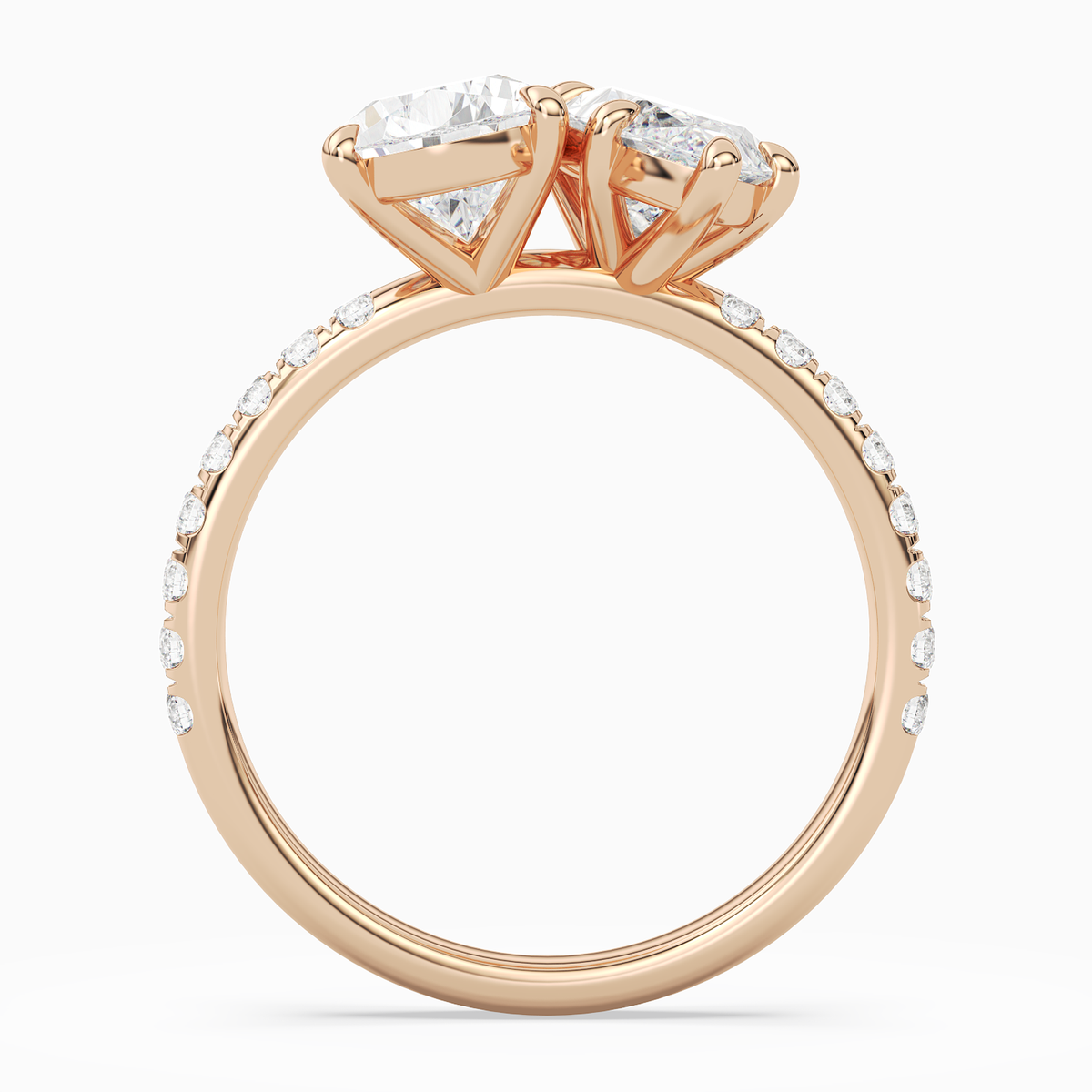
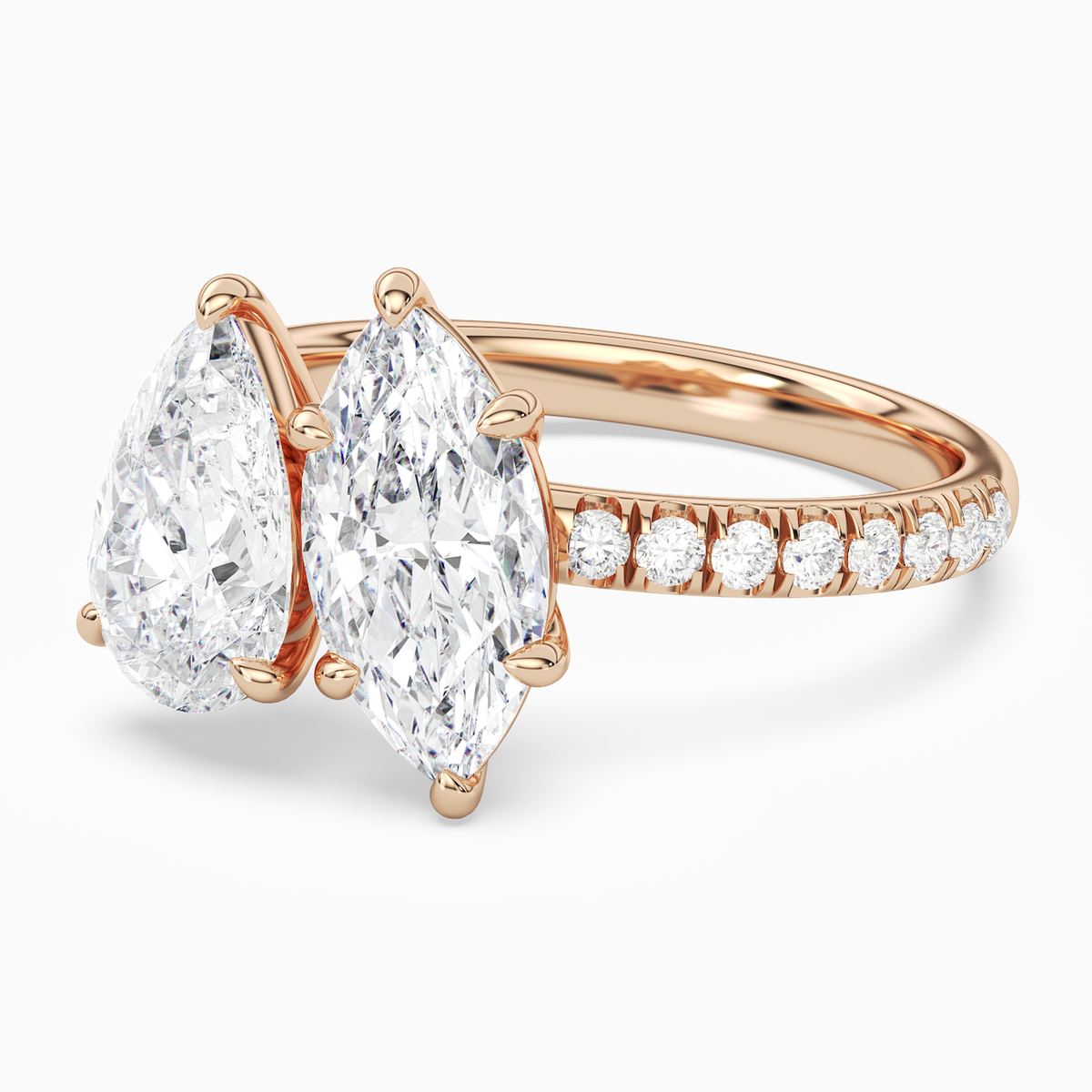
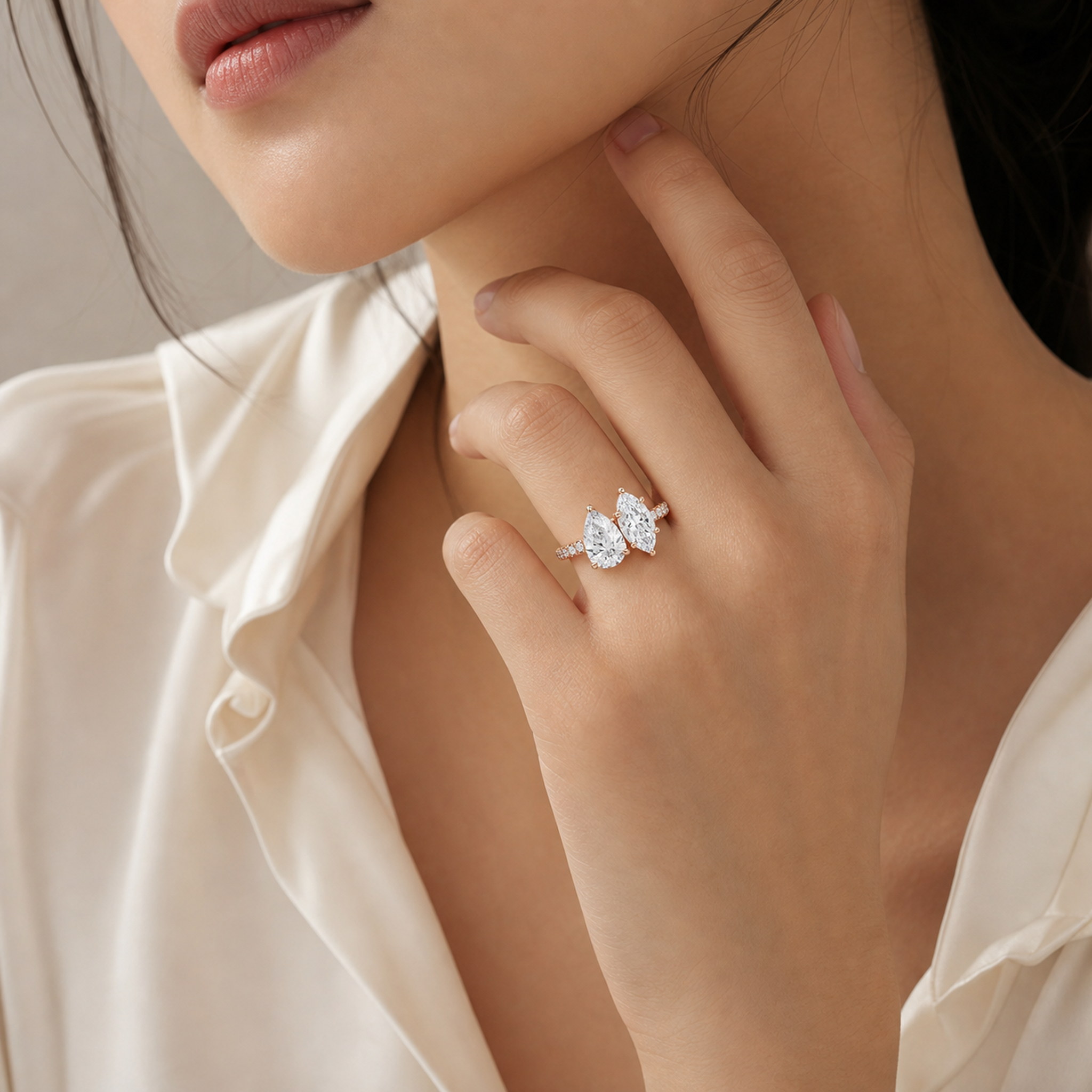


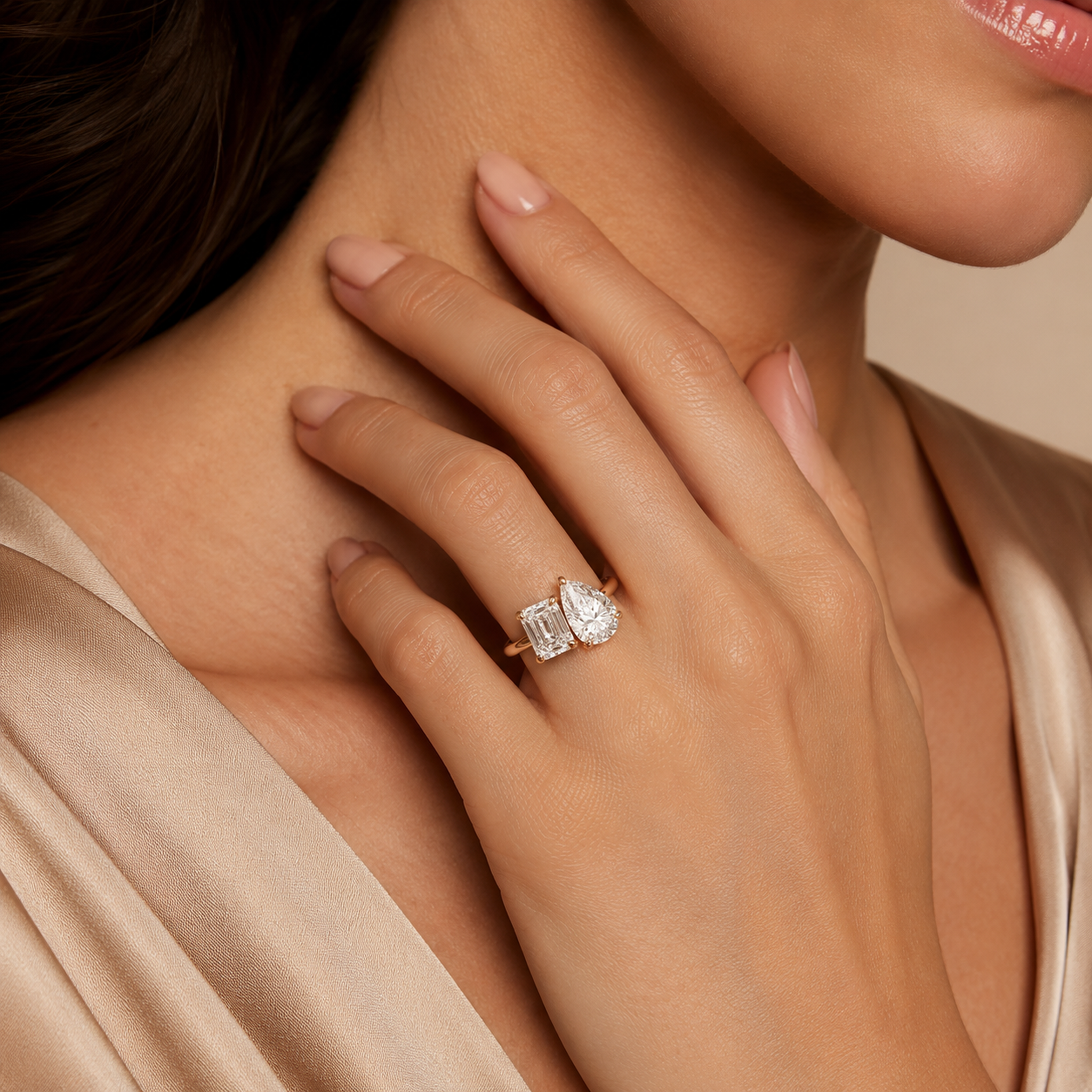


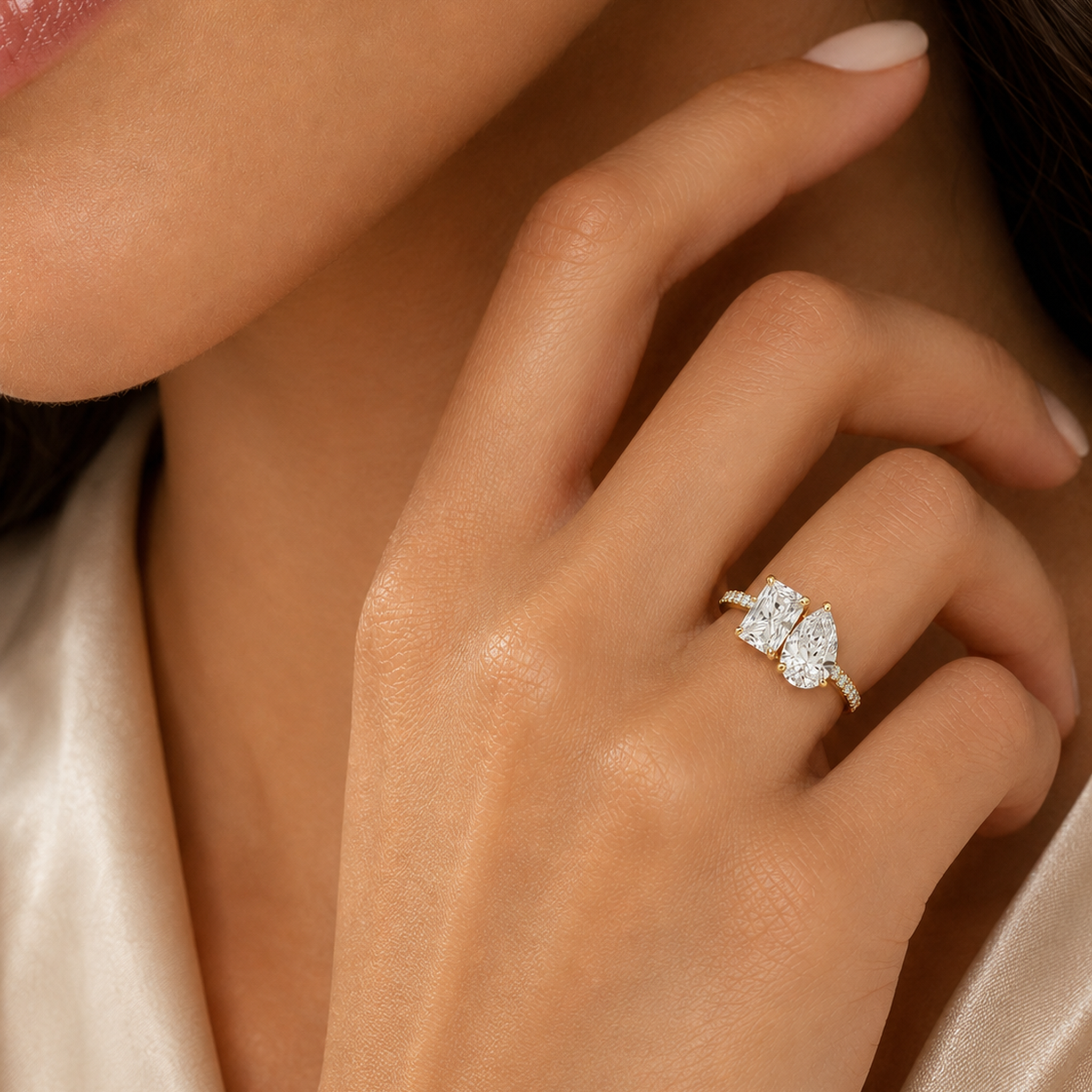


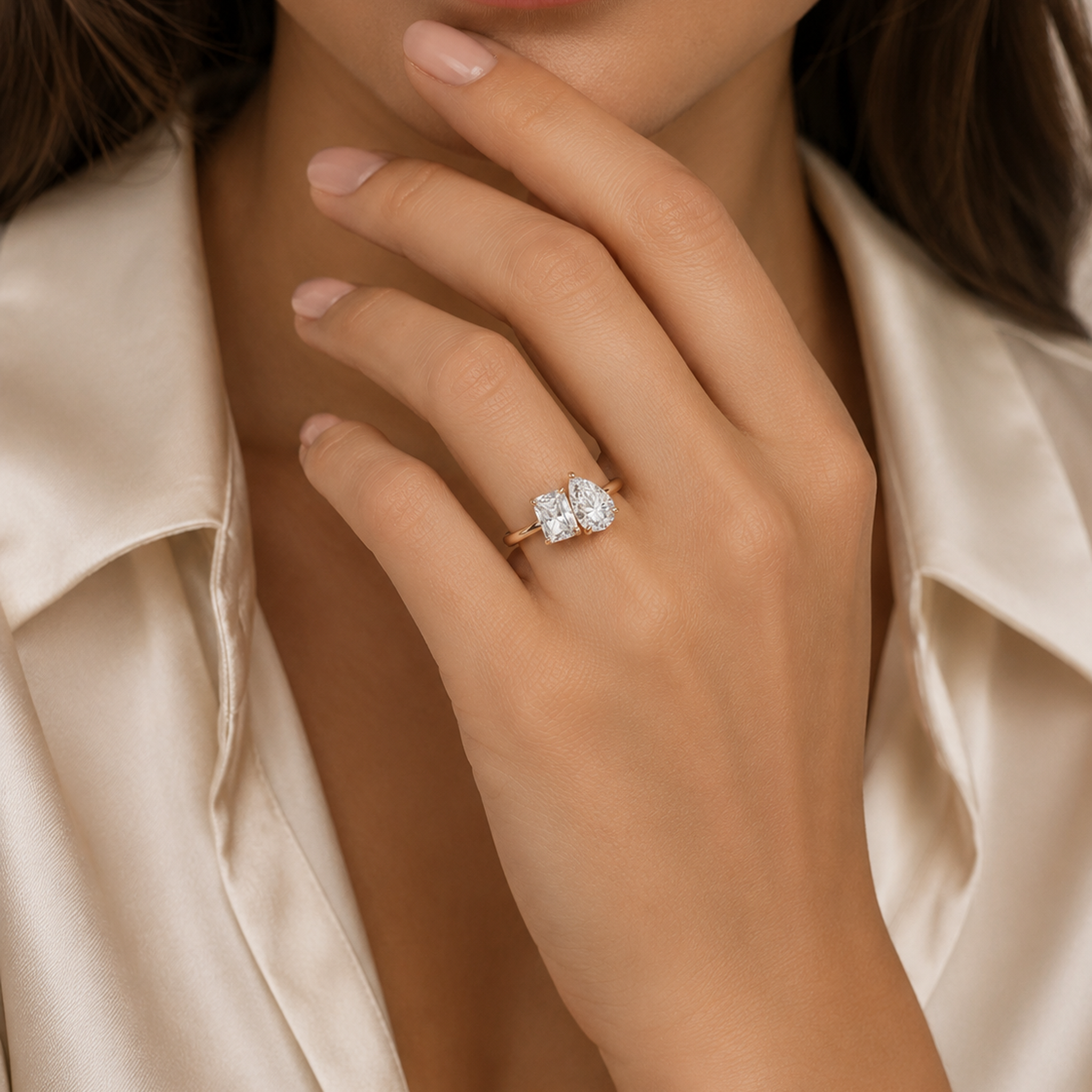


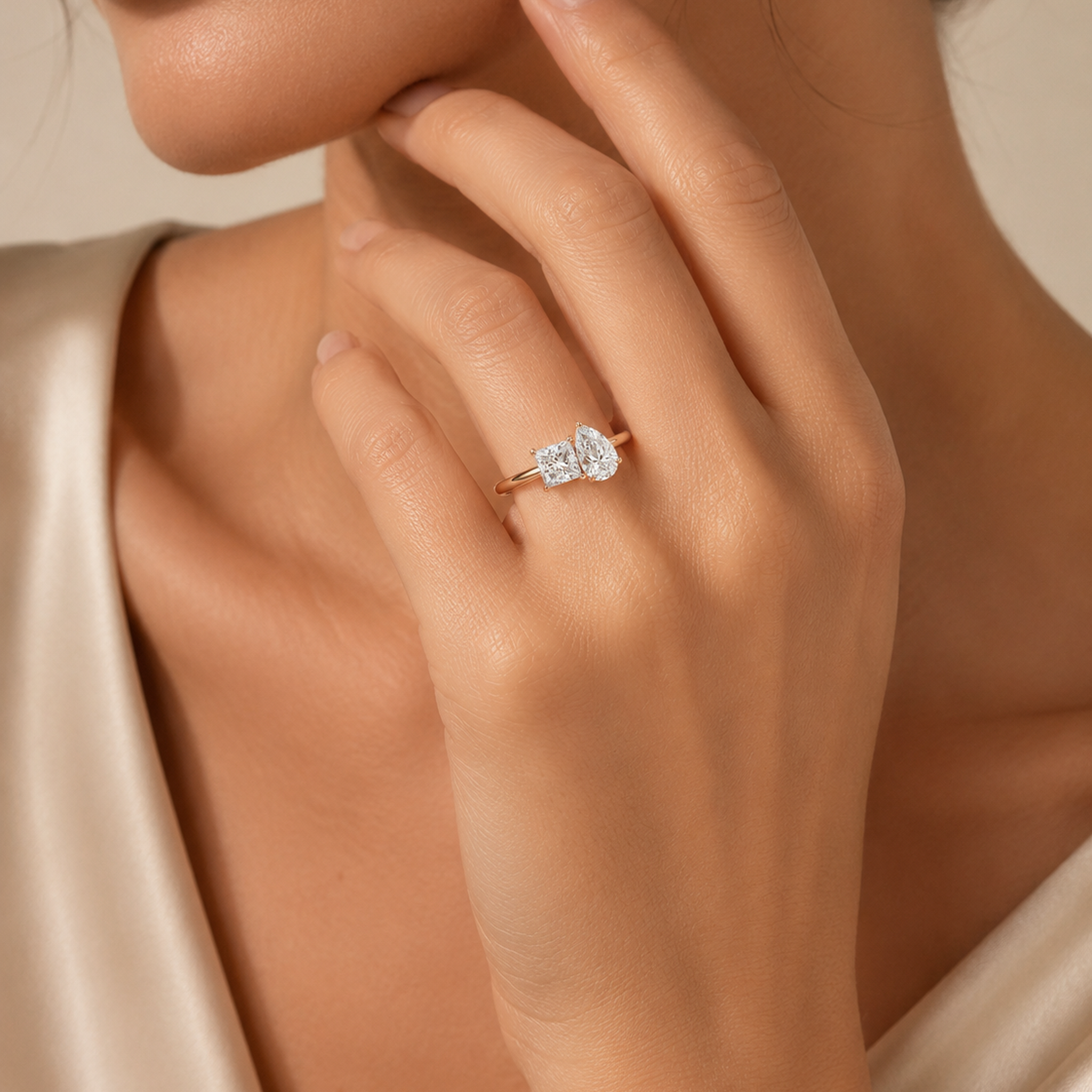


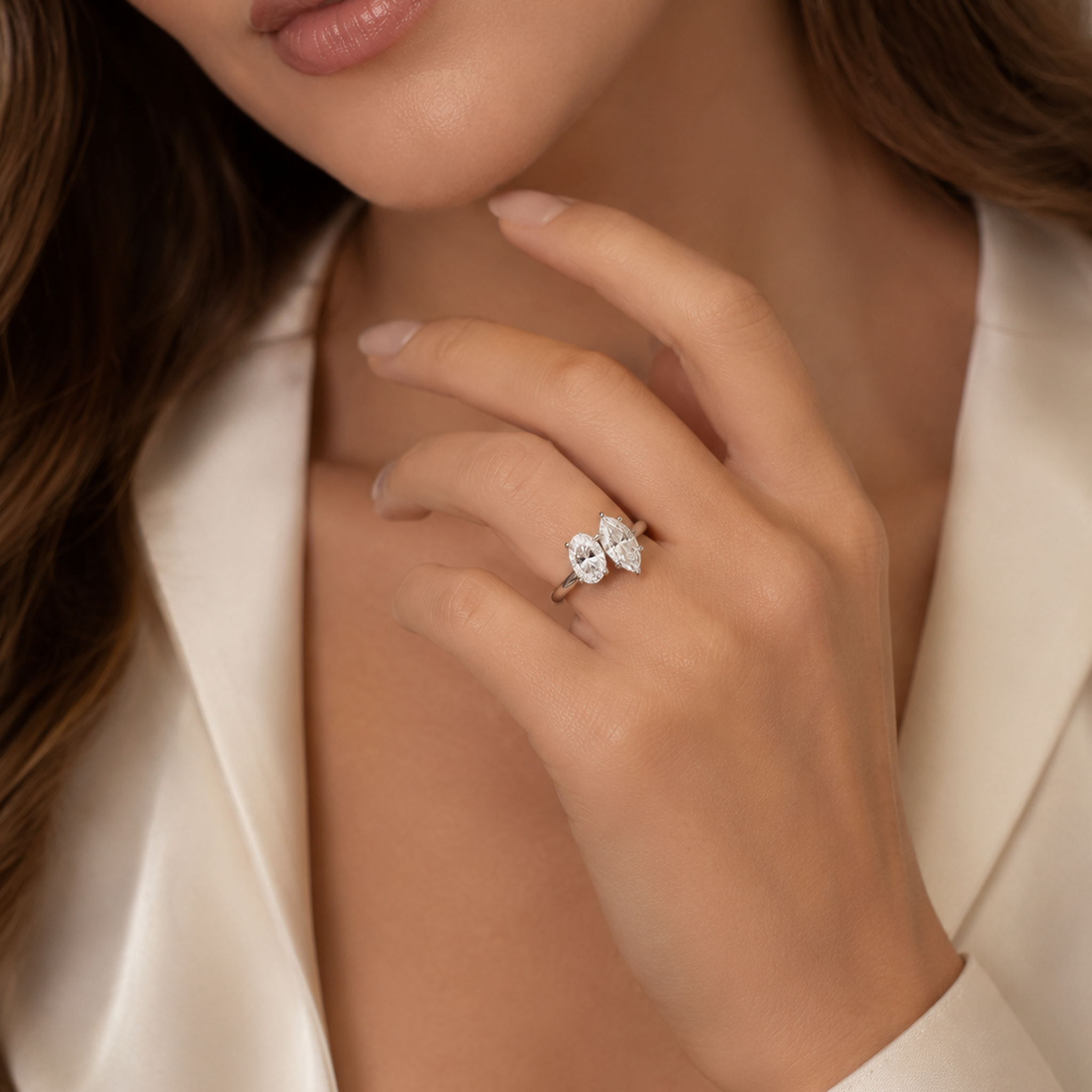


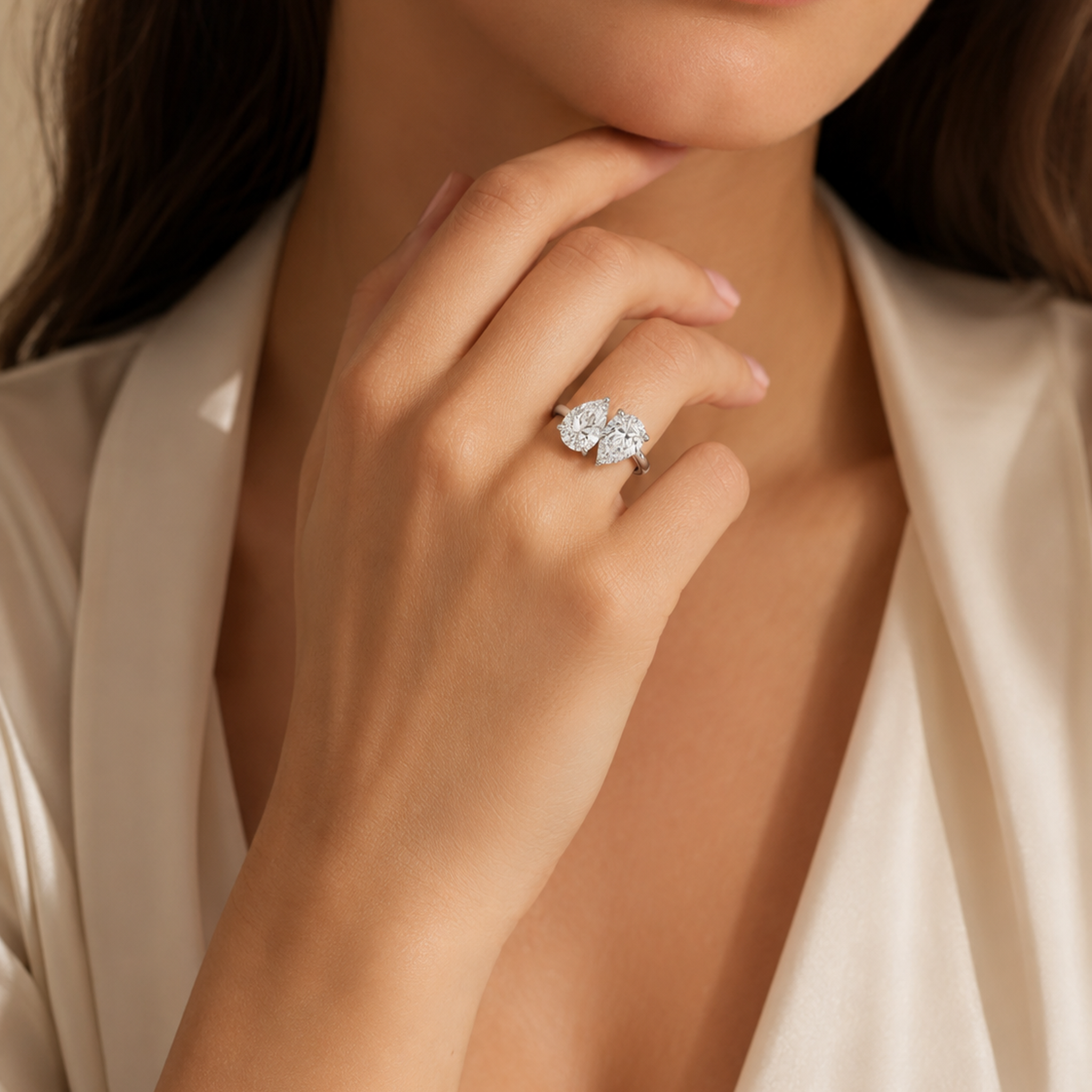
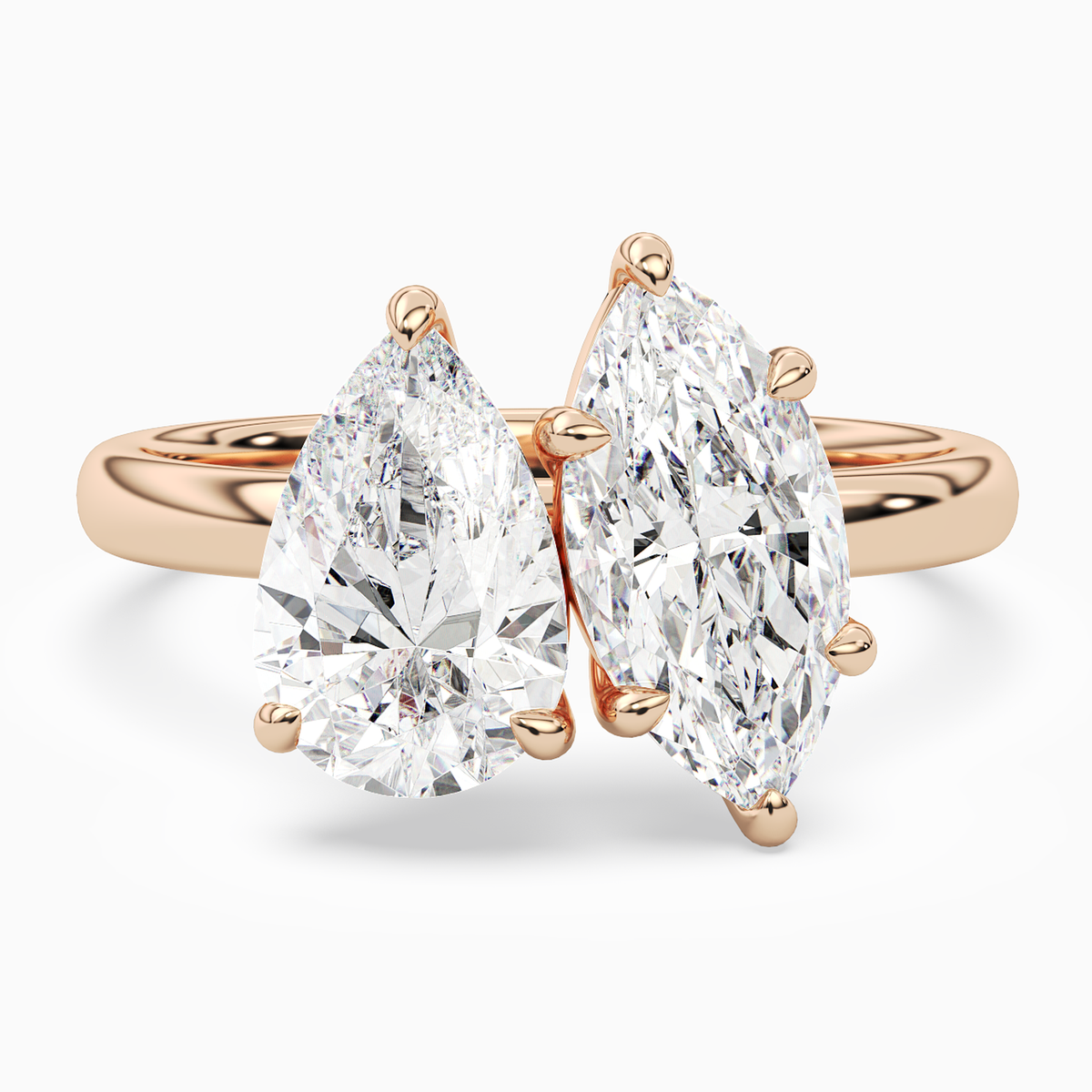
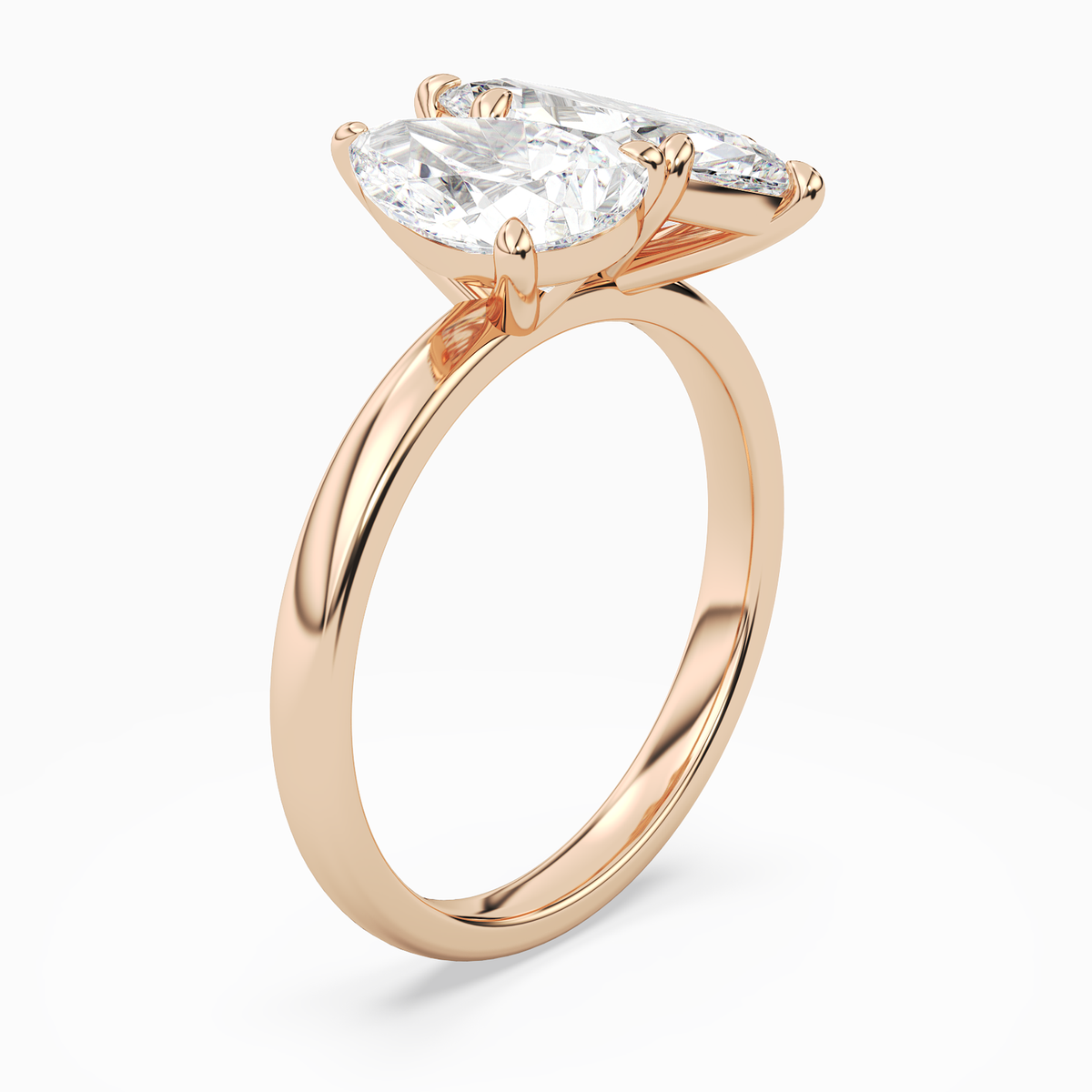
14K Rose Gold Toi Et Moi Engagement Rings: Warmth Between Two Forms
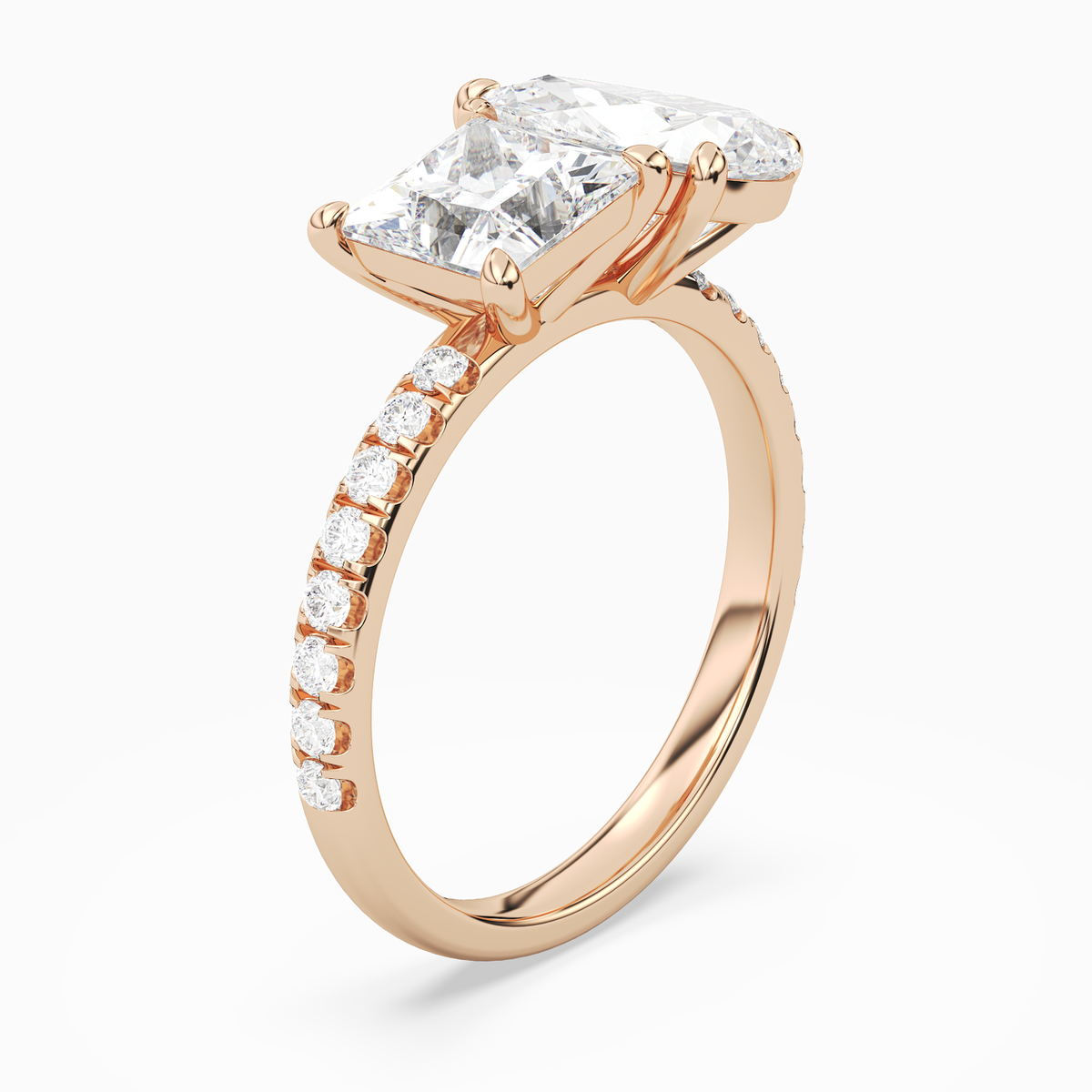
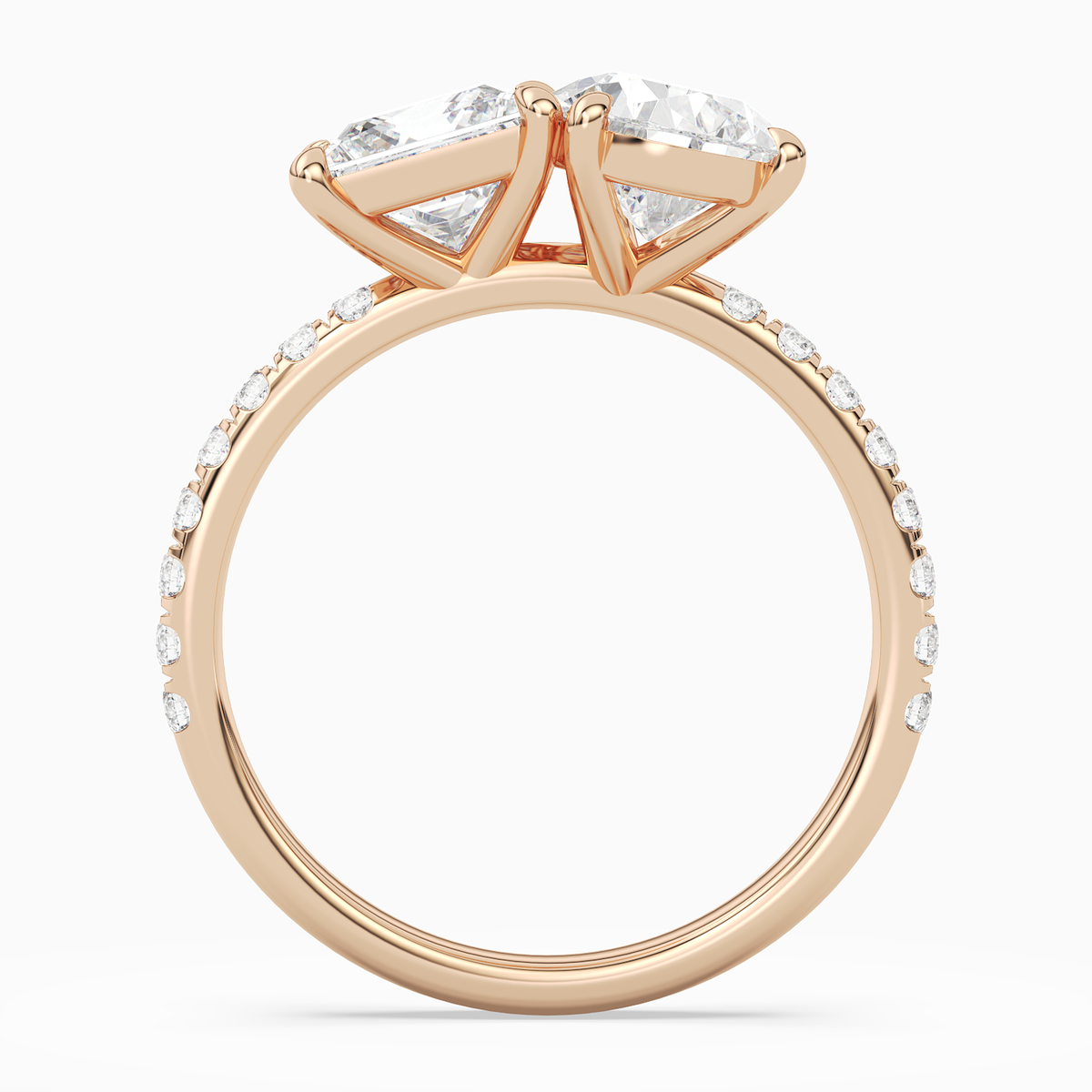
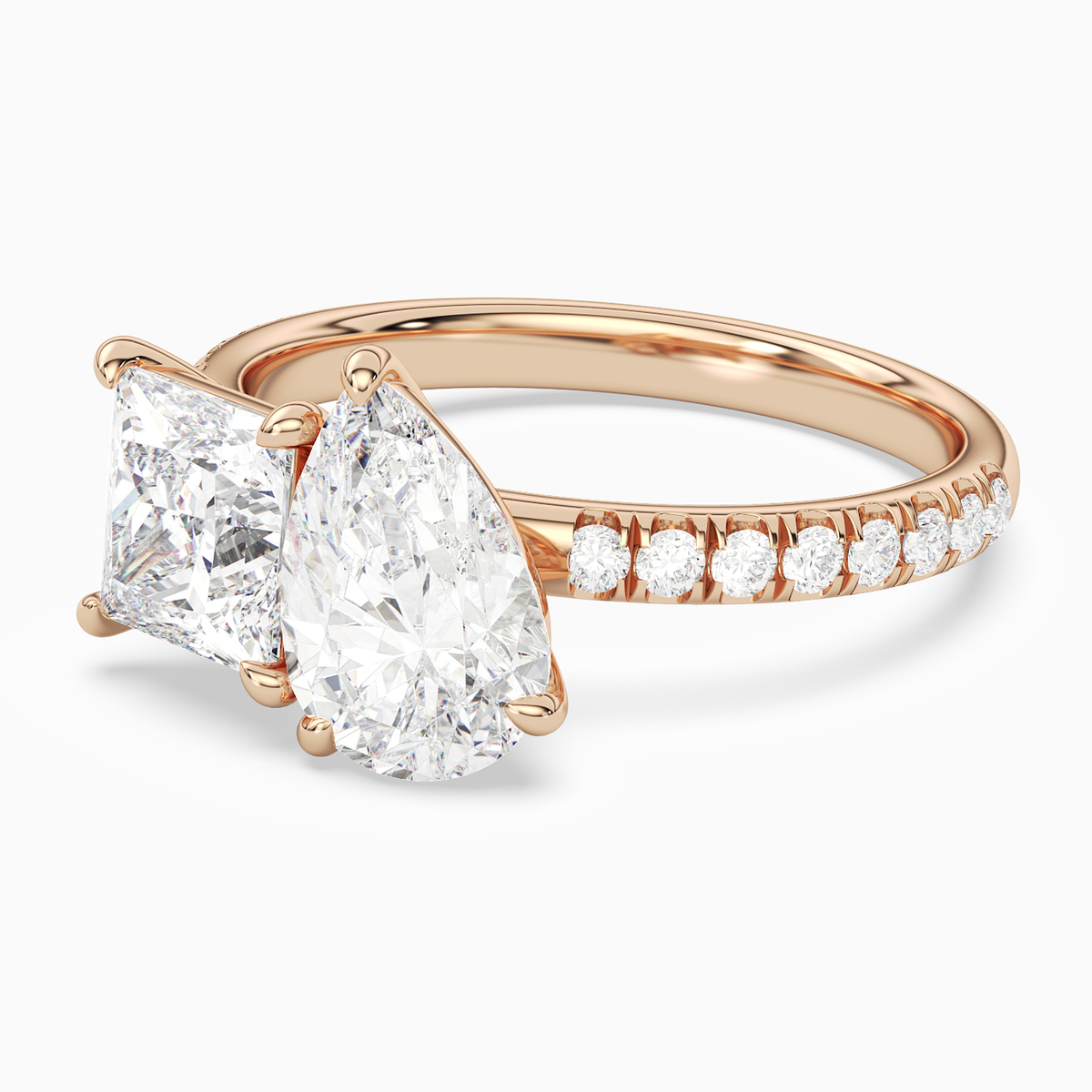
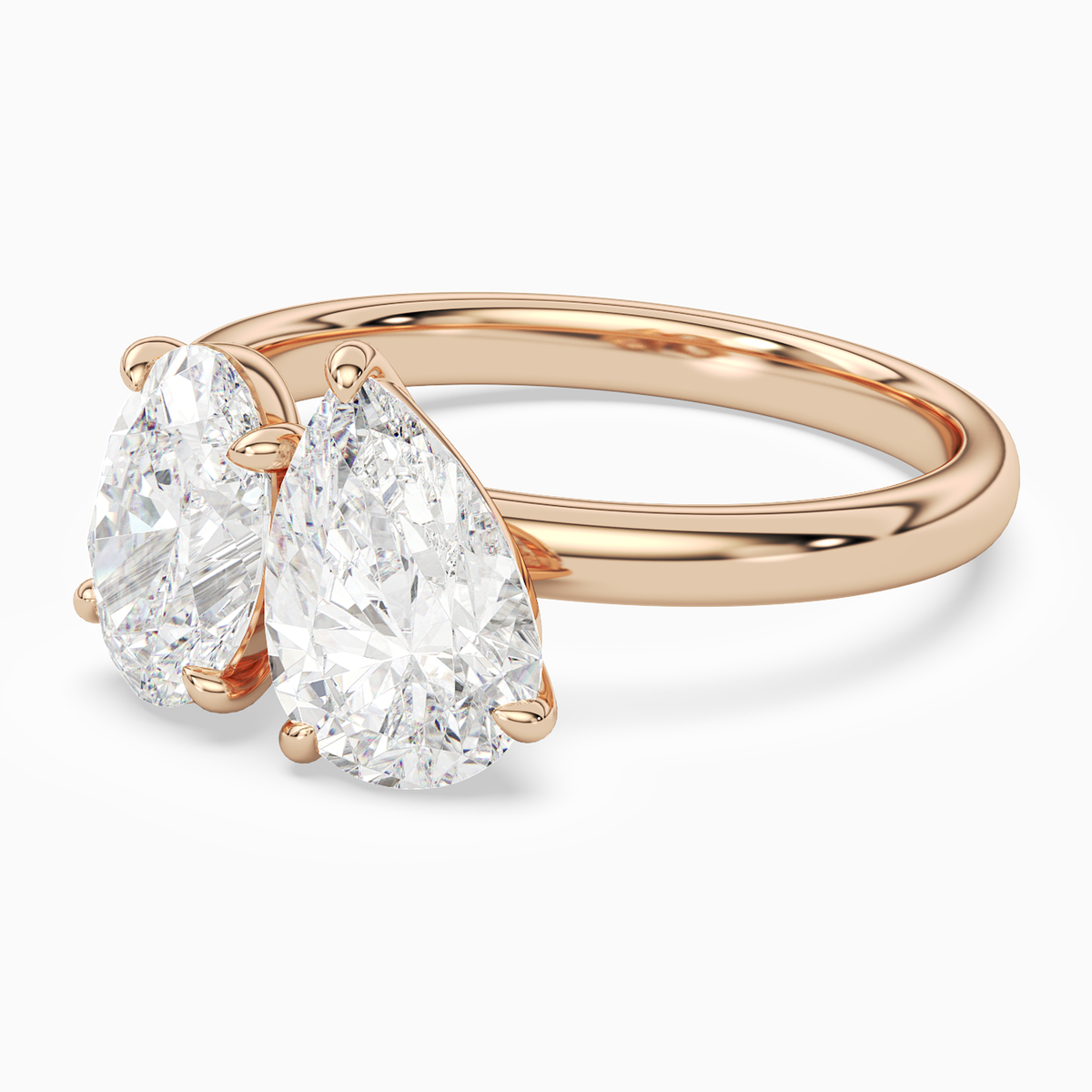
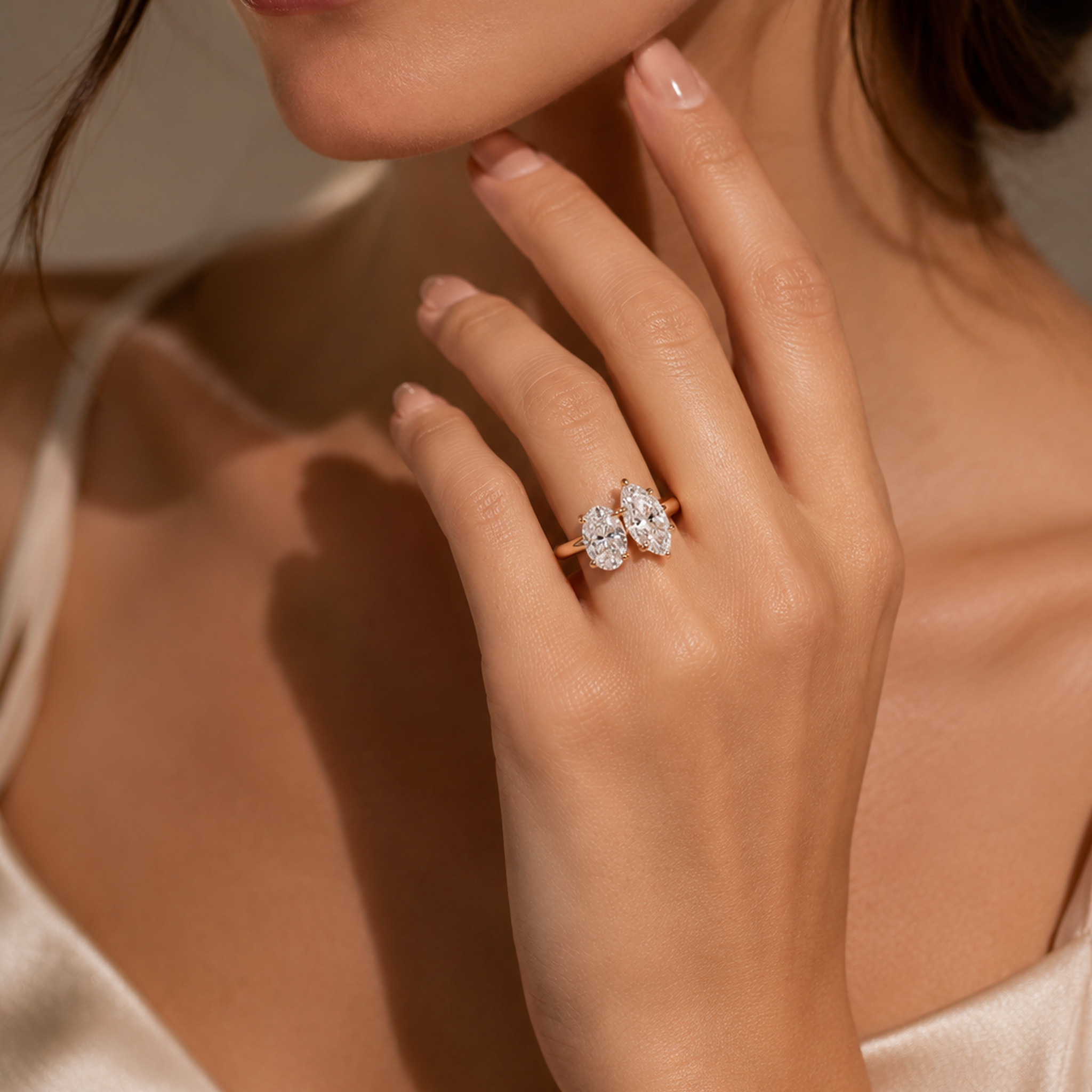
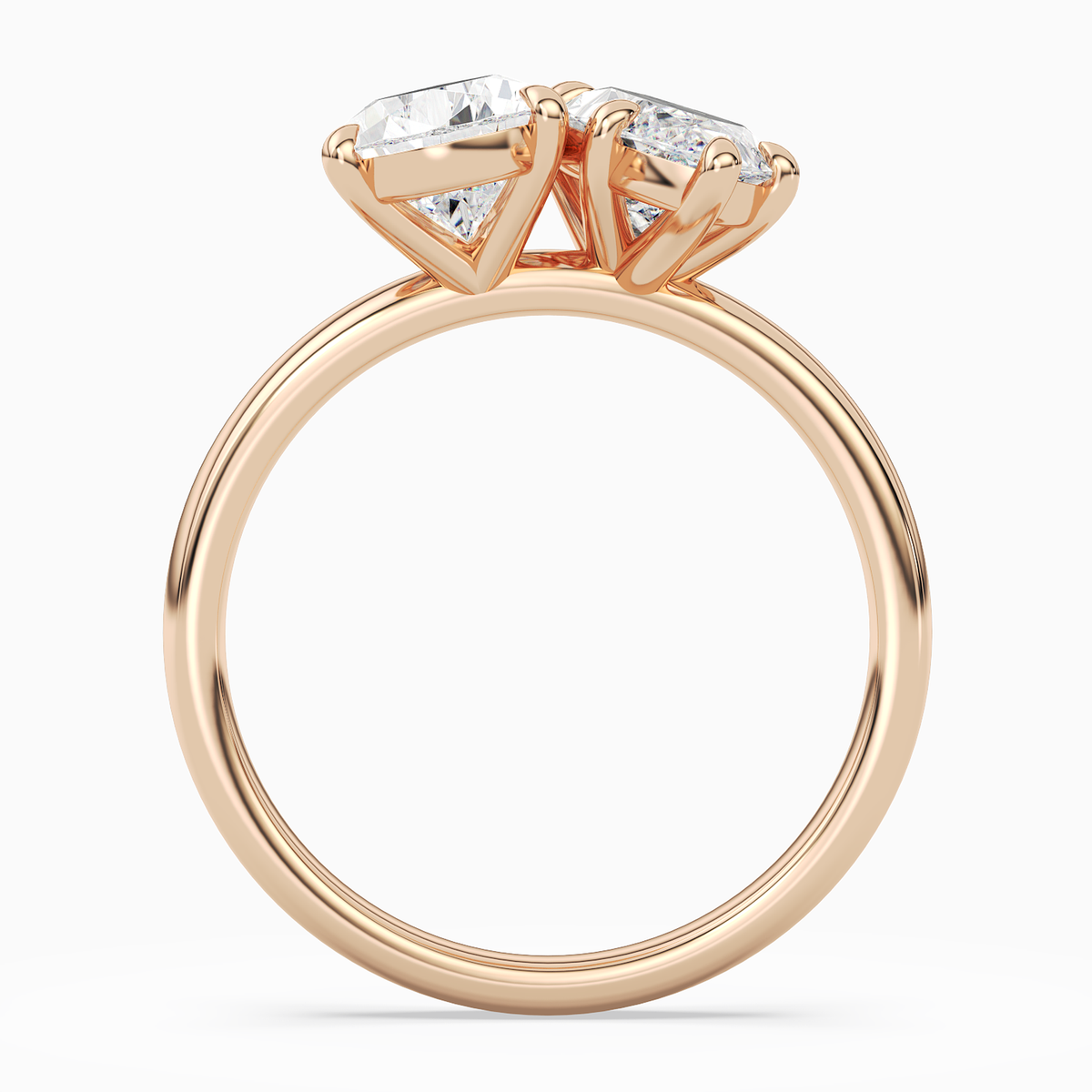
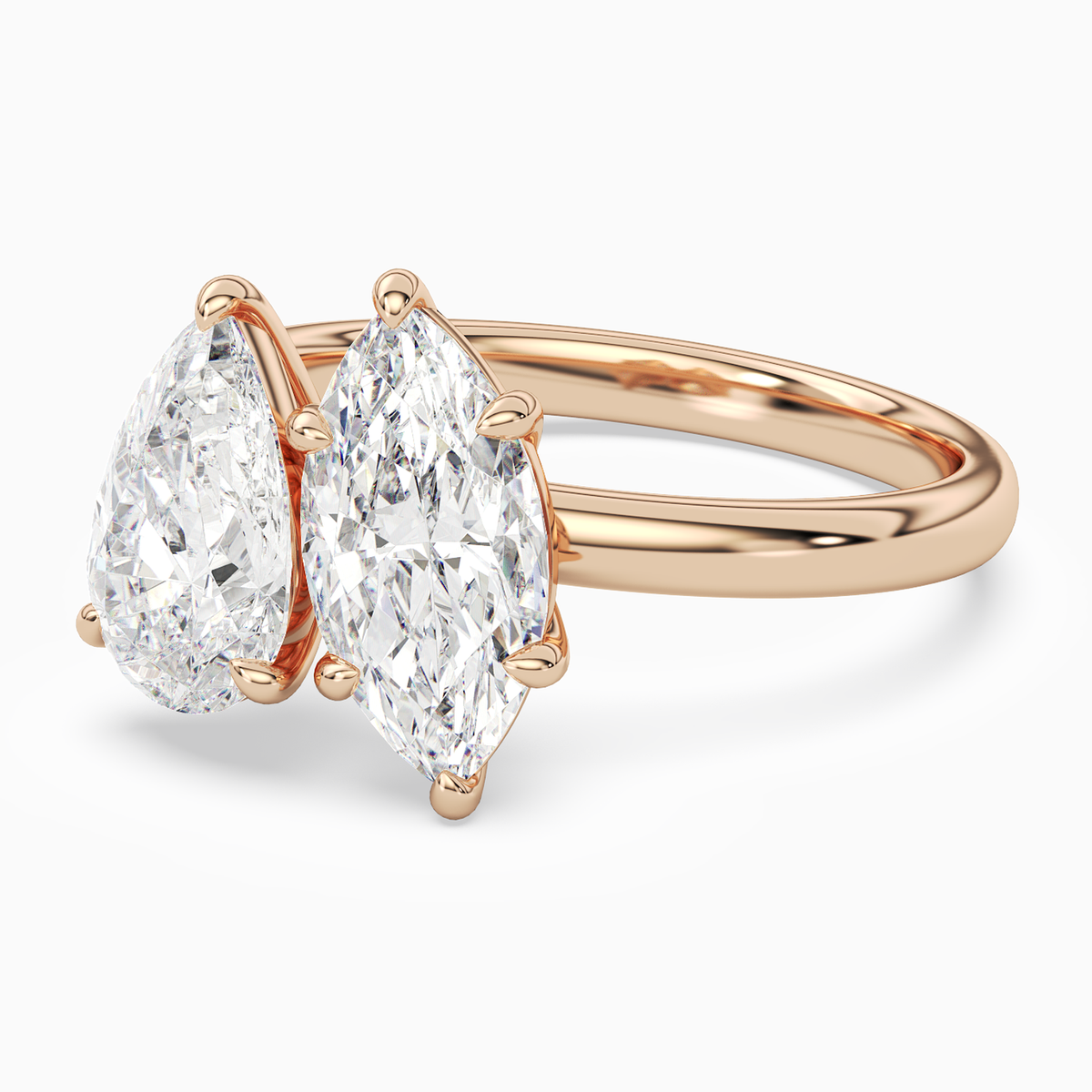
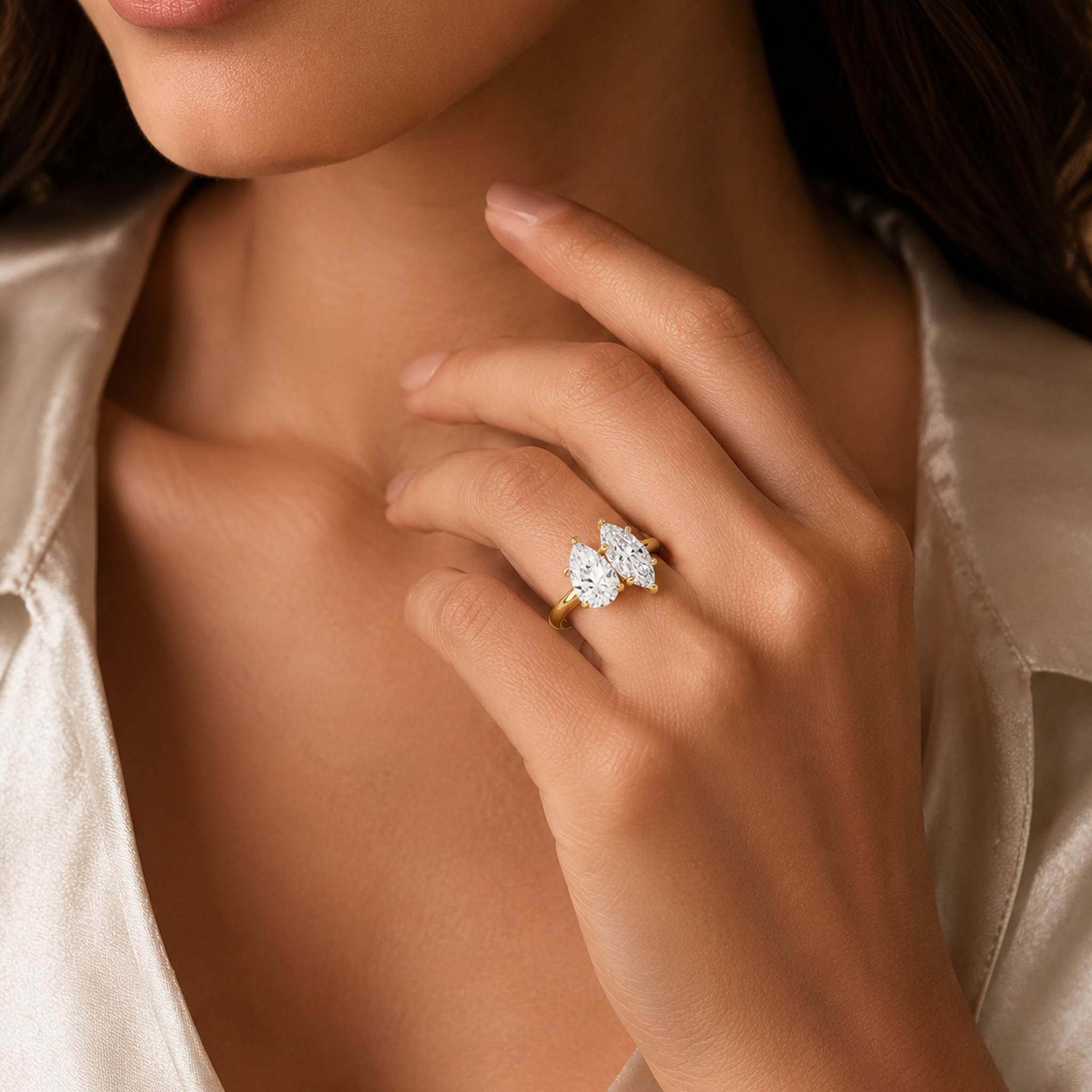
A Toi Et Moi ring gives two stones principal status. In 14K Rose Gold, the metal becomes a warm line around and between them: prongs mark separate edges, a crossover band directs the eye from one center to the other, and a basket determines whether the blush is visible chiefly from above or in profile. The color connects the pair without asking the shapes to become alike.
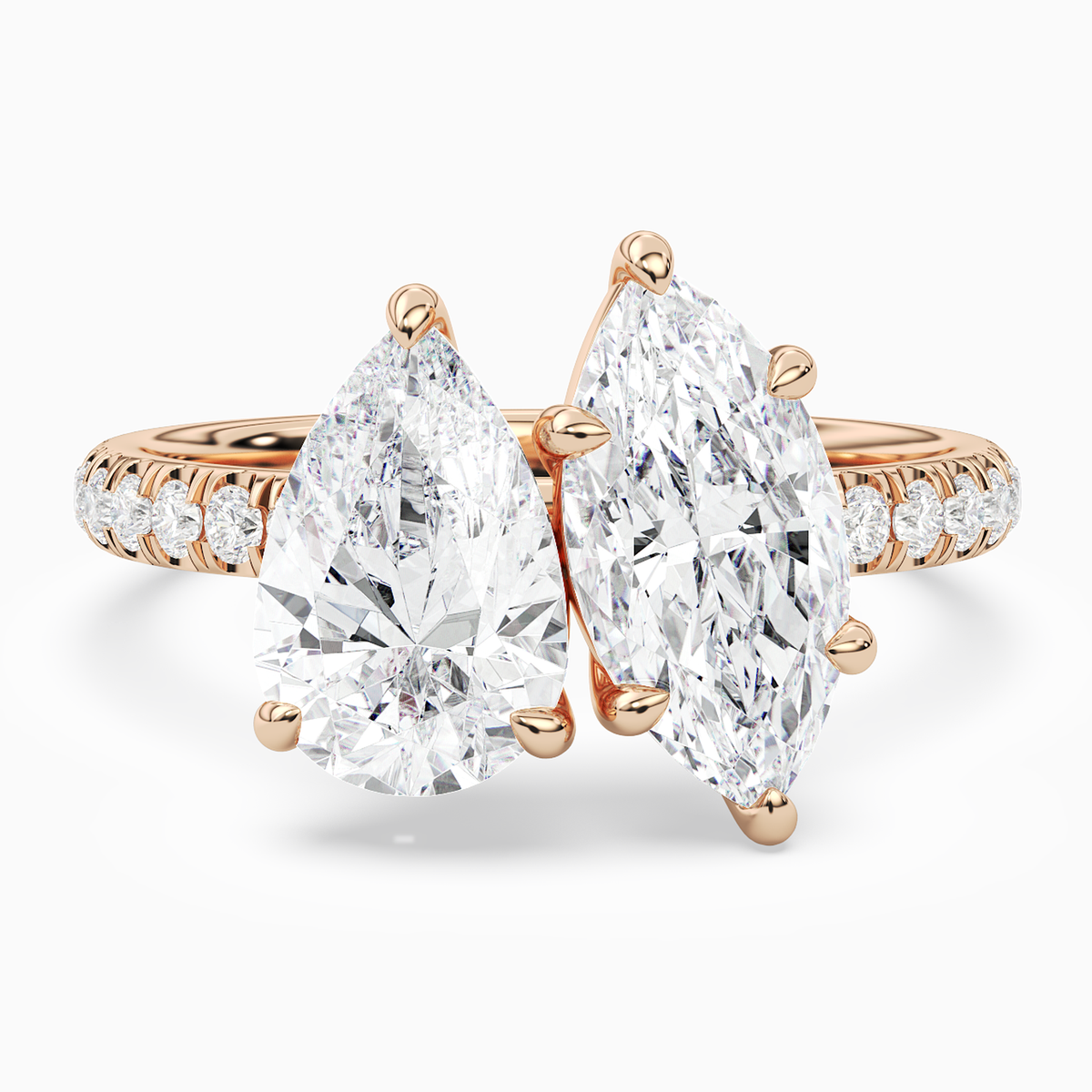
Burvonti's current public assortment contains 16 designs in this material. Observable pairings include Emerald and Pear, Oval and Pear, Princess and Pear, Radiant and Pear, Oval and Marquise, Pear and Marquise, matched Pear, and matched Marquise. Pavé-basket, clean-basket, and crossover expressions make the metal's role change even when the two outlines remain the same.
Blush Should Clarify the Interval
A 14K alloy contains approximately 58.3% gold. Alloying metals create Rose Gold's blush character, but exact recipes and finished shades vary. The karat mark does not establish one copper percentage, hardness, sensitivity result, or maintenance pattern. Finish, lighting, and visible metal area also affect what the wearer sees.
In a two-center composition, that variation matters most at close range. Fine prongs give each diamond warm punctuation. A wider rim or more visible basket creates a stronger colored boundary. The line between the settings can make the negative space feel intentional, but it should not close the interval that allows two silhouettes to remain legible.
Contrast Shape Without Assigning Personality
Emerald and Pear contrast straight steps with a curved body and point. Oval and Marquise share length but create different edge tension. Princess and Pear set corners against a directional curve. Matched Pear or Marquise pairs use repetition, while their orientation and spacing prevent the result from feeling static. None of these combinations has one prescribed relationship meaning.
Balance does not require equal carat weight. Compare each stone's dimensions, face-up area, orientation, setting height, and distance from its partner. A smaller elongated diamond may hold considerable visual length; a deeper stone may carry more weight below the face-up view. The final ring, not a generic center-carat label, must establish the pair.
The Band Decides How the Pair Moves
Crossover shoulders can make each side of the band approach a different center. Open baskets reveal more profile and height difference. Pavé baskets add secondary light near the pair. These structures also introduce different contact points, cleaning spaces, and wedding-band relationships; the Toi Et Moi name does not guarantee stability, comfort, or an unobstructed fit.
A matching Rose Gold wedding band can continue the blush line, while another metal can create contrast. Straight, contoured, chevron, open-gap, or intentionally spaced bands may work depending on the exact ring. Judge the lowest edge of both settings and any pavé contact point before assuming a pairing will sit flush.
Two Diamonds, Two Sets of Facts
Each diamond retains its own weight, dimensions, color, clarity, facet pattern, and documentation. Similar specifications can create continuity, while considered contrast may be part of the design. Confirm what is supplied for each selected center rather than assuming one Collection label or combined option describes both stones completely.
Burvonti pairs responsibly sourced, independently graded lab-grown diamonds with settings resolved through proportion and human judgment. Custom possibilities may refine the two shapes, relative scale, orientation, spacing, metal, band, engraving, or selected setting details where feasible. The role of Rose Gold is precise: to warm the relationship without writing the story for its wearer.
Frequently Asked Questions
How does this page differ from the main Toi Et Moi Collection?
The parent owns two-center composition across metals. This page focuses on how 14K Rose Gold creates warm boundaries and a visible interval between the centers.
How much gold is in 14K Rose Gold?
Approximately 58.3%. The remaining alloying metals influence color and behavior, and exact recipes vary.
Are all 14K rose gold settings the same blush shade?
No. Alloy, finish, lighting, photography, and visible metal area affect the result.
Which shape pairings appear here?
The current assortment includes Emerald/Pear, Oval/Pear, Princess/Pear, Radiant/Pear, Oval/Marquise, Pear/Marquise, matched Pear, and matched Marquise.
Do the two diamonds need to match in size?
No. Balance can come from dimensions, orientation, face-up area, height, and spacing rather than equal weight.
Does Rose Gold make the diamonds look whiter?
It may create warm contrast, but it does not change either diamond's graded color or performance.
Can the two diamonds have different facet patterns?
Yes. Step-cut and brilliant-style patterns can create intentional contrast when scale and spacing remain resolved.
Does the center-carat option describe both diamonds?
Not necessarily. Confirm each diamond's weight and dimensions and any combined total supplied for the configuration.
Are both diamonds independently graded?
Documentation is configuration-specific. Confirm what report and specifications are supplied for each selected center.
Can Rose Gold cause sensitivity?
Sensitivity depends on the complete alloy and wearer. Karat and color alone cannot establish a hypoallergenic outcome.
Will a wedding band sit flush?
Not automatically. Both baskets, the crossover line, pavé, height, and contact points determine fit.
Can Burvonti personalize the pairing?
Custom possibilities may include shapes, relative scale, orientation, spacing, metal, band, engraving, or selected setting details, subject to availability and feasibility.