
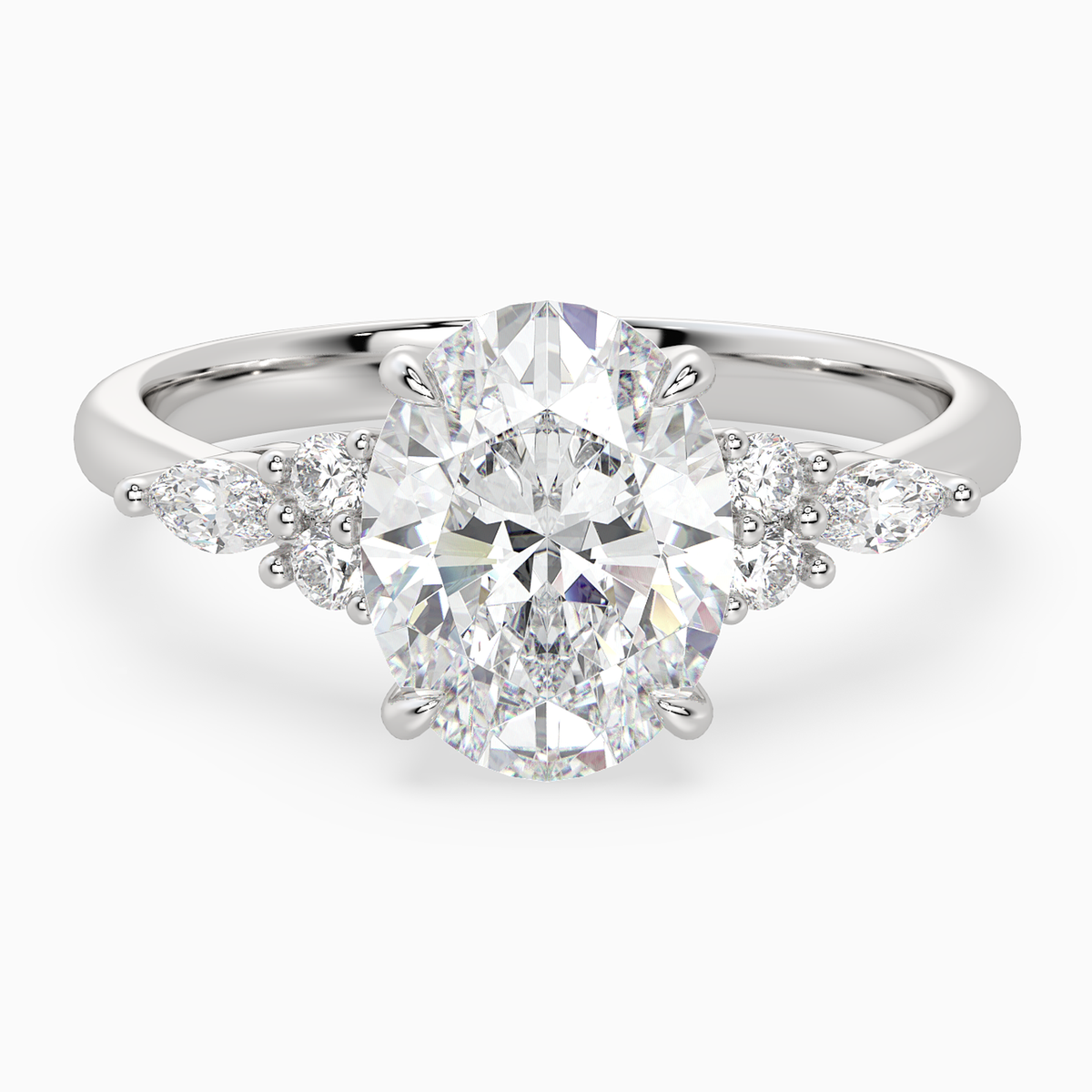


Toi Et Moi Engagement Rings in 14K Yellow Gold
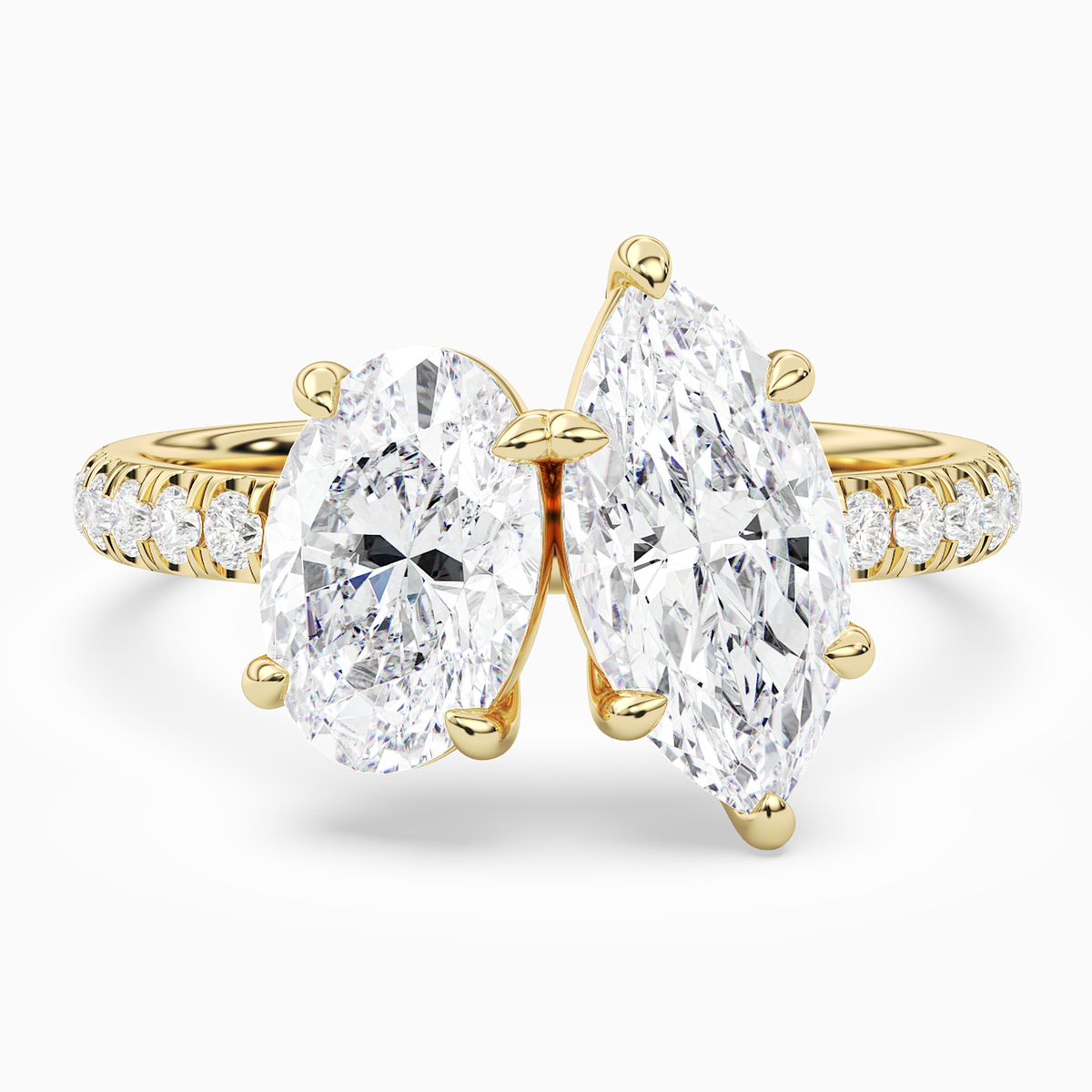
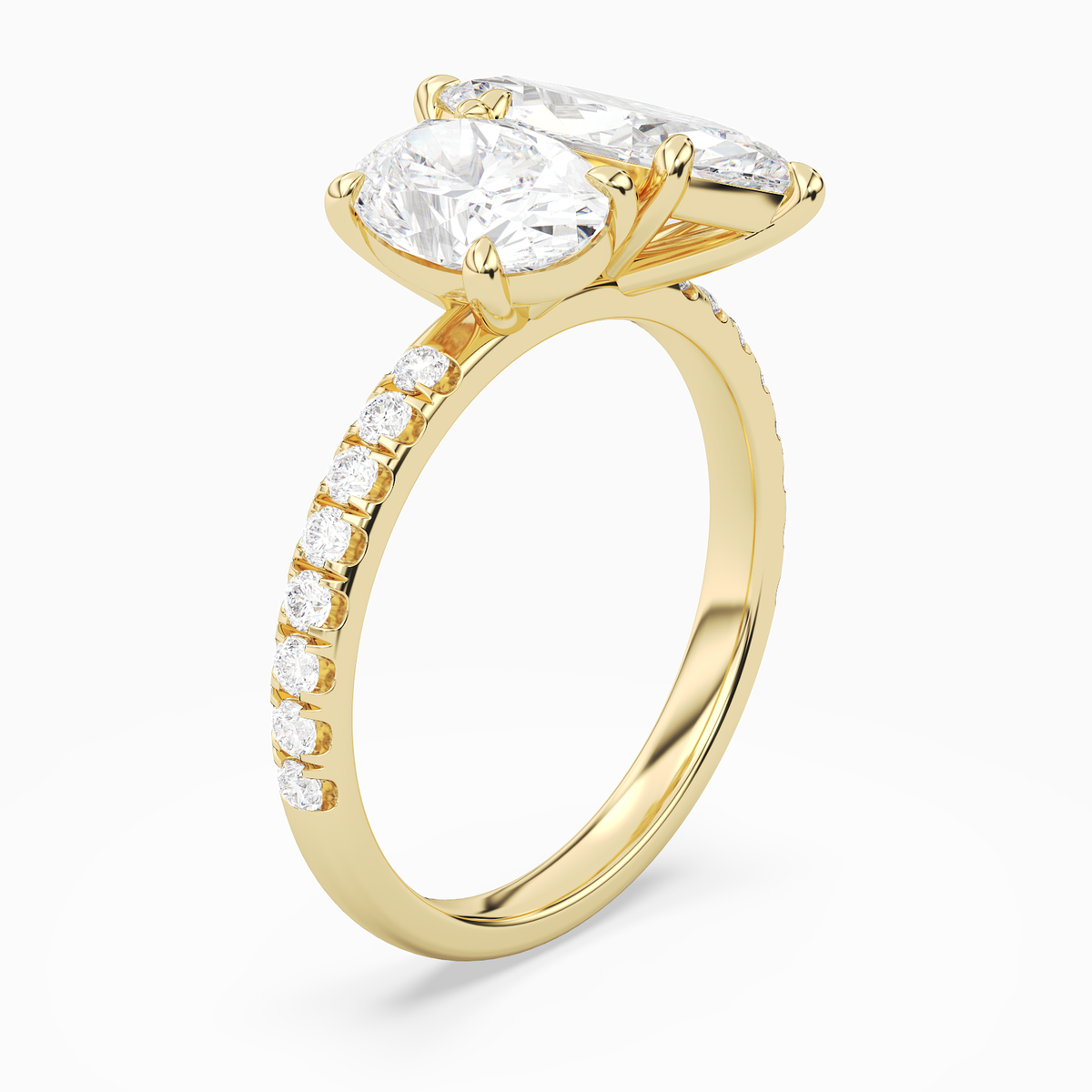
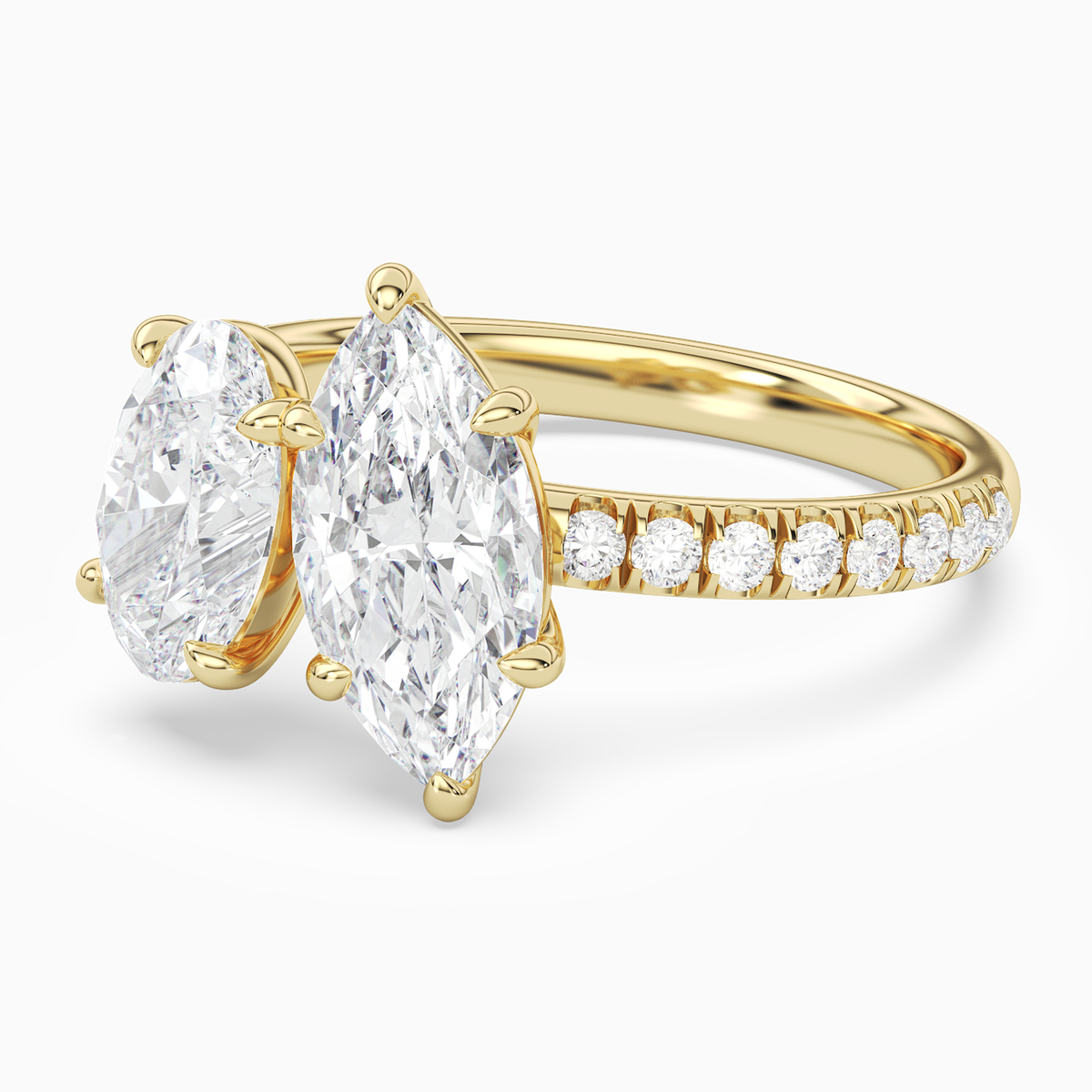
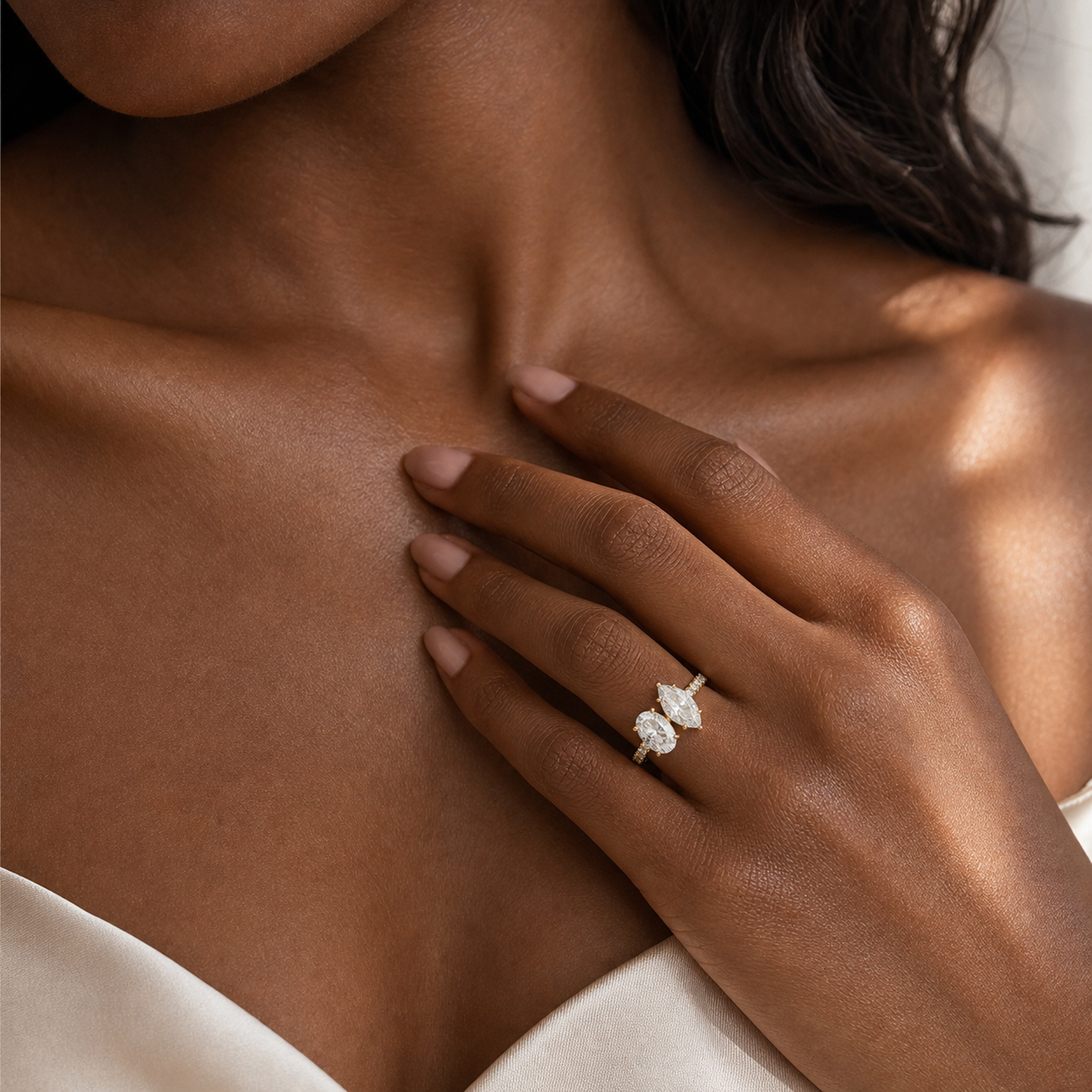
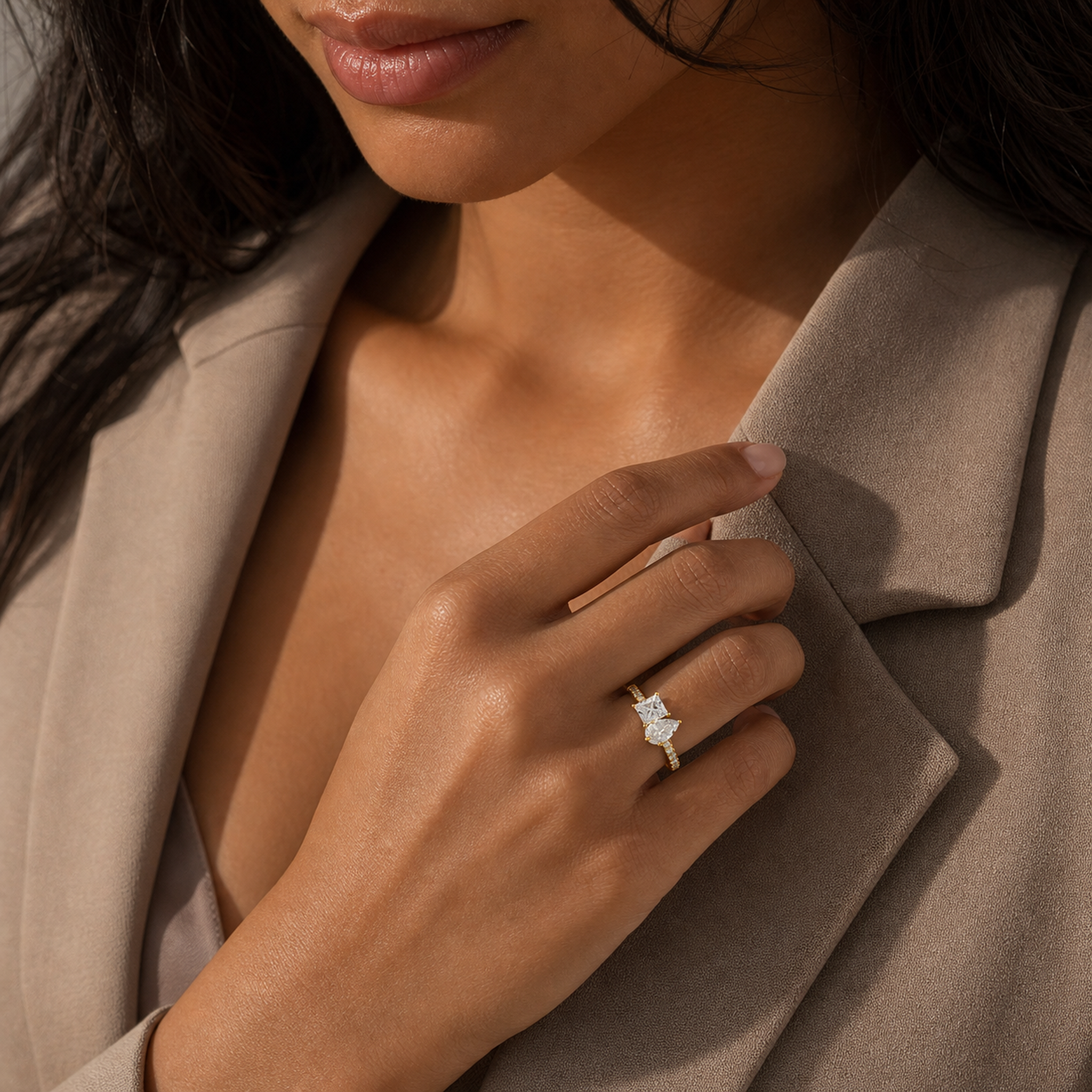
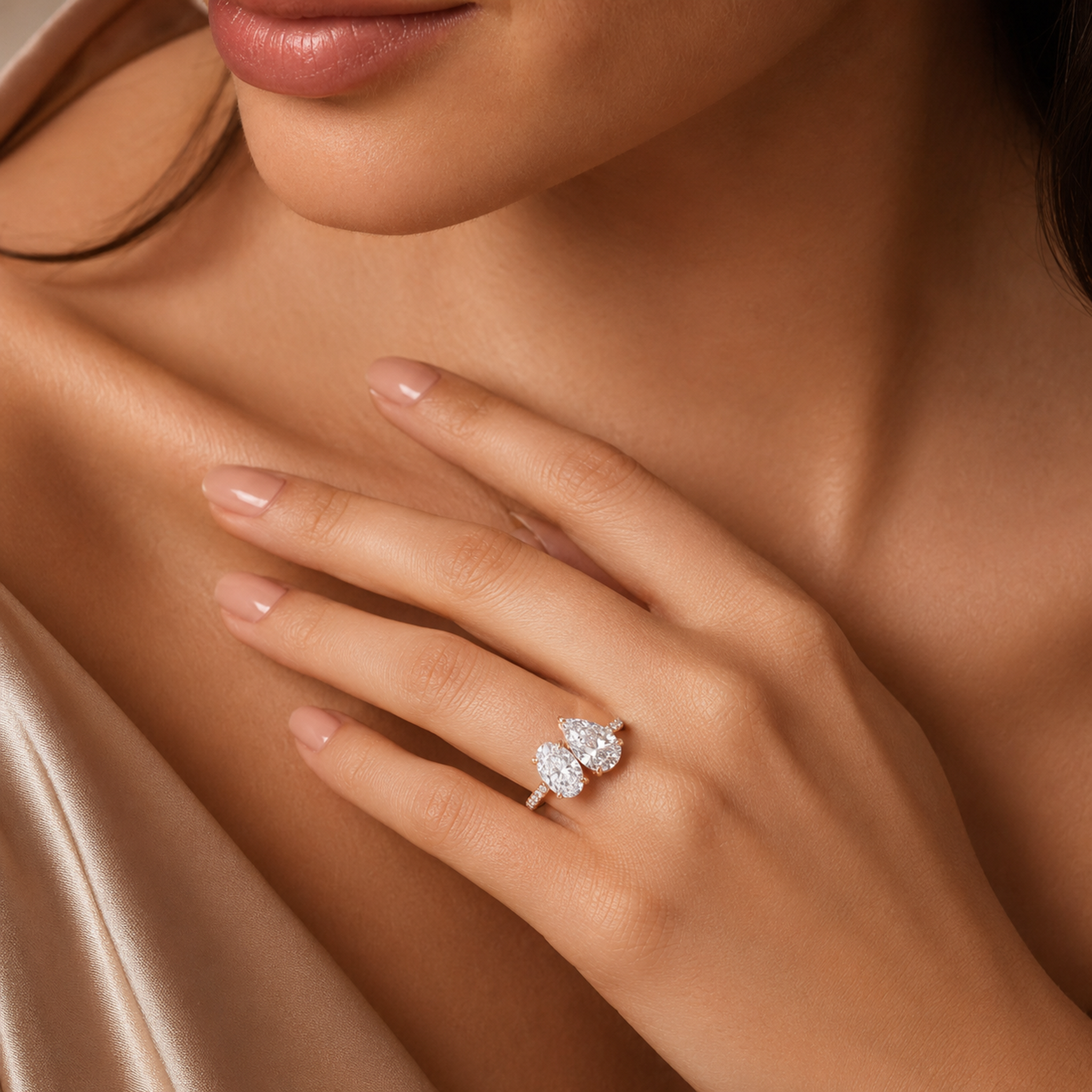
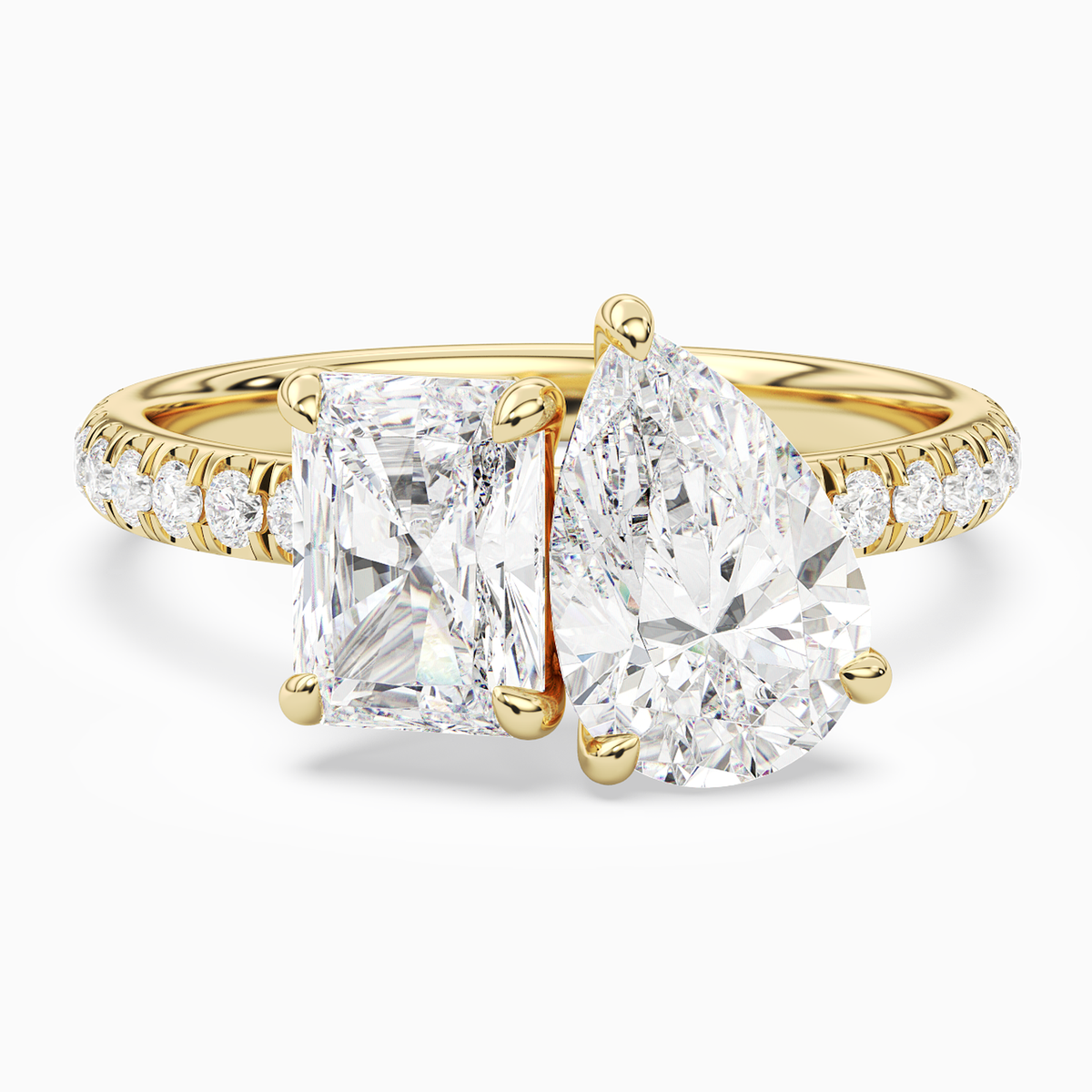
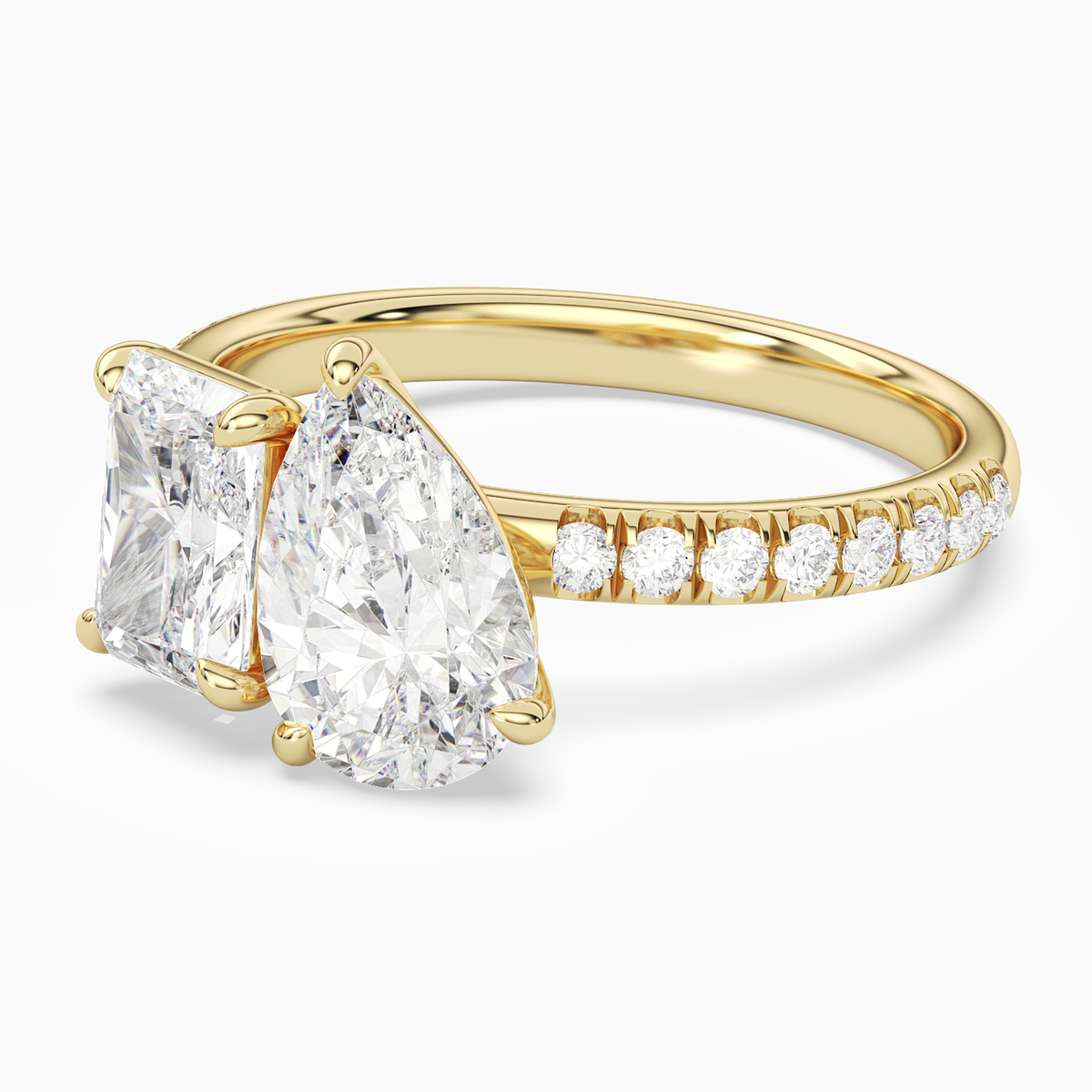
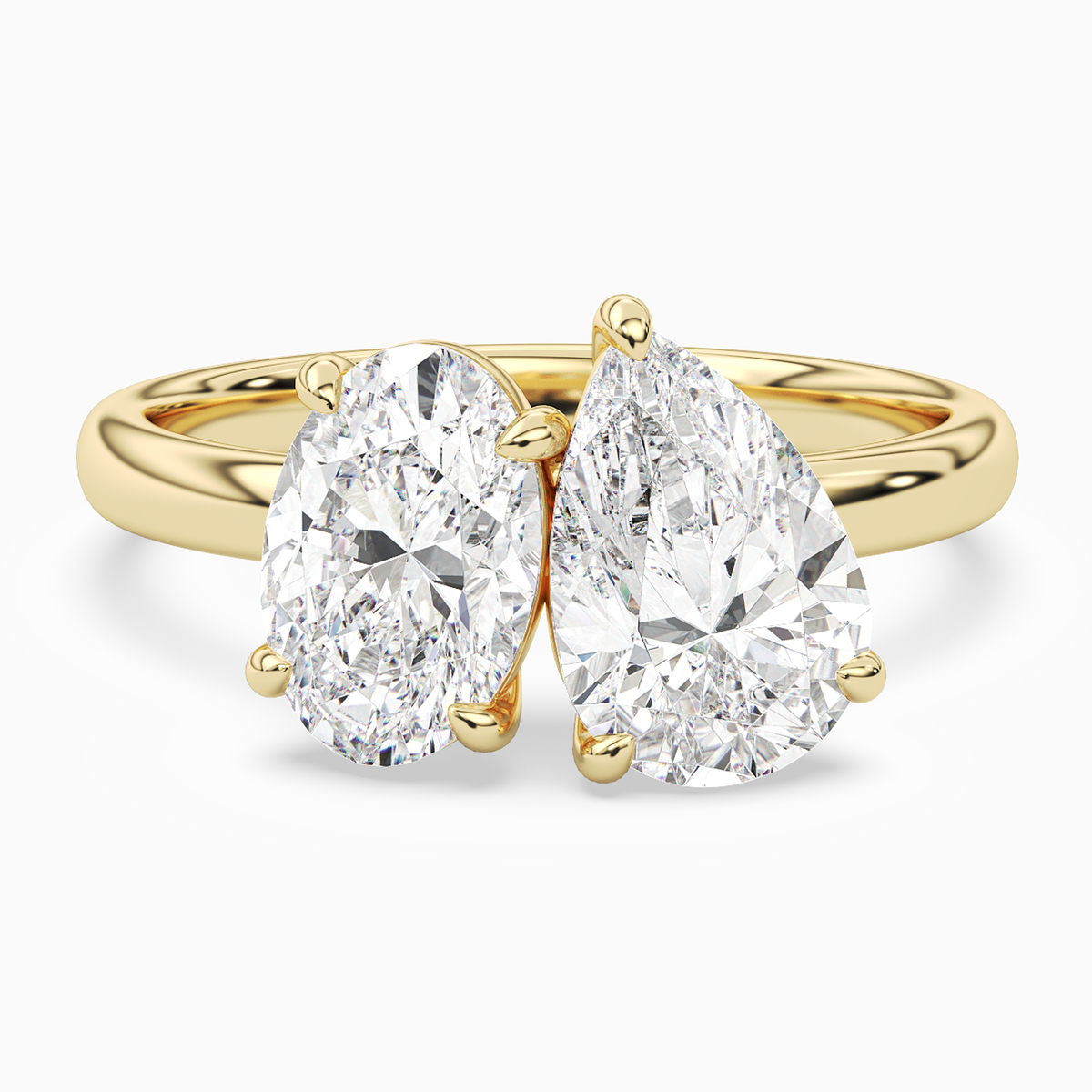
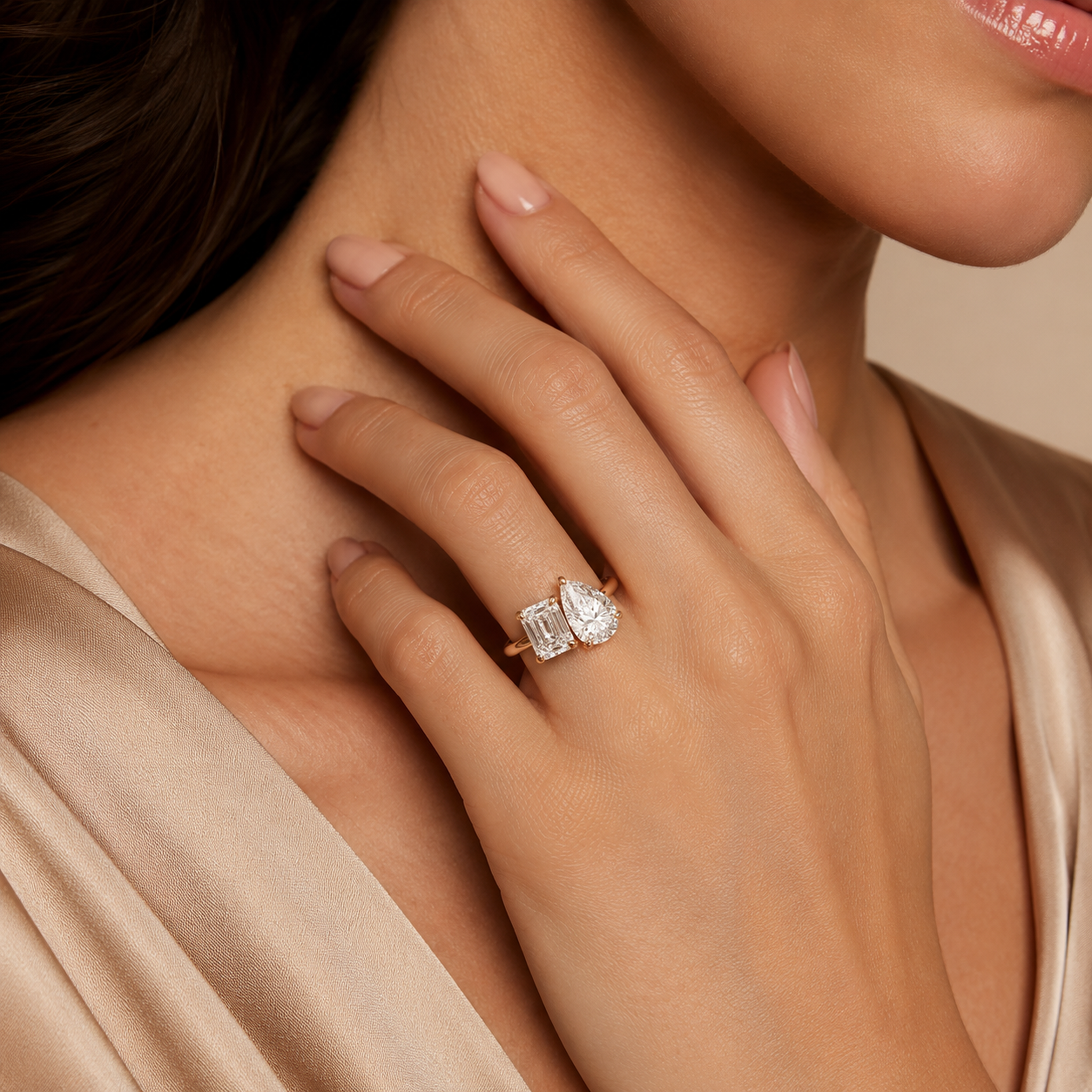
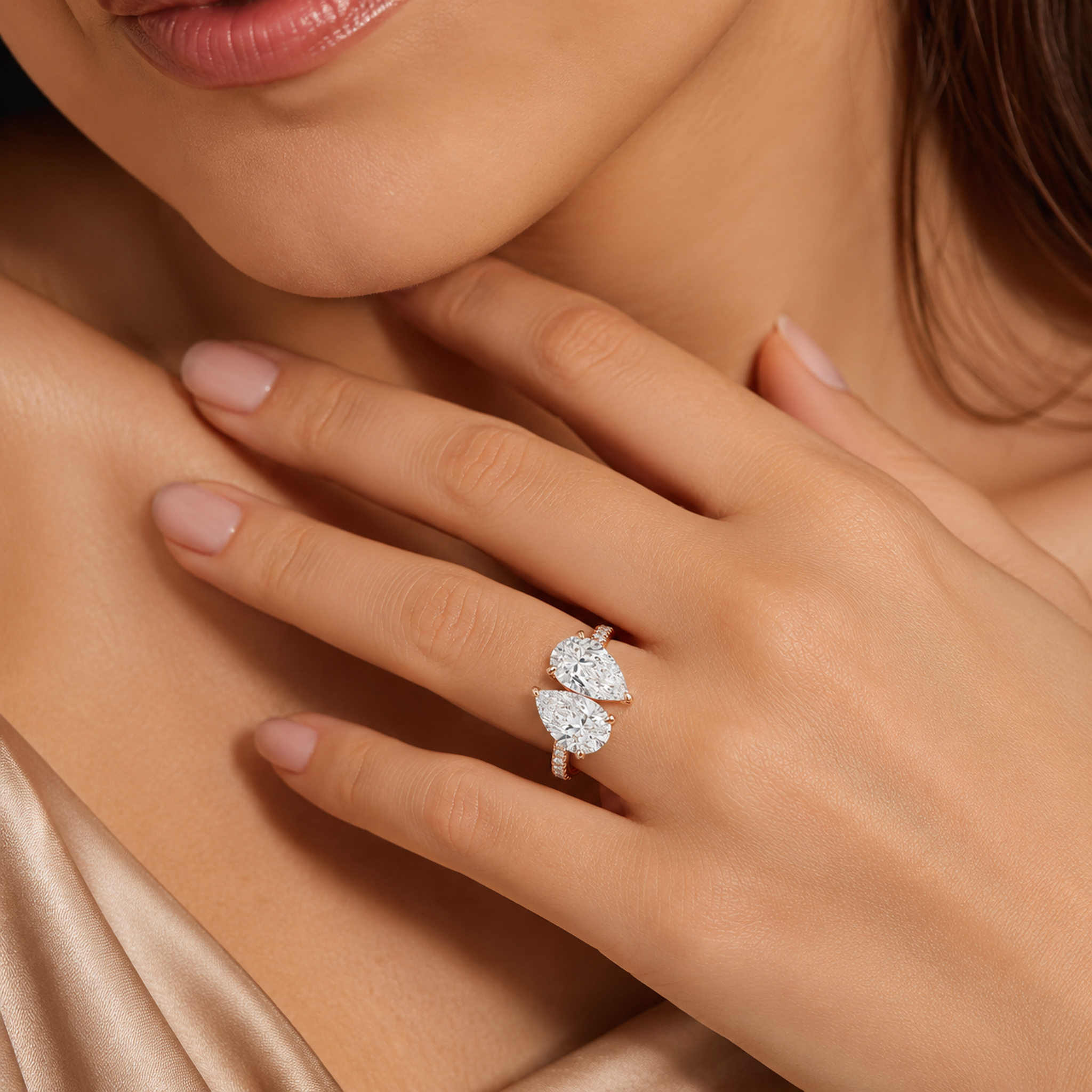
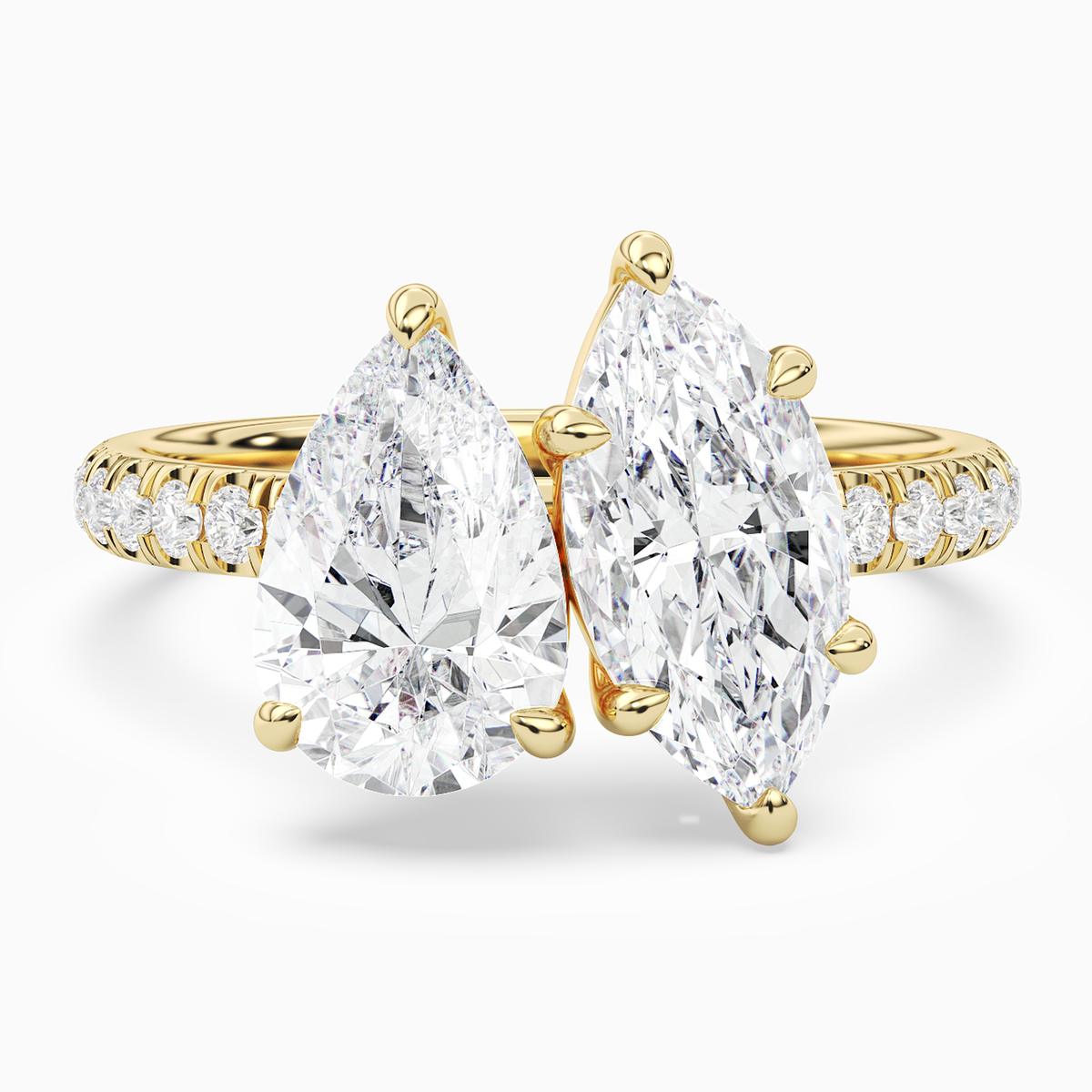
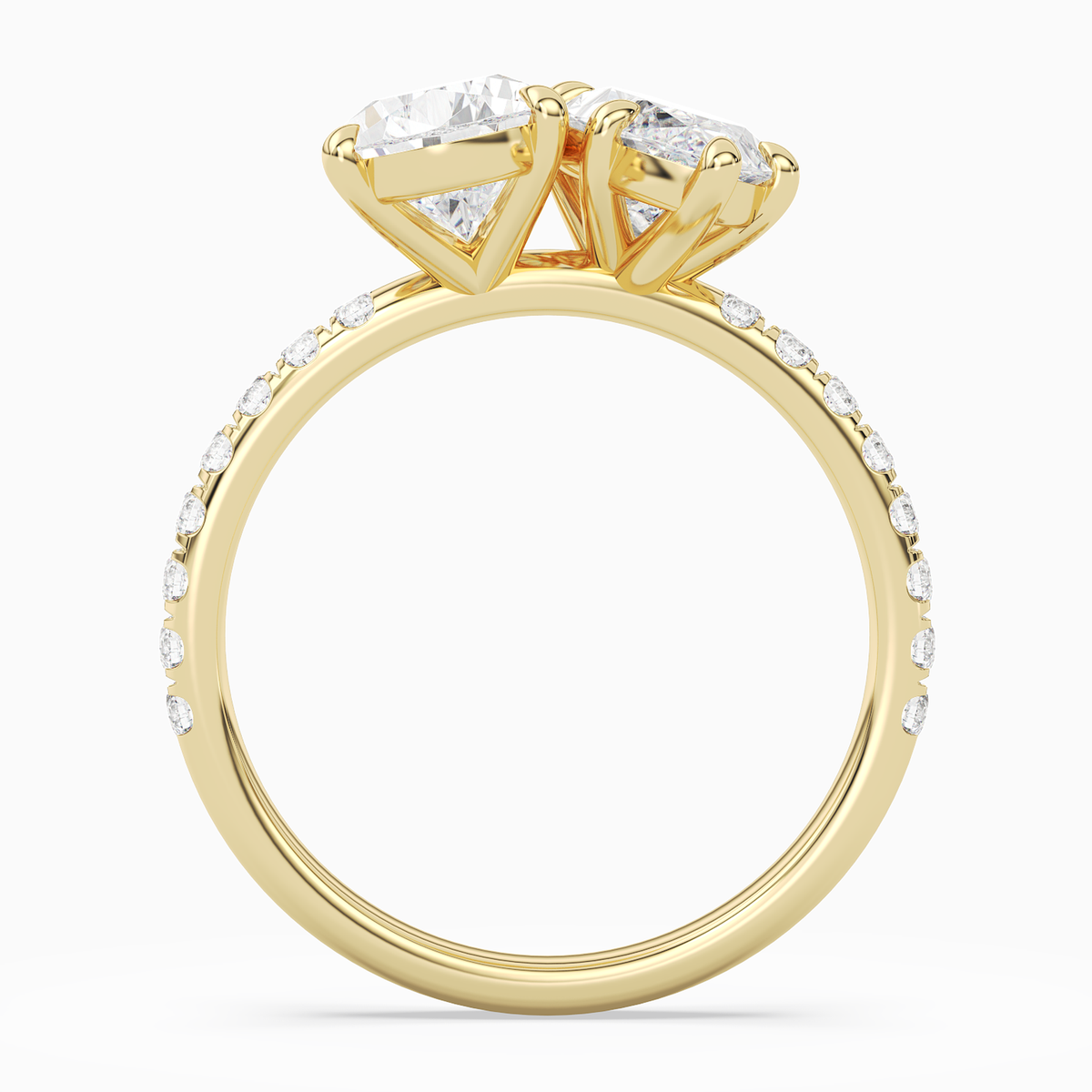
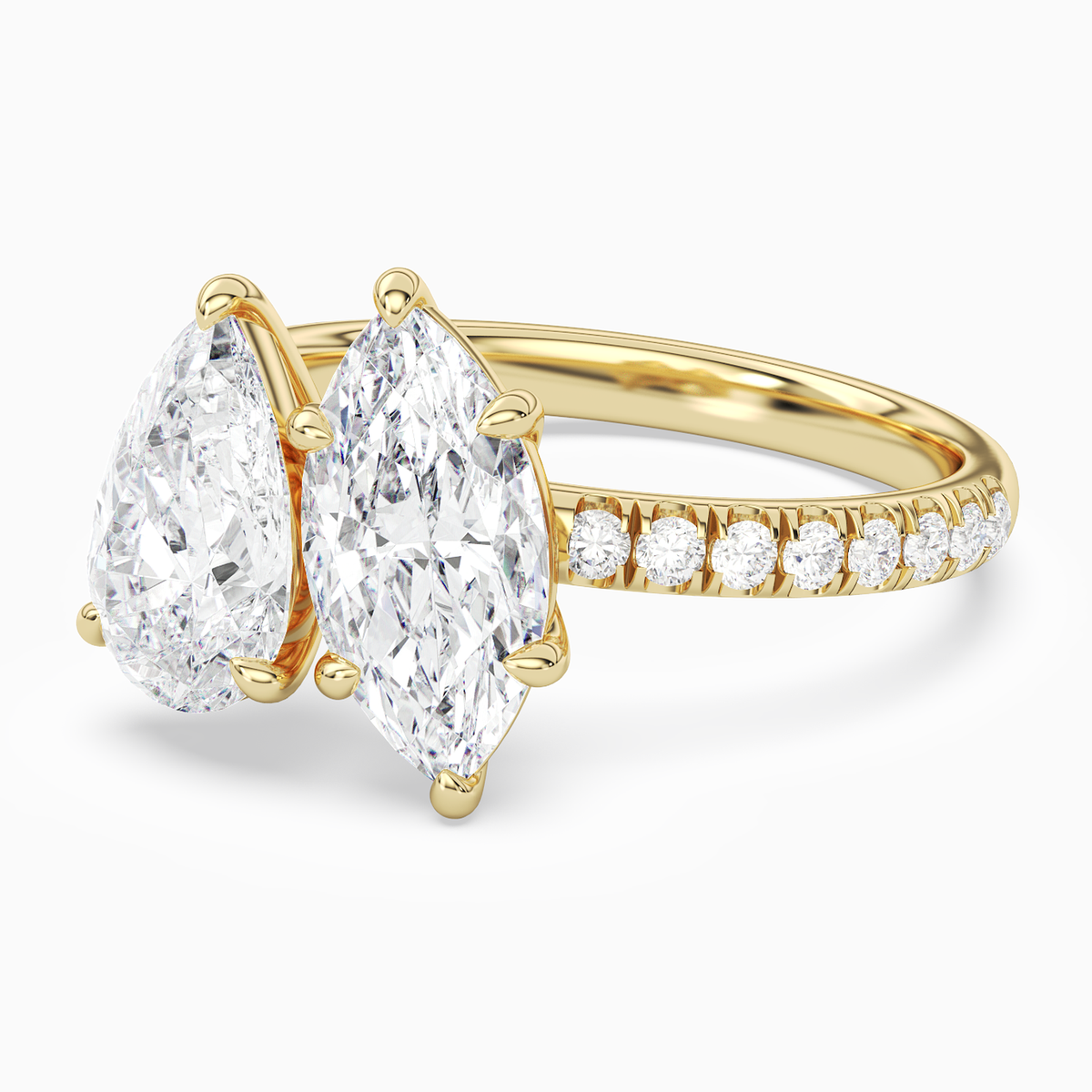
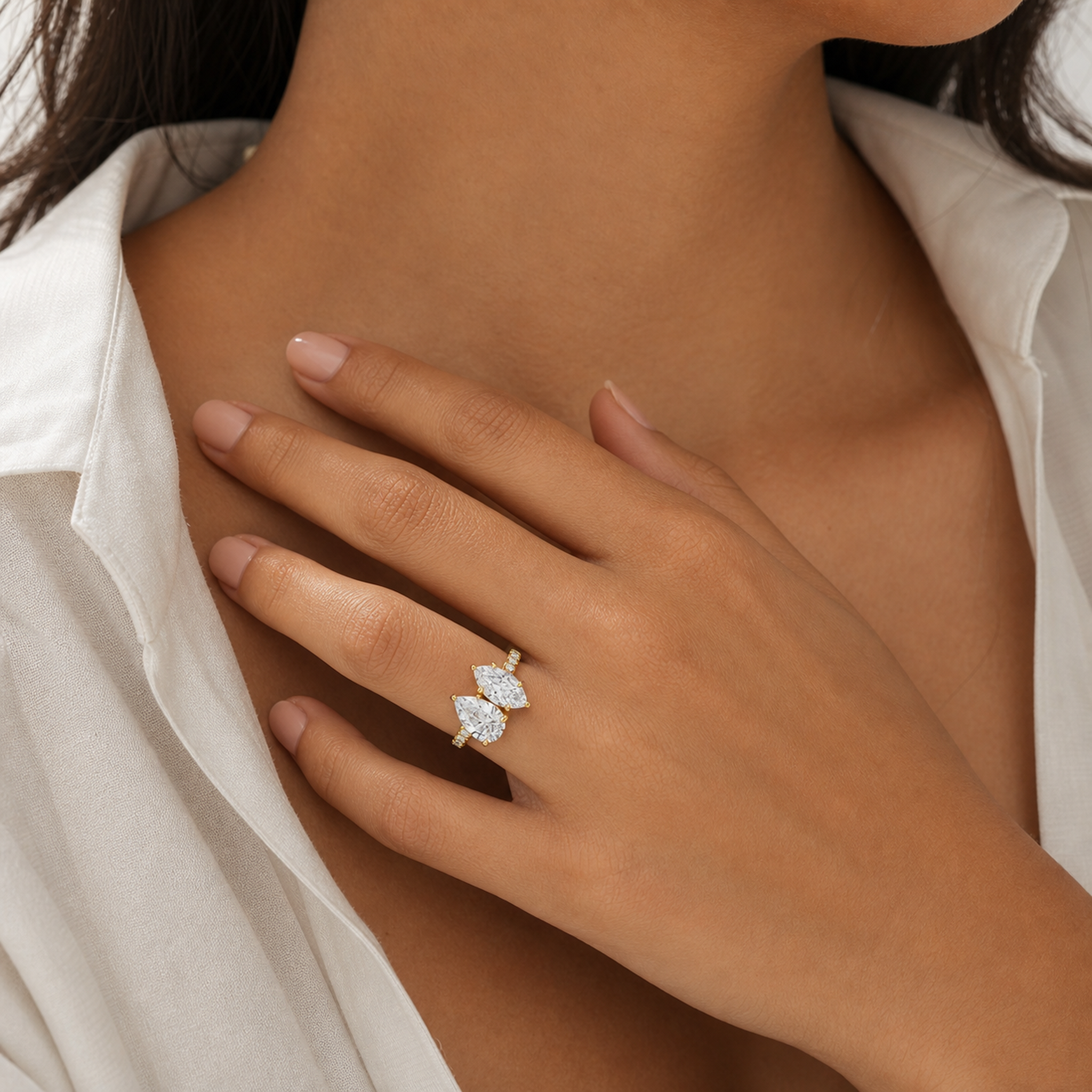
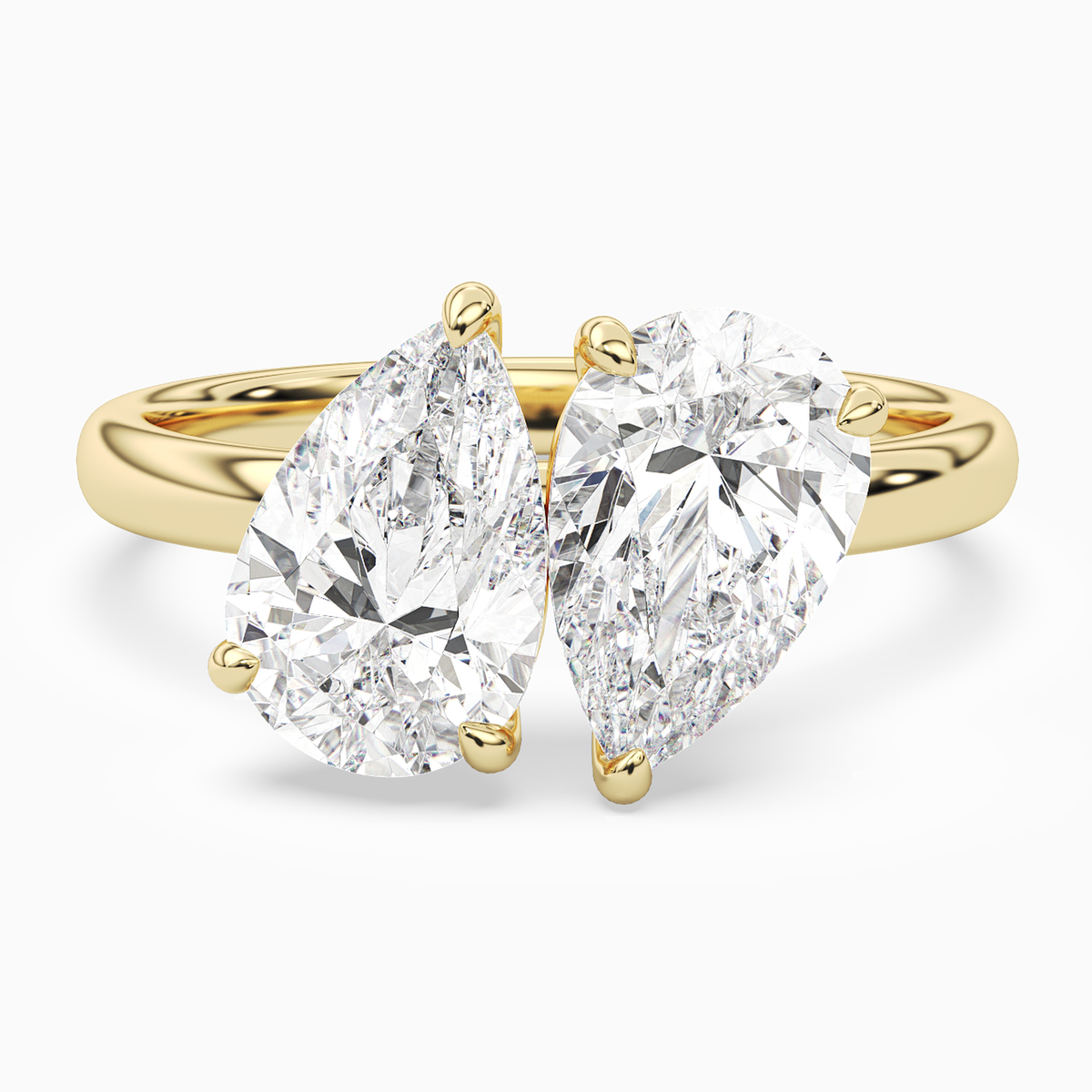
Two distinct outlines, connected by gold. 14K yellow gold makes the band and setting a visible line between paired centers.


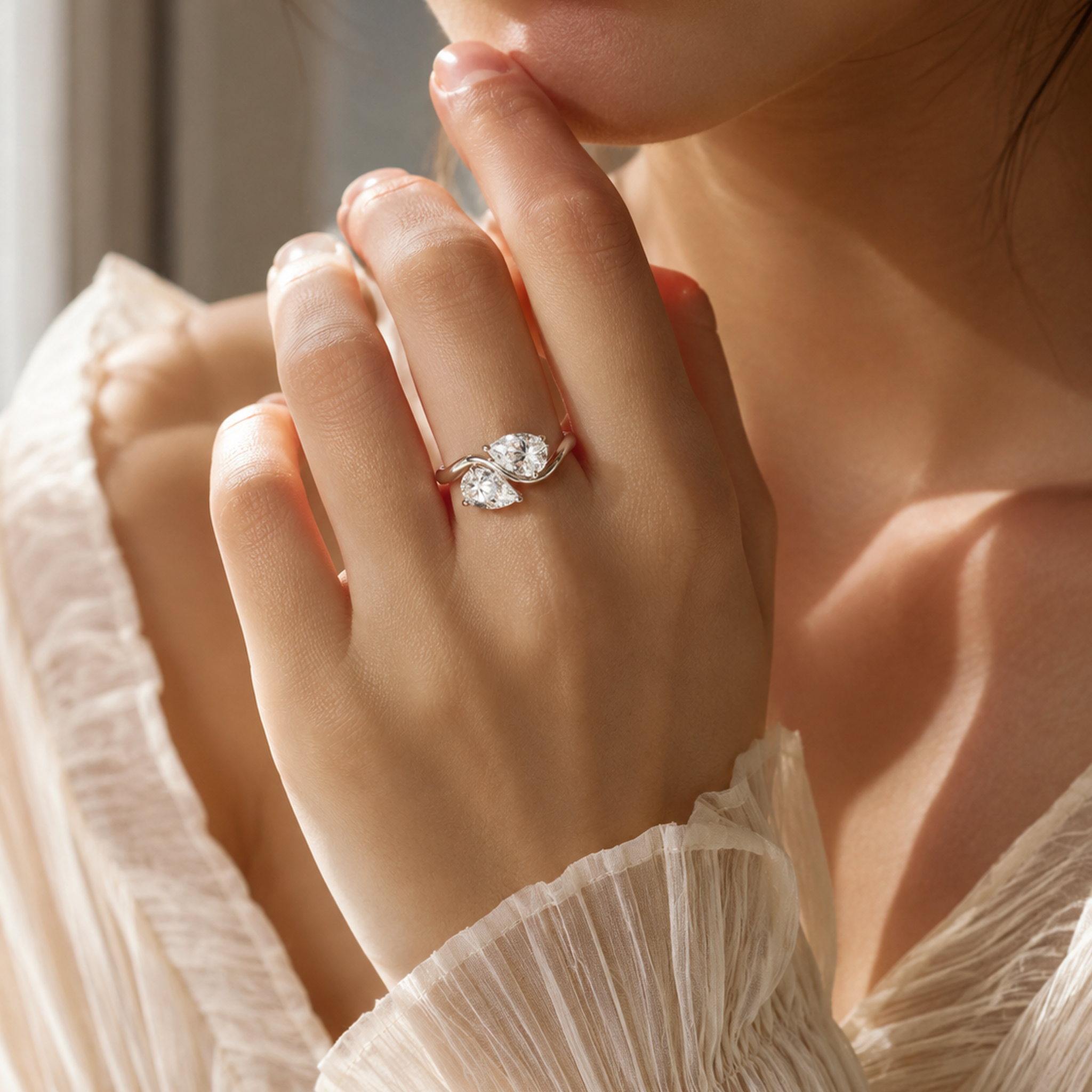


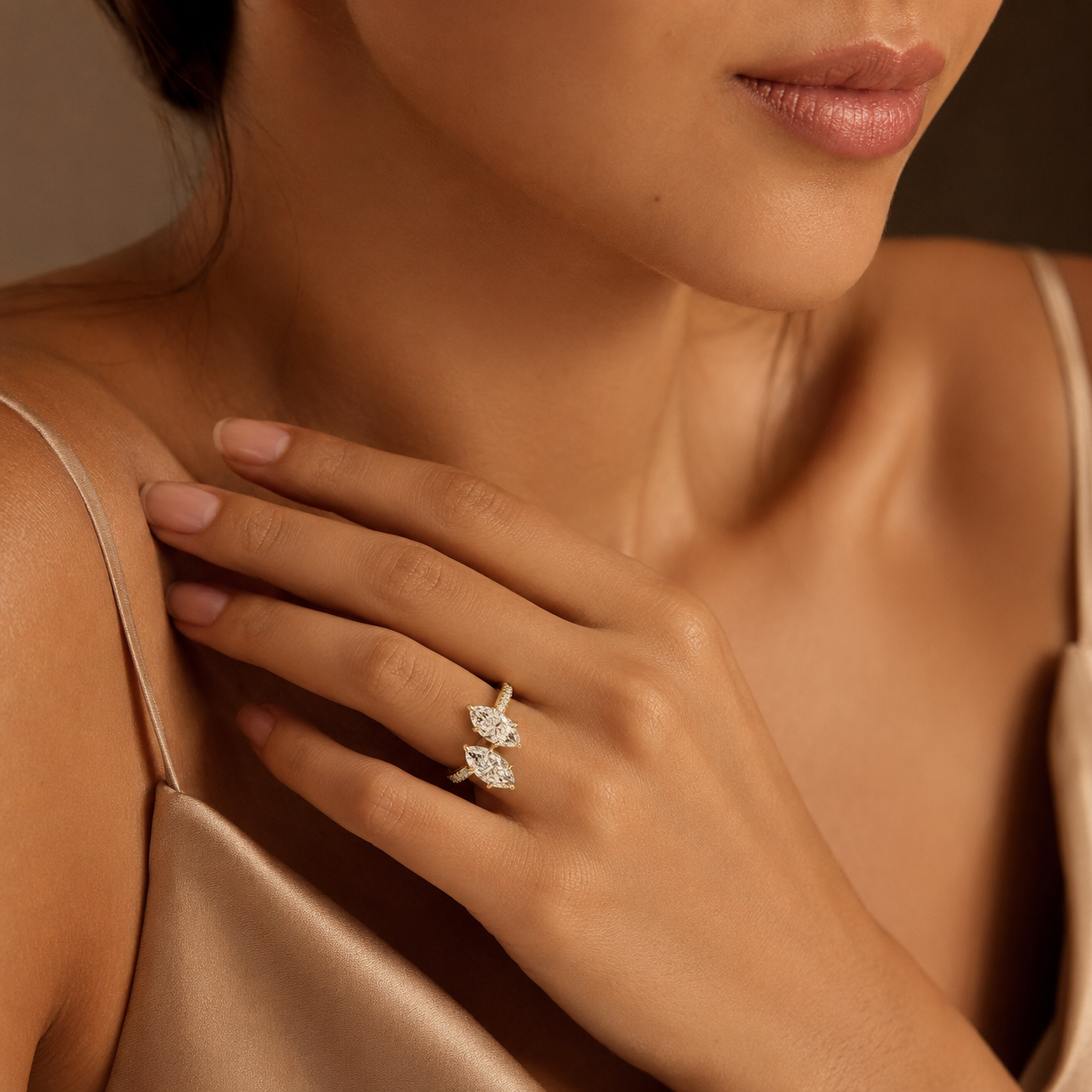
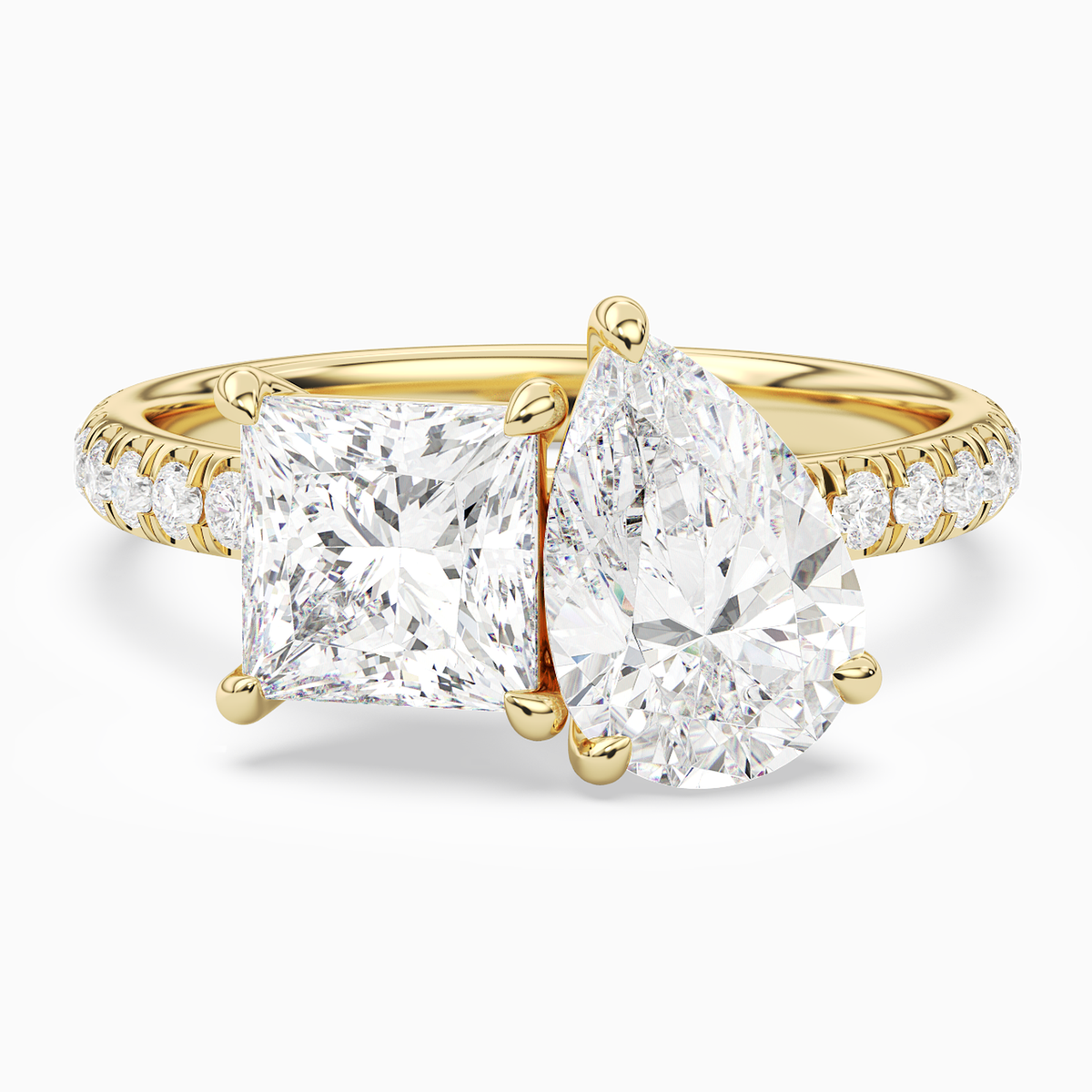
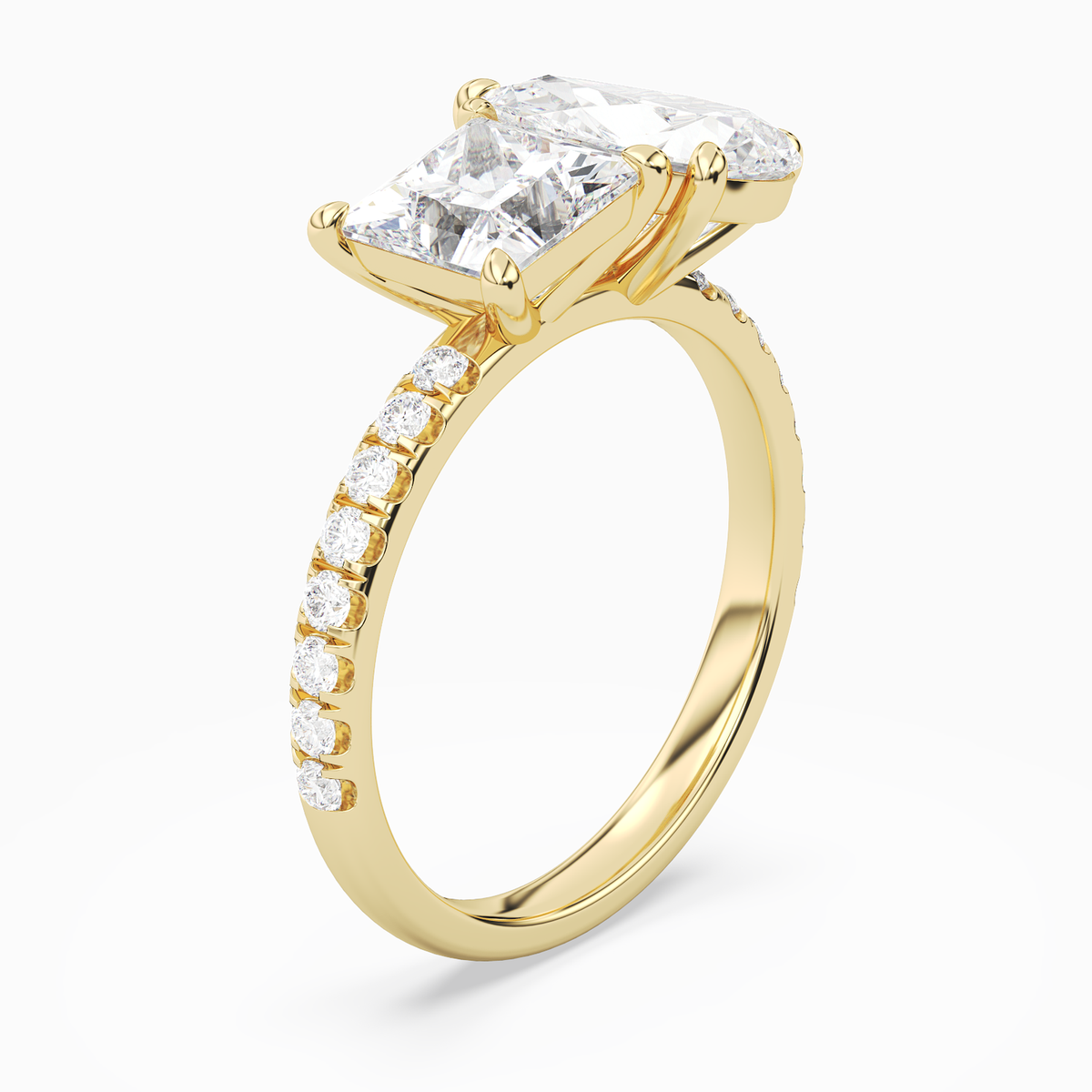
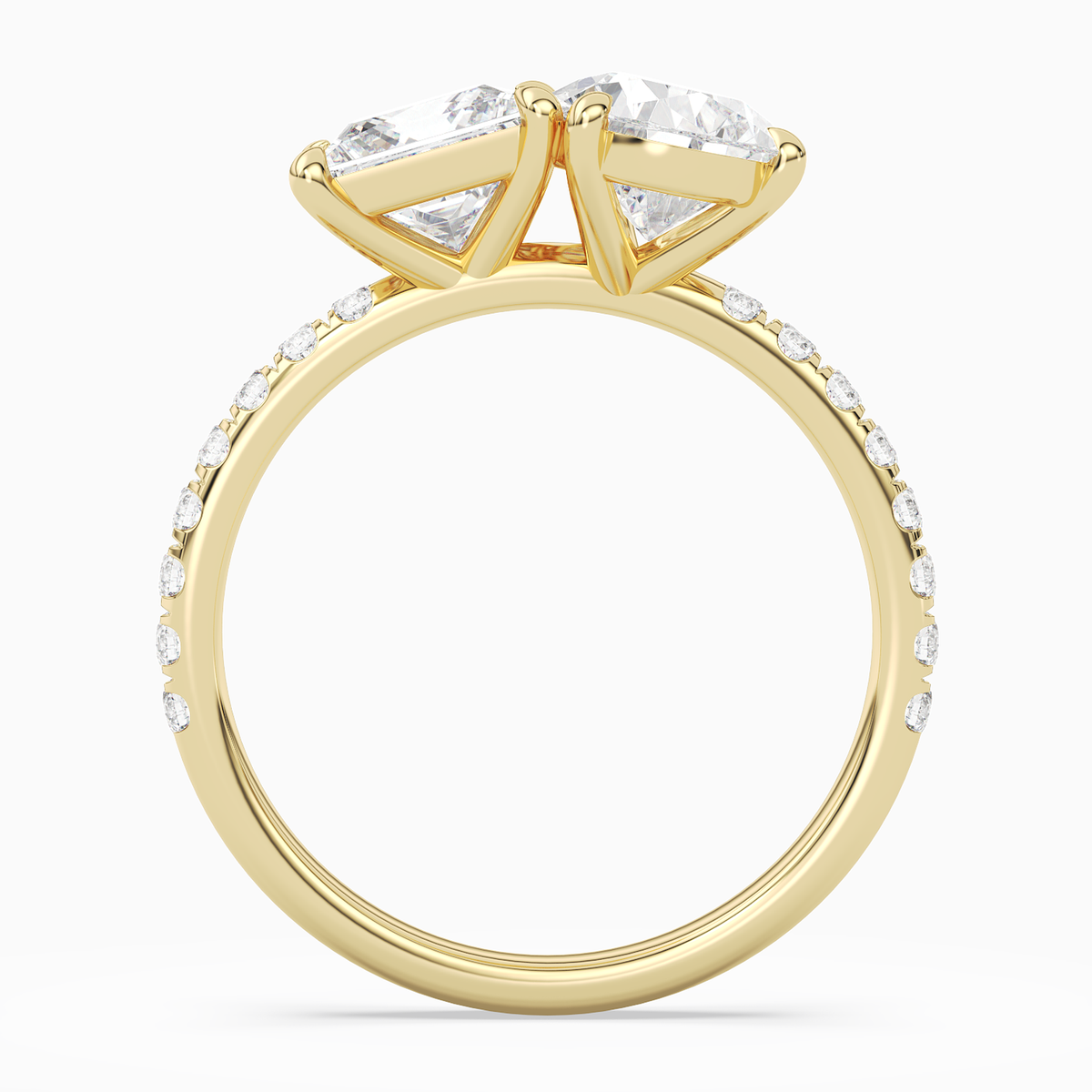
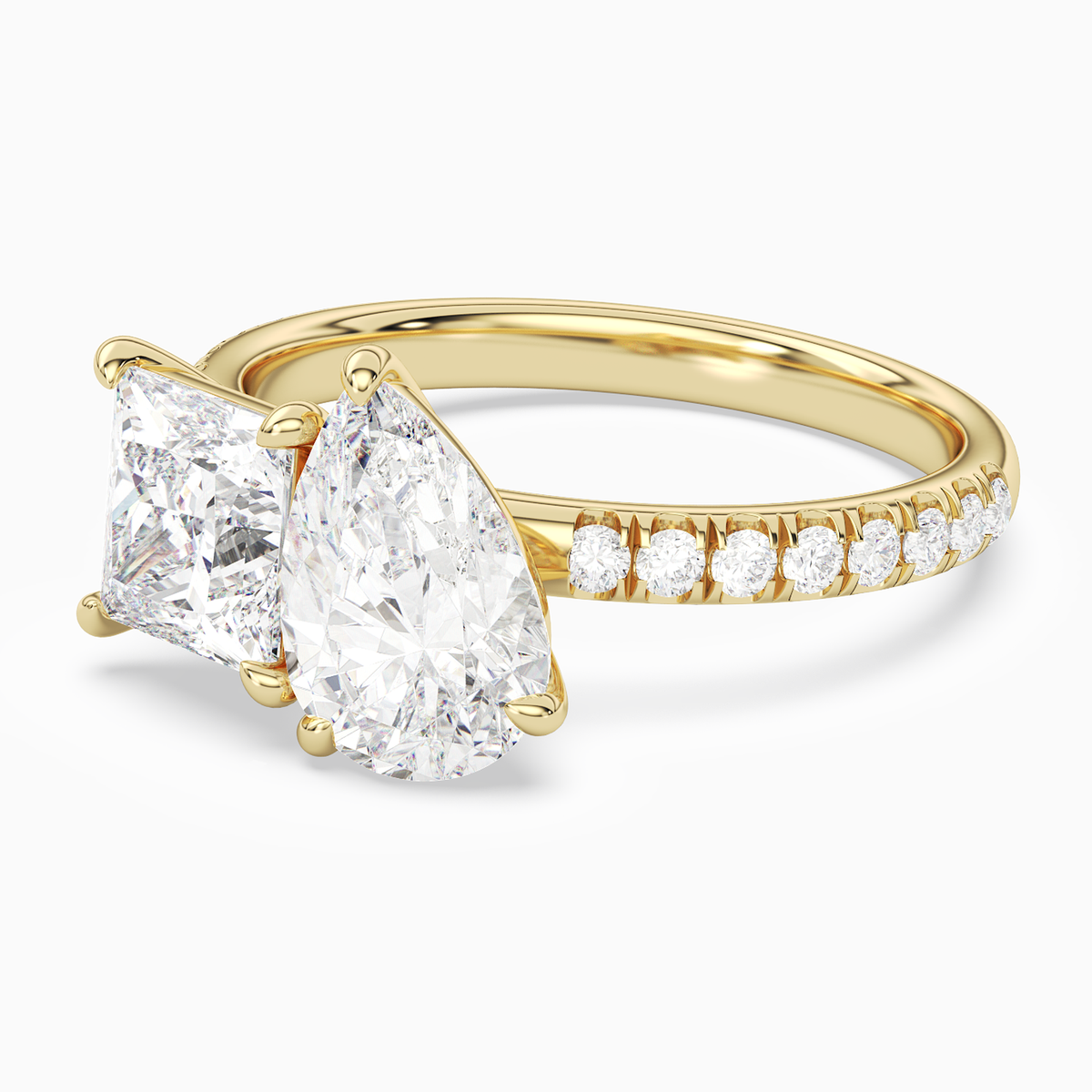

















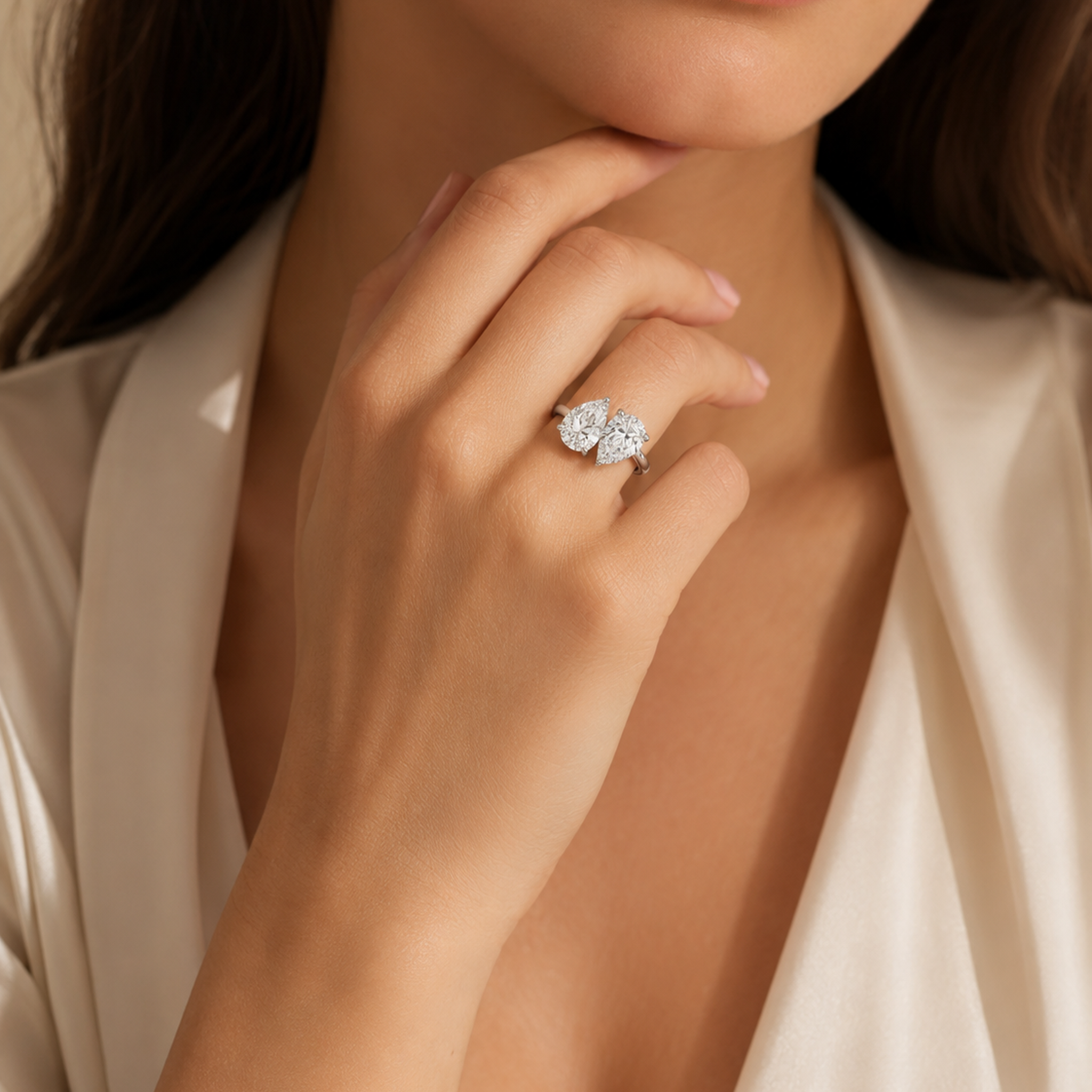
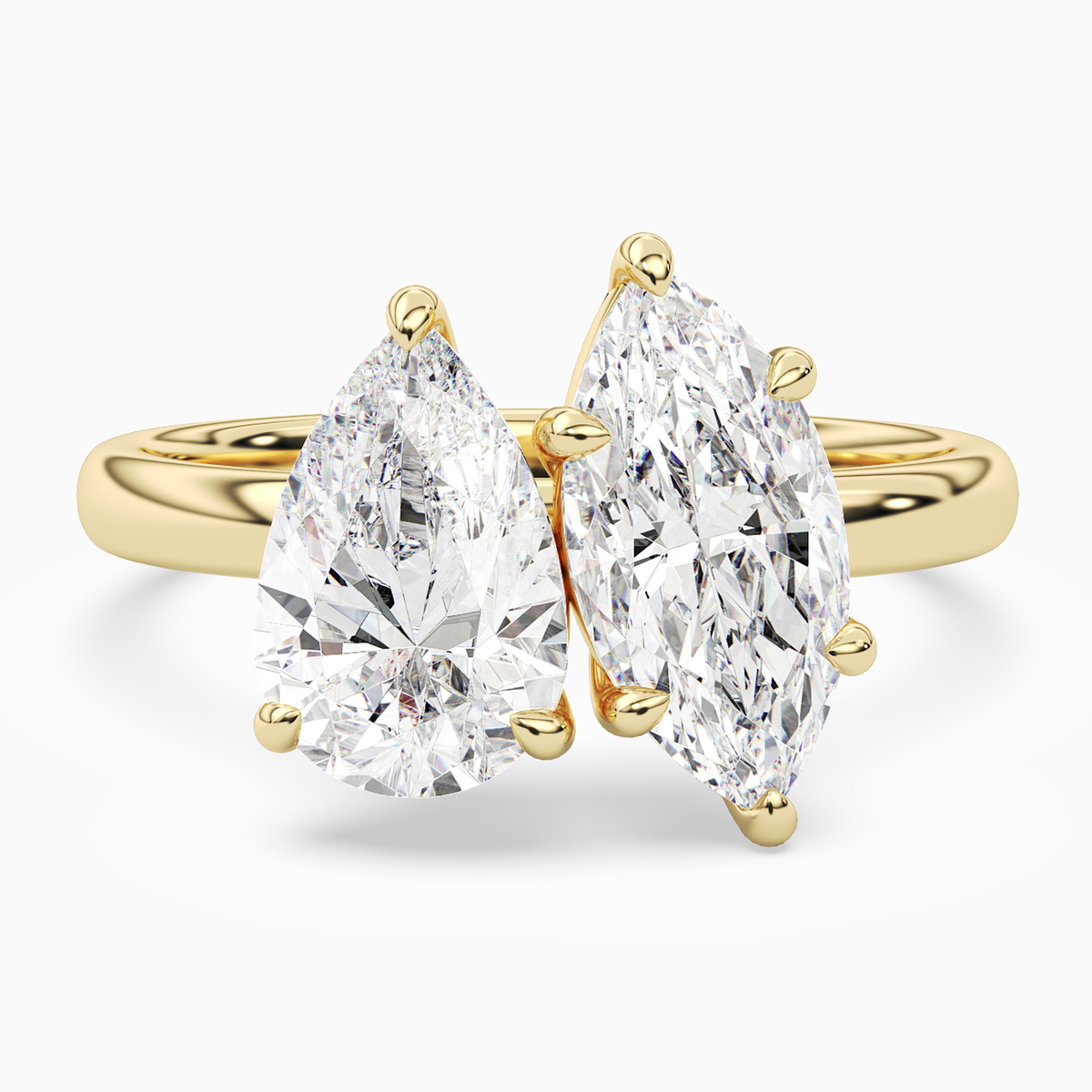
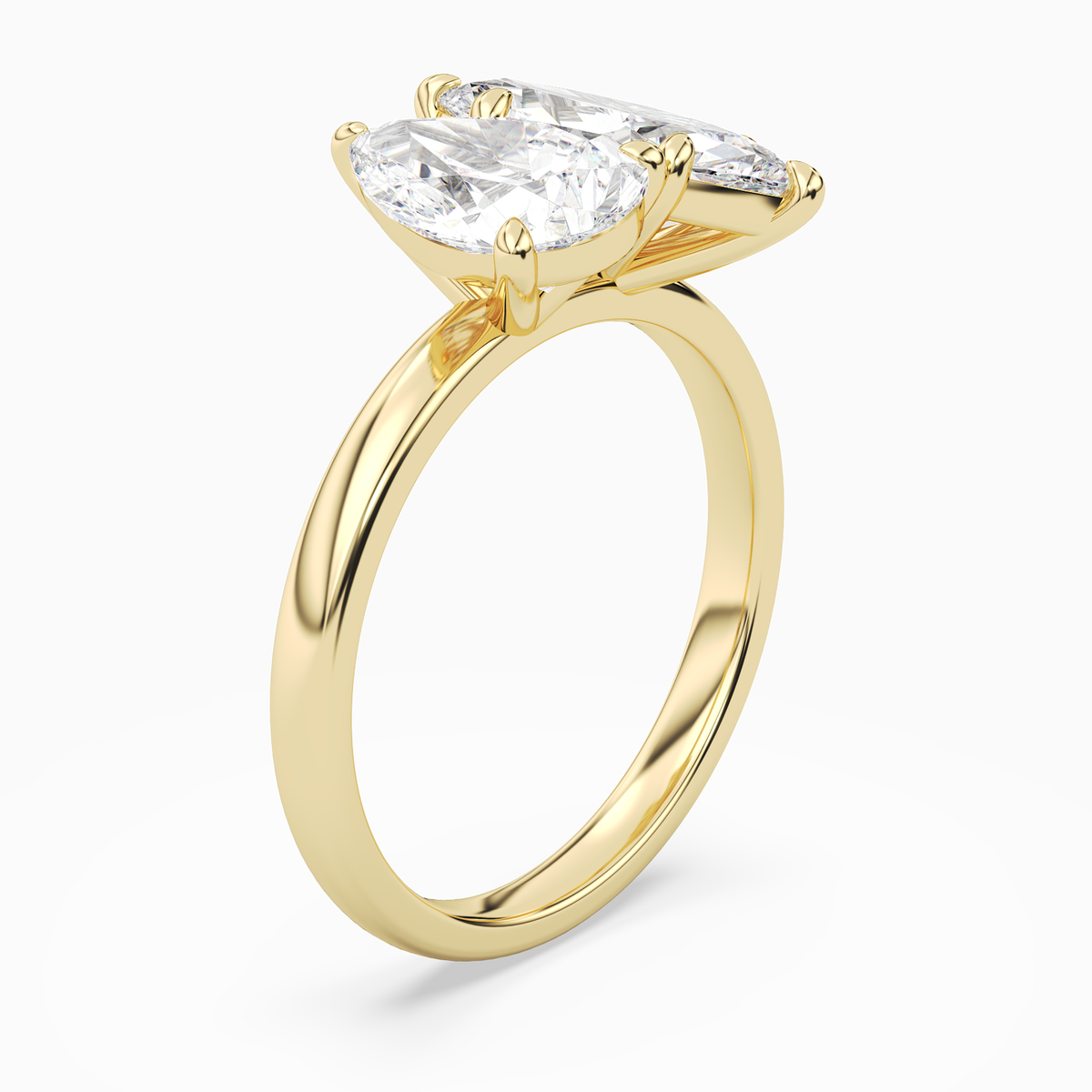
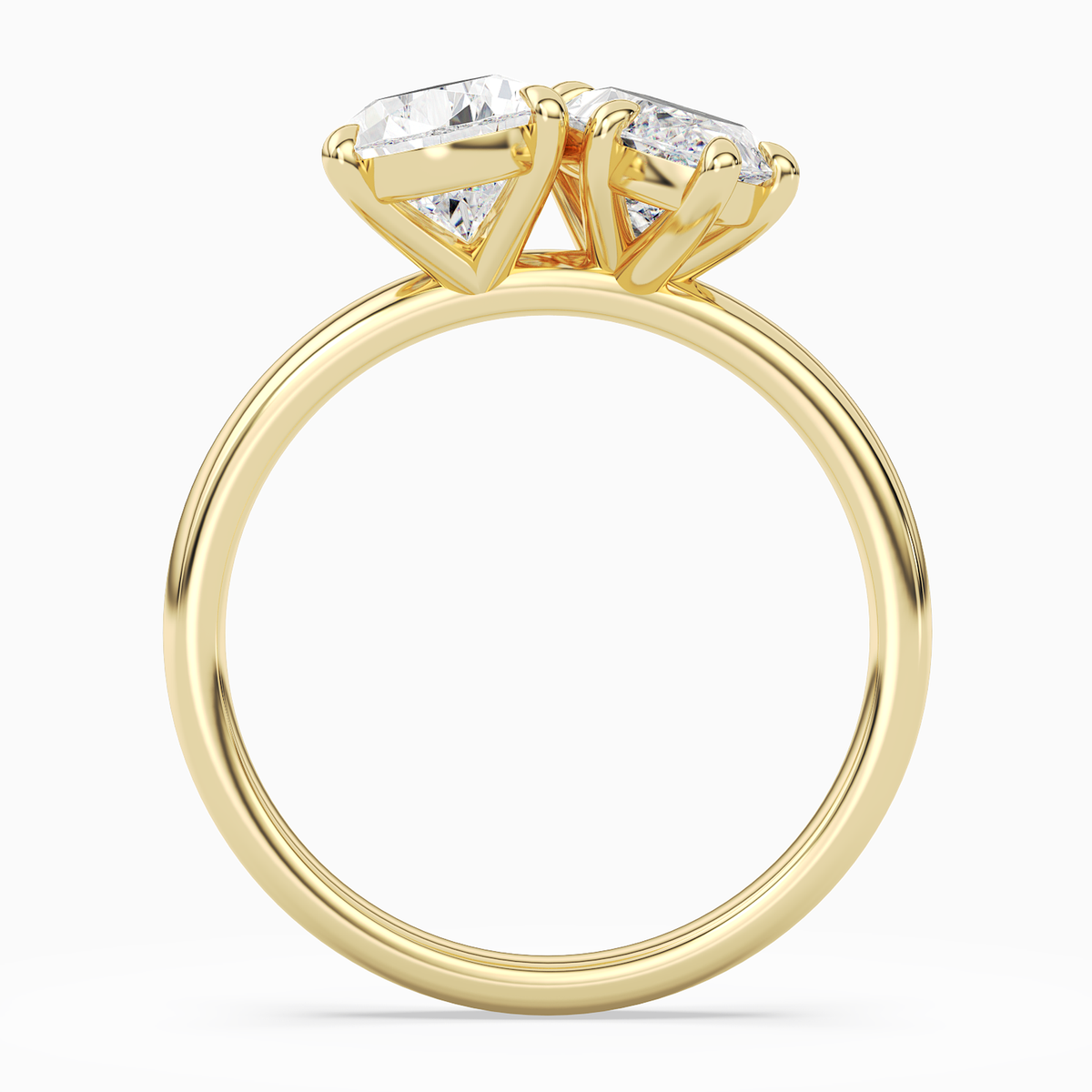
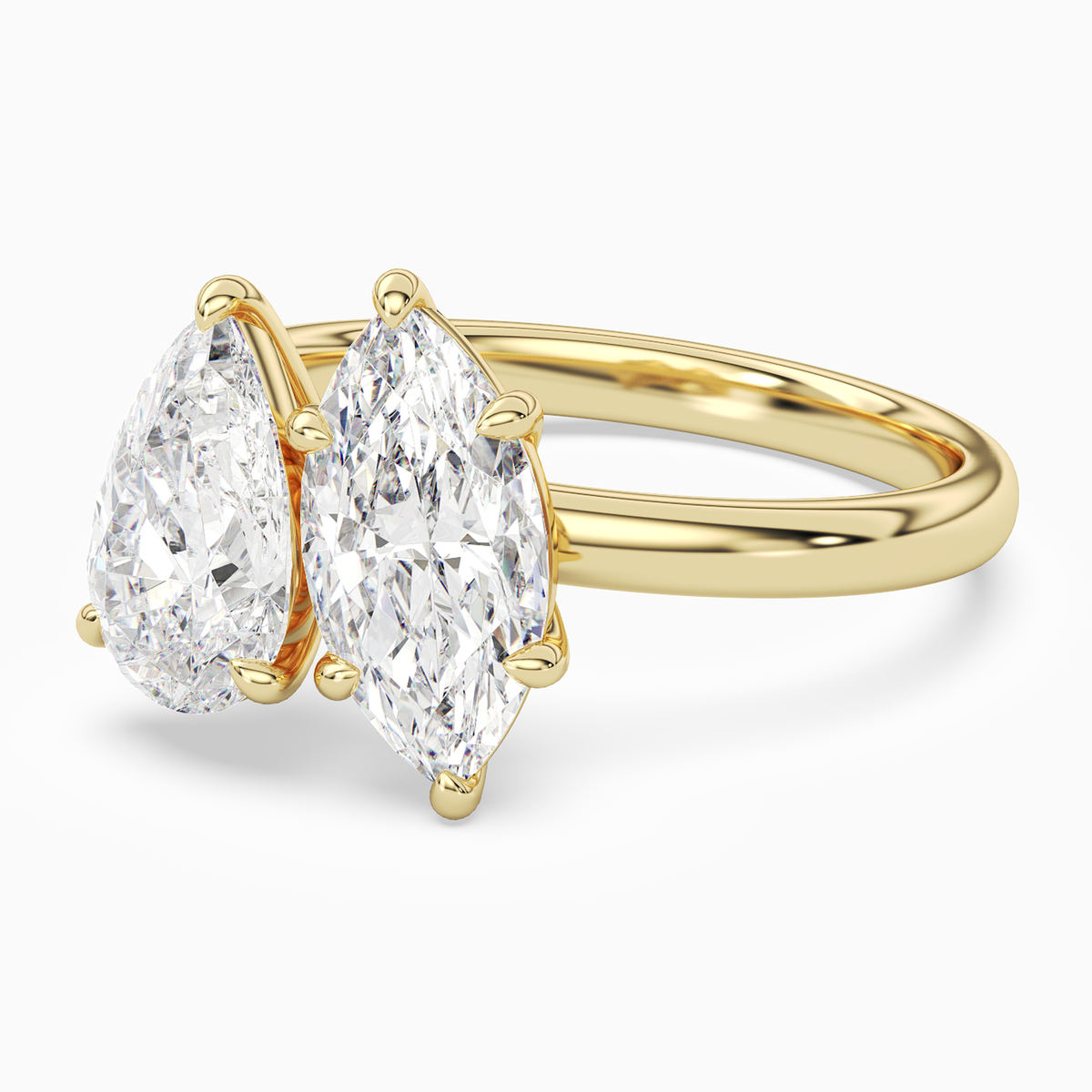


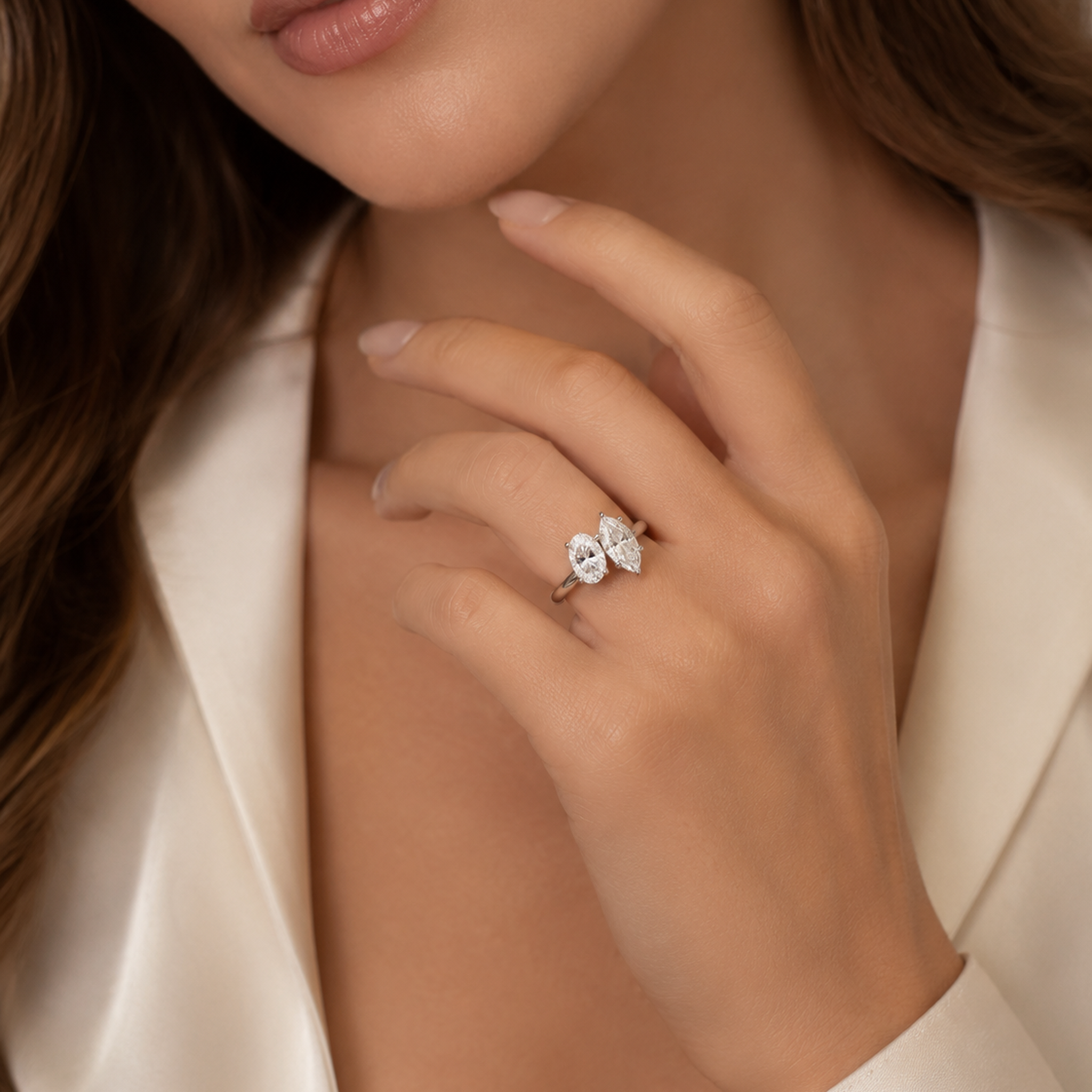
14K Yellow Gold Toi Et Moi Engagement Rings: A Golden Line Between Two Centers
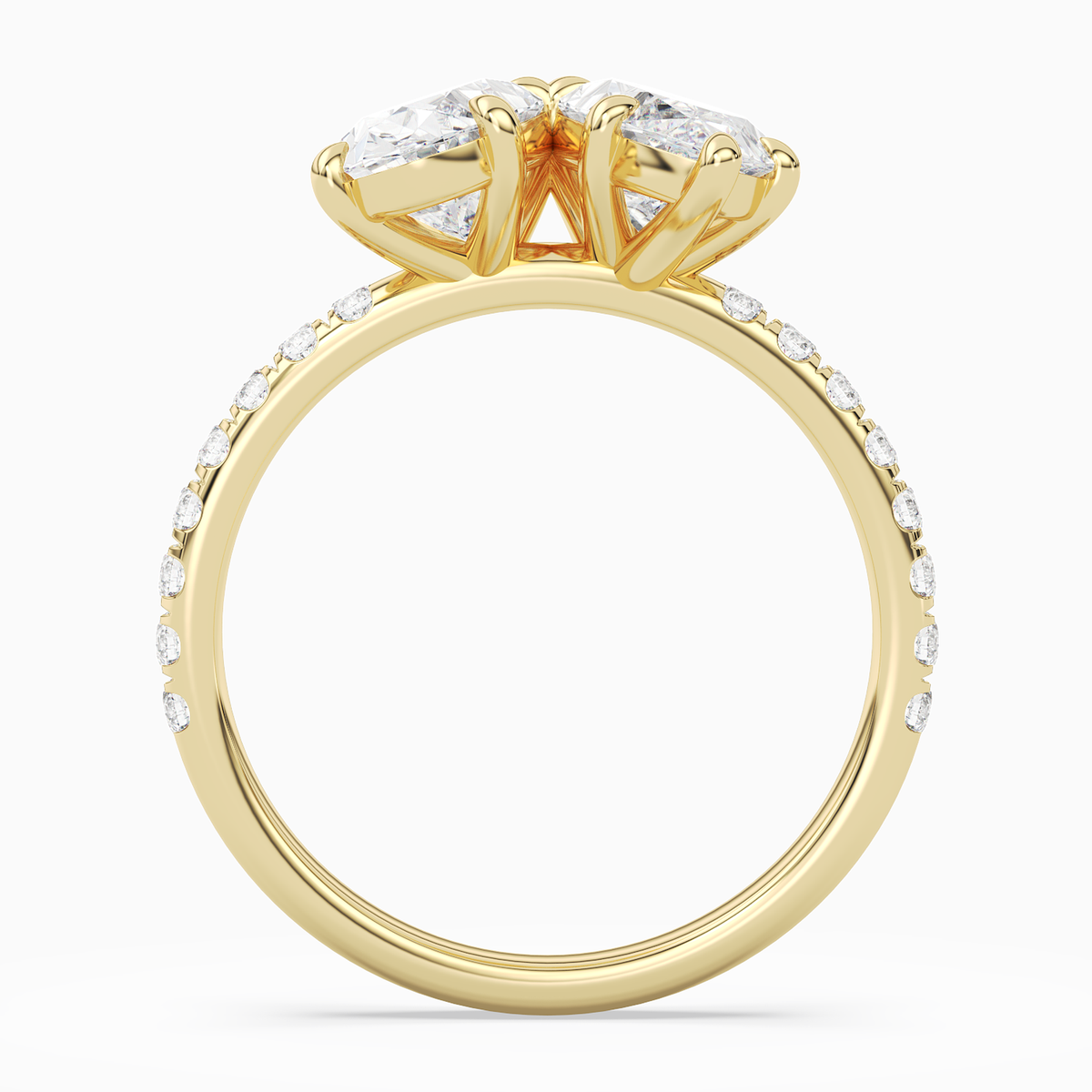
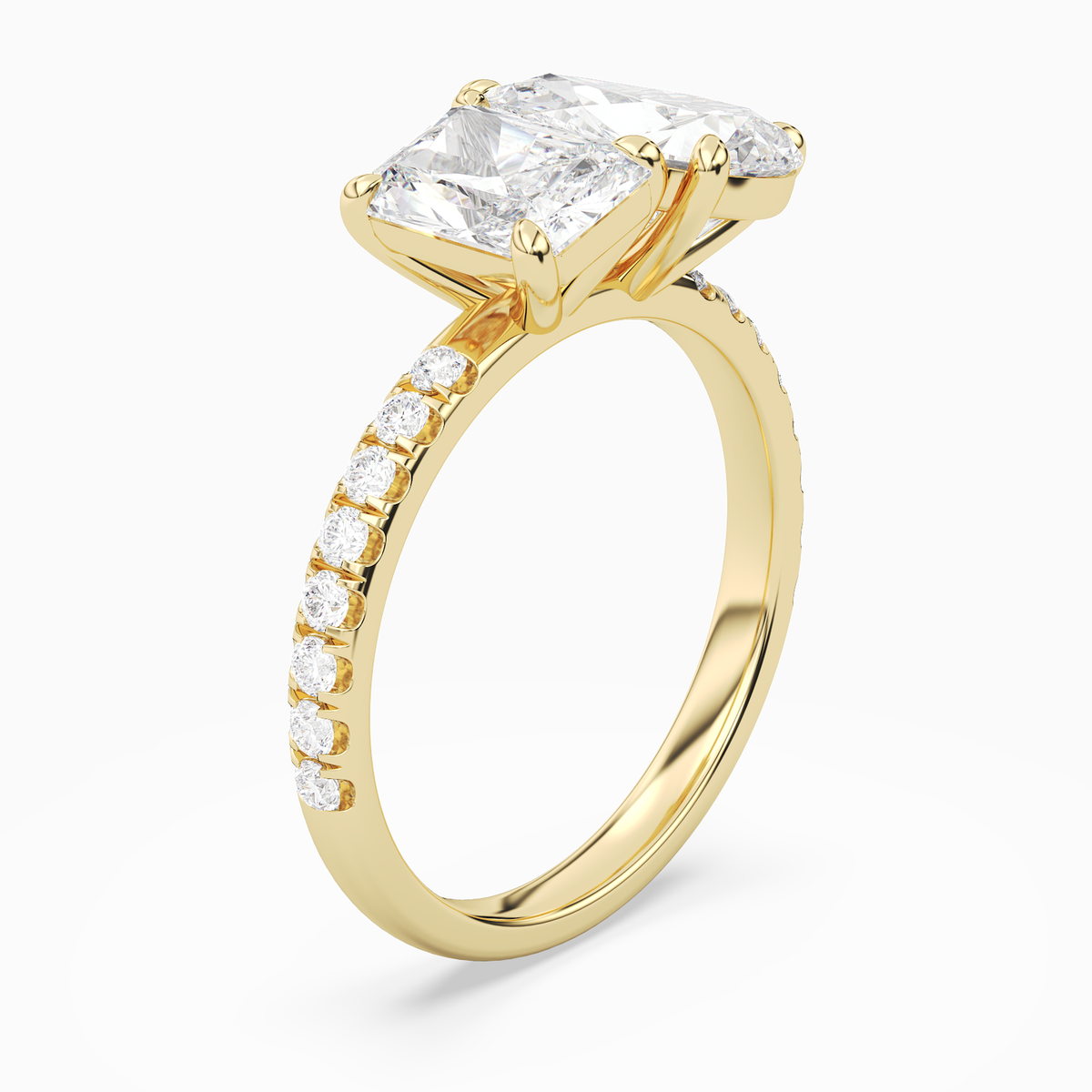
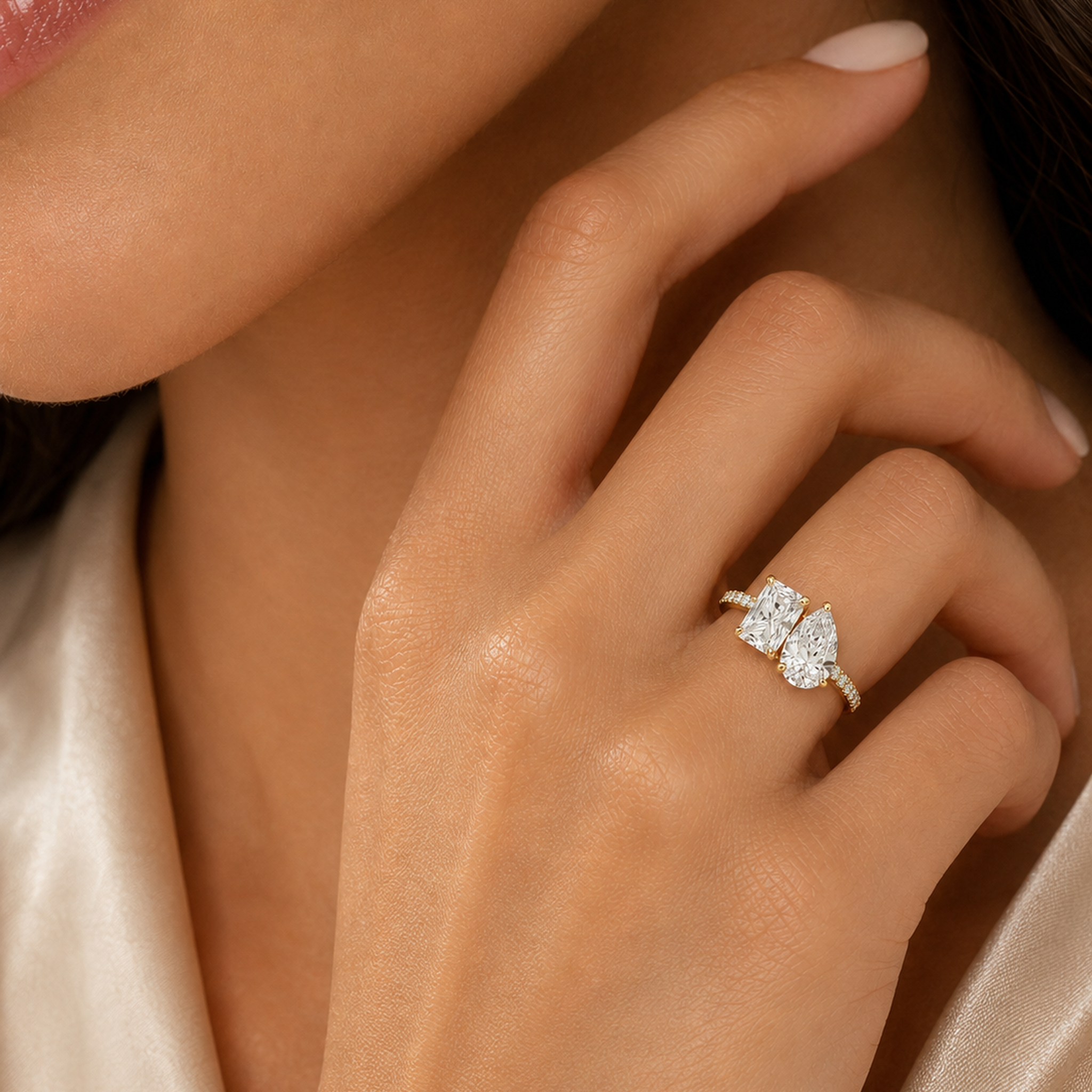
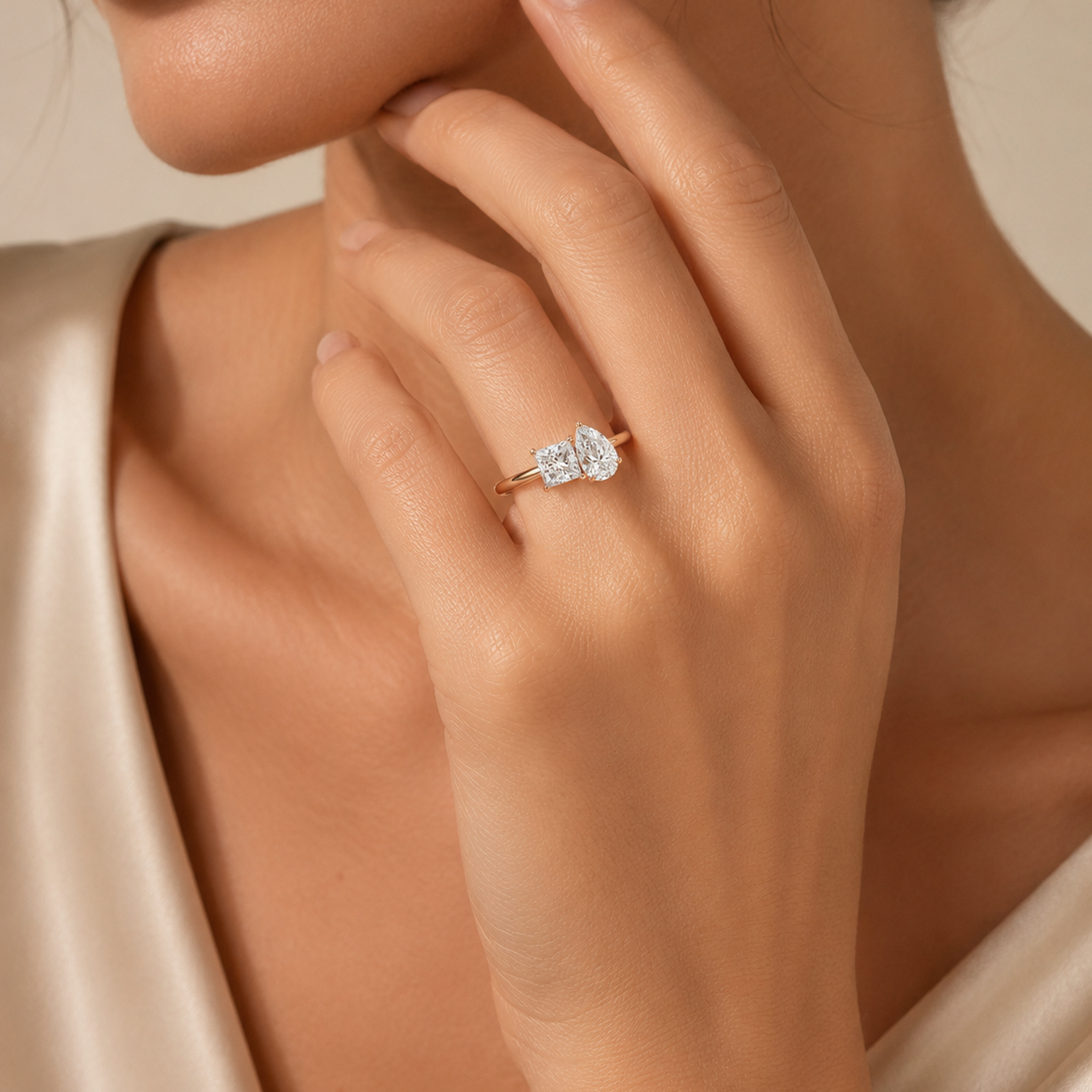
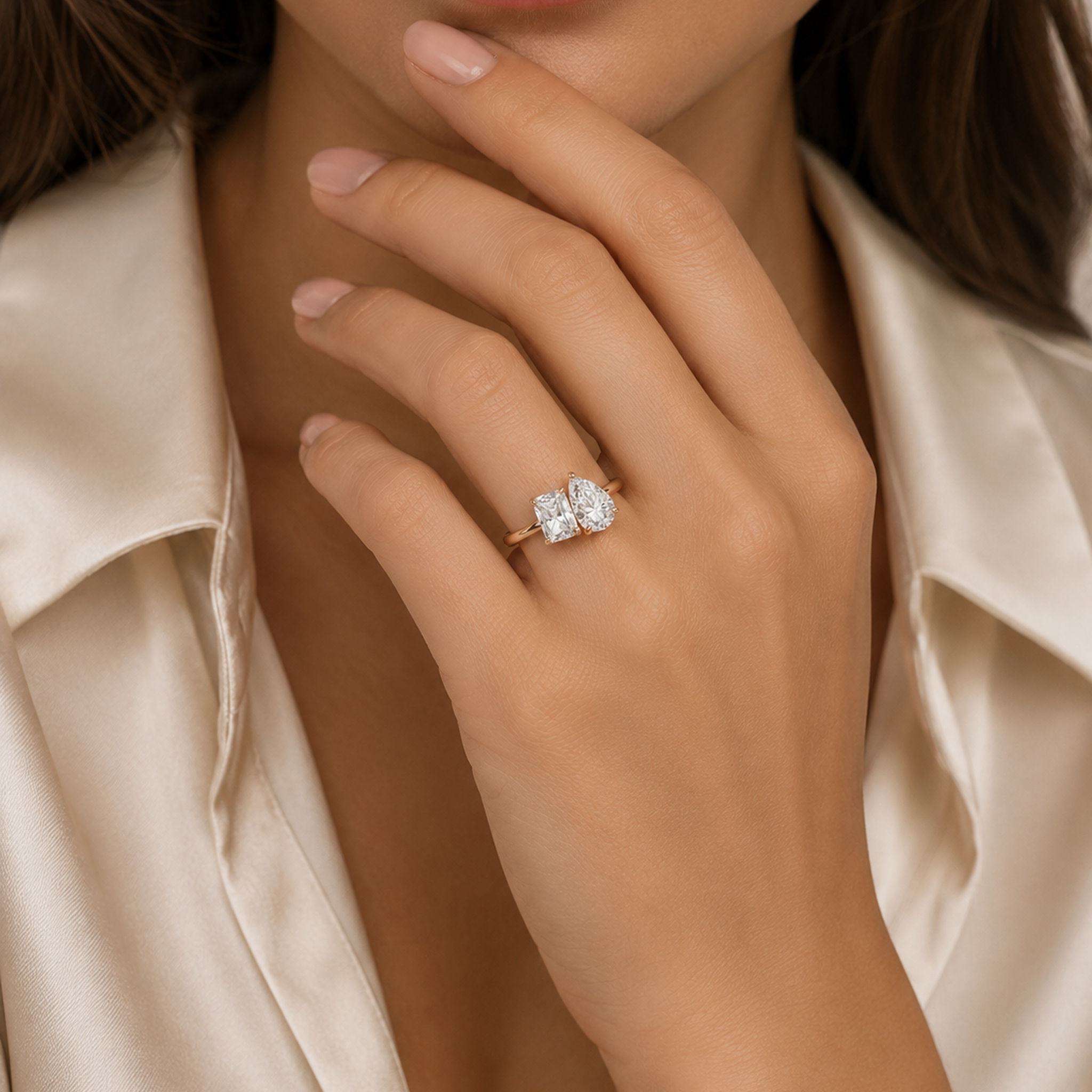
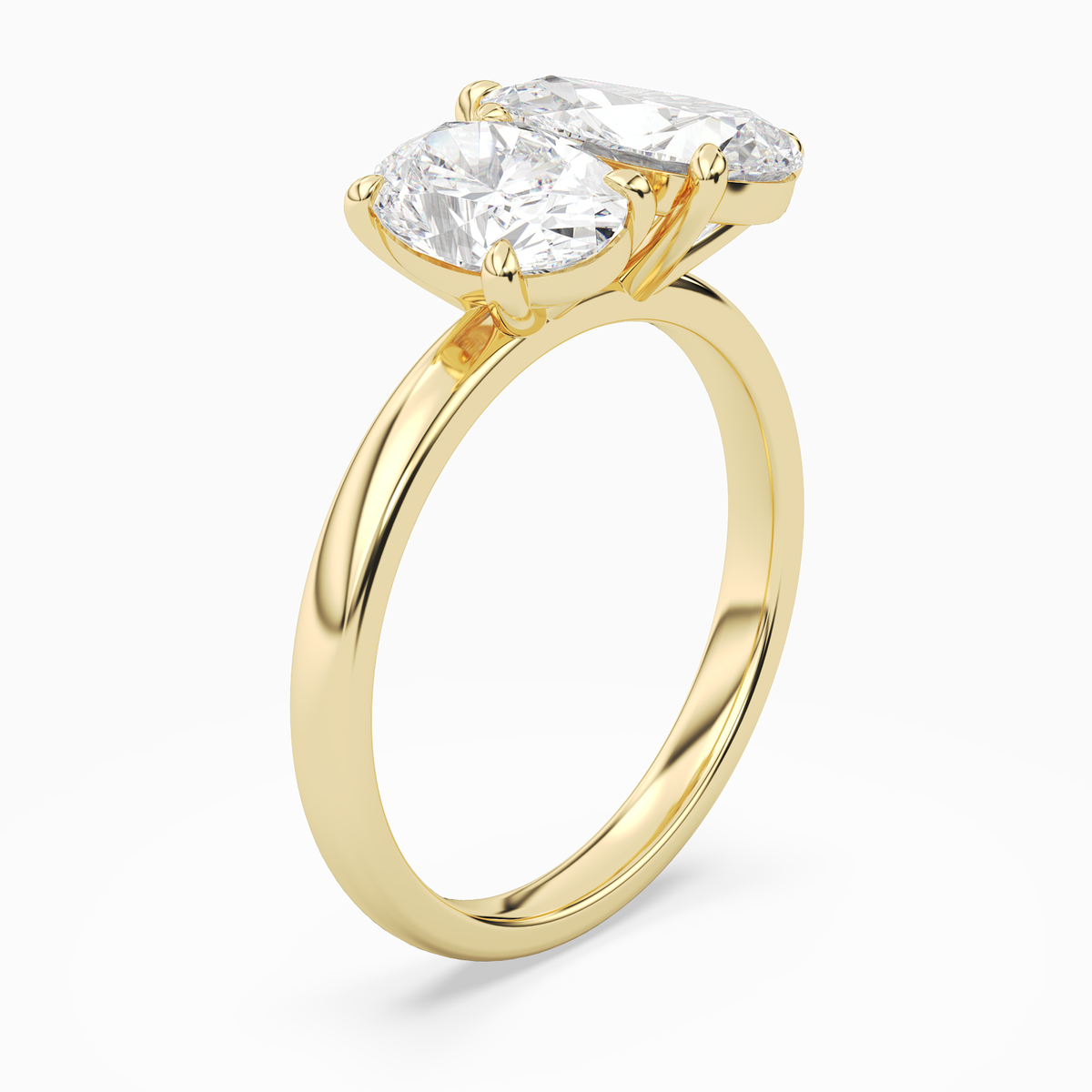
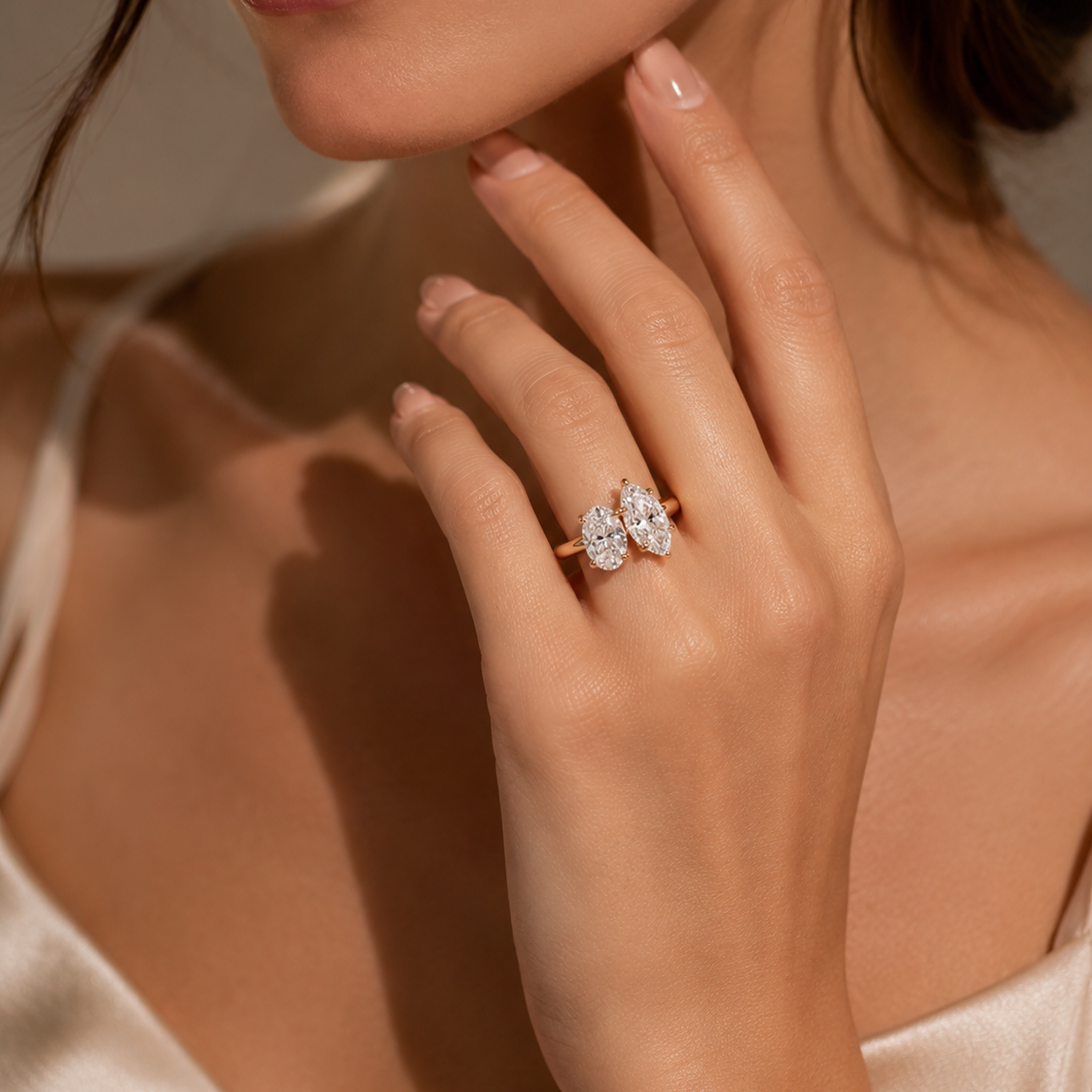
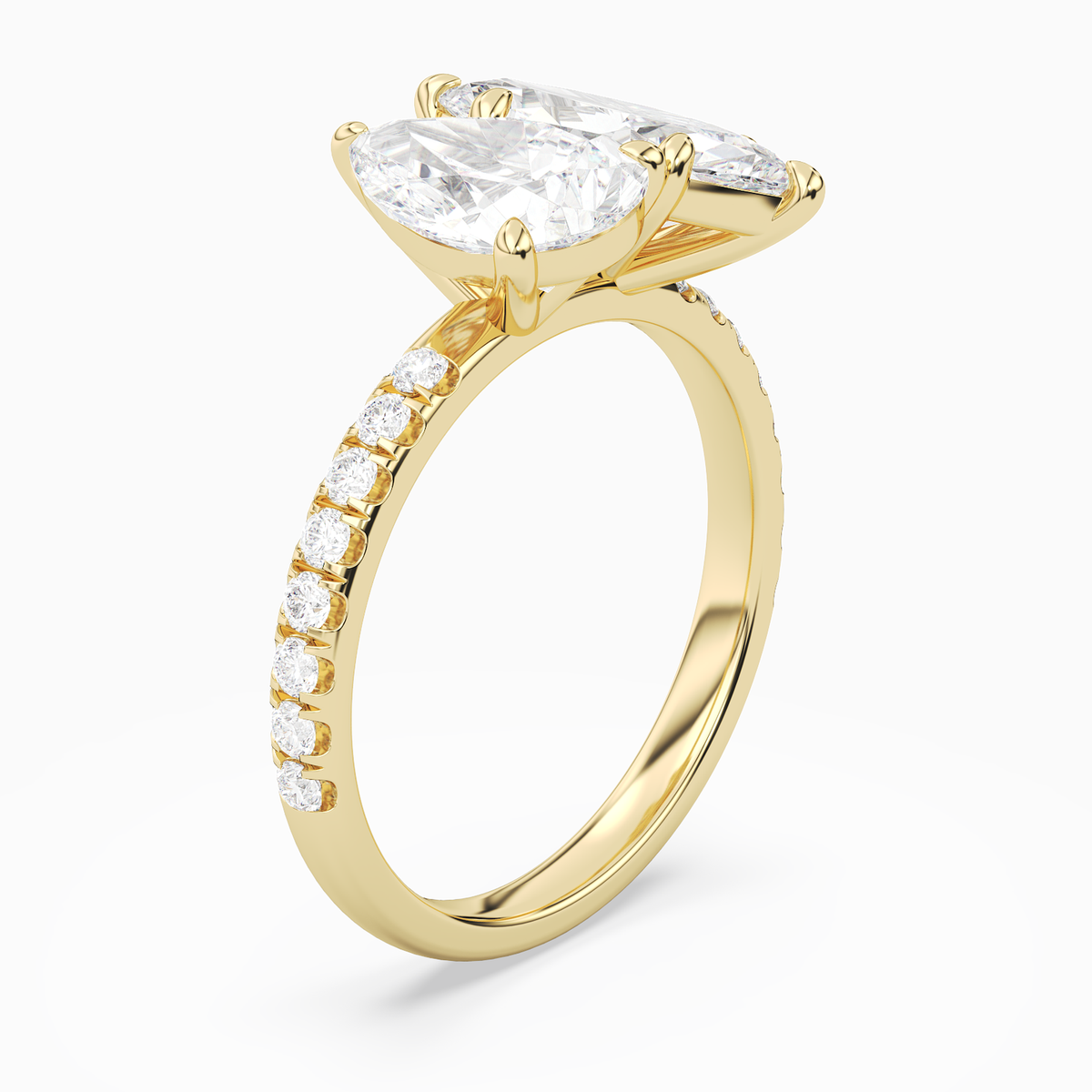
Yellow Gold gives the connecting structure of a Toi Et Moi ring a clear visual role. The band approaches two principal centers, prongs mark their individual outlines, and baskets determine how much gold is visible below them. In crossover designs, the metal can make the movement from one diamond to the other especially legible.
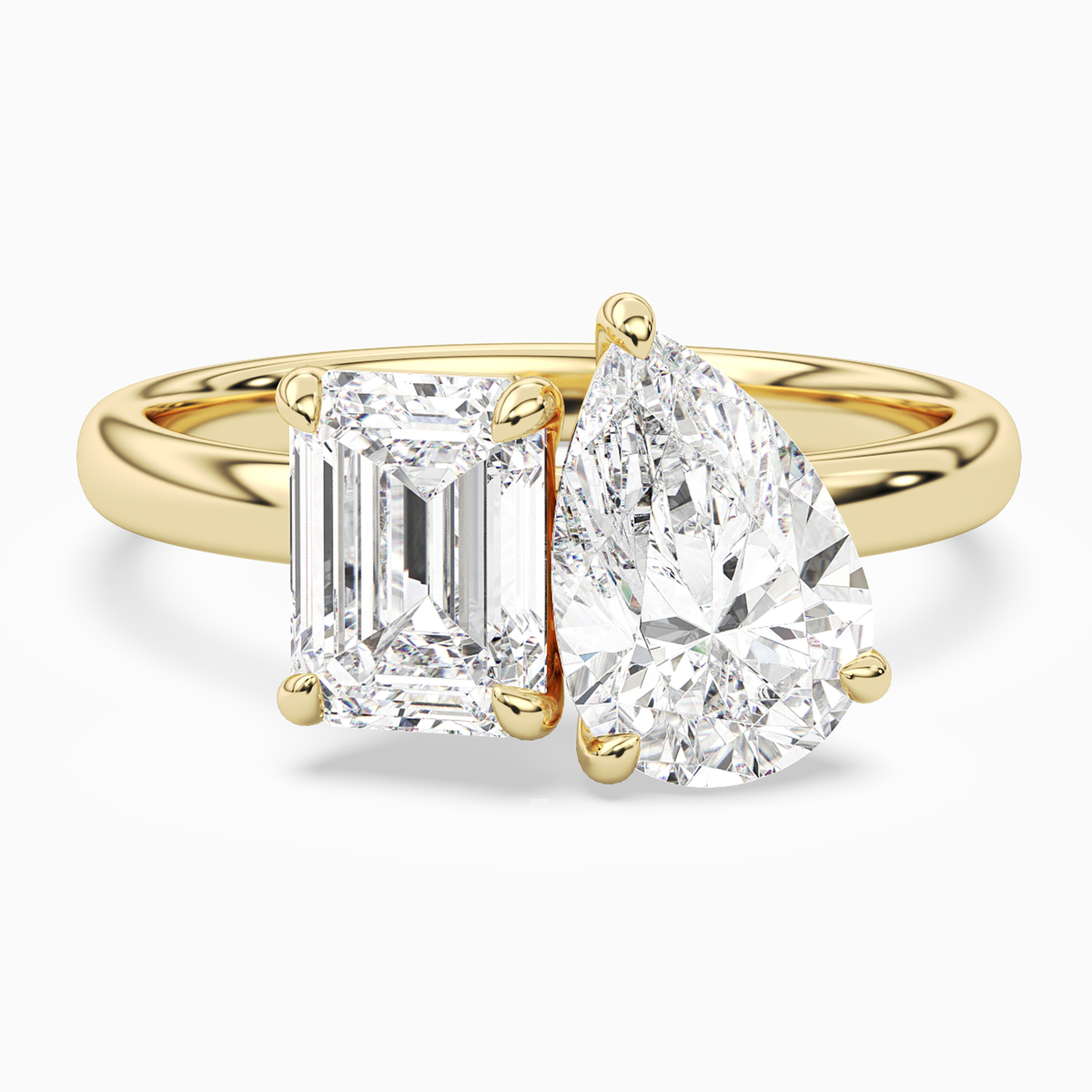
The public collection contains 16 verified 14K Yellow Gold designs across eight shape pairings. Clean and pavé baskets change the amount of secondary light; matched Pear or Marquise centers create repetition; mixed pairings introduce contrast. The metal is not merely a background color—it controls where the eye sees connection.
A Visible Material Boundary
A 14K alloy contains approximately 58.3% gold. Exact alloy recipes, finished shades, hardness, sensitivity, and care needs vary. The color may appear stronger in a wider crossover shoulder or basket than in fine prongs, and lighting or polish can alter its apparent saturation.
That visible boundary can be useful around unlike shapes. It can separate a step-cut Emerald from a brilliant Pear, trace the space between Oval and Marquise, or connect two repeated points. It does not change either diamond's color grade, dimensions, or light performance.
Pair Through Direction, Not a Formula
Every pairing creates an axis. Pear and Marquise points may turn toward, away from, or alongside one another. An Emerald introduces straight edges that can stabilize a curved partner. A Princess adds corners; a Radiant combines angular outline with a different facet rhythm. Orientation determines whether the composition feels convergent, open, or deliberately offset.
No combination is universally best. Compare widest points, tip and corner clearance, face-up dimensions, relative height, and the negative space between the settings. Equal carat weight is not required, and a single center-carat label cannot explain how weight is allocated across two stones.
Make Room for the Third Line
A wedding band becomes a third line beside the gold structure. Matching Yellow Gold can extend the warmth; White Gold, Rose Gold, or Platinum can introduce contrast. Straight and shaped bands may approach the two baskets differently, especially when a crossover shoulder or pavé area projects beyond the band.
Fit should be checked from above and in profile. A gap may be intentional, while close contact can create unwanted pressure at a diamond or setting edge. No metal match guarantees flush fit, and no contour automatically prevents contact.
Specify the Pair, Not Just the Style
Both centers retain separate weights, dimensions, grades, facet patterns, and documentation. Similar color or clarity can make continuity easier, but exact numerical matching is not always necessary. Confirm what is supplied for each diamond and how the setting has been calibrated around the chosen pair.
Burvonti pairs responsibly sourced, independently graded lab-grown diamonds through proportion and human judgment. Custom possibilities may refine shapes, scale, orientation, spacing, metal, band, engraving, or selected structural details where feasible. In Yellow Gold, the connecting line should feel intentional enough to support two distinct forms without overpowering them.
Frequently Asked Questions
How does this page differ from the parent?
It focuses on how 14K Yellow Gold makes the band, baskets, and interval a visible connector between two centers.
How much gold is in 14K Yellow Gold?
Approximately 58.3%. Exact alloy and finished color vary.
Does every ring show the same amount of gold?
No. Prong scale, basket, pavé, crossover width, finish, and lighting change visibility.
Which shape combinations appear?
Eight observed pair types include mixed Emerald, Oval, Princess, Radiant, Pear, and Marquise combinations plus matched Pear and Marquise.
Do the points need to face each other?
No. Orientation is a design decision based on outline, spacing, protection, and intended movement.
Does Yellow Gold make diamonds warmer?
It creates a warm visual boundary but does not alter either diamond's graded color.
Must both diamonds have the same grade?
No universal rule requires it. The pair should look intentional and each specification should remain clear.
How is total carat weight divided?
The allocation is configuration-specific. Confirm each diamond's weight and dimensions and any stated combined total.
Are there extra cleaning needs?
Two baskets and the space between them create additional areas to clean gently using methods appropriate to the stones, metal, and setting.
Will Yellow Gold scratch?
Its surface can collect marks. No gold finish is scratch-proof, and care should follow the actual ring.
Can a straight wedding band work?
Sometimes. Both baskets, crossover shoulders, height, pavé, and contact points determine the fit.
Can the pairing be personalized?
Custom possibilities may include shape, scale, orientation, spacing, metal, band, or selected details, subject to availability and feasibility.