
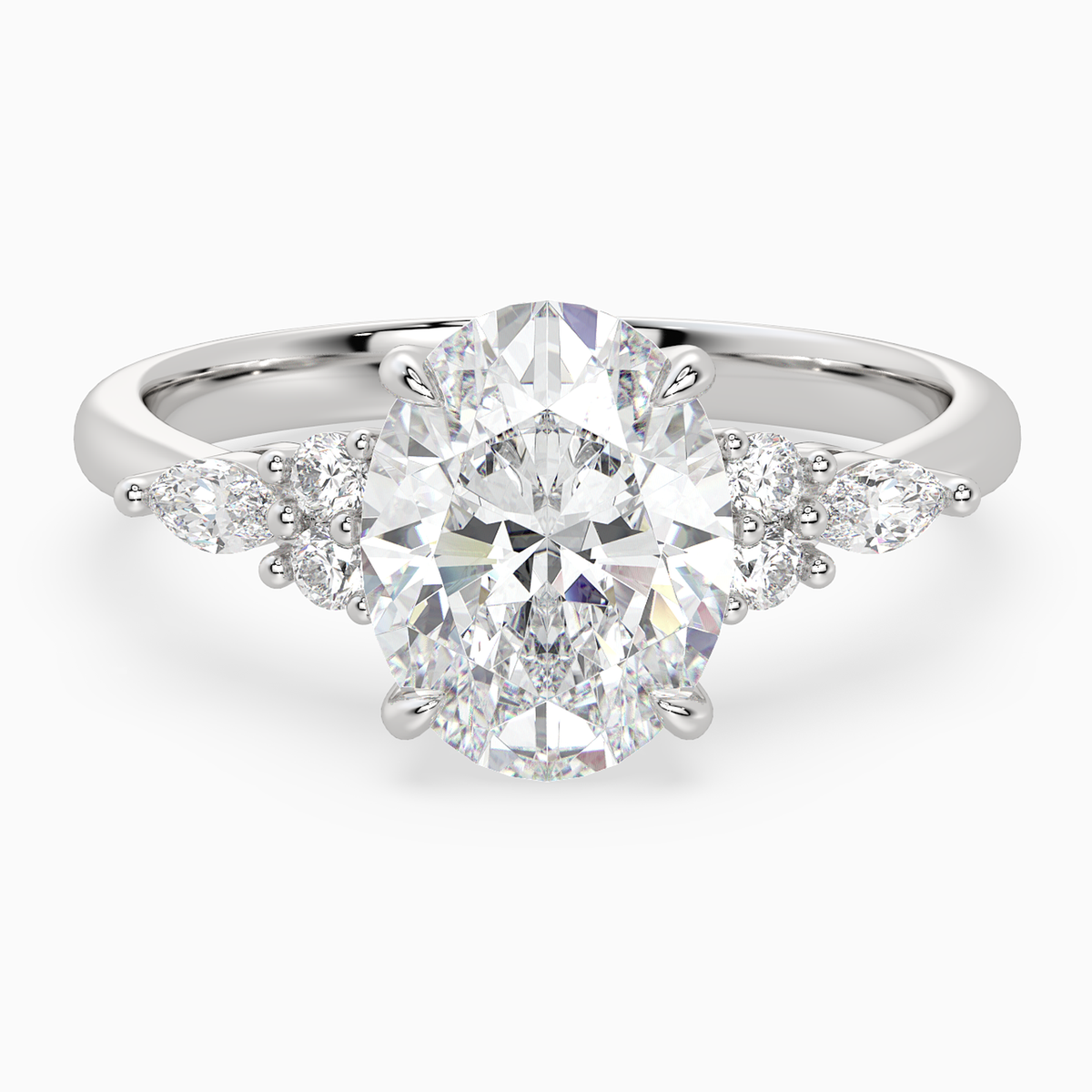


Nature Inspired Engagement Rings in 14K Yellow Gold
Yellow gold gives flowing metal definition. Compare all 9 rings by floral grouping, vine rhythm, bypass shoulders, raised profile and shape.













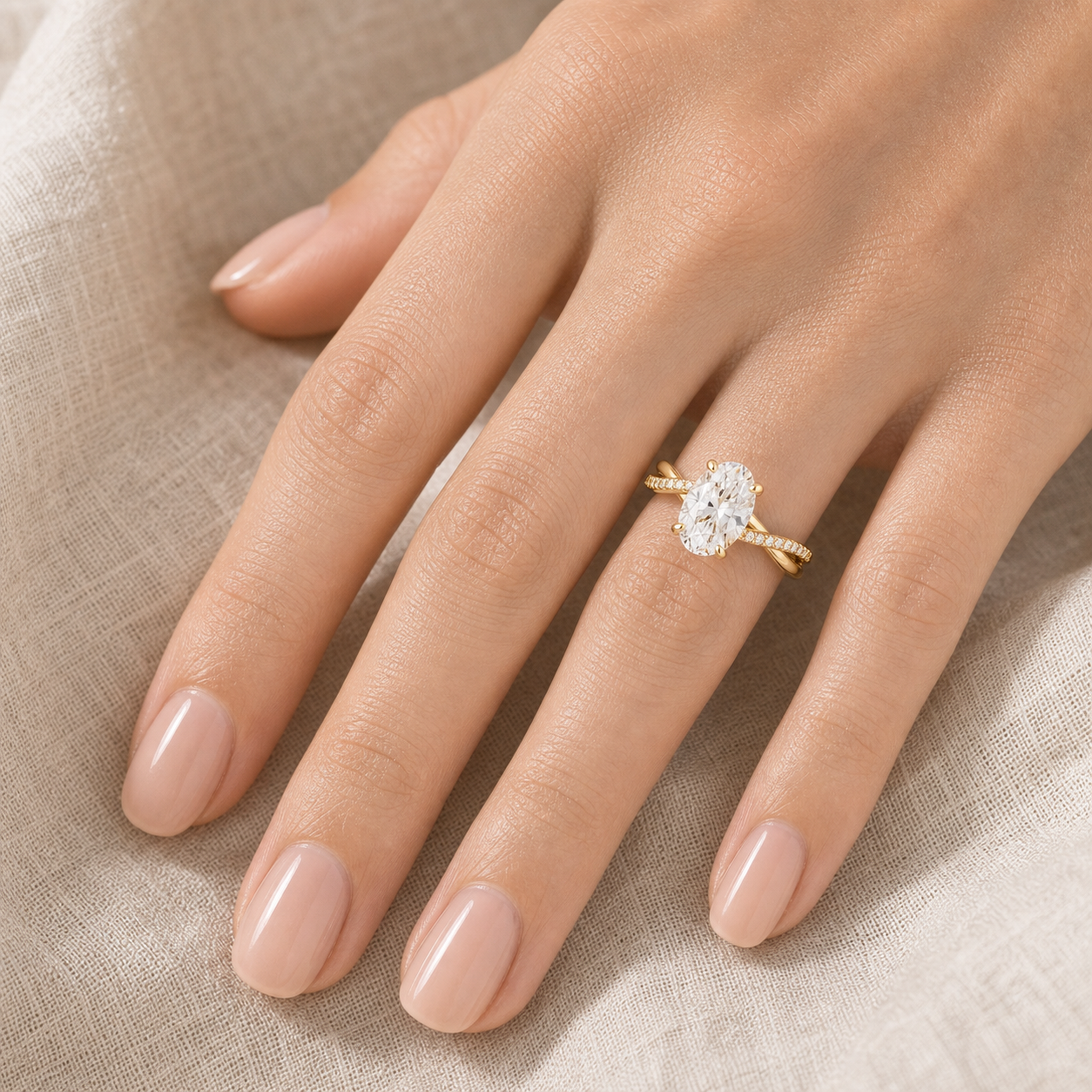


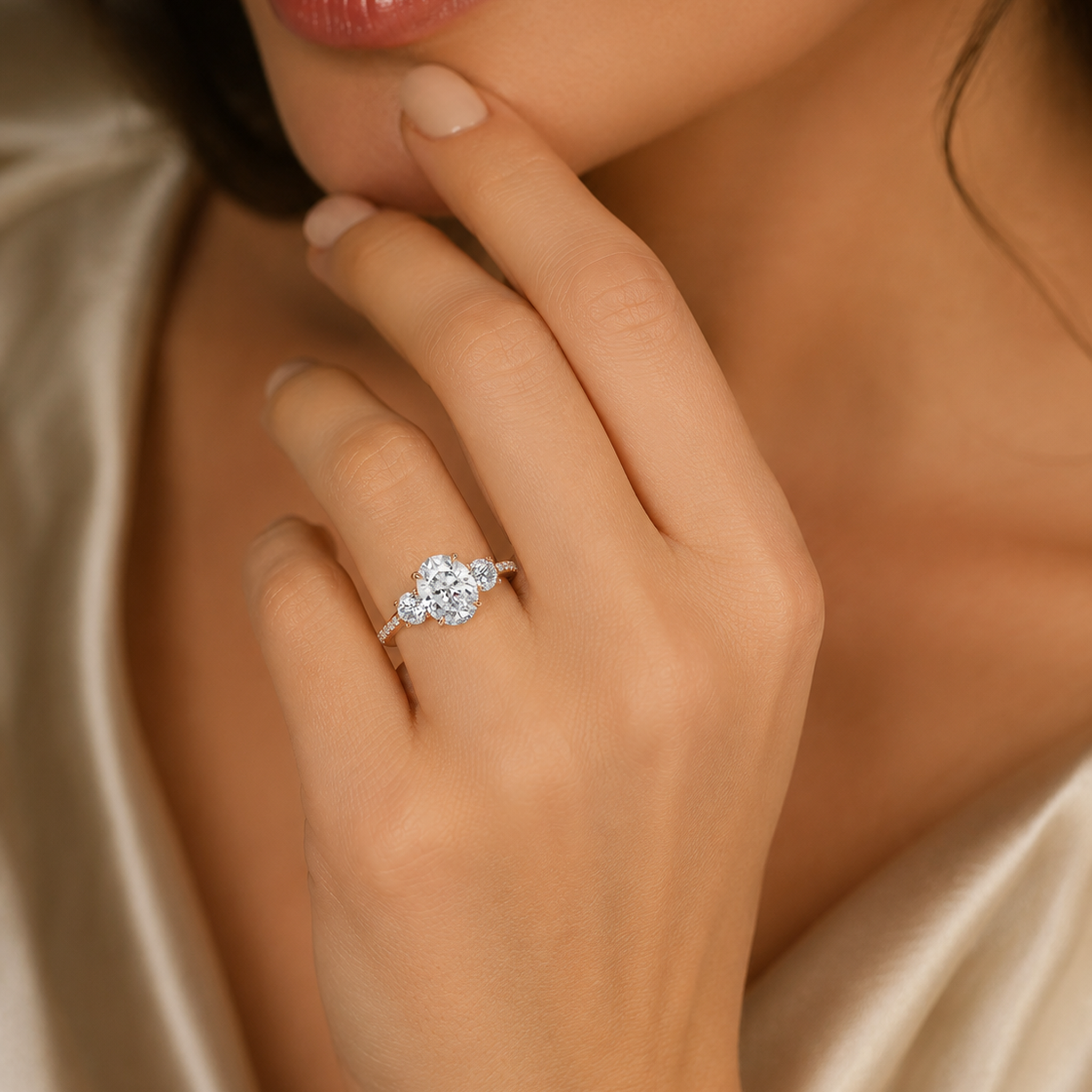


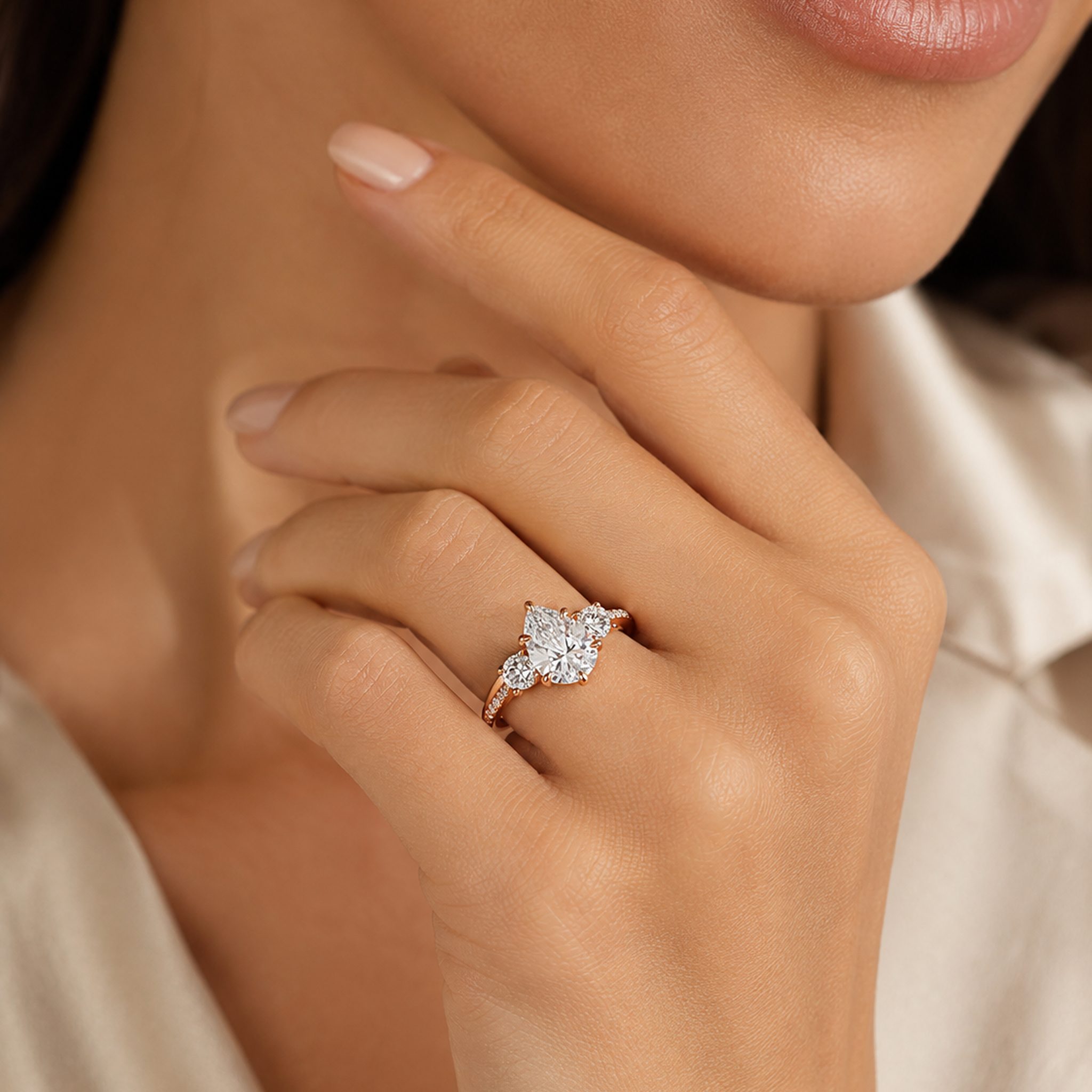


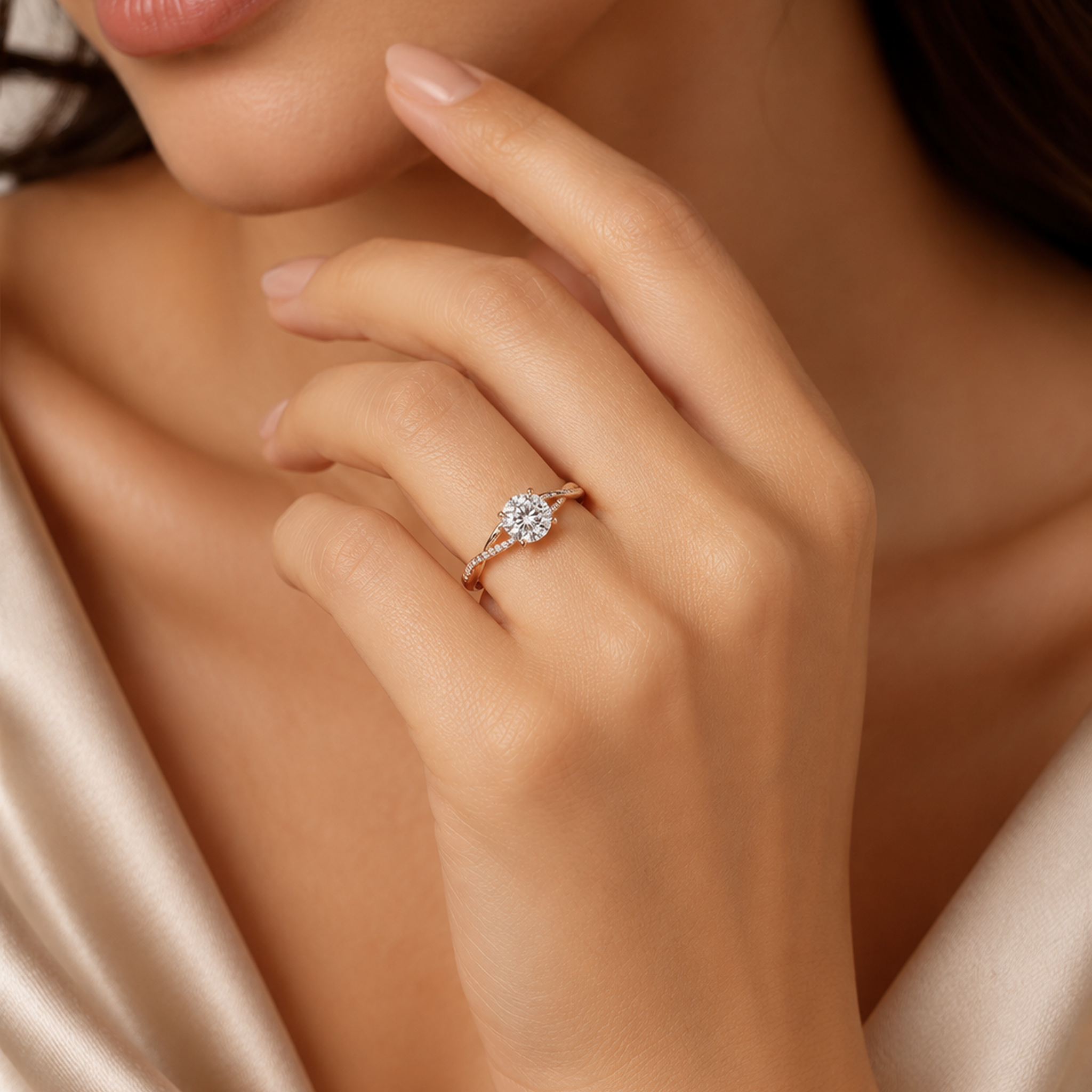
14K Yellow Gold: Flow Held in a Visible Line
The Metal Line Carries the Motif
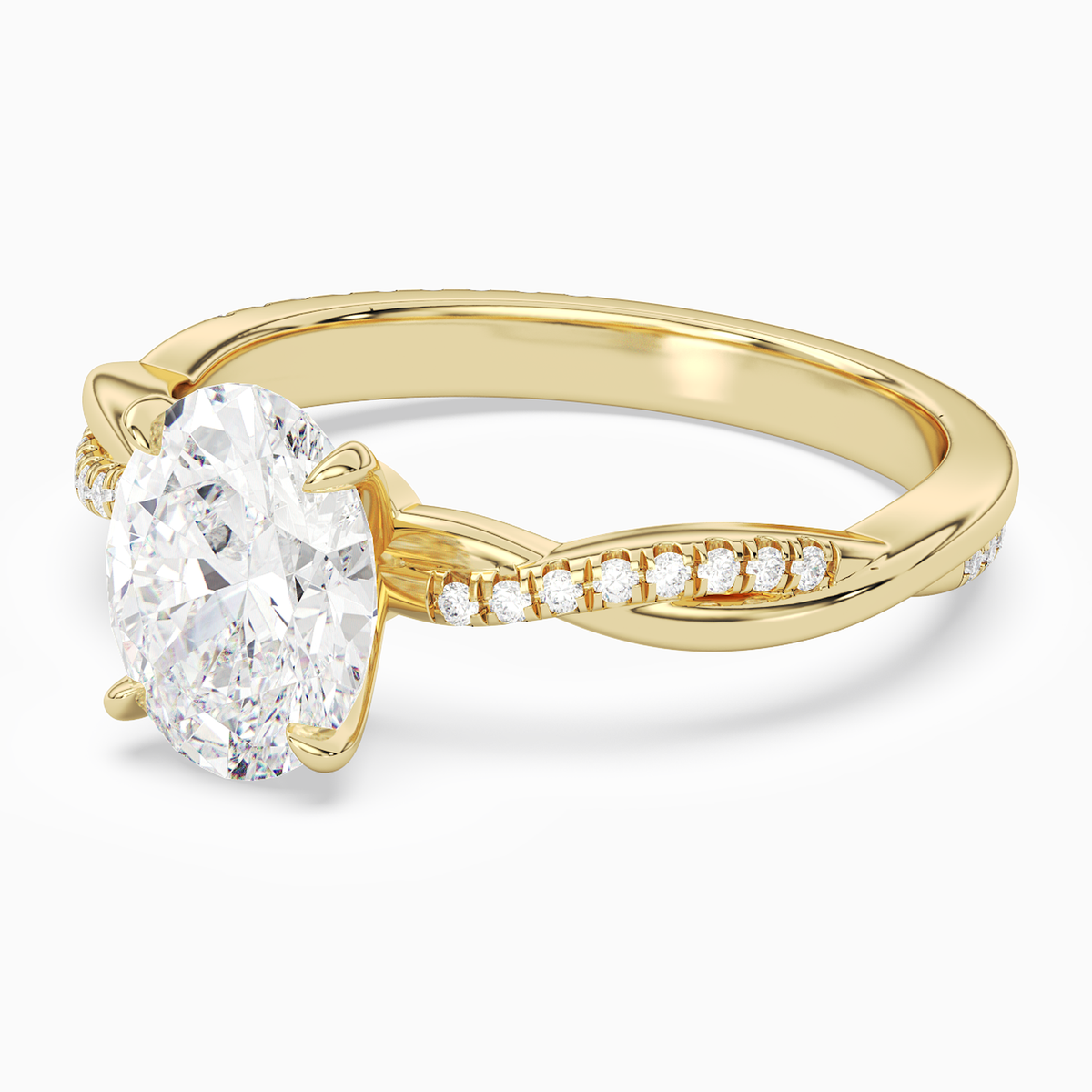
Yellow gold can make the path of a shoulder or crossing easier to follow, but the category is supported by current product facts rather than color alone. Across nine rings, Camellia blooms through clustered accents, Ivy and Olive use twisting vine lines, Amara crosses smooth shoulders, and Athena contributes a knife edge with an open raised basket.
Five products remain Solitaires, two Side Stone and two Three Stone. Nature Inspired describes how the line behaves, not a new stone-count taxonomy.
A Cluster beside the Center
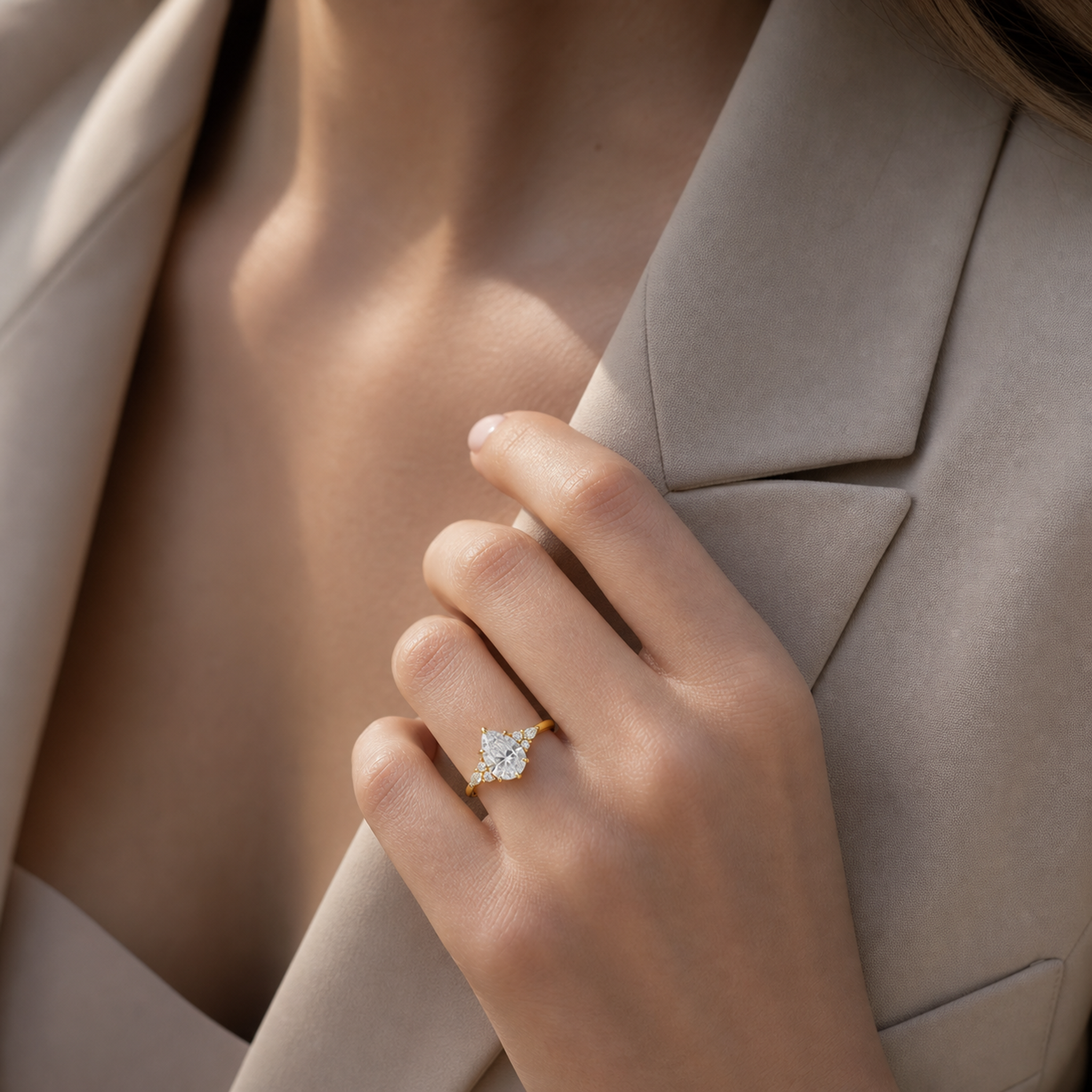
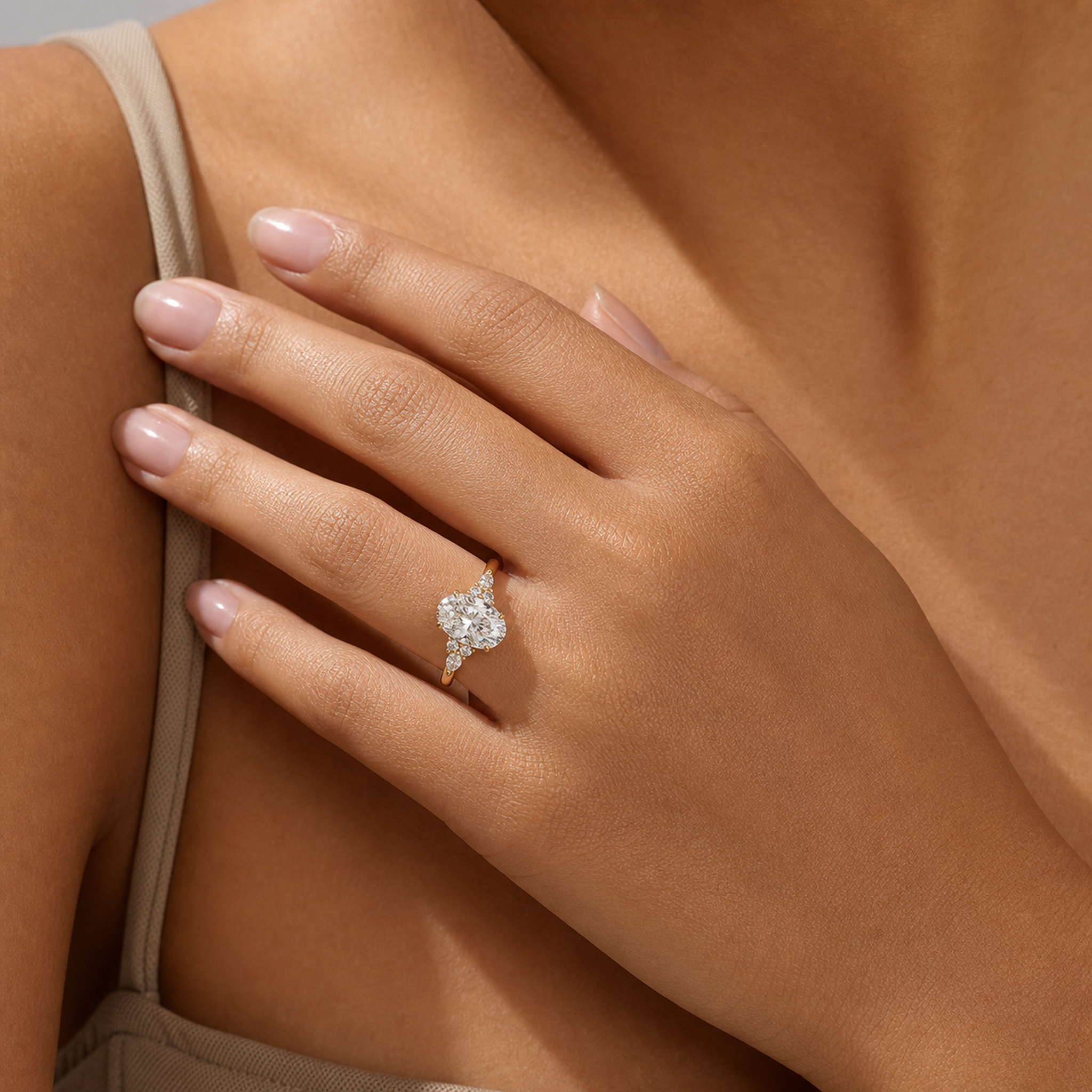
Camellia sets compact accents beside oval or pear centers on a polished shank. Compare how the cluster approaches the center and how much yellow metal remains visible between each point.
Two Vine Interpretations
Ivy’s pavé accents climb toward one dominant center. Olive’s vine shoulders lead through graduated round side stones to the center. The first concentrates the arrival; the second stages it.
Crossed and Raised Profiles
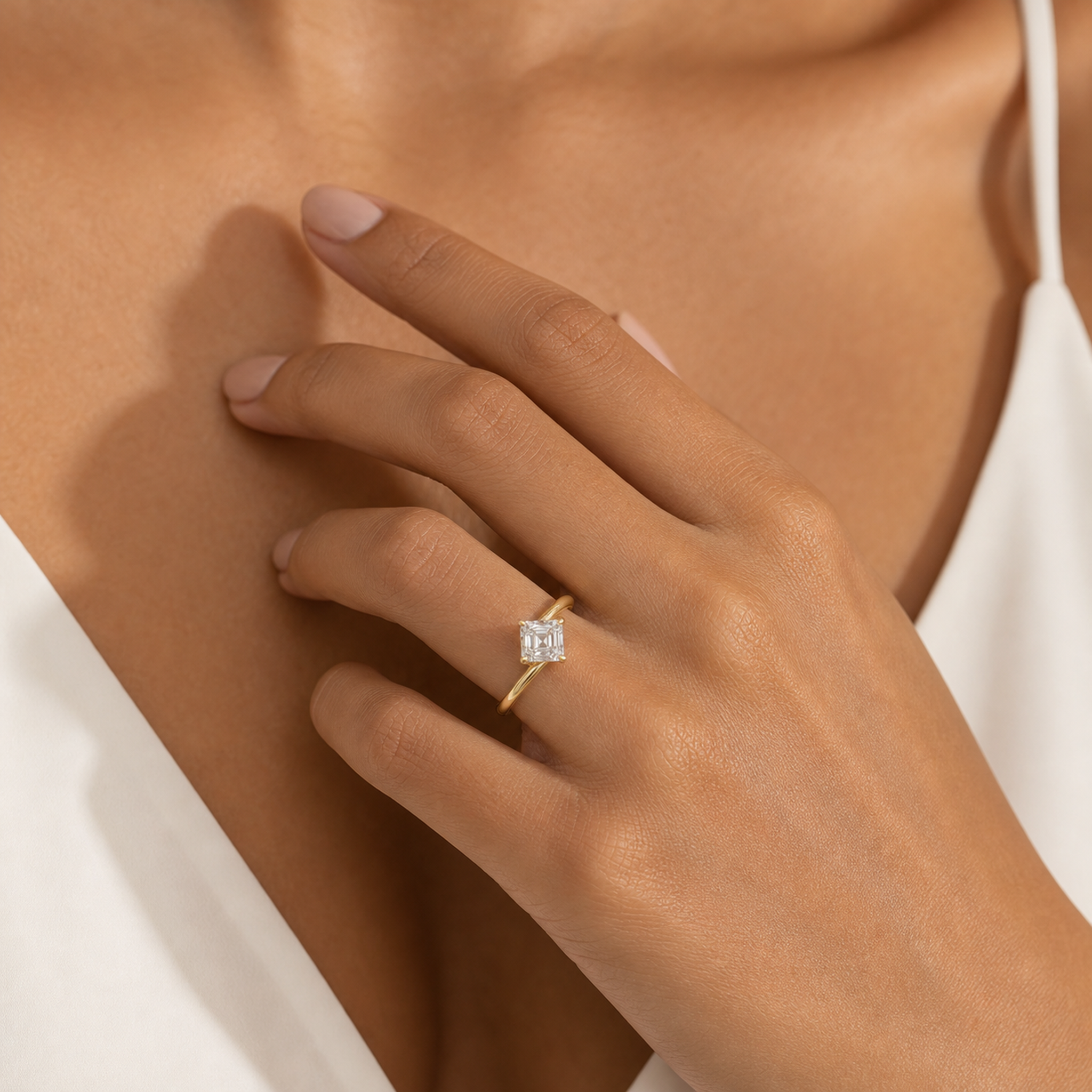
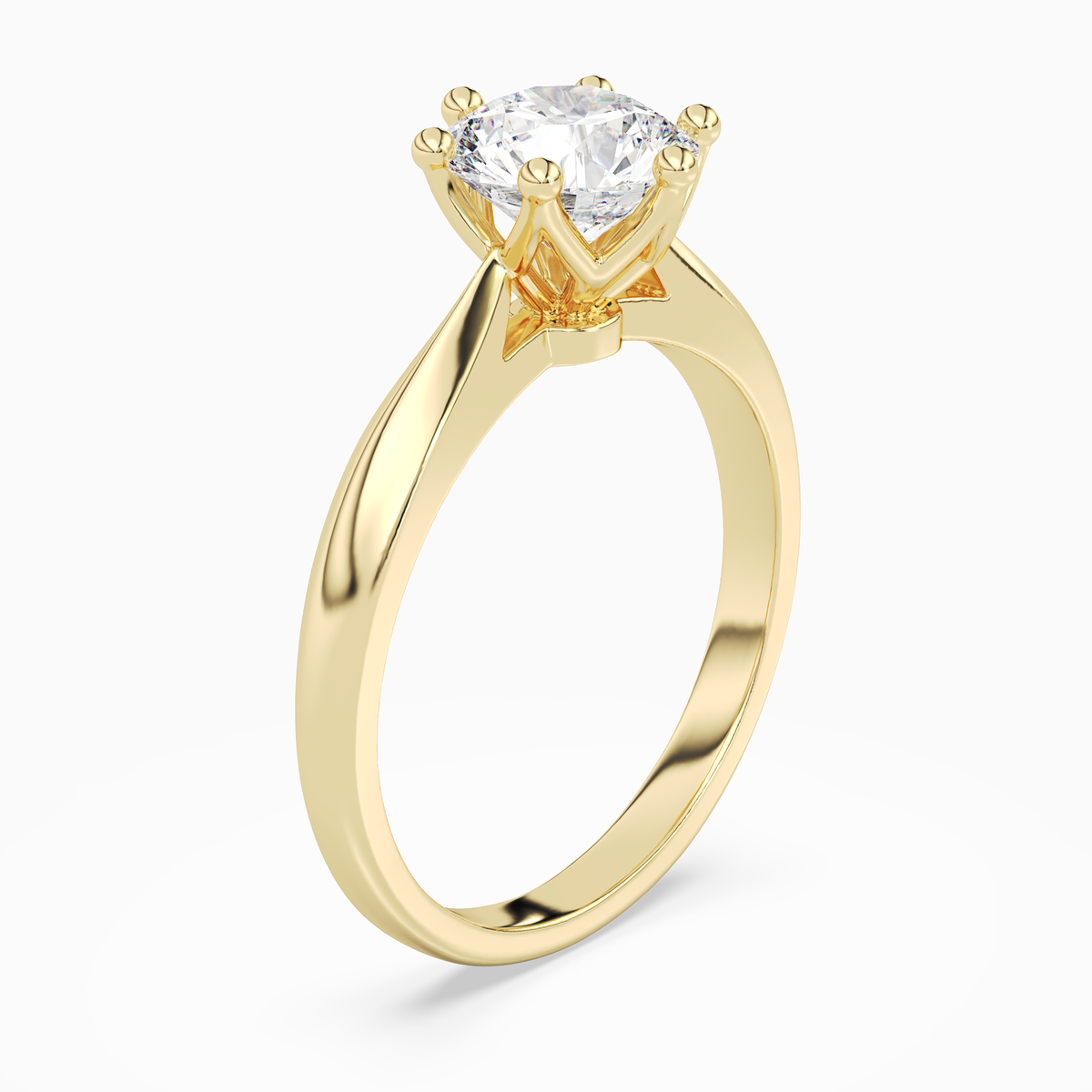
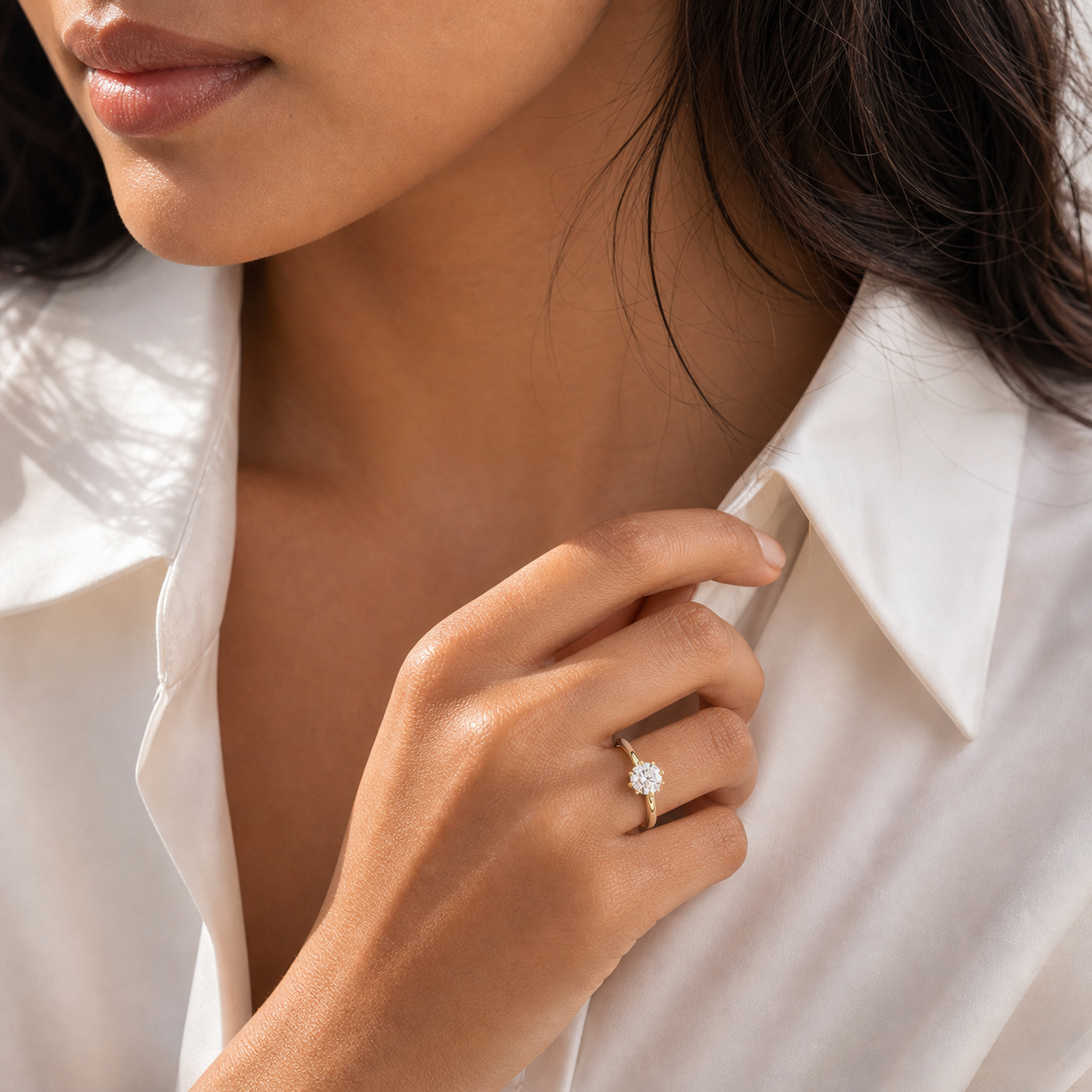
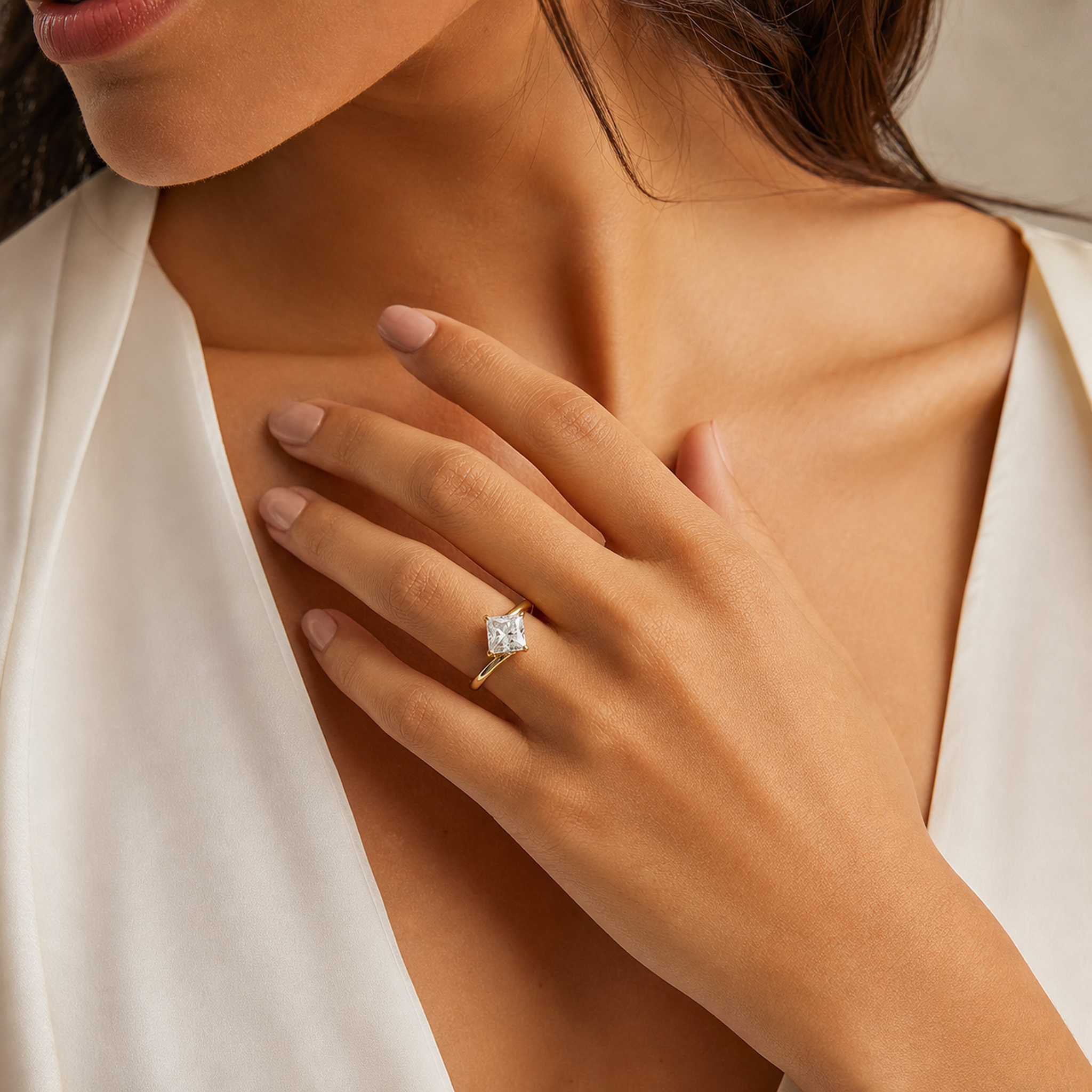
Amara uses a smooth bypass sweep for Asscher and Princess outlines. Athena combines a crisp shoulder with an open raised basket around a round center. Its exact botanical device remains unverified and is not named.
Avoid Reading Performance into Form
A 14K alloy is approximately 58.3% gold. A visible organic line does not establish comfort, strength, accent security, clearance or resize range. Inspect the selected product and intended wedding band together.
Frequently Asked Questions
How many 14K yellow-gold designs appear?
9.
Is the design universe the same across six metals?
Yes, nine normalized keys recur.
What does Nature Inspired own?
The motif and flow of clustered, twisting, crossing or open lines.
What does Solitaire own?
The single-center face-up hierarchy.
What does Side Stone own?
The secondary stones beside the center.
What does Three Stone own?
The three-principal-stone relationship.
Which family uses clusters?
Camellia.
Which family uses climbing vine shoulders?
Ivy.
Which family combines vine shoulders with side stones?
Olive.
Which family uses crossed shoulders?
Amara.
Which family has a knife edge?
Athena.
Can Athena be called a petal setting?
Not from current specific evidence.
Which shapes appear?
Oval, pear, round, Asscher and Princess.
Does yellow metal make the motif stronger?
It can make metal lines visible, but the result varies.
Is organic equal to comfortable?
No.
Is flush fit guaranteed?
No.