
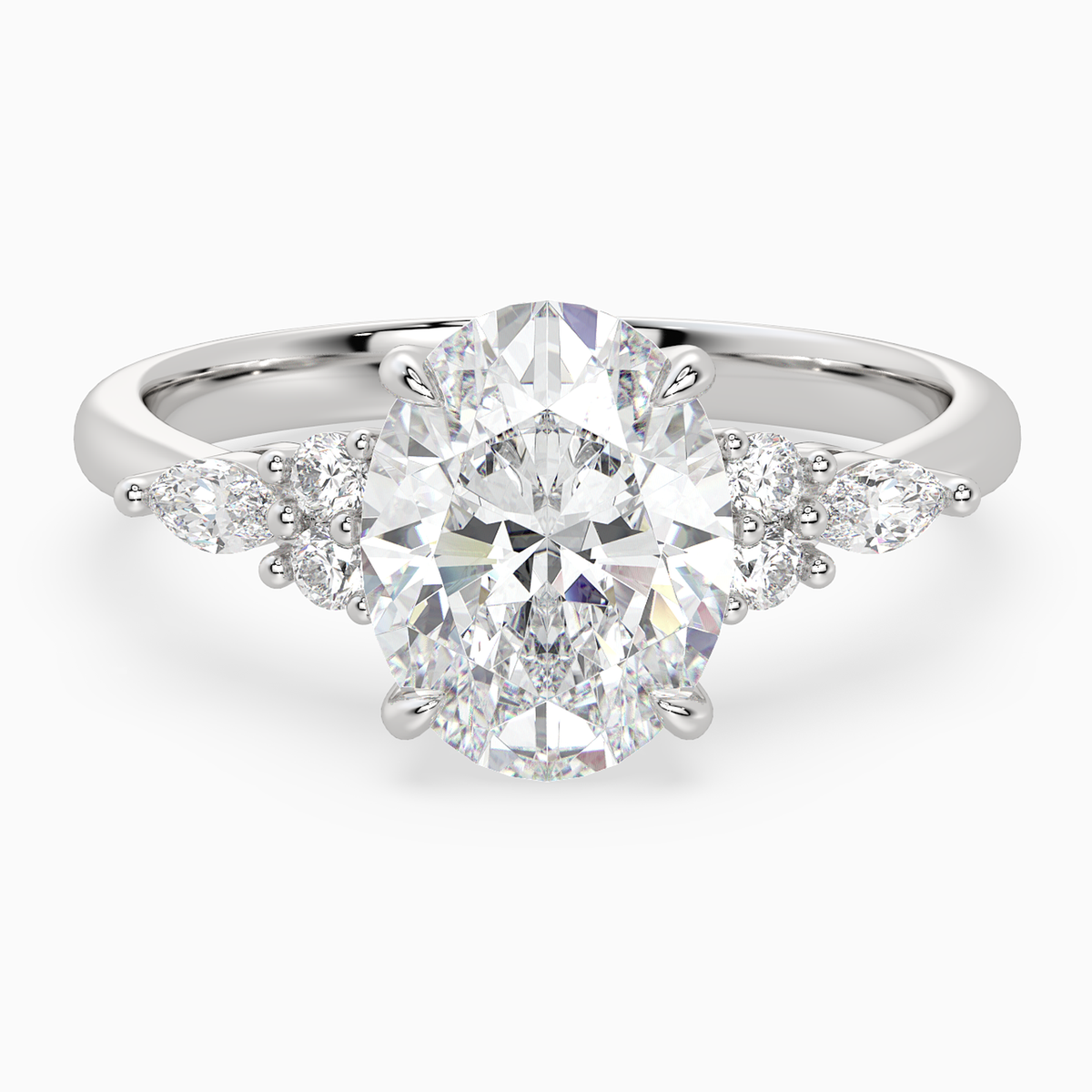


Nature Inspired Engagement Rings in 14K White Gold
White gold keeps organic structure precise. Compare all 9 rings by clustered accents, vine paths, crossed shoulders, open baskets and shape.



















14K White Gold: Organic Structure, Clearly Drawn
A Botanical Lens across Three Structures
Nine rings share this page, but they do not share one setting type. Five are Solitaire-led, two Camellia designs are Side Stone, and two Olive designs are Three Stone. White gold can keep bright settings visually close to the diamonds, leaving spacing and direction to carry the motif.
The collection’s independent job is to compare how natural reference becomes structure: a cluster, a climbing line, a twist, a crossing or an open profile.
Camellia Groups the Accents
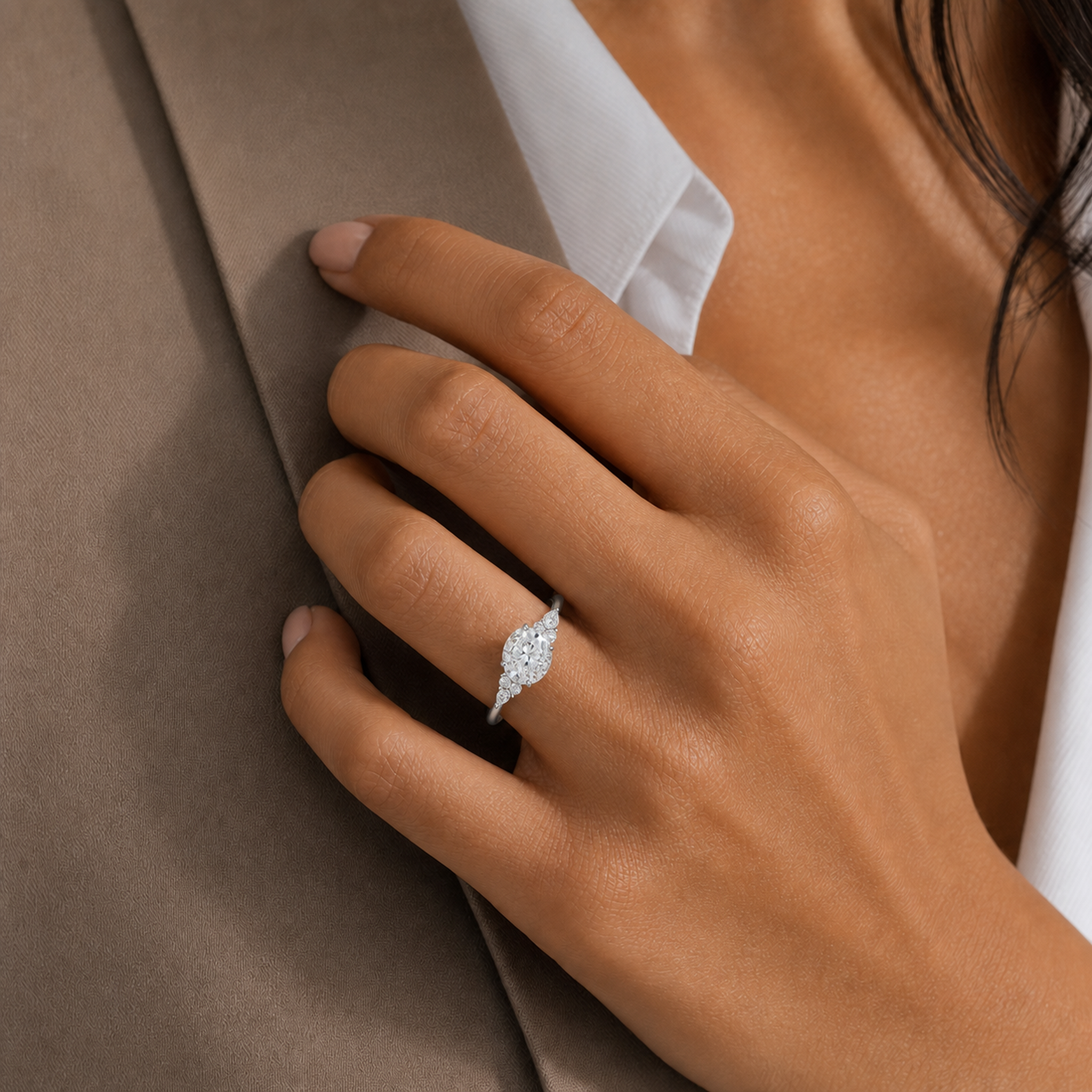
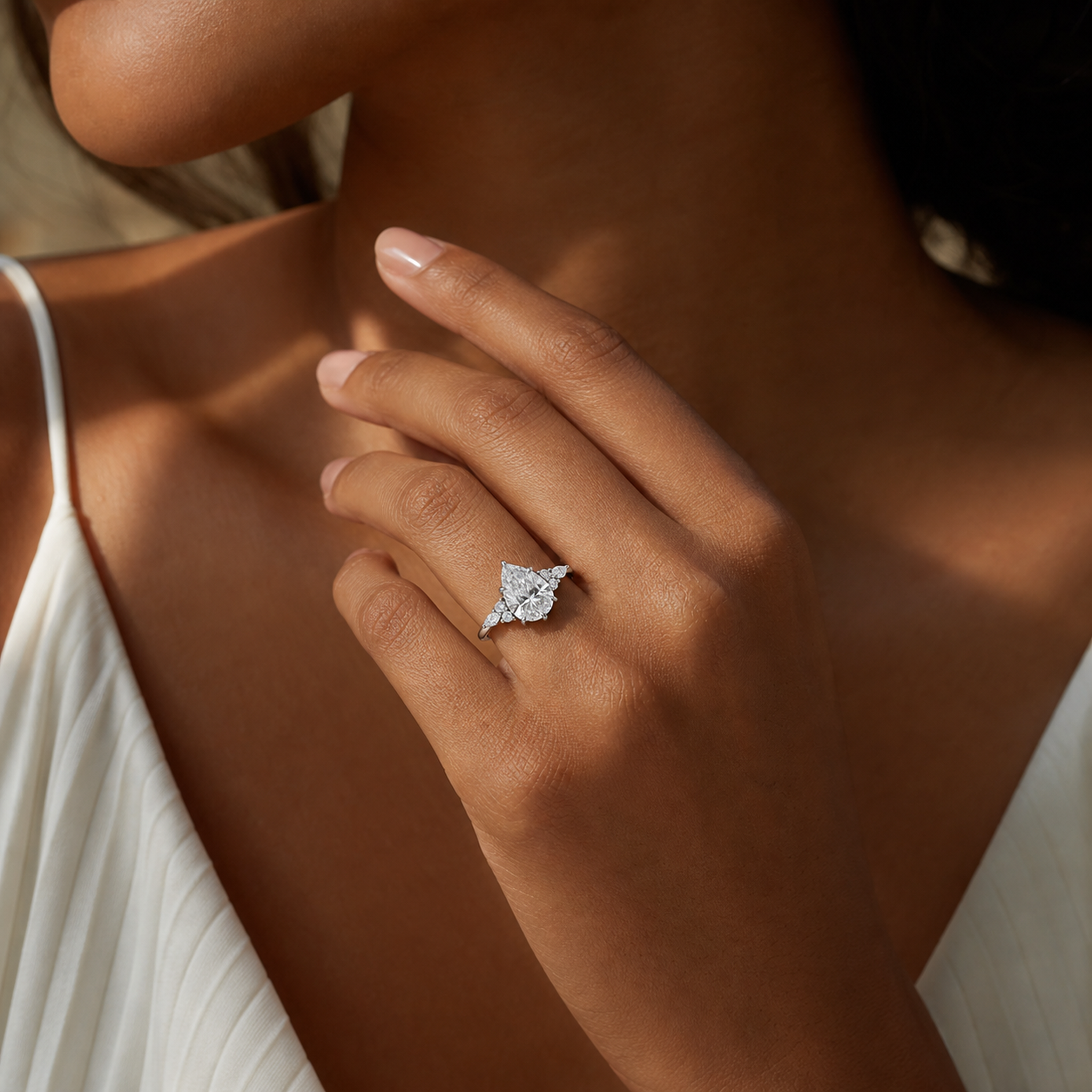
Camellia uses compact clustered accents beside the head with a polished shank. The oval and pear centers change the central outline; the floral reading comes from the group beside it, not from a promised botanical replica.
Ivy Climbs; Olive Divides
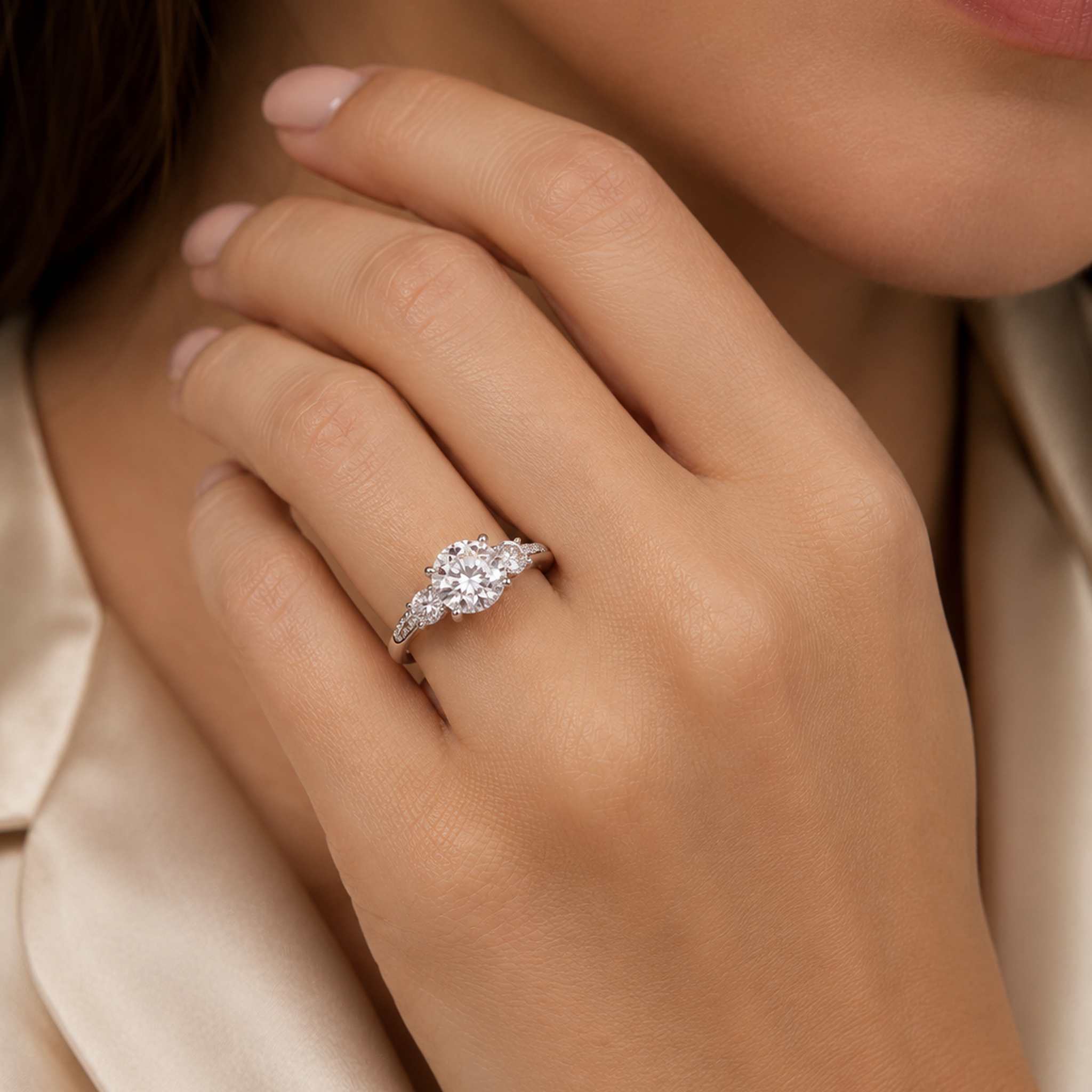
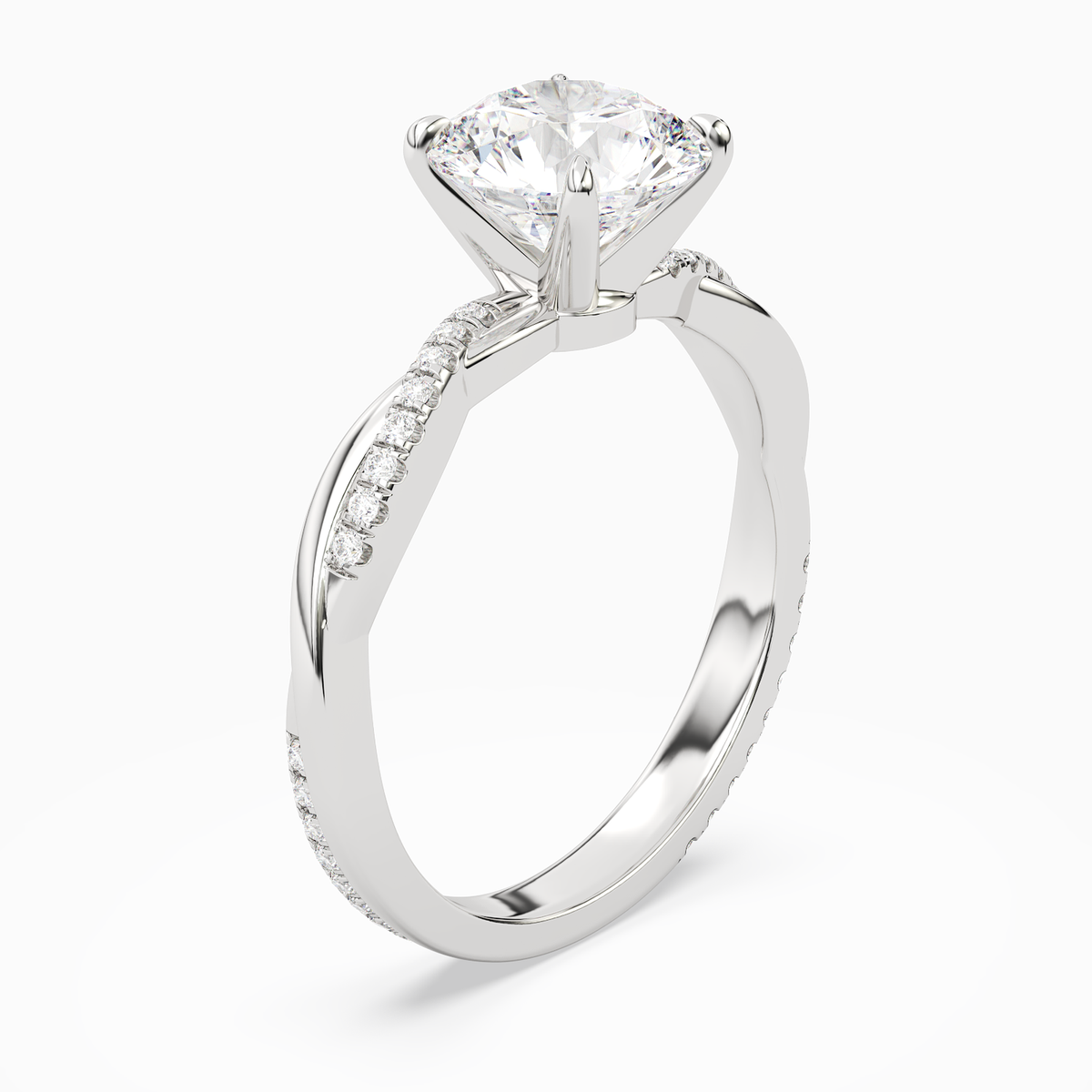
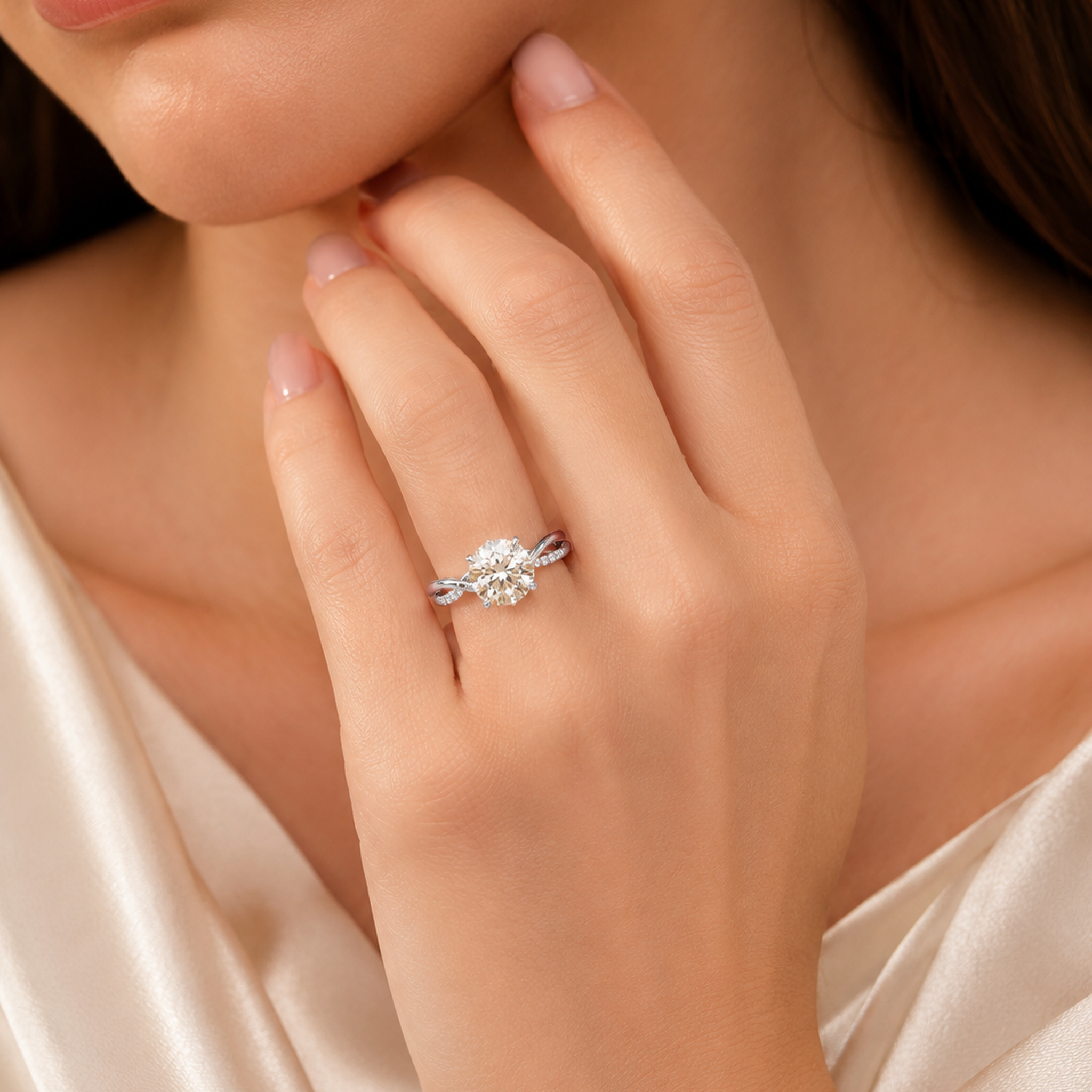
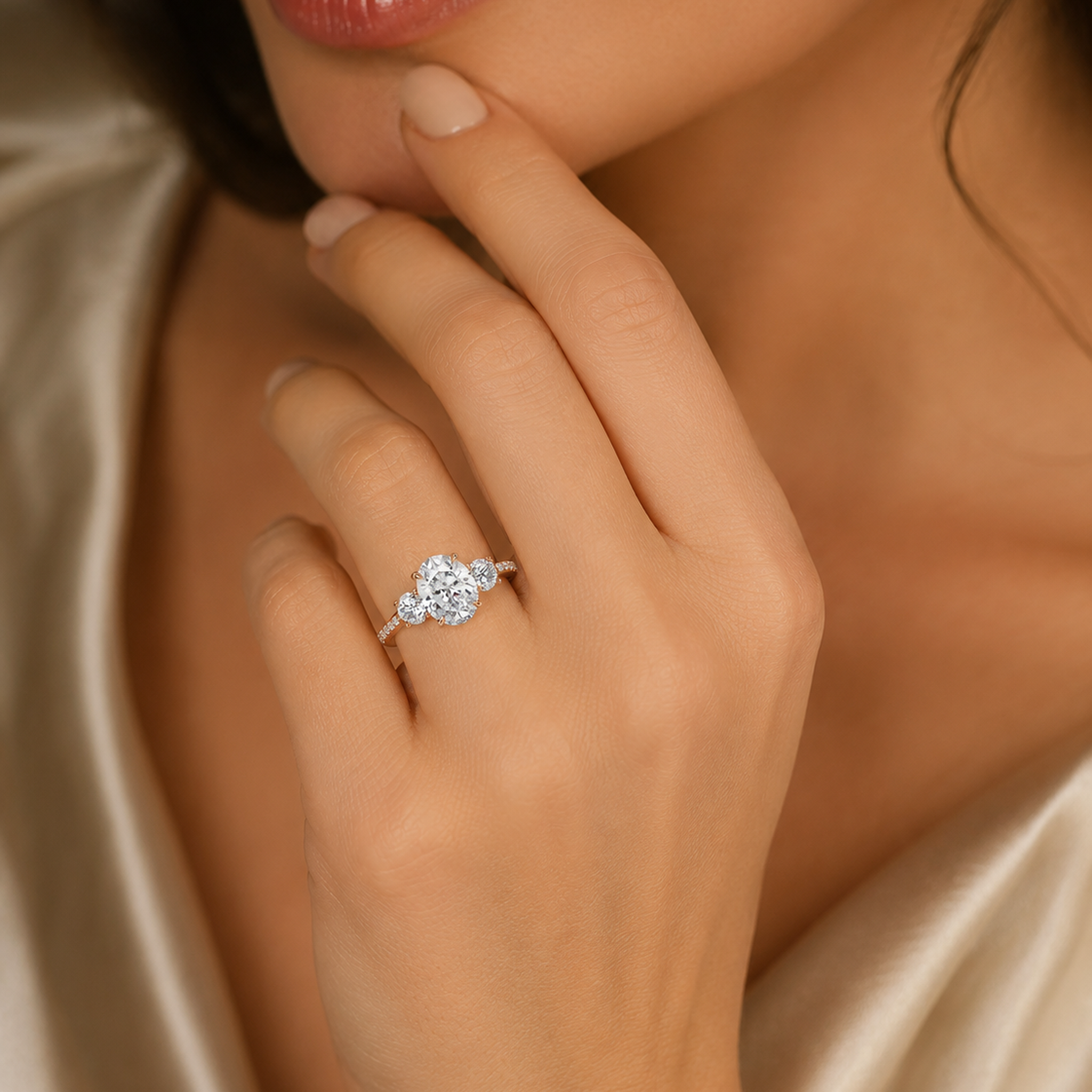
Ivy is center-led, with small pavé accents moving upward along twisting shoulders. Olive carries a related vine rhythm into a raised Three Stone composition with graduated round sides. Their motif overlaps; their stone hierarchy does not.
Amara Crosses; Athena Opens
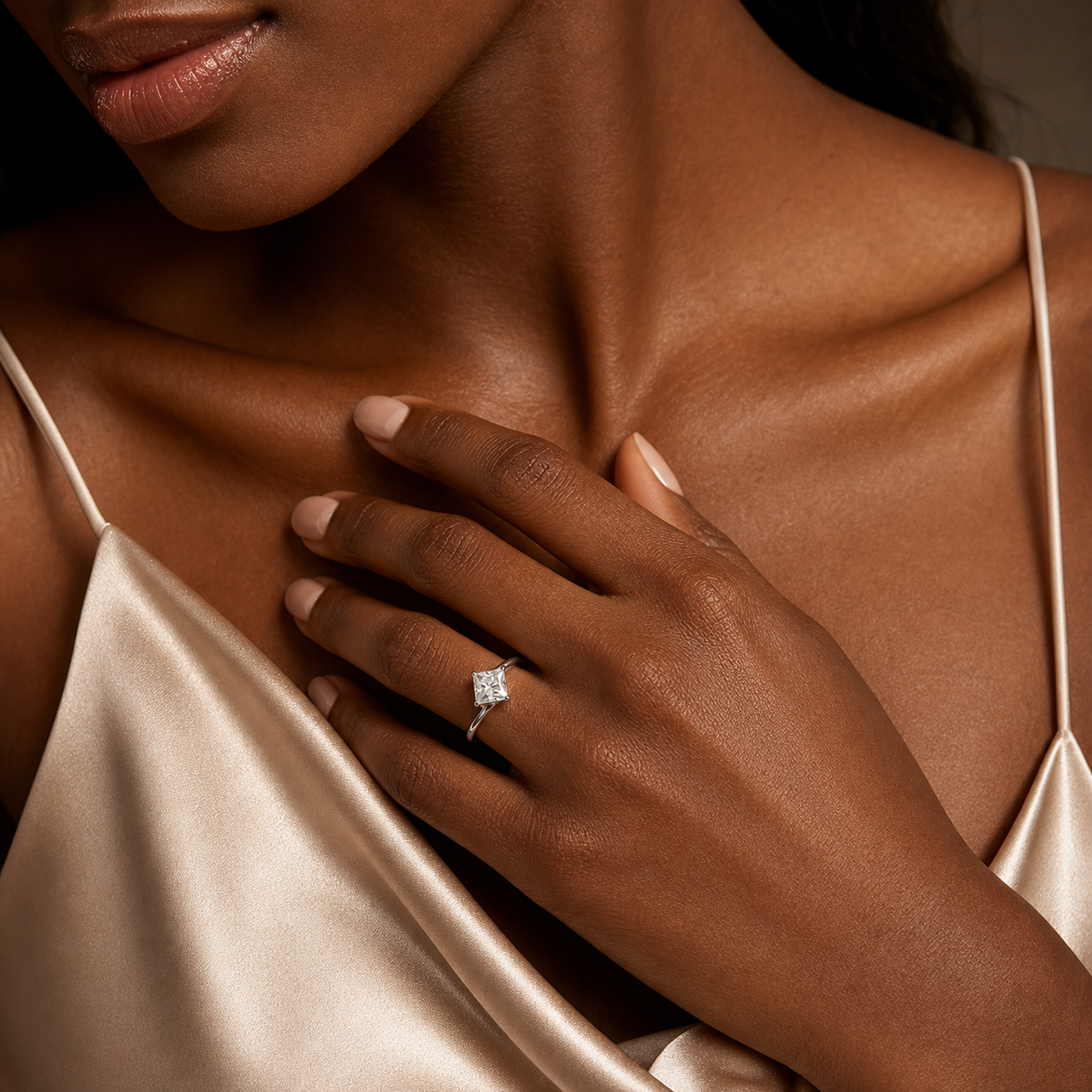
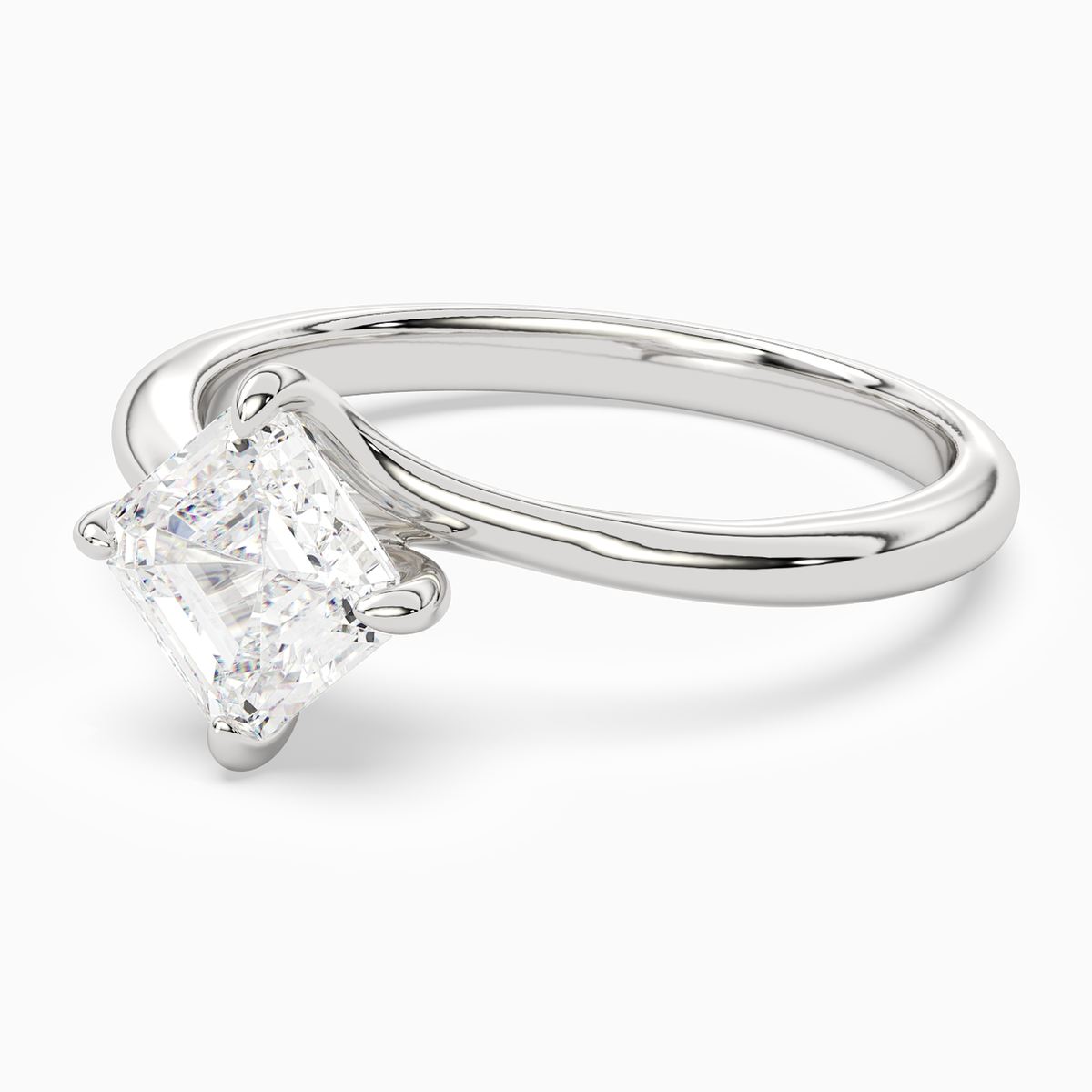
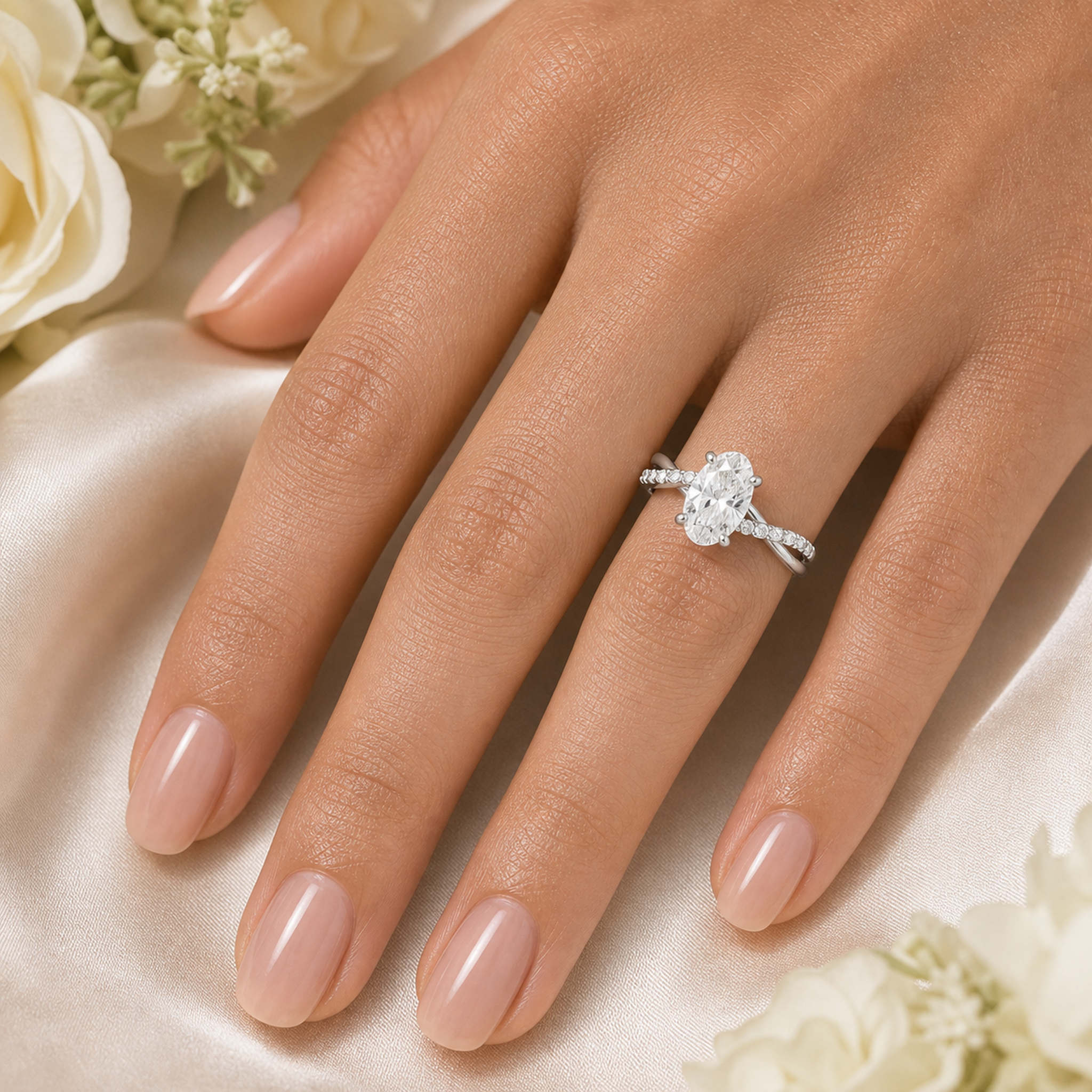
Amara sweeps smooth shoulders into an understated bypass profile. Athena remains more linear, with knife-edge shoulders and an open raised basket. Its generic nature classification is disclosed, but the copy does not invent a flower structure.
White Gold Needs Exact Review
About 58.3% of 14K is gold. Exact alloy, finish, accent setting, edge exposure, wedding-band clearance, cleaning and resizing depend on the product. No organic curve promises snag-free or secure wear.
Frequently Asked Questions
What is the assortment size?
9 rings.
Do all products match 14K white gold?
Yes.
How many named families appear?
Five.
What structures overlap?
Solitaire, Side Stone and Three Stone.
Which family uses a floral cluster?
Camellia.
Is Camellia a literal flower copy?
No exact species is claimed.
Which family has climbing pavé accents?
Ivy.
Which family adds graduated side stones?
Olive.
Which family uses a bypass profile?
Amara.
Which family uses an open raised basket?
Athena.
Why is Athena treated cautiously?
Its specific description names no petals or leaves.
What shapes appear?
Oval, pear, round, Asscher and Princess.
Does White Gold guarantee one finish?
No.
Does a twisting line improve security?
No such outcome is claimed.
Can daily-wear suitability be assumed?
No.
Can the rings always be resized?
No.
Is this page publish-authorized?
No.