
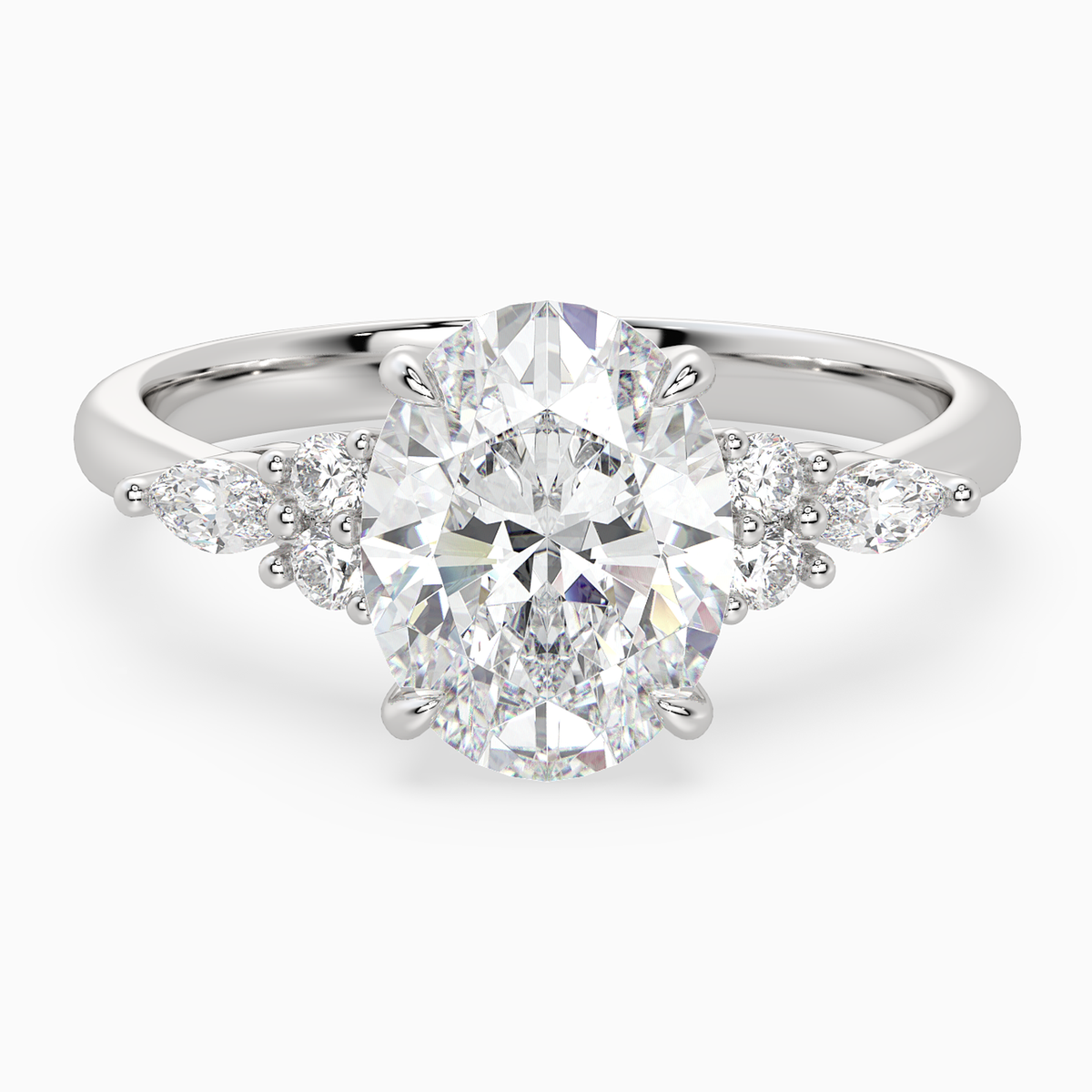


Diamond Carat Size Guide: How to Choose the Right Size for Your Ring

Diamond carat size is one of the first details shoppers ask about, but it is rarely the only detail that determines whether a ring looks right. A diamond can be large on paper and underwhelming in person if the cut is weak, the setting is heavy, or the shape does not suit the hand. A slightly smaller diamond can look more impressive when it is cut well and set with intention.
Carat measures weight, not exact face-up size. Start with the look you want on the hand, compare diamonds near common size points, then decide whether your budget is better spent on more carat weight, stronger cut quality, higher color/clarity, or a setting that makes the diamond look balanced.
This guide explains what carat really means, why two diamonds with the same carat weight can look different, and how to choose a size that feels confident without becoming impractical.
What Does Diamond Carat Mean?
Carat is a unit of weight. One diamond carat equals 200 milligrams. That number tells you how much the diamond weighs, but it does not tell you exactly how wide the diamond looks from the top.
For the terminology distinction, continue with our carat vs. karat guide.
Face-up size depends on shape, cut proportions, depth, and how weight is distributed. A well-cut round diamond, an elongated oval, and a deep cushion can all have the same carat weight but create different visual impressions. That is why carat should be treated as one part of the decision, not the entire decision.
Carat Weight vs. Visual Size
The most common mistake is assuming that a higher carat number always means a visibly better ring. The difference between 1.00 and 1.10 carats may be difficult to notice in everyday wear, while the price difference may still matter. The difference between a shallow, well-spread diamond and a deeper diamond can also change how much size you see from above.
For a ring, what most people notice first is face-up presence: how much space the diamond covers across the finger, how bright it looks, and whether the setting keeps the diamond visually centered. A carat number can guide the search, but the eye makes the final decision.
Diamond Carat Size Chart for Round Diamonds
The table below gives approximate face-up diameter ranges for well-proportioned round brilliant diamonds. Actual measurements vary by cut and individual stone, so use this as a shopping guide rather than a fixed rule.
| Carat Weight | Approx. Round Diameter | Visual Impression | Best For |
|---|---|---|---|
| 0.50 ct | About 5.0 mm | Delicate and refined. | Minimal rings, smaller hands, stacking-friendly designs, or understated daily wear. |
| 0.75 ct | About 5.8 mm | Noticeable without feeling bold. | Shoppers who want presence but prefer a quiet, practical ring. |
| 1.00 ct | About 6.4 mm | Classic engagement ring size. | A balanced starting point for many solitaire, halo, and three-stone designs. |
| 1.50 ct | About 7.4 mm | Clearly substantial. | Shoppers who want strong finger presence without entering very large-stone territory. |
| 2.00 ct | About 8.1 mm | Bold and highly visible. | Statement solitaires, larger hands, or buyers comfortable with a more prominent daily ring. |
Elongated shapes such as oval, pear, emerald, radiant, and marquise can look larger than a round diamond of the same carat weight because they cover more length across the finger.
Try Carat Size on the Hand, Not Only on Paper
A diamond's size changes when it is viewed on a real hand. Finger length, finger width, ring size, nail shape, band width, and setting height all affect whether a diamond feels delicate, balanced, or too dominant.

If you are between two sizes, compare them in a ring setting rather than as loose stones only. A 1.25-carat diamond in a slim solitaire can feel larger than expected. A 1.50-carat diamond in a wide, low-profile setting may feel more grounded. The right size is the one that feels proportionate when the hand is moving, not just when the ring is photographed from above.
How Diamond Shape Changes Perceived Carat Size
Shape has a major effect on perceived size. Round diamonds are the easiest to compare because their proportions are familiar. Elongated shapes often create more finger coverage. Step cuts can look elegant and larger in outline but may show clarity and color more directly. For shape-specific size perception, compare Round vs. Oval Diamonds; then use Best Engagement Rings for Your Hand Shape to connect proportion with the hand.
Round
Classic and balanced. It is the easiest shape to compare by carat, but it may not look as large as elongated shapes at the same weight.
Oval
Often looks larger than a round of the same carat because it spreads length across the finger. Check bow-tie visibility and symmetry.
Emerald cut
Creates a refined, architectural presence. It may look broad, but its calmer sparkle means cut quality and clarity need careful review.
Marquise and pear
Maximize length and finger coverage. They can look dramatic at lower carat weights but need protective settings around pointed ends.
Do Not Sacrifice Cut Just to Increase Carat
Carat gives a diamond physical presence, but cut quality gives it life. A larger diamond with weak proportions can look flat, dark, or glassy. A smaller diamond with strong light return can look brighter and more expensive than its carat number suggests.

For engagement rings, cut is often the quality factor worth protecting first. If the budget forces a choice between a noticeably larger diamond with compromised cut and a slightly smaller diamond with stronger light performance, the better-cut diamond is usually the more satisfying long-term choice.
Why Prices Jump Near Popular Carat Points
Diamond prices do not move in a perfectly straight line. They often jump around popular weight thresholds such as 0.50, 0.75, 1.00, 1.50, and 2.00 carats. Many shoppers want the round-number milestone, so demand can push prices higher at those marks.
This creates an opportunity. A diamond just under a popular threshold, such as 0.90 instead of 1.00 carat or 1.40 instead of 1.50 carats, may look very similar once set. The savings can sometimes be used for better cut, color, clarity, a more refined setting, or a different diamond shape that gives more face-up coverage.
How the Setting Changes Diamond Size
The setting can make a diamond look larger, smaller, softer, or more structured. A slim band makes the center stone feel more prominent. A halo adds a frame of smaller diamonds around the center, increasing the overall visual footprint. A bezel can make the outline look stronger while also protecting the edge of the stone.
- Solitaire: puts all attention on the center diamond. Proportion and cut quality become very visible.
- Halo: increases the visual footprint with surrounding accent diamonds. It can make a moderate carat size feel more substantial.
- Three-stone: spreads presence across the finger. A smaller center diamond can still feel balanced when the side stones are calibrated well.
- Bezel: adds a clean metal outline. It can make the stone feel slightly larger in silhouette while creating a smoother daily-wear profile.
- Thin band: makes the center diamond appear larger by contrast, but the band should still be strong enough for the ring design.
Choose Carat Size for Daily Wear
The best carat size is not always the largest size you can afford. A ring worn every day has to move through real life: sleeves, gloves, bags, keyboards, workouts, travel, and daily routines. Larger diamonds can be beautiful, but they also sit more prominently and may require more setting security.
If you want a low-maintenance ring, consider a size and setting that feel comfortable under normal use. If you want a more visible statement, choose the setting carefully so the ring still feels stable and wearable. The diamond should feel like a natural part of your hand, not something you constantly protect from your own life.
What Is the Best Diamond Carat Size for an Engagement Ring?
There is no universal best carat size. Many shoppers start around 1.00 carat because it feels familiar and balanced. Others prefer 0.75 carat for a more understated ring, 1.50 carats for stronger presence, or 2.00 carats and above for a clear statement.
For lab-grown diamond engagement rings, shoppers may be able to compare a wider range of carat sizes within the same general design direction. That does not mean the largest option is automatically the best one. It means you can evaluate carat, cut, color, clarity, and setting together with more room for intentional tradeoffs.
Choose the Size That Works With the Whole Ring
Carat size should support the ring you want to wear, not overpower every other decision. Compare diamond options by visual size, cut quality, shape, setting, and daily comfort before choosing the number.
Explore engagement rings Ask about diamond sizeDiamond Carat Size Checklist
Use this checklist before deciding whether to go smaller, larger, or just under a popular carat threshold.
- Compare face-up measurements, not only carat weight.
- Protect cut quality before increasing size.
- Try the diamond size on the hand or in a realistic ring setting.
- Check how the shape changes finger coverage.
- Decide whether a halo, bezel, or slim band can create the visual presence you want.
- Compare diamonds just below common thresholds if budget efficiency matters.
- Think about your daily routine and whether a larger stone will feel comfortable.
- Review color and clarity in the actual diamond shape and size you are considering.
Frequently Asked Questions
Is carat the same as diamond size?
No. Carat measures diamond weight. Visual size depends on shape, face-up measurements, cut proportions, depth, and setting style. Two diamonds with the same carat weight can look different on the hand.
What diamond carat size looks best for an engagement ring?
The best size depends on finger coverage, setting style, cut quality, budget, and daily wear. A 1.00-carat diamond is a common reference point, but many shoppers prefer smaller or larger sizes once they compare stones on the hand.
Should I choose a bigger diamond or a better cut?
If the choice is between more carat weight and noticeably better cut quality, the better-cut diamond is often the stronger choice. Cut affects brightness, fire, and how lively the diamond looks in normal light.
Can a setting make a diamond look bigger?
Yes. Halo settings, slim bands, bezels, and certain prong styles can increase perceived size or make the center diamond look more prominent. The setting should still feel balanced and secure.
Is it smart to buy just under 1 carat?
It can be. A diamond just under a popular threshold, such as 0.90 or 0.95 carat, may look close to a 1.00-carat diamond once set while leaving more budget for cut quality, setting, or other specifications.
Final Thought
Diamond carat size should feel chosen, not chased. The right diamond is the one that looks balanced on the hand, performs beautifully in real light, fits the setting, and feels natural in daily wear. When carat, cut, shape, and design work together, the ring has presence without needing to rely on size alone.
For more buying guidance, visit the Burvonti Journal, compare Compare engagement rings, or explore engagement ring styles that make carat size part of a complete design decision.