
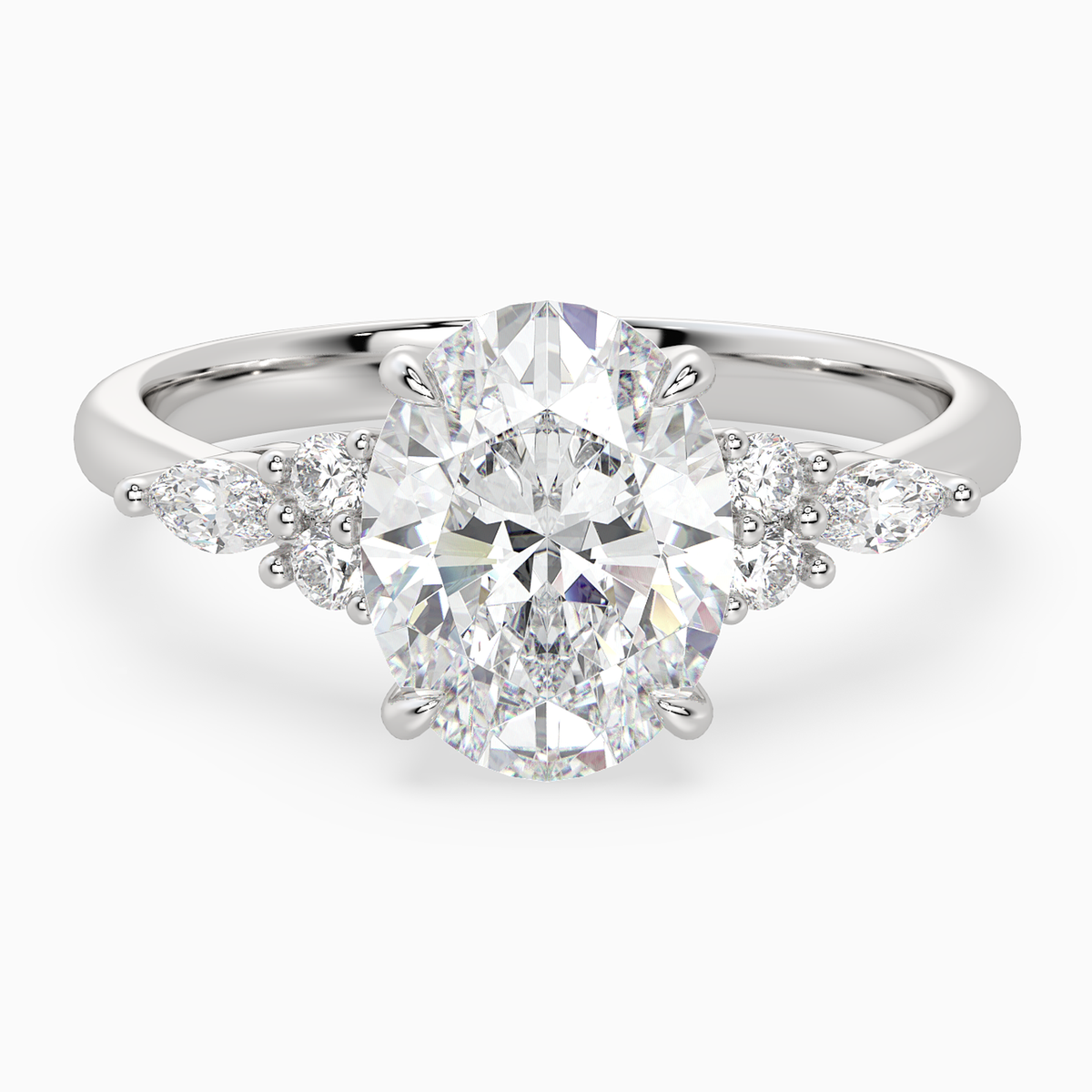


Carat vs. Karat: What Each Means Before You Buy Jewelry

Carat and karat are two of the easiest jewelry terms to mix up. They sound almost identical, both appear in fine jewelry descriptions, and both can affect price. But they measure completely different things.
A 1 carat diamond refers to gemstone weight. A 14K or 18K gold ring refers to how much pure gold is in the metal alloy. When you are choosing a diamond ring, carat helps you understand the stone. Karat helps you understand the gold setting.
This guide explains the difference between carat and karat, why each one matters, and how to think about both when choosing an engagement ring, wedding band, or everyday fine jewelry.
Carat vs. Karat at a Glance
| Term | What it measures | Where you see it | What it affects |
|---|---|---|---|
| Carat, often written as ct | Gemstone weight. One carat equals 0.2 grams. | Diamonds, sapphires, emeralds, rubies, and other gemstones. | Stone presence, price, rarity, and how the diamond compares with cut, color, and clarity. |
| Karat, often written as K | Gold purity. 24K means pure gold. | Gold rings, wedding bands, earrings, necklaces, bracelets, and settings. | Metal color richness, durability, price, and suitability for daily wear. |
What Does Carat Mean?
Carat is a unit of weight used for diamonds and gemstones. One carat equals 0.2 grams, and each carat can be divided into 100 points. That is why a 0.75 carat diamond may also be called a 75 point diamond.
The key detail: carat is not the same as visible size. Two diamonds can have the same carat weight and still look different on the hand because shape, cut depth, table size, and proportions all affect face-up appearance.

Why Carat Affects Price
Carat weight is a major price driver because larger high-quality diamonds are rarer. Pricing is not always linear. A 2 carat diamond can cost much more than two 1 carat diamonds of similar quality because a single larger stone is harder to find.
That does not mean you should buy the highest carat weight available. A well-cut diamond with balanced color and clarity can look brighter and more refined than a heavier diamond with weaker proportions.
How to Think About Carat When Buying
- Consider face-up size, not carat number alone.
- Compare shapes because oval, marquise, pear, emerald, and round diamonds distribute weight differently.
- Look at cut quality because light return can matter more than small weight differences.
- Consider near-magic weights such as 0.90ct or 1.90ct when value matters.
What Does Karat Mean?
Karat is the purity scale used for gold. Pure gold is 24K, but pure gold is soft, so fine jewelry usually blends gold with other metals to improve strength, durability, and wearability.
That is why 14K and 18K gold are common for rings. They offer a better balance of gold content and everyday structure than 24K gold, especially for jewelry that holds diamonds or is worn daily.

Common Gold Karat Options
10K gold
Lower gold content and higher alloy content. It is durable and usually more affordable, but the gold color can feel less rich.
14K gold
A common choice for everyday fine jewelry because it balances durability, value, and gold presence.
18K gold
Higher gold content with a richer tone. It can feel more refined, but it is typically softer and more expensive than 14K.
24K gold
Pure gold. Beautiful in color, but too soft for most diamond engagement ring settings and daily-wear bands.
Which Matters More: Carat or Karat?
It depends on what you are choosing. If you are evaluating a diamond, carat is part of the stone decision. If you are choosing the ring metal, karat is part of the setting decision. In an engagement ring, both matter because the diamond and the metal have to work together.
For a diamond ring, do not optimize one number in isolation. A beautiful 1.50ct diamond still needs a secure metal setting. A rich 18K gold setting still needs a diamond with strong cut quality and balanced proportions.
How Carat and Karat Work Together in a Ring
A ring is a system. The diamond's carat weight affects the stone's presence and price. The gold karat affects the setting's color, durability, and feel on the hand. The right combination depends on wear habits, design style, budget, and the specific diamond.
- If you want a larger diamond presence, compare carat weight with shape and cut instead of assuming the highest number wins.
- If you want daily durability, compare 14K, 18K, and platinum options before choosing based on color alone.
- If your diamond has warmer color, yellow gold or rose gold can be visually forgiving.
- If you prefer white metal, consider how white gold, platinum, and diamond color interact.
Simple Buying Checklist
| Question | Why it matters | What to check |
|---|---|---|
| Am I comparing diamond weight or metal purity? | Carat and karat answer different questions. | Look for ct with diamonds and K with gold. |
| Does the diamond look good for its carat weight? | A heavier diamond is not automatically better looking. | Cut, shape, measurements, and face-up appearance. |
| Is the gold karat right for everyday wear? | Higher purity can be softer. | 14K or 18K for most daily fine jewelry; avoid 24K for secure diamond settings. |
| Does the metal color flatter the diamond? | Metal tone changes how the diamond reads visually. | Compare white gold, yellow gold, rose gold, and platinum with the actual stone. |
Choosing the Diamond and the Metal Together?
Burvonti can help you compare lab-grown diamond carat weight, face-up presence, gold karat, metal color, and setting durability before you commit to the final design.
Compare engagement rings Start a Custom Design ConversationFor a related guide, continue with What Are the 4Cs of Diamonds? Cut, Color, Clarity and Carat Explained.
Carat vs. Karat FAQs
What is the difference between carat and karat?
Carat measures gemstone weight. Karat measures gold purity. A 1 carat diamond describes the weight of the stone, while a 14K gold ring describes the gold content of the metal.
Is carat the same as diamond size?
No. Carat is weight, not exact visible size. A diamond's shape, cut depth, table, and proportions affect how large it looks from the top.
Is higher carat always better?
No. Higher carat means more weight, but beauty also depends on cut quality, color, clarity, proportions, and how the diamond looks in the setting.
What karat gold is best for engagement rings?
14K and 18K gold are common choices. 14K offers strong everyday durability, while 18K has higher gold content and a richer tone. The right choice depends on wear habits, color preference, and budget.
Is 24K gold good for diamond rings?
Usually no. 24K gold is pure gold, but it is soft and not ideal for holding diamonds securely in daily-wear rings.
Why do people confuse carat and karat?
They sound the same and both appear in jewelry buying. The easiest shortcut is to remember: carat with ct is for stone weight, and karat with K is for gold purity.
Final Thought
Carat and karat are not competing terms. They answer different parts of the same jewelry decision. Carat helps you understand the diamond. Karat helps you understand the gold. When both are chosen with care, the final piece feels balanced, wearable, and personal rather than driven by one number alone.