


Diamond Shape Guide
Round vs Oval Diamonds: Sparkle, Size, Cost and Style

Round and oval diamonds are both brilliant, versatile, and highly wearable in engagement rings. The difference is not simply classic versus modern. It is a decision about light performance, apparent size, finger coverage, setting design, and how much visual presence you want from the same carat weight.
This guide compares round vs oval diamonds in plain language so you can choose the center stone shape that fits your hand, your setting, and your budget.
The Short Answer
Choose a round diamond if you want the most classic shape, the most predictable brilliance, and the easiest setting and wedding band pairing. Choose an oval diamond if you want an elongated look, more finger coverage, a larger visual spread, and a shape that feels elegant without being traditional.
- Round diamonds are strongest for classic symmetry and maximum light return.
- Oval diamonds are strongest for apparent size, finger elongation, and modern softness.
- Round diamonds are easier to evaluate by cut grade; ovals need more visual review for bow-tie, ratio, and symmetry.
- Oval diamonds often offer more visible surface area for the same carat weight.
- Both can be excellent choices for lab-grown diamond engagement rings when selected with clear specifications. Use our diamond shape guide and 4Cs diamond guide for the broader decision framework.
Round vs Oval Diamonds at a Glance
| Factor | Round Diamond | Oval Diamond |
|---|---|---|
| Sparkle | Usually the strongest and most predictable light performance. | Very brilliant, but quality varies more by proportion and facet pattern. |
| Visual size | Balanced face-up size with a compact circular shape. | Often looks larger because the elongated outline covers more finger space. |
| Style signal | Classic, clean, traditional, and highly versatile. | Elegant, elongated, modern, and softly distinctive. |
| Buying complexity | Easier to compare because cut grading is more standardized. | Requires visual inspection for bow-tie, length-to-width ratio, and symmetry. |
| Settings | Works with almost every setting and most straight wedding bands. | Works beautifully in solitaire, halo, hidden halo, east-west, and contour-friendly settings. |
| Best for | Maximum sparkle, timeless style, and simple decision-making. | Larger look, finger elongation, and a more distinctive shape. |
What Makes a Round Diamond Different?
A round diamond is the most familiar engagement ring center stone for a reason. Its circular outline is balanced from every angle, and the round brilliant cutting style is designed for strong light return. If you want a diamond that looks classic now and will still feel familiar decades from now, round is the safest choice.
Round diamonds also make buying simpler. Cut quality is easier to compare than it is for fancy shapes, and a well-cut round diamond can hide color and clarity characteristics better than many elongated shapes because of its strong sparkle pattern. Continue with Round Brilliant Cut Diamonds for the next comparison.
What Makes an Oval Diamond Different?
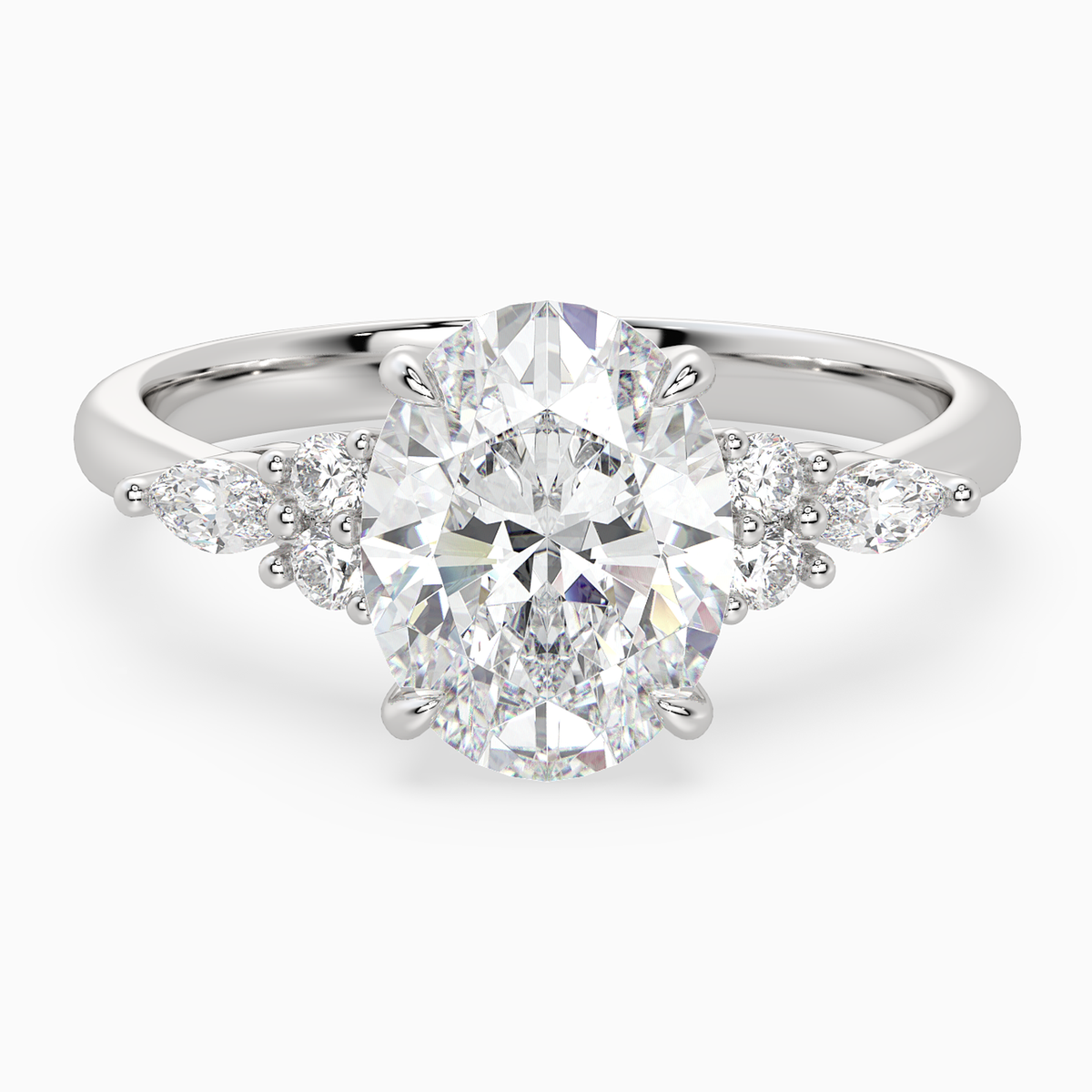
An oval diamond uses a brilliant-style facet pattern, but its elongated outline changes the entire visual effect. It can look larger than a round diamond of the same carat weight because more of the weight is spread across the top view. It also creates a lengthening effect on the finger, which many shoppers find flattering.
The tradeoff is that oval diamonds require more visual judgment. A certificate can tell you the measurements, color, clarity, and carat weight, but it will not fully tell you whether the oval has graceful proportions, balanced shoulders, or a distracting bow-tie.
Which Shape Sparkles More?
Round diamonds usually win for pure sparkle. Their symmetry makes light return more consistent and easier to predict. If your priority is the brightest, most classic brilliance, a round diamond is hard to beat.
That does not mean oval diamonds lack sparkle. A well-cut oval can be lively, bright, and full of fire. The difference is that oval sparkle can vary more from stone to stone. Two ovals with the same carat, color, and clarity can look very different because their proportions and facet patterns are not identical.

Which Looks Bigger for the Same Carat Weight?
Oval diamonds often look larger than round diamonds at the same carat weight. The elongated shape creates more finger coverage and a longer outline. This is one reason oval engagement rings are popular with shoppers who want presence without increasing carat weight.
Round diamonds can still look substantial, especially in a well-proportioned setting. But if your goal is a larger face-up impression, oval usually has the advantage.
Which Costs More?
Comparable round diamonds often cost more than comparable oval diamonds because round cutting typically removes more rough material and demand for round diamonds is consistently high. Actual pricing changes by stone, quality, inventory, and market conditions, so compare live options rather than relying on one fixed percentage.
For many shoppers, oval can be a smart value choice: you may get a larger visual look while staying within a similar budget. For others, the round diamond's predictable brilliance and timelessness justify the premium.
The Bow-Tie Effect in Oval Diamonds
The bow-tie effect is a dark contrast area that can appear across the center of many elongated diamonds, including ovals. A slight bow-tie is normal and can add dimension. A severe bow-tie can make the diamond look dull or visually split across the middle.
You cannot judge bow-tie from carat weight alone. When choosing an oval, look at the stone in video, daylight, and multiple angles. The goal is not to find an oval with zero contrast; the goal is to find one with balanced, attractive light performance.
Length-to-Width Ratio: How Oval Shape Changes the Look
Oval diamonds can look softly rounded or long and slender depending on their length-to-width ratio. A lower ratio creates a wider oval. A higher ratio creates a longer, more elongated oval. Many shoppers prefer a balanced oval that feels elegant without looking too narrow.
The right ratio is personal. A longer oval may lengthen the finger more. A slightly wider oval may feel softer and more classic. The setting also matters: prong placement, halo shape, and band width can make the same oval look either delicate or substantial.
Durability and Setting Choice
Both shapes are practical for engagement rings, but round diamonds have a slight durability advantage because they have a continuous circular outline with no pointed ends. Oval diamonds have rounded ends, yet those tips still deserve secure prong placement.
Round diamonds work in almost every setting: solitaire, pave, halo, three-stone, bezel, hidden halo, and vintage-inspired designs. Oval diamonds are also versatile, but they need thoughtful orientation. A north-south oval lengthens the finger. An east-west oval feels more modern and architectural.
Burvonti Precision Note
For an oval, do not choose by certificate numbers alone. Review the actual stone's outline, bow-tie, shoulder shape, and how the setting protects the ends. For a round, prioritize cut quality and overall balance. In both cases, the strongest ring is built around the selected diamond, not forced into a generic setting.
Which Shape Looks Better on the Hand?
Round diamonds look balanced and classic on almost every hand. They create a centered, symmetrical focal point and pair easily with straight wedding bands.
Oval diamonds create more vertical movement. They can make the finger look longer and often feel more delicate at a larger carat weight. If you want a shape that feels graceful, elongated, and slightly less expected than round, oval is usually the stronger direction. Continue with Oval Lab-Grown Diamonds for the next comparison.

Choose a Round Diamond If...
- You want the most classic engagement ring shape.
- You prioritize maximum sparkle and predictable cut quality.
- You want a setting that works easily with most wedding bands.
- You prefer a shape that looks symmetrical from every angle.
- You want a diamond that feels timeless rather than trend-driven.
Choose an Oval Diamond If...
- You want the diamond to look larger for its carat weight.
- You like an elongated, graceful look on the finger.
- You want a shape that feels modern but still soft and refined.
- You are willing to review the actual diamond for bow-tie and proportion.
- You want more visual presence without always moving up in carat weight.
Once you have narrowed the shape, compare round engagement rings and oval diamond engagement rings.
Compare the Shape Before You Choose the Setting
The best choice is the diamond that works with your hand, your setting, and your idea of daily wear. Compare round and oval engagement rings side by side before committing to a center stone shape.
Explore round engagement rings Explore oval engagement ringsFrequently Asked Questions
Are round or oval diamonds better?
Neither is universally better. Round diamonds are better for maximum sparkle, classic symmetry, and easier evaluation. Oval diamonds are better for a larger visual look, finger elongation, and a more distinctive silhouette.
Do oval diamonds sparkle as much as round diamonds?
A well-cut oval can sparkle beautifully, but round diamonds usually have the most predictable light return. Oval sparkle varies more by proportion, facet pattern, and bow-tie visibility.
Do oval diamonds look bigger than round diamonds?
Often, yes. Oval diamonds usually appear larger at the same carat weight because the elongated outline creates more face-up spread and more finger coverage.
Are oval diamonds less expensive than round diamonds?
Oval diamonds are often less expensive than comparable round diamonds, but the difference changes by inventory, carat weight, color, clarity, cut quality, and demand. Always compare current stones rather than relying on one fixed discount.
What is the bow-tie effect in an oval diamond?
The bow-tie effect is a dark contrast area across the center of an oval diamond. A small amount can be normal, but a severe bow-tie can reduce brightness. Review the actual stone in motion before buying.
Which shape is easier to pair with a wedding band?
Round diamonds are usually easier because their settings often pair cleanly with straight wedding bands. Oval rings may need a contour band, spacer band, or intentional gap depending on the setting height and stone orientation.