
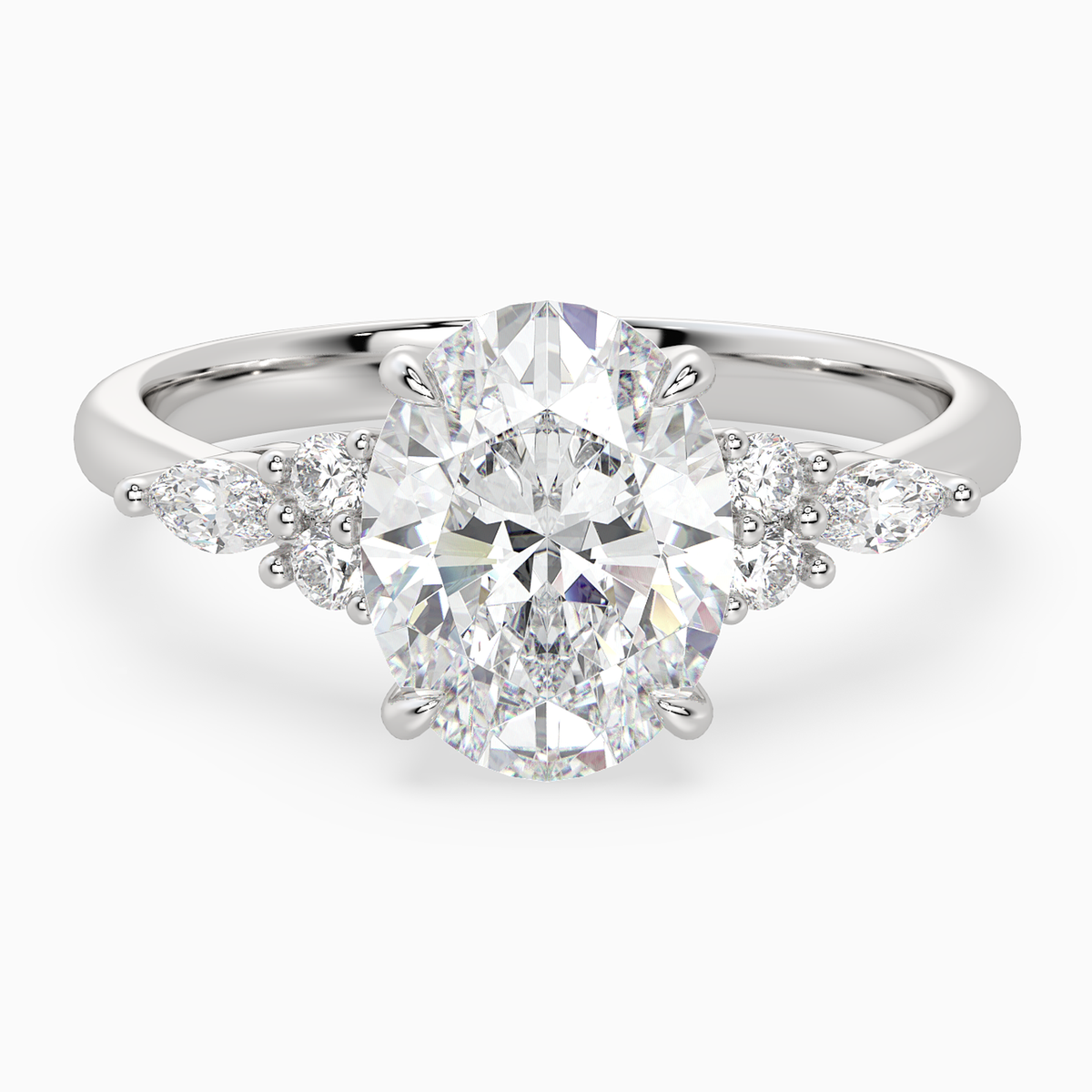


Are Lab-Grown Diamonds Cubic Zirconia? The Real Difference Explained

Lab-grown diamonds and cubic zirconia are often confused because both can look bright, clear, and polished in a jewelry case. The similarity ends there. A lab-grown diamond is a real diamond grown by technology. Cubic zirconia, often called CZ, is a diamond simulant made to imitate the look of a diamond.
Lab-grown diamonds are carbon crystals with the same essential diamond identity as mined diamonds. Cubic zirconia is a different material, usually zirconium dioxide, used as an affordable diamond look-alike. The difference affects durability, sparkle, value, daily wear, and how the stone should be sold.
This guide explains the difference in plain terms so you can shop with confidence, avoid misleading language, and choose the right stone for fine jewelry or fashion jewelry.
What Is a Lab-Grown Diamond?
A lab-grown diamond is a diamond created in a controlled growth environment instead of formed underground. It is not a look-alike material. It is diamond: a carbon crystal that can be cut, polished, graded, and set into fine jewelry.
Lab-grown diamonds are evaluated by the same practical buying factors shoppers already recognize: cut, color, clarity, and carat weight. They can also receive independent grading reports that identify them as laboratory-grown diamonds and describe their quality characteristics.
What Is Cubic Zirconia?
Cubic zirconia is a man-made diamond simulant. That means it is designed to resemble diamond visually, but it is not diamond. CZ can be bright, clear, and inexpensive, which makes it useful for fashion jewelry, temporary pieces, travel jewelry, or styling tests.
The tradeoff is long-term performance. Cubic zirconia is softer than diamond, more likely to show surface wear, and usually has much lower long-term value. It can be attractive, but it should be sold honestly as a simulant.
Why People Confuse Lab-Grown Diamonds and CZ
The confusion usually comes from two phrases: "lab-created" and "not mined." A lab-grown diamond is created by technology and is not mined. Cubic zirconia is also man-made. But a shared origin category does not make the materials the same.
Both can look clear
At a glance, a well-cut CZ can look bright and clean, especially in new fashion jewelry.
Both can be lab-made
Lab-made does not mean diamond. The material and crystal structure are what define the stone.
Both can be affordable
Lab-grown diamonds usually cost less than comparable mined diamonds, while CZ is far less expensive than diamond.
Both need clear disclosure
A responsible seller should tell you exactly whether a stone is lab-grown diamond, mined diamond, or simulant.
The Material Difference: Diamond vs. Diamond Simulant
The most important difference is material identity. A lab-grown diamond is diamond. Cubic zirconia is not diamond. This affects how the stone handles light, how it wears over time, and how it should be priced.

Lab-Grown Diamond vs. Cubic Zirconia: Side-by-Side
| Question | Lab-grown diamond | Cubic zirconia |
|---|---|---|
| What is it? | A real diamond grown in a controlled environment. | A diamond simulant made from a different material. |
| Main material | Carbon crystal. | Zirconium dioxide-based simulant. |
| Hardness and wear | Extremely hard and suitable for daily fine jewelry when properly set. | Softer than diamond and more likely to show scratches or cloudiness with wear. |
| Sparkle | Diamond brilliance and fire depend heavily on cut quality. | Can look very flashy, often with a glassier or more rainbow-heavy appearance. |
| Value | Costs more than CZ and is priced by diamond quality factors. | Very affordable, but usually not treated as a long-term value stone. |
| Best use | Engagement rings, wedding jewelry, heirloom-style fine jewelry, and daily wear. | Fashion jewelry, temporary styles, travel pieces, or trying a look before investing. |
| Buyer check | Ask for clear disclosure and an independent grading report. | Make sure it is sold as CZ or simulant, not implied to be diamond. |
Durability: Why It Matters for Daily Wear
Durability is one of the clearest reasons lab-grown diamonds and CZ should not be treated as interchangeable. A ring worn every day meets desks, pockets, soap, towels, metal rails, gym equipment, and accidental knocks. A diamond is built for that kind of long-term fine jewelry use when the setting is secure.
Cubic zirconia can be beautiful when new, but it is more vulnerable to surface wear. Over time, CZ may look less crisp, especially in rings that get daily friction. That does not make CZ bad. It simply means CZ works best when the buyer understands its purpose.

Sparkle: Diamond Brilliance vs. CZ Fire
People sometimes assume the flashier stone is automatically the better stone. That is not how diamond quality works. A well-cut diamond balances brightness, contrast, scintillation, and fire. Cubic zirconia can show strong rainbow flashes, but the effect may look different from diamond, especially under mixed lighting.
For an engagement ring, focus on cut quality and overall balance. A lab-grown diamond with strong cut quality will usually feel more refined than a larger stone chosen only because it looks bright in one lighting condition.
Can You Tell Lab-Grown Diamond and CZ Apart at Home?
Sometimes there are clues, but at-home tests are not proof. Weight, fog behavior, surface wear, and the look of the sparkle can suggest a difference, yet a confident identification should come from a jeweler or gemological testing.
Weight and feel
Cubic zirconia is often heavier than diamond of similar size. This can be a clue for loose stones, but it is not a reliable test once the stone is mounted in a ring.
Fog and surface clues
Some people use a fog test or look for surface cloudiness. These methods can be misleading because cleanliness, setting style, lighting, and handling all affect what you see.
Professional verification
A jeweler can use gemological tools to separate diamond from CZ. If the purchase matters, especially for an engagement ring, do not rely on a guess. Ask for documentation and clear disclosure.
A diamond tester can often help separate diamond from CZ, but it does not replace full grading. It also does not tell you whether a diamond is mined or lab-grown. For that, rely on proper disclosure and a grading report.
When Cubic Zirconia Makes Sense
CZ can be a smart choice when you want an inexpensive style experiment, travel jewelry, a temporary placeholder, or a fashion piece that does not need long-term value. It lets you test size, shape, or setting presence without committing to diamond pricing.
The problem is not CZ itself. The problem is misrepresentation. A CZ piece should not be described as a lab-grown diamond, and a lab-grown diamond should not be dismissed as CZ just because it was not mined.
When a Lab-Grown Diamond Is the Better Choice
Choose a lab-grown diamond when the piece is meant to be fine jewelry: an engagement ring, wedding band accent, anniversary piece, diamond stud, pendant, or daily-wear design. You get real diamond material, diamond durability, and diamond grading standards while still choosing a modern alternative to mined diamonds.
For Burvonti, the important question is not only what the stone is called. It is whether the diamond, setting, and buying process can be explained clearly. That includes the grading details, the metal, the prong security, the proportions, and the long-term care plan.
When you are ready to compare ring designs, explore lab-grown diamond rings.
How to Shop Without Confusion
- Ask the seller to state the stone type in writing: lab-grown diamond, mined diamond, or simulant.
- Request an independent grading report for lab-grown diamond center stones.
- Compare sparkle in more than one lighting condition.
- Do not judge only by size. A large CZ and a well-cut diamond serve different purposes.
- Match the stone to the jewelry's role: daily fine jewelry or temporary fashion styling.
- Choose a secure setting if the piece will be worn every day.
Choose the Stone That Matches the Moment
If you are choosing an engagement ring or long-term fine jewelry, start with a clearly disclosed lab-grown diamond and a setting built for daily wear. Burvonti can help you compare diamond quality, style, and proportions without confusing diamond with simulant.
Explore lab-grown diamond rings View Engagement Rings Ask a Diamond QuestionThe Bottom Line
Lab-grown diamonds are not cubic zirconia. A lab-grown diamond is real diamond material created in a controlled environment. Cubic zirconia is a different material made to imitate diamond's look at a much lower price.
Both can have a place in jewelry. The right choice depends on the purpose. For fine jewelry meant to last, choose a clearly disclosed, independently graded lab-grown diamond. For temporary fashion sparkle, CZ can be useful as long as it is represented honestly.
For a related guide, continue with What Are Simulated Diamonds? Simulants vs Lab-Grown Diamonds Explained.
Frequently Asked Questions
Is a lab-grown diamond cubic zirconia?
No. A lab-grown diamond is real diamond material. Cubic zirconia is a diamond simulant made from a different material.
Are lab-grown diamonds real diamonds?
Yes. Lab-grown diamonds are diamonds grown in a controlled environment instead of mined from the earth. They should be clearly disclosed as lab-grown.
Is cubic zirconia fake?
Cubic zirconia is not diamond, but it is not a problem when it is sold honestly as CZ or a diamond simulant. It is useful for fashion jewelry and temporary styles.
Can a jeweler tell the difference between diamond and CZ?
Yes. A trained jeweler or gemological lab can use testing tools to separate diamond from cubic zirconia. For an important purchase, ask for clear disclosure and documentation.
Will cubic zirconia last like a diamond?
No. CZ is softer than diamond and can show wear, scratches, or cloudiness more easily over time. It is better suited to fashion jewelry than lifelong daily-wear fine jewelry.
Should I buy CZ or a lab-grown diamond for an engagement ring?
For an engagement ring meant for daily wear, a lab-grown diamond is usually the stronger choice because it is real diamond material and can be independently graded. CZ can be useful for trying a style before choosing a final ring.