
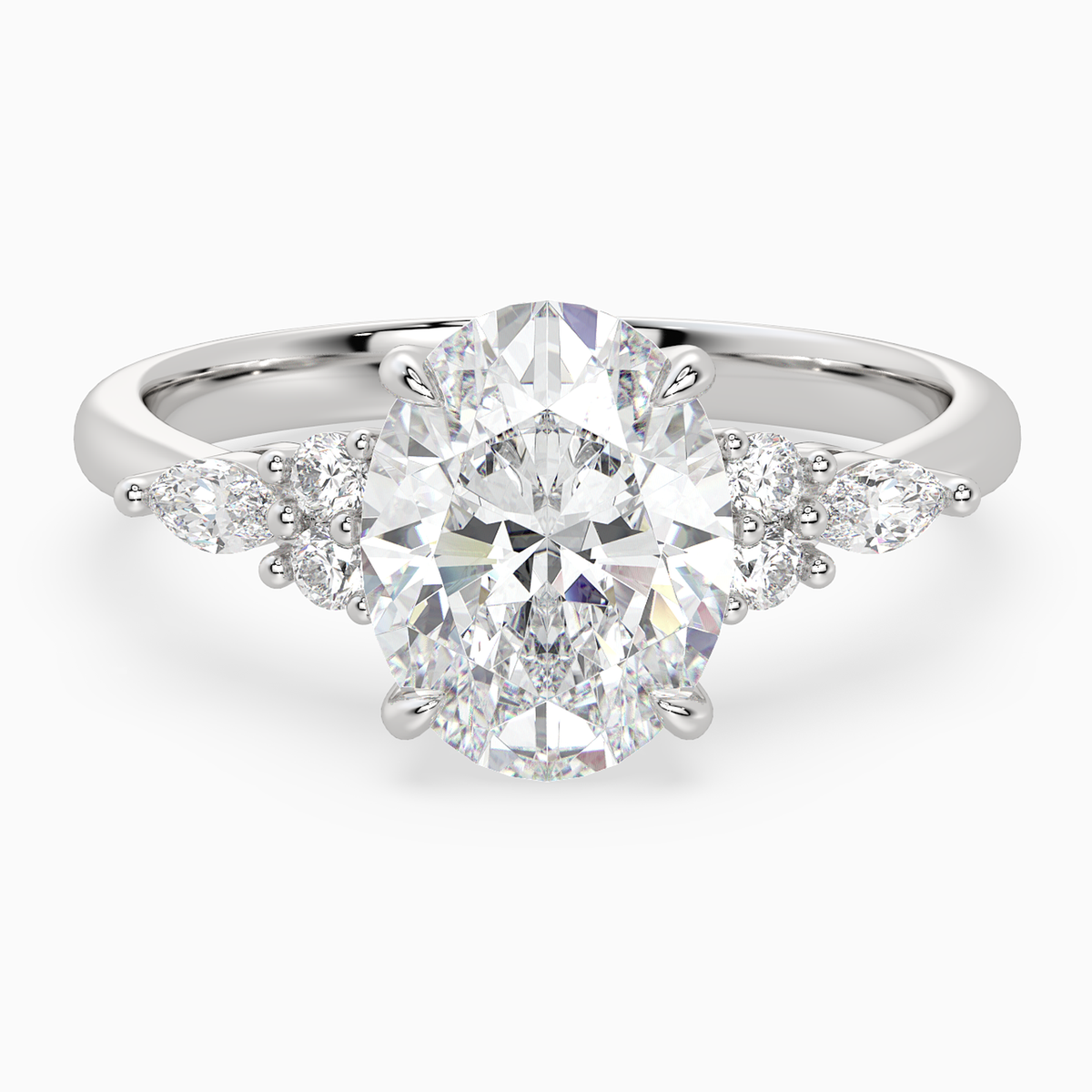


Simulated diamonds can be confusing because the name sounds close to lab-grown diamonds. They may sparkle. They may be colorless. They may be sold in jewelry that looks diamond-inspired. But a simulated diamond is not a diamond by material.
A simulated diamond, also called a diamond simulant, is a stone that imitates the look of a diamond while being made from another material. Cubic zirconia, moissanite, white sapphire, glass, and other colorless stones can all be used as diamond simulants. A lab-grown diamond is different: it is a diamond grown in a controlled laboratory environment, with the carbon crystal structure and core properties of diamond.
Quick answer: simulated diamonds are not real diamonds. They are diamond look-alikes made from non-diamond materials. Lab-grown diamonds are real diamonds grown above ground, and they can be graded for cut, color, clarity, and carat weight.
What Are Simulated Diamonds?
Simulated diamonds are gemstones or manufactured materials chosen because they resemble diamonds visually. The word "simulated" refers to appearance, not origin. A simulant is designed to look like something else.
That distinction matters when you are shopping for an engagement ring, anniversary ring, or any piece of jewelry meant for everyday wear. A simulant can be beautiful in its own category, but it does not share the same composition, hardness, optical behavior, or grading pathway as a diamond. Use our 4Cs diamond guide for the broader decision framework; then continue with Diamond Alternatives for Engagement Rings for a wider material comparison.
Simulated Diamonds vs Lab-Grown Diamonds
The most important buying distinction is simple: a lab-grown diamond is a diamond; a simulated diamond is not. The two can overlap visually in a jewelry case, but they are not the same purchase.
| Feature | Simulated Diamond | Lab-Grown Diamond |
|---|---|---|
| Material | A non-diamond material selected to imitate diamond appearance. | Diamond grown in a laboratory from carbon under controlled conditions. |
| Common examples | Cubic zirconia, moissanite, white sapphire, glass, spinel, and other look-alike stones. | CVD or HPHT lab-grown diamonds. |
| Hardness and wear | Varies by material. Some simulants scratch or abrade faster than diamond. | Diamond hardness and durability, suitable for daily-wear fine jewelry when properly set. |
| Light behavior | Can look bright, but may show a different type of fire, brilliance, or facet pattern. | Diamond optics, with beauty strongly shaped by cut quality. |
| Grading | Not graded as a diamond on the diamond 4Cs. | Can be accompanied by a lab-grown diamond report from a recognized laboratory. |
| Best use | Fashion jewelry, travel jewelry, budget-friendly styling, or a look-alike piece where diamond identity is not the goal. | Engagement rings, wedding jewelry, heirloom-intended pieces, and shoppers who want verified diamond material with transparent specifications. |
Compare verified lab-grown diamond options
If you want diamond material, transparent specifications, and a ring built around your chosen stone, start with lab-grown diamonds rather than simulants.
Compare lab-grown diamondsWhat Are Simulated Diamonds Made Of?
There is no single material behind every simulated diamond. The term describes the role the stone plays in jewelry, not one fixed composition. The most common options include cubic zirconia, moissanite, white sapphire, glass, and less common colorless gemstones or manufactured materials. Continue with Are Lab-Grown Diamonds Cubic Zirconia for the next comparison.
Cubic Zirconia
Cubic zirconia, often shortened to CZ, is one of the best-known diamond simulants. It is usually very affordable and can look bright when new. Over time, however, CZ can become scratched, cloudy, or worn more easily than diamond, especially in jewelry that is worn every day.
Moissanite
Moissanite is durable and has strong fire, which means it can show vivid flashes of color. Some shoppers love that look; others find it visibly different from diamond. Moissanite is not a diamond, but it is often chosen as a durable alternative stone.
White Sapphire
White sapphire is a natural or lab-created corundum gemstone. It is harder than many alternatives, but it generally does not have the same brilliance as a well-cut diamond. It can be a thoughtful choice for someone who wants a non-diamond gemstone, but it should not be presented as a diamond.
Glass and Other Look-Alike Stones
Glass and softer look-alike materials can imitate the appearance of a diamond at a distance, but they are not appropriate substitutes for a fine jewelry diamond in a ring that will be worn constantly. They may scratch, chip, or lose polish quickly.

Can You Tell a Simulated Diamond by Looking?
Sometimes, but not reliably. A trained jeweler may notice differences in fire, facet sharpness, doubling, surface wear, or weight. For a shopper, visual inspection alone is not enough, especially under bright store lighting.
Professional testing, transparent disclosure, and documentation matter. A diamond tester may help, but some testers can be fooled or limited by the stone type. For important purchases, rely on a reputable jeweler and an appropriate grading or identification report.
Ask about verificationAre Simulated Diamonds Good for Engagement Rings?
A simulated diamond can work for an engagement ring if both people understand exactly what the stone is and value the look, budget, or symbolism of that choice. The problem is not the existence of simulants. The problem is confusion.
For a ring intended for daily wear, many shoppers prefer a lab-grown diamond because it offers diamond identity, diamond durability, and verifiable specifications at a more accessible price than many comparable natural diamonds. The decision is clearer when every material is named honestly.
Burvonti perspective: a meaningful ring should be chosen with intention. If the goal is a diamond engagement ring, choose a verified diamond. If the goal is a fashion-forward alternative, choose the simulant openly. Transparency protects the meaning of the decision.
How to Tell Whether a Stone Is a Simulant or a Diamond
No single at-home trick is enough to identify a stone with certainty. Fog tests, sparkle checks, and water tests are popular online, but they are not reliable buying tools. A more responsible approach combines seller disclosure, documentation, and professional testing.
Buyer checklist
- Ask whether the stone is a diamond, a lab-grown diamond, or a diamond simulant.
- Request the stone's report or documentation when buying a diamond.
- Confirm whether the report describes a natural diamond or a lab-grown diamond.
- Ask what material the simulant is if it is not a diamond.
- Consider daily-wear durability, not only first-day sparkle.
- Make sure the invoice and product description use clear, accurate terms.
When a Simulant Makes Sense
Simulated diamonds are not automatically a bad choice. They can be practical for travel jewelry, occasional fashion pieces, temporary settings, or shoppers who simply prefer an alternative material. They can also be helpful when someone wants the look of a larger stone without the cost of a diamond.
The key is expectation. A simulant should be priced, described, and cared for according to what it is. If you expect diamond durability, diamond grading, and diamond identity, a simulant is the wrong category.
When a Lab-Grown Diamond Is the Better Fit
A lab-grown diamond is often the stronger fit when the ring is meant to mark a long-term commitment, be worn every day, and be selected around transparent specifications. You can compare cut, color, clarity, carat weight, shape, and certification instead of relying only on a vague sparkle impression.
That is why Burvonti focuses on lab-grown diamond jewelry made after the diamond and setting are selected. The ring is built around your decision, not pulled from a generic pre-assembled inventory. The result is a more precise path from stone choice to setting proportion to final wearability.

Choose the stone category before the setting
The best ring decisions start with clear material identity. Once you know whether you want a lab-grown diamond or a non-diamond alternative, every design choice becomes easier: setting height, prong style, band width, care expectations, and long-term wear. Explore lab-grown diamond rings when you are ready to compare available designs.
Explore lab-grown diamond engagement ringsBottom Line
Simulated diamonds are stones that imitate the appearance of diamonds. Lab-grown diamonds are diamonds grown in a laboratory. Both can have a place in jewelry, but they should never be treated as interchangeable.
If you are choosing a ring for daily wear and long-term meaning, start with transparent material identity. A verified lab-grown diamond gives you the diamond category, the specification clarity, and the design flexibility to build a ring around the stone you actually chose.
Start with a verified lab-grown diamond
Explore Burvonti lab-grown diamond jewelry or begin a custom ring design with clear specifications from the first decision.
Start a custom ring designSimulated Diamond FAQ
Are simulated diamonds real diamonds?
No. Simulated diamonds are not diamonds by material. They are look-alike stones made from other materials, such as cubic zirconia, moissanite, white sapphire, or glass.
Is a lab-grown diamond a simulated diamond?
No. A lab-grown diamond is a diamond grown in a laboratory. A simulated diamond is a non-diamond material that imitates the appearance of a diamond.
Is moissanite a simulated diamond?
Moissanite can be used as a diamond simulant because it may resemble diamond in jewelry, but it is its own gemstone with different composition and optical behavior.
Do simulated diamonds pass a diamond tester?
It depends on the tester and the material. Some basic testers have limitations, especially with moissanite. For important purchases, use professional verification and appropriate documentation.
Are simulated diamonds worth anything?
Some simulated diamonds have value as jewelry materials, but they generally do not carry diamond value because they are not diamonds. Price should reflect the actual material and craftsmanship.
Should I choose a simulated diamond or a lab-grown diamond?
Choose a simulated diamond if you want an affordable look-alike and understand its material. Choose a lab-grown diamond if you want diamond identity, diamond durability, and transparent grading for a long-term jewelry piece.