
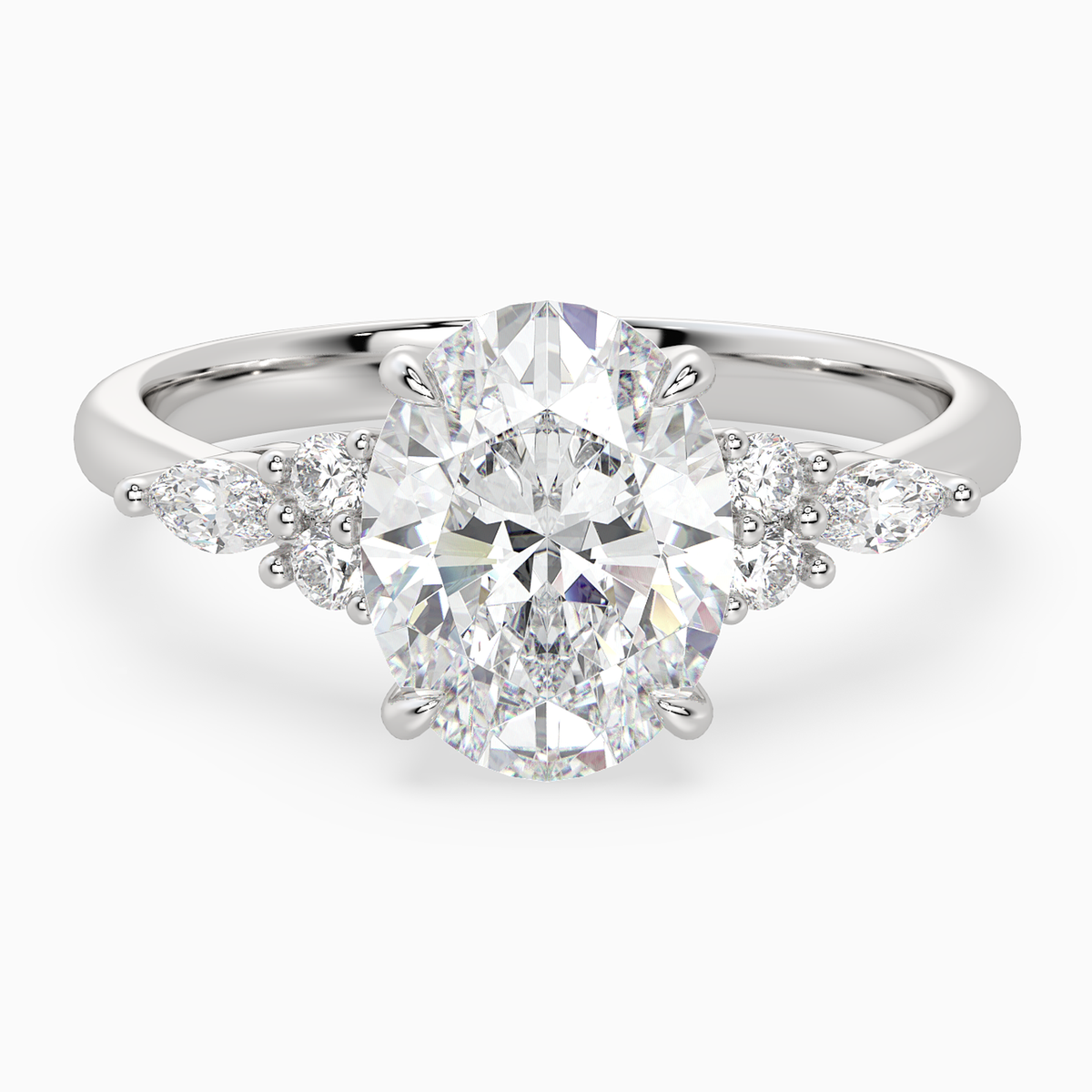


Do Lab-Grown Diamonds Pass a Diamond Tester? What the Result Really Means

Yes, a lab-grown diamond should pass a standard diamond tester because it is a real diamond. The more important question is what that result actually proves. A tester can help confirm diamond-like thermal or electrical behavior, but it usually does not tell you whether the diamond was grown in a lab or formed naturally underground.
Most common diamond testers read lab-grown diamonds as diamond because lab-grown and mined diamonds share the same core diamond properties. To confirm whether a diamond is lab-grown or mined, look for a grading report, laser inscription, seller documentation, or professional screening equipment designed for origin identification.
This guide explains how diamond testers work, why lab-grown diamonds pass, where simple testers can be limited, and what to check before buying lab-grown diamond jewelry.
Why Lab-Grown Diamonds Pass Diamond Testers
Lab-grown diamonds are made of diamond crystal. They are not cubic zirconia, glass, white sapphire, or moissanite. Because of that, they share the hardness, brilliance potential, and conductive properties that many testers are built to detect.
When a standard tester touches a lab-grown diamond, it is usually measuring one of two things:
Thermal conductivity
Many older or simple testers measure how quickly heat moves through the stone. Diamond conducts heat differently from many simulants.
Electrical conductivity
Some testers also measure electrical behavior. This can help separate diamond from certain simulants, especially when the device is designed for more than one reading.
Because lab-grown diamonds are diamonds, the tester sees diamond behavior. That is why a "diamond" result does not make the stone mined, and a lab-grown origin does not make the stone fake.
What a Diamond Tester Can and Cannot Tell You
| Question | What a Basic Tester Can Help With | What It Cannot Confirm Alone |
|---|---|---|
| Is this behaving like diamond? | Often yes, if the tester is working properly and the stone is clean and accessible. | It cannot replace full gemological identification. |
| Is it lab-grown or mined? | No. A standard tester usually reads both as diamond. | Origin requires a report, inscription, or professional screening. |
| Is it moissanite? | Some dual testers can help separate moissanite from diamond. | Very simple thermal testers may be confused by moissanite-like conductivity. |
| Is the diamond high quality? | No. Passing a tester does not tell you cut, color, clarity, carat, or proportions. | Quality still needs grading, measurements, and visual review. |

Why a Tester Cannot Prove Lab-Grown vs. Mined Origin
A standard diamond tester is not designed to read a diamond's growth history. It does not know whether carbon atoms were arranged by natural geological conditions or by a controlled HPHT or CVD growth process. It is looking for diamond-like behavior, not origin.
This is the main misunderstanding. A lab-grown diamond can pass a diamond tester because it is diamond. A mined diamond can pass for the same reason. If both pass, the tester has not answered the origin question.
If someone says a diamond tester proves a stone is mined, be careful. A tester may support that the stone is diamond, but it does not prove mined origin. Ask for documentation instead.

What About Moissanite and Diamond Simulants?
Moissanite is not diamond, but it can confuse some older or simple thermal testers because it also conducts heat well. This is why many jewelers use dual testers or professional screening tools when a result matters.
Other simulants, such as cubic zirconia or glass, are more likely to fail a diamond tester because their properties differ more clearly from diamond. Still, any single tool has limits. Dirt on the stone, metal contact, incorrect probe angle, a weak battery, or poor calibration can all affect results.
How to Verify a Lab-Grown Diamond Before You Buy
A diamond tester is only one part of verification. For a purchase decision, use a fuller checklist:
- Ask for the grading report. The report should list lab-grown origin, measurements, carat weight, color, clarity, and other identifying details.
- Check the laser inscription when available. Many graded diamonds have a report number or inscription on the girdle that can be matched to documentation.
- Review the full 4Cs. A tester result does not tell you whether the diamond is well cut, eye-clean, or balanced for the setting.
- Compare the diamond in real viewing conditions. Look at video or in-person movement to judge brightness, fire, and dark areas.
- Buy from a transparent seller. The seller should clearly state lab-grown origin and provide documentation rather than relying on a quick tester demonstration. Use our 4Cs diamond guide for the broader decision framework; then continue with What to Check Before Buying a Lab Grown Diamond Engagement Ring.

Does Passing a Tester Mean the Diamond Is High Quality?
No. Passing a diamond tester only supports that the stone behaves like diamond. It does not grade beauty. A diamond can pass a tester and still have weak cut quality, visible inclusions, poor proportions, or a shape that does not suit the design.
For lab-grown diamond jewelry, the strongest buying decision combines verification with visual judgment. Check the report, but also look at how the diamond performs in the setting. A ring is not only a certified stone. It is a complete object: diamond, metal, proportions, prongs, comfort, and finish. Continue with IGI-Certified Lab-Grown Diamonds for the report-reading step.
| Check | Why It Matters | What to Ask |
|---|---|---|
| Origin disclosure | Confirms whether the diamond is lab-grown or mined. | Is the origin clearly stated in the report and product details? |
| Cut and proportions | Controls brightness, fire, scintillation, and face-up presence. | Does the diamond look lively in video or real viewing? |
| Color and clarity | Influences how clean and bright the diamond appears. | Is the diamond eye-clean for the intended setting? |
| Setting quality | A secure, well-proportioned setting protects the diamond and improves wearability. | Are prongs, height, metal, and comfort appropriate for daily wear? |
You can compare Explore lab-grown diamond rings, explore engagement ring settings, or keep reading through the Burvonti Journal if you are still comparing diamond quality and origin details.
Verify the Diamond, Then Judge the Whole Ring
Burvonti helps you look beyond a quick tester result by comparing documentation, diamond performance, setting security, and design fit before the final ring is built.
Explore lab-grown diamond rings Ask About Diamond VerificationCommon Mistakes to Avoid
- Assuming "passes tester" means mined. Lab-grown diamonds can pass because they are diamonds.
- Assuming "lab-grown" means fake. Lab-grown diamonds are different from simulants such as cubic zirconia.
- Trusting a tester instead of documentation. Origin and quality need paperwork and professional review.
- Ignoring moissanite confusion. Use a dual tester or professional screening when separating diamond from moissanite matters.
- Forgetting the 4Cs. A tester result does not measure cut, color, clarity, carat, or setting quality.
Frequently Asked Questions
Do lab-grown diamonds pass a diamond tester?
Yes, lab-grown diamonds typically pass standard diamond testers because they are real diamonds. They share the properties many testers are designed to detect.
Can a diamond tester tell if a diamond is lab-grown?
Most basic diamond testers cannot tell lab-grown and mined diamonds apart. They can help identify diamond-like behavior, but origin requires documentation or professional screening.
Will moissanite pass a diamond tester?
Some moissanite can confuse simple thermal testers. Dual testers and professional tools are better for separating diamond from moissanite.
Does passing a tester mean a diamond is high quality?
No. A tester does not grade cut, color, clarity, carat weight, proportions, or setting craftsmanship. It is only one verification step.
How do I prove a diamond is lab-grown?
Use a grading report, seller documentation, laser inscription when available, and professional screening. Do not rely on a basic diamond tester alone.
Final Takeaway
Lab-grown diamonds pass diamond testers because they are diamonds. But a passing result is only the beginning. It confirms diamond behavior, not origin, quality, or the long-term success of the finished ring. For a confident purchase, combine tester results with clear documentation, careful diamond comparison, and a setting built around the specific stone.
If you want help reviewing a lab-grown diamond report or comparing stones before a setting is finalized, contact Burvonti for a clear, low-pressure review.