
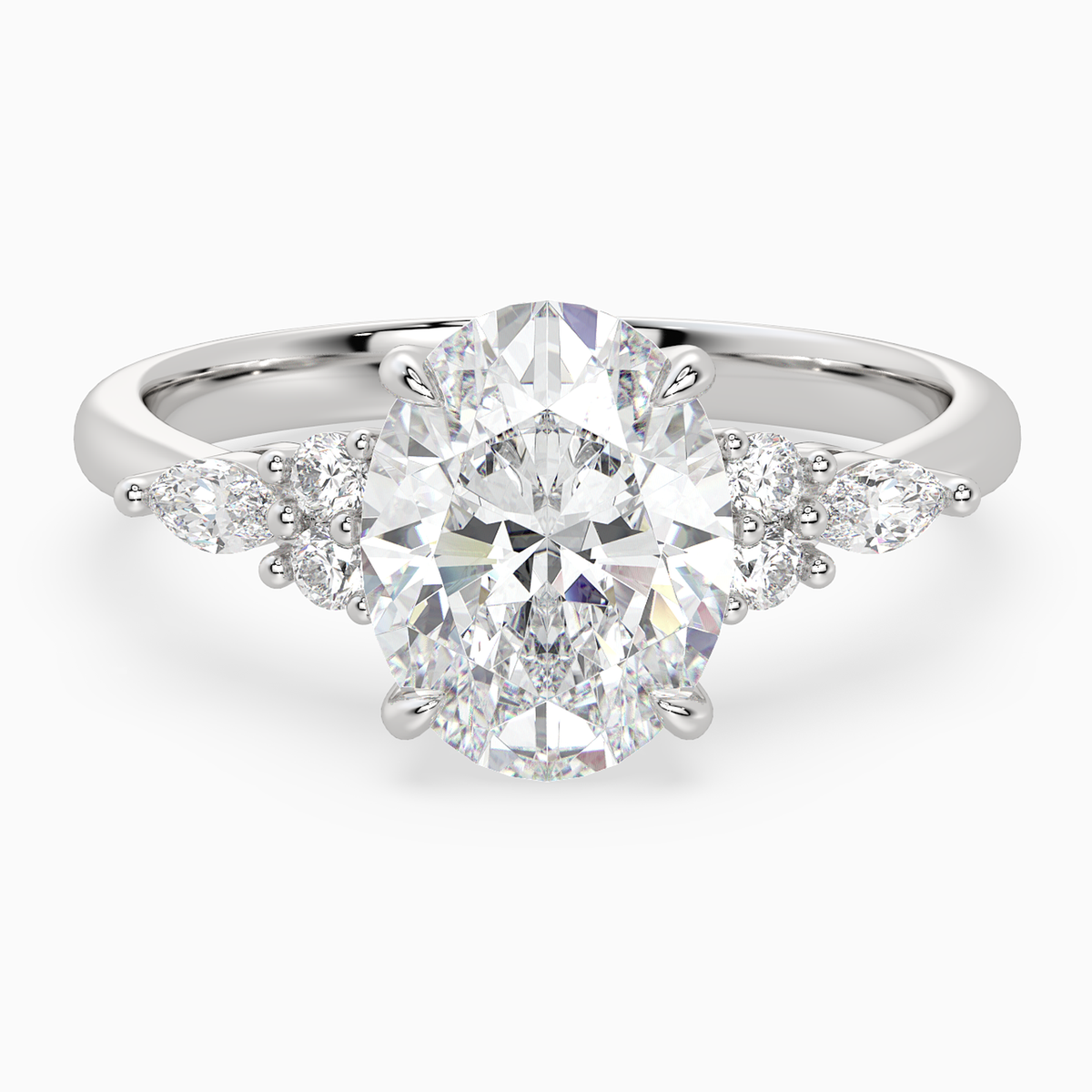


Diamond Alternatives for Engagement Rings: Lab-Grown Diamonds, Moissanite, Sapphires, and Gemstones Compared

Diamond alternatives for engagement rings can mean two different things. Some shoppers want an alternative to a mined diamond but still want a true diamond. Others want an alternative to diamond as a material, such as moissanite, white sapphire, morganite, aquamarine, emerald, or cubic zirconia.
If you want diamond properties without choosing mined origin, compare Compare engagement rings. If you want a different material, compare moissanite for brilliance, white sapphire for a softer clear look, colored gemstones for personality, and cubic zirconia mainly for temporary or fashion use.
The strongest choice is not the stone with the loudest sparkle or the lowest price. It is the stone that fits your daily life, your setting, your maintenance comfort, and the meaning you want the ring to carry over time.
What Counts as a Diamond Alternative?
A lab-grown diamond is a diamond. It is not a diamond simulant, because it has the same diamond material structure as a mined diamond. It is better described as an alternative to mined origin, not an alternative to diamond itself.
Moissanite, white sapphire, cubic zirconia, morganite, aquamarine, and emerald are different materials. They can be beautiful in engagement rings, but each one has its own optical behavior, durability profile, maintenance needs, and emotional tone.
Closest to mined diamond
Lab-grown diamond offers diamond sparkle, hardness, grading language, and long-term familiarity without mined origin.
Most sparkle for a different material
Moissanite is known for intense brilliance and fire, though its light pattern is visibly different from diamond.
Softest clear-stone look
White sapphire can feel quieter and less glittering than diamond or moissanite, which some shoppers prefer.
Most personality
Colored gemstones such as morganite, aquamarine, and emerald shift the ring from classic white brilliance to personal color.
Diamond Alternative Comparison Table
| Stone | Best For | Look | Daily Wear Notes |
|---|---|---|---|
| Lab-grown diamond | Someone who wants a true diamond and a modern origin choice. | Classic diamond brilliance, available in many shapes and grades. | Strongest option in this list for diamond-like longevity and familiar grading. |
| Moissanite | Someone who wants strong sparkle and a different material at a more accessible price. | Bright, fiery, and sometimes more rainbow-like than diamond. | Durable for regular wear, but the light return is not identical to diamond. |
| White sapphire | Someone who wants a clear stone with a softer, quieter glow. | Clean and understated, with less fire and contrast than diamond. | Can show wear or surface dullness faster than diamond, so cleaning habits matter. |
| Cubic zirconia | Temporary rings, travel rings, fashion use, or a low-commitment look. | Bright at first, but less refined and less durable over time. | Not the best long-term daily engagement ring center stone. |
| Morganite | Warm peach-pink color and a romantic, softer ring mood. | Gentle color, often paired with rose gold or warm settings. | Needs more care than diamond; consider protective settings and realistic expectations. |
| Aquamarine | Cool blue color and a calm, airy engagement ring style. | Pale to stronger blue, fresh and modern when set cleanly. | Better with thoughtful setting protection and regular maintenance. |
| Emerald | Bold green color and a distinctive vintage or architectural feel. | Deep color with natural character and visible internal features. | Requires careful wear because emeralds are more sensitive than diamond. |
Lab-Grown Diamonds: Best if You Still Want a Diamond
Choose a lab-grown diamond if your real question is: "Is there a better origin choice than mined diamond, while still keeping the diamond look and performance?" For many modern shoppers, this is the cleanest answer. You keep the diamond material, the familiar grading categories, the wide range of cuts, and the long-term wearability expected from a diamond engagement ring.
Lab-grown diamonds also work well if you want precise design control. The center stone can be selected by cut, color, clarity, carat, ratio, and shape before the setting is finalized. For a ring that should feel intentional rather than generic, that level of selection matters.

Moissanite: Best for High Sparkle at a Different Price Point
Moissanite is not a diamond, but it is one of the most popular diamond alternatives because it is durable, bright, and visually striking. Its fire can be more colorful than diamond, which some people love and others find less subtle.
Choose moissanite if you want a clear center stone with a highly sparkling look and you are comfortable with it being its own material. Avoid choosing it only because you expect it to be indistinguishable from diamond in every lighting condition.
White Sapphire: Best for a Softer Clear Look
White sapphire can be beautiful for shoppers who prefer a quiet, luminous center stone. It does not usually deliver the same sharp brilliance or contrast as diamond, and that is exactly why some people like it. The look is softer and less glitter-heavy.
The tradeoff is maintenance. A white sapphire engagement ring can require more frequent cleaning to keep it looking fresh, and it may not stay as crisp-looking as a diamond under the same wear habits. It is a style choice, not a diamond clone.
Cubic Zirconia: Best for Temporary or Fashion Use
Cubic zirconia is often used when the goal is low cost, travel safety, or a temporary ring. It can look bright when new, but it is not the strongest choice for a long-term daily engagement ring center stone.
If the ring is meant to be worn every day for years, think carefully before choosing cubic zirconia as the permanent center. It can be useful for testing size, shape, or style before committing to a more durable stone.
Colored Gemstones: Best for Personal Style
Morganite, aquamarine, emerald, and other colored gemstones shift the ring away from classic white brilliance and toward identity. The stone becomes less about imitating diamond and more about choosing a color that feels personal.
Morganite gives warmth and softness. Aquamarine feels cool and calm. Emerald feels bold, saturated, and distinctive. These stones can be beautiful, but they generally need more careful setting choices and wear habits than diamond. Bezel settings, lower profiles, secure prongs, and realistic care expectations become more important.

How to Choose the Right Alternative
Start with the reason you are considering an alternative. A lower price is valid, but it should not be the only lens. Engagement rings are worn in real life: at work, at home, while traveling, while washing hands, and through years of routine movement. The stone needs to fit that reality.
- If you want diamond performance: choose lab-grown diamond rather than a simulant.
- If you want maximum sparkle in a different material: compare moissanite in multiple lighting conditions.
- If you want a quiet clear stone: consider white sapphire, but understand the maintenance tradeoff.
- If you want color: choose the gemstone for its personality, then protect it with a thoughtful setting.
- If you want temporary use: cubic zirconia may be practical, but it should not be treated like a lifetime stone.
Setting Matters More With Alternatives
Some stones need more protection than others. A diamond can tolerate daily wear better than many gemstones, but no ring is immune to damage. For colored gemstones and softer clear alternatives, the setting becomes part of the decision, not an afterthought.
A low-profile bezel can help protect edges. A halo can add visual size, but it also adds more small stones to maintain. Side stones can make a modest center feel more substantial. An accented band can add detail, but it should not overwhelm a softer or more delicate center stone.
The best engagement ring alternative is not just a gemstone choice. It is a complete design decision: center stone, setting height, prong protection, metal tone, daily wear, and long-term meaning should be considered as one system.
Best Choice by Buyer Priority
| Priority | Best Starting Point | Why |
|---|---|---|
| True diamond, modern origin | Lab-grown diamond | It keeps diamond material and grading while changing the origin choice. |
| High sparkle at a different price | Moissanite | It offers strong brilliance and durability, with a light pattern that is its own look. |
| Quiet clear stone | White sapphire | It has a softer glow for shoppers who do not want intense sparkle. |
| Color and warmth | Morganite | It creates a peach-pink ring mood, often with rose gold or warm accents. |
| Cool color | Aquamarine | It brings pale blue clarity and a calm visual identity. |
| Bold color | Emerald | It makes a strong green statement but needs more care. |
Compare the Stone Before You Choose the Setting
If you want a ring that keeps diamond performance with a modern origin choice, start with lab-grown diamonds. If you are drawn to color or a different material, compare the beauty and the maintenance needs before you commit.
Explore engagement ringsFinal Recommendation
For most shoppers who want the look, durability, and long-term confidence of a diamond without choosing mined origin, a lab-grown diamond is the strongest starting point. For shoppers who want a different visual language, moissanite, white sapphire, morganite, aquamarine, and emerald can all be meaningful choices when selected with clear expectations.
The right engagement ring is not defined by tradition alone. It is defined by a stone and setting chosen with intention. Read more in the Burvonti Journal, or ask about a custom design if you want help comparing stone, setting, and daily wear together.
For a related guide, continue with What Are Simulated Diamonds? Simulants vs Lab-Grown Diamonds Explained.
Frequently Asked Questions
What is the best diamond alternative for an engagement ring?
If you want a true diamond but prefer a modern origin choice, lab-grown diamond is usually the strongest alternative to mined diamond. If you want a different material, moissanite is one of the most durable and brilliant options.
Is moissanite the same as diamond?
No. Moissanite is a different gemstone material. It can be very bright and durable, but its fire and light behavior are not identical to diamond.
Are lab-grown diamonds real diamonds?
Yes. Lab-grown diamonds are diamonds. They are best understood as an alternative to mined origin, not a diamond simulant.
Is white sapphire good for an engagement ring?
White sapphire can work for shoppers who like a softer clear look, but it usually needs more cleaning and does not have the same brilliance profile as diamond.
Are morganite, aquamarine, and emerald durable enough?
They can be used in engagement rings, but they need thoughtful settings and more careful wear than diamond. Choose protective settings and be realistic about maintenance.