
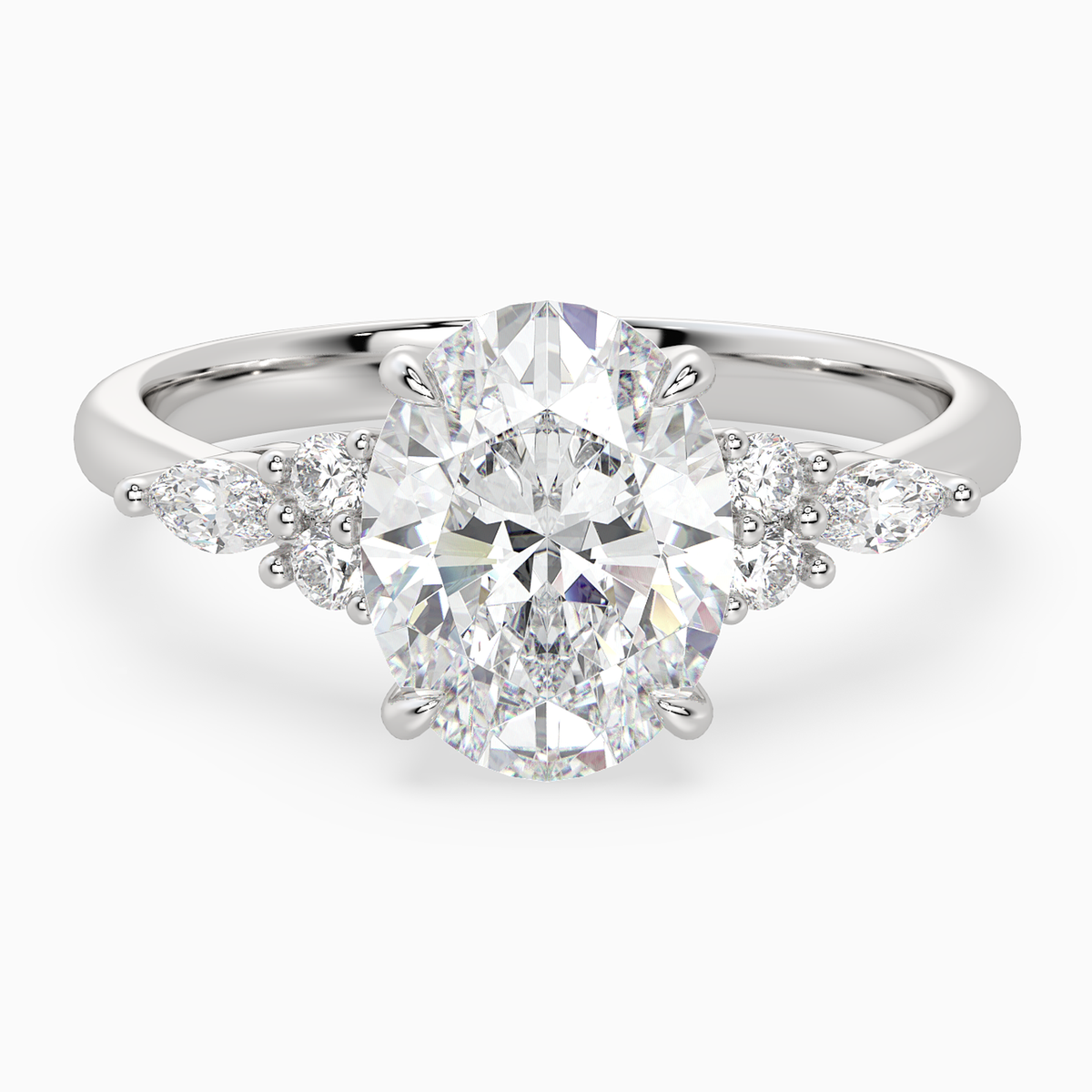


Lab Grown Diamond Eternity Rings in 14K Yellow Gold
Yellow gold makes each interval part of the design. Fifteen rings compare diamond coverage through setting, shape, width and complete scale.


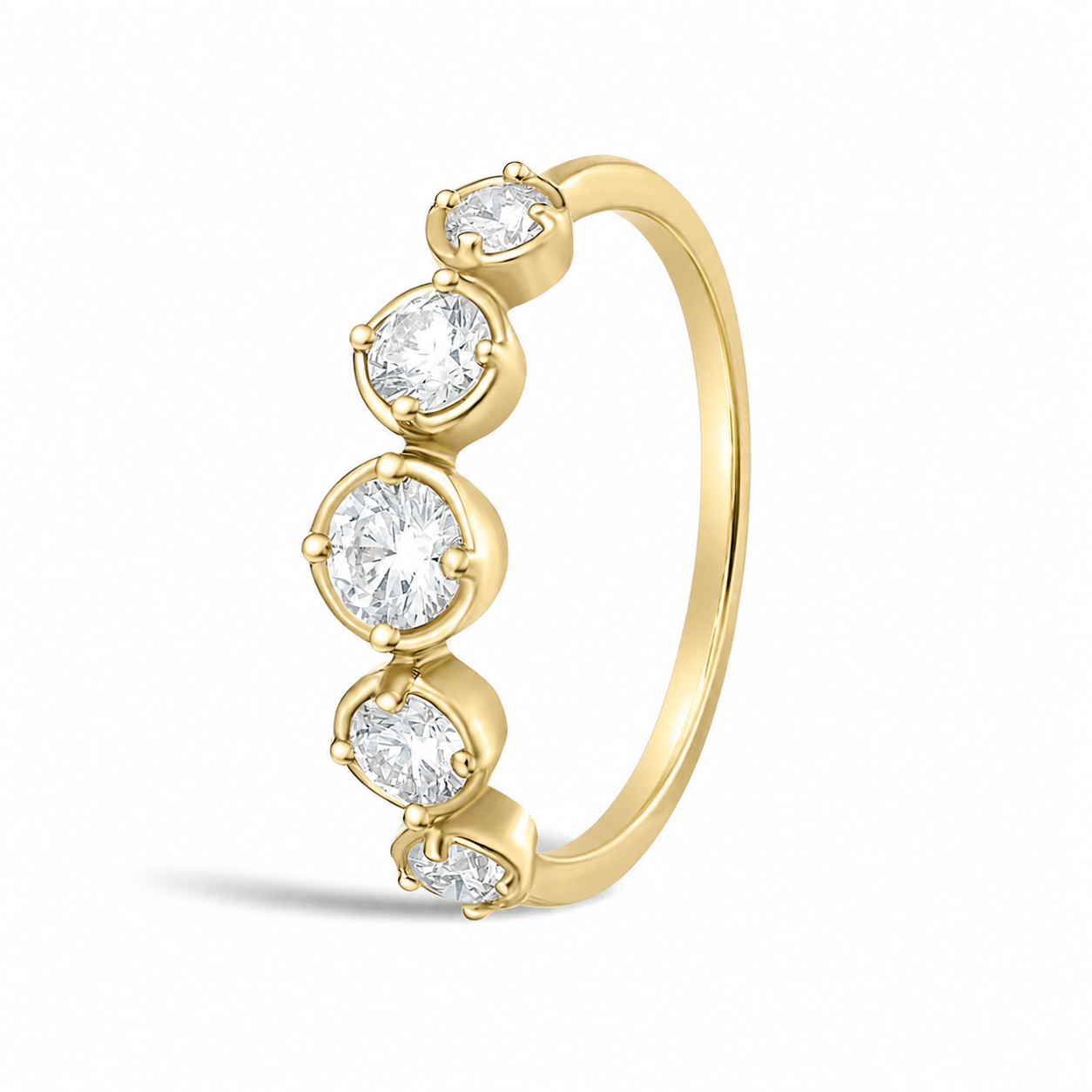

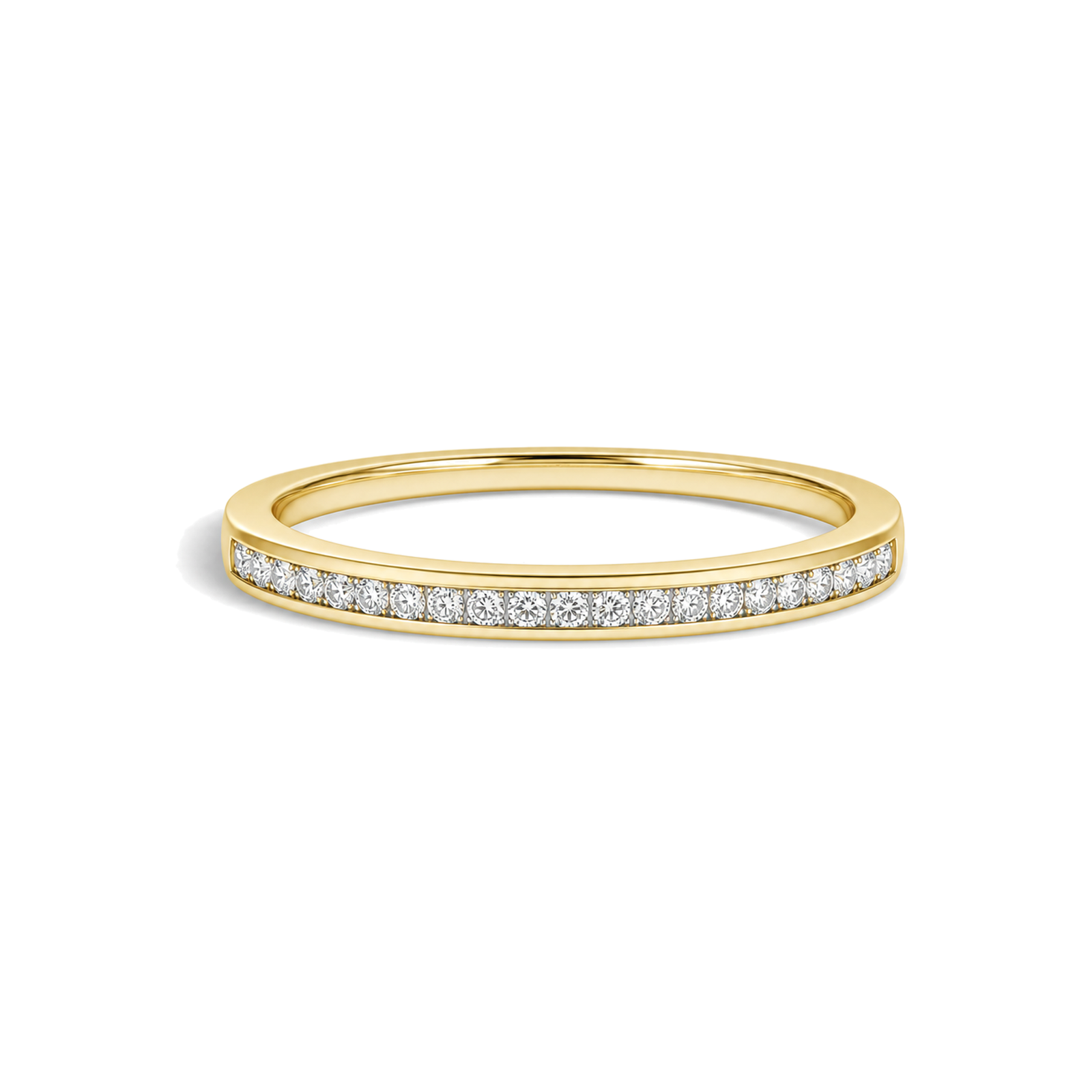
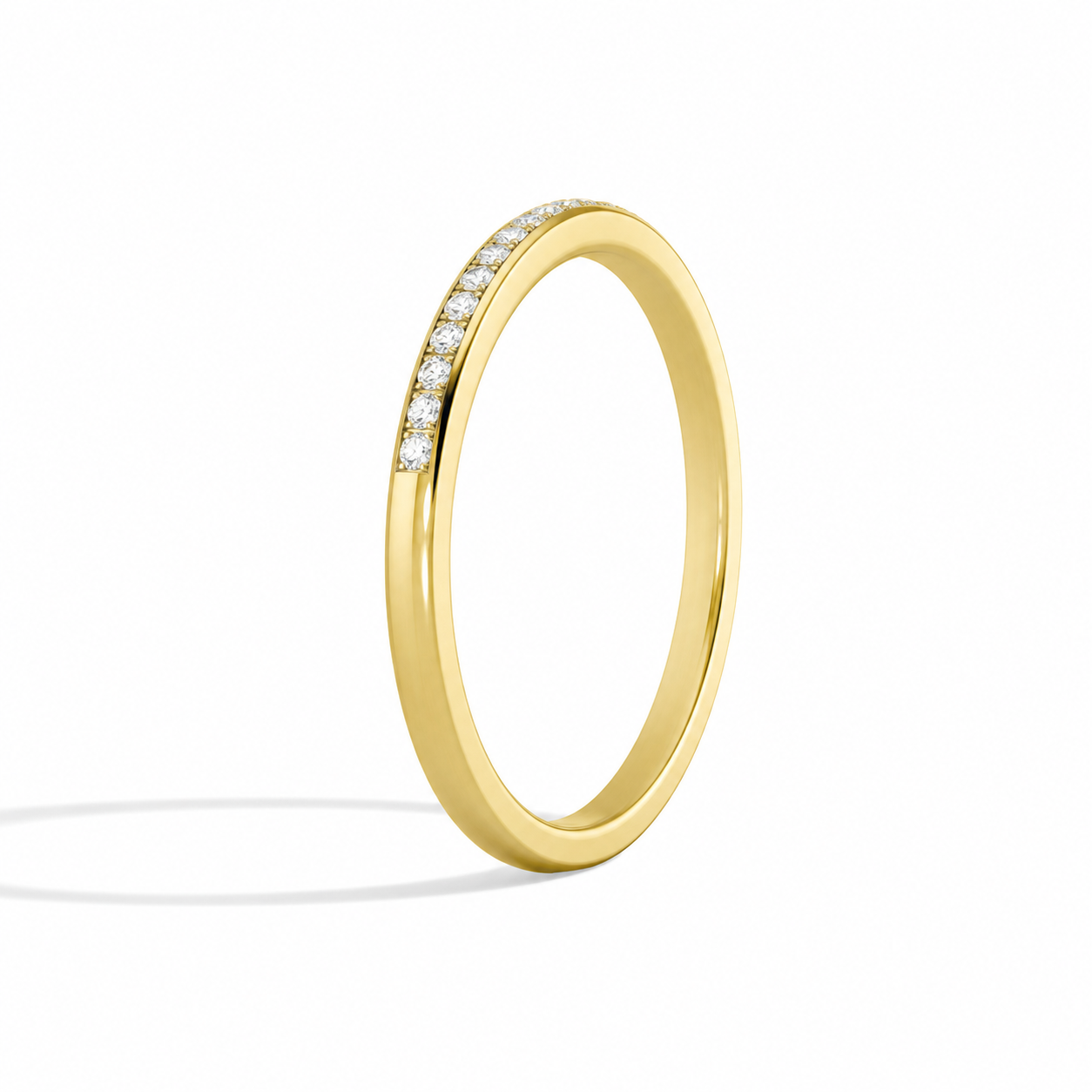
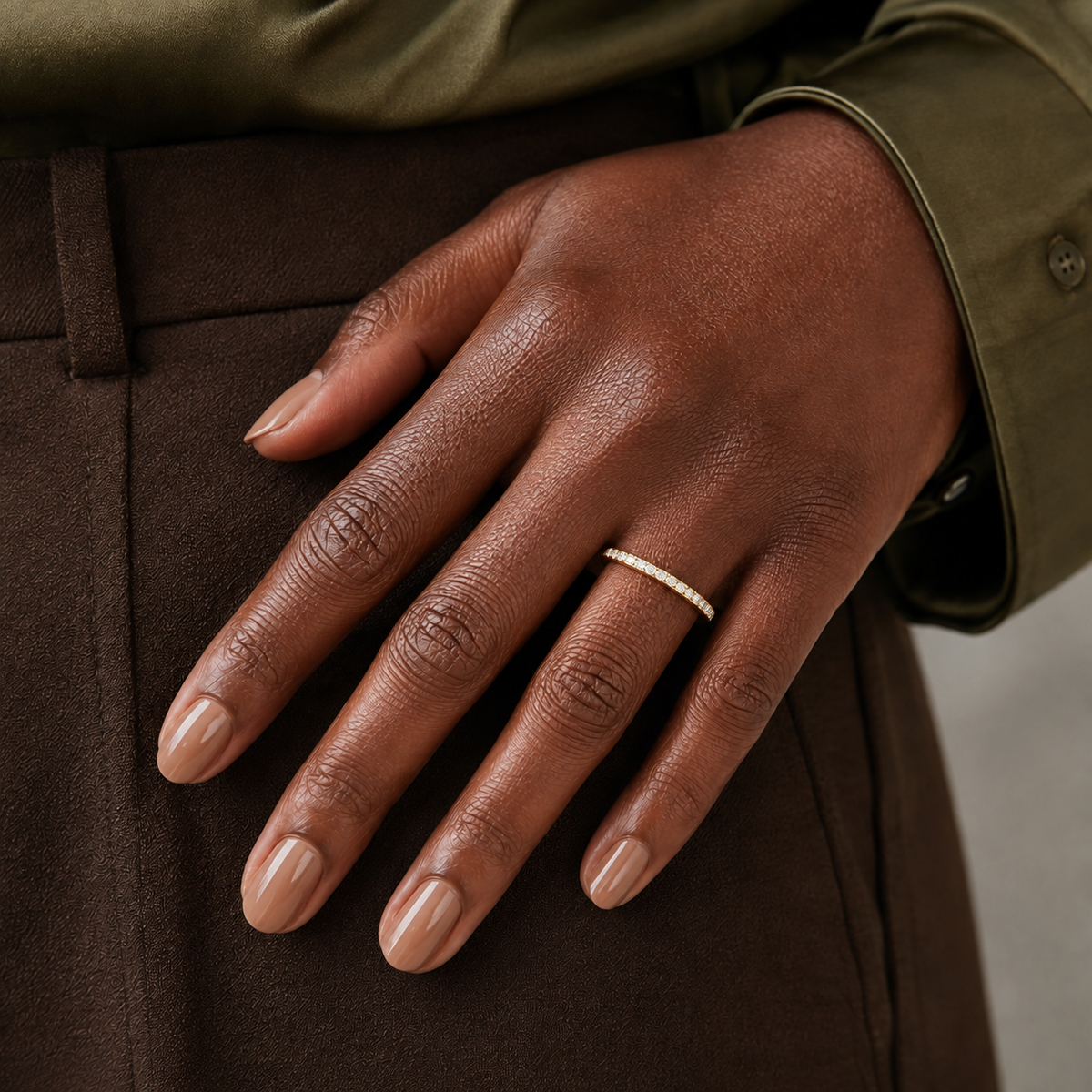

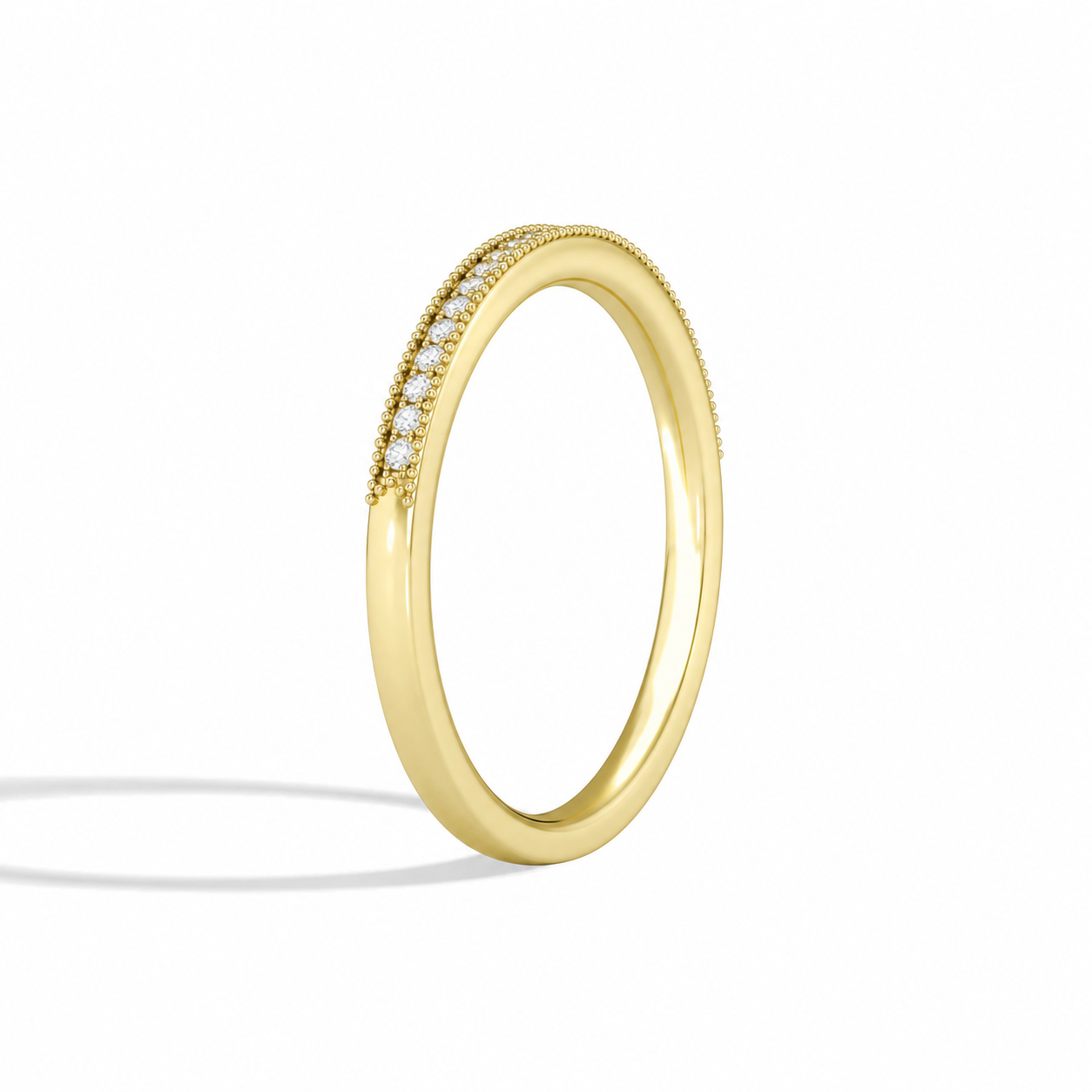

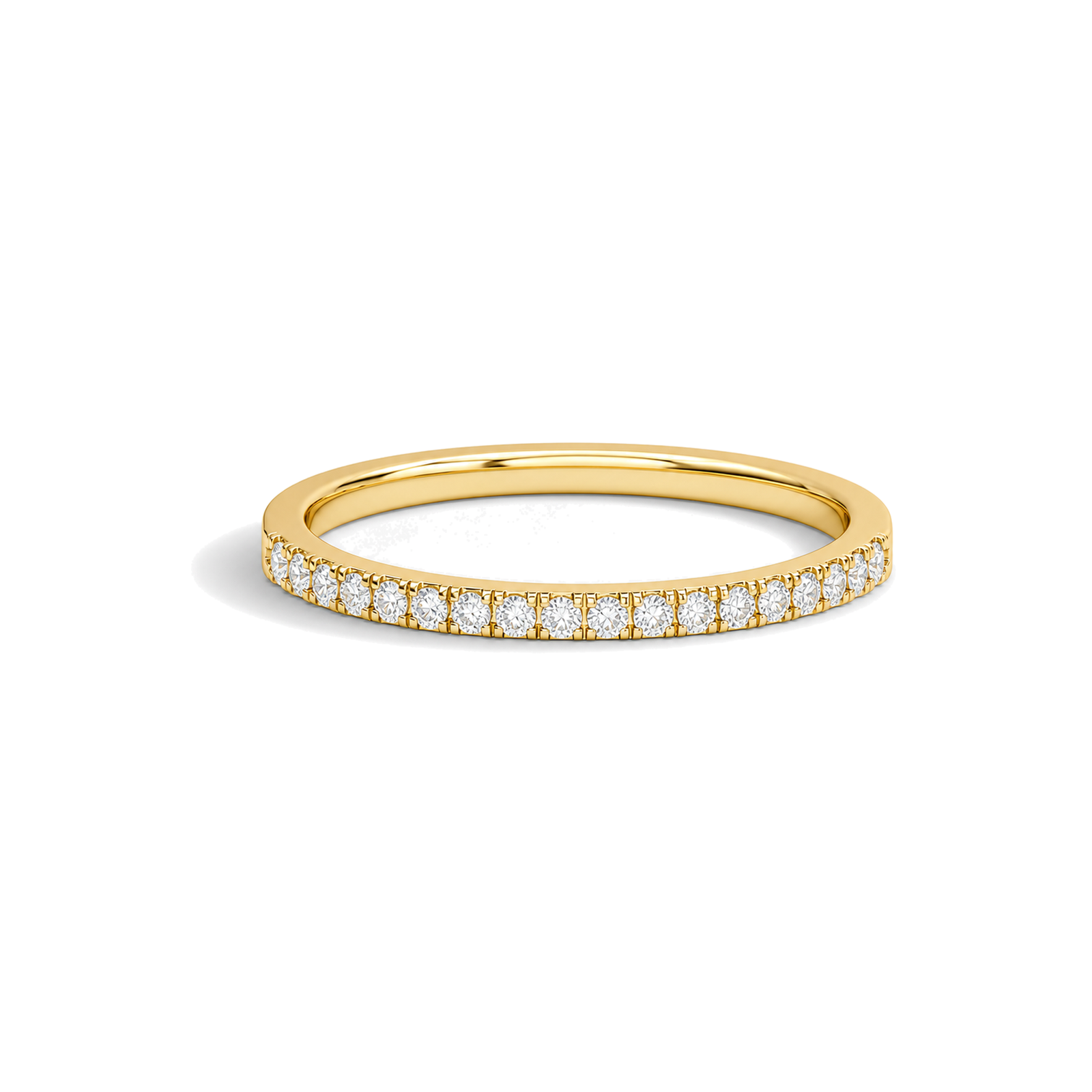


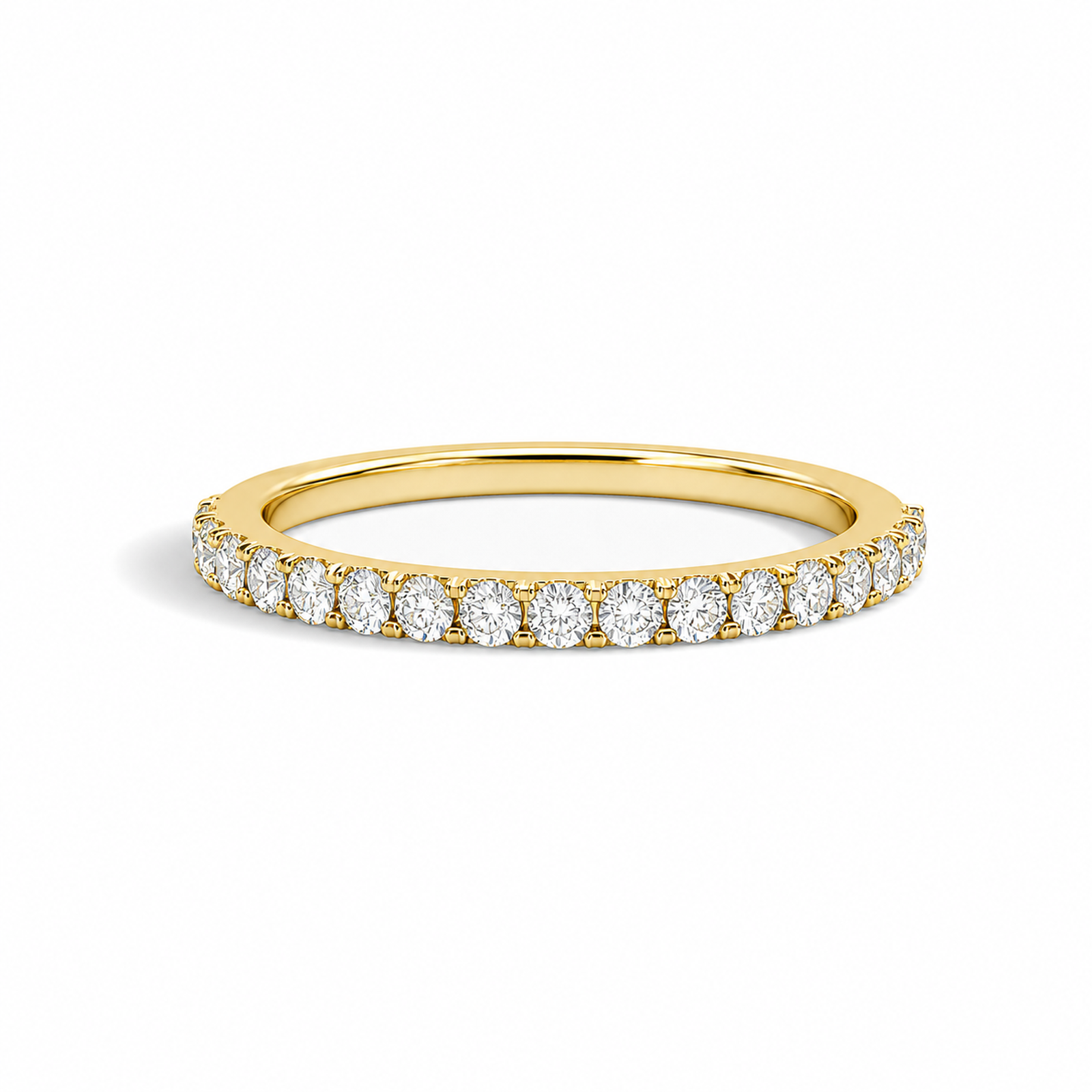
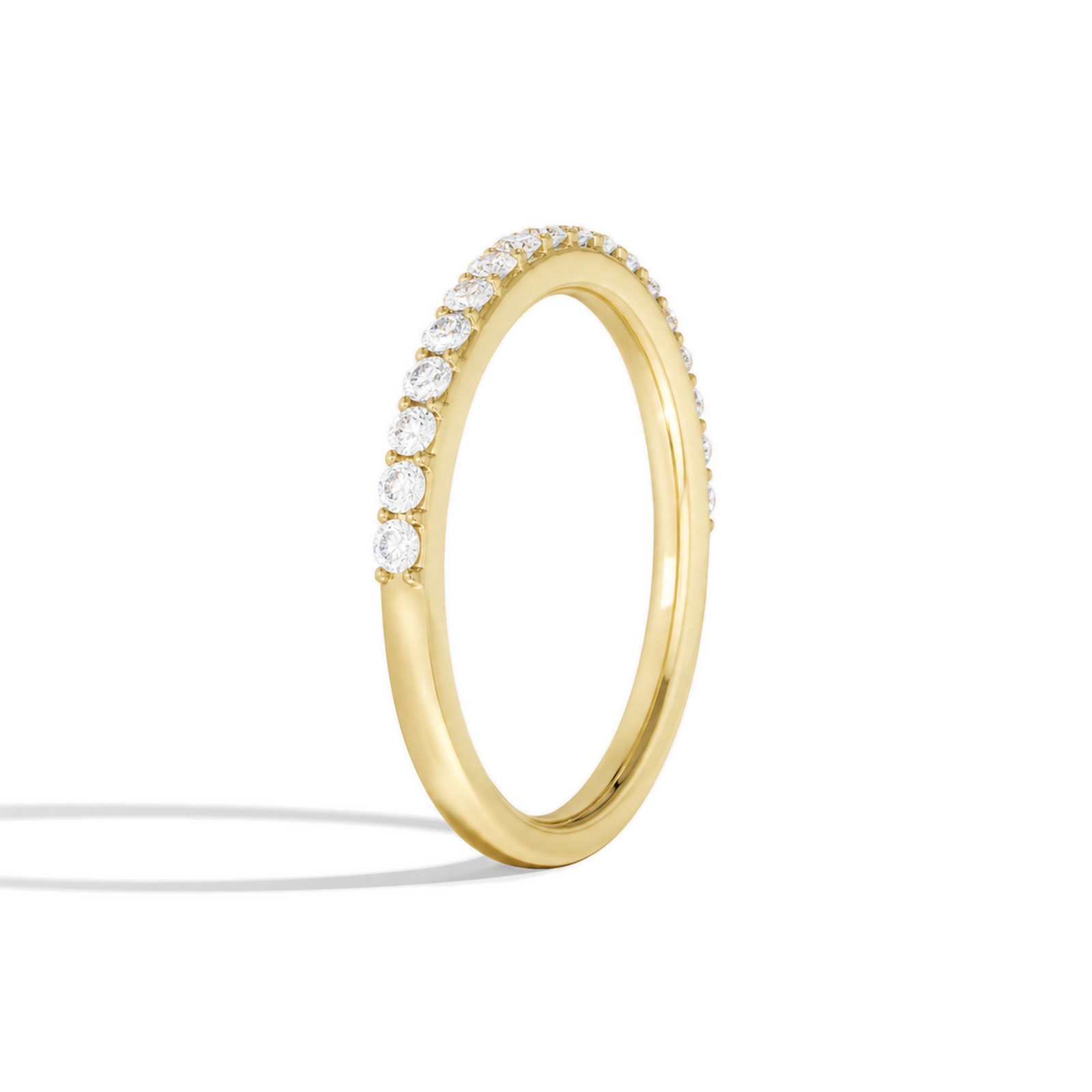

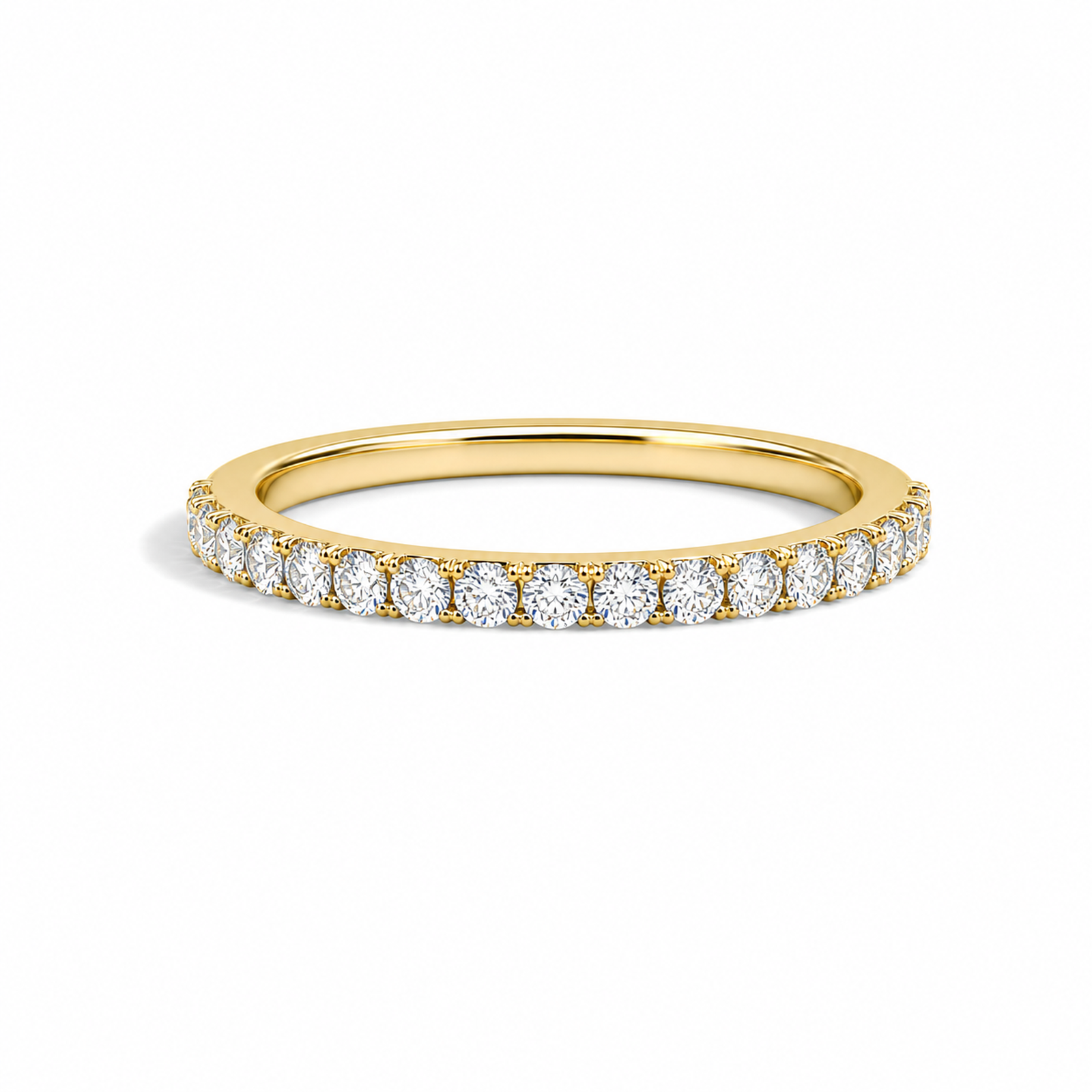


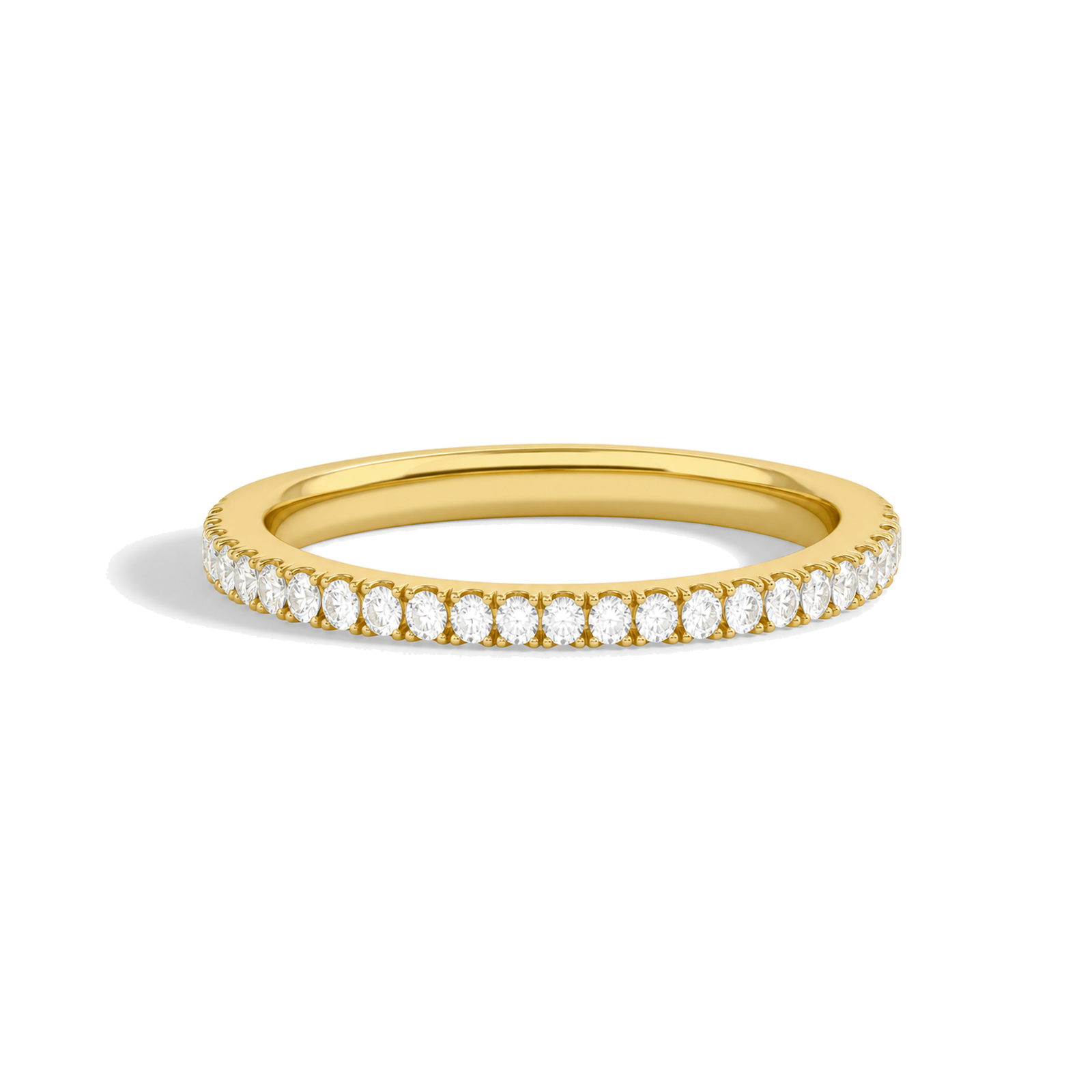


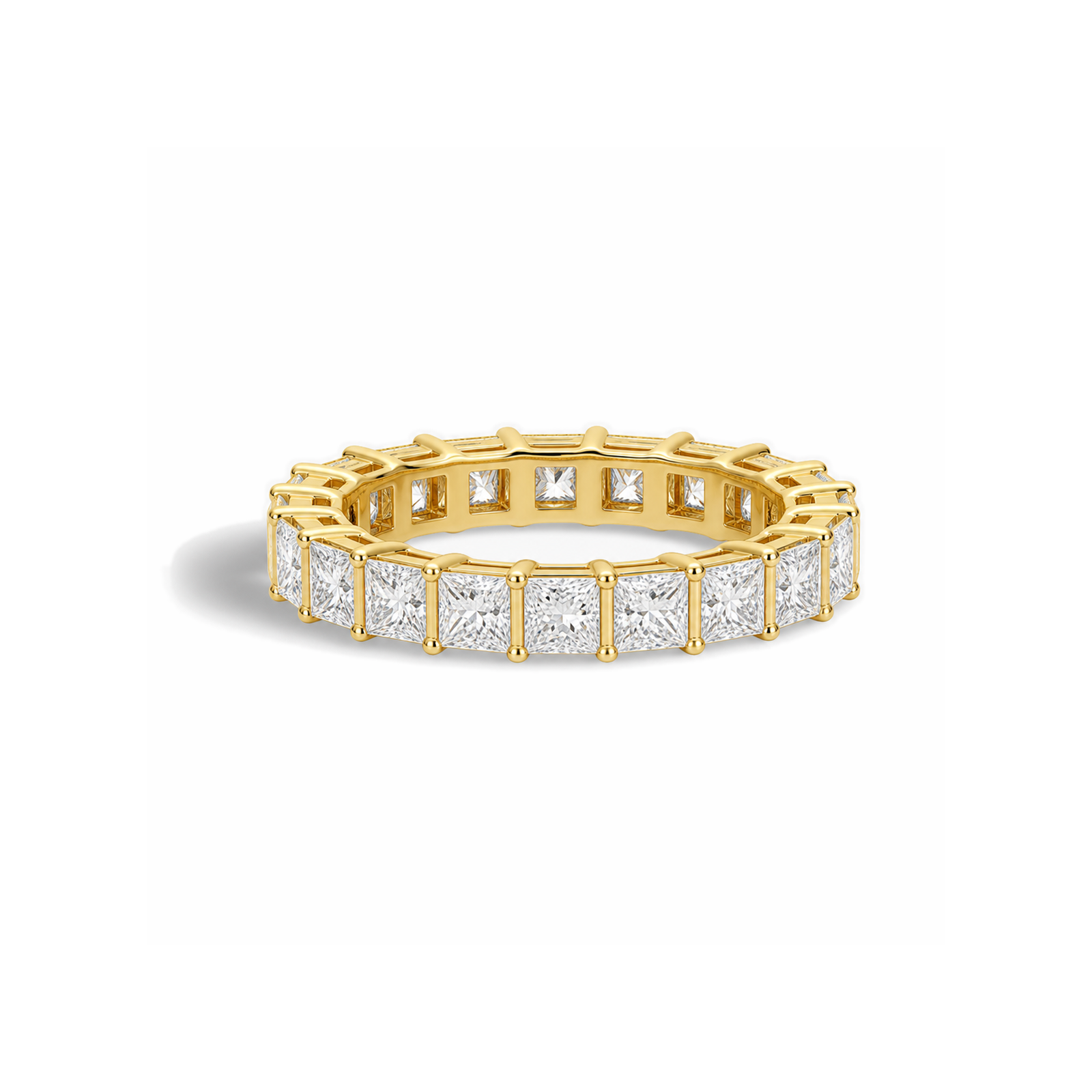


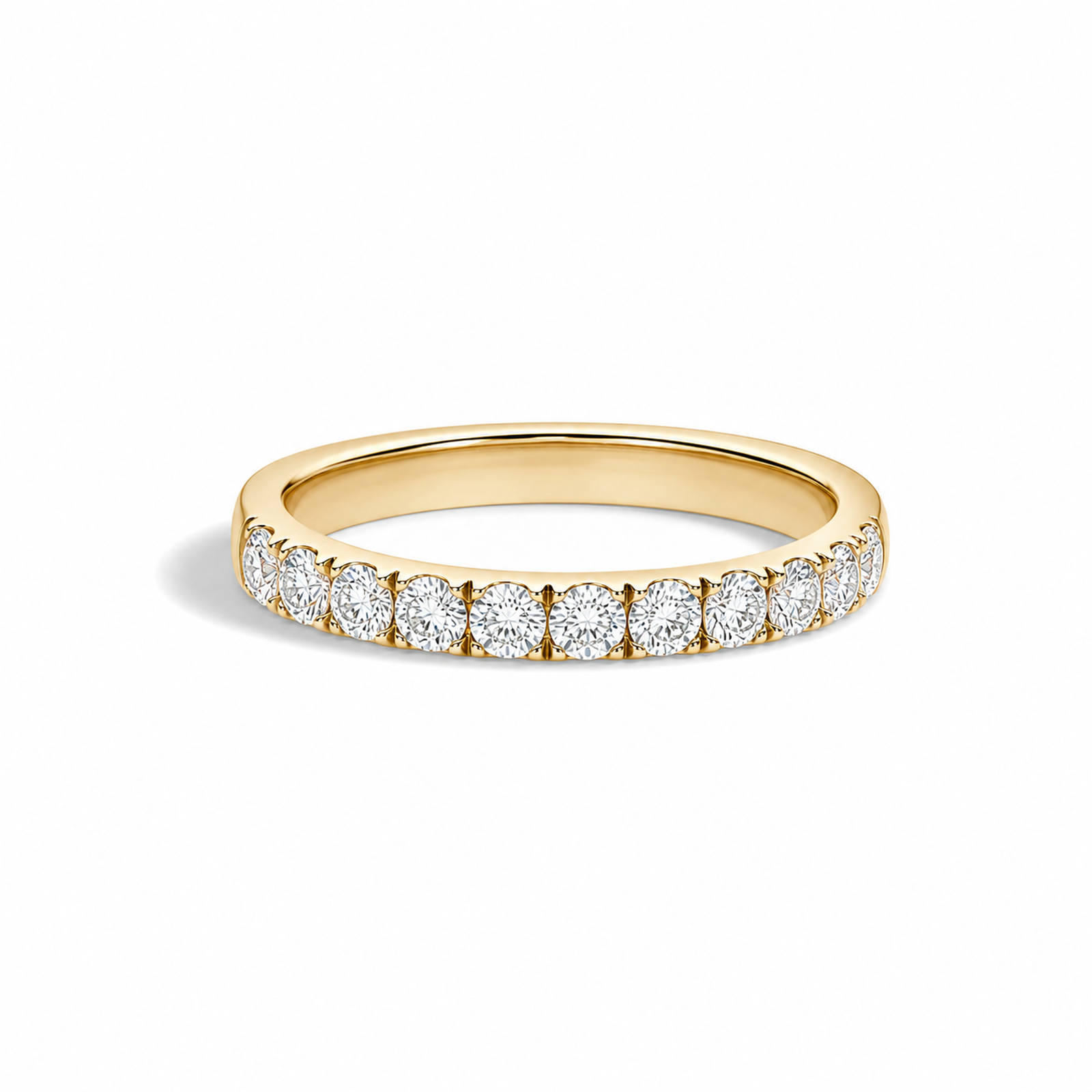
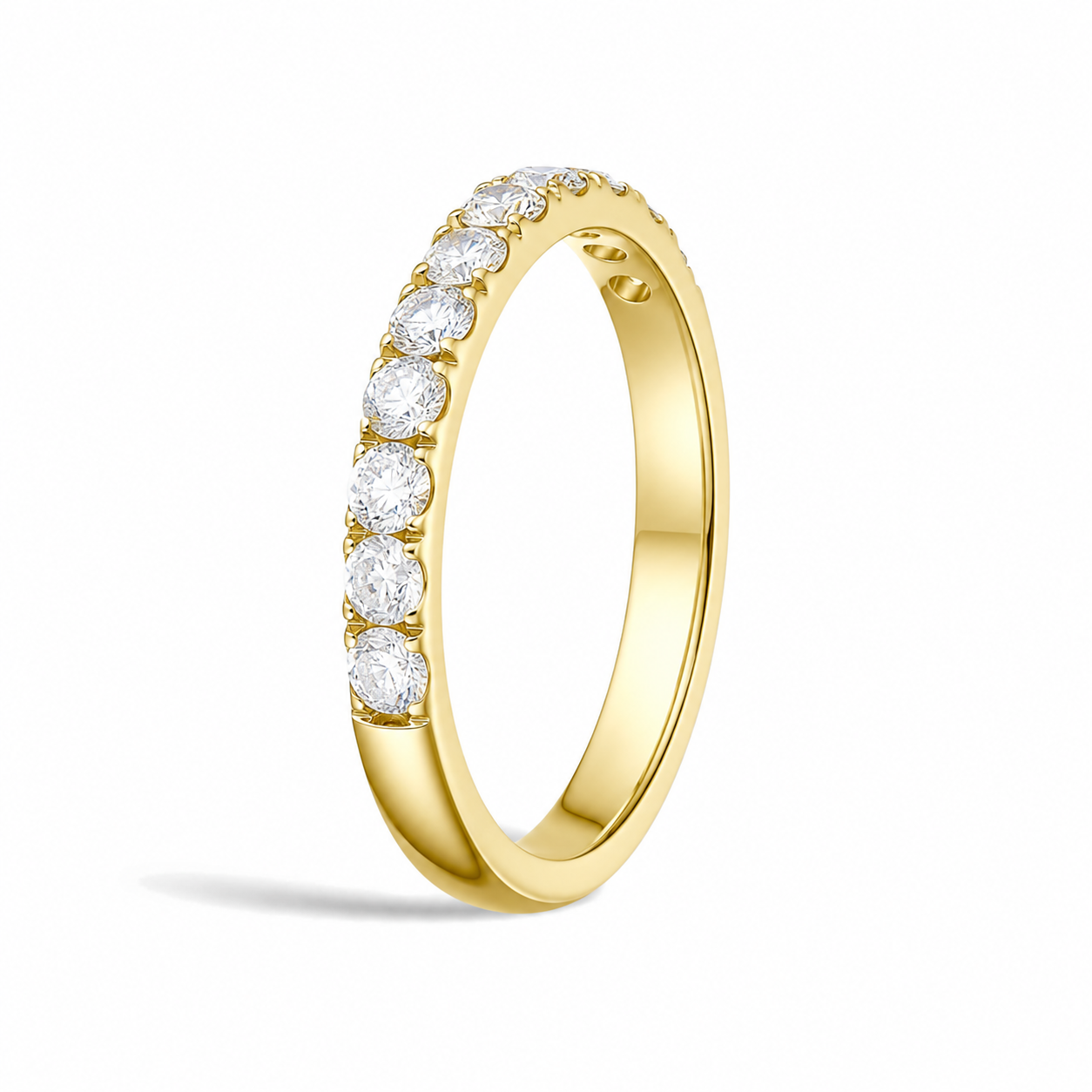

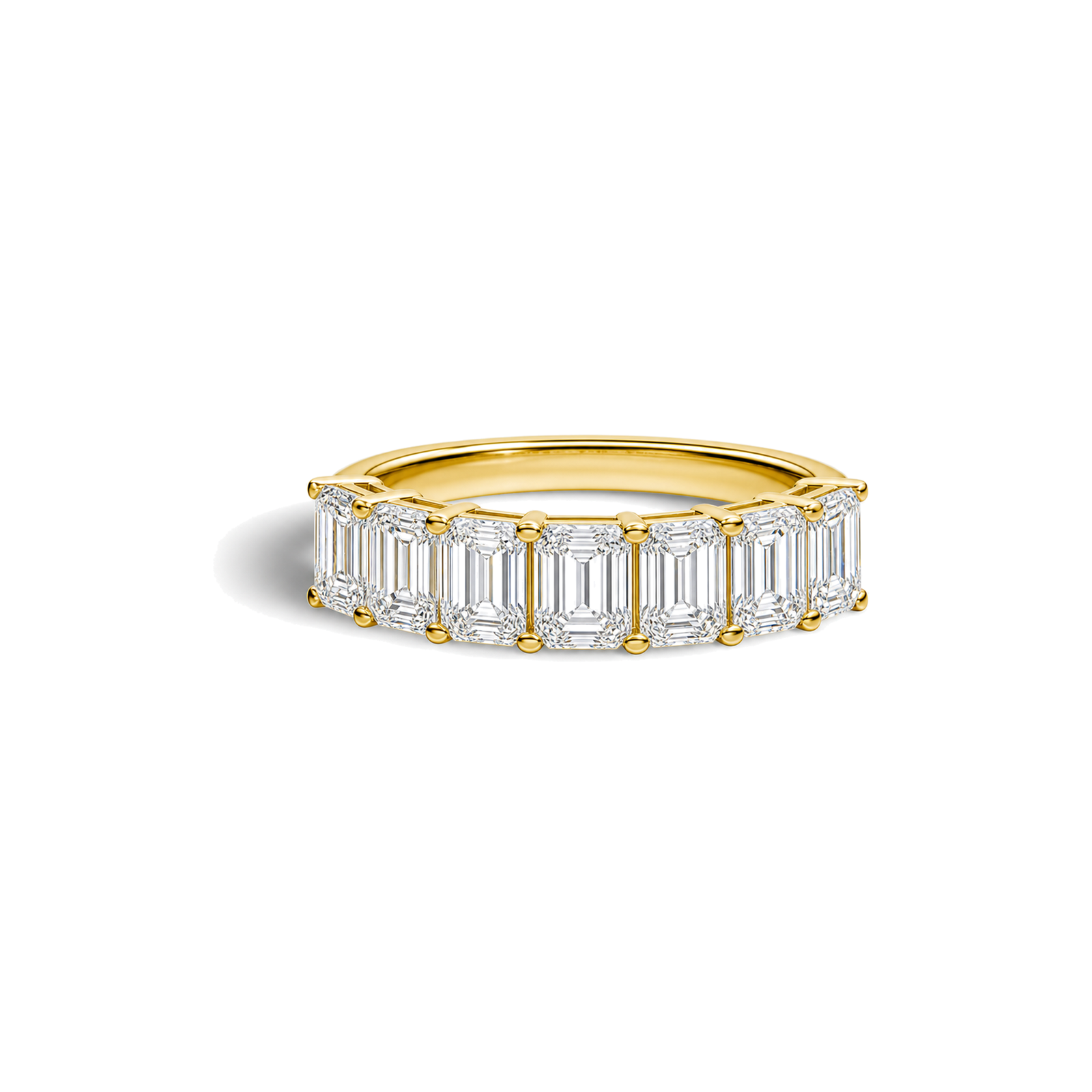
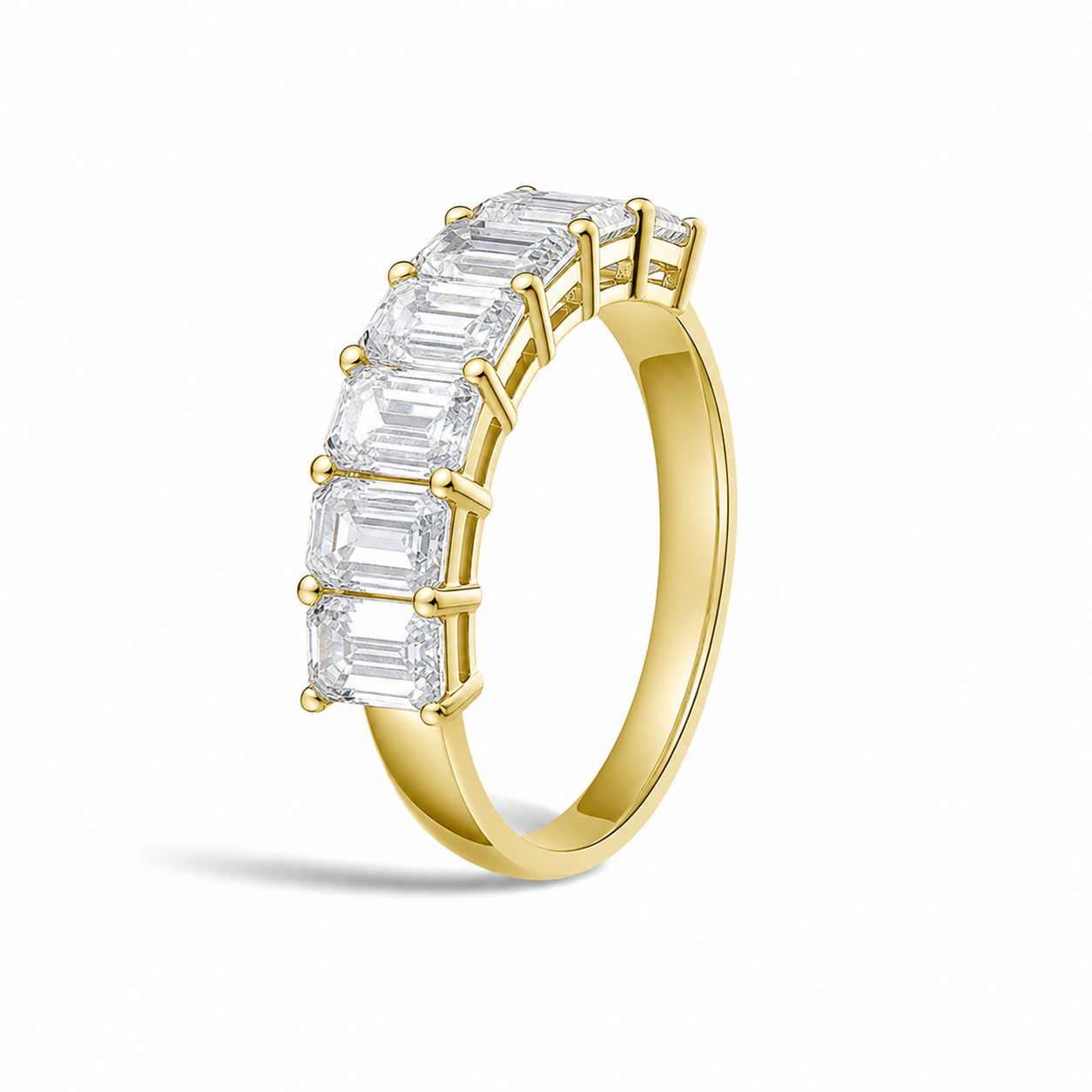

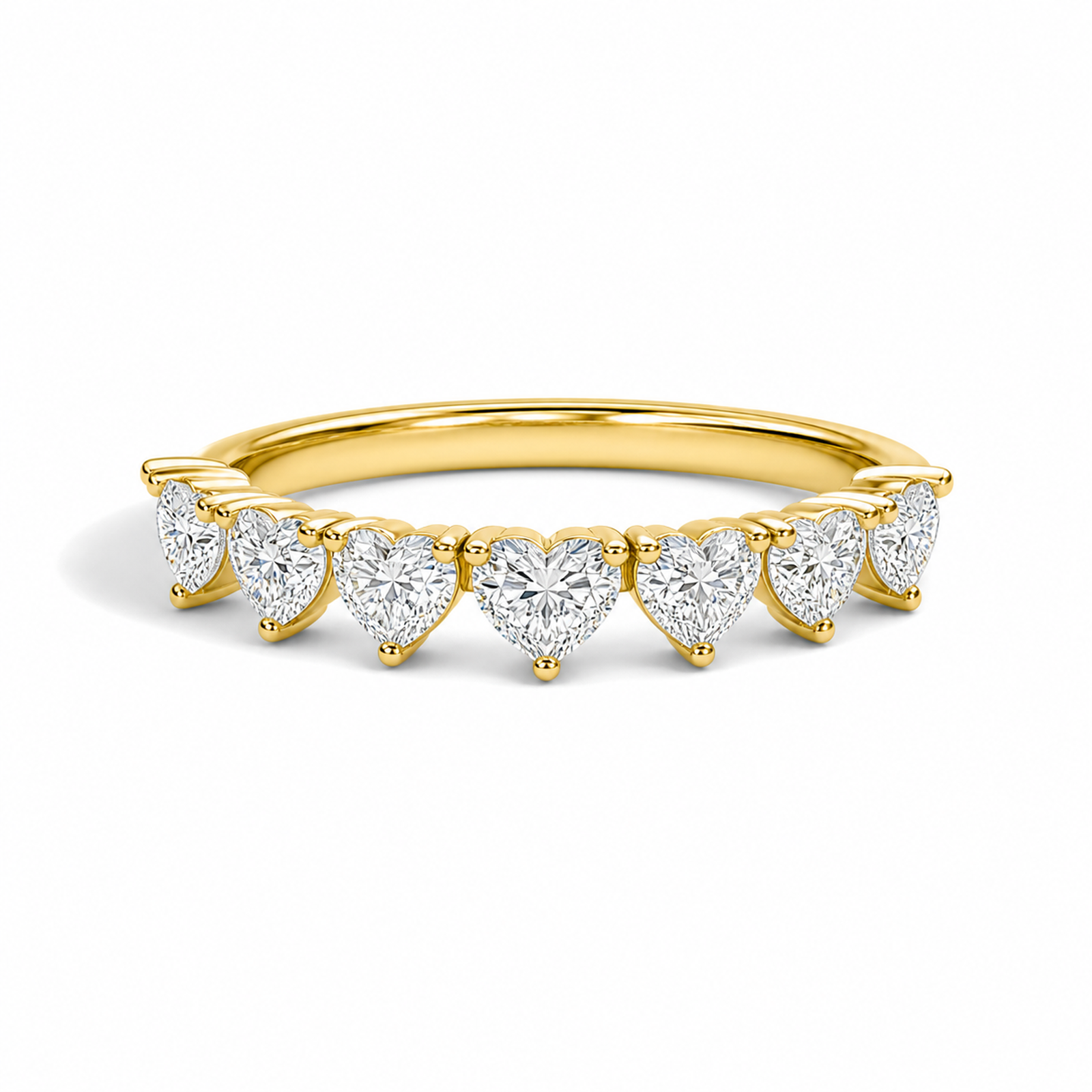
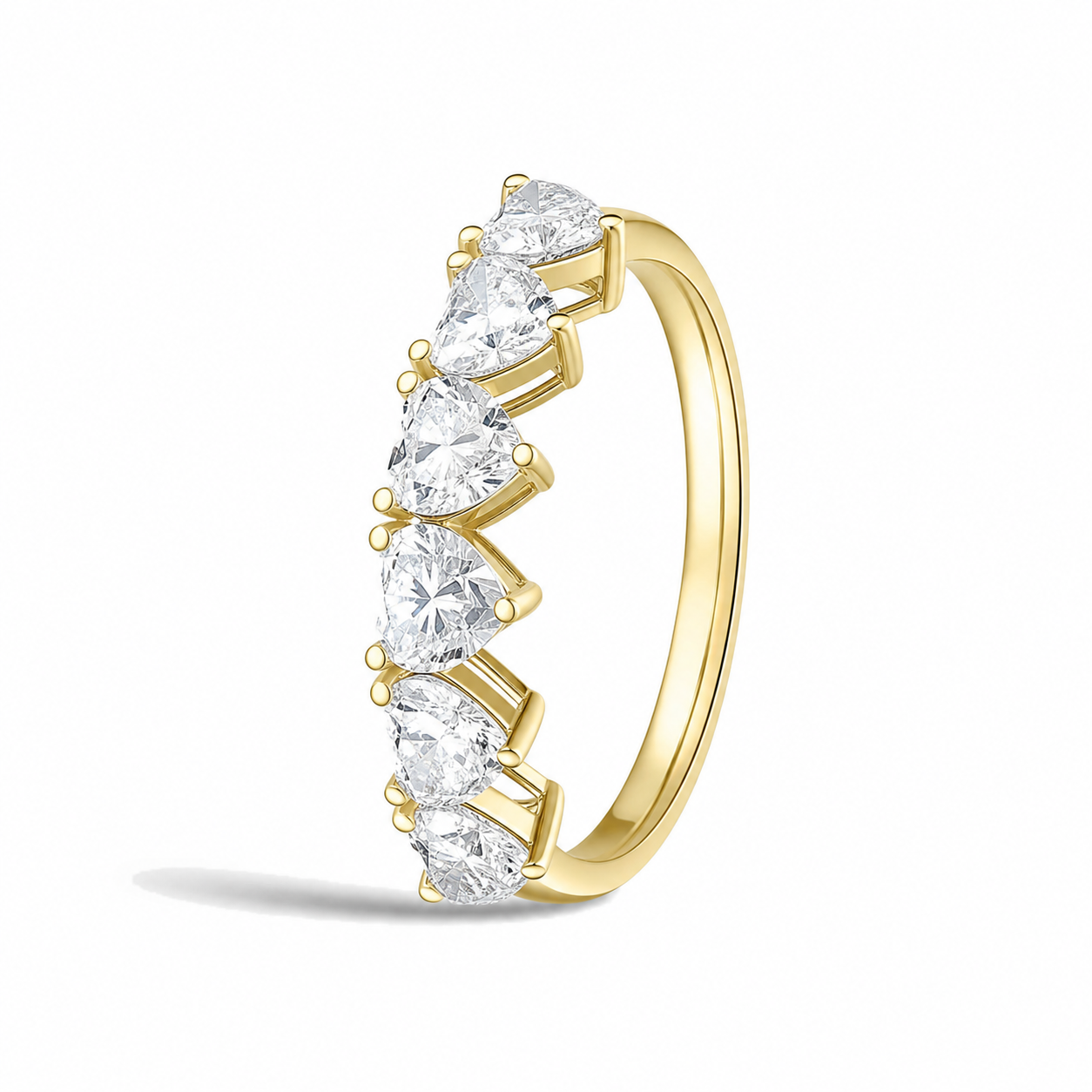

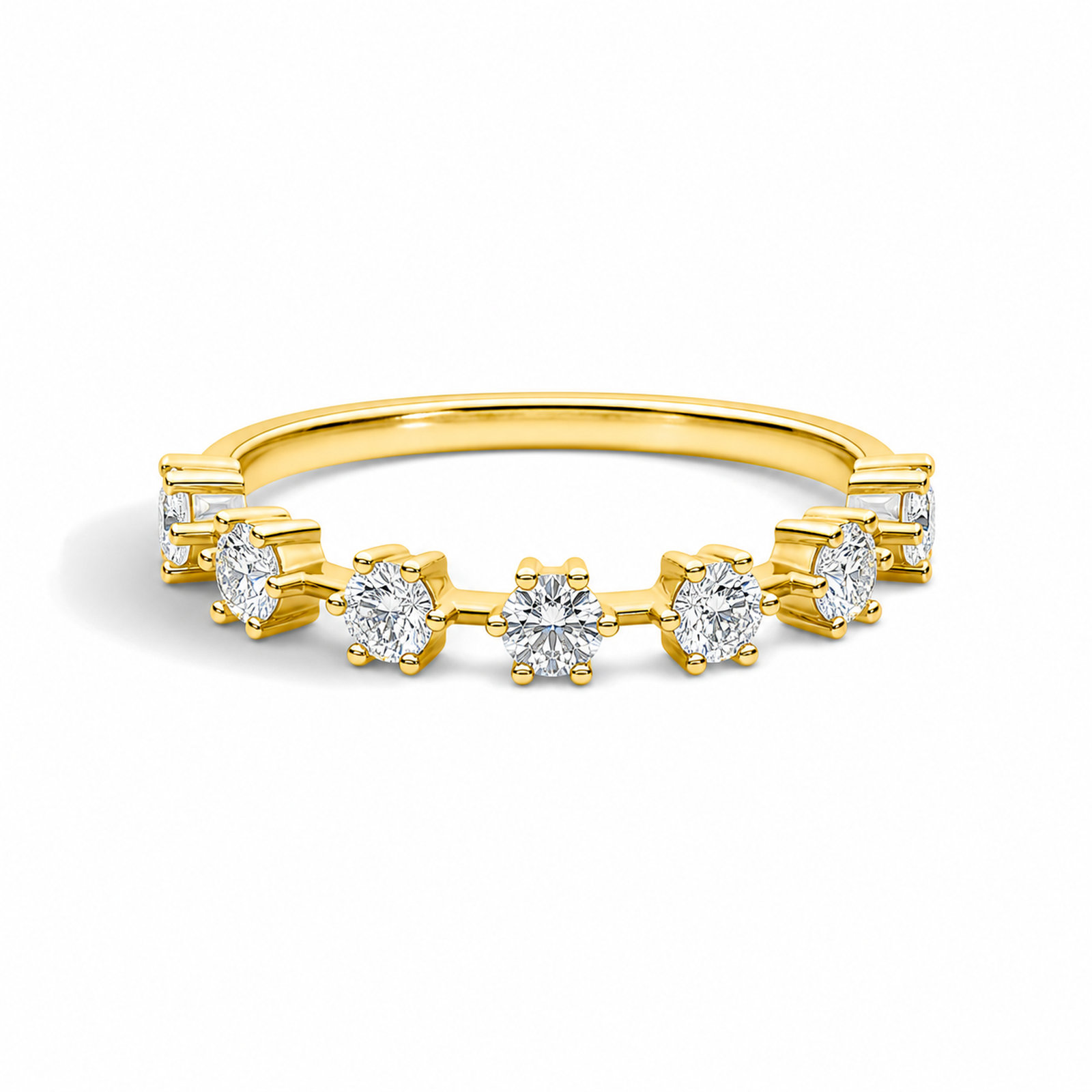
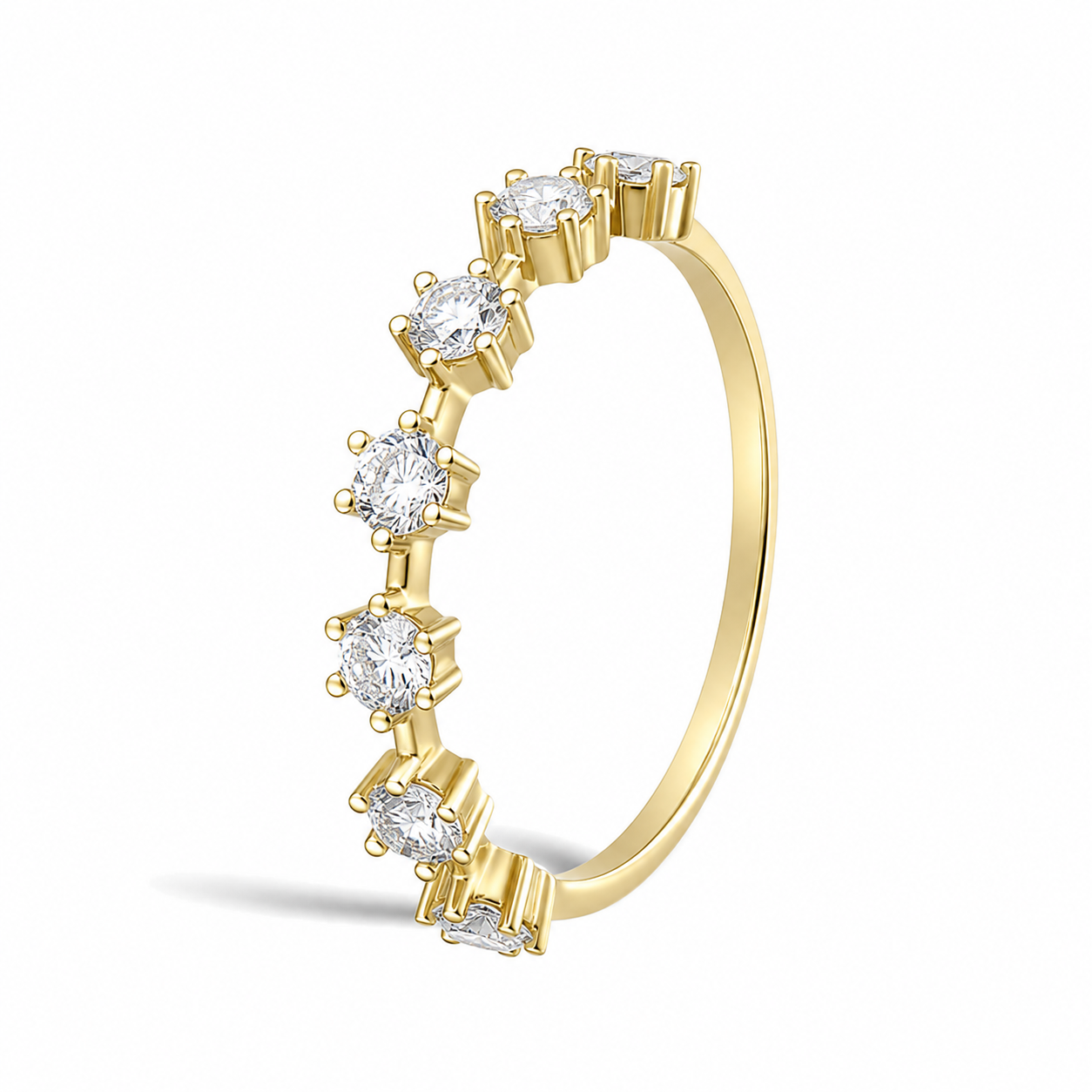

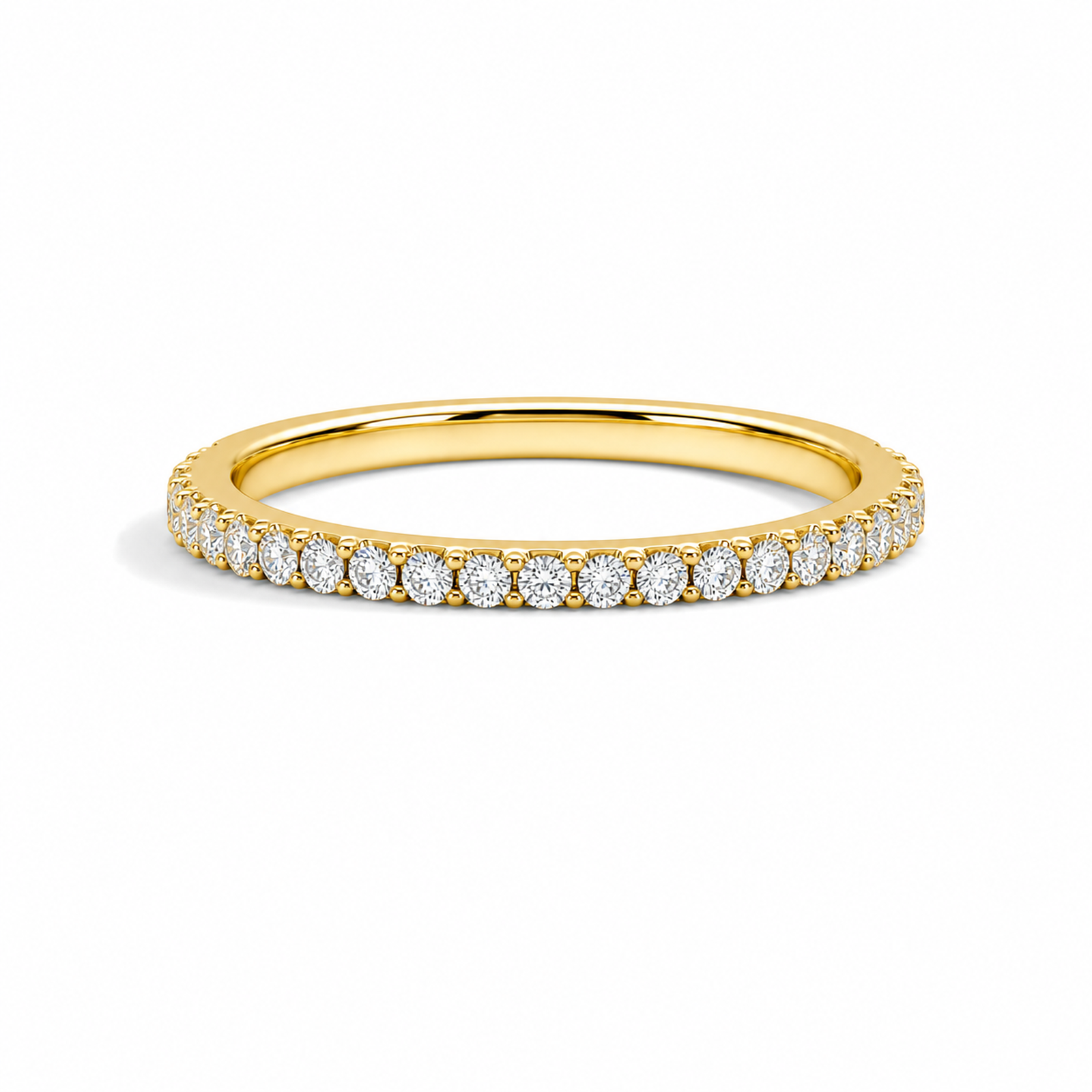


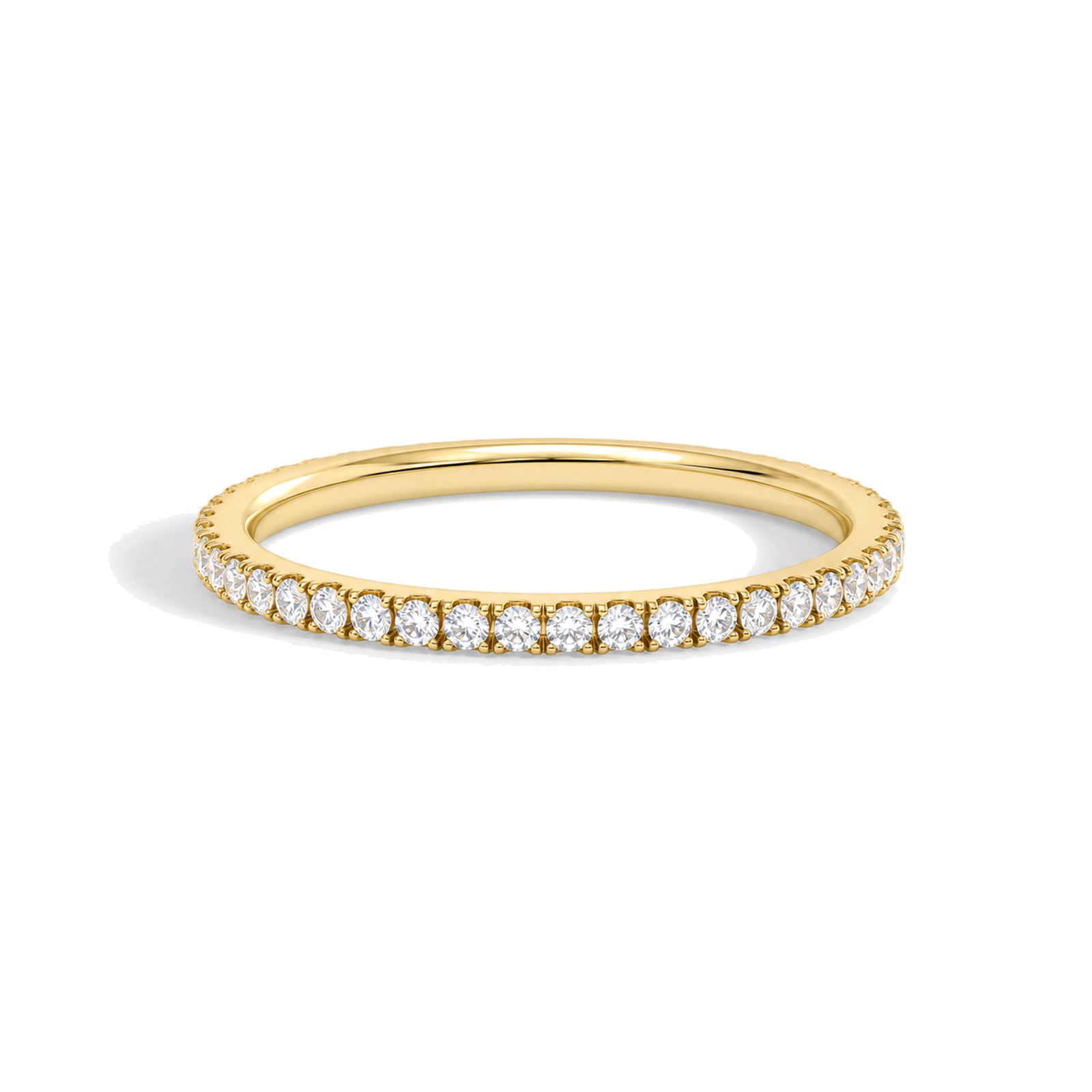
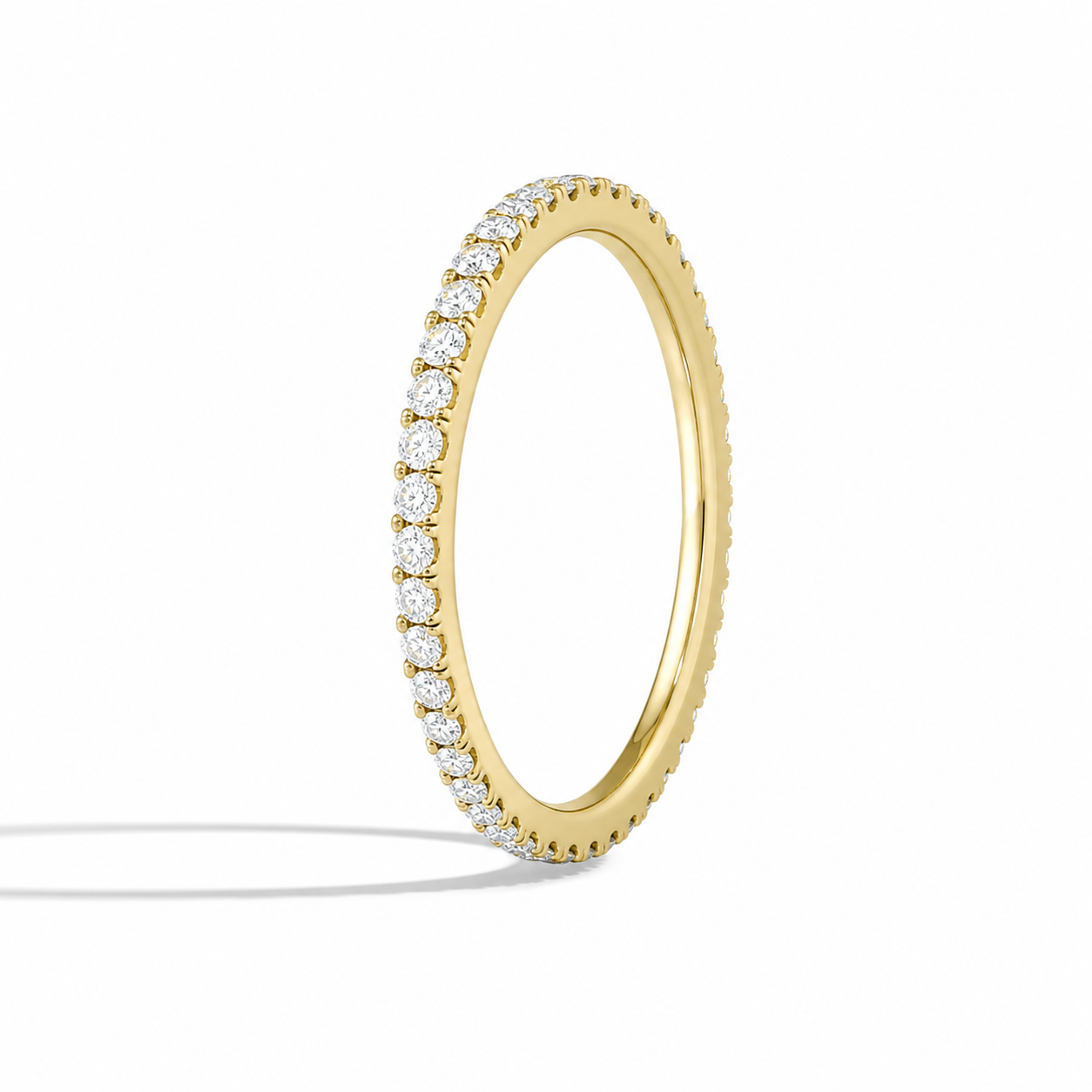

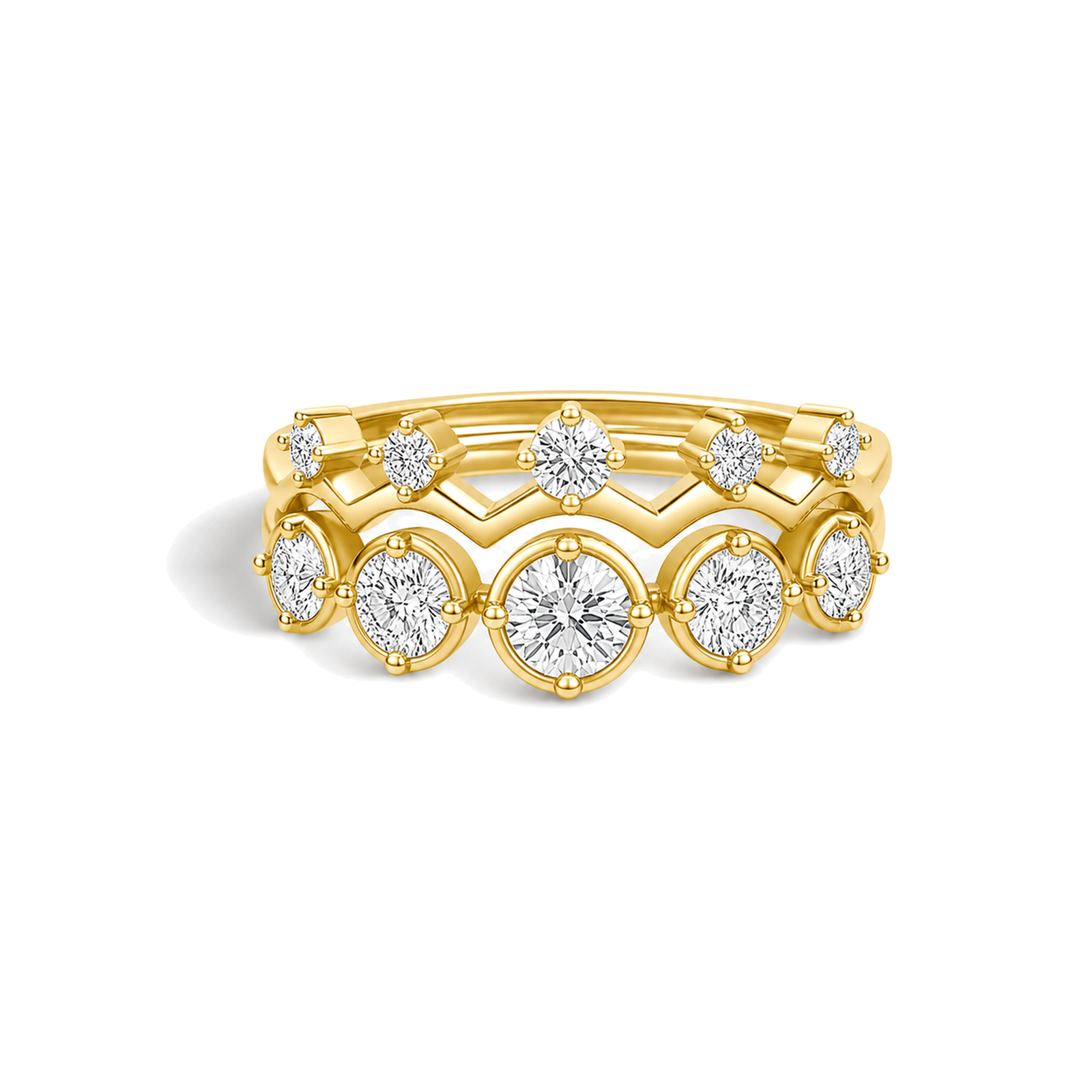


14K Yellow Gold Eternity Rings: The Interval Becomes Visible
Yellow Gold allows the eye to read not only the diamonds, but the metal between and beneath them. That makes coverage a measured architectural choice: how far the sequence extends, whether the band has a defined front, and what remains visible as the hand turns.
The fifteen current titles do not support one full-circle statement. Six specify half eternity, three specify three-quarter coverage, three use Eternity without full, and three name channel or diamond rings without stating coverage.
Compare Edge, Gap, and Orientation
Channel and milgrain channel designs create longitudinal boundaries. Shared and six-prong titles organize contact around individual stones; bezel-prong language introduces a more drawn edge. None proves maximum protection or a uniform maintenance result.
Most current designs use Round diamonds. Princess, Emerald and Heart each appear once, introducing different corner, direction and interval relationships. Those distinctions should be reviewed in the complete ring, not reduced to a shape label.
Place Width beside Coverage
Published average widths range from 1.4 to 5.0 mm, while Total Carat Weight choices range from 1/8 to 3. A wider ring need not have fuller coverage, and a higher total does not state count, selected-size distribution or face-up continuity.
14K is approximately 58.3% gold. The remaining alloy, exact finish and construction contribute to appearance and behavior; no universal color stability, scratch, strength or sensitivity outcome follows from the karat label.
Keep the Page’s Role Narrow
The same fifteen normalized designs sit inside same-metal Wedding Bands, Rings, Anniversary Rings and Fashion Rings; thirteen also sit inside Stacking Rings. This page answers coverage and sequence questions, not every occasion or pairing question.
Confirm initial size and any future alteration with the exact construction. Review side height and neighboring-ring contact before assuming flushness, and inspect every diamond-setting transition during care.
Frequently Asked Questions
How many yellow gold designs appear?
Fifteen.
Are they all full eternity?
No.
What coverage is explicit?
Six half-eternity and three three-quarter titles.
What coverage remains unproven?
Three Eternity titles and three other titles require exact confirmation.
Why does metal contrast matter?
It can make intervals, edges and the remaining metal field more visible.
Which setting families appear?
Channel, milgrain channel, shared prong, six prong and bezel-prong.
Does a bezel-prong title guarantee protection?
No.
Which diamond shapes occur?
Round dominates, with Princess, Emerald and Heart once each.
What is the narrowest published width?
1.4 mm average.
What is the widest?
5.0 mm average.
Does wider mean full coverage?
No.
What does TCW omit?
Count, individual dimensions, circumference and selected-size distribution.
Can every design be resized?
No shared answer is established.
Can it pair without a gap?
Not guaranteed; both ring profiles control spacing.
How much gold is in 14K?
Approximately 58.3%.
Is the assortment exclusive?
No; it fully overlaps several broader same-metal routes.