
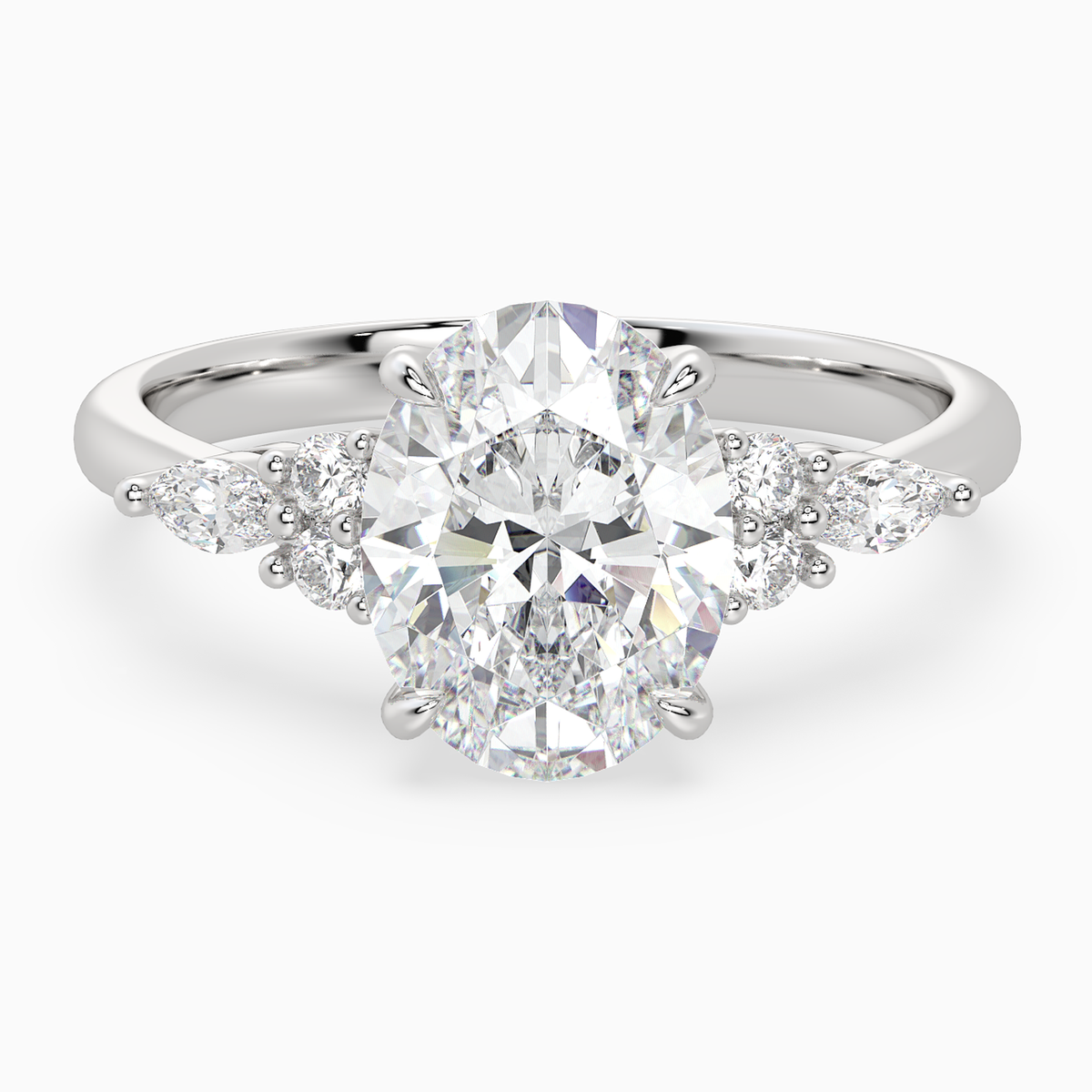


Lab-Grown Diamond Heart Diamond Engagement Rings in 14K Yellow Gold
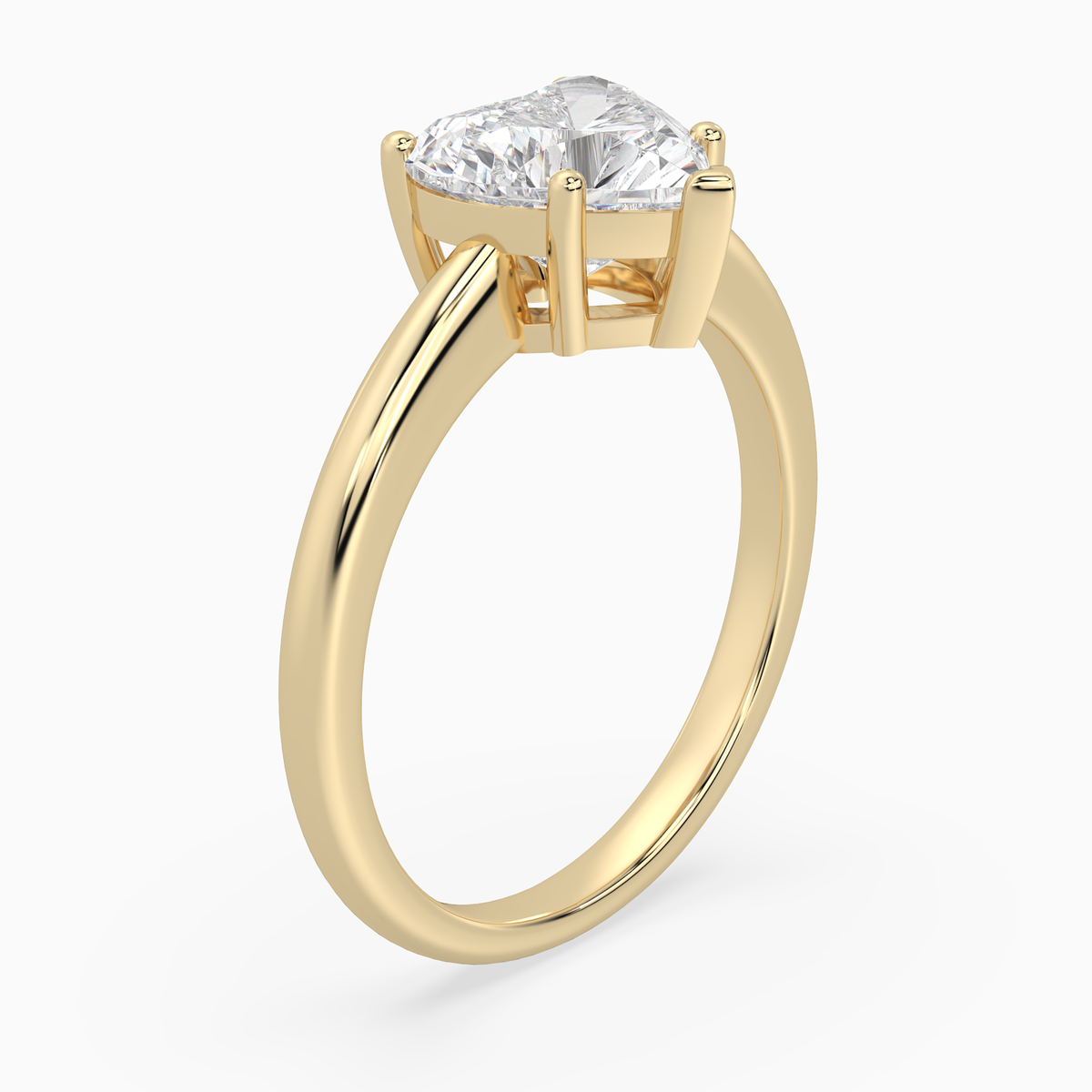
Yellow gold makes one heart boundary explicit. Study Thea through lobe balance, cleft, point alignment, open basket, profile, and scale.




- Free Express Shipping
- Free Resizing
- 60-Day Free Returns
- Lifetime Warranty
14K Yellow Gold Heart Rings: One Visible Boundary from Cleft to Point
Yellow Gold makes the boundary around Thea’s Heart center more explicit. The one-product page shows a clean solitaire, plain polished shank and classic open basket; there is no second setting architecture to compare.
Thea repeats the normalized design found in the Heart parent and also overlaps same-metal Solitaire, Classic and main Engagement. This page must remain transparent about being a material subset.
Let the Outline Lead the Color Contrast
The useful sequence begins at the cleft, follows both lobes and wings, and ends at the point. A warm band can clarify that route visually, but it cannot correct imbalance or prescribe the center’s color grade.
Length-to-width ratio describes broader or more elongated form. It does not decide cleft depth, lobe fullness, point position or whether a bow-tie dominates.
Open Structure Requires Exact Inspection
The public basket language does not state point protection, prong placement, gallery opening or setting height. Those facts cannot be borrowed from generic Heart-setting guidance.
Review the chosen diamond and ring from multiple angles. Security, comfort, snag response, wedding-band spacing and resizing remain exact-product questions.
Use 14K Precisely
Approximately 58.3% of 14K is gold. Yellow tone is a visual condition, not evidence of durability, low maintenance, comfort or sensitivity outcome.
A one-design page with complete normalized overlap remains on high-priority indexability hold.
Frequently Asked Questions
How broad is this assortment?
One Thea solitaire.
What band is publicly described?
A plain polished shank.
What holds the center?
A classic open basket is named; exact supports are not.
What defines lobe balance?
The relative height, fullness and curve of the two upper halves.
Why must the cleft remain defined?
It separates the lobes and keeps the outline legible.
Is the point orientation verified?
The center is presented in standard ring orientation; exact support is not published.
Does yellow gold set the ideal color grade?
No.
Does ratio grade the whole shape?
No.
Can Hearts show bow-tie contrast?
Yes. Inspect the actual center in motion.
What carat range appears?
1.0 to 4.0 ct.
Can one carat threshold guarantee a clear Heart?
No.
Is point protection guaranteed?
No.
Are prongs confirmed?
No exact count or form is inferred.
What does 14K identify?
Approximately 58.3% gold.
Will the ring be comfortable for everyone?
No universal comfort claim is made.
Which routes repeat Thea?
Heart, Solitaire, Classic and main Engagement.