
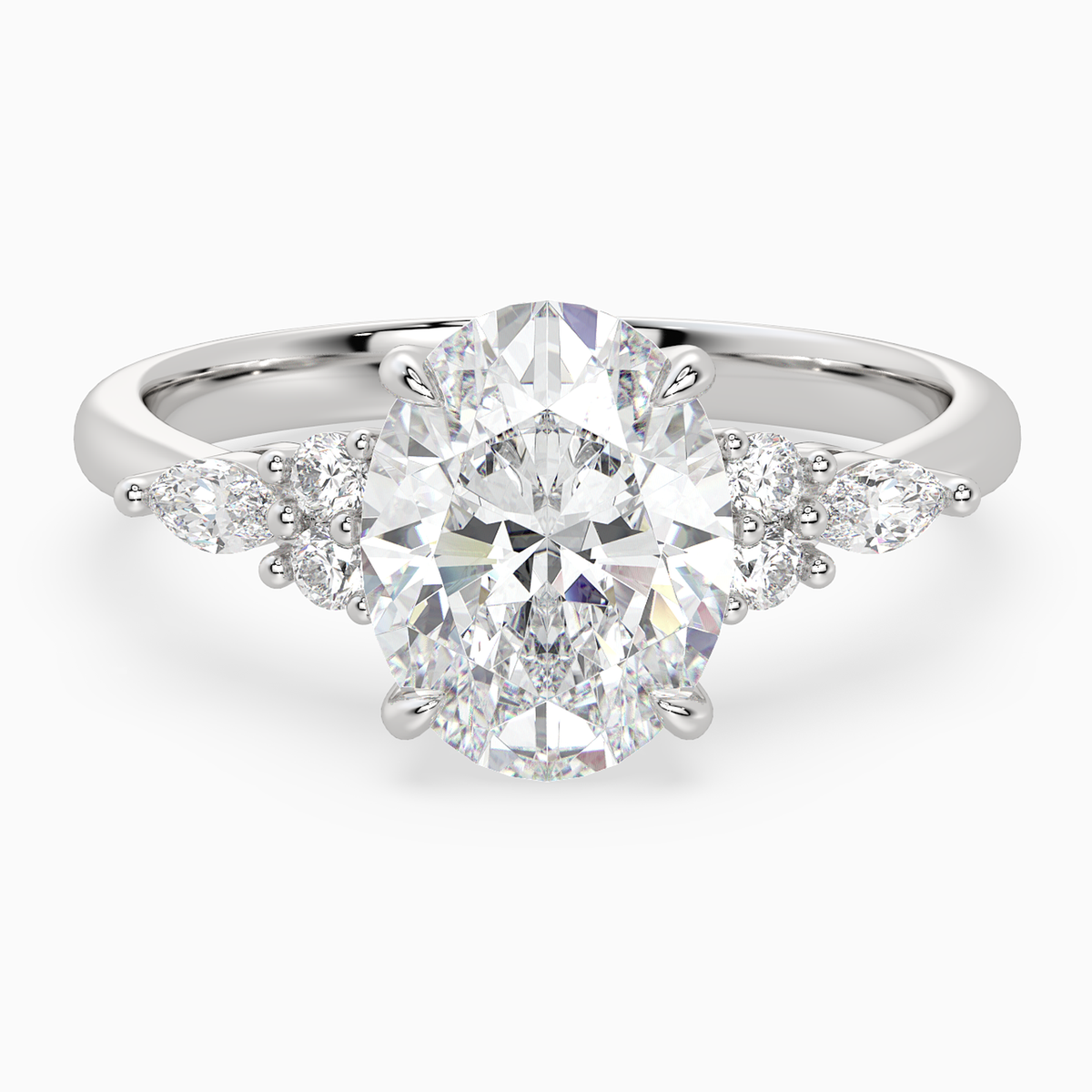


Classic Engagement Rings in 14K Yellow Gold
Classic form in a warmer register. 14K yellow gold keeps center, frame, and band relationships legible across restrained ring architectures.


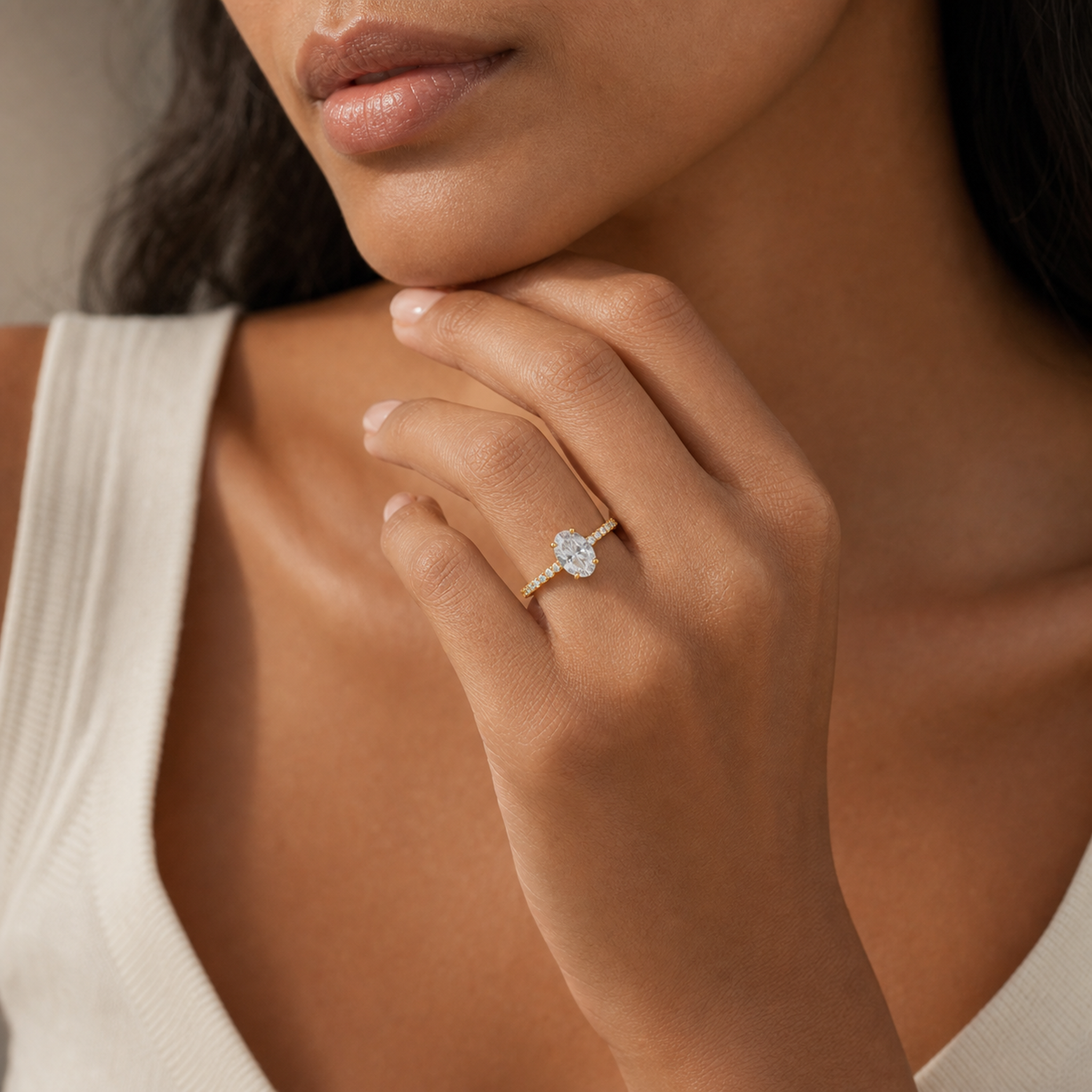


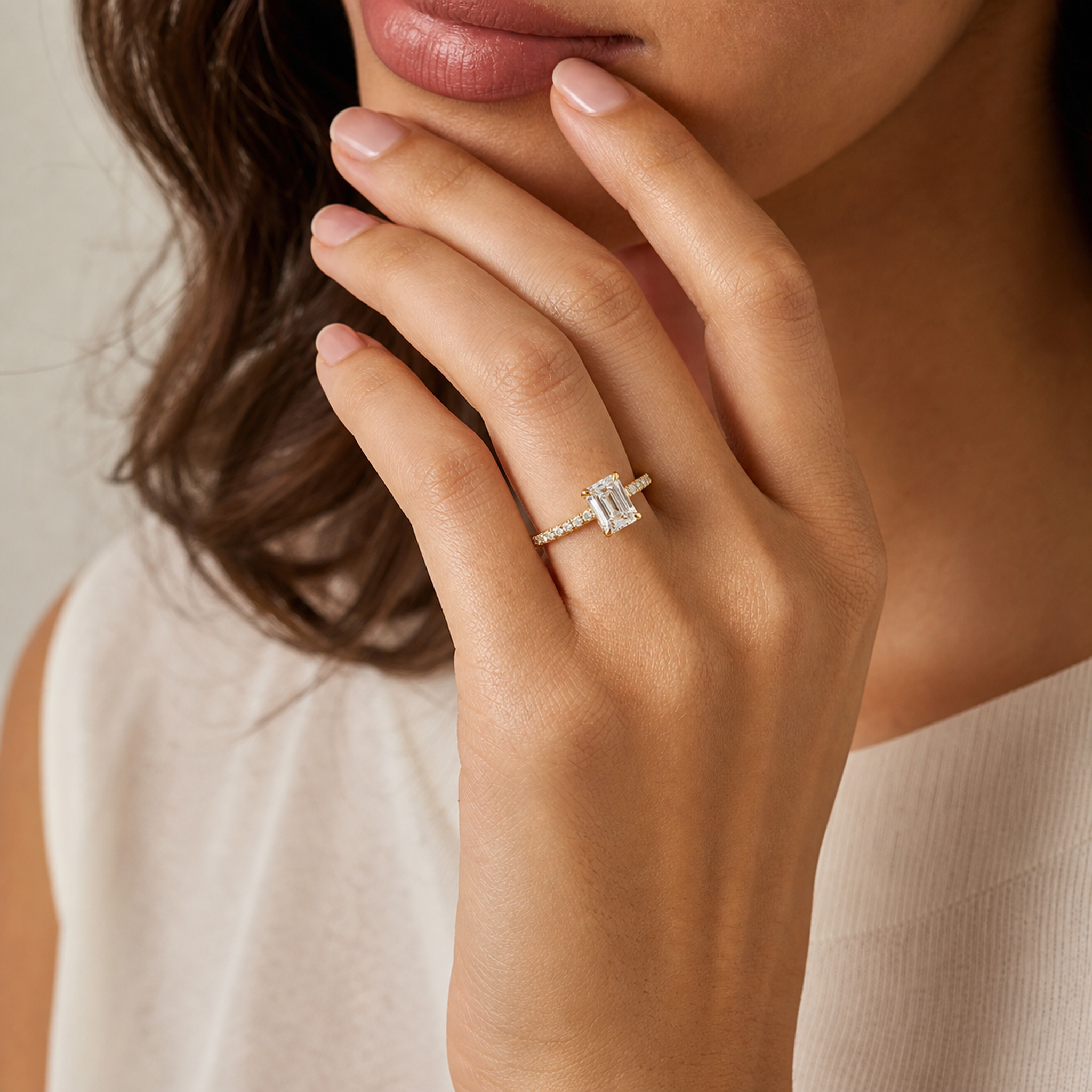


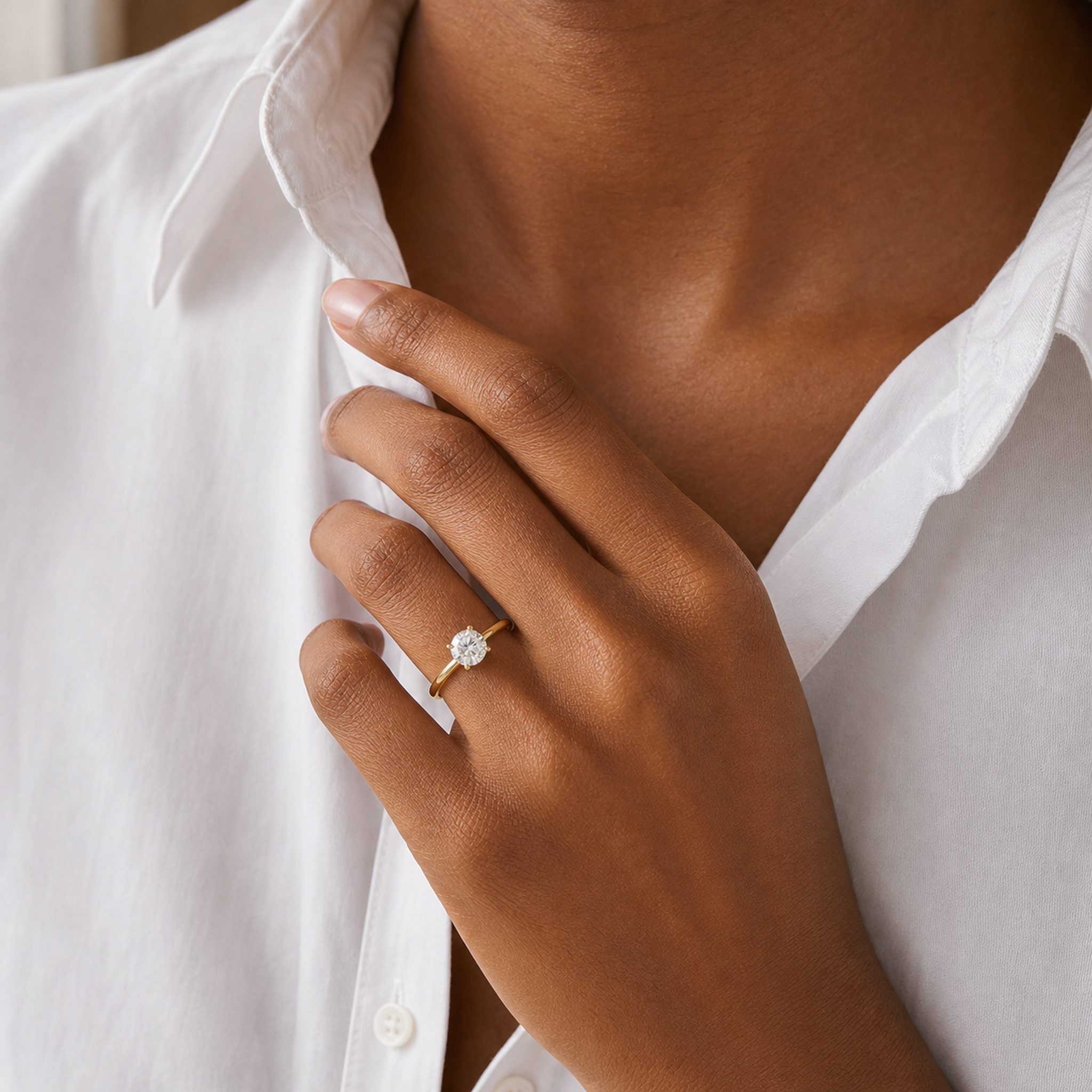


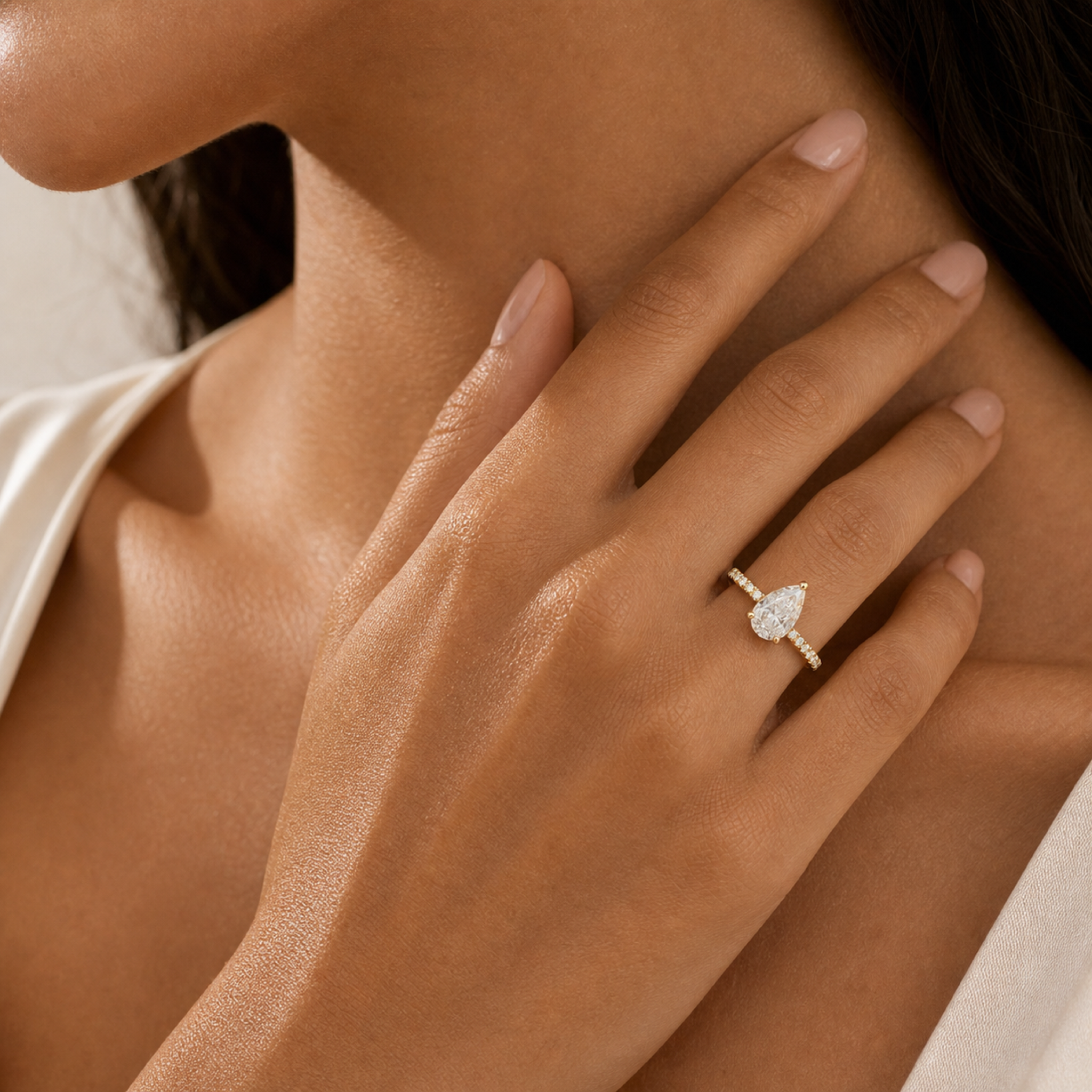


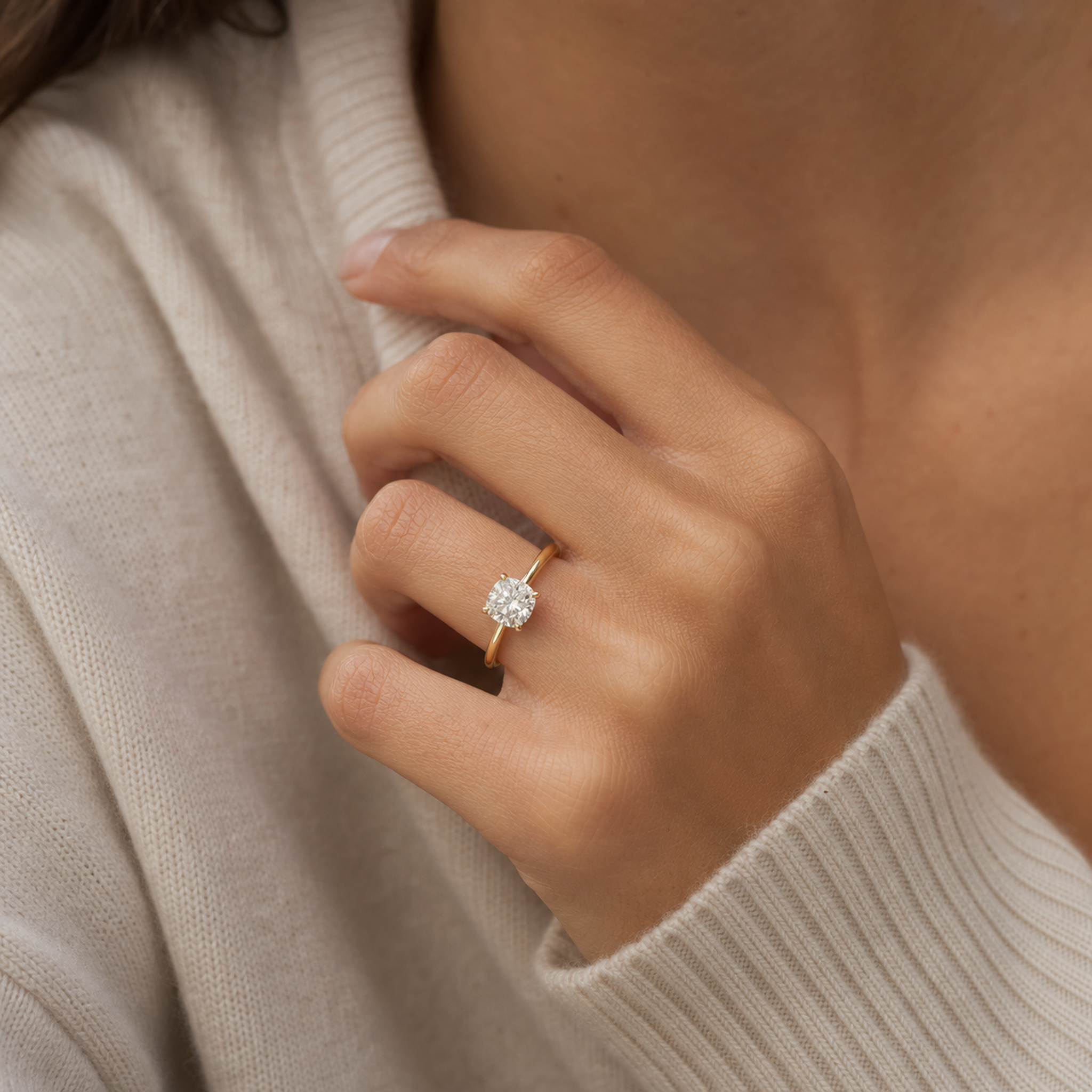


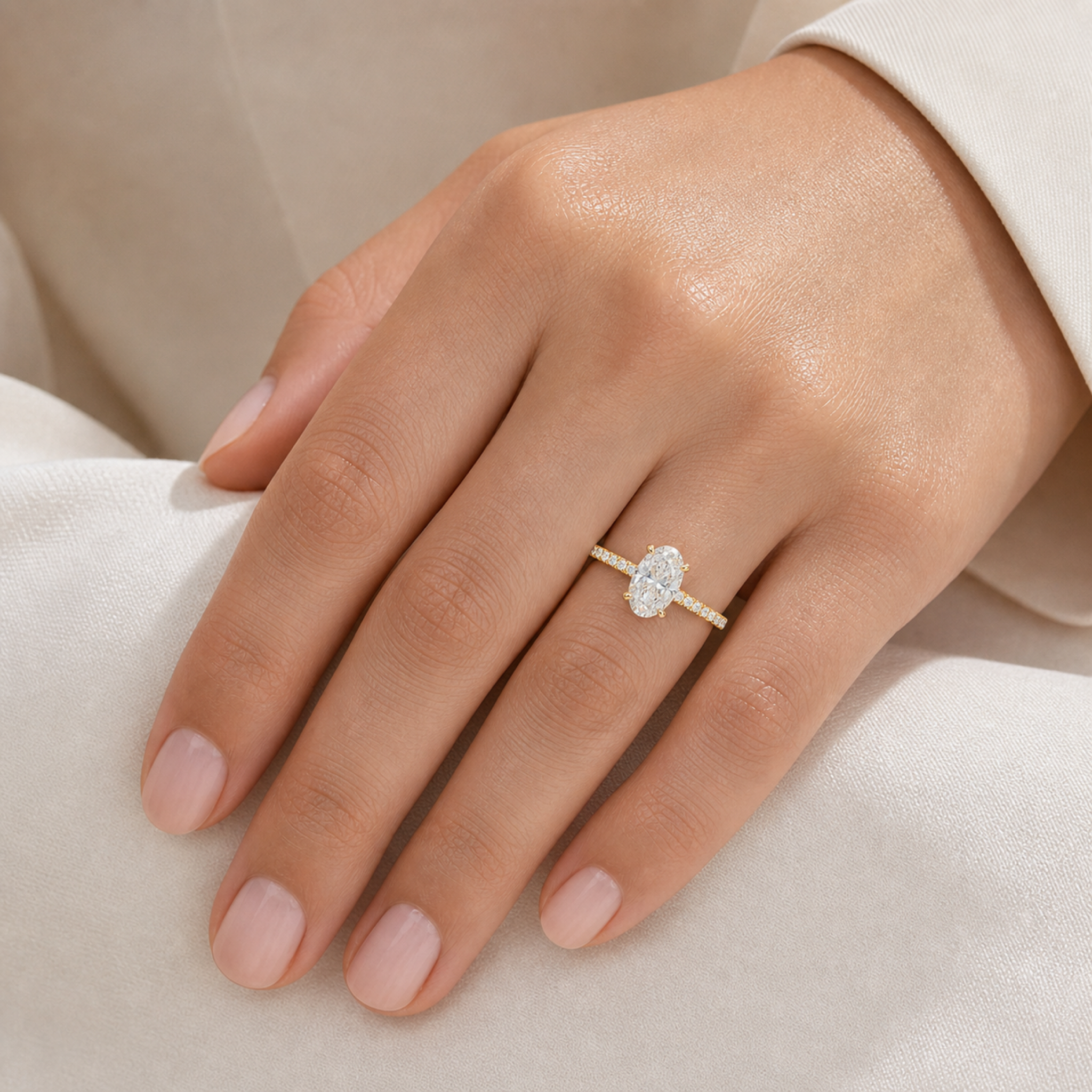


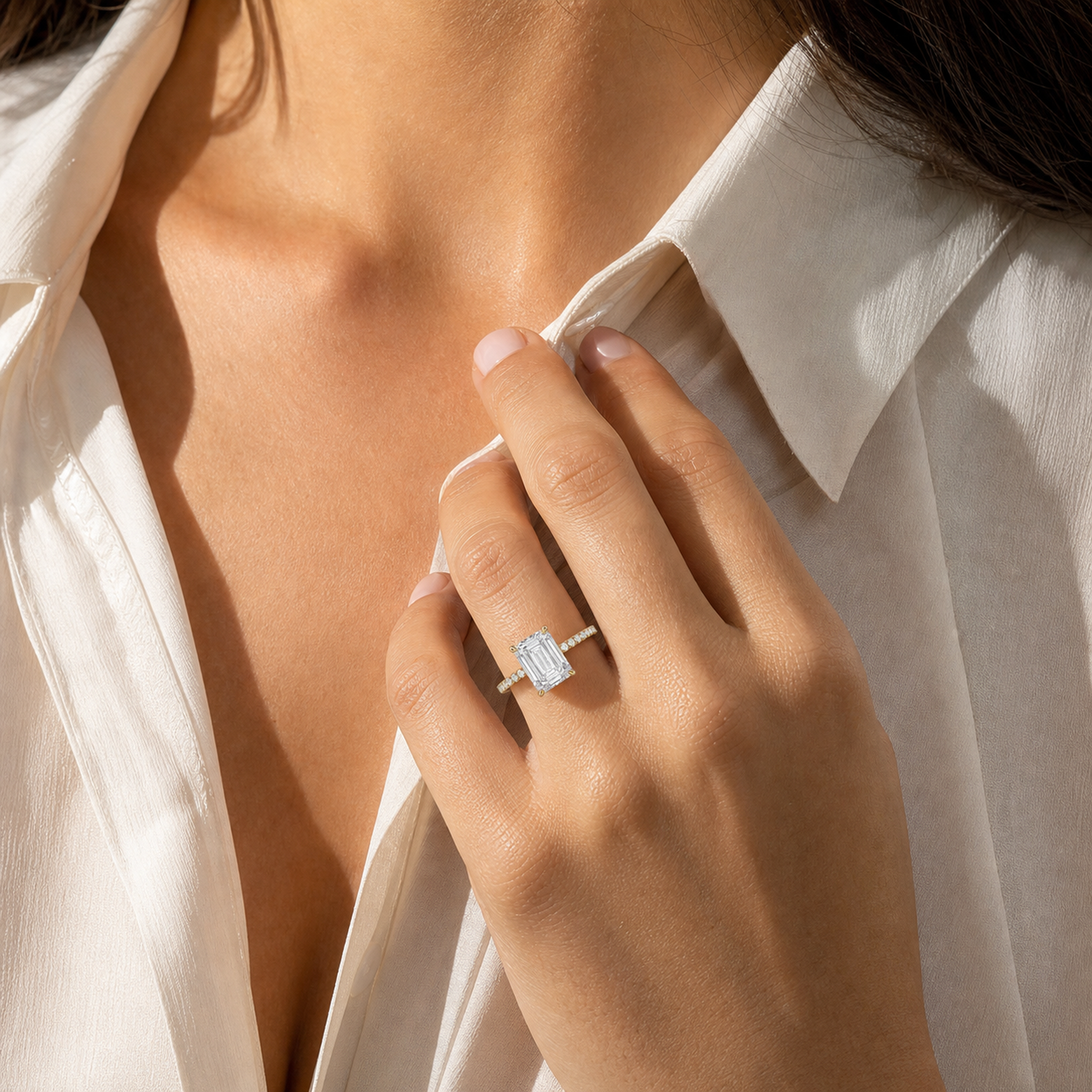


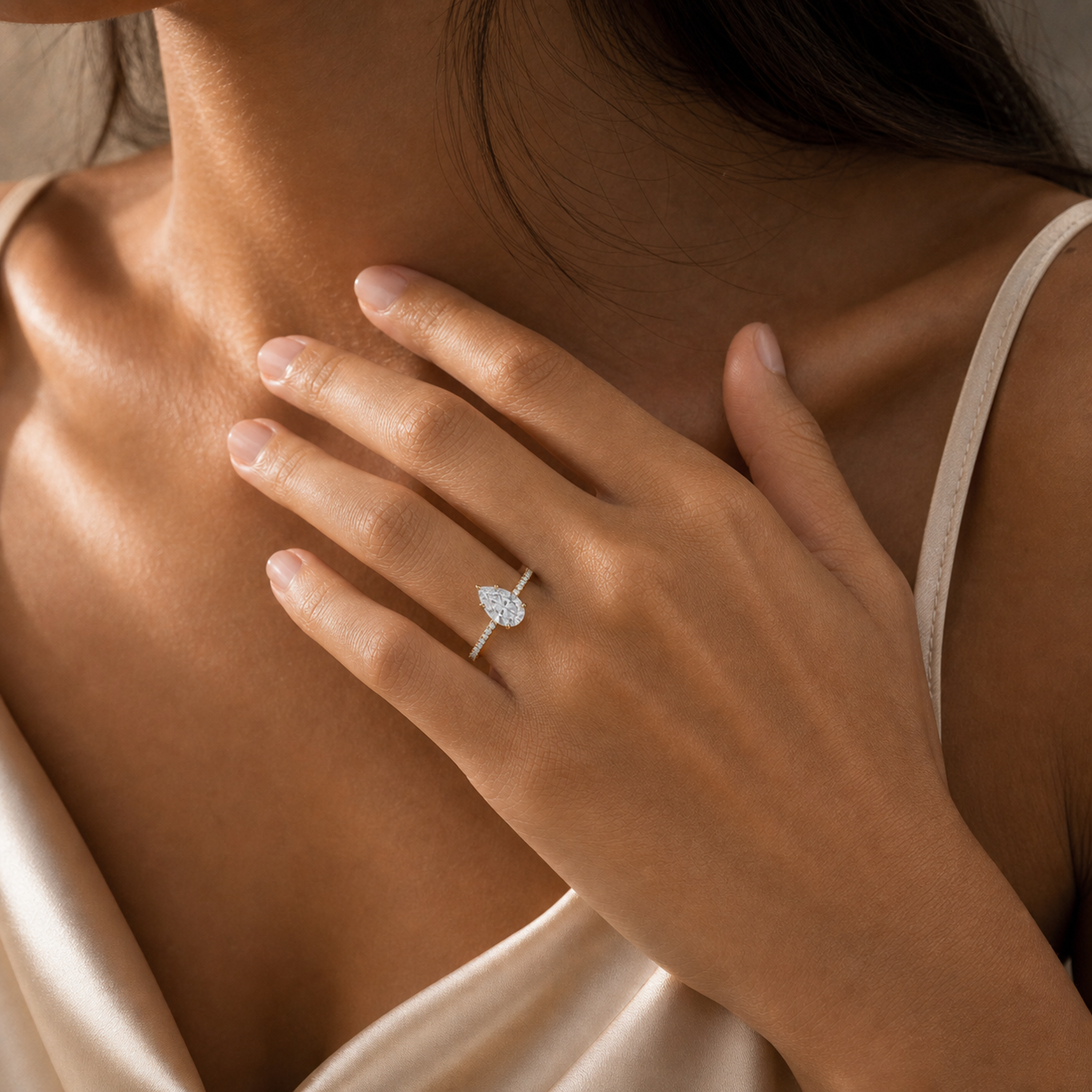


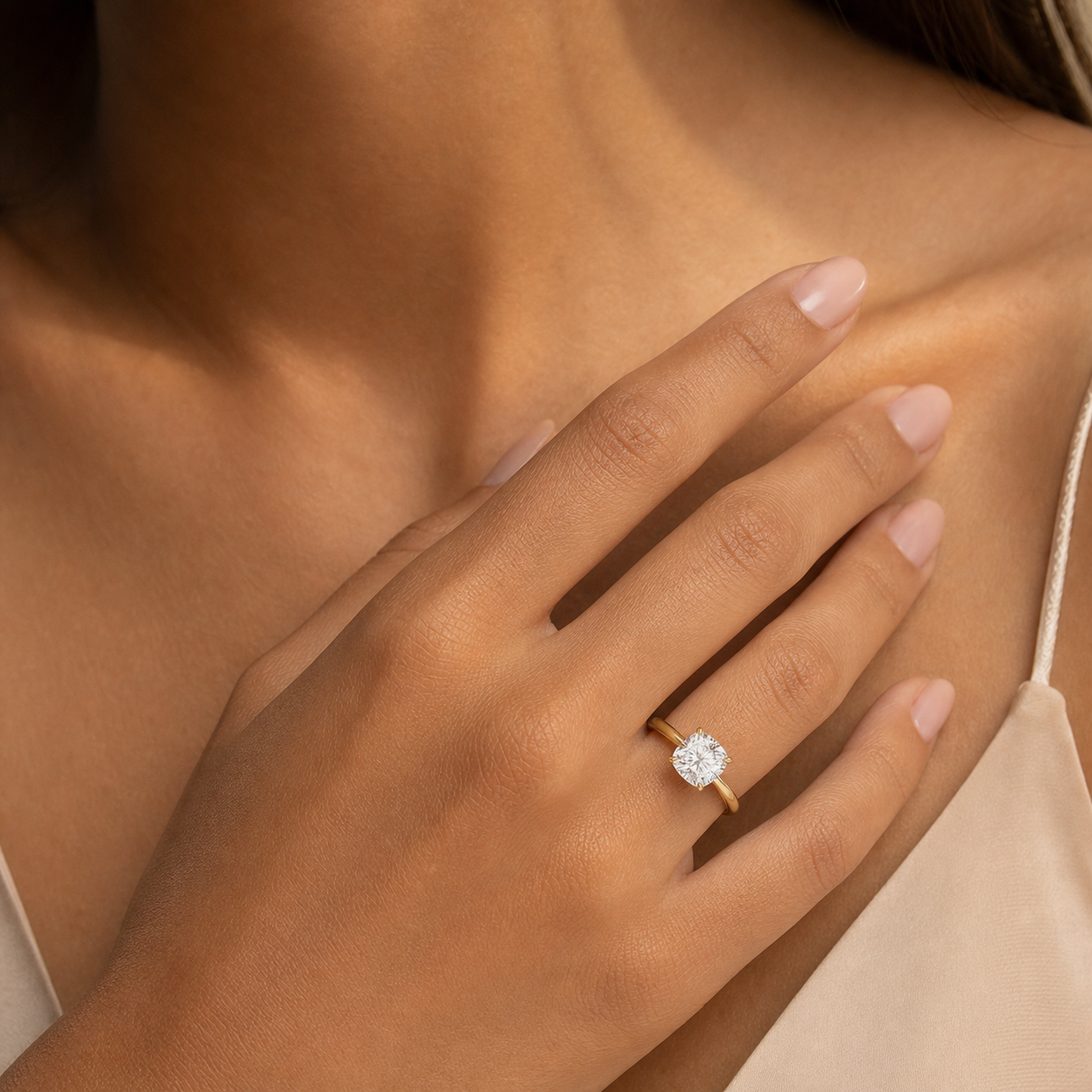

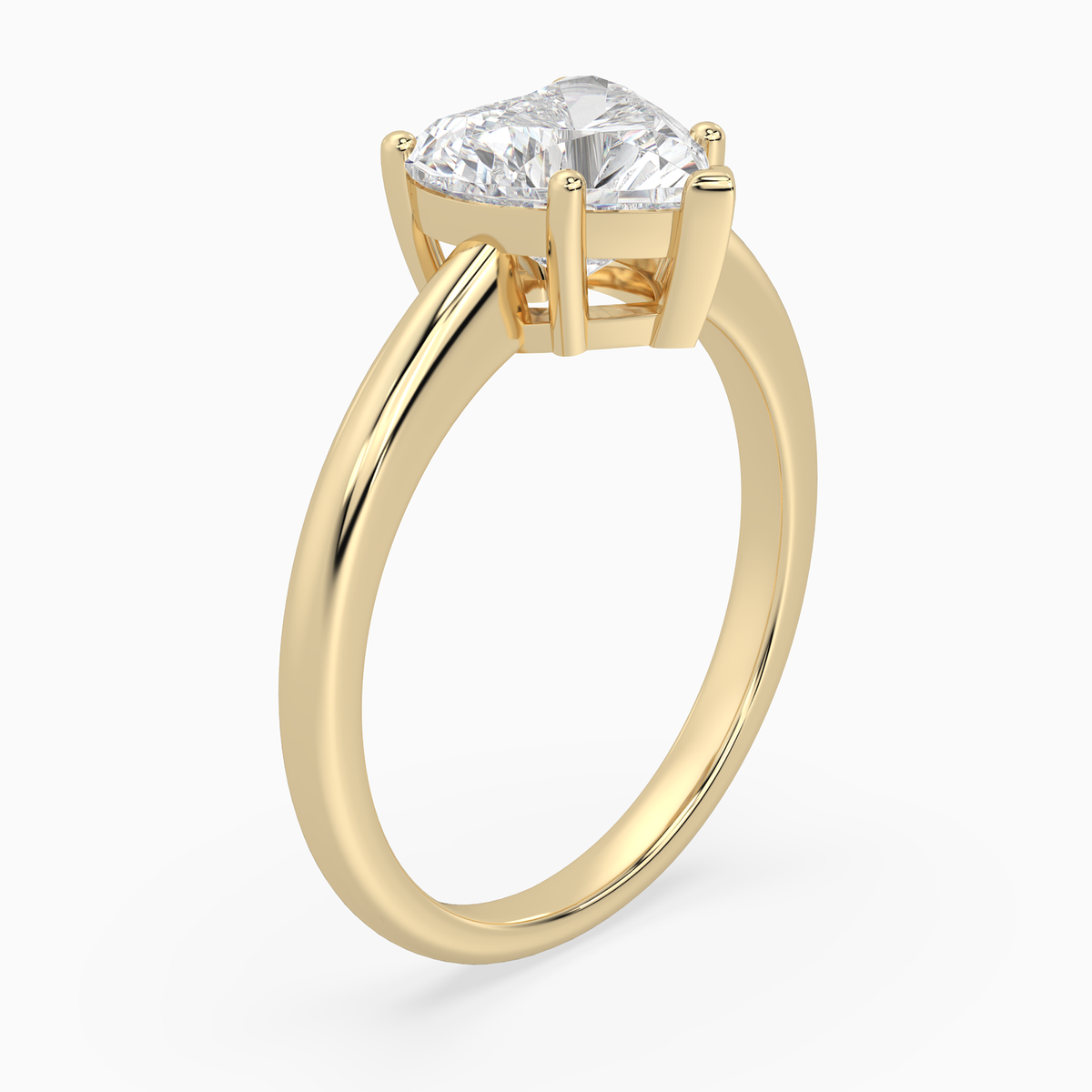


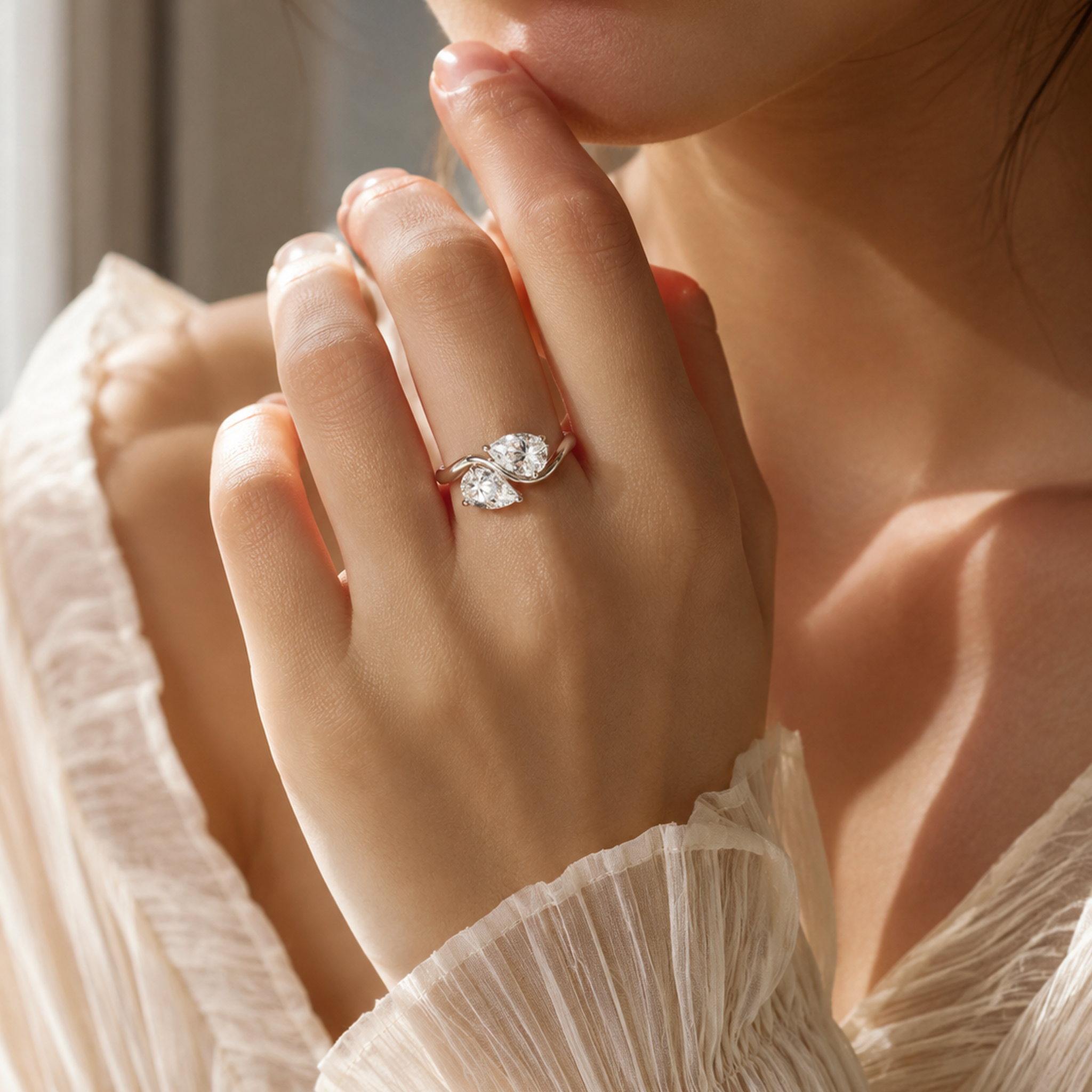


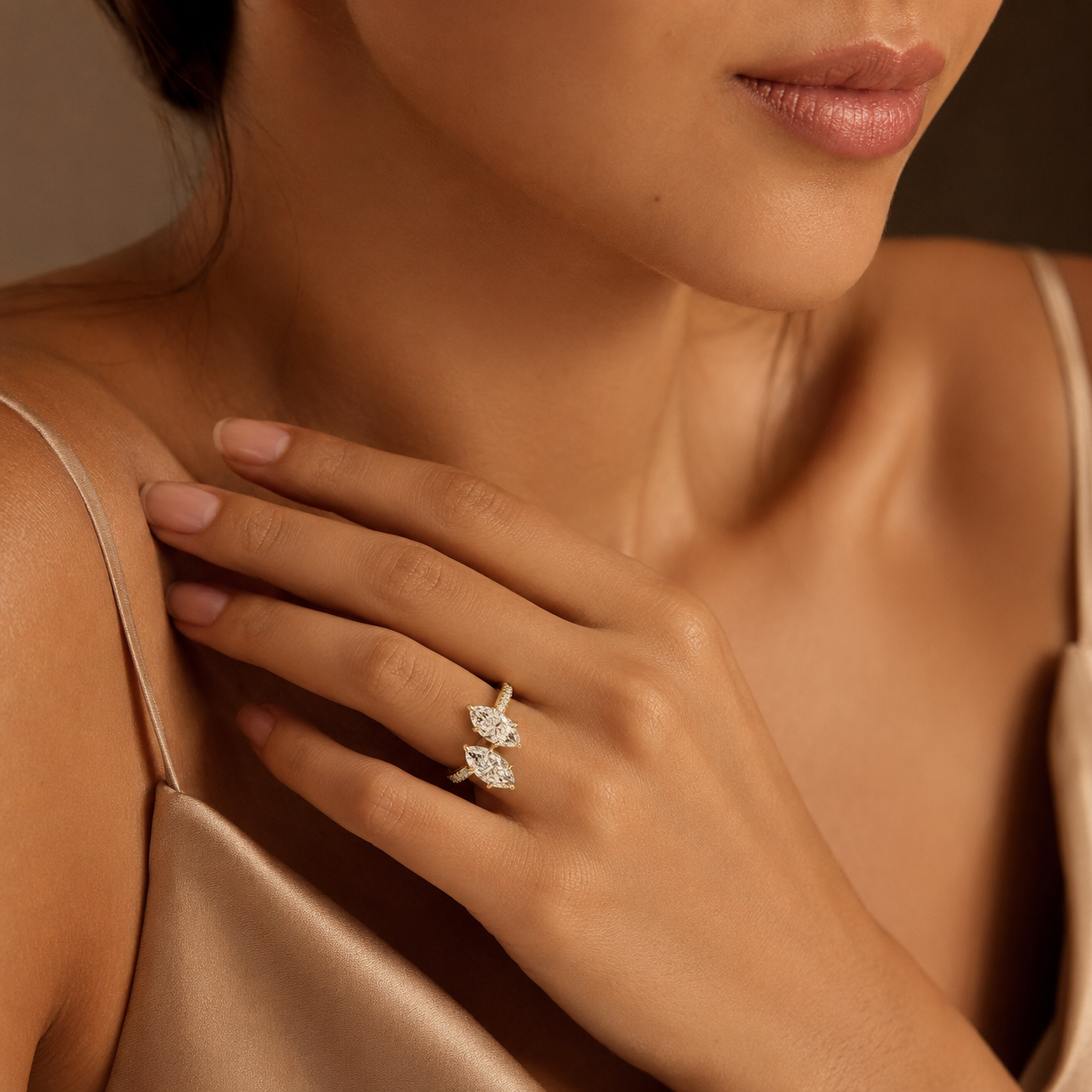


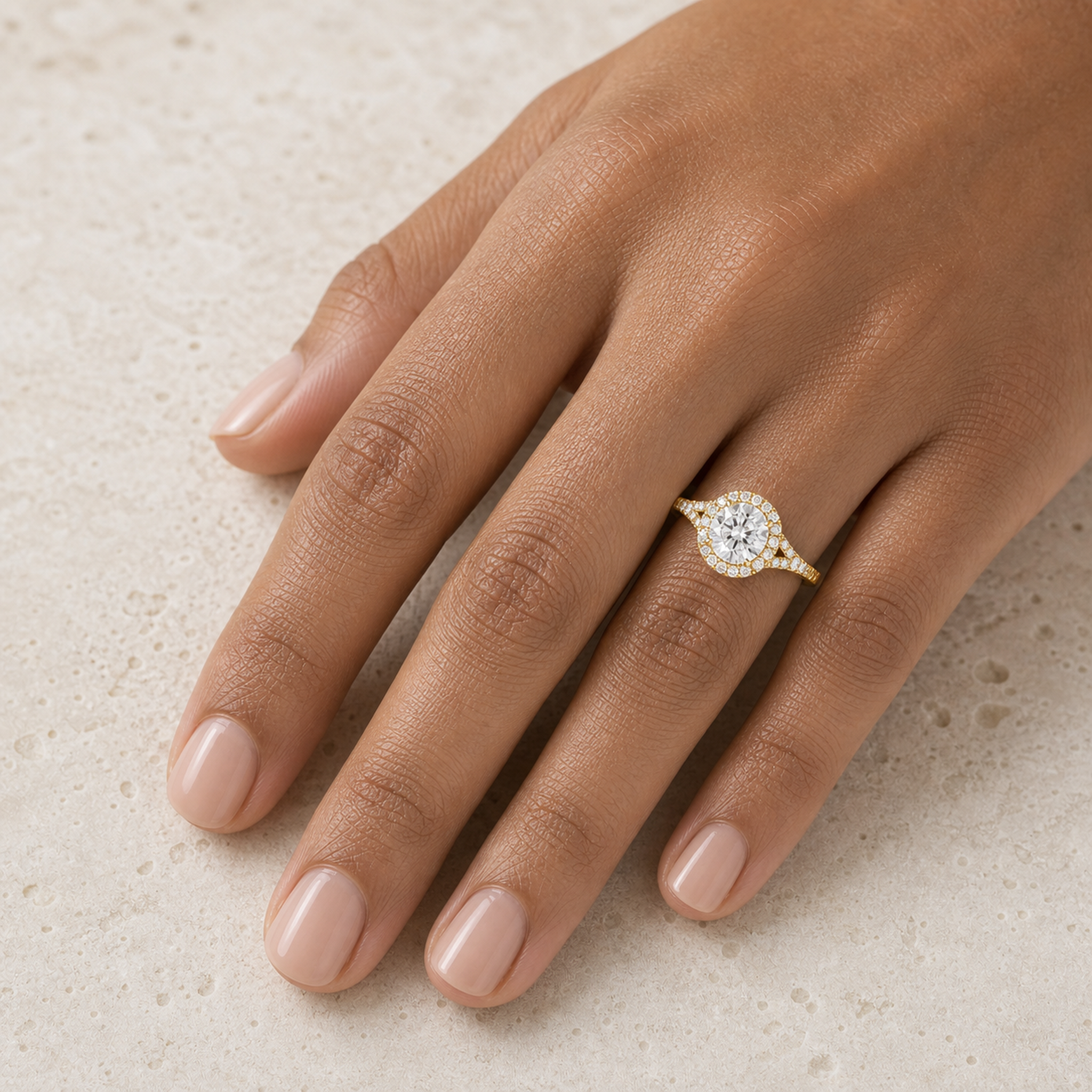

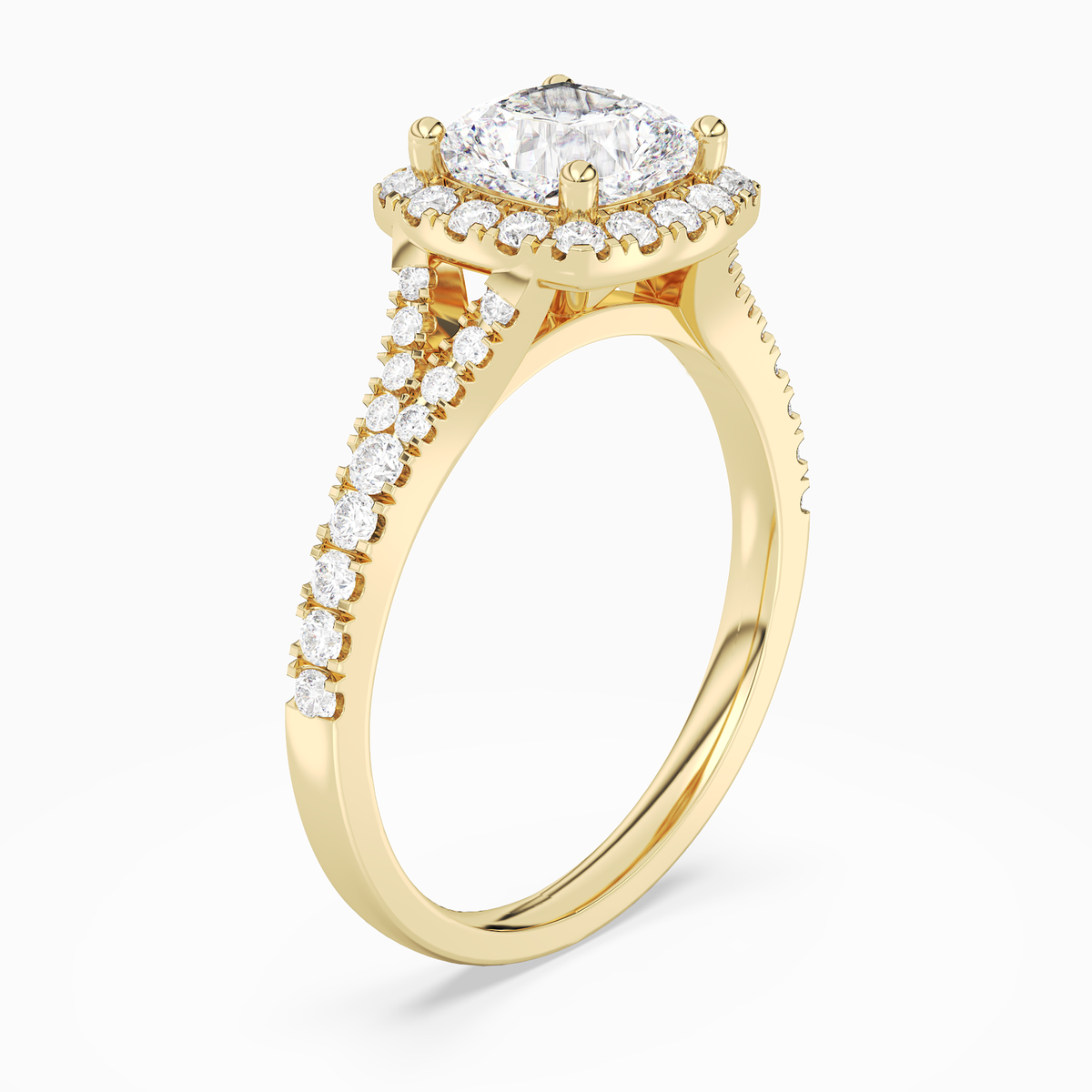


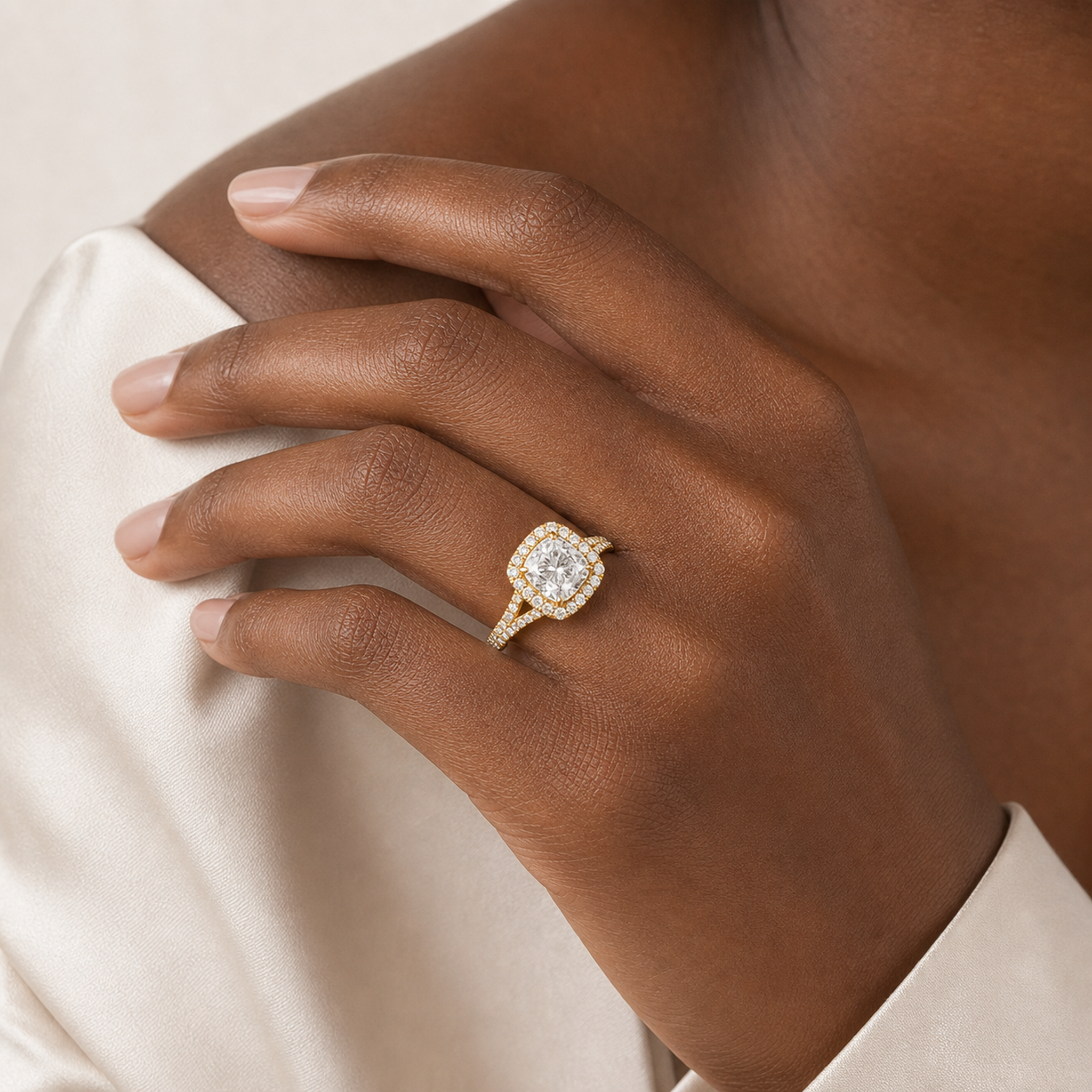


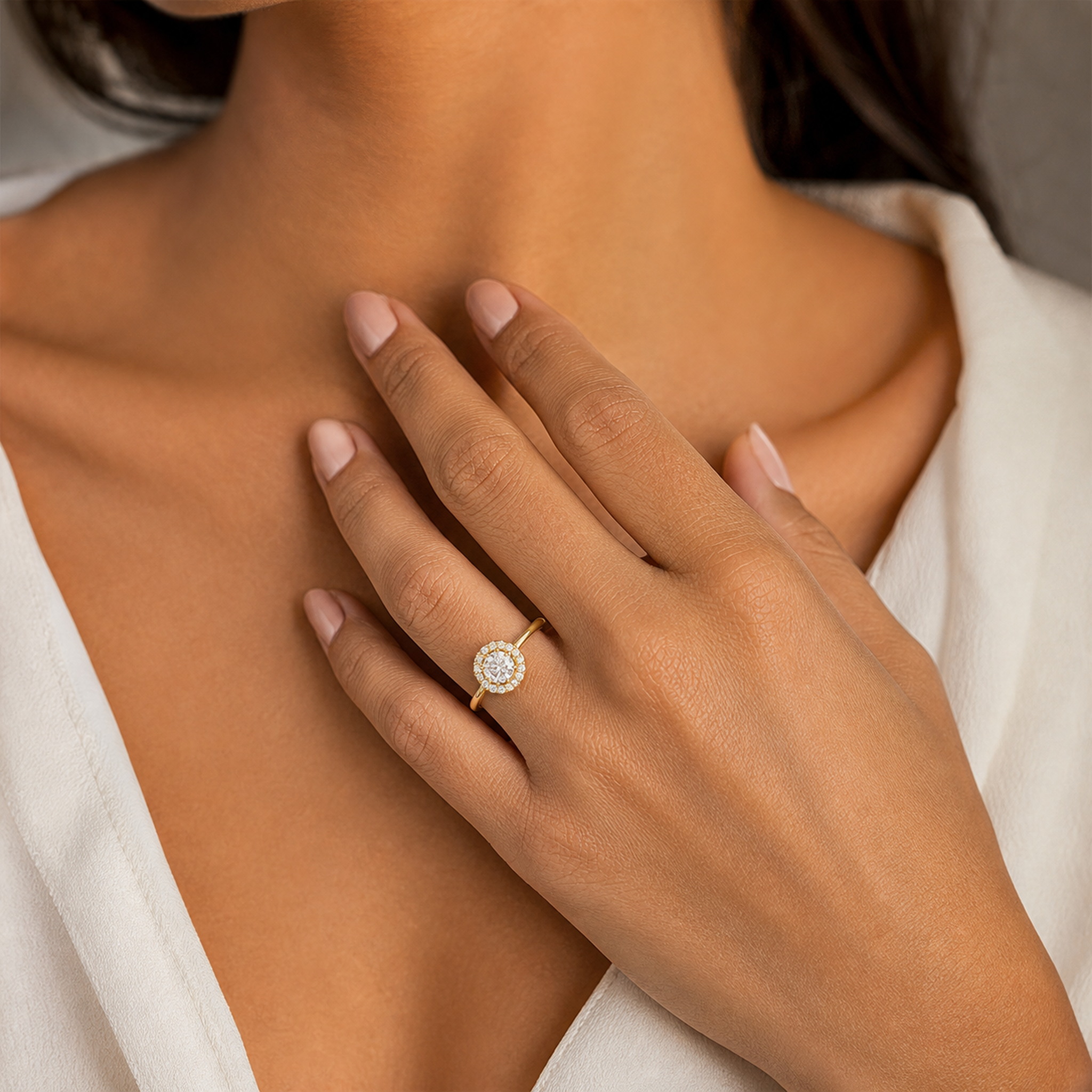


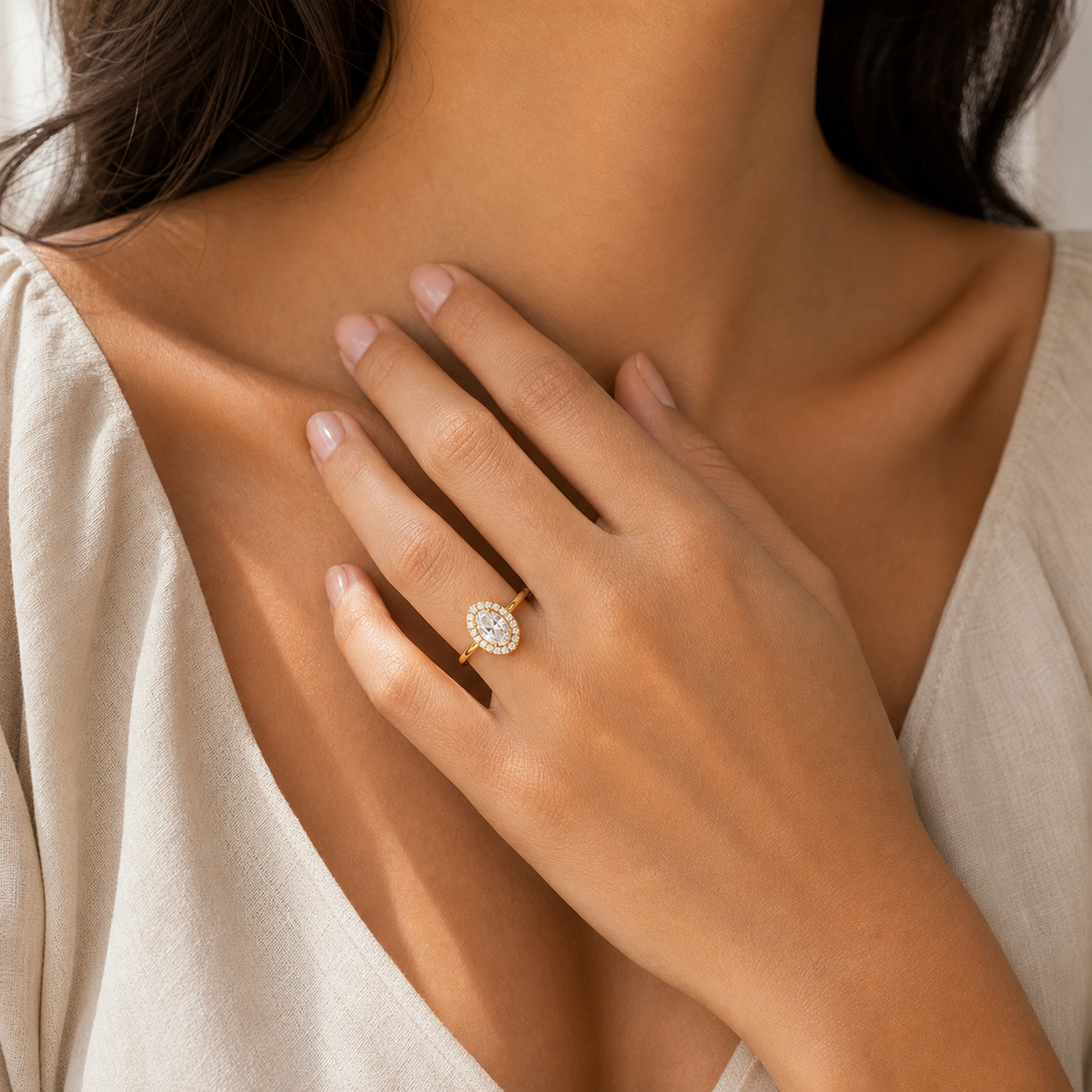


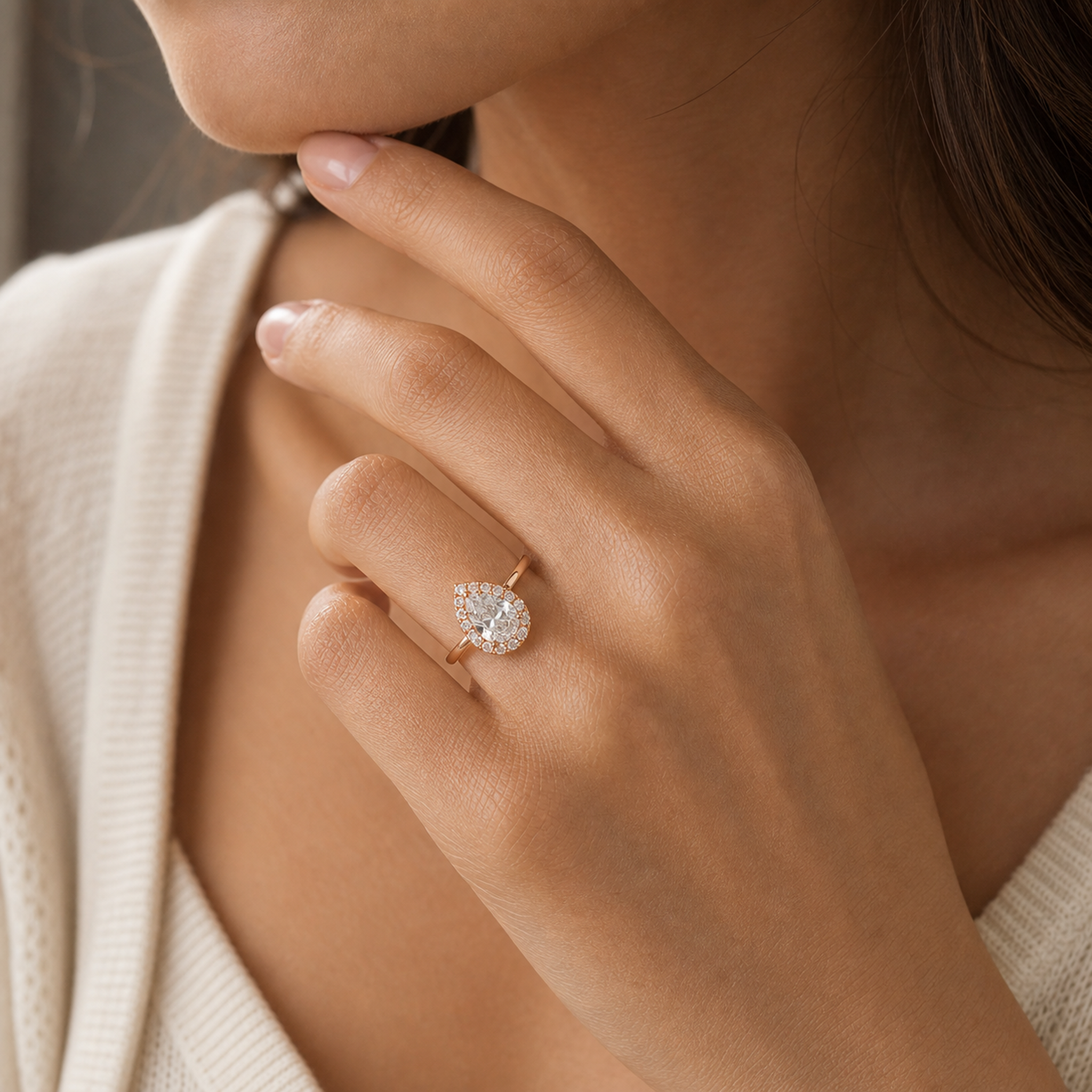


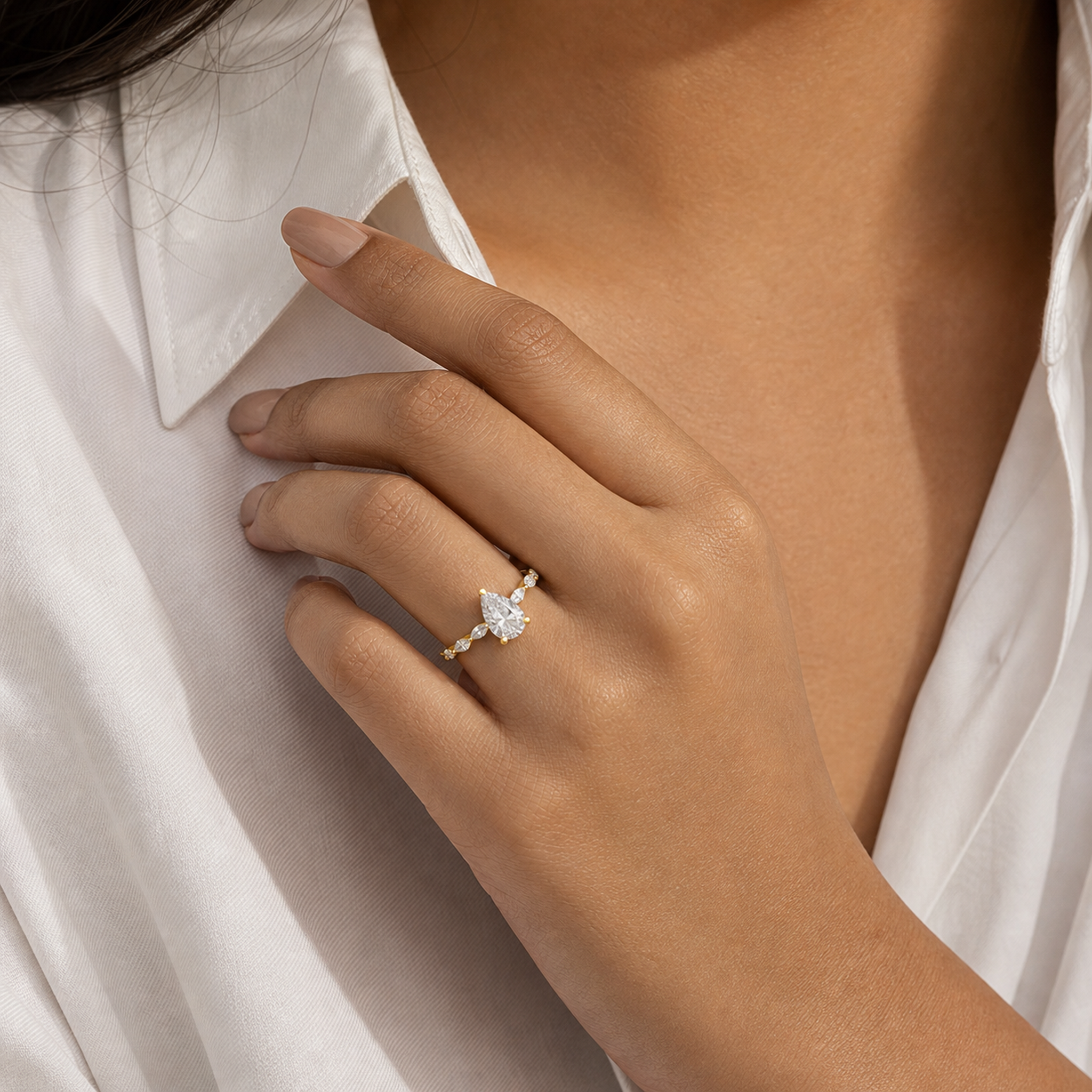


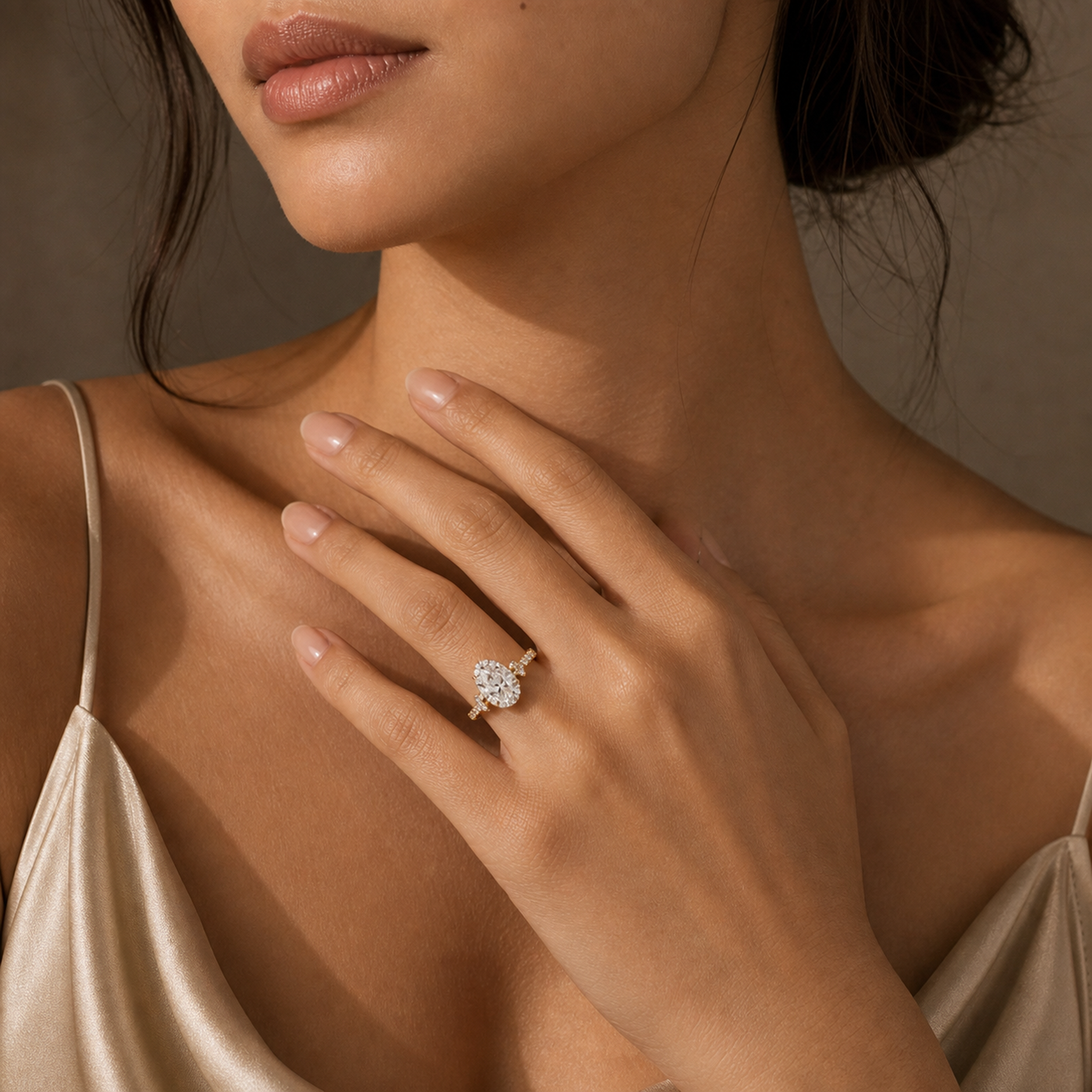


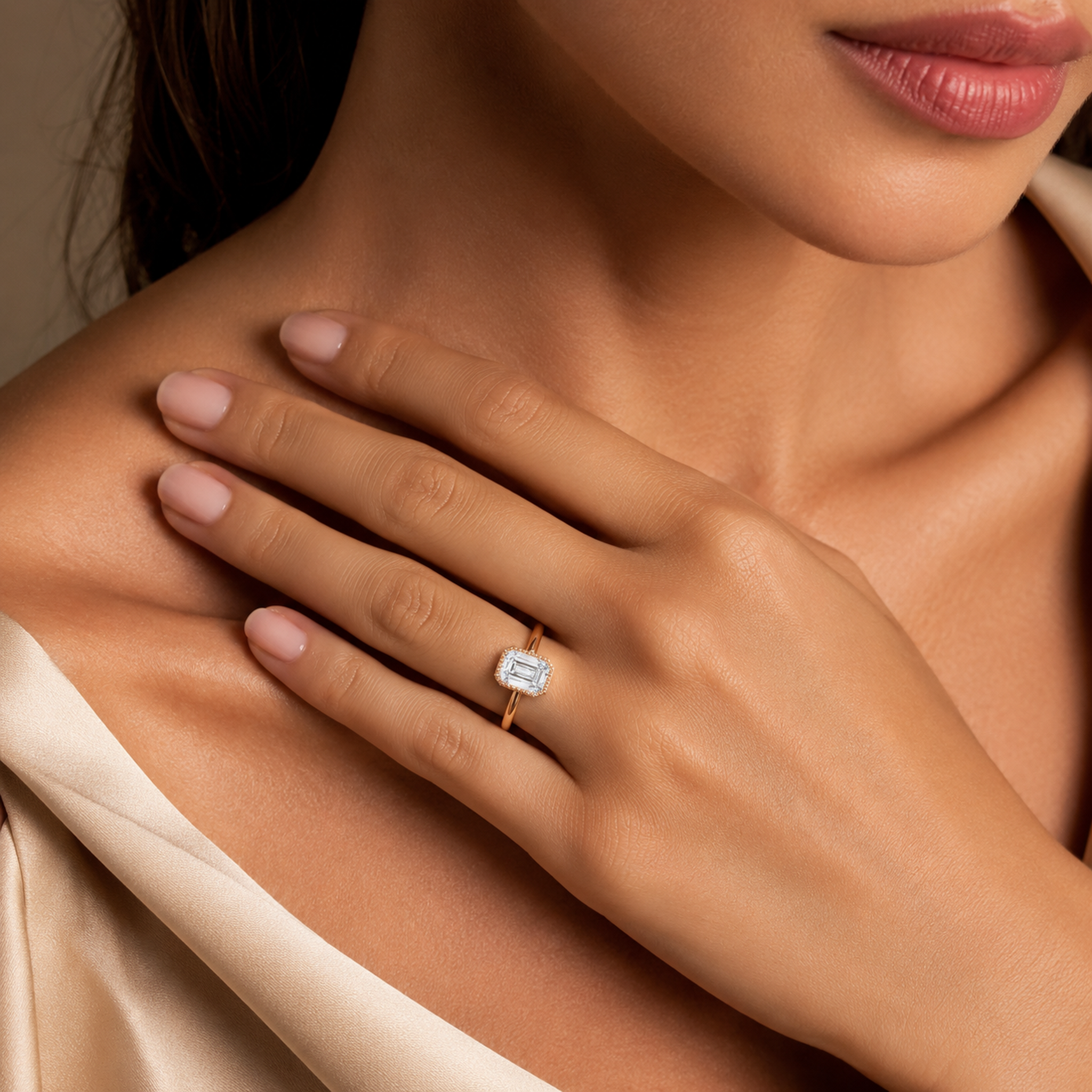


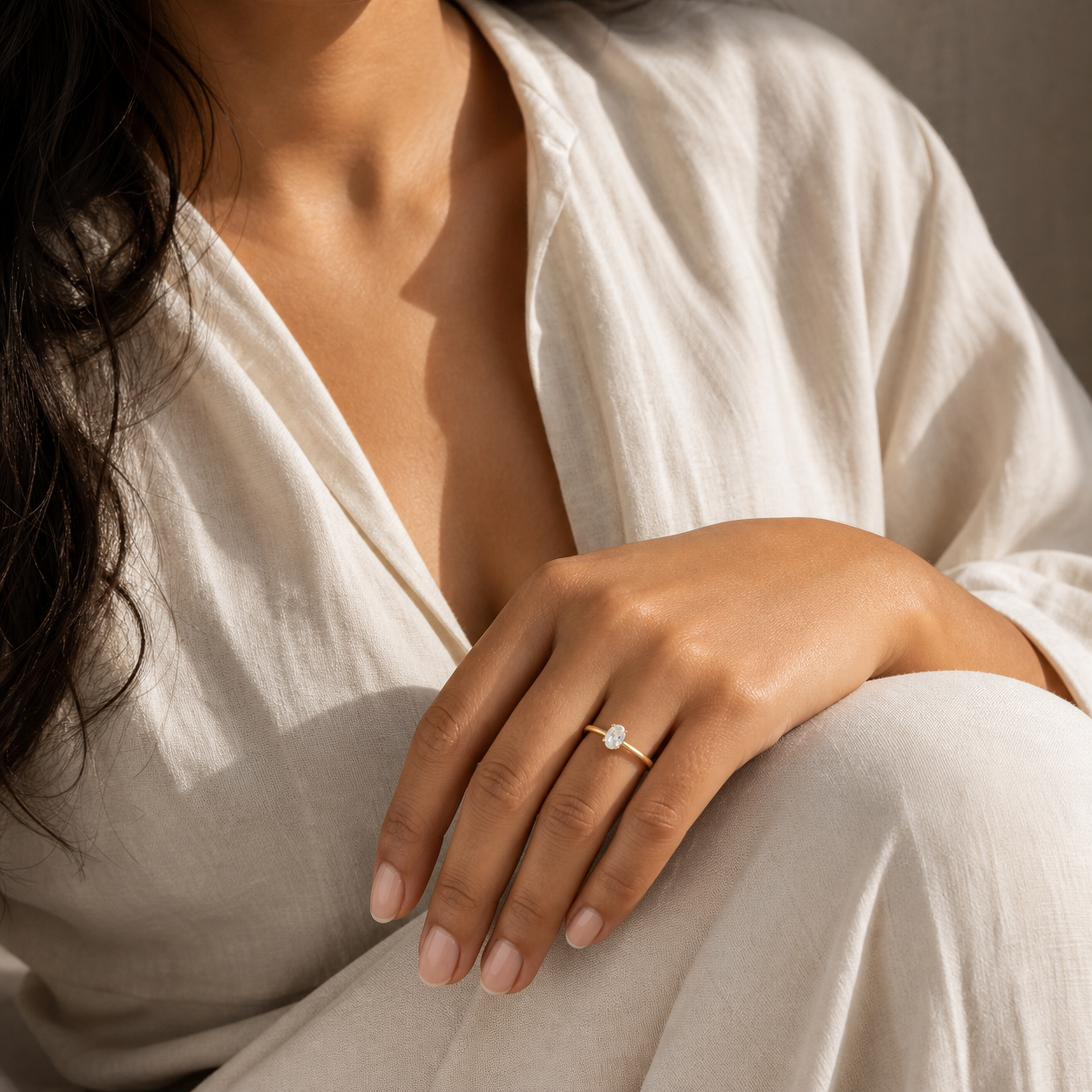


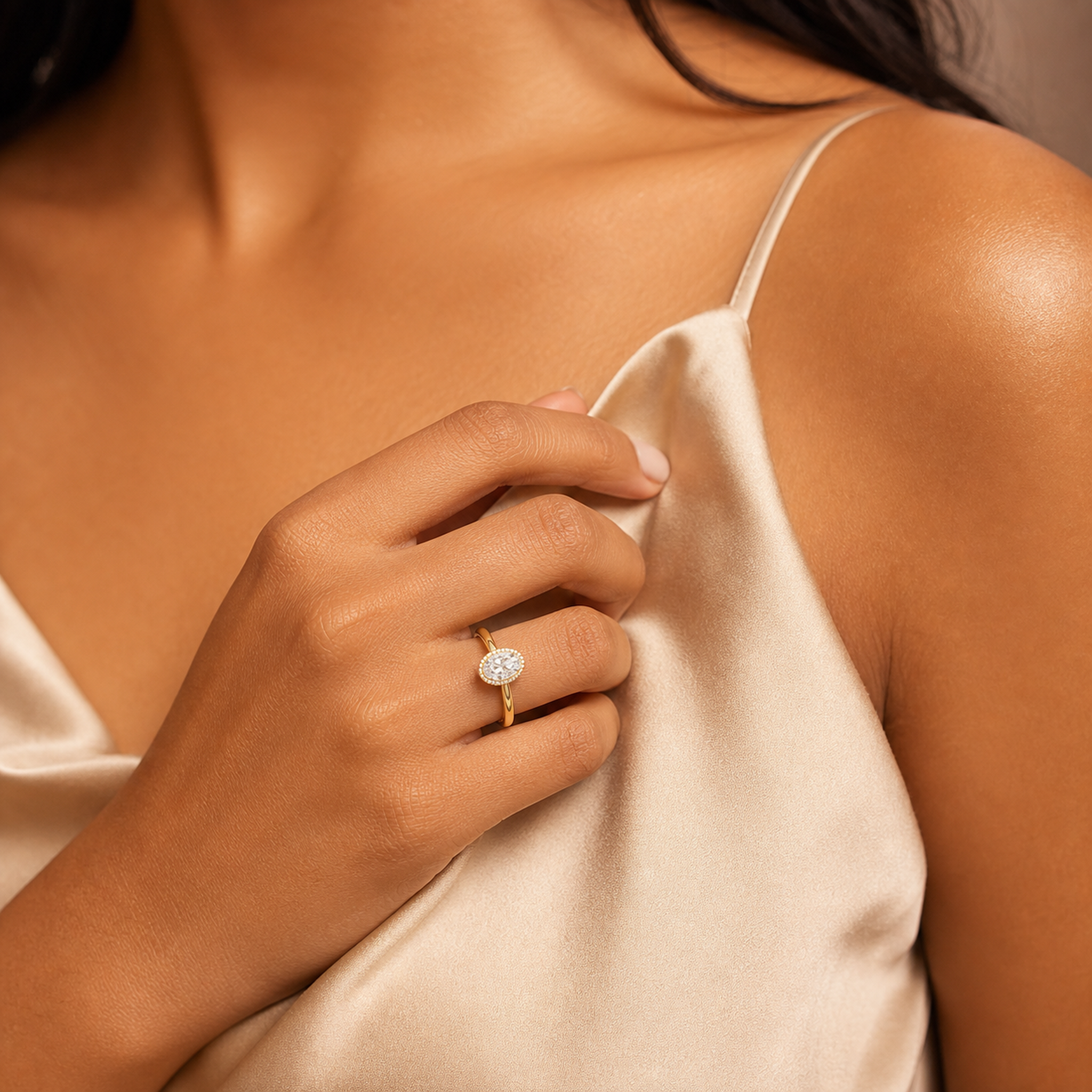


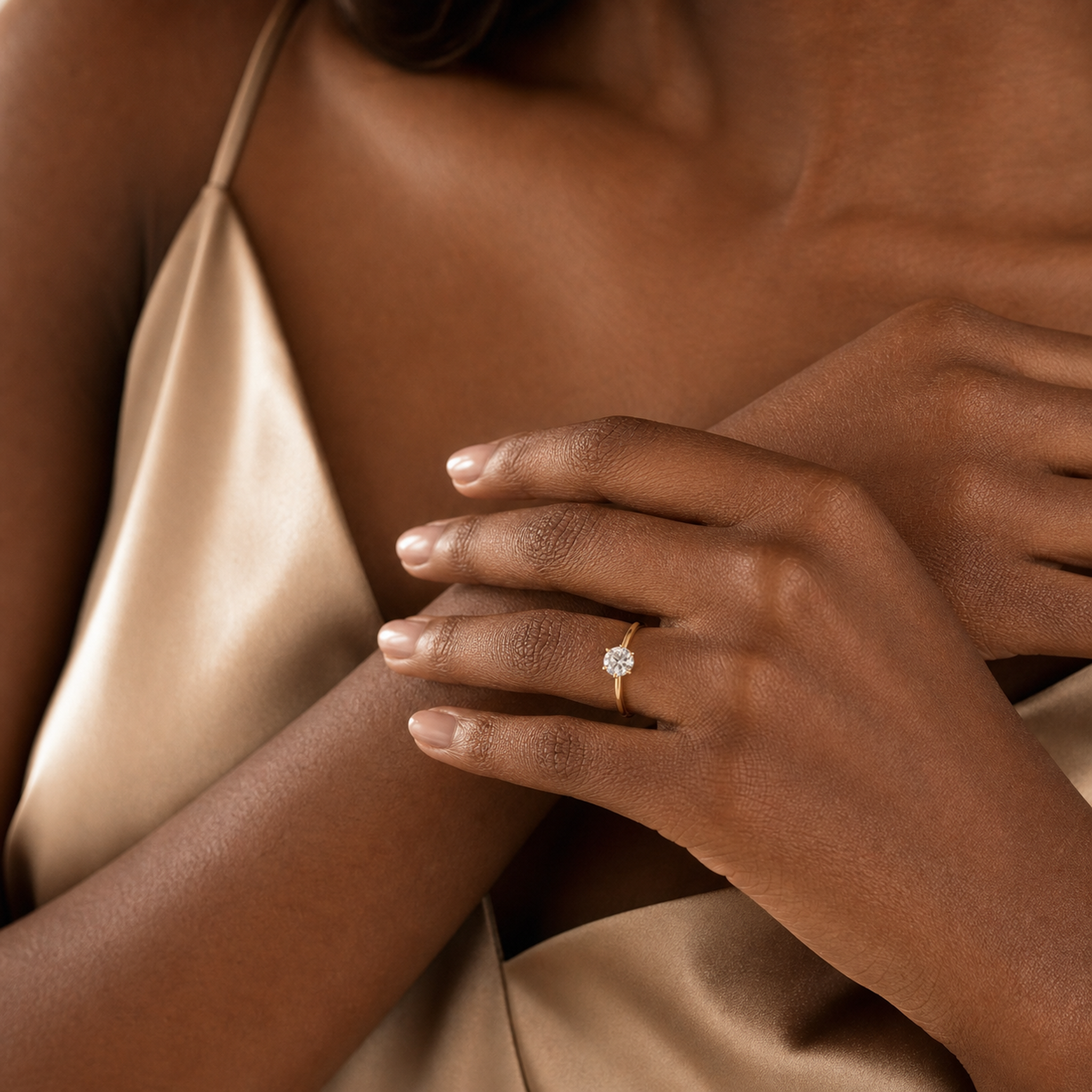
14K Yellow Gold Classic Engagement Rings: A Golden Line Through Familiar Form
Yellow Gold makes the supporting structure of a ring easy to see. The band draws a warm line across the hand; prongs interrupt a center outline; a halo becomes a distinct frame; side stones transition through visible metal. In a classic composition, this color is most effective when it clarifies hierarchy rather than simply adding a traditional association.
Burvonti's 34 verified designs span 15 solitaire, six halo, two side-stone, six Toi et Moi, and five three-stone structures. The breadth matters. Classic is not shorthand for one round solitaire. It is the discipline that allows one center, several centers, pavé, hidden details, or shaped frames to remain composed and proportionally legible.
Gold Content Is Context, Not Rank
A 14K alloy contains approximately 58.3% gold. Its remaining alloying metals influence color and working behavior, but exact formulas differ. The karat mark cannot by itself promise one shade, hardness, scratch resistance, sensitivity result, or maintenance routine. Finish, lighting, photography, and the area of visible metal also shape the final appearance.
A narrow polished band carries a finer gold line than a broad bezel. Separate prongs create points of warmth, while a halo or cathedral shoulder lets the material take up more of the composition. Comparing visible metal within the actual designs is more informative than treating Yellow Gold as a single flat swatch.
Hierarchy Across One, Two, or Three Centers
In a solitaire, the golden frame should support one primary diamond. In a halo, it must mediate center and surrounding stones. A three-stone ring relies on measured progression from center to sides. Toi et Moi shifts the task toward balance between two distinct outlines. Yellow Gold can connect these elements, but color does not replace spacing, scale, orientation, or appropriate setting architecture.
The collection also includes hidden halos and pavé details that change how the ring reads in profile. Their role should remain secondary to the principal composition. Classic restraint does not require removing these details; it asks whether they reinforce the whole rather than create an unrelated layer of decoration.
Shape Gives the Golden Boundary Direction
Round, oval, cushion, pear, emerald, and heart centers appear alongside paired-shape designs. Curved outlines let gold move around the center with a softer rhythm. Emerald geometry makes corner placement and straight transitions more visible. Pear and heart shapes introduce directional points, while mixed pairs require a band and shared negative space capable of holding different axes together.
Compared with Rose Gold, Yellow Gold has a more distinctly golden rather than blush register. Compared with White Gold, it creates greater color separation around bright diamonds. It does not make a stone inherently larger, warmer, or more brilliant. The interaction should be judged in the complete ring under realistic light.
Carry the Line Into a Pair
A matching Yellow Gold wedding band can continue the metal field; another color can interrupt it deliberately. Whether the pair sits close depends on halo edge, basket width, cathedral rise, side-stone reach, band thickness, and center arrangement. A classic appearance does not guarantee a flush fit or one correct wedding-band style.
The golden surface will also gather evidence of use. Cleaning should suit the diamonds, alloy, and setting; polishing or refinishing should respond to the actual condition and desired appearance. A familiar design language does not remove the need for product-specific care. When sensitivity matters, request the complete alloy rather than inferring an outcome from the color alone.
Burvonti pairs responsibly sourced, independently graded lab-grown diamonds with settings considered through proportion and human judgment. Custom possibilities can refine shape, orientation, metal, engraving, band dimension, or selected structure when feasible. In 14K Yellow Gold, classic clarity comes from giving warmth a precise place in the hierarchy. The selected product remains the final evidence surface.
Frequently Asked Questions
How does this page differ from Classic Engagement Rings?
The parent explains Classic across all metals. This child focuses on the way 14K Yellow Gold makes bands, frames, transitions, and negative space visibly warm.
How does it differ from all 14K Yellow Gold Engagement Rings?
The main metal page spans many design attitudes. This page is limited to rings selected for disciplined hierarchy and composed proportion.
How much gold does 14K Yellow Gold contain?
Approximately 58.3%. The remaining alloying metals influence color and behavior, and exact recipes vary.
Is every 14K yellow gold ring the same shade?
No. Alloy, finish, lighting, photography, and visible metal area change how the color reads.
Does Classic mean solitaire only?
No. The collection also contains halo, side-stone, Toi et Moi, and three-stone designs whose relationships remain clear and restrained.
Can two different diamond shapes feel classic together?
Yes, when their scale, orientation, spacing, and shared band resolve as one composition. Familiarity is less important than control.
Does Yellow Gold change a diamond's grade?
No. It changes the visual context around the diamond, not its graded color, dimensions, or light performance.
Which shapes are available here?
The current assortment includes round, oval, cushion, pear, emerald, heart, and paired-shape combinations.
Is 14K Yellow Gold better than 18K for a classic ring?
Neither is universally better. Gold content differs, while alloy, color, structure, feel, care, and budget complete the decision.
Will 14K Yellow Gold scratch?
Its surface can collect marks with wear. No gold finish is scratch-proof, and care should follow the actual ring.
Will a straight wedding band sit flush?
Not automatically. Head, halo, side-stone, cathedral, and band geometry determine the relationship.
Can Burvonti personalize a classic 14K yellow gold ring?
Custom possibilities may include shape, orientation, metal, engraving, band proportion, or selected details, subject to availability and feasibility.