
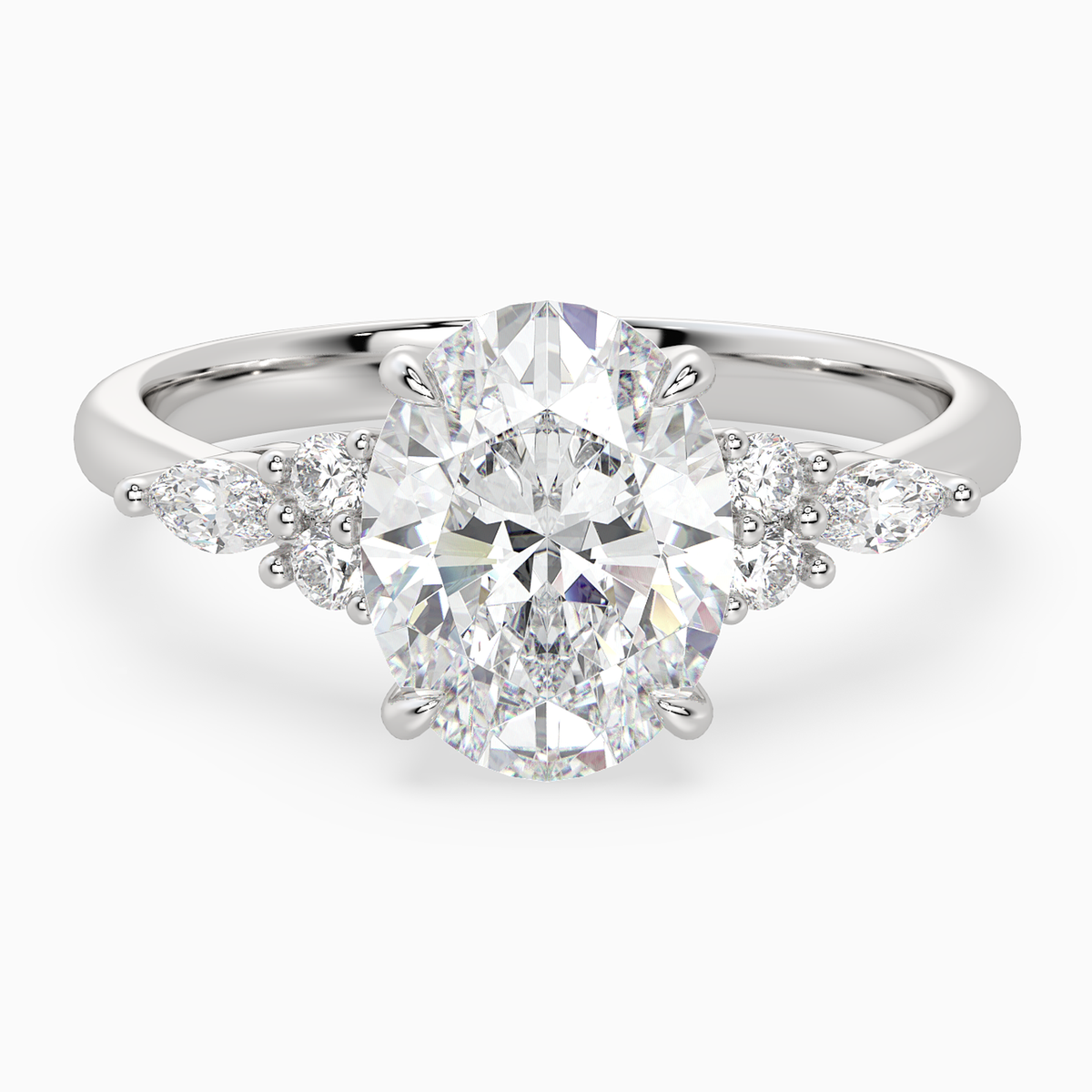


Oval Lab-Grown Diamonds: How to Choose a Ring That Looks Effortless

Oval lab-grown diamonds have a way of looking relaxed and considered at the same time. They give the hand a longer visual line, often look larger face-up than round diamonds of similar carat weight, and work beautifully in everything from clean solitaires to halos, three-stone rings, and side-stone designs.
The best oval for an engagement ring is not chosen by carat weight alone. Look at face-up shape, length-to-width ratio, bow-tie visibility, brightness across the center, color, clarity, certification, and the setting style that supports the diamond's proportions.
This guide explains how to choose an oval lab-grown diamond with confidence: what makes the shape flattering, which specs matter most, how to judge the bow-tie effect, and how different settings change the final feeling of the ring.
Why Oval Lab-Grown Diamonds Feel So Appealing
The oval shape has two strengths that shoppers notice quickly: it has the brilliance of a round-inspired faceting style, but the outline feels more elongated and distinctive. That combination makes the shape useful for buyers who want sparkle without choosing the most expected silhouette.
It can look larger face-up
Oval diamonds spread carat weight across a longer outline, so they often appear bigger on the finger than a round diamond with the same carat weight.
It lengthens the hand visually
The north-south line of an oval can make the finger look longer and more elegant, especially in a solitaire or slim side-stone setting.
It works across many aesthetics
An oval can read modern, romantic, vintage, minimal, or richly detailed depending on the setting, band width, metal color, and side stones.
Lab-grown gives room to prioritize design
Because lab-grown diamonds often offer stronger size and quality value, many buyers can consider a more intentional setting, hidden halo, or custom proportion.
The Oval Diamond Specs That Matter Most
Oval diamonds are not as standardized visually as round diamonds. Two stones can share the same carat weight and grading report but look very different in person. The right evaluation blends specs with visual judgment.
Length-to-width ratio
Length-to-width ratio describes how long or rounded the oval appears. A ratio around 1.35 to 1.50 is a common sweet spot for engagement rings, but preference matters. Lower ratios feel softer and fuller; higher ratios look longer and more dramatic.
Bow-tie effect
Most oval diamonds show some bow-tie, which is a darkened area across the center caused by how light returns through the elongated shape. A slight bow-tie can look normal. The issue is when the center appears too dark, heavy, or distracting in normal movement.

Cut quality and real-life brightness
Oval cut quality is best evaluated by the eye as well as the report. Look for even brightness, attractive contrast, and sparkle that travels through the whole stone as it moves. If the diamond looks flat, watery, or dark through the center, a higher grade on paper may not solve the visual problem.
Color and clarity
Oval diamonds can show body color a little more visibly near the tips and edges. Many buyers prefer a near-colorless range for white-metal rings, while yellow or rose gold can make slightly warmer grades look intentional. For clarity, prioritize eye-clean appearance. A visible inclusion under the table or near the center can be more noticeable than a small inclusion near the edge.
Lab-Grown Oval Diamonds vs. Mined Oval Diamonds
A lab-grown diamond has the same crystal structure and optical behavior as a mined diamond. The difference is origin. For oval diamonds, this can be especially useful because shoppers often want to compare several stones for shape, bow-tie, ratio, and face-up spread before choosing one.
With lab-grown diamonds, value can give you more flexibility, but it should not push you into choosing only the largest carat. A slightly smaller oval with better face-up balance can look more beautiful than a larger stone with a heavy bow-tie or awkward outline.
Choosing the Right Oval Engagement Ring Setting
The setting controls how the oval reads from a distance. It can make the diamond feel airy, dramatic, vintage, minimal, or architectural. Compare Round vs. Oval Diamonds for the shape trade-off; then see Best Engagement Rings for Your Hand Shape for a hand-proportion framework.

Solitaire oval rings
A solitaire keeps attention on the outline and light performance of the diamond. It is a strong choice when the oval has excellent proportions and you want a clean, timeless ring.
Oval halo rings
A halo adds brightness around the center and can make the ring feel more detailed. For oval diamonds, the halo should follow the shape carefully. A poorly matched halo can make the outline look bulky instead of graceful.
Side-stone and three-stone oval rings
Side stones can add width, contrast, and a more custom feel. Pear, tapered baguette, round, or oval side stones all change the personality of the ring. The key is proportion: side stones should support the center oval, not fight it.
Bezel and east-west oval settings
A bezel can make an oval feel smooth and modern while adding edge protection. An east-west setting turns the oval sideways for a low, contemporary look. Both choices are more design-forward, so they work best when the wearer already likes a less traditional ring profile.
Oval Lab-Grown Diamond Buying Table
| Decision | What to look for | Why it matters | Good next step |
|---|---|---|---|
| Shape ratio | A balanced oval, often around 1.35 to 1.50 length-to-width. | Controls whether the ring feels soft, classic, elongated, or dramatic. | Compare several ovals side by side before choosing carat size. |
| Bow-tie | Some contrast is normal; avoid a dark center that dominates. | Bow-tie visibility can affect the diamond's life and brightness. | Review video or movement in daylight and indoor light. |
| Carat spread | Face-up presence, not just listed carat weight. | Oval diamonds often look larger because weight is distributed lengthwise. | Choose the size that fits the hand and setting, not only the largest option. |
| Setting style | Solitaire for clarity, halo for extra detail, side stones for width and design. | The setting changes both the mood and the practical wear profile. | Match the setting to lifestyle, band pairing, and preferred maintenance level. |
| Certification | A grading report from a recognized lab. | Confirms the diamond's measured attributes and lab-grown origin. | Use the report as a baseline, then make the final call visually. |
How to Make an Oval Ring Feel Personal
Oval diamonds are versatile enough to carry small custom details without losing their clean shape. Consider a hidden halo for side-view sparkle, a slightly tapered band to emphasize length, a contoured wedding band plan, or a metal color that supports the wearer's wardrobe.
If the wearer prefers quiet jewelry, a simple oval solitaire with refined prongs can feel more elevated than a larger, busier design. If they like visual richness, side stones or a finely scaled halo can add presence without making the ring feel heavy.
To compare this shape across ring designs, explore oval diamond engagement rings.
Design an Oval Ring Around the Stone, Not Around a Template
Burvonti can help you compare oval lab-grown diamonds by proportion, brightness, setting style, and everyday wear. Start with the diamond that looks alive, then build the ring around it.
Explore oval diamond engagement rings View Engagement Rings Start a Custom DesignFrequently Asked Questions
Do oval lab-grown diamonds look bigger than round diamonds?
They often look larger face-up because the elongated outline spreads visual coverage across the finger. Actual appearance still depends on measurements, depth, and setting style.
What is the best length-to-width ratio for an oval diamond?
Many engagement ring buyers like oval diamonds around 1.35 to 1.50, but there is no single best ratio. A fuller oval feels softer, while a longer oval feels more dramatic and finger-lengthening.
Do all oval diamonds have a bow-tie?
Most ovals show some bow-tie or center contrast. The goal is to avoid a bow-tie that looks too dark, broad, or distracting in normal light.
Are oval lab-grown diamonds real diamonds?
Yes. Lab-grown diamonds are real diamonds with the same carbon crystal structure as mined diamonds. Their difference is origin, not diamond identity.
What setting is best for an oval engagement ring?
A solitaire is best for a clean look, a halo adds detail and presence, side stones add width and personality, and a bezel adds a modern protective edge. The best setting depends on the wearer's style and daily habits.
Should I choose the largest oval diamond I can afford?
Not automatically. A well-proportioned oval with balanced brightness can look better than a larger oval with a heavy bow-tie, awkward outline, or setting mismatch.
Final Thought
An oval lab-grown diamond should feel graceful before it feels complicated. Use the grading report to narrow your options, then let proportion, light movement, setting fit, and the wearer's real style guide the final decision.