
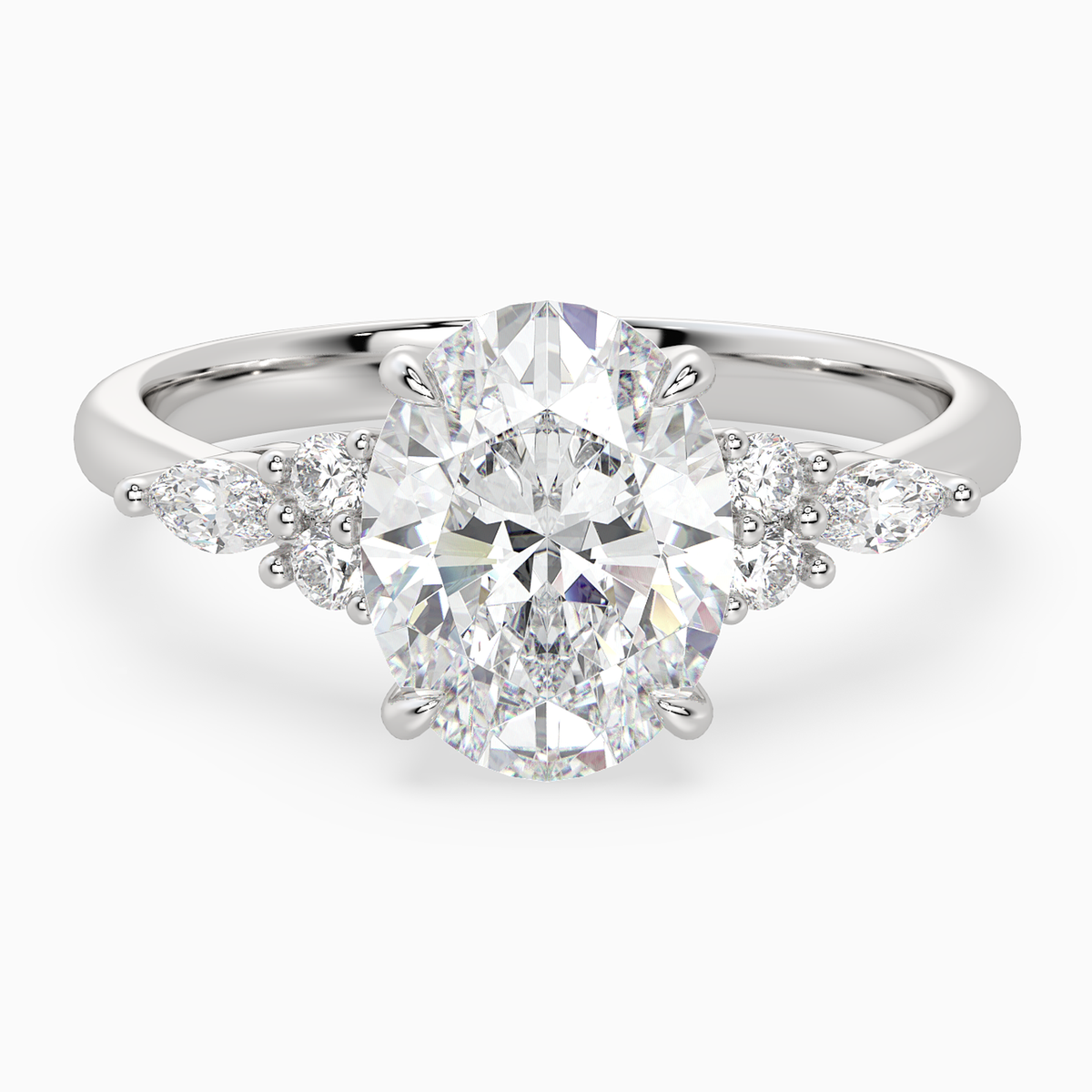


Bridal Styling Guide
How to Choose Bridal Jewelry for Your Wedding Dress

The best bridal jewelry does not compete with the wedding dress. It completes the line of the gown, frames your face, and gives your engagement ring and wedding day look a clear design language.
This guide explains how to choose bridal jewelry for your wedding dress by neckline, sleeves, hairstyle, fabric texture, metal tone, and the level of sparkle you want in photos and in real life.
The Short Answer
Start with the dress neckline, then choose one main jewelry focal point. If the neckline is open, a necklace can work beautifully. If the neckline is high or detailed, let earrings, bracelets, or rings carry the sparkle. Match the mood of the dress, keep the metal tone intentional, and avoid pieces that can snag lace, tulle, or illusion mesh.
- Open necklines can support pendants, collars, or statement earrings.
- High necklines usually look cleaner without a necklace.
- Hair up makes earrings more visible; hair down often needs more length or presence.
- Long lace sleeves usually call for smoother jewelry and fewer bracelets.
- Your engagement ring does not need to match every piece exactly, but the full look should feel connected.
Start With the Dress, Not the Jewelry
Bridal jewelry is easiest to choose after the dress is selected. The gown determines the open space around your face and collarbone, the amount of texture near your hands, and the overall mood of the look.
A minimal satin dress can carry a stronger diamond necklace or sculptural earrings. A gown with heavy lace, beading, or illusion detail may need more restraint. The goal is not to wear every piece you love at once. The goal is to create a clean hierarchy so the dress, jewelry, and ring look intentional together.
Choose Bridal Jewelry by Neckline
The neckline is the strongest signal for necklace and earring choice. Think of it as the frame around your face and shoulders. Jewelry should either fill that space gracefully or leave it open on purpose.
| Wedding dress neckline | Best jewelry direction | Why it works |
|---|---|---|
| Strapless or sweetheart | Diamond pendant, collar necklace, or statement earrings. | The open neckline gives jewelry room to frame the collarbone and face. |
| V-neck or plunging | Drop pendant, lariat, slim Y-necklace, or long earrings. | Vertical jewelry follows the natural line of the dress instead of fighting it. |
| High neck, halter, or illusion | Skip the necklace; choose earrings, a bracelet, or a ring-focused look. | The neckline already carries detail, so extra necklace volume can feel crowded. |
| Off-the-shoulder | Drop earrings, delicate collar, or no necklace with stronger earrings. | The shoulders are the focal point, so jewelry should add movement without closing the neckline. |
| Square or scoop | Short pendant, tennis necklace, or soft studs and a bracelet. | Simple geometry works best with clean, balanced necklines. |

Use the One Statement Piece Rule
Bridal jewelry looks most polished when one piece leads. That could be a dramatic pair of earrings, a diamond necklace, a tennis bracelet, or the engagement ring and wedding band stack. When everything is equally bold, the look can become visually noisy.
A Simple Styling Test
Stand in the dress and ask where the eye goes first. If your earrings, necklace, bracelet, and ring are all competing, remove one piece or make one piece more delicate. The strongest bridal looks usually have a clear focal point and supporting pieces that echo it.
Match Jewelry to the Wedding Dress Fabric
Fabric texture changes how jewelry feels. Smooth satin, crepe, and mikado can handle clean lines and sharper metal silhouettes. Lace, tulle, organza, and beaded fabrics often benefit from lighter, more delicate jewelry so the texture of the dress remains visible.
If your dress has ornate lace near the neckline, skip a necklace or choose a very fine pendant. If the bodice is minimal, a diamond necklace or more visible earrings can add structure and light.
Choose Metal Tone With Intention
Metal choice does not have to follow rigid rules, but it should feel deliberate. White gold and platinum create a cool, crisp look with bright white gowns. Yellow gold can warm ivory, champagne, and cream fabrics. Rose gold can work with blush gowns or warmer skin undertones when the rest of the look is kept refined.
| Dress tone | Metal direction | Styling note |
|---|---|---|
| Pure white | Platinum or white gold. | Keeps the overall look crisp and cool. |
| Ivory or cream | Yellow gold, white gold, or platinum. | Yellow gold adds warmth; white metal keeps the styling more classic. |
| Champagne | Yellow gold or mixed metal. | Warm metal can make the gown tone feel intentional rather than off-white. |
| Blush | Rose gold, yellow gold, or soft white metal. | Choose based on whether you want warmth or contrast. |
Plan Earrings Around Your Hairstyle
Your hairstyle determines how visible earrings will be. A sleek bun or chignon exposes the ears, so studs, halos, hoops, drops, and climbers can all work. Half-up styles usually need earrings with enough presence to be seen through movement. Hair worn down often benefits from longer or more vertical earrings.
If your earrings are the main statement piece, keep the necklace simple or skip it entirely. If the necklace is the focal point, choose earrings that add light without pulling attention away from the neckline.
Use Sleeves to Decide Bracelet and Ring Styling
Sleeves decide how much space you have for wrist jewelry. Sleeveless, strapless, and cap-sleeve dresses leave the wrist open, so a tennis bracelet, slim bangle, or delicate bracelet stack can look natural.
Long sleeves are different. Lace, illusion mesh, and beaded cuffs can catch on high prongs or sharp bracelet settings. In that case, skip the bracelet or choose smoother, lower-profile pieces. Let your engagement ring, wedding band, or earrings carry the sparkle instead.
Wedding Dress Snag Check
- Run a fingertip gently over prongs, bracelet clasps, and earring backs before the wedding day.
- Avoid high-set bracelet stones against lace or illusion sleeves.
- Put jewelry on after stepping into the dress, especially with delicate fabrics.
- Choose smoother settings near fabric-heavy cuffs and veils.
- Keep a small jewelry cloth and safe storage pouch with your getting-ready items.
Match the Mood of the Wedding
The best bridal jewelry also reflects the mood of the celebration. A city wedding may call for cleaner metal lines and a more architectural ring stack. A garden wedding can support softer diamond details, floral-inspired shapes, or vintage-leaning settings. A beach or destination wedding often looks best with light, easy pieces that move naturally and do not feel overbuilt.
Use the theme as a filter, not a costume. Jewelry should still feel wearable after the wedding. A piece that works for the ceremony and still belongs in your everyday fine jewelry wardrobe will usually have more lasting value.
Should Bridal Jewelry Match the Engagement Ring?
Your bridal jewelry does not need to match your engagement ring exactly. It should share a design language. If your engagement ring is a round solitaire, round diamond studs or a soft circular pendant can feel connected. If your ring has clean modern lines, simple metal and geometric earrings may work better than ornate vintage pieces.
Matching every detail can feel forced. Coordinating shape, metal tone, stone scale, or level of detail is usually enough.
Can You Mix Metals on Your Wedding Day?
Yes, but make it intentional. Mixed metals work best when there is a bridge between them, such as a two-tone ring, a warm dress tone, or repeated use of one metal in smaller pieces. If your engagement ring is platinum but you want yellow gold earrings, keep the necklace minimal or choose a bracelet that helps connect the metals.
Coordinate the Bridal Party Without Matching Exactly
The bridal party does not need to wear identical jewelry. A more modern approach is to choose a shared element: the same metal tone, a similar diamond shape, a consistent earring size, or a simple motif that echoes your own ring.
This keeps the photos cohesive while allowing each person's dress, neckline, and hairstyle to work naturally.

Build the Look Around the Ring and the Dress
At Burvonti, bridal styling starts with the pieces that matter most: the engagement ring, the wedding dress, the wedding band direction, and the way the full look will feel on the hand, neckline, and in photographs. The right jewelry should support the commitment piece, not distract from it.
Explore engagement rings Ask BurvontiFor a related guide, continue with Necklace Length Guide: How to Choose the Right Chain for Your Neckline.
Frequently Asked Questions
How do I choose bridal jewelry for my wedding dress?
Start with the neckline, then choose one focal point. Match necklace length to the neckline, choose earrings based on hairstyle, and adjust bracelets or rings around sleeve length and fabric texture.
Should bridal jewelry match the engagement ring?
It should coordinate, but it does not need to match exactly. Shared metal tone, diamond shape, level of detail, or overall style is usually enough to make the look feel connected.
Is it okay to mix metals for bridal jewelry?
Yes. Mixed metals can look modern when they are intentional. Use one dominant metal and one secondary metal, or choose a bridge piece that includes both tones.
What jewelry should I wear with a strapless wedding dress?
A strapless dress can work with a diamond pendant, collar necklace, statement earrings, or no necklace at all. If the bodice is highly detailed, earrings may be cleaner than a necklace.
How do I keep jewelry from snagging lace?
Choose smoother settings near lace, tulle, and illusion sleeves. Avoid high prongs on bracelets, put jewelry on after the dress, and test clasps and prongs before the wedding day.
Should I wear a watch on my wedding day?
Most brides skip a watch for the ceremony so the focus stays on the ring, bracelet, and overall styling. If you prefer one, choose a very delicate watch that feels like part of the jewelry suite.