
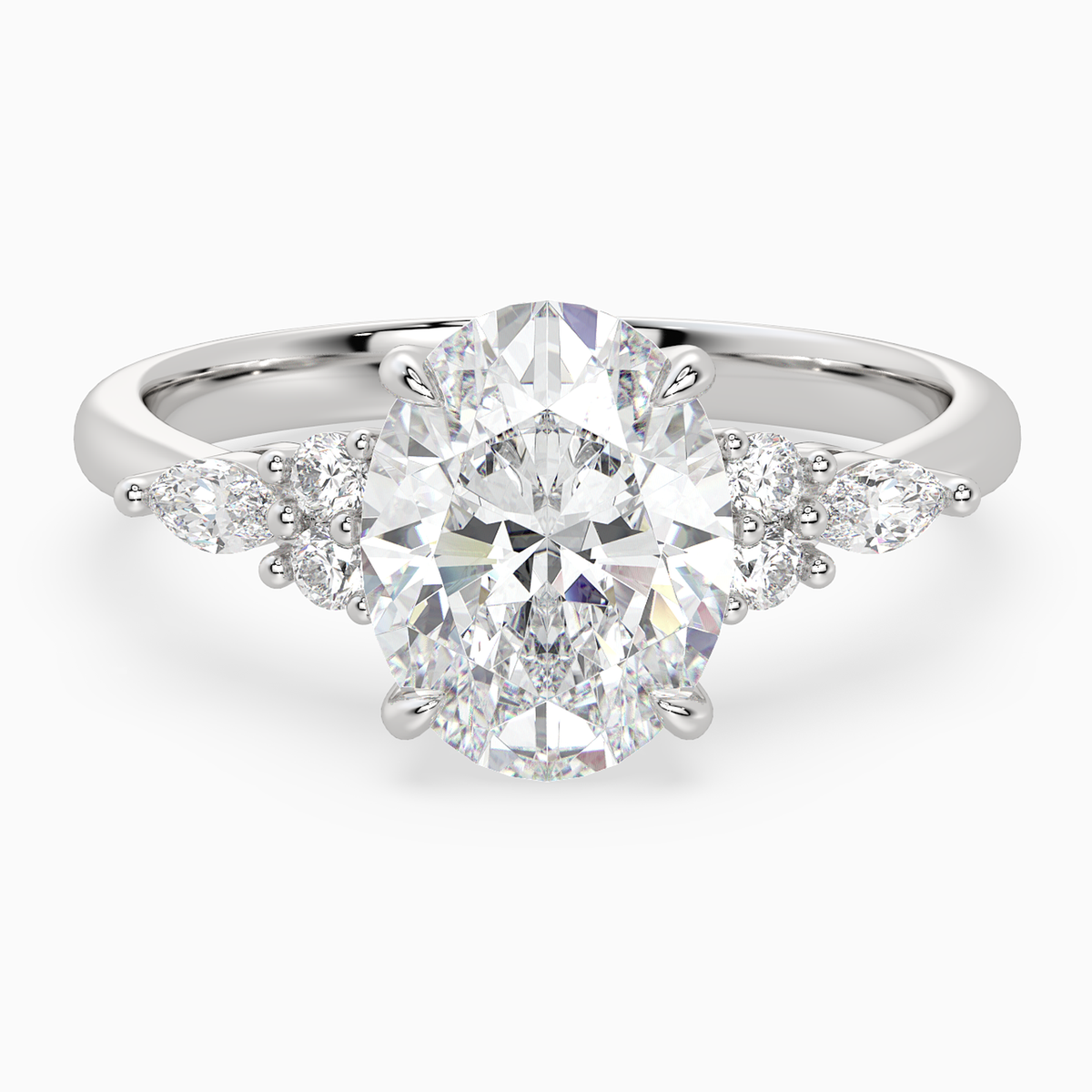


Are Lab-Grown Diamonds More Ethical? A Clear Guide for Conscious Buyers

Lab-grown diamonds are often described as the more ethical choice, but the honest answer is more useful than a slogan. They can remove many of the hardest questions linked to mining, conflict sourcing, land disruption, and opaque supply chains. They still deserve the same scrutiny you would give any meaningful purchase.
They are real diamonds created in controlled growth environments instead of mined from the earth. Their strongest ethical advantage is traceability. The main caveat is that energy use, labor standards, disclosure quality, and marketing claims still matter.
This guide explains how lab-grown diamonds compare with mined diamonds, where the ethical advantages are strongest, what questions still need to be asked, and how to shop with confidence.
What Does an Ethical Diamond Actually Mean?
An ethical diamond is not defined by one label. It is a diamond whose origin, production, labor conditions, environmental impact, and sale disclosures can be understood with reasonable confidence.
For buyers, that usually comes down to five practical questions:
- Can the seller explain where the diamond came from?
- Is the diamond accurately disclosed as lab-grown or mined?
- Does it come with an independent grading report or verifiable documentation?
- Are environmental claims specific, measured, and not overstated?
- Does the brand take responsibility for the setting, service, warranty, and long-term care?
That is why the best answer is not simply "lab-grown is ethical" or "mined is unethical." The better question is: which diamond gives you clearer origin confidence and fewer hidden unknowns?
Why Mined Diamonds Raise Ethical Questions
Natural diamonds can pass through many hands before they reach a jewelry counter. Mining, sorting, cutting, trading, and retail distribution may involve multiple countries and suppliers. That complexity can make origin and impact difficult for a buyer to verify.
Conflict risk
Industry systems have been created to reduce the trade of conflict diamonds, but a conflict-free claim does not automatically answer every question about human rights, worker treatment, or community impact.
Labor visibility
Mining supply chains can involve uneven labor standards, especially when sourcing is not clearly documented from mine to market.
Land disruption
Diamond mining can disturb land, water systems, and ecosystems. The level of impact depends on the mine, the operator, local regulation, and restoration practices.
Traceability limits
A diamond may be sold with assurances, but buyers often need to trust several layers of sourcing claims they cannot personally verify.

Why Lab-Grown Diamonds Can Be Easier to Evaluate
Lab-grown diamonds are made in controlled production environments using advanced technology that recreates the conditions under which diamond crystal forms. A finished lab-grown diamond has the same essential diamond identity buyers care about: it is carbon crystal, graded for the 4Cs, and suitable for fine jewelry.
The ethical advantage is not that the diamond has no impact. The advantage is that its origin can be more direct. Instead of tracing a stone from mine to export to trade network to cutting facility to retailer, a lab-grown diamond starts in a known production setting and can be disclosed as lab-grown from the beginning.
The Honest Caveat: Lab-Grown Does Not Mean Impact-Free
A lab-grown diamond avoids mining, but it still uses technology, equipment, skilled labor, cutting, polishing, shipping, and electricity. That means buyers should be careful with broad claims such as "zero impact" or "automatically sustainable."
The most responsible brands talk in specifics. They can explain the diamond type, the grading report, the production and sourcing standards they expect, and the difference between verified facts and general marketing language.
Be cautious with vague environmental claims. More useful questions are: What is being measured? Who verifies it? Does the claim refer to the diamond, the setting, shipping, packaging, or the whole finished ring?
Lab-Grown vs. Mined Diamonds: Ethical Comparison
| Question | Lab-grown diamonds | Mined diamonds |
|---|---|---|
| Origin traceability | Usually easier to explain because the diamond begins in a controlled growth environment. | Can be traceable, but the supply chain may involve more locations, suppliers, and verification steps. |
| Conflict concerns | Avoids the specific conflict risks tied to diamond mining regions. | Industry safeguards exist, but buyers still depend on sourcing systems and seller disclosures. |
| Environmental impact | No mine excavation for the stone, but energy source and production efficiency matter. | Mining can disturb land and water systems; impact depends on operator standards and restoration practices. |
| Labor visibility | Production and cutting partners can be easier for brands to vet when the supply chain is shorter. | Labor conditions vary across mining, sorting, cutting, trading, and transport networks. |
| Disclosure | Must be clearly sold as lab-grown, not implied to be mined or rare in the same way. | Should be sold with transparent sourcing and grading details where available. |
| Best buyer action | Ask for grading, disclosure, responsible sourcing details, and service support for the finished jewelry. | Ask for origin programs, sourcing policies, grading, and specific conflict-free documentation. |
What to Check Before You Buy a Lab-Grown Diamond
If you want a more responsible choice, do not stop at the word "lab-grown." Use the same precision you would use when judging cut, color, clarity, and carat weight.
1. Clear disclosure
The seller should state plainly that the diamond is lab-grown. Ethical selling starts with accurate naming, not vague language.
2. Independent grading
Look for a grading report from a recognized gemological laboratory. The report should identify the diamond as lab-grown and provide the 4C details that affect beauty and value.

3. Responsible production claims
If a brand makes energy, carbon, or sustainability claims, ask what the claim covers and how it is supported. Specific information is more trustworthy than broad environmental language.
4. Cutting quality
Ethics should not distract from beauty. A well-cut lab-grown diamond can look brighter, more balanced, and more alive than a larger stone with weak proportions.
5. Setting craftsmanship
The finished ring matters as much as the diamond. Prongs, metal choice, band thickness, stone security, and aftercare determine whether the piece is responsible for daily wear, not only responsible on paper.
Are Lab-Grown Diamonds Real Diamonds?
Yes. Lab-grown diamonds are real diamonds, not diamond simulants such as cubic zirconia or moissanite. They are grown through technology rather than geological mining, then cut and graded like other diamonds.
That distinction matters ethically because accurate disclosure protects buyer trust. A lab-grown diamond should be celebrated for what it is, not disguised as something else.
How Burvonti Thinks About Responsible Choice
At Burvonti, a responsible jewelry decision is not only about choosing a lab-grown diamond. It is about choosing a diamond with clarity, a setting with intention, and a buying process that does not hide the details that matter.
If you are comparing stones, start with the diamond's identity and grading. Then look at the design: how the stone is held, how the ring will wear, how the metal supports your lifestyle, and how easy it will be to maintain over time.
Choose a Diamond You Can Understand
Explore lab-grown diamonds and engagement ring settings with a focus on clarity, proportion, and long-term wear. If you want help comparing options, Burvonti can guide the decision without pushing you into a one-size-fits-all answer.
Compare engagement rings View Engagement Rings Ask a Design QuestionThe Bottom Line
Lab-grown diamonds can be a more ethical choice because they avoid mining and can offer clearer origin traceability. The most thoughtful decision still requires specifics: independent grading, clear disclosure, responsible production claims, good cutting, and a well-made setting.
For a conscious buyer, the best diamond is not the one with the loudest ethical promise. It is the one whose origin, quality, and long-term wear can be explained clearly.
Frequently Asked Questions
Are lab-grown diamonds more ethical than mined diamonds?
They can be, especially when the priority is avoiding mining-related conflict risk, land disruption, and complex origin tracing. The final answer depends on production transparency, energy use, labor standards, grading, and seller disclosure.
Are lab-grown diamonds conflict-free?
Lab-grown diamonds do not come from diamond mining regions, so they avoid the conflict-diamond concerns tied to mined stones. They should still be clearly disclosed and responsibly sourced through trustworthy production and cutting partners.
Are lab-grown diamonds better for the environment?
They avoid mine excavation for the stone, which is a major advantage. However, they still require energy, equipment, cutting, polishing, and shipping. The most useful environmental claims are specific and verifiable.
Do lab-grown diamonds last as long as mined diamonds?
Yes. A lab-grown diamond is a real diamond and is suitable for lifelong fine jewelry when it is well cut, properly set, and cared for over time.
What certification should I look for?
Look for an independent grading report that identifies the diamond as lab-grown and lists the 4Cs. The report is not the whole ethical story, but it is an important trust signal.
Can an ethical diamond still be beautiful?
Absolutely. Ethics and beauty should work together. Prioritize a well-cut diamond, a secure setting, and a design that fits your daily life instead of choosing only by carat size or a broad sustainability claim.