


Engagement Ring vs. Wedding Band: What Each Ring Means and How to Wear Both

Engagement rings and wedding bands are often talked about as a set, but they are not the same ring. One usually marks the decision to marry. The other usually marks the wedding ceremony itself. Some couples wear both every day, some choose one ring, and some design a stack that changes depending on the occasion.
An engagement ring is typically given or chosen at the proposal and often features a center diamond or gemstone. A wedding band is usually exchanged during the wedding ceremony and is often simpler, lower-profile, and designed to sit beside the engagement ring. You can wear both, wear only one, or create a custom pairing that fits your style and daily life.
This guide explains the practical difference between an engagement ring and a wedding band, how to wear them together, when to buy each ring, and how to choose a pair that feels intentional rather than automatic.
Engagement Ring vs. Wedding Band: The Core Difference
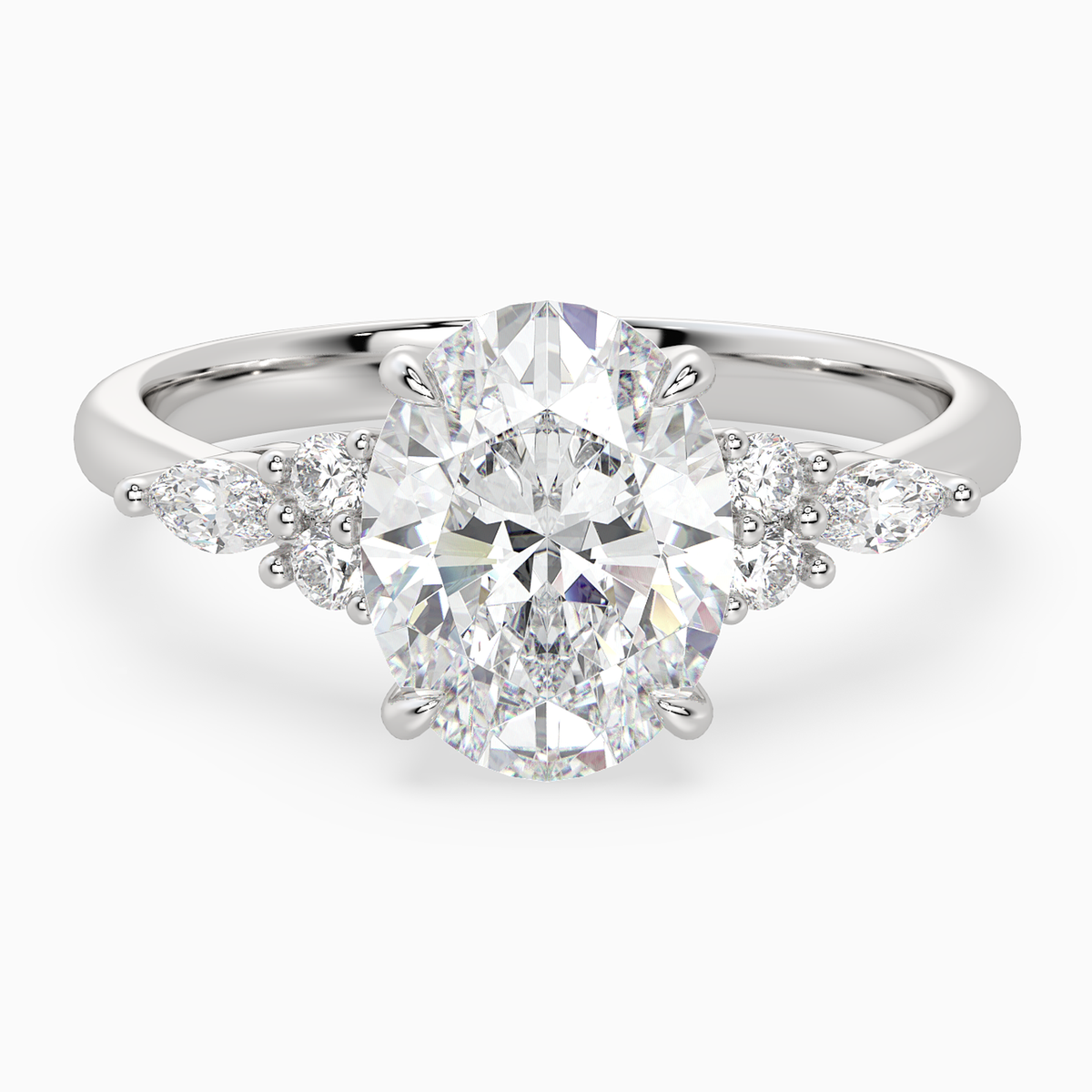
The engagement ring is usually the more visually expressive piece. It may feature a solitaire diamond, a three-stone design, a halo, side stones, pavé accents, or a distinctive setting. Its purpose is partly symbolic and partly personal: it represents the commitment to marry, but it also carries the wearer’s taste, hand proportions, lifestyle, and diamond preferences.
The wedding band is usually the ring exchanged during the ceremony. It may be a plain metal band, a diamond band, a contoured band, a pavé band, or a custom-matched ring built to sit close to the engagement ring. Compared with the engagement ring, the wedding band often has a quieter role. It completes the bridal set and adds daily-wear meaning.
| Category | Engagement Ring | Wedding Band |
|---|---|---|
| Main purpose | Marks the decision or proposal before marriage. | Marks the wedding ceremony and married commitment. |
| Typical design | Often has a center diamond or gemstone with a more noticeable setting. | Often a band, diamond band, or contoured design that pairs with the engagement ring. |
| When it is worn | Usually after the proposal and before the wedding, then often daily after marriage. | Usually after the wedding ceremony, alone or stacked with the engagement ring. |
| Buying priority | Focus on diamond shape, setting style, proportions, metal, and lifestyle fit. | Focus on comfort, pairing, profile height, durability, and how the stack sits on the finger. |
| Budget role | Often the larger investment because of the center stone and setting complexity. | Usually lower than the engagement ring, but diamond bands and custom designs can vary widely. |
Do You Need Both an Engagement Ring and a Wedding Band?
No rule says every couple must buy both. The traditional approach is to wear an engagement ring before the wedding, add the wedding band during the ceremony, and wear both afterward. That works beautifully for many people, but it is not the only choice.
You may choose both rings if you like the symbolism, the layered look, or the ability to wear the wedding band alone for travel, work, workouts, or lower-profile days. You may choose one ring if you prefer simplicity, have a hands-on lifestyle, or want to put the full budget toward one highly considered design. A wider diamond band, a bezel-set engagement ring, or a custom ring with wedding-band proportions can all make sense.
The best choice is not the most traditional one by default. It is the ring system that fits the person wearing it: their hand, schedule, design taste, comfort threshold, and long-term care habits.
How to Wear an Engagement Ring and Wedding Band
In the United States, many people wear both rings on the left ring finger, with the wedding band placed closer to the hand and the engagement ring stacked above it. The common explanation is that the wedding band is placed closest to the heart. During the ceremony, some people move the engagement ring to the right hand, exchange the wedding band, then move the engagement ring back afterward.
That said, wearing rules are flexible. Some people wear the engagement ring alone, wear the wedding band alone for everyday tasks, stack multiple bands around the engagement ring, or wear the rings on different hands. Comfort and security matter more than following a rule that does not fit your life.
Classic Stack
Wedding band first, engagement ring above it. This is the most familiar bridal stack and works best when both rings sit flush or nearly flush.
Band-Only Days
Wear the wedding band alone when you want less height, fewer snag points, or a simpler look for travel and daily tasks.
Nested or Contoured Stack
A curved band follows the shape of the engagement ring, useful for elongated diamonds, low baskets, halos, or settings that do not allow a straight band to sit close.
Modern Mixed Stack
Use a plain band, diamond band, anniversary band, or mixed-metal band to create a stack with more personal rhythm.

How to Choose a Wedding Band for an Engagement Ring
The most important question is not only whether the two rings look good together. It is whether they can be worn together comfortably without rubbing, spinning, pinching, or creating a stack that feels too tall for daily wear.
- Match the profile first. A low engagement ring may need a contoured or notched band. A higher setting may allow a straight band to sit flush.
- Balance metal and width. Matching metals creates a clean set. Mixed metals can work, but the contrast should look deliberate.
- Check stone placement. If the band has diamonds, make sure they do not scratch the engagement ring basket or prongs.
- Think about comfort. A beautiful stack that feels bulky will not be worn often. Try the rings together, not only separately.
- Leave room for future bands. If you may add an anniversary band later, consider the full stack from the beginning.
Should You Buy a Bridal Set?
A bridal set includes an engagement ring and wedding band designed to go together. It can be a practical choice if you want a guaranteed fit, a cohesive look, and fewer decisions later. Bridal sets are especially useful when the engagement ring has a distinctive silhouette, such as a low-set center stone, halo, twist band, or elongated diamond shape.
The tradeoff is flexibility. Buying separately gives you time to live with the engagement ring before deciding whether the wedding band should be plain, diamond-set, contoured, or more minimal than expected. If your taste is still evolving, choosing the band later can be the smarter route.
When Should You Buy Each Ring?
Buy or design the engagement ring when the proposal timeline is clear and you have enough time for stone selection, setting decisions, production, resizing, and delivery. For wedding bands, begin earlier than many couples expect. A good window is several months before the wedding, especially if you need a custom contour, matching metal, engraving, or a band that must be tested with the engagement ring.
If both rings are custom or semi-custom, make the wedding band part of the planning conversation from the beginning. Even if you do not order the band immediately, knowing whether the engagement ring can sit flush with a future band can prevent surprises.
To compare bands alongside the engagement ring, explore wedding bands.
Build the set around the way it will be worn.
Explore engagement rings first, then think through the wedding band as part of the full wearing experience: height, comfort, alignment, daily rhythm, and long-term meaning.
Explore engagement rings Explore wedding bandsBudgeting for Both Rings
The engagement ring often receives the larger share of the budget because the center diamond and setting drive cost. The wedding band may be simpler, but it still deserves planning. A plain metal band, pavé band, eternity band, and custom contoured band can sit in very different price ranges.
Rather than treating the wedding band as an afterthought, plan a combined ring budget. That makes it easier to decide whether to prioritize a larger center diamond, a more intricate setting, a diamond wedding band, or a cleaner design with stronger daily comfort.
Common Mistakes to Avoid
- Choosing the engagement ring without thinking about the band. Some settings do not sit flush with a straight wedding band.
- Assuming both rings must match exactly. Matching is one option, but proportion and intention matter more.
- Ignoring height. A tall stack can catch on clothing or feel awkward for everyday wear.
- Buying the band too late. Custom bands, resizing, and engraving need time.
- Forgetting maintenance. Rings worn together can rub; periodic inspections help protect prongs, pavé stones, and metal surfaces.
For a related guide, continue with How to Match a Wedding Band to Your Engagement Ring.
Frequently Asked Questions
Is a wedding band the same as an engagement ring?
No. An engagement ring is usually given or chosen at the proposal and often has a center diamond. A wedding band is usually exchanged at the ceremony and worn after marriage, either alone or with the engagement ring.
Do you wear the engagement ring or wedding band first?
Many people wear the wedding band first, closer to the hand, with the engagement ring above it. This is traditional in the U.S., but you can wear the rings in the order that feels best.
Can I use my engagement ring as my wedding ring?
Yes. Some couples choose one ring for both meanings. This can work especially well if you prefer a simple daily routine, a lower-profile design, or one carefully chosen custom ring.
Should the wedding band match the engagement ring?
It can, but it does not have to. Matching metal, width, and diamond style creates a cohesive set. A contrasting band can also look intentional if the proportions are balanced.
When should we buy wedding bands?
Start several months before the wedding, especially if the band needs a custom shape, engraving, matching metal, resizing, or time to test with the engagement ring.
Choose the rings as a system, not separate symbols.
The right engagement ring and wedding band should look good together, feel comfortable separately, and support the life they are meant to mark. Start with the ring that matters most now, then build the rest with intention.
Shop engagement rings Read more ring guides Ask a design question