
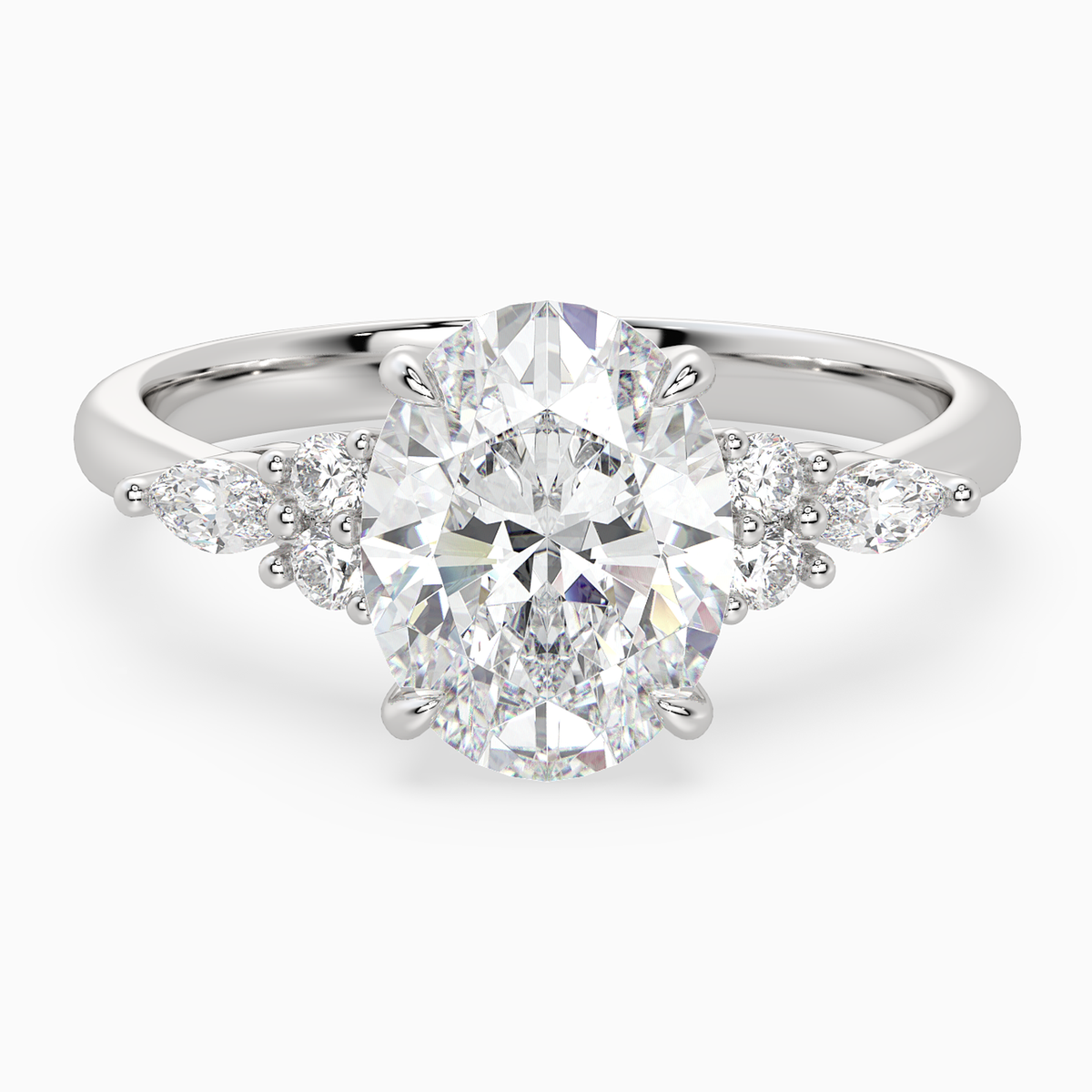


Wedding Bands in 14K Yellow Gold
Gold makes band relationships legible. 14K yellow gold frames contours, open space, textured widths, and diamond rhythms across 97 designs.



14K Yellow Gold Wedding Bands: Commitment in Clear Relief
Yellow Gold keeps the band visible as an object, even when diamonds carry much of the light. That clarity suits more than one role: a precise line beside an engagement ring, a curved response to its setting, a wide standalone band, or a distinct design connected to a partner's ring through one quiet detail.
Ninety-seven current designs form the complete page. Sixty-nine normalized counterparts come from Lab-Grown Diamond Rings and twenty-eight from Men's Rings, with the two groups disjoint. Commitment joins them without imposing one gender, width, buyer, hand or order of wear.
Choose Continuity or Deliberate Contrast
Two rings can share Yellow Gold and still differ in width, profile or diamond rhythm. They can also use different metals so each outline remains visible. The useful question is not whether they match by rule, but which relationship—echo, boundary, interval or contrast—makes the combined composition coherent.
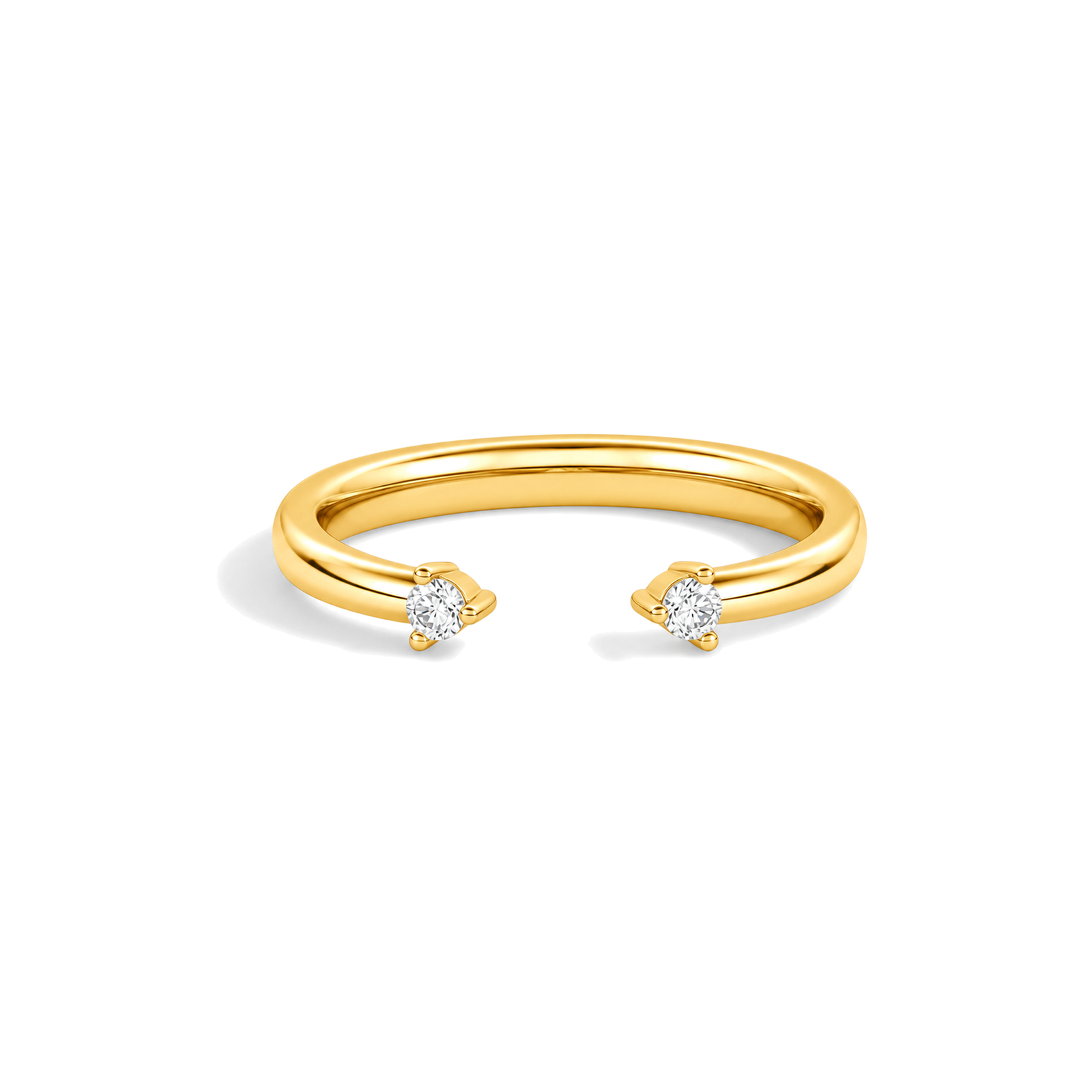
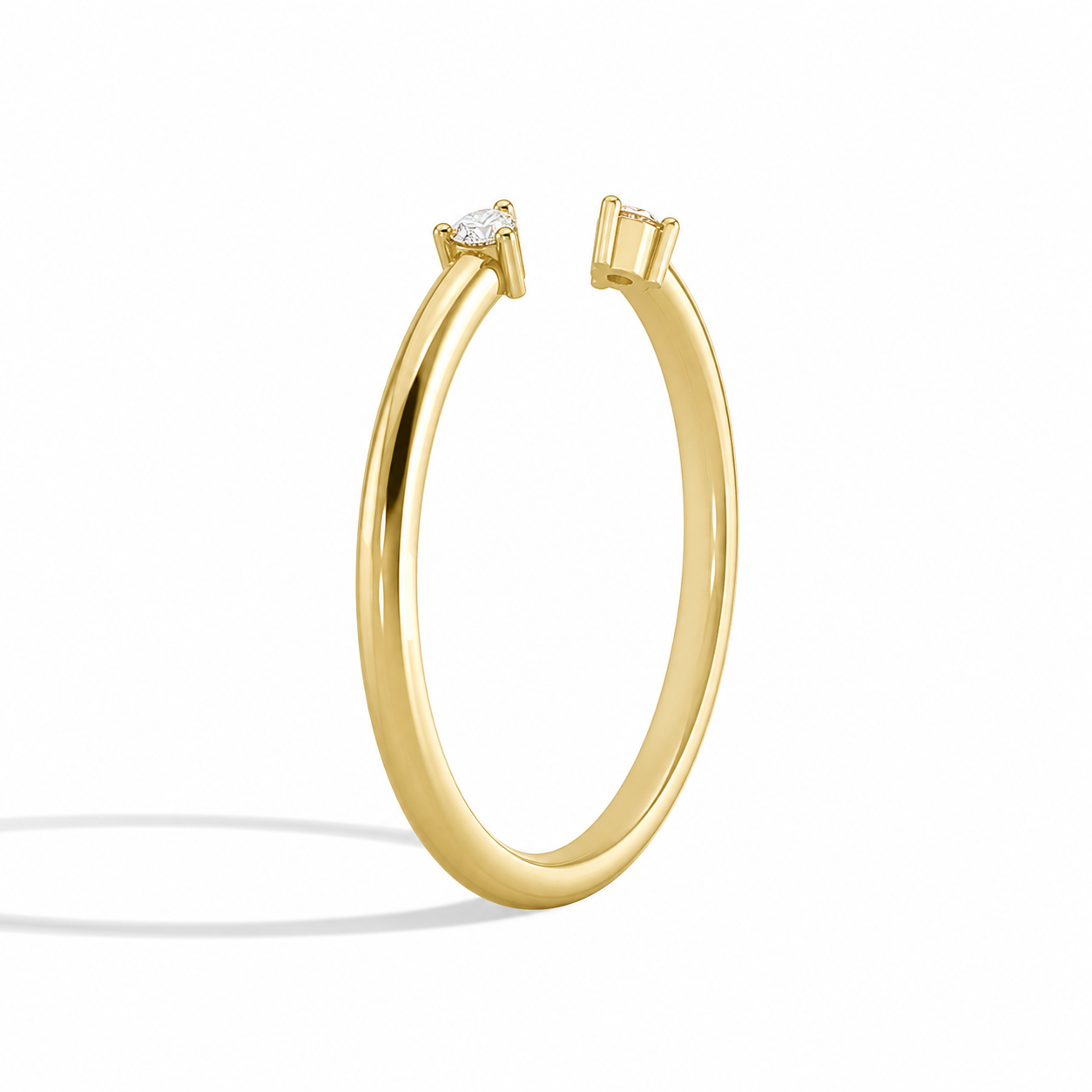
A straight band can leave a measured gap. Curved and open forms can answer setting projection in different ways. Examine the basket, gallery, prongs and shoulder from the side; no named geometry promises a perfect fit, fixed spacing or freedom from contact.
Let Scale Change the Meaning of the Surface
Average widths span 1.4–8 mm. Fine bands can trace stones or negative space with little metal outside the line. Broad bands offer room for flat faces, domes, bevels, facets, channels, brushing, hammering or knurling. Width is not thickness and does not prescribe comfort or size.
The twenty-eight 4–8 mm forms retain a useful Men's Rings comparison route, but their role changes here: they can stand as the complete wedding band, coordinate with a partner through finish or edge, or sit within a future stack. Their significance is relational, not gendered.
Confirm What the Diamond Label Actually Covers
Current titles and details include Round, Princess, Baguette, Trapezoid, Emerald, Marquise and Heart references, while twenty products name no shape in the same field. Coverage ranges through accents, channels, bezels, partial arrangements and eternity-titled forms, each requiring its own circumference evidence.
Sixty-one products use Total Carat Weight, sixteen use Carat Weight and twenty use Title. Keep those states separate. Approximately 58.3% of 14K alloy is gold; complete alloy and construction guide behavior. Alteration, engraving and refinishing remain technical questions for the exact band.
Frequently Asked Questions
How many yellow gold designs are current?
Ninety-seven wedding-band designs.
What does the page combine?
Sixty-nine same-metal Rings designs and twenty-eight same-metal Men's Rings designs.
Does a wedding band have to pair with an engagement ring?
No. Standalone wear is an equal design role.
Do paired rings need the same metal?
No. Matching creates continuity; contrast can preserve two clear outlines.
What can partners share without matching exactly?
Metal tone, edge, finish, width cue, diamond detail or private engraving.
Is there a required buyer or hand?
No Collection-wide buyer, hand, finger or order rule applies.
How do straight and curved bands differ?
A straight line stays continuous; a curve changes course around an intended area.
What does an open band do?
It introduces an interval, whose exact clearance must be checked with the other ring.
What widths are available in the current edit?
Published averages extend from 1.4 to 8 mm.
Does 8 mm indicate thickness?
No. It is the width across the finger, not profile depth.
Which surface treatments appear?
Titles include brushed, hammered, knurled and faceted treatments among other profiles.
Is one finish more durable?
The Collection evidence does not support a universal durability ranking.
Which diamond shapes are named?
Round, Princess, Baguette, Trapezoid, Emerald, Marquise and Heart appear.
Does every product name a shape?
No. Twenty current products do not name one in the same field.
Can I treat Carat Weight as TCW?
No; Carat Weight and Total Carat Weight are separate current labels.
Does eternity guarantee full coverage?
No. Confirm the exact setting around the circumference.
Can every design be personalized?
No shared promise applies; technical feasibility is product-specific.