
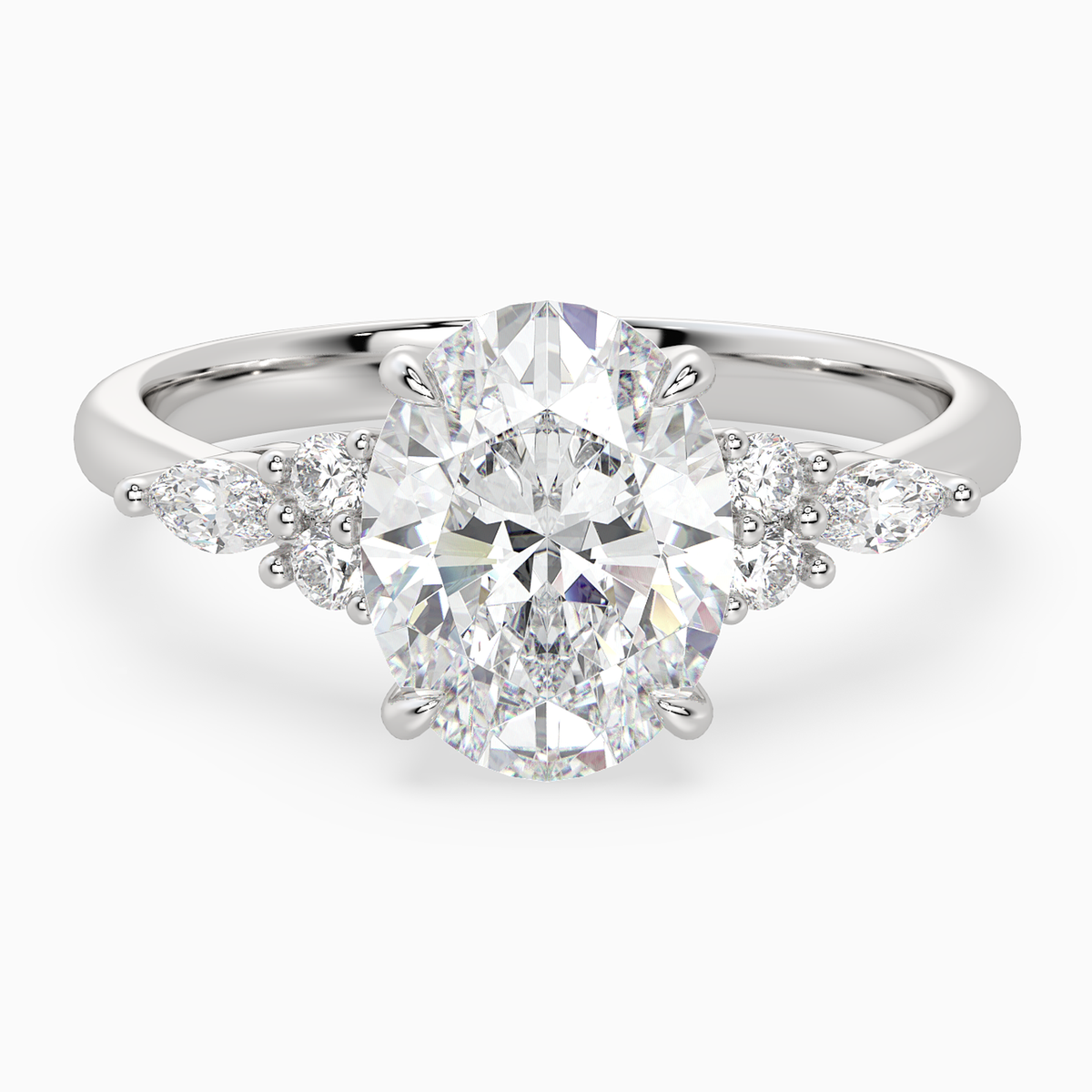


Lab Grown Diamond Rings in 18K Yellow Gold
A fuller gold field sets the cadence. 18K yellow gold shapes lines, openings, curves, and layered relationships across the hand.


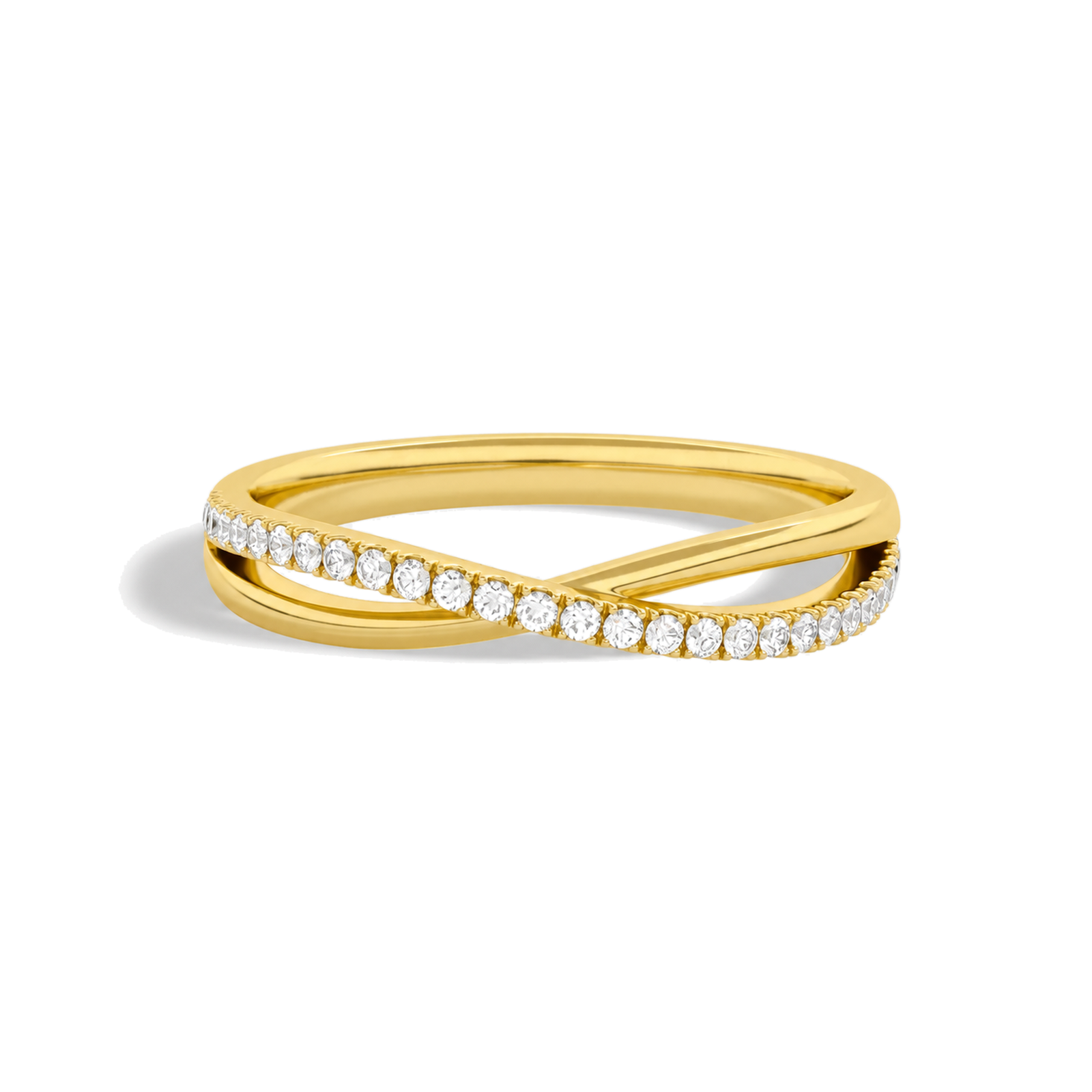
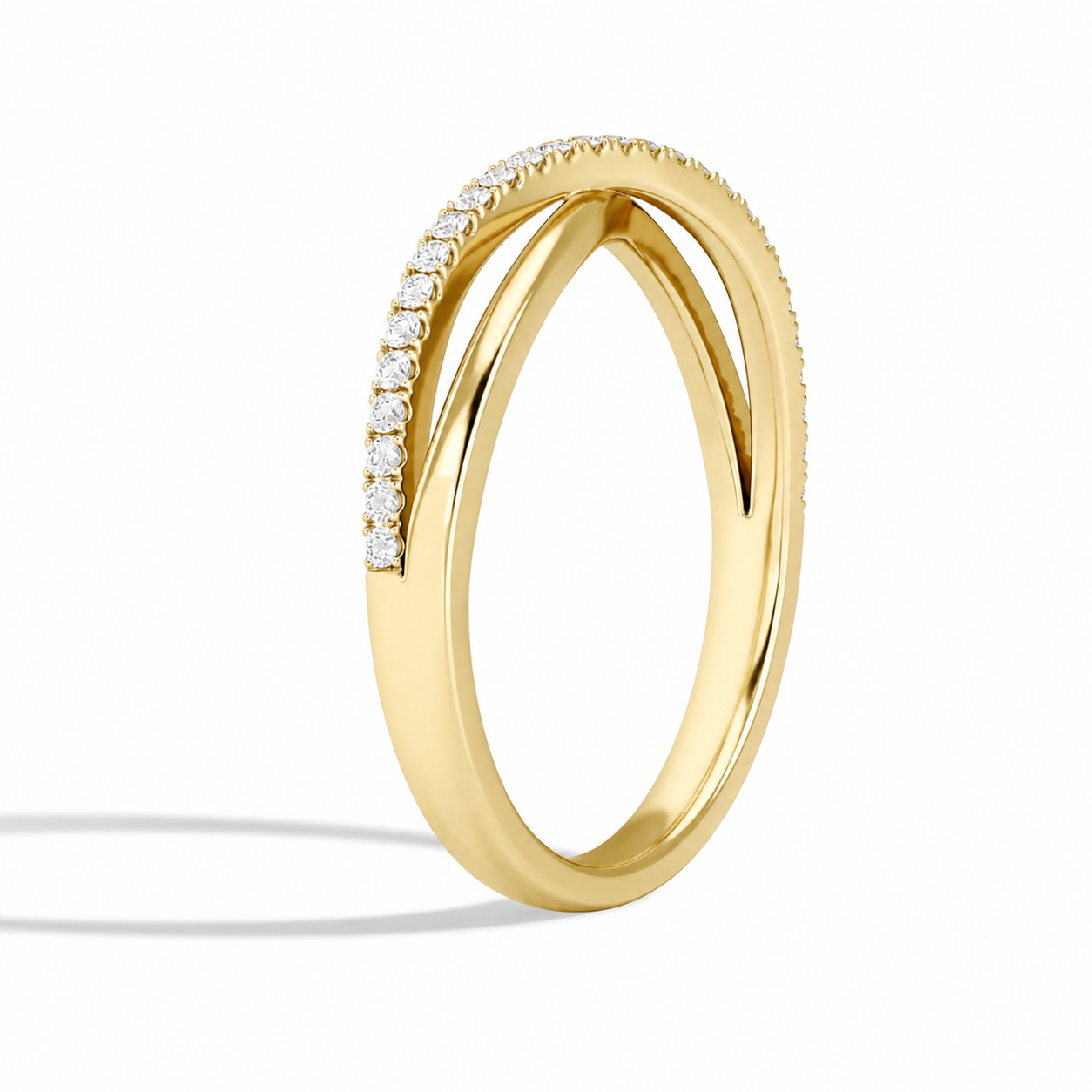

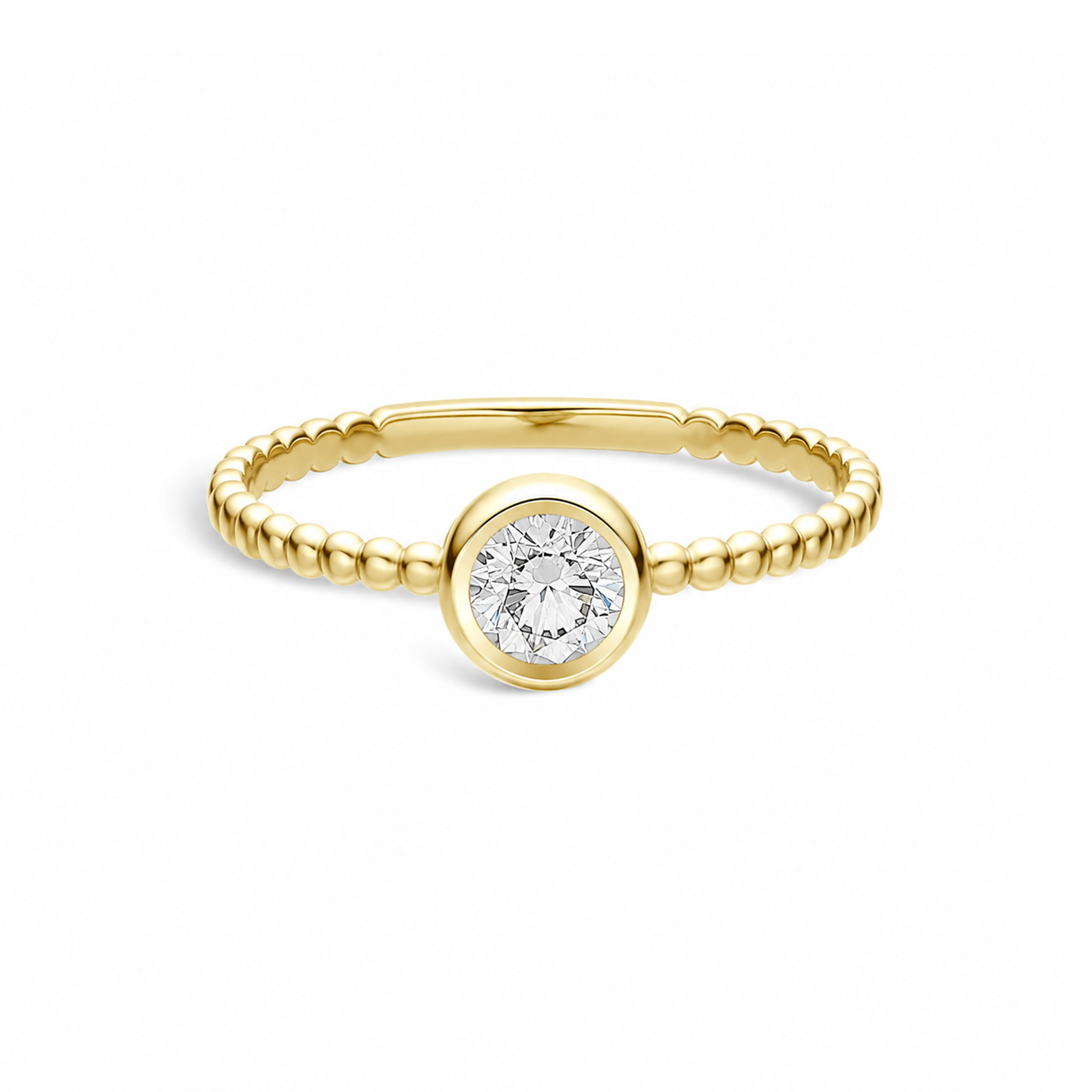
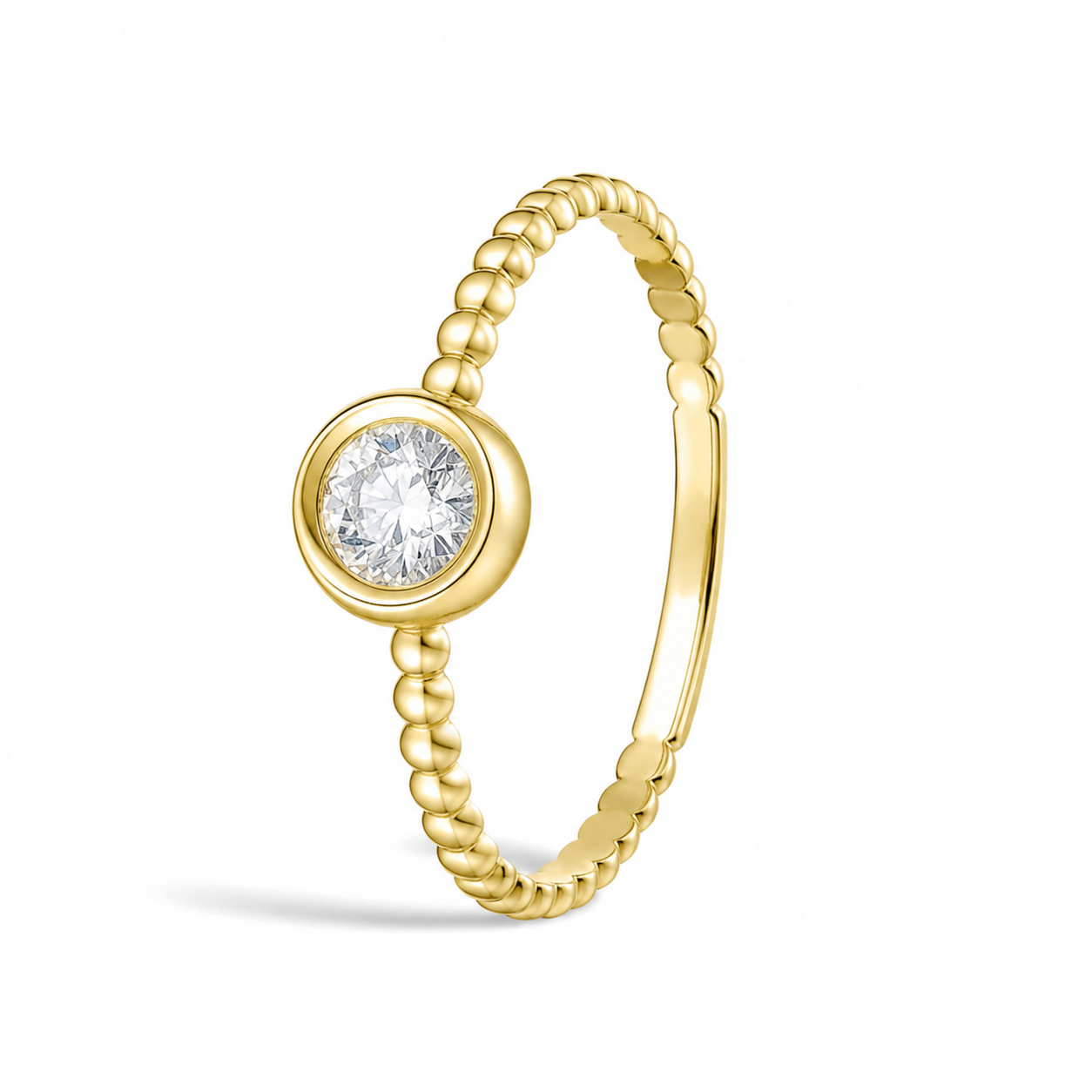

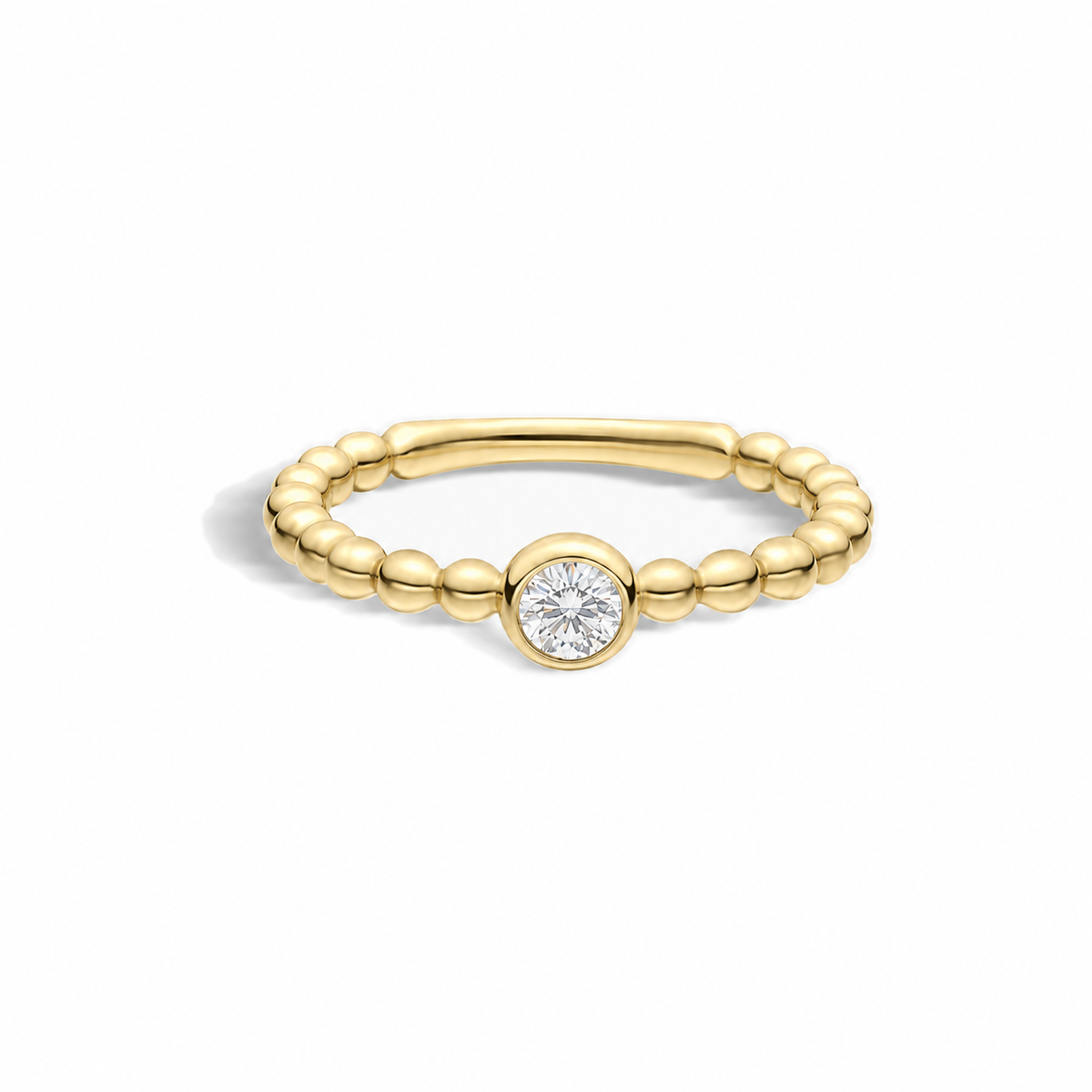


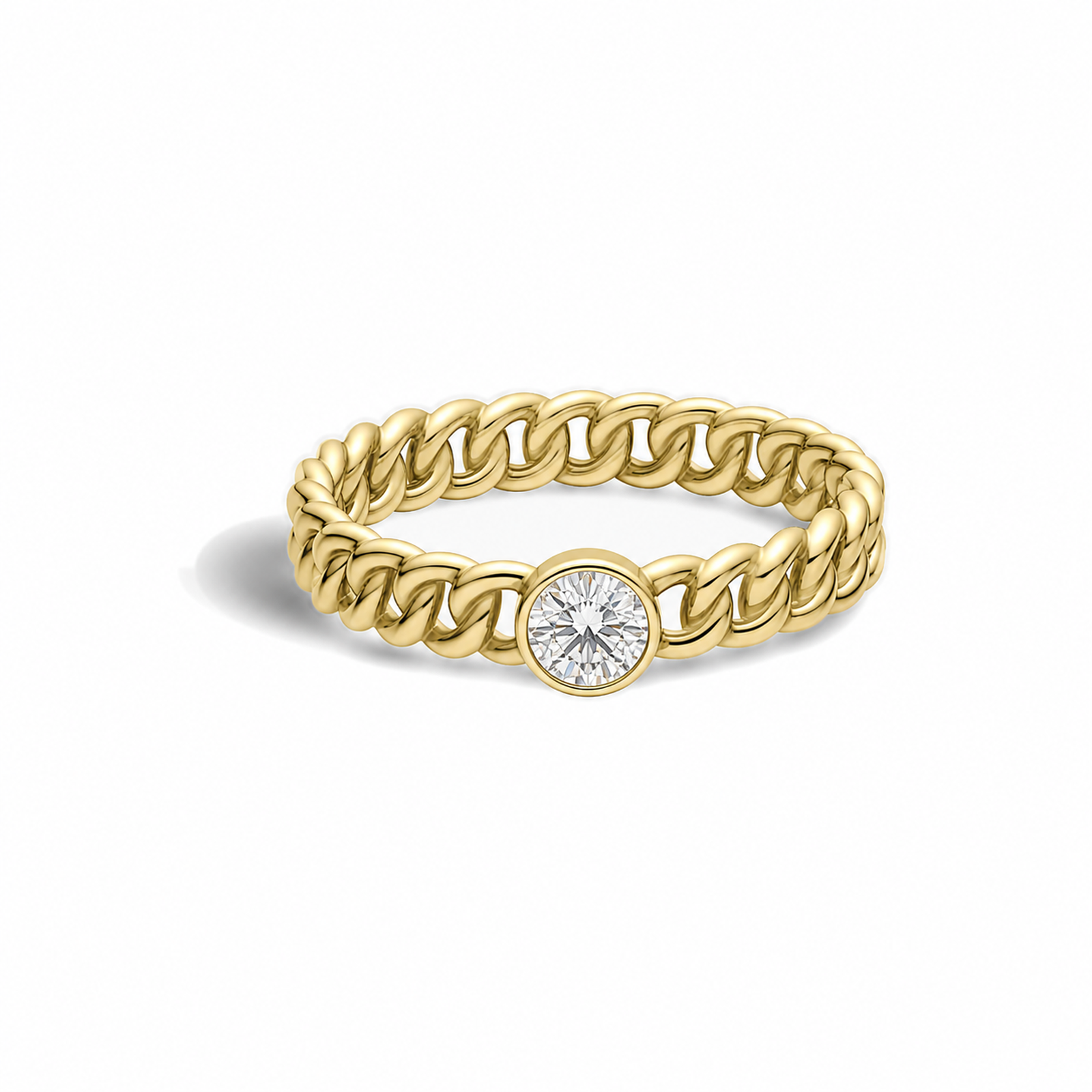
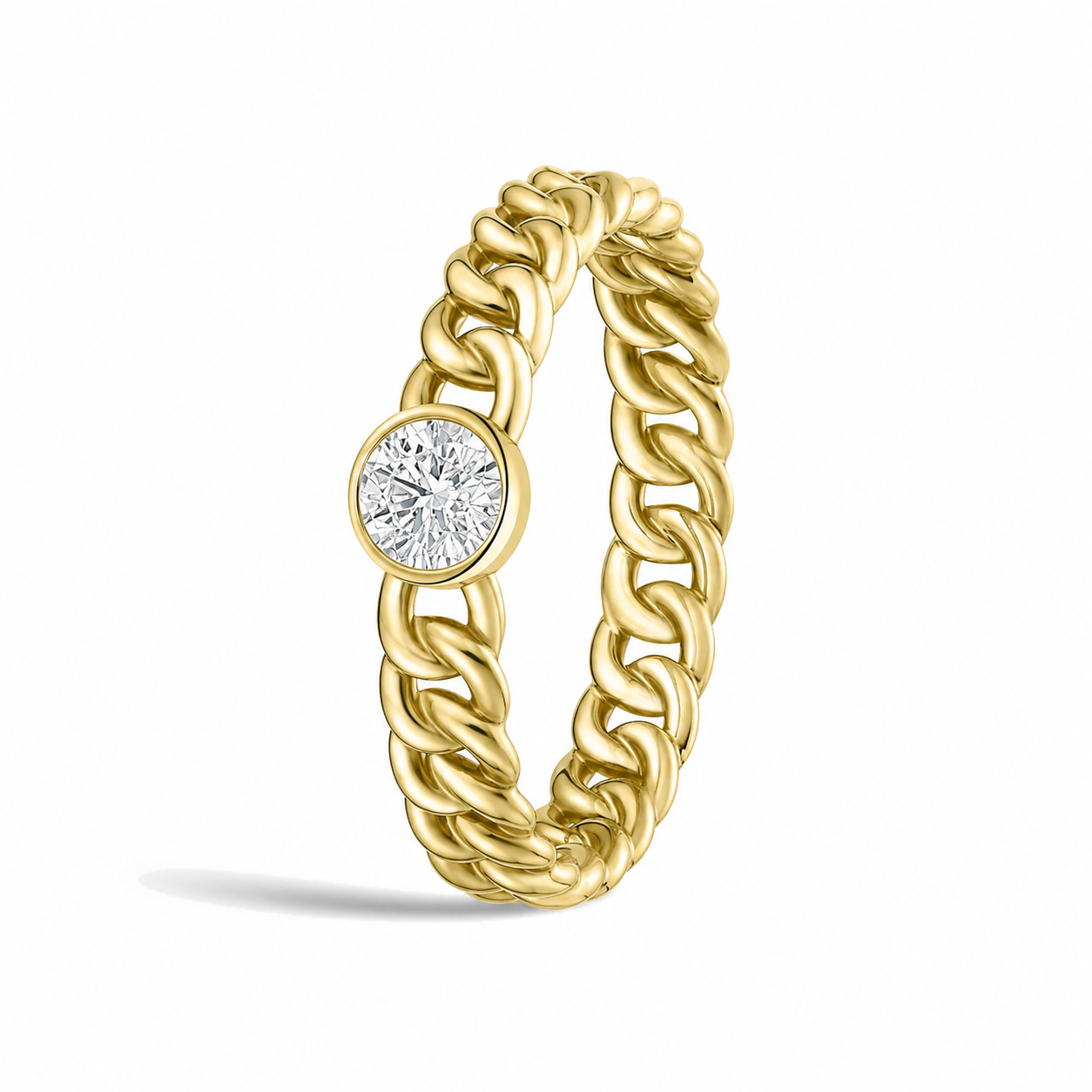

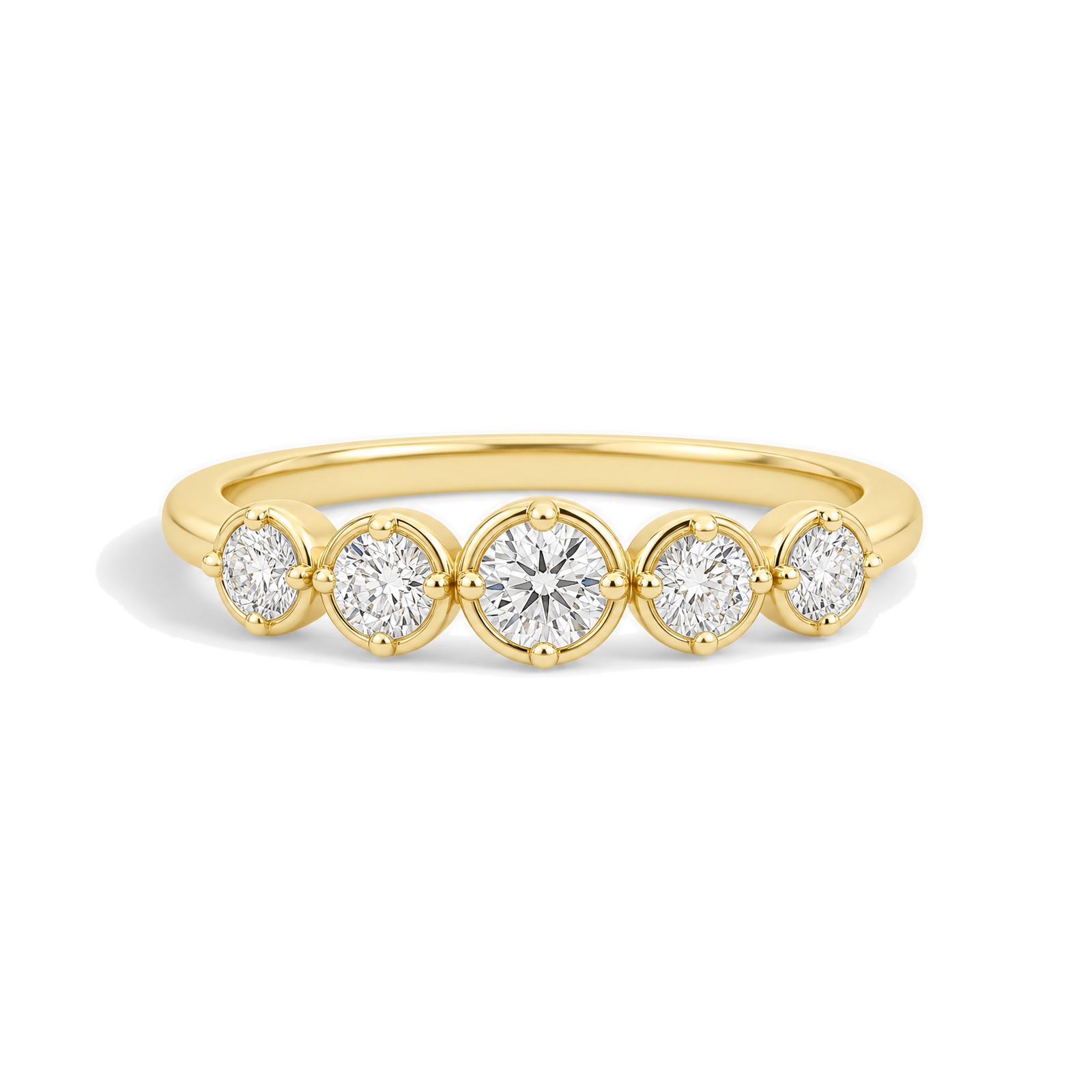
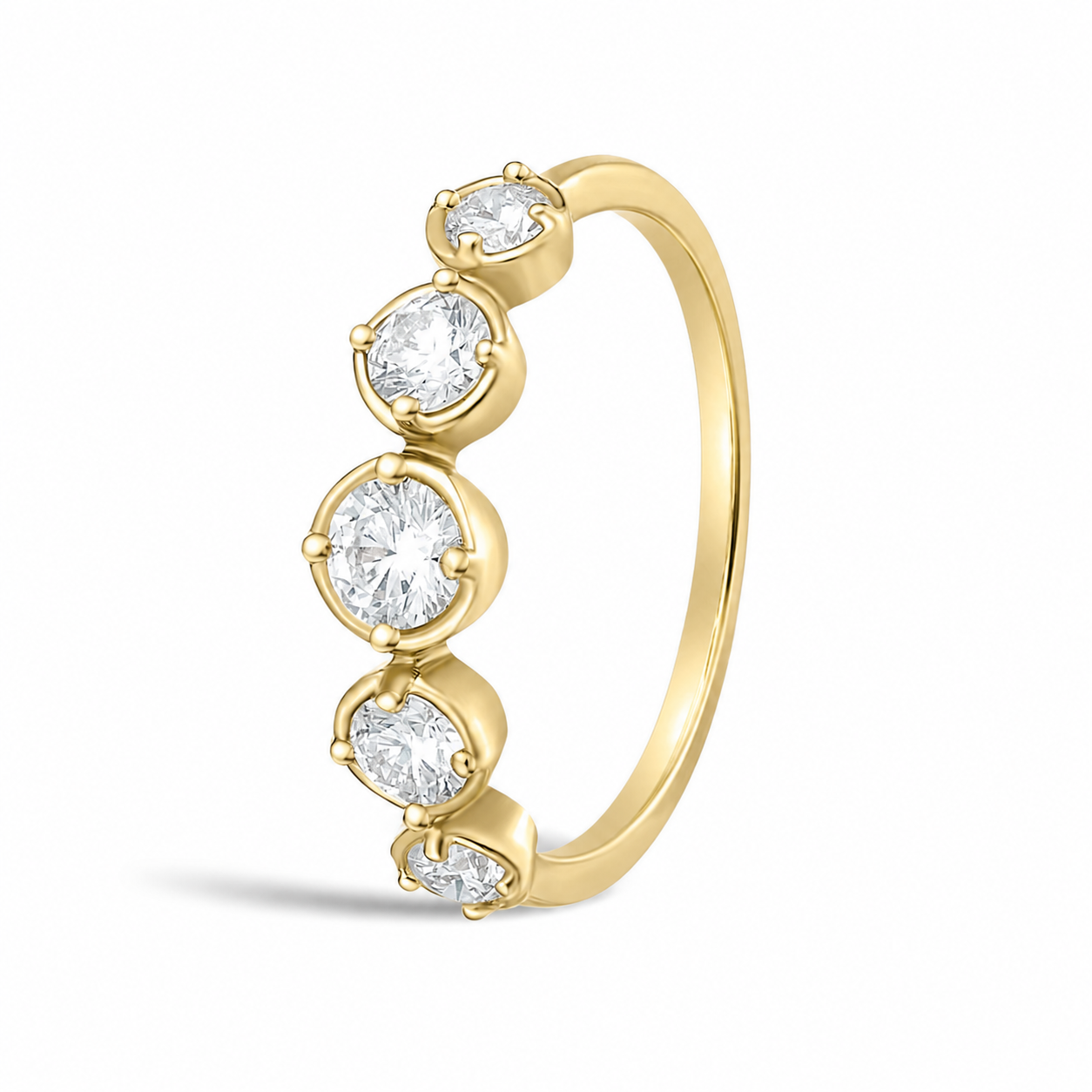

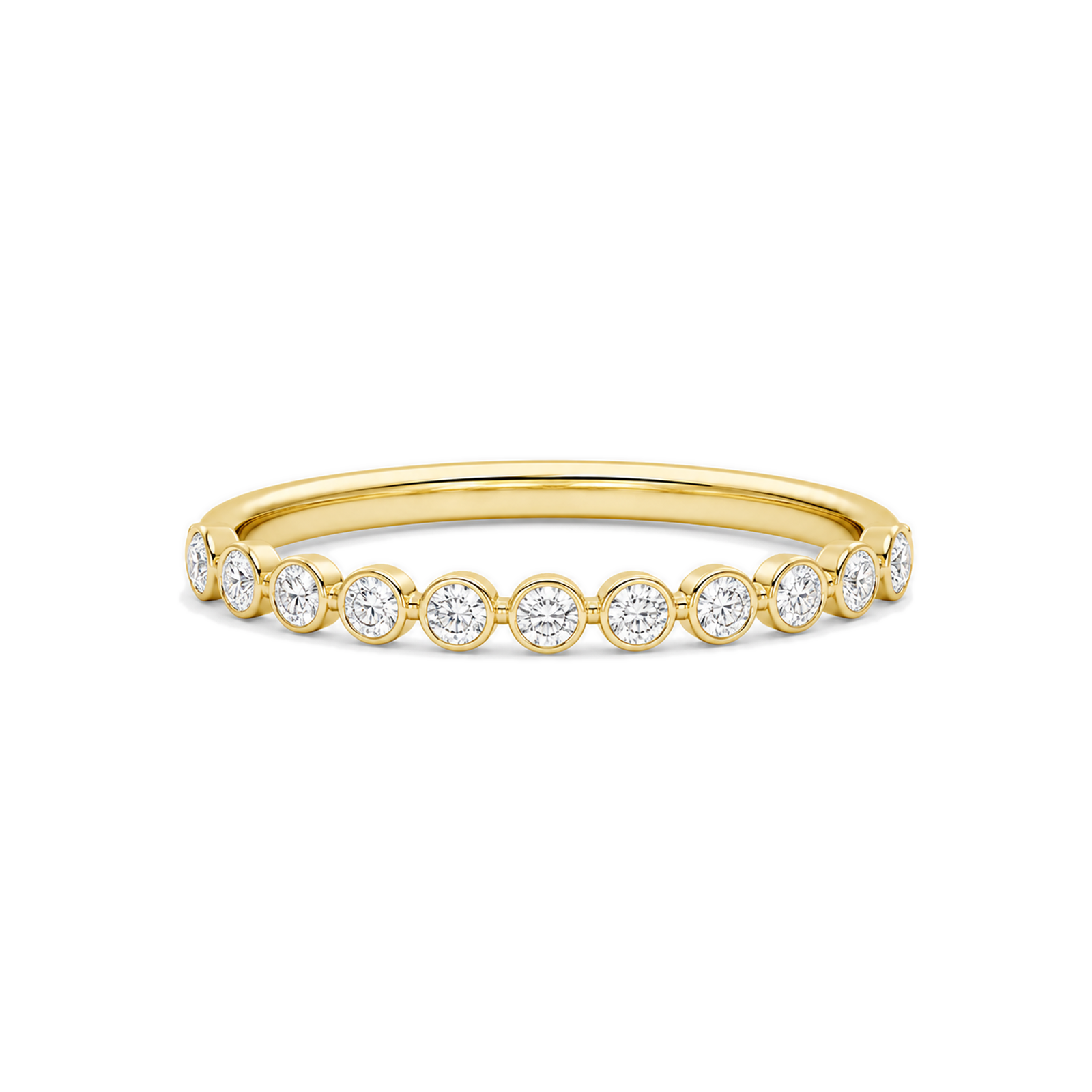
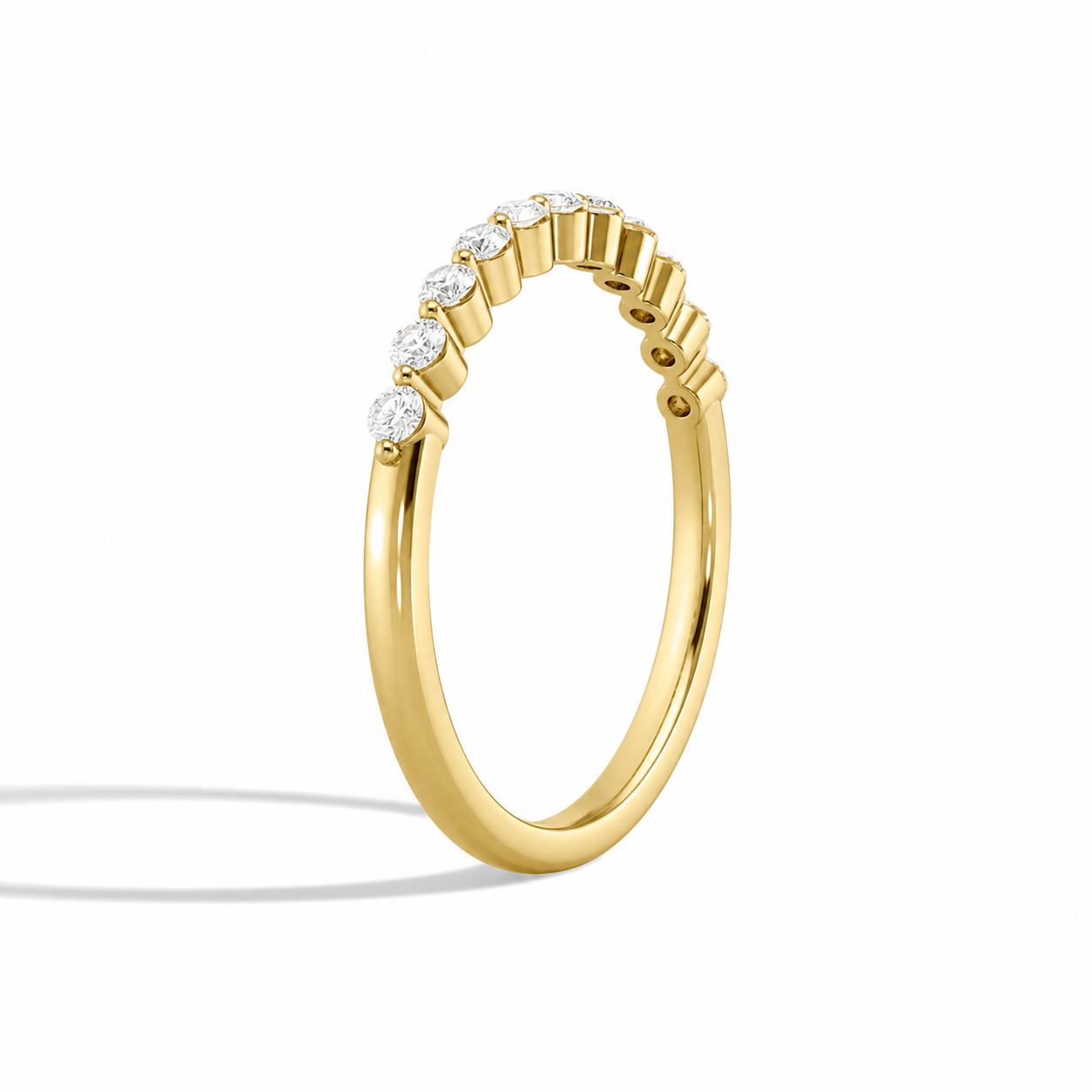

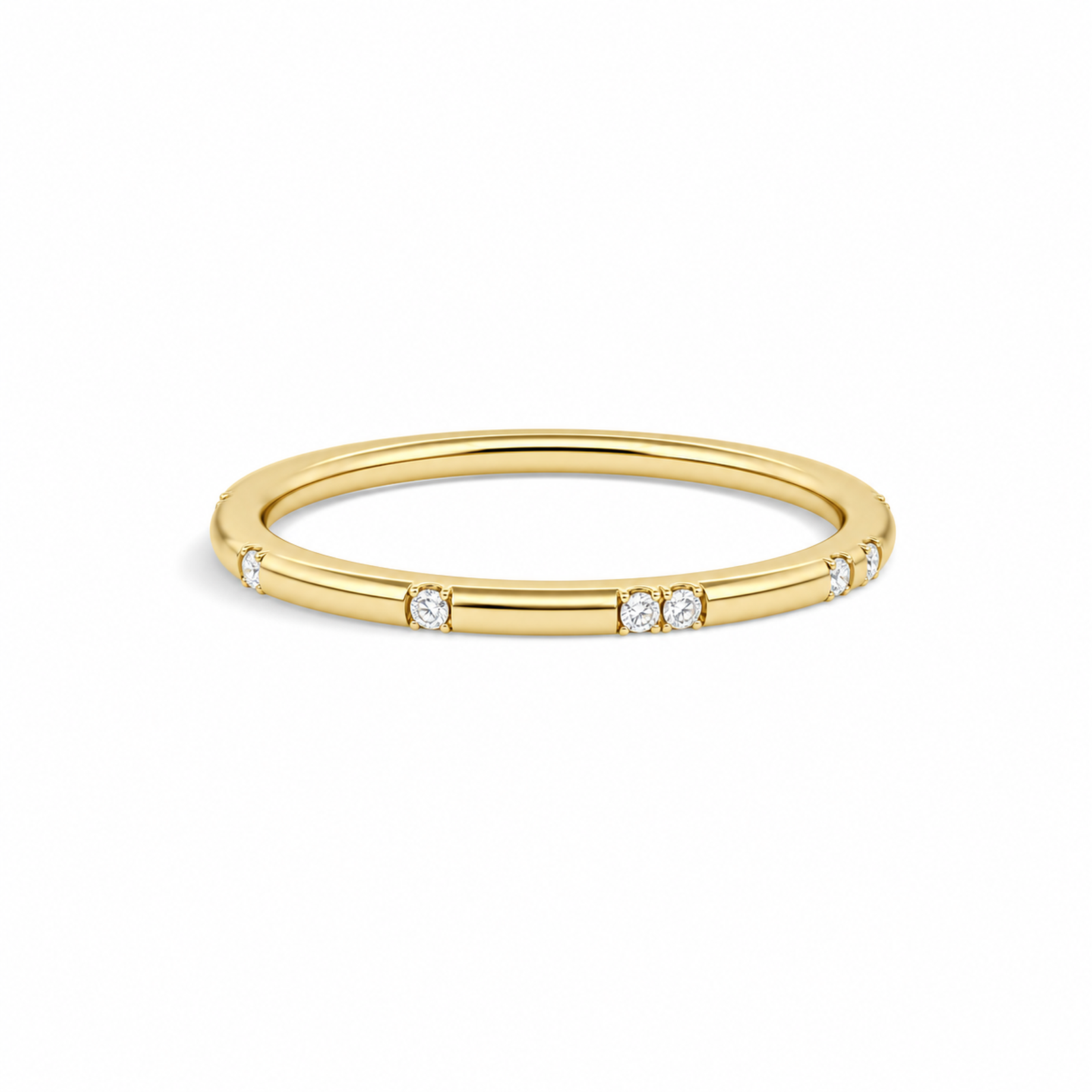
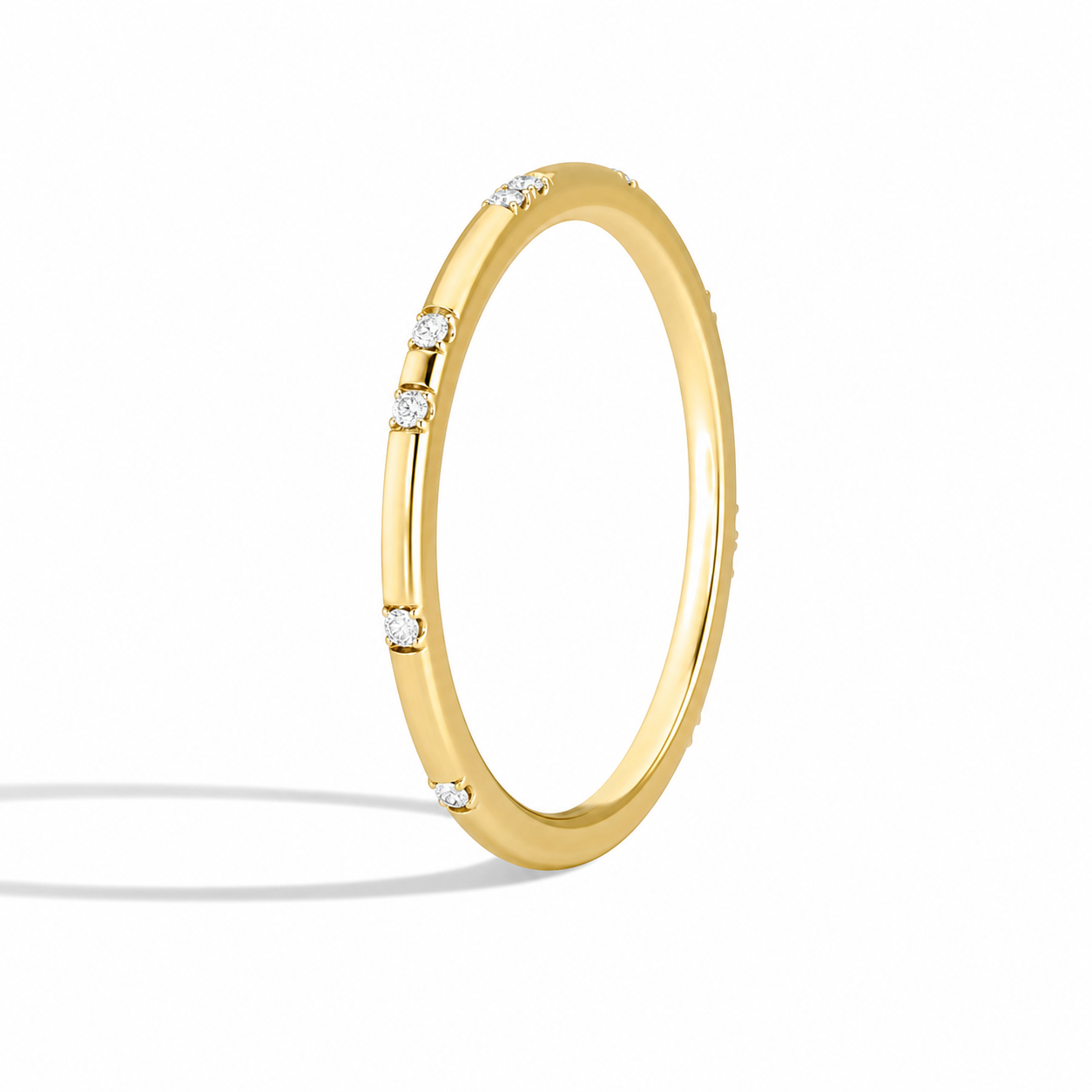

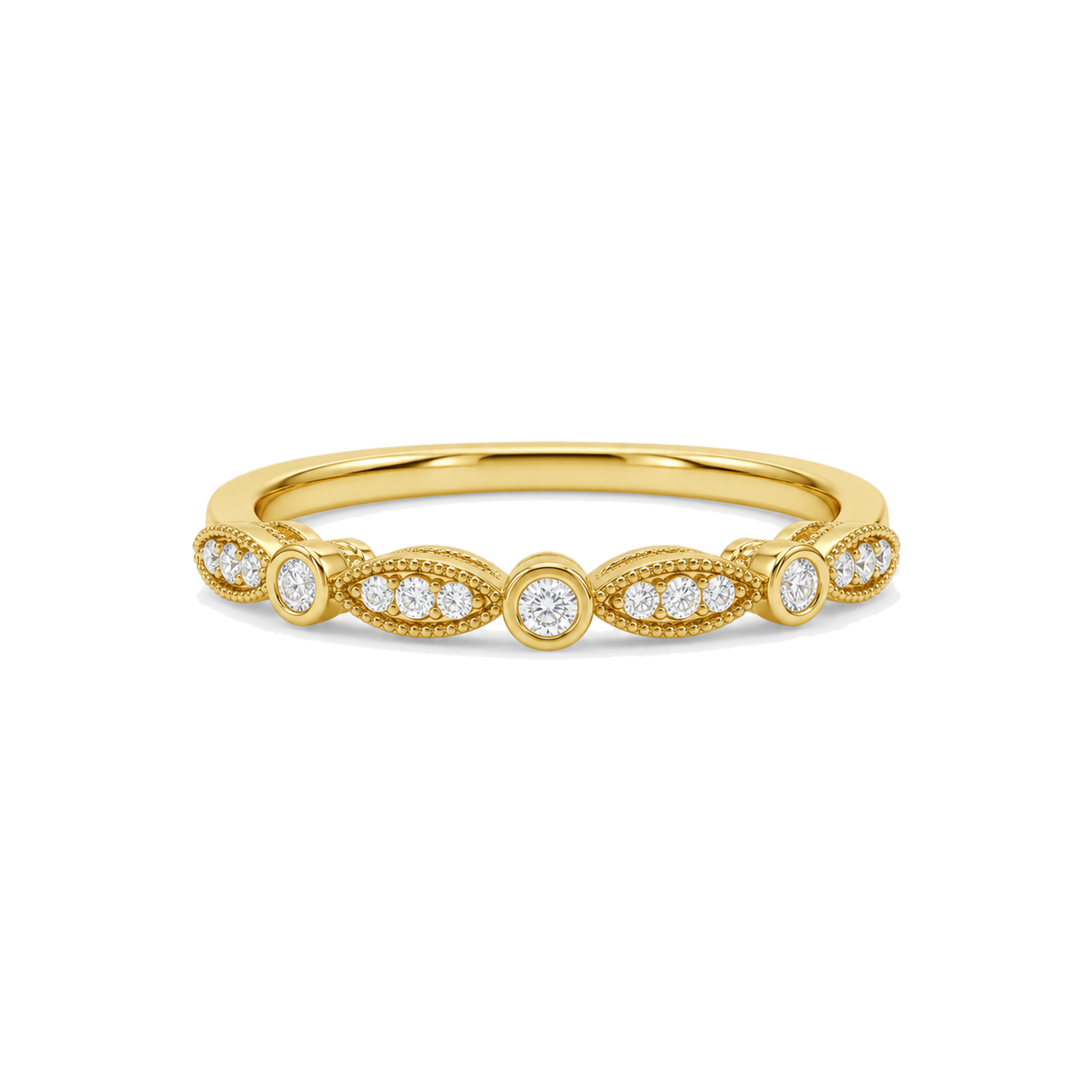
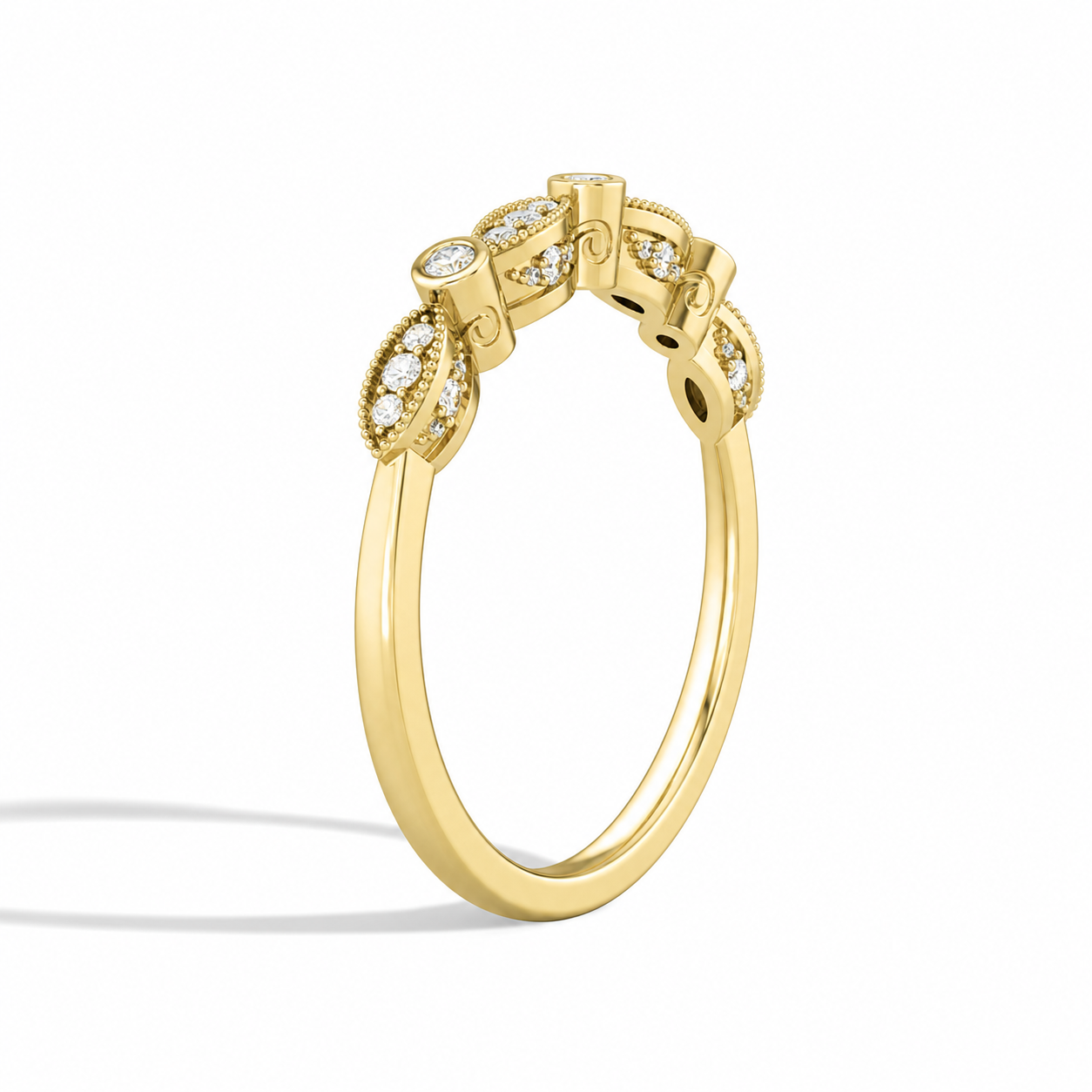

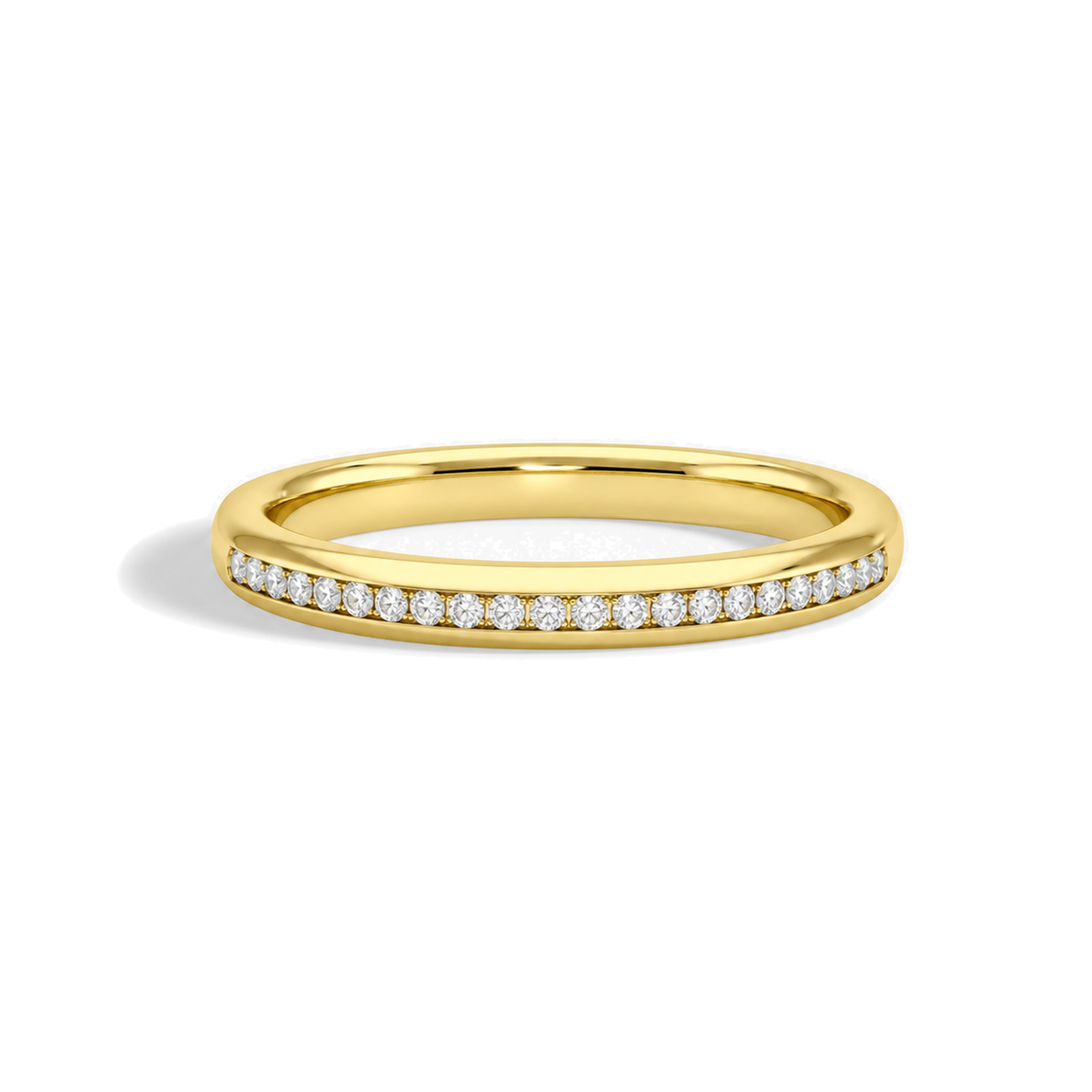
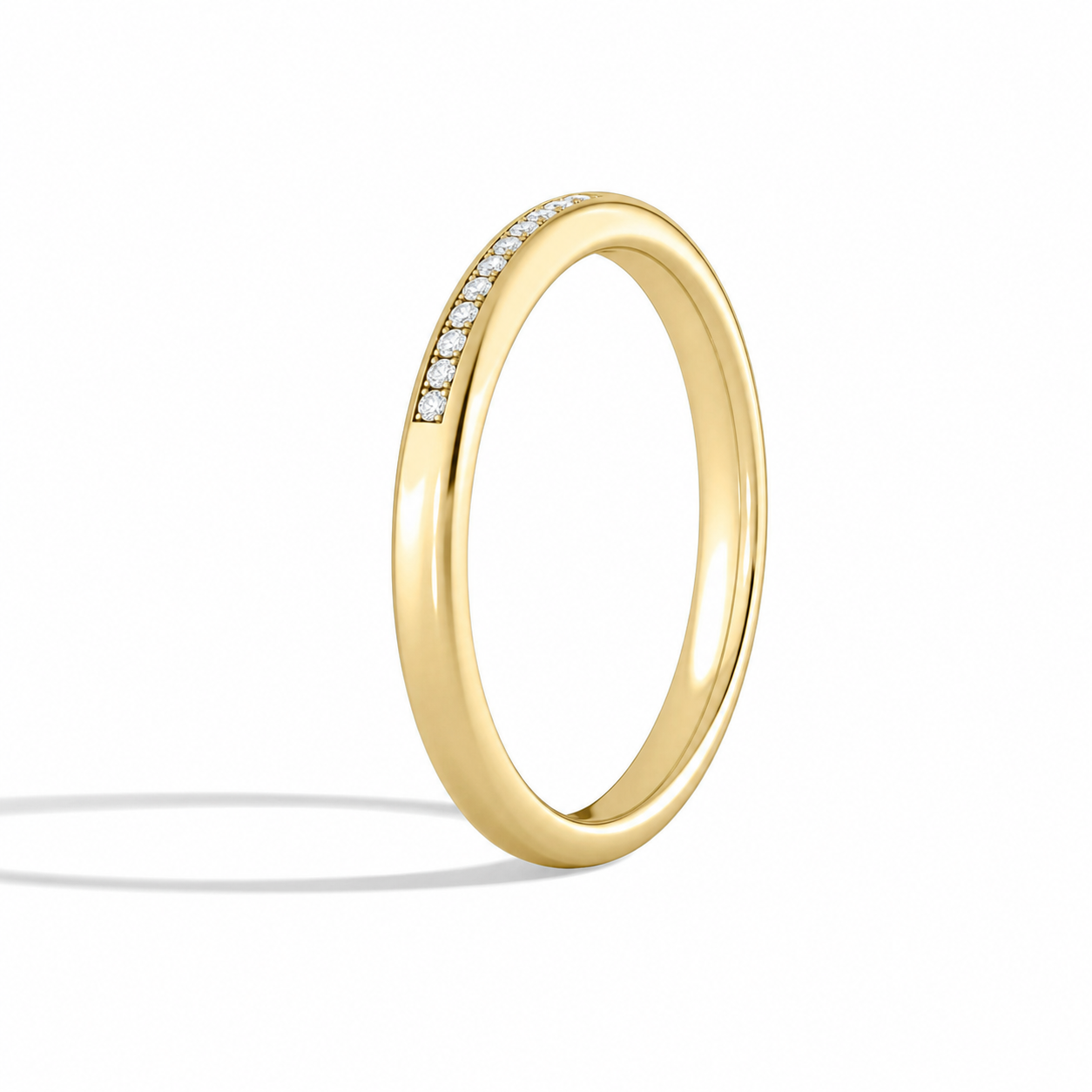


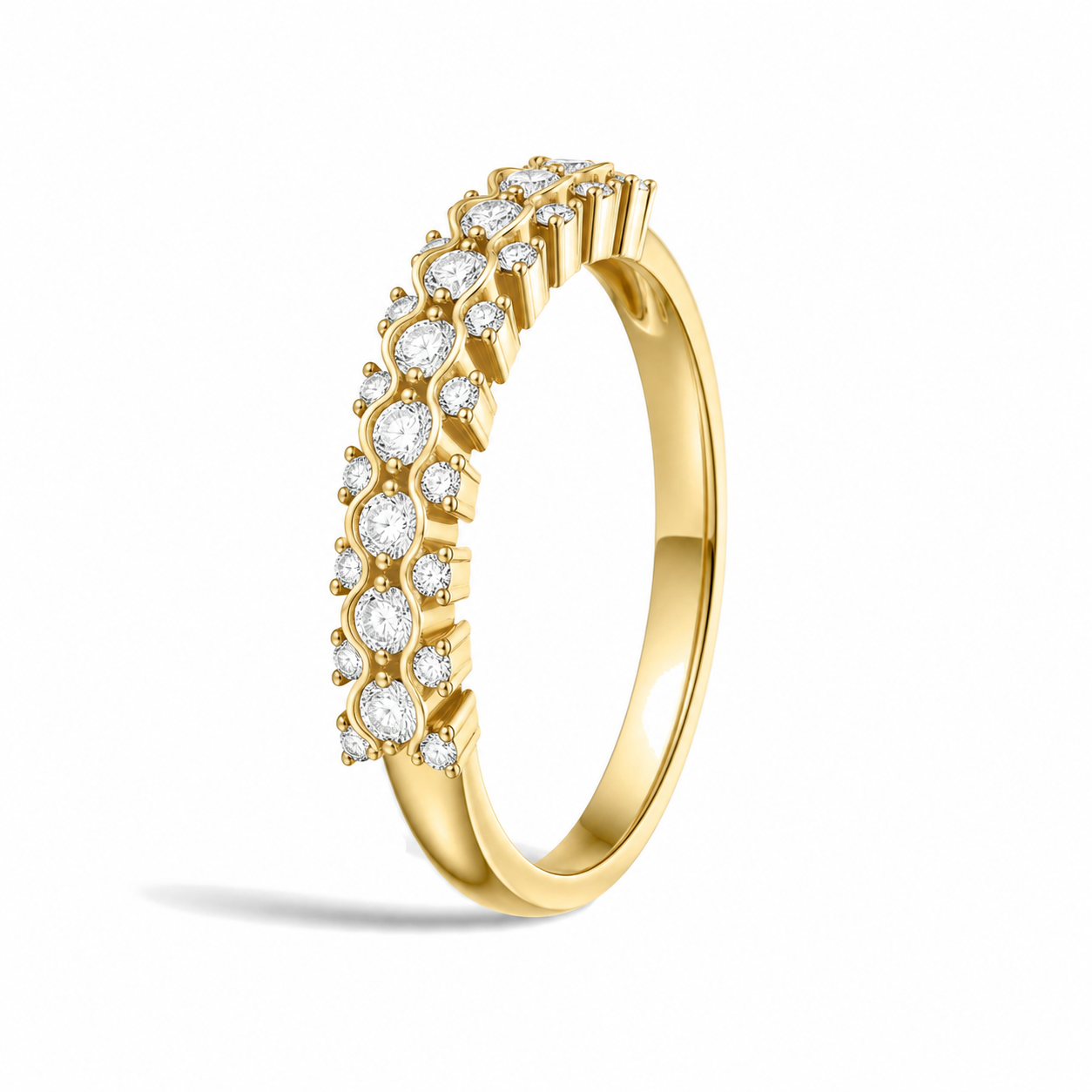

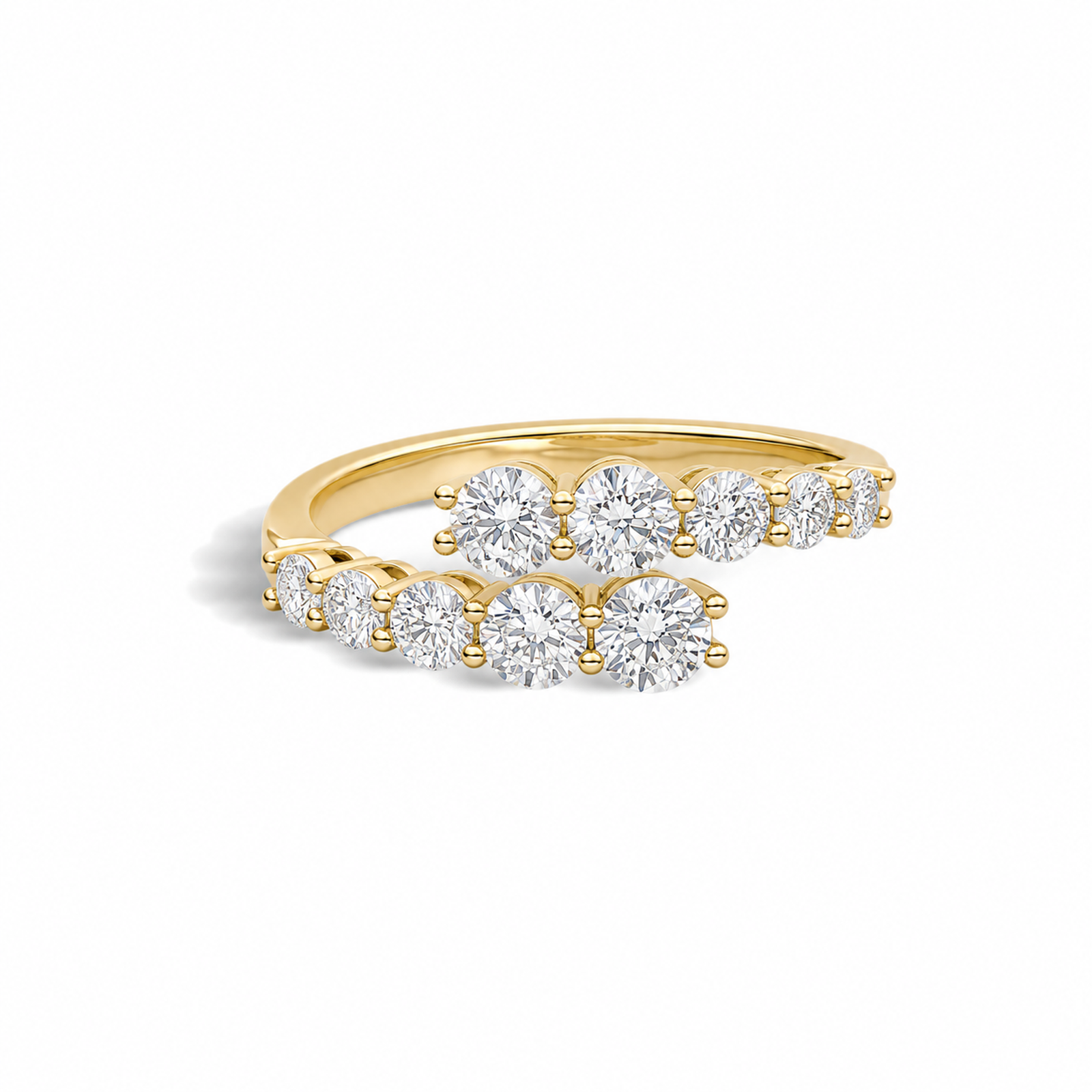
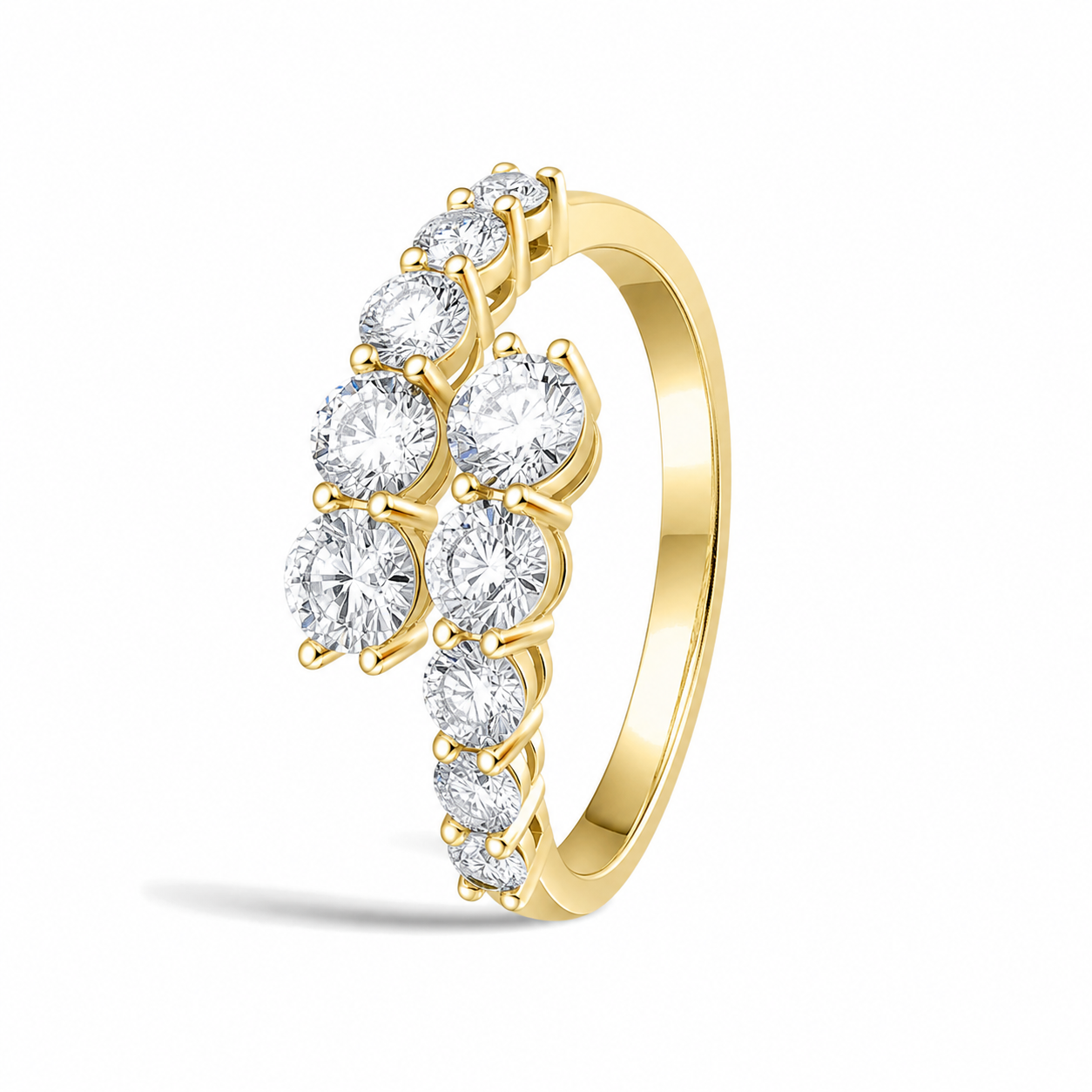

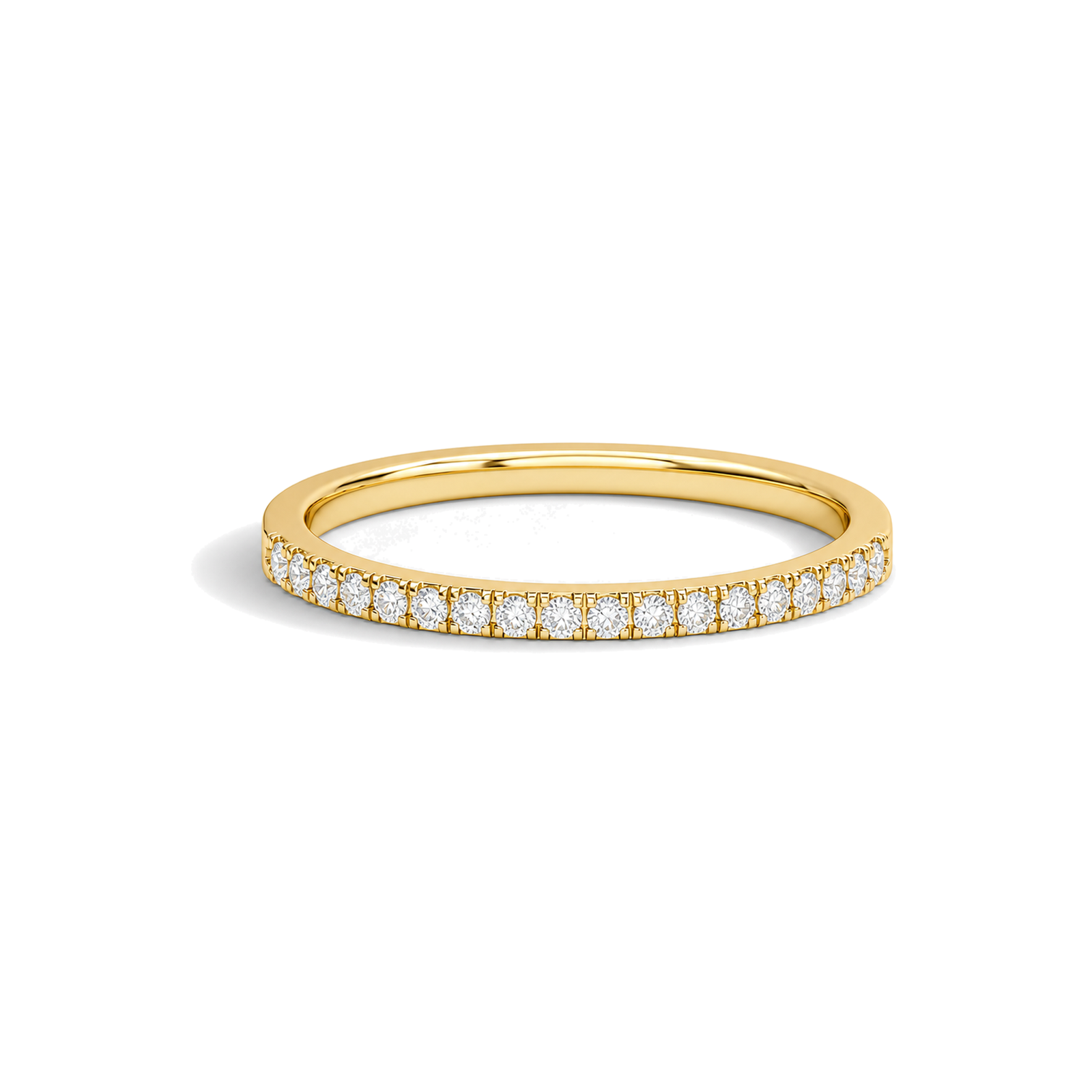
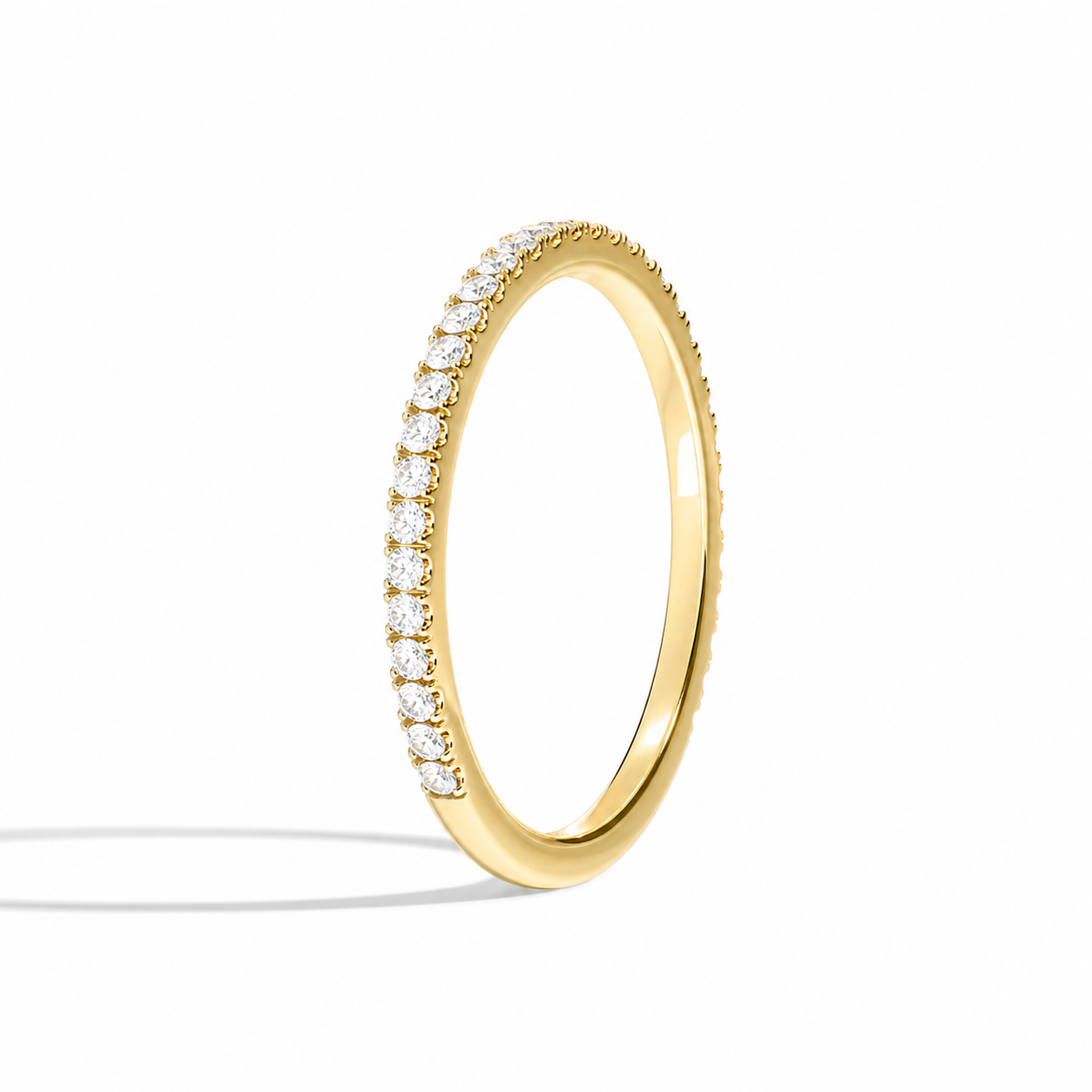

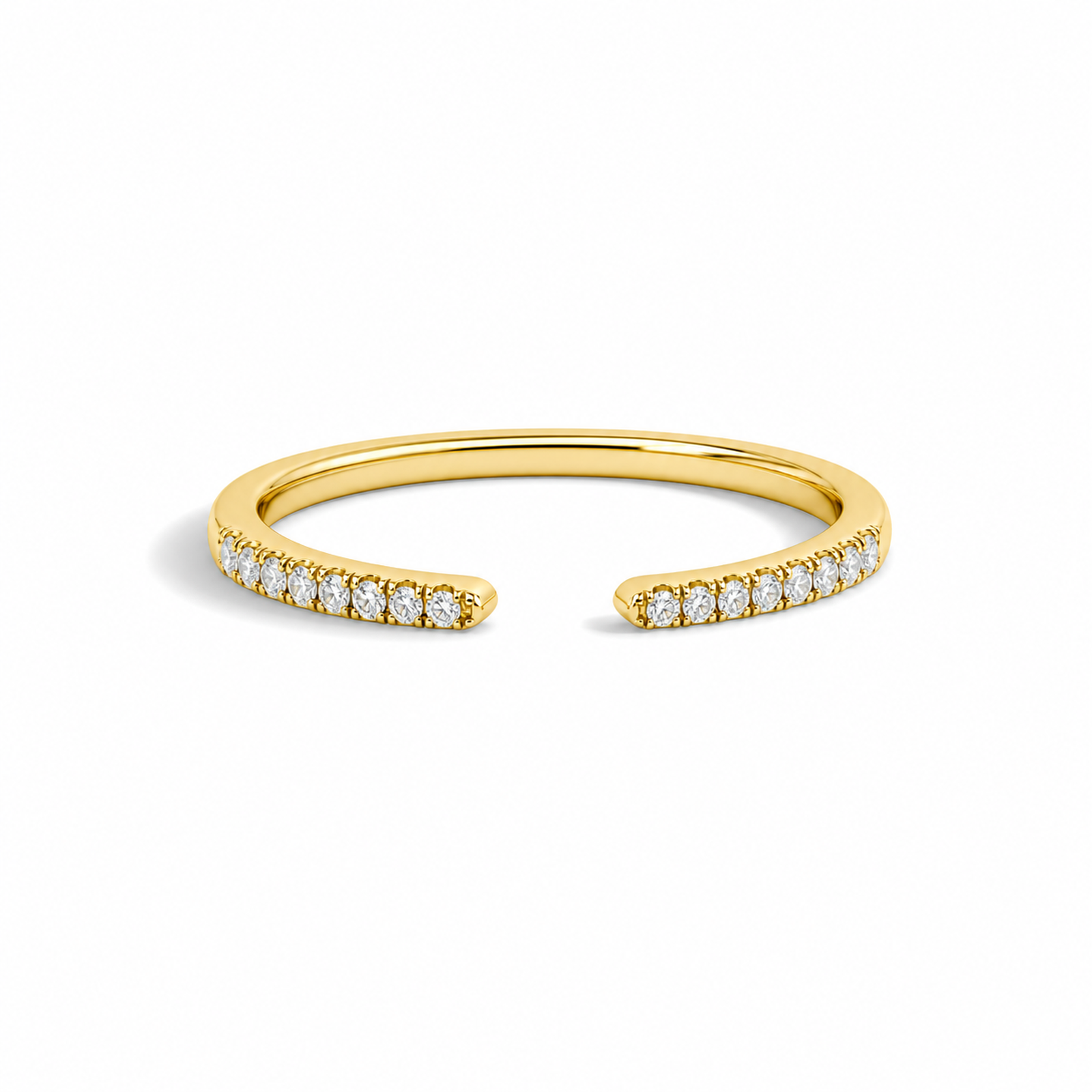
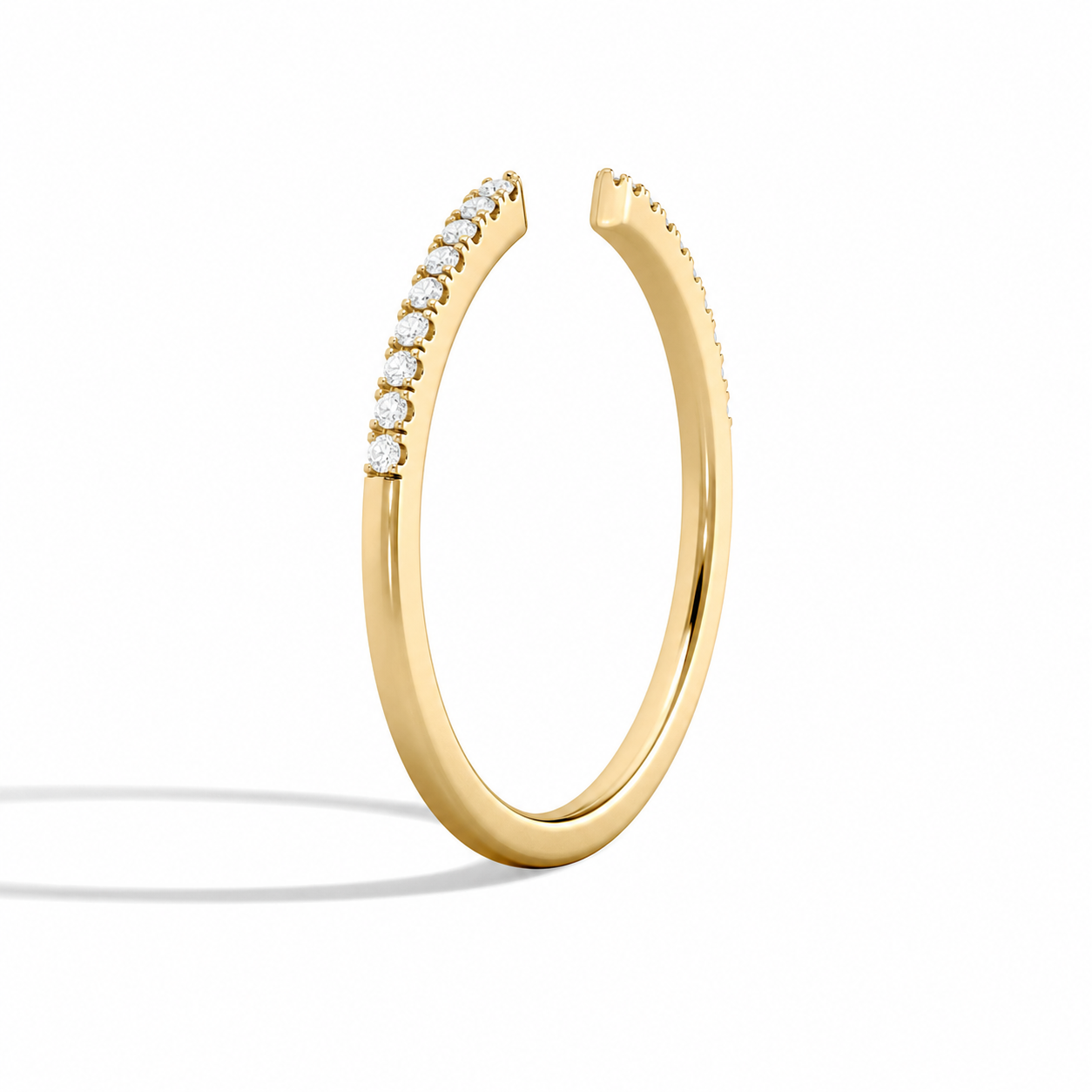

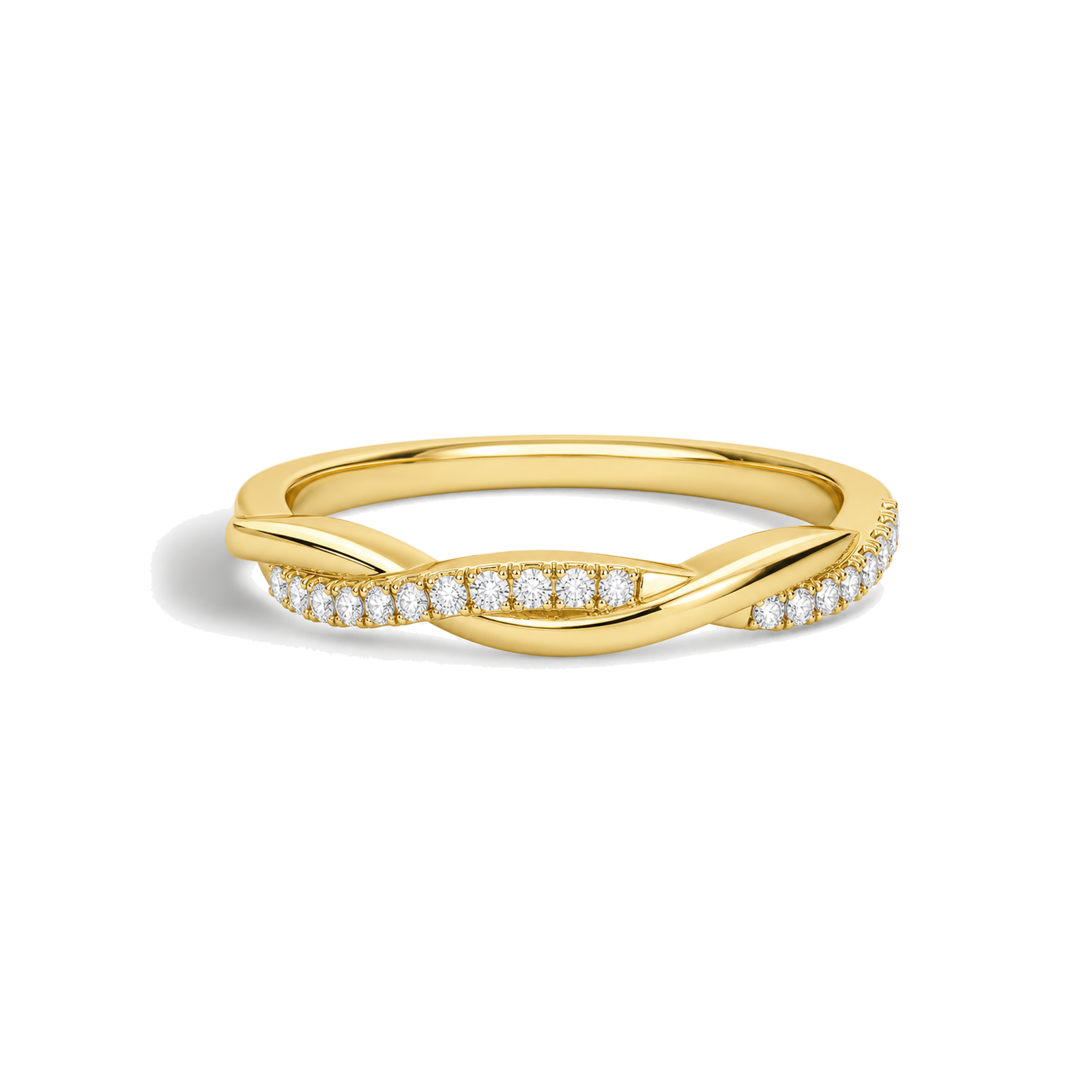
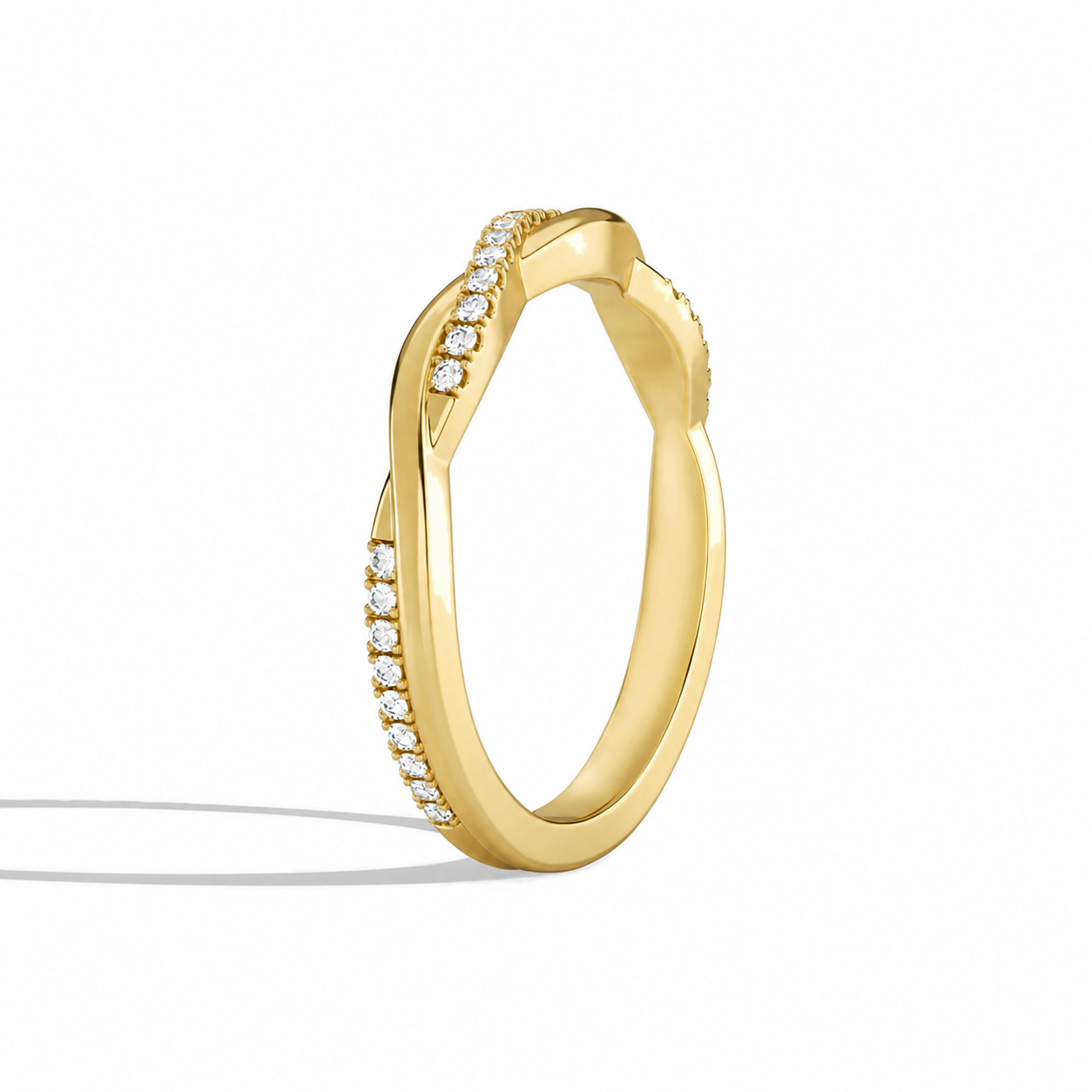

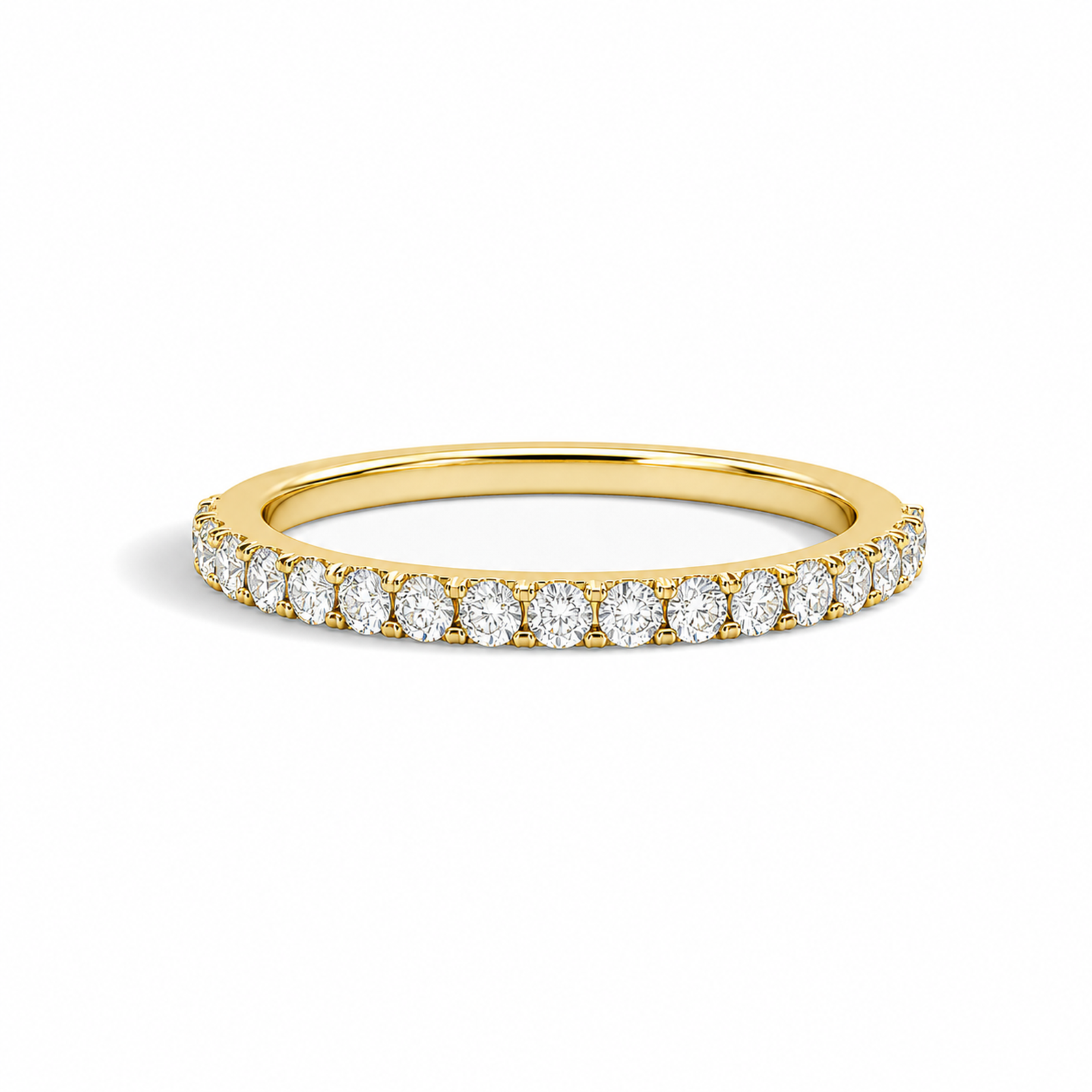
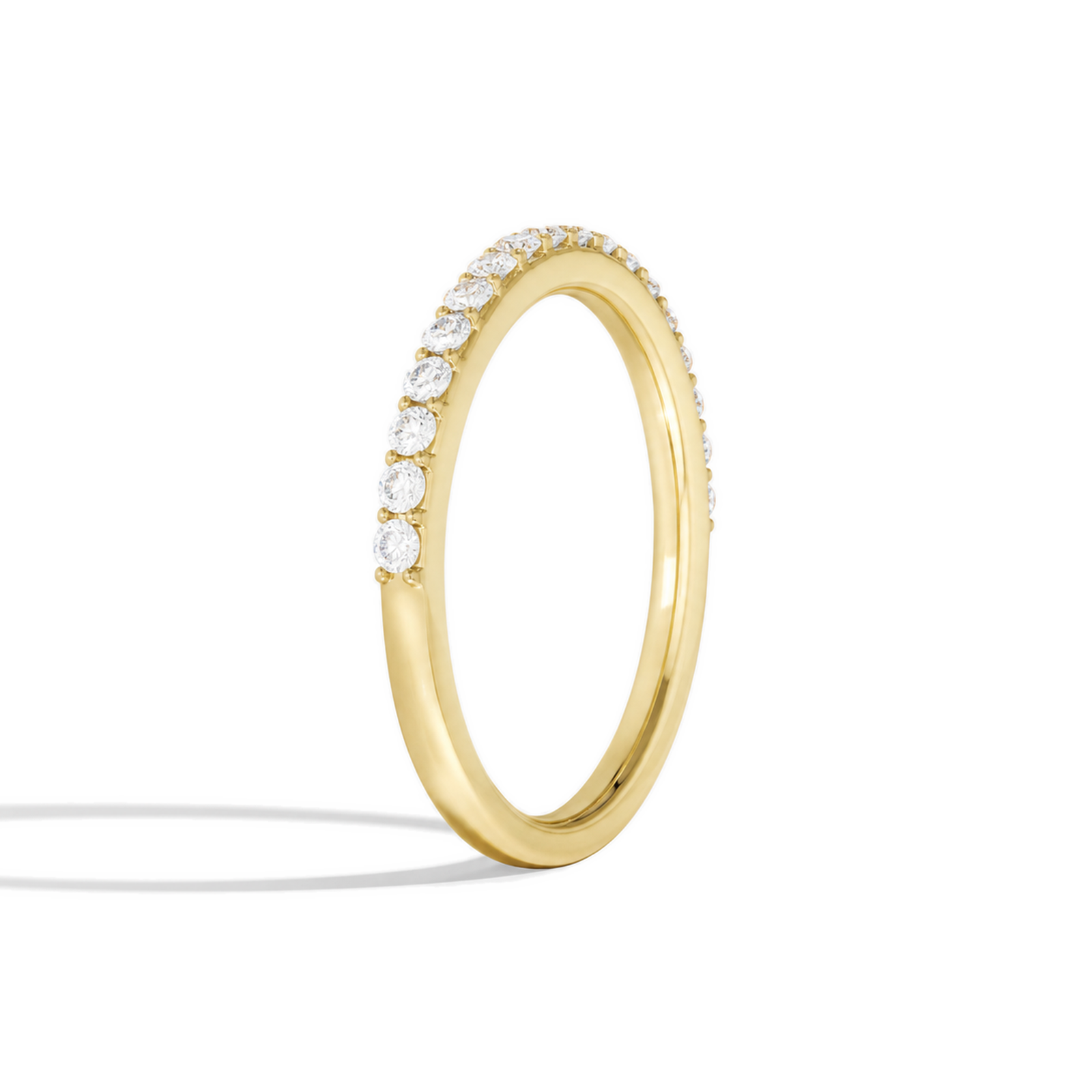

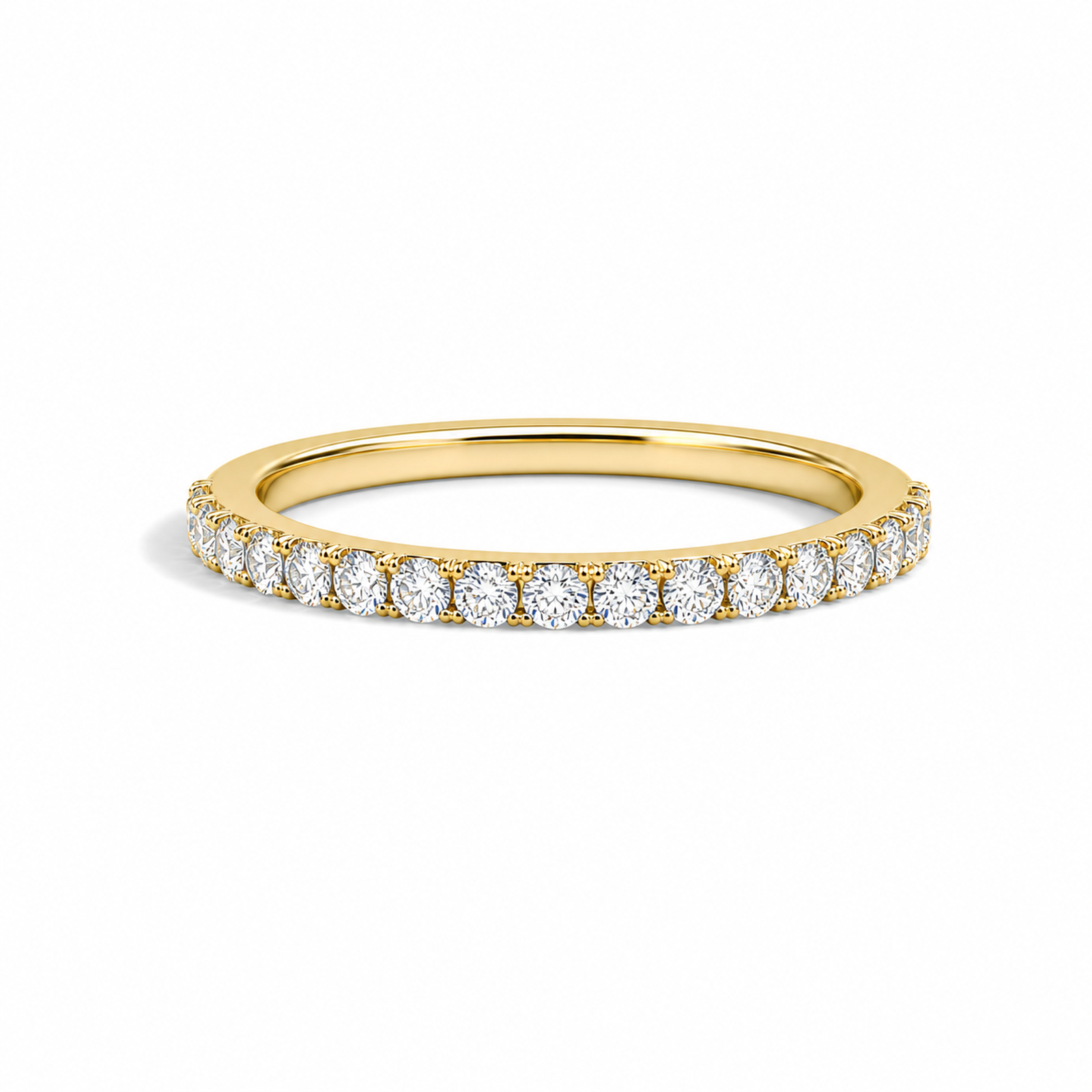
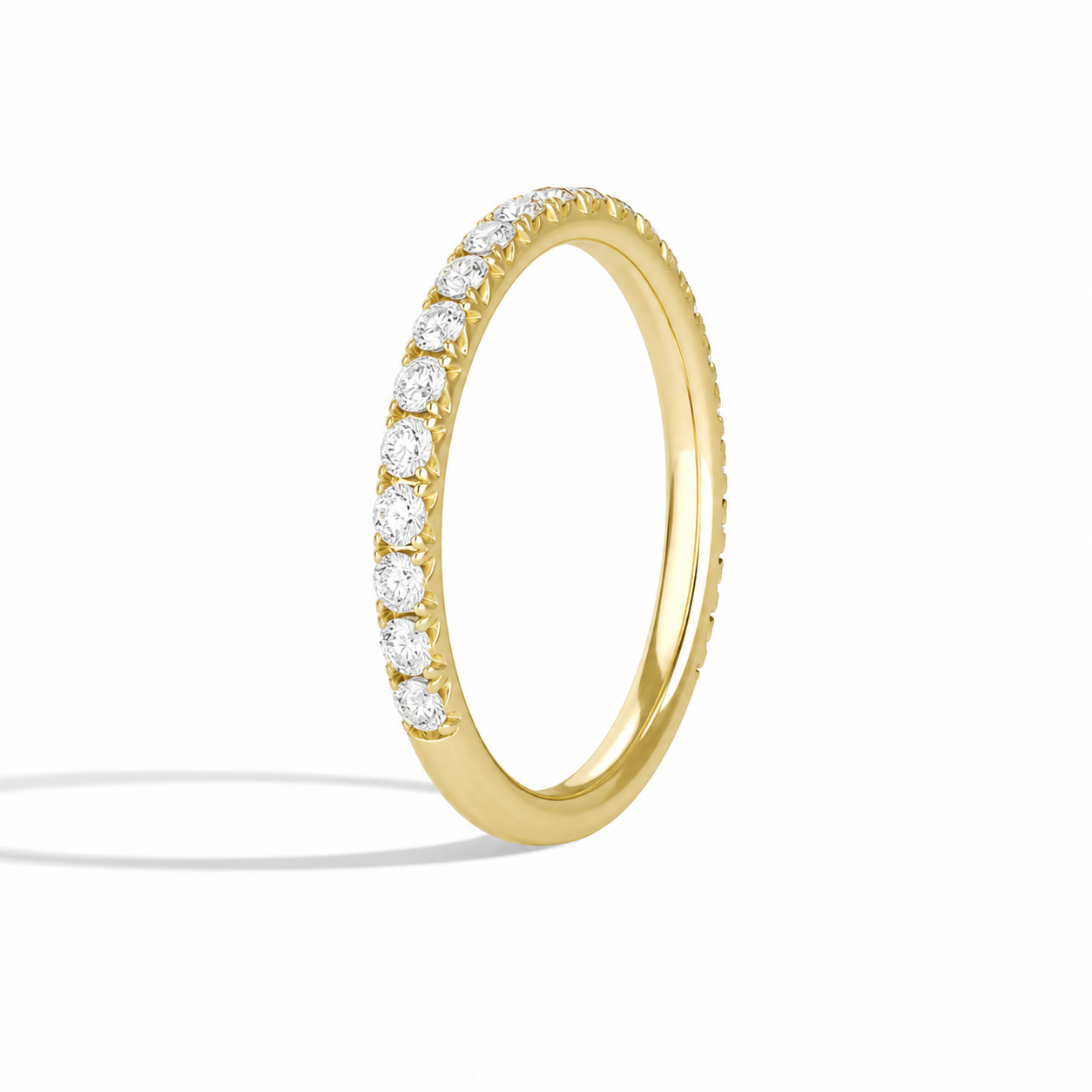

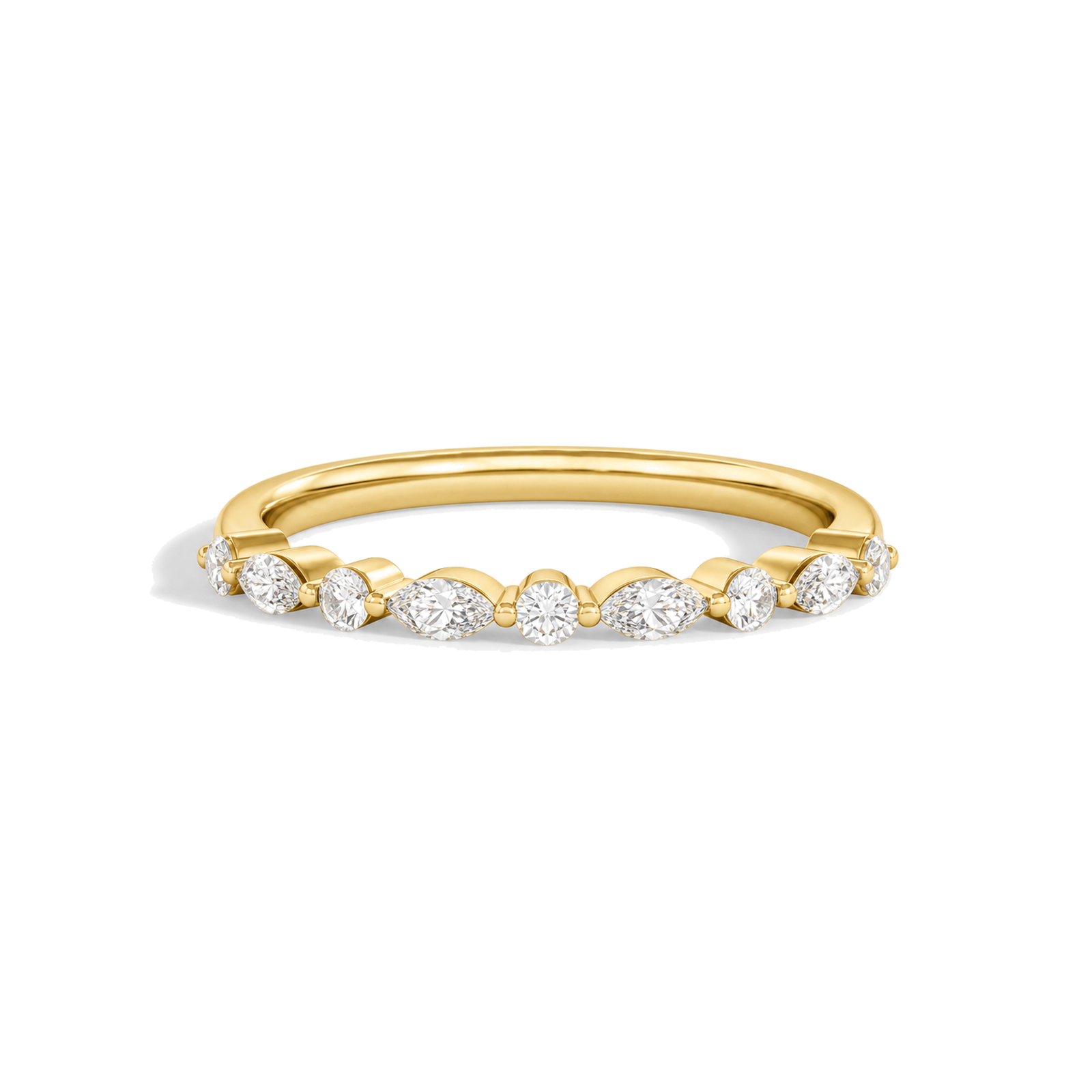
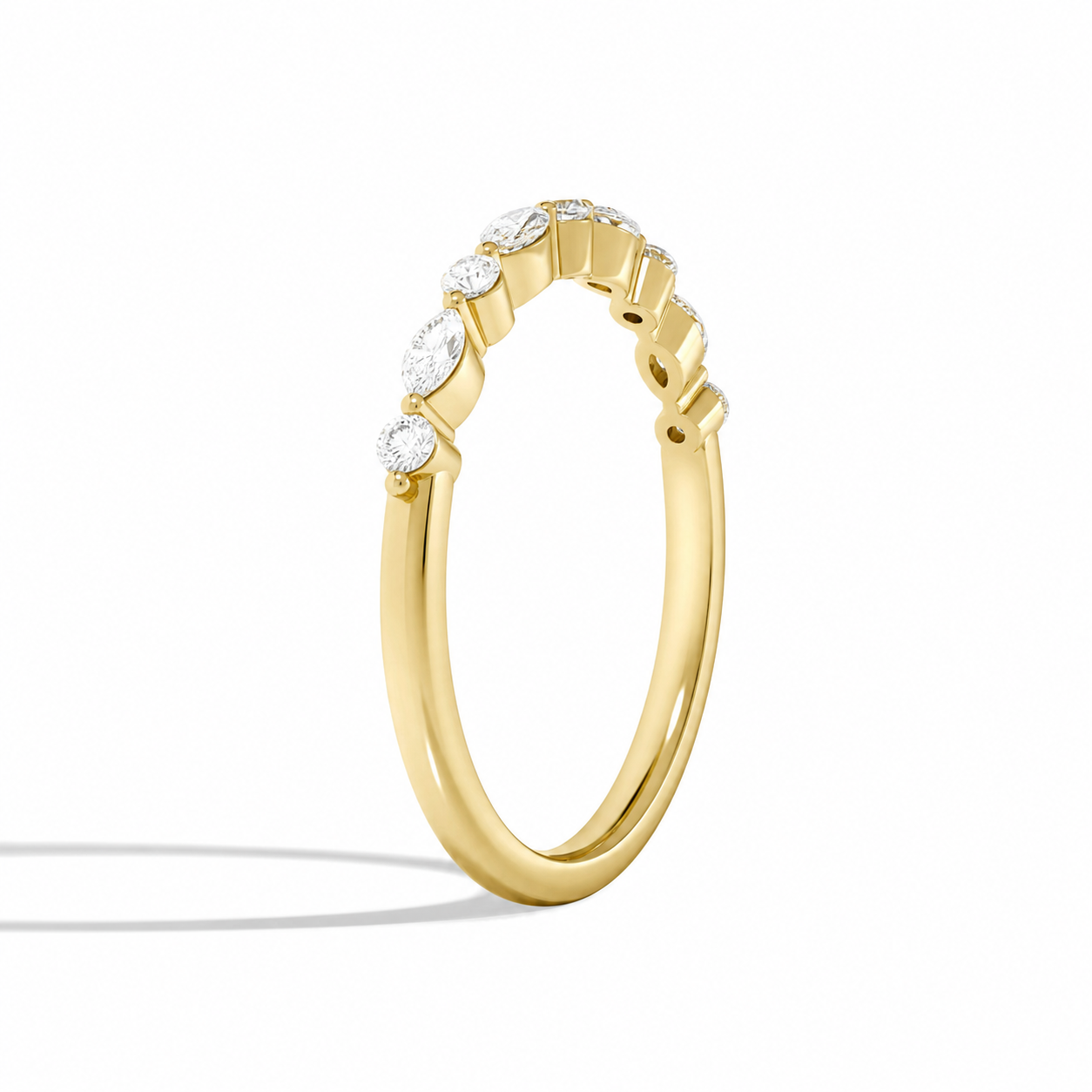

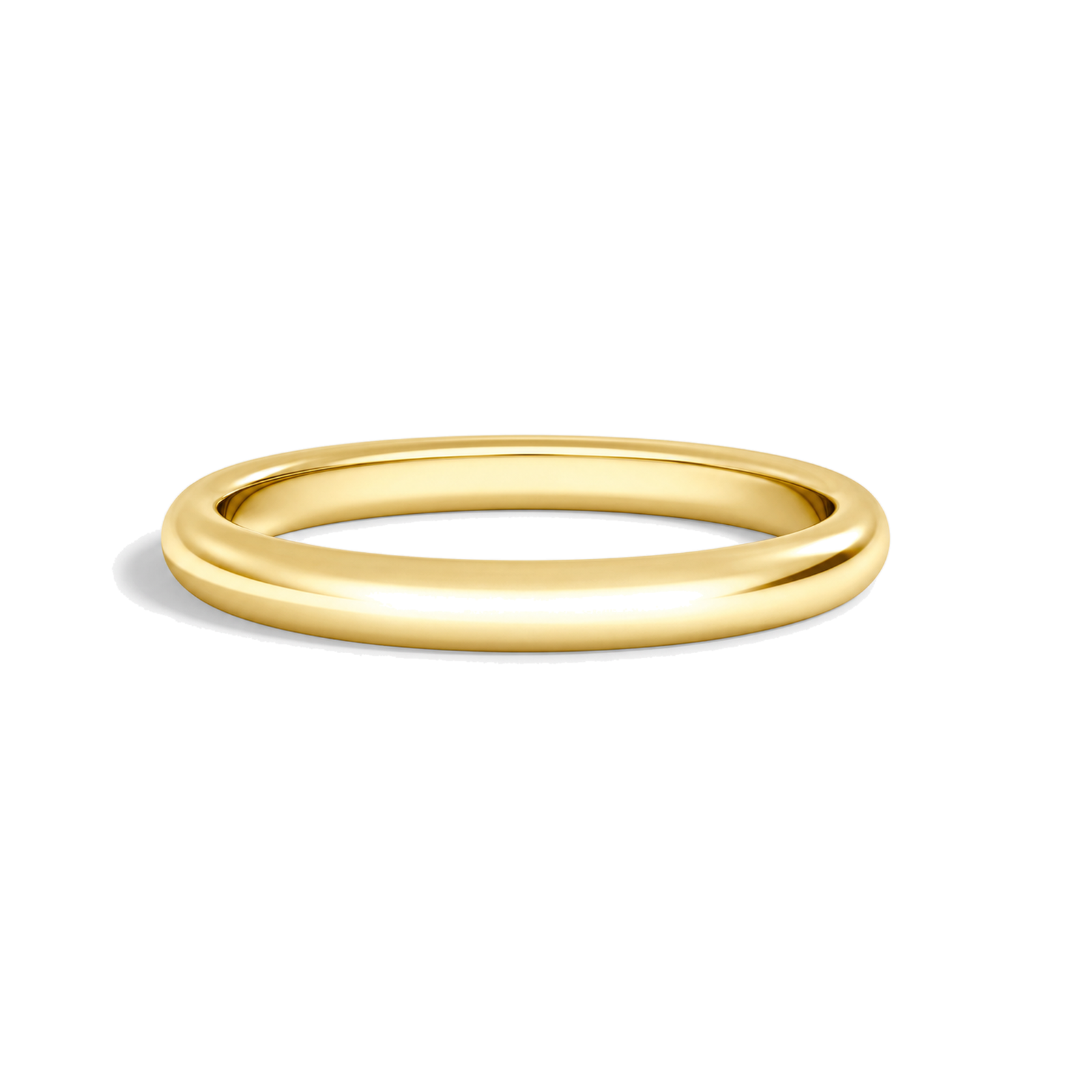
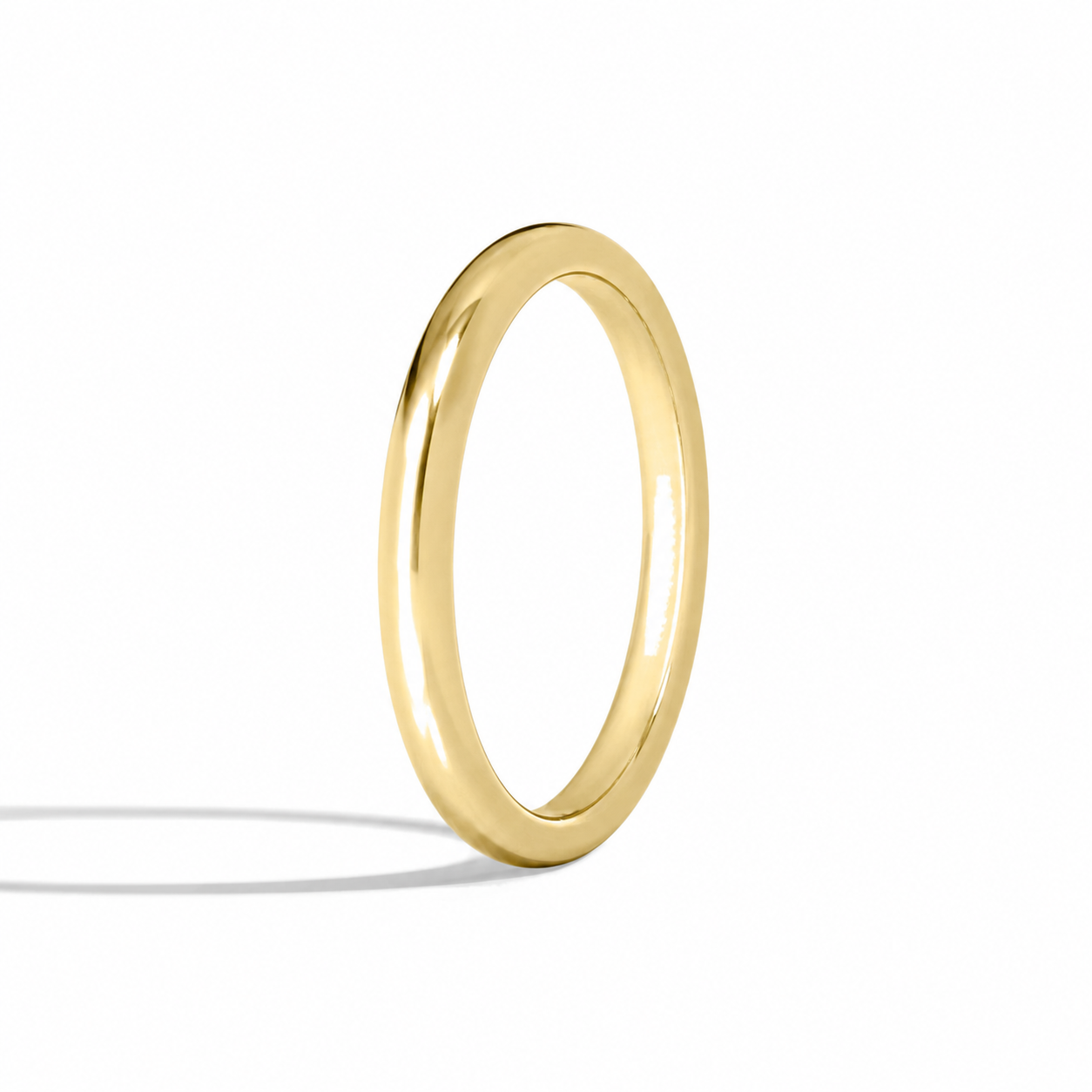

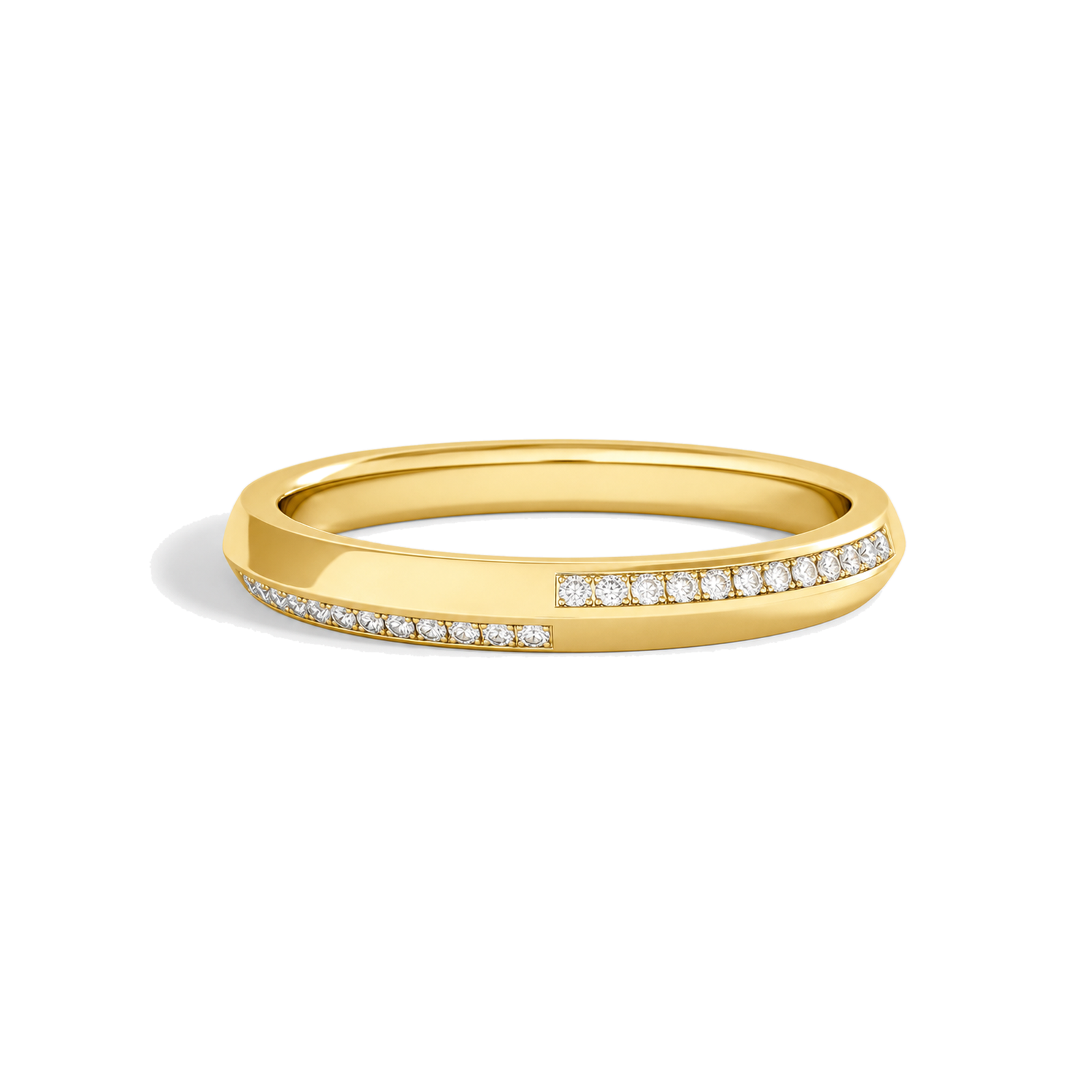
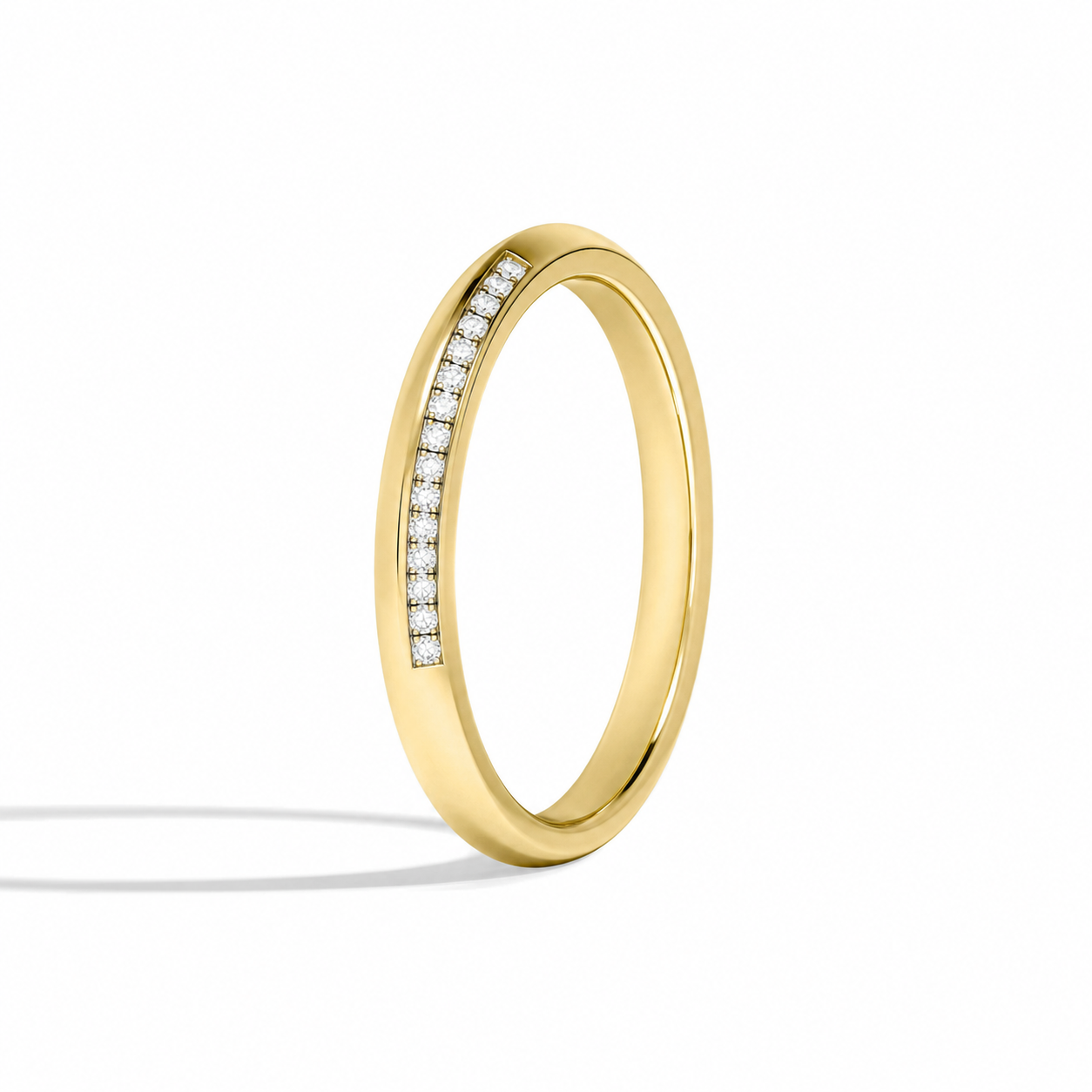

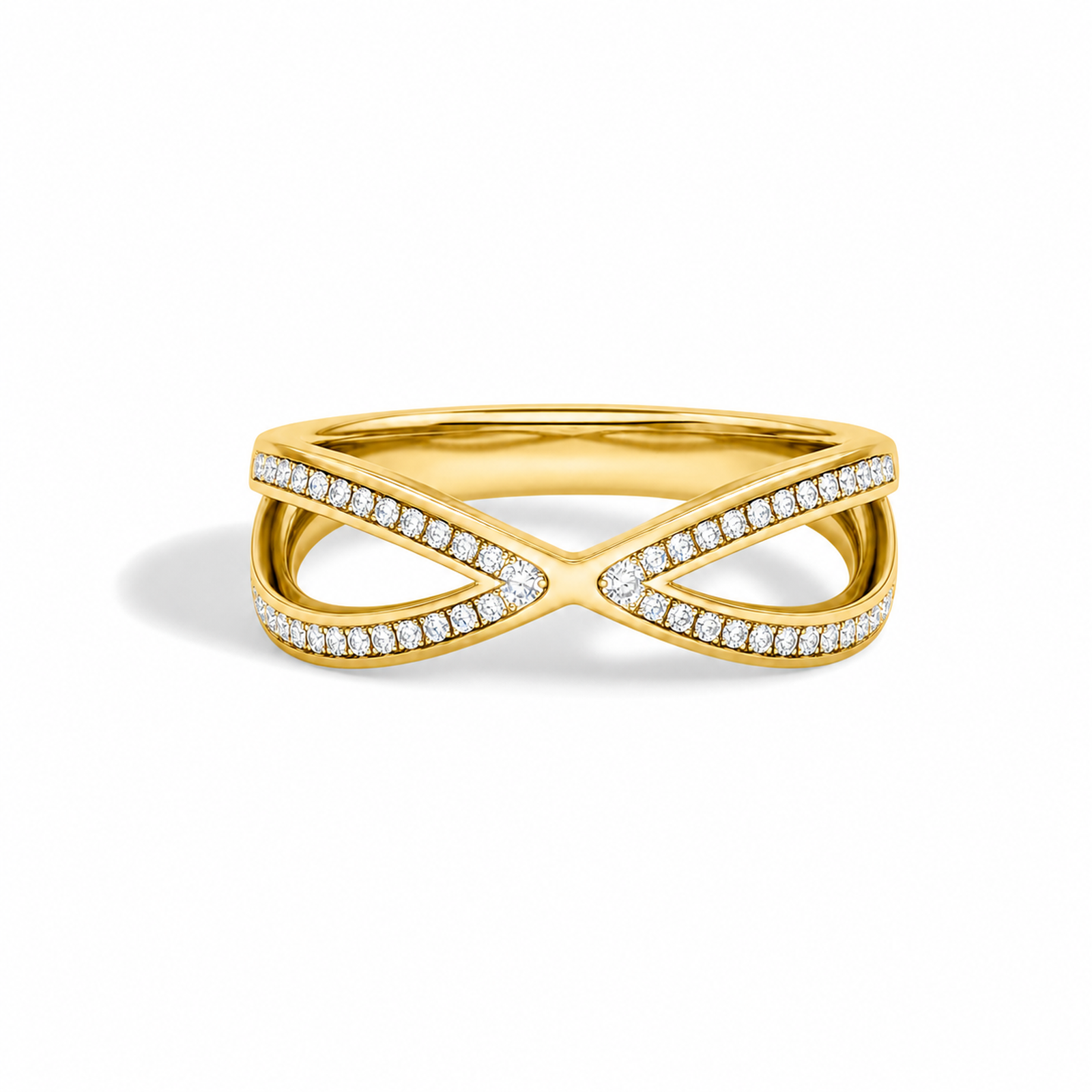


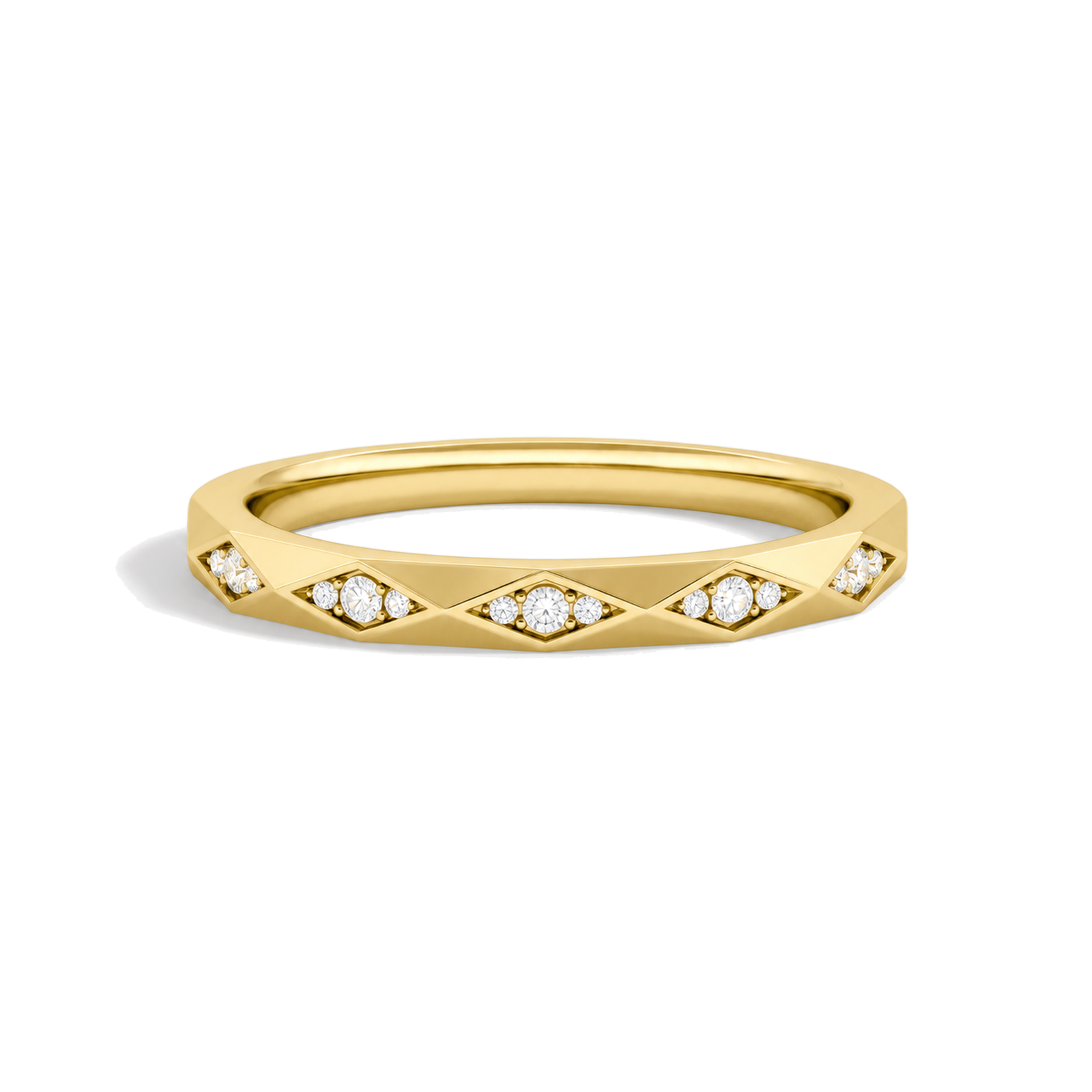


18K Yellow Gold Lab-Grown Diamond Rings: A Fuller Material Cadence
An 18K Yellow Gold ring can carry warmth through small intervals or broad surfaces. The gold may appear as points around diamonds, continuous bezel or channel edges, open terminals, crossed bands, or the uninterrupted underside completing a diamond-led face.
Across 69 current designs, extended and partial coverage sit beside curved, open, stackable, crossed, milgrain, comfort-fit, and sculptural structures. Their normalized design universe exactly matches the parent; this page exists to make material distribution and body-scale presence useful to compare.
Seventy-Five Percent Gold, No Automatic Hierarchy
An 18K alloy contains 75% gold. The remaining alloy, finish, light, photography, and exposed area affect final tone and behavior. Higher gold content does not by itself guarantee better durability, comfort, sensitivity, scratch resistance, or care.
A fine prong sequence and a broad comfort-fit band allocate gold differently even when both are 18K. Visible material should be judged through volume, width, profile, surface, and relationship to diamonds rather than karat alone.
Gold Establishes the Intervals
Eternity and partial-coverage designs repeat diamonds around more or less of the circumference. Bezels and channels make the gold boundary continuous; open, bypass, curved, crossed, and split forms use gold to redirect the silhouette. Milgrain and engraving divide the surface into finer marks.
The metal cannot improve diamond brilliance, dimensions, or grade. Compare count, spacing, shape, setting, width, profile, and TCW scope. A concentrated diamond line and a wider golden field are different compositions, not quality ranks.
Layering Changes the Material Rhythm
Several Yellow Gold rings can build continuity through a shared field, while variations in width or coverage change the cadence. Mixed metals can separate lines more clearly. Either approach requires enough interval for each design to remain legible.
Check edges, channels, bezels, open ends, curves, and setting heights from the side. Similar color does not eliminate contact or movement. No ring order, spacer, or fit prevents all abrasion, rotation, pressure, or impact.
Fit and Alteration Need Whole-Ring Review
Width, interior contour, anatomy, temperature, swelling, and combined stack width affect fit. Comfort-fit wording is not a universal outcome. Open designs are not inherently adjustable, and higher gold content does not determine resizing.
Coverage, symmetry, settings, channels, engraving, and requested change shape feasibility. Custom possibilities may refine width, contour, diamond arrangement, setting, metal, or selected detail after technical review.
Measured Warmth, Clear Page Boundaries
The parent Rings page owns broad decision-making; Engagement and Wedding pages own commitment intent; Eternity, Curved, Stacking, and Fashion pages own narrower structures. This page owns how 18K Yellow Gold distributes material presence across all of them.
Surface adds another layer to that distribution. A polished expanse reflects as one field; milgrain, engraving, channels, ribbing, and faceted transitions divide the gold into smaller marks. Ordinary wear may appear differently across those treatments, and no finish is permanently unchanged or maintenance-free. Compare current surface and edge details on the selected ring rather than inferring service or wear from karat alone.
Burvonti pairs responsibly sourced lab-grown diamonds with human calibration. Independent grading or certification should be read according to scope. Clean gently, avoid abrasive contact, and inspect settings and contact points as the ring changes. Warmth is strongest when it remains precise rather than promotional.
Frequently Asked Questions
What does this page add beyond the parent Ring Collection?
It focuses on 18K Yellow Gold composition, visible material intervals, surface, profile, and stacking rhythm.
How much gold is in 18K Yellow Gold?
75% by mass. Other alloying metals influence final shade and working behavior.
How is 18K Yellow Gold different from 14K?
18K contains 75% gold while 14K contains approximately 58.3%. Shade, weight, hardness, wear, and care remain product-specific.
Are all 18K yellow gold rings the same tone?
No. Alloy formula, finish, lighting, photography, and visible metal area affect appearance.
Which ring structures are represented?
The 69 designs span eternity, partial coverage, bezel, channel, open, curved, stacking, crossed, milgrain, comfort-fit, and sculptural forms.
Are these rings only wedding bands?
No. Wedding Bands have a separate commitment and pairing intent; this is a broader material-led ring page.
Does 18K Yellow Gold enhance diamond sparkle?
No. It changes the surrounding material field, not facet relationships, dimensions, or grading facts.
What does Total Carat Weight mean?
It is combined diamond weight within the stated scope and should be compared with count, coverage, setting, width, and profile.
Are 18K Yellow Gold rings always heavier than 14K rings?
Not as a Collection-wide rule. Finished weight also depends on metal volume, width, profile, setting, and size.
Can several Yellow Gold rings be stacked?
Yes when their widths, heights, curves, settings, contact, fit, and movement work together.
Can 18K Yellow Gold be mixed with other metals?
Yes as an aesthetic choice. Another repeated element can keep the composition coherent.
Are open 18K Yellow Gold rings adjustable?
Not automatically. Construction, alloy, tension, dimensions, and terminal settings require review.
Can every 18K Yellow Gold ring be resized?
No. Coverage, channels, open forms, engraving, symmetry, settings, and requested change affect feasibility.
Is 18K Yellow Gold suitable for sensitive skin?
No universal outcome should be promised without confirming the complete alloy and wearer-specific concern.
Can Burvonti personalize an 18K Yellow Gold ring?
Custom possibilities may include width, contour, arrangement, setting, metal, or detail, subject to feasibility.
How should an 18K Yellow Gold ring be cared for?
Clean gently, avoid abrasive contact, and inspect settings, open ends, channels, and stack contact points as condition changes.