
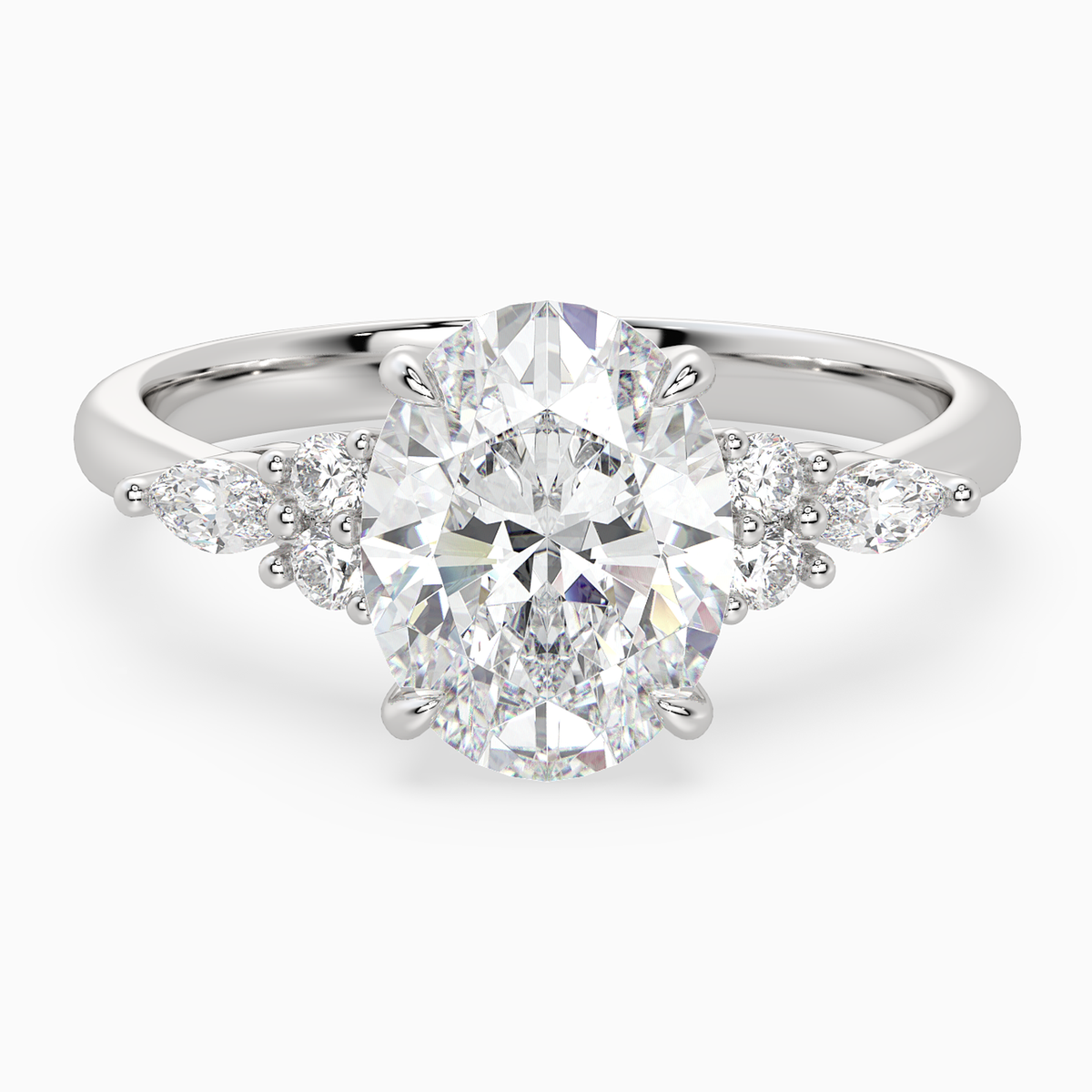


Lab Grown Diamond Jewelry in 14K Rose Gold
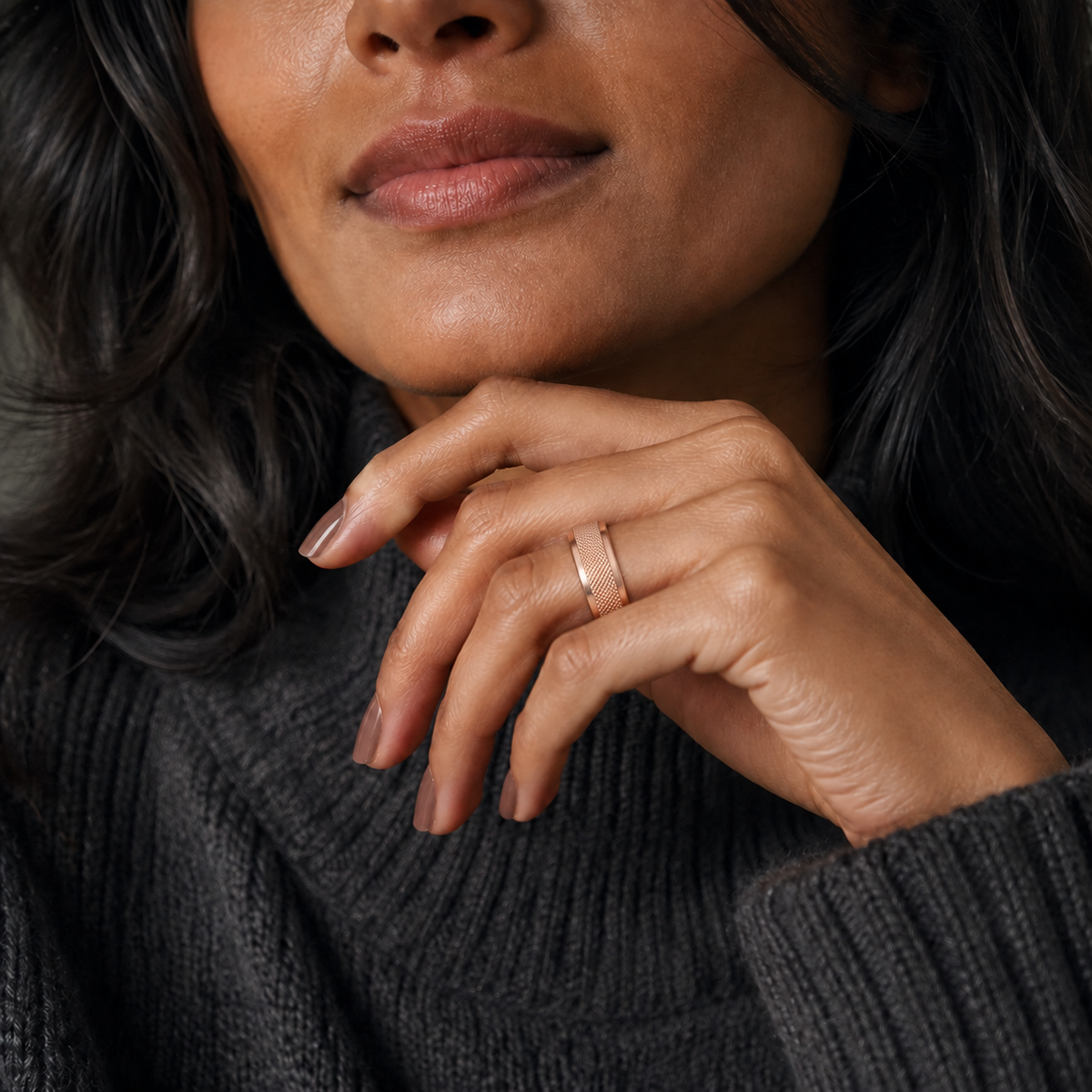
One blush-toned line moves from hand to ear, neckline, and wrist. 14K rose gold gives each form a warm, measured boundary.


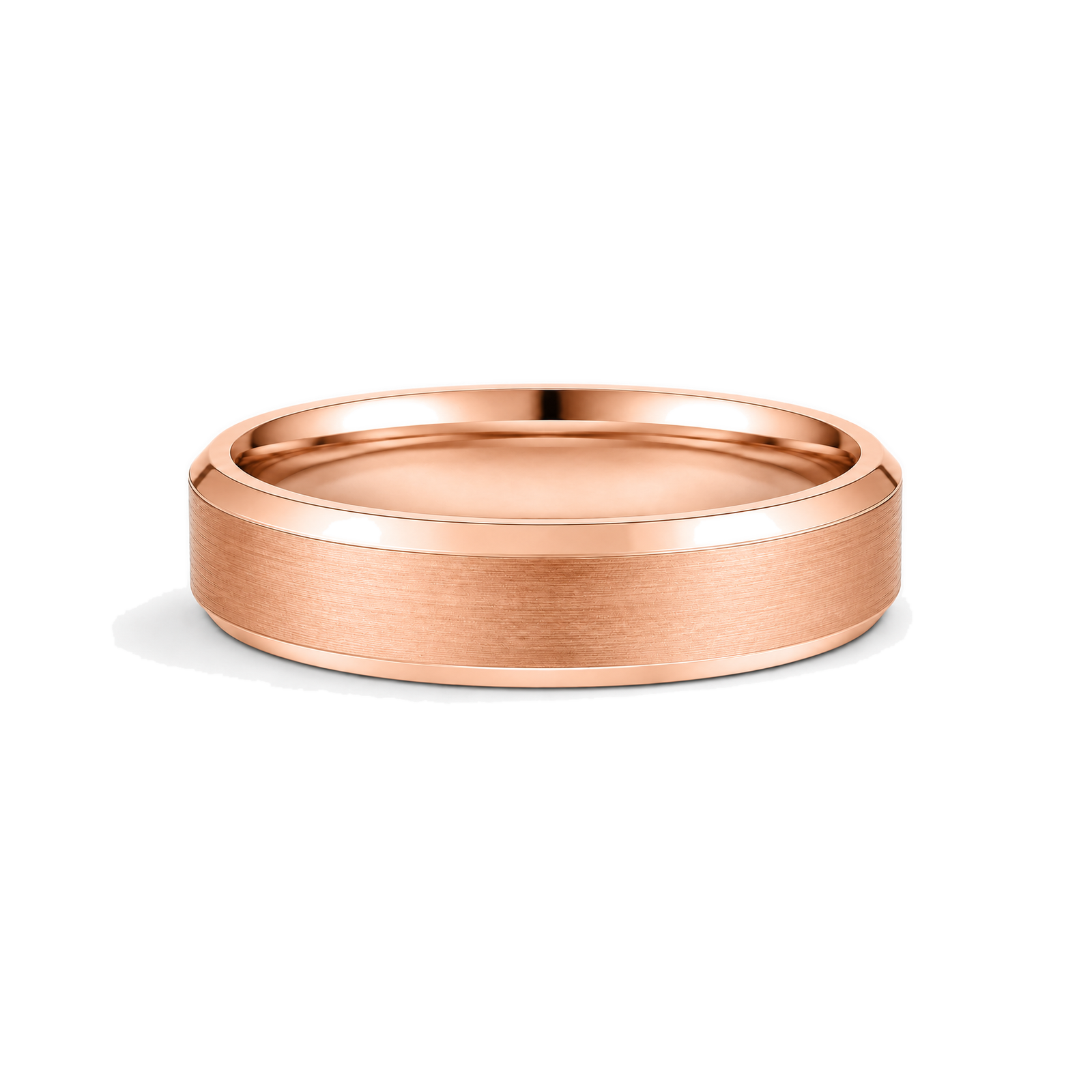


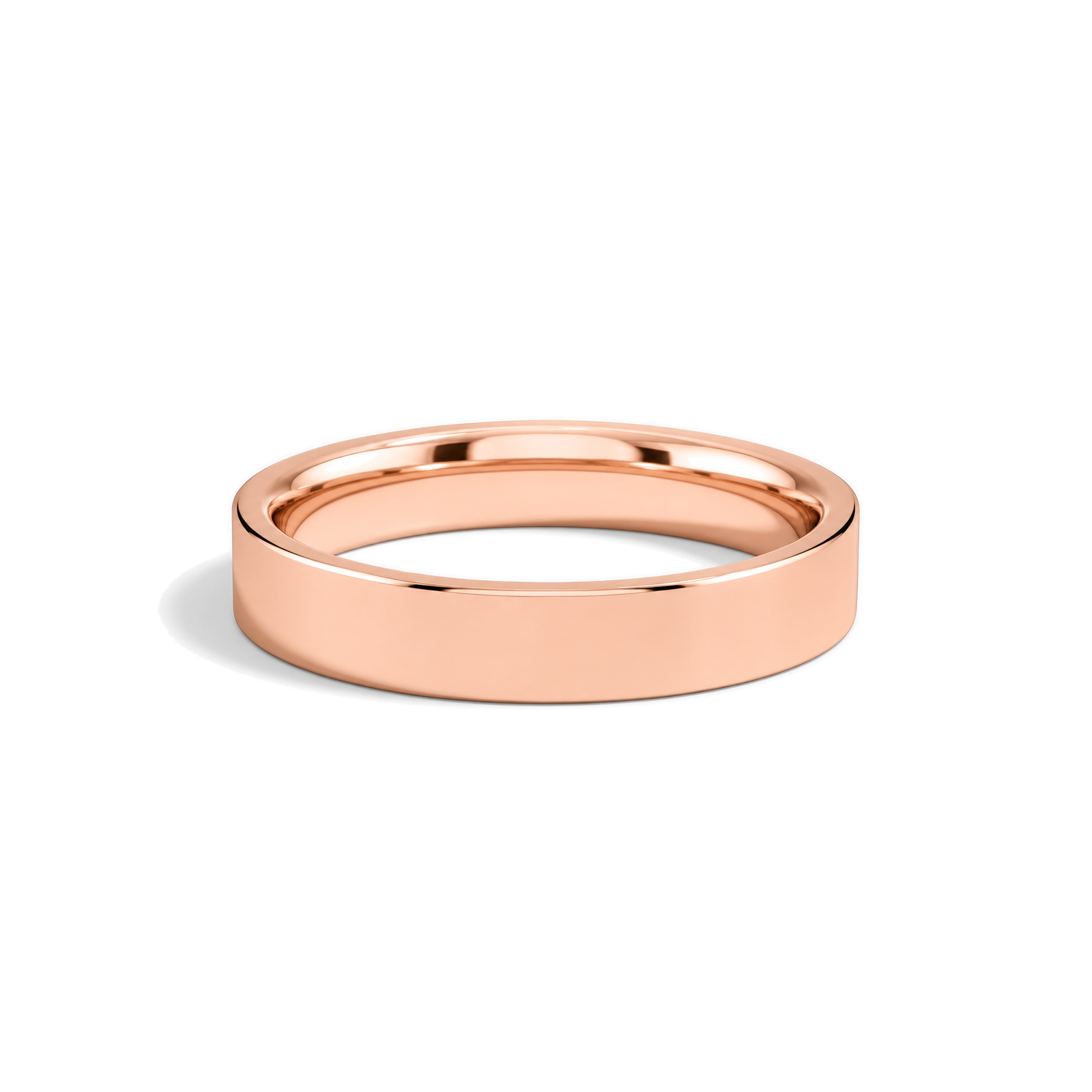
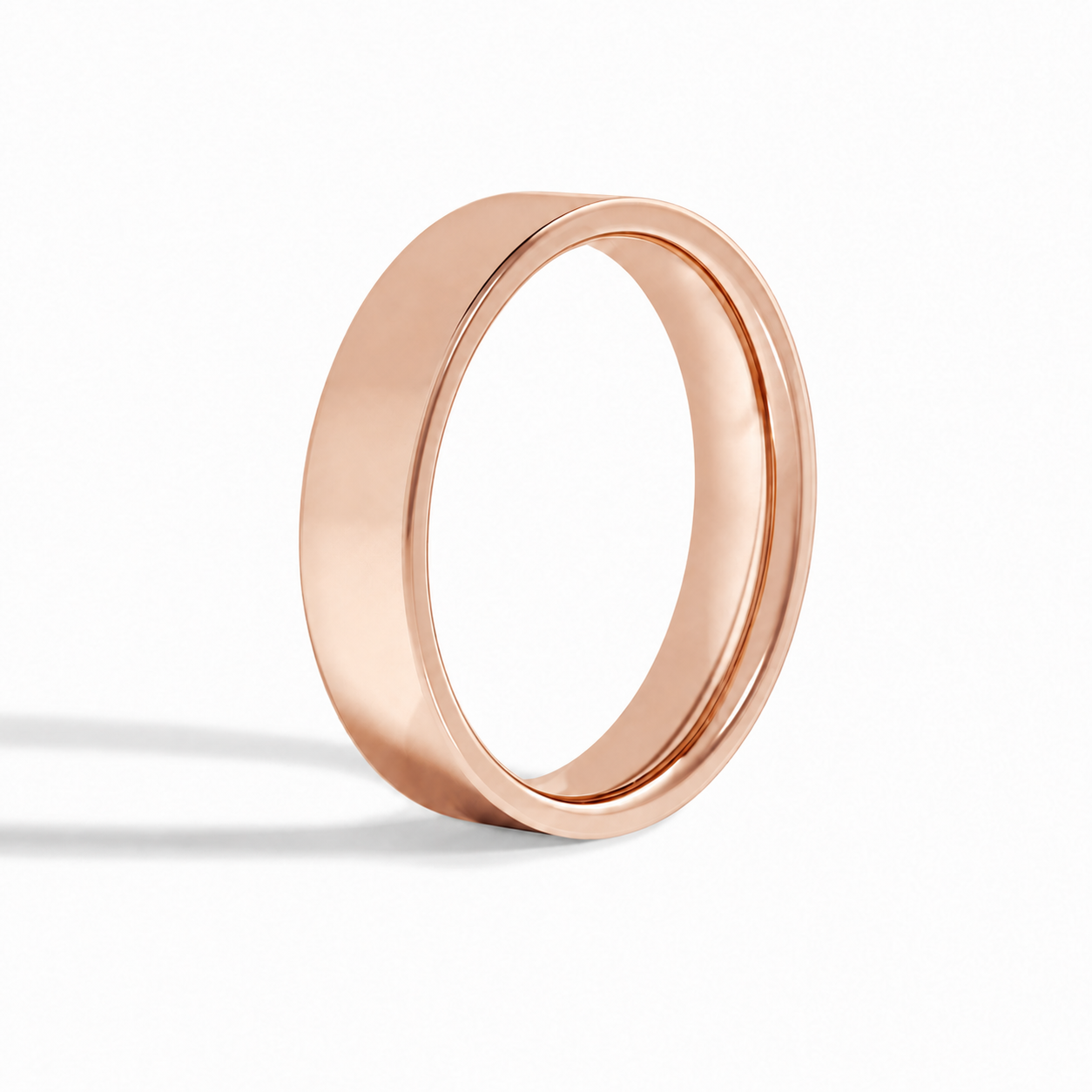

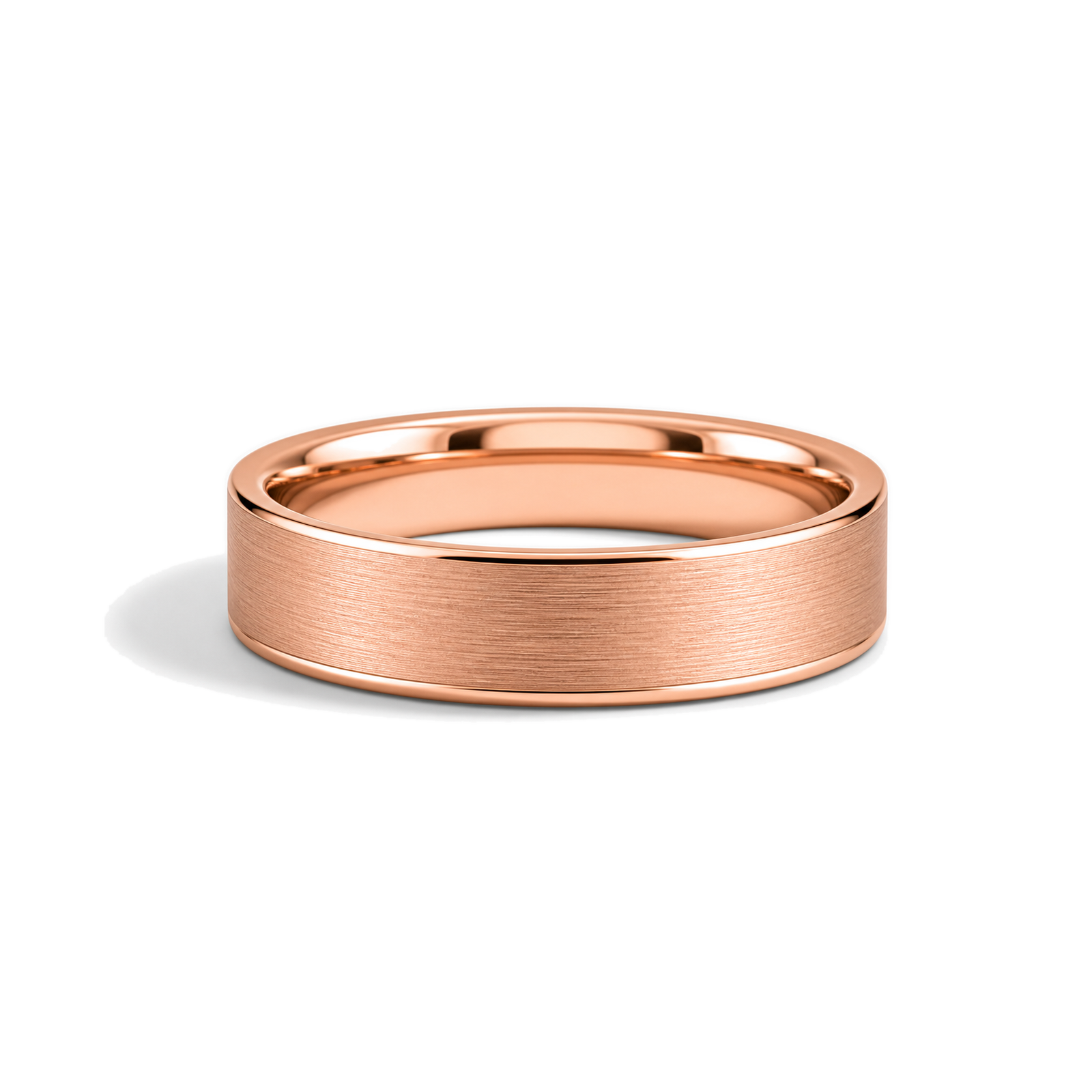


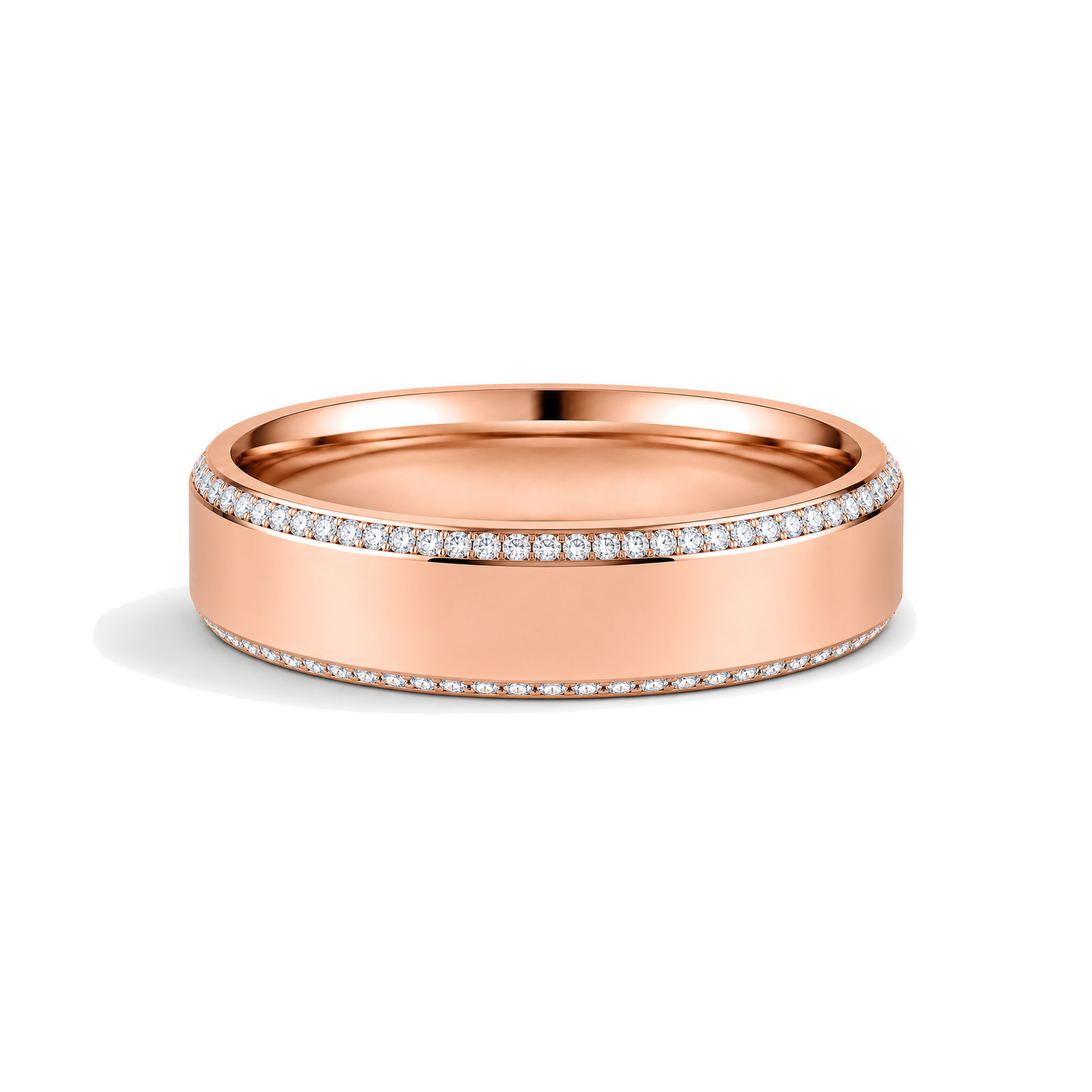
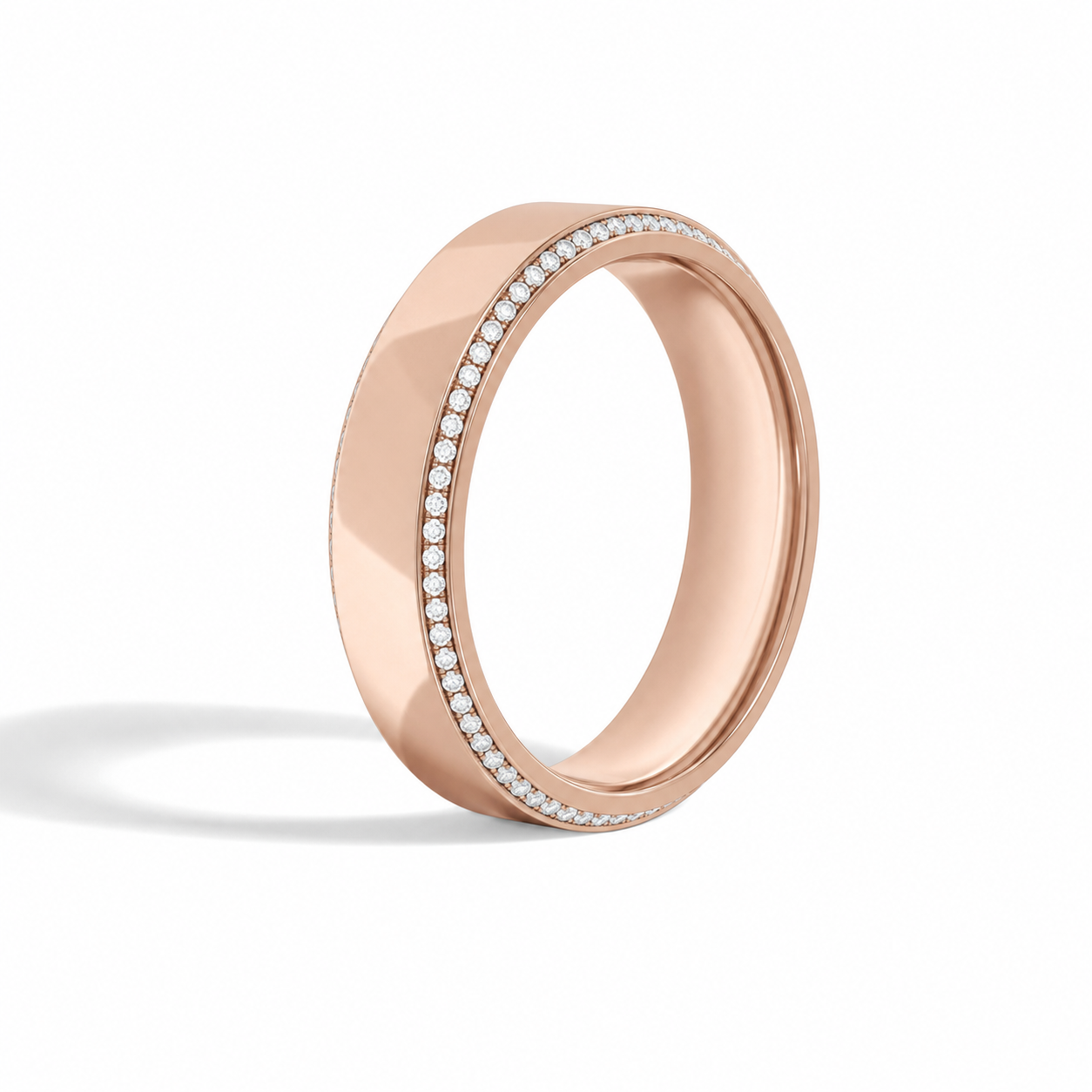

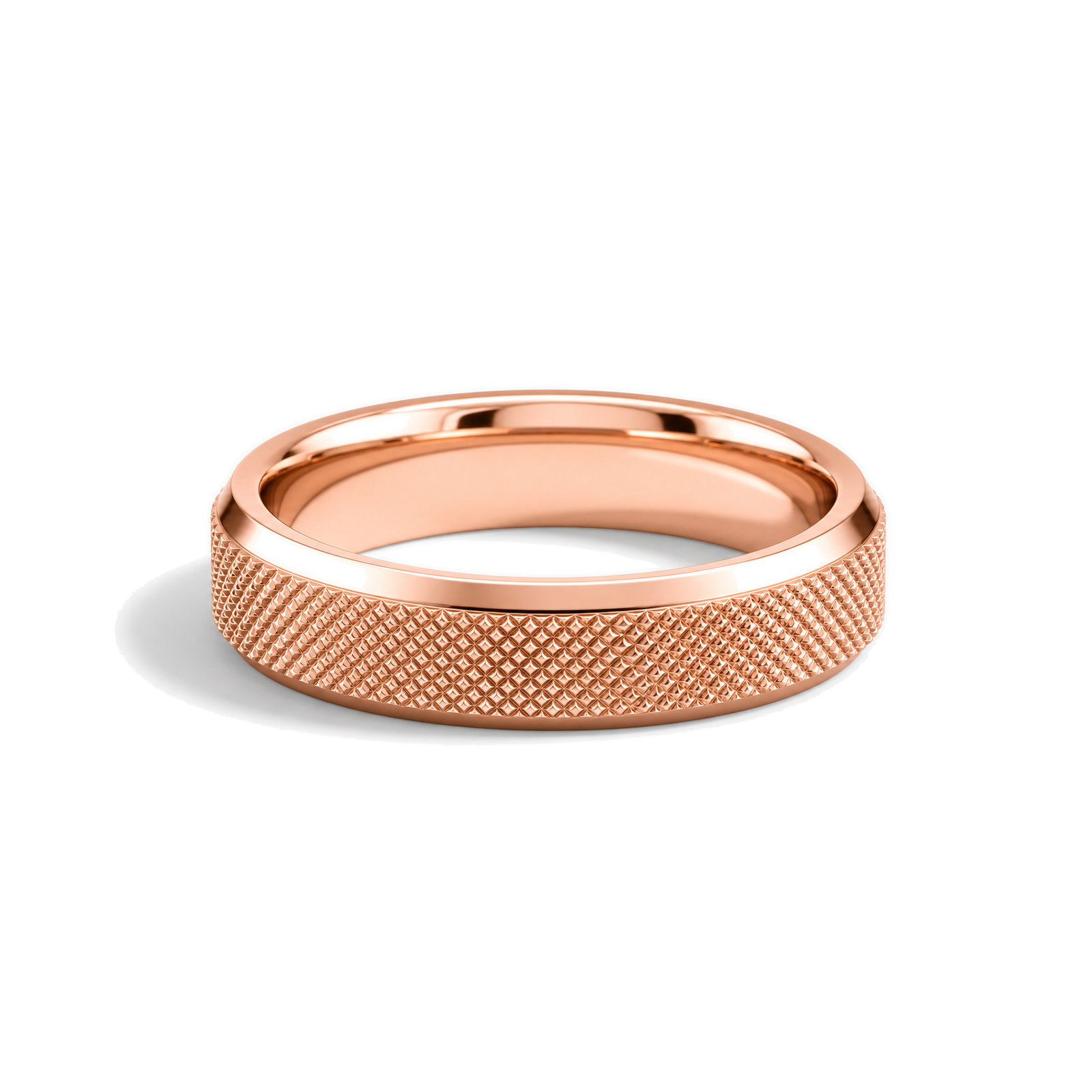



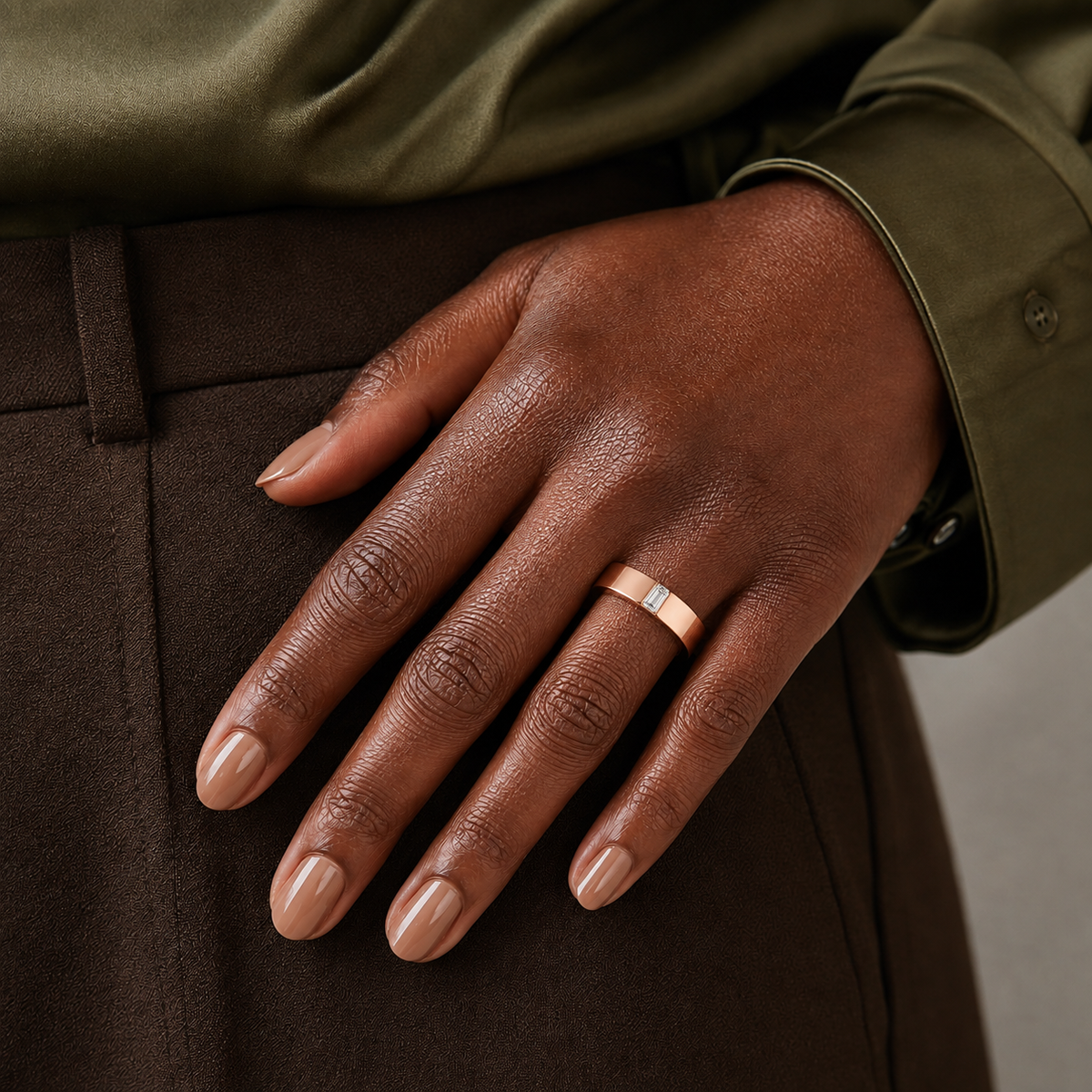
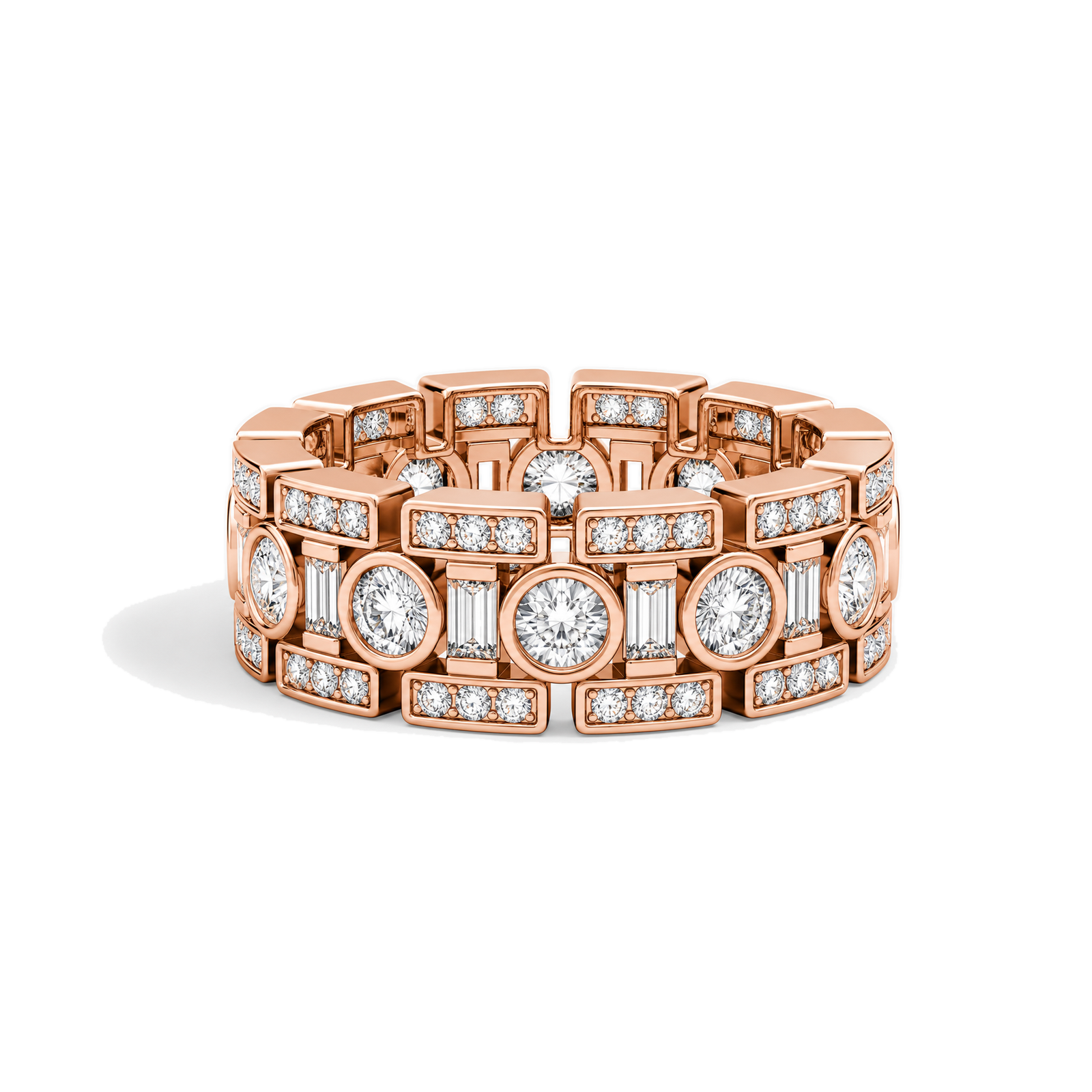
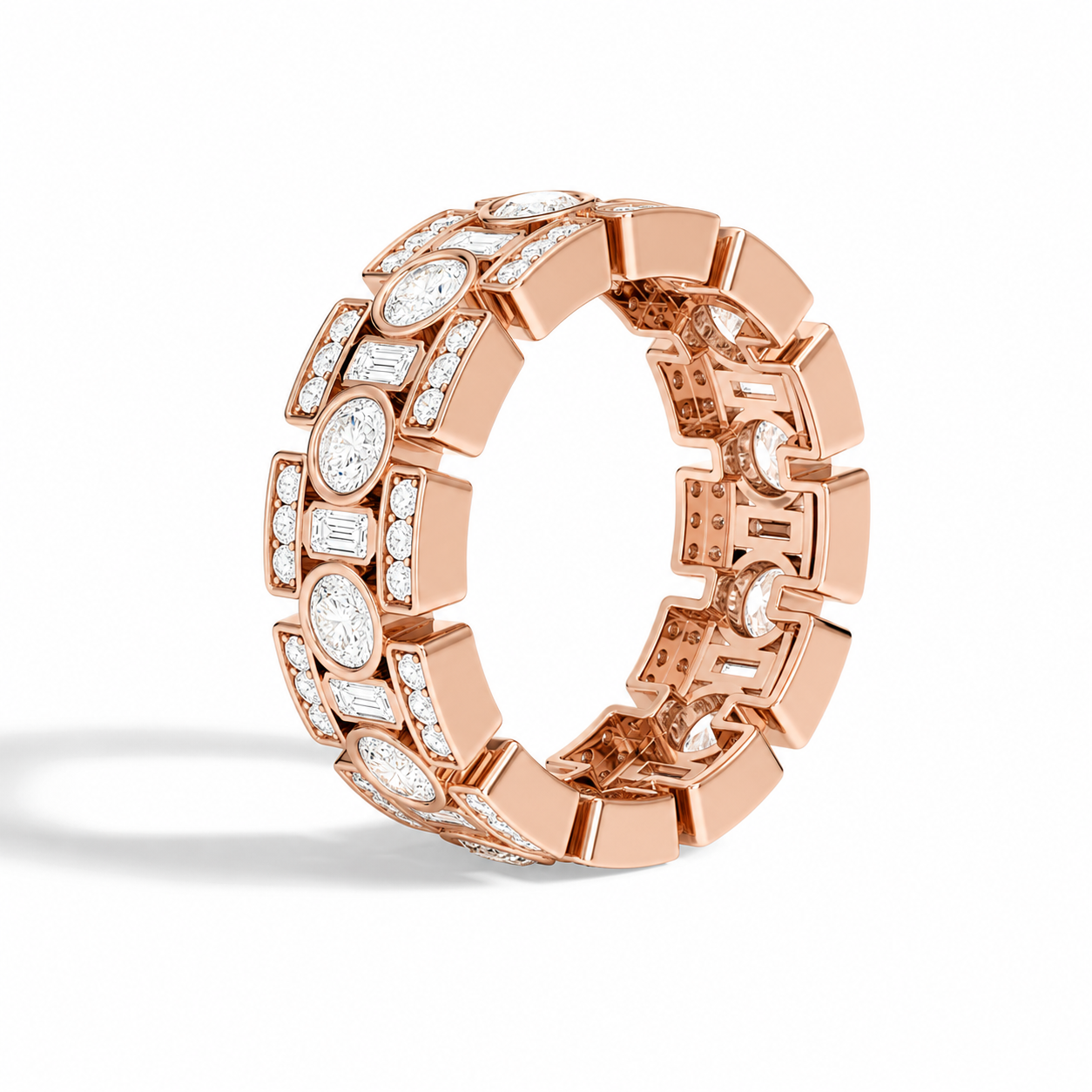
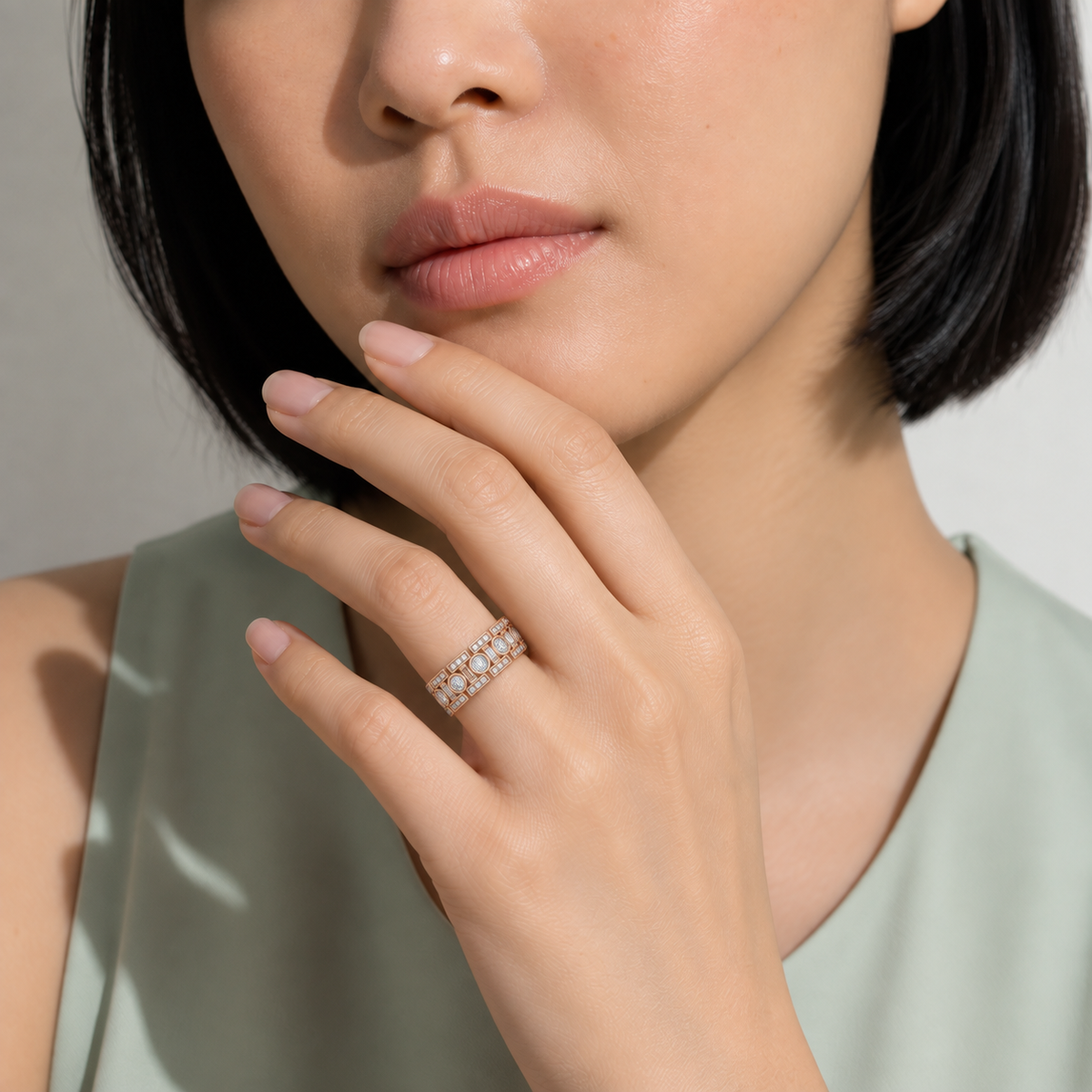
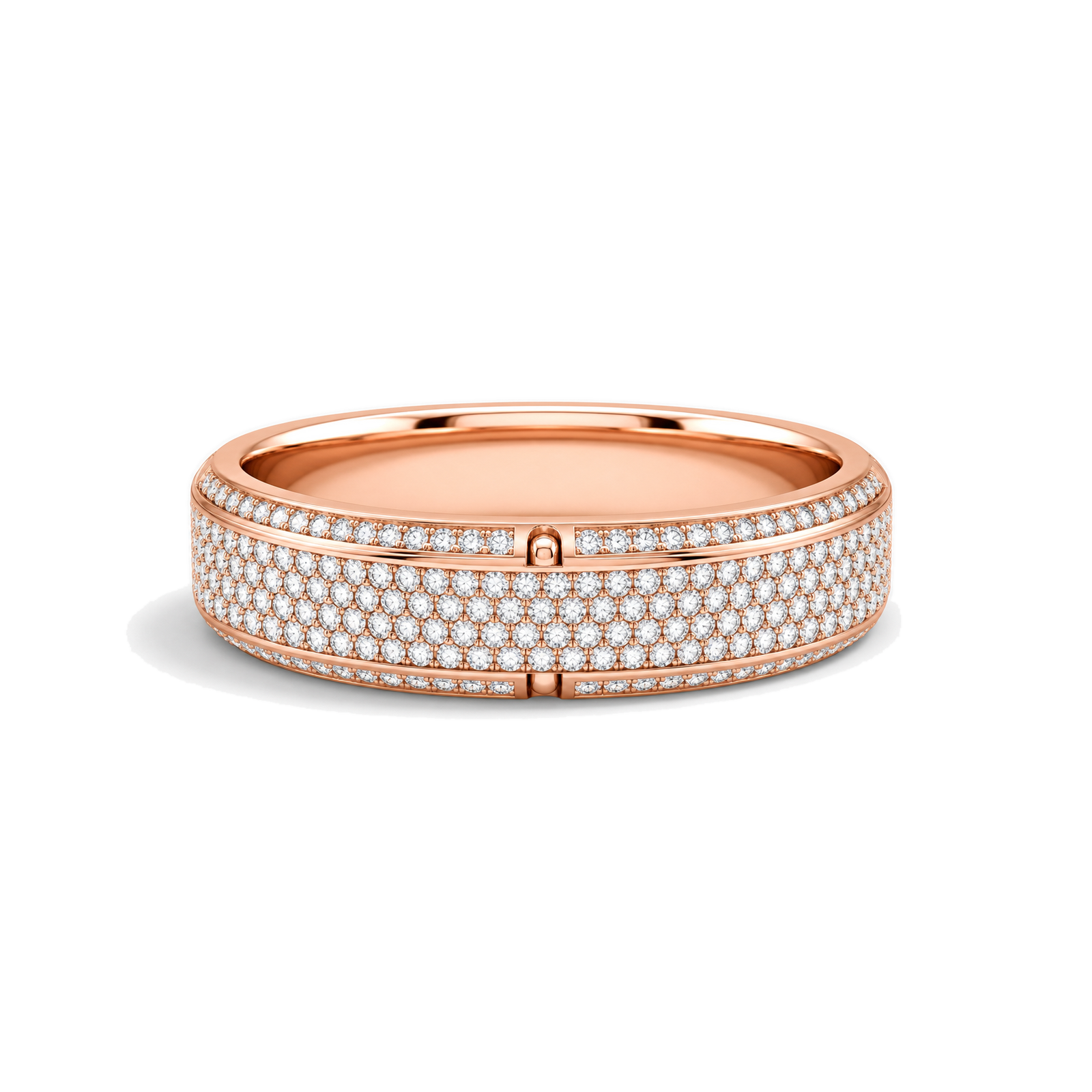
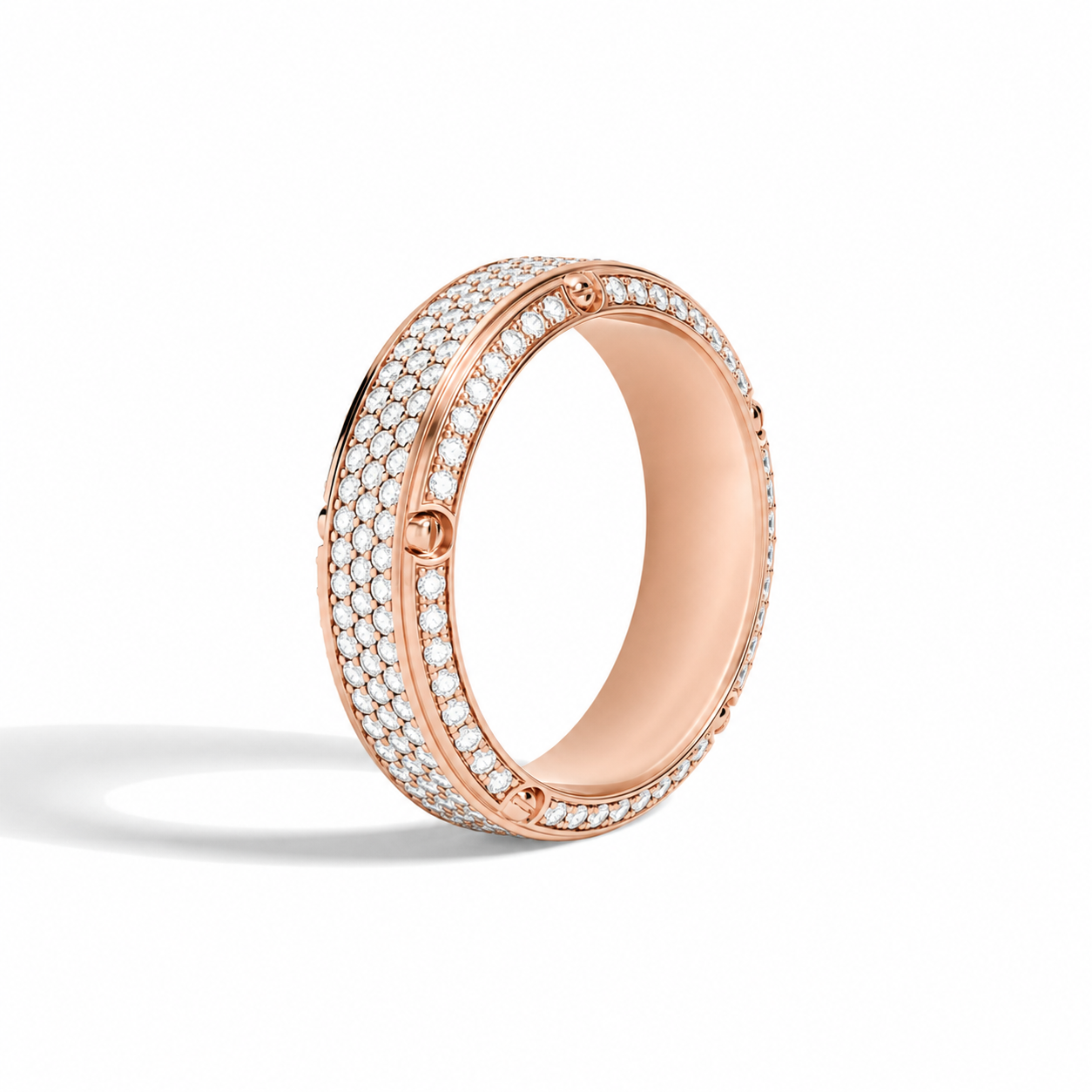

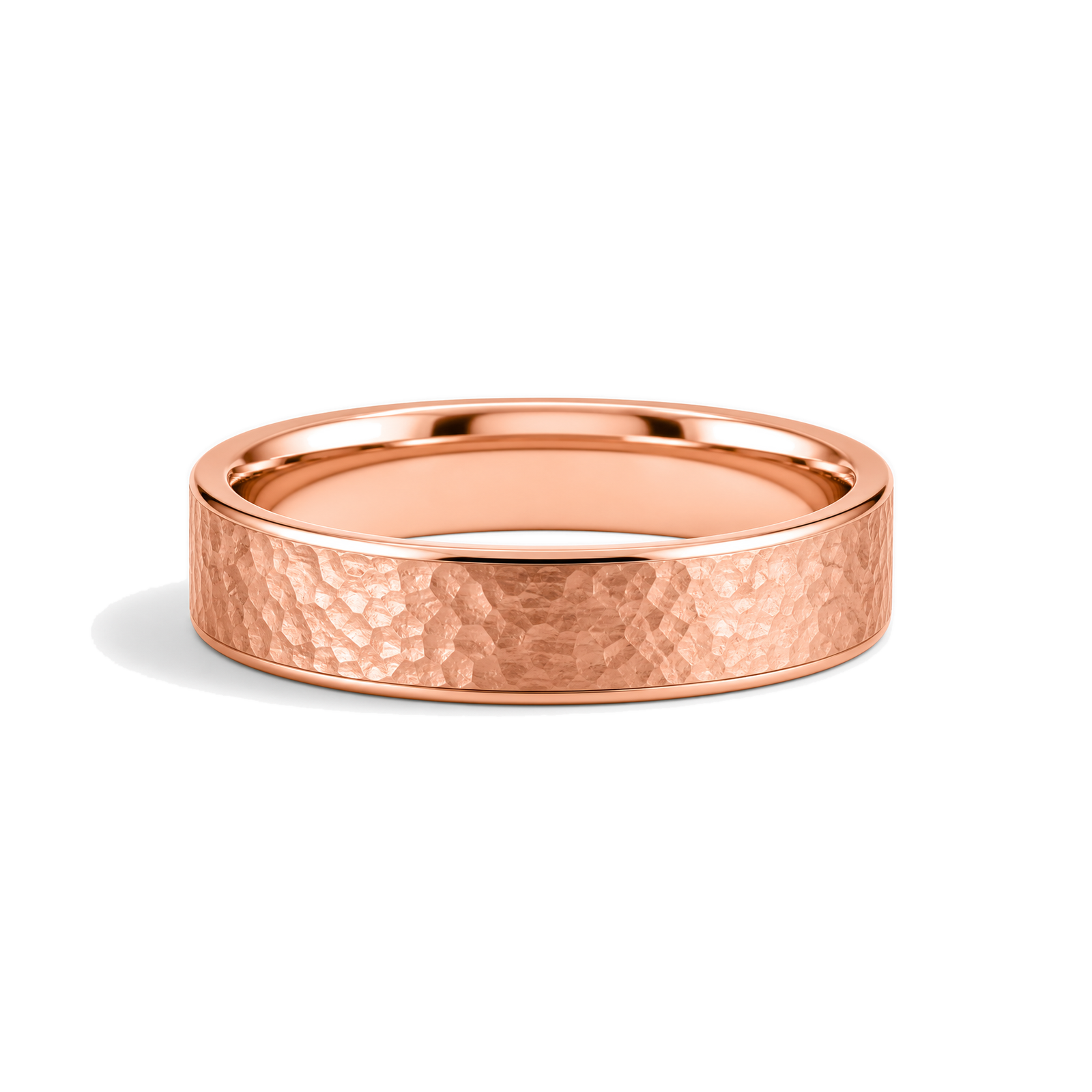
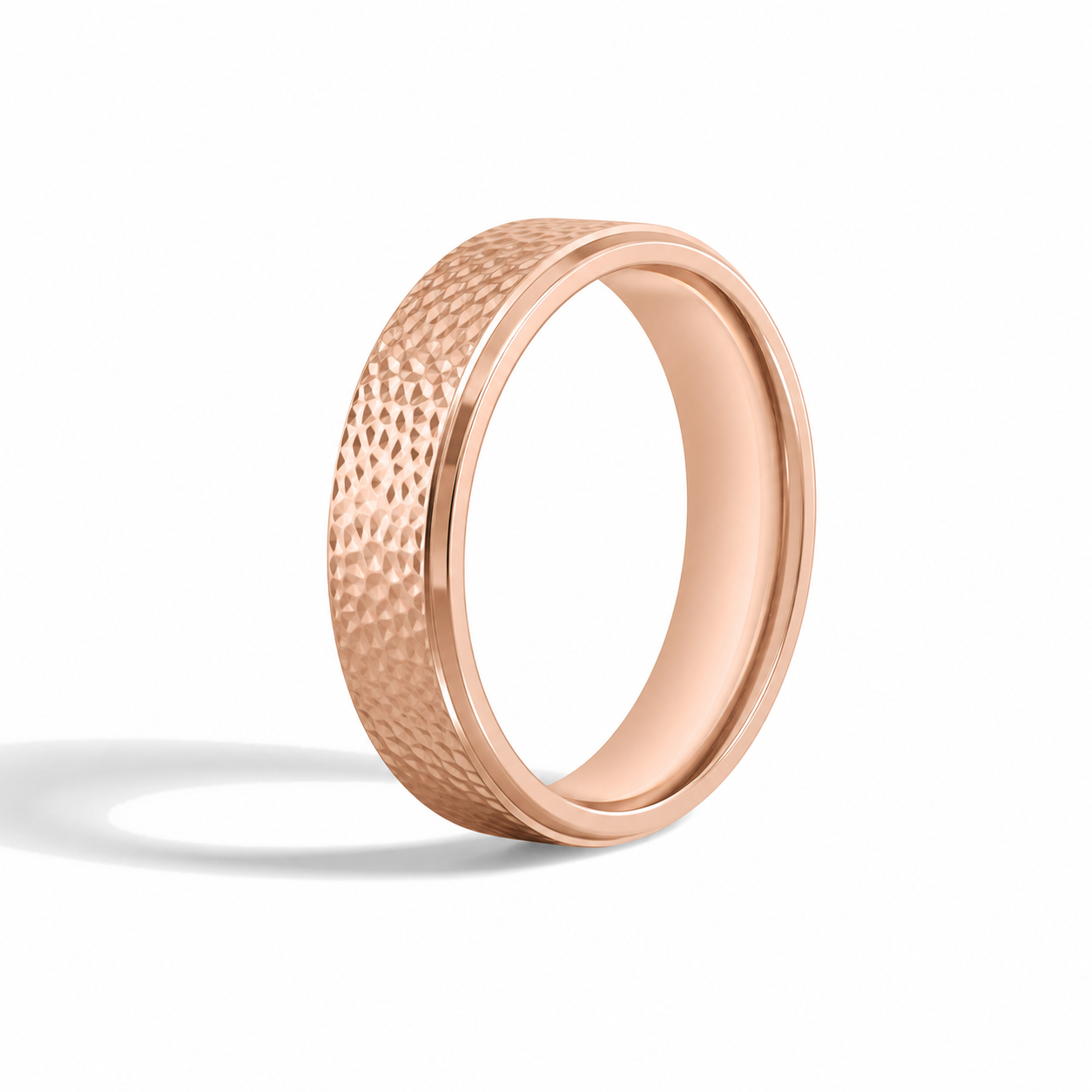


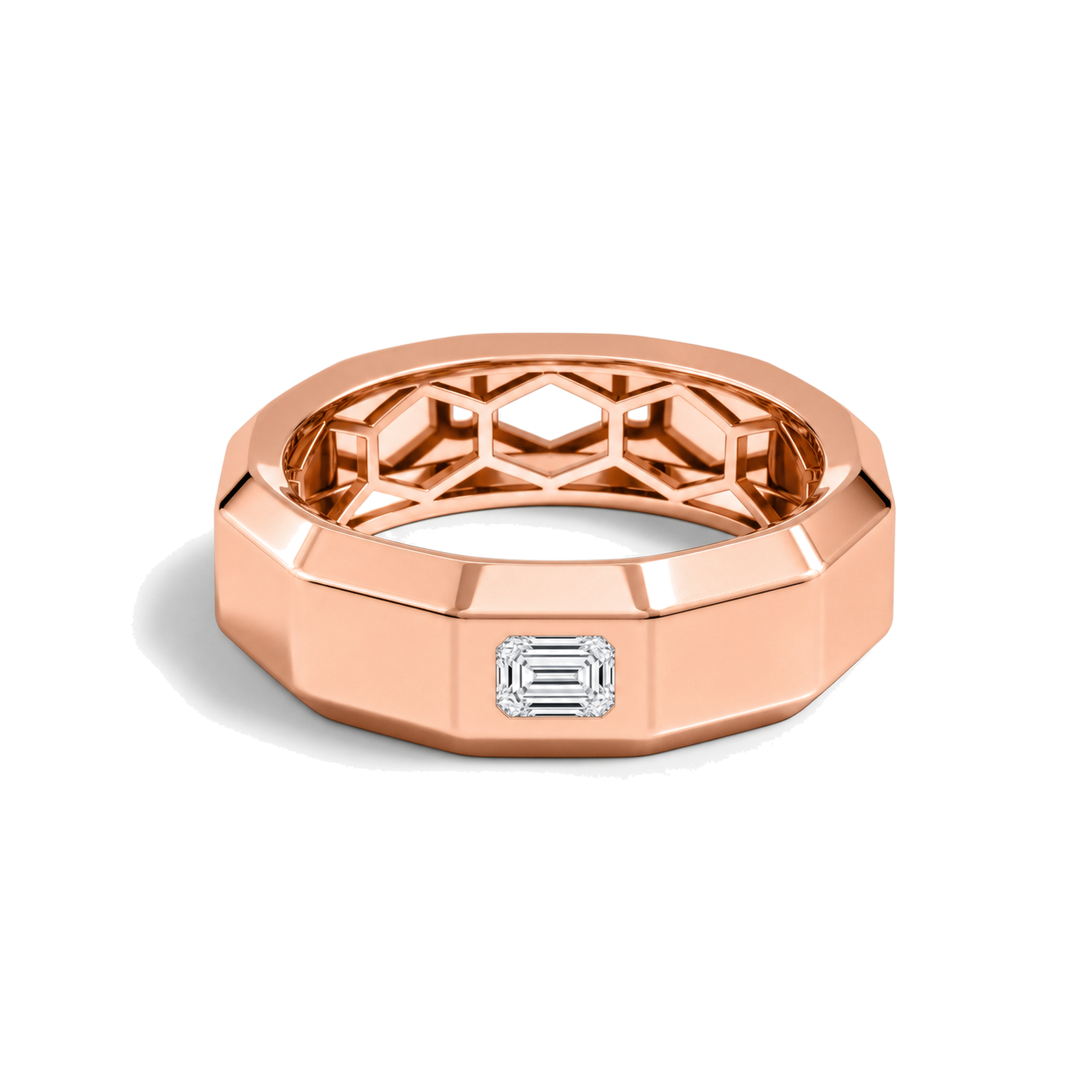
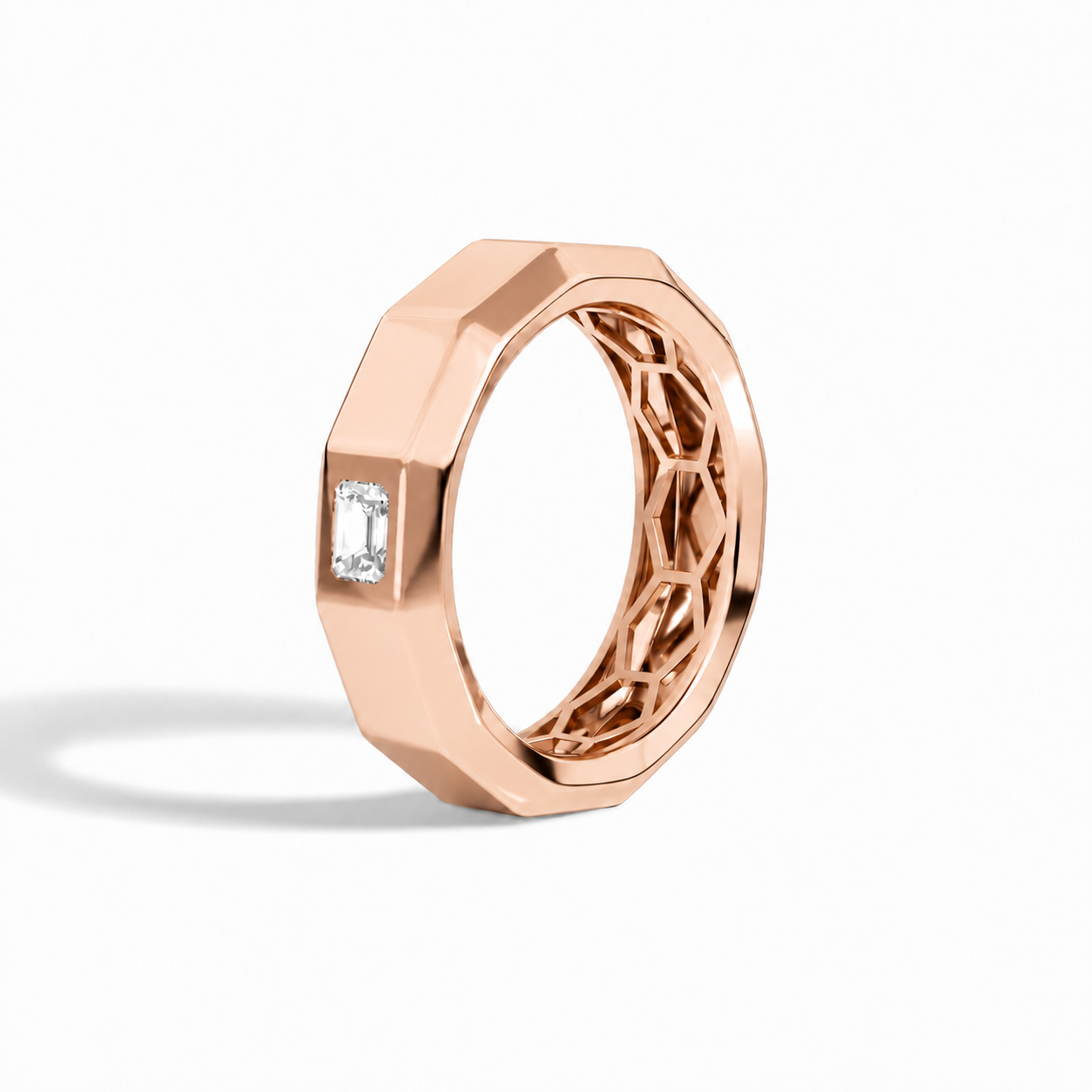

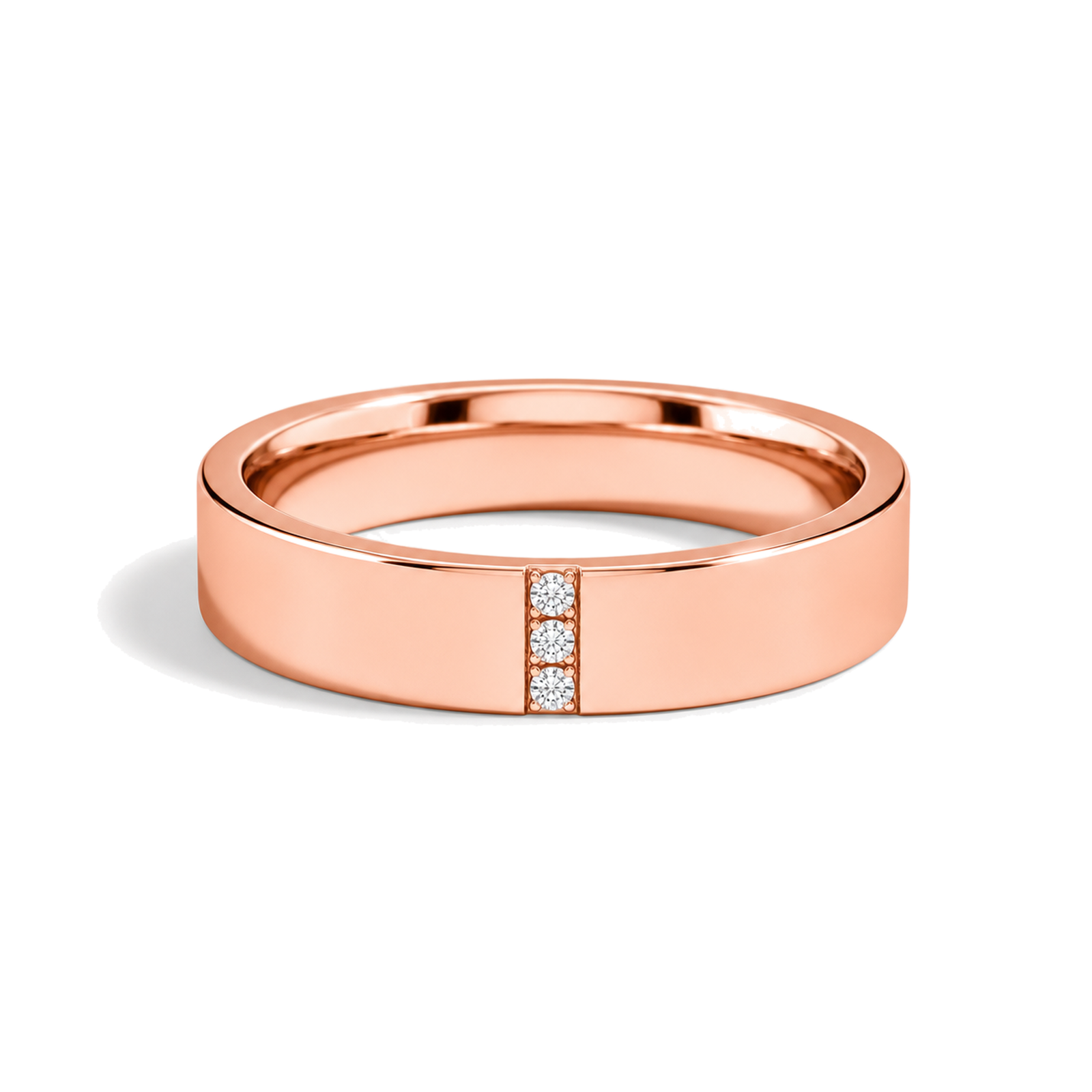


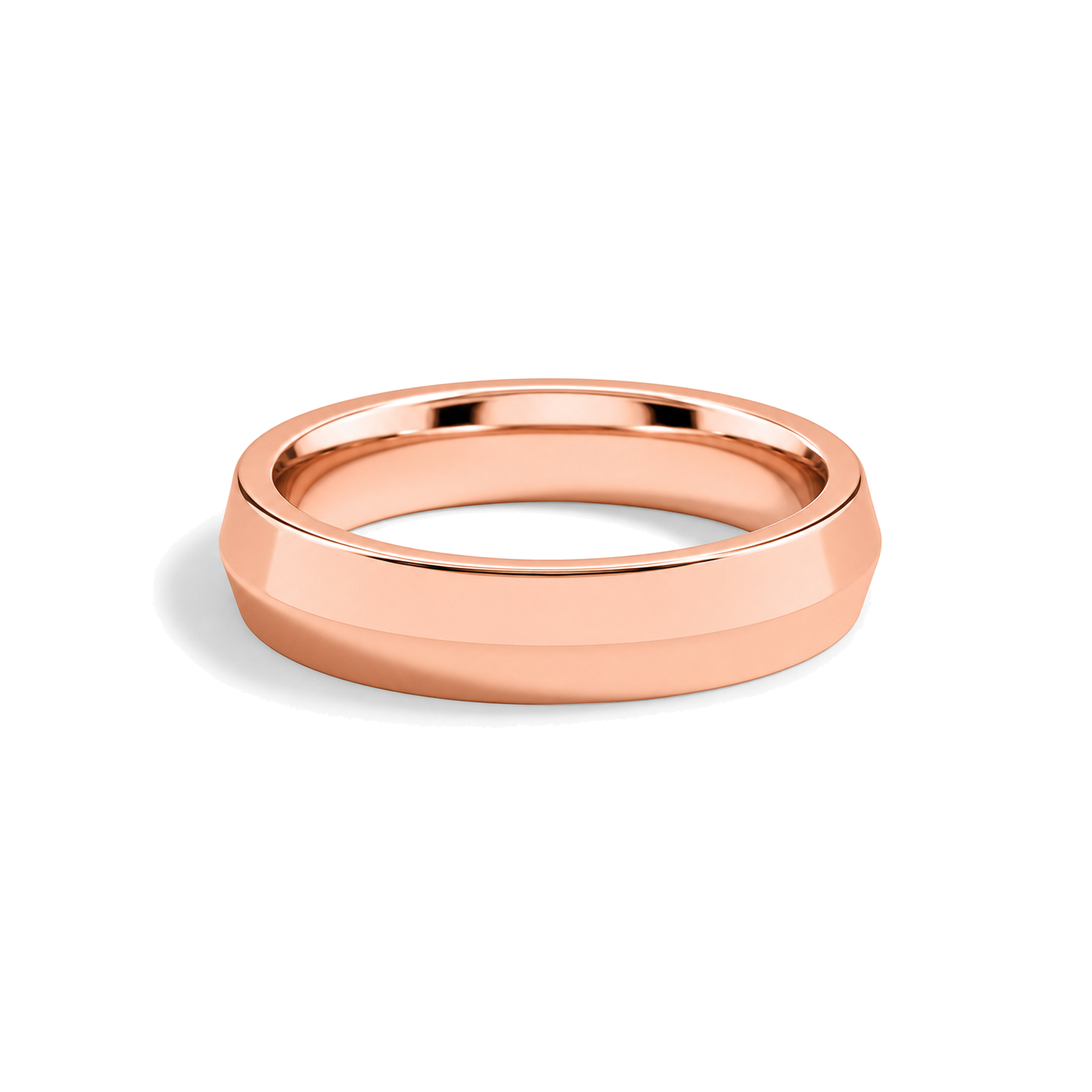
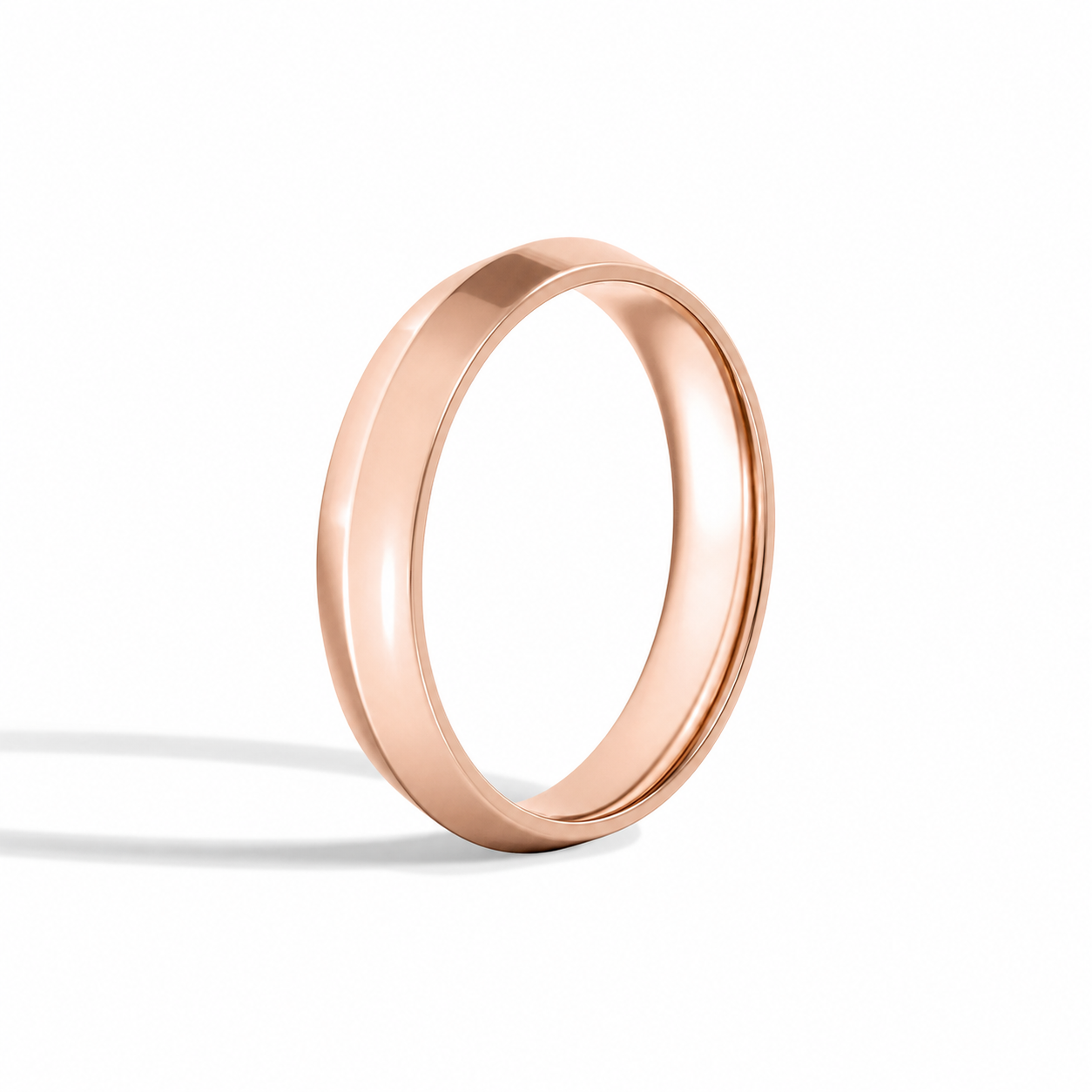

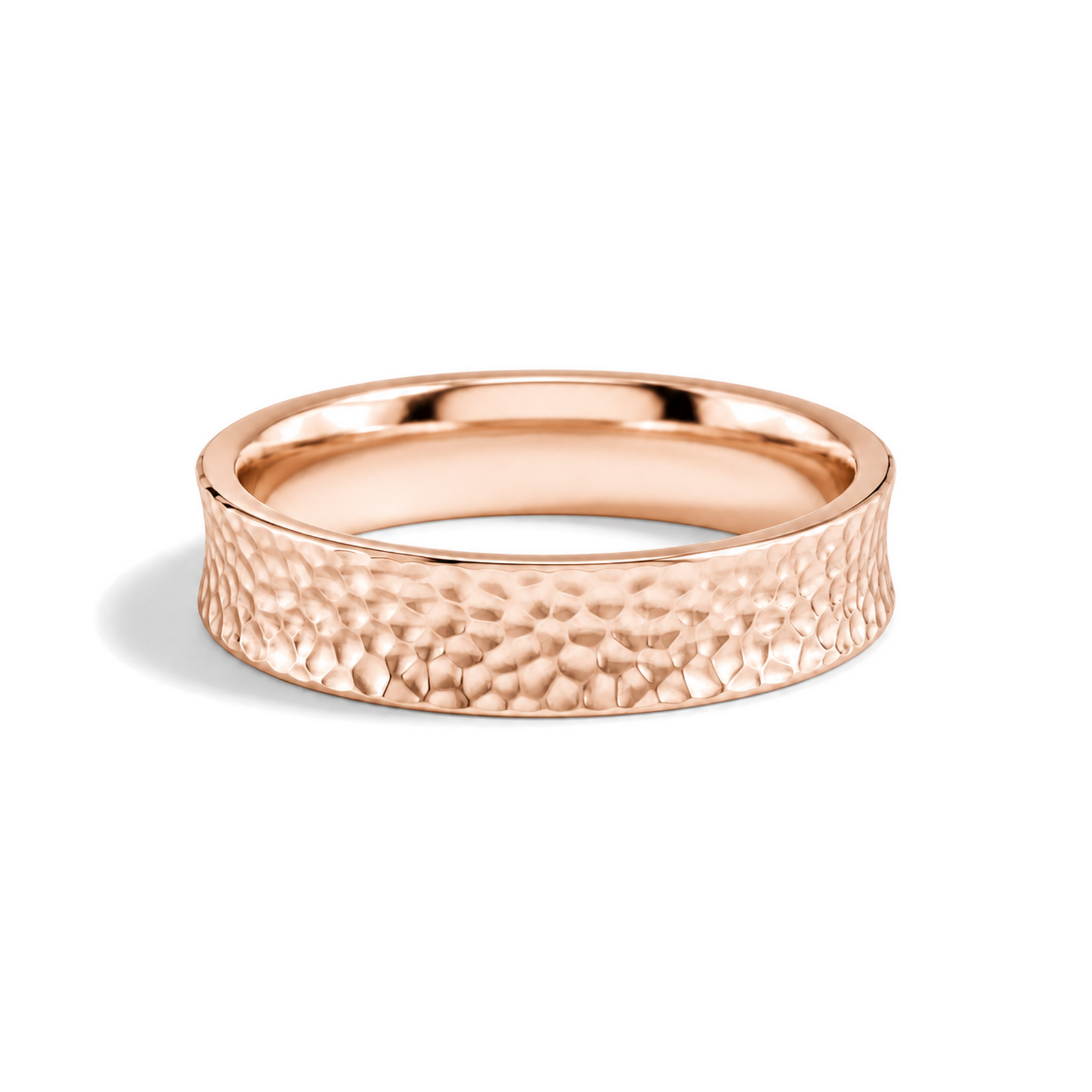
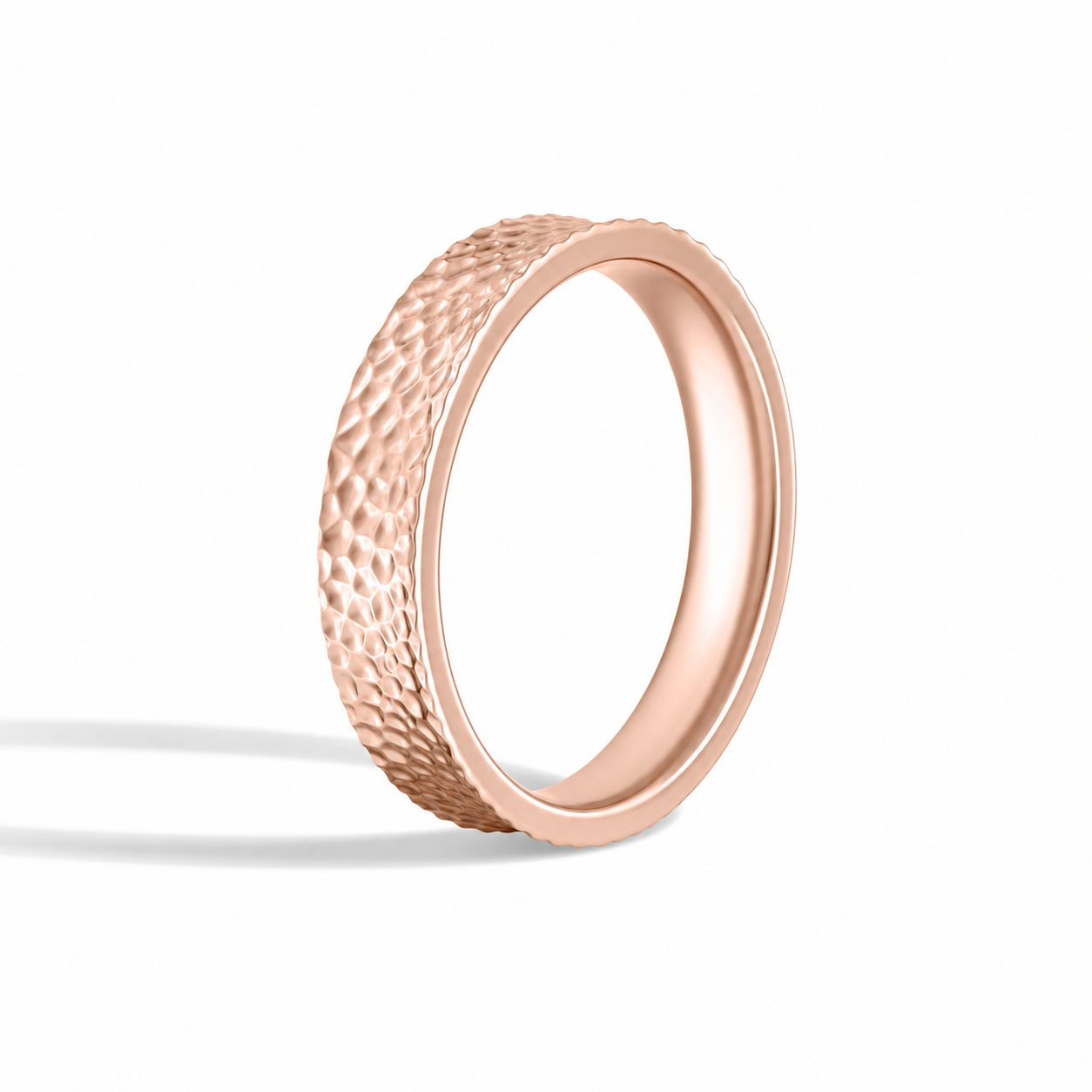

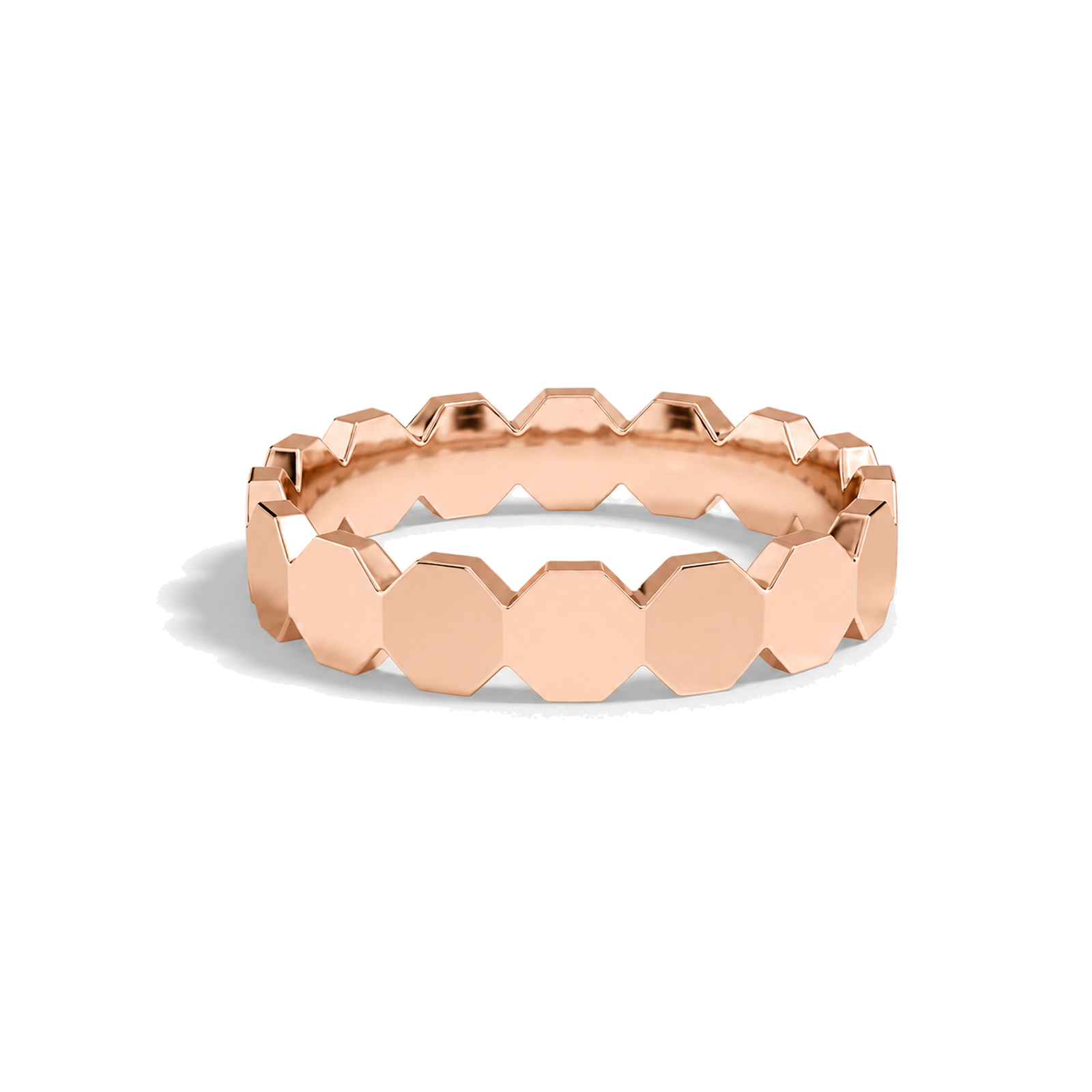
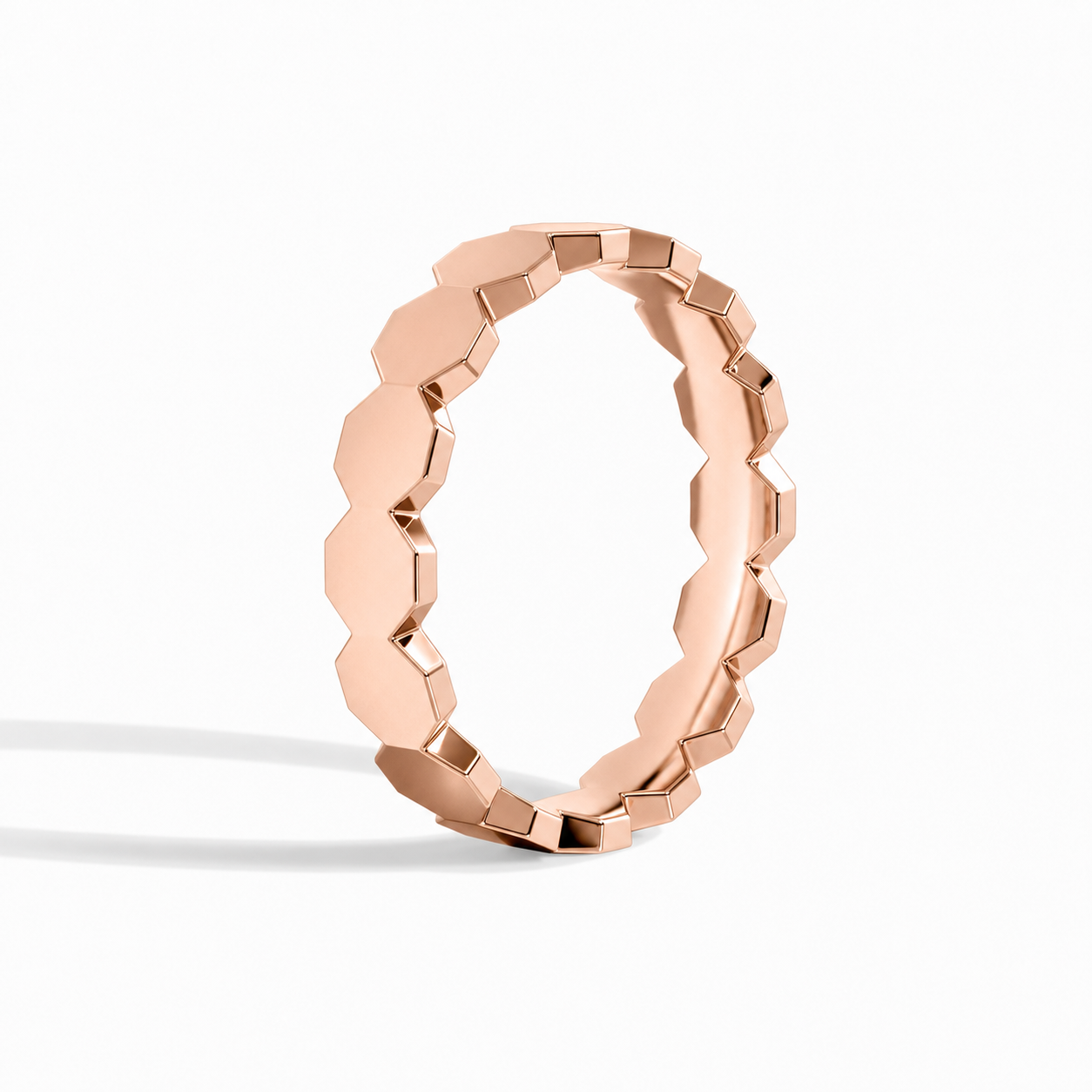


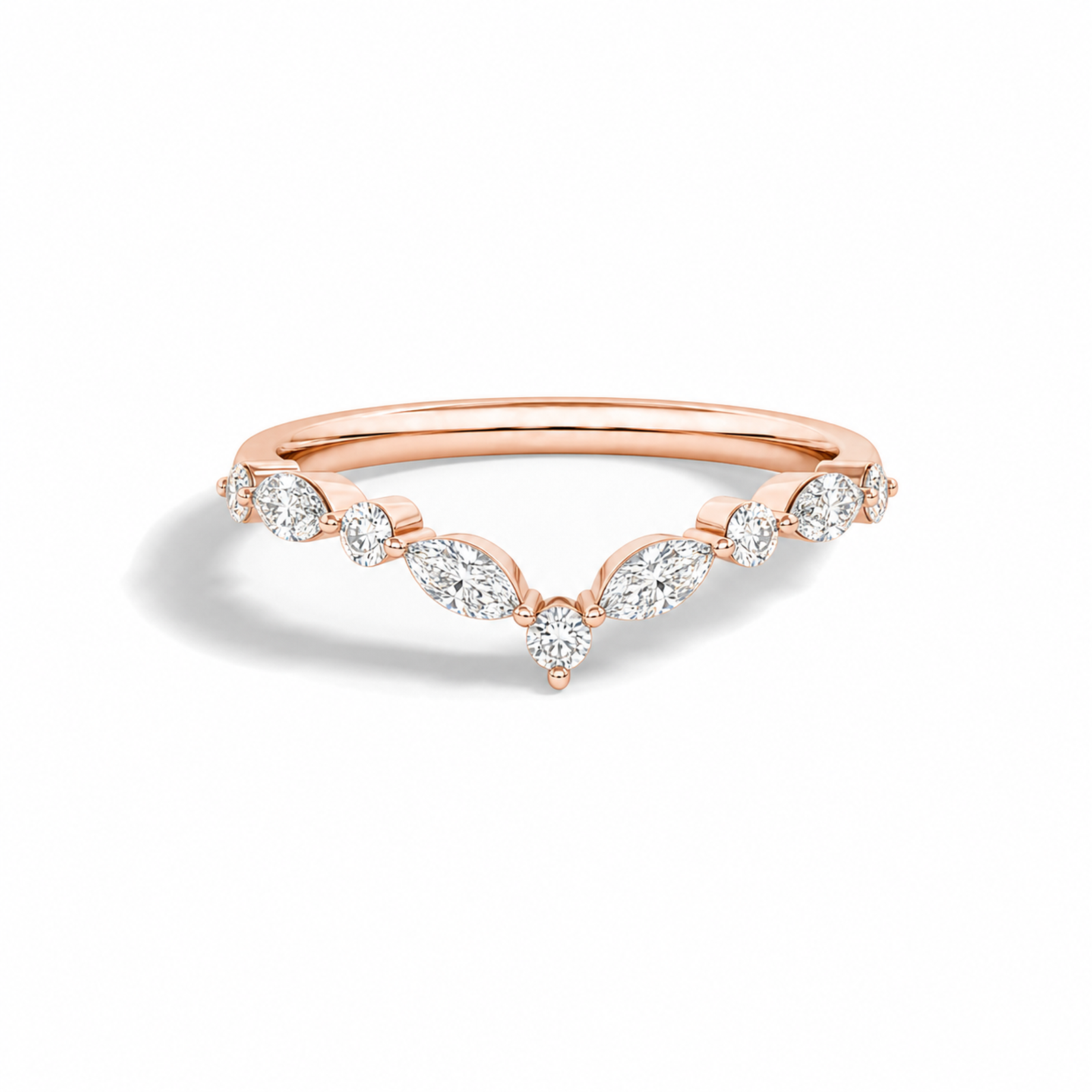
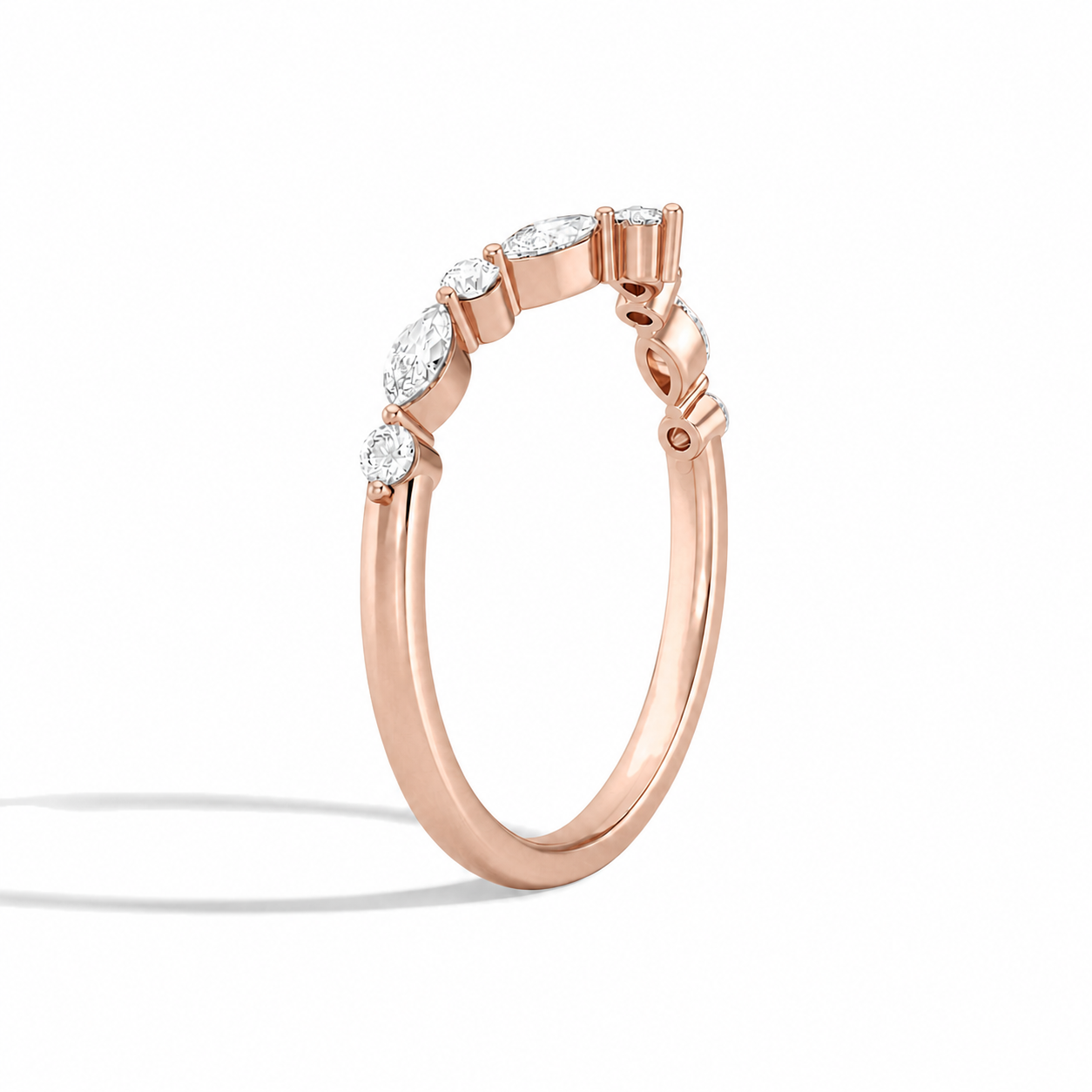
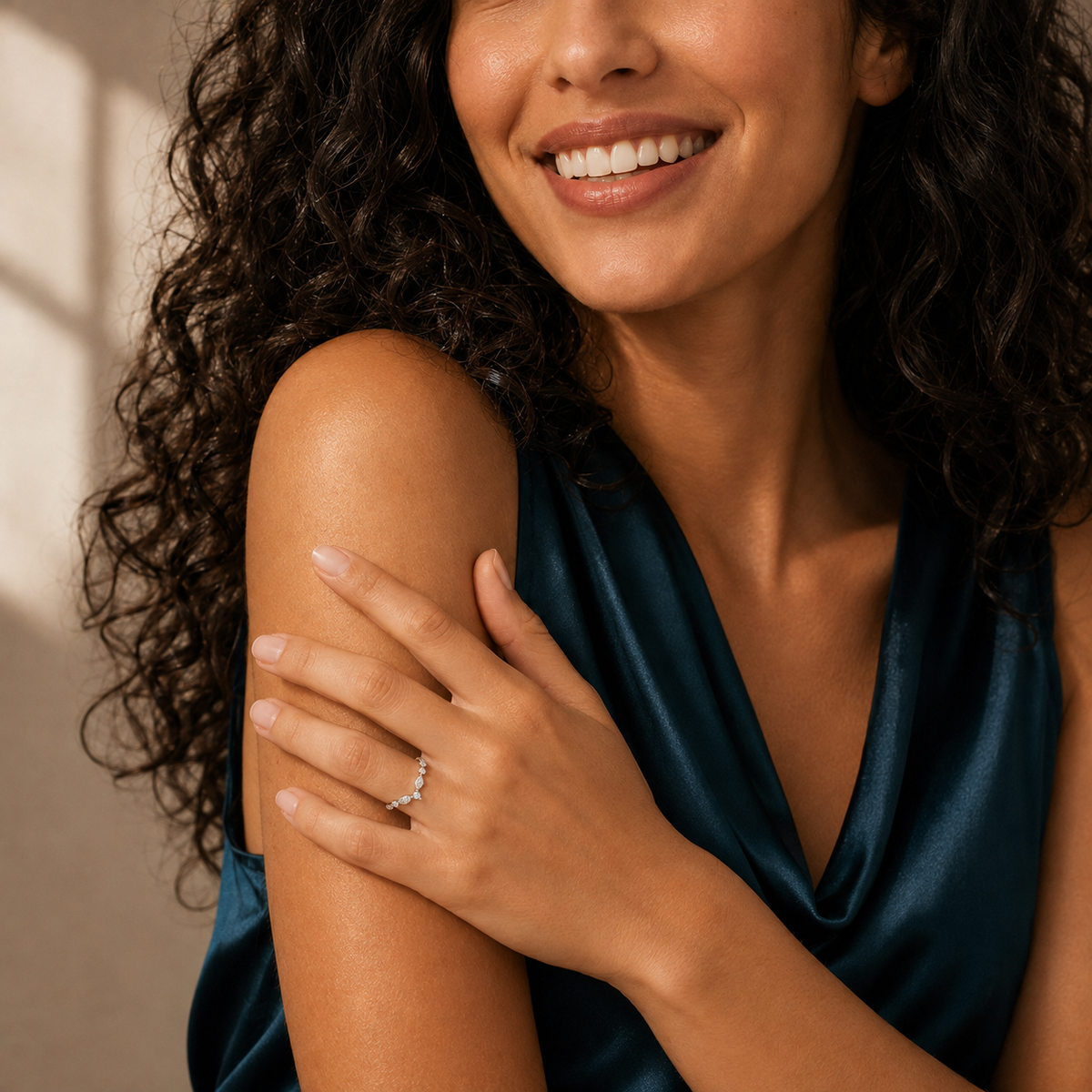
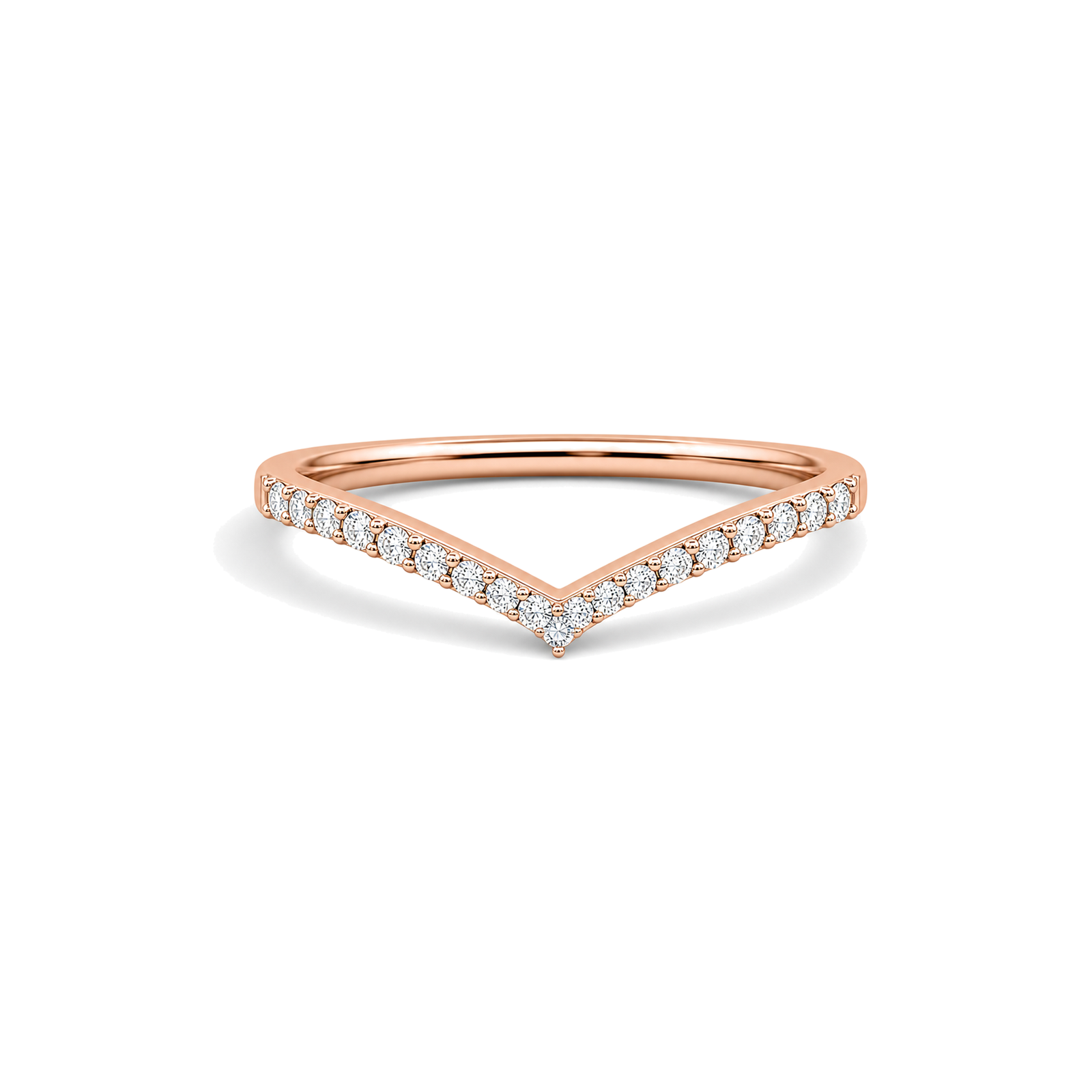
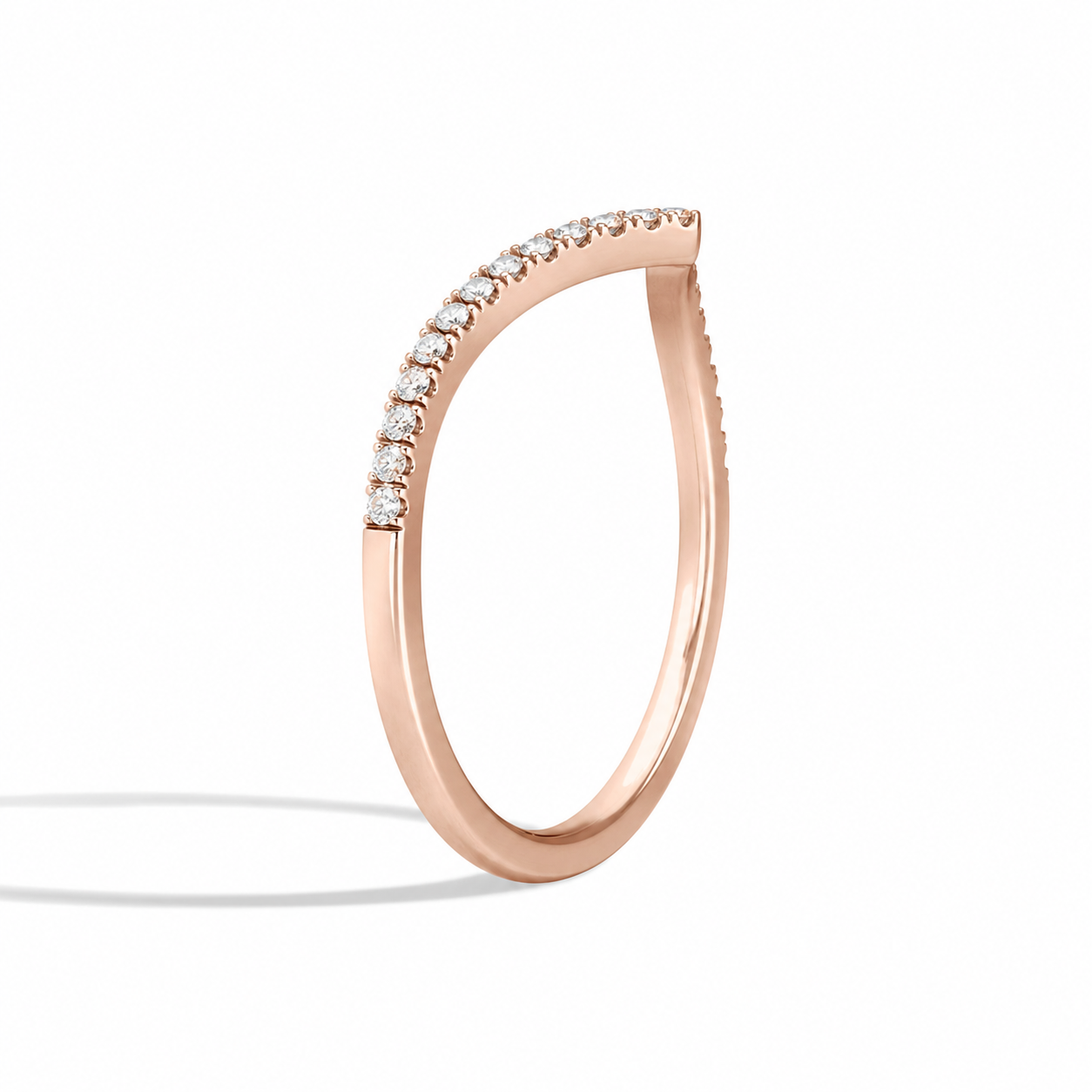

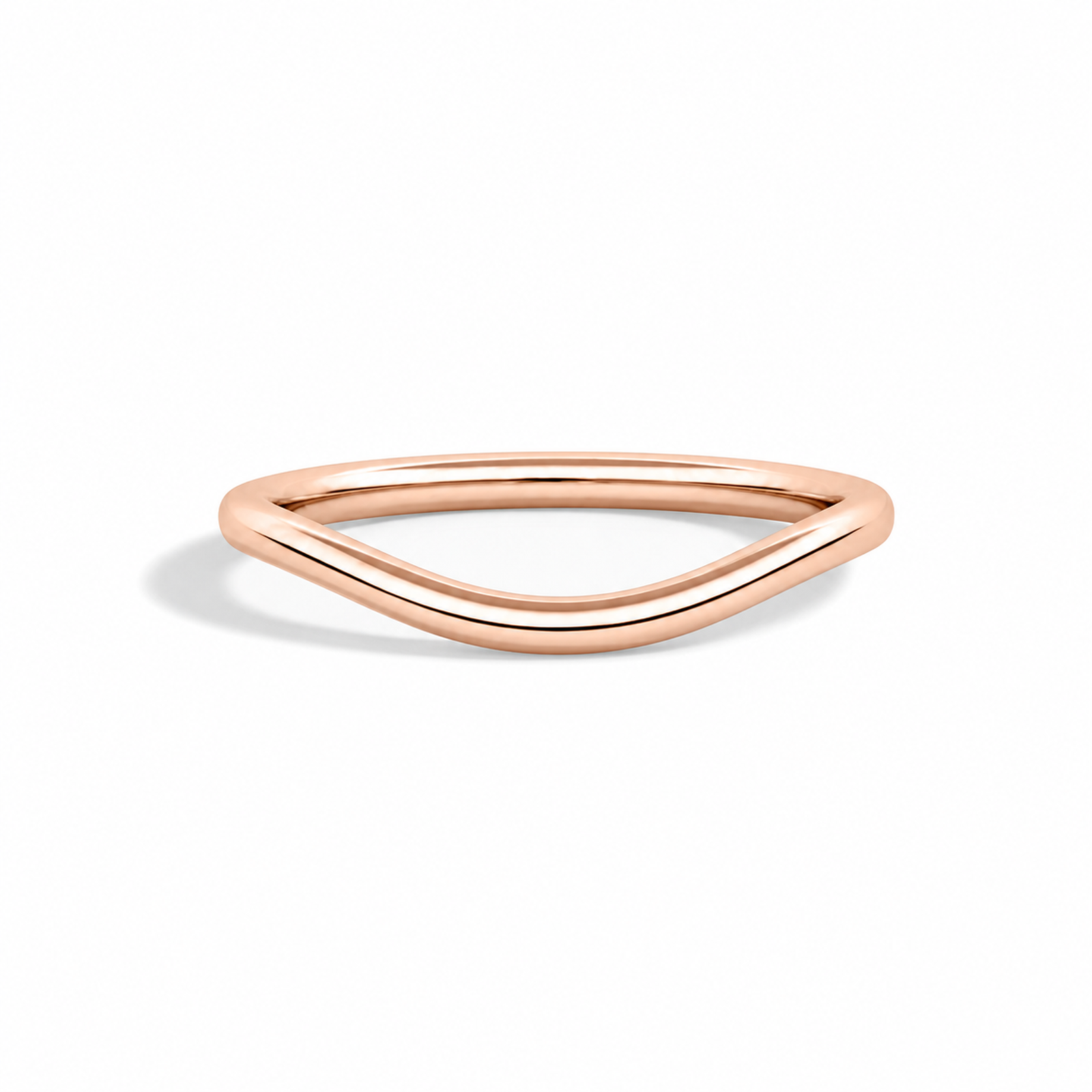
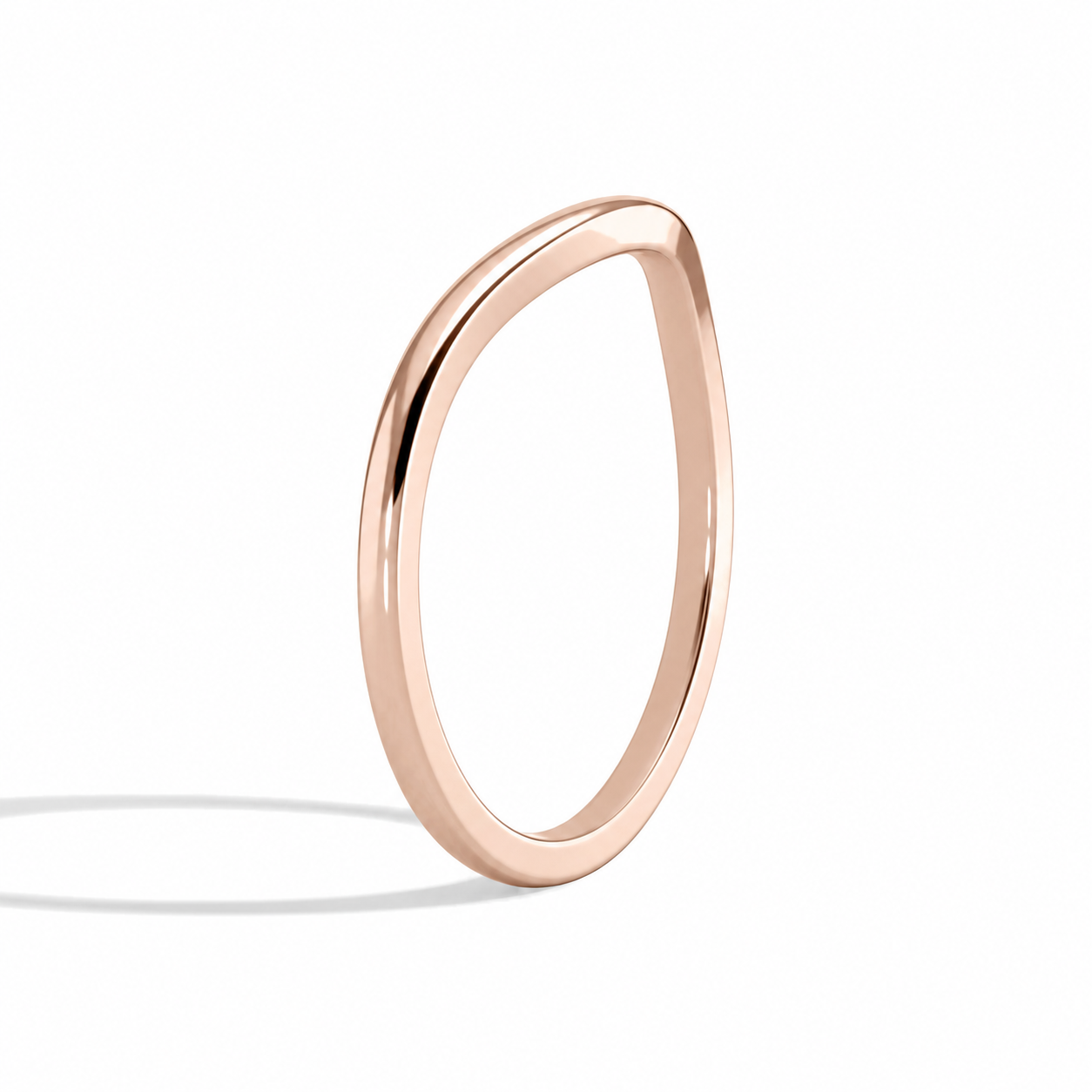

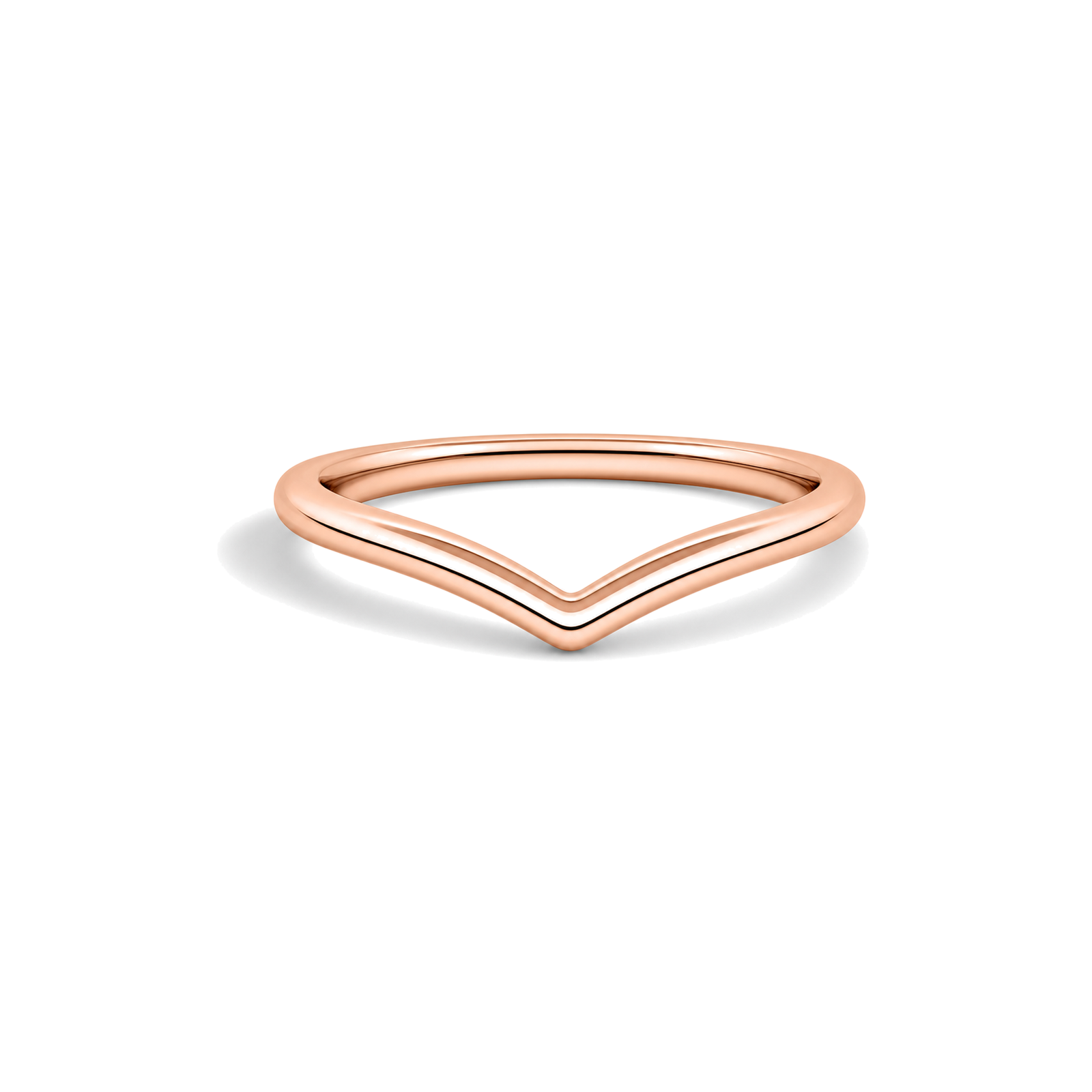
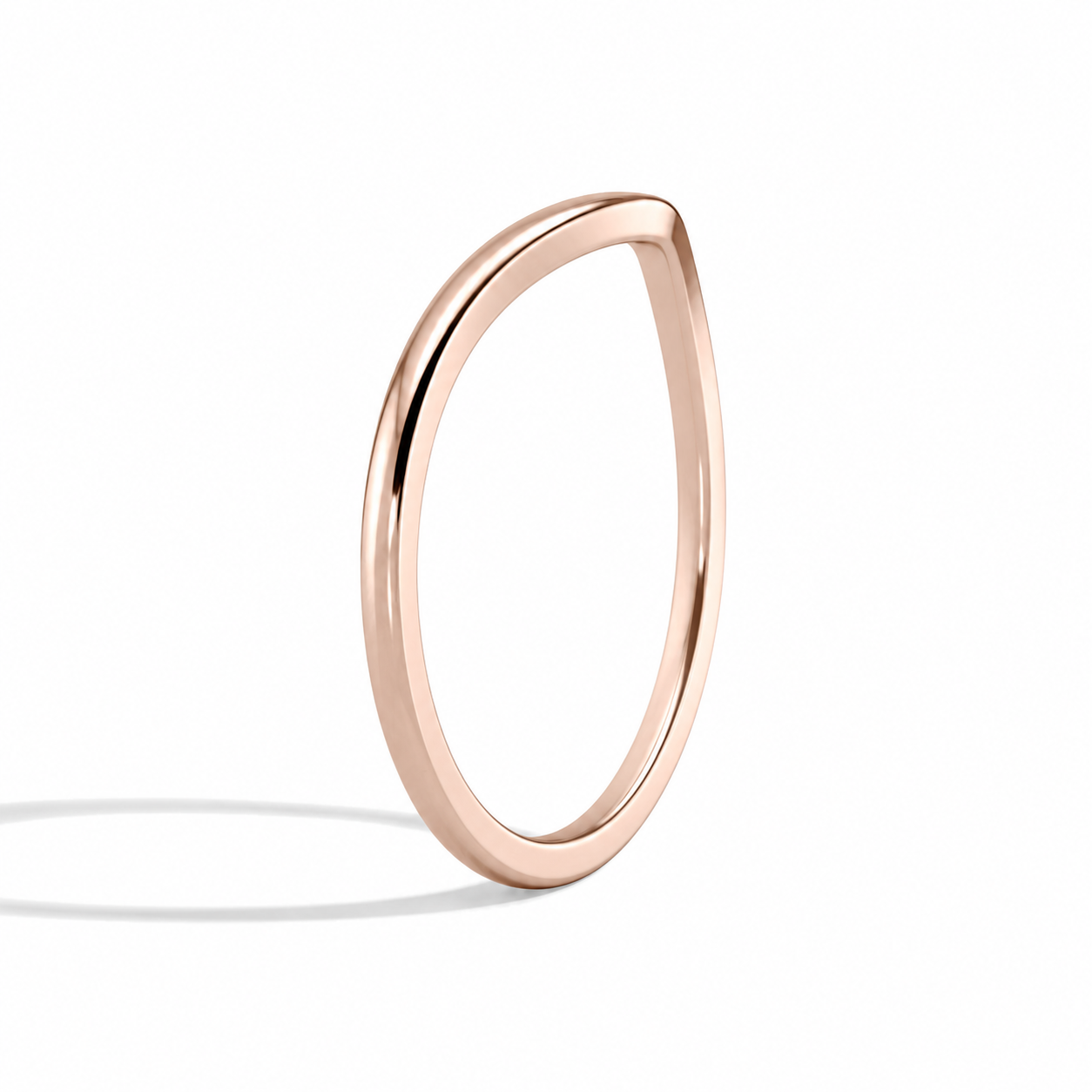

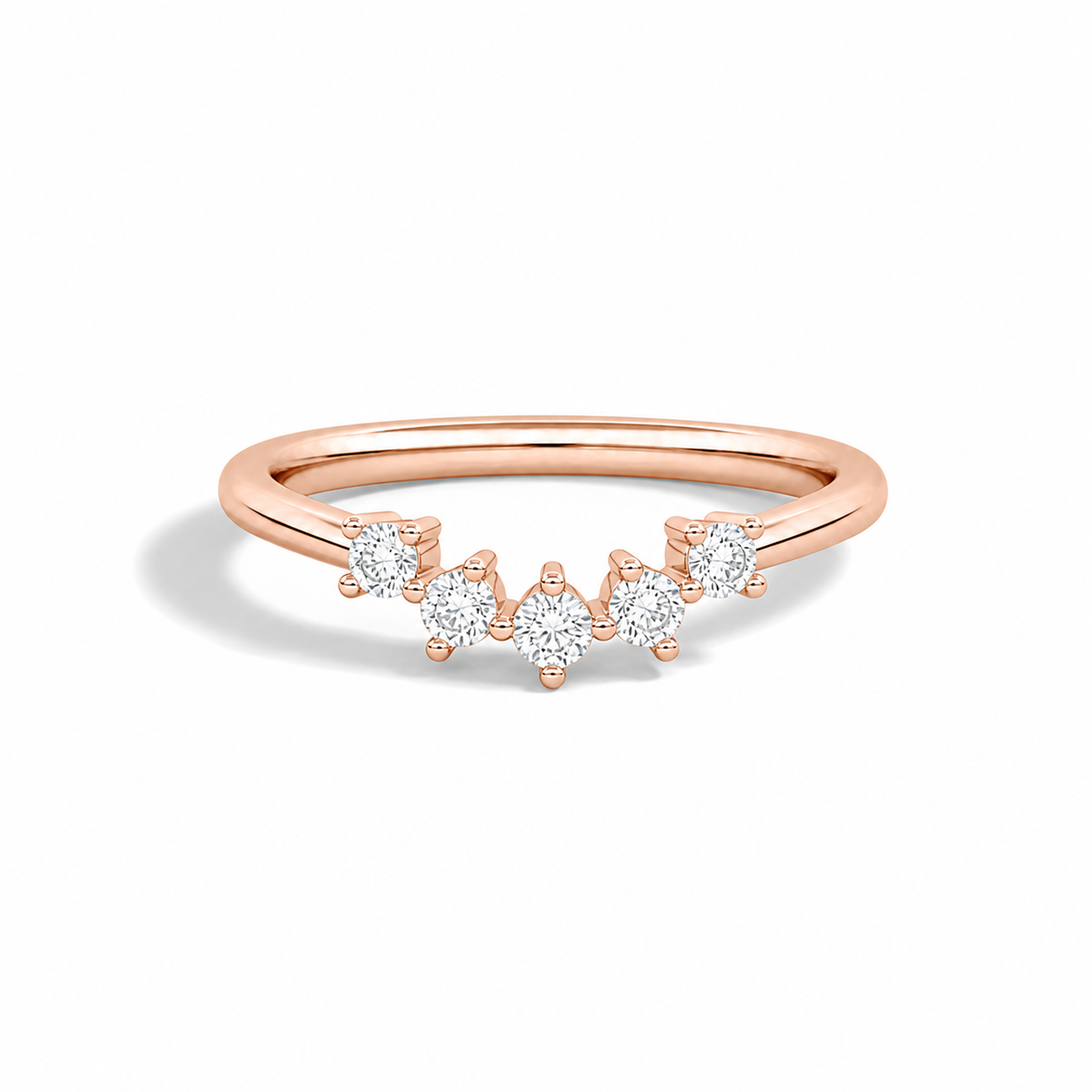
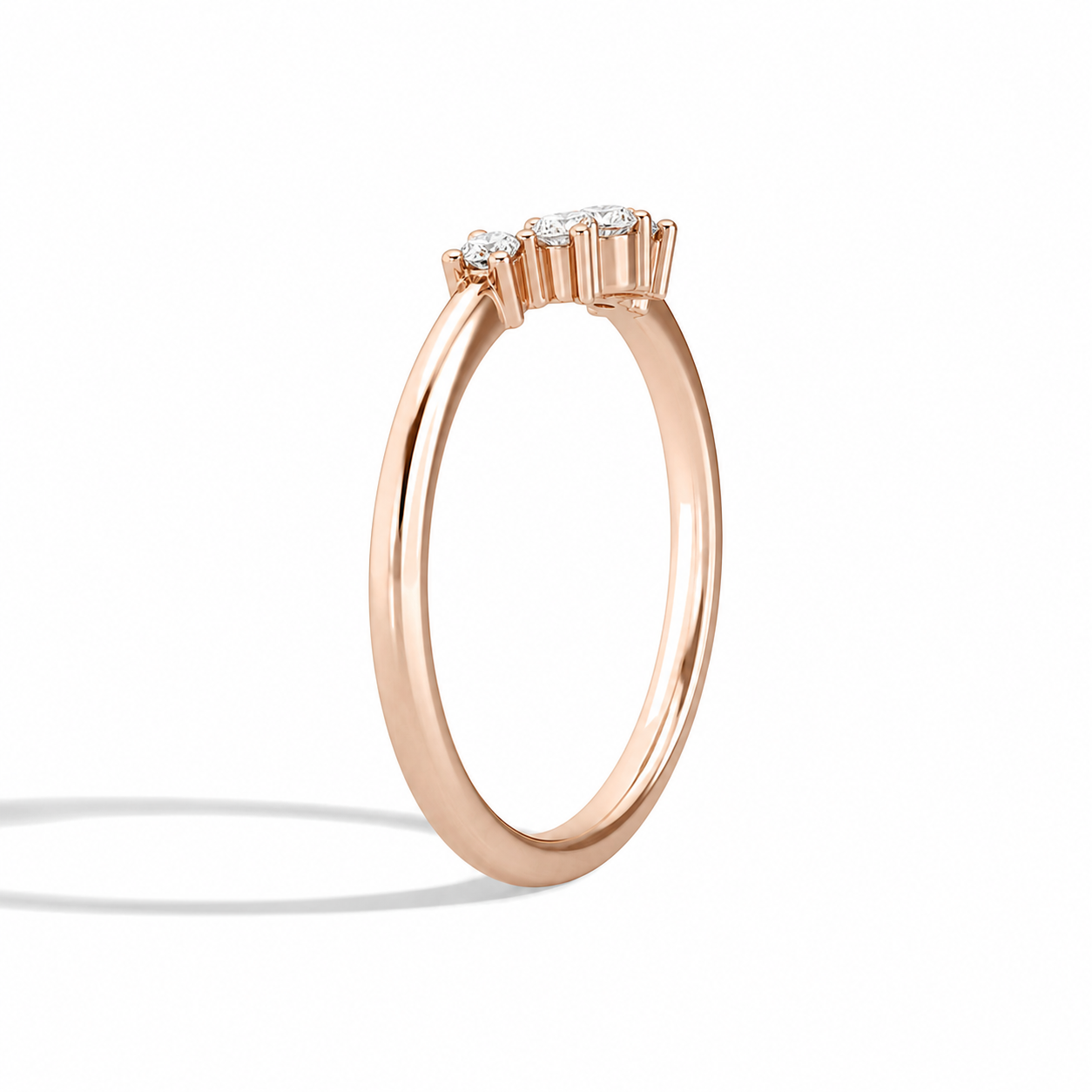

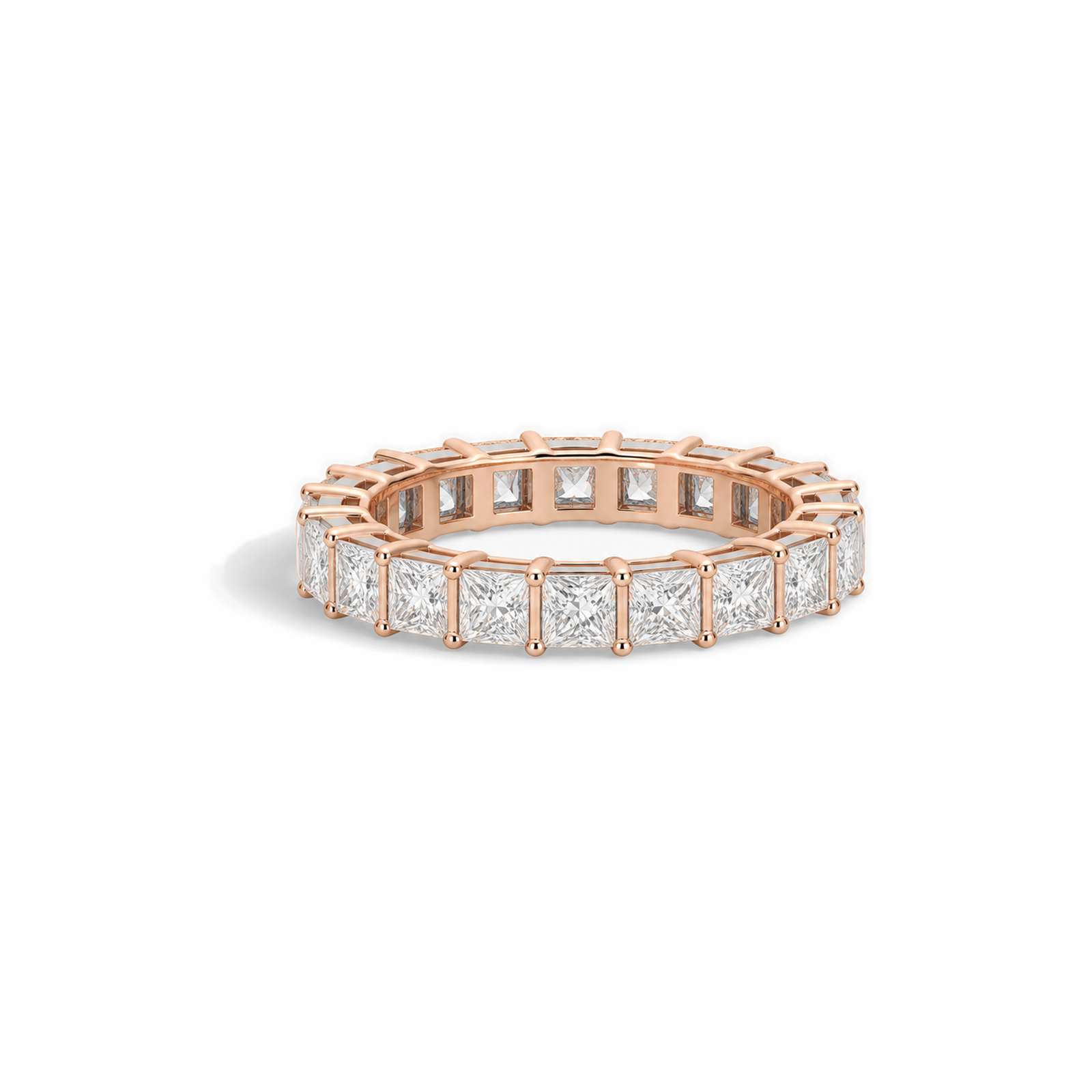
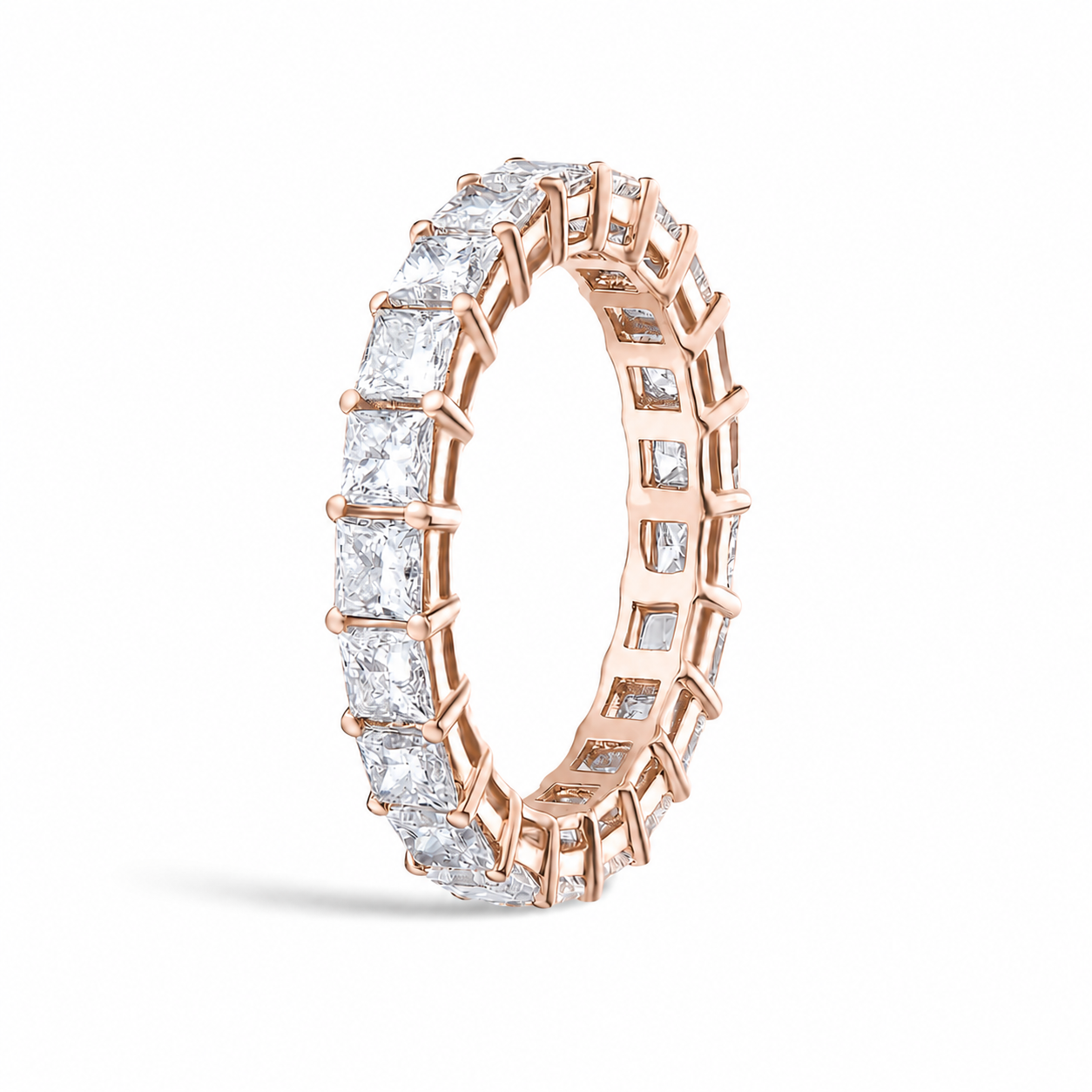

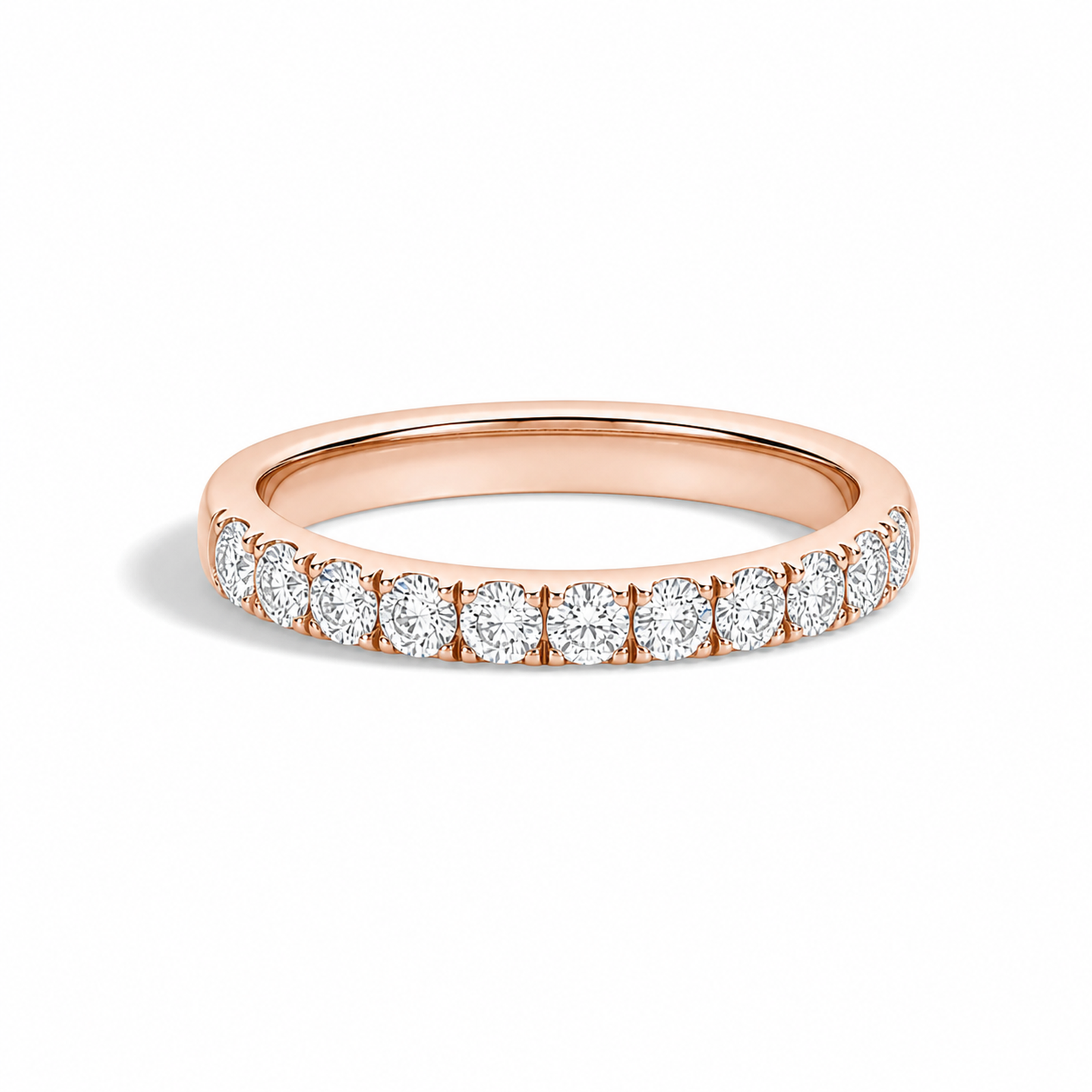
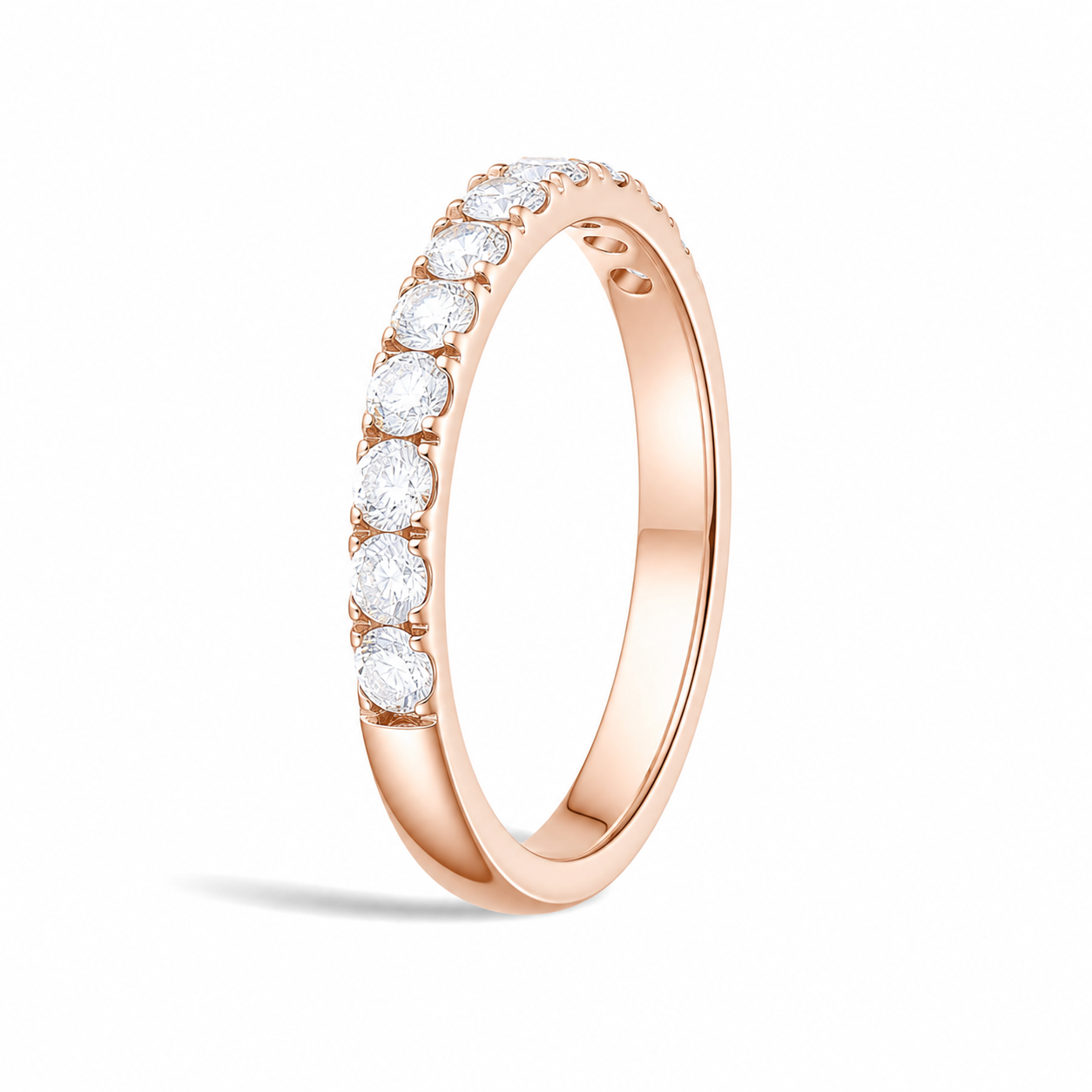

14K Rose Gold Lab-Grown Diamond Jewelry: Warmth across Four Scales
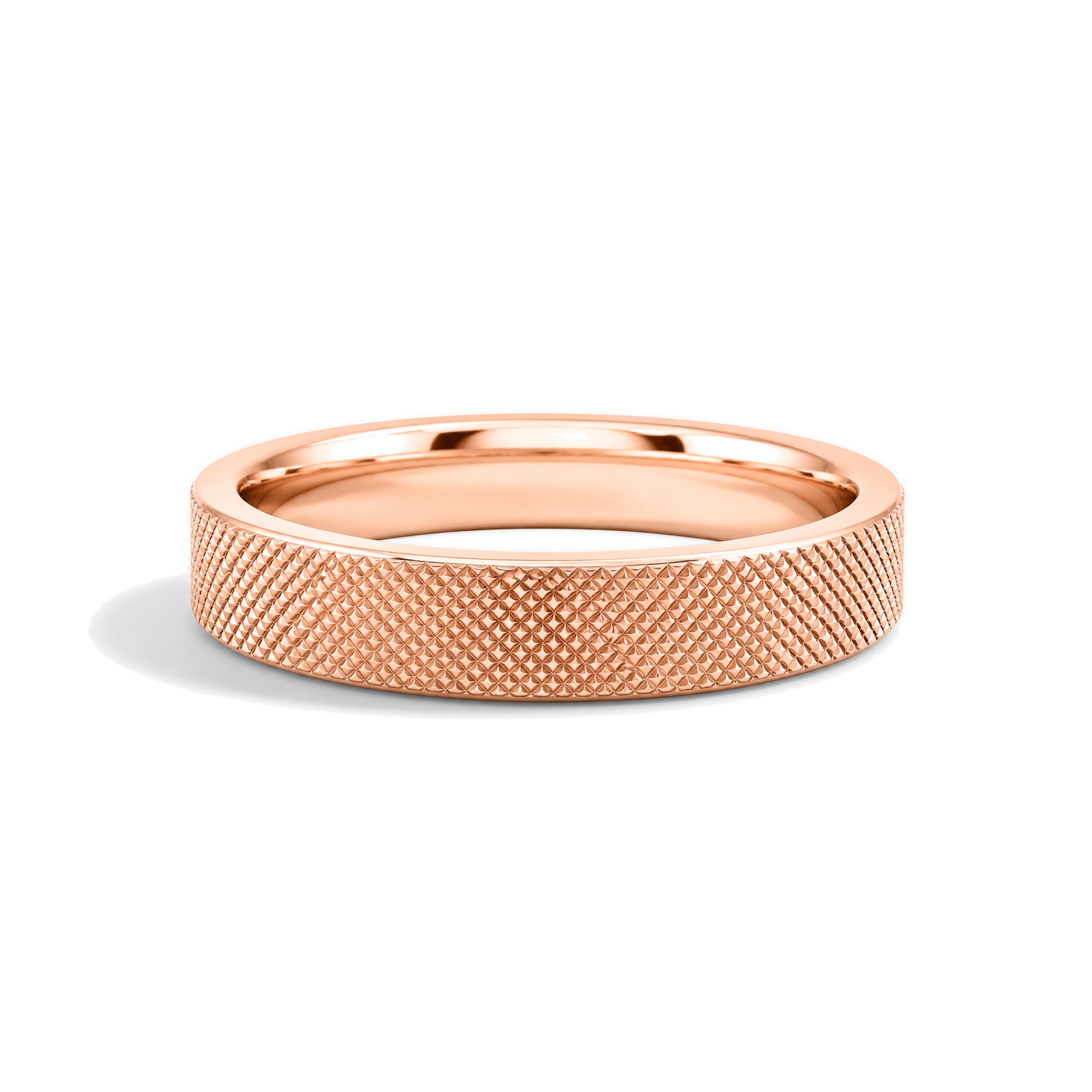
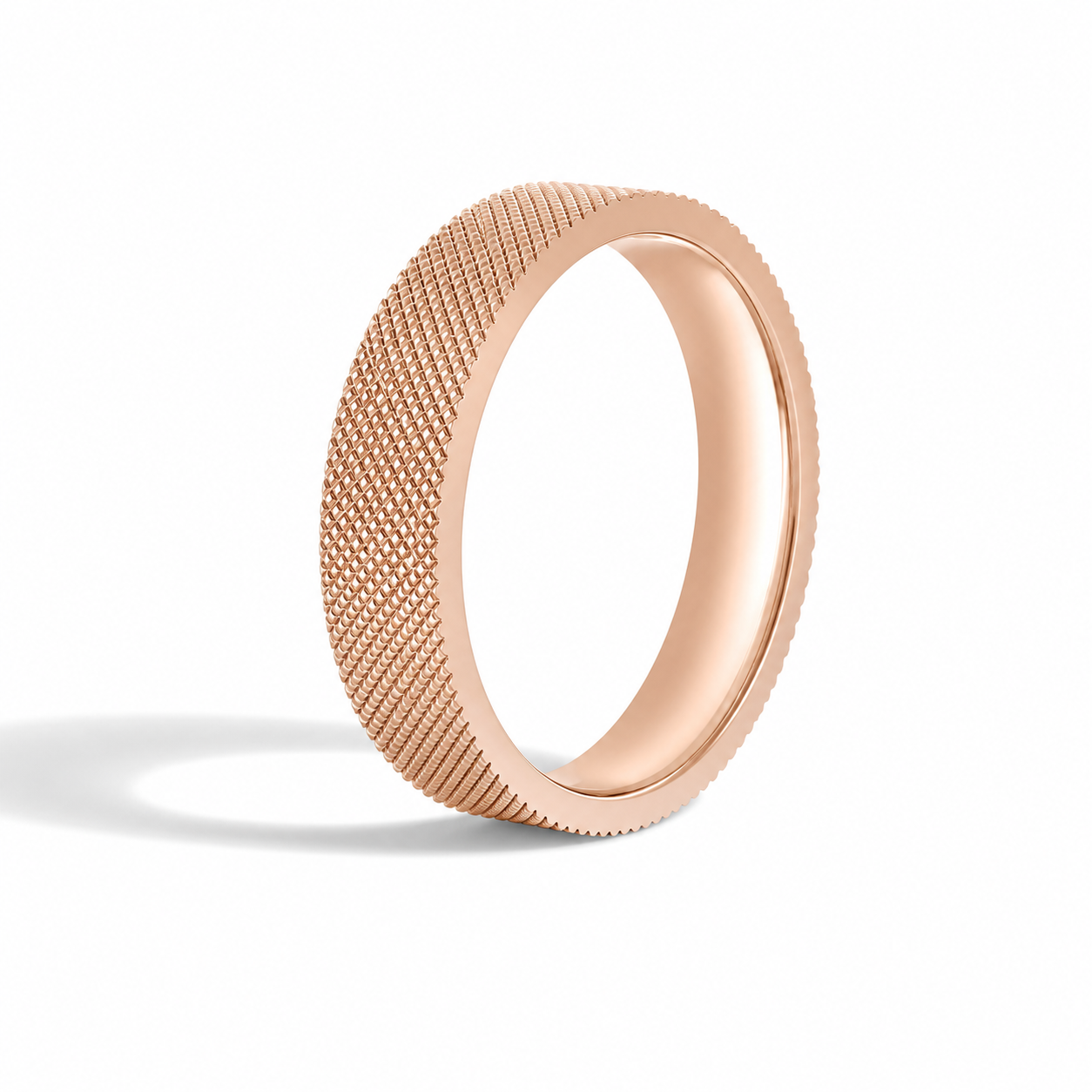
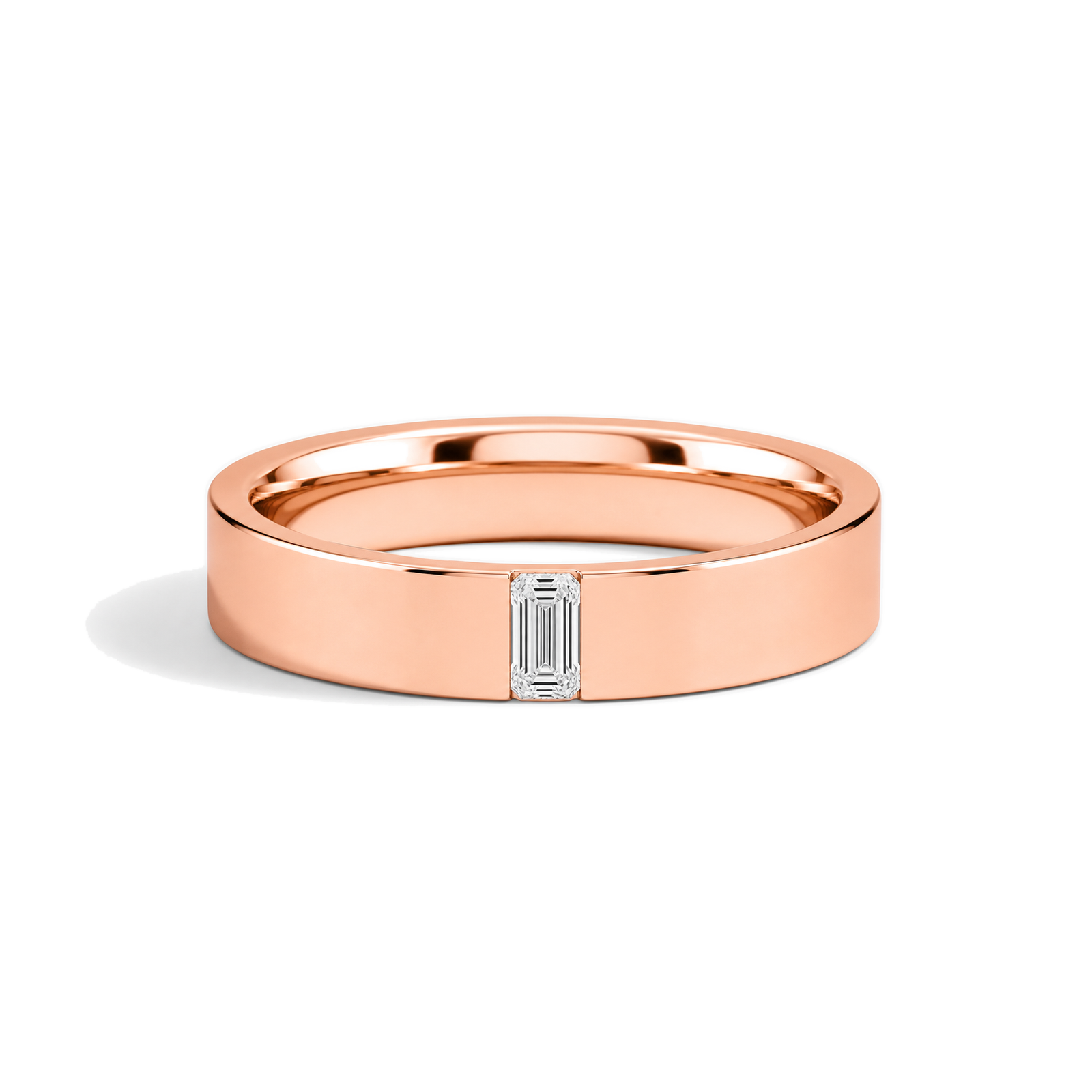
Rose Gold changes character as it moves around the body. On a ring, its blush edge is read close to the hand; at the ear, a smaller framework shifts with angle and light. Along a necklace, warmth travels from chain to center. Around the wrist, links and settings turn that same material into a moving sequence.
Burvonti’s current 323-design set contains 97 rings, 87 earrings, 126 necklaces, and 13 bracelets. The distribution is not presented as four equal edits. It is one material route through a broad jewelry universe, with each design also represented in the cross-metal parent Collection.
Let the Amount of Rose Gold Set the Temperature
A 14K alloy contains approximately 58.3% gold. Other alloying metals, finish, lighting, photography, and the amount of exposed surface influence the observed rose tone. The color label does not establish one copper content, sensitivity result, hardness level, or maintenance interval.
Fine prongs introduce small points of warmth. A bezel makes the boundary continuous; a polished band, hoop, bail, or bracelet link gives Rose Gold more visual authority. The metal changes surrounding contrast and continuity, not diamond grade, dimensions, or light performance.
Compare Form before Coordinating a Set
Coordination does not require every piece to carry the same proportion of metal. A fine pendant can answer a broader ring through one repeated curve; a stud may relate to a bracelet through bezel edge rather than scale. Shared warmth is only the beginning—line, interval, setting, surface, and movement decide whether the group feels composed.
Mixed metals can remain deliberate when another element repeats. Matching 14K Rose Gold labels, however, do not prove identical alloy, finish, age, or contact behavior. Compare the exact pieces in ordinary light and at the distances from which they will actually be seen.
Read Each Body Zone on Its Own Terms
Rings ask about fit, profile, resizing, and contact with adjacent bands. Earrings add post, back, drop, and balance. Necklaces depend on chain, attachment, length, orientation, and layering. Bracelets introduce articulation, clasp, wrist movement, and repeated contact with nearby surfaces. A common metal does not erase these product-level questions.
Total Carat Weight describes combined diamond weight within the stated scope, not face-up size or equal distribution between pieces. Independently graded or certified diamonds should be understood according to document scope rather than assumed to cover every accent, finding, chain, or finished item.
Choose Warmth with Precision
Begin with the form that matters most, then observe where Rose Gold is visible: beneath the diamond, around its edge, between repeated stones, through a chain, or across a clasp and link. This is not a required purchase sequence; it is a way to compare proportion without reducing the choice to color alone.
Burvonti pairs responsibly sourced lab-grown diamonds with proportion calibrated at hand, ear, neckline, and wrist scale. Custom possibilities may refine metal, dimensions, diamond arrangement, setting, or selected details when technically feasible. Clean according to the complete construction and inspect settings, connections, and moving parts if condition changes.
The product-type pages remain the next level of detail. Use Rose Gold Rings for profile and stack relationships, Earrings for attachment and balance, Necklaces for chain and placement, and Bracelets for articulation and clasp. That hierarchy lets this page remain broad without becoming vague, while each narrower page answers the questions unique to its form.
Frequently Asked Questions
How is this page different from the main Lab-Grown Diamond Jewelry Collection?
The parent owns the complete cross-metal jewelry framework. This page focuses on how 14K Rose Gold carries warmth across rings, earrings, necklaces, and bracelets.
How much gold is in 14K Rose Gold?
Approximately 58.3%. Other alloying metals influence final tone and working behavior.
Are all 14K rose gold pieces the same blush color?
No. Alloy formula, finish, lighting, photography, and exposed metal area affect appearance.
Which jewelry types are currently represented?
The current 323 designs include 97 rings, 87 earrings, 126 necklaces, and 13 bracelets.
Is the Collection evenly divided among the four categories?
No. Necklaces currently form the largest group and bracelets the smallest; the exact assortment can change.
Does Rose Gold make diamonds look warmer?
It can change surrounding color and contrast, especially where more metal is visible, but it does not change the diamonds’ grading facts.
Does Rose Gold improve diamond sparkle?
No. It changes the material context, not facet relationships, dimensions, or light performance.
How can Rose Gold jewelry be coordinated without matching exactly?
Repeat a curve, setting edge, diamond rhythm, surface, or interval rather than relying only on the metal label.
Can Rose Gold be mixed with white or yellow metals?
Yes as an aesthetic choice. Review color, profile, surface, and any physical contact between the exact pieces.
What does Total Carat Weight mean across jewelry?
It is combined diamond weight within the stated product scope, not a guarantee of face-up size or equal distribution.
Are all items independently graded or certified?
Documentation should be read product by product; its scope may apply to selected diamonds rather than every accent or finished piece.
Can Rose Gold cause sensitivity?
Sensitivity depends on the complete alloy and wearer; karat and color alone cannot establish a universal outcome.
Can all Rose Gold rings be resized?
No. Diamond coverage, channels, open forms, engraving, symmetry, and the requested change affect feasibility.
Do Rose Gold earrings require special fit checks?
Review dimensions, post or hook, backing, weight distribution, and movement for the selected design.
Can Rose Gold necklaces and bracelets tangle or turn?
Movement depends on length, chain or link structure, attachment, clasp, neighboring pieces, and wear; no Collection-wide promise applies.
Can Burvonti personalize Rose Gold jewelry?
Custom possibilities may include metal, dimensions, diamond arrangement, setting, or selected details, subject to feasibility.
How should 14K Rose Gold diamond jewelry be cared for?
Clean gently according to the complete construction and inspect settings, connections, clasps, backs, and moving parts as condition changes.