
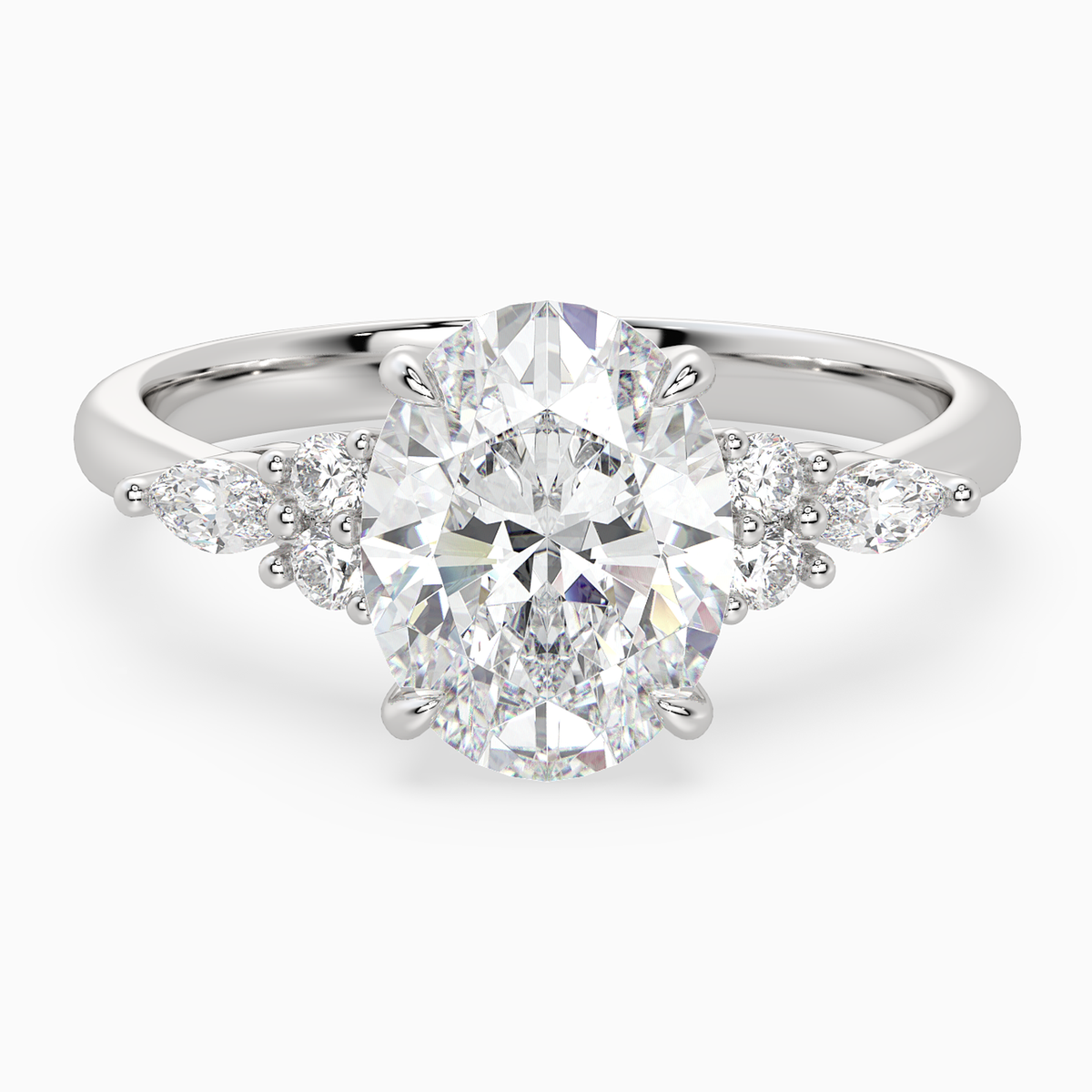


Lab Grown Diamond Bracelets in 14K Rose Gold
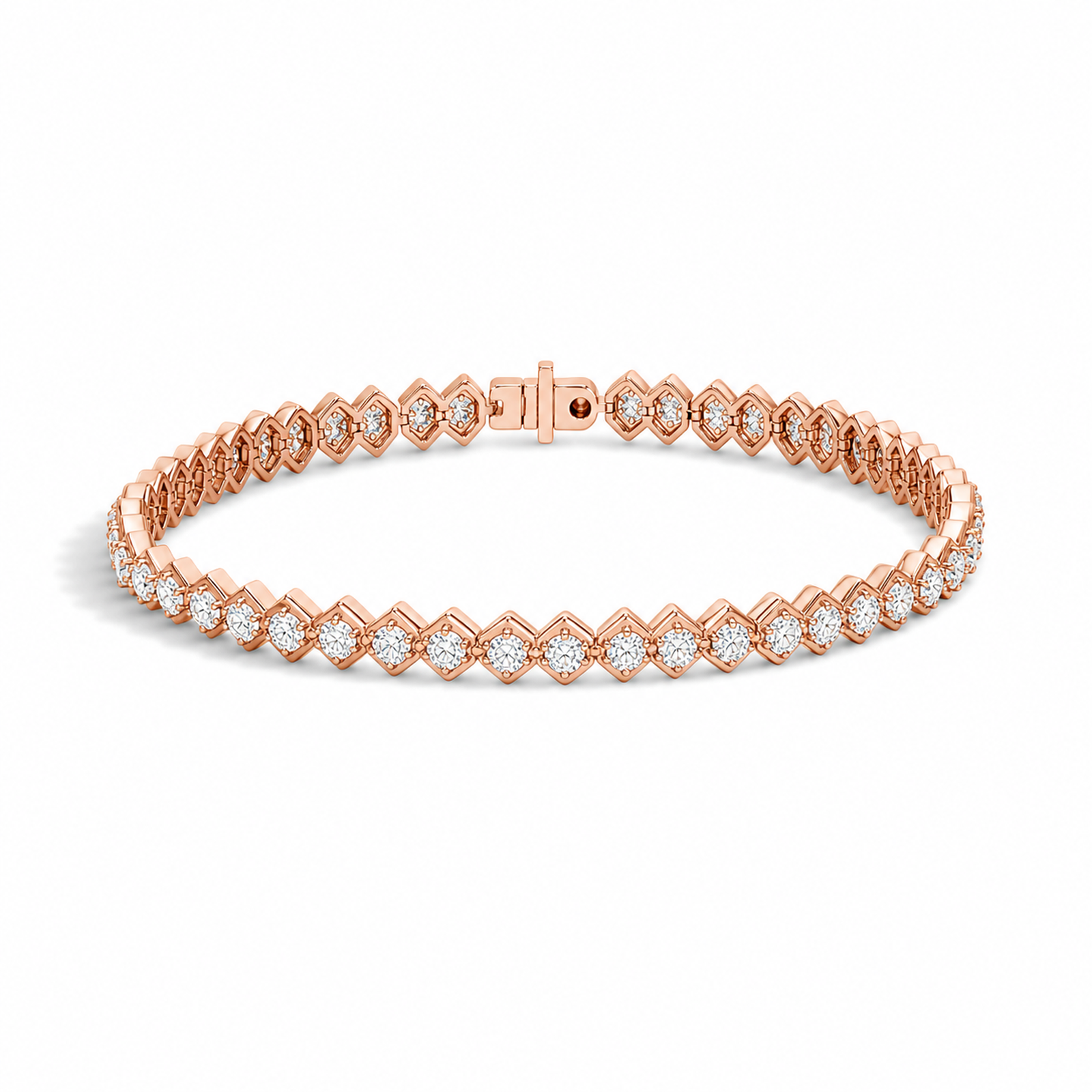
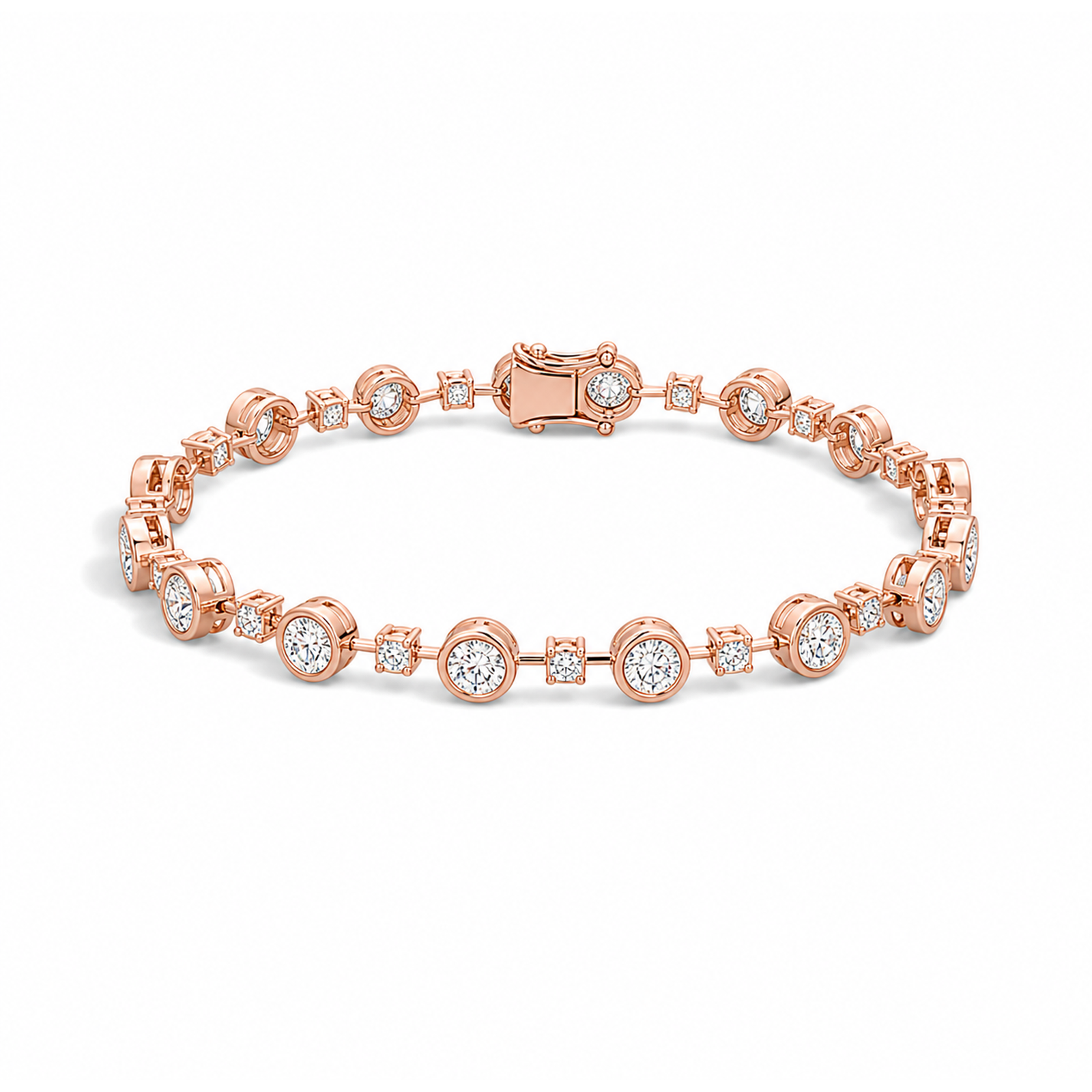
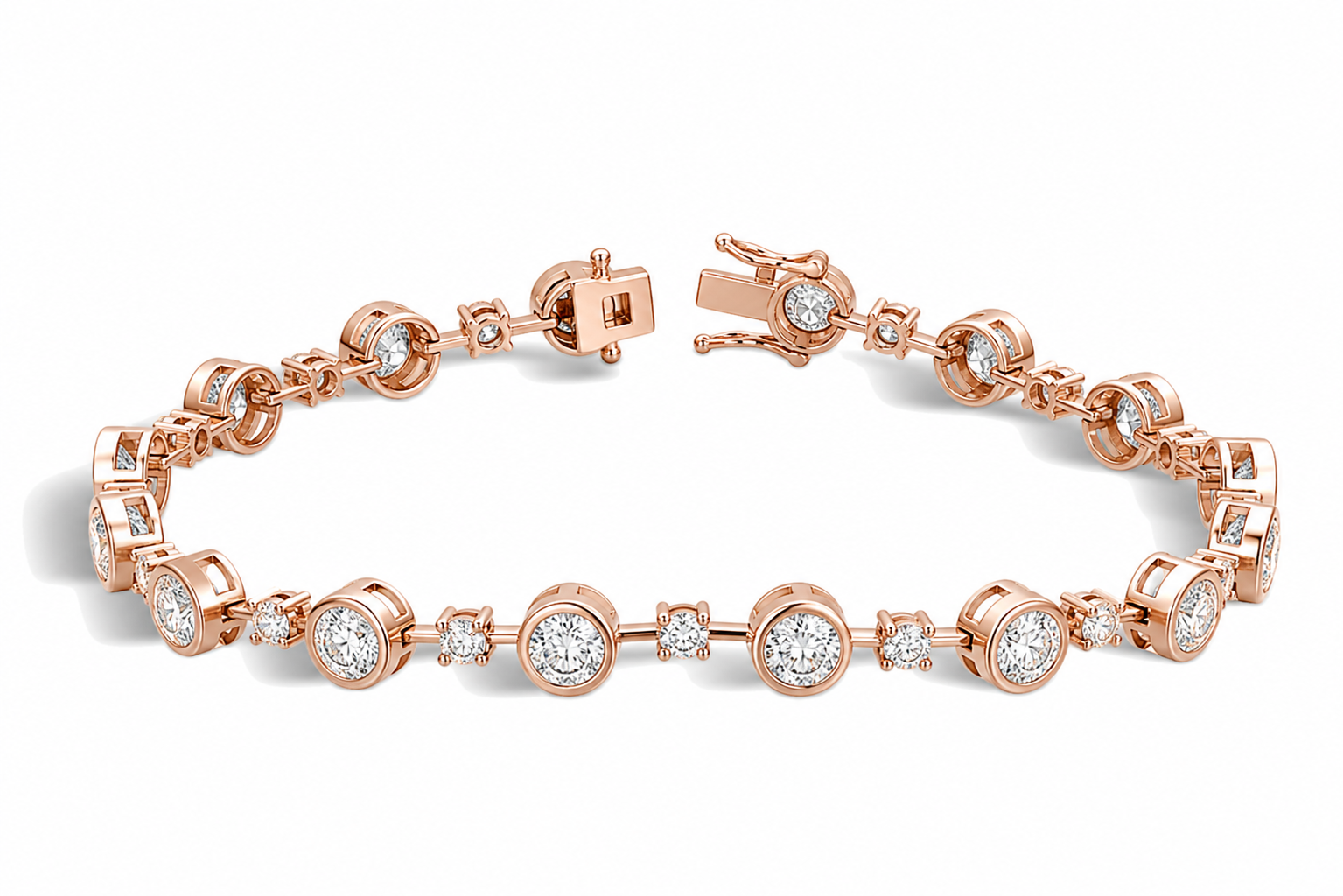
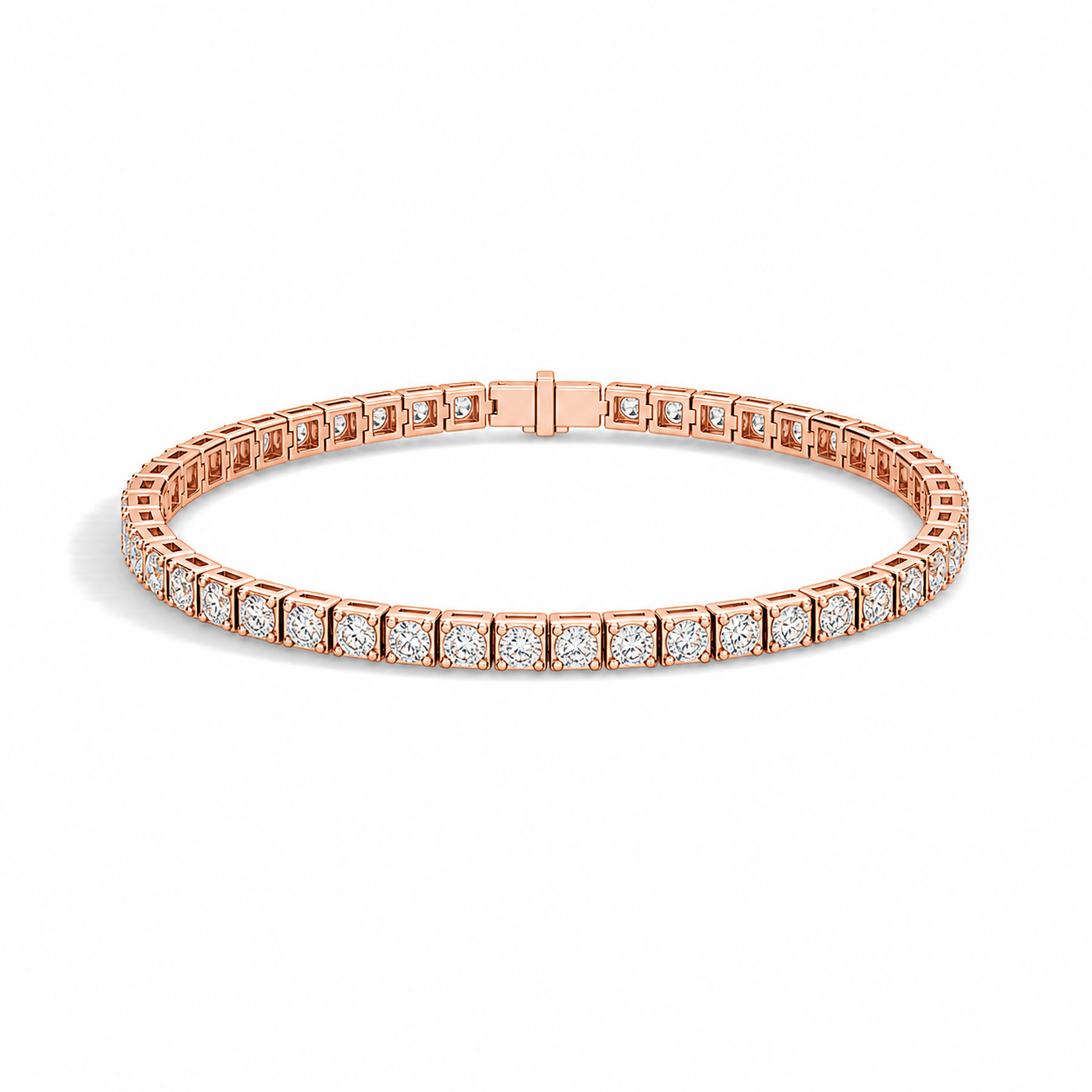
Warmth appears between each point of light. 14K rose gold gives stations, links, diamond lines, and structured arcs a blush-toned rhythm.


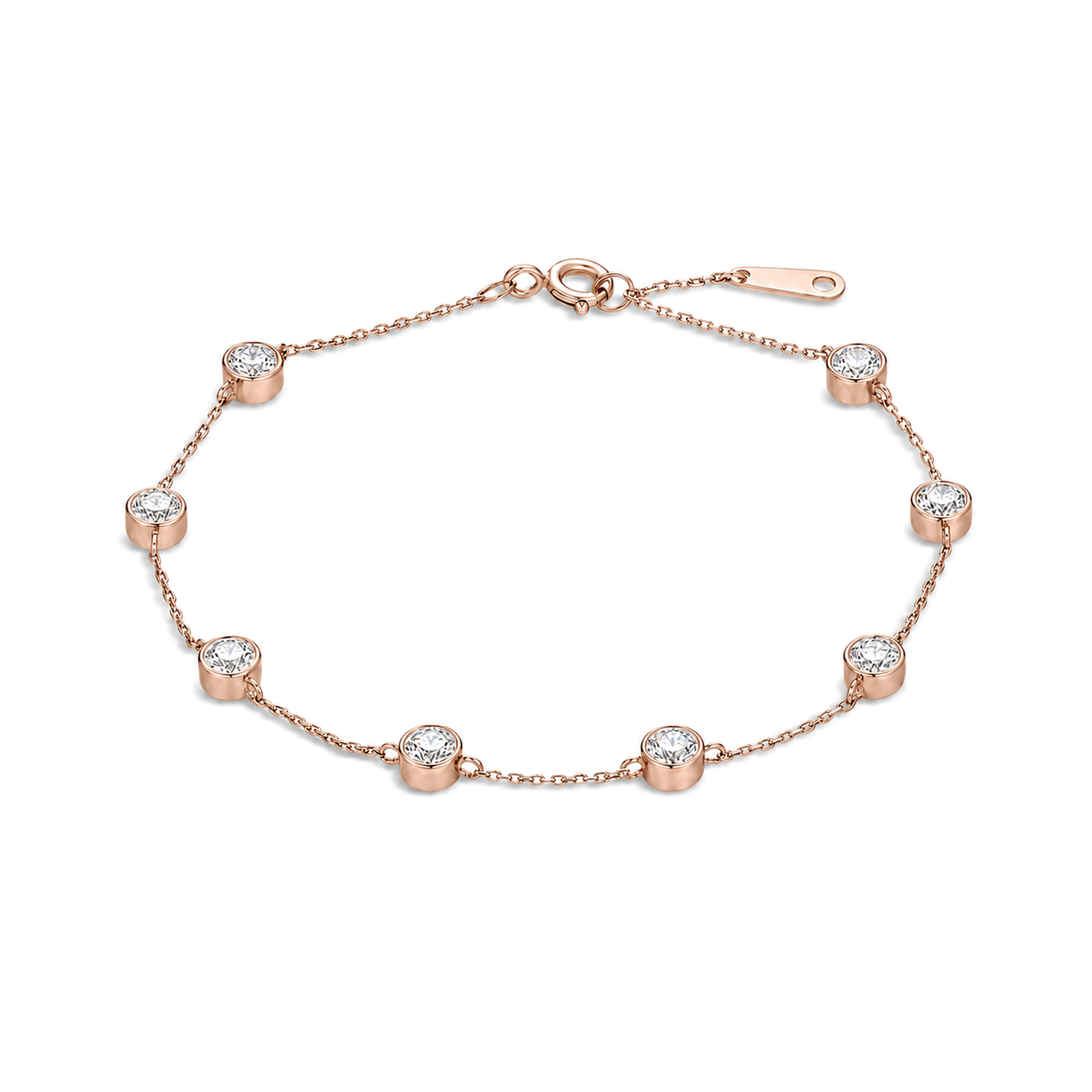
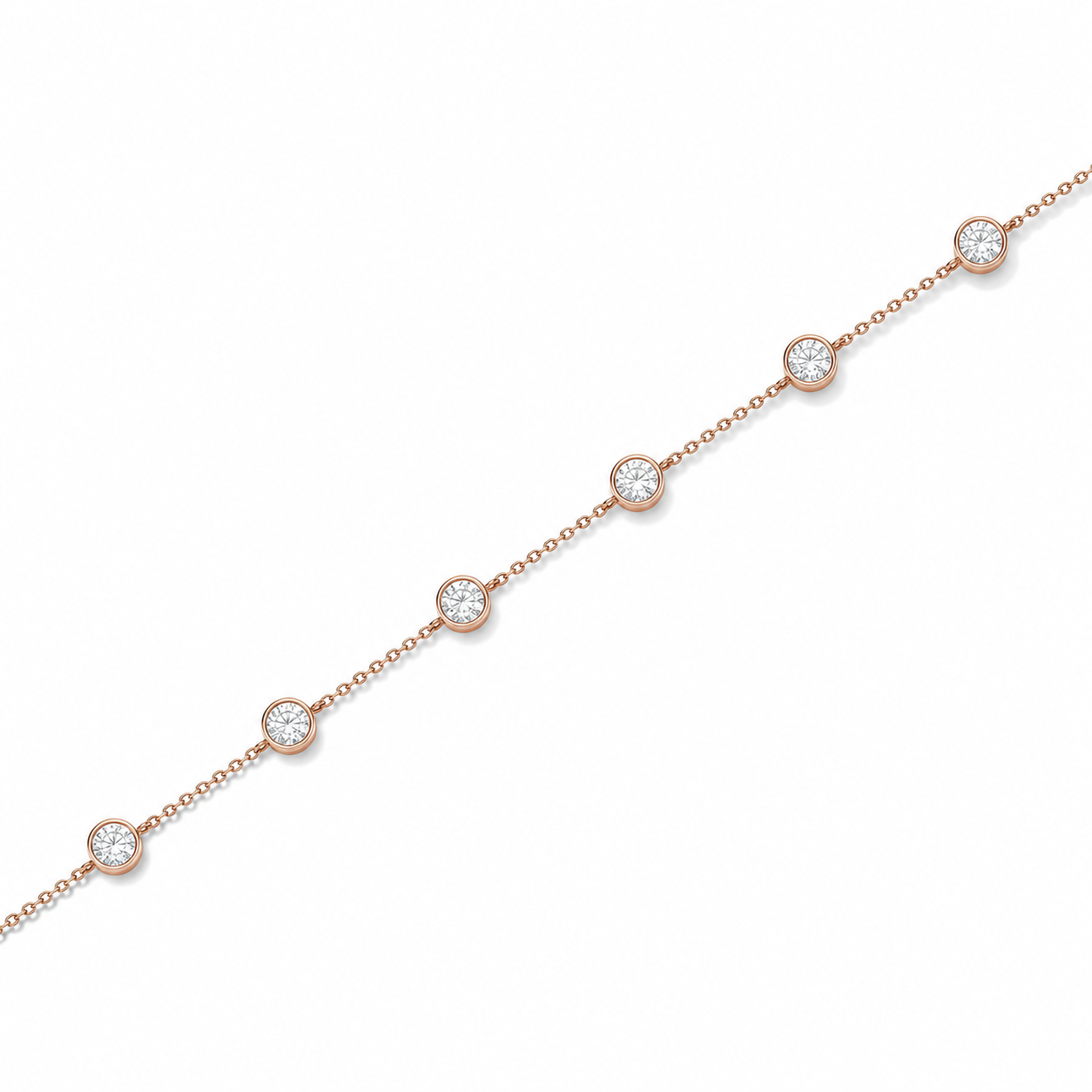

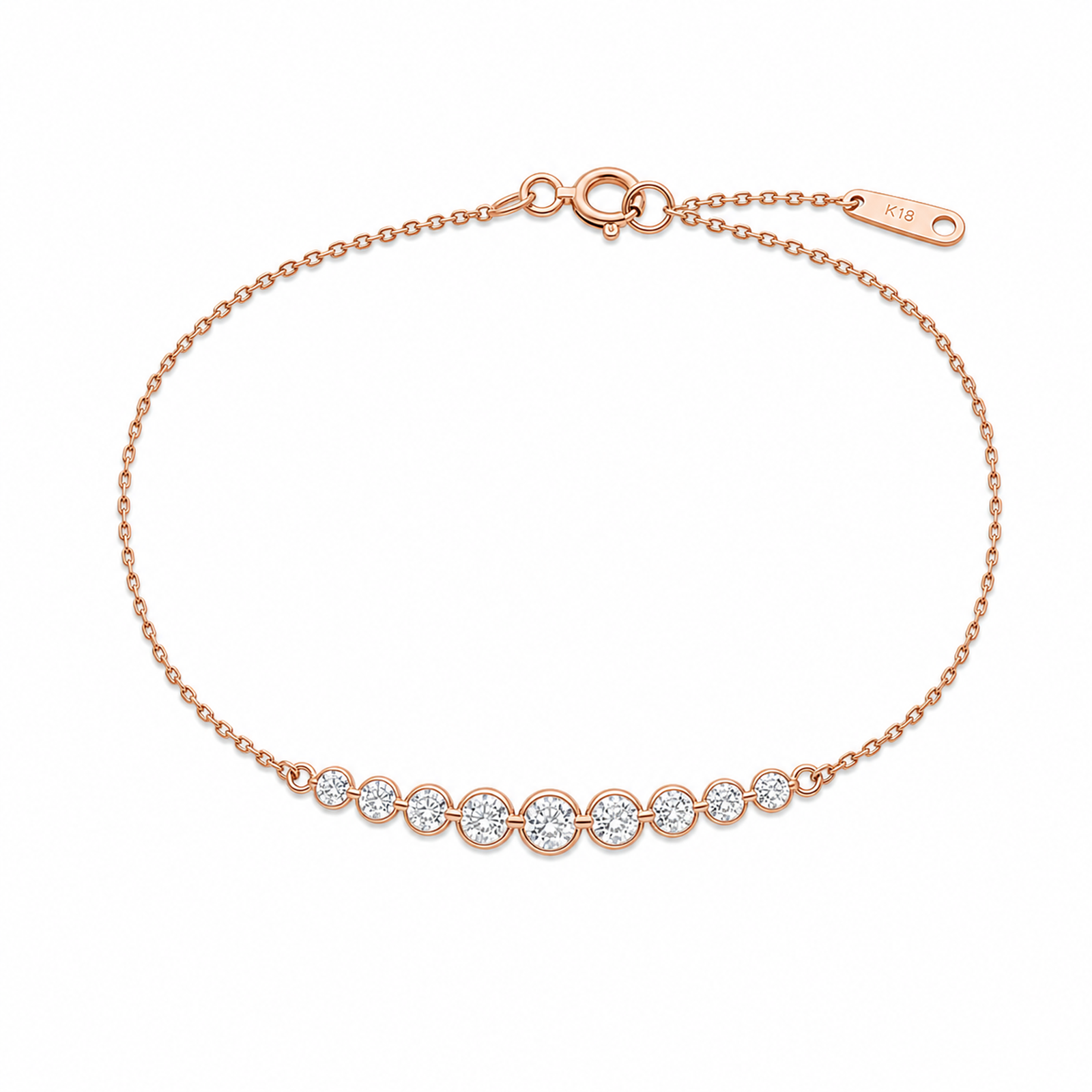







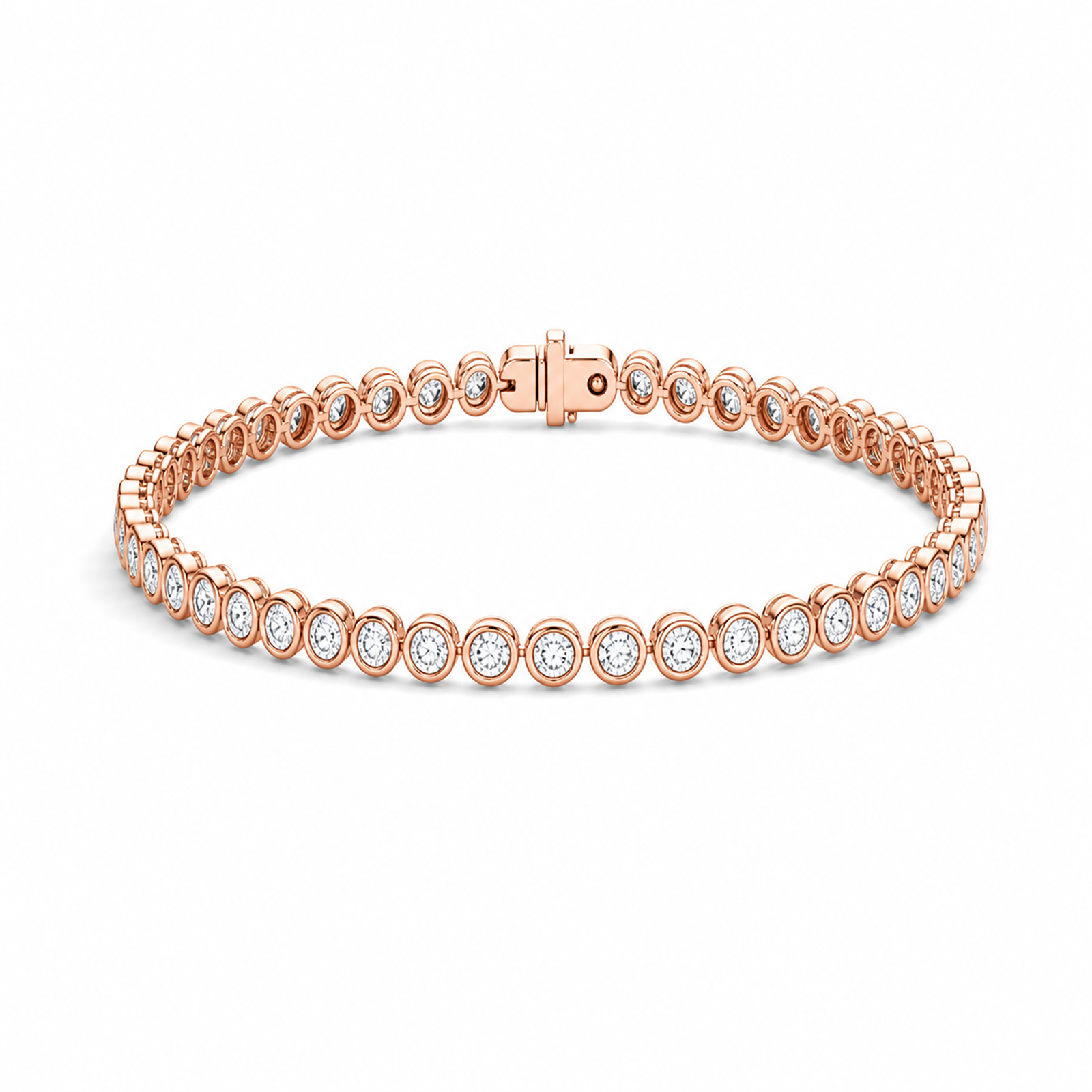
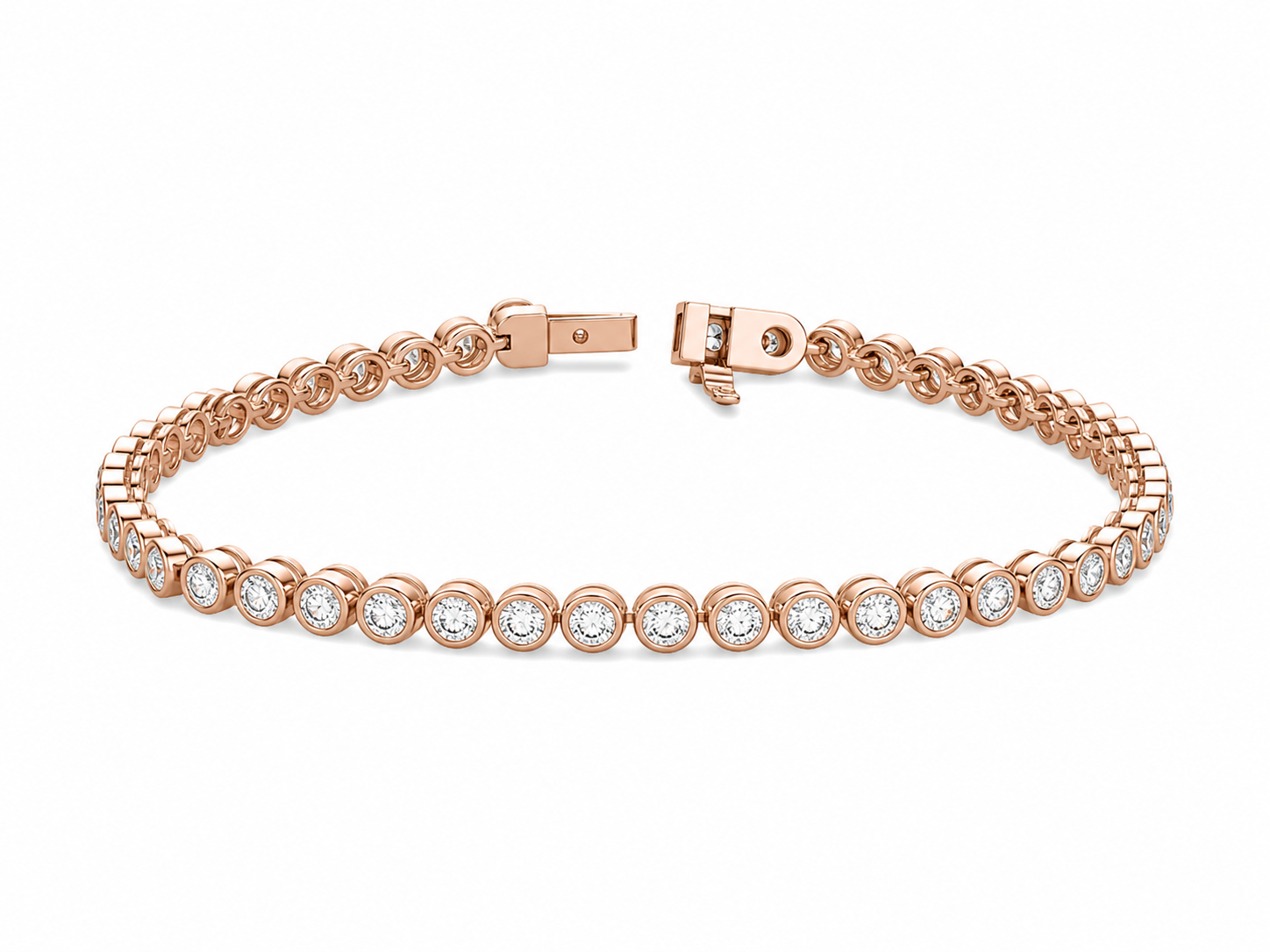


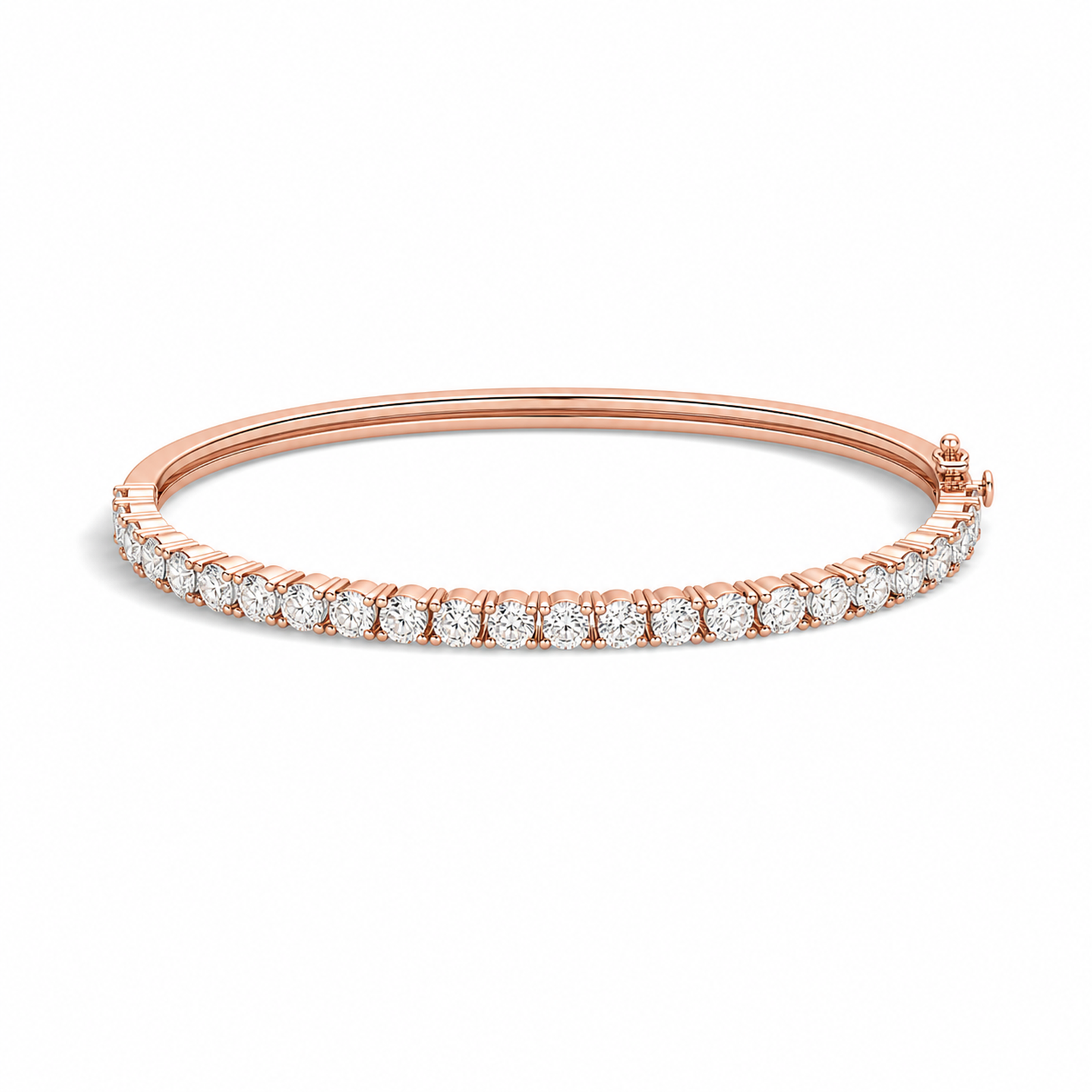
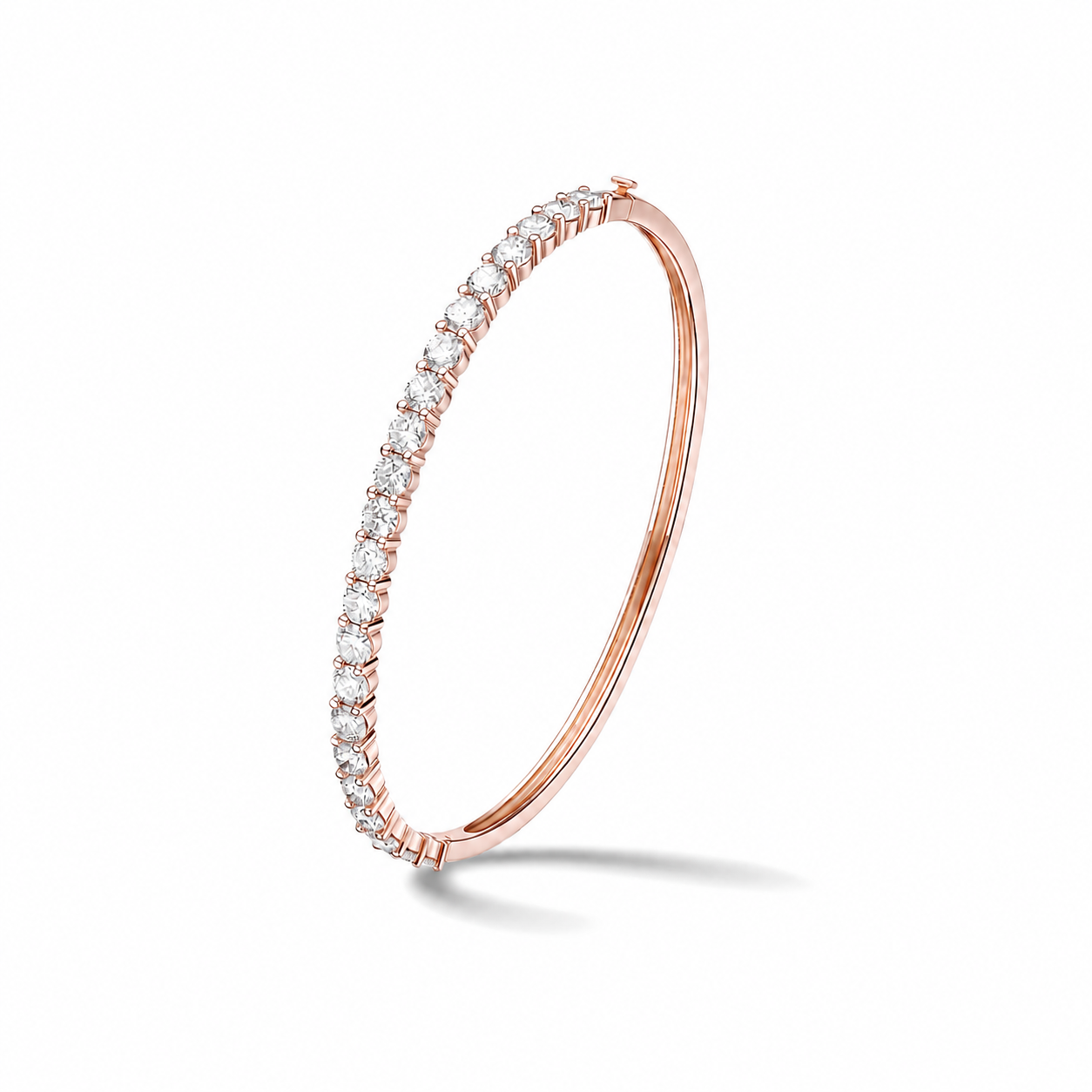




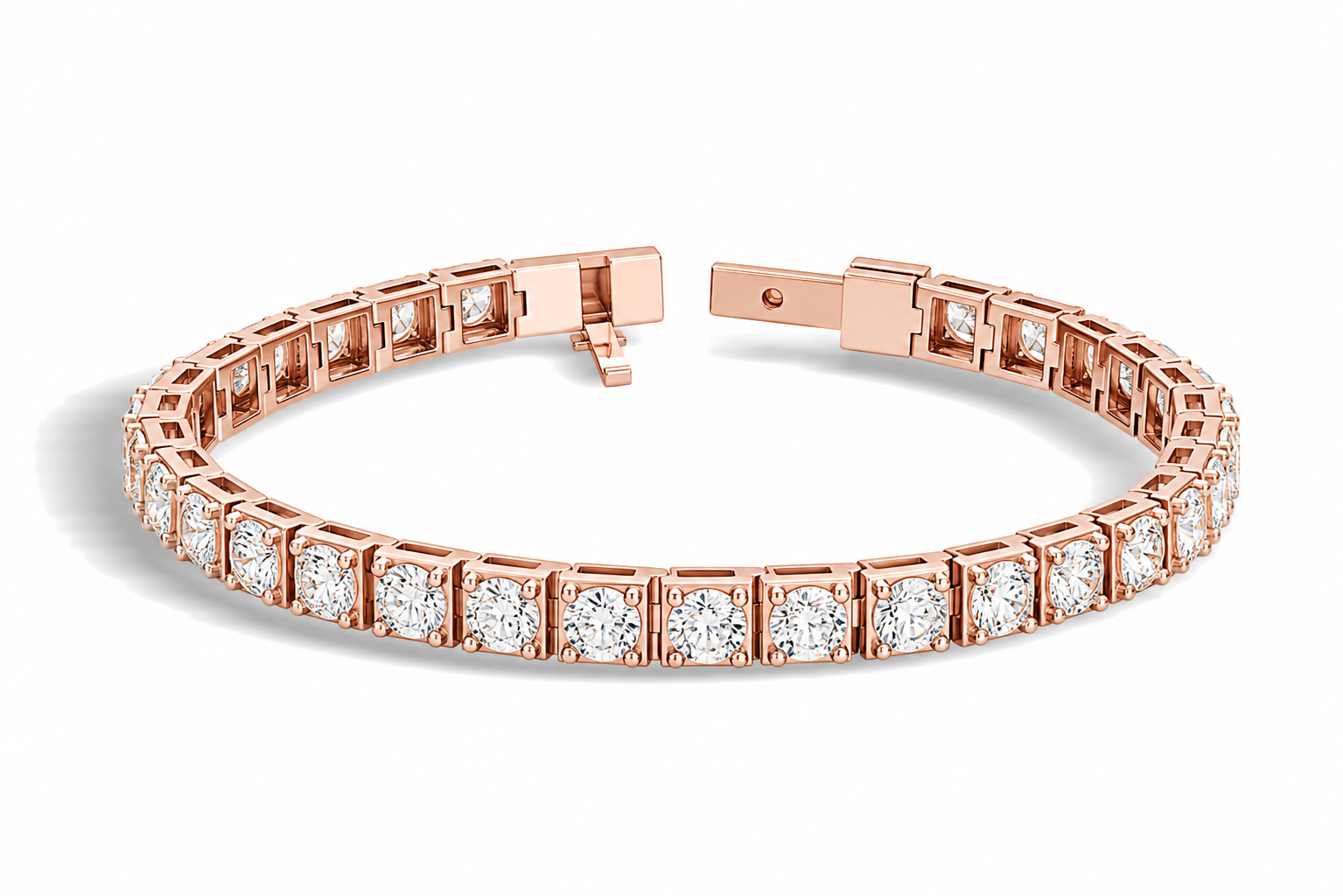

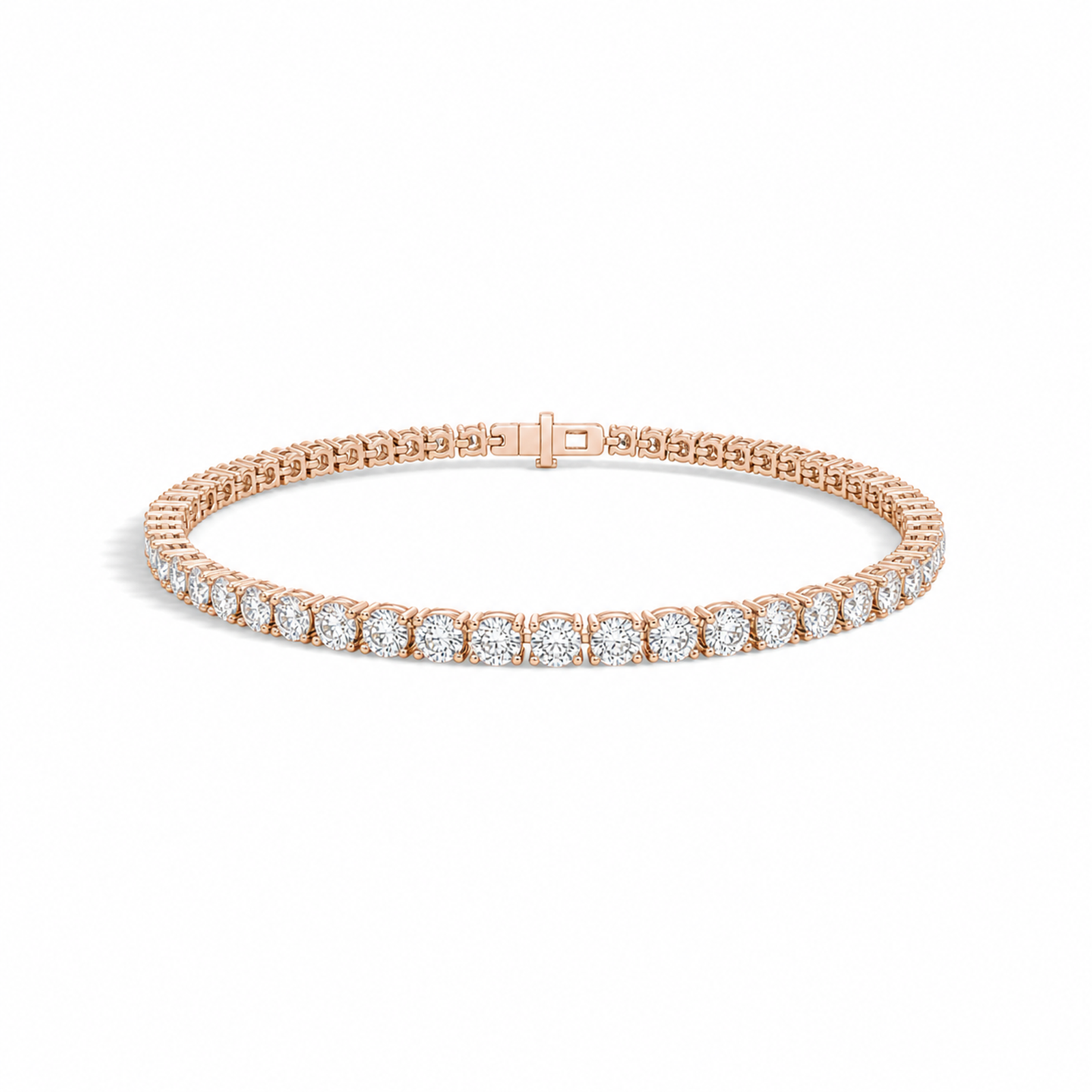
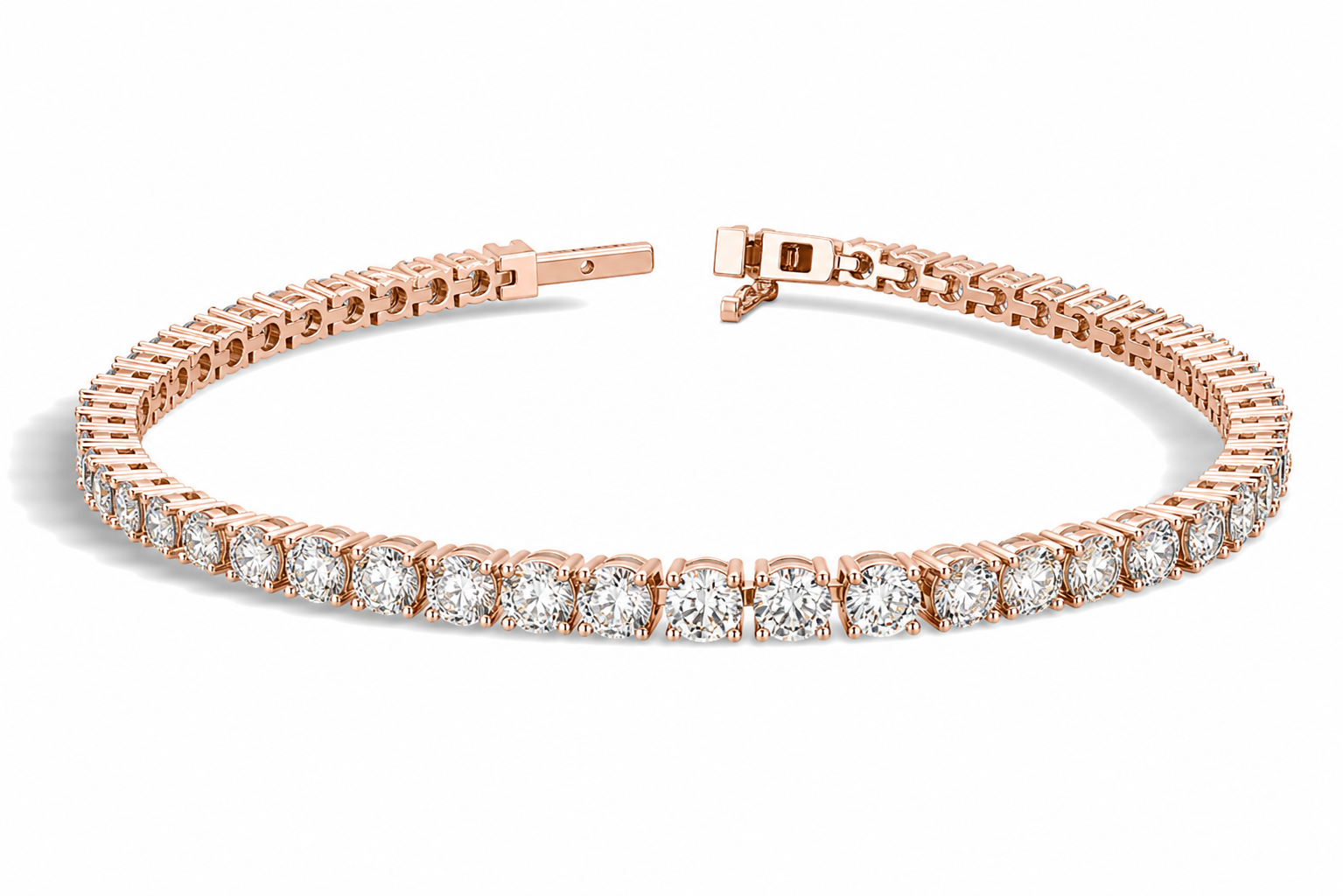

14K Rose Gold Lab-Grown Diamond Bracelets: Warmth between Light and Motion
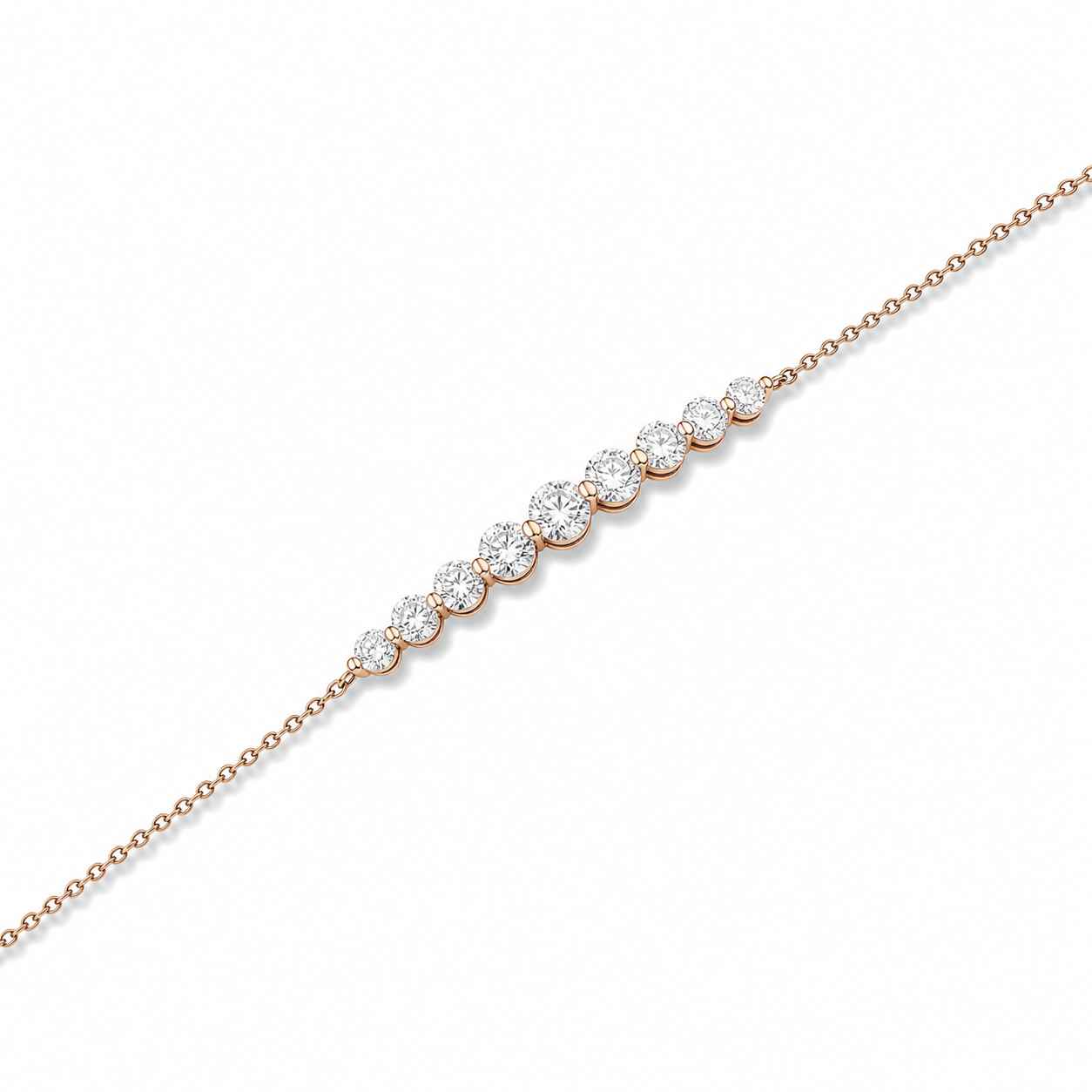
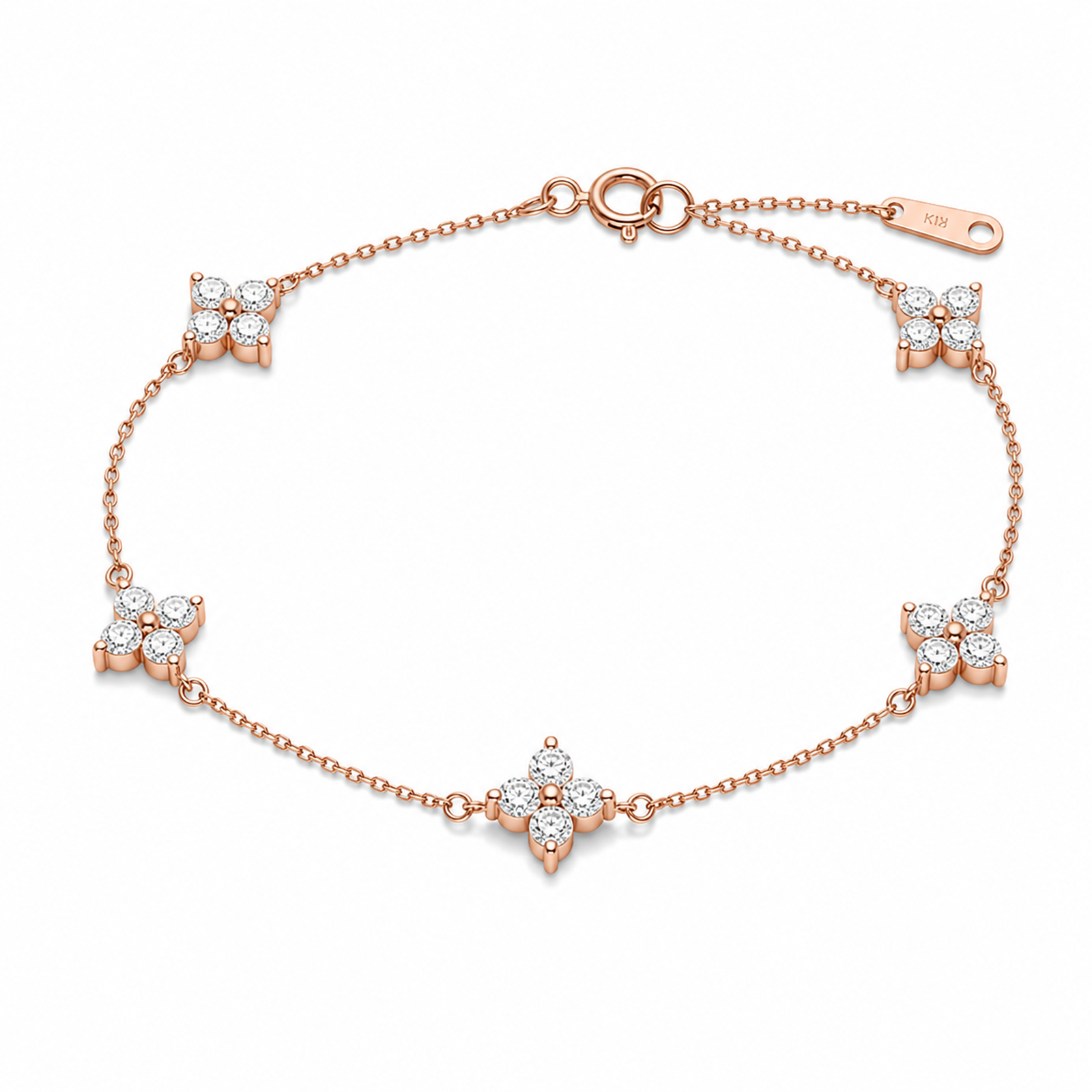
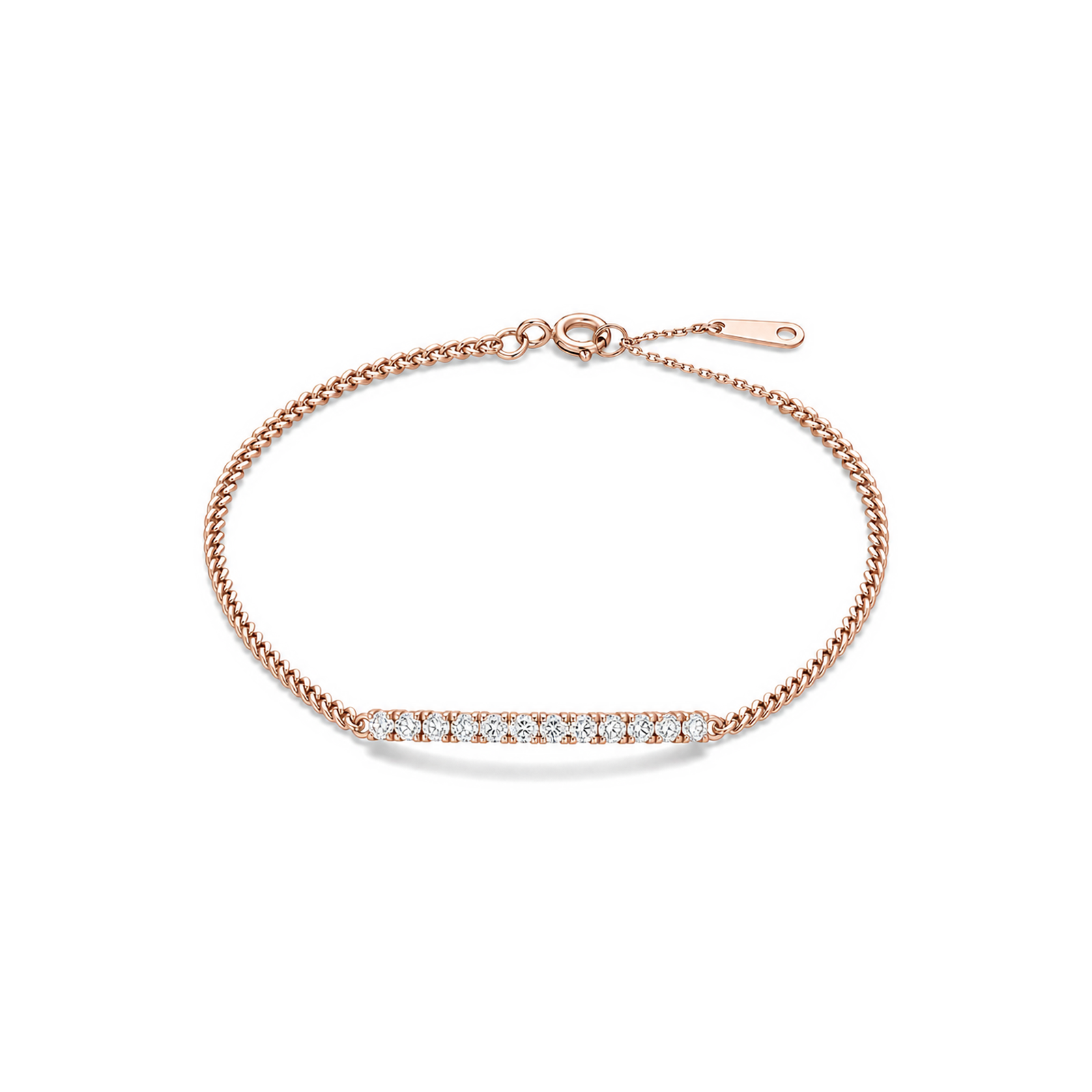
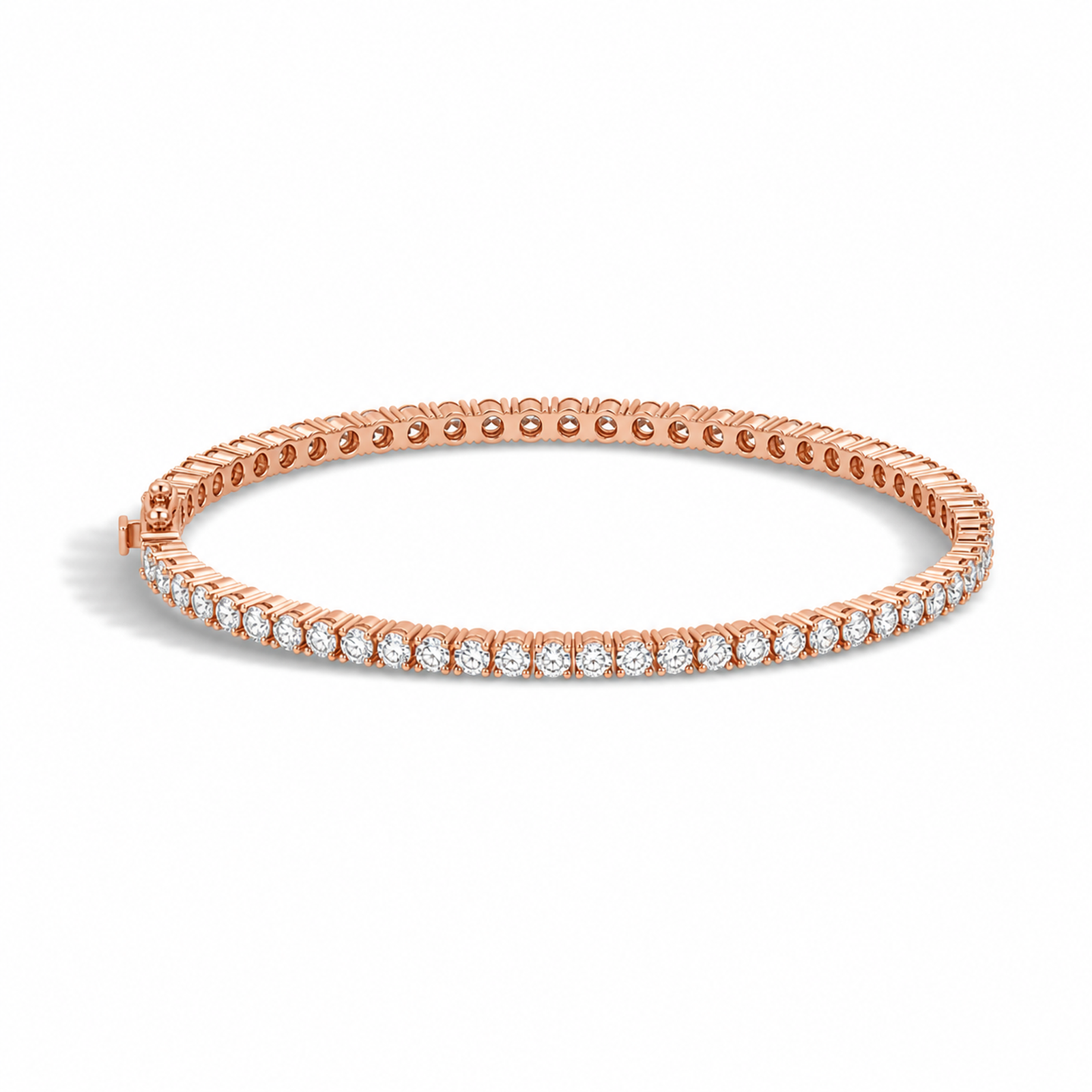
Rose Gold becomes most expressive in a bracelet where diamond, metal, skin, and space alternate in motion. A fine station chain creates small blush intervals; a curved bar concentrates warmth beneath one line; a tennis structure repeats it through links; a bangle turns the metal into a more continuous arc around the wrist.
Burvonti’s current 13-design set includes four chain-led station, curve, charm, and bar compositions plus nine extended-line, interlocking, box-link, bezel, bangle, or tennis-titled forms. All 13 have normalized counterparts in the parent Bracelet Collection. This page owns the Rose Gold reading of that universe, not an exclusive-assortment claim.
Let Exposed Metal Define the Rhythm
A 14K alloy contains approximately 58.3% gold. Other alloying metals, finish, photography, lighting, and visible surface influence the observed rose tone. Karat and color do not establish one copper content, sensitivity result, hardness level, or care interval.
Bezel boundaries keep Rose Gold continuous around a diamond; prongs introduce smaller points of color. Chain, open intervals, bars, links, and the transition into a clasp decide how much warmth remains visible. The metal changes contrast and continuity, not diamond grade, dimensions, or light performance.
Compare Flexibility, Arc, and Closure
The assortment includes chain-led designs, articulated diamond lines, interlocking and box-link treatments, and two bangle constructions. A chain can drape and rotate; connected settings articulate around the wrist; a bangle carries more of its own arc. Exact behavior depends on dimensions, joints, setting depth, and condition.
Current descriptions identify four Spring, four Box, and five Barrel Clasps. These labels describe mechanisms, not universal security, comfort, or ease of use. Review the transition into the closure as carefully as the diamond field, especially where a Rose Gold edge changes width or meets a moving link.
Fit Determines How the Blush Line Moves
Current chain and articulated descriptions list 6.3 or 6.7 inches; the two bangles do not publish length in the same field. Measure where the bracelet will sit, then compare structure, width, clasp, desired movement, and stacking plan. No fixed allowance suits every wrist or construction.
A concentrated motif may rotate away from the top of the wrist; a fuller line may reveal different sections as the hand turns. Too little clearance can load connections, while too much can increase rotation or catching. Resizing or changing length requires product-level review of sequence, symmetry, links, settings, and closure.
Stack through Interval, Not Color Alone
A Rose Gold bracelet can coordinate with a watch or another bracelet through shared warmth, but the more useful comparison is profile, edge, articulation, and contact. Mixed metals can remain deliberate when a diamond rhythm, curve, or surface repeats. Matching labels do not prove identical alloy, finish, age, or wear behavior.
Burvonti pairs responsibly sourced lab-grown diamonds with calibration at wrist scale. Independently graded or certified diamonds should be understood within document scope. Custom possibilities may refine length, sequence, coverage, setting, metal, closure, or scale when feasible. Clean the complete circumference gently and inspect every setting, link, joint, chain, and clasp if movement changes.
Frequently Asked Questions
How is this page different from the parent Bracelet Collection?
The parent owns the cross-metal bracelet framework. This page focuses on how 14K Rose Gold shapes visible intervals, links, arcs, and closure transitions.
How much gold is in 14K Rose Gold?
Approximately 58.3%. Other alloying metals influence final tone and working behavior.
Are all 14K rose gold bracelets the same blush color?
No. Alloy formula, finish, lighting, photography, and exposed metal area affect appearance.
Which bracelet structures are currently represented?
The 13 designs include station, curve, charm, bar, tennis-line, interlocking, box-link, bezel, mixed-shape, and bangle forms.
Are all 13 designs tennis bracelets?
No. Four are chain-led station, curve, charm, or bar compositions; the remaining nine include extended-line and structured forms.
How do prongs and bezels use Rose Gold differently?
Prongs create smaller points of color, while a bezel forms a more continuous metal boundary around a diamond.
Does Rose Gold improve diamond brilliance?
No. It changes the surrounding material context, not facet relationships, dimensions, or grading facts.
What bracelet lengths are currently listed?
Chain and articulated descriptions list 6.3 or 6.7 inches; the two bangle descriptions do not list length in the same field.
How should I measure for a Rose Gold bracelet?
Measure where it will sit, then compare product length, structure, width, clasp, desired movement, and stacking plan.
Will a Rose Gold bracelet stay centered?
Not universally. Fit, weight distribution, wrist shape, structure, movement, clothing, and neighboring pieces influence position.
Which closures are represented?
Current descriptions identify Spring, Box, and Barrel Clasps; none carries a Collection-wide security or comfort guarantee.
Can every Rose Gold bracelet be resized?
No. Sequence, links, settings, symmetry, closure, bangle construction, and requested change affect feasibility.
Can Rose Gold bracelets be stacked or worn beside a watch?
Yes as styling choices, but profile, movement, closure, finish, and contact between exact pieces require review.
Can Rose Gold be mixed with other metals?
Yes aesthetically. Repeated curve, diamond interval, edge, or surface can create continuity across different colors.
Can Rose Gold cause sensitivity?
Sensitivity depends on the complete alloy and wearer; karat and color alone cannot establish a universal result.
Can Burvonti customize a Rose Gold bracelet?
Length, sequence, coverage, setting, metal, closure, scale, or selected details may be possible after technical review.
How should a Rose Gold diamond bracelet be cared for?
Clean gently and inspect the full circumference, including every setting, link, joint, chain, and closure, when condition changes.