
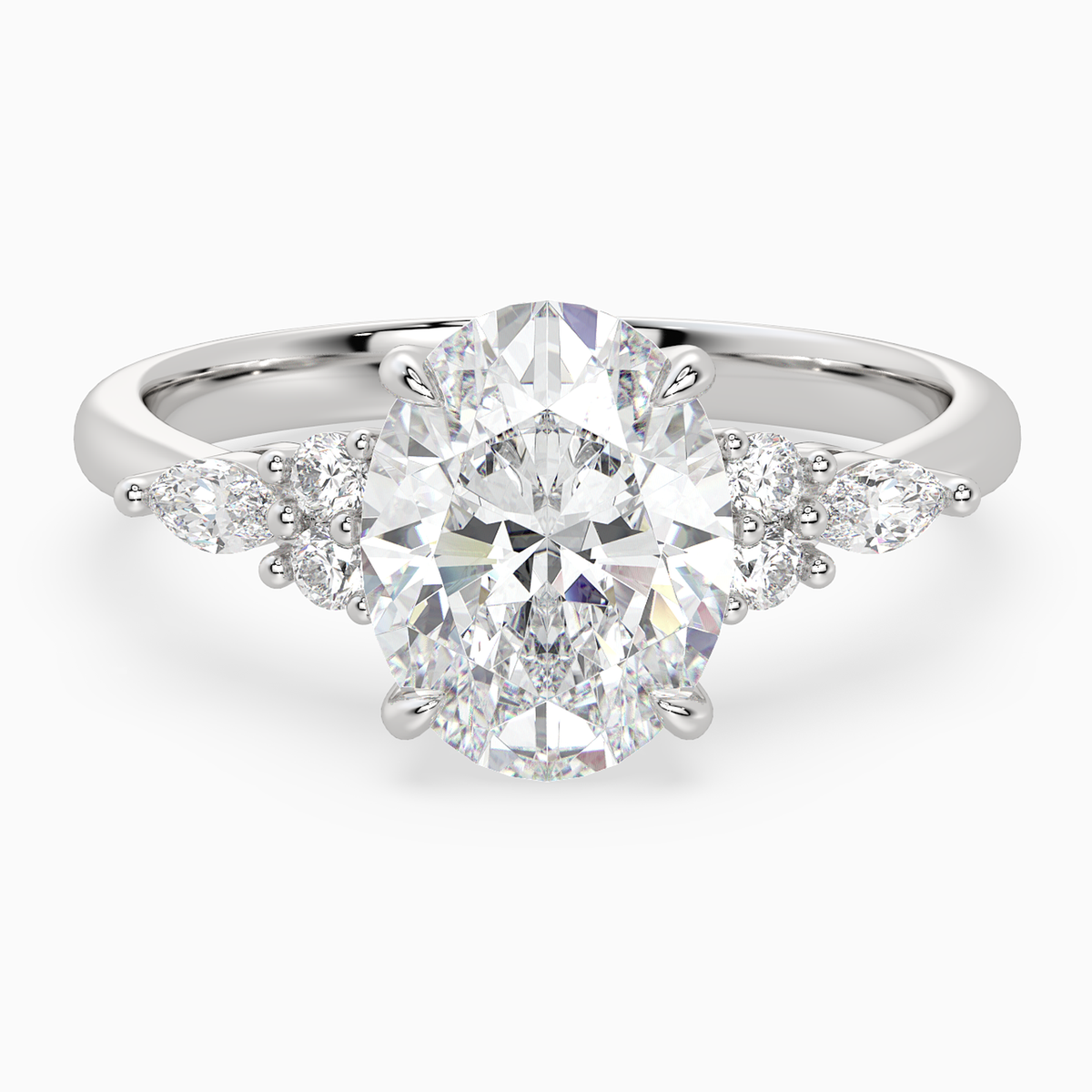


Lab Grown Diamond Anniversary Rings in 14K White Gold
A quiet white field lets structure hold the milestone. Compare 69 rings by profile, coverage, width, spacing, and existing-set context.


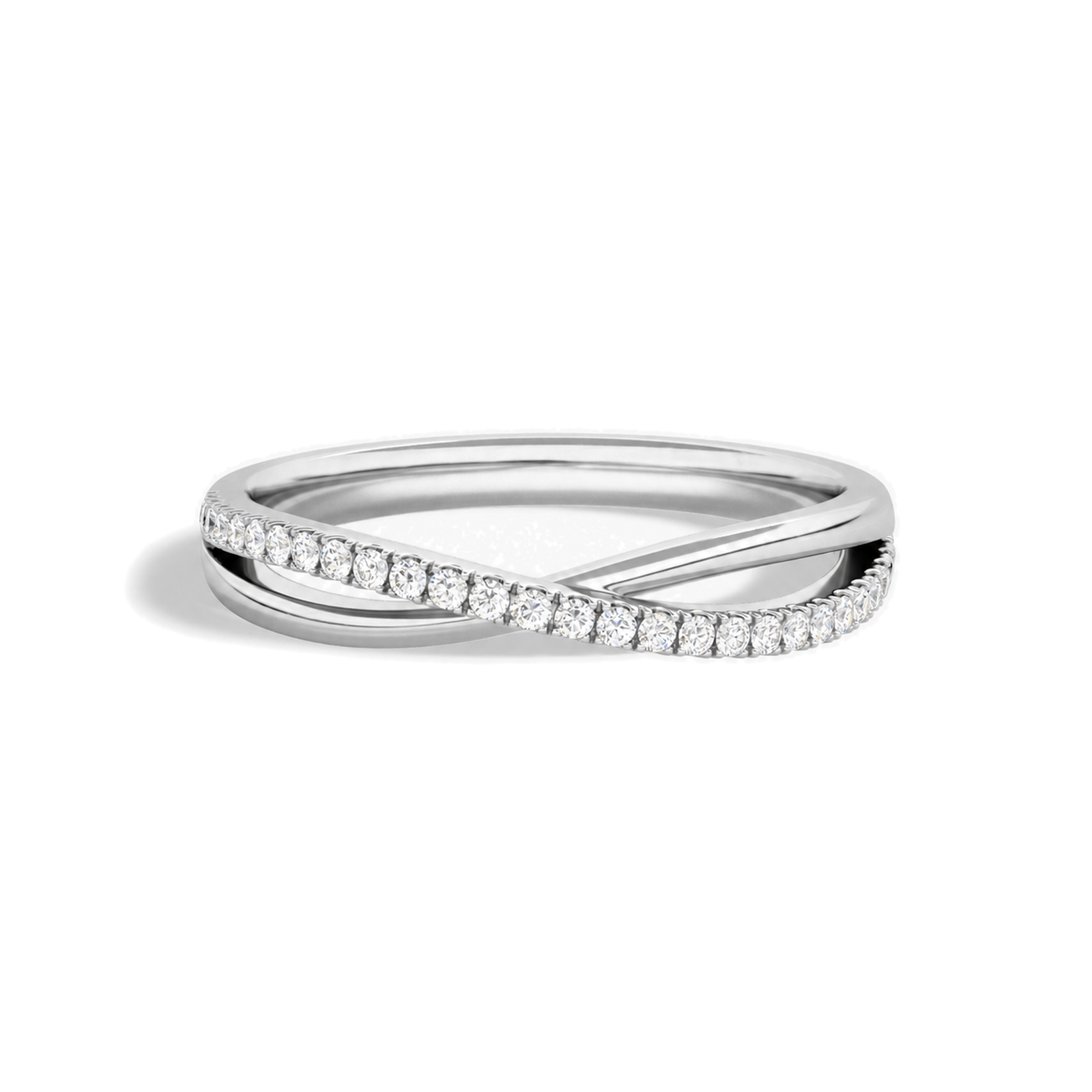
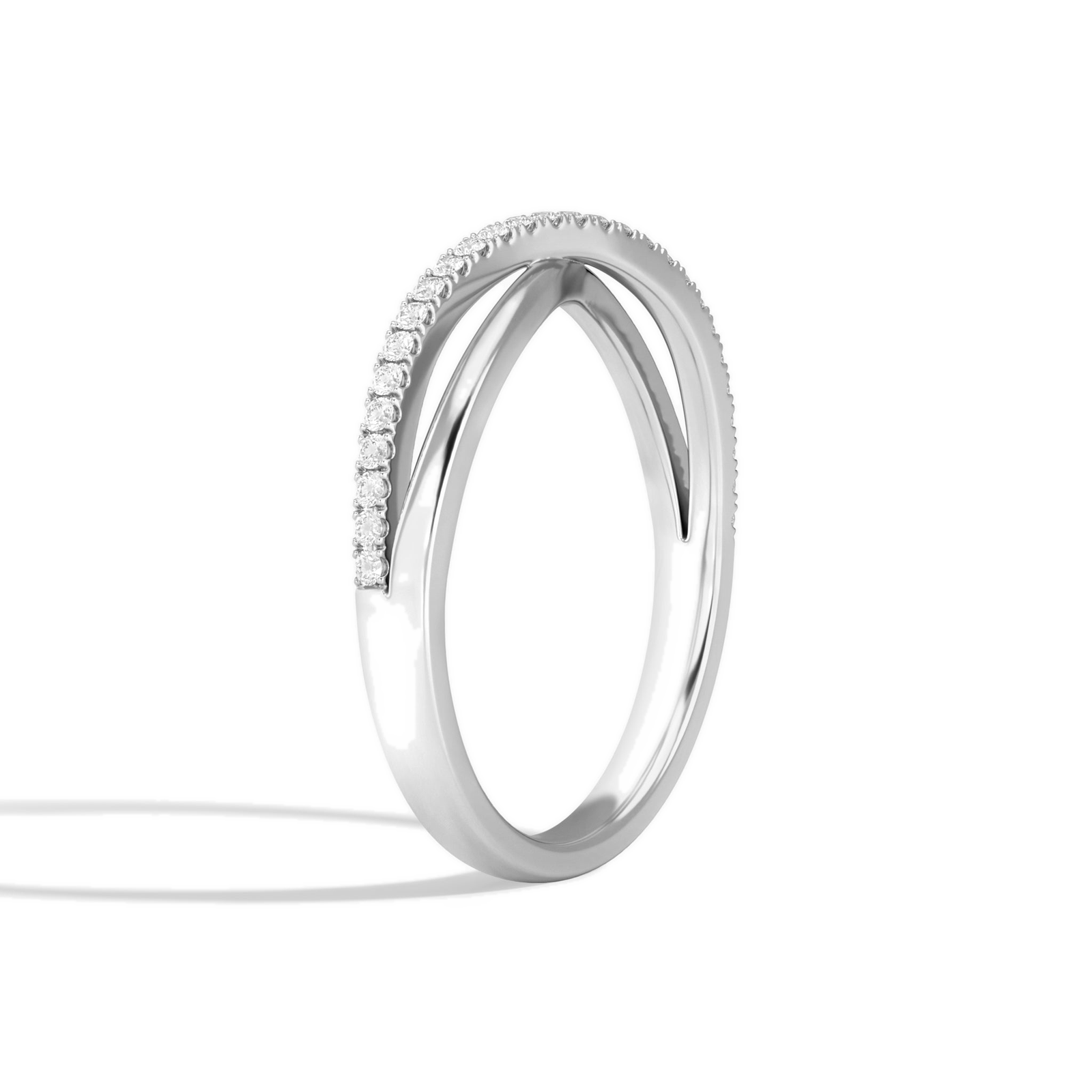

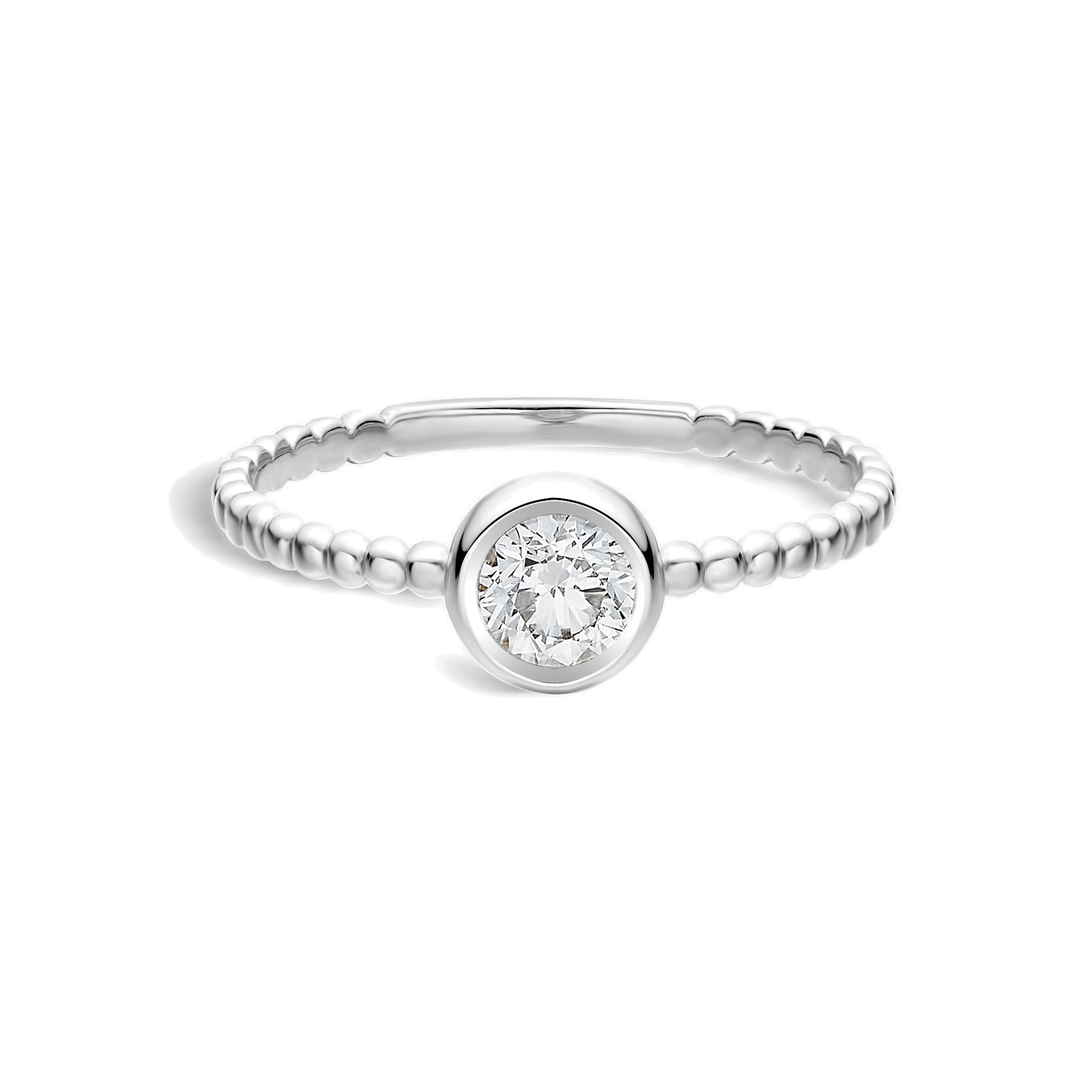
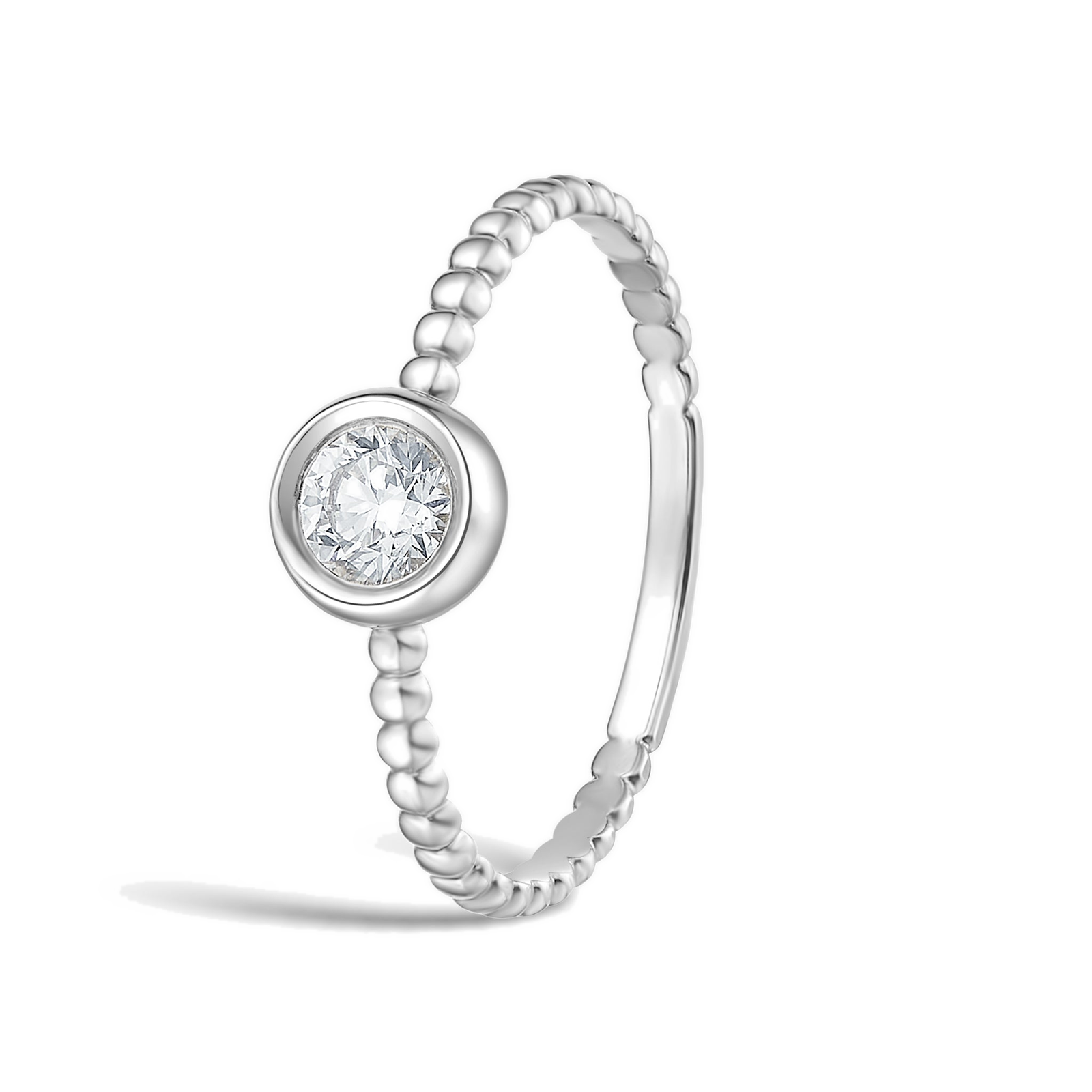

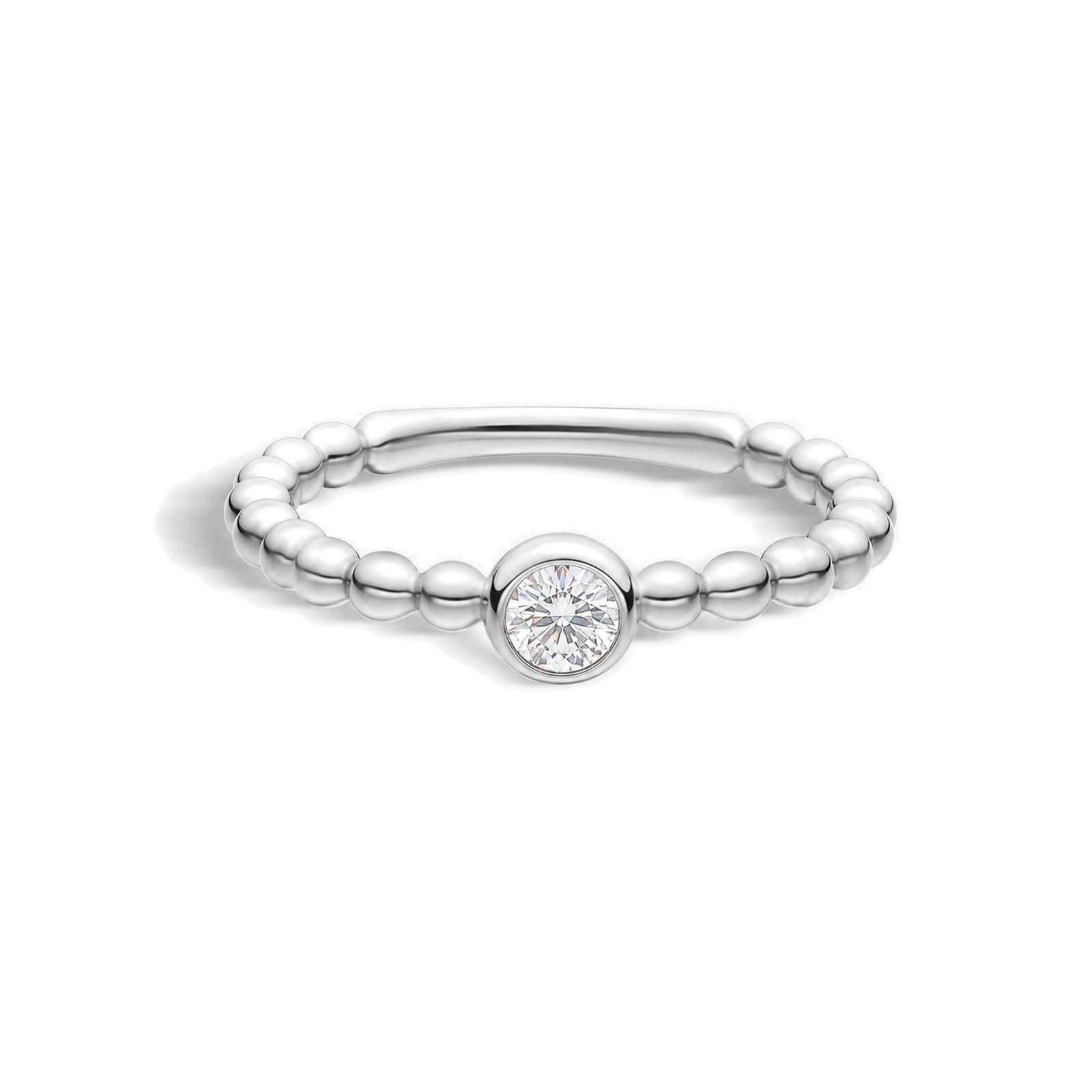
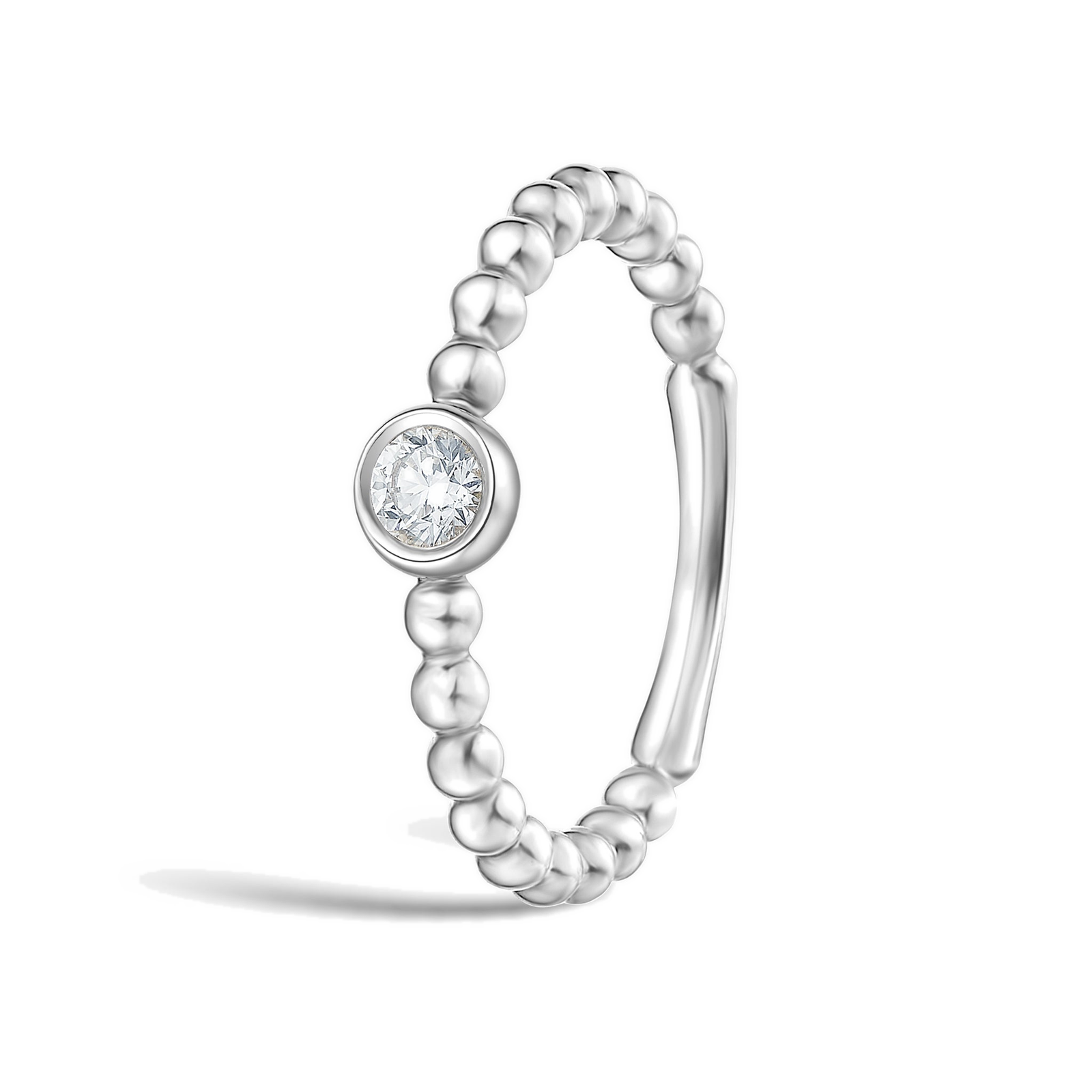

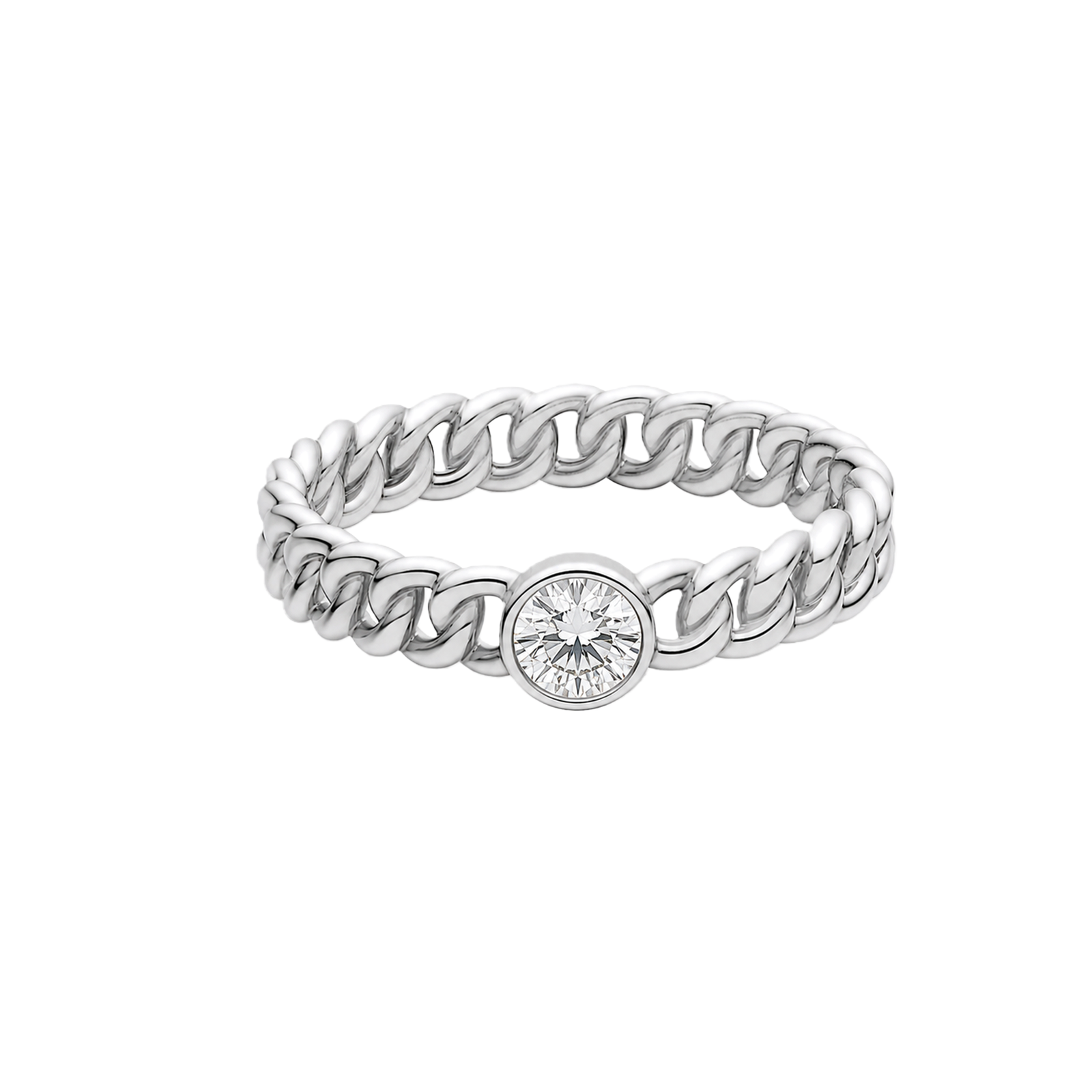
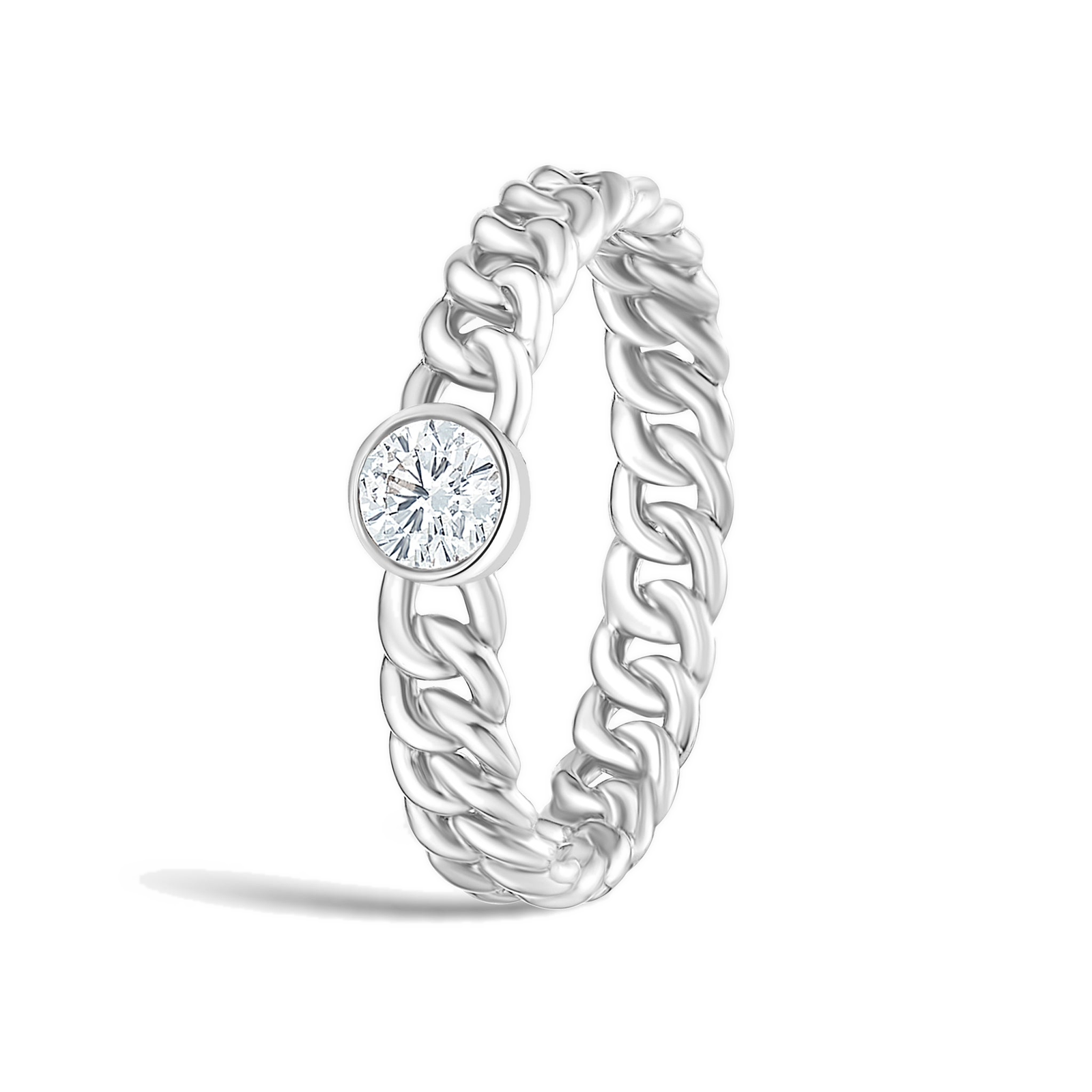

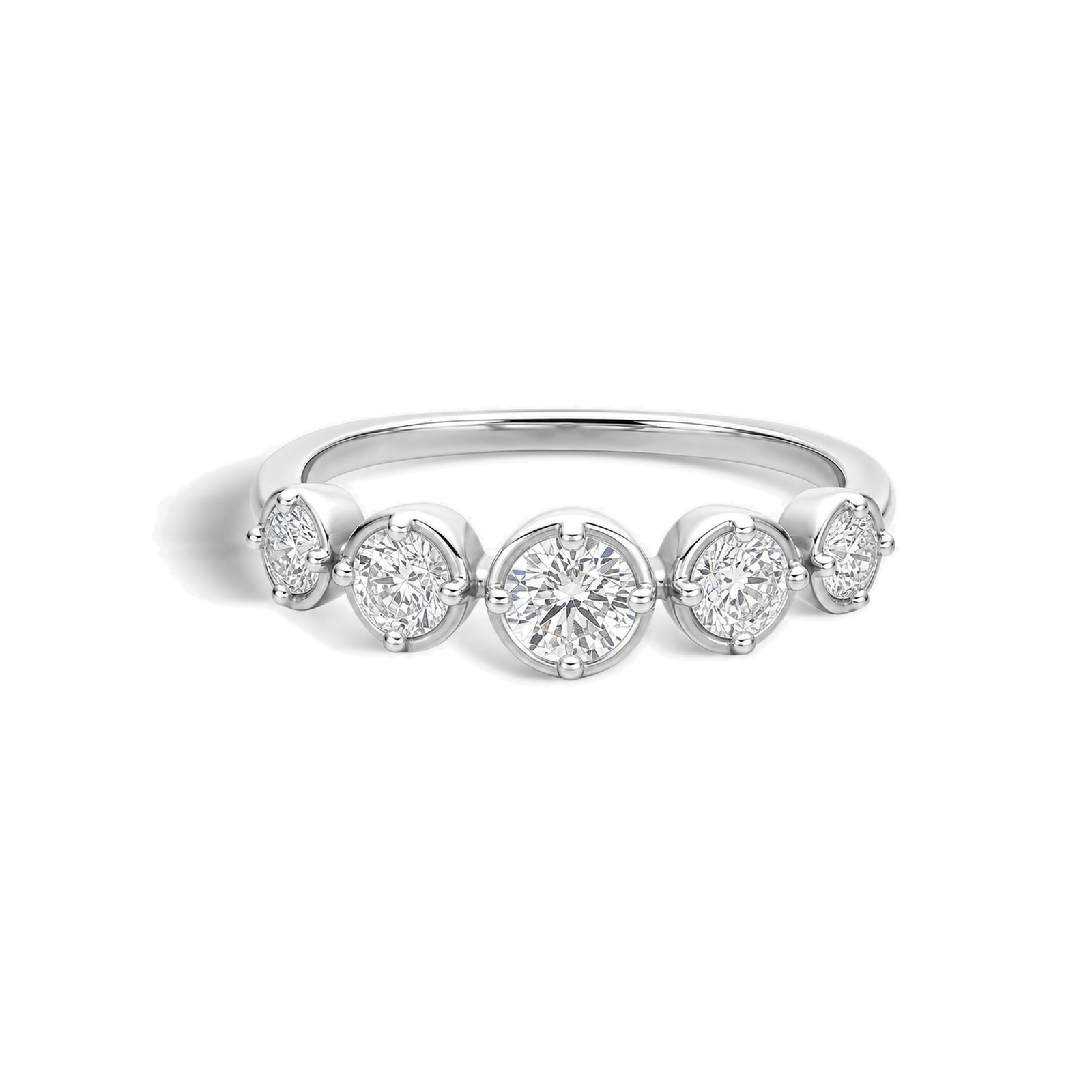
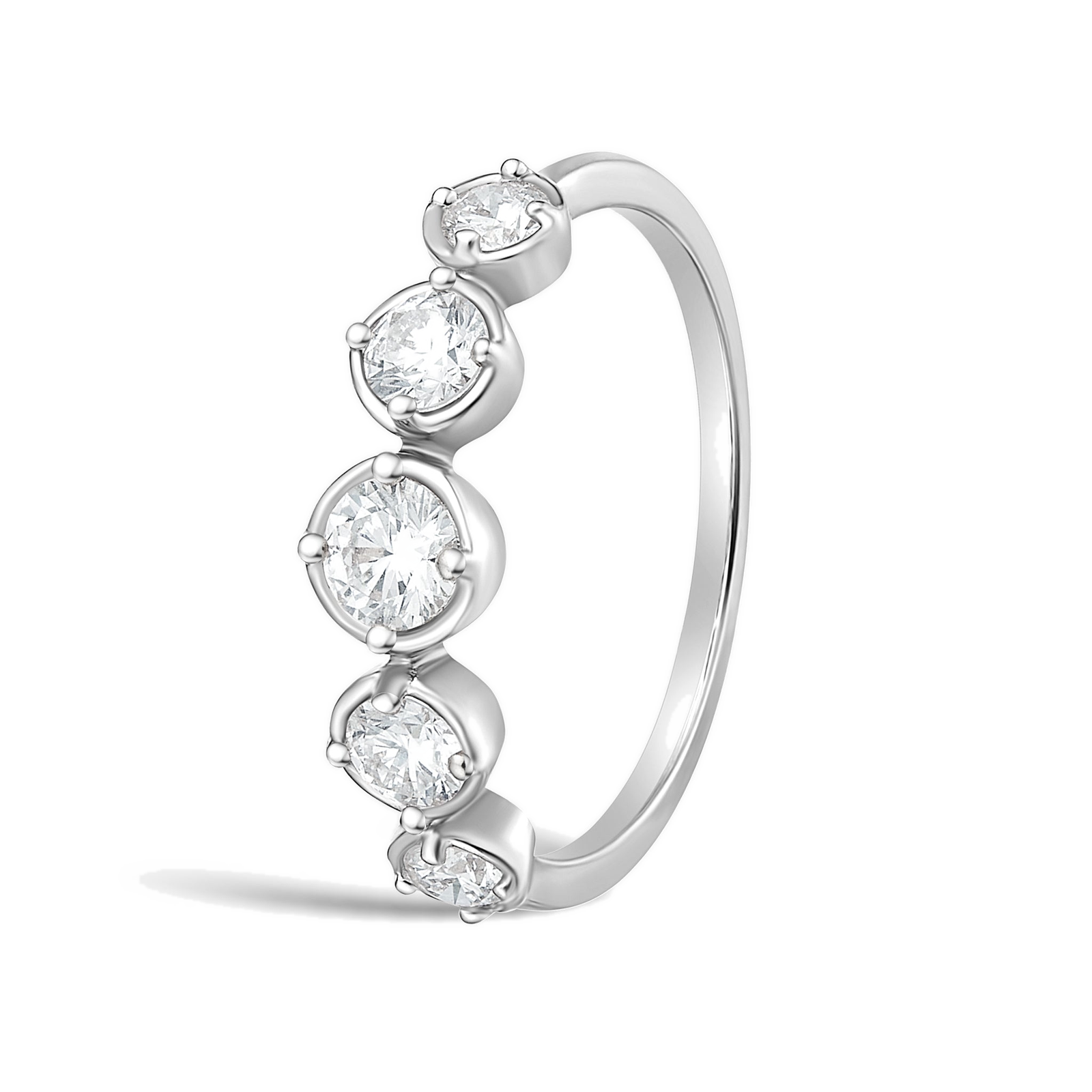


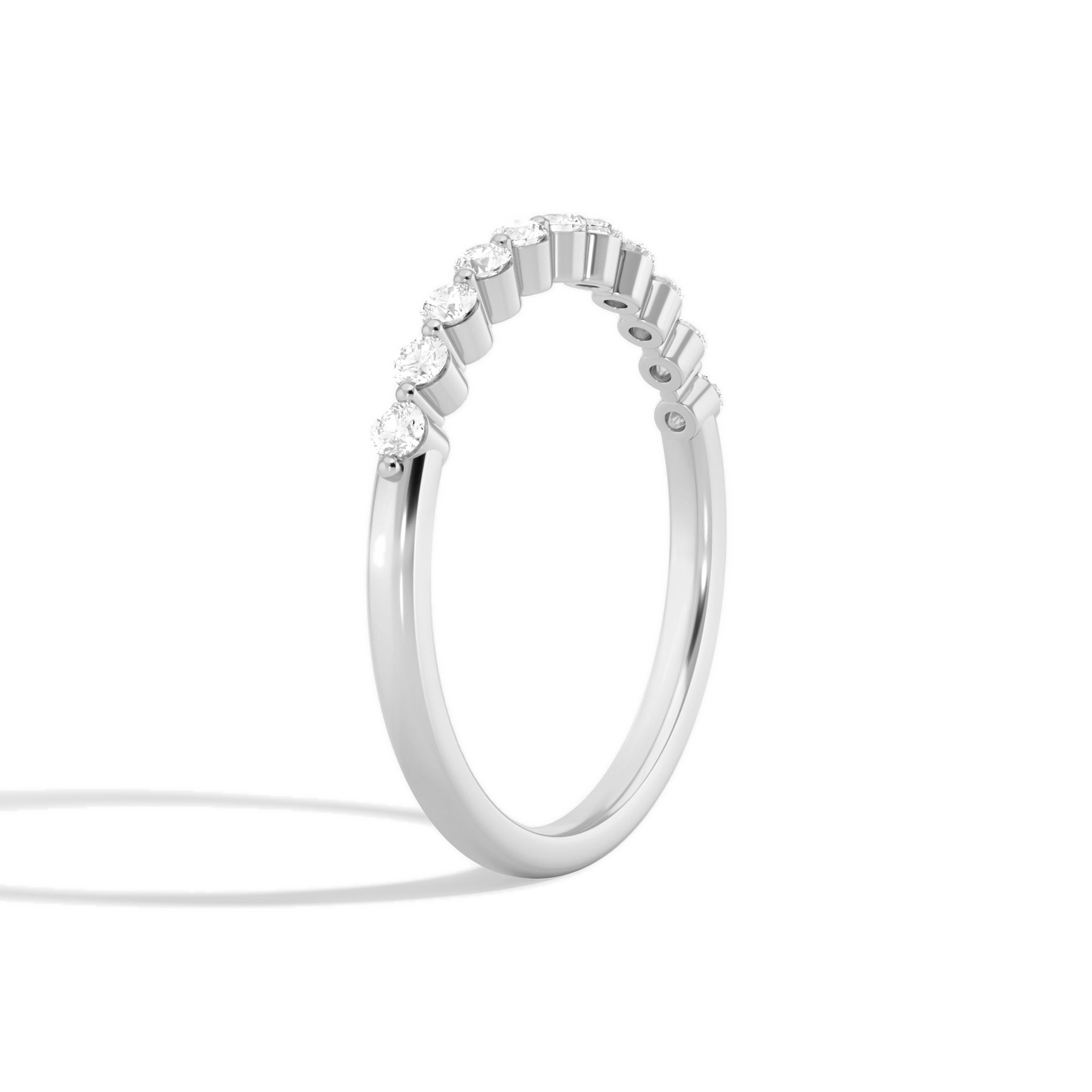

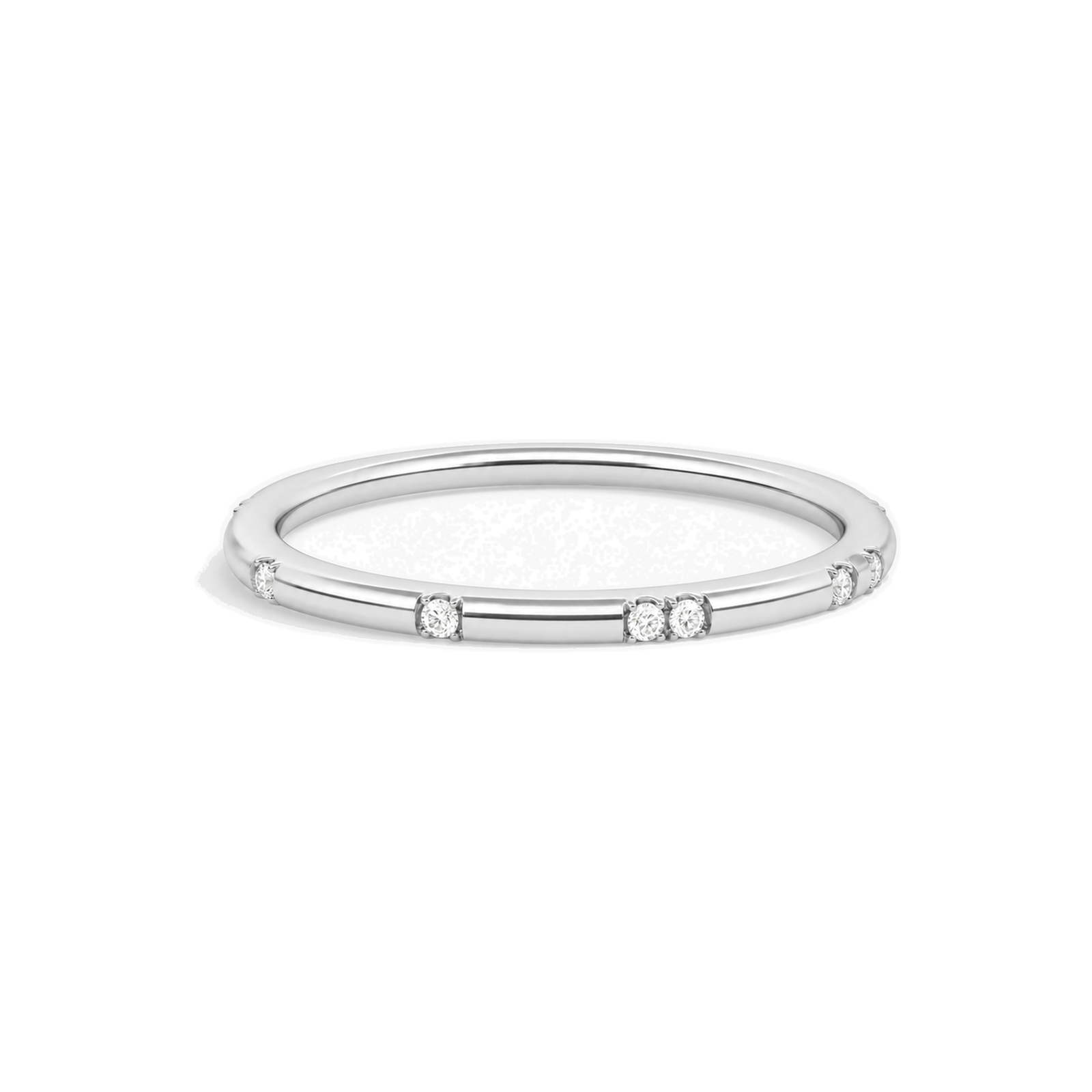


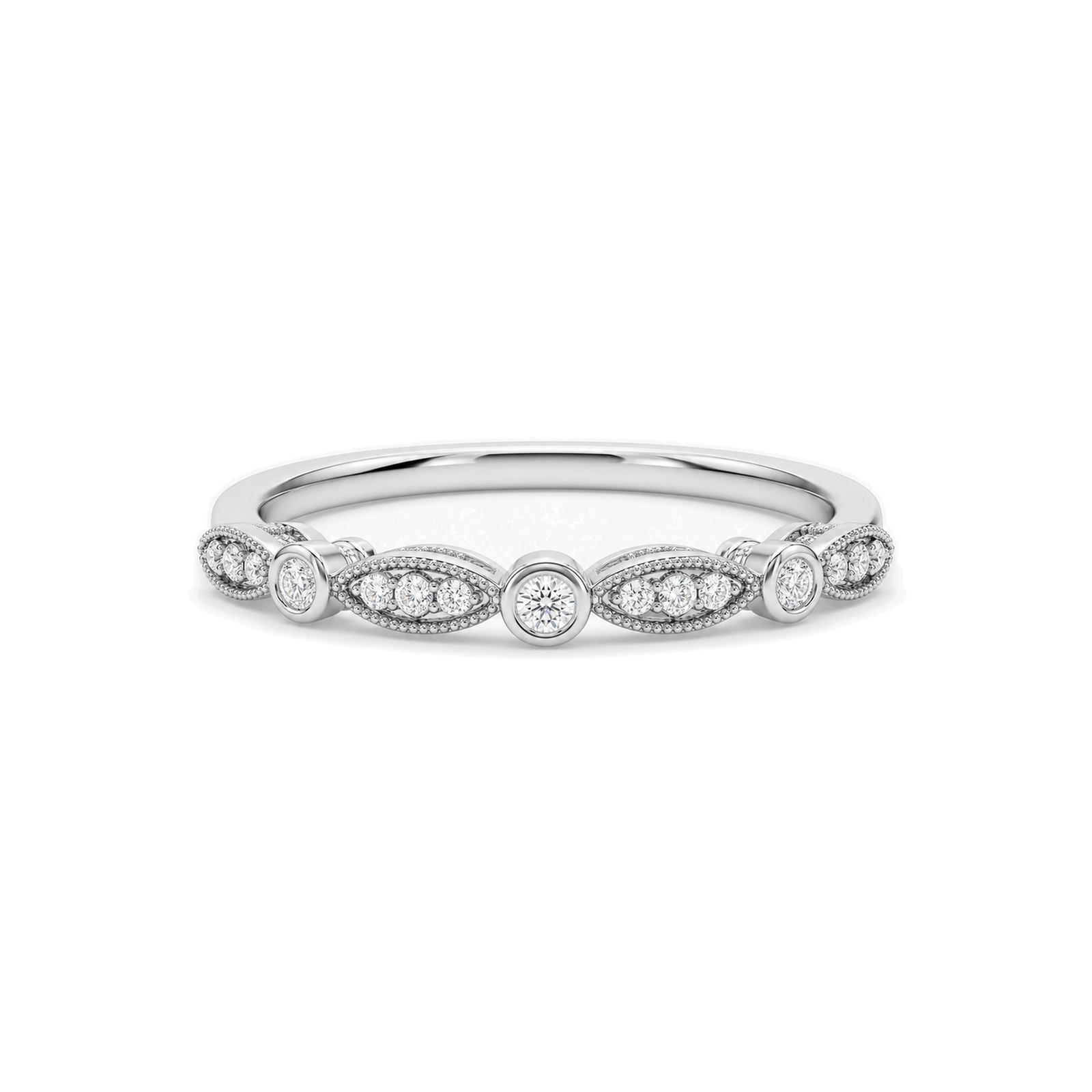
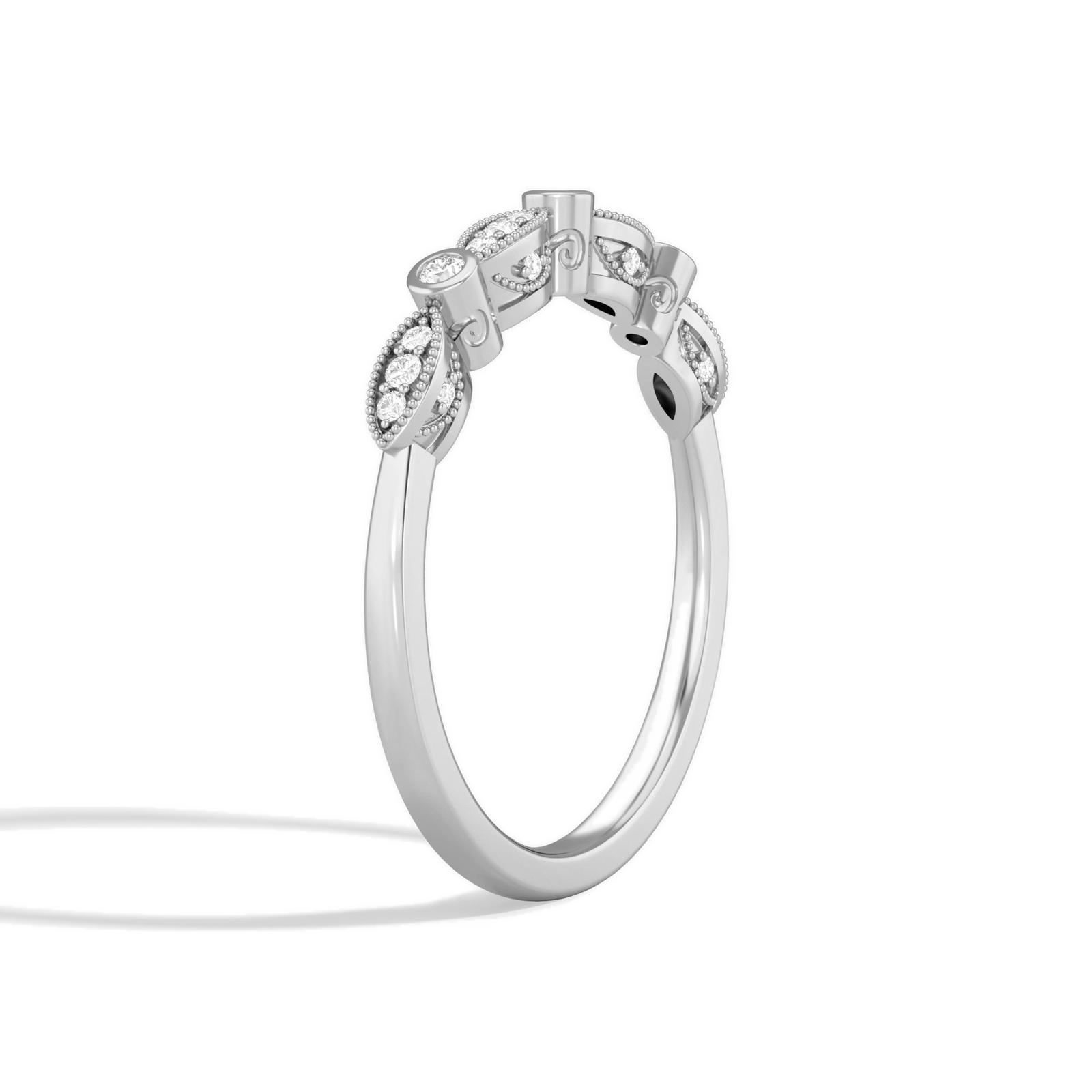

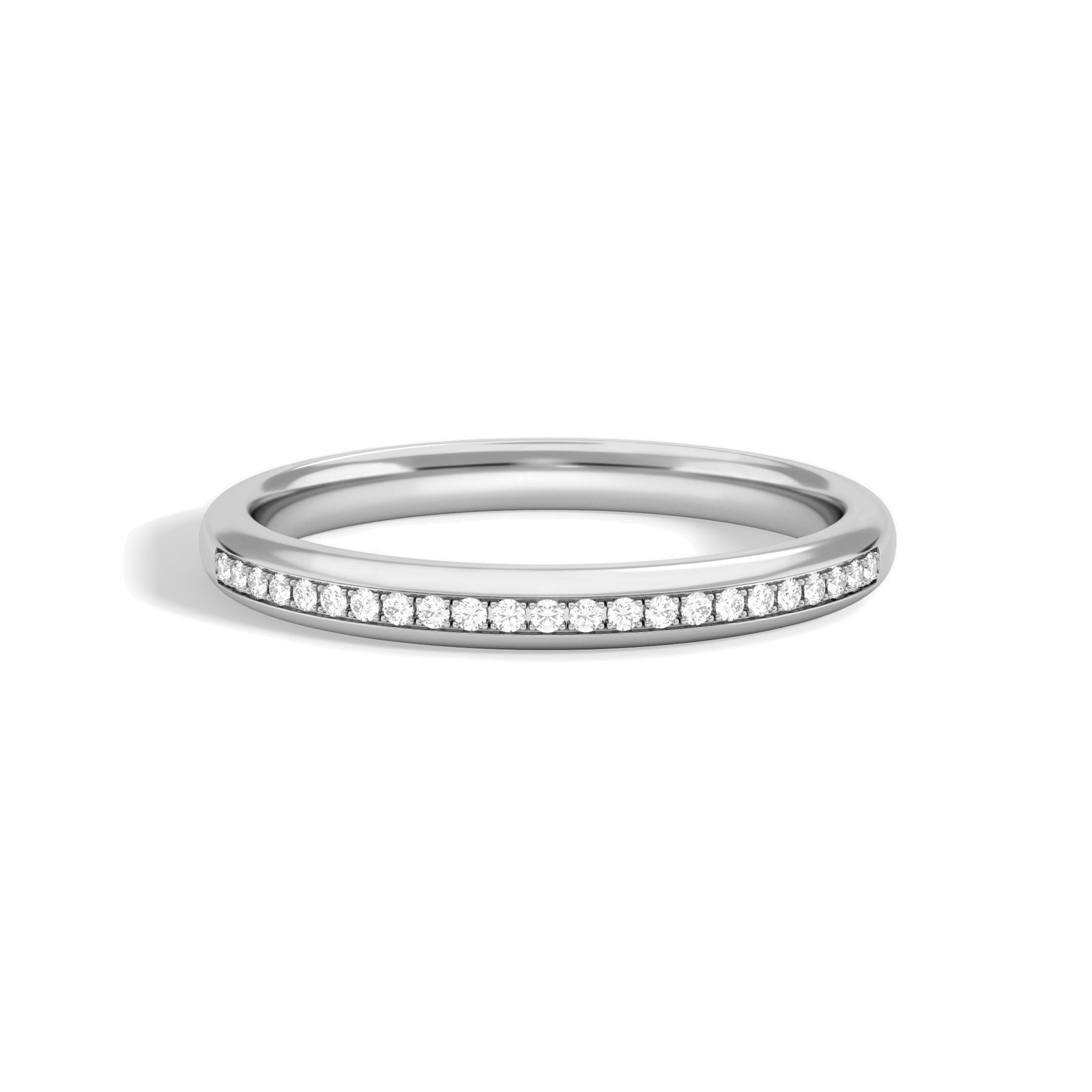
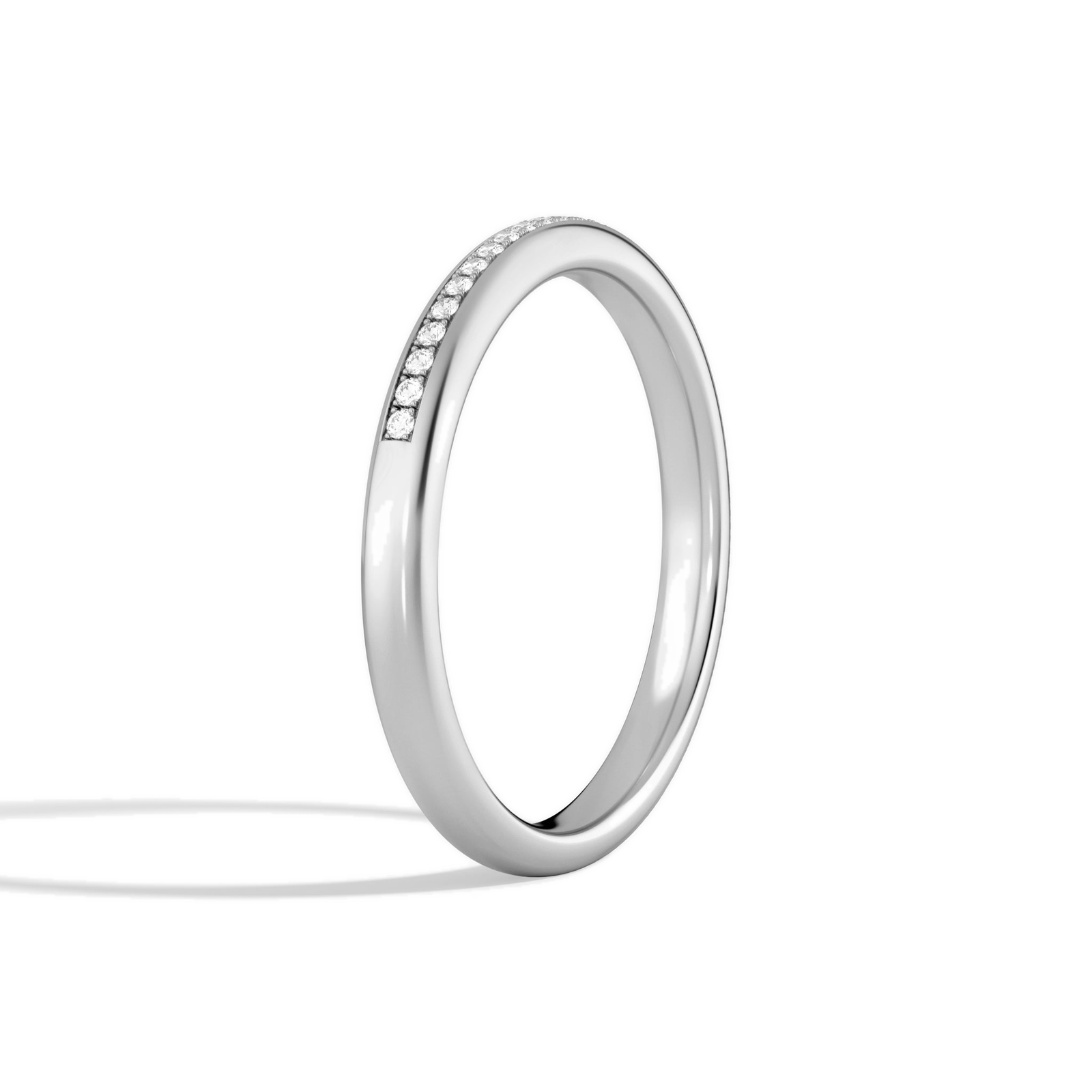

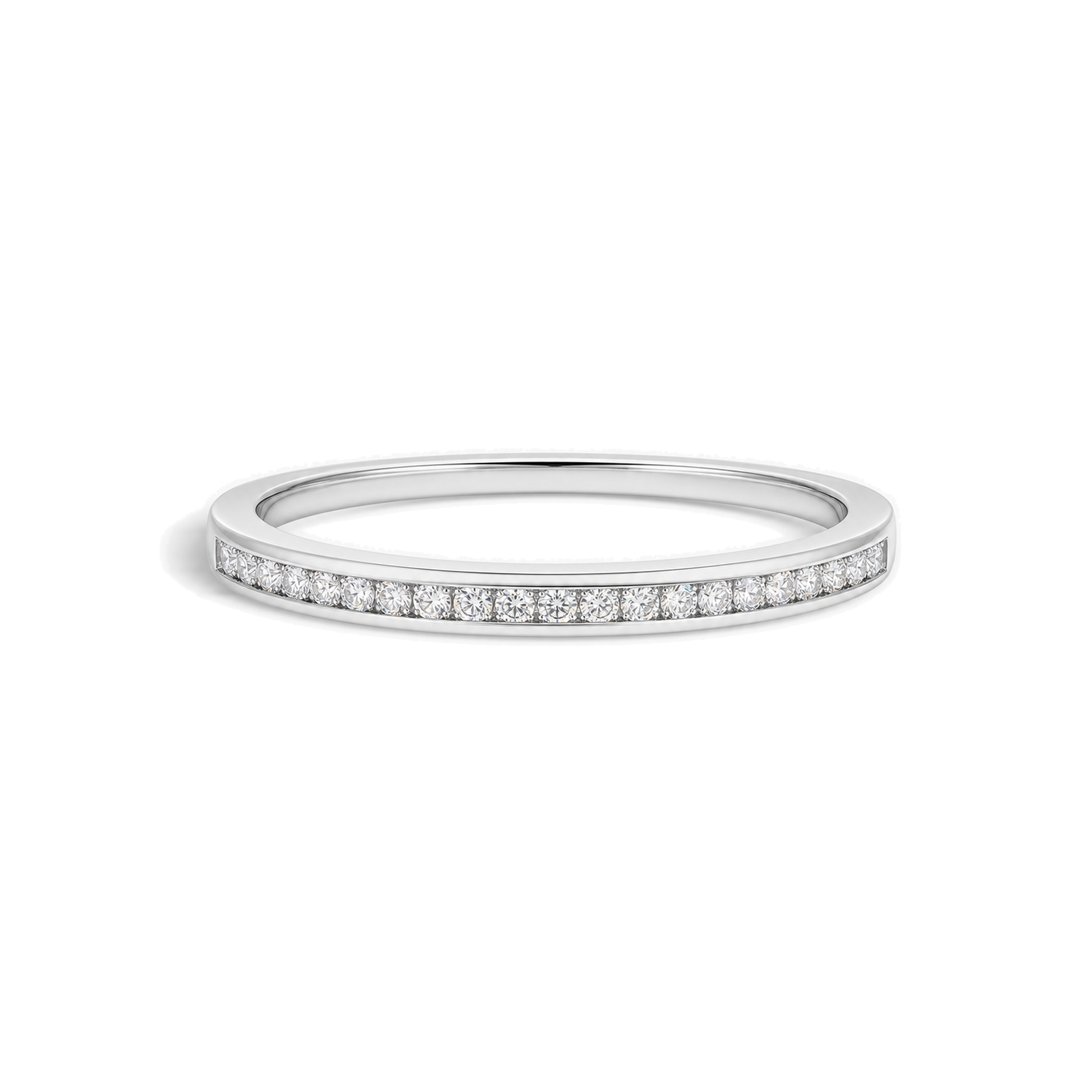


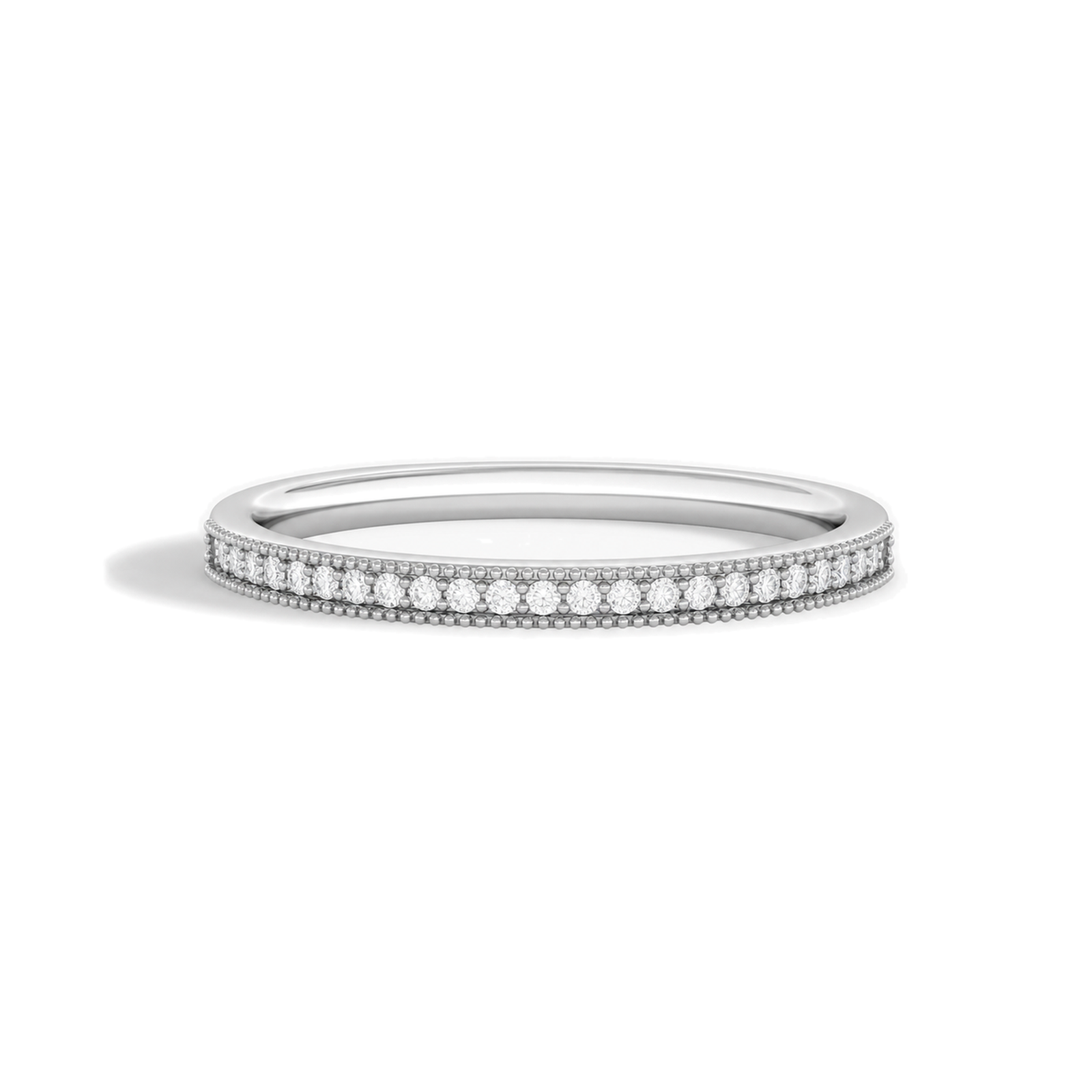
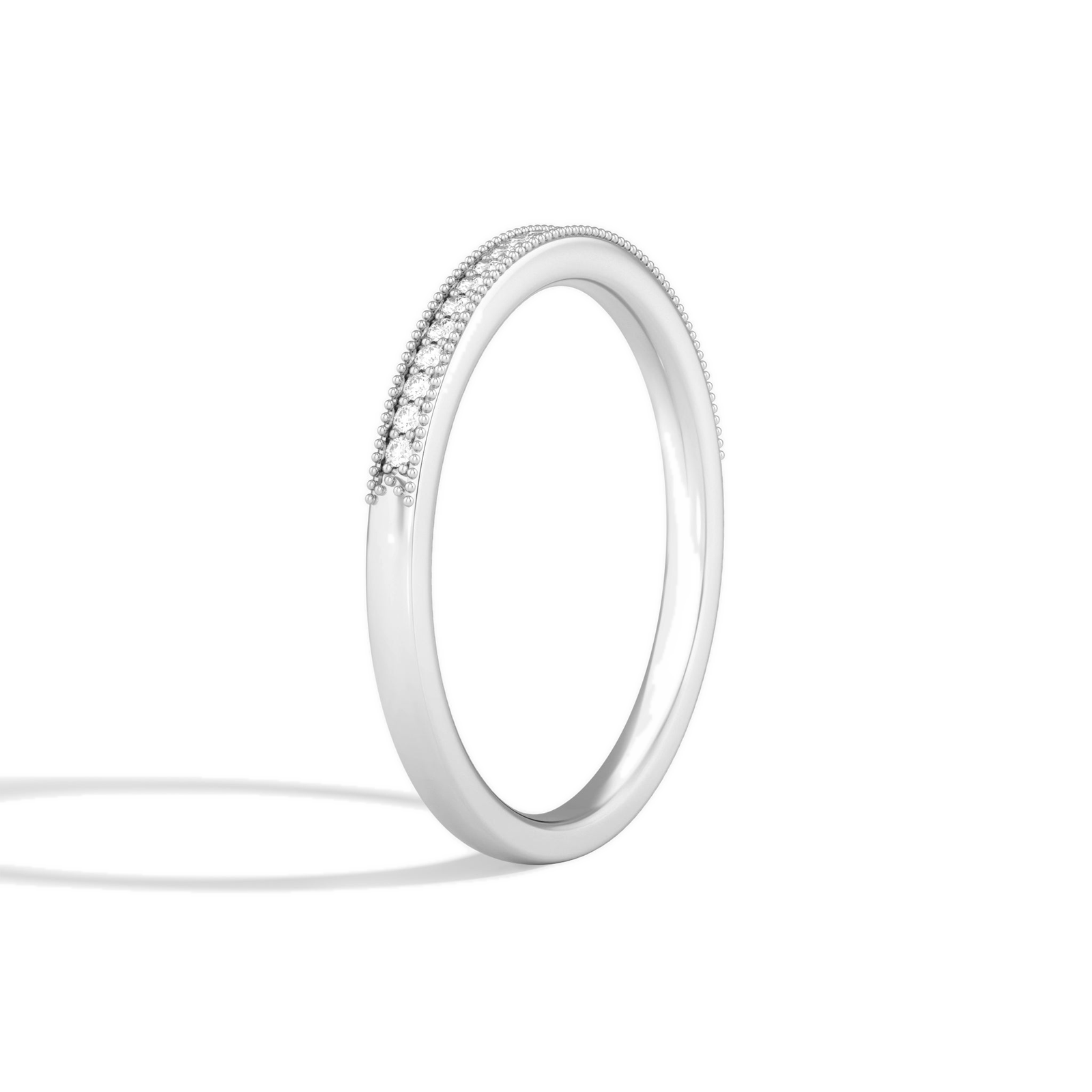

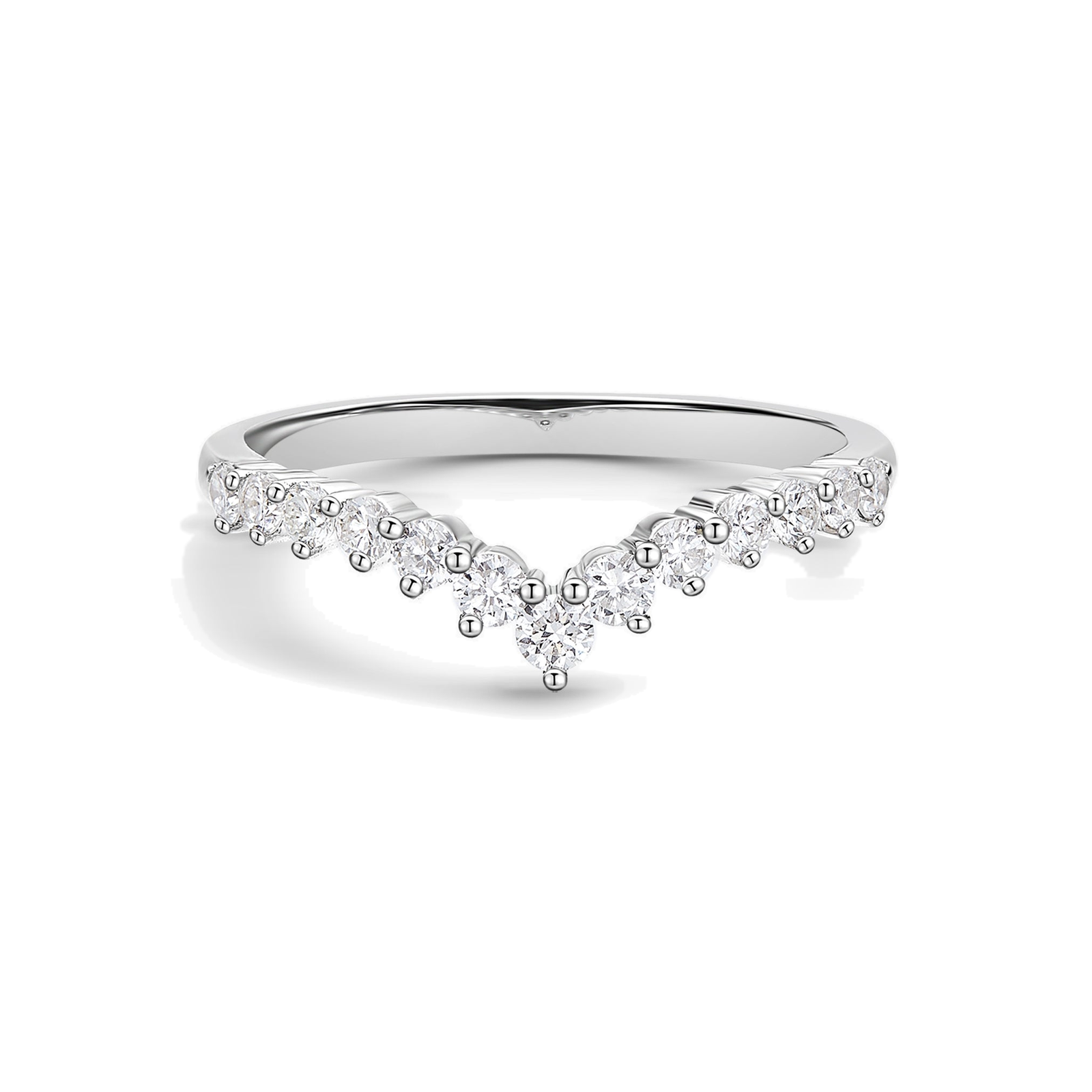
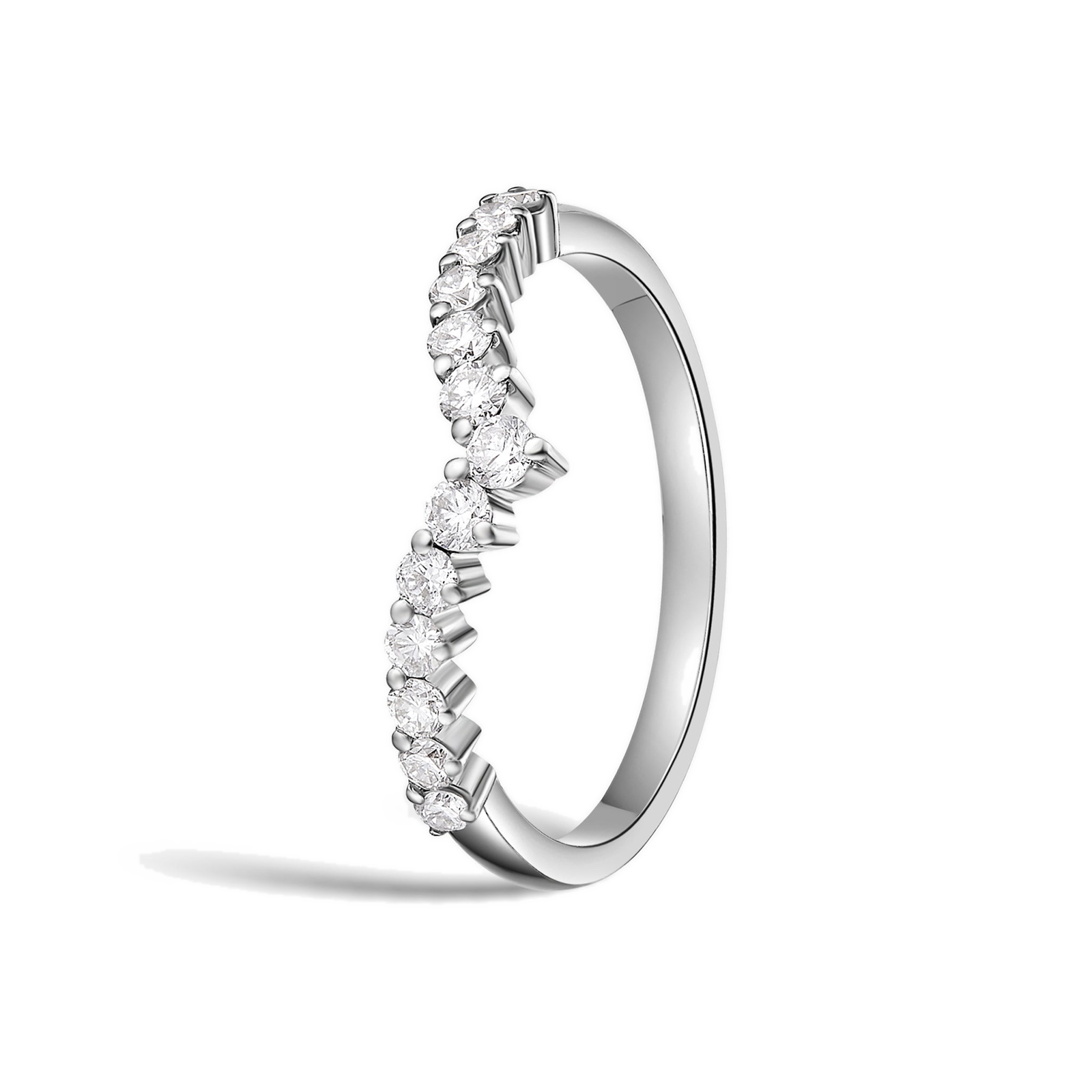

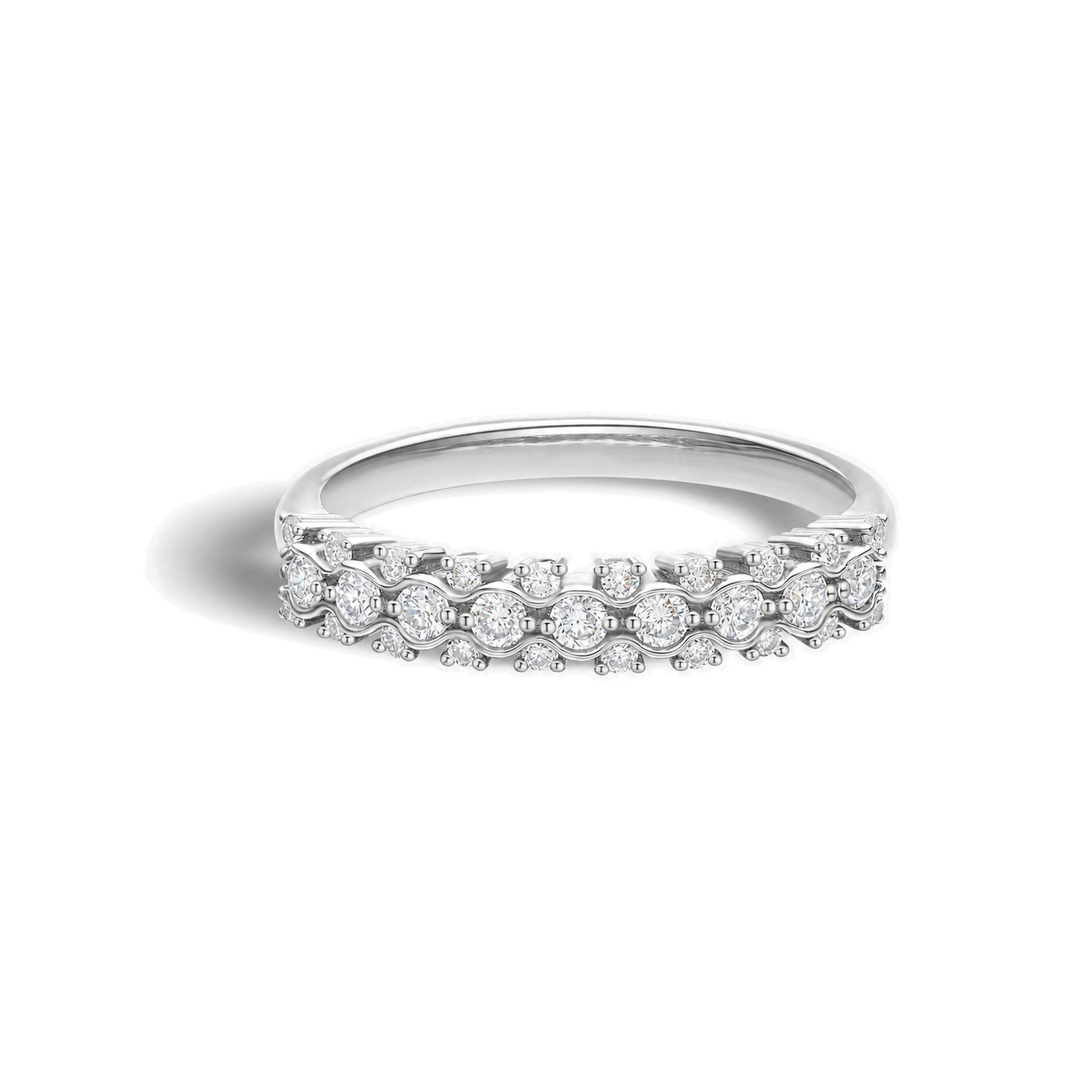
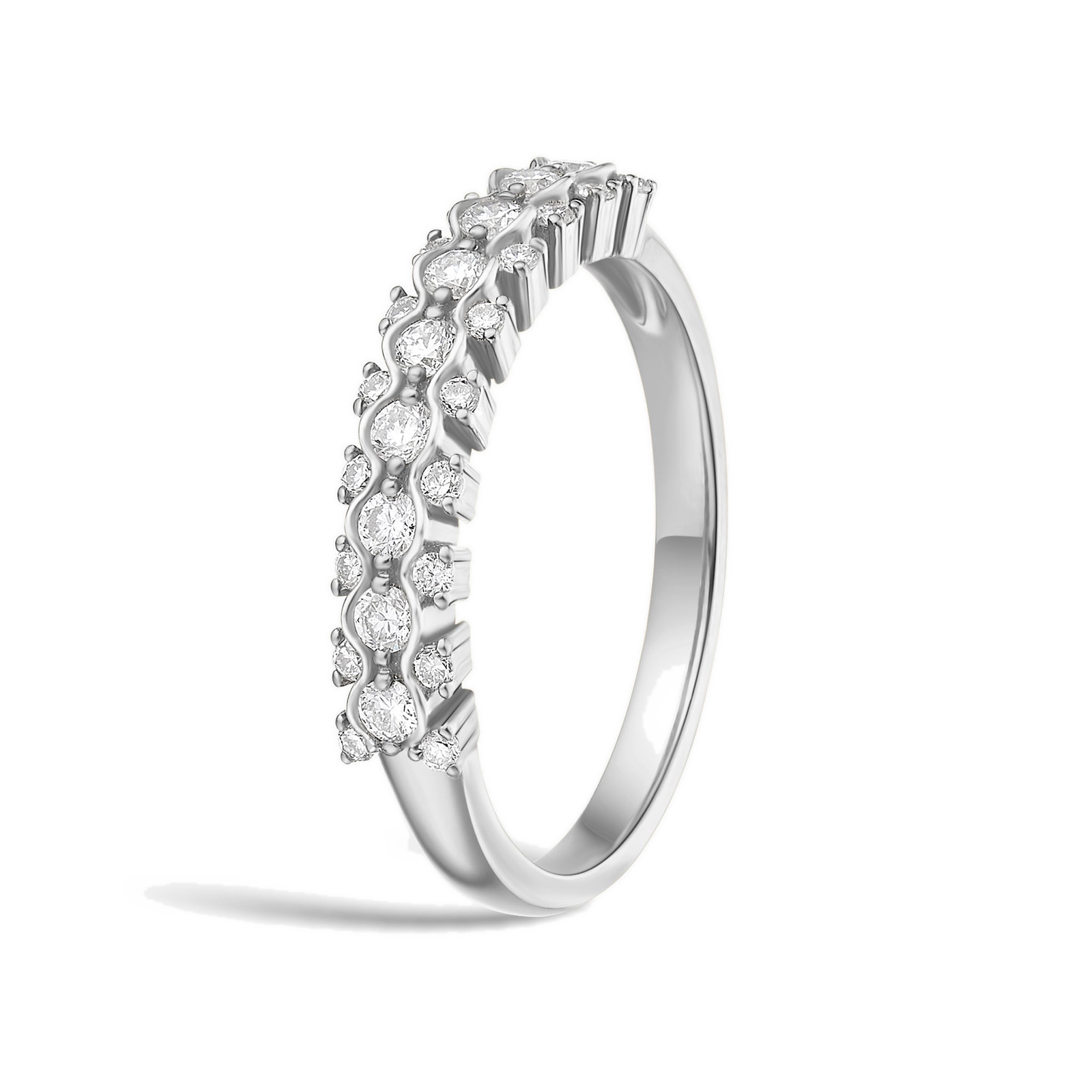

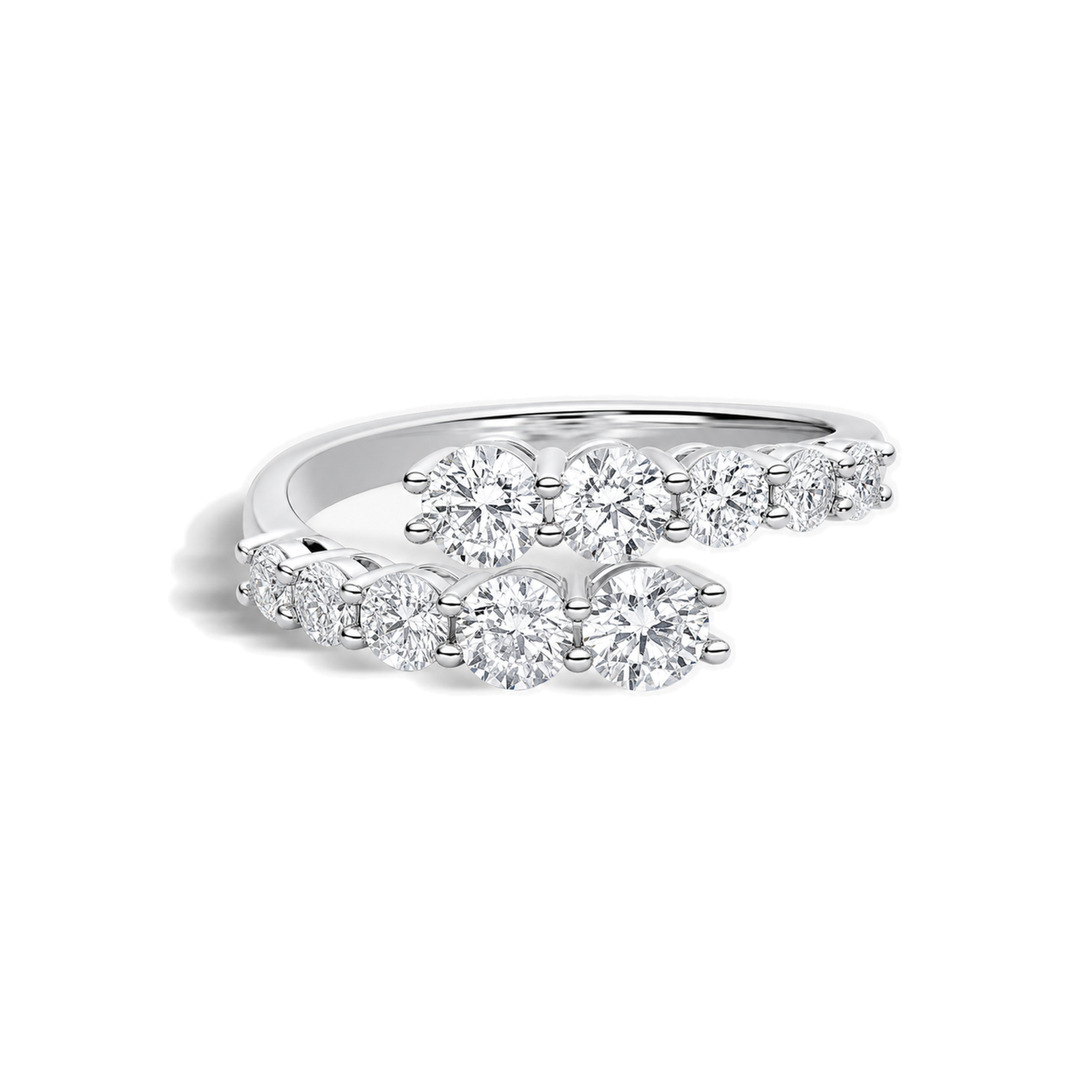
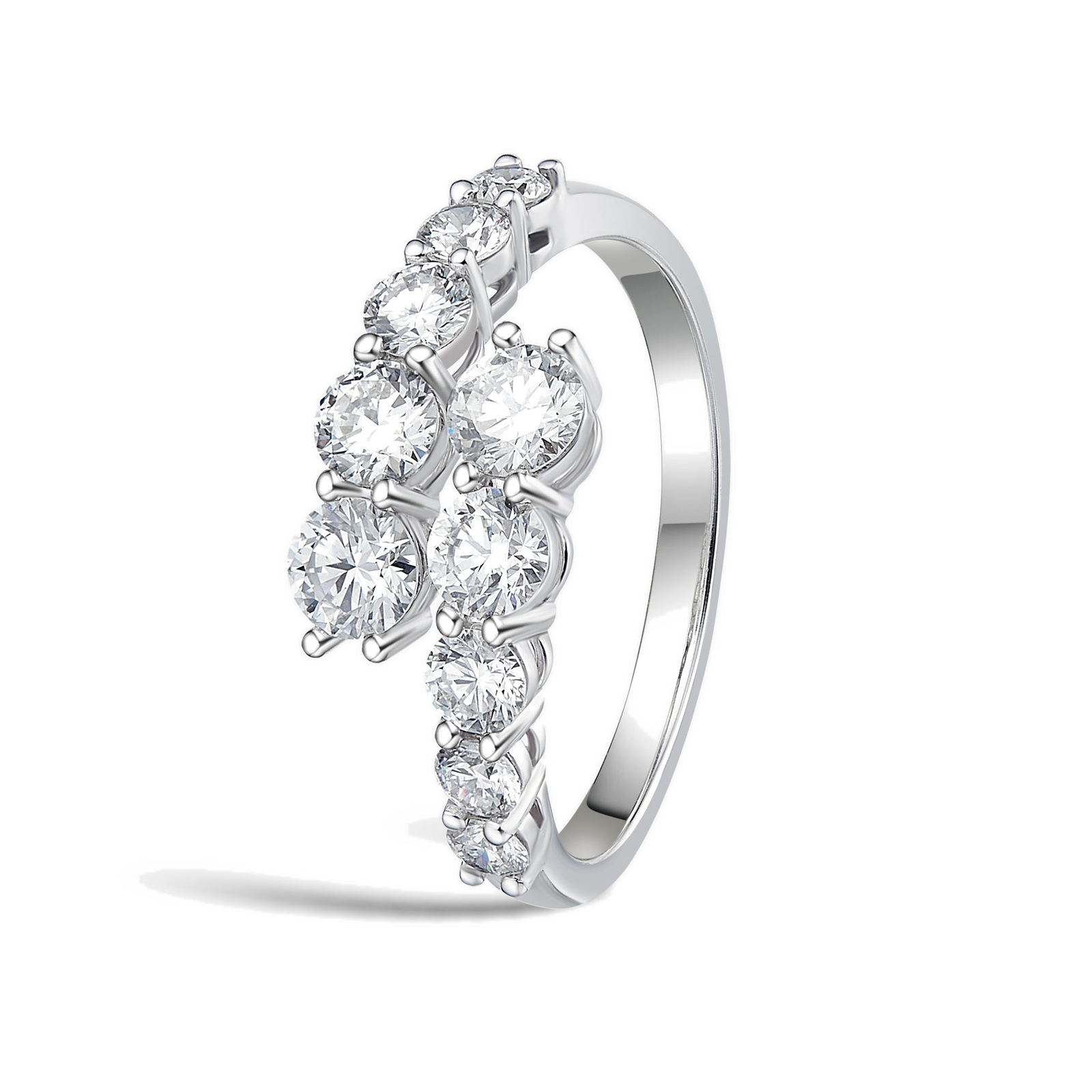

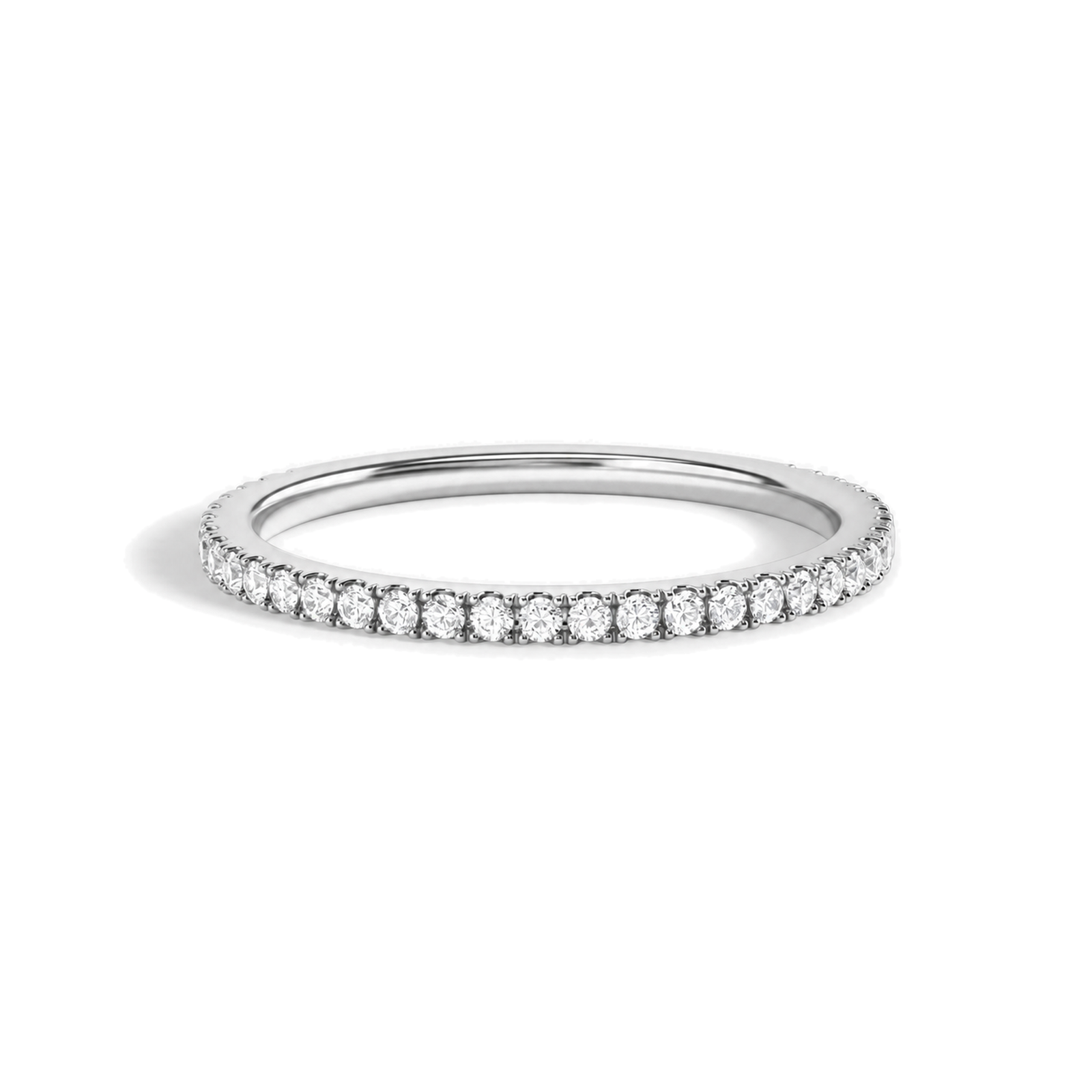
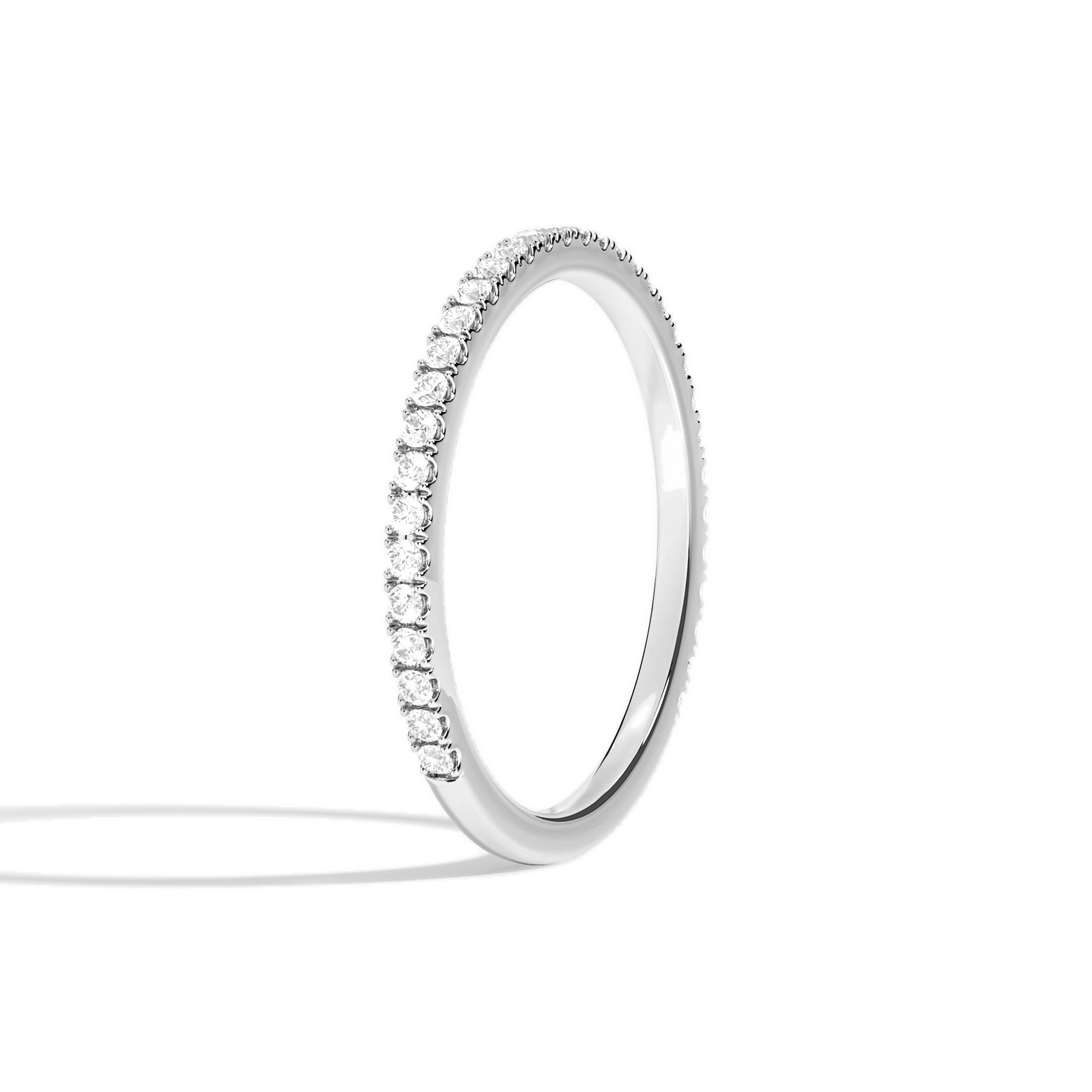






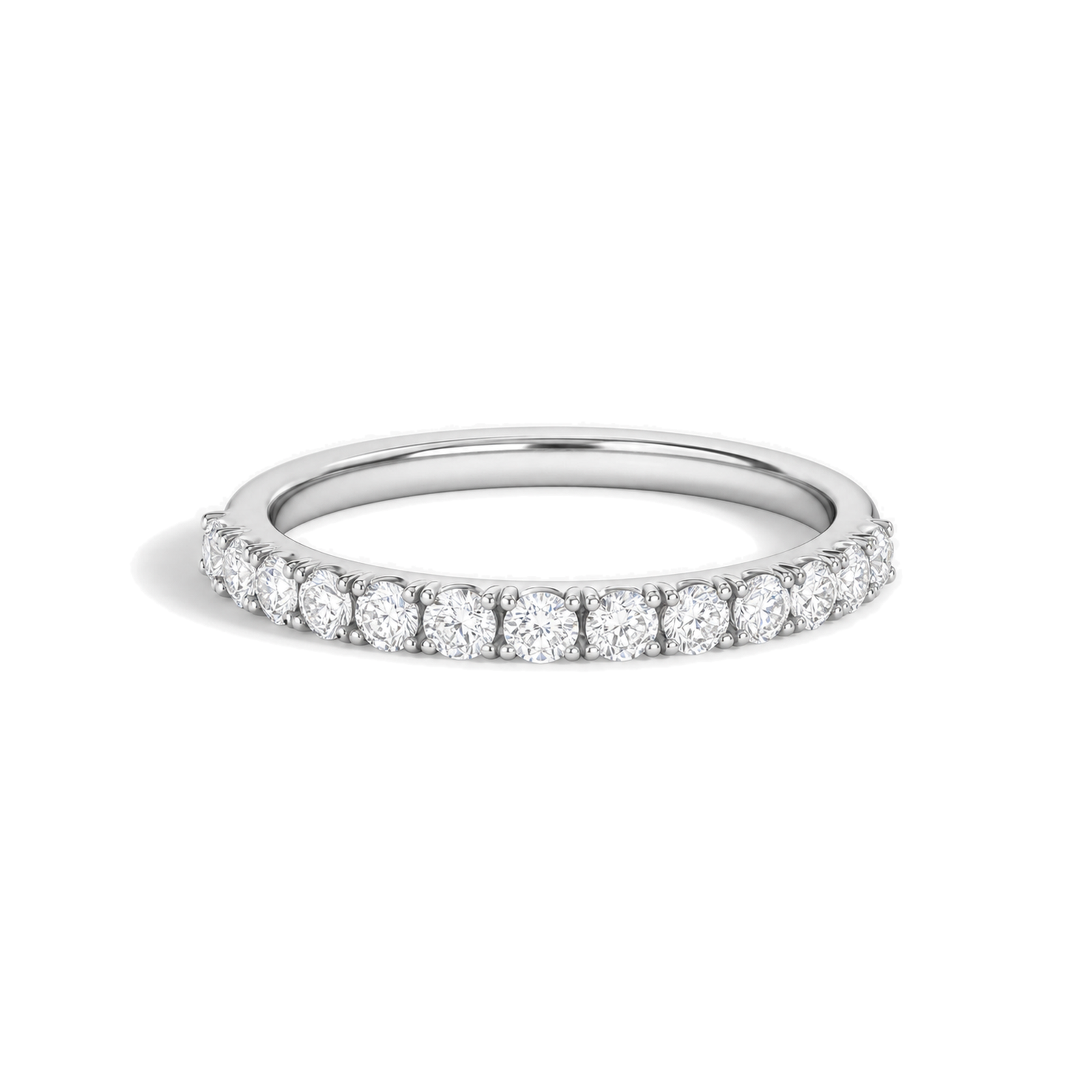
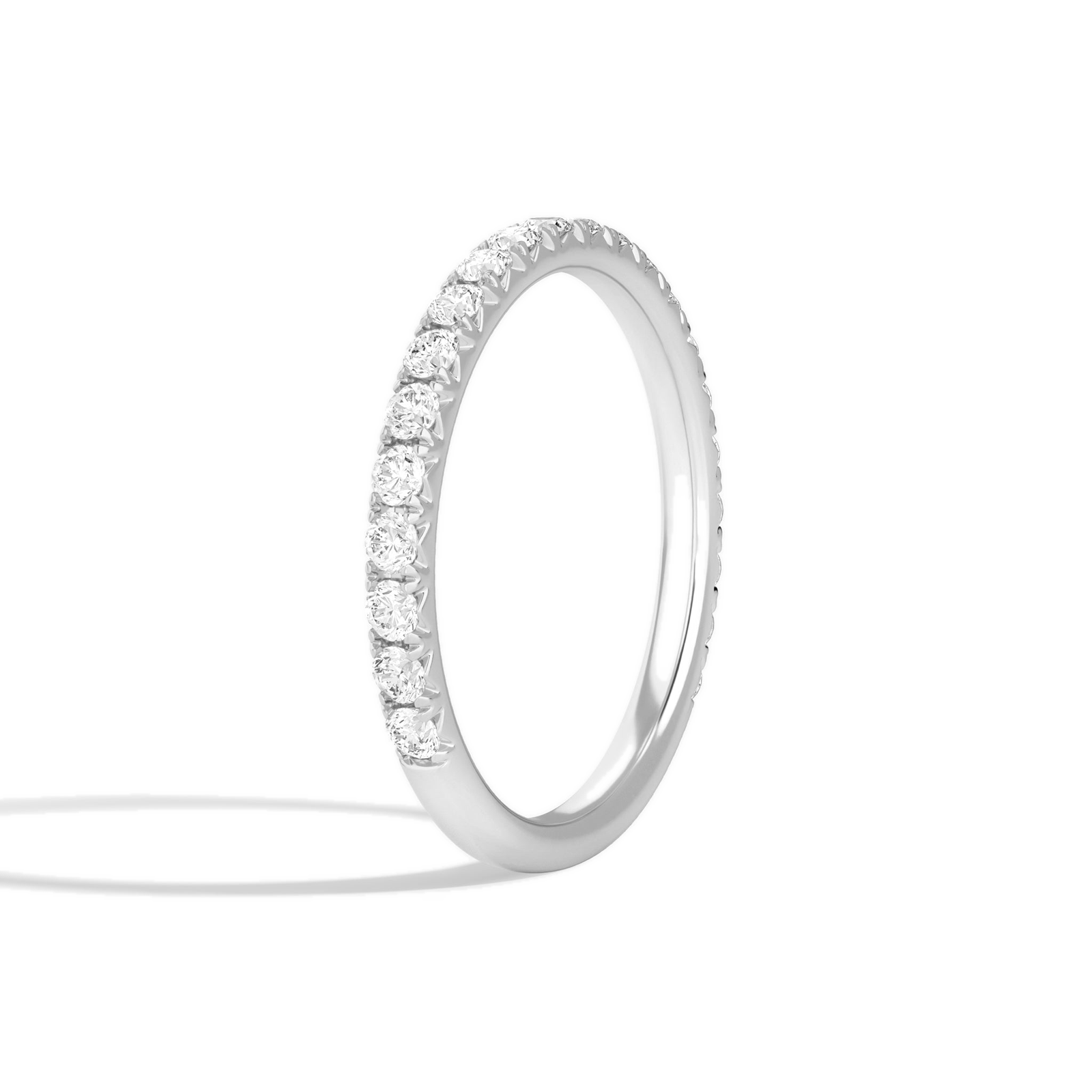

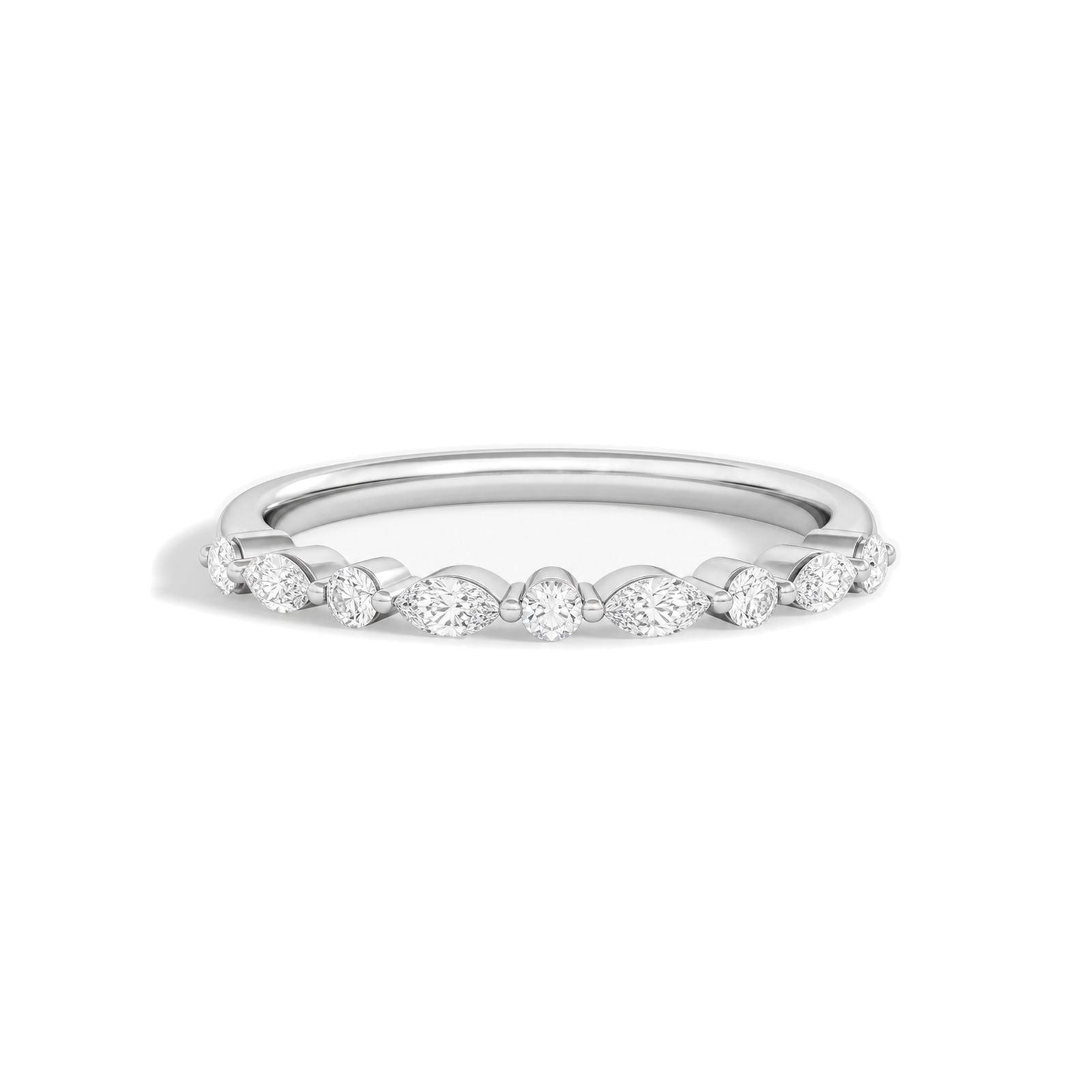
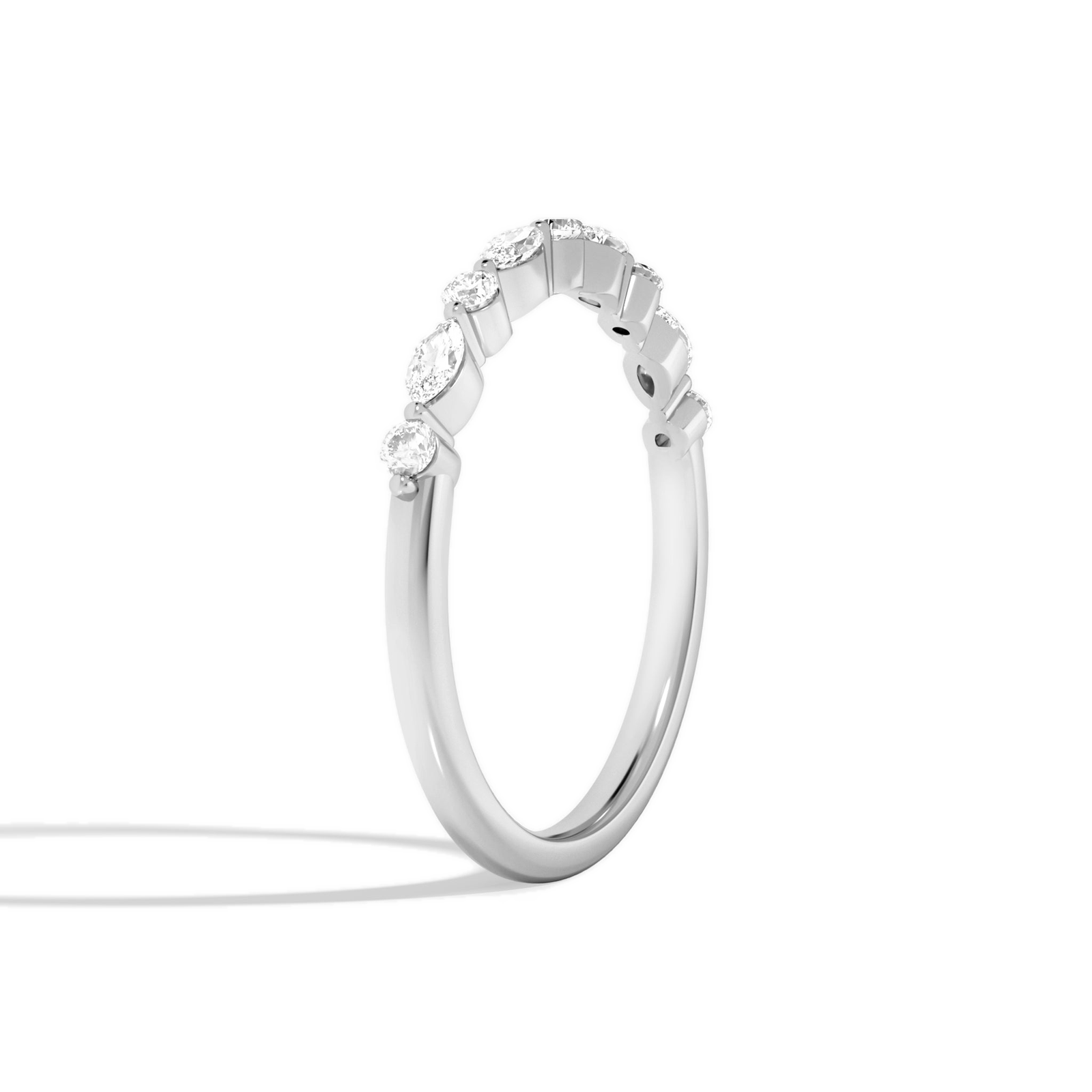

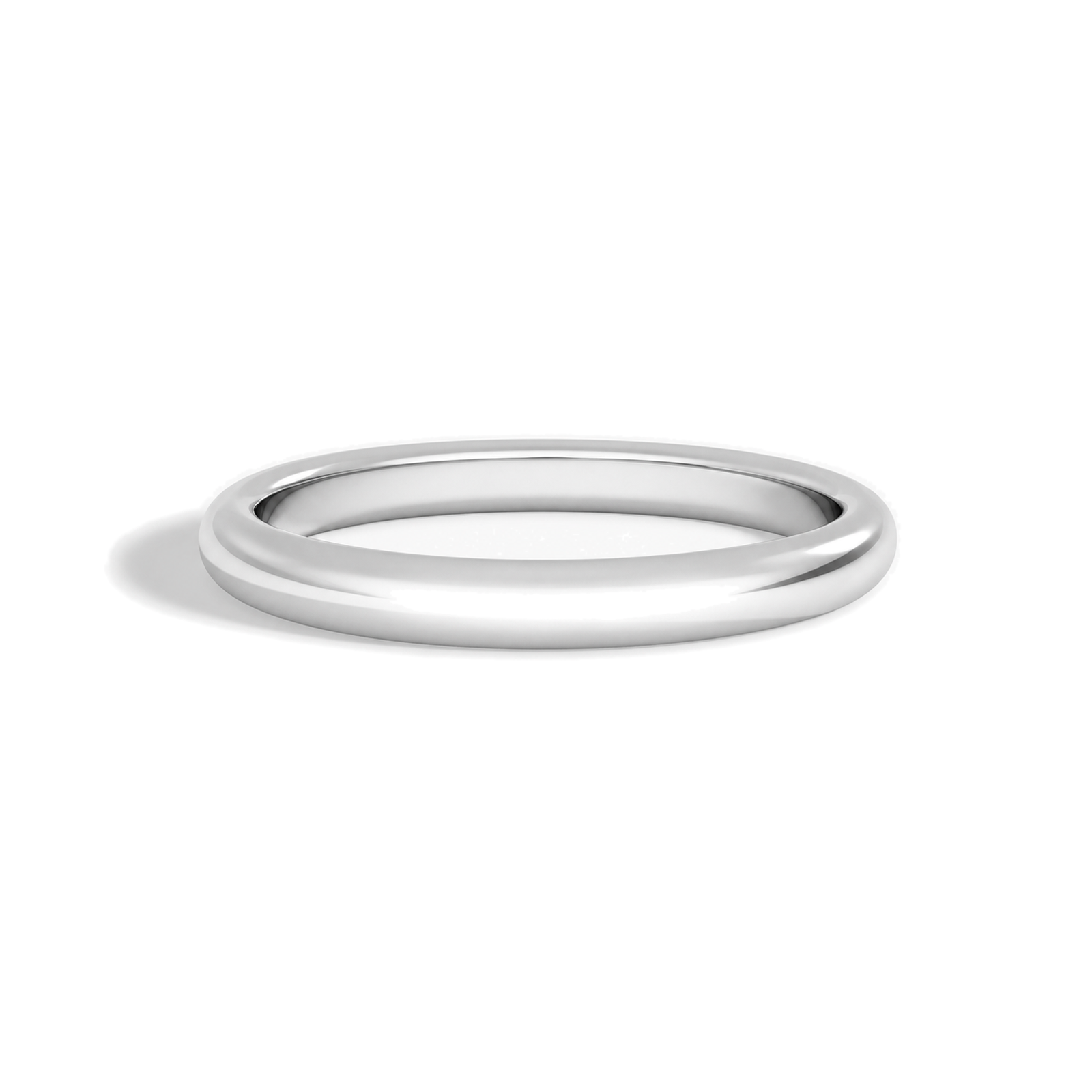
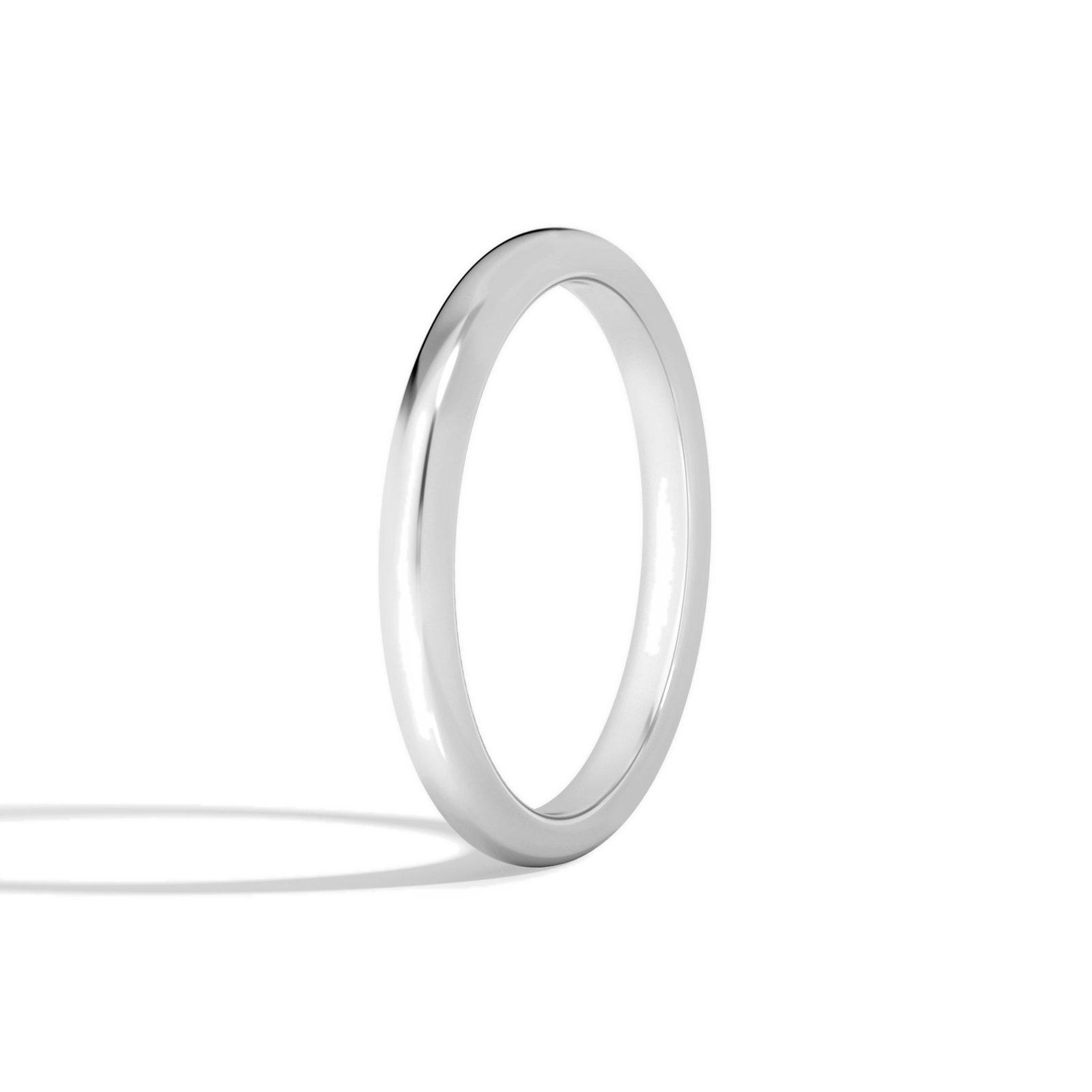

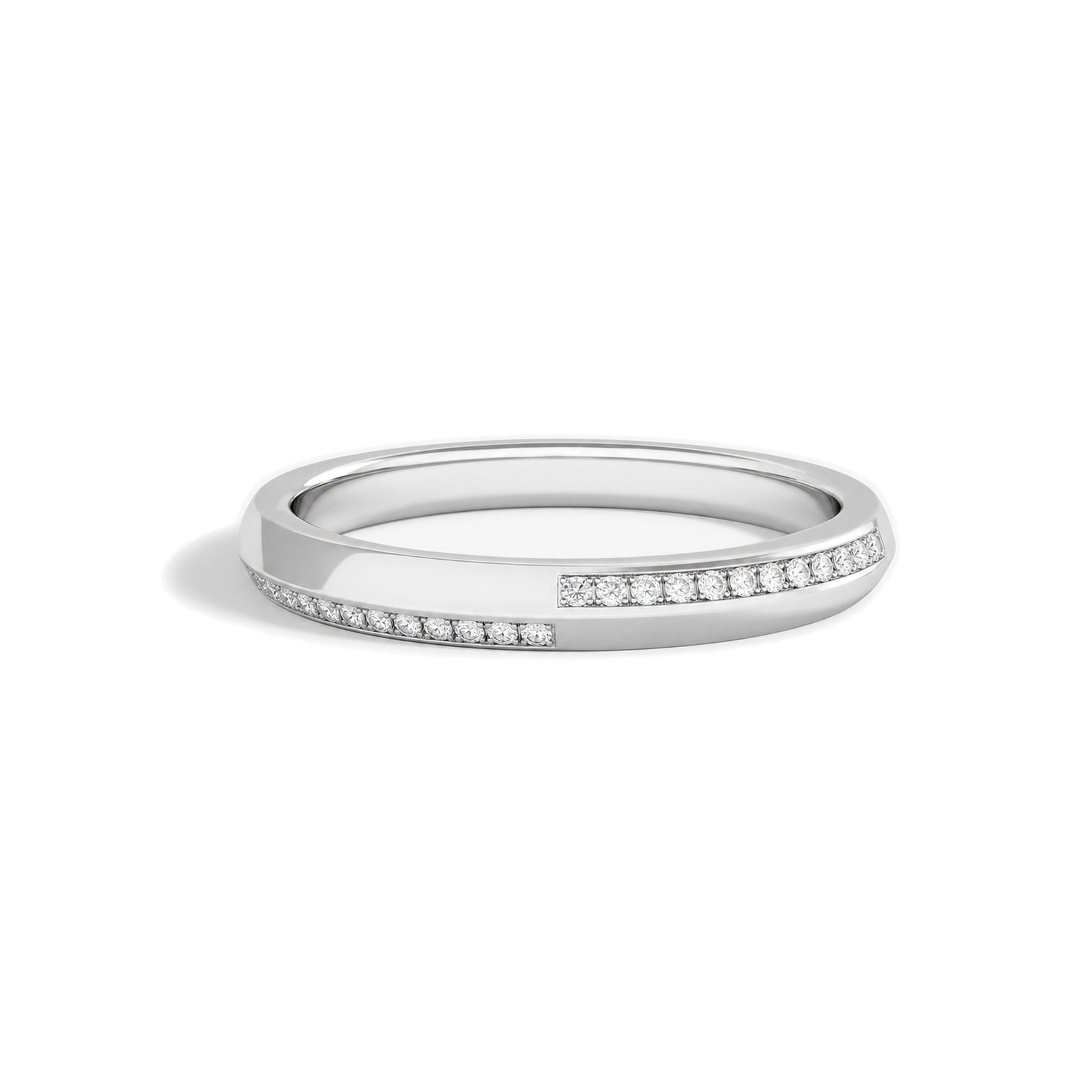
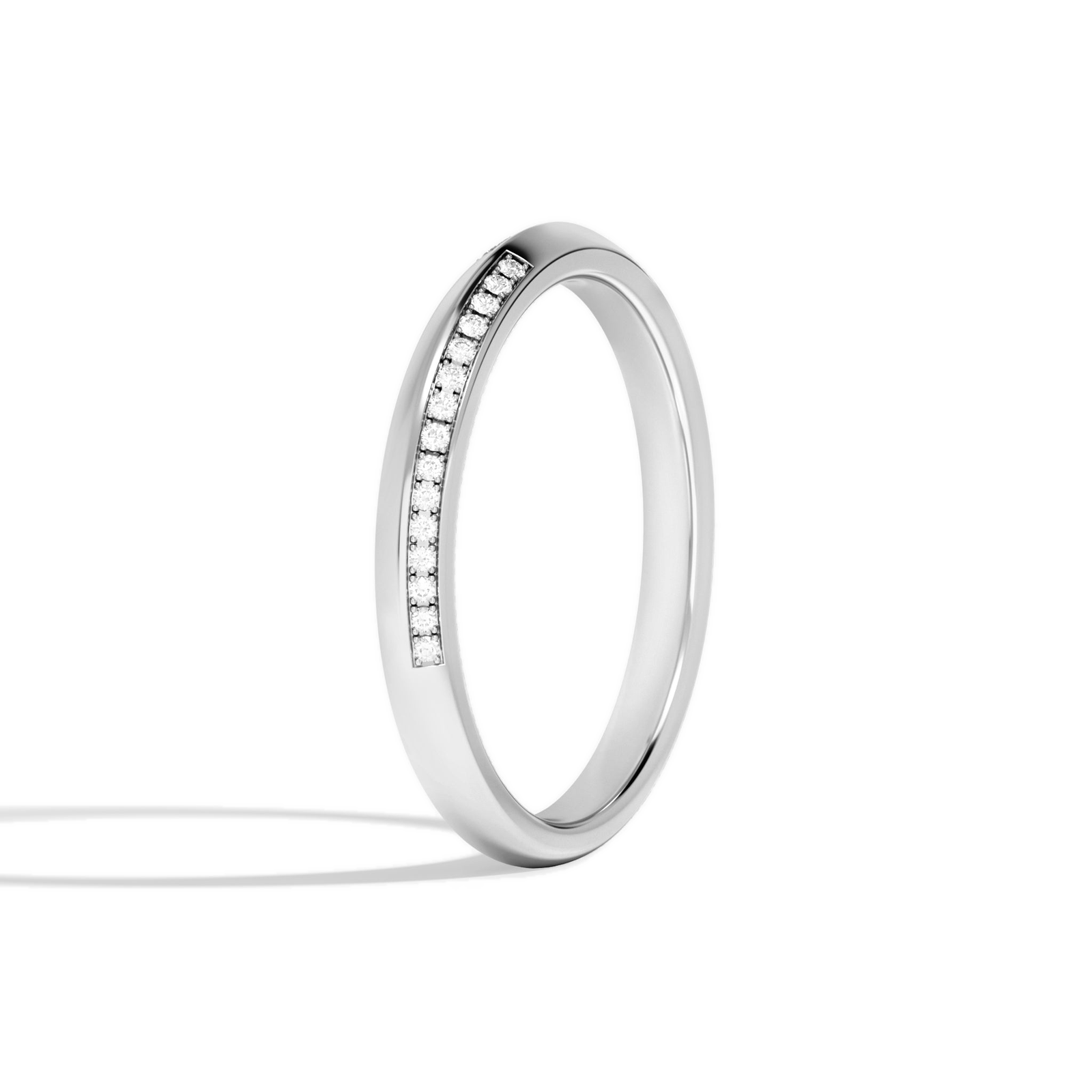
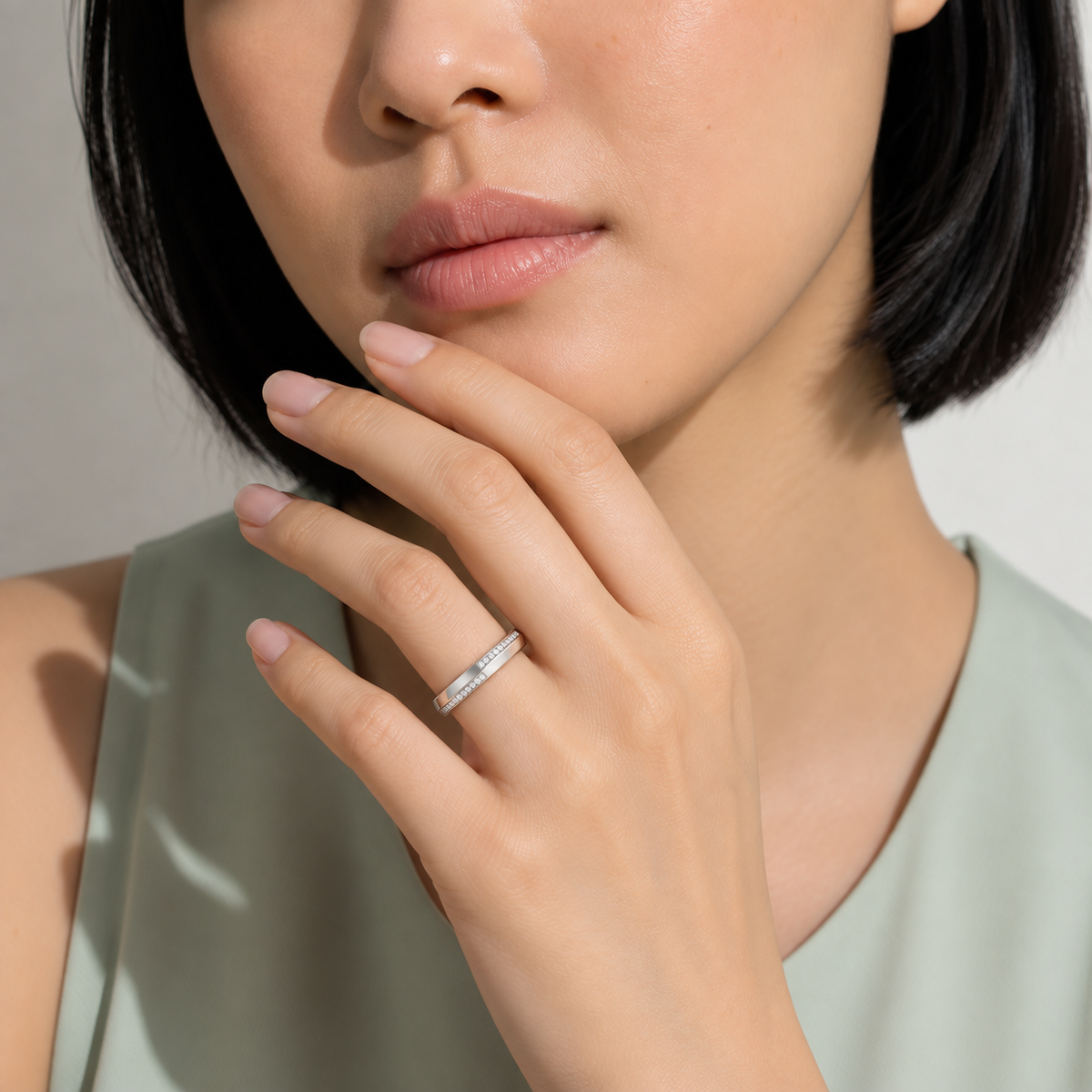
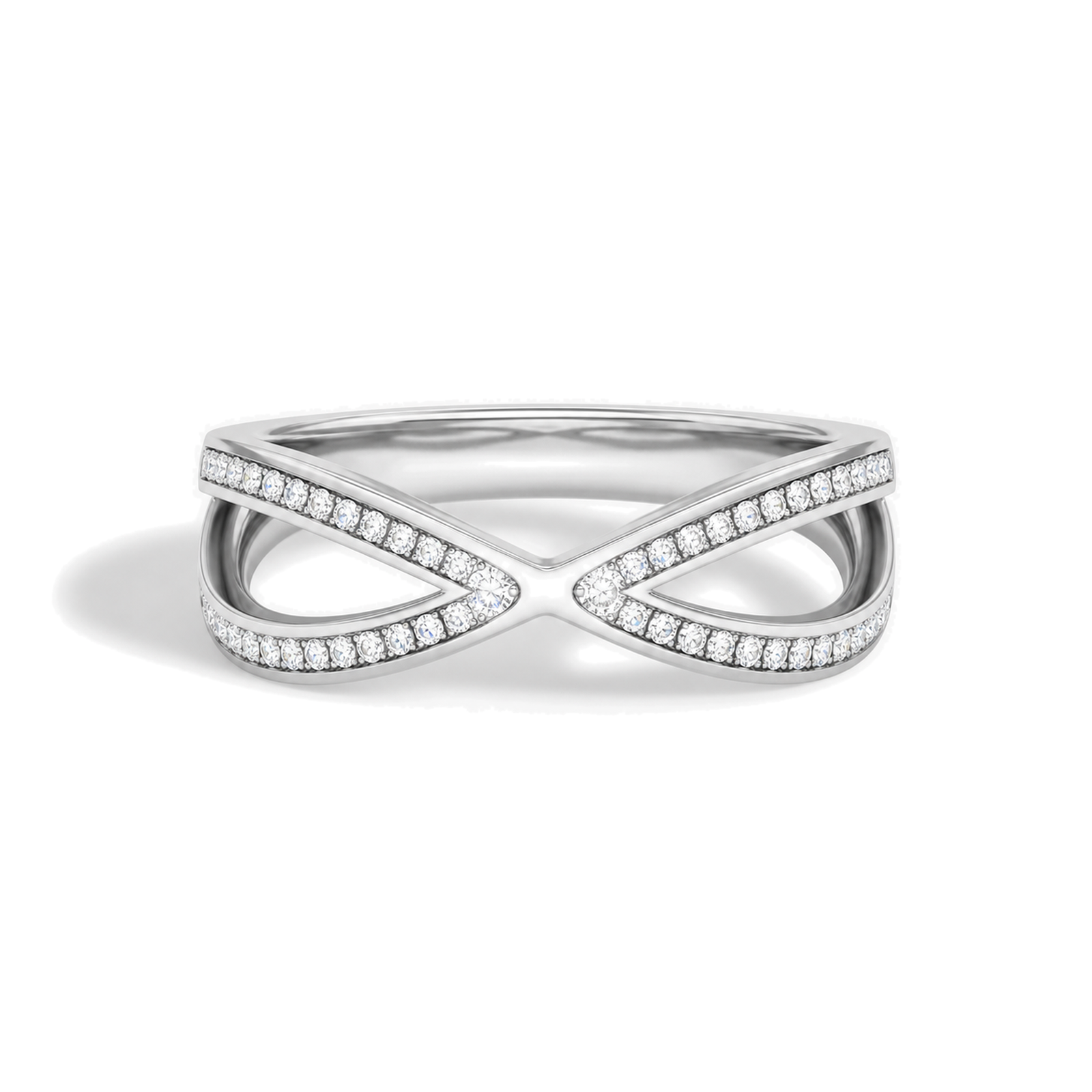


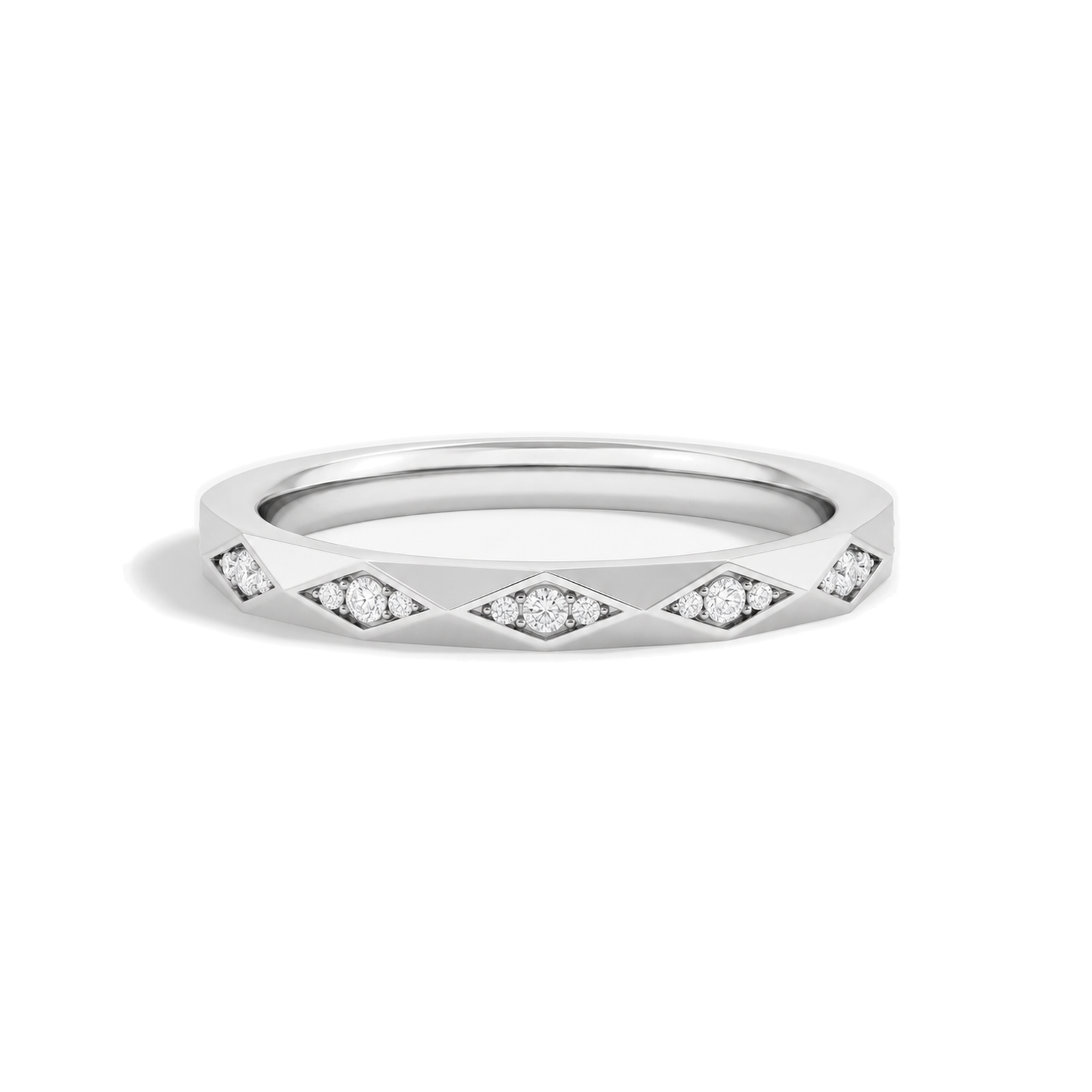


14K White Gold Anniversary Rings: Let Structure Hold the Moment
White Gold can reduce the color boundary between metal and diamond, bringing line, spacing and setting architecture forward. An anniversary ring may continue that quiet field beside an existing set, interrupt it with a different profile or stand alone as a new marker.
The sixty-nine normalized designs are not a private anniversary assortment: every one also sits in the same-metal Rings, Fashion Rings and Wedding Bands routes. Forty-five overlap Stacking Rings and eleven overlap Curved Rings. Occasion and placement are the only defensible responsibilities here.
Compare Profile before Declaring Continuity
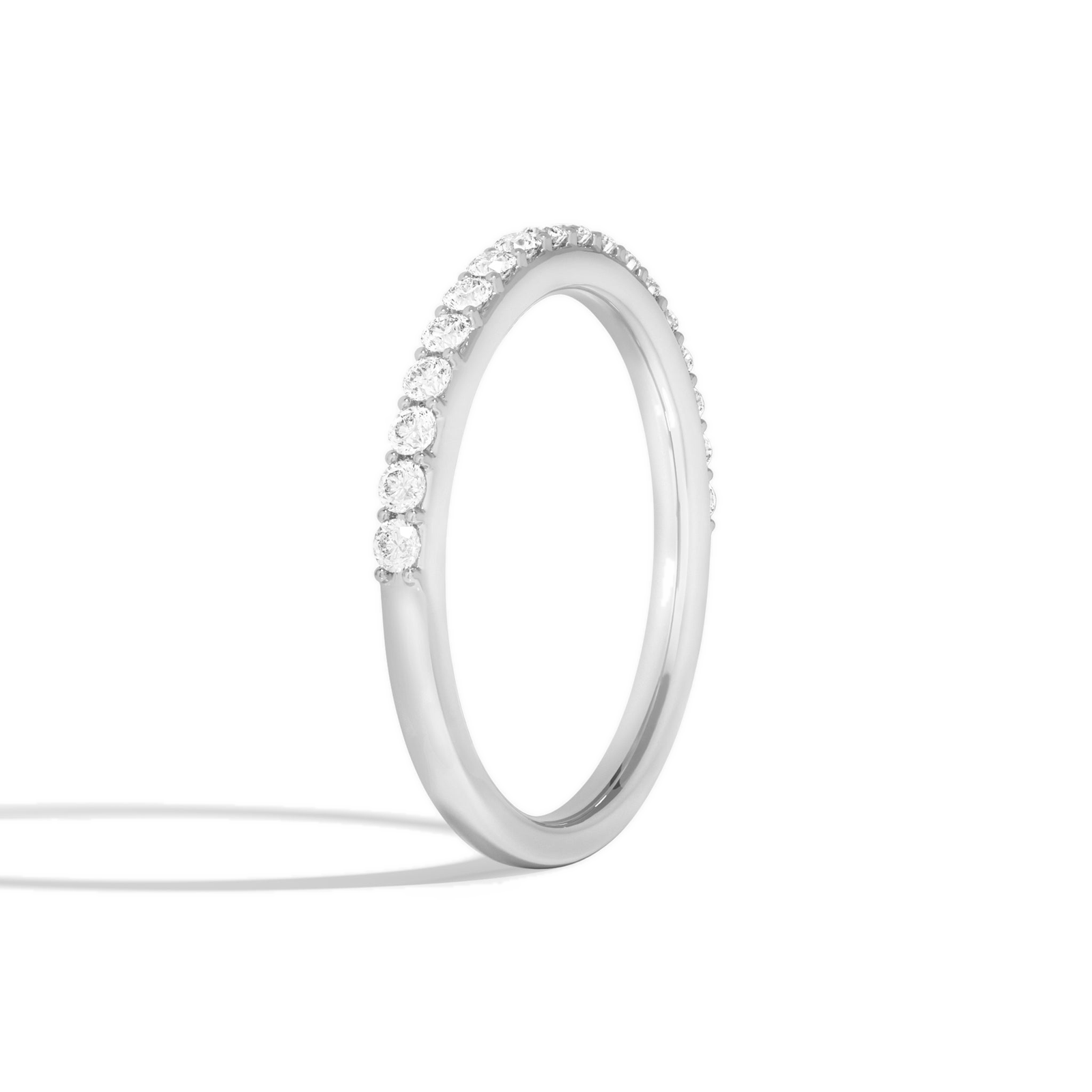
Two pale rings can look related face-up while meeting very differently at their galleries, prongs, shoulders and edges. A straight band may leave deliberate space; a contour may follow one setting but not another. Similar color cannot guarantee a flush or stable result.
If the new ring will enter a set, compare actual dimensions and view the combination from the side. Treat visible space as a design decision to understand, not an automatic flaw or a promise of zero contact.
Move from Diamond Line to Metal Interval
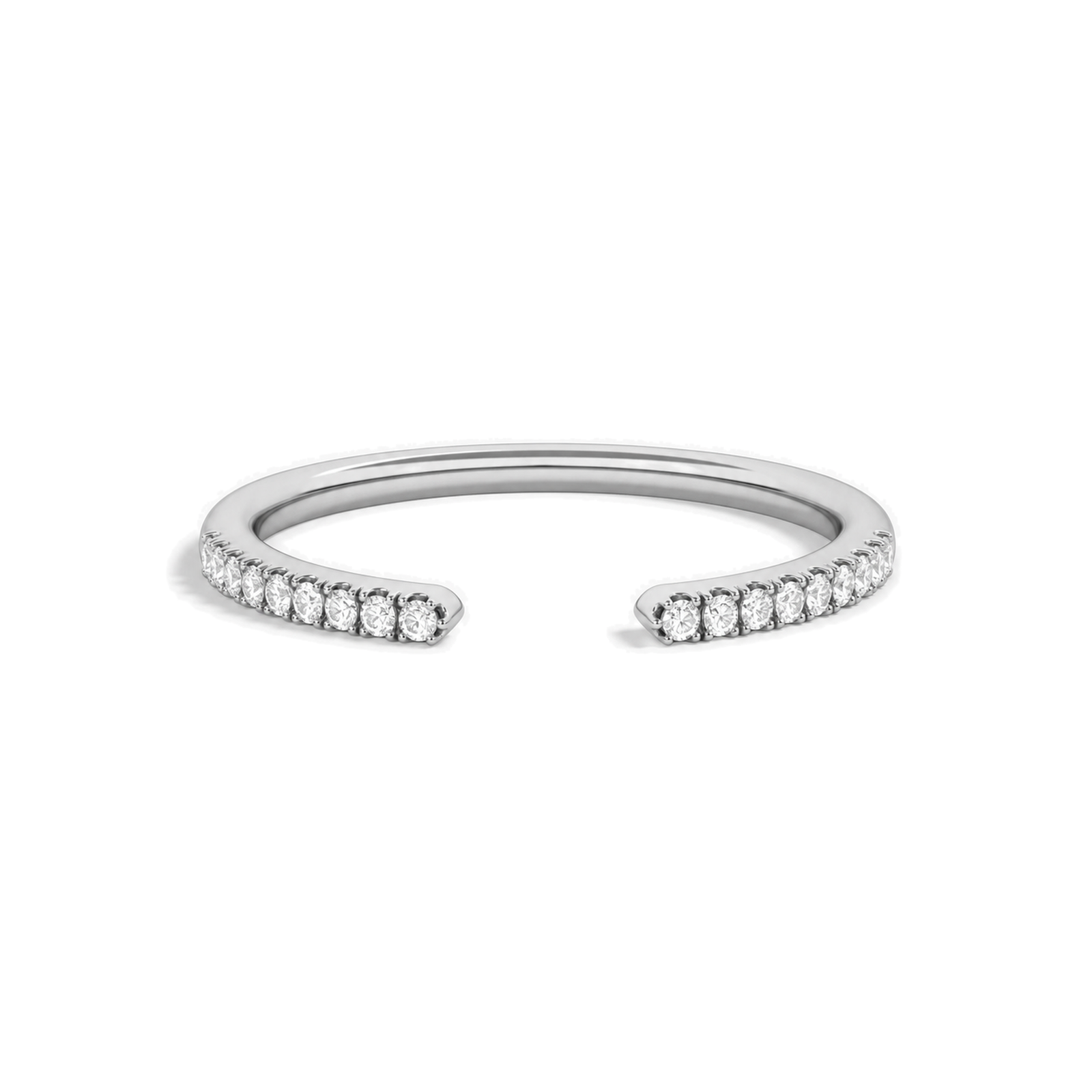
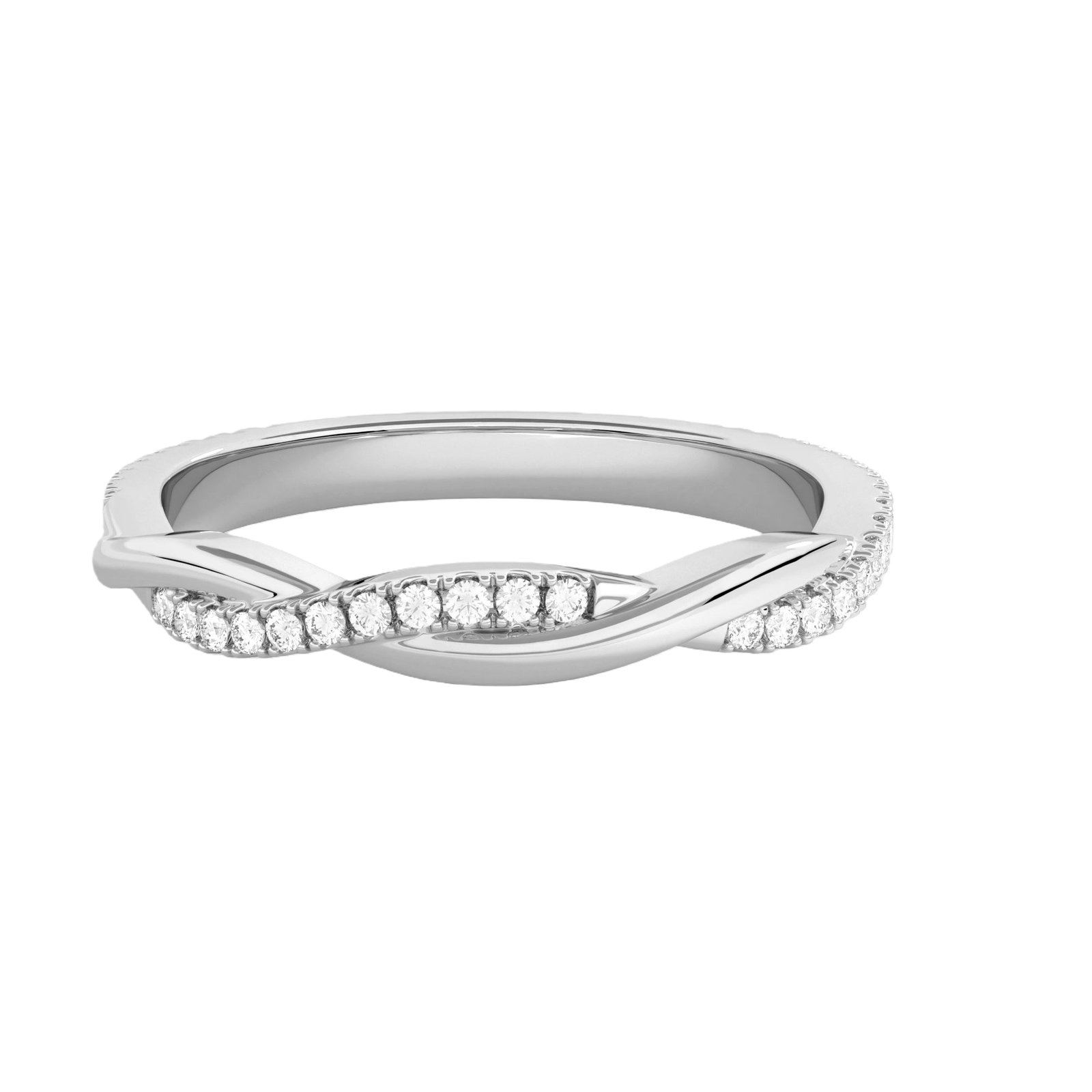
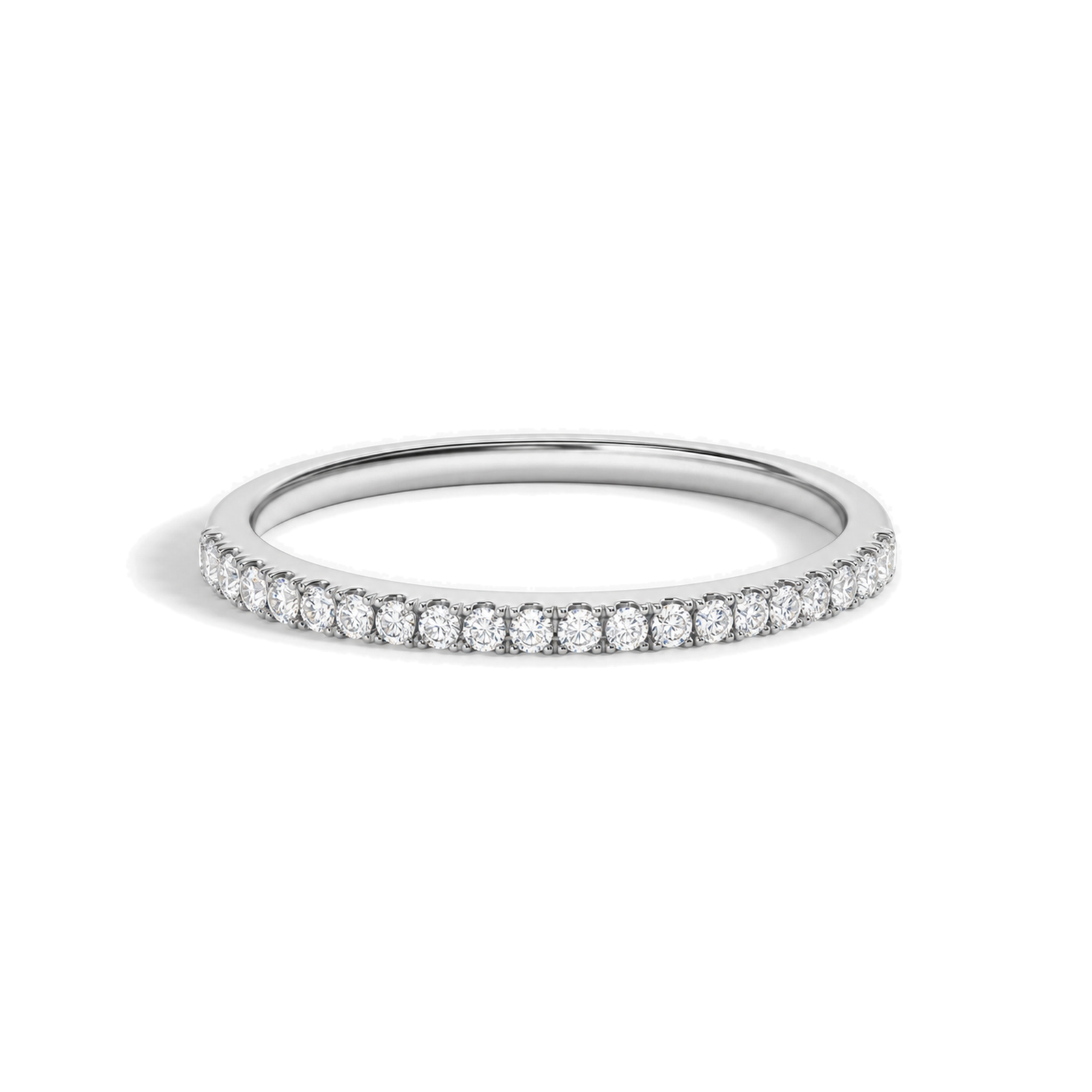
Current parent facts include eternity, partial-coverage, channel, open, crossover, curved and restrained comfort-fit forms. Their structures offer different ways to register time: repetition, pause, directional movement or a quiet uninterrupted band.
Average widths presently run from 1.4–5.0 mm. The number describes distance across the finger, not thickness, interior contour, setting height or sensation. Compare the whole arrangement rather than making a comfort inference.
Keep Finish and Alteration Evidence Exact
14K denotes approximately 58.3% gold. White appearance may involve alloy and finish decisions, but no Collection-wide rhodium, maintenance, sensitivity or future color statement is supported here.
Engraving, sizing and refinishing remain construction-specific. Diamond extent, channels, symmetry and surface detail can change what work is feasible; the occasion does not override those limits.
Frequently Asked Questions
What is the purpose of this metal-specific page?
It frames sixty-nine designs around a milestone, white-metal continuity and placement beside existing rings.
Is the product membership unique?
No; Rings, Fashion Rings and Wedding Bands contain the same sixty-nine normalized designs.
How much overlap exists with Stacking Rings?
Forty-five of sixty-nine designs also appear in that same-metal route.
How many are also Curved Rings?
Eleven normalized designs share the same-metal Curved Rings page.
Does an anniversary ring have to join the wedding set?
No. It may be worn alone, on another finger or within a different composition.
Will white gold make two rings look seamless?
Not necessarily; profile, spacing, finish and setting architecture can keep them distinct.
Can a straight ring work beside a raised setting?
It may, but actual gallery, basket, shoulder and edge dimensions must be compared.
Is a visible gap automatically undesirable?
No. A measured interval can be intentional when contact and movement are understood.
Which broad structures occur?
Eternity, partial coverage, channel, curved, open, crossover and restrained forms are represented.
What are the published width limits?
The current parent evidence runs from 1.4 to 5.0 mm average width.
Does average width reveal thickness?
No. Thickness and interior geometry require separate product facts.
Is every white gold ring rhodium plated?
No Collection-wide conclusion is recorded; verify the selected product description.
What proportion of 14K is gold?
Approximately 58.3% by fineness.
Does this page prescribe a diamond anniversary?
No. It treats tradition as optional context rather than a buying rule.
Can partial-coverage rings be resized?
Possibly, but settings, symmetry and requested change determine feasibility.
Is engraving available across all designs?
No shared availability is assumed; usable surface and construction must be checked.
What views matter when planning a pairing?
Use both face-up and profile views, then consider spacing and contact through movement.