
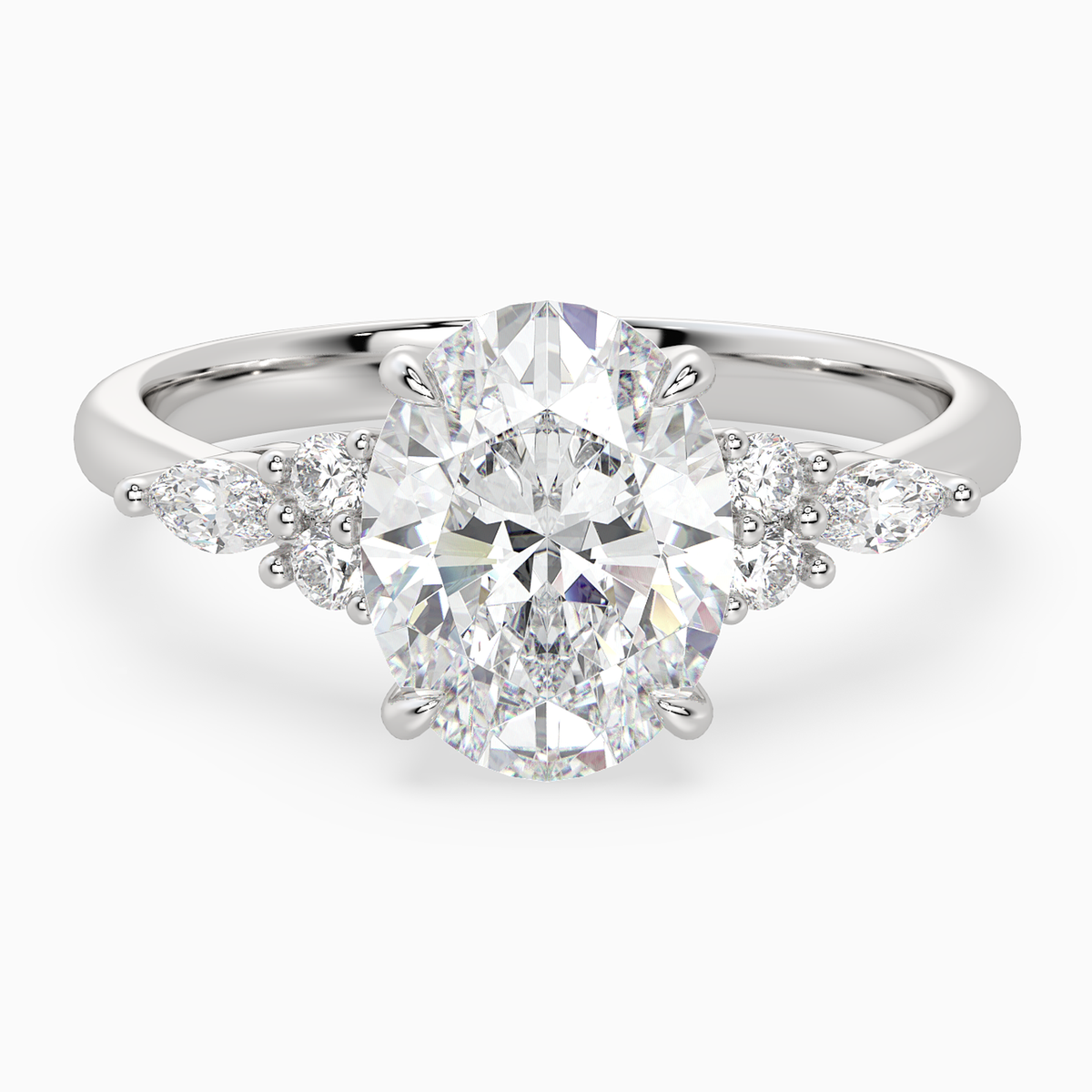


Why Marquise Diamonds Stand Out: Shape, Style, and Buying Tips

Marquise diamonds are not quiet by nature. Their long, pointed silhouette draws the eye, adds length to the hand, and gives a ring a more intentional shape than a classic round or oval. That is why marquise shaped diamonds keep returning to modern jewelry conversations: they feel vintage, sculptural, and highly personal at the same time.
The best marquise diamond is not chosen by outline alone. Look closely at length-to-width ratio, bow-tie visibility, symmetry, pointed-end protection, and setting style. A beautiful marquise should look balanced from tip to tip, bright through the center, and secure enough for daily wear.
This guide explains why marquise diamonds are gaining attention, which settings suit them best, and what to check before choosing one for an engagement ring or fine jewelry piece.
What Is a Marquise Diamond?
A marquise diamond is an elongated diamond shape with two pointed ends. It is sometimes called a navette shape because its outline resembles a small boat. Most marquise diamonds use a brilliant-style facet pattern, so the shape combines drama with lively sparkle.
The shape has antique roots, but it does not have to feel old-fashioned. A marquise solitaire can look clean and architectural. A marquise with milgrain or a halo can feel romantic. An east-west marquise setting can feel completely contemporary. Use our diamond shape guide and 4Cs diamond guide for the broader decision framework.
Why Marquise Shaped Diamonds Are Getting Attention
They create more visual length
The elongated outline naturally pulls the eye up and down the finger, which can make the hand look longer and more refined.
They look substantial for their carat
Because more of the weight is spread across the top view, a marquise can have strong face-up presence compared with many compact shapes.
They feel individual
A marquise is recognizable from across the room. It suits shoppers who want a ring with a clear point of view.
They move between eras
The same stone can lean vintage, minimal, romantic, or modern depending on the setting.
How a Marquise Diamond Looks on the Hand
The most flattering quality of a marquise diamond is its direction. Set north-south, it visually extends the finger. Set east-west, it creates a more unexpected horizontal line across the hand. Both can work, but they communicate different things.
A north-south marquise feels elegant and elongated. It is the classic choice for maximizing length. An east-west marquise feels more modern, graphic, and low-profile. If you want the ring to feel less traditional, east-west can make the marquise shape feel fresh without adding extra stones.
Best Settings for Marquise Diamonds
The setting controls whether a marquise diamond feels delicate, bold, vintage, or architectural. It also protects the pointed ends, which deserve thoughtful coverage in a daily-wear ring. Continue with Marquise Diamond Engagement Ring Guide for the next comparison.

Solitaire
A solitaire puts the outline in full focus. For a marquise, that can be powerful because there is no competing detail. The key is secure prong placement at the tips and a band width that feels balanced against the stone length.
East-West
An east-west marquise turns the shape sideways. It often feels cleaner, more modern, and easier to wear low on the finger. This style can be especially strong for someone who likes minimal design but wants a distinctive silhouette.
Halo or Hidden Halo
A halo can soften the pointed outline and add visual size. A hidden halo keeps the top view cleaner while adding detail from the side. For a marquise, halos need careful proportion so the shape stays elegant rather than crowded.
Side Stones
Tapered baguettes, smaller pears, or slim side stones can frame the marquise and make the ring feel more designed. Side stones work best when they support the length of the center stone instead of making the ring look too wide.
How to Choose a Marquise Diamond Well
Marquise diamonds reward careful selection. A beautiful one can look elegant and bright. A poorly selected one can look uneven, dark through the center, or too narrow for the setting.

Look at the Length-to-Width Ratio
Length-to-width ratio changes the personality of the stone. A lower ratio looks wider and softer. A higher ratio looks slimmer and more dramatic. Many shoppers like marquise diamonds in the broad range of about 1.75 to 2.25, but the best ratio depends on the hand, setting, and personal taste.
Check the Bow-Tie Effect
Many elongated diamond shapes can show a bow-tie: a darker area across the center caused by how light travels through the stone. A slight bow-tie can be normal. A strong, distracting bow-tie can make the diamond look dull through the center. Evaluate the stone in motion, not only in one still image.
Protect the Points
The pointed ends are part of the marquise shape's beauty, but they need protection. Look for secure prongs, V-prongs, bezel coverage, or a setting design that does not leave the tips exposed to daily impact.
Check Symmetry
A marquise should feel balanced from end to end. The two points should align, the sides should curve evenly, and the center should not look twisted. Small asymmetry can become more obvious in a long shape.
Choose Color and Clarity With the Setting in Mind
Marquise diamonds can show warmth near their pointed ends, especially in larger stones or white metal settings. Clarity also matters because the elongated shape gives the eye a longer path to inspect. Many shoppers prioritize an eye-clean stone and a color grade that feels bright in the chosen metal.
Marquise vs. Other Elongated Diamond Shapes
| Shape | Visual personality | Best for | Watch for |
|---|---|---|---|
| Marquise | Long, pointed, dramatic, and sculptural. | Finger length, strong face-up presence, distinctive style. | Bow-tie, tip protection, symmetry. |
| Oval | Soft, elongated, classic, and versatile. | A graceful shape that feels less pointed and easier to style. | Bow-tie and length-to-width preference. |
| Pear | One pointed end with a rounded base. | Asymmetry, soft drama, and directional styling. | Orientation, point protection, shoulder balance. |
| Emerald cut | Step-cut, quiet, linear, and architectural. | Clarity, elegance, and a more restrained type of brilliance. | Visible inclusions and less fire than brilliant cuts. |
Marquise Diamonds Beyond Engagement Rings
Marquise diamonds are not limited to center-stone engagement rings. Their shape works beautifully in necklaces, earrings, anniversary bands, and fashion rings because the outline adds movement even at smaller sizes.
A single marquise pendant can feel refined and elongated on the neckline. Marquise studs can draw light toward the face. In bands, marquise stones can create leaf-like or chevron-inspired patterns that feel more designed than a standard round-stone row.
Why Lab-Grown Diamonds Work Well for Marquise Shapes
Lab-grown diamonds can be a strong option for marquise shapes because they give shoppers more room to compare proportion, size, color, clarity, and setting design within a chosen budget. For a shape where visual balance matters so much, that flexibility can help you choose the stone that actually looks best.
If you are still exploring, compare Explore marquise diamond engagement rings with finished engagement ring settings. A marquise that looks strong loose may need a different setting than a marquise that looks best on the hand.
Do not choose a marquise diamond from carat weight alone. Ask how it looks face-up, how visible the bow-tie is, how the tips are protected, and whether the setting supports the stone's length instead of fighting it. Continue with Marquise Diamond Buying Guide for the next comparison.
Considering a Marquise Diamond Ring?
Burvonti can help you compare marquise proportions, setting direction, tip protection, and lab-grown diamond specifications before you commit to the final design.
View Engagement Rings Start a Custom Design ConversationMarquise Diamond FAQs
What does a marquise diamond symbolize?
A marquise diamond is often associated with individuality, elegance, and a sense of movement because of its long navette-like outline. For many shoppers, the appeal is less about fixed symbolism and more about choosing a shape with a distinct point of view.
Are marquise diamonds outdated?
No. Marquise diamonds have vintage history, but the setting determines how current they feel. A clean solitaire, east-west setting, bezel, or refined side-stone design can make a marquise feel very modern.
Do marquise diamonds look bigger?
They often look larger face-up than more compact shapes at the same carat weight because their length spreads across the finger. Actual appearance still depends on proportions, setting, and hand scale.
What is the best setting for a marquise diamond?
The best setting depends on your style, but secure tip protection is essential. Solitaires, east-west bezels, hidden halos, halos, and side-stone settings can all work when the proportions are balanced.
How do I avoid a strong bow-tie in a marquise diamond?
View the diamond in motion and under different lighting. A mild bow-tie can be normal, but avoid stones where the center stays noticeably dark or distracting from multiple angles.
Are lab-grown marquise diamonds a good choice?
Yes, lab-grown marquise diamonds can be an excellent choice when you want more flexibility in size, quality, and setting budget. As with any diamond, compare the actual stone rather than relying on shape name alone.
Final Thought
A marquise diamond is for someone who wants shape to matter. It lengthens, catches attention, and gives a ring an immediate identity. Choose it carefully, protect the points, and let the setting sharpen the personality you want: classic, modern, romantic, or entirely your own.