
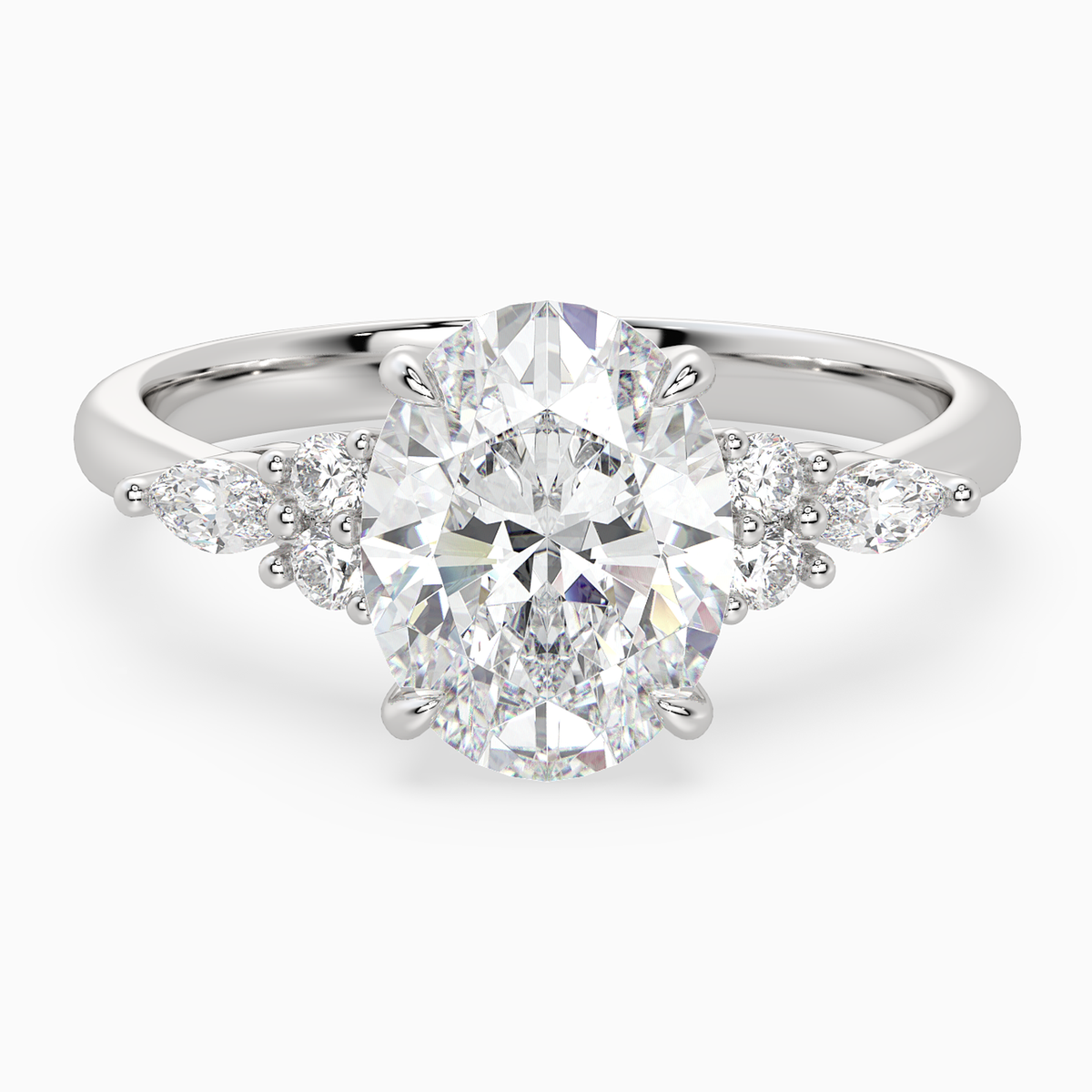


White Gold vs. Yellow Gold: Which Metal Makes Your Diamond Look Better?

White gold and yellow gold can hold the same diamond, the same setting style, and the same sentiment. Yet they create very different impressions. White gold feels cool, bright, and modern. Yellow gold feels warm, classic, and visibly rich against the skin.
The better choice depends on your diamond color, skin undertone, wardrobe, maintenance expectations, and whether you want the metal to disappear around the stone or become part of the design.
This guide compares white gold vs. yellow gold for engagement rings and fine jewelry, with a practical focus on appearance, care, cost logic, durability, and long-term wear.
What Is White Gold?
White gold is gold mixed with lighter-colored metals to create a pale alloy. It is usually finished with rhodium plating, a bright white surface layer that gives white gold its crisp, platinum-like shine.
That finish is the reason white gold looks so bright when new. It is also the reason white gold has a maintenance cycle: rhodium can wear over time, especially on rings that touch desks, rails, pockets, gym equipment, and everyday surfaces. Continue with Rhodium Plating Explained for the next comparison.
What Is Yellow Gold?
Yellow gold is gold alloyed with metals that help preserve its warm golden tone. It does not need rhodium plating to look yellow, so its color is more inherent to the metal blend.
Yellow gold has a visible design personality. It frames diamonds with warmth, makes metal details easy to see, and often feels more traditional or vintage-inspired. In modern settings, it can also look architectural and minimal when the lines are clean. Use our diamond color guide for the broader decision framework.
White Gold vs. Yellow Gold: The Main Difference
The biggest difference is not just color. It is how each metal changes the diamond and the whole piece around it.
Diamond appearance
White gold keeps the setting visually cool and can make colorless or near-colorless diamonds look very icy. Yellow gold can add contrast and make the diamond feel warmer by comparison.
Design visibility
White gold often lets the diamond take the lead. Yellow gold makes the metal architecture more visible, especially in bezels, prongs, bands, and vintage details.
Maintenance
White gold may need rhodium re-plating to keep its brightest white finish. Yellow gold usually needs polishing and cleaning, but not rhodium maintenance.
Style signal
White gold reads clean, crisp, and understated. Yellow gold reads warmer, more classic, and more expressive.
How Each Metal Changes a Diamond
If you are choosing a lab-grown diamond, metal color can influence how the stone reads in real life. White gold can visually extend the brightness of a white diamond because prongs and halo details blend into the stone. Yellow gold creates a stronger outline and can make the diamond stand out as a separate focal point.
For very colorless diamonds, white gold gives a sharp, cool look. For diamonds with a faint warmth, yellow gold can be forgiving because the metal's warmth feels intentional rather than mismatched. This does not mean one metal is always better. It means the diamond and setting should be judged together.
If you love yellow gold but want a cooler diamond face-up look, ask about a yellow gold shank with white gold or platinum-tone prongs. This can keep the ring warm on the hand while letting the prongs visually recede around the diamond.
Why White Gold Needs Rhodium Maintenance
White gold is not usually pure white all the way through. The underlying alloy may have a slightly warmer or grayish tone, while the rhodium layer creates the bright white finish most shoppers associate with white gold.
On earrings and necklaces, rhodium may last a long time because those pieces experience less friction. On engagement rings and wedding bands, the finish can wear more quickly because rings take daily contact. When the finish wears, the ring can still be structurally fine, but it may look less bright until re-plated. Continue with Platinum Jewelry Guide for the next comparison.

Which Metal Is More Expensive?
White gold and yellow gold pricing depends on karat, metal market costs, setting complexity, brand, labor, and whether future service is included. The metal color alone does not guarantee that one piece will be more expensive than the other.
White gold can carry additional long-term care costs if you want to maintain a bright rhodium finish. Yellow gold may require less color-related maintenance, but the price of the final piece can still be higher if the design is complex, heavier, or made in a higher karat.
14K vs. 18K: Why Karat Matters
Karat describes gold purity. 14K gold contains less pure gold and more alloy than 18K gold, which often makes it a practical choice for daily wear. 18K gold has a richer gold content and can feel more saturated in yellow gold, but it may be softer depending on the alloy and design.
For engagement rings, the right choice is not only about purity. It is about durability, color, setting style, and how the ring will be worn every day.
For the karat comparison, continue with 14K vs. 18K Gold for Engagement Rings.
| Question | White gold | Yellow gold |
|---|---|---|
| Which looks brighter with diamonds? | Often creates a cool, bright, icy appearance. | Creates contrast and can make the diamond stand out against the metal. |
| Which is easier to maintain? | May need rhodium re-plating over time, especially for rings. | Usually needs cleaning and polishing, but not rhodium upkeep. |
| Which feels more modern? | Clean, understated, and close to a platinum look. | Modern when the setting is minimal; classic when the design is more decorative. |
| Which is better for vintage-inspired designs? | Works well for crisp deco or cool-toned styles. | Often emphasizes milgrain, engraving, bezels, and antique-inspired detail. |
| Which hides metal color around the diamond? | White prongs can visually blend into a white diamond. | Yellow prongs create a warmer frame unless mixed-metal prongs are used. |
How to Choose by Skin Tone, Wardrobe, and Existing Jewelry
Metal choice is personal. Skin undertone can help, but it should not be the only rule. Many people look good in both white and yellow gold depending on clothing color, nail tone, other jewelry, and the design of the piece.
- If you wear mostly silver, platinum, gray, black, navy, or cool neutrals, white gold may feel natural.
- If your wardrobe leans cream, camel, olive, chocolate, warm neutrals, or vintage colors, yellow gold may feel more connected.
- If you mix metals already, consider a two-tone design or white prongs on a yellow gold band.
- If your diamond has noticeable warmth, compare it in both metals before deciding.

Which Is Better for Engagement Rings?
For engagement rings, white gold is strong when you want the diamond to look cool and bright, especially in solitaire, halo, and pave settings where the metal is meant to support the stone quietly. Yellow gold is strong when you want the ring itself to have more visual warmth, especially in bezel, three-stone, vintage-inspired, or clean architectural designs.
For wedding bands, think about the full stack. A white gold engagement ring and yellow gold band can look intentional if the proportions are balanced. A matching metal stack can feel cleaner and more unified. If you are pairing a band with an existing ring, our guide to choosing a wedding band for a solitaire engagement ring can help you think through profile, gap, and proportion.
Compare Metal Color Before You Commit
Metal choice changes diamond color, setting lines, wardrobe fit, and maintenance. You can explore engagement ring settings, compare , or ask Burvonti to help review white gold, yellow gold, and mixed-metal directions for your design.
Start a Metal ReviewWhite Gold vs. Yellow Gold Decision Checklist
- Look at the diamond in both metals if possible, especially if the stone has warmth.
- Decide whether you want the metal to blend into the diamond or frame it visibly.
- Ask whether the white gold is rhodium plated and how service is handled over time.
- Compare 14K and 18K for color, durability, and daily-wear expectations.
- Check your existing jewelry box: matching is not required, but it can guide what you will actually wear.
- Consider mixed-metal details if you like yellow gold on the hand but want white prongs near the diamond.
FAQ: White Gold vs. Yellow Gold
Is white gold better than yellow gold?
Not universally. White gold is better if you want a cool, bright, diamond-forward look. Yellow gold is better if you want warmth, contrast, and a more visible gold presence.
Does white gold cost more than yellow gold?
Not always. Price depends on karat, design, labor, metal market conditions, and service expectations. White gold may add rhodium maintenance over time, while yellow gold may vary by karat and setting weight.
Does rhodium plating wear off white gold?
Yes, rhodium can wear over time, especially on rings worn every day. Re-plating can restore the bright white finish when needed.
Do diamonds look better in white gold or yellow gold?
White gold can make diamonds look cooler and brighter, while yellow gold creates warmth and contrast. The best choice depends on the diamond color, setting style, and the look you prefer.
Is yellow gold easier to maintain?
Yellow gold generally does not need rhodium re-plating, so its color maintenance can be simpler. It still needs normal cleaning, polishing, and professional checks like any fine jewelry.
Can I mix white gold and yellow gold in one ring?
Yes. A common approach is a yellow gold band with white gold or platinum-tone prongs. This keeps warmth on the hand while helping the diamond face-up area stay visually cool.
Final Takeaway
White gold vs. yellow gold is not only a trend question. It is a design decision. White gold gives diamonds a crisp, cool frame. Yellow gold brings warmth, contrast, and a stronger metal signature. The right metal is the one that makes the diamond, the setting, and your daily style feel aligned.
If you are deciding between white gold, yellow gold, or a mixed-metal setting, contact Burvonti for a clear review before the final design is made. Explore custom engagement rings when you are ready to compare available designs.