
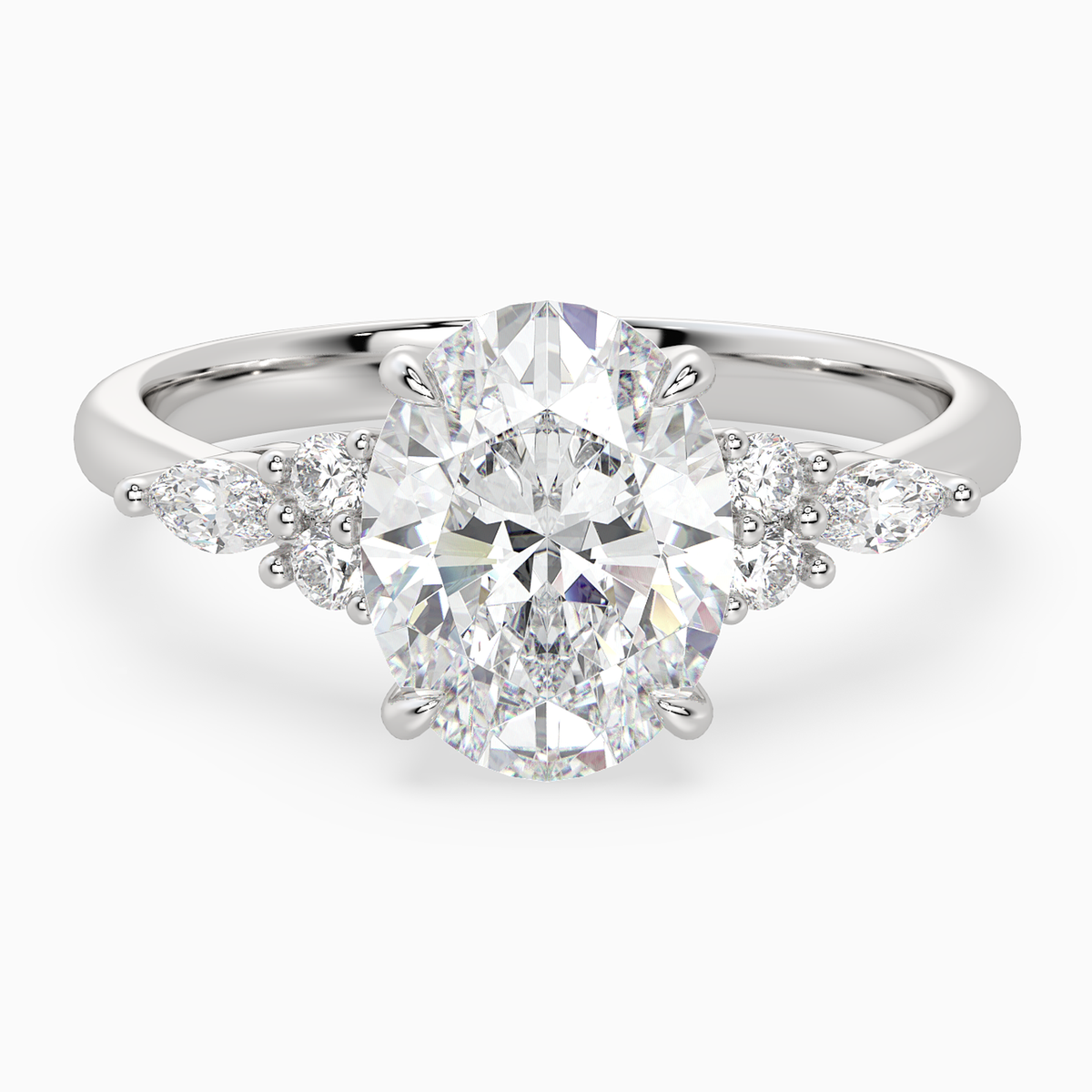


How to Match a Wedding Band to Your Engagement Ring

A wedding band should feel like it belongs with your engagement ring, but it does not need to disappear beside it. The best match balances shape, height, width, metal tone, stone detail, and comfort so the two rings look intentional when worn together.
If the engagement ring sits high enough, a straight band may sit flush. If the setting is low, wide, or has a basket that extends outward, a curved, contoured, or open band may fit better. After fit is solved, choose whether the band should blend quietly, add sparkle, or create contrast.
This guide explains how to choose a wedding band that works with your engagement ring in real life: from the side profile and gap to metal color, diamond settings, daily comfort, and stack styling.
Start With the Engagement Ring Profile
The side profile determines whether a wedding band can sit close to the engagement ring. Look at the ring from the side, not only from above. A high-set center stone often leaves room for a straight band. A low basket, large halo, cathedral shoulder, or decorative gallery may need a shaped band.
The goal is not always a perfectly flush fit. Some couples like a small, even gap because it gives each ring definition. What matters is that the space looks intentional rather than accidental. Continue with Engagement Ring vs. Wedding Band for the next comparison.

Choose the Band Shape: Straight, Curved, Contoured, or Open
Band shape is the most practical matching decision. It affects how the rings sit, how easy they are to wear, and whether the stack feels clean from every angle.
| Band shape | Best for | What to check |
|---|---|---|
| Straight band | High-set solitaires, simple bands, rings with enough clearance | Check whether the band can sit close without pushing against the basket or prongs. |
| Curved band | Settings that need a gentle arc around the center stone | Make sure the curve follows the ring rather than leaving uneven spaces. |
| Contoured band | Halos, elongated stones, low settings, or custom engagement rings | Confirm the contour still looks natural if worn without the engagement ring. |
| Open band | Center stones or settings that need space in the middle | Check structural durability and make sure the opening does not catch during wear. |
Match Width and Height for a Balanced Stack
Width changes the visual weight of the stack. A very thin wedding band can make a larger engagement ring feel more dramatic. A wider band can create a stronger, more architectural look. Neither is automatically better; the right choice depends on the engagement ring's shank, the center stone size, and how much presence you want from the band.
Height matters too. If the wedding band is much taller or lower than the engagement ring shank, the stack can feel uneven on the finger. Try to compare the band height against the engagement ring at the point where they touch.
If the wedding band rubs against delicate pavé, shared prongs, or a decorative gallery, ask whether a slight spacer band or a different contour would protect both rings over time.
Metal Matching: Same Metal or Mixed Metal?
Matching metals creates a quiet, seamless stack. White gold with white gold, yellow gold with yellow gold, or platinum with platinum is the easiest path when you want the engagement ring to remain the main focal point.
Mixed metals can also be beautiful when the contrast is deliberate. Yellow gold can warm a white gold engagement ring. Rose gold can soften the look of a cool diamond setting. The key is repetition: if the stack mixes metals, echo that choice elsewhere in your jewelry or choose a band design that clearly makes the contrast feel intentional.

Decide How Much Sparkle the Band Should Add
A plain band lets the engagement ring lead. A pavé band adds sparkle across the finger. A channel-set band creates a smoother diamond line. A shared-prong band can look delicate and bright, but it needs thoughtful construction for daily wear.
When the engagement ring already has a halo, side stones, or pavé shoulders, consider whether the wedding band should echo the sparkle or calm it down. A simple band can make an ornate engagement ring feel more refined. A diamond band can make a solitaire feel complete.
Plain band
Best for a clean, timeless stack or for engagement rings that already have strong diamond detail.
Pavé band
Best when you want the stack to feel brighter across the finger without adding much thickness.
Channel-set band
Best for a smoother diamond look with edges that feel practical for frequent wear.
Custom contoured band
Best when the engagement ring has a distinctive setting and you want the two rings to sit with precision.
Comfort and Daily Wear Should Shape the Final Choice
A wedding band is usually worn every day, so comfort is not a small detail. Check how the stack feels when you close your hand, hold a phone, type, or slide the rings on and off. A beautiful band that constantly twists, catches, or pinches will not feel like the right match over time.
Look for smooth edges, secure stone settings, and a profile that does not create pressure between fingers. If the engagement ring is delicate, a slightly protective band or spacer can help reduce direct friction.
Should Your Wedding Band Match Your Partner's?
Partner bands do not need to be identical. Some couples choose the same metal or a shared engraving. Others choose completely different bands that fit each person's style. The more useful question is whether the bands feel connected by one detail: metal tone, finish, profile, texture, or meaning. Continue with Hammered Wedding Bands for another band-style comparison.
When to Choose a Custom Wedding Band
A custom band is worth considering when the engagement ring has a low setting, unique stone shape, halo, asymmetrical design, or meaningful details you want to echo. It is also useful when you want a close fit without forcing a standard band to work.
Custom does not have to mean complicated. Sometimes the strongest solution is a simple band with the exact curve, height, and width needed to sit naturally beside the engagement ring.
To compare band profiles and design directions, explore wedding bands.
Build a Bridal Stack Around the Ring You Already Love
Your wedding band should support the engagement ring, your hand, and your daily rhythm. Start with fit, then refine the style until the pair feels intentional from every angle.
Explore Wedding Bands Explore Engagement Rings Read More GuidesFrequently Asked Questions
Should a wedding band sit flush with the engagement ring?
It can, but it does not have to. A flush fit looks clean, while a small even gap can give both rings definition. The important point is that the spacing looks intentional and feels comfortable.
What wedding band works with a low-set engagement ring?
A curved, contoured, or open band often works better with a low-set engagement ring because it can make room for the basket or center stone setting.
Can I mix metals in my wedding band and engagement ring?
Yes. Mixed metals can look modern and personal when the contrast is deliberate. Keep one detail consistent, such as finish, width, diamond shape, or overall design language.
Should my wedding band have diamonds?
Choose diamonds if you want more brightness across the finger. Choose a plain band if the engagement ring already has strong sparkle or if you prefer a calmer everyday look.
When should I order a custom wedding band?
Consider custom when a standard band leaves an awkward gap, rubs against the engagement ring, or does not match the setting height and shape. Custom is especially useful for halos, low settings, elongated stones, and unique ring profiles.
The right wedding band does more than match a ring. It turns the engagement ring into a complete stack that feels secure, balanced, and personal enough to wear every day.