
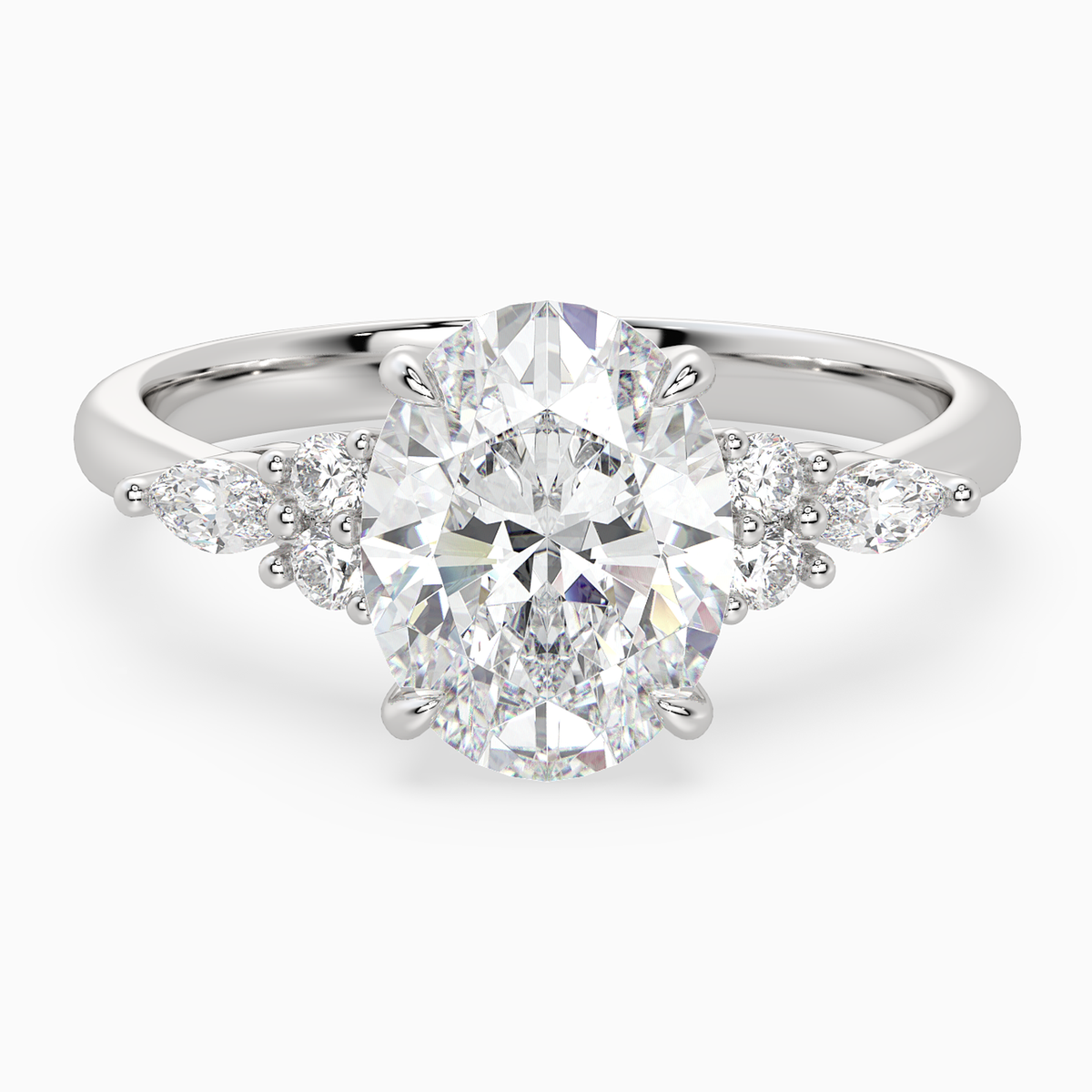


Pavé Ring Settings Explained: Sparkle, Security, and How to Choose

A pavé ring setting is one of the most effective ways to add light to an engagement ring without changing the center stone. Instead of leaving the band plain, a jeweler sets small diamonds close together along the shank so the surface appears paved with sparkle.
Pavé can make a solitaire feel brighter, make a halo ring look more luminous, or add refinement to a three-stone design. The tradeoff is that pavé requires careful craftsmanship and more mindful maintenance than a plain metal band.
This guide explains how pavé settings work, the main types of pavé, what to check before buying, and when pavé is the right choice for daily wear.
What Is a Pavé Ring Setting?
The word pavé comes from the French word for paved. In jewelry, it describes a setting where many small diamonds are placed close together across a metal surface. The small stones are usually set into tiny seats in the ring and secured by small beads or prongs of metal.
On an engagement ring, pavé most often appears along the band. It can run halfway down the shank, wrap around most of the ring, frame a halo, or appear only on selected details. The goal is not to compete with the center stone. The goal is to add a fine line of light that makes the whole design feel more complete.

How Pavé Settings Are Made
A pavé setting depends on precision. The jeweler prepares small openings in the metal, places each accent diamond into its seat, and raises or shapes tiny beads of metal to hold the stone in place. When the work is clean, very little metal is visible from above, so the band looks bright and continuous.
That delicate look is also why build quality matters. If stones are crowded, uneven, or held by weak beads, the ring may look busy or become more vulnerable to loosening. Pavé should look fine and luminous, but it should still feel structurally intentional.
When reviewing a pavé ring, look for even spacing, consistent stone size, smooth metal work, and a band surface that does not feel rough against adjacent fingers.
Types of Pavé Ring Settings
Classic pavé
Classic pavé uses small accent diamonds set close together with tiny beads of metal. It gives the band a fine, sparkling surface and works well with solitaire, halo, and three-stone rings.
Micro-pavé
Micro-pavé uses very small diamonds and highly detailed setting work. It creates an intricate, refined look, but it can require more careful wear because the stones and metal beads are so fine.
French pavé
French pavé, sometimes called V-cut pavé, uses small V-shaped cuts in the metal so more light can reach the accent stones. The look is bright, delicate, and slightly more open.
Bright cut pavé
Bright cut pavé places the stones inside a more defined metal border. It can feel a little more structured and protected, making it a strong option for shoppers who want sparkle with a cleaner edge.
Pavé vs. Other Diamond Band Settings
Pavé is not the only way to add diamonds to a band. The best choice depends on how much sparkle you want, how smooth you want the profile to feel, and how hard you are on your jewelry. For the full setting map, continue with the Engagement Ring Settings Guide; for how the setting parts work together, see the Engagement Ring Anatomy Guide.
| Setting style | Look | Best for | Tradeoff |
|---|---|---|---|
| Pavé | Fine, continuous sparkle with minimal visible metal | Solitaire upgrades, halo rings, delicate sparkle | Needs more mindful care than a plain band |
| Channel set | Diamonds held between smooth metal walls | Sleek durability and a smoother profile | Usually shows more metal and less airy sparkle |
| Shared prong | Diamonds held by prongs shared between stones | More visible individual diamonds | Can feel more pronounced than delicate pavé |
| Plain metal | Clean, simple, uninterrupted metal | Low maintenance, resizing flexibility, classic restraint | Less sparkle along the band |
Why Choose a Pavé Engagement Ring?
Pavé is popular because it adds brilliance without needing a larger center diamond. The small accent stones catch light as the hand moves, creating a lively outline around the main stone. This can make the center diamond feel more prominent while still keeping the ring refined.
It is also versatile. A pavé band can soften a simple solitaire, intensify a halo ring, or add detail to a three-stone design. In a custom ring, pavé can be used selectively: along the shoulders, around a hidden halo, on a wedding band, or only where it supports the overall proportions.
Is Pavé Durable Enough for Daily Wear?
A well-made pavé ring can be worn every day, but it is not as low maintenance as a plain metal band. The accent diamonds are small, and the metal holding them is delicate. That does not make pavé fragile by default. It means the ring should be chosen and worn with realistic expectations.
- Remove the ring before heavy lifting, gym equipment, gardening, or hard-impact work.
- Check that the pavé surface feels smooth and does not catch on fine fabric.
- Have the stones inspected periodically, especially if the ring is worn daily.
- Be cautious with resizing if pavé extends far around the shank.
- Choose a plain or partially pavé section if future resizing flexibility matters.

How to Pair a Pavé Ring With a Wedding Band
A pavé engagement ring can pair beautifully with a matching pavé wedding band, especially if you want a bright bridal stack. The effect is cohesive and luminous. The more practical question is whether you want that much diamond detail every day.
A plain metal band creates contrast and can make the pavé engagement ring stand out more clearly. A slim pavé band creates continuity. A curved or contoured band may be useful if the engagement ring setting prevents a straight band from sitting flush.
Choose pavé by design intent, not just sparkle
The right pavé setting should support the center stone, feel comfortable on the hand, and match how you plan to wear the ring with a wedding band.
Explore engagement rings Compare wedding bandsHow to Care for a Pavé Ring
Clean a pavé ring gently. Warm water, mild soap, and a very soft brush can help remove oils from around the small stones. Avoid aggressive brushing, harsh chemicals, and ultrasonic cleaning unless a jeweler confirms that the setting is appropriate for it.
For daily wearers, professional inspection is important. A jeweler can check whether any beads or prongs have shifted and whether a stone is loose before it becomes a bigger issue. This is especially useful for micro-pavé, full pavé bands, and rings worn with another band rubbing beside them.
To continue from pavé details to a tailored design path, explore custom engagement rings.
What to Check Before Buying a Pavé Ring
- Does the pavé look even from stone to stone?
- Is the metal work smooth enough for daily comfort?
- Does the pavé enhance the center stone or distract from it?
- Will the ring pair cleanly with your preferred wedding band?
- Does the design leave room for future resizing if needed?
- Is the pavé placed where it will be protected during normal wear?
For Burvonti, pavé is not just decoration. It is part of the ring architecture. The accent stones, center stone, shank width, wedding band plan, and daily-wear expectations all need to work together before the setting is finalized.
Frequently Asked Questions
What does pavé mean in a ring setting?
Pavé means that small diamonds are set close together across the ring surface, often along the band, to create the look of a continuous paved line of sparkle.
Are pavé rings durable?
Pavé rings can be durable when they are well made, but they need more care than plain metal bands. The small stones should be protected from hard impact and checked periodically.
Do pavé diamonds fall out easily?
In a well-crafted pavé setting, diamonds should not fall out easily. However, small stones can loosen after impact or long-term wear, so regular inspection is wise.
Can a pavé ring be resized?
Some pavé rings can be resized, but it depends on how far the pavé extends around the band. Full pavé or eternity-style rings are more difficult to resize than rings with a plain sizing area.
Does pavé make the center diamond look bigger?
Pavé can make a ring look brighter and more substantial because the accent diamonds lead the eye toward the center stone. It does not change the center diamond size, but it can increase visual presence.
Is pavé better than a channel setting?
Neither is universally better. Pavé gives a finer, brighter sparkle with less visible metal, while channel settings often feel smoother and more protected. The better choice depends on style and daily wear needs.
Design the sparkle around the way you wear the ring
A pavé ring should be beautiful in close detail and practical on the hand. Start with the setting style, then refine stone size, band width, wedding band fit, and maintenance expectations.
Start a custom engagement ring Read more ring education