
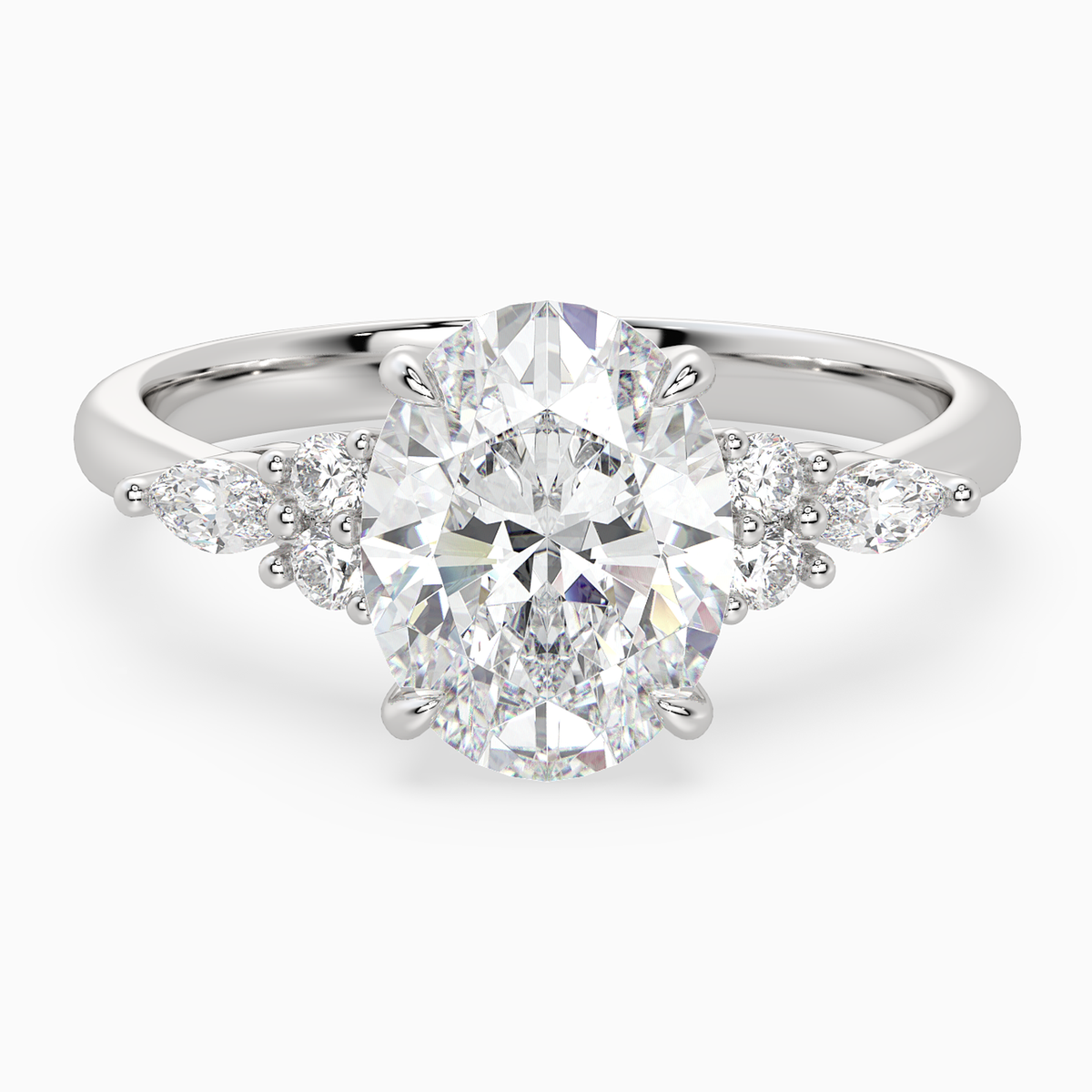


Parts of a Ring: Engagement Ring Anatomy Guide

Ring anatomy is the language of how a ring is built. Once you know the names of the parts, it becomes easier to compare engagement rings, understand why one design feels different from another, and choose a setting that fits your stone, lifestyle, and taste.
The main parts of a ring are the center stone, setting, prongs or bezel, band, shank, shoulders, gallery, bridge, and any accent details such as side stones, engraving, filigree, or milgrain. Some parts shape the look of the ring, while others affect comfort, durability, stone security, and how the ring sits on the hand.
For a lab-grown diamond engagement ring, these details matter because the ring is not just a circle of metal with a diamond on top. The anatomy determines how much light reaches the stone, how secure the diamond feels, whether a wedding band can sit flush, and how the ring handles daily wear.
A Quick Ring Anatomy Map

Center Stone
The primary diamond or gemstone. Its shape, carat weight, cut quality, color, and clarity set the visual focus of the ring.
Setting
The structure that holds the center stone. It includes design choices such as solitaire, halo, bezel, three-stone, cathedral, or pavé.
Prongs or Bezel
The part that directly secures the stone. Prongs use small metal claws; a bezel surrounds the stone with a rim of metal.
Band and Shank
The circular portion around the finger. The shank is the lower body of the band and strongly affects comfort, fit, and durability.
Shoulders
The upper sides of the band as they rise toward the center stone. Shoulders can be plain, tapered, split, pavé-set, or sculptural.
Gallery and Bridge
The under-stone architecture. These parts support the setting, shape the side profile, and influence whether another band can sit nearby.
Parts That Shape the Look of the Ring
Center Stone
The center stone is usually the first thing people notice, but its effect depends on more than size. A round diamond, oval diamond, emerald cut, radiant cut, pear shape, and cushion cut all interact differently with the setting. Longer shapes can make the finger look more elongated, while step cuts tend to feel quieter and more architectural.
For lab-grown diamonds, the advantage is choice. A buyer can compare specifications clearly and decide where to prioritize: cut quality, face-up size, color, clarity, or budget. That decision should guide the setting rather than be treated as an afterthought.
Setting
The setting is the ring architecture around the stone. A solitaire setting keeps attention on one diamond. A halo adds a frame of smaller stones around the center. A three-stone ring creates a wider composition. A bezel setting gives the stone a clean metal outline and more edge protection.
When comparing settings, ask what the design is trying to do. Is it maximizing light? Protecting corners? Creating a low profile? Allowing a flush wedding band? A beautiful ring is usually the result of these choices working together. Continue with Engagement Ring Settings Guide for the next comparison.
Prongs
Prongs are small metal tips that grip the diamond. Four-prong settings often reveal more of the stone and can make the diamond look open. Six-prong settings add security and can create a rounder outline. V-prongs are often used to protect pointed ends on shapes such as pear, marquise, or princess cuts.
Prong shape also changes the mood of the ring. Rounded prongs feel soft and classic. Claw prongs can look sharper and more refined. Double prongs add detail and can suit elongated or angular stones.
Accent Stones, Halo, and Pavé
Accent stones are smaller diamonds or gemstones used to support the center stone. They may sit along the band, frame the center in a halo, or appear as side stones in a three-stone design. Pavé describes small stones set close together, usually on the band or shoulders, to create a continuous surface of sparkle.
These details can make a ring feel more decorative, but they also add maintenance considerations. More small stones mean more setting points to clean and inspect over time.
Parts That Affect Comfort, Fit, and Structure
Band
The band is the visible circle of metal around the finger. Its width, profile, and finish affect how substantial the ring feels. A slim band can make the center diamond appear larger, while a wider band can feel more grounded and durable.
Common band profiles include flat, rounded, comfort fit, and court-style shapes. If the ring will be worn every day, the inside profile matters as much as the outside look.
Shank
The shank is the lower part of the band that wraps around the finger. It may be straight, tapered, split, knife-edge, or cathedral-style. Because the shank carries daily pressure from grip, movement, and resizing, it is one of the most important structural parts of the ring.
A very thin shank may look delicate, but it should still be strong enough for the stone size and wear pattern. A balanced shank supports both beauty and longevity.
Shoulders
The shoulders are the upper left and right sides of the band as they approach the setting. They create the transition from finger to center stone. Tapered shoulders can lead the eye upward. Pavé shoulders add brilliance. Split shoulders create negative space and a more architectural look.
Shoulders are especially important in custom engagement ring design because a subtle change here can make the same diamond feel classic, modern, delicate, or bold. Continue with Engagement Ring Styles Guide for the next comparison.
Gallery
The gallery is the area beneath the center stone. From the side, it is often one of the most distinctive parts of the ring. An open gallery can let more light pass through and make cleaning easier. A more enclosed gallery can create a stronger visual frame and may offer added protection depending on the design.
Bridge
The bridge connects the setting to the shank below the stone. It can be simple and nearly invisible, or it can include hidden details such as a small accent stone, milgrain, or engraved texture. The bridge also affects how the ring sits with a wedding band.
Choosing a ring is easier when the structure is clear.
Explore settings with the stone, profile, and daily wear in mind. A ring chosen with intention should feel as considered from the side and underside as it does from the top.
Explore lab-grown diamond engagement ringsRing Anatomy by Engagement Ring Style
| Ring Style | Key Anatomy Features | Best For | Watch For |
|---|---|---|---|
| Solitaire | One center stone, visible setting, simple band or shank. | Clean focus on diamond shape and cut. | Prong style, stone height, wedding band fit. |
| Halo | Center stone surrounded by small accent stones. | A larger face-up look and more sparkle. | Cleaning, small-stone security, proportion around the center. |
| Three-Stone | Center stone with two side stones. | Balanced width and symbolic design. | Side-stone proportions and finger coverage. |
| Pavé Band | Small diamonds set along the shoulders or band. | Extra brilliance without changing the center stone. | More setting points and careful maintenance. |
| Bezel | Metal rim around the stone instead of exposed prongs. | Modern lines and added edge protection. | Less exposed stone edge and a different light profile. |
Which Ring Parts Matter Most for Daily Wear?
If the ring will be worn every day, focus on the parts that take the most contact: prongs, shank, shoulders, and gallery. These are the areas most affected by hand movement, cleaning, clothing, bags, and surfaces.
- For stone security: review prong count, prong shape, bezel coverage, and how exposed the stone corners are.
- For comfort: compare band width, inside profile, shank shape, and setting height.
- For easy pairing: check whether the gallery and bridge allow a wedding band to sit flush or near-flush.
- For maintenance: consider how many small stones, tiny grooves, and under-gallery spaces the design includes.
How Ring Anatomy Affects Custom Design

A custom ring is built around decisions, not just decoration.
In a considered custom process, the diamond and setting should be calibrated together. The center stone's shape, size, and proportions influence prong placement, gallery height, shank balance, and the final profile.
For Burvonti, that means treating the ring as a precise physical object: transparent specifications, thoughtful design, and a setting made after the diamond and design direction are chosen.
Start a custom engagement ringWhat to Check Before Choosing a Ring
- Look from the top. Check the center stone, band width, shoulder shape, accent stones, and overall proportion.
- Look from the side. Review the setting height, gallery, bridge, and how high the diamond sits.
- Check the underside. Notice whether the design is open, easy to clean, and comfortable against the finger.
- Think about daily wear. Match prongs, bezel coverage, and shank strength to your routine.
- Plan the wedding band early. Ask whether a future band can sit flush, curved, or intentionally spaced.
Frequently Asked Questions
What is the most important part of a ring?
The center stone is usually the visual focus, but the setting, prongs, shank, and gallery determine how secure, comfortable, and wearable the ring is. For an engagement ring, the most important part depends on whether your priority is appearance, durability, comfort, or daily practicality.
What is the difference between a band and a shank?
The band is the whole circular portion of the ring. The shank usually refers to the lower part of that band as it wraps around the finger. In casual shopping language, people often use the words together, but the shank is more specific.
Are prongs or bezels better for an engagement ring?
Prongs reveal more of the diamond and can create an open, light-focused look. Bezels surround the stone with metal and can offer more edge coverage. Neither is automatically better; the right choice depends on stone shape, lifestyle, and preferred design style.
What is the gallery of a ring?
The gallery is the structure beneath the center stone. It supports the setting, shapes the side profile, and can include open metalwork, a basket, cathedral arches, hidden details, or a more protective closed design.
Why does ring anatomy matter when buying a lab-grown diamond ring?
Lab-grown diamonds give buyers clear specification choices, but the setting determines how those choices translate into a finished ring. The anatomy affects how the diamond is held, how the ring feels, how it pairs with a wedding band, and how it wears over time.
Build the ring around the diamond and the person wearing it.
Understanding ring anatomy helps you move from browsing to choosing. Compare the parts, ask how they work together, and select a design that supports both beauty and daily use.
Explore engagement rings Read more diamond education Book a consultation